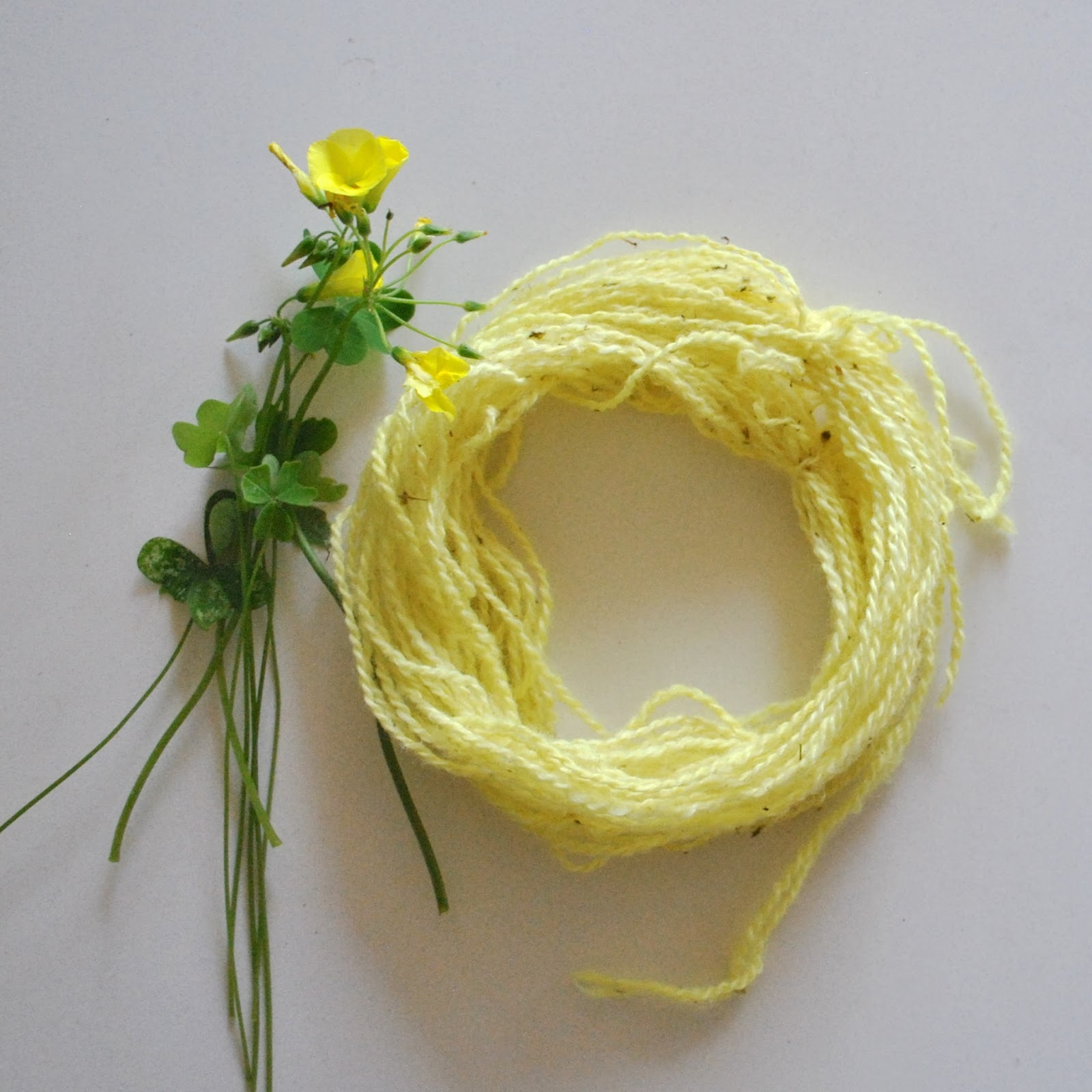
Inspired by Nicki of this is moonlight, I’ve been having a go at solar dyeing. What is solar dyeing…? well, it’s basically just chucking fabric and chopped up organic material into a glass jar and leaving it outside for a while until your fabric has changed colour.
Boom yeah: blog post done!
Hmmm, well maybe just one or two more details would be helpful…
So I was just weeding my garden, I mean; harvesting my carefully nurtured dye-plant crop! of course! and spontaneously decided to experiment. This plant is Oxalis stricta or common yellow wood sorrel; more commonly known around here as sour grass. I have fond memories of sitting with my fellow primary school friends on the school oval at lunchtime, munching on this stuff … ah, memories! It grows like mad around these parts, you can find it everywhere and it’s considered a weed. But a useful weed!
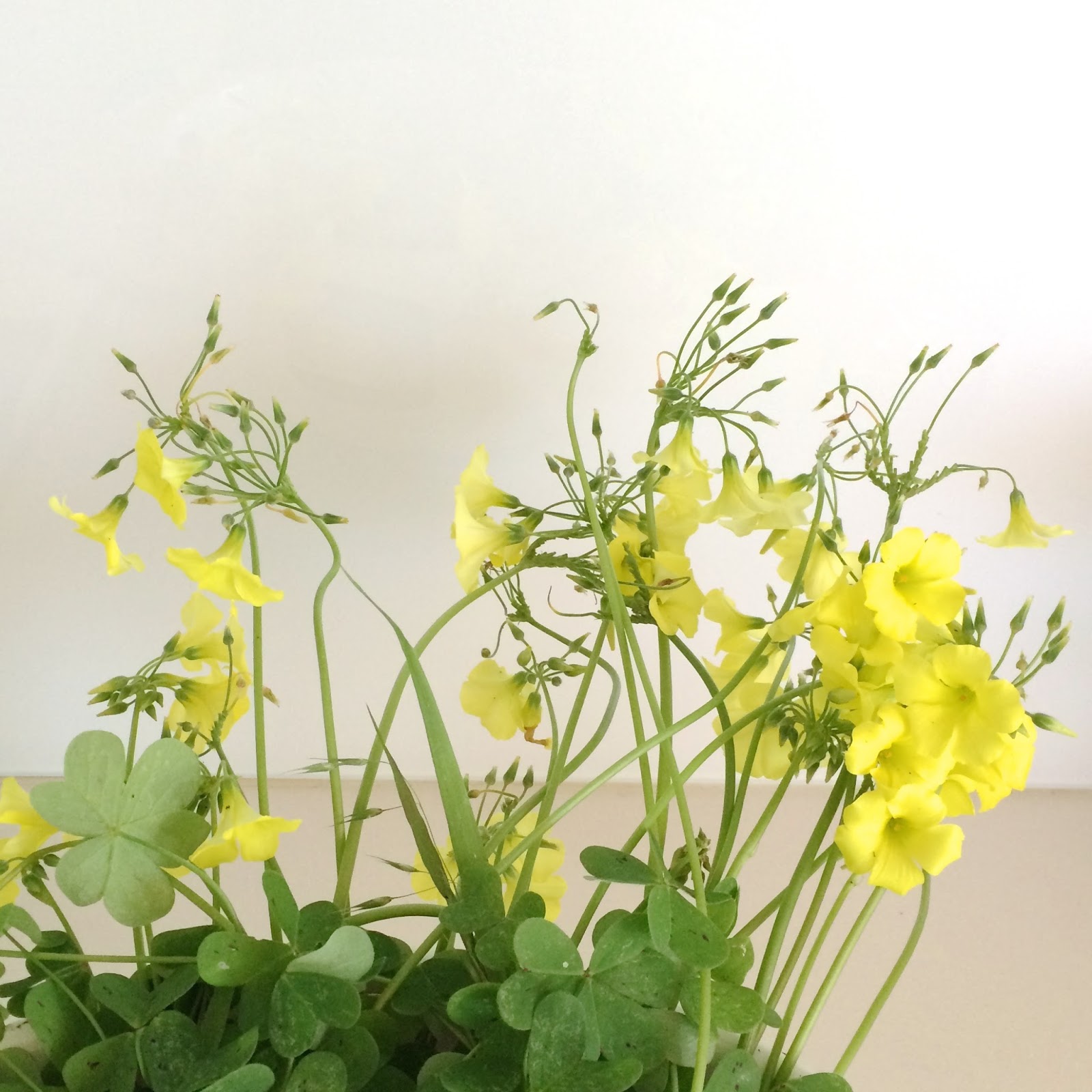
This was just a little play to see if I like the effect; so I used about a dozen flowering plants, and 20g natural merino wool. My wool happens to be 100% Western Australian merino, handspun locally and bought in Bilby yarns.
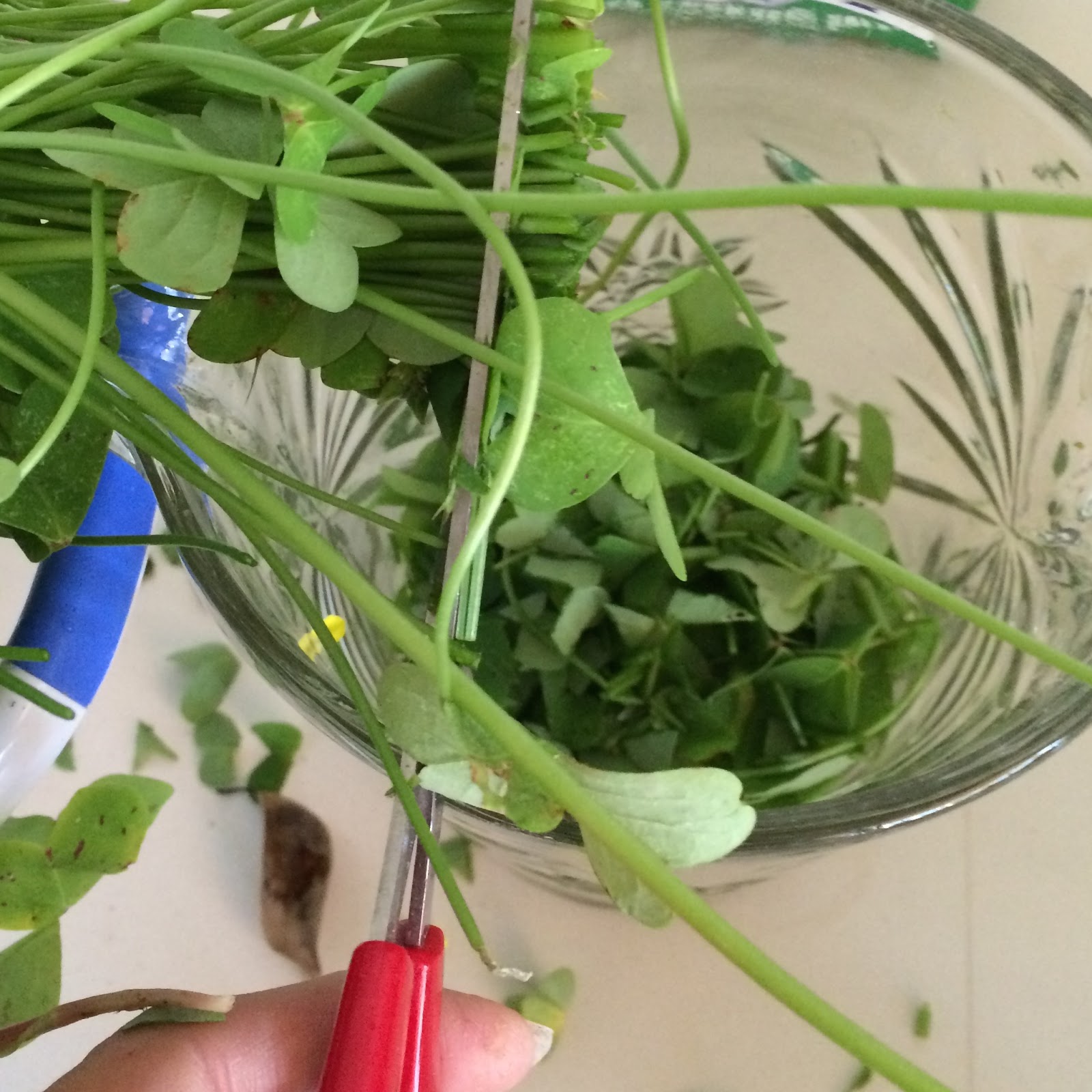
I snipped the whole plant minus the bottom third of the stalks, roots and root ball into small pieces, straight into a large glass pitcher along with 1/2 cup salt, half filled the pitcher with water, and stirred it around pretty vigorously to dissolve the salt. Then added my yarn, which I’d loosely tied in a skein to guard against knots.
Once the yarn was in, I swooshed it around very gently to immerse it in the plant material, covered the pitcher with glad wrap, then popped it outside in the sun. I left it for five days; moving the whole kit’n’caboodle around during the day, following the sun, and would always bring it in each night. Basically, did not stir again.
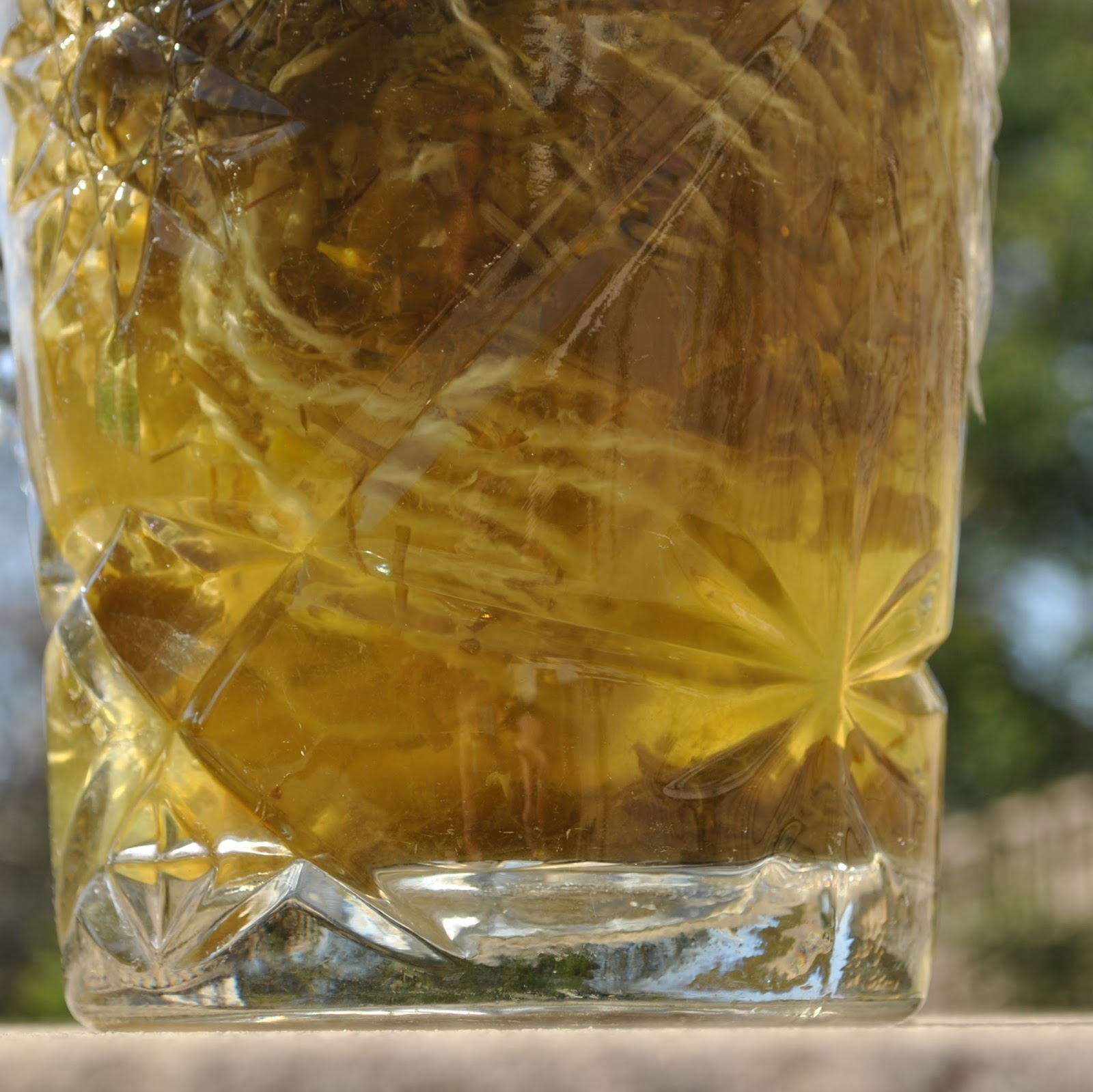
After five days, the wool seemed to have picked up a nice amount of colour, so I gave it a very thorough rinse in cold water and picked off as much organic material as possible.
And, ta da!
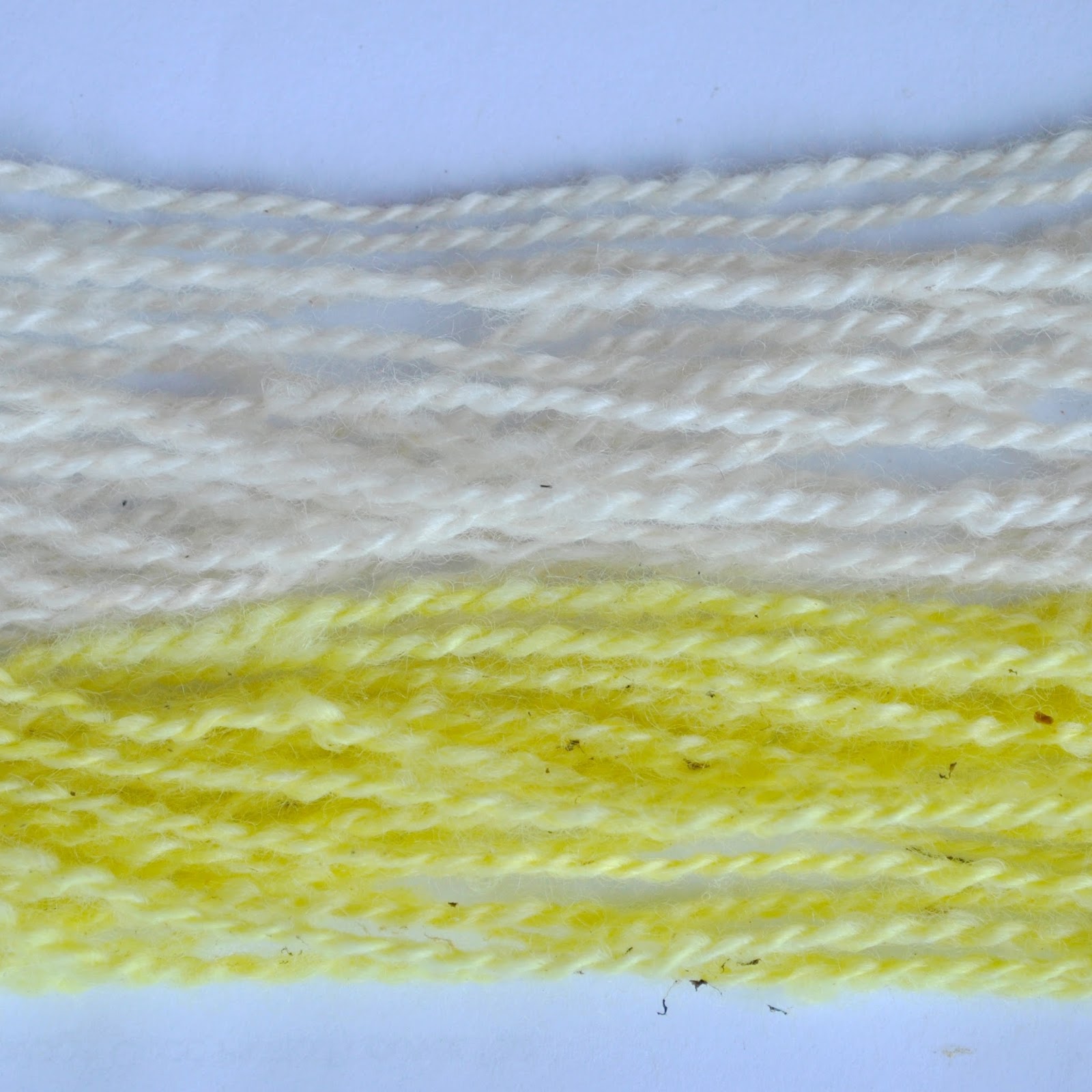
This could not have been any easier! and I’m very happy with that bright yet delicate chartreuse shade of my wool. Not to mention the non-toxicity of the whole process too. I will definitely be doing this again;on a bigger scale with more yarn and more plants and leaving it for longer next time 🙂
Notes for next time; picking out the organic material takes ages and is a bit of a pain. I’m toying with how to keep the plant matter and fibre separate next time, so as to avoid a gazzilion squishy rotting bits of plant muck stuck tight to my wool everywhere. Maybe with a very loose-weave synthetic gauze “bag” for the plant matter. I’m not sure if this would reduce the effectiveness of the dye though… but will give it some thought and a shot.
This is not going to be my only experiment with natural dyeing either; I’ve bought some indigo seeds and am raring to see that experiment come to fruition as well…


































Wonderful to experiment with the old ways of doing things……I wish I had the time. Will this wool hold its colour Carolyn?
only time will tell, Rianna 🙂 my research suggests that if you use the root of the plant you not only get a richer colour but do not need a mordant. However my sample did seem to hold its colour very well after a long cold rinse. In any case I would only ever wash handspun wool in cold water. If I was doing it for real I might consider using a mordant 🙂
I wonder if you could put your wool in a gauze bag rather than the plant material? Look forward to the indigo.
That's a good idea.
What a beautiful and bright color. The solar dyes I have seen so far always looked kind of boring but yours is stunning! I'm so excited to hear about the indigo dye!
Maybe those little fruit fly bags you get at Bunnings? Or a lingerie washing bag?
that is lovely. and yes it would be quite a task to get rid of all the bits of plant matter. Maybe wrap the yarn in cheesecloth?
That is awesome! I manage organic staining around the dining table, with spotty results, hahaha, but this is very cool and cleaner and you get uniform results too. The colour is gorgeous. I have never heard of this technique. Thanks for that.
Clever, what a great idea. I wonder how well the colour will stay with washing. Good luck with your new seeds.
Ooh, great color! I've used muslin teabags for the plant matter, if that helps.
That certainly proves that everything has a use. This cursed weed is the bane of every gardener and only this week I delivered a talk on its eradication to a group of National Trust volunteers! I'll be adding this new information to my notes.
Love the colour you got. It reminded me of getting my hair rinsed with very strong chamomile tea to make my hair lighter.
Maybe you can wrap the plants in tulle, make an infusion, let it cool down and then soak the wool in it?
Fascinating idea, and the resulting wool colour is lovely.
Such a lovely yellow! Maybe I have got some colouring ingredients in my garden, too? 😉 I think the idea with a gouze bag or tea muslin for the organic material is a good idea, so the wool can float in the coloured solution.
That colour is absolutely beautiful, I can't believe that it came from a weed. I wish there was some of that weed around here. I wonder what those daisys outside would do?
What a gorgeous colour. Great results. I'm thinking of doing some tea dyeing soon. Cross my fingers that it works!
Lovely. People who dye fleece normally place it inside a gauze bag – or even the toe of an old pair of fine tights and it shouldn't affect the colour of the dye
Lovely colour. I use nylon stockings to keep my dye stuffs from the wool. And it works well. And I use an Alum product as a mordant to make the colour more durable. My current solar dye lot is made up (seperately) of cooked beetroot peels, henna powder and red and brown onion skins. Have fun experimenting.
How to make the dye colour fast for future laundering? Salt?
Nice Website…
Hey JOIN now fblikesbot.com and Increase Facebook Likes your profile and websites.
Increase Facebook Likes and check your website worth worth my websites
FB Likes and check your website worth Website Value Calculator
Hot Wallpapers
its may be very beneficial for you also really
Pingback: all Aussie adventures | Handmade by Carolyn
Pingback: totally local, natural dyeing - Handmade by Carolyn