(I should have posted this straight after posting my PU skirt, but I forgot… oops!)
I’m not really an expert on this “fabric” but I thought I would just jot down a few little techniques I used when making my skirt, in the hope that they will help others…
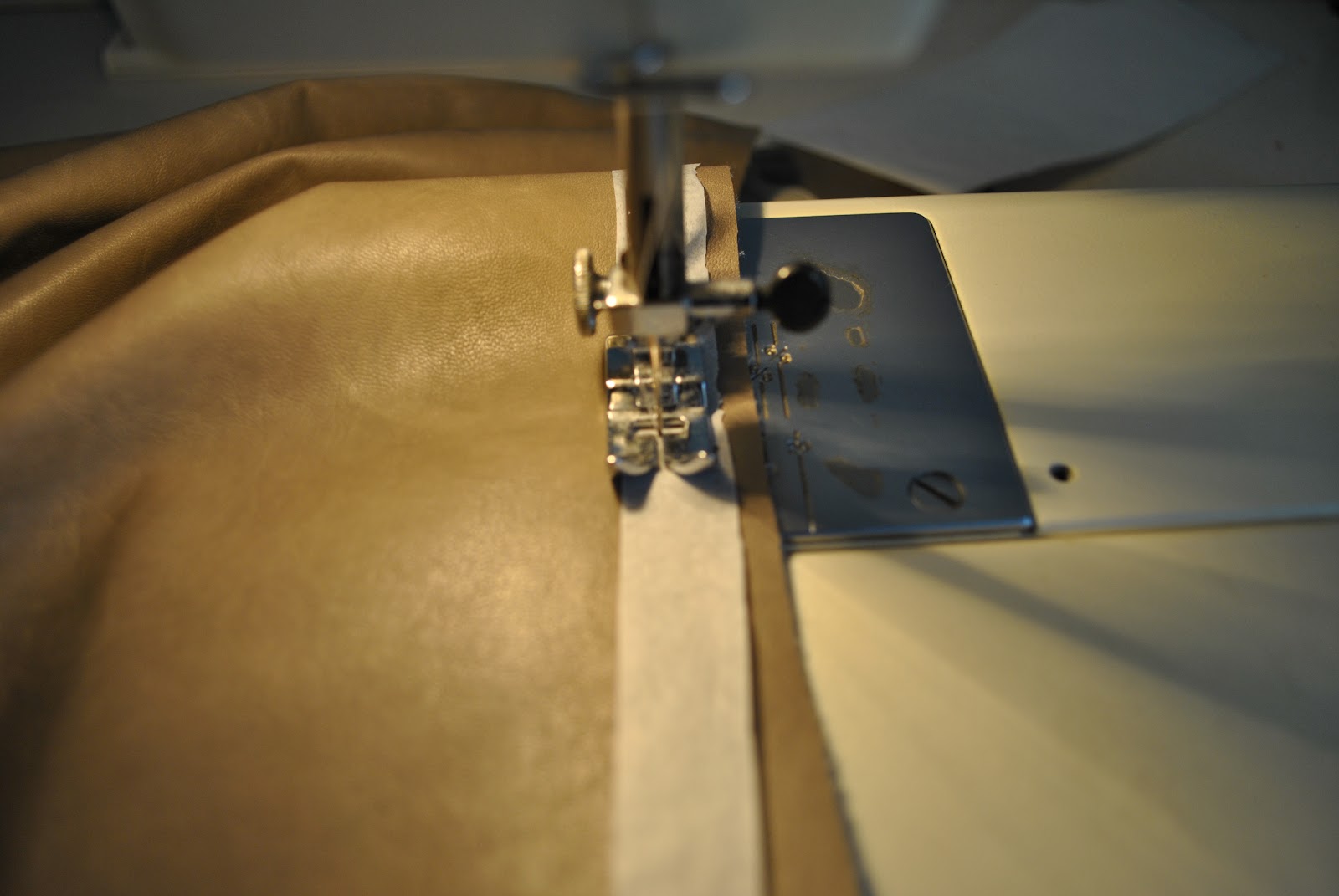
I’ve read that there is a teflon foot that one can use for working with leather and other “hide” like fabrics such as poly-urethane laminated cloth, PVC and other plastics; fabrics that have a “sticky” surface that adheres to the underside of the foot and so do not pass through the machine easily. However, I didn’t want to buy a whole new foot just for the tiny amount of topstitching and stay-stitching needed for one, or even a few, garments; so I decided to try out my usual method for tricky fabrics… I cut tissue paper into strips and hold this in place under the foot of the machine as I am sewing, laying it in place as I go and feeding in new strips as needed.
This worked a treat!
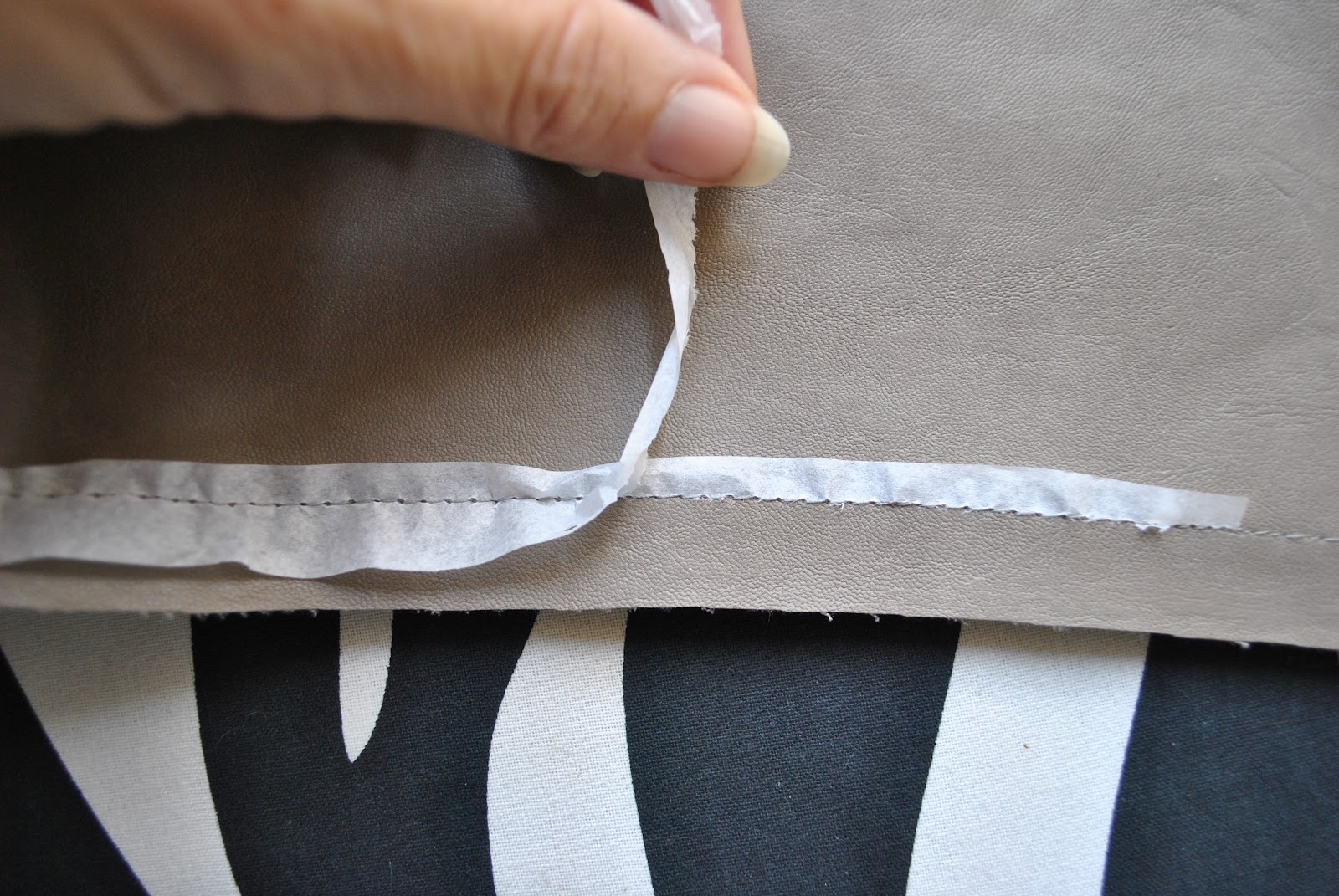
I used a denim needle, and set the machine to a slightly longer than normal stitch (3mm) and after stitching I simply pulled the paper off of each side of my stitching. Easy, and free! since the tissue paper I use is… well, you know when you buy breakables and it gets wrapped up in a few sheets of thin tissue paper at the point of sale? Well I keep that paper just for this purpose; waste not want not, and all that…. and cut it into strips when I need it. Re-using and re-cycling!
Obviously, I didn’t need to use the tissue paper when I was sewing seams, fabric right sides together, since the backing fabric had a regular fabric-y texture that passed through my sewing machine just fine; and I found I didn’t need it for top-stitching the HongKong seaming down either. The tissue strips were only necessary for the very small amount of top-stitching and stay-stitching called for in my pattern, which is great since it can be a kinda fiddly technique. If one was top-stitching leather frequently then sure, it might well be worth investing in that teflon foot.
Incidentally, the tissue strip method is one I do use a lot of the time; any slippery and delicate fabrics such as silk and polyester chiffons, silk charmeuse, also with lightweight wool and rayon knits, and especially and always sewing delicates on the bias to avoid stretching; if I experience any difficulties I turn to the tissue paper treatment. Also, the few times I have cut up and re-fashoned RTW knitted jumpers and cardigans; the tissue paper strips work like a charm enabling me to sew these highly fray-able, and more bulkier knits on my regular machine as well. In fact all knits; from the very fragile to the very heavy hand-knits, will all go through one’s machine with ease using this method.
But getting off track there; back to the PU…
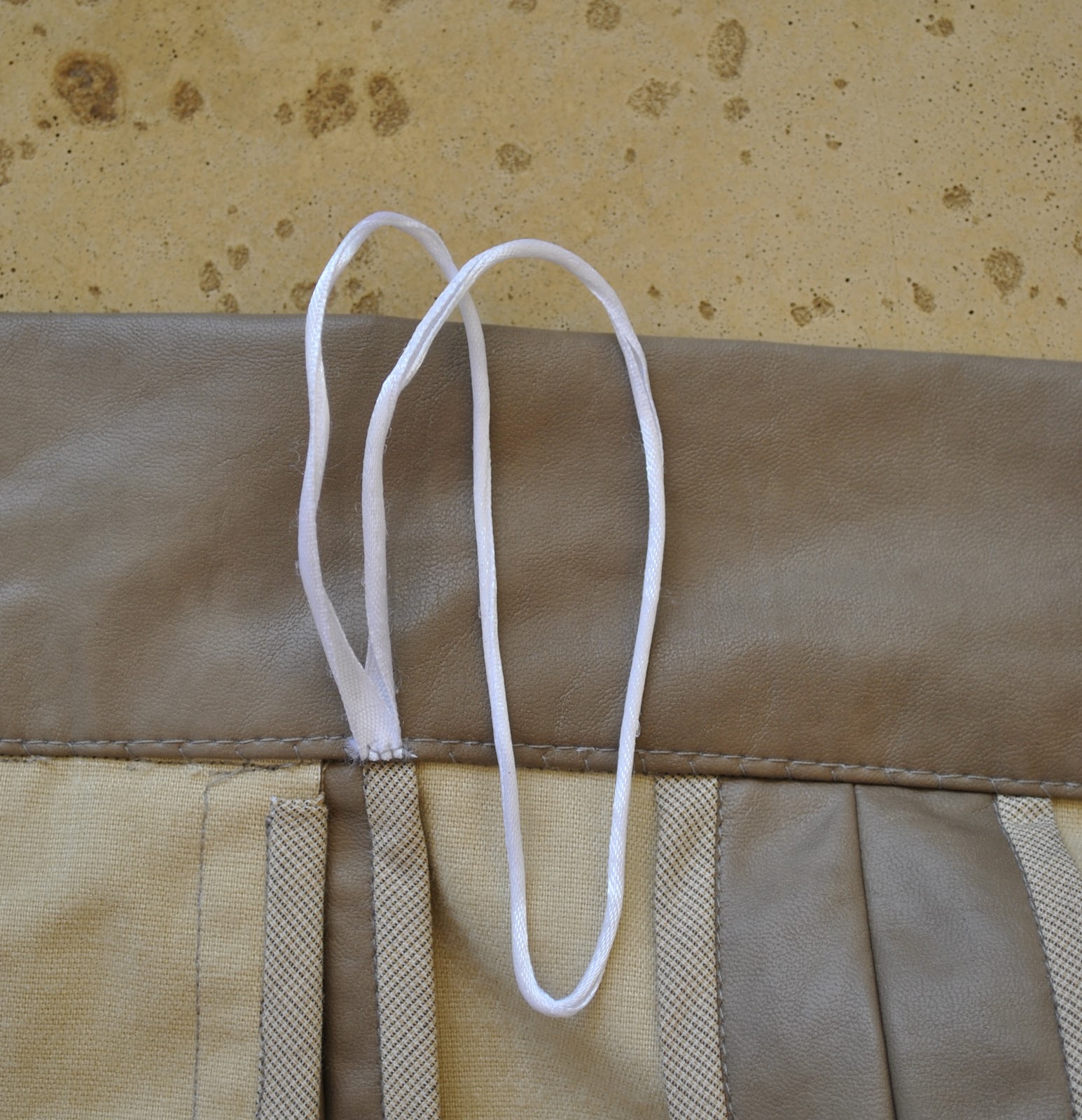
My second tip is for the waistband; sewing the waistband facing down inside. My usual method using regular fabrics is to stitch a virtually invisible fell-stitch, picking up a scant one thread on one side then a scant one thread on the other, hiding the running thread under the fold of the waistband. In this fabric however, I worried that this would not be sturdy enough. Picking up just a scant fold of the PU, my thread ran the risk of not getting through to the backing fabric and just piercing the flimsy layer of laminate which could easily just tear away. I did not want topstitching visible on the outer view of the waistband, and hand-stitching big ugly visible sturdy stitches, even on the inside of a garment, was not an option (years of conditioning cannot be ignored here!)
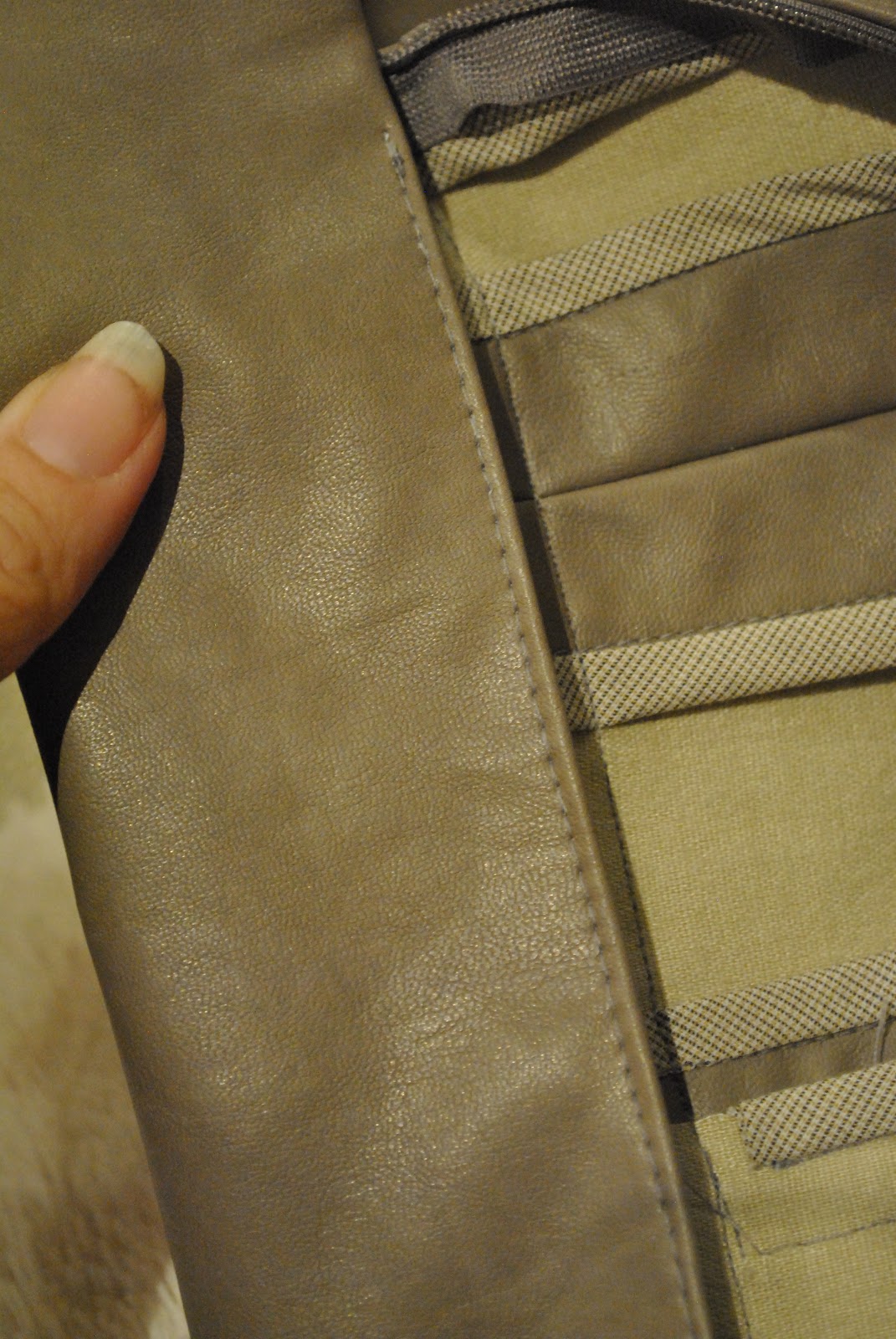
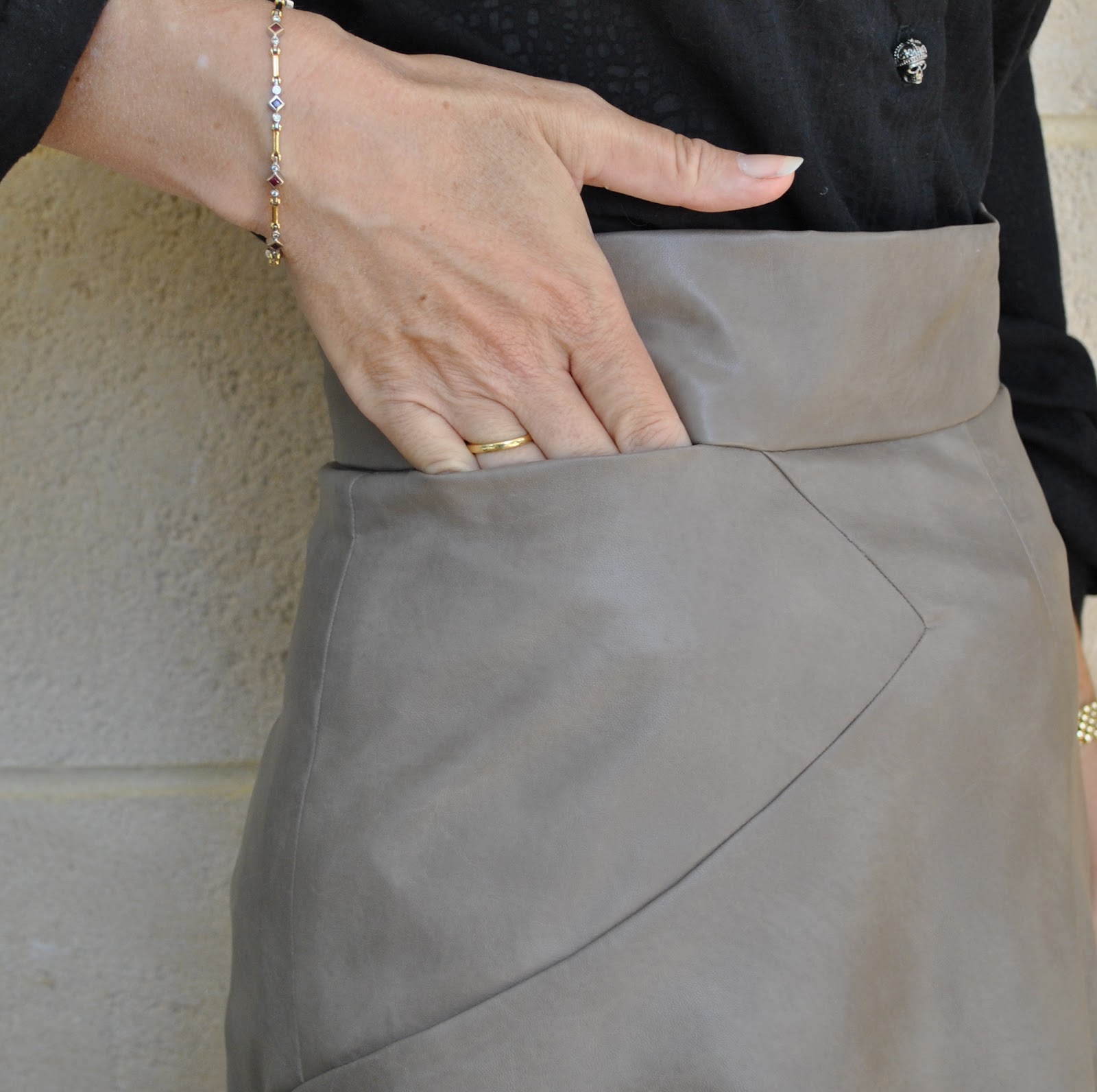
So I turned in the seam allowance of the waistband facing, and machined a nice even line of topstitching along just inside the fold by a scant 2mm, keeping the interfaced outer waistband free. This provided a firm stitching line along which I could anchor the stitches, securing the waistband facing down to the waistband/skirt seams allowance. It also provides a focal point, a visual foil that draws attention away from those small hand stitches. See how those fell stitches are nearly invisible to the eye?
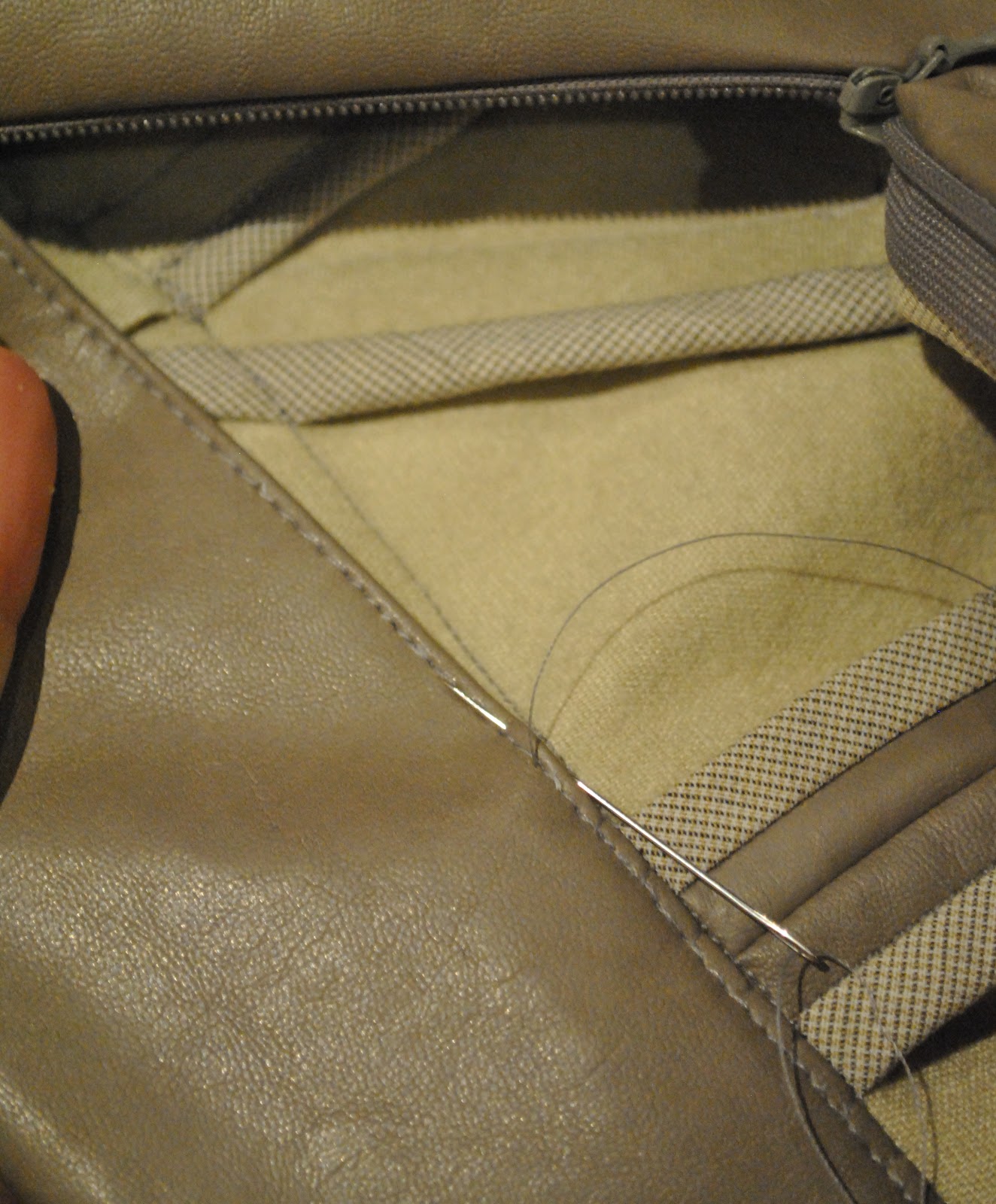
And no stitching visible on the outer waistband…






























The tissue paper is a great idea…I must store that in my tips to remember file!
Thanks for the tips, Carolyn! I've tried the paper thing with leftover pattern paper scraps, which turned out to be just a bit too stiff, especially with flimsy knits, but I'll have to try tissue paper!
Thanks for this really excellent walk-through of your skirt-making processes, Carolyn. I often read your blog and find it most informative and interesting but this is the first time I've really wanted to leave a comment.
I have several decades of sewing behind me but have never tried the fabrics you mention in this entry. Your tips have made me want to have a go now! It's great to think you're never too old to learn.
I also really agree with your philosophy of re-use and recycle; I have often done this in the past myself, turning my clothes into new ones for my kids. I'm about to cut up a pair of my PJ's to make into a dress for my newest granddaughter, aged 6 weeks.
Thanks for writing such a great blog; please keep on doing it!
Aww I love tutorials, thanks I will bookmark for further use.
Ps. Thanks for answering my question.. I love the books but they feel they over complicate .
Tissue paper. Who woulda thunk it. I like it. Burda pattern tracing paper would work well too, with the printed grid on it.
Carolyn, you are a woman after my own heart, you did a Hong Kong finish on seams that will never fray just so they look pretty. I love it.
Thanks for sharing, Carolyn. I'be read about sewing with tissue paper but couldn't quite visualize it. The skirt is beautiful, of course!
Thanks for sharing, Carolyn. I'be read about sewing with tissue paper but couldn't quite visualize it. The skirt is beautiful, of course!
Thanks for sharing, Carolyn. I'be read about sewing with tissue paper but couldn't quite visualize it. The skirt is beautiful, of course!
Thank you for your techniques Carolyn. I do have some 'leather' and 'suede' to sew this season.
Your skirt finishings are lovely.
When you posted this last week I remembered that I have this pattern too, I dug it out and put it in my "for when Summer is back" pile 😉 Your version is amazing in leatherette, I would never had thought to try it in that fabric.
Thanks for the tips!
corsadriver49; thank you so much for your kind words, and I'm so happy that you enjoy my blog. Your comment made my day!
This well known medication was first approved for the treatment of panic attacks, but today it is also used to treat anxiety and a wide variety of other conditions. [url=http://www.xanax4less.com/]xanax online pharmacy[/url] Patients who are bothered by the Xanax side effects should discuss them with their doctor to determine if Xanax is still the best course of treatment in their specific situation. Withdrawal and rebound symptoms include anxiety, panic, or depression if the medication is stopped too quickly. Working with a doctor to taper doses will help to avoid these symptoms, which should be done as carefully as possible, as the withdrawal symptoms are known to be very uncomfortable for the patient.
qb74kf95j http://www.ismamerica.com/#cheap-generic-acomplia – cheap generic acomplia cheap rimonabant
asrg7hr http://therebelsocietyonline.com/#buy-ambien-without-prescription – generic ambien no prescription generic ambien online
hello, nice skirt!
"papier de soie" which i would translate in 'silk paper' is less expensive and either effective and sometimes silicon foot can be use either
Well done – great help as I venture into my first garment with leatherette.
Nice Website!! We also Manufacturer & exporter of industrial laminate press,laminate press,plywood lamination machine, Plywood lamination machinery, plywood laminating machines yamunanagar in India
We are a leading raw material manufactures company in India. We are a only raw material trader company in india. We trade and manufacturer pu synthetic leather, fake leathers, garment pu leathers, pu leather for footwear.
rexine for luggage
Pingback: "Baseball" skirt and tee - Handmade by Carolyn