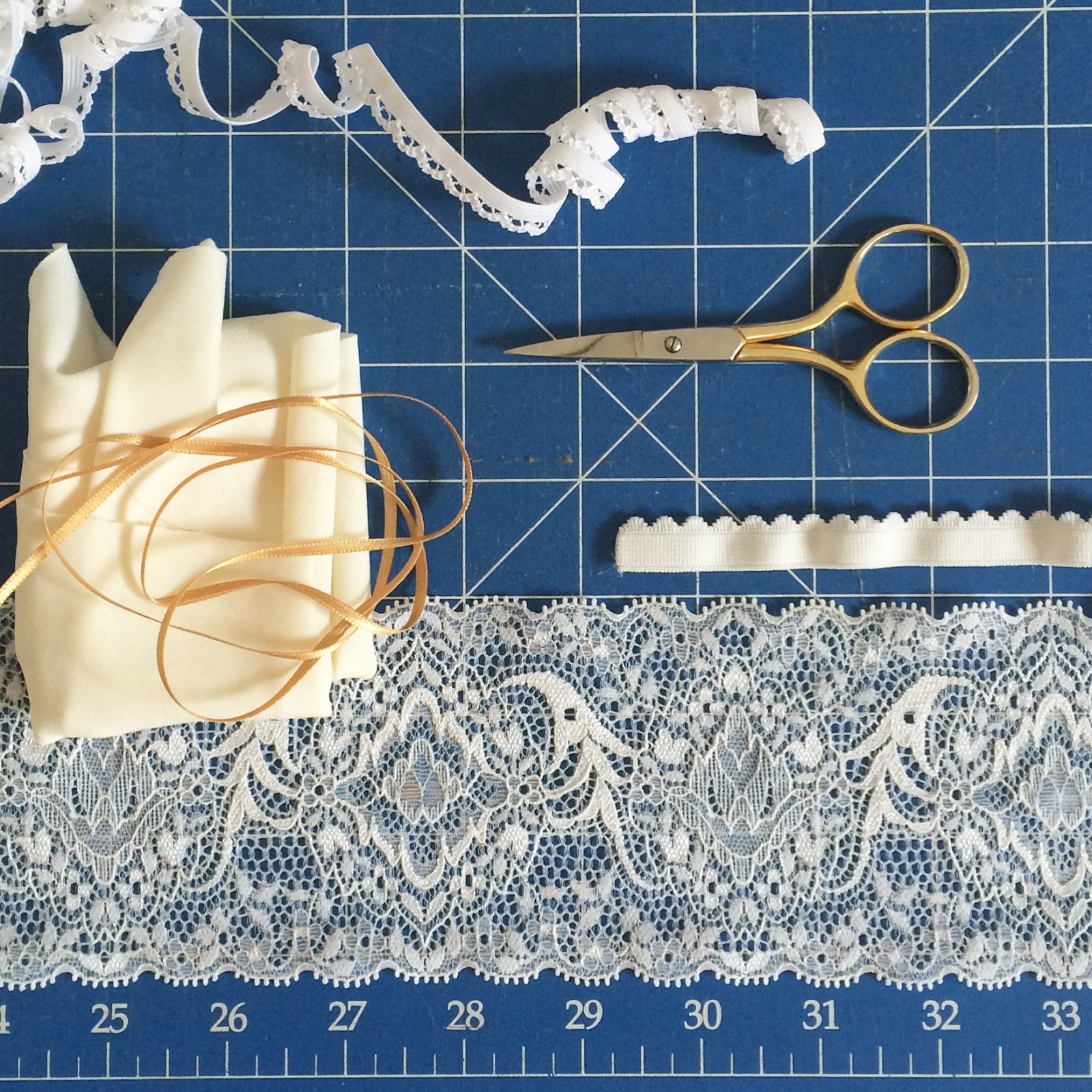
There are a bajillion great posts out there with good tips for sewing lingerie; hopefully this one is adding one or two new pieces of info into the pot…
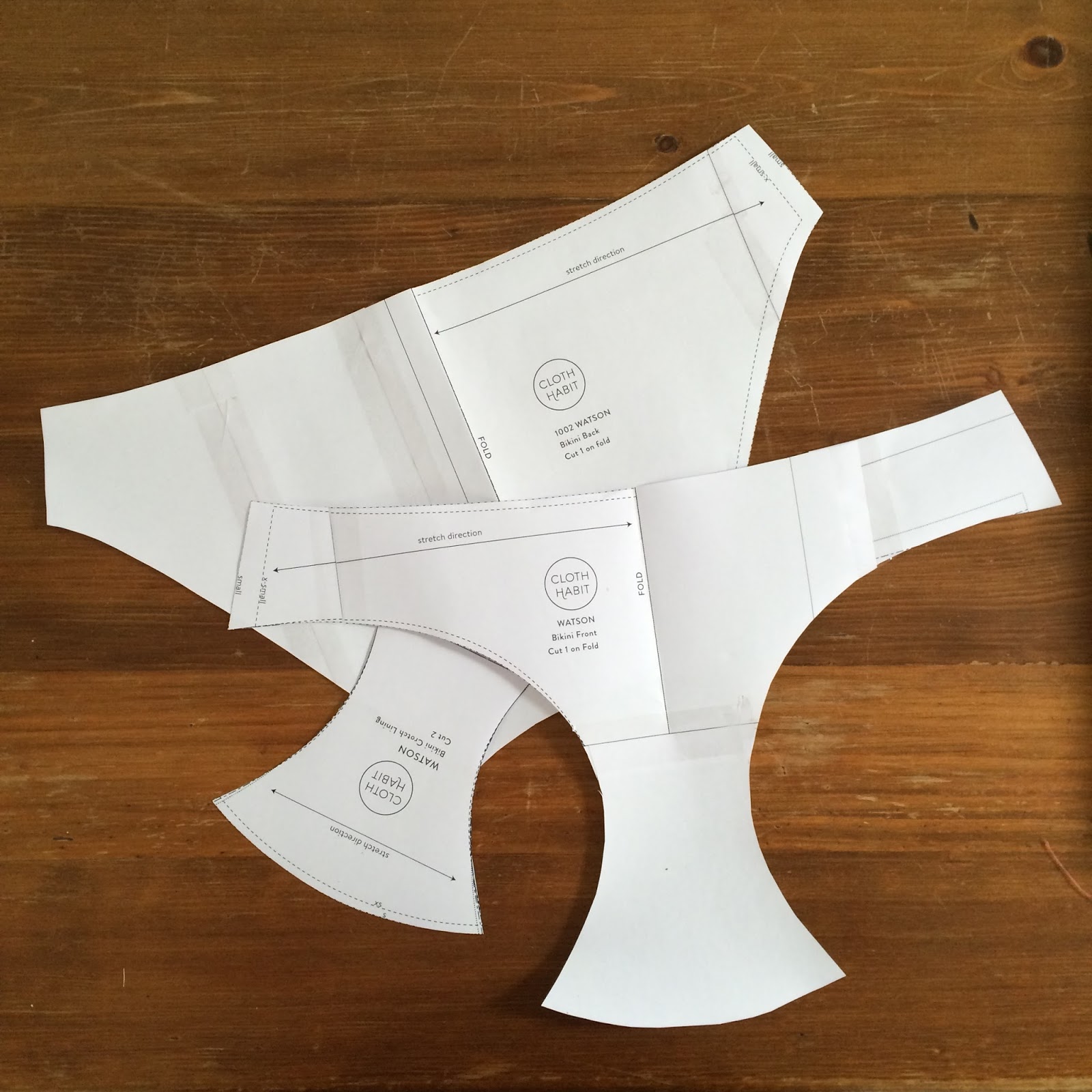
Pattern pieces: If your pattern pieces are half ones it’s well worth doubling them to make full pattern pieces, that do not need to be placed on a fold. This is useful for many reasons; one is pattern placement when it comes to lining up lace motifs, another is getting the most economical layout on a small piece of possibly expensive lace. Also if your pieces are to be cut on the bias… some knickers patterns are suitable for fine wovens like Liberty, and need to be cut on the bias and it’s only about 1000 times easier with a full pattern piece than folding the fabric accurately for a “cut on the fold”. Mark the bias line on all new pattern pieces too.
I also prefer to splice together the knickers front piece and crotch piece of my Watson brief pattern (see above) so as to make them one piece and eliminate that horizontal front seam. The crotch lining is sandwiched between the (new) knickers front and back pieces along the curved joining seam, and is stitched down with the leg elastic at the sides, but otherwise sits loose at the front. I prefer this to having a front seam!
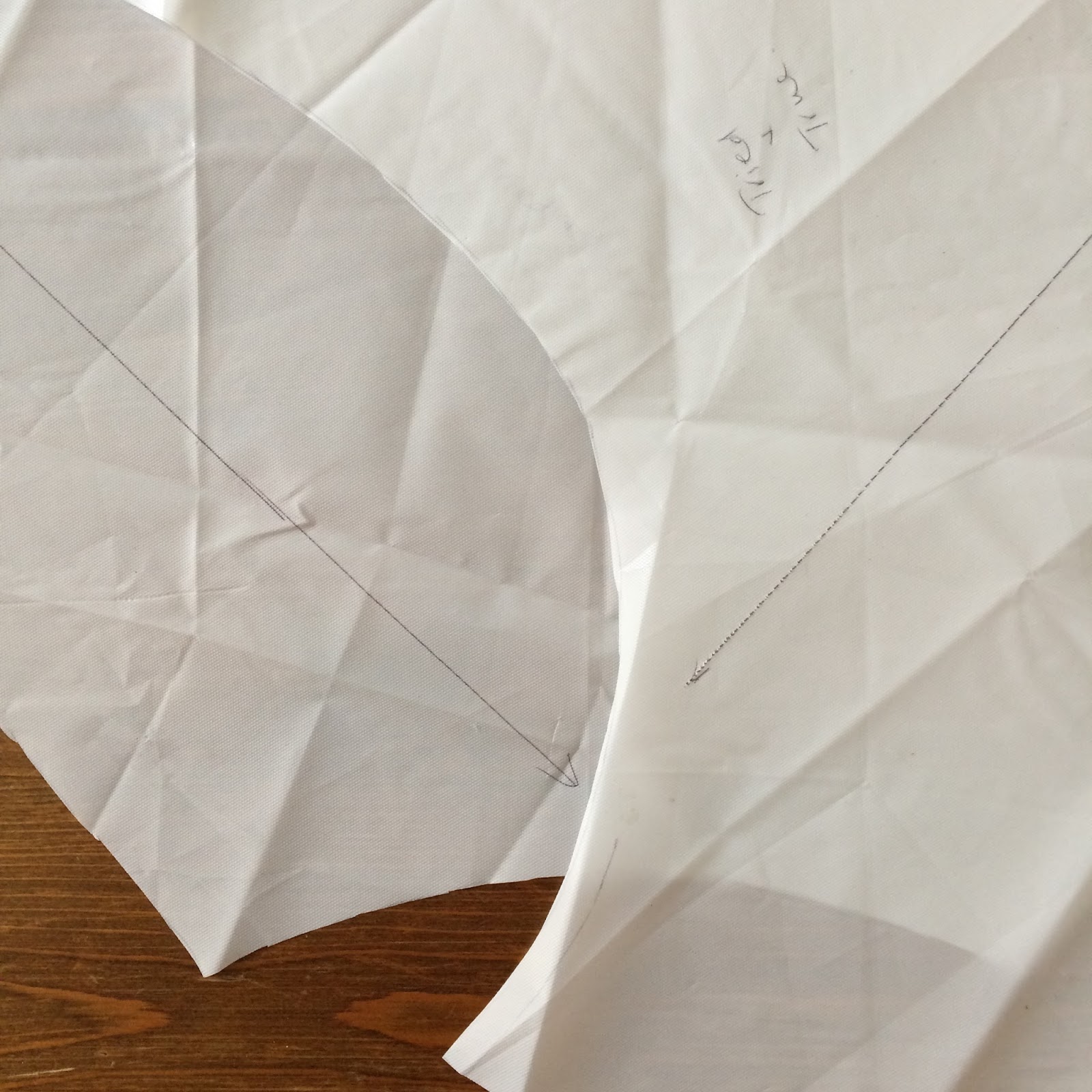
Usually I save paper by taping together scrap pieces or even newspaper to make the other half pieces; for frequently used patterns, or if the original is a fragile tissue paper pattern, the pieces can be traced as whole new ones on thin, sheer plastic which is more durable (above). For this I use plastic table-clothing, sold in 30m rolls from the party section of Spotlight.
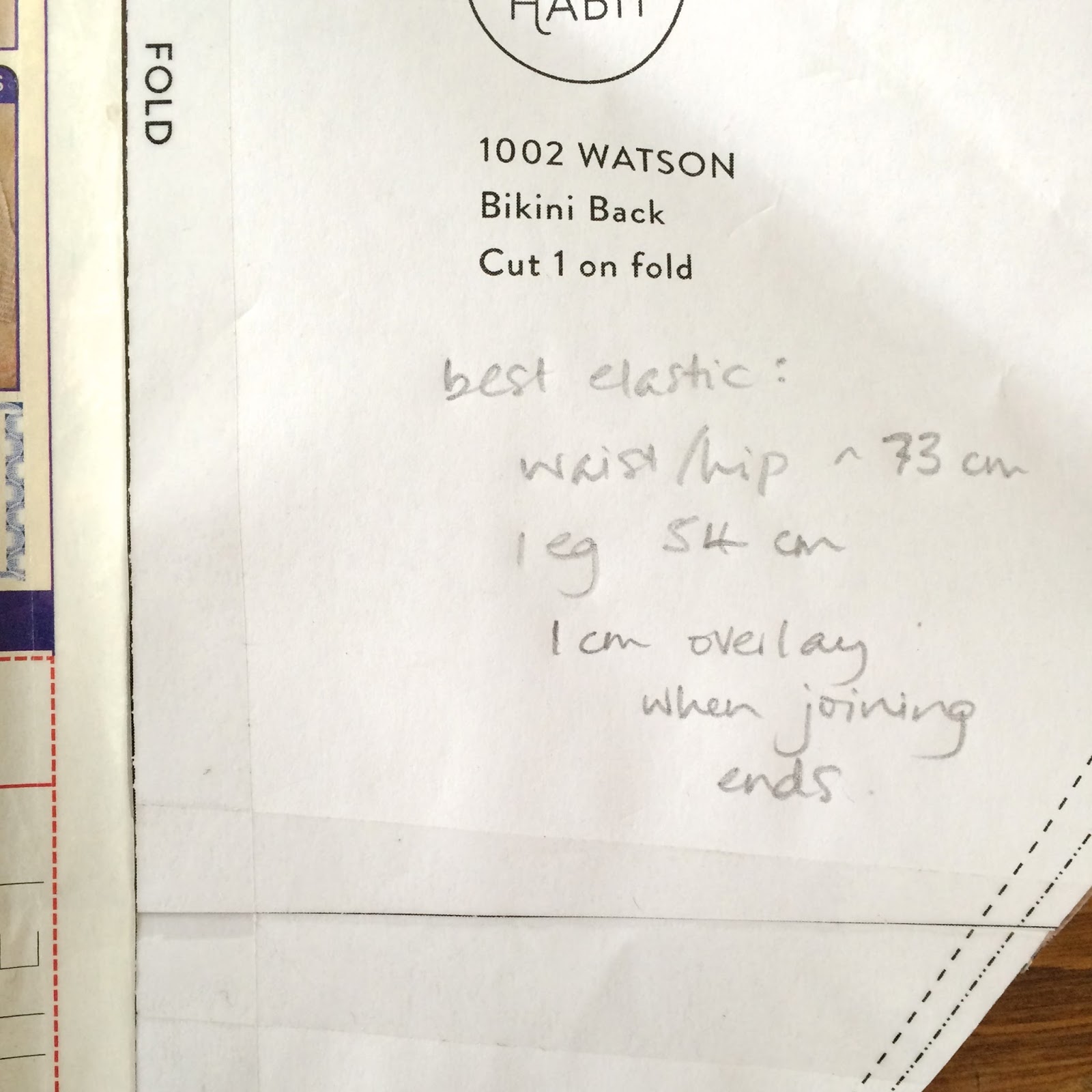
Also, I jot on the actual pattern pieces the lengths of elastic needed, to save re-measuring for each new project.
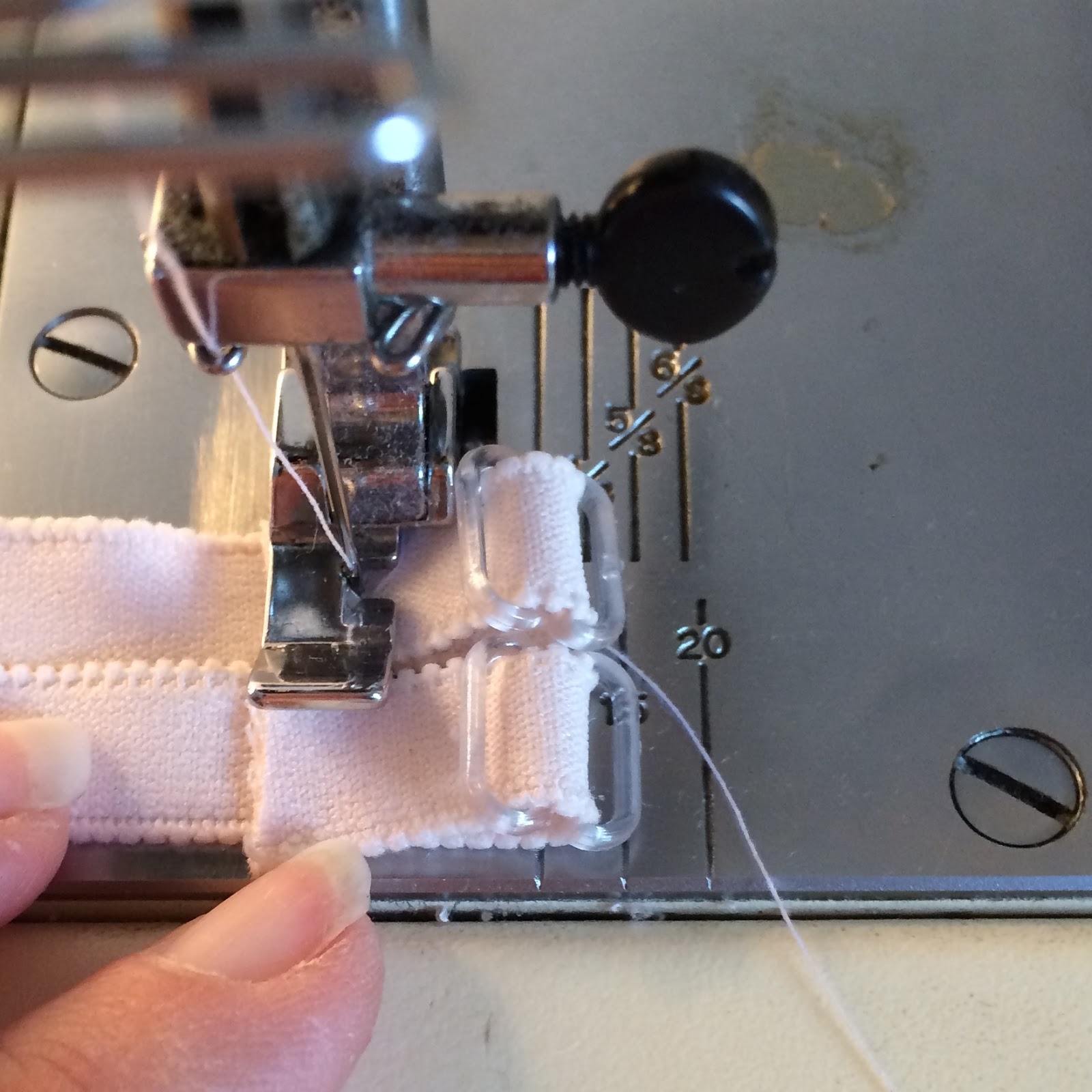
When sewing the ends of the rings and sliders; cut, pin and sew the pairs together and at the same time. It’s hand down the best way to guarantee the two sides will be identical, if such things as symmetry are important to you. Actually the same goes for anything there will be a “pair” of in the project.
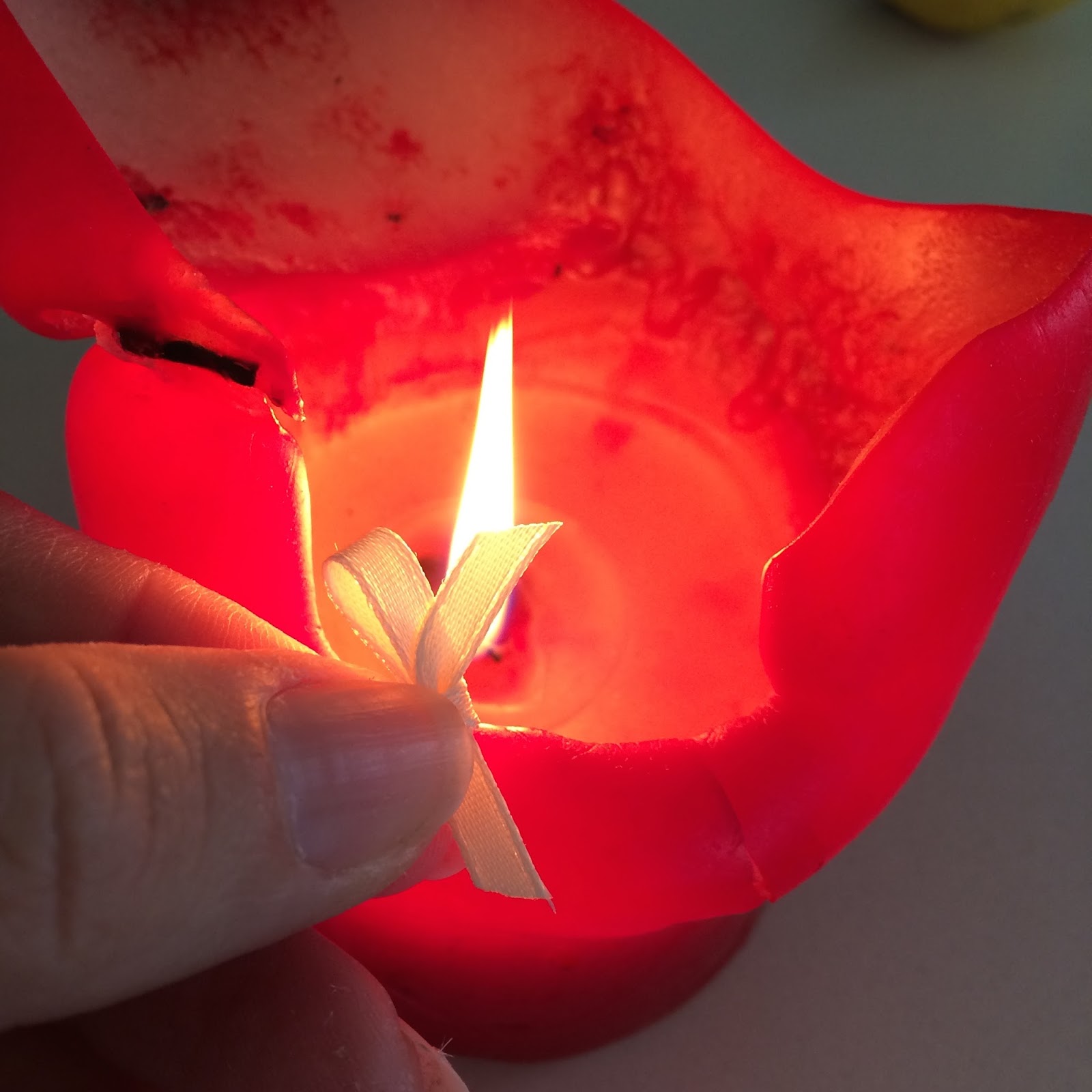
Satin ribbon trim; I always “heat seal” the cut ends of ribbon bows so they don’t fray during wear. Just hold the cut end of the ribbon close to a candle flame and carefully watch it as you sloooowly move it closer; it gets to a point where it starts to melt away in the heat. This happens pretty quickly so you need to keep a close eye on it and pull it away the very second you see it happening.
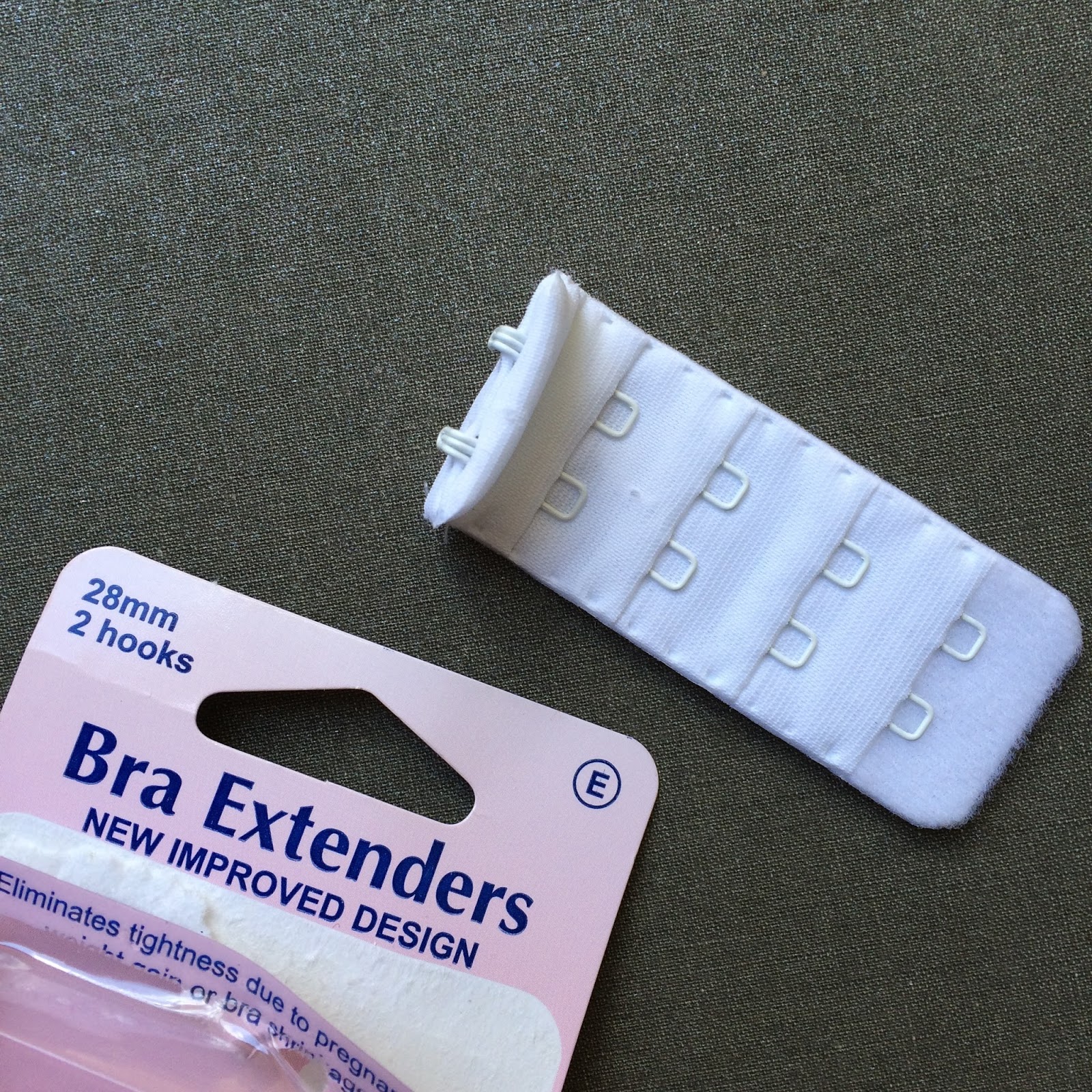
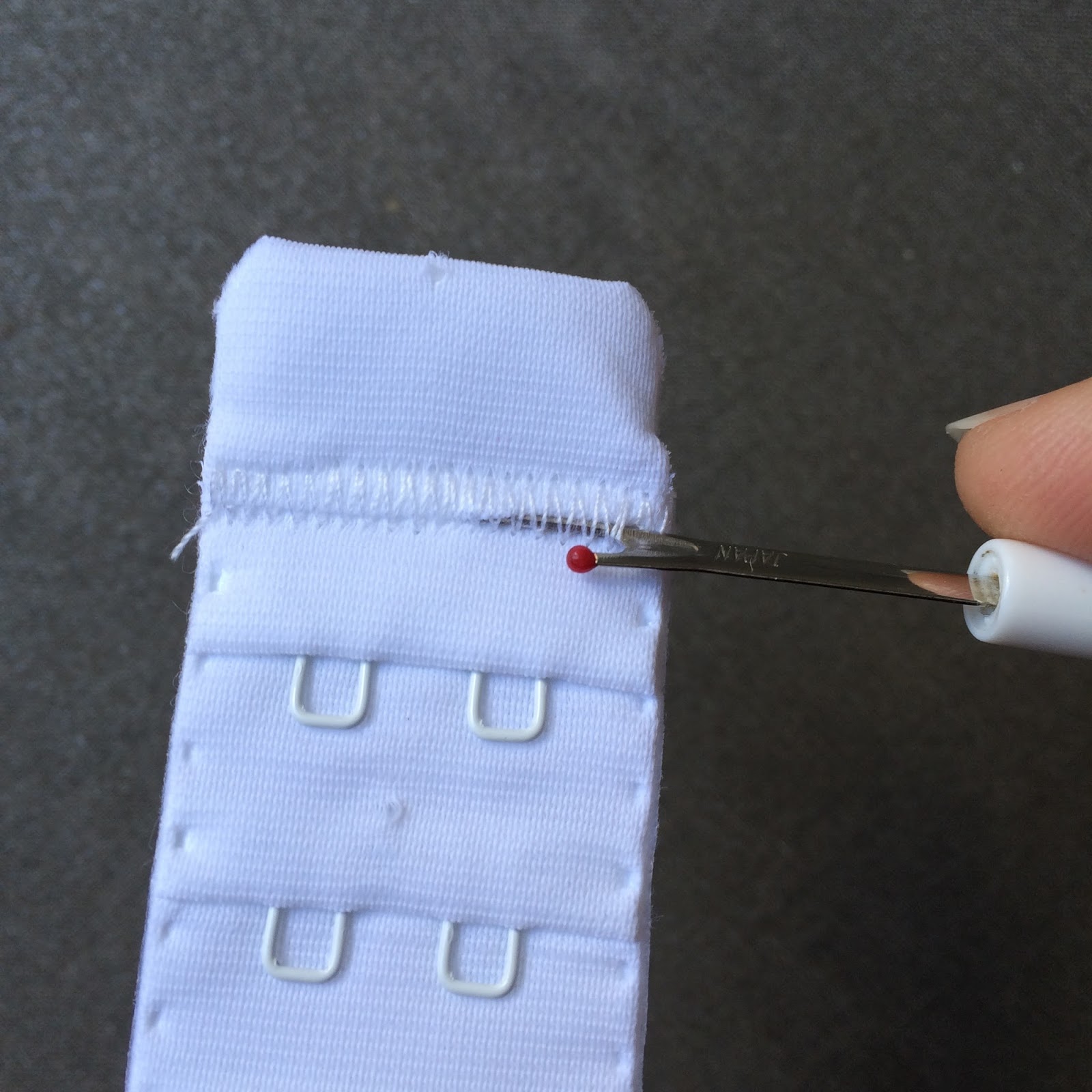
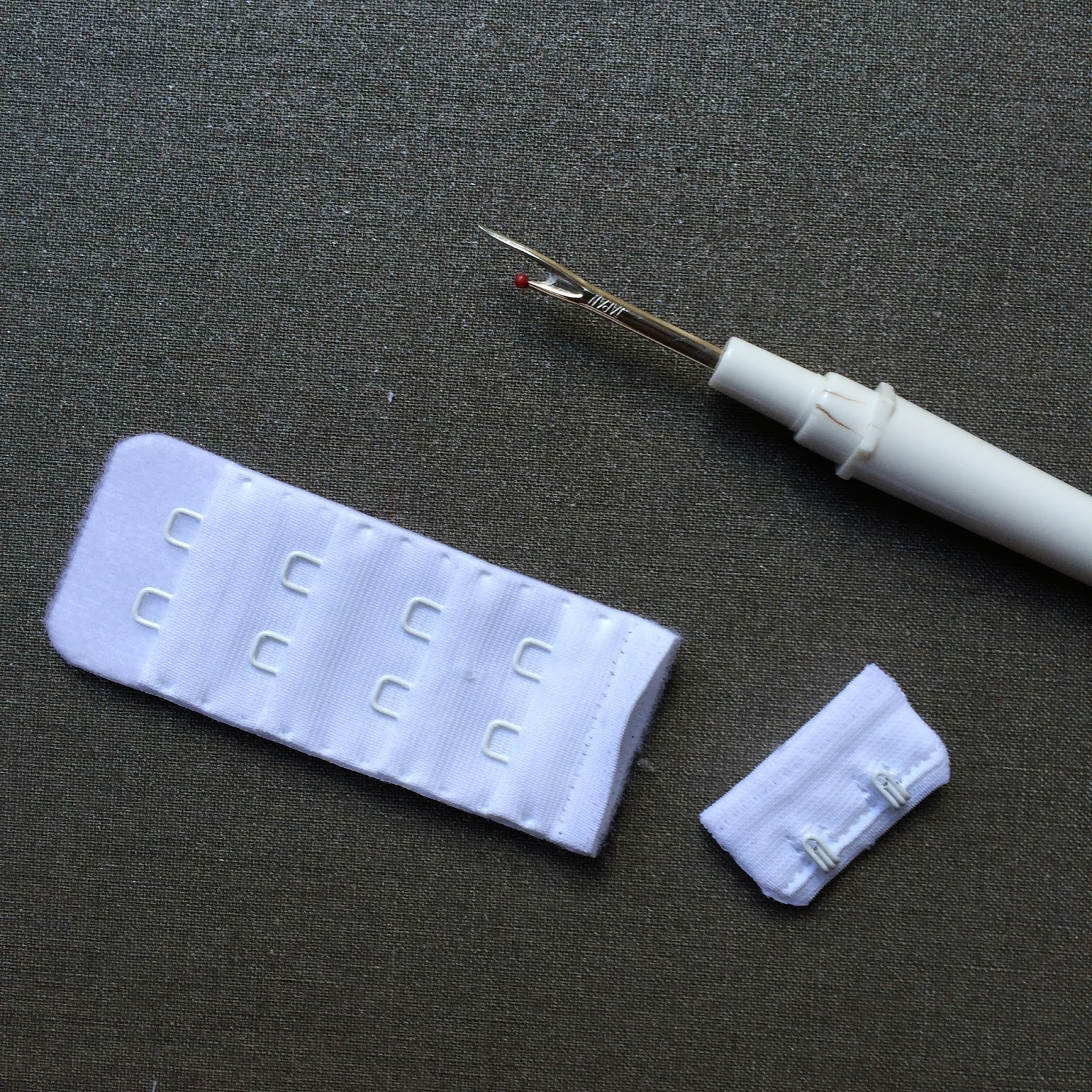
Hook and eye tape: I prefer to buy separate hook and eye tape if it’s available but my closest store sells only “bra extenders”. I’ve found these to be an adequate substitute if I can’t find the proper arrangement; the pieces can just be picked apart quite easily. If the “hook” piece is too long the extra length can be cut away and the edge zig-zagged. It’s not as neatly finished or as professional looking, but it’s perfectly fine in a pinch.
Sewing edging elastic onto lightweight and super-stretchy fabrics …
Super stretchy fabrics are obviously perfect for underthingies but also obviously come with their own little challenges… and one of them is the dreaded “lettuce leaf” edge happening.
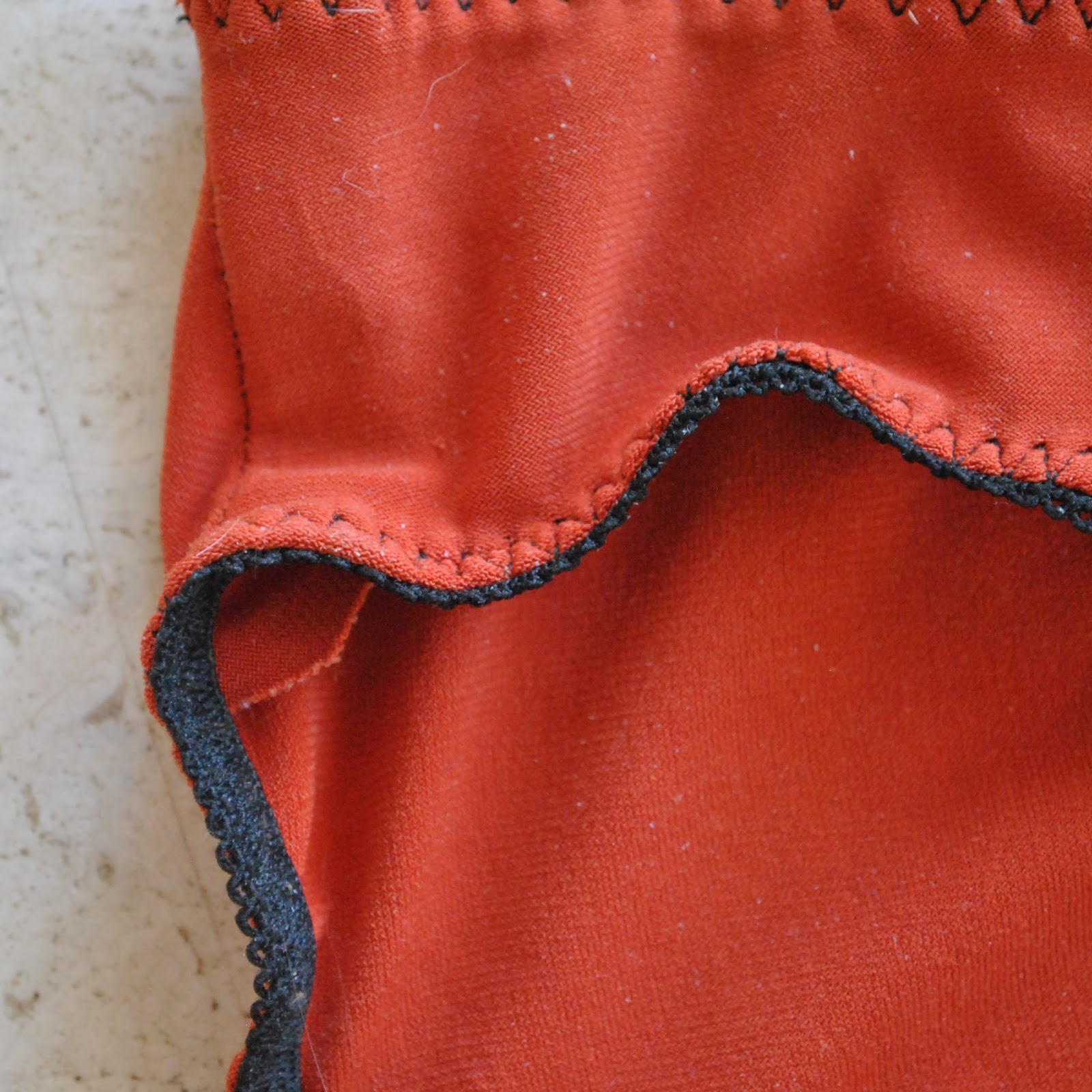
I’ve found it very helpful to sew a long basting or stay stitching 6mm (1/4″) from all edges before attaching any elastic. I know, straight stitch on knits, *horrified gasp* it’s a huge no-no and I could get blasted for this! but meh, it works out pretty good for me 🙂
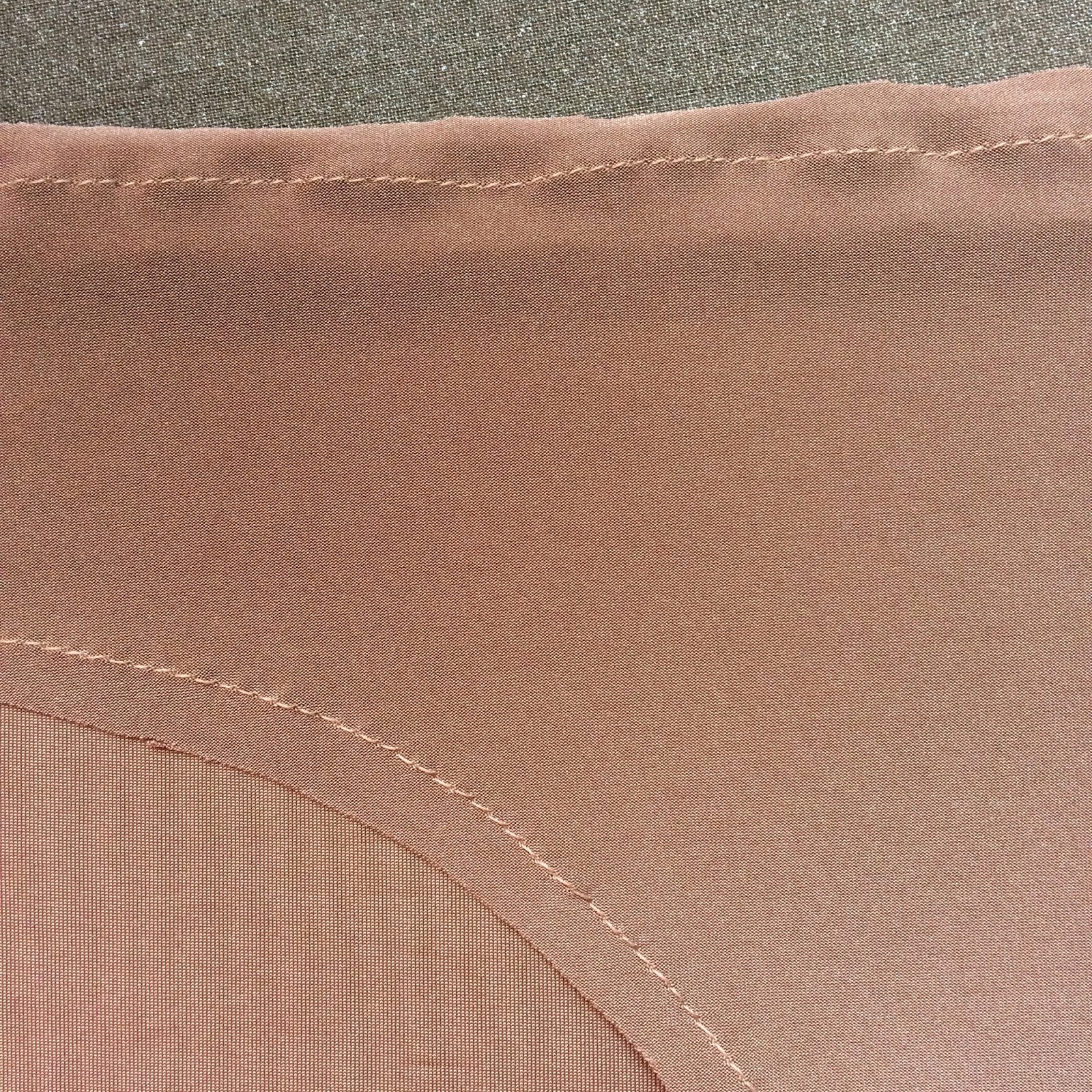
I mean, everyone has their own, slightly unique way of attaching elastic, I’m of the school of thought that whatever works, works; and lots of different ways are going to work.
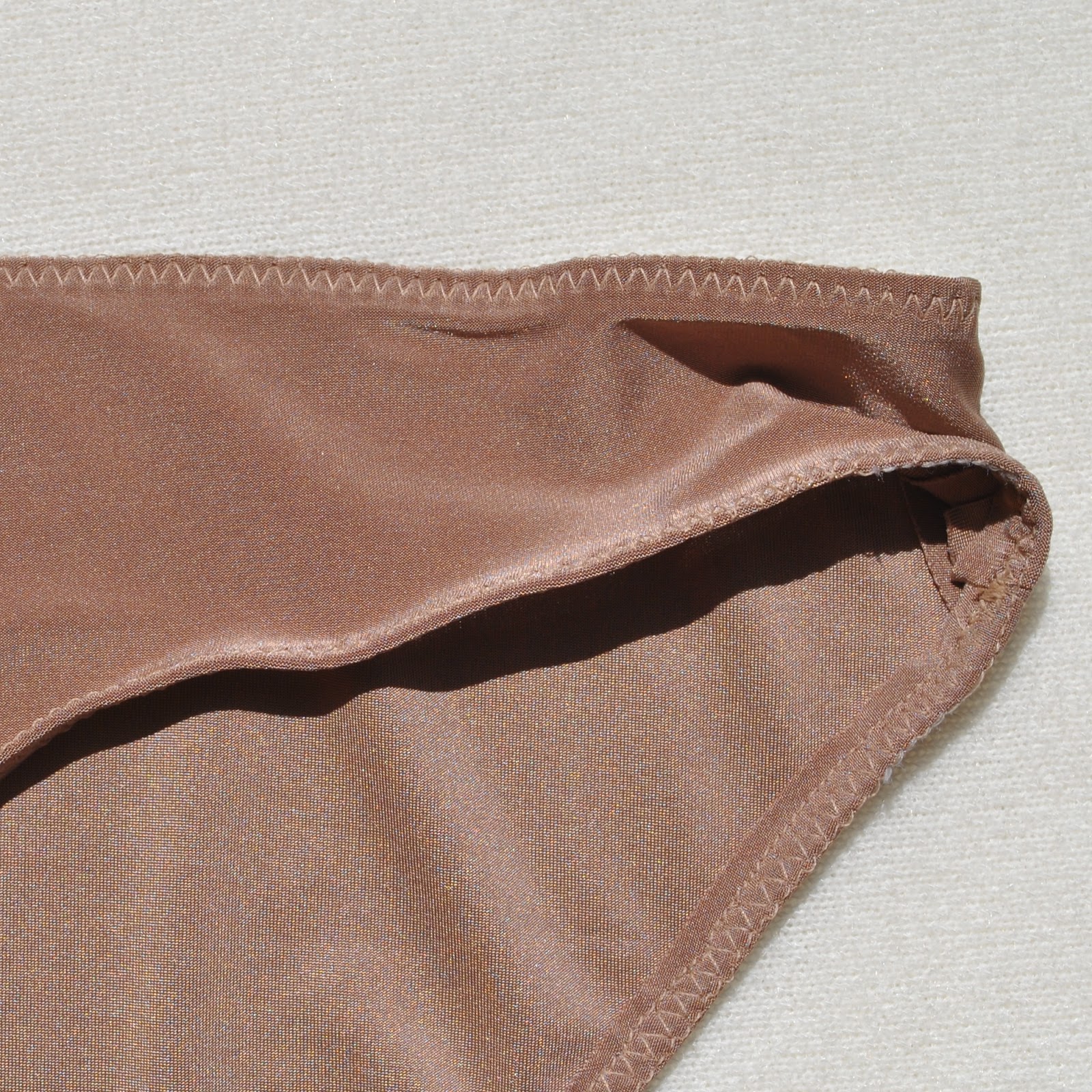
The lettuce leaf occurs when the elastic is overstretched while sewing it to the edge of the fabric, and it’s pretty easy to do this when sewing with a particularly stretchy fabric. It’s better for the elastic to be sewn to the edge of the fabric “flat” that is, for the elastic to be stretched to the minimal amount and for the fabric to be stretched not at all, while sewing them together. A stay stitching helps to prevent this, and after the elastic is attached and before the final zig-zag you can pull out those initial basting/stay-stitching threads, if you like; to keep things looking nice and neat and tidy.


































Love the stay stitching idea, definitely going to use that!
As usual, a great post! I am bookmarking it. Thanks for sharing your knowledge 🙂
Wonderful! Thankyou so much for posting this. It is very helpful 🙂
Very helpful. I think I need to try the plastic idea for my undies pattern. And I desperately need to write down the elastic lengths. And that lace you have in your first photo is so gorgeous. Will it be making an appearance as a bra any time soon?
thanks Andrea; and yes I made that lingerie set a month ago and it can be seen on my blog here 🙂
I remember seeing that one! It is so lovely Carolyn.
I had never considered stay stitching for those to-be-elasticated edges! I'll remember it.
I also tend to make full pattern pieces instead of those half ones.
And about the ribbons, you can also use fray check or clear nail polish: Draw a line with the stuff where you want to cut the ribbon, let it dry and then cut. It's a good solution on those kinds of ribbon which show a scorched edge after heat sealing.
There are never enough sewing tips! Thanks for these. I'm on a Watson bikini kick at the moment so they will come in handy immediately.
Wonderful, helpful tips – thank you so much for sharing. I'm especially excited about copying a half pattern in full (like all terrific hints, so simple – and possibly so "obvious" …to some….!). It will be especially helpful for those 'slippery' type silks. Thanks again!
brilliant helpful tips – the ribbon is a definite new one, I have saved the post as those elastic tips are brilliant….
A really useful post that has added to my repertoire of tips so thank you.
Very useful! I love the tip about writing the elastic lengths on the pattern pieces. Great idea.
Sewing the straps to the rings at the same pass, oh golly, that is brilliant. I won't use it for lingerie, but dangnation I will use it for bag straps!
Yes, you added some to the pot of knowledge. Thanks so much
Thank you for your good tips, Carolyn! I never thought about melting a bow's end or staystitching lingerie fabric! 🙂
Very helpful tips. Thanks for sharing.
Very useful tips. Thanks for sharing them!
Thank you for all
Thanks Carolyn for all those super helpful tips! Writing the elastic length on the pattern is such an easy but soo helpful idea that I didn't have myself yet! I will also try staystitching the edges, thanks!
Thank you for these tips – so helpful. Just beginning my 'sewing lingerie' adventure – oh there's a whole new world of trims and fastenings out there!
Really helpful – just starting making lingerie and will be trying your baste before applying elastic tip for sure.
Wonderful tips and I need all the help I can get with elastic, thank you.
very simple and beautiful . . thank you
You will be solely responsible for any mistakes, but can take full credit for all your successes. As a result, you will develop a sense self-reliance and fulfillment. You will be providing a valuable service for which people are willing to pay. This will give you prestige and make you an asset to your community. go now