Monthly Archives: November 2014

You are browsing the site archives by month.

nani IRO blouse

I’ve made a new top.  It is a plain little top, but to my eyes the lovely thing about it is the fabric; a beautifully soft cotton gauze, and the charming hand-painted look to its print.
A short story…
About
a month ago I was meeting with some friends, and one friend was a little late.  When she arrived, she explained that on the
way she had spotted a cute top in the window of a shop, and just had to screech to a stop and check it
out.  She tried it on and then bought it,
totally on the spur of the moment.  We
all duly admired the top and chatted about the pros and cons of spontaneous vs
carefully planned purchases.  Important, life
altering stuff, I know!
Anyway,
after our get-together, which happened to be in Glyde Street where Calico and
Ivy is situated, I popped in to check out the offerings.  Saw the range of nani IRO double gauze, fell hopelessly
in love all over again, as I always do when I go in and see it there.  It occurred to me that maybe I could buy
myself a little top too.  Except of
course that my version of buying a little top is buying a piece of fabric.  Inspired by my friend I just decided to
spontaneously go for it. 
And bammo, new top!   Woot!
I wanted the print to be the star so wanted for a very plain, simple and relaxed silhouette.  I used New Look 6483, one of my really old old old tried and trues that I’ve had for many years.  Not exciting, but a real goodie nonetheless.  There are probably tonnes of patterns identical to this one.
This
print is called Painting Check.  My very favourite
thing of all about it is the way the print fades away towards the selvedge and
I wanted to use this feature as a sort of “border print”,
although obviously it isn’t actually a border print but the complete opposite.  It’s a reverse border print!
But
I like ideas that are turned on their head so it’s definitely my kind of border
print.  To keep this feature firmly in
focus I left the selvedges unhemmed.  It’s an uncommon choice but I think it works really well for this particular fabric, and I really like how it looks!
The
two body pieces are cut from one selvedge edge and the two sleeves were cut
from the other.  The sleeves still have
the fabric ID on them, which I find quite charming.
There was only 1m left on the roll, which wasn’t quite enough for the hip width required for my pattern pieces.  So I cut them as wide as possible and just left the side seams open in a slit from the lower waist down.  
Side,
sleeve and shoulder seams are flat-felled, the armscye seam is overlocked and
the neckline is finished with a narrow strip of bias cut cotton voile,
stitched, understitched and then topstitched.
Details:
Top;
New Look 6483, nani IRO double gauze “painting check”
Shorts;
Burda 7723, white linen, details and my review of this pattern here
Thongs;
Havaianas
pinterestmail

a natty little nightie

This was a need.  
A very desperate need.
My lovely, fluffy, cosy, snuggly warm winter PJ’s are rapidly becoming unbearably so, meaning…
IT’S SUMMER NIGHTIE TIME!!!!  
I wanted the “IT’S CLOBBERING TIME!!” font for that bit there, but Blogger’s font selection is lacking in such niceties so all caps will have to do.  We’ll just have to imagine it, ok?
Pattern; McCalls 4454, lengthened from a pretty little camisole to nightie length.  With in seam side pockets added, just because.
Fabric; I managed to eke the pieces to the very last scrap from the leftovers of my sew bossy dress, a pretty cotton floral sent to me by reana louise.  Thanks, Reana!  It’s such a nice quality fabric.  I didn’t have quite enough blue floral for straps, but I found a little piece of pink and white poly gingham that I cut into bias strips to make the straps and to finish the top edge, and also made a short, super skinny spaghetti tube for the little decorative bow on the front.  I originally bought this gingham to make little pinked-edge caps for jars of lemon butter, the year I enthusiastically made jars and jars and jars recurring of the stuff to give away to friends.  Note to self: I MUST do that again next year.  Was hopelessly overrun with lemons this year. Lazy me.

Anyway, now that scrappy little leftover bit of pink gingham has proven itself useful I can smugly pat myself on the back for keeping it all this time.  Ha! that’s all I need, more justification for hoarding those awful little bitty scraps!  Merely aiding and abetting the beast, that’s what.

pinterestmail

patchwork Sandpoint top

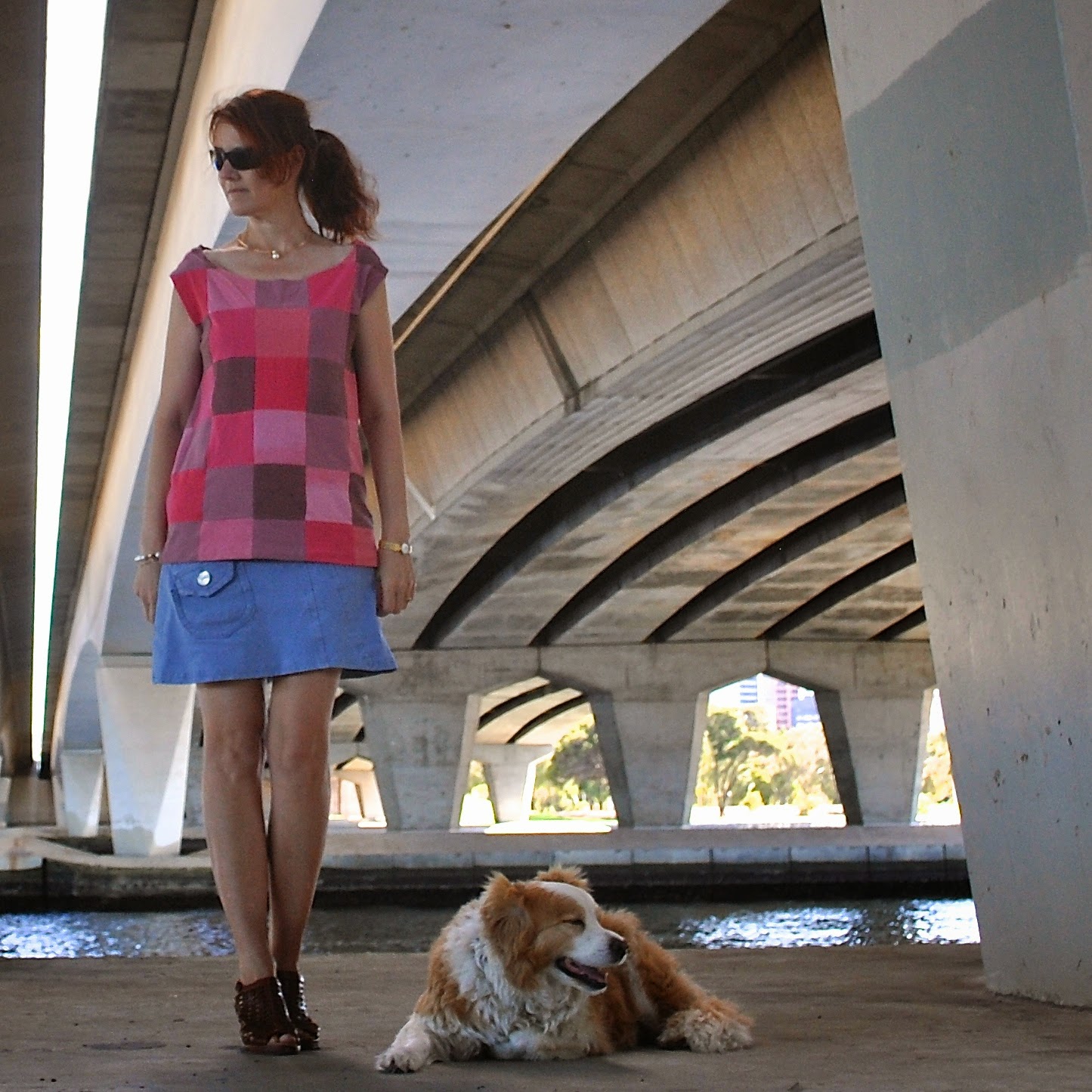
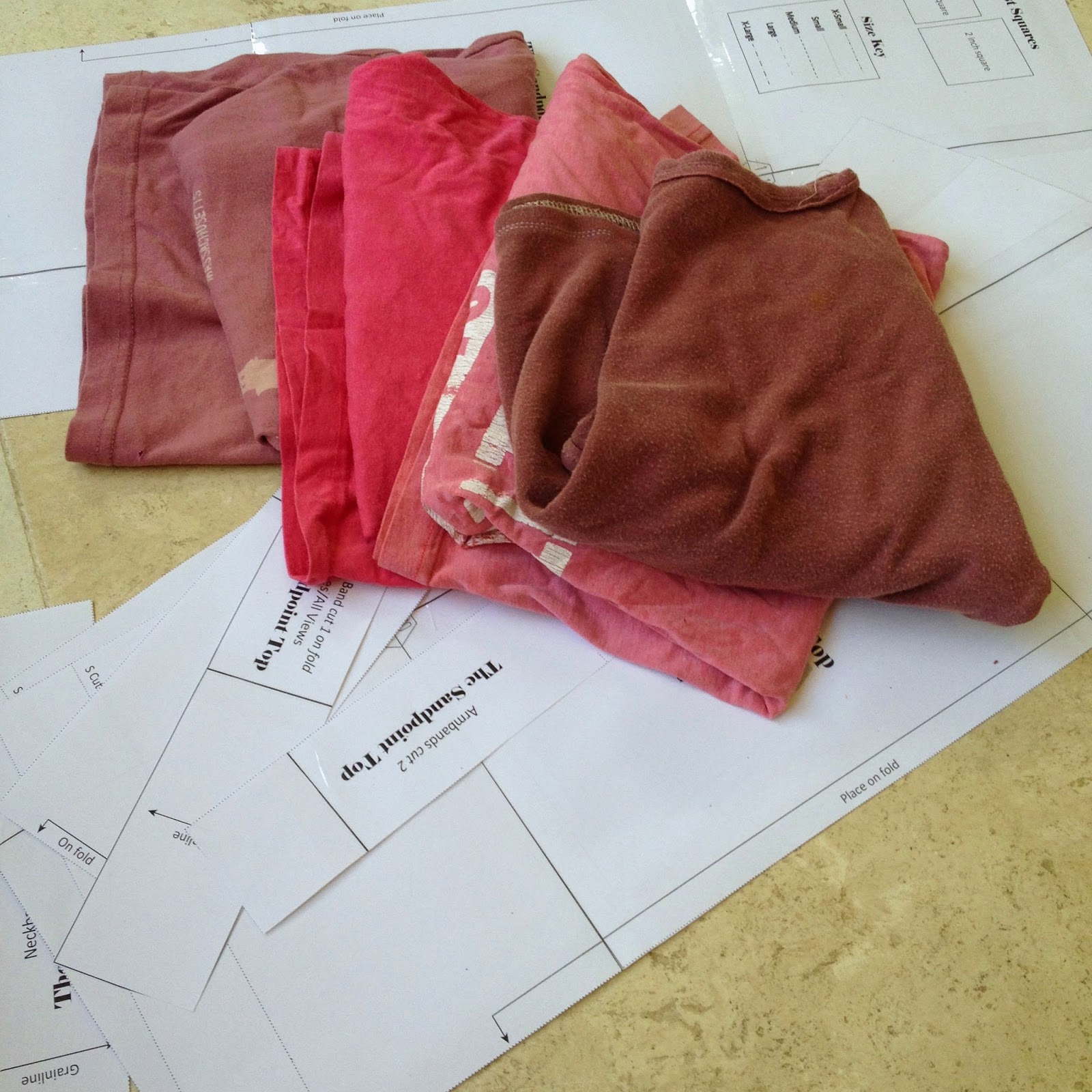
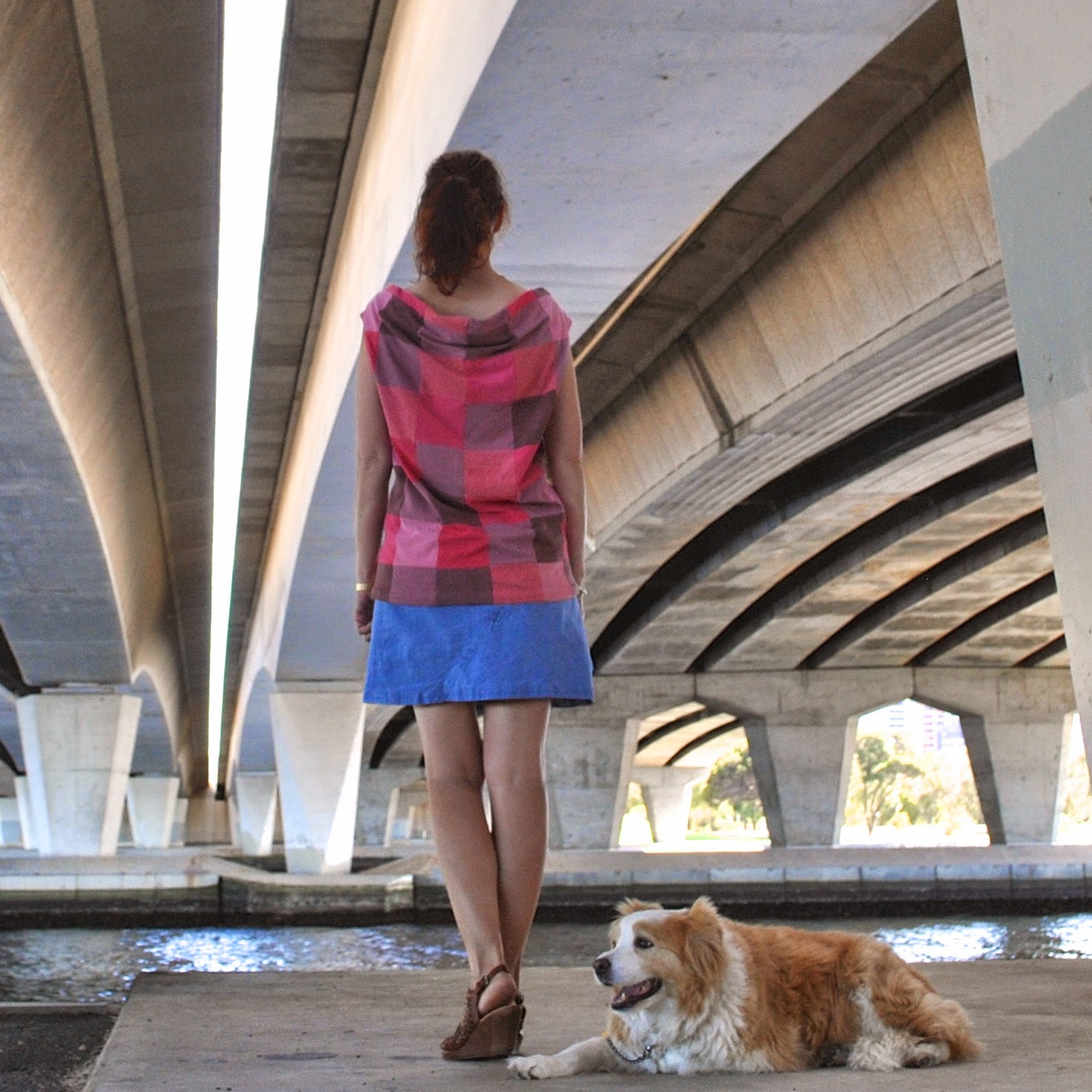
I’ve made a new top.  Well, kinda new from old actually, since it’s made from 4 old Tshirts cut up and patched together.  My refashioning bag yielded; a light purply-brown from Craig, two pinks from Tim, and a chocolate-y one which is one of my old self-made Tshirts.  They were all old and a tad tatty here and there but still had some good bits left in them.  And I liked these yummy Cherry Ripe colours together.   mm-mmmmm  🙂

The pattern is the Sandpoint top designed by Helena of GreyDay patterns.  Mel of the curious kiwi contacted me to ask me to make up the pattern and review it and well, I love trying out new patterns; so ta da!

The Sandpoint is described as “a loose fitting T-shirt
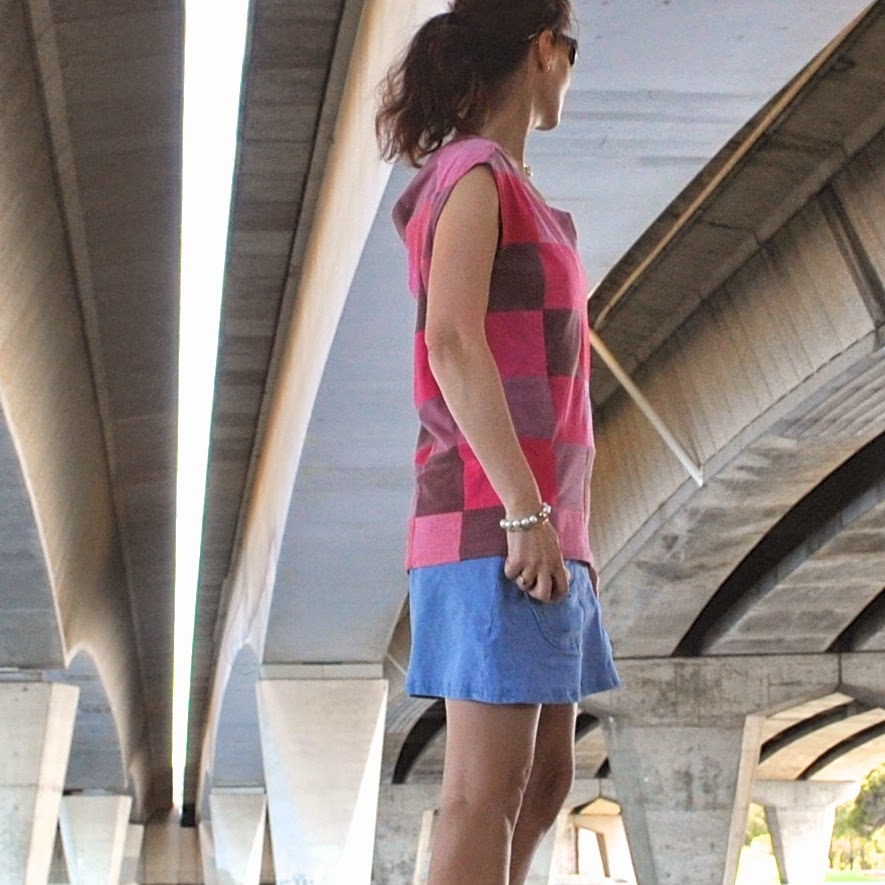
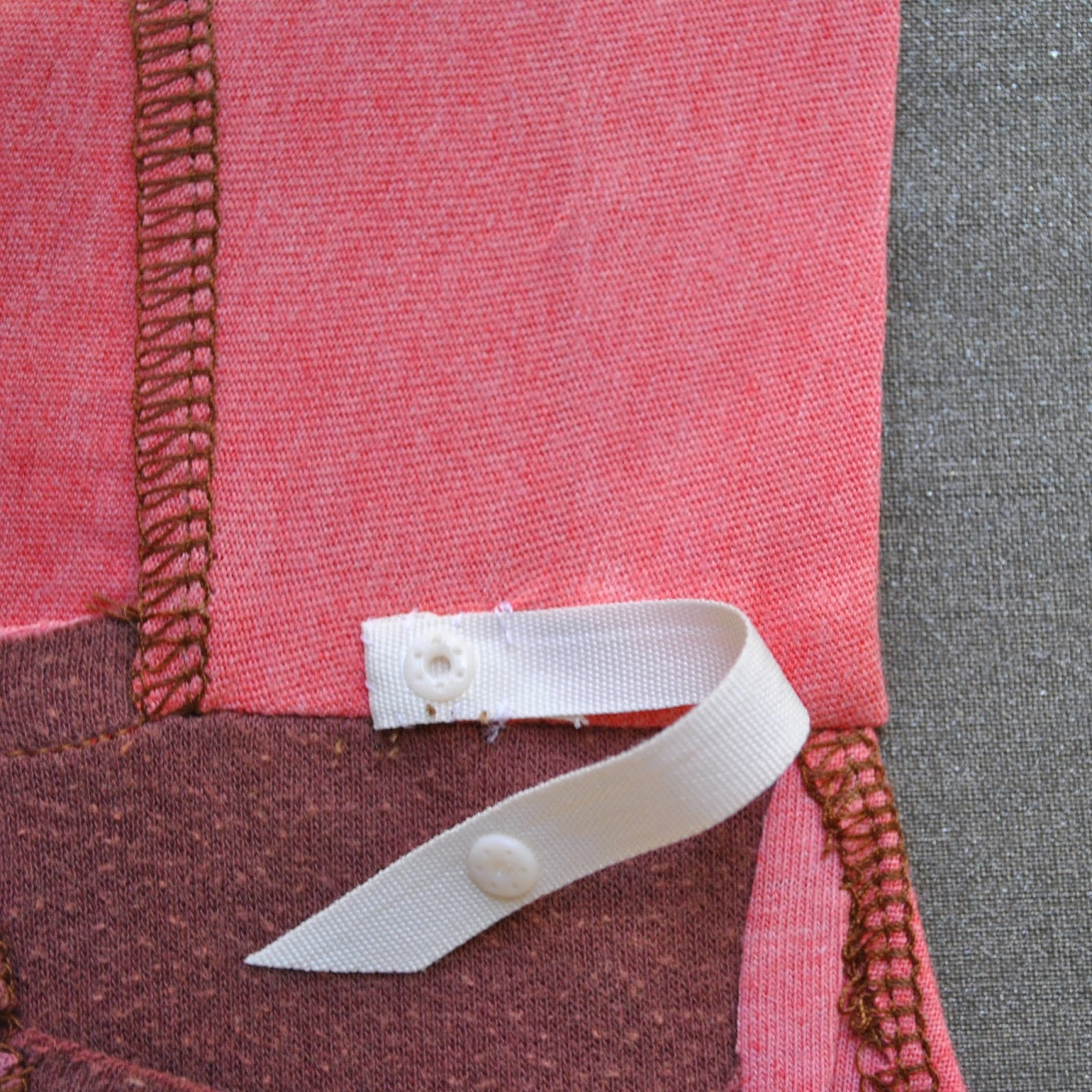
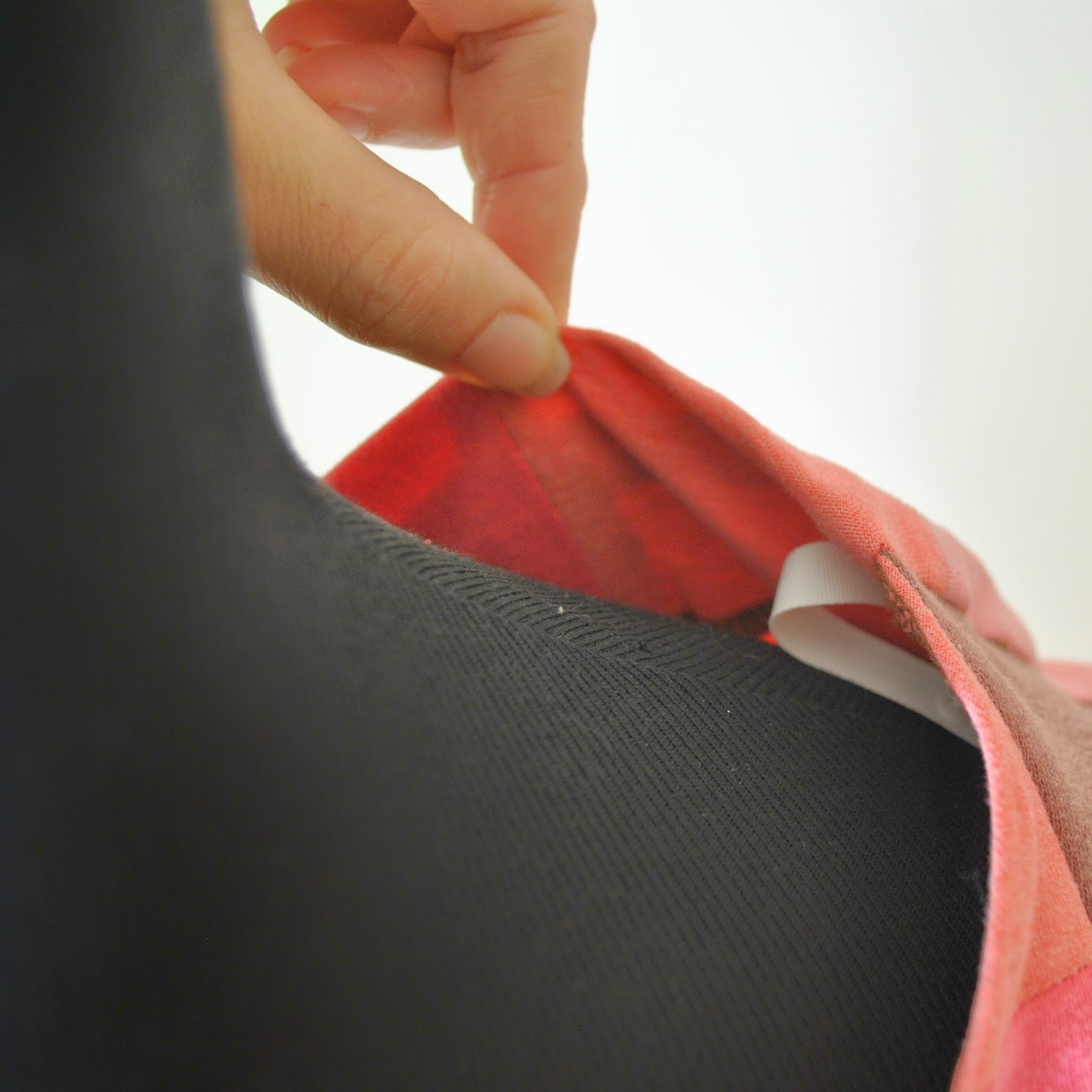
with a surprise cowl in the back”.  It is a nice little top pattern suitable for a beginner, having separate front pattern pieces for the two neckline options, V-neck and round neck.  I think it’s biggest point of difference from other similar designs is a “shoulder band”, essentially a strip which is supposed to be worn behind the neck.  I think its purpose is probably to keep the top actually up on your shoulders and not fall off, which is pretty much a given with these necklines.  However I wasn’t keen on the shoulder band and decided to leave it off, and sewed lingerie holders inside on the shoulder seams.  I have previously used lingerie holders to keep up the shoulders of my other oversized cowl, drape-y tops, here and here, and have found them to work just fine for the job.  Fortunately they do for this one too  🙂

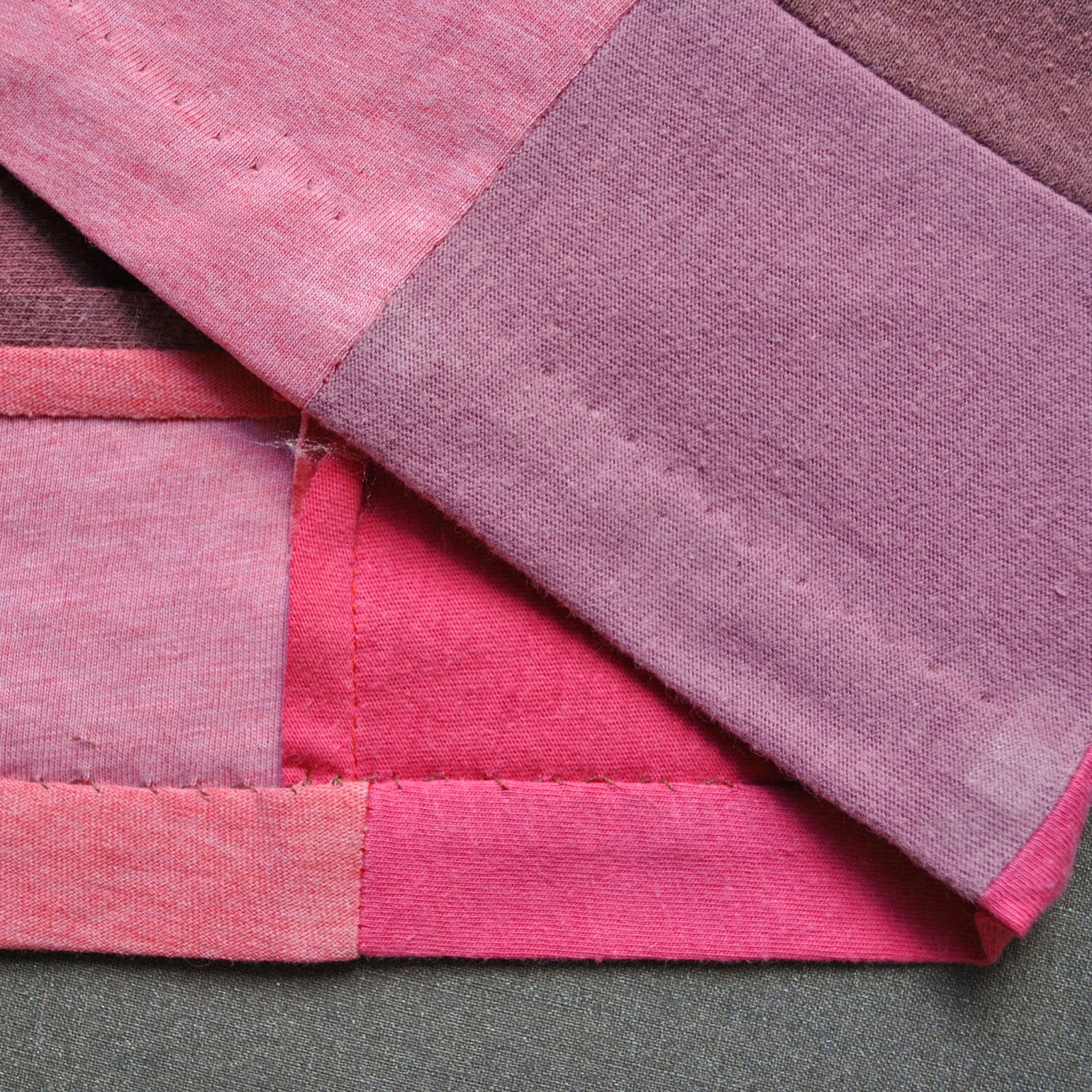
Because I wanted my rather bold patchworked fabric to speak for itself I decided that arm and neckline bands would be a visually distraction, fighting for attention.  So I left these off also and finished these edges by simply overlocking, turning under once and hand slip-stitching a hem in place.  My lower hem is likewise, invisibly hand stitched, and actually my top is 6.5cm longer than the pattern… for no real reason other than my patched-together fabric had the extra length, and who was I to ruthlessly cut it off? after all that careful cutting and patching it together!?  Plus, I just happen to like tops to be a little bit long.

Because I was leaving off the shoulder band, I put my top together quite differently from the instructions… namely: the instructions say to fold the back cowl allowance inside and then stitch the front and back together at the shoulders.  However this would result in a visible end-of-seam at the neck, which in the design is to be covered up by that shoulder band.  So, instead I pinned the front and the back together at the shoulders right sides together, then folded the back cowl facing allowance out to wrap around the front; then stitched the shoulder seam.  This way, when the shoulder seam is turned right side out the shoulder seam is nicely encased and hidden away within the facing, which gives a neat, more polished finish.

Details:
Top; Sandpoint by GreyDay patterns, made using 4 old cotton jersey Tshirts
Skirt; an adaption of Vogue 1247 and Vogue 8561, blue, slightly stretch denim, details here
Shoes; c/o Misano

pinterestmail

simple buttoned cuff

This is an understated little feature to jazz up the end of a plain sleeve.  It’s mainly decorative rather than useful, but I think it does look kinda cute  🙂
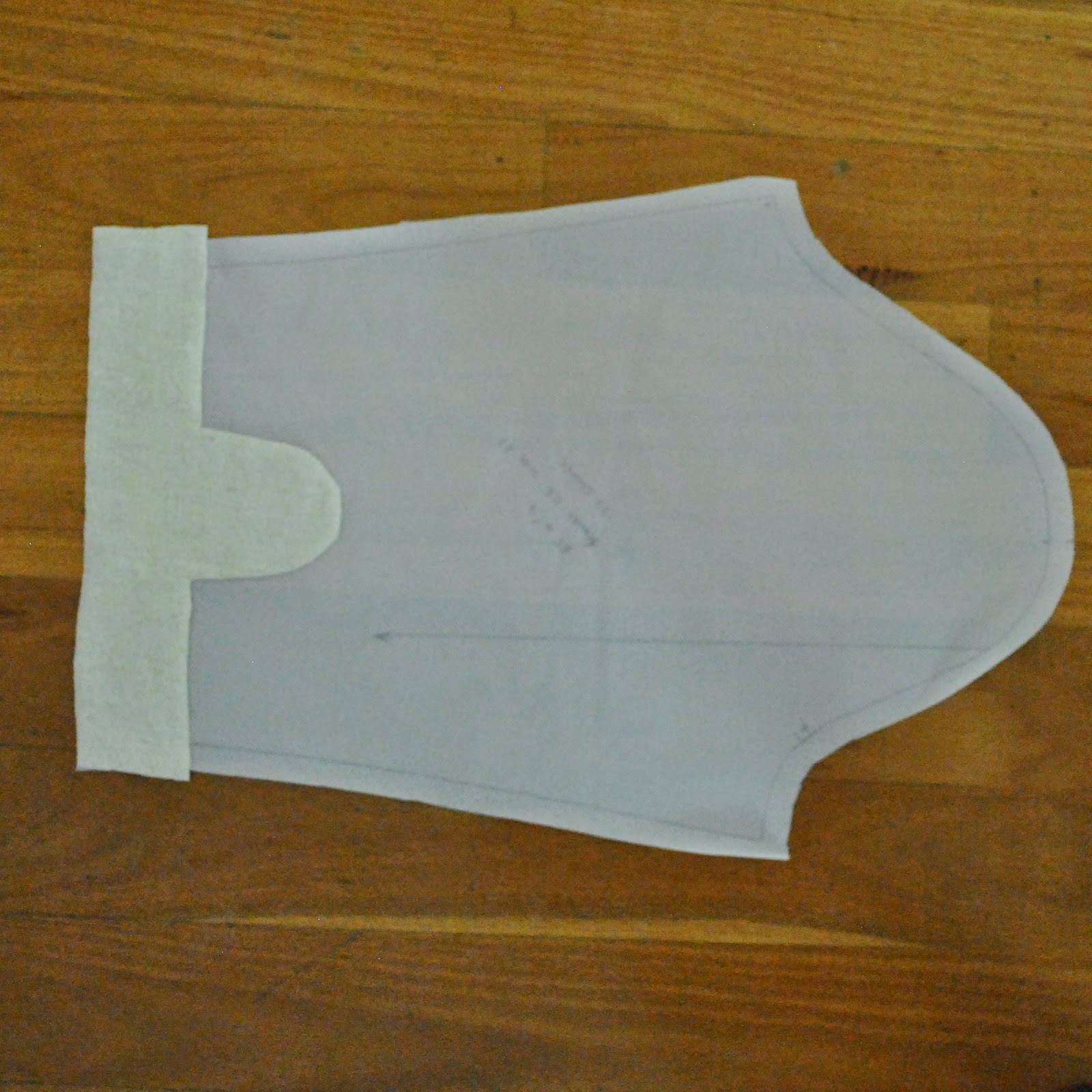
To add this, you will need to cut your sleeves tapered out a little wider at the  lower hem end to allow for the overlap.  Doesn’t need to be much, about 1.5cm (5/8″) at each side should be sufficient.
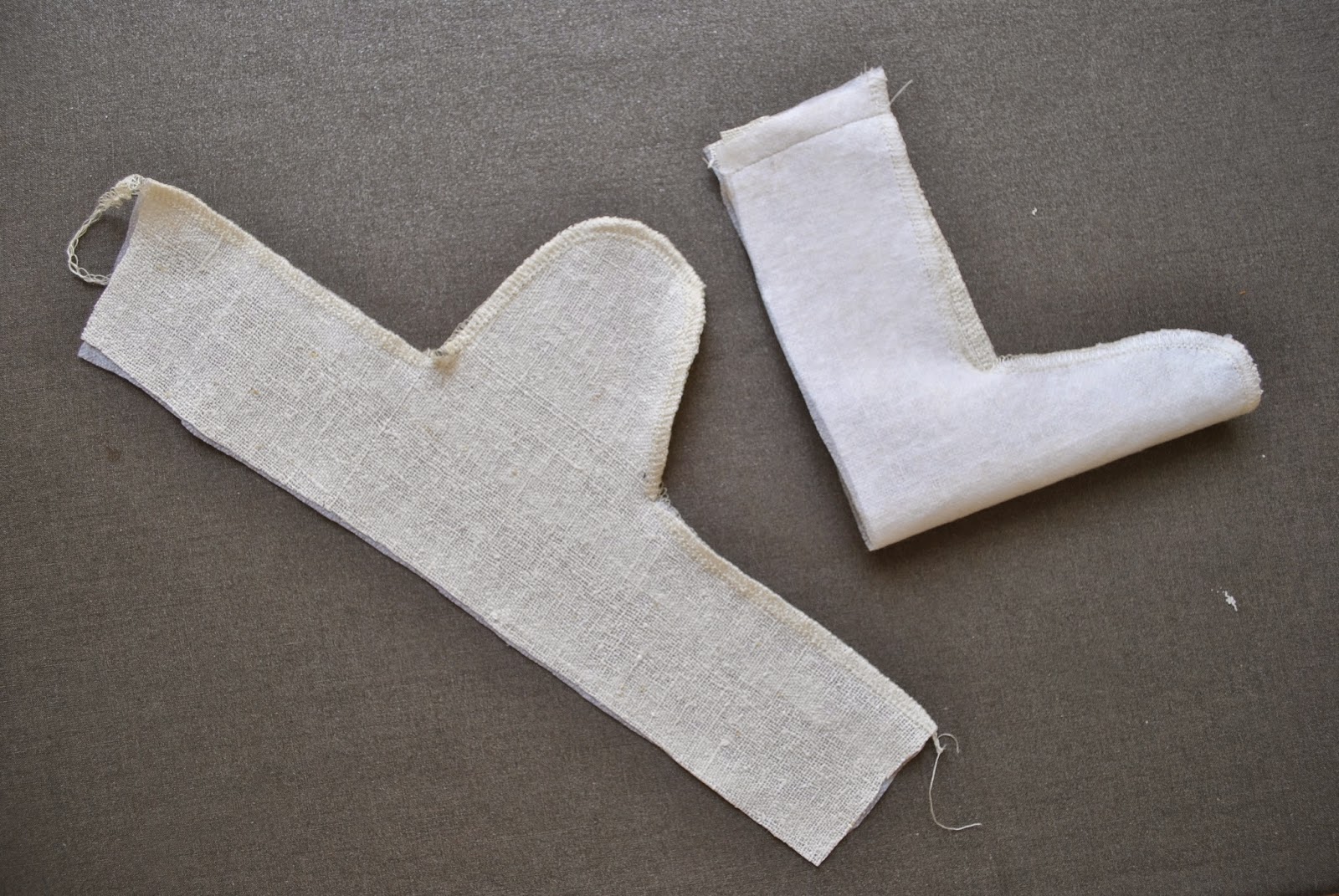
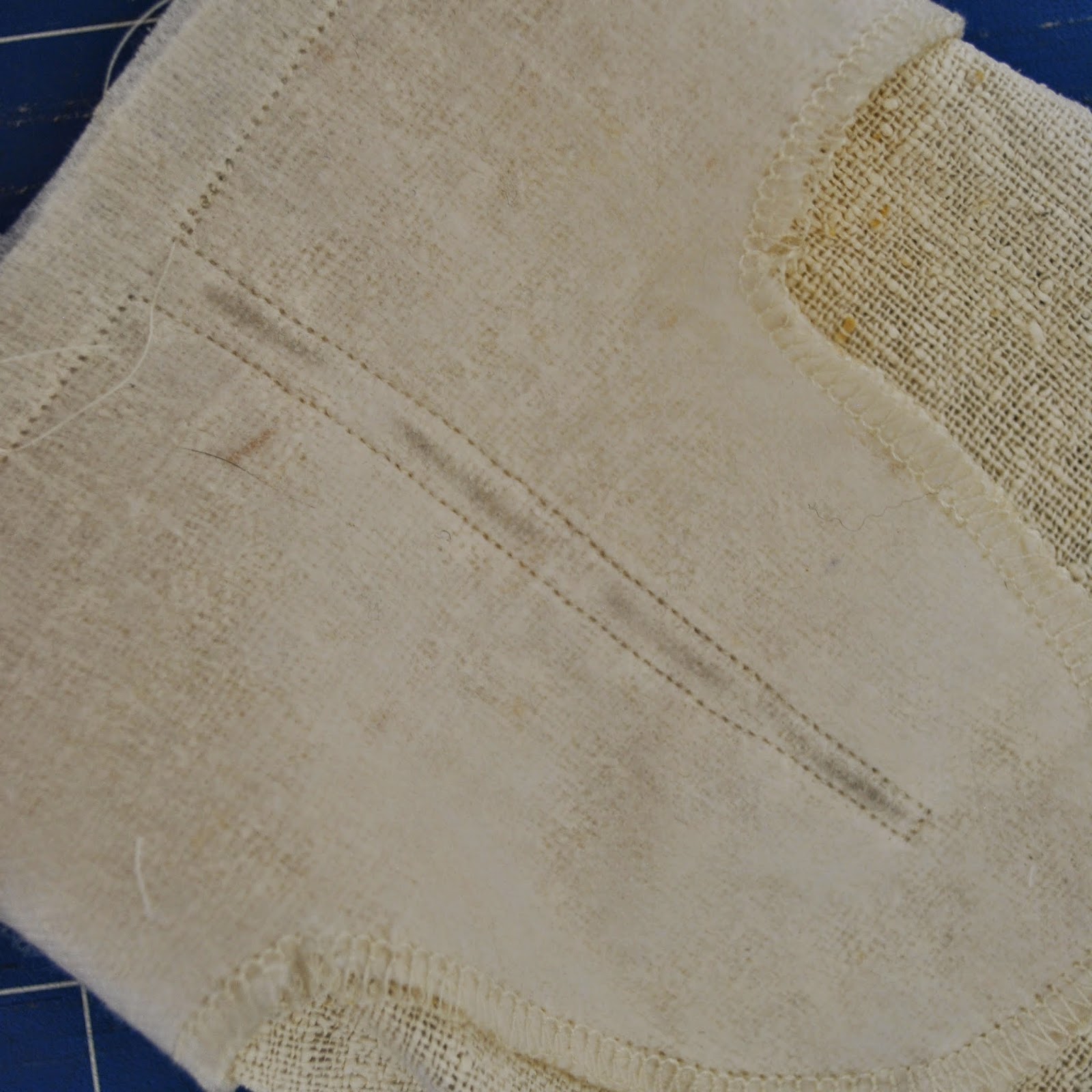
Cut a matching facing for each sleeve, with an allowance for the slit facing situated in the centre.  Mine is 6cm (2 3/8″) deep for a finished depth of 5cm (2″) , and the slit facing is 7cm (2 3/4″) wide and 13cm  (5″) long for a finished slit length of 9cm (3 1/2″).

Interface, finish the outer edge, stitch the short sleeve seam together.

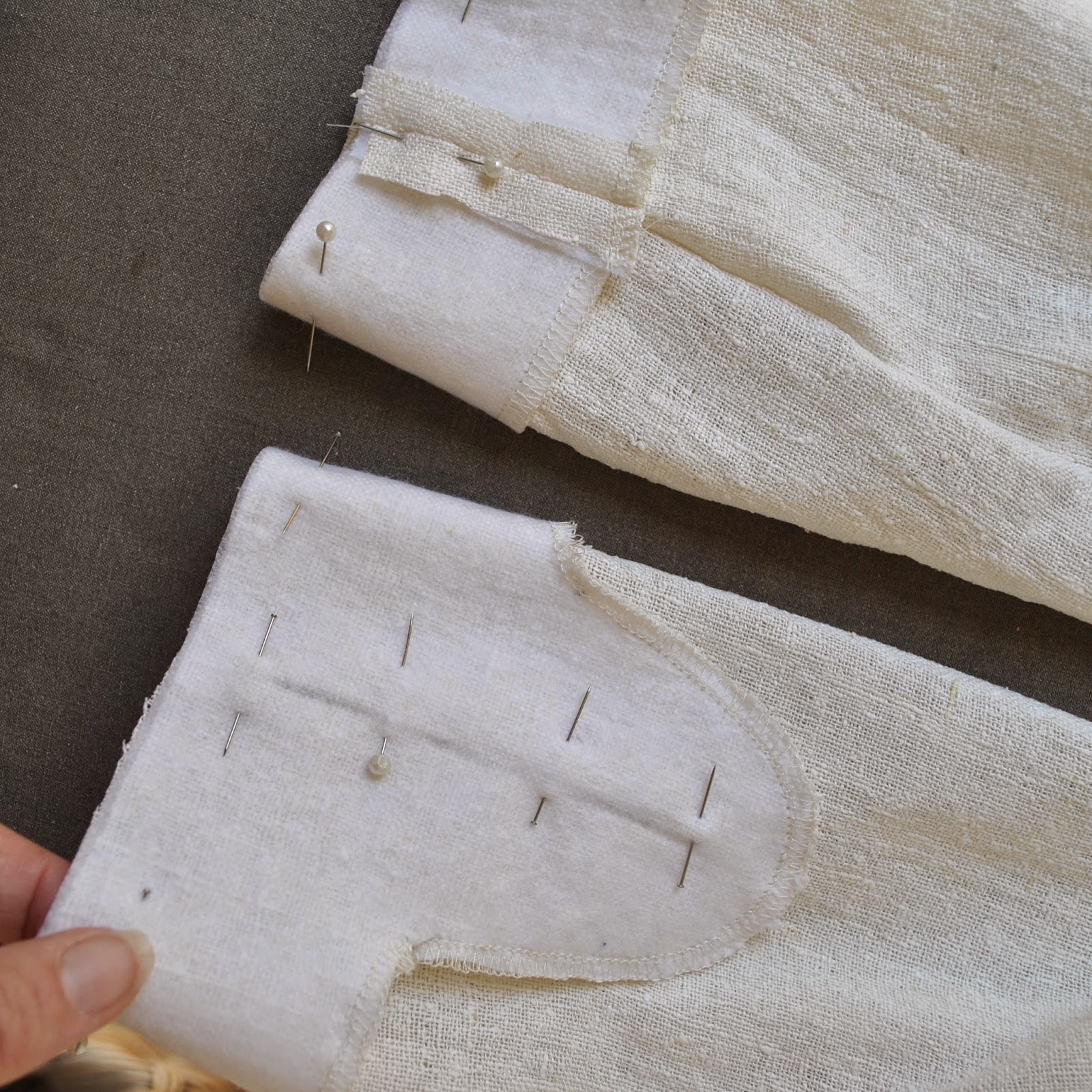
Pin to sleeve edge, right sides together, aligning the seams.
Mark the line of the slit on the wrong side of the facing and pin along its length.

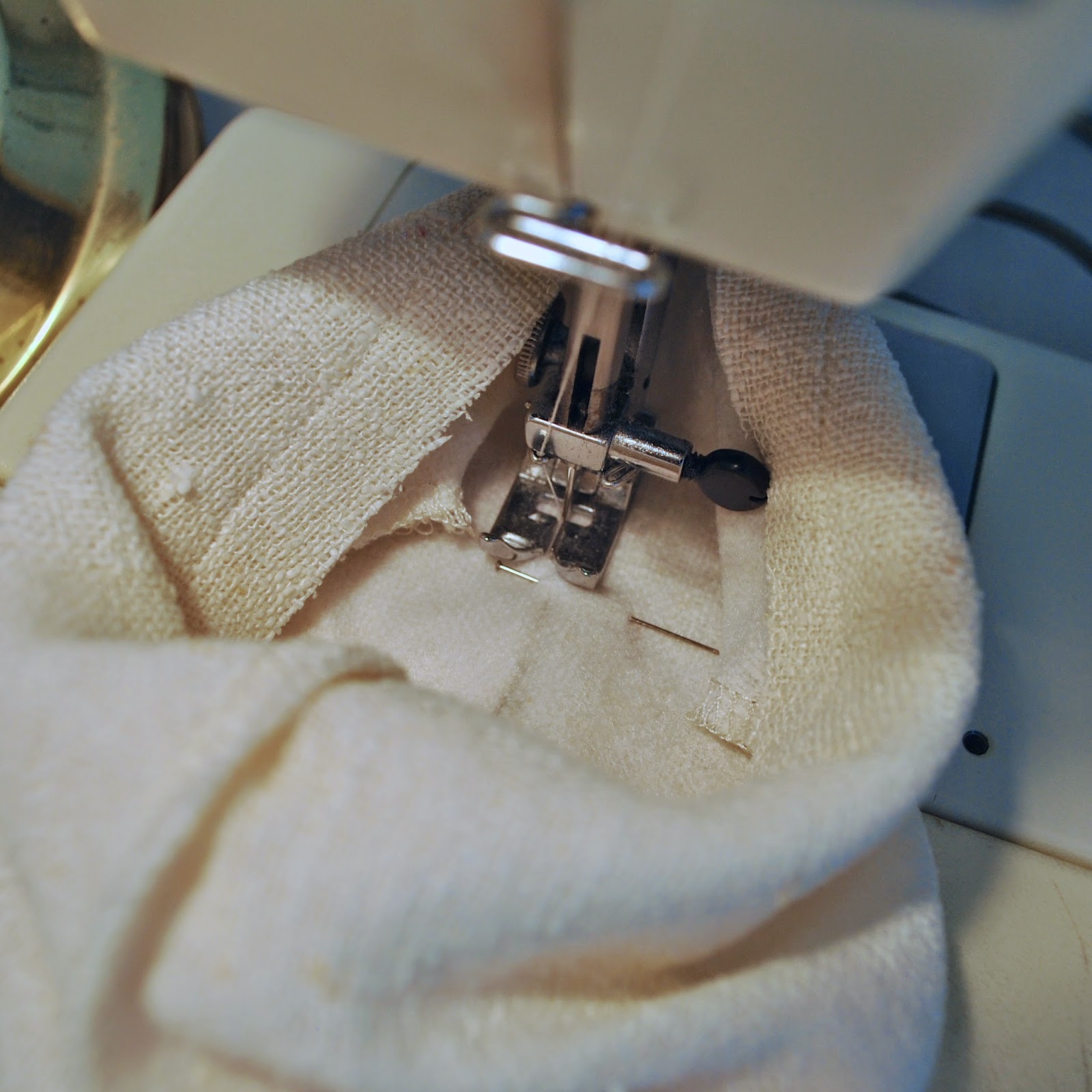
Turn the sleeve so the facing is inside the tube of the sleeve and stitch.  btw, always, but always! stitch in the inside of a tube or closed “circle” of any kind, sleeve, leg, armscye, whatever…  otherwise you are bound to soon be spending quality time with your unpicker when you find you’ve inadvertently caught the opposite side in there somewhere.   Yeah, we’ve all been there, right?!

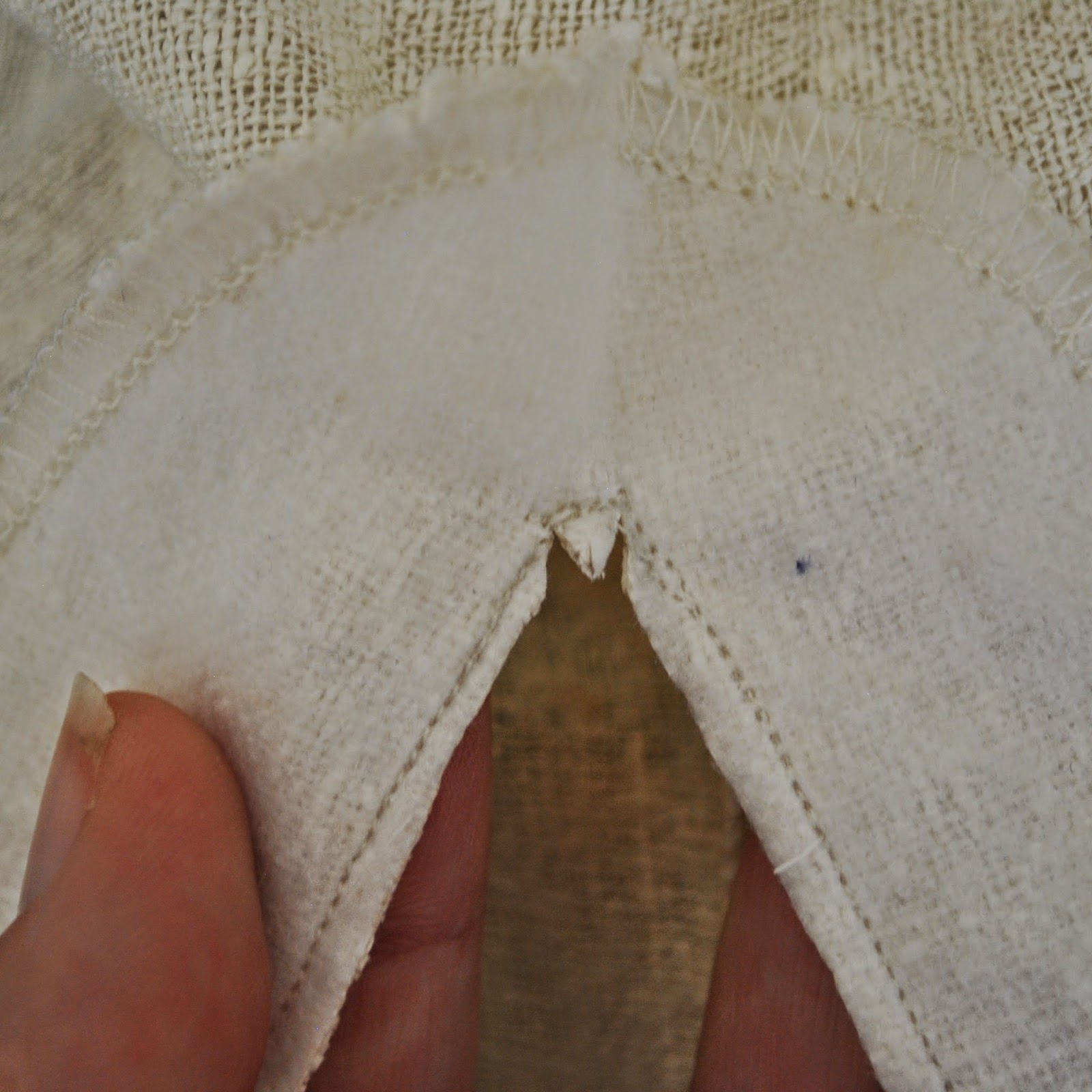
Cut up the middle of the slit stitching, snipping into the corners at the top in a little V shaped snip.

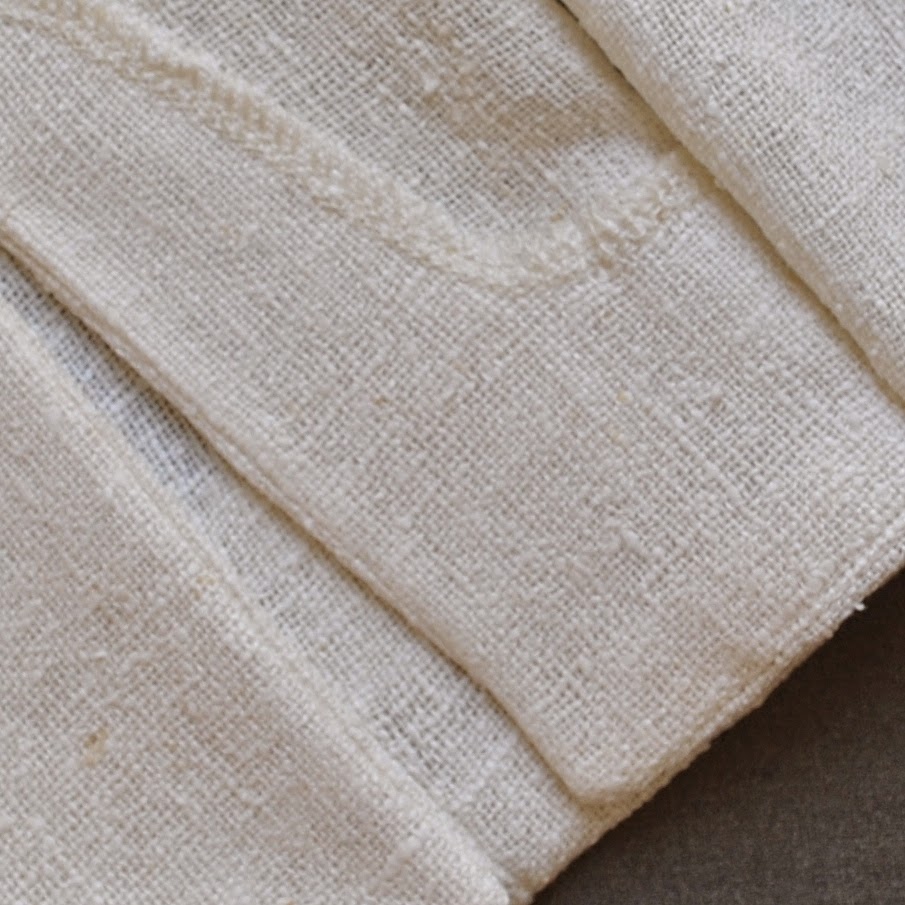
Turn out and understitch the sides of the slip and the sleeve hem as far as possible.  
To help keep the facing tucked up inside the sleeve and not fall out, invisibly slip stitch the outer edge of the facing to the sleeve.  Only scant, widely spaced stitches are really necessary here.

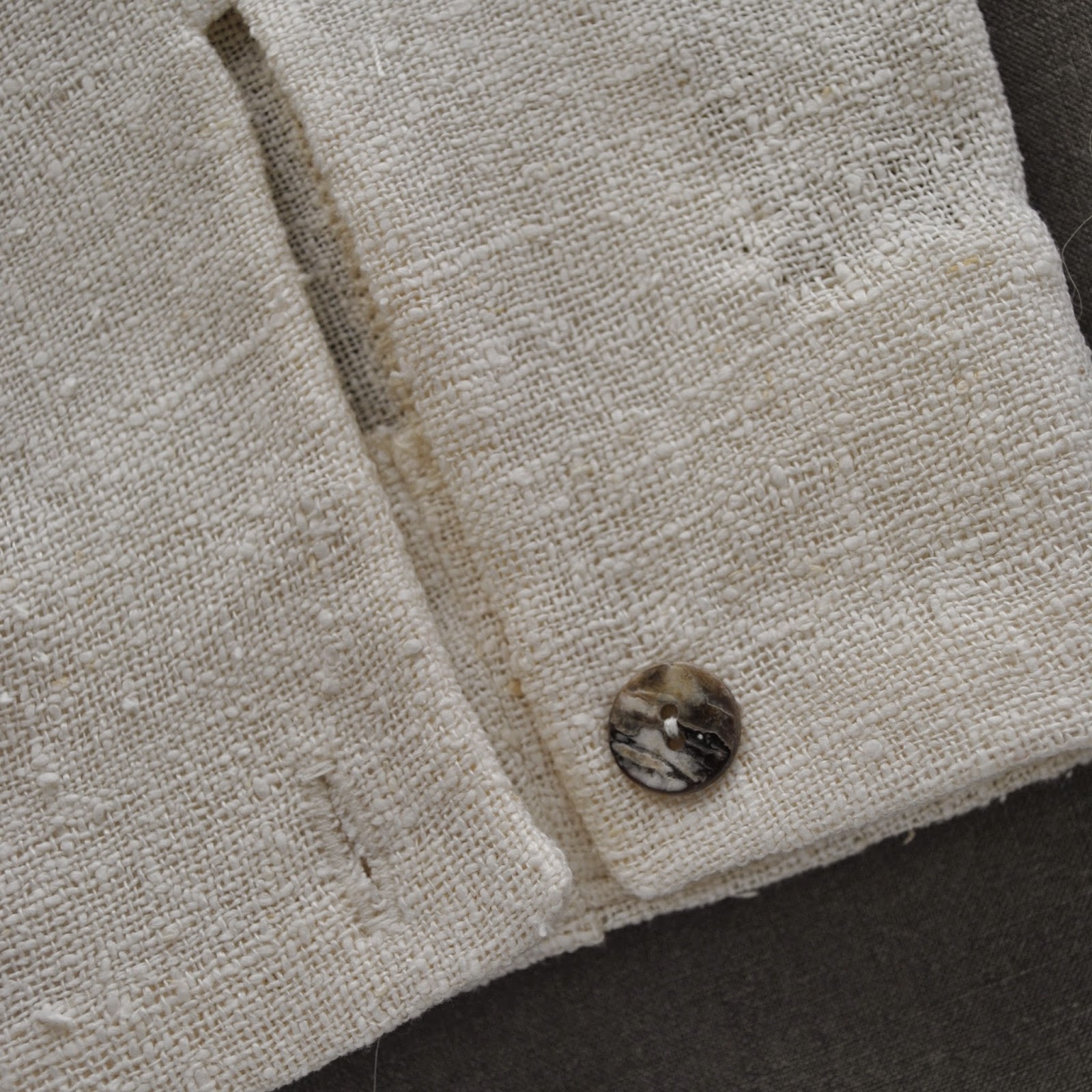
And; buttonhole, button and done!

pinterestmail

a creamy little double-fronted top

My new top will come as a very un-surprise to anyone who has been following me in the Sewvember instagram challenge, haha!…
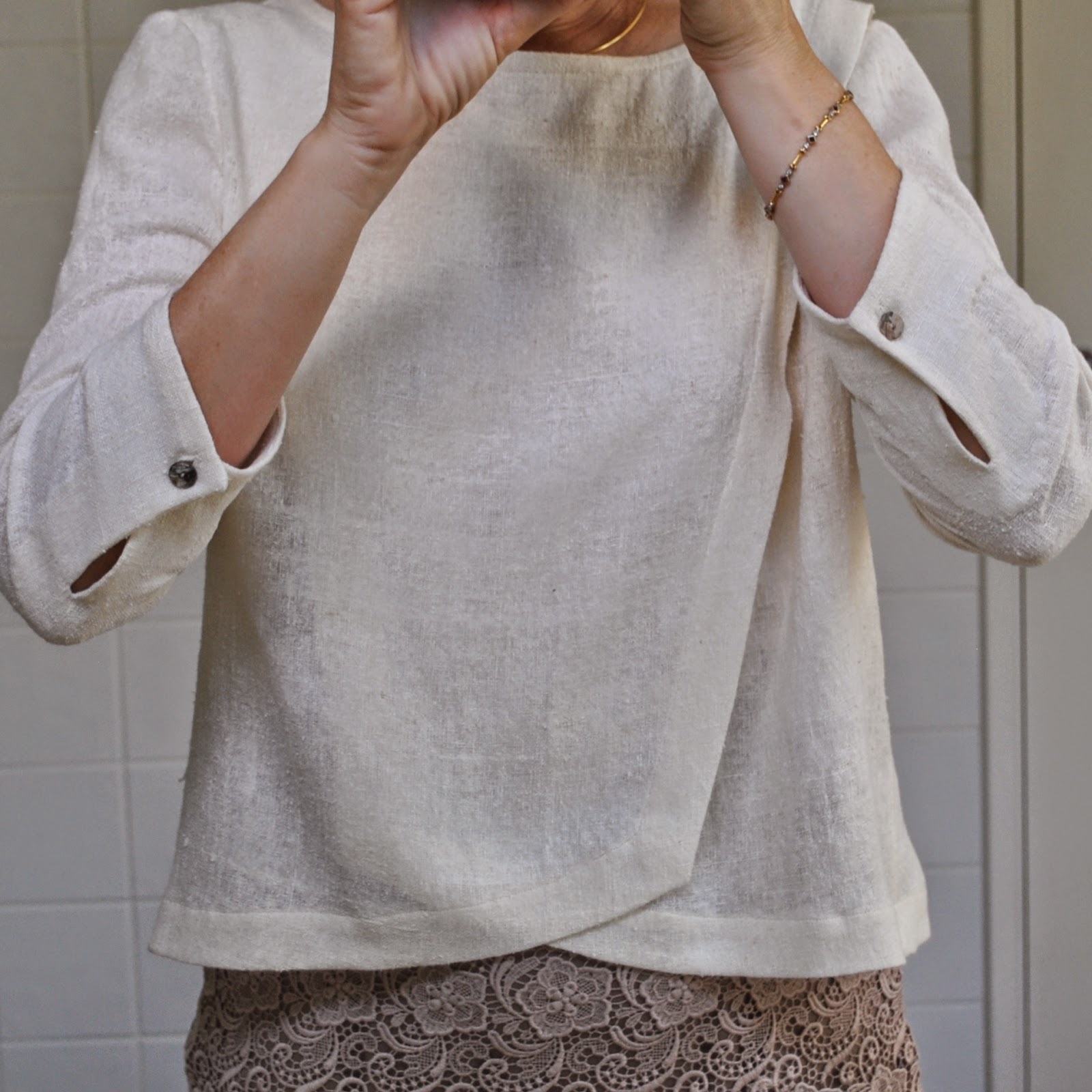
This pattern is Burdastyle 04/2014-115, with modified sleeves  and my fabric is a silk hessian from Spotlight.  It has a very loose weave, a rather pleasing slightly rough and rustic texture.  The rich, almost buttery cream colour apparently suits me.
Now, I have received a handful of patterns of my choice from Burda… however this is NOT one of them.   I had bought this magazine myself already!  and I’ve already made the asymmetrical turtleneck top from the same collection in the mag.  Ok, honesty here; I actually totally love just about this entire collection.  It’s embarrassing to admit how easily I am swayed by colour choices.  Those peacefully harmonious shades of soothing cool non-colours; *sigh* heavenly!
So style-wise, this is a plain design.  And my choice of fabric; quite plain.  But that’s ok, a bit of plain is a good thing to have in the wardrobe to set off the more eye-catching elements within.  But as I was doing the sleeves, which are likewise as plain a style as could be, I worried that they were going to tip my blouse over into the territory of Irretrievably Bland.  So I added a little feature; a faced split that has a little button closure on the corners.  I’m very pleased with how this looks; quite primitive, like a vague sort of a nod towards a tailored shirtsleeve button placket.

Construction-wise, this is a nice, quick and simple little pattern and utterly foolproof… . oh, I put the wrong front lapping over.   Haha.  We’ll just pretend that I did that on purpose, ok?  Ahem.

Insider biz; the side and shoulder seams are flat-felled, the sleeve seams overlocked.  The neckline is faced with a bias-cut strip of pale yellow/cream cotton voile.

Finally, my usual criteria; if I saw this in a shop would I be tempted to buy?  Heck, yeah!  Plain is my middle name.  Along with all the other middle names I adopt when the mood strikes.  This is going to be worn a tonne  🙂


Details:
Top; Burdastyle 04/2014-115 with modified sleeves, cream silk hessian
Skirt; adaption of Vogue 1247, coffee lace with silk charmeuse lining, details here
Thongs; Mountain Designs
Sienna wears her own custom-fit coat

Later edit: 4 yrs later, and I gave this little top a rejuvenating dye-bath!  it’s now a pretty shade of cherry-blossom pink…
Other outfit details:
and then again, to an exciting new shade of hot pink!  I love it like this!
pinterestmail

Oblique mitred corners

I’m taking part in bimble and pimple‘s Sewvember instagram challenge, and on day two our mission, should we choose to accept it, *Dun Dun dundundun Dun*… was “technique”.  I happened to be doing a couple of oblique mitred corners that morning so that’s what got insta-ed.
A right-angled mitred corner is an easy and straightforward thing, simply folding the raw edges evenly together and sewing an easily gauged perpendicular line out to the edge from the corner.   
But I find an oblique mitred corner to be not at all intuitive… so anyway, I thought I would take a few more pictures and share my way of doing it here.  This is not necessarily the one and only way, of course.  Just mine  🙂
This pattern has been cut with a 4cm hem allowance and a 1cm seam allowance.
Turn up the 4cm hem allowances on both edges and press the layers in place.  

Use a long pin to mark the underneath layer, exactly where the fold of the upper layer sits.  It’s also helpful to mark that outer corner fold point with a pin.

Unfold the hem allowances and turn them out right sides together, exactly aligning the upper layer fold at left to the line marked with the long pin.  The corner point pin is a helpful guide to alignment.  Pin.

the point of that corner fold pin can be seen peeping out at the bottom there

Stitch along the pressed fold; starting from 1cm in from the raw edge and ending at the corner point pin.  Trim the corner excess.

Turn out and press.  If all has gone to plan, it should be sitting all nice, smooth and flat!

Aaaand, hem  🙂
pinterestmail
Switch to mobile version
↓