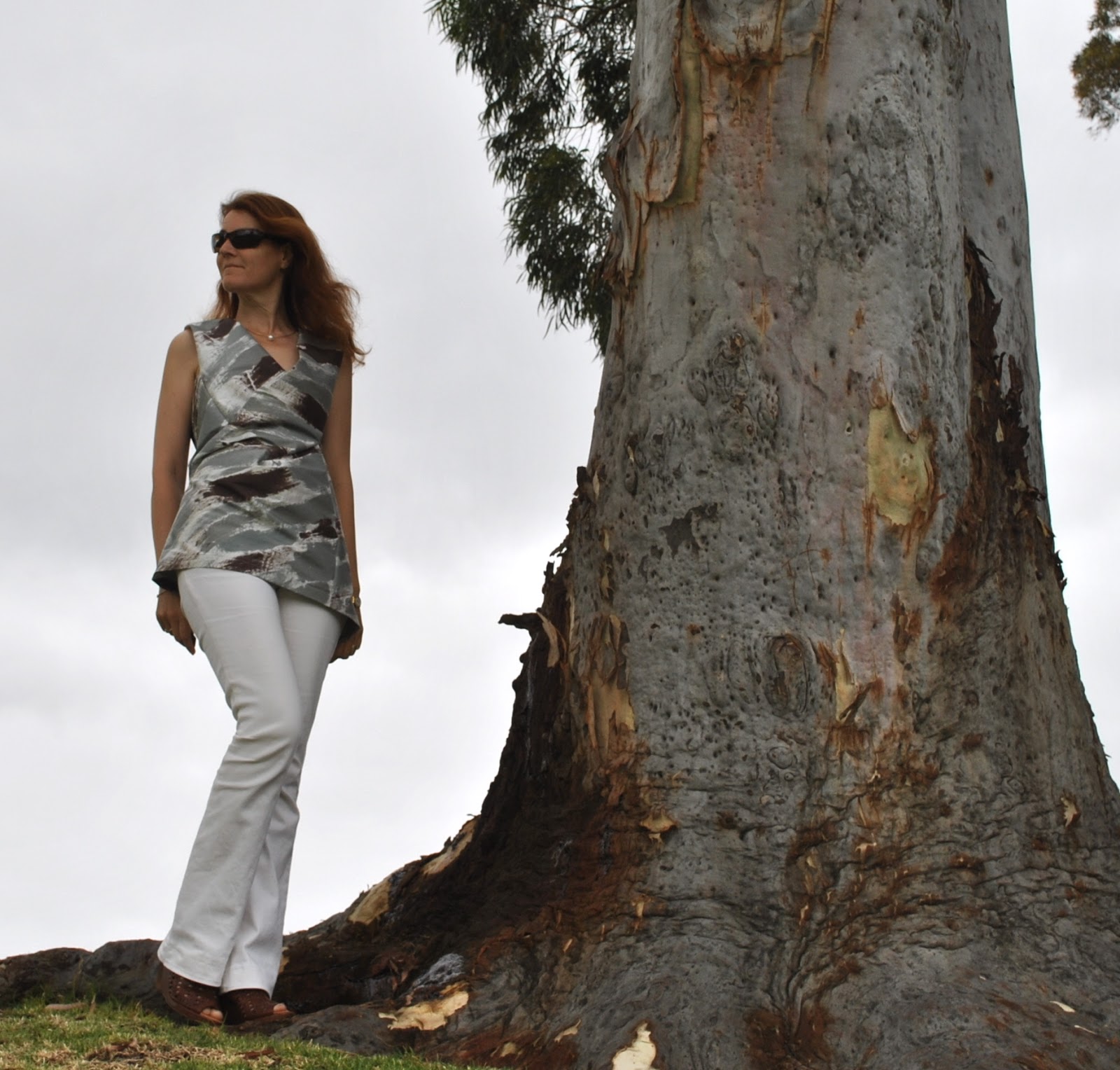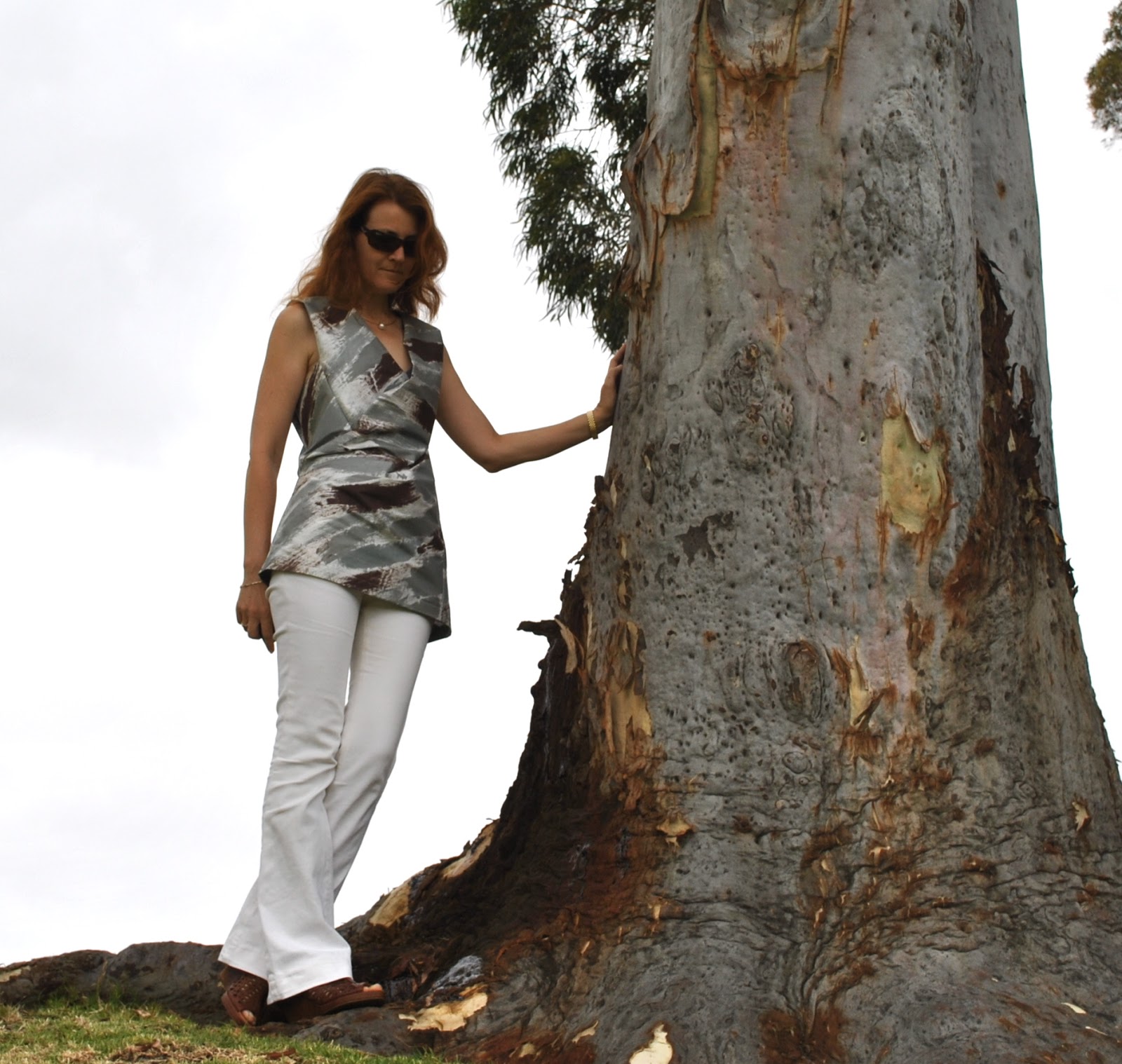
 In a further small step towards overcoming scissor-phobia in the face of precious fabrics; I have made a new tunic top.
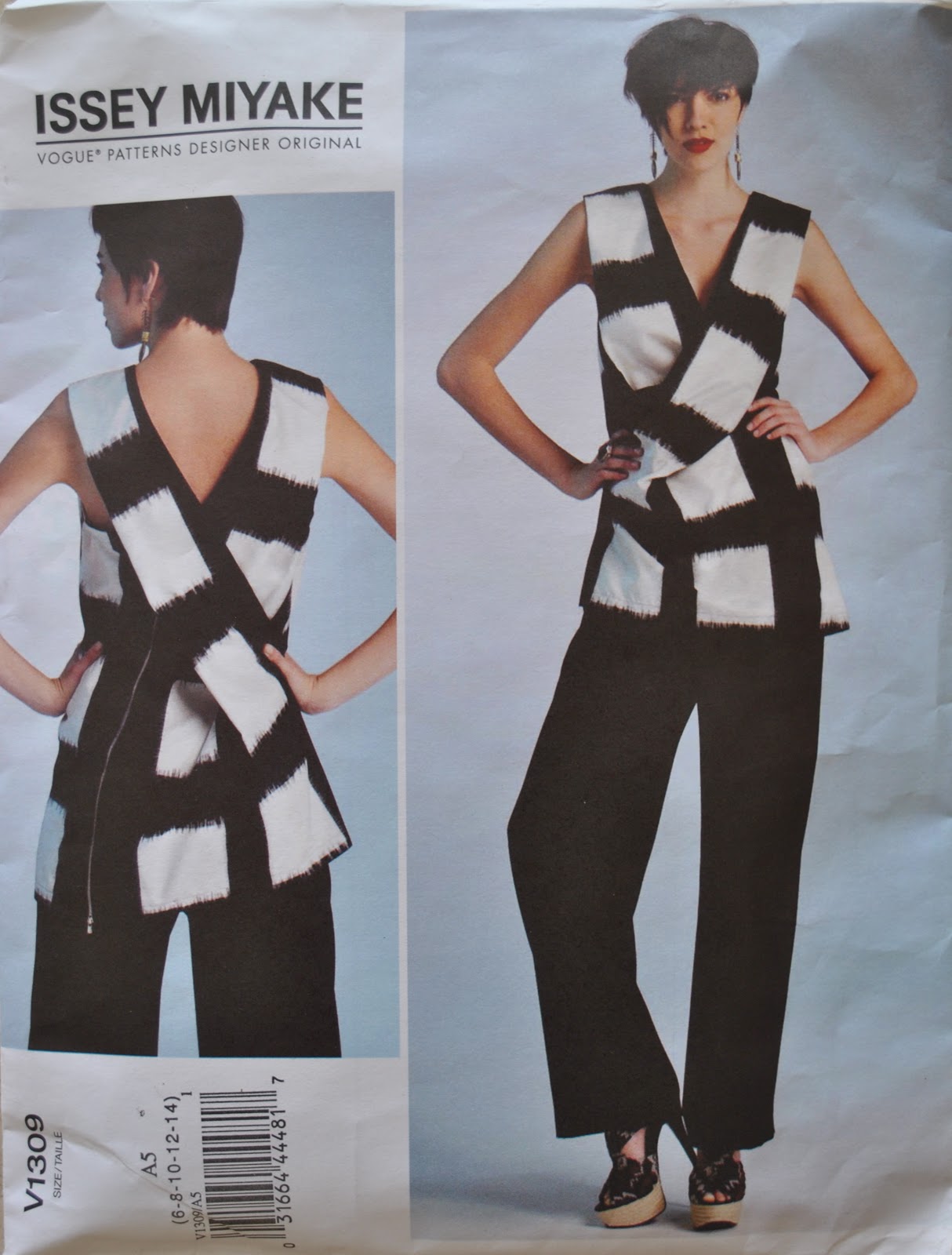
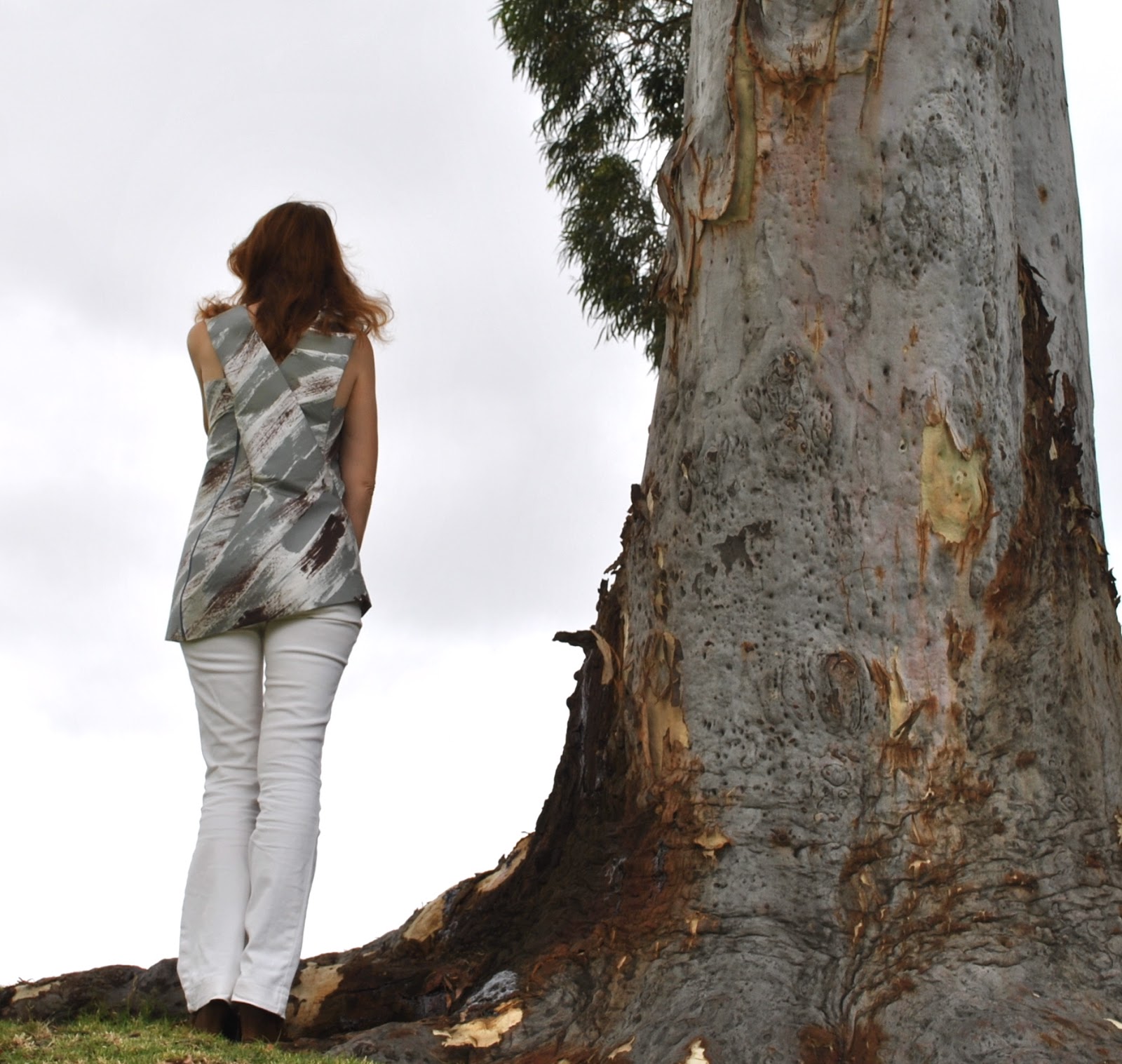
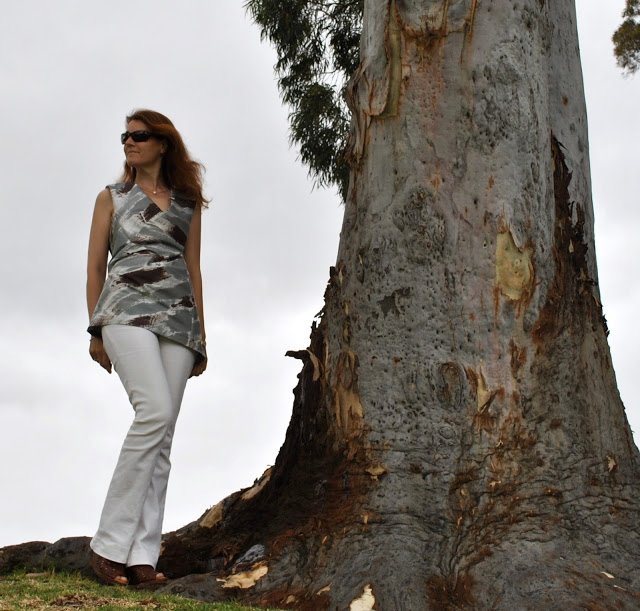
This is the top from Vogue 1309, and I have made it in a hand-painted silk dupion from Fabulous Fabrics. The fabric is pretty
fabulous, yes? The strong uninhibited
strokes of dark chocolate and slate grey are so visually powerful and exciting. They bring to my mind an abstract
representation of a windy stormy day; clouds streaking
across the sky, grey boughs bending in the wind, dead leaves whipping from the
ground and through the air. Please note I took advantage of an appropriate weather moment for my photo op in honour…. 🙂
fabulous, yes? The strong uninhibited
strokes of dark chocolate and slate grey are so visually powerful and exciting. They bring to my mind an abstract
representation of a windy stormy day; clouds streaking
across the sky, grey boughs bending in the wind, dead leaves whipping from the
ground and through the air. Please note I took advantage of an appropriate weather moment for my photo op in honour…. 🙂
I did not hand paint this fabric myself. I have painted my own fabric in the past, but in this case I bought it all ready to go. It was ostensibly a
Christmas present from my husband, from last Christmas, last year, lol. And ever since I opened my present (surprise!) I’ve been on
the lookout for a worthy pattern … and when I clapped eyes on this Issey
Miyake pattern I instantly knew they would be perfect together, a match made in
heaven. The pattern even
stipulated silk dupion, as if the designer knew that I had a piece of wild silk
dupion just awaiting a wild tunic pattern. The times I actually obey those “recommended fabrics” instructions
printed on the pattern I can count on the fingers of one hand. Hmmm, exaggerating there, I might be up
to a few more hands by now… but those times are still pathetic minorities;
small shining lights in a long rebellious history of sartorial disobedience.
Christmas present from my husband, from last Christmas, last year, lol. And ever since I opened my present (surprise!) I’ve been on
the lookout for a worthy pattern … and when I clapped eyes on this Issey
Miyake pattern I instantly knew they would be perfect together, a match made in
heaven. The pattern even
stipulated silk dupion, as if the designer knew that I had a piece of wild silk
dupion just awaiting a wild tunic pattern. The times I actually obey those “recommended fabrics” instructions
printed on the pattern I can count on the fingers of one hand. Hmmm, exaggerating there, I might be up
to a few more hands by now… but those times are still pathetic minorities;
small shining lights in a long rebellious history of sartorial disobedience.

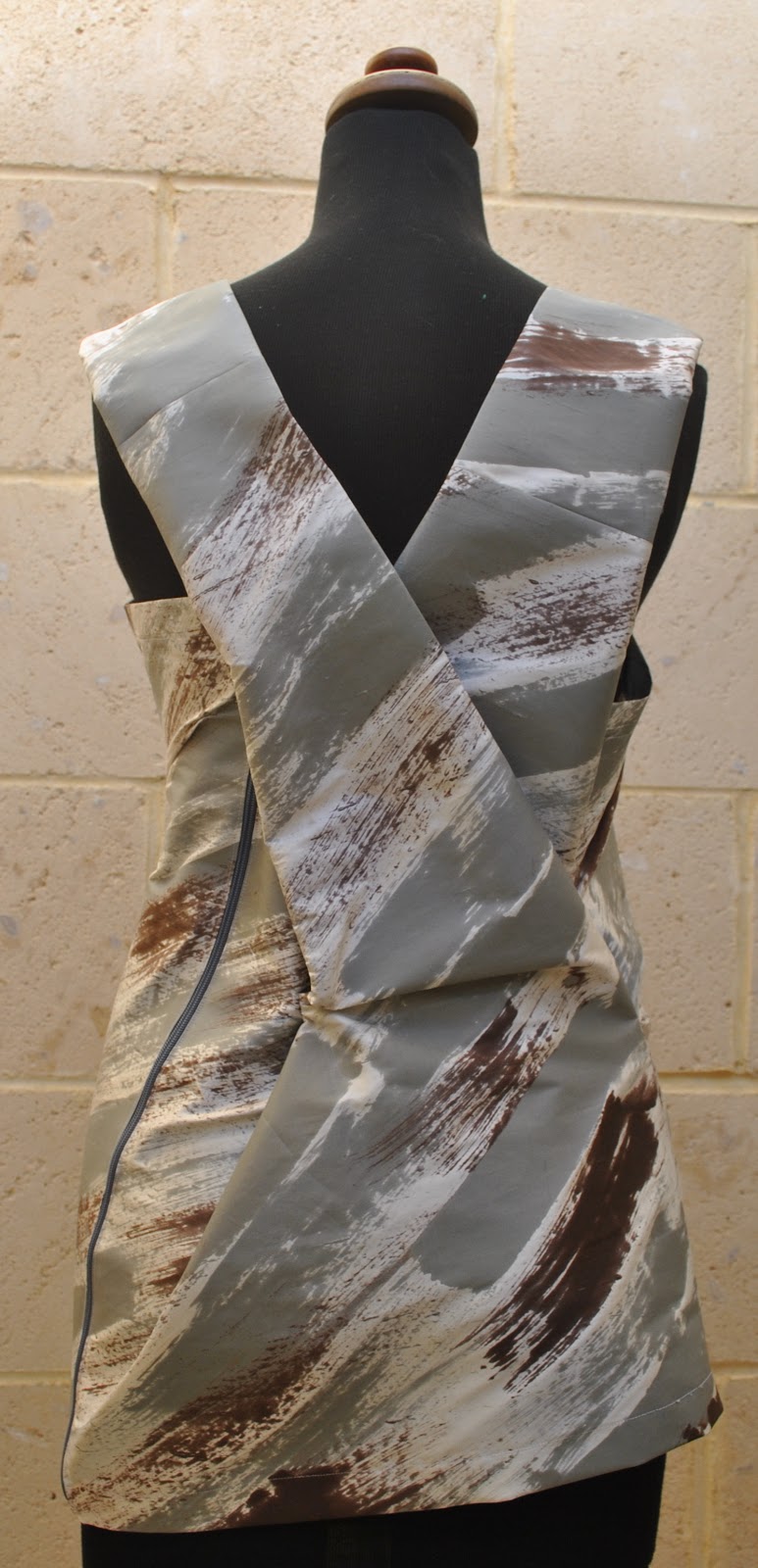
Above: at left; the front and at right; the back. The fabric was er, quaite expensive and I only had one metre so I had to join pieces to get out that huge front/back piece. My fabric was 150cm wide, and I cut the pieces on the cross. The joins can be just seen at just about shoulder blade level, on each side at the back (above right)
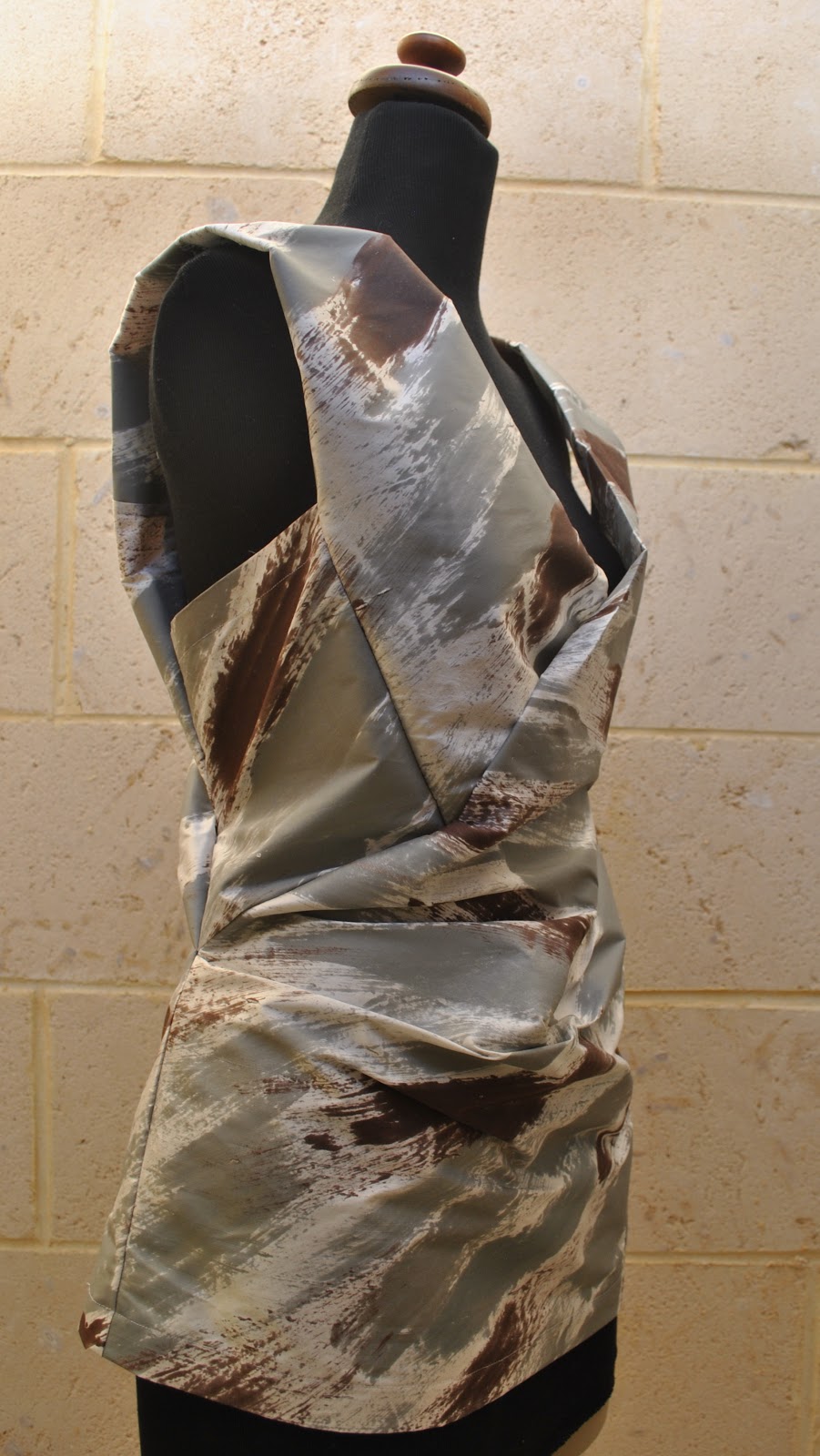
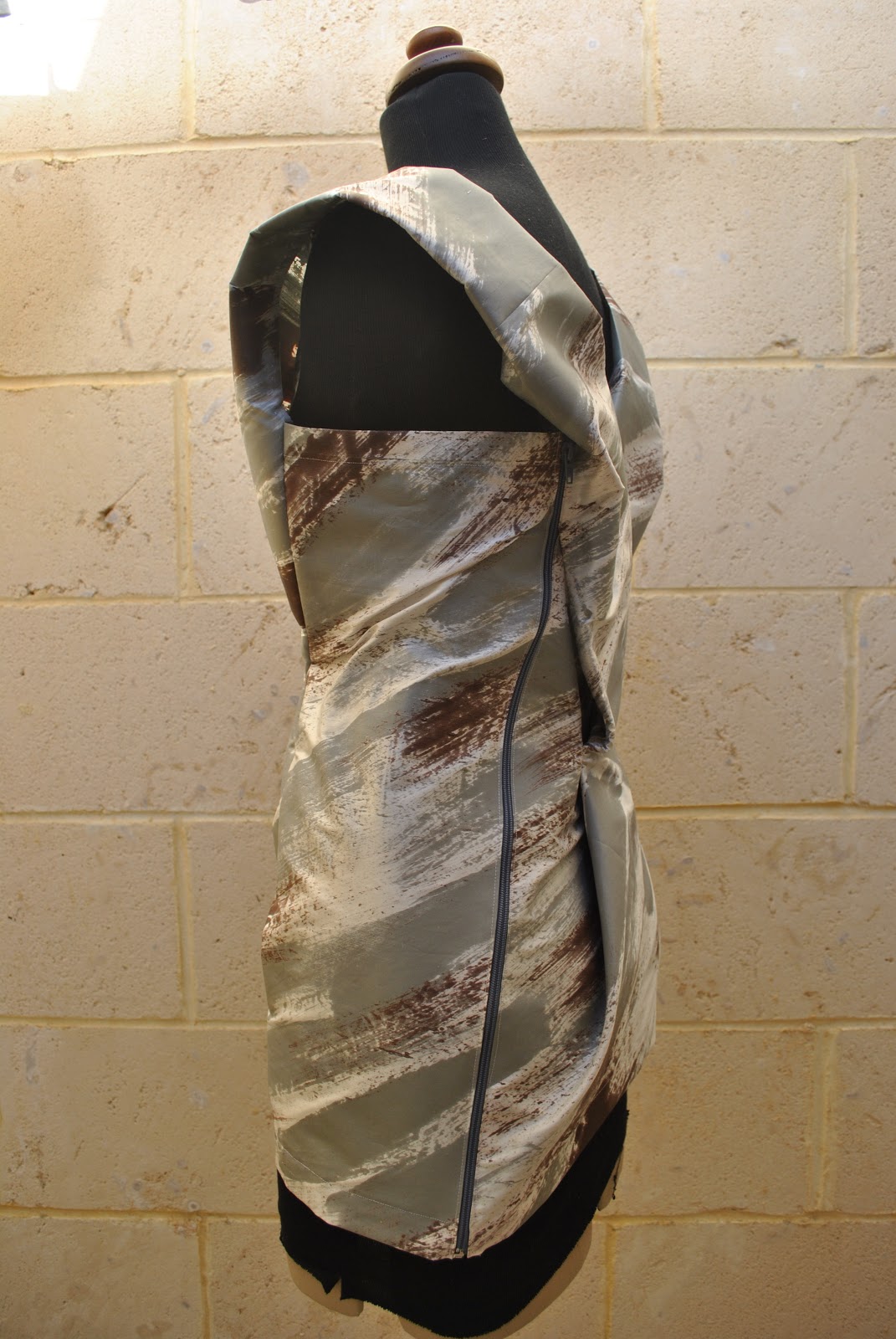
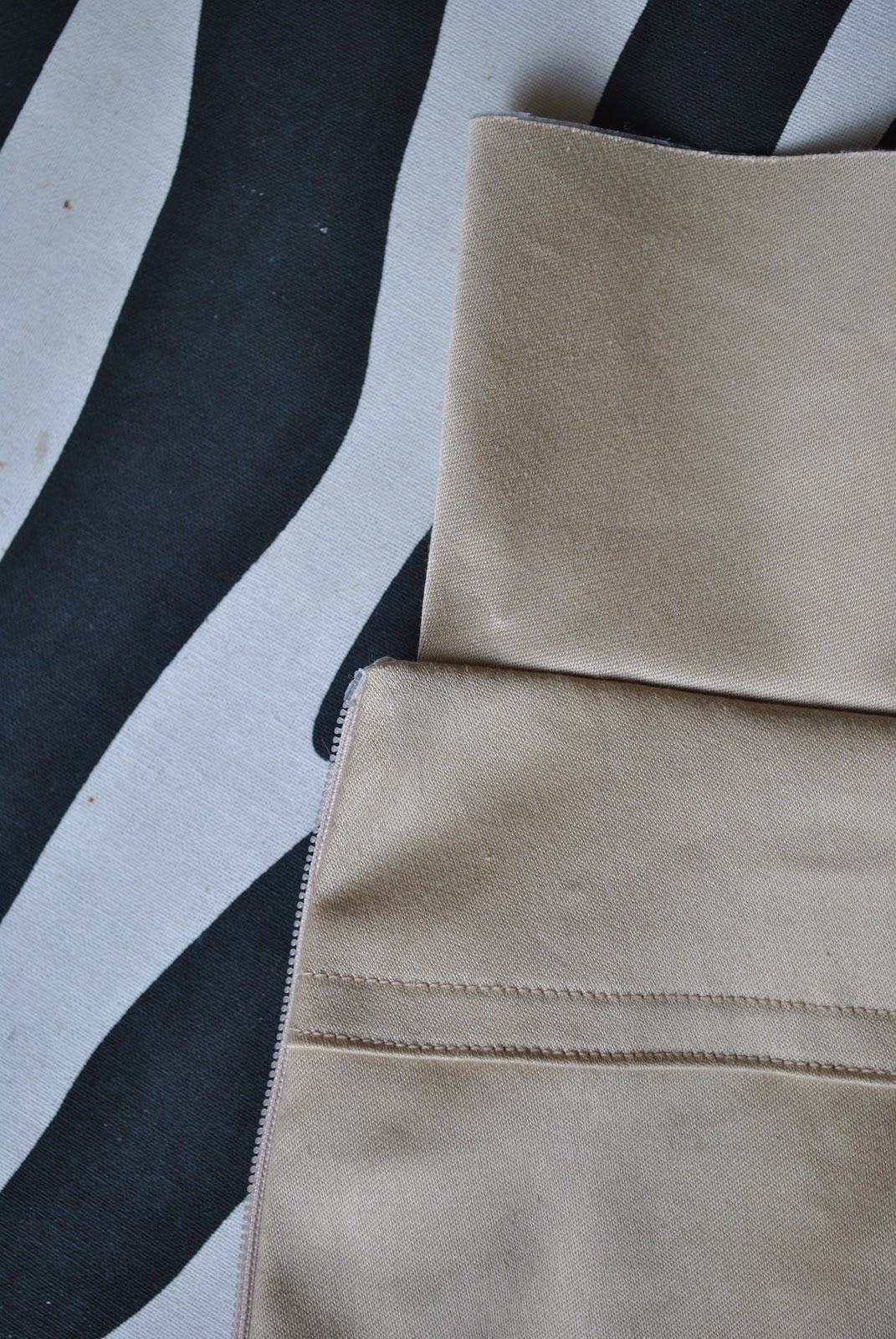
Above: side views right and left. At right can be seen a small section I stitched down at the back to remove some of the blousiness across the back waist section. I was fortunate to find a zip exactly the right length… this is a pattern in which if your zip is not the perfect length you DO have to adjust the pattern pieces to exactly accommodate your zip length.
This is a pretty challenging pattern … but I adore a
sewing challenge so I was like a pig-in-mud the day I made this, contentedly humming away to myself; totally in my happy place as I fiddled about, nutting out
those instructions. The
construction of this is like a puzzle; each separate piece of the puzzle is simple and
uncomplicated in itself, but the process as a whole is not clear
or easy and the top does not go together intuitively.
sewing challenge so I was like a pig-in-mud the day I made this, contentedly humming away to myself; totally in my happy place as I fiddled about, nutting out
those instructions. The
construction of this is like a puzzle; each separate piece of the puzzle is simple and
uncomplicated in itself, but the process as a whole is not clear
or easy and the top does not go together intuitively.
I’ve written a pattern review below, but it’s worth
mentioning separately a couple of little tips I used to make things a tonne easier
for myself…
mentioning separately a couple of little tips I used to make things a tonne easier
for myself…
The markings on the pattern are small circles, large
circles and squares, and these are also marked from A to G inclusively. You will
NOT be able to put this pattern together successfully unless you can identify
all of these on your pattern pieces… so I wrote all the markings (for example) OA, OB, oB, etc, designating large circle A,
large circle B, small circle B, etc, on
small squares of paper and pinned them to the exact spots. Once this idea had occurred to me, it made
the whole seam matching process a heck of a lot easier. A heck of a lot!!
circles and squares, and these are also marked from A to G inclusively. You will
NOT be able to put this pattern together successfully unless you can identify
all of these on your pattern pieces… so I wrote all the markings (for example) OA, OB, oB, etc, designating large circle A,
large circle B, small circle B, etc, on
small squares of paper and pinned them to the exact spots. Once this idea had occurred to me, it made
the whole seam matching process a heck of a lot easier. A heck of a lot!!
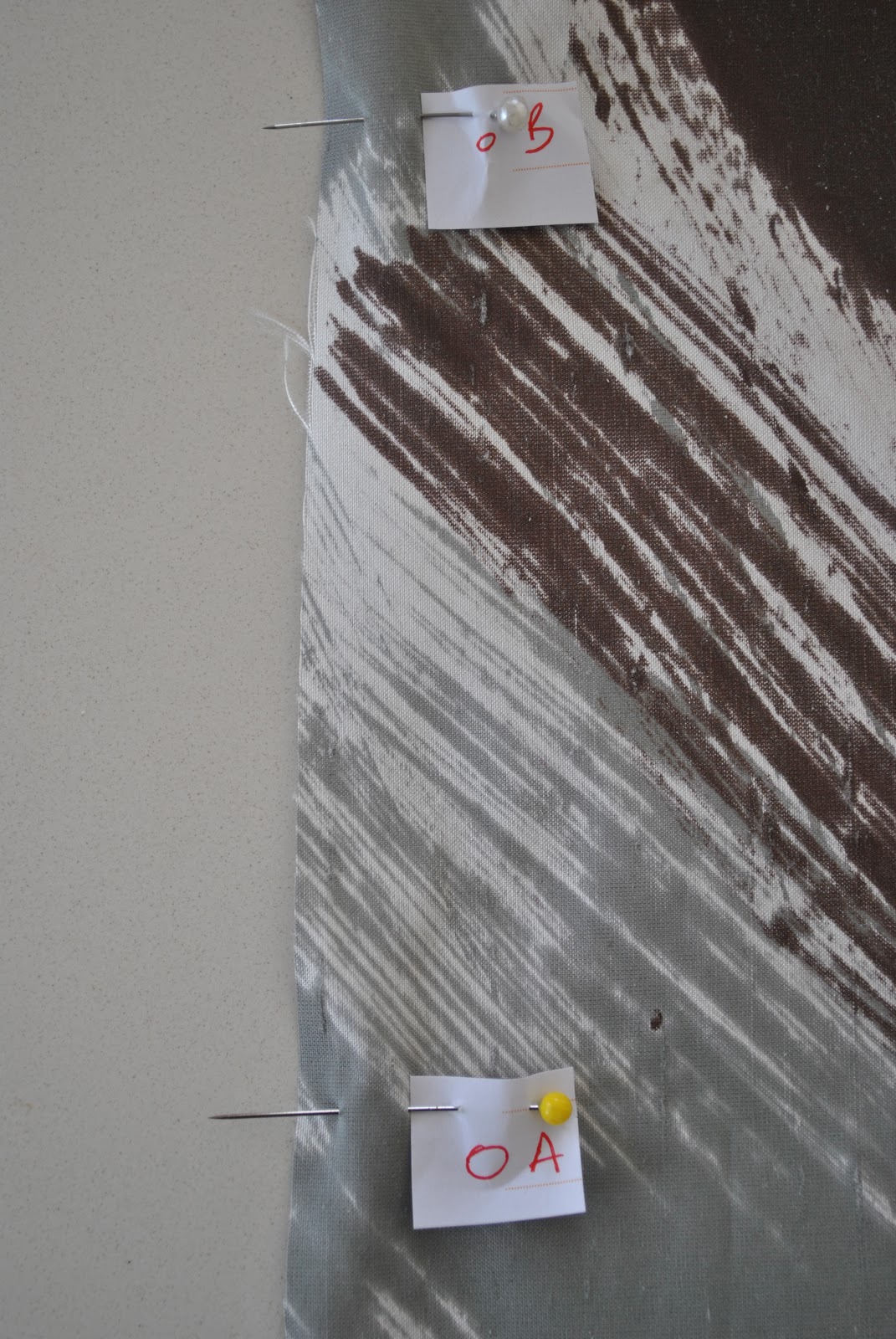
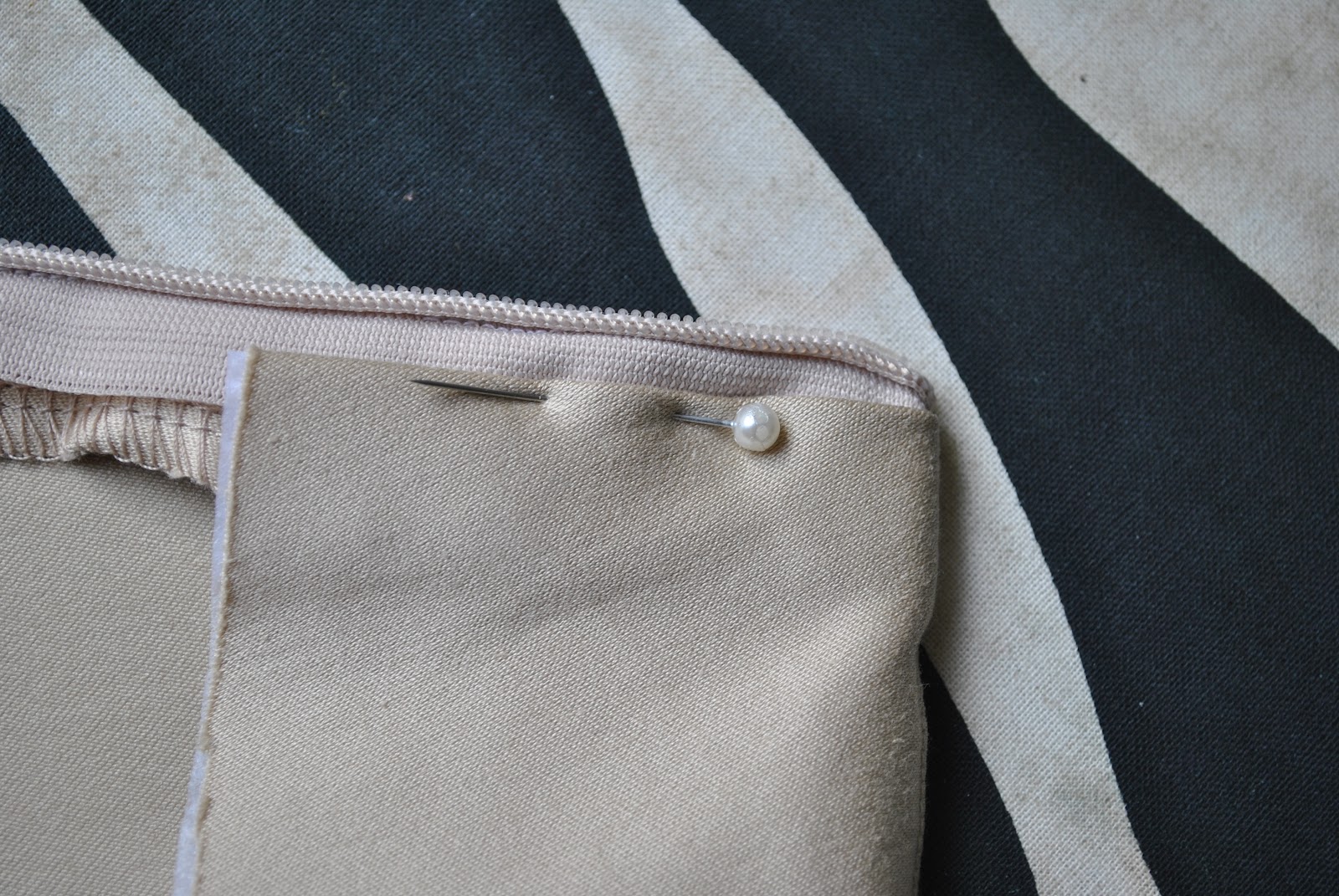
I also attached a safety pin marking the “back” of
the piece… this might sound too trivial to even mention it ….but I found that safety pin to be enormously helpful! since the front and the back
of this top are almost impossible to distinguish for much of the construction.
the piece… this might sound too trivial to even mention it ….but I found that safety pin to be enormously helpful! since the front and the back
of this top are almost impossible to distinguish for much of the construction.
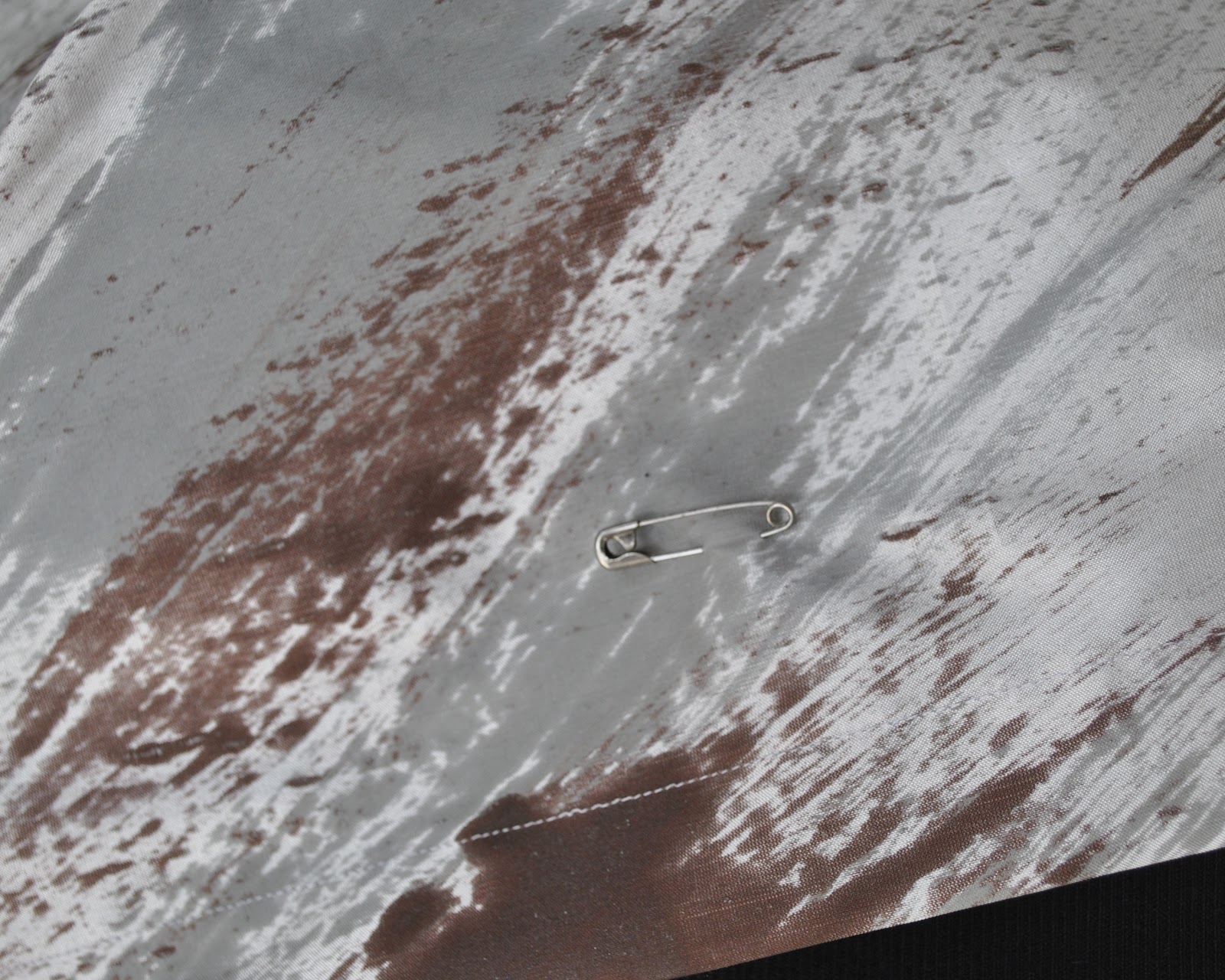
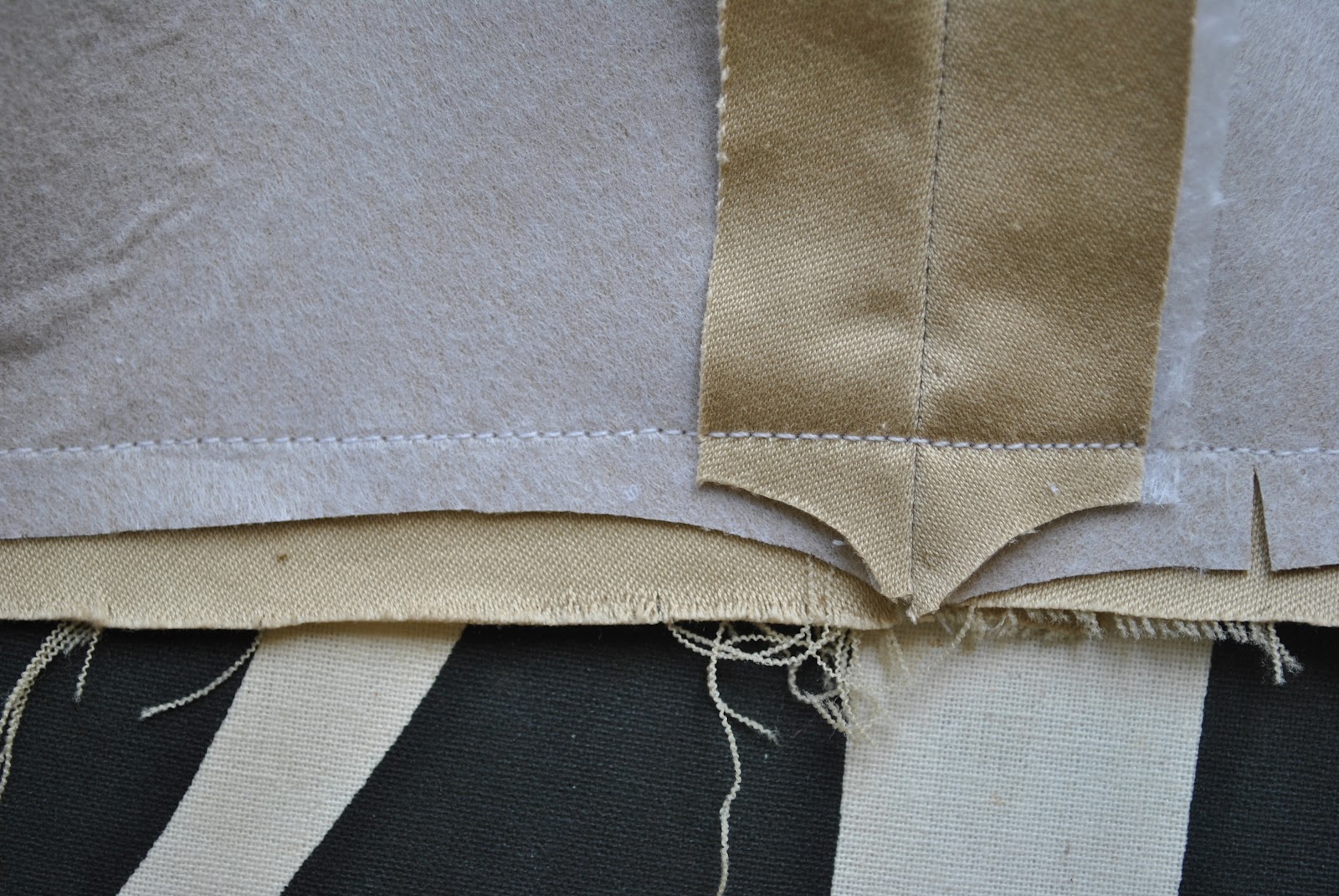
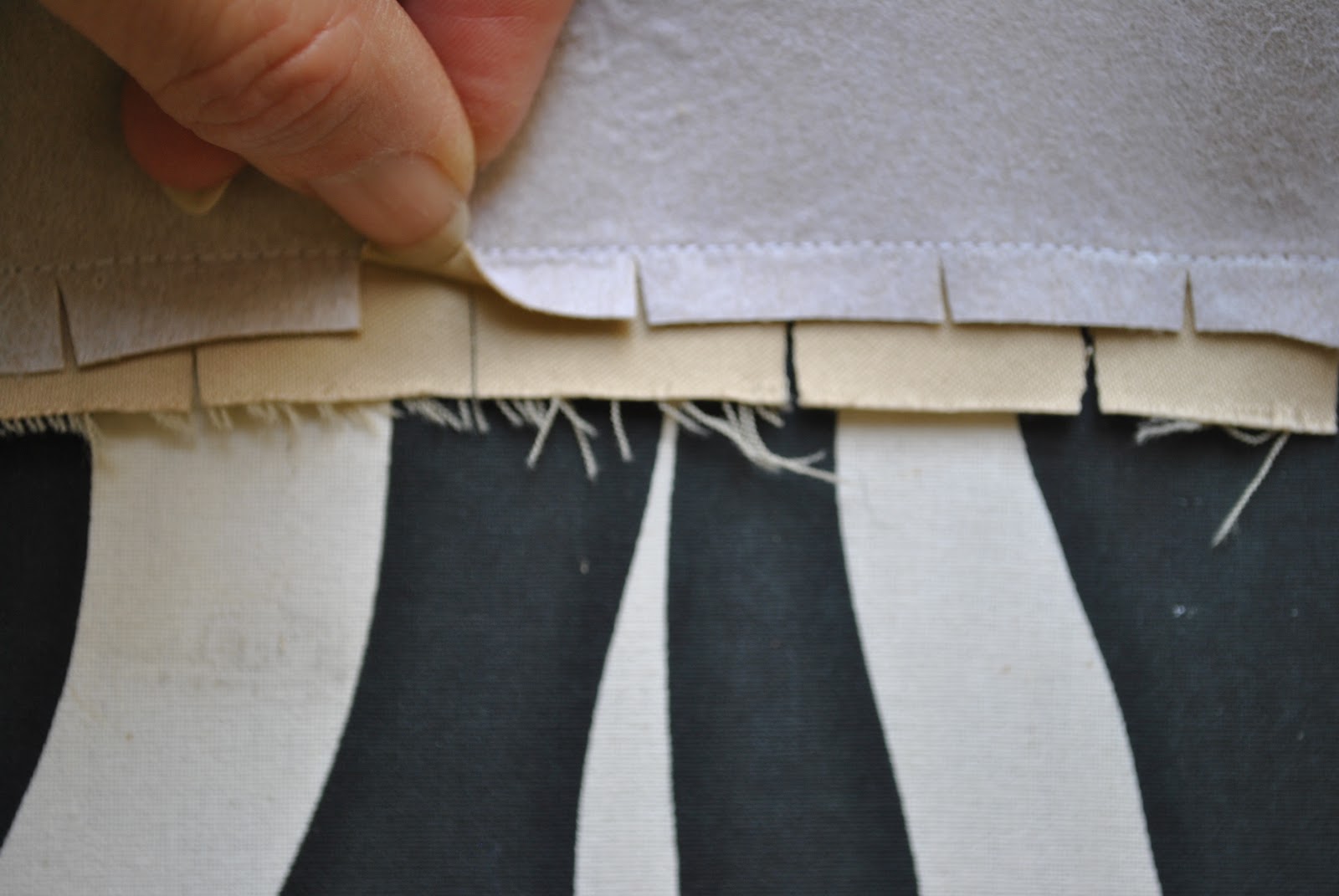
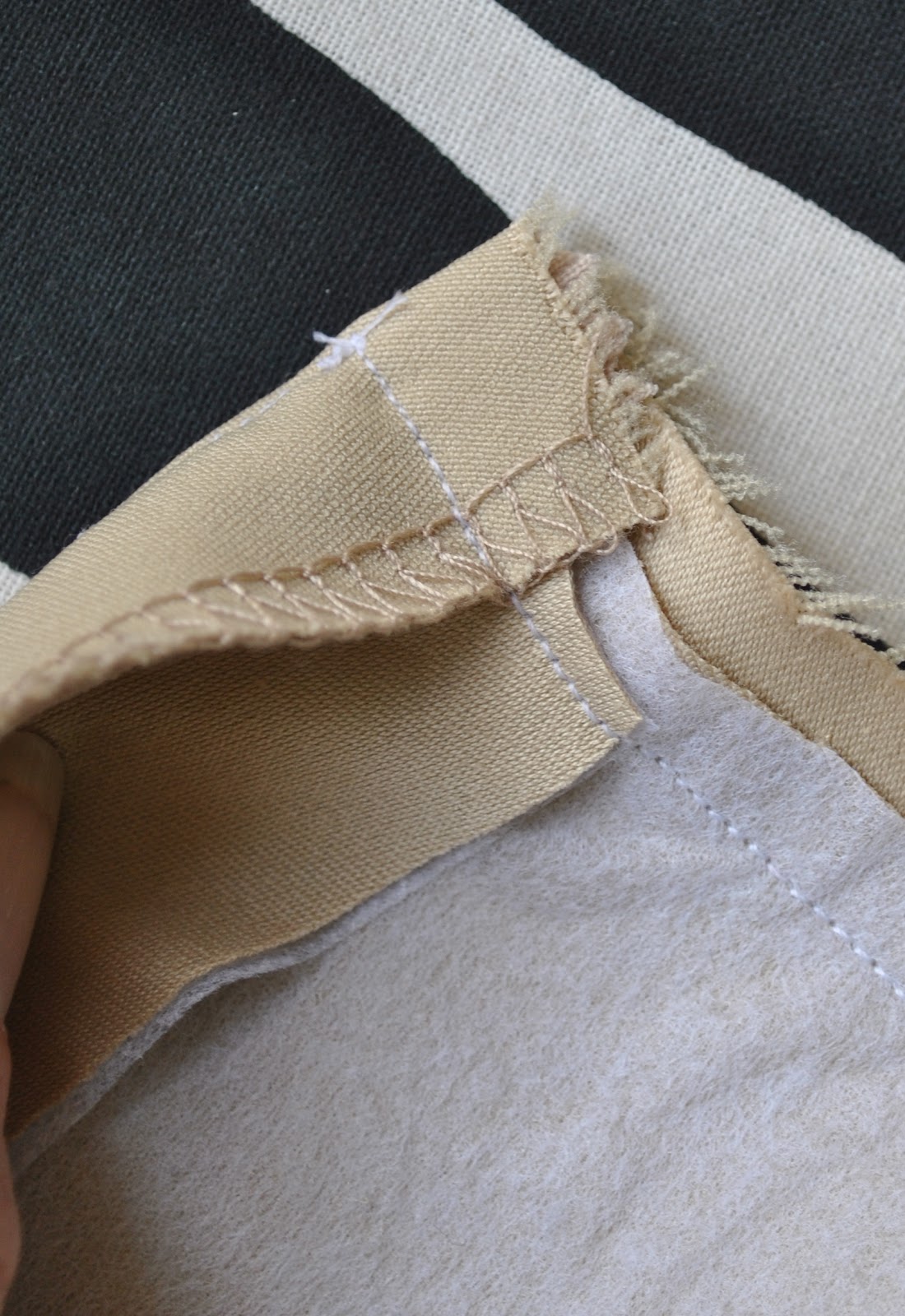
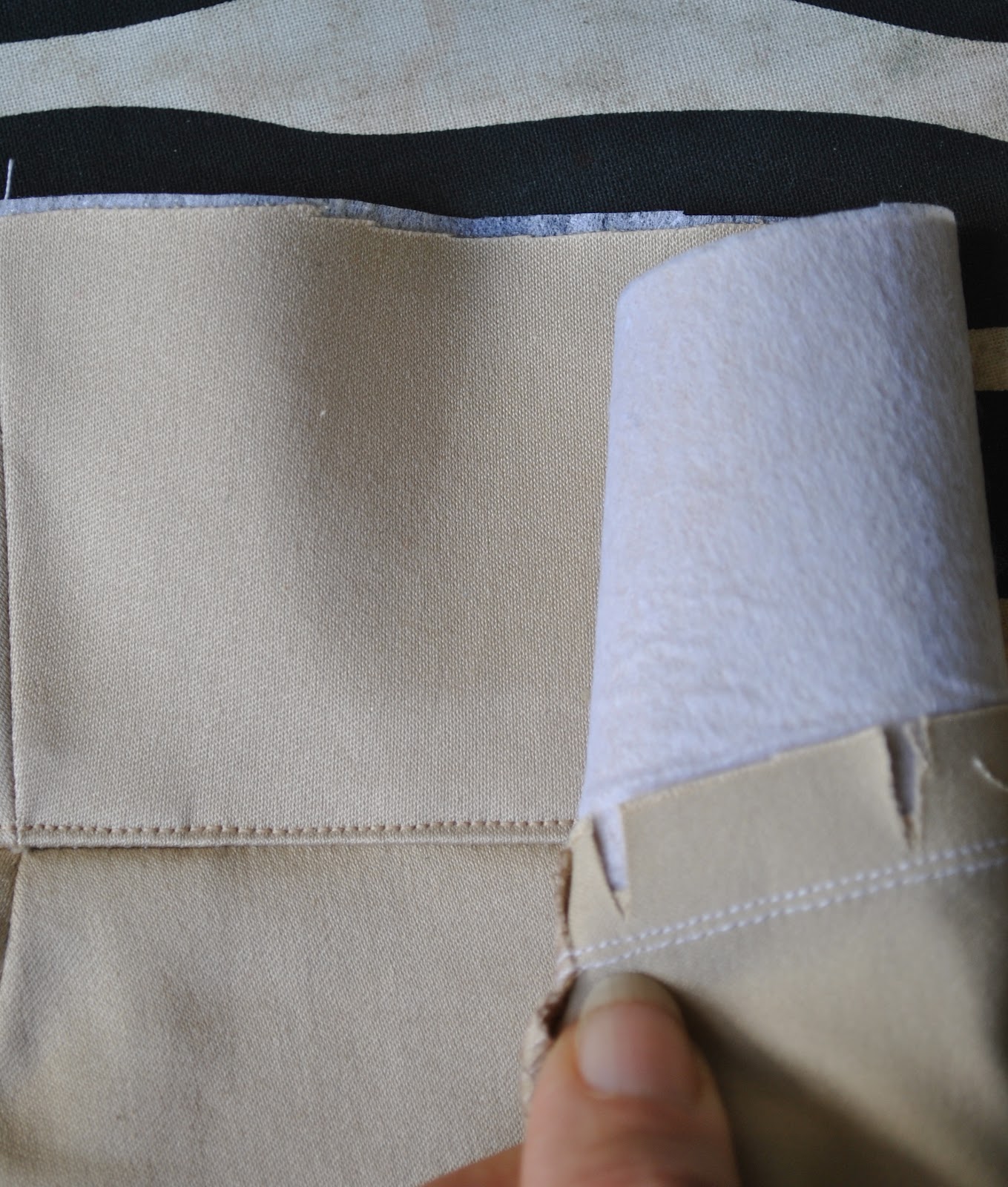
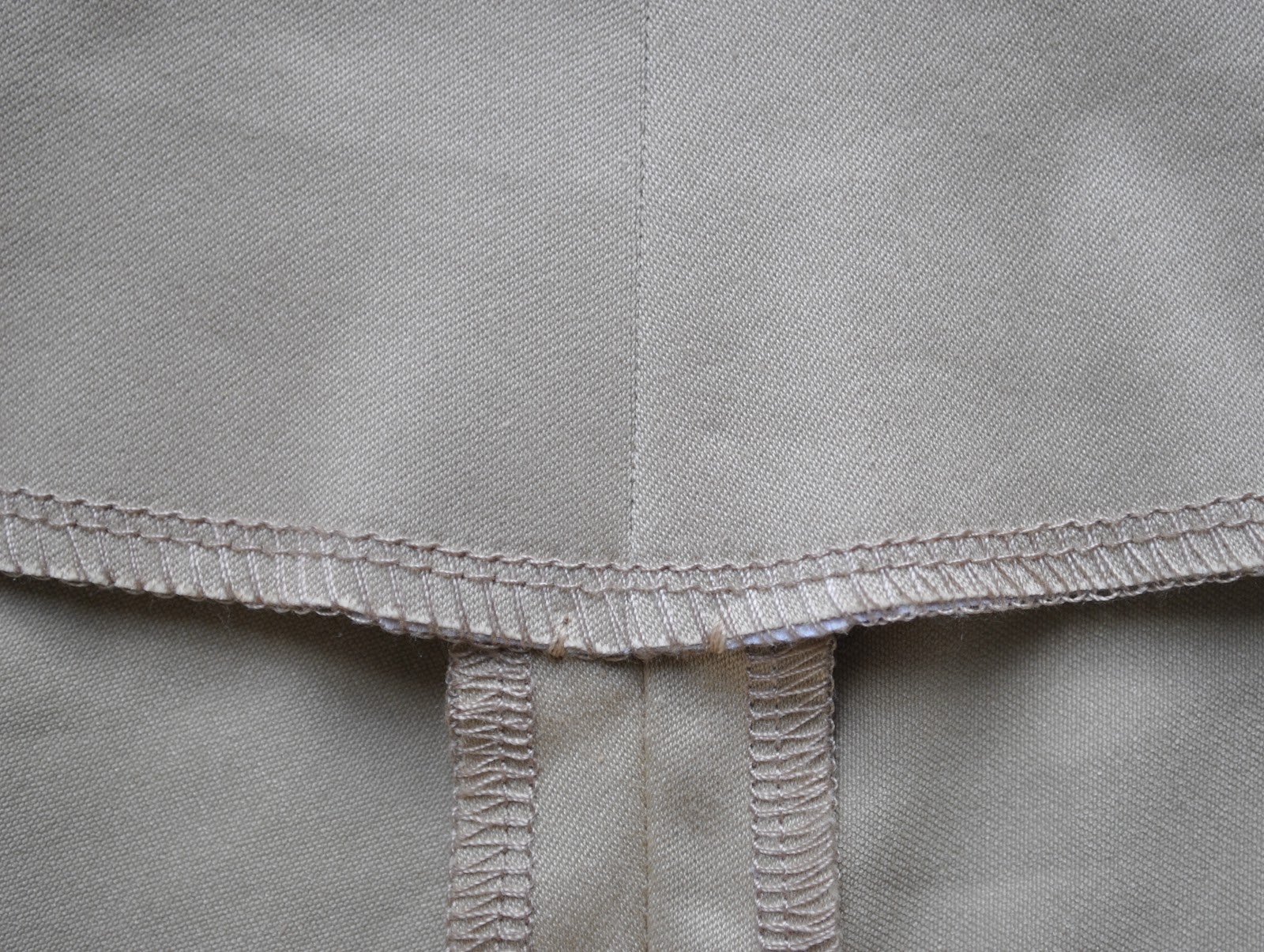
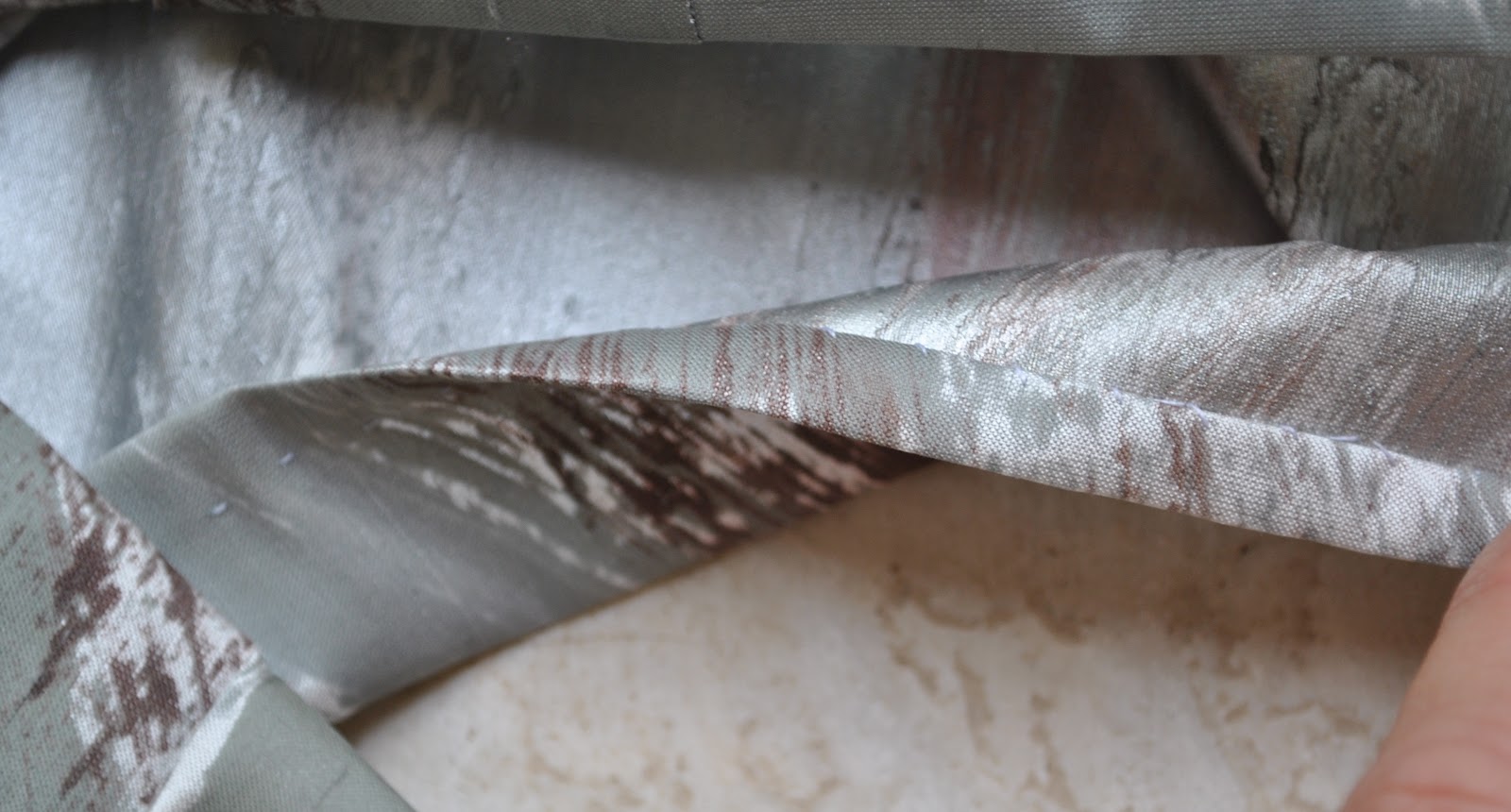
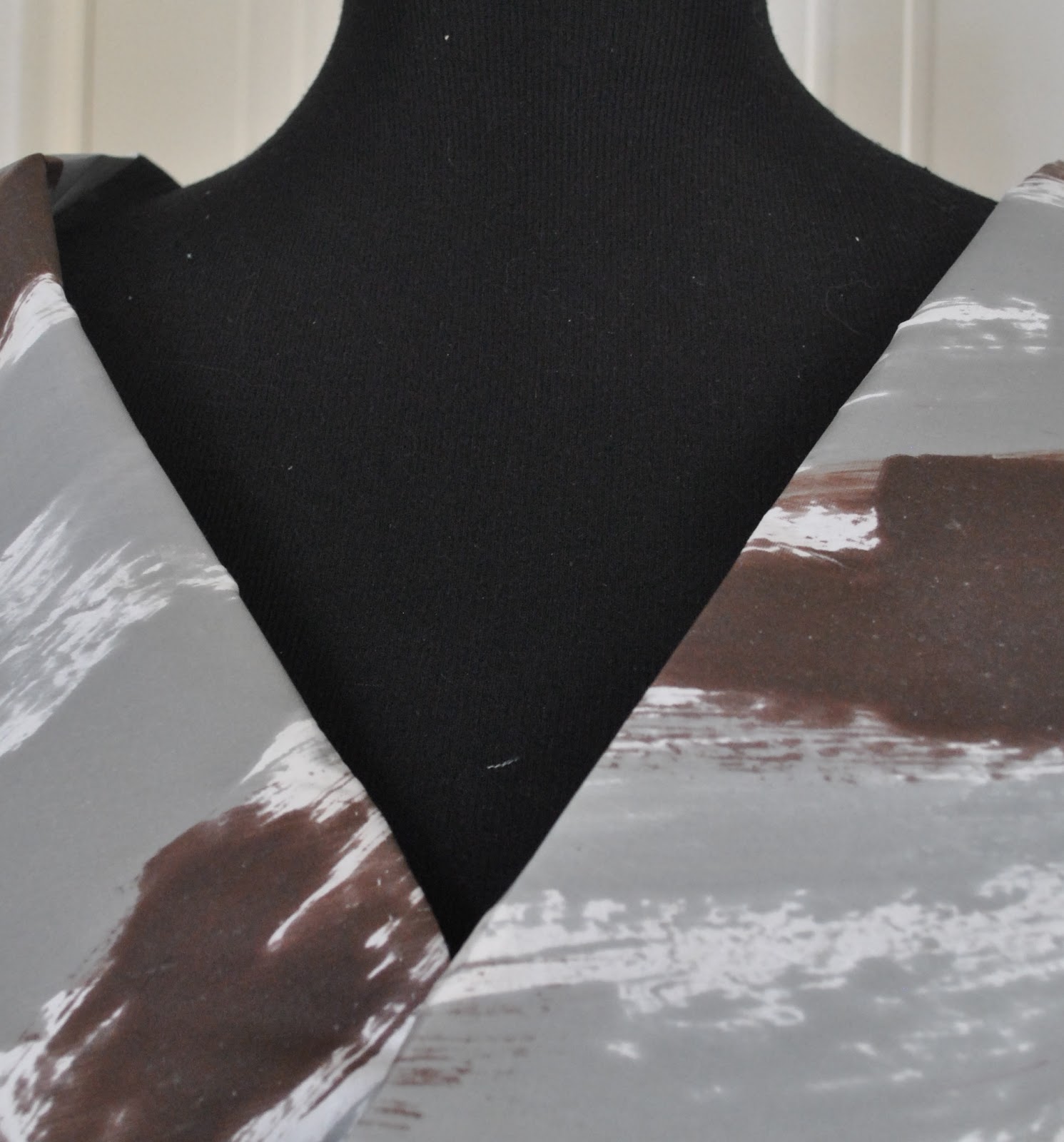
Finishing tips: the pattern left a few raw edges in obvious places ie, the neckline! which looked a little messy imo, so I hand stitched a narrow hem along these to finish. I also applied a few strategic hidden hand-stitches inside the V-neck to hold those two sides firmly and modestly together.
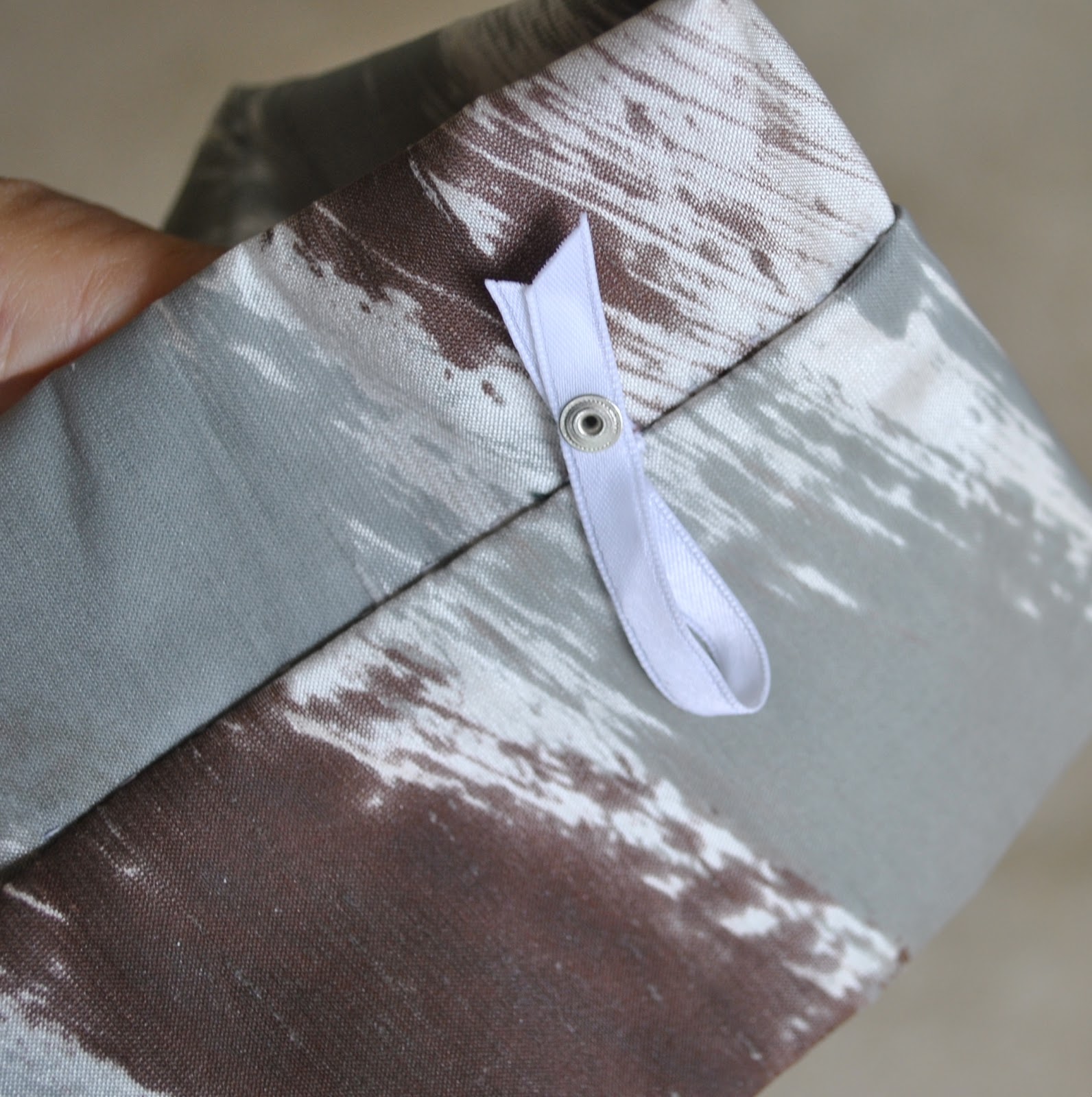
I hand-stitched lingerie holders to inside the shoulder straps, these were a gift from the lovely Yoshimi, thank you Yoshimi!
Details:
Top; Vogue 1309, hand-painted silk dupion from
Fabulous Fabrics
Fabulous Fabrics
Jeans; Burda 7863 modified, white stretch denim, details here
Shoes; c/o Misano
Pattern
Description:
Description:
Pullover
tunic has front and back cut-in-one, no shoulder and side seams, upper right
section, left panel, square armholes, left side back zip, shaped hemline,
stitched hem, unfinished and continuous bias finished edges.
tunic has front and back cut-in-one, no shoulder and side seams, upper right
section, left panel, square armholes, left side back zip, shaped hemline,
stitched hem, unfinished and continuous bias finished edges.
Pattern
Sizing:
Sizing:
American
sizes 6-14; I cut the size 10
sizes 6-14; I cut the size 10
Did
it look like the photo/drawing on the pattern envelope once you had finished
sewing it?
it look like the photo/drawing on the pattern envelope once you had finished
sewing it?
Yes.
Were
the instructions easy to follow?
the instructions easy to follow?
Well,
this pattern is not rated Advanced/Plus Difficile for nothing! There may only be three rectangular
pattern pieces, well three once you have pieced three smaller paper pieces to
make the one ginormous front and back piece; and each step in itself is a short and straightforward seam…. but the construction of this top is not an
intuitive process and you really have to keep your wits about you. I really had to stop and carefully check and
double check my markings for each and every step.
this pattern is not rated Advanced/Plus Difficile for nothing! There may only be three rectangular
pattern pieces, well three once you have pieced three smaller paper pieces to
make the one ginormous front and back piece; and each step in itself is a short and straightforward seam…. but the construction of this top is not an
intuitive process and you really have to keep your wits about you. I really had to stop and carefully check and
double check my markings for each and every step.
The markings are large and small circles and squares, variously marked from A to G
inclusively, and it is imperative to be able to identify them on the pattern
piece.
inclusively, and it is imperative to be able to identify them on the pattern
piece.
I
ended up writing on small squares of paper (for example) OA, OB, oB, etc, designating
large circle A, large circle B, small circle B, etc, and pinning these at the
appropriate spots. I highly
recommend other seamsters do the same!
Once I took this step, things were streamlined and it was massively
helpful. I also attached a safety
pin to the “back” during construction and just this simplest of things helped a
bunch when it came to working out which was the front and back and left and
right too.
ended up writing on small squares of paper (for example) OA, OB, oB, etc, designating
large circle A, large circle B, small circle B, etc, and pinning these at the
appropriate spots. I highly
recommend other seamsters do the same!
Once I took this step, things were streamlined and it was massively
helpful. I also attached a safety
pin to the “back” during construction and just this simplest of things helped a
bunch when it came to working out which was the front and back and left and
right too.
What
did you particularly like or dislike about the pattern?
did you particularly like or dislike about the pattern?
I
absolutely love the funky avant garde styling, and the challenge of putting
together a few plain and simple shapes to make a remarkably un-plain and
distinctly non-simple shape.
absolutely love the funky avant garde styling, and the challenge of putting
together a few plain and simple shapes to make a remarkably un-plain and
distinctly non-simple shape.
I
didn’t like how one ended up with some raw edges in obvious places, like the
neckline. I hand-stitched a narrow
hem along all the raw exposed edges.
Not a dislike, just an important note to others making up the pattern; your zip does have to be exactly the recommended length, otherwise you must make adjustments to your pattern pieces to suit.
didn’t like how one ended up with some raw edges in obvious places, like the
neckline. I hand-stitched a narrow
hem along all the raw exposed edges.
Not a dislike, just an important note to others making up the pattern; your zip does have to be exactly the recommended length, otherwise you must make adjustments to your pattern pieces to suit.
Fabric
Used:
Used:
Hand-painted
silk dupion
silk dupion
Pattern
alterations or any design changes you made:
alterations or any design changes you made:
After
completing the top, I hand-stitched a narrow double-folded hem along the raw
exposed edges at the front neckline crossover, the armhole edges and at the
back crossover, and applied a hidden few hand-stitches to hold the V-neck together at the centre front.
completing the top, I hand-stitched a narrow double-folded hem along the raw
exposed edges at the front neckline crossover, the armhole edges and at the
back crossover, and applied a hidden few hand-stitches to hold the V-neck together at the centre front.
I
stitched a small section down at the left back to tame just a little of that
blousiness, this was just a stylistic choice on my part.
I hand-stitched lingerie holders inside the shoulder straps.
stitched a small section down at the left back to tame just a little of that
blousiness, this was just a stylistic choice on my part.
I hand-stitched lingerie holders inside the shoulder straps.
Would
you sew it again? Would you recommend it to others?
you sew it again? Would you recommend it to others?
I
think I need just one of these ultra-distinctive tops in my wardrobe, but I
would not rule out sewing this one up again in my lifetime. I recommend this pattern to the
advanced seamster who craves both an avante garde wardrobe and a sewing
challenge.
think I need just one of these ultra-distinctive tops in my wardrobe, but I
would not rule out sewing this one up again in my lifetime. I recommend this pattern to the
advanced seamster who craves both an avante garde wardrobe and a sewing
challenge.
Conclusion:
Well,
I totes adore a sewing challenge and I sure got one here… 🙂 plus a unique top that is comfortable to wear
as well as interesting to look at.
I call that a big win!
I totes adore a sewing challenge and I sure got one here… 🙂 plus a unique top that is comfortable to wear
as well as interesting to look at.
I call that a big win!