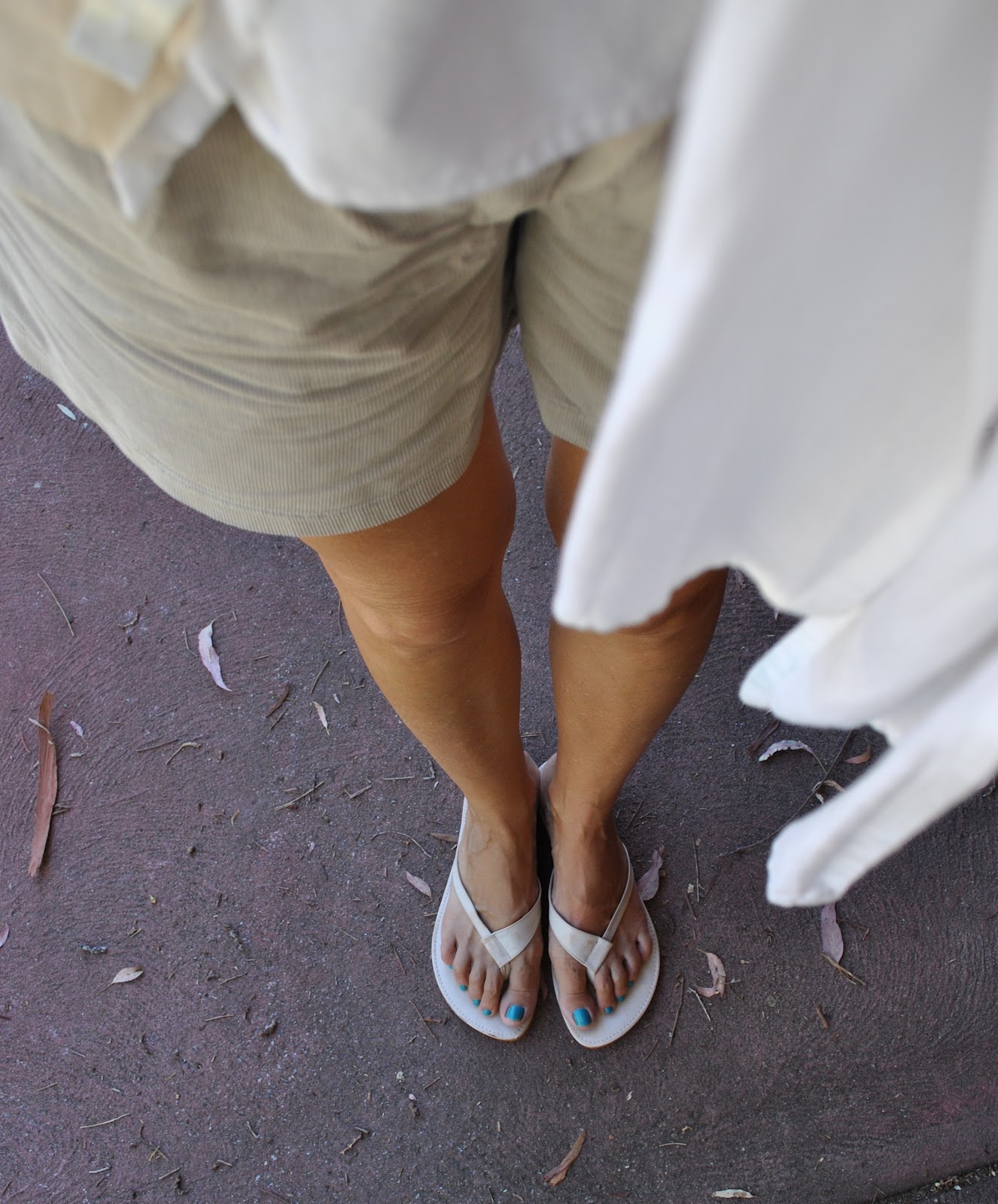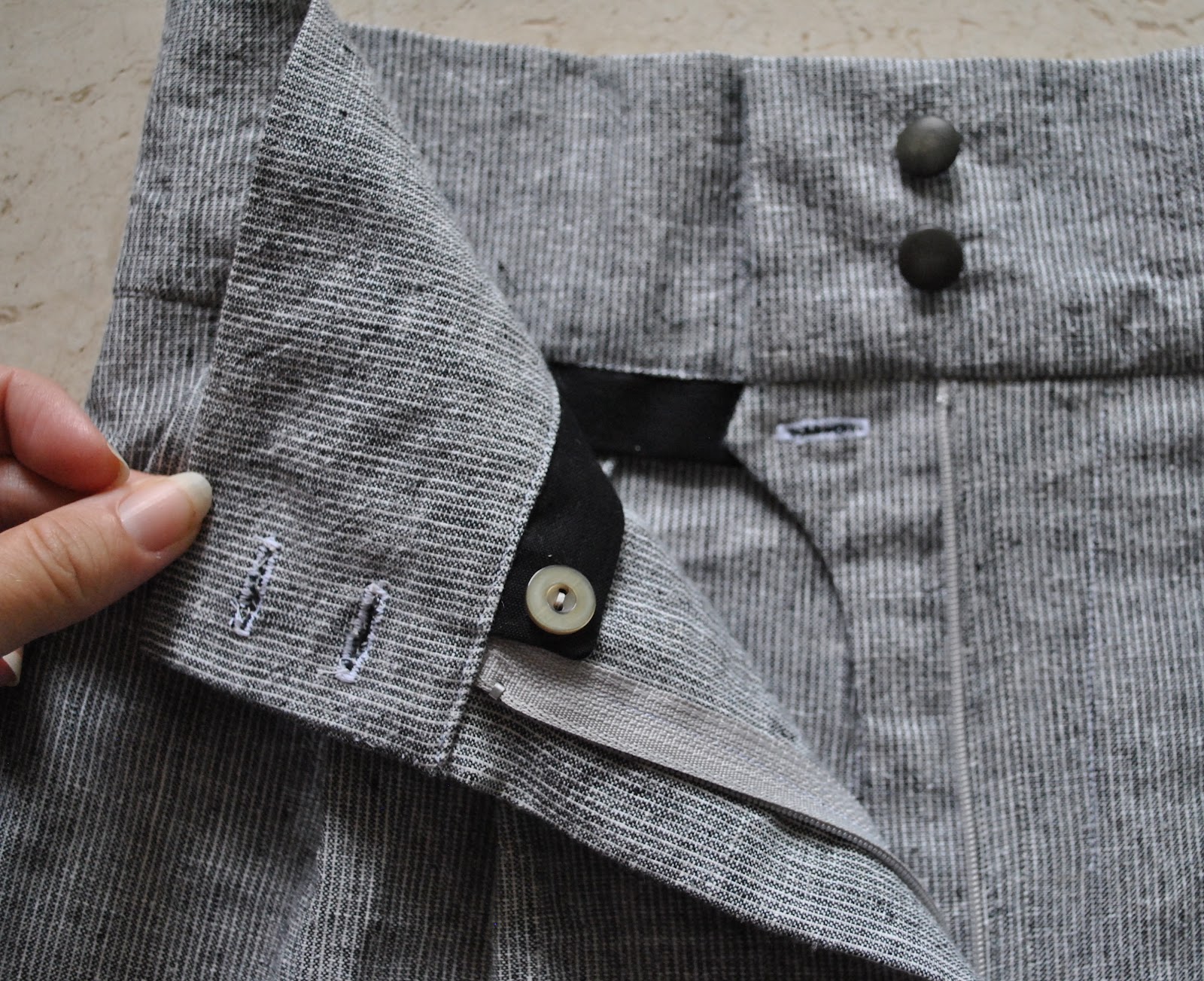
Thank you for so much enthusiasm regarding my French fly! I am very pleased with how it feels to wear, as well as how it turned out. By the way, I googled French fly and came up with zilch, so either it goes by a different name in (real) tailoring circles or there really are no other online tutorials on this feature. Could I be the first…? (omigosh moment)
So anyway, here is the lowdown on my own version of fitting a French fly to a pair of shorts with a waistband.
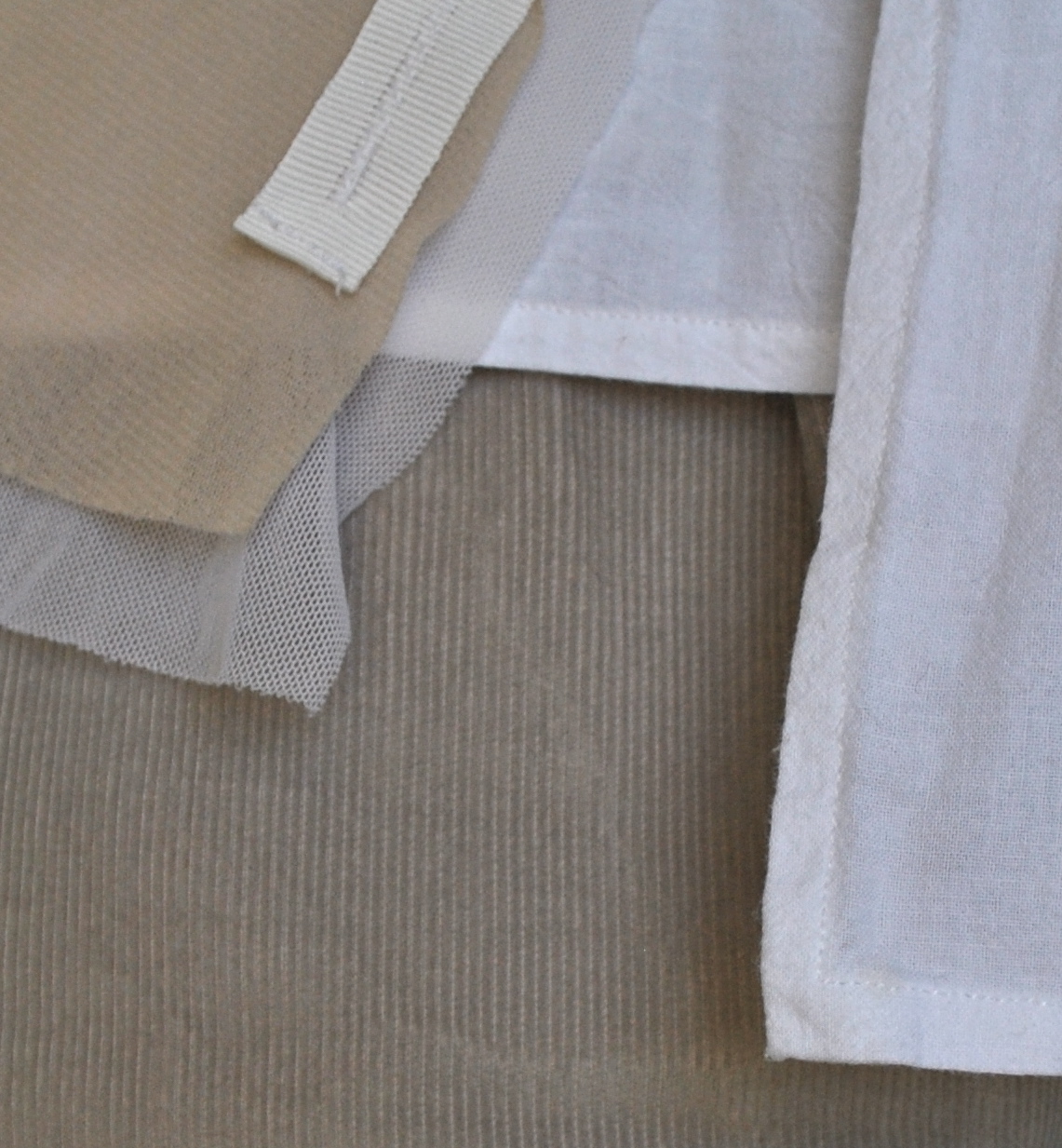
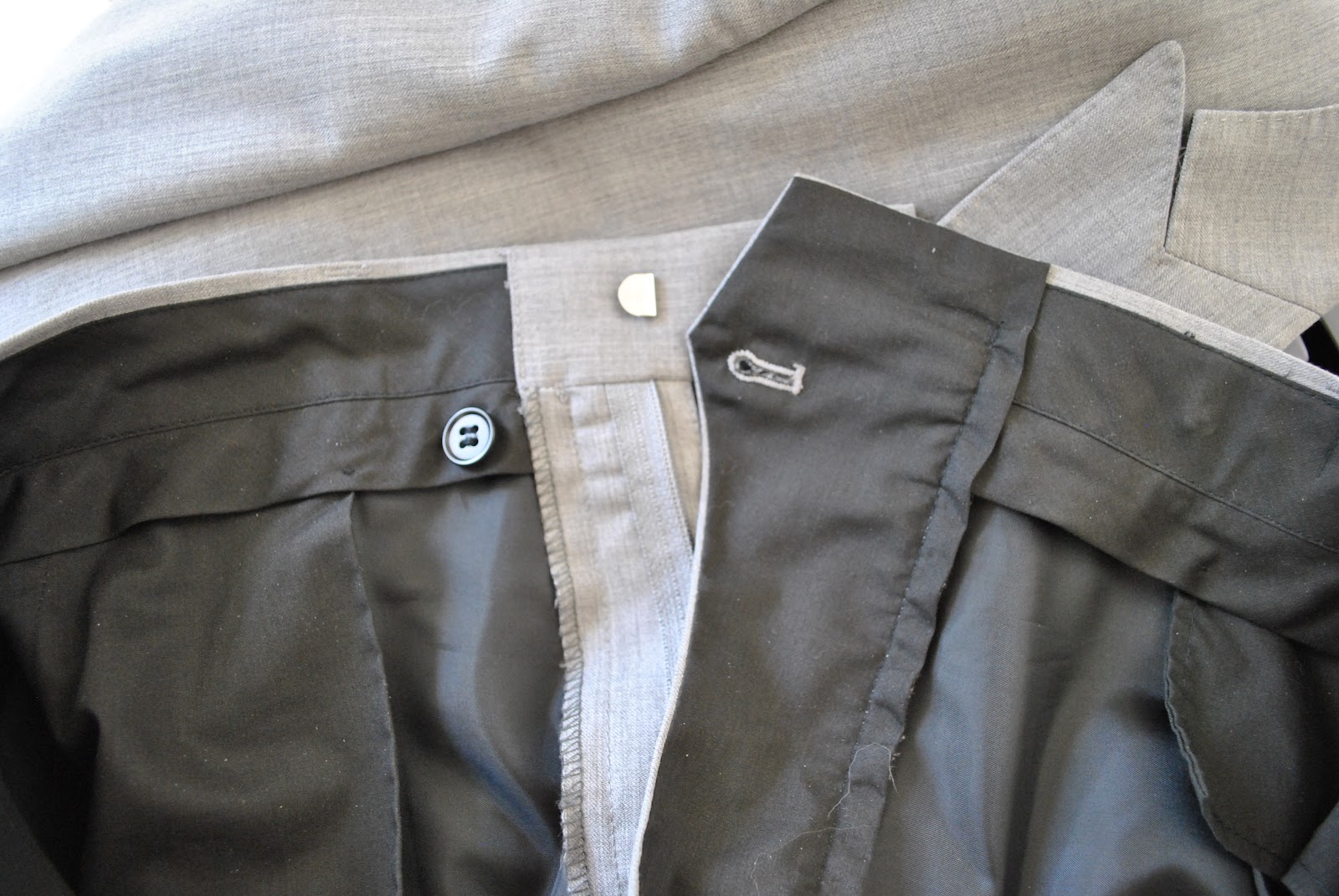
Firstly, I checked out the inner workings of my husband’s beautifully tailored suit trousers, and saw this…
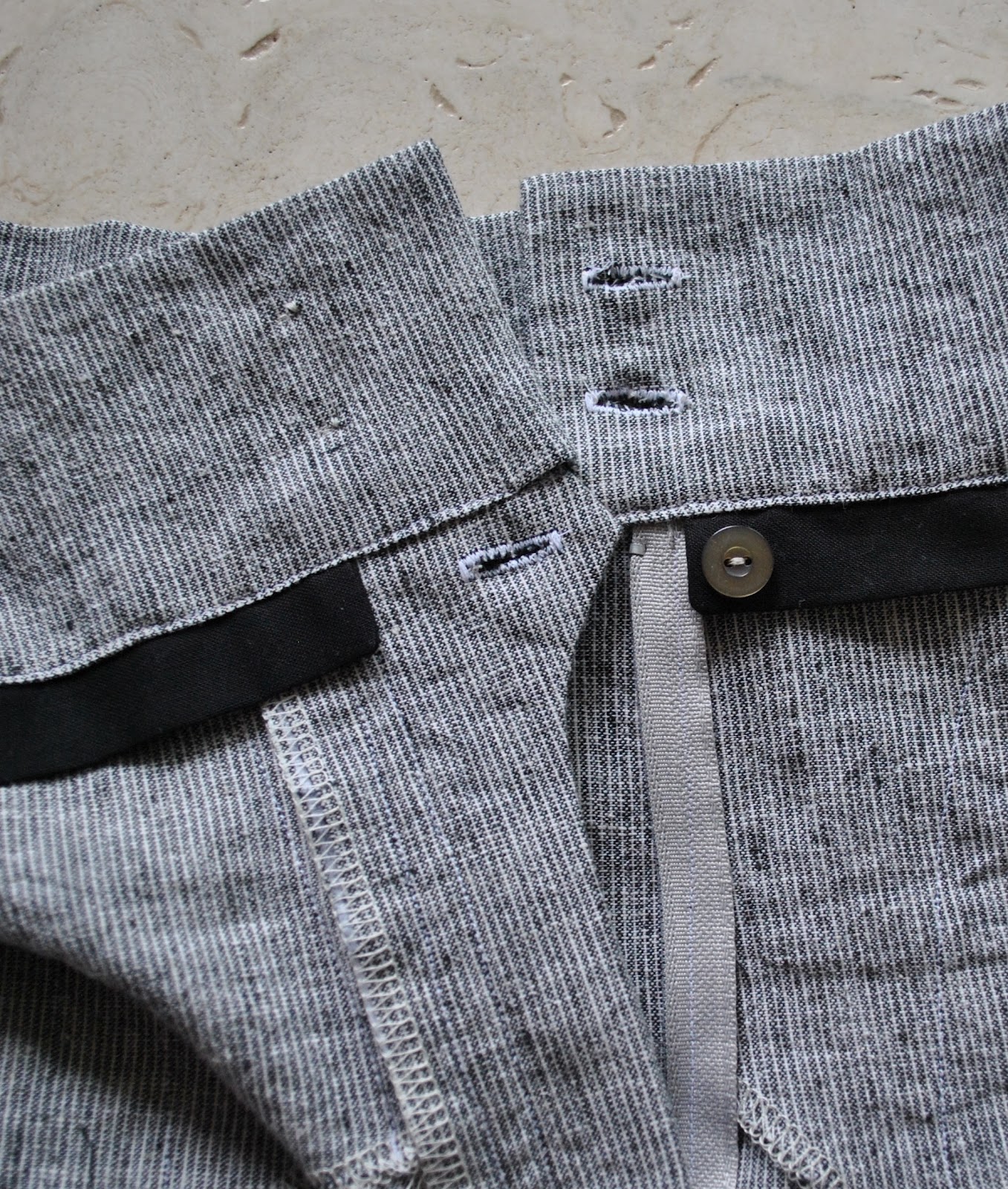
Basically, the inner button and buttonhole are situated on what is like an inside hidden “belt”, something akin to a waist stay that one would find in a strapless dress with a boned foundation. The belt is secured underneath the waistband and zip plackets, goes all the way around the waist and the button closure is level with where the top of where the zip pull sits.
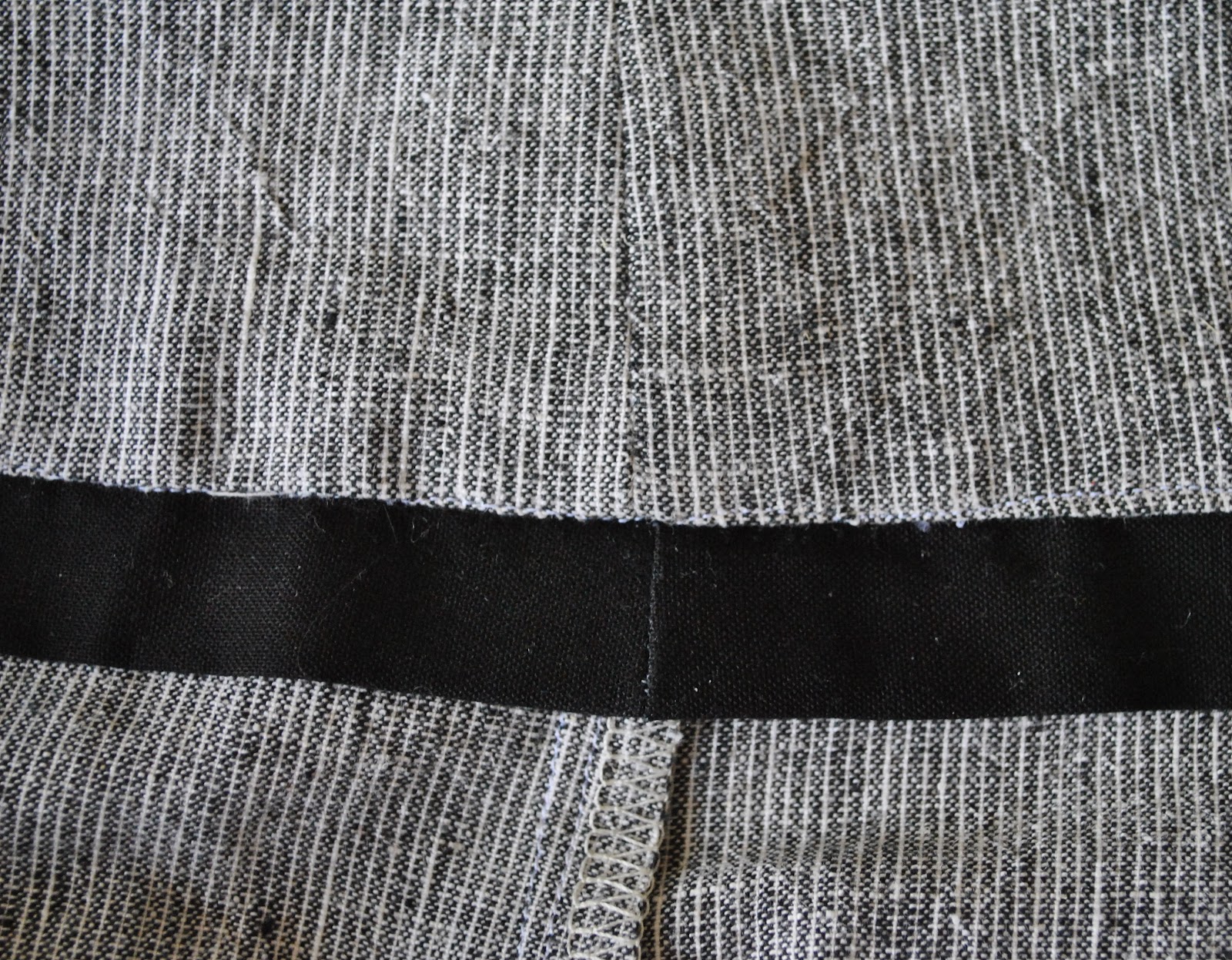
Below is pictured the centre back of the suit trousers, and this is one of my favourite features of mens’ trousers; how the centre back seam is all sewn in just one seam; back pieces, waistband, facings and waist stay, all together in one seam. This means that any future adjustments for fit are very very easy, requiring just minor unpicking, re-sewing of just the one seam, and then either catch-stitching or stitching-in-the-ditch the waistband facing and waist stay again. Incidentally, ever since I noticed this I have been using it on my own trouser and jeans waistband (and blogged about it in more details here); mostly because it does make for a massively easier fitting.

But on with my own experiments, French-fly-wise…
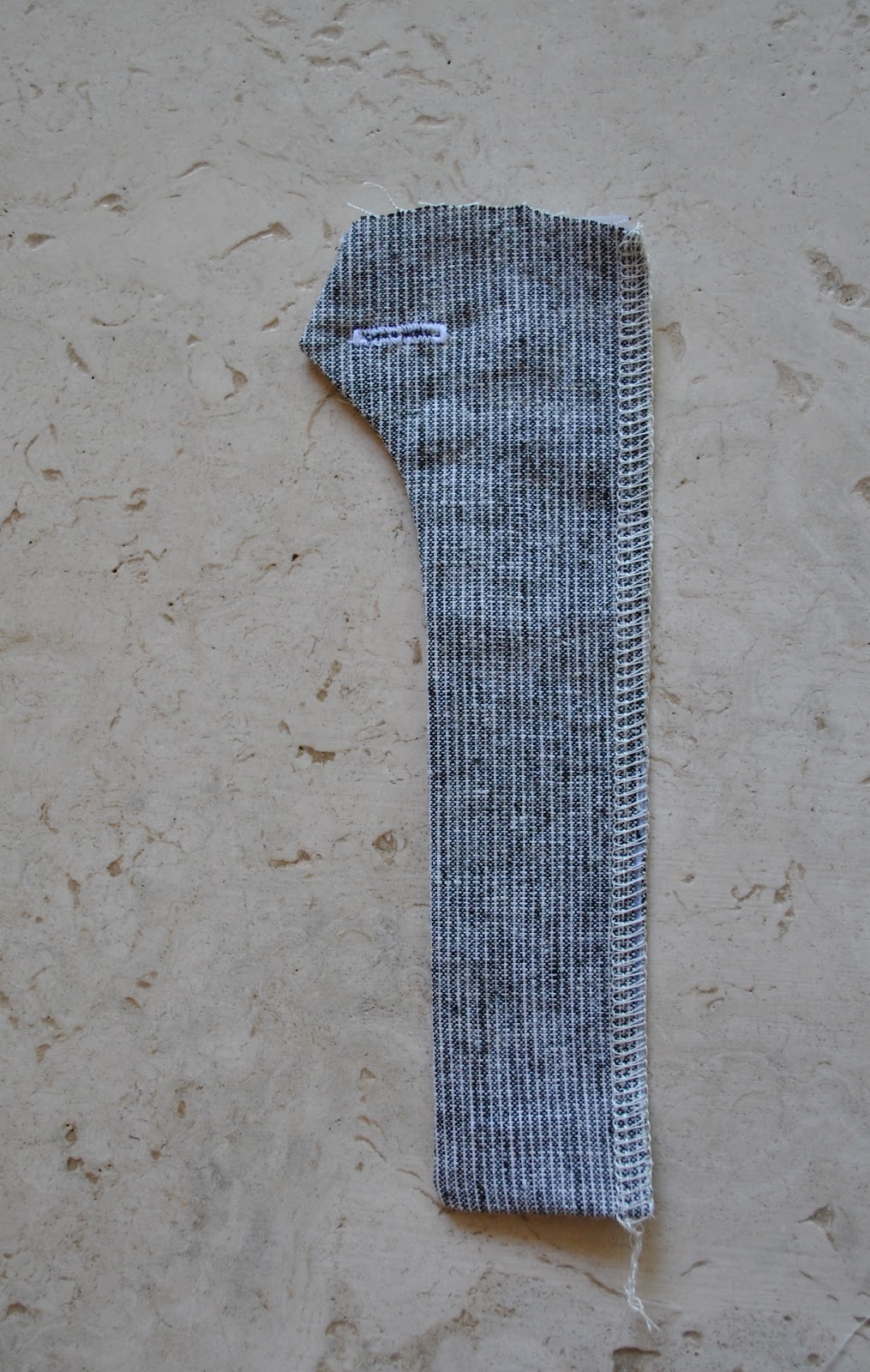
I cut out two pieces for the zip placket, applied iron-on interfacing to one.
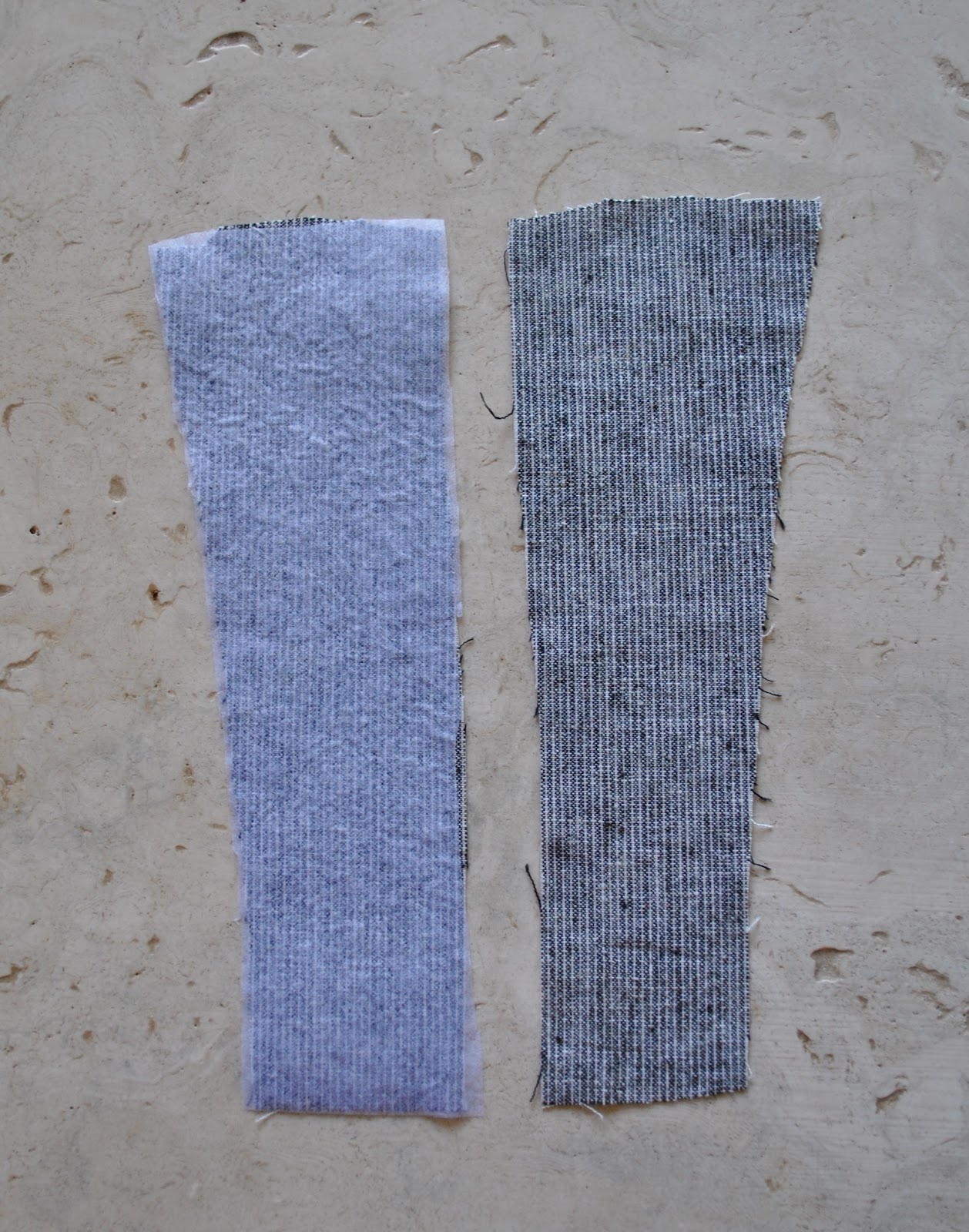
Measure the length of the zip and sewed the placket pieces together to be the correct length to fit my zip, just like a regular zip placket. The difference is shaping the placket with the “nose”. The point of the nose has to be at the same level to where the zip pull sits when it is closed. Turn out the placket, finish the long raw edges together, and put in a buttonhole of a size to suit your chosen button.
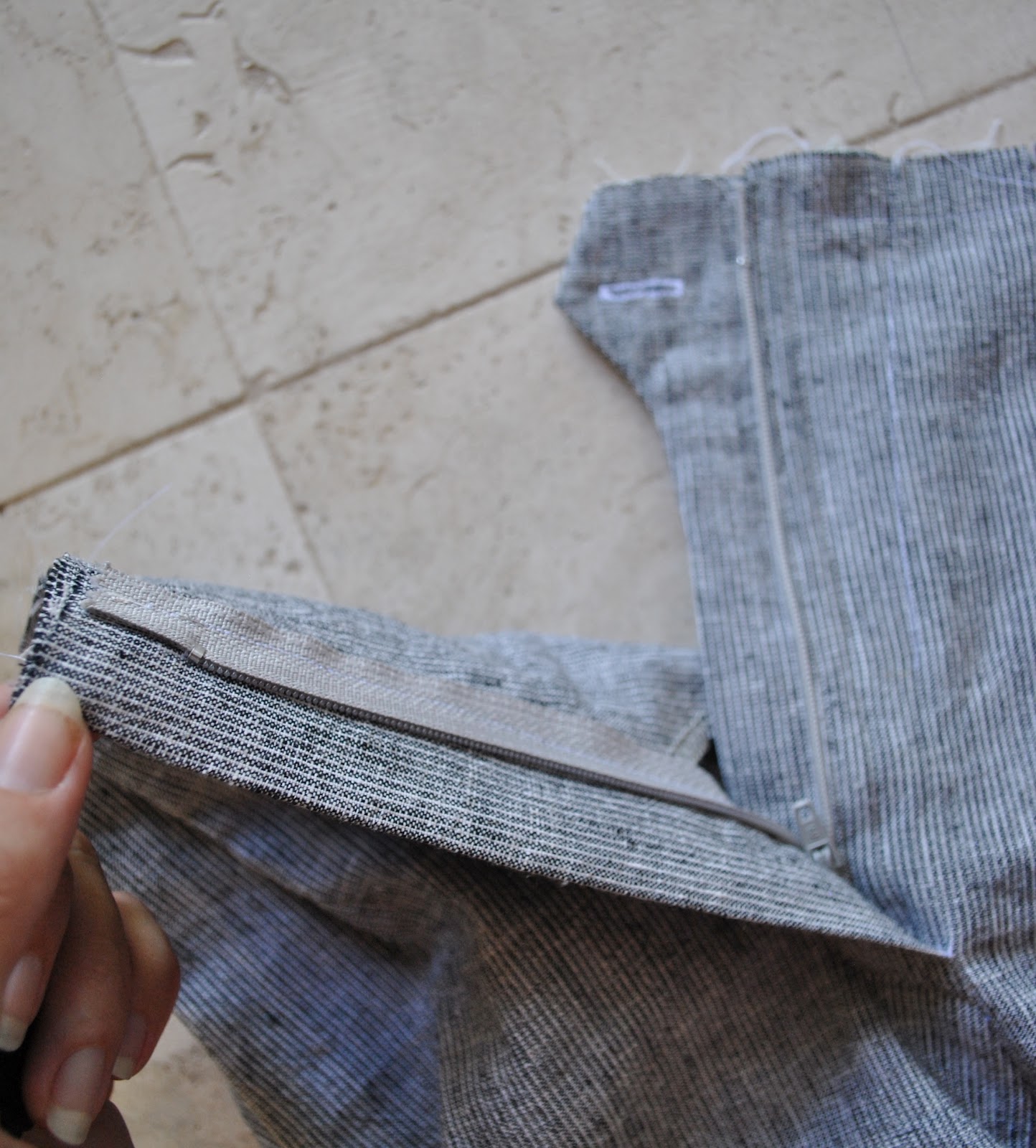
Insert the zip placket and the zip, just like you would for a regular zip placket.
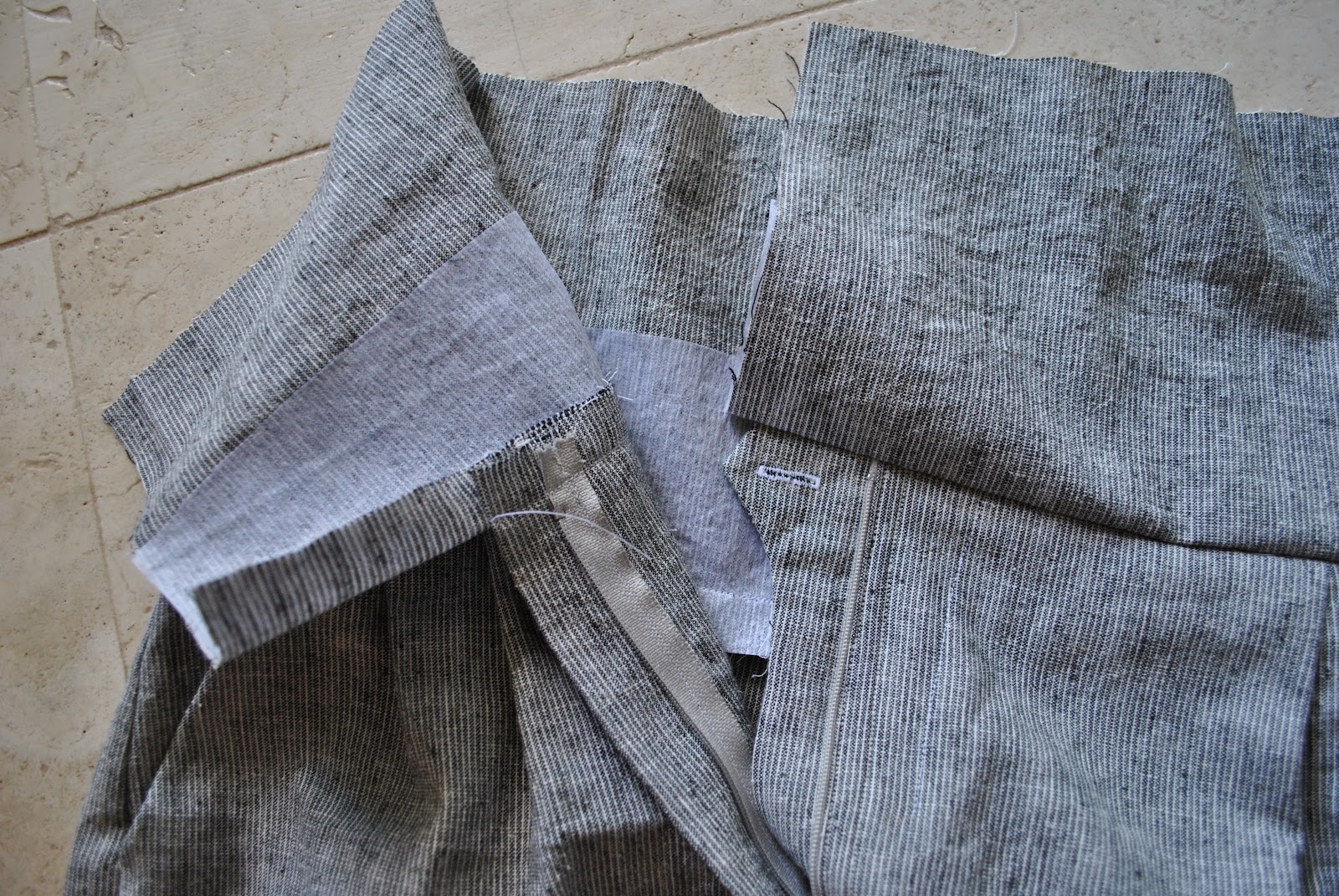
Attach the interfaced half of the waistband to the top edge of the garment, just as usual.
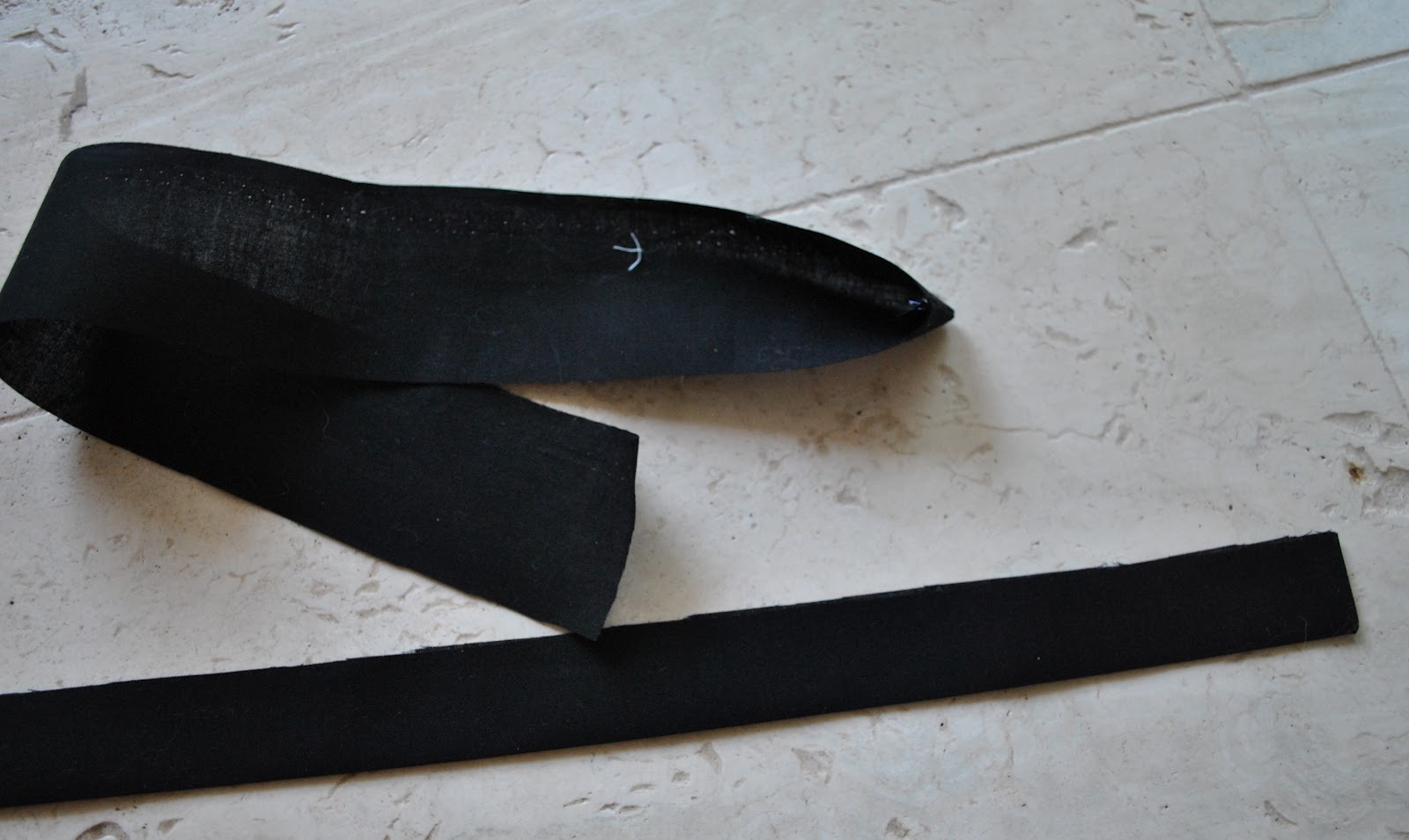
Cut two long pieces of sturdy woven fabric on the grain lengthwise to be the hidden “belt” or waist stay (I’m just going to go with “belt” from now on, OK?) I used some rather nasty, densely woven, very tough black quilting cotton that I bought from Spotlight yonks ago, unusable for any real garment but that has been wonderful for all sorts of pocket lining, HongKong seaming, waistband facing, and a whole host of other hidden purposes. I cut my two pieces to be plenty long enough to go around half my waist, plus extra, and the width should be double your desired finished belt width plus double seam allowances.
Fold both pieces in half lengthwise right sides together, sew together one of the short ends, turn right side out and press. Press the whole length in half lengthwise.
Now turn in the waistband facing and hold in place to situate each belt in its right spot… each with the stitched closed bit at the front and the long folded edge down. The left front should be situated just over the stitching line of the placket, and the right front to halfway over the zip tape. Pin to mark their placement on the facing.
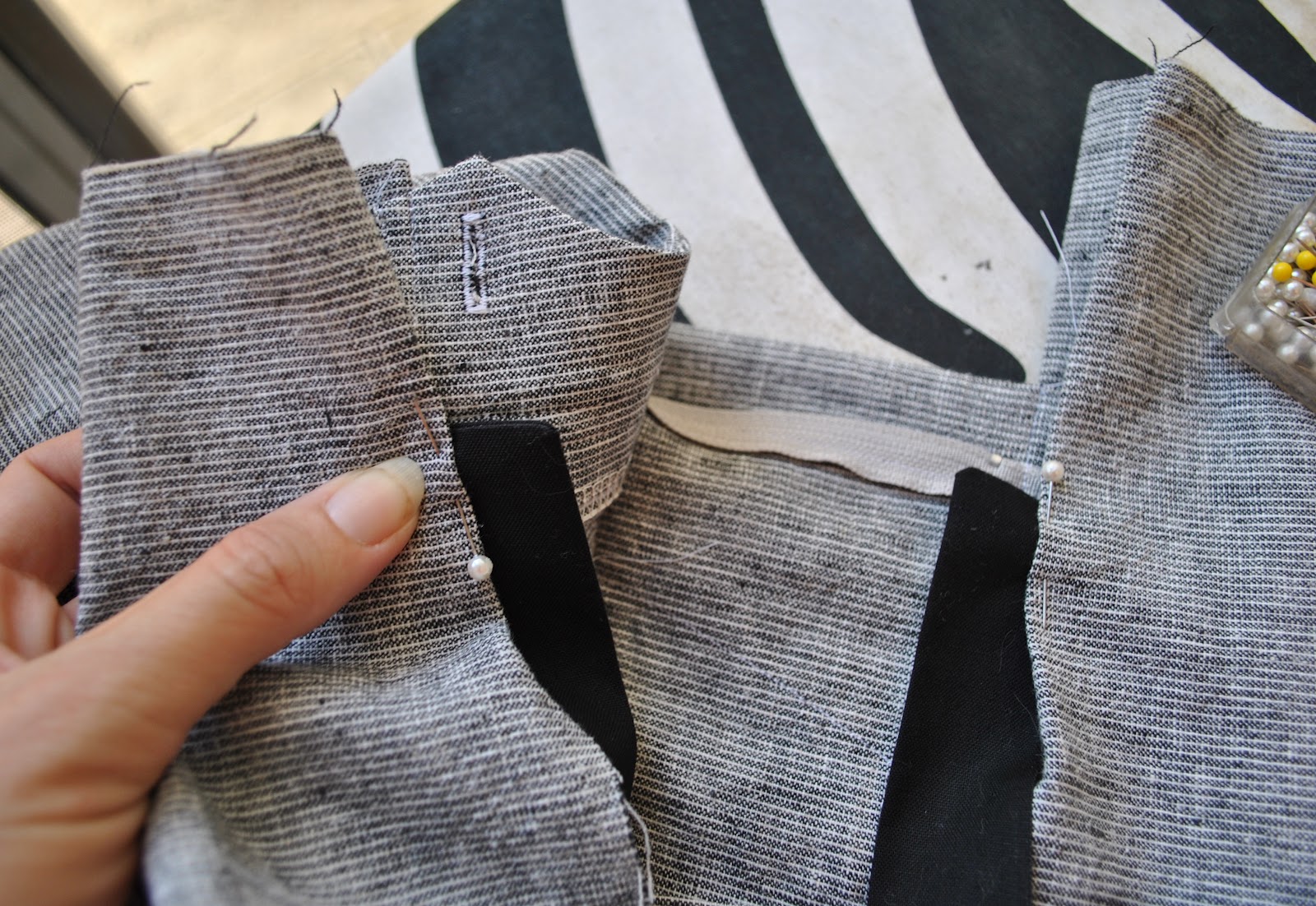
By the way, if you planned ahead, you could have the left front of the waist stay/belt inside the zip placket and stitched down inside it along with the zip placket/zip seam. Because I was still working it all out and trying to think each step through as I was going along, I did not manage to do this for this one (hey, it’s my first) but I would definitely try it for next time. It would take a bit more fiddling, but I think it could be done.
Stitch the belts to the waistband facing, keeping the front edges of the belts in exactly the position you had pinned previously. Stitch all the way along to about 5cm away from the centre back seam, to allow for final fitting of the waistband.
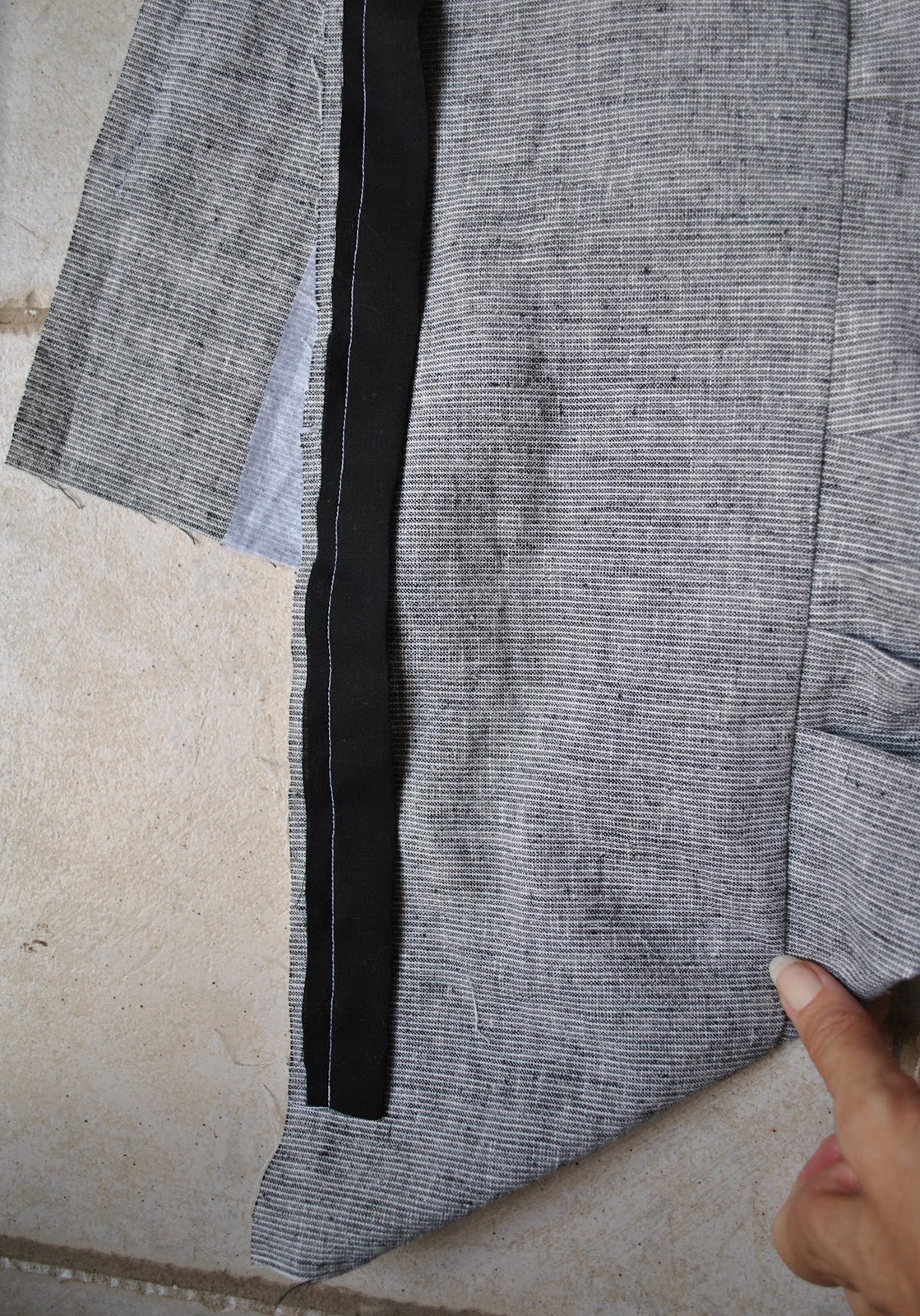
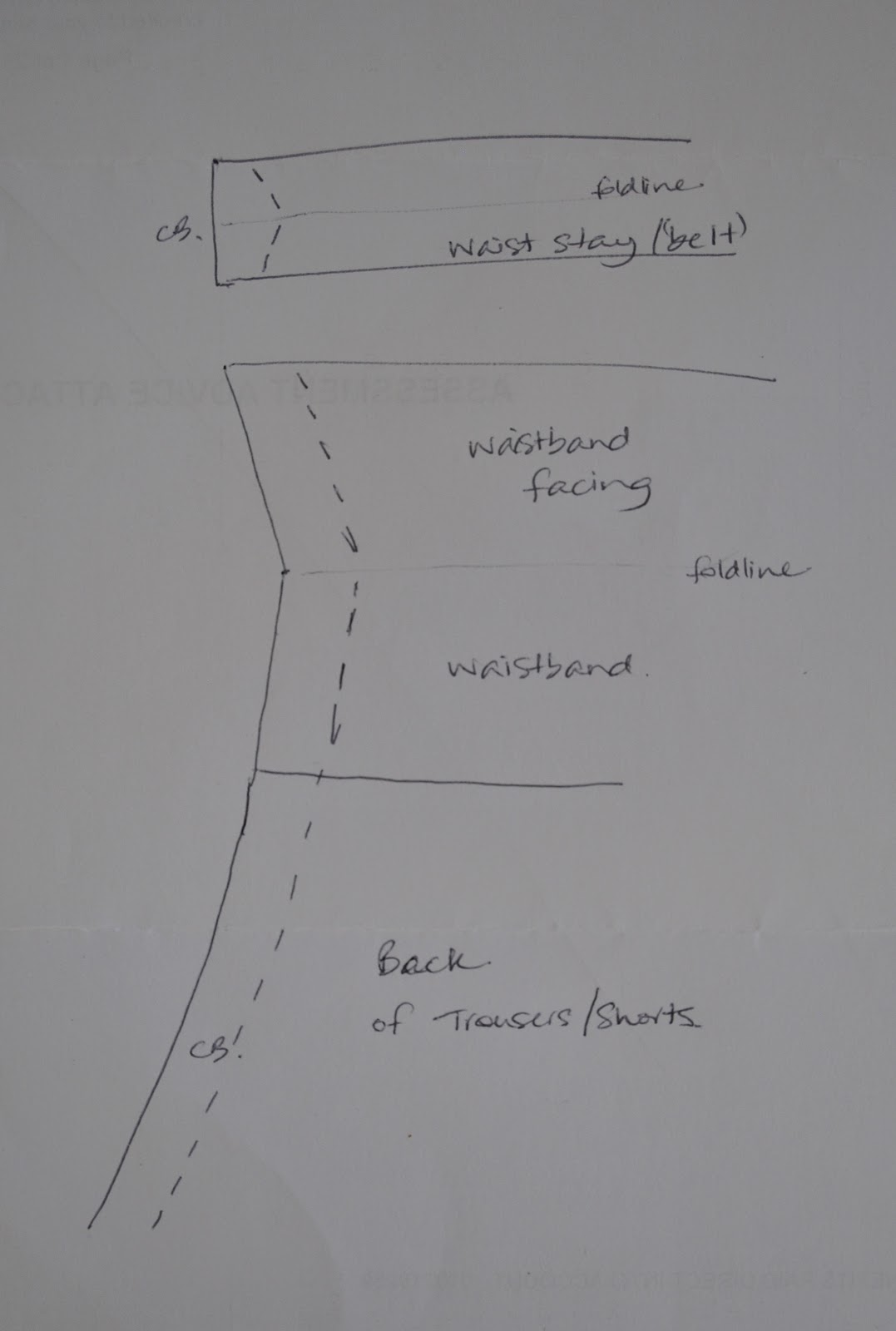
Do the final waistband fitting and stitch up the waistband centre back. Once this is done, measure the belt to fit, and sew the two together at the centre back seam. If you are like me and always stitch a slanted centre back seam to fit a sway back, then you will have to stitch the facings and the belt pieces together on the diagonal to match. Below is a very rough and somewhat exaggerated diagram to illustrate what I mean (obviously, the angles should all match), that centre back seam is sewn in a symmetrical arrowhead with the point at the central foldline. I left out the waistband facing and belt seam allowances for ease of drawing, but they should be sewn with their own little opposing diagonals as well…. This is necessary to get them to sit nice and flat when they are all folded and tucked in place. Once stitched together at the centre back, fold the centre back of the belt in half lengthwise and press, and stitch the remainder into place on the waistband facing.
Fold the waistband facing in right sides together and stitch the front edges, just as you would for a regular waistband. Trim corners and turn the waistband right sides out.
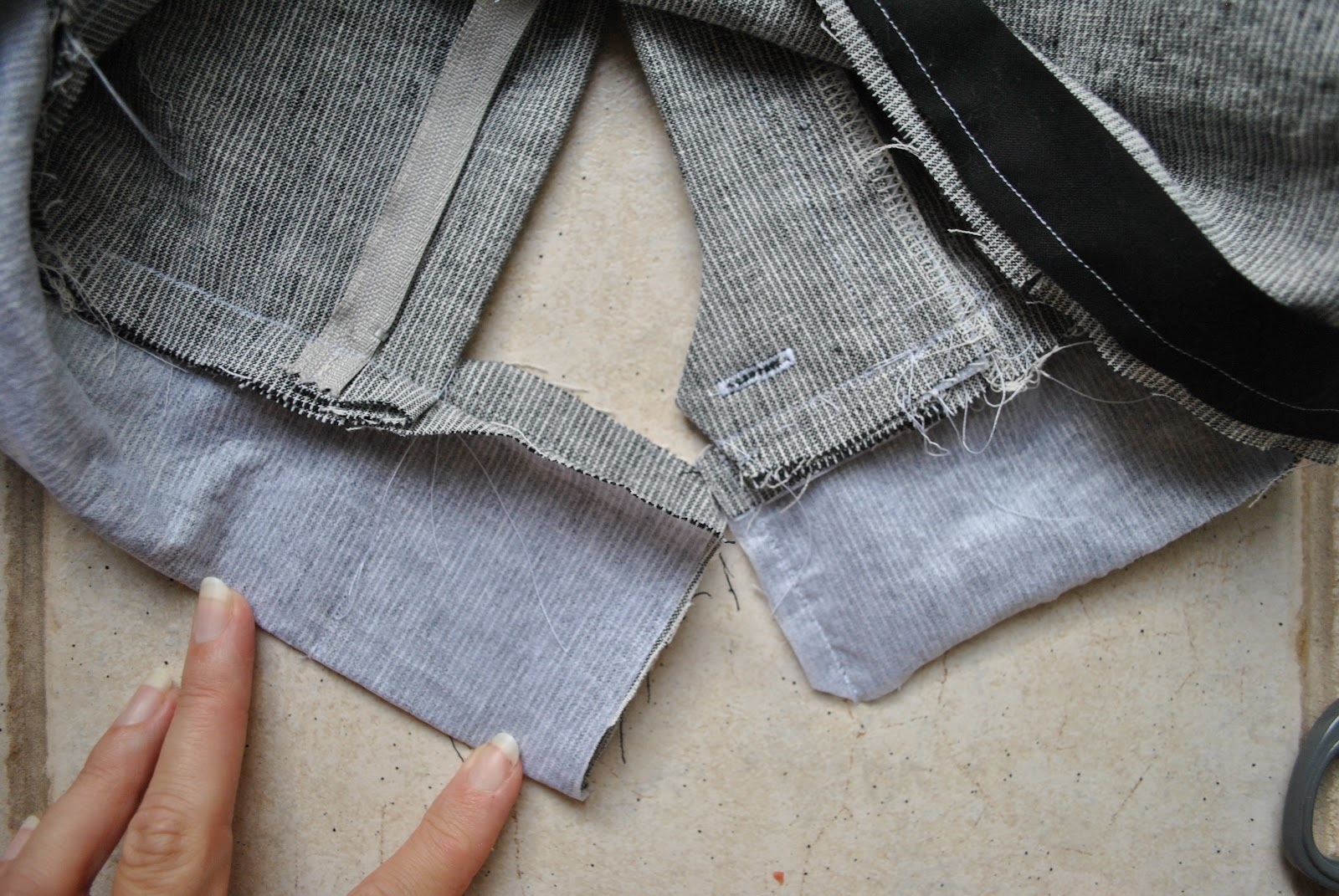
Fold in and under the waistband facing seam allowance, and the belt seam allowance, and pin in place. Baste and stitch in the ditch all the way around to finish the waistband.
To complete securing the belt; stitch the left front down firmly, stitching along the same stitching as the placket/zip stitching. Like I mentioned above, if you had inserted and secured this end within the placket this would not be necessary. But when done like this, this stitching is essential.
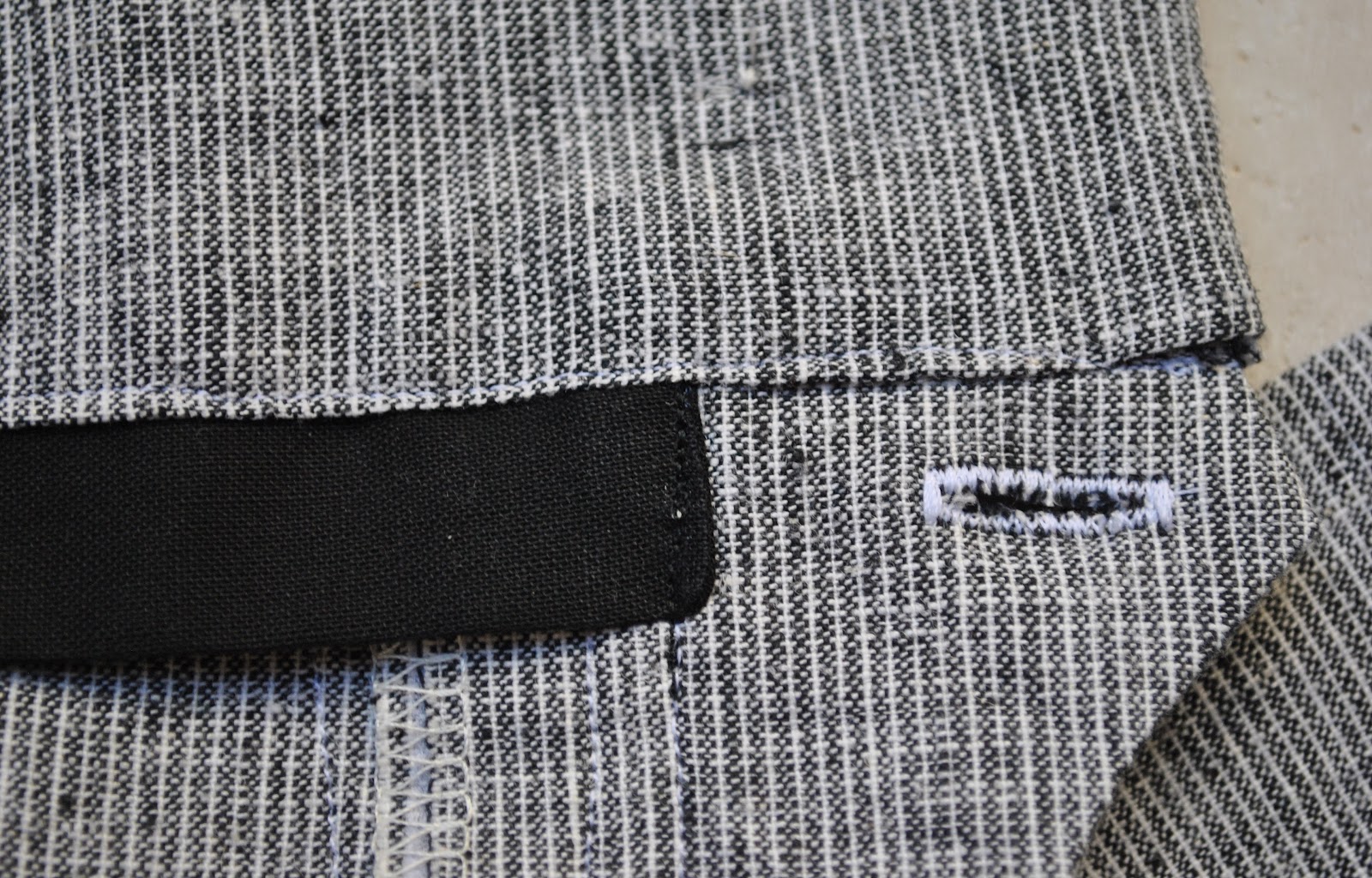
Finally, try on the trousers/shorts to determine the placement of the belt button, and stitch it on securely. It should be situated so that the front fly flap and zip sit closed and perfectly relaxed. There should be no strain on the zip (which would mean the belt is too loose) and no squeezing together at the top of the zip (which would mean the belt is too tight)