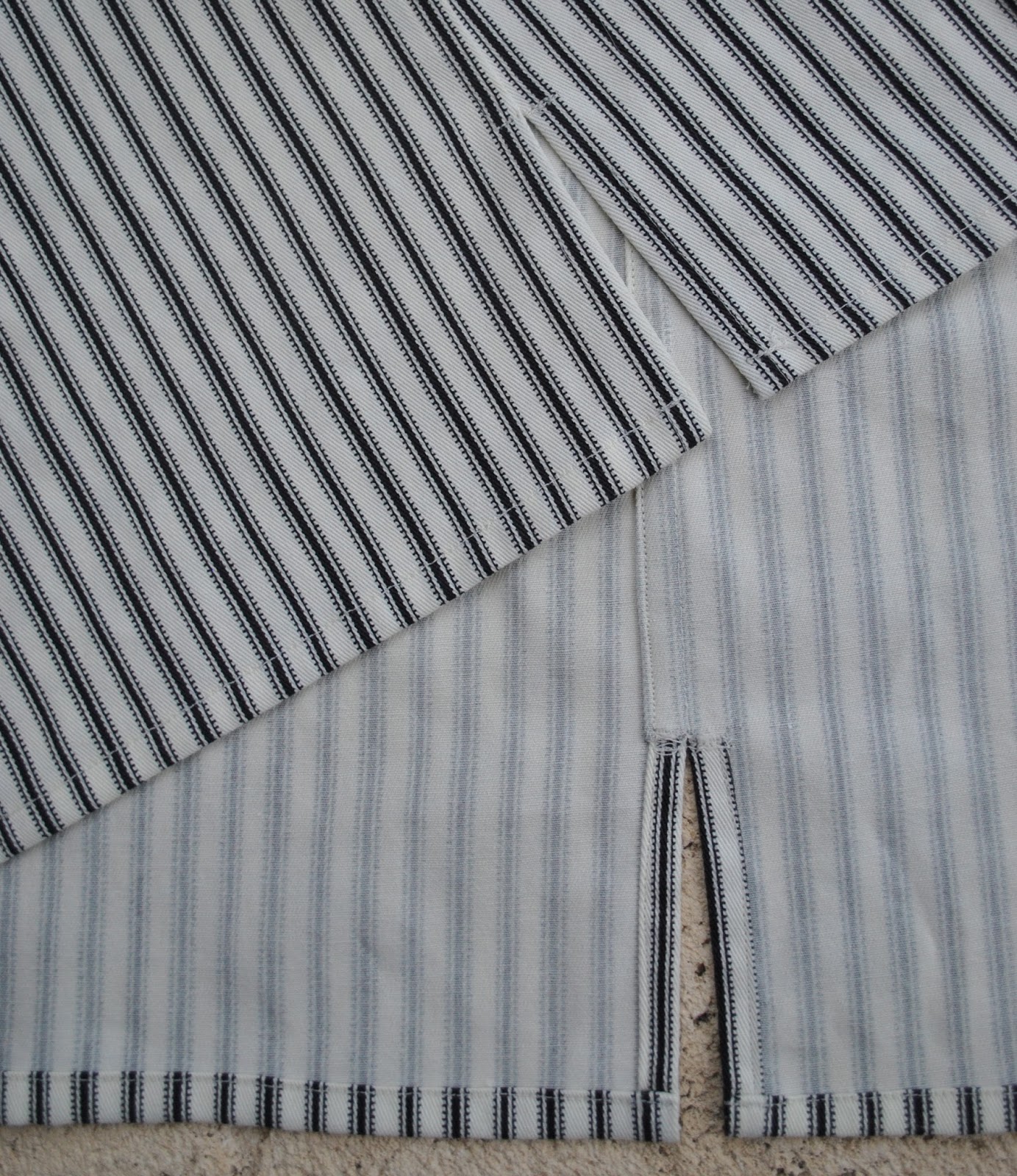
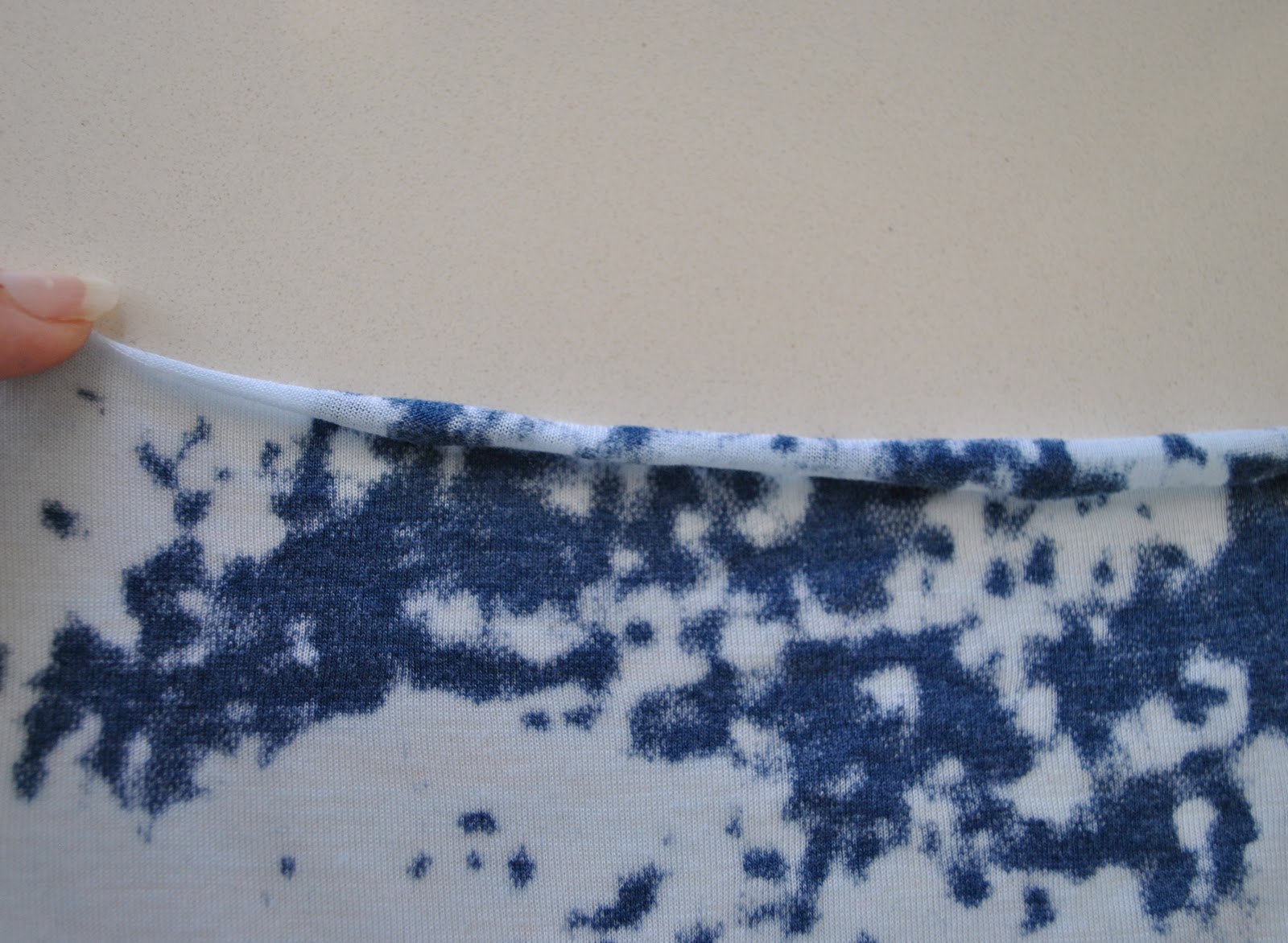
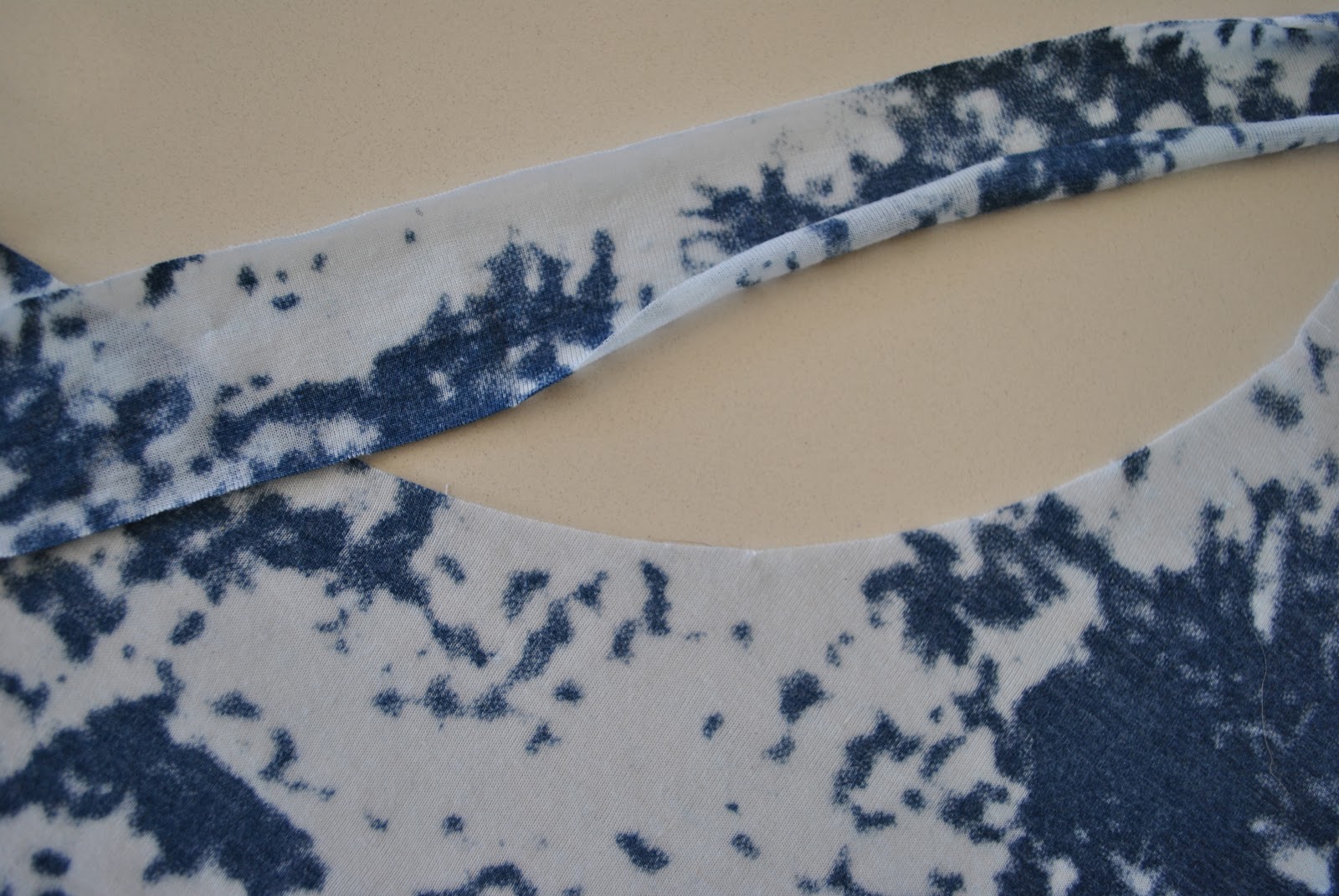
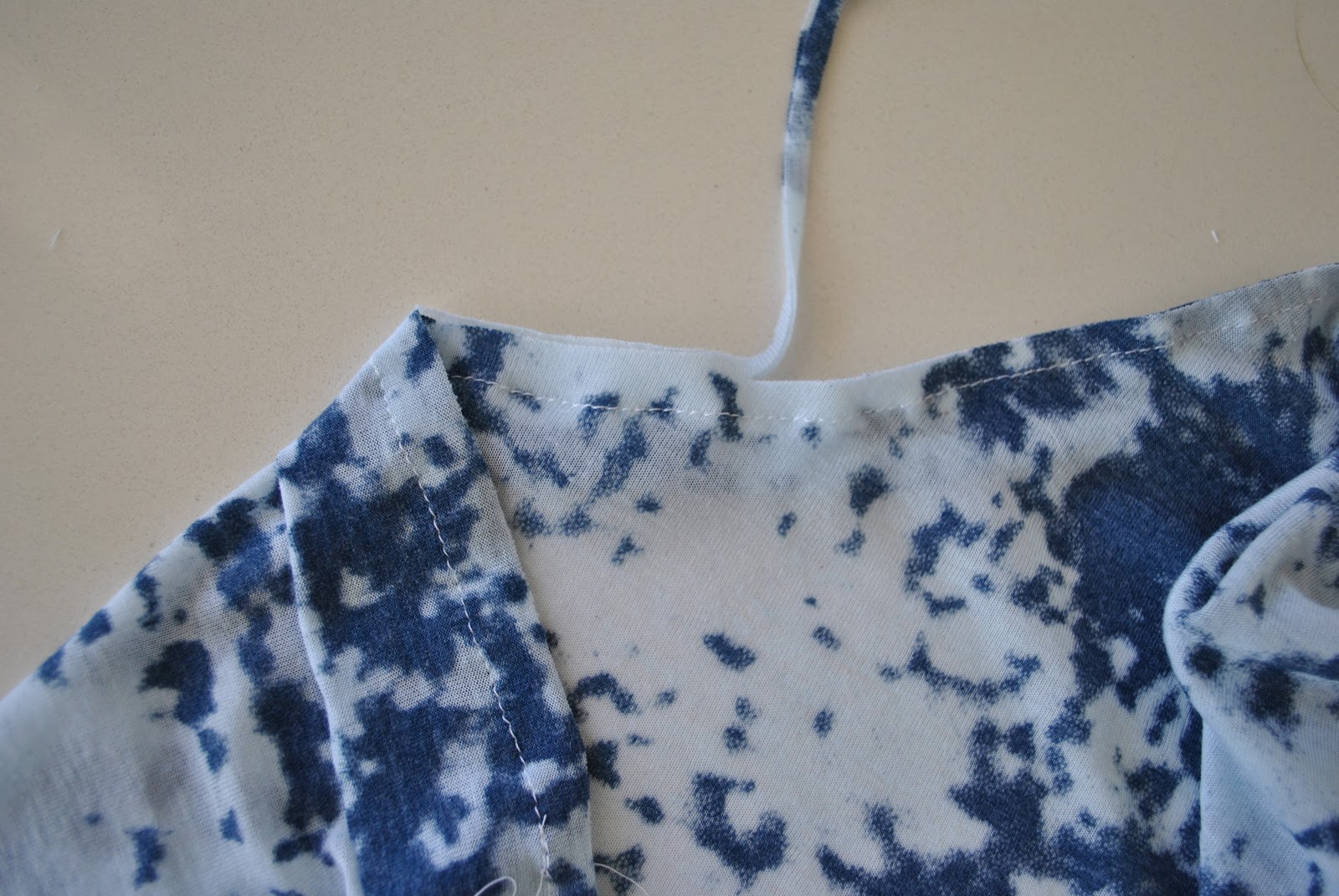
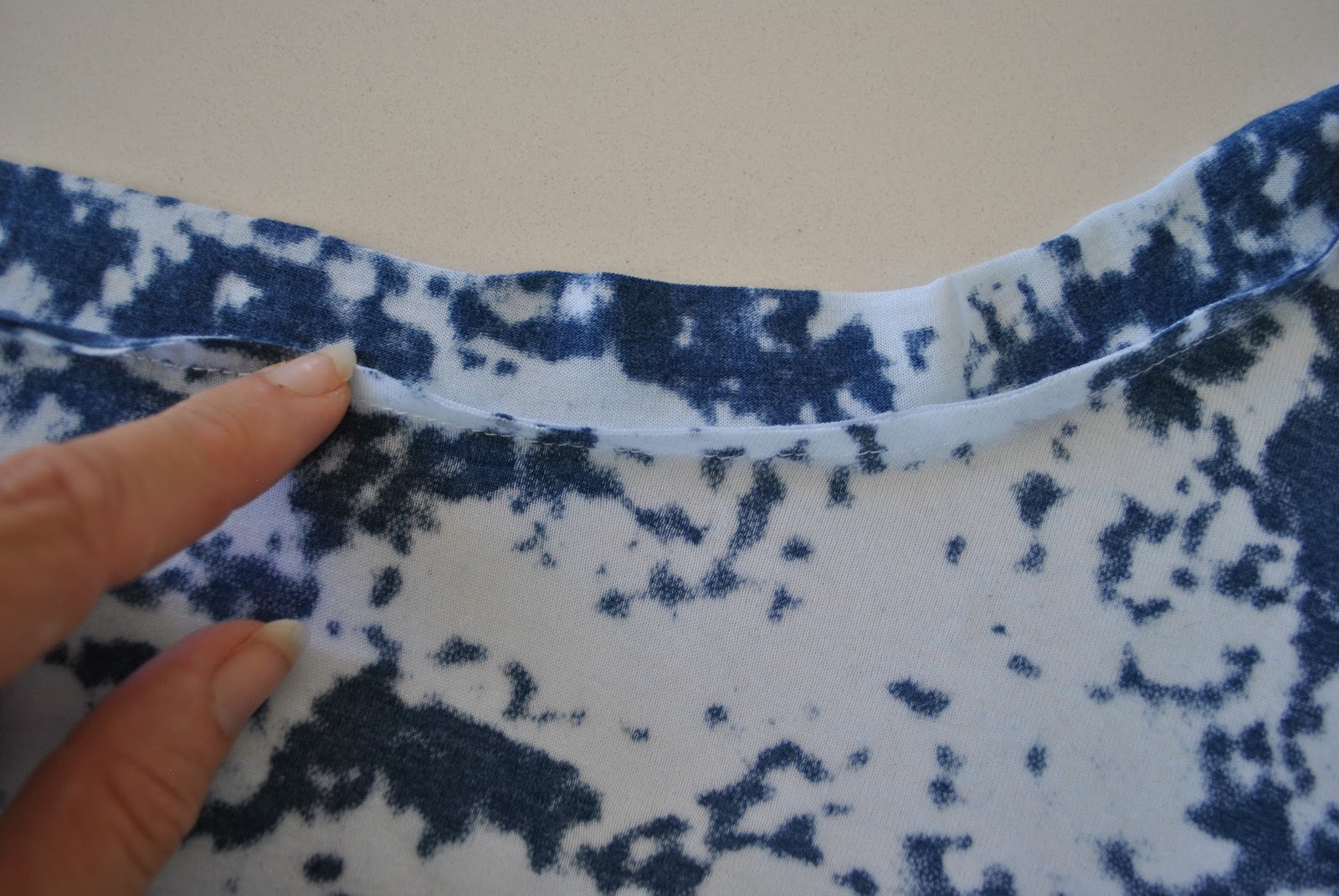
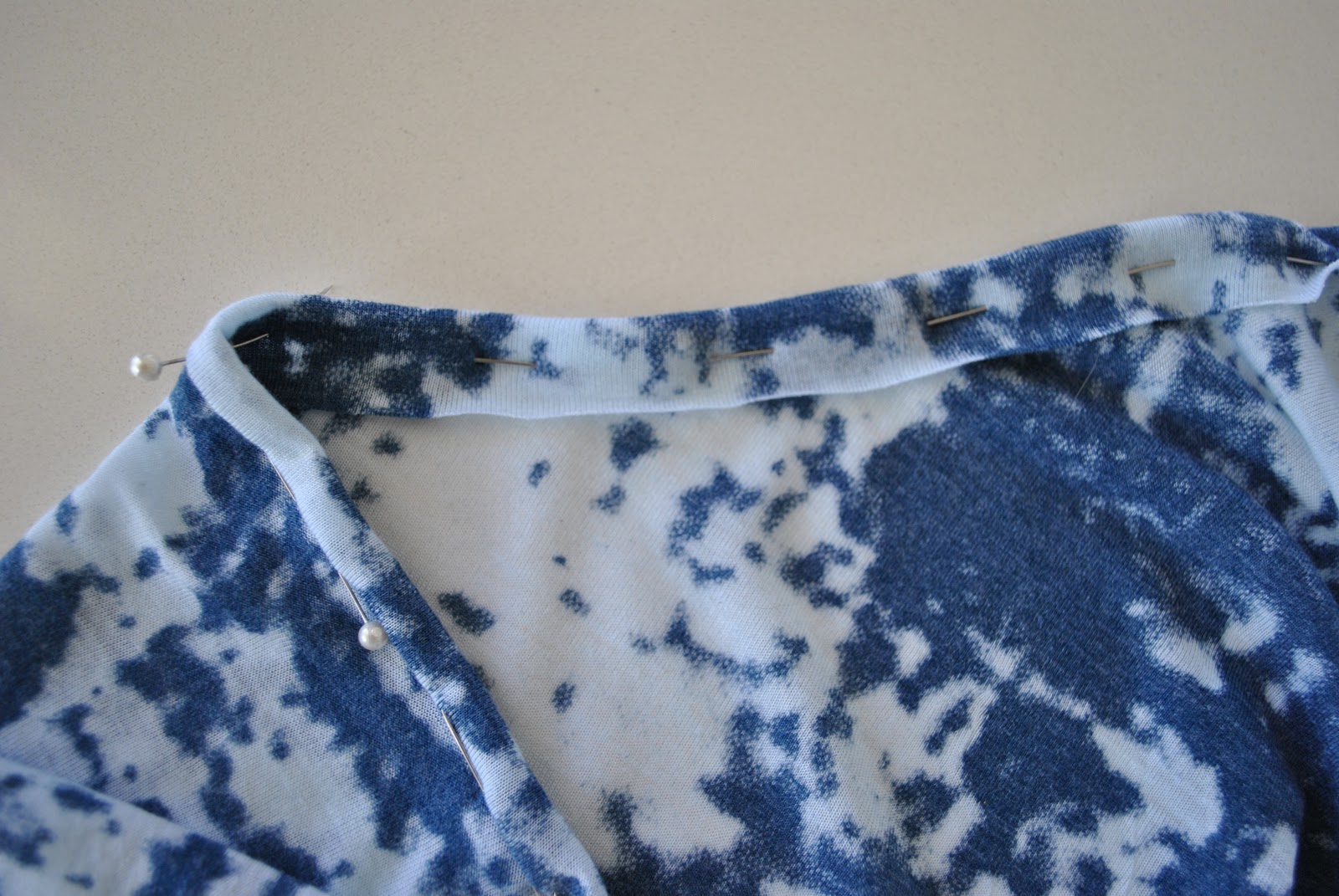
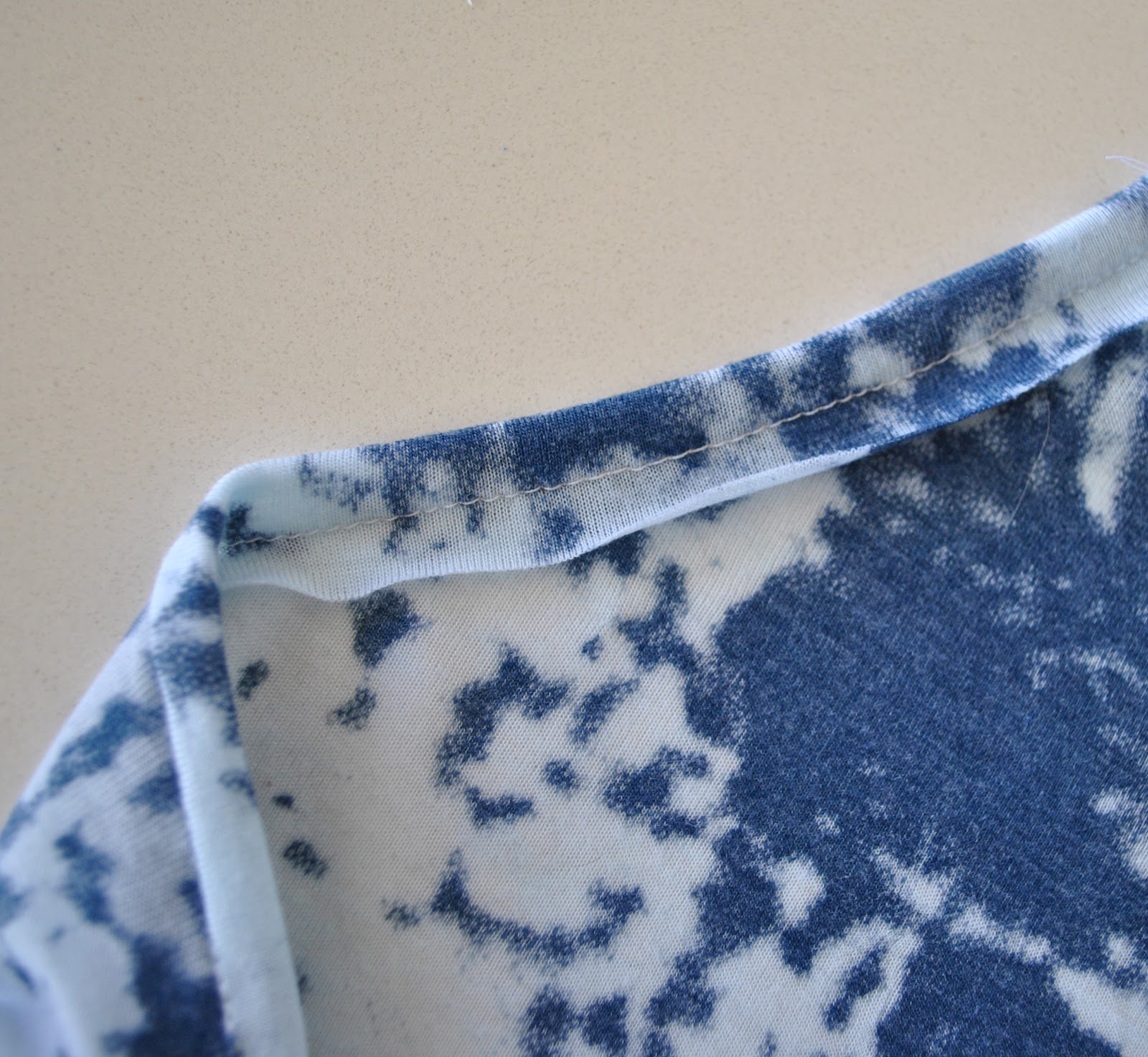
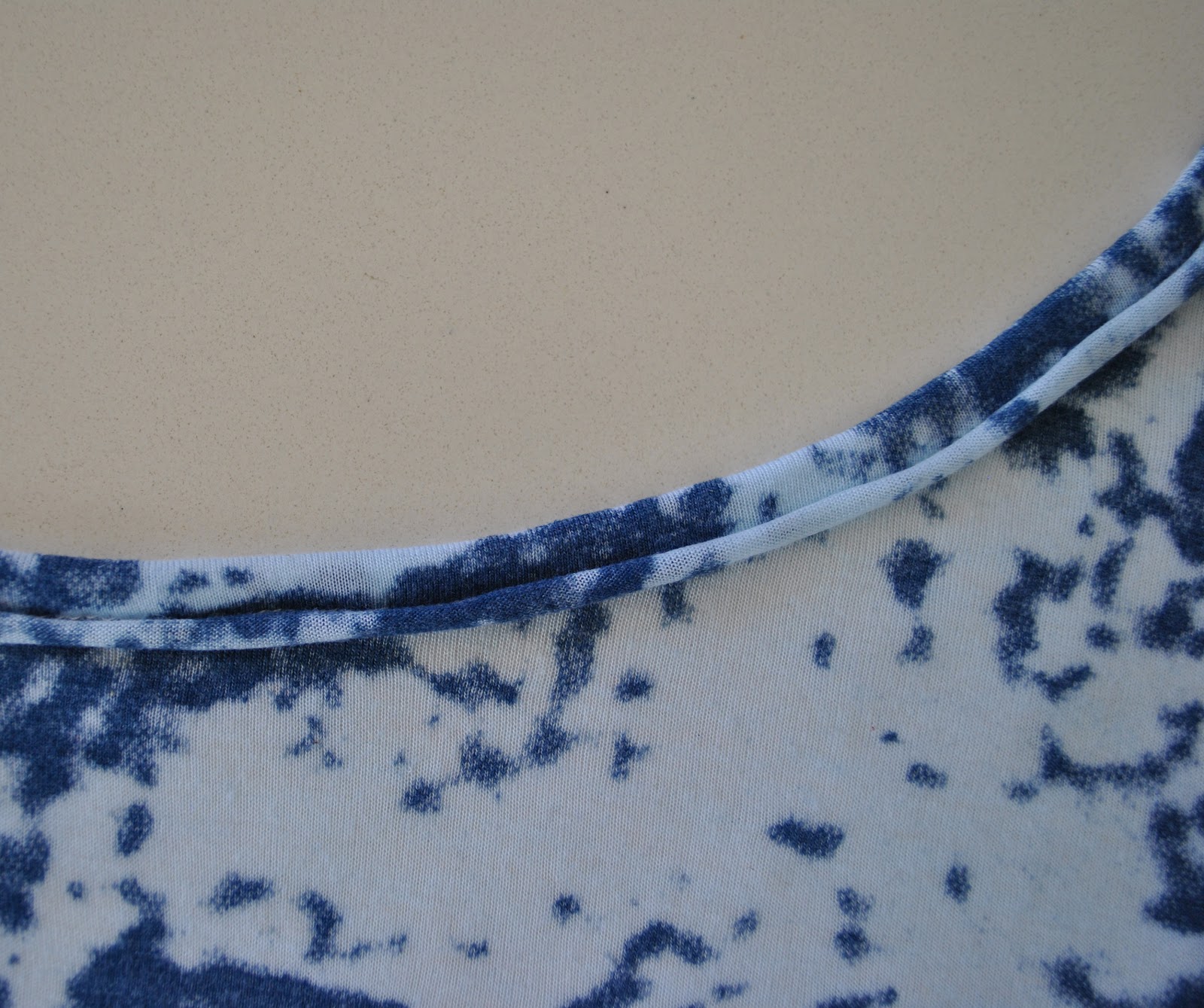
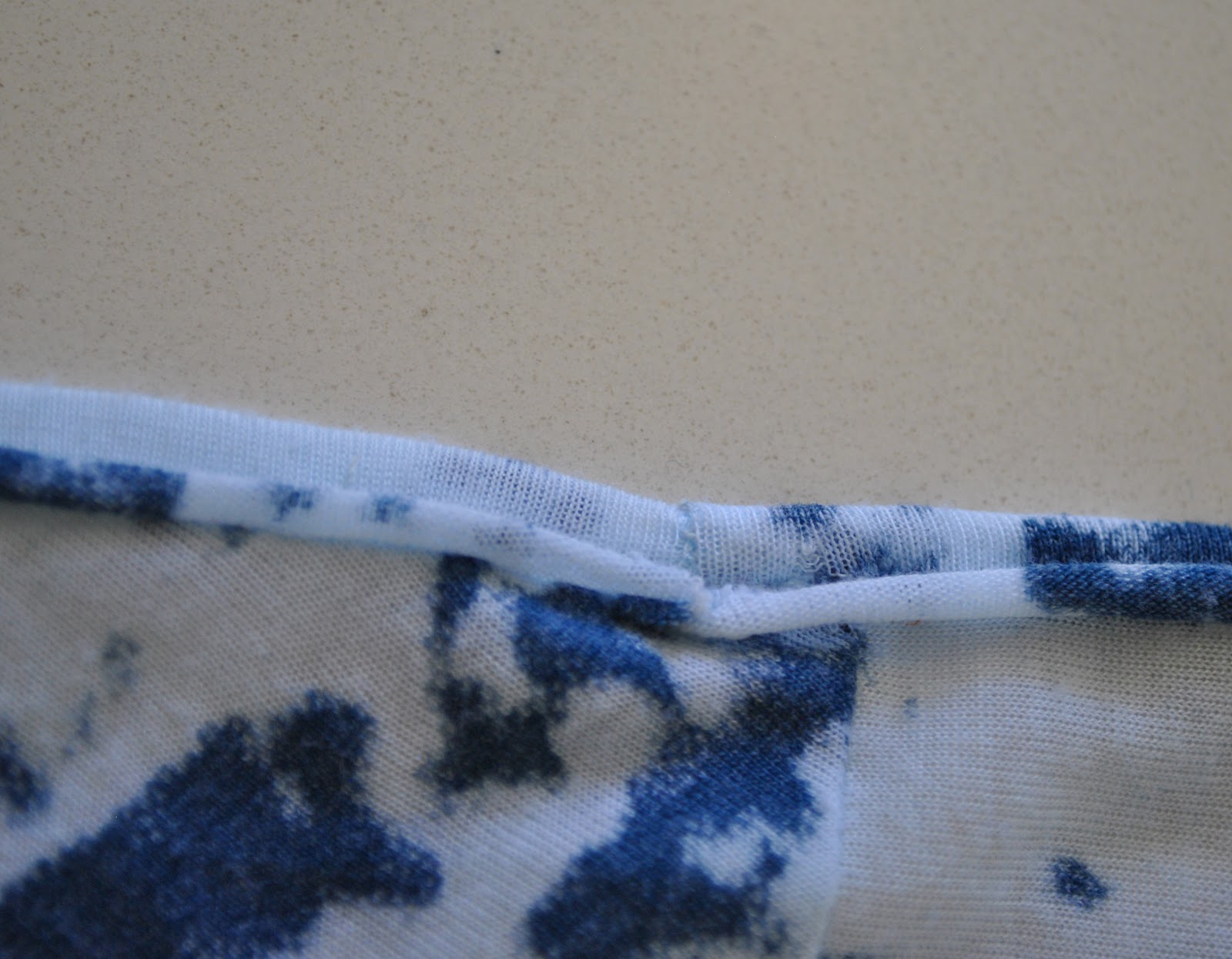
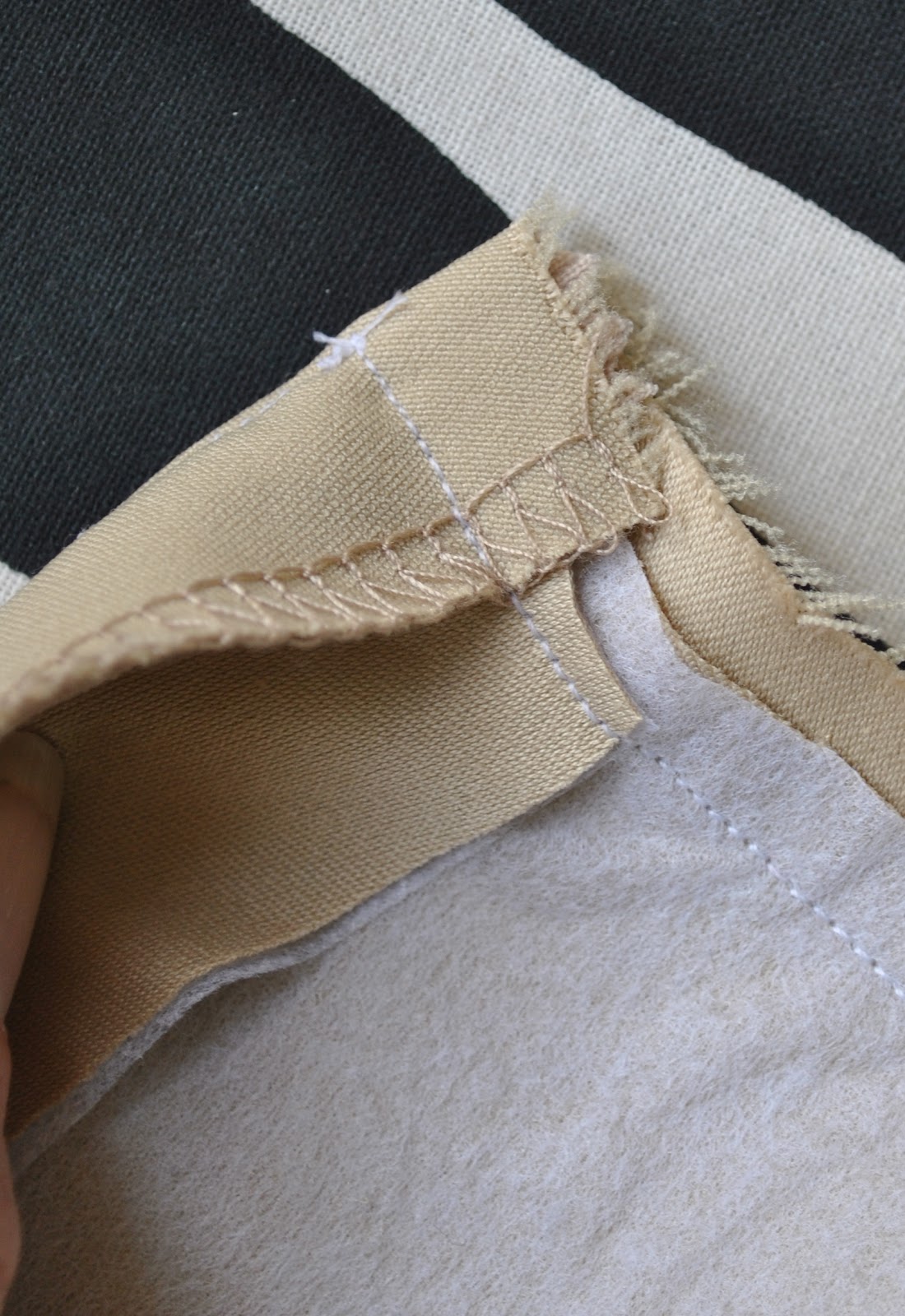
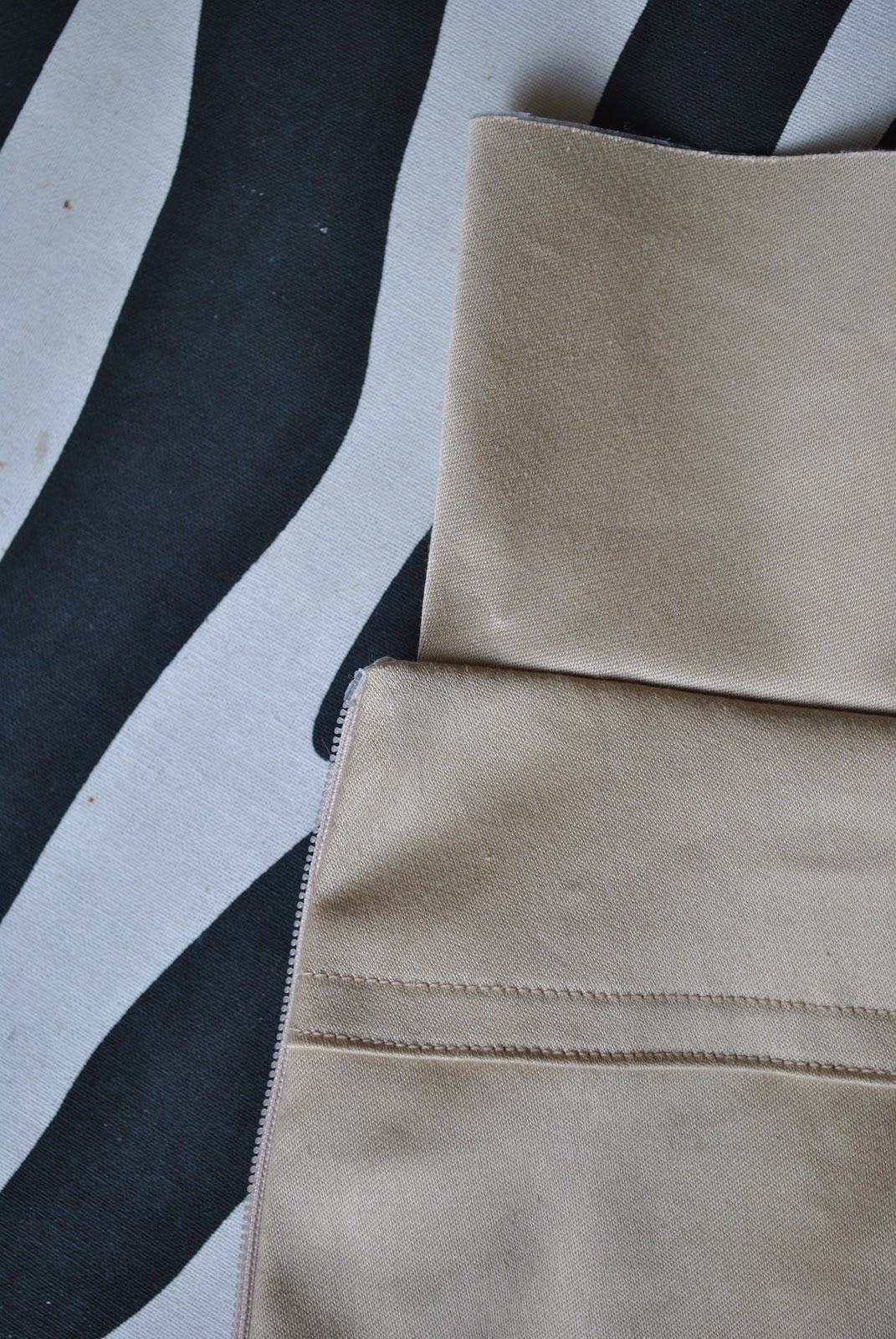
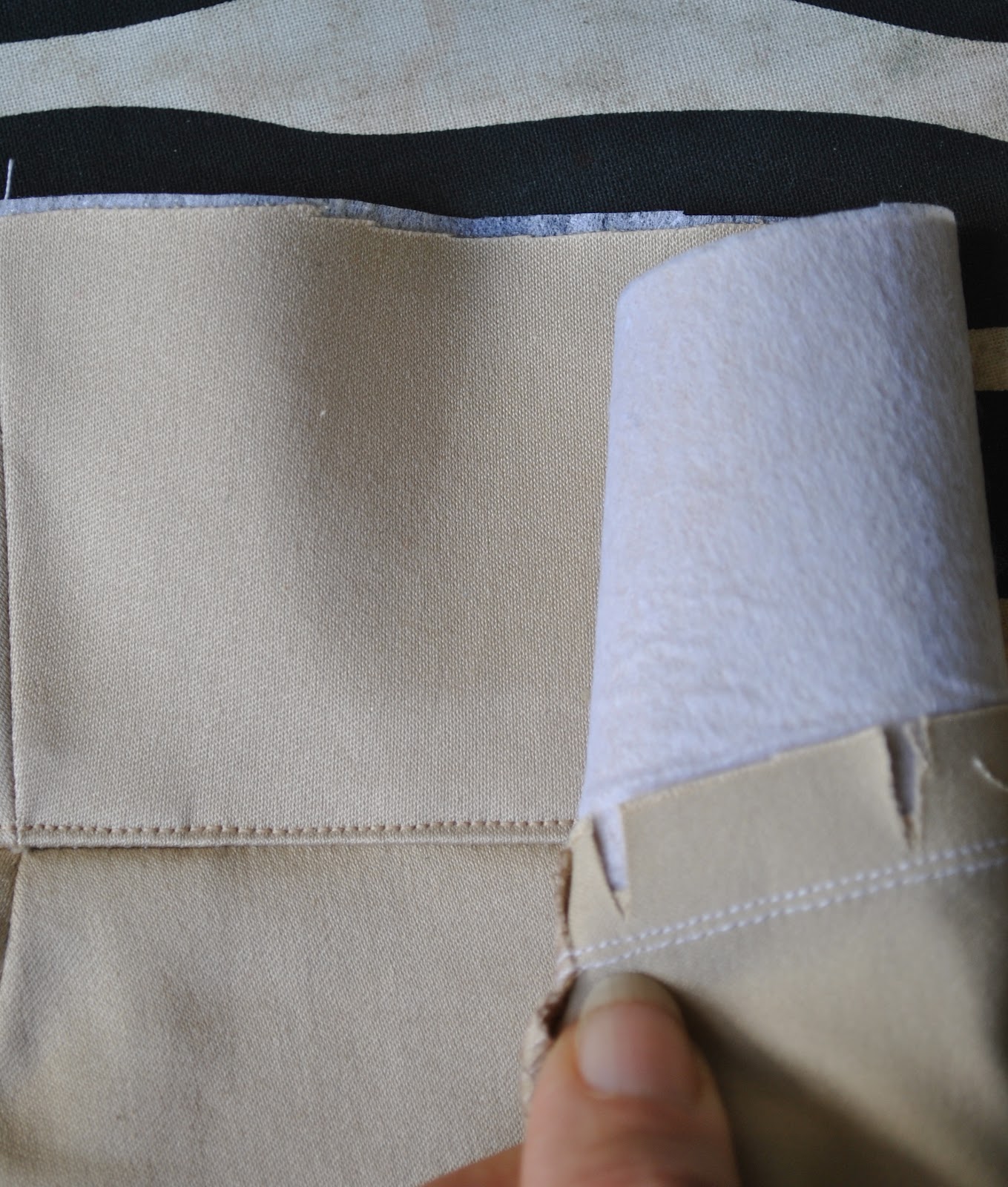
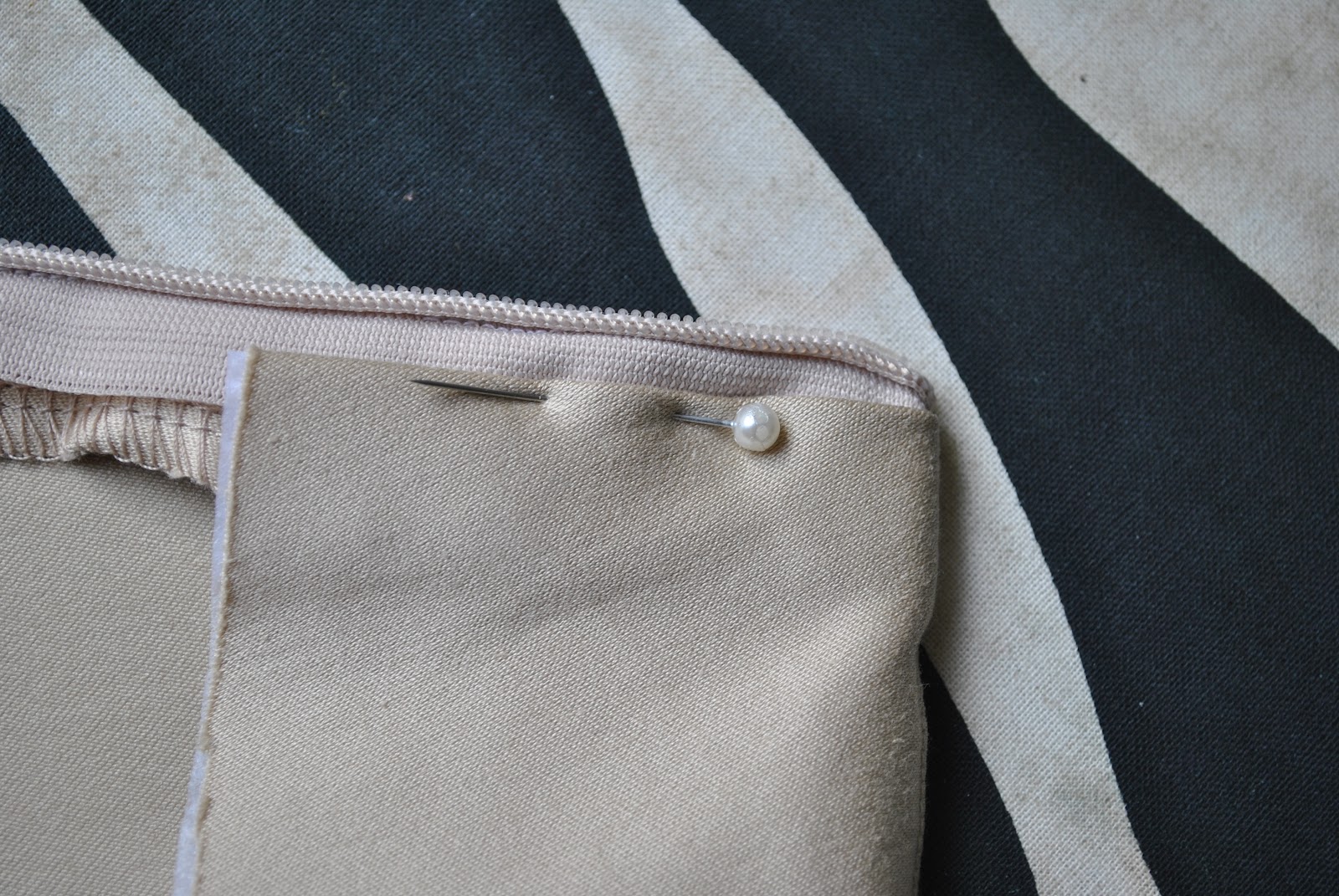
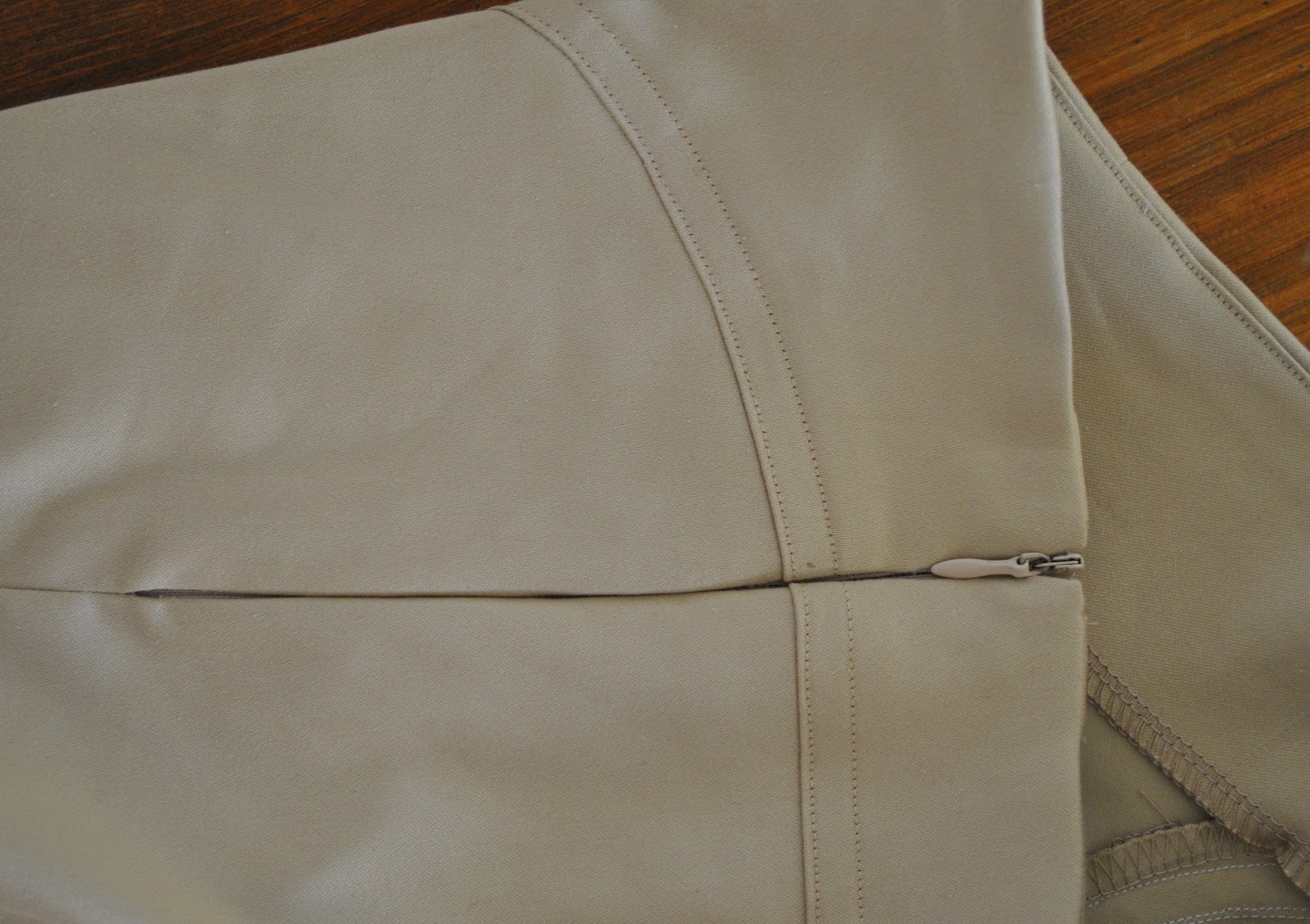
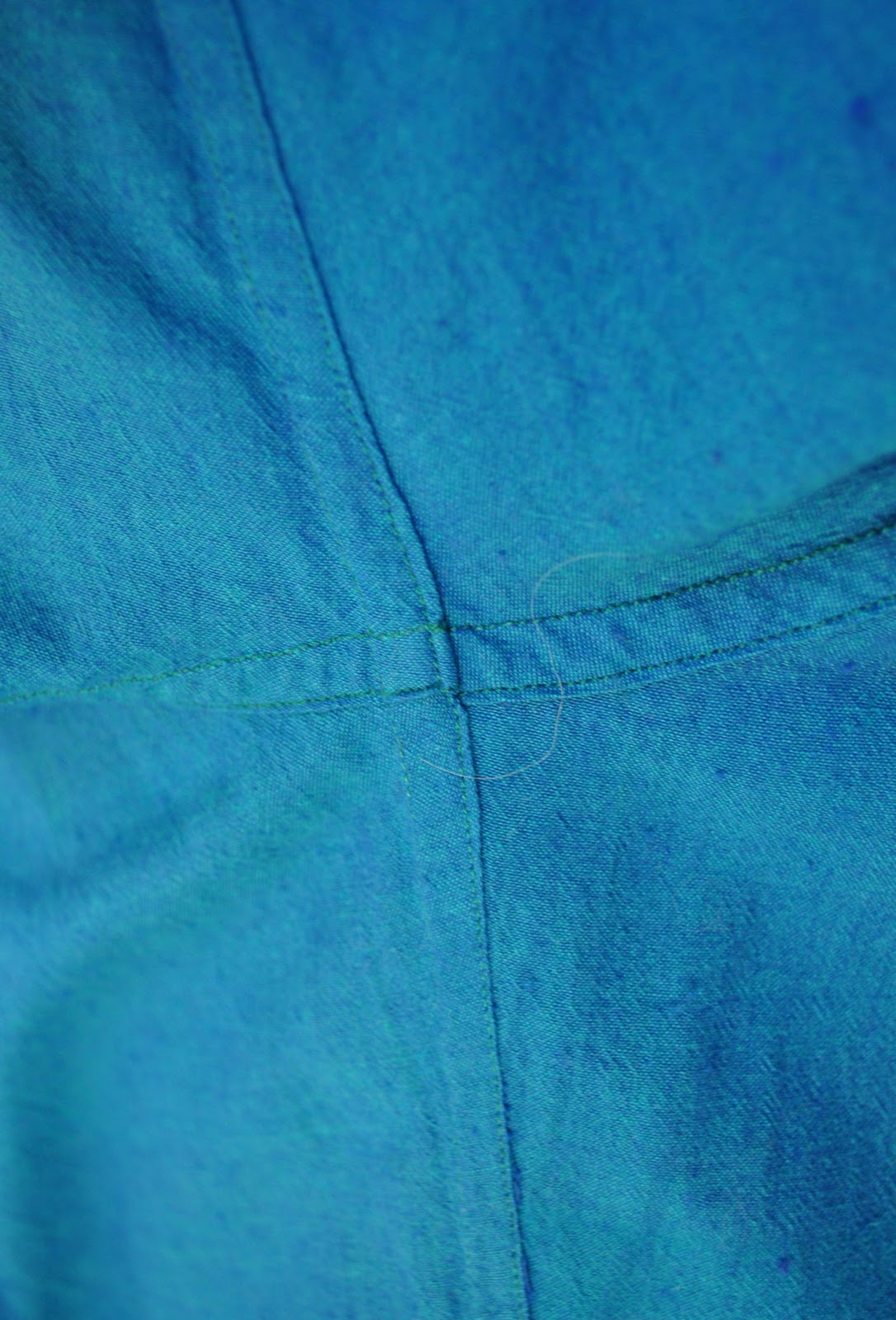
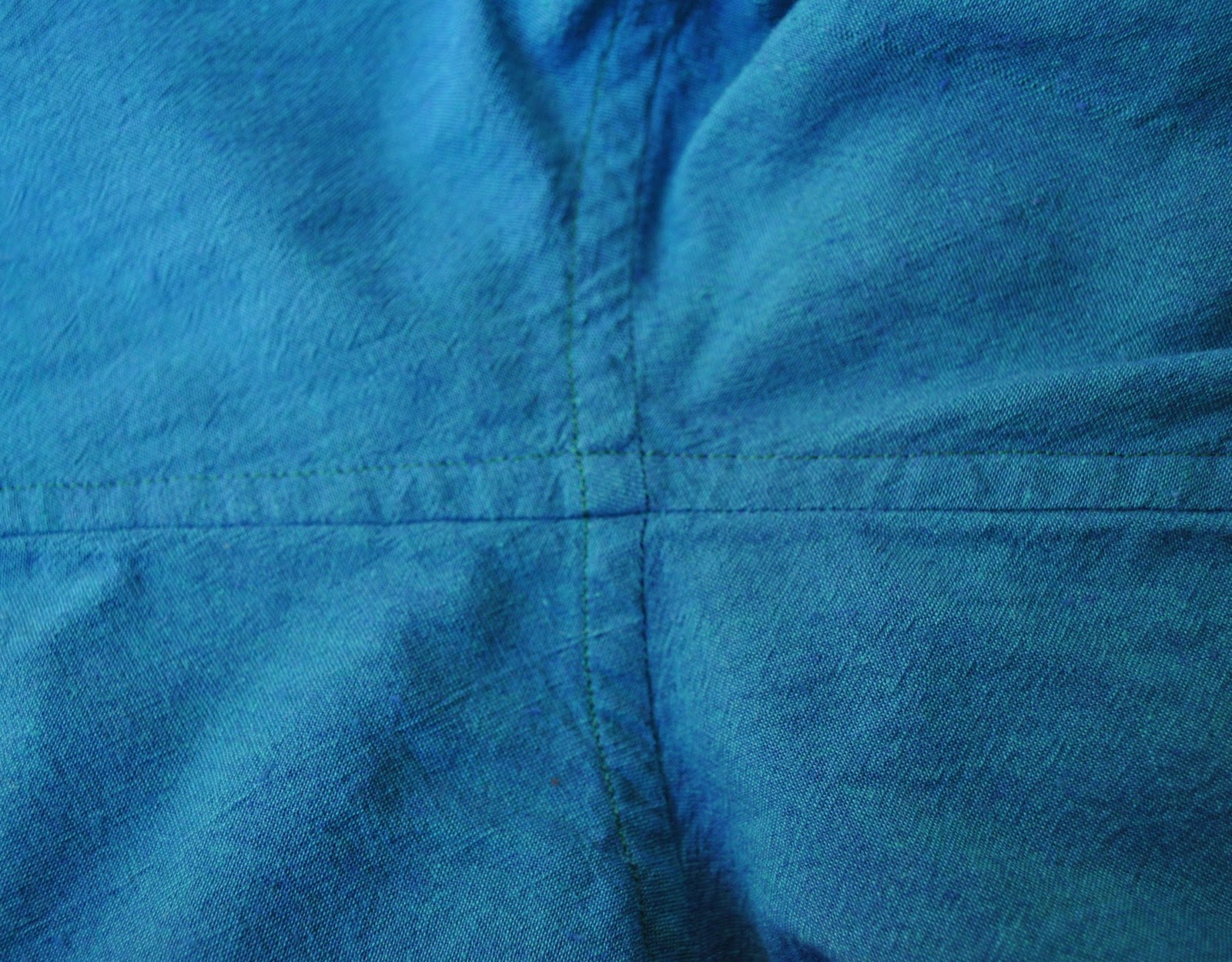
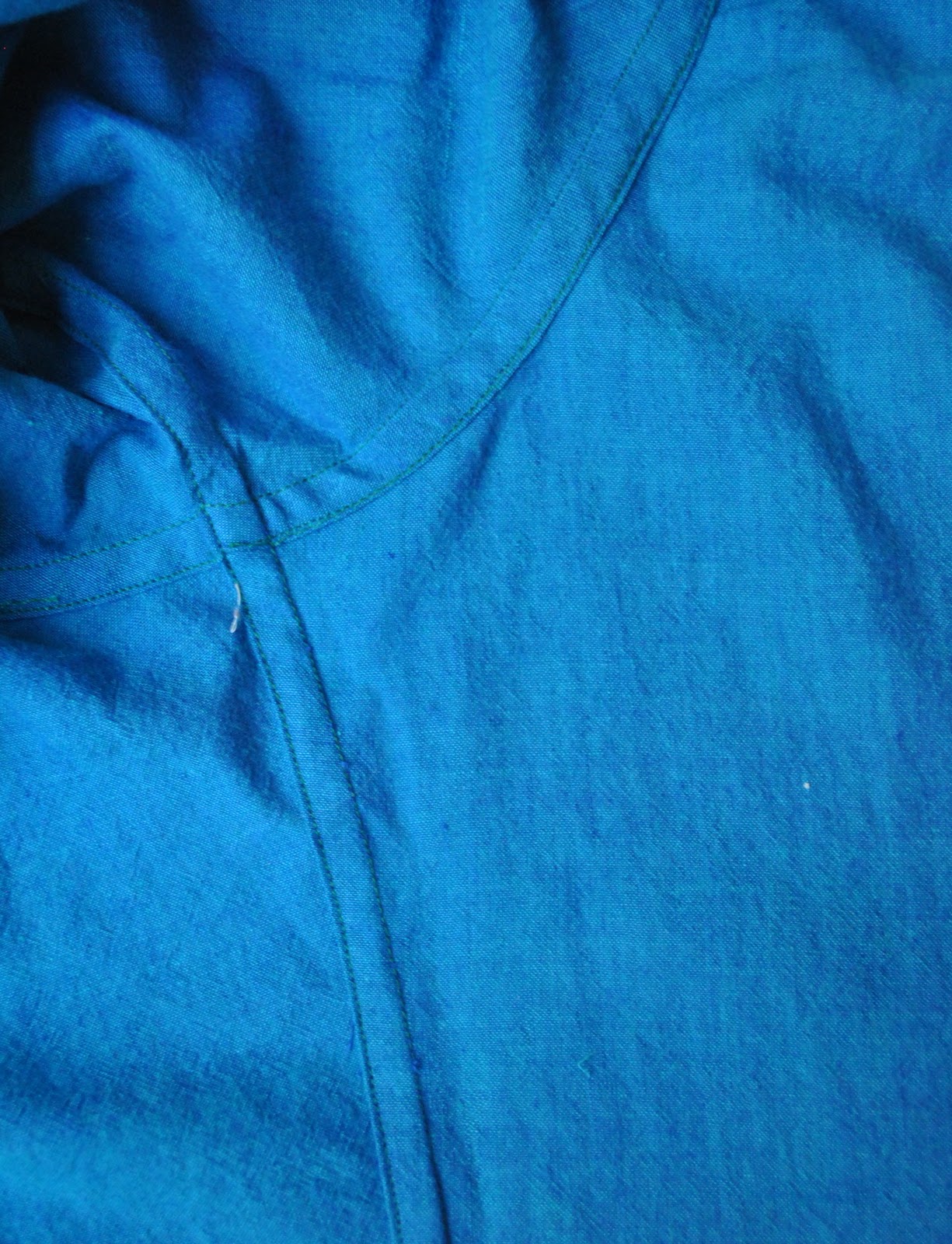
In making my grey striped jersey dress here, I opted to re-inforce the shoulder seams. I do not re-inforce the shoulder seams in all my knit garments, but in this case; a long tank dress in a stretchy fabric, where the weight of an entire dress is hanging off those two meagre teensy little shoulder seams, then it is a very good idea to build in a little extra strength in this vulnerable area.
And this is how:
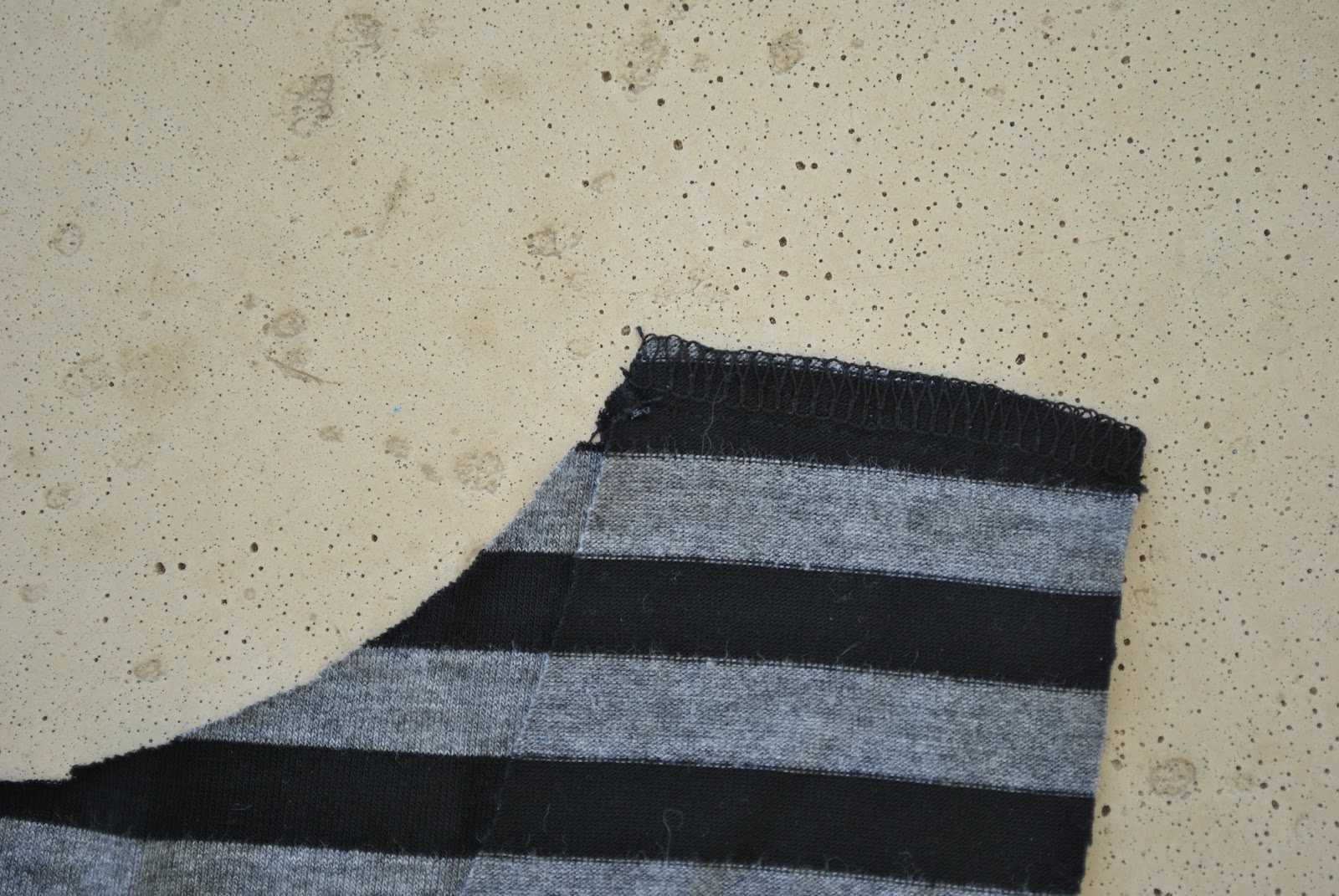
Sew the shoulder seams, and then overlock the raw edges (optional, since you won’t see this when it is finished..).
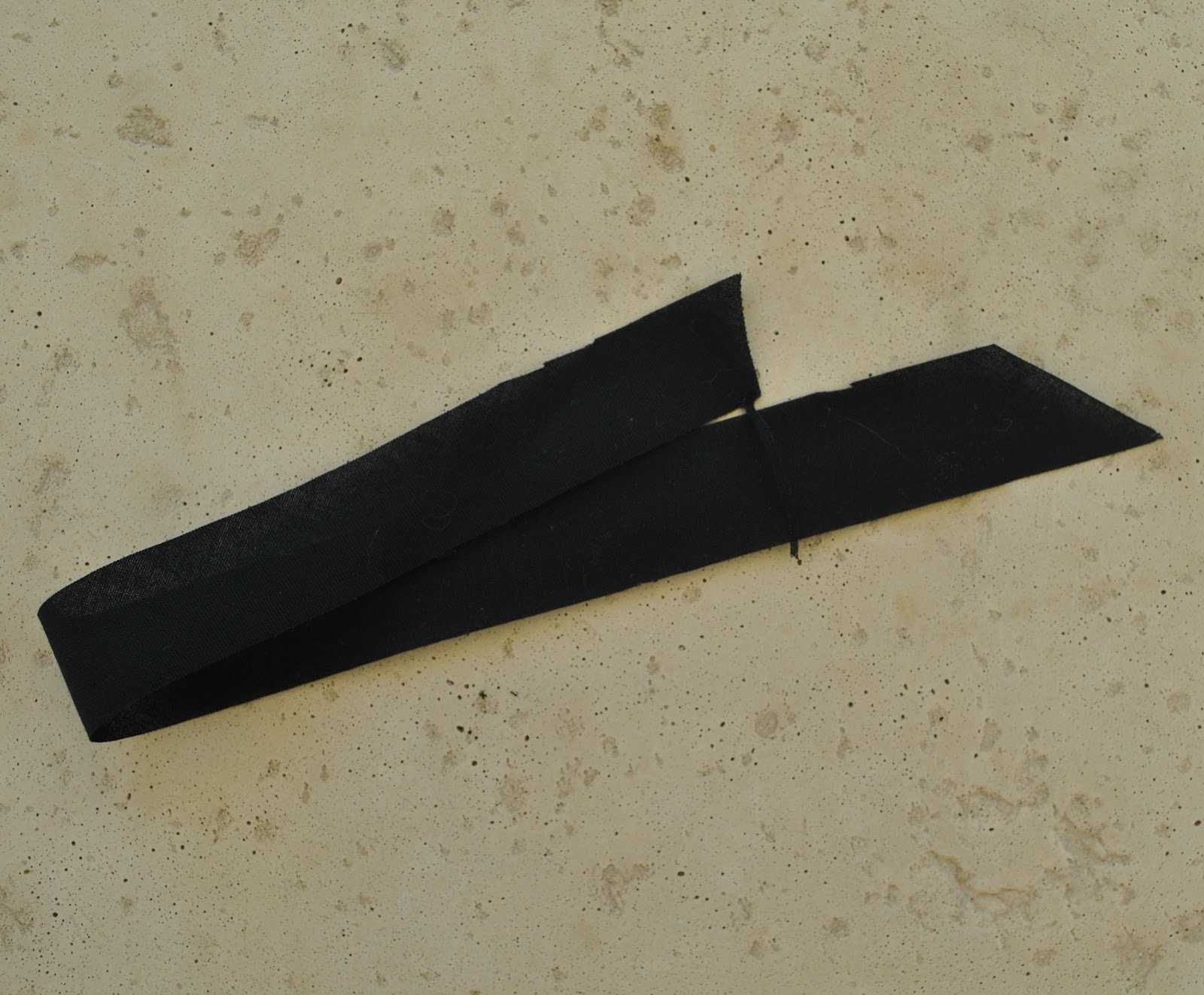
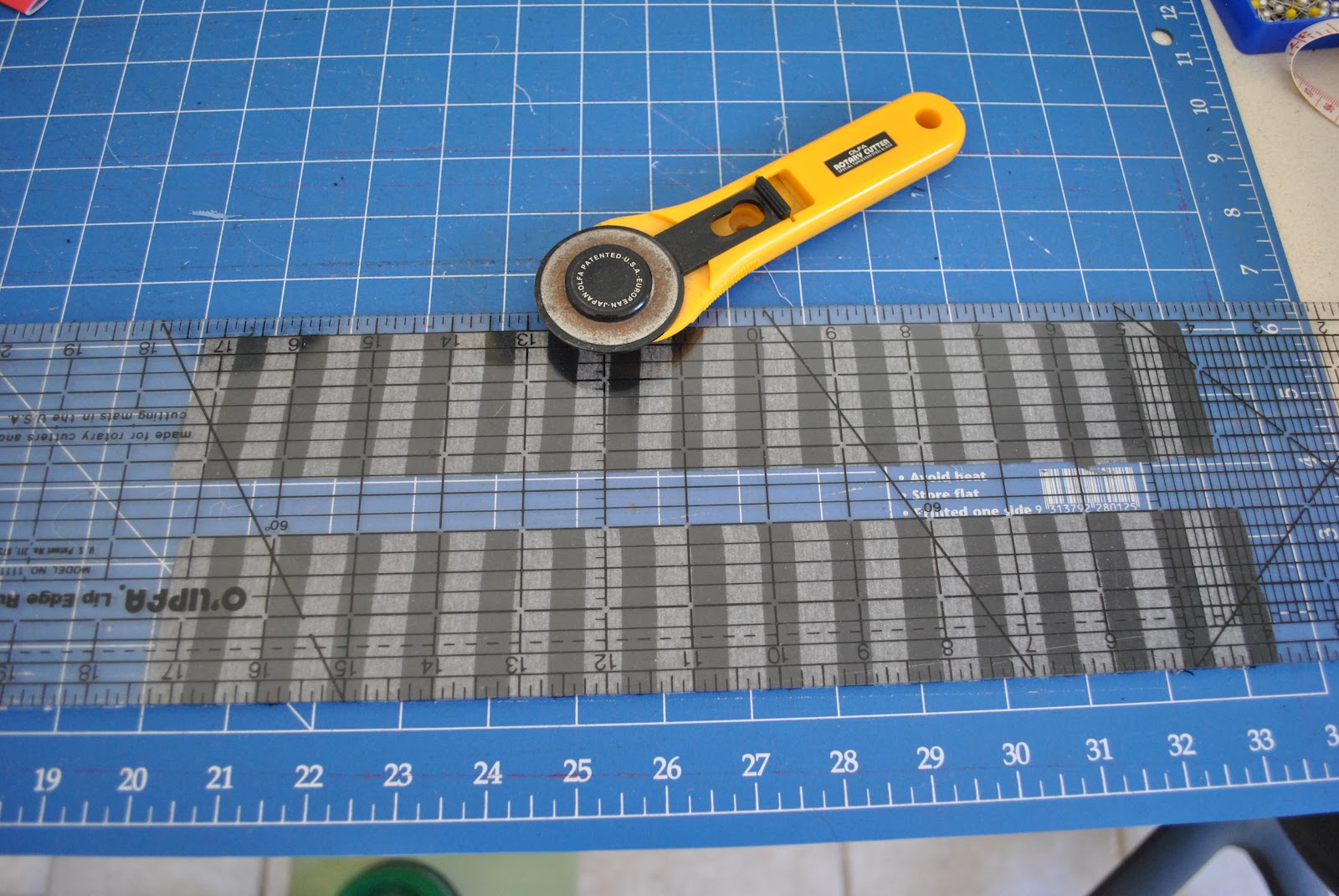
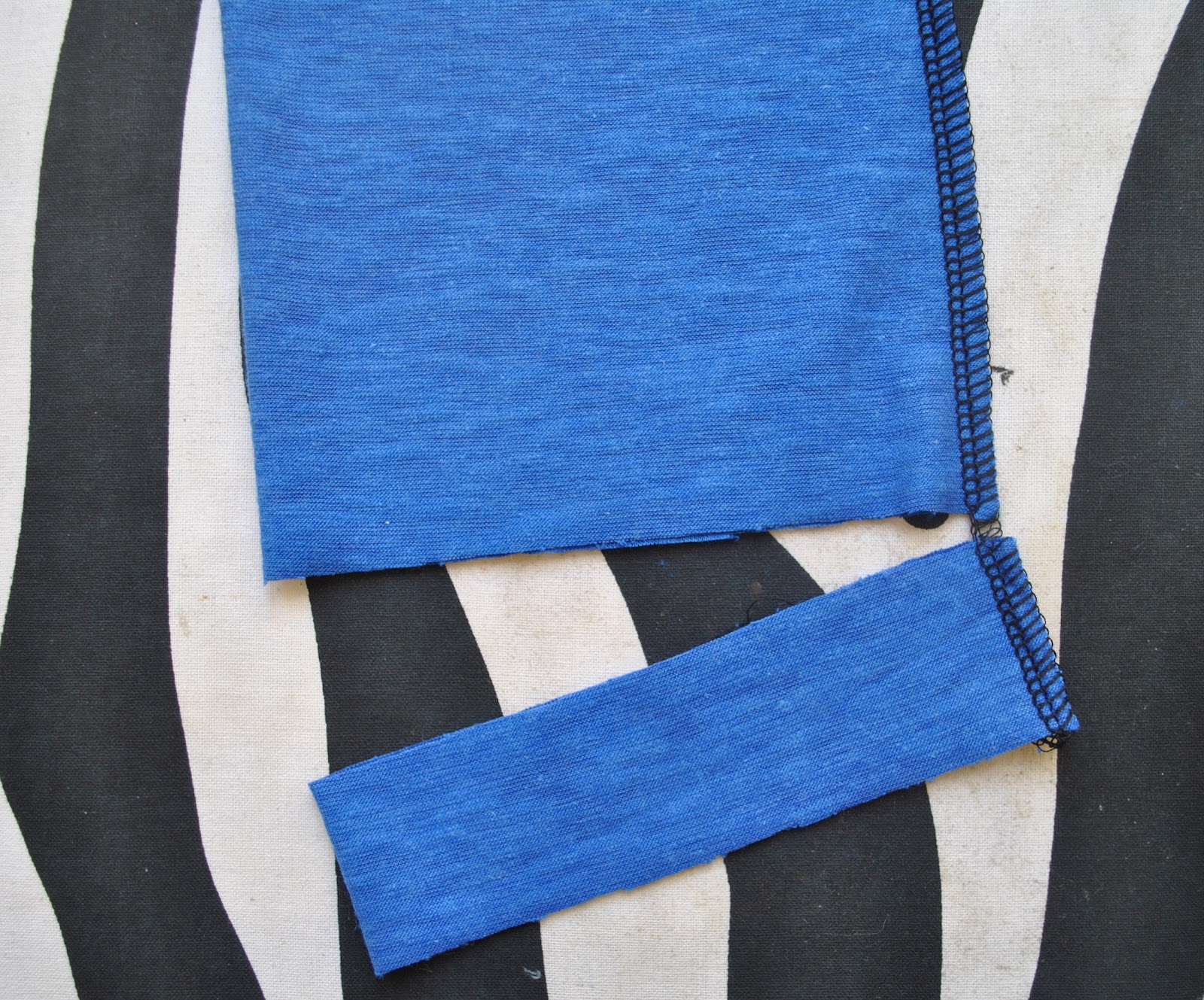
I then cut a short strip on the bias, in a thin but strong, woven cotton. Quilting cotton is fine for this purpose.
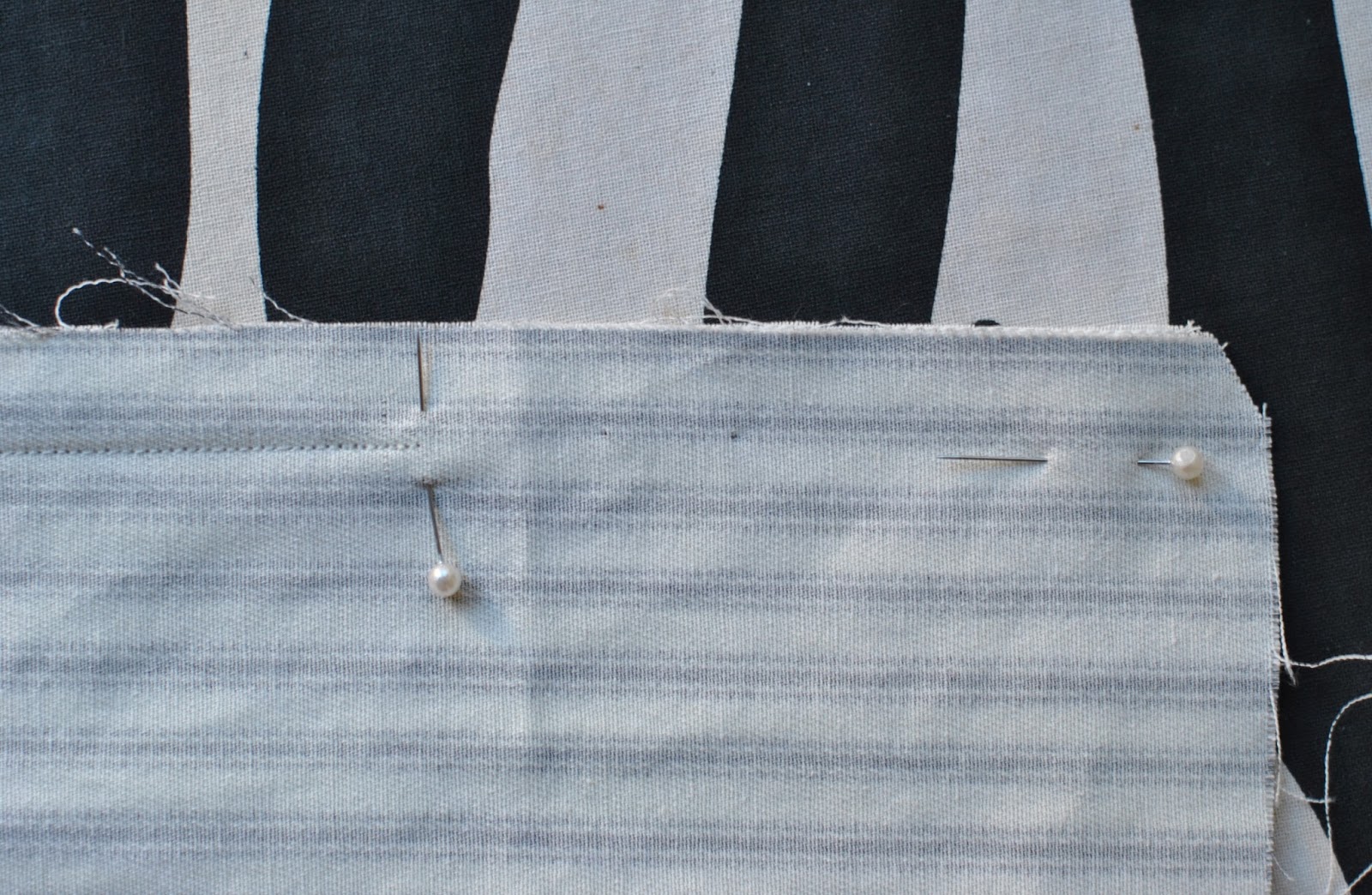
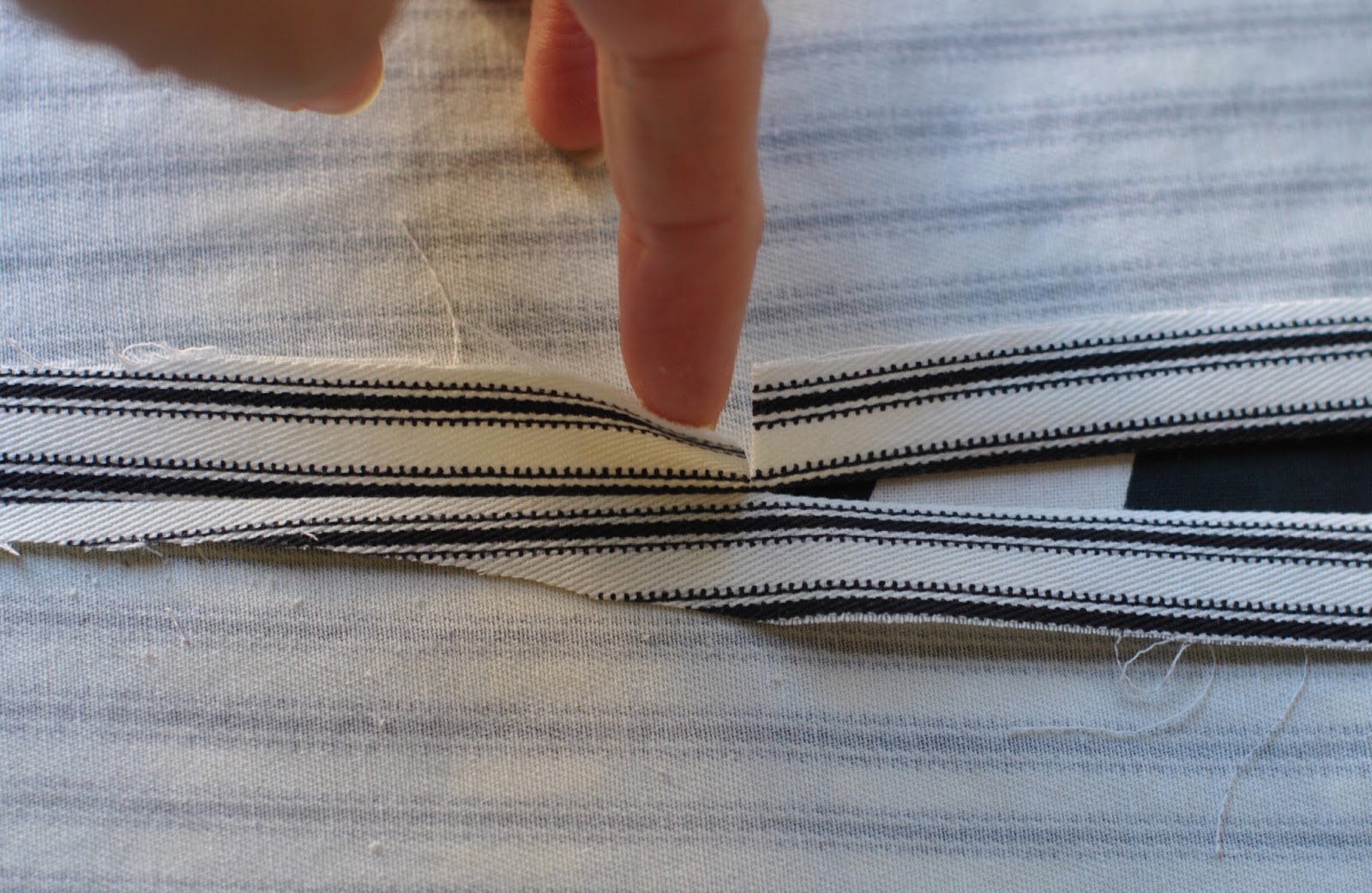
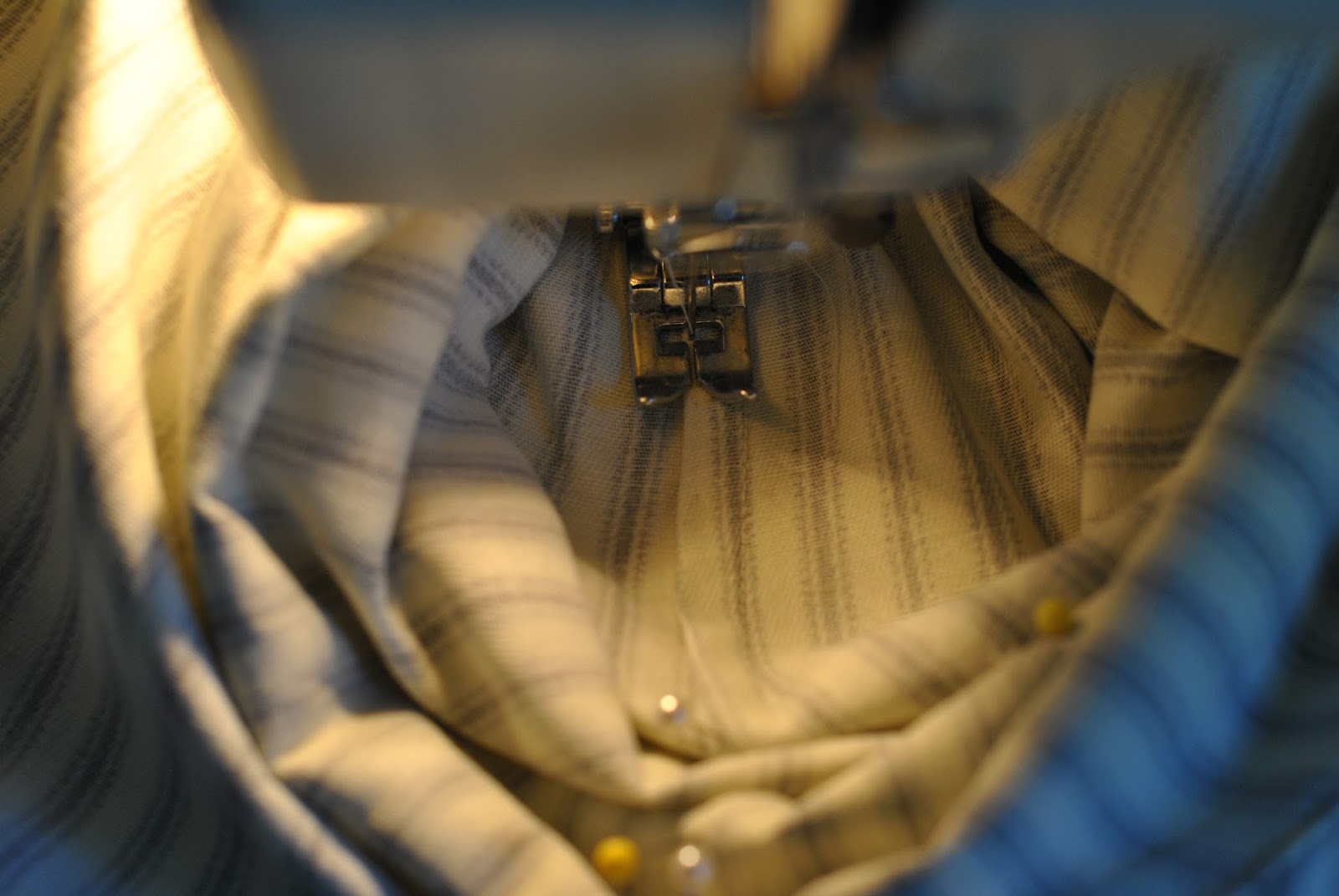
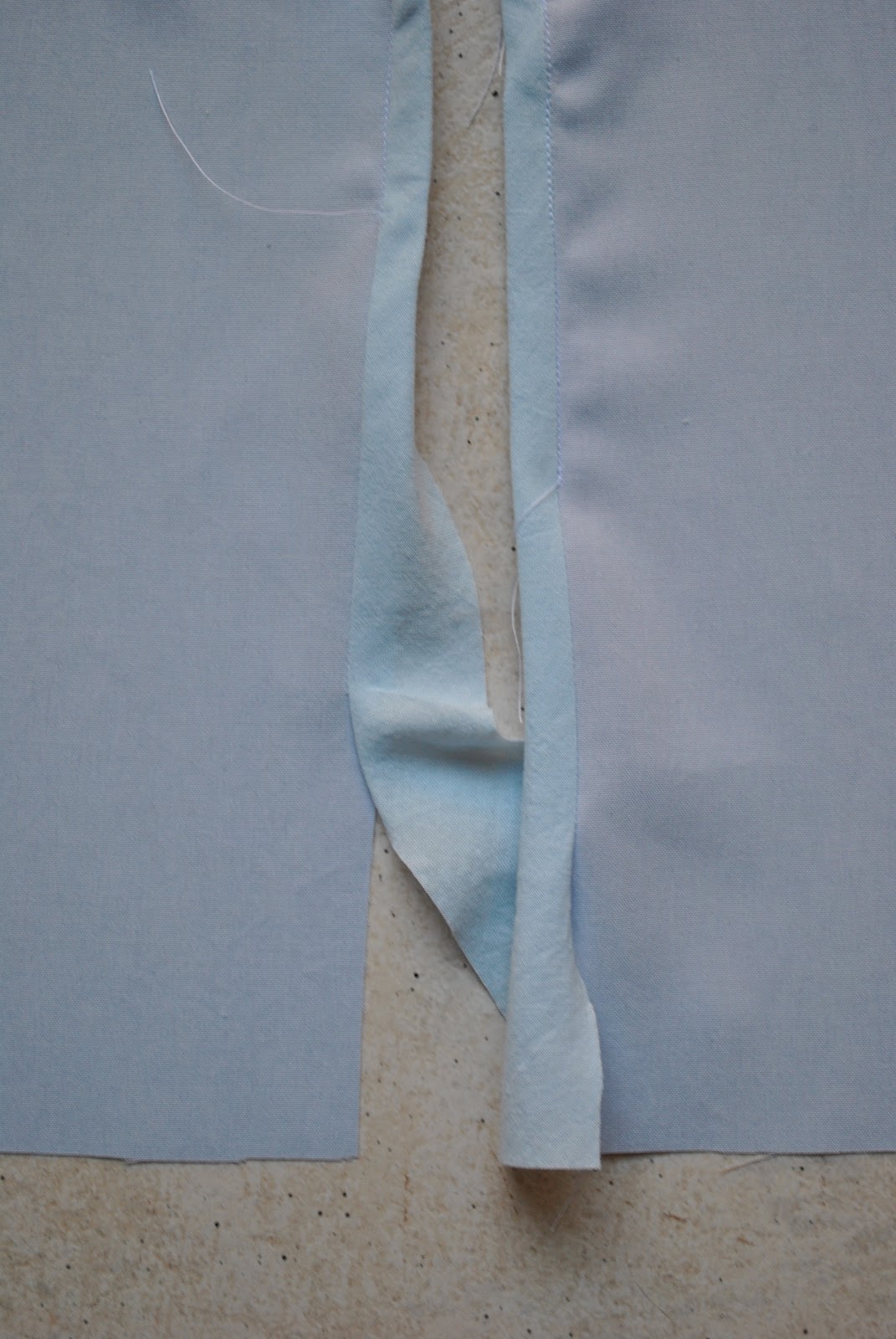
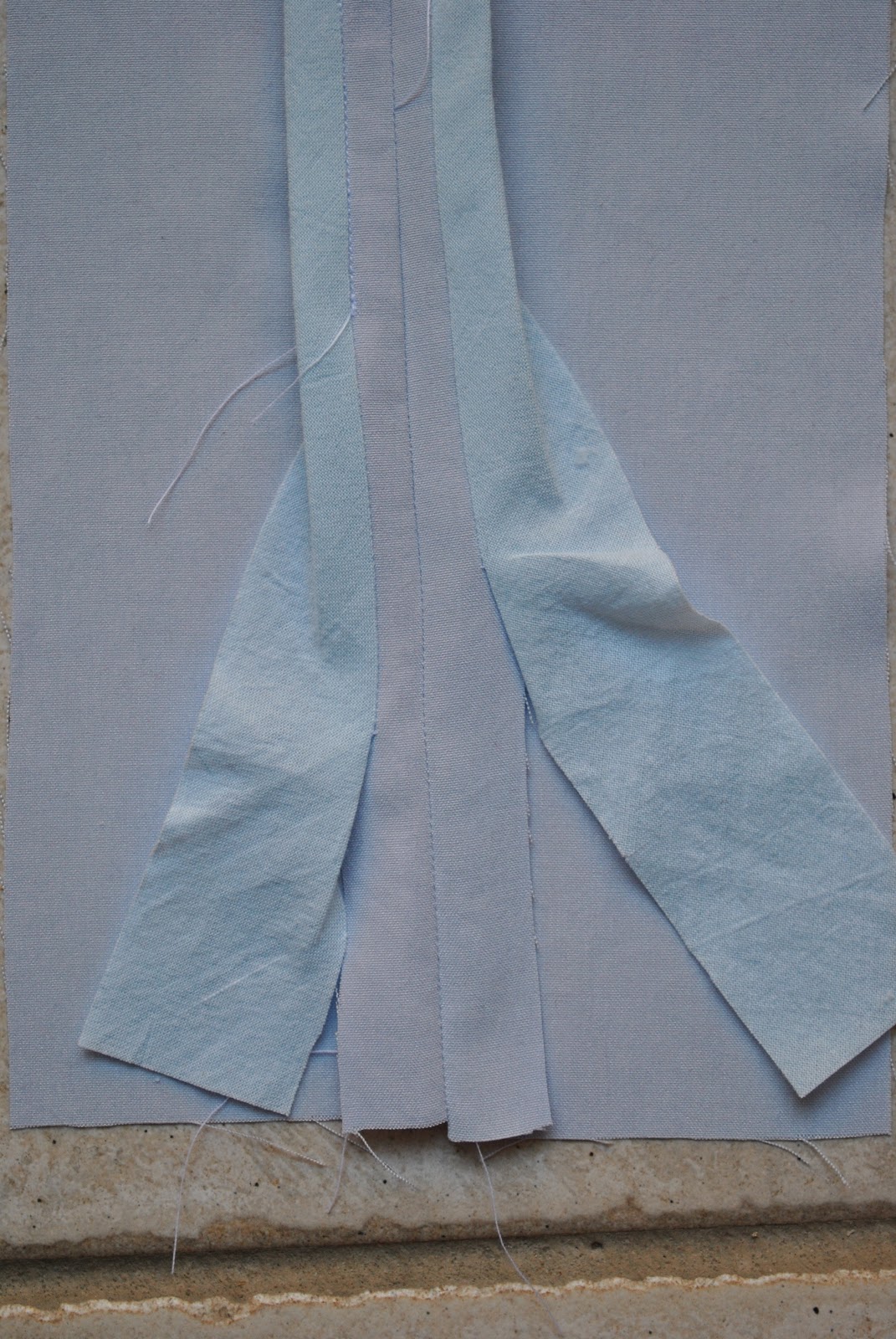
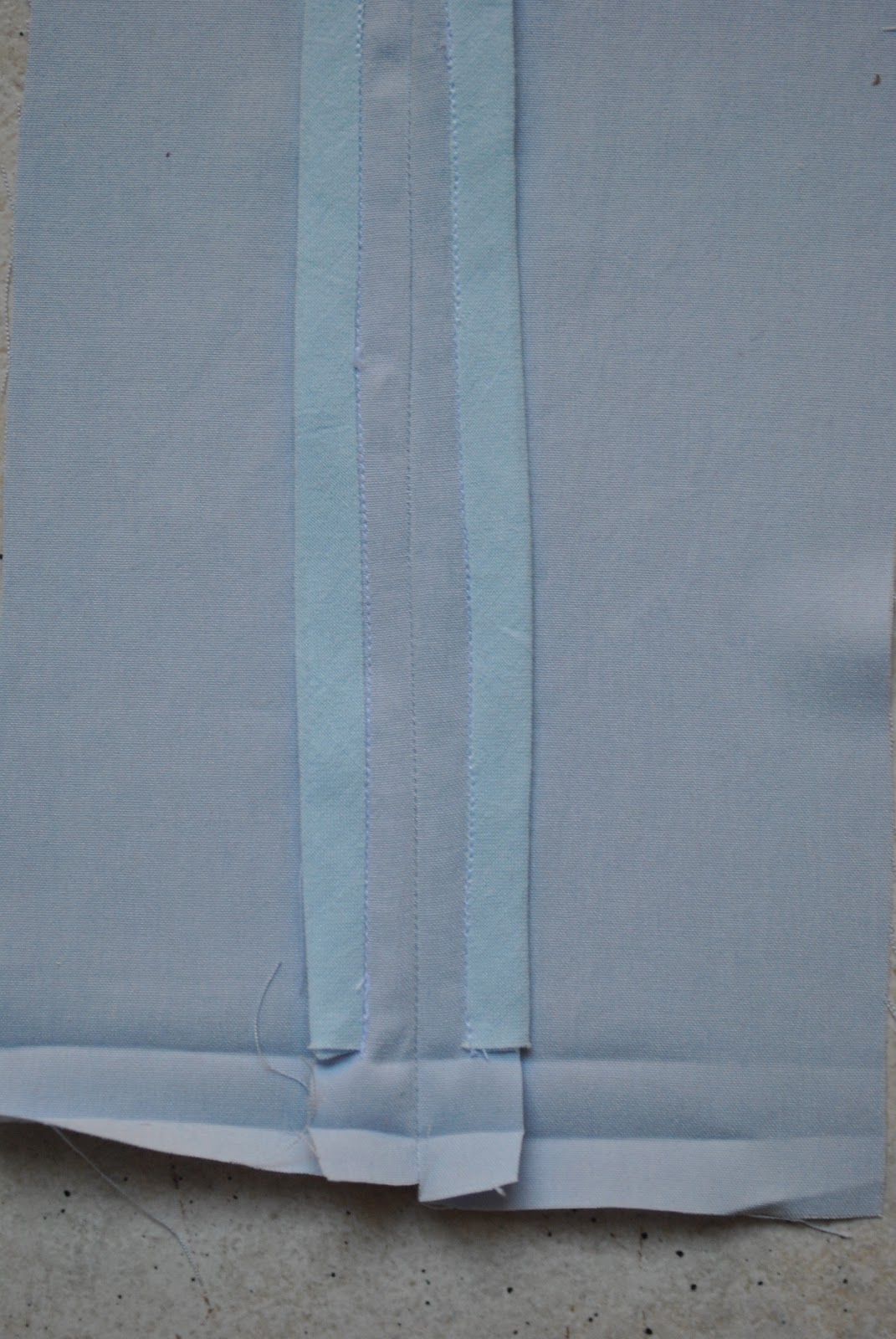
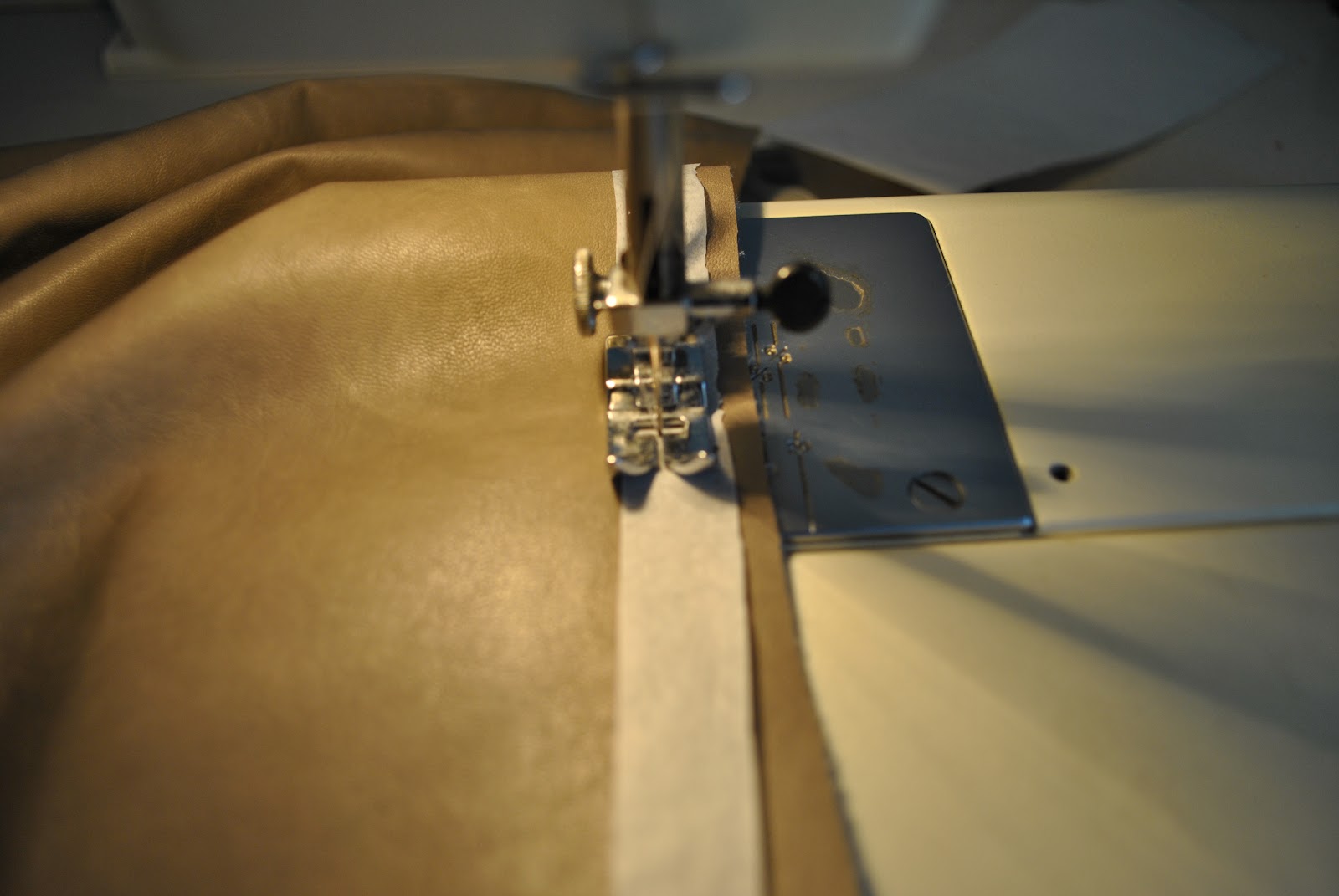
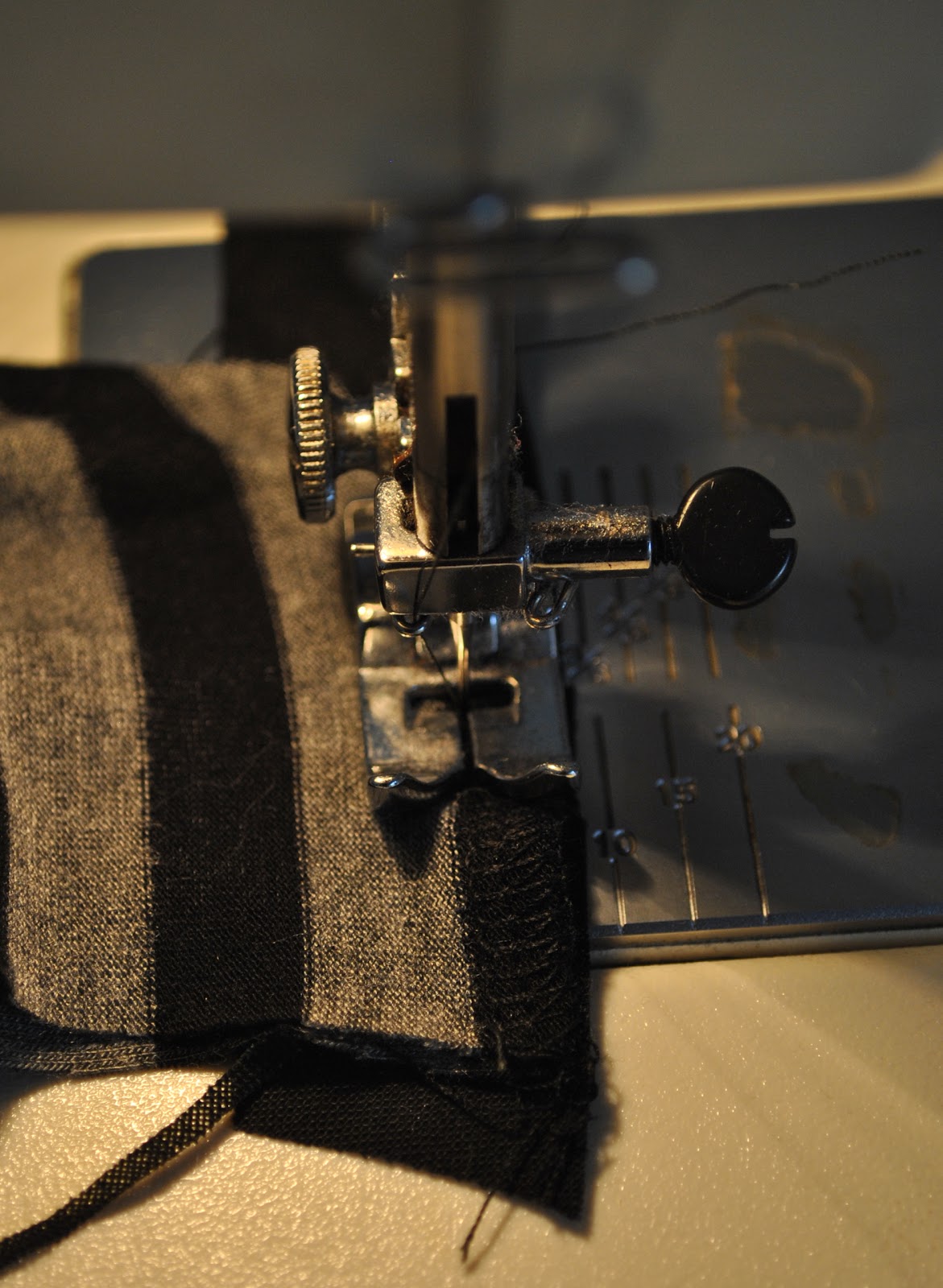
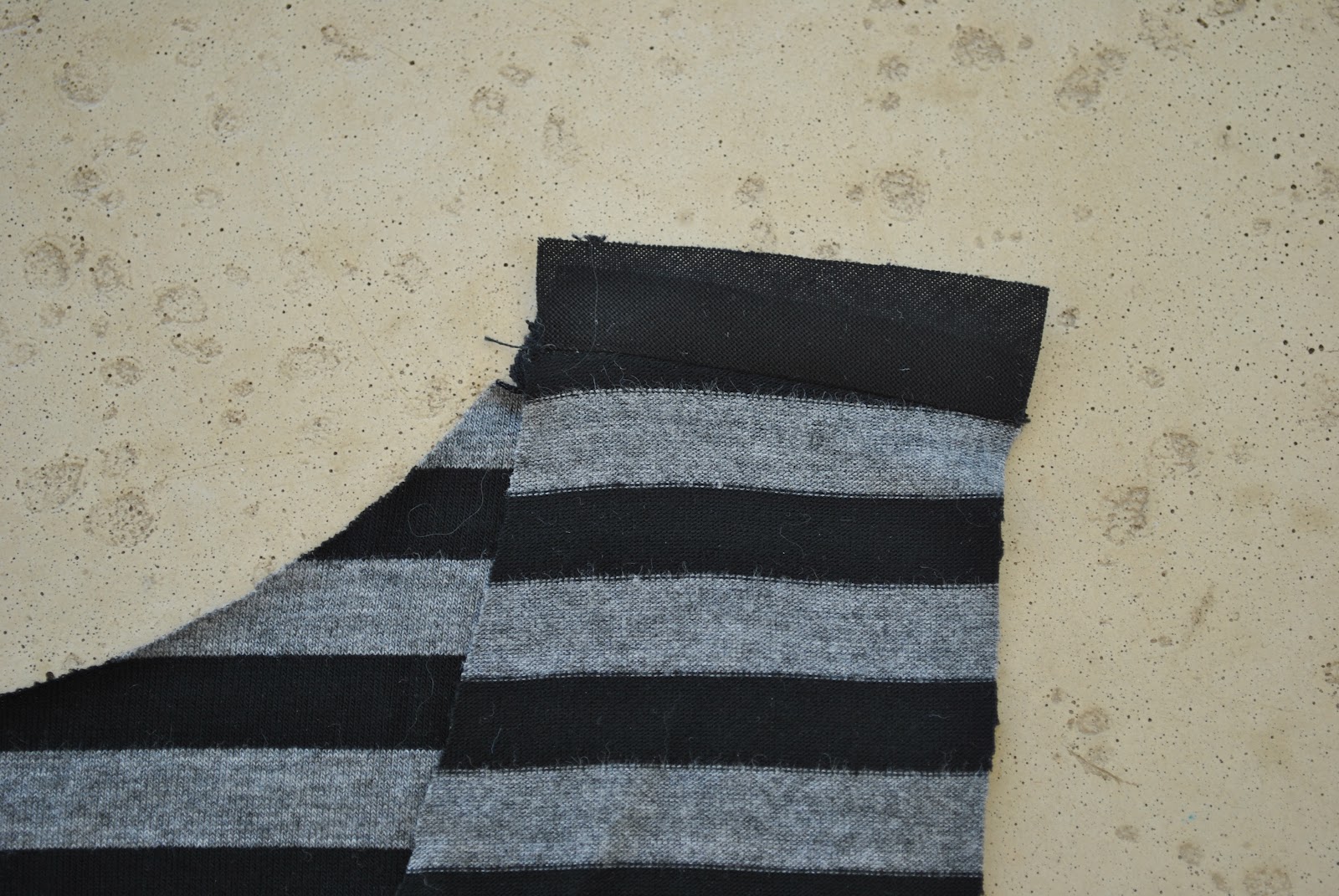
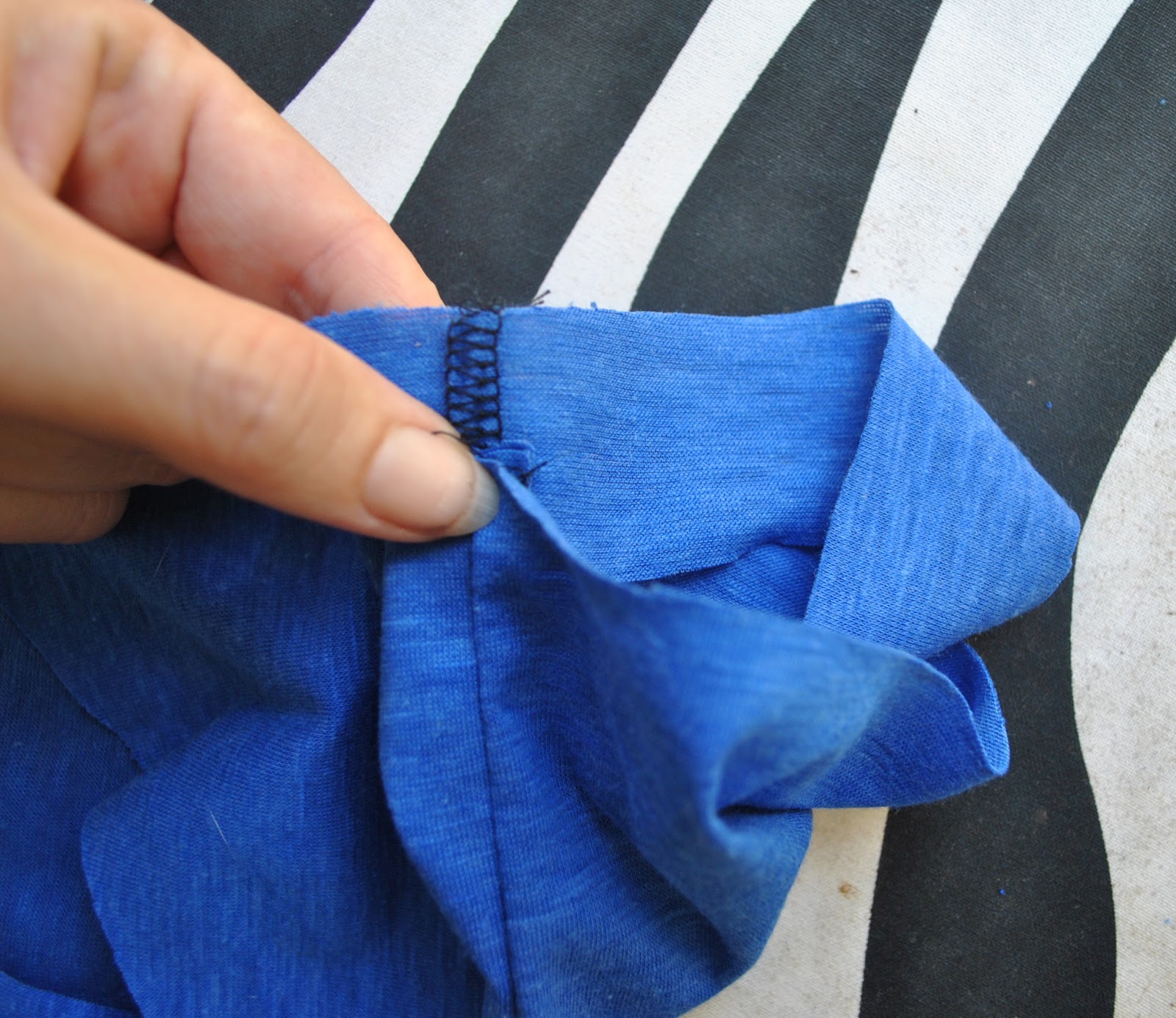
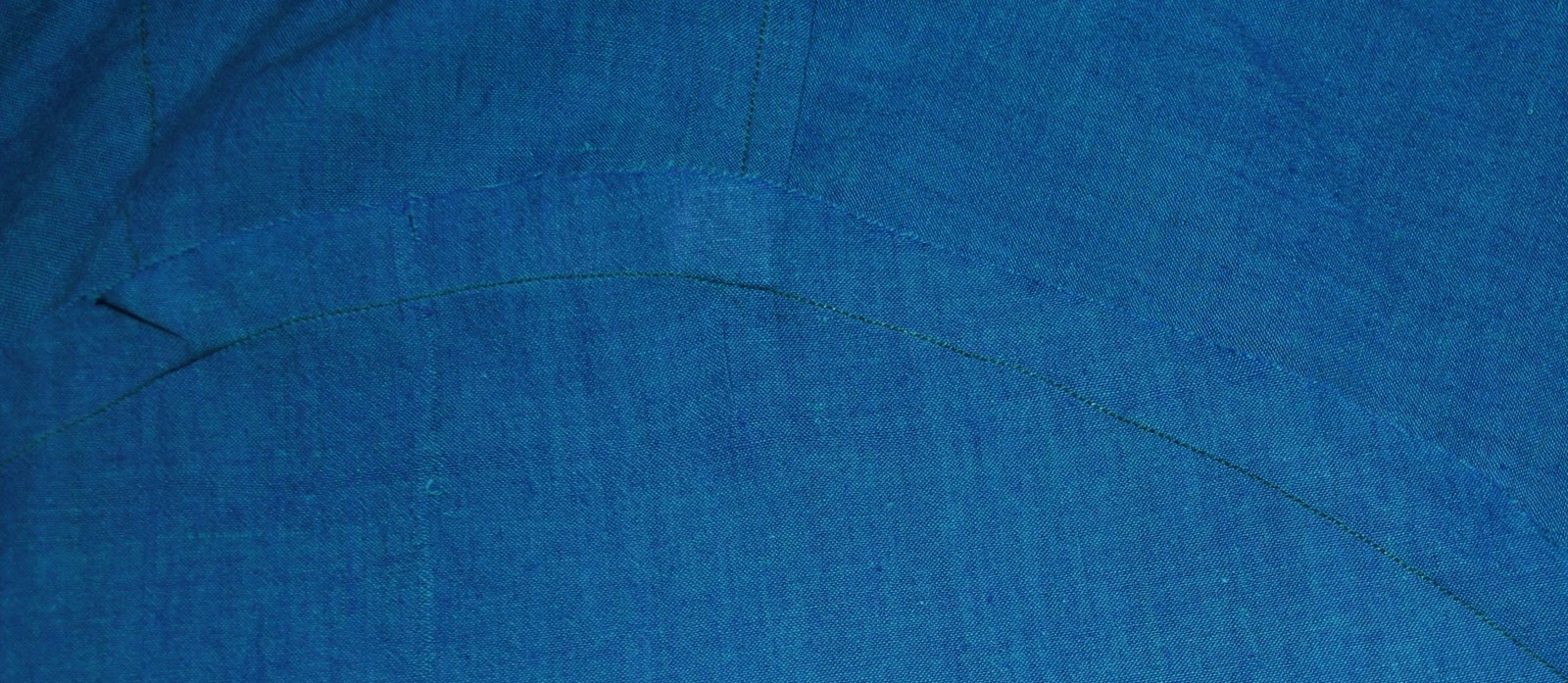
Stitch the bias strip to the dress shoulder seam; directly over the previous dress/shoulder-seam stitching. The bias strip should be laying over the dress front, as pictured at right.
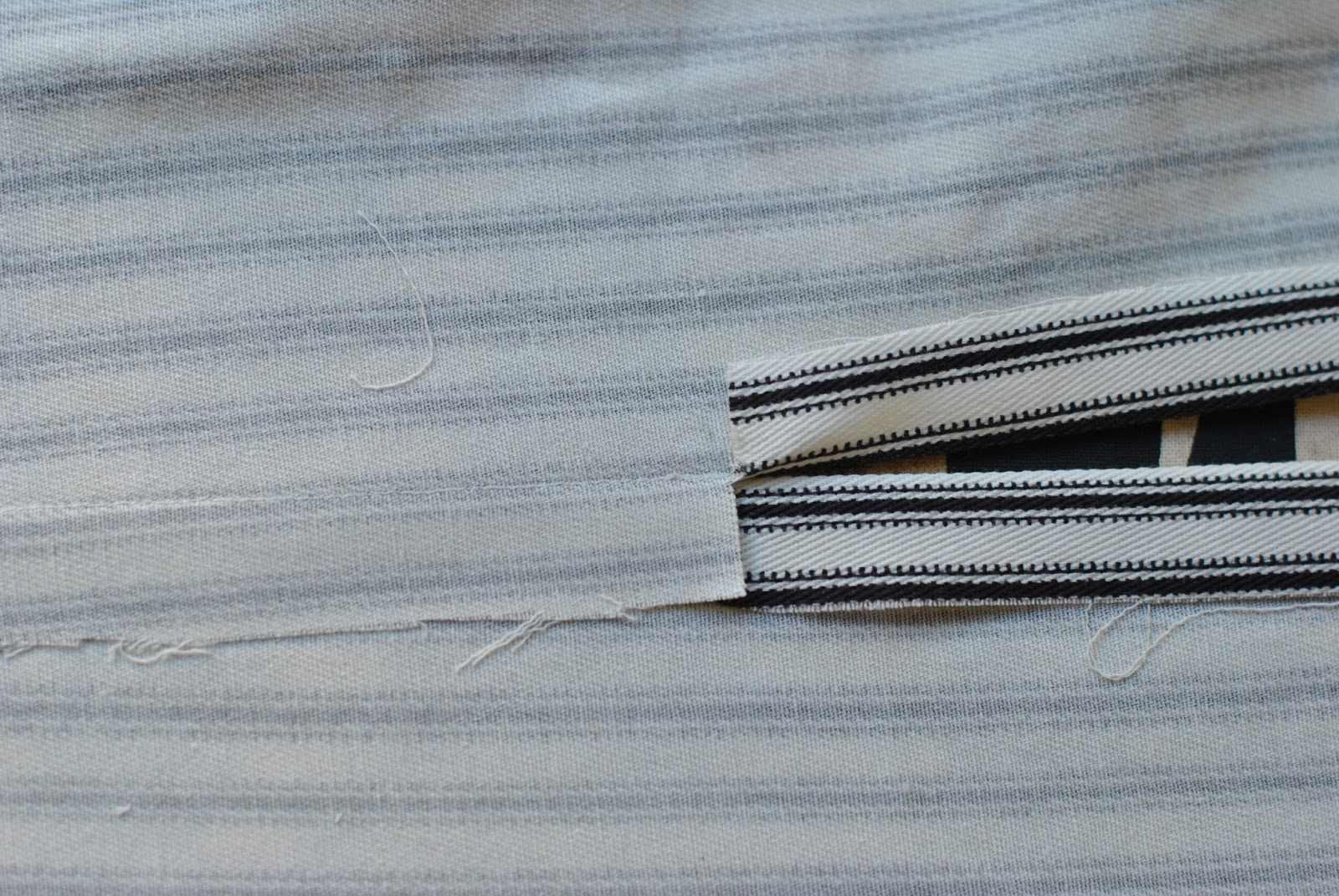
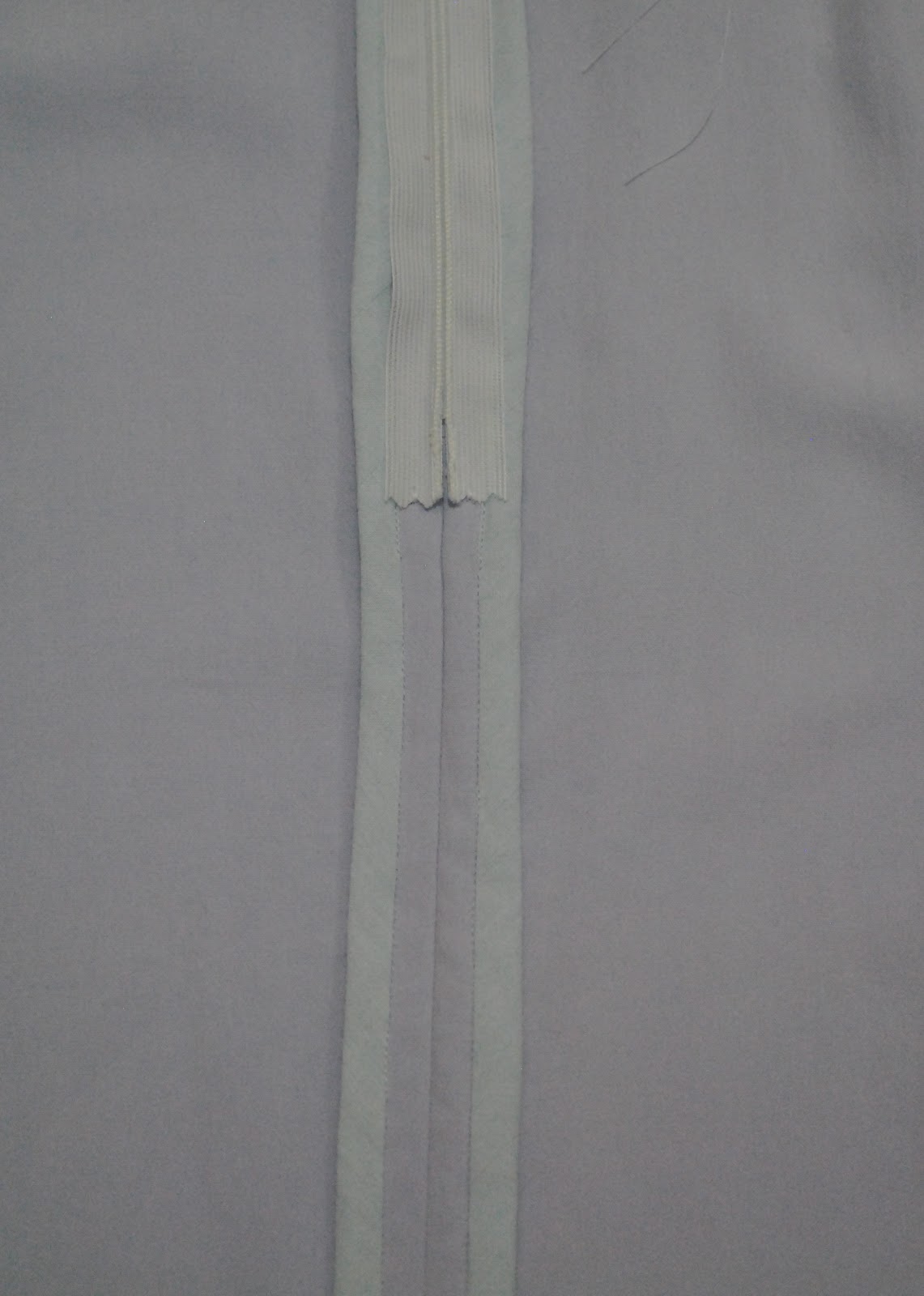
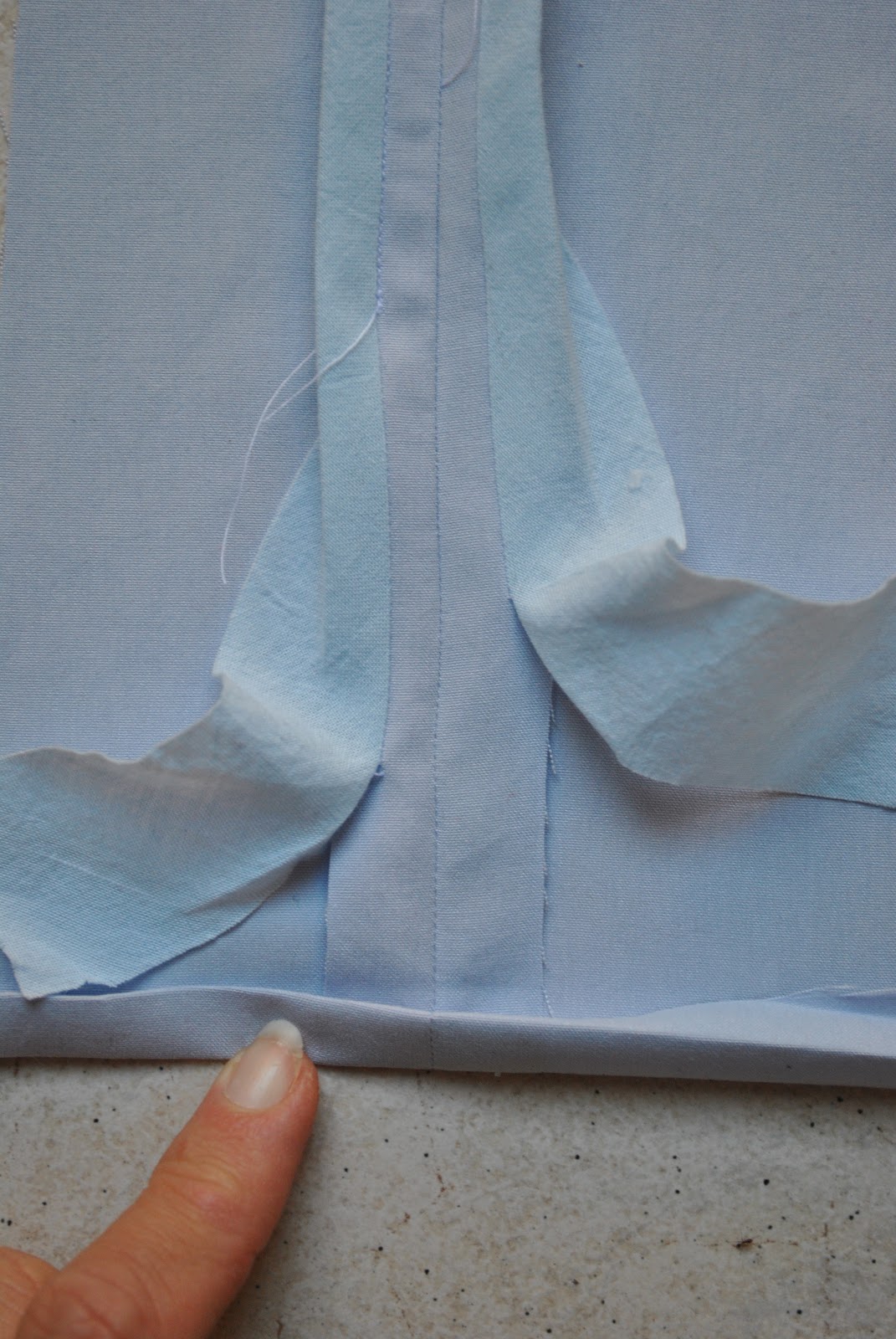
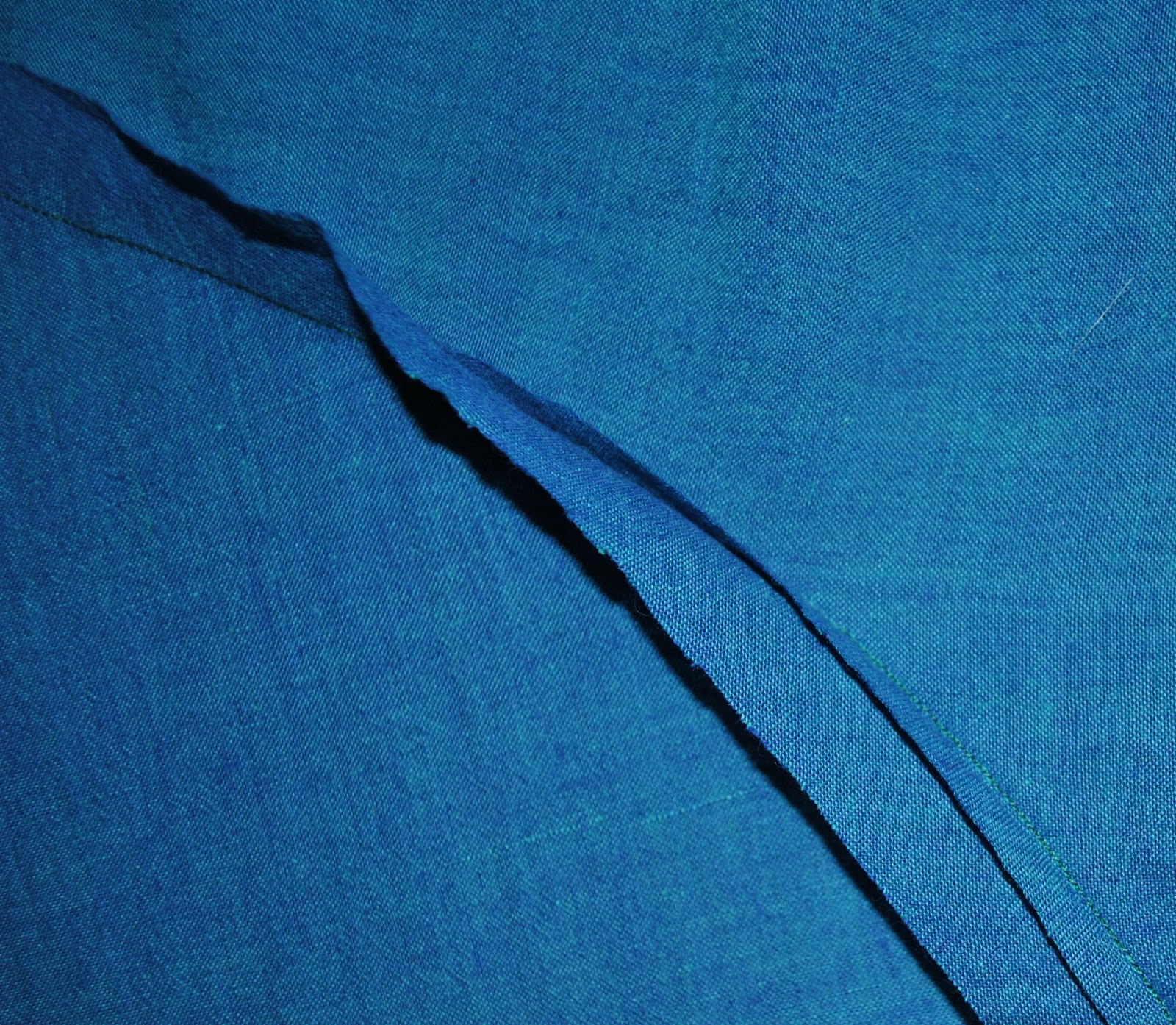
Fold the bias strip up over the overlocked seam allowance and press.
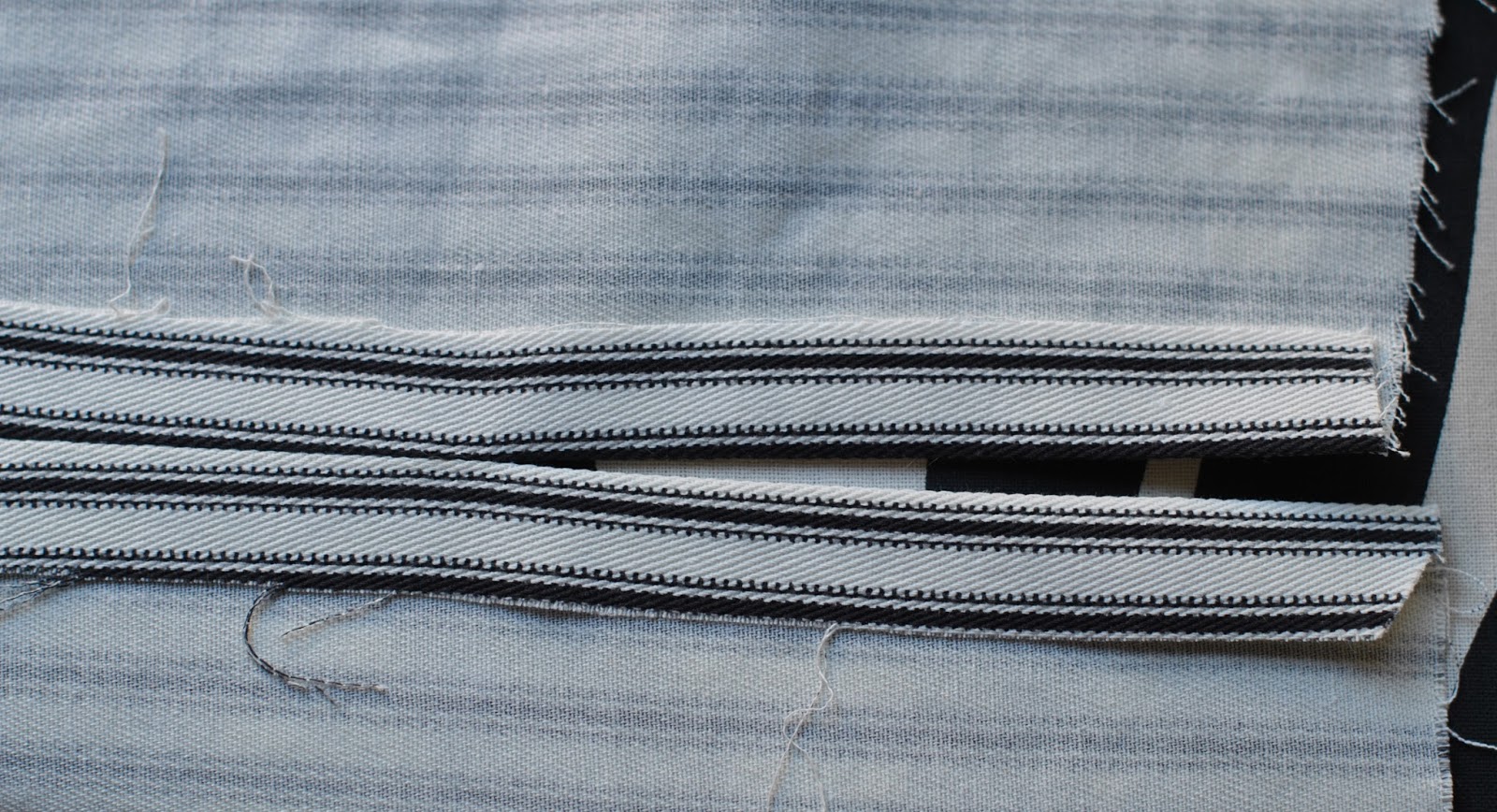
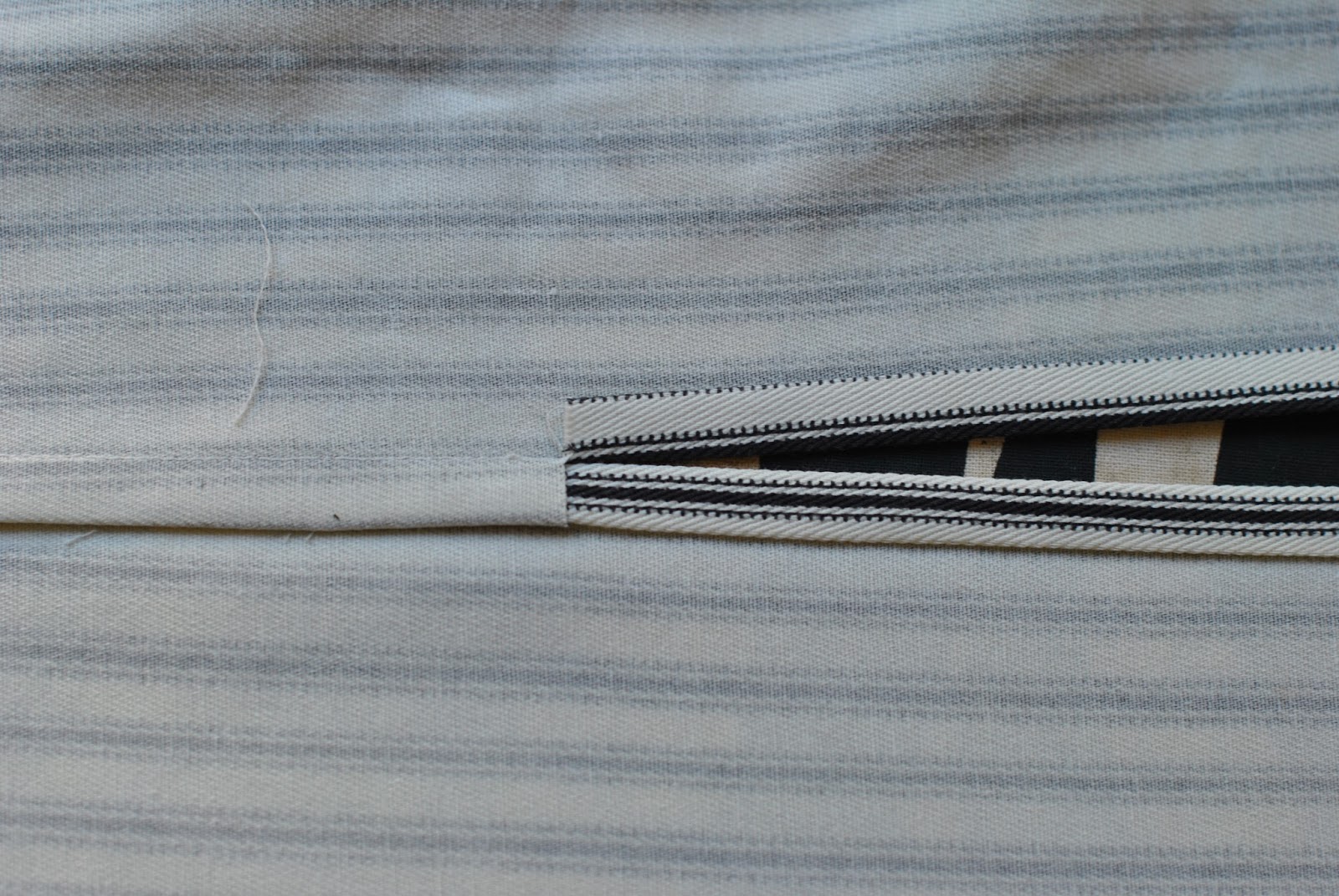
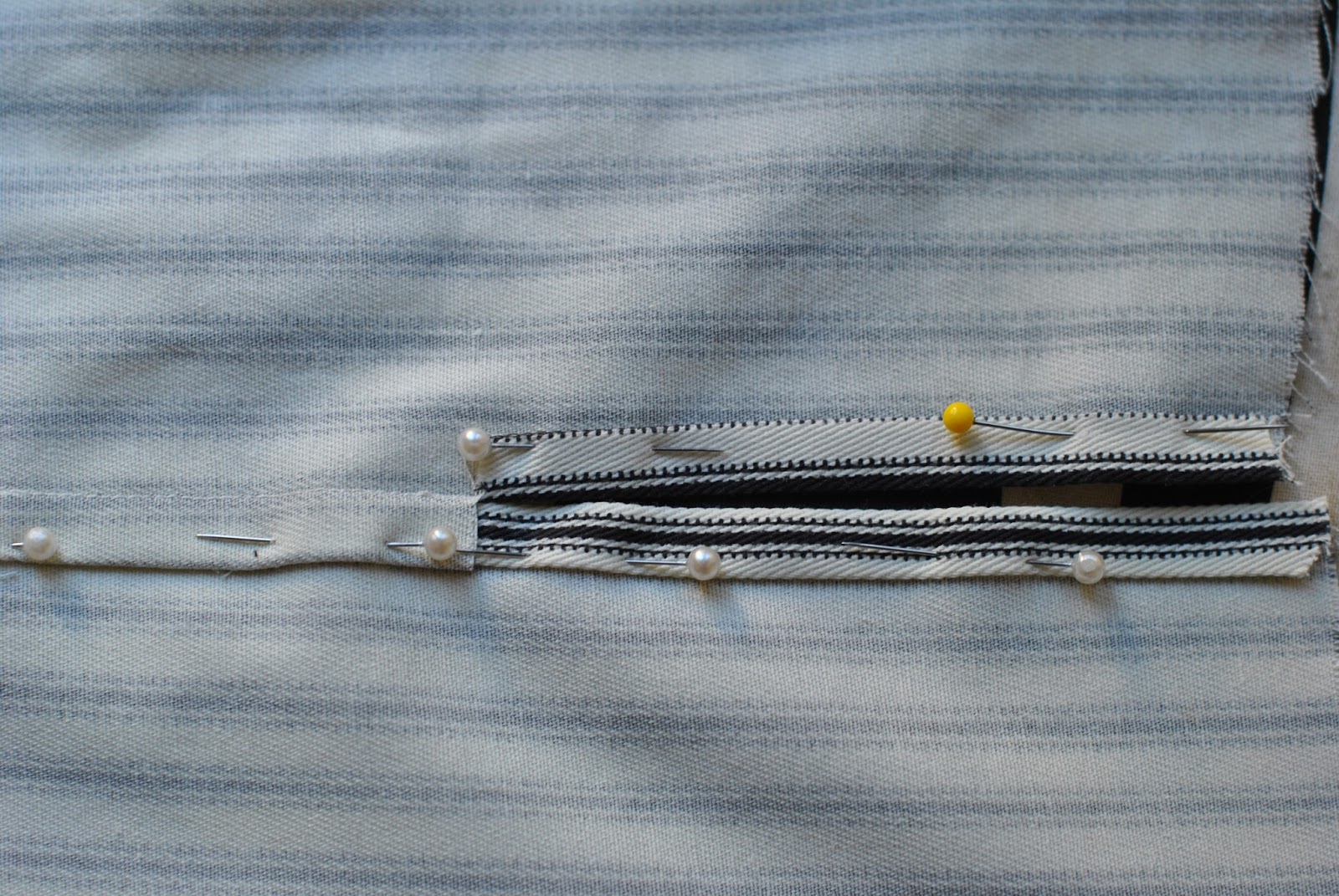
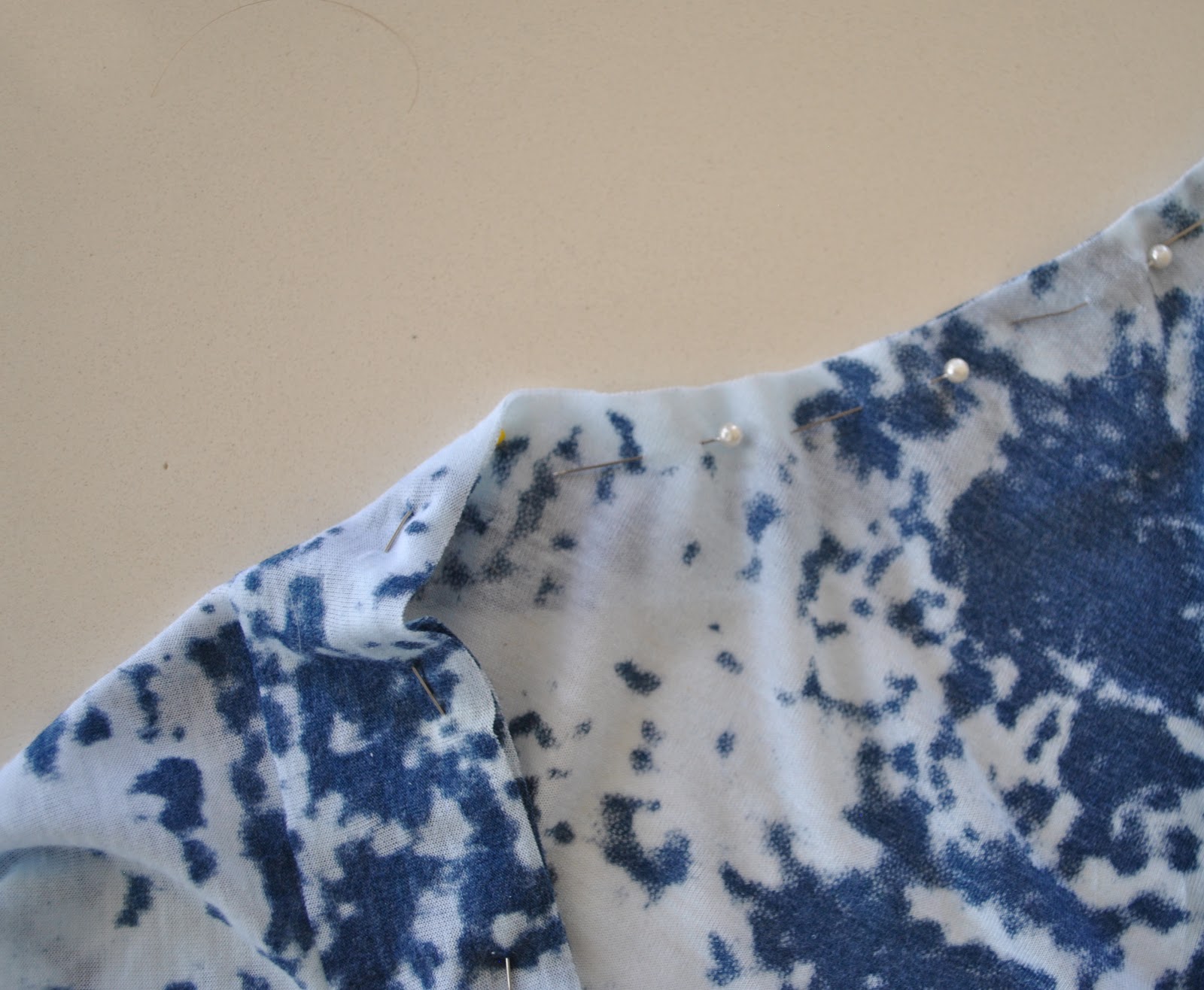
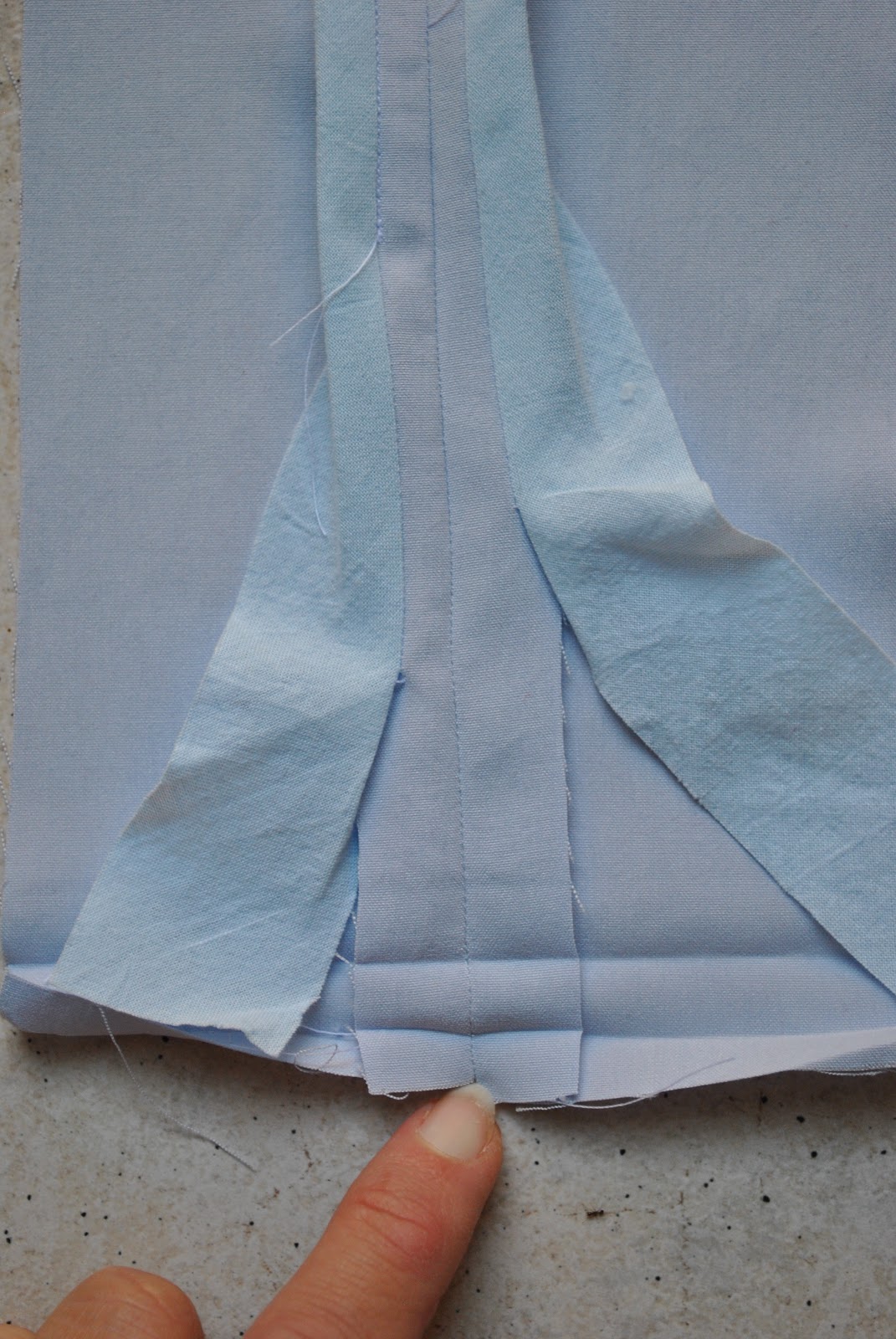
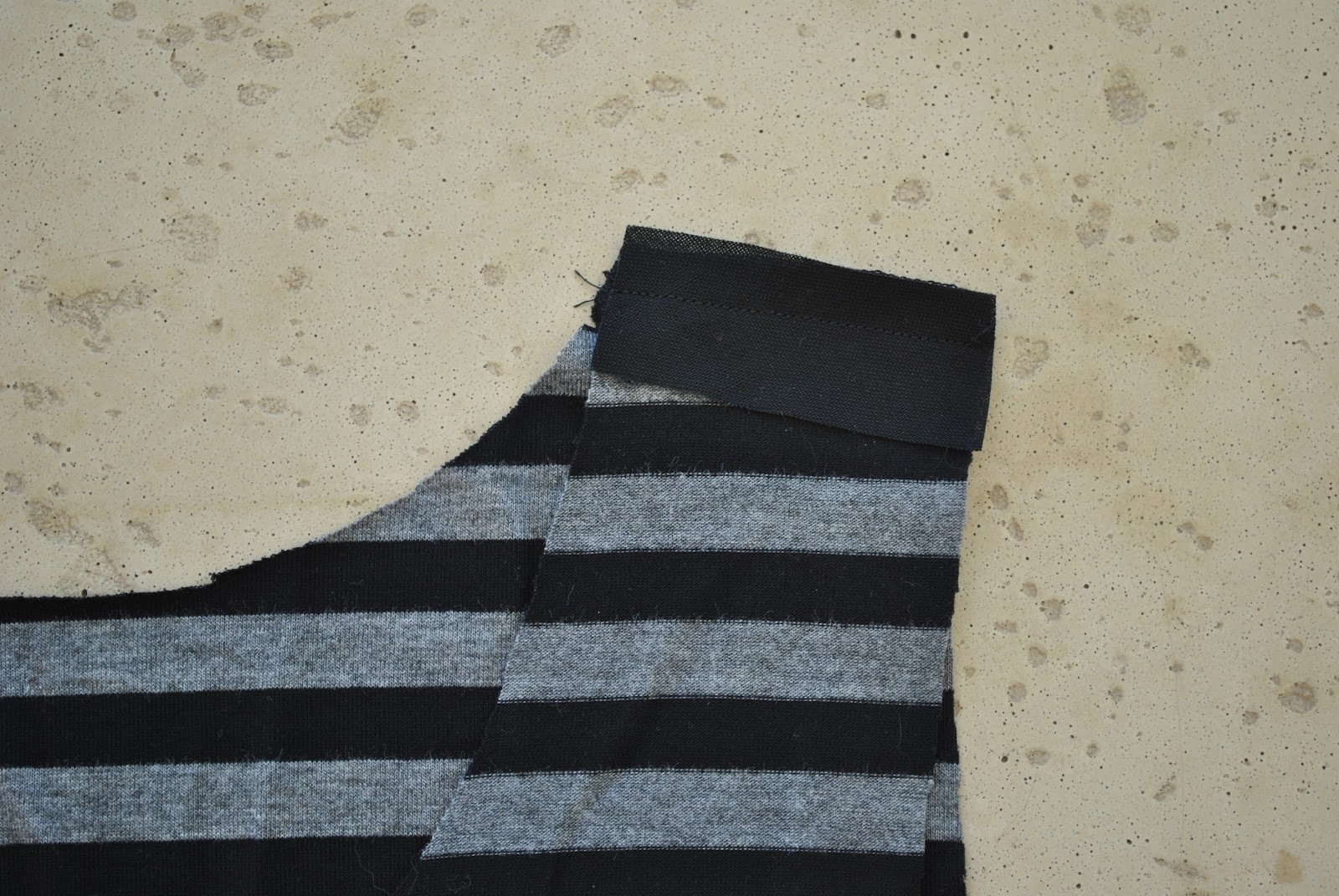
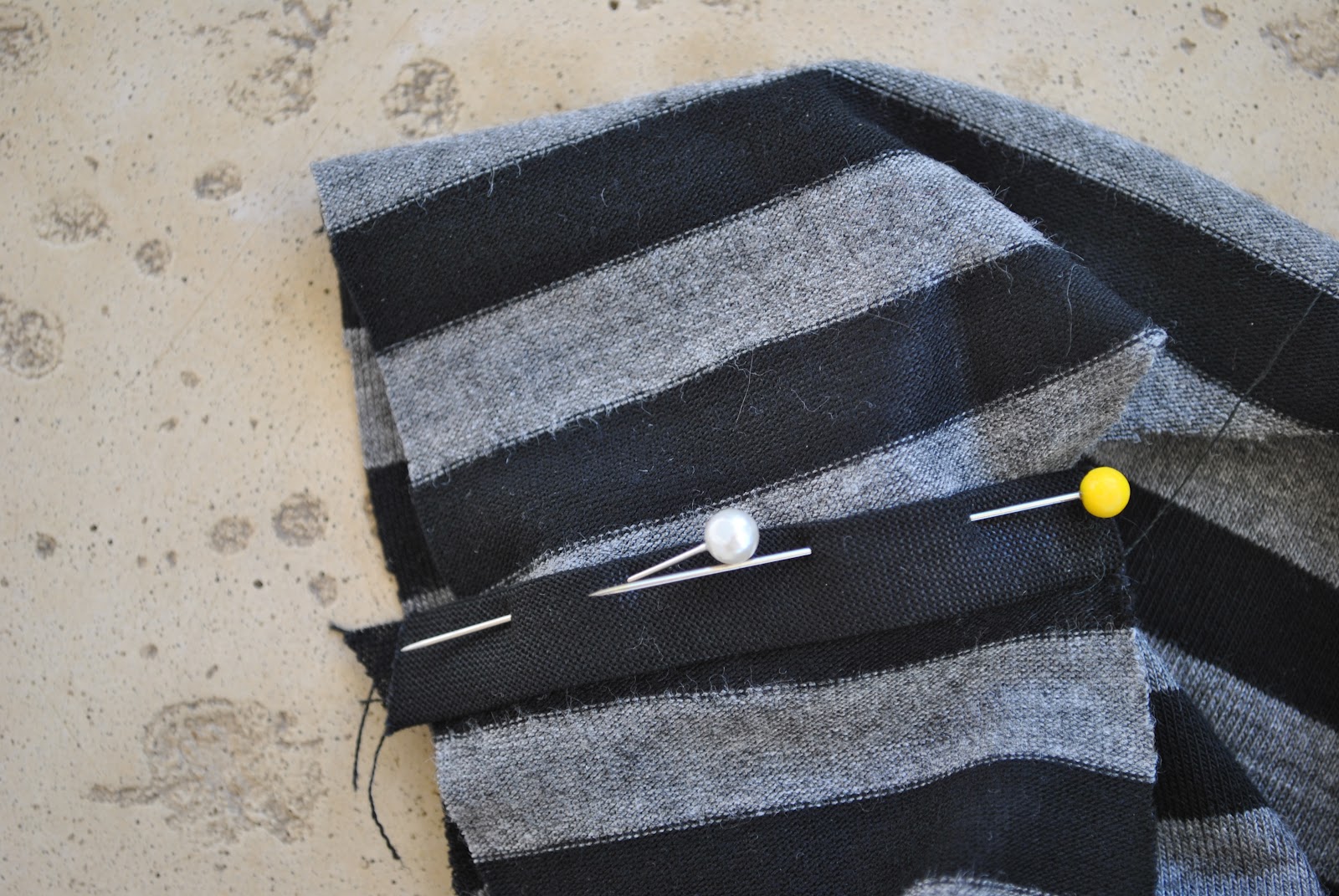
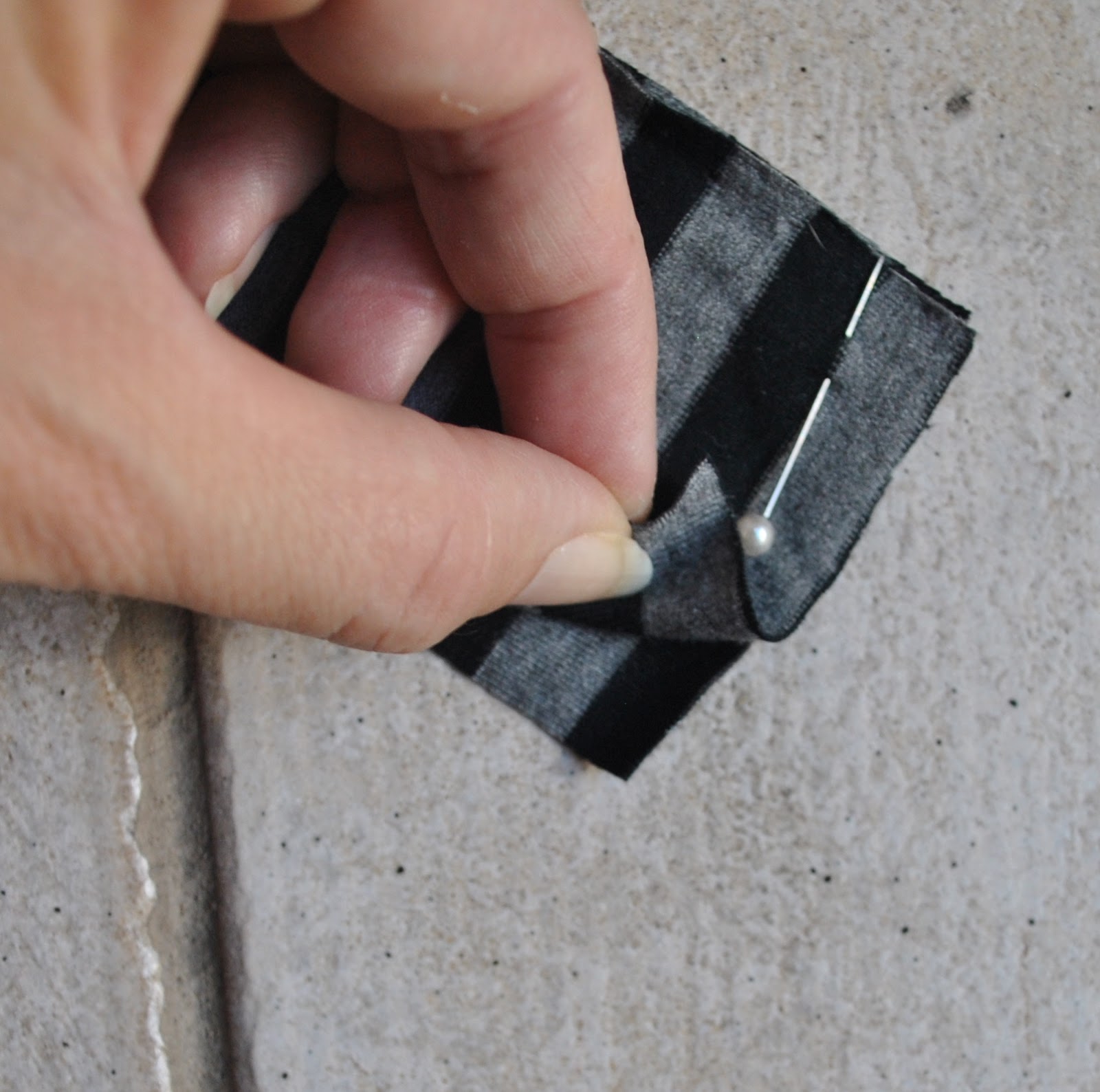
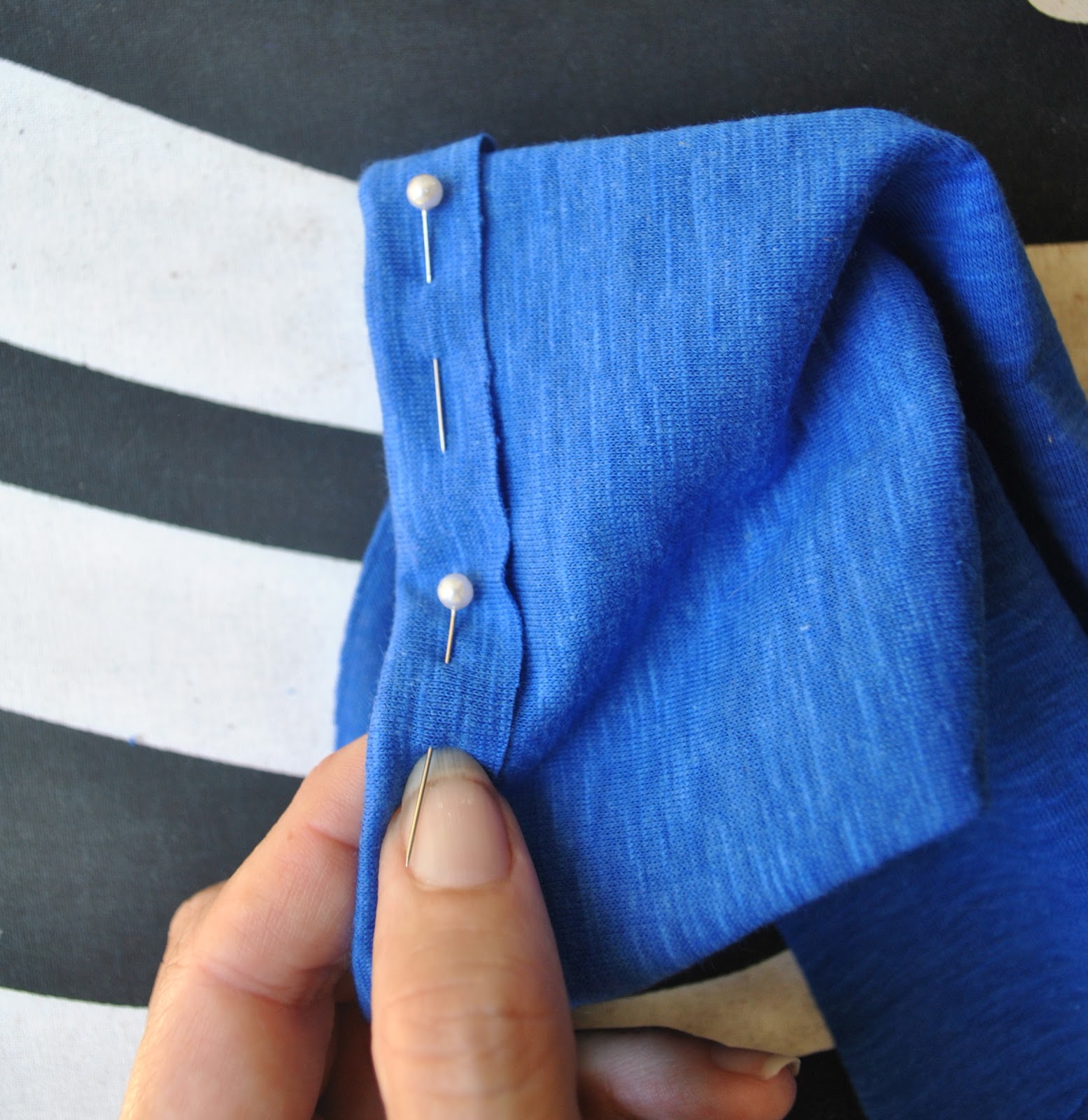
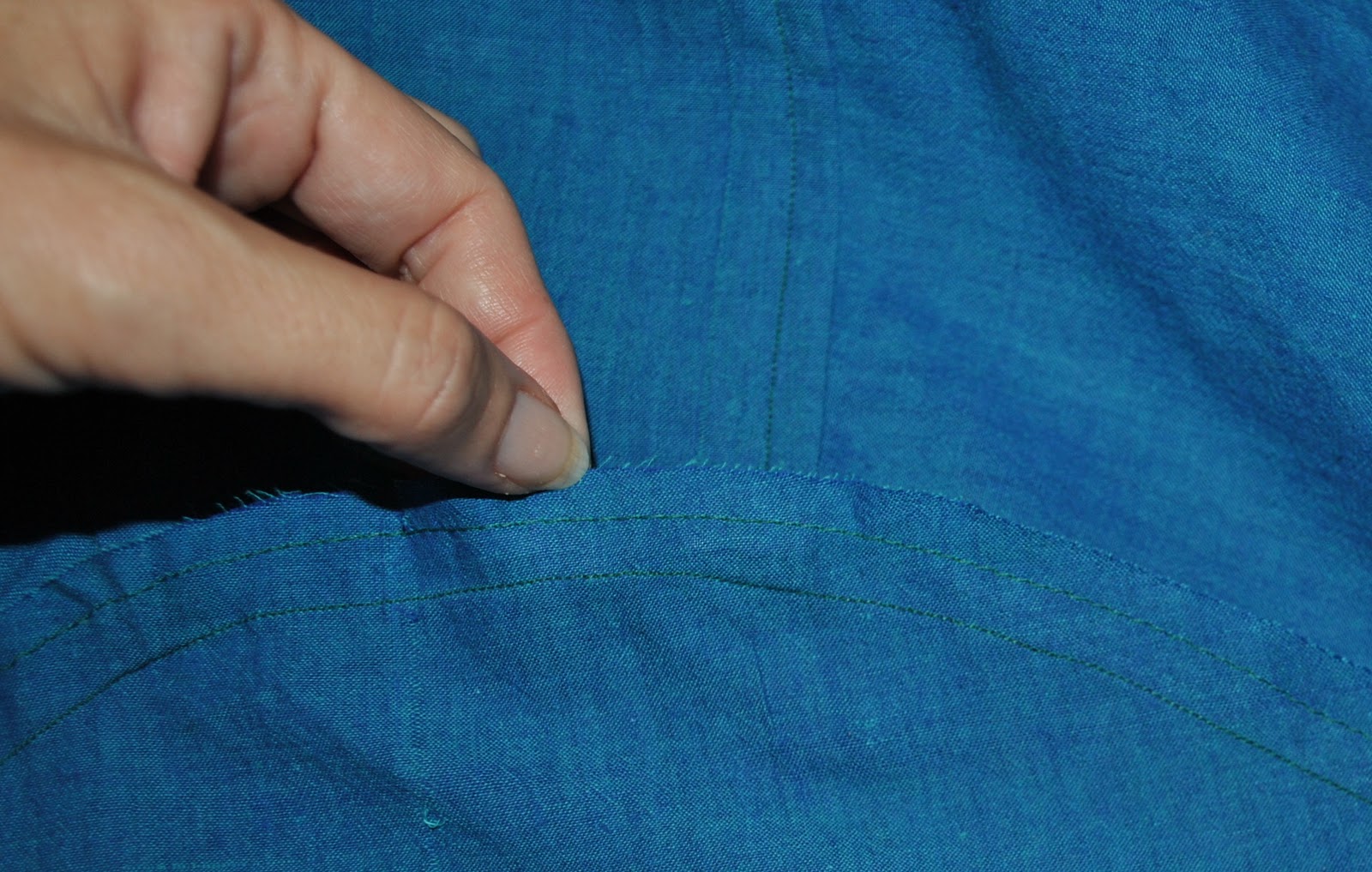
Fold the bias strip and the shoulder seam allowance back to lie flat over the dress back, and press. Fold under the bias raw edge to an even width, encasing the shoulder seam allowance, and pin in place.
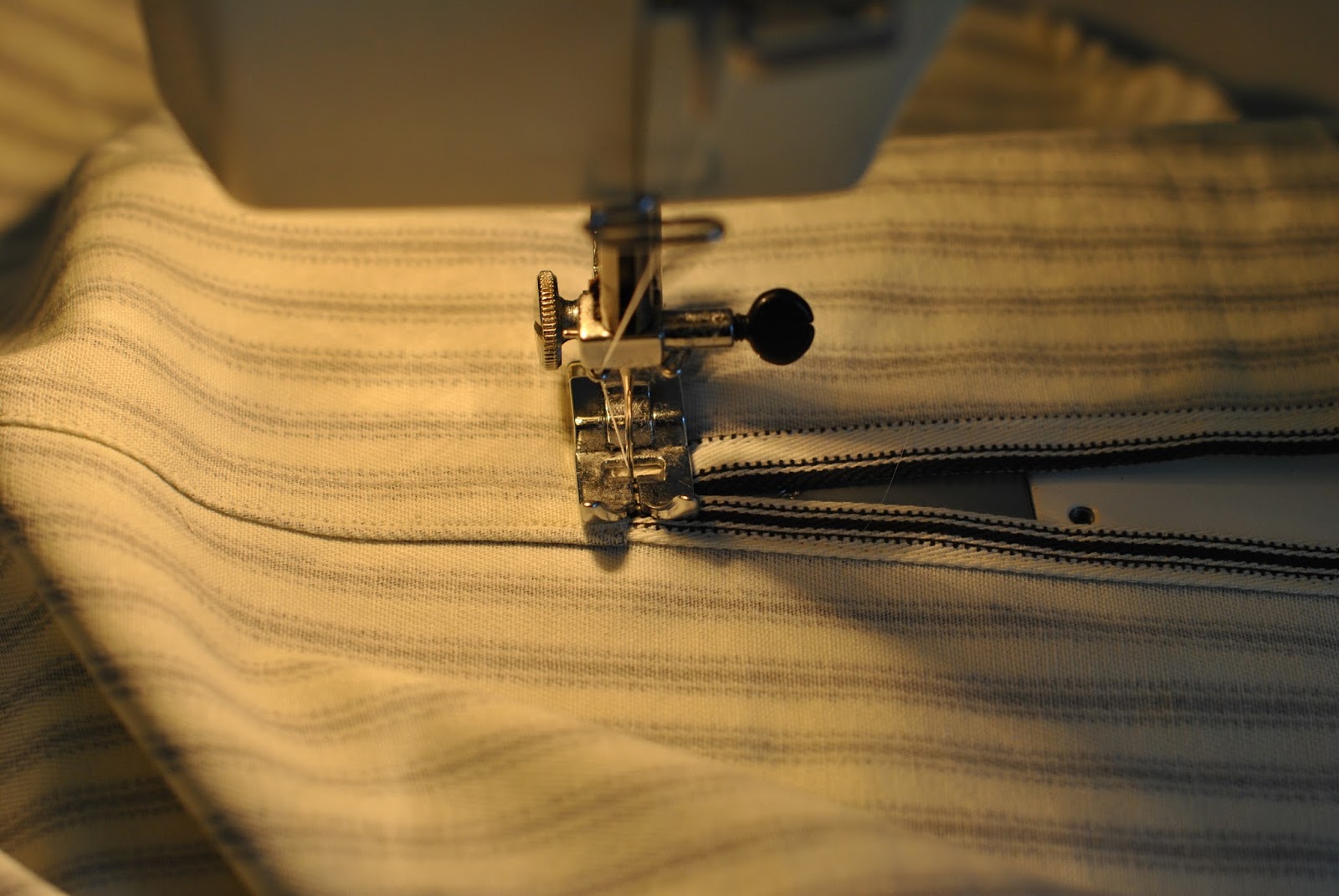
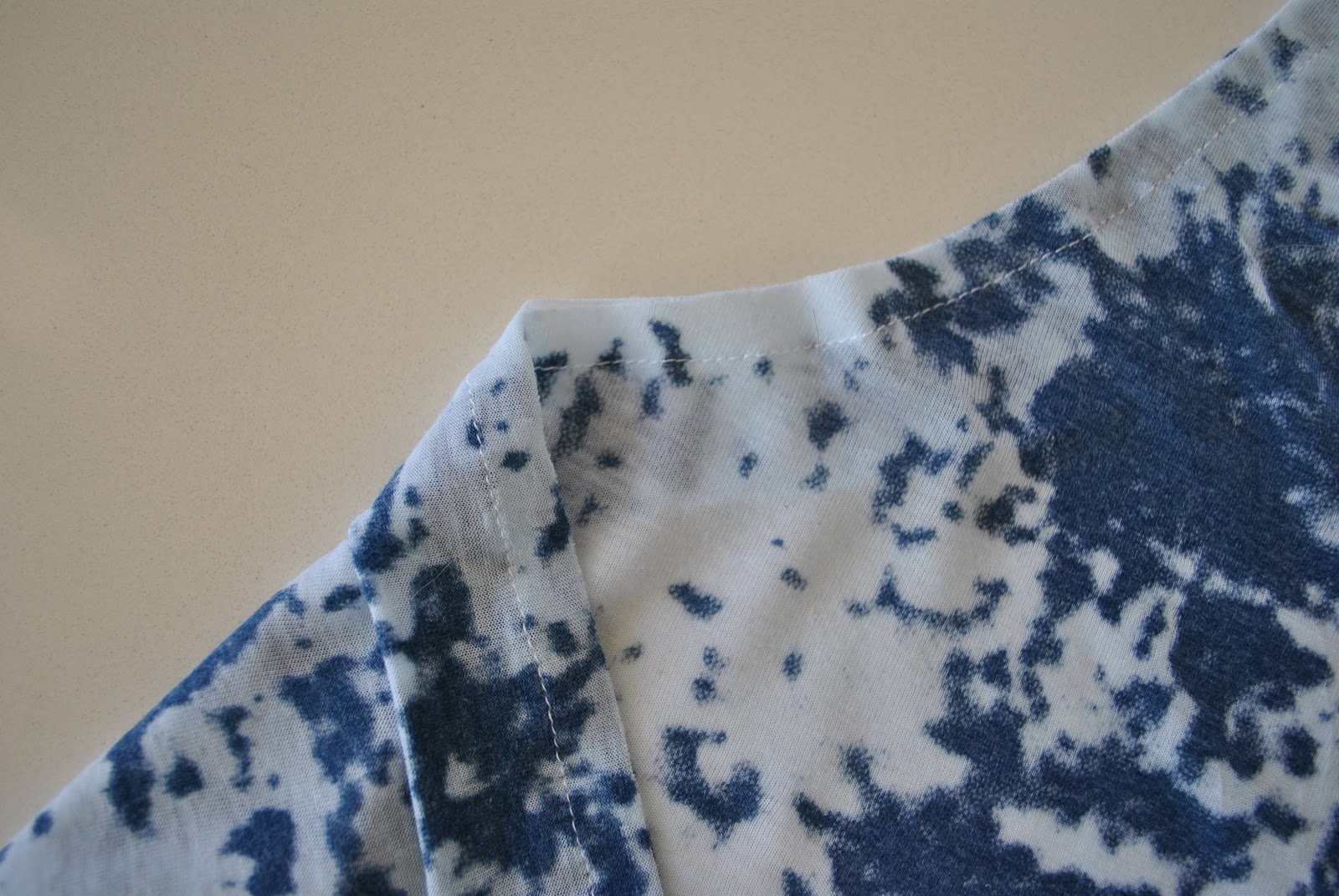
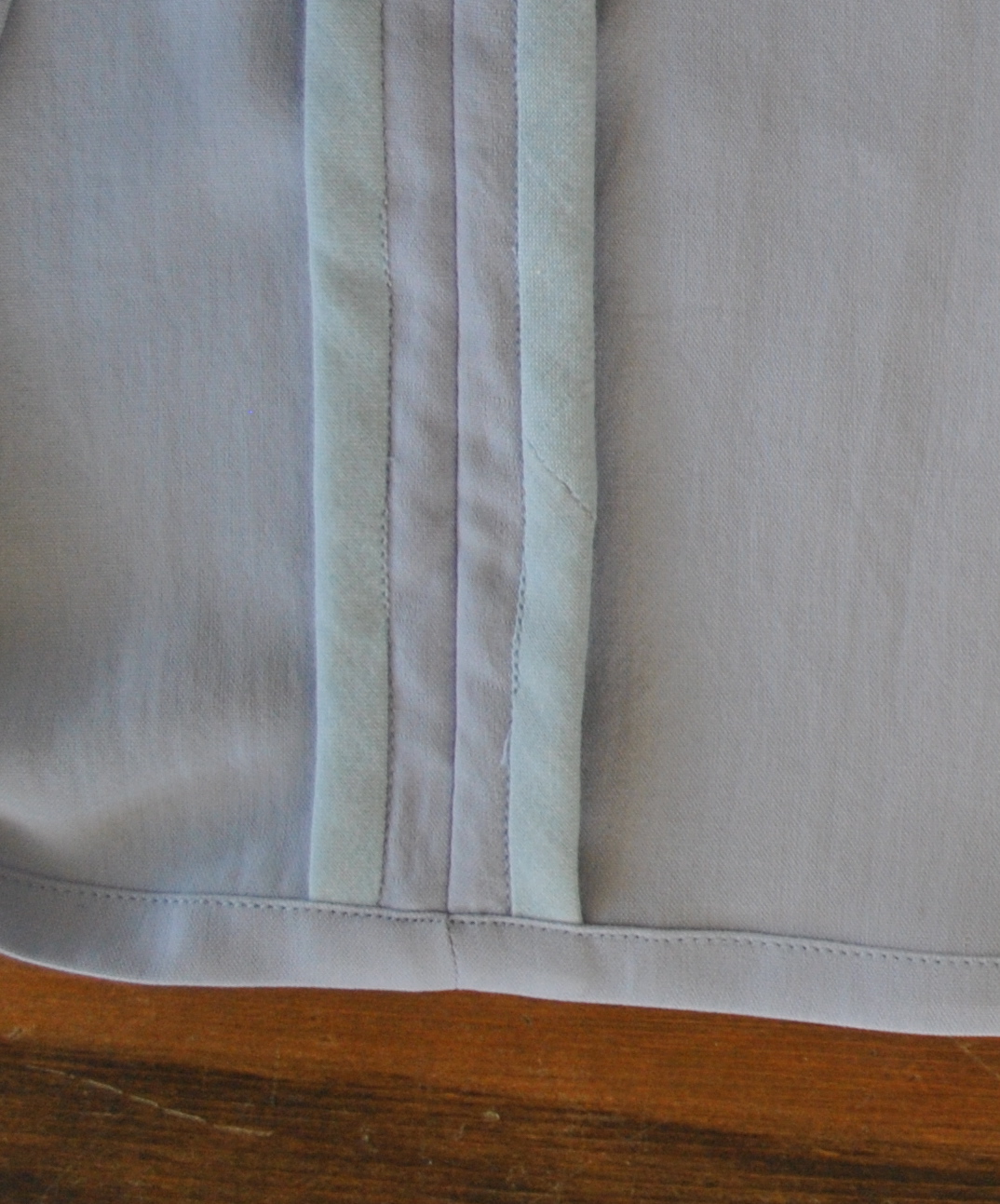
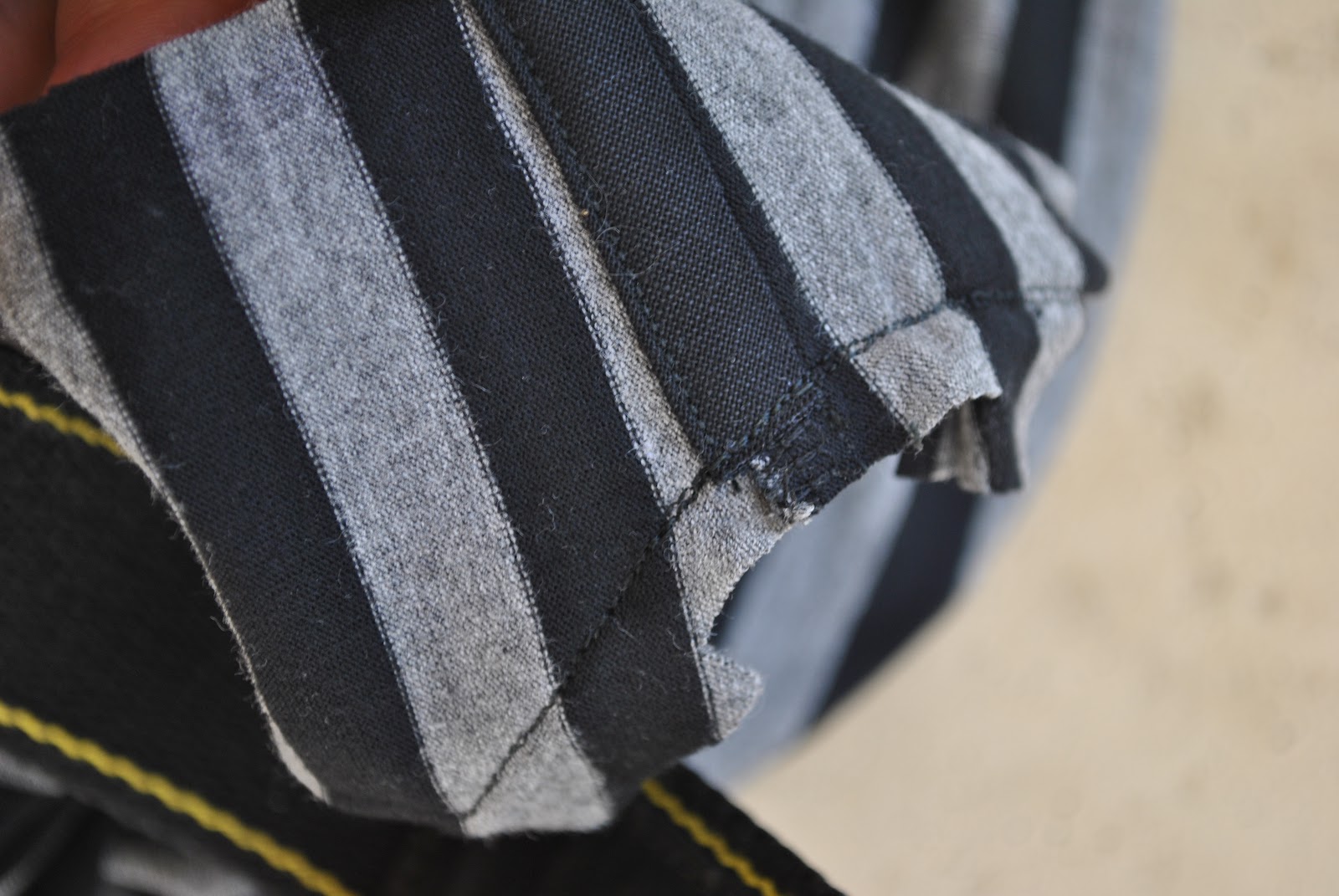
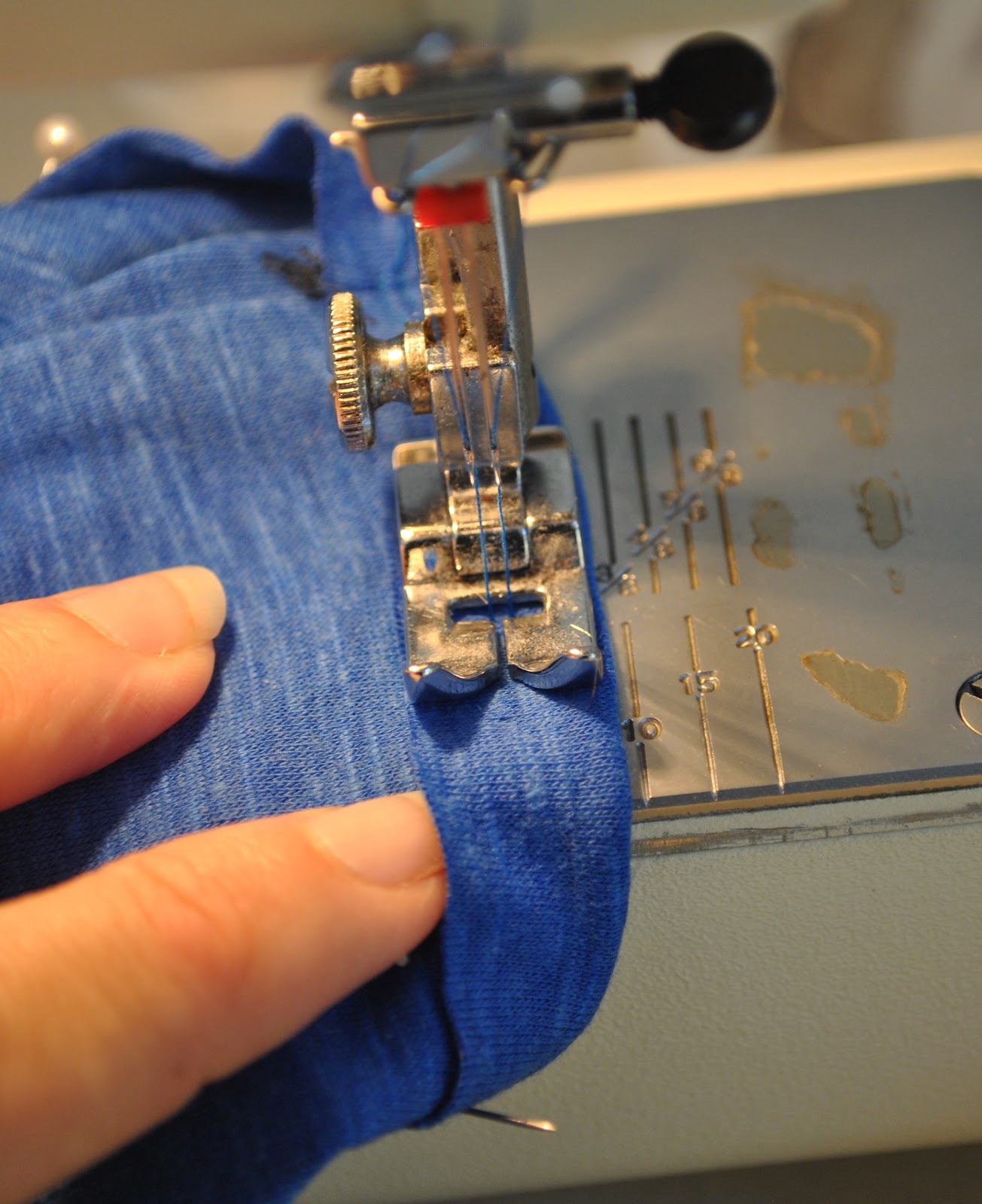
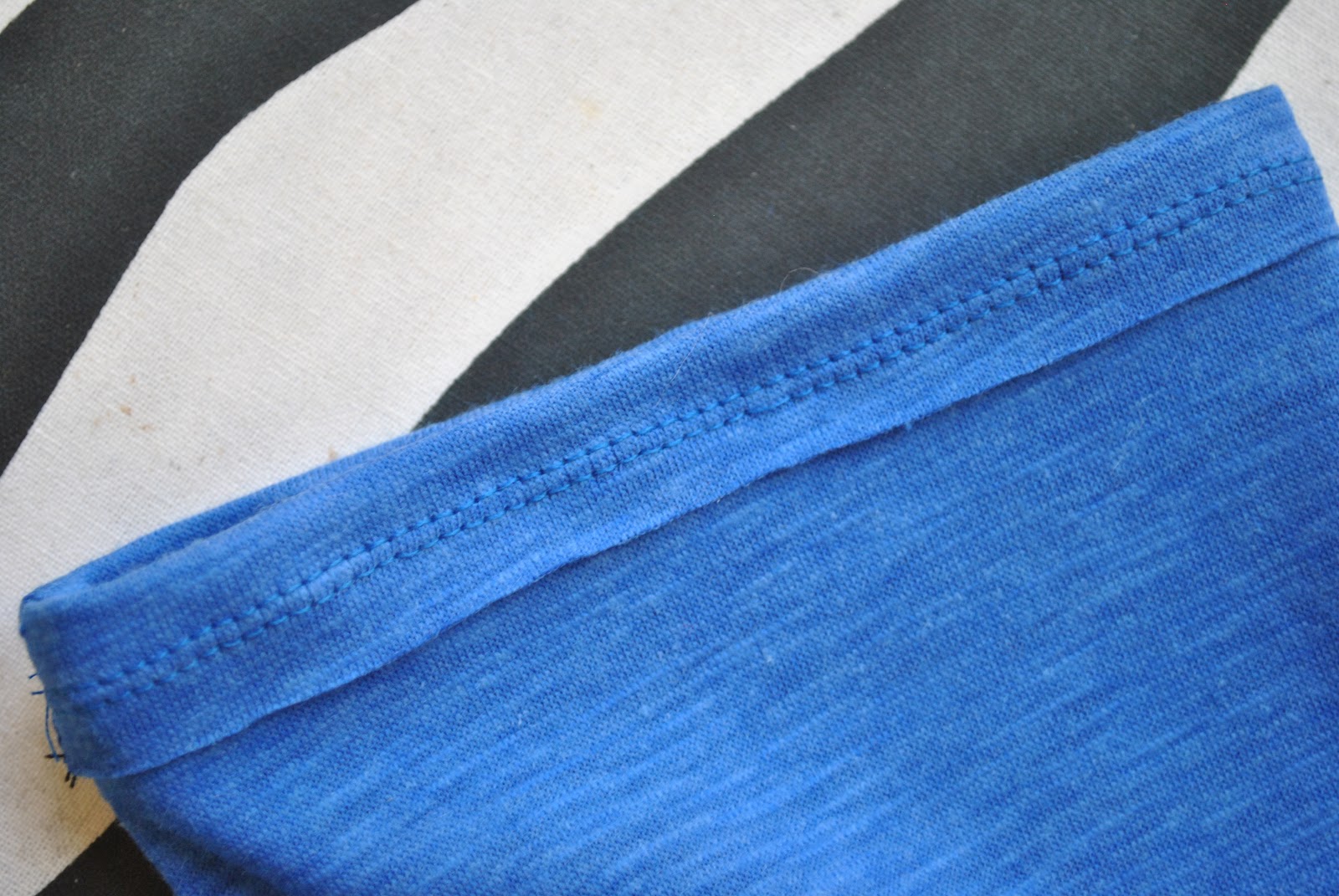
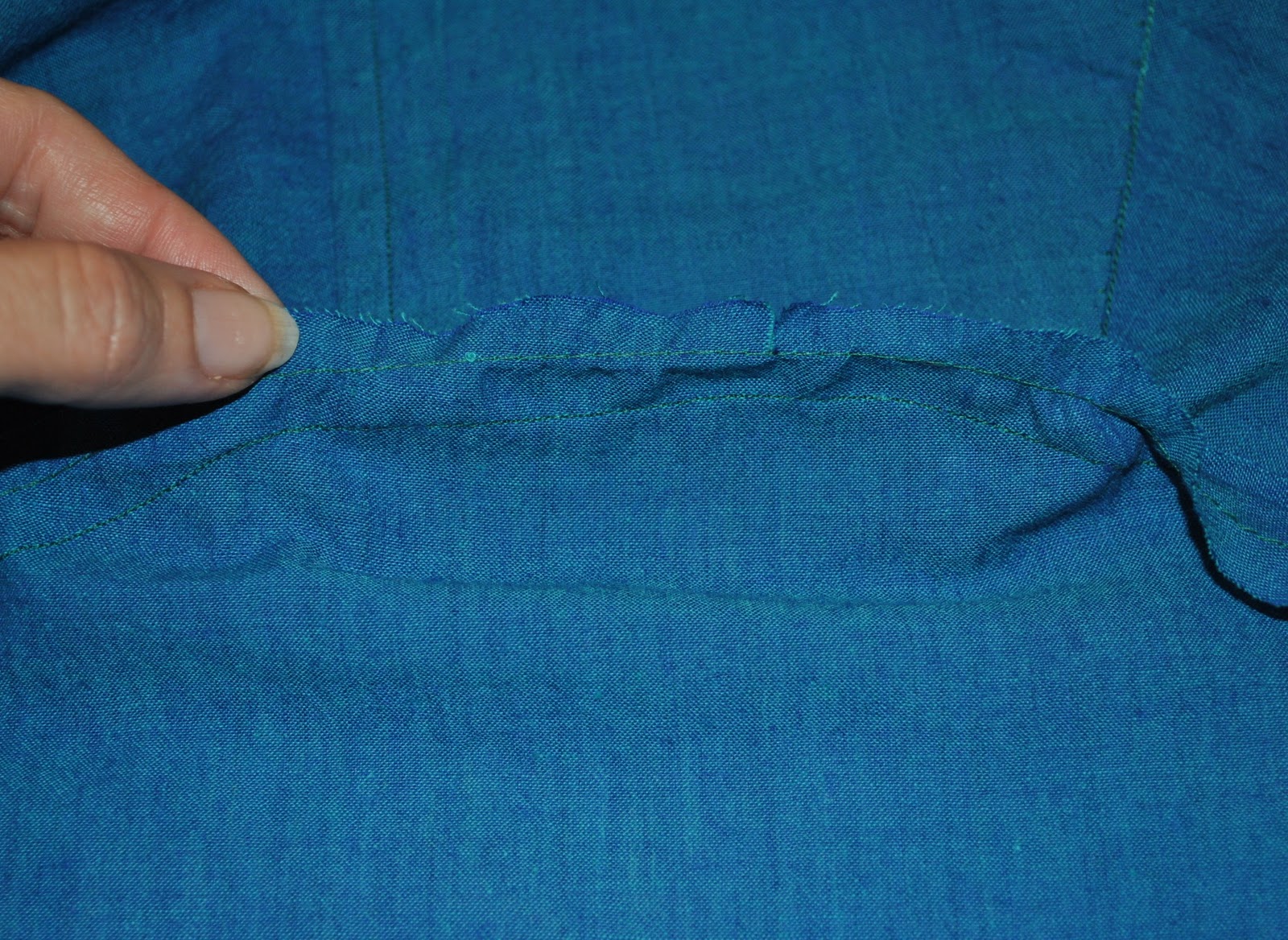
Top stitch the folded edge down onto the dress.
There! Now your shoulder seams will be perfectly rigid and strong enough to hold up the weight of the dress without stretching or ever becoming mis-shapen over time….
Now for the armhole and neckline bands…
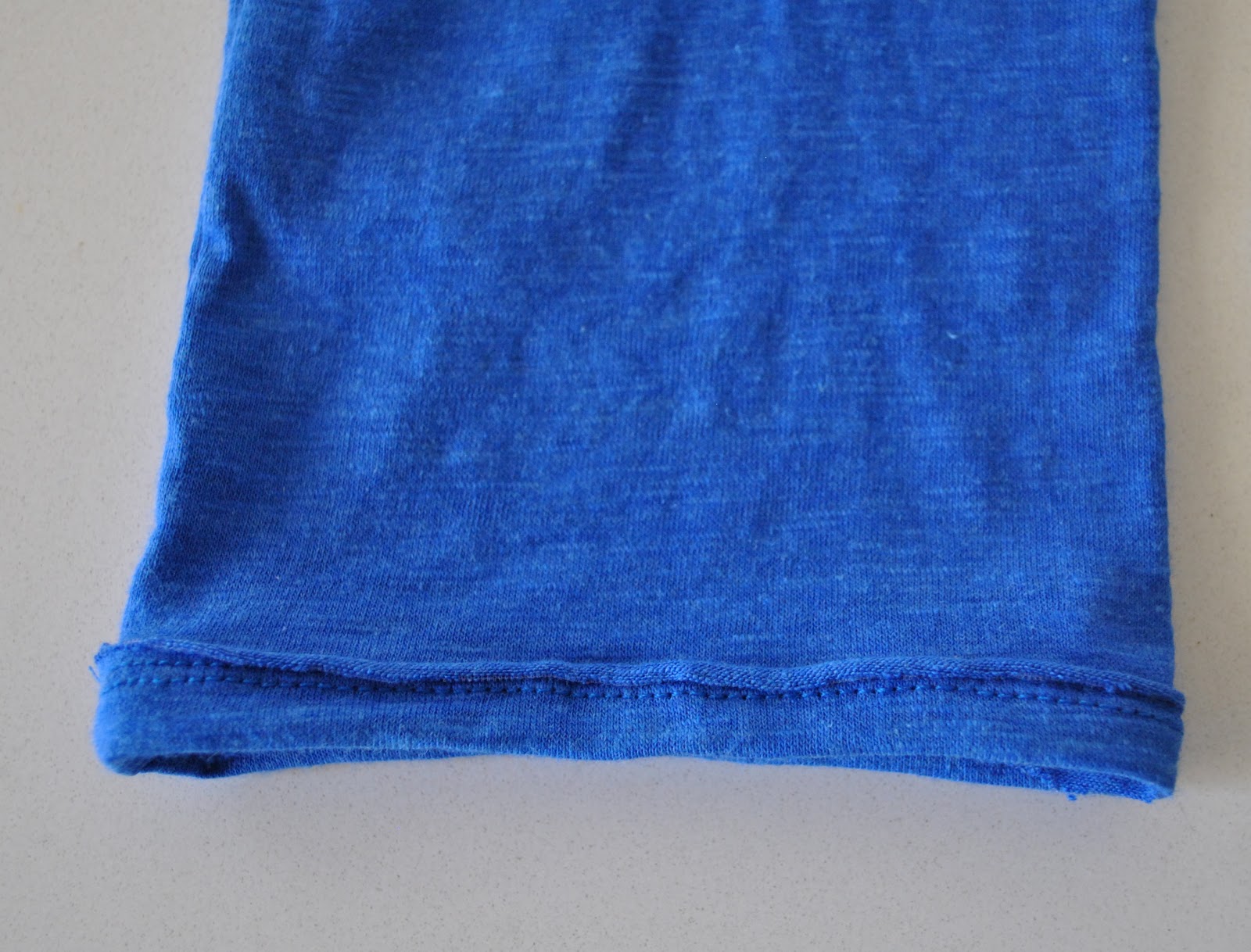
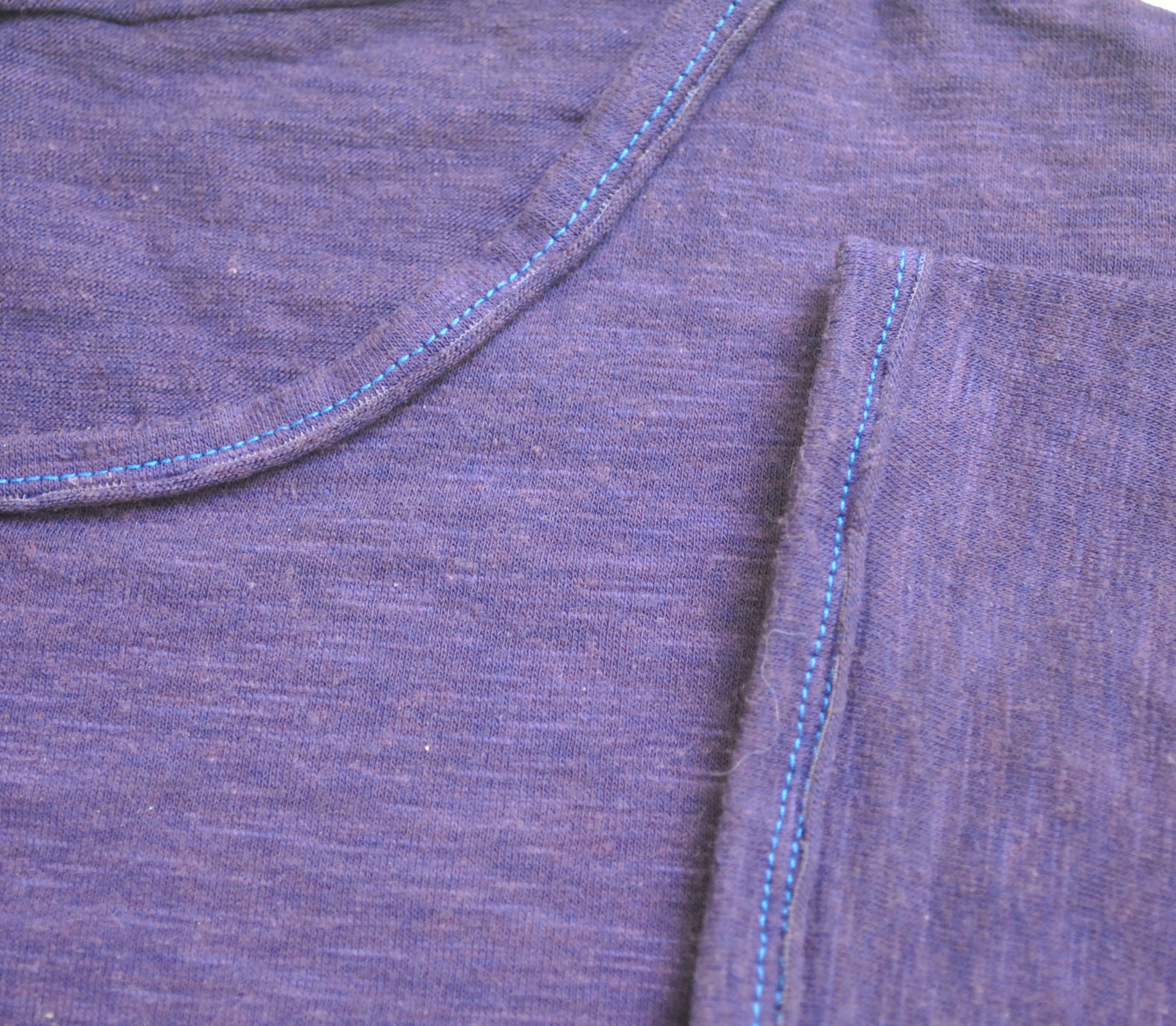
I’ve mentioned before how I call this the Metalicus finish, this is merely because I learnt it by studying my Metalicus pieces where I first observed this technique and started trying it out on my own garments. It probably goes by some other proper name really, but meh, that is my name for it. It is a very nice neat finish, uses the same fabric, and requires no hand-stitching, expensive twin needles or special machines like overlocking or cover-stitch machines. And still looks really professional.
It can be used on any raw edge; armholes, necklines, sleeve edges, cardigan edges, Tshirt hems, I’ve even used it on firm stretch fabric waistbands, dress hems; anything.
(Later edit) I’m adding this to address some comments: if you follow this method the seam allowances will not flip out to the outside and will not need topstitching down!
Start out by trimming the armholes/neckline/sleeve length/Tshirt length; whatever, to the finished desired length.
The dimensions of your band strips are calculated as follows:
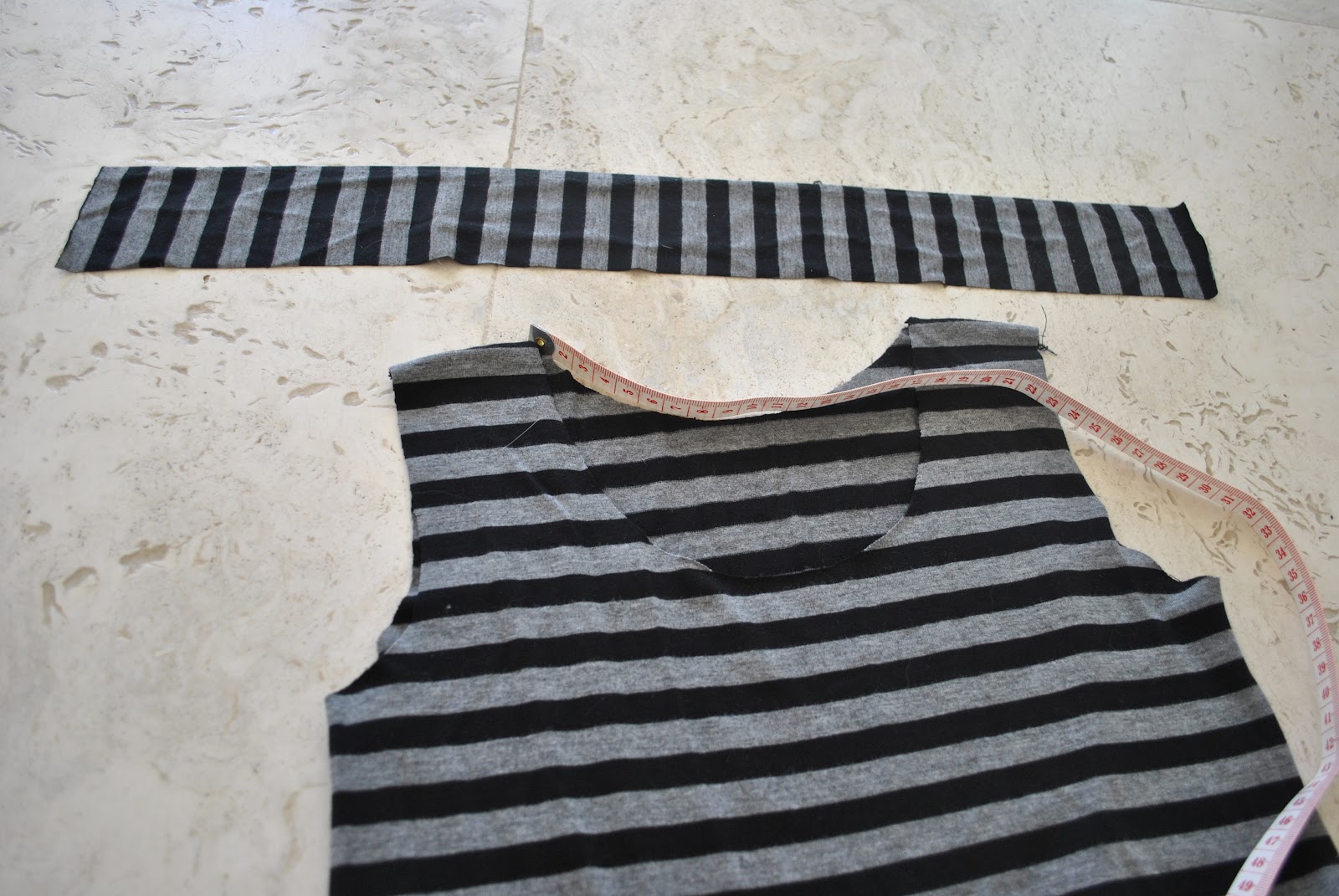
Measure the raw edge and cut a strip to exactly this length plus 2cm for hemming.
Now, since my fabric in this example here is a stripe, I wanted to get the stripes matching with the joining seam invisibly between two stripes. This meant cutting the band to a different, very slightly shorter length that was ideal compared to my measurements. In the case of pattern matching like this, it is OK to cut the strip a tiny tad shorter, but NOT longer, than required, but you do not want for the difference in length to be any more than 5%. If you are trying to match up wide stripes and your measurement looks like it is going to be more than 5%, then it would be best to not bother with pattern matching. Any differences bigger than 5% will mean that your garment will look bunched up, or “gathered”, into the finishing band.
AND, since your stitching line is a longer length than the raw edge, (being a concentric circle of a wider diameter) your band is a slightly shorter length than the stitching length around your neckline/armhole, meaning the band will be stretched slightly during stitching and WILL sit up nicely on the outside of the garment when finished.
The width of your strip should be double the desired finished strip width plus seam allowances… So for example; say I wish for my neckline band to be a finished width of around 1.5cm, and I am allowing a seam allowance of 1cm. I should cut my bands to a width of (1.5cm + 1cm) x2 = 5cm; and then add a tad to allow for losing some in the fold-over process, so round it up to 5.2cm.
These are my two armhole bands….

Lay the strip right sides together and sew the short edges together in a 1cm seam to form a ring.
Fold the band in half along its length, wrong sides together.
Pin this ring to the raw edge that you are finishing, right sides together, aligning all three raw edges, and stitch along the seam allowance.
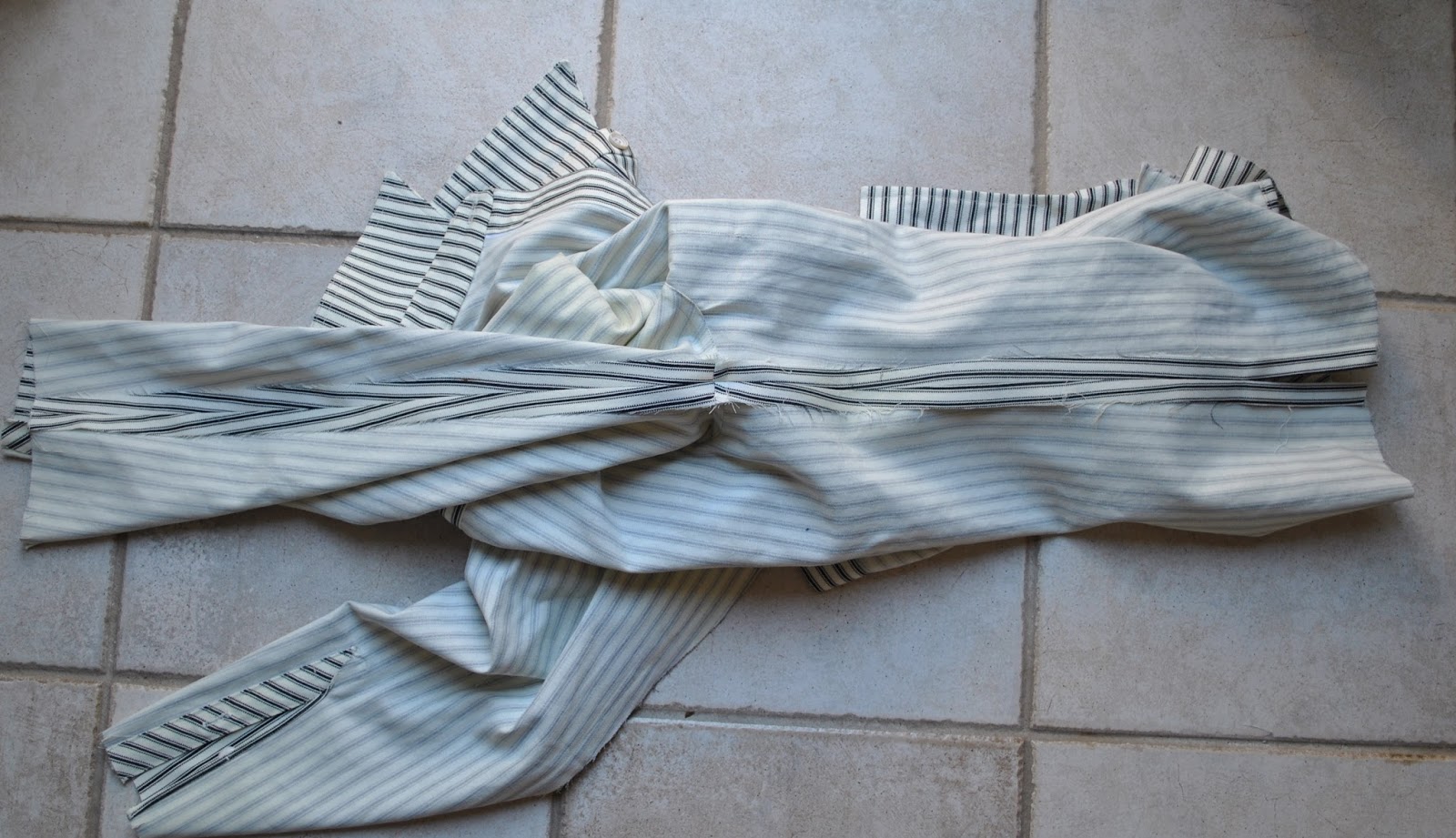
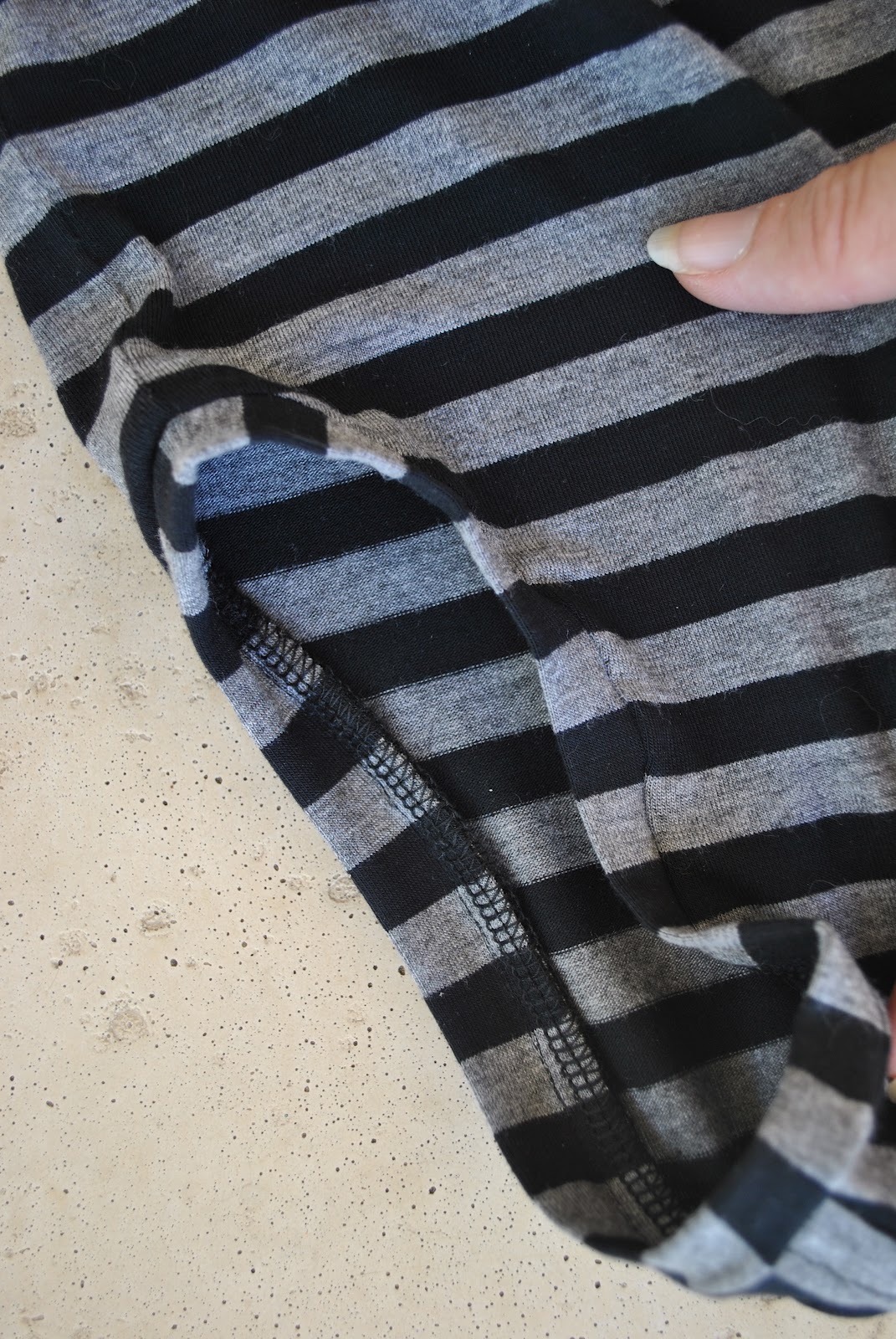
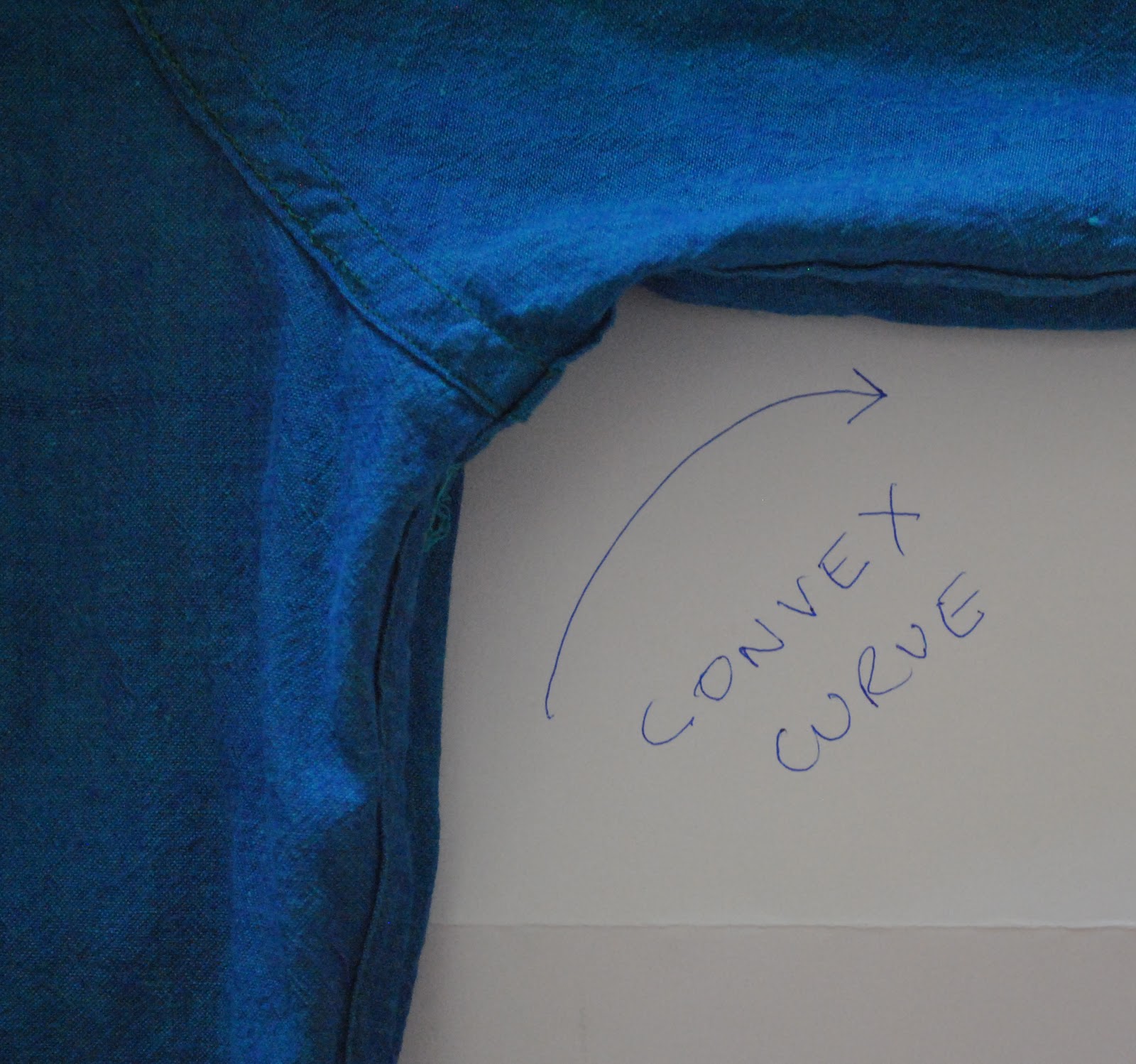
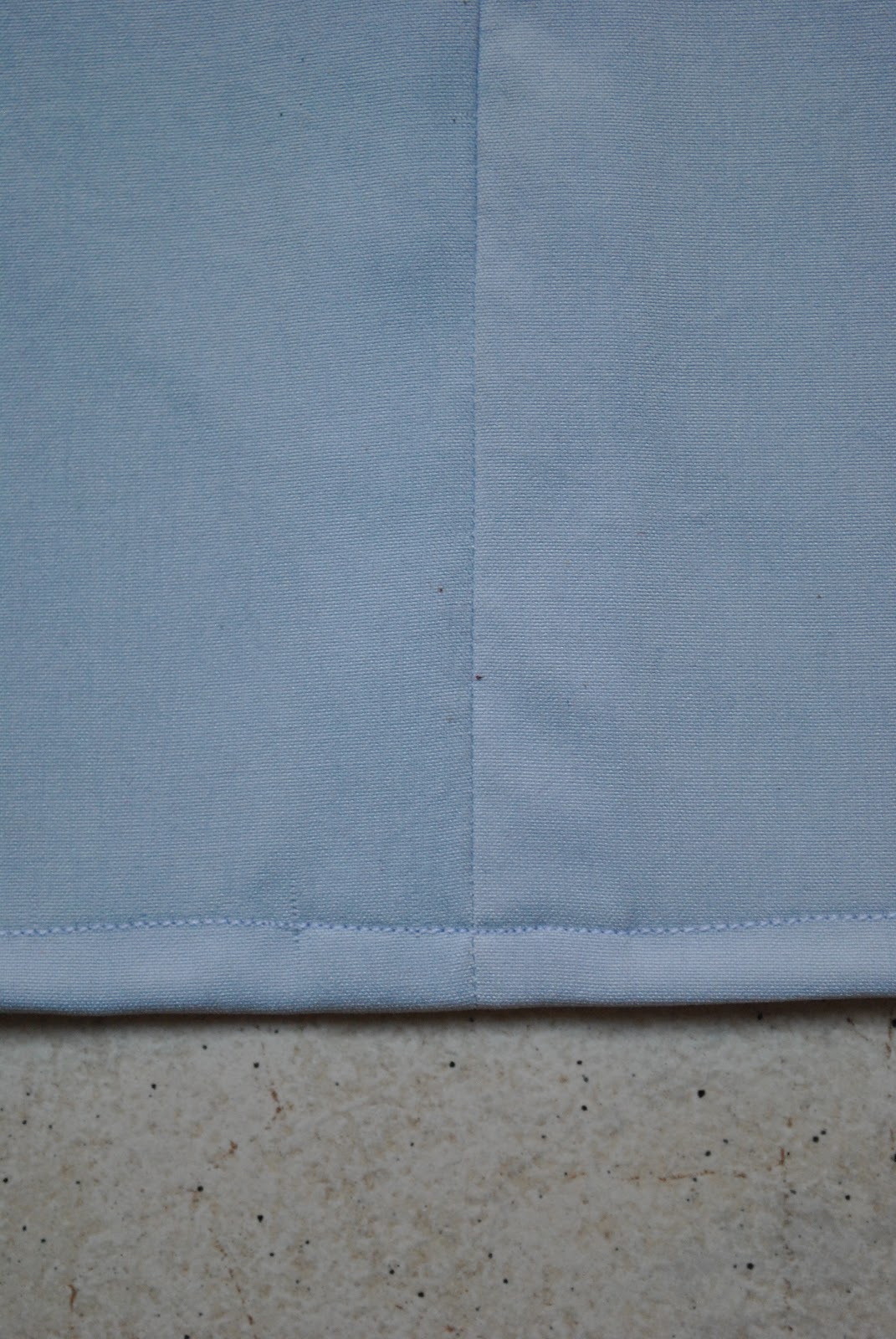
And sorry, I did not take a picture during this stage… but this picture below might give you some idea, with the three raw edges aligned in the seam allowance at the right there. This is an easy sew; since there is only a slight difference in the measurements of the ring and the raw edge, then there is only a little stretching or easing happening.

At this point, turn out the strip and check to see that the band is sitting in a perfectly even width all the way around, with no dips or lumps or bumps marring the evenness. If there are any, un pick and re-stitch these bits.
And essentially, you are pretty much finished!
Unless you have an overlocker… but that is OK if you don’t 🙂
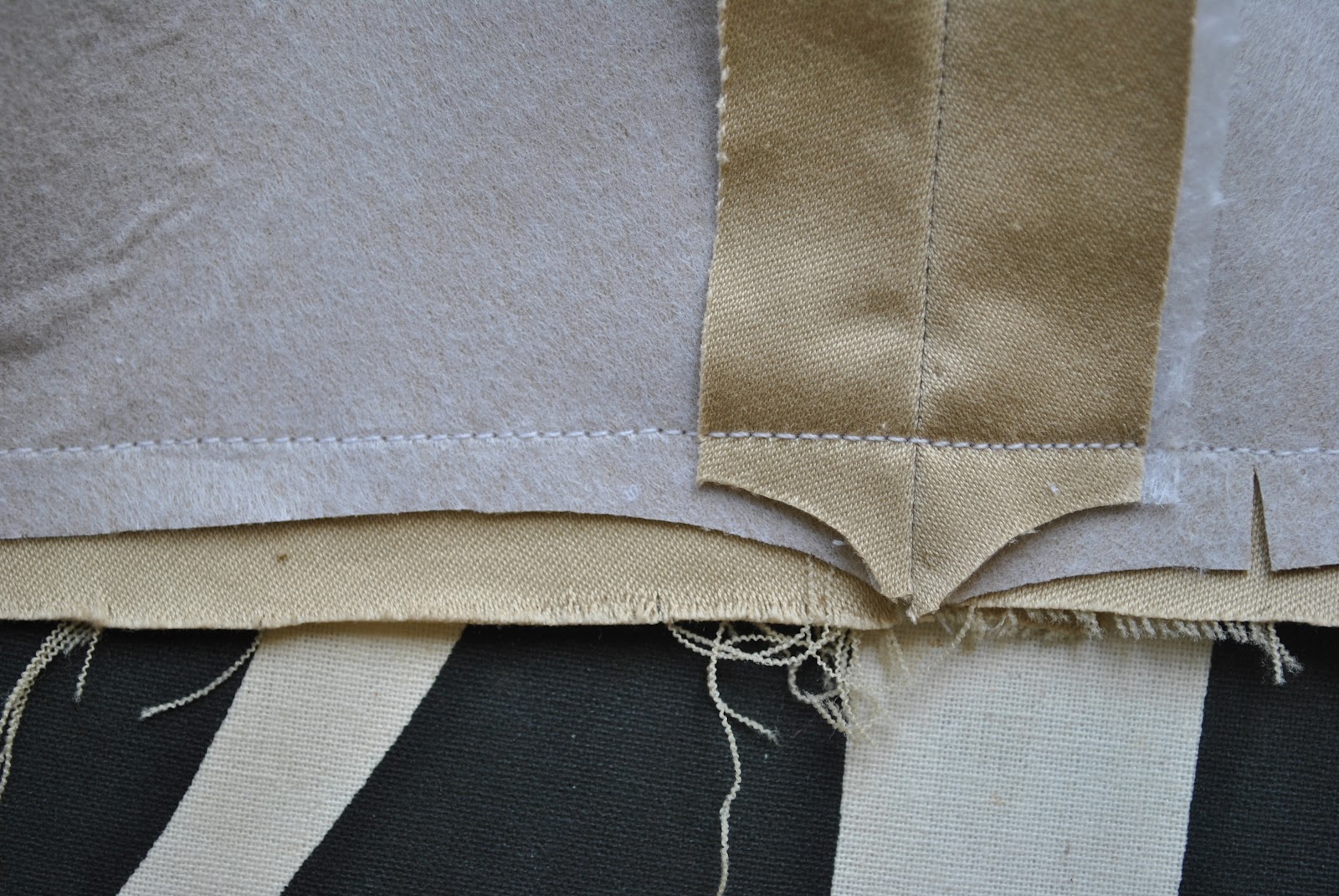
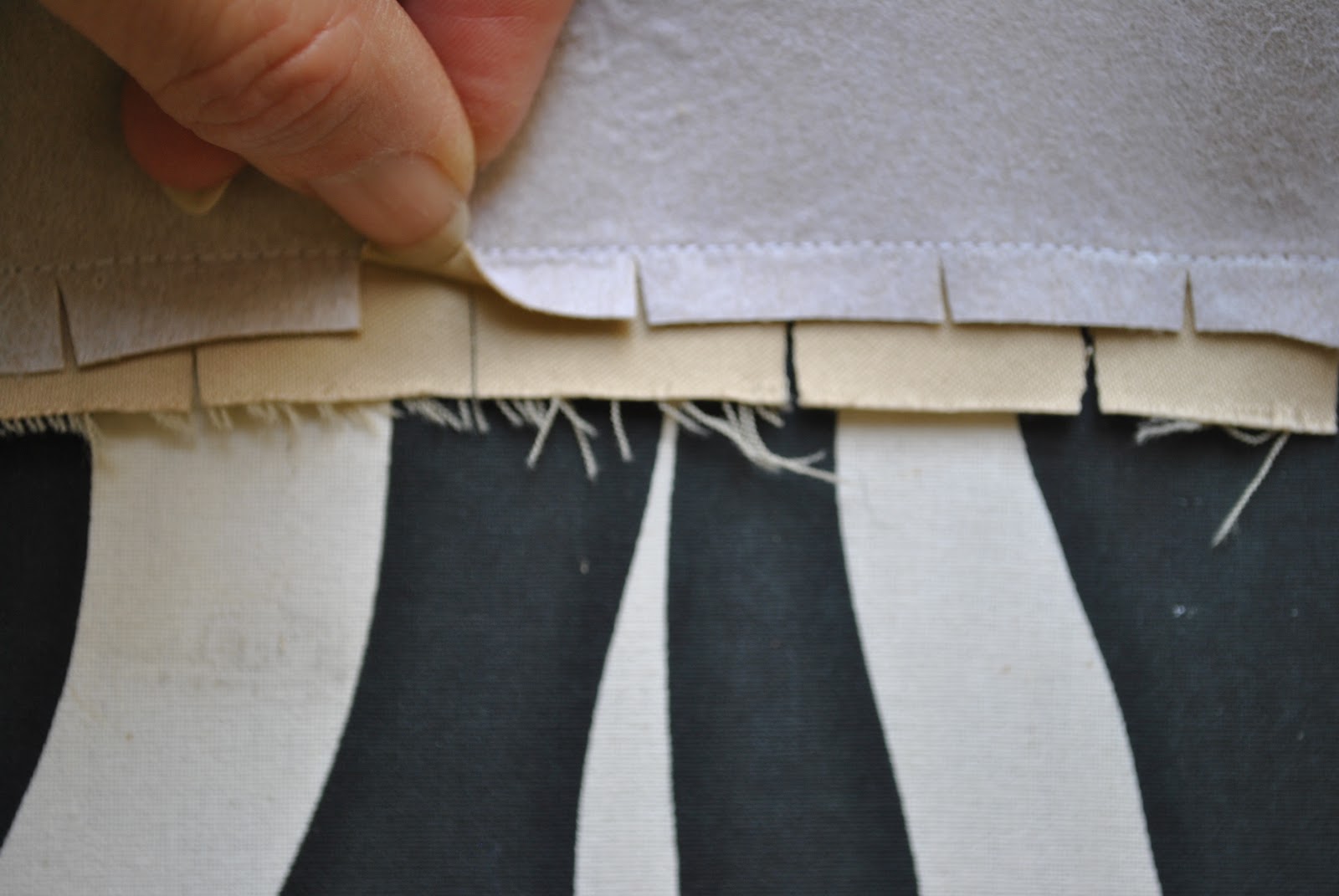
Since I do have an overlocker I always go over and finish off the raw edges on the inside, but if you don’t have one you can pink with the pinking shears, or just trim neatly.
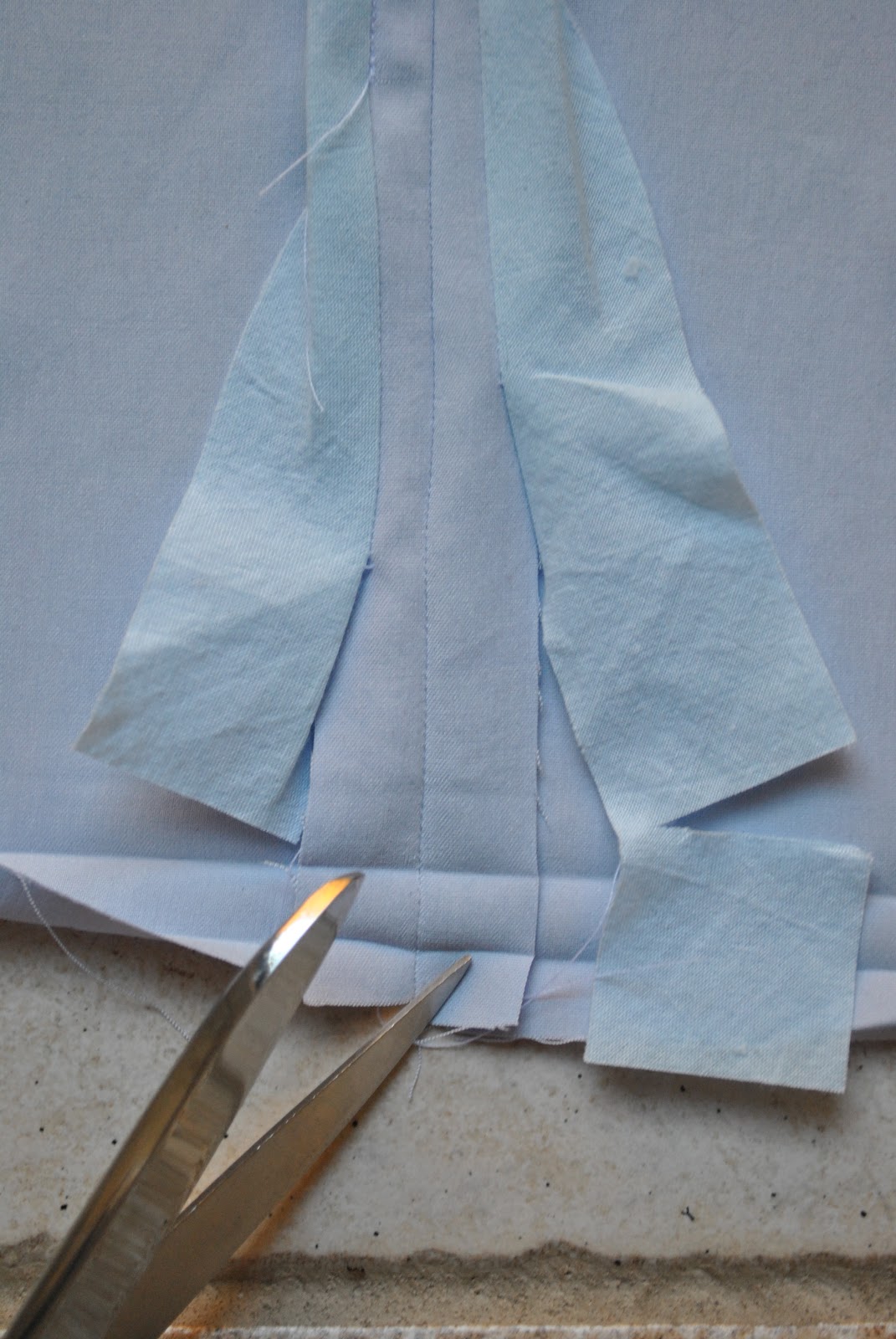
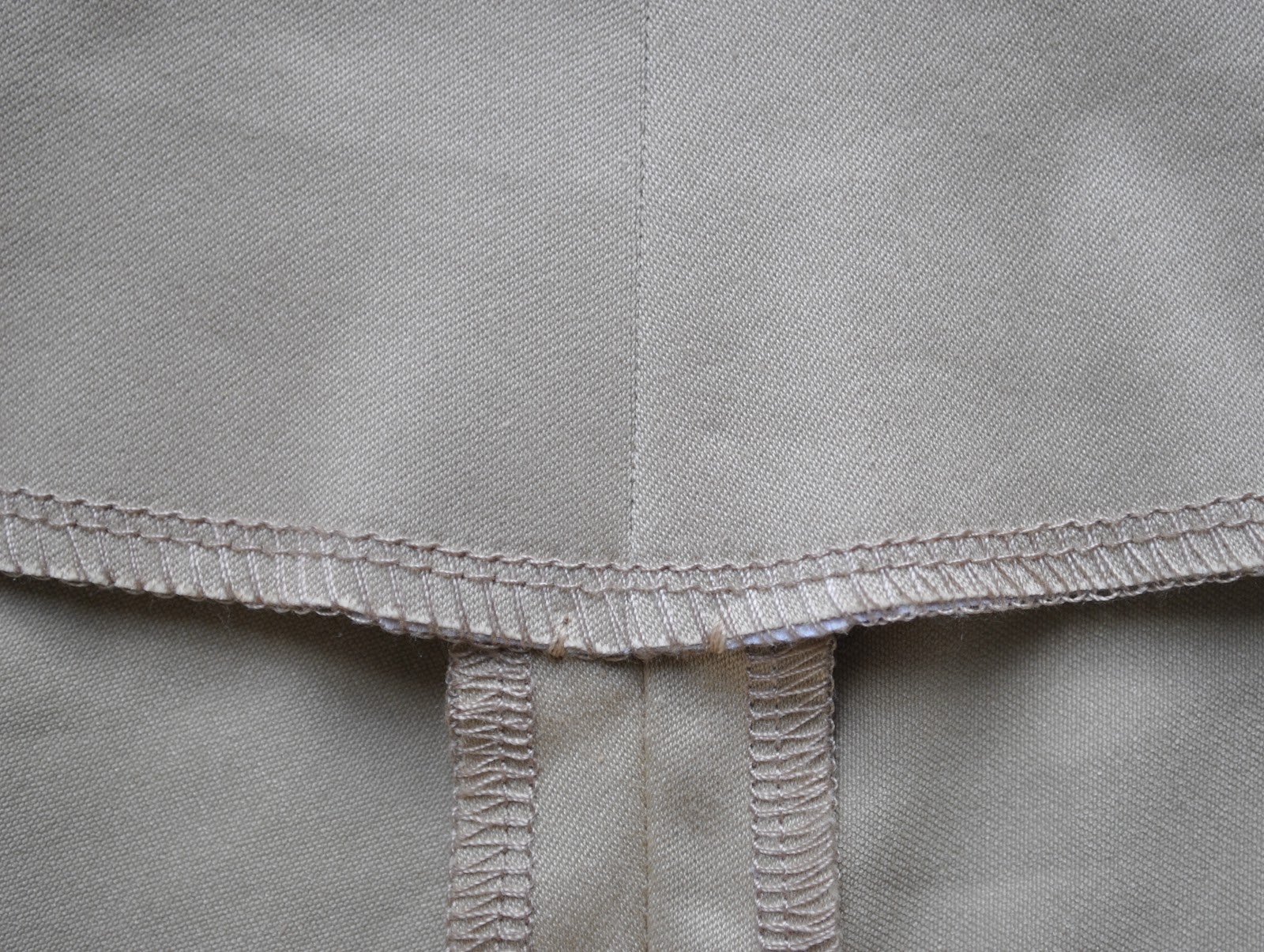
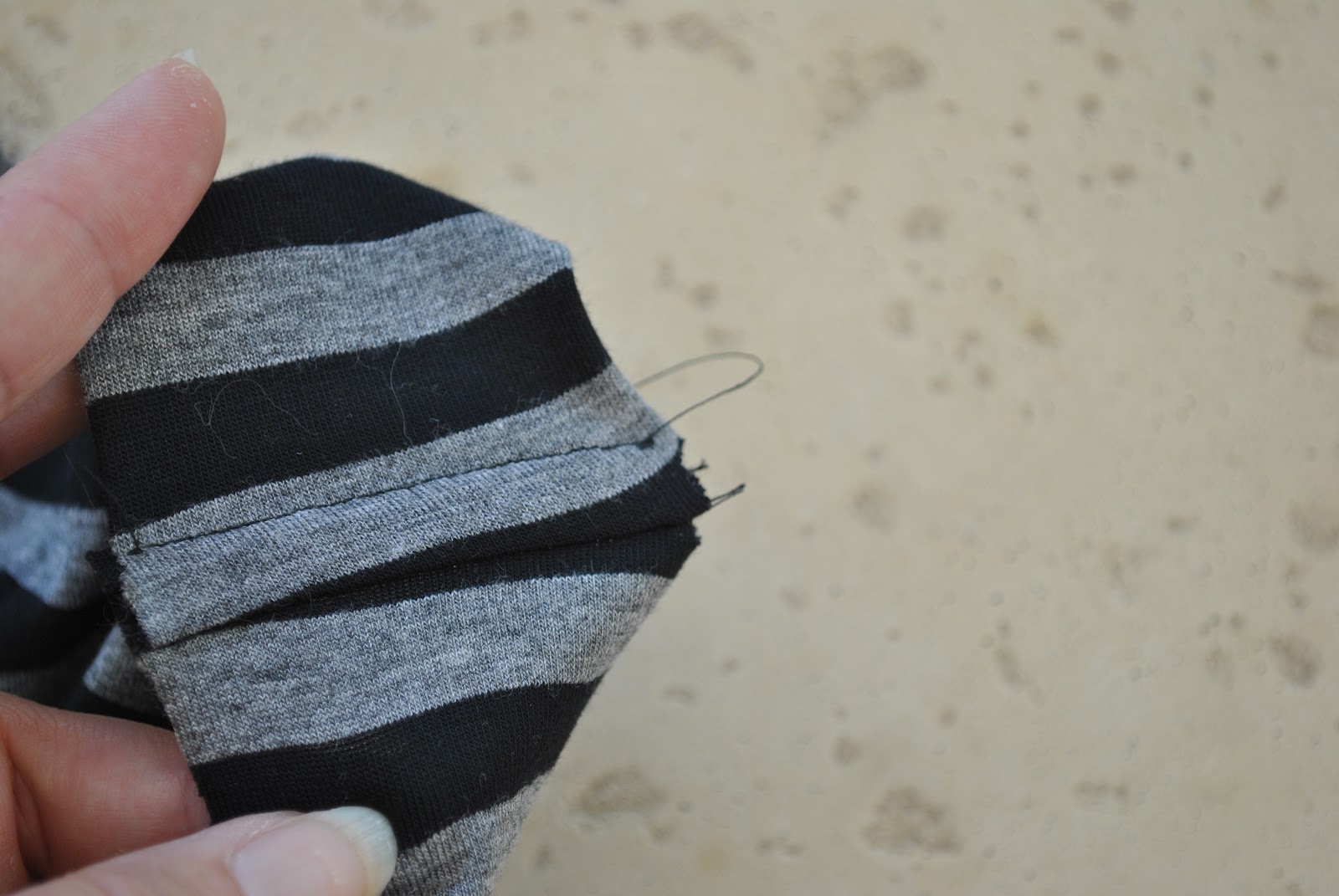
If I have reinforced the shoulder seams with a bias strip as outlined above, then BEFORE OVERLOCKING I trim away that bias strip from the seam allowance, as close to the armhole/neckline stitching as possible to remove some of that fabric bulk that is going to end up inside my band finish (as pictured above)