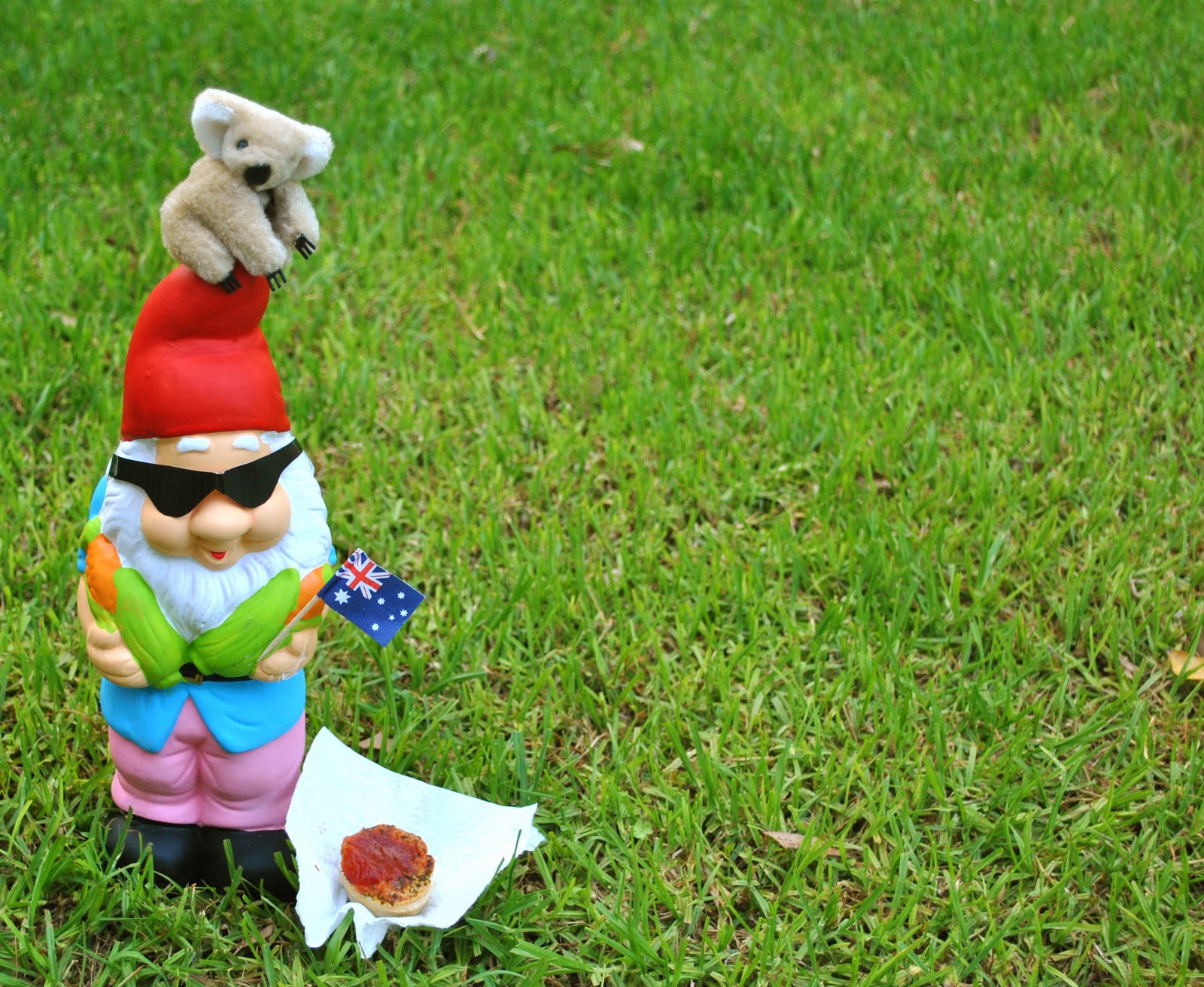
Today is Australia Day, and what better cuisine to enjoy than a meat pie and sauce served on a paper bag. Mmmm mmmm.
Fabio approves.
Wishing all a perfectly wonderful day!


Today is Australia Day, and what better cuisine to enjoy than a meat pie and sauce served on a paper bag. Mmmm mmmm.
Fabio approves.
Wishing all a perfectly wonderful day!
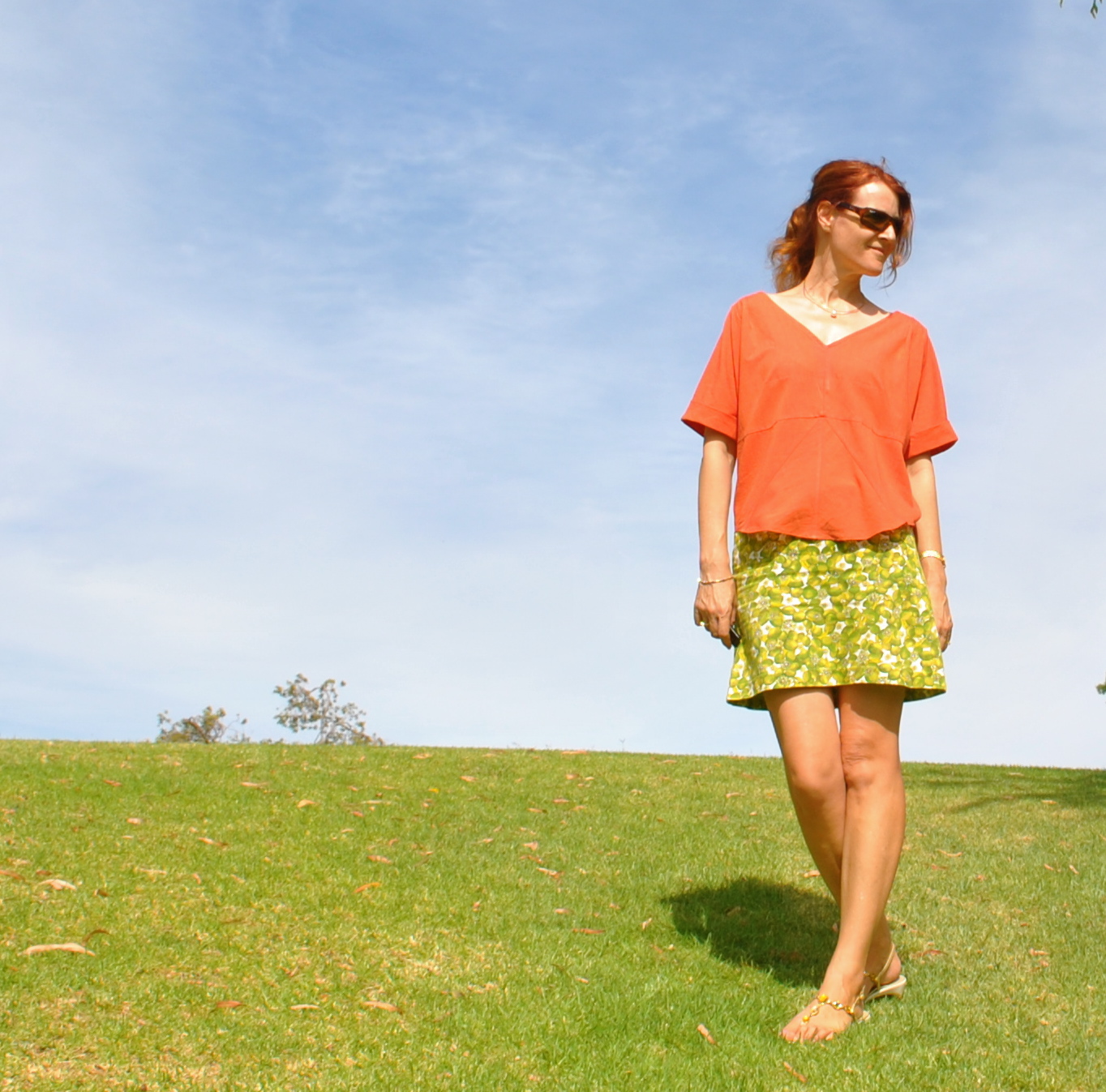
 I have made a new top!
A nice floaty loose top perfect for our fiercely hot summer days. And we’ve sure had a few stiflers lately :S so I will be wearing it immediatemente.
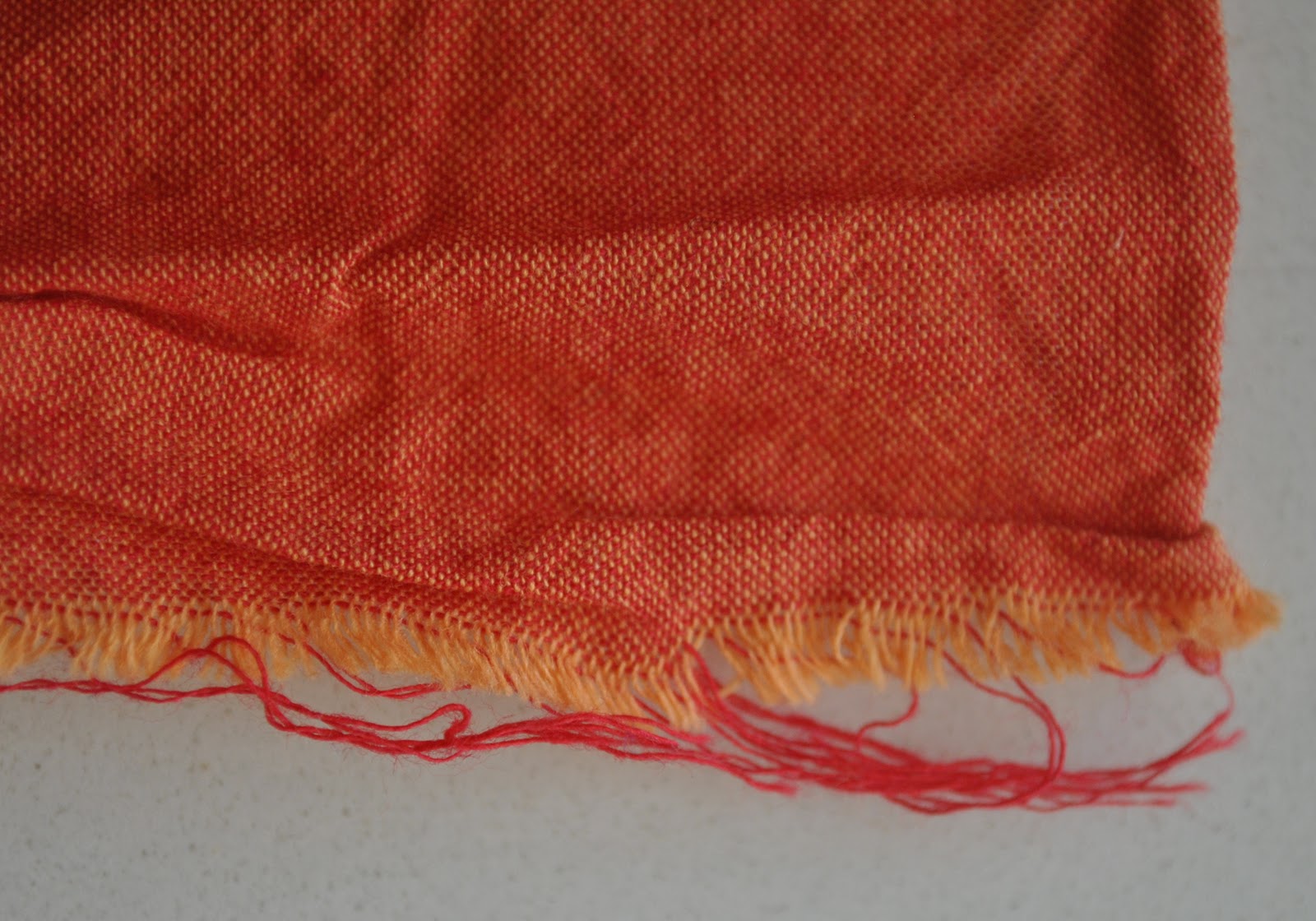
I used Rowan shot cotton… again. This colour is Clementine (and please note I am wearing it with my little lime-print skirt, hehe! gettit?)
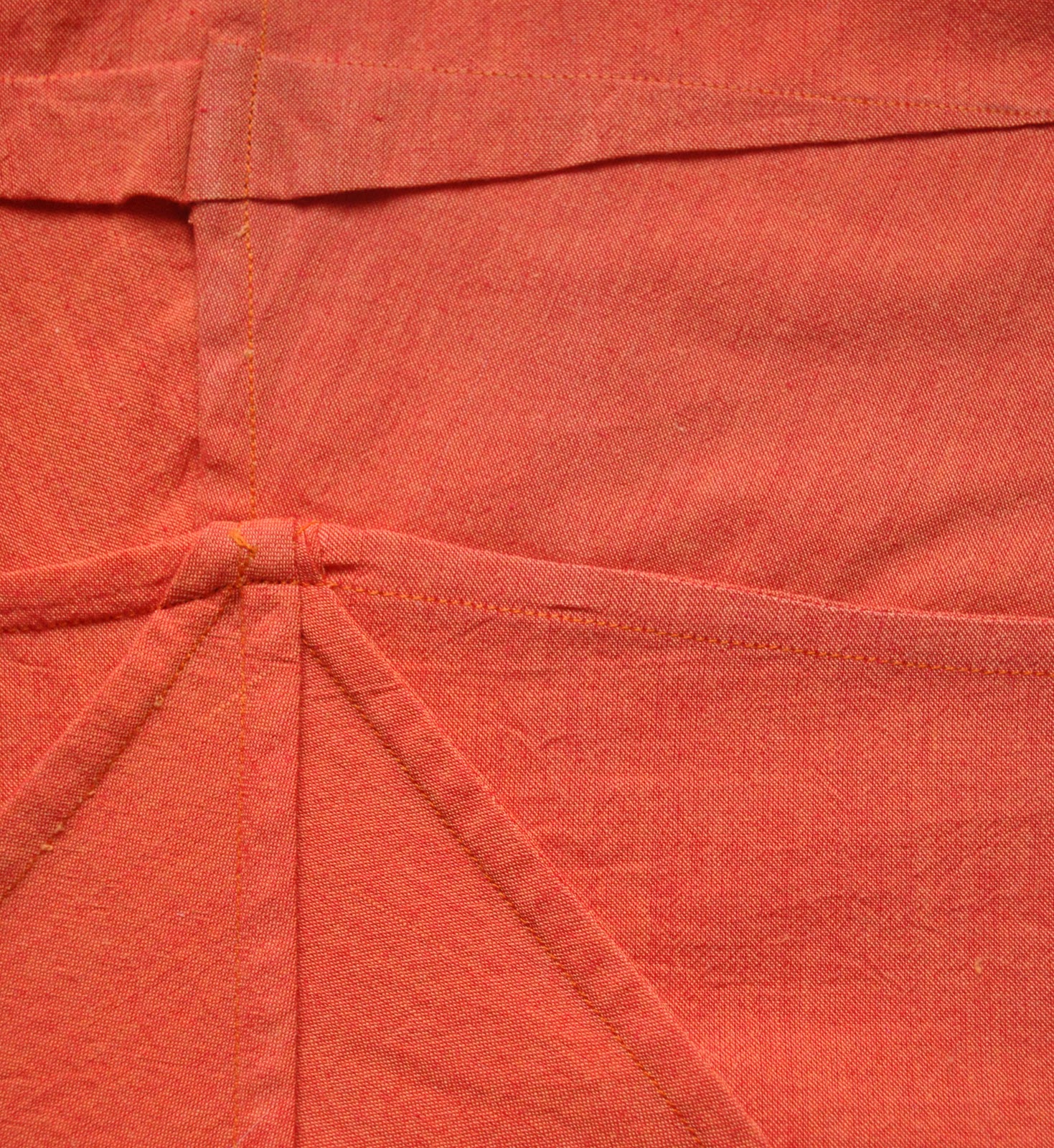
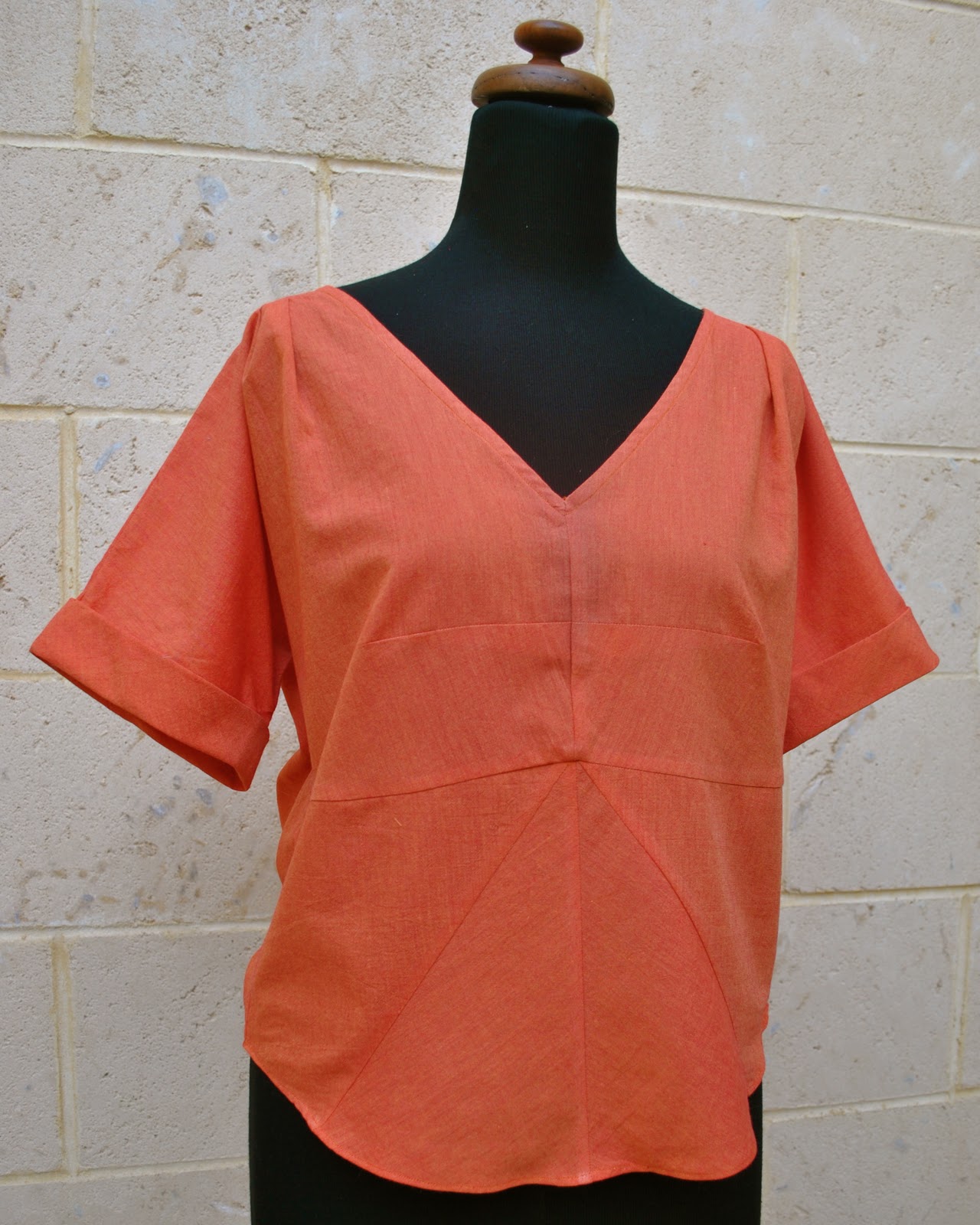
 I am so addicted to this fabric! It is gorgeously light, an almost not-even-there type of fabric. Which is great for this particular pattern. Why? Well, the pattern specifies French seams throughout, and has a number of convergent seams. Like where there are pleats on both front and back, joining together at the shoulder seam, and particularly! that centre front bit, where there are six French seams all converging to a single point in a star-shape, and themselves all being joined in a final French seam too… if your fabric was even a little bit bulky I would class this a quite a tricky area to get looking nice, and particularly situated where it is, right boom in the centre front of your top it pretty much has to be perfect! Luckily this shot cotton is so marvellously light it wasn’t too horrible a job, and I think I got it looking quite neat and tidy.
Of course you don’t have to do the French seams here if you wanted to make life easier for yourself… which I stubbornly do not 😉
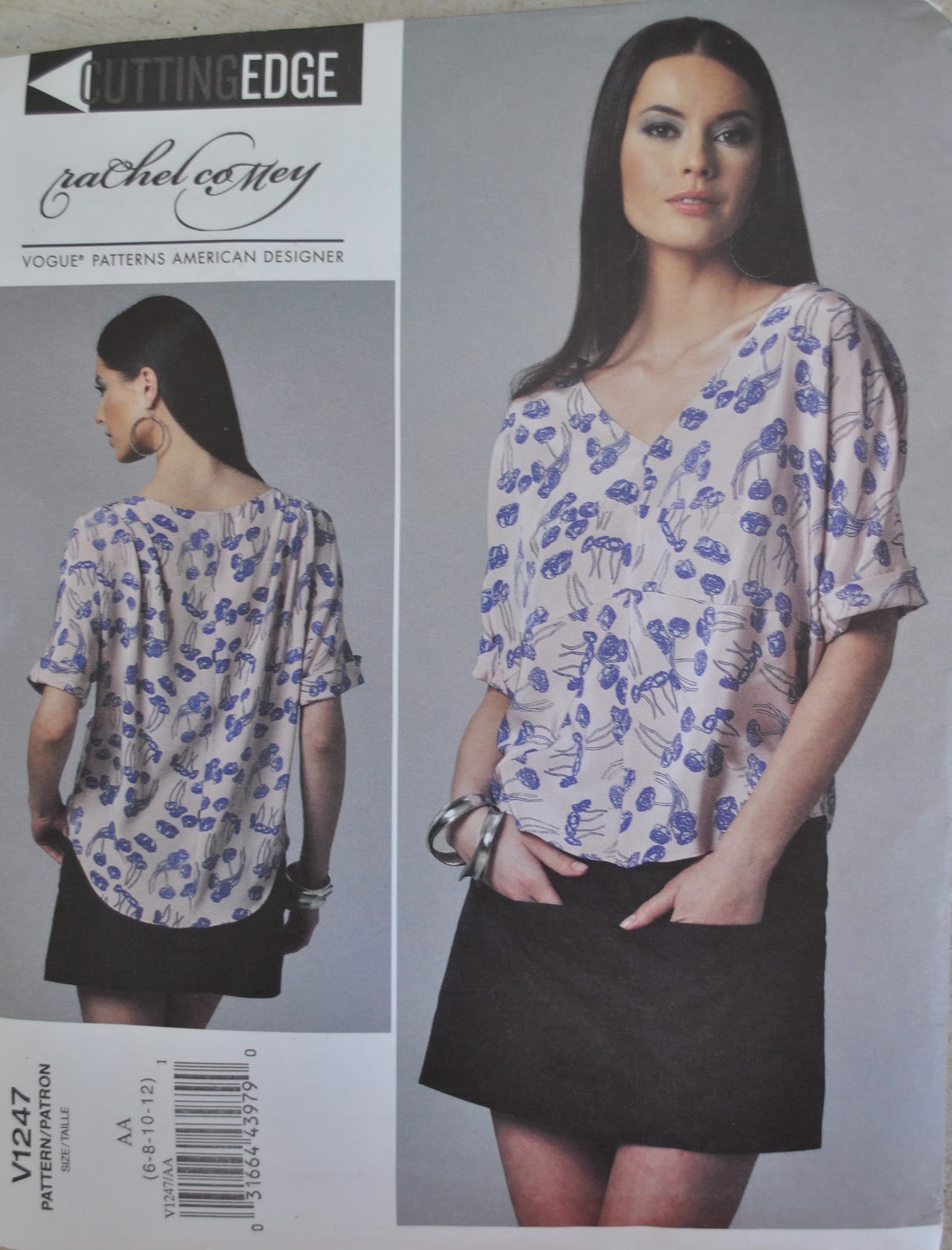
I used a newbie-to-me pattern Vogue 1247. This was a Christmas present from Sam; but I’m still adding the cost of it to my little 2012 personal-clothing-expenditure ledger, since in reality I chose, sourced and bought it myself!! and he just “gave” it to me. We are very practical when it comes to present-giving in our family…
This pattern is classed as Average; a rating which was a little head-scratching to me. I guess maybe the instructions for finishing throughout with all French seams made them decide to up the difficulty rating a notch, since I can’t really think of any other feature that could make this pattern anything other than a very easy project easy imo!
The neckline is finished with a narrow self bias strip… Noice, no? at right; that convergence of French seams from the inside view
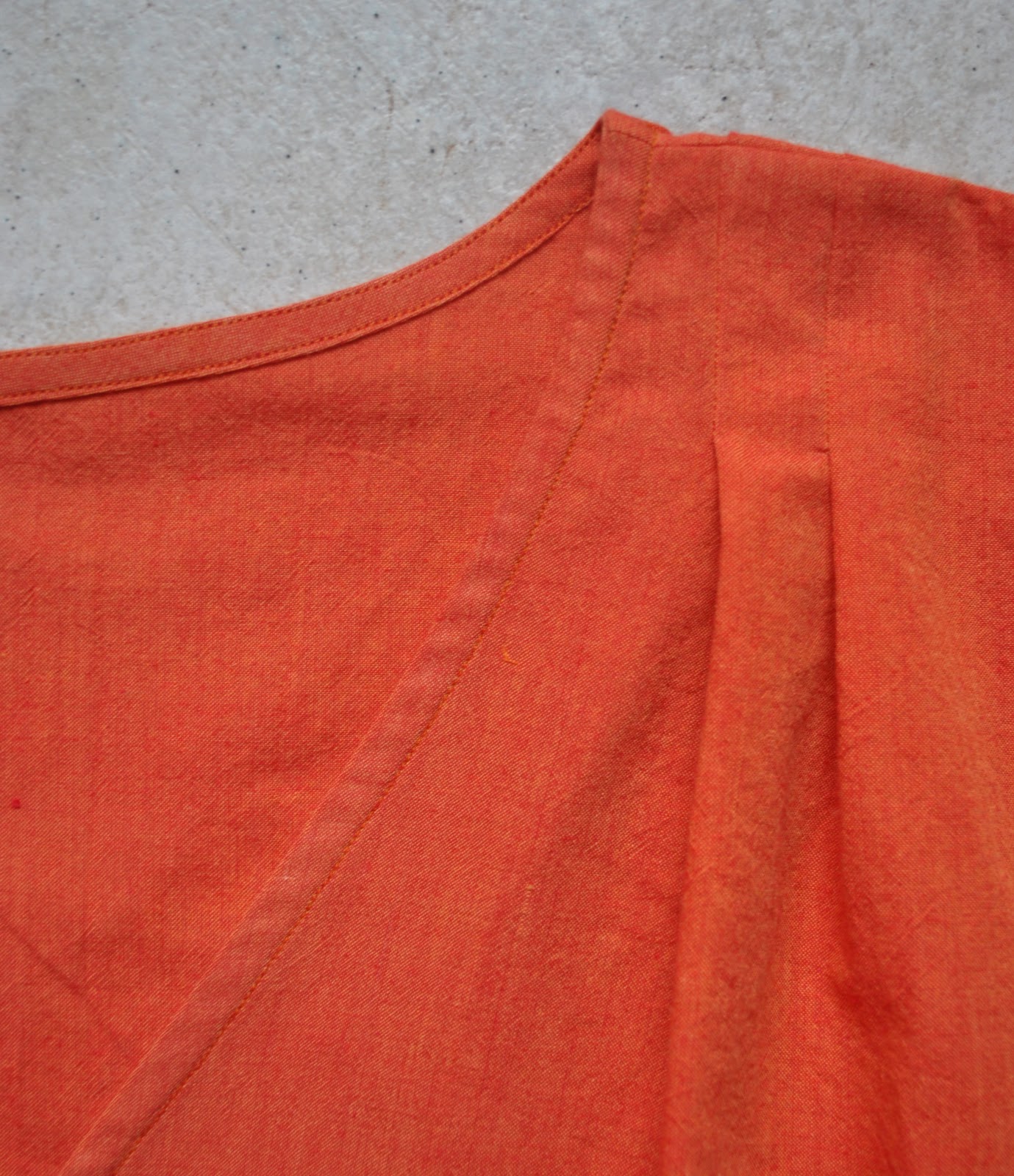
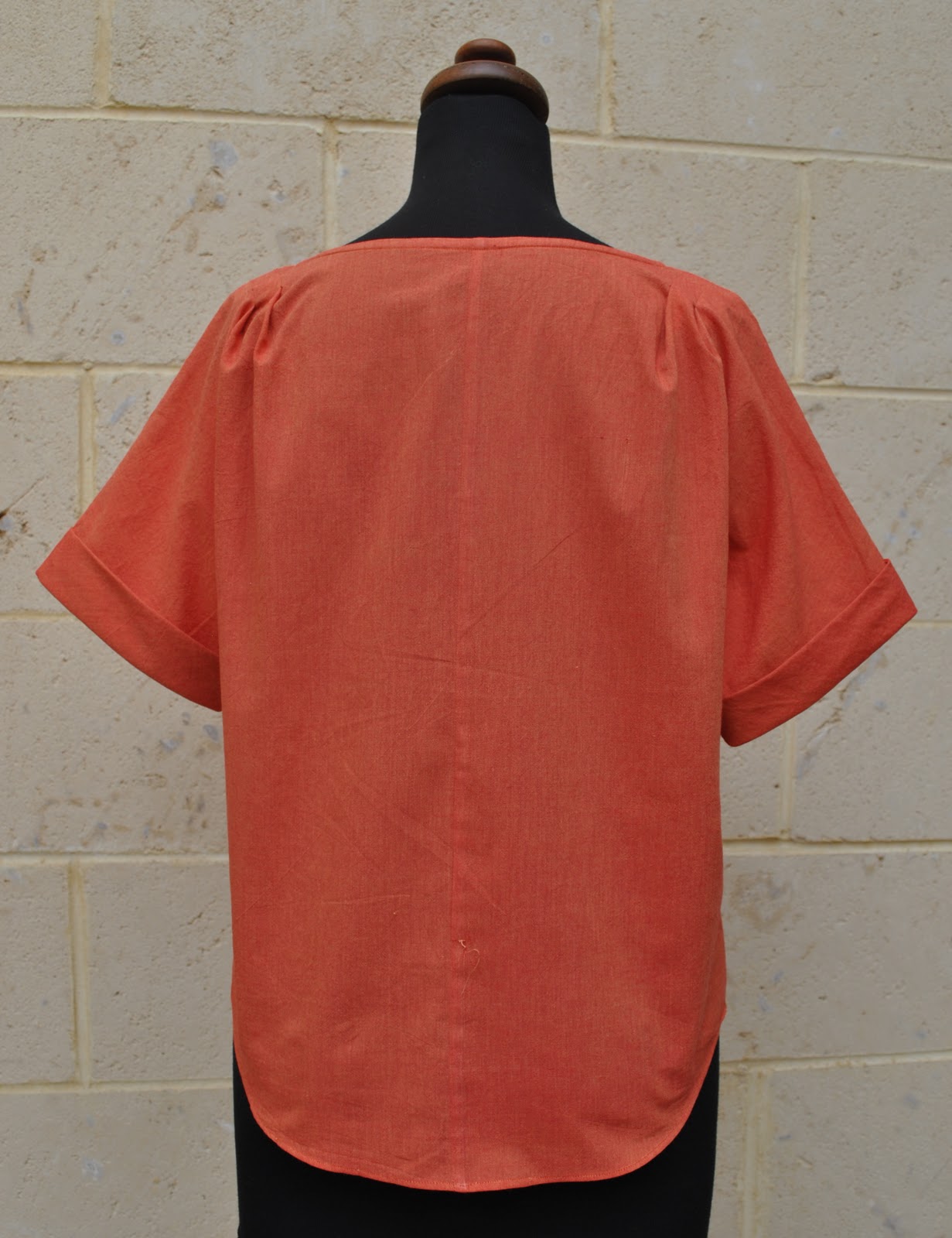
I really like the bias-cut facings, folded out over those kimono sleeves….
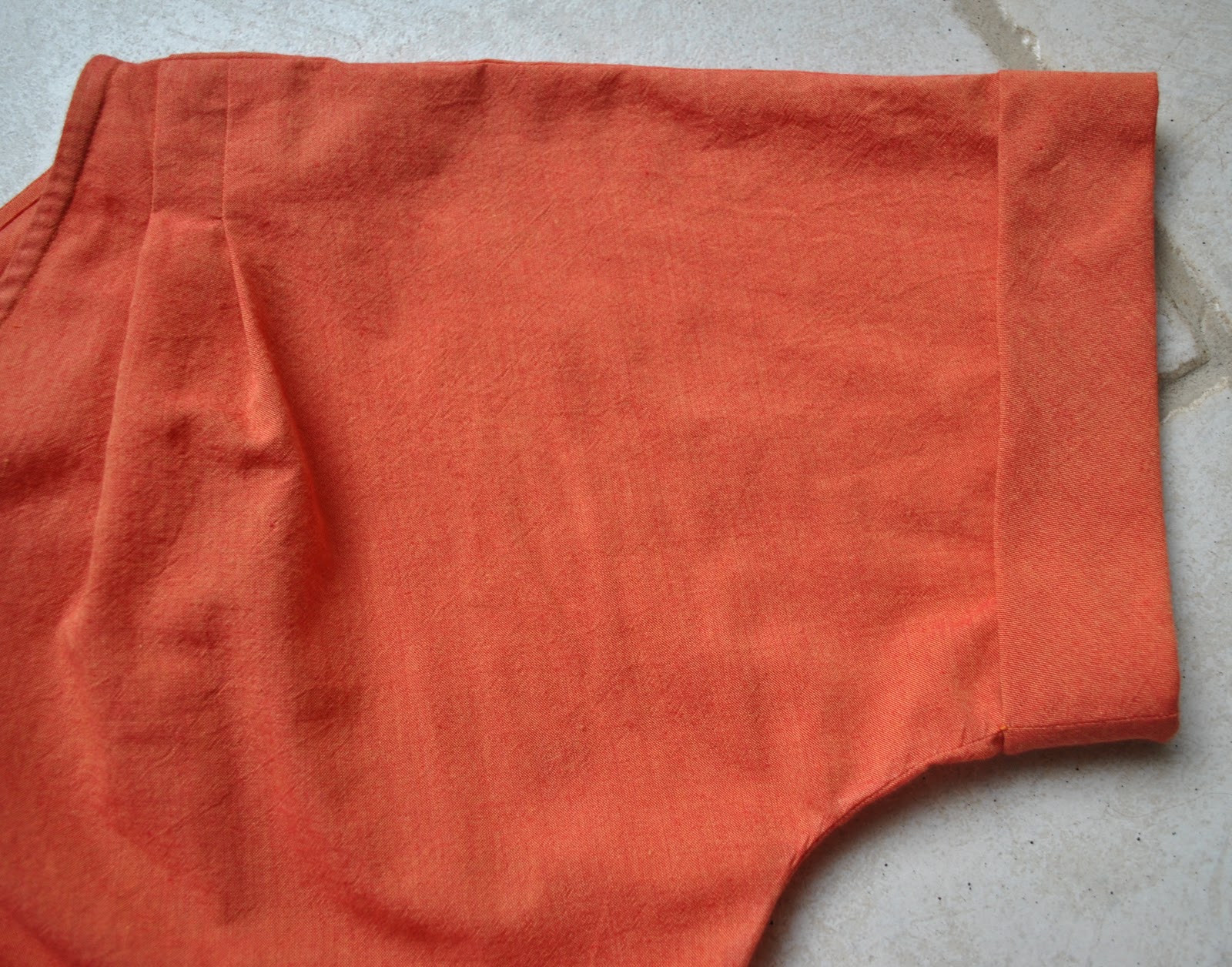
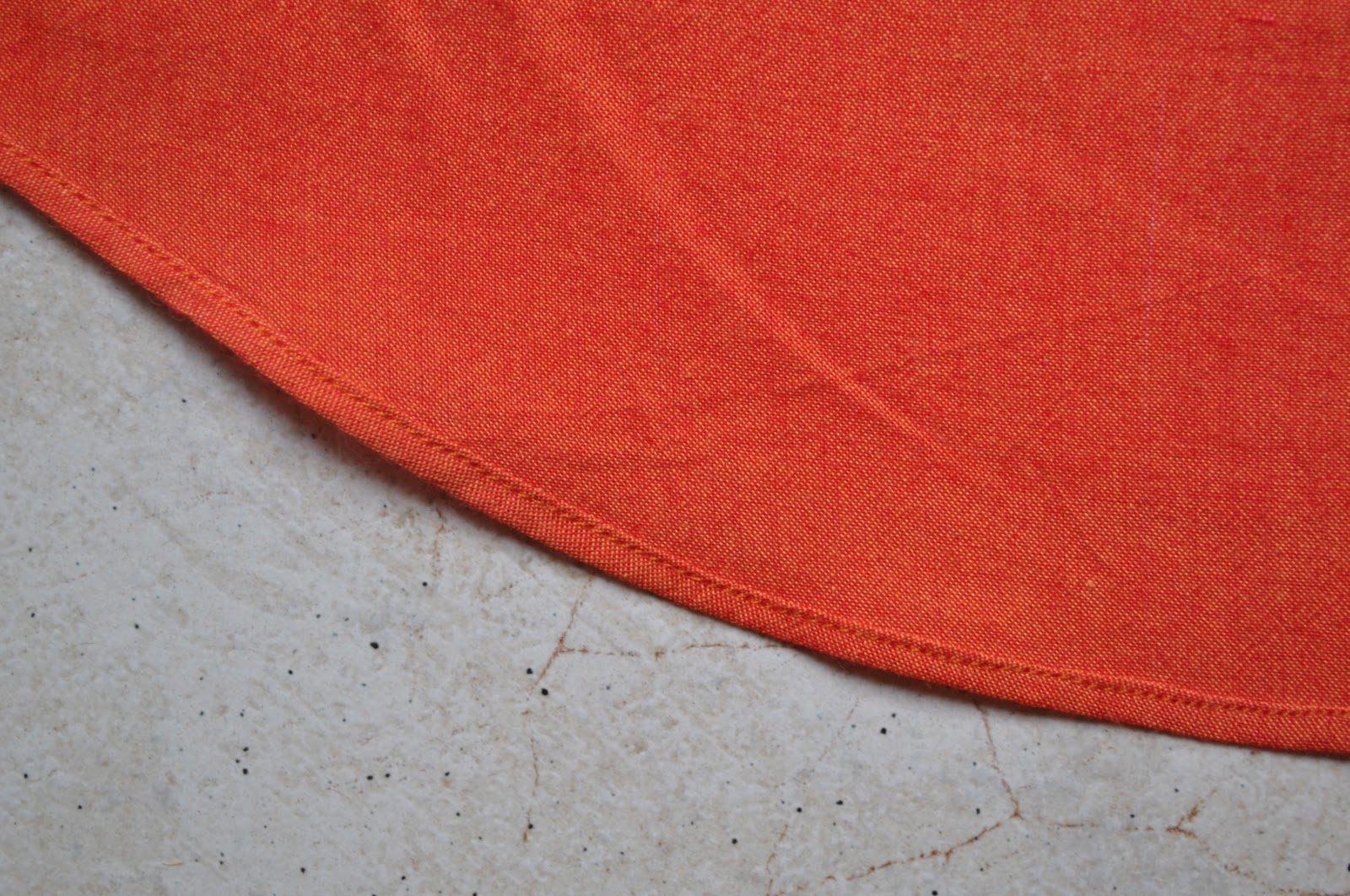
Narrow hem…
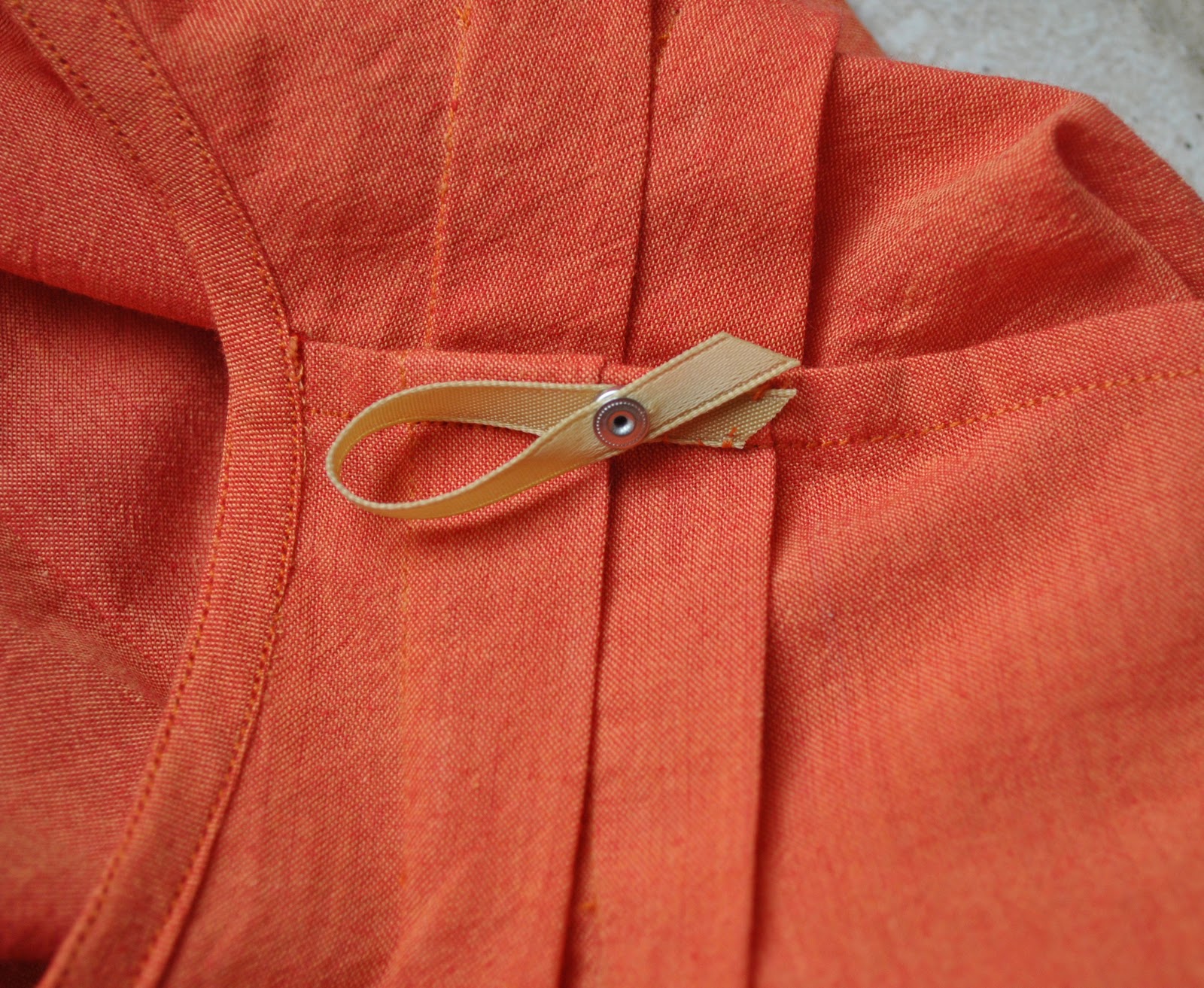
Since the neckline is quite wide I slip-stitched lingerie holders to the shoulder seams to keep those straps outasight, these were a gift from the very lovely Yoshimi… thank you so much Yoshimi!
Probably this top would be far more fabudabulous on a lady with.. er, more fabudabulous assets, but I’m still pretty happy with how it looks on me. I am planning to make the little skirt too, and will review that separately.
Ciao, bambini!
Details:
Top; Vogue 1247, shot cotton in Clementine, from here
Skirt; Vogue 7303 modified, lime print cotton
Sandals; anna, from MarieClaire shoes


Employing that pleasing dichotomy of minimal with steam-punk in my outfit today… yeah?
Dichotomy.
Is good stuff.
Now, I’ve had a re-think. And thank you all for helping me to come to my senses! I did feel a little out of my comfort zone after posting yesterday, and after sleeping on it I felt even worse about it …
The specific cost of my personal things is, I have decided, personal. It feels very uncomfortable for me to be publicising it. That’s just the way I was brought up, so I’m not going to excuse that.
Even amongst my closest friends I would not dream of announcing how much an outfit cost. That would be like extreme bad manners… so why did I think I would be OK with doing the same on the blinking internet?? (face palm)
Besides, the numbers I put down here are meaningless to most people who might even read my blog, apart from other Australians. And only fellow Perthies will understand about the fabric and yarn limitations here… And I do not want to attract judgement, condemnation or pity from the inevitable comparisons, which I would certainly do if I really started publicising how much things actually cost here… so I will be keeping tabs on my clothing creations this year, in exactly the guidelines I laid down yesterday, but I will probably be keeping the figures to myself.
Unless I change my mind again 🙂
A woman’s prerogative, you know…. 😉
Details:
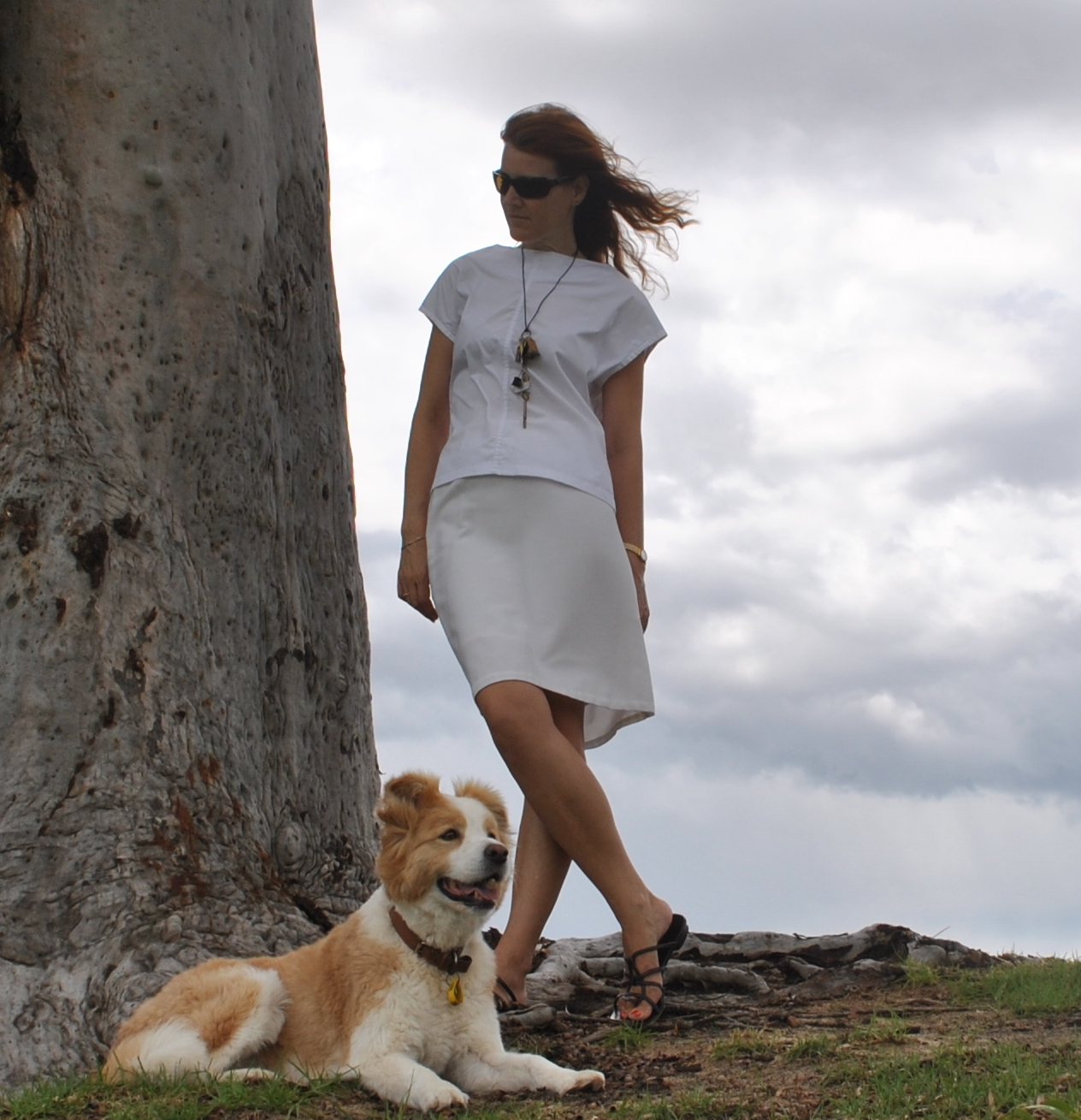
Top; top “b” from Unique Clothes Any Way You Like by Natsuno Hiraiwa, white cotton, details here
Skirt; Vogue 7303, ivory wool-mix suiting
Sandals; Micam by Joanne Mercer; from Hobbs shoes
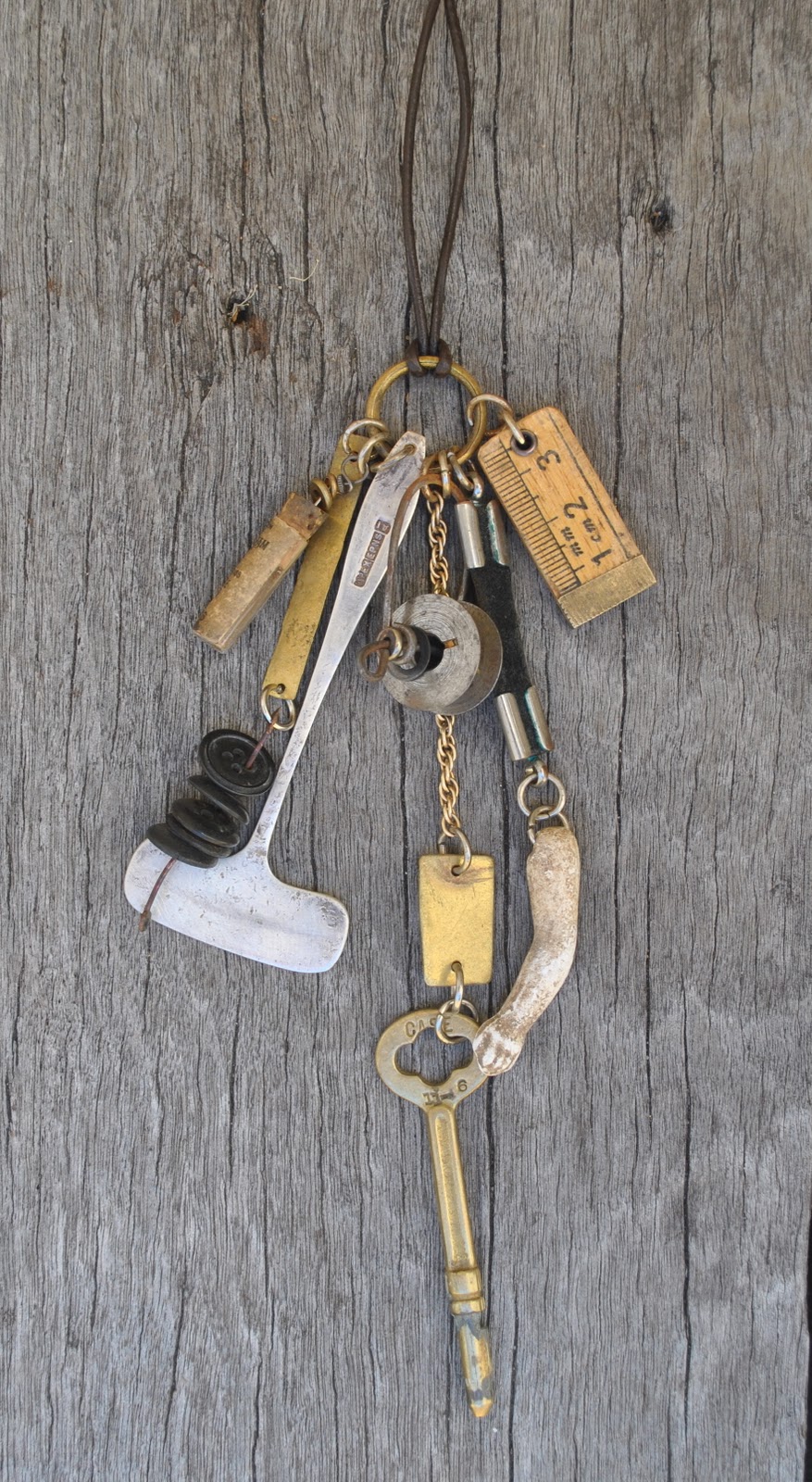
Necklace; urbandon , here
Isn’t this the coolest thing?! My new favourite accessory…

I’ve been pretty inspired by reading some posts by other bloggers on the sum total of their clothing expenditure; particularly Waves with her very interesting breakdown of her clothing costs for 2011 and her feelings and thoughts on the same, and Terri with her plans to stick to a set budget for 2012 and the documentation of such in her blog, and Veronica with her strict accounting during her very impressive Sew Weekly year of 2011…. and I have decided to put my own expenditure under the microscope.
A self-audit. Yikes! Nail-biting stuff, no?!
When Craig and I were first married we were frantically saving and had a very strict control on our costs; I totted up all our incomings and outgoings constantly and stuck to a budget rigidly…. but all that is in the past now! I haven’t had to add up each and every cent for a few years, and although I don’t think I spend a lot I really have no idea unless I actually do account for myself… and so…
I am going to keep tabs on all the costs of my clothing creations for this year.
Now someone accounting for a RTW wardrobe has it pretty cut and dried, as your clothing just comes with a price tag attached and bob’s your uncle… when you are making your own stuff things get a bit more complex… so I’ve jotted down here a few basic guidelines as to just how I’m breaking it down…
Time frame: I am going to start my accounting from the 1st January to include all the clothes that I finish making in 2012.
Fabrics costs: I’m counting all the materials for all garments made this year. If I don’t have the receipt for the fabric anymore and can’t remember what it might have cost (some of my fabrics are years old!!) then I shall make my best guestimate. If the fabric was a gift, I’ll state that, and count it as free.
I shall not include fabrics bought this year unless I also finish the garment this year. No really, this makes sense. It does! I’m costing my actual clothing here you see, not potential clothing…
Also, the first time I make something out of a piece of fabric I shall include the cost of the entire piece in that garment, and any leftovers used down the track will be considered as already accounted for.
Pattern costs: I shall include the cost of the pattern I use; but only the first time I use it. That is, the full cost of a new pattern will be included in the cost of a garment the first time I use it, but each subsequent time I use the same pattern I shall consider that pattern already accounted for and not include its cost again.
Likewise, for haberdashery: the first time I commence using “something”, I shall include the cost of the entire”something” in the cost of that garment, but not for any subsequent garments. So, say, the first time I pop a new reel of thread on the machine I shall count the cost of the entire reel in the cost of that garment, but not for any garments after that until it is finished. Likewise dyes and other sundry bits and pieces…
Does all that make sense? I realise some of those rules might seem a bit odd and are going to seemingly inflate the cost of some garments at the expense of others that will appear artificially inexpensive, but that is the simplest way I could think of doing it…
And please note…! I’m not planning to change my habits at this stage, but merely account for them… This is not an exercise to see how cheaply I can possibly make everything! (Cheap? moi??) There will still be plenty of silk and lace popping up here… (sigh) well, let’s just say I would like for that to happen!… I still passionately love beautiful fabrics and yarns, and interesting designer patterns, and I’m not going to deprive myself! I believe my time and effort is worth good quality supplies, and my aim all along in making my own wardrobe has always been to make it the best I can. Still being fabric efficient, naturally. I really just want to see how I am going, cost-wise. So, I will continue to source fabrics and yarns to meet my standards of ethics; supporting my local fabric store as much as I can; and buying fabrics and yarns from countries that have ethical manufacturing practices.
But in the meantime; here is a breakdown of my costs in adding to my wardrobe this year, so far…
The Double-Sleeved shirt:
Fabric $34.60 (includes portion of the shipping cost)
Sleeves; from an op shop shirt; probably cost around $3??
Pattern; been used a whole bunch of times! so free
Buttons; $5.20
Thread; $3.20
Total cost: $46.00
The Calico Cotton cardigan:
Yarn; $80.55
Pattern; $5.95
Buttons; $6.05
Total cost: $92.55
The Sorta Missoni dress:
Fabric; a gift from the lovely Passiona Cottee
Bodice; leftover scraps
Pattern; been used stacks of times, so free
Zip; $2.20
Total cost: $2.20
The Blue-Collar Crime top
Fabrics; leftovers
Pattern; the third time it’s been used
Snaps; part of a box of 50 that I bought last year for the boys’ birthday coats, still going strong… so I’m counting that as free too
Total cost; free!!
Details:
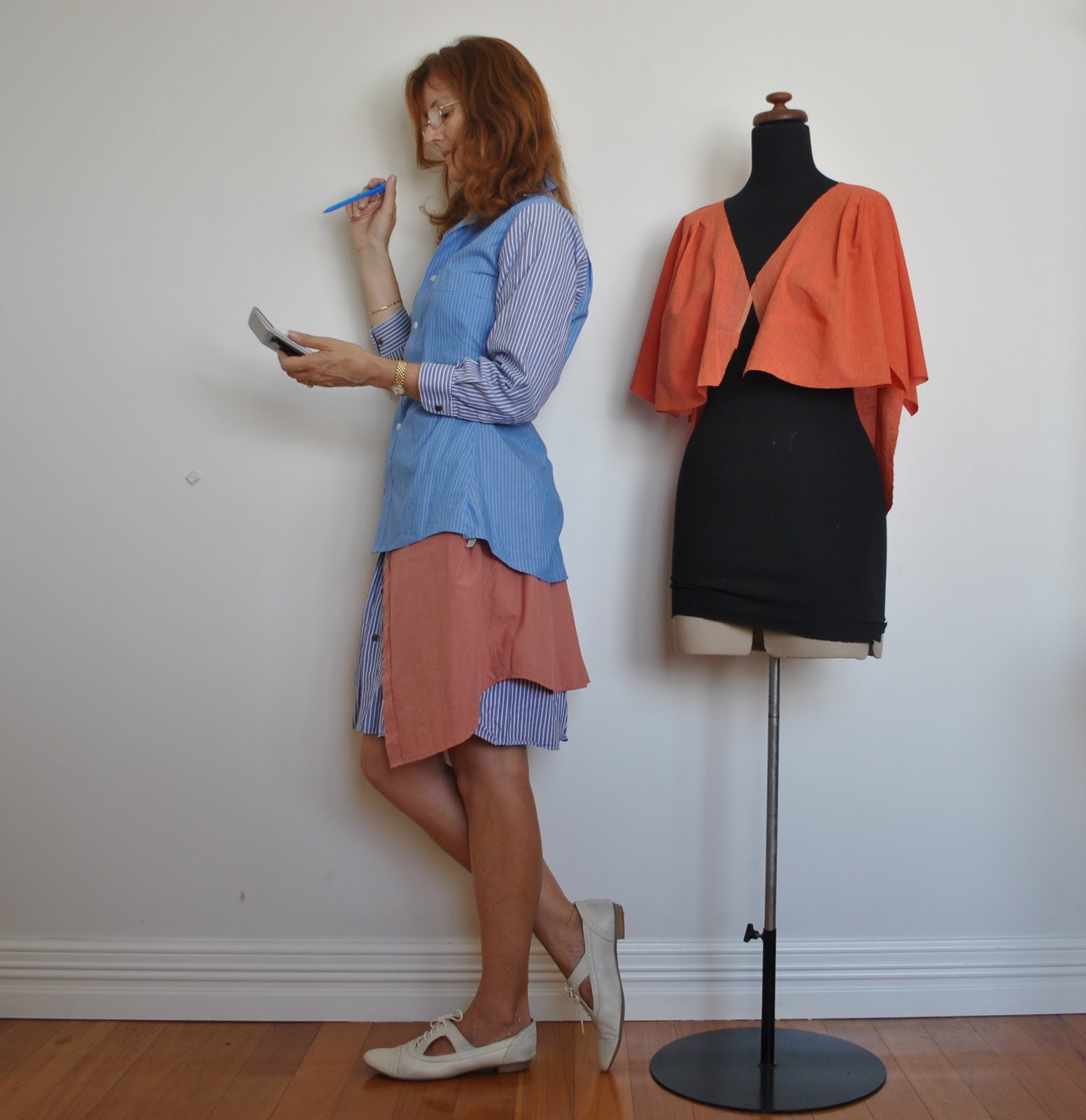
Shirt and skirt; refashioned from 3 of Craig’s old business shirts (so if I was costing this, it would be a freebie!), details here
Shoes; Bronx, from Zomp shoes
Reading specs; a permanent new addition to the wardrobe (sigh…)
and btw, Bessie is wearing a sneaky peak of my next creation… you saw it here first!

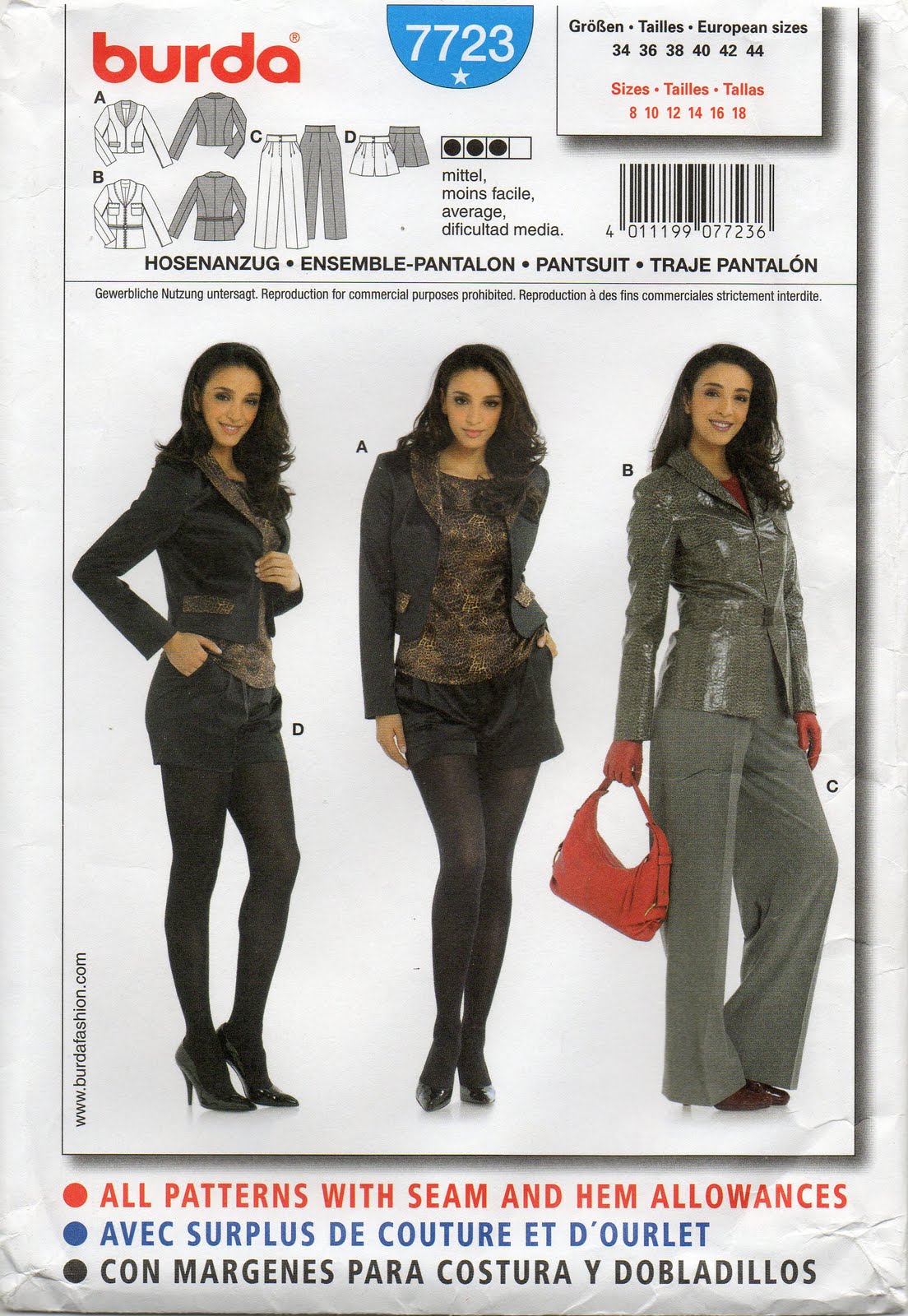 So, shorts, and particularly linen shorts are always going to be a warm weather thing and perhaps not an obvious candidate for “see how useful this item of clothing is!”…. But I am an Aussie after all, and typically lead a very relaxed and outdoorsy lifestyle that means shorts are an essential part of my wardrobe for just about half the year (I wouldn’t choose to wear shorts in winter personally, although I’ve seen a few magazines trying to sell the idea of shorts-with-tights look; that’s just not for me, sorry…)
And I do like to use these 6 different ways posts to showcase garments that have proven themselves runaway useful little wardrobe builders, and that I have grabbed and put on regularly, and have enjoyed wearing. And these shorts that I made using Burda 7723 are sure fitting into this category.
Ergo.
So here are just a selection of the daily outfits that I have worn including my pink shorts lately, each photo taken on each of the days that I wore them… and I’ve given a few thoughts on my styling choice and how I felt wearing each of these outfits on the day…
At left; I just wanted to try this one because this is the jacket designed to match these shorts in the very same pattern. I felt a little oddly formal wearing this out and about, although I absolutely loved these colours together (reminded me of Frenchy’s fab outfit with the pink hair in Beauty School Dropout, Grease) But maybe jacket-and-shorts together is not strictly “me”? At right; with a chambray shirt, sleeves casually rolled up? Definitely “me”! A gardening and sewing day, bliss.

At left; felt quite fashion-y and rather dressed up in this outfit, even though it is actually just a linen shirt buttoned up and tucked in… I received a few compliments! Worn out meeting up with some gal pals… At right; with my little white linen Pattern magic top. Wore this out and about, walking the dog and running errands, and it felt like a perfect match. Will wear this one over and over again…

At left; with a little coffee-coloured, triple-collared shirt, and a light cardi (to avoid sunburn) I thought this cardigan would be a good colour match but was interested that it made my shorts look purple! Loved wearing this, it was a great outfit for a cooler day, and I do prefer a cardi-with-shorts look… At right; with a pale chartreuse loose linen top and matching scarf. I really like the colour wheel opposites here, and the fact that the greens are so pale against the vividness of that pink peeking out underneath. And that it’s so comfy and cool…

I’ve been pleasantly surprised at how this rather in-your-face, look-at-me colour has settled happily into my almost pink-less wardrobe, and how much I have enjoyed them… years of avoiding hot pink because of some misguided fear that it would mark me as “not serious”; I think I’ve relaxed a bit! So, which one of these outfits would be the most “you”, do you think?
(And fyi, the outfit I am wearing today is the last one with the pale chartreuse top and scarf.)

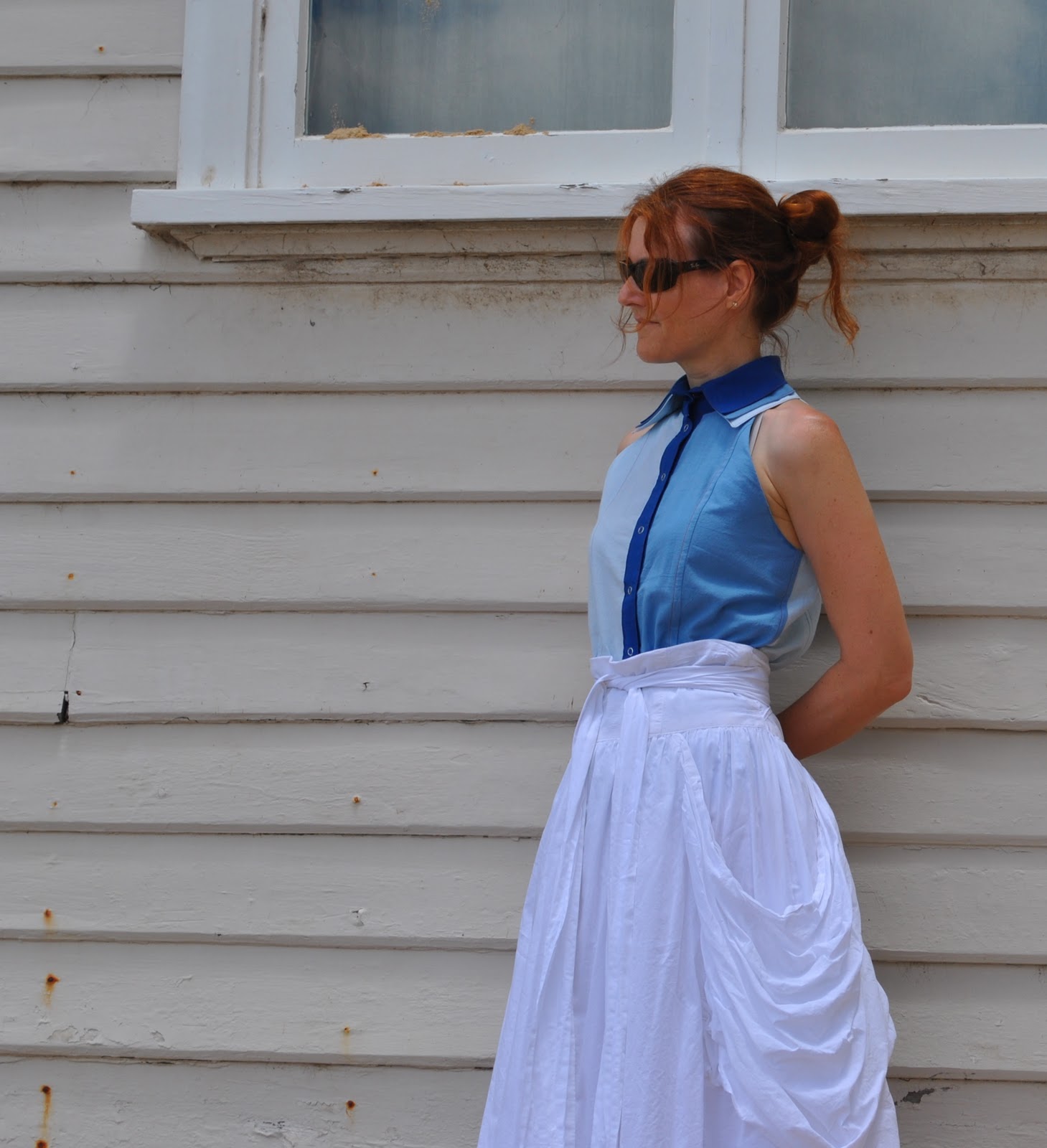
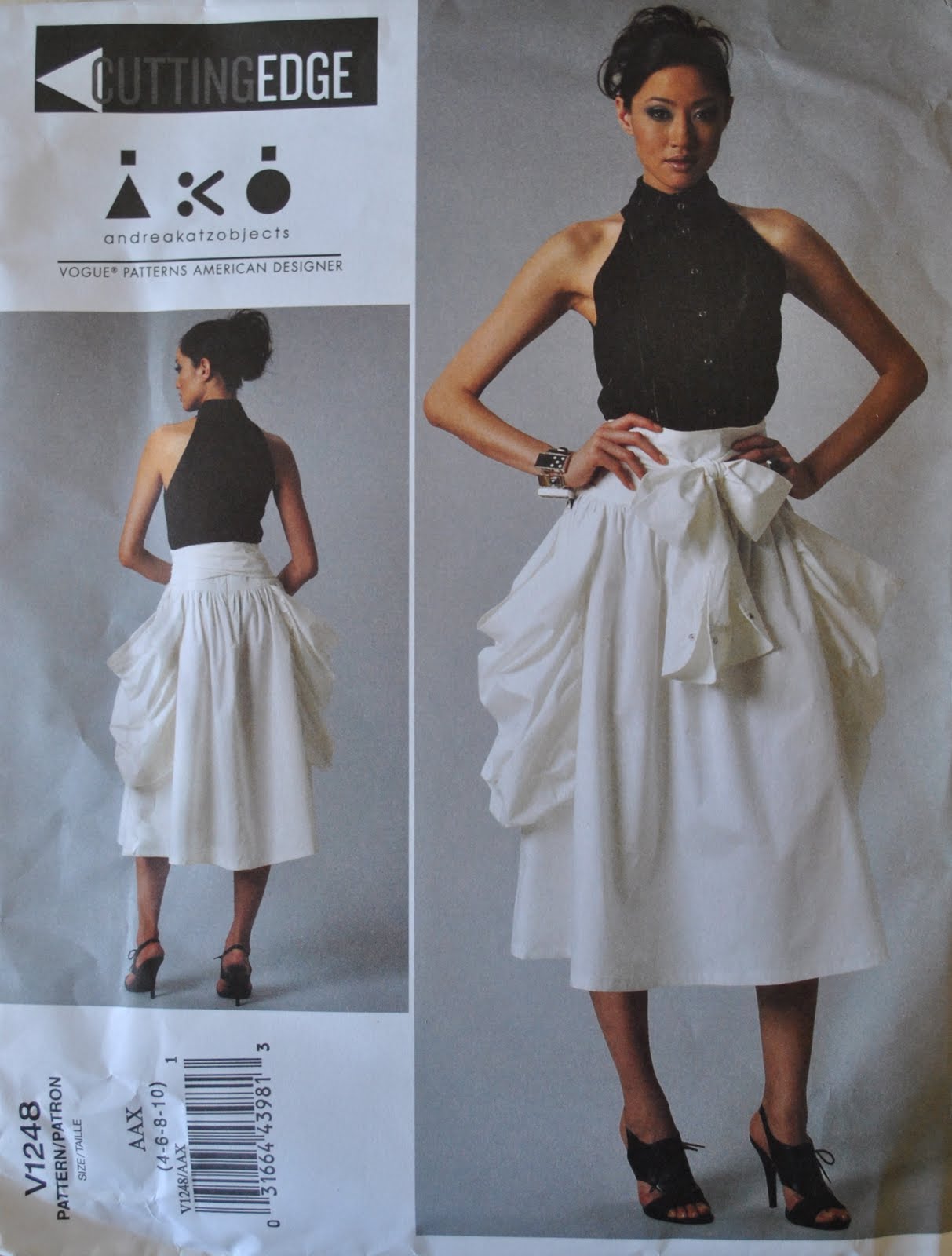 The charge; gratuitously making for myself the same shirt, a second time. Namely the Vogue 1248 triple collared shirt. Well, how many collars does a girl really need?? (tsk tsk)
No plea entered, as the defendant is so clearly guilty as charged.
Sentenced; to wear it during a humid 37C day and attempt to look cool, calm and collected for a picture.
Verdict for that one; hmmm… what do you think?
OK, I’ve made another loose ‘n light little triple collared shirt. Again?? And so soon after the last effort? I seeeee. Shouldn’t you be starting on some of those (ahem) piles of other new patterns, awaiting your attention?
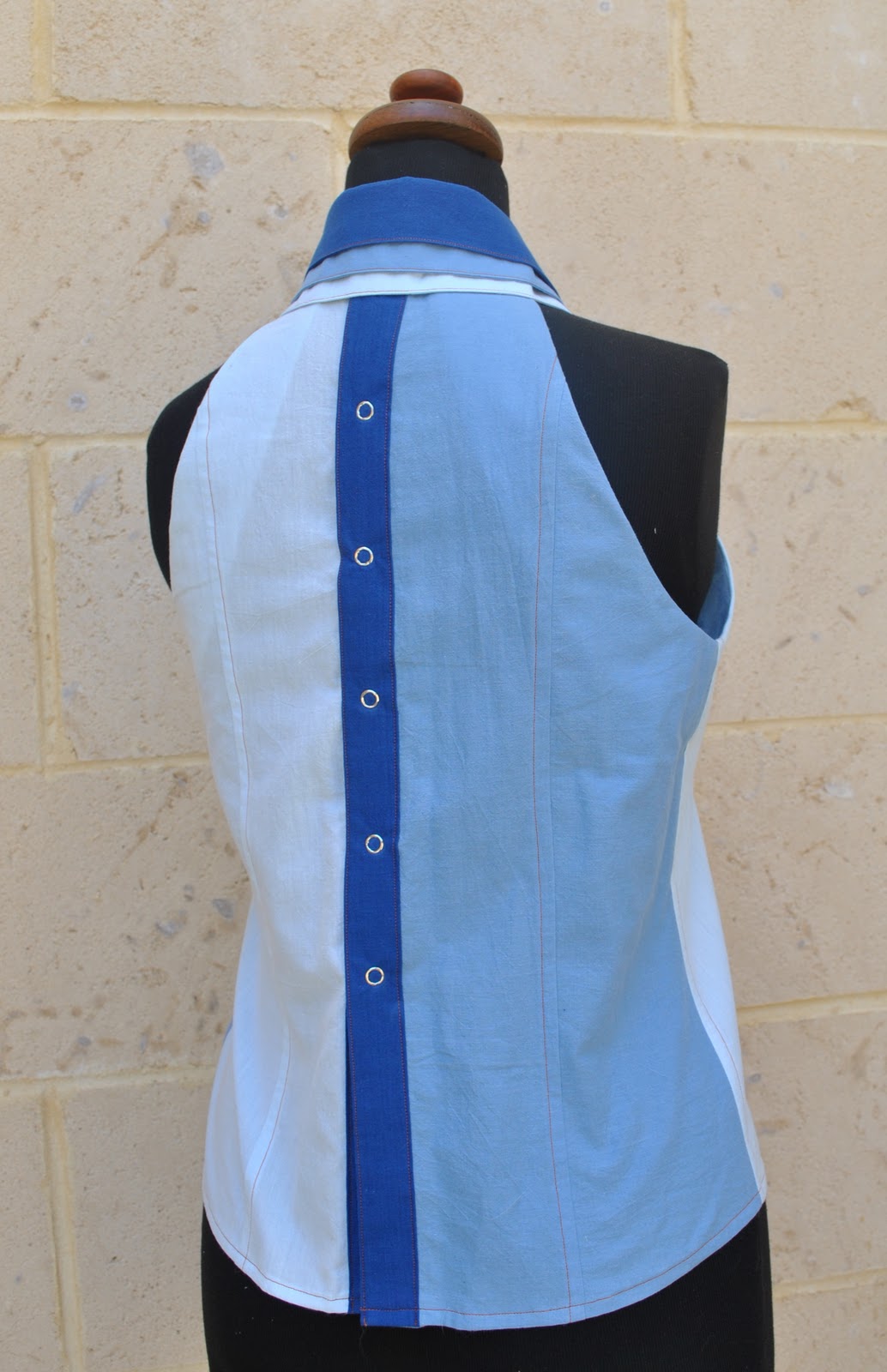
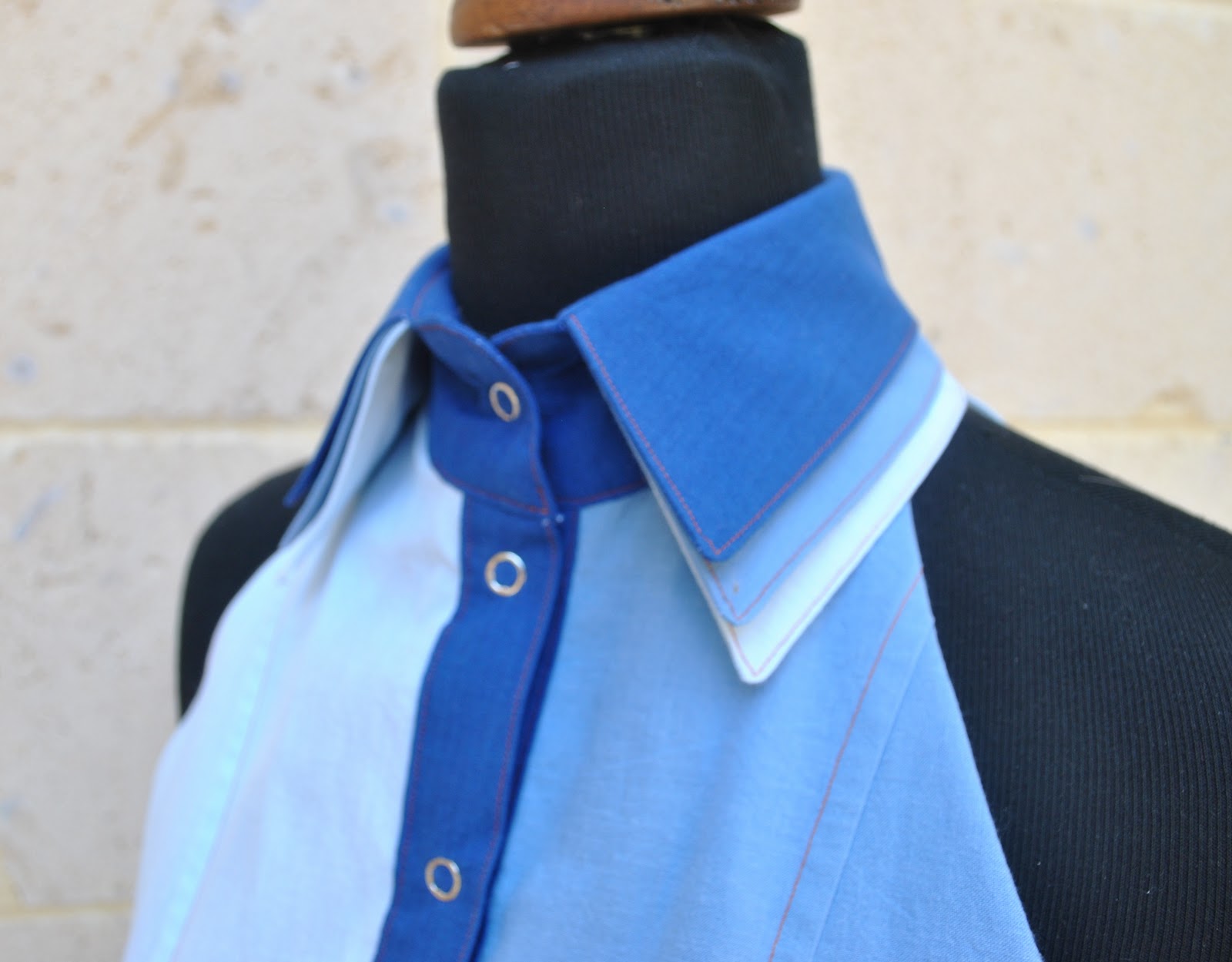
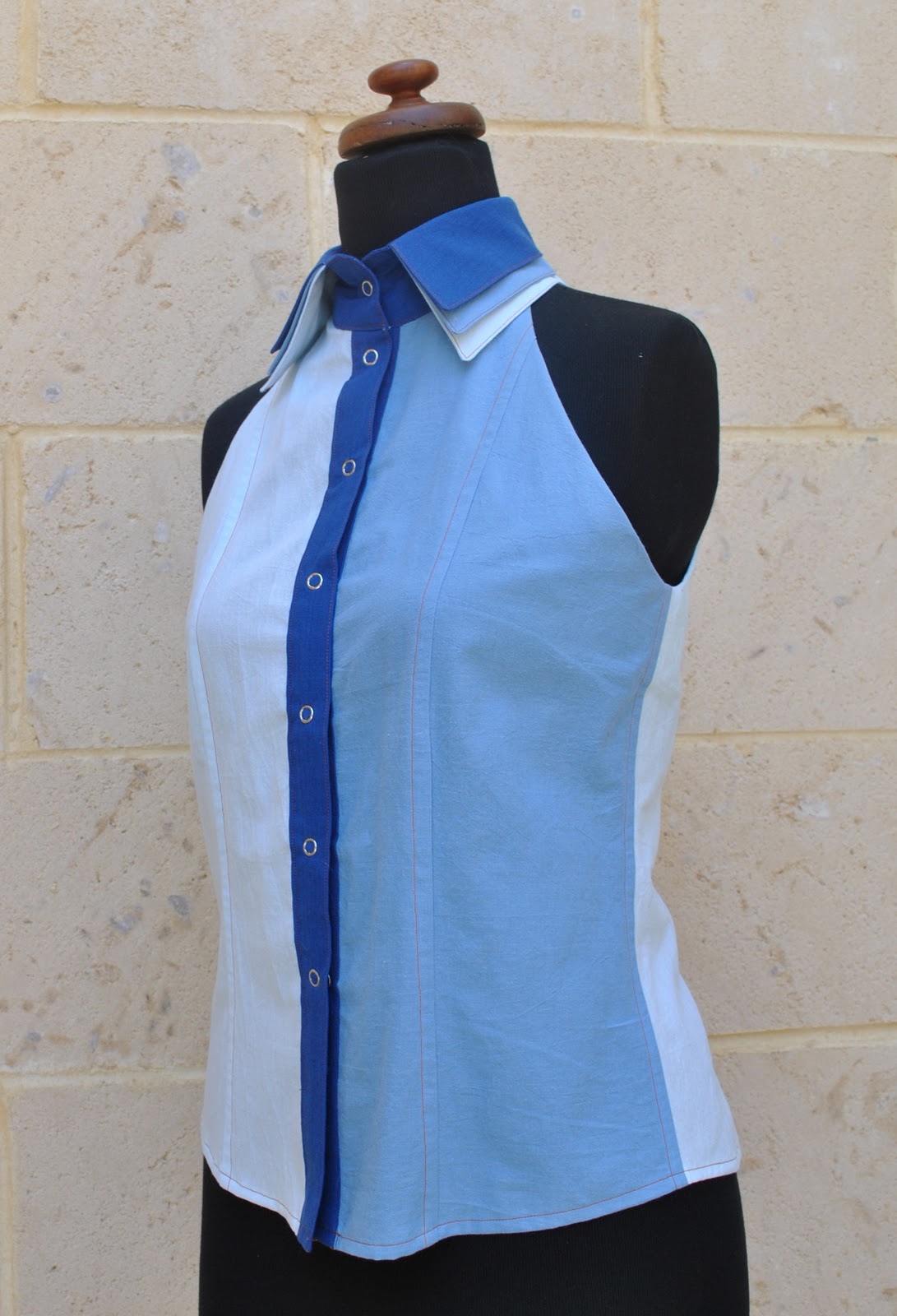
Well those three collars were just begging to be constructed in three different colours, no? I was simply itching to give it a try… and after all that Christmas shirt-making I had just the right selection of leftover scraps to piece together what I envisioned would be a kinda cool look. Not just tri-coloured collars, but a tri-colour shirt, like allover…
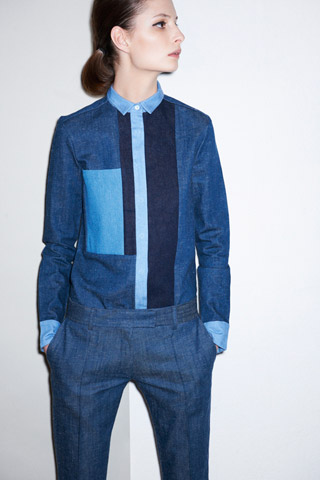
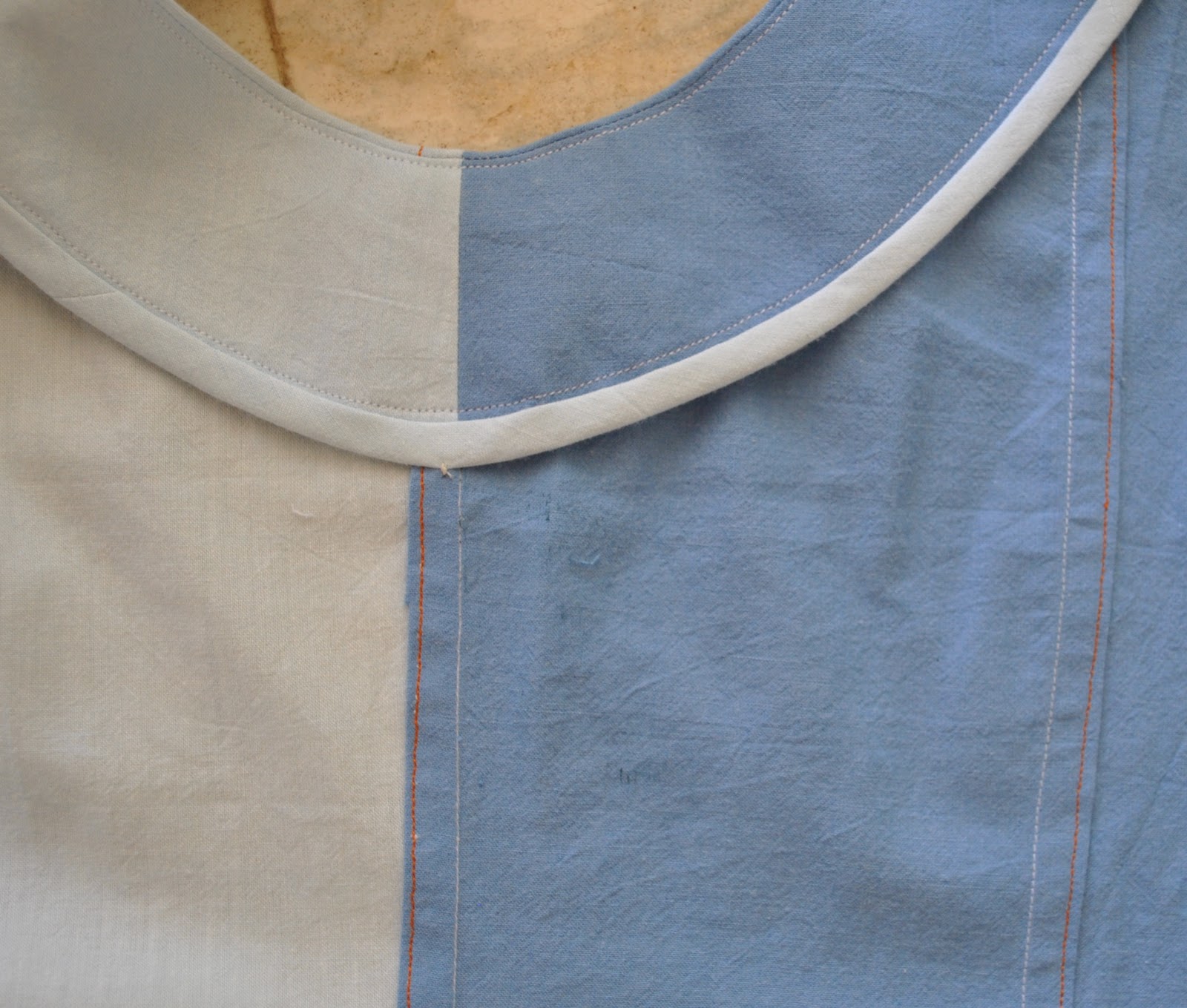
I really like this sort of patched look. The blocks of various blues together reminds me of those refashioned denim jeans garments that you see; made of cutting up and re-patching together old blue denim jeans to give a mixed up patchwork of varying shades of indigo. It also reminds me a little of another look I admired in Celine pre-fall 2011, below. Still going with that refashioned denim jeans vibe; I’ve topstitched all the seams in orange.
The shirt is all shot cotton, bought here. The left front and right back are Sky, the leftovers from this shirt, and the darker blue sections are True Cobalt, the leftovers from this shirt. The right front and left back are of a very pale blue named Ice; and technically speaking this might not qualify as a leftover scrap. I bought this about two years ago with the original intention of making another shirt for Craig, but the very pale baby-blue colour did not find favour… so I have gradually been using it up bit by bit for facing, pocket and lining purposes in other projects, but so far it has not been used in any publicly viewed part of a garment! I managed to cut the pieces for this shirt out of what is left after all that nibbling. So, does that make it a leftover, or not??
This cotton is thicker and more robust than the thin voile I used for my first cafe latte version of this shirt pattern, so the collars do not sit as flat together. But on the other hand, the snaps on those buttonbands feel a lot more secure, and less likely to rip the fabric. Speaking of the buttonbands; I wanted the third blue fabric to feature here, so the four of them have been constructed as separate wraparound bands that sit up over the body of the shirt. That took a bit of extra fiddling and measuring, but nothing drastically difficult.
Details:
Shirt; Vogue 1248, different shades of shot cotton, in Ice, Sky and True Cobalt, my review of this pattern here
Skirt; Vogue 1248, cotton voile, my review of this pattern here
Thongs; ?? crappy blue and white rubber things nicked from my son’s wardrobe. I think he must have grown out of these years ago…
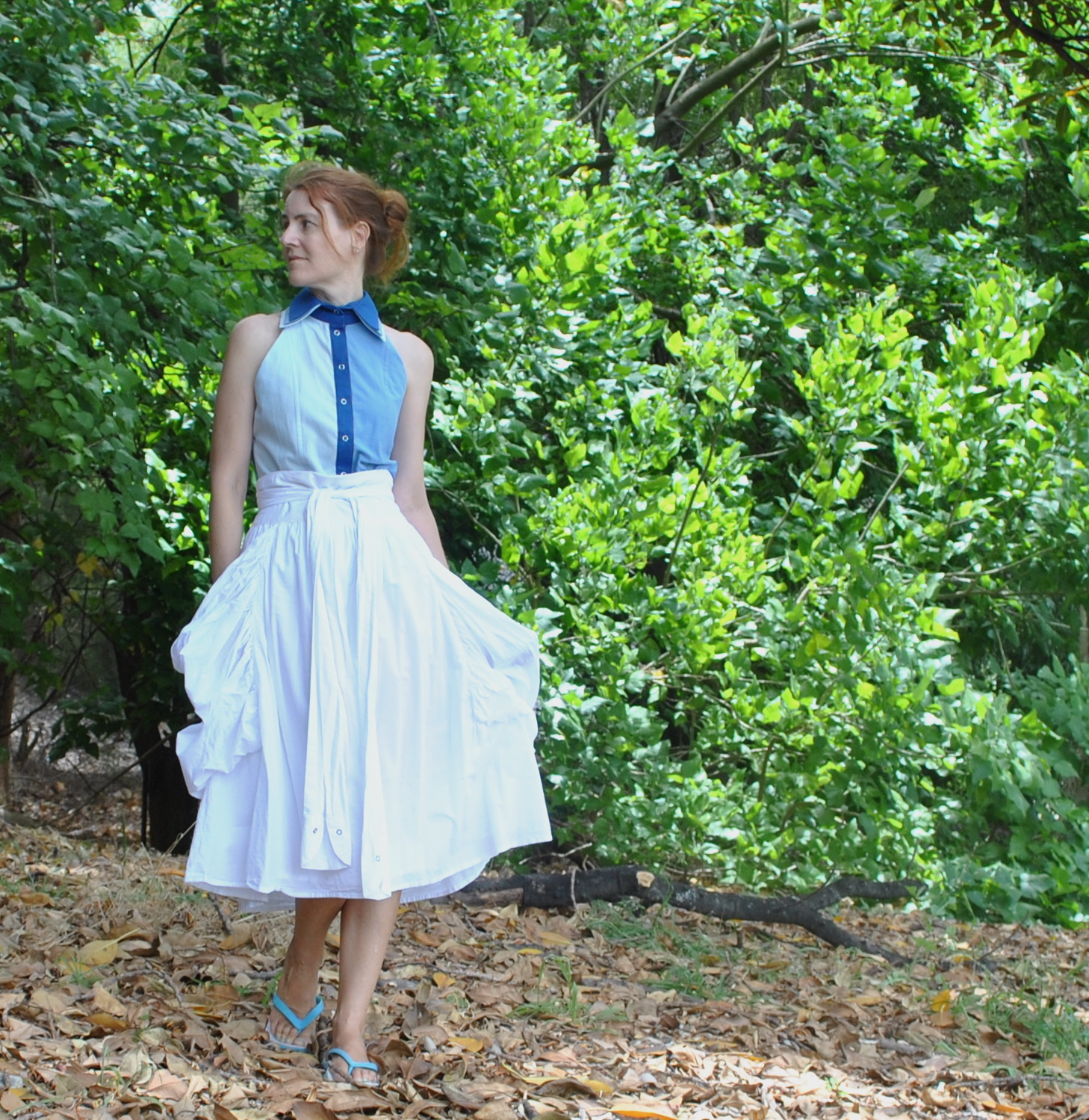

 In my previous post I mentioned flippantly that I had used this pattern nine times, well I was wrong! I have made ten dresses using this fantastically versatile pattern, or at least using key elements of it… and I like to think that the different fabric choices and other little twists have given each one their own distinct personality, so each one stands out as being different from the others in some way.
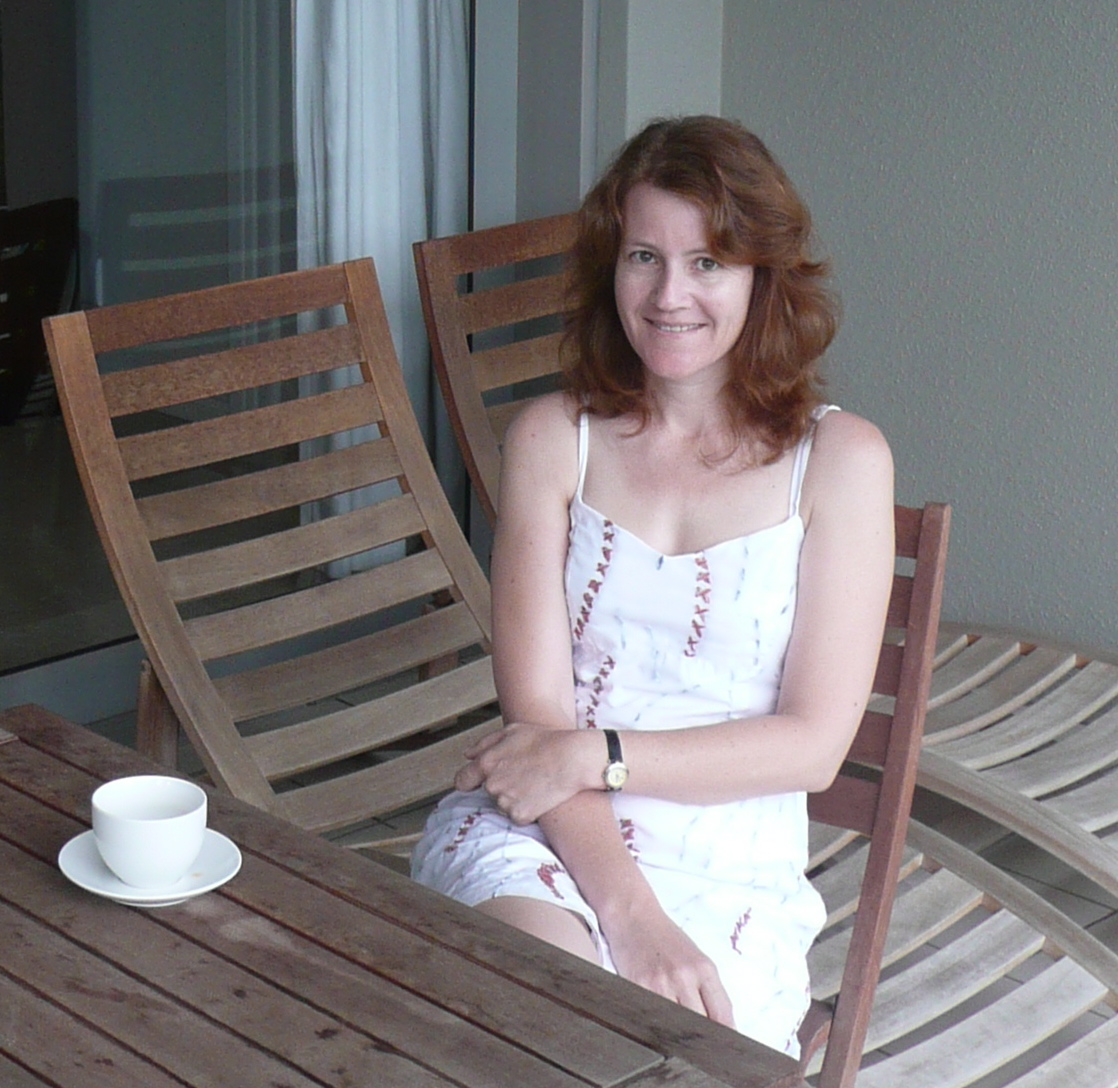
Below is version 1, never appeared here on the blog before.. because this is the best picture I have of it, and I no longer have the dress, unfortunately! It was made straight -up to the pattern with no changes. The fabric was quite interesting; white cotton with red taffeta ribbon sewn through in a criss-cross fashion just like a corset lacing, and also blue fabric cut into strips and sewn through the fabric in a running stitch (difficult to describe)
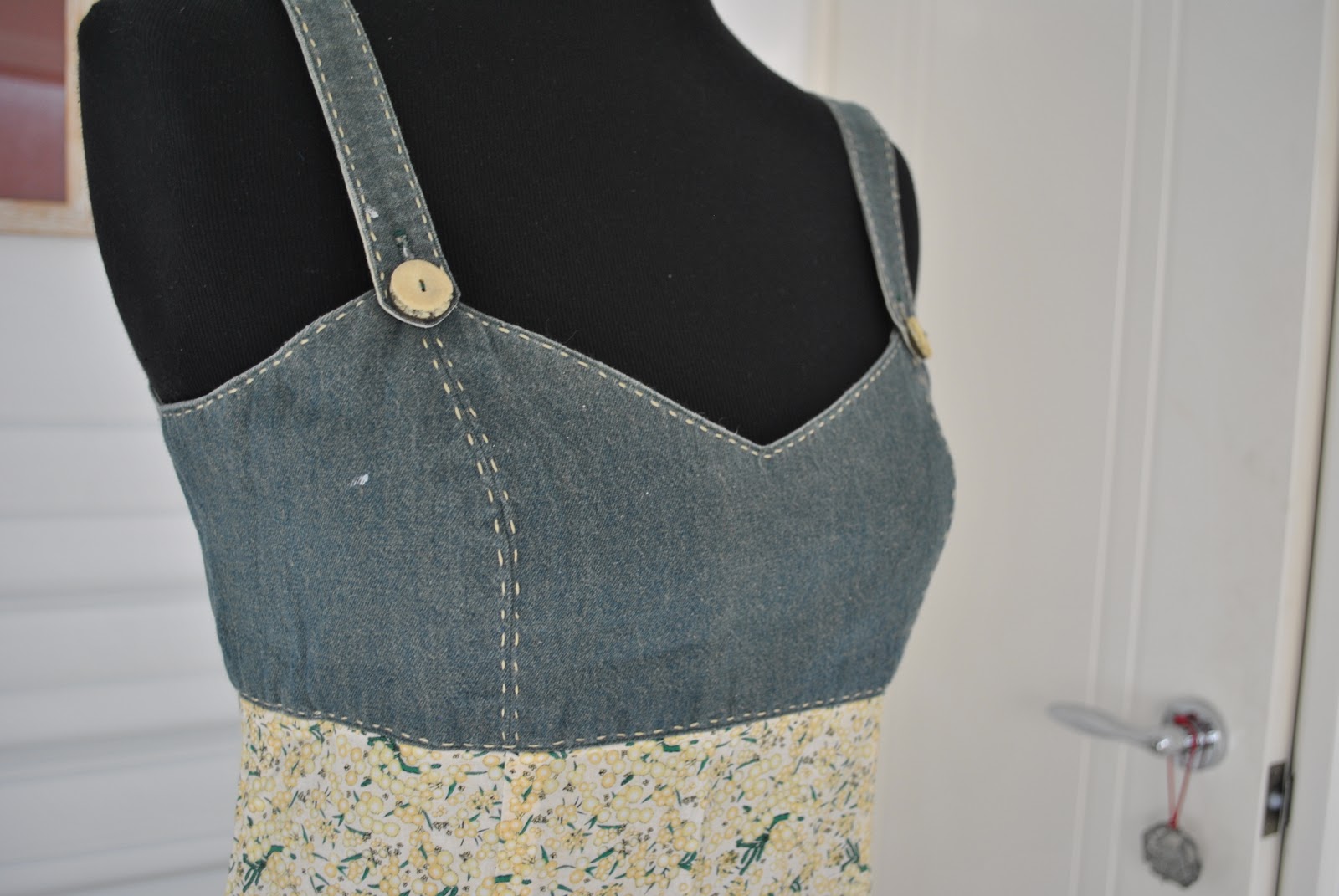
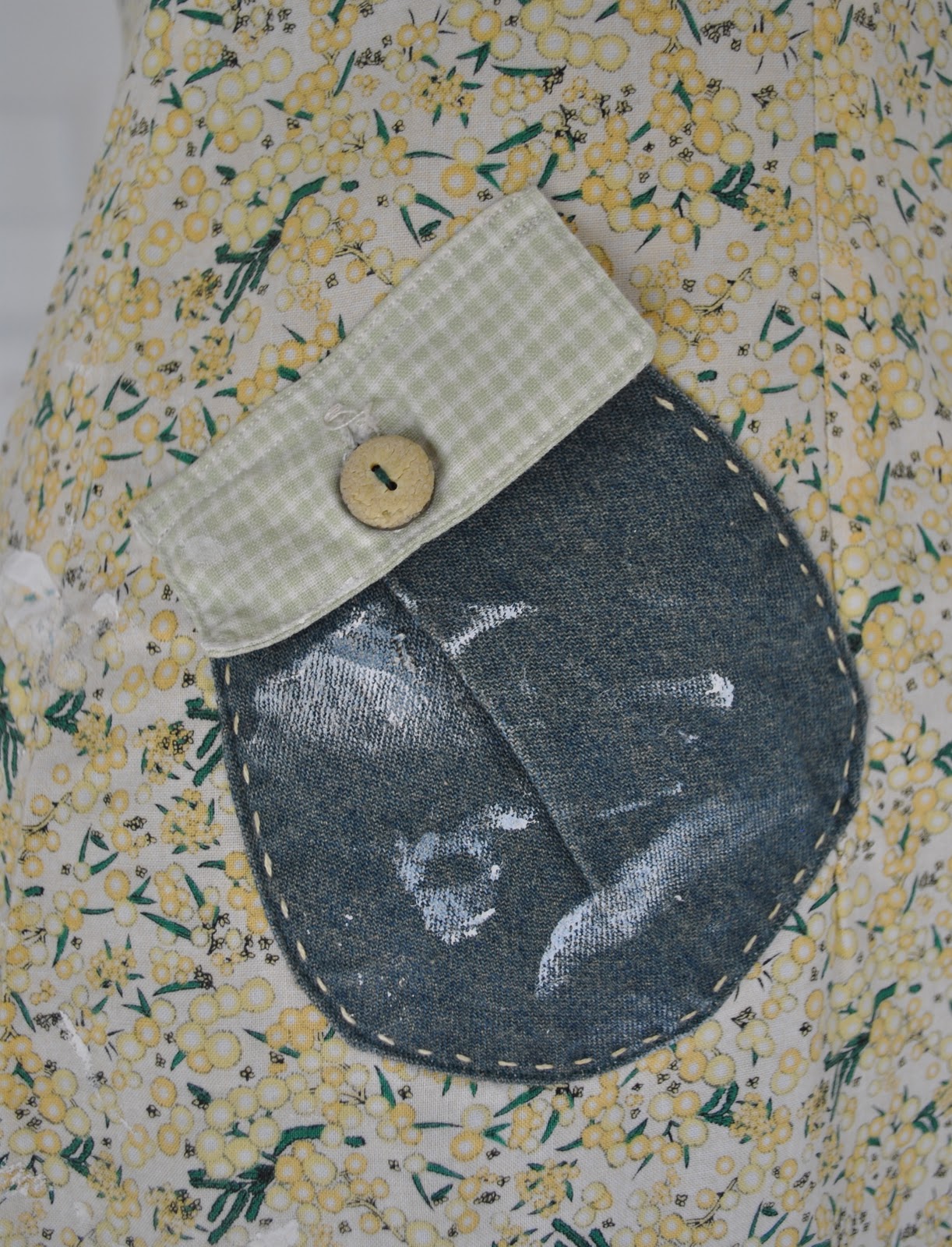
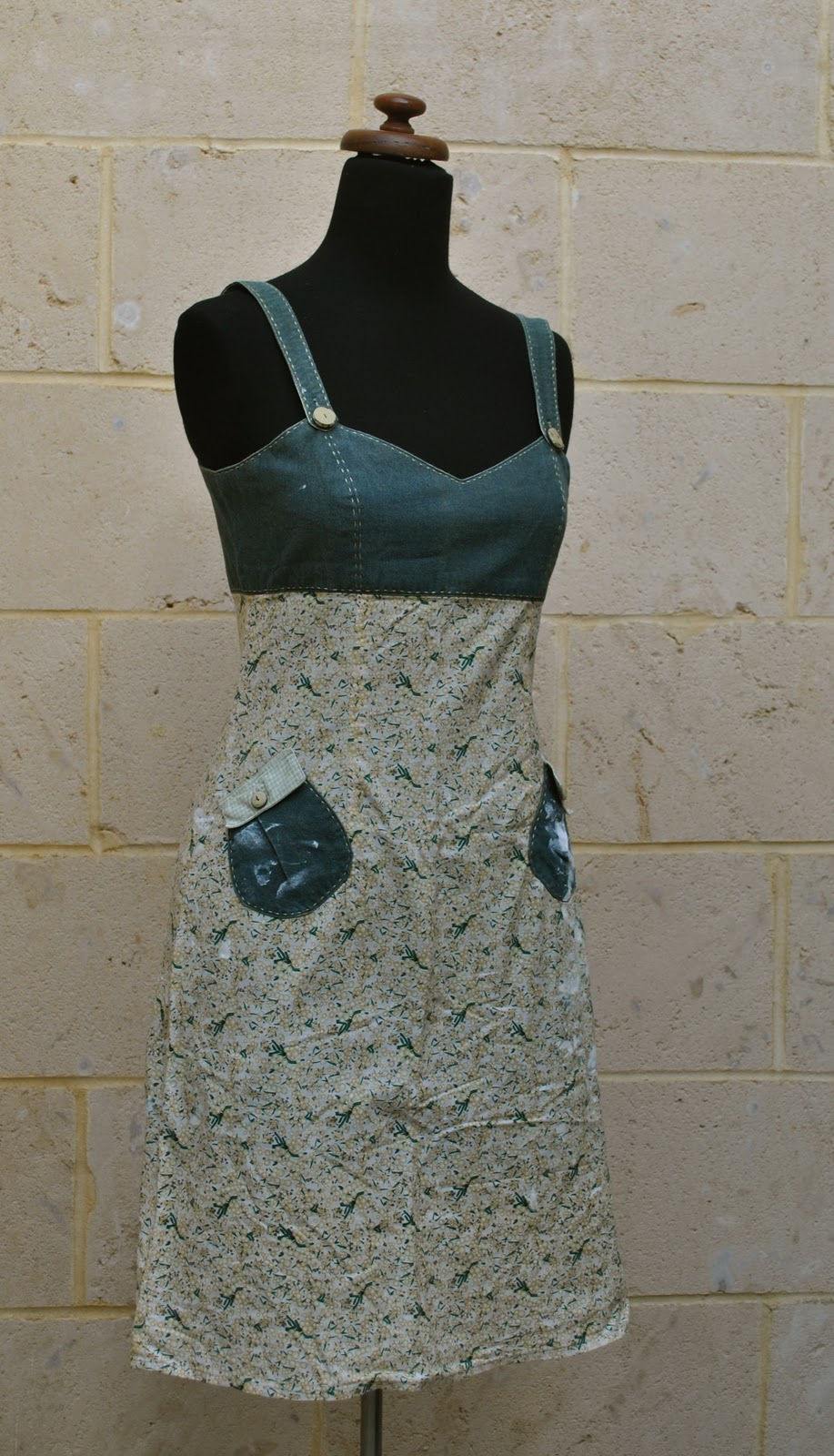
Version 2, I still have, but have been using it as my painting dress for a few years. Hmmm, taking real good care of my dresses, huh?? but anyway I was a bit over it and needed a painting dress sooo (blush) at least it is getting worn still, right? The dress part is quilting cotton, printed with golden wattle (Australia’s national floral emblem), the bodice is denim, lined with green and white gingham, which is the fabric I used for the pocket flaps also. The little pockets have a pleat in them, and buttons from my grandmother’s stash, which will be retrieved before the dress is given the final heave-ho, don’t worry. I ran a naive style, pale yellow running stitch around all the denim edges…
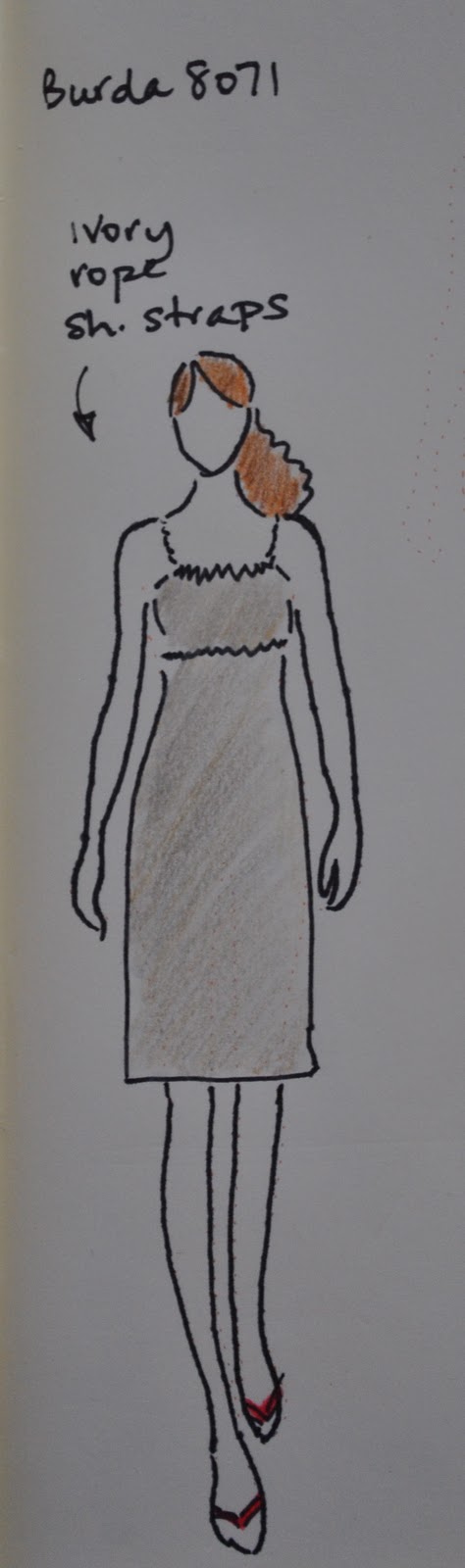
Version 3, I no longer have this one either, nor even any pictures of it! but I have reproduced it here, hehe… (and just because I love mucking about, drawing fantasy dresses in my Fashionary) This was of grey/silver metallic cotton, that had a dull metallic sheen to the surface… I made up the gathered bodice version of the pattern and used ivory piping cord for the bodice gathering cord come shoulder straps. It was actually pretty cool, but the sheen on the surface of the fabric didn’t last very long…
Version 4; a cocktail dress, using pale pink silk taffeta, and with a heavily sequinned and embroidered overlayer. Shifted the invisible zip closure to the right side seam and added net sleeves, attached to the shoulder straps.
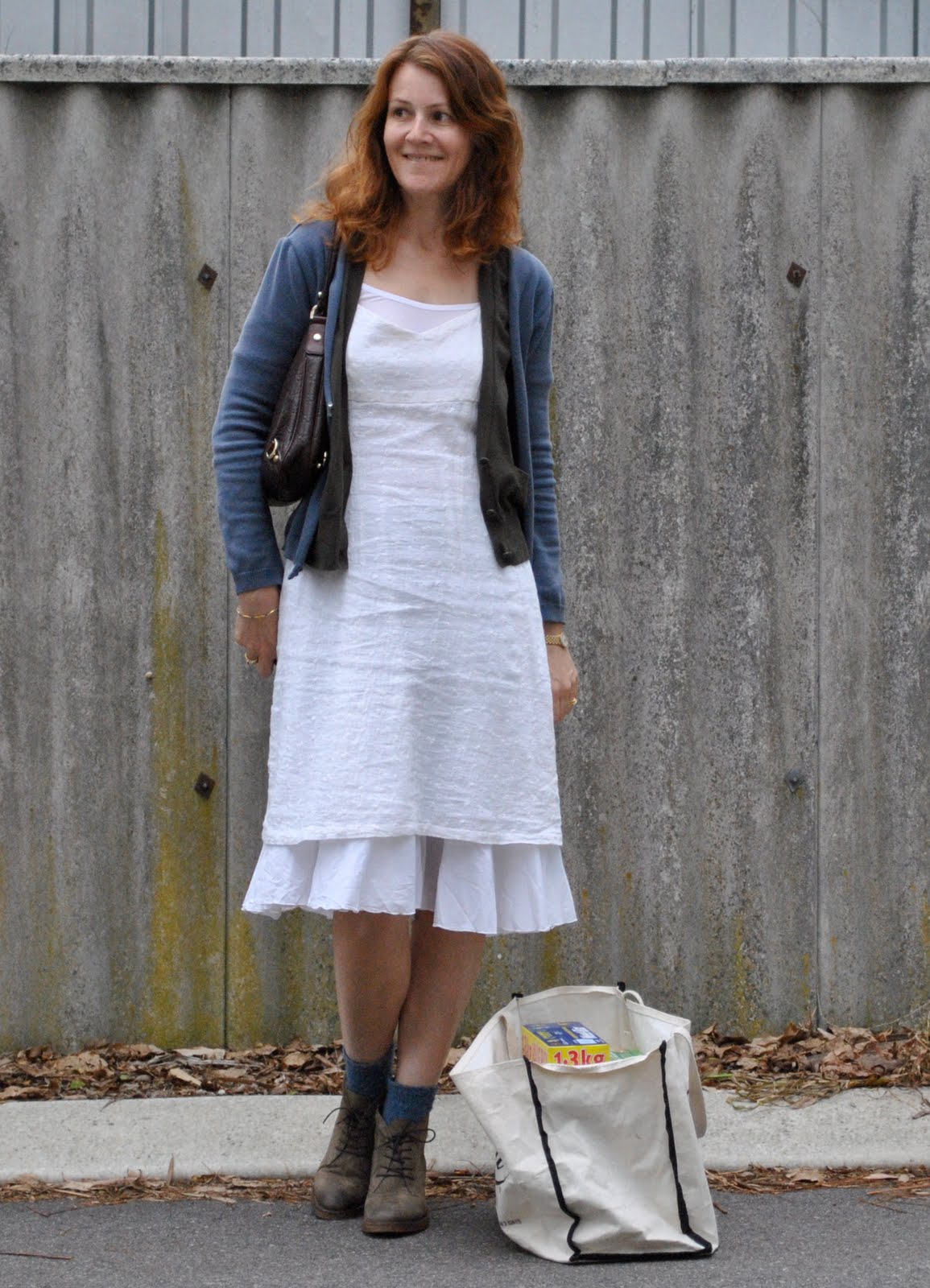
Version 5; back to the princess seamed bodice, made of ivory broderie anglaise cheesecloth. Have worn this one a bunch of times on this blog, and did a 6 different ways post on this dress too. Just the colour and the very plainness of it has made it an incredibly useful little wardrobe builder, and it has been a staple in my wardrobe for the last four years or so… now sadly probably on its last legs if I’m being honest with myself… 🙁
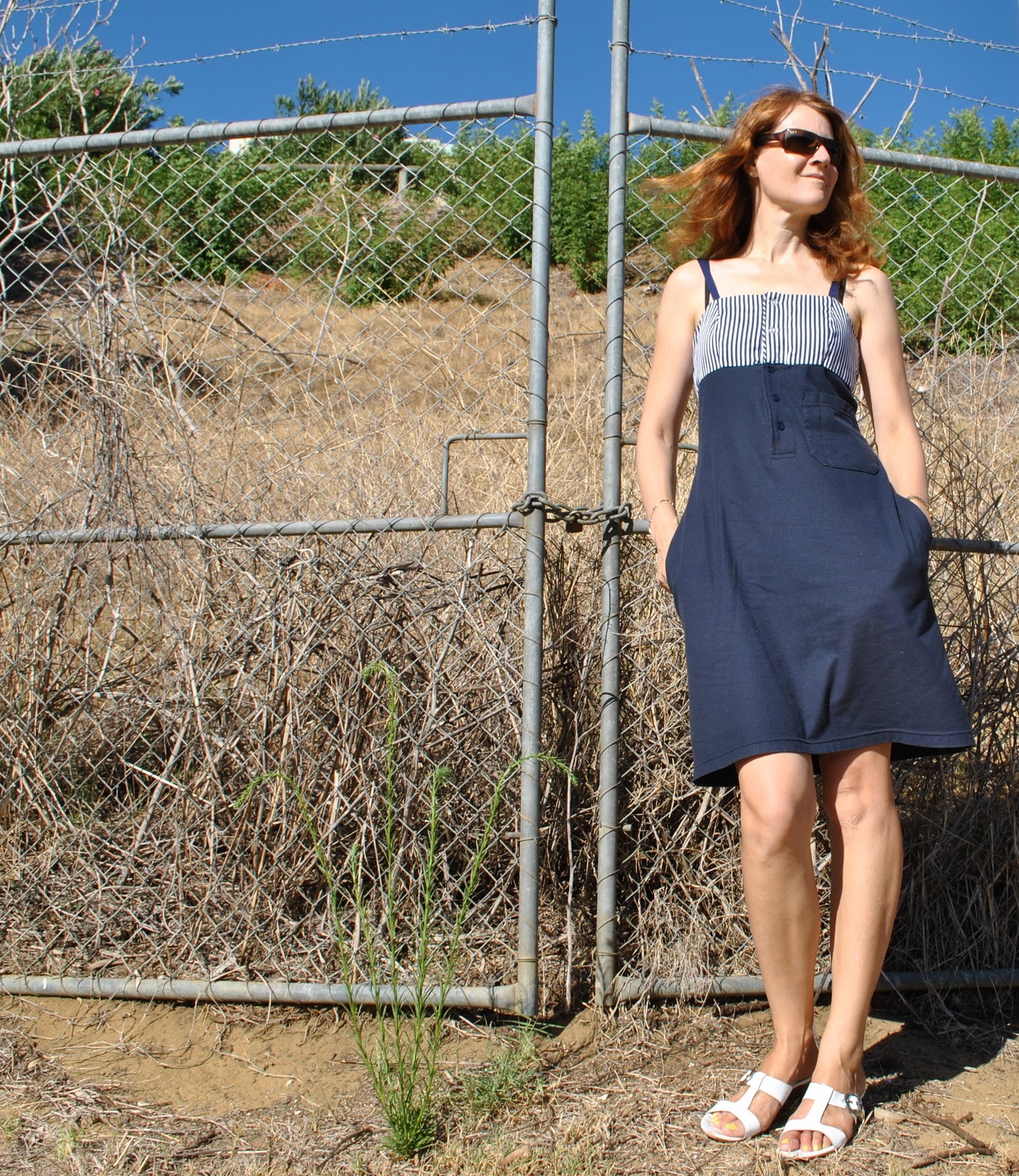
Version 6; using an old navy-blue polo shirt of Craig’s for the dress part and some navy and white striped cotton for the bodice, this is still a hot weather favourite. I used the sleeves of the Tshirt to make inseam side pockets in the dress also, and widened the body of the dress accordingly to accommodate them. (dressmaking details here)
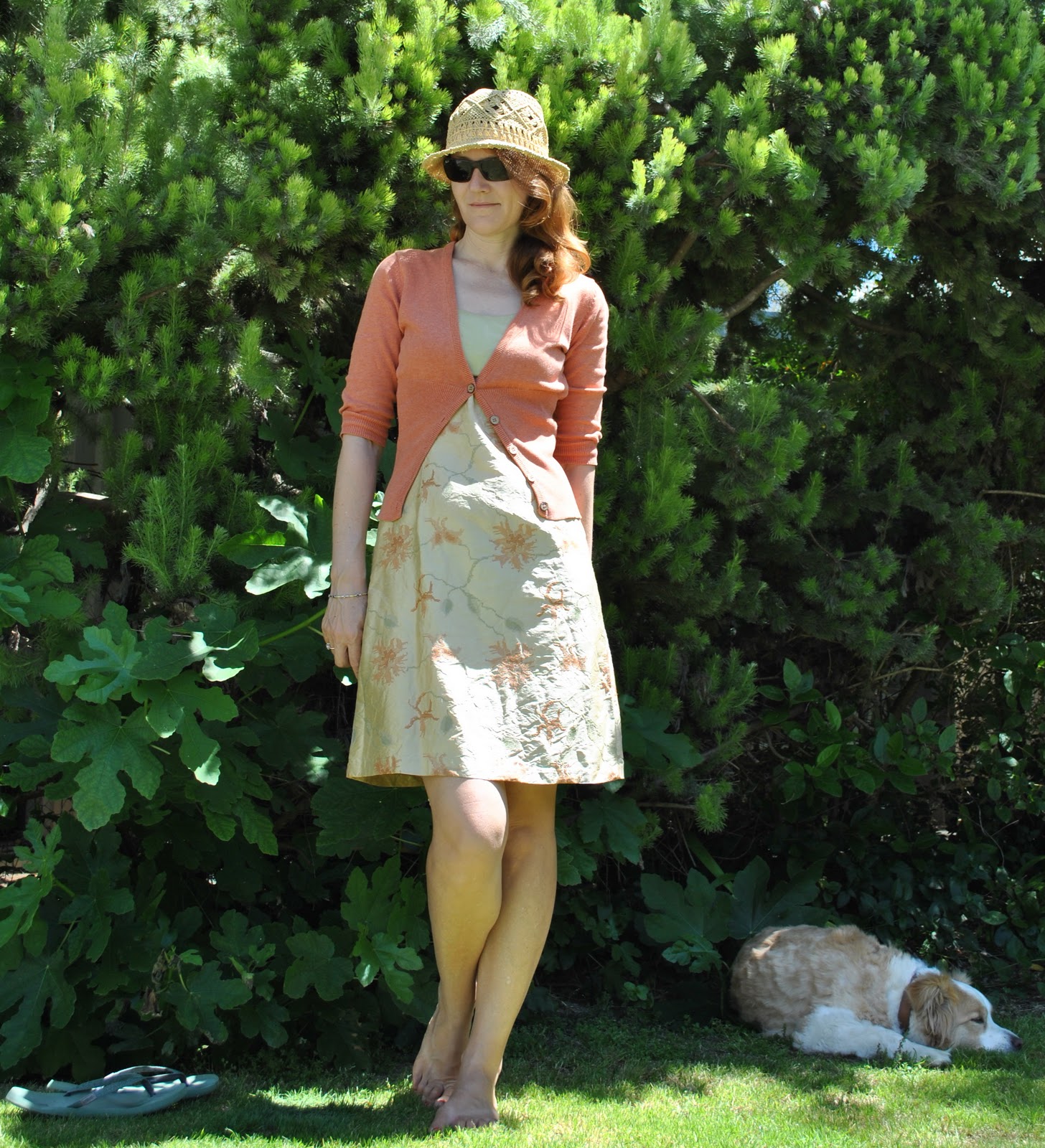
Version 7; adapted the princess seamed bodice to have wider shoulder straps. This dress has an embroidered pale gold silk taffeta skirt and a pale green silk taffeta bodice. I was never super happy with that bodice and eventually ended up removing it. This is now a very successful high-waisted skirt.
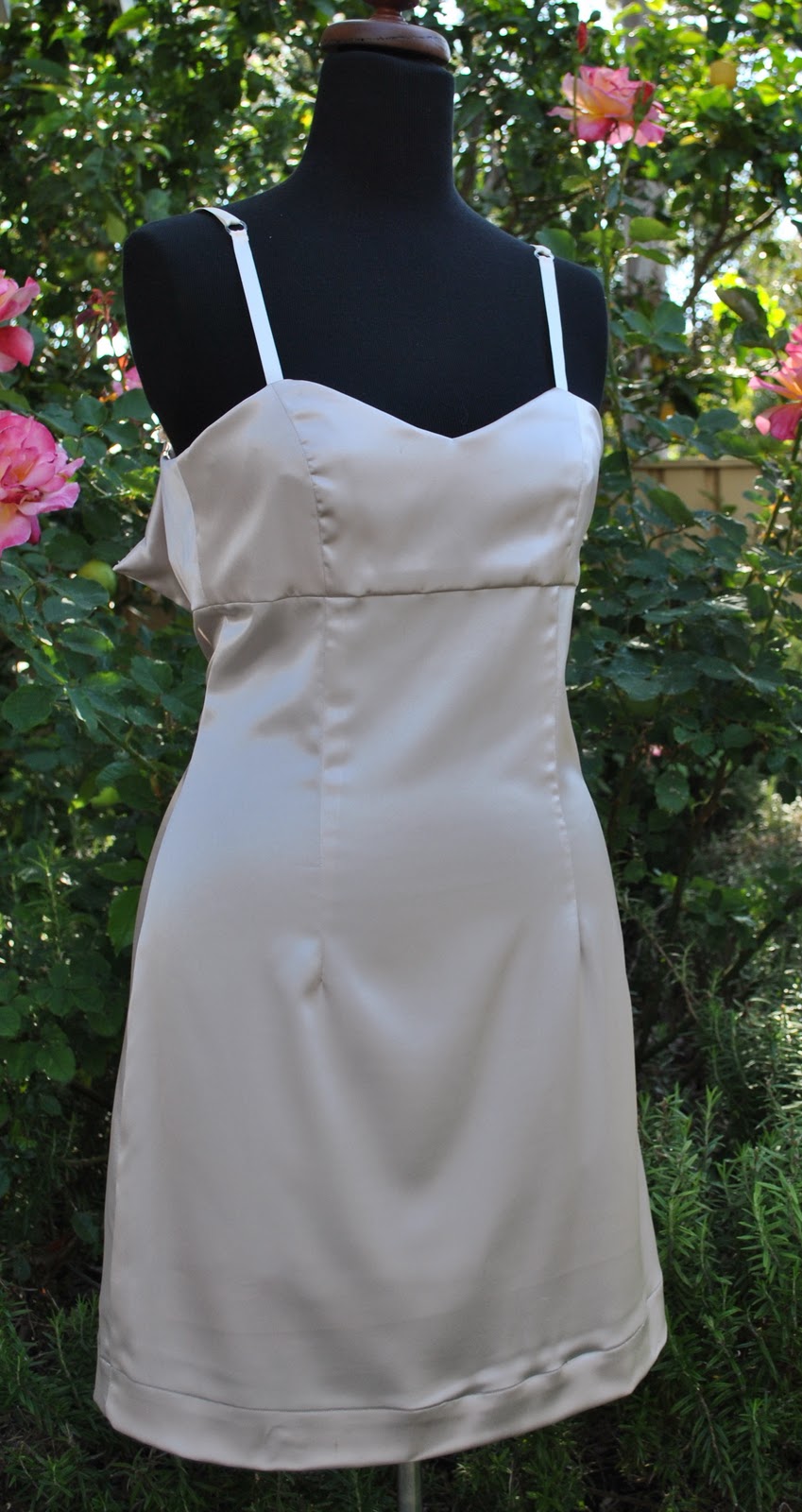
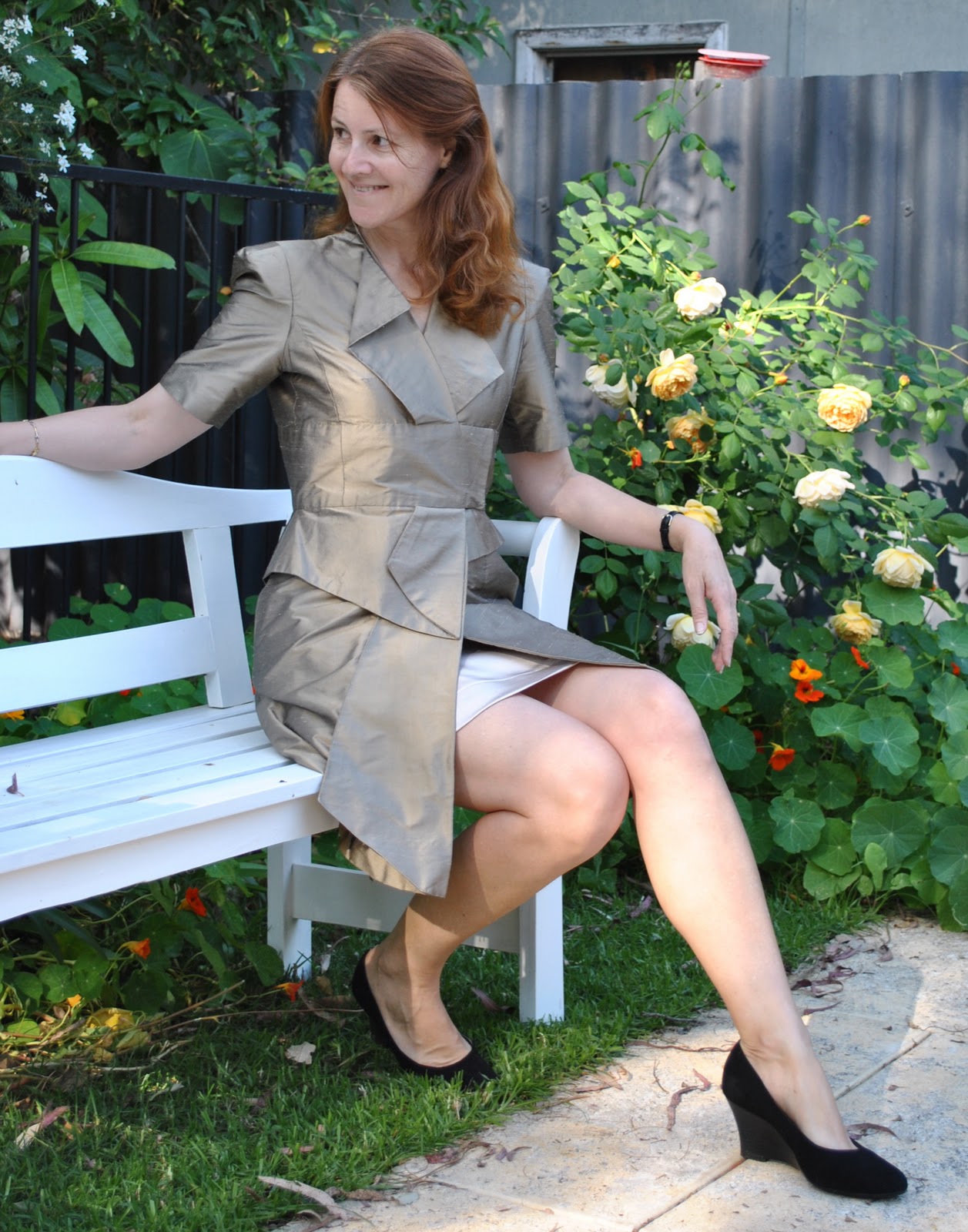
Version 8; a beige/pale gold satin petticoat, made to wear under a silk-taffeta cocktail dress/coat. It also went perfectly under this silk chiffon dress, that has been since passed onto Cassie, but I kept the petticoat! Don’t worry, she has her own petticoat…
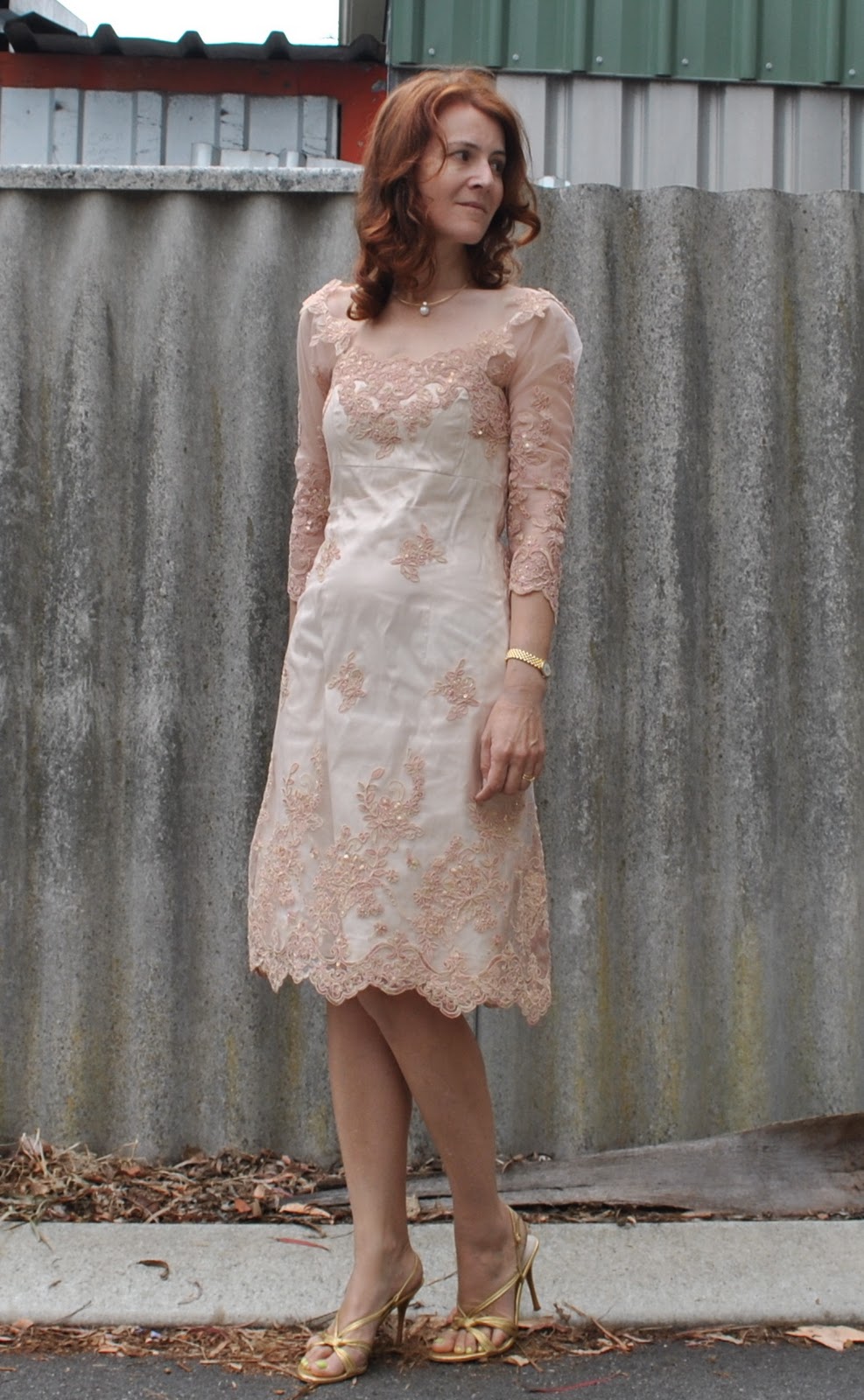
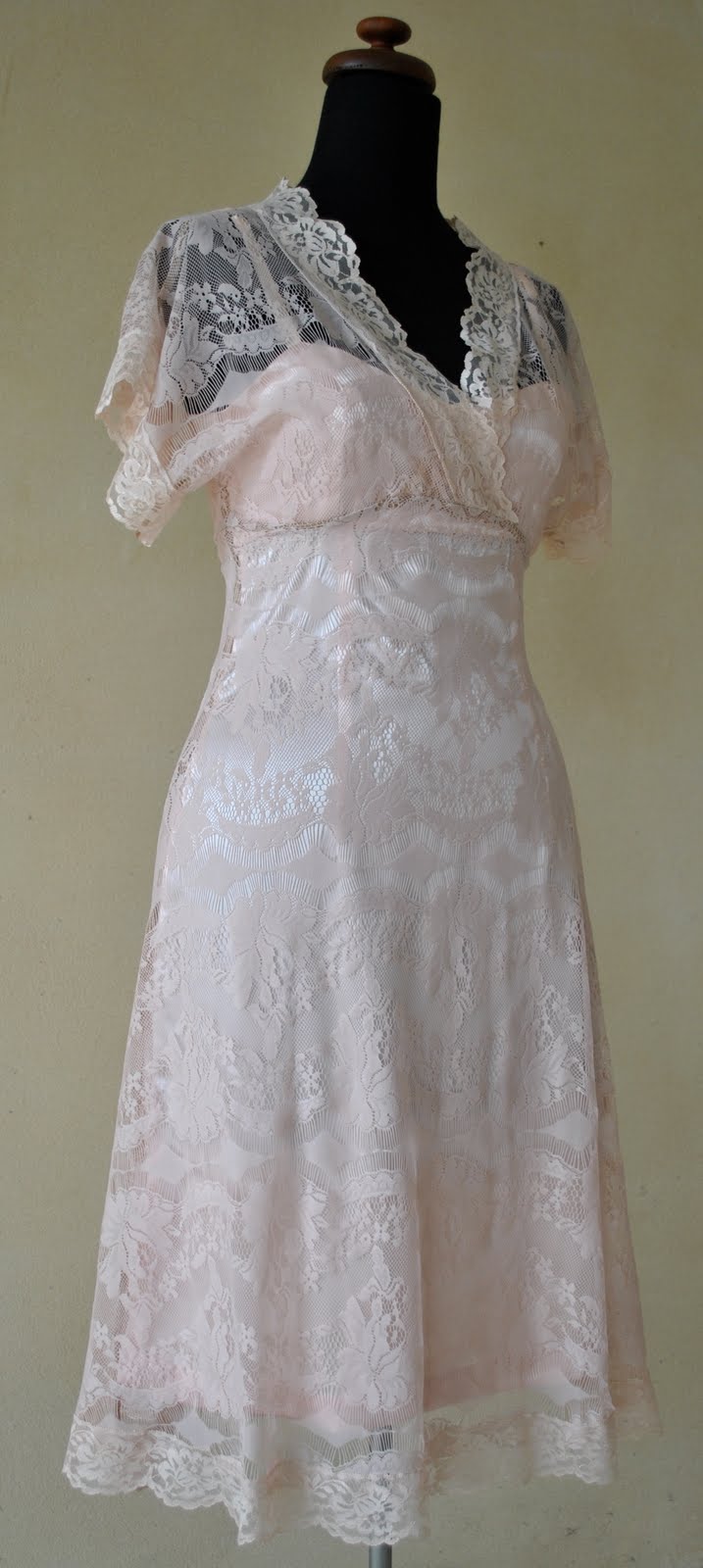
Version 9; a pale pink satin petticoat, made to wear underneath my pink lace dress. This ensemble has also been seen a tonne here on the blog…
and finally
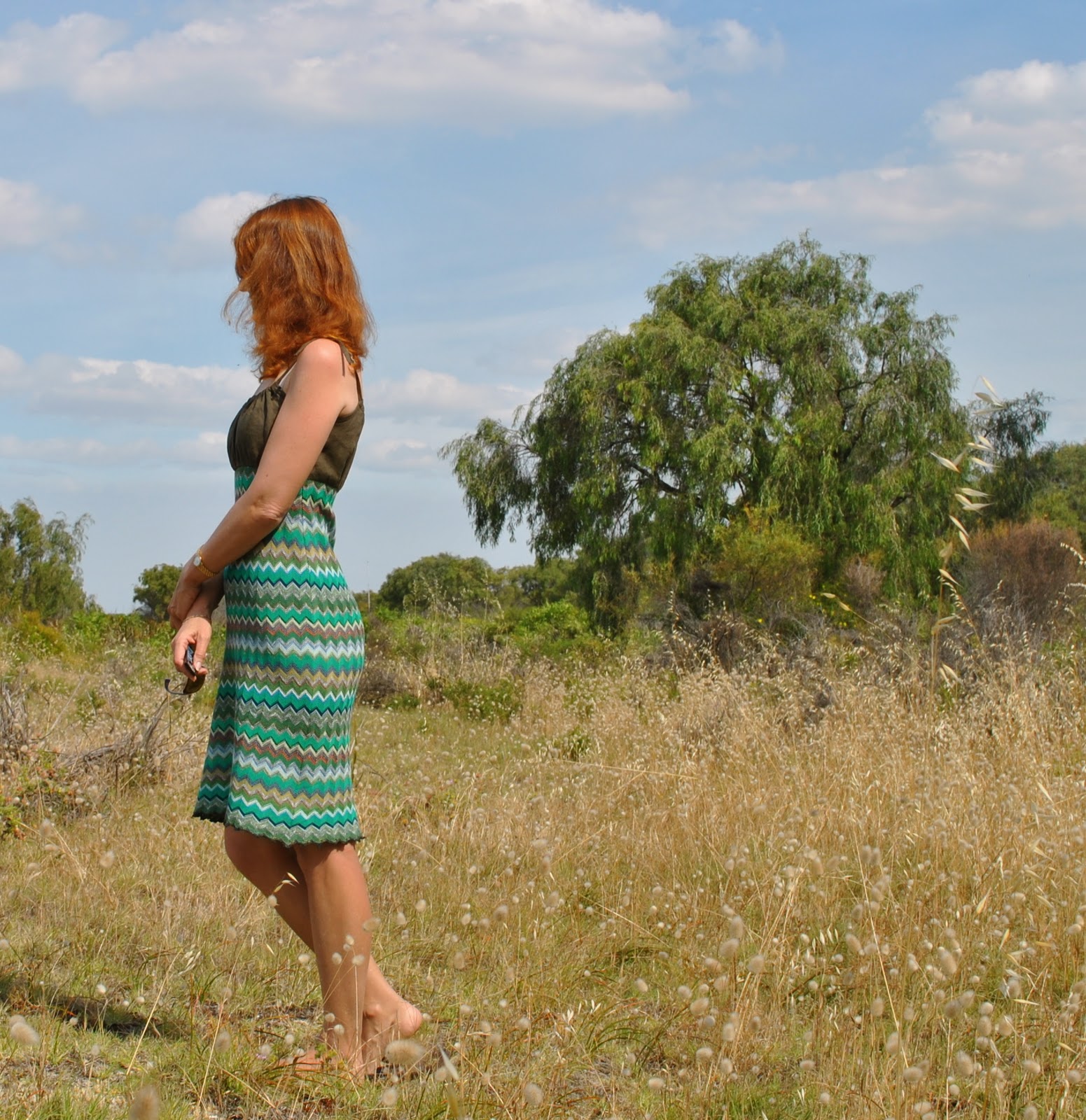
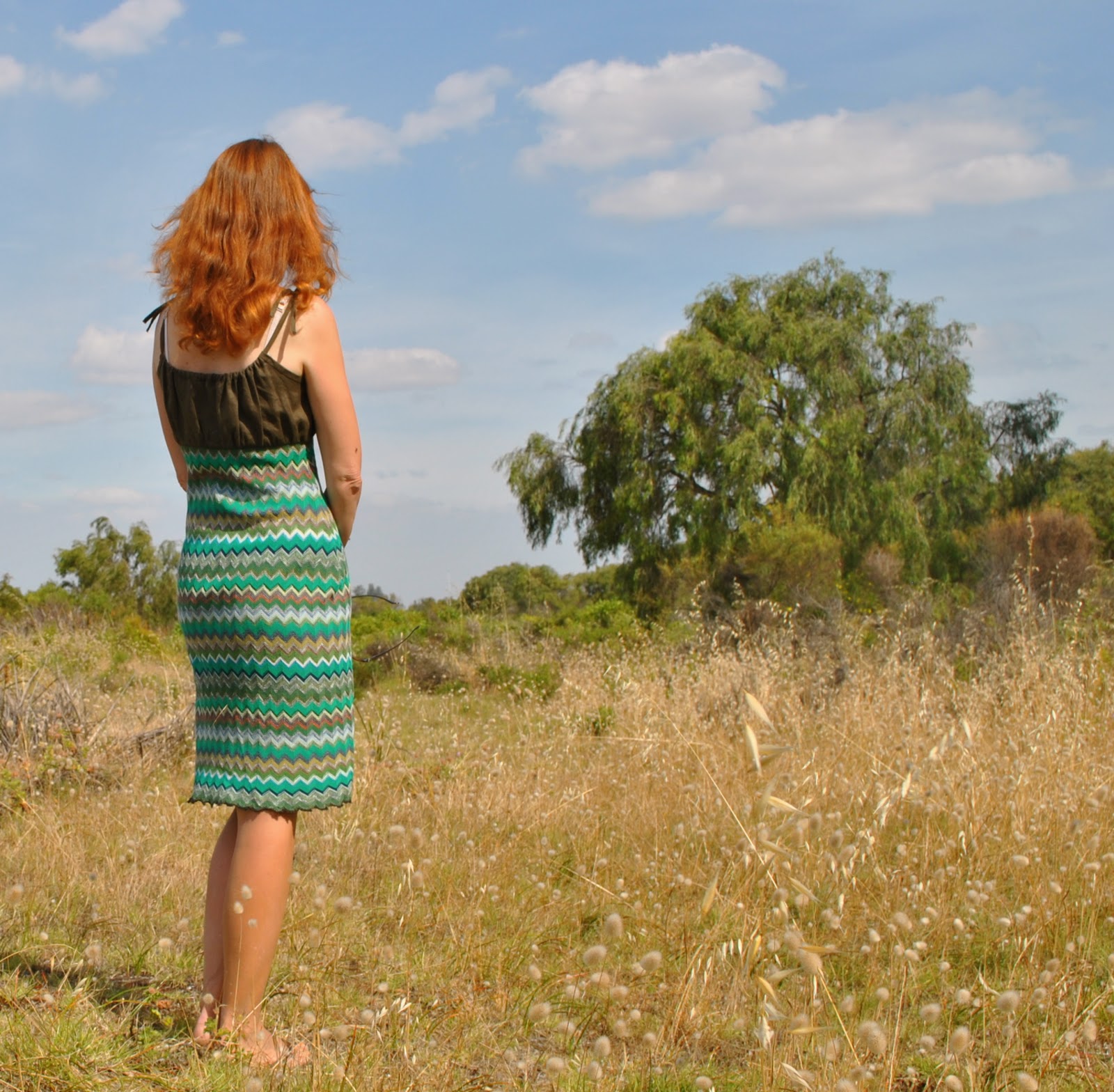
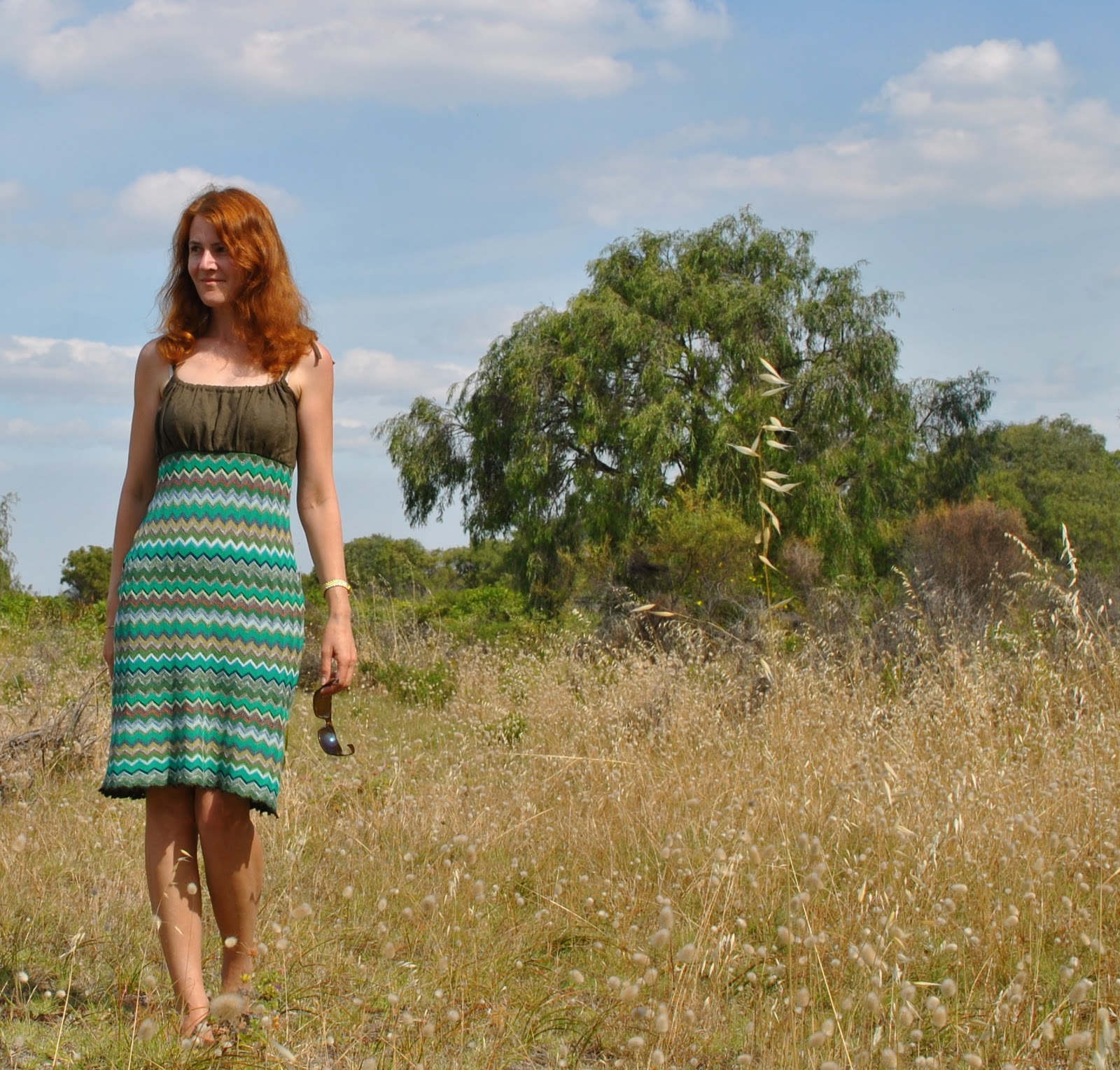
Version 10; the Missoni knit and linen dress I posted about just previously. With the gathered bodice, and with the body darts drafted out of the skirt piece, so as to keep the pattern of the fabric intact.
So! Obviously this pattern has been enormously successful for me in my wardrobe and I highly recommend it! It is simple, versatile and a creative and imaginative seamster can create looks all the way from extremely casual, to lingerie, to extremely glamorous, just by juggling about with different fabrics, different trims and employing a healthy dose of imagination 🙂

 Firstly, thank you so much for all those lovely comments on my cardigan! I was overwhelmed to read so many kind words… and with regard to my little rant; also to stress that I am not down on Burdastyle per se, which has so many talented and madly creative people to delight and inspire; but just their sucky anonymous ratings system… yes anonymous. A situation beloved by trolls, am I right? It’s just a mystery to me why they’ve still got it… but in short I shall continue to virtually hang-out at Burdastyle and contribute, while simultaneously and quietly acknowledging that the ratings system blows.
But on to far more exciting affairs, ahem; my new dress. The lovely Passiona Cottee sent me this gorgeousness in fabric form in a very generous give-away last year; thank you so much Passiona!
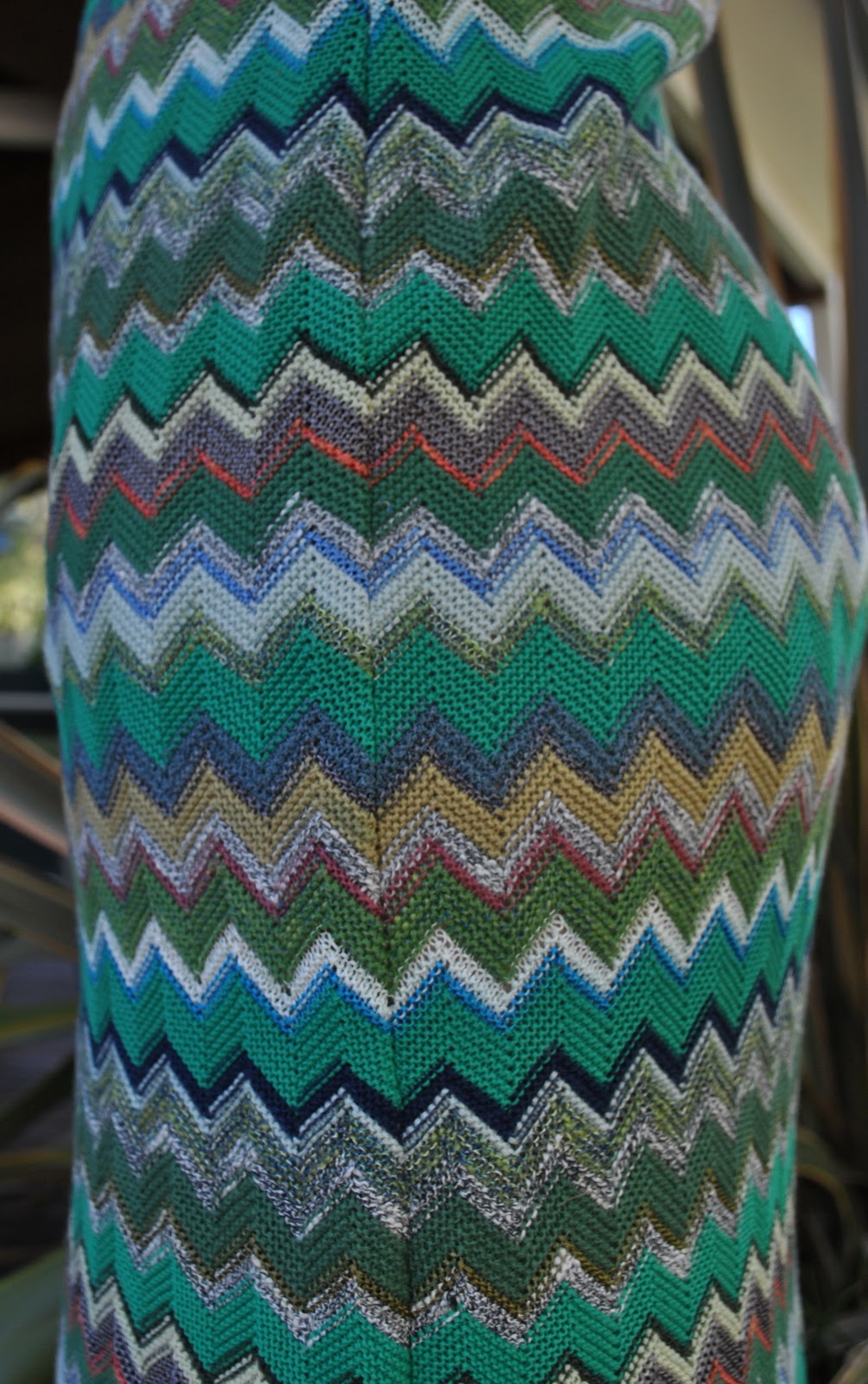
The fabric immediately struck me as very like a Missoni style of fabric, maybe a diffusion line? I wish I knew for sure… The fabric has the signature Missoni design; those distinctive stacked zigzags in a multitude of colours (although having said that I do actually possess a genuine Missoni scarf, seen here, that has hardly any zigzag). Close inspection of my sample revealed seemingly every shade of green under the sun. Das is gut. Green is definitely me. Adding interest to the colour mix; a bit of rust, a dash of salt-and-pepper, a hint of sky blue, the odd startle of vivid orange and even a few rows of ivory; all melding together in a disparate and yet pleasing cacophony of oily swampy shades…
Missoni is a stalwart of the Italian fashion scene and so I wanted make it up into something Italian inspired, and dreamed up this design with a blouse-y linen bodice reminiscent to me of those loosely gathered Italian peasant tops… I only had the teensiest bit of the knit fabric really. Actually, (warning; eco boast following) I used basically the entire piece of fabric… and the bodice is the leftovers from this shirt… so the dress is green in more ways than the obvious, hehe…
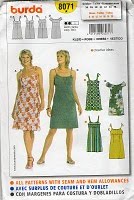
I used Burda 8071, a real tried and true, standby pattern that I’ve used heaps of times before. Lost count actually… (hmmmm just did a mental count, and including two dresses that have gone years ago, I’ve used this pattern nine times now. Yowza!)
The dress piece was cut with the right side on the fold, to eliminate as much of this side seam as I could. Also, in lieu of body darts which would have destroyed the regularity of the zigzag design, I cut the exact allowance of each dart from straight out of the side edges of the dress pieces (I’ve done this before too, for this dress here. Works a treat for where sewn-in darts in the fabric are not what you really want, but you still want the shape).
I hand basted the remainder of the right side side edge invisibly together from the right side to ensure the pattern was matched perfectly.
For the left side seam of the dress piece, I cut and sewed bias strips of the khaki linen along the seam allowance, to stabilise the knit fabric behind where the invisible zip is inserted… and the zip was hand basted in place, again so I had complete control of matching up those zigzags as closely as was humanly possible. Yeah; I am neurotic that way, it’s OK I admit that… but I am pretty pleased with the results.
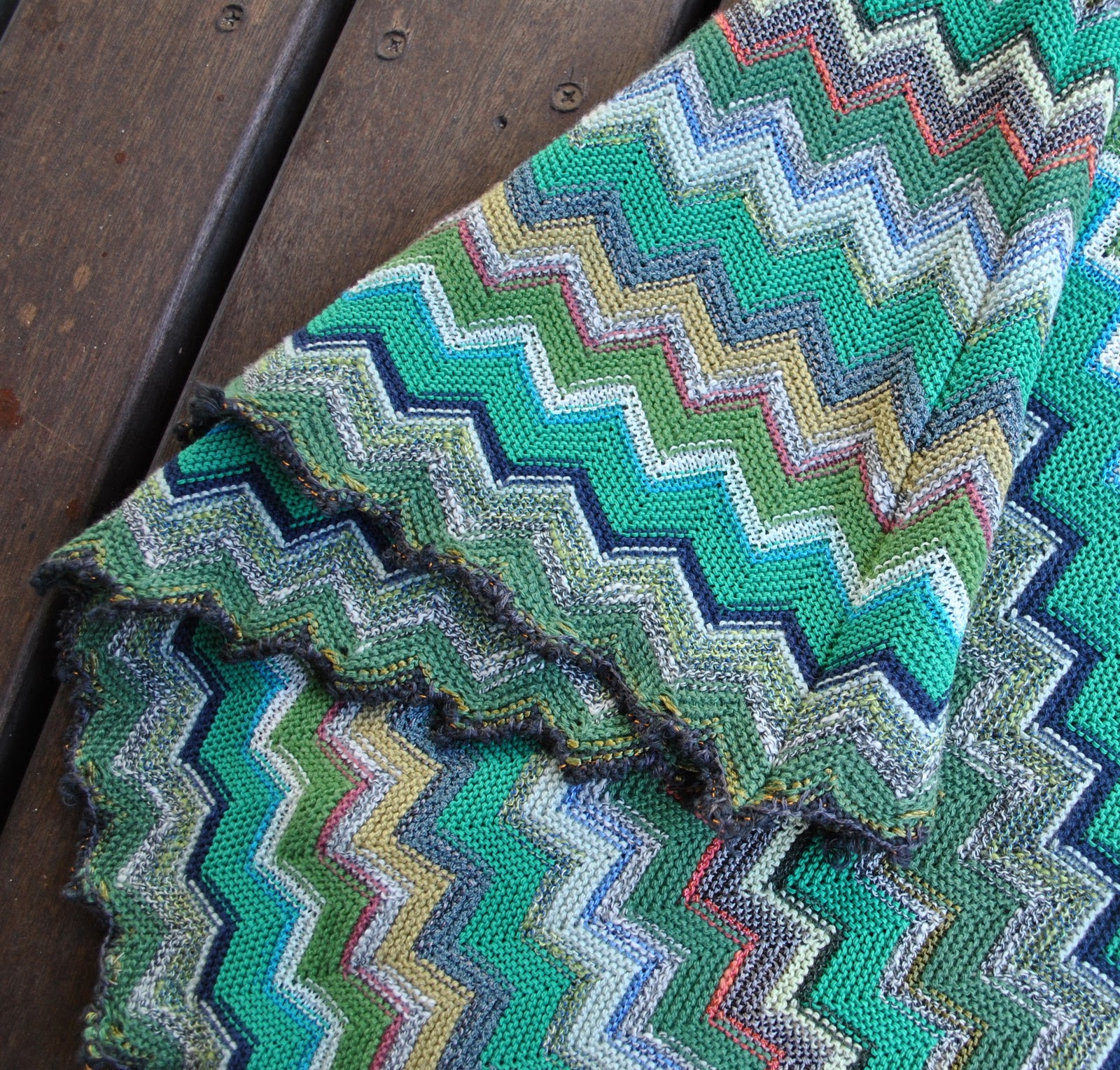
The lower hem, well unfortunately the lower edge of the fabric was not in super good nick and was already unravelling in some spots; the stitch loops were threaded through with one flimsy stay-thread which was not doing its job very well. I carefully pulled this out bit by bit, darning where needed, hand embroidering the edge in a tightish blanket stitch leaving lumpy decorative (I hope!) blobs on the points of the zigzags. I’m hoping it looks a bit like a crocheted edge… just the type of crafty finish that I think finishes off this slightly rustic dress to peasant-y perfection.
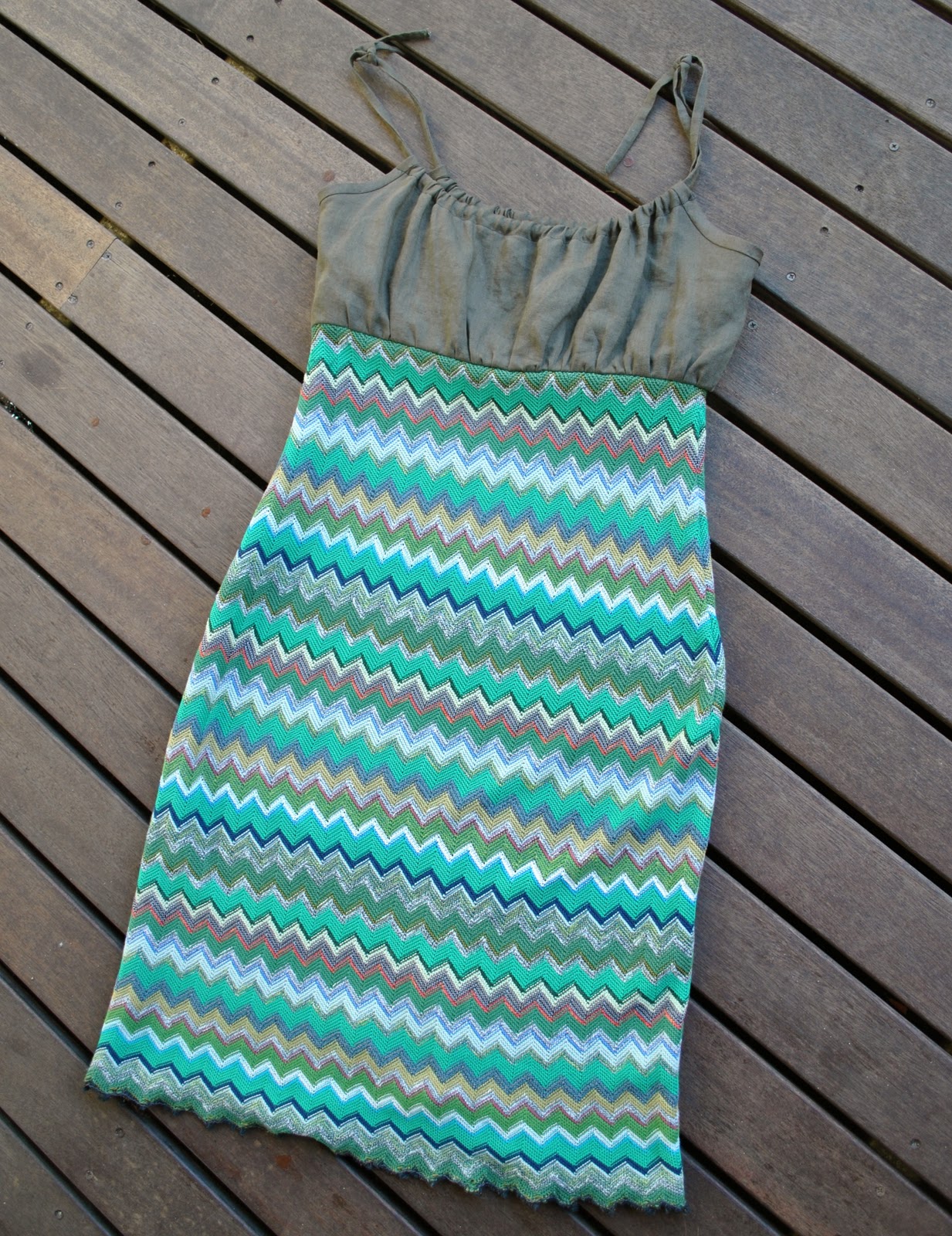
Dress; Burda 8071, khaki linen and knit fabric.
side view … and I’m chuffed that I can barely tell that side seam.