Tag Archives: Tip

Further Alabama Chanin-ing

Hello!  I am getting started on my next Alabama Chanin project.
Yes, an authentically executed Alabama Chanin creation is a big time commitment but I really enjoyed making my 3-piece set and it is nice to have a hand-held project to work on slowly, something easily transportable that doesn’t require much space or special equipment or a lot of thought but that you can just pick it up and get on with, a little bit at a time.
I’m using some hot pink jersey knit from my stash, bought in the Fabric Store in Melbourne during one of my trips over there with Mum and Cassie, I’ve forgotten which one now.  Probably the previous one, hmmm…  Actually, I had pulled this fabric out in the early planning stages of my recent SWAP and marked it as a definite; that was before eyeballing the rest of the long term stash residents that I was keen to sew up and realised that colour-wise, it didn’t fit in at all.
And it still didn’t.  Really, hot pink? I don’t know what I was thinking.  My current way of thinking wrt my wardrobe is to have it mostly subtly and/or autumnally shaded, and while in theory I like hot pink, in reality I was just like; ah, No.
So, step one; wash, soak and dye the fabric.  I used a small shake each of iDye in Brown, Yellow and Chestnut in the dye-pot.  Sounds hideous? well I did do a small sample first and thought it a huge improvement.  So that was a go.  My fabric was a slightly variegated hot pink and became a slightly variegated rusty-purply raspberry.

Cutting and Printing:  This is where things got tricky… I received an email recently from Carolyn in Florida, asking about the curl factor of jersey and how did it affect the Alabama Chanin technique.  Well, in the case of this particular fabric as can be seen in the photo above, the curl factor was extreme and the edges of my fabric curled up so badly And they just would not lie flat by themselves.  From a screen printing point of view this is disastrous.  I wanted to have my screen print go right up to the very edges of the fabric, and so the edges just had to lie as flat as possible.  So for a quick and easy fix-it I just used regular household sticky tape to tape just the very edge of the fabric down to my backing newspaper, just inside the seam allowance and immediately prior to printing.  Not a pretty or elegant solution, but it worked pretty well!

Printing the fabric seems to have tamed the curl quite a lot too!  The seam allowance for Alabama Chanin designs is small, like 5mm or so, so you do need to print right up close to the edge.  I’ve found from my first project that I prefer to have my embroidery right up to but preferably not within the seam allowances, though.

I will say; if your fabric does curl very badly I can see the case for printing then cutting out.  I do have my reasons for preferring to print after cutting out; reduces waste of expensive printing ink since you’re only printing what you are using: heckuvva lot easier when manipulating the smaller pieces to get a very good placement of print.  That last point is my primary reason for doing it this way, and I’m still glad I did cut out first.  I guess this is something that the individual will have to decide for themselves when embarking on a project like this  🙂

The Stencil:  This time I chose the Abbie’s Flower stencil from the book Alabama Chanin Studio + Design, by Natalie Chanin.  I enlarged it by approximately three times using the good ol’-fashioned method of drawing a grid on the design, then drawing a bigger grid on your paper in which you painstakingly copy each little square on the bigger scale.  Like we used to use in primary school; from back in the dark ages, before photocopiers.  Ha!

I thought the overall motif was still a bit small and my least favourite part of printing is placement of the screen for repeat printings.  I mean; if your motif is larger in area then you decrease the number of times you have to re-place the screen on your piece of fabric; and the less placement the better, imo.  So I ad-libbed putting more motifs from the Abby’s Flower stencil around about and added in a few random leaves and curlicues of my own too, until my stencil covered the maximum area I could get on my screen.

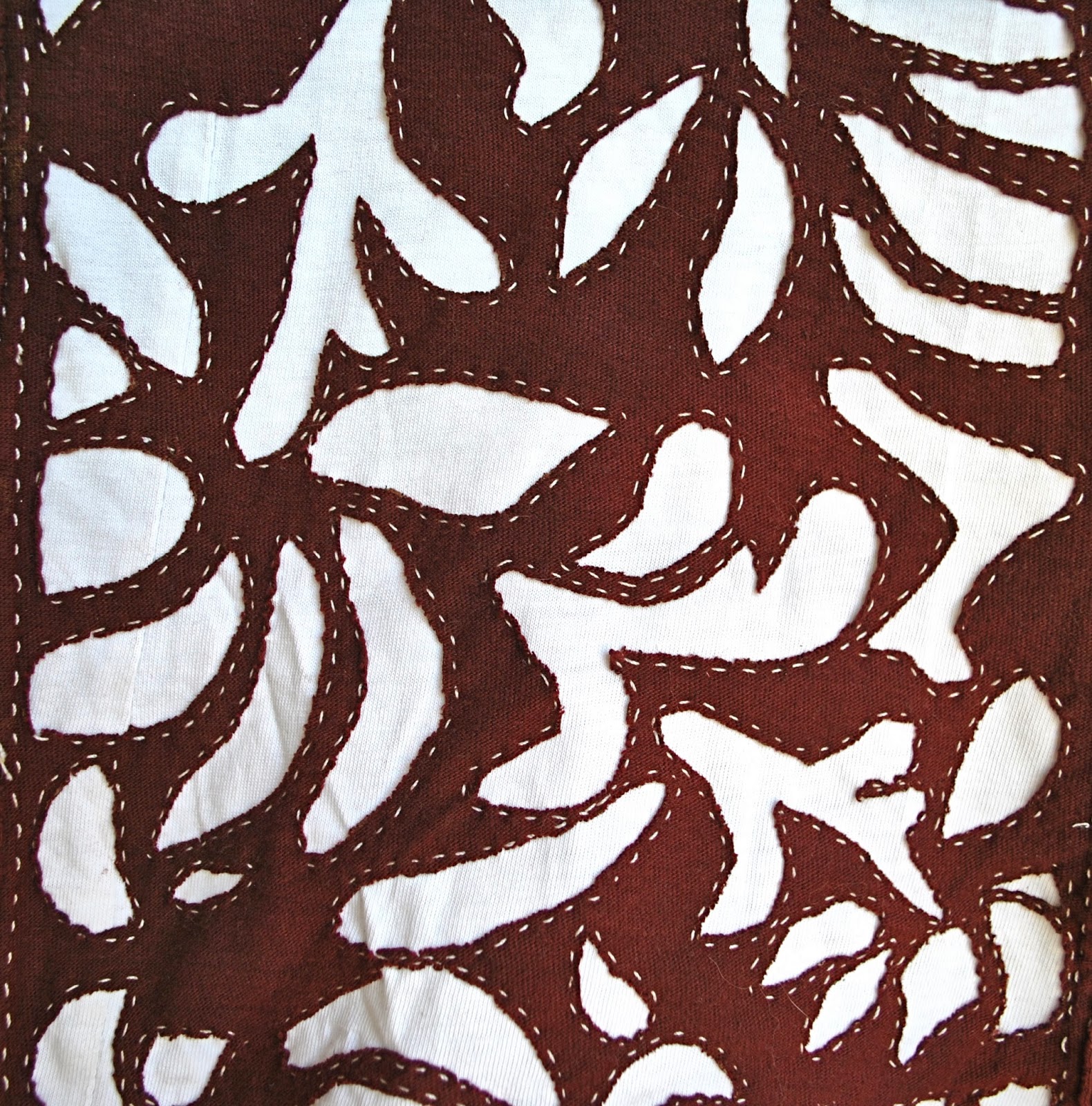
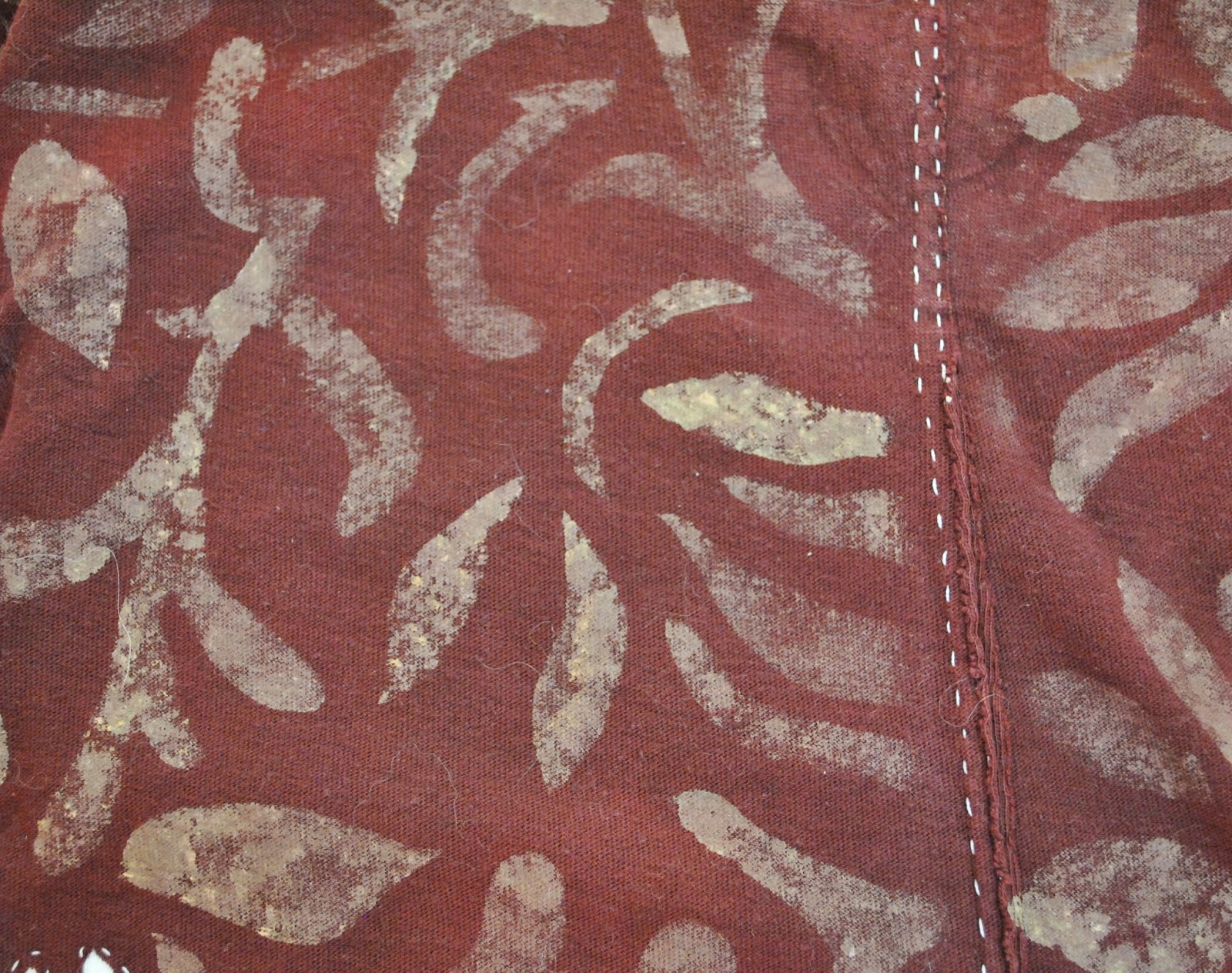
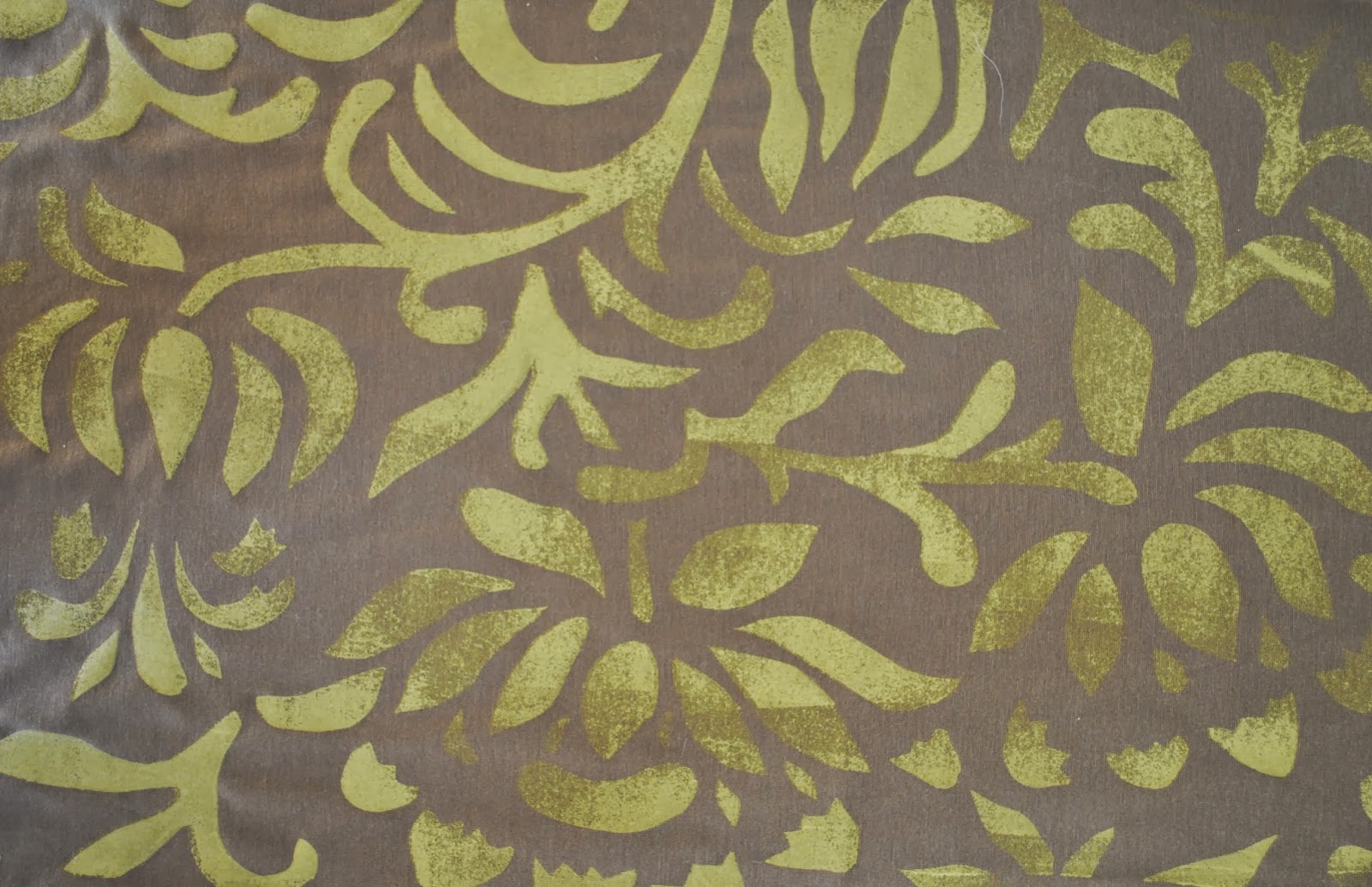
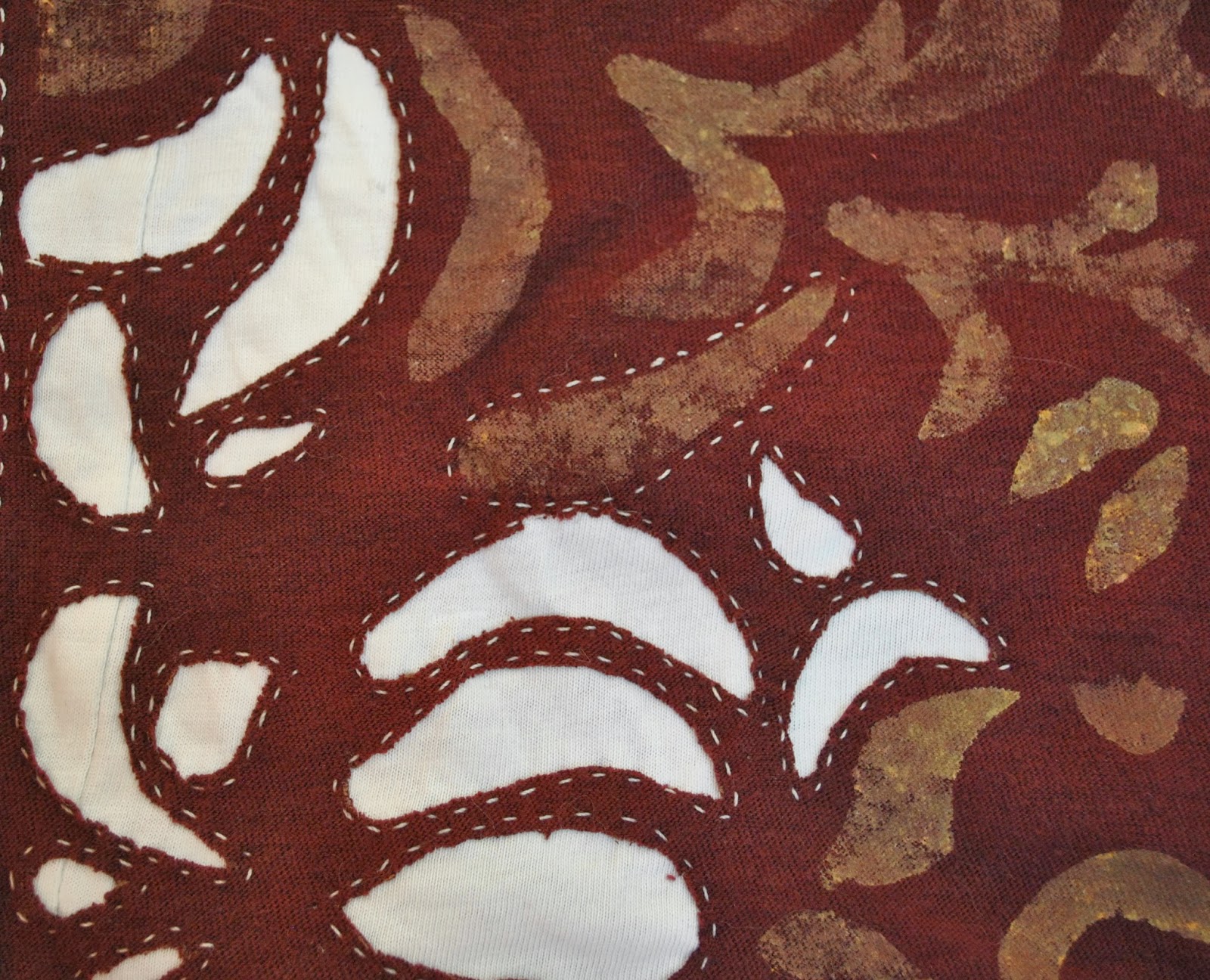
The embroidery technique I have chosen for this project requires keeping the printed motifs intact in the final garment, so I needed to print the motifs in proper fabric paint instead of the discardable house-paint that I used for my first project.  I used Permaset water based Textile Printing Ink from Jacksons, and mixed a deep oxblood red/brown colour using orange, crimson and a bit of green.
My green had a few chunky bits in it that didn’t mix in properly, and I really like the few areas of streaky green that showed up in the screen print.  It’s almost a pity that they will be mostly covered up by my embroidery!

My print placement was not perfect: note; it never is! and after I’d finished I noticed a few largish gaps that stood out visually in a not-good way.  So the next day I mixed up a teeny bit more paint, cut a new, very small paper stencil of two leaves and carefully printed in a few of these in the gap areas. The design looks quite irregular so I think it worked out very well.  They stand out like a sore thumb right now because they are a deeper colour but I’m thinking they’ll probably blend in OK once I get embroidering  🙂

pinterestmail

leatherette/pleather piping

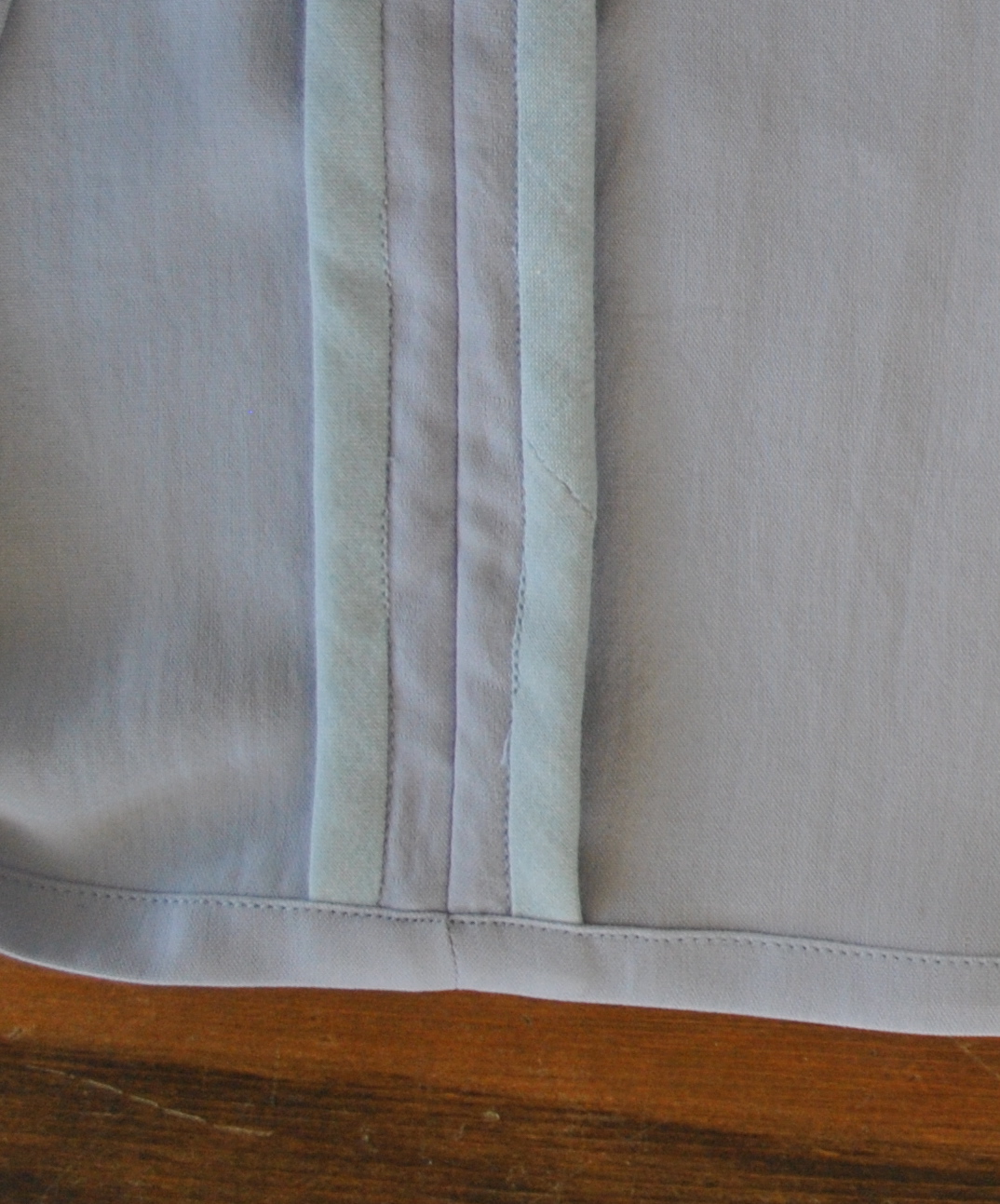
I have a word of advice for anyone considering putting leatherette piping in a garment.
Don’t.
There, I think that just about covers it  😉
Haha, I’m kidding… but seriously now, leather/ette detailing is pretty hot right now and adds a smart urban edge to the most ordinary of garments, so I made some to put into my latest project. 
It’s fiddly but I think it’ll be worth the effort.
Some thoughts:  
When sewing around a sharp corner, clip into the corner before pinning the next section in place, and sew each section as a separate little seam.

Same goes for sewing around a curve.  Go slow and check everything is sitting just as it should frequently.  There is no shame in hand-cranking the machine, stitching just one stitch at a time!  Those needle holes are permanent.

Obviously when sewing in tight corners and curves, pick a nice, long-enough section of the piping with no joining seams.  No point in making it more difficult for yourself than it is already.  Only use those bits on long, straight easy edges.

Leatherette does not fold into a sharp edge or point, and even on the bias will not naturally stretch out smoothly around curves either, like a woven fibrous fabric would.  But it does give a nice, softly rounded edge when turned out.  I like the bluntness, am very pleased with the contrast in textures and think they’ll lend a certain je ne sais quoi to the final garment.  Hopefully.  🙂
pinterestmail

sewing on planes; a tip

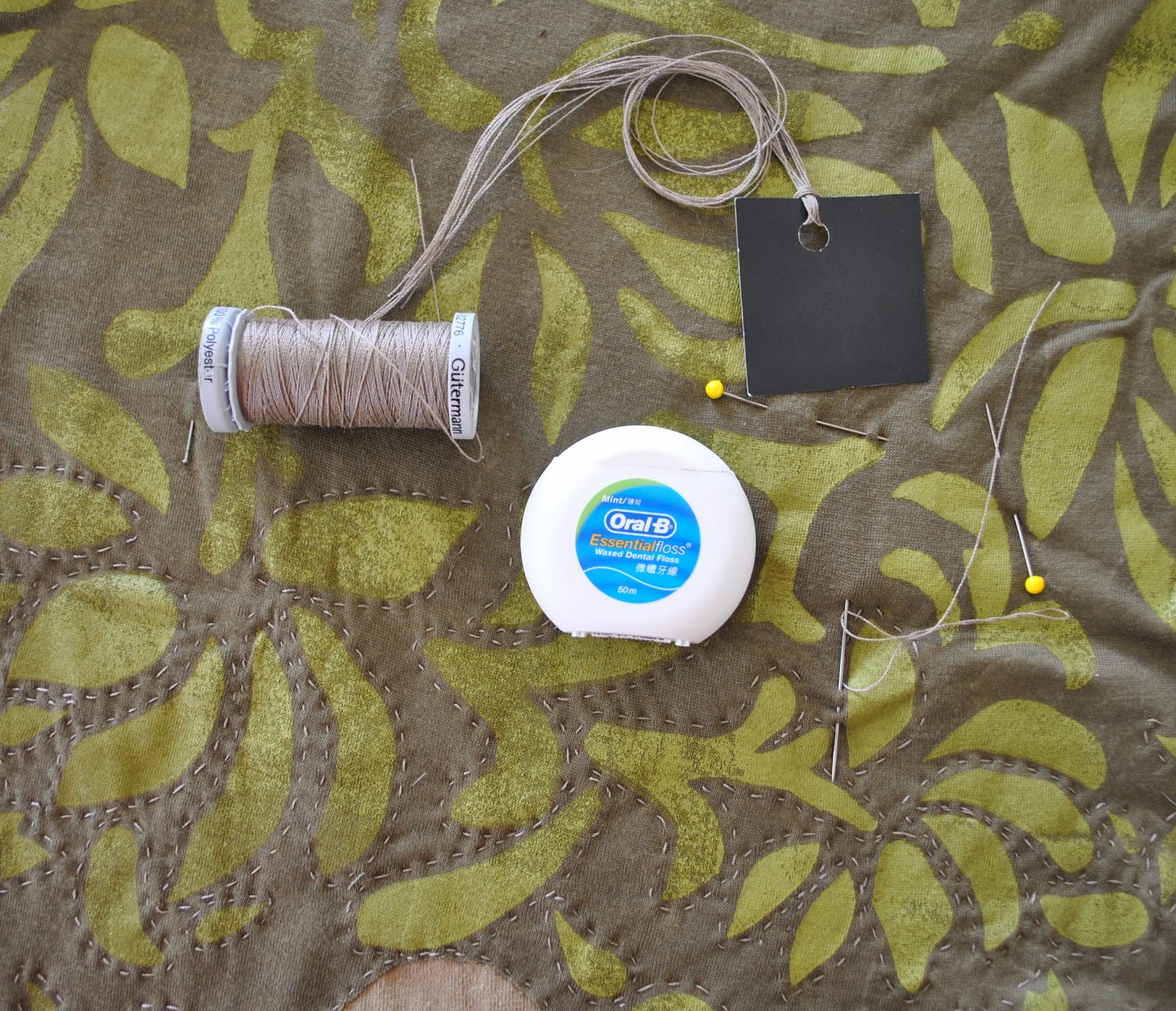
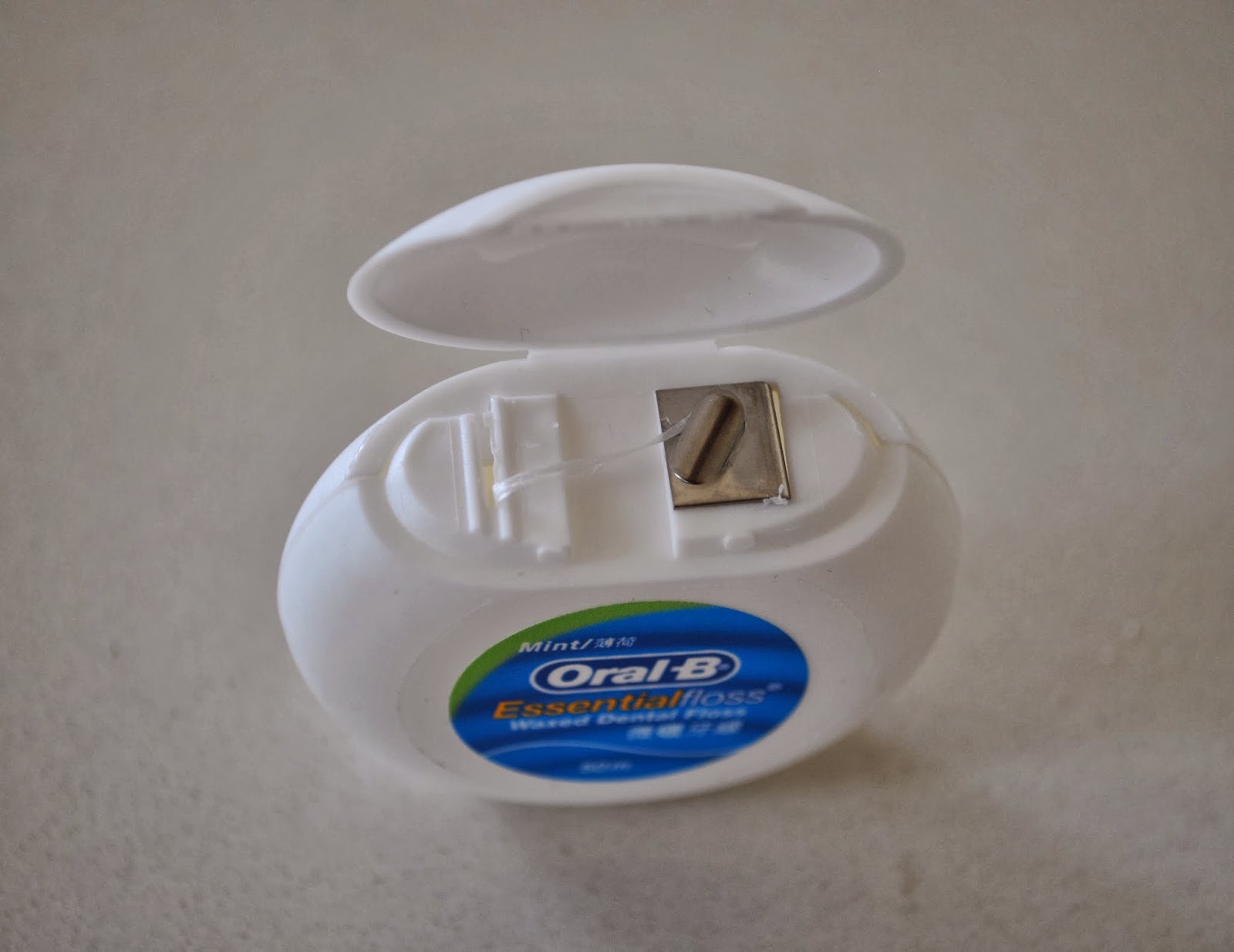
The thing about plane trips:  the thought of spending four or five or even more hours sitting in one spot with absolutely nothing to do is an almost unbearable concept to those of us with busy hands, and when you have a huge hand-sewing project on the go it is even more so!  I was determined to not let that time go to waste so went into my recent interstate flights prepared.  Scissors, even little plastic kindergarten ones, are verboten on a plane but you are allowed to take on dental floss and the tiny little floss-cutter at the top can be used to cut your thread.  It doesn’t make a very clean cut but it does the job in a pinch.  I also pre-cut plenty of lengths of threads beforehand to minimise the number of times I needed to make a cut.

pinterestmail

Experiments in Alabama Chanin

There has been progress; I’ve been mucking about with Alabama Chanin stooff, partially making a little fitted tank top to test for size and to allow me to get a feel for the techniques.  It’s only half finished, and I’ve set it aside now to concentrate on my second and “real” Alabama Chanin project  🙂
I have outlined some of my thoughts in the hope that they may be useful to others starting out with Alabama Chanin too.  Particularly for Australians: the thing is;
the AC book is not written with us in mind; which is fair enough of
course but we can’t always get hold of the listed materials here.  I am trying to use only materials that are readily available
here in Australia.

Fabric: a couple of the boys’ old Tshirts from the toss-out bag.  I harvested the fabric for the neck and armhole bands from the sleeves.

yes, the same fabric as above, and no the colour is not off.   it got dyed after this photo was taken

Thread:
button craft thread is specified. 
This is more correctly known as button and craft thread, and Natalie
Chanin describes it as “one of the strongest threads (the Alabama Chanin team
has) found”.  Unfortunately I
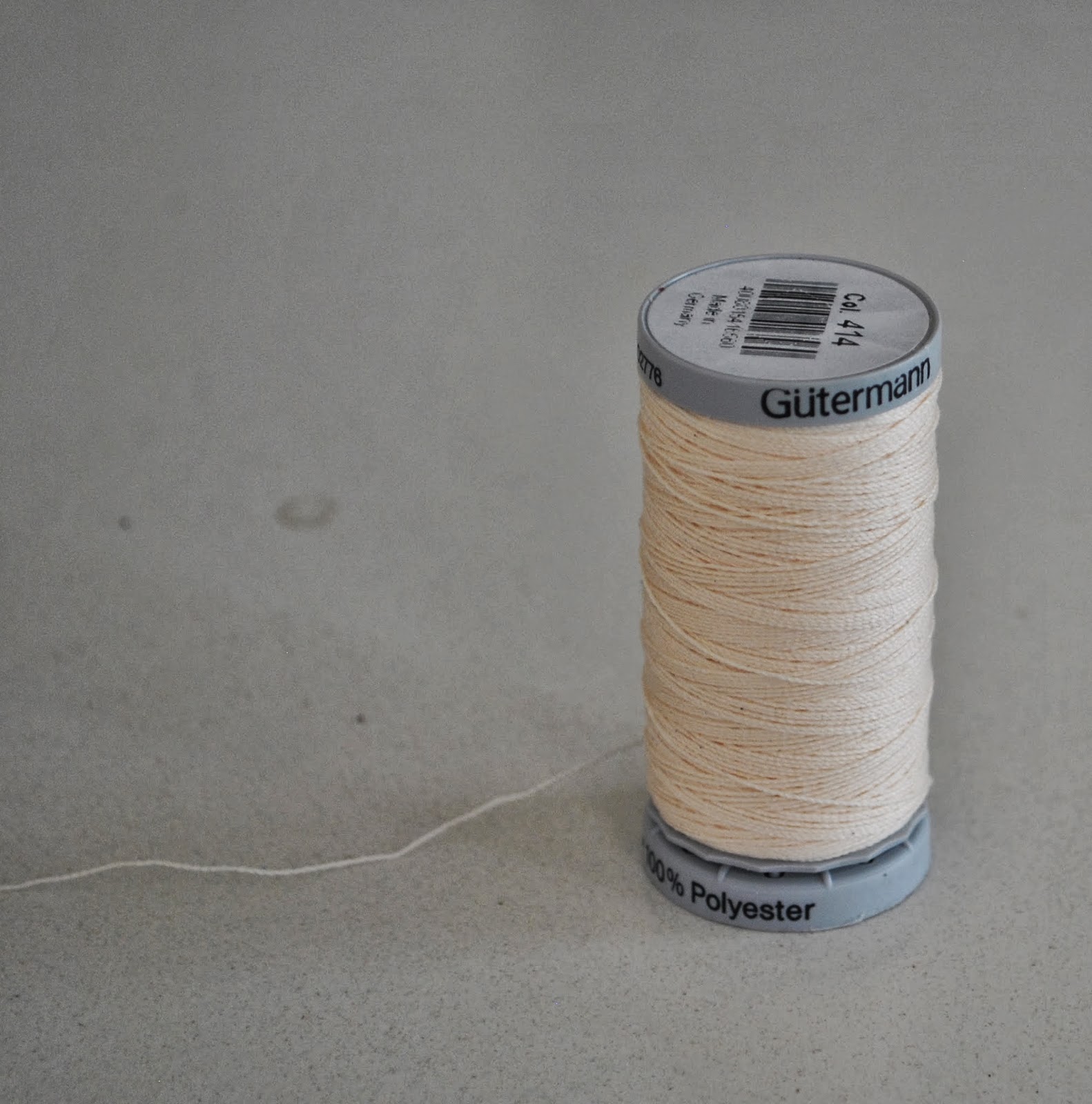
couldn’t find anything of this name in Perth so I’m using Gutermann’s upholstery
thread from Spotlight.  It is the strongest in the Gutermann range and is typically available in about a dozen shades.

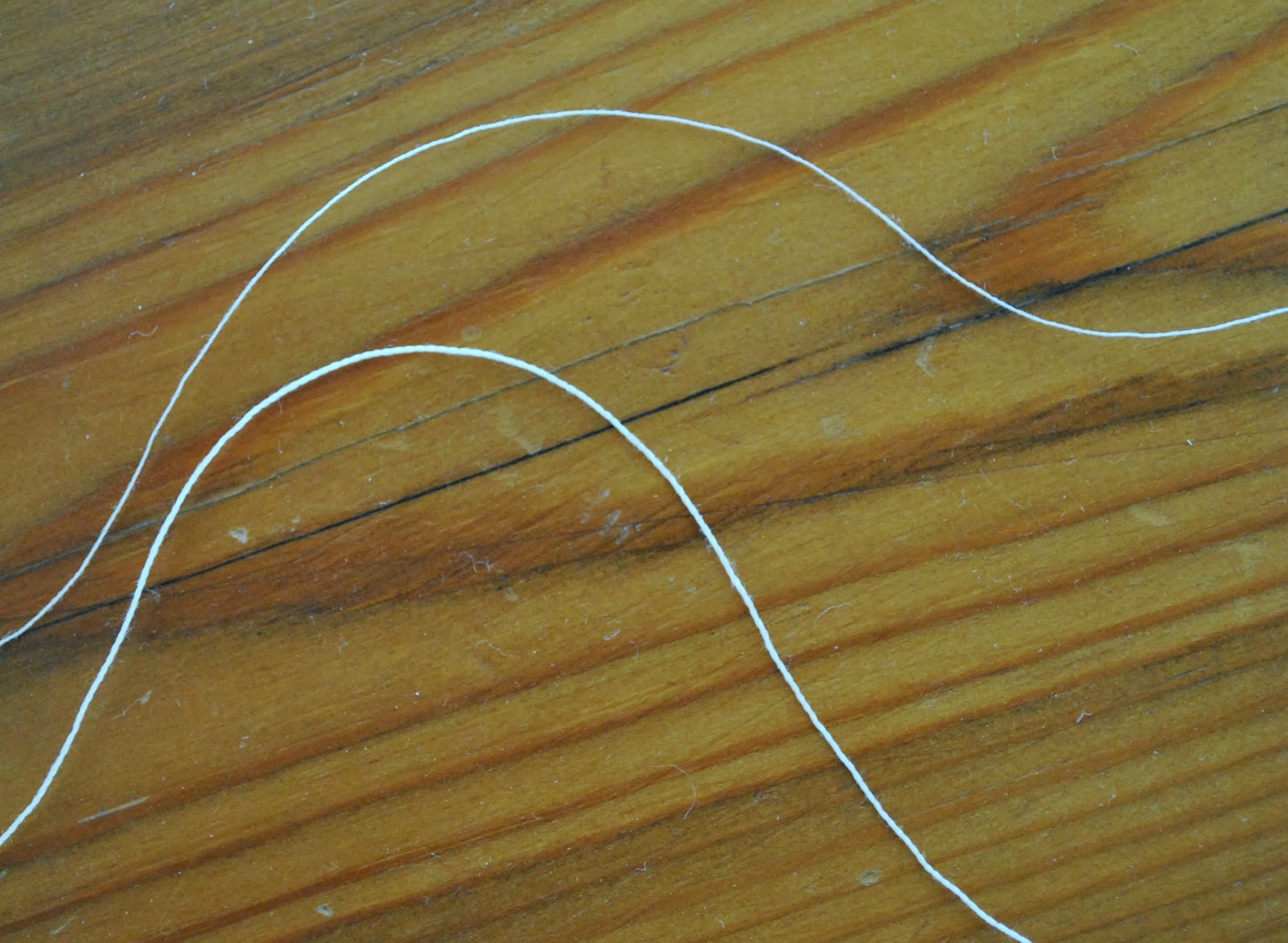
all-purpose thread at top, the upholstery thread below

I
traced the full front and back pieces of the Short/Long fitted dress, fitted top and fitted tunic pattern as
one piece each and will just folded back the excess portions when tracing each thing.  I’m generally a bit of a slacker when it comes to checking for fit but since there is a
heckuva lot of hand-stitching in these garments, I think a careful check for fit
is pretty important! And I am sooo glad I did since I found it necessary to
make a substantial sway-back adjustment. 

Stitching:
So, to machine stitch or hand-stitch? 
I totally cheated and stay-stitched and basted by machine!  I’m undecided about
whether or not I will hand-stitch all the seams in my final garment… part of me
thinks it would be better to save that effort for the decorative stitching
on the motifs.  In some cases I
allowed the knots to fall on the outside or right side, a
sometimes feature of AC work.  I
decided this is not a finish that appeals to me, so I will probably be concealing them
on the inside from now on.
The
stencil
; I bought the plastic sheet for the stencil from Jacksons Drawing Supplies and enlarged the Anna’s Garden stencil from my copy of the AC book.  The whole process is very time-consuming, so the design should be one you’re absolutely sure that you will like.  I totally wanted to design
my own stencil but decided to play it safe with one that I know from looking at the beautiful projects in the book looks really
amazing.  Using a proven design is good practice for getting a feel for how proportions and size of the motifs
work for the embroidery and appliqué techniques.  I think once I have a few projects under my belt then I might branch out and try my own ideas.
Printing: y’know, I’ve got a feeling this is going to be the most difficult part to get right out of the whole exercise…!  I haven’t found any sprayable textile paints as recommended, so I experimented with a watered
down solution of the Permaset textile paint from Jacksons Drawing Supplies, that I use for screen-printing, mixed in a regular spray
bottle.  Results: disastrous!
It bled underneath the stencil and the edges were
unclear and blurry.  NO pictures because it looked so awful  🙁
Attempt
number two;  tried stippling
undiluted textile paint with a stiff and bristly paintbrush.  This is effective, but took forever!  This may be worth it for small areas of
stenciling, and when I want to use just a small amount of the textile paint.

Permaset textile paint, stippled on with a dry brush
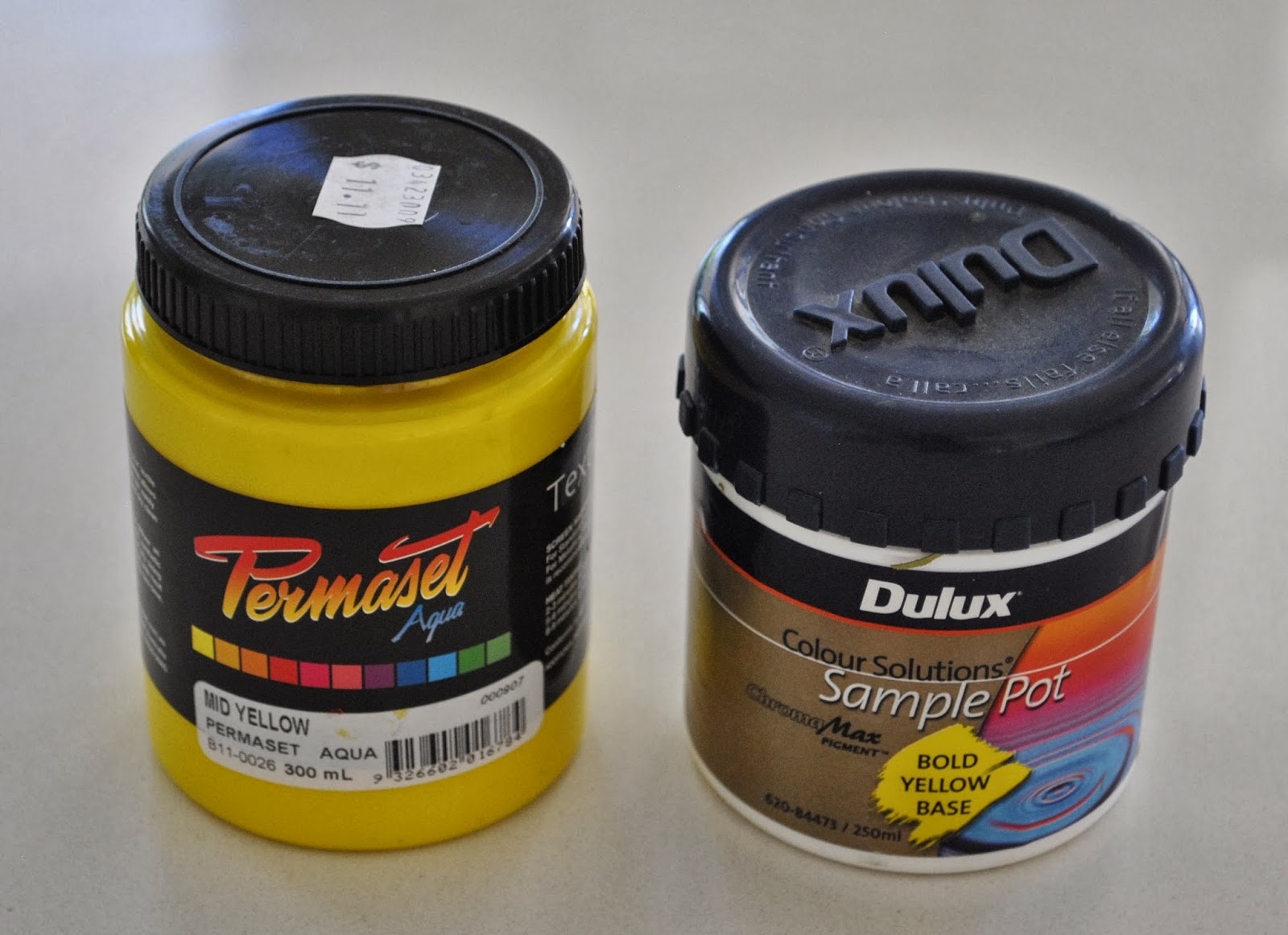
Permaset textile paint (Jackson’s Drawing Supplies), sample pot of Dulux household acrylic paint (Bunnings)

Attempt number 3; since textile paints are actually quite expensive, and since for some
techniques the painted sections are just cut away and discarded anyway, I
tried using a cheaper paint.  I
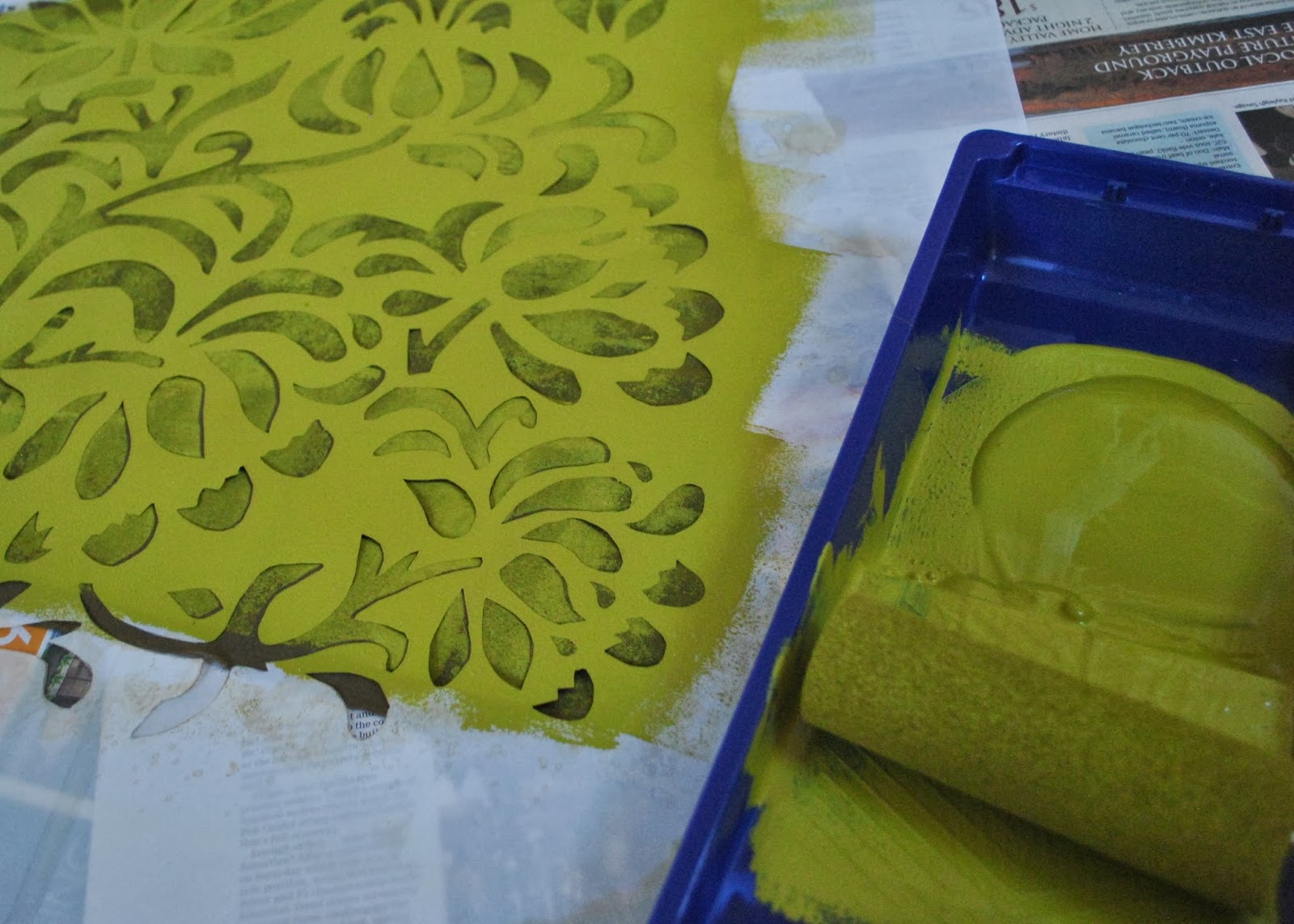
bought a sample pot of Dulux acrylic household paint and a small foam roller from Bunnings.  This worked beautifully!  Because the motifs are ultimately to be cut away I applied it lightly
and roughly here, without giving too much attention to getting perfect coverage but it would be pretty easy to get completely even coverage using the roller, if you were aiming to
keep the painted sections partially intact in the final design.

Obviously, household paint is only a good choice if the motifs in the final design are going to be completely cut away because it is stiff and inflexible and not comfortable to wear.  In the case that motifs are to be left partially or completely intact then proper textile paints would be necessary.

the Dulux acrylic paint, rollered onto my “real” project  🙂

Something I noticed when comparing my sample with the ones in the book: my stitches are teeny tiny compared to theirs!  Hmmm, might have something to do with why this has taken me sooooo long!  but very small stitches have always been my thing.  In my “real” project I am making an effort to do larger stitches… the project will go along a lot faster and will look more “Alabama Chanin-y” although that’s not so important to me as authenticity to my own personal style.  

…the size of those stitches!!!!

I didn’t get very far along with this little sample top, but I do quite like it and may actually finish it…  one of these days… once I’ve finished my swap items, that is 🙂

pinterestmail

stabilising the zip in a delicate fabric

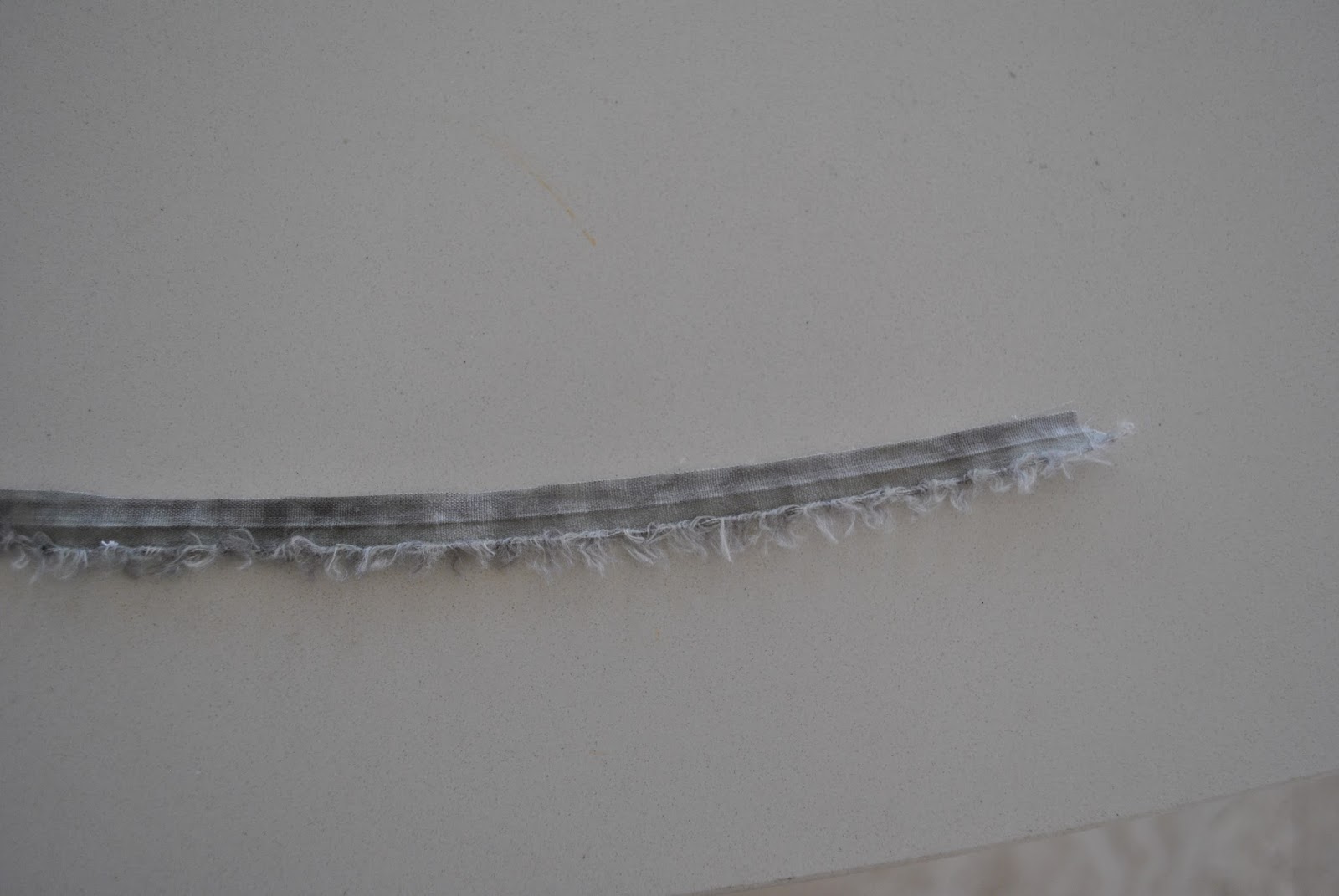
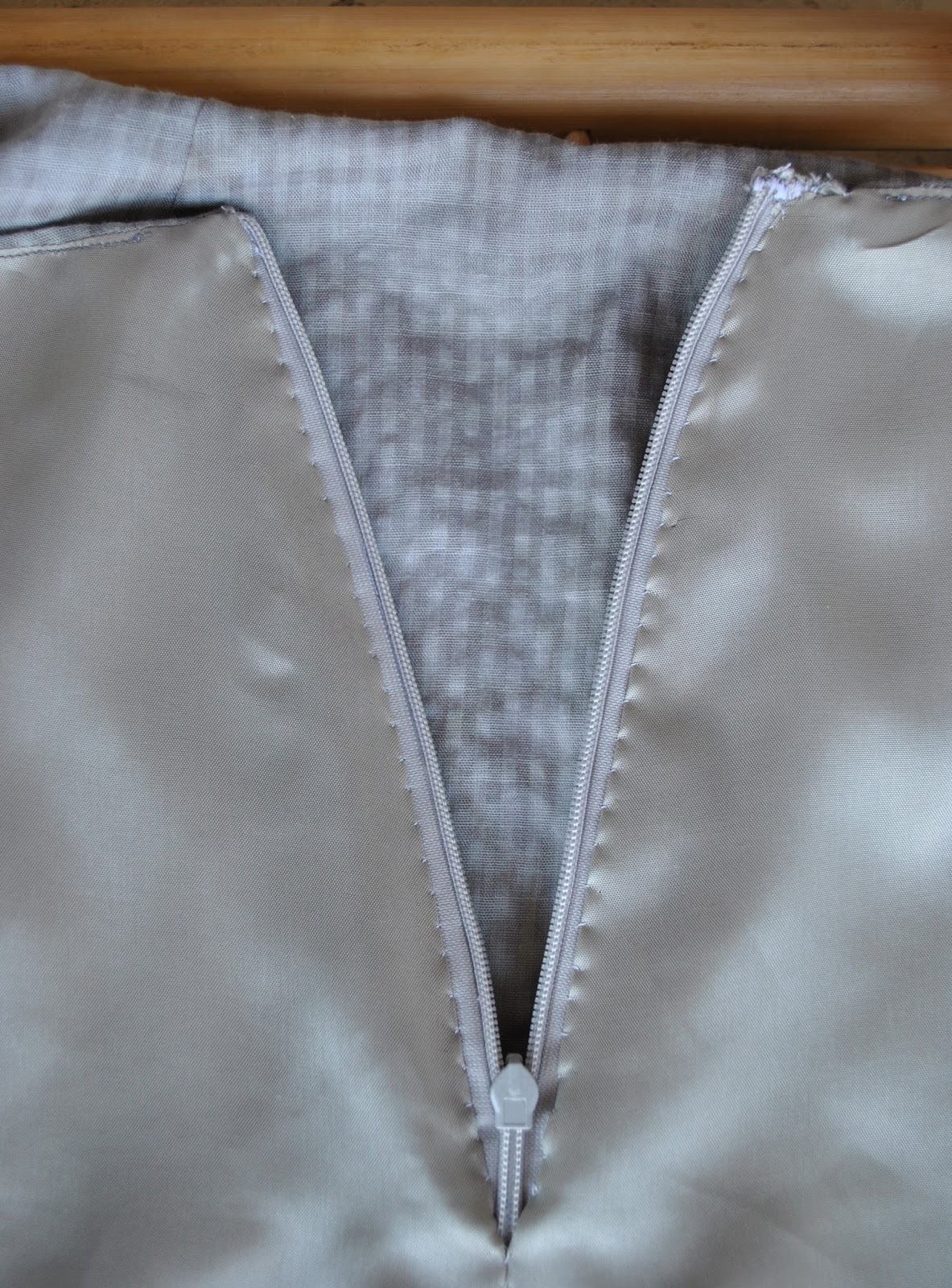
When stitching an invisible zip into a delicate fabric, it’s a good idea to stabilise the fabric at the stitching line somehow, give it some oomph to help guard against ripping.  Generally, patterns recommend using commercially purchased bias binding or tape, which is sewn to the seam allowance to double the thickness of fabric at that point.  Me being kinda stinge-y  I mean thrifty, ahem!  I usually snip a strip of the selvedge off to use.  
Why? several reasons…
The selvedge of any fabric, even delicates, is usually surprisingly strong and quite stable compared to the body of the same fabric.  
Particularly with sheer fabrics; the selvedge, being exactly the same colour of course, will blend in perfectly and won’t show through to the right side of a sheer fabric at all.  This is a big plus if your fabric is an unusual colour.
Also, you are making good use of the scraps that you would probably toss out anyway, which is more economical than not, yes??
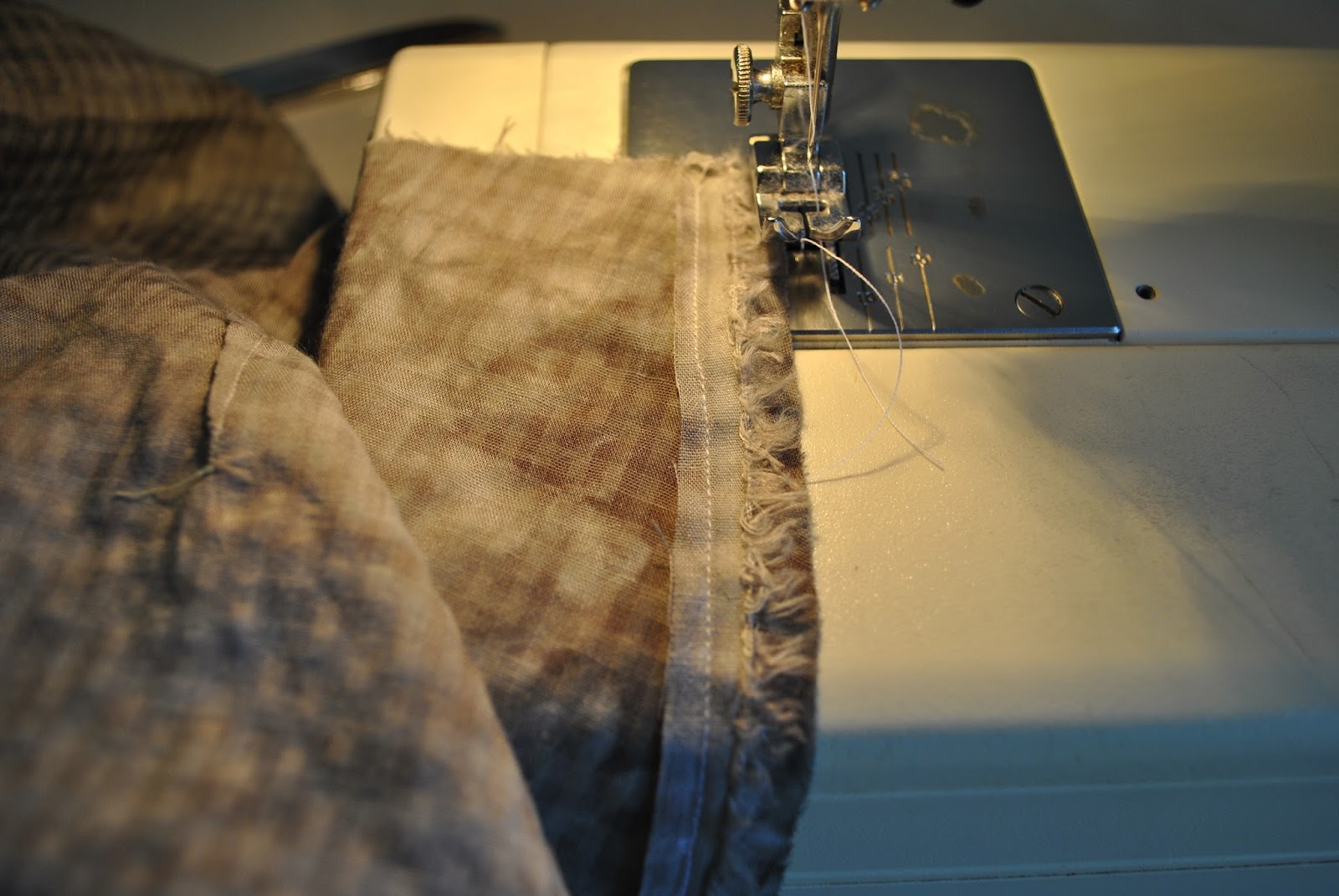
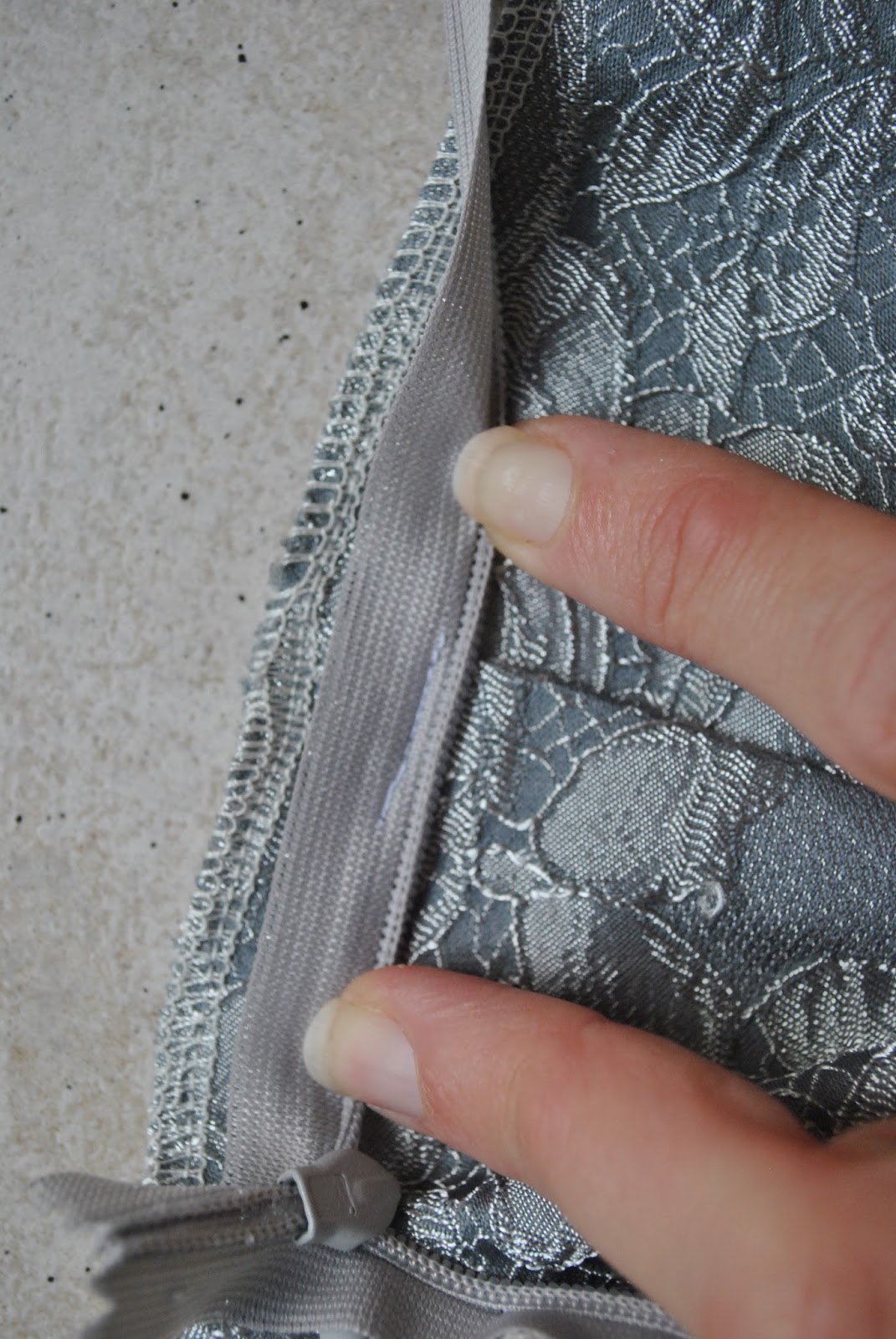
Just stitch it down to the wrong side of the garment, as close to or just within the seam allowance.  If your fabric is super delicate you could fold it over, or use a couple of strips layered together, giving you triple thickness fabric at this point…

Sew in the zip as normal…

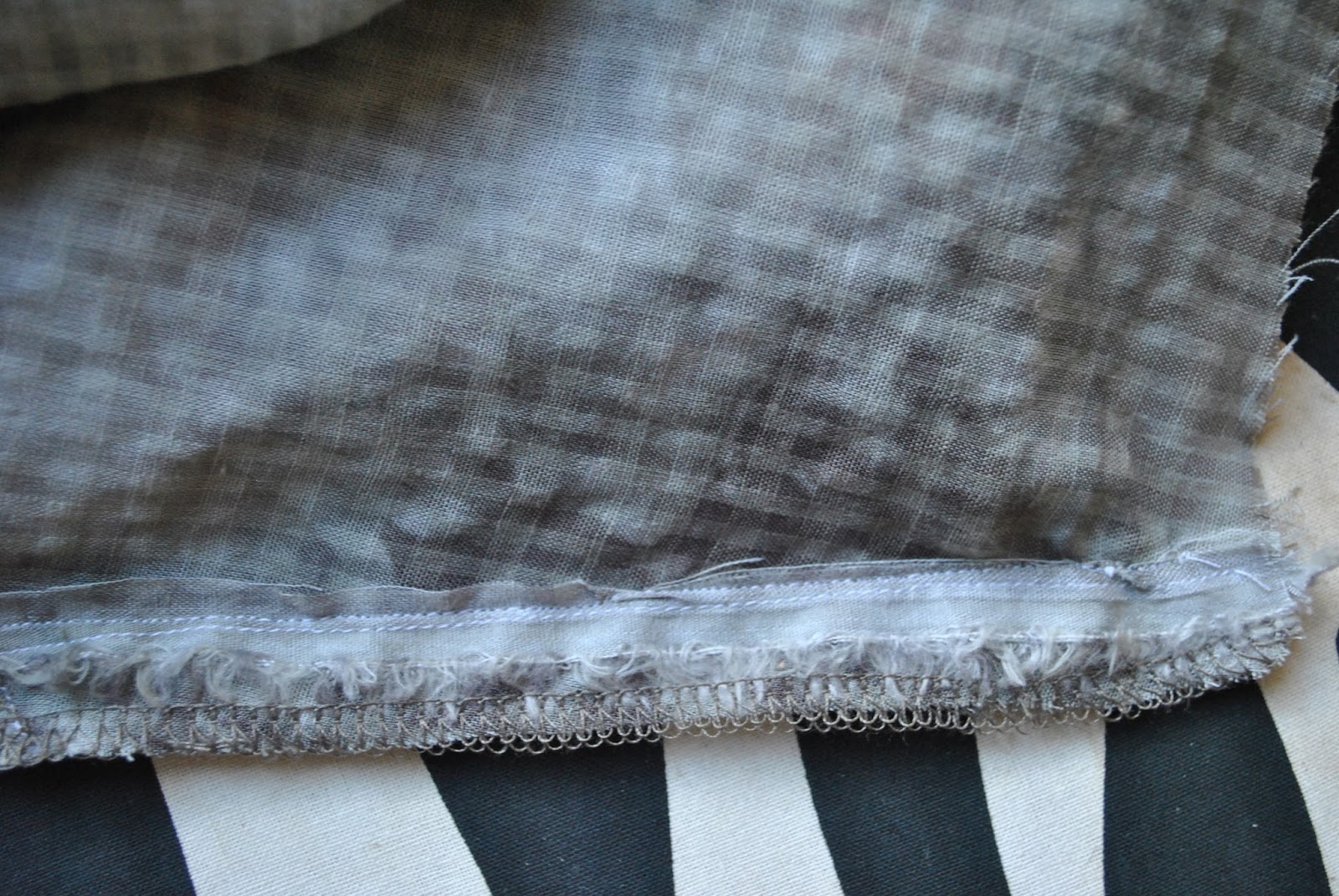
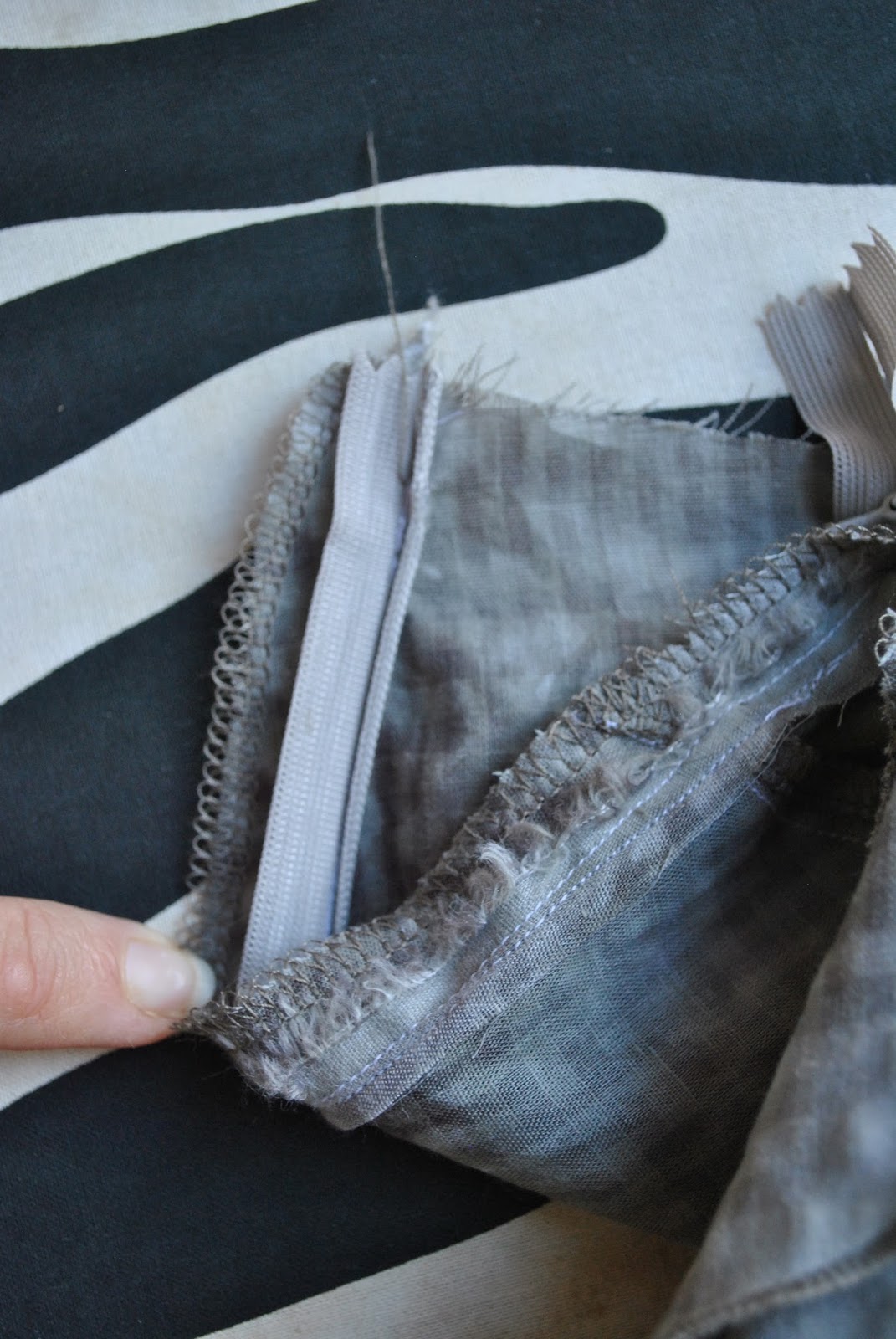
Don’t worry about those fluffy messy looking edges, because once the lining has been stitched to the zip tape you can’t even see those scrappy edge bits anyway.

pinterestmail

lining up opposing seams in an invisible zip

Here is my tip for aligning horizontal seams on either side of a zip…
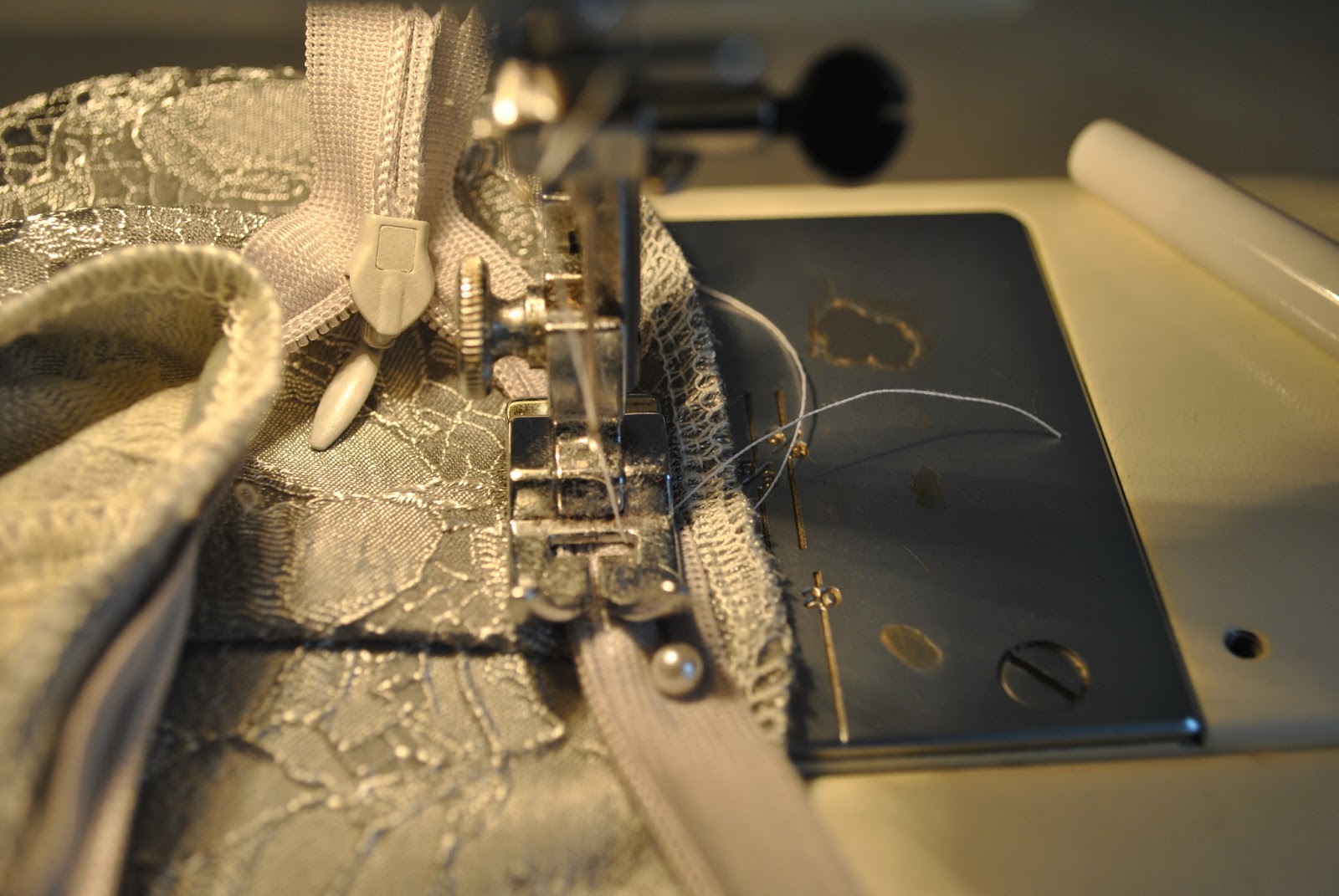
after sewing in the left side of the zip, zip it up, fold the seam allowance in for the right side and line the seam up exactly with that on the left side.  Pin in place on the tape.

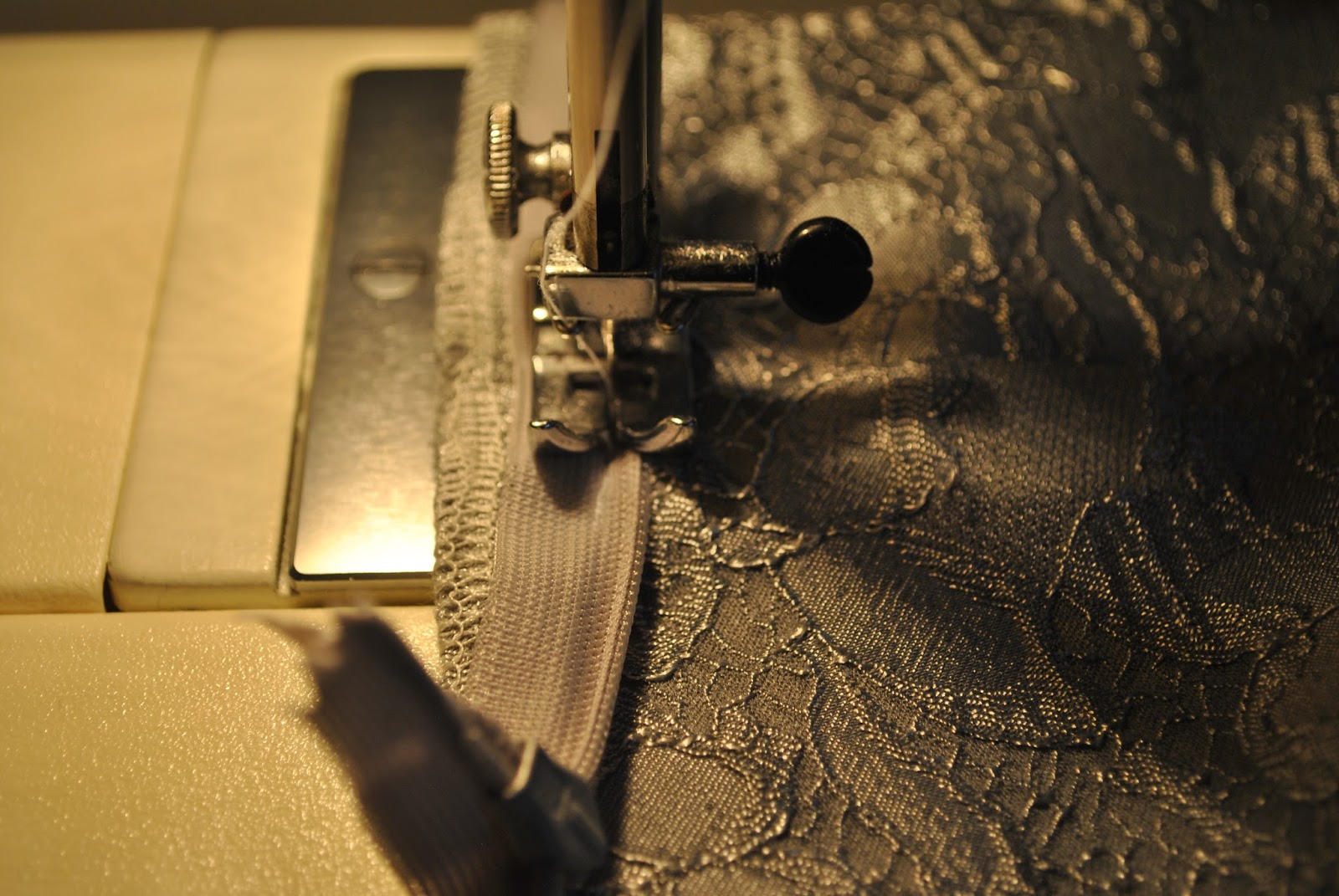
Unzip, then sew the right side tape of the invisible zip just for a very short section, maybe only couple of centimetres, just over the seam

Zip the zip up again and do a quick check from the right side to see that the seam still matches up with the other side… if the seam has shifted just a bit out of whack then you only have those few stitches to unpick and re-stitch.  Better than having to un-pick the whole length, huh?

When it’s all lined up nice and straight, finish stitching the remainder of the seam above and below….

Bammo!  No stress seam alignment!

pinterestmail

Cement worker

I made a shirt for Dad’s birthday  🙂

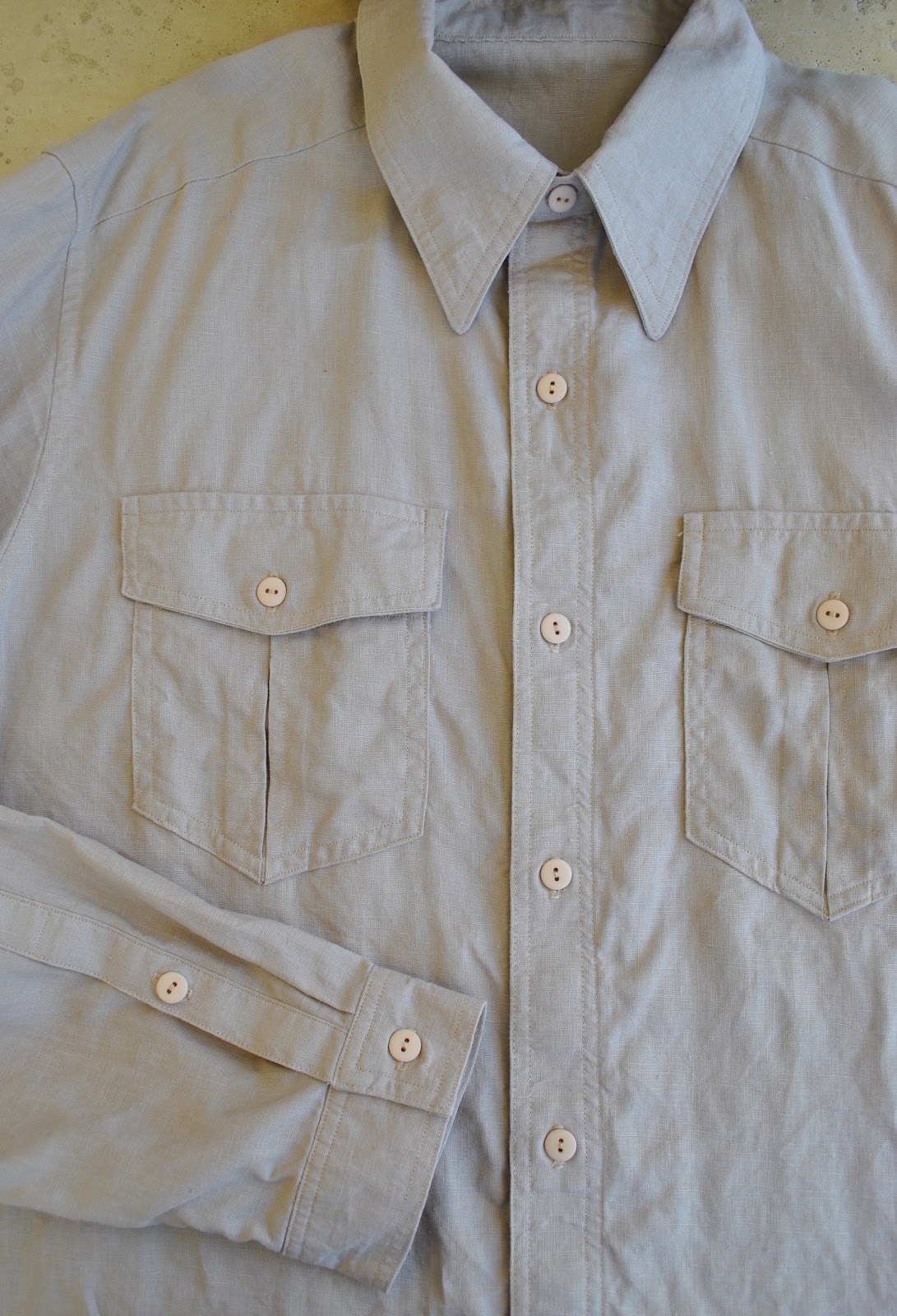
I used Burda 7767 custom-fit to his size that I fine-tuned with last year’s shirt, and a fine-grade linen from Spotlight in a shade called “cement”.  Very appropriate for a man like my Dad who is the handiest handyman you could ever hope to find!  Srsly.  He is.  Cementing would be an absolute doddle to Dad, I’m sure  🙂
Last year’s birthday shirt was a sort of “nice” short-sleeved shirt to wear out to smartish events, and this new one is more casual, more suitable to Dad’s usual daytime activities; like working in the shed building stuff like The Chicken-Plucker (don’t ask) and his own lathe, tinkering with the ute and trekking out through the bush to tend to his hives and chop wood.  And fire-fighting, although I kinda hope not!  
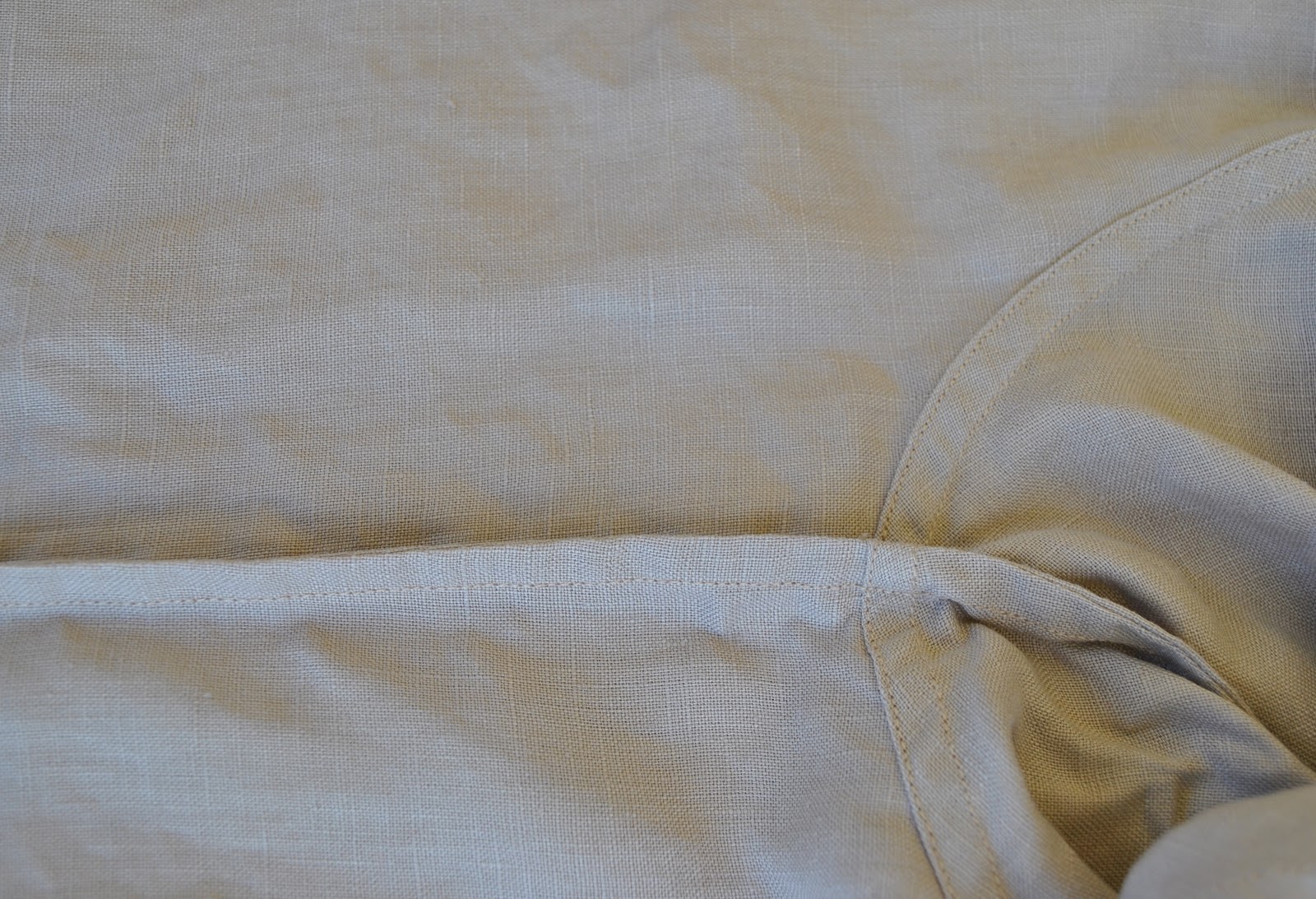
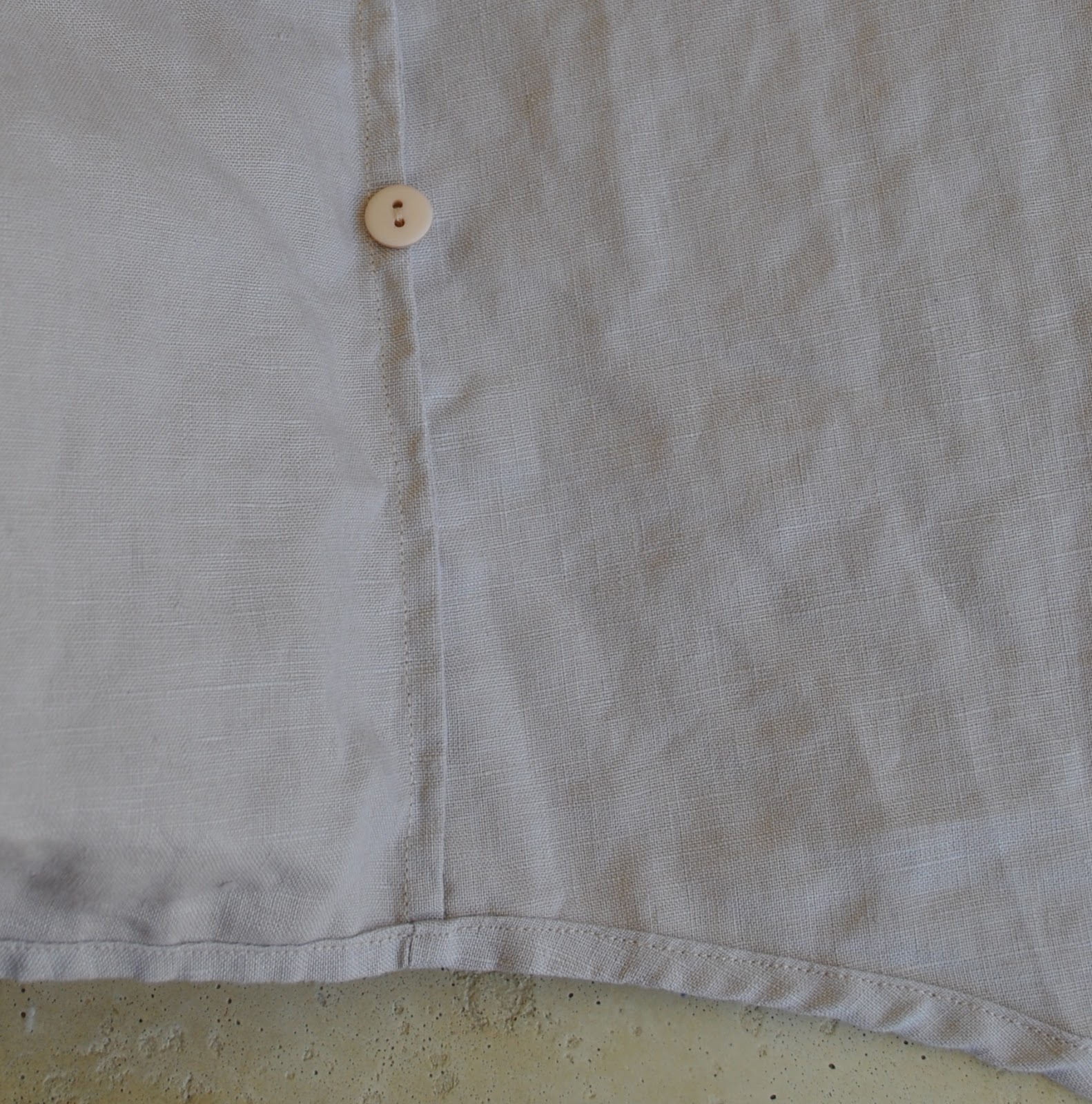
Being linen it will be a good cool shirt to wear all summer, and this one has long sleeves to protect Dad’s arms from the sun.  He can roll them up if he desires without fear of embarrassment caused by tatty interior finishes: since the side and sleeve seams are French seams, and the armscye seams are flat felled seams.  I used my own tutorial for flat-felling a curved seam to achieve this neatly.

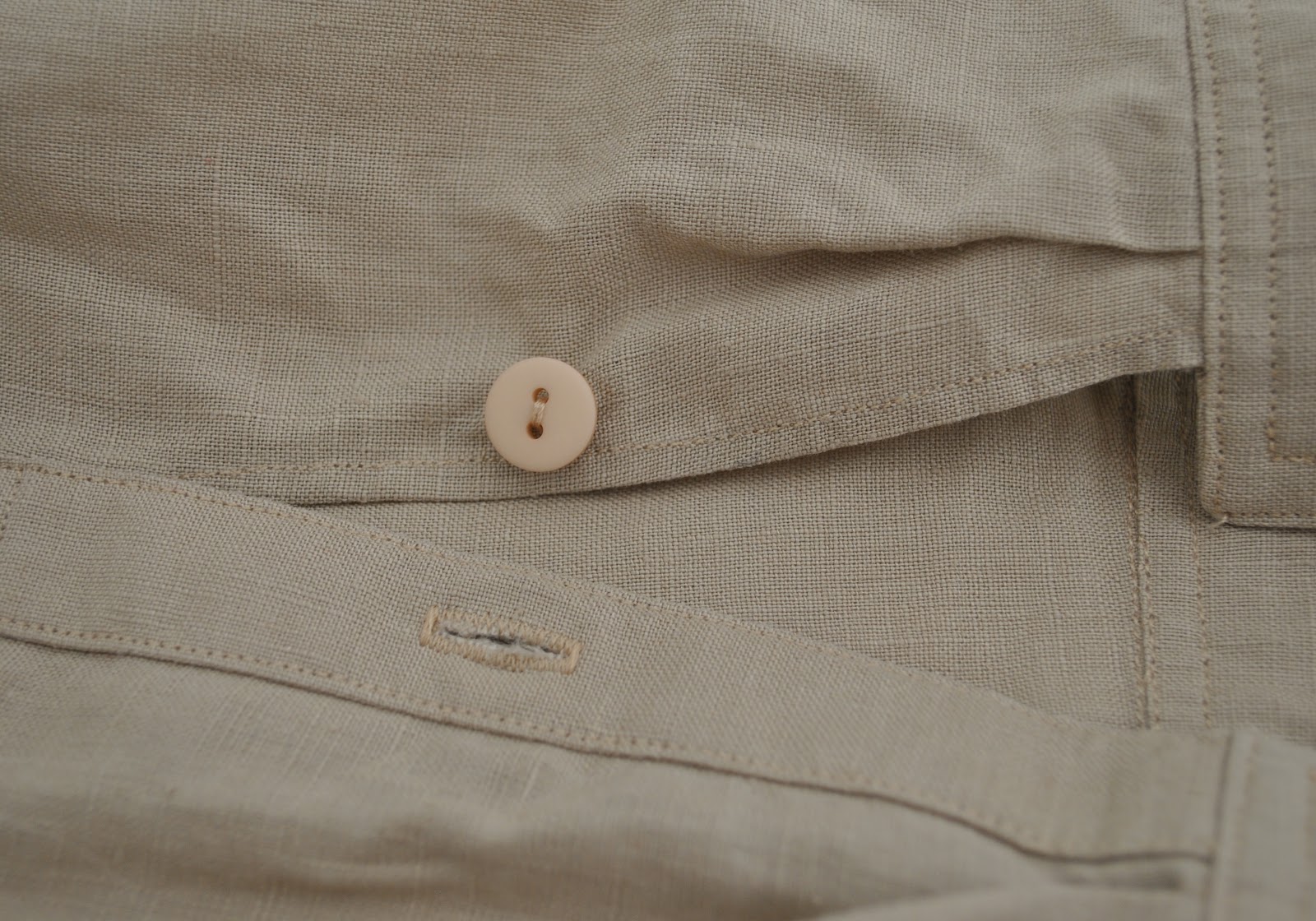
The pockets are bellowed and pointed at the nadir, and button closed with arrowhead flaps.  The buttons are from Fabulous Fabrics.  The lower hemline is curved, and as always I sewed a spare button inside to the side seam.

After I had finished sewing it; it was all nicely pressed, with the creases ironed into non-existence and all perfectly smooth and neat, like a newly sewn garment always is.  I looked at it askance.  It looked so … pristine.  A bit immaculate.  It didn’t look like a “Dad” sort of a shirt at all.  My Dad is very much a low-maintenance sort of a man.  So I gave it a second wash, a good shake-out and hung it out on the line to dry in the sun.  It came up with a very satisfyingly lived-in look; comfy, rumpled and crumpled.  I did not allow the iron anywhere near it.  Now it looks very “Dad”.

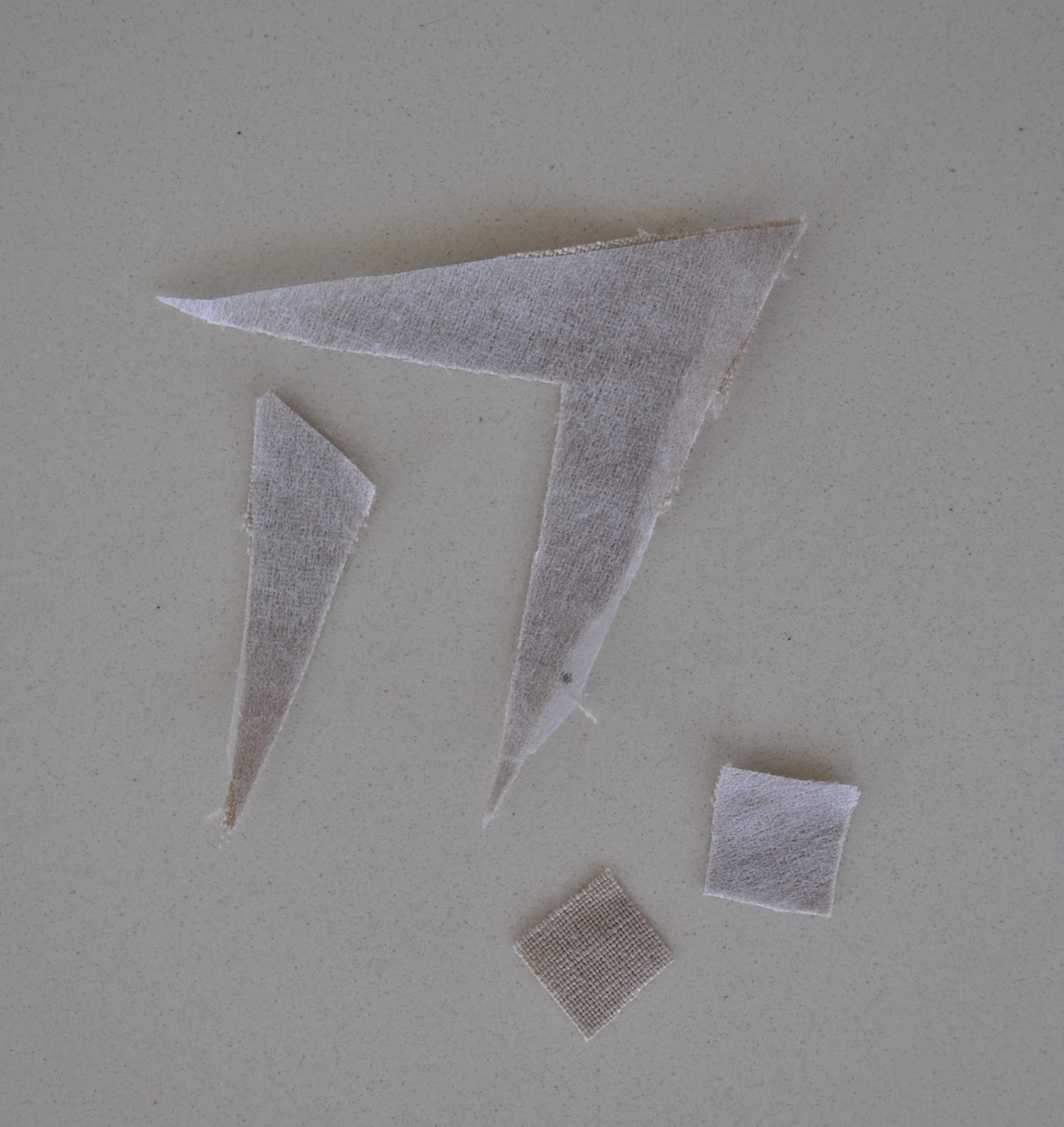
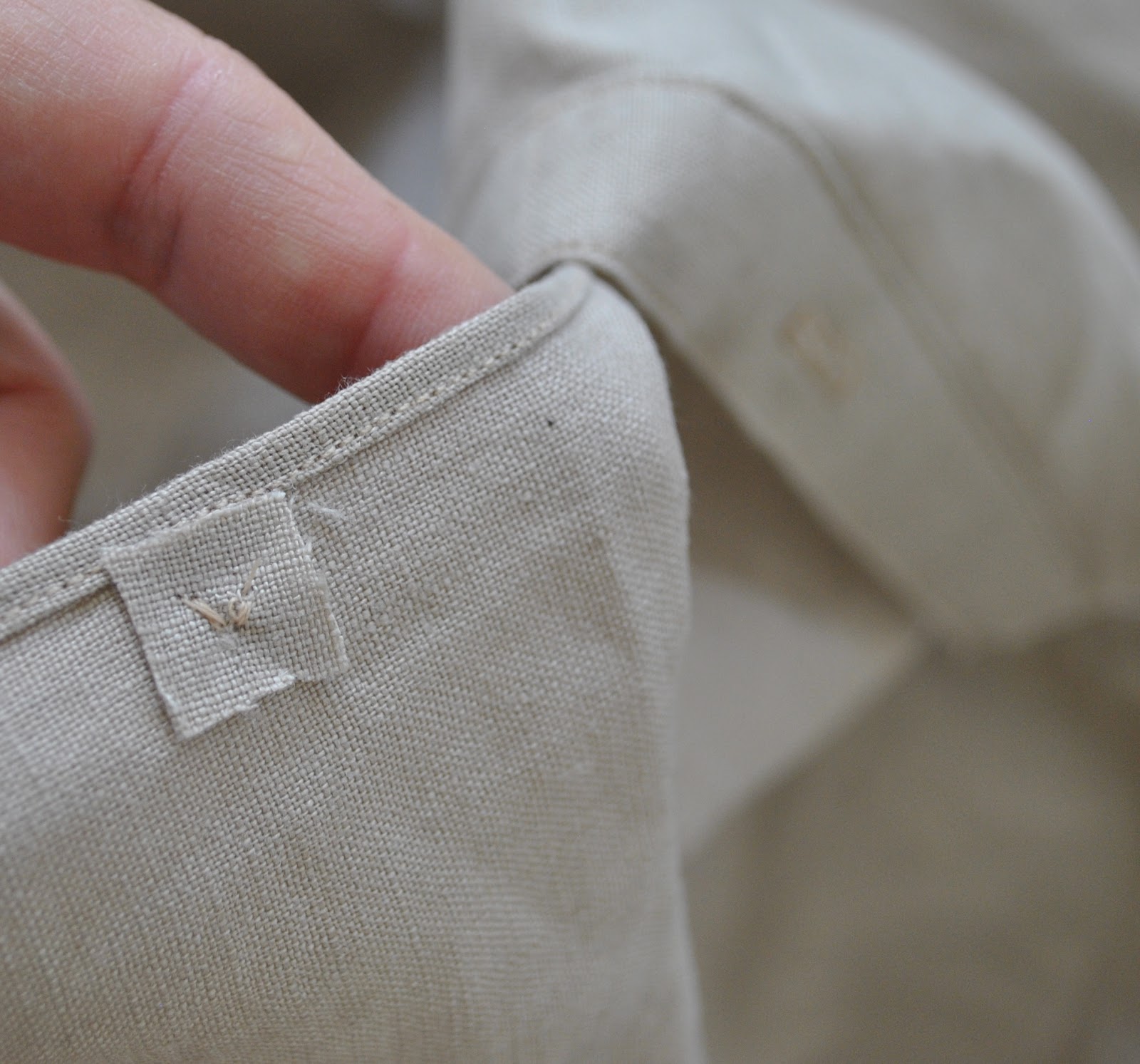
A little tip; when you trim off the seam allowances and points off of the interfaced pieces of collars and cuff and the like before turning out, it can be handy to keep the larger trimmings.  They can be cut down into small squares, which since they are already pre-interfaced are useful for stabilising buttons sewn in areas which have no facing, such as the cuff split button…

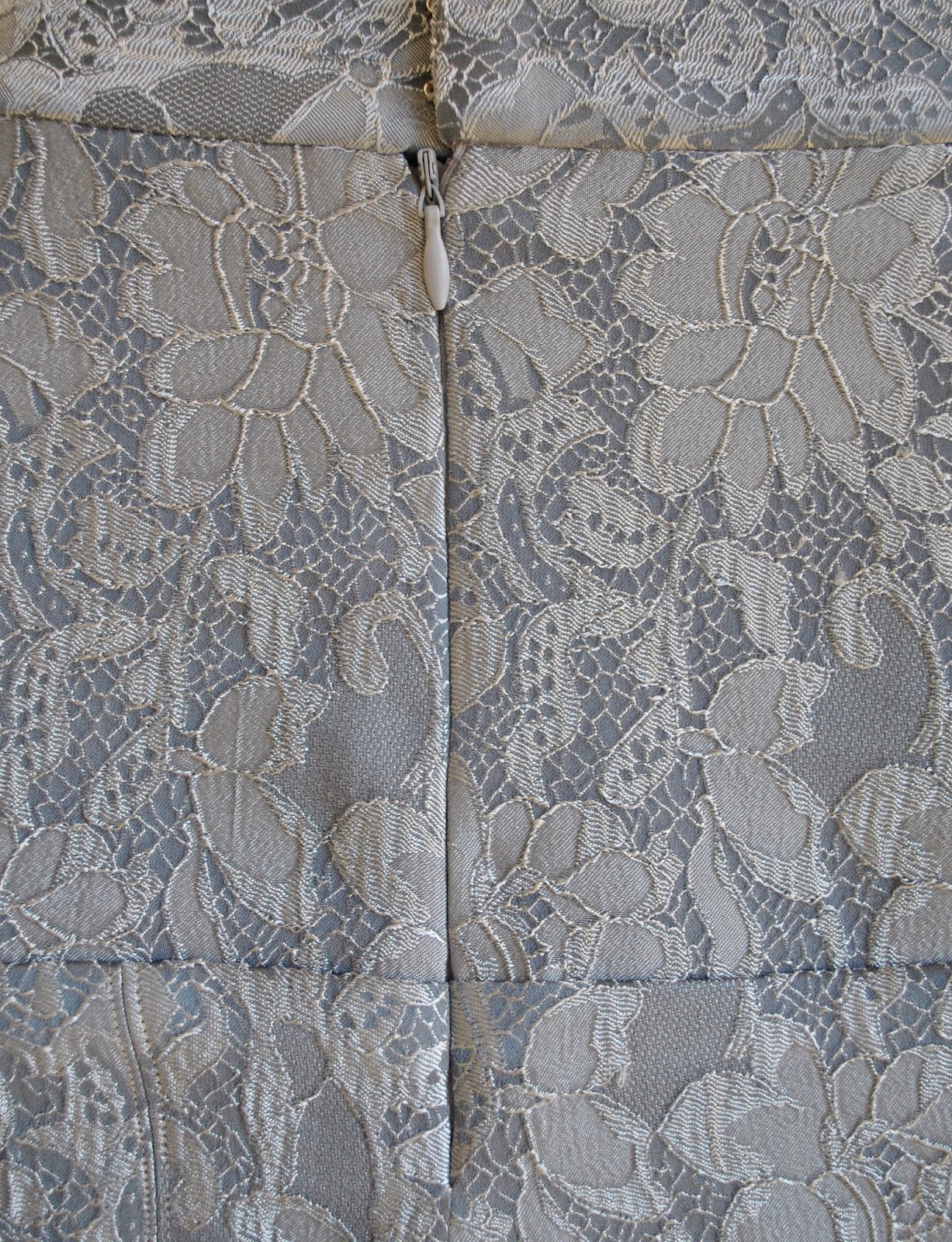
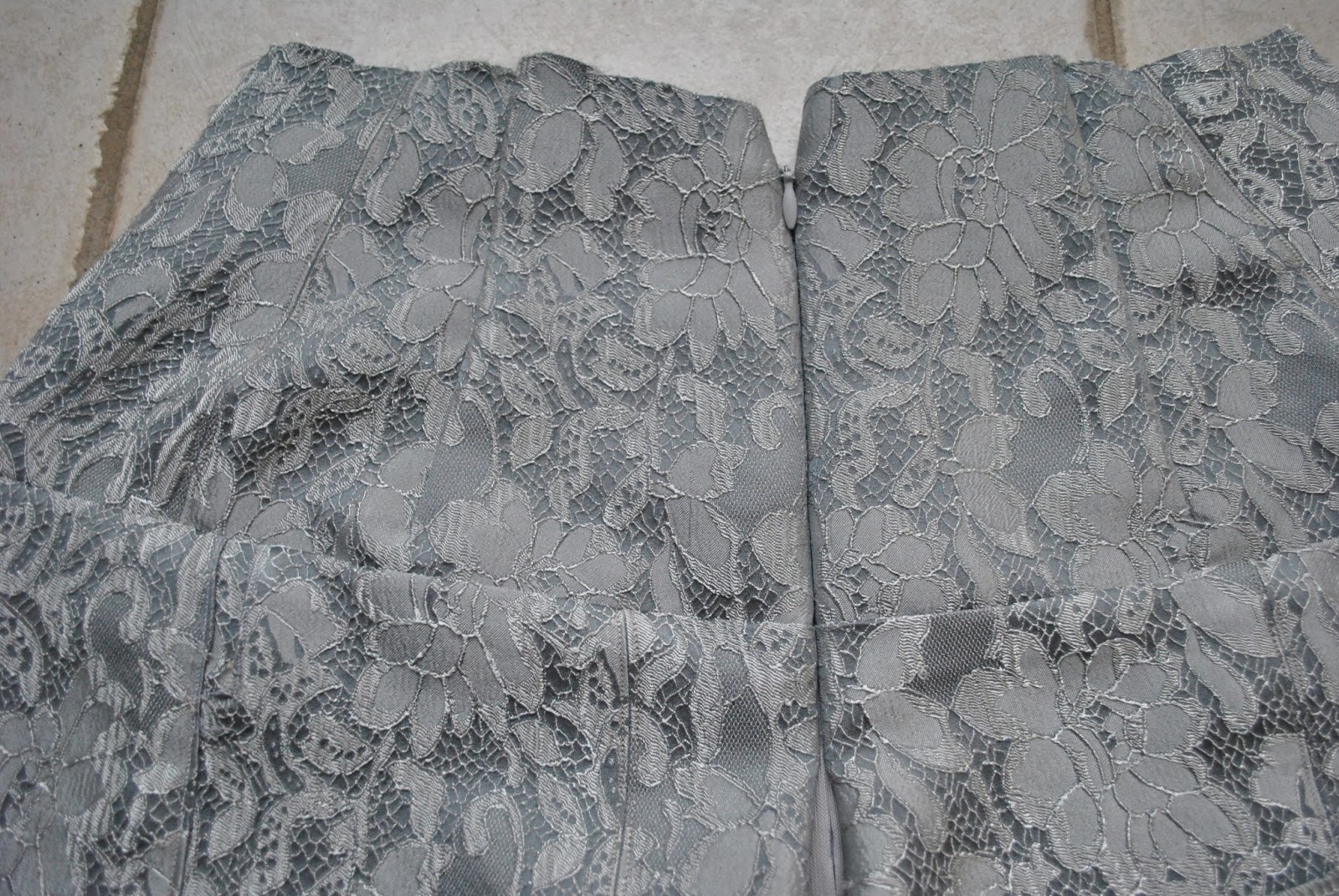
and yes, this was the secret thing I have made recently…. I used a small strip of the leftover linen for the waistband on my lace skirt.

pinterestmail

HongKong seams and the hemline

Hong Kong seams are a tidy and very handsome way to finish raw edges… but what happens at the hemline?  The seam gets folded up on itself twice, and if you are working with a flimsy fabric and especially if you are planning a narrow hem you will end up with a hem that is thick and blobby with extra fabric; not very attractive.
The solution is to cease the HongKong seaming inside the hem, at a spot before the fabric is folded up into the hem.
With this dress, I had such minimal fabric I couldn’t have a deep hem and needed to sew as narrow a hem as pssible.  The side seams are French seams which go fine into a narrow hem, but the centre back seam with the zip in it cannot be sewn with French seams obviously, so I opted to finish the raw edges with HongKong seaming…  and I took a few photos to show how I dealt with the HongKong seaming into the hem…
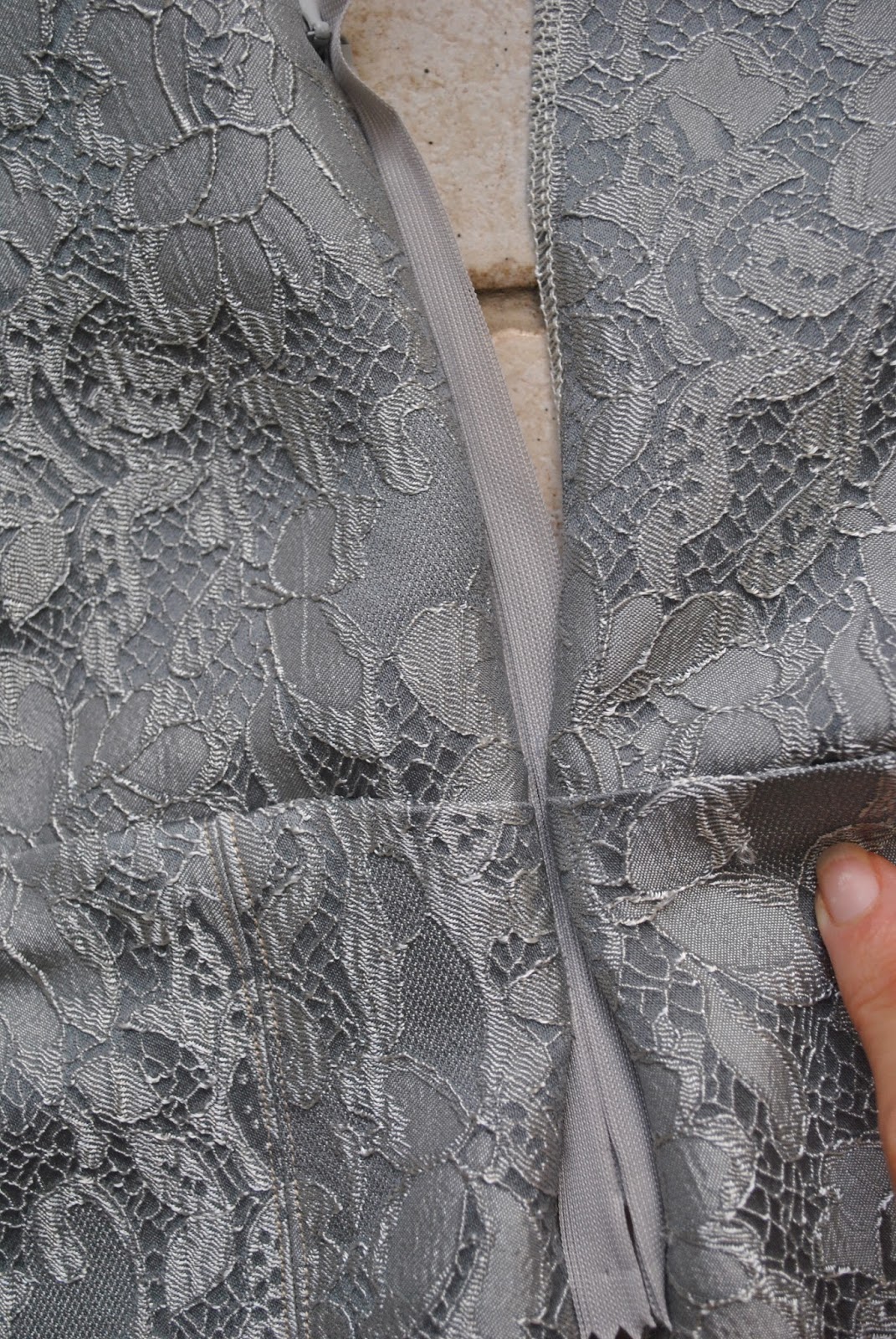
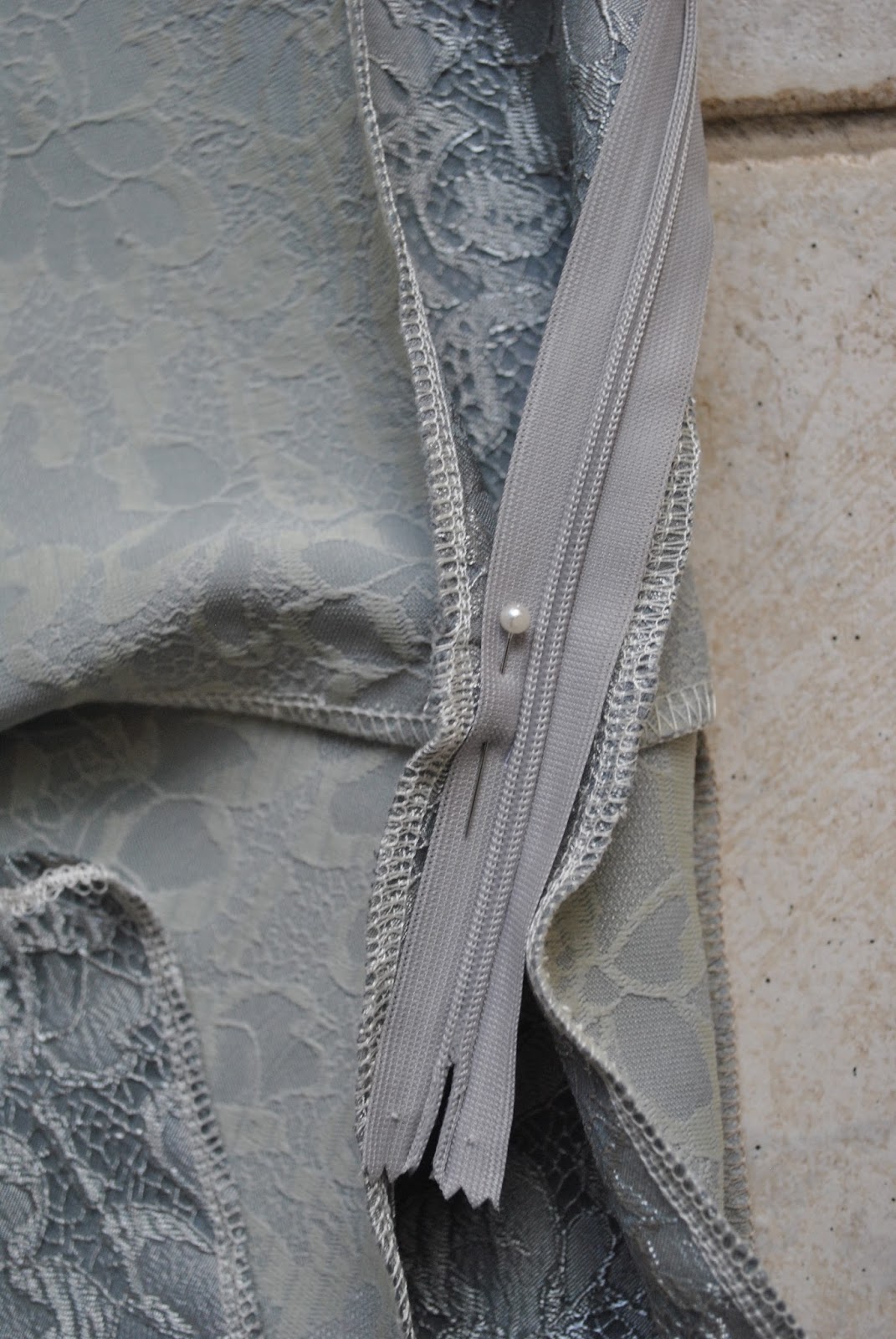
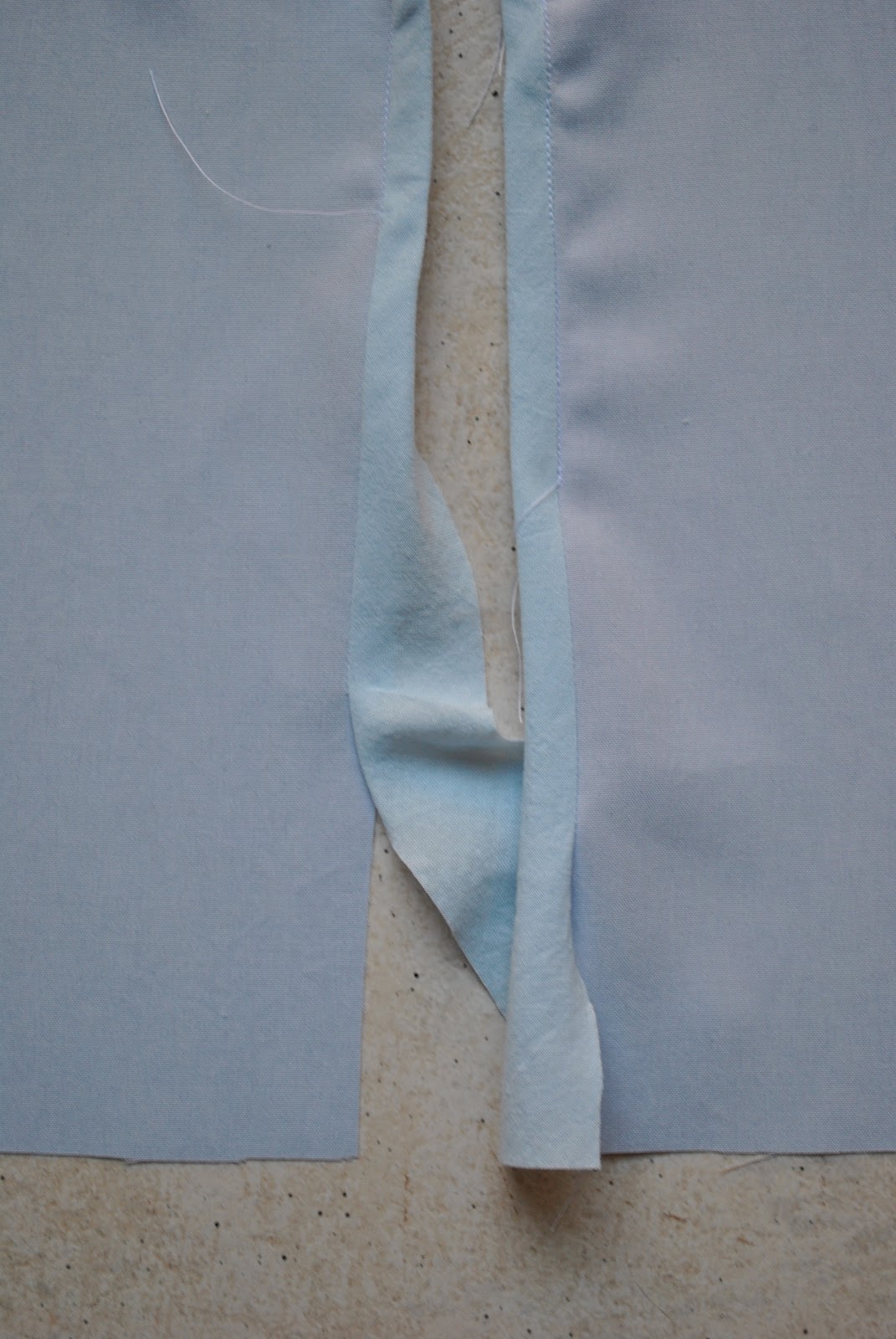
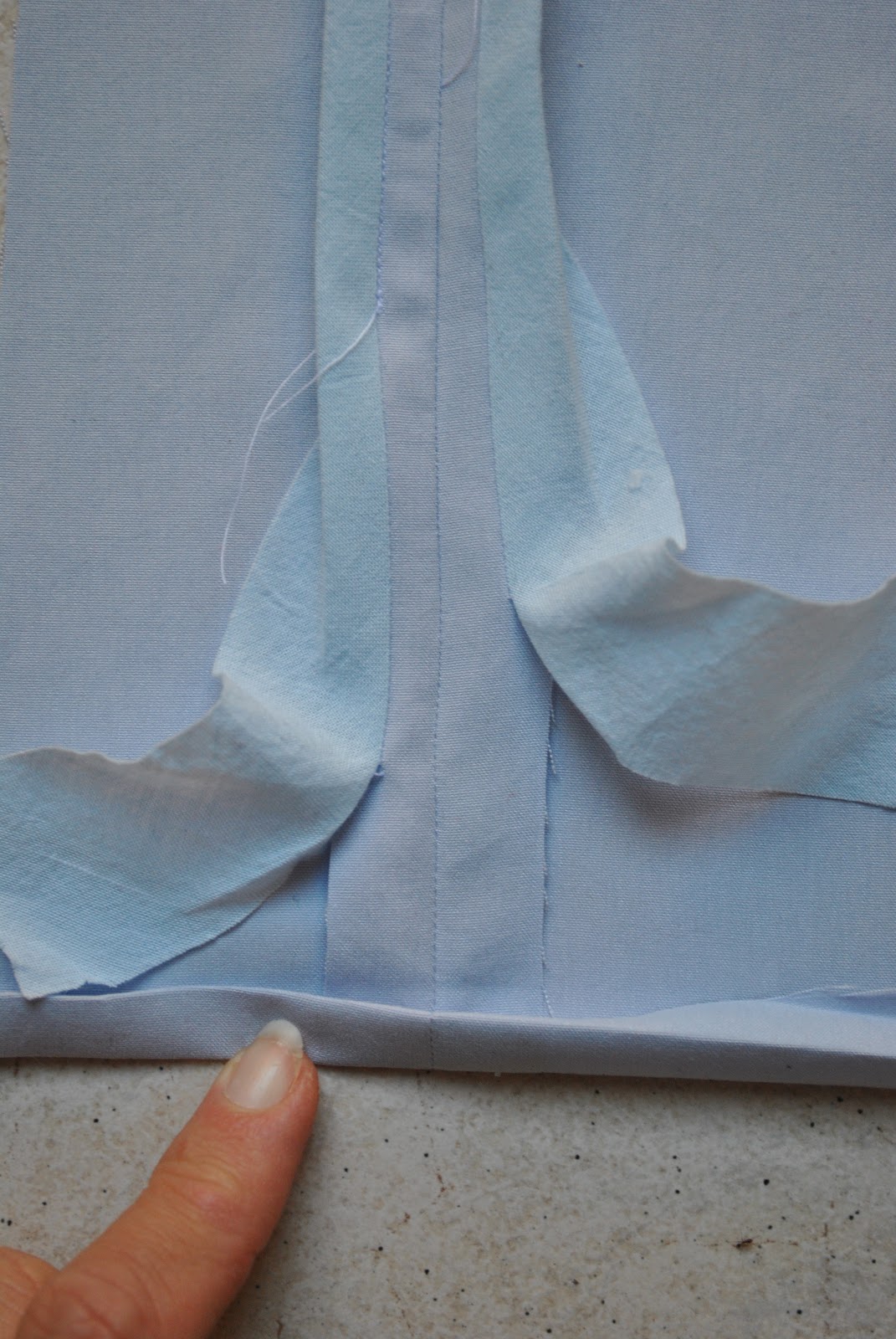
The bias strip for the HongKong seaming is sewn to the raw fabric edge, down to roughly 15cm from the lower edge.  Then fold the edge of the bias strip over the raw edge, press and stitch in the ditch from the right side to about 10cm short of the first stitching, allowing plenty of tail.  I’ve left the thread ends long and un-snipped to show where I’ve finished the stitching.

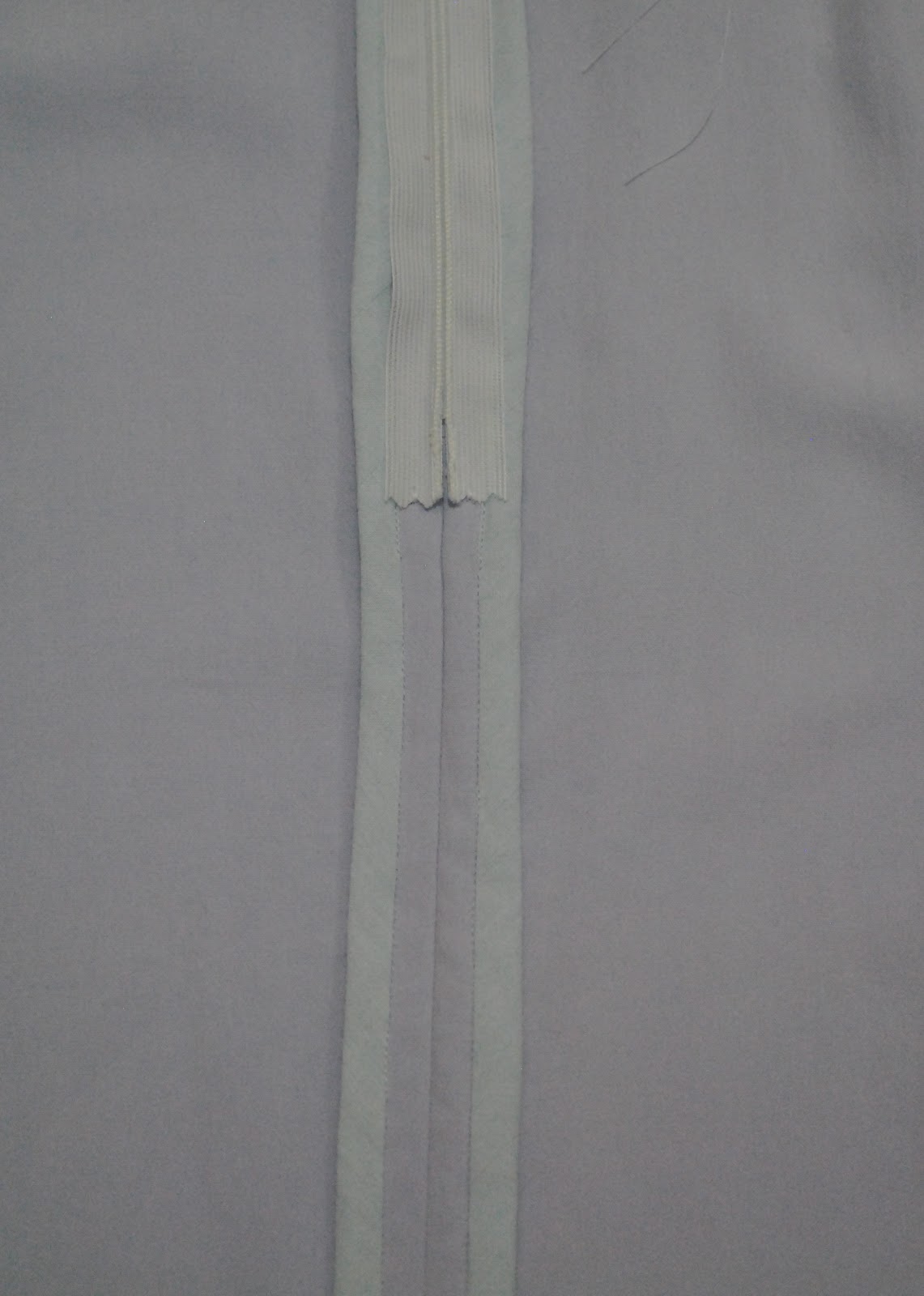
Now insert the zip.

Complete sewing the centre back seam down to the bottom edge.

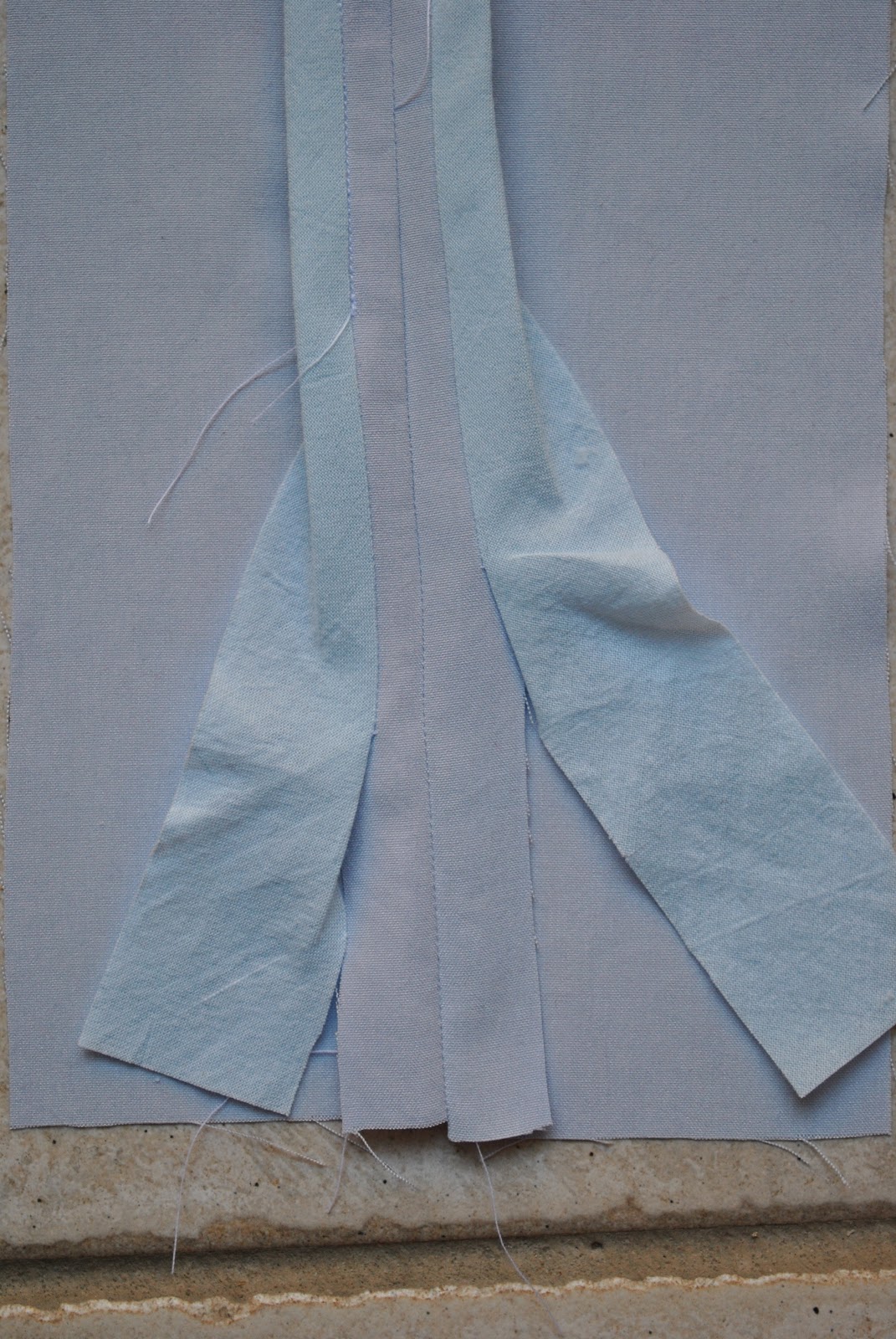
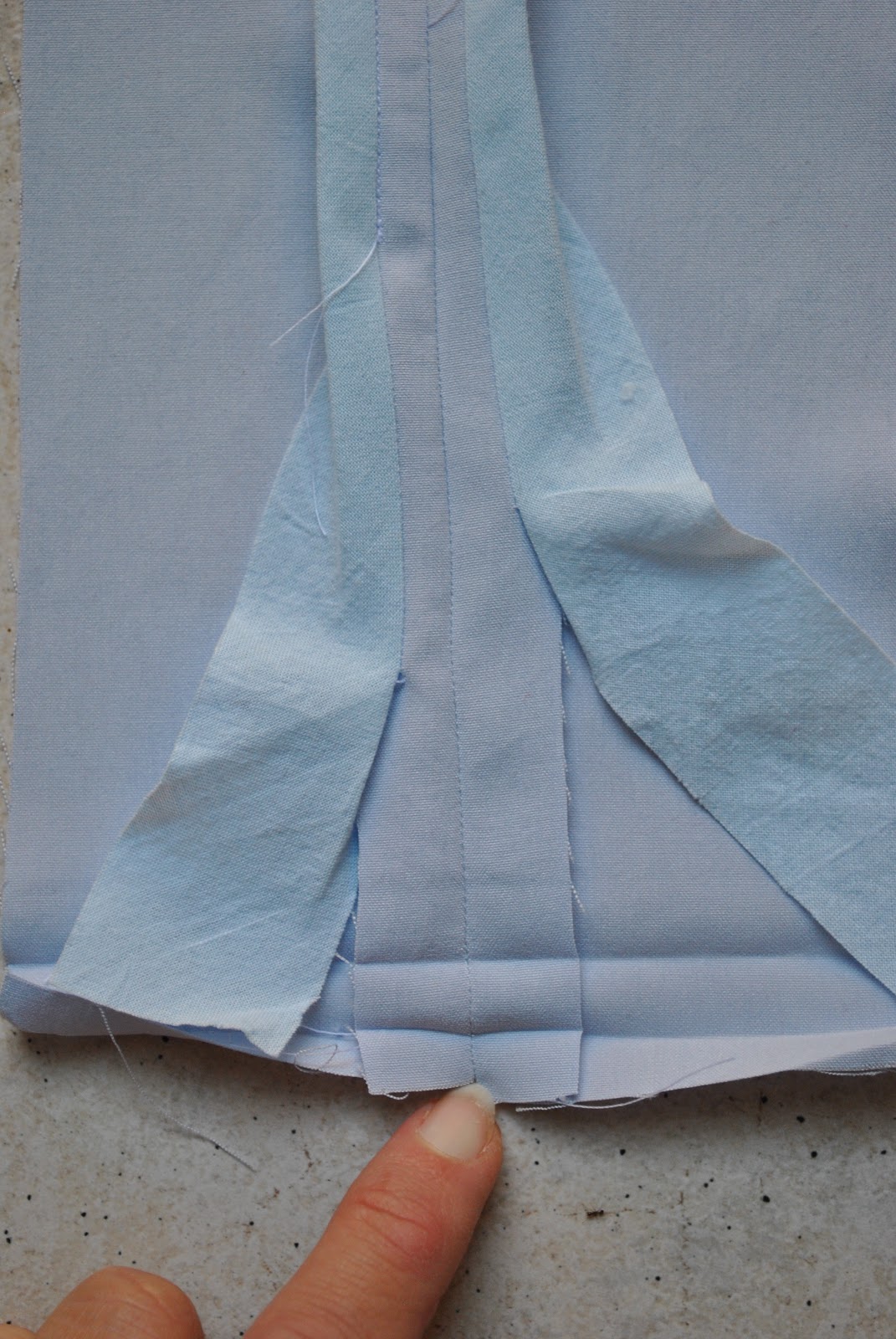
At this stage, measure and pin the hem, and press it in place.  Unpin and unfold the lower hem at the seam.

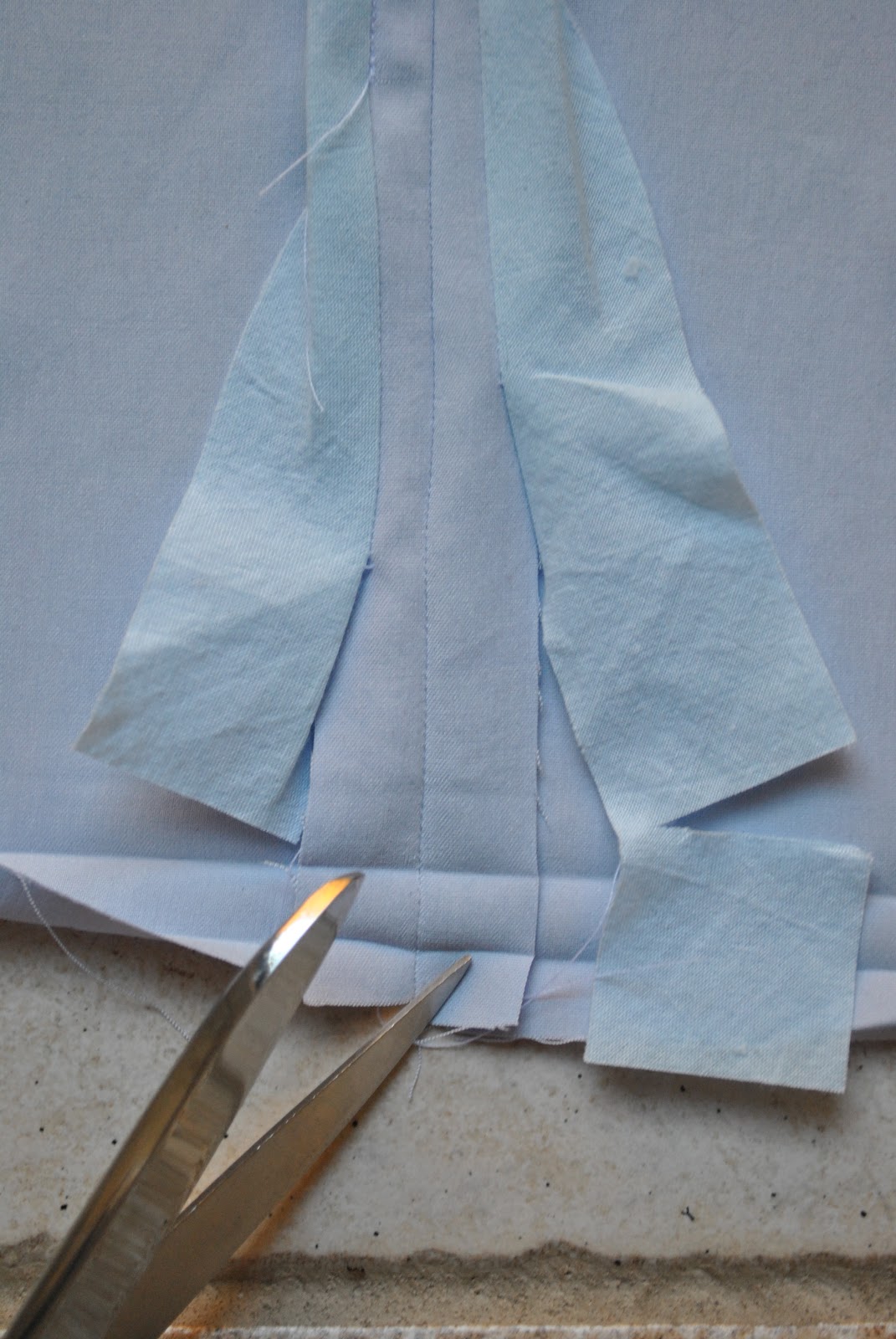
Trim the bias strip to be just short of the hem fold.

Finish stitching the HongKong binding in place.

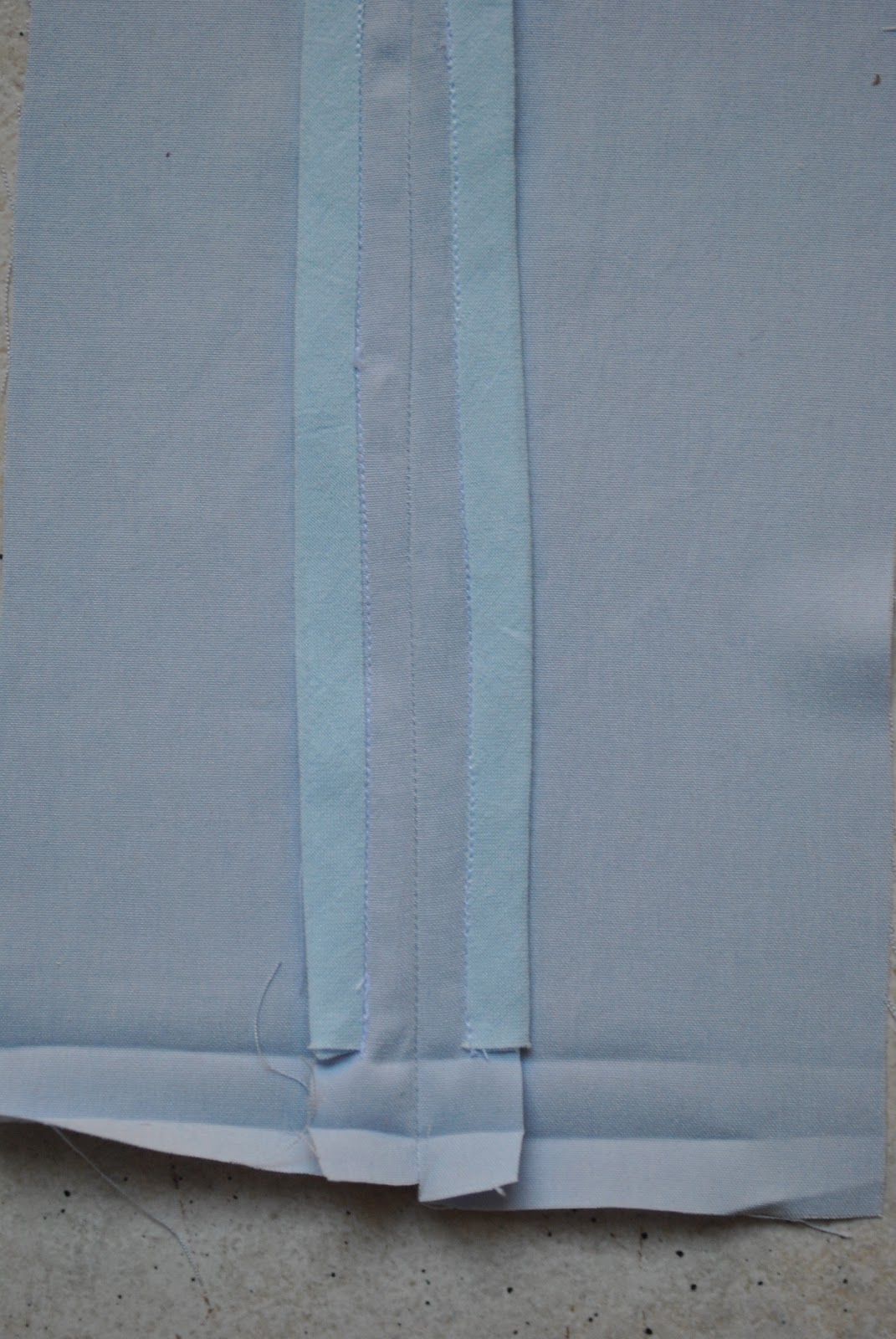
Fold up the hem, pin and finish stitching the hem in place.

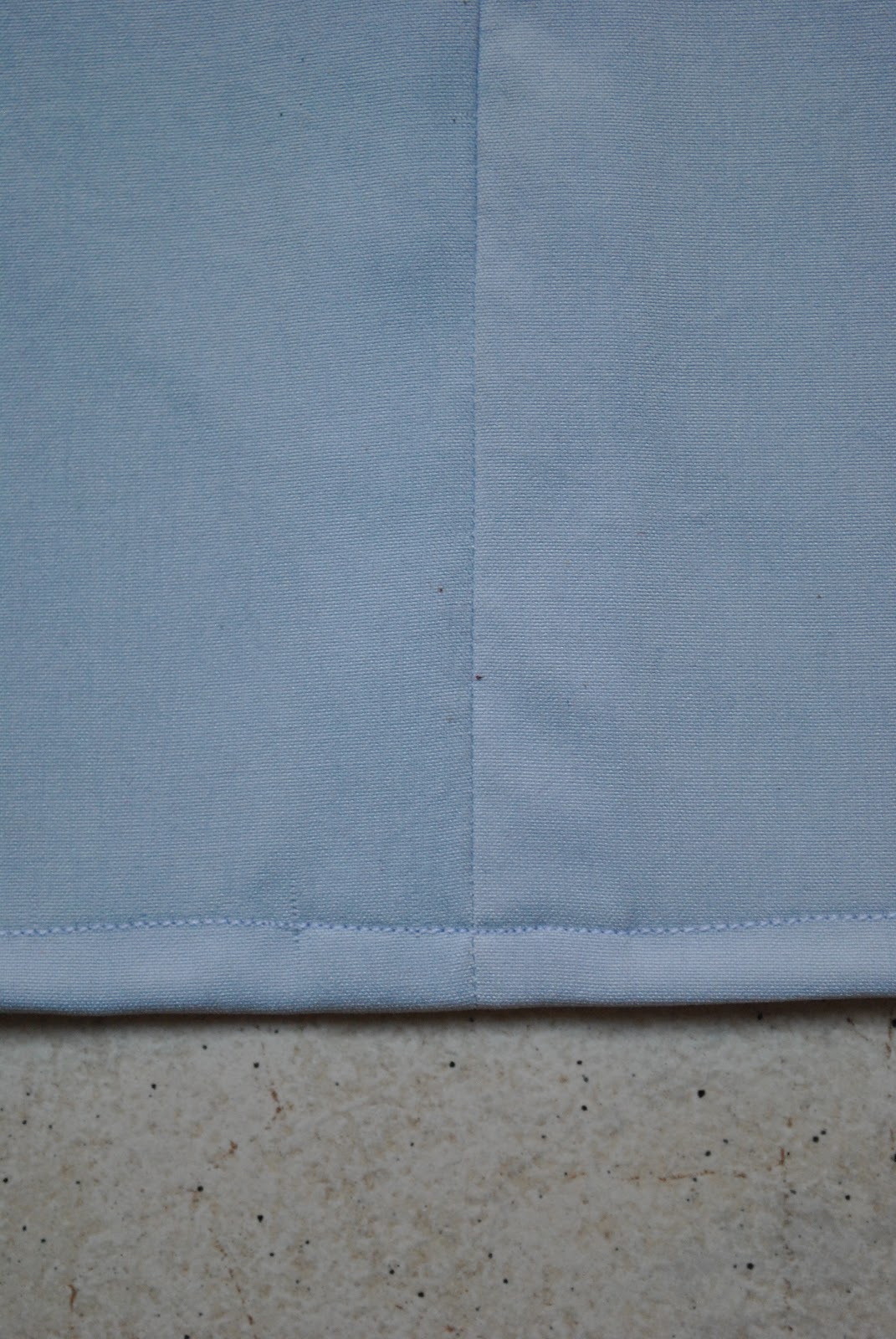
Voila!  The raw edges are all neatly finished, and the hem looks nice and flat with no added bulk too!

pinterestmail
Switch to mobile version
↓