Yearly Archives: 2012

You are browsing the site archives by year.

Basic dyeing; a tutorial

A while ago, Caroline asked if I could go into more detail the next time I did a batch of dyeing, and yesterday morning I felt the urge to haul out the ol’ dye-pot again… so here ’tis!  A short tute on basic, one colour, flat dyeing.

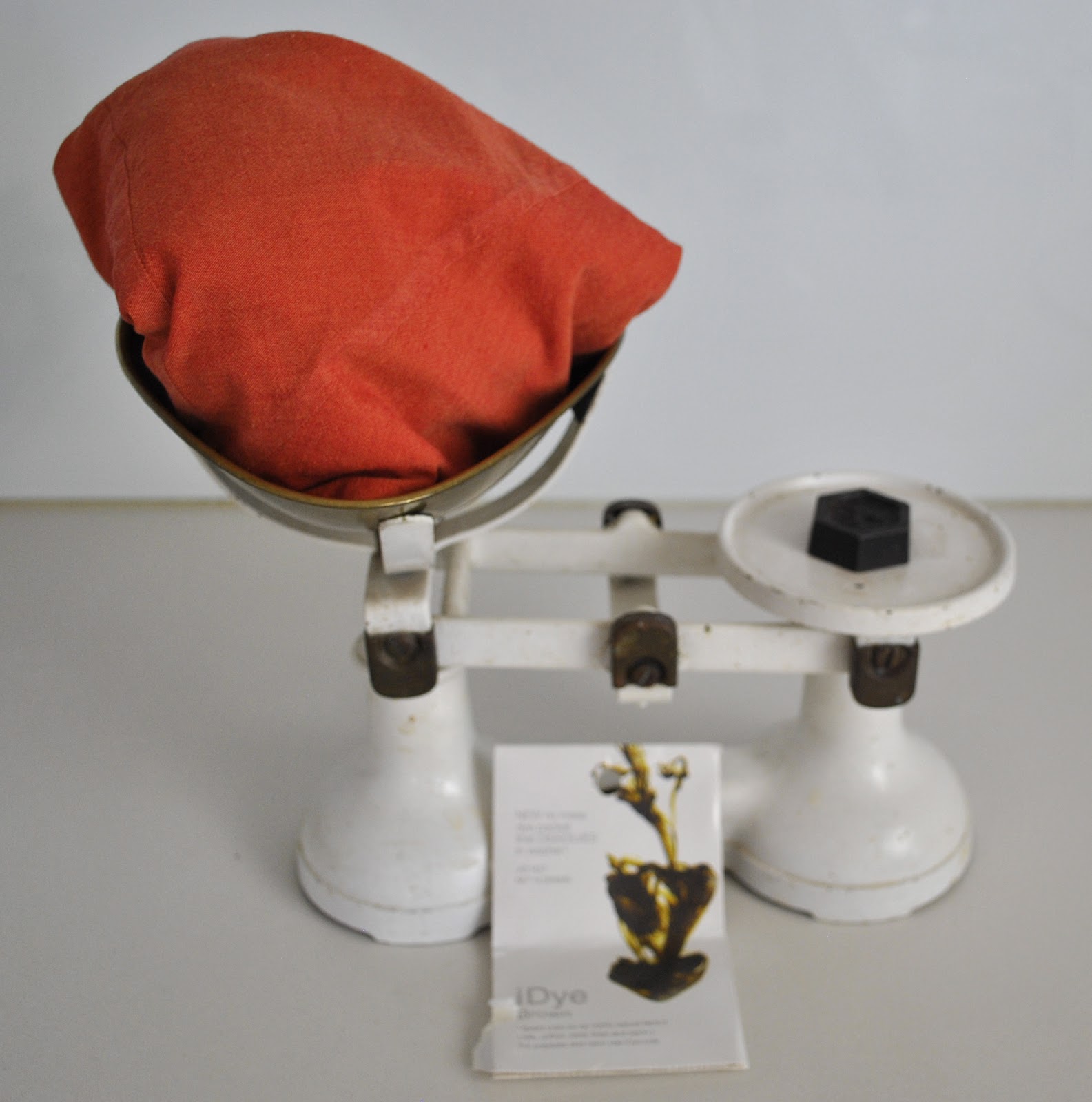
Firstly, if you are being scientific about this process, weigh your fabric and check the instructions on your dye packet to see how much is the recommended amount for this weight of fabric.  This is the quantity that will give you the maximum intensity of colour the dye is capable of achieving in your fabric.  If you are after a lesser intensity or a lighter shade then use less dye.  The colour you will achieve is dependent on several factors: the quantity of fabric compared to the quantity of dye, the fibre content of your fabric and whether it is a mix of different fibres (different fibres react to and soak up dyes quite differently) and the existing colour of the fabric.  All these factors play a part and it is impossible to pin down a definitive result without extensive tests of the sort that the average home-dyer is neither capable nor willing, so without said testing the final colour you will end up with will be a little surprise.  Hopefully a beautiful and happy one!  though naturally if your fabric is pricey or precious then DO do some testing!

I’m using the leftover piece of cotton from this Clementine top since a girl only needs one piece in this distinctive shade in her wardrobe, and dyeing with iDye in Brown.  I also used about half the recommended amount of dye, to maintain the orange-ness.
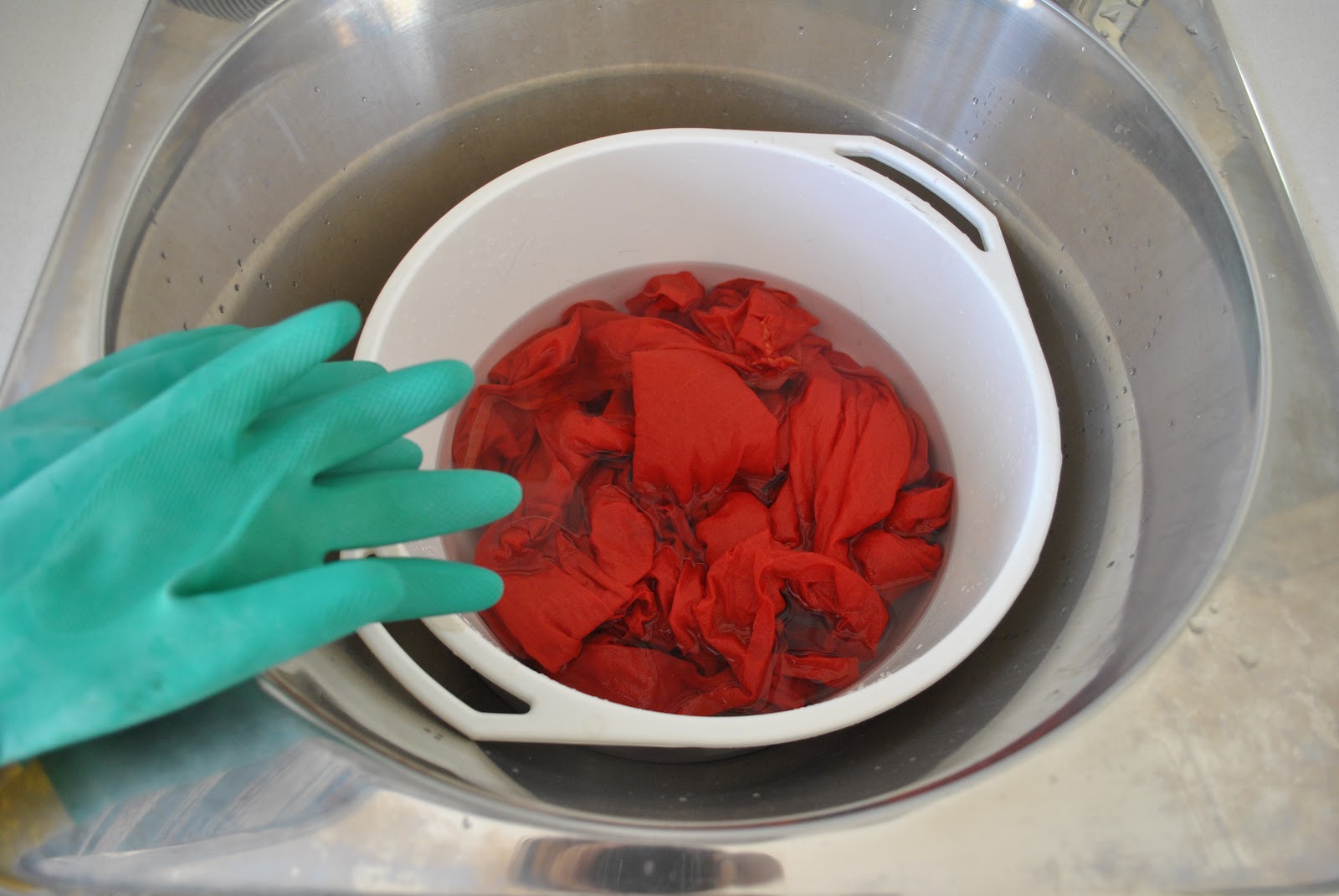
Now wash the fabric.  This is particularly important if your fabric is new; and is to remove any sizings, starches or other finishes it may have from the manufacturing process.  Even if you have already washed it and even if it is old textiles, set it to soak in a bucket of water.  Woosh it around some to ensure all the fabric is thoroughly wet all the way through.  Leave it in there for at least ten minutes, preferable more, with several bouts of swooshing (wooshing and swooshing; technical terms there).
Assemble your dyeing stuff.  You need:

  • Dye-pot.  A big big cooking pot, lid not essential but handy, and after you have used it for dyeing, particularly with commercial dyes, then never ever using it again for cooking.  I have a big old pot bought cheaply yonks ago, and it has always been The Dye-pot…  I store it with a big unavoidable note stuck in the bottom so no one in the household can ever mistake it for a cooking pot.
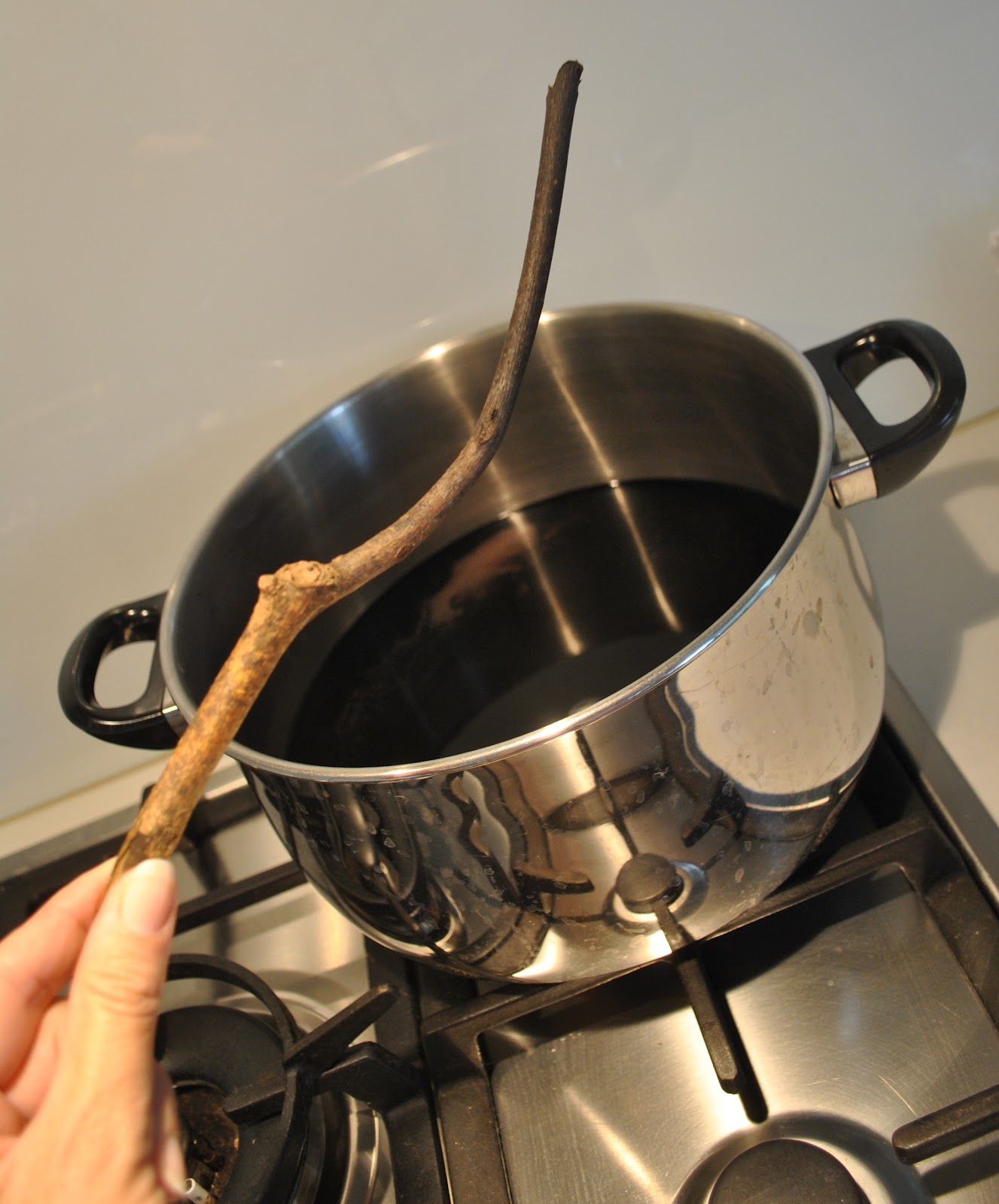
  • Stirrer, I use a handily shaped and sturdy stick from the garden.  It is a good one, since it has a twist that enables it to sit on the edge of the pot quite stably.  However you can use a dedicated pair of tongs or wooden spoon if you have not located the perfectly shaped stick… and if so I recommend labelling it very clearly that it is not to be ever used for cooking, like your pot.
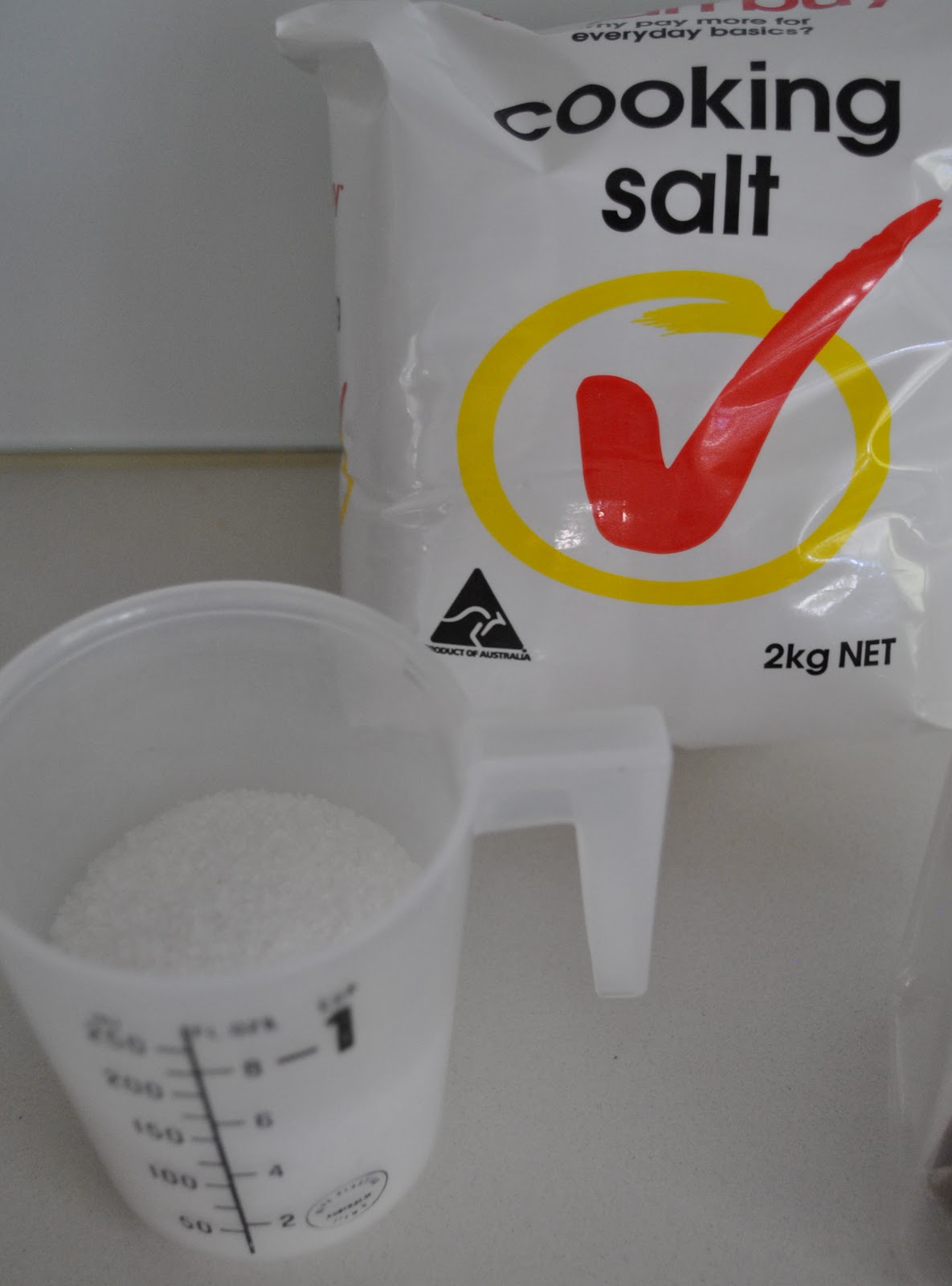
  • Salt.  Read your dye packet to see how much is recommended to go with your amount of fabric, but I reckon it never hurts to add a little extra….  
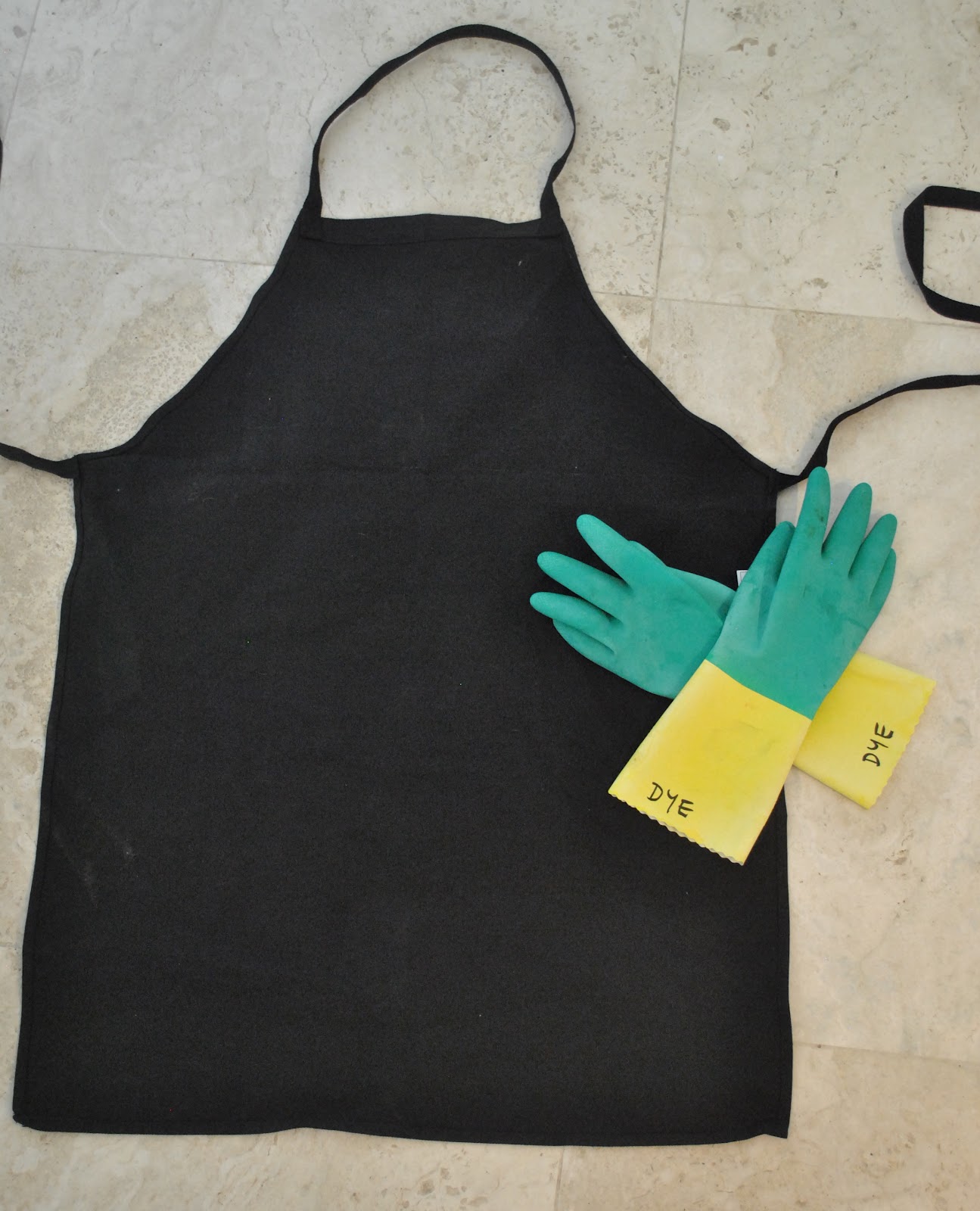
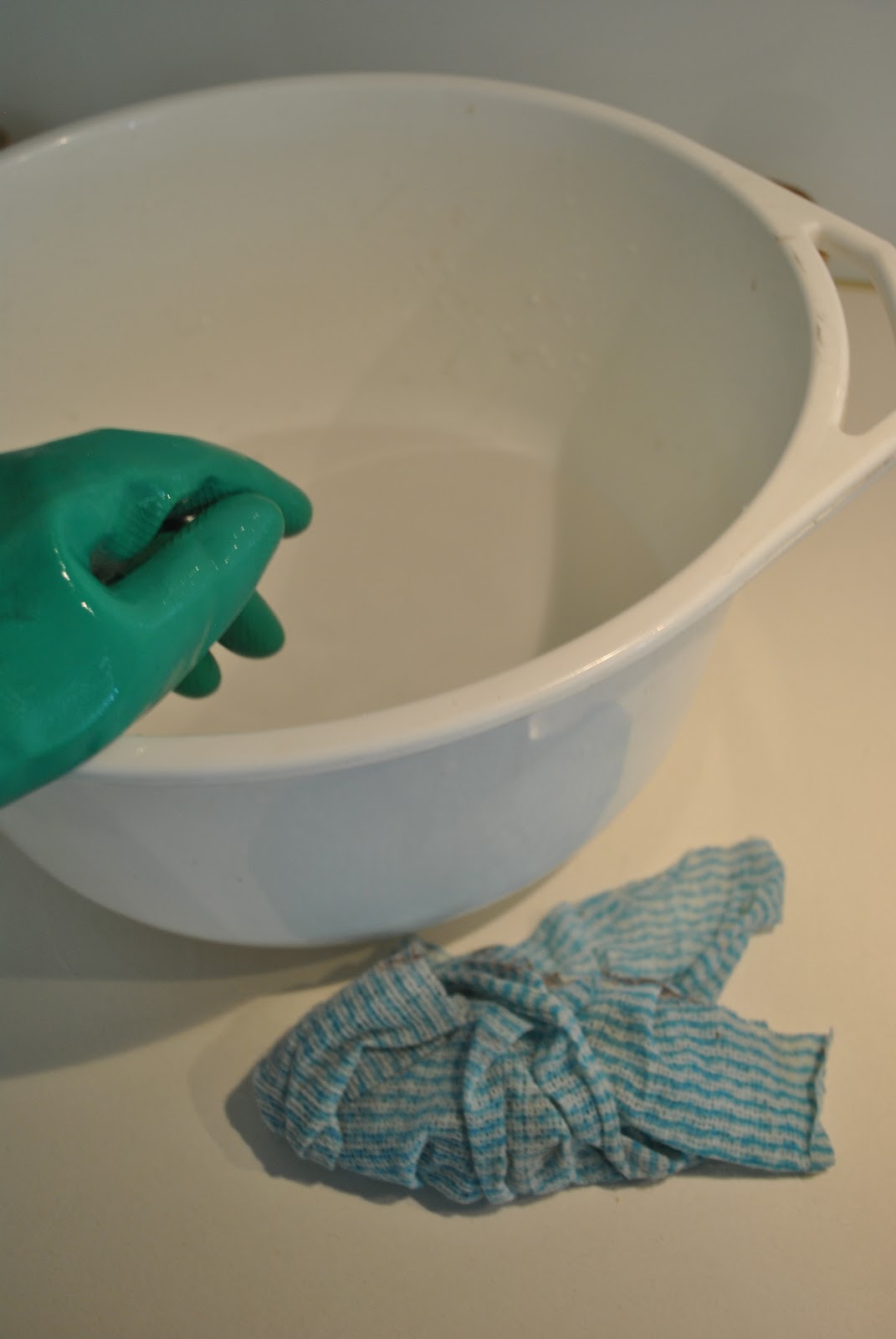
  • Rubber gloves and apron
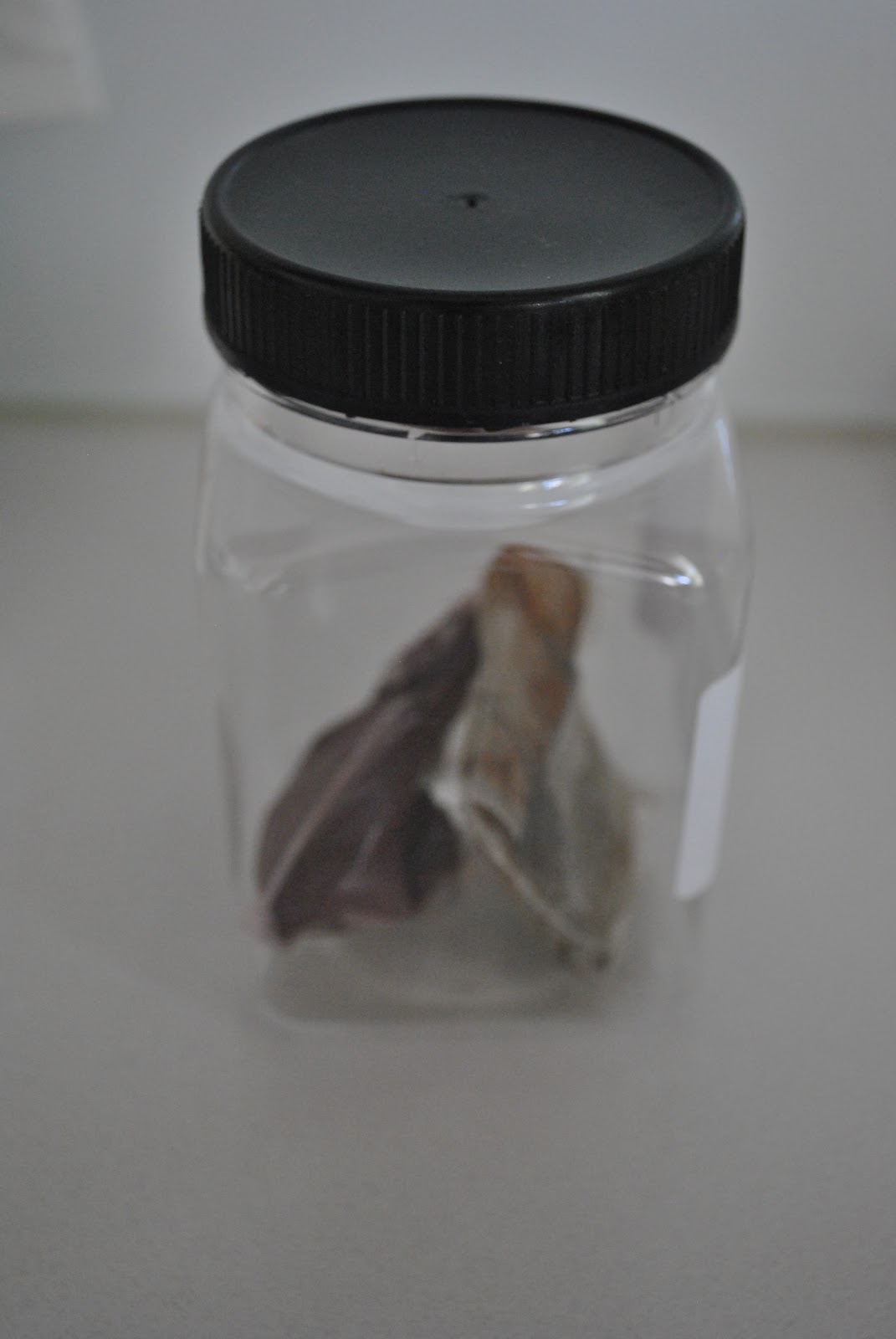
  • Oh, and the dye, natch!  Once I’ve opened the little packet and used some I seal it as well as possible with tape and store it in a clear screw-lid plastic jar, with the instructions.
  • keep a bucket of water and a wet rag handy to deal immediately with any splatters and spills.
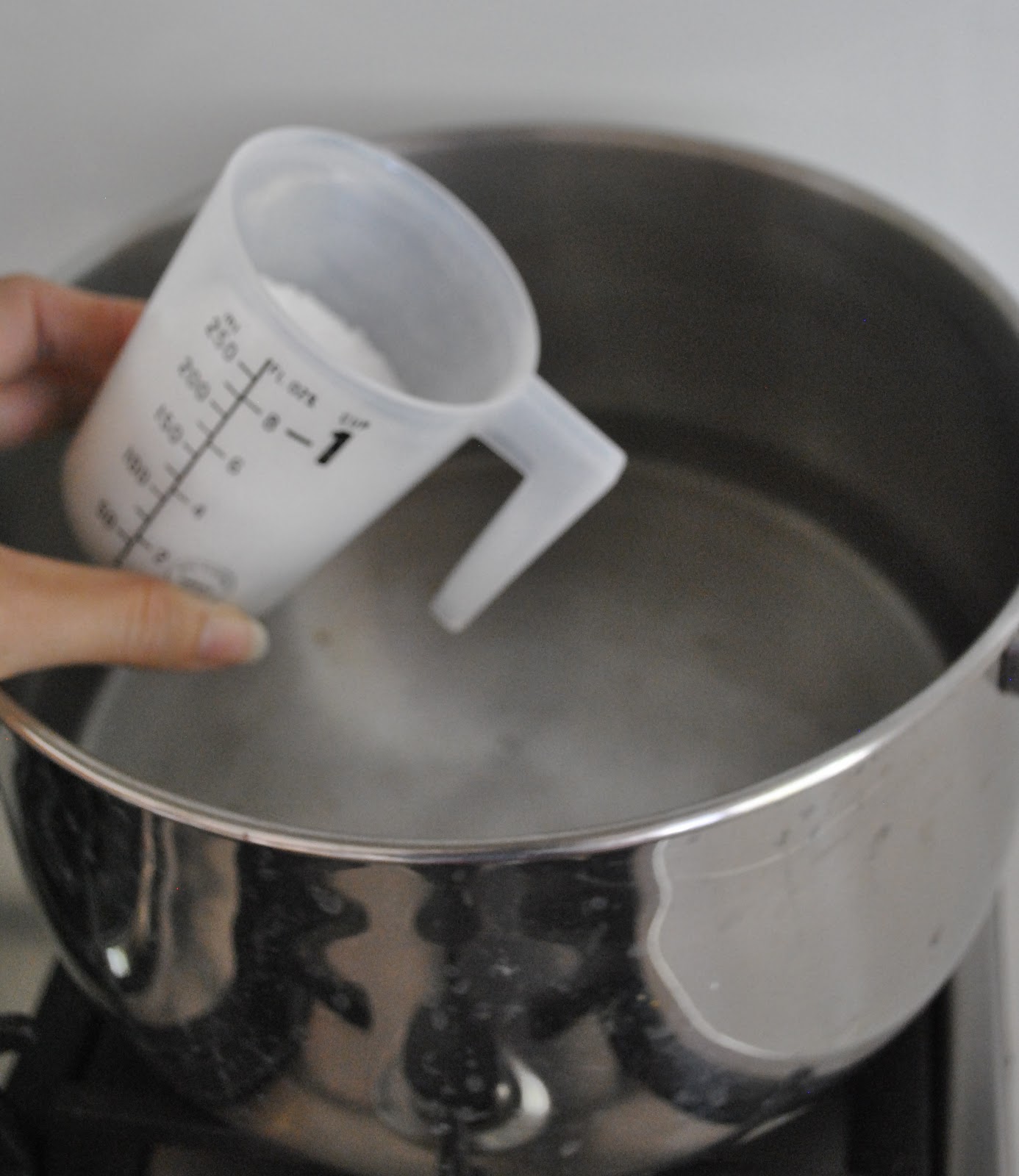
Pour off some of the water from your bucket of soaking fabric into the dye-pot.  Doesn’t have to be a massive amount just say 10cm in the bottom of the pot, add the salt and dissolve over a low heat.
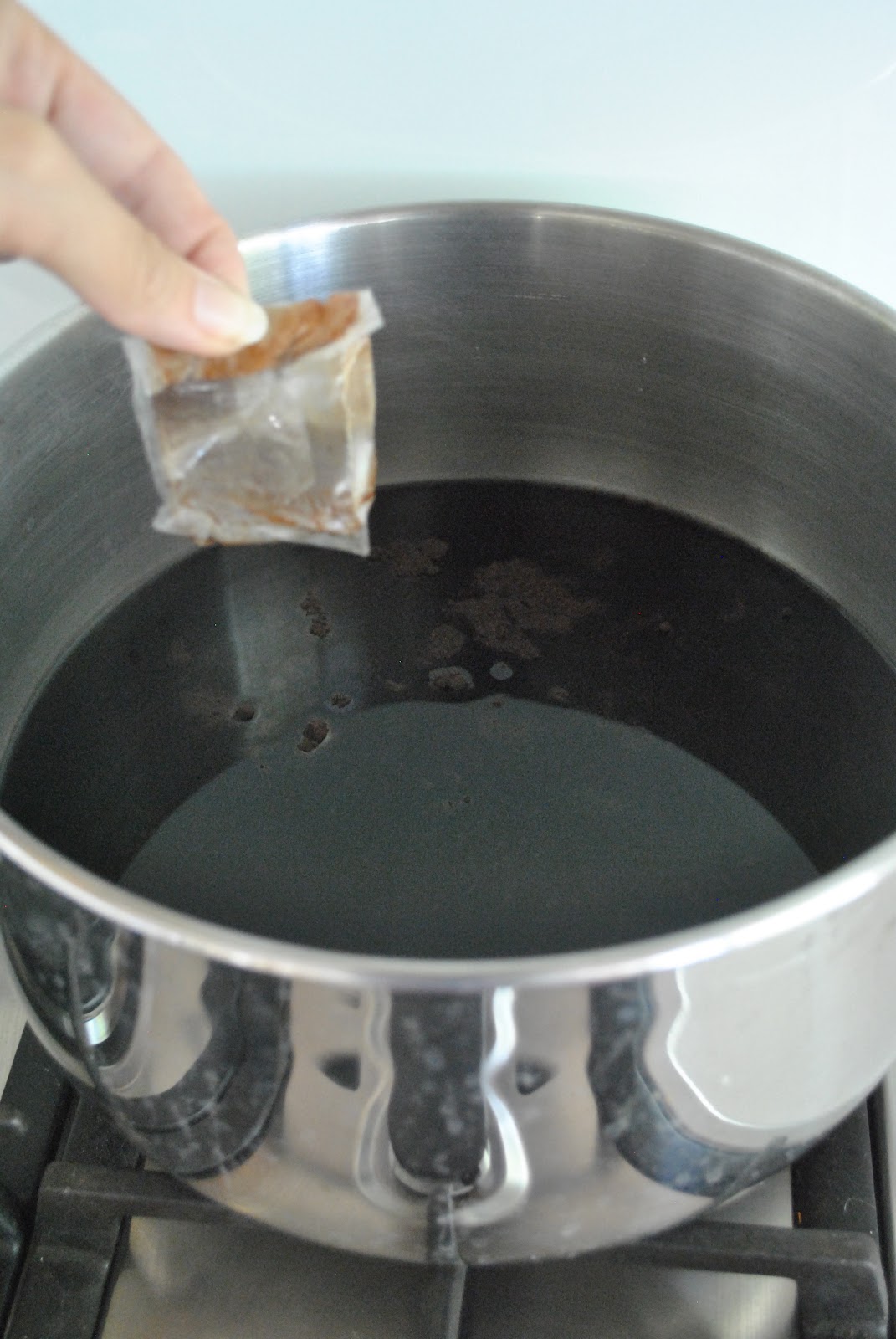
Once the salt has dissolved, add the dye and stir it in well.  Turn up the heat to get to boiling point.
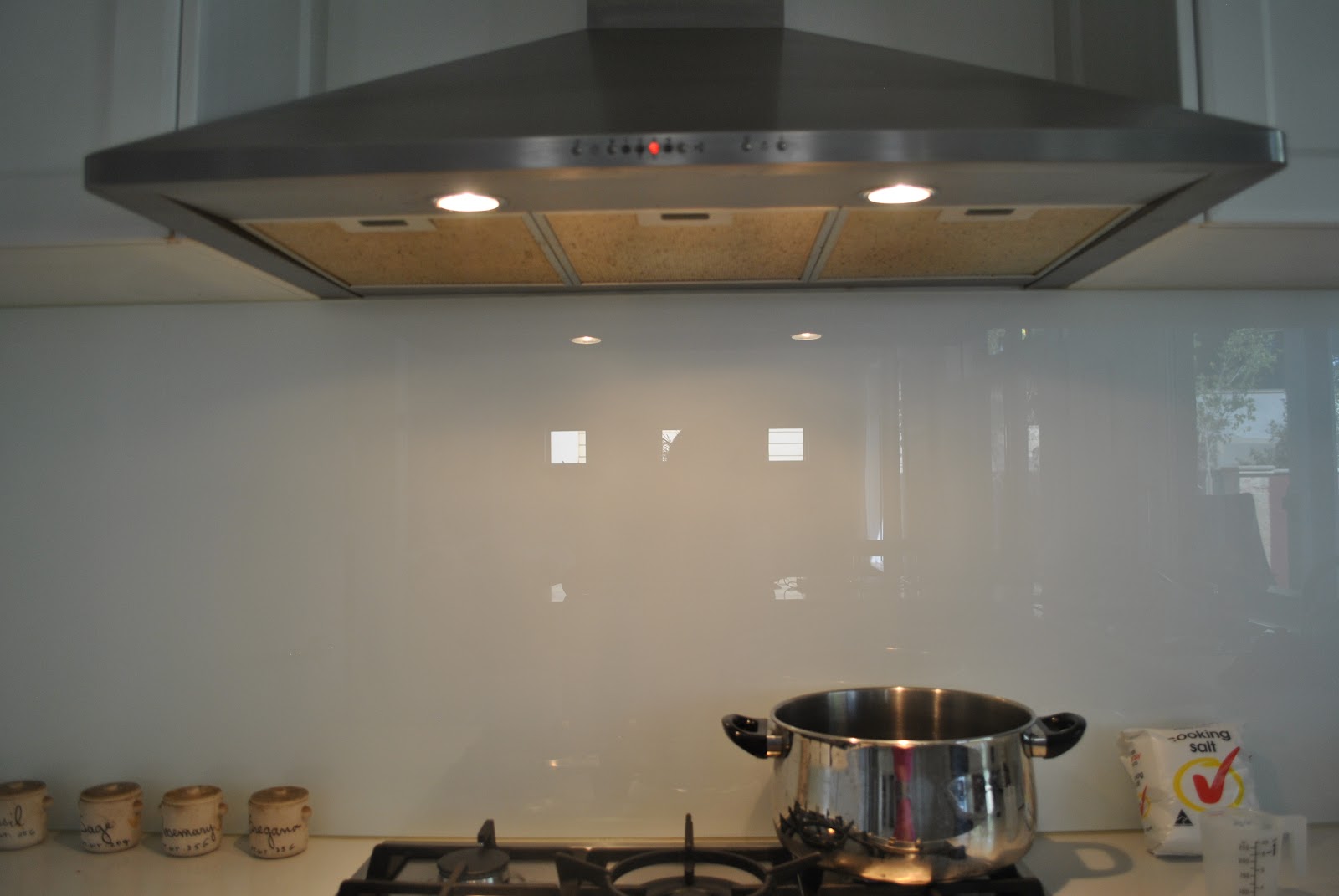
Ventilation is important… one may not mind poisoning oneself in the pursuit of gorgeous fabric but we love our families and don’t want them to suffer for the sake of our colour-fun, do we?   Do we??!  If you have access to an outdoor cooker, then yay! lucky you, use it!  If not, then make sure your exhaust fan is on high, and the windows in your room are all wide open.
Now, pour in your fabric, all at once, and still in its soaking water, and woosh and stir it around as much as humanly possible, immediately.  This is the most crucial step in the dyeing process.  It is reckoned that the fabric picks up the most of the dye it is ever going to in the first thirty seconds of contact.  This is why you want your fabric to be soaked through when you add it, and also why whenever I have seen photos on the internet of garments partially dunked into the dye bath (people unable to resist the action shot, “Now, here I am adding my dress to the dye-pot…”) you invariably see in later shots that the dye job turned out blotchy. Of course a blotchy dye-job may well be one’s desirable outcome.  Hey, no judging here.
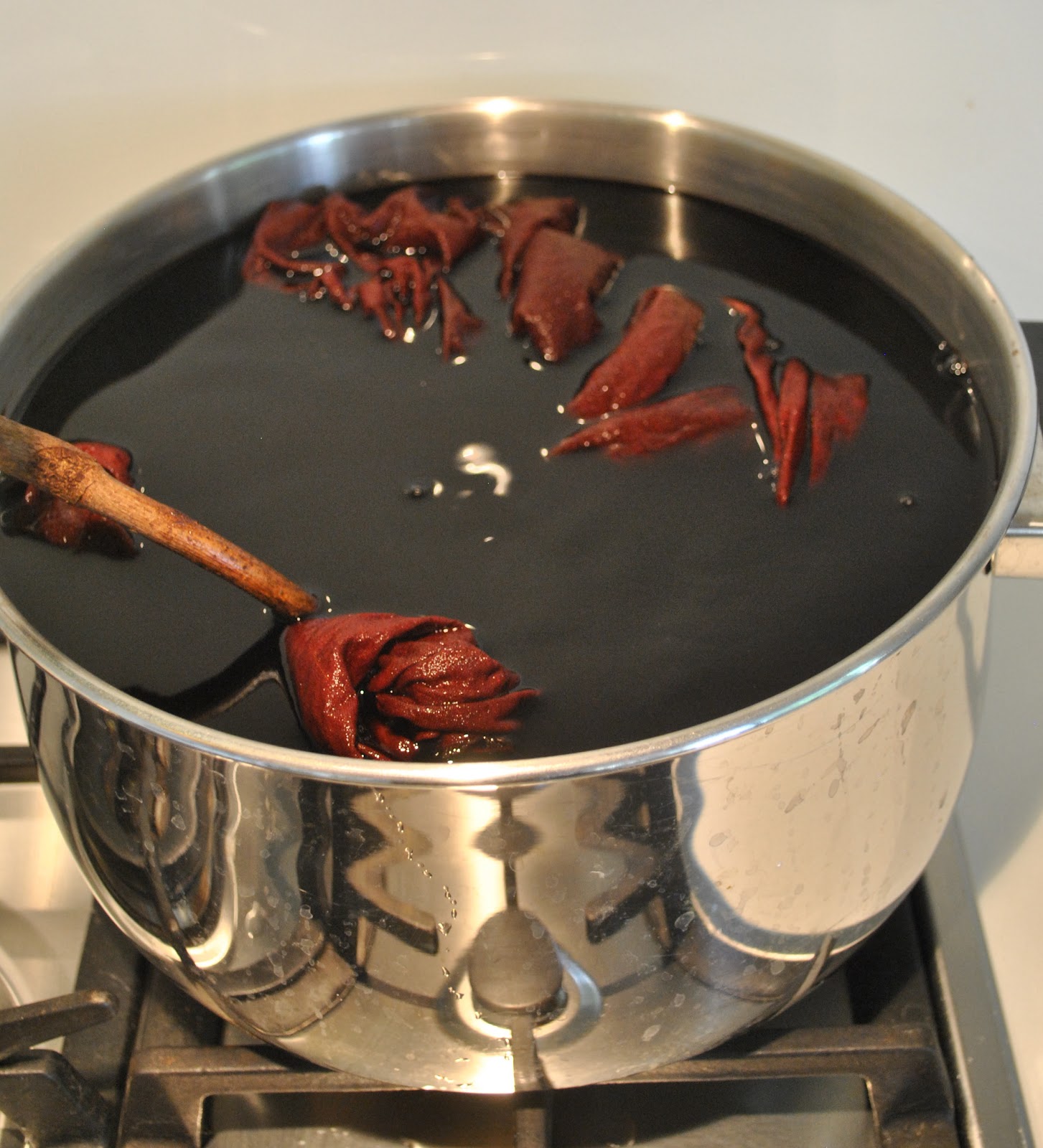
Lower the heat and let it simmer and bubble away for thirty minutes, or whatever is the recommended time on your dye packet.
Once that time is up, remove the fabric, squeezing and wringing out hard, and transfer to a bucket of water.  Rinse, wooshing  and squeezing out thoroughly a few times.  Do this several more times, until it washes clear.  I find you can use far less water by very thorough wringing out, several times while washing out in the same rinse.
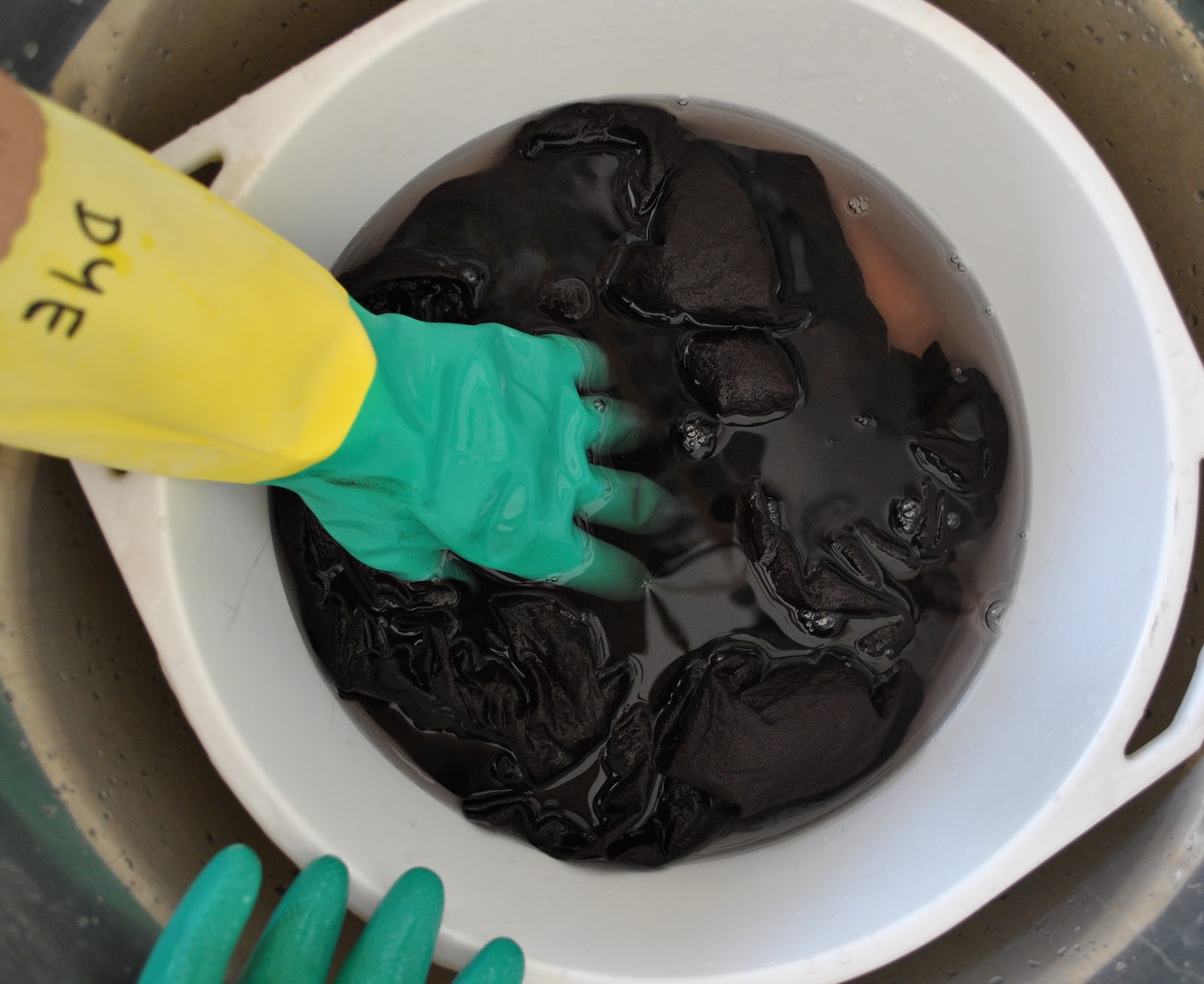
Et voila!
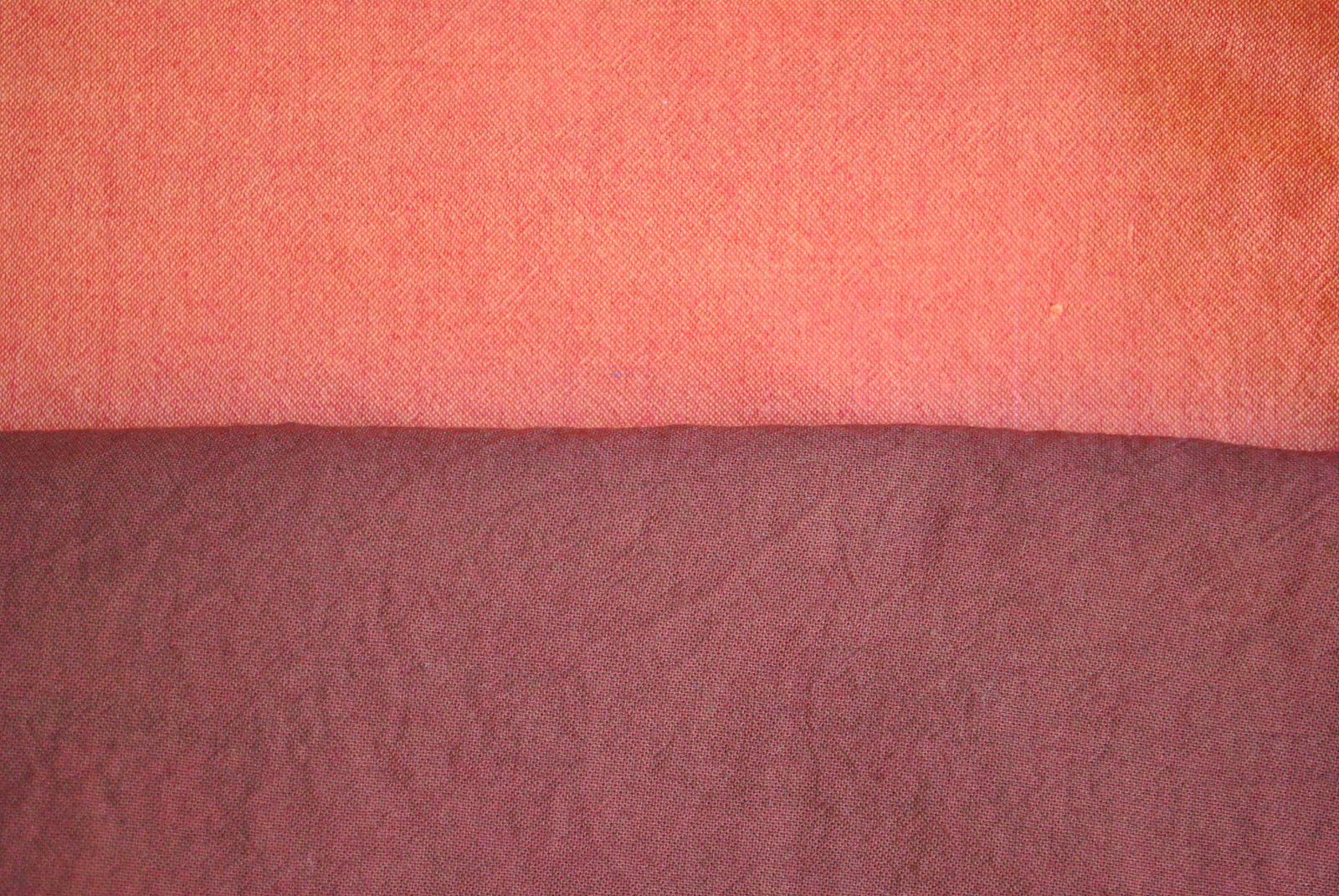
If you want to, you can re-use the dye-water to do more fabric or another garment; just keep in mind that the guts of the dye has been used and the colour will be paler with each subsequent use.
I did use my leftover iBrown dye… for something else, hehe.
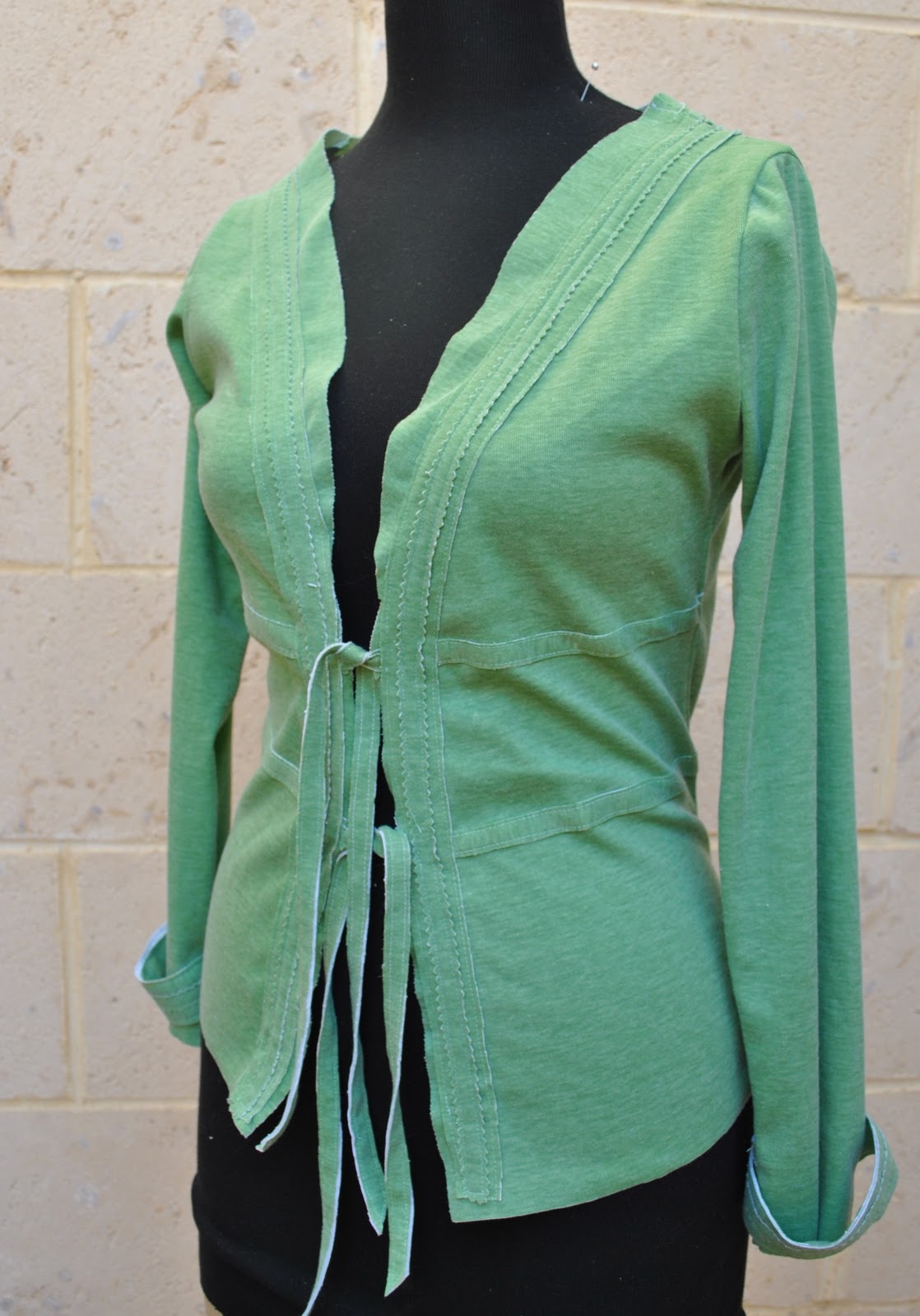
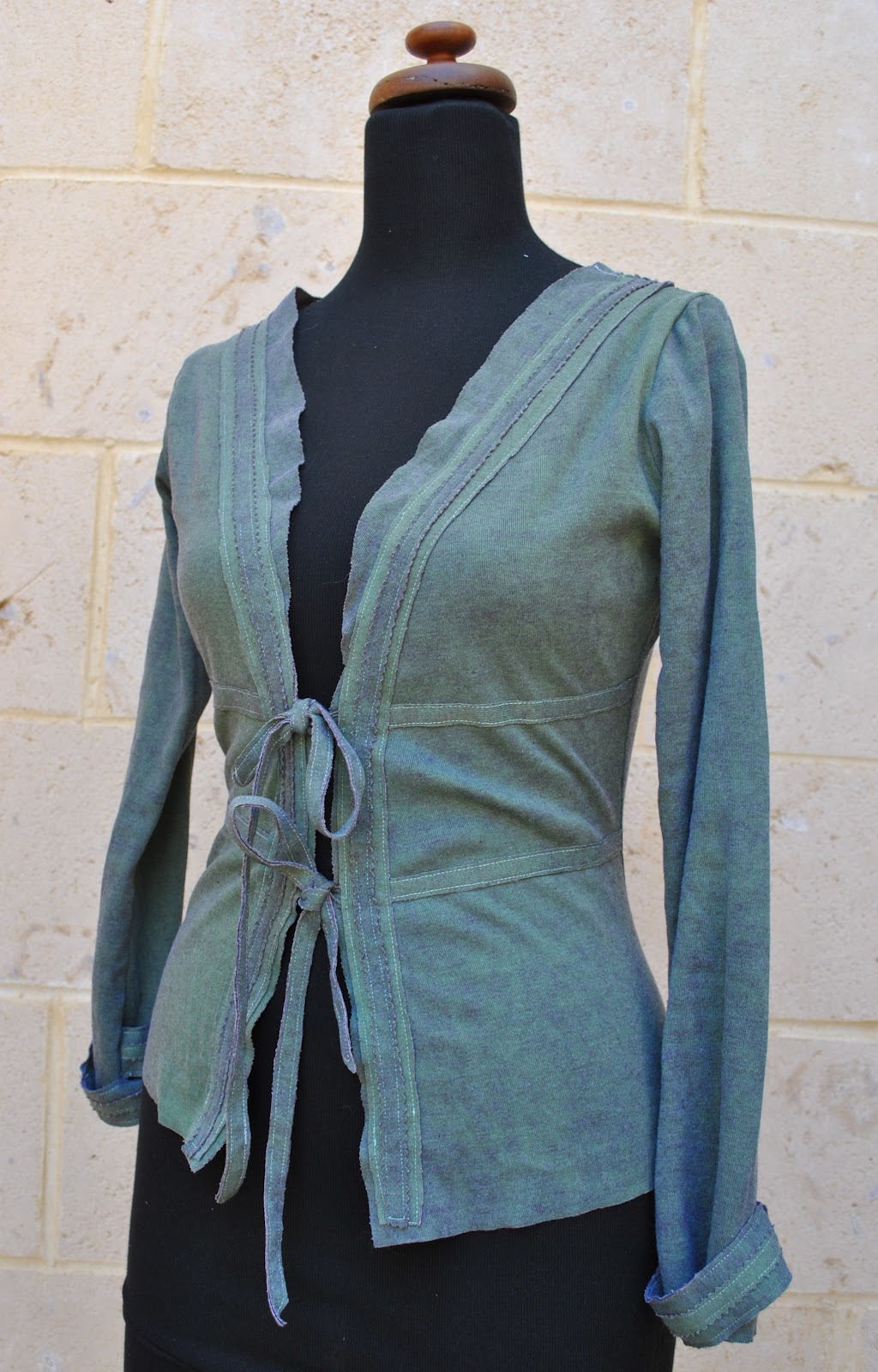
Remember this cardigan?  Definitely prefer this fab new colour.  Not so much leprechaun-on-St-Patrick’s-Day any more, but beautifully fudge-y and sludge-y.  Actually almost purple.  I call that a win!

pinterestmail

A minimal summer wardrobe

I was reading one of my favourite fashion blogs Garance Dore and came across a list; the perfect minimalist, functional and fabulous wardrobe. 
Paraphrased, it goes something like this:

  • Black cashmere turtleneck
  • Grey v-neck cashmere sweater
  • Silk shirts
  • Three pairs of flats.
  • One pair of sublime very high heels, black
  • Grey skinny jeans. White skinny jeans.
  • One pair of boyfriend jeans.
  • Two blazers, one black, the other marine blue.
  • A straight-cut skirt
  • A light as a cloud scarf
  • A dress, Alaïa or Roland Mouret.
  • A big coat, camel or grey.
  • And a military parka – light and long.

And I’d go wild with accessories. A hat. Red socks. A pair of amazing sunglasses. A purse to die for. Bright nail-polish.

I am a die-hard list lover, so I adore this sort of thing! And immediately scratched out my own take; the minimalist summer wardrobe.  Since those of us here in the southern hemisphere will immediately notice that with that selection, we would have nothing we could actually wear at all right now…  🙂  So:
  • Shorts
  • 2-3 light loose little tops
  • 3-4 day dresses, some pretty, some plain
  • One maxi-dress, or whatever is the fashionable silhouette of the season
  • 1 little skirt
  • 1 light cardigan
  • Bathers
  • 1-2 light long-sleeved shirts
  • Pair of linen trousers
  • for footwear; glittery sandals, leather sandals, and a pair of thongs for the beach

And the accessories; sunnies, and a fun and funky pedicure.  Sunhat and a few floaty scarves.

The next time I came across my funny little list Tim had scrawled an addendum…
Summer essentials, for guys
1x board shorts
3x T-shirts
DONE!
Lol!  Hehe, aaah boys.  😀  Simply no idea.  
Oh, and finally, my facts and figures for February…  now there’s a nice bit of alliteration.  Whoever said that poetry and accounting were incompatible?

Gone a bit Batty top
Fabric; leftovers
Pattern; from PatternMagic 3, a gift (and used previously)
Dye; used and accounted for previously
Total cost: free
Some basics…
Fabric; one from leftovers, the other three from a recycled dress, original cost of all this fabric was approx $39
Dyes; brown dye accounted for previously, red dye (first time used) $7.77
Total cost for the 4 Tshirts: $46.77
White with a navy grid shirt
Fabric; leftovers
Pattern; from Unique Clothes Any Way You Like, been used before
Total cost: free
Billowy White shirt
Fabric; from an old pair of trousers
Pattern; my own design
Buttons; leftovers from a previous project
Total cost: free
A Pretty Silk blouse
Fabric; $64.35
Pattern; Vogue 1170, first time used, $7.00
Zip; $2.20
Total cost: $73.55
Woman in Red dress
Fabric; a birthday gift from friends
Pattern; Vogue 1087, used previously
Thread; had some red thread already
Total cost: free
Miscellaneous extras
Rotary cutting wheel blade; $13.45

Twin needle; $6.60
Total cost: $20.05 

outfit Details:
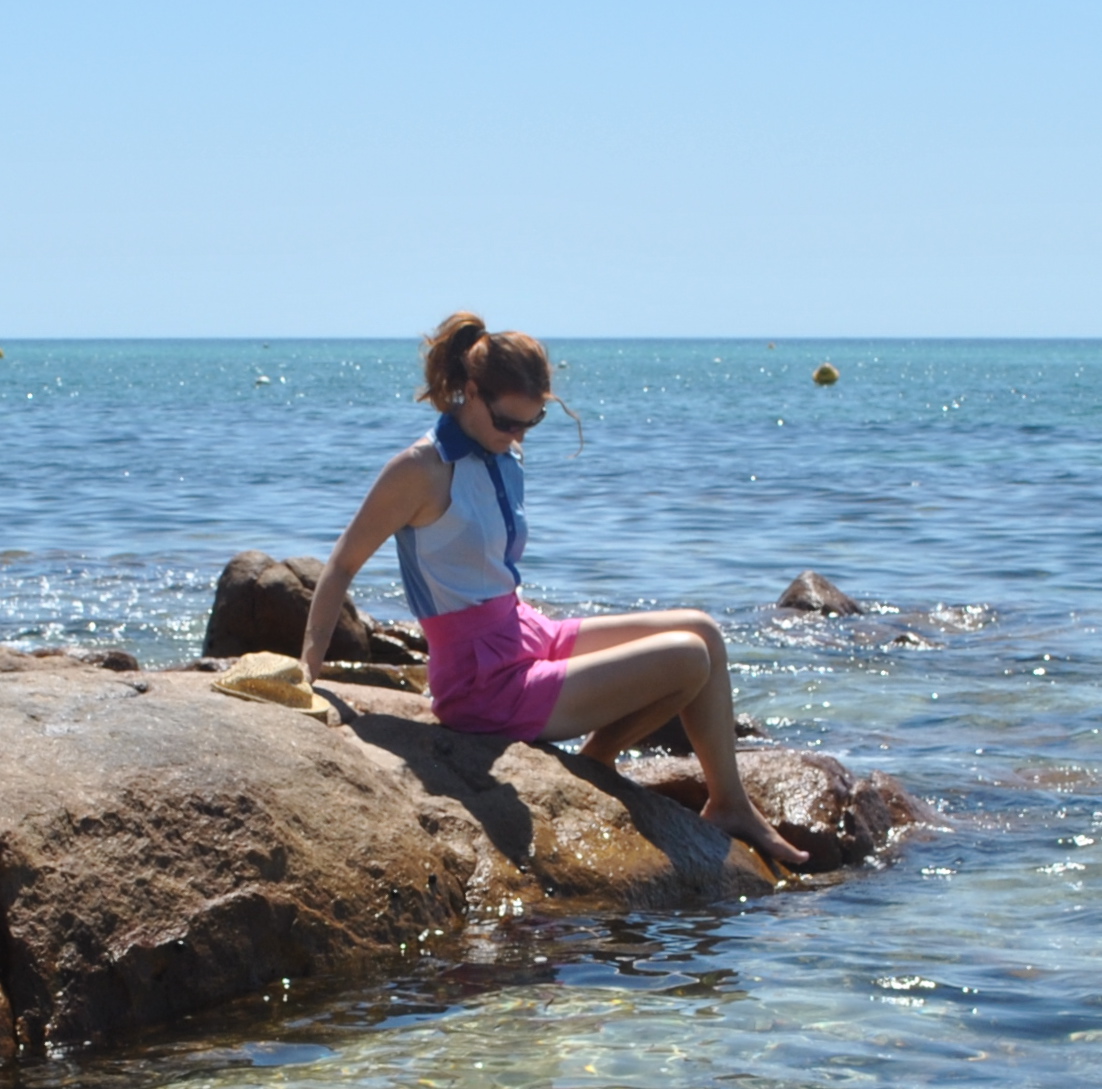
Top; Vogue 1248, made from a mix of blue cottons, details here and my review of this pattern here
Shorts; Burda 7723, details here, my review of this pattern here, and see these styled in 6 different ways here

pinterestmail

Giving away a random blade

Oh hai, peeps!
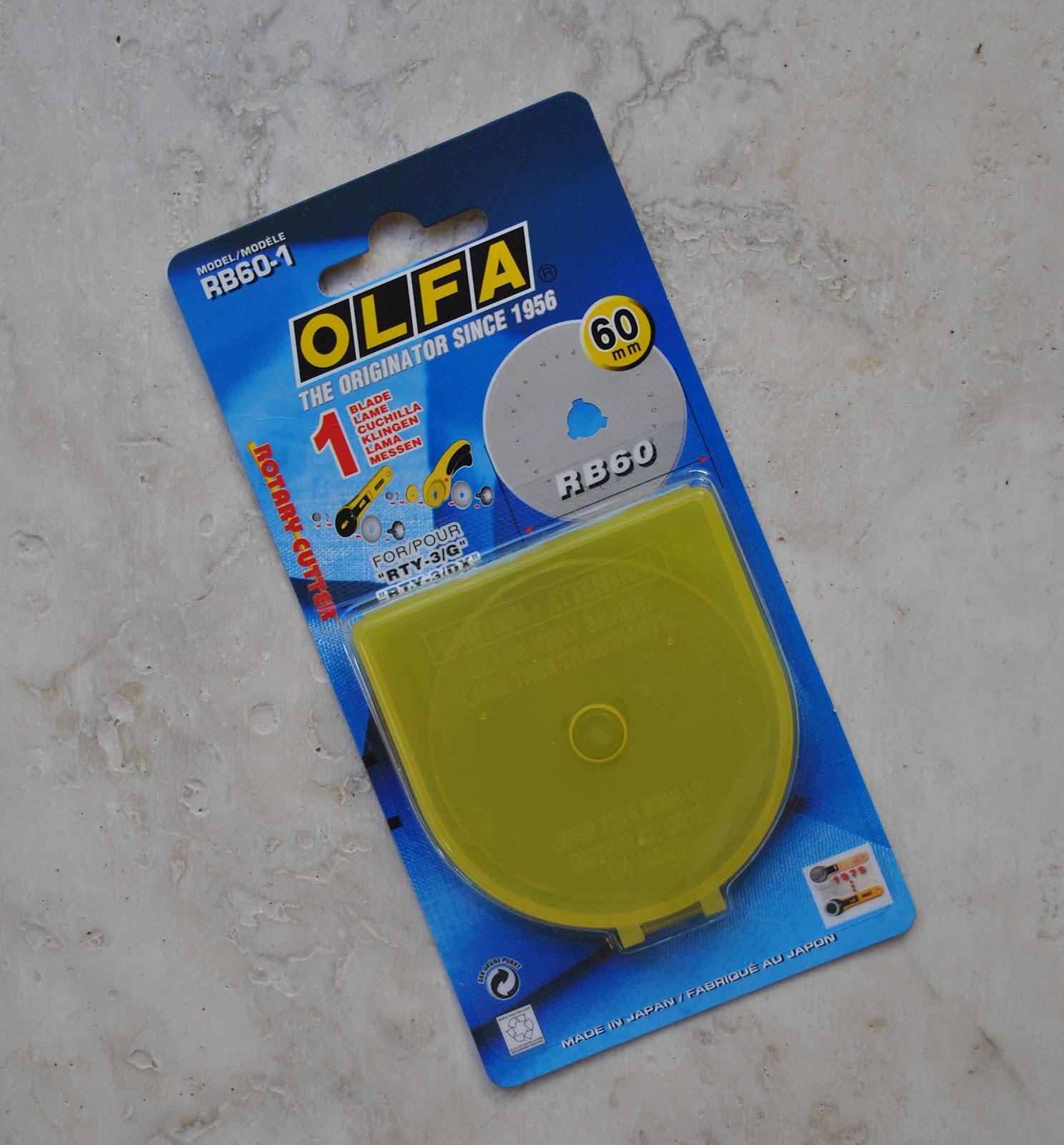
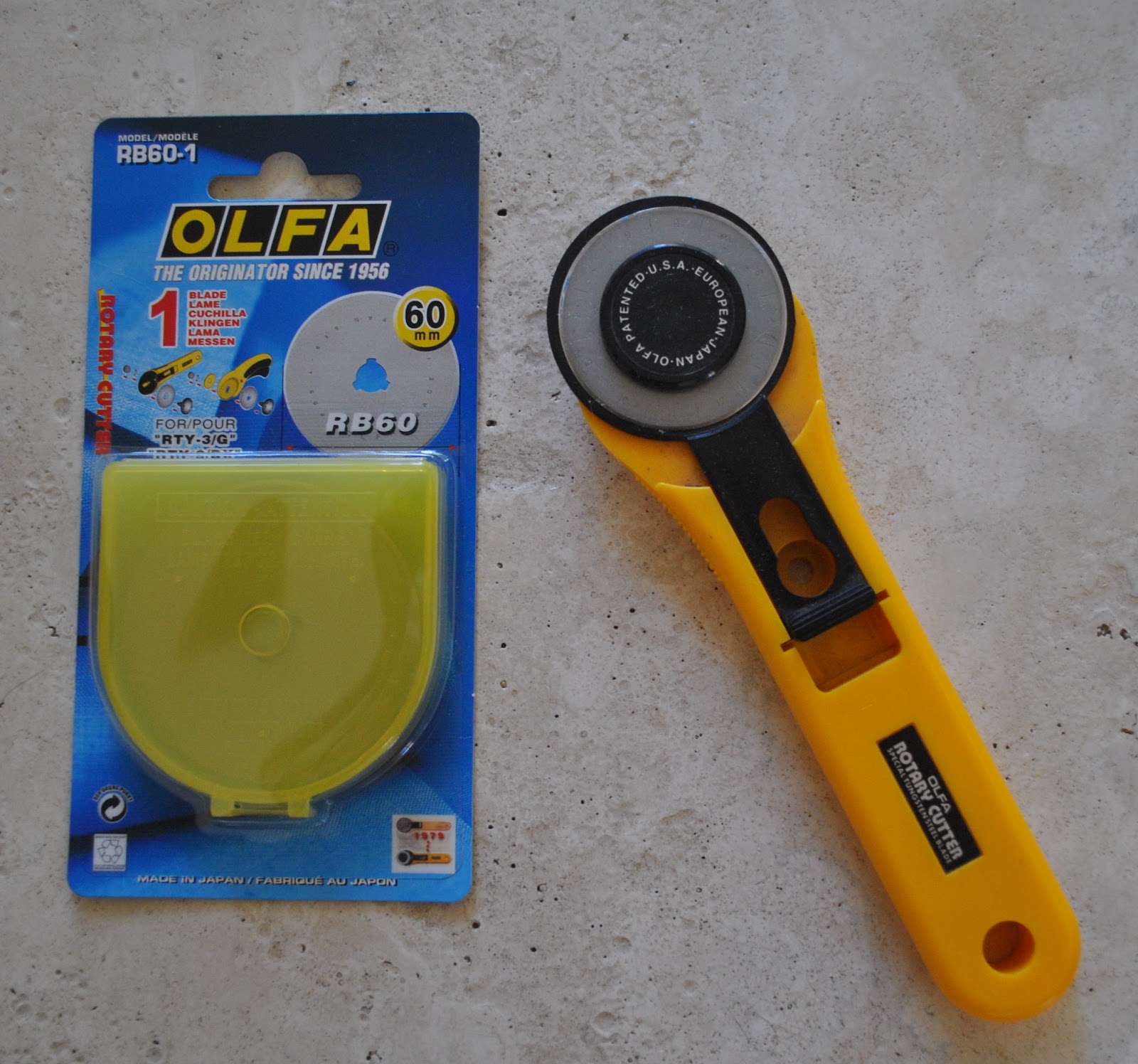
Anyone use these fab Olfa cutting wheels at all?
I use mine for a lot of cutting; mostly bias binding for HongKong seaming but also for a lot of straight edges as they appear in dressmaking patterns too.  I even use them for cutting out full pattern pieces sometimes too, especially if my fabric is that slippery dippery silk charmeuse with a crazy mind of its own, that slips and slithers about annoyingly as one is trying to cut out one’s expensive new blouse (grrr)  My tried and true modus operandi is to plop a Vogue magazine, a bumper one like the March or September issue is the best, onto my paper pattern pieces on the fabric, all on the cutting board.  No pins, all is held in place beautifully, and one just slowly navigates that wheel around the curves… what?  Doesn’t everybody do that?  Way more control than scissors, I promise… and also especially good if you don’t want gaping pin pricks in your piece of exquisite but tightly woven silk.
I’ve been using the same blade for (sit down now) cough cough ten years…. Embarrassing, huh?  No wonder my edges were looking mighty scrappy lately and needed a double going-over… anyhoo I remembered I had a spare blade somewhere that I had grabbed randomly during a 40% off Spotlight sale months ago, so I hunted it out….
and found my spare is a 60mm blade, whereas my cutter takes a 45mm.  Doh!  (face palm)  Why I have not ever noticed this minor-but-major detail at any moment in time over the past months; oh wait.  I actually do stuff like that all the time, hehe.

So long and shorty; this blade (just the blade, mind) is looking for a new home.
Just leave a comment, if there is more than one person interested I’ll do a draw.  Oh and might be a good idea to check that your cutter takes a 60mm, first…  🙂

pinterestmail

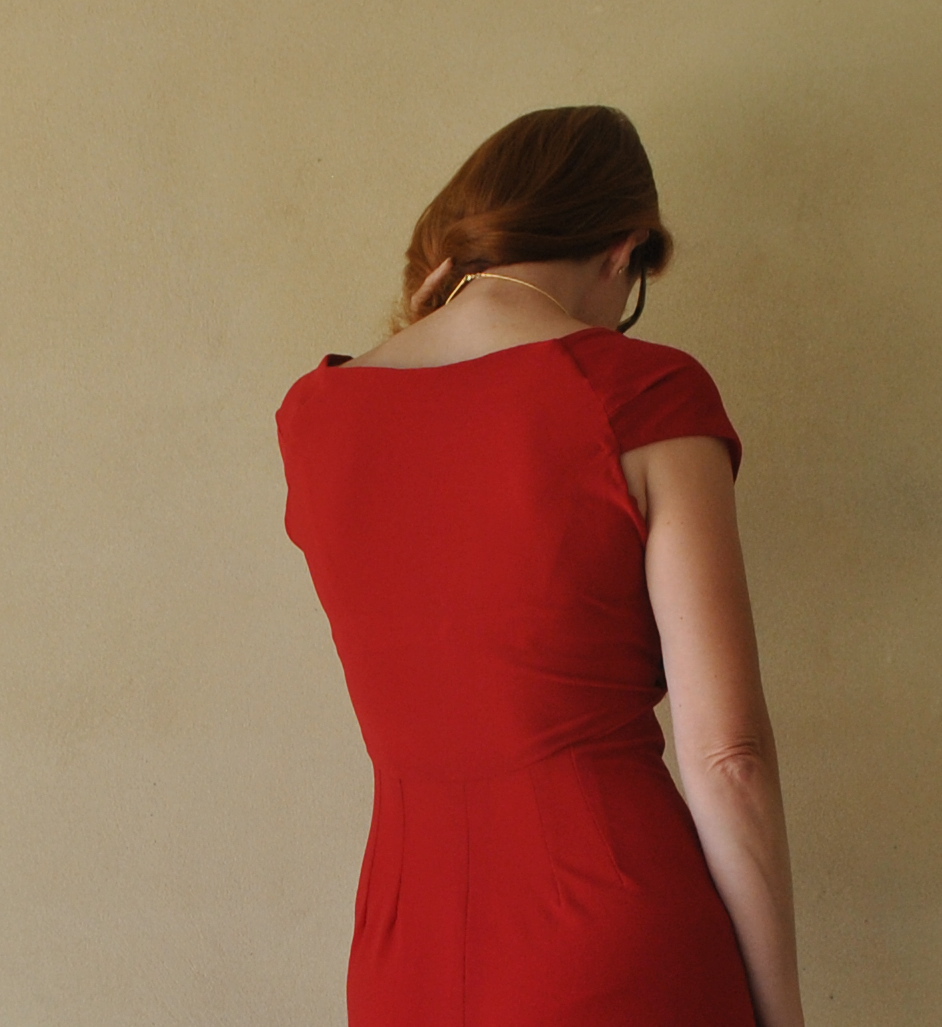
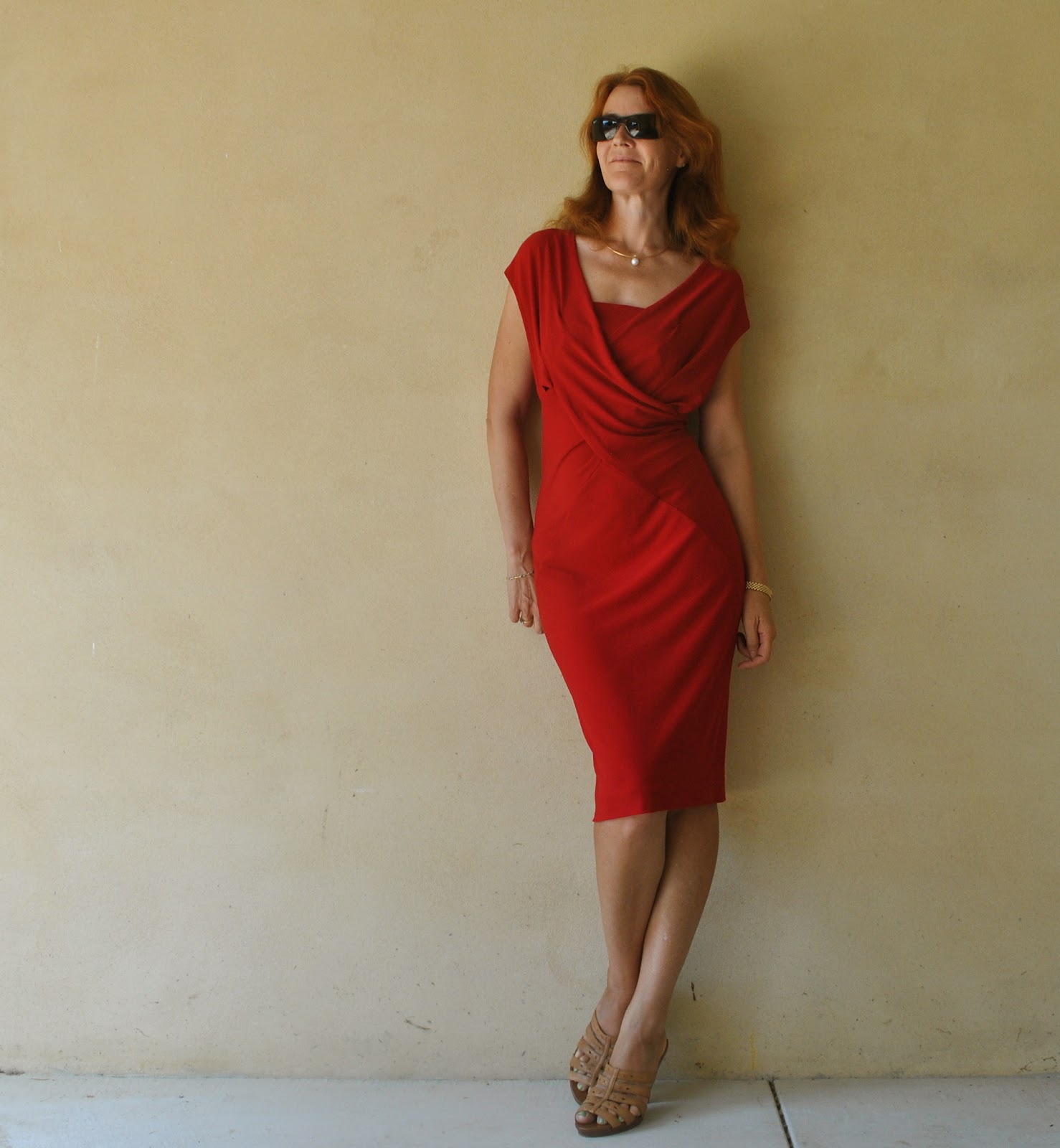
The Woman in Red

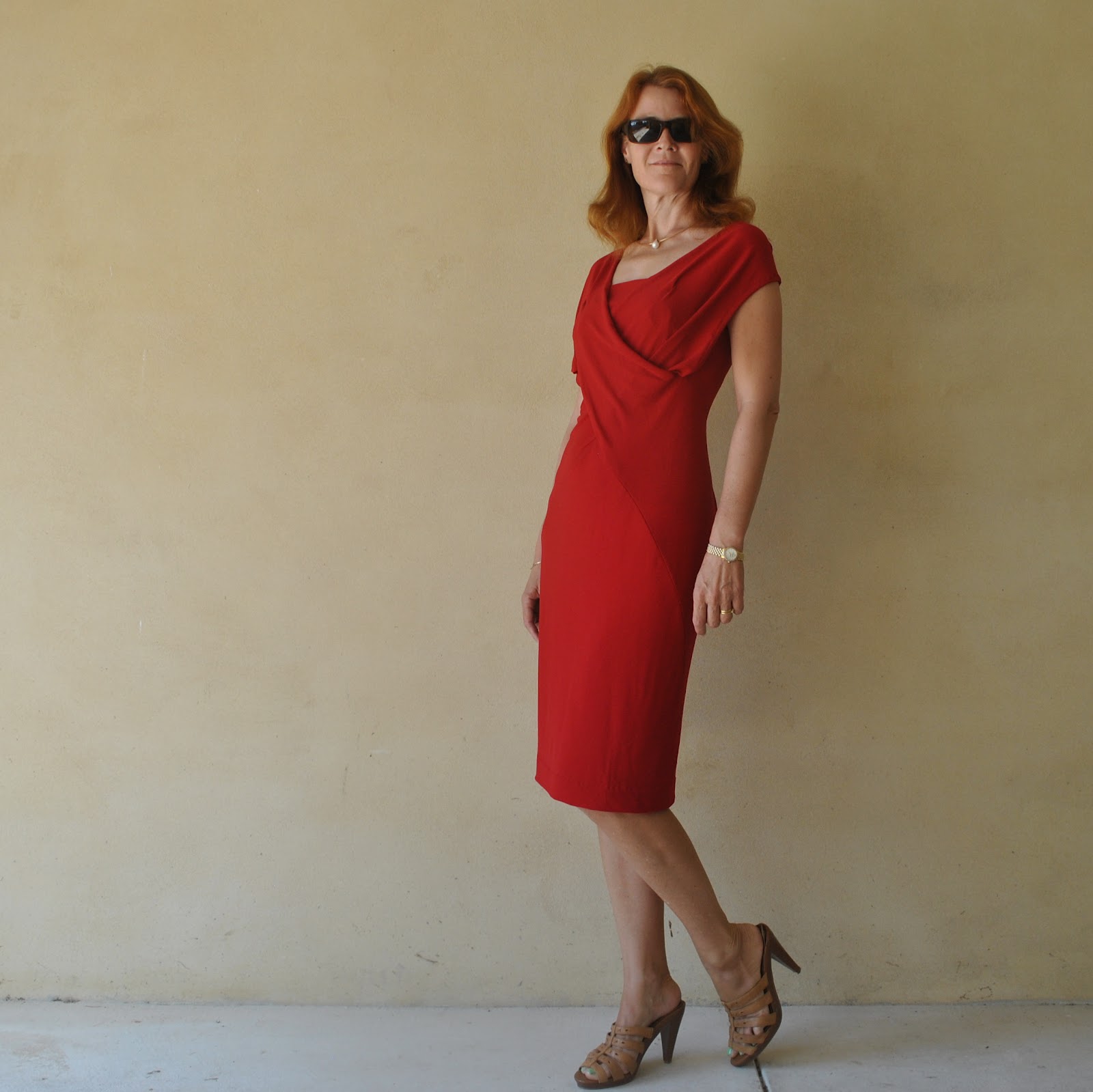
As soon as I read about the Red Dress contest over at Pattern Review I decided I wanted to enter.  I do so love red dresses, so I have no good explanation for why I did not have one already.  Oh, just remembered I do have a red ball gown, oh yeah.  But I’m talking about a dress that I can actually wear.  You know what I mean…  
When I was a teenager at school a teacher once opined that red was “my colour” and that little factoid has stuck in my head ever since.  But I do find red a quite challenging colour to mix into the wardrobe (I have a short list of stupid rules about the colour red and what other colours it can and can’t be worn with; that I won’t bore you with just now)  So I just have a few select red pieces.  A dress not being amongst said pieces, so it was time to remedy that! 
This beautiful scarlet rayon jersey has been sitting in my stash since my last birthday, when a group of my friends very thoughtfully gave me a Fabulous Fabrics voucher for a birthday present.  I know, I have the most amazing and fantastic friends, right?!  They know me so well!  I used my birthday voucher for this fabric, along with some other fabric that is still in the stash.
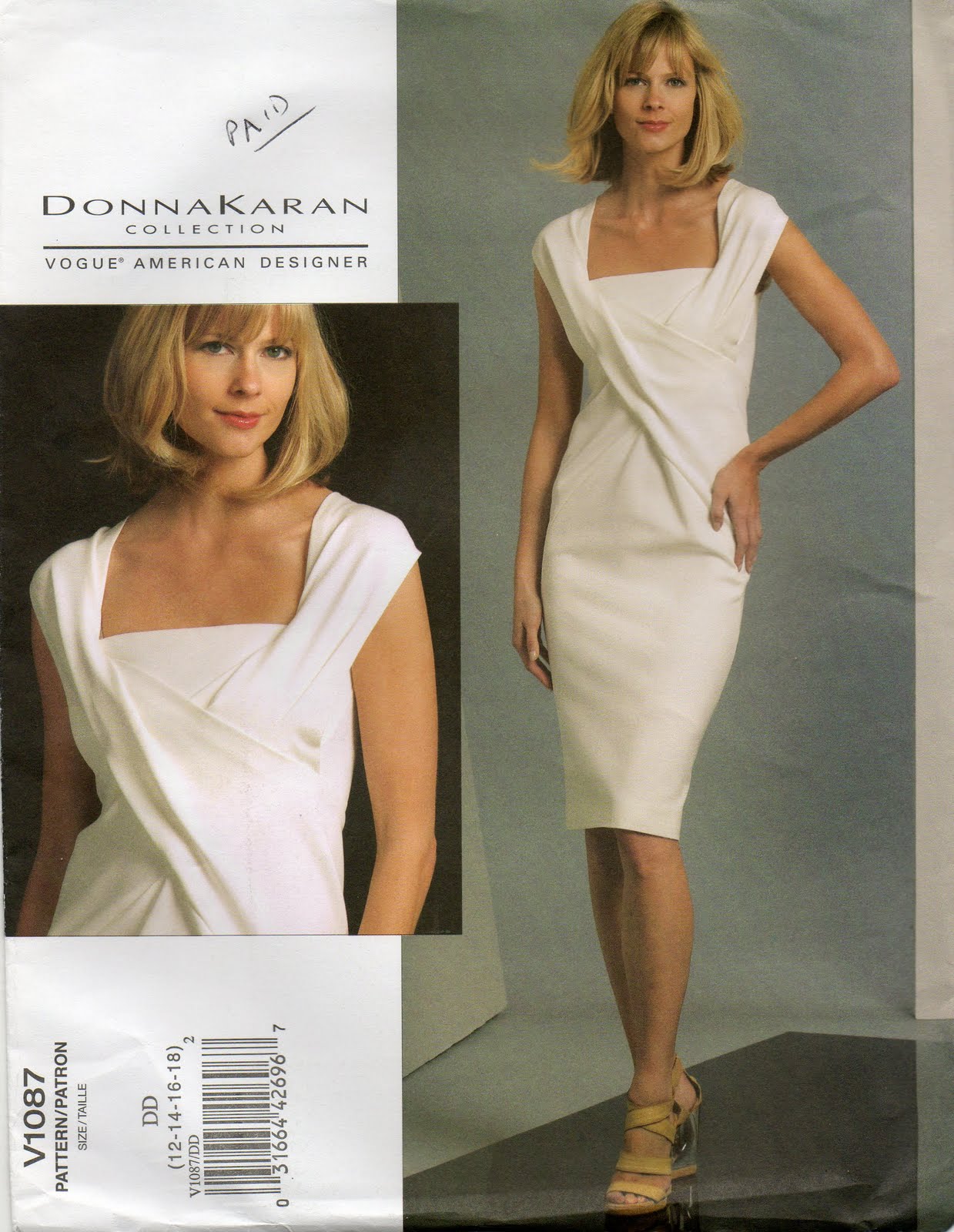
Vogue 1087 is a simply gorgeous dress pattern, and I was cross with myself that I had used such el cheapo fabric for my first version, that did not go the distance.  I’ve been really wanting to make the pattern up again sometime…  The same old problem about finding the right fabric and the right time, yeah.  Well I had found some great fabric.  The contest finally sparked that “right time” for my red dress to take shape.
I made a few changes to the pattern this time; which I have outlined in my new review below if you are interested…
And just saying girls; want your husband to really sit up and pay attention when you walk in the room?  Make yourself a dress like this one….  Word.  My husband absolutely looooves my new dress!

Details:
Dress; Vogue 1087, red rayon jersey
Sandals; akiel, from the op shop

below: no zip, and naturally one can still slip it on perfectly easily…  my advice? save yourself the trouble 🙂

Pattern Description:
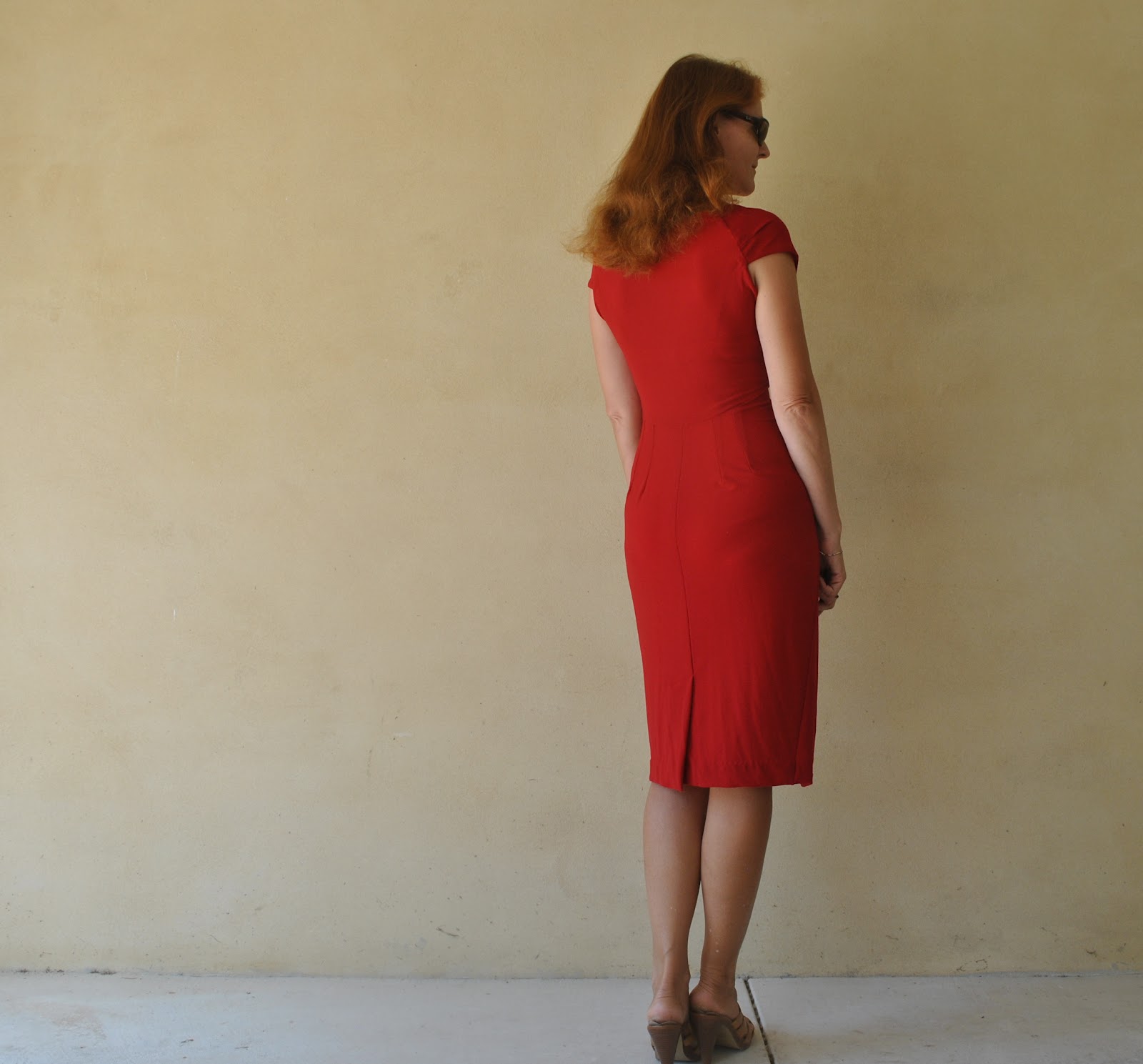
Fitted dress, below mid-knee, has pleated and tucked front forming wrap effect. Front extends to back at sides, back has zipper and hemline vent. No side seams.
Pattern Sizing:
12-18.  I made mine to be a size 12 at the hips and re-graded the bodice to be a size 10.
Did it look like the photo/drawing on the pattern envelope once you had finished sewing it?
Yes
Were the instructions easy to follow?
This is the second time I have made up this pattern.  The first time I made it up I wrote about steps 12-13 being tricky to work out and I ended up with the wrong side lapping over at the front and had to unpick and fix it up… well, after studying the instructions I am confident that they are wrong here.  If you follow the instructions to the letter as many other reviewers did then you WILL end up with the wrong side lapping over, and it is not your mistake.  To get the fronts lapping over the way they are on the line drawing you have to lay the OTHER side over first in step 12.  The simplest visual way to describe the correct way would be like a mirror image of how they have drawn each the two diagrams here, if you like.
What did you particularly like or dislike about the pattern?
I just love this pattern; the fronts folding across each other and wrapping around the body to make a gently draped X along with that curved triangle seam on the front skirt; these shapes combined together are very flattering to a woman’s curves.  The pattern pieces are very unusually shaped and the complexity of the construction makes the dress a nice challenge.
Fabric Used:
Rayon jersey
Pattern alterations or any design changes you made:
My first version of this dress, a size 12, was too loose and floppy for my liking in the bodice, and frequently fell off my shoulders.  So I re-graded the pattern to be a size 10 at the top and graded out to the size 12 around the hips.  I felt like this was quite a dressmaking achievement for me, since it is a complex pattern rated Advanced with unusually shaped pattern pieces, and I did not have a size 10 printed on my version and had to grade it myself by eye.  I’m pretty relieved how well-fitted it worked out!
Just like I mentioned in my first review; I see absolutely zero need for a zip in a stretch knit dress… really!? why is it even there in the pattern?!  So I cut my bodice and back neck facing on a centre fold and so eliminated both the zip and the whole seam.
According to the pattern, the darts on the back of the skirt are supposed to be facing out (sewn wrong sides together). I don’t think so. Mine are on the inside of the skirt, where they should be.
I altered the final stitching of the front pieces to the bodice piece, to sit in a position that I preferred. My neckline is more “wrap” than “squared” as a result.
A bit of experimenting revealed that any sort of edge finish was going to show through on that figure hugging skirt; so I left the edges of the seam allowances here raw; for a smooth look on the outside.  All the seams were sewn on my machine but all the bodice edges, the armhole edges and lower hems are invisibly hand-sewn.
Would you sew it again? Would you recommend it to others?
This is already my second version of this pattern, so definitely!
Conclusion:
I just love this pattern, and this dress, and my husband really loves it too  😉

This is my entry into the Red Dress contest

pinterestmail

A pretty silk blouse

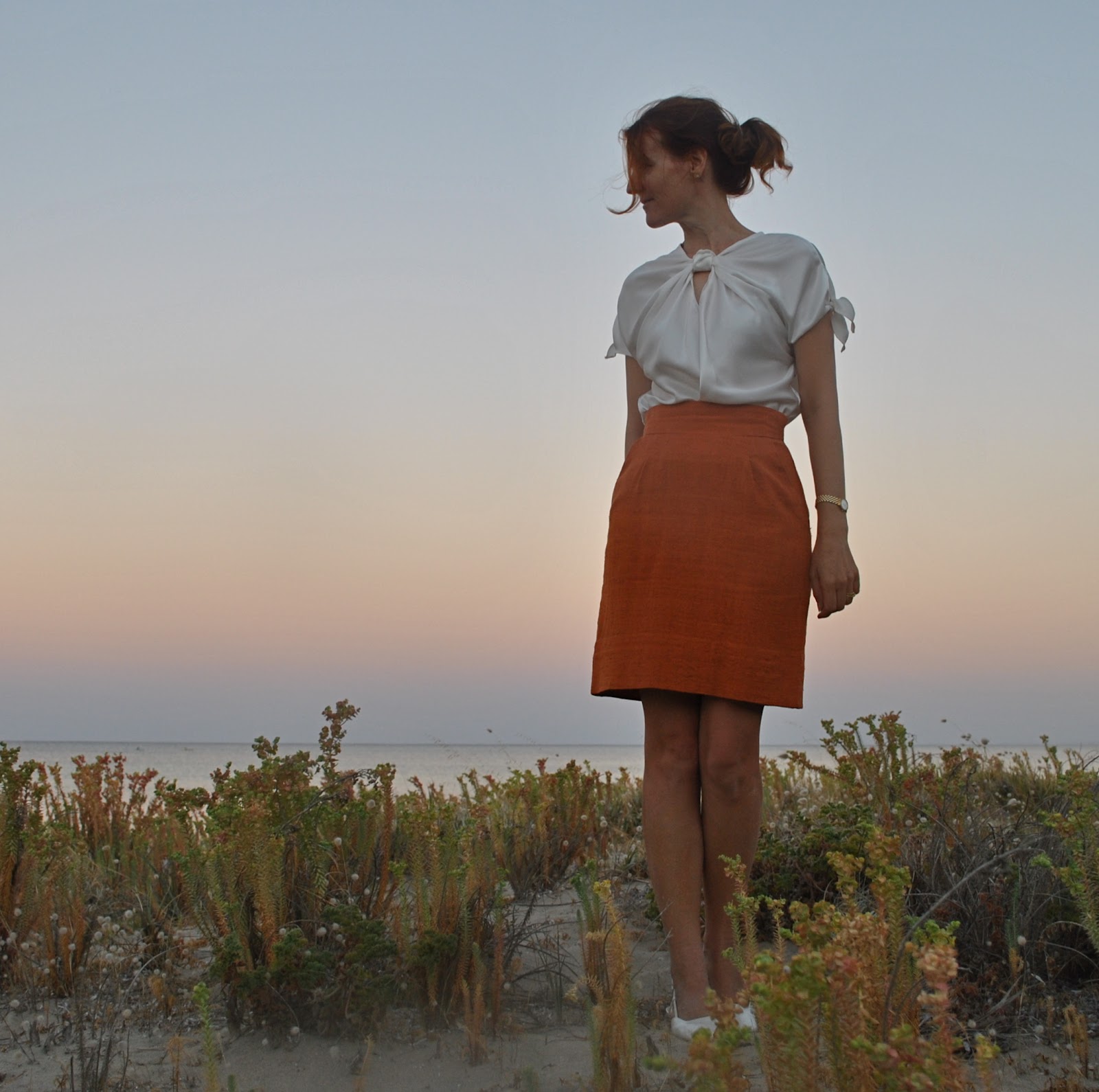
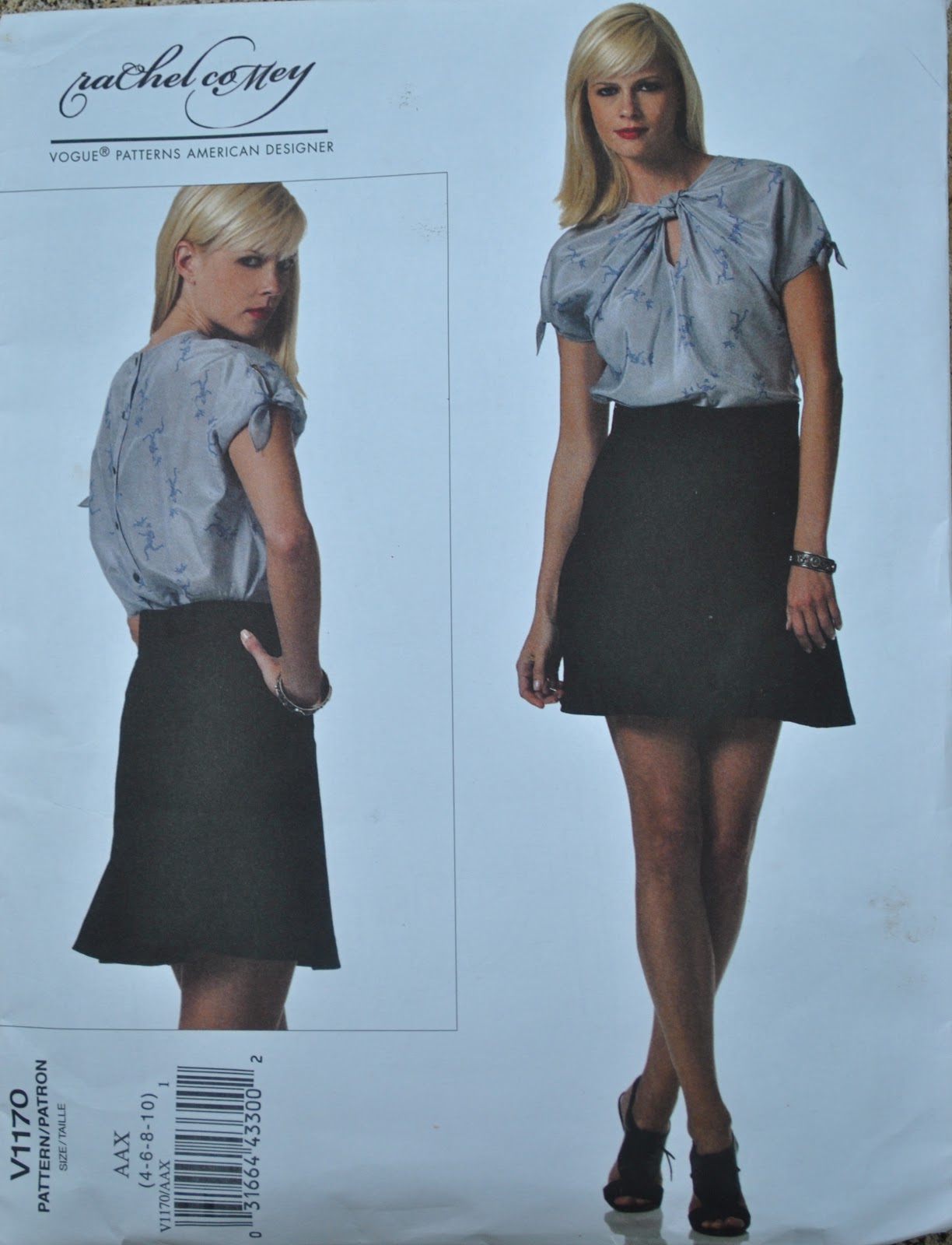
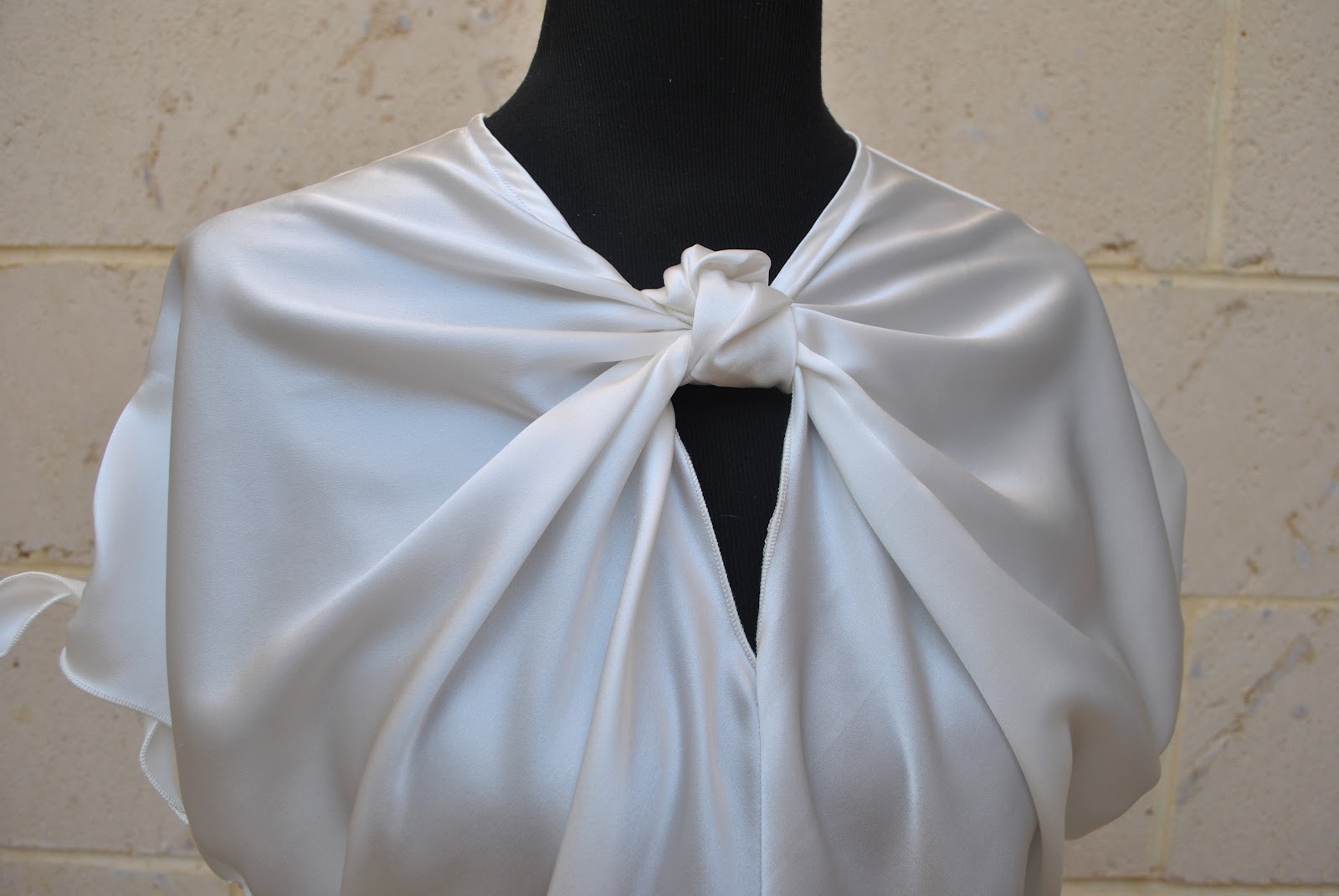
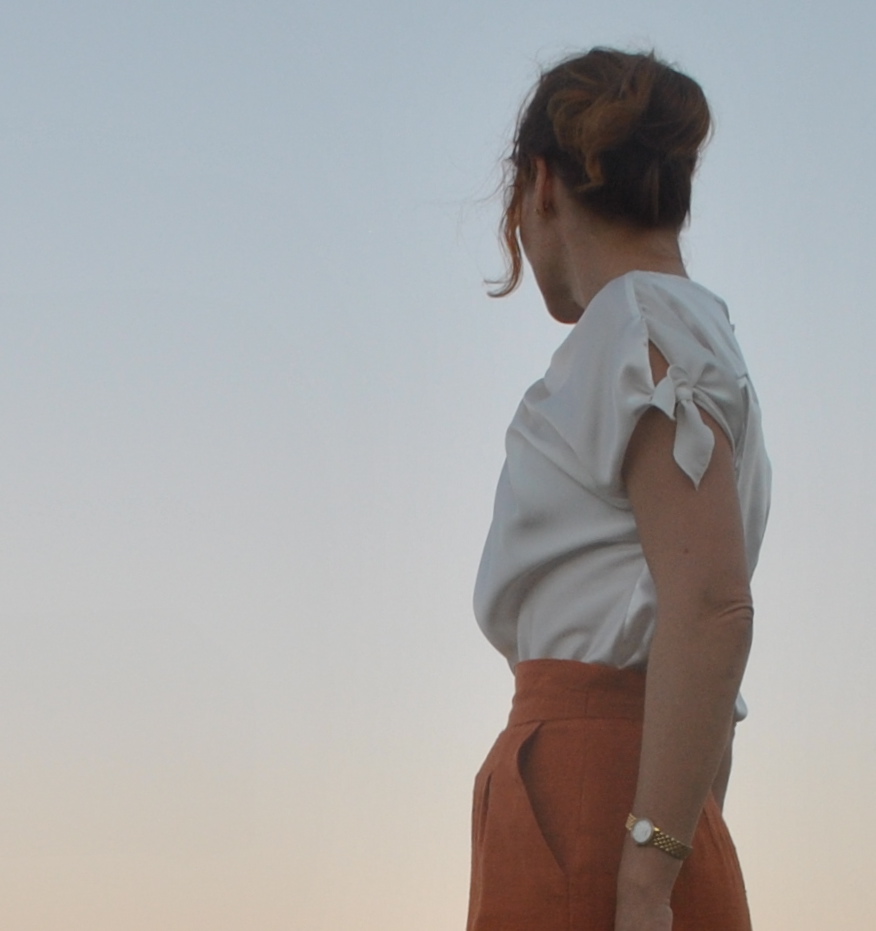
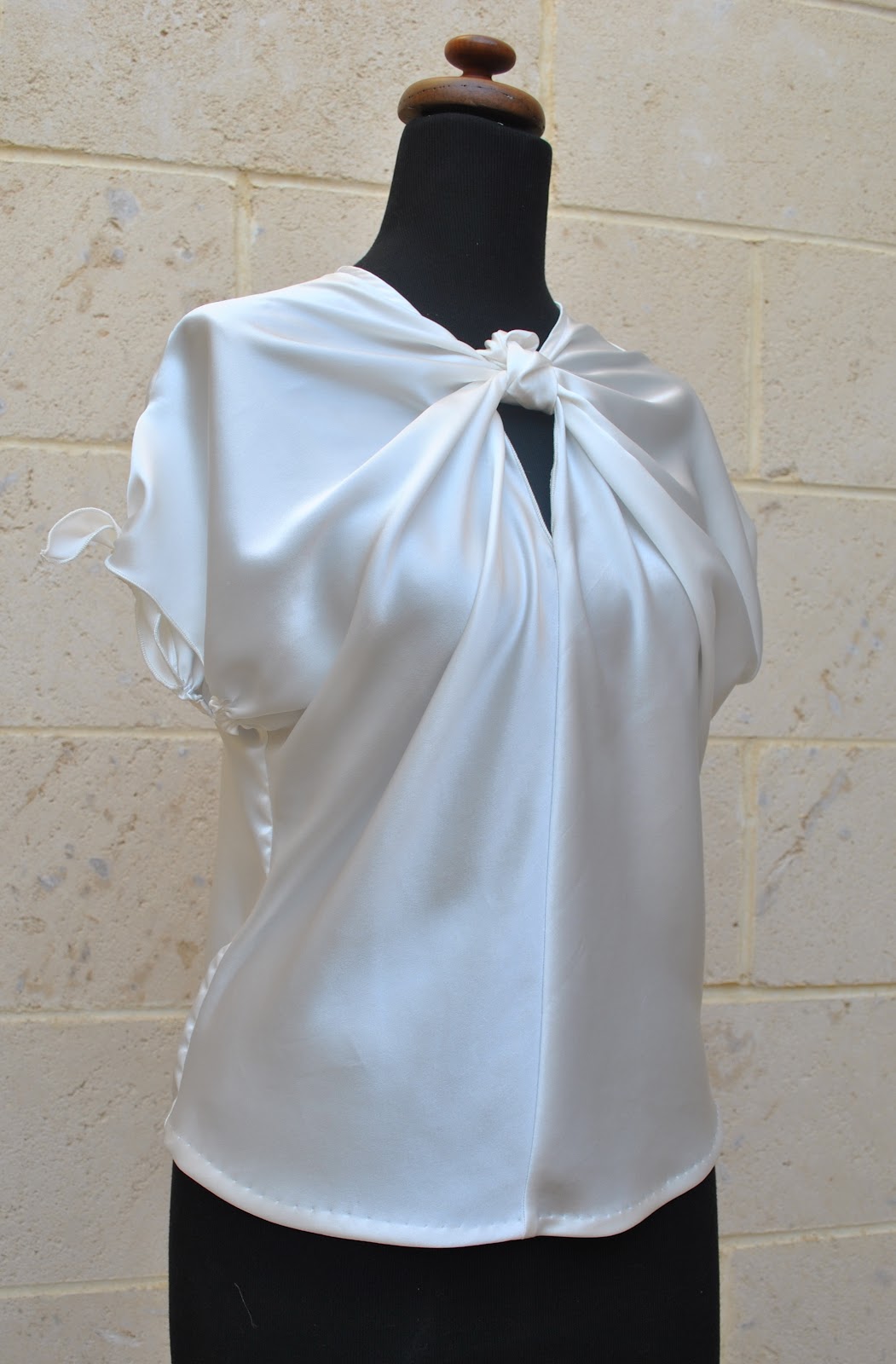
I’ve made a blouse!  And it turned out raaather lovely, if I say so myself…  I used Vogue 1170, one of the patterns given to me by my children for a Christmas present.  I am super pleased with it! 
It is of very luxurious and quite expensive ivory silk charmeuse, with the exact same colour and the same classy, softly subtle sheen of a beautiful and perfect pearl.  It feels so luxe, and like the story of the magic cloak I immediately feel extra ladylike and elegant simply by the act of slipping it on!  
I felt uncharacteristically hesitant and nervous about cutting this out.  Mostly because, although I was excited about the idea of this blouse, and out of this completely divine fabric, I was still a weeny bit unsure that it would work out, and/or even suit me!  It is just such a very very feminine, pretty and super-sweet style, and I was worried that I could not carry this look off.  Trying it on during the making of it didn’t even assuage my fears.  I continued to be doubtful right up until the time I tried the finished thing on, finally.  And was relieved that I did actually still love it, even on me!  It is quite formal, I think; so I will be keeping it for smart and dressy occasions.  Although it does feel sooo nice against the skin, perhaps I should allow myself to wear it just whenever??  Hmmmm.   We shall just have to see about that one  😉  anyway, tonight I wore it out for a special dinner at a swisho restaurant; and I felt perfectly chic.

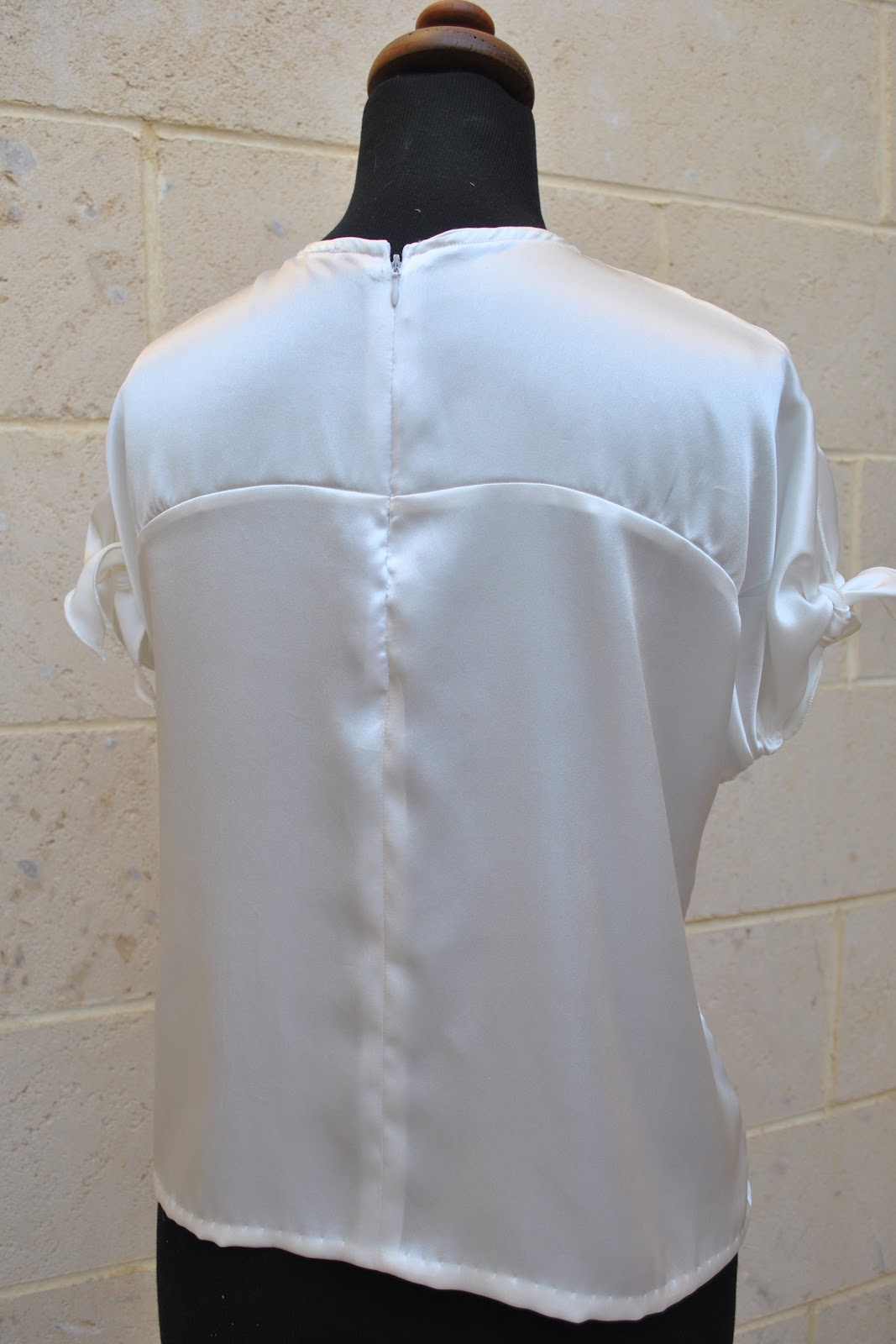
This pattern stipulates a button band in the centre back, which I didn’t think is a particularly classy finish, especially for the quite formal blouse I envisioned.  So I sewed up most of the centre back seam, and inserted a short invisible zip at the top for closure, instead.  This does look quite good, but now I wish I had made a little faced slit instead and sewed on a few pearl buttons with skinny loops for closure.  I think now that would have looked much nicer!

Details:
Blouse; Vogue 1170, ivory silk charmeuse
Skirt; Vogue 8363 with modifications, of burnt orange raw silk, details here, my review of this pattern here, and see this skirt styled in 6 different ways here
Shoes; Sandler, I’ve had these for donkey’s years and they match the blouse perfectly….

Pattern Description:
Very loose-fitting top has front keyhole opening with knot, back yoke, back band extended sleeves tied into knots and back button opening.
Pattern Sizing:
4-10; I made the size 10
Did it look like the photo/drawing on the pattern envelope once you had finished sewing it?
Yes
Were the instructions easy to follow?
Yes
What did you particularly like or dislike about the pattern?
I thought it looked fantastic on the pattern cover, and I love the little knot and how the fabric falls in these beautifully draped folds across the front.  The little ties on the sleeves are really lovely.  The blouse is just so elegant and feminine.  A tad on the formal side for my everyday tastes, but a girl needs a few pretty dressed up tops too!
What don’t I like about this pattern… The instruction to hand gather the underarm seam seems like an uninspired finish, especially considering one has gone to the trouble to apply French seams throughout otherwise.  After hand-gathering mine I thought it looked shoddy.  I tried going over it with the machine but my fabric is very densely woven as well as slippery and the gathers are quite tight and I was terrified of ruining the (almost finished) top.  So I let it be, as partly a hand-gathered seam and partly machine-finished.  But I’m not completely happy with this bit.
I thought the back button band too casual a feature on what is quite a dressy little number, so I did something different on my version.
Fabric Used:
Silk charmeuse
Pattern alterations or any design changes you made:
Instead of the button band down the centre back I substituted an invisible zip and sewed up the back seam.  But I wish now though I had left a short opening and used a couple of pearly buttons and skinny button loops for closure, I think that would have looked a lot nicer and neater.
I considered doing those narrow hems on the neckline and the sleeve ties as per the instructions.  Briefly.  But my fabric is exceedingly slippery dippery stuff; and so decided instead to use the rolled hem attachment on my overlocker for these edges.  This gives a much neater and more consistent finish for this fabric.  Trust me, I’m speaking from experience here…!
I finished the lower hem by hand.
Would you sew it again? Would you recommend it to others?
Probably not, but one should never say never!  Maybe I will want another one of these one day, but will first have to think of some better way to finish off that underarm seam! 
I highly recommend this pattern for a very pretty and very feminine evening top.  It gets muchos compliments!
 Conclusion:

I’m very happy with my blouse now, but my fabric was very difficult to sew.  It didn’t want to be French seamed, and even less did it want to be narrow hemmed and then gathered and oversewn, as in the underarm bit.  Silk charmeuse is tricky at the best of times and in the simplest garments, and forcing it into curved French seams is not an easy ask.  But I am glad I persevered with this fabric, since I absolutely adore the pearlescent sheen of this luscious and luxurious fabric and it feels simply divine against the skin!!  And the end result is a very pretty and chic blouse, one that I will be very pleased to pluck out of the wardrobe for semi-formal events.

pinterestmail

Purple dress; 6 different ways

I think this little purple shot rayon dress, made using Burdastyle magazine 06/2011, 102 and seen first here will be one of those winning dresses with year round capabilities.  I have been wearing it a tonne this summer;  being a natural fibre and with its flow-y loose design it is beautifully light and so cool on even the hottest day. And I think that come the cooler weather that I will still be able to wear it to, thanks to its sludgy winter-y colour.  It’s amazing to me that I was a little doubtful of this dress at first… since I can’t imagine now how I did without something just like this before!
At left; being such an easy casual design with no zips, buttons or other bits and bobs, makes it a perfect throw-on over the bathers, as a beach cover-up or if you just want to pop out for a few groceries.  I have worn it on over my bathers like this lots of times this summer already!  I also love this colour combination of bright yellow against that sludgy purple colour too; colour wheel opposites.  At right; I have a big collection of light summer scarves to dress up a plain dress like this one.  And y’know what? it is amazing, all of my scarves are showcased beautifully against this very blank canvas of a dress.  This scarf, a gift from my parents from their trip to Italy, is one of my favourites.

purple1
At left; with a loose-fitting blouse over it, it masquerades as a skirt.  I don’t often go for the dress-as-a-skirt look, but the loose nature of both these pieces allow the combination to work really well.  At right; the simple but elegant style can be dressed up for a more formal party or dinner on a summer’s evening, with all hot-pink accessories.  I wore this outfit to Cassie’s birthday party.
purple2
Now for some cool weather ensembles, and I am looking forward when I will be wearing more nuanced outfits with a few layers such as these!  At left; purple is a great base colour for an autumn wardrobe, and I love it against warm rich autumnal colours, such as raspberry red.  Add a creamy scarf, and I’m all ready for a casz day.  At right; worn as a tunic top, and layered up with neutral and similarly sludge-y hued accessories for winter…  I would wear this when I wanted to look smart, like meeting my husband or friends out for lunch, or going out to dinner.  Fyi? best not to try wearing either of these outfits on a 38C day.  That would be just plain silly, yes?  😀
purple3
What am I wearing today?  Well I am wearing the second outfit, with the lovely colourful scarf… it was perfect for a pretty hot summer day.  I had morning tea out with some friends and then ran a few errands.
So which of these outfits would be your favourite?
pinterestmail

Billowy white shirt

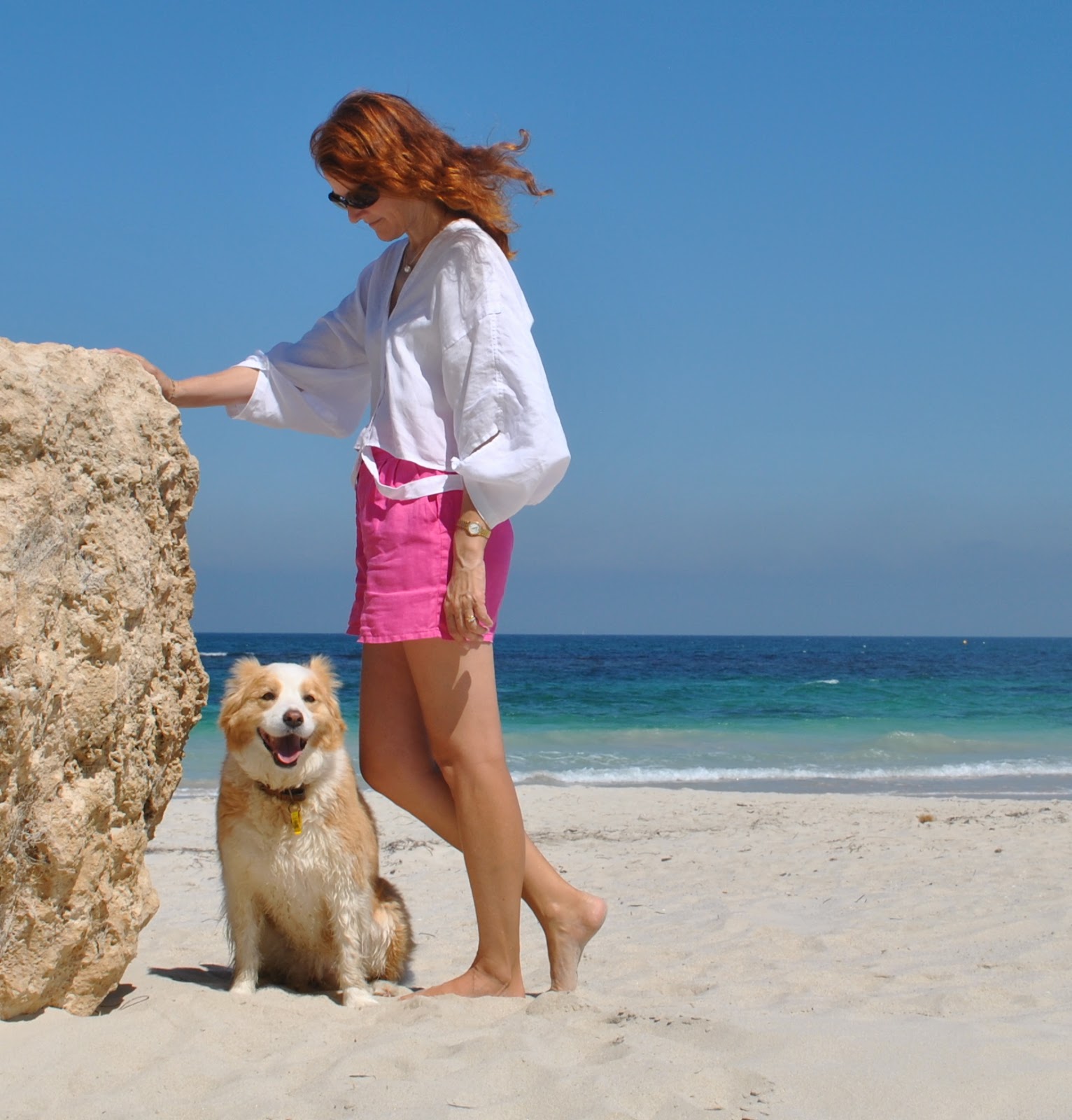
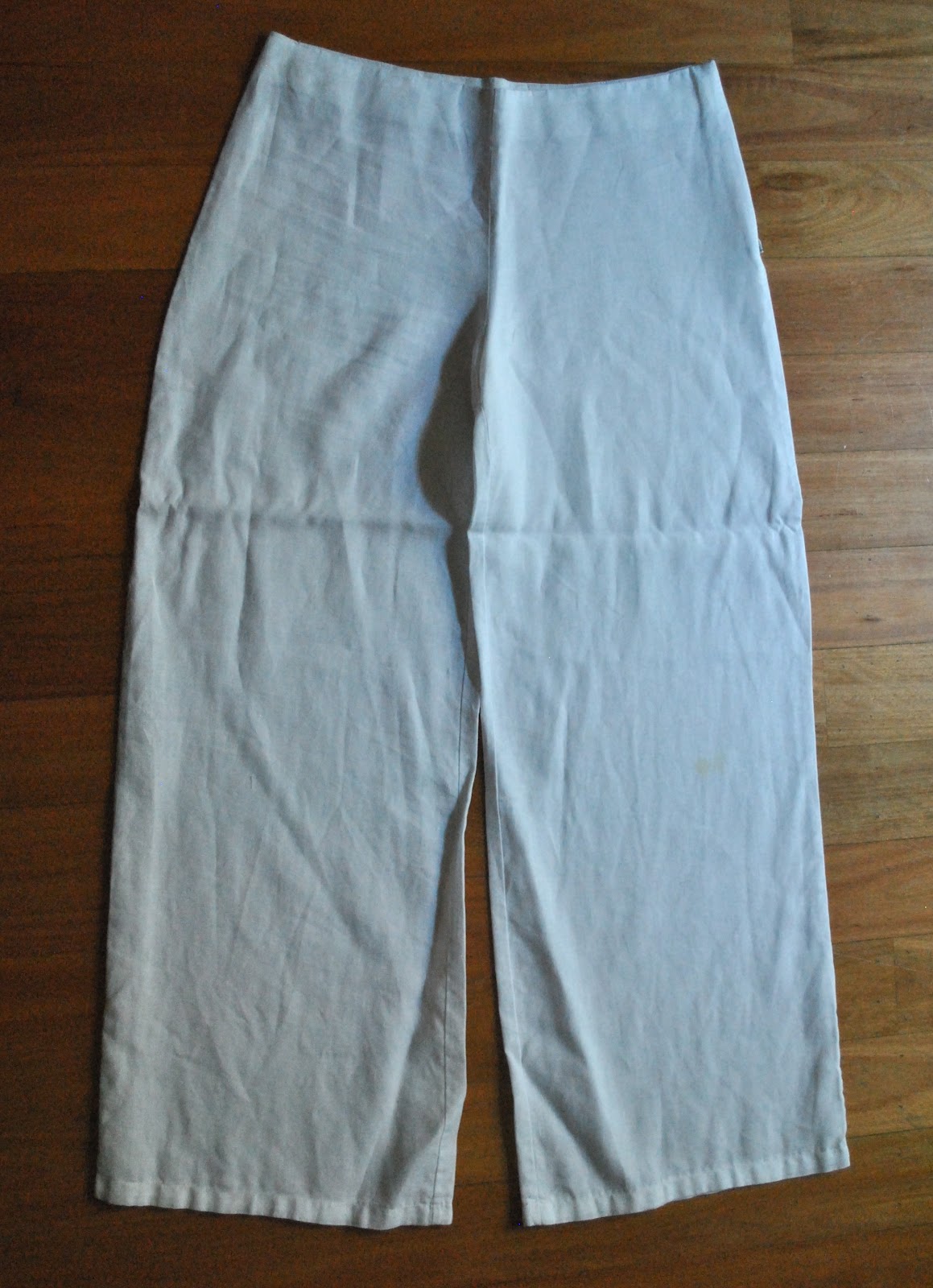
I’ve made a shirt… and the twist is that this was until recently a pair of trousers.  Yes really!
Before; as wide-legged trousers.  They were very low-rise in the style of about five years ago.   I could literally pull these trousers on and off without undoing the zip.  The last time I wore them was about two years ago (in this top right outfit) and even then I had the zip un-zipped and the sides lapped over and hoinked together with a big safety pin so they wouldn’t fall down.

However the linen was such beautiful quality! and I did not want to let it go to waste…
so I did not.  🙂
I have been toying with a particular concept for a shirt-from-pants for a while in my head.  I’ve had a very firm picture of how it was going to go together.  Naturally my nebulous “idea” didn’t work out quite the way I had planned and I realised at some point that I needed more fabric, and in very different shapes, to what I actually had.  I had to pin, stitch, unpick, re-pin, re-stitch, re-unpick over several times before I dared to actually cut into any of the leg pieces… and there was a lot of this before I ended up with a design I was happy with.  No, I don’t do muslins very often.  I consider them a waste of fabric.
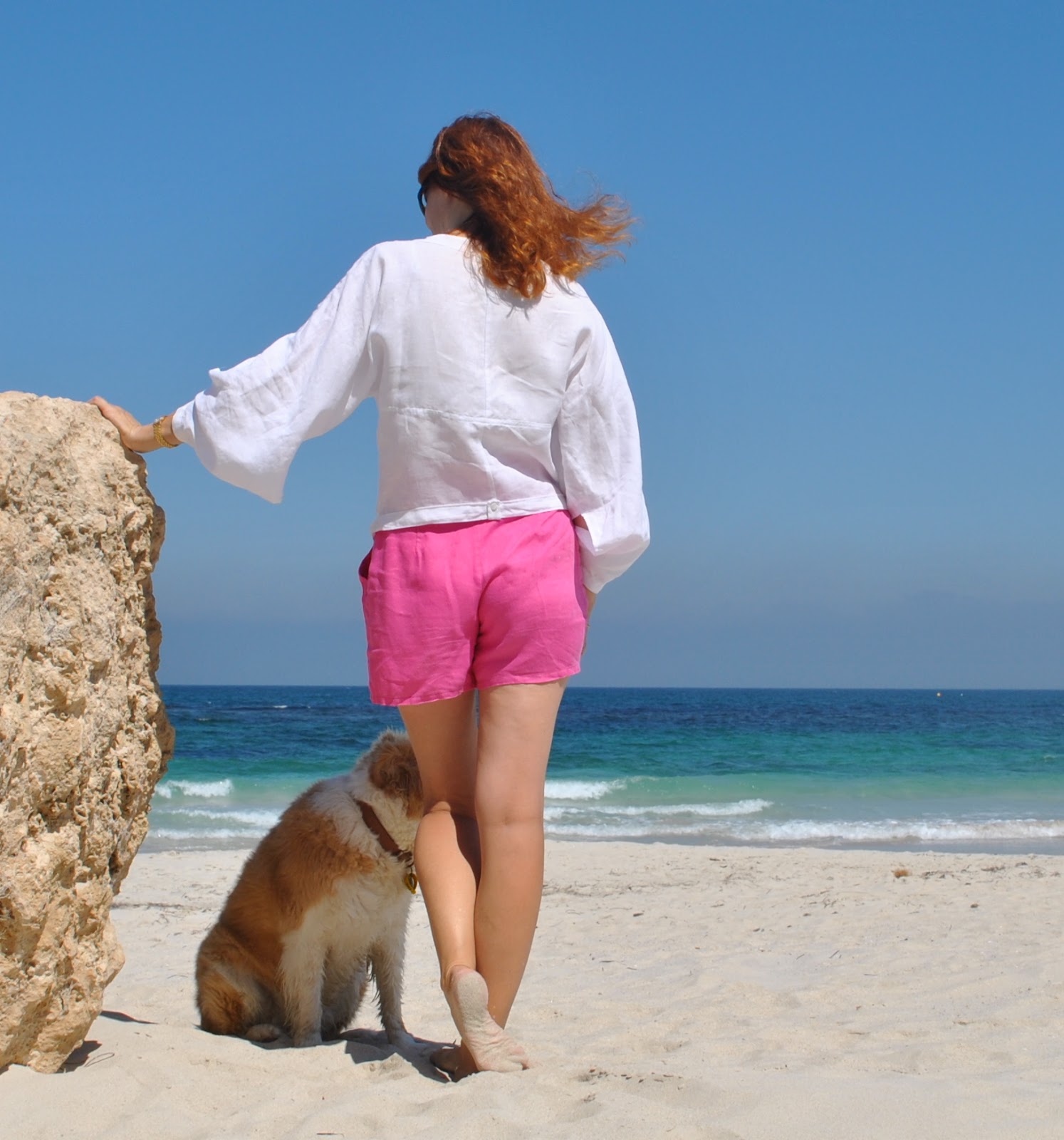
The construction… well, don’t ask me to go into great detail…  it was quite complex.  The long extended front bands, starting at the shoulders and extending down the fronts, and continuing around to meet at the centre lower back are from my original shirt plan, the one I had to abandon.  I liked how they looked, hanging in space like that, so I left them there.  To cover the join at the back, which by necessity in the design finished inside out with the seam showing, I made a little decorative button tab.

The shirt has two fronts, and the back has a two pieced yoke extending into the sleeve backs, and two lower backs joined centrally.
The back of the shirt has four corners of fabric joining together at a centre point.  I pressed the vertical seam allowances of the upper and lower backs to either side to reduce bulk in the long horizontal back seam joining them.  This is double top-stitched down.  Actually this shirt contains an eclectic mix of sometimes double top-stitching, sometimes single top-stitching and sometimes no top-stitching.  I applied these at whim.  It seems to work well with the casual and slightly avant-garde Japanese style of the shirt.
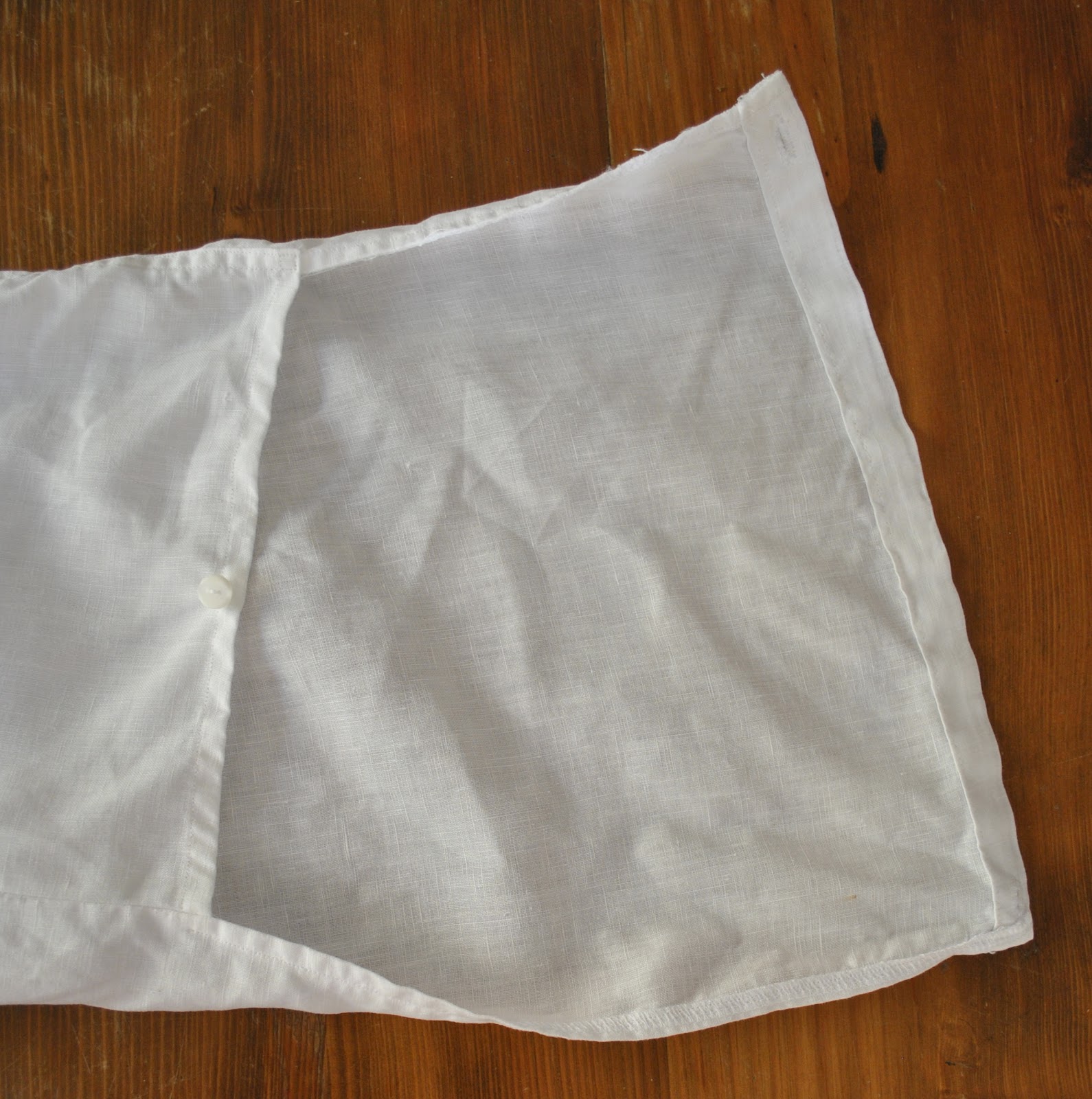
My favourite design detail is the sleeves and their closure.  The front sleeve is shorter, and almost a square.  The back yoke/sleeve piece has a distinct curve-and-flare in it, tapering off to one side, this was part of the original shape of the leg back pieces, and after lots of pinning the sleeve seams and trying-on multiple times I situated part of the existing curve to fall at the natural outer elbow. It looks very strange when the sleeve is laid flat, but the flare and curve actually accommodates the curve of the elbow very well.  It took a bit of experimenting, but I’m so happy with how this bit turned out!  It was a very serendipitous discovery!

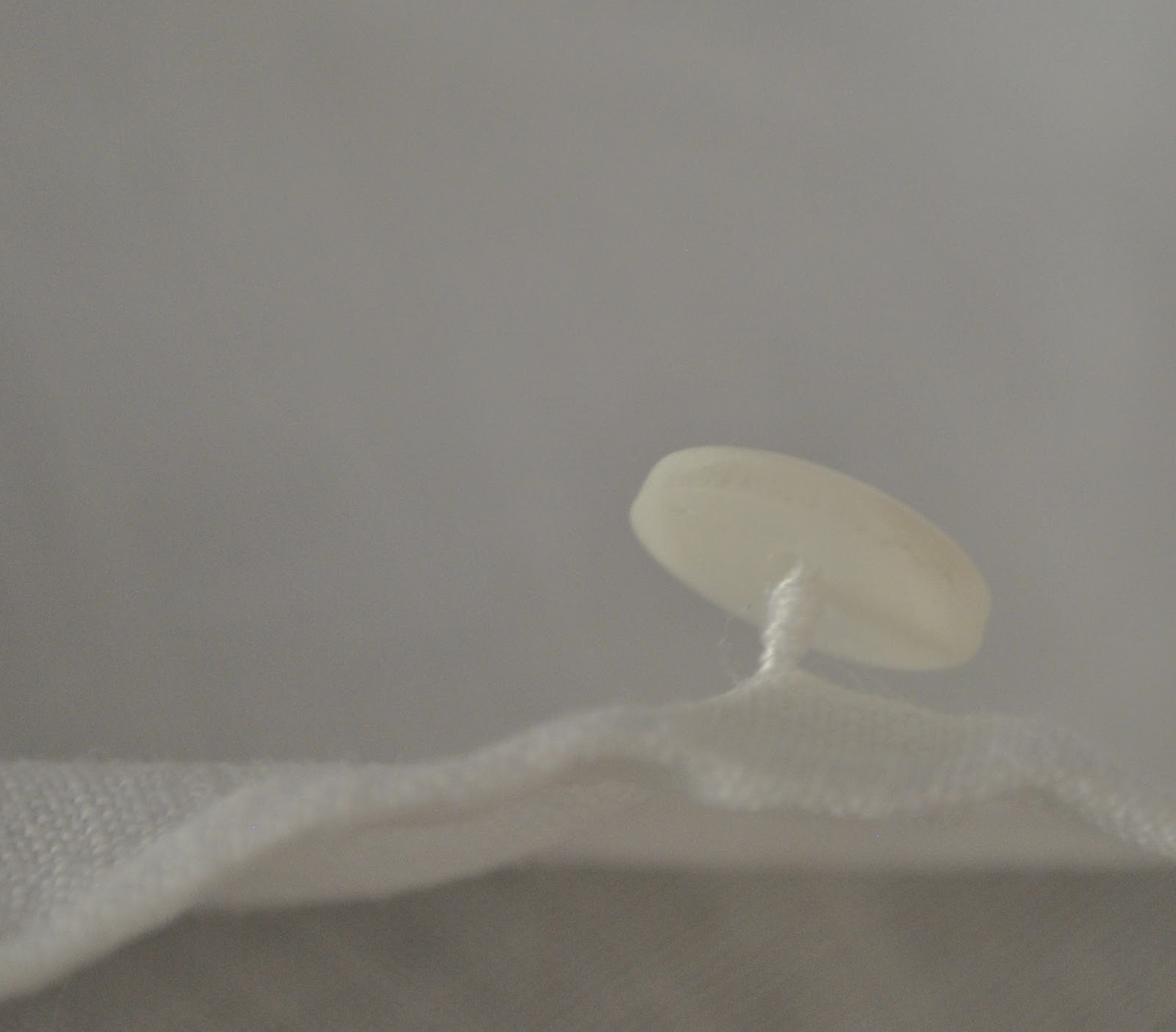
Both points of the longer back yoke/sleeve piece have a buttonhole, and they both button down over a single button on the centre of the sleeve front hem.  To enable the button to cope with this amount of fabric, I sewed it to have quite a high and a very well reinforced shank.

So I’m super happy with how my shirt turned out!  There was almost zero leftovers, just a few shavings, the zip and the facings, and a few other miscellaneous small bits.  The 6 buttons were leftovers from this shirt.  Beautiful buttons, their only downside is that they are not for individual purchase, but only available on cards of nine.  Luckily I have a lot of use for little white buttons  🙂
And I still have my original shirt idea in my head for another time…

Details:
Shirt; my own design, re-fashioned from a pair of wide-legged trousers, fine white linen
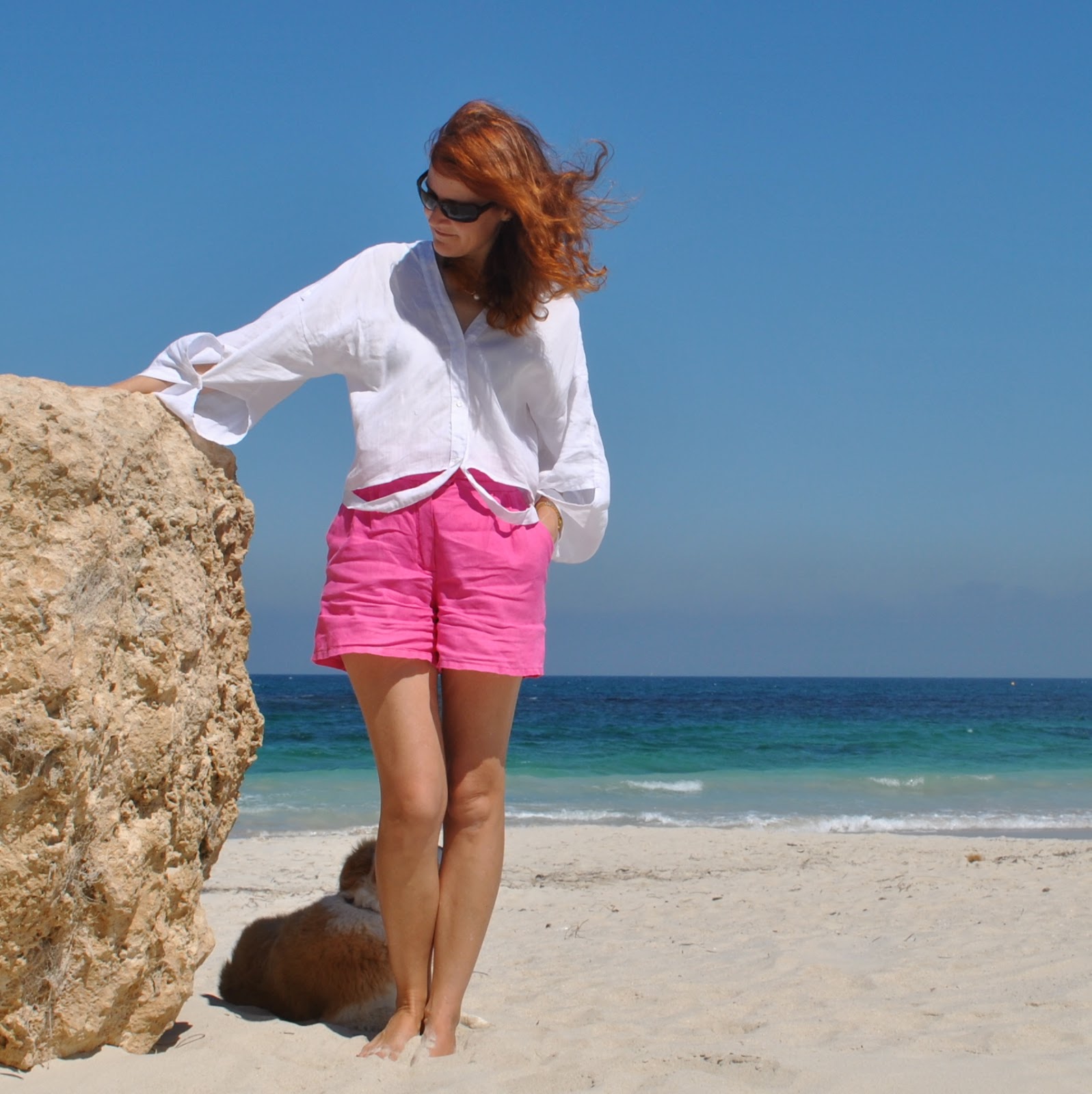
Shorts; Burda 7723, hot pink linen, details here, and to see these in 6 different ways go here.  My review of this pattern here

Later edit: the shirt has had a mini-revamp and it now looks like this:


pinterestmail

Valentine’s Day…

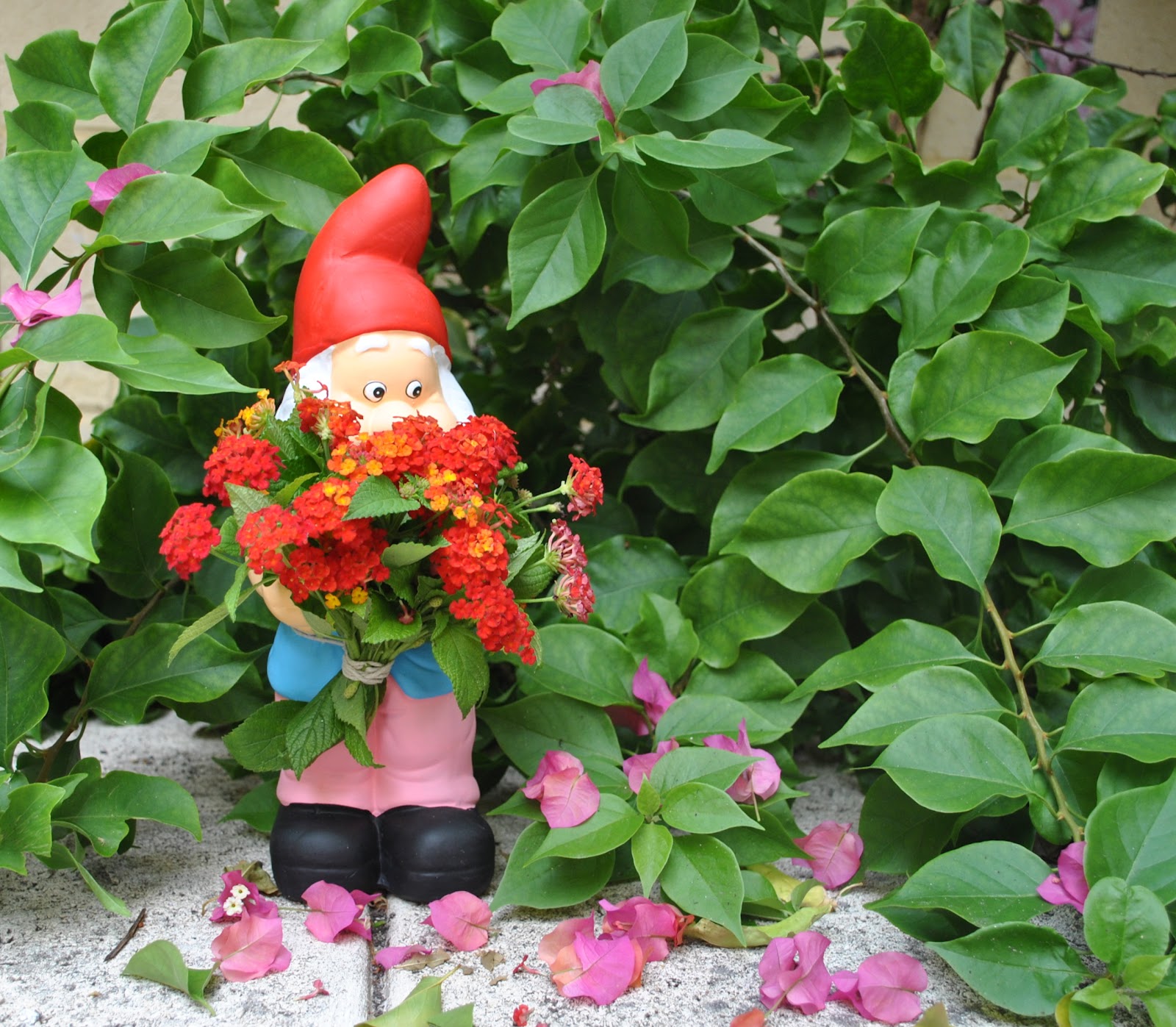
…. and Fabio says it with flowers.
Wishing everyone a perfectly love-ly day!

pinterestmail
Switch to mobile version
↓