Tag Archives: Tutorial

Oblique mitred corners

I’m taking part in bimble and pimple‘s Sewvember instagram challenge, and on day two our mission, should we choose to accept it, *Dun Dun dundundun Dun*… was “technique”.  I happened to be doing a couple of oblique mitred corners that morning so that’s what got insta-ed.
A right-angled mitred corner is an easy and straightforward thing, simply folding the raw edges evenly together and sewing an easily gauged perpendicular line out to the edge from the corner.   
But I find an oblique mitred corner to be not at all intuitive… so anyway, I thought I would take a few more pictures and share my way of doing it here.  This is not necessarily the one and only way, of course.  Just mine  🙂
This pattern has been cut with a 4cm hem allowance and a 1cm seam allowance.
Turn up the 4cm hem allowances on both edges and press the layers in place.  

Use a long pin to mark the underneath layer, exactly where the fold of the upper layer sits.  It’s also helpful to mark that outer corner fold point with a pin.

Unfold the hem allowances and turn them out right sides together, exactly aligning the upper layer fold at left to the line marked with the long pin.  The corner point pin is a helpful guide to alignment.  Pin.

the point of that corner fold pin can be seen peeping out at the bottom there

Stitch along the pressed fold; starting from 1cm in from the raw edge and ending at the corner point pin.  Trim the corner excess.

Turn out and press.  If all has gone to plan, it should be sitting all nice, smooth and flat!

Aaaand, hem  🙂
pinterestmail

“framing” with an inset strip in a pieced garment

This method gives what could best be described as an inset strip.   It can be used to “frame” individual pieces and will highlight the piecing in a design as an interesting feature.
It is a flat strip set alongside a seam so it looks superficially similar to piping, and has the advantage of being flat, not 3D, as well as being a bit easier to sew than piping imo  🙂

These measurements will give a narrow 1/8″ inset strip alongside a seam, however the measurements can be easily adjusted accordingly to make a narrow or wider inset as desired.  If desired, you can even make the strips slightly different widths within the one garment to emphasise some seams over others or to give a better balance visually.

Select the side of the seam you wish for the inset strip to sit.  For example, in this bodice I elected for the inset strip to be on the back side of the back/front side seam.  This will be the piece the bias-cut strip will be pinned and stitched to first.

Note: IF you are sewing strips into multiple seams on the garment as I did for my dress in this example, then it is very important to be rigidly consistent throughout here.  Because the inset strip is encroaching on the garment a little bit on one side of the seam the garment will look a little “off” if some strips are sewn to the front and some to the back.   Pick a side and stick to it.

Cut the bias strips to be 1″ width.

Pin the bias cut strips with the raw edge 4/8″ away from the raw edge of the fabric.

Stitch 6/8″ away from the raw edge.  Note: to make a wider inset strip, pin the strip and sew this seam further away from the raw edge.

Press the wide edge of the strip over the stitching, towards the raw edge of the fabric.

Stitch the pattern pieces together, right sides together, in a regular 5/8″ seam allowance.  The seam stitching is indicated in this picture, the stitching to the immediate right of that is the previous stitching to secure the bias-cut strip.

Open the pattern pieces out and press the seam allowance away from the inset strip side.
Voila!

pinterestmail

Denim slides!

I’ve made some shoes!!!  This is my first foray into “proper” footwear.  Yeah, I made slippers recently, but I’m not counting those.  And technically these are slides, which are pretty basic things on the shoe scale, really.
But still.  They are real shoes!  Wooooooooooooooo!
ok, I’m sorry, calming down now.  I’m just a bit excited about them  🙂
So, for ages I’ve dreamt longingly about having a go at making my own shoes.  However cool stuff like shoe-making courses are just not on offer here in Perth.  Well that’s just that and it can’t be helped, but life is too short to not do stuff that you really want to do, right? so I just decided to GO FOR IT!  havva go, just DO it, whatever, even without a teacher or the tools or even the faintest idea of what I was doing.
The choice of denim; well every time, and I mean every time my friend J and I go out on girly shopping trips, as we head into our favourite shoe stores I say for the eleventy-billionth time; “ooh, I really would like a pair of denim- or denim-coloured shoes.”  I’ve often though they would be sooooo useful and would go with a lot of my wardrobe.  I mean, we all know denim jeans go with everything, right?  So, it stands to reason, denim shoes should go with everything too.  And; quick aside; honestly, why has that thought not occurred to shoe-makers yet?  Because so far my search for denim-y shoes has been one big, long, mournful FAIL.  It’s sad, but they are a non-existent beast.  Or should that be a pair of non-existent beasts, maybe?  I still wanted them though.
And now I have some!
Now; before I introduce my procedure for making these, obviously I am no expert and I have no idea what I’m doing.  I’m making it up as I go along with educated guesses, and I don’t have the proper equipment, like lasts or an industrial sewing machine.  I’m sure shoe-making experts would look at my efforts here and roll about, laughing helplessly at how awful they are.  It’s true, they are far from perfect.  Hopefully I can improve!

For the bases I used two balsa wood blocks from Bunnings; chosen mainly because I spotted them and it seemed like a good idea at the time.  I drew a template of each of my feet, overlaid/combined them to draw a single “master” template.  I used a coping saw to cut out the main chunks and get the right shape; and then three sheets of sandpaper to smooth and contour, ranging from super rough to light.  I used the roughest sandpaper to do most of the contouring for my foot pads and heel pads to sit in the base nice and snug and comfortable.
Shaping/contouring the wooden bases to be equal-sized and -shaped mirror images to each other and to fit my feet was the MOST time consuming part of the whole thing.  Really, ten progress photos slotted in here would be a fair and accurate representation of this step rather than just one; but that would be extremely boring, so just a few then…

I used an pair of old jeans for the denim.
I cut long strips for the side coverings, and topstitched the ends down using orange thread, to match the orange thread usually used in jeans topstitching.  Glued it in place using PVA exterior wood glue.  I chose this glue because it was not too quick-drying therefore easy to work with, and yet is still super hardwearing and durable and dries to a hard, water-resistant finish.  Not waterproof, mind you.  NOT that I’m planning to wear my shoes to slosh about in puddles or anything like that, aiyiyi perish the thought!
Clipped the curves etc, to minimise overlapping, so the edges would lie as flat as possible; and glued them down, upper and under.

Made a template for the top bits via the auditioning of a thousand “muslins”; well, not really, but it felt like it.  The winning design was cut so as to make a feature of the existing jeans’ side seam with the allowances double top-stitched down in that distinctive shade of Levi’s orange.  The tops are double layered; lined with plain denim, sewn right sides together then turned out and under-stitched.  The excess at the sides was trimmed to wrap right around underneath my foot then glued in place.

I made a padded insert by trimming a purchased foam shoe insert from Coles to fit, then stitching to a piece of denim around the edge using orange thread.  The ends were clipped, turned under and everything glued in place.

I covered the curved part of the sole with denim…

Finally, I cut thick rubber floor matting (Bunnings) to fit the soles using a stanley knife, and glued this in place.  This will be quite hard-wearing and will stand up to a lot of knocks, hopefully.

Making these was an interesting experiment, and a learning exercise in how not to do a few things.  Yes, a second pair of shoes is in the pipeline already.  My second pair will definitely be better, I think.  My first mistake; balsa wood does not hold nails, thus the need for lots of glue.  I’m definitely going for harder wood and nails in the future.
The big question for me is: am I going to dare to actually wear my shoes? outdoors? like, for a full day?  well today I almost did since I was meeting my same friend J for lunch, and I thought they went really nicely with my outfit… but then I chickened out!  Too many puddles around from the recent rain :S
Maybe I’ll just keep them exclusively for me-made May, haha!  😉
No, of course I’ll wear them, but it’s going to be hard to avoid babying them.  I’m ridiculously pleased with them.  Well so far, until I can make something better anyway!

pinterestmail

Dusting slippers

I’ve made something useful; slippers, that clean!
I pinned these mopping slippers a while ago, and have now got around to making my own.  See, we have no carpets in our house and lots of animals; meaning furry dust-bunnies appear on a daily basis to scurry and swirl across the floor like mini tumbleweeds across the desert.  Meaning I’m forever getting out my big floor dusting mop thing out from where it lives in the cupboard under the stairs and doing the sweep of the house.  Which is a chore.  Well, now I can do the same job just by performing graceful balletic sweeps with my dainty pointed toes into the corners of the room, as I glide about the house, doing whatever I’m already doing, without having to go and fetch the duster.  Hands-free.
Which is not a chore, but fun!
Well, that’s the theory, anyhow  🙂
Making them is a very simple procedure…

I bought a couple of  dusting pad refills; and also used some extra odds and sods from around the place; a thick cleaning sponge for padding so they are comfortable to walk around in on our hard floors, and an old towel for the straps and lining.  I also used a bit of an old bedsheet to “interface”, if you will; effectively it’s there to stabilise and hold all the lining and padding bits together.   The sponge I used for padding is actually a bit smaller than my feet but it still does provide a nice soft comfy padding when I’m walking around on them.  I already had these in my cleaning cupboard, which was lucky!  The sponge is very thick, so I cut it into three layers like you would a sponge cake.
I drew a template of my foot and cut out two generously sized versions out of the towelling and bedsheet lining, sandwiched a piece of the sponge between them and sewed the three layers together around the edge of the sponge.

Then cut the foot straps from the edges of the towelling, making use of the existing selvedge on one side and hemming the other edge.  Fitted it to my foot dimensions, making them nice and snug so they stay on my feet ok; but not so tight that I can’t slip my foot in easily in one go.

Finally cut the micro fibre dusting pad with a big fold over allowance all around the edges, and simply folded the edges over as I went along, top-stitching it down around the edge.

Dust bunnies; begone!
pinterestmail

More on sewing knit bands

eleynagomez asked how I made the thumbhole bands on my Nettie bodysuit, thank you so much for asking!
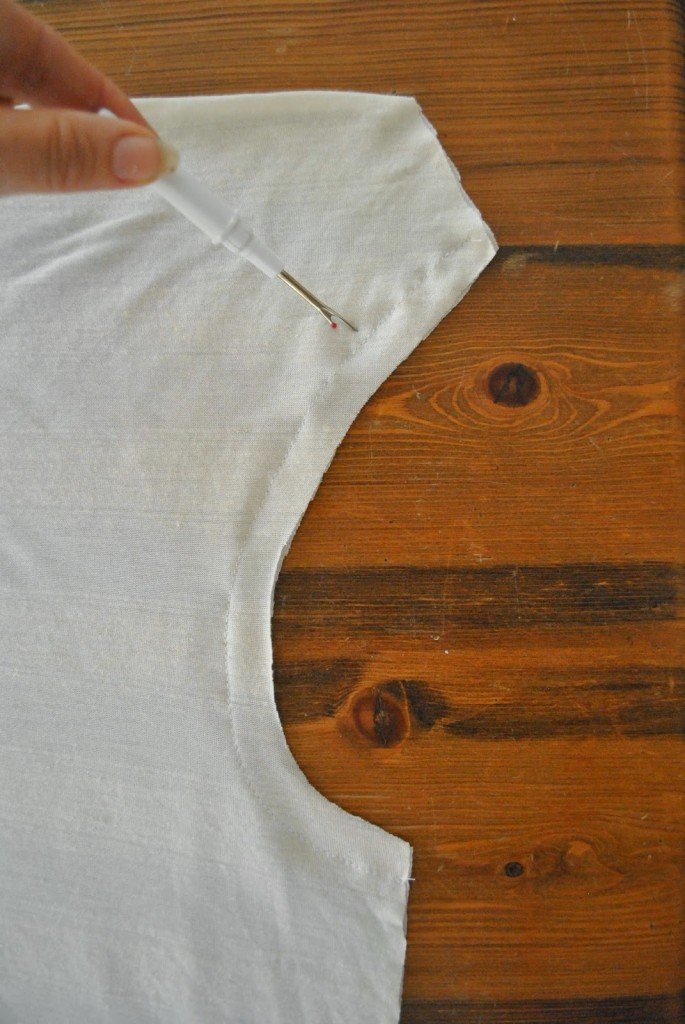
I didn’t take any pictures while I was making the real thing but I sat down this weekend and ran up a little mock-up band … basically it is the exact same procedure as if you are adding a neckline or armhole band to a Tshirt but just on a much smaller scale!

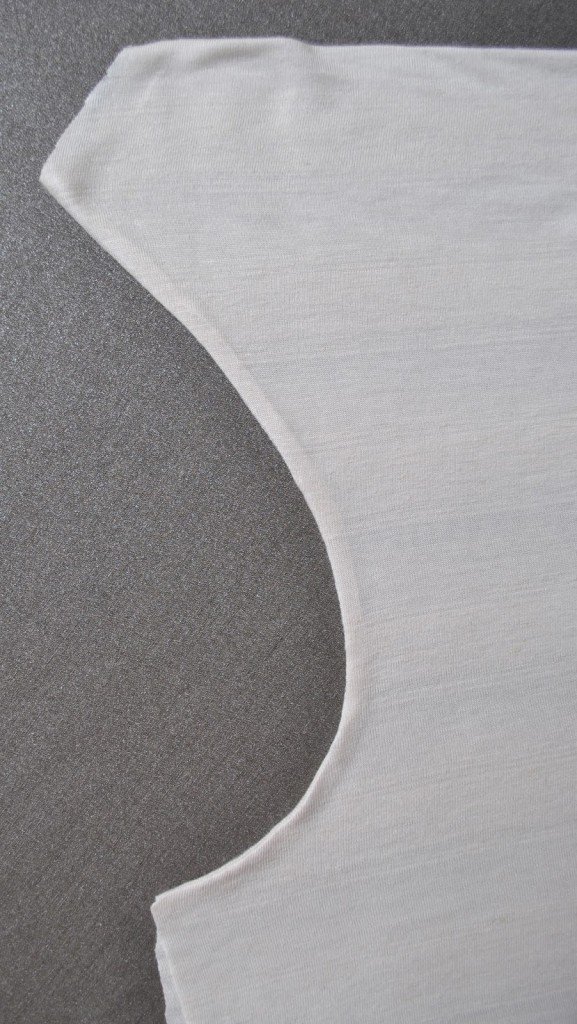
Firstly, when you cut your Tshirt or bodysuit pieces cut the sleeves long enough that they will cover over your hands, as above.  Make the Tshirt.
Try on and mark with a pin where you want the thumbholes to sit on the sleeves.
Now, measure around the base of your thumb and cut 4cm wide bands to fit, adding 0.5cm seam allowance onto each short end.

Sew the band in a ring, press the seam allowance open.

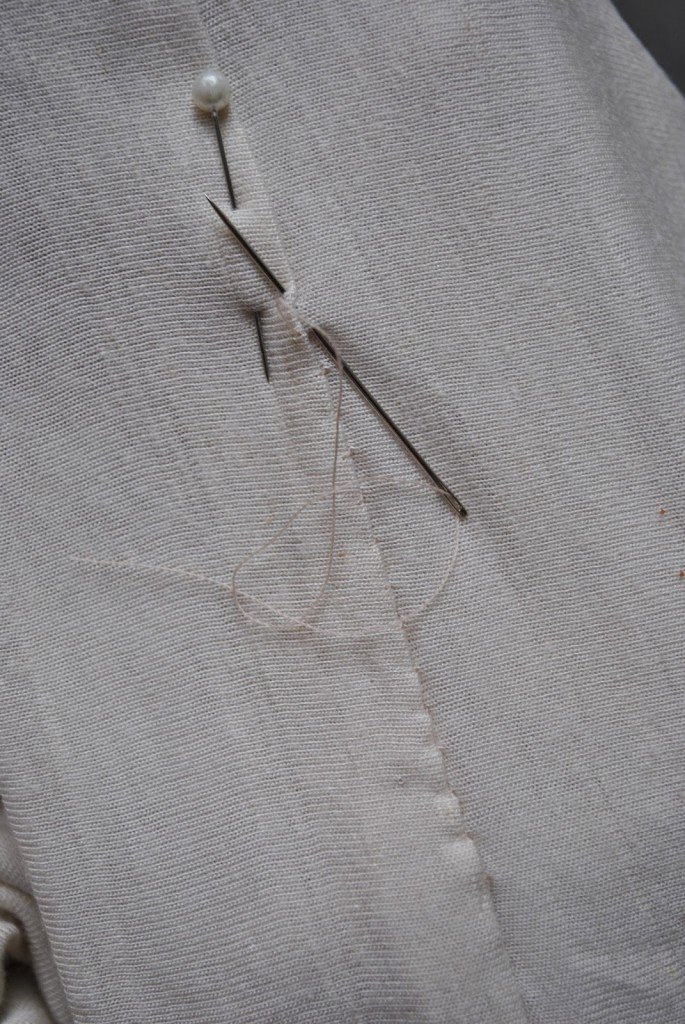
Fold in half, long edges together.  Cut an on-grain slit in the sleeve at where the thumbhole is marked; make it just a bit shorter than the length of the folded band.  It is best to make it a bit short, you will stretch the hole to fit the band as you are sewing.  If the hole turns out to be too small to stretch out sufficiently to fit the band; you can always nick the end of the slit a little bit longer while sewing.  But if you make it too long to start with then the thumb-band might stretch out and be too loose around your thumbs.  

And no one wants *horrified gasp* floppy thumb-holes!
Pin from the band side, since stitching is to be done with the band side up.  

Also… important: whenever you do sew a ring or a tube of fabric like this, be sure to always sew from inside the tube rather than the outside; to avoid sewing down the opposite or underside by mistake!

Because it is such a tiny weeny little band; just go slow, keeping an even distance from the folded edge of the band at the left of the needle, and checking constantly to make sure the slit edge is being caught underneath into the seam.  Stretch out each end of the slit to fit the band as you go.

If desired, the seam allowance can be neatened by overlocker.

Also, I mentioned previously about sewing the joining seam in a band on the bias… I did say I would write a how-to, but this really only qualifies as a “tip”, I think!

When sewing a jersey band onto the neckline or armhole or any aperture really! of a knit garment, I’ve generally gone for a straight seam just because it’s easy.
But because there are almost double the number layers of fabric sitting at that joining seam point compared to elsewhere along the band this area is can sometimes be a bit bulky and you sometimes end up with a slight bump no matter how carefully you guide that seam through the machine.  Seriously, getting a nice smooth and even-width band all the way around is often the hardest part about making a Tshirt!
So lately I’ve been cutting and sewing the join on the diagonal, reducing the number of layers at the joining seam, and I think it’s been an improvement with almost no bumpy bit at all!!
It is a particularly good idea for bands like a cardigan button band, on which slight bumps and irregularities in thickness and width are particularly noticeable.

You do have to be careful while sewing that joining seam, since the fabric is on the bias along that edge you have to watch out that you’re not stretching the fabric at all while you’re sewing that short seam.  If you’re in any doubt as to whether the fabric will distort during stitching it would help to pin and sew to a backing piece of tissue paper, which can be ripped away after it is sewn.
Later edit in response to an email question; just to be clear, the band is NOT a bias-cut band, it is still cut cross-grain just like you normally would and it is just the short joining ends that are being cut on the diagonal  🙂

And yes, the thumbhole bands I described above are so tiny it was really too tricky to mess about with bias joining seams and I just cut those on the straight.  Choose your battles!

pinterestmail

enclosing all seams in a double layered top/dress

This is a method for sewing a double layered sleeveless dress or top in such a way that all seam allowances are enclosed within the two layers.  This could be used to create entirely reversible garments as well as simply giving a nice and neat inner appearance.  It is also useful when using sheer fabrics like mesh and very fine translucent knits to make a self-lined garment.

Cut the front and the back pieces with a 4cm hem allowance, and cut a front lining and a back lining, identical except with a 1cm hem allowance each.  This will give a garment with a folded lower edge and the lower hem seam hidden inside 3cm from the fold.  If a different hem allowance is desired then cut accordingly; or if the joining seam is desired to be right on the lower edge of the garment then cut the linings to be the same length as the front and back pieces.

(This particular top pictured has a straight folded edge at the upper neckline; but the method is just the same as if the linings were separate pieces that needed joining all round, since that neckline seam is the very first to be sewn… )

Pin the back to the back lining along the neckline edge right sides together, and stitch.  Trim stitched seam allowances, turn right sides out and press flat.
Pin the front to the front facing around the neckline right sides together in the same manner, and stitch.  Now for the front only! also pin the armhole edges of the front to the front lining and stitch.  Leave the shoulder seam open and unstitched.  Trim stitched seam allowances, turn right side out and press.

 Open the back/back lining piece at the shoulder and wrap it around the front/front lining at the shoulder edge, all right sides together, back piece to front piece, and back lining piece to front lining piece, aligning the neckline seams.   Pin all four layers together, ensuring the front neckline edge is abutted hard up against the neckline edge of the back/back lining.   At the outer shoulder edge continue pinning the back to the back lining down the armhole edge, keeping the front free.

Stitch the shoulder seam, pivot at the outer shoulder edge, and continue stitching the armhole edge of back to back lining.  Trim seam allowances, and pull the front piece out and through, turning the back/back lining piece right sides out and press flat.

 Now open out the pieces; and pin the front to the back and the front lining to the back lining along the side edges; aligning the underarm seam exactly.  Stitch side seams in one long seam; from lower hem to lower hem.  Press seam allowances open.  

Lay the outer layer over the inner layer wrong sides together aligning the side seams together and press again.

Separate the outer layer from the inner layer again and pin the lower edges of the outer to inner layers, right sides together and aligning the side seams.  Stitch, leaving a gap of around 12-15cm, or big enough to stuff your garment through without stretching out the fabric too much.  Use something long, skinny and padded to press the seam allowance down; I know there are proper thingies for the job but I generally use something like a rolled-up flannel.

Turn the garment back right side out through the gap left in the lower hem.

Inside the garment, press down the seam allowance of the outer layer to close the gap in the hem and pin in place.  Slip-stitch the gap closed invisibly by hand, being careful to keep the outer layer free.

Voila!  There are absolutely no seam allowances showing; anywhere!

pinterestmail

“swoosh” welt pocket

To those who showed an interest in the swoosh welt pocket on my Tao blouse; thank you 🙂 and it was my take on this welt pocket for which Patty wrote a very in-depth tutorial.  The fabric I used for my blouse is quite light-weight; allowing me to devise a simplified method  as follows  …
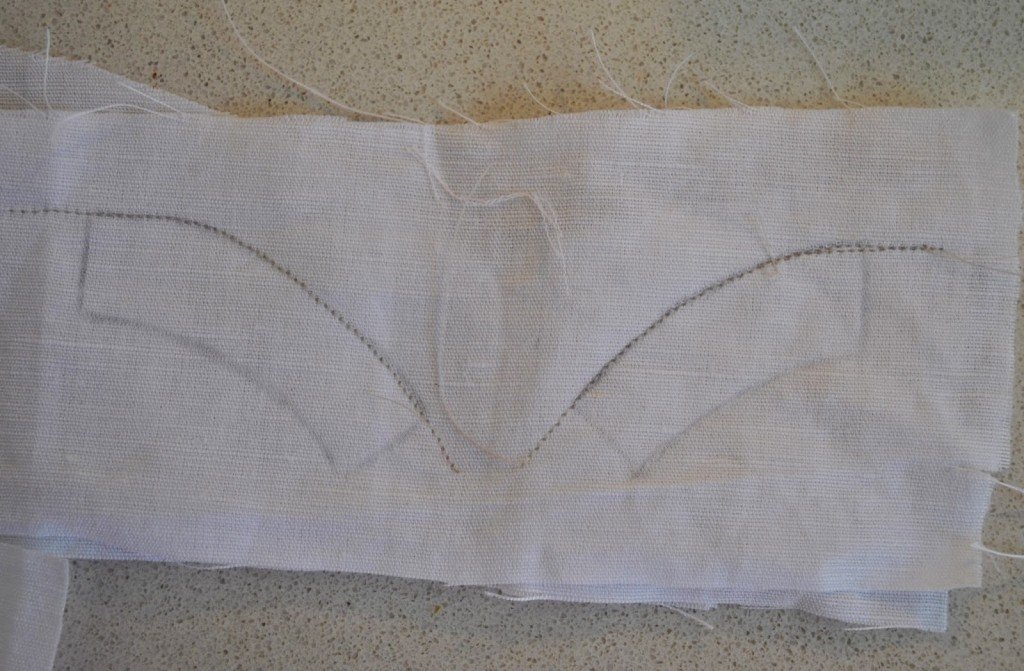
Sketch the shape of the welt.  Then accurately trace the two halves onto a small piece of the fashion fabric with plenty of room around each,  and including the overlap on both sub-sections.  You could also just trace the shape in entirety, making it as a one-piece welt.  With hindsight that would be a bit easier; but anyway it does look kinda cool as a two-piece welt…
Lay another scrap of fabric under the traced sections and stitch along the top curve, extending the stitching well past the pencilled lines to allow for seam allowances.

Trim, grade and clip seam allowances outside the stitching, turn out, finger press the curves out, and press flat.

Using the original sketch to check for placement, pin the left-hand welt into position over the right-hand welt.  Open out the left-hand half and stitch it into place onto the other half; exactly over the previous stitching.

Determine where the welt pocket is to be sewn on the garment; mark its position.  Cut a strip of iron-on interfacing big enough to cover the area of the welt, and apply this to the wrong side of the garment to stabilise.

Cut a rectangular piece of fabric for the pocket lining and trace onto it the welt shape, using the sketch from the first step.  Position over the stabilised section of fabric where previously marked, and stitch garment and pocket lining together, following the perimeter of the traced welt.

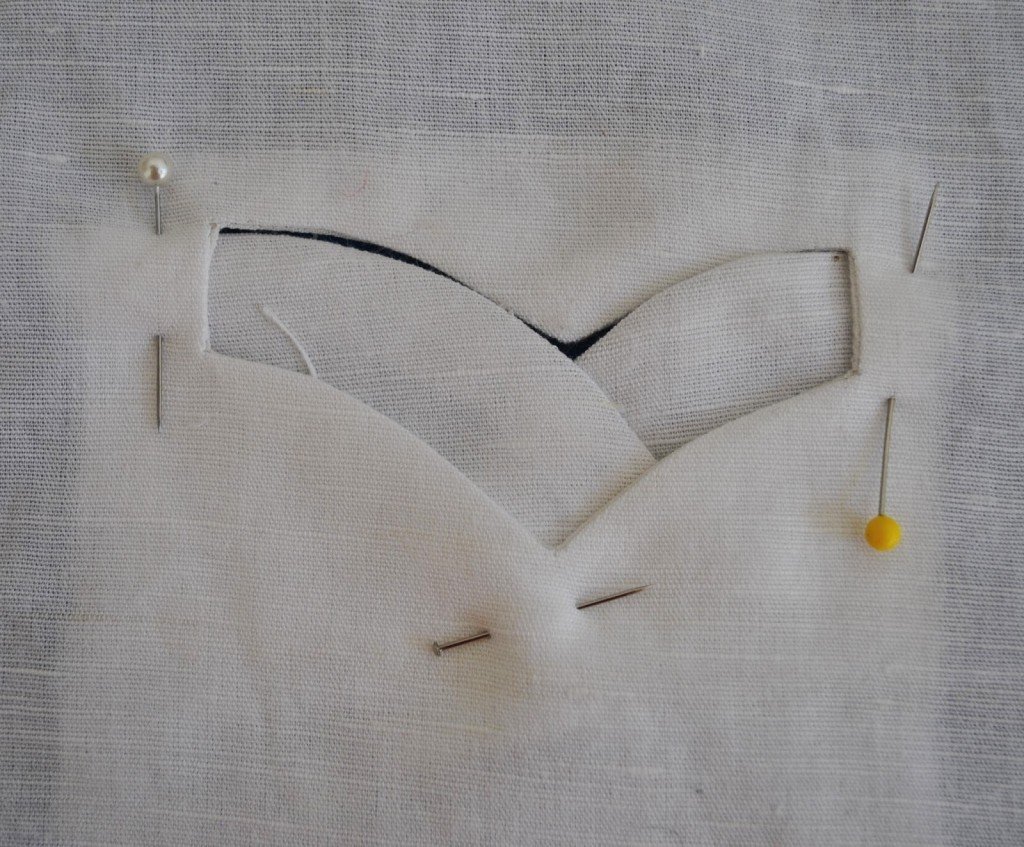
Snip along inside the centre of the stitching, and out into the corners and turning points, grade and clip curves.  Turn the pocket lining through to the inside of the garment, finger press out along the stitched curves, and press flat.

Pin the welt in position behind the pocket opening, and top-stitch along the short sides and along the lower curved edge.

Inside, trim the lower edge of the welt.  Being careful to keep the garment free, pin the pocket backing piece to the pocket lining.  Stitch around the edge, finish the edge either with overlocking, zig-zag stitching or pinking.

Last step, from the right side of the garment, top-stitch through all layers along the upper curved edge of the welt.

C’est fini  🙂
pinterestmail

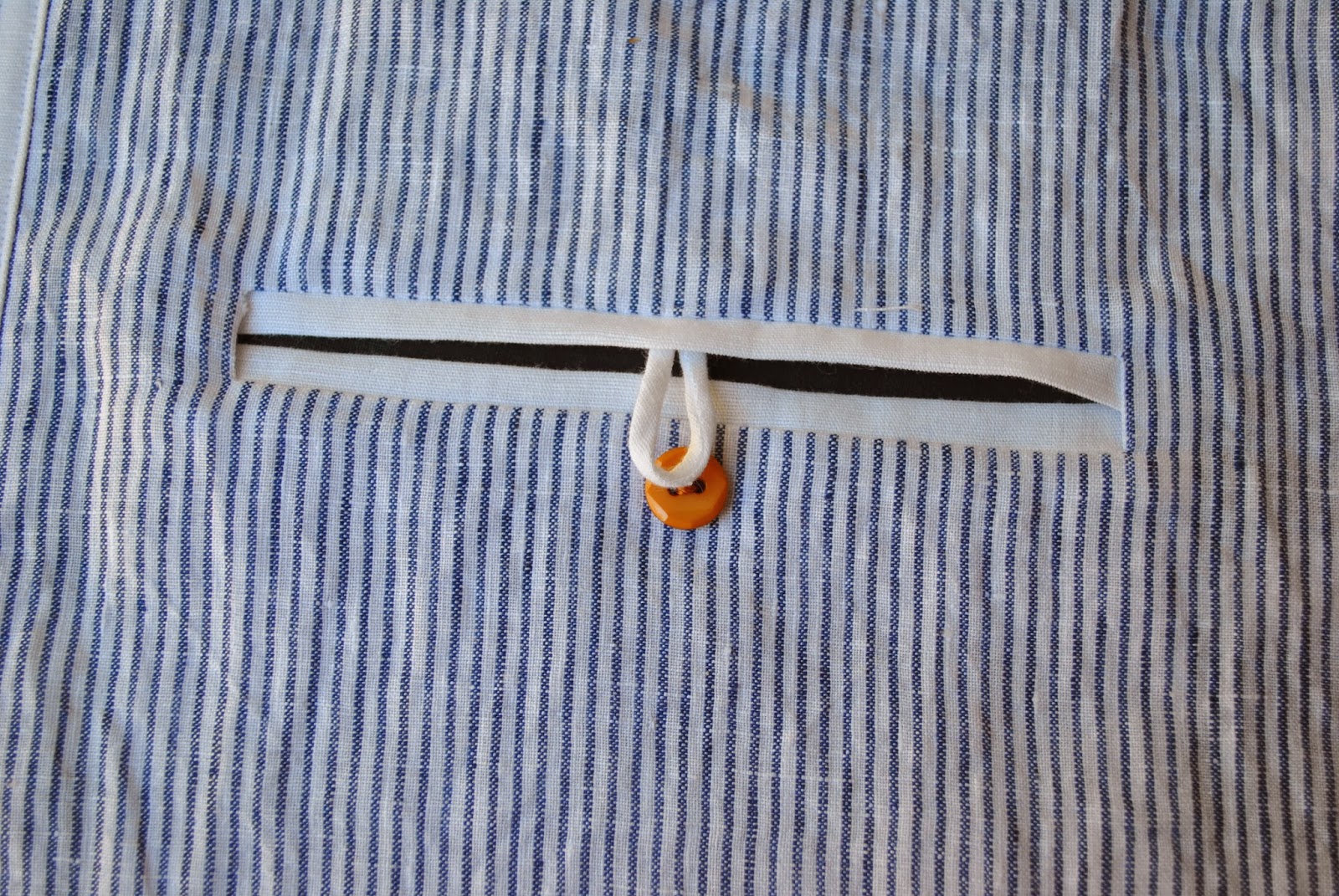
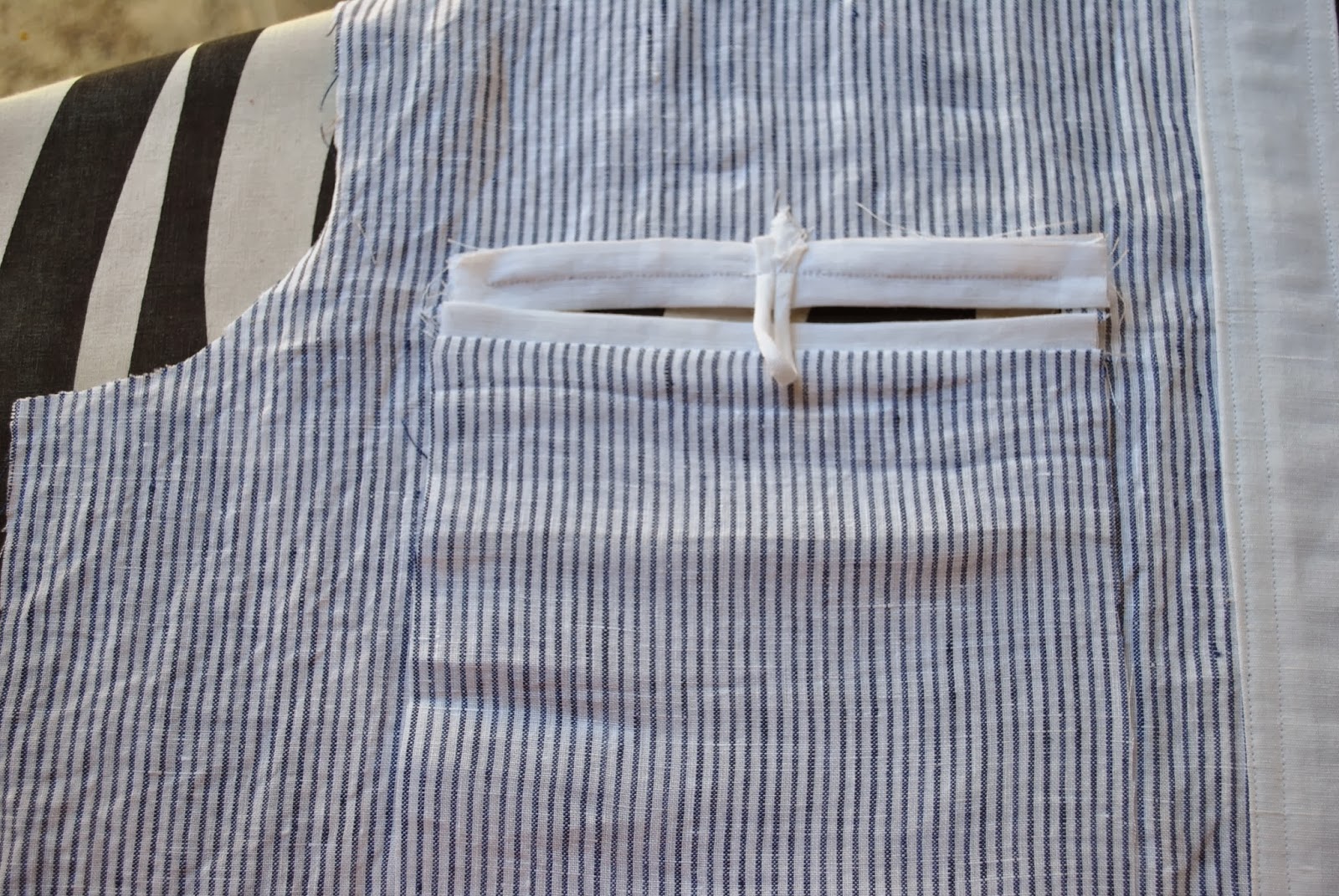
Double welt pocket with looped button closure

I wrote this tute just before Christmas then completely forgot about it …! anyhow 

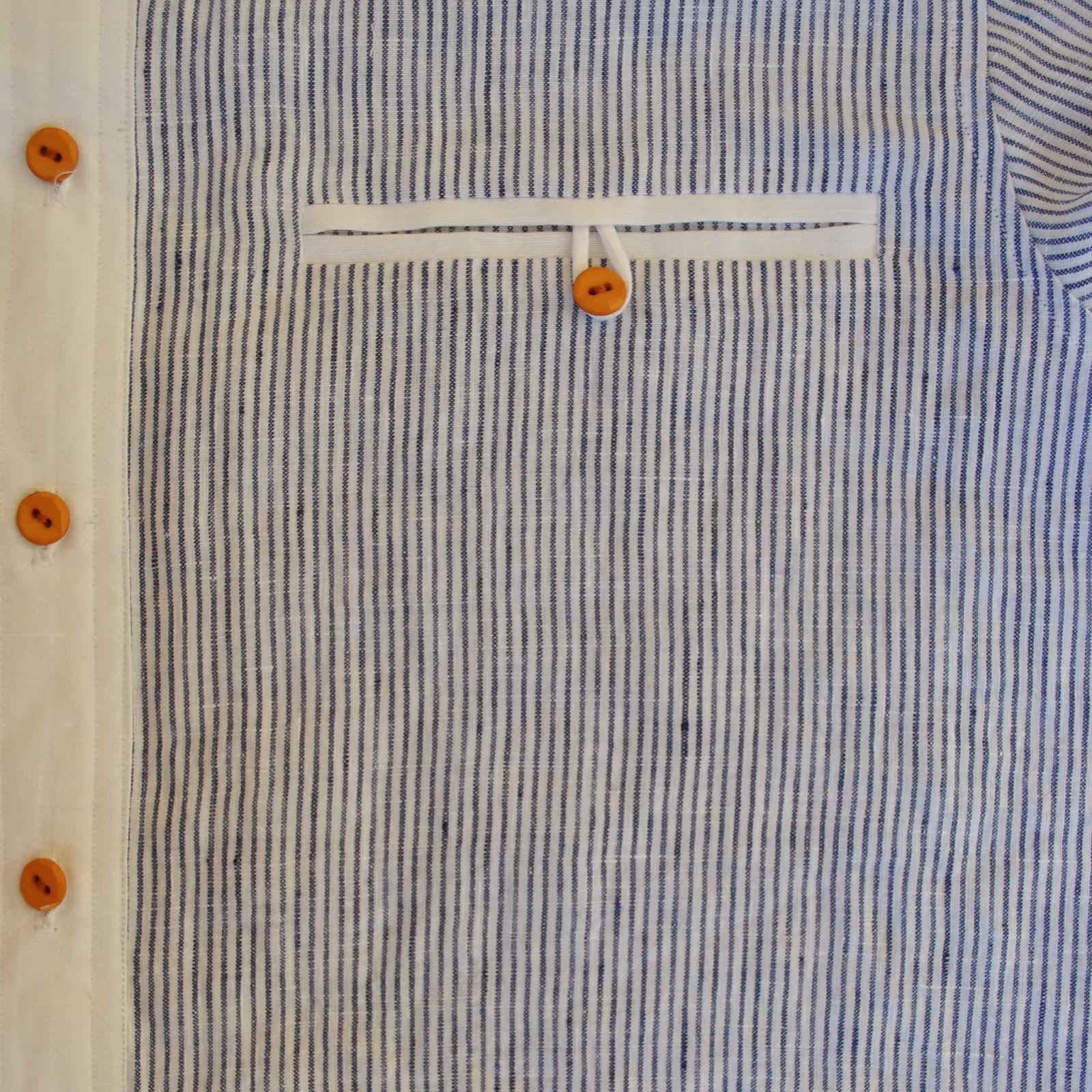
This is a pocket often used as the back pocket on mens’ trousers although of course you can add one to whatever garment you wish… in this case I have used for the breast pocket on a mens’ tailored shirt.

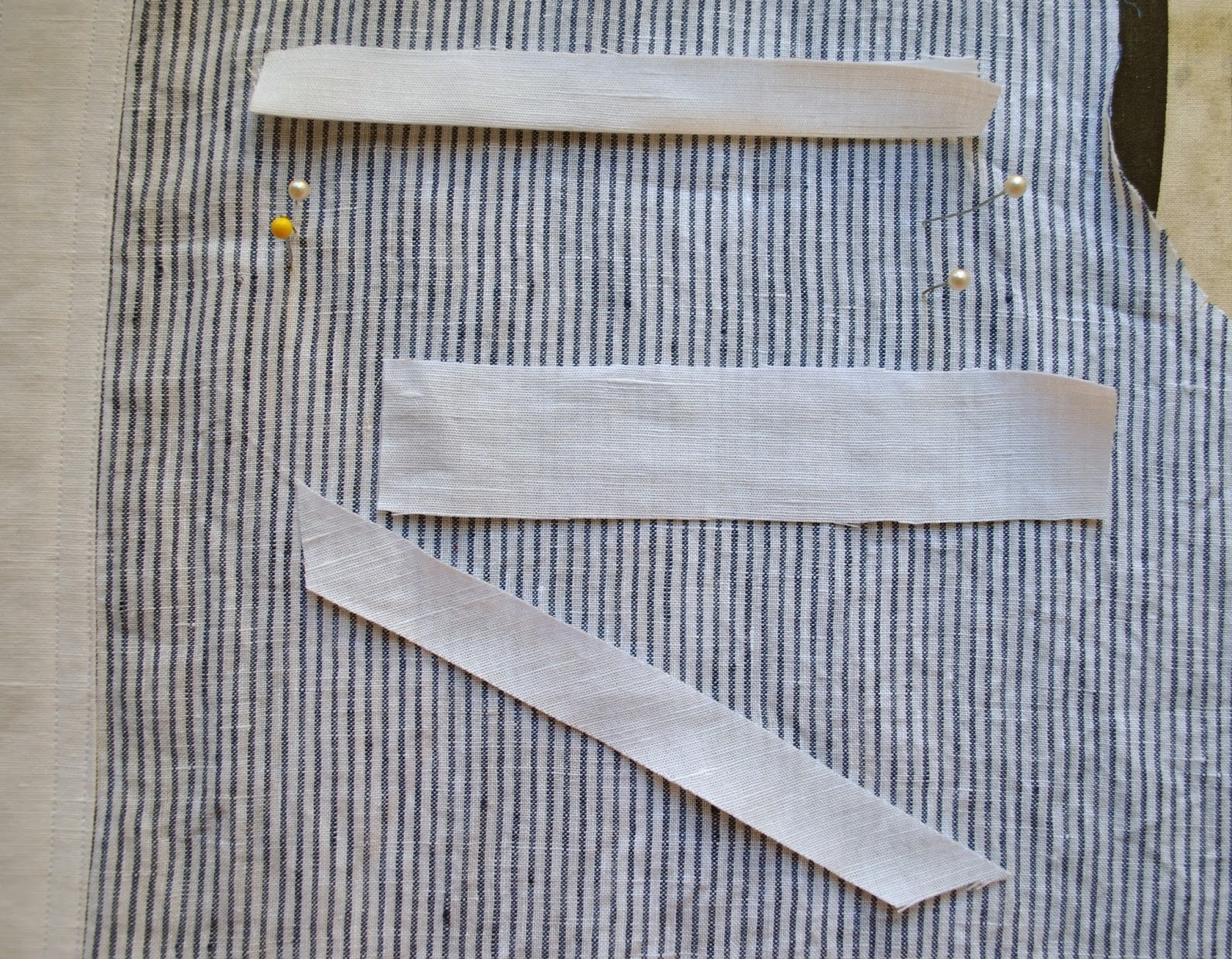
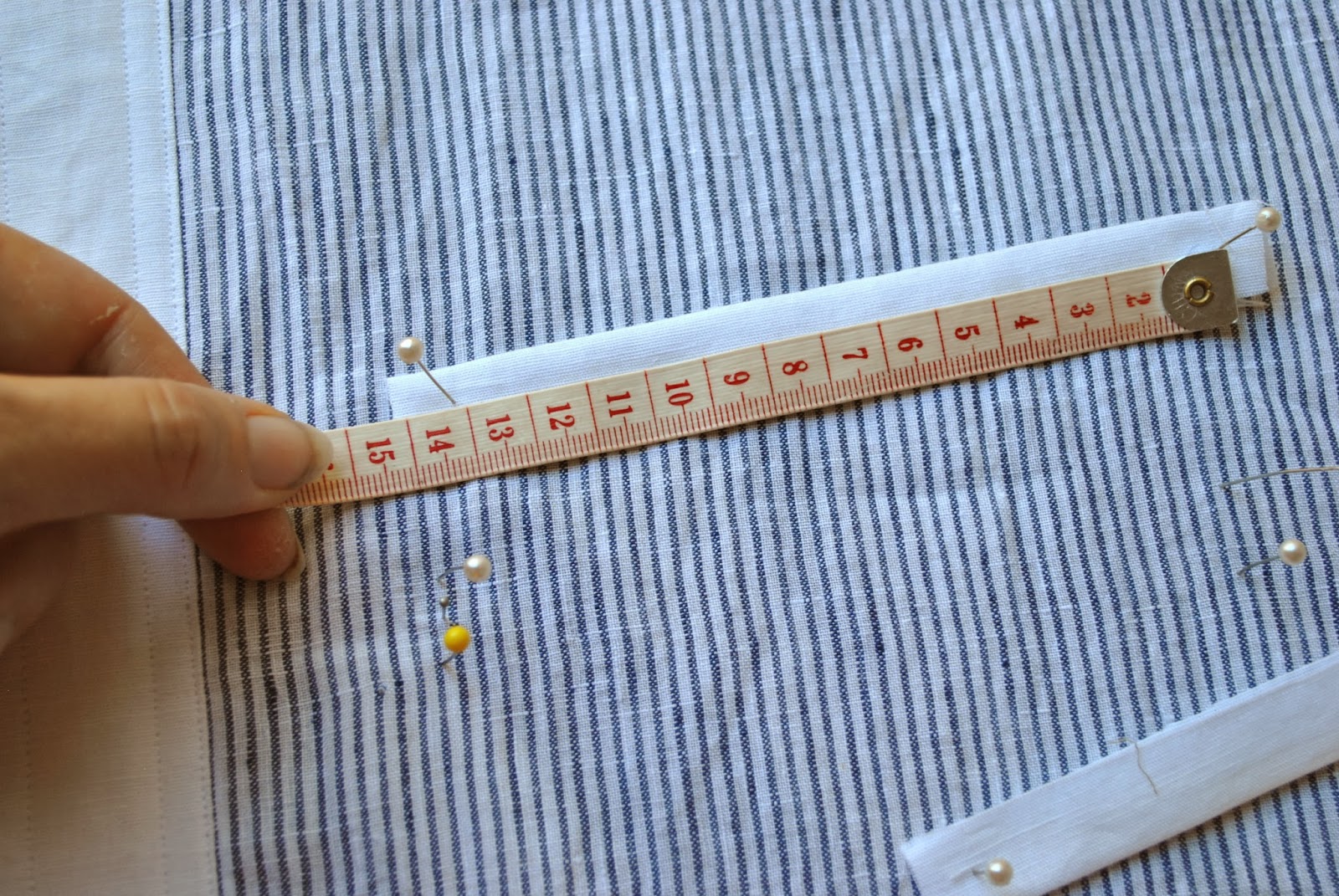
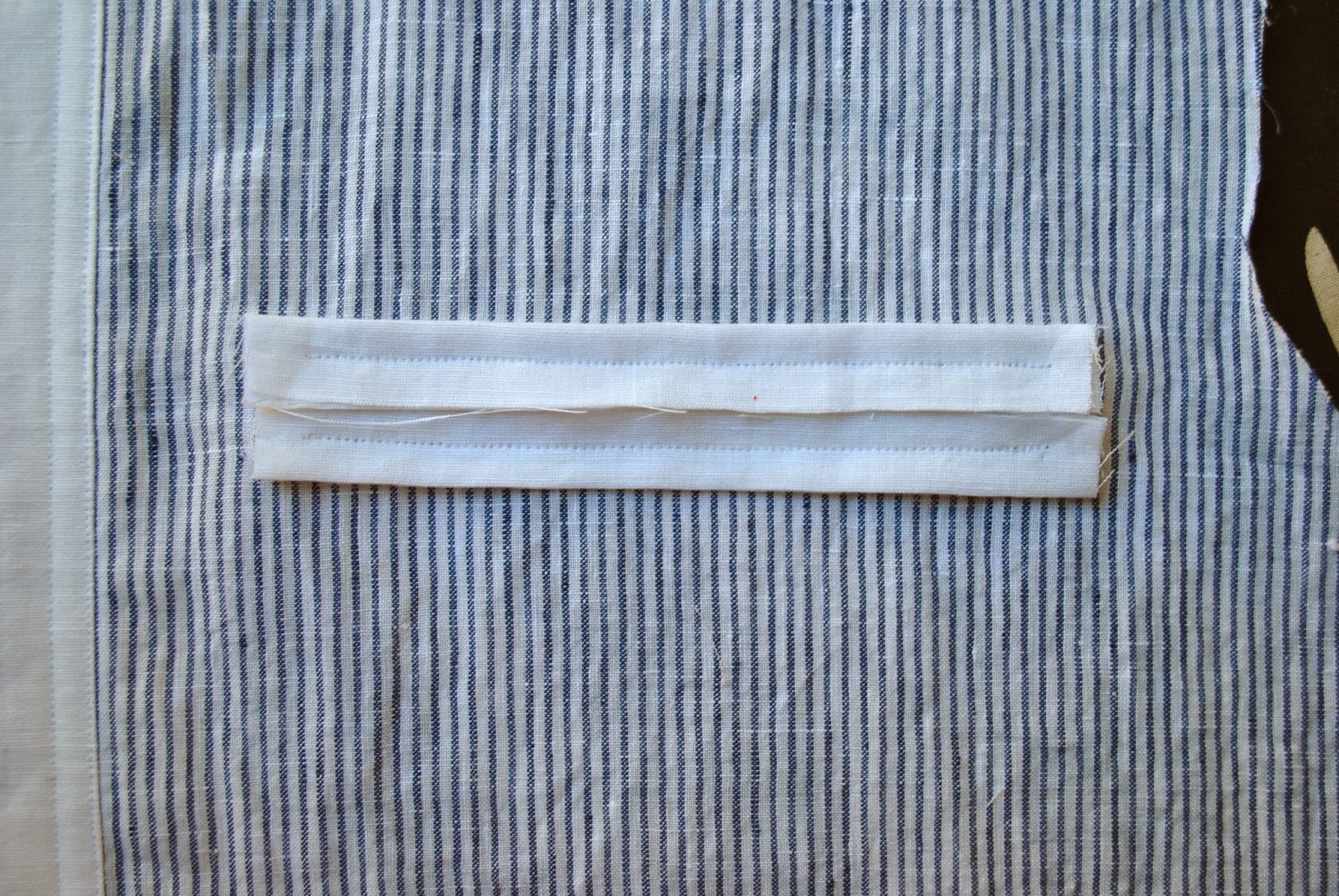
Measure and mark the position of the welt pocket.  My welt pocket measures 13cm x 1.5 cm  (5 1/8″ x 5/8″).  Cut two strips of fabric equal in length to the length of the welt pocket plus two seam allowances, and equal in width to twice the height of the double welt; in this case my strips measure 15cm x 3cm.  Also cut a strip of fabric on the bias for the loop closure.  

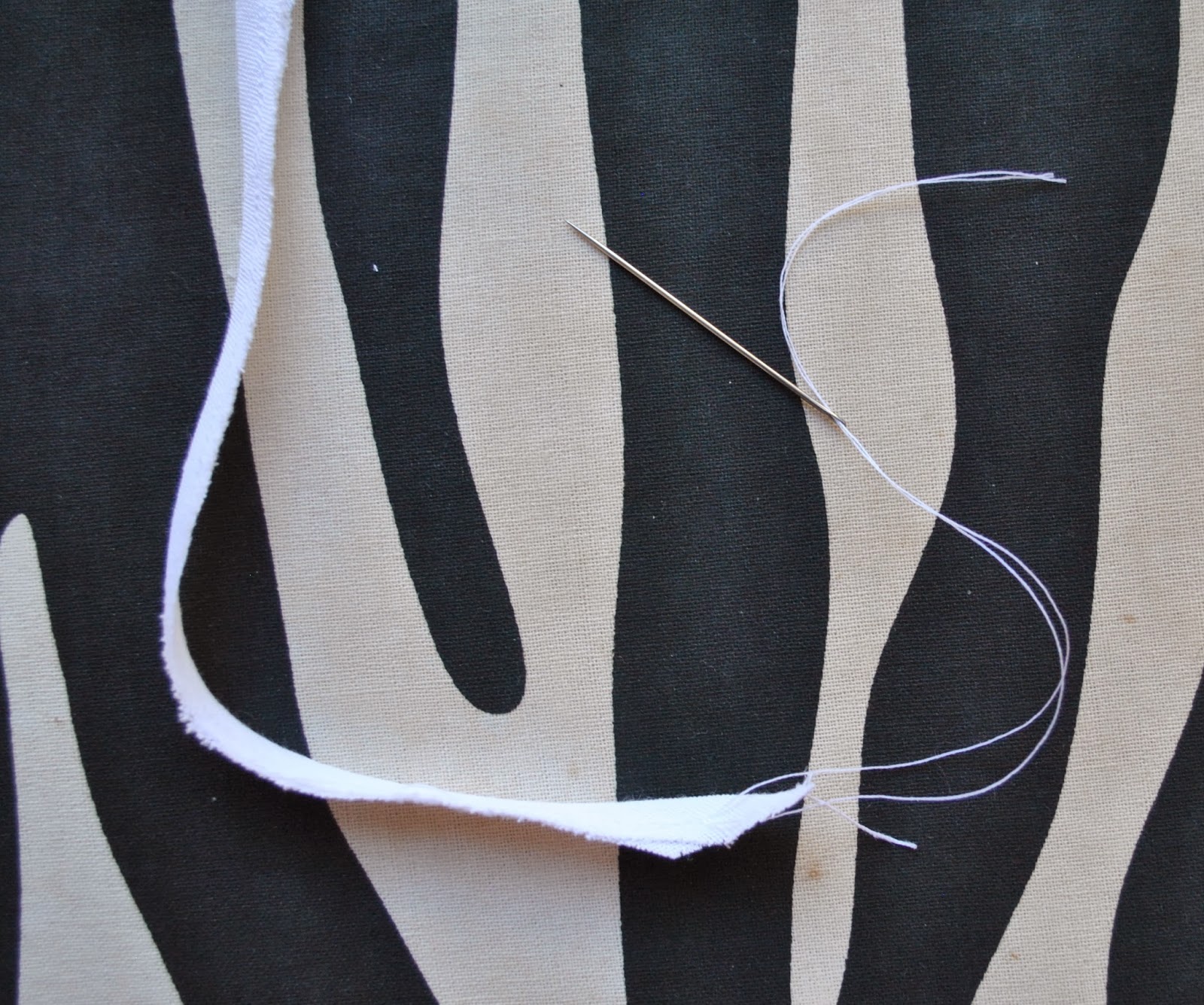
Stitch the bias strip, and cut the stitching threads leaving a long length, at lease as long as the bias strip itself.  Thread the long end through a needle, and with blunt end leading, pass it through inside the strip.  Turn the strip right side out.

Press the welt strips in half lengthwise, wrong sides together, and place pins in each to mark the length and width of each welt.  In this case, a length of 13cm and a width of 7.5mm.

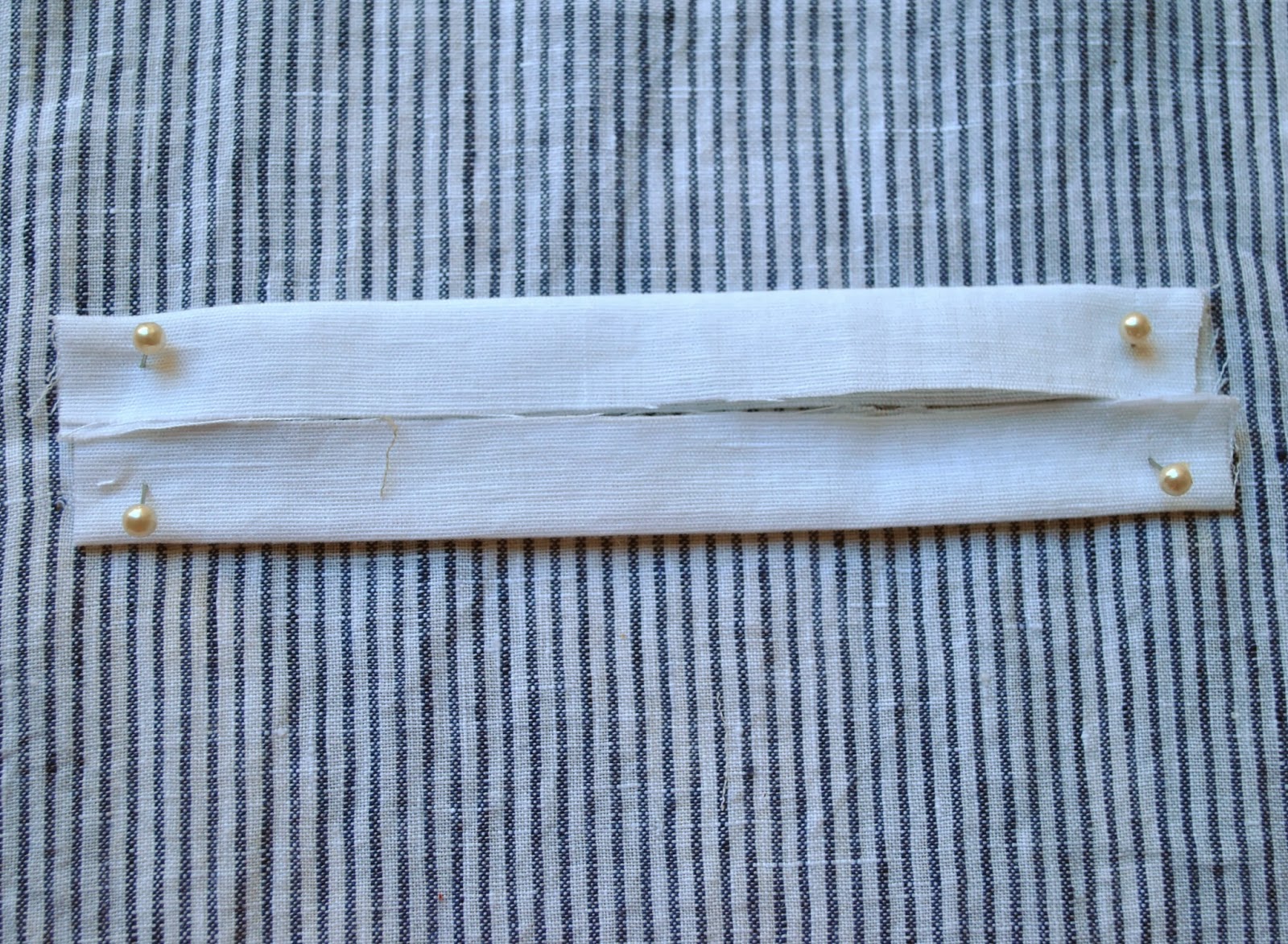
With the pressed folds of the welt strips facing out and the open raw edges towards the middle; put these pins in exactly the same pinholes as those previously made to mark the welt position.  Arrange the welts to lie smooth, flat and straight.

Stitch the long edges of the welt, in an exactly 13cm long line, positioned exactly 7.5mm in from the folded (outer) edge of the welt.  Note; the folded edge is the visible and therefore the important one here; the accuracy and precision of your stitching MUST be relative to that outer edge).

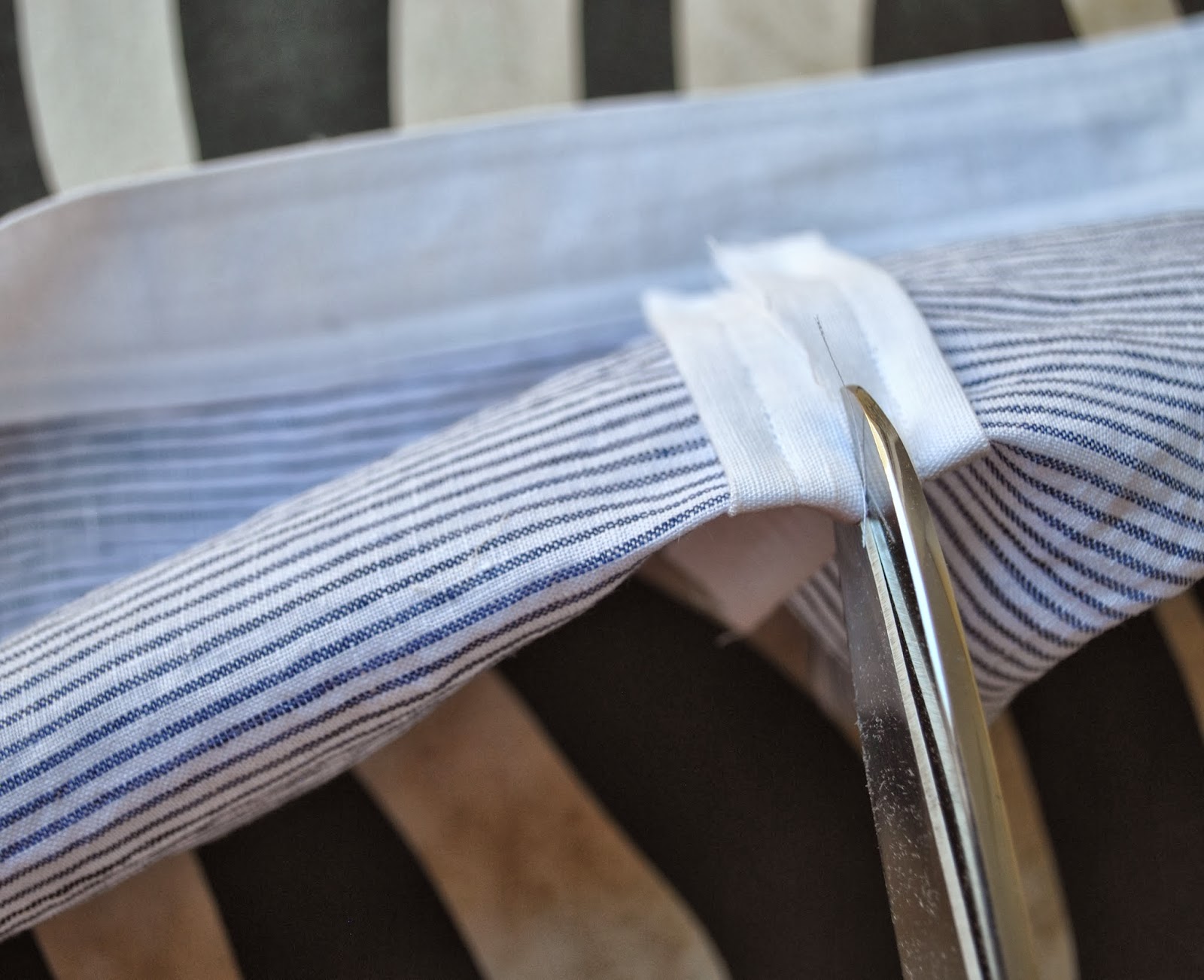
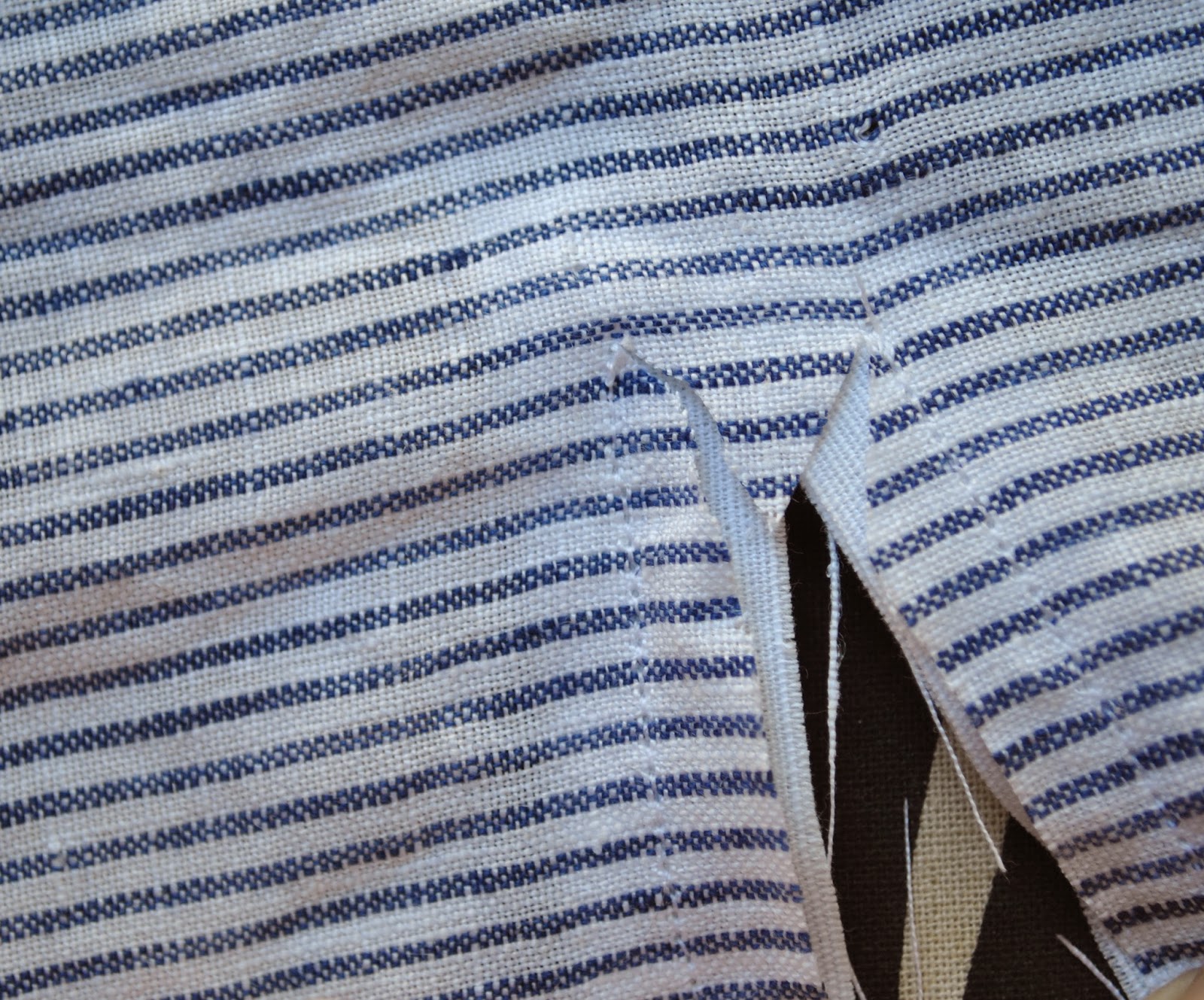
Fold to snip into the centre of the welt. and cut to about 1cm in from the start and finish of the stitching. From this point, snip outwards in an inverted arrow shape into the very corners of the welt.

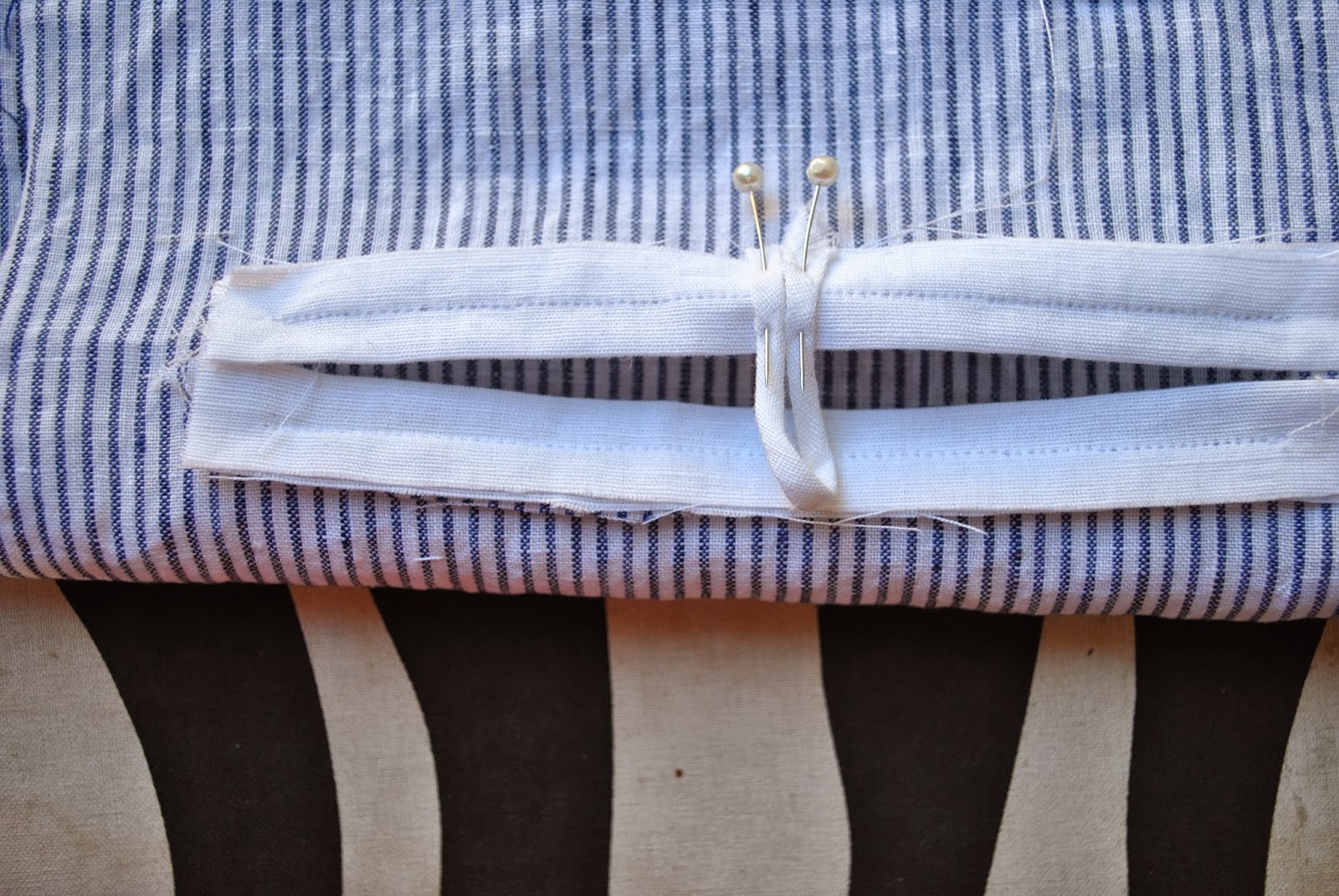
Turn welts to the inside and pin the loop closure in position to the seam allowance of the upper welt, at the centrepoint.  Stitch.

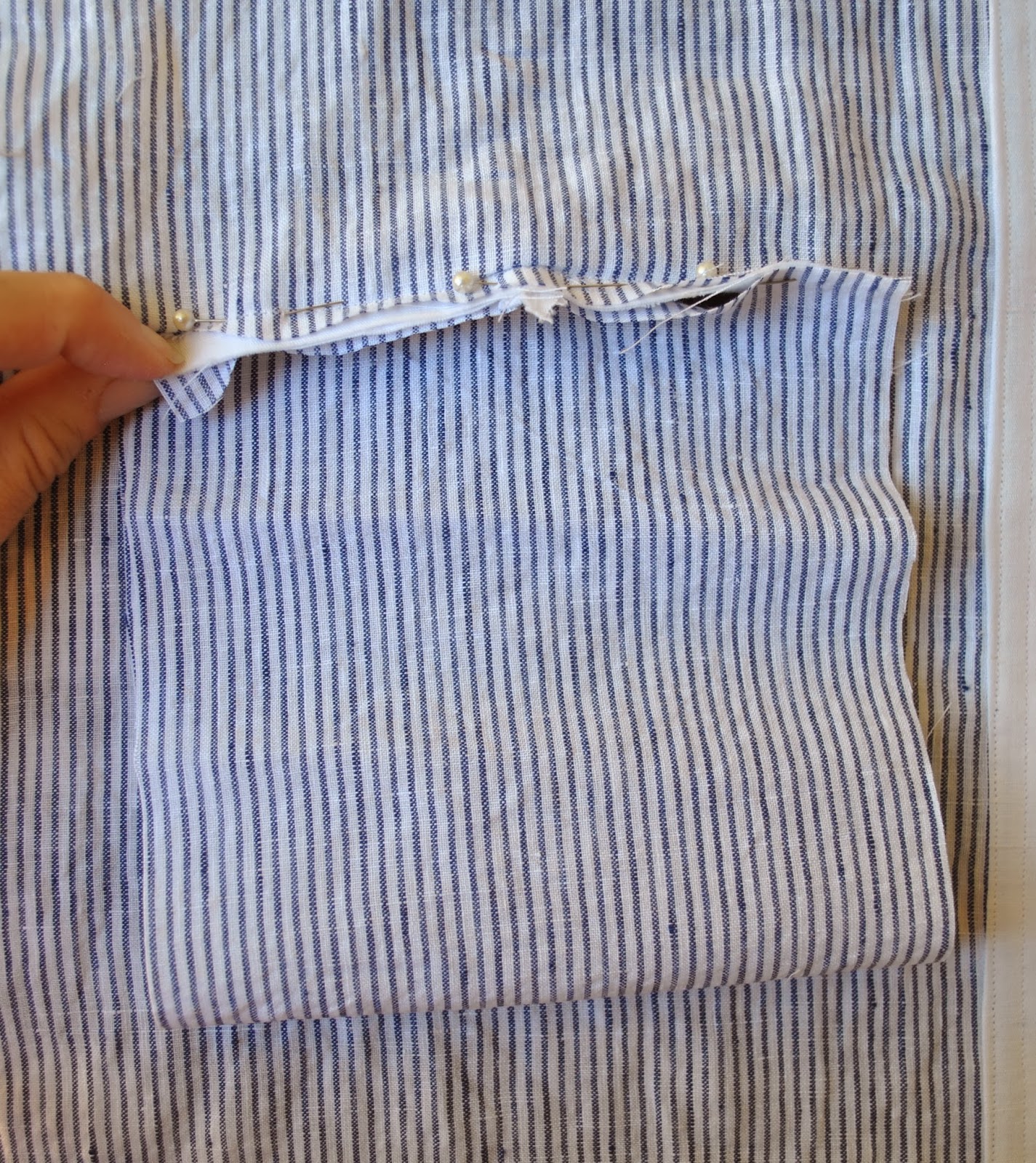
Pin the pocket piece to the lower welt seam allowance, and stitch exactly over the previous stitching.  Press down.

Stitch a button through both thickness of fabric; the shirt layer and the pocket layer, for stability, using the loop closure to determine the position of the button.

Fold up the pocket piece and pin to the seam allowance of the upper welt.  Stitch exactly over the previous stitching and press.

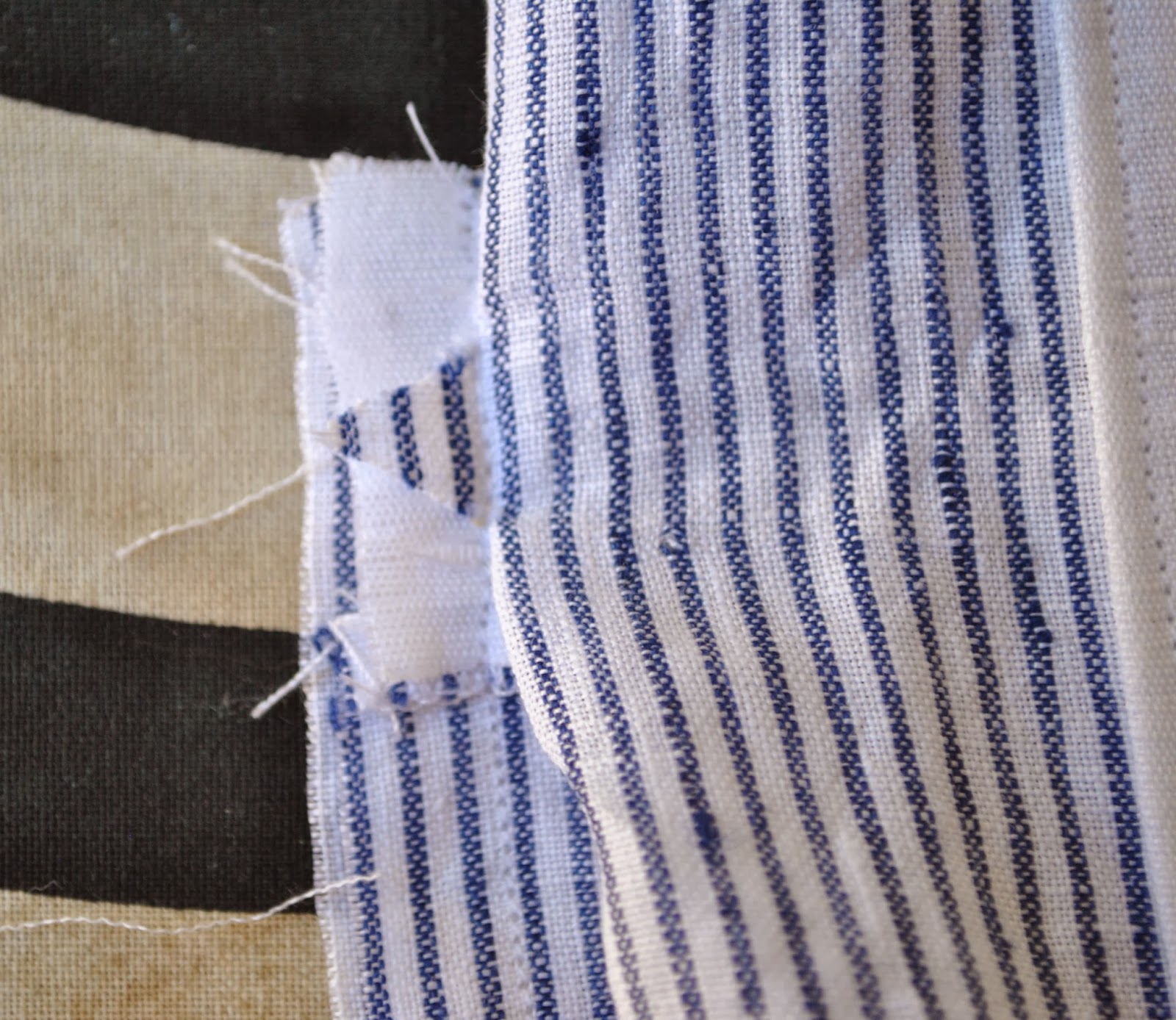
Complete the box of stitching around the welt by catching down the little triangles at the outer edges.  Continue stitching down the sides seams of the pocket.

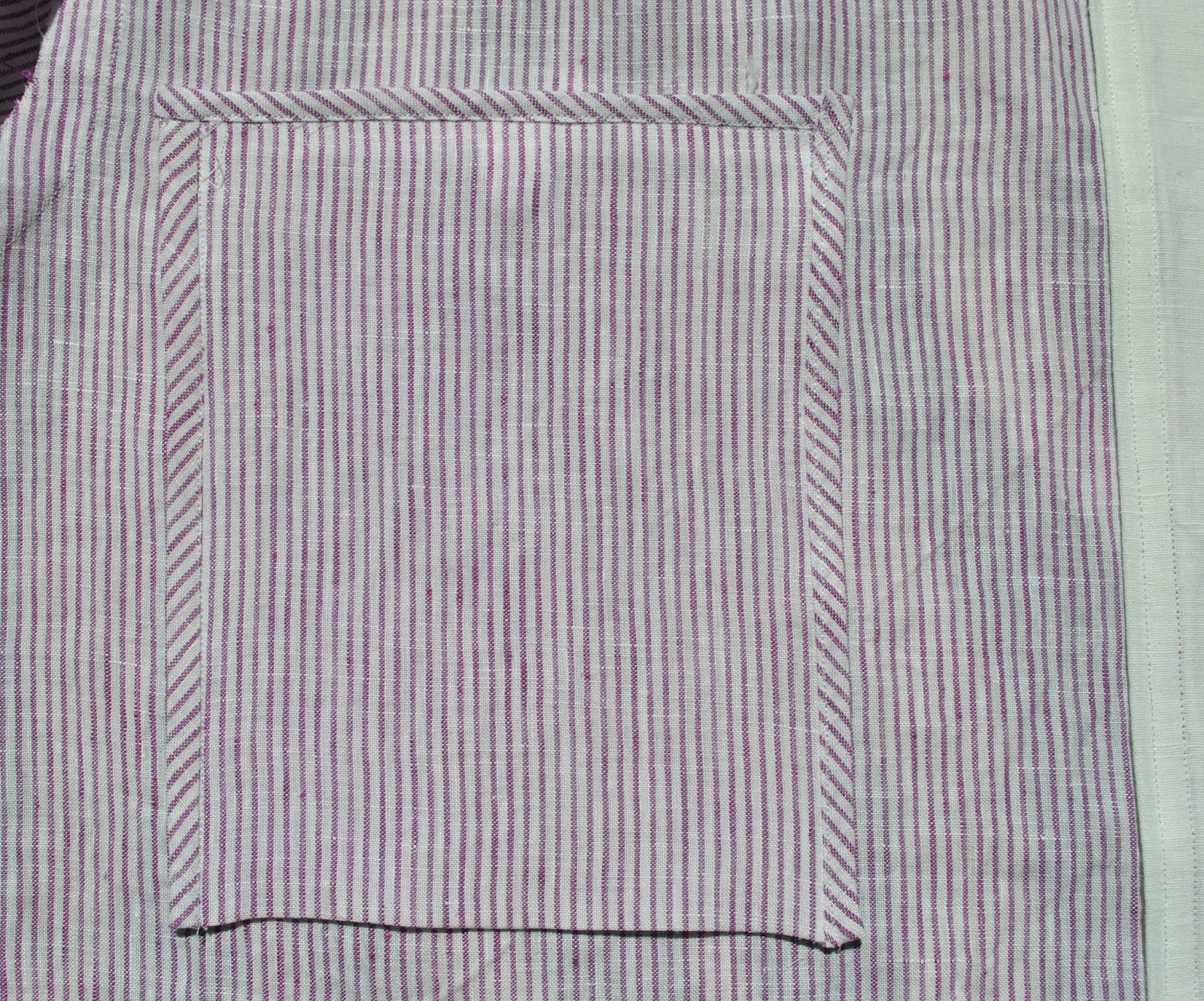
Finish raw edges by overlocking or zig-zagging.  You can also finish by binding with bias binding; I tried doing this for the pocket of one shirt, the purple pin-stripe pictured below.  It looks real nice but it made the pocket feel kinda bulky and stiff.  I would probably  just stick with the overlocker in future.

pinterestmail
Switch to mobile version
↓