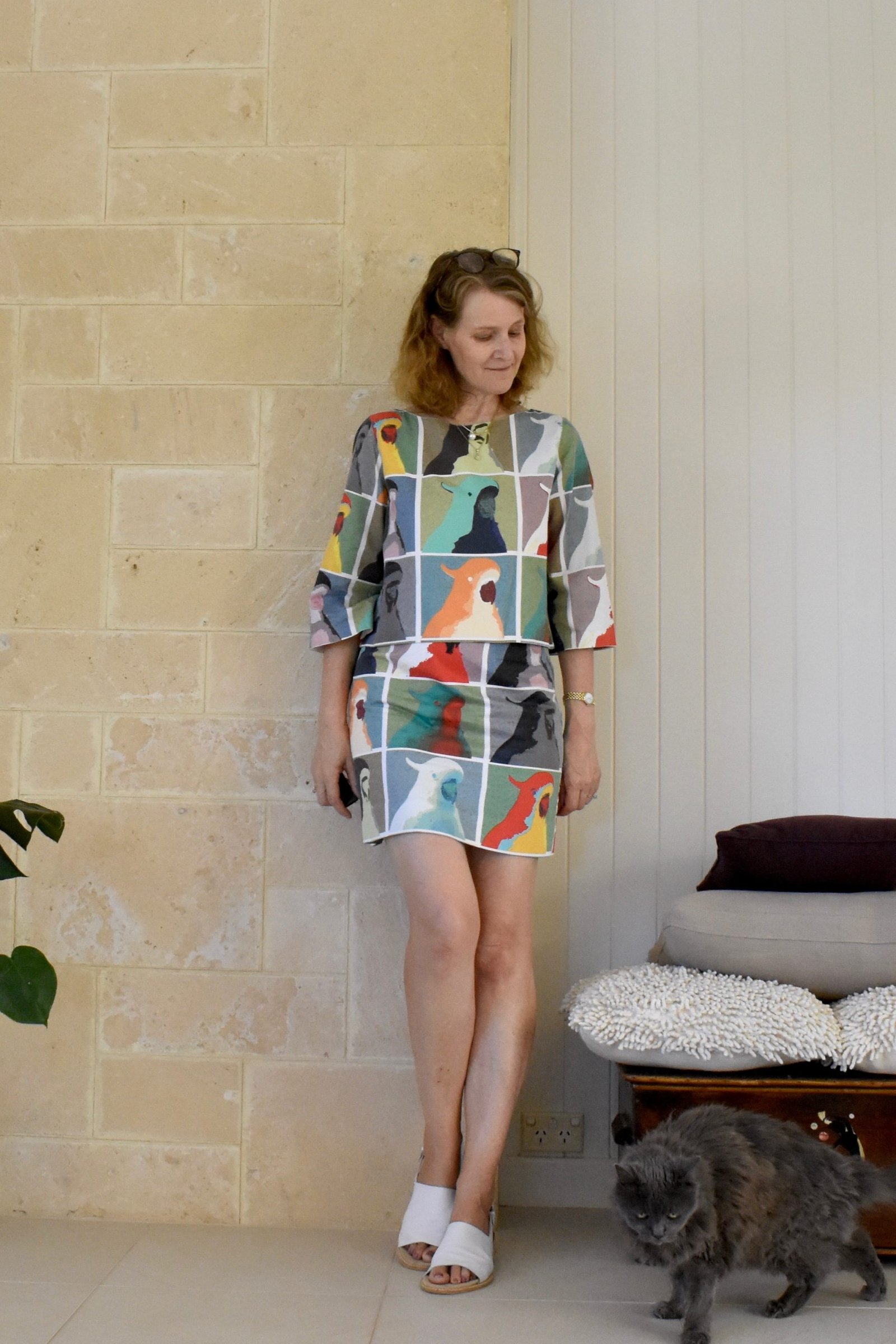
Aaaages ago, Susan asked me for more information about the buttonhole loop used in this top, and I totally forgot! I’m so sorry! right up until yesterday when Pencil Girl asked the same thing about Cassie’s top. Ladies, thank you so much for asking! I hopped to and wrote up my method… and if you dislike sewing tutorials then please skip over this… we’ll just pretend that this isn’t even here and we can still be friends, yeah? winkwink ;D
The buttonhole loop is a quick, easy and very unobtrusive button closure, made using thread alone. It is most often used for a short slit opening at the top centre back of a dress, blouse or a top, where two finished edges abut each other with no overlap; it is practically invisible as well as a quicker alternative to a rouleau loop. My grandmother used it aaallll the time, and taught me how to make one…
also, please let’s just pretend that this is the back of a divine little blouse made of Liberty lawn or something, and not what it is. Which is two measly scraps of leftover upholstery fabric from my recently made duffle bags… #notliberty #notsilk #ohtheshame
Stitch the button in place. Which side is up to your personal preference… although to have the button on the right hand side is conventional

Cut about 30cm (12″) of the thread you’re going to use. Buttonhole twist is traditional and the best if you are lucky enough to get hold of it, I am using upholstery thread here which is an excellent substitute. You can also just use regular, all-purpose thread or even embroidery thread if you like, it will probably be just fine if a little more difficult to work with. Reason being, regular thread is thinner and twists and tangles more easily, so is more likely to develop knots, and also results in a flimsier loop, naturally; and embroidery thread, being stranded, is more difficult to pull firmly into the knots you are forming with each stitch. But either would work out ok, in a pinch. There are no rules in sewing!

Secure the thread at the top of the left hand side of the opening. This should be at a level with the top of the button.

Lay it over the button so the thread lies around the button shank/stitching, and pull firmly until thread and two garment sides are sitting in the desired position. It’s more neat to have the sides abutting each other closely, although if you want a bit of a gap between the sides make the loop longer.

Stitch the thread once in the left hand side, level with the bottom of the button.
Lay the thread back around the button again, and stitch back in the top edge.
Being careful not to pull the loop out any looser or tighter, undo the button… now you’re going to work buttonhole stitch to totally cover up that two-stranded loop…

Bring the needle over the loop, insert it back under the loop and over the working thread on the other side… this is the buttonhole stitch. It’s basically the same as blanket stitch, but instead of doing it into the edge of fabric, you’re doing it over a thread in mid air, so to speak.

please excuse my dodgy drawing skills…

Pull it down firmly, and repeat; just keep going, going, going; pulling each stitch firm and trying to keep it all flat and even and straight; and not to rotate around the loop as you’re going along.

When you get to the end, secure the thread into the bottom of the loop by sewing three tiny stitches into the same spot three times.
aaand; done!


 Mum and I went shopping together on my birthday; her for my birthday present, and me for her birthday present! yes, our birthdays are just a few days apart so this is a bit of a tradition. We went to Fabulous Fabrics. Haha… well how unexpected! *wink*

 from L to R, top to bottom:


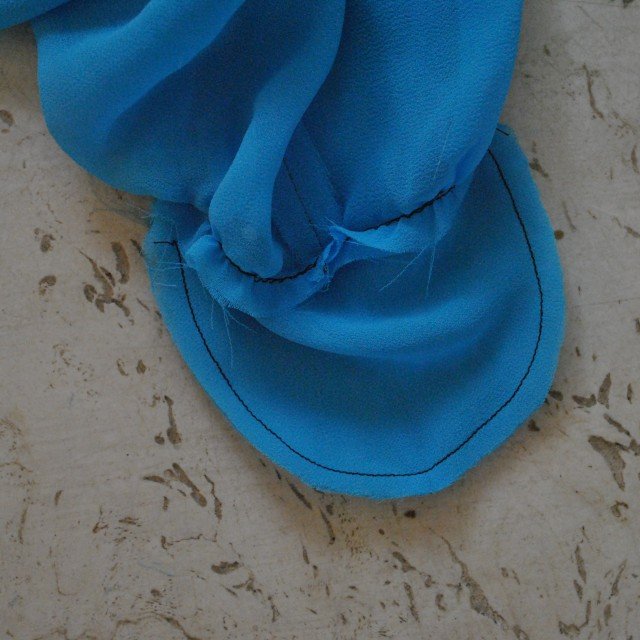
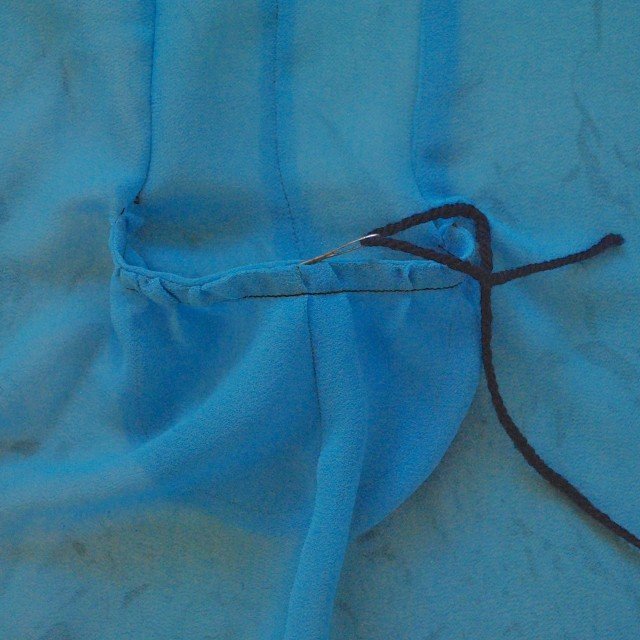
 Press the pocket lining out, then turn it under the front piece and press, forming the 1/4″ (6mm) wide bound edge of the pocket.
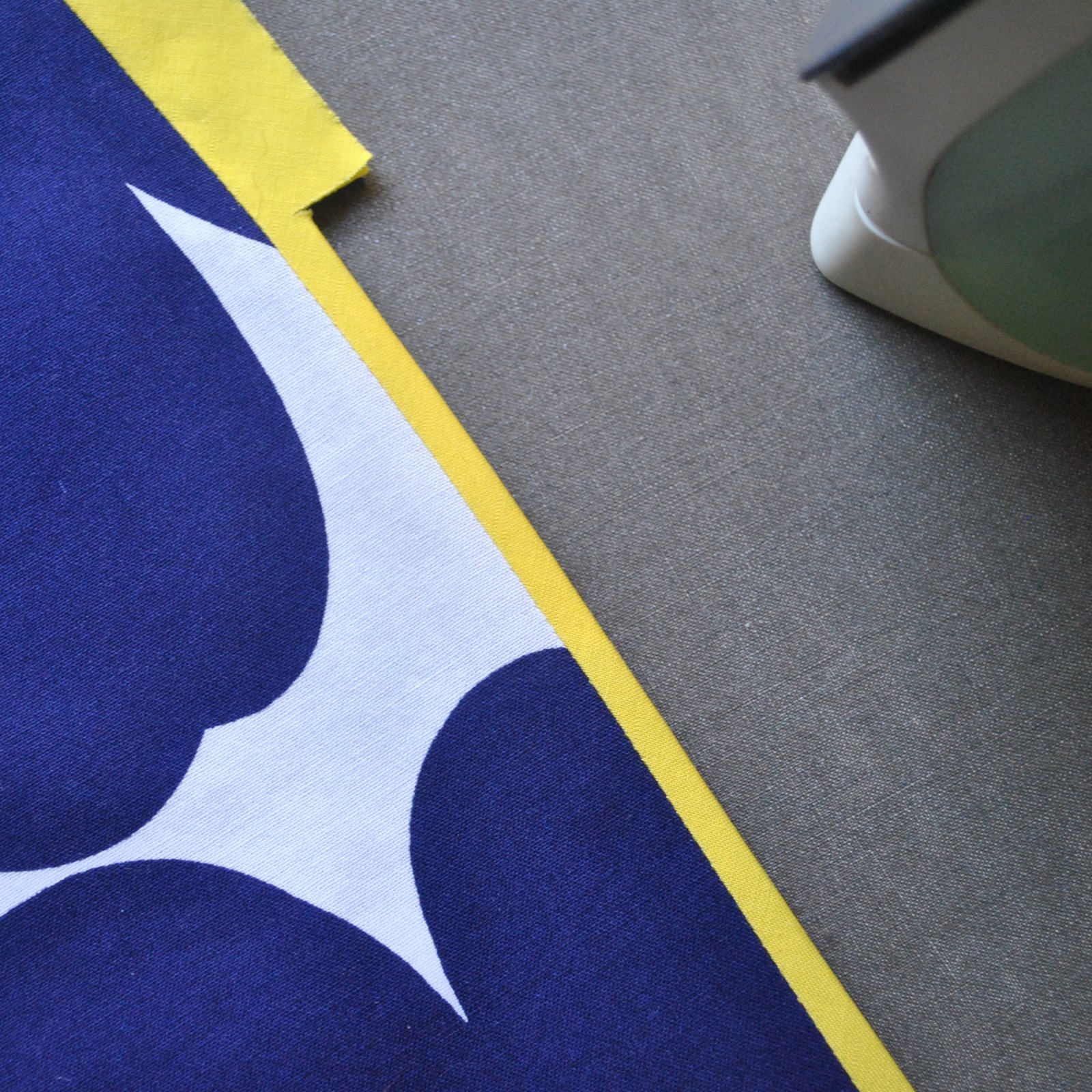


 from the right side (with some irrelevant (white) basting along the side edge… not really necessary for this method)


 This gathered pocket sits inside and at the side edge of a loose-fitting garment such as an unfitted dress or tunic top, and can be adapted to go in a loose, flowy skirt also. It is best suited to lightweight fabrics.








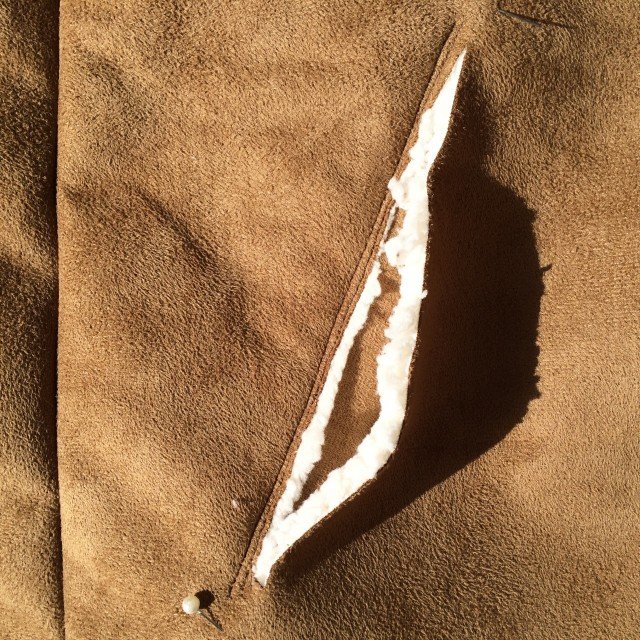
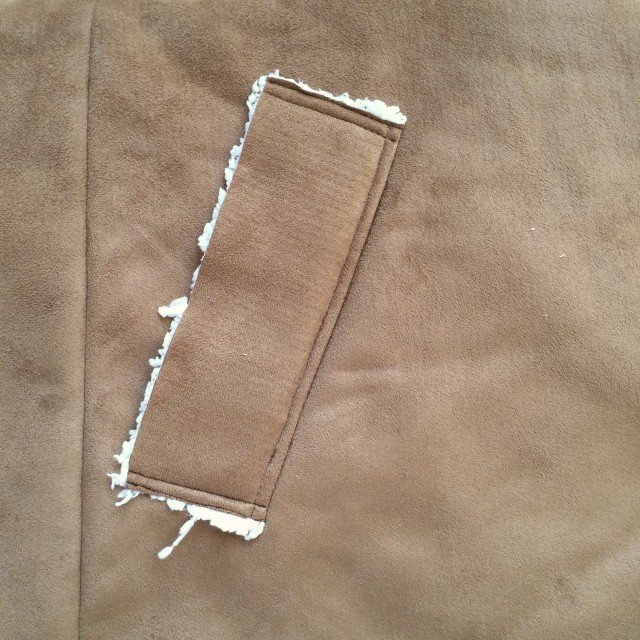
 When making my shearing jacket I came up to the important matter of buttonholes… what to have? I’d googled and pinned a few shearling jackets when planning the details and features that I wanted to have in my new jacket, but it’s not always easy to make out the finer construction details of the nitty gritty like buttonholes in far-away, full-length pictures on the net. As usual, it came down to knuckling down and working out how to do it myself.


 SO! I’m currently making a shearling jacket to take to our much anticipated trip to snowier climes, coming up v v soon… eeeeeeeeeeeeeee! I can’t wait!!






 Over the years since I first drew the pattern out I’ve had to slightly alter it and custom fit to each of my boys each time I’ve made it. They keep doing annoying things like working out and growing taller with longer arms and gaining a bit here, losing a bit there as time goes on. So it’s always a bit more of an exercise than just whipping out a pattern and zooming it up with the greatest of ease…. NOT!
 The air force blue looked pretty cool and right up his alley and it’s a very nice weight, I loved it upon first sight. However, after washing it and hanging it out to dry, then laying it out for cutting, I discovered to my amazement that the “stripe” actually was more of a gentle, slight “wave” of stripes across the fabric looking like this ” ~ “, NOT a straight horizontal stripe. AAAAUGH!! and being “slight” of course, means it really comes across like a bit of a boo-boo, rather than look like an intentional wave, which I could work into the design somehow. Nope, this just looked OFF.
 Oh, the hoodie strings… in each case I made a self-fabric drawstring for the hoodies, bar Tim’s, as explained. To make a drawstring in the jersey, I cut a 1-2cm strip of fabric across the grain. Most jerseys have a natural tendency to roll or curl up across the grain, and you can use this to full advantage while making your drawstring.