Tag Archives: Tutorial

A cool pocket

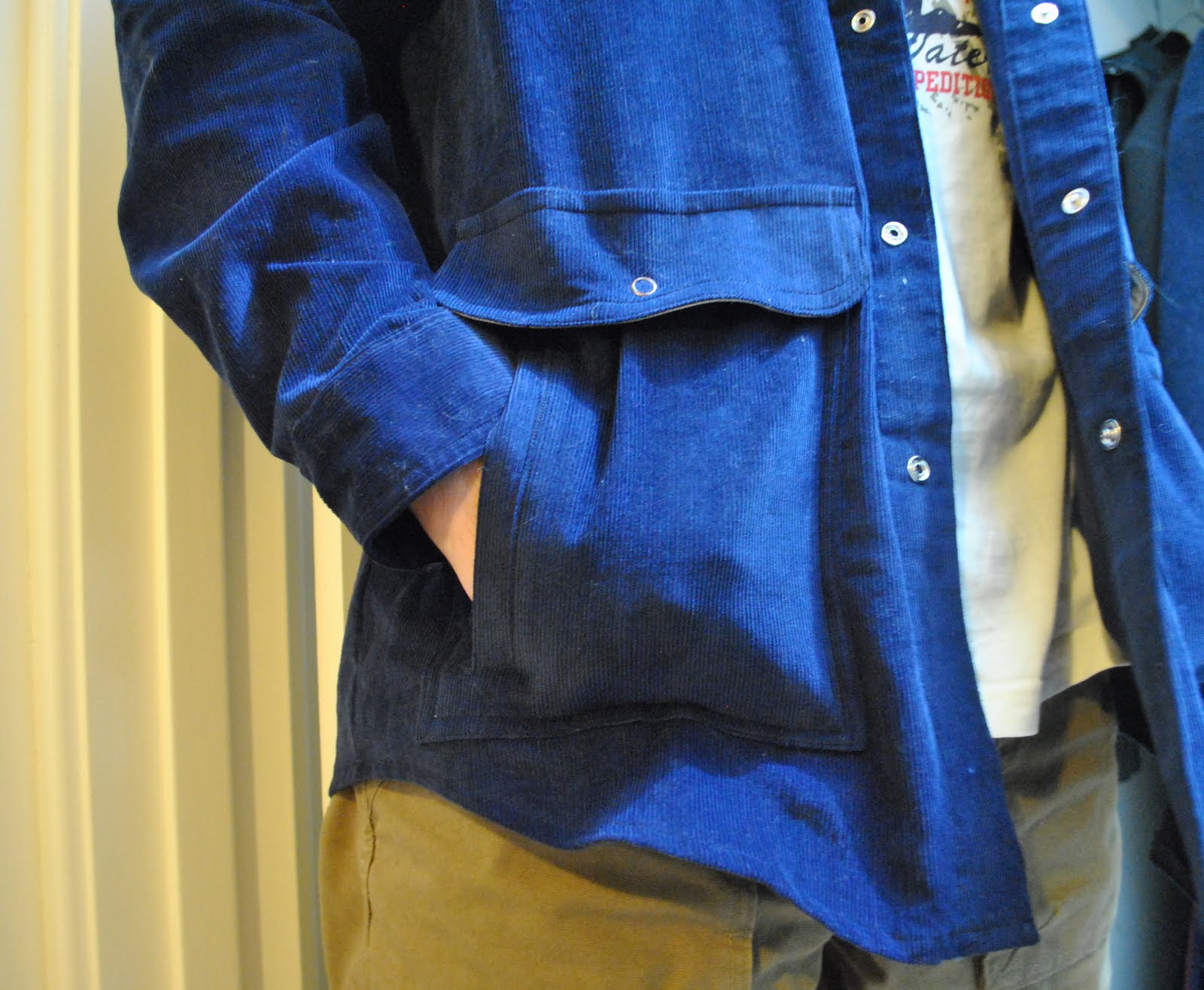
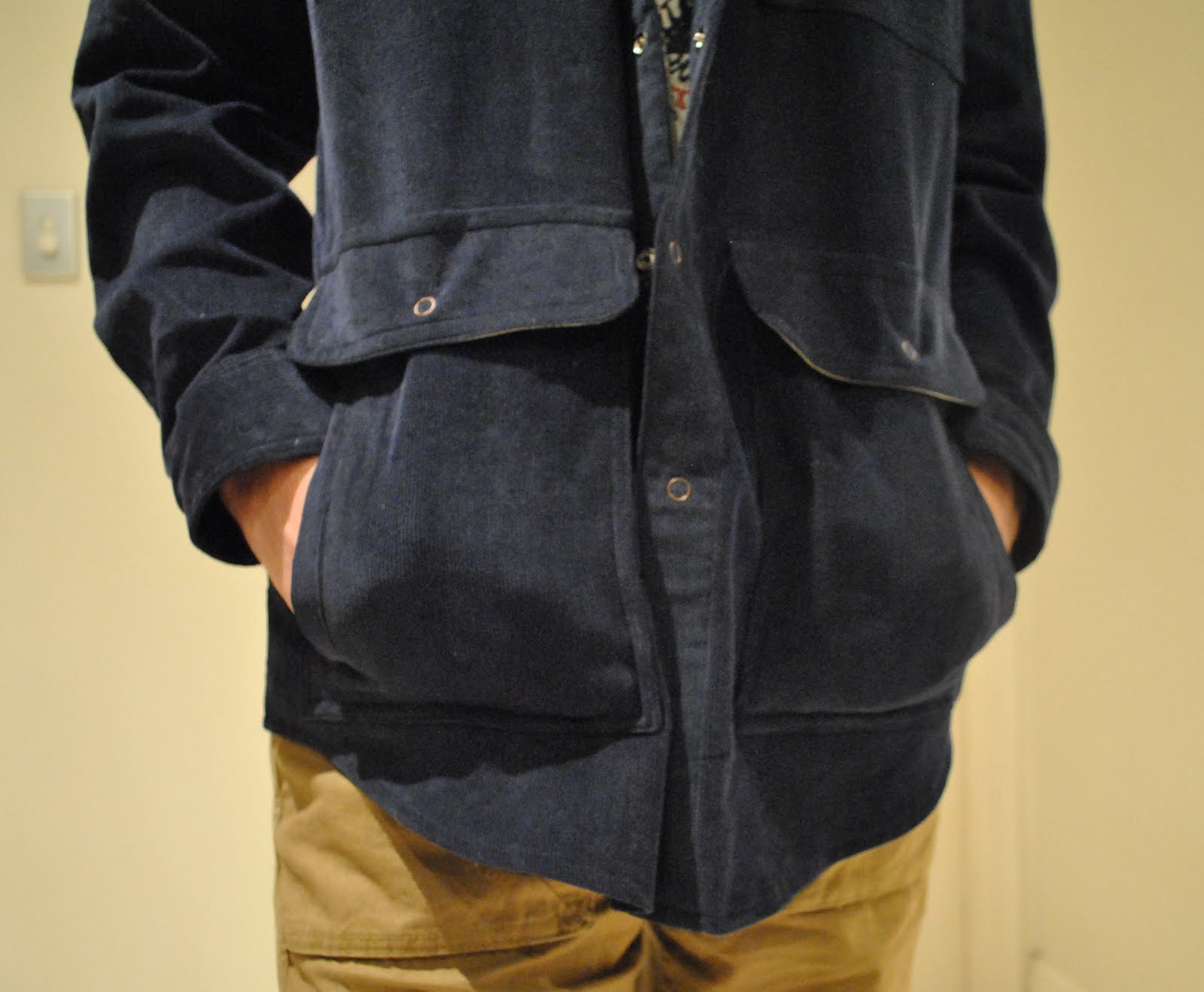
I’ve just put these pockets on a shirt/jacket I’ve made for Sam for his birthday, and I’m super pleased with how they turned out.  So wanted to share them.
I kind of got the idea from similar pocket I saw on a young mens’ leather jacket in the surf shop.   Seriously, the surf shop is a gold mine for wonderful ideas!  They somehow take hideous fabrics and unpromising shapes, and manage to make cool stuff that teenagers just love…
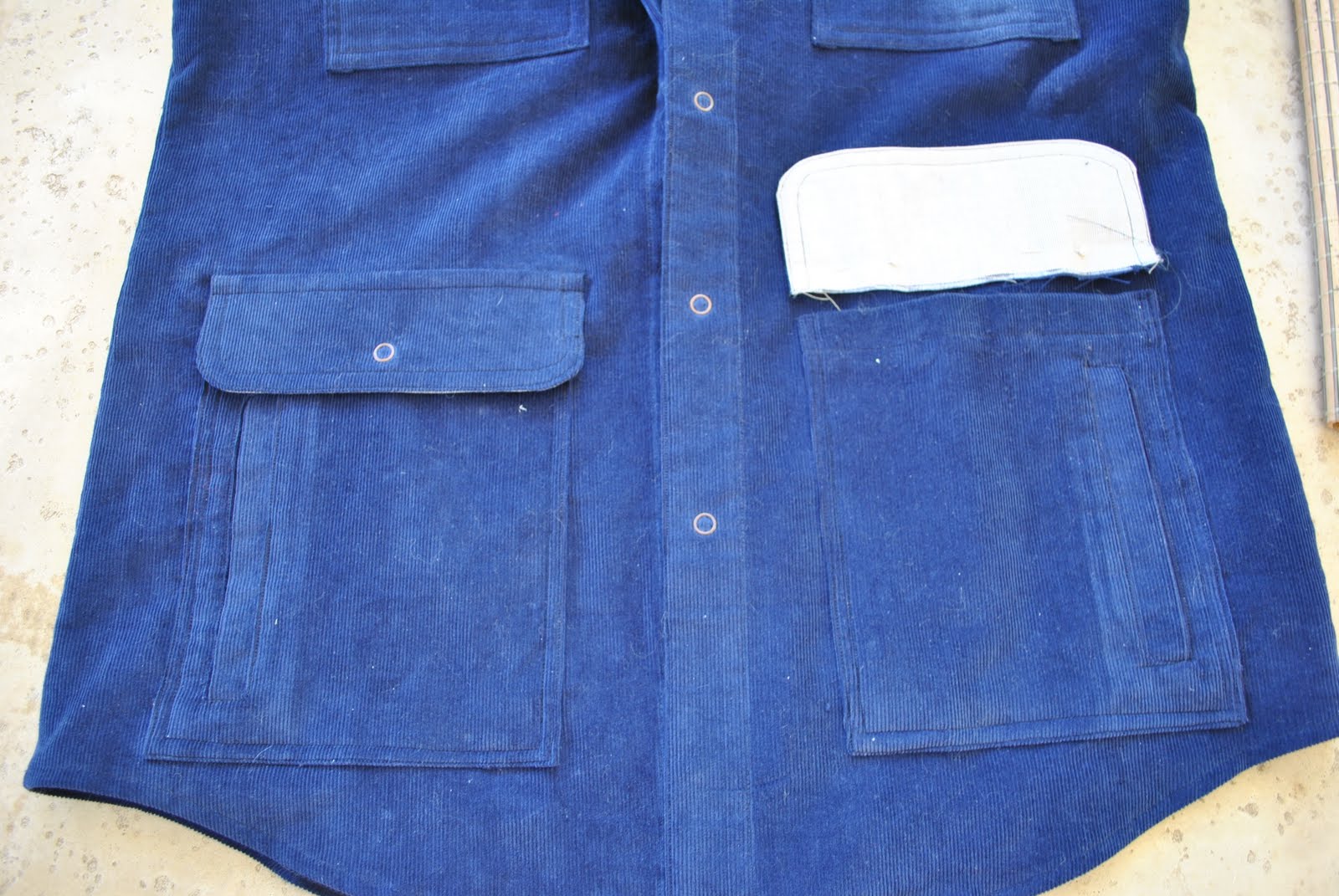
I’m pretty thrilled with these pockets, because they are a double pocket, like two pockets in one.  One is a welt pocket, and the other is a patch pocket, but both are part of the same pocket!
The shirt/jacket is of corduroy, a thin, non-stretchy navy blue corduroy, a colour that really suits him.  (yes, because I used corduroy I spent the entire process obsessively stroking all the fabric pieces to make sure they were all facing with the nap the right way at every step!!)  The contrasting lining fabric is a thin beige cotton that has a subtle tiny plaid woven into it.
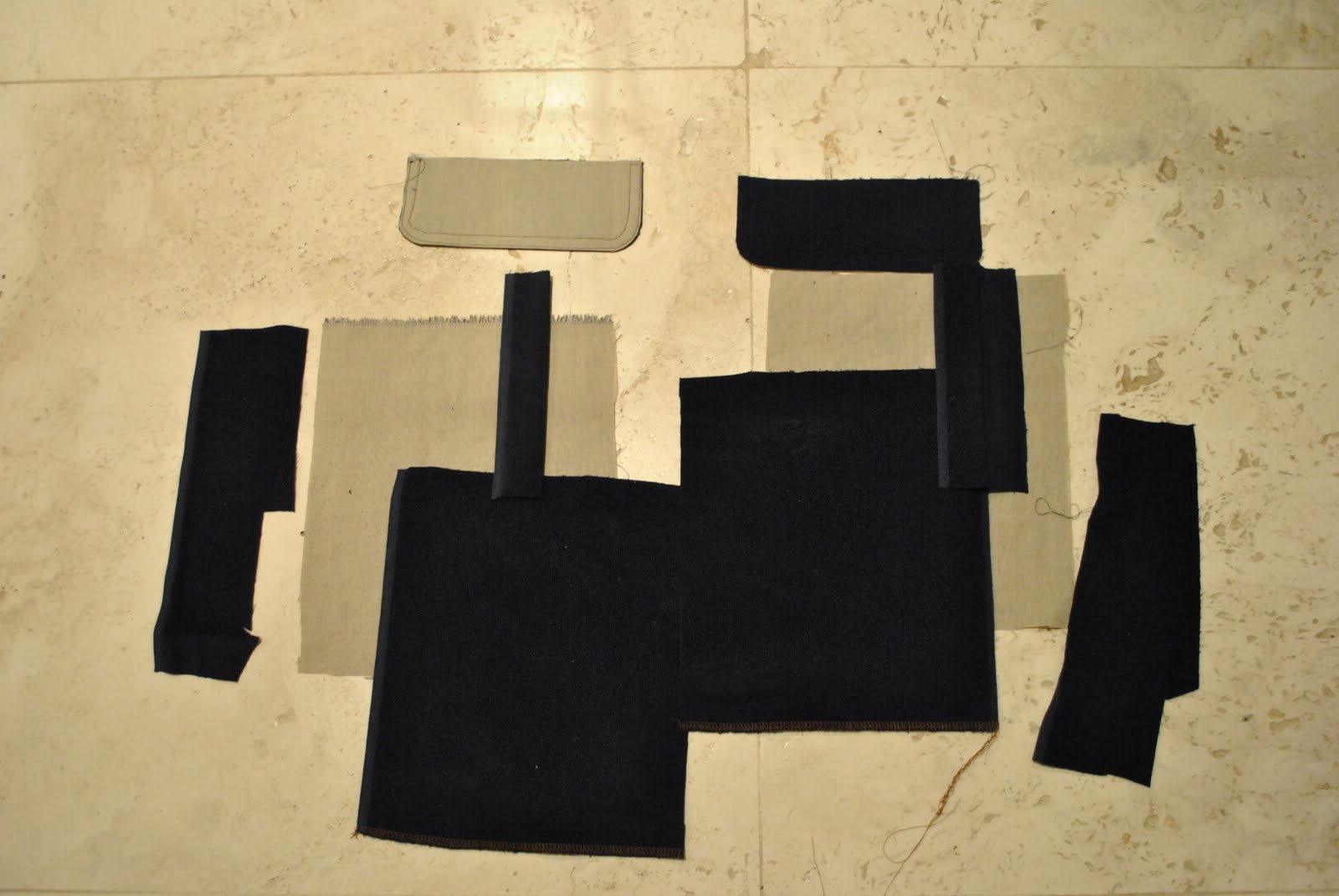
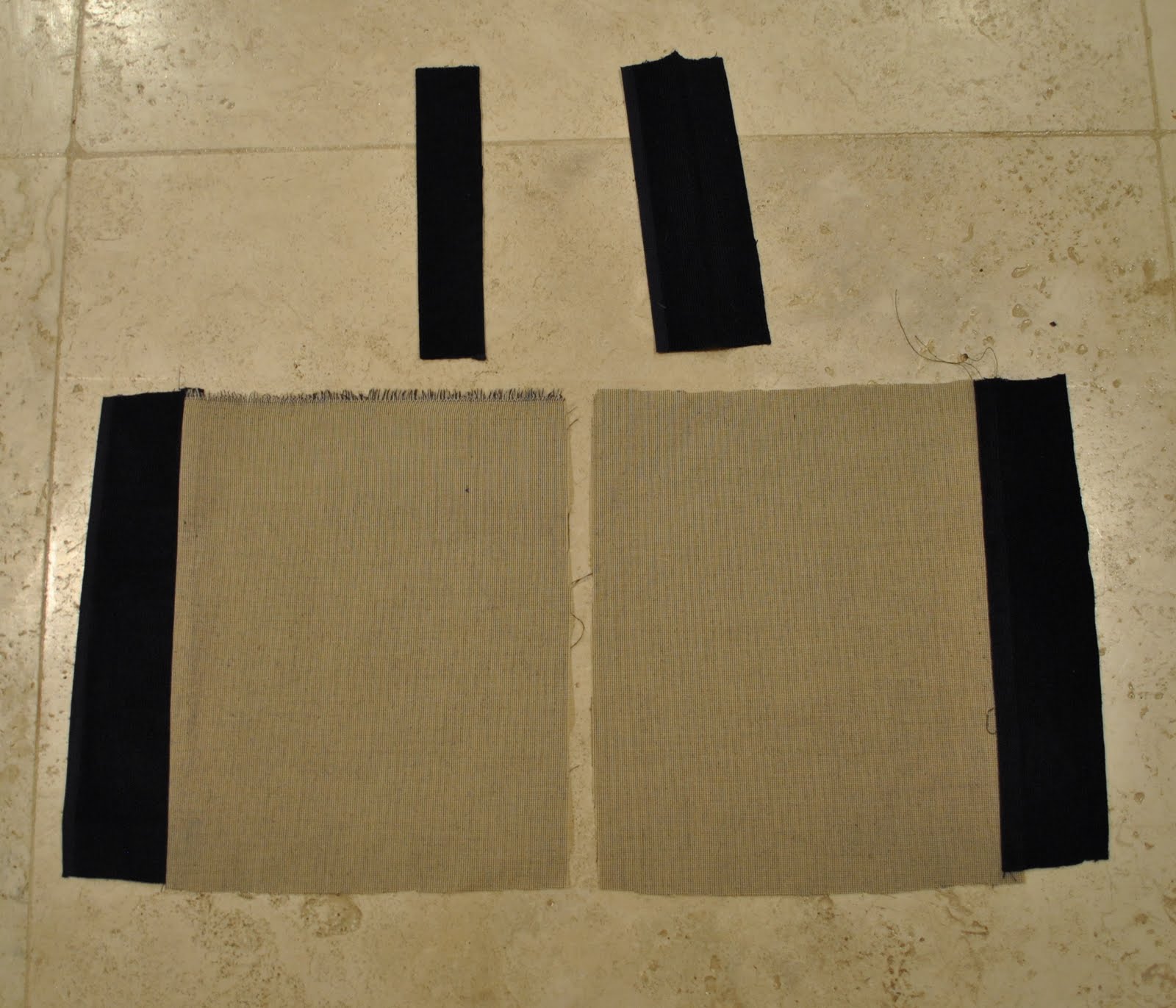
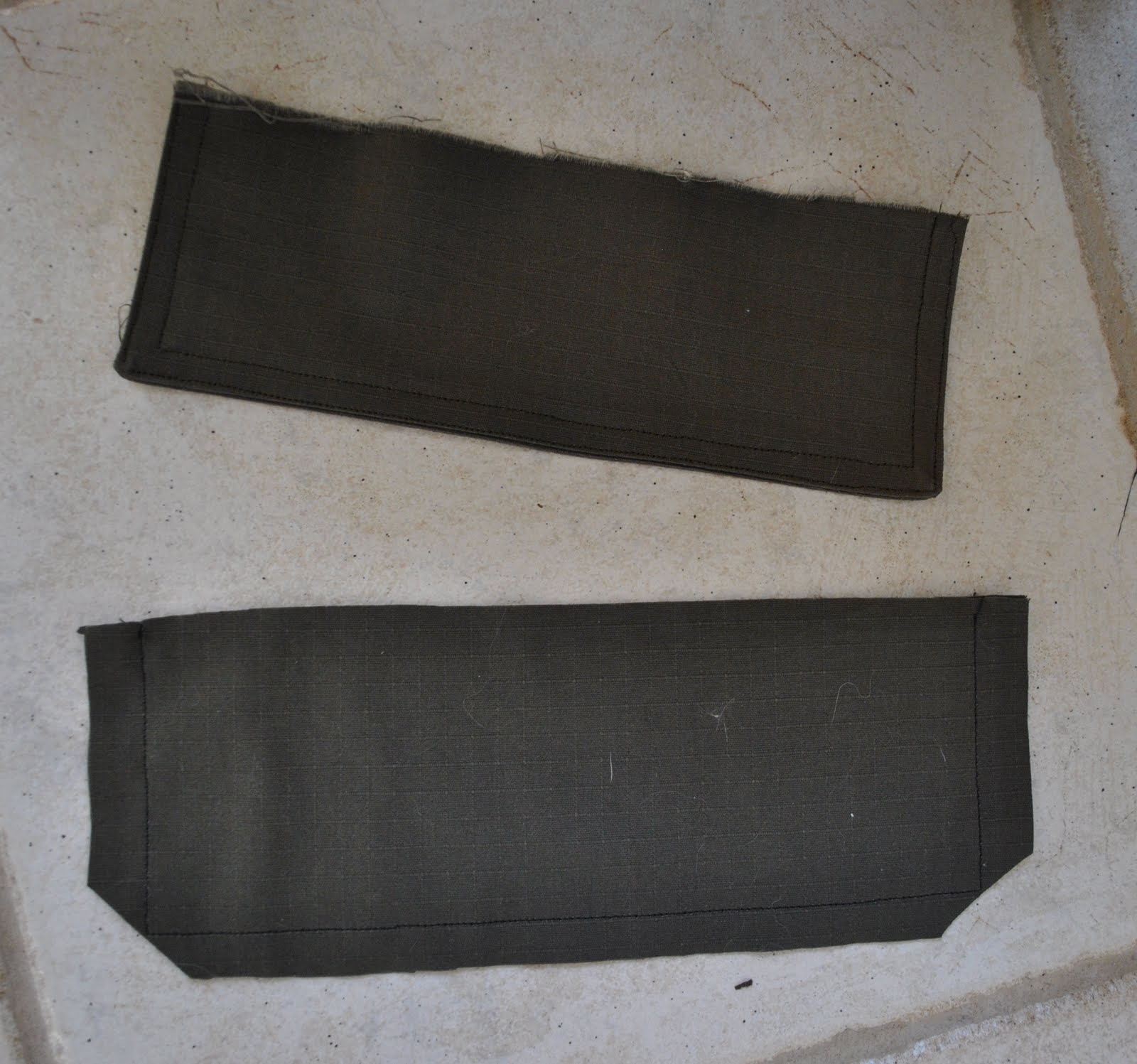
Firstly I took a rough measurement of my son’s handspan, and cut out two pocket pieces, and welt pieces.  For the lining of the pocket cut two each of pieces of the fashion fabric and of the lining fabric, which will be joined together; the fashion fabric section to go under the welt, so that when he has his hands in his pocket the inside looks just like the rest of the jacket, but the main of the lining to be of a thin contrasting cotton so as not to add too much bulk to the pocket (this is illustrated in the next step).  Also cut and construct two pocket flaps, mine have slightly curved lower edges.

Join the two pocket lining fabrics together, and iron the welt flaps in half along their long side.

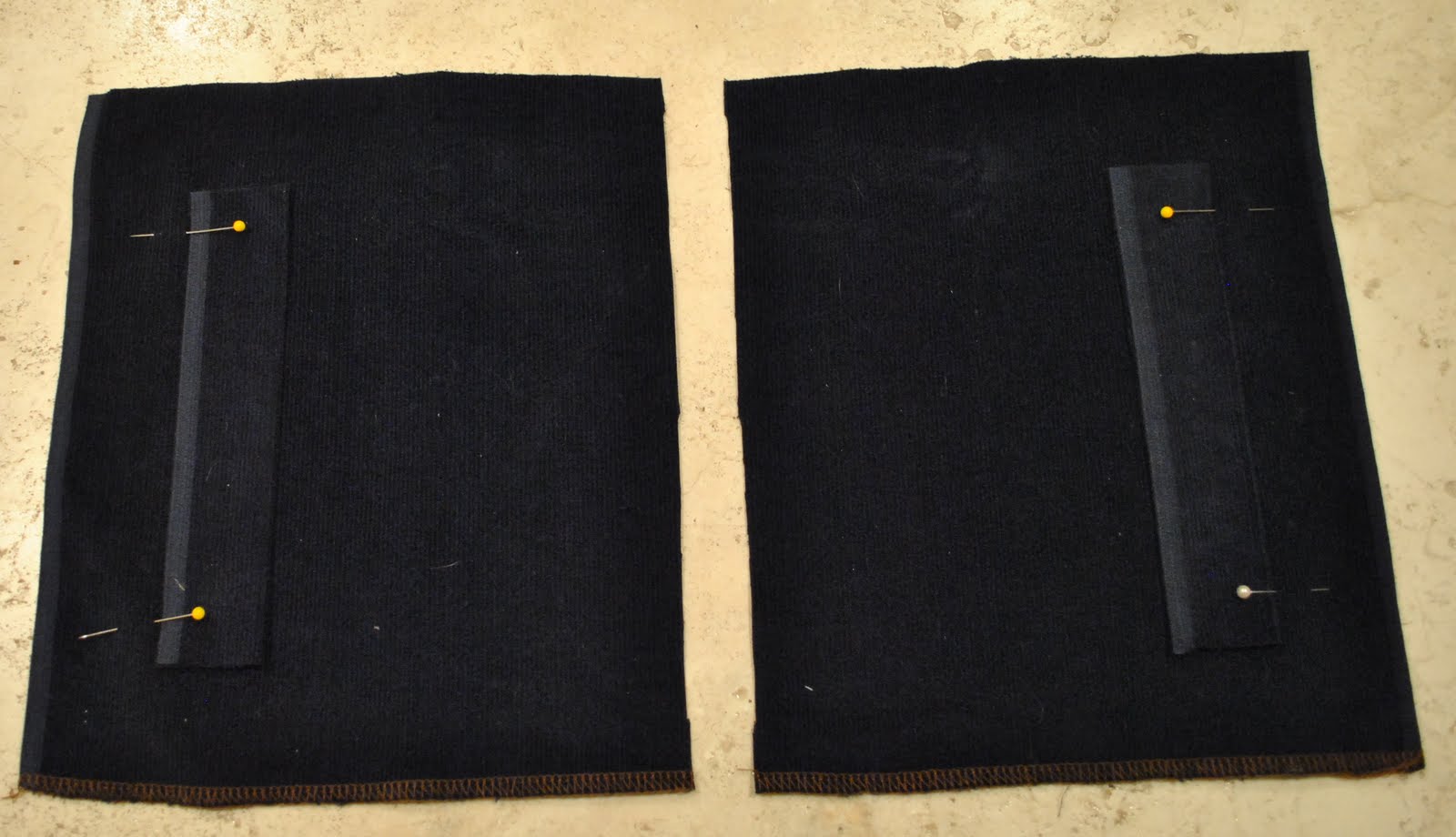
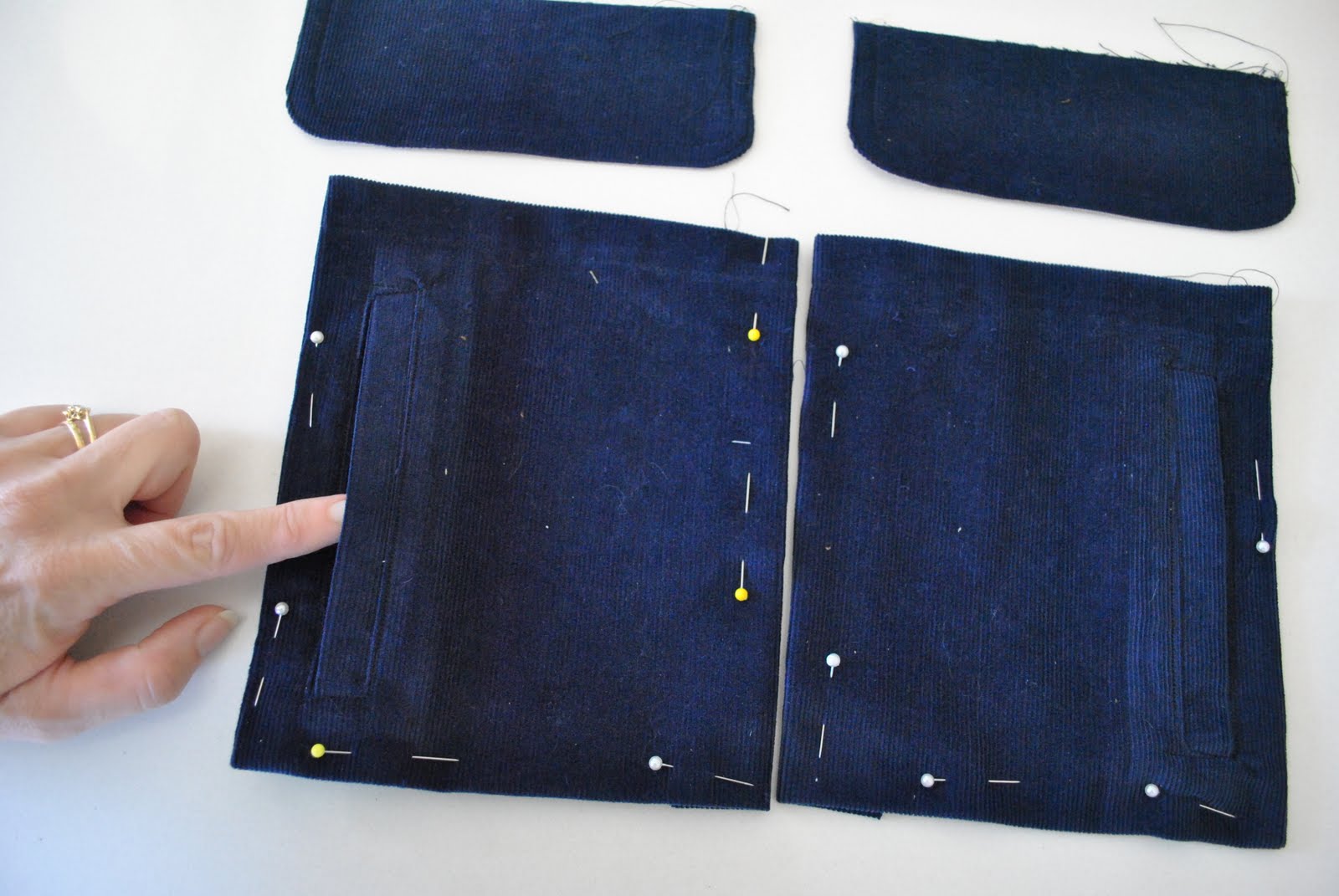
On your fashion fabric pocket piece, mark where the welts are going to sit with pins.  The welts will sit vertically at the outside edges of the pockets, so the wearer can shove their hands inside easily.
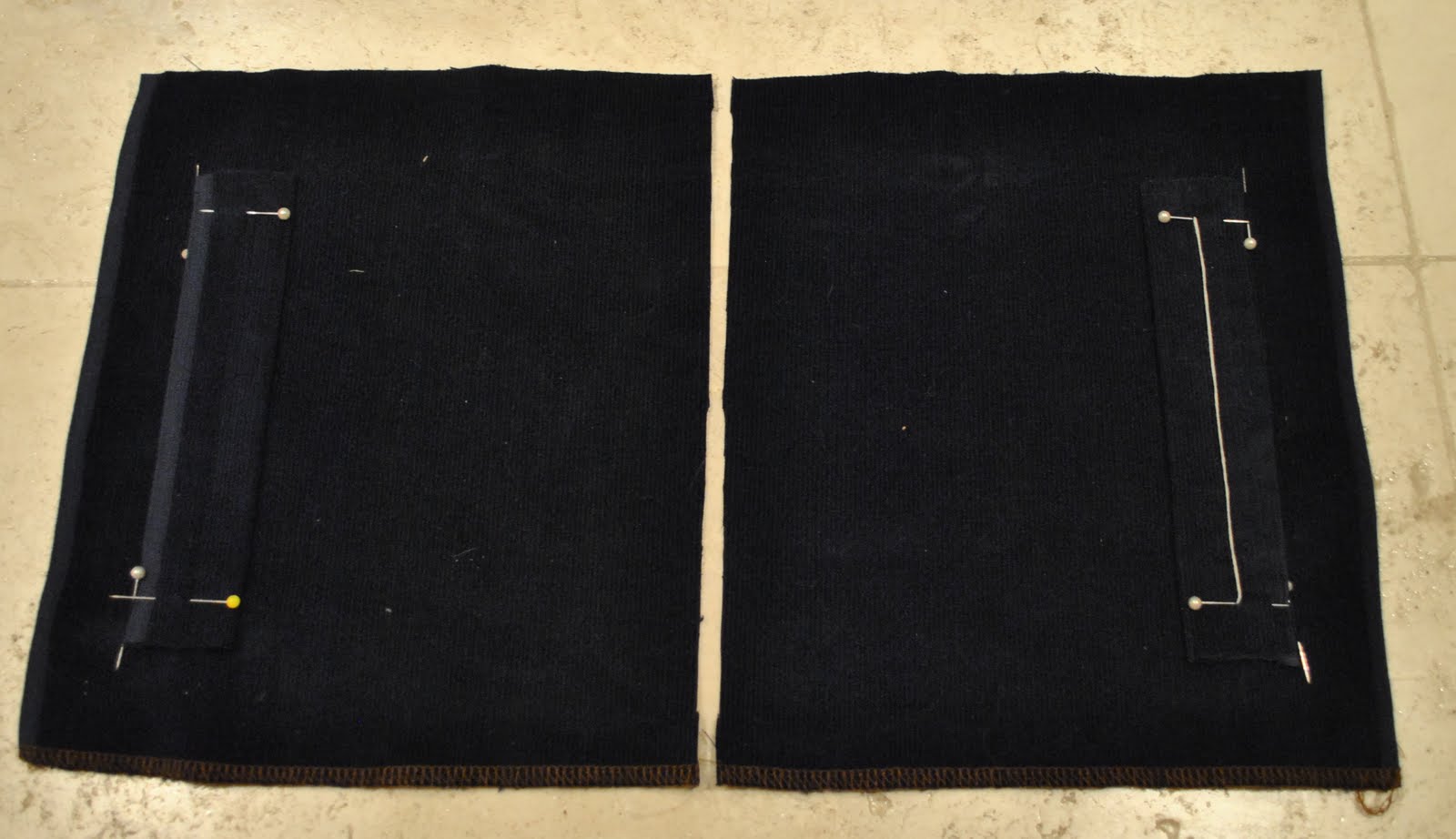
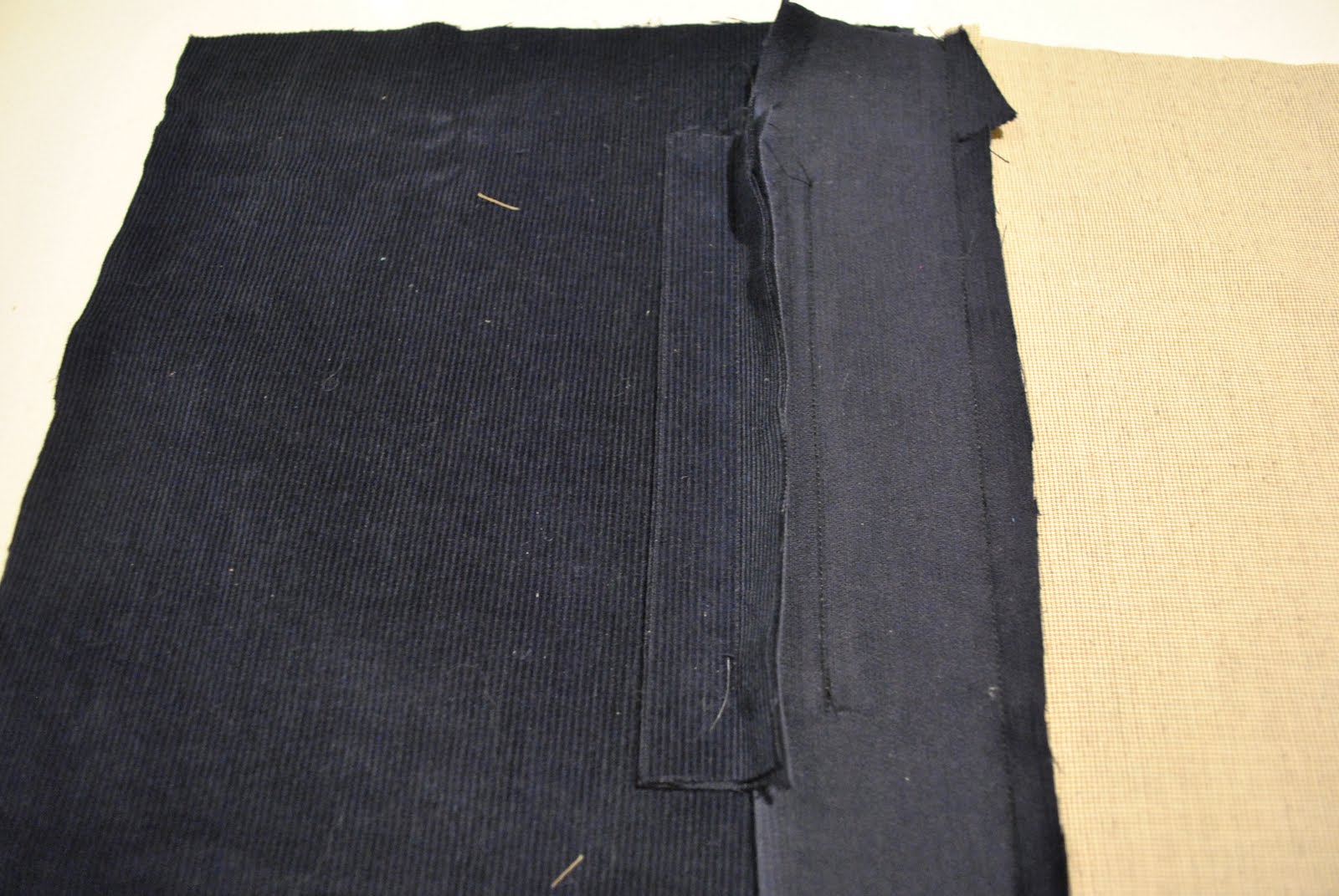
Pin the unfolded edges of the welt so that the stitching line sits on the inner line (in the picture, the stitching line of the pocket welt on the right is marked with a white thread).  Stitch.
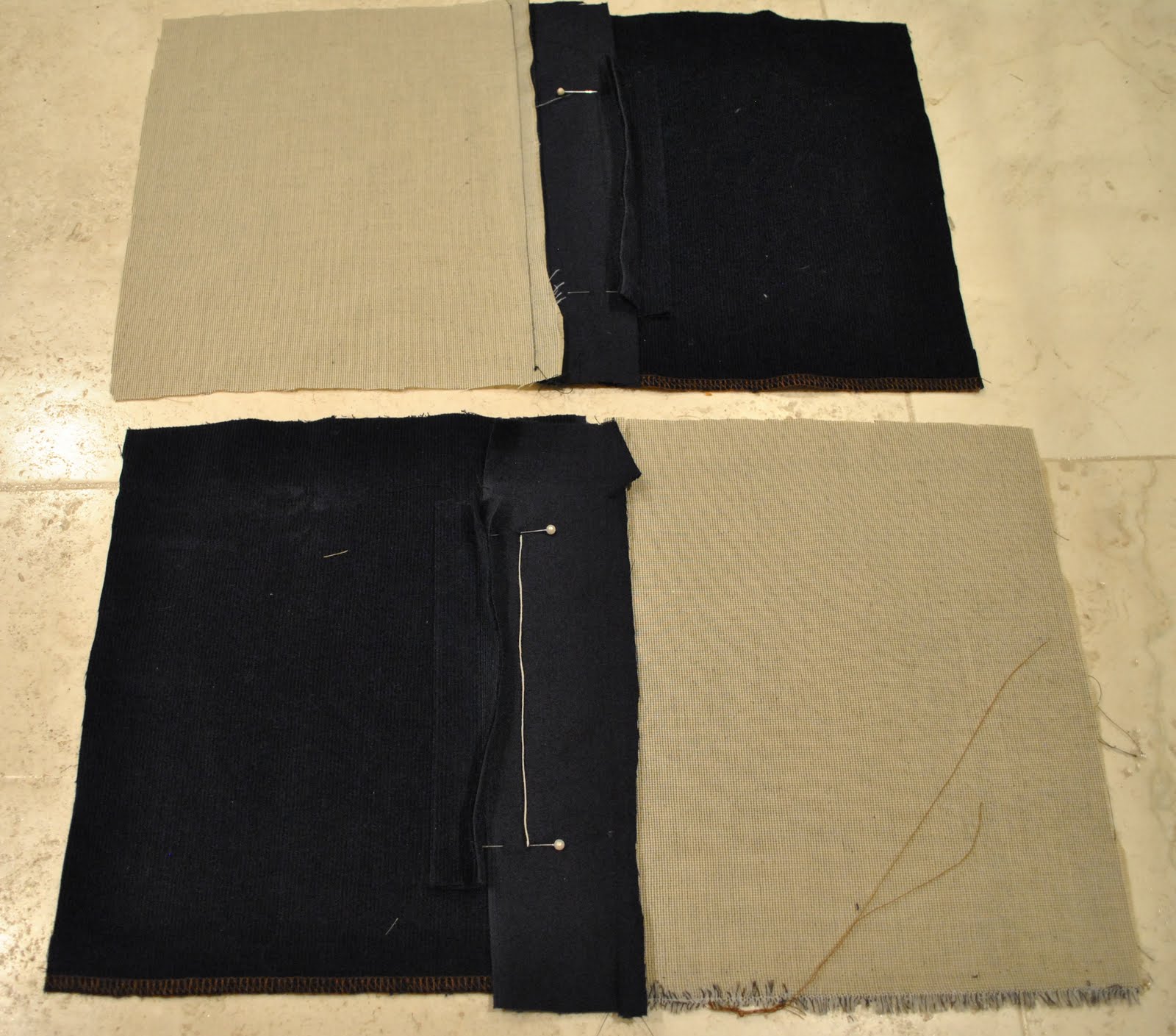
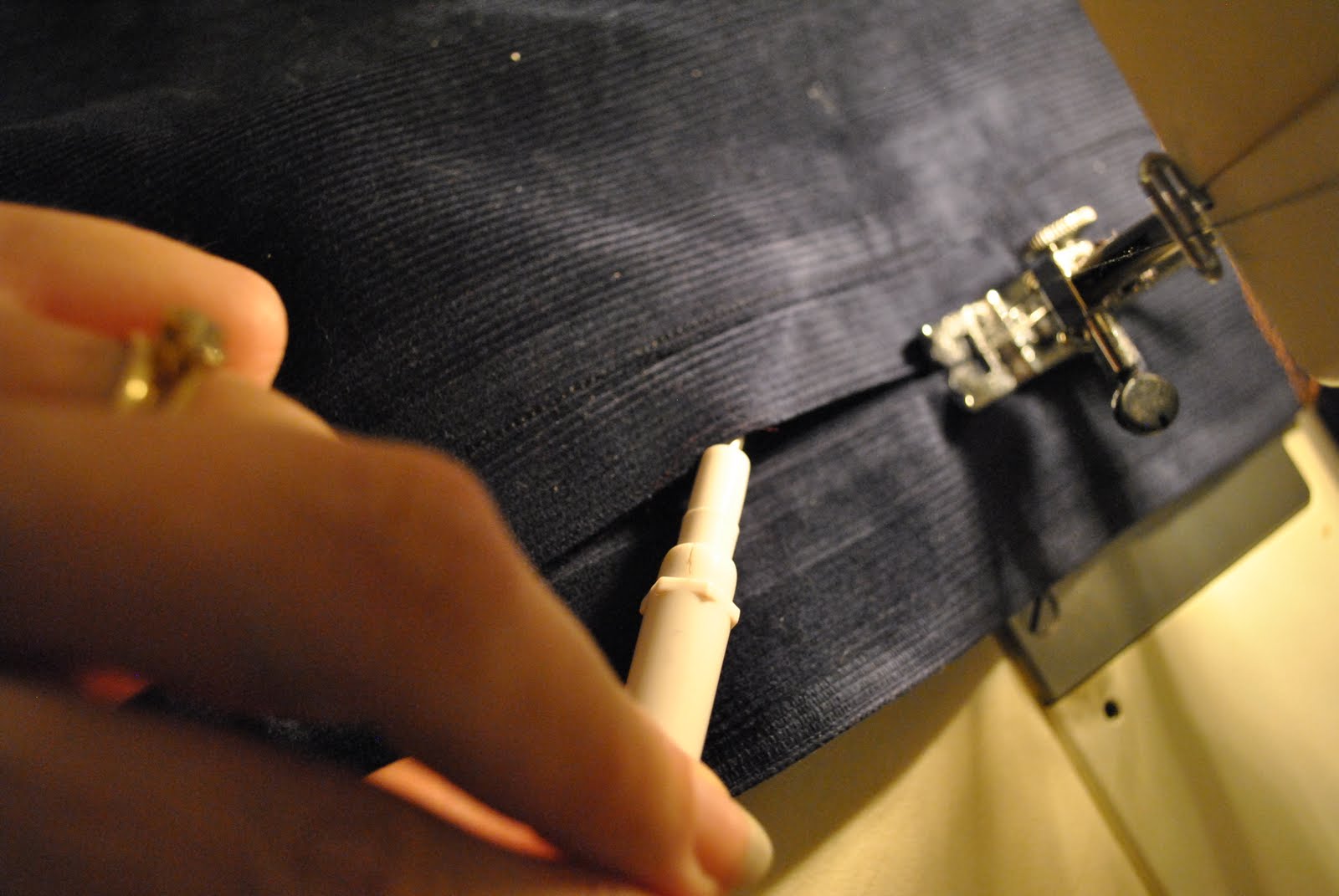
Now, lay the edge of the pocket lining, pieced together in the third picture above, so the raw edge of the fashion fabric edge is against middle of the welt gap, or “box”.  Stitch along the other long edge of the welt “box”. Marked with the white thread on the lower of the pockets in this picture)
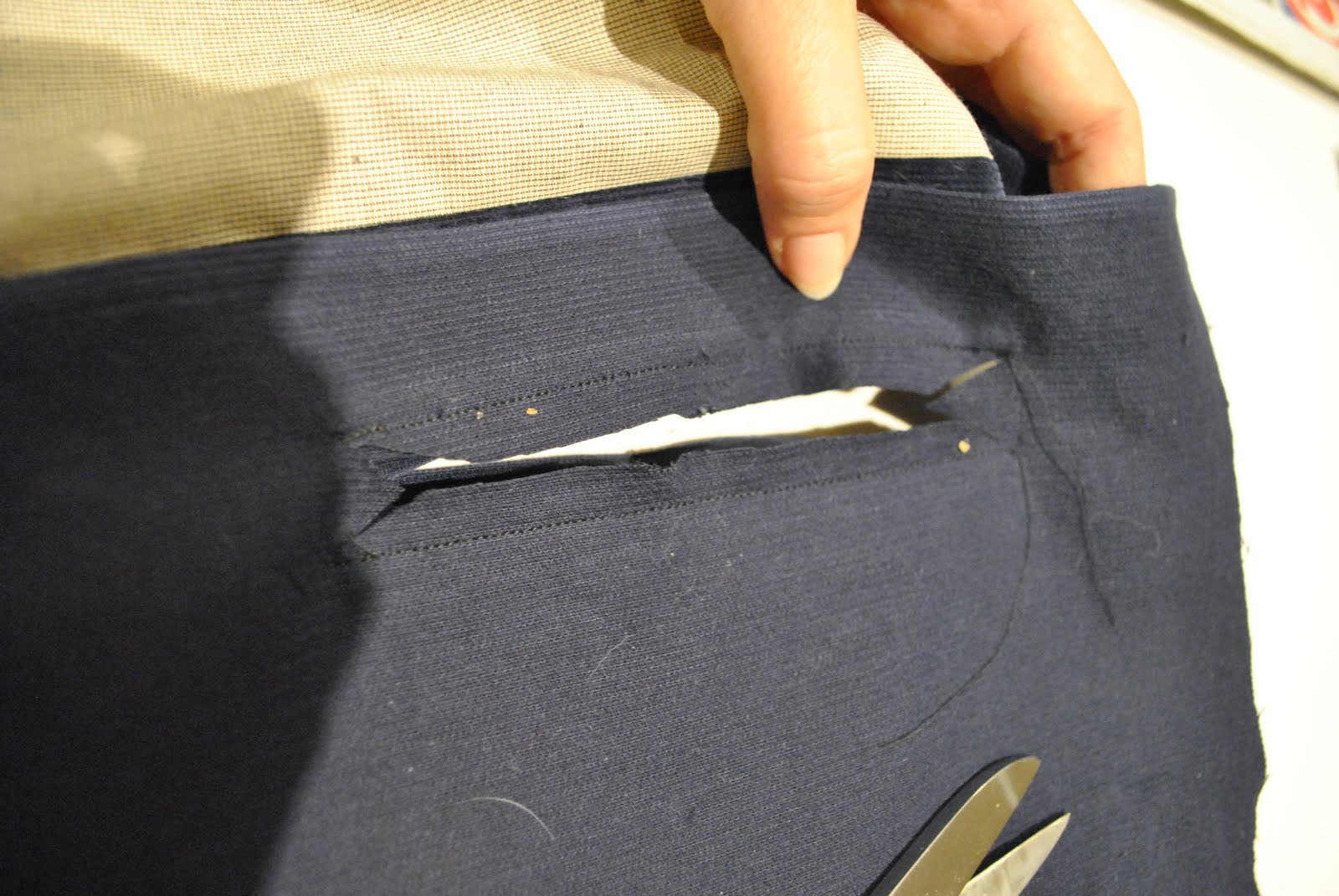
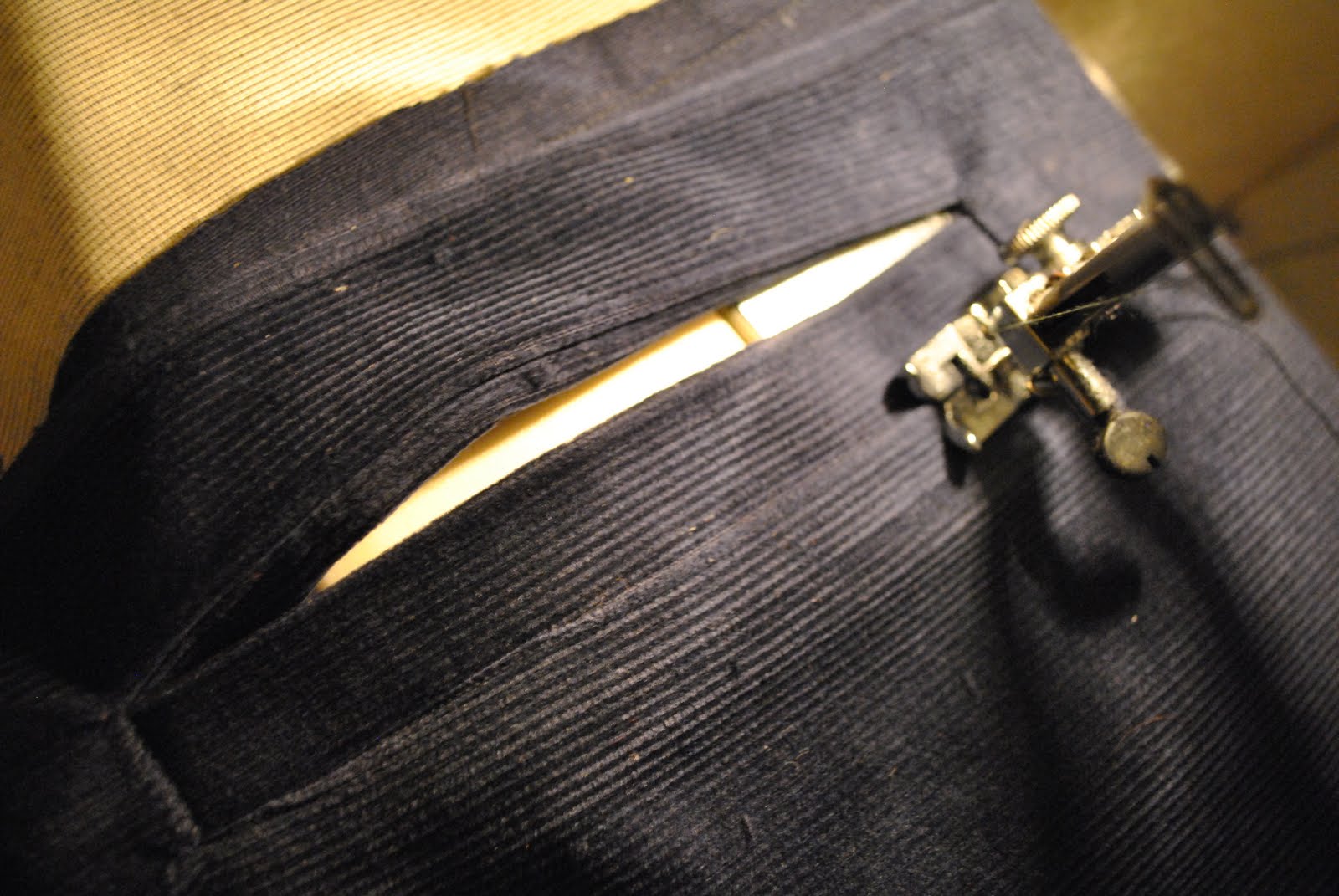
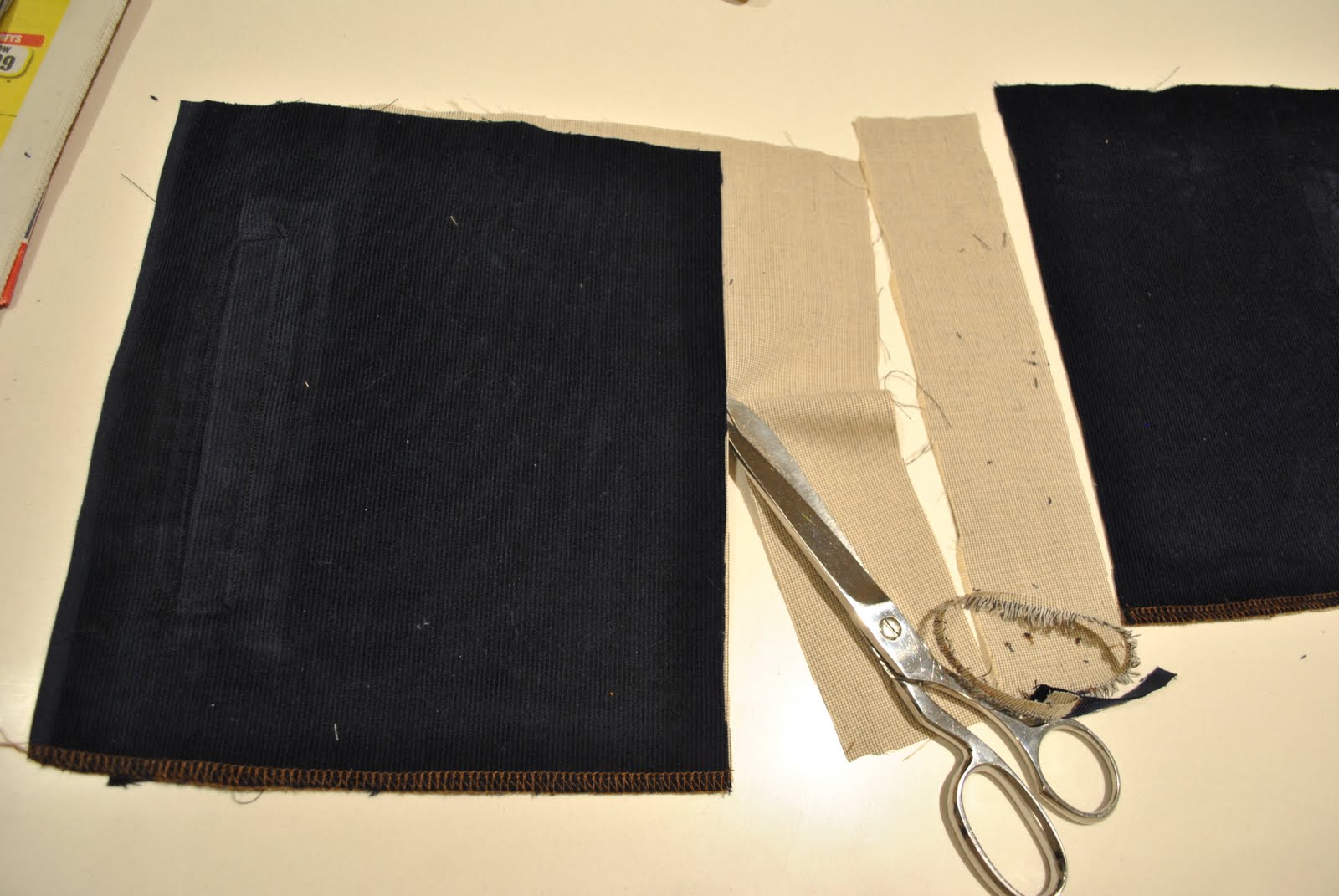
Slash open the welt to within 1.5cm of the short edges of the “box”, and from here out to each corner of the “box”.  To get nice even welts it’s pretty important to be super accurate about this bit.  And also that you are only snipping one layer of fabric, and not cutting into either the welts nor the pocket lining piece!
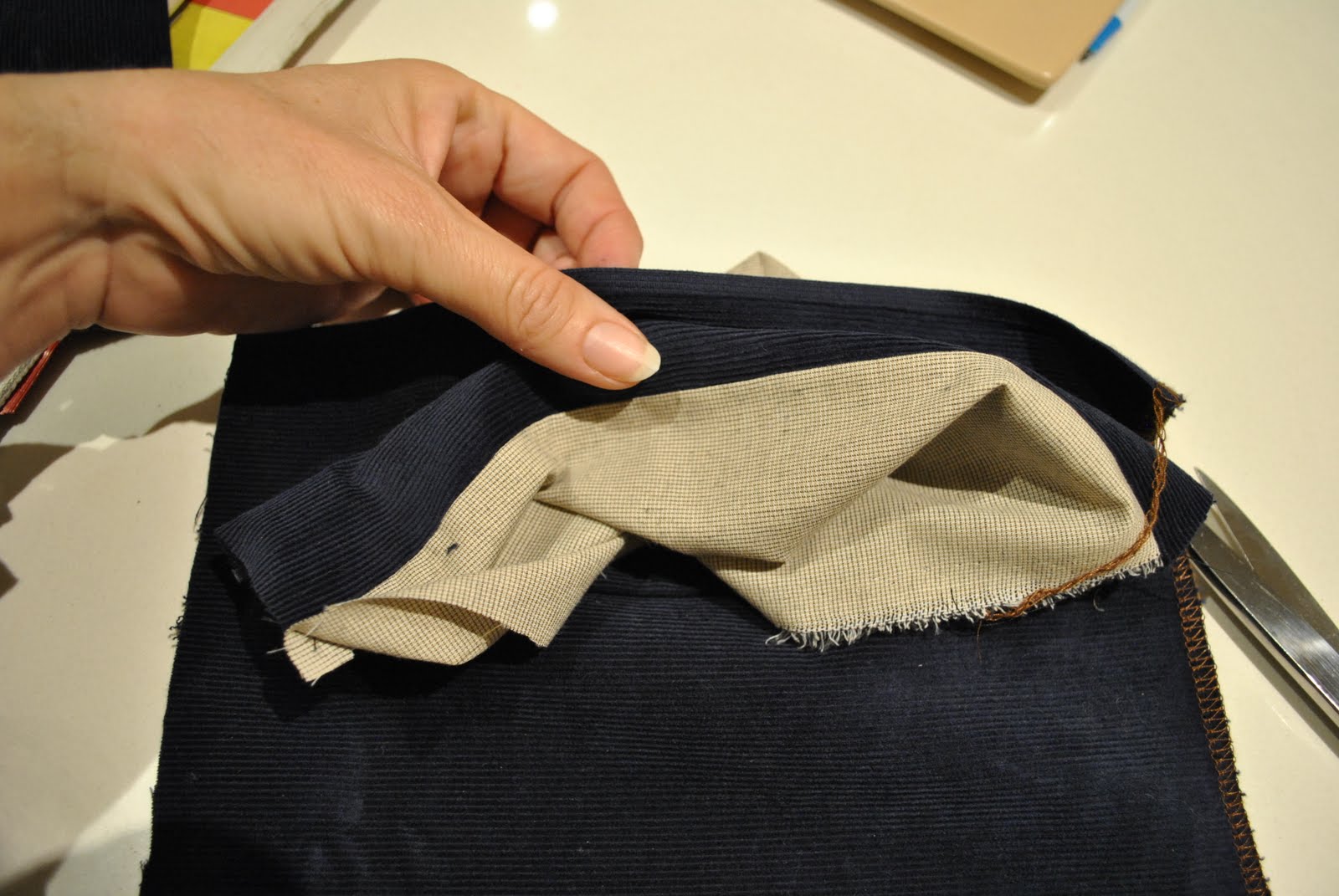
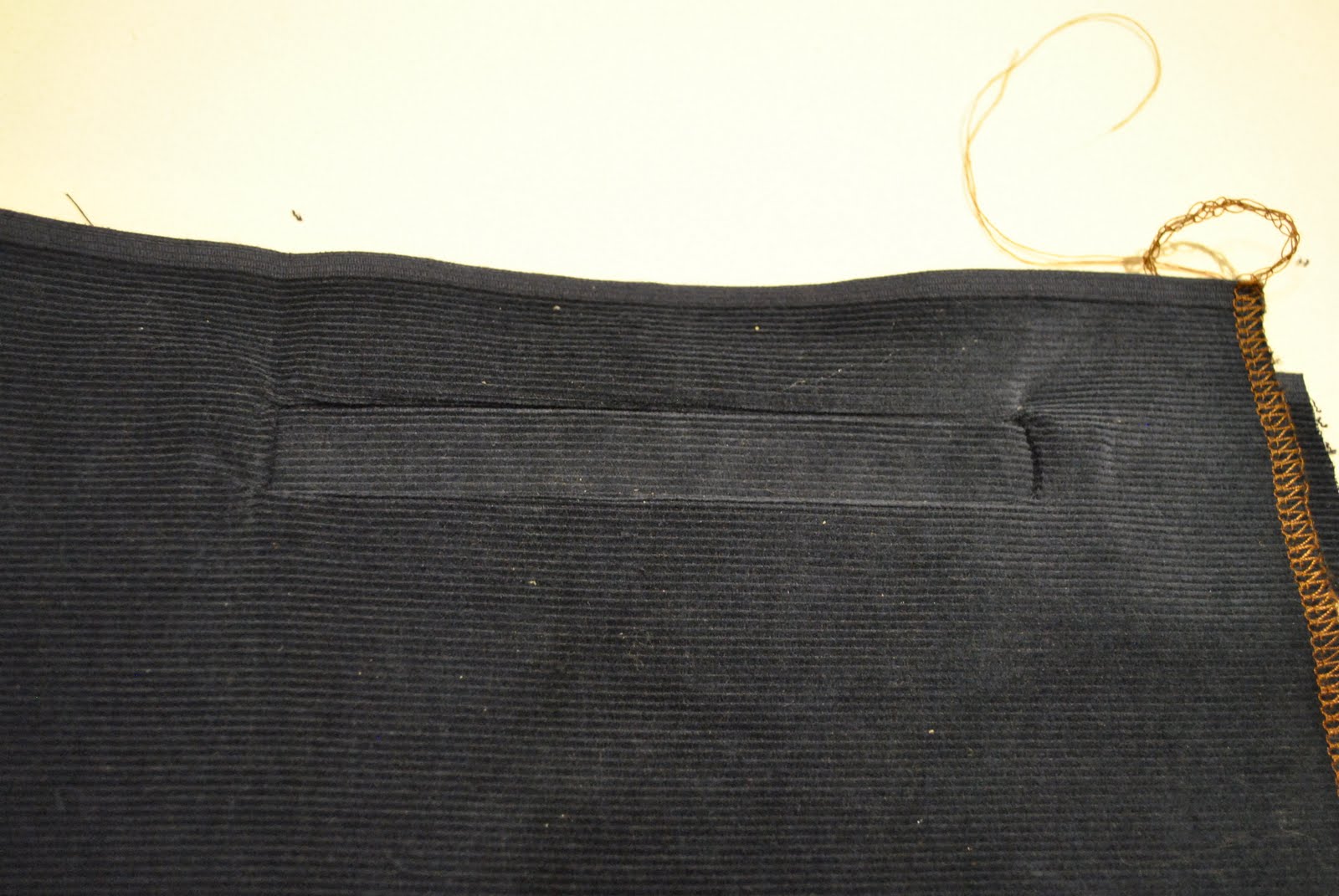
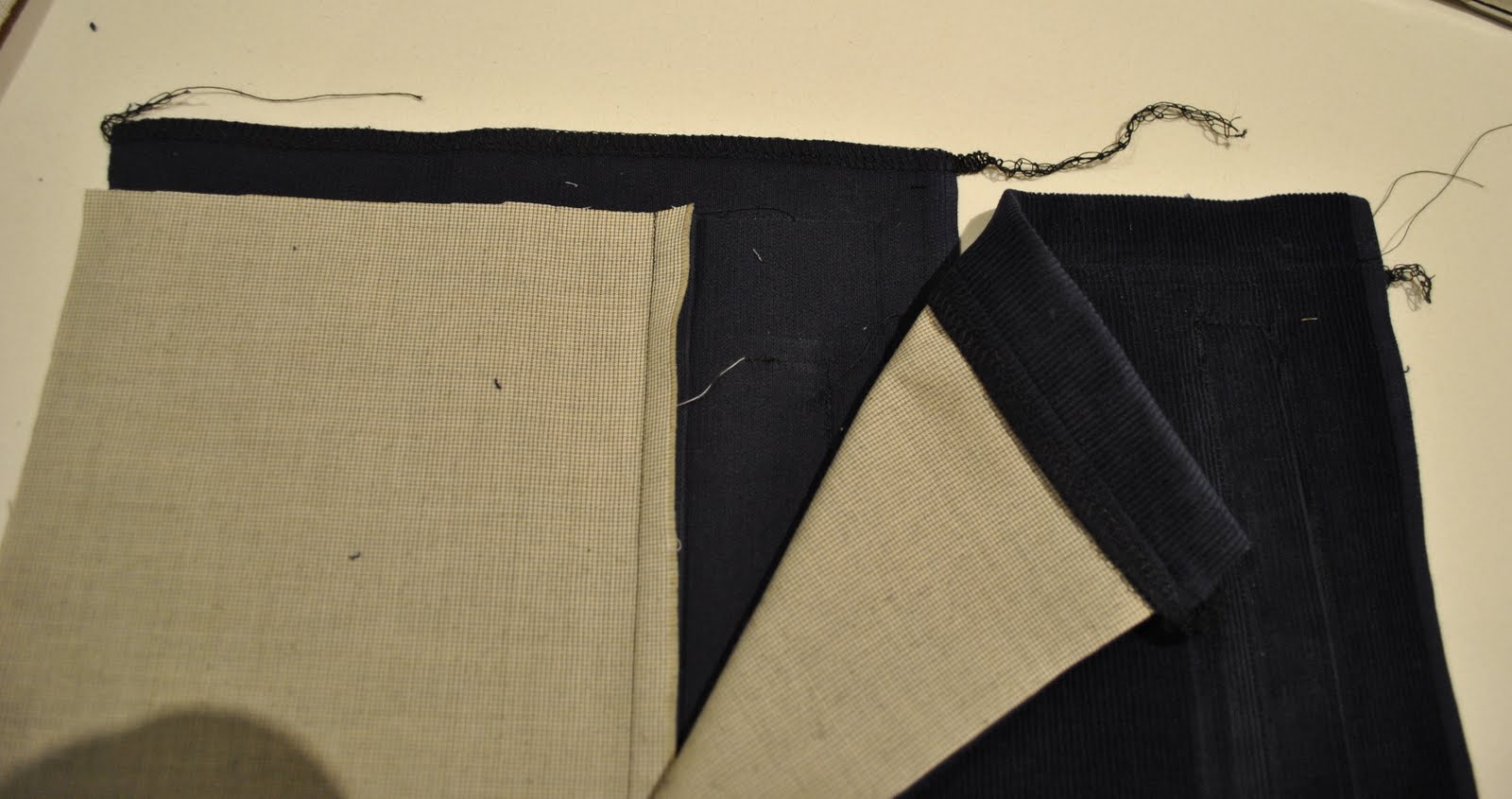
Pull through the pocket lining piece, and lay it underneath the pocket piece.
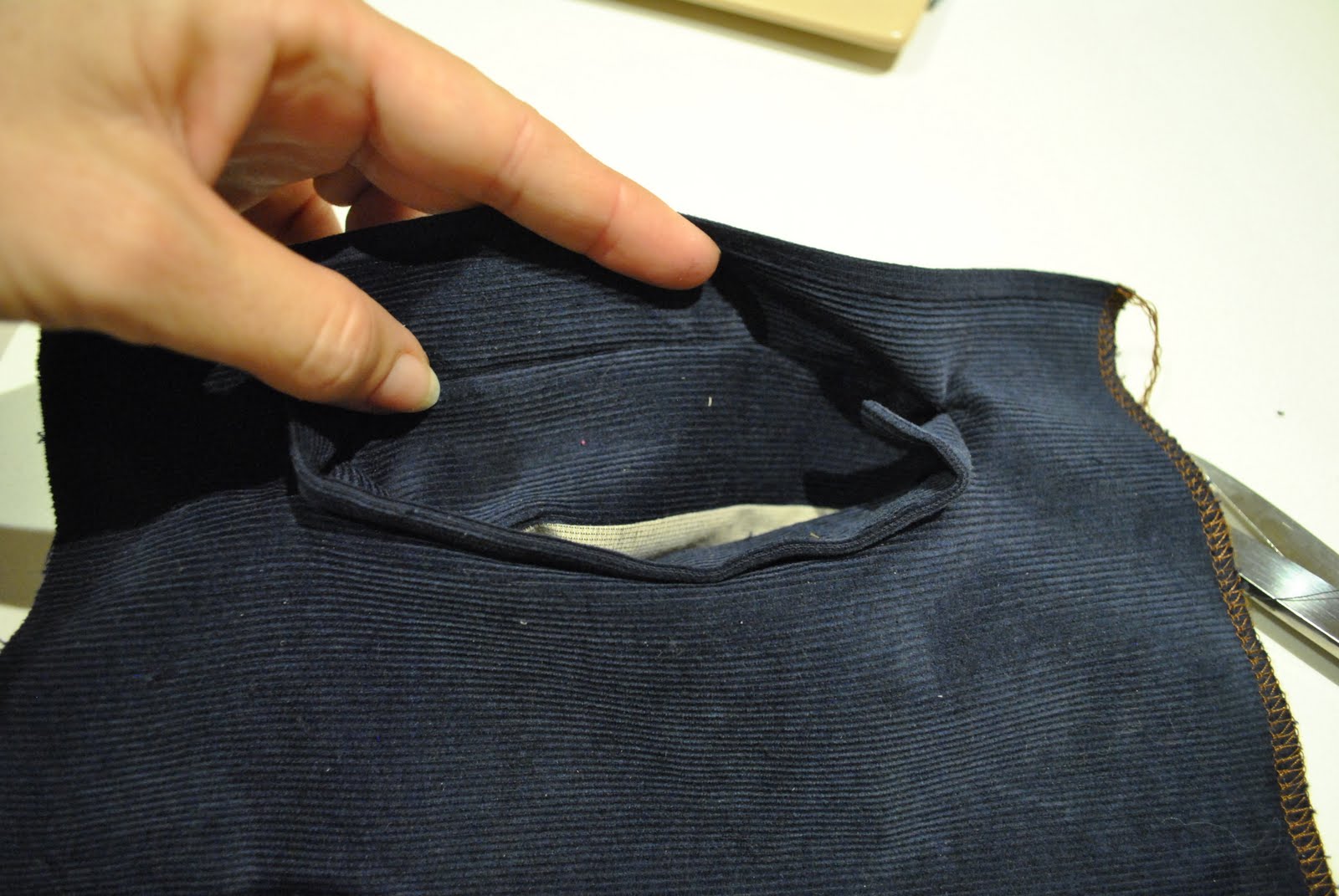
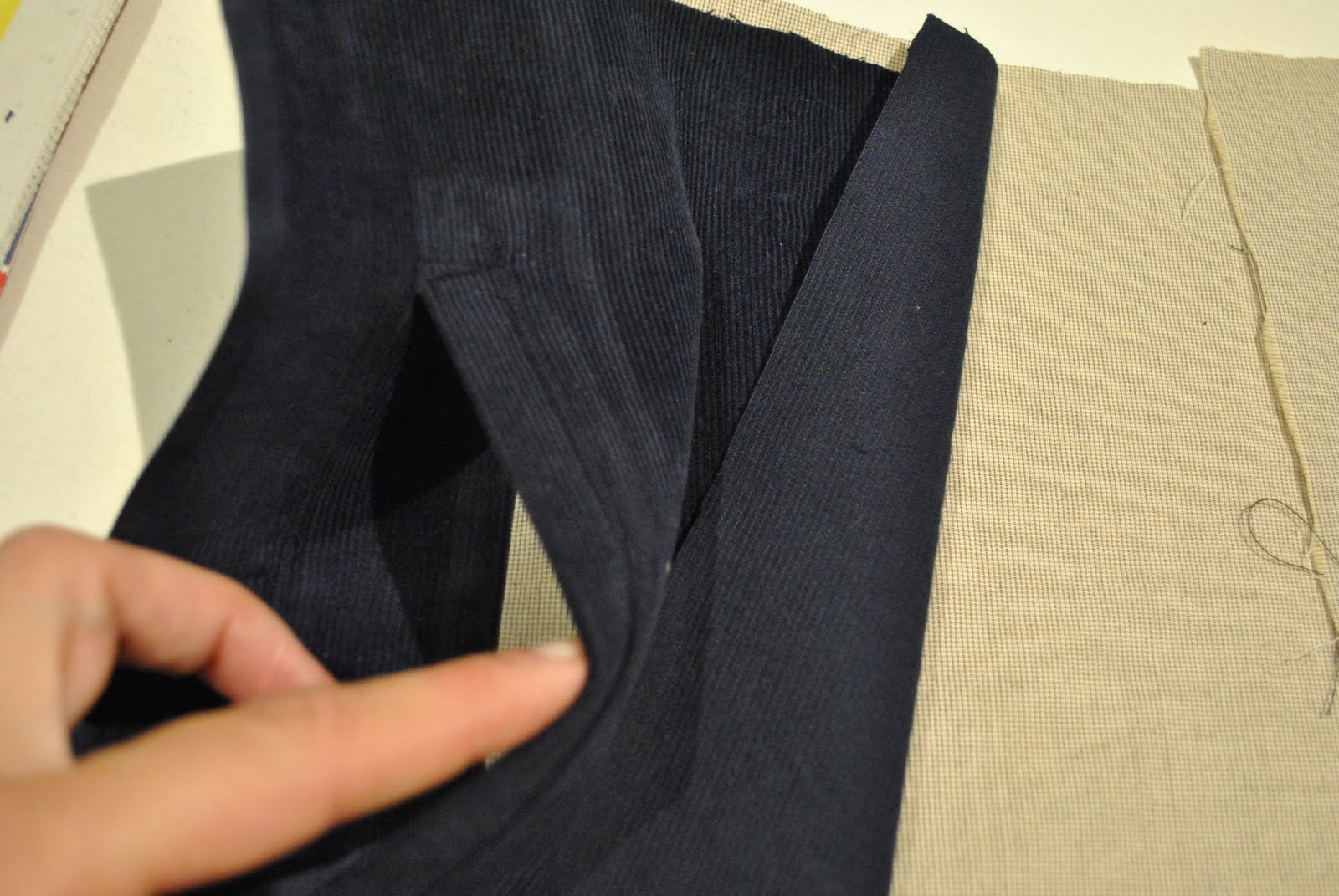
Pull the welt edges underneath also, and flip it up so it is sitting up covering up that “box” gap, like a postal flap.
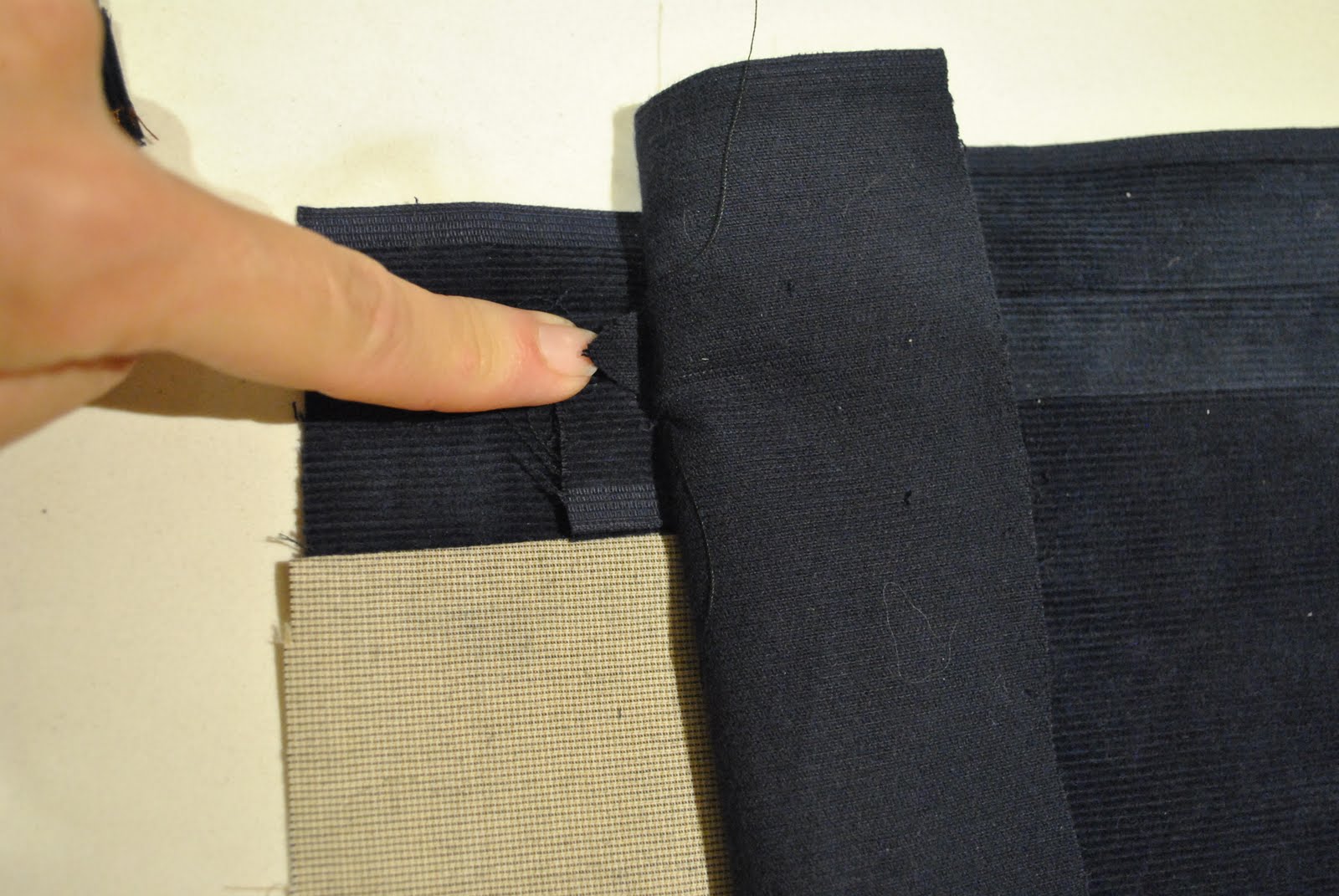
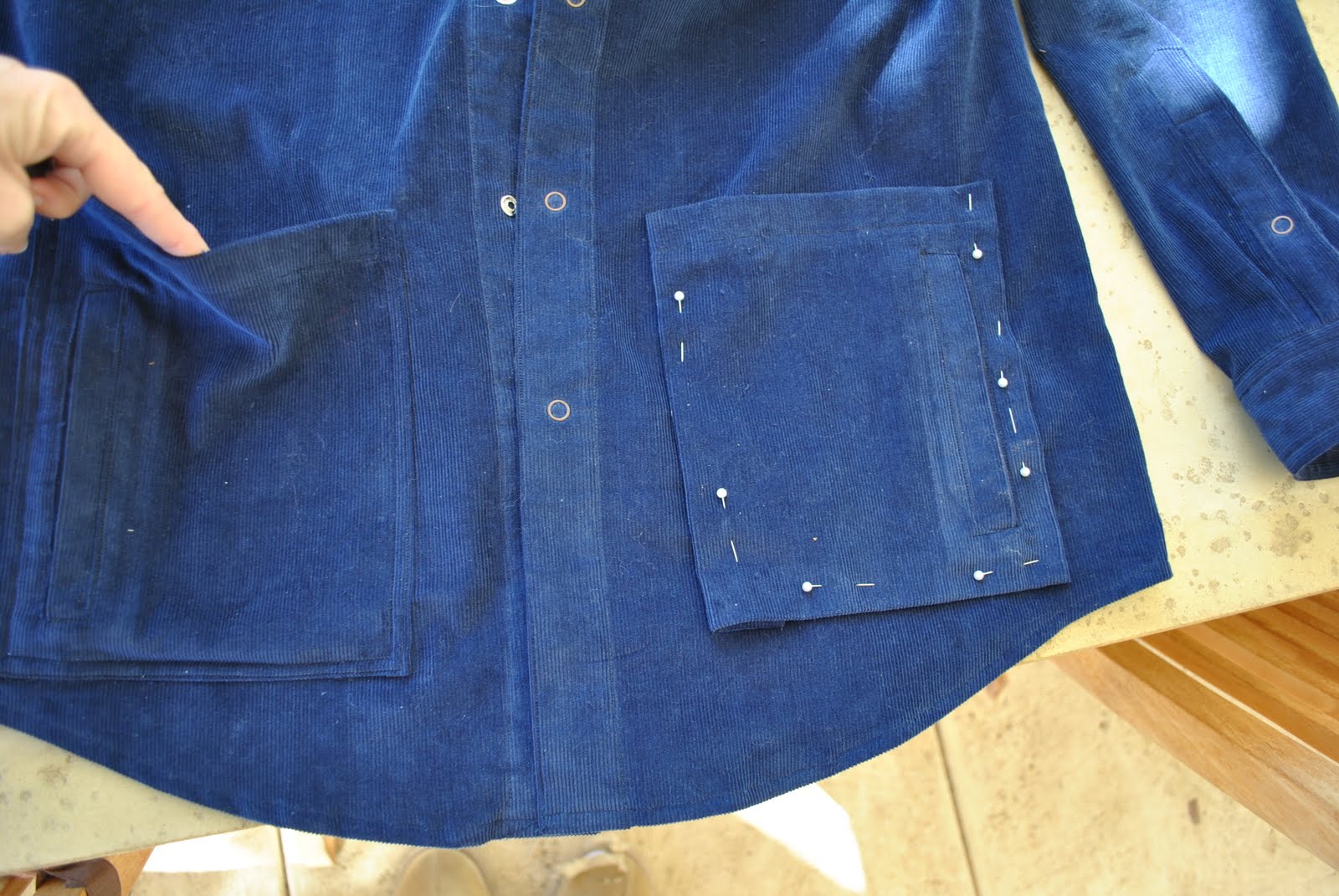
Pull under the little triangular wedges at each short side of the “box”.  For a regular welt pocket the next step would be to just sew the final edge of the triangle down to the pocket lining right above where my finger is pointing… but there are a few more steps to finish this particular pocket…
Because this is a shirt/jacket for a teenager, I opted to topstitch around the welt.  Just remember to flip the pocket lining up and out of the way when you topstitch the attached edge of the welt, so you don’t sew the pocket closed by mistake!
That is the welt part of the pocket finished!
Now for the patch part of the pocket…
Trim away any excess fabric from the pocket lining to fit the pocket piece. 
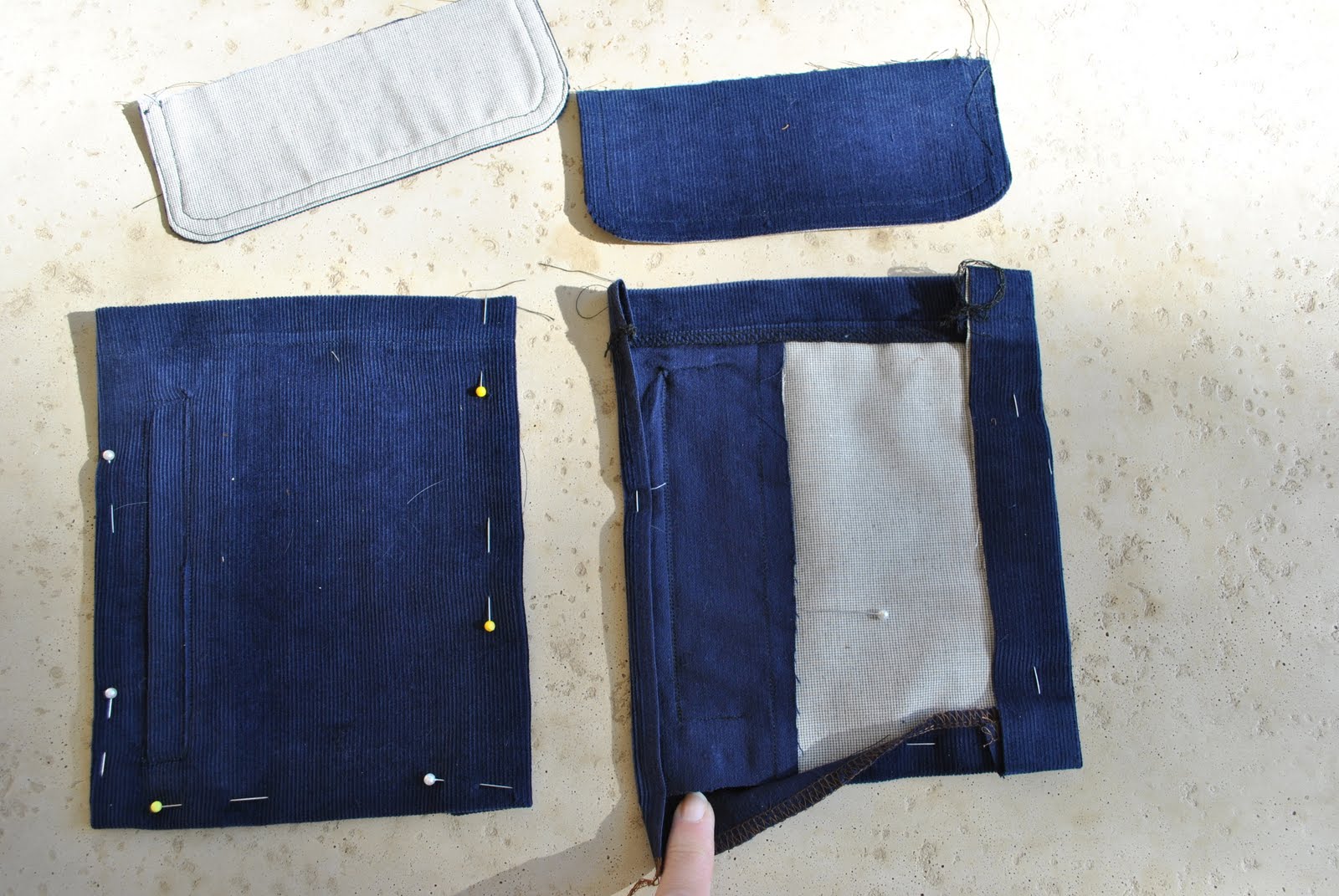
Trim away the fashion fabric portion of the pocket lining to fall within the seam allowances of the pocket piece.  This is just to avoid too many bulky layers in the seam allowances of the patch pocket.  Finish the upper edge of the pocket, fold and press it to the inside,and stitch down in place.
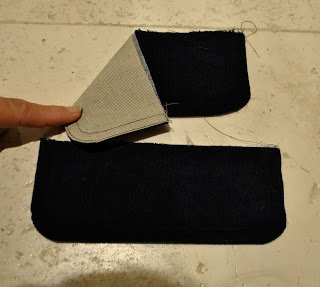
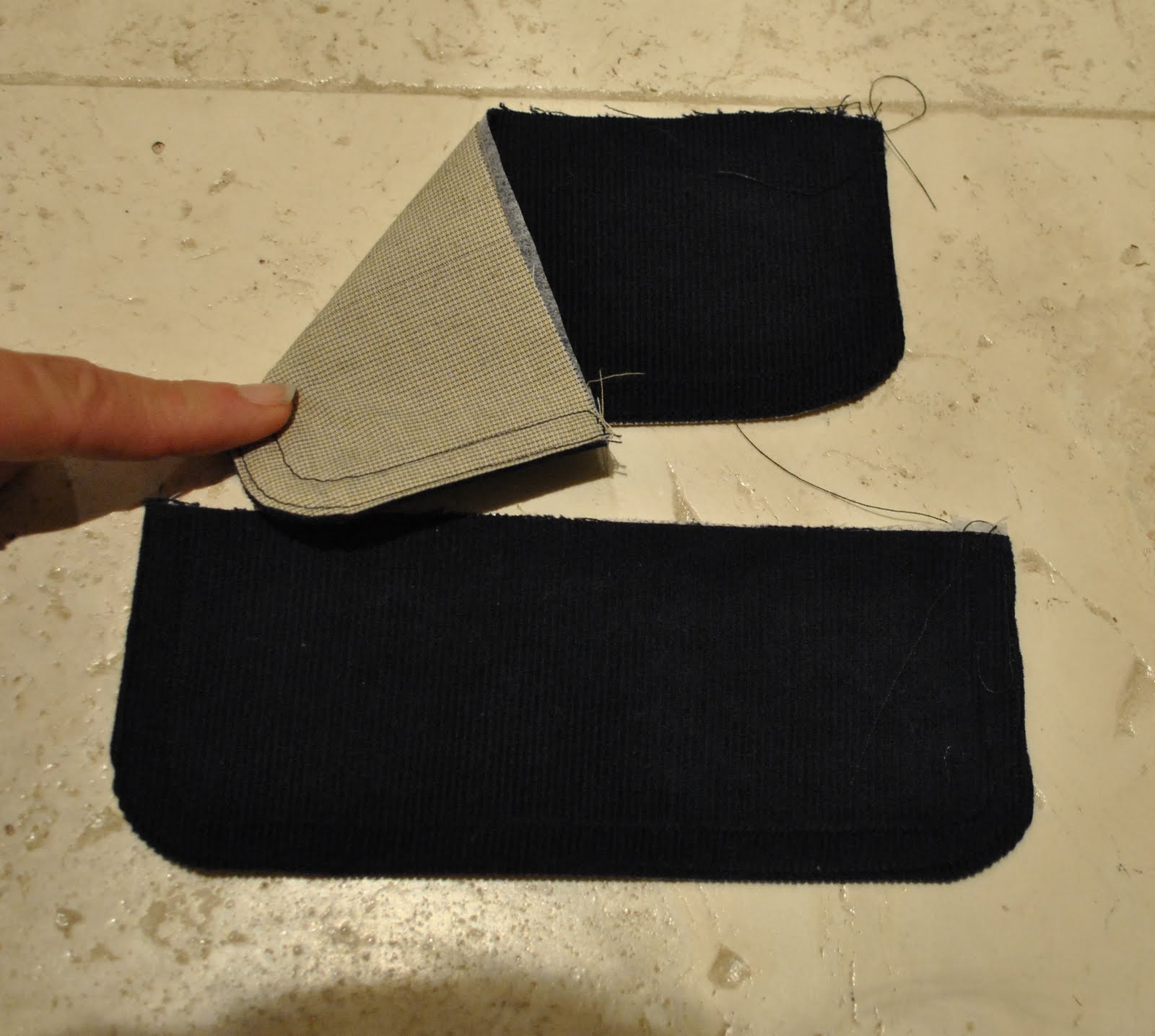
Fold in the seam allowances of the remaining three edges of the pocket to the back, measured to fit the pocket flaps you made earlier, and press and pin in place.  The pocket on the right is flipped over, showing how the fashion fabric has been trimmed to fit within the seam allowances.  See how the welt pocket is all contained and enclosed in itself, and will be a separate pocket from the patch pocket?  Kinda nifty, no?
Sew the patch pockets on to the front of the shirt/jacket, and sew the flaps in place over the top edge. 
Hammer a snap in place on the pocket flap and pocket; et voila!  Two pockets; per pocket!!
pinterestmail

Fishing lure jewellery

I did take a few photos while I was making the fishing lure jewellery for last weekend’s ball, and I hope this is inspirational and instructive if anyone else wishes to do the same sort of thing.  This is jewellery making, made easy!
Firstly, fishing stores and suppliers!
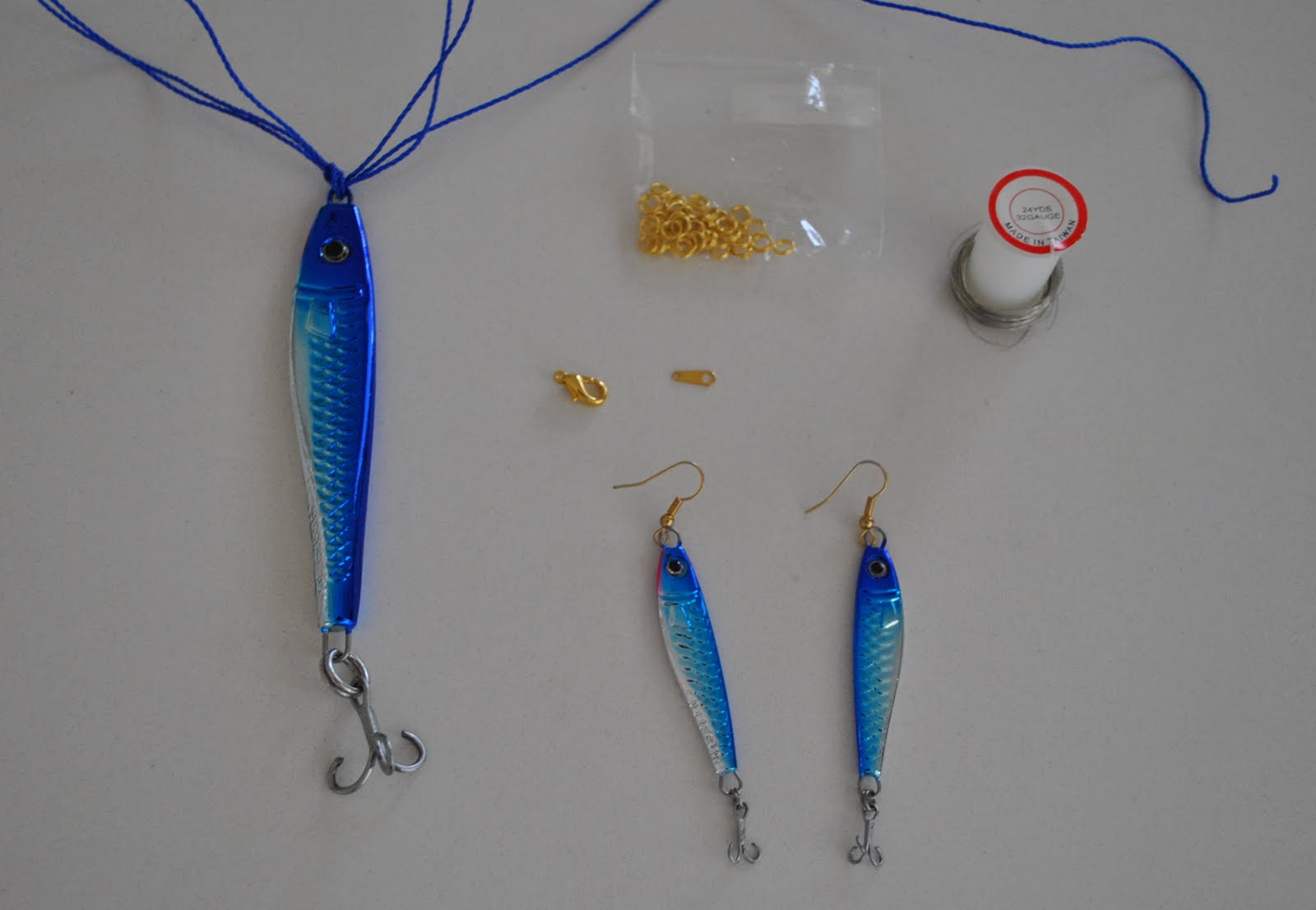
Well worth a visit!  Who knew they could be stocked with such wonderful and beautiful things??  Since my immediate family is not hugely fishing-oriented, I have not had the opportunity to closely inspect the great beauty and variety of fishing lures available.  Fishing lures are an art unto themselves, and deserve to be shown off more!  In our local fishing store I was spoilt for choice and it was very difficult to narrow it down to just one kind of lure to go with my dress.  In the end I chose iridescent blue fishies; one large and two matching small ones, the same colour as the bright blue fishing net that I had.
To make your own earrings, you will need a couple of earring loops; because I didn’t actually have any I took apart another pair of earrings to get these.  Hmmm, will have to stock up on another packet next time I go to Spotlight…  And to make the necklace I used two split rings, a lobster claw catch with loop, a bit of fishing cord, harvested from some bits that came with my net, and some 32 gauge jewellery wire.  

Fishing lures are equipped with some vicious barbs, so the very first thing to do is to cut those off!!  Use heavy duty wire cutters…  otherwise you will be “caught” just like a hapless fish, and if you have ever been unfortunate enough to get up close and personal with a fish hook on a fun family day out fishing you will know that getting those things out is not fun.  If the wire ends are still a bit sharp after cutting off those barbs, you can file them down a bit using a metal file, and bend them in further in a tighter curl, as I did.  You do not want to be snagged on your own jewellery when you are supposed to be looking glamorous now…
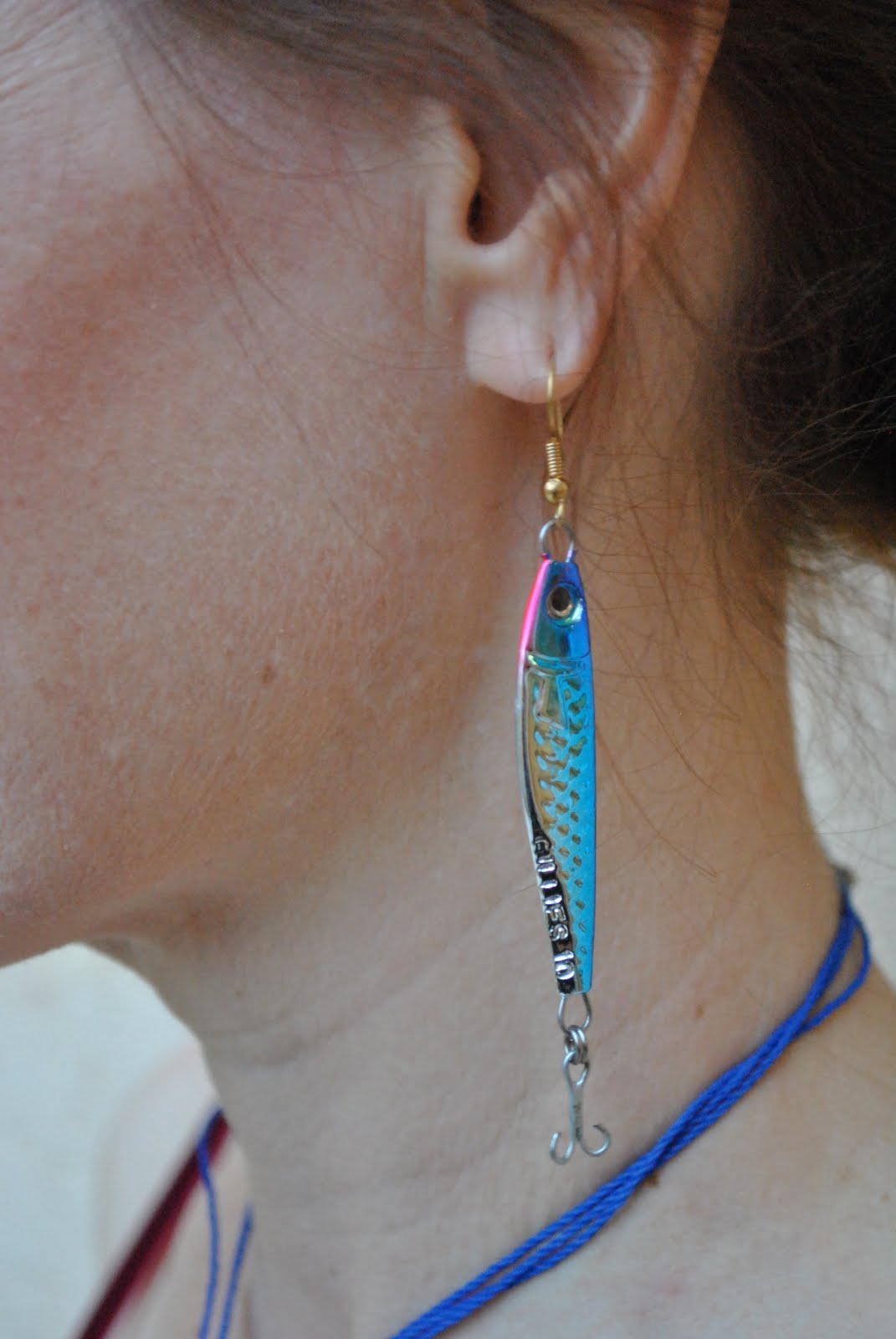
Because fishing lures usually come with their own handy rings attached, I simply hooked the smaller lures directly onto the earring loops.  Voila, earrings finished!
For the necklace I threaded a few strands of fishing cord through the loop of the larger lure, and tied it in a knot to keep it stationary and in place.
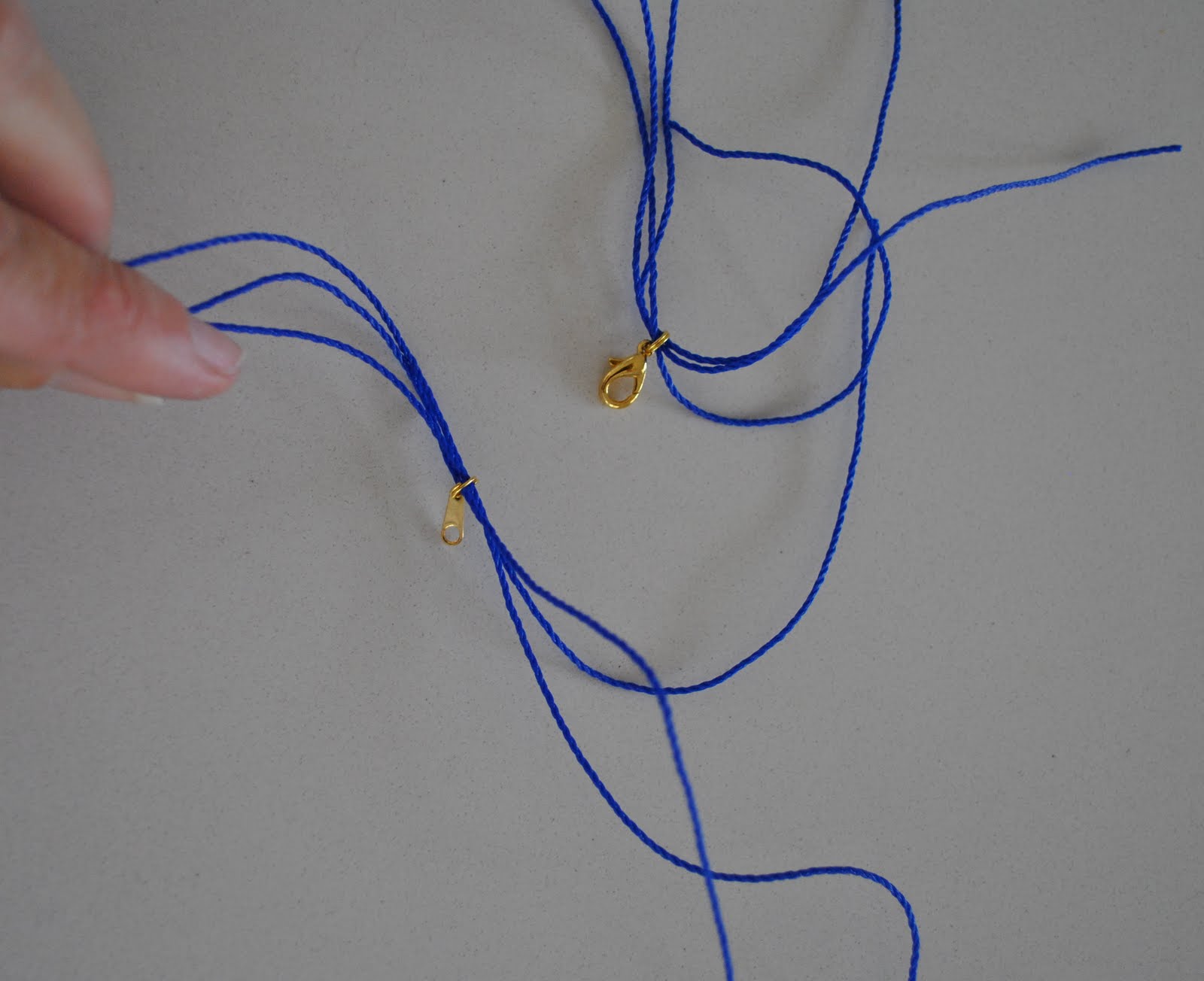
I attached a split ring onto each of the necklace catch findings, truly the most difficult part of the whole operation.  Split rings are fiddly!

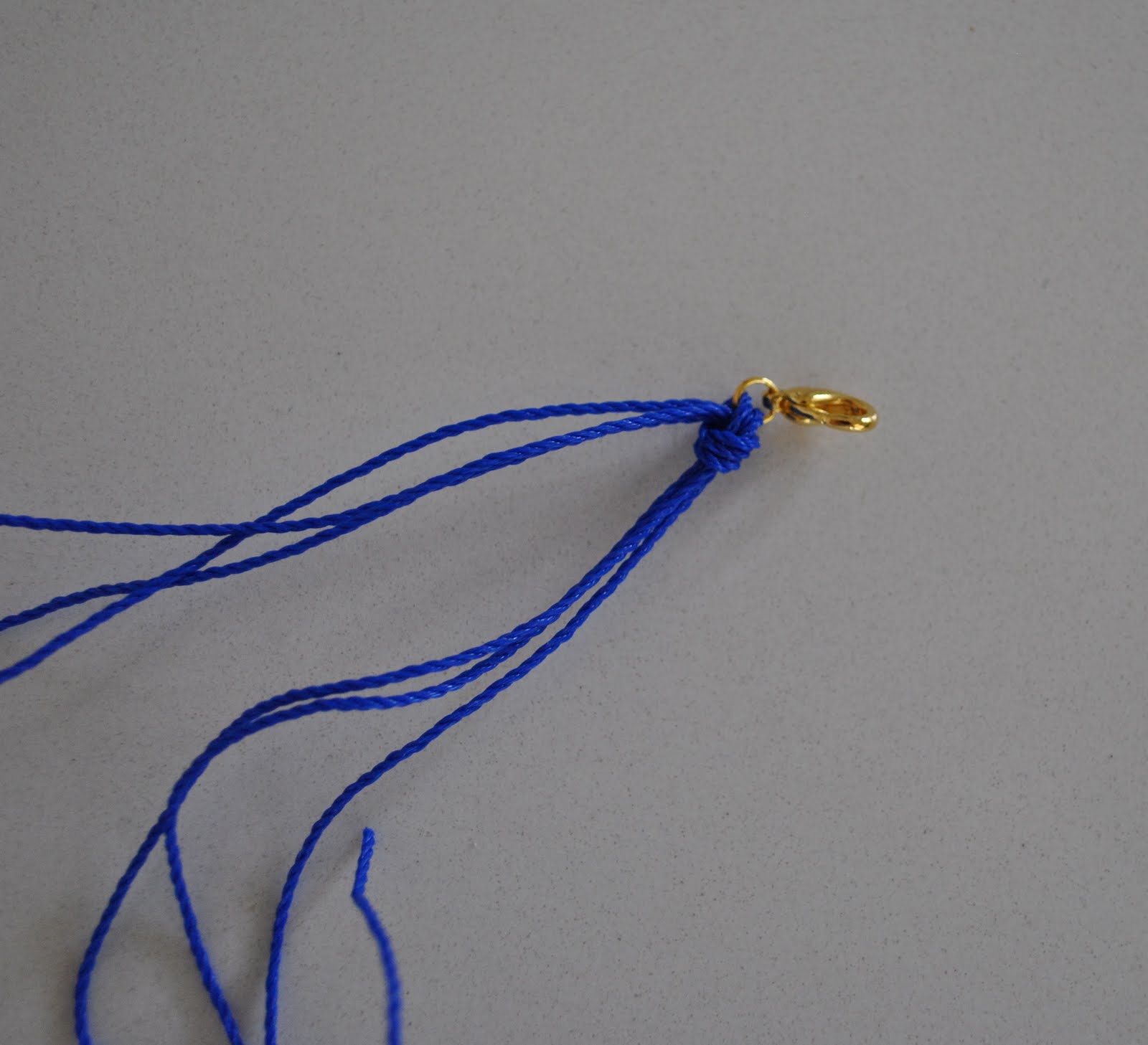
Then threaded the cords through the split rings and measured on my neck to get the lure hanging at just the right length that I wanted.  Then tied the cord in a knot over the split ring to keep it at that length, and did a quick check that each side was the same length.

Then I cut off the loose ends of cord; not too much, because fishing cord has that stiff frictionless quality that will “un-knot” itself very easily.  You want to keep a few centimetres length just to keep the knot nice and stable. 

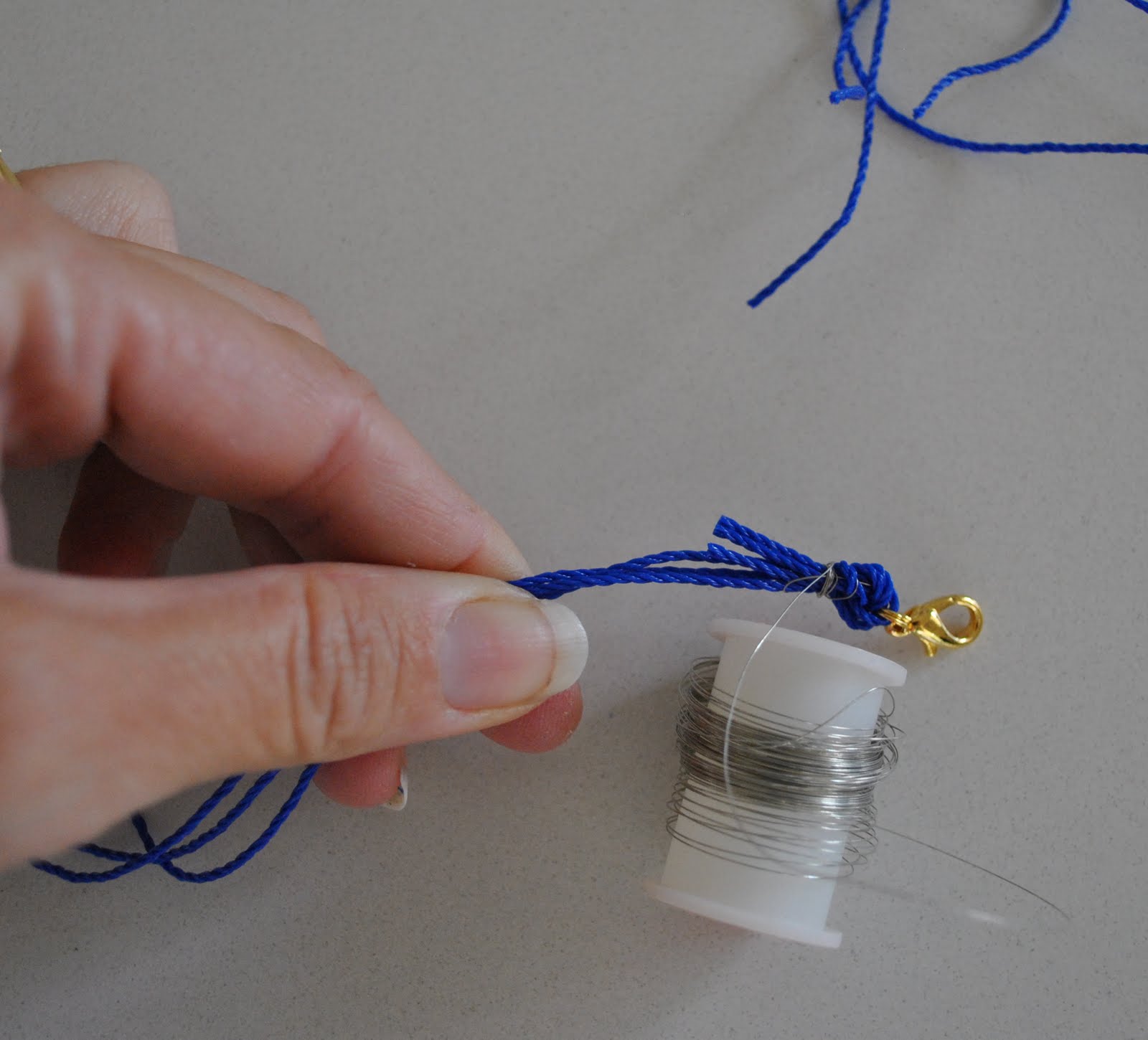
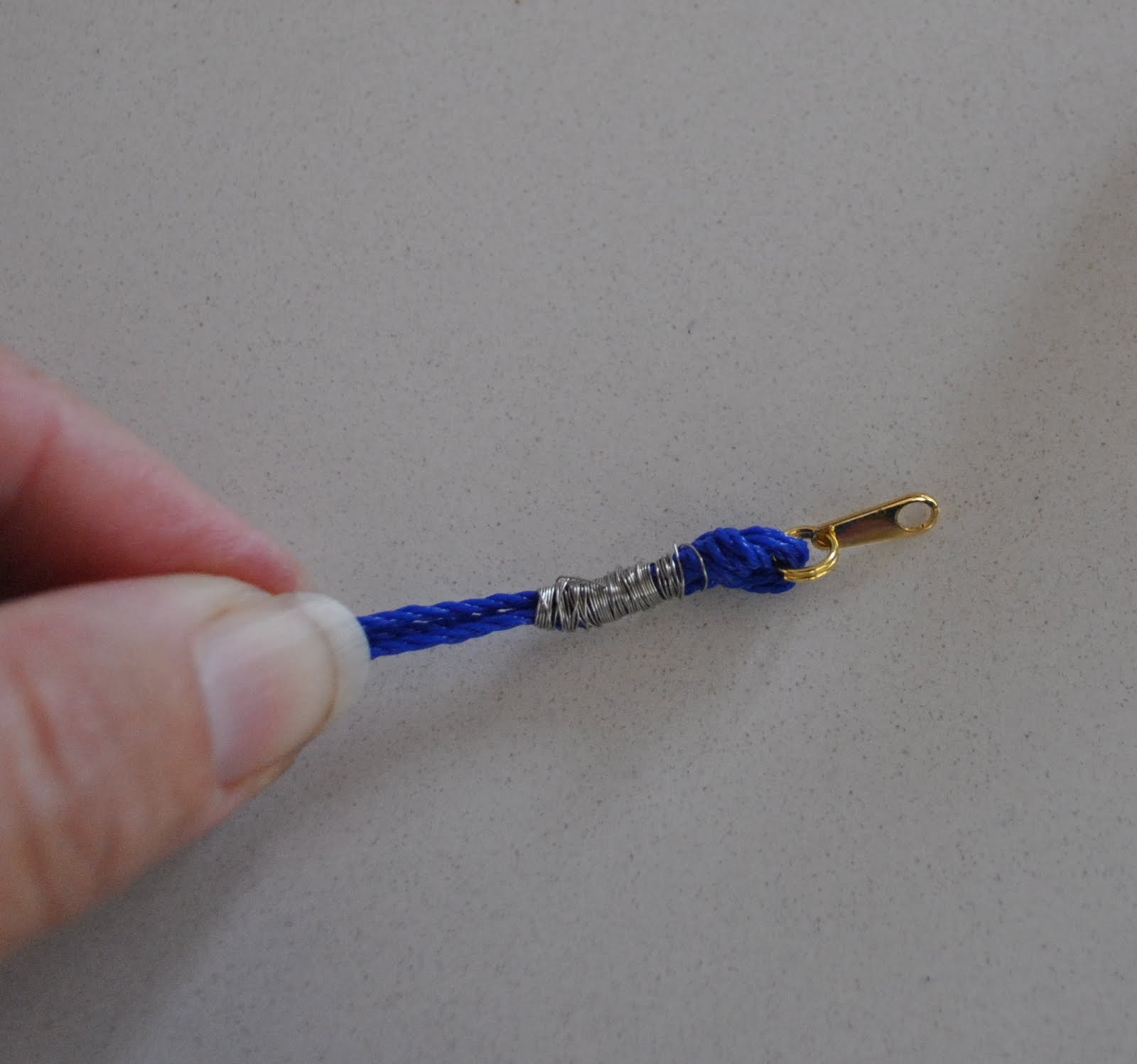
 The I took the fine-gauge jewellery wire (yes, I wish I had had some gold coloured wire!) and closely wrapped up the lower end of the knot and down the length of the loose ends of the cord.  I made this wrapping as close, tight and as firm as I could.  When you are satisfied that those cords ends are as mummified as possible, snip off the wire and tuck or fold the end down smooth.

Finished!  And it was funny how many people were fascinated by my jewellery that night, and came up for a closer look.  If I say so myself, almost as effective as the diamonds and pearls in the room?

pinterestmail

Cargo pockets, and a lovely surprise

When I went to my letterbox yesterday inside was a most delightful surprise, this wonderful pattern from Gail of My Fabrication.  Pure class and elegance, no?  Thank you so much Gail!!  I already know exactly what I am going to make out of this one, and am pretty excited to give it a try.  But first…
Thank you so much everybody who commented yesterday, with such kind words expressing touching faith in my ability to not make a complete and utter hash of my Japanese fabric; I will endeavour to sew up to those expectations.  Not that there is any more or less pressure or anything, hehe.  The lighter caramel side has a landslide of admirers, and it is therefore fortuitous that my own preferences have been swaying more and more in that direction too.  But before hacking merrily away into that wool and silk gorgeousness that I carted for thousands of kilometres over land, rail and sea all the way home from the land of the rising sun (see, no pressure…) I am going to take a short sartorial breather…
A few quick and satisfying projects are now just what the doctor ordered, after a week of couture stuff.  I have an immediate need for a pair of hiking pants.  The cargoes I was wearing last year have gone into my refashioning-possibly-charity-bin pile. The few photos I have of myself in those things were pretty eye-openingly awful, and incidentally I am now horrified that I actually put some photos on the blog here, yikes!  Now I look back on some of those earlier photos and shudder, toy with vague ideas of deleting some of the more unflattering shots.  But the blog is a journey, and the progression has been an honest one.  Keeping a sometime personal style diary has done wonders for my natural tendency towards dag-dom.  I am a lot more careful how I look now before I sally forth on my daily adventures.  We all heartily agree that appearances aren’t everything, right?, only because we don’t want to appear shallow, but secretly we all want to put our best foot forward nonetheless… because we are human after all.
Anyhoo, I am making my new, hopefully cute, hiking pants using a pattern that doesn’t have enough pockets, so I am adding some cargo pockets and took a few progress shots to illustrate…
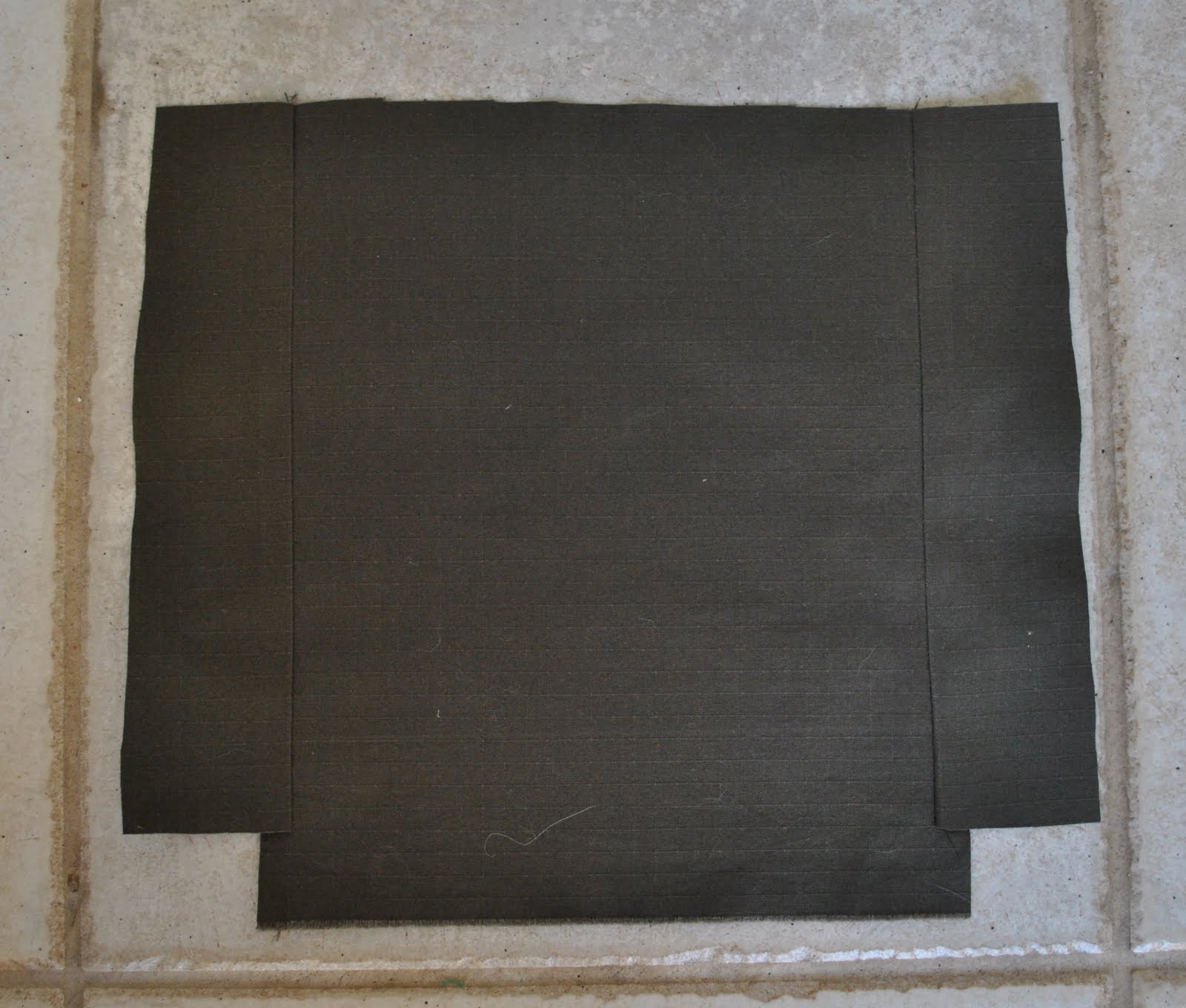
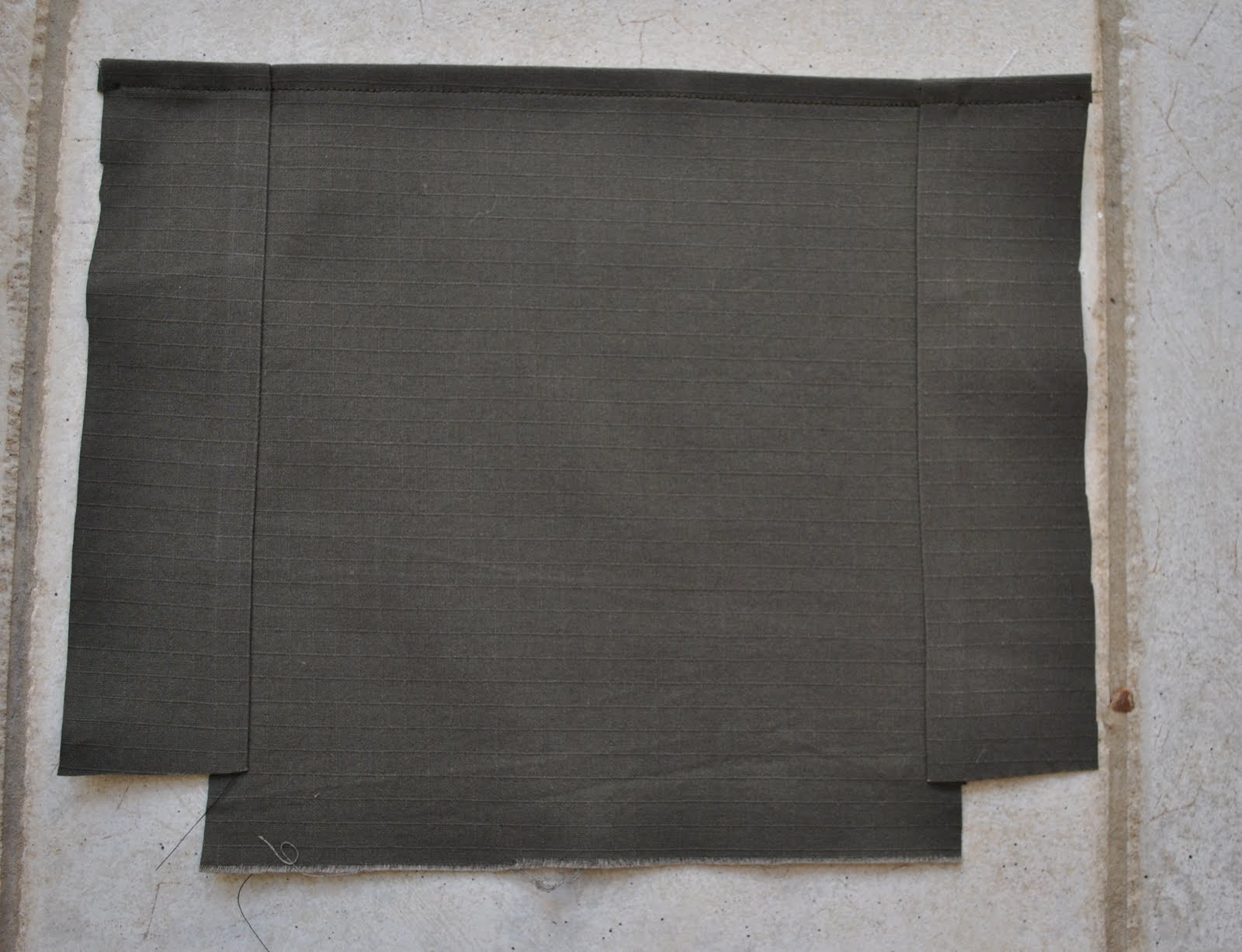
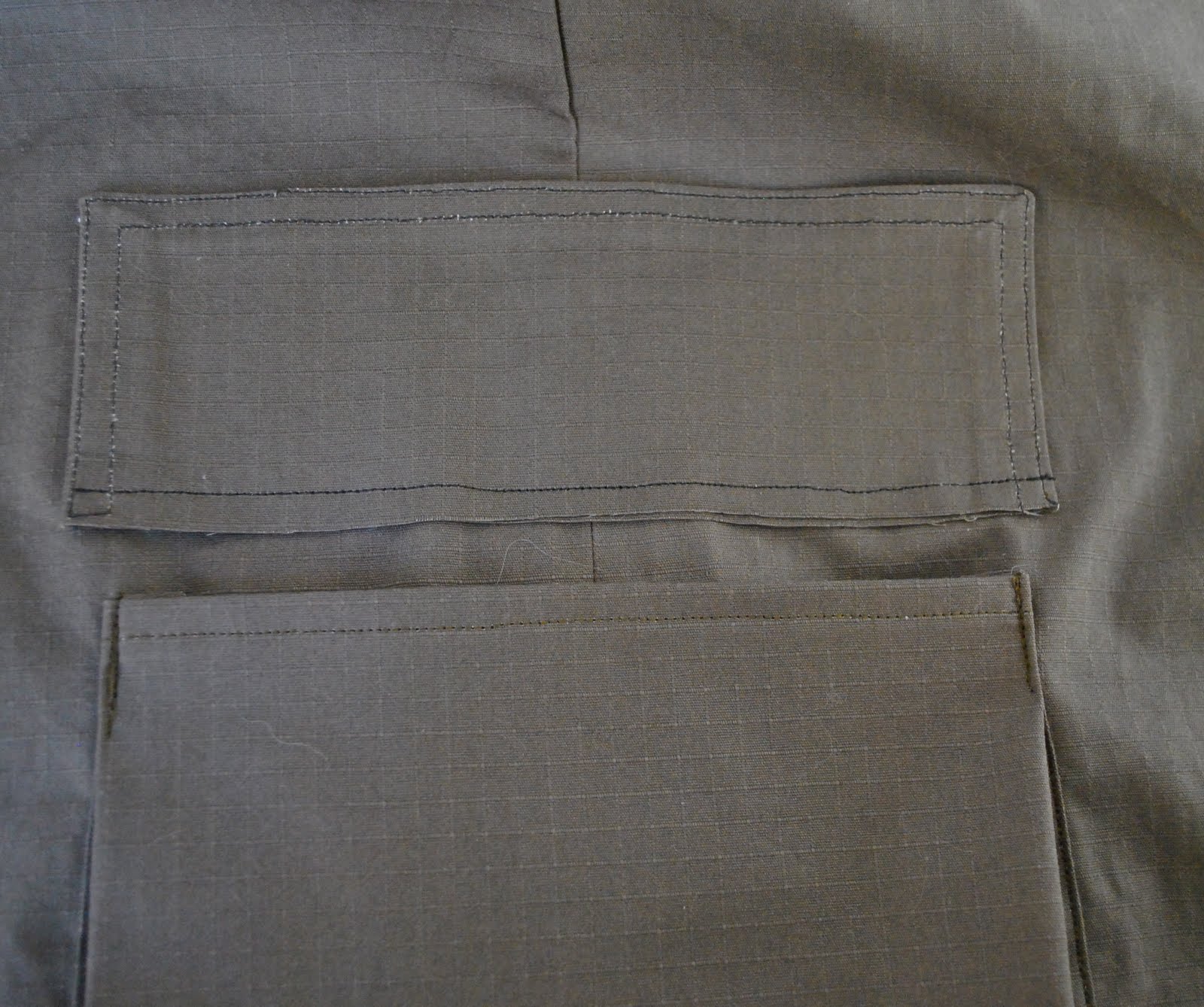
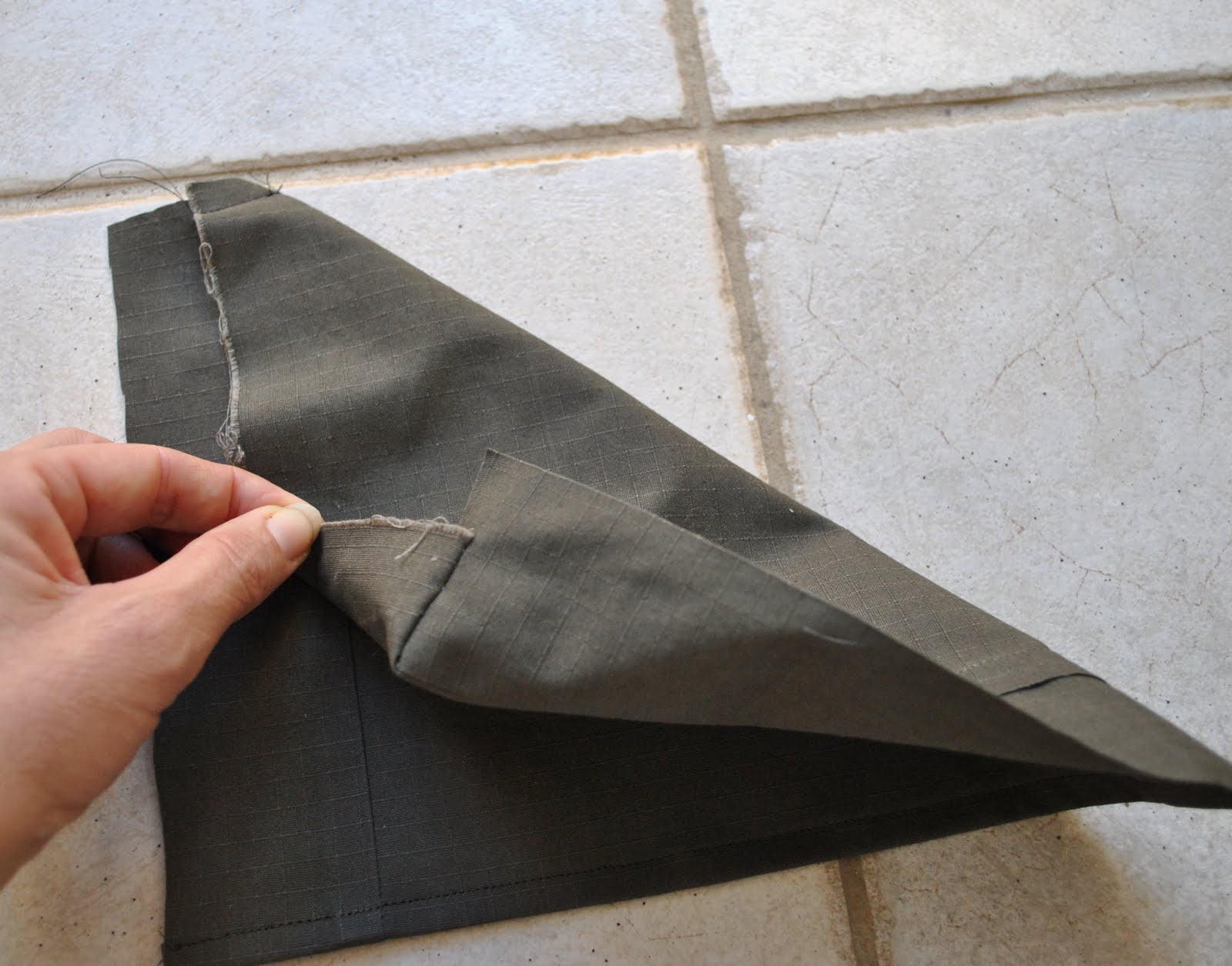
Cargo pockets are not just squares/rectangles, but must form a little “bag”, so start with a piece that has box sides to three of its edges like so (don’t worry that those sides of those sticky-outy box edges are wider than the bottom box edge… minor detail)

Hem the top edge of the pocket like normal…

Sew up the two short edges of the boxy sides at the bottom of the pocket piece (yes, my side pieces are still longer and do stick out a bit, don’t worry about this for now)

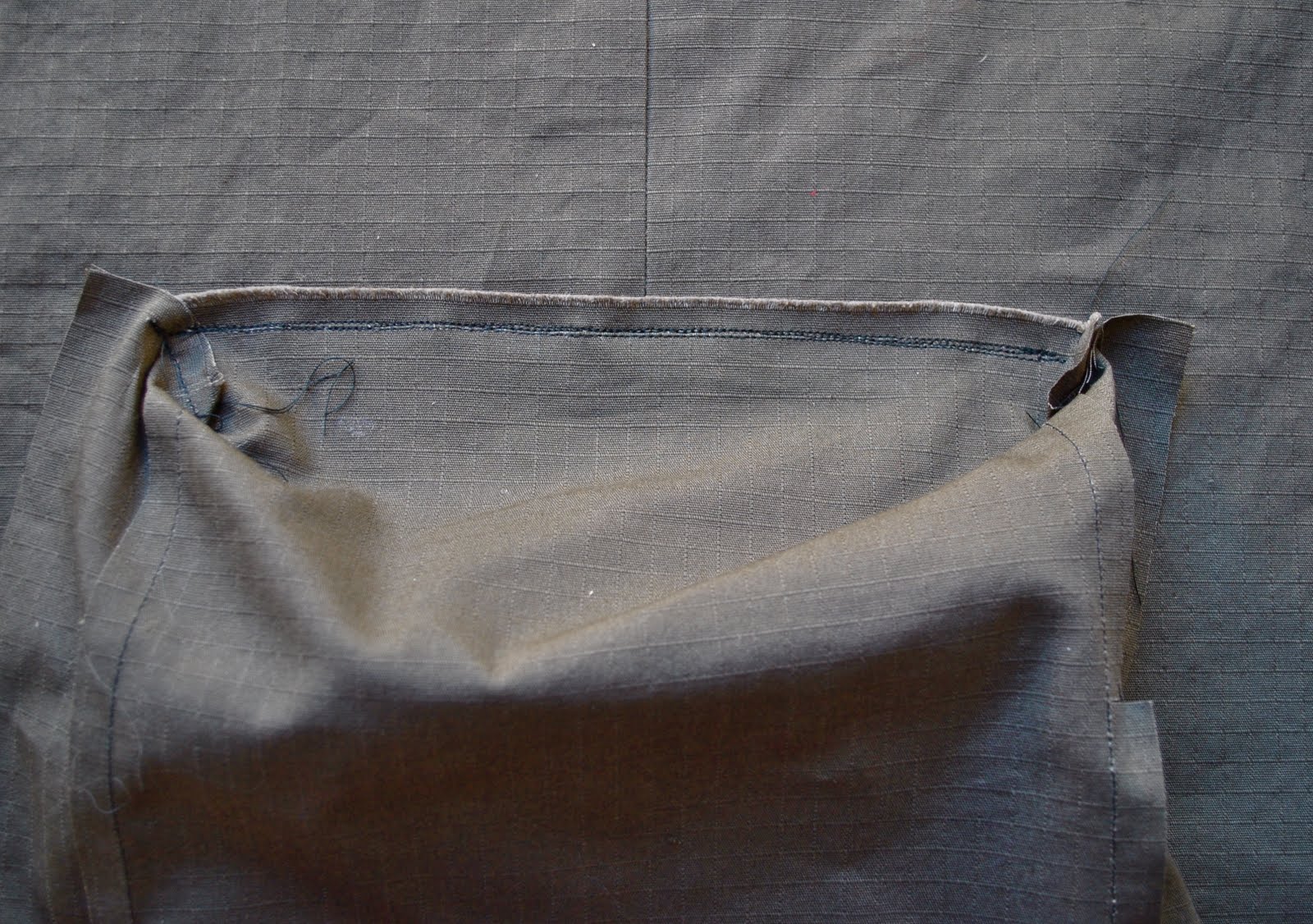
Right sides together, and upside down on the finished outside leg seam of your pants, sew the bottom edge of the pocket in place.  Because I want these pockets to be extra sturdy, strong enough to hold things like guide books, cameras, hats and sunnies, etc, anything that will be needed regularly, I sewed this seam in triplicate, for triple the strength.  Strength is more important than beauty here, remember these are hiking pants

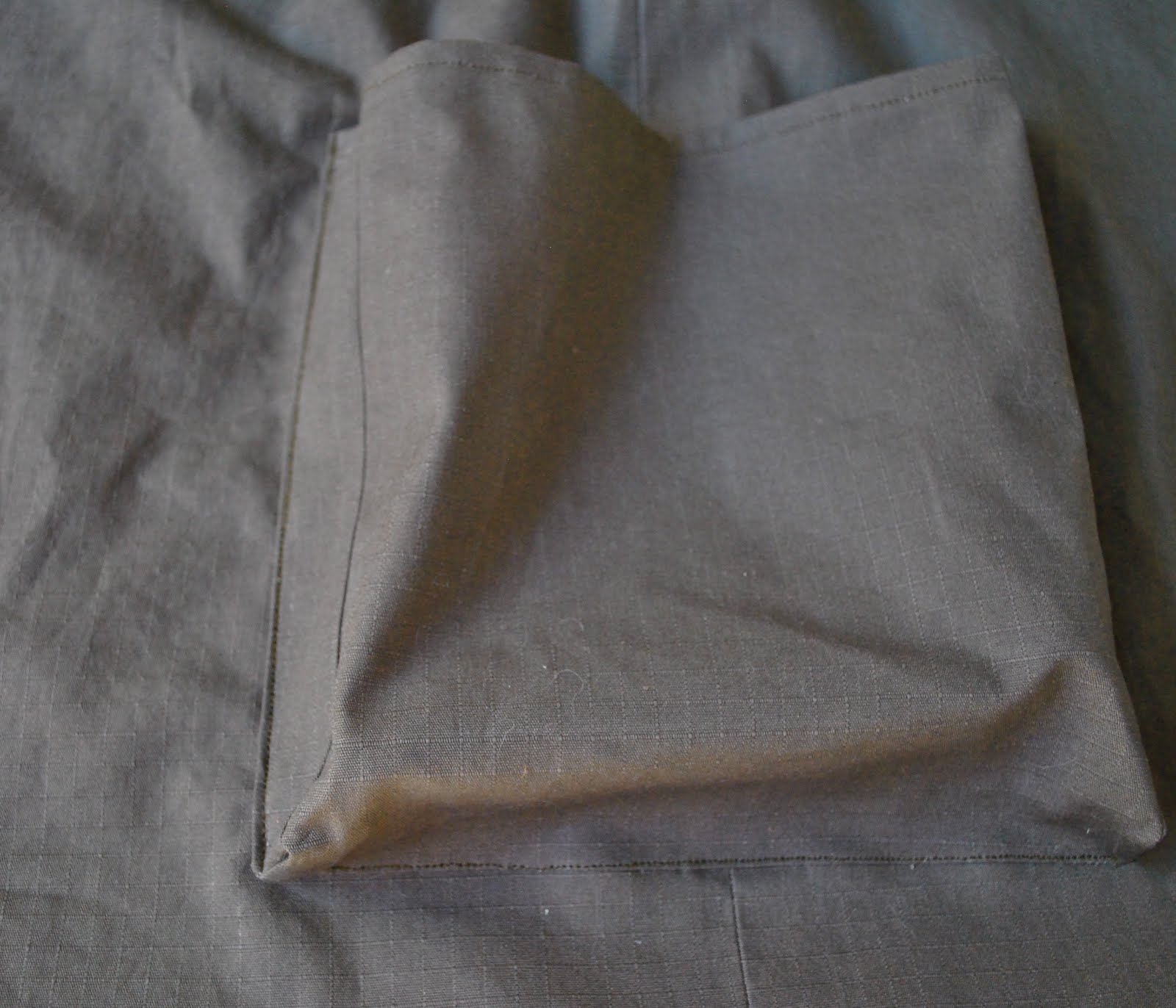
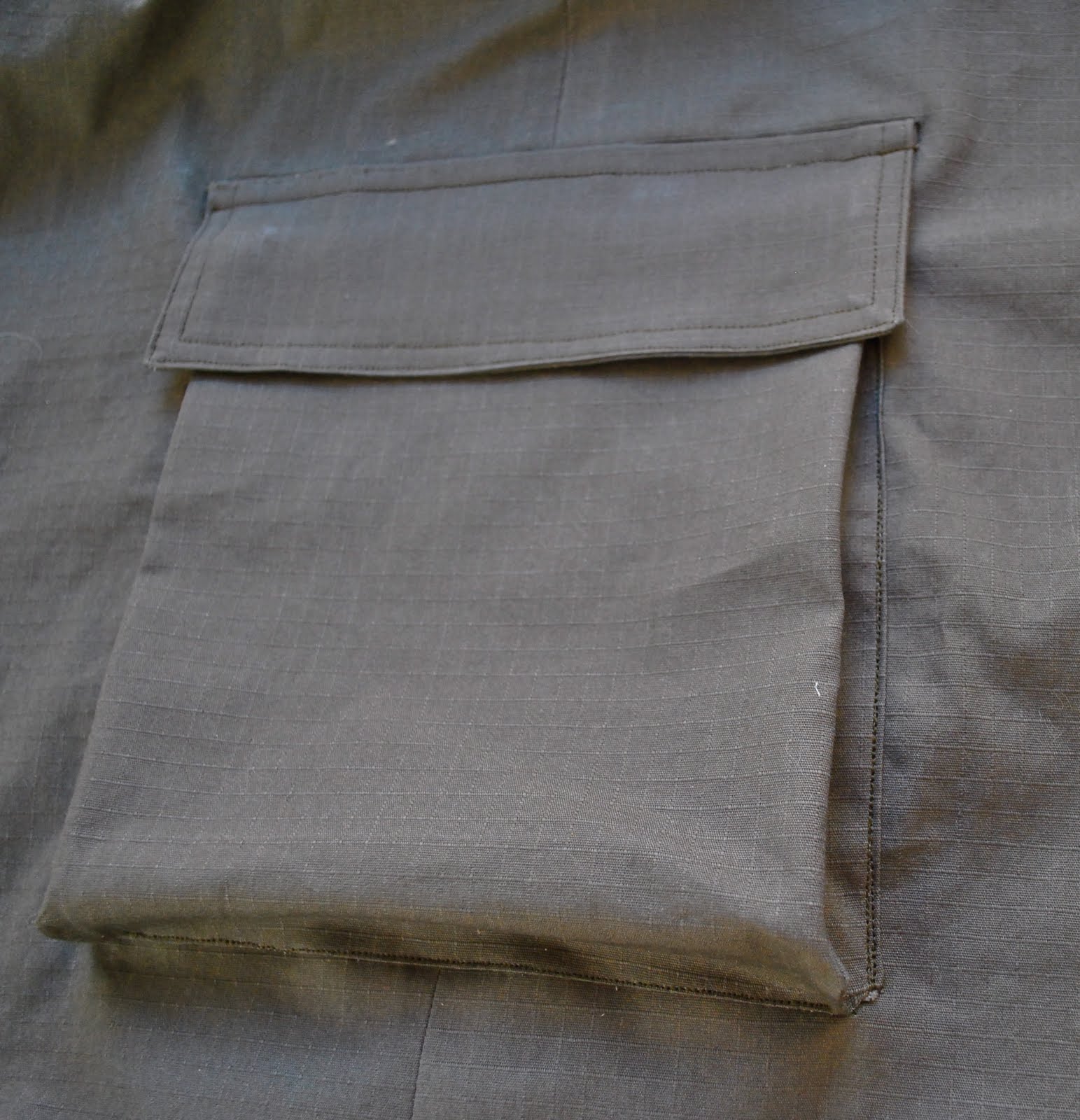
Now flip the pocket piece up and turn in those side edge seam allowances.   Now I folded in that extra width of the side edges at the bottom to be part of the seam allowance and tapered this down at the top so the box sides of the bag are wider at the top than they are at the bottom…  If this doesn’t make a lot of sense don’t worry too much about this bit.  Dimensions are not really drastically important.  These are hiking pants, remember…   Topstitch down close to the fold.  Again with the triple lot of stitching. The width at the top edge of the pocket between the two side seams you’ve just sewn should be the same width as the bottom seam.

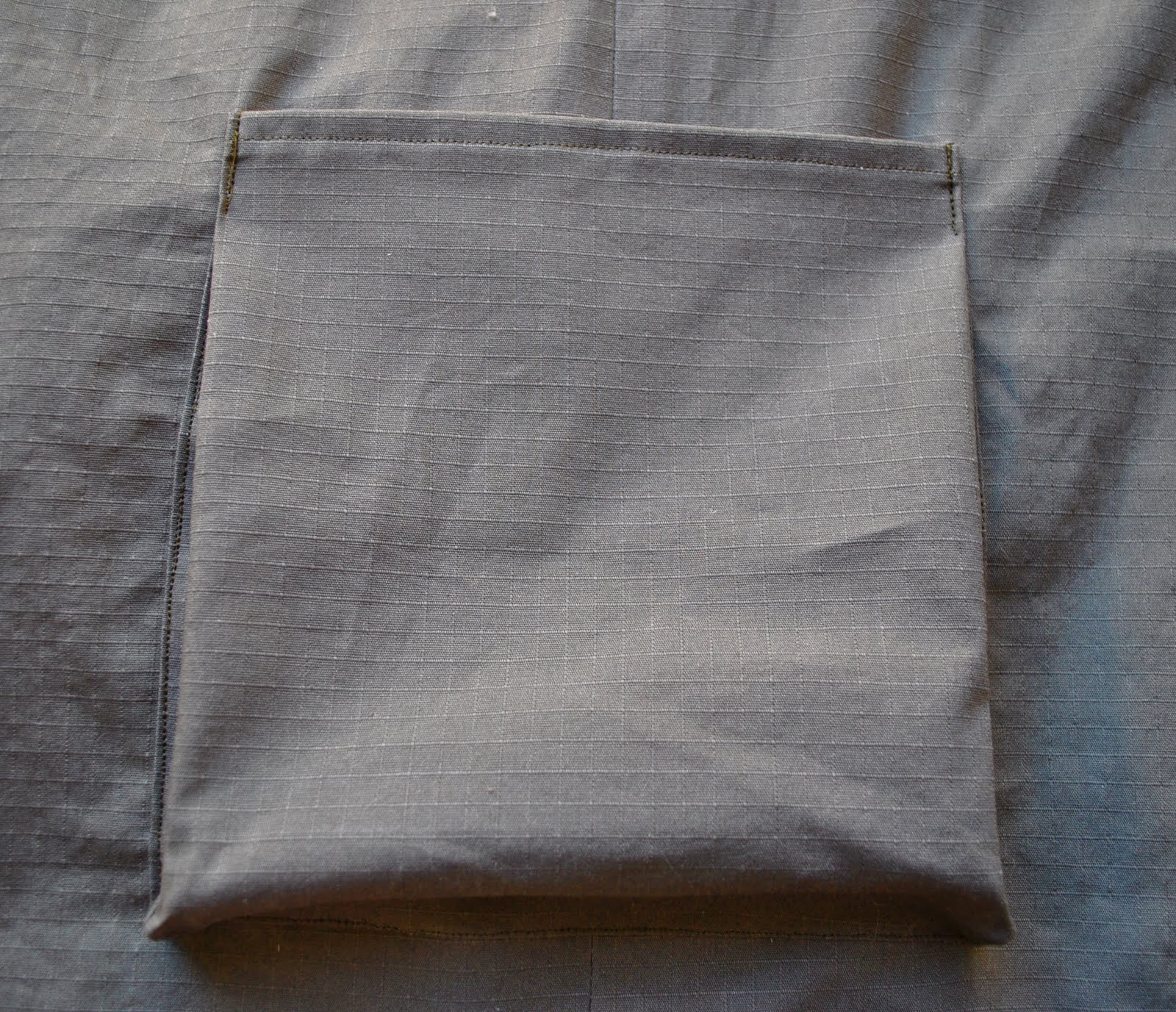
Now, flatten the pocket down at the top and sew the top down vertically through all layers directly over the side seams you have just sewn, but just for a few cm.  Do this at least in triplicate again.  I just did a mad burst of forward and reverse stitching and lost count of the number of seams here, this just needs to be real sturdy.  This will just hold the top edge down securely and stop it from flapping about and letting your treasures spill out while you are walking…

Flaps; just sewn as normal, two pieces, right sides together, sewn around three edges, turned out and topstitched, finished width about 1.5cm wider than the top edge of your pocket…  Note the violation of couture tailoring here, no tamed seam allowances but the corners have been trimmed, (horrified gasp!)  Meh… hiking pants…!

And sewn to the pants just above the top of the pocket…. right sides together, again as normal…

Aaaand folded down and topstitched in place… I don’t know why I took so many photos actually.  This is hardly rocket science.  Probably would have been more exciting if I had tamed those seam allowances, hmmm?

And there it is, a useful and cute little bag stuck on the side of the hiking pants.  If you want you could put a snap or a button on for extra safe-keeping, but in my experience these don’t ever get closed up anyway and the flap is enough to keep things safely inside.  I’m sure I will be really grateful for these extra pockets out on the trail.

pinterestmail

Smoky scraps, and a collar

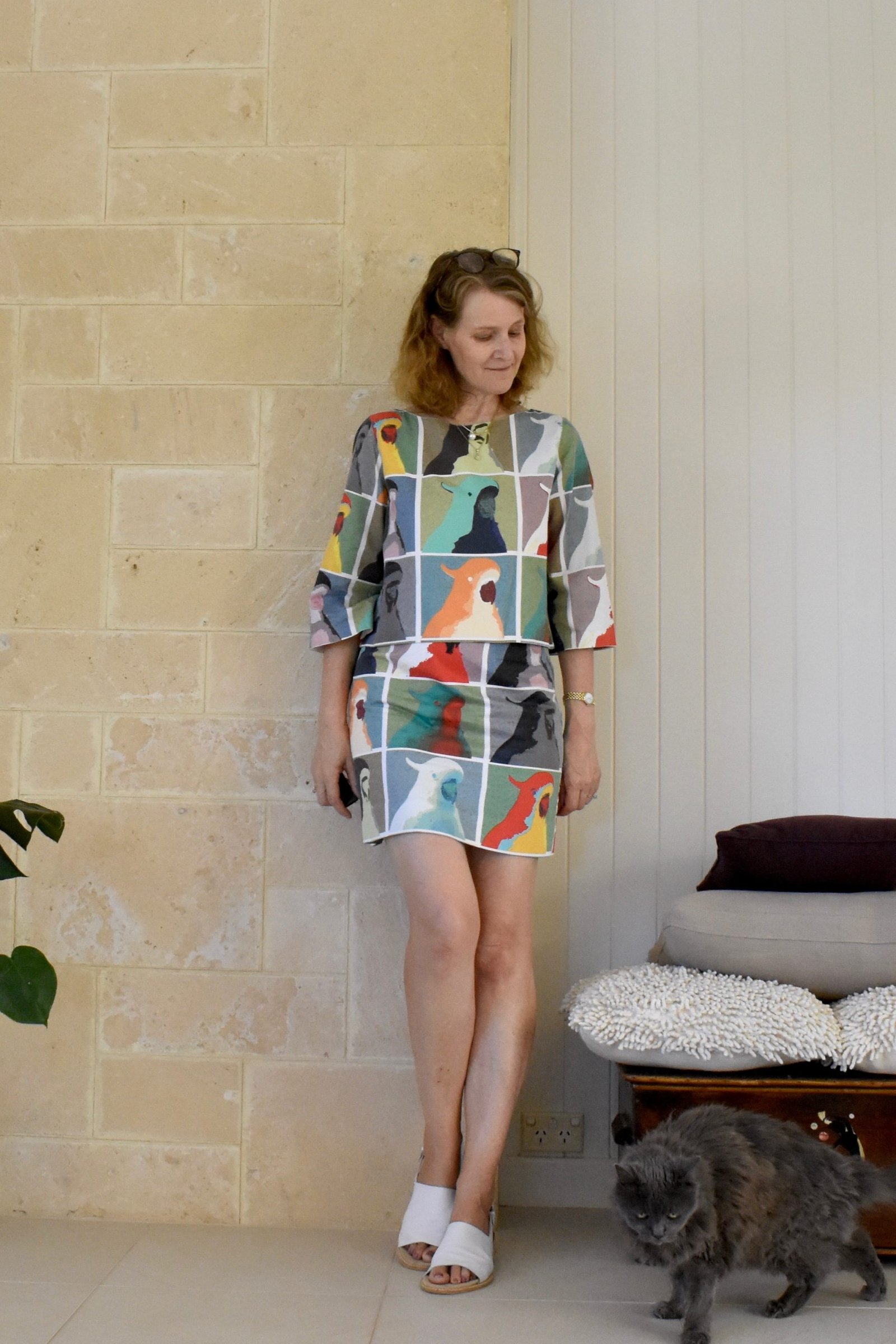
This little top made out of the scraps from Craig’s new shirt is one of my New Things; mental run-through of them yesterday and I realised this was totally appropriate for hot weather, plus went well with this little skirt that itself is the result of scraps…  Actually (lightbulb moment), my entire outfit here is made from the leftover scraps from shirts I have made for Craig…  the skirt out of the leftovers from this shirt and this shirt
Hmmm
I’m going to be giving myself a complex…  with all the talk of feminism floating about; what would a feminist make of the fact that I am clothing myself from my husband’s scraps?!?

Details:
Top; adaption of top “a”, Unique Clothes Any Way You Like, by Natsuno Hiraiwa, leftover shot cotton
Skirt; my own design, leftover linen scraps, inspired by a Celine skirt, details here
Sandals; Micam by Joanne Mercer, Hobbs shoes

Sewing details; should you be interested…
I had only the tiniest amount of fabric, so took out the pattern for top “a” from Unique Clothes Any Way You Like (Natsuno Hiraiwa) which uses very little fabric.  

A little experimenting with the top I’ve already made from this pattern gave the gratifying knowledge I could get it on without having to undo the buttons; fabulous, as there wasn’t really enough fabric for the button band.  There definitely wasn’t enough fabric for those long shoulder ties, but there was just enough that I thought I could get a little straight foldover collar out of that strip that was left…
This is so easy, here’s a short how-to…
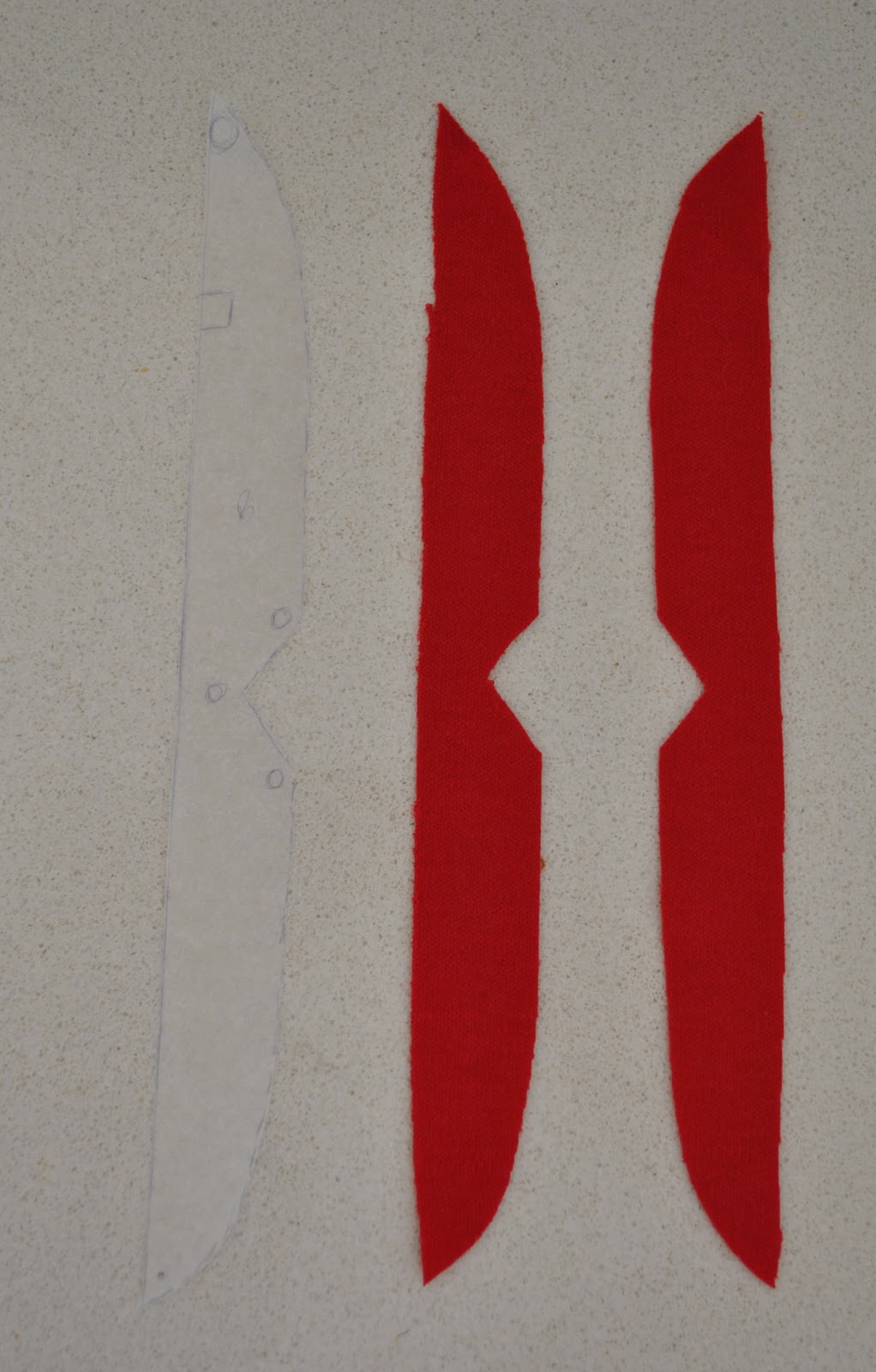
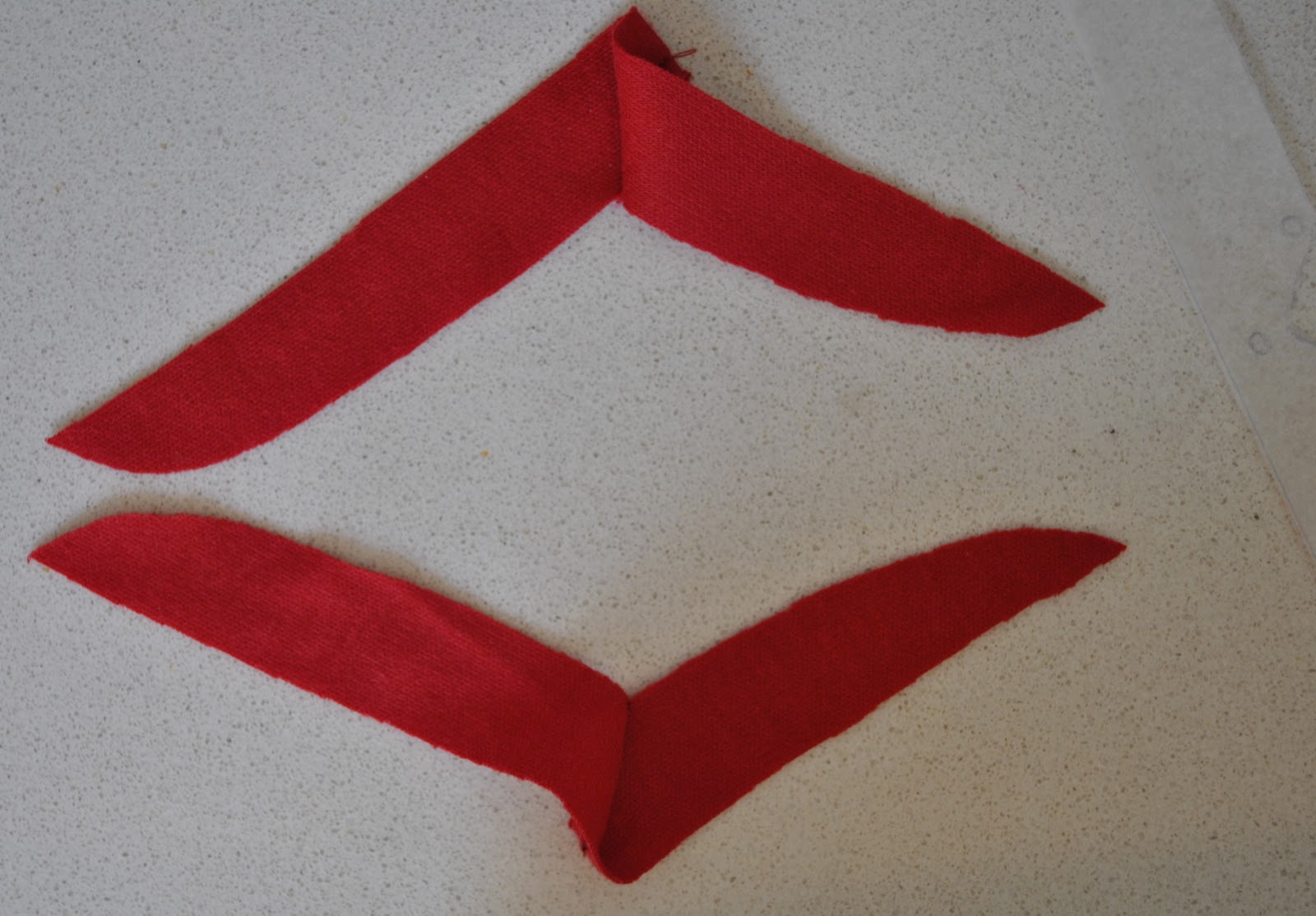
Simply measure around the entire neckline (not just half of the front, as I’ve misleadingly pictured here), remembering to allow for that seam allowance by measuring 1cm in from the edge.  Cut a strip of fabric to this width, plus seam allowance (I had just enough from that top little bit of fabric, yay!)

Sew the short edges of the band together to form a loop.

Attach right sides together to the neckline…

and fold over to the inside, slip-stitch in place, then topstitch on the outside for a nice neat finished appearance.

The inside seams are all French seams.

The armholes were finished with self bias binding.  Luckily you only need a miniature amount of fabric to make your own bias binding, so it’s usually pretty easy as well as cheaper, and it looks nice, to make it out of your leftover scraps to finish your garment.

pinterestmail

Gloves: fingers!

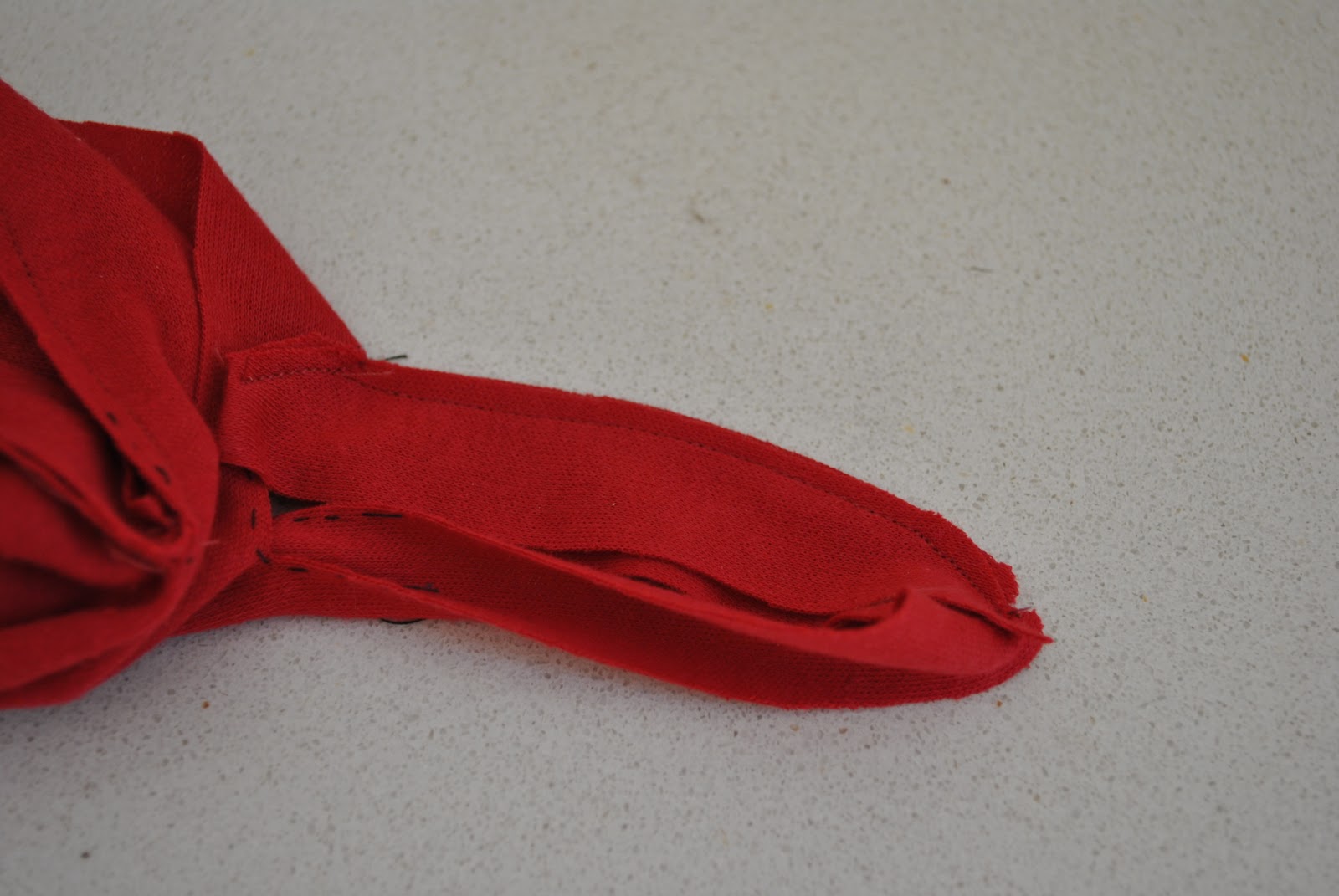
The tops of the fingers:
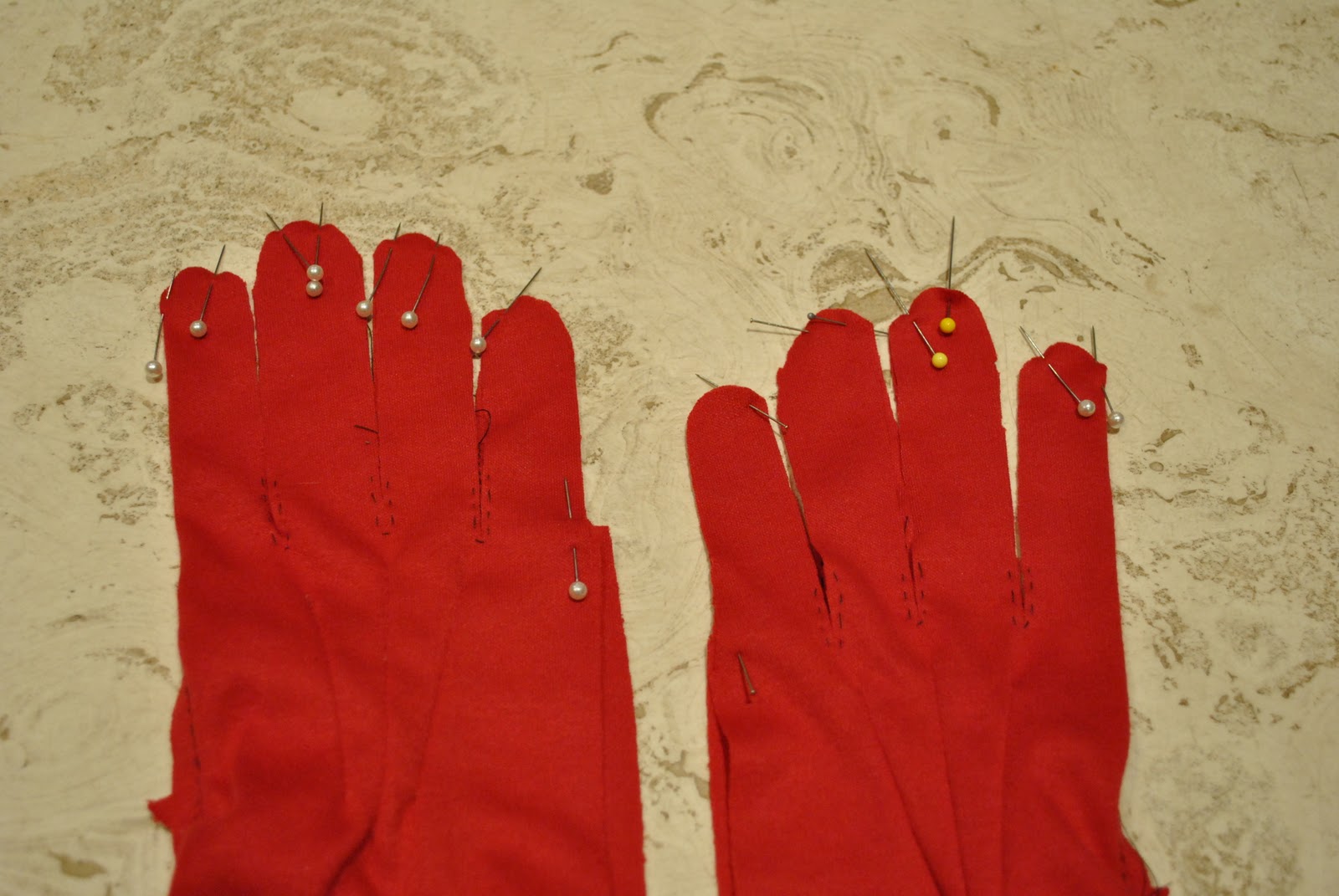
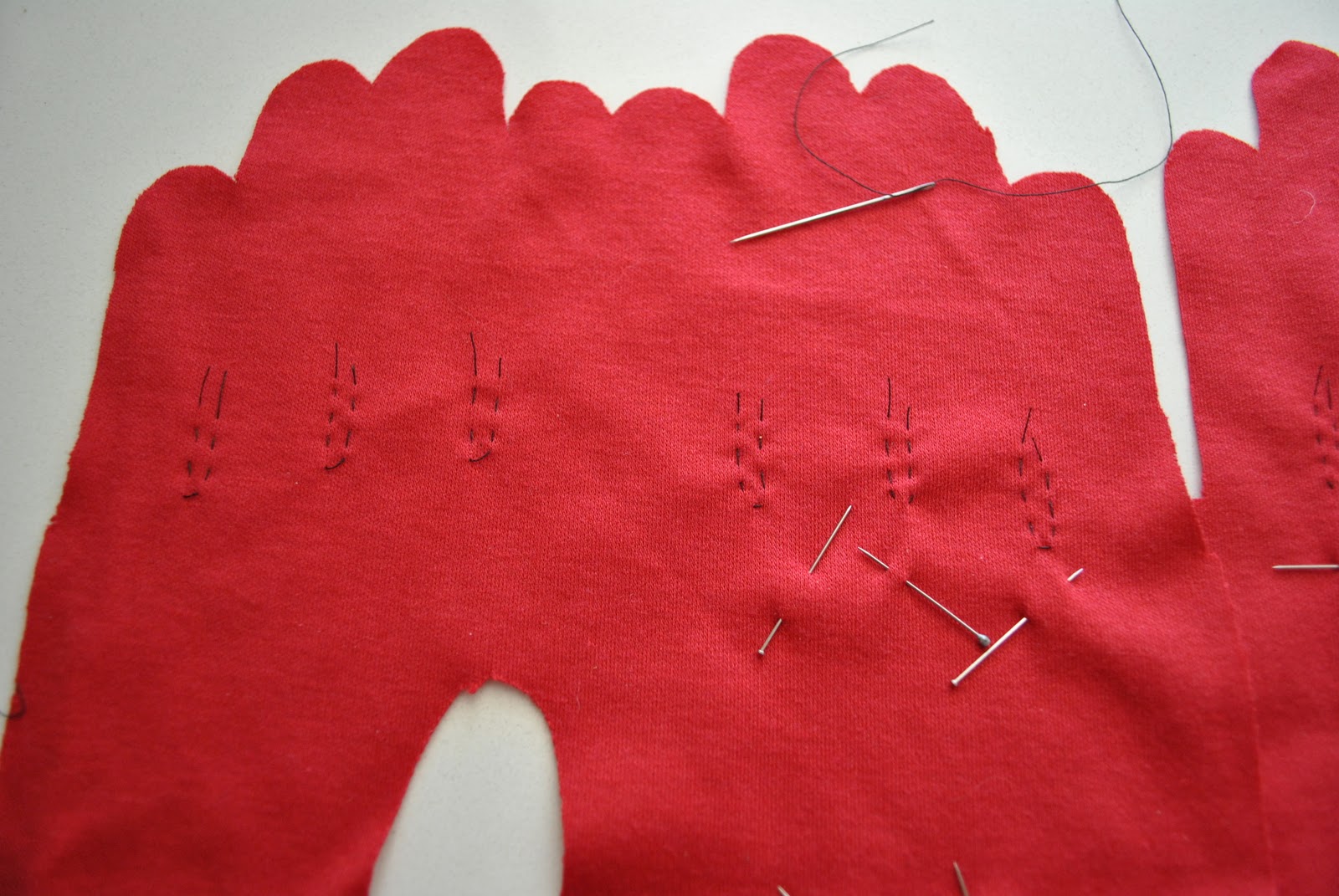
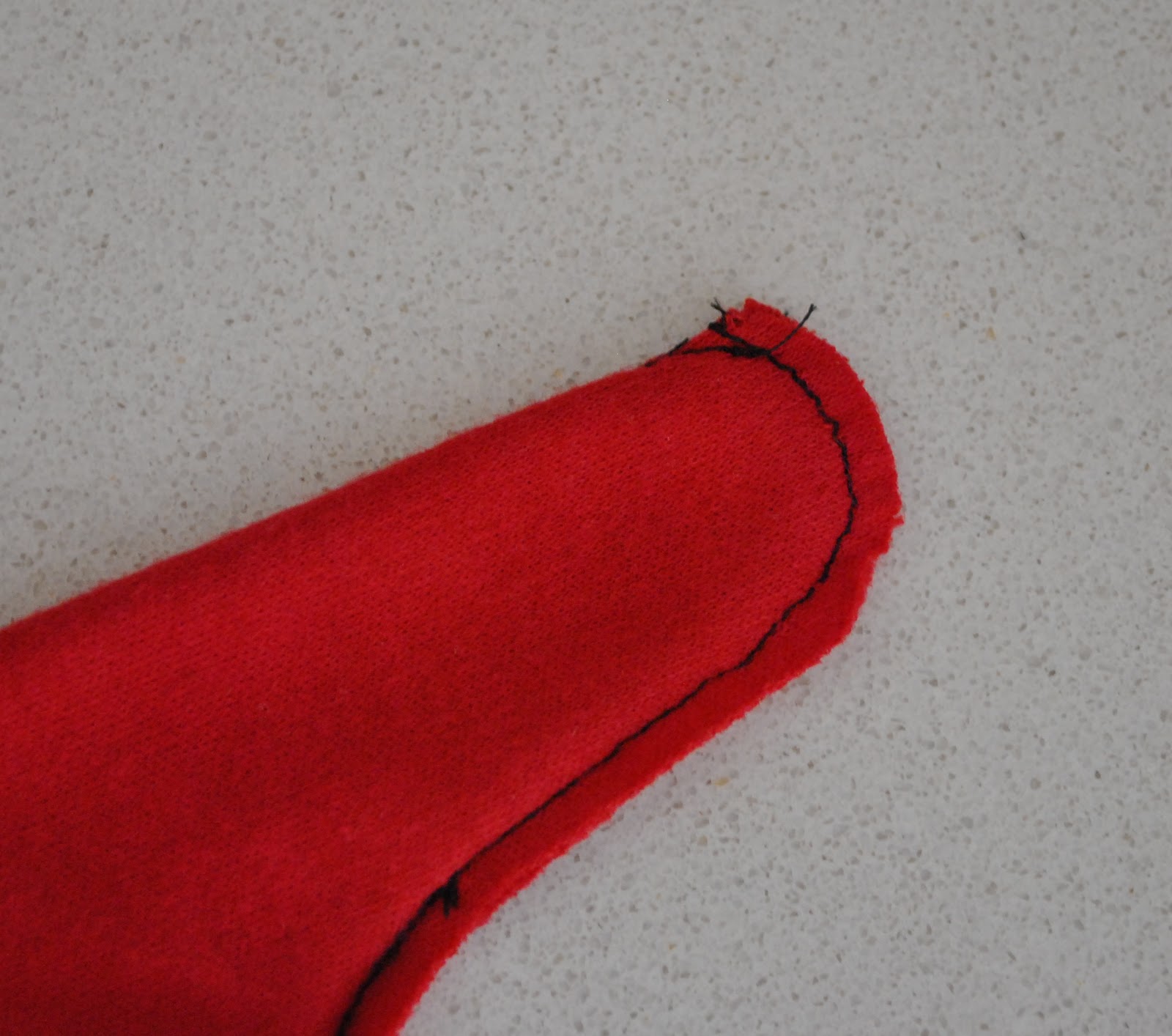
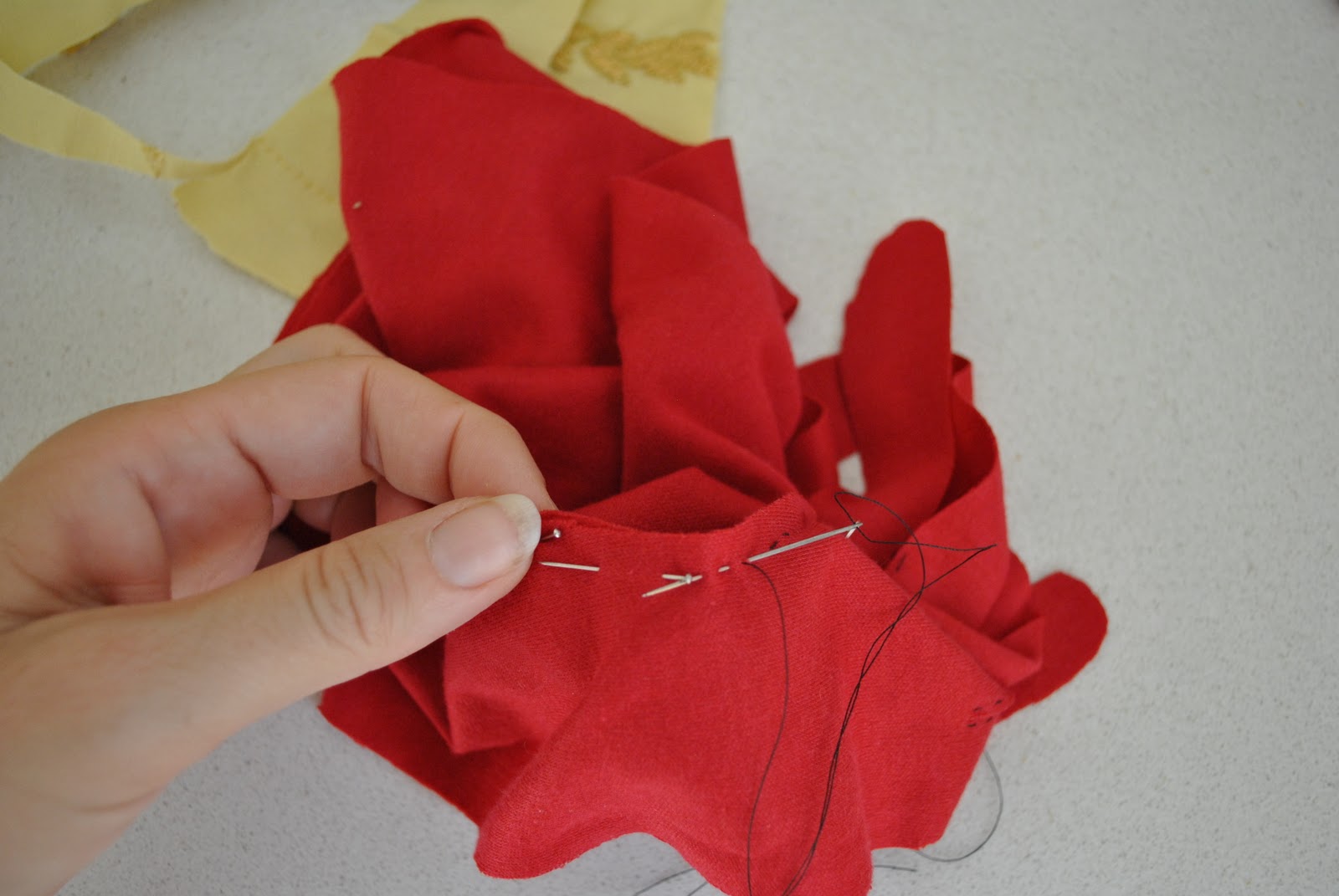
The next step in the glove making process is to stitch across the tops of each finger-tip.  This is a tiny little seam, but still pretty vital… so I basted all of these before sewing them on the machine.  Partly because as I mentioned before, my machine doesn’t behave well with tiny little seams, and I feel I have a lot more control with hand-stitching.  In fact, the next time I do this I will probably stick with the precision of a hand-stitched seam and forgo the machine stitching for this bit!
I only have here a photo of the fingertips pinned together ready for sewing and didn’t take any “after stitching” pictures…  that’s me getting caught up in the trance of the sewing process, sorry!
The outside seam of the little finger is sewn down to the base at this point, but this is the only finger seam sewn in such a simple way…!

The gussets:
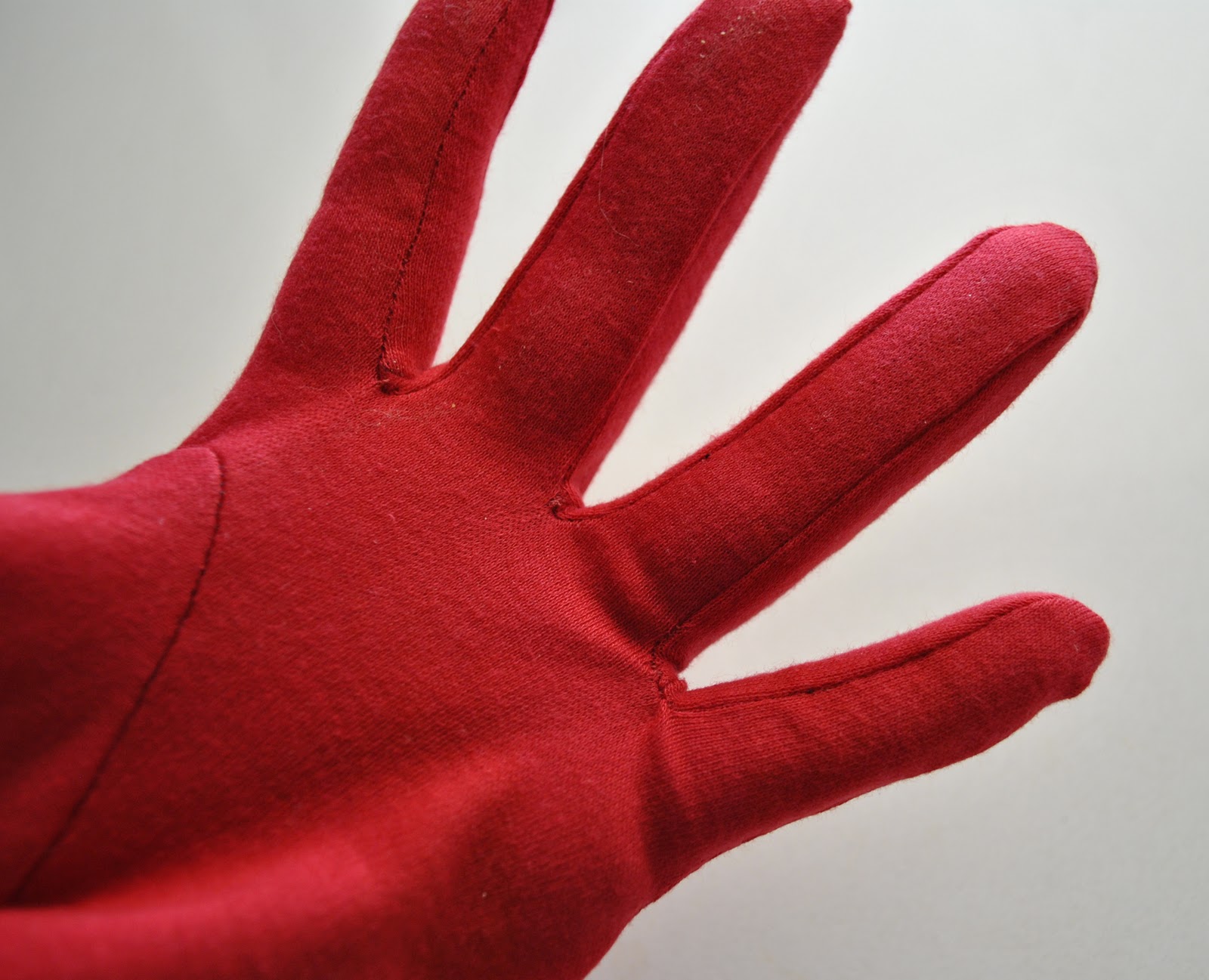
Now is the time to worry about those funny little gussets… as I said before I left cutting these out until I needed each one.  So, for example, I started with gusset D (out of D, E, and F for the three different finger “valleys”) and cut out just the usual mirror image two of these and sewed these two gussets completely into their correct and final position on the glove before I even looked at gusset E.  I’m really glad I did this, because it could be sooooo easy to mix them up… even when you only have two of them!

The V seam in the middle is sewn right sides together on each one…

And then they are inserted into the appropriate part of the finger…

I’m not going to whitewash this.  This part is tricky and you have to pay close attention to make sure you are pinning the correct edges together.  Sewing these seams is fiddly.  Not trying to put anyone off, but just being honest here…  To sew these seams I started at the base of each finger “valley” at the V seam on each gusset and sewed out from there to end up at the finger tip.  This was a good way of controlling the placement of the gusset properly.  Plus to sew these seams I used a tip I had picked up in a Threads article once upon a time (I have no memory of the specific article, but it was a good tip I filed away mentally for situations like this):
Rather than commencing each seam with a few reverse stitches to secure the thread end like you would do normally, start sewing the seam from the beginning point (ie, right at the base of the V seam, and at the very apex of the finger “valley”) and work a few stitches with the machine stitch length set to 1mm.  

When a few millimetres has been worked in this way, change the stitch length back to 2mm, which is the usual stitch length for most regular sewing and complete the seam up until the last little bit, about 3-4mm from the edge.  Change the stitch length back to 1mm for that last little bit.

This is a great technique and stood me in good stead here.  It results in a smooth even straight seam and avoids the risk of fabric-chewing that can occasionally be a problem with reverse stitching.  Also, in my experience, reverse stitching is a little less controlled that forward stitching and sometimes I’ve been frustrated with the fabric moving sideways a little when I try to use it… this problem is only going to be amplified when you are working with tiny precision seams like this, and anything you can do to eliminate the risk of wonky seams here is going to pay off, big time.  So I was really glad of this tip.

Despite it being fiddly sewing, I am the obsessive personality type that enjoys this sort of precision sewing and thrives on getting it all in as neatly and as perfectly as possible, so I really liked the challenge of this bit.  Plus I am pretty happy with how they turned out!

Tomorrow; finishing off

pinterestmail

Gloves: cutting out, seams, and putting in the thumbs

Cutting out:
It’s probably not necessary for me to go into a lot of detail here about how to cut out pattern pieces, it is pretty straightforward and the same as any other dressmaking pattern, but with a few little reminders…  
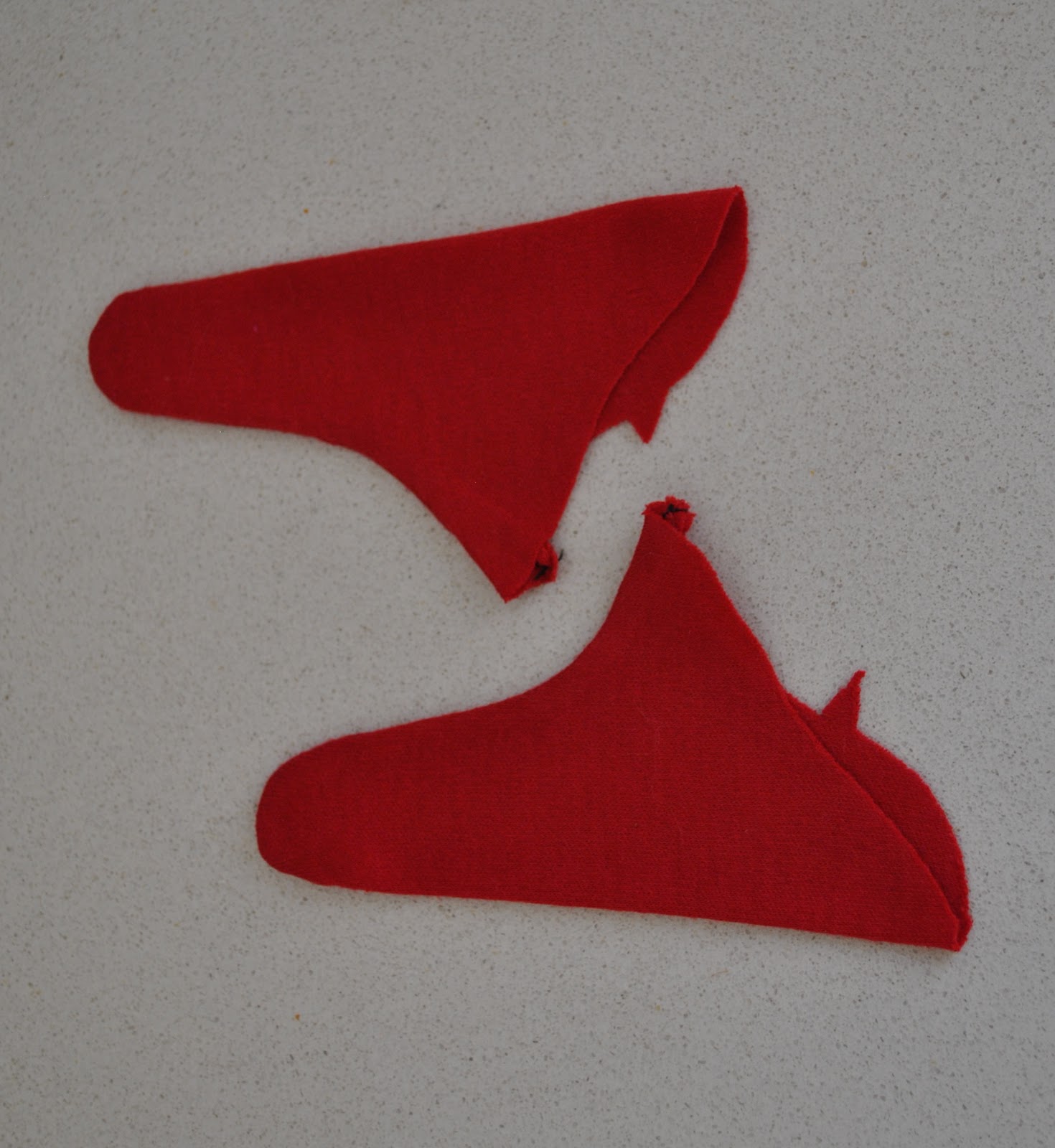
I think a very important thing to remember when cutting out glove pattern pieces is that you will be sewing 3mm seams.  These are tiny little seam allowances here… so if you are like me, and as a time saving exercise mark your marking points with a little snip into the seam allowance then you will have to re-think this one.  I went back to the old ways that my mother taught me, and earmarked those little triangles by snipping them out… so they are little points sticking outside the seam allowance like a tiny shark fin on a smooth sea.  I was pretty pleased with myself for remembering to do this… and didn’t just steamroller in and snip them in like normal!

Also, remember those wince-y little gusset pieces? well I just knew they would get all mixed up as the differences between the three pieces are extremely subtle, so I left cutting them out until I was actually using that particular gusset piece right there and then.  When working with teensy little fiddly pieces I find this approach to be far less stressful.
So leave them be, for the time being…


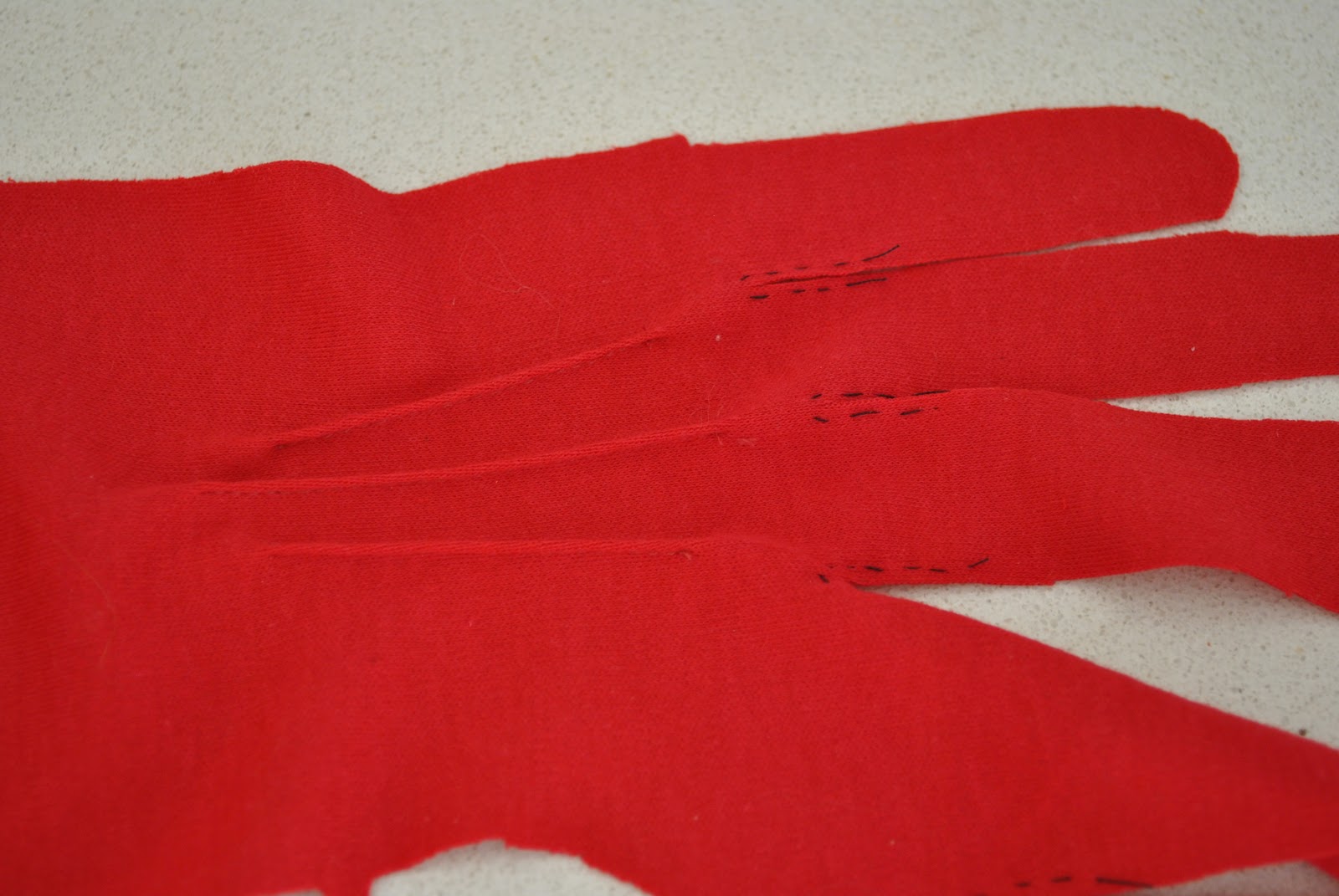
The first step is to stay stitch down around the bottom of the finger bits, and I was lazy here and just used the thread that was already on the needle which happened to be black.  Plus I wanted it to stand out for the photo here, so we could see it… but later on I heartily wished I had used matching thread.  The black does show through a tiny bit.  I regret this.  Important tip; despite that you are treating this as a muslin, if, like me, you entertain a tiny hope that these gloves will be wonderful enough to live permanently in your wardrobe…  treat them with the same respect you would if using your final fashion fabric; use matching thread!

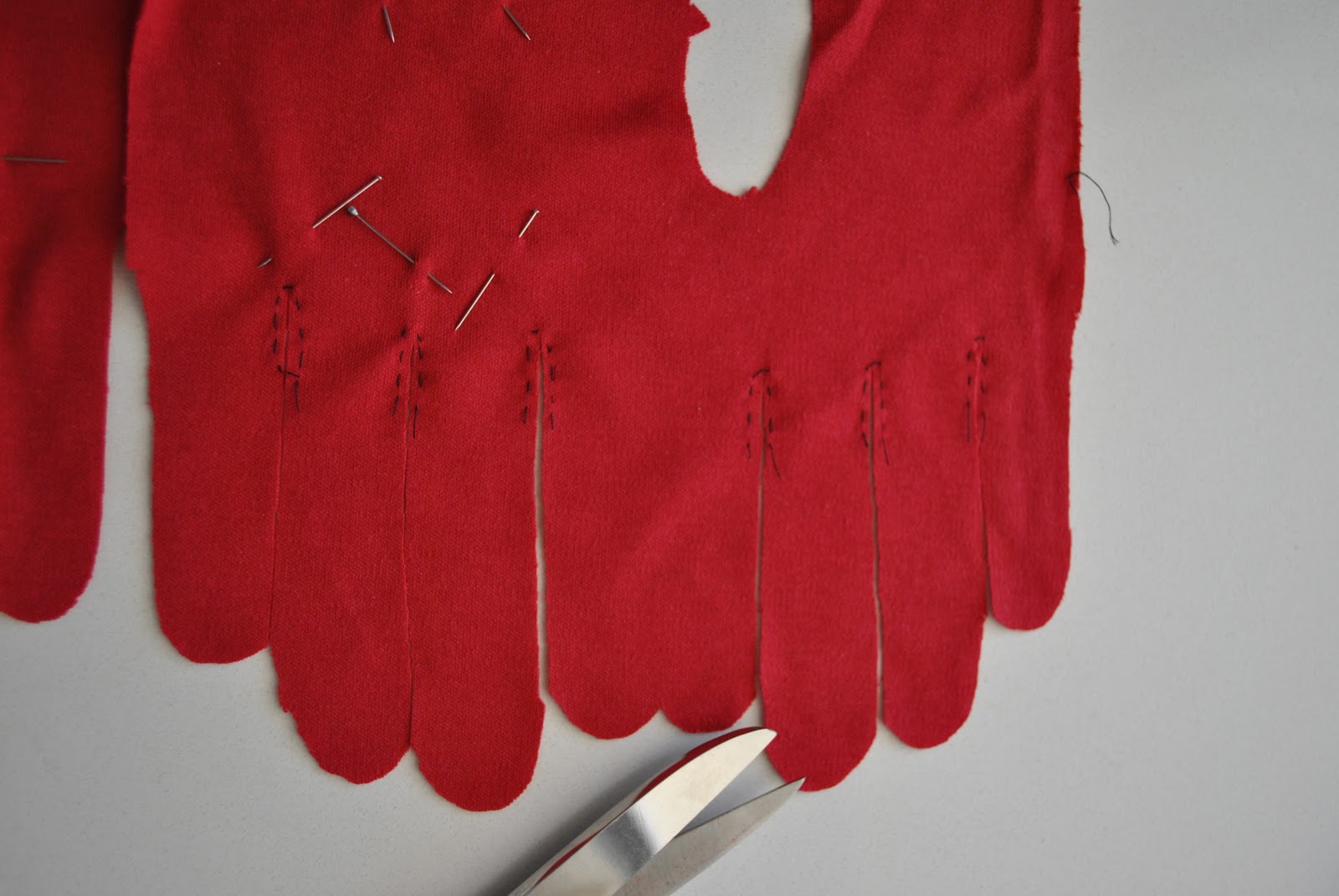
The next step is to cut down each finger “valley”

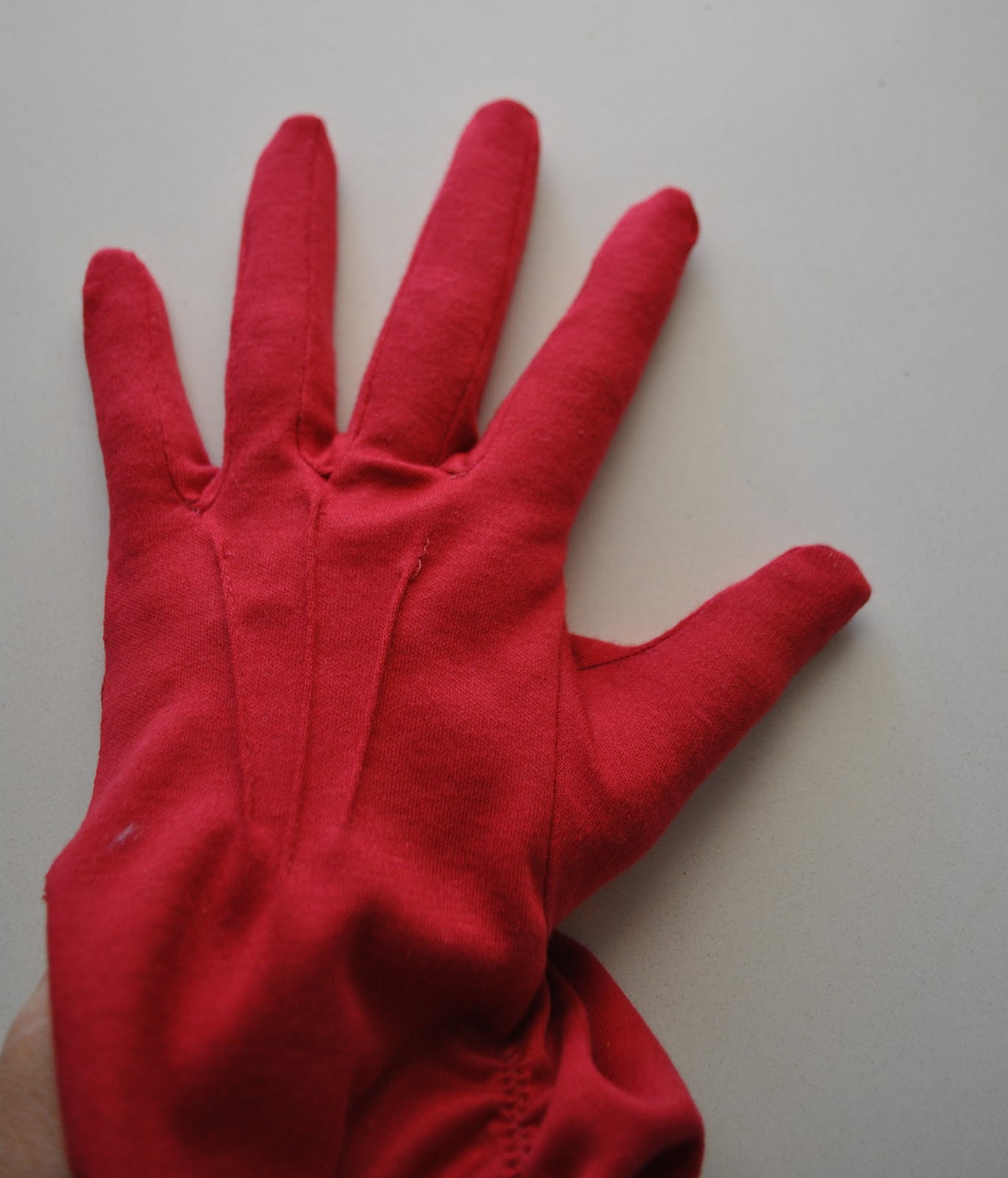
And next, (on my particular glove choice) I topstitched in place those three short slanted rows across the back of each hand.  Yes, I remembered to use matching thread here.  I just love this type of stitching that is mimicking the delicate tendons on the backs of one’s hands, I think it is a charming feature that looks prettily old fashioned and sweet.

Seams:
The seam allowance on my pattern is given as 3mm.  I decided to be super accurate and use my fading pen (still got it from my quilting days) and draw in the seam allowance for me to sew over.  Two reasons for this: a 3mm seam allowance is too tiny to be even marked on my old machine; also a 3mm seam is not one I ever use so I am unfamiliar with it and didn’t trust my eye to gauge it.

The fabric I am using is a type that my machine doesn’t particularly like and traditionally likes to chew up, particularly when I am asking it to start sewing a tiny little seam from the edge of the fabric… so I sewed most of the seams starting in the middle and ending up on the edge of the fabric.  This approach works well and I don’t run the risk of a chewed up edge.  My machine doesn’t have the same problem with the end edge of a seam…  (note to self; should have used matching thread… but at least you can see what I’m talking about here)

The thumb:
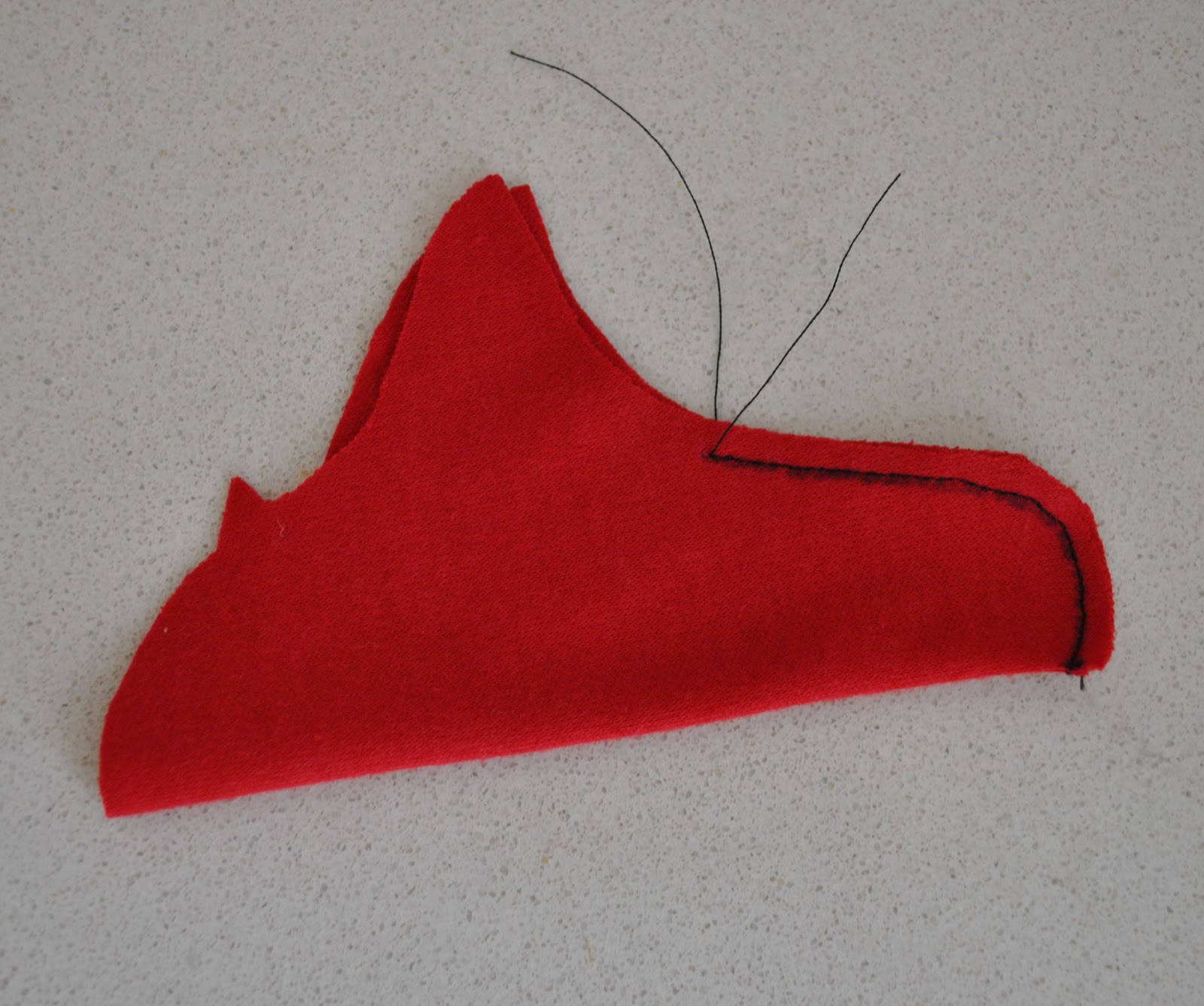
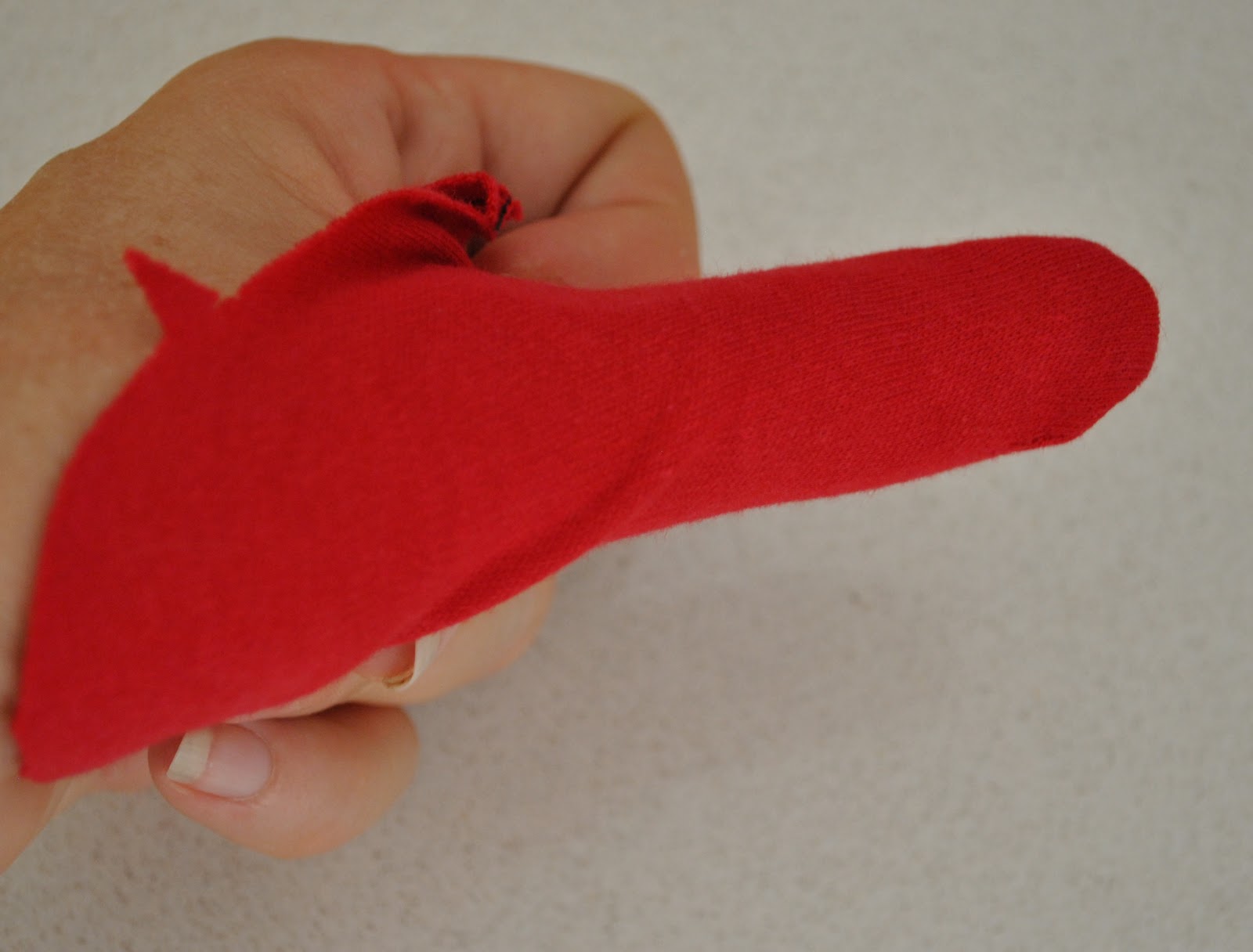
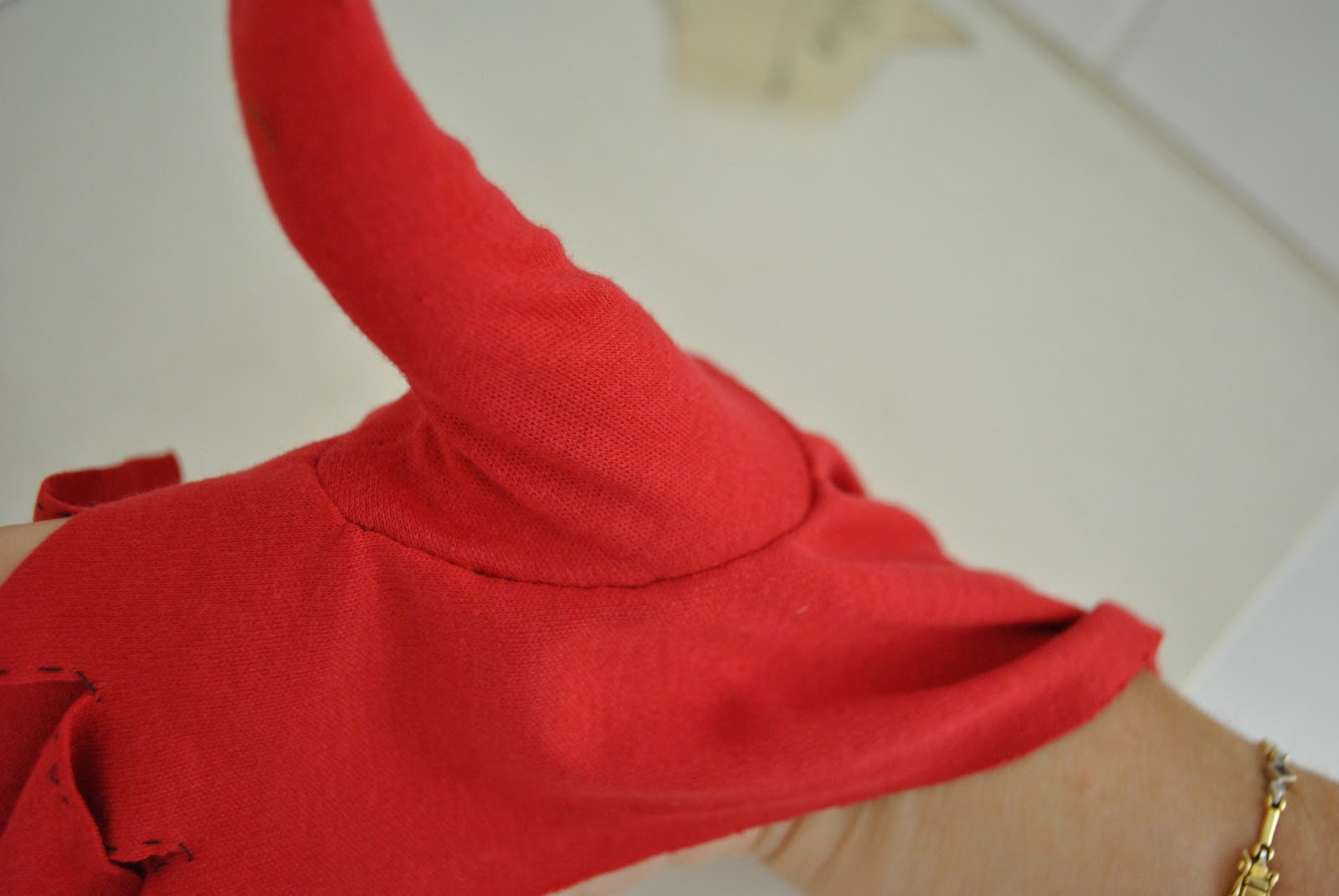
So, once I had finished sewing the thumb seam I turned it right side out for a quick visual check.. and see how it has a rather horrible pimply little bump sticking out at the folded corner on the right?

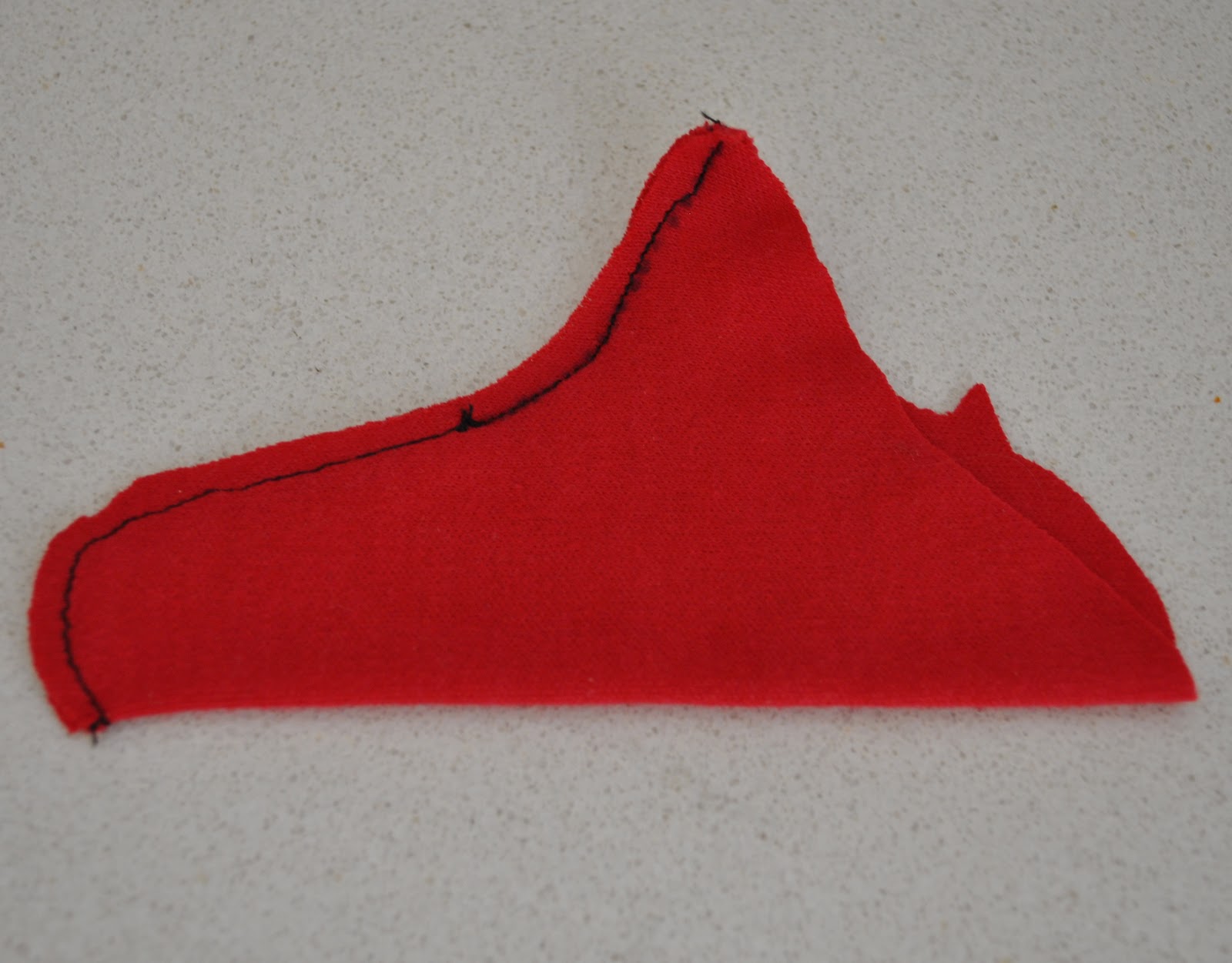
Went back and resewed the end to be more tapered and dart-like for a smoother non-bumpy finish on the outside…
Much better, yes?
I’m all thumbs…
Next step: I inserted those thumb pieces in to the corresponding thumb hole in the main glove pieces, matching up the tiny shark fins.  I pinned and basted this bit quite carefully as I was anticipating it to be quite tricky, but it turned out to be surprisingly straightforward and not even particularly fiddly.  

And I’m not sure I would even bother basting this bit next time.  Apart from the problem with not using matching thread (grrrr… cross with myself) on the outside I can see some of the basting stitches interfering with and marring the perfectly even stitches of the machine stitched seam  (see below).  It’s not super obvious, but these tiny imperfections bother me a bit

A fitting aspect of this thumb that concerns me a trifle is that it extends out much further into the main glove area than I anticipated.  Perhaps next time I will make the thumb hole a bit smaller, and the thumb piece a tiny bit shorter…?
What do you think?  Do you think the seam should be closer to the base of the thumb?
Tomorrow; fingers!
pinterestmail

Gloves: assessing the pattern

I was planning to call this glove-making challenge something witty and metaphorical, like “Throwing down the Gauntlet” or some such cleverness, but then I decided… nah, just go with simplicity.  After all, making gloves is complex enough without a fancy schmancy title to put people off…
so without further ado here we go.

Pattern:
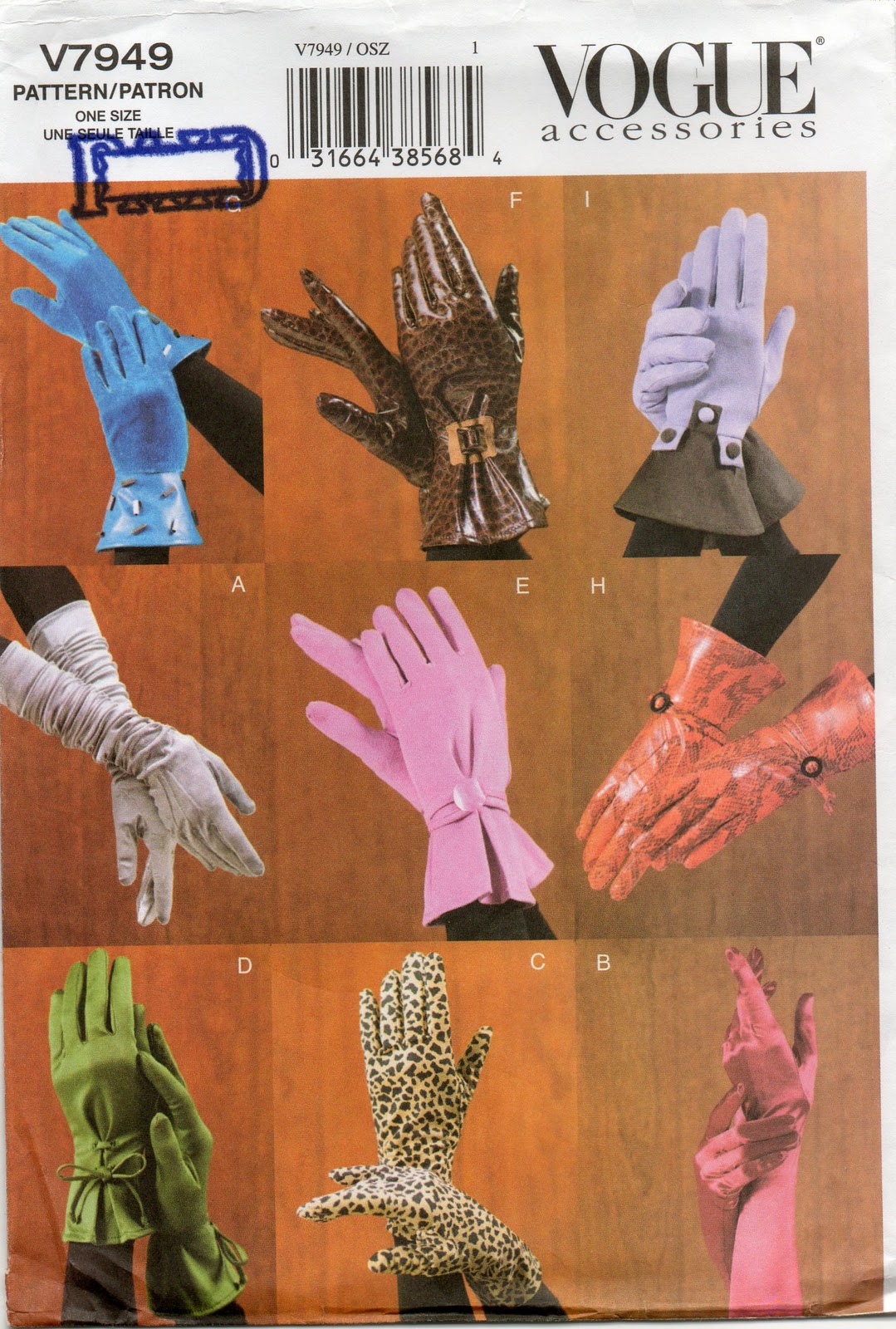
I am using Vogue 7949, a pattern for unlined gloves, with nine variations.  However hands are hands, and I’m sure the basics of glove making will be very similar, if not the same for most patterns.  For this first effort, I am going with view A, an elegantly gathered, nearly elbow-length glove with three short rows of attractively slanted pin tucks stitched on the back of the hands. (the silver-grey ones on the left of the middle row)
Fabric: 
The pattern stipulates that a stretch fabric should be used, recommending stretch velvet, stretch satin and stretch synthetic leather or suede.  Synthetic leather or suede is recommended for the contrast trims on a few of the designs, namely the wrist skirtlet (? is there a proper name for that?), which is an area that obviously doesn’t need to be stretchy.
So in my initial trial run of this pattern I am using cotton jersey knit with some stretch in it; and was ultimately planning to make myself suede gloves, using an old skirt that I found in an op shop.  The suede is obviously not stretchy, but I shall cross that bridge when I come to it…  I do have some non-stretchy leather gloves already that are fabulous and when the time comes I will size up how to go about using this pattern to make my own..
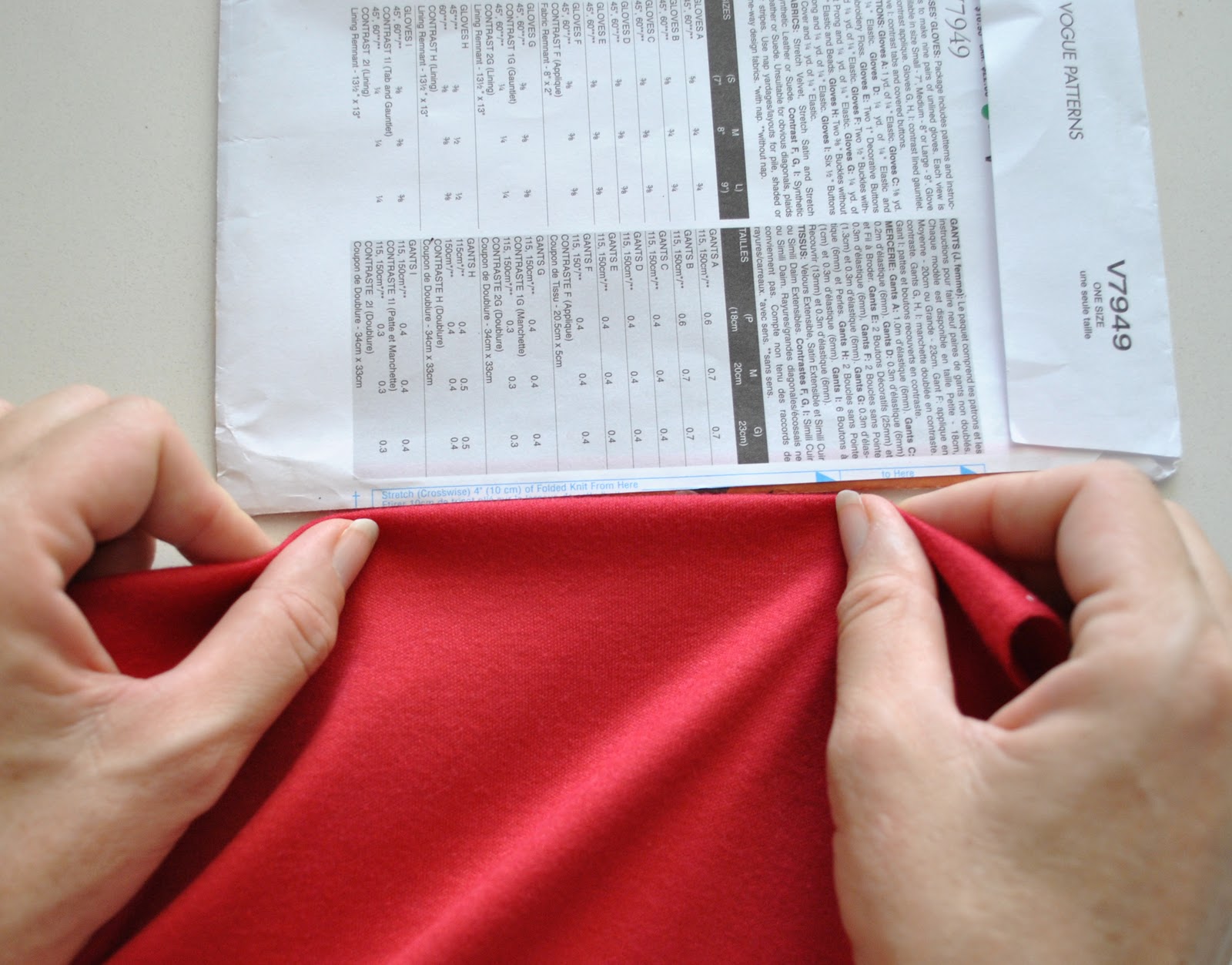
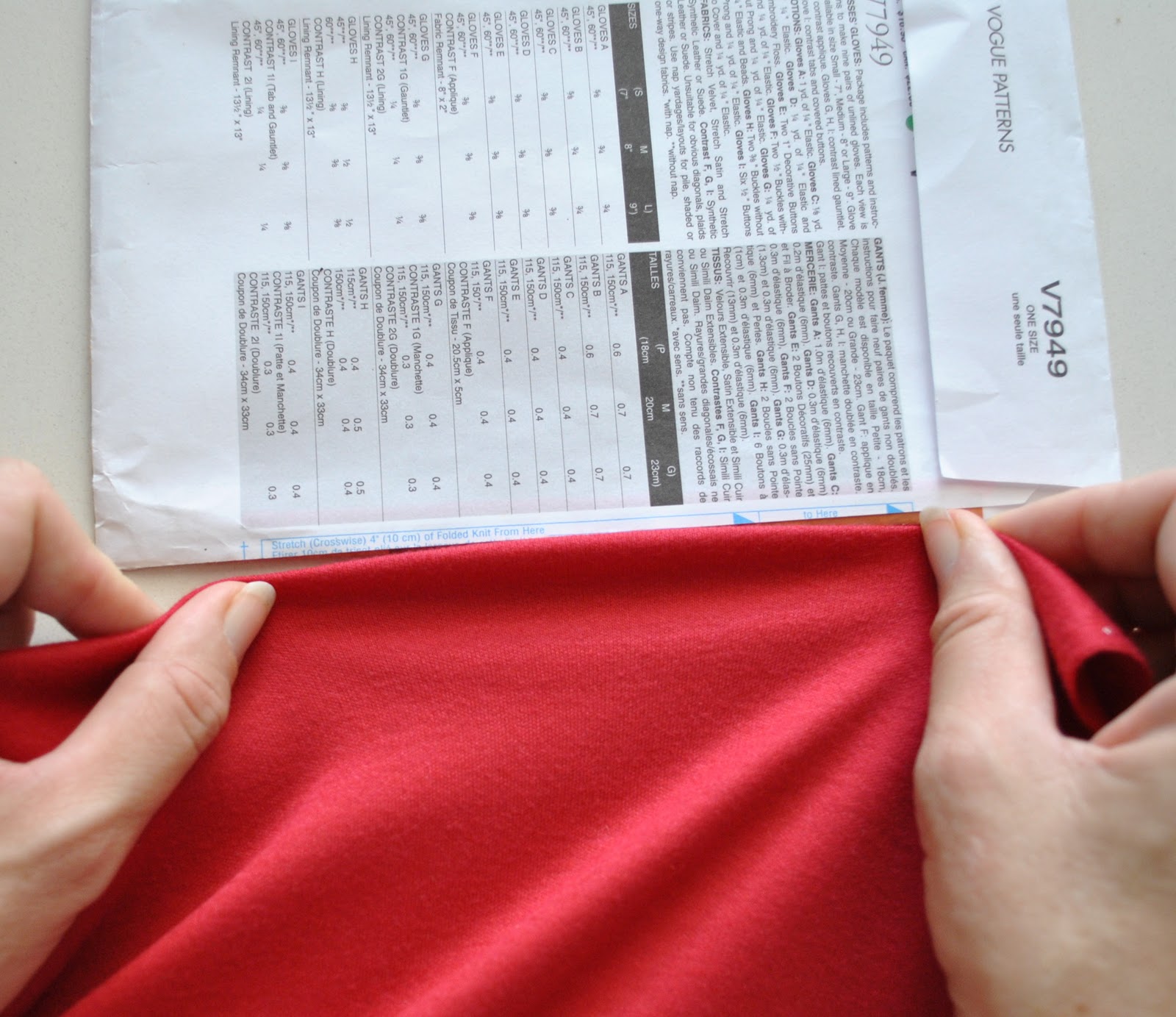
The pattern has this handy guide printed on the back of the envelope that Vogue supplies on all its stretch patterns so you can assess whether your fabric is suitable… on too many occasions I have been known to ignore this guide but completely, but as gloves are new territory for me I am obeying the instructions for once!
A folded piece of fabric should stretch from this width:

to this width… check!
Sizing: 
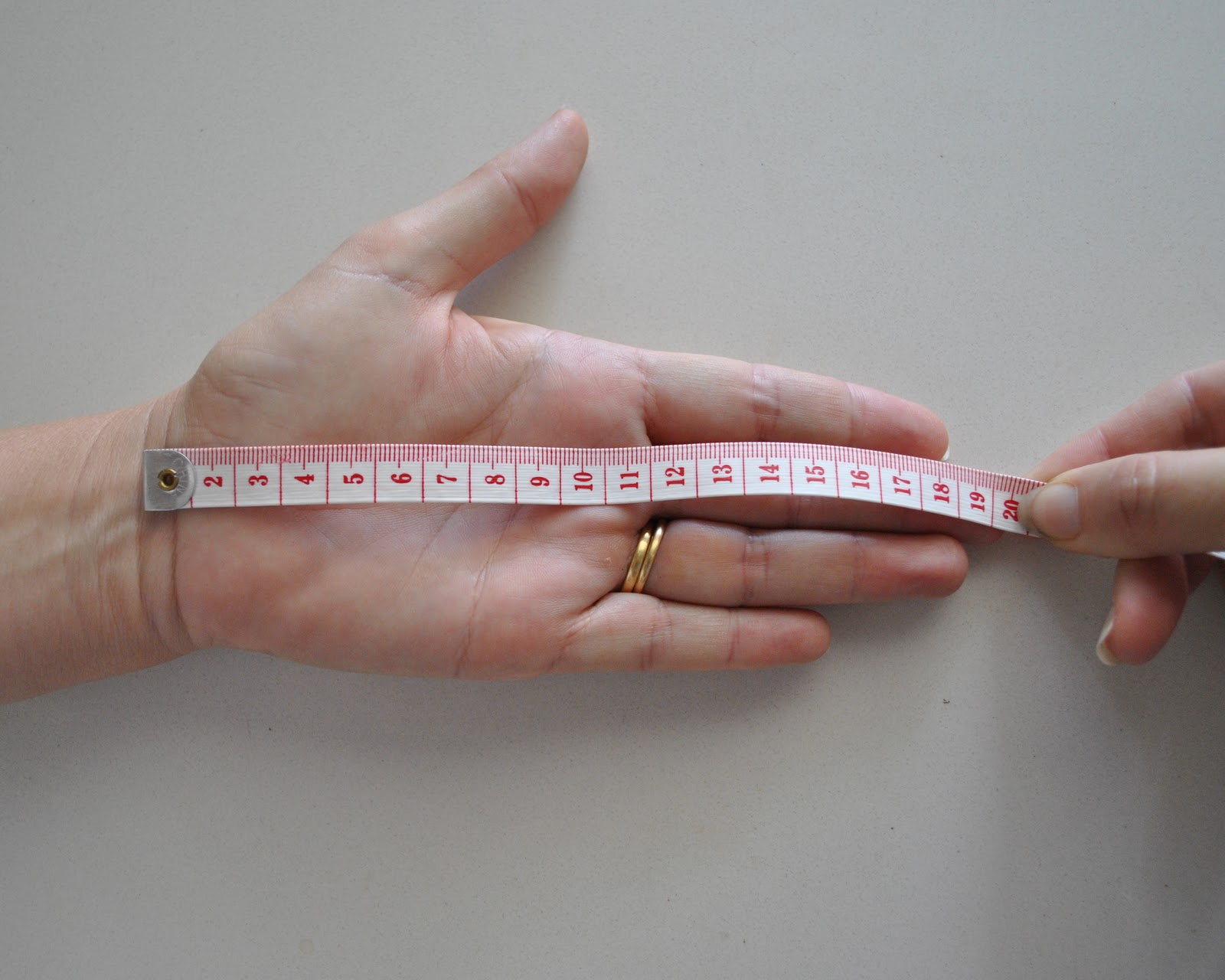
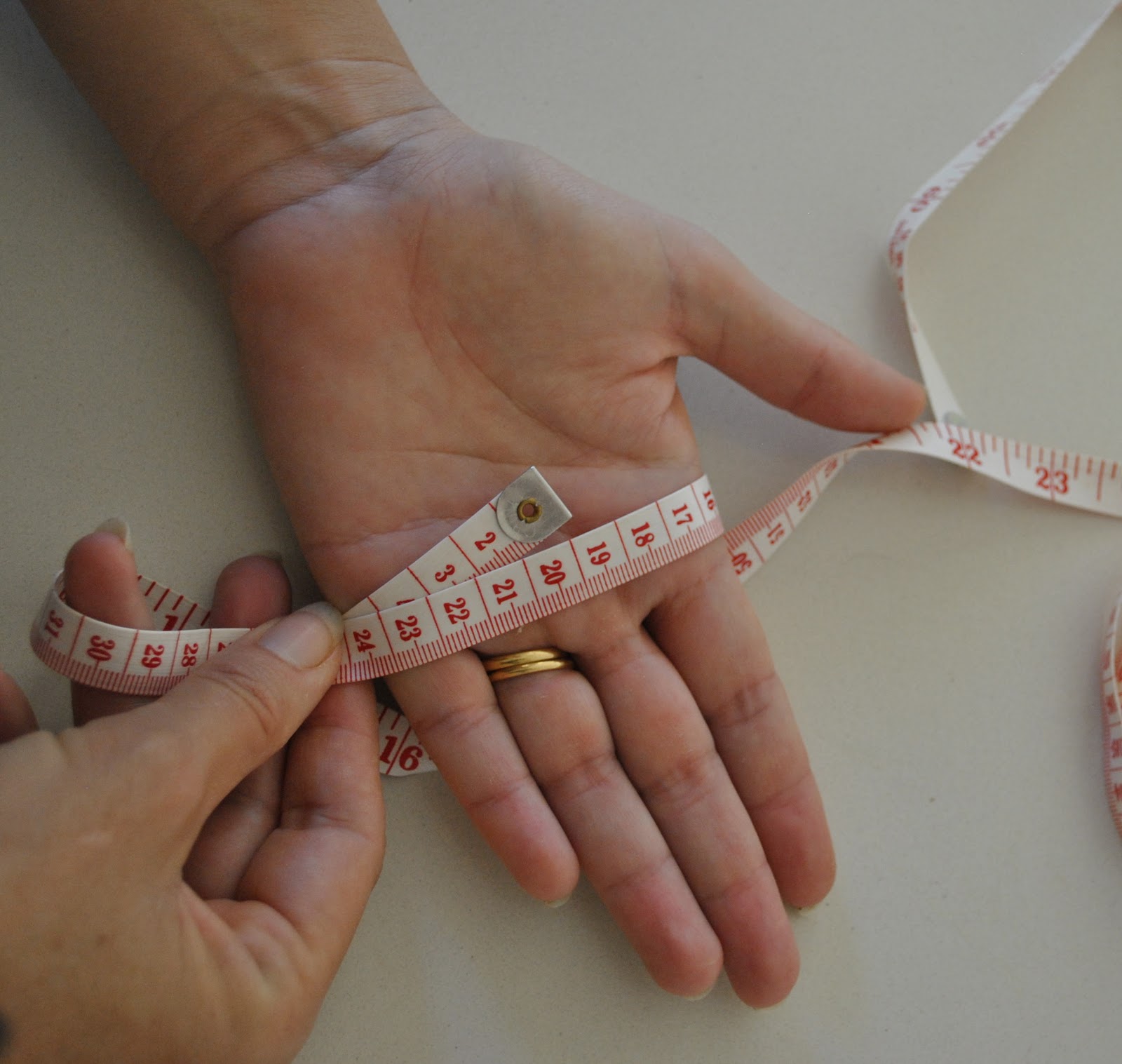
Now this is where I ran into a bit of confusion.  The gloves are supposed to come in three sizes, small (18cm), medium (20cm) or large (23cm).   Now, I searched and read everything there was to read,  all over the pattern envelope, the pattern instructions and the pattern tissue itself, and do you think there is any guide anywhere as to “what” on my hands I should be measuring to decide which one I correspond to???  Nothing.  Not a clue.  So I was a bit mystified as to what those measurements signified, but I went ahead and measured the proportions of my hands anyway…
Each measurement, the length of my hand, and the circumference of my hand measures about 19cm, which I’m guessing puts me roughly in the small to medium size.  This is interesting, because I nearly always best fit the large size when I buy readymade gloves, but pushing on…
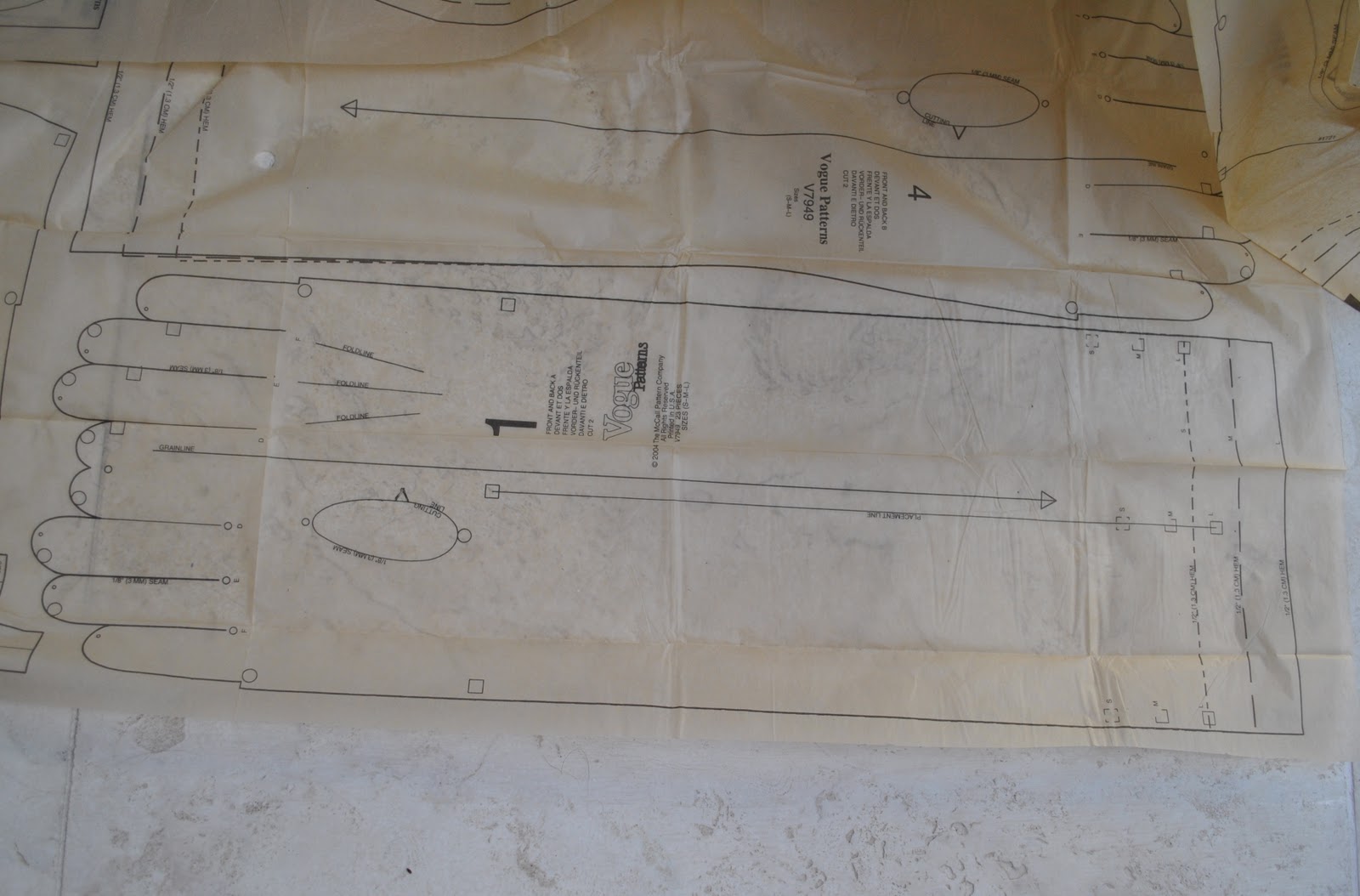
Turning to the pattern pieces now,  and hey do you know what, the actual “size” of your hand really doesn’t matter at all, because when you look closely, you see this:
This is the pattern piece 1, for glove A in all sizes, and can you see, the pattern is pretty much completely ungraded for any different sizes, oh sorry, the length of the arm tube itself has been thoughtfully graded for us (seen at the right of the picture), very helpfully a few centimetres has been added on for the medium size and a few more for the large size…..?????  Ha!  Now I get why they stipulate stretch fabrics….!  Of course I’m no size-grading expert, but this seems to be a major fail… why on earth bother with all the “each glove is available in three sizes” advice when it is completely obvious when looking at the pattern that it is a “one size fits all” deal??  Ah well, I’m still determined to push on with this experiment, so not to worry.  I am going to think very carefully and compare sizes against my other leather gloves before I start cutting up that suede skirt, though!
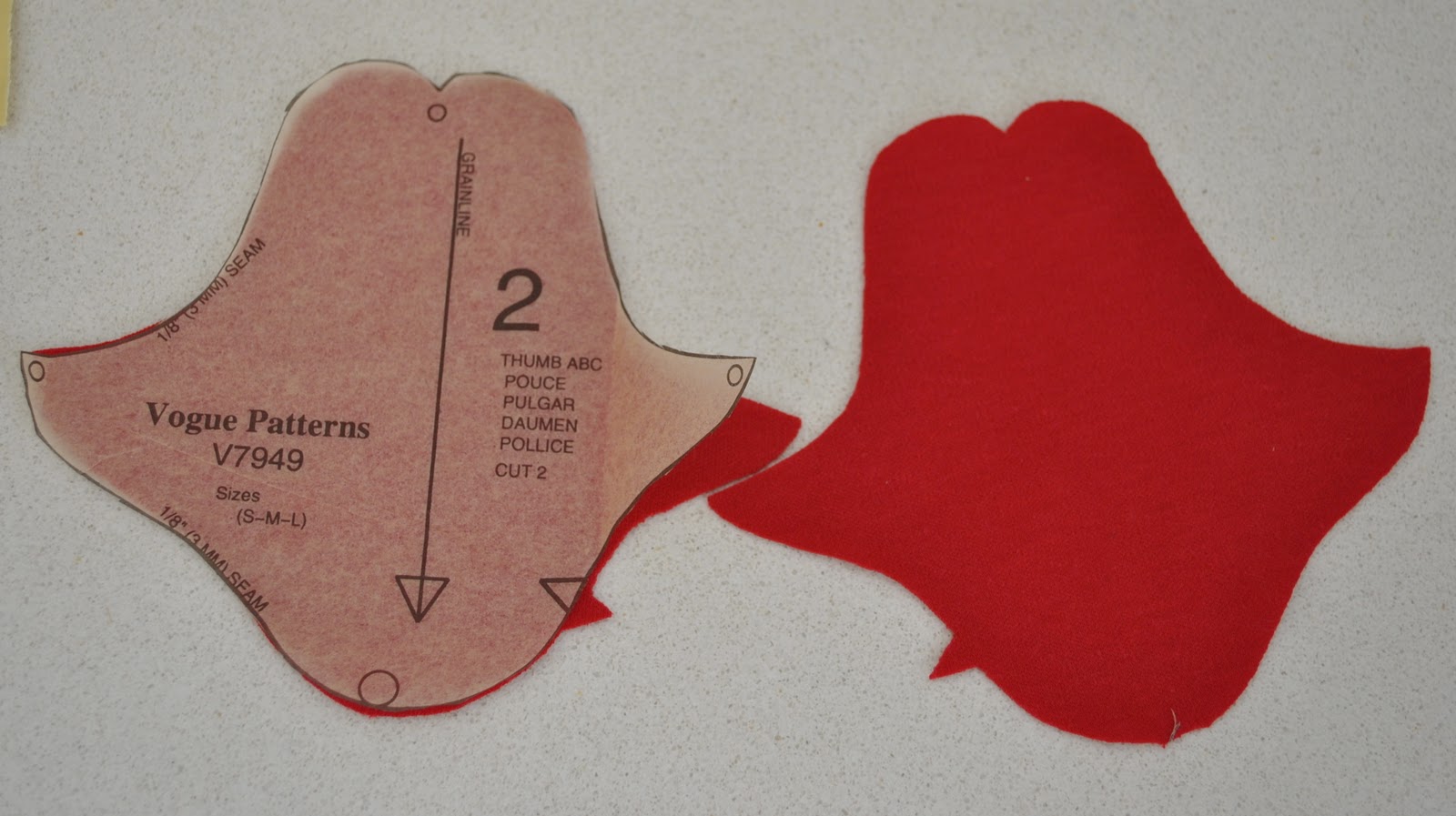
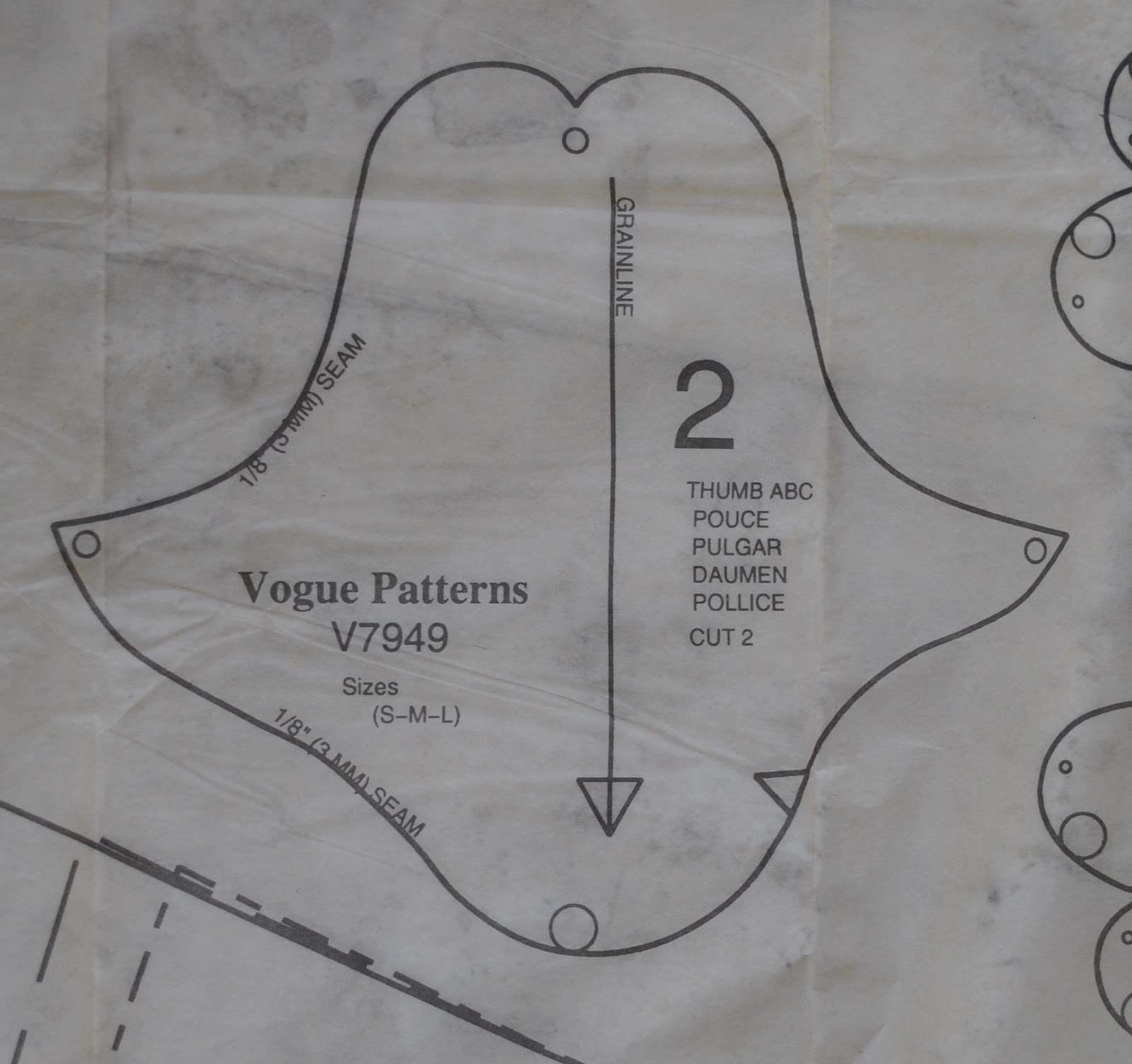
The thumb piece, sizes S, M, and L
Cutting out the pattern:
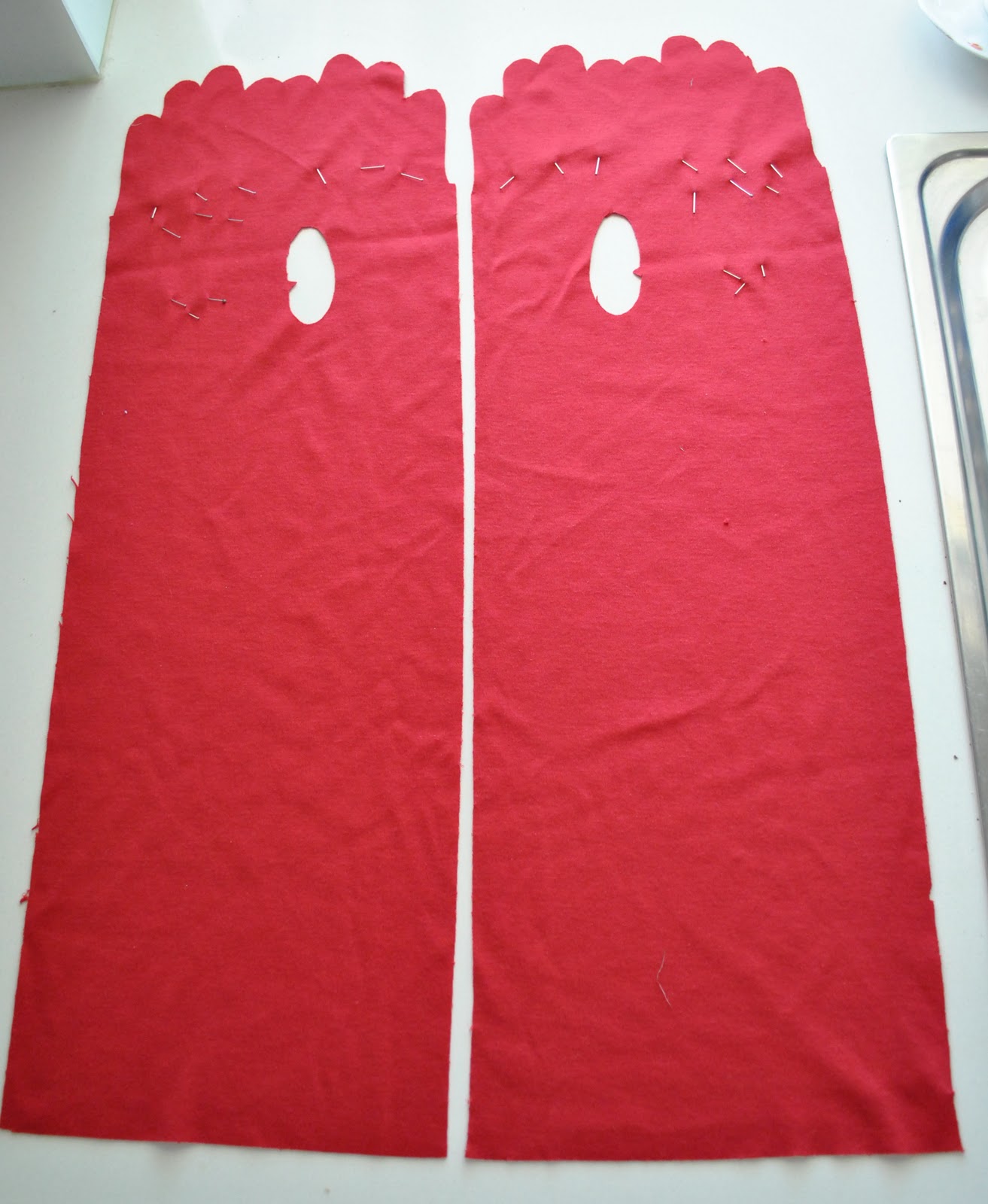
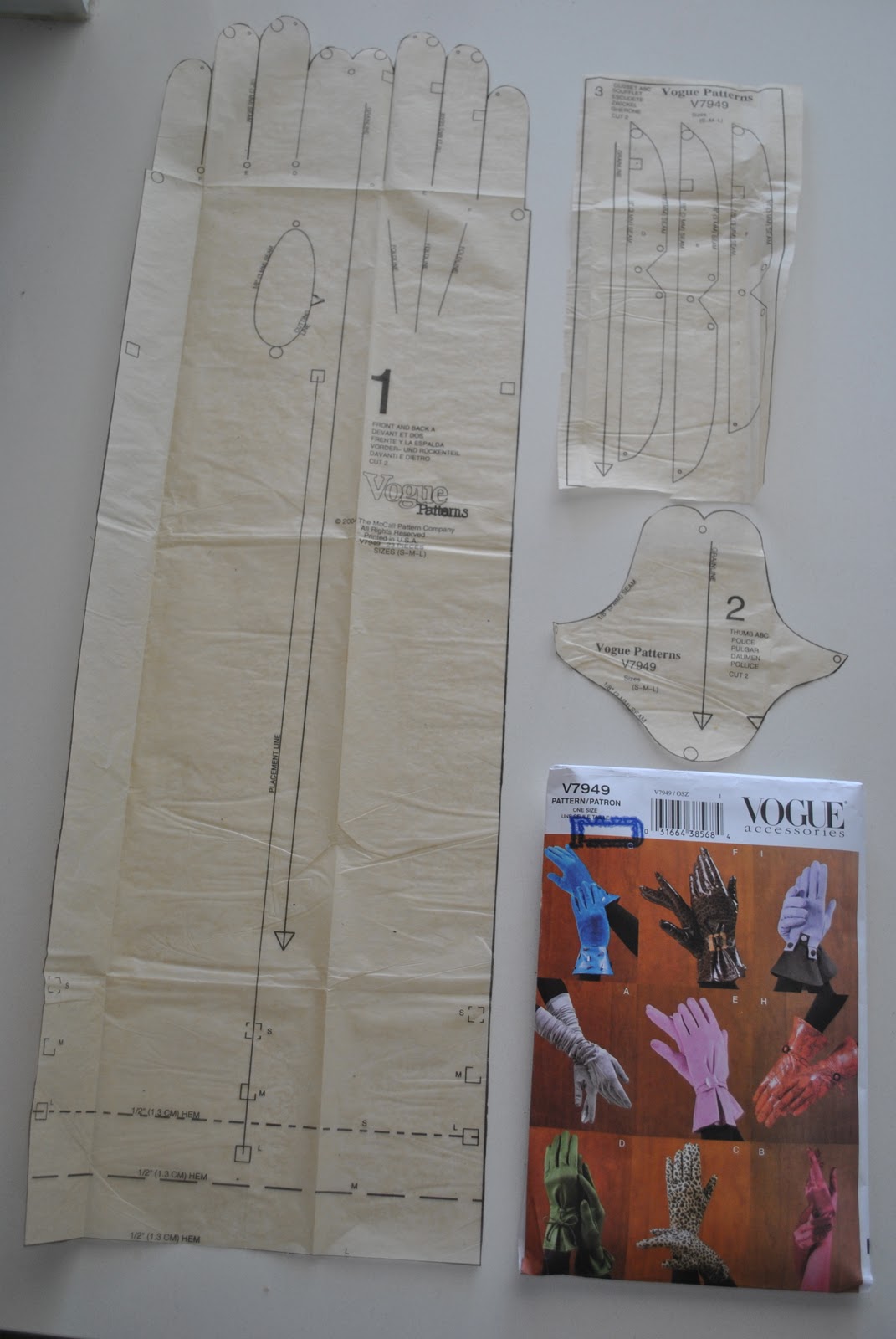
So I cut out the pattern pieces:
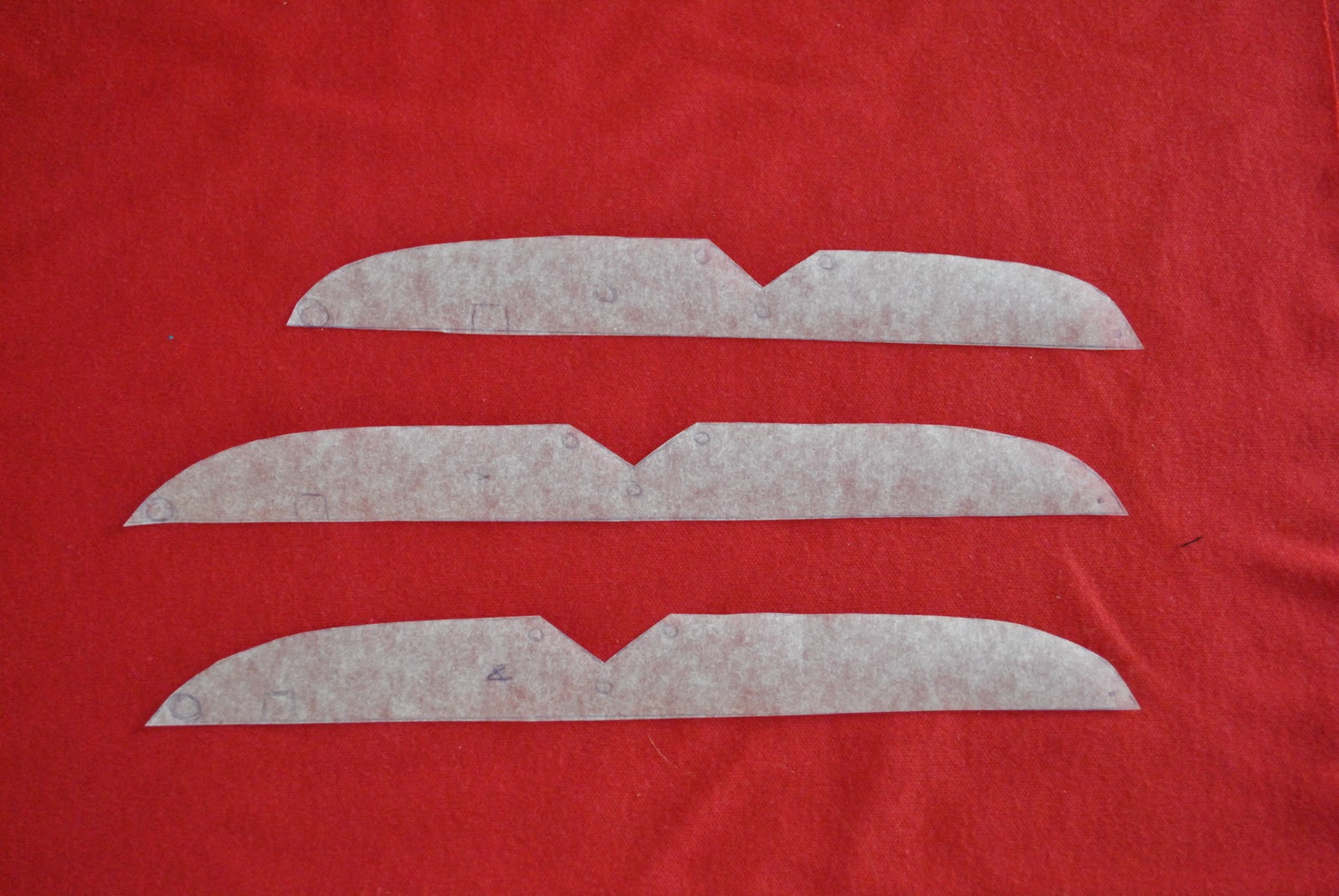
The pattern piece at the top right is the gusset, and comprises the three different sized gussets printed into a box.  Each little gusset is way too small to fit printing all the pattern information onto each one… so as I am a little obsessive about keeping all my pattern pieces ordered, tabulated and neatly under control, plus I pictured those tiny awkward little pieces ripping way too easily, or flying away in a breeze under the washing machine and getting lost forever,  so I retraced off these gussets on to kitchen baking paper.
(hehe, this is pattern piece 10 which I mistakenly photographed, I actually used the correct piece number 3)
Tomorrow, some actual fabric cutting-and-sewing pictures…
pinterestmail

A boxy little jacket; a refashion

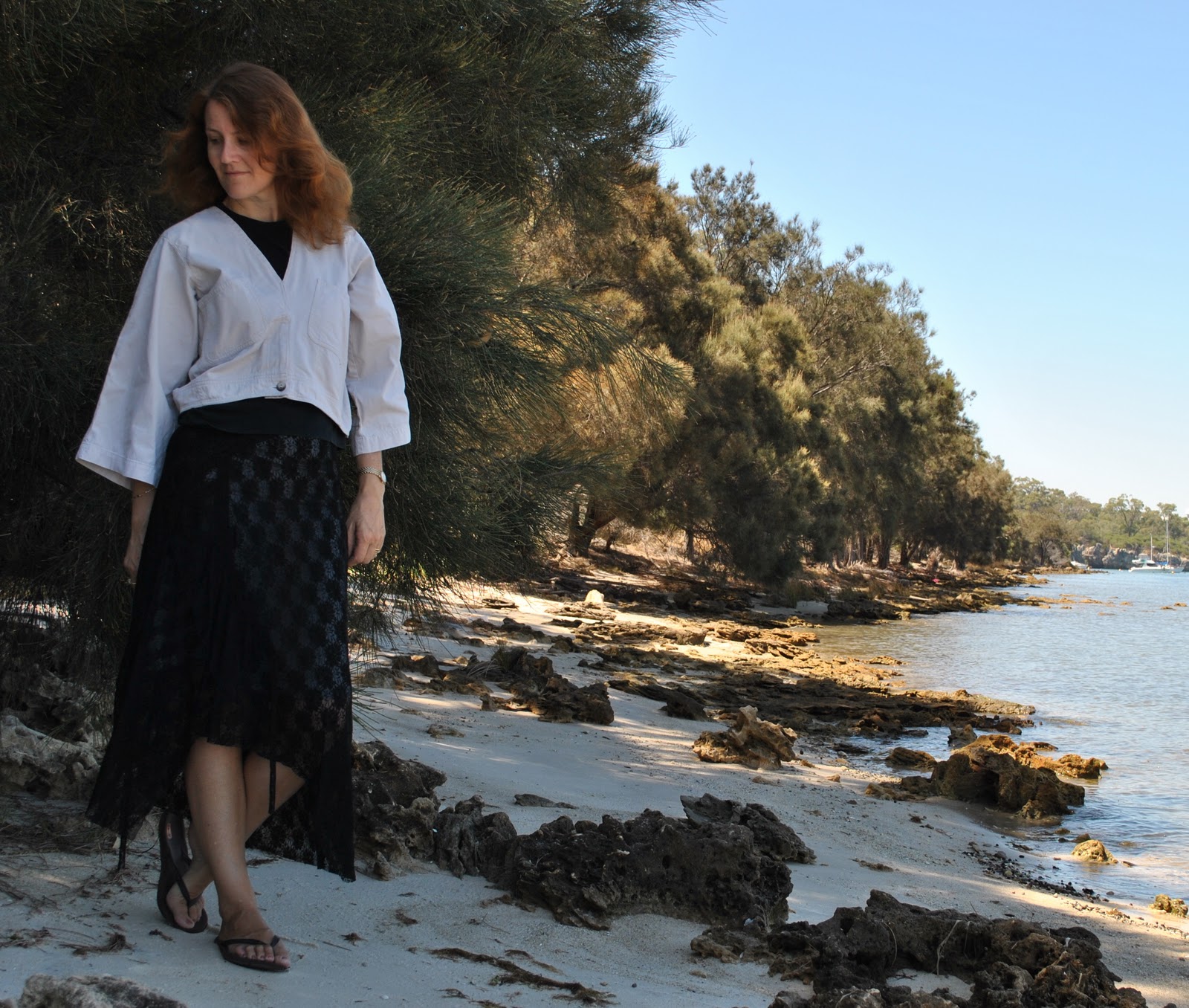
I’m so pleased with this latest refashion that I finished just yesterday, that I just had wear it even though it’s really too hot for this time of year…
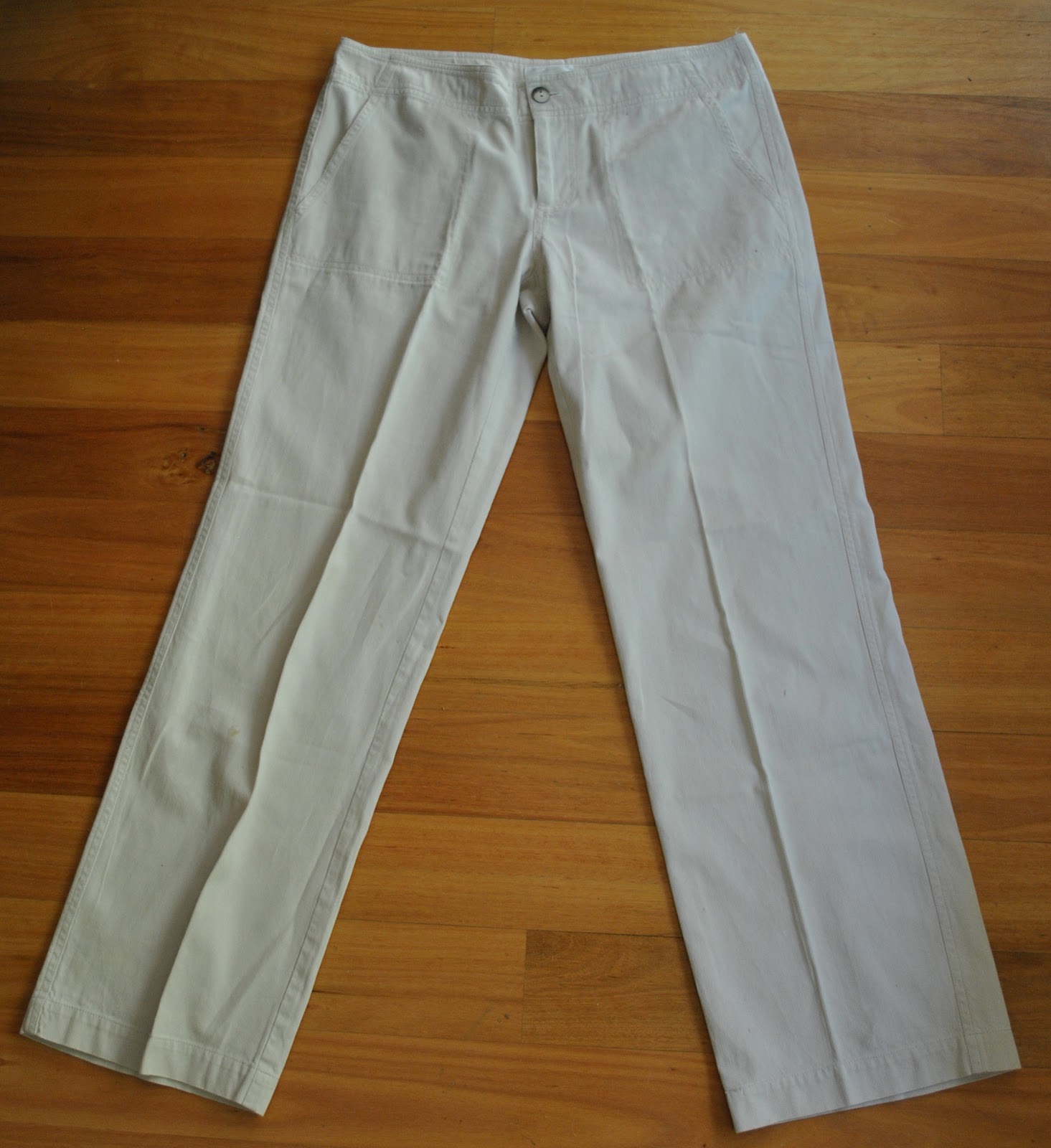
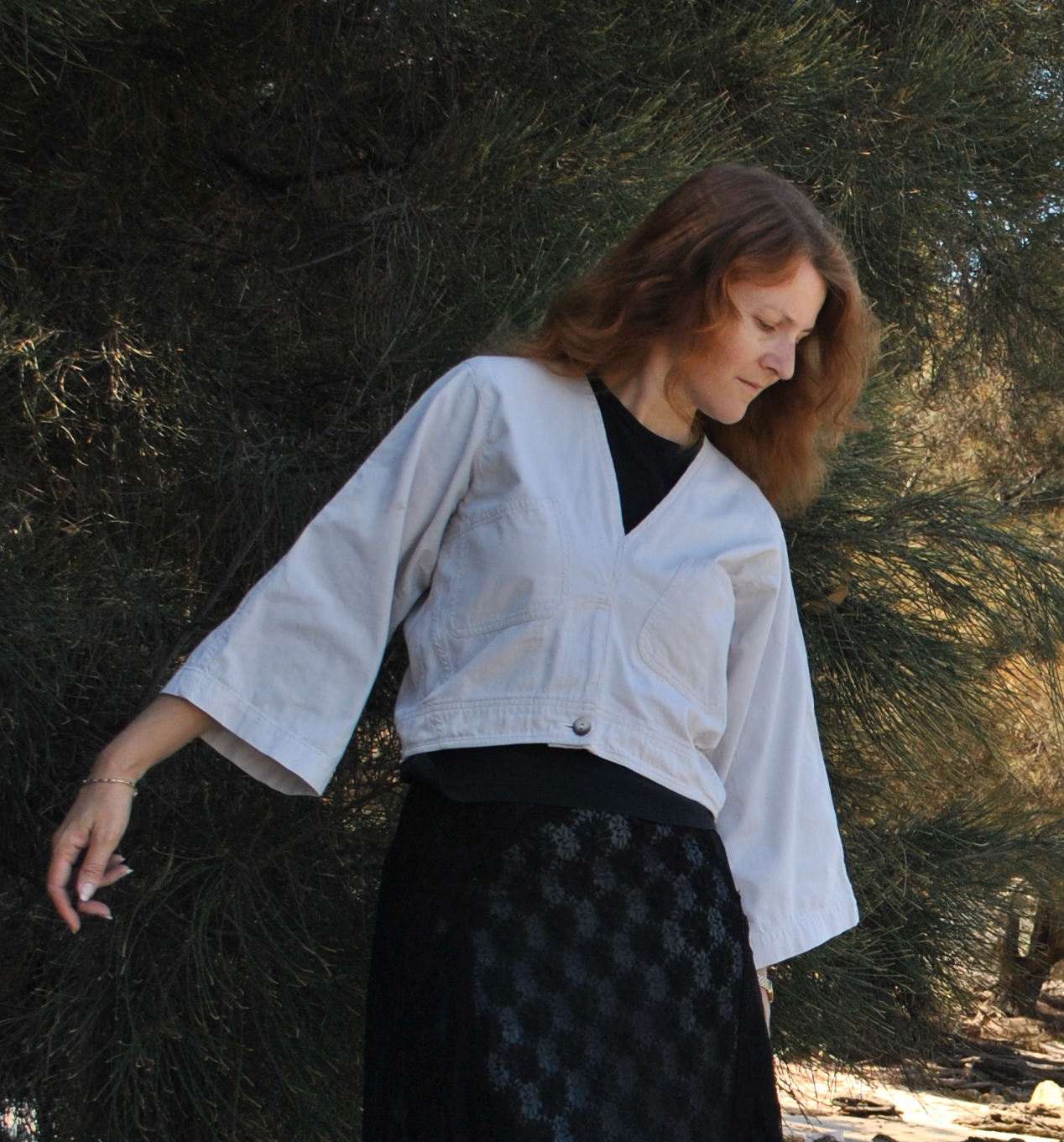
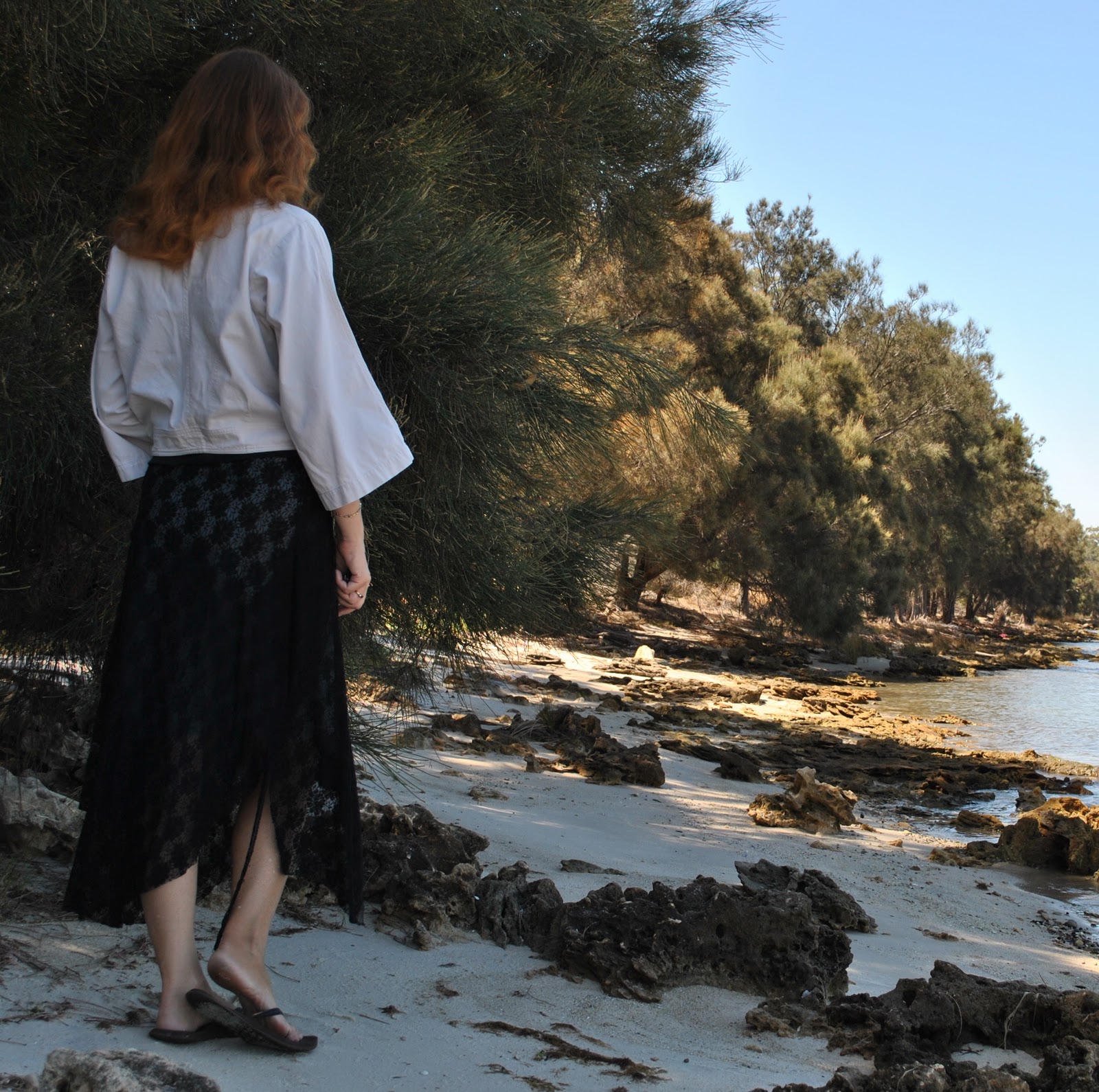
I took an old pair of too big, light cotton twill pants that my mother didn’t want anymore, and made for myself this loose unstructured jacket that I am now totally in love with…
I realise it may not be everyone’s cup of tea and I’m not sure Craig is very keen on it, but meh…  I really like it!
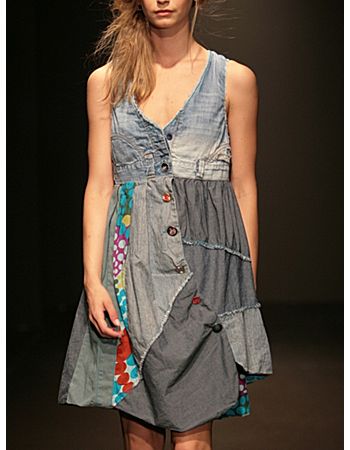
I first got the idea after seeing some of the Desigual designs, using old jeans upside down as the bodice of dresses, see below from Desigual.  I know, I know, mine doesn’t look much like this, but I’m just trying to illustrate where my original inspiration for this idea came from…

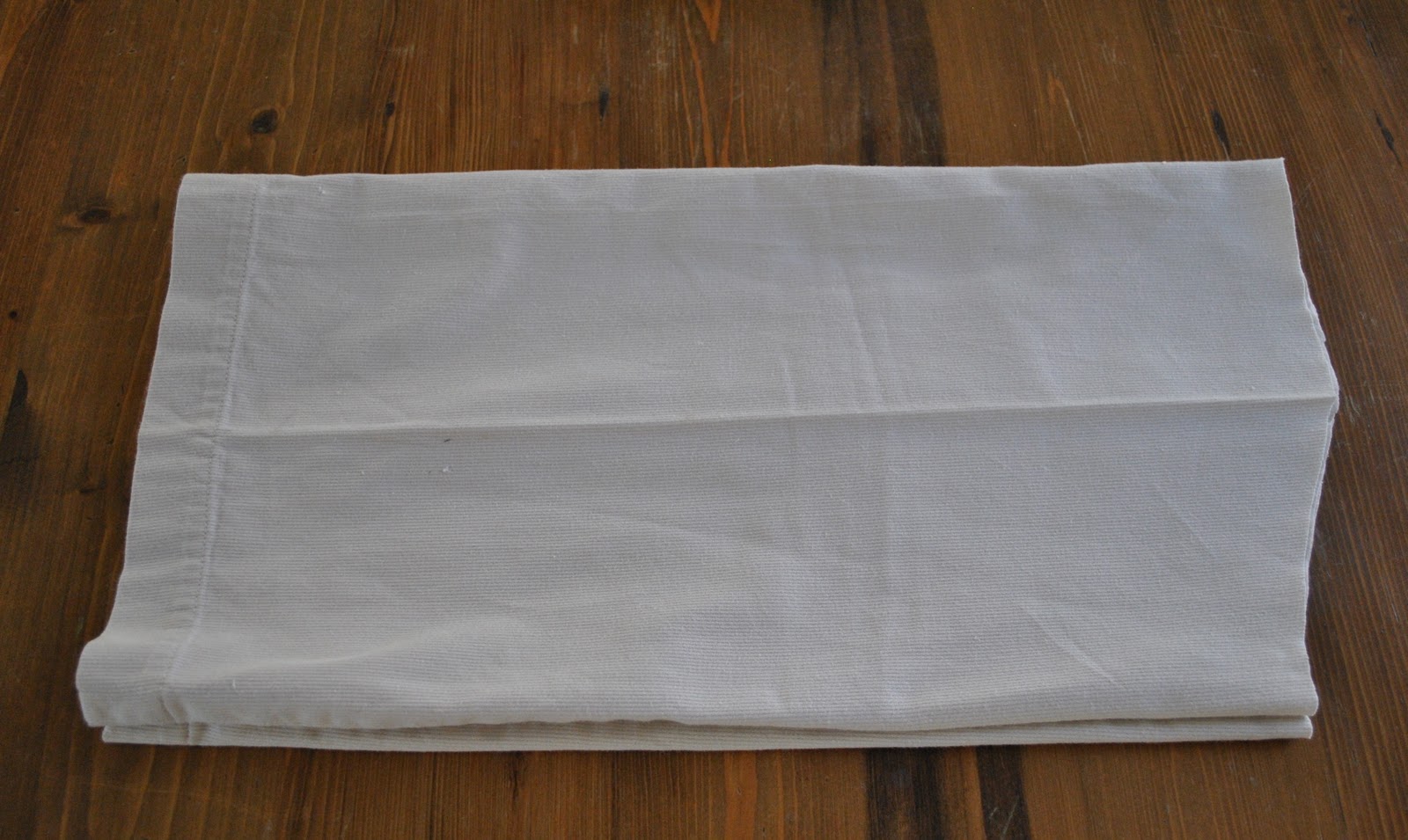
This is the pair of pants as they were originally…
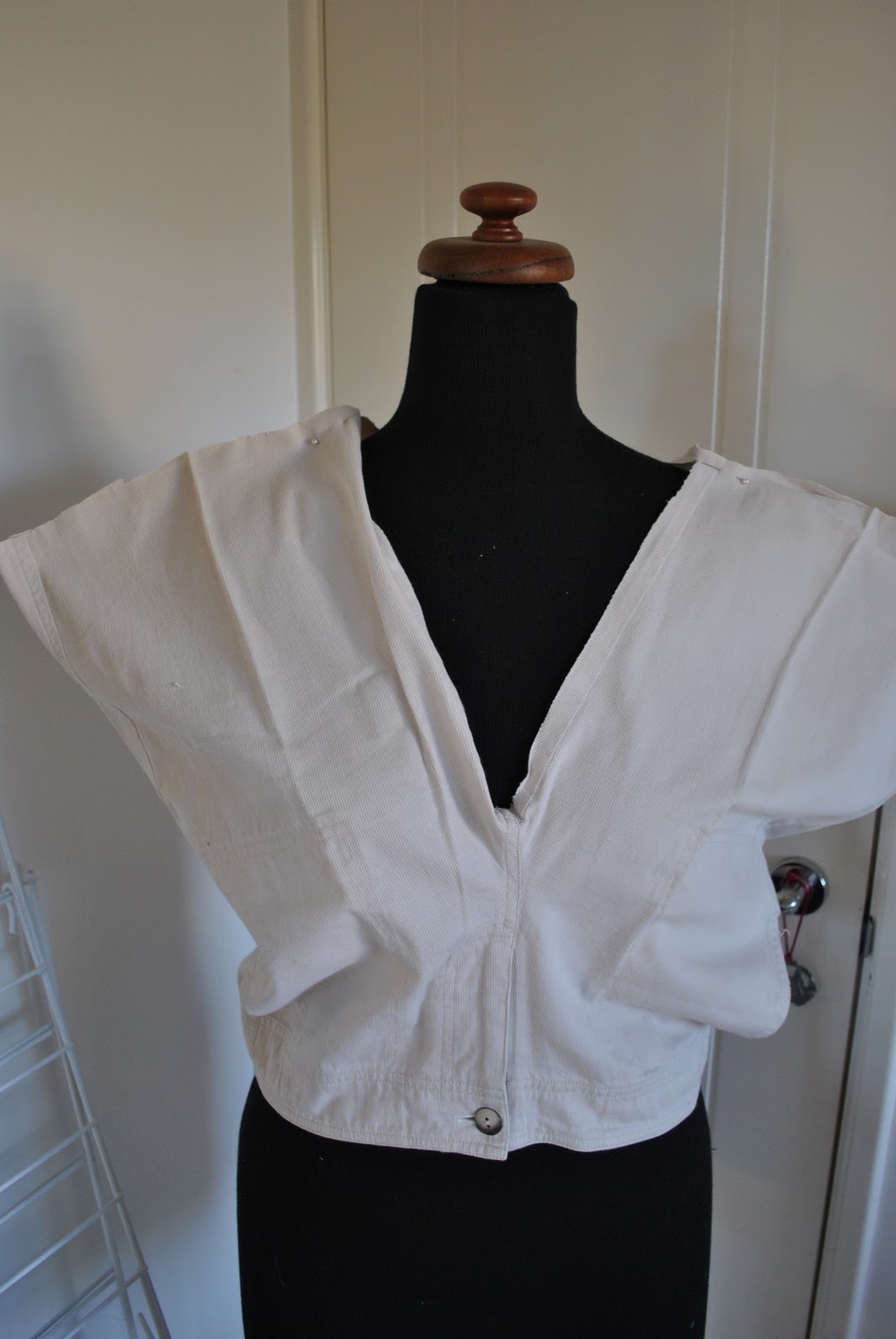
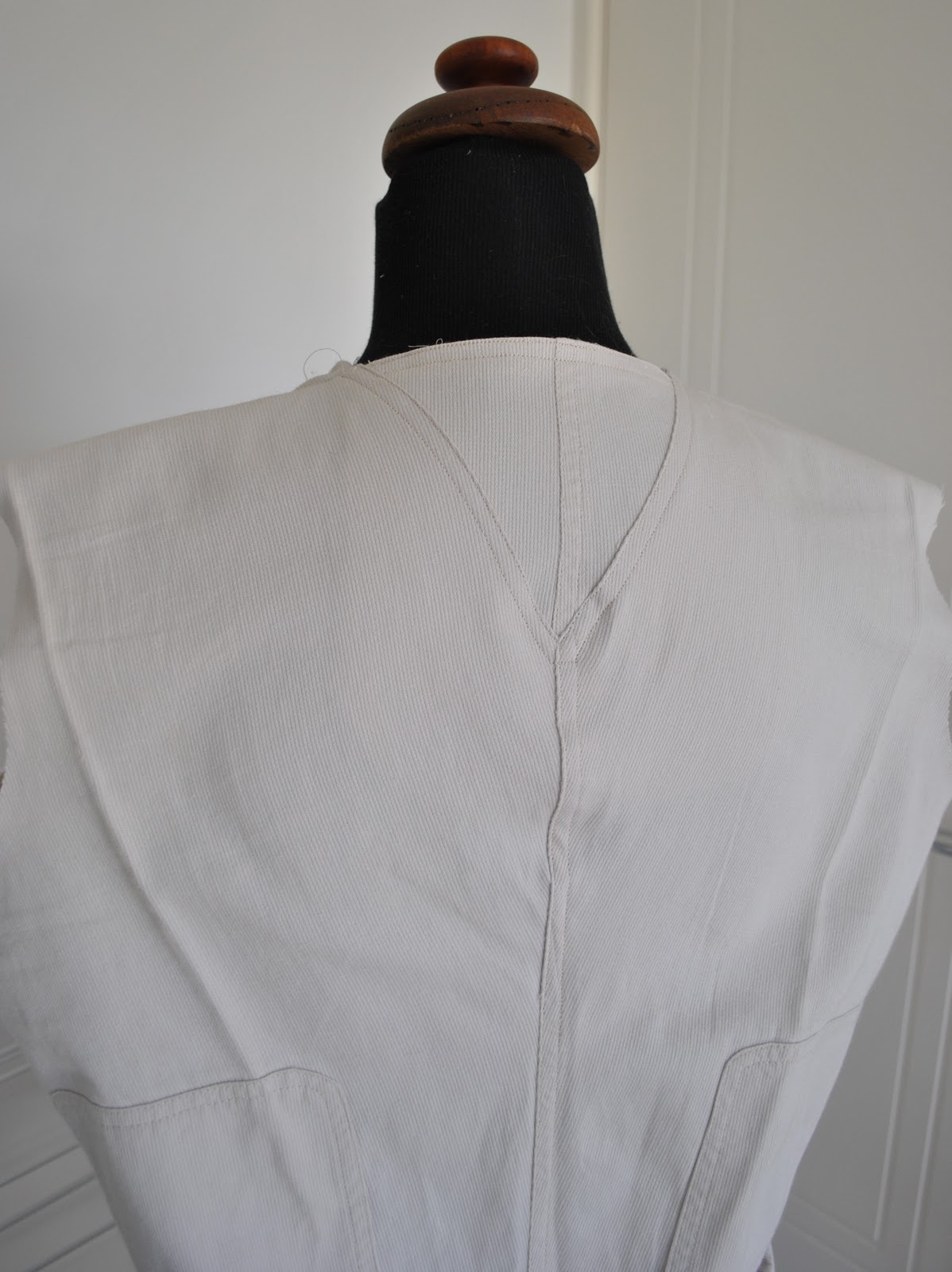
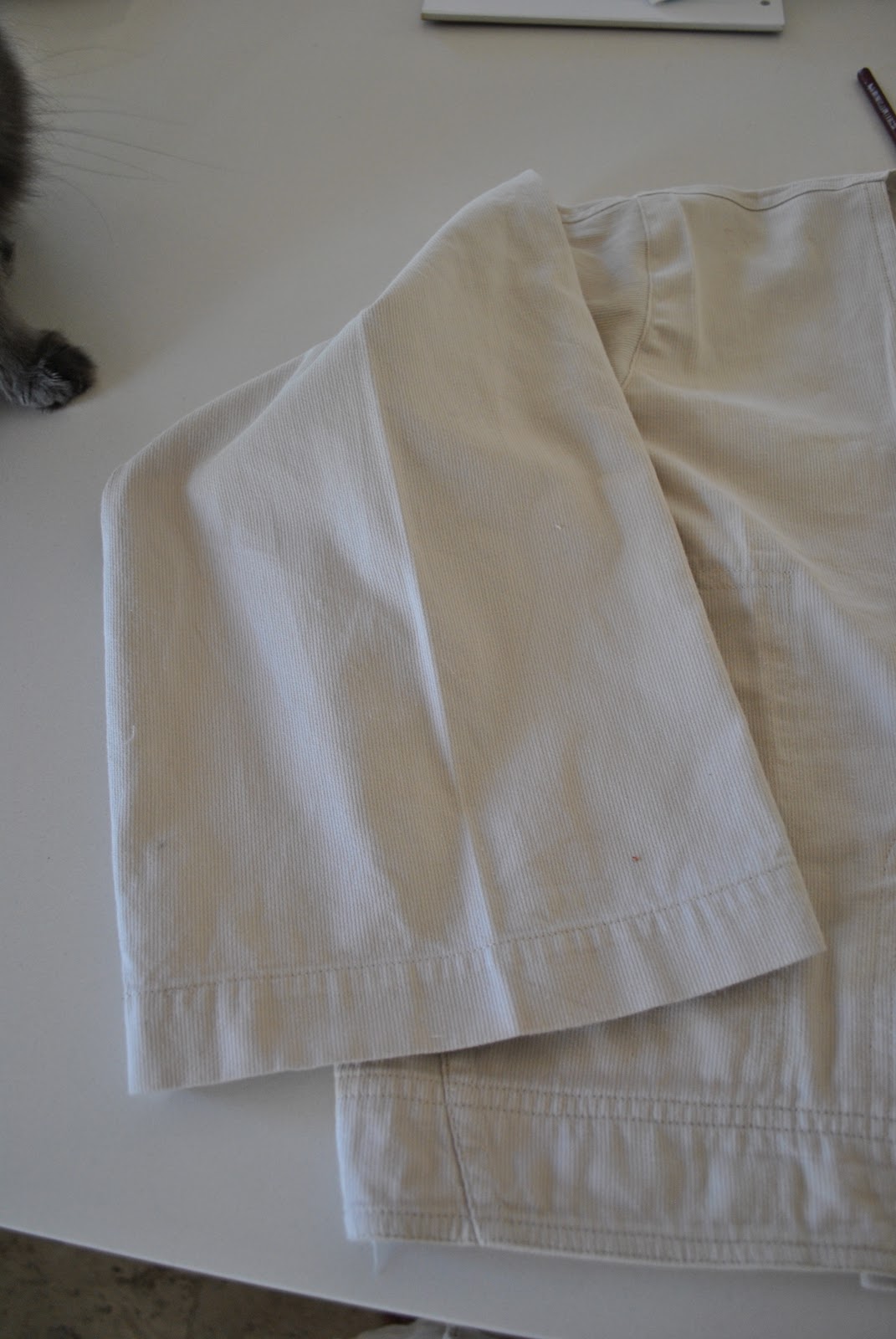
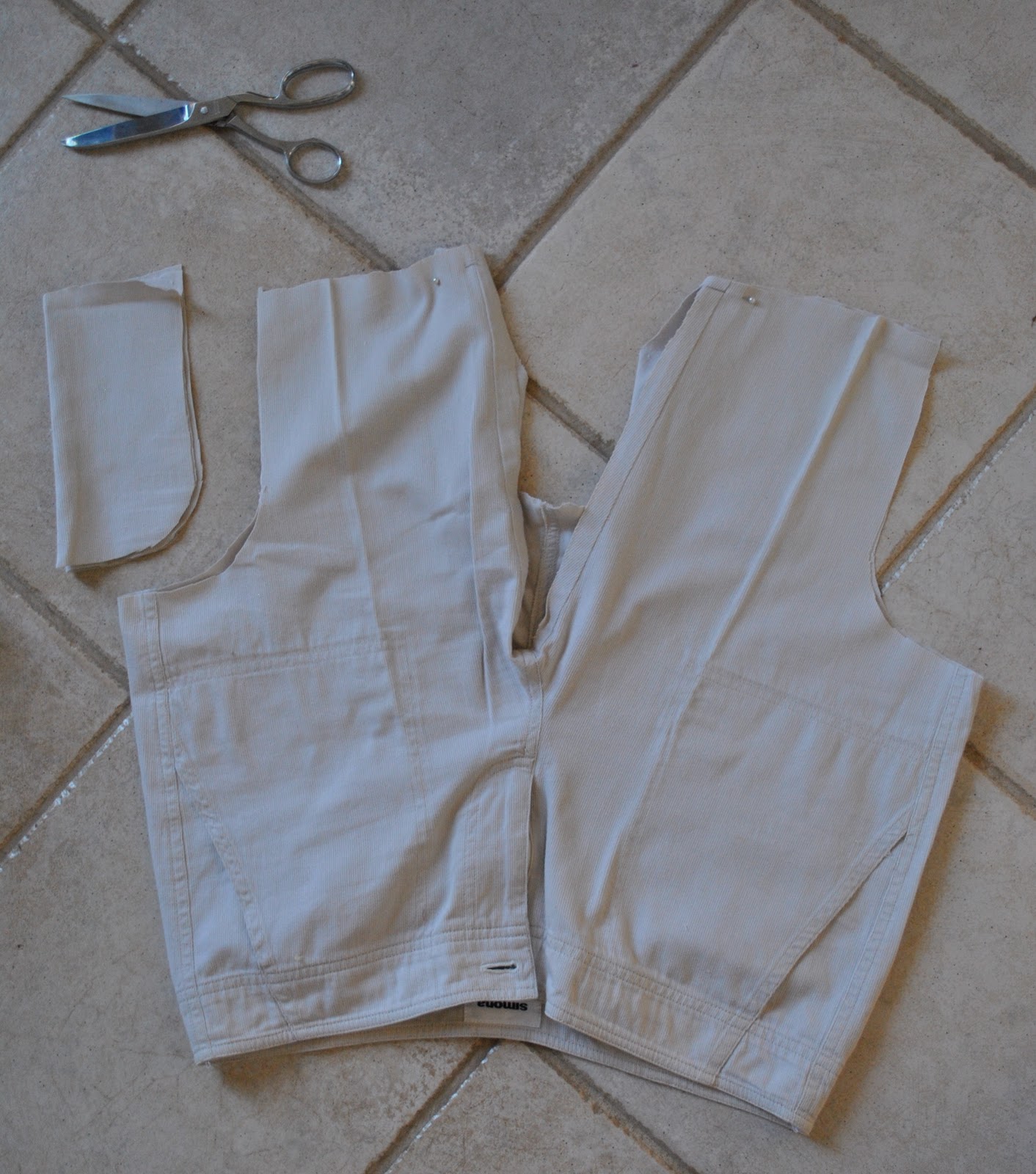
I cut along the inside leg seams, not the whole way down the legs but just in the crotch area, and put it upside down to be used as the bodice of my new jacket; with the cut-open old leg/crotch seam as the new neckline.  The excess leg tubes were cut off to be used later as sleeves.   I sewed the jeans legs together for my shoulder seam…
Cut away some of the side seam for an armhole edge.  This was my first armhole cut, which is why the armhole looks a bit too small; it took some trial and measuring to get that armhole length perfectly fitted to the sleeve circumference (“sleeves” being the old lower legs above I just cut off)…  In trialling something experimental like this I’m a big believer in cutting away not-enough and then having to take away a little more, rather than cutting too much to start with and then regretting it…  (Horrible sentence, but I’m sure you seamstresses know what I’m talking about there)
I used one of these armhole cutouts to cut a triangle to fit in the V of the back, and sewed it in, mimicking the double topstitching featured elsewhere on the jeans…  Oh, I did have to unpick the curve of that back centre seam some and re-sew it to be straighter before this step…. again mimicking the double topstitching for continuity.  The top of this back neck edge was finished on the inside with a short strip of bias binding for stability.  As for the back; the curved part of the front crotch seam was unpicked a little bit and resewn to be a straighter seam, and then the V of the front neckline was folded in and finished also with double topstitching.
Set in the sleeves.  The sleeve hems are just the old jeans hems and were left intact for ease of finishing.
I topstitched closed the edges of those slanted front pockets, and removed the back pockets (now upside down) from the back of the jeans and repositioned them right way up onto the front of the new jacket.  See, the waistband of the jeans is still the waistband of the new jacket, and that fly can still be unbuttoned and unzipped for ease of taking on and off; just that it’s upside down now…
Et voila!
Details:
Jacket; my own design, refashioned from an old pair of light cotton twill pants
Skirt; my own design, based on the shape of Vogue 7303, black lace and black lace strips
Tshirt; Tbox
Thongs; Mountain Designs
pinterestmail
Switch to mobile version
↓