Tag Archives: Tutorial

Lichen shot-cotton shirt

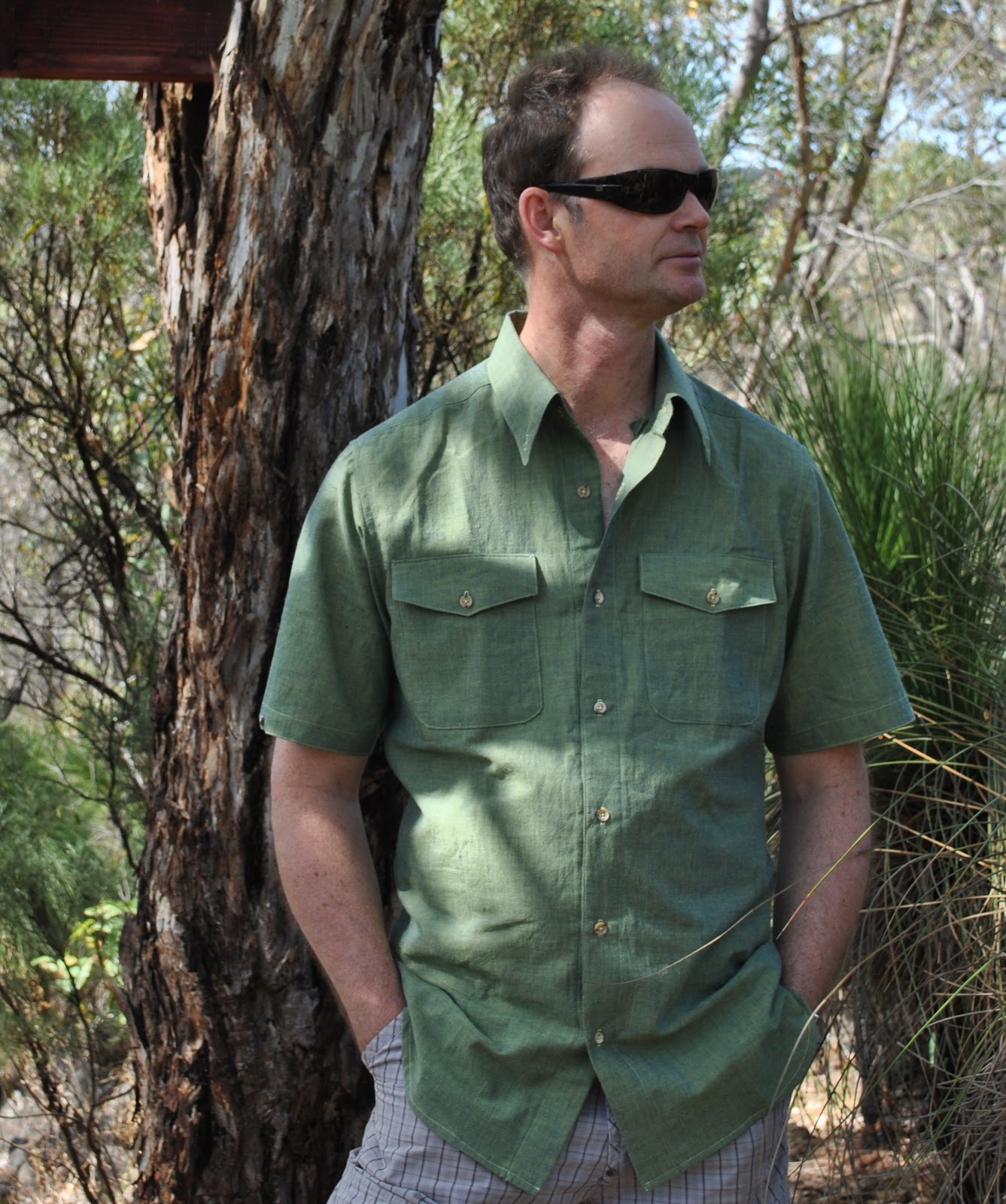
This is a shirt I made for Craig for his Christmas present, cut out and made up in lots of super secret cloak-and-dagger sewing sessions… although he did help choose the fabric a year ago, so perhaps he might have had some inkling…
But he was nice enough to act satisfyingly surprised and delighted when he opened his present.
The fabric is Kaffe Fasset shot cotton, bought online from purlsoho.com, only the second time I’ve bought fabric in this way.  Usually I prefer to feel the fabric myself with my own two hands to weigh up its suitability to the project I have in mind before purchasing.  Actually “prefer” is too soft a word; I consider this a non-negotiable essential rule for buying fabric…  But I’m familiar with Kaffe Fasset cotton, having come across it before in a local shop (Calico and Ivy), so I knew it would be a good choice for lightweight summer mens’ shirts.
This fabric is a dream to work with, and as the word “shot” implies, has a bright cobalt blue warp combined with an intense acidic yellow weft, to give the fabric this deceptively subdued mossy green hue.  I chose thread exactly matched to the yellow of the weft, for all the topstitching.
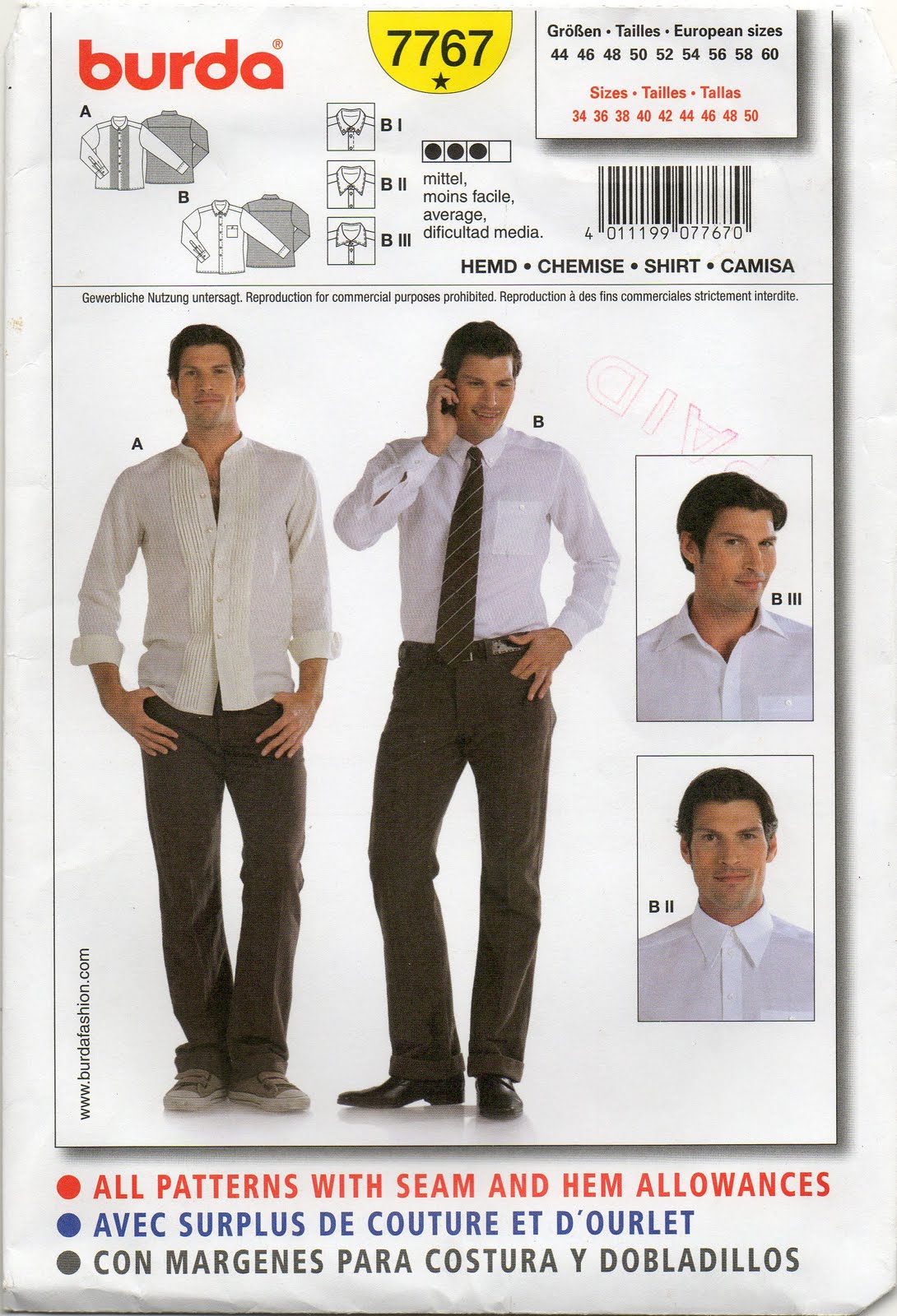
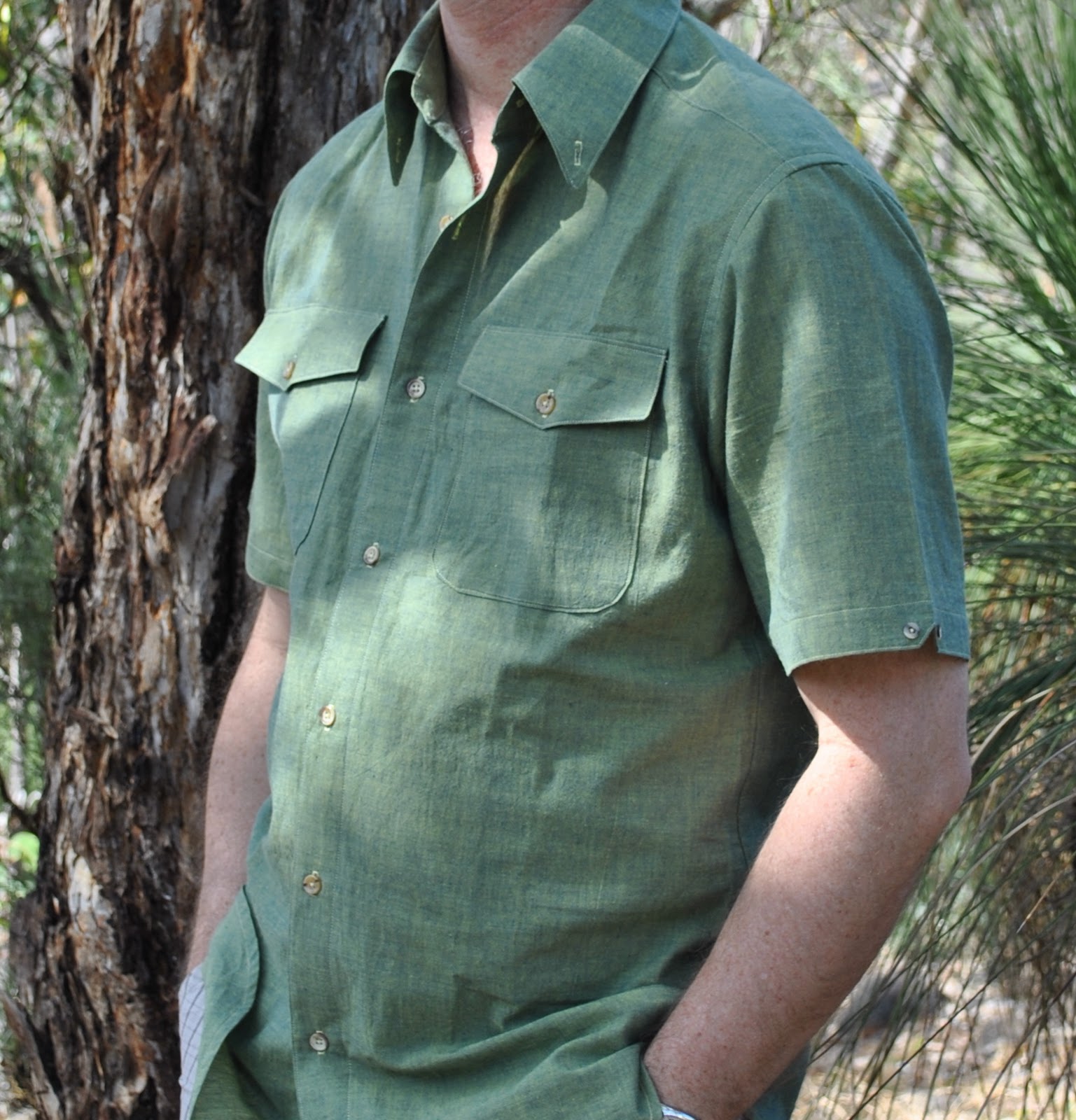
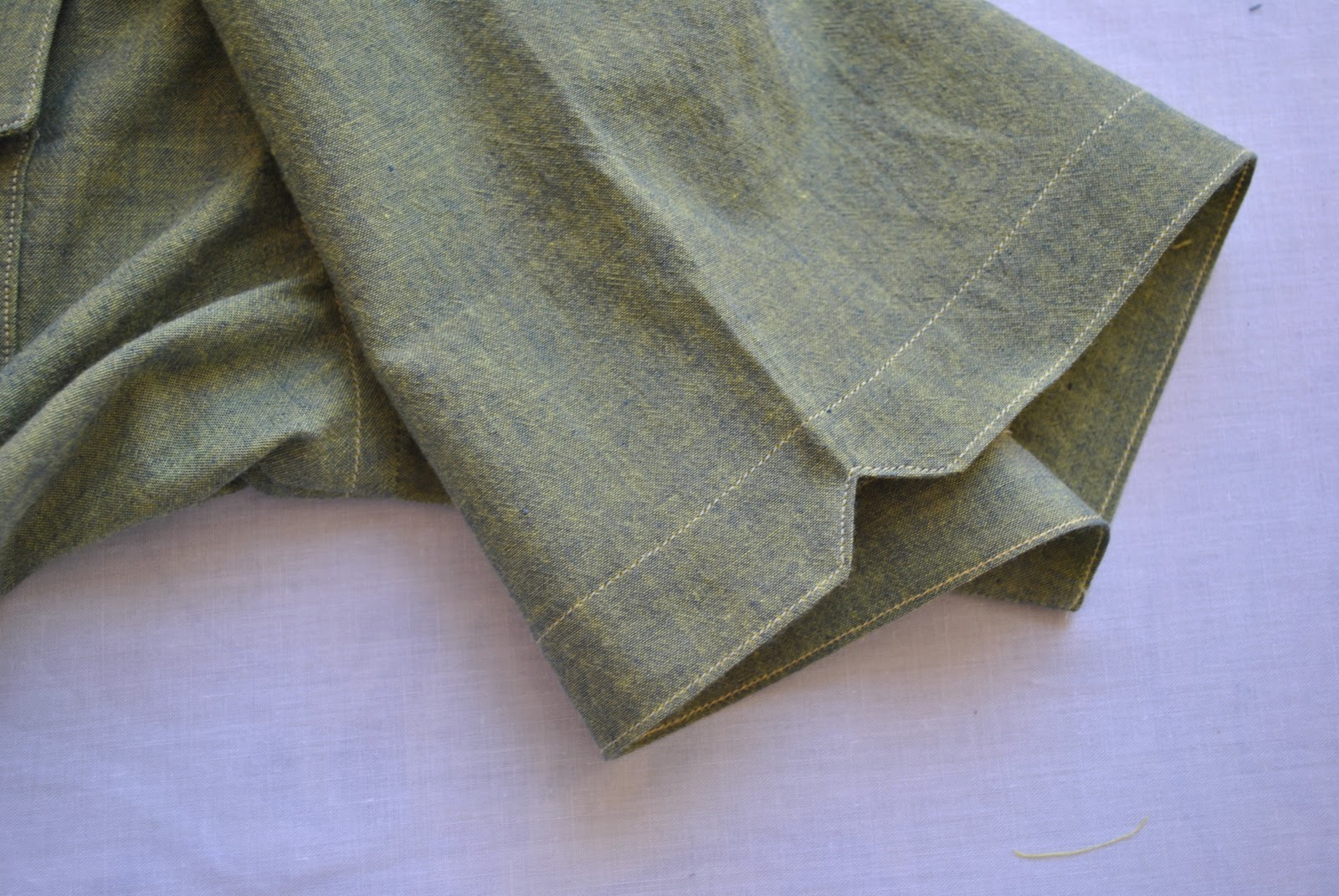
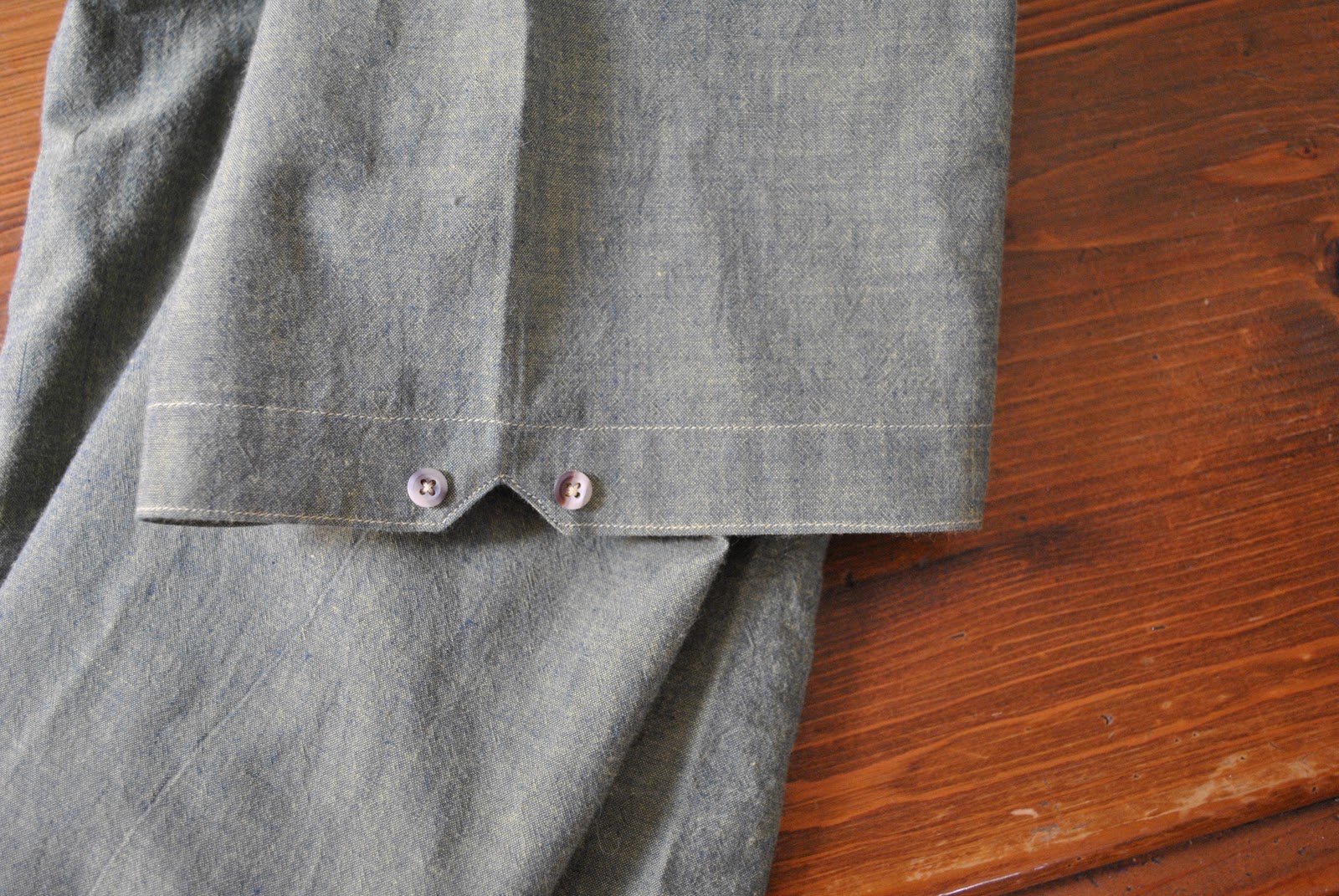
Same old same old Burda 7767 again, with his custom fitting modifications, plus two breast pockets with shaped flaps and a longer curved hem.  Well, with the shorter sleeves as well obviously, and also I added a little decorative button detail to the sleeve hems for fun.

Very easy; here is a quick how-to…
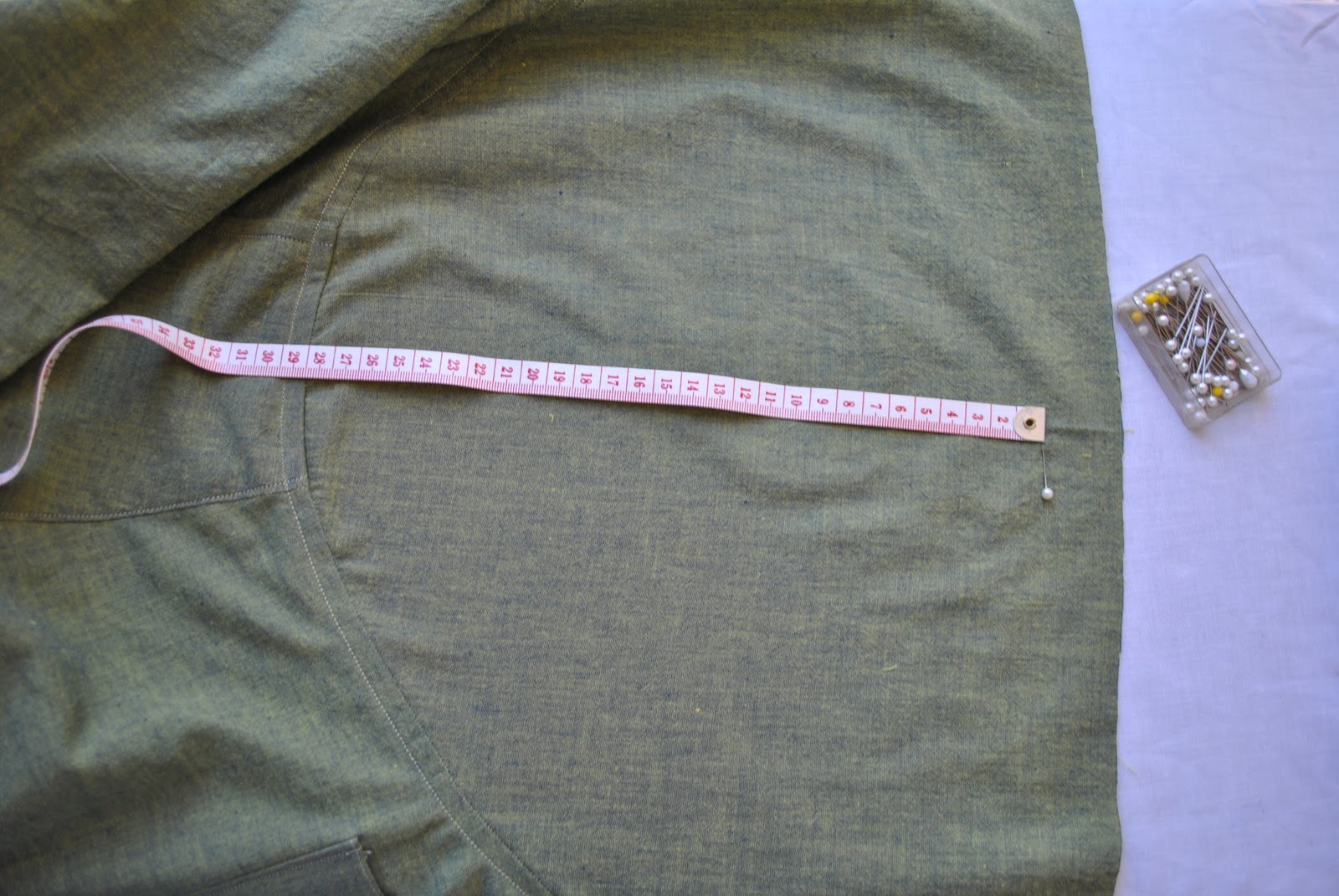
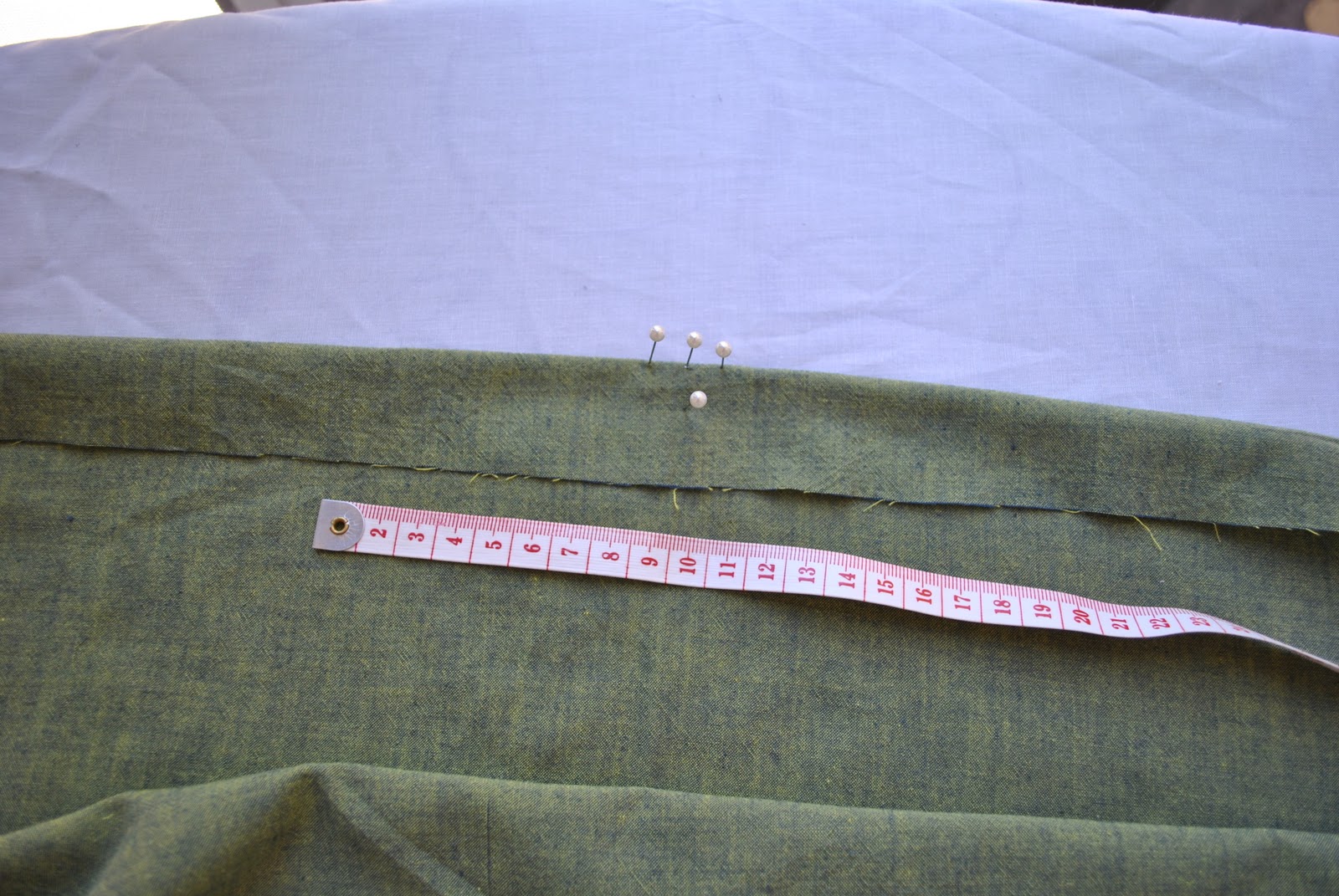
Before sewing the sleeve and side seams, measure the desired length of sleeve from the top of the sleeve cap and mark with a pin

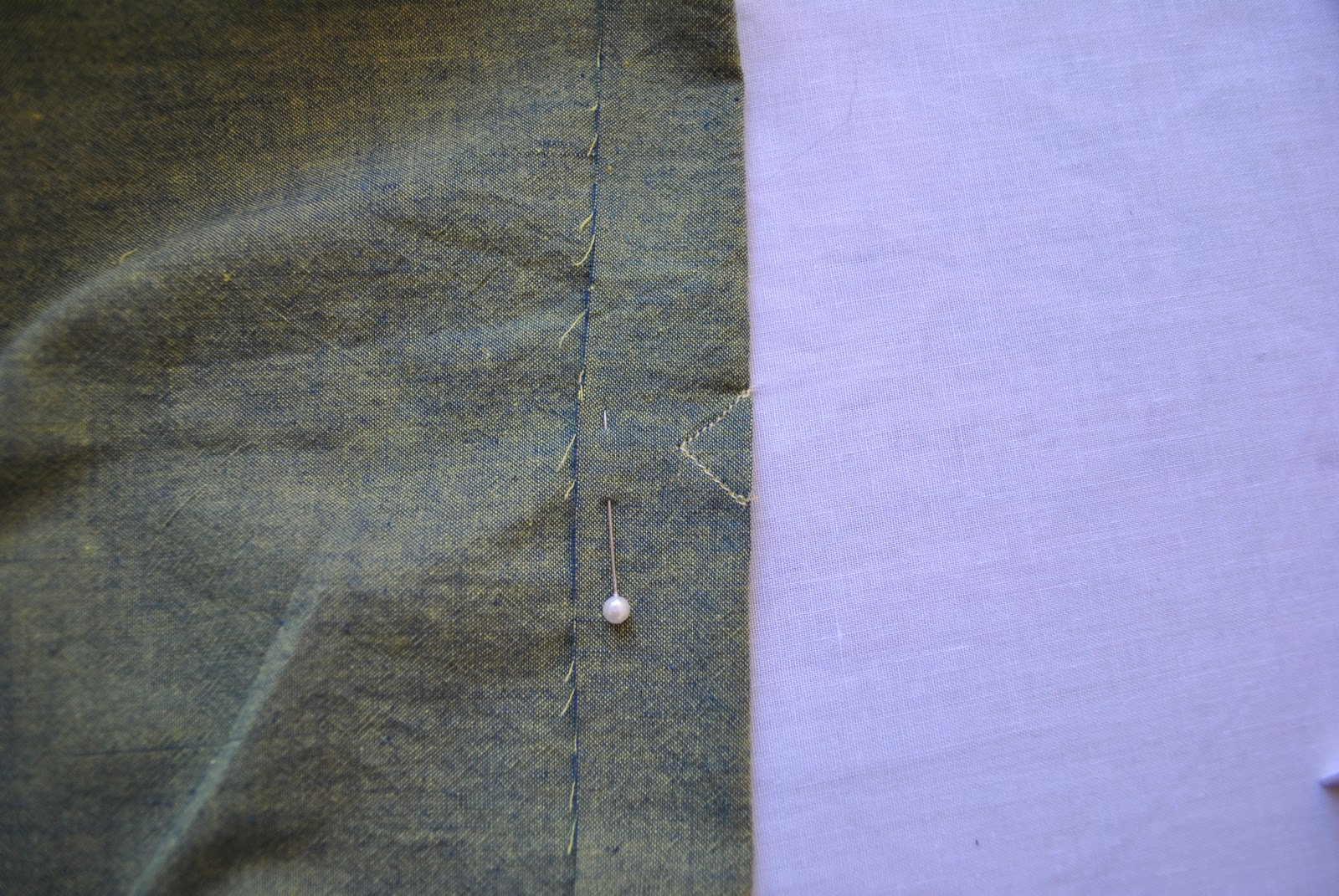
Turn back the seam allowance, right sides together and mark centre point.  Also mark with pins points 1cm each side of centre point, and 1cm into the seam allowance, creating a little right-angled triangle on the sleeve edge.
Sew along the two short sides of this little triangle, trim and clip into the corners.
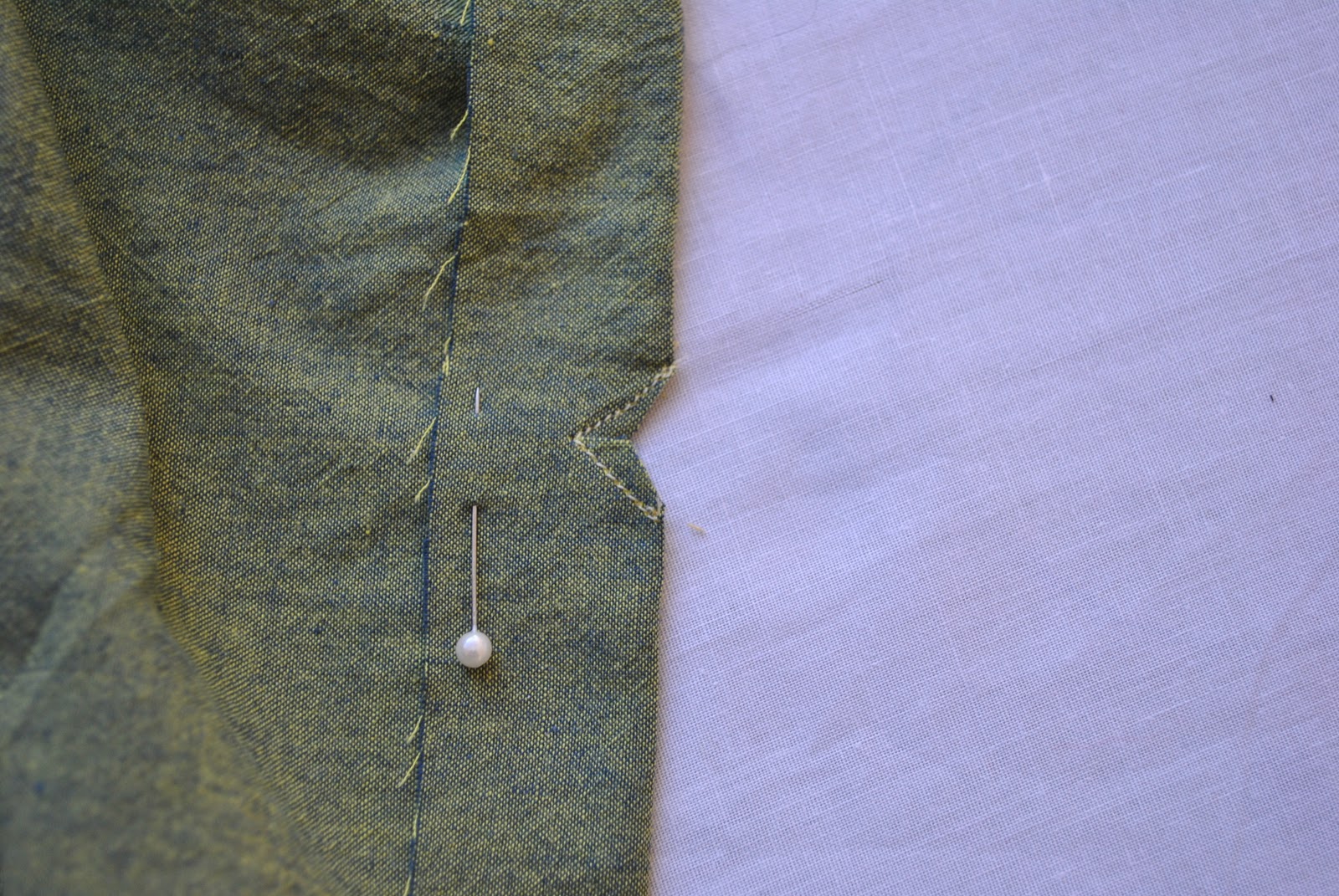
Turn the seam allowance to the inside of the sleeve, wrong sides together and press.
Now sew the sleeve and side seams as usual…
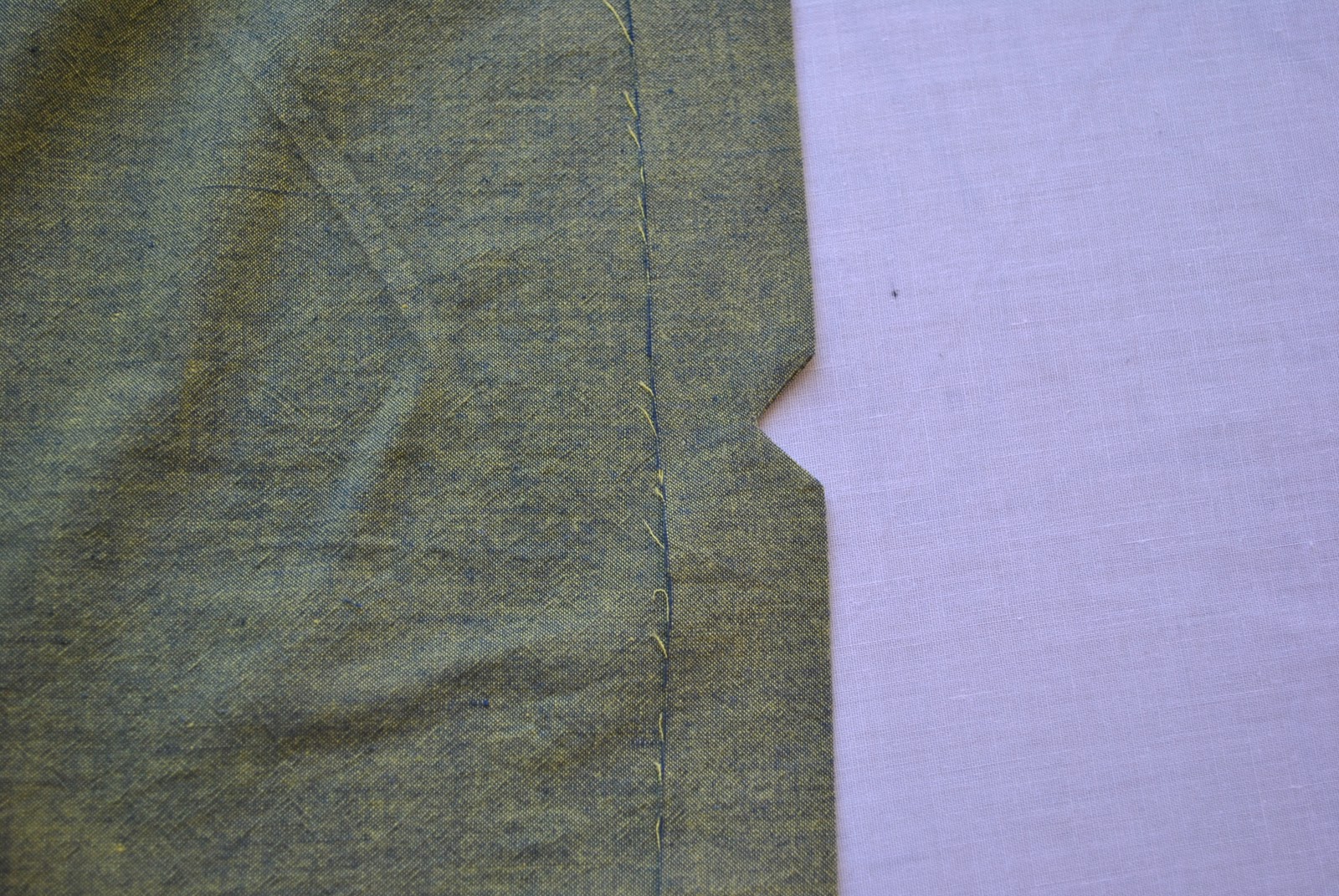
and turn up, press and sew the sleeve hem allowance as normal.  I topstitched along the hem edge to help hold those little peaks in place.
And finally, sewed some smaller (4mm) buttons on the peaks.  A side note; it took me ages to find the two different sized but matching buttons for this shirt…  got these from Fabulous Fabrics.  I used these smaller buttons for the collar button-down too.  (Is there a correct term for that?)
Cute, no?  I think this would look even cuter with an acute angle… haha.  
See, I made a little joke.  
Hmmm.
pinterestmail

Drafting a new bodice…

For my Christmas dress this year I have visions of a dreamy floral dress; tight bodiced but with a big big skirt… this is not a look I’ve worn very often, if at all so it’s quite possible I am going to look ridiculous in this!  However whenever I see ladies wearing these big skirted bright floral numbers I think how lovely they look, really so feminine and pretty.  I’m not sure if I can carry this off or not, I hope so but we’ll see…
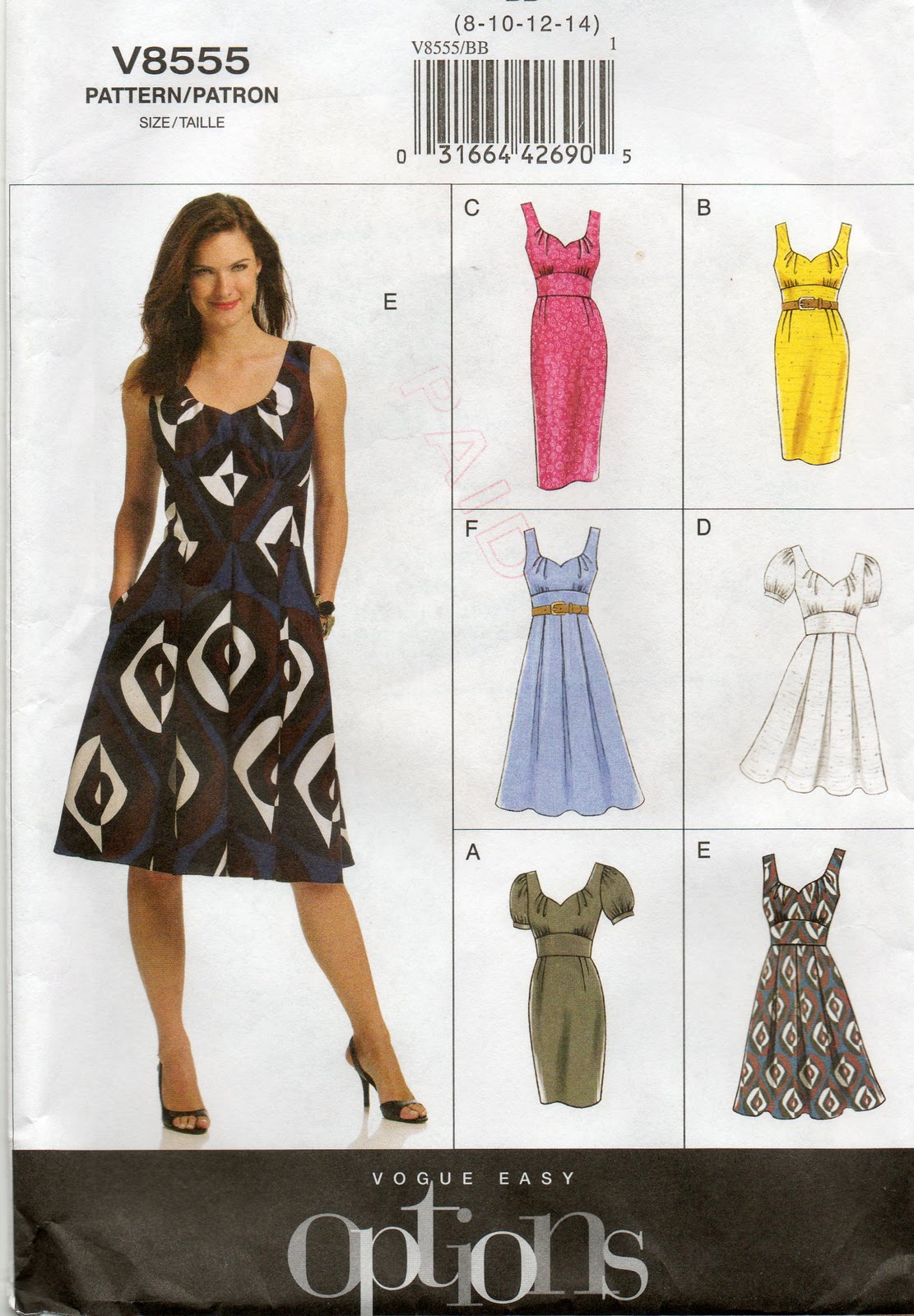
I’ve had this pattern for a while but not yet used it; one of those buy-one-Vogue-pattern-and-get-three-free deals.  I bought it because I was swayed by the nice illustrations on the front and thought, hey, a useful basic dress pattern, OK!  And promptly put it away, never to see the light of day again…
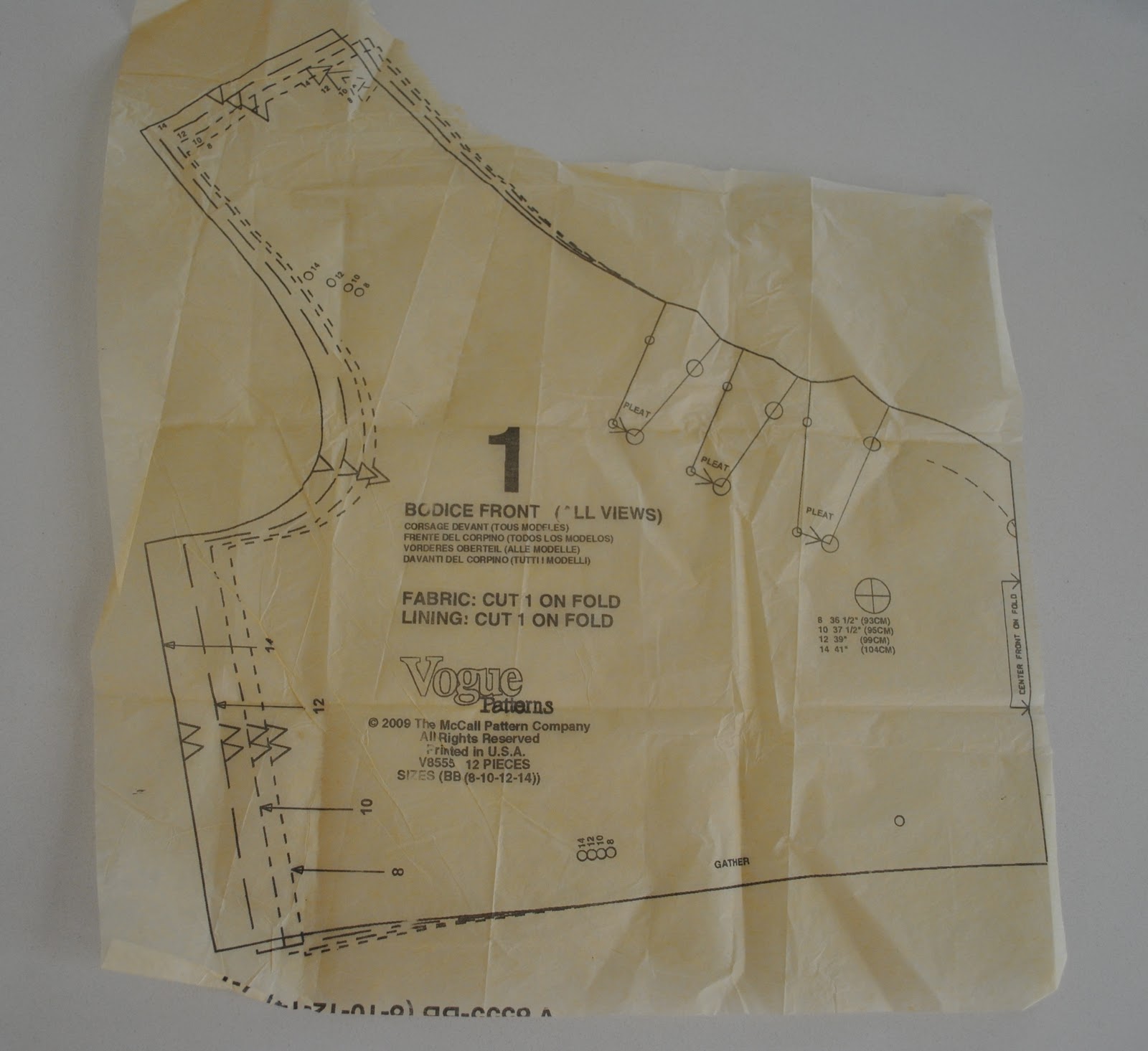
I like the skirt but the bodice is very not me… 

Just a bit too poofy and gathered and flouncy.  Even just looking at this pattern piece I already know this volume of fabric in a bodice would be just too over the top for my figure, the words “deflated balloon” spring to mind…  But I had a firm idea in mind of the kind of bodice I wanted for this dress; something with a bit of interest, some pleating but still quite fitted.  So the following is what I came up with, inspired by a dress I had seen somewhere, not sure where now…
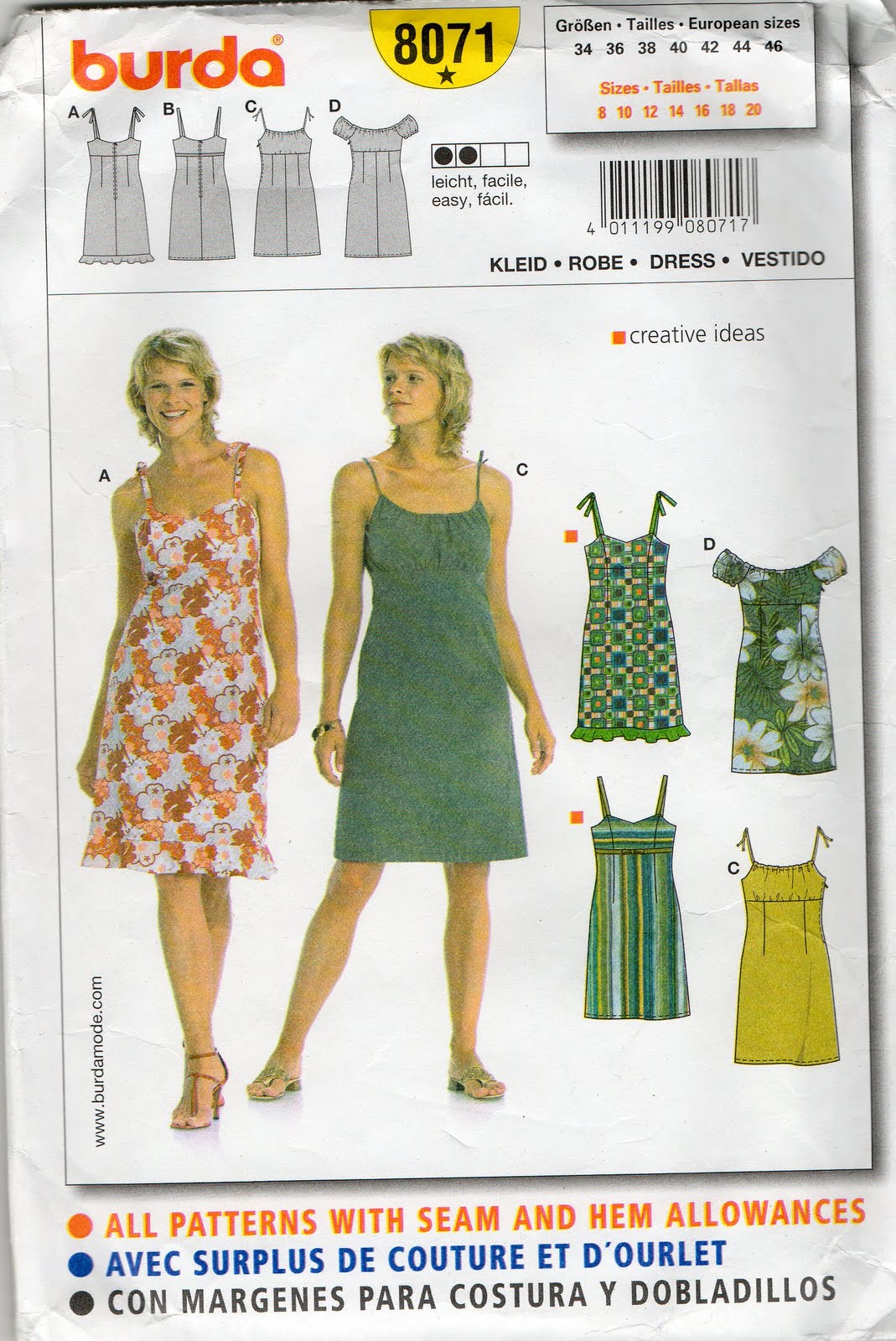
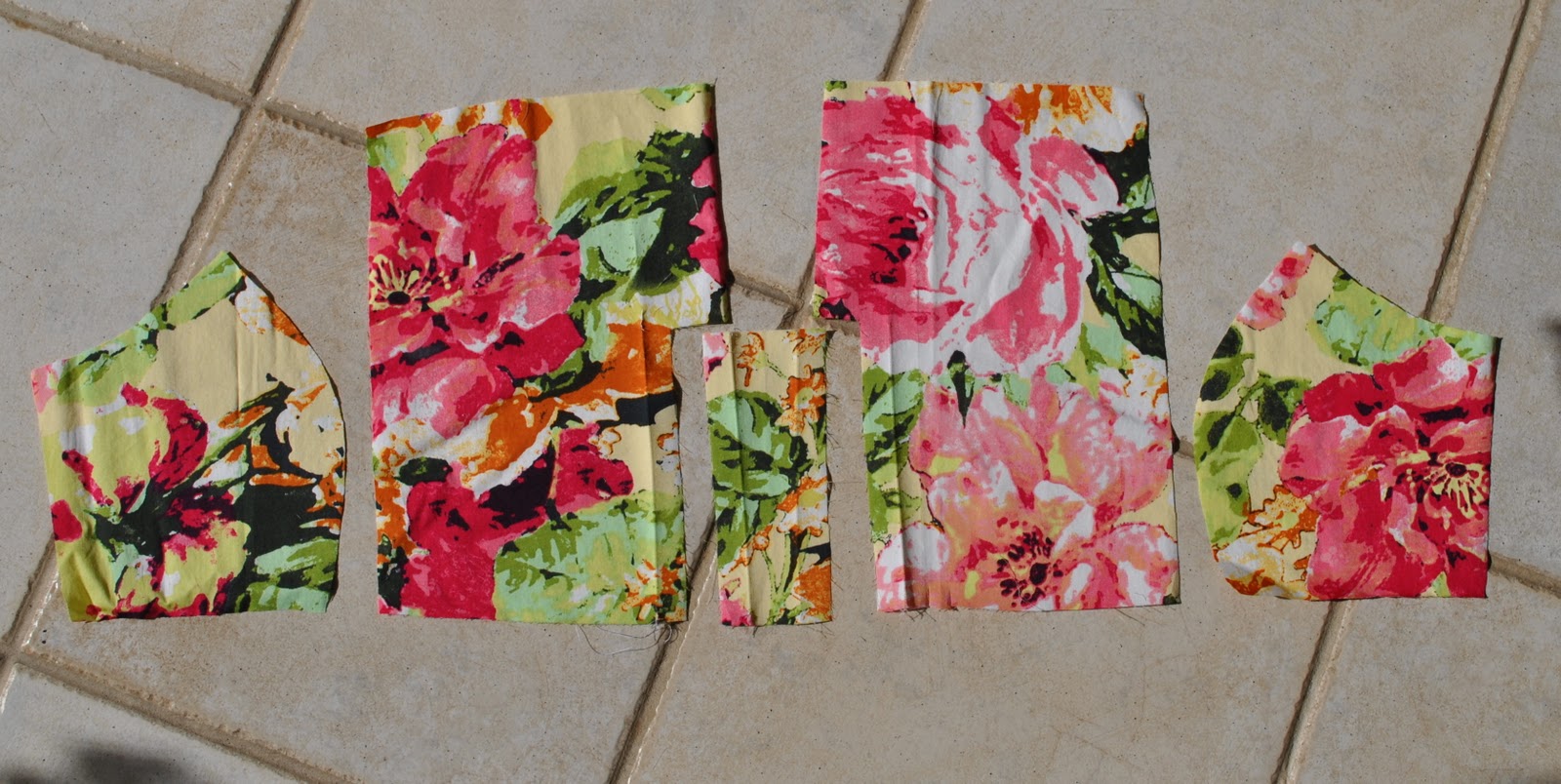
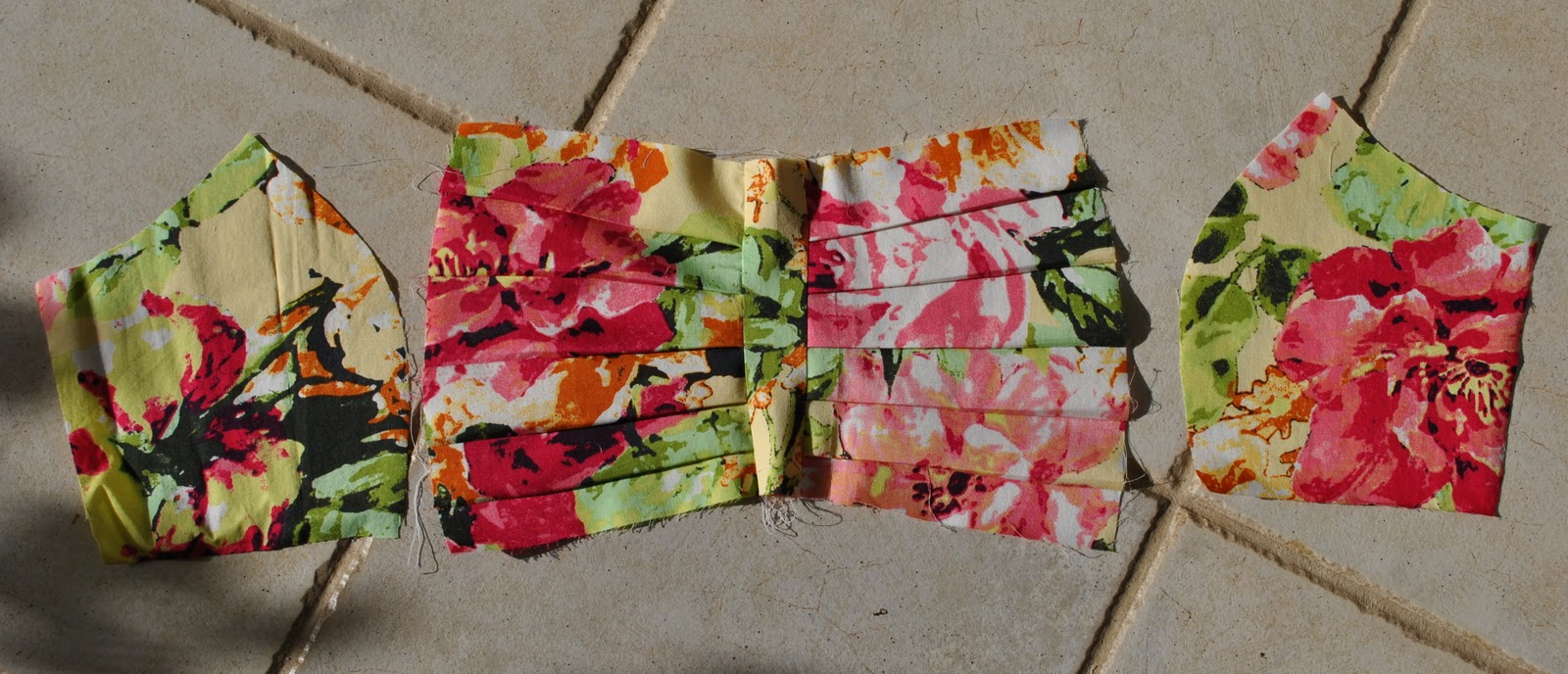
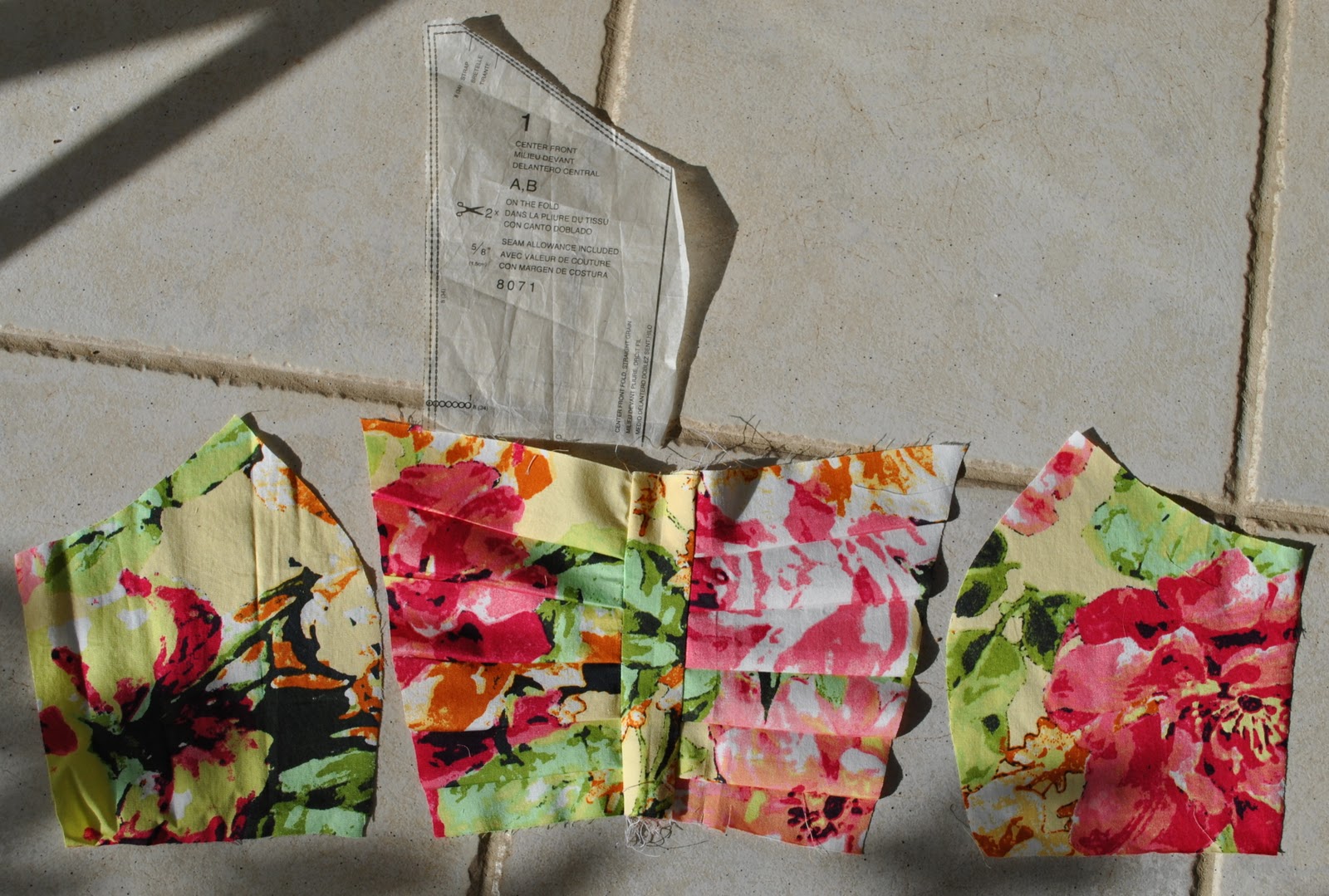
Burda 8071 has a very simple, streamlined, princess-seamed bodice that fits me perfectly, so I used this to cut out two side fronts.  For the front; I cut out a slightly sloping centre panel, and two long rectangles for my pleated sections… (I did cut off those two jutty out bits at the centre top of the rectangles after taking this, just ignore them, sorry)

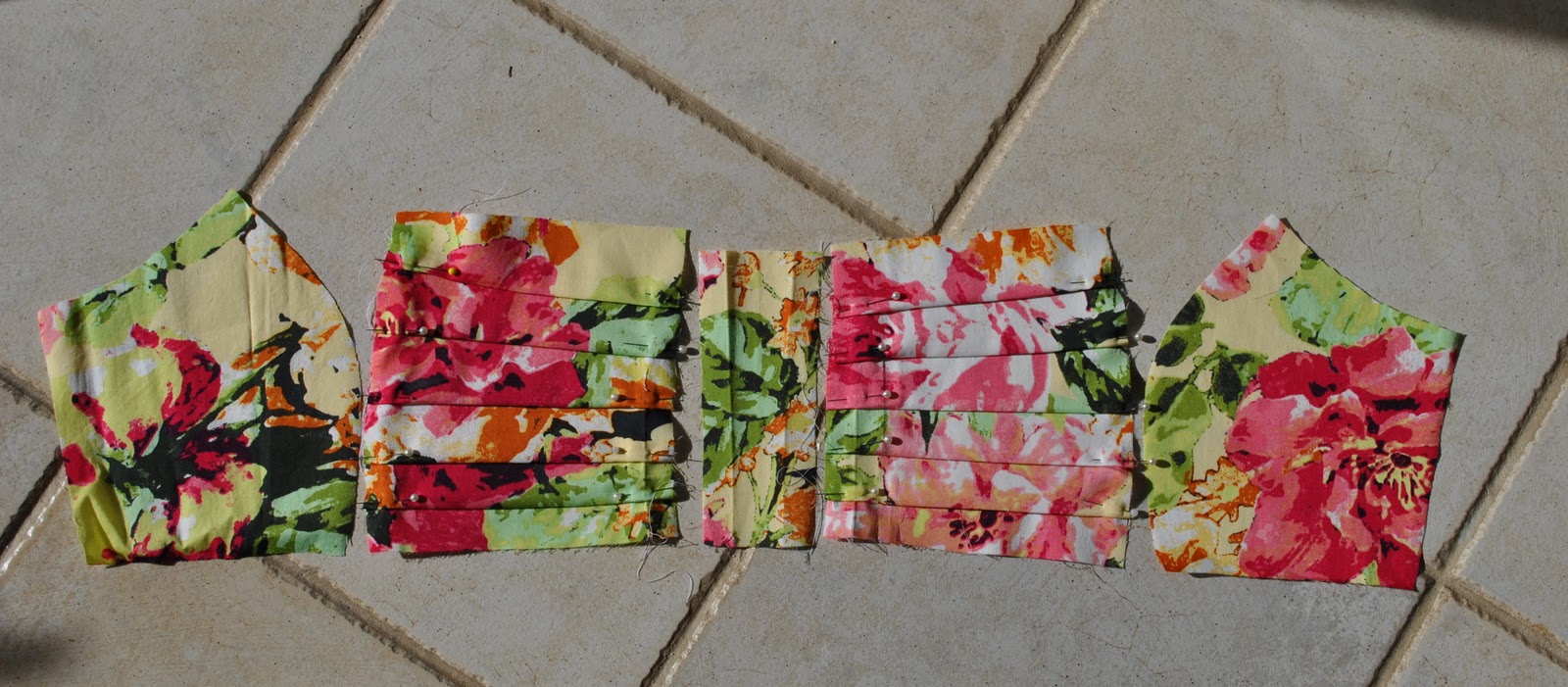
Carefully measured out the pleats, alternating 2cm and 3cm gaps, and pinned, folded and pressed in place…

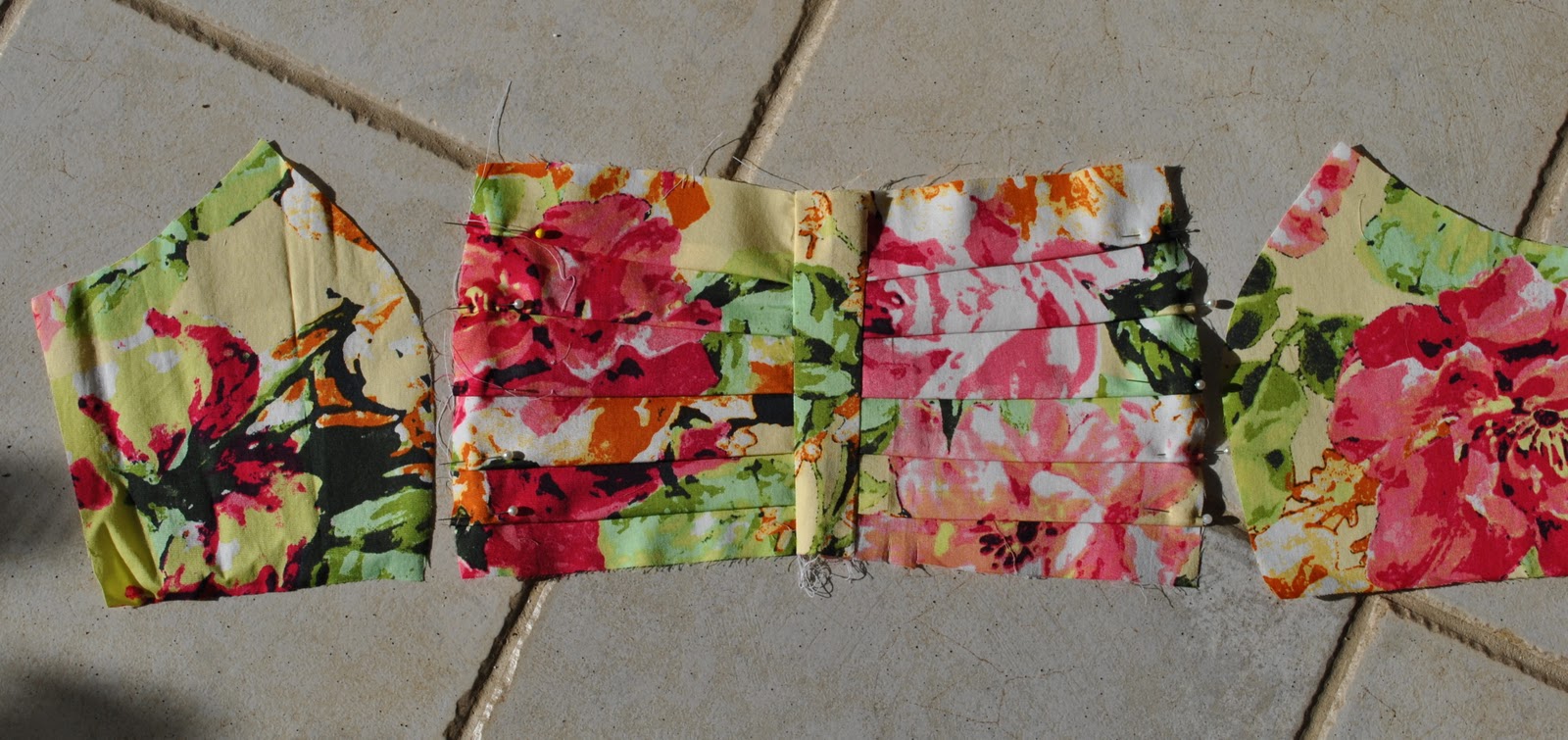
At the back I sewed the peaks of the pleats in 0.5cm seams, and sewed the little skinny centre panel to the pleated panels at their centre edges. 

I then fanned out the bodice at the outer edges, leaving pleats of 2cm depth at the centre edge of the panels, and 1cm depth at the outer edge.  I’m aiming for a bodice with nicely sun-rayed pleats here…

Then finally used the Burda 8071 centre front pattern piece to cut out a centre front.  I left the top centre edge high and uncut, so the centre front is not cut as deep a “V” as the pattern piece above it.

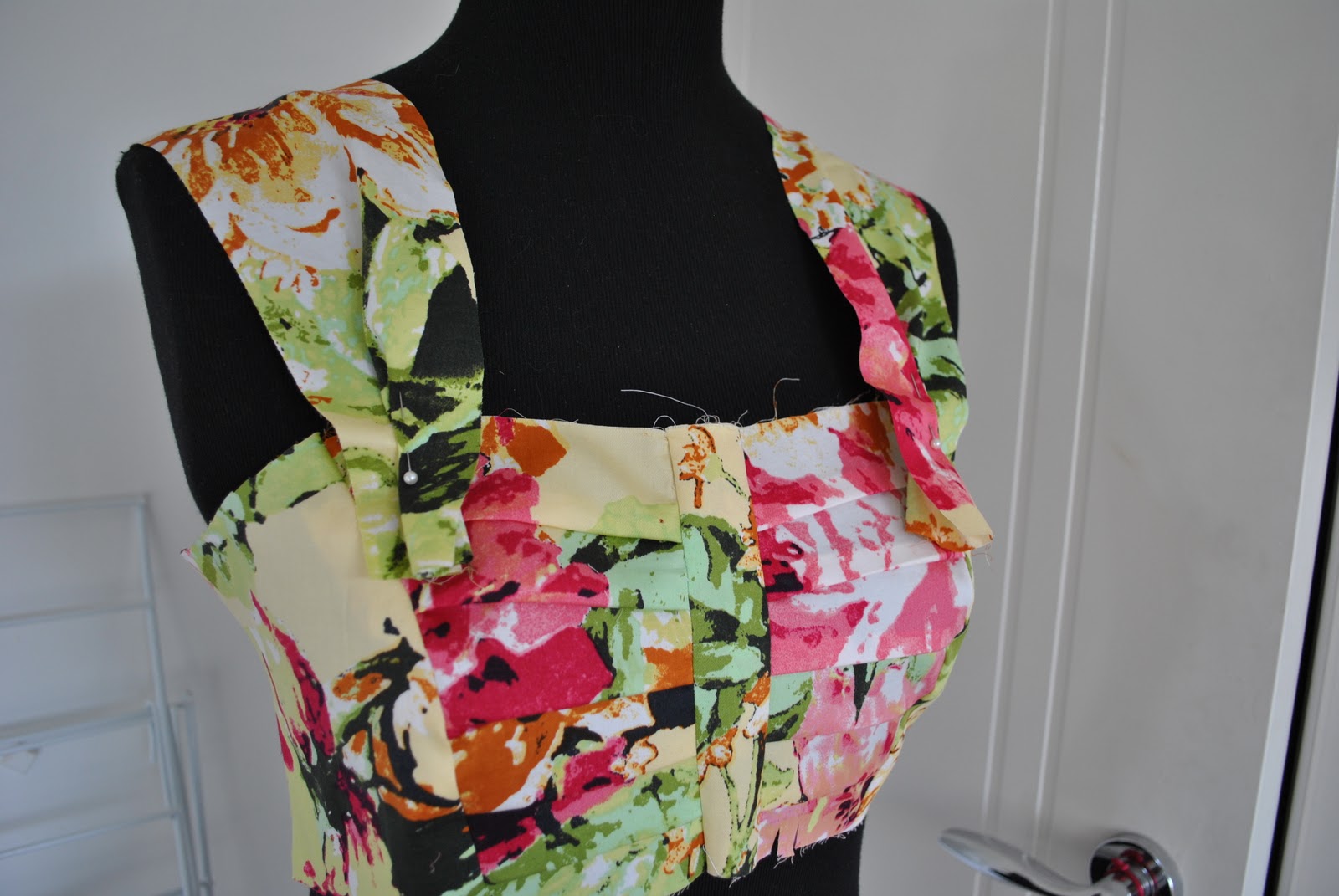
Sewed the side fronts to the centre front piece…  For the shoulder straps I used two rectangles, slightly curved… pinned them how I wanted them to be on the bodice, with a little pleat at the bottom…

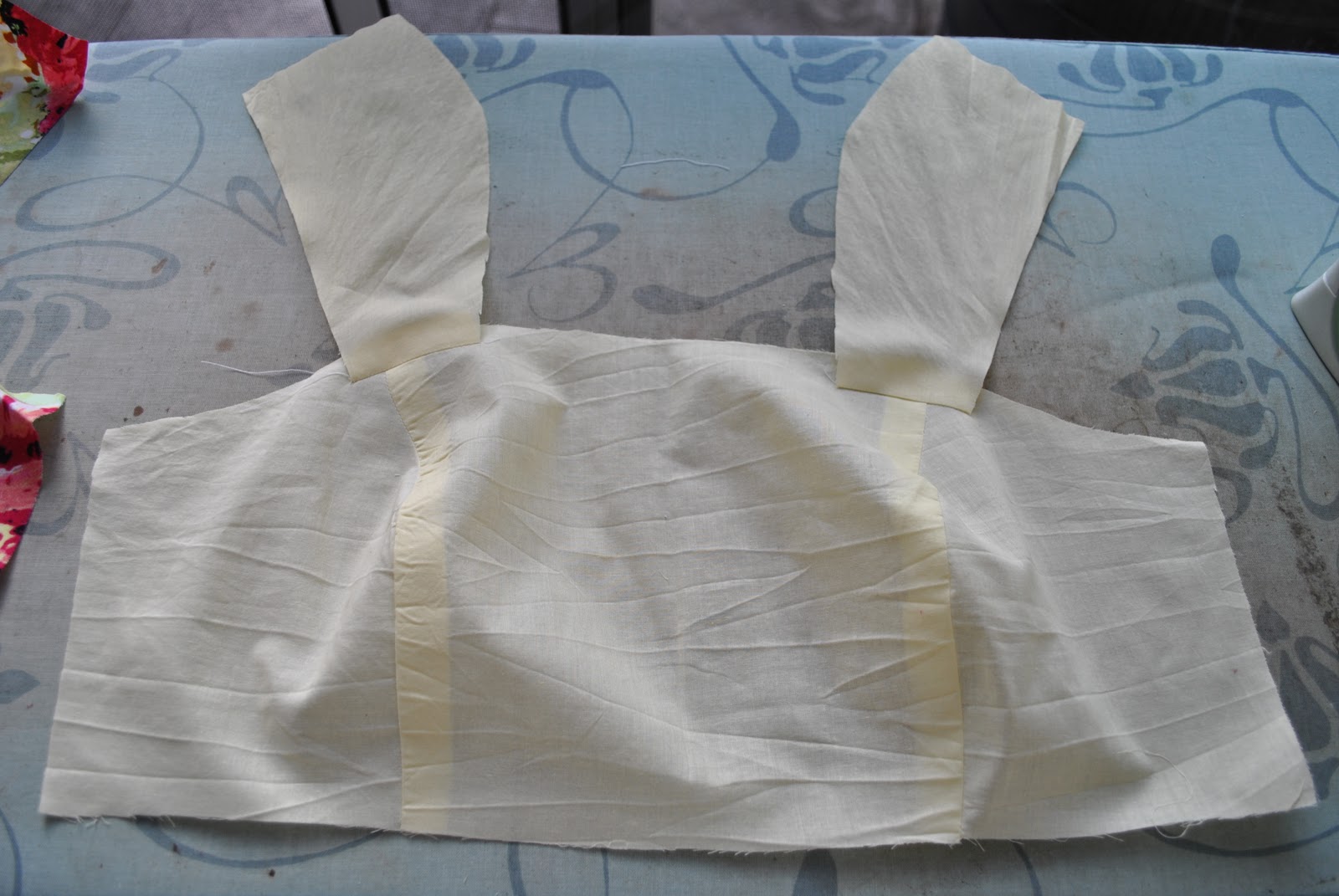
The lining pieces were cut with no pleating.

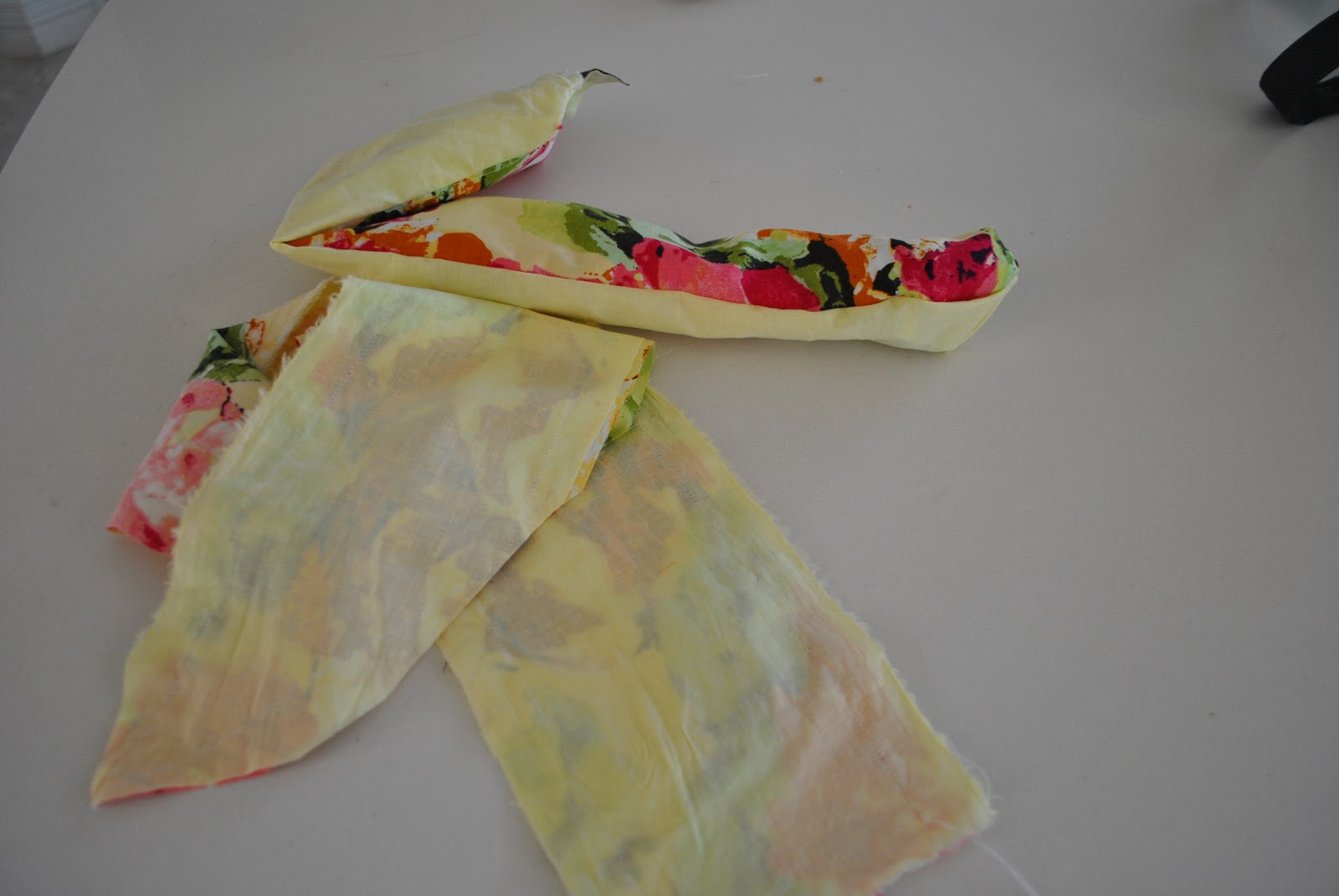
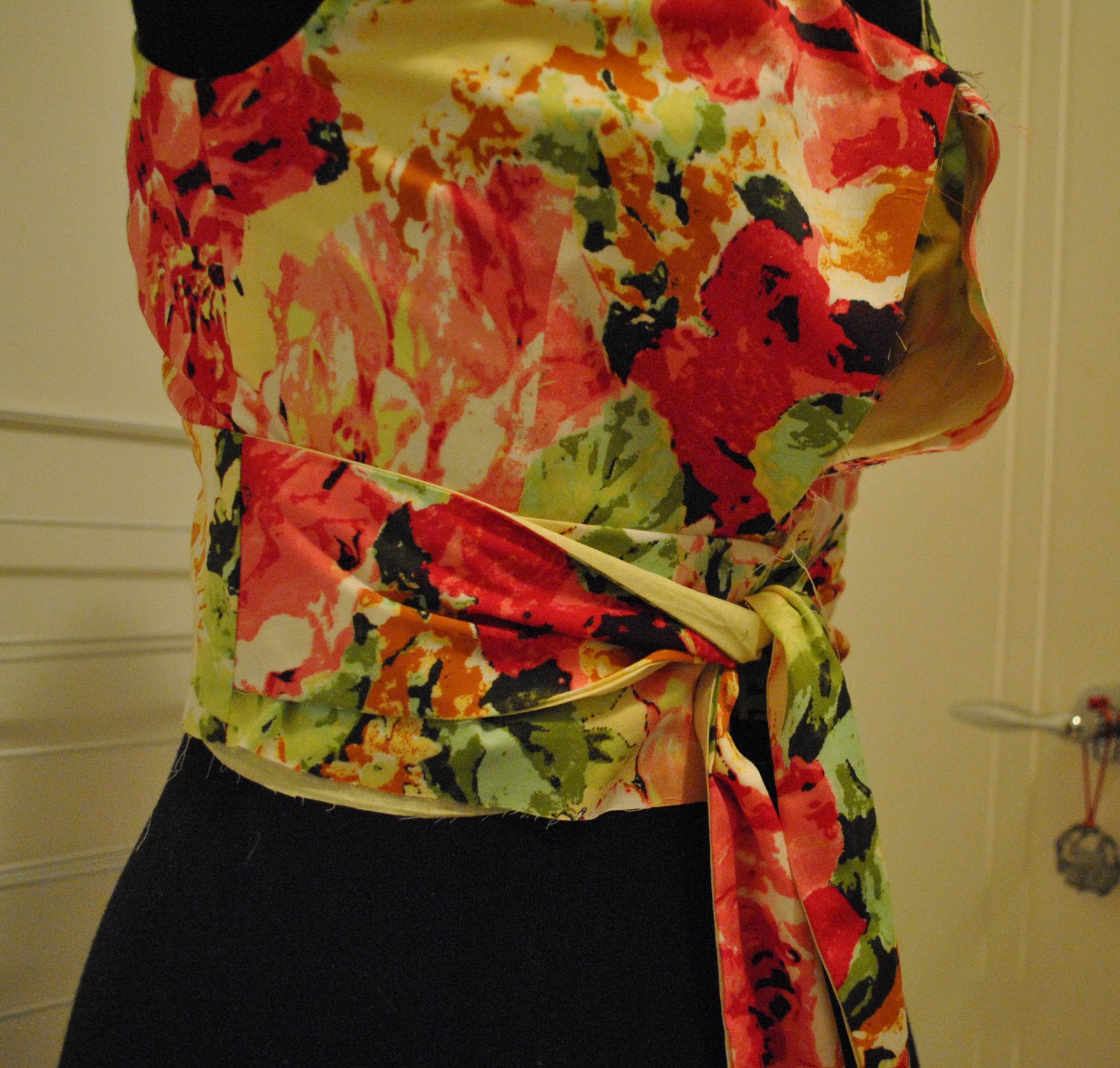
I also wanted a waist tie at the back of the dress, to pull in the waist and nip it in.  This was a simple matter of cutting out two long rectangles, of equal width to the back midriff pieces, with a long angled edge at the end.

These were sewed in the side seams of the midriff pieces, before attaching the midriff piece to the bodice.

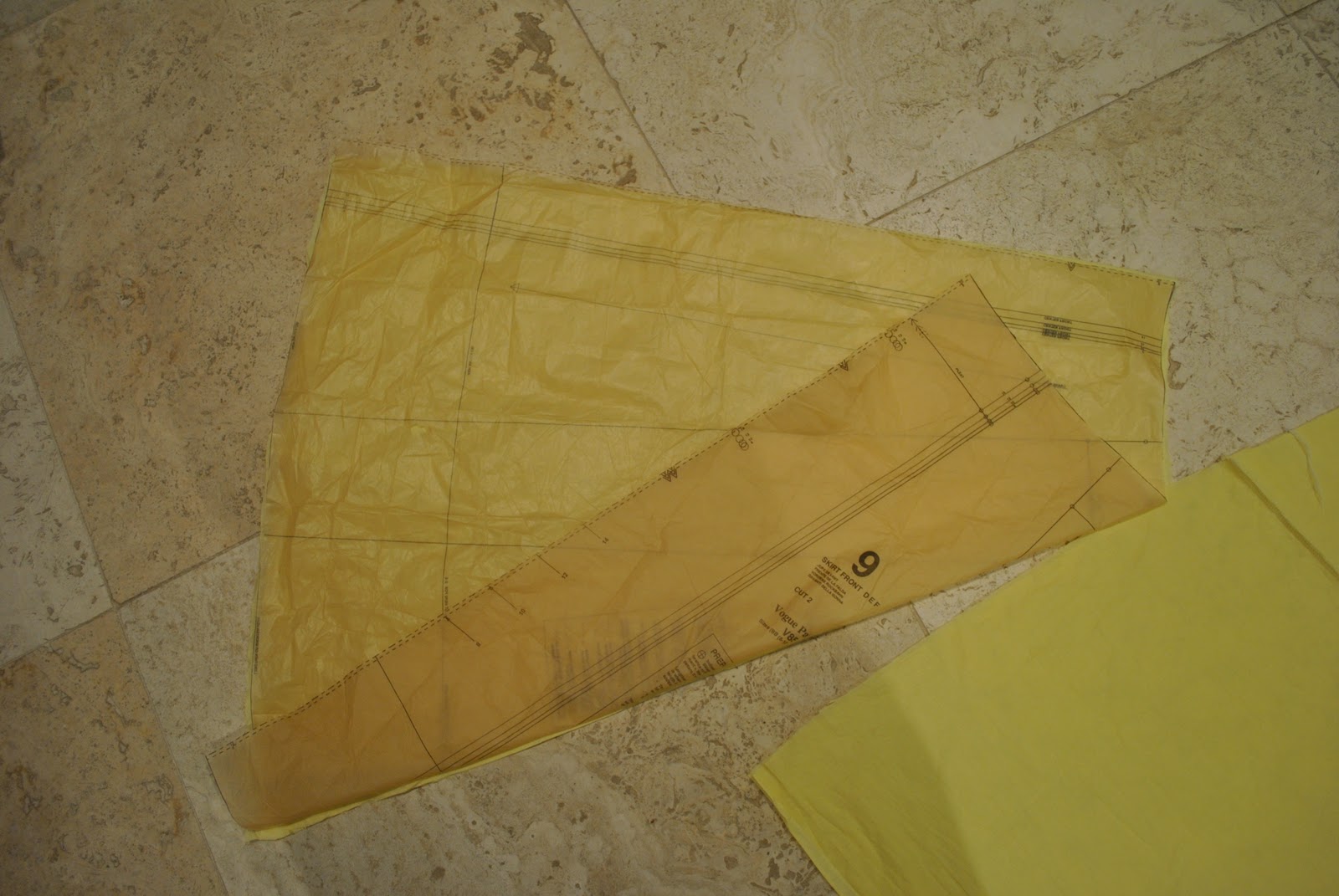
For the skirt; the fabric I am using is not sheer so a skirt lining is not essential.  However I like for the innards of my dresses to be finished as completely and as beautifully as possible, and I also wanted a big flared petticoat effect with this skirt, so I cut out two skirt pieces using the facing fabric.  The skirt of this pattern is a quite densely pleated as well as flared skirt, and while I wanted the flare I didn’t want that extra bulk of a pleated waistline on the petticoat (slimline, please!) so I cut the petticoat pieces to be straight A-line, with no pleating at the top.

This is a work in progress…   I have several top-secret Christmas sewing projects on the go as well as this, and I will post pictures of these plus this dress on or after Christmas Day…
Later dudes!

pinterestmail

Wicked mask

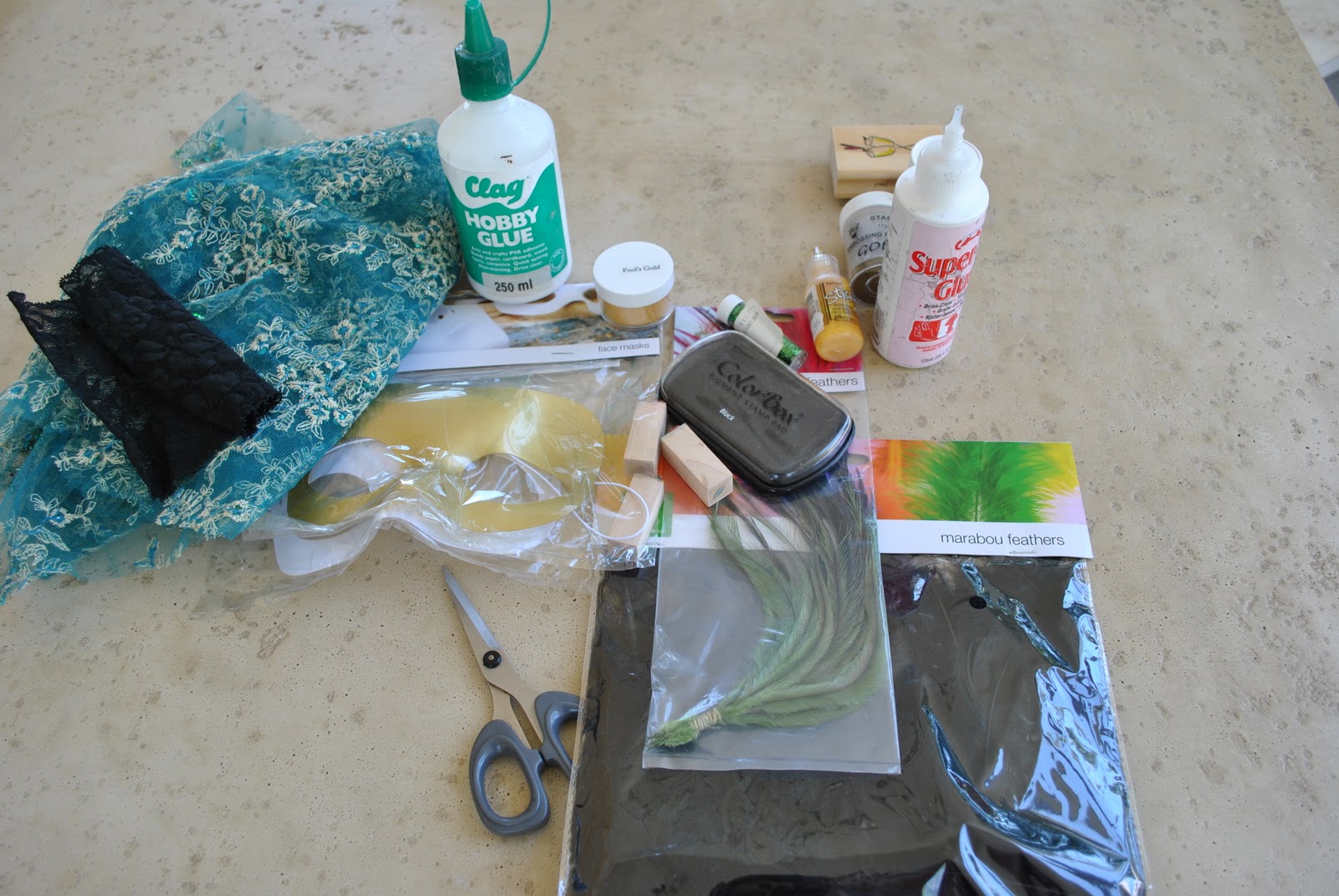
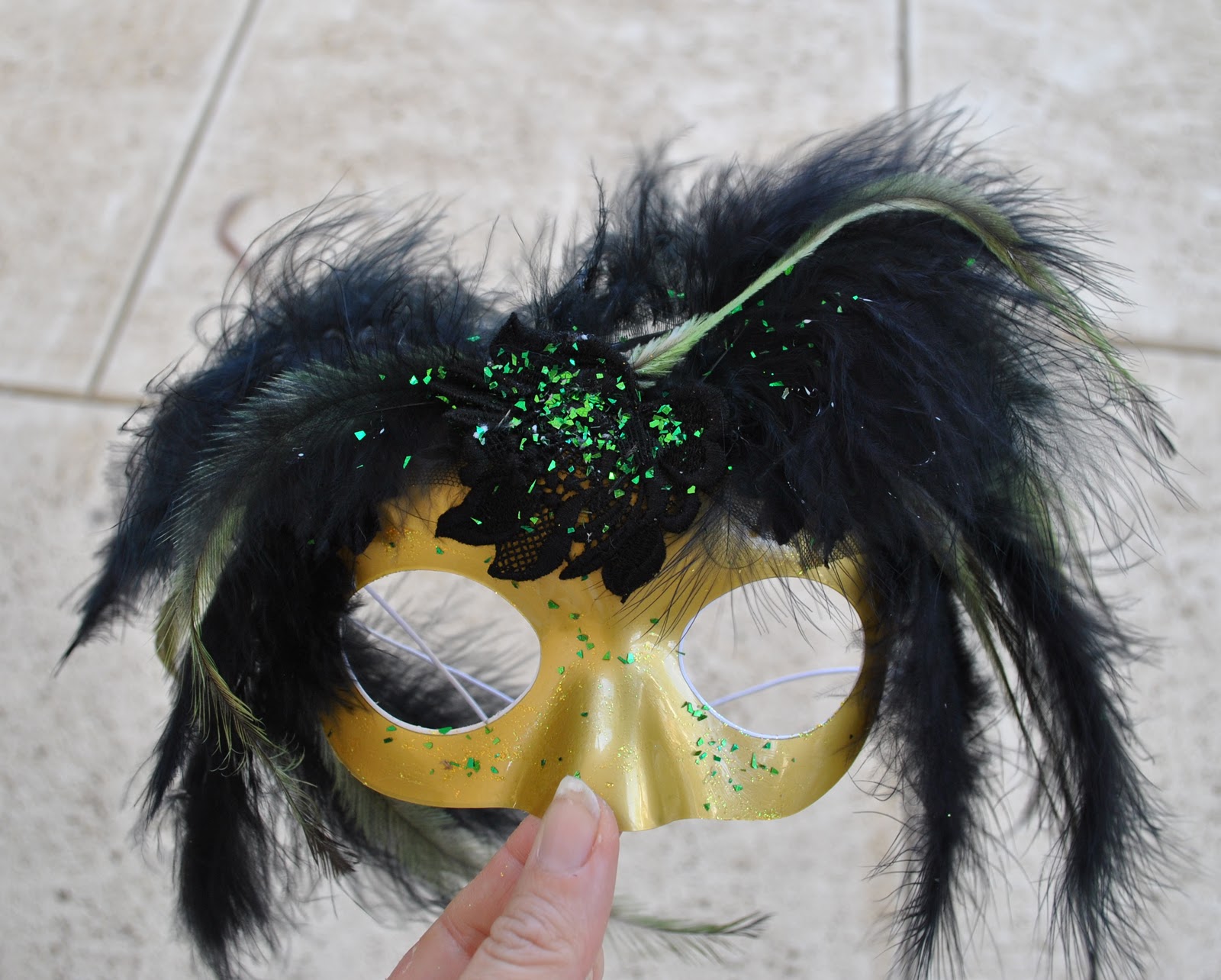
Last night we attended a masquerade Christmas cocktail function, and I needed a mask, so I visited Spotlight and picked up some basics to decorate one.
Boy, was this fun…  I felt like I was in kindergarten all over again!  Glueing stuff on and sprinkling sparkle dust is a heaps therapeutic way to spend and hour or so; so I do recommend this!  Oh, I miss when the kiddies were little and I had a legitimate excuse to indulge in this kind of activity…  now they’re all grown up one needs a Good Reason to get out sparkle dust…   luckily this was it.
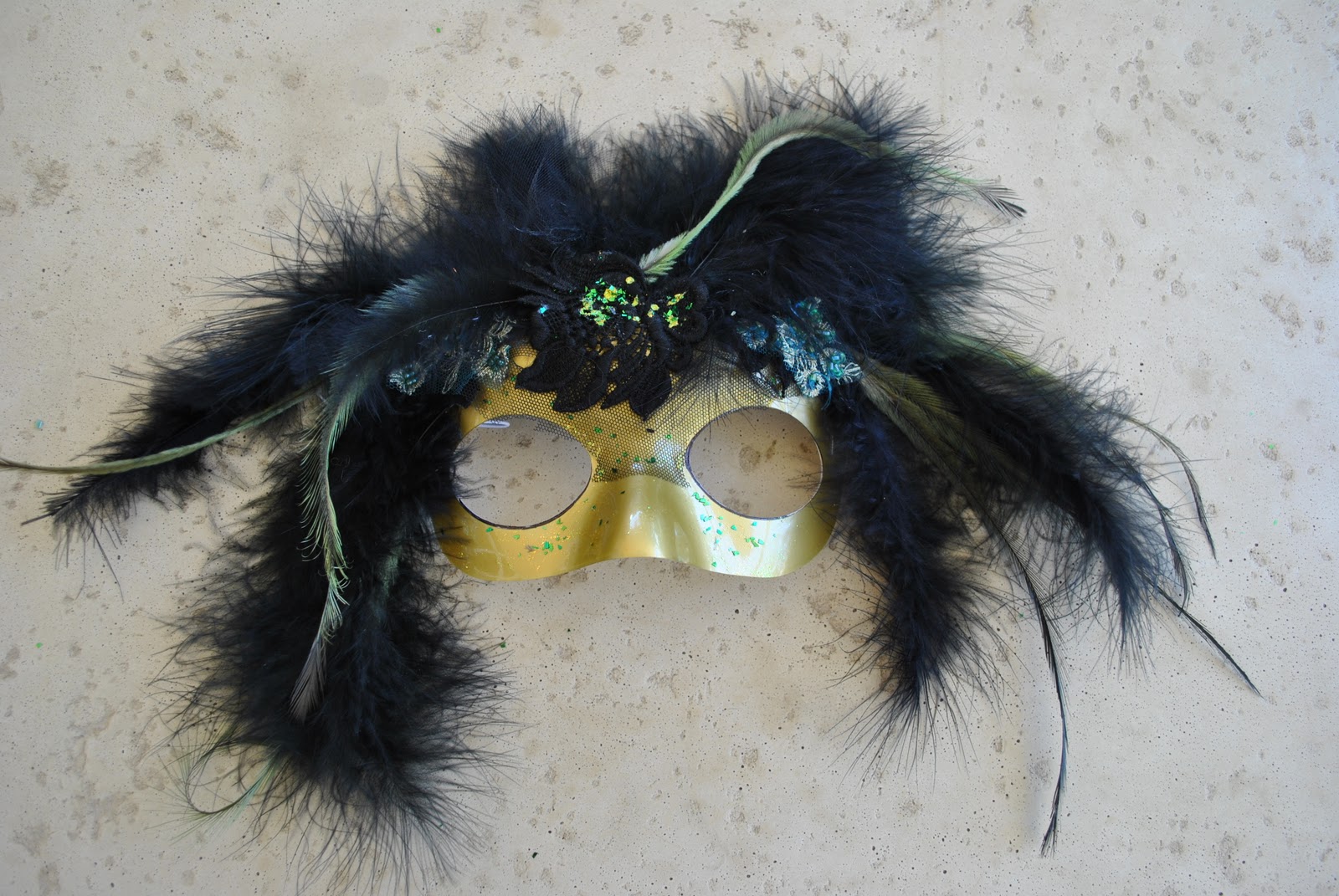
So I purchased two small packets of feathers and two masks; one gold and one plain white plastic, and put together some other bits and bobs I had already.
I didn’t have a firm plan but just gathered lots of stuff together to play with.  Some black lace, black net, some scraps of sequinned fabric, glue and sparkles…  I did get out some old stamps and a stamp pad, but ultimately didn’t use these as the ink wouldn’t “set” on the plastic and just smeared off…

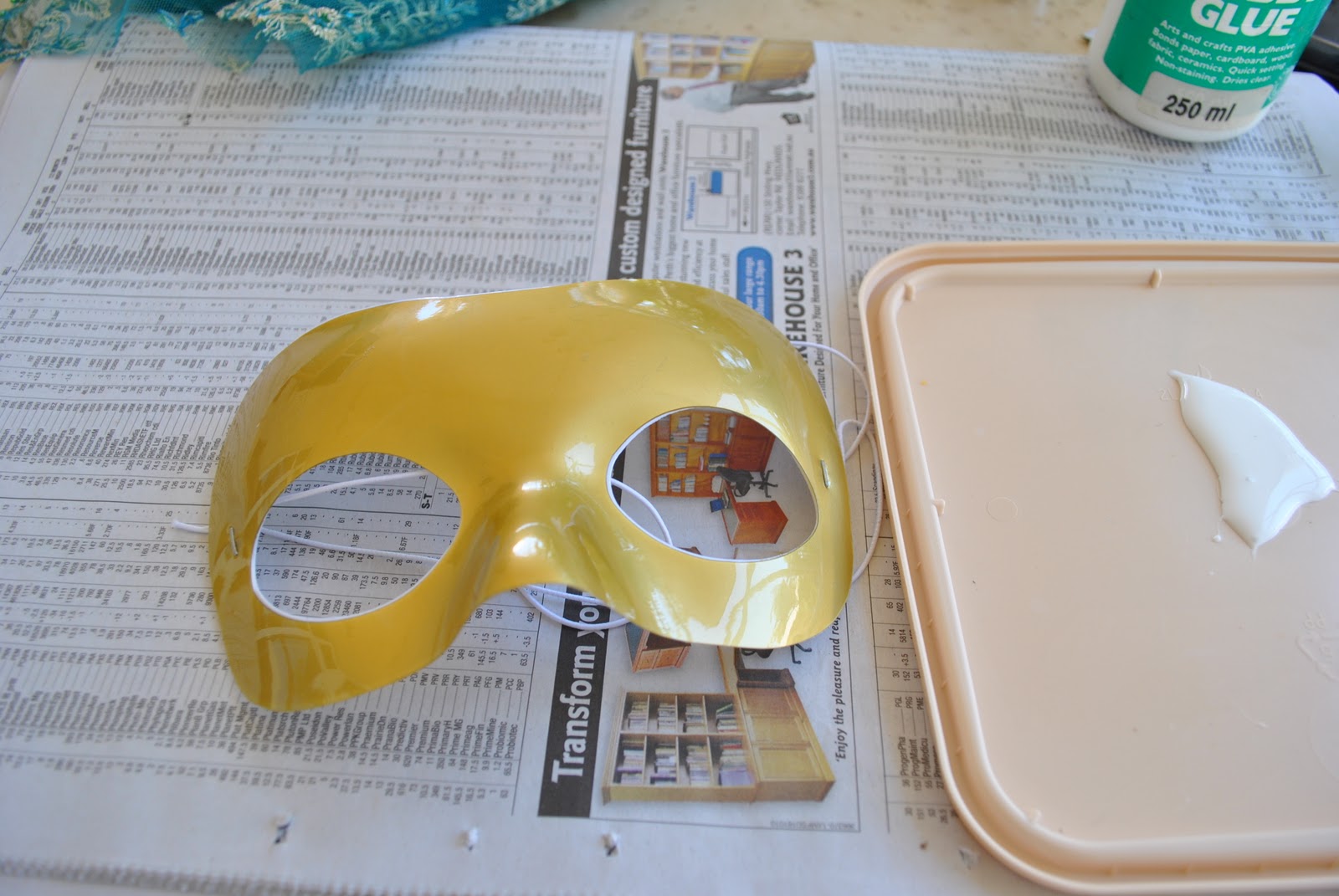
I bought two masks because the ones in Spotlight were so flimsy I worried that they would crack or split too easily… and glued them together for a firm base to play on.  (I almost typed in “work with” there but then got real, hey, “playing” is a far more appropriate verb, methinks!)

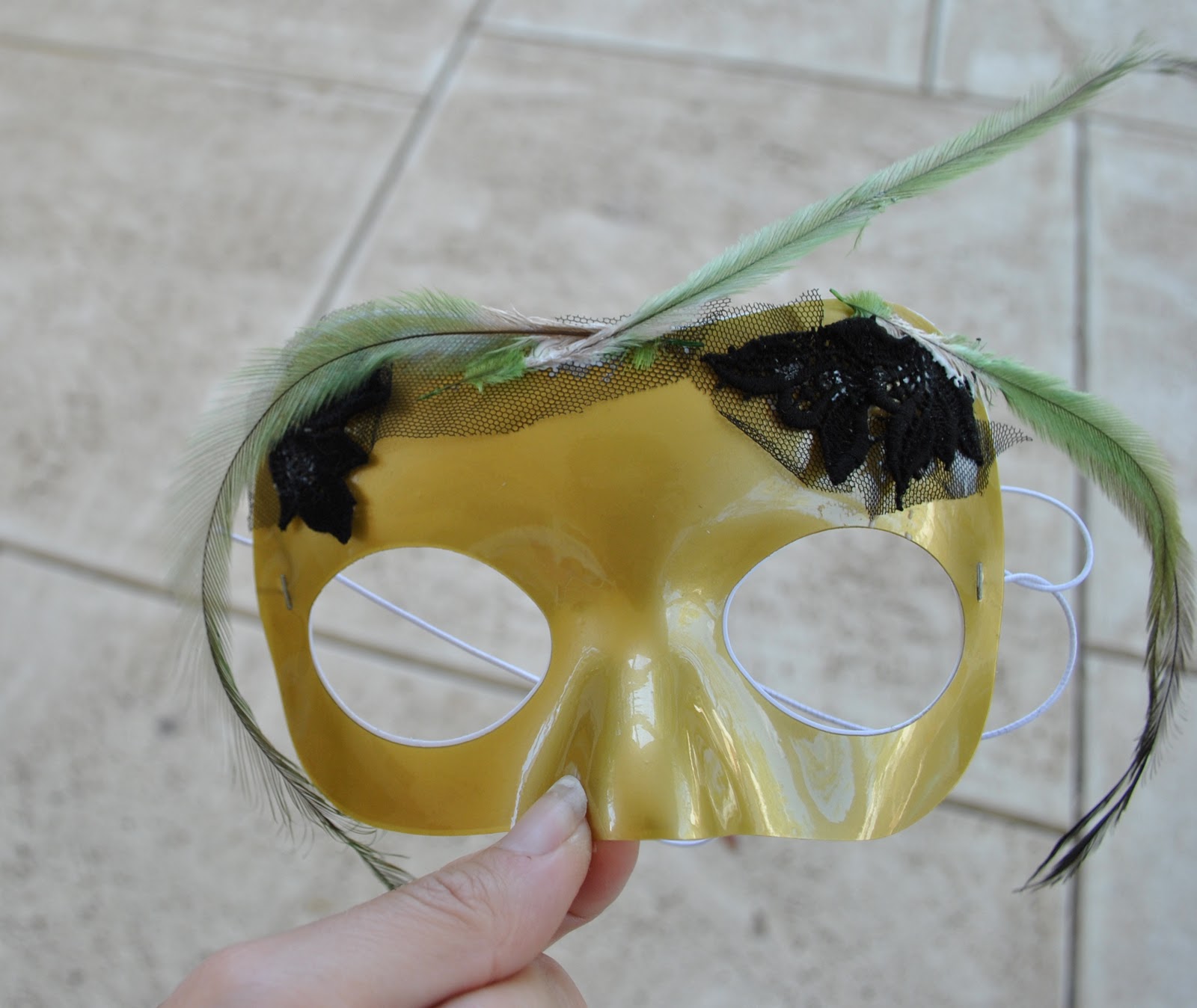
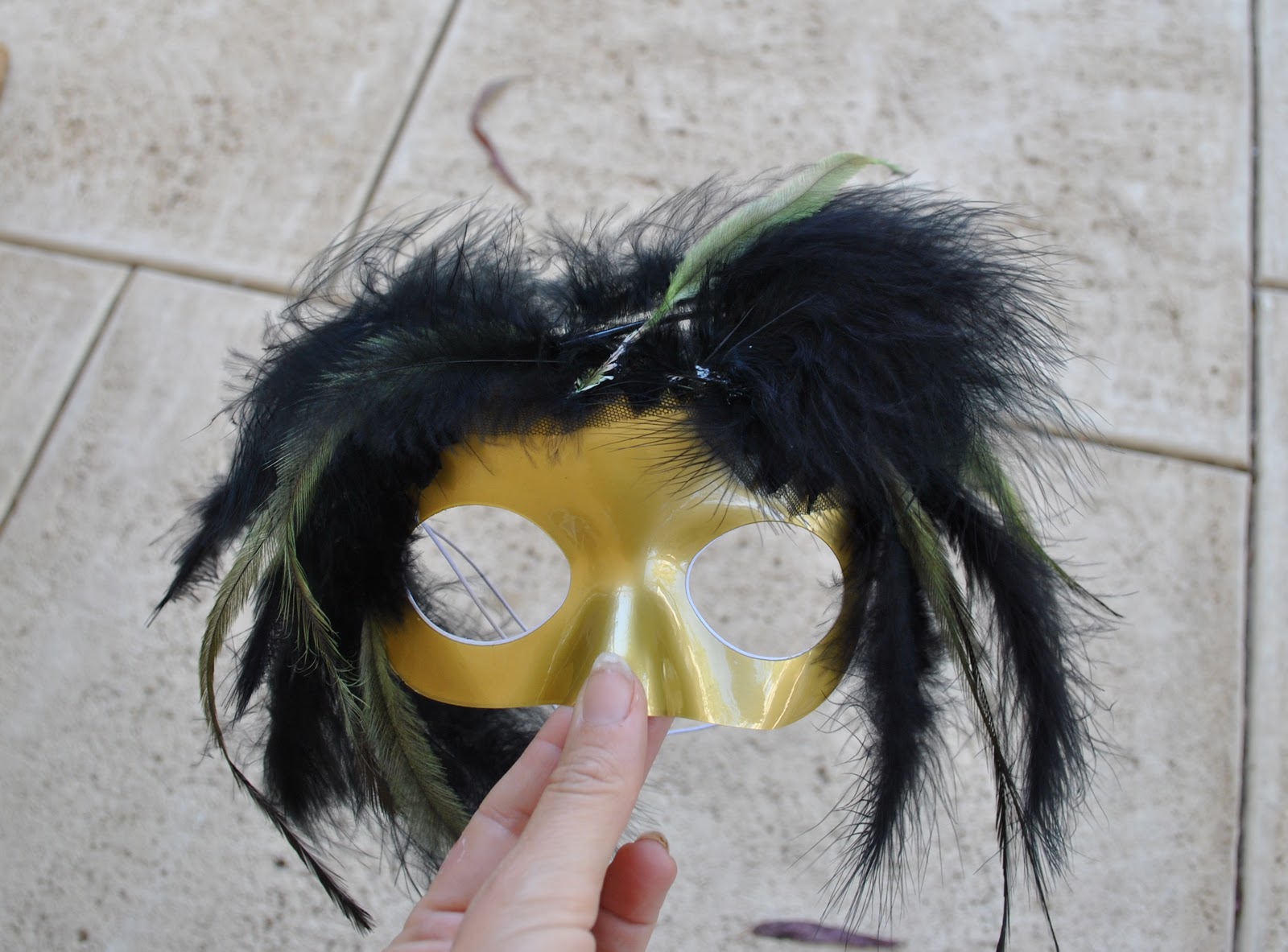
Then just started glueing…  I only used a tiny fraction of the feathers I bought and there is heaps left over for some other project…  

Once I had enough fluffiness I cut out a lace motif and glued it over the top of the gluey ugly bit where all the feather shafts were showing.
Dabbed glue and sparkle gel on and around about in a random artistic way, and sprinkled wicked green dust over…

I later added a bit more black net over the nose region, sliding it carefully underneath the feather and lace.  Would have been better to have thought of this in the early stages, but meh, got it in there OK.
Also later noticed a bit of white from the under-mask showing, so I used a Sharpie to draw in “eyeliner” around the eyes, both to colour in over the white, and to add a bit more drama.
Voila!
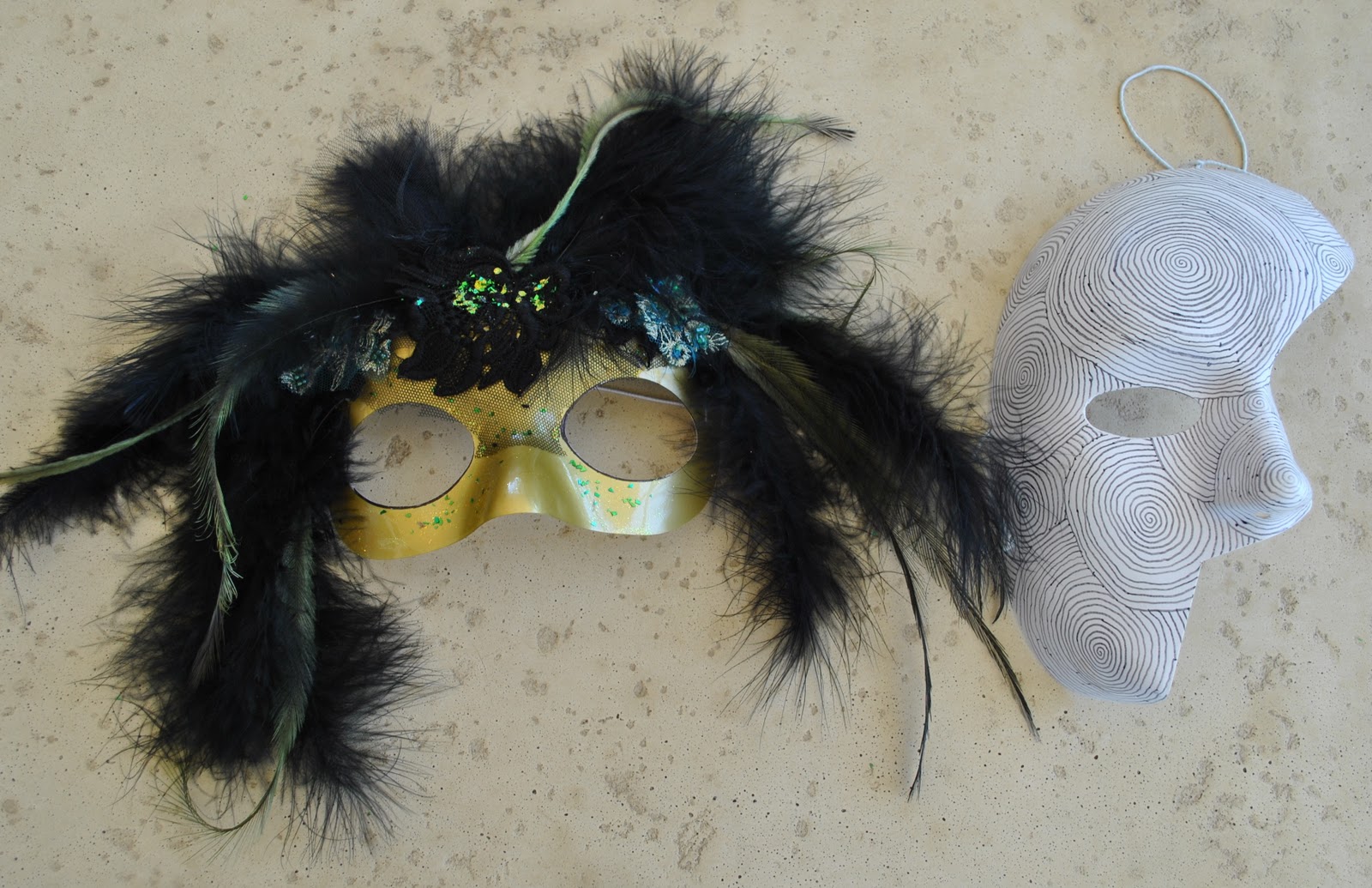
Here are the masks we wore; the one on the right was made by my son a while ago, and worn by my husband.  Needless to say, the ladies’ masks were all tres glamourous at the event, and most of  the mens’ were plain and rather sober.  Well, this is Australia.  Generally speaking Aussie men struggle with the concept of sparkles.

pinterestmail

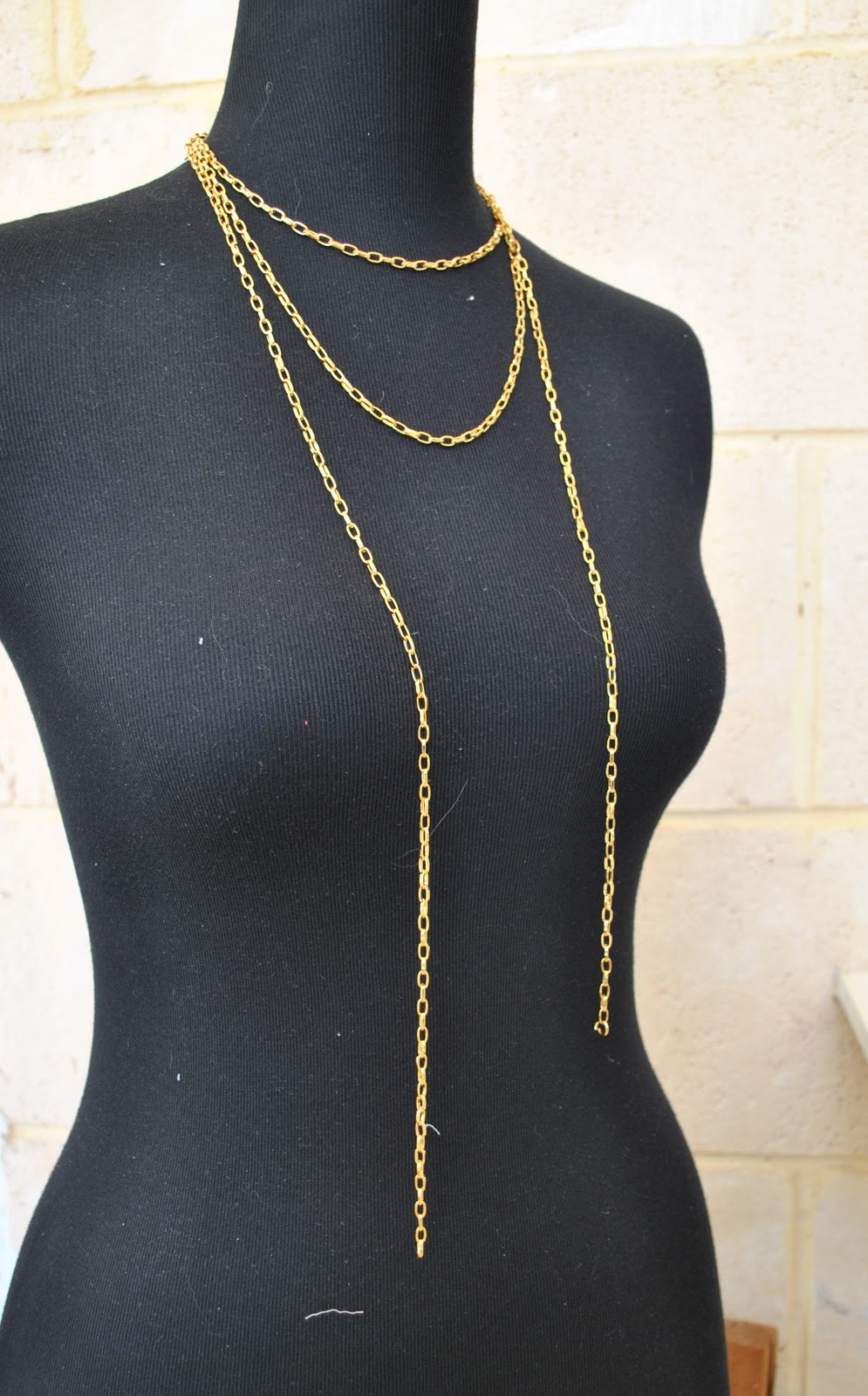
Chain and tassel necklace; a tutorial

As soon as I saw it I loved this chain and tassel accessory made by the enormously creative and beautiful Maegan, who in turn was inspired by a Blugirl original, and I wanted to have a go at making my own…  Maegan made hers as a lariat, which would be a much more versatile accessory; but I made mine as a fixed necklace. This is because I knew in my lifestyle a lariat would probably end up either tripping me up, strangling me, or slipping off entirely without my noticing…
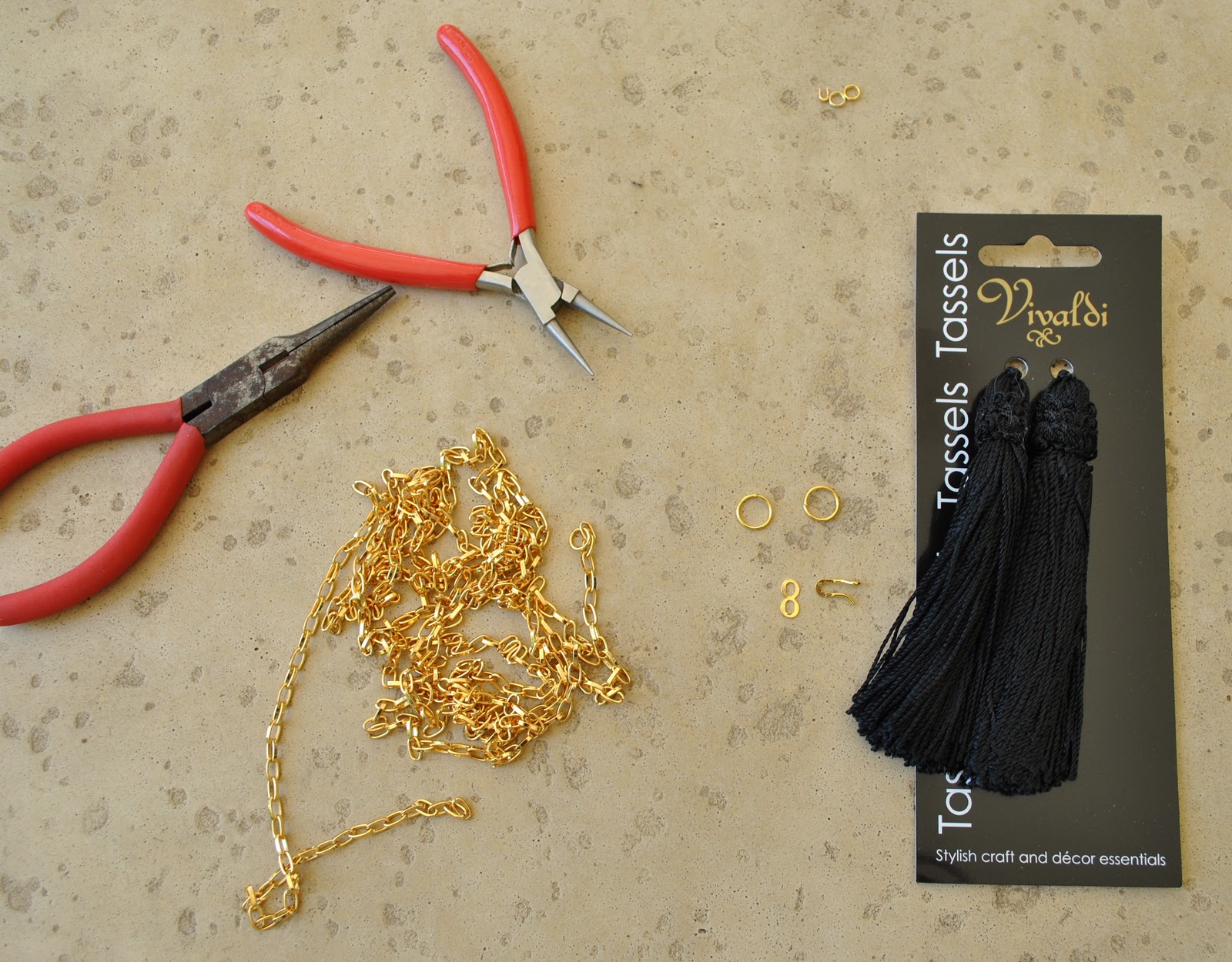
so I bought 2 packs of 1m (40 inches) of gold chain and two black upholstery tassels, medium size.  I already had some 10mm jump rings and a necklace hook and loop.  If you are at all into making your own accessories like this it is very handy to also have some pliers and a wire cutter small enough to work with these little fiddly bits.

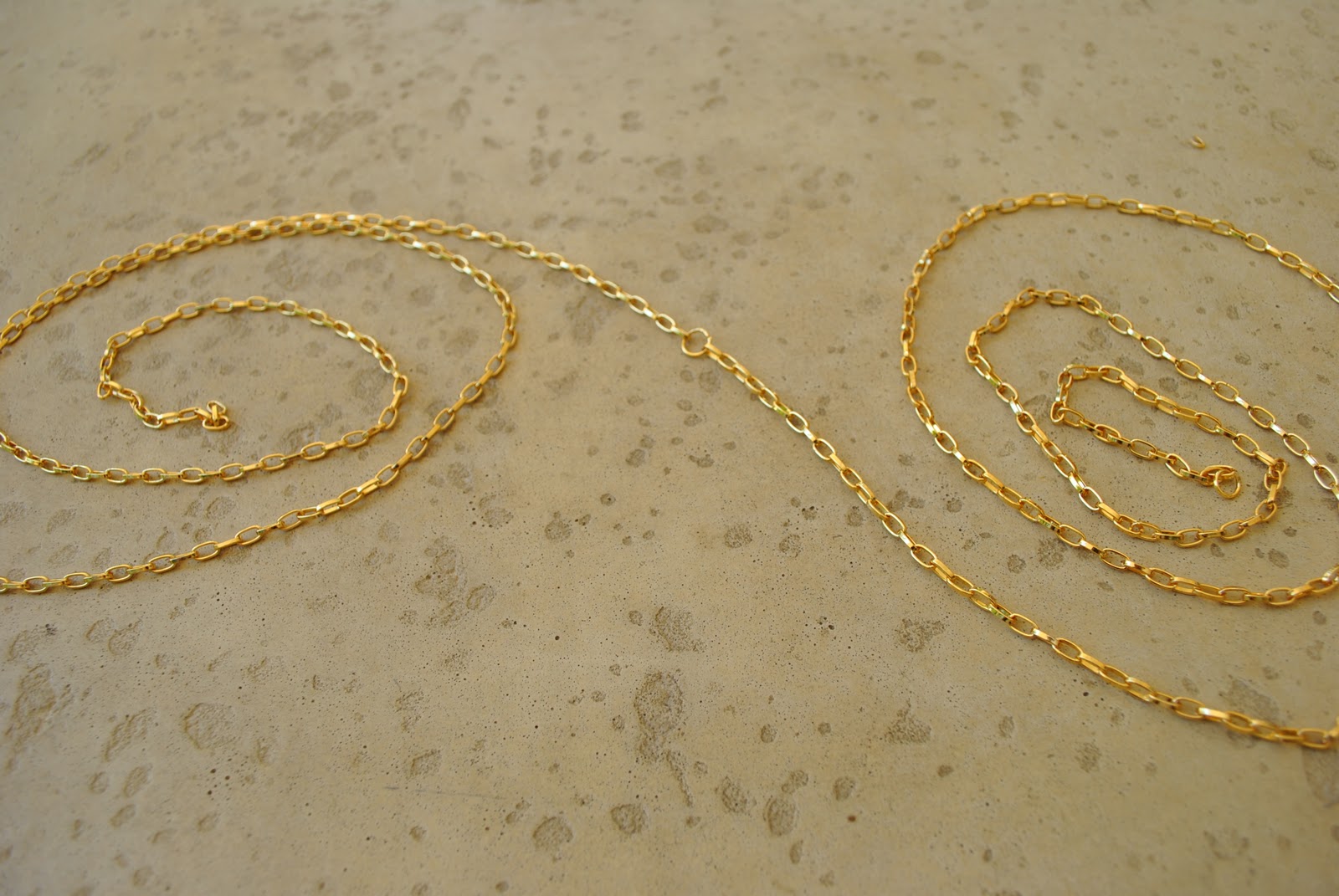
The chains I bought conveniently had jumps rings attached to each end already, so I just used one of these to join them together to make one long 2m (80inches) chain.

Arrange the chain to your satisfaction.  I went with three loops around the neck and left the ends hanging down in uneven lengths.

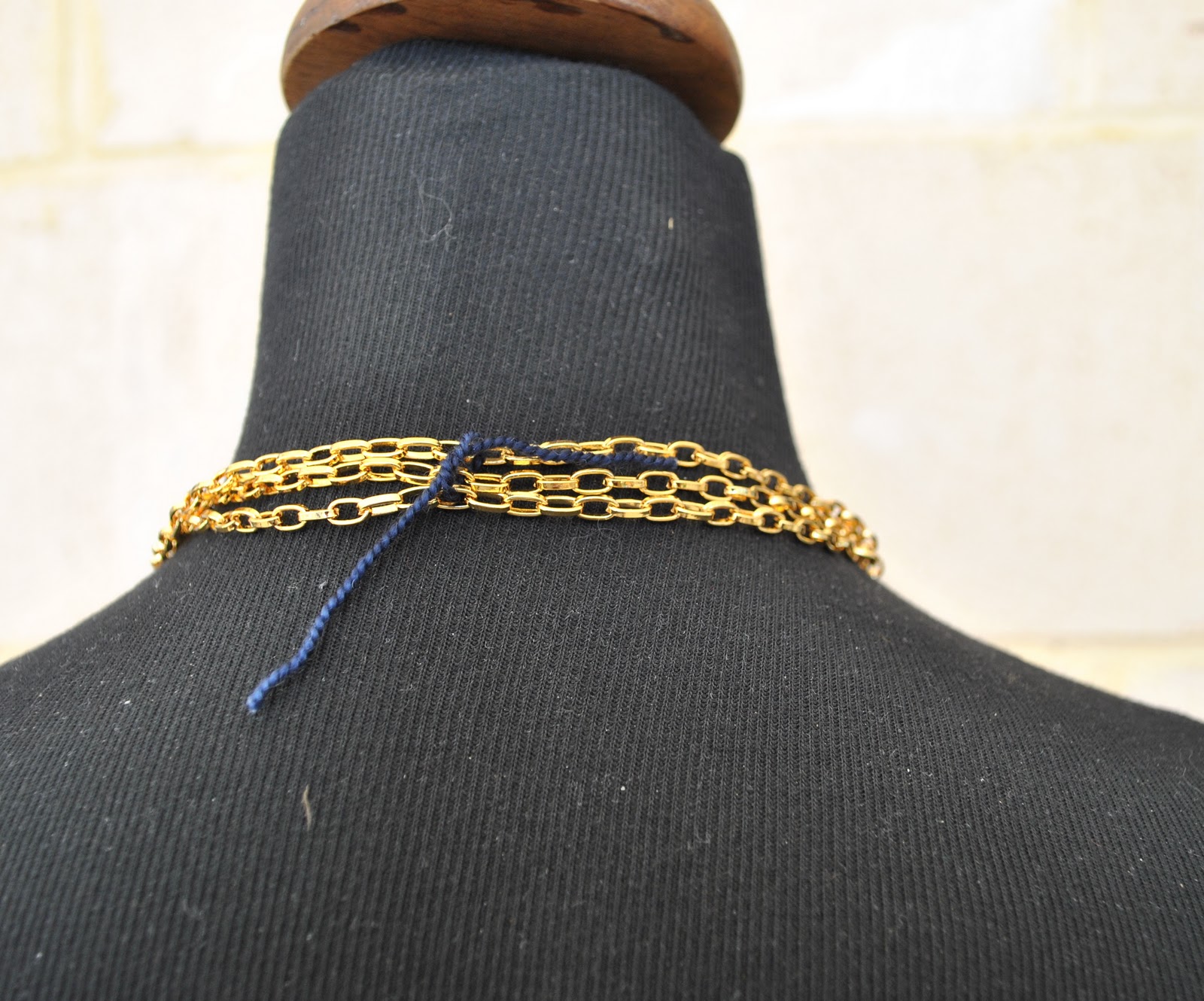
At the back of the neck, find the three links that are as close to centre back as possible and string a bit of scrap yarn through them all. Tie this in a loose knot.

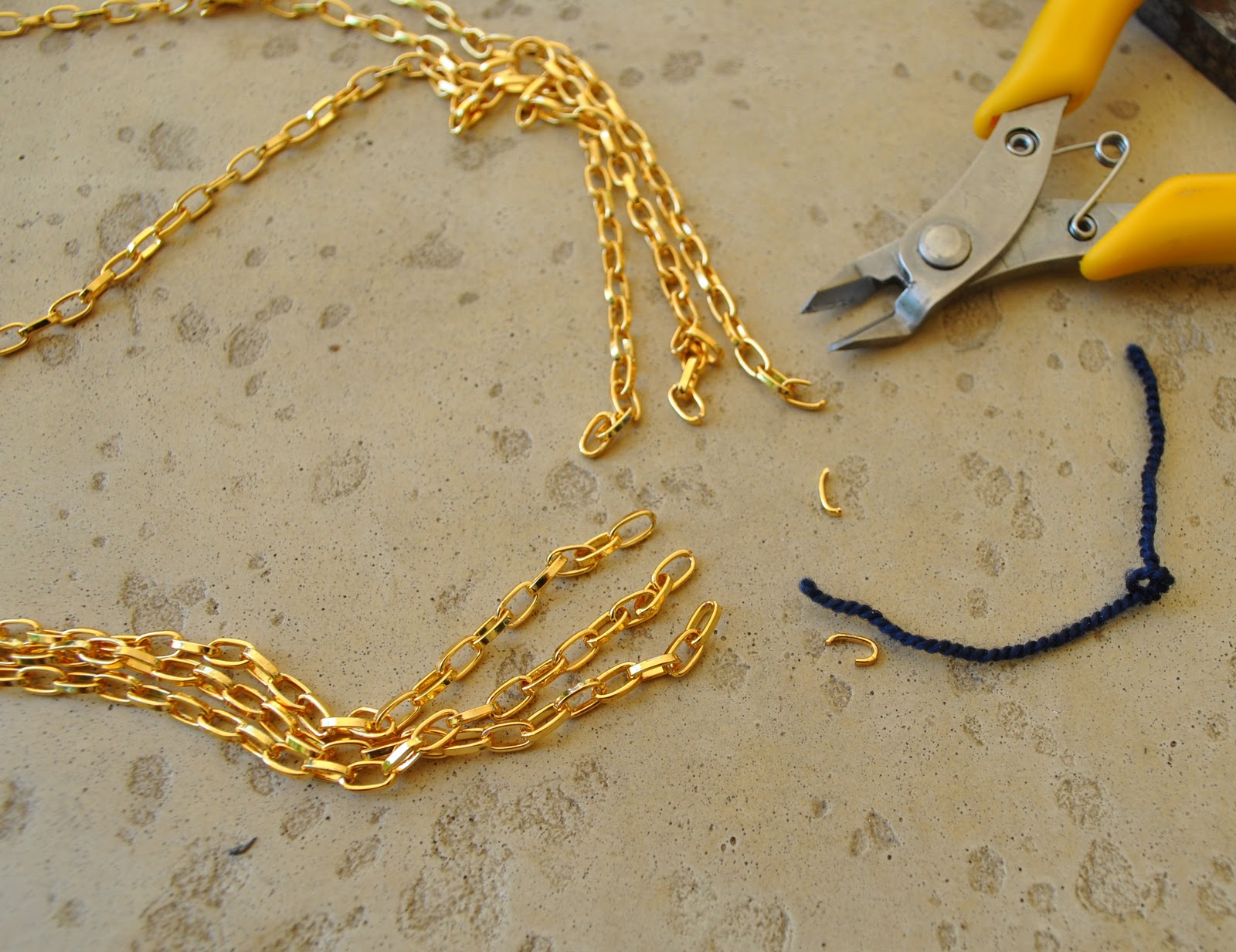
Laying the chain down on a flat surface, cut through these three centre back links using wire cutters.

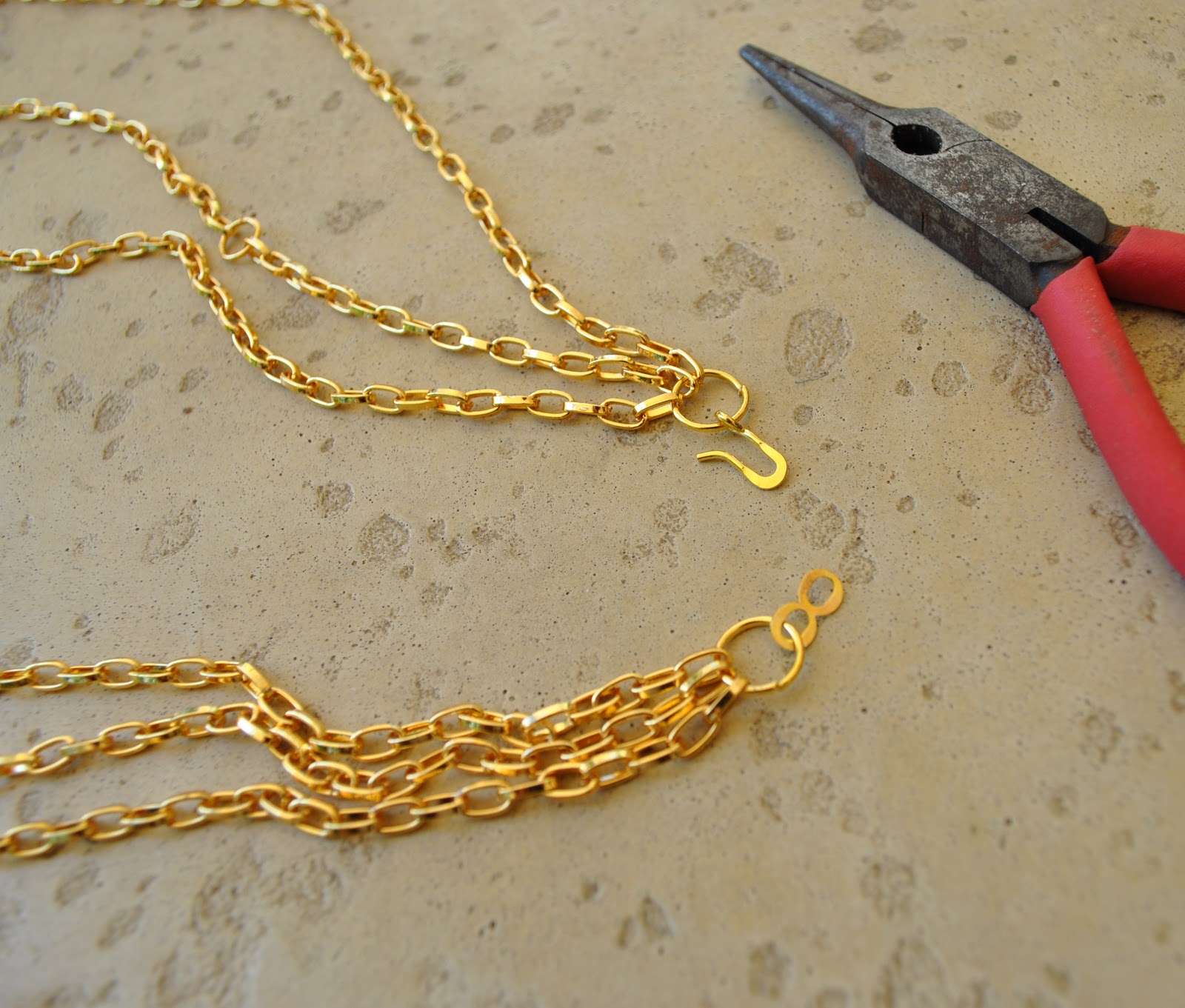
Loop the two jump rings through all three chains, and add the hook and loop closure.

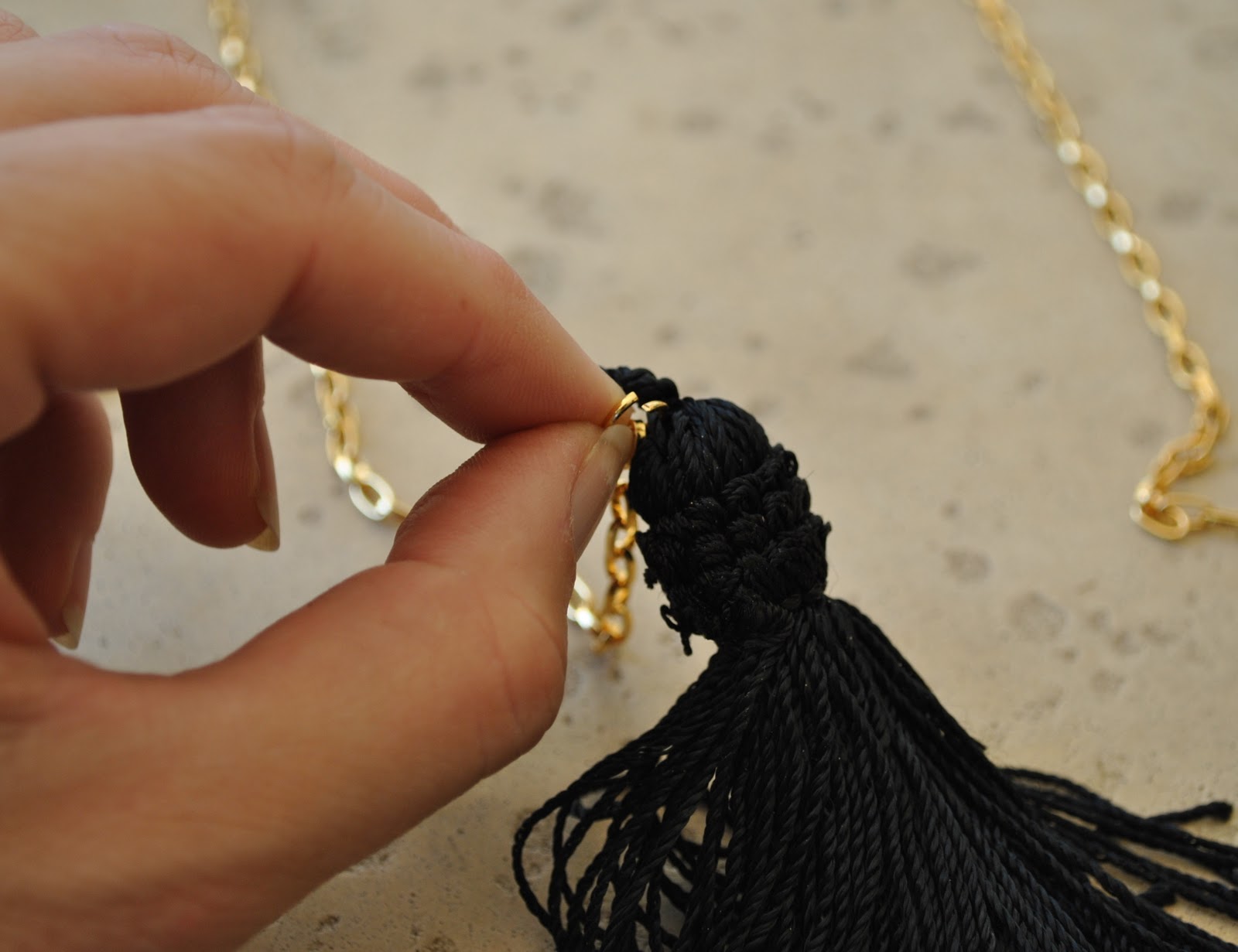
Prise open the last ring on each chain end and thread onto it the top loop of the tassel, close the ring securely.

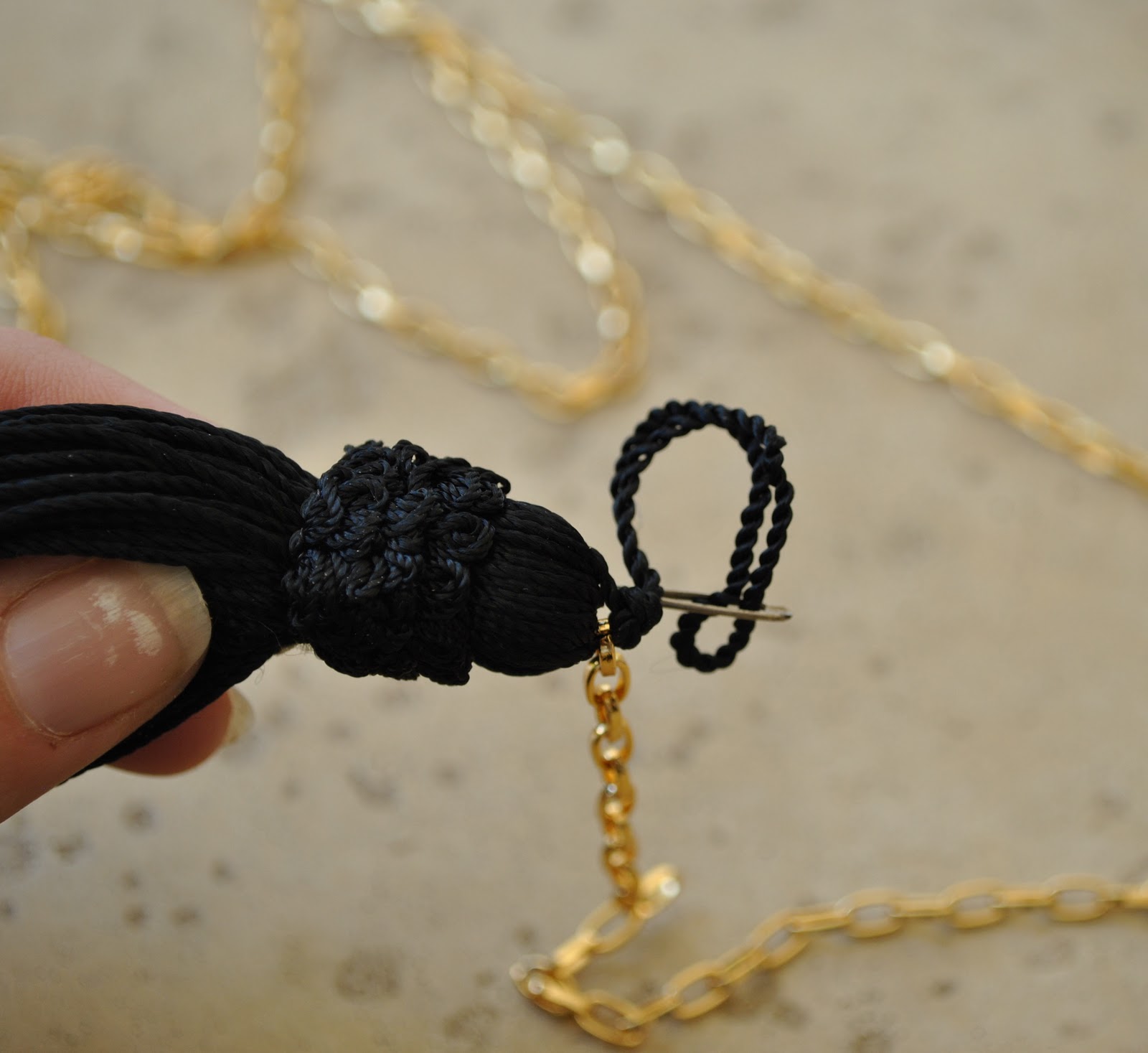
Use a wool needle to pull the top loop of the tassel back through the “top-knot” and out into the middle of the fringe-y bits, to hide it inside.

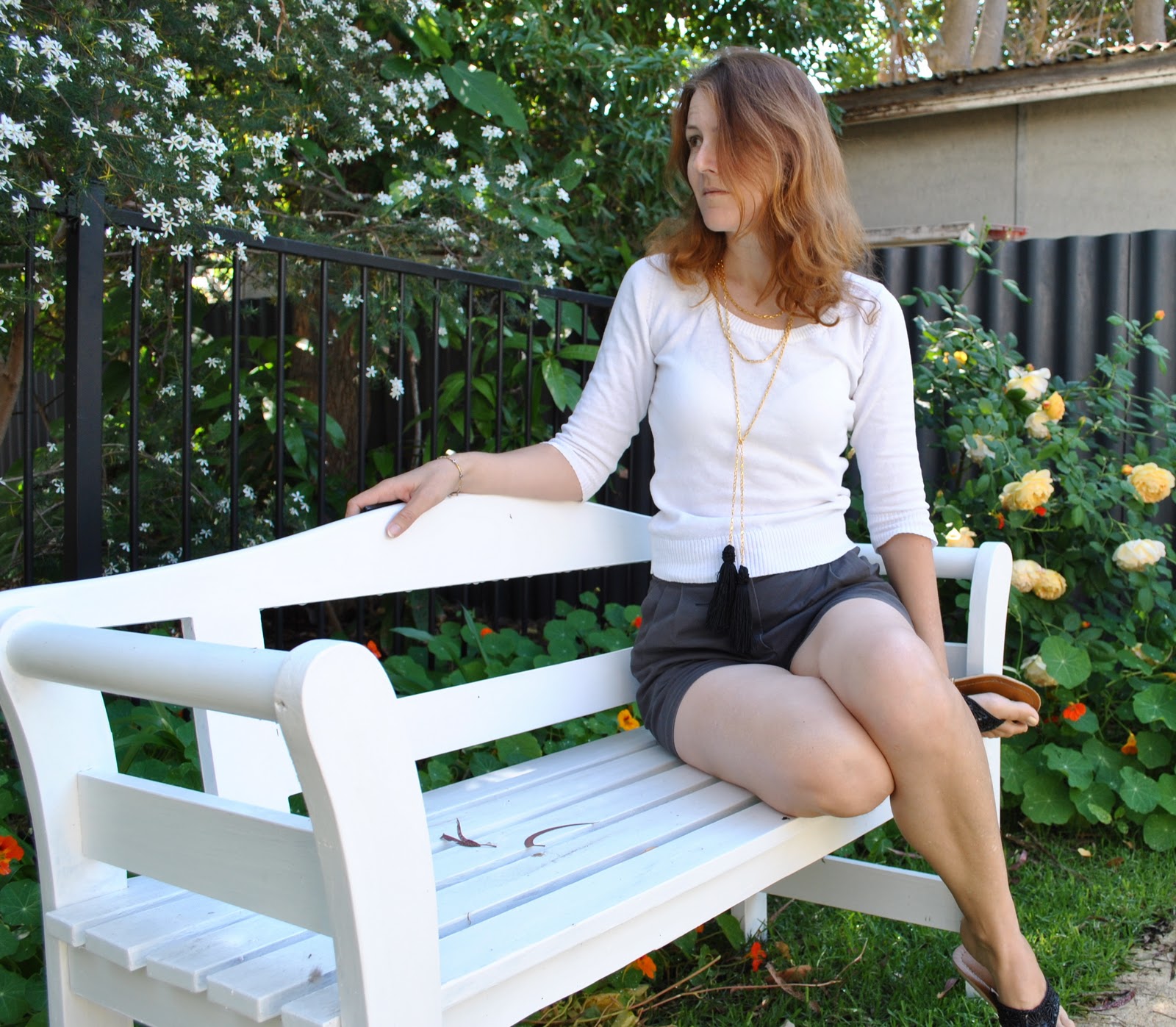
It can be worn with the ends hanging down loose or loosely tied up which is less swing-ey and sway-ey when you walk about as briskly as I do.  But I think I like it hanging loose better.  What do you think?

Details:
Top; Tempt
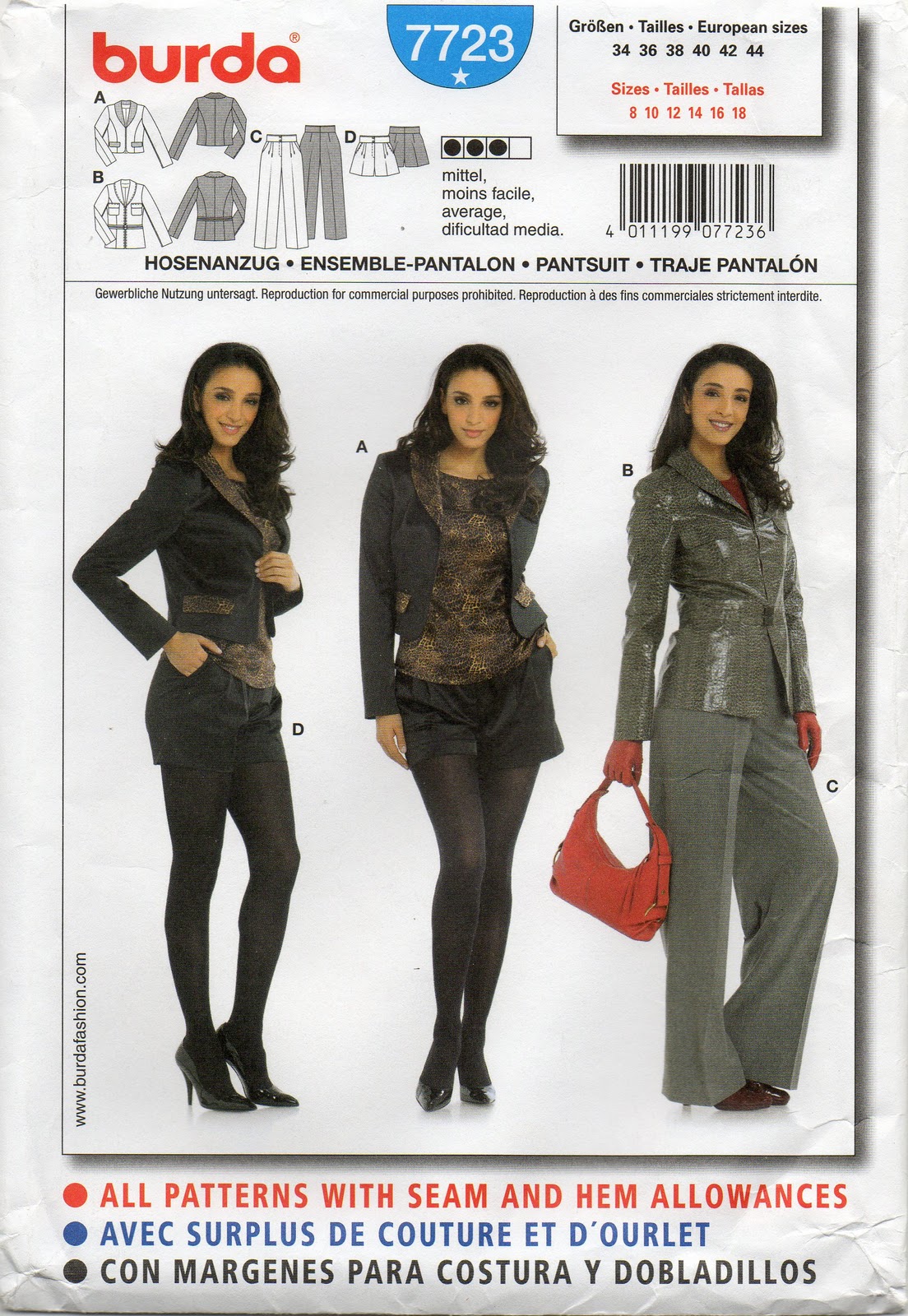
Shorts; Burda 7723, with slight modifications
Beaded thongs (flipflops); some little shop in South Africa

pinterestmail

How to make your own tights

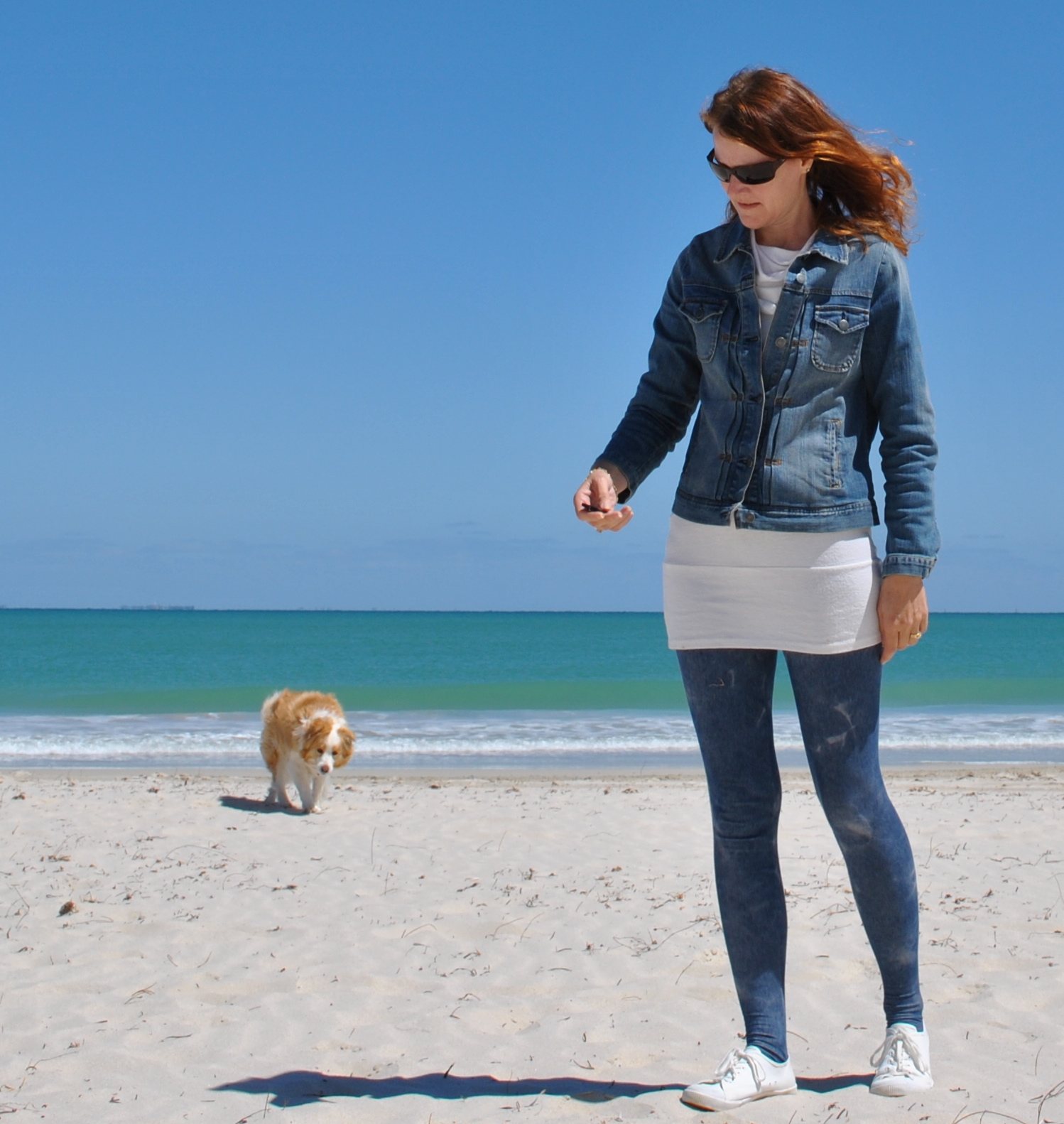
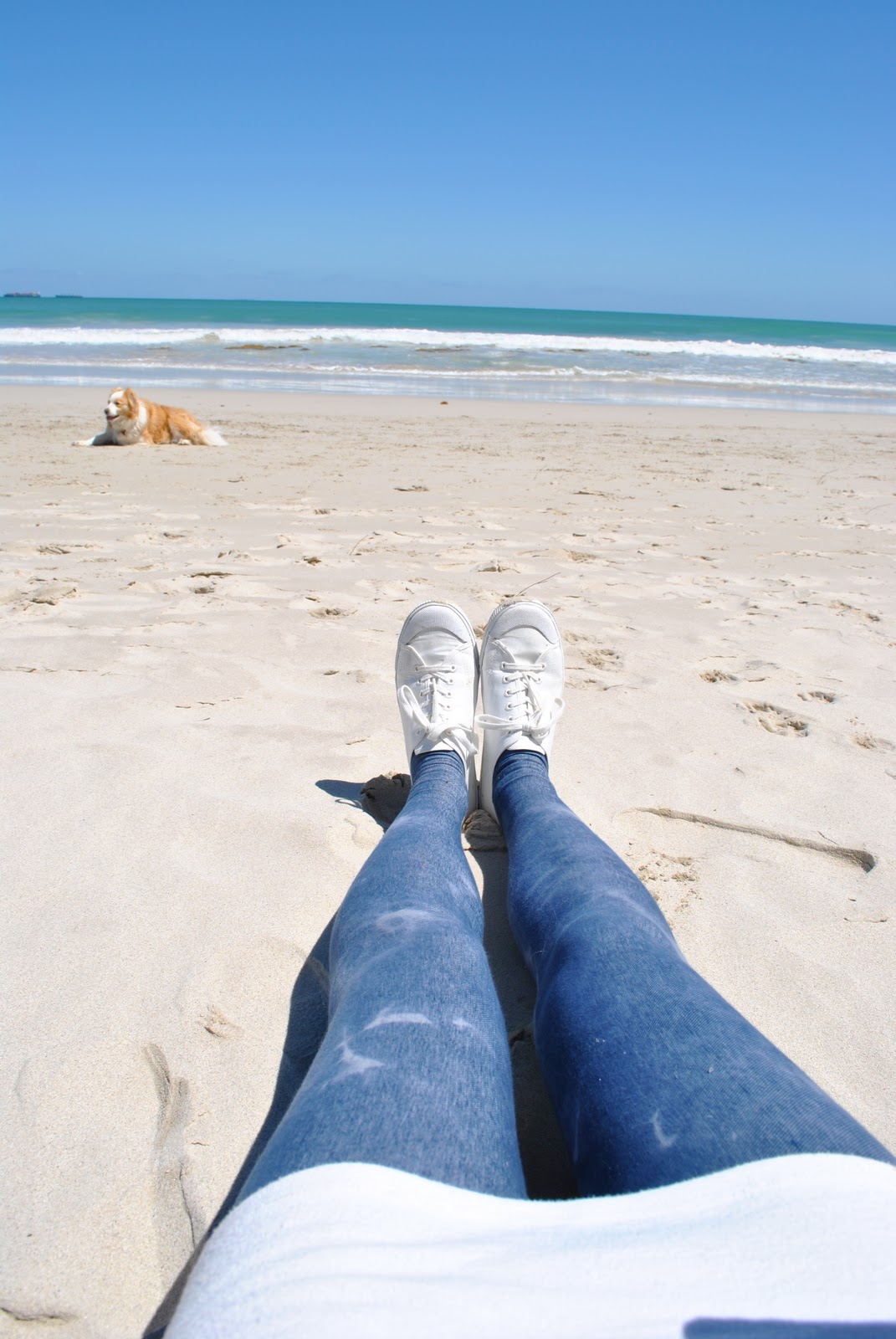
Before I went to Melbourne I had bought from Fabulous Fabrics some wonderful stretch jersey, printed to look like distressed denim, and I knew it just had to be tights…
When I made my last tights I had a few requests for a pattern on Burda style, so this time I put together a little tutorial on how to draft for yourself a leggings or tights pattern that is customised to fit you perfectly.
This project is suitable for two way stretch knits only, that is fabric that stretches BOTH crosswise and lengthwise.
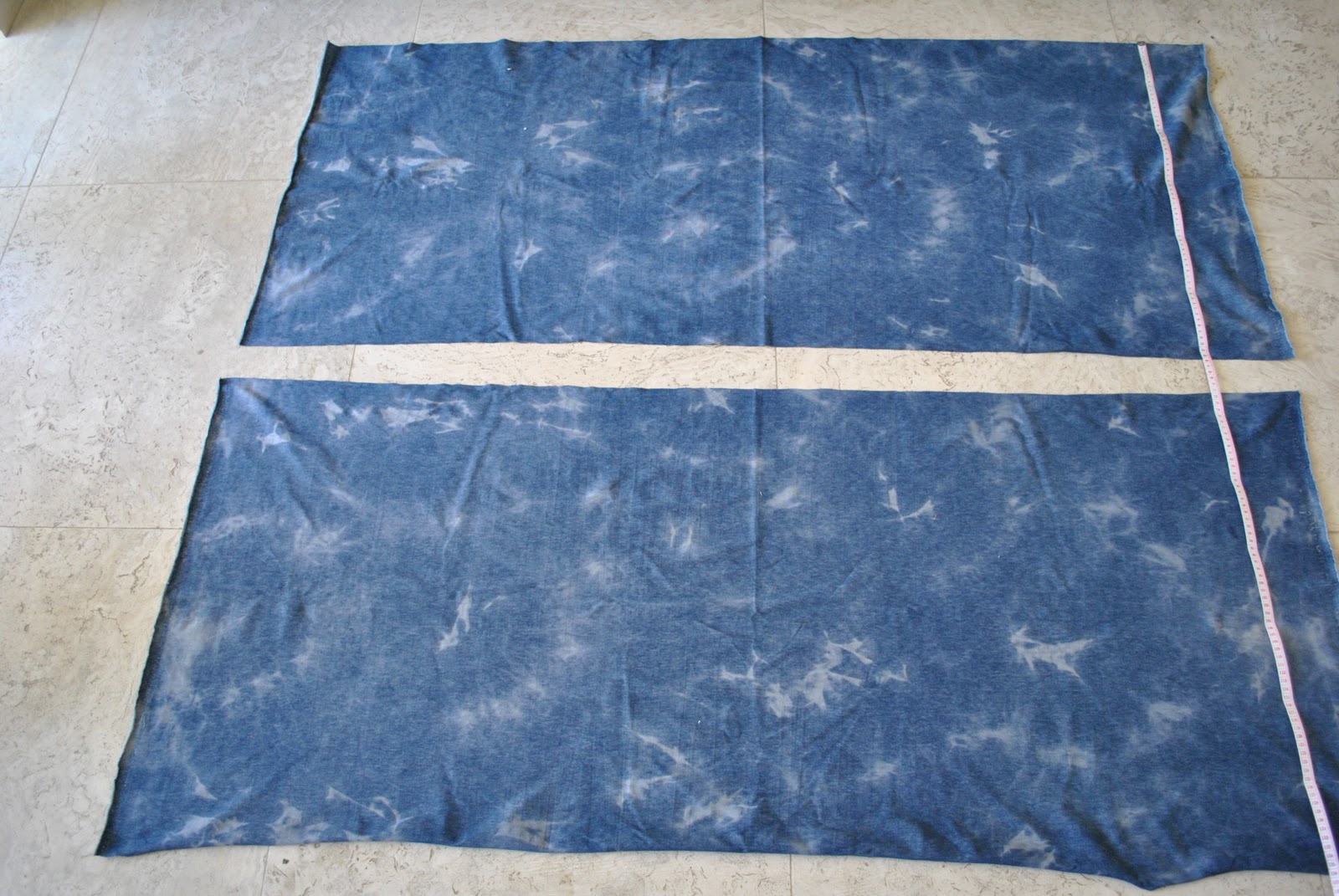
Firstly you must take your measurement around the top of your leg at crotch level.  This will be the widest point of your leg piece.  Whatever this measurement is, double it.  This is how much fabric you will need to buy.   (once you have worked out your pattern you may be able to buy less for future tights projects; by flipping your pattern lengthwise on the fabric if the print allows you this flexibility)

If you’re not very experienced at fitting and/or pinning to yourself it’s a good idea to get someone you trust to help.  Put on some leggings before you start, or some other skintight garment.

Lay your fabric down and cut it in half, cutting from selvedge to selvedge.
(Note that for this example the grainline will be running around my body, as opposed to up and down my body.  If you want your pattern print to go the other way, then you will have to layout and cut your fabric pieces accordingly)
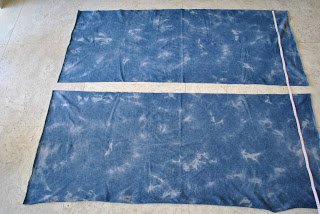
 

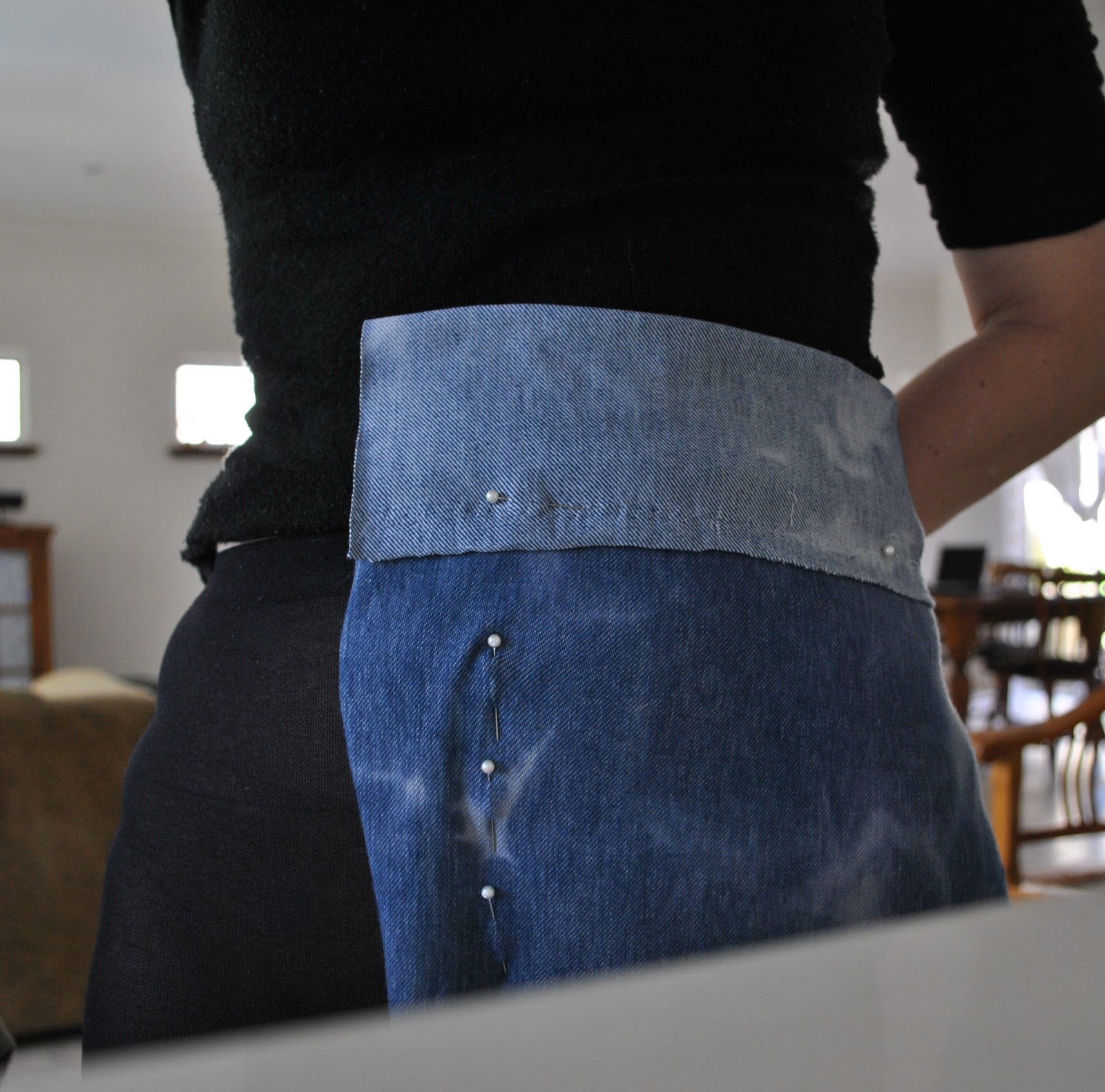
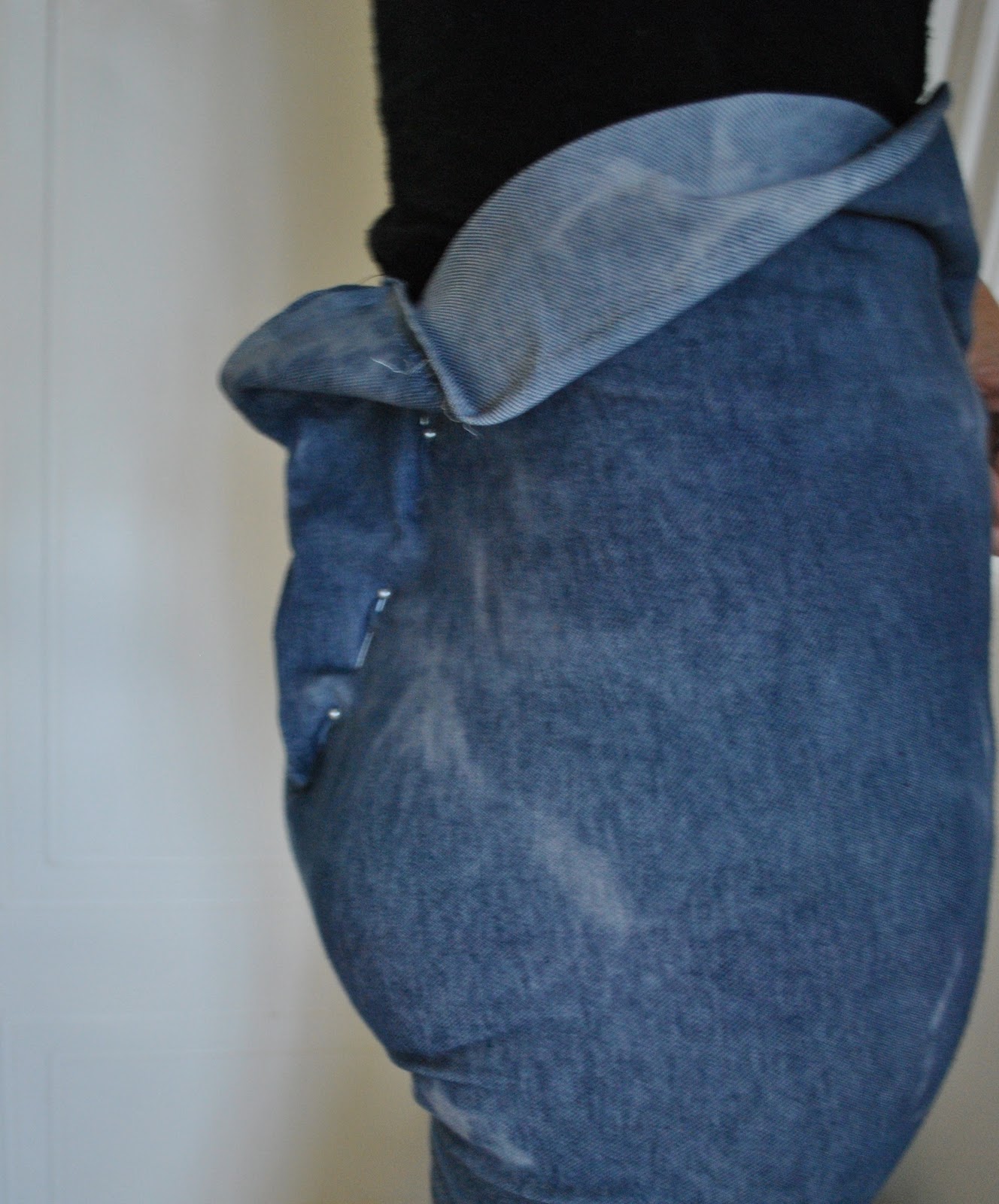
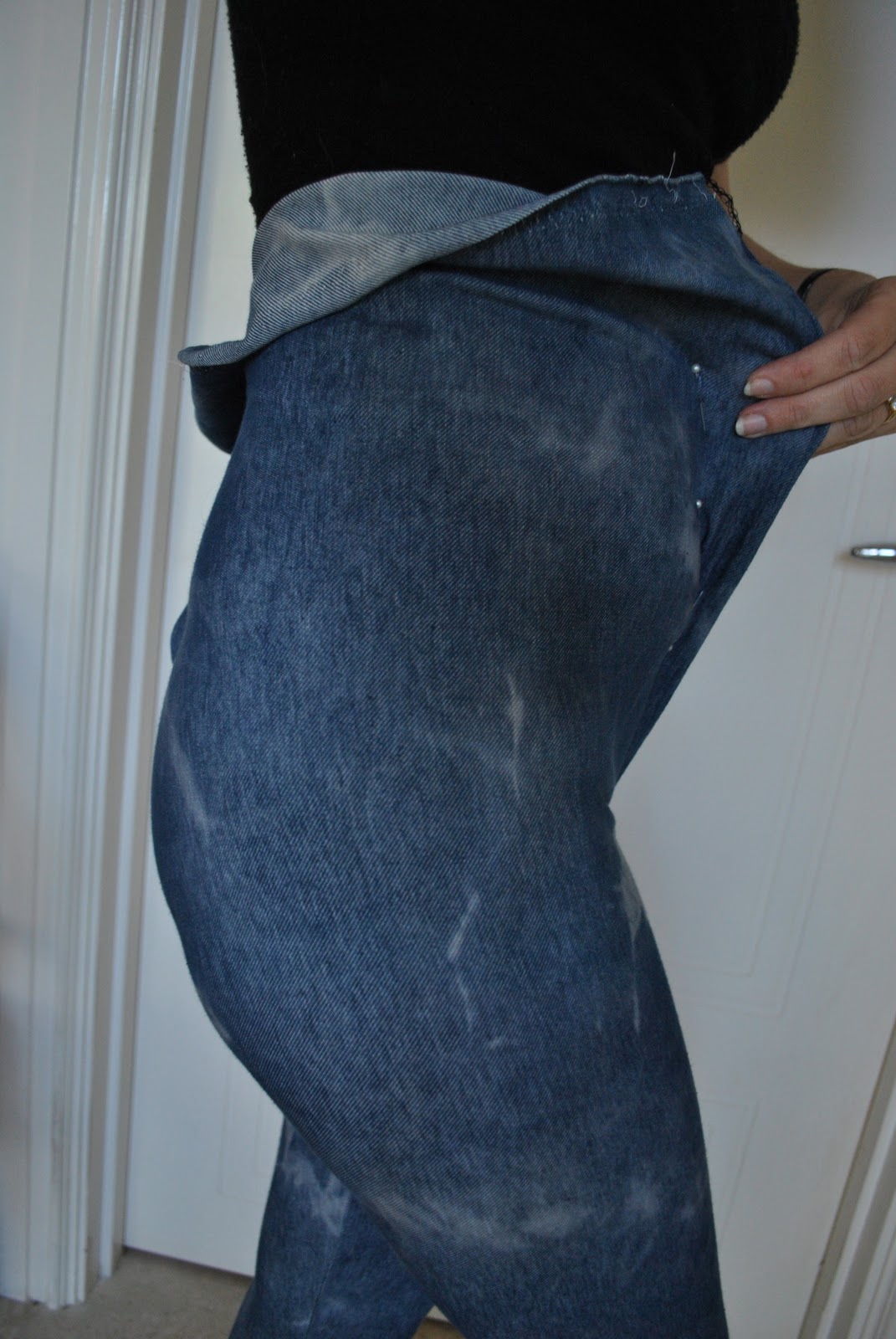
Take one of these and fold over one selvedge to allow for a generous amount of excess and pin this fold loosely in place.  I folded over about 9cm  (3.5inches)  Wrap this fabric around one side of your hip, pinning the folded over edge at about waist level.  Don’t aim for tight-fitting at this point, you just want the fabric to be hanging evenly down from your waist level, with the excess fold of fabric over your waist level at the top for your waist casing later.  Pin the fabric to your leggings in a vertical line down the centre front (use your leggings seam as a guide).  Do the same at the back.  The back bit is kind of tricky, but don’t panic about super accuracy.  You are aiming for as close to middle line as possible and vertical.  Use a mirror to check the your pins both front and back are in as straight as vertical line as possible.  Do not be super tight at this stage either, a bit loose is desirable for reasons I’ll explain later.  I’ll call this part the “abdomen pinning”
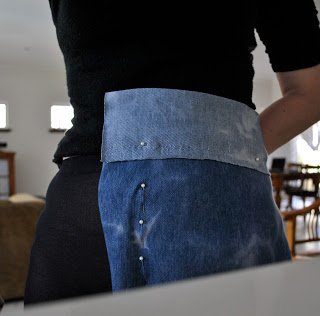
Now pull in the fabric firmly around your upper leg and in at the crotch, and pin.  I recommend you use a safety pin at this point for obvious reasons…

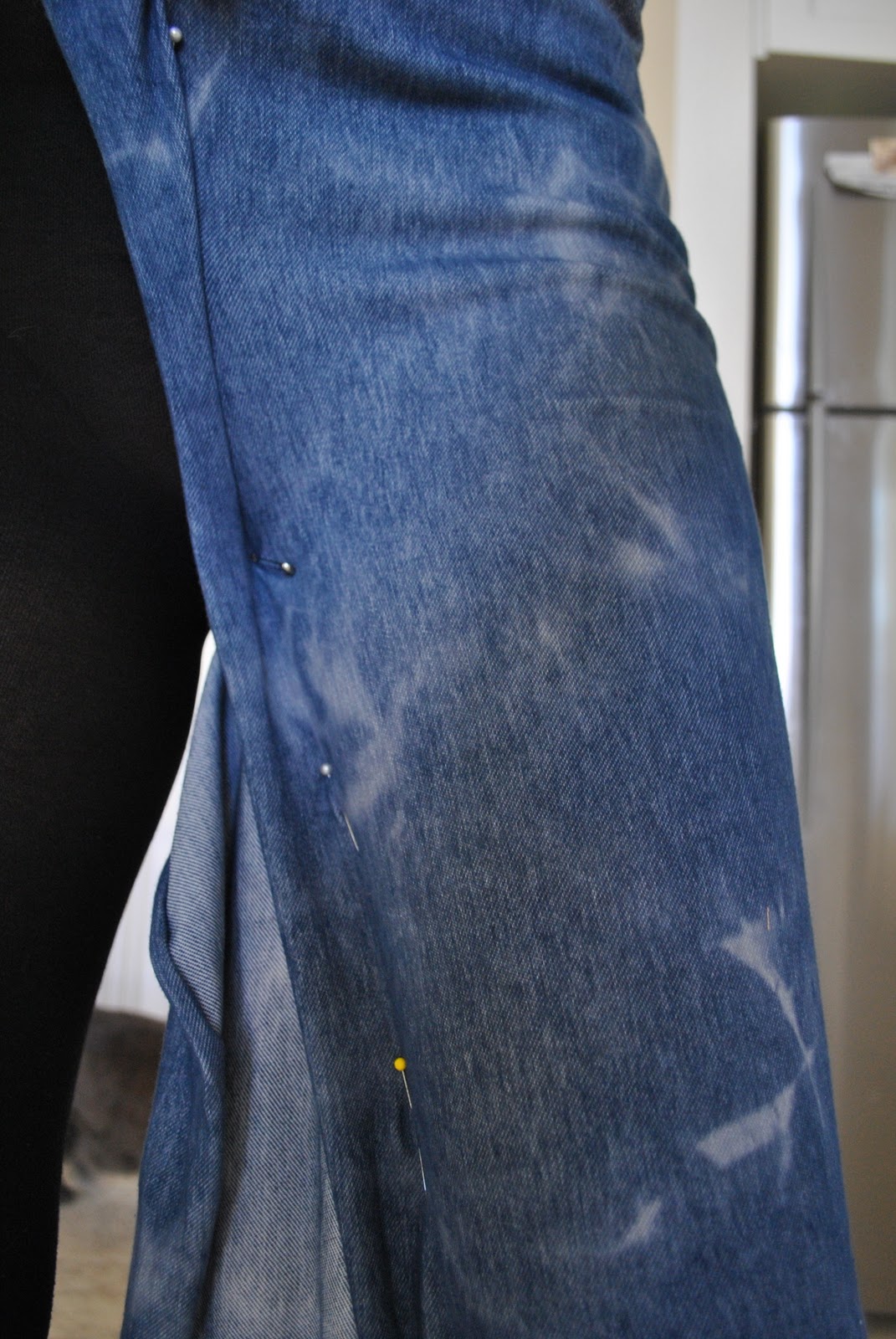
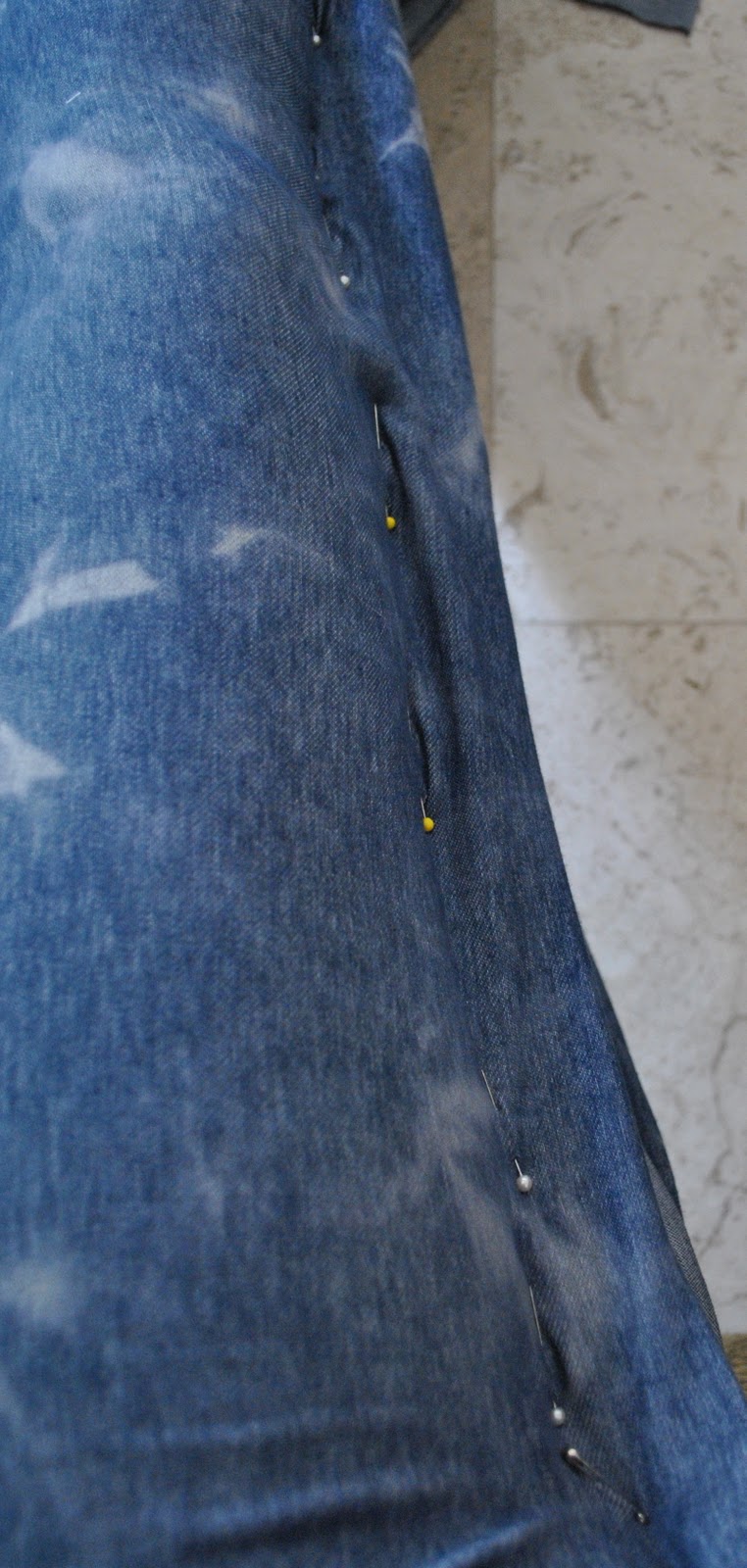
Start pulling the edges of the fabric together around your leg, and working from the top down pin together down the inner leg seam.  From this point on make the fabric quite tight and check constantly in a mirror that the fabric is sitting smoothly all the way around the leg.  From now on down you are aiming for close-fitting and smooth.

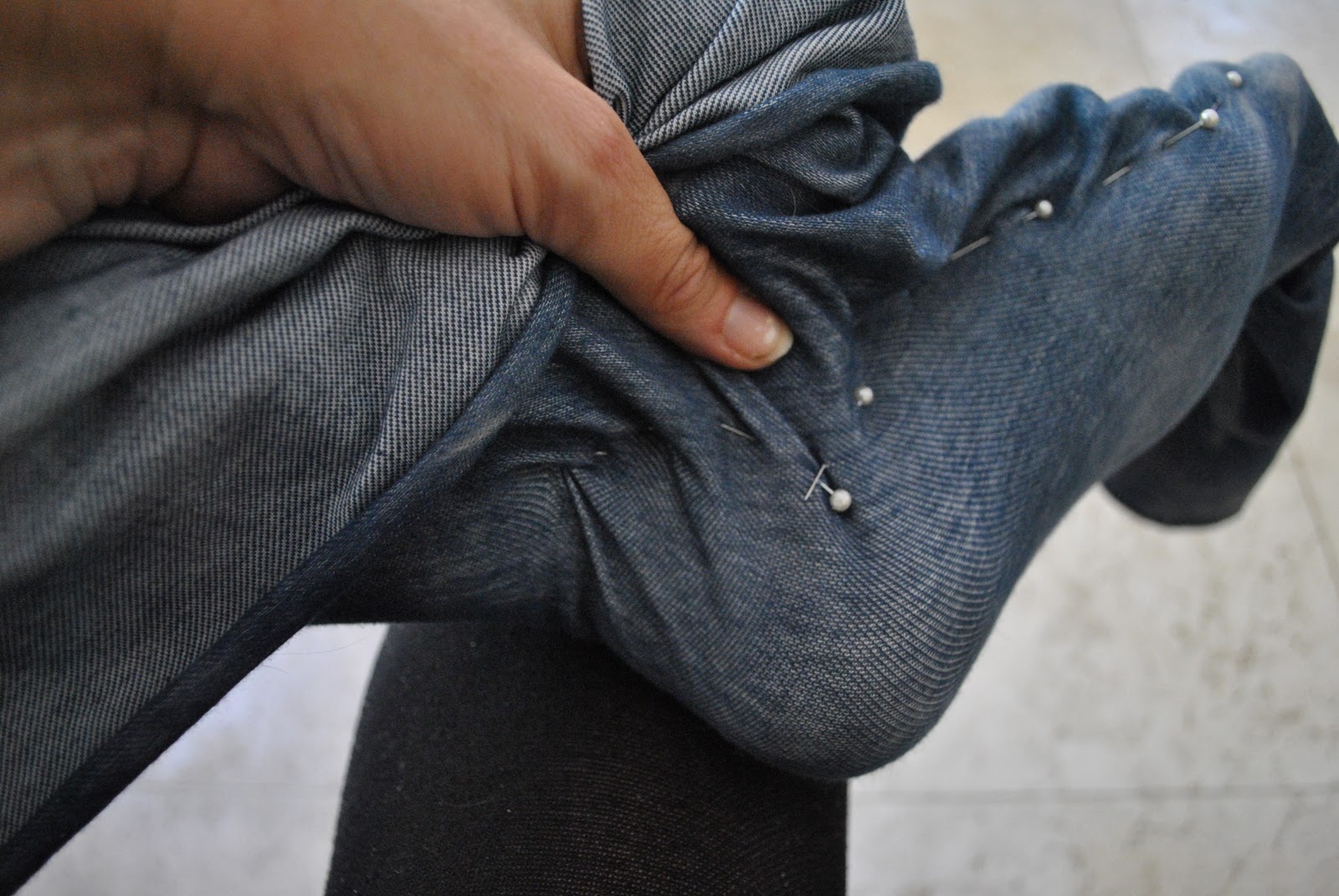
The heel and ankle are the trickiest bits to accomodate.  I’ve got smoothest results when the fabric is pinned with a right angle turn at the inner ankle level.  See in the picture, the inner leg seam is pinned down vertically to just below (about 2.5cm, or 1inch) the ankle bone, then I’ve made a right turn to start pinning down the inner side of my foot.  Pin securely and tightly at these points, again aiming for tight and smooth above all else.  Pin down the inner side of the foot to your big toe, then turn again and pin across the top of your toes, finishing your pinning at the fold on the outer edge of your foot.

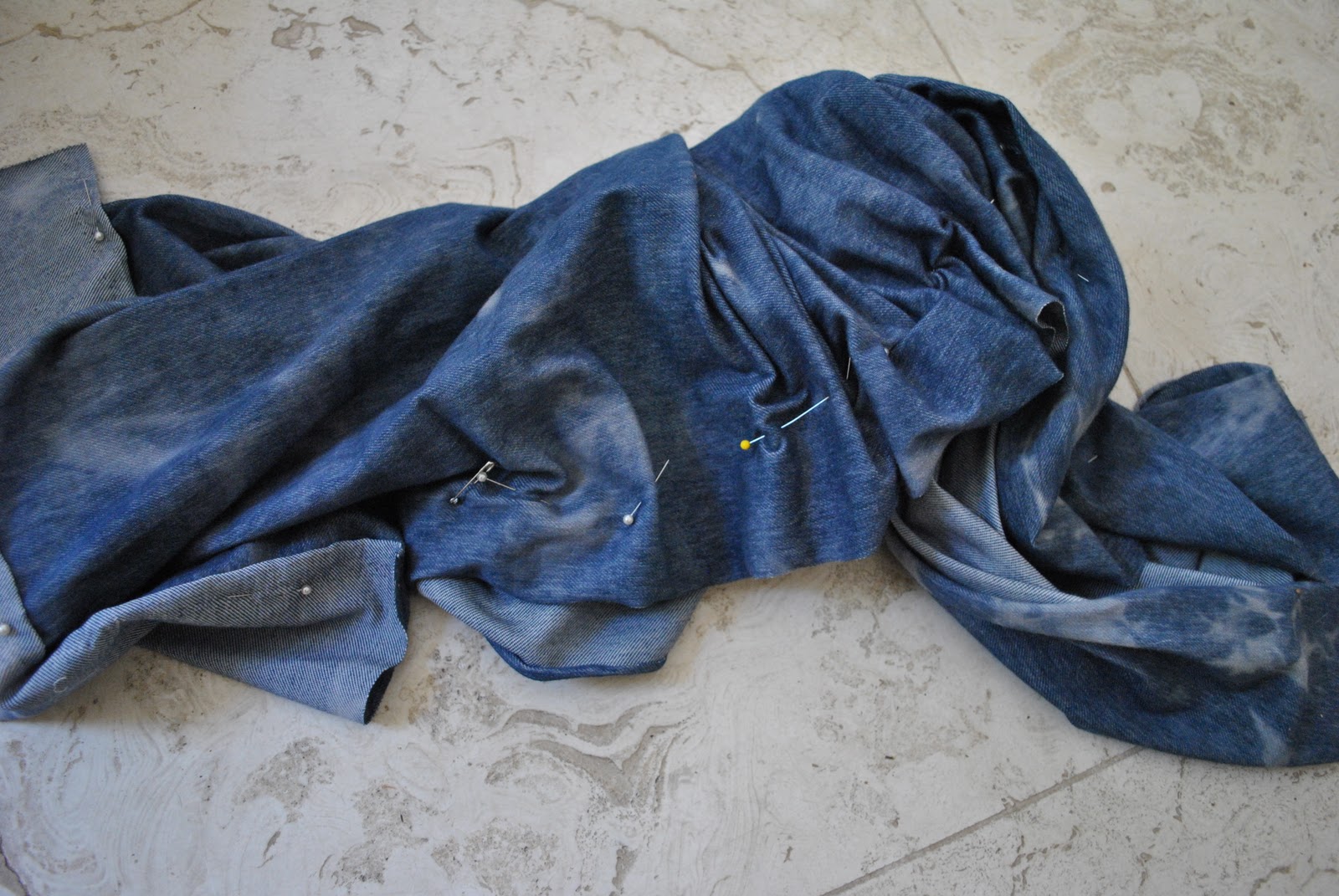
Now unpin the “abdomen pinning” from your leggings at the top, and replace each pin carefully back in the same spot in the fabric as you separate it from the leggings you are wearing.  Now carefully slide the whole thing off.  Try not to lose any pins in the process.  (this is why loose-fitting around the abdomen works best…)

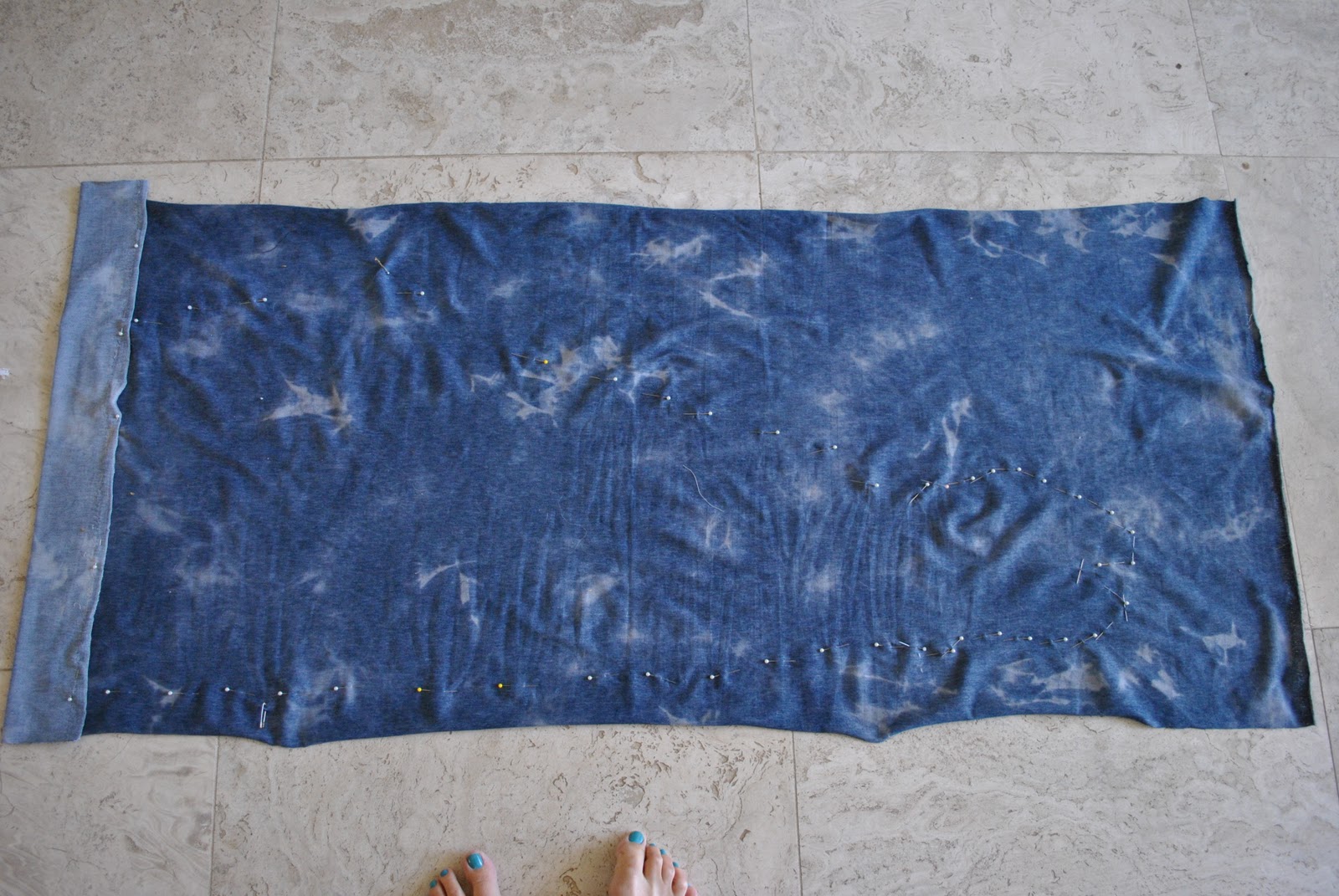
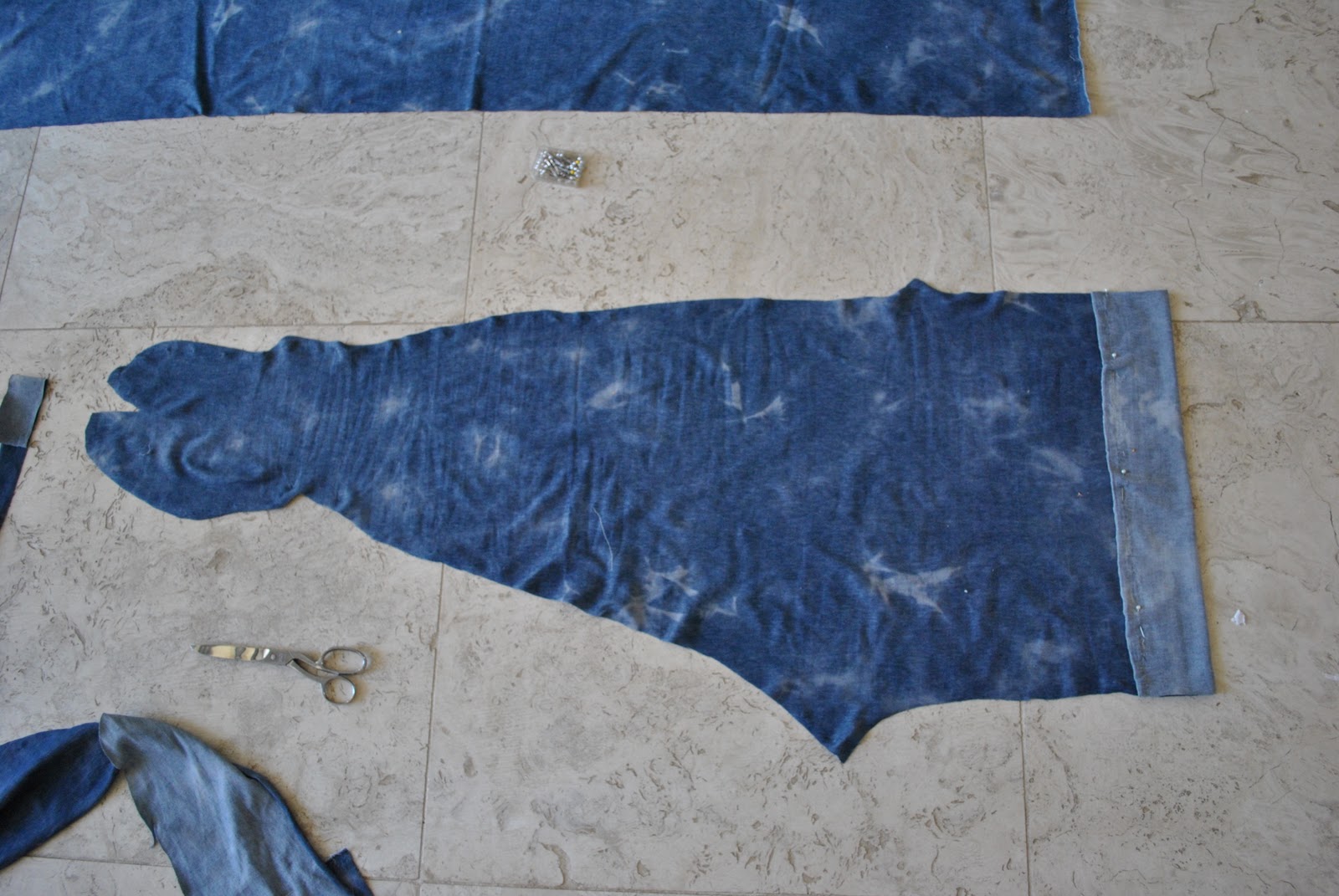
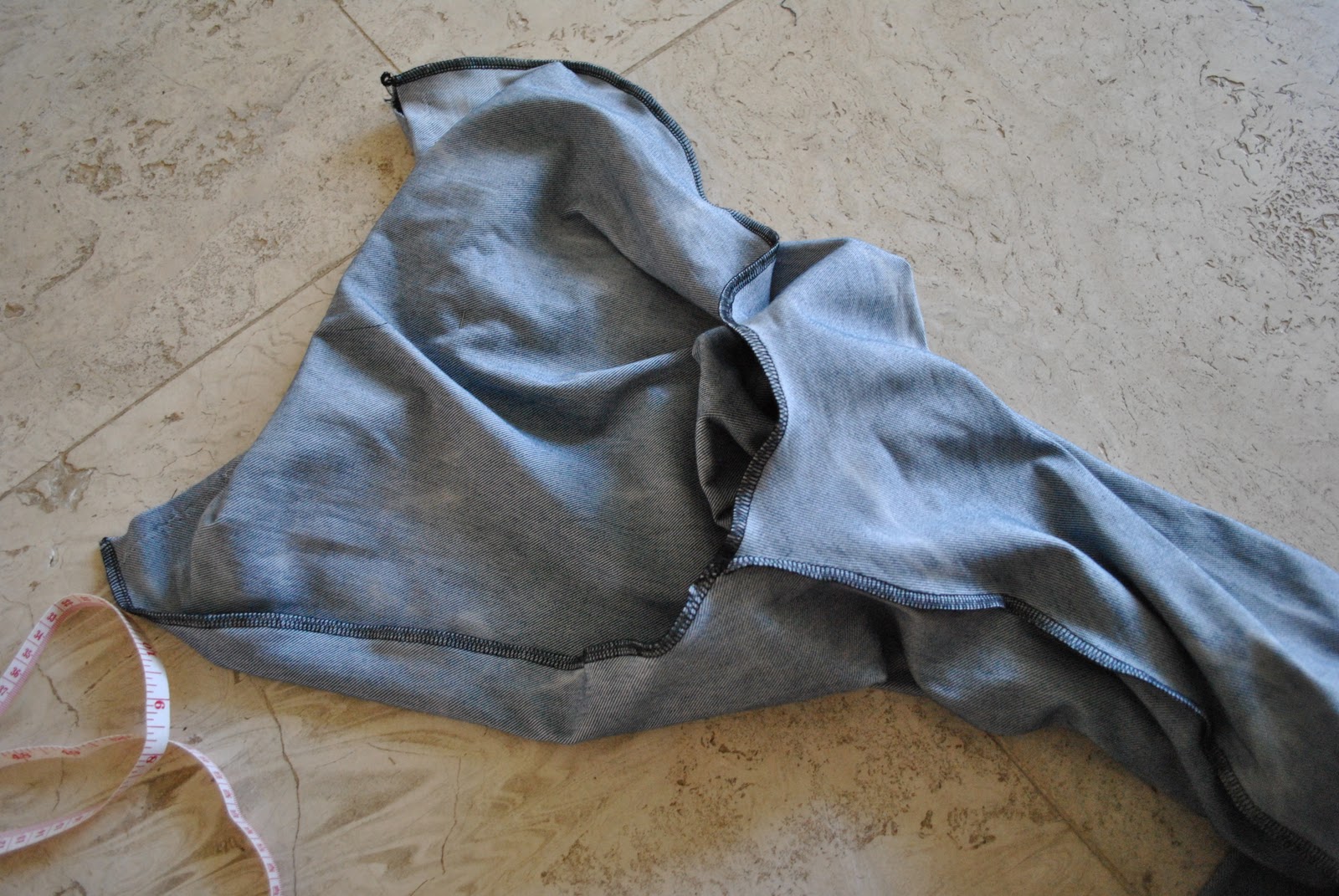
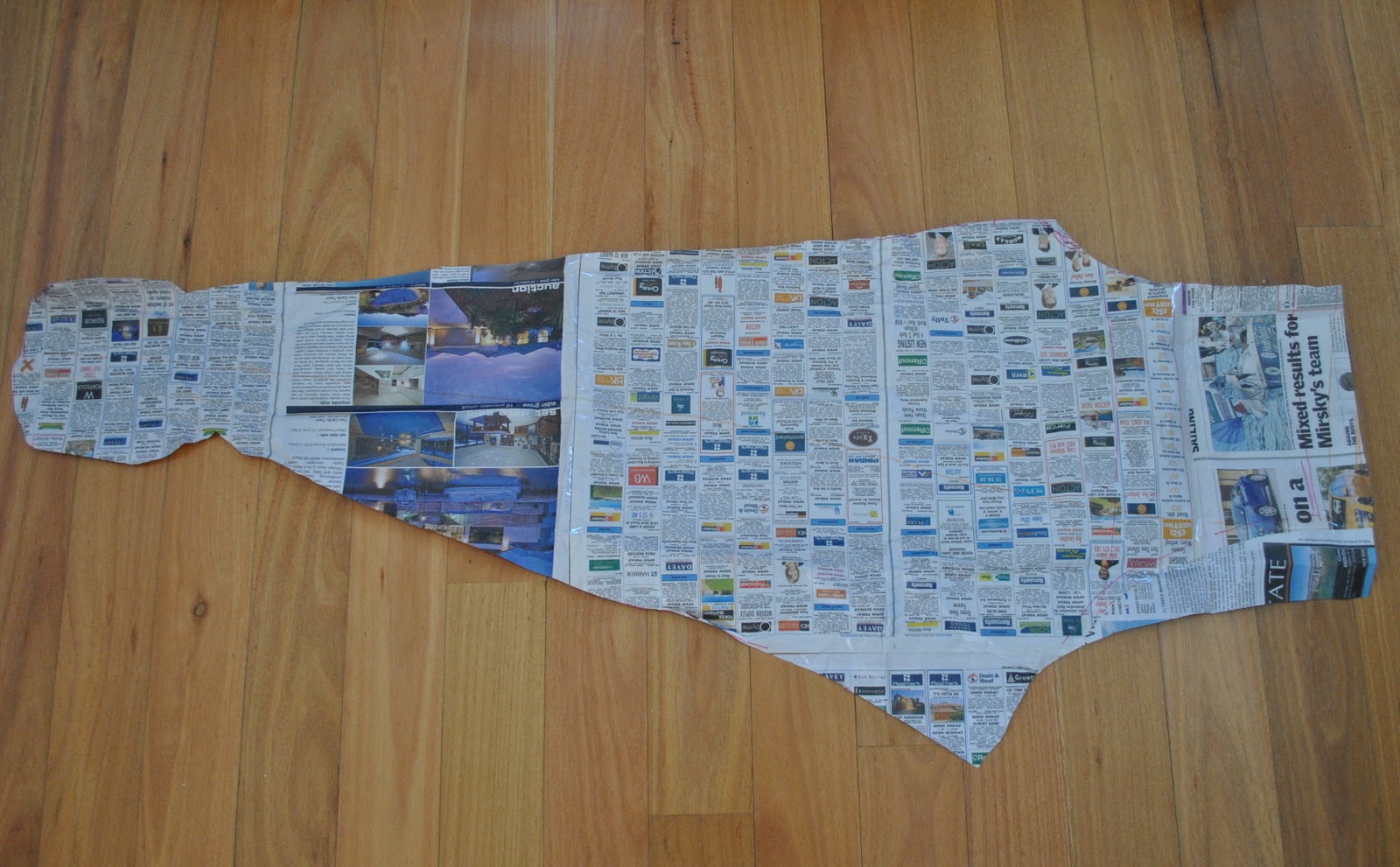
Open up the leg, marking each pinning point with pins on both sides as accurately and as exactly as possible.  Leaving about 1cm (3/8″) seam allowance cut around your pinned lines, cutting a smooth curve down and around to each crotch point.  And voila, you have a leg!  Take a deep breath and try not to panic as you look at your leg pattern.  I know it looks shocking if you’ve never seen it flat like this!  Have a cup of tea to congratulate yourself for having got this far…

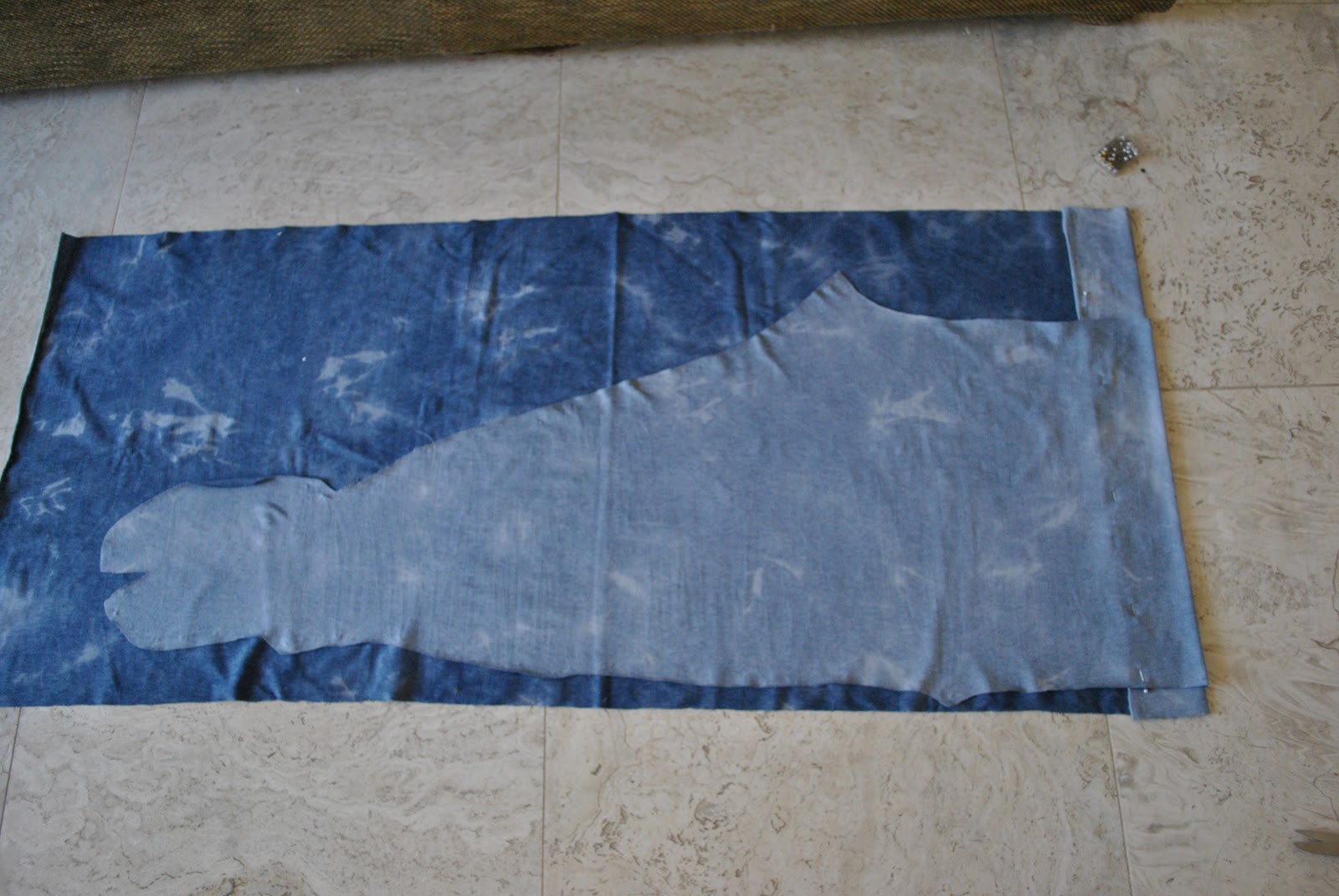
If you have any reason to believe your legs are different to each other, then you should do this whole process for the other leg too.  Otherwise, just lay this leg piece right sides together on the other half of fabric and cut out another leg.  It’s a good idea to make a paper pattern for your customised tights at this stage too, you know, so you don’t have to go through this whole rigmarole a second time…

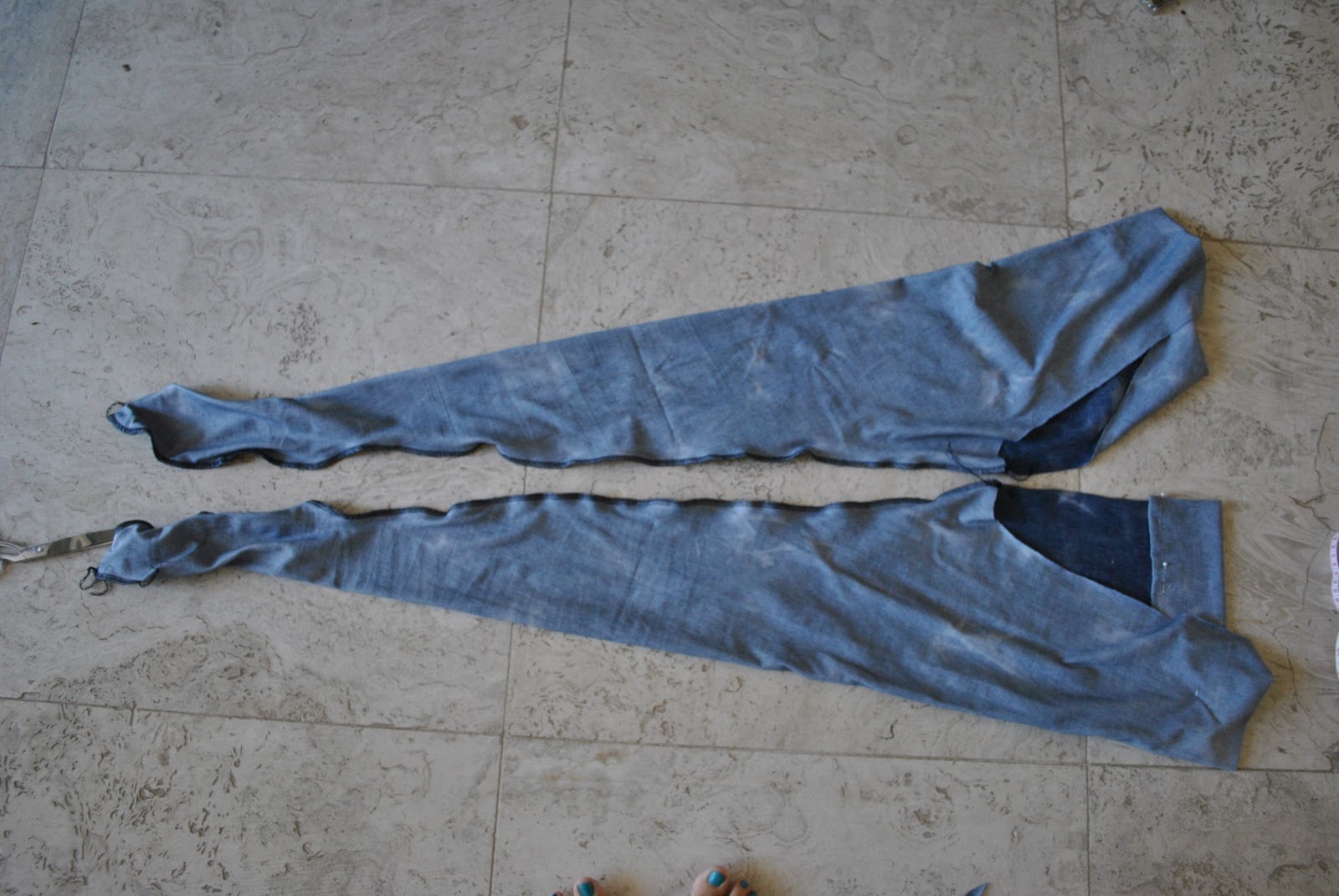
Pin, and sew up the inner leg seam of each leg.  Either serge as I did, or use the stretch stitch specifications for your particular machine.  Do from the big toe to the outer foot edge as a separate little seam.

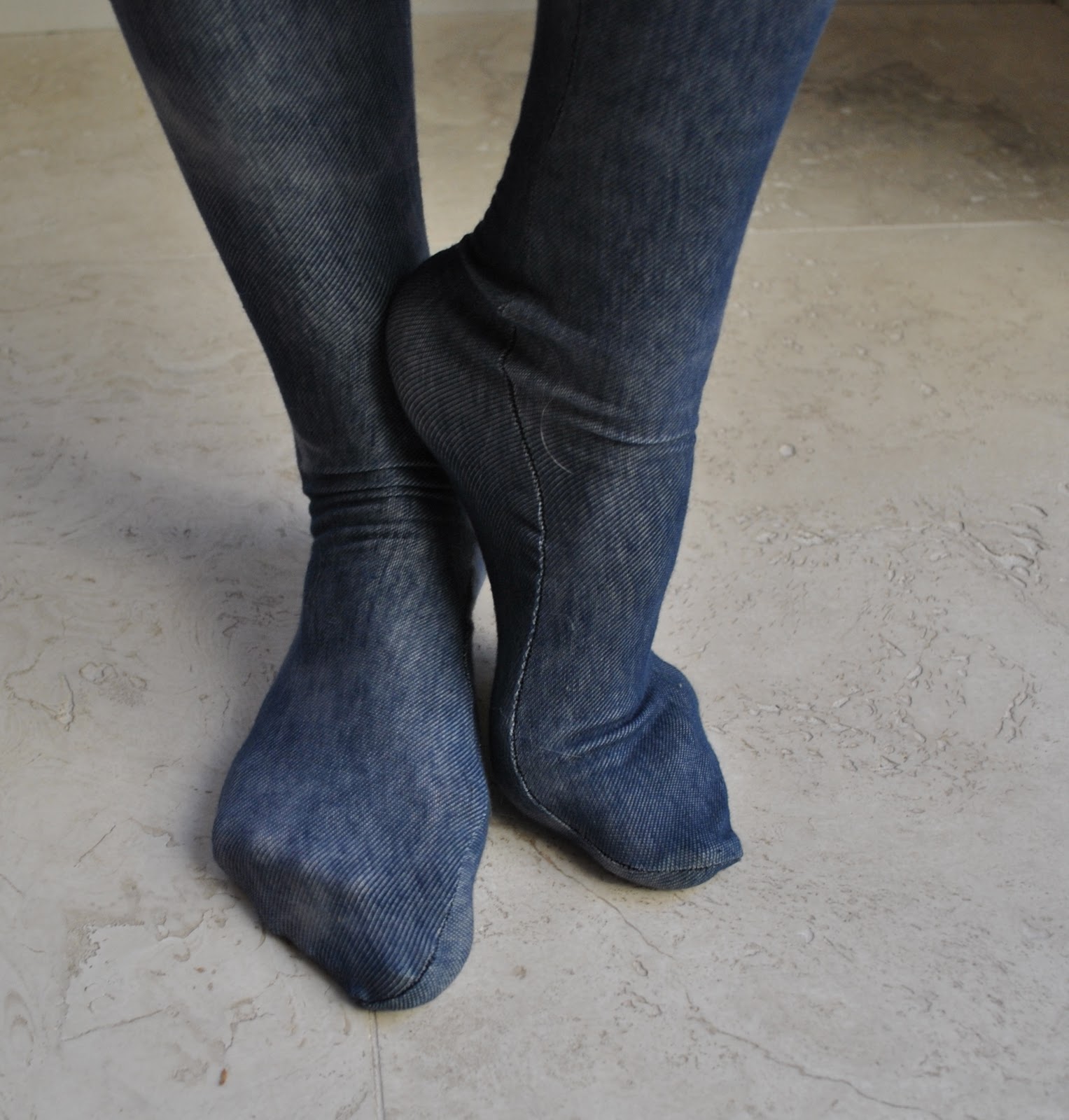
Try each leg on; just to check.  The tightest part for most is getting the heel through the ankle section of the tights… and you will probably have to adjust that inner leg seam to sit straight and true.

With right sides together, and fronts and backs together, sew the two legs together around the crotch seam.  Reinforce with an extra row of machine stretch stitching.

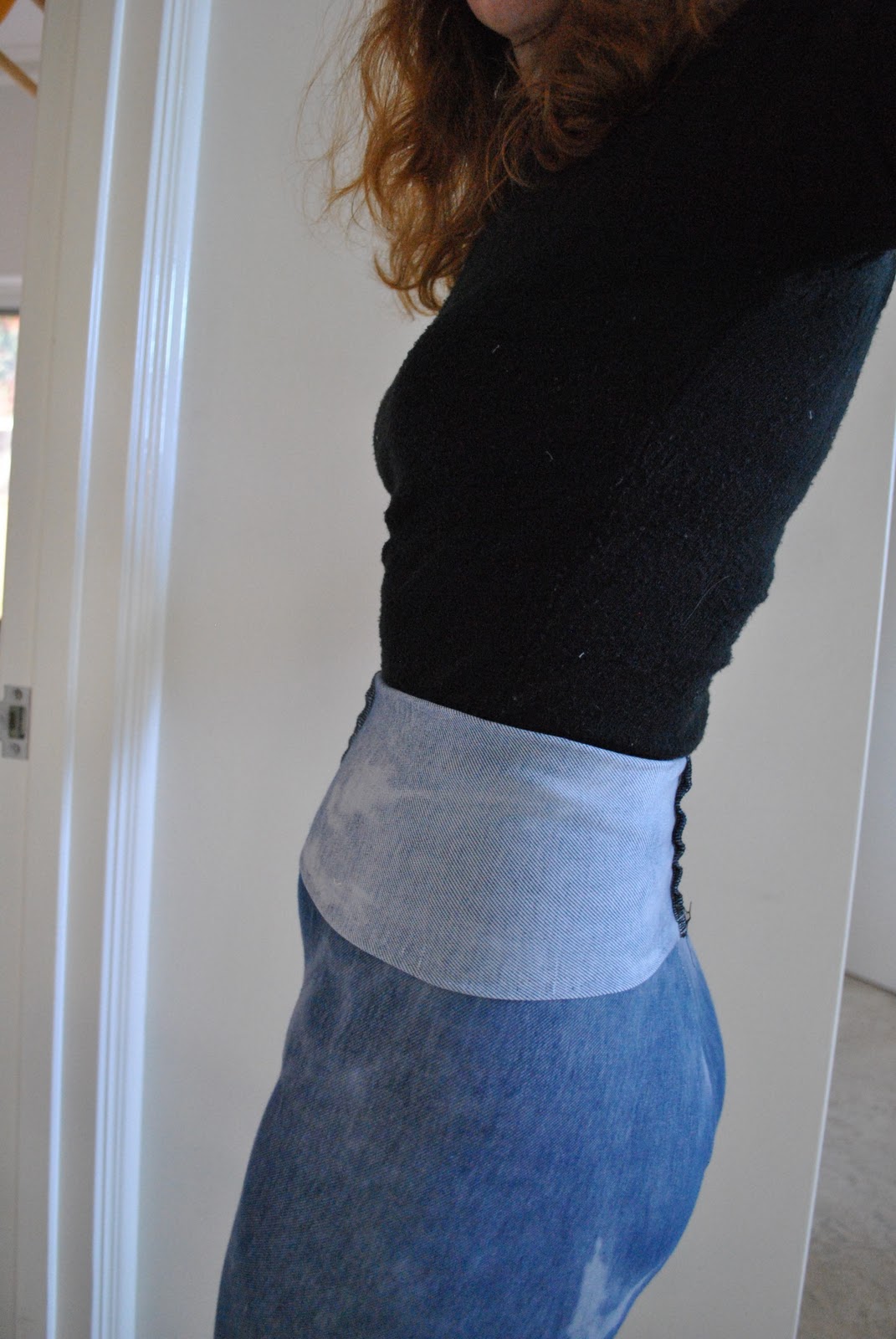
Try the tights on.  Now is the time to adjust and tighten the abdomen area; the waist will probably be too big and loose to work as tights.  Pull it in nice and as tight as you prefer at the centre front and centre back seam; pin and stitch.  Using the offcuts, similarly adjust the waistline of your paper pattern, taking away this amount at the front and back of the top of the pattern.

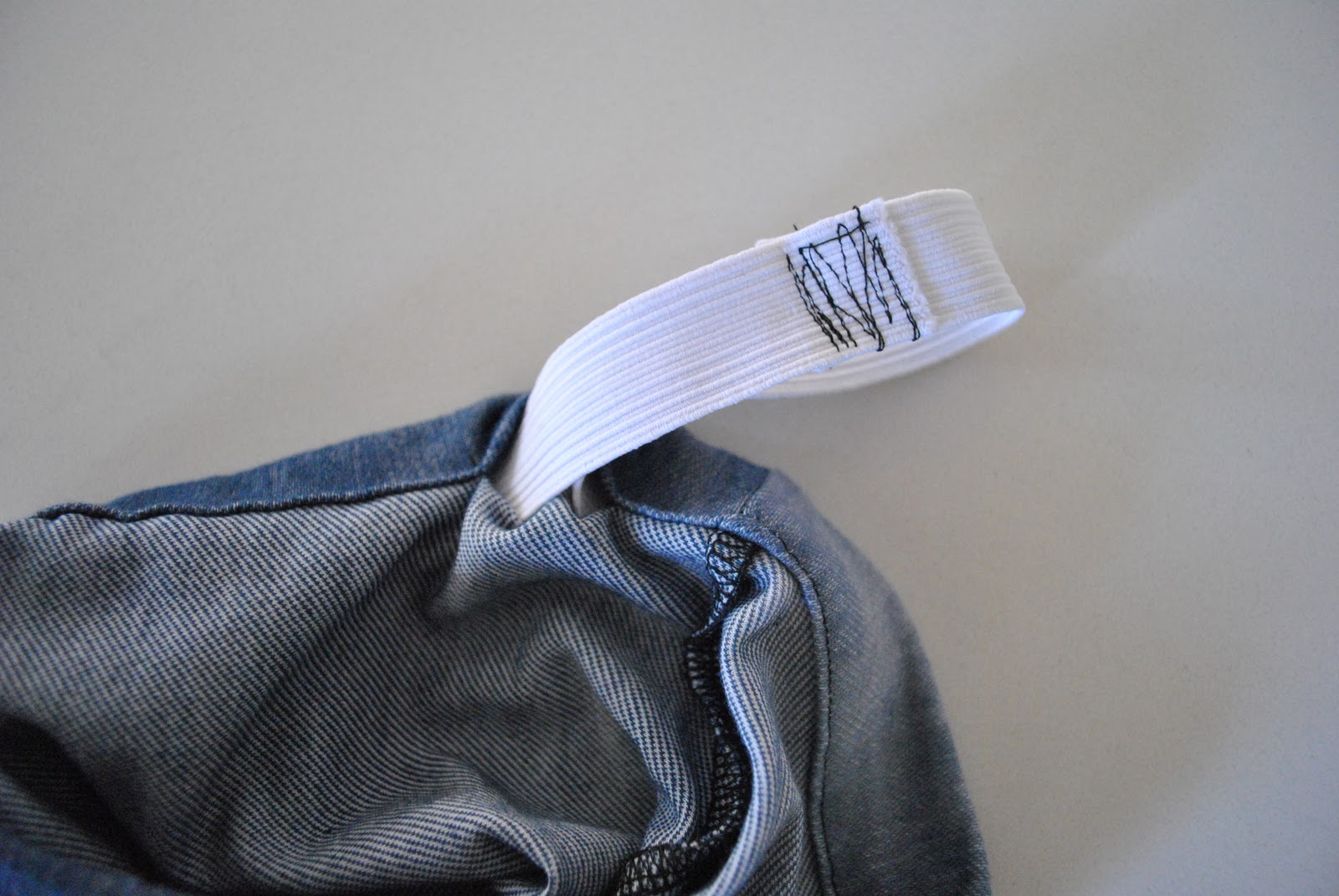
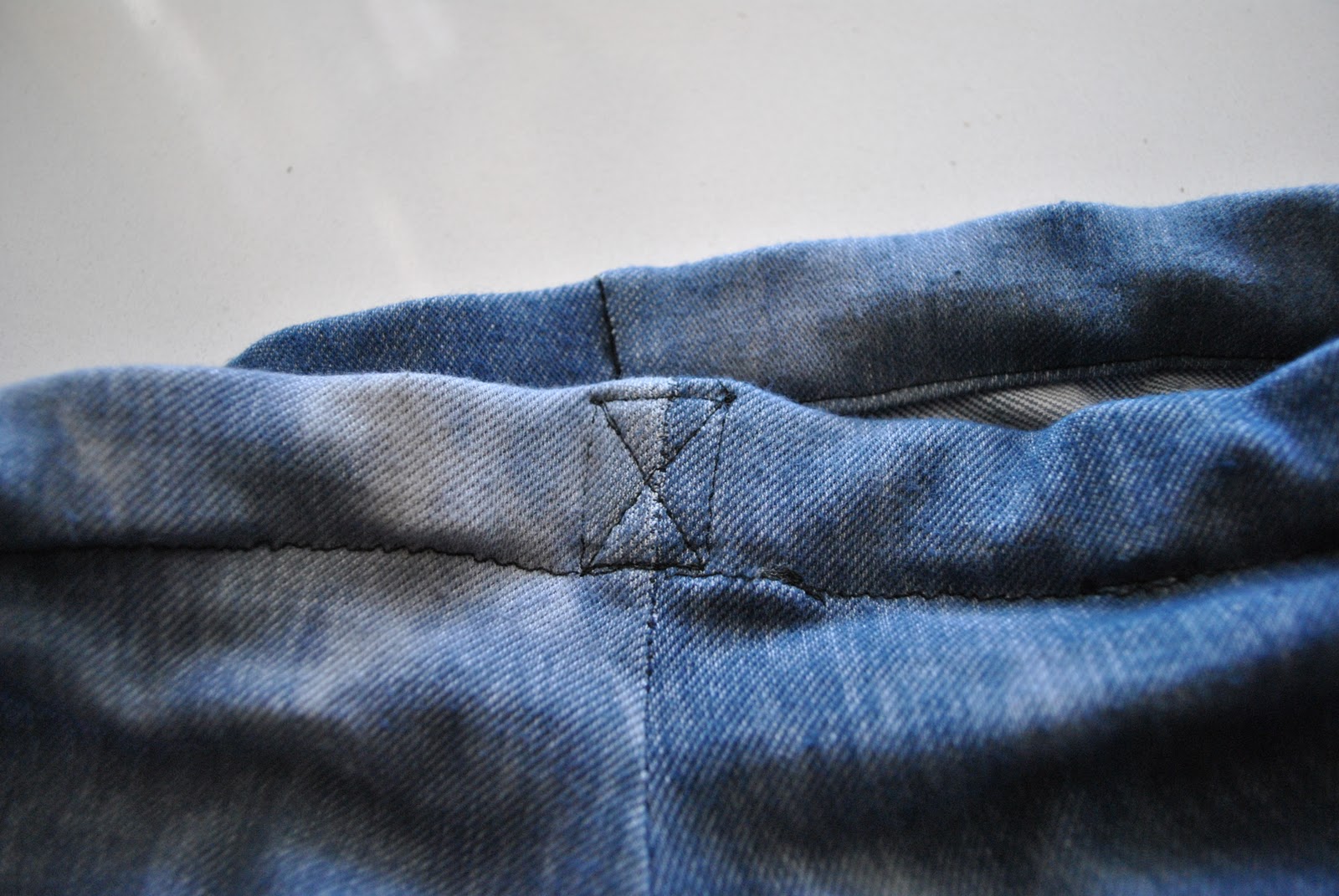
Now it is the time to sew a waist casing for your elastic, do this in the normal way as you would for any elastic waistband.  To keep the elastic straight in its casing, I always sew a line of vertical stitching over the casing with the elastic inside along the centre front seam and also at the back.  Furthermore, I sew a cross at the back of the waistband, or some similar marking, so I can tell at a glance which is the back of the tights when I am pulling them on to wear.


pinterestmail

Domestic diva VI

Yesterday was a very sad day.  I decided not to blog about it as I’m not the sort to pour myself out, but covered up my feelings as is usual for me.  It was a busy day, but I also received some awful news; result, I was rushing about madly, but simultaneously on the inside contemplating the meaning of life in an introspective miserable way all day…  Well, that’s all.  It may sound shallow to say doing my blog is a little bit of silly fun and a joy that I look forward to each day, but it is true…
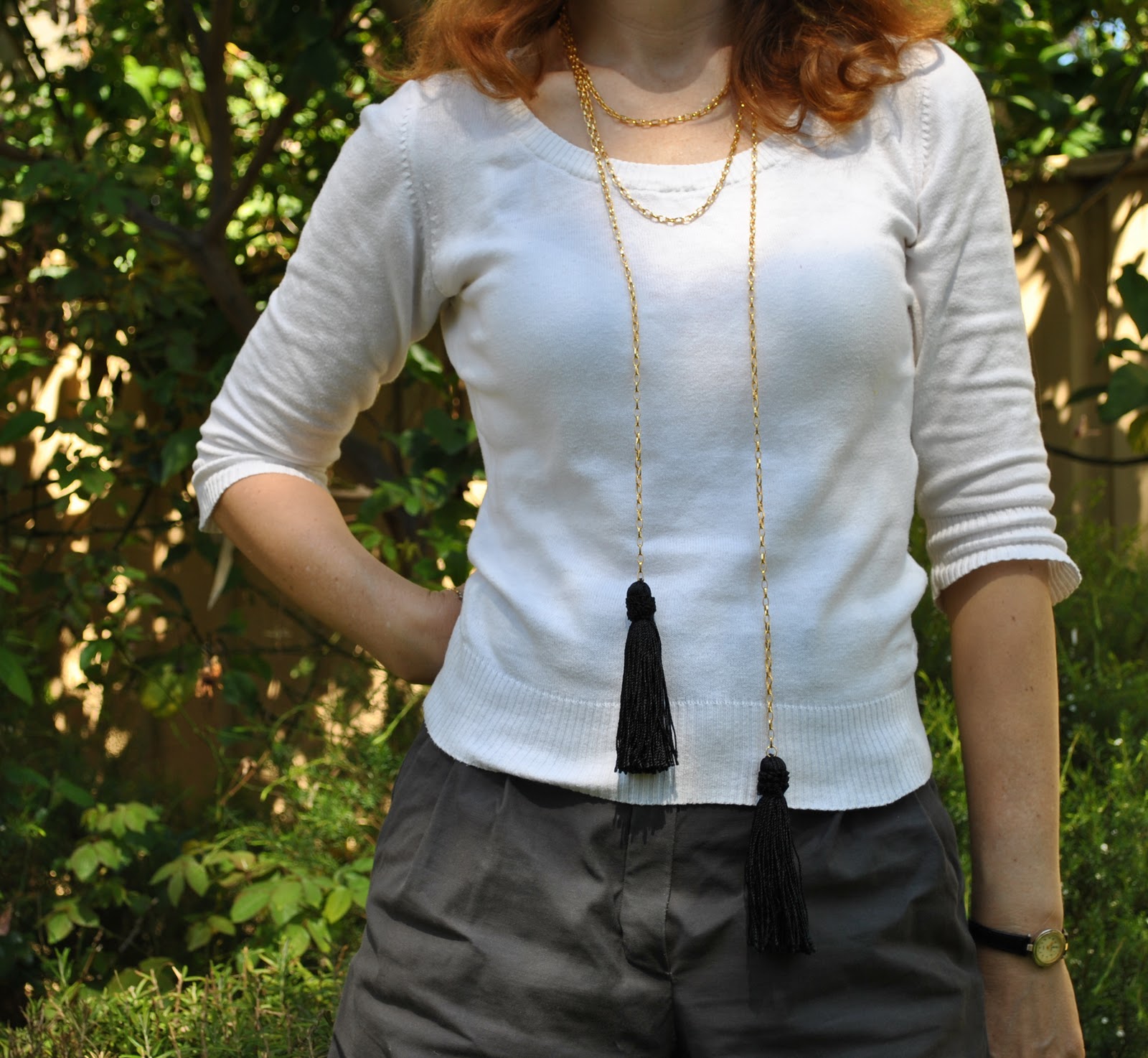
Sorry if this sounds all downer.  I suppose my blog is a realistic snapshot of my days and bad days will happen too…  
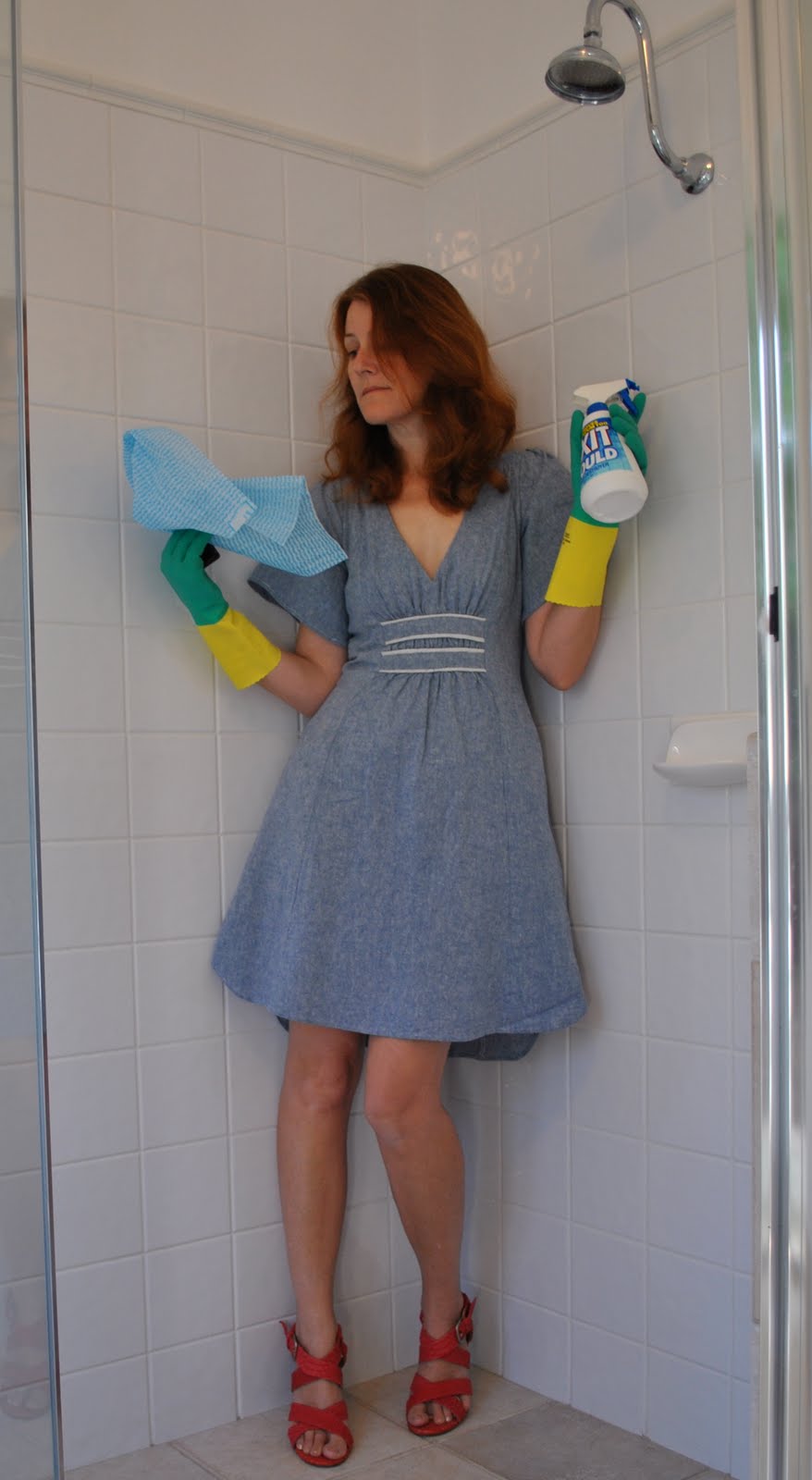
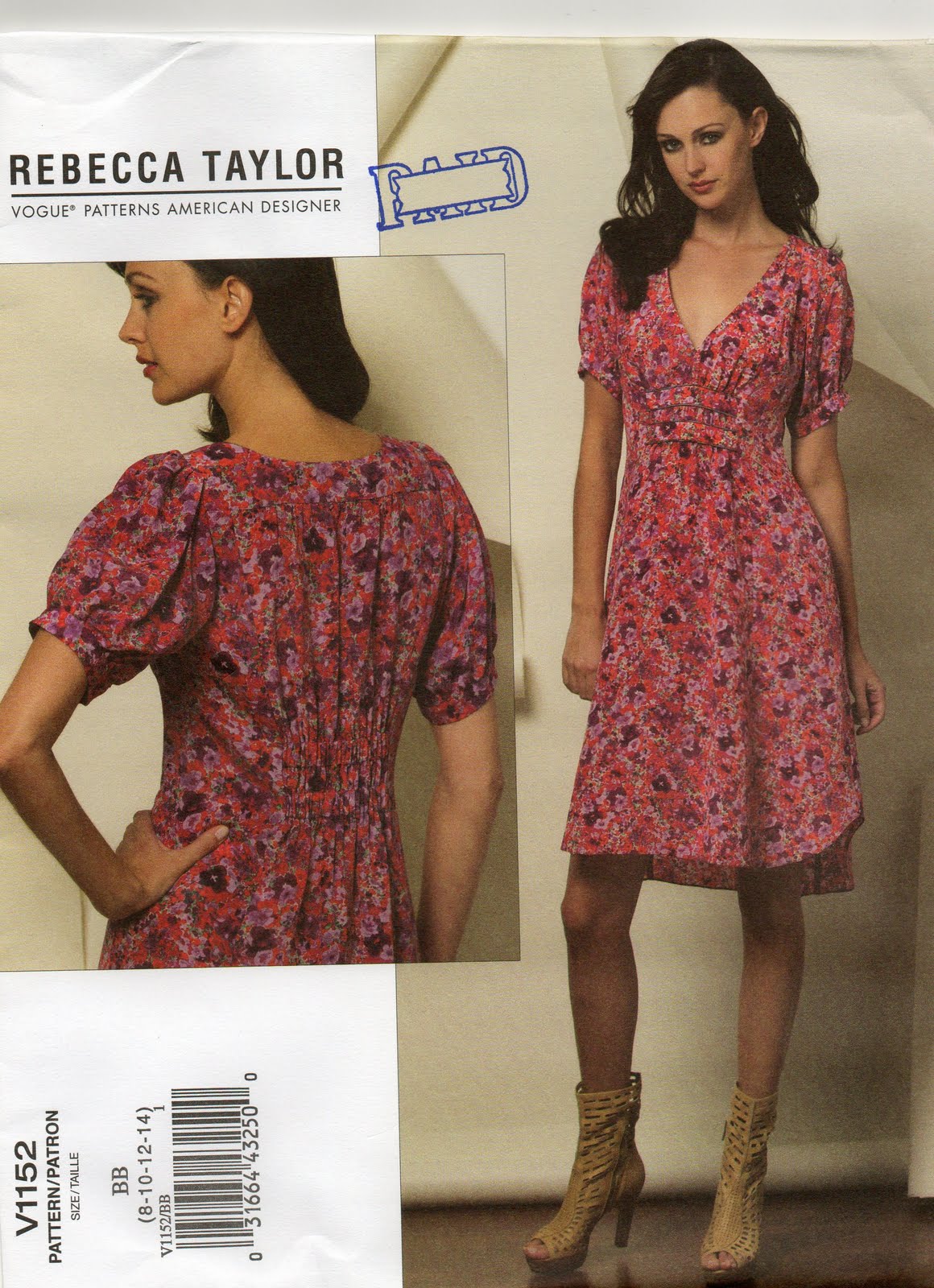
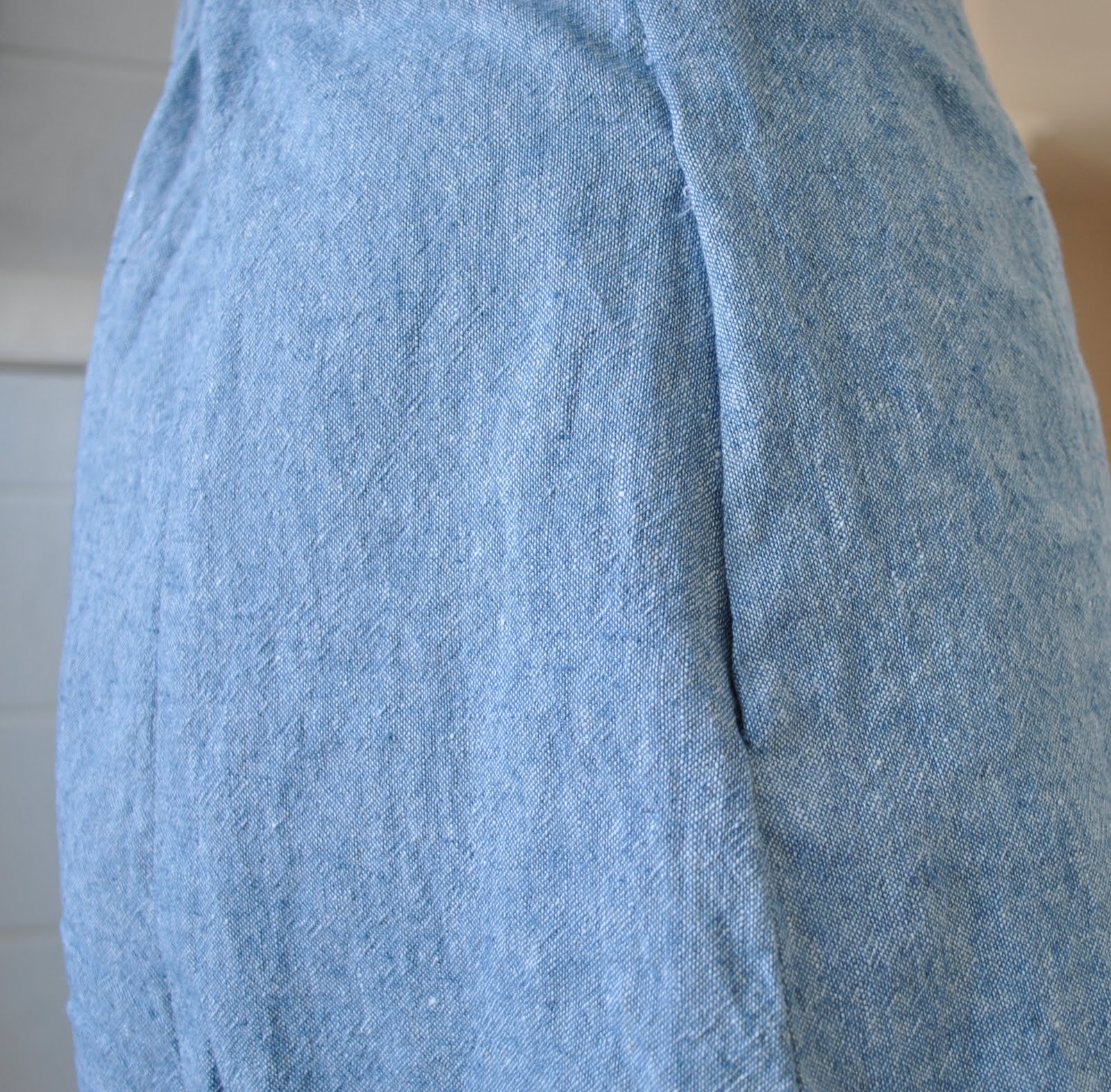
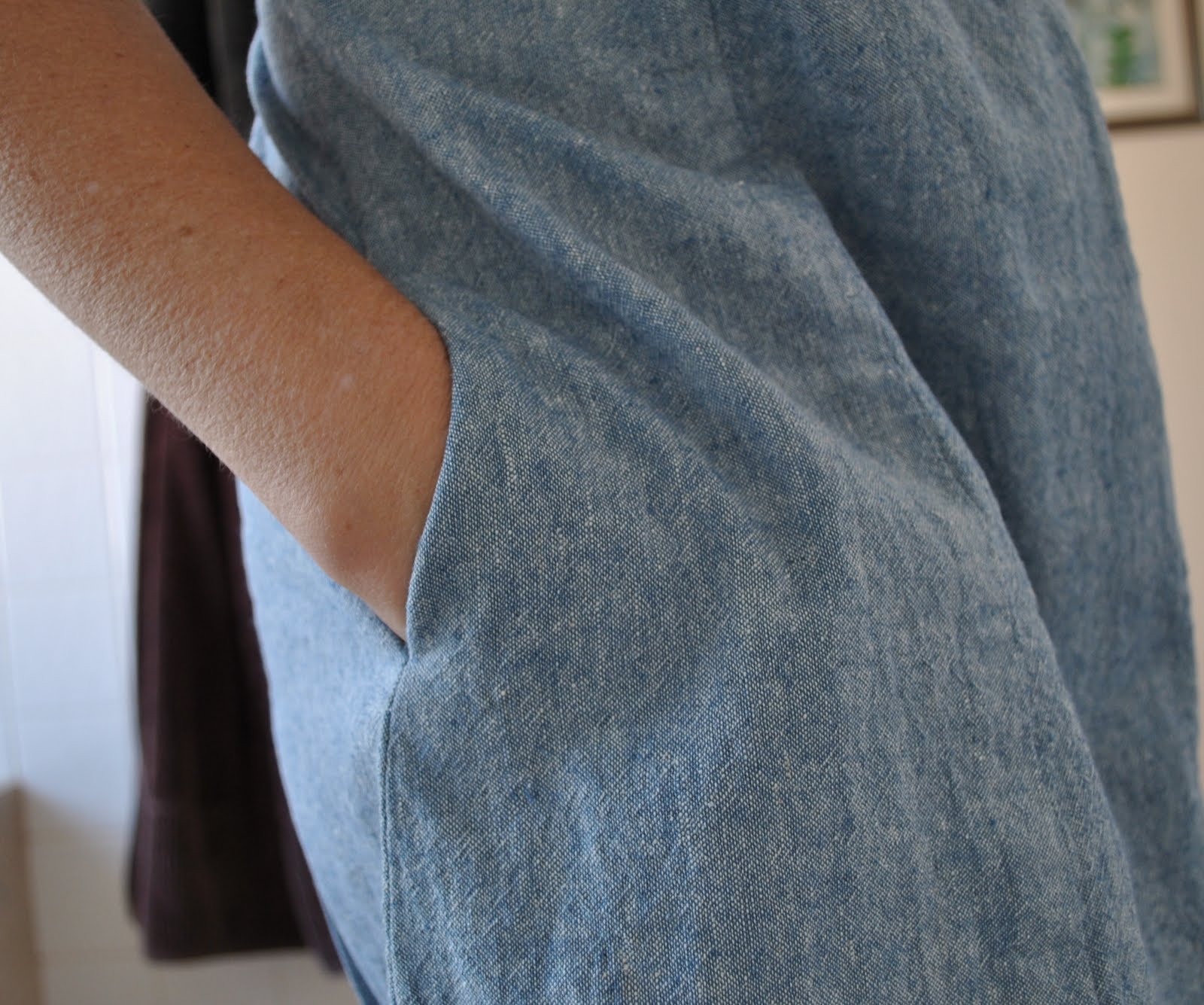
With regards to today’s outfit; all you style mavens can relax, no heels were harmed in the taking of this photo.  But I did wear them for the rest of the day!  The dress is a recent creation, Vogue 1152, made out of chambray.  For my review of this pattern, see here.  I’ve used this pattern again recently, but drastically altered. And after making my chambray top I still had a tad of the fabric leftover…  well last night I used some of this to put inseam pockets in the dress… and took some photos to show how easy this procedure is to do.
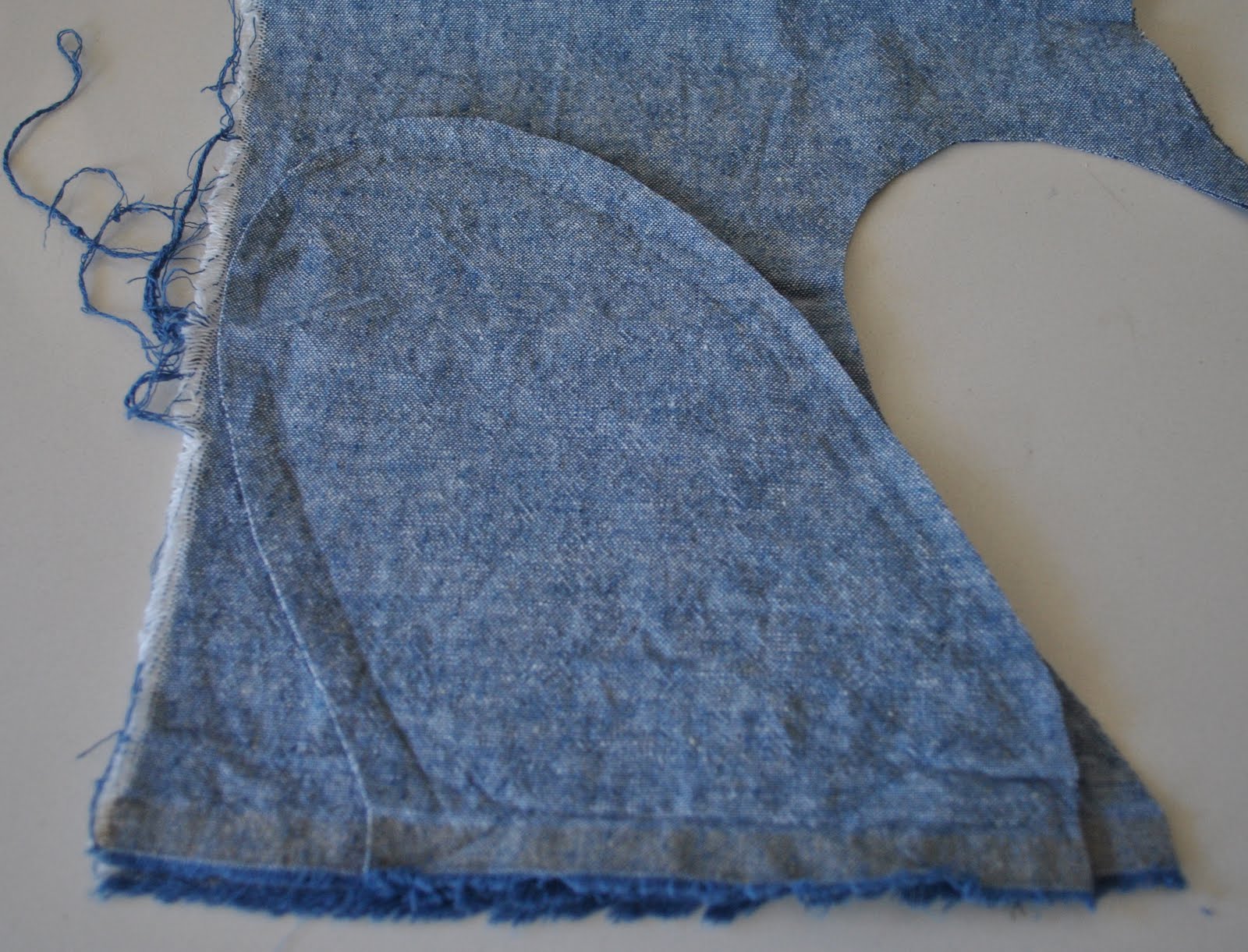
Firstly I traced around my hand to make a pocket shape, and cut out four of these from the fabric,… alternatively you can use a pocket piece that fits you comfortably from a pattern you already have, but a pocket is a pocket is a pocket really…! (also, as the final result will ideally be invisible on the outside you can use either matching fabric like I have, or contrasting fabric, no matter)

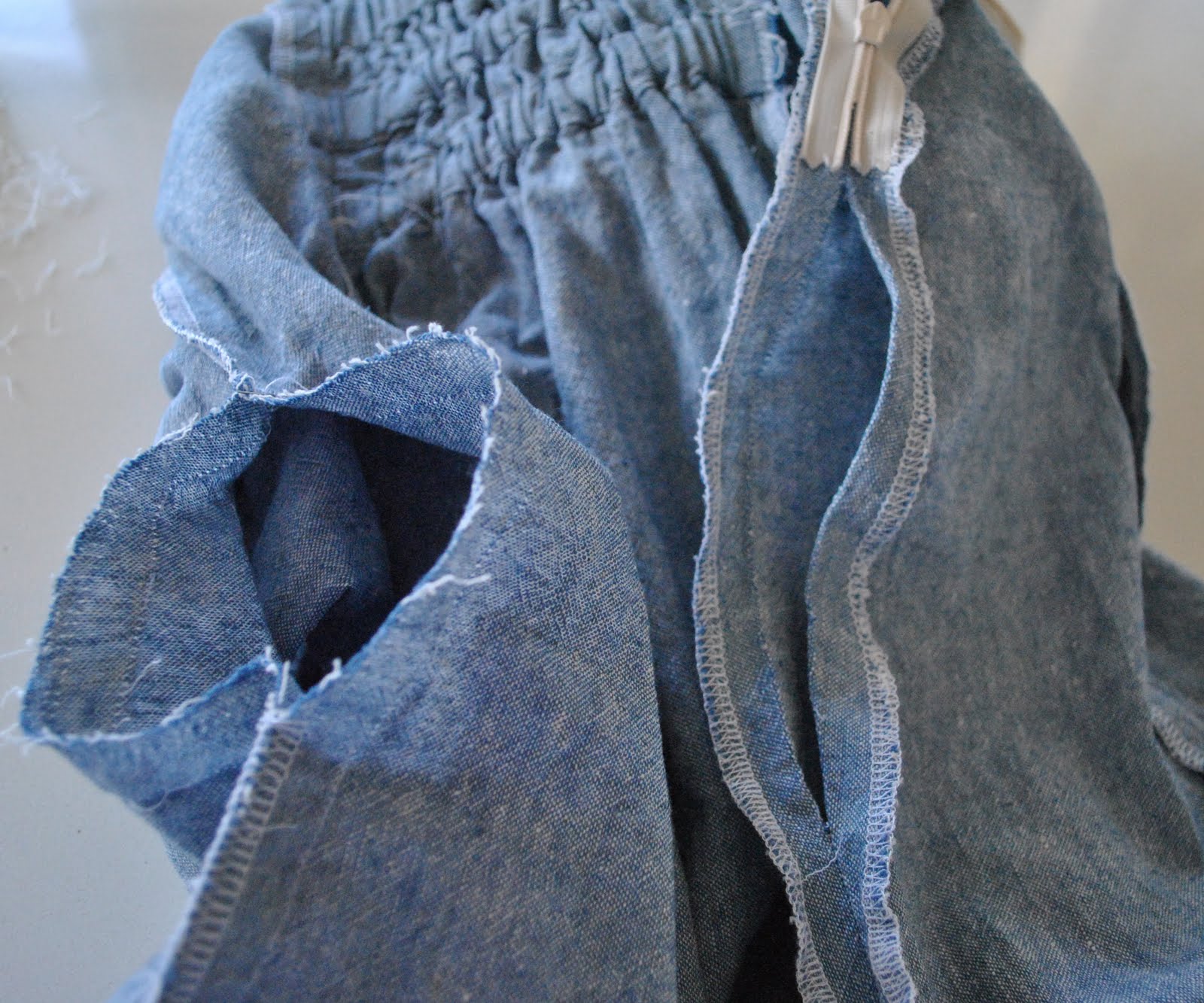
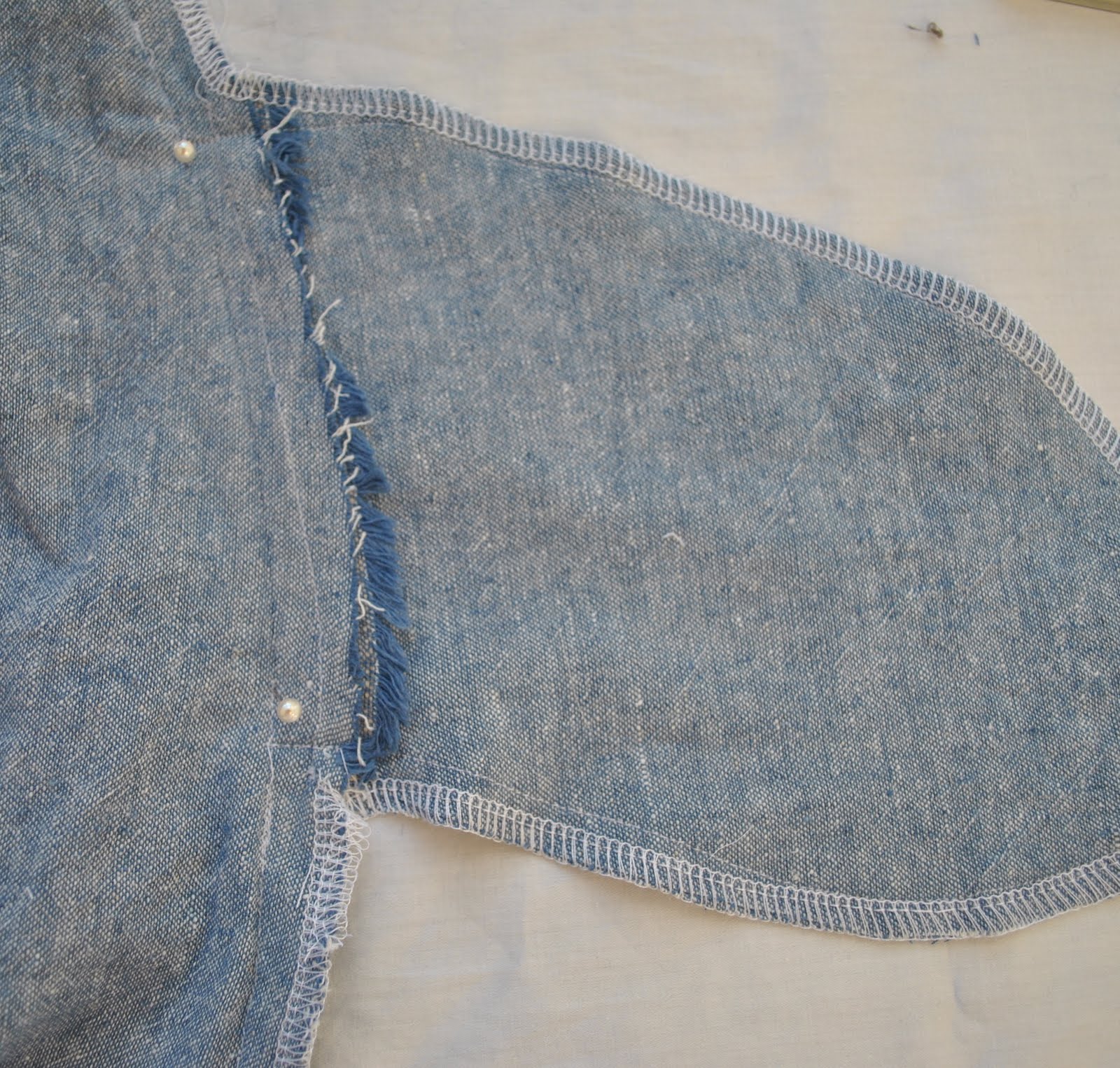
I unpicked the side seams of the dress along the area where I wanted the pockets to go, with about 1.5cm further unpicking top and bottom also, for seams.  If you previously overlocked the raw edges of the seam allowance together, like I did for the left hand one in the picture then the unpicking of all that will be a bit painful… if you’ve overlocked the edges of the separate pieces before sewing your seam, like the righthand one in the picture, then you’re laughing (translation; an Aussie expression meaning it’ll be easy for you)

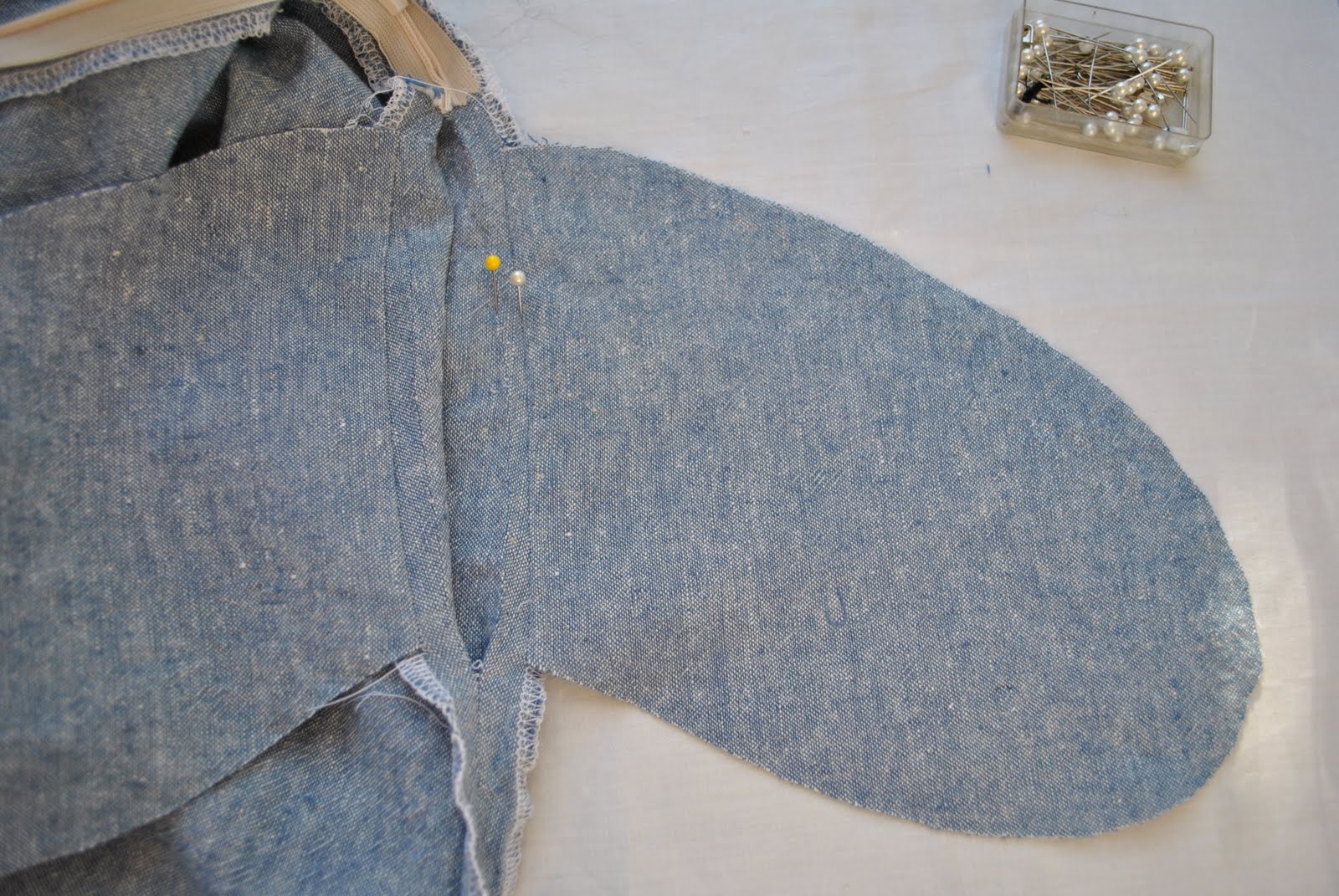
Then with right sides together, sew two pocket pieces to each front, and two to each dress back, using a smaller seam allowance than used for the side seams.  This is important, especially if your pocket pieces are cut from contrasting fabric that you don’t want to show on the outside of the dress.  It’s probably hard to see in the picture, but the yellow pin marks the fold of the old side seam and the pearl pin marks the new joining seam of pocket piece to dress piece.

Now, with pocket pieces right sides together, sew the pocket seam all round the pocket pieces.  Lastly resew the side seams of your dress.  Extend these seams just beyond where the round-the-pocket seam joins into the seam allowance, by about 0.5cm or so.  This will make the finished appearance on the outside neater.  Even more lastly, overlock or finish the raw edges, if desired…

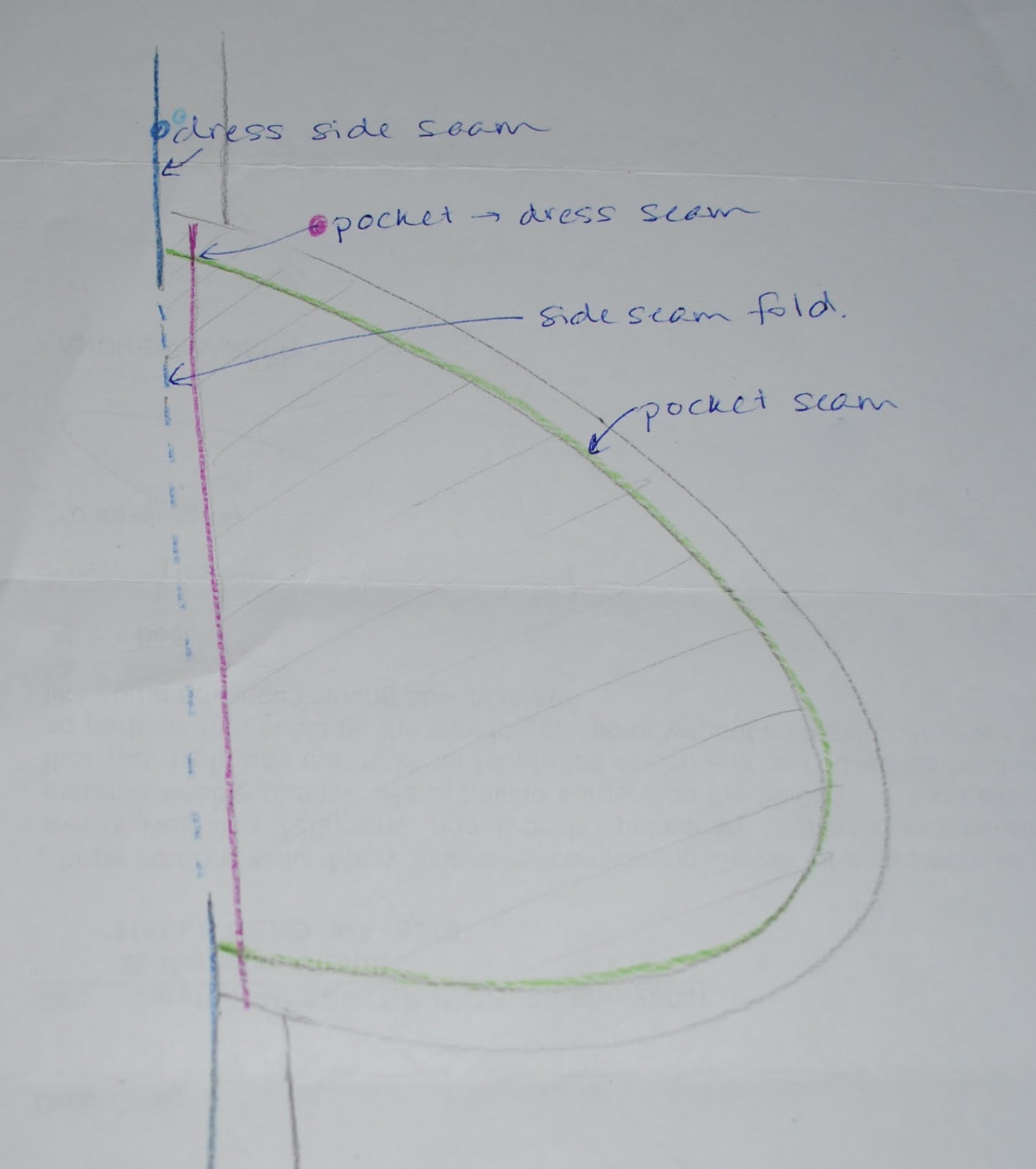
To help make this a bit clearer I’ve drawn a diagram…

The purple seam (pocket piece to dress) is sewn first, the green seam (pocket pieces together) is sewn second.  The blue seam (dress side seams) is sewn last.  The dotted blue line (do not sew this one!) is the pocket opening, right along the seam line of the dress.  See how the blue line extends just beyond where the green line joins up, and how the purple line is inside the blue dotted line?  I hope this helps make clearer my no-doubt muddled explanations…
And pocket-wise you’re home n’ hosed! (translation; an Aussie expression meaning you’re finished)

Details:
Dress; Vogue 1152, with sleeve and fitting modifications, see here for pattern review, cotton chambray
Sandals; Pedro Miralles, from Soletta shoes

pinterestmail

Darning; a how to

First of all, I’d like to thank you for your brilliant suggestions for my style statement!  As I read them I just thought, well, how nice everyone was … thankyou all for “getting” me.  It’s really hard to assess yourself and sometimes you need friends to chip in with an outside viewpoint, which is often so much truer than one’s own jaded viewpoint.  My mother rang me this morning to say how she thought all your comments were so lovely and all valid… so thankyou again!  I think they’re all wonderful and I’m adopting all of them.
Today I’m doing a little tutorial on darning.  I’m well aware there are a lot of people who think I’m absolutely crazy for knitting my own socks, how do I know this?  because this fact elicits gales of laughter if one of my friends lets it slip at some gathering, and someone there will always insist on me lifting a jeans leg to expose a sock to prove it.  But I like knitting, and I’ve gone off knitting cardigans and jumpers, I’ve got plenty of scarves now, and I find socks easy as well as useful, so there it is.
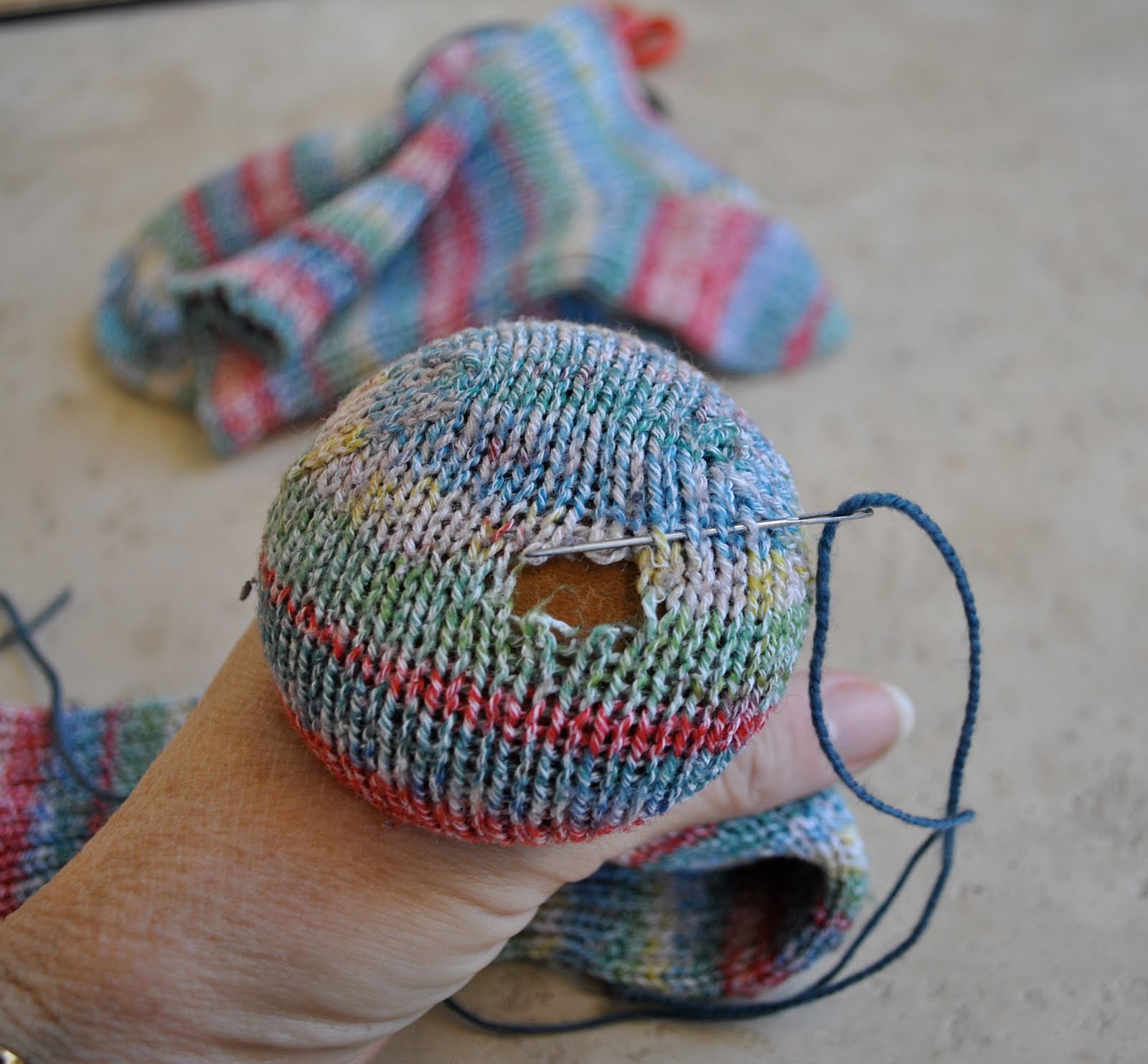
I made my first pair of socks about five years ago and I recently had to darn a hole in the toe of one of these so I took a few progress photos to illustrate how this traditional old method works.
I’m good at darning (don’t laugh)  I used to help out in my sons’ school uniform shop and once a boarder brought in his wool blazer with a hole in it and it was passed on to me as they knew I was a seamstress… when I had finished it (if I say so myself I’d done a pretty good job using a very fine wool thread so the darned hole was almost indistinguishable from the fabric around it) for the next week it was passed around to show other mothers who came in and who marvelled at it, until the boy came back in to pick it up.  I was a little embarrassed but inwardly kinda chuffed at the attention it got…
So I’m not using a fine wool thread to darn this sock here today, but a much thicker sock wool and in a contrasting colour so it will definitely not be indistinguishable from the sock but this won’t matter, you’ll see why later…  This is what you will need… a darning “mushroom” (these probably have a proper name but I’ve always called them mushrooms because that’s what they look like), wool thread, scissors, needle and your hole-y sock.

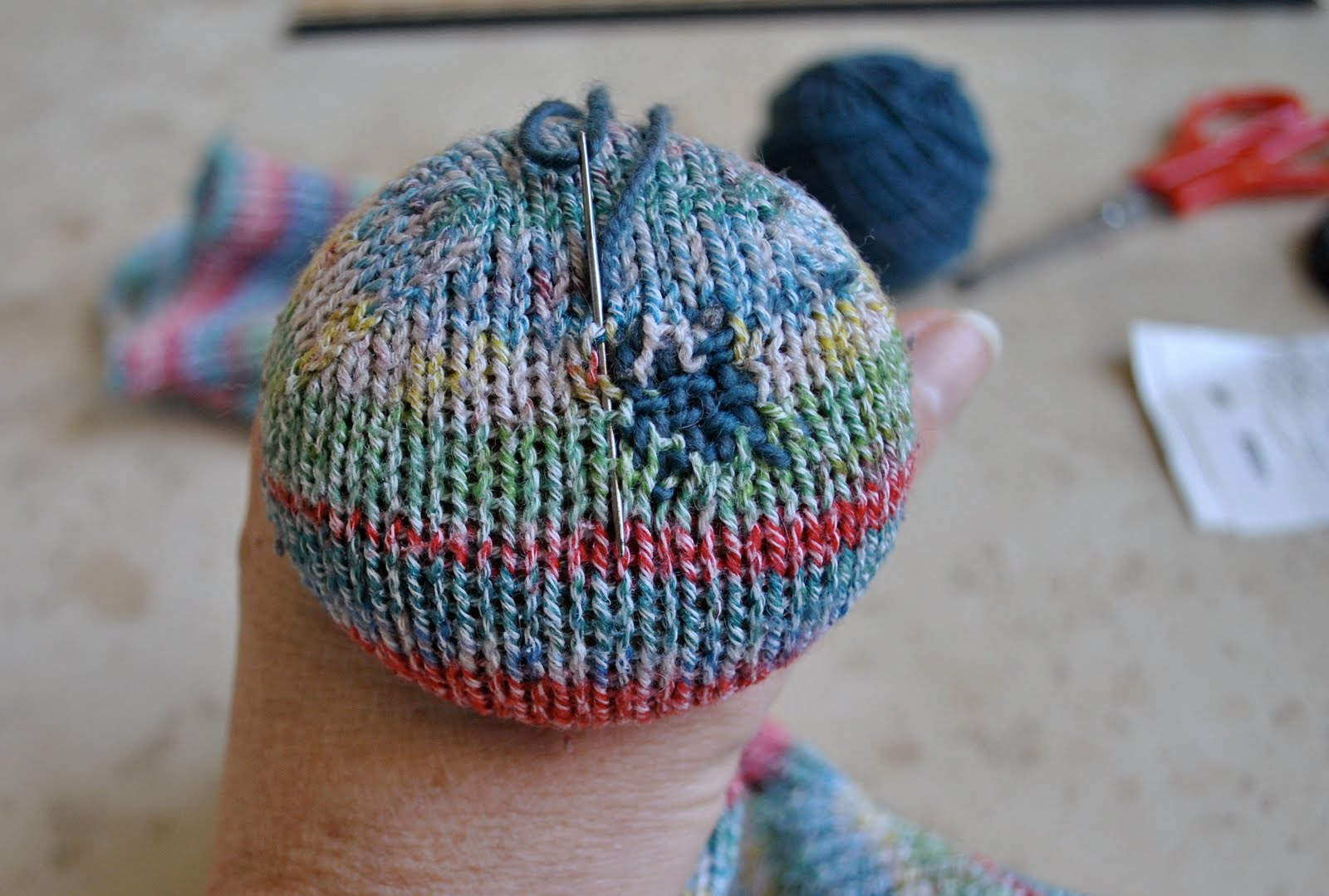
Run your thread in a running stitch adjacent to the hole and in an upper corner to secure the end in the fabric…

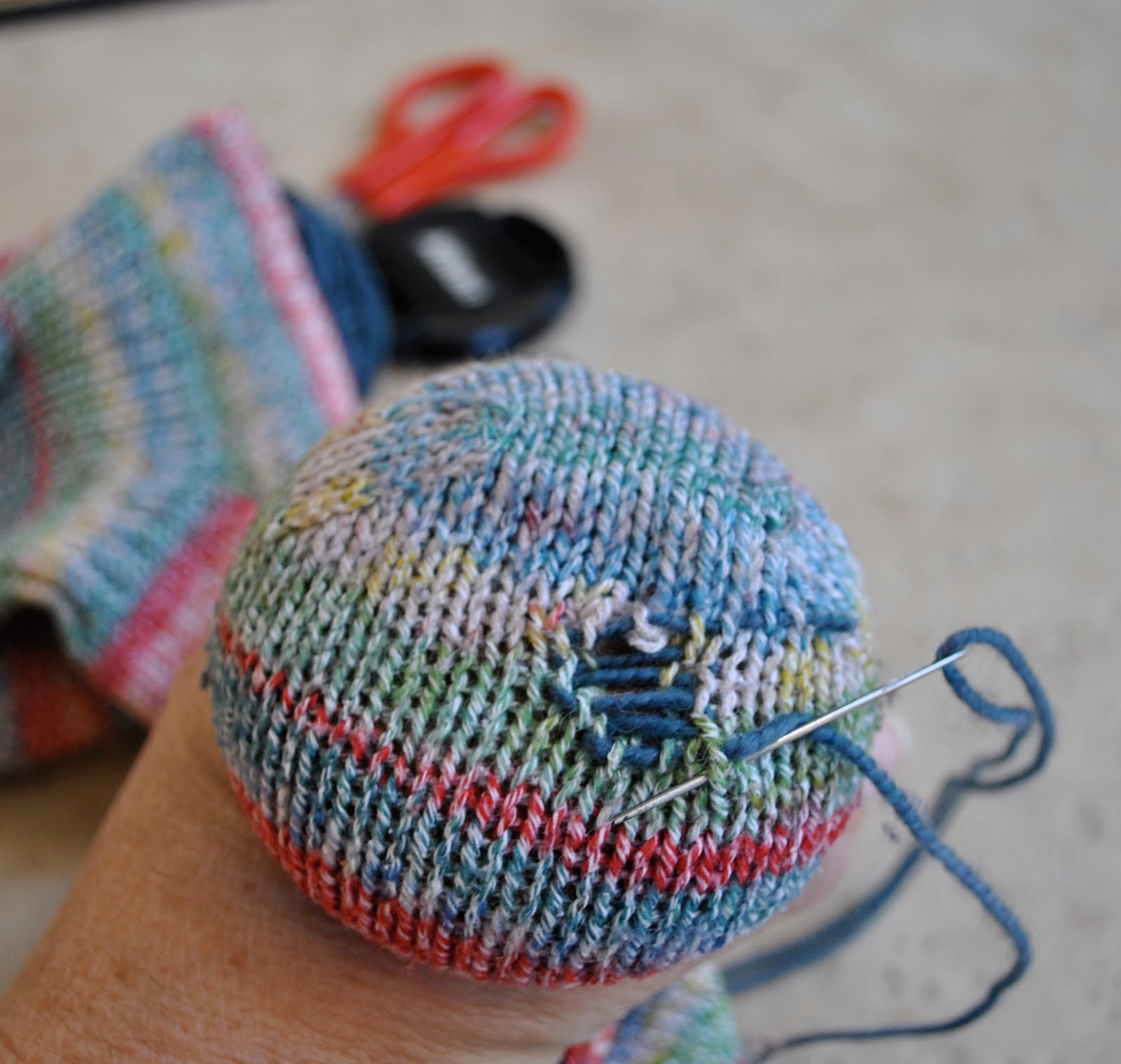
Take the thread through the opposite edge of the hole with a few running stitches, turn, place a few running stitches going back to the hole, then lay the thread back across the hole, do a few running stitches into the opposite edge, and so on.  What you are creating here is a warp of parallel threads all secured as well as possible in the edges of the hole.

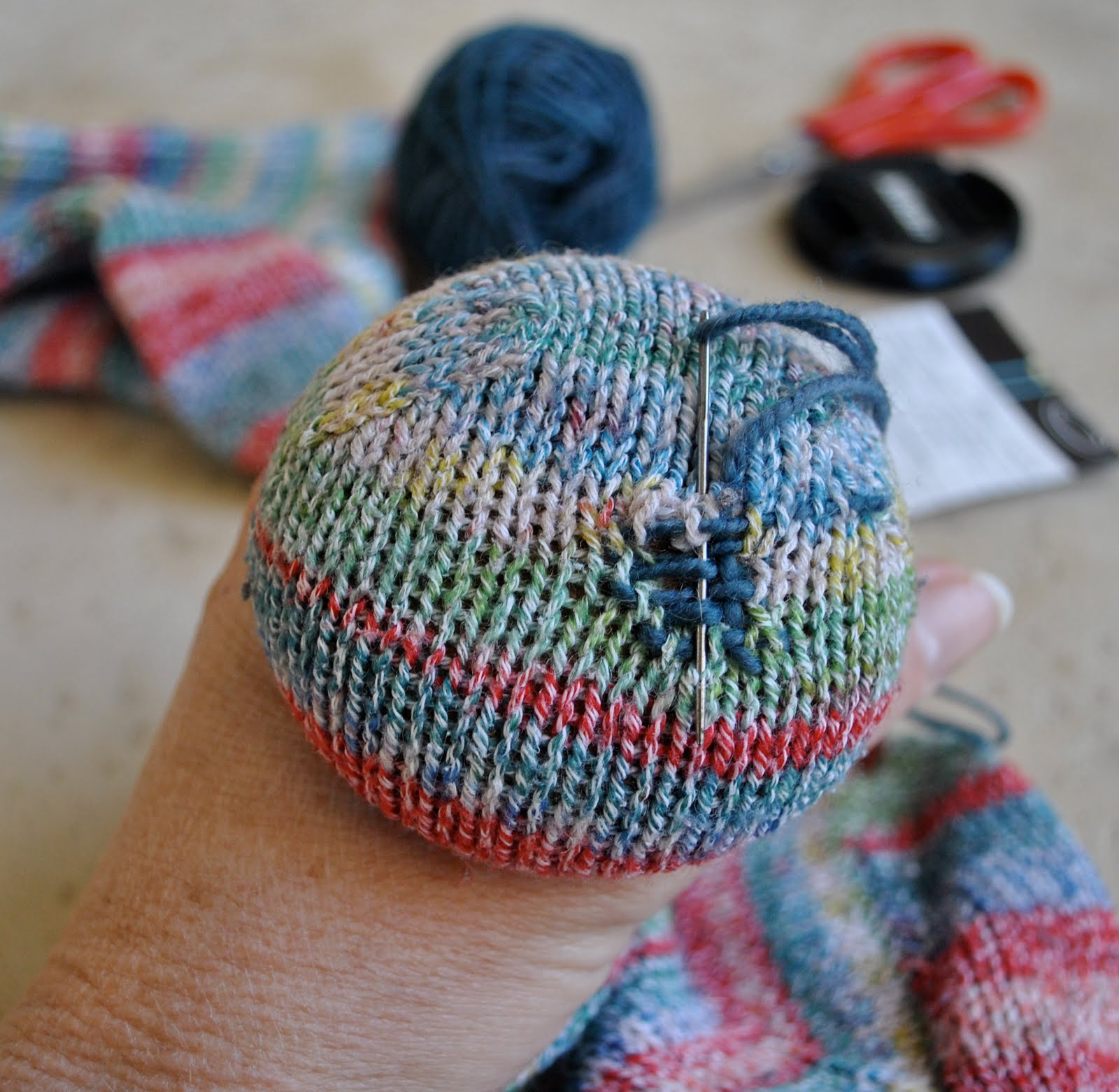
Now, using the same method of securing the thread at the edges, weave the thread up and down across and through through the lines you just laid out.  When you come back down next to each woven line, weave down and up in the opposite way.  With each “pass”, secure the thread with a couple of running stitches in the edges of the hole.  This helps stabilise the broken and loose threads into each other, the body of the fabric, and the new woven patch all together.

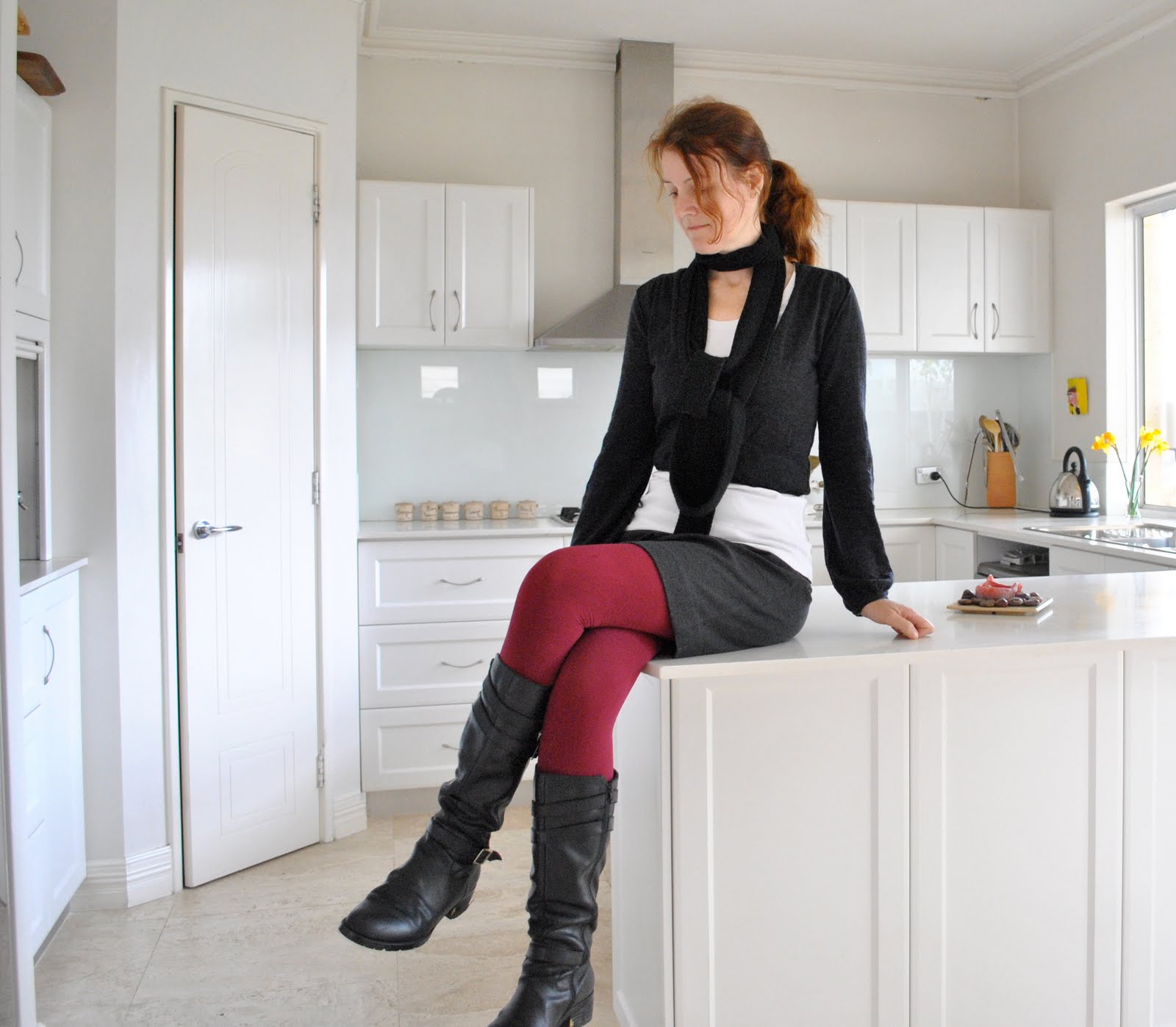
And voila.  Not an invisible patch, but here I am modelling the final darned sock.  Oh, you can’t see it?  Well, this is why perfection in darning one’s winter socks is not strictly necessary…

Details:
Skirt; my own design, charcoal jersey knit
Top and cardigan; Country Road
Scarf; my own design, black wool
Leggings; Metalicus
Boots; Andrea and Joen, from Uggies

pinterestmail

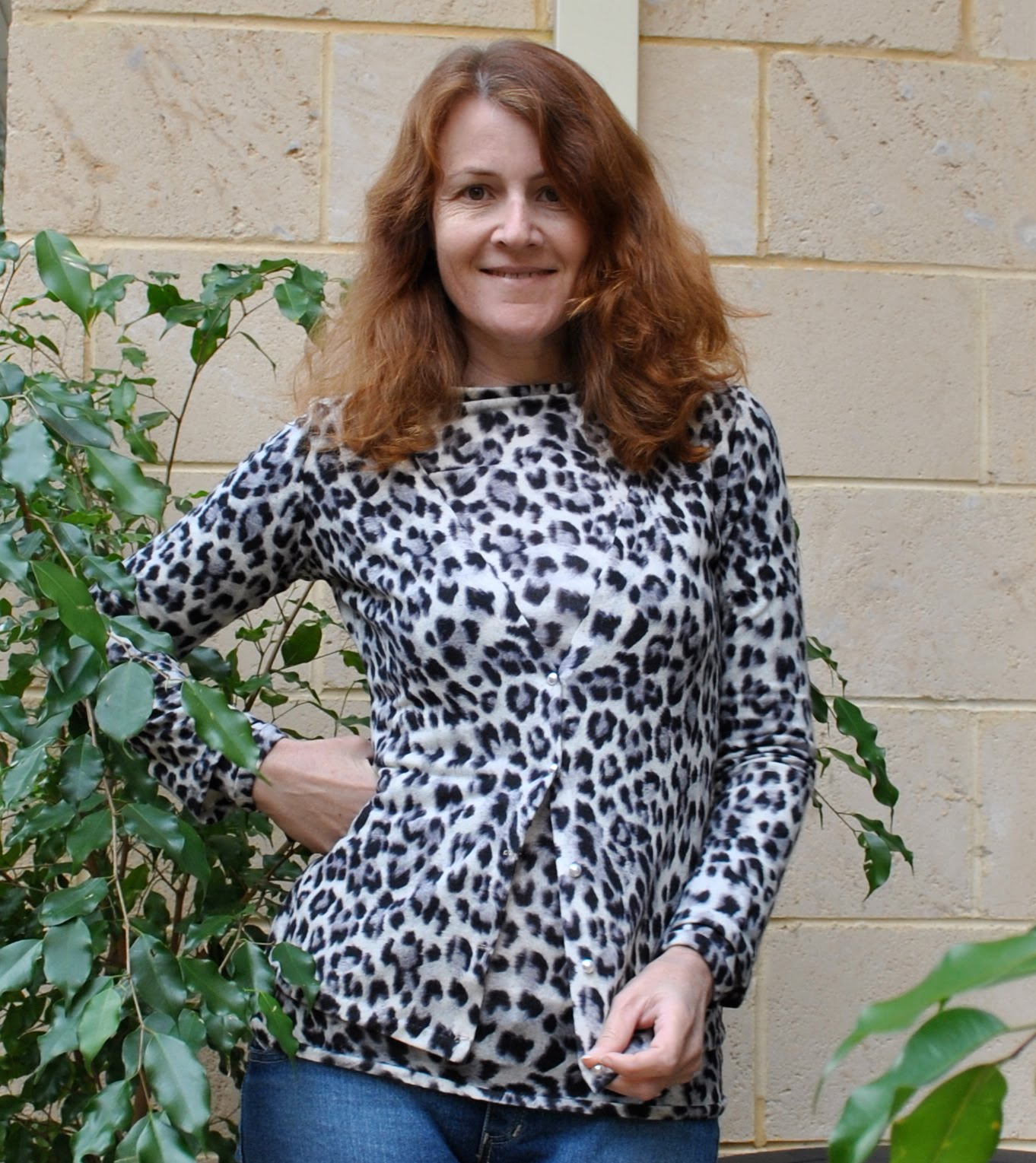
Cardigan plus top equals a twinset!

So I originally bought 1.5m of this thin but warm leopard print jersey, and the cardigan only used up about 70cm so I still had bit to play around with.  At first I just tossed it back into the cupboard where I store all my fabric but then it occurred to me; if I made a matching top then I would have a twinset!  How quaint and fifties and prim and proper!  And using the leopard print, which is kinda exotic and has a slightly decadent seventies vibe to it saves it from being too prim and gives it a bit of an edge…
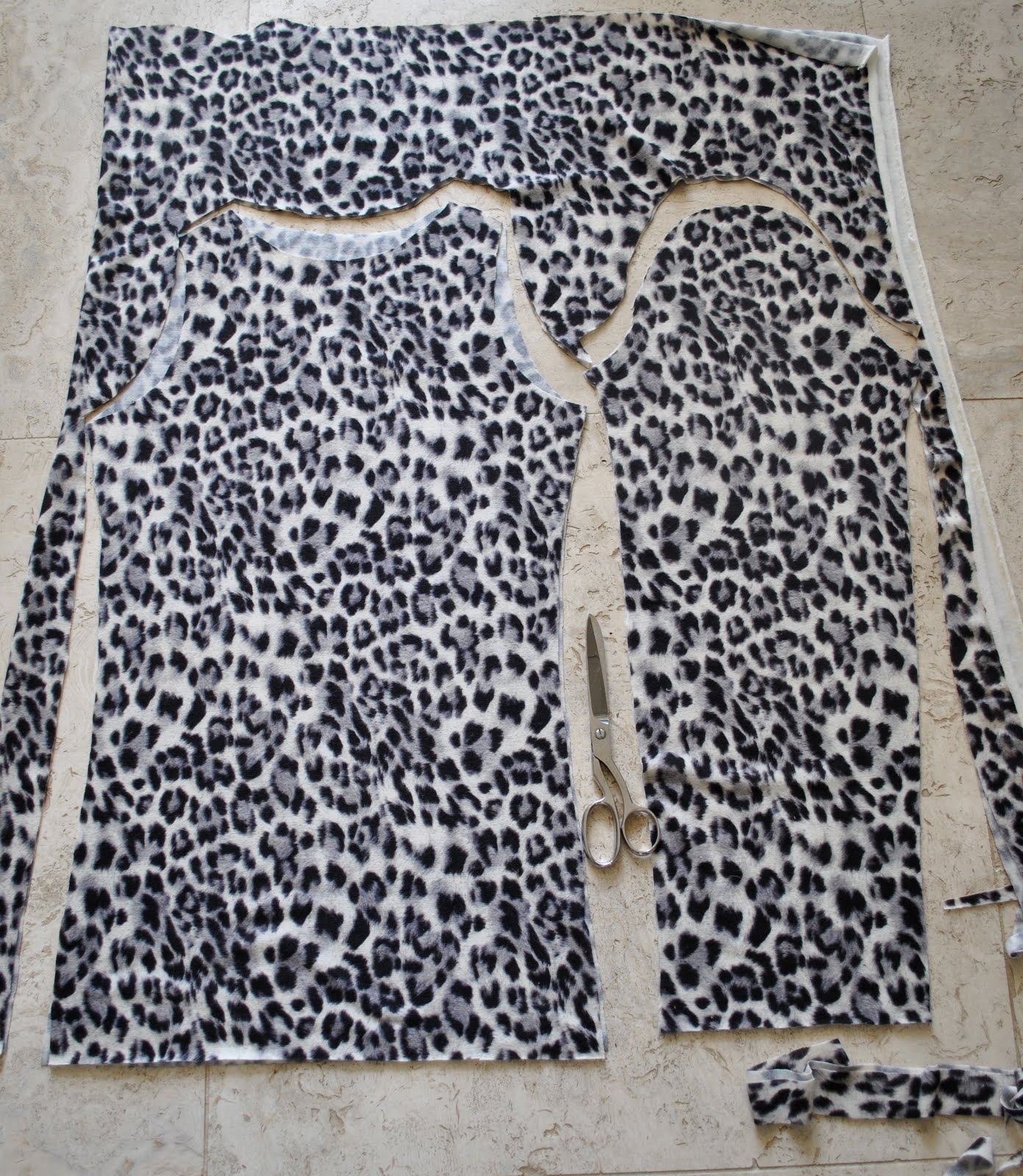
Tops are so easy; I can see no need to buy a pattern; here I simply did just like I did for the cardigan and traced around a top I already had…

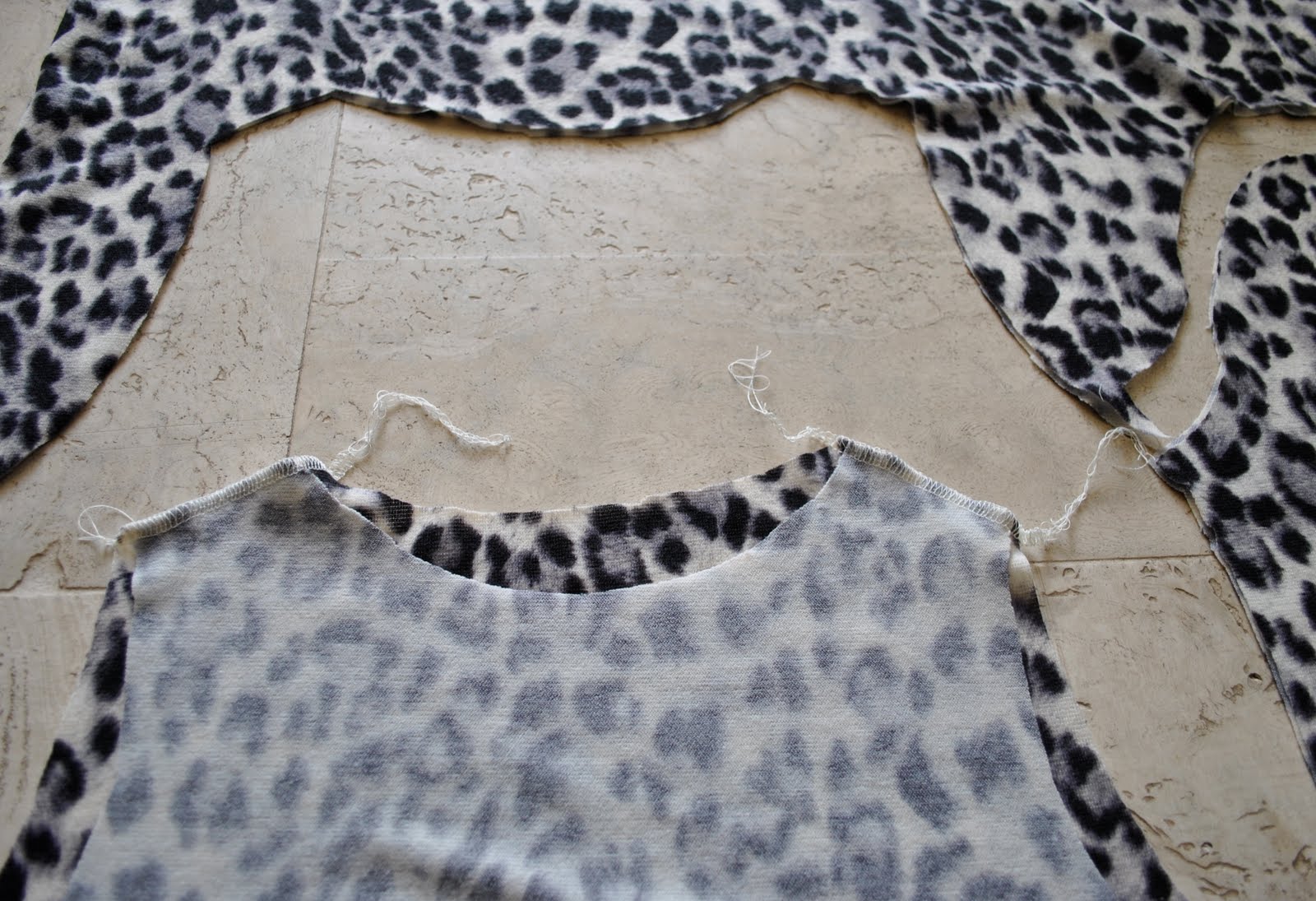
Sewed the shoulder seams…

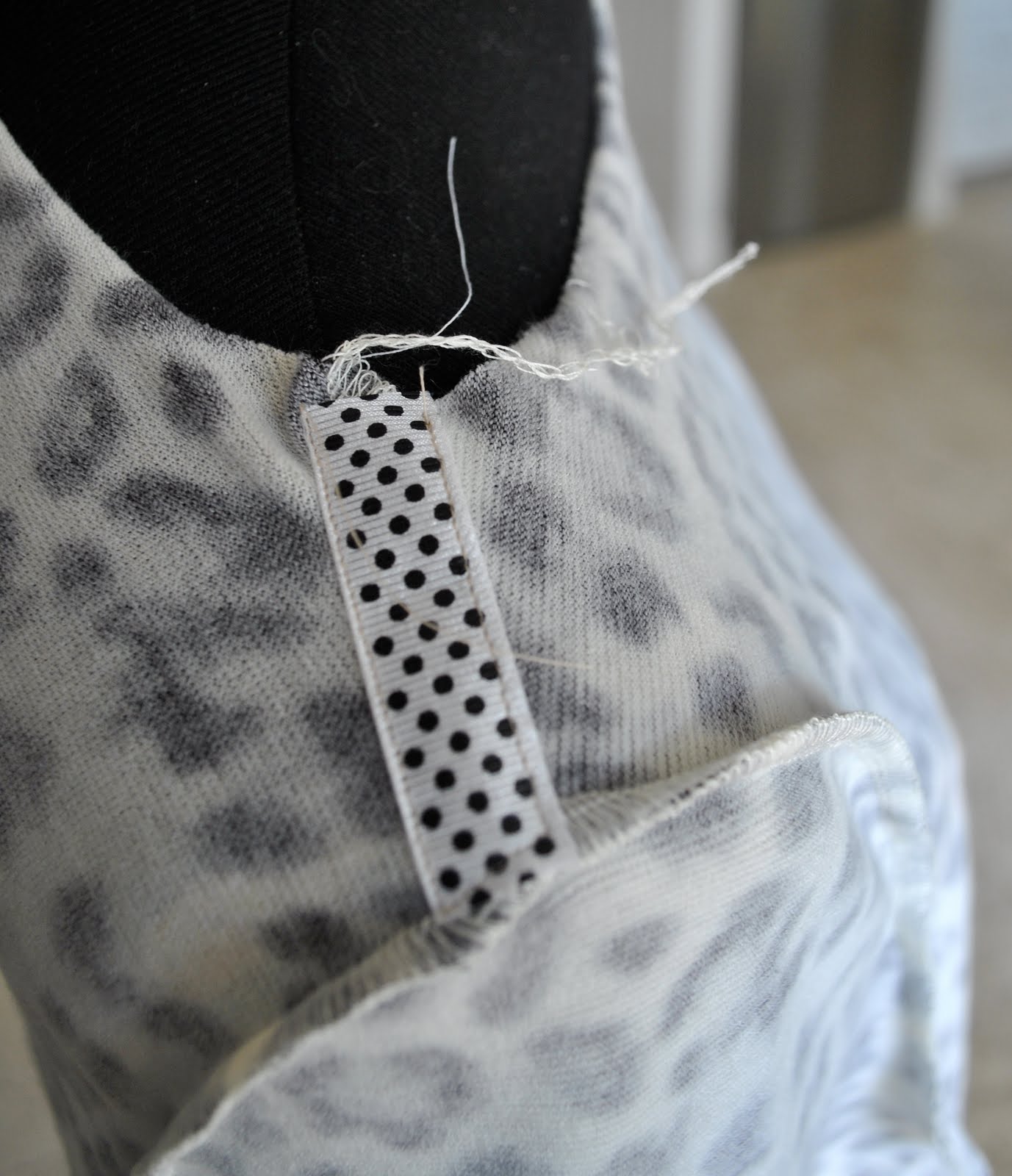
Luckily I had a tiny bit of the same grosgrain ribbon left that I had used for the cardigan here, and used this to stabilise the shoulder seams the same way, now they match too!  Satisfies the obsessive side of me…

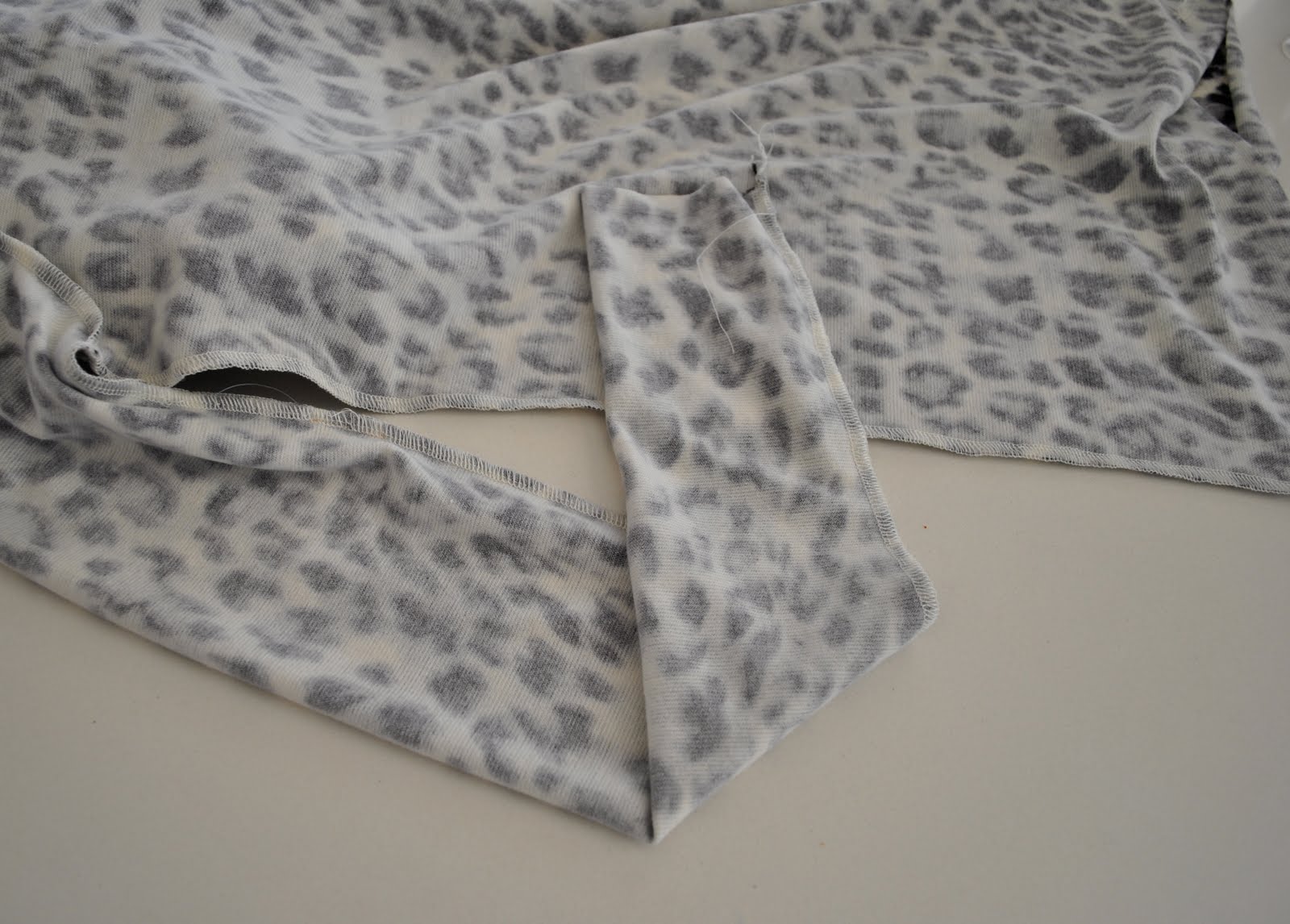
Sewed up the side seams…

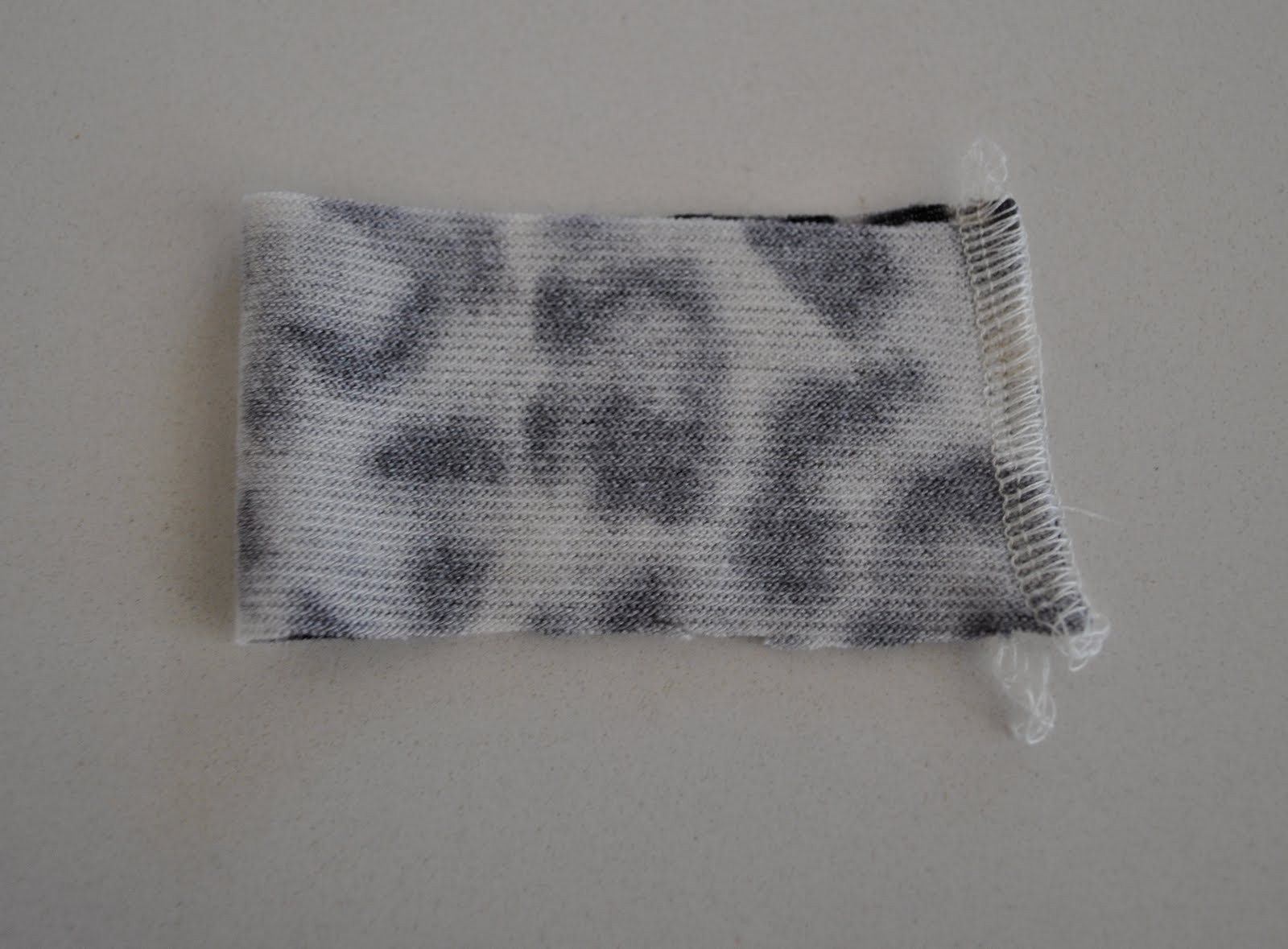
Now as there was still a little bit of leftover fabric to play with I decided to try out a different hemming technique than I used for the cardigan, which was all invisibly hand-stitched.  I cut strips of about 4cm in width and used these to bind the raw edges on the wrists, the lower hem and the neckline.  All these edges were finished in the following way; firstly the strips are cut to the same length as the edges to be finished.  Then sew together the short ends of the strip to form a loop; this is one of the wrist loops…

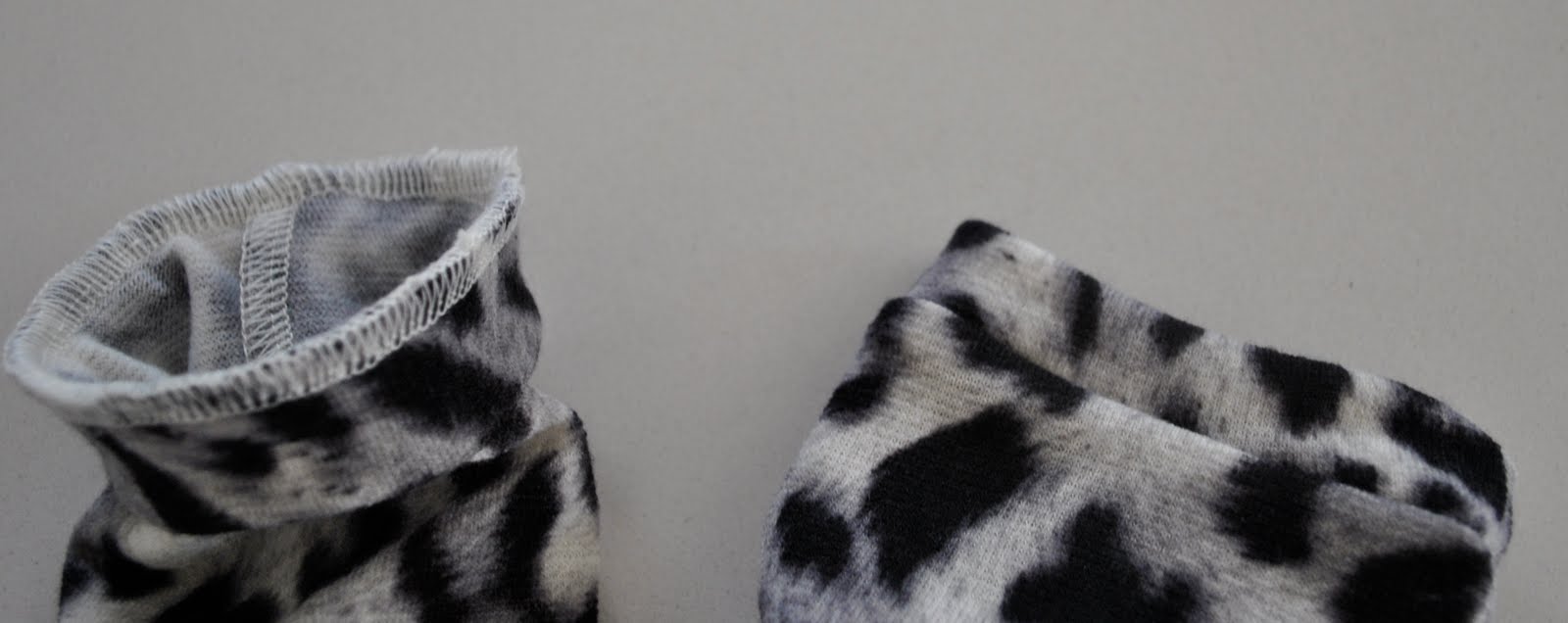
Fold the strip in half longitudinally with wrong sides together, and apply to the right side of the edge to be finished, raw edges together.  Sew all around…  Here are the wrist edges finished, one of them inside out to display the loop edges from the inside, and one right side out to show how it looks when finished.  If you do have enough fabric leftover, this is a good way to finish the raw edges of jersey knits.

And here is my new twinset…

pinterestmail
Switch to mobile version
↓