Tag Archives: Pattern Review

Liberty and crochet set


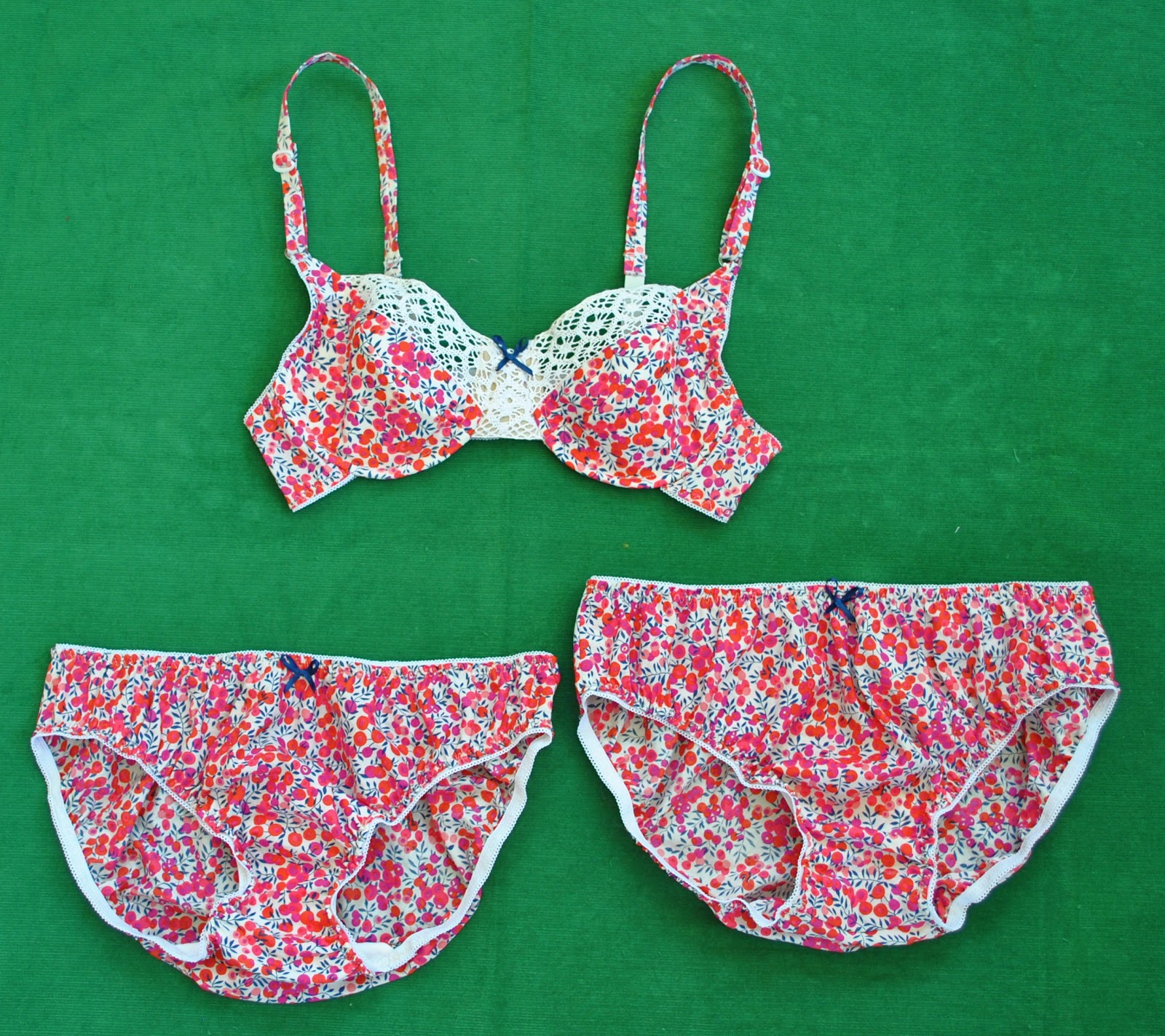
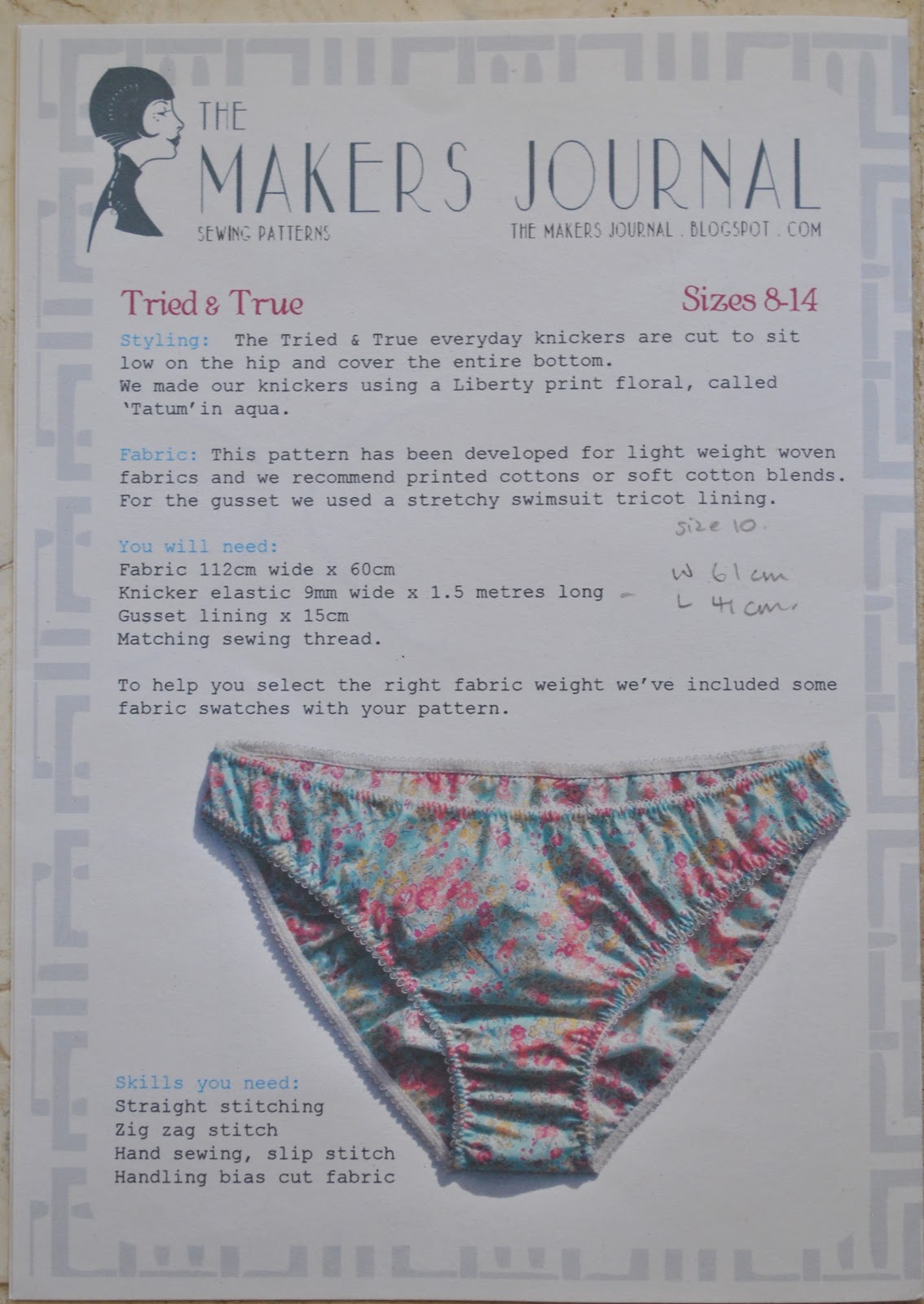
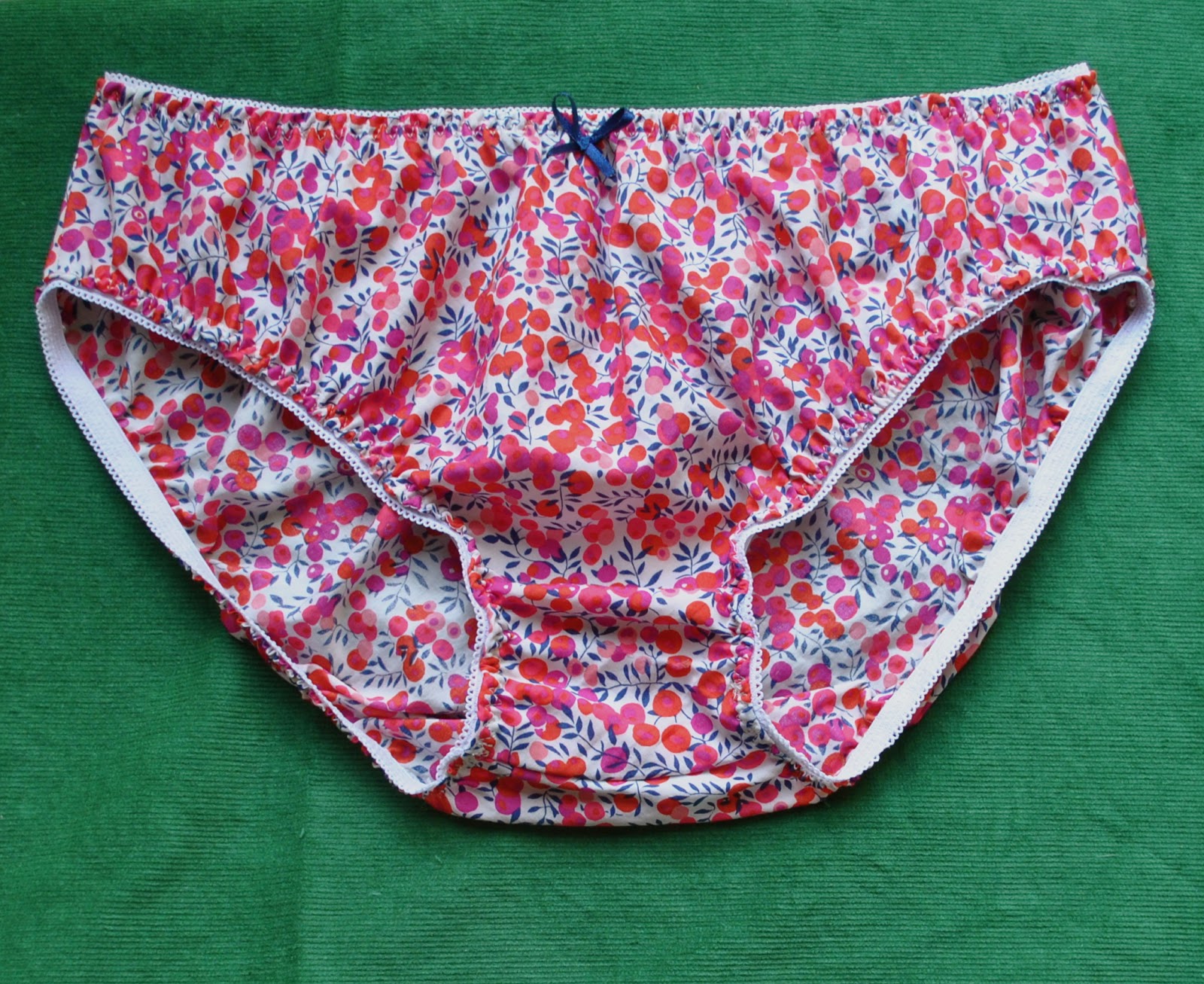
This is my new lingerie set, made in Wiltshire Liberty tana lawn, colour Cranberry.  I bought the fabric from Tessuti’s in Melbourne whilst we were there last year, along with the Maker’s Journal Tried & True knickers pattern.  This pattern is also available directly from the designer here.
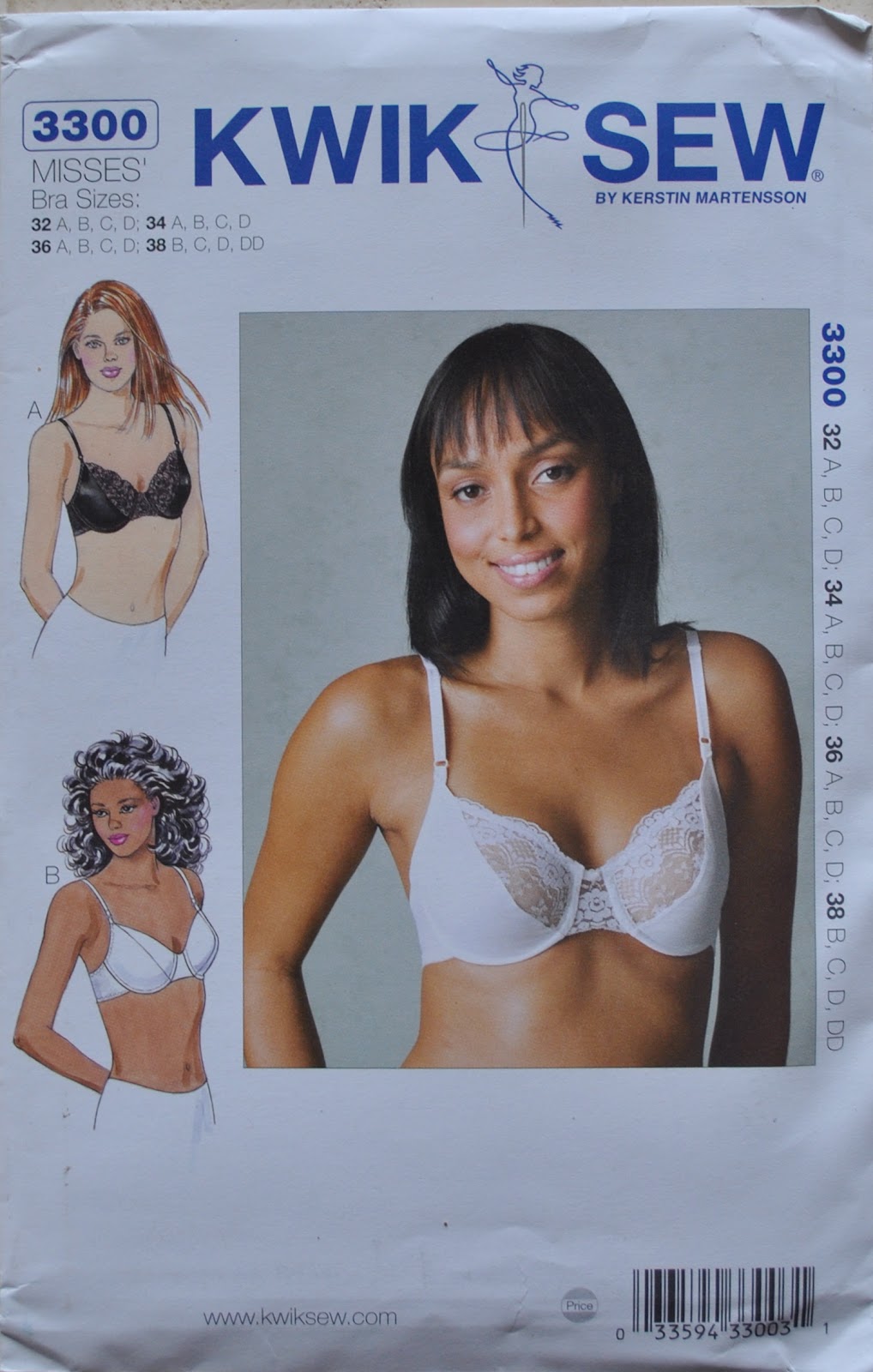
The bra is a slightly modified version of KwikSew 3300; modified to take into account the fact that I’ve used a non stretchy woven fabric.
I’ve been dying to have a go making Liberty lingerie ever since I spotted the knickers pattern but have been nervous to adapt my bra pattern, at least until I had a bit more lingerie experience under my belt.
btw, readers might like to know that 60cm of Liberty lawn easily makes one 34A bra plus two pairs of size 10 knickers.  And there are scraps aplenty left over to make adorable little pot pourri pouches and things like that, if like me, you are not the type to throw away even the smallest scraps of fabrics as precious as Liberty.

I’ver written a review of the pattern below… but all you need to know is that I absolutely love these knickers!  They might look a bit bunchy and granny-like when pictured off-the-body, but seriously; these are the very definition of cute when they are on and particularly if you have chosen a fresh pretty print like this.  And, surprisingly for un-stretchy undies; very very comfy.
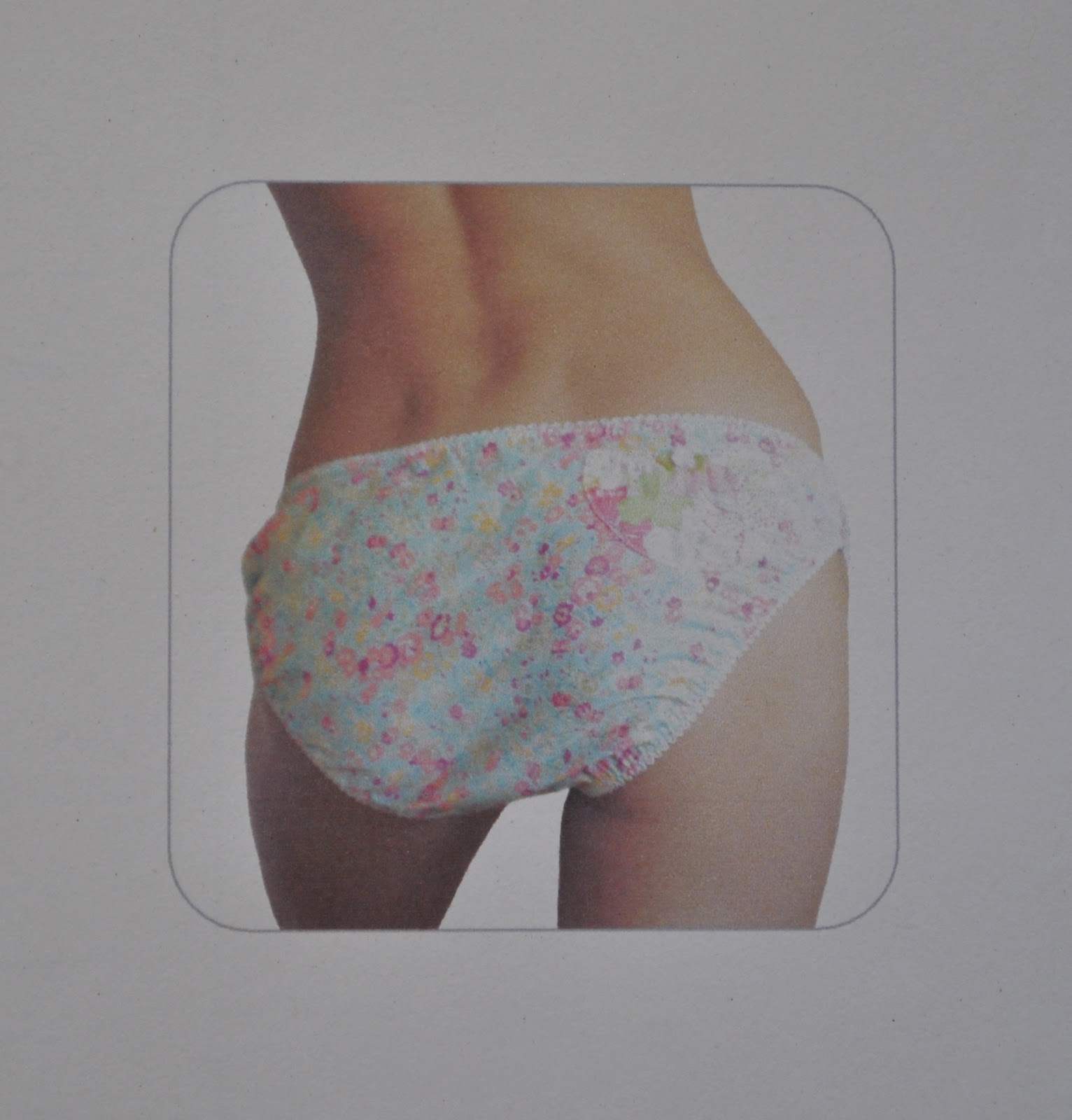
This piccie below is not of me but is the model pictured on the pattern envelope.  But naturally my derriere looks just like this too …
 ;D
They are super easy to make.
I did make a knickers muslin.  Anyone who knows me will realise how slightly earth-shattering this is… but well. we are talking about Liberty here.  Hello??  This stuff is expensive.  Beautiful, but expensive!  But hey, you’re worth it, right?
I made teeny adjustments to the pattern to fine-tune fit.  I also re-drafted the front and the back to have a longer crotch from the front, and accordingly reduced the crotch length in the back.  This allowed me to install a much more substantial panty liner.  That’s just a personal preference not necessarily a critique of the pattern.
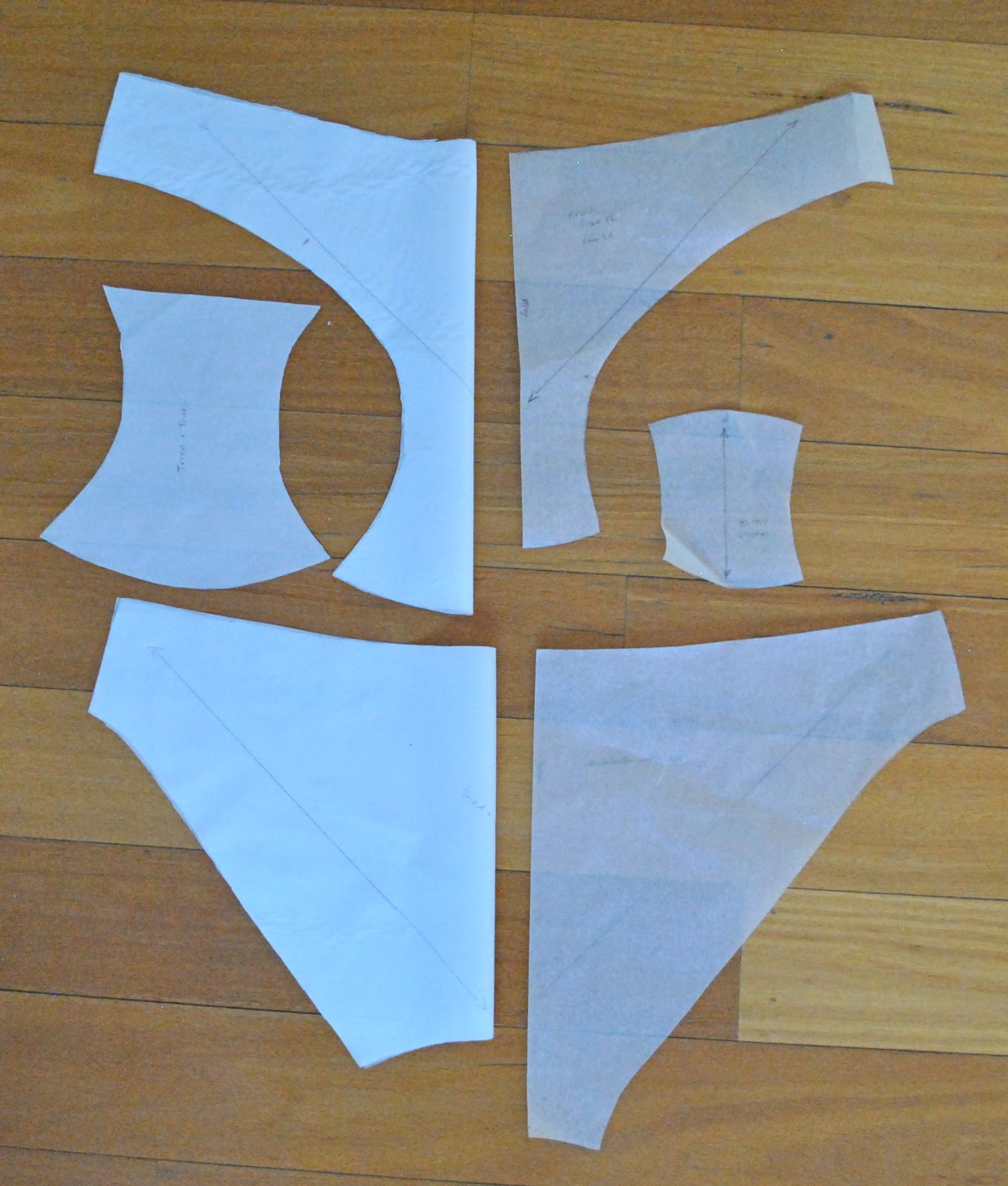
Above: at left; the amended pattern with altered crotch position and a longer panty liner: at right is the original pattern.  With fair dinkum miniature panty liner.  btw; trace the pattern then flip over to trace the other half to get a full back and full front, I did this for my amended pattern and it is much easier to get an efficient layout on the bias!
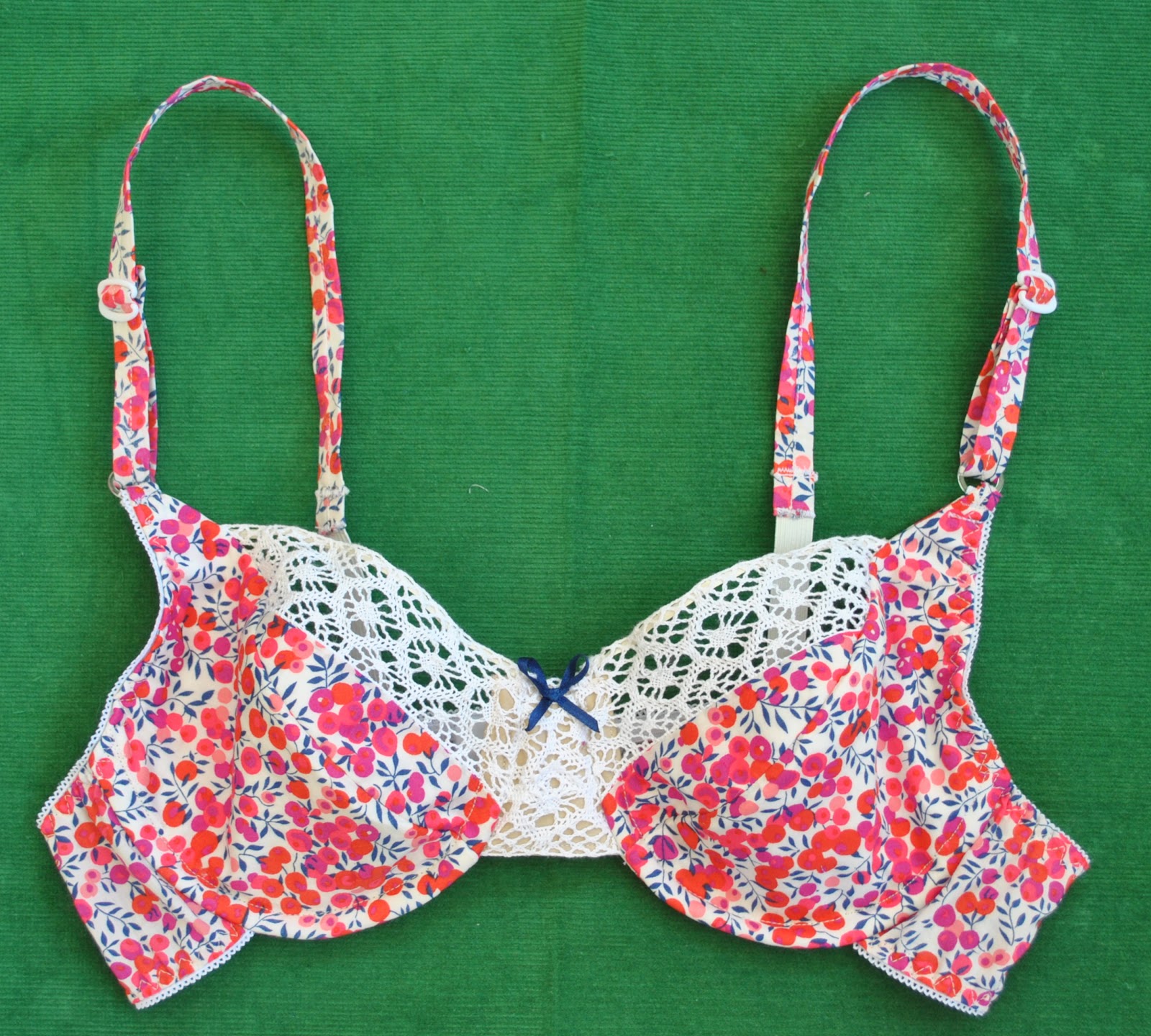
The bra:
It’s actually pretty easy to adapt the KwikSew pattern to work in non-stretch fabrics too!  An underwired, cotton voile muslin worn for an hour about the house taught me that the stretch factor in a bra is best situated nearly all around at the back and only a small proportion of wearing ease is necessary at the front.  I found I like the front of my bras to be quite firm and structural, and using non stretch fabric here works well… but you do need some stretch and wearing ease at the back.  So I made a modified 34A and lengthened the back bands by roughly 4cm each at the centre back; and used the same lengths of lingerie elastic as recommended in the pattern, pinned in quarters, then gently stretched to fit whilst sewing to the lawn.
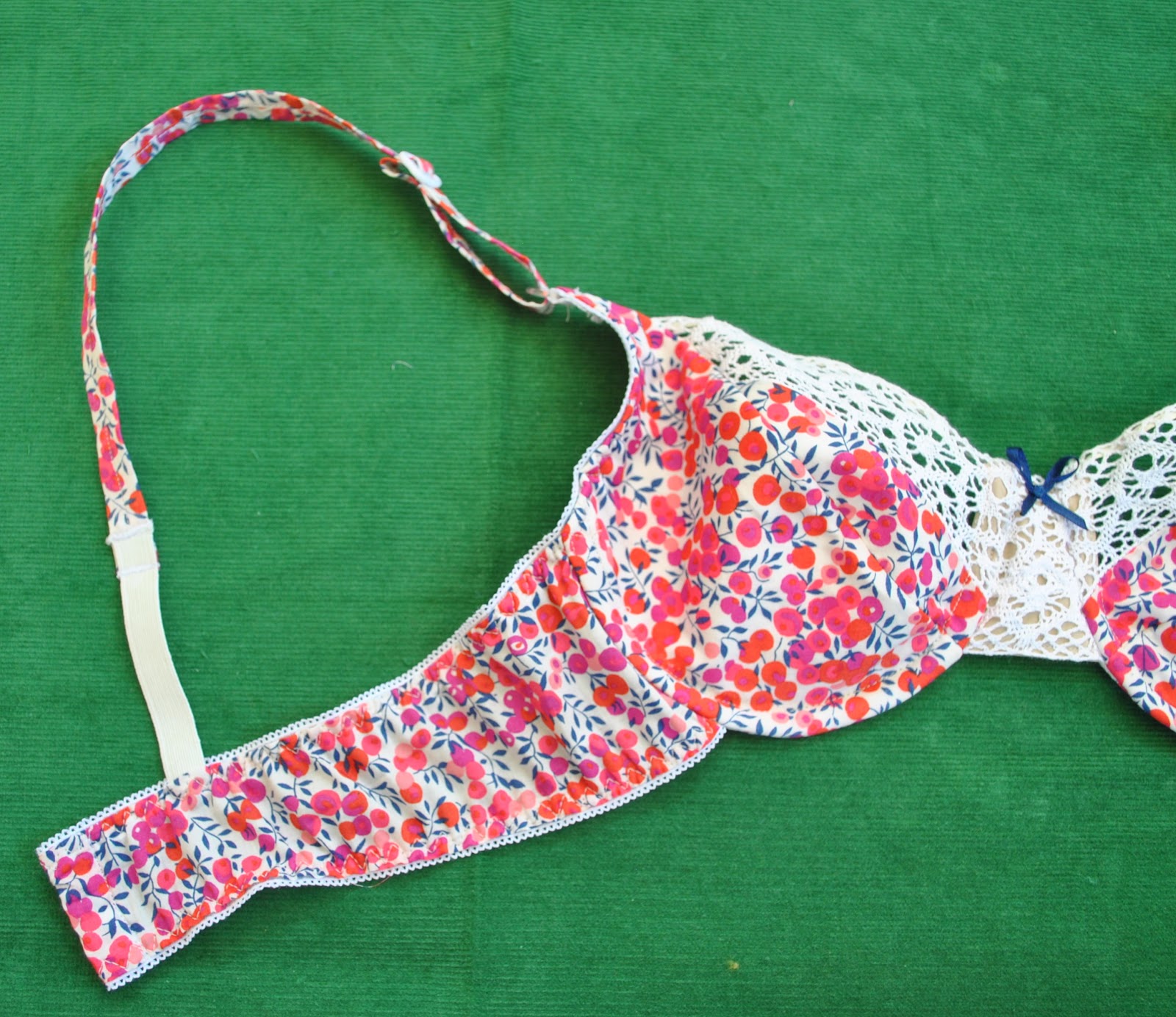
Above; the lengthened bands with the same lengths of lingerie elastic as stipulated for a stretch band… see, it doesn’t look too oddly puckered.  While I am wearing it, the bands have a gently gathered appearance; obviously some gathering is necessary to avoid putting strain on this delicate fabric.

I wanted the fronts to have something white and lacey and not be all solid Liberty, so found some crocheted lace, another long term resident in my lace box.  I backed the lace centre front piece with beige voile leftover from this top, which is kinda invisible against my skin.  The obsessive in me demanded that I construct my underwire casings like so…
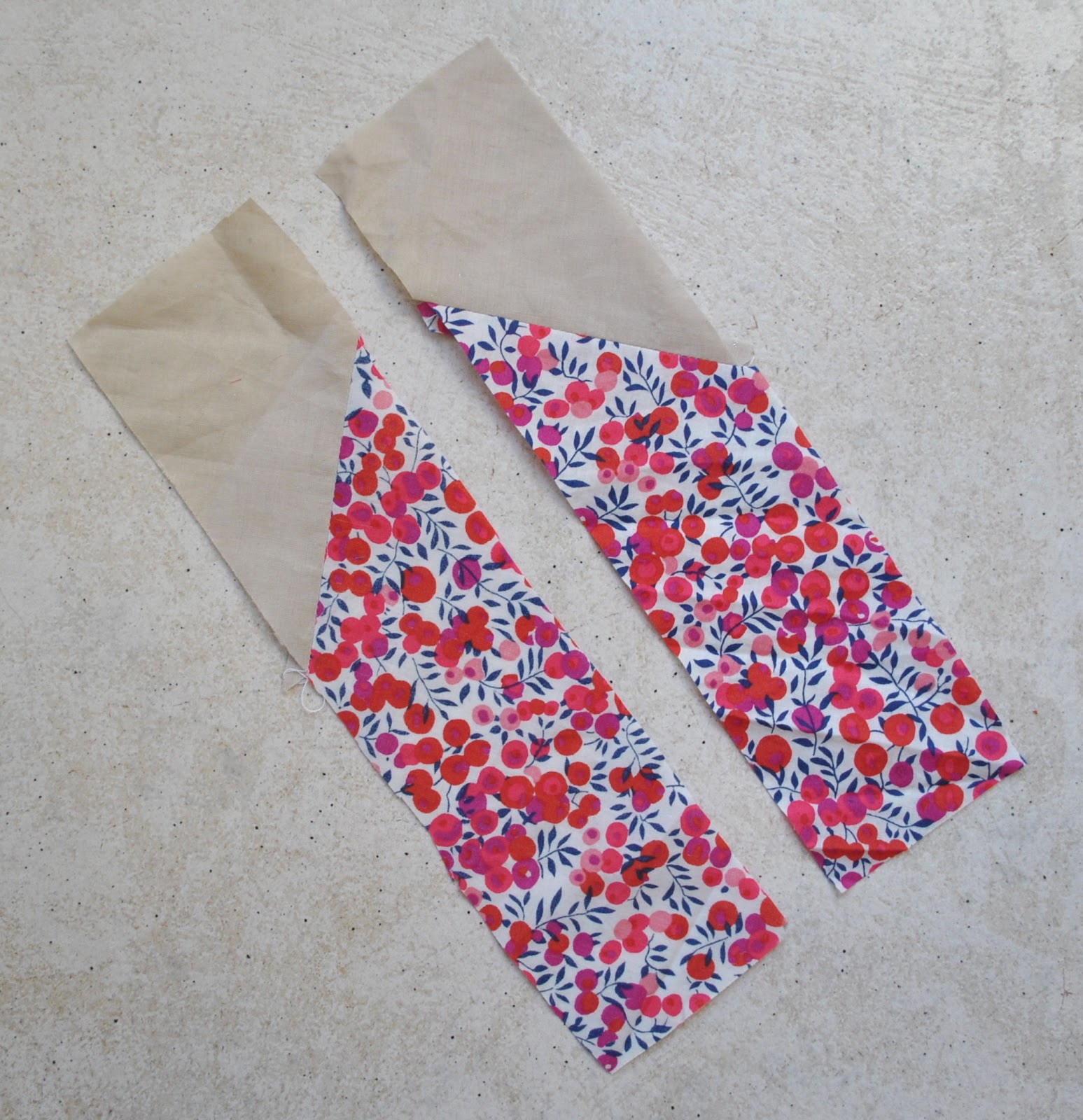
so that on the insides of the bra the underwire casing is camouflaged as much as possible
 and there is no bright Liberty peeking through the lace from the right side of the bra whilst it is being worn.
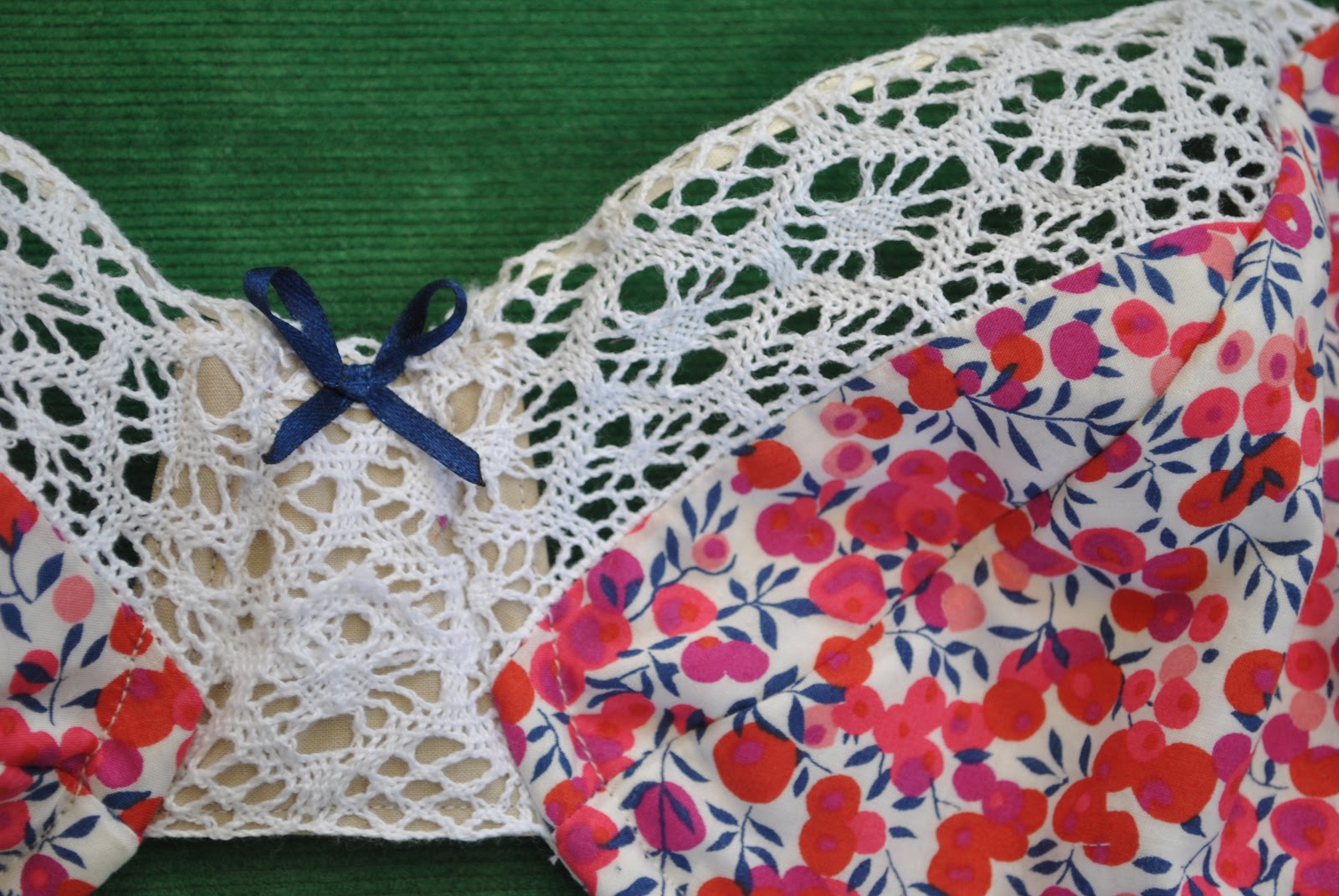
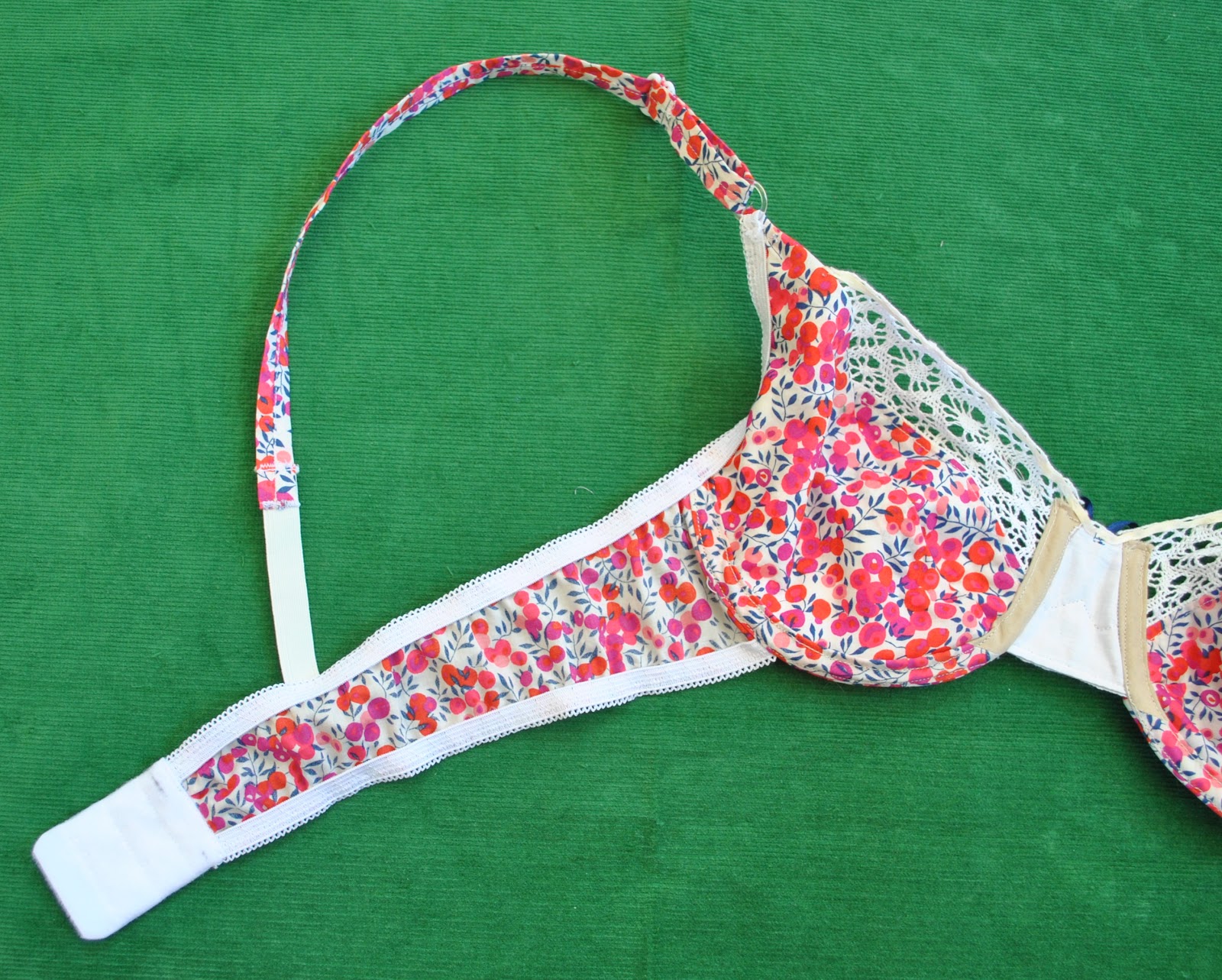
A layer of white cotton jersey knit of a low stretch factor is sandwiched between the Liberty cups and facings; for a small degree of padding.  The edges of the padding pieces are abutted hard up to the stitching lines and hand-basted to the stitching, before machine stitching inside the edge, to the seam allowances.  This ensures the thicker jersey edges abut each other but with no overlapping which would create “ridges”, and no gaps which would create a “ditch”.
The shoulder straps are stabilised with iron-on interfacing and topstitched down the centre lengthways, and the stretch factor is provided by satin stitching a length of ordinary braided elastic to the back lower ends.
I chose a narrow, navy blue satin ribbon to make little decorative bows for the set.  This picks up the tiny navy blue touches in this very pretty print.
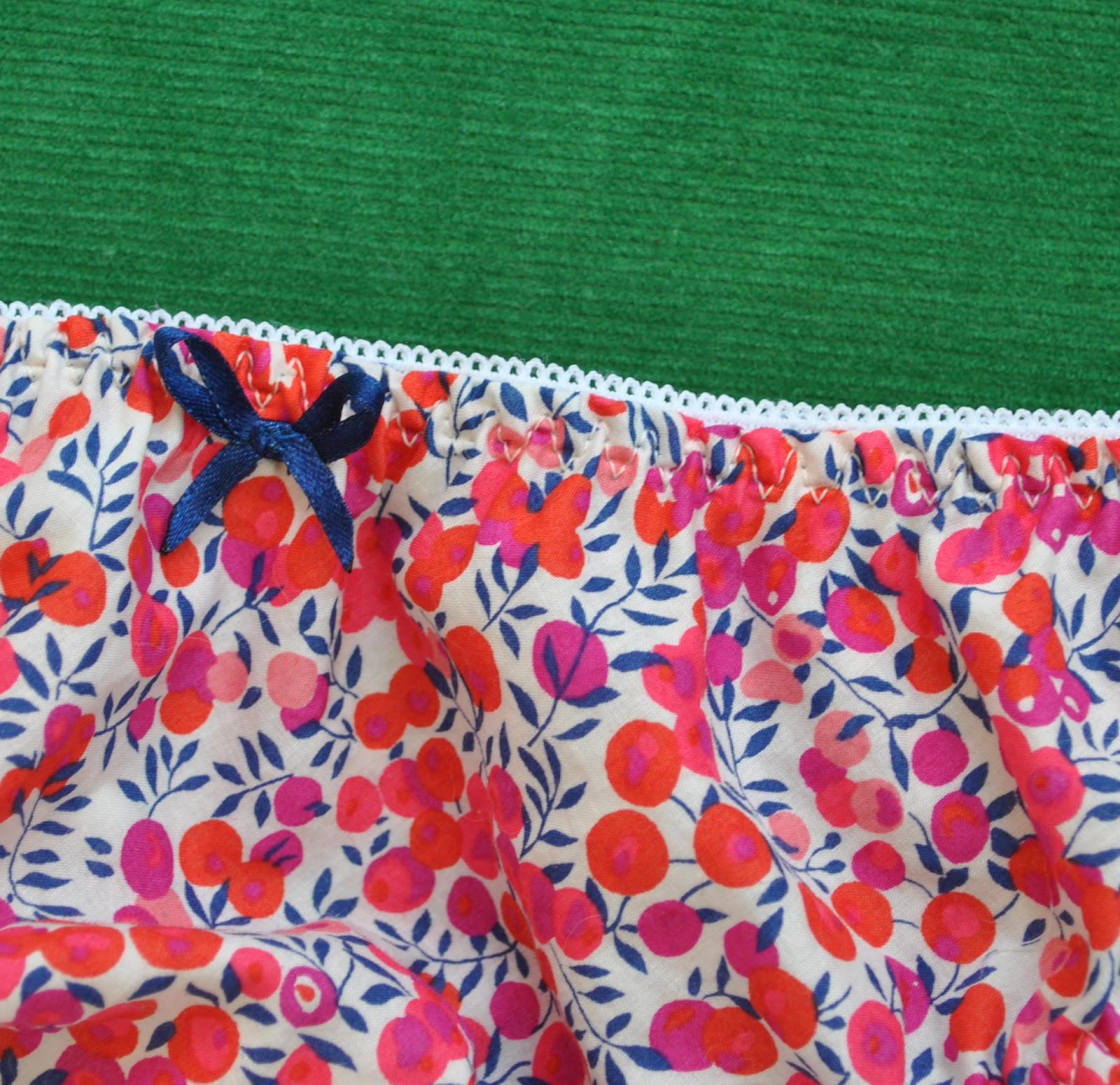
So; the theme for February’s stash-busting is Love!  I’m thinking this luvverly, sorta Valentine-y set fits the bill quite well, don’t you??

Details:
Bra; KwikSew 3300, Liberty tana lawn and cotton crochet, my review of this pattern here
Knickers; The Maker’s Journal Tried & True knickers; Liberty tana lawn
Pattern
Description:

This pattern is by The Maker’s Journal.
Everyday knickers; cut to sit low on the hip and cover the entire bottom.  This pattern has been developed for lightweight woven fabrics.
Pattern
Sizing:

Australian sizes 8-14 (hips 88cm-108cm); I cut the size 10
Did
it look like the photo/drawing on the pattern envelope once you had finished
sewing it?

Pretty much.
Were
the instructions easy to follow?

The instructions are a bit simplistic; if you know how to attach knicker elastic already then you will be fine.
What
did you particularly like or dislike about the pattern?

The fact that this pattern is for woven fabrics is marvellous, opening a whole new world of lingerie in Liberty.  I love that they are regular bikini knickers; and do not look baggy like bloomers or boxer shorts.  They look like real knickers.  As well, these are really very very cute!!
The panty liner piece was too tiny for my tastes, and I modified the pattern to allow a more substantial one.
The required lengths of elastic for legs and waist are not provided with the pattern and you have to visit the company blog to find out how to calculate this information.  Basically; it’s the measurement of the openings, minus a third.

Kinda oddly, the instructions did contain directions on how to attach a patch pocket onto your knickers.  Yep.  It outlines how to sew a patch pocket to your undies, but nothing on the measurements of knicker elastic, and how to attach the same.  Hmmm, interesting priorities there…

Fabric
Used:

Liberty tana lawn, cotton jersey for the gusset

Pattern
alterations or any design changes you made:
I lengthened the crotch on the lower front and accordingly shortened the crotch on the back.  This allowed me to install a much more substantial panty liner.

Would
you sew it again? Would you recommend it to others?

Definitely, I will be sewing this one again and again and again!  I do
recommend this pattern to others.  Just bear in mind that the elastic measurements are not provided and you have to MYO  (measure your own)  

Conclusion:
I love it!!   I will use this pattern over and over again; no doubt about that.  I do love Liberty prints, but the cost of them here is prohibitive.  Being able to run up a pretty lingerie set in this very lovely stuff is the perfect way to add a touch of Liberty prettiness to your life, in a very wearable and useful form; without breaking the bank.  I’m happy!
pinterestmail

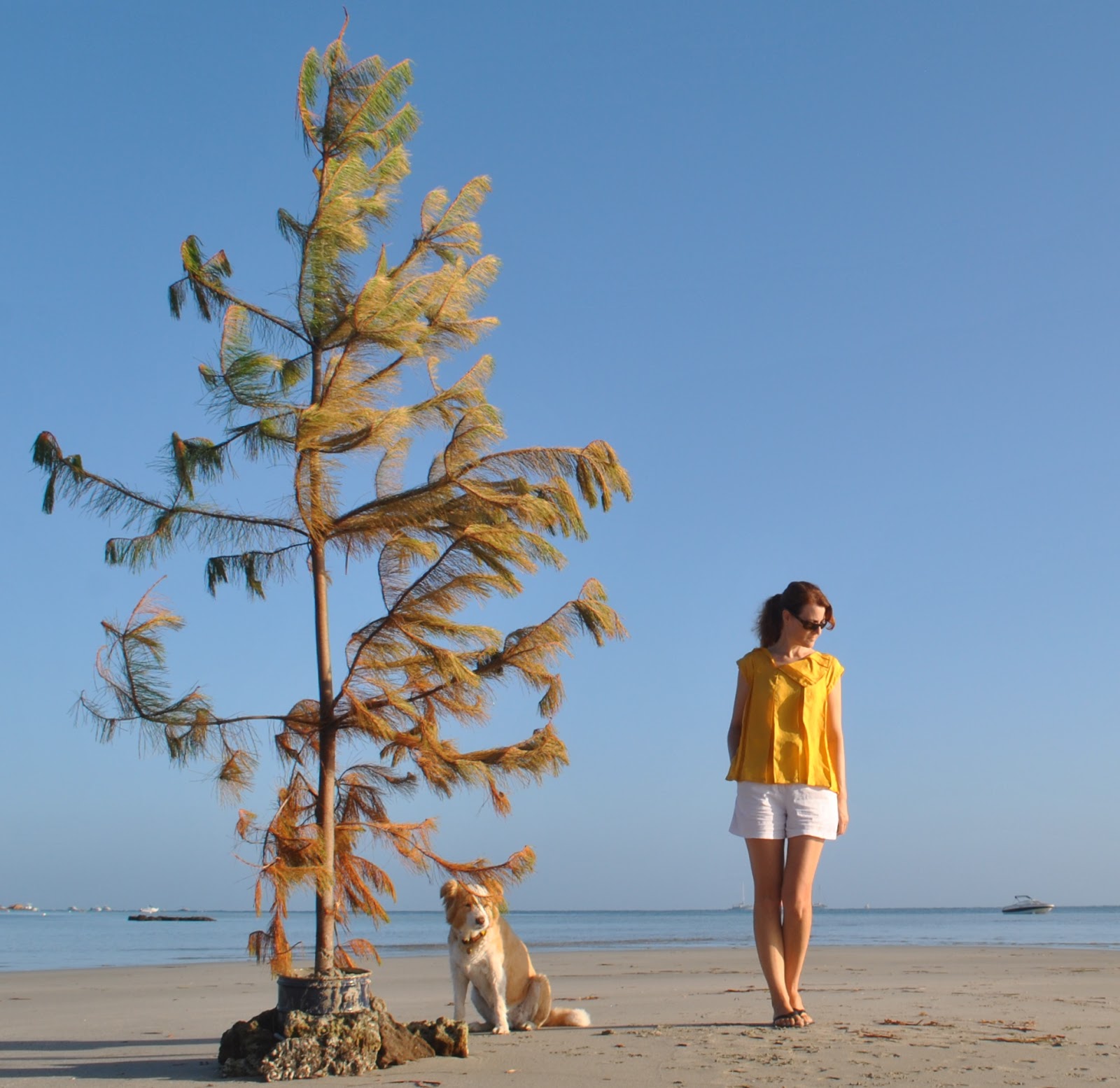
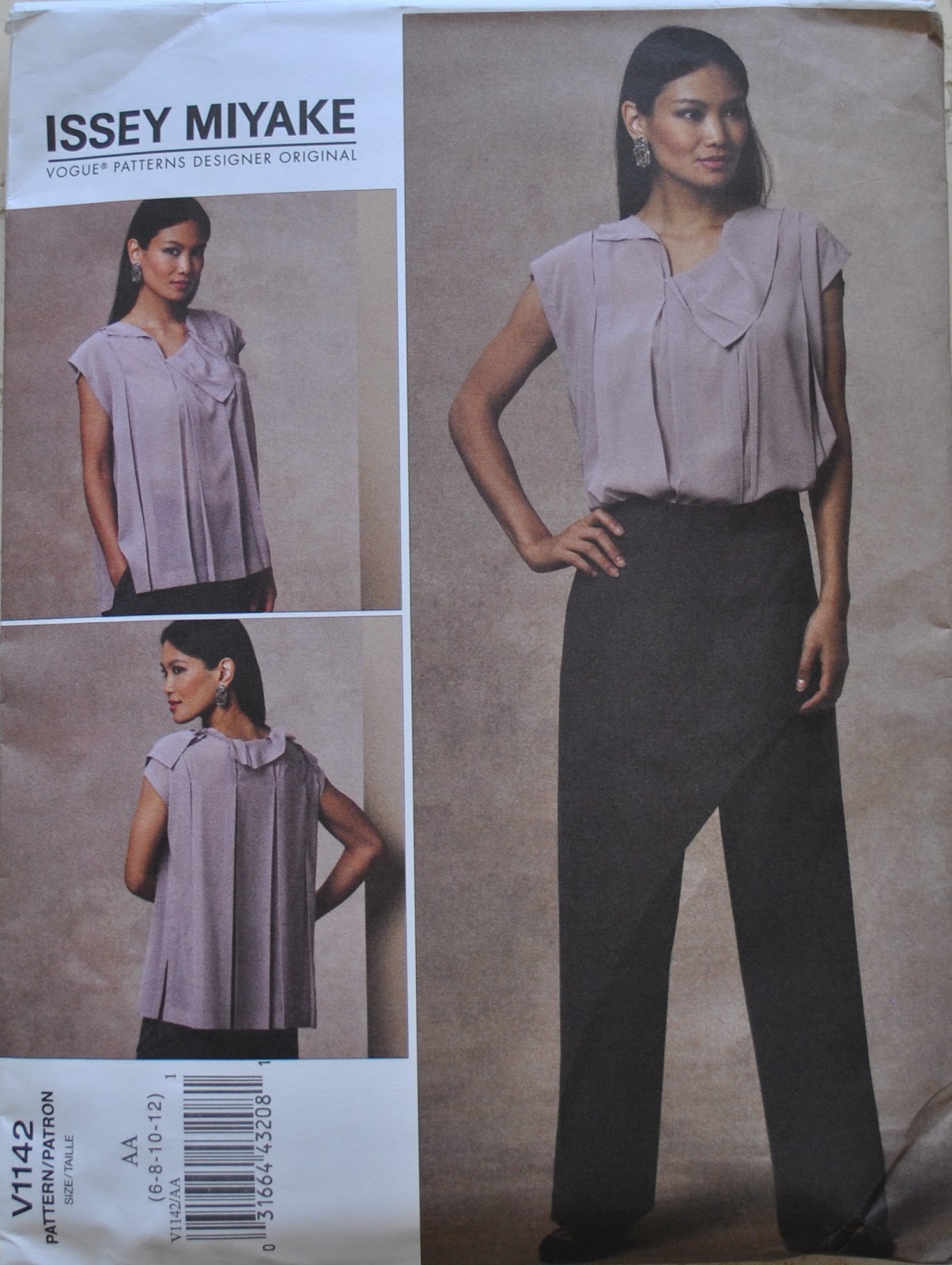
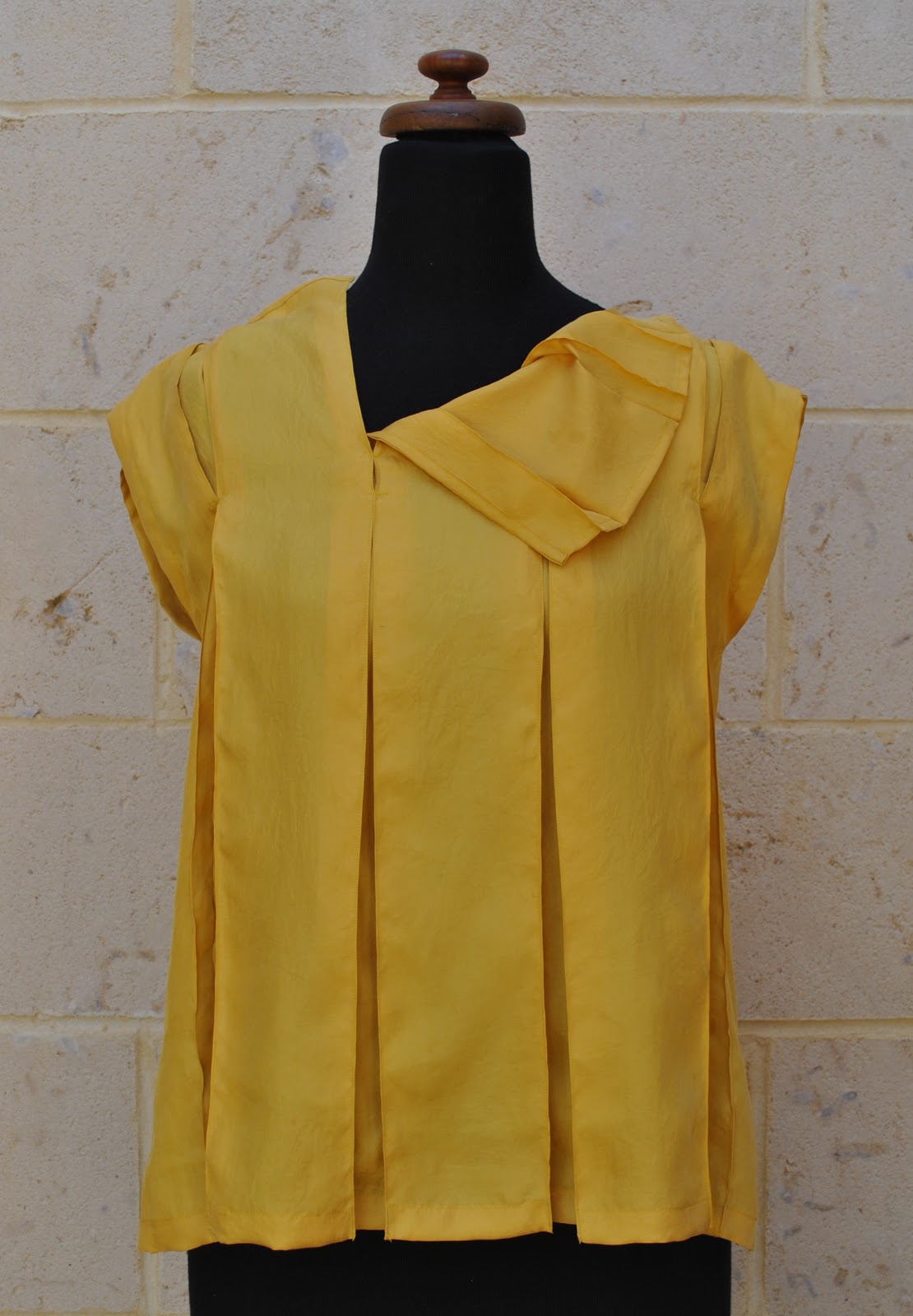
Yellow pleats. please!


Yes, my title is swiped
shamelessly from Issey Miyake’s famous 1993 collection, but I reckon that is OK
since this is an Issey Miyake
design  😉

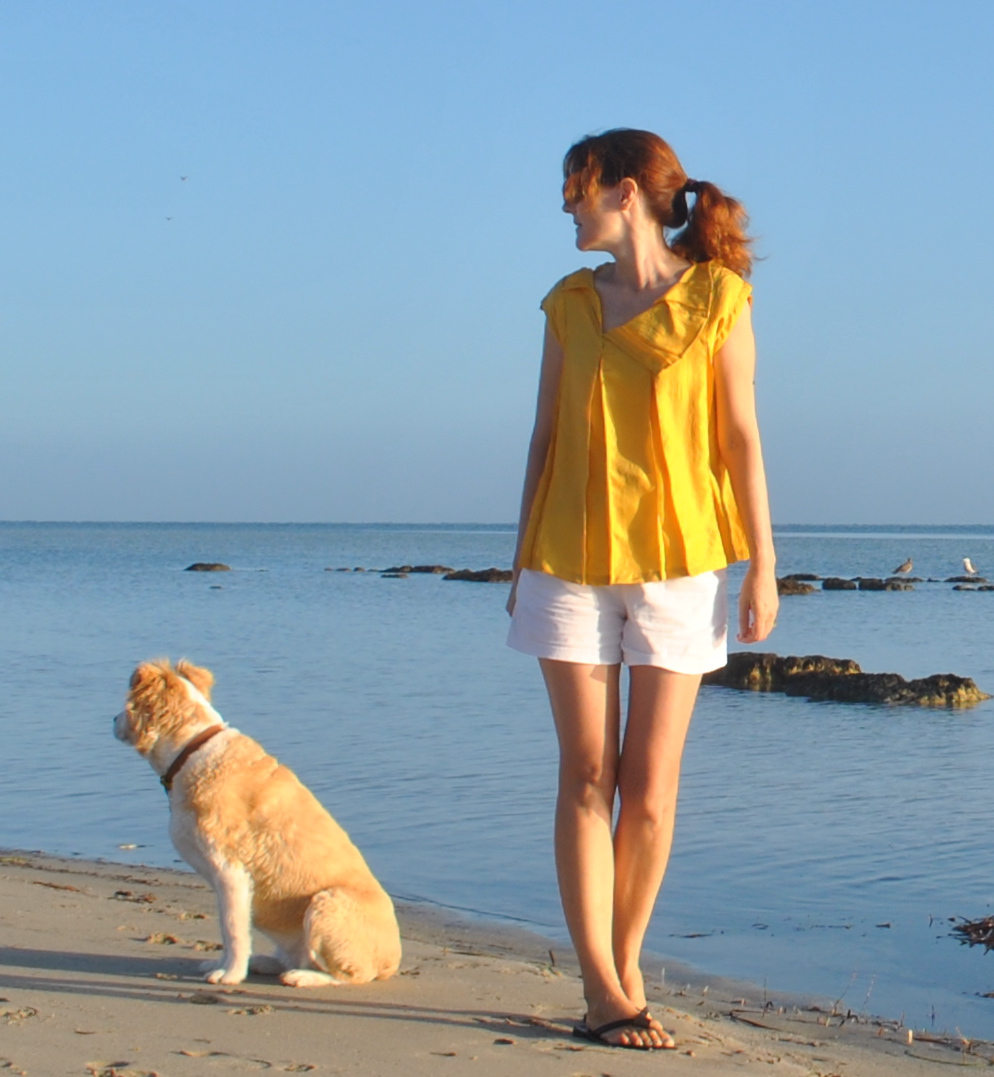
And you’ve probably noticed that it is yellow.  A yellow top.  Very yellow.  Quaite
quaite yellow.  As yellow as.
I’ve just been feeling very yellow-philic lately.  Don’t bother to look that word up, I
just made it up just then.
“Philic”, meaning “attracted to” of course.
Oh, you’re welcome.
Don’t ever say this blog is not ed-you-cational!
I’ve been hunting for yellow fabric for ages…. and it just
doesn’t ever seem to be “in”.  And
I don’t mean pastel primrose yellow, which is inexplicably always represented but which is too dreadful on me: I wanted intense!  Saffron
yellow!  Fierce yellow!  Bold yellow!
Finally I spotted this satisfyingly ferocious, yellow silk
in the Fabric Store, in Melbourne, during our trip away last September, and
snapped it up!  Then came the decision
of what to make it in… a decision swiftly and easily made when I laid eyes upon this Issey
Miyake pattern, Vogue 1142.  My
yellow silk is that very flimsy and flighty stuff, the sort that slithers
across the table with the slightest breathe, so I knew it would be a good
choice; not too bulky when tripled up with this pleat-tastic design.
Oh, another
made-up word.  Honestly….
I wrote a pattern review, below, but there is a kinda major issue with
making up this pattern that I thought it worth mentioning separately… the
pattern instruction just says “fold pleats in place, and press” and then those pleats are not even mentioned again, like bob’s your
uncle and that is all that is needed.
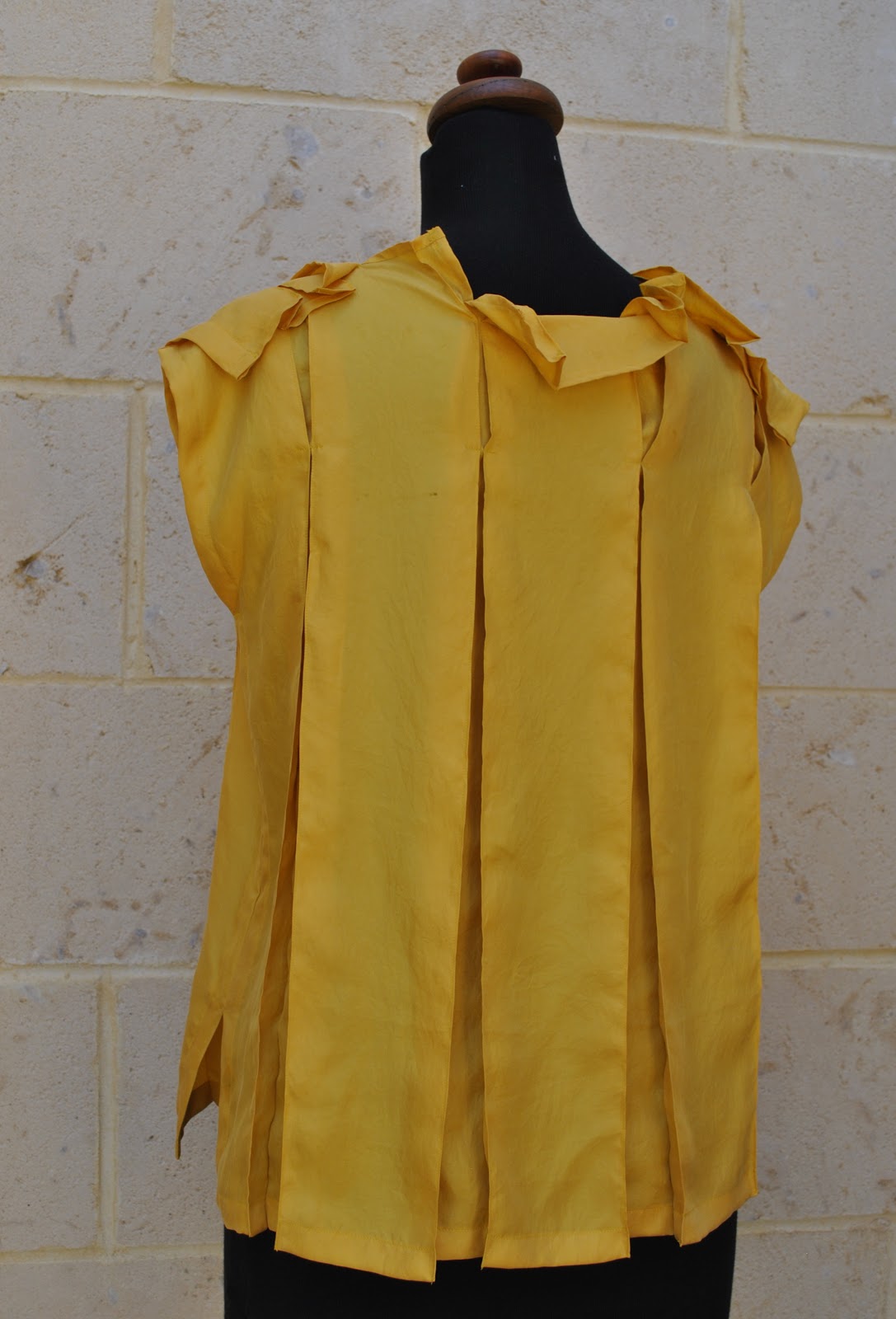
Hello? The sharpness and evenness of those perfectly spaced
pleats is only, like absolutely integral
to the visual success of the design imo.
Wouldn’t those merely pressed-down pleats simply wash out with the very
first wash??? Or, even just fall out on their own, with wear?   And then your top will just be a
formless flowy thing; which admittedly could still probably look quite pretty, but
will not be the tiniest bit sculptural and would have lost all the character of the
original.  I really like the sharp sculptural
lines of the one on the cover.
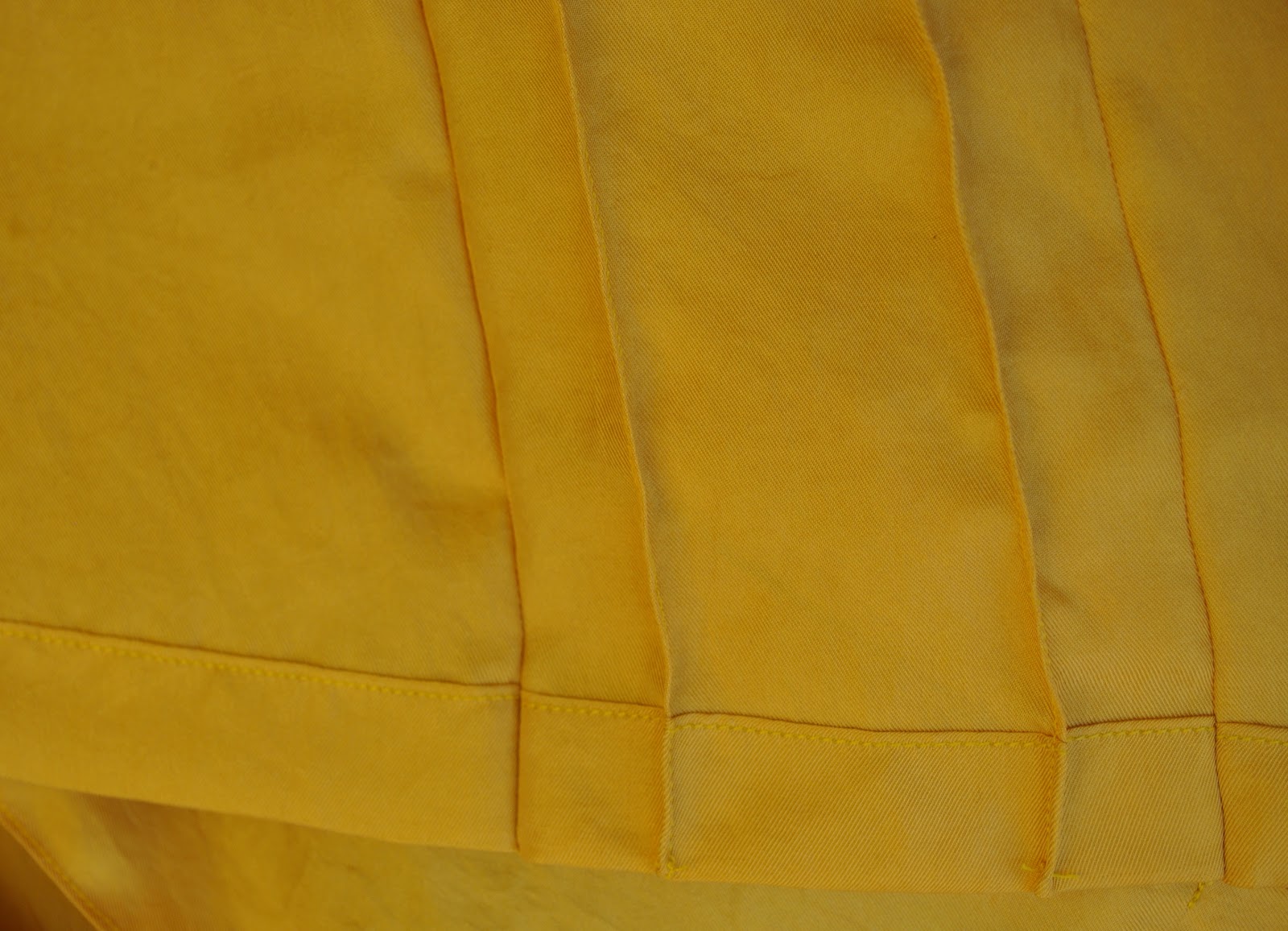
Accordingly I took the precaution of edge-stitching each and
every pleat down immediately after pressing.  This step was fiddly, and accounted for the bulk of my time
to make the top; but I think it is essential to keep those pleats nice and
crisp for forever: so therefore it is worth it.  In fact I just hopped over to Pattern review to check out
the other reviews and noticed that no one else mentioned how they
tackled the permanency or lack thereof, of their pleating; and I am curious as
to how their pleats fared in the wash??


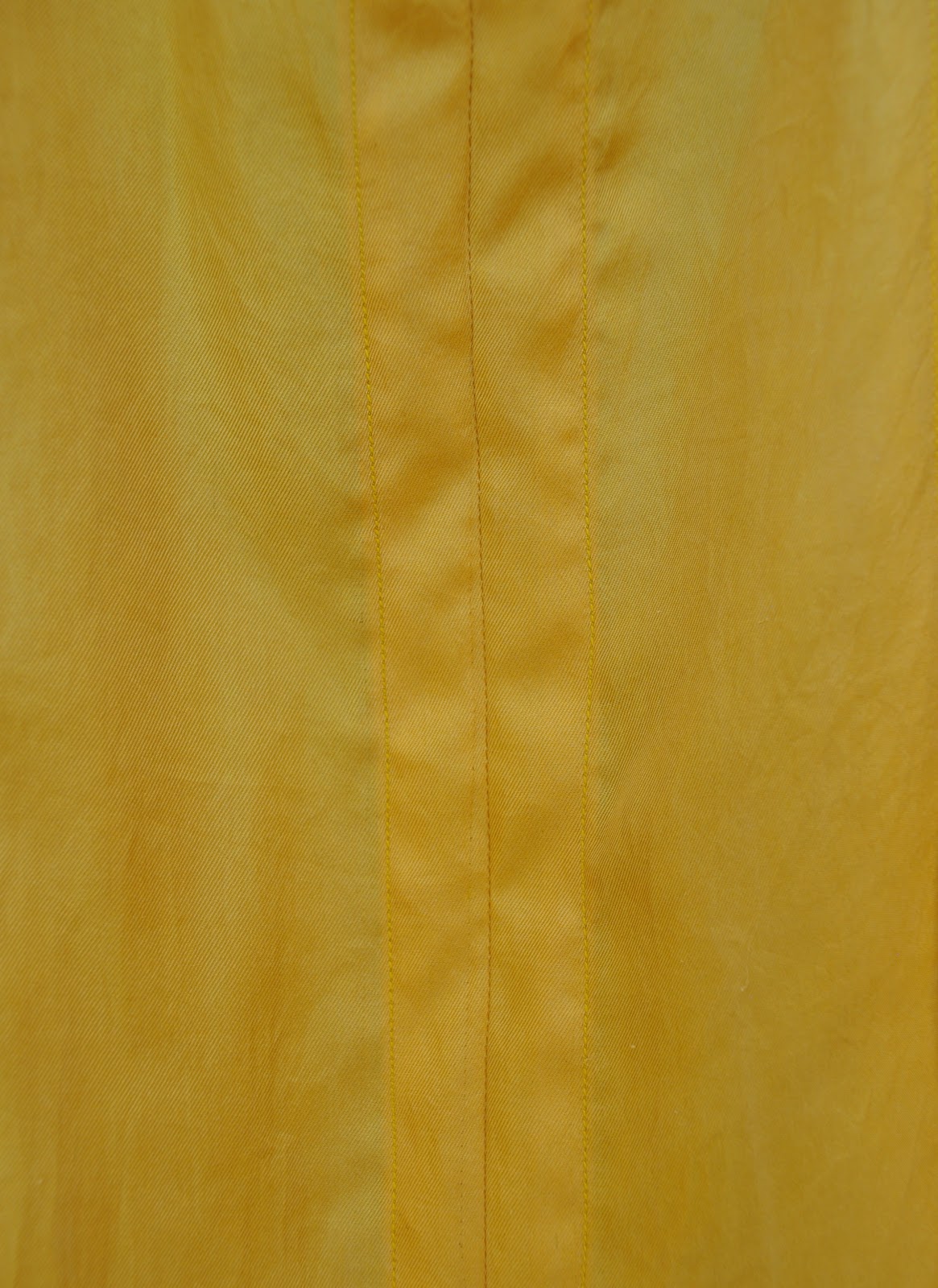
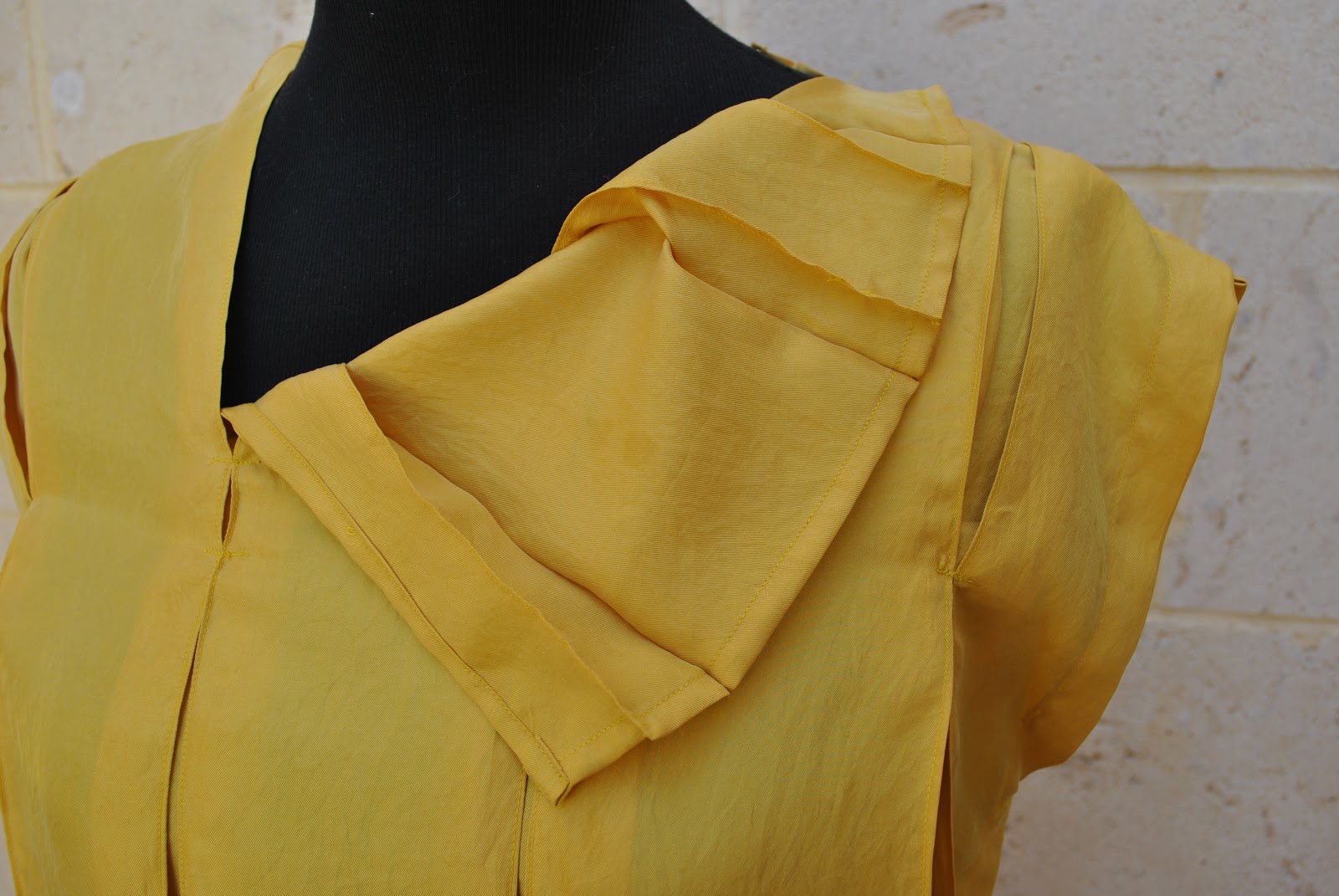
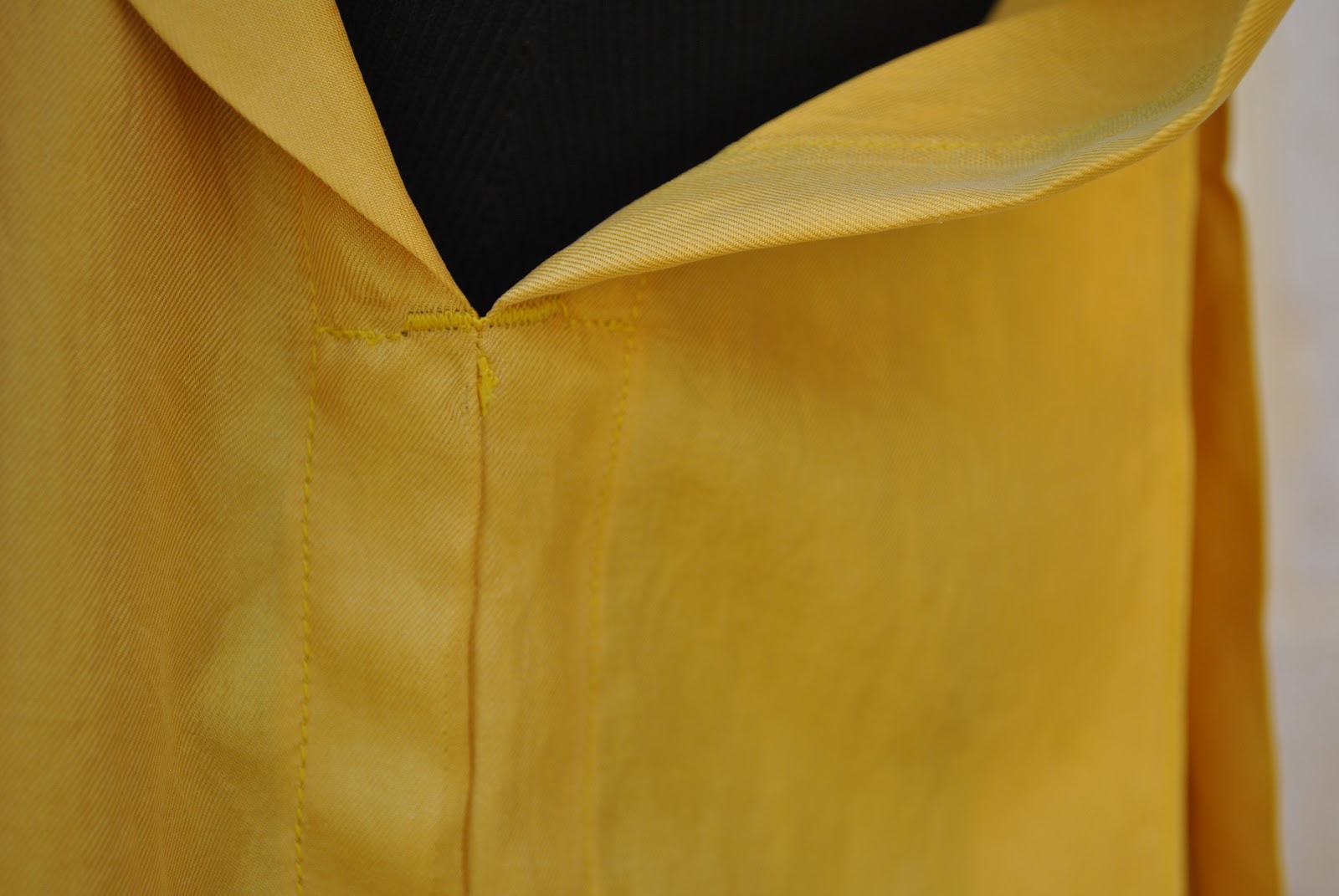
Some deet shots; there is a heck of a lot of topstitching in this top;

edge-stitching on the outer folds of each pleat and the inner edges too,

the side seams are flat-felled in wide seam allowances

there is strategic stitching, artfully placed on the outside
of the pleats, to fuse them together

and also bar-tacks at the vulnerable side-seam/armhole
point as well as the upper edge of the side seam split, to add strength to spots that are subject to strain during wear.

Details:
Top; Vogue 1142, yellow silk
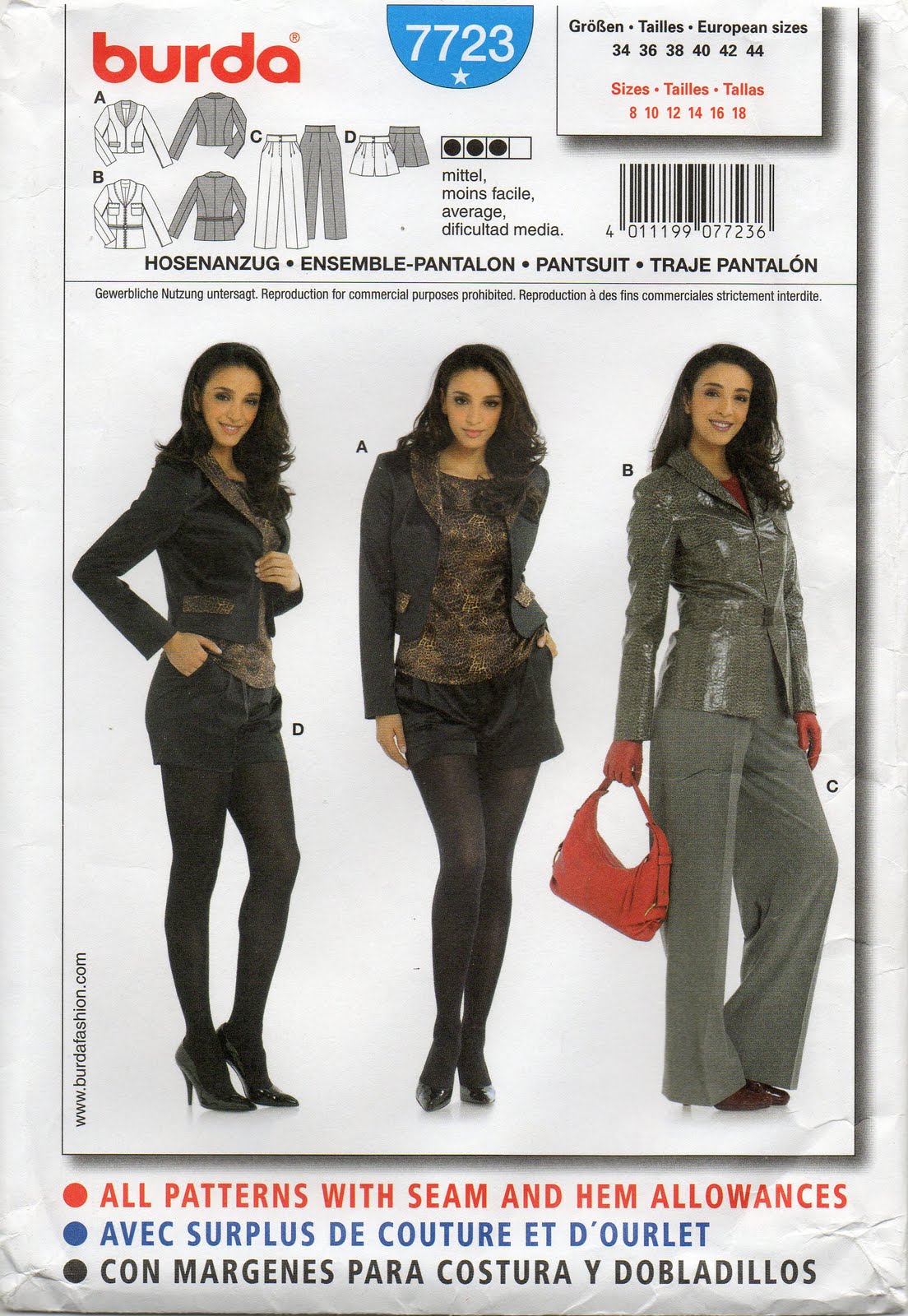
Shorts; Burda 7723, white linen, details and my review of this pattern here
Sandals; Misano


Pattern
Description:

Loose-fitting
pull-over top has pleats and stitched hems. Wrong side of fabric shows.
Pattern
Sizing:

American
sizes 6-14; I cut the size 10
Did
it look like the photo/drawing on the pattern envelope once you had finished
sewing it?

Yes.
Were
the instructions easy to follow?

Ohh,
the instructions are very easy to follow…
In my opinion a lot of extra top-stitching is essential in order to prepare
this garment to stand up to normal washing and wearing.
What
did you particularly like or dislike about the pattern?

I
absolutely love the design concept; the way a
couple of almost-rectangles can be tweaked here and there before being… well
to put it frankly; pretty much slapped roughly together, and magically become transformed
into a rather romantic, artistic and very unusual blouse.
Fabric
Used:

Very
thin and slippery silk
Pattern
alterations or any design changes you made:

After
pressing each pleat in place, I edge-stitched each and every fold of each pleat,
to make it a permanent fold.
Yup.  Each, and.  Every.  Fold.  To not do this would be to lose all those pleats with the very first
wash.  And since I spent about five
minutes carefully measuring each fold
before pressing; losing them was not an option I wanted to consider!
In
fact I cannot understand why the permanency of the pleats is not considered and
addressed in the instructions…
Would
you sew it again? Would you recommend it to others?
Yes, I
probably will want another one of this summery and airy little top sometime.  I recommend this top pattern to the meticulous seamster who craves romance and drama in her wardrobe, but still likes to be comfy.
Conclusion:
It is super comfortable
and very forgiving to wear, and nicely easy breezy for summer.  On top of that, it is a delightfully unusual, undeniably cool and
very funky garment.  I feel rather
artistique in this top   🙂


pinterestmail

Welcome to the fold


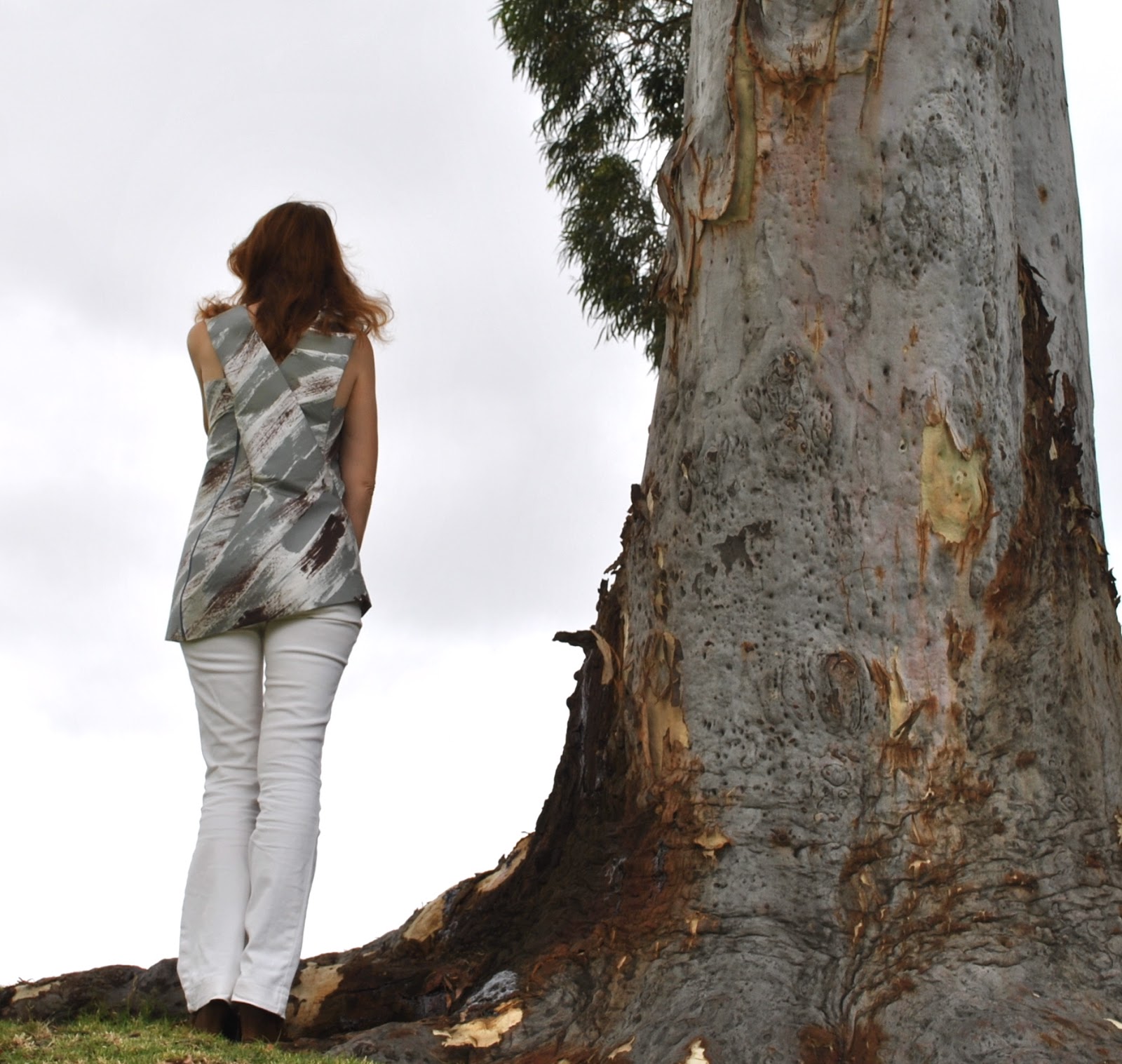
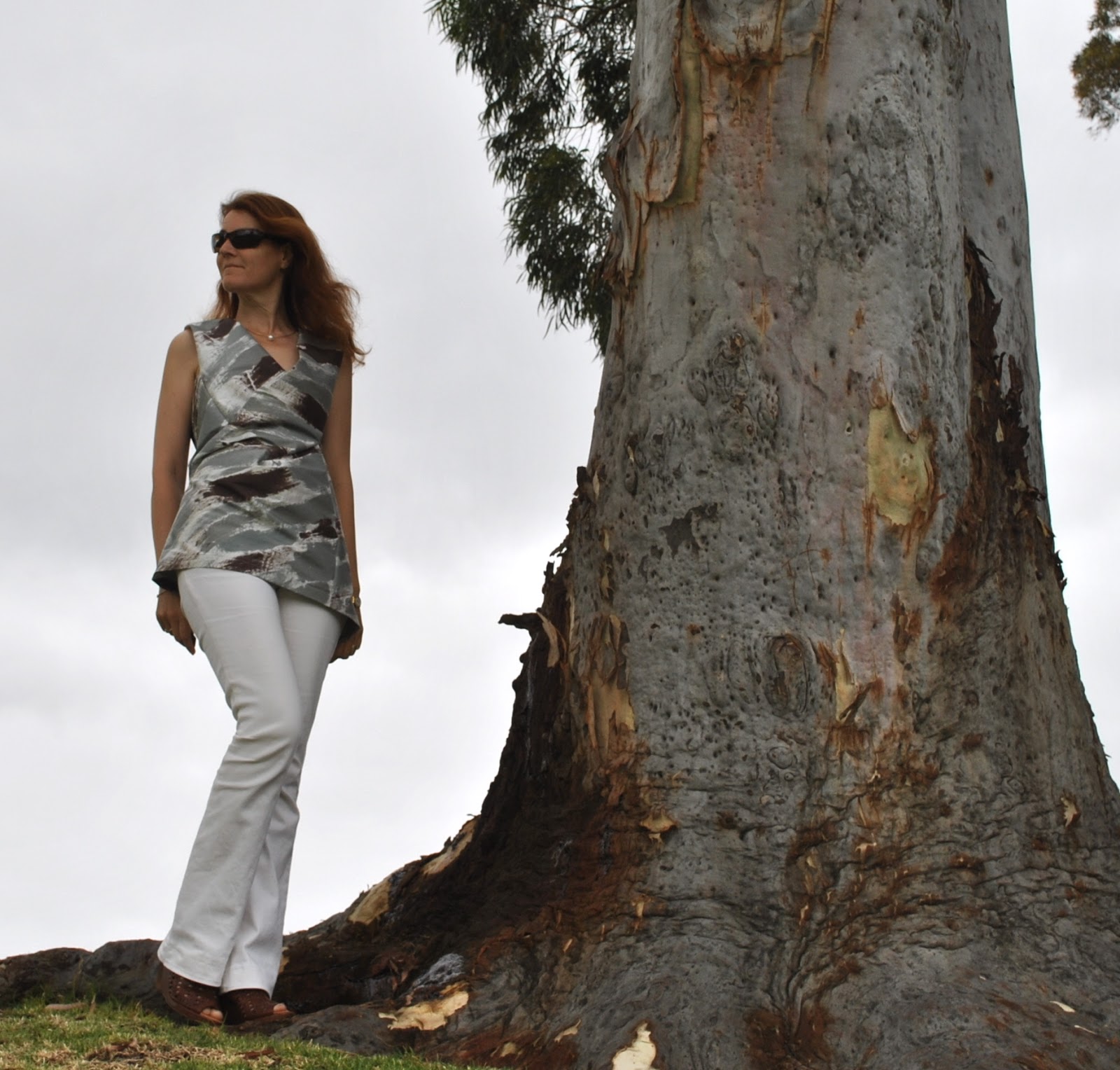
In a further small step towards overcoming scissor-phobia in the face of precious fabrics; I have made a new tunic top.
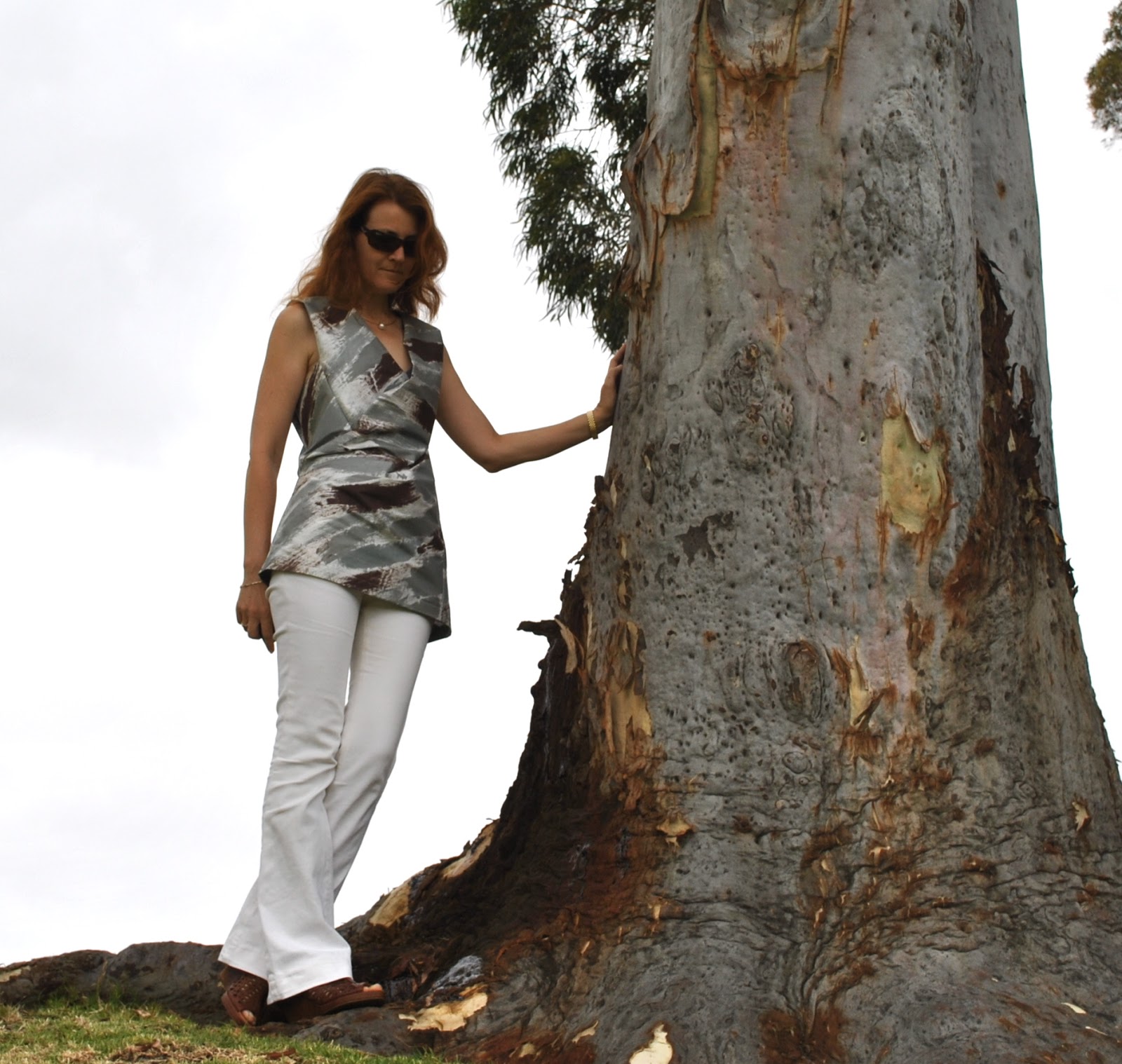
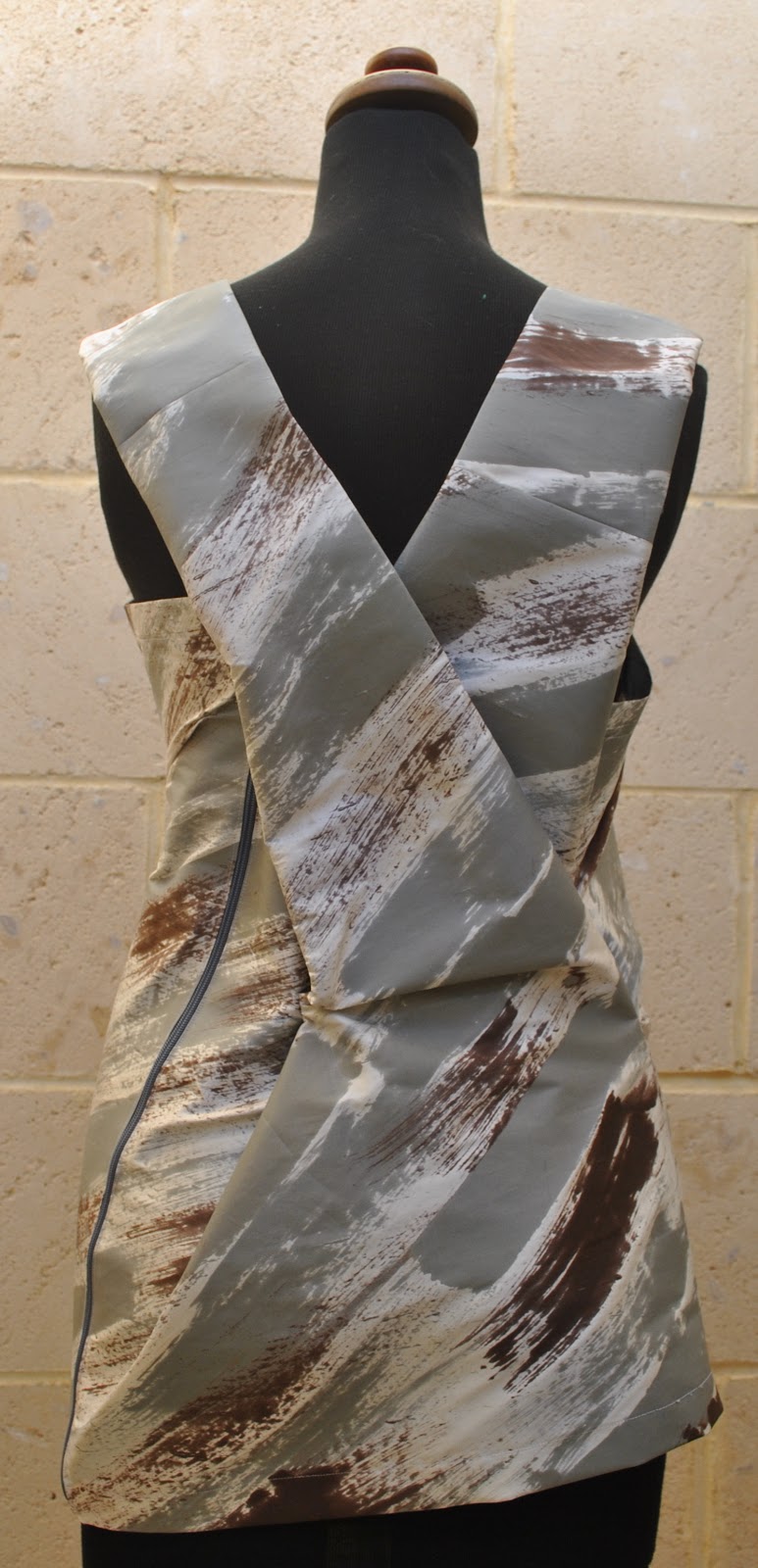
This is the top from Vogue 1309, and I have made it in a hand-painted silk dupion from Fabulous Fabrics. The fabric is pretty
fabulous, yes?  The strong uninhibited
strokes of dark chocolate and slate grey are so visually powerful and exciting.  They bring to my mind an abstract
representation of a windy stormy day; clouds streaking
across the sky, grey boughs bending in the wind, dead leaves whipping from the
ground and through the air.  Please note I took advantage of an appropriate weather moment for my photo op in honour….  🙂
I did not hand paint this fabric myself.  I have painted my own fabric in the past, but in this case I bought it all ready to go. It was ostensibly a
Christmas present from my husband, from last Christmas, last year, lol.  And ever since I opened my present (surprise!)  I’ve been on
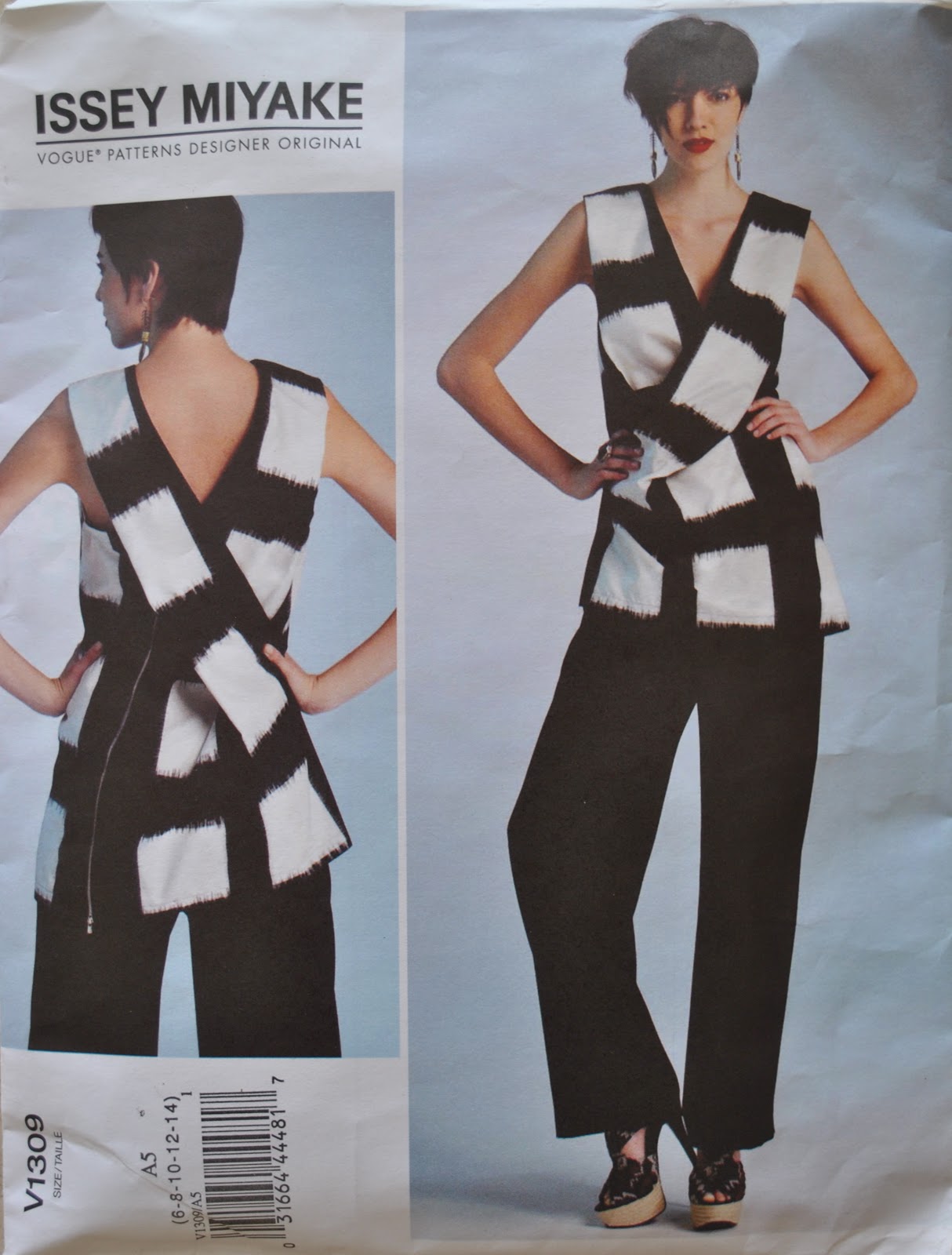
the lookout for a worthy pattern … and when I clapped eyes on this Issey
Miyake pattern I instantly knew they would be perfect together, a match made in
heaven.  The pattern even
stipulated silk dupion, as if the designer knew that I had a piece of wild silk
dupion just awaiting a wild tunic pattern.  The times I actually obey those “recommended fabrics” instructions
printed on the pattern I can count on the fingers of one hand.  Hmmm, exaggerating there, I might be up
to a few more hands by now… but those times are still pathetic minorities;
small shining lights in a long rebellious history of sartorial disobedience.
Above: at left; the front and at right; the back.  The fabric was er, quaite expensive and I only had one metre so I had to join pieces to get out that huge front/back piece.  My fabric was 150cm wide, and I cut the pieces on the cross.  The joins can be just seen at just about shoulder blade level, on each side at the back (above right)
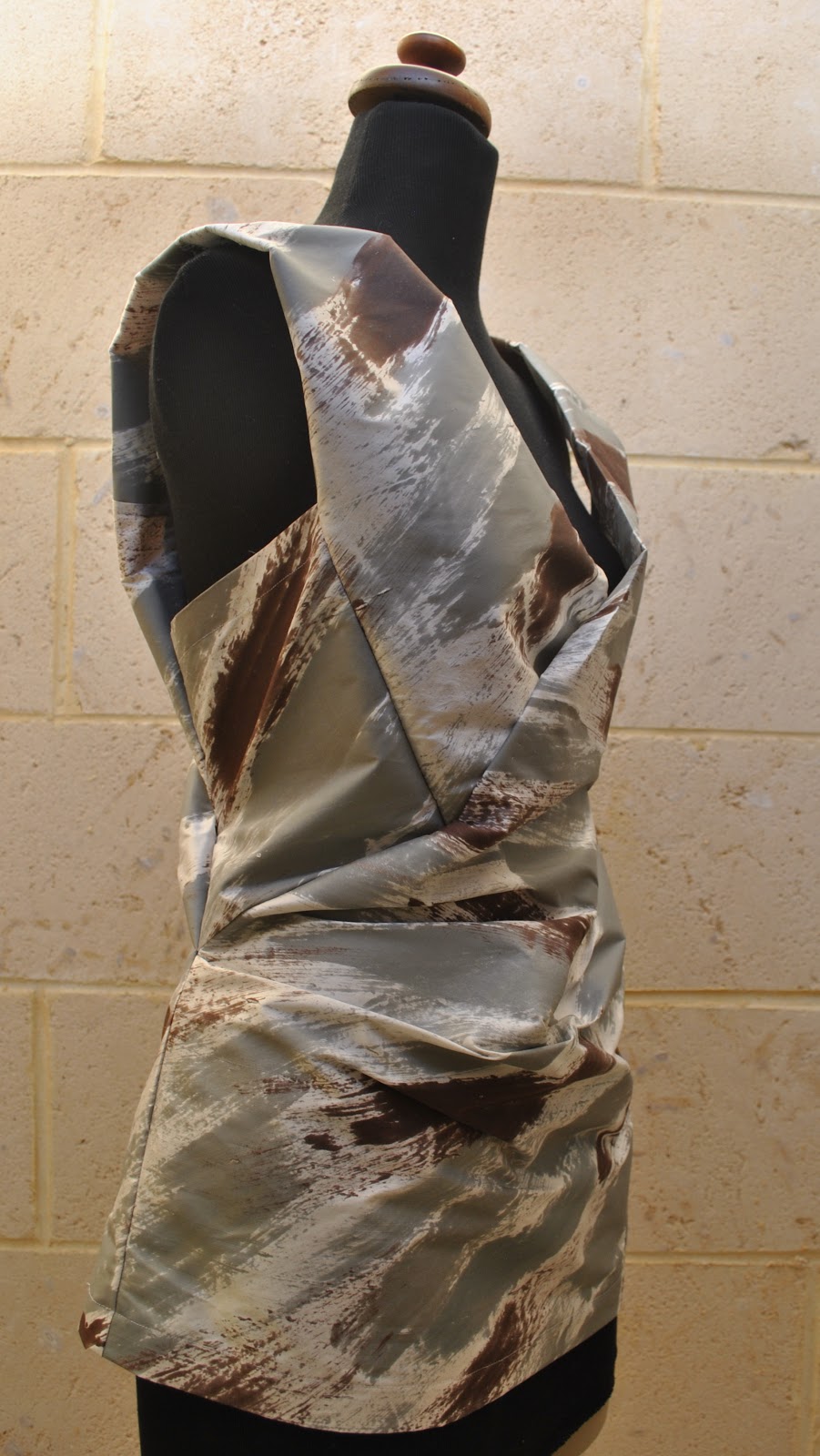
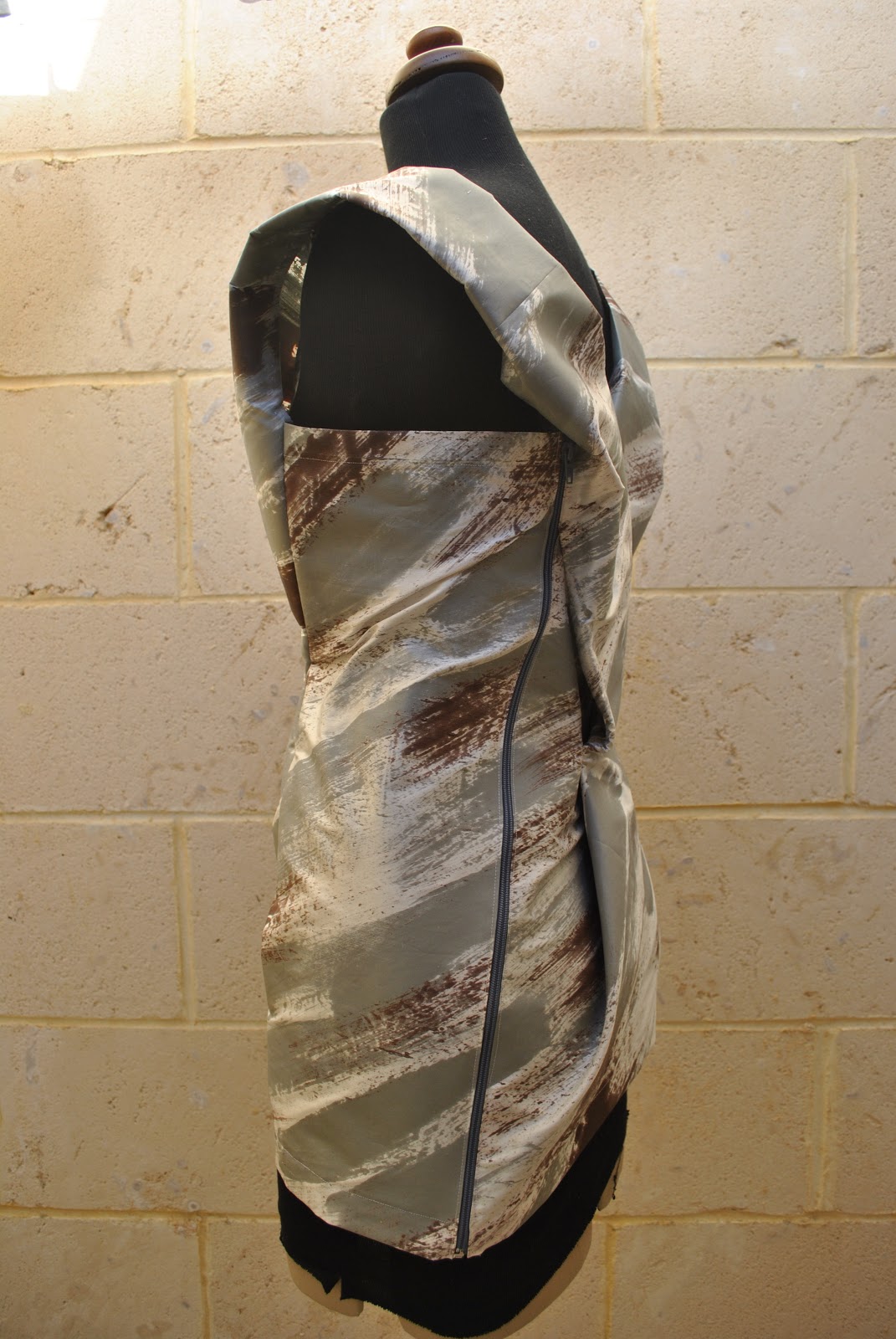
Above: side views right and left.  At right can be seen a small section I stitched down at the back to remove some of the blousiness across the back waist section.  I was fortunate to find a zip exactly the right length… this is a pattern in which if your zip is not the perfect length you DO have to adjust the pattern pieces to exactly accommodate your zip length.
This is a pretty challenging pattern … but I adore a
sewing challenge so I was like a pig-in-mud the day I made this, contentedly humming away to myself; totally in my happy place as I fiddled about, nutting out
those instructions.  The
construction of this is like a puzzle; each separate piece of the puzzle is simple and
uncomplicated in itself, but the process as a whole is not clear
or easy and the top does not go together intuitively.
I’ve written a pattern review below, but it’s worth
mentioning separately a couple of little tips I used to make things a tonne easier
for myself…
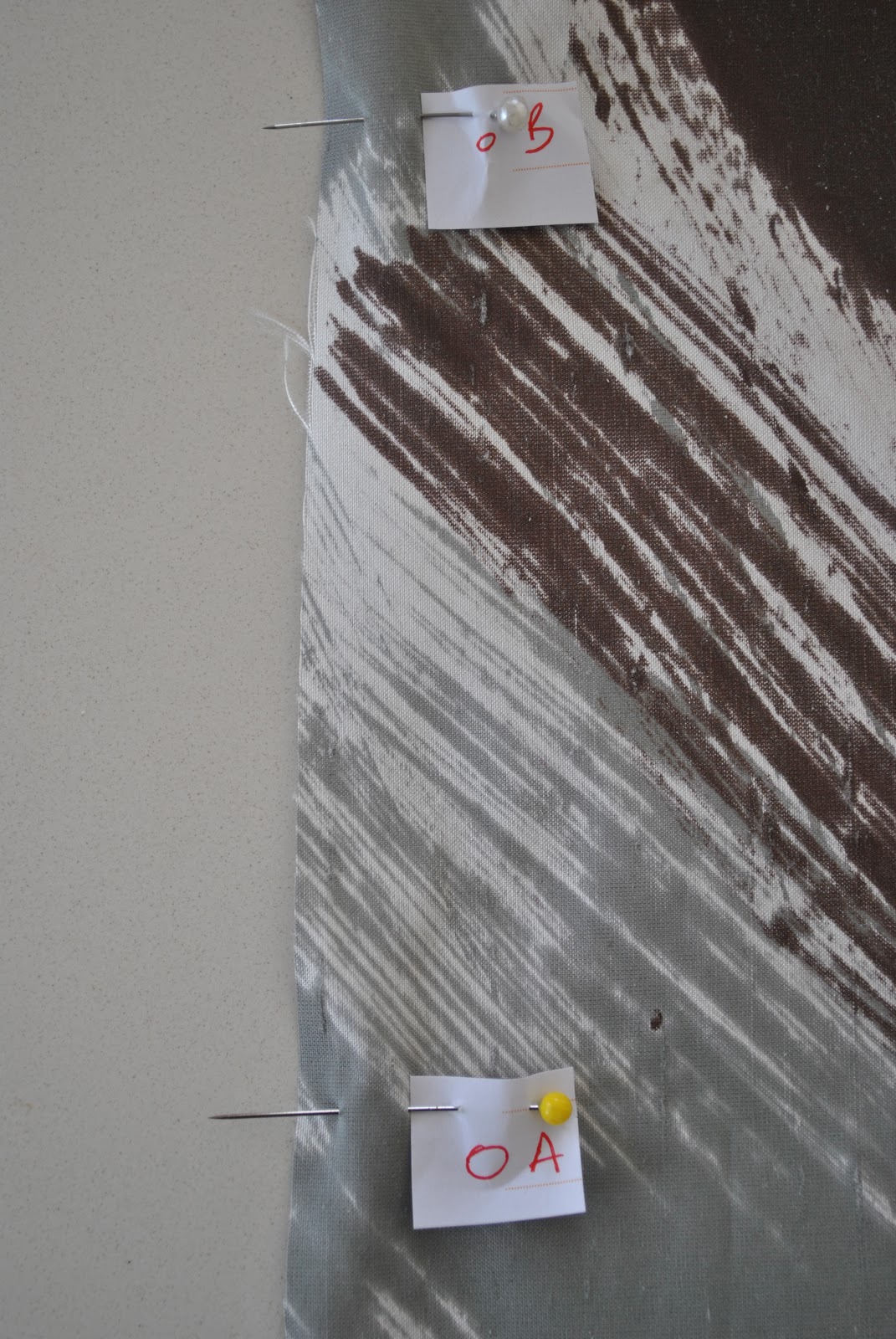
The markings on the pattern are small circles, large
circles and squares, and these are also marked from A to G inclusively.  You will
NOT be able to put this pattern together successfully unless you can identify
all of these on your pattern pieces… so I wrote all the markings (for example) OA, OB, oB, etc, designating large circle A,
large circle B, small circle B, etc, on
small squares of paper and pinned them to the exact spots.  Once this idea had occurred to me, it made
the whole seam matching process a heck of a lot easier.  A heck of a lot!!
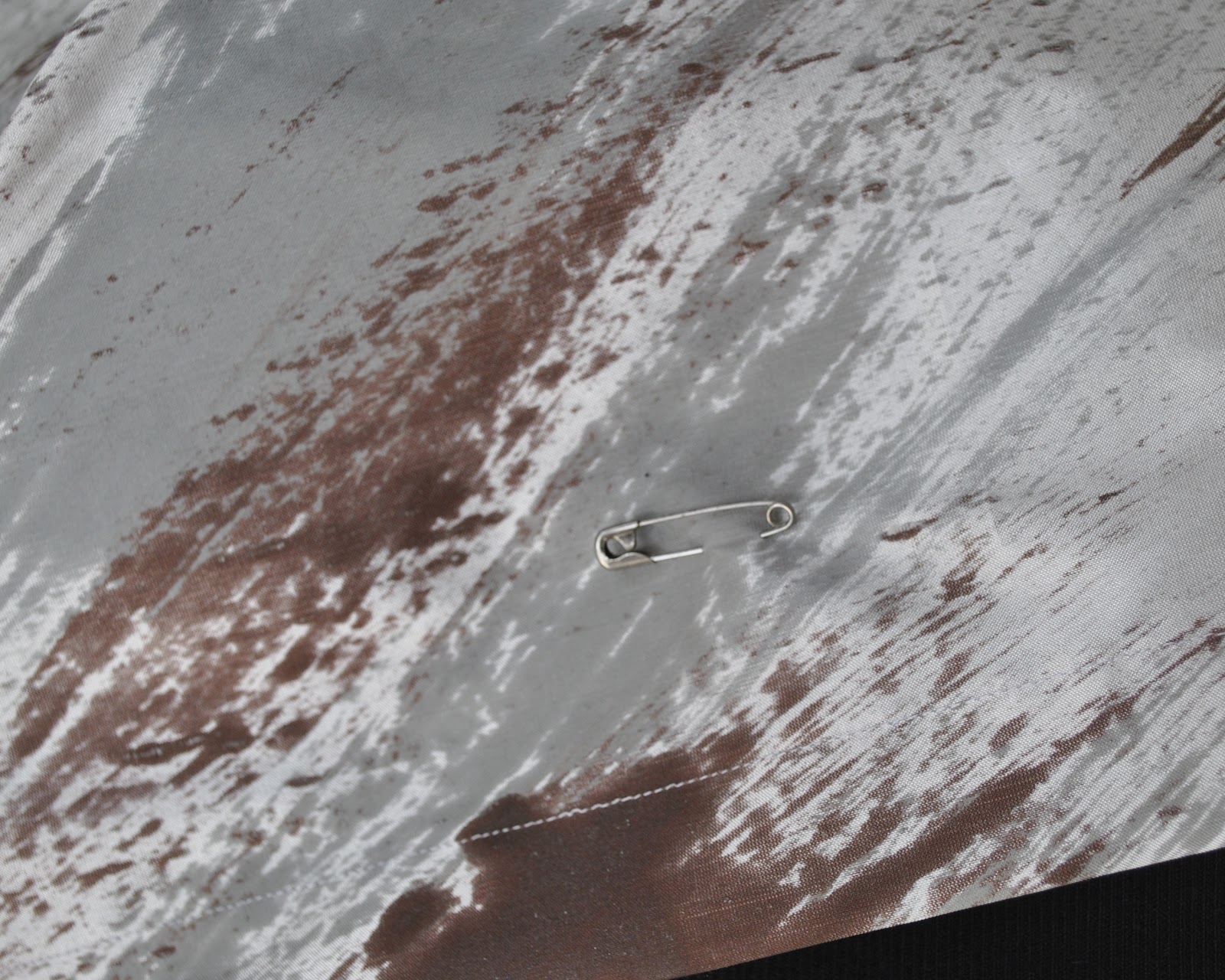
I also attached a safety pin marking the “back” of
the piece… this might sound too trivial to even mention it ….but I found that safety pin to be enormously helpful! since the front and the back
of this top are almost impossible to distinguish for much of the construction.
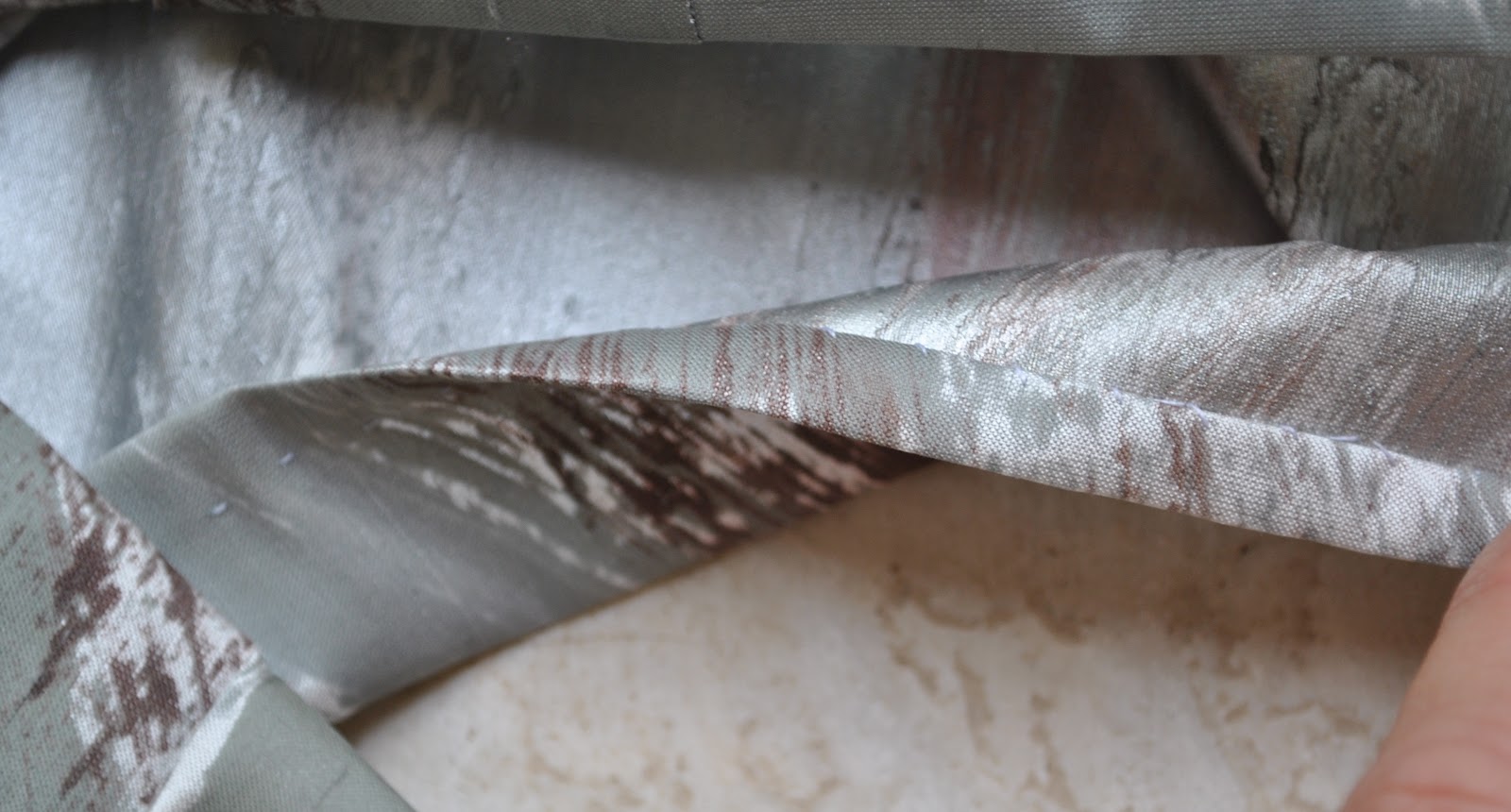
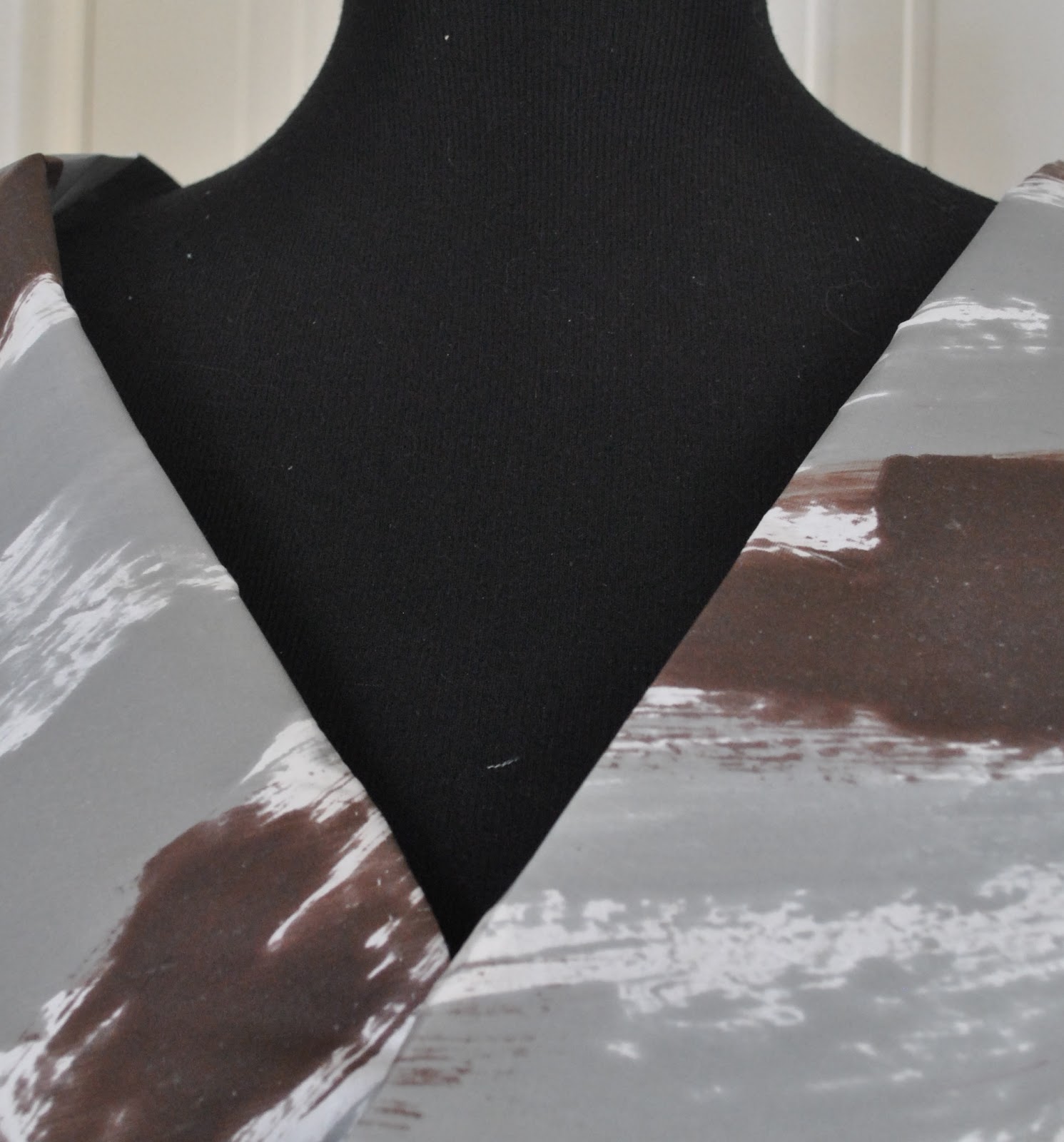
Finishing tips: the pattern left a few raw edges in obvious places ie, the neckline!  which looked a little messy imo, so I hand stitched a narrow hem along these to finish.  I also applied a few strategic hidden hand-stitches inside the V-neck to hold those two sides firmly and modestly together.
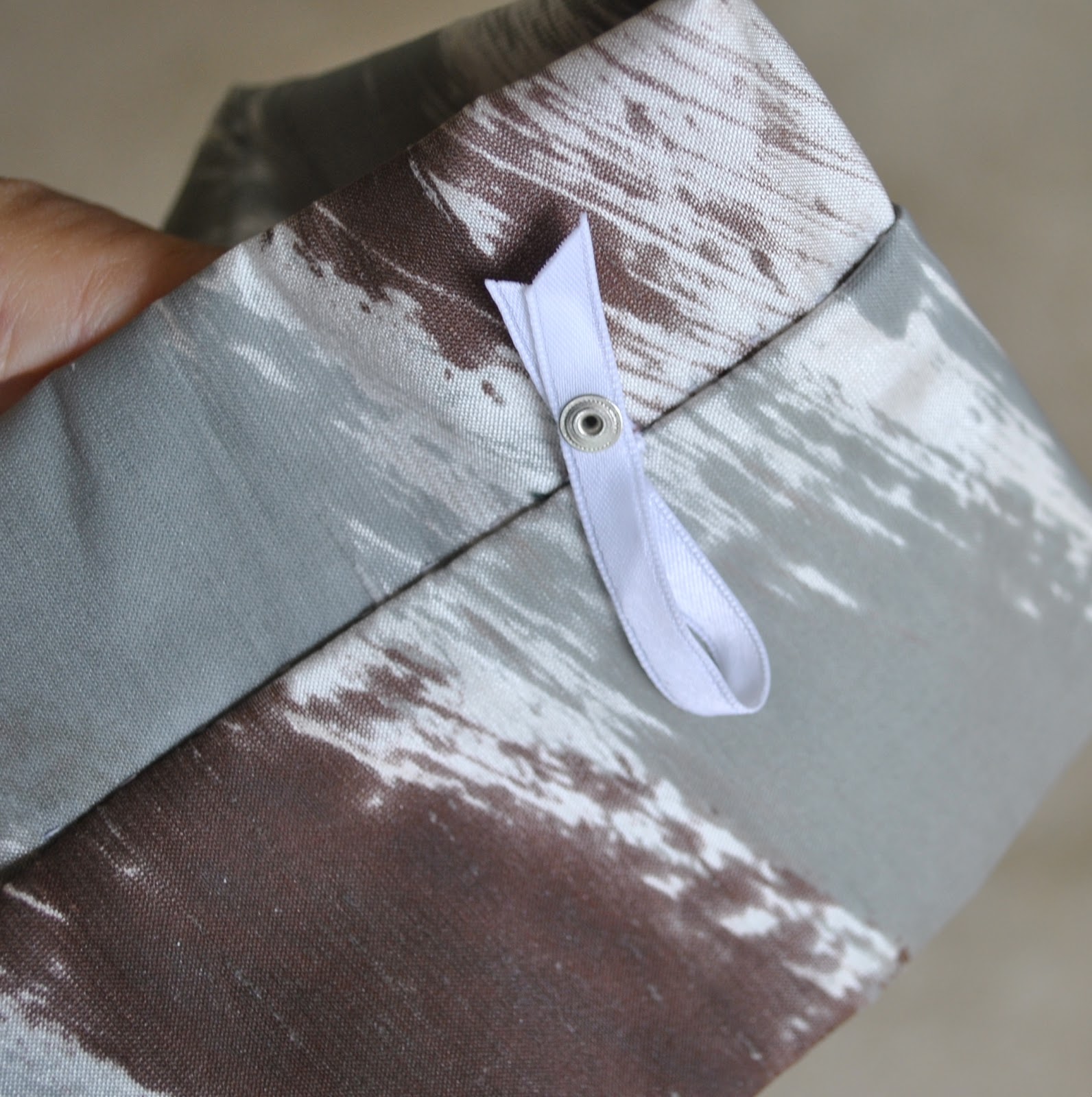
I hand-stitched lingerie holders to inside the shoulder straps, these were a gift from the lovely Yoshimi, thank you Yoshimi!

Details:
Top; Vogue 1309, hand-painted silk dupion from
Fabulous Fabrics
Jeans; Burda 7863 modified, white stretch denim, details here
Shoes; c/o Misano

Pattern
Description:
Pullover
tunic has front and back cut-in-one, no shoulder and side seams, upper right
section, left panel, square armholes, left side back zip, shaped hemline,
stitched hem, unfinished and continuous bias finished edges.
Pattern
Sizing:
American
sizes 6-14; I cut the size 10
Did
it look like the photo/drawing on the pattern envelope once you had finished
sewing it?
Yes.
Were
the instructions easy to follow?
Well,
this pattern is not rated Advanced/Plus Difficile for nothing!  There may only be three rectangular
pattern pieces, well three once you have pieced three smaller paper pieces to
make the one ginormous front and back piece; and each step in itself is a short and straightforward seam…. but the construction of this top is not an
intuitive process and you really have to keep your wits about you.  I really had to stop and carefully check and
double check my markings for each and every step.
The markings are large and small circles and squares, variously marked from A to G
inclusively, and it is imperative to be able to identify them on the pattern
piece.
I
ended up writing on small squares of paper (for example)   OA, OB, oB, etc, designating
large circle A, large circle B, small circle B, etc, and pinning these at the
appropriate spots.  I highly
recommend other seamsters do the same! 
Once I took this step, things were streamlined and it was massively
helpful.  I also attached a safety
pin to the “back” during construction and just this simplest of things helped a
bunch when it came to working out which was the front and back and left and
right too.
What
did you particularly like or dislike about the pattern?
I
absolutely love the funky avant garde styling, and the challenge of putting
together a few plain and simple shapes to make a remarkably un-plain and
distinctly non-simple shape.
I
didn’t like how one ended up with some raw edges in obvious places, like the
neckline.  I hand-stitched a narrow
hem along all the raw exposed edges.
Not a dislike, just an important note to others making up the pattern; your zip does have to be exactly the recommended length, otherwise you must make adjustments to your pattern pieces to suit.
Fabric
Used:
Hand-painted
silk dupion
Pattern
alterations or any design changes you made:
After
completing the top, I hand-stitched a narrow double-folded hem along the raw
exposed edges at the front neckline crossover, the armhole edges and at the
back crossover, and applied a hidden few hand-stitches to hold the V-neck together at the centre front.
I
stitched a small section down at the left back to tame just a little of that
blousiness, this was just a stylistic choice on my part.
I hand-stitched lingerie holders inside the shoulder straps.
Would
you sew it again? Would you recommend it to others?
I
think I need just one of these ultra-distinctive tops in my wardrobe, but I
would not rule out sewing this one up again in my lifetime.  I recommend this pattern to the
advanced seamster who craves both an avante garde wardrobe and a sewing
challenge.
Conclusion:
Well,
I totes adore a sewing challenge and I sure got one here… 🙂 plus a unique top that is comfortable to wear
as well as interesting to look at. 
I call that a big win!

pinterestmail

Bared ankles and showcased shoes

O hey peeps!
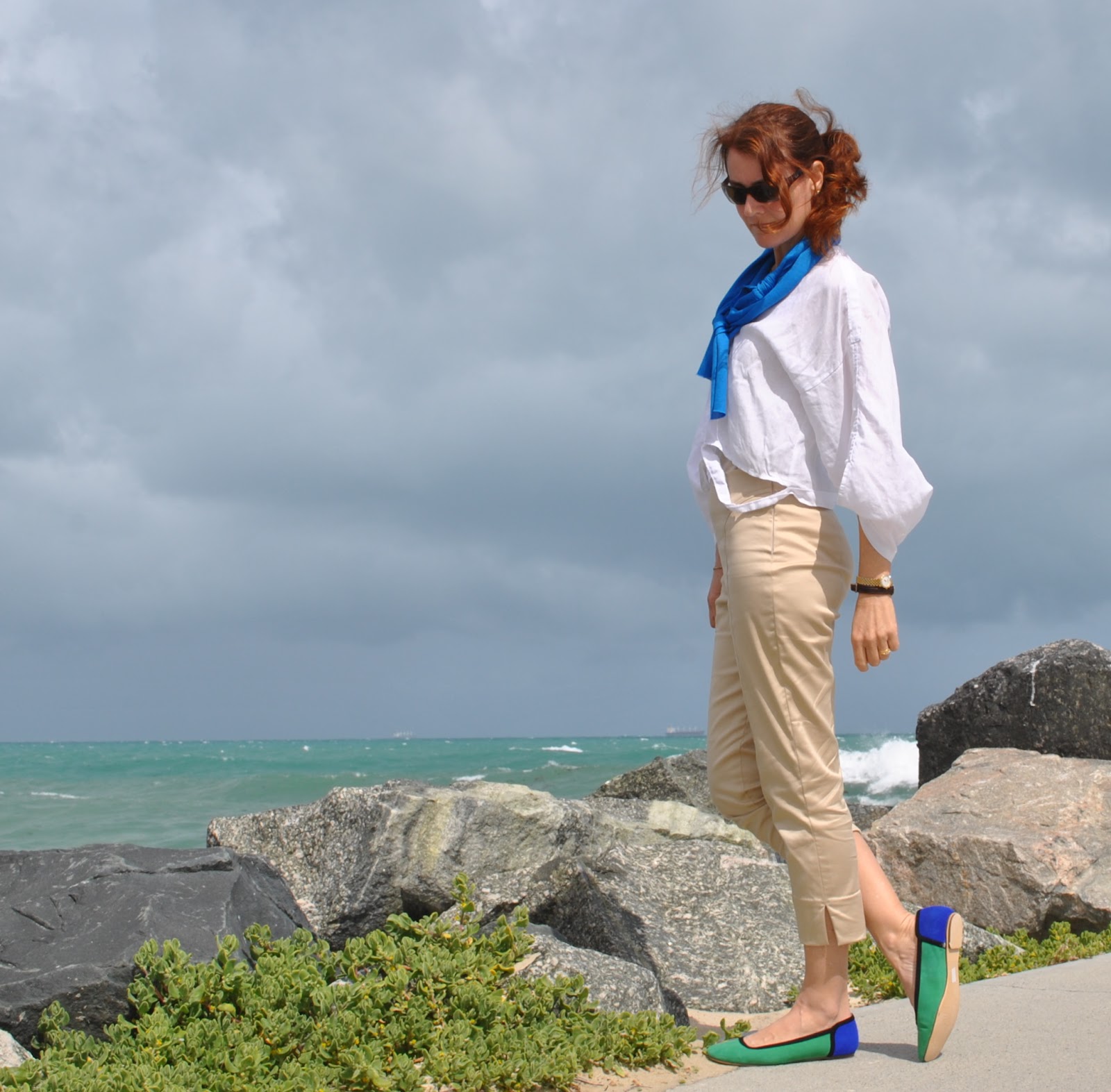
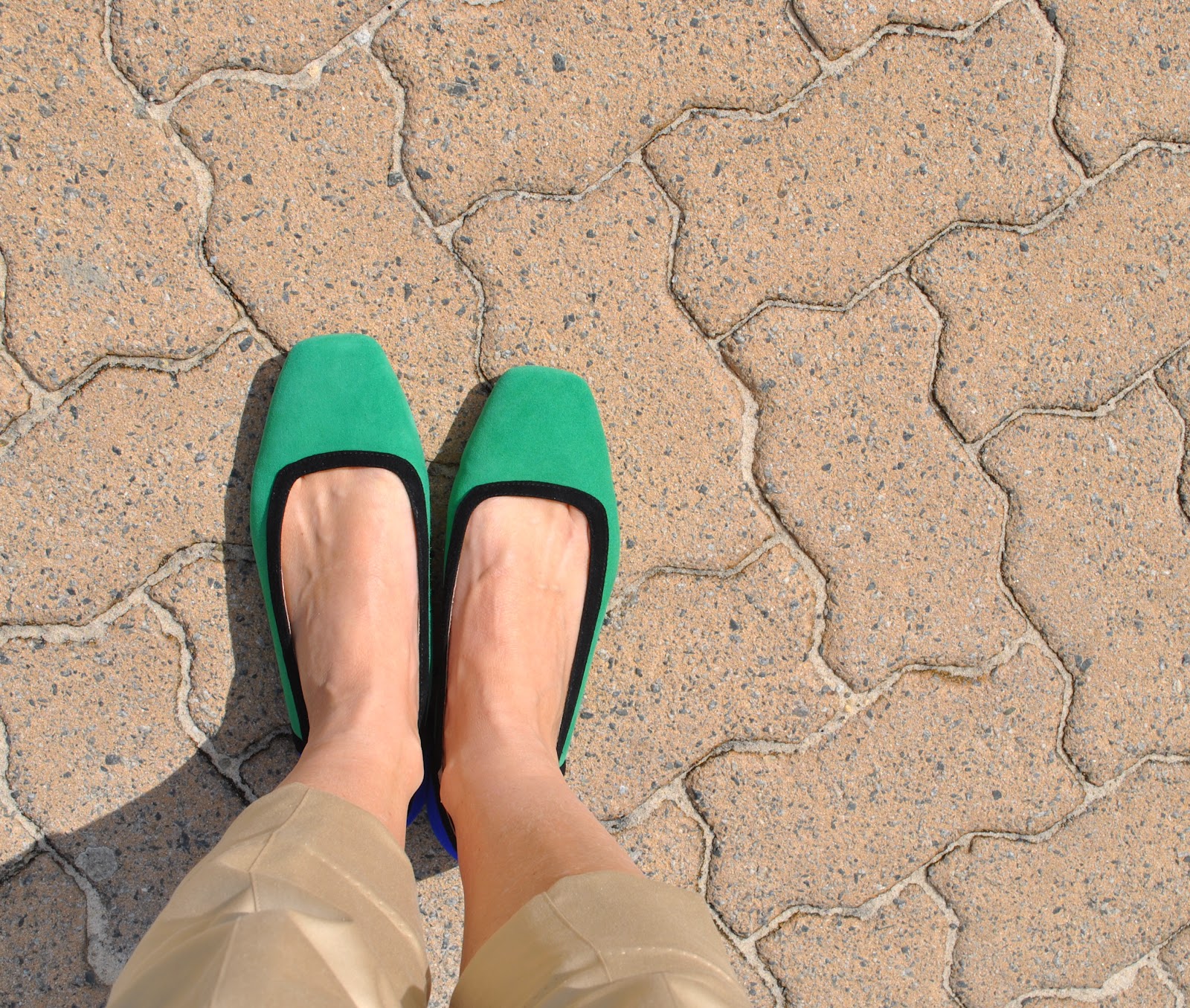
Today I am sporting new capri trousers, and a pair of new ballet flats!  This may not seem a particularly momentous thing to announce, but aack-choolly… I am recklessly smashing through two new-to-me fashion ceilings in one fell swoop!  
Whoaomigoshholdthephone!
I used to worry that I was too tall and not cute enough for the capris/ballet flats look.  But y’know what?  I’m kinda newly loving this look quite a lot lately…
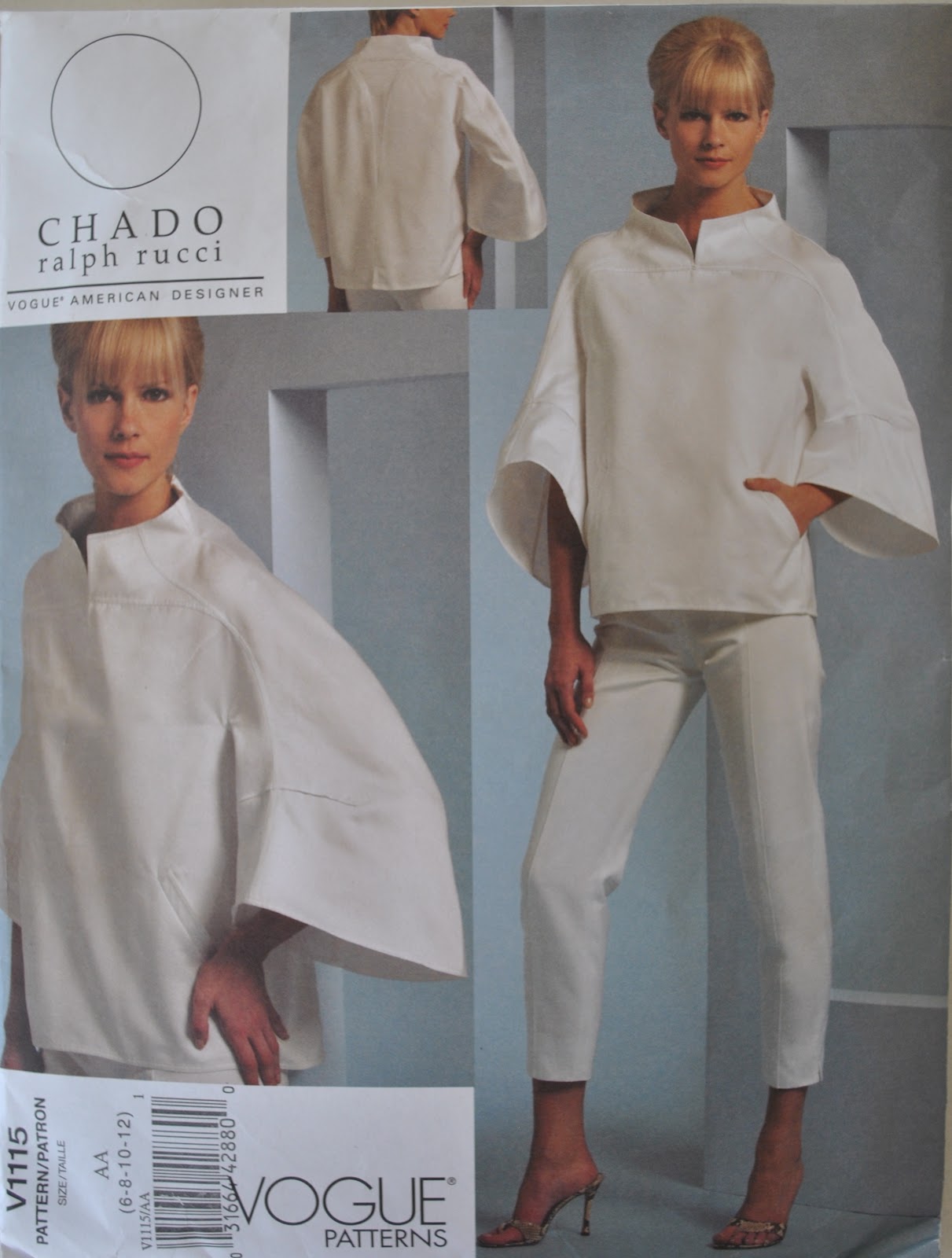
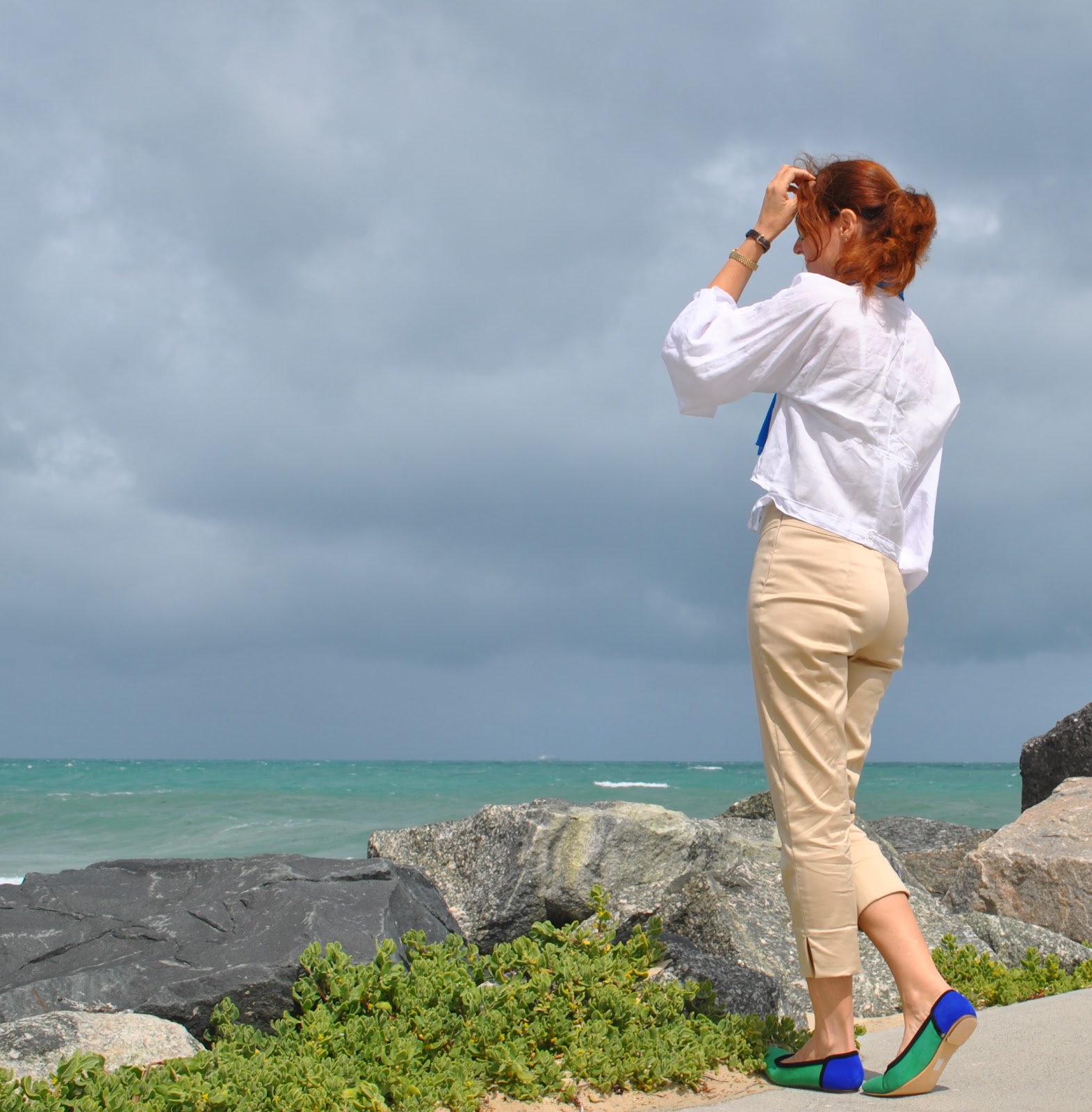
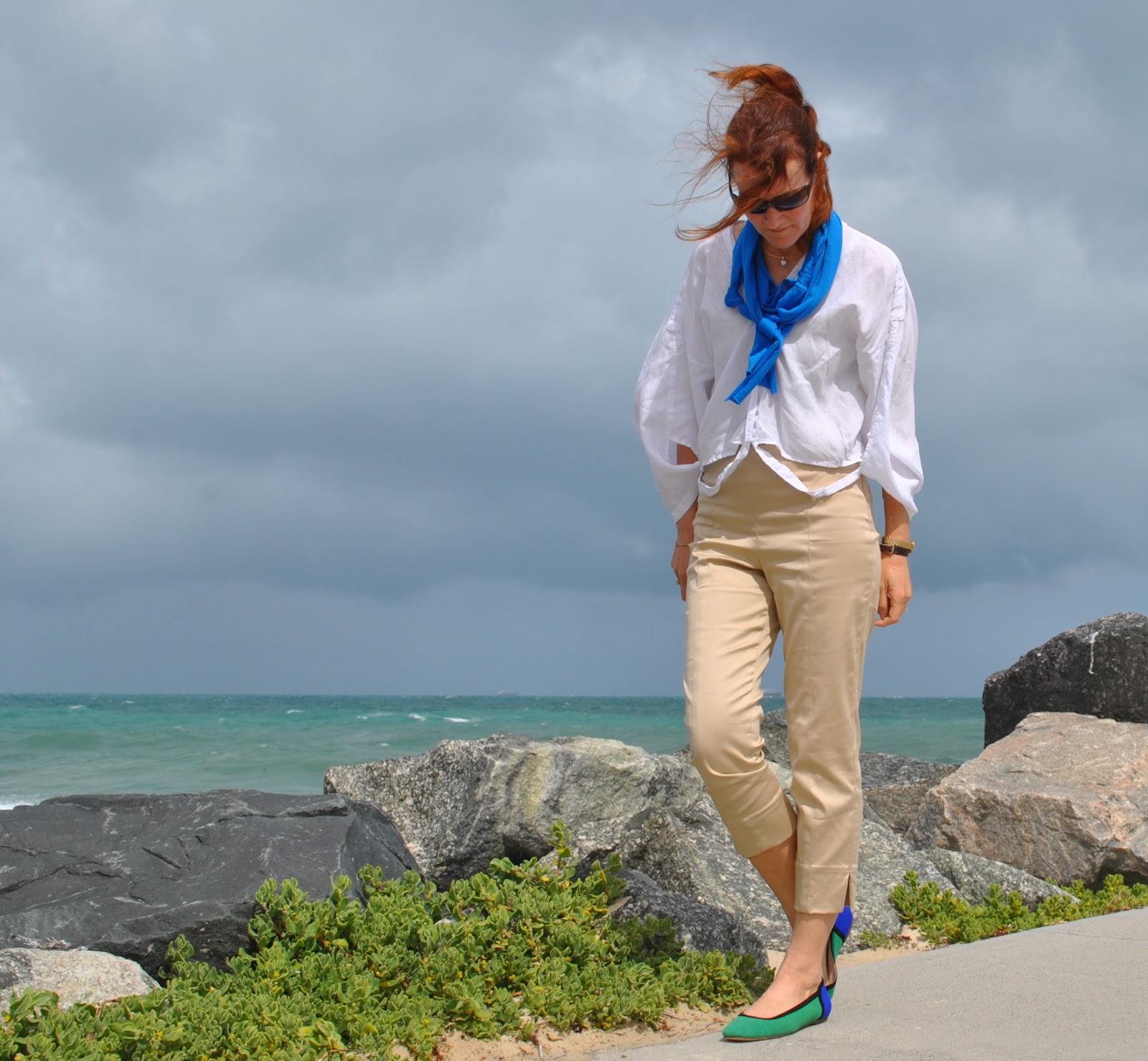
My capris are made using Vogue 1115, and the fabric is a pale sand-coloured stretch sateen remnant from the Alannah Hill fabric outlet in Melbourne, bought during a visit two years ago….  hmmm, high time it was made into something, non?  Well, I think this fabric was just waiting for this very pattern, like Cinderella waiting for Prince Charming.  Or was it that she was waiting for the glass slipper?  Hmmm, not sure the analogy is holding itself together there…  anyhow, the remnant happened to be exactly the right size to just perfectly fit the pattern pieces.  And they all lived happily ever after  😉
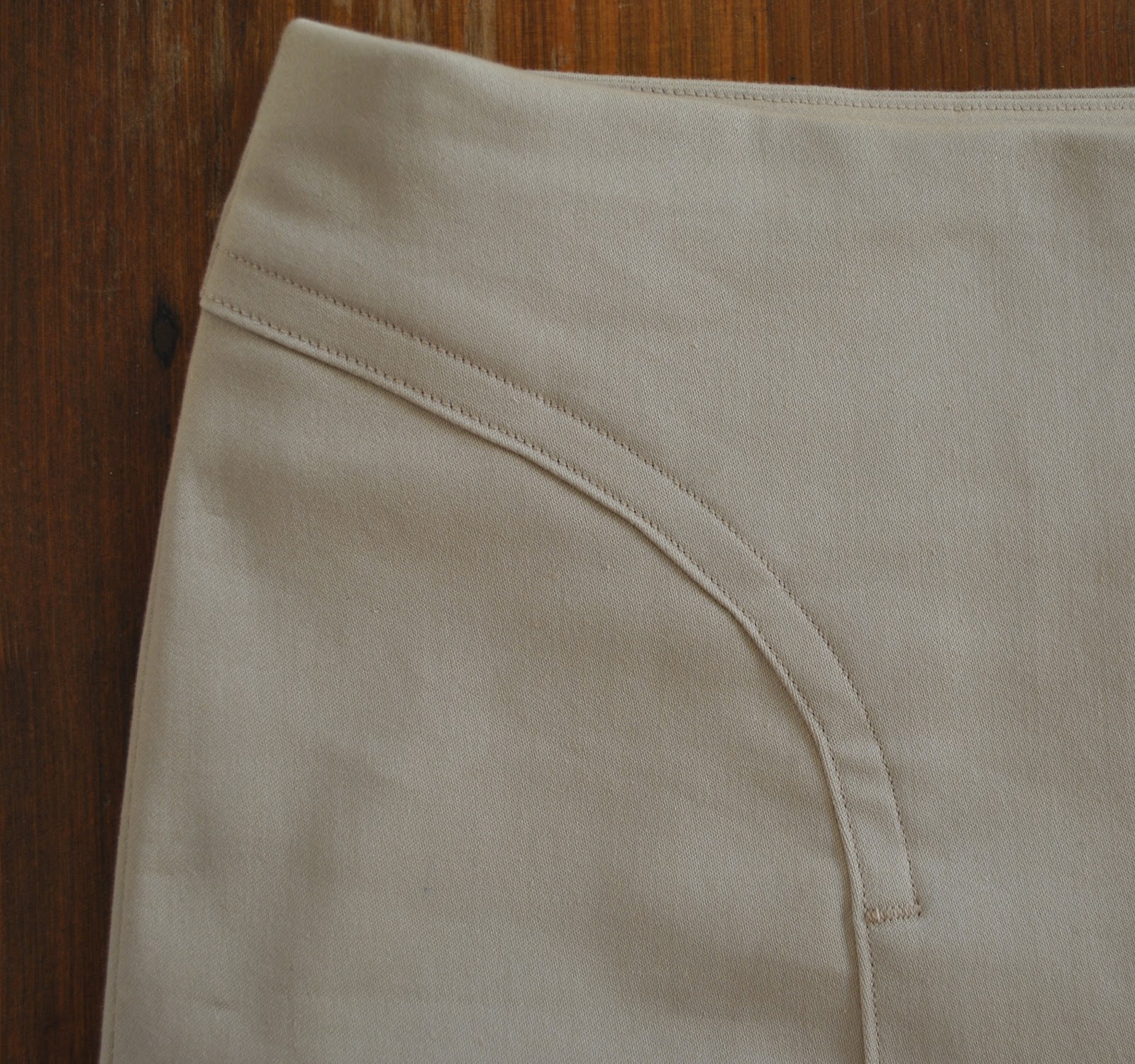
I love the top stitching details, with the little bar tacks.

I chose this Chado Ralph Rucci pattern partly because it is rated Advanced/Plus Difficile, and I just love trying out challenging patterns.  However, a seamster of only a few years experience should not be put off by the Advanced rating; it only takes one quick scan of the pattern sheet to realise that this only applies to the matching top …. the pants could hardly be simpler!  Particularly if one chooses to leave off the full lining.  I live in Australia.  It gets hot here.  One chooses.  🙂
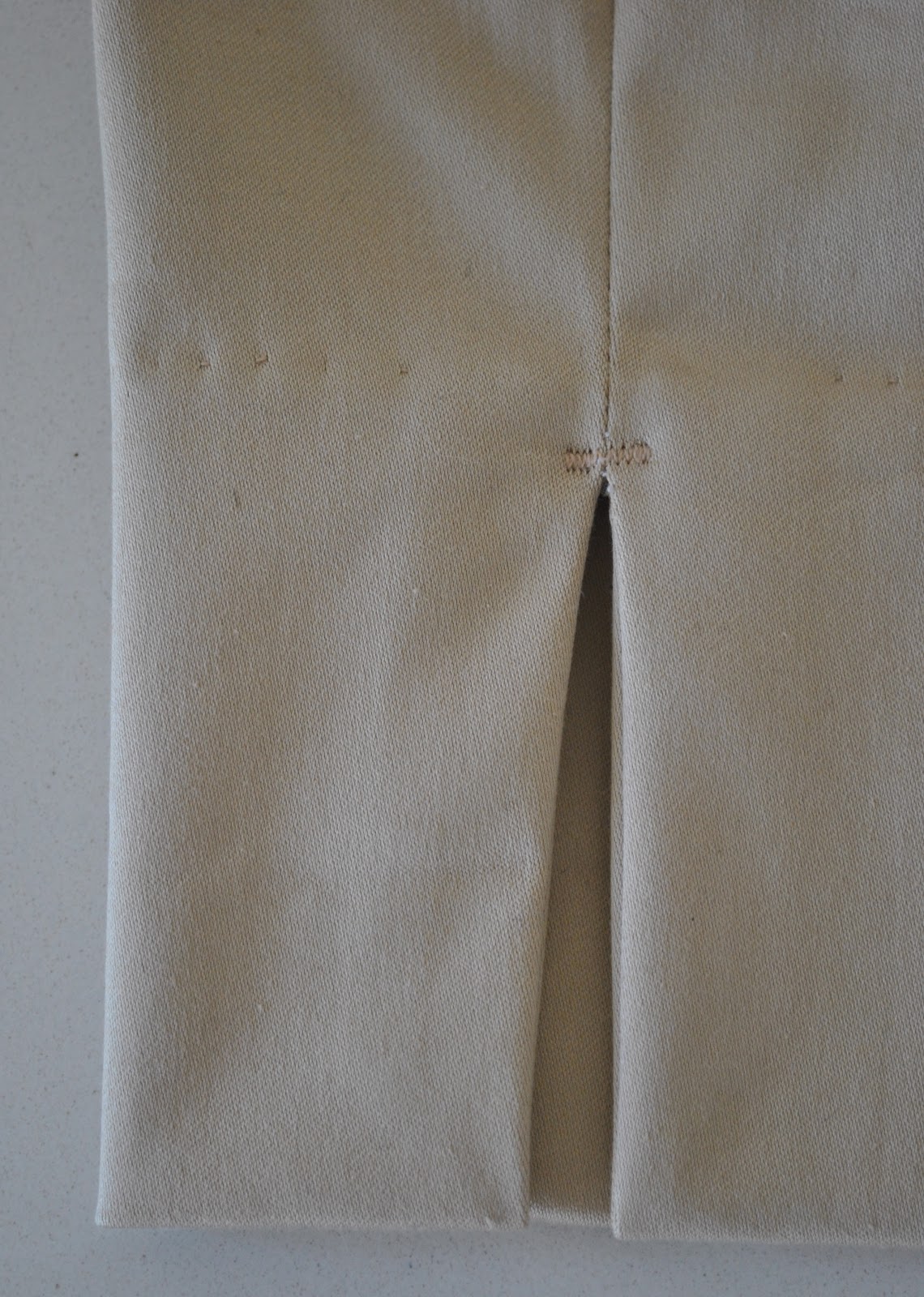
The only other change I made was to cut the legs pieces longer, to enable me to fold up a deeper hem and so therefore to sew the side seam slits to be longer.  I really like the look of the hem slits, I think they are really cute and I wanted them to stand out!
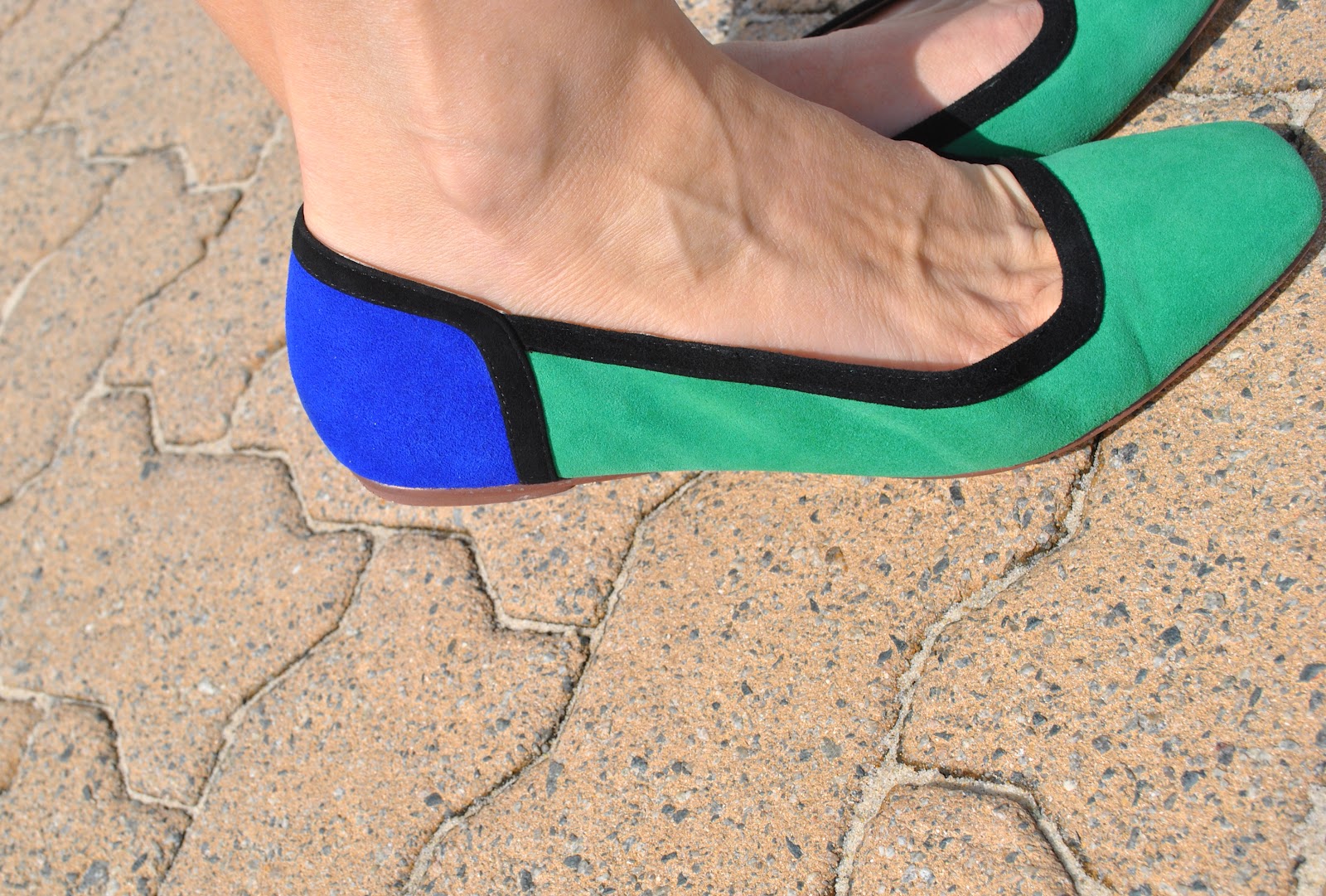
I might be a teeny bit disappointed that the pattern posed no challenges, but I am not disappointed with my new capris.  According to the fashion mags, trousers this season are falling neatly into two distinctive silhouettes; either over-long and flared 70’s style (tick!) or with higher hemlines to expose a slim ankle a la Audrey Hepburn.  Tick!  And a nice thing about capris is that the higher hemline beautifully showcases the shoes.  Like these lovely colourful little ballet flats from Misano.  
These are soooo ultra cute, yes!?

Details:
Capris; Vogue 1115 with the lining left off; sand-coloured stretch sateen
Shirt; my own design, made from an old pair of white linen pants, details here
Scarf; knotted strips of jersey, first shown here
Shoes; a gift from Misano

Following is my review of the pattern, if you’re interested  🙂

Pattern
Description:
Lined,
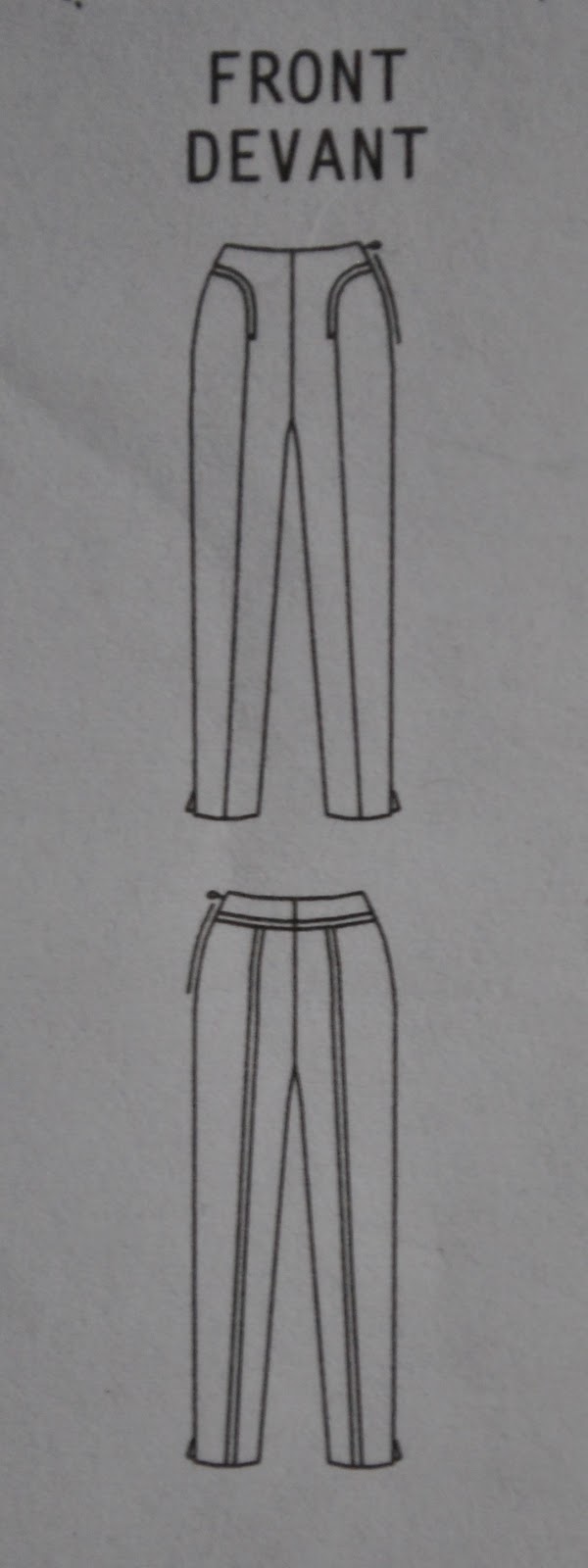
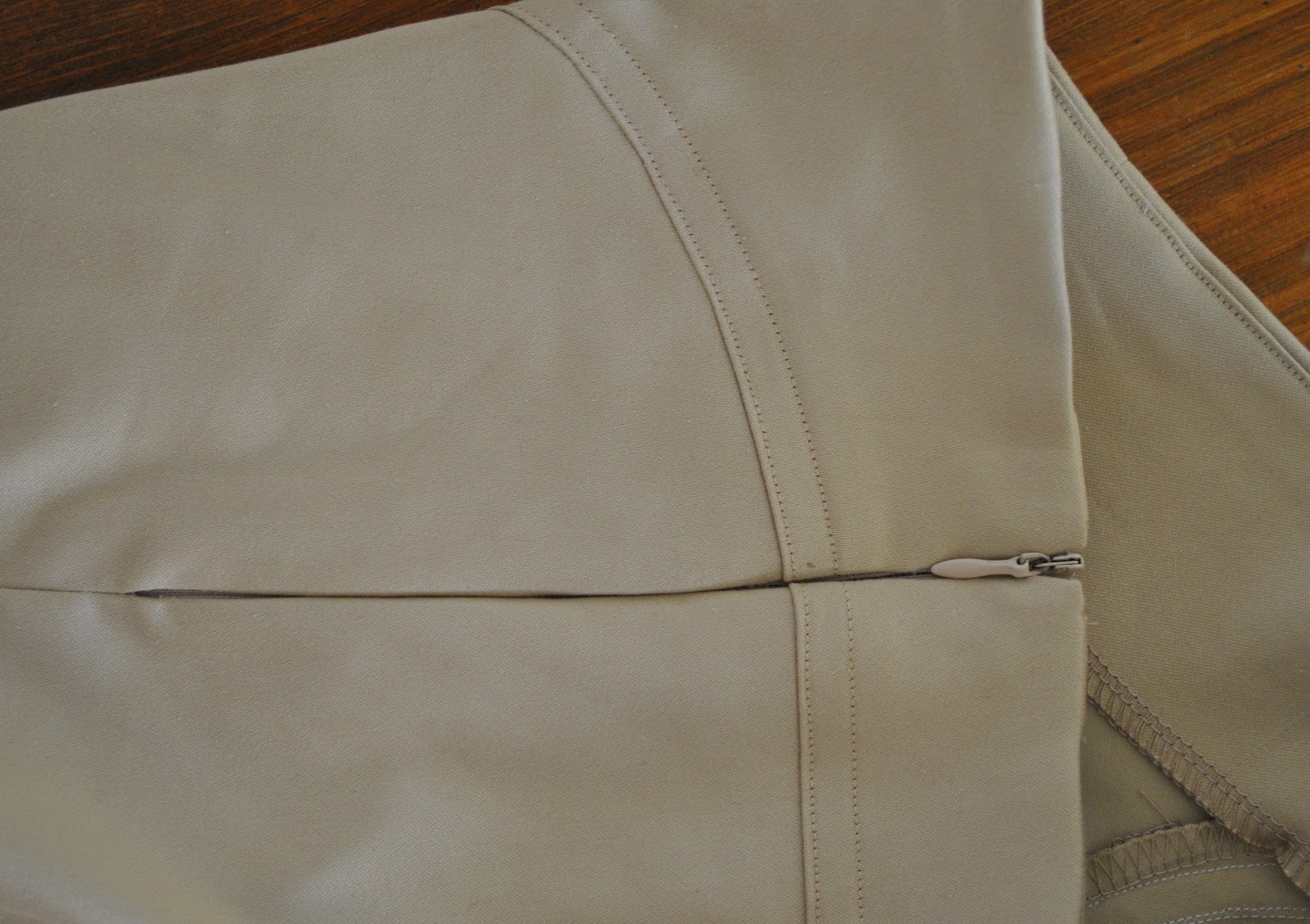
tapered above ankle-length pants, have seam details, side slits, zipper and
back yoke.
Pattern
Sizing:
American
sizes 6-12; mine are a size 10
Did
it look like the photo/drawing on the pattern envelope once you had finished
sewing it?
Yes.
Were
the instructions easy to follow?
Very
easy!
What
did you particularly like or dislike about the pattern?
There
is nothing not to like!  I love
absolutely everything about these pants…  I really like the curved seamlines down each leg, and the double topstitching detail with a little bar tack.  I adore the hemline side seam slits.  Subtle, classy and cute!
One of the reasons I chose the pattern is because it is an advanced/plus
difficile pattern, and I love challenging patterns.  However that rating must only apply to the matching top, because the
pants are super easy!
Fabric
Used:
Stretchy sateen
Pattern
alterations or any design changes you made:
I
left off the lining because the climate I live in is not conducive to lined
pants!
I cut
the trouser legs a little longer so I could fold a deeper hem and therefore sew
the side slits to be longer, because I really liked this feature and wanted
them to stand out more.
Would
you sew it again? Would you recommend it to others?
Without a doubt;
and highly!  I am looking forward to
sewing up the top sometime too.
Conclusion:
A
very nice pattern; easy, with classic lines and a very current silhouette.  I am very happy with my new
capris.  Seriously, I cannot
believe now it has taken me this long to hop onto to the capri bandwagon…
pinterestmail

Wedgwood blue damask, with brass zips

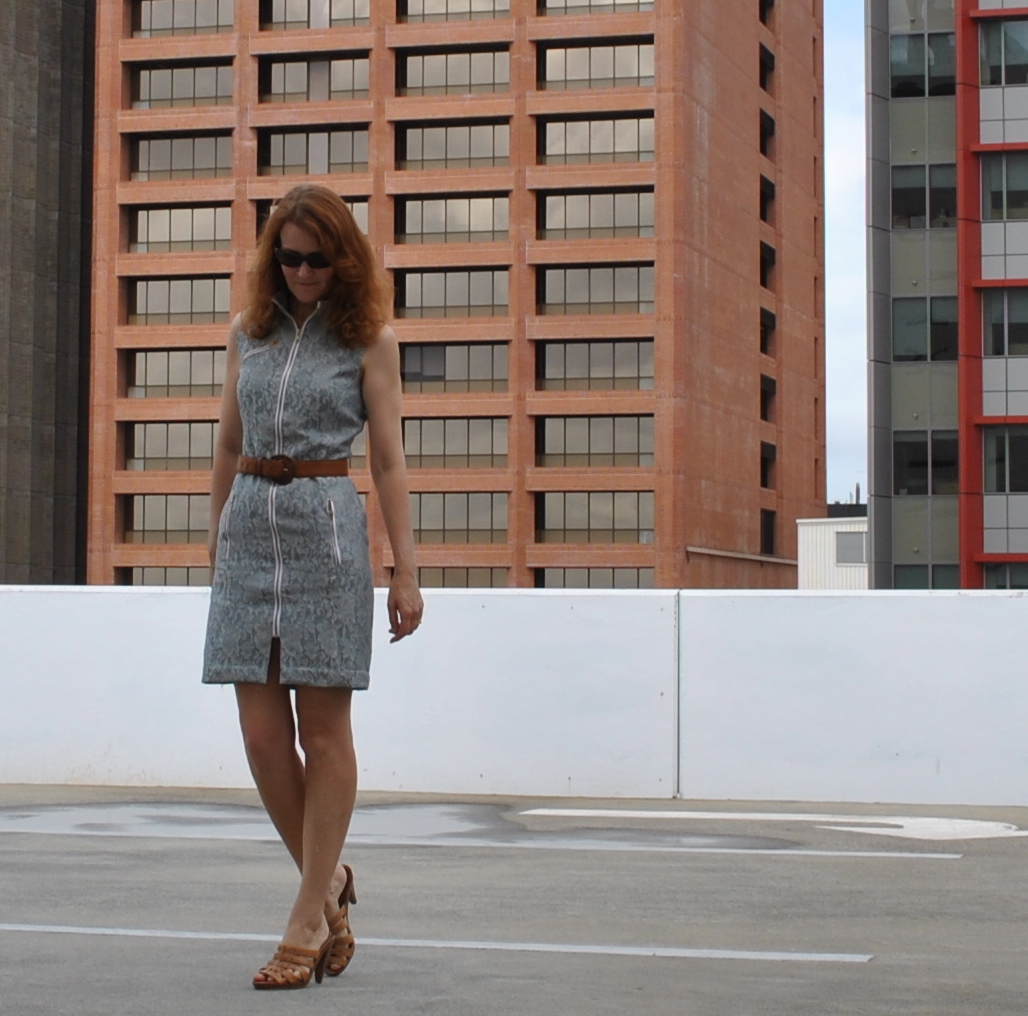
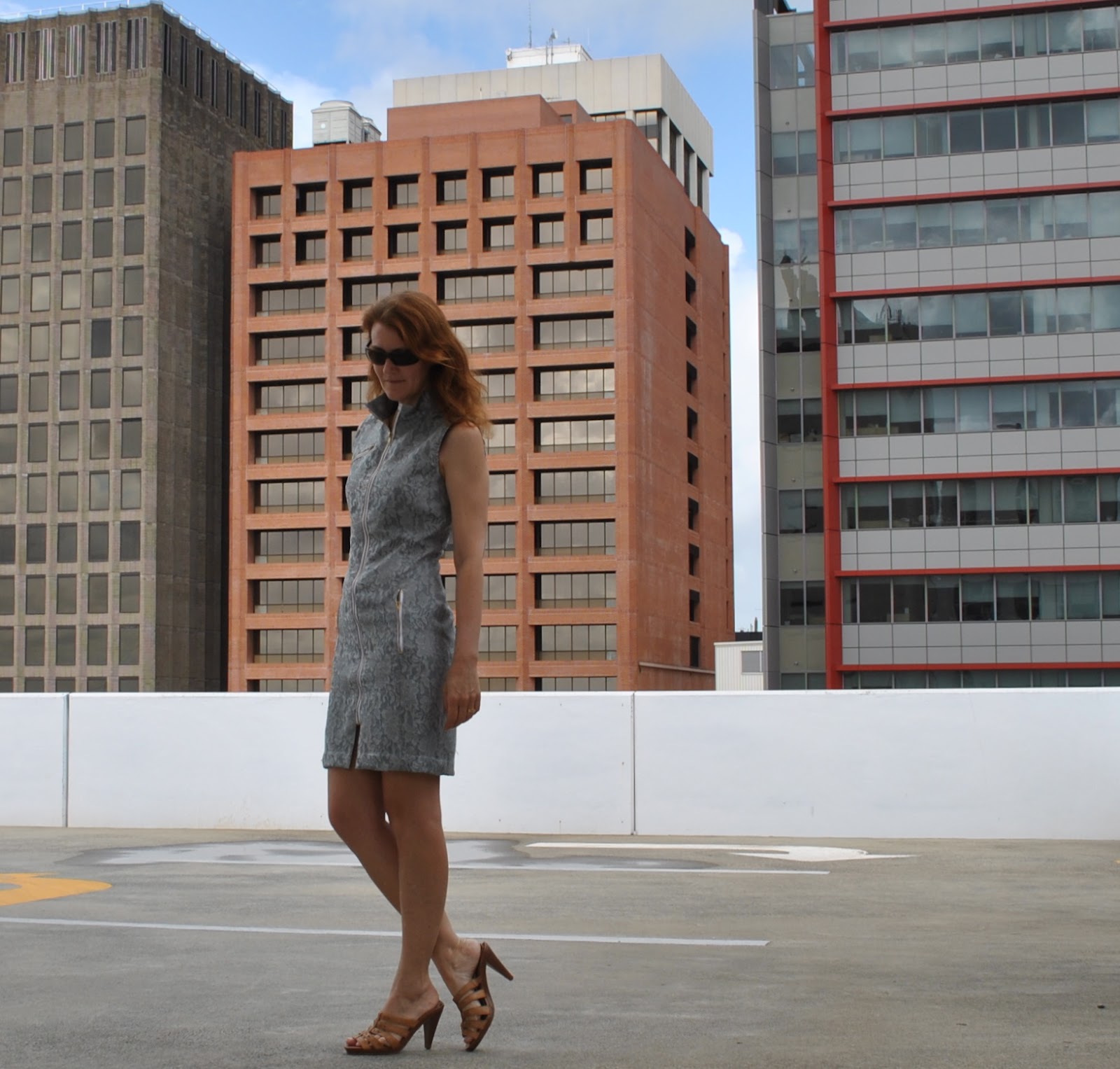
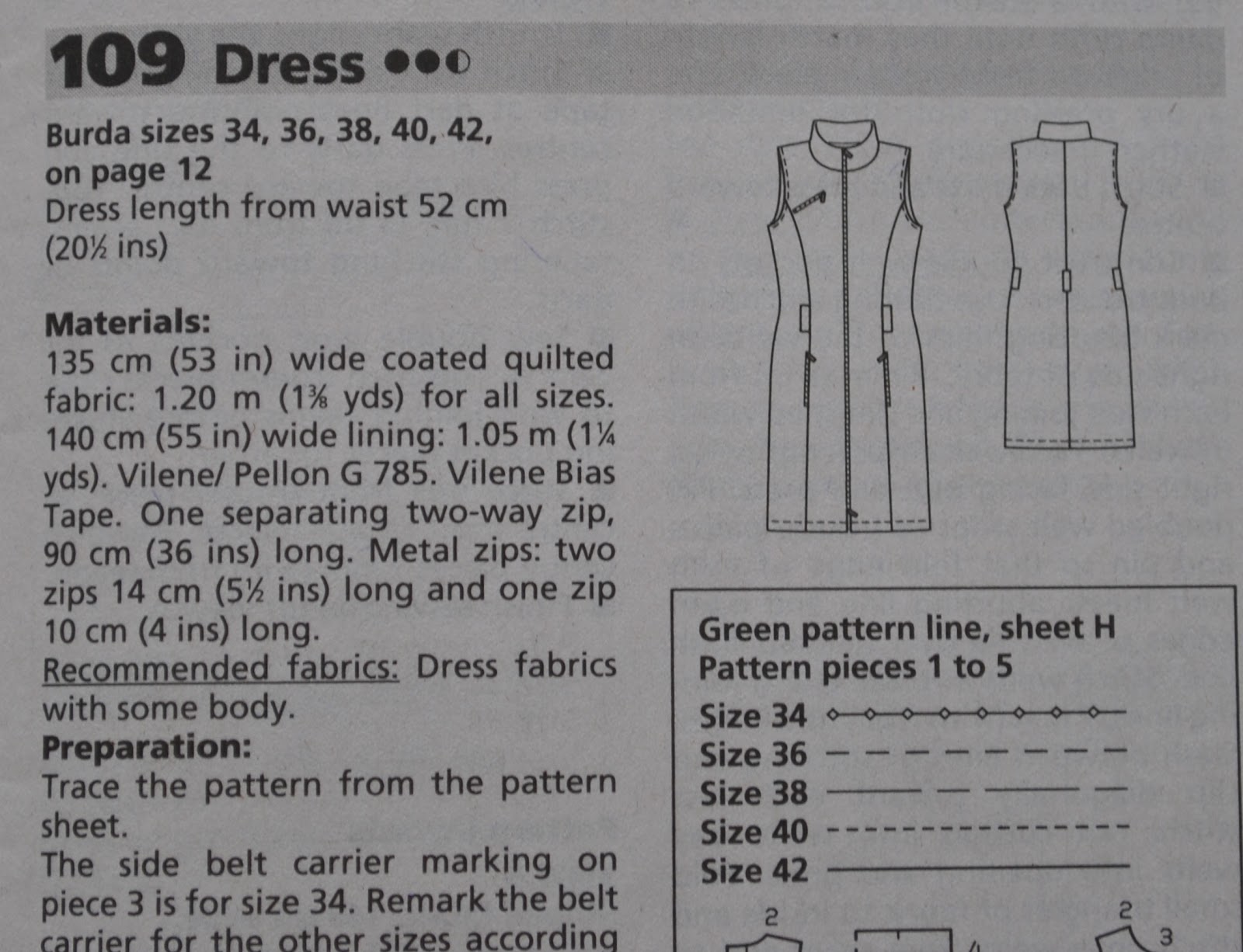
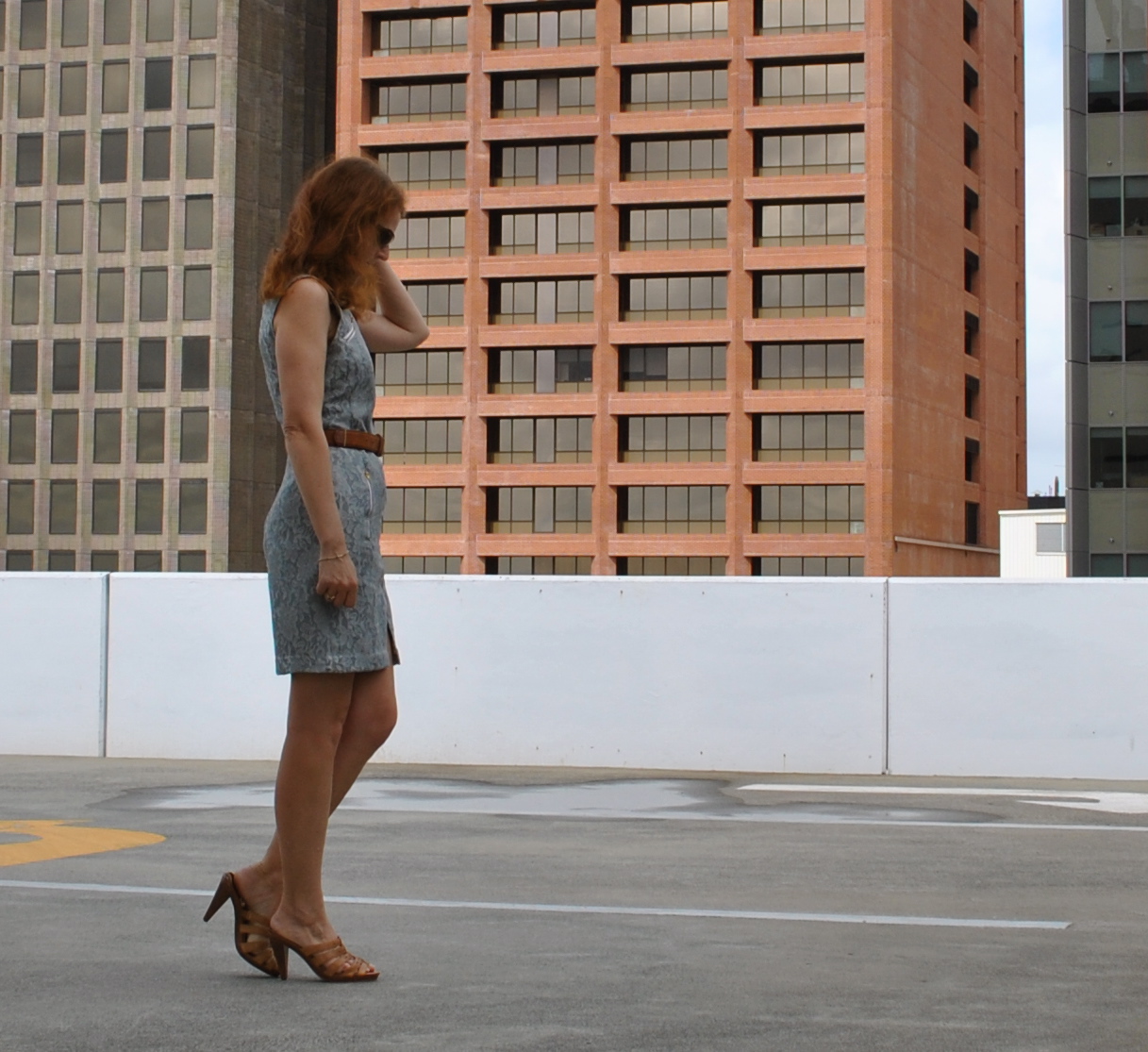
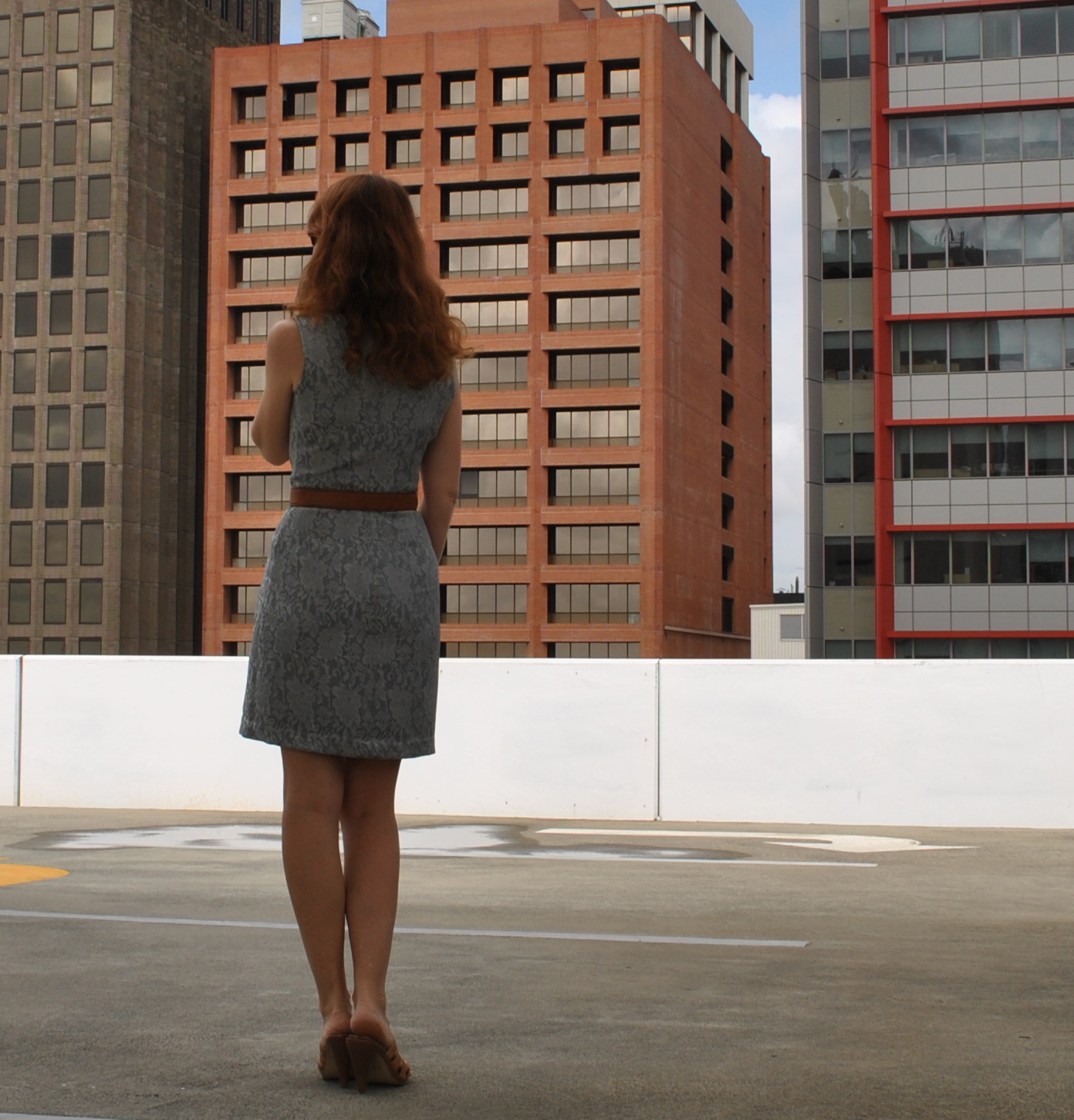
A new dressy-wess!  This is dress 109 from the
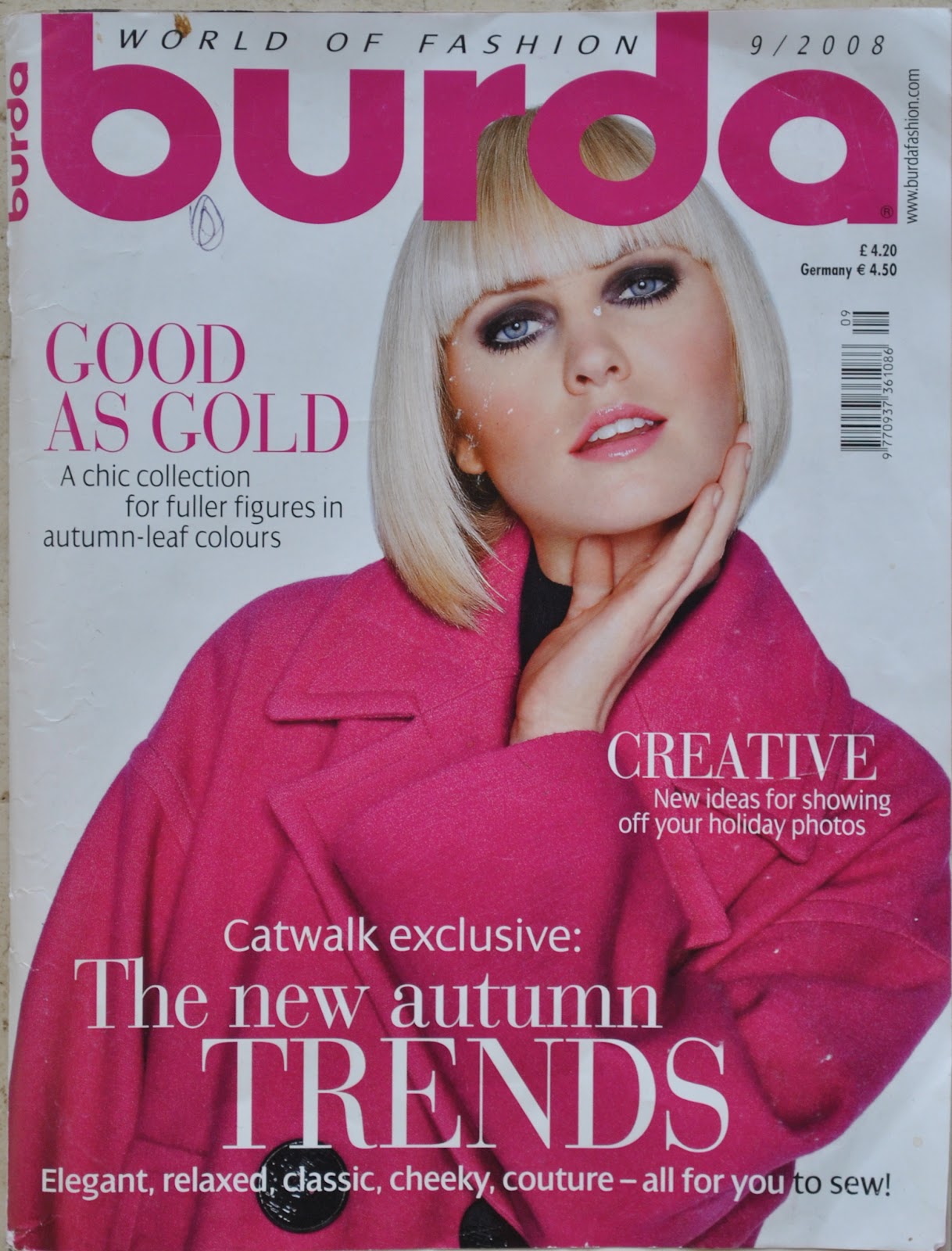
Burdastyle magazine issue 09/2008, part of the Pattern Pyramid spoils that I had my clutches on for One Glorious Week!  I did manage to trace off a couple more of the treasures within (hehehe) before sending it off on its way to gladden the hearts of
new and eager seamsters….

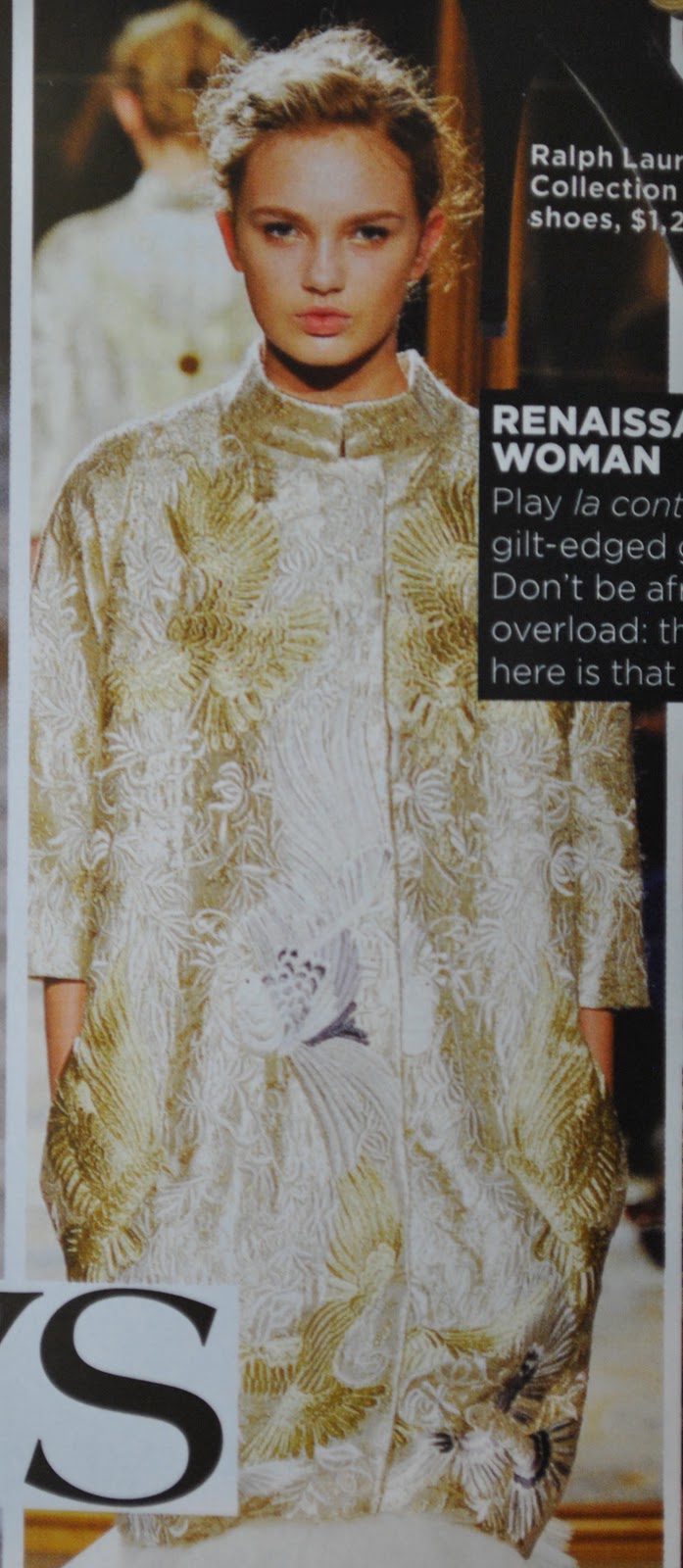
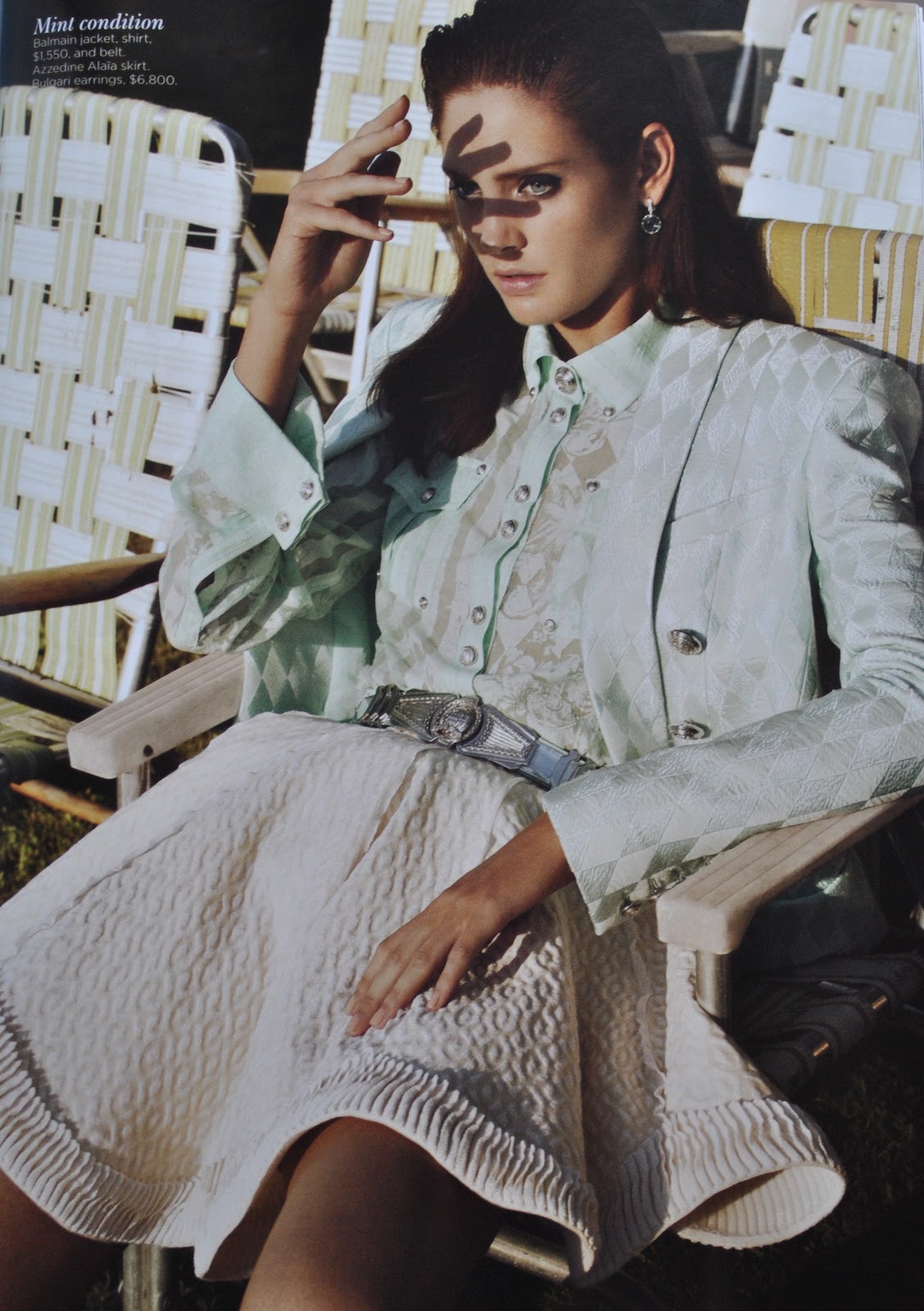
Brocades and damasks rich in surface texture have been popping up on the runways; and exposed zips have been hot hot
hot for a few years now… so my new dress is fabulously current, ticking two
trend boxes in one neat little package. 
Trendiness doesn’t usually power my wardrobe choices, I tend to do my
own thing….  but it does feel nice
to have something that is the dernier cri every so often, oui?  Oh oui!
above: at left, glossy gold damask at Marchesa; at right; Balmain damask jacket and shirt,  heavily textured Azzedine Alaia skirt.  both pictures from Vogue Australia magazine

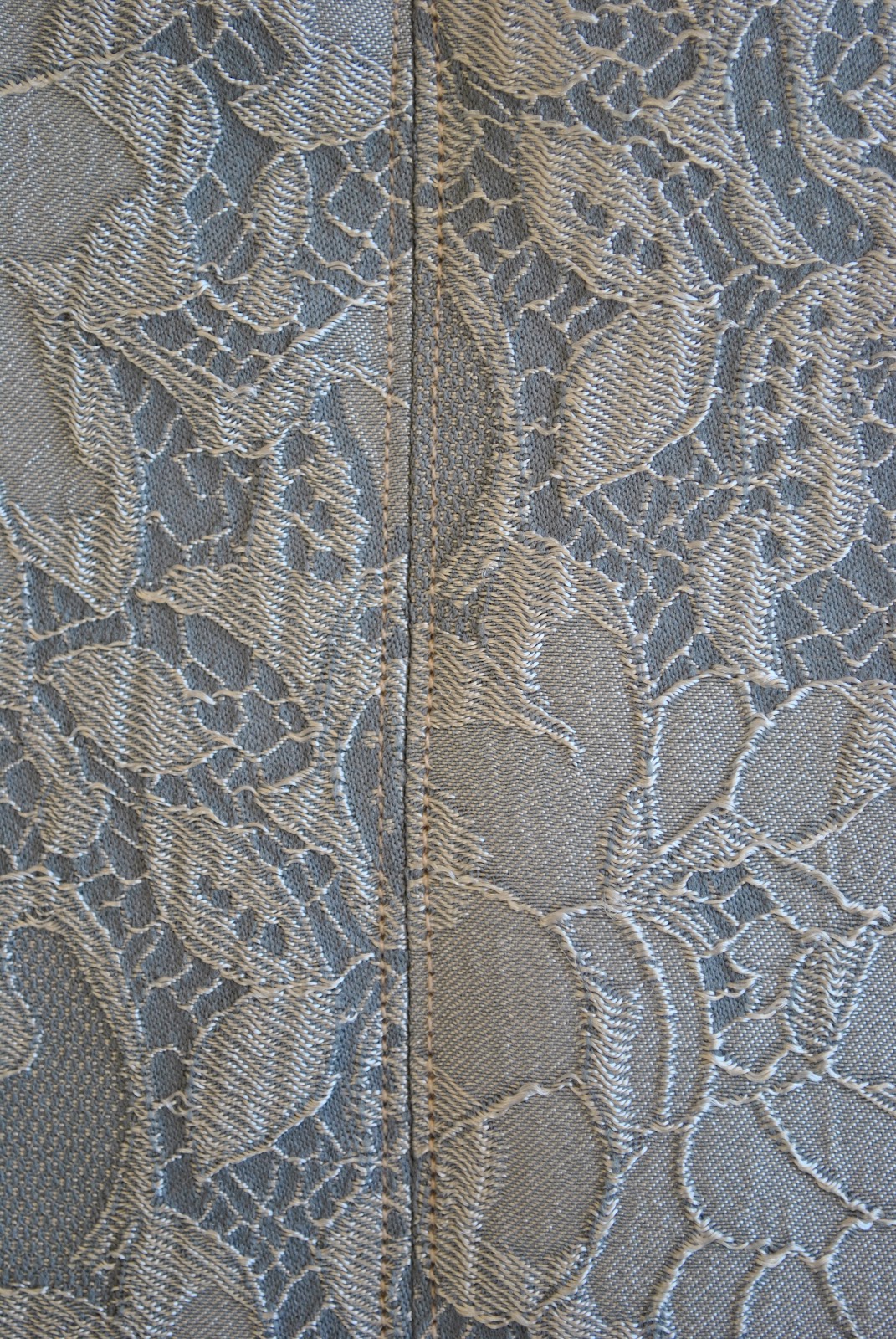
The damask from Fabulous Fabrics was a gift to me from Sam, for last
Christmas.  The delicate lace-like figuring
against a rather divine background of pale Wedgwood blue whispers “luxury” to
me; bringing to my mind the type of expensive upholstery that would fit right
into a chic Parisian salon.  I
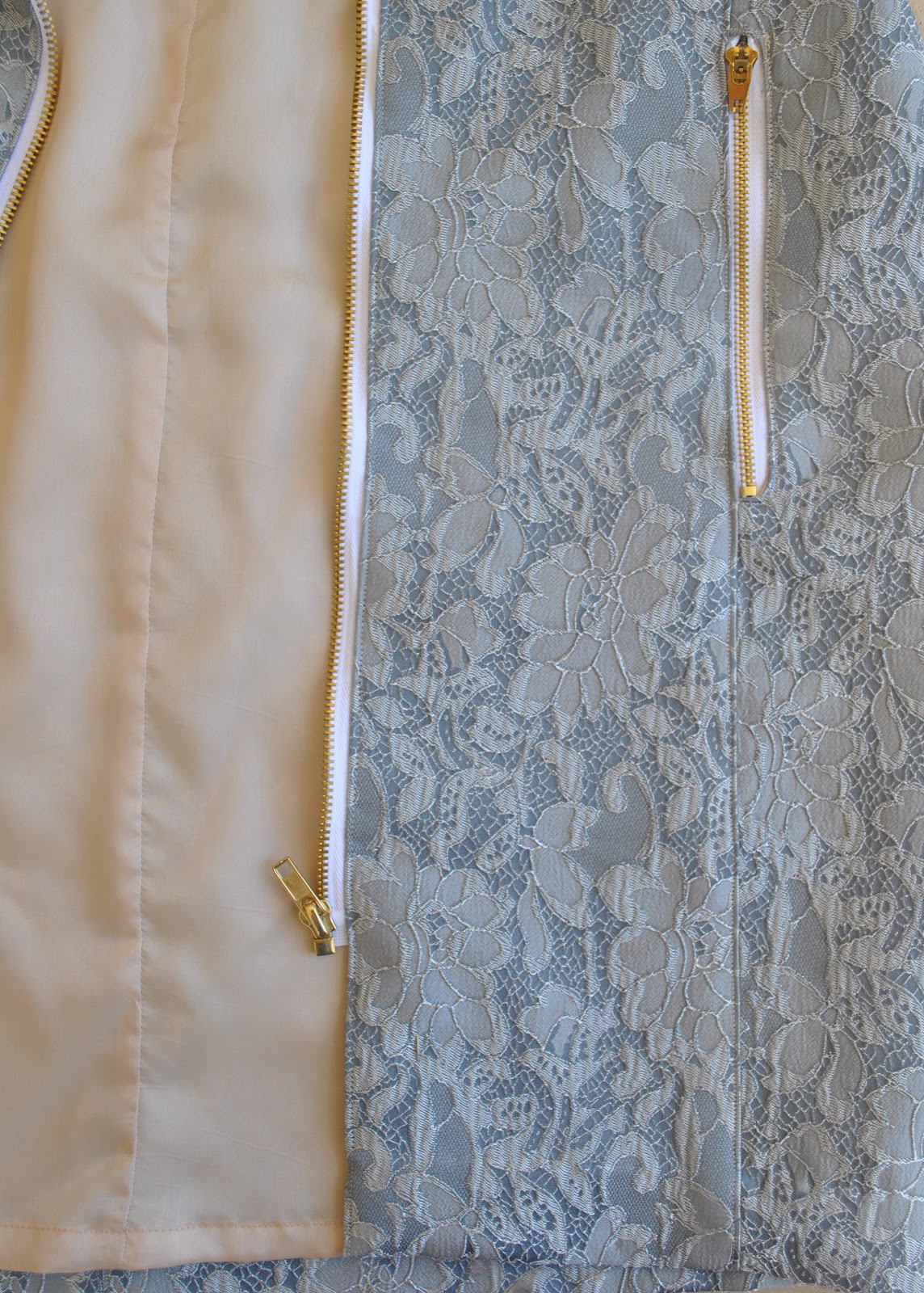
think it contrasts beautifully against the slightly industrial feel of the heavy brass zips that I used for the pockets and the front opening.  Shimmering luxury and tarnished toughness: together in one dress.  I love the clash.

The dress is completely lined with coffee-coloured
polyacetate lining also from Fabulous Fabrics, and I bought the heavy-duty brass zips in Spotlight, of lengths reasonably
close enough to those stipulated in the pattern.  Initially I was disappointed I could not find zips with pale blue tape
to match the colour of the fabric more closely, but in Perth you take what you
can get, haberdashery wise.  I
counted myself super lucky to find four matching ones! And I came to like the white; how it holds its own; clean
and fresh against the delicacy of the blue and the gleam of the brass. 
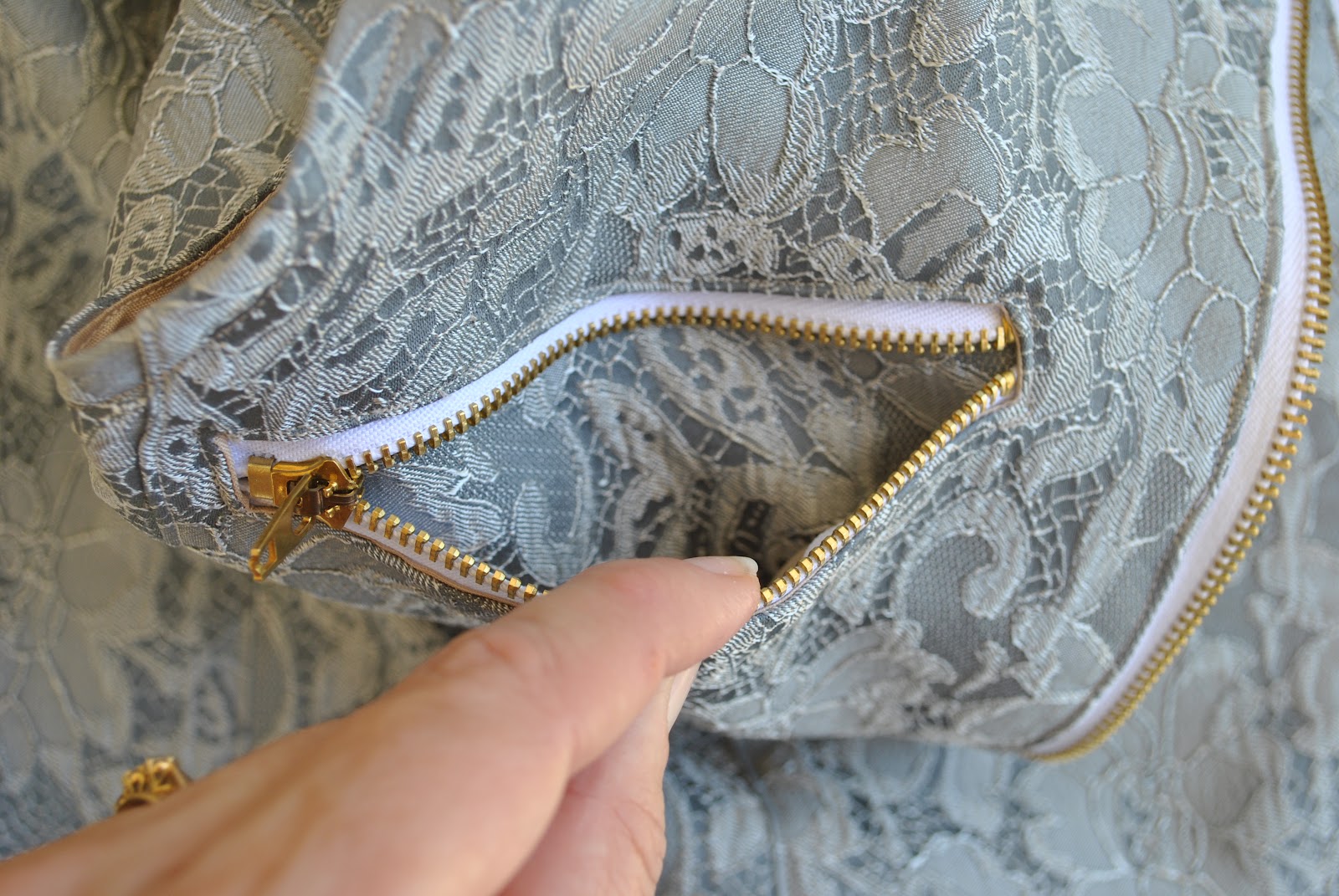
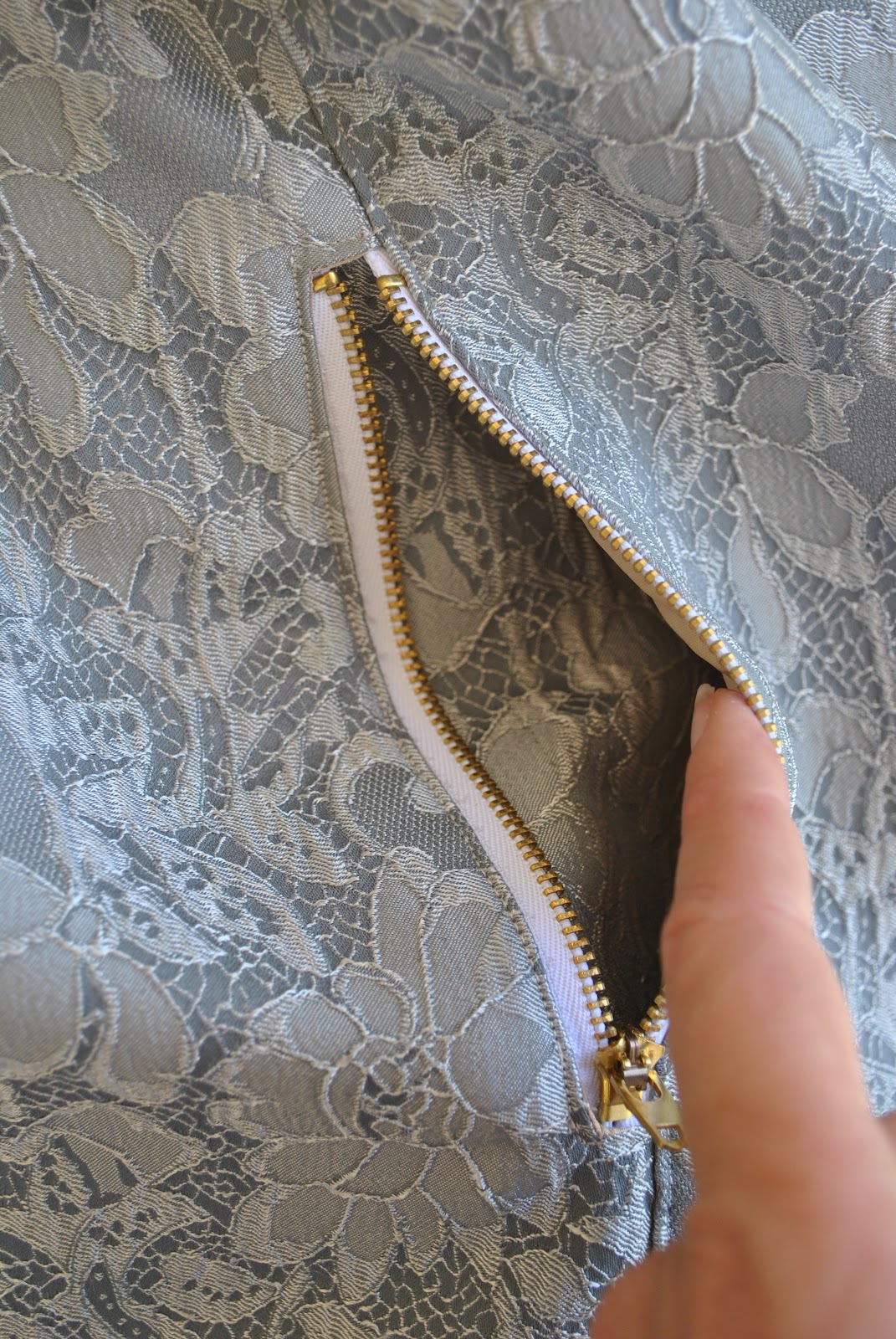
The three pocket zips are all jeans zips, and a touch
longer than called for in the pattern, dictating that I cut my pockets all a bit wider.  That long centre-front, open-ended zip is 10cm short, but I opted to not hem my dress correspondingly 10cm
shorter, ahem!  I hemmed the skirt
to my tastes, longer than the zip.  I’m OK with that!
I left off the belt loops, so I can choose to wear it with or without a belt, whichever I so desire  🙂  I like it equally both ways.

The three pockets are all perfectly functional, but
the zip
teeth on those hip pockets are on the scratchy side against my tender skin. And the breast
pocket would look strange with anything bulkier than a credit card or maybe a
single slender hanky inside.  That
one is pretty much purely decorative, although I have completed it to be a
perfect self-contained little pocket. 
I cannot bear fake details in clothes, like zips that go nowhere and pockets with no pocket bags that are sewn shut.  Loathe that.

I liked the instruction to topstitch closely along each side of each seam, and followed it.  A subtle detail, and adds a bit of extra something…

The fabric is gorgeous, but I found
during construction it is the sort that finds snags on fingernails that you
could have sworn were perfectly smooth! 
:S  so I will just have to wear and
wear and wear my dress and thoroughly enjoy it for as long as I can!
Later edit: I added a full-length zip placket to the centre opening… those zip teeth are sharp against the tender tummy skin!

Details:
Dress; Burdastyle magazine 09/2008, dress 109, in a pale
Wedgewood-blue damask
Belt; Country Road, from yonks ago
Shoes; akiel, from an op shop

Pattern
Description:
Fully
lined, sheath dress with high stand-up collar, princess seamed front with a
centre front opening by full-length, exposed, open-ended zip, inseam hip pockets
and single slanted breast pocket all with exposed zip closure.
Pattern
Sizing:
European
sizes 34-42; I made the size 38
Did
it look like the photo/drawing on the pattern envelope once you had finished
sewing it?
Yes.
Were
the instructions easy to follow?
Yes, in
my opinion the instructions are absolutely excellent!
What
did you particularly like or dislike about the pattern?
The pattern as is … there was barely any shaping, and when I tried on the basted dress and looked at my reflection in the mirror the words “Easter Egg” popped inexorably into my mind.  I looked like an egg!  Not the image I really wanted to evoke, so I made alterations so the dress skimmed closely to my figure.  I’m very happy with the shape of the dress now, though  🙂
I really love the look of that double topstitching on either side of the seams.
The
instructions on lining the dress are really excellent; an elegant and tidy
solution to lining a dress that I am sure I will refer to for other lined
dresses in the future.
Fabric
Used:
Damask
Pattern
alterations or any design changes you made:
There
was re-fitting aplenty necessary to transform it from a cocoon to a shapely dress …
The instructions direct you to topstitch closely to either side of the seamlines; I was glad I delayed this stitching until after basting all the seams up to check the fit, and I recommend to anyone else to do the same!  
I did
not transfer my fitting alterations to the lining pieces.  Since it is quite blousy on me, there is a bit of extra
wearing ease in there, always a good idea in a lining.
A
minor consideration, but one you have to take into account before cutting the
pocket pieces: since the zips are fully exposed, the length of the zips you buy
strictly dictates the size of the pocket openings.  There were only a few limited zip lengths available to me,
so I cut the pocket pieces in sizes to exactly fit the zips I bought.
I
made the belt carriers, but ultimately left them off.  I thought they made the dress look tacky with no belt, and I
wanted the option of wearing it beltless.
I added a full-length zip placket in underneath the central opening zip… (here) my industrial strength brass zip looked awesome but those teeth are sharp against the tummy skin!  Ouch!
Would
you sew it again? Would you recommend it to others?
I
think I will sew this again.  I
know I always say this and then I pounce joyfully onto the next new-and-shiny
pattern to cross my path  🙂  but I do think this will have an encore.  The pattern has classic clean lines and I think has the
capability to change its personality depending on the fabric chosen.  I do recommend this on-trend little
number, if lengthened a tad it would make a lovely smart little dress for the
office.  You just have to locate a
long enough front zip!
Conclusion:
Well,
now that it fits me, I just love it! the high collar, the simple, sleeveless, streamlined silhouette.
The exposed zips are very on-trend and the rich damask fabric I chose
ticks off another trend I have noticed cropping up in high-end designers this
season…

pinterestmail

Mustard Bandage

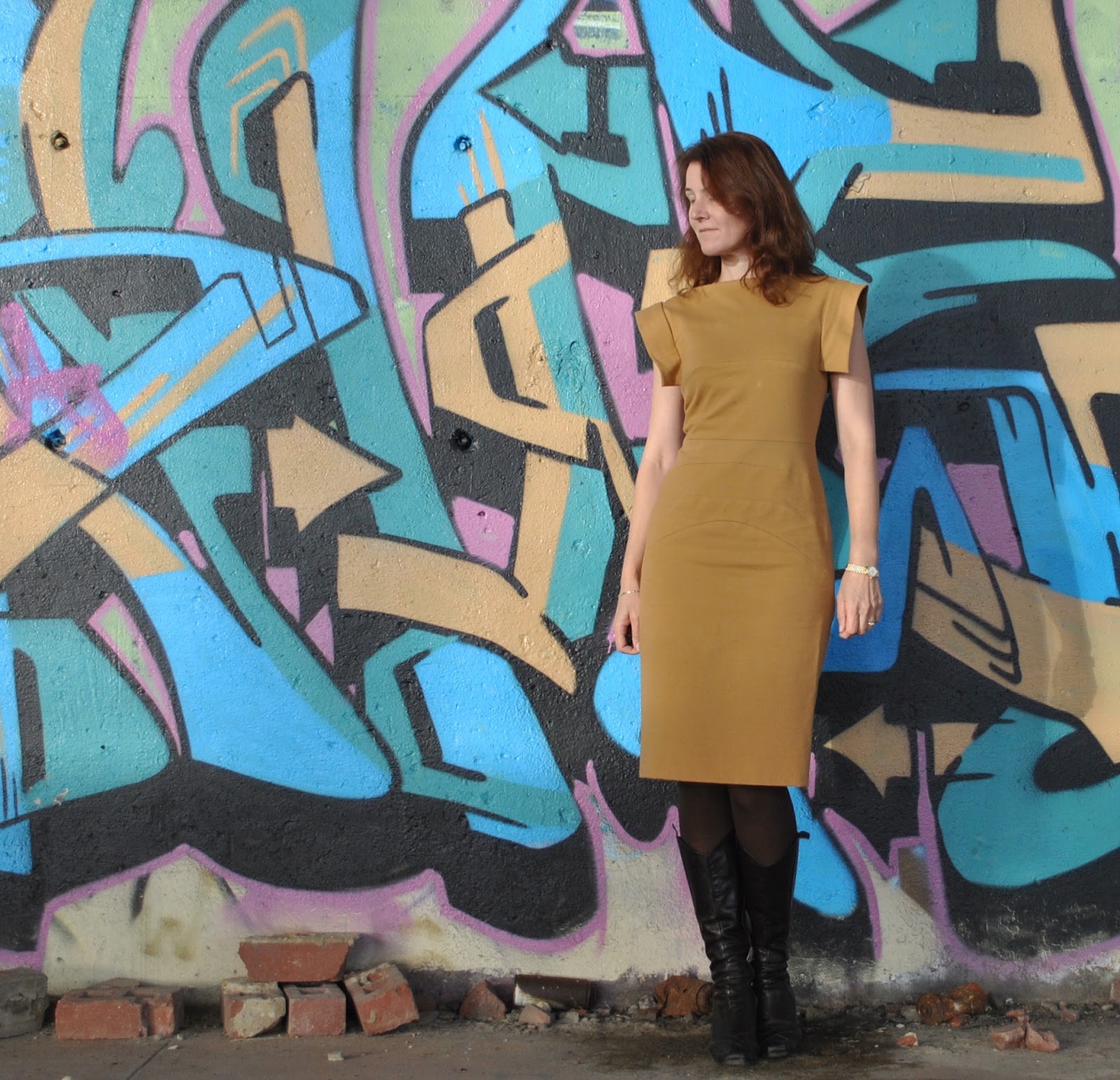
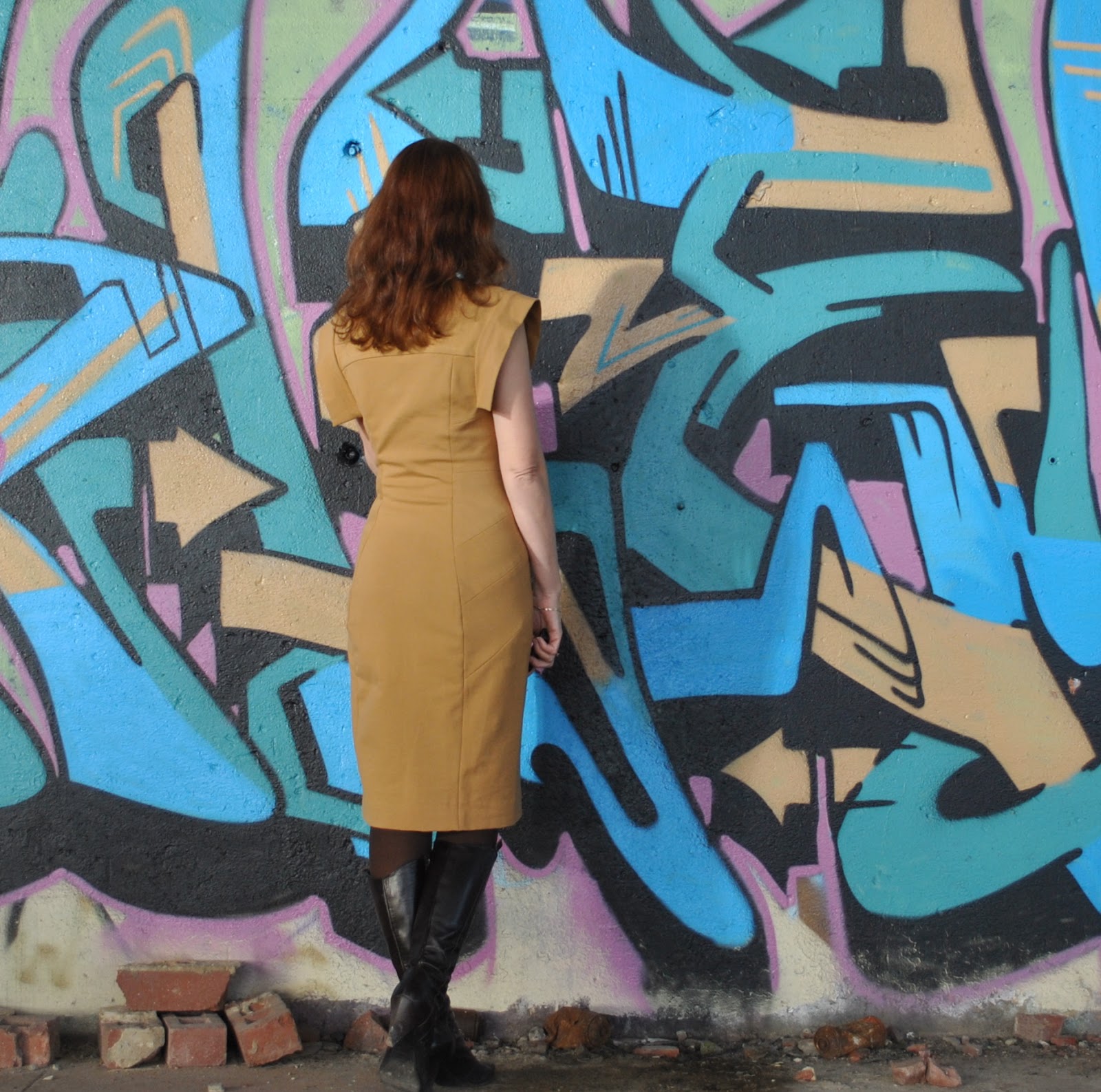
A mustard plaster is of course an ancient herbal remedy for bronchitis, but I have borrowed and blended the phrase, and named my new dress the mustard bandage, since it reminds me of the Herve Leger bandage dresses that have been so iconic since the 80’s.
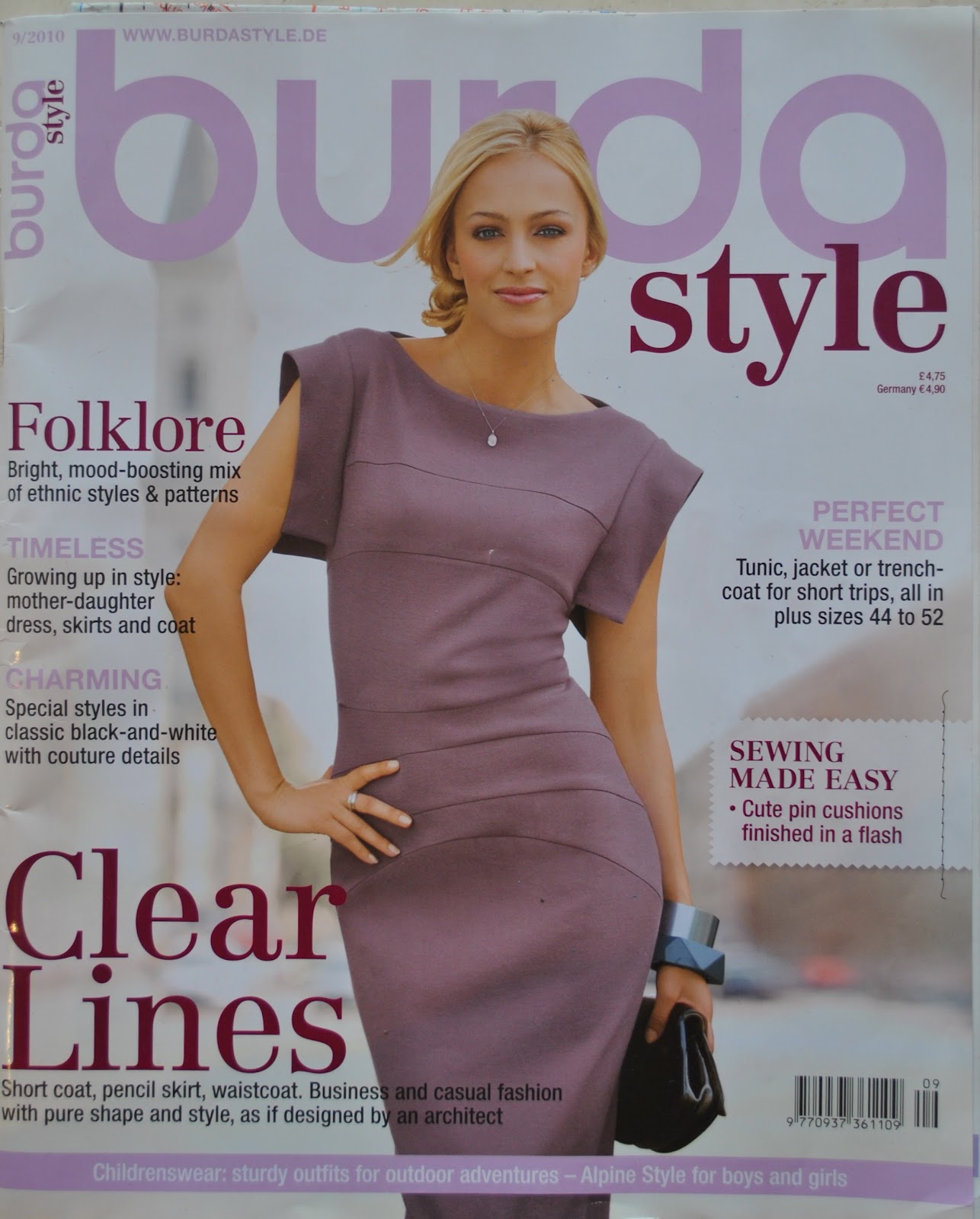
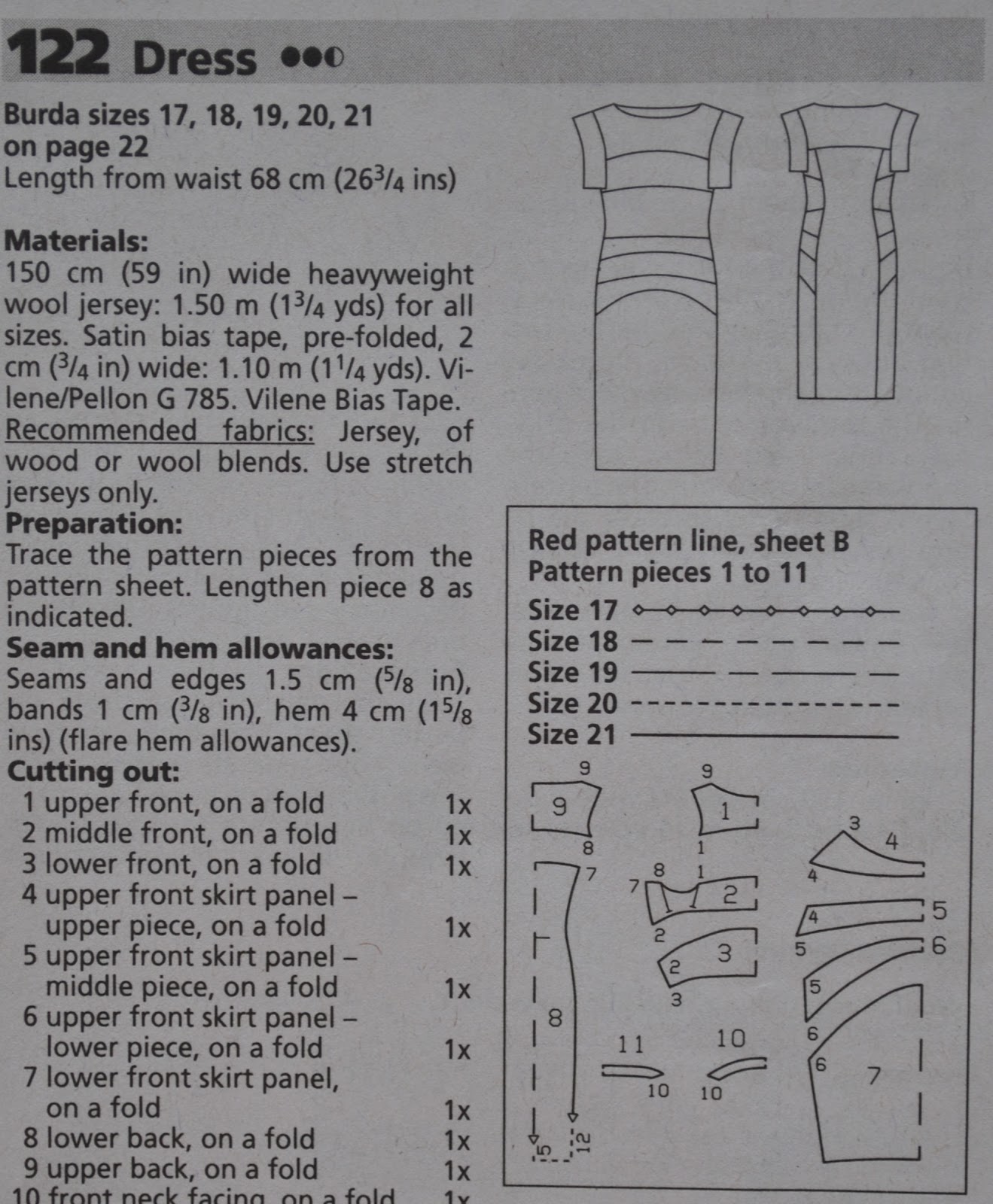
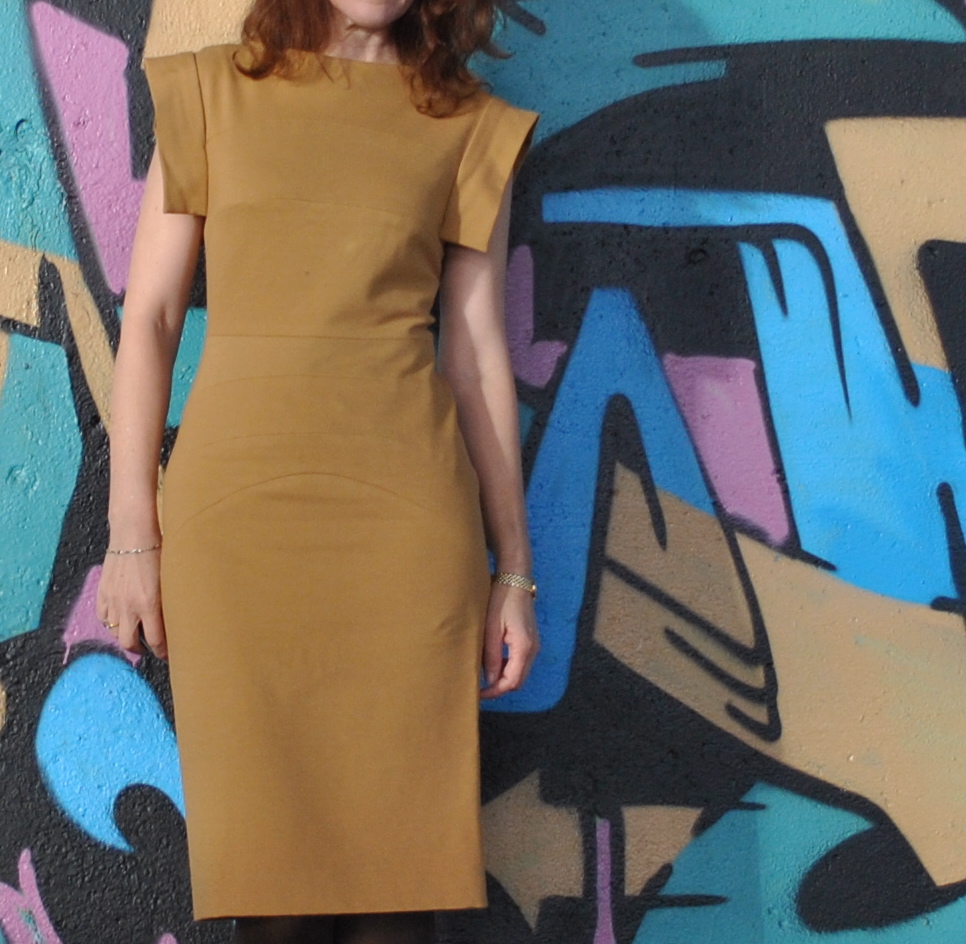
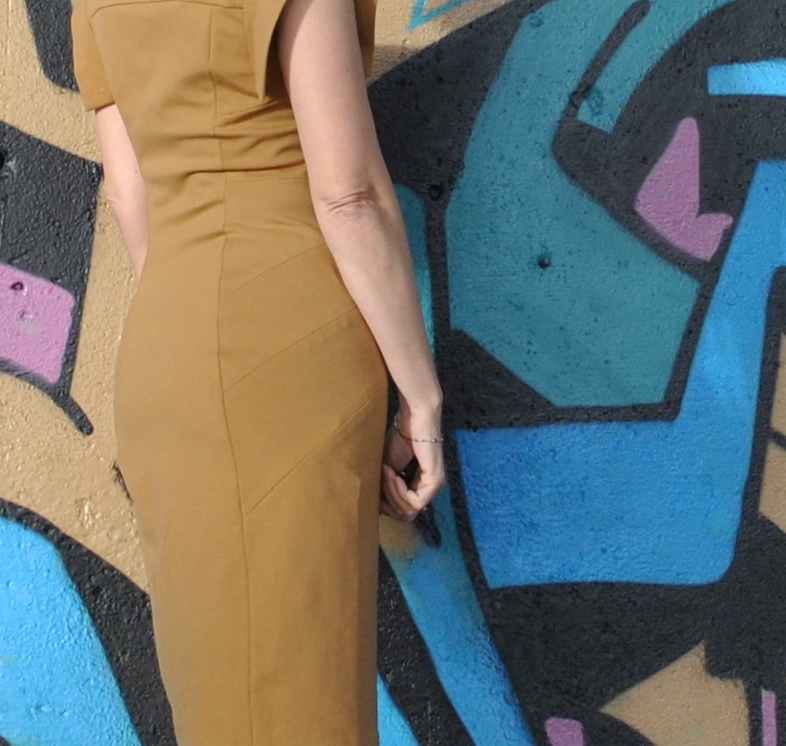
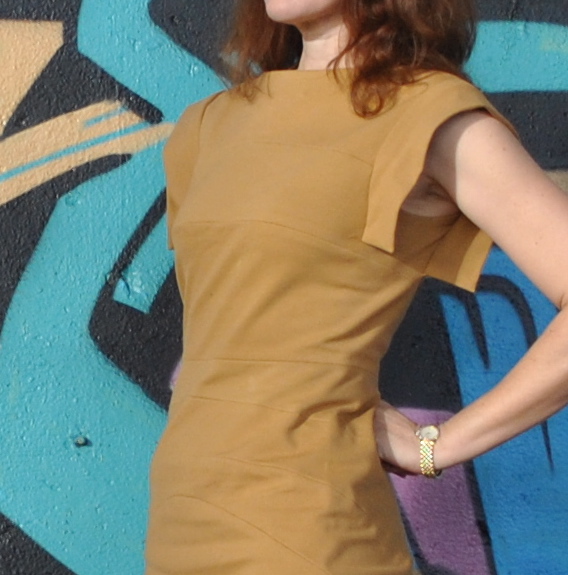
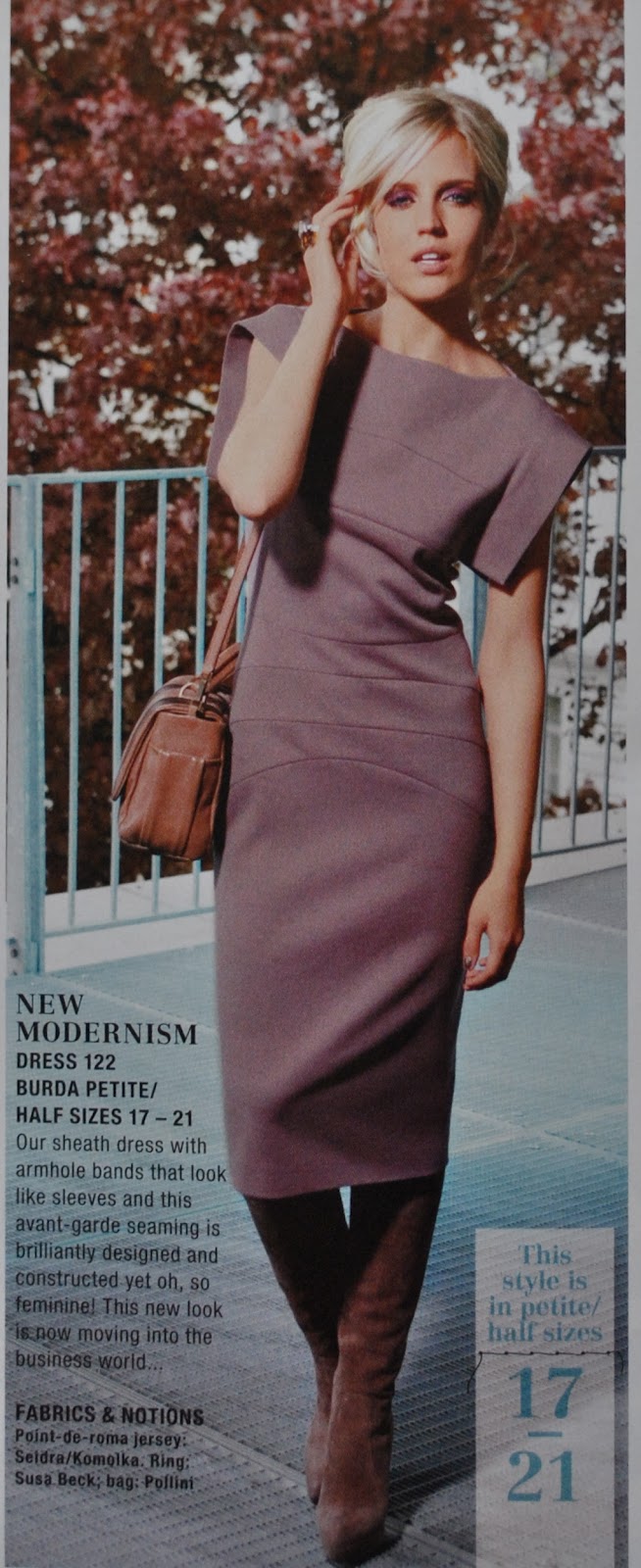
The pattern is from the 09/2010 Burdastyle magazine, a gift in a recent giveaway from Alexandra Mason… thank you so much Alex!  This is dress 122, the cover dress.  It is a very modern, almost space-agey design, don’t you think?  The dress has no side seams.  Those curved front pieces wrap around the sides to the back and join onto the long, narrow, shaped central back piece.  And I really love the disparate shapes; the juxtaposition of the blocky geometric angularity of those rectangular sleeve bands against the more organic, gently curved, nesting seam-lines on the body; a very visually pleasing effect to my eye and so interesting!

I used a piece of thick ponte knit given to me by my mother; the fabric originally given to her by a lady in her sewing group!  I just love the rich tobacco/mustard shade, a colour that is one of my best.
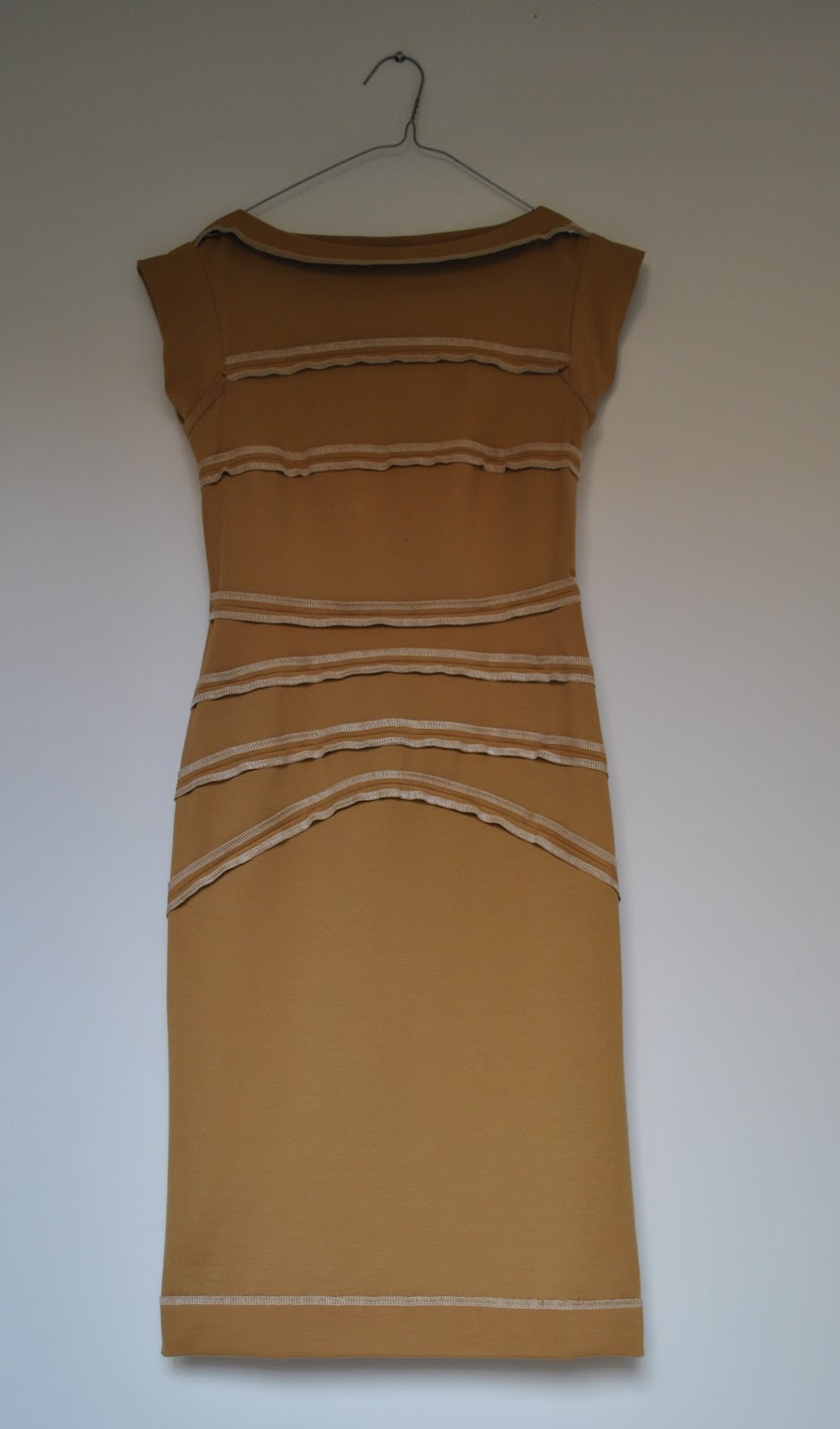
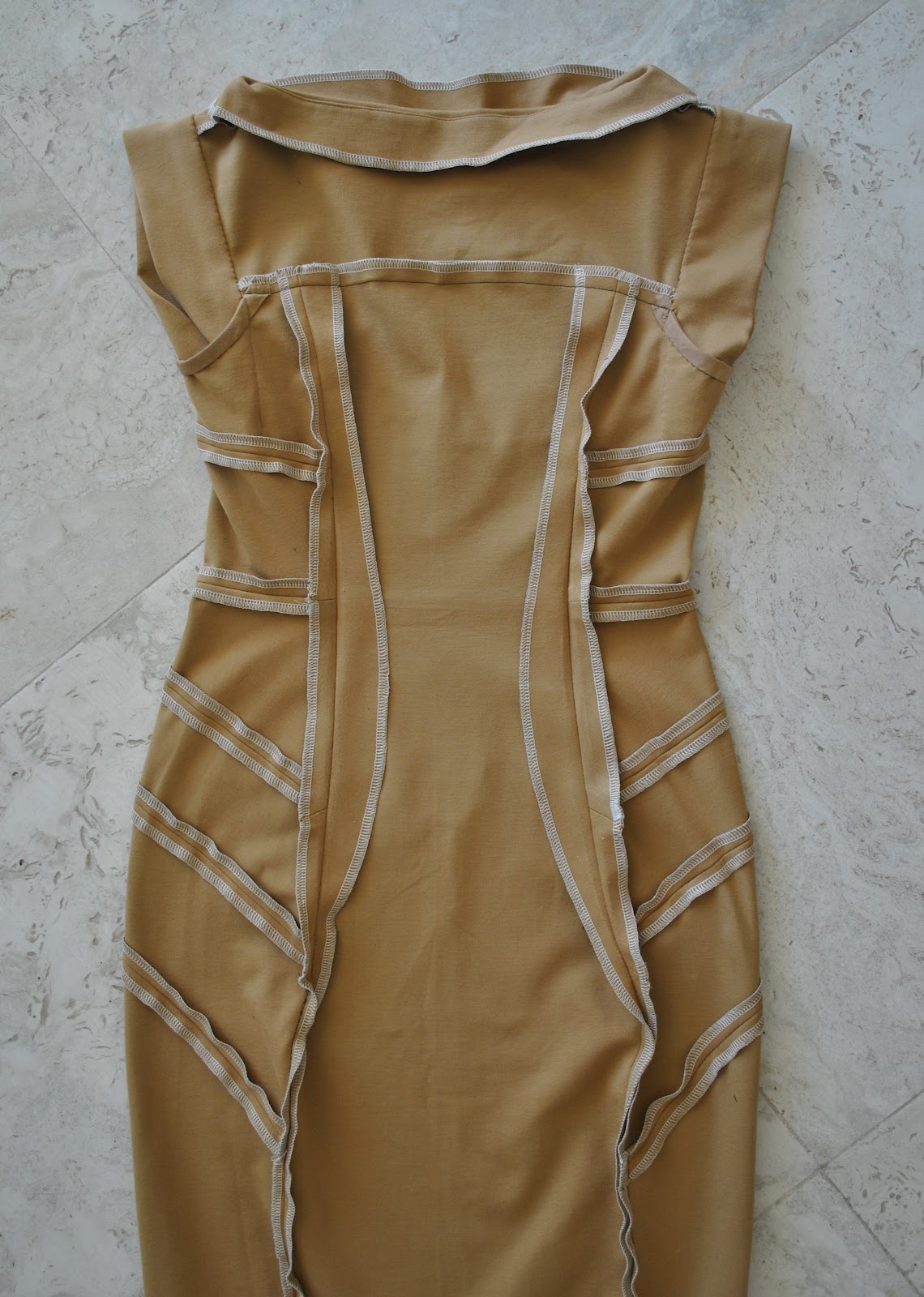
I finished all the raw edges for stability by overlocking before I started,  and I like how this makes the insides of the dress look.  That excess fabric in the seam allowance in the small-of-the-back (below right) was removed later on; I just included this picture to illustrate how I adjusted for fit through those long vertical seams in the back

The instructions to finish the sleeve bands are vague; and if I read them correctly, seem to result in an unsatisfactory (to me) finish with raw edges showing.  I finished mine in a way that the raw edges would be neatly hidden inside the sleeve band instead.  Described in more detail in my review below, if you are interested  🙂

There is one small issue with the dress, not enough to stop me from wearing it:  Comparative
to the cover shot of the dress; the second seamline falls high, right on my
bustline, and the neckline also sits a lot higher on me.  When I tug my dress down it looks like
the cover shot, but then it slowly and inexorably migrates back up again, all
by itself, like a sneaky puppy-dog onto the couch.  Sure, I am not a petite, admittedly for whom the pattern is
designed, but I didn’t think that would make a difference up that high!  Although, when you check out the shot of the dress inside the magazine (at right), that seamline is sitting at exactly the same point on the model as it does on me.  So (shrug) mmm.  Maybe they just tugged it down real firmly for the model in the cover shot too?  😀
Anyhoo, I don’t know if that says anything about my figure at all, but I don’t really care.  Because:
I feel goooood in this dress!  It is a modest dress with plenty of coverage, and yet it still manages to be sorta svelte and sex-ay.  That’s gotta be a very good thing, right?

Details:
Dress; Burdastyle 09/2010, dress 122; mustard ponte knit
Tights; Kolotex
Boots; di Sempre, from Zomp shoes

Pattern
Description:
Sheath
dress with armhole bands that look like sleeves and avant-garde seaming.  There are no side seams and all the
shaping is achieved through the unusually shaped, curved seams.
Pattern
Sizing:
Burda
petite half sizes 17-21; I made the size 19
Did
it look like the photo/drawing on the pattern envelope once you had finished
sewing it?
Yes.  Except that the seamlines fall on my
body in slightly different locations, ahem, which could be due to the pattern
being sized for a 160cm tall woman?
Were
the instructions easy to follow?
Yes,
the dress is an exceptionally easy construction; all the seams are numbered and
you pretty much just sew them in order from one to ten.  The second-last step, the instructions
for adding the armhole bands, were verging on being head-scratchingly
convoluted in that manner Burdastyle sometimes employs… and seemed to indicate
that you ended up with a bias strip on view inside the finished armhole band,
which I did not like.  I finished
mine in a way that meant all the seams allowances, including the armhole band
and upper armhole edge seam allowances; were nicely tucked away inside the band,
and hidden out of sight.  Much more
pleasing!
What
did you particularly like or dislike about the pattern?
It is
such a flattering dress; with an interesting and very well thought out design.
The
pattern is exceptionally well drafted. 
While I was sewing together those front bands I was just marveling at
how well the unusual shaped pieces went together so perfectly and achieved
“shape” with no darting or tucking needed.  So clever! 
The
pattern is sized for the Burdastyle petite woman 160cm tall.  I am 172cm tall which does not put me
in the petite category so I had concerns about how the pattern was going to work
out for me.  My piece of fabric was
barely big enough to squeeze out the pattern pieces, so I could not make any
major adjustments to my pattern pieces, but because it is a stretch knit and
the pictured dress was so long I figured that I could work out any little body
fitting issues as I was sewing it up.  I needn’t have worried though, since it fits just fine  🙂
Fabric
Used:
Ponte knit.
Pattern
alterations or any design changes you made:
I had
to adjust the two vertical back seams to get a good fit for my sway-backed pear
shape; but this was pretty easy.  I
took out about 4cm in total the lower rib cage area and the small of the back,
and graduated out to a fairly narrow hip seam allowance.
I sewed
the armhole bands on my own way, namely the right side of the armhole bands sewn
to the dress in one single seam, and no trimming but simply turned under the
seam allowance of the self facing (like you would a waistband facing) and hand
slip-stitched it back onto the band, enclosing the upper armhole seam allowance
inside the band as well, out of sight. 
My way seemed simpler than the Burdastyle instructions, and ends up with
a neat clean finish.
Would
you sew it again? Would you recommend it to others?
I
wouldn’t rule out sewing this one again, although I think I need just the one
for now.  I do recommend this
flattering and smart dress to others. 
Conclusion:
I
love this design; very reminiscent of the Herve Leger bandage dresses of the
eighties, with their distinctive horizontal ‘bandage” bands making for a
slim-fitting, body conscious silhouette…
This
pattern is in the Business wear category, and I agree, this would make a great
little number to wear to the office; modest, smart and stylish, not too out-there
but still with unique lines and details. 
I’m planning for mine to be an integral part of the coming Spring party
season; comfortable and easy to wear, while still edgy and interesting.
pinterestmail

Pretty in Pink

It’s been gorgeous here lately.  Fresh and exhilarating; cool and sunny and clear.  Everyone including moi is in high spirits, the days are sparkling and I’m even feeling the urge to clean out kitchen cupboards and wash curtains and eiderdowns, for heaven’s sake.  Wooee, spring casts some powerful magic, yeah?!
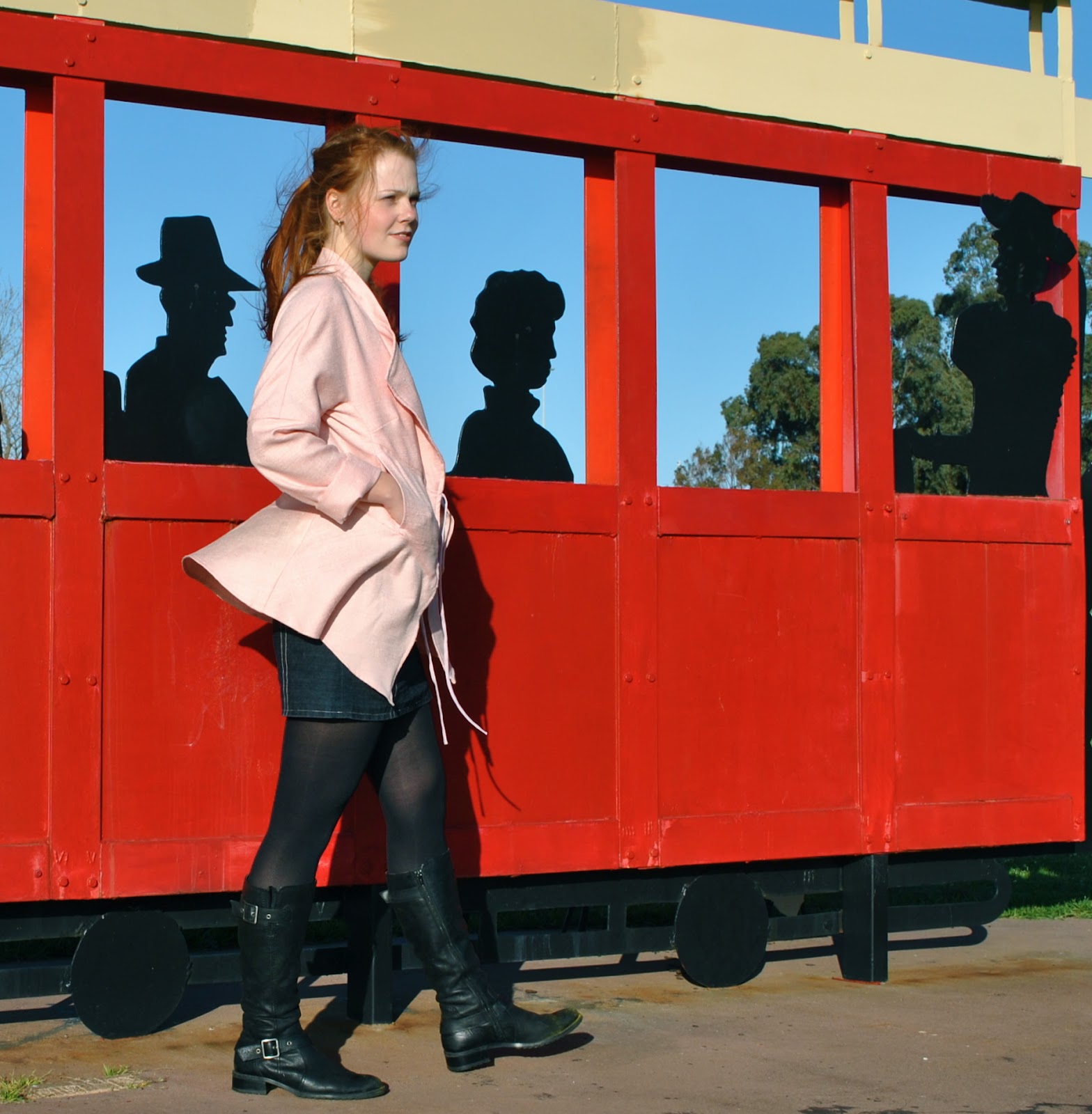
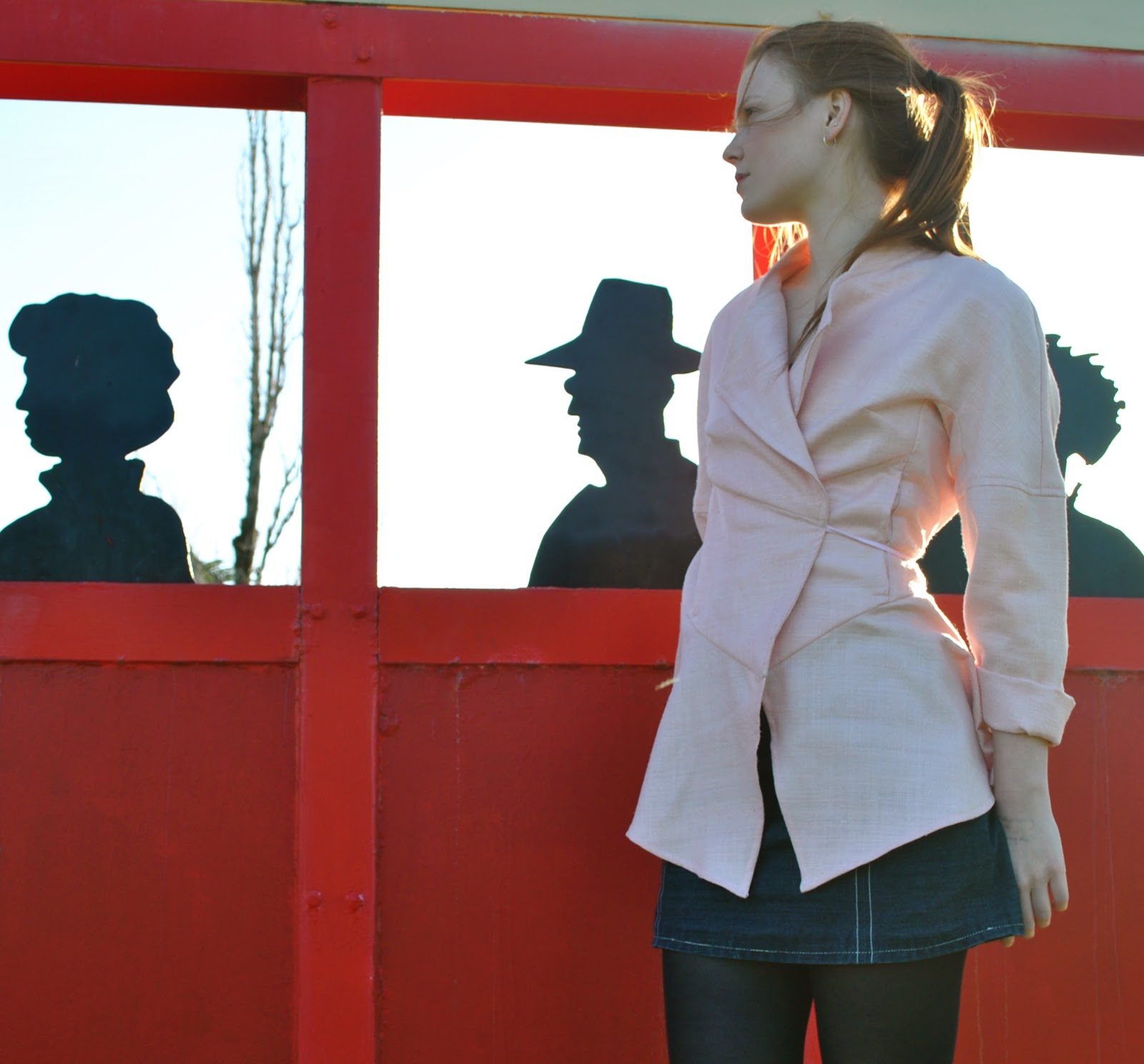
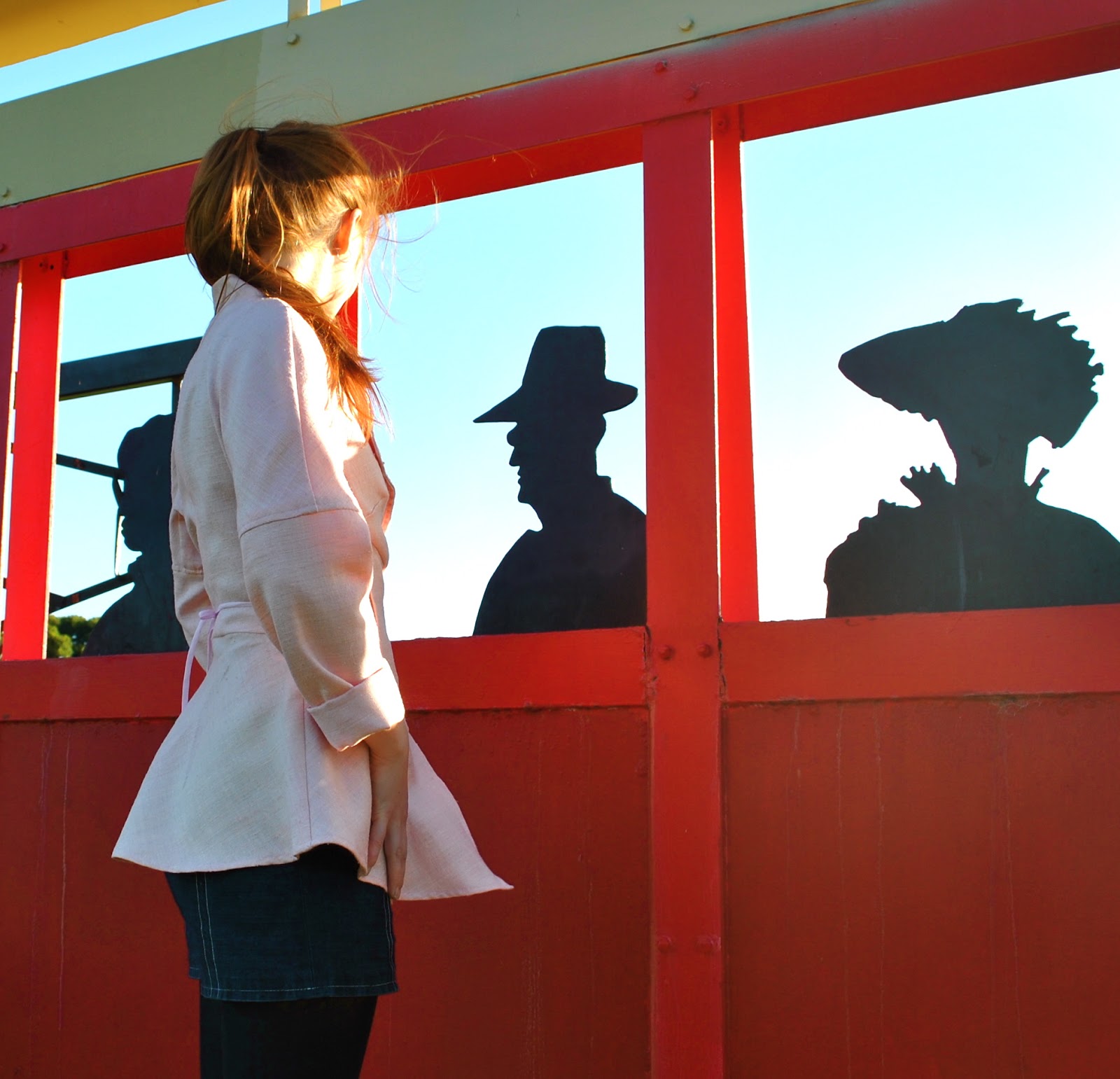
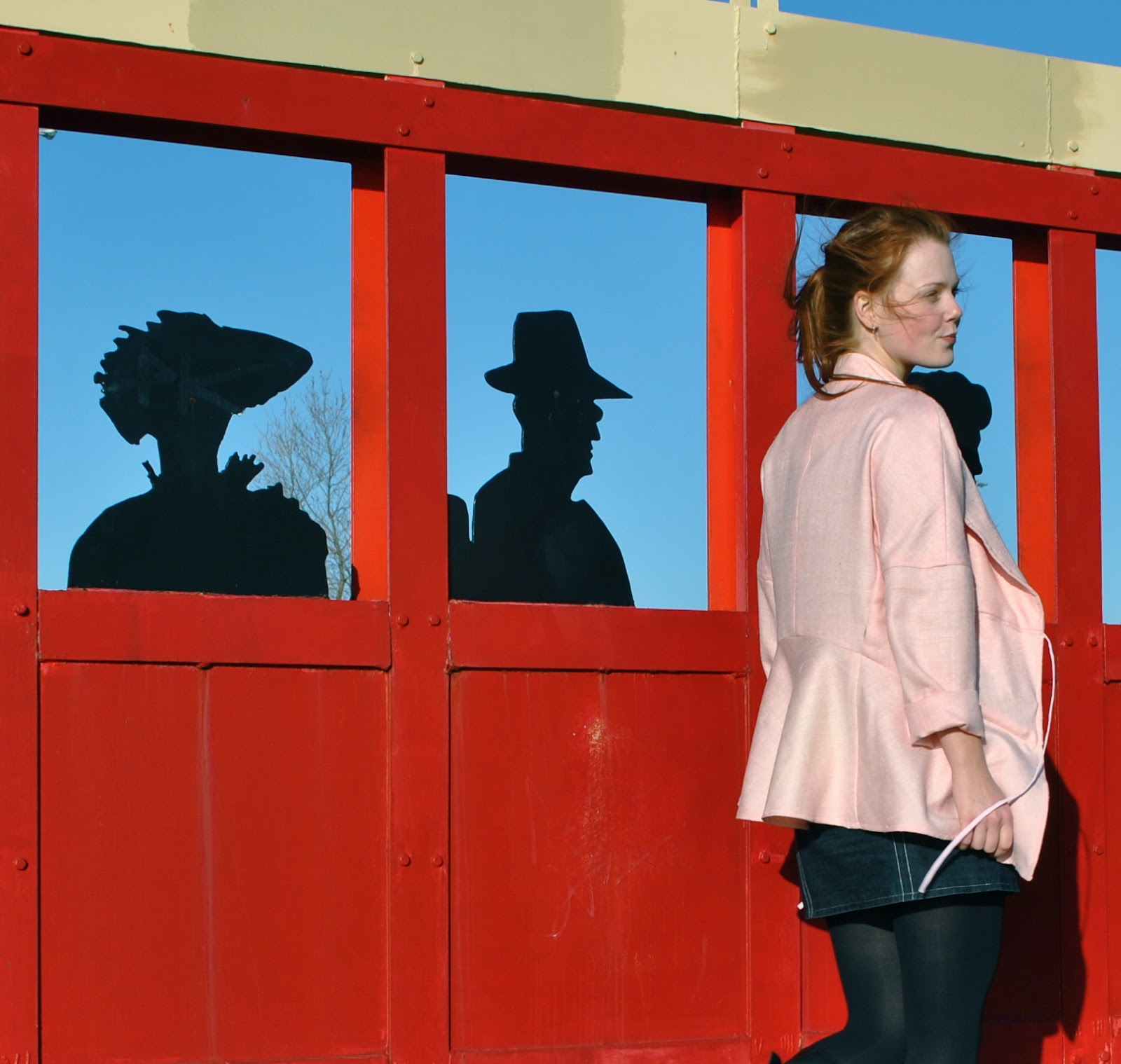
And I am in the mood to create like mad…   I’ve made a lightweight pinkie-wink thing for my light pinkie-wink daughter  🙂   More specifically, a loose over-sized jacket in a boyfriend style that we both reckon is tres chic, oui.
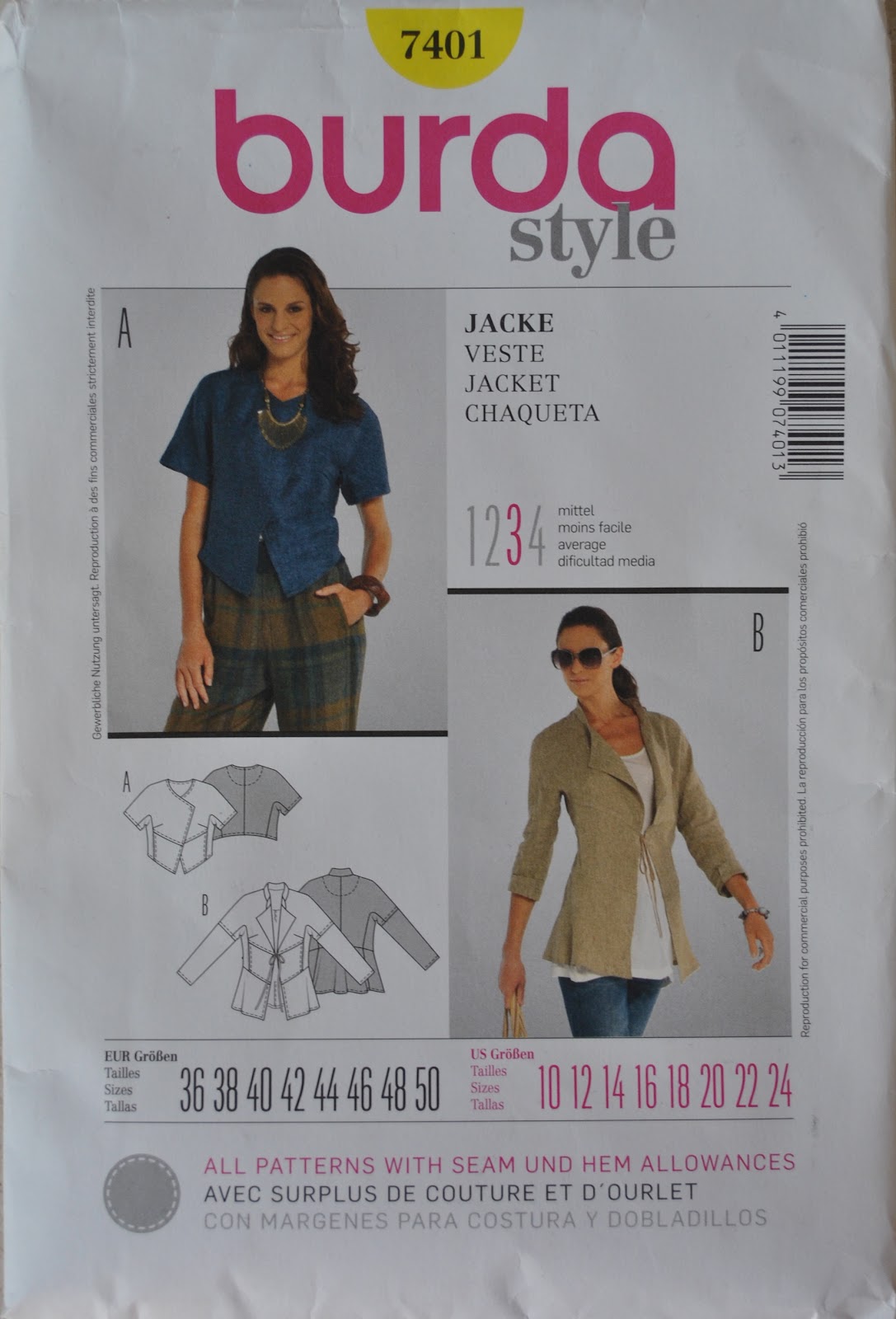
I used a new-to-me pattern Burda 7401, and the jacket is made of a lovely shell-pink hessian silk that I spotted on the $4 table at Fabulous Fabrics about a year ago, put there because it had some faded patches.  I looove the faded patches! and I think this soft and pretty colour is just glorious on her  🙂
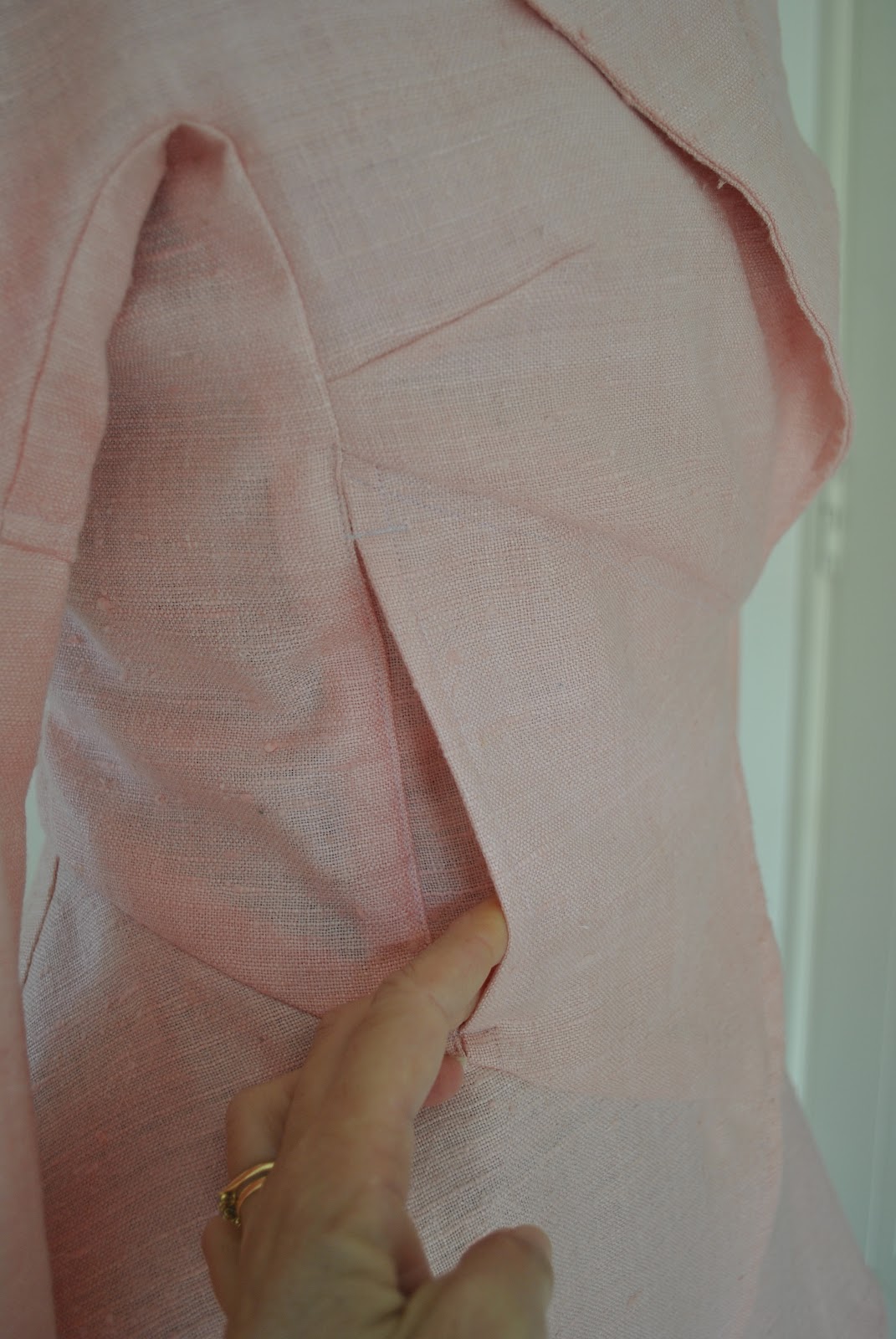
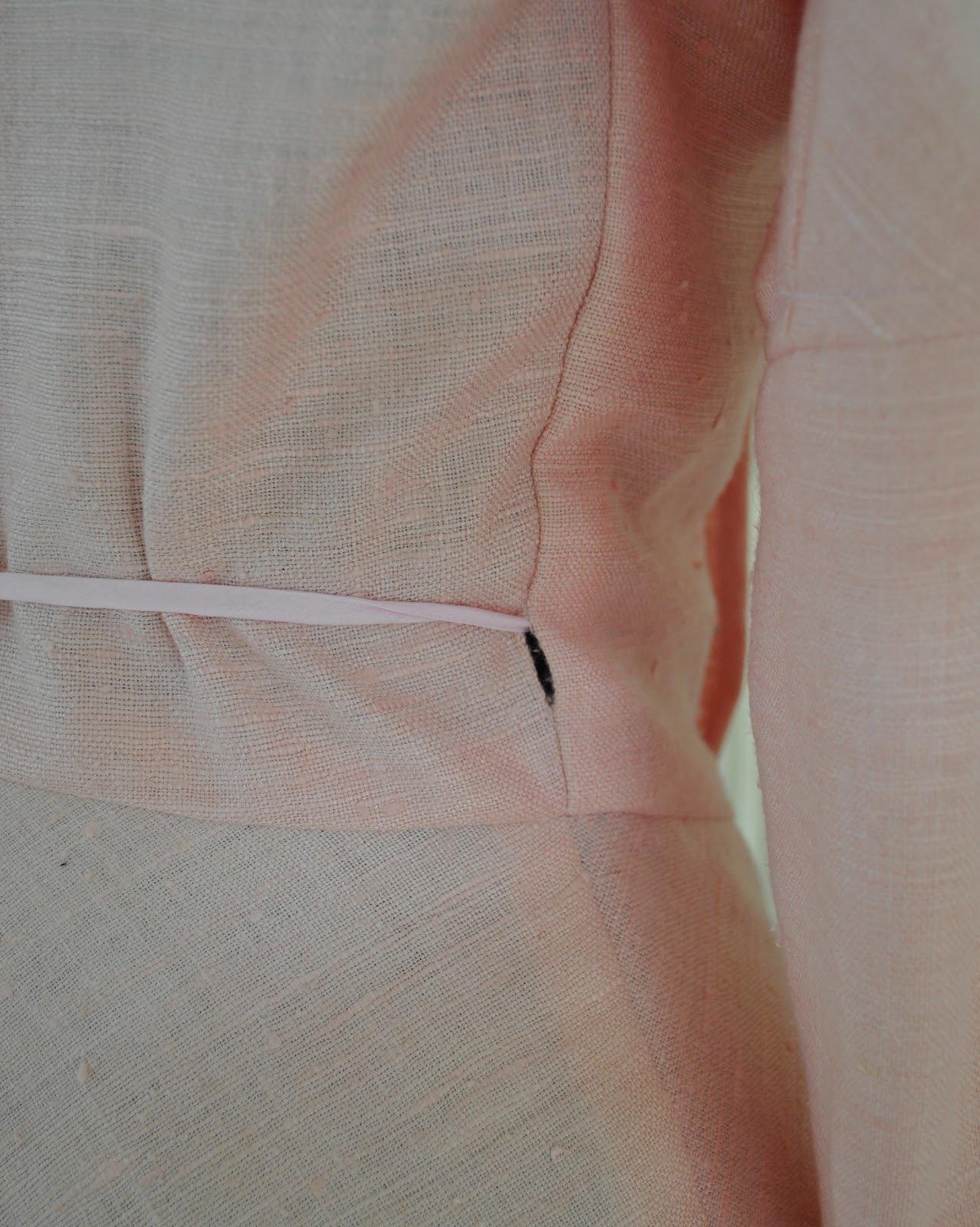
The jacket fronts are supposed to meet in the centre front and tie closed, but because I made it oversized as opposed to fitting, I made it so she can fold the fronts over each other and wrap herself up in it; tie the long ties together at the back, to look like a more fitted style if she wants that.  I did this by leaving a small gap in the right back/side seam, for the tie to pass through to wrap around.  At first she preferred it wrapped up like this, but she now informs me she likes it open.  So she can shove her hands in those pockets… aah, a daughter after my own heart  😀
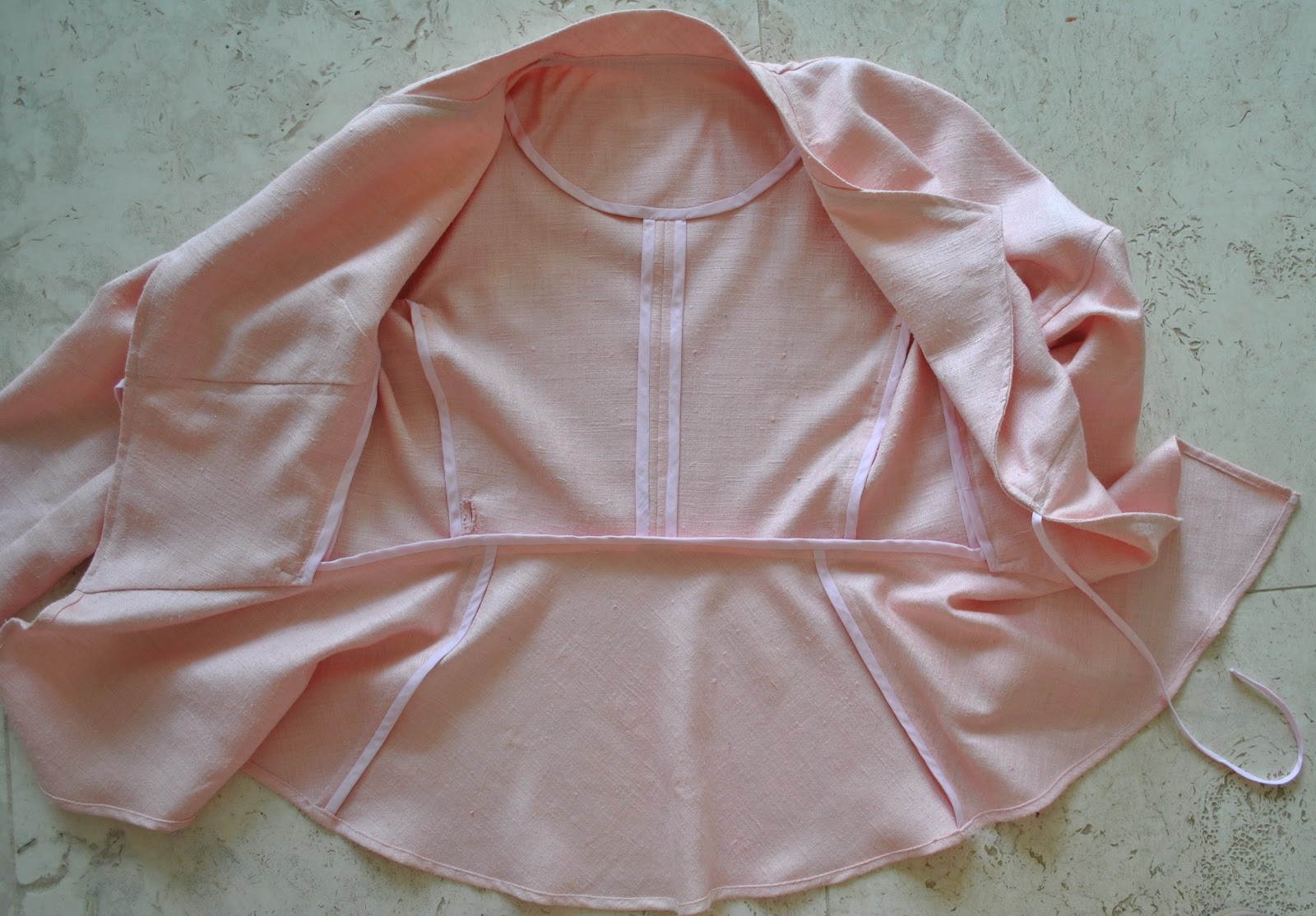
The silk hessian frays like billy-o, so I finished all the raw edges inside with HongKong seaming, in a lightweight cotton voile.
She is wearing it with a little denim skirt she made herself.  She is a pretty accomplished little seamster herself, and I reckon she should update her own blog one of these days and add in all the cool stuff she has been making for herself.
Details:
Jacket; Burda 7401, pink silk
Top; supre
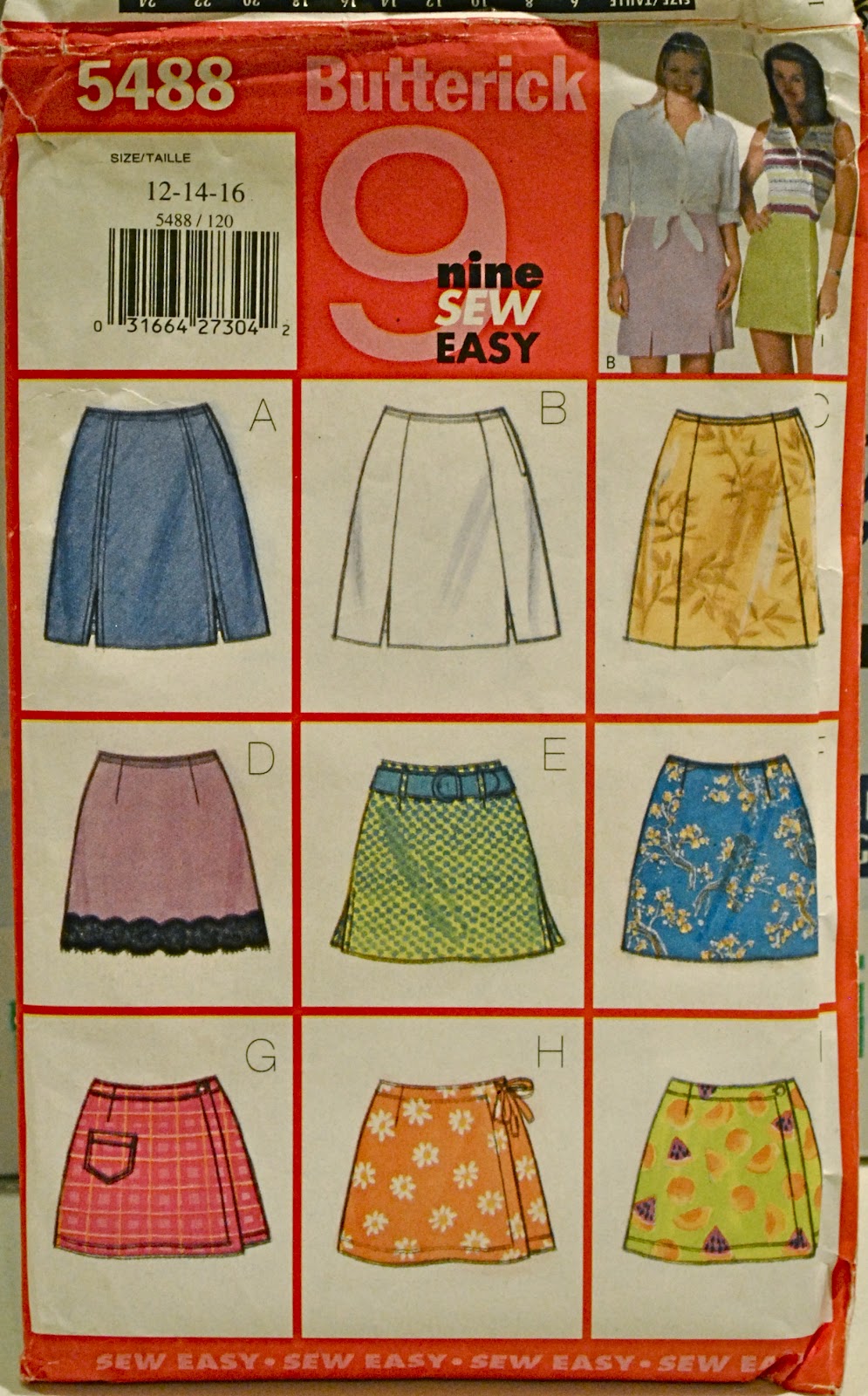
Skirt (made by Cassie); Butterick 5488, lightweight denim

Pattern
Description:
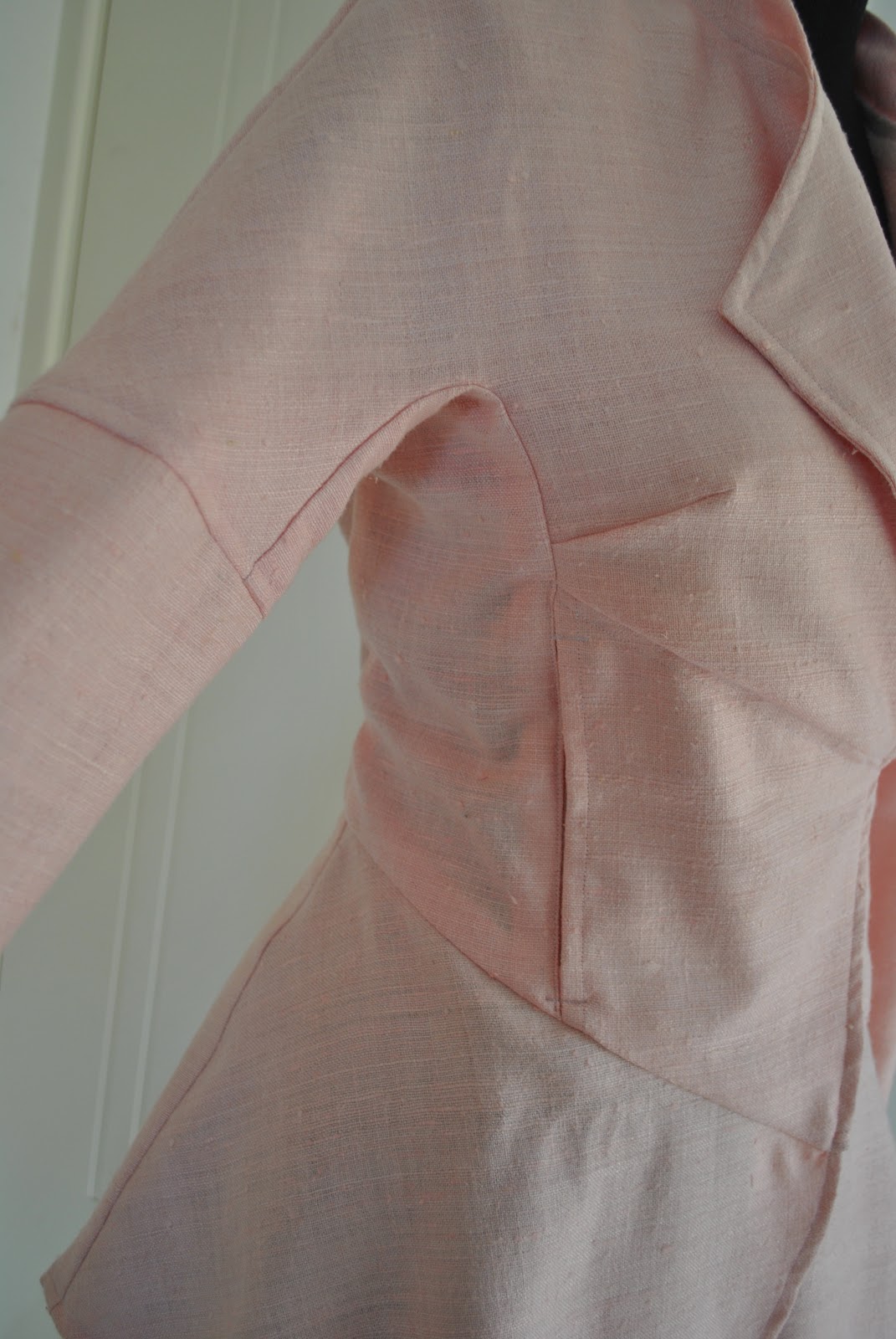
Semi-fitted unlined jacket with unusual seaming; long underarm gussets, a short rounded stand-up collar, front pockets that are separate pieces patched together with remainder of the jacket front.  View B has longer sleeves, a tie front and peplum.
Pattern
Sizing:
Sizes 36-50 (US 10-24).  I made view B in a size 12 for my daughter, aiming for an oversized boyfriend jacket look.
Did
it look like the photo/drawing on the pattern envelope once you had finished
sewing it?
Yes.  Except that I adapted it so the ties can, if my daughter desires, become a self-belt that wraps it around around the body to cinch in the waist in a blouse-y way; an aesthetic that suits her style.
Were
the instructions easy to follow?
Yes: except that steps 4 and 5, inserting the side pieces, is not as simple to do as it makes out in the instructions.  You have to clip the heck out of those tight front and back underarm curves in order to sew those seams!
What
did you particularly like or dislike about the pattern?
For a casual jacket I think it is really chic; with slightly unusual seaming and an edgy style.  I love the shape of that softly flared peplum, it looks lovely either with the jacket wrapped or unwrapped.  There were no instructions to interface the front facing, which I thought about defying and rebelliously applying interfacing.  But I went with no interfacing on the front; which does make the jacket beautifully soft and unstructured, very casual and easy to wear.  I did apply interfacing to the back neck facing and to the collar to the foldline.
The jacket is designed to be unlined, but if you wanted to line it it would be pretty easy to do so.
Fabric
Used:
Hessian silk, and lightweight cotton voile for theHongKong seaming
Pattern
alterations or any design changes you made:
I bound all the raw edges inside with HongKong seaming. 
I left a small opening in the right back/side seam to allow the left front tie to pass through, wrap around the back and tie to the right front tie like a skinny self-belt.
Would
you sew it again? Would you recommend it to others?
I made this one for my daughter; and yes, I would very much like to make one for myself sometime… if I’m allowed to   🙂
Conclusion:
I love it and my daughter loves it, so it is a great success!  I’m glad I made it oversized, with the long body and  the loose unstructured sleeves rolled up it looks like a boyfriend jacket and very “now”.  The unusual seaming and pocket construction is a nice exercise for a seamster who is looking for something out of the ordinary.
pinterestmail

With Military Precision

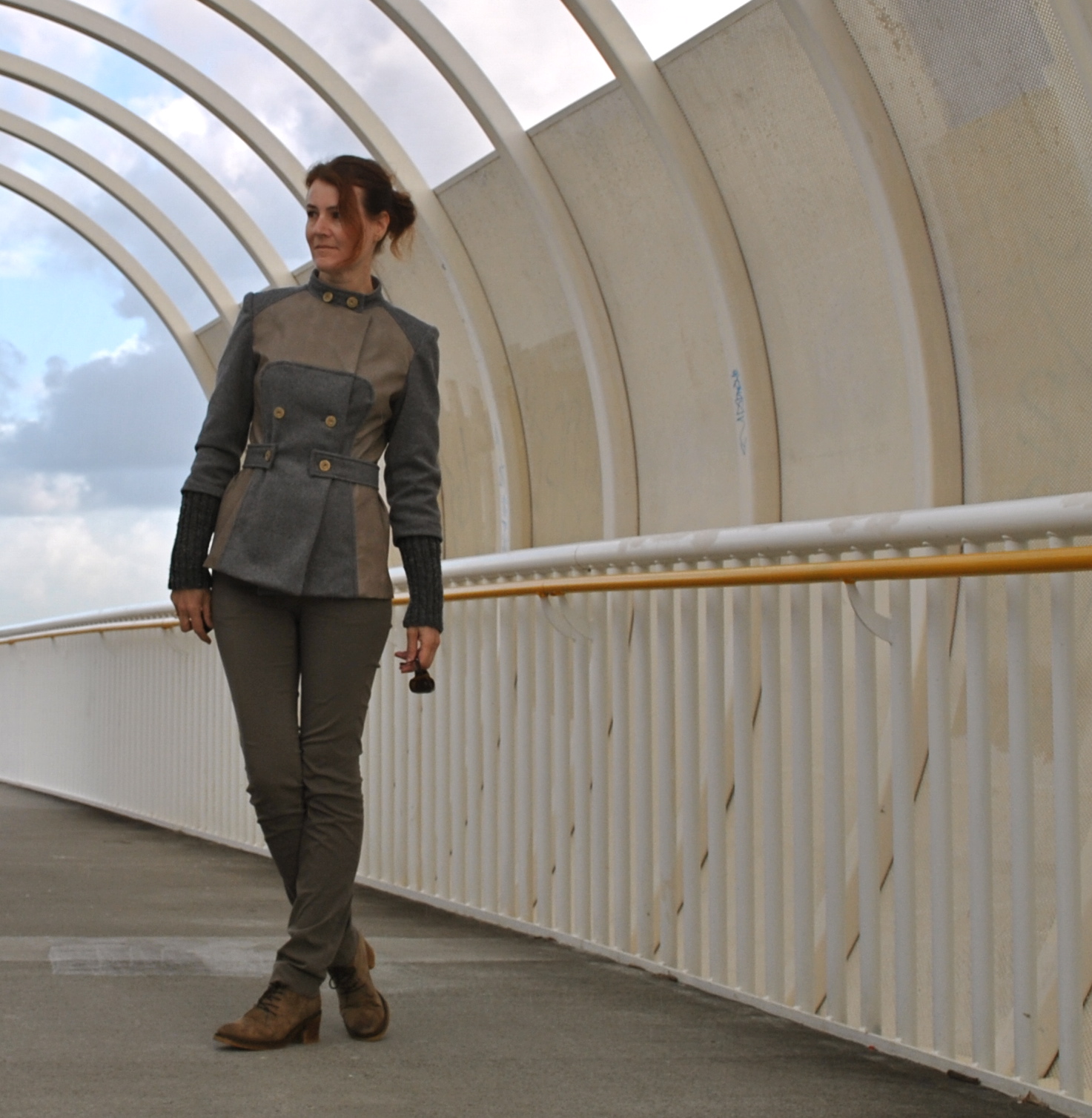
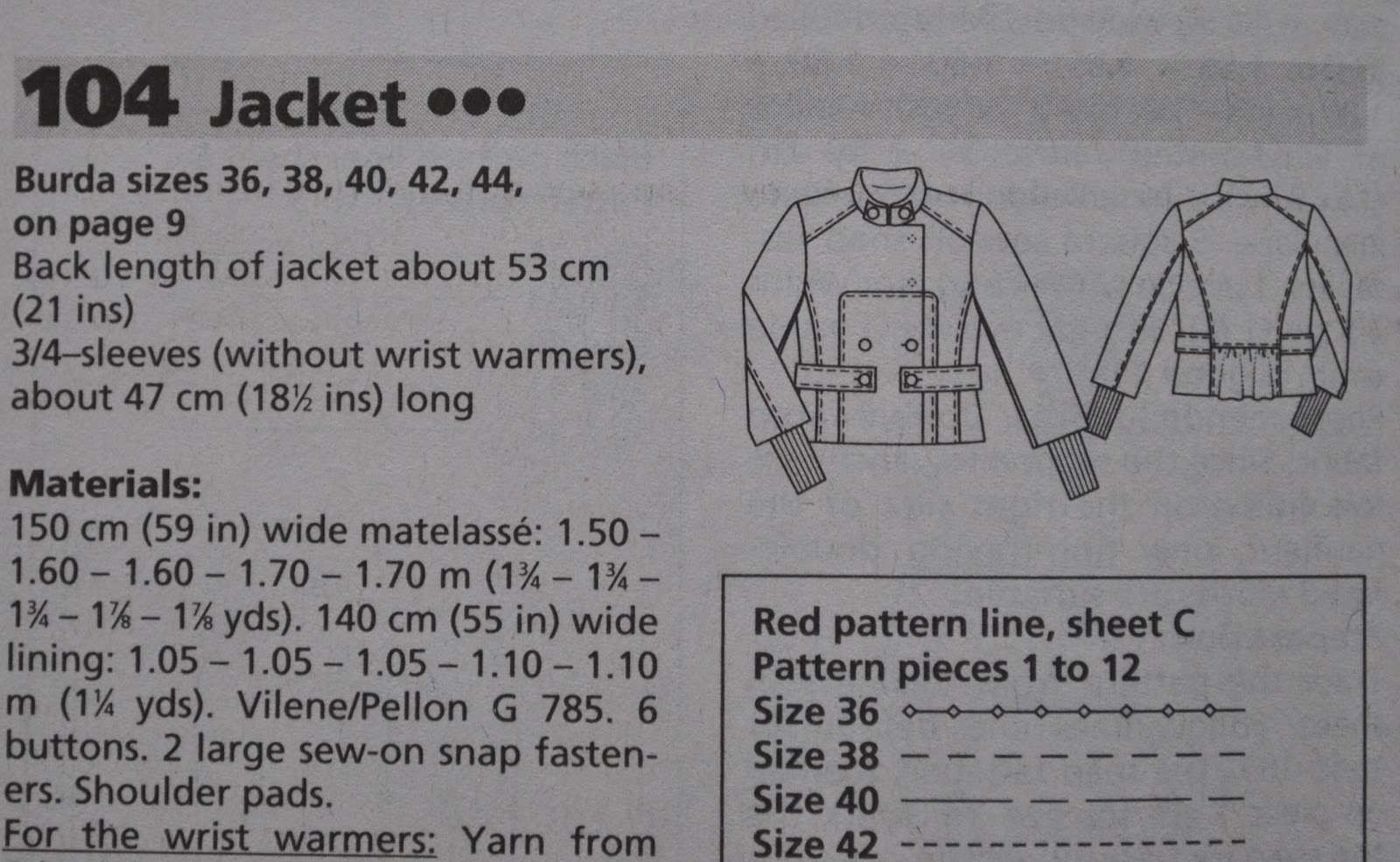
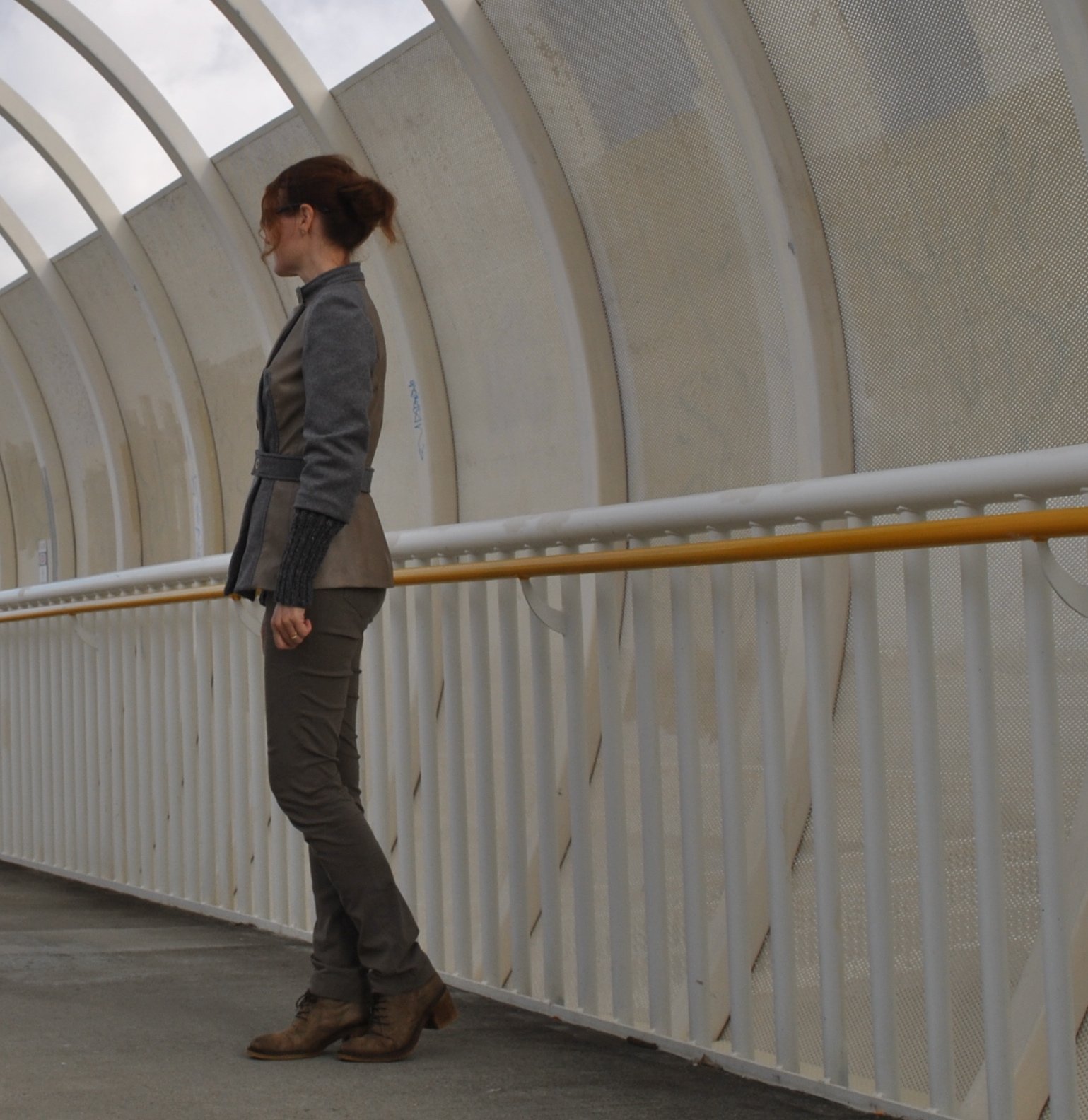
My most recent creation: a jacket! made using pattern 104 from the Burdastyle magazine 09/2008 from the Pattern Pyramid giveaway.  Uber cool, yes?  I think so.
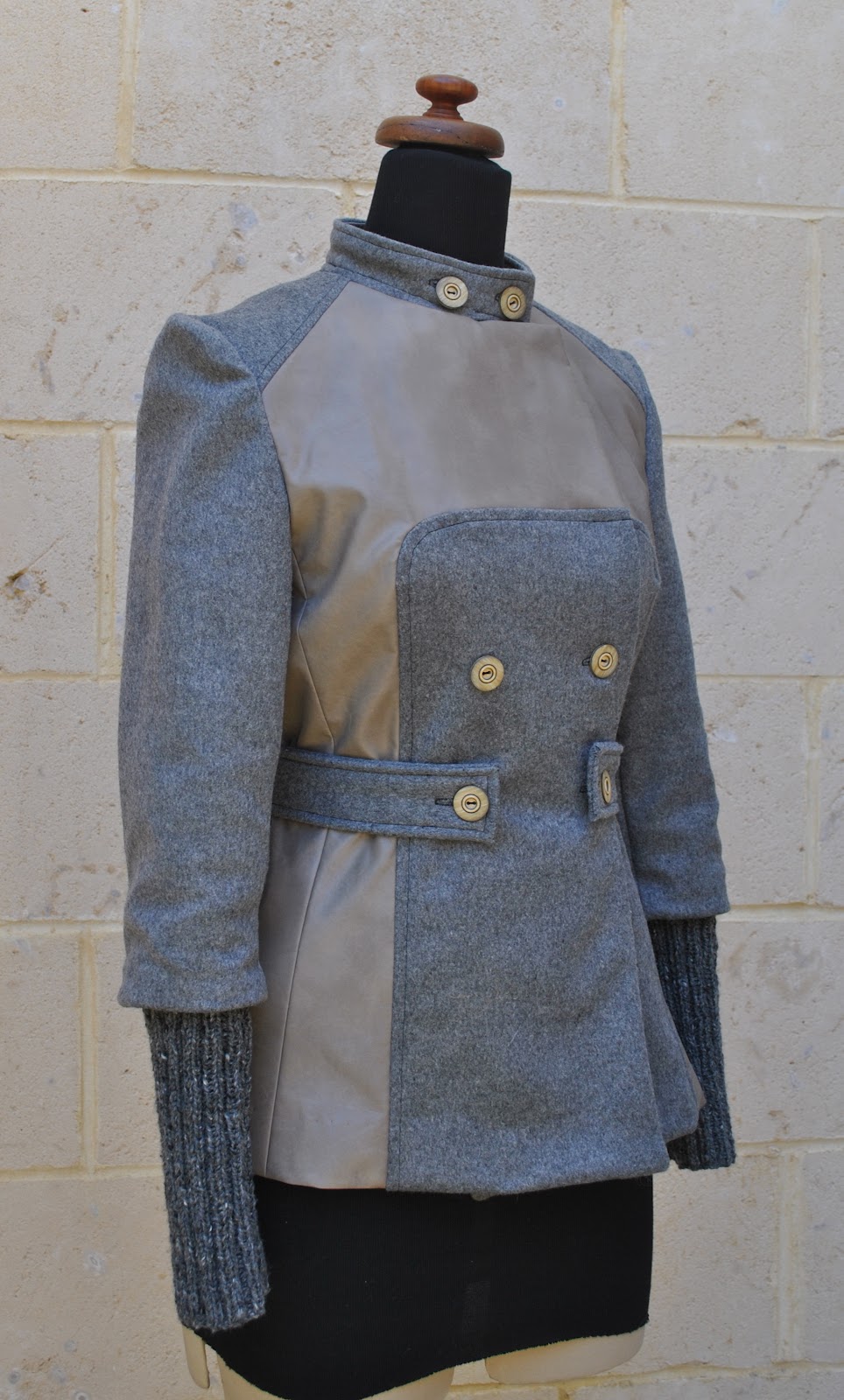
Flicking through the magazine; the military style of this jacket with the double breasted front, the rows of buttons, the high collar and the little buttoned-down belt really caught my eye, but not until looking at the fine print did I notice the cool knitted wristbands that are attached to the sleeve lining inside the sleeves …  sold!!  I immediately knew this was The One.  I totally love it; even though there is hardly any winter left here… shhh.  I should be able to squeeze in a few more wears at least, and I’ve always found it fab to have something sorta new-ish in the wardrobe for next year, the next time winter starts to creep up and you’re not quite ready  🙂
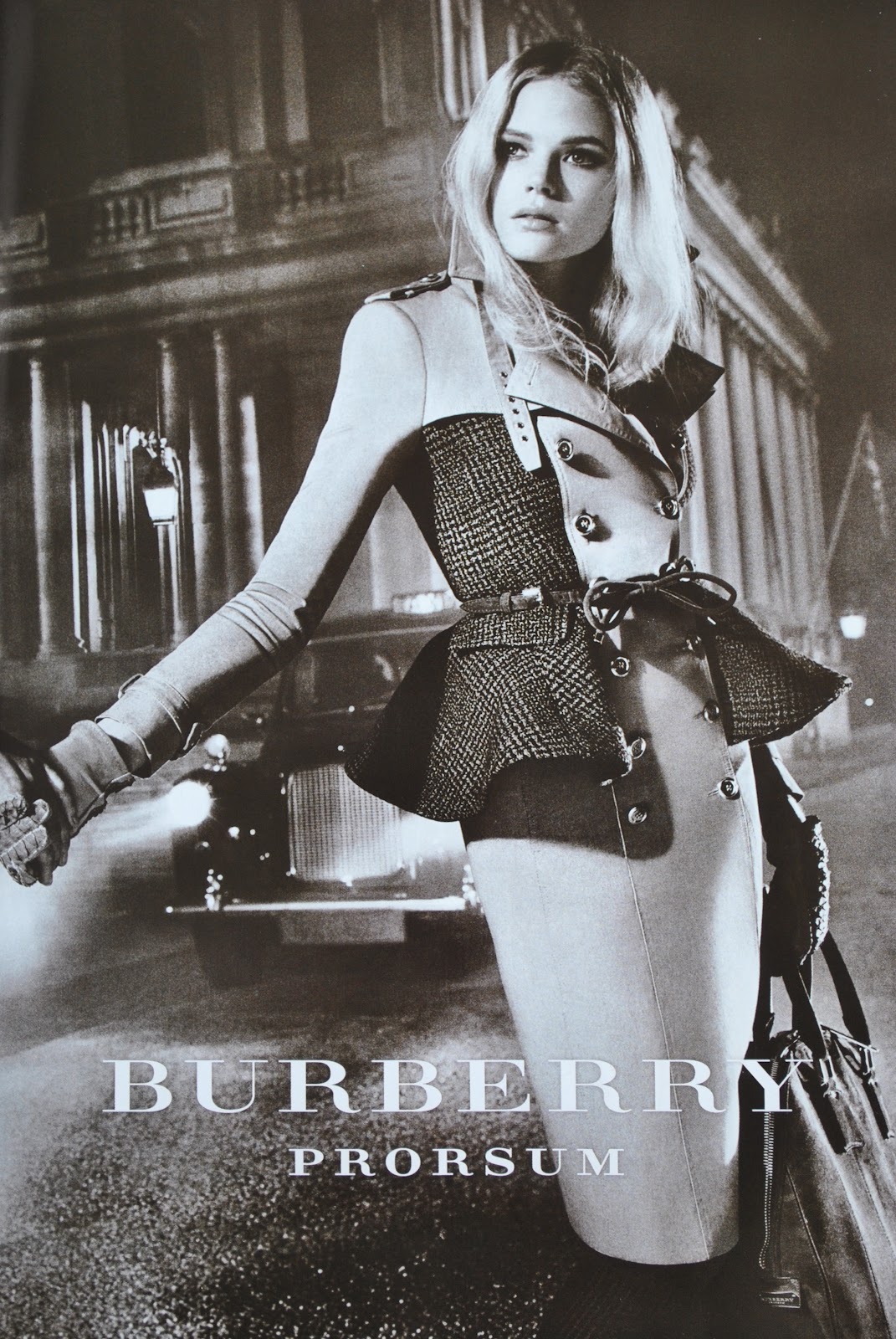
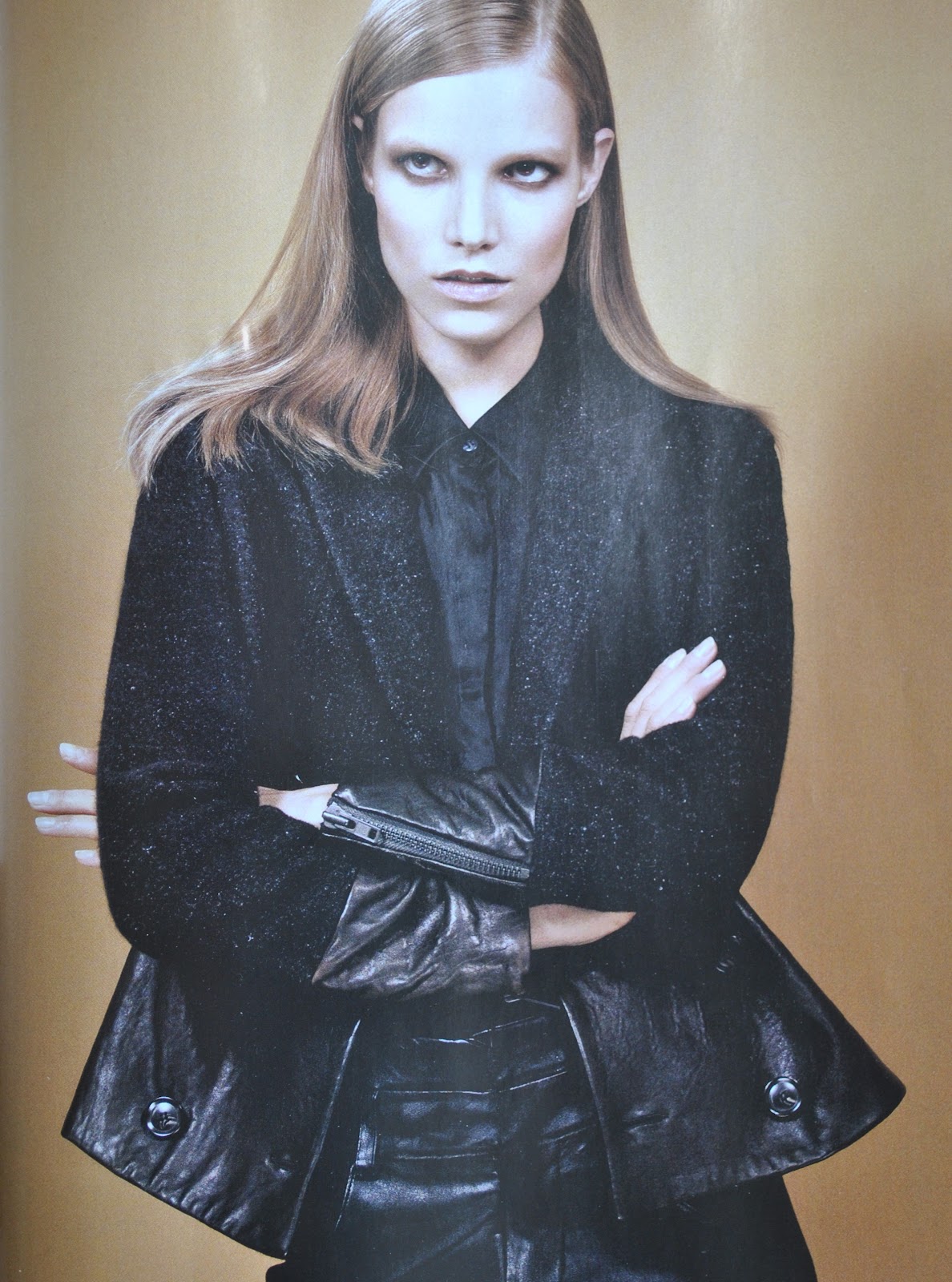
Even better, I made the jacket using all leftover fabrics and yarns from my stash; small-ish quantities that were too titchy tiny for any one thing alone, but still too much and too good quality to even dream of ditching.  I’ve noticed a few smartly tailored jackets in Vogue magazine lately, made from combinations of very different materials and the idea of following suit really appealed to me.

Above: both these ads taken from Vogue Australia.  At left; Burberry Prorsum, at right; JBrand. 

I used a browny-grey polyurethane laminate, originally from Fabulous Fabrics and leftover from this skirt, and a grey wool, originally from Spotlight and leftover from this coat.  Whoar, it felt gooood to use up that fabric!!  The knitted wristwarmers are knitted from Jo Sharp Silkroad DK Tweed in colour Peppercorn, the leftover yarn from this cardigan.  I didn’t have quite enough of the wool to knit the full length required, but I think they turned out quite long enough anyway.

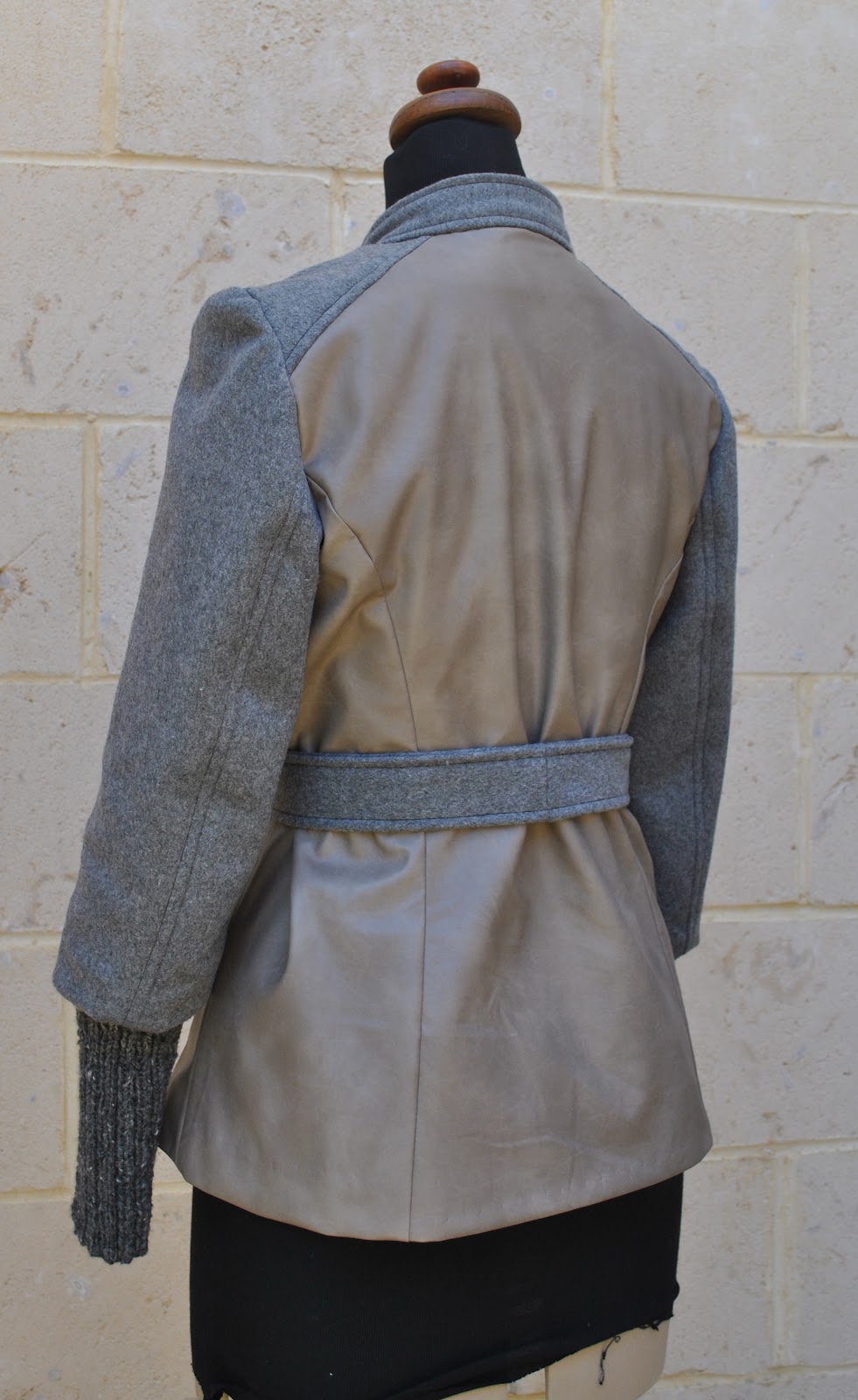
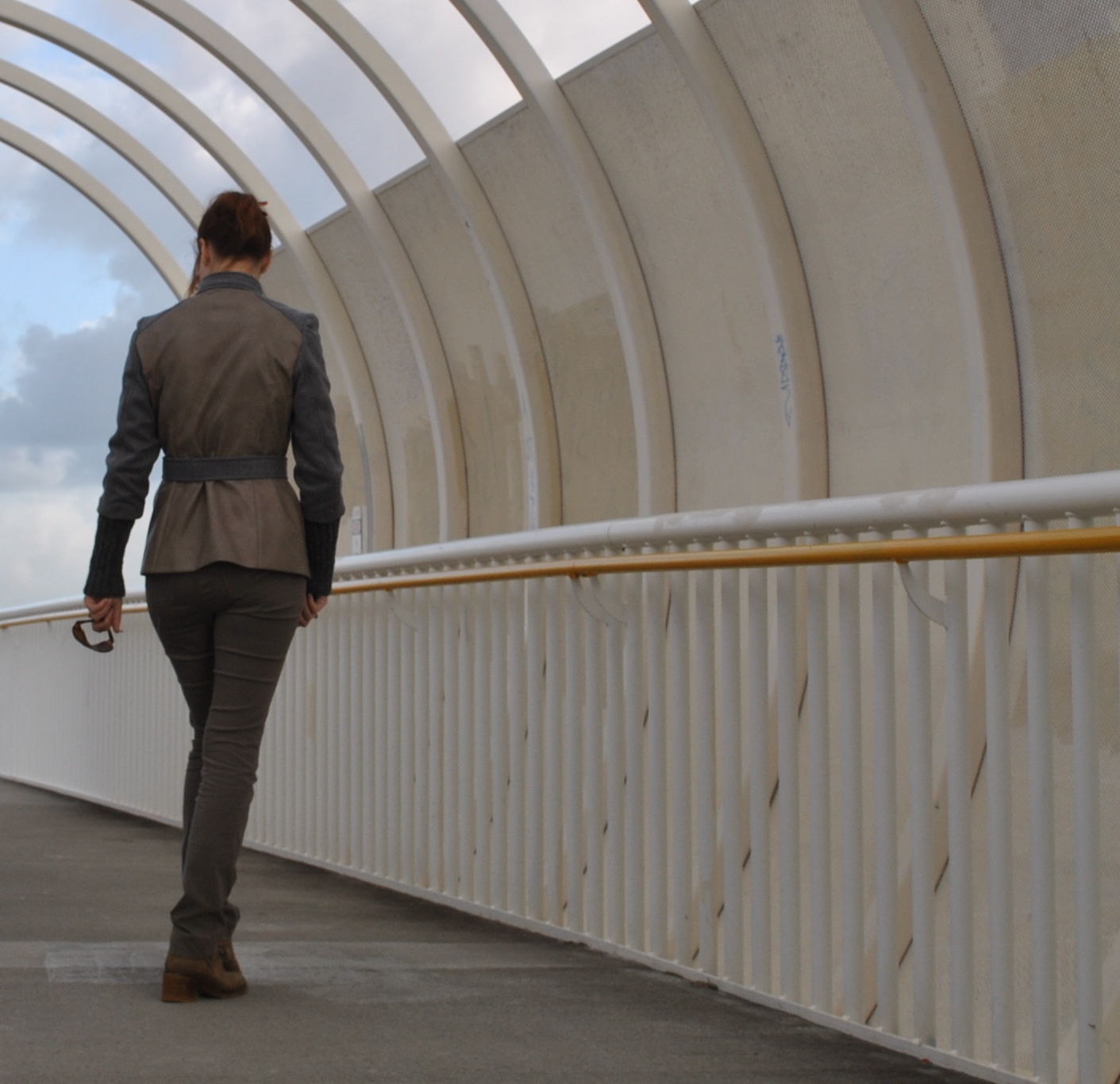
I cut the back, sides and fronts of the jacket from the PU laminate: and the centre fronts, shoulders, collar, sleeves and the belt from the wool fabric.  Even though I did not have enough of either fabric to cut the whole jacket, I did have enough of both together to make the jacket 15cm longer than stipulated in the pattern, which suited me to a T.  I prefer a hip-length to a cropped jacket, particularly when in a very fitted style like this.  I left off the gathered peplum, and instead cut the back piece as one long piece.
The pattern directs for two short belts to be sewn in with the side/back seams; instead I made mine as one completely separate longer belt.  It still buttons onto the lower two front buttons, just like in the pattern.  I like the way the belt pulls in the back of the jacket, and gives me more of a “shape”.  I think it might have looked a little boxy for my tastes otherwise.
I topstitched onto the wool portion of the jacket, but avoided any topstitching on the PU laminate; because I know from brief experiments when making my skirt from this fabric that topstitching looks tres hidous on this stuff.
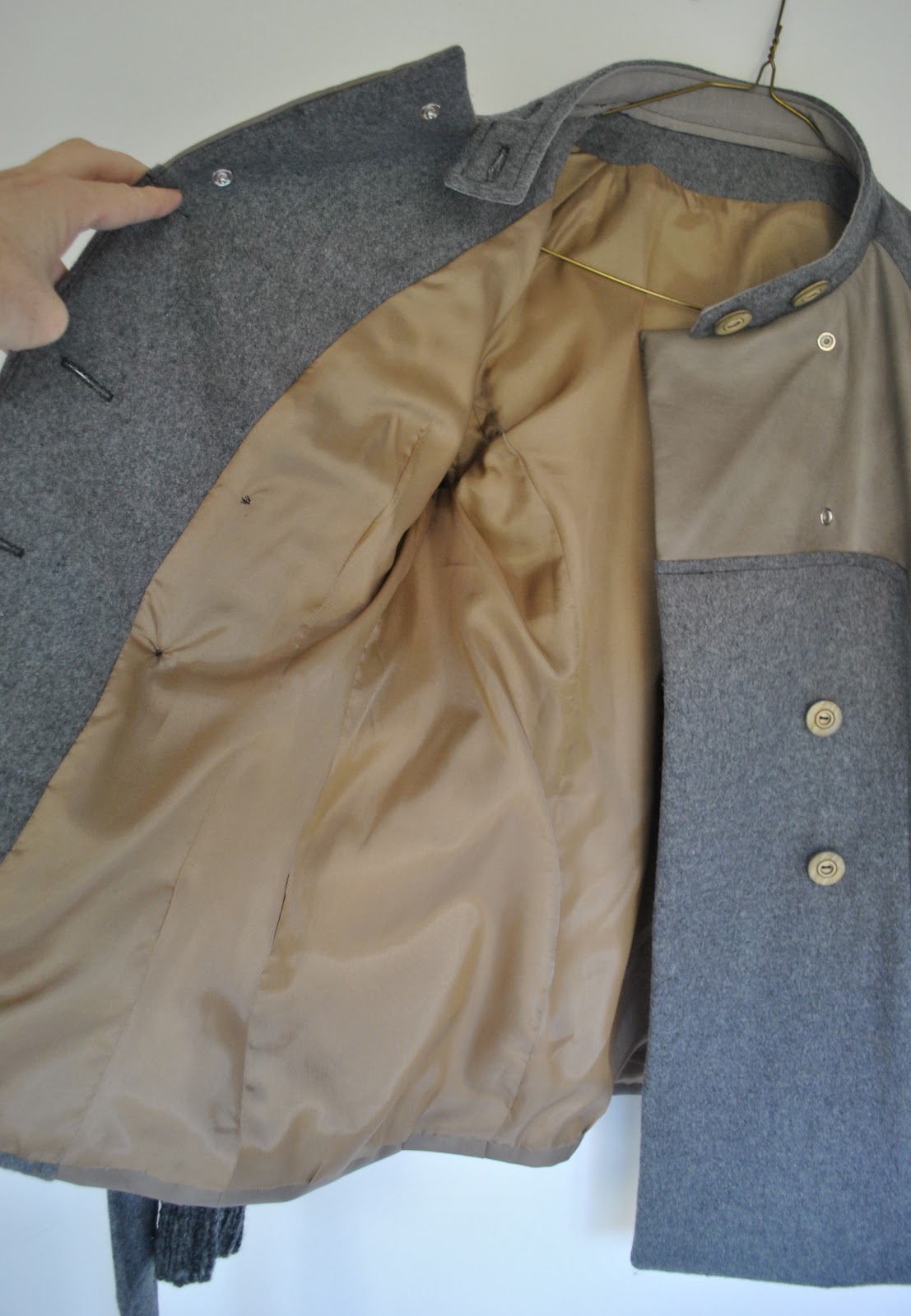
The collar is faced with a lightweight elephant-grey cotton rather than with self-fabric; this is because that wool is thick!  It was pretty hard to get all those double thickness shoulder and collar seams all sitting down on the inside nice and flat as it was, without the extra bulk of a woollen facing… for that reason I did not button the collar ends back on themselves as suggested in the pattern because the grey cotton facing fabric would have showed.  Instead my collar just crosses and buttons right end over the left.

The jacket is lined completely with a coffee-coloured polyacetate lining, from Fabulous Fabrics.  This, along with the buttons, also from Fabulous Fabrics, are the only things I had to buy!

Details:
Jacket; Burdastyle magazine 09/2008, 104, with minor modifications; made of wool, PU laminate, Jo Sharp Silkroad DK Tweed
Jeans; Burda 7863, khaki stretch gabardine, details and my review of this pattern here, and see these jeans styled in 6 different ways here
Shoes; Francesco Morichetti from Zomp shoes

Pattern Description:
Masculine, lady-like or sporty?  This jacket fulfils all three requirements!  The front in severe military style, the back with a feminine peplum, and the sleeves with long, hand-knitted cuffs that are attached to the lining.
Pattern Sizing:
European 36 to 44,  I made the size 38.
Did it look like the photo/drawing on the pattern envelope once you had finished sewing it?
I made mine 15cm longer; but otherwise yes
Were the instructions easy to follow?
They’re ok.  Burdastyle are well known for their challenging pattern instructions!  The instruction to sew the facing pieces together seems to be missing so if you have not made a lined jacket before you might get pretty confused in this section.
What did you particularly like or dislike about the pattern?
I just love the style!  Very interesting and quite unique.  I was particularly drawn to the knitted wrist-warmers feature; I just love combining different bits and bobs together in one garment like this!!
Fabric Used:
I used a combination of several fabrics; a PU-laminate and a charcoal wool for the jacket pieces, and Jo Sharp Silkroad DK Tweed for the wristwarmers.
Pattern alterations or any design changes you made:
My jacket is 15cm longer than stipulated, and I left off the gathered peplum and instead cut the back as one piece, as per jacket 105.  I made the belt as one long and completely separate belt, that encircles my waist so it nips in the back of the jacket, and gives me more shape.  My wool fabric used for the collar is very thick, so I faced the collar with a lightweight cotton.  For this reason I did not fold back the collar ends to button on themselves, but instead laid them over each other, so the ends button onto each other.
Would you sew it again? Would you recommend it to others?
I might sew this again! and I definitely recommend this interesting and fashion forward pattern to others!
Conclusion:
Well, I’m completely chuffed with my new jacket!  I really love trench coats and military style jackets, which is why I fell for this one; a nice combination of the two styles.  The double breasted front and high stand-up collar look smart and will be nice and cosy on a cold day.  I really love the belt, to nip in the waist.  I particularly adore the knitted wristwarmers.  All round a unique and very cool little jacket, and a really good choice for a cold weather jacket.

pinterestmail
Switch to mobile version
↓