Tag Archives: Pocket

In-seam pockets

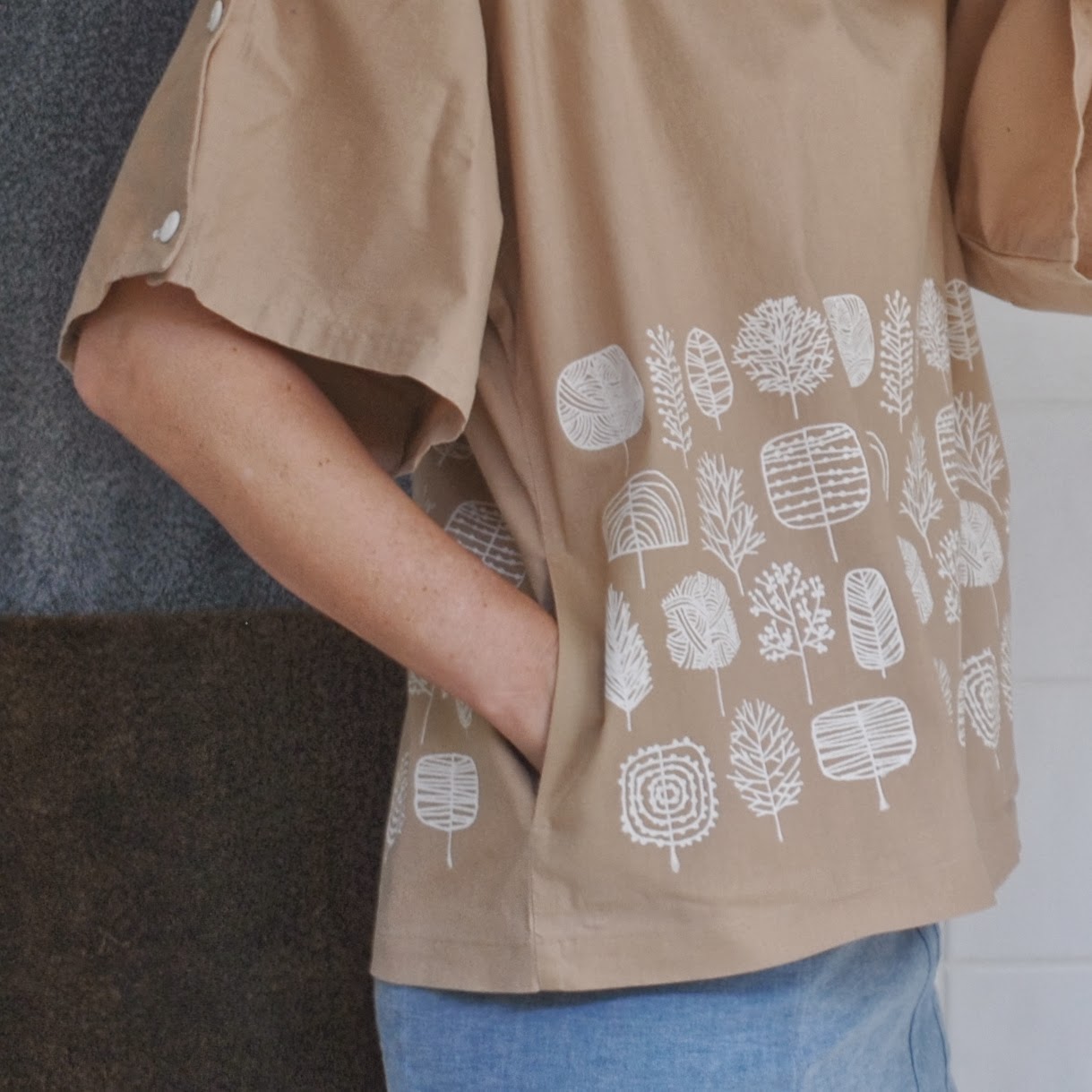
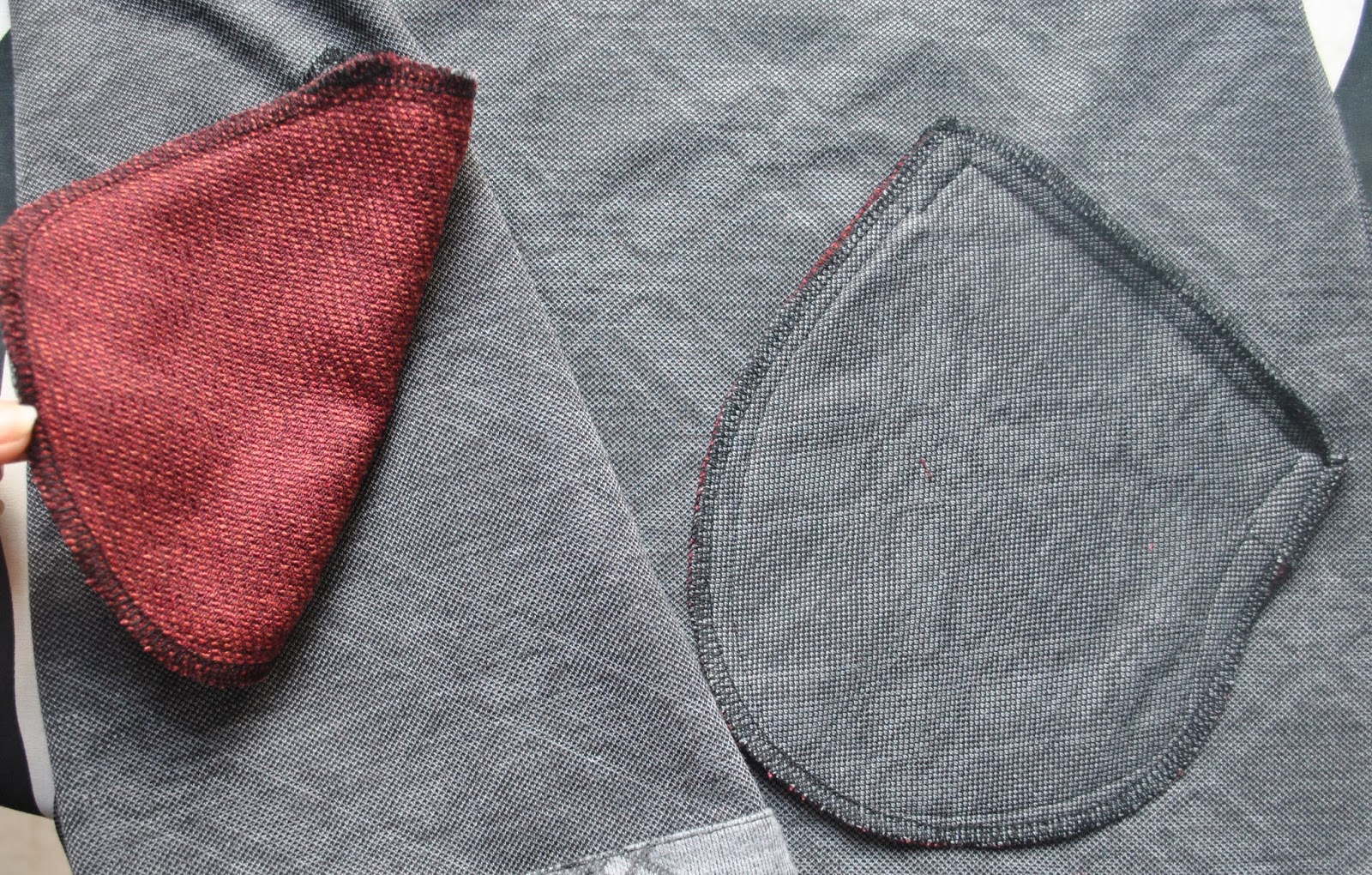
An in-seam side pocket is a pretty simple, basic and close-to invisible pocket, and is a modification I make to a heckuvva lot of my own sewing projects.  It can be added to most garments that are loose enough to allow you to comfortably have your hands shoved inside  ie. not anything tight and close-fitting like a pencil skirt.
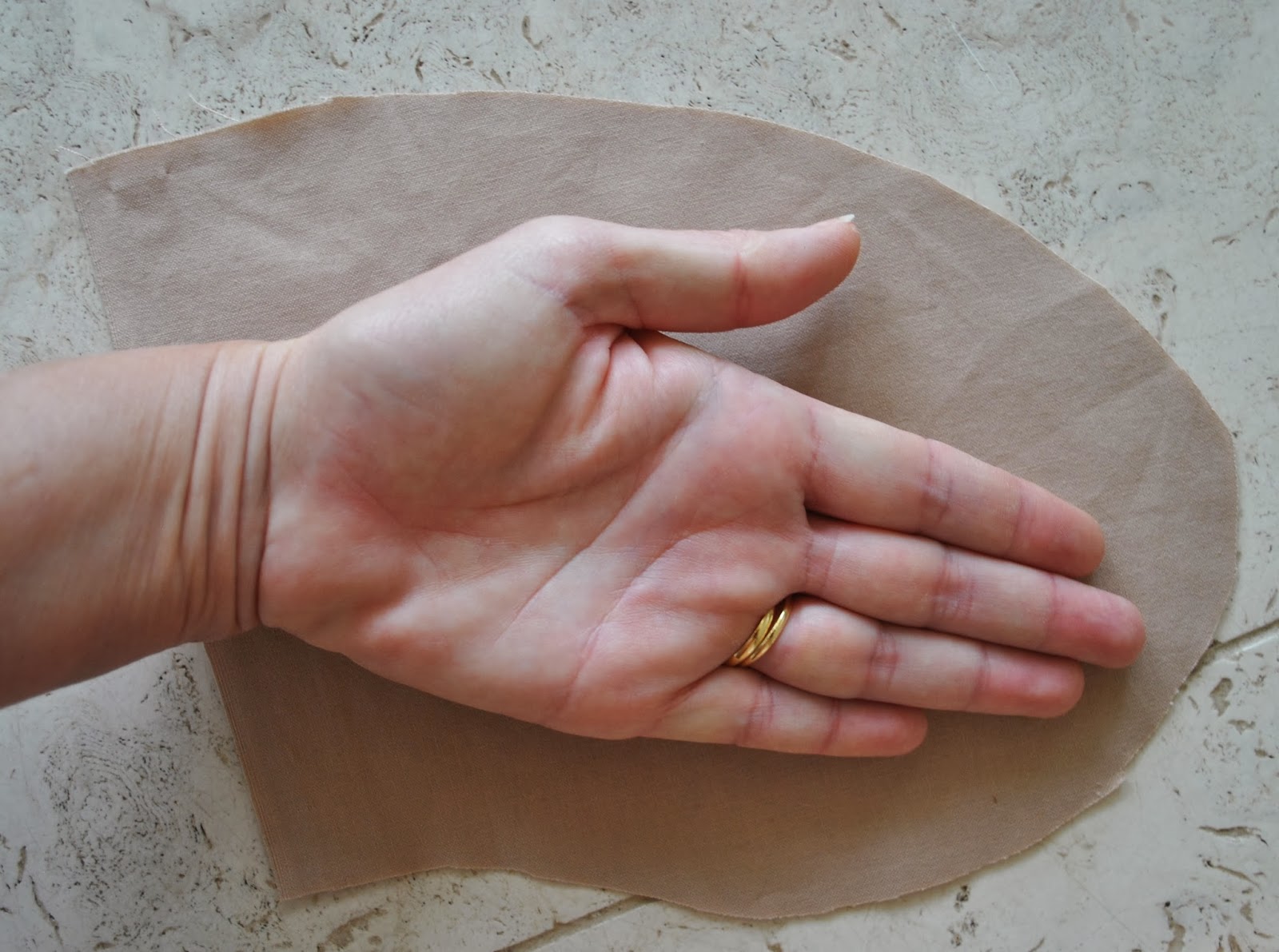
If you have a good-size-for-you pocket piece already, use this, otherwise just lay your hand down on the fabric and draw around it.  Give yourself a 1cm seam allowance, and allow a plenty wide opening straight edge at least the width of the very widest part of your hand… otherwise you may have trouble getting your hands into your pockets!  Yup, I learnt that one the hard way once….

Cut 4 pocket pieces with the straight opening edge on the grain.  If you don’t have enough fabric for 4 pieces, you can just cut 2 mirror image pocket pieces from the fashion fabric, and then cut the other two pocket facings from another, tonally unobtrusive fabric OR if your fabric is bulky, you can optionally cut the pocket facing pieces from a lightweight, thinner fabric to reduce the fabric bulk in your garment.
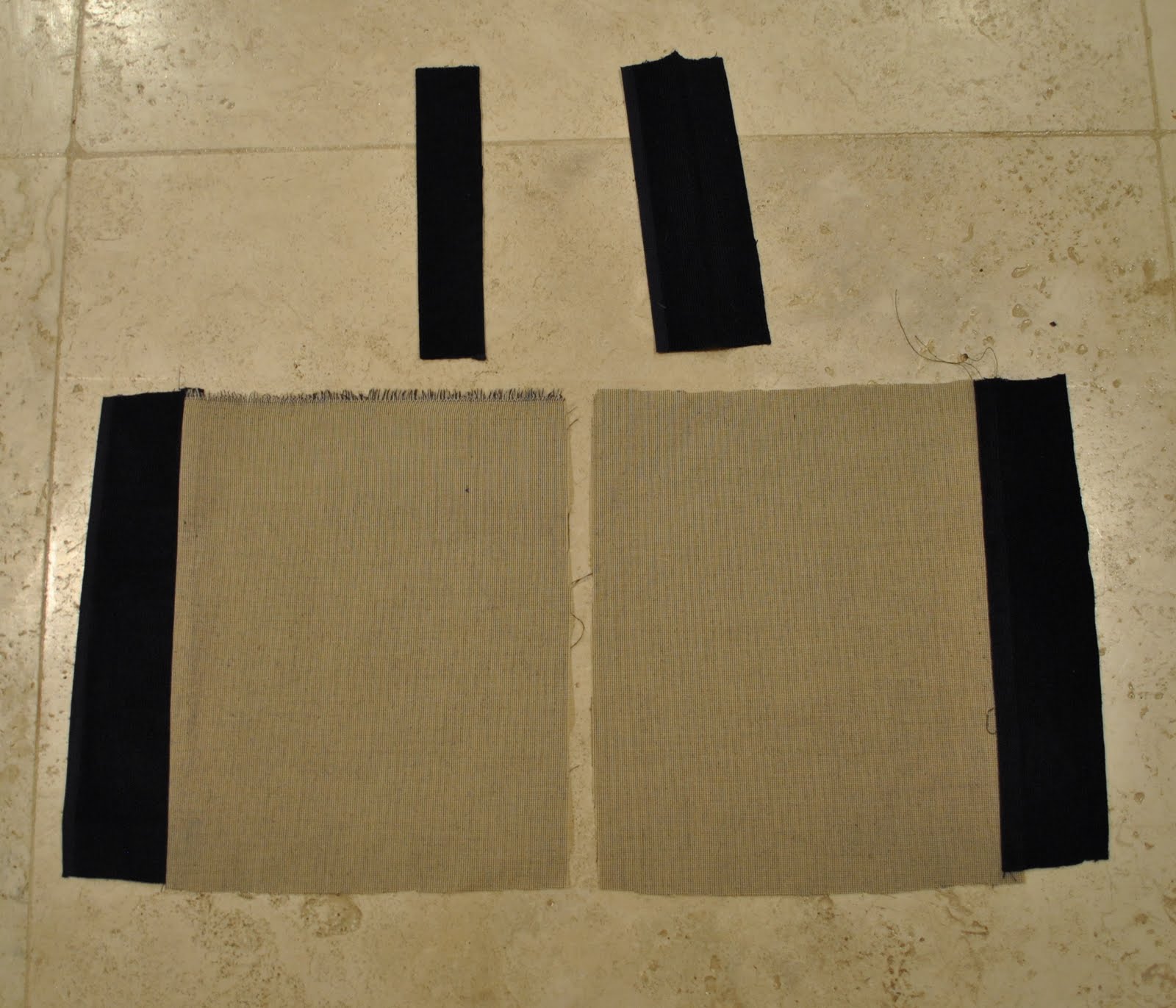
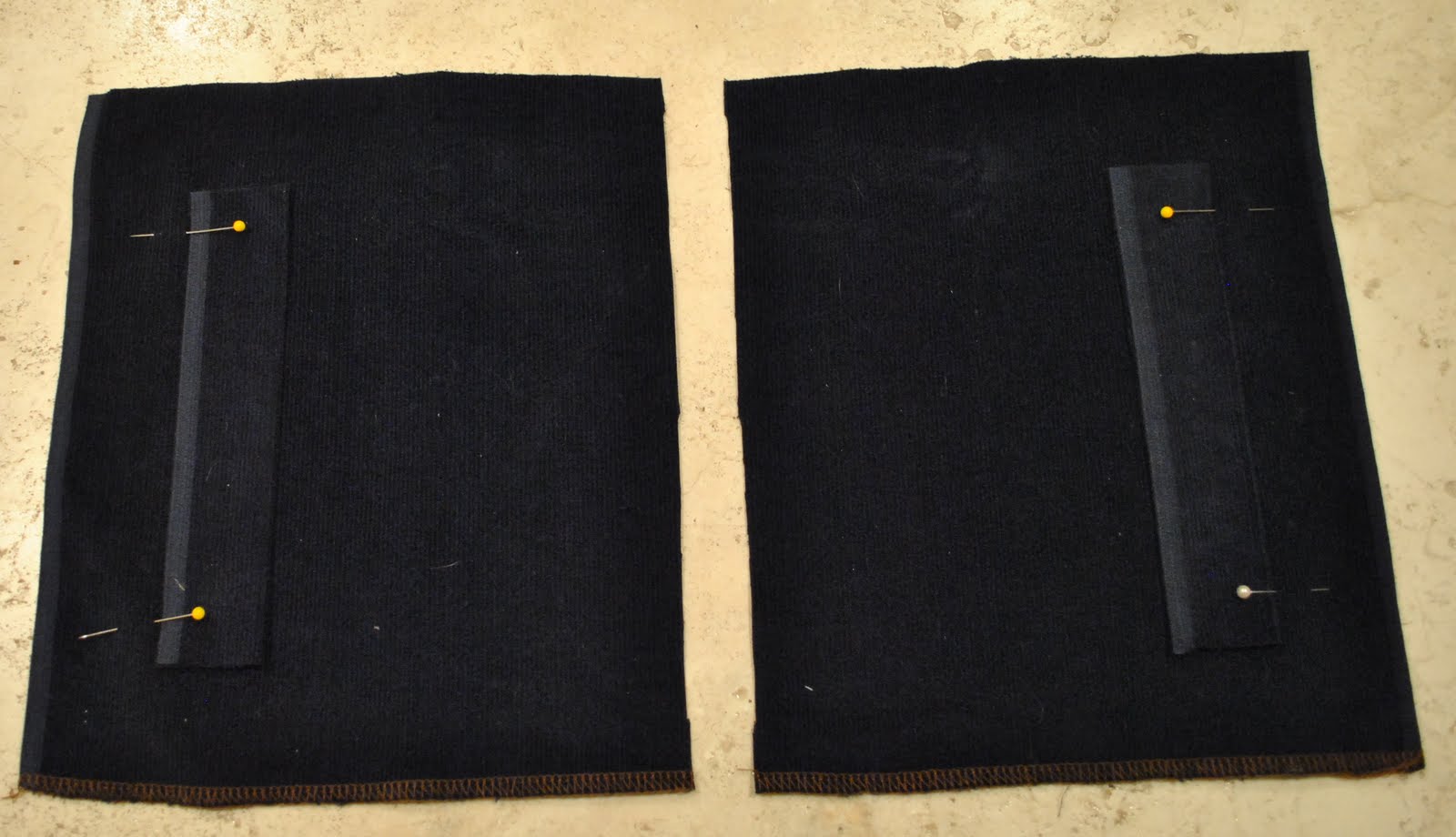
Decide where on your garment you want the pockets to sit.  Pin the pocket pieces (fashion fabric) to the back piece, and the corresponding pocket facings to the front piece and stitch together in a narrow 1cm (3/8″) seam allowance.
Finish the edge with overlocking or HongKong seaming, if desired, and press the pocket and pocket facing pieces out.

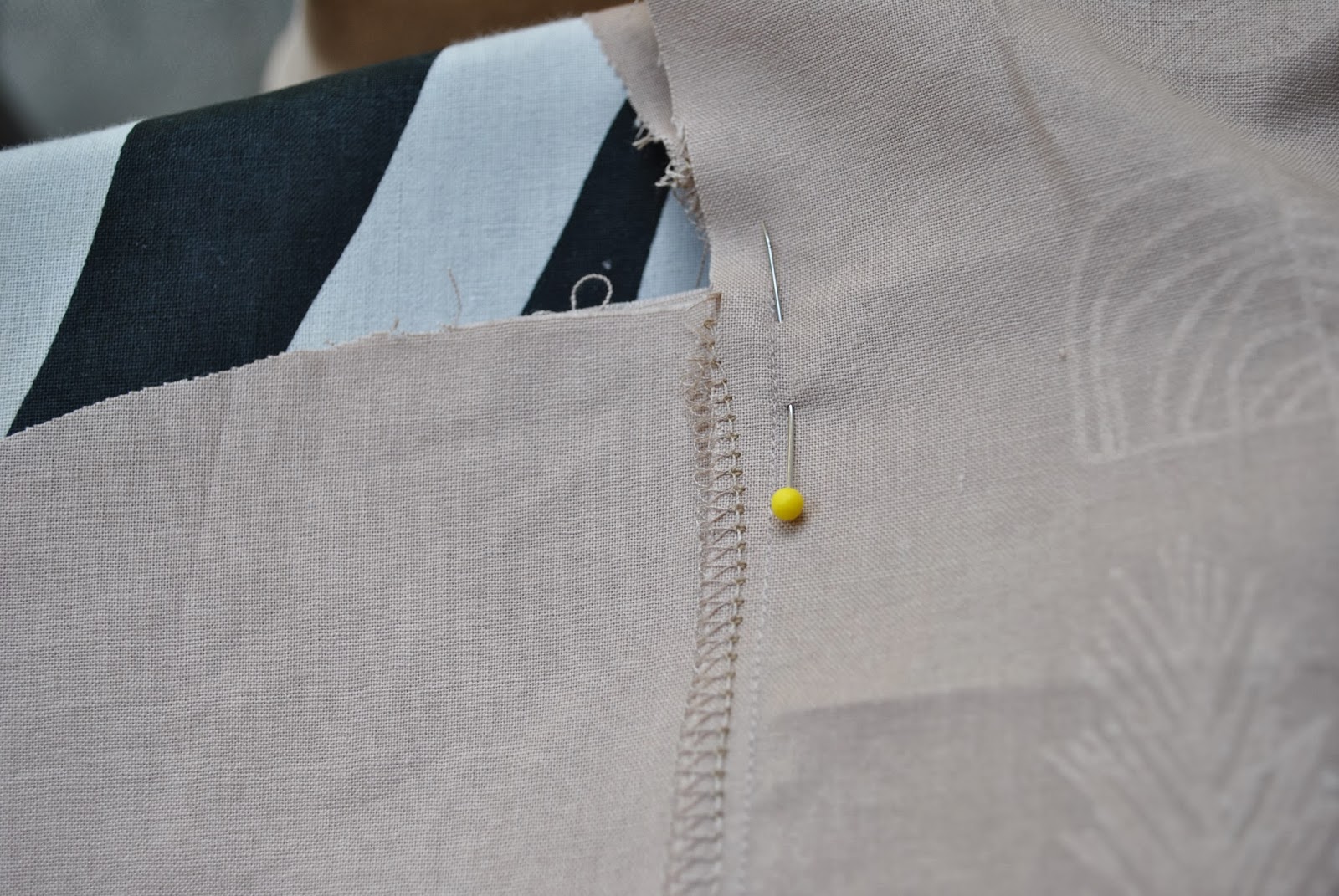
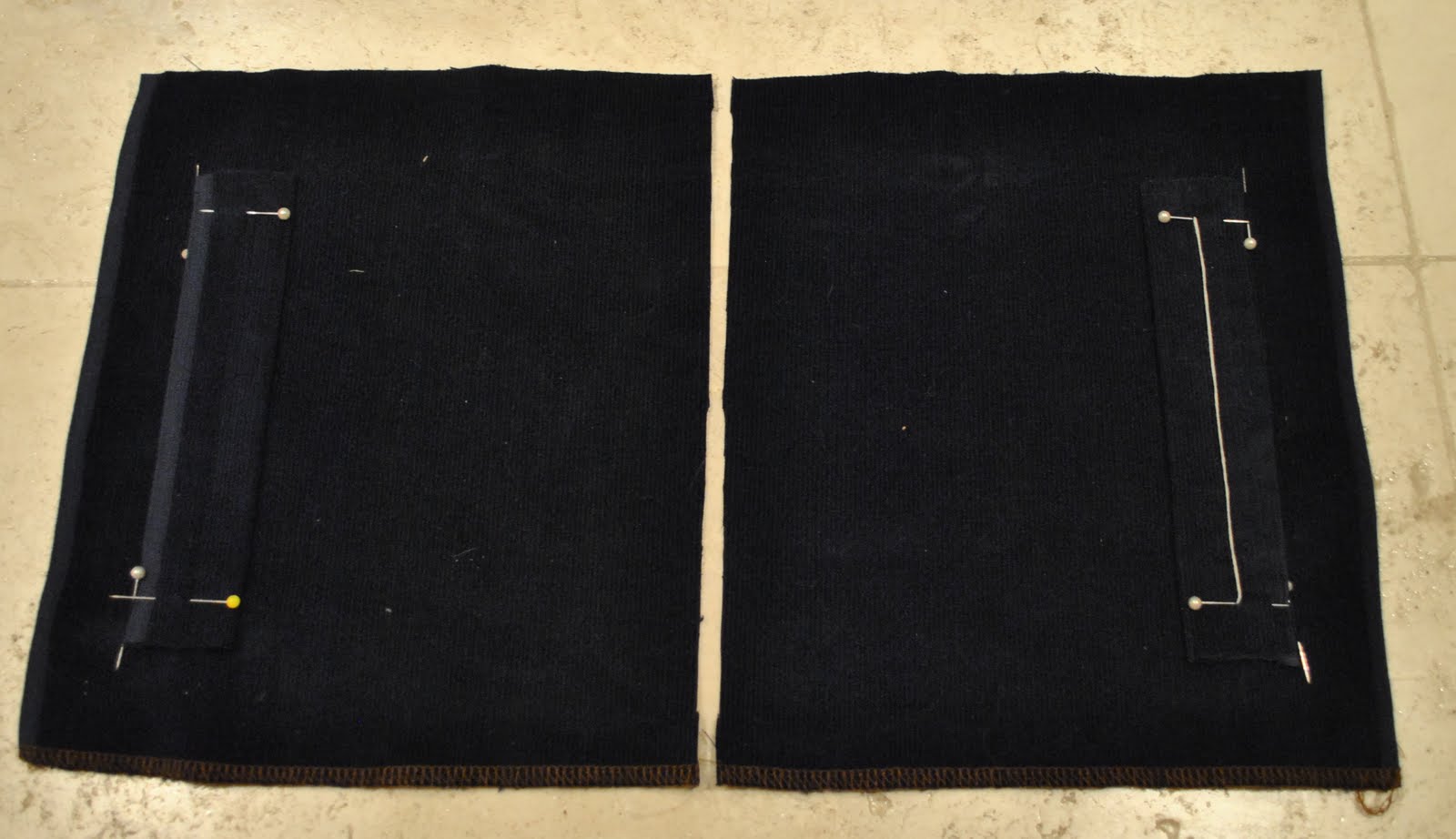
Pin front and back right sides together, aligning the pocket seams exactly.

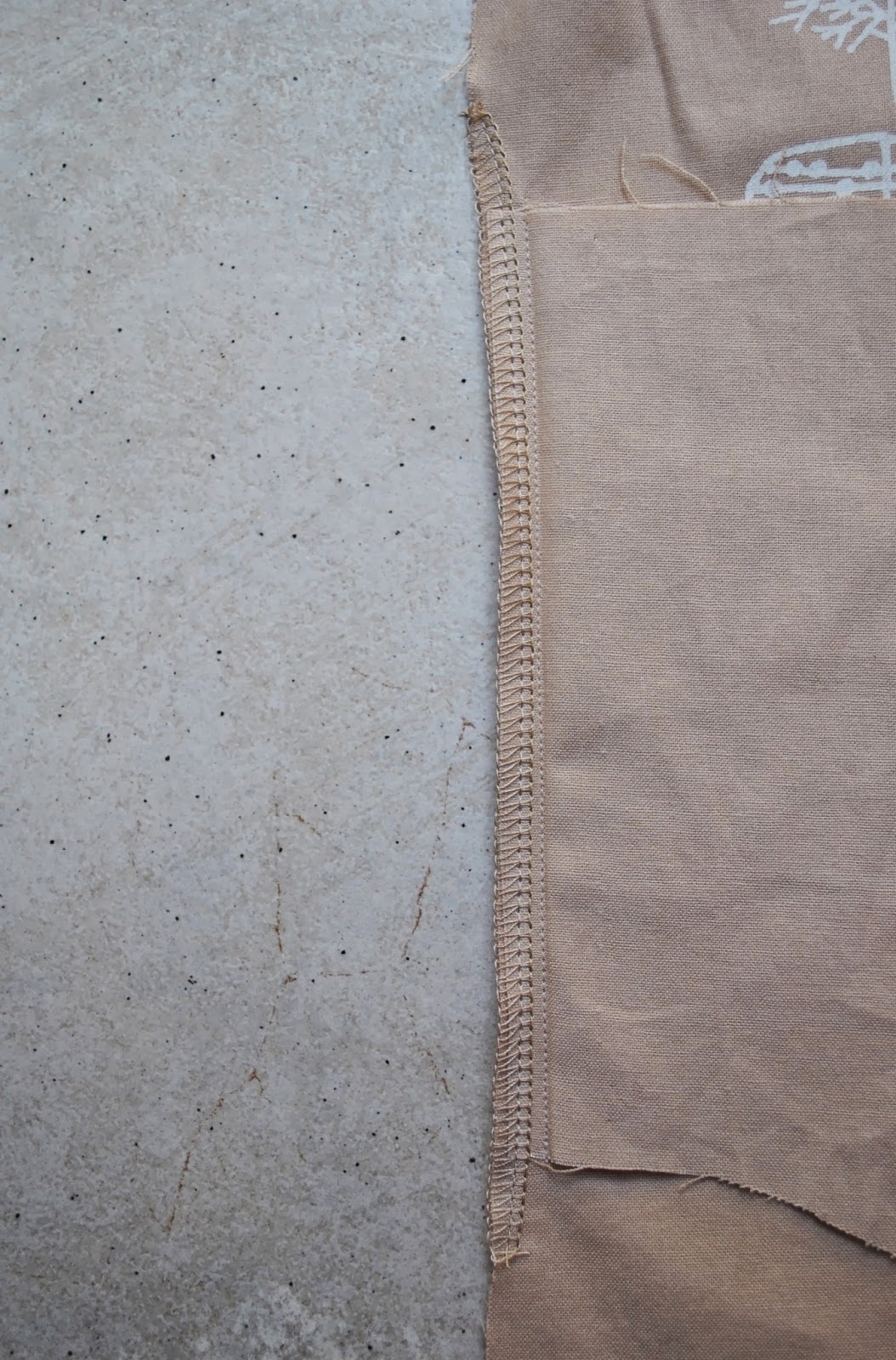
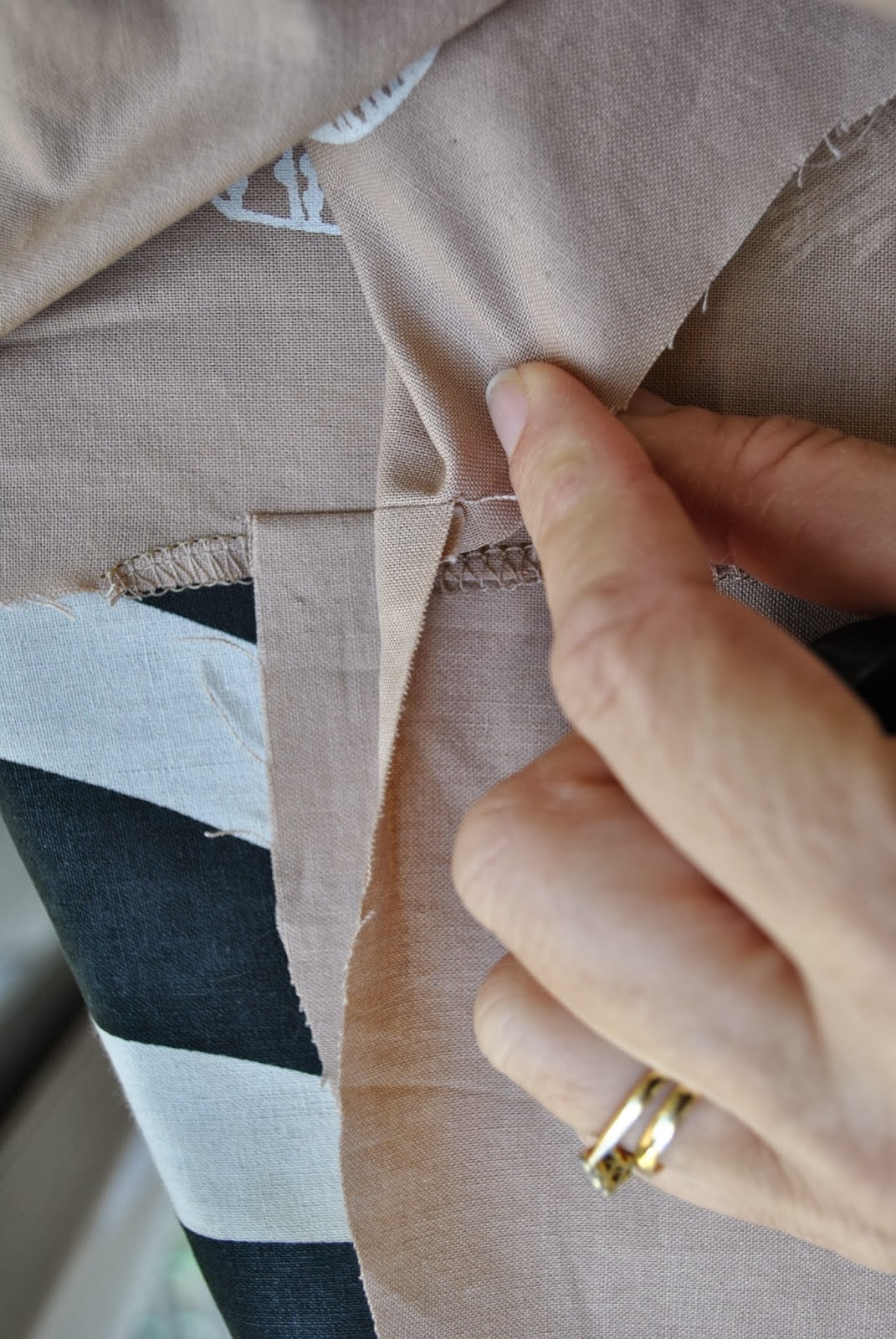
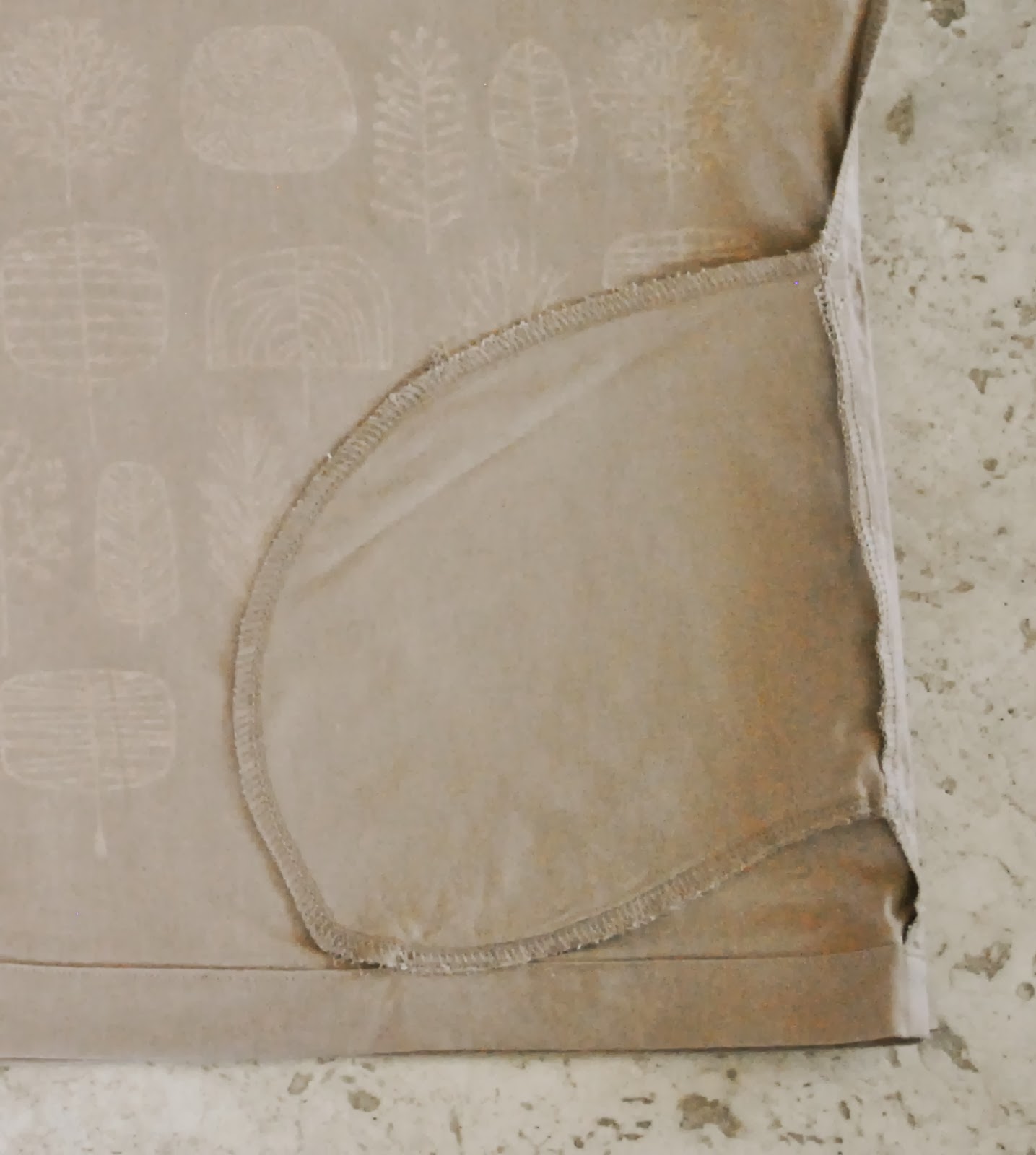
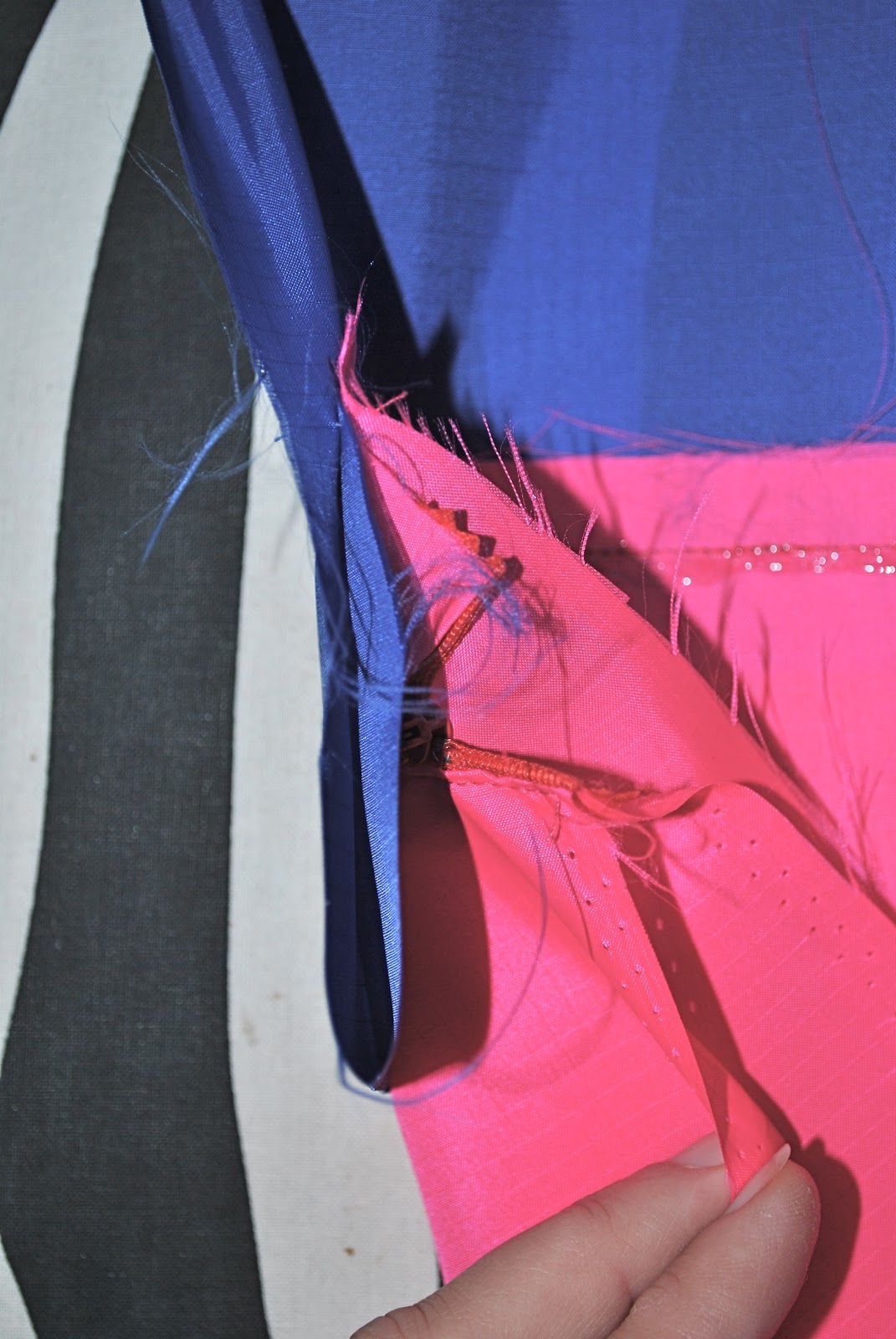
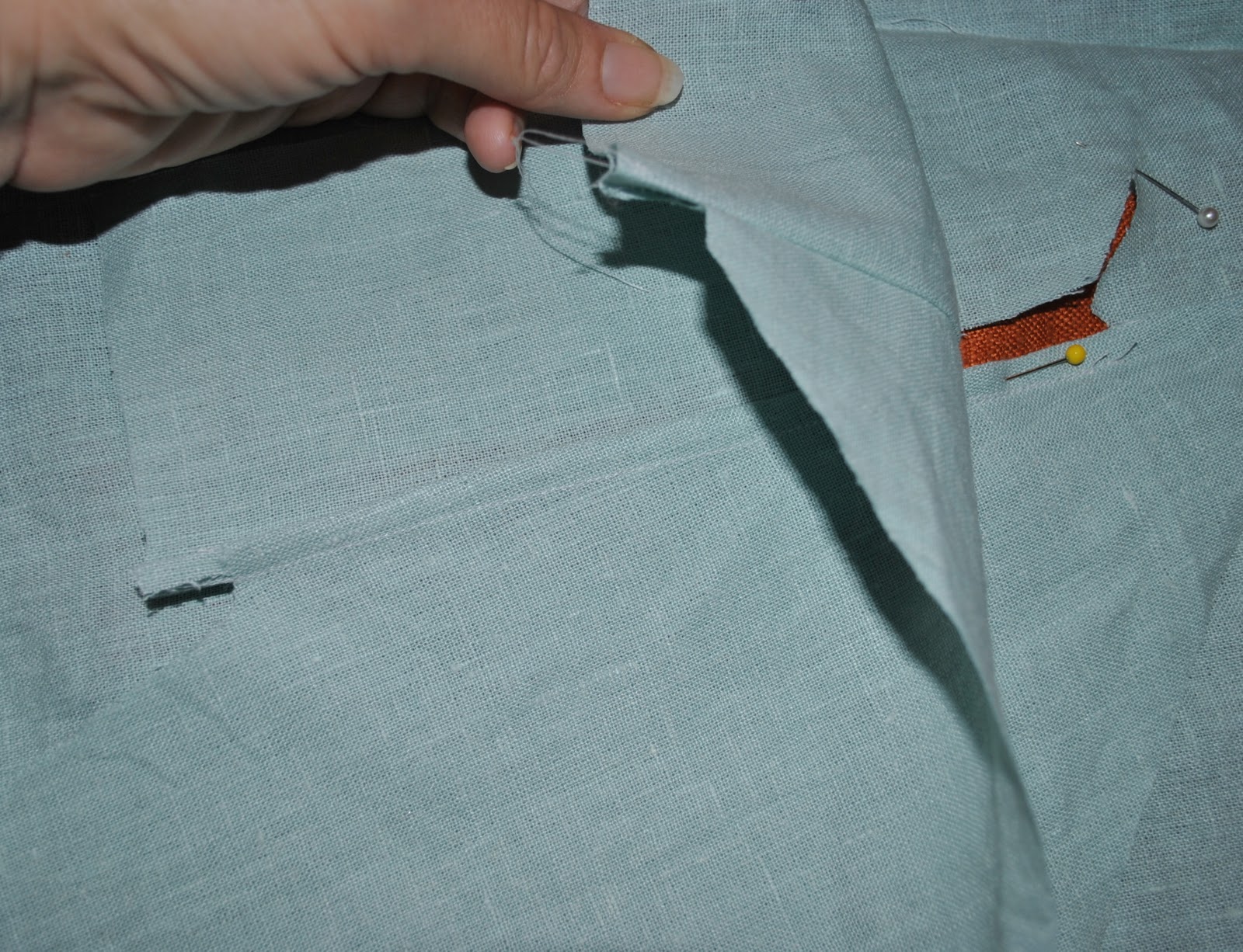
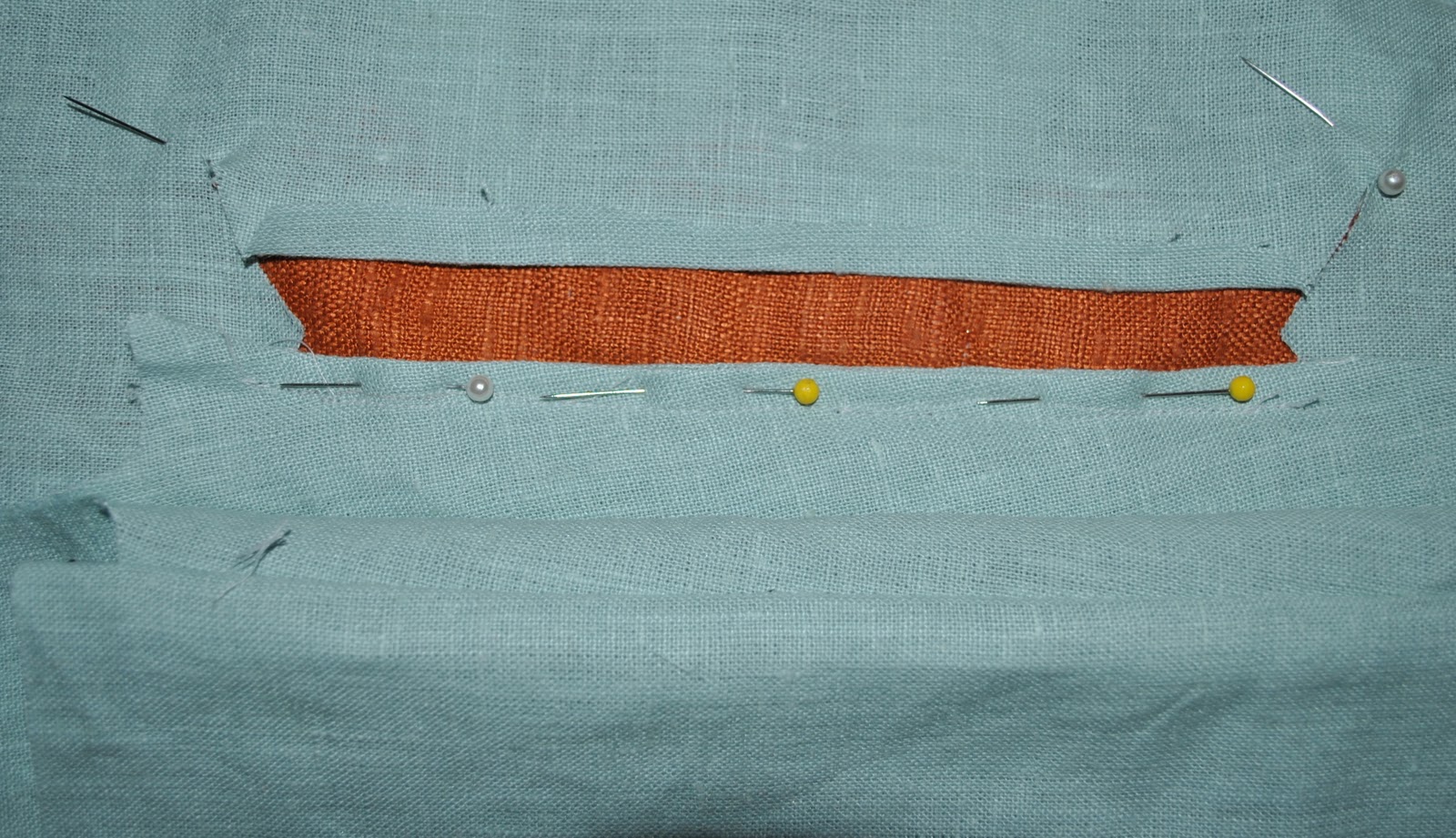
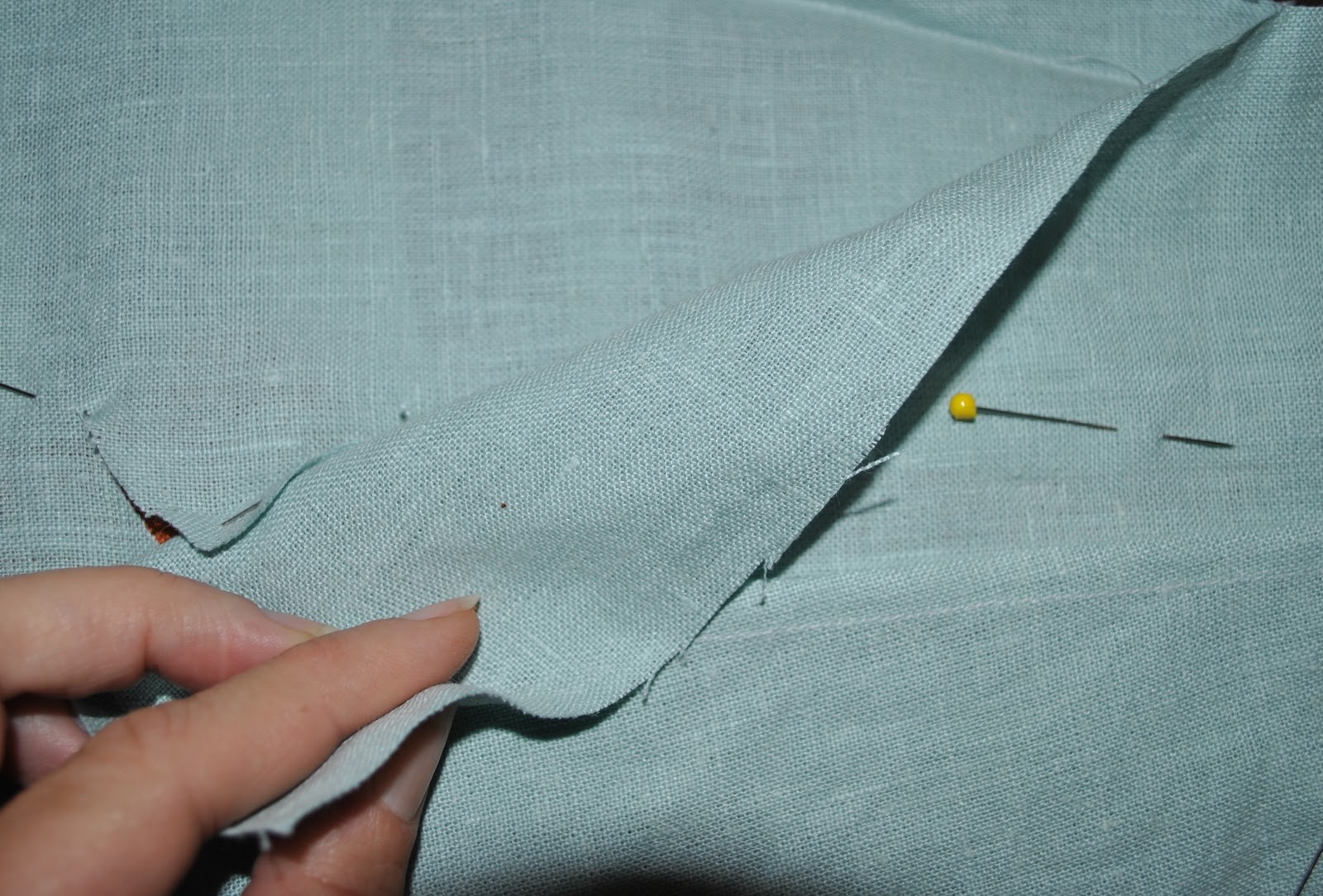
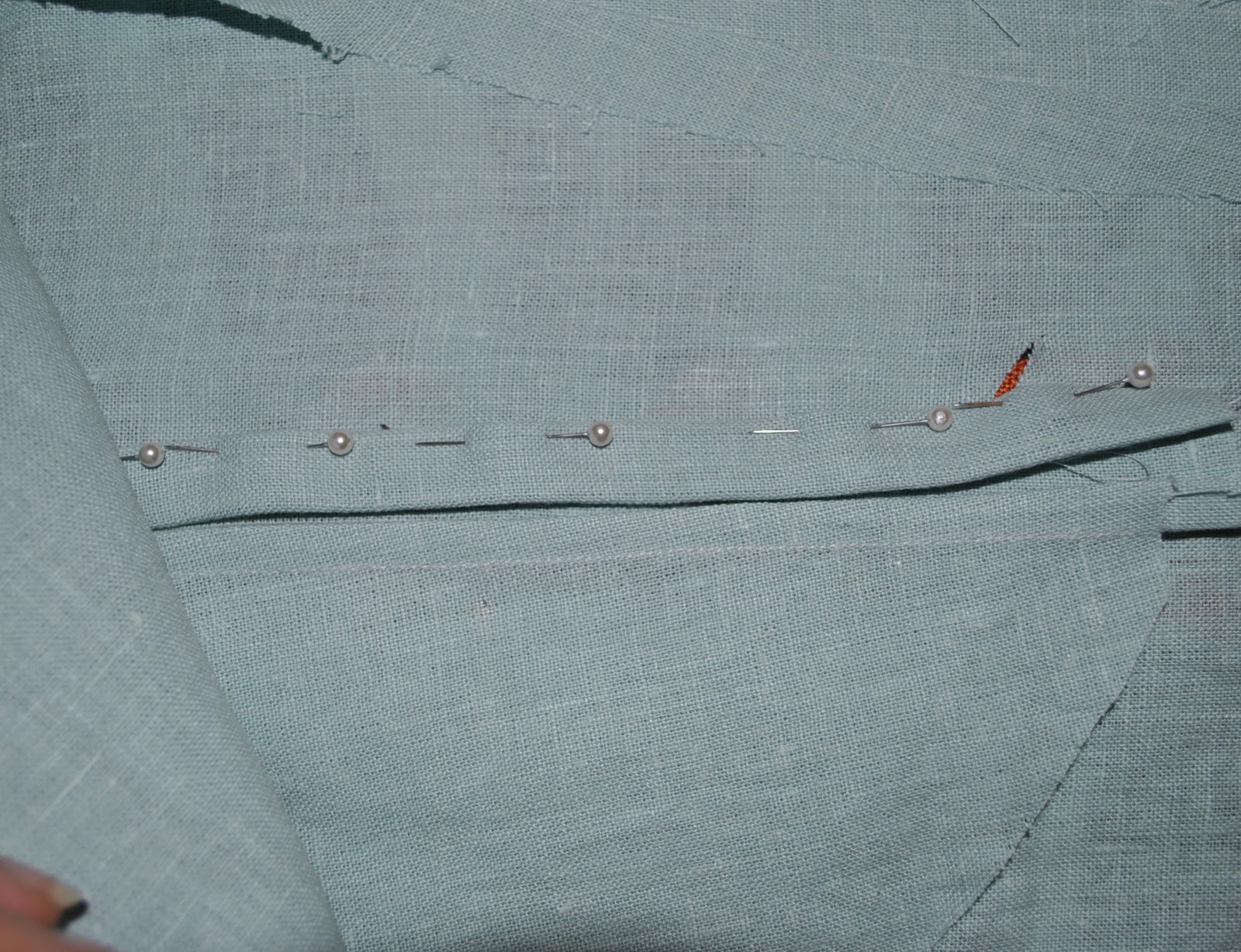
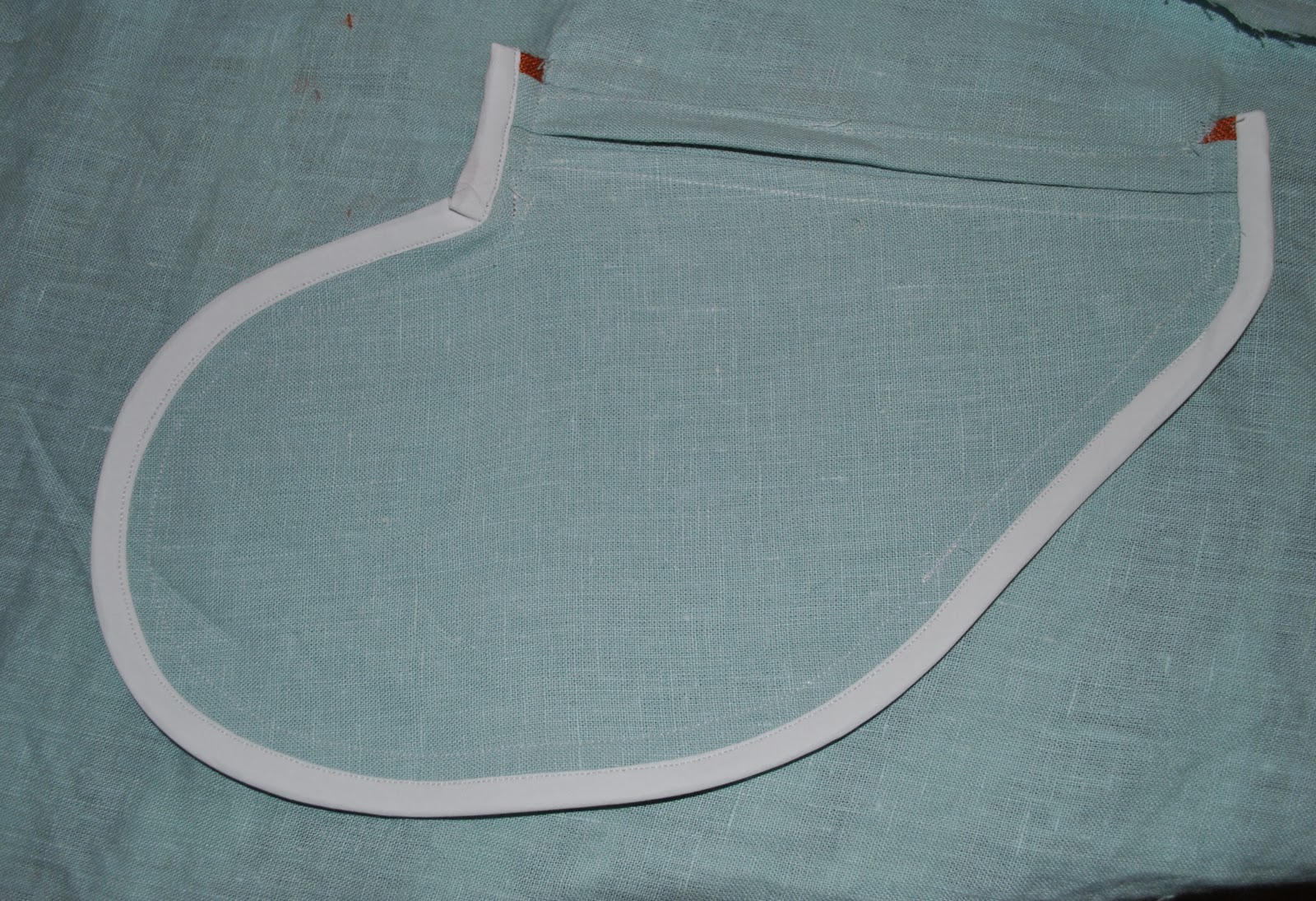
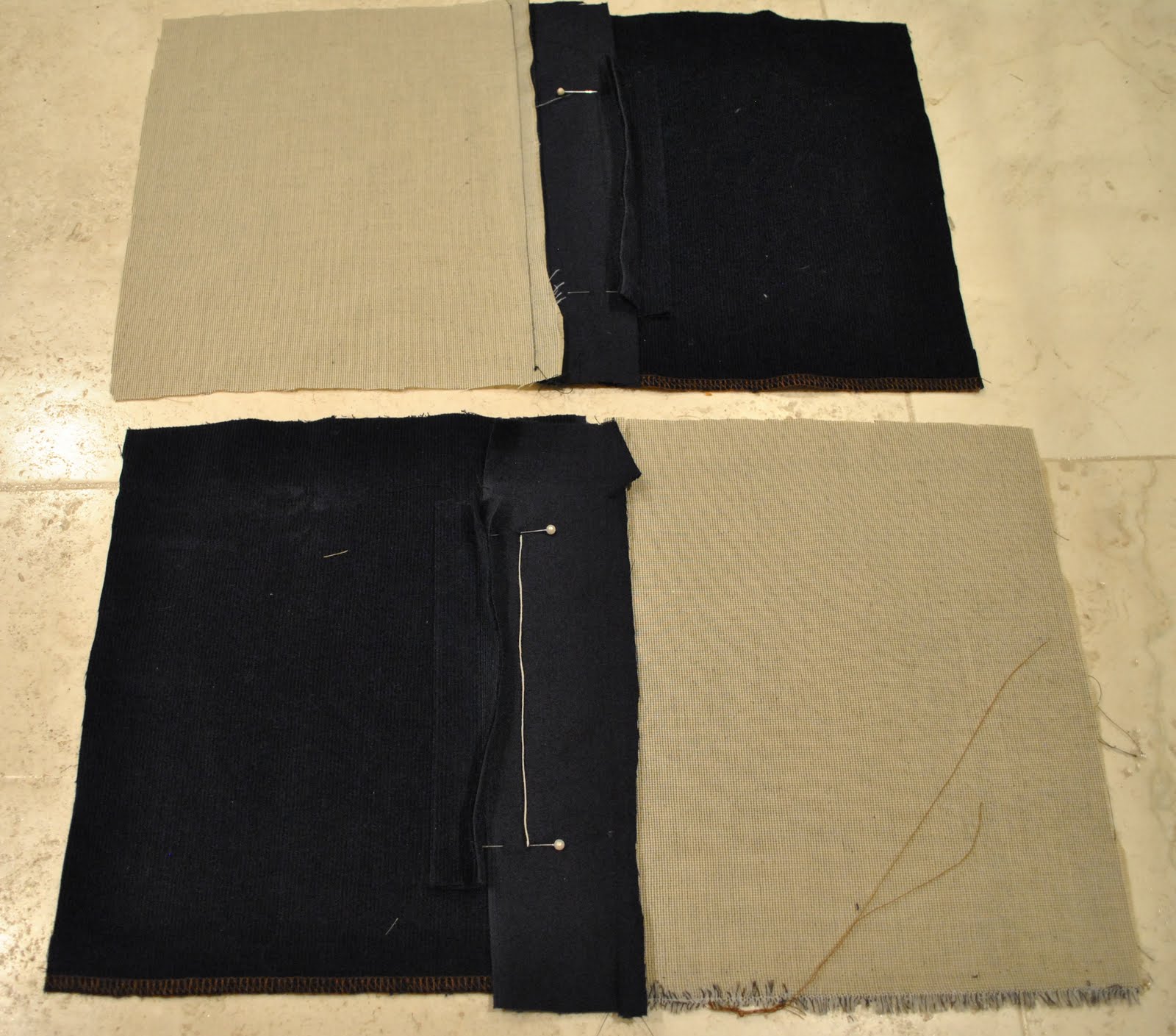
Now sew the side seams of the garment in a regular 1.5cm (5/8″) seam allowance, to a point just a couple of stitches below the the junction of the side seam and where the pocket bag seam will start.  Back sew those few stitches to the start of the pocket bag seam, turn and continue sewing around the pocket bag.  Do the same back sew for a couple of stitches up in to the pocket opening at the lower edge of the pocket bag seam, and then continue sewing the remainder of the side seam.  The seam junctions, with the narrower pocket SA within the side SA, will look like so:

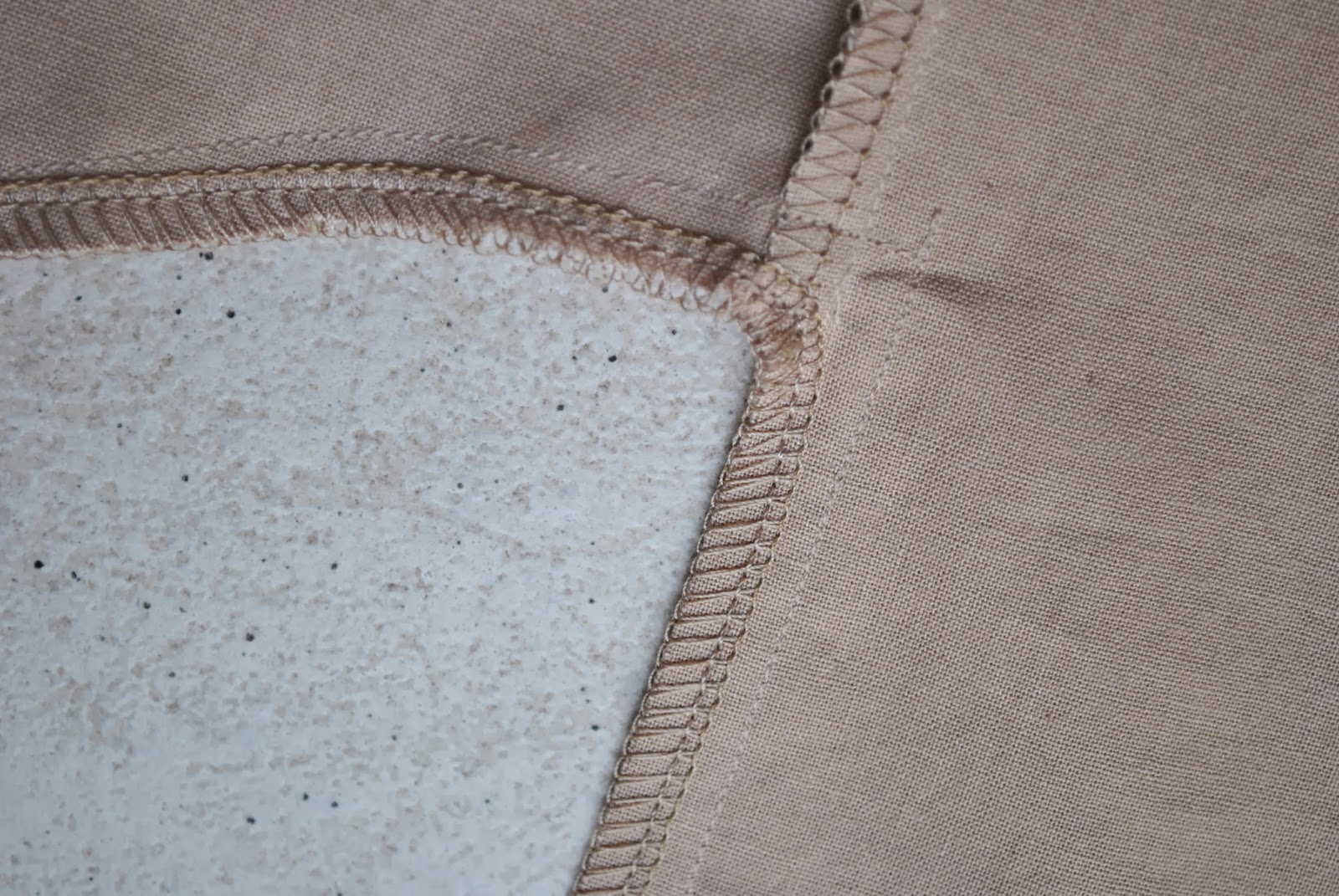
Finish the seam allowances with either overlocking or HongKong seaming, if desired.

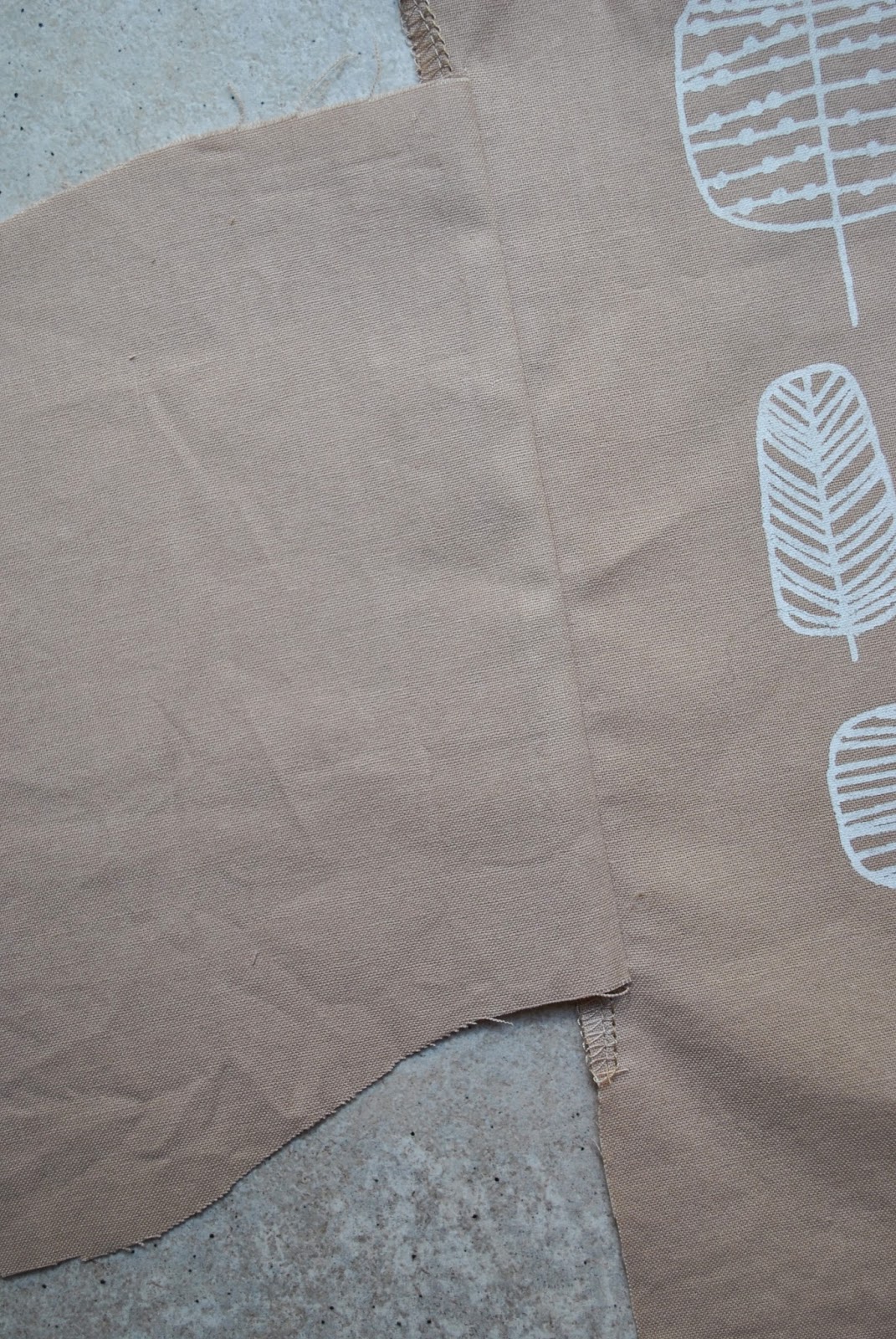
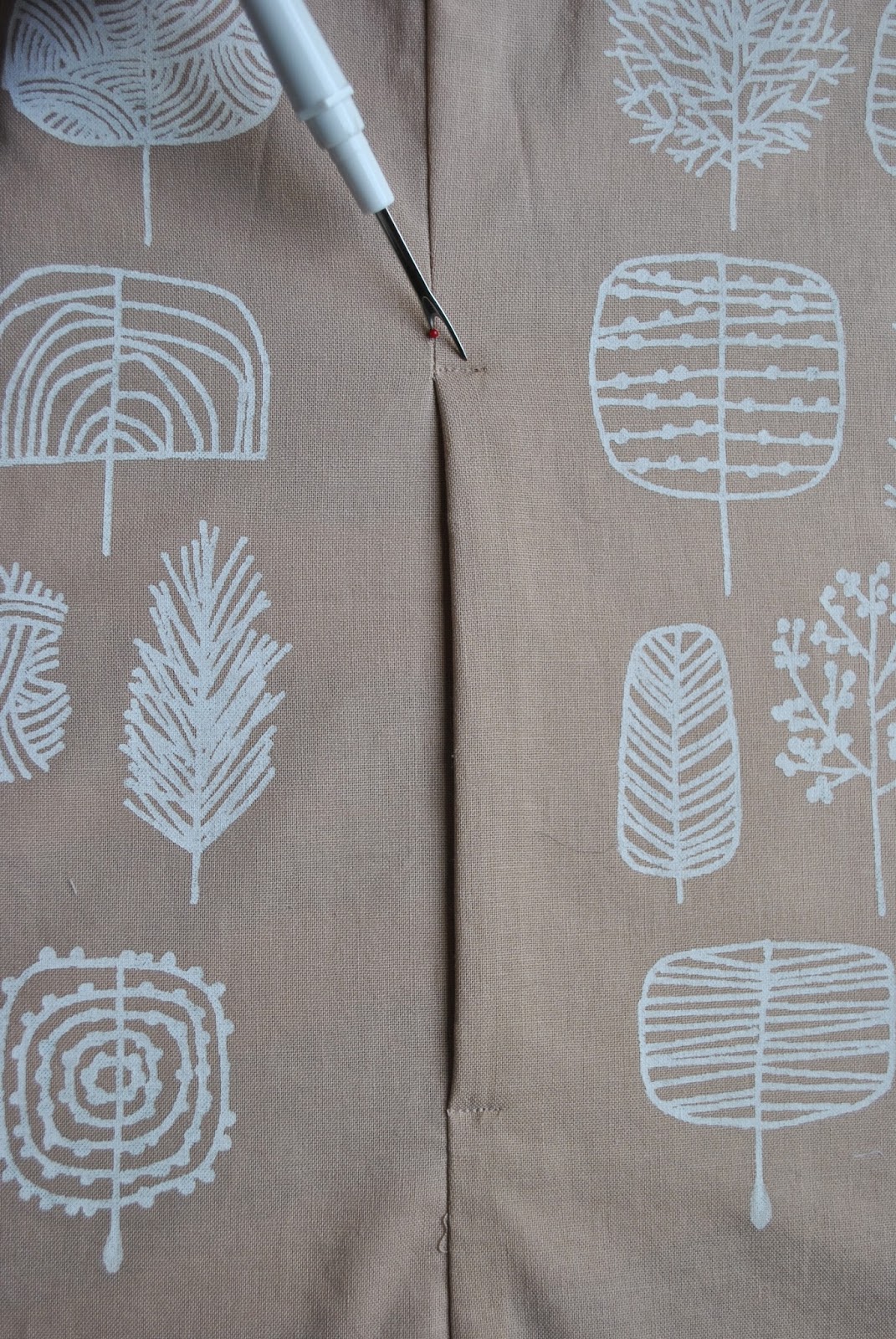
Press the pocket bag and all seam allowances towards the garment front.  To keep the pocket bag permanently sitting frontwards, stitch all the seam allowances to the garment front, in a short row of stitches at the upper and lower pocket opening of the pocket.  Stitch from the right side of the garment, and just go forward and reverse a few times.

E finito!
Optional; I also stitched the lower edges of my pockets to the lower hem allowance of this top to give them an extra tethering point but you wouldn’t ordinarily do any more stitching.  I just lucked out with the size and space there!

pinterestmail

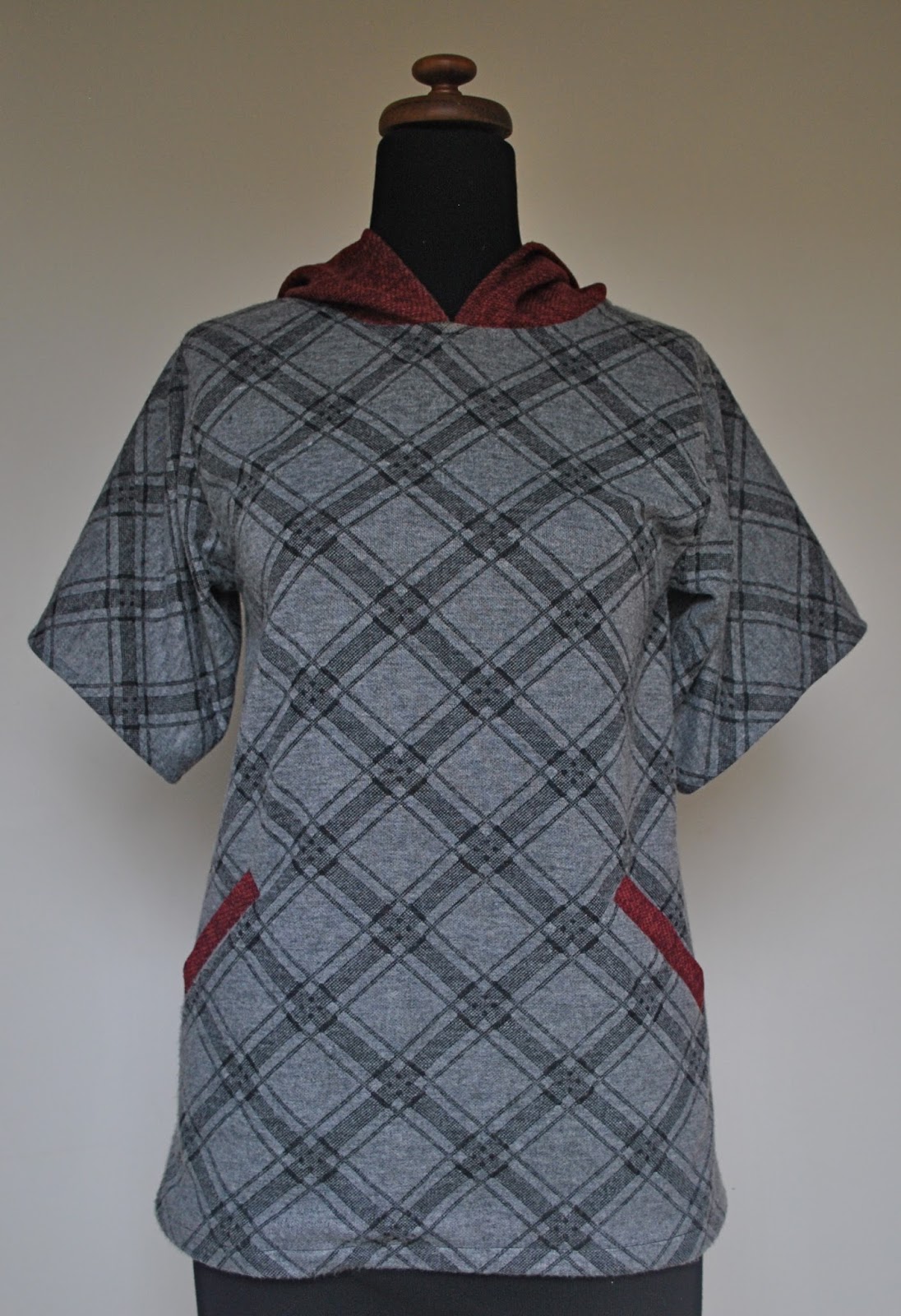
The Alessa hoodie

… so called because Alessa of Farbenfreude gave this fabric to me in a recent giveaway… thank you so much Alessa!
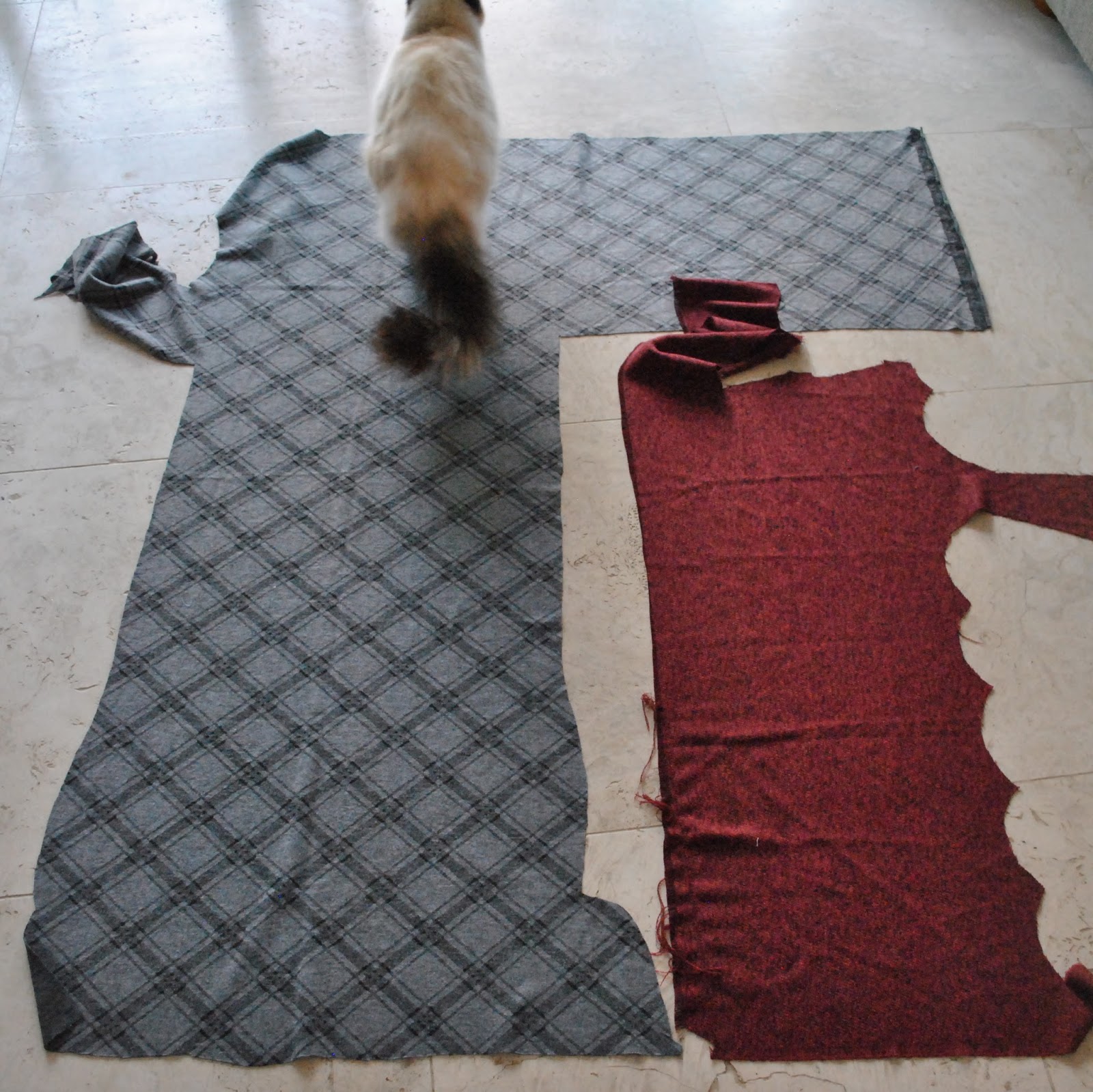
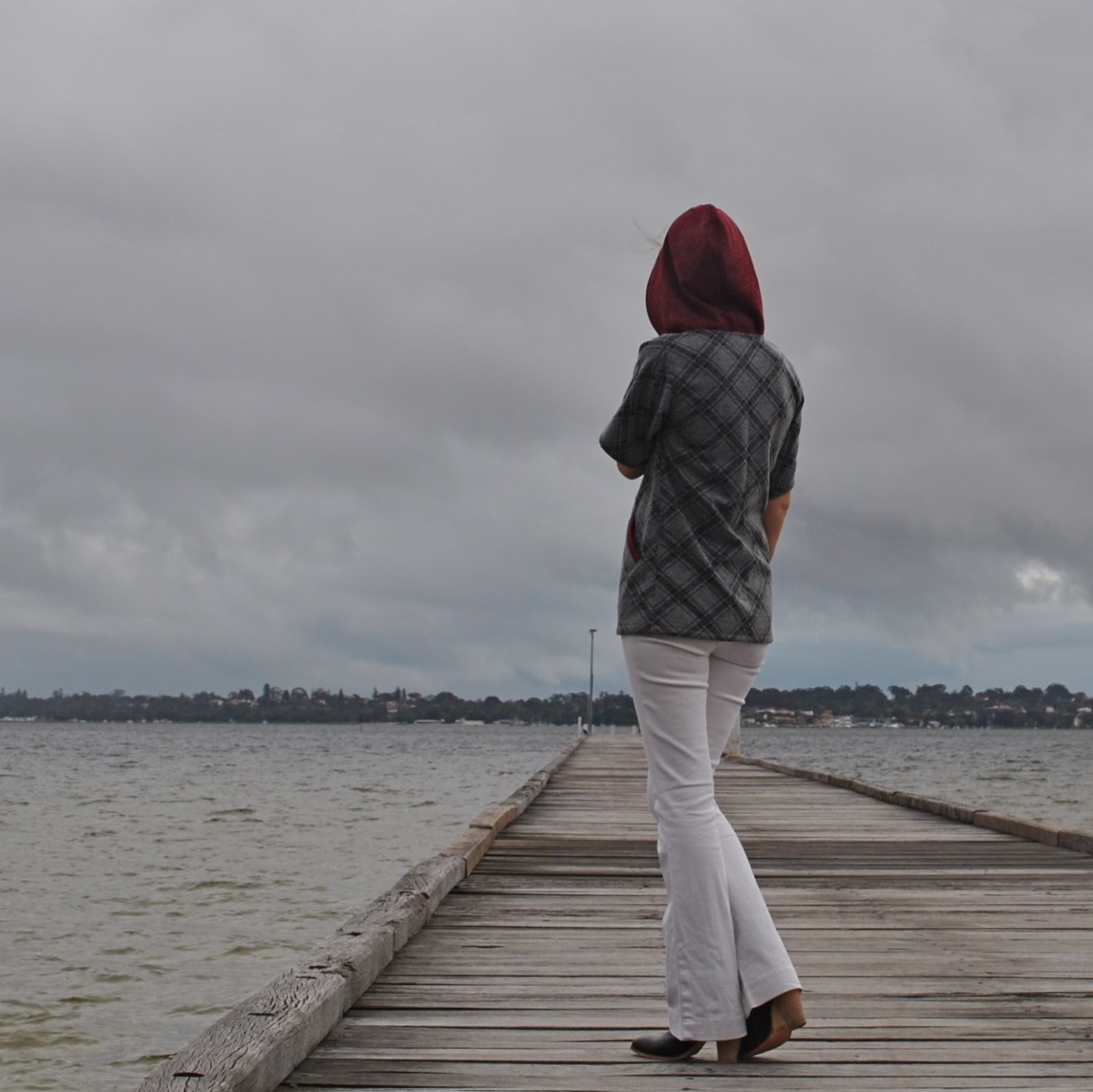
It is very nice fabric, a largish piece of soft fluffy charcoal grey non-stretchy knit stuff with a diagonally printed black check pattern, and a smaller piece of raspberry red woven fabric with an almost chenille-y quality to it.  They went so nicely together so I decided to combine the two in one garment.

The cat should give an idea of the scale here; there was not much fabric and I had to get creative to make the most of the small pieces.  And just to clarify; that is not a whinge… I LOVE sewing challenges like this!
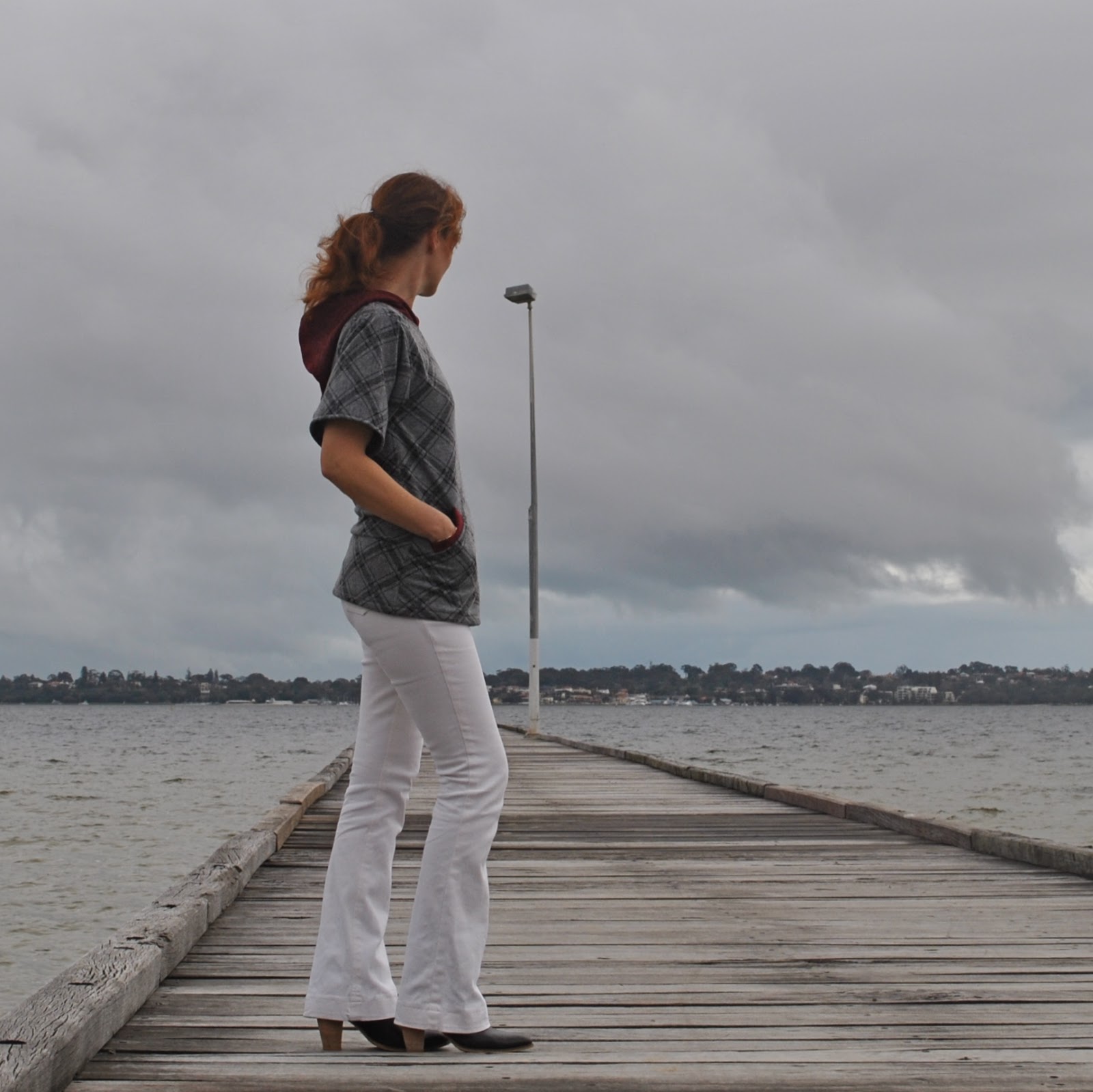
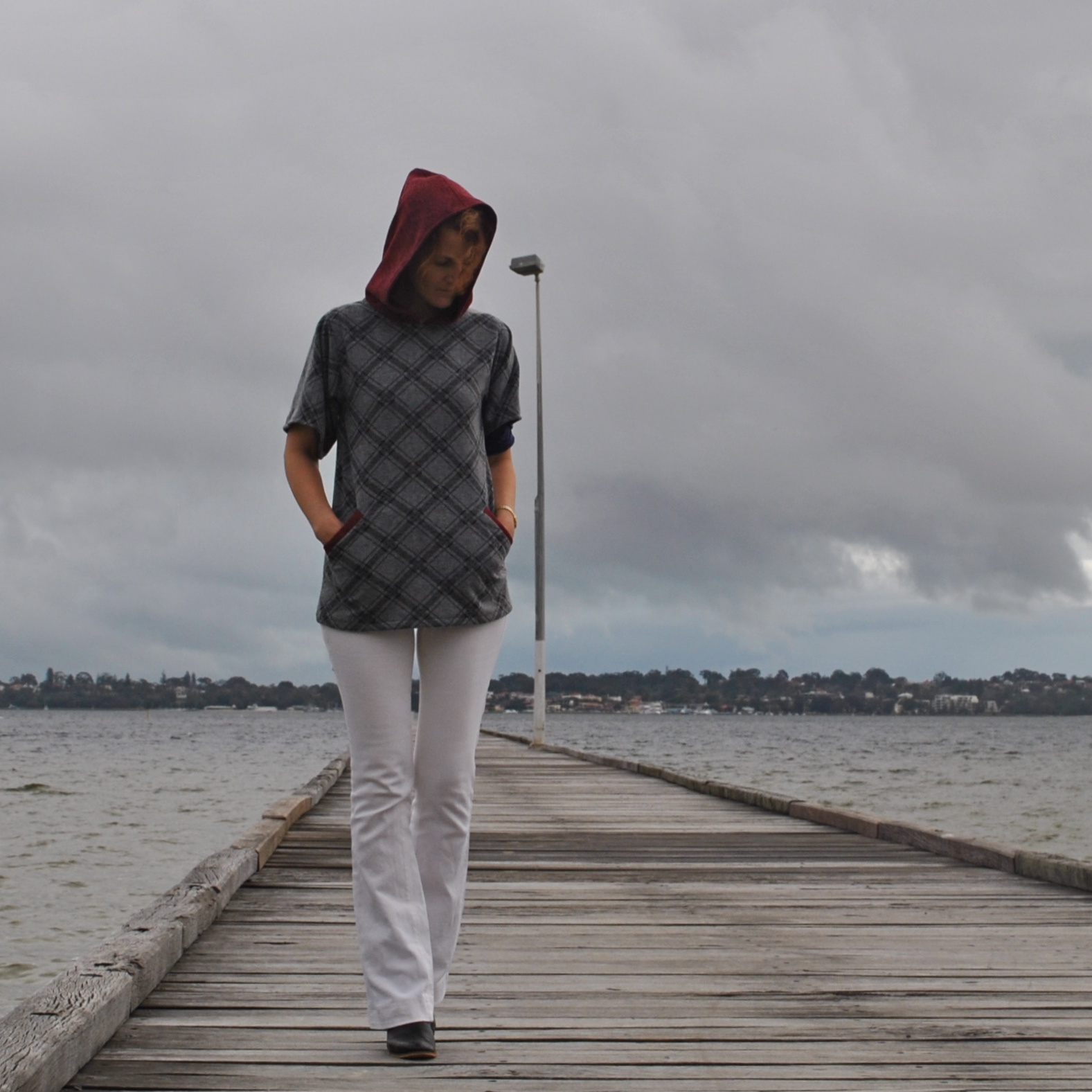
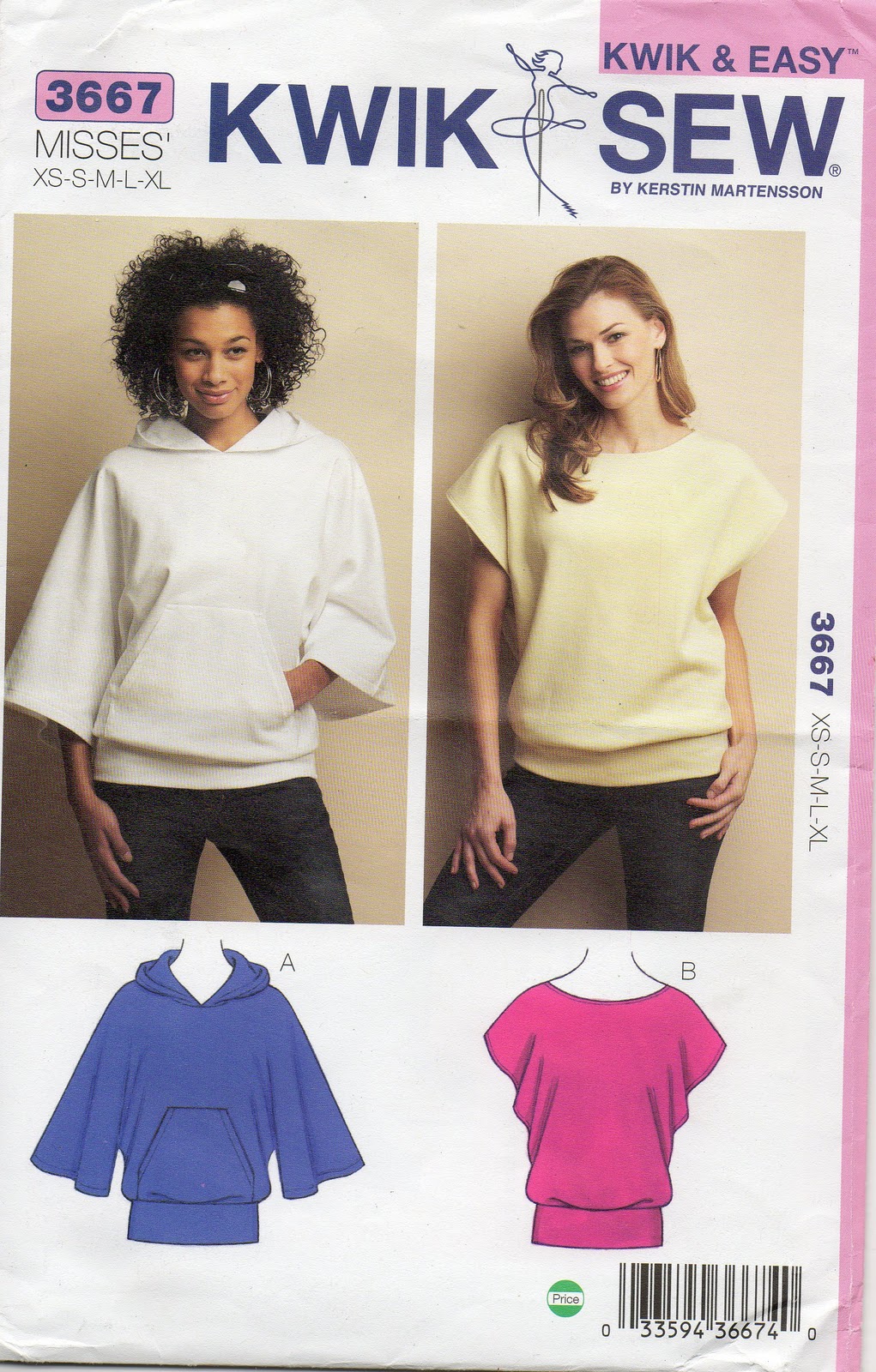
I made a slightly A-line tunic with plain set-in sleeves, and I cut the neckline and hoodie piece using KwikSew 3667.  I’ve used this hood piece in several garments now, and this pattern was also given to me, by Mary of biblioblog a few years ago.  I am so lucky to have such nice blogging friends!

Um, the hoodie looks quite different from my initial plan, which wasn’t a hoodie at all.  This is a recurring phenomenon, I make plans but frequently change my mind once I get cutting.  Indecisive? maybe! … but at least something will get made.  And I’m very pleased with the contrasting hood and welt pockets.
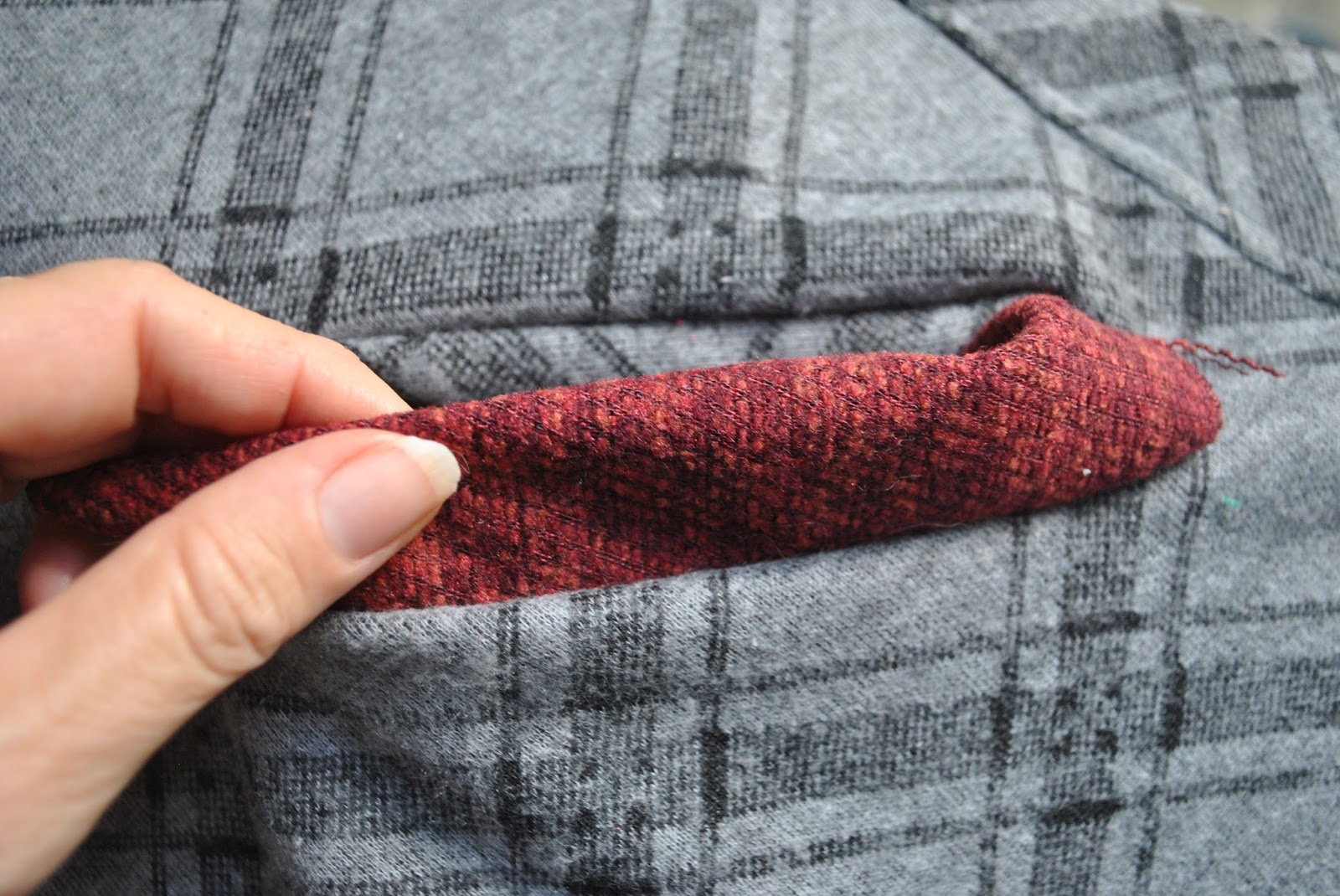
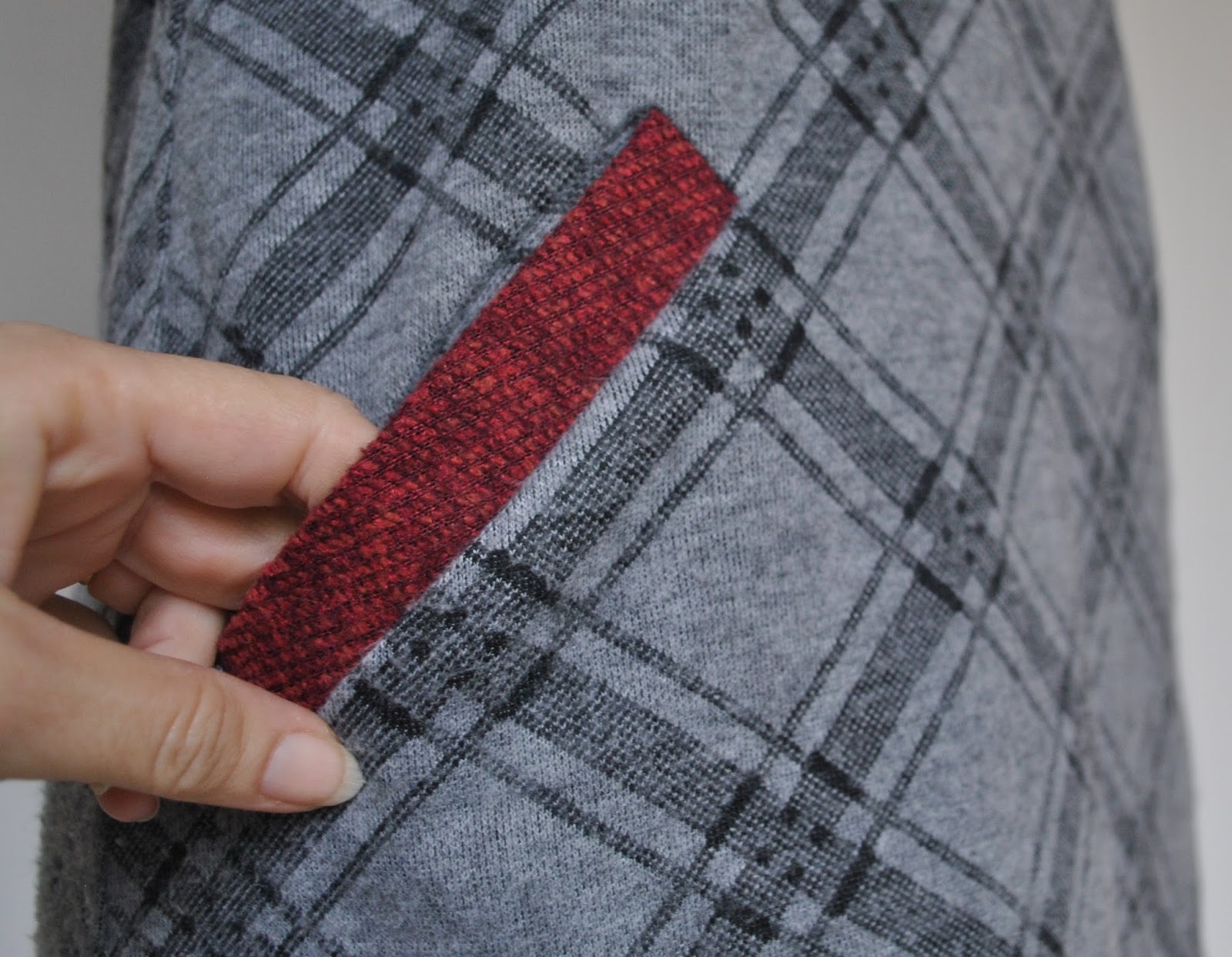
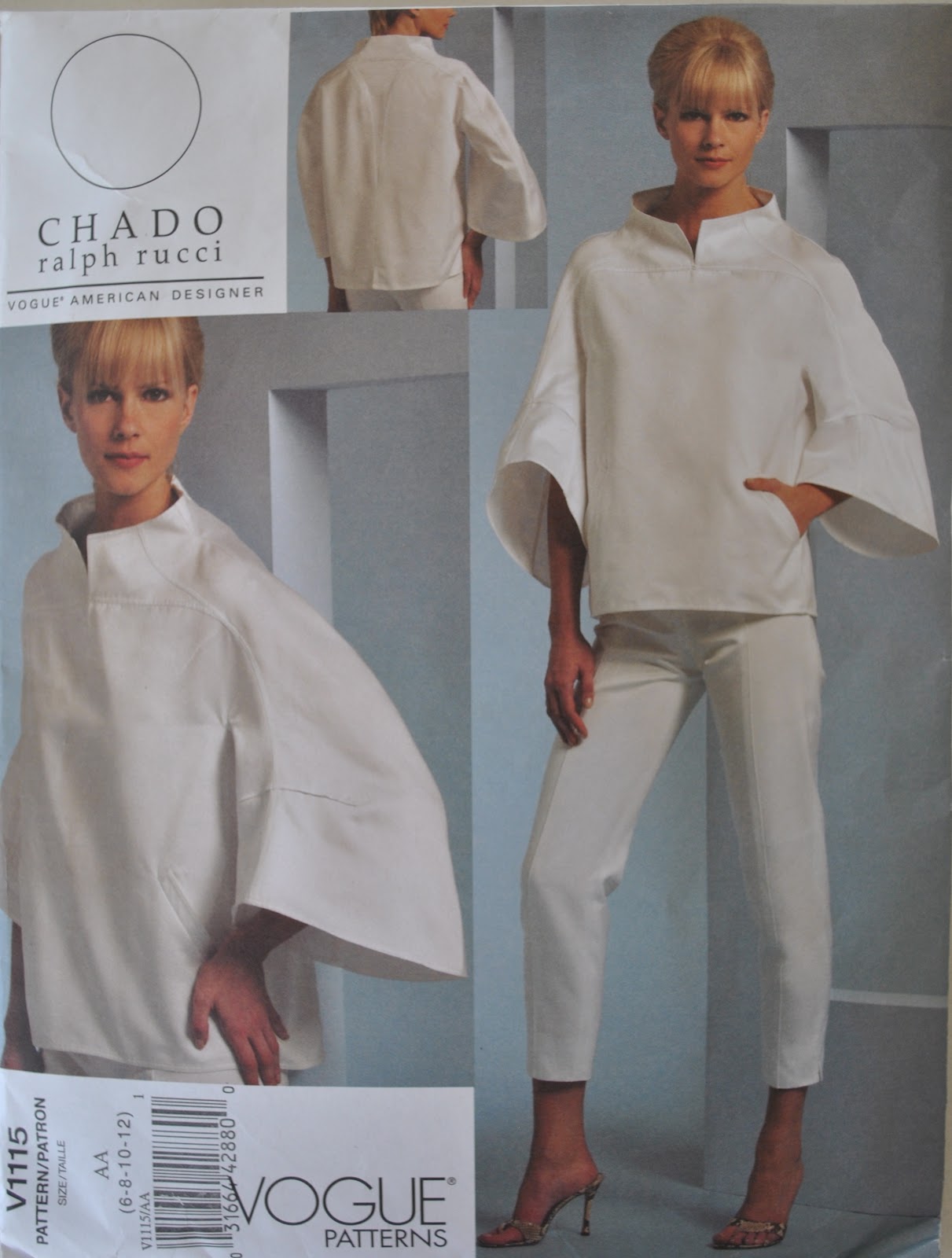
Welted pockets … woot!  I had just barely enough fabric for these!  I used the pocket piece from Vogue 1115, and the contrasting welt is not a separate piece; to save fabric I cut the upper pocket piece with an interfaced extension at the opening, which folds back on itself to the inside becoming an integrated welt…  doing this skips a seam underneath, resulting in a little less fabric bulk.  I might just stick to this method from here on out!

All the raw seam allowance edges are overlocked together, and then I applied a cheat’s version of flat-felling because the fabric is quite “bouncy” and the seams didn’t press flat very satisfactorily.  This involved just laying the overlocked seam allowance down to one side and top-stitching them to the garment.

Details:
Hoodie; self-drafted, with the hood piece from KwikSew 3667
Jeans; Burda 7863 modified, ivory stretch denim, details here
Boots; nylon, from Zomp shoes

pinterestmail

the Panellist

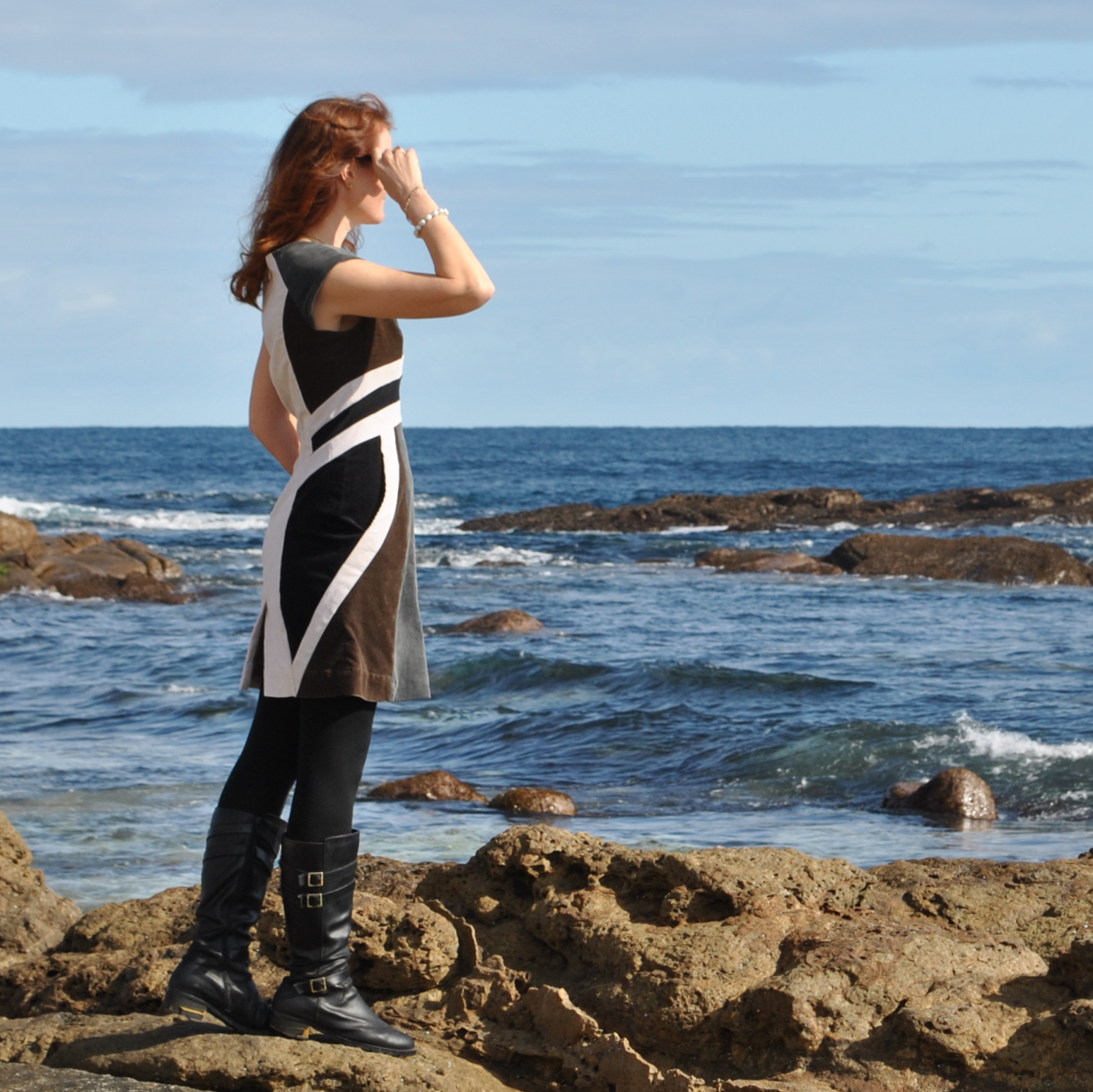
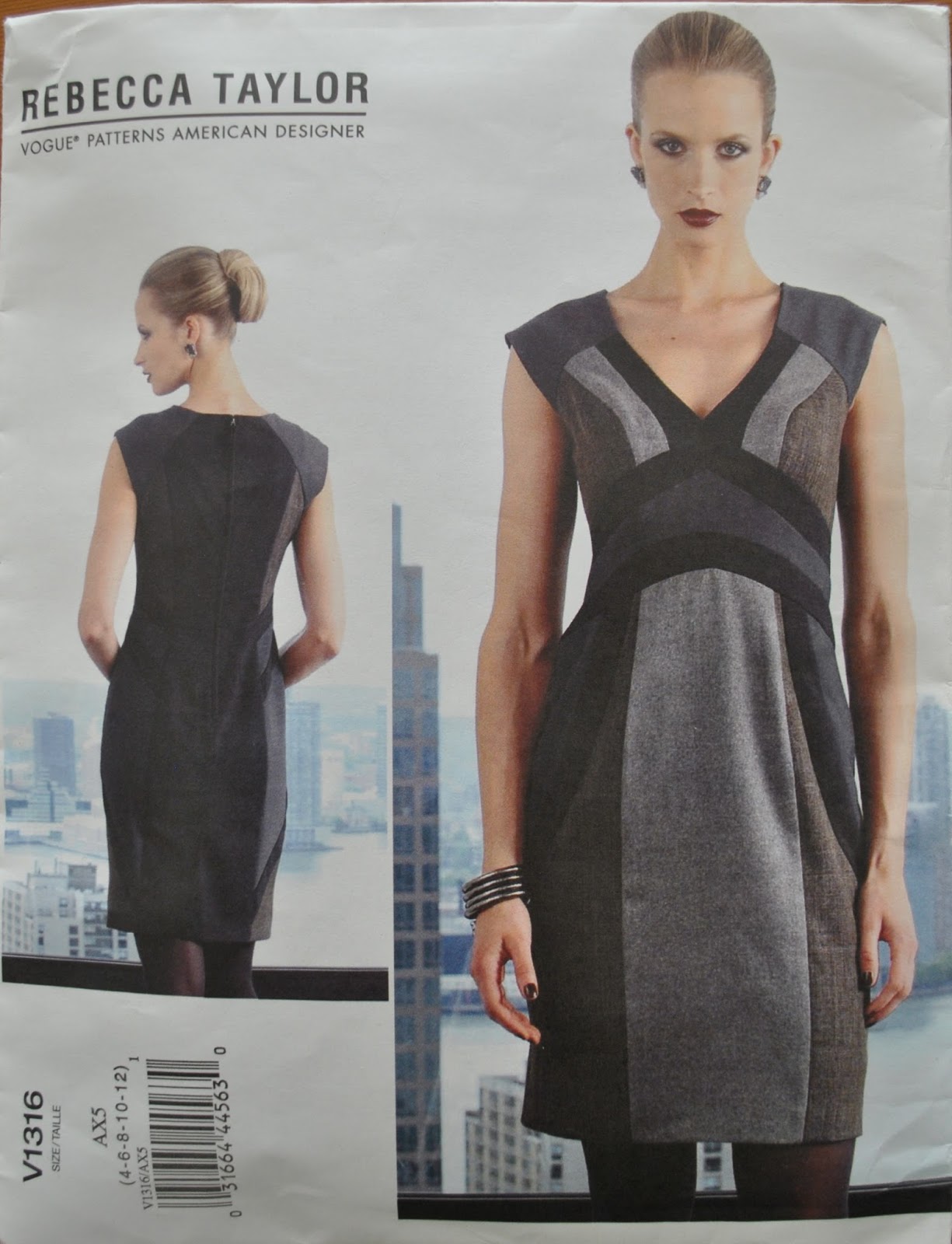
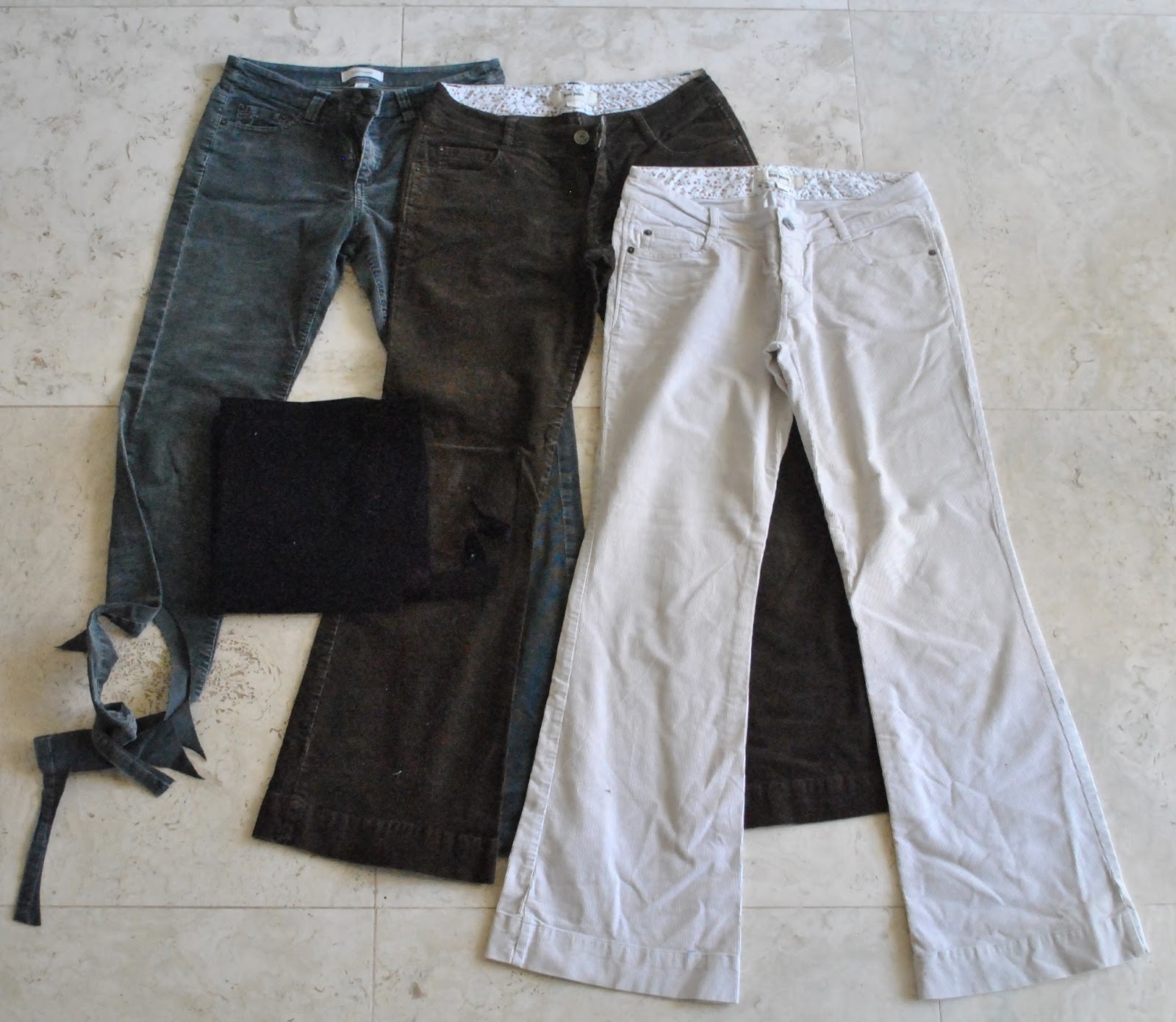
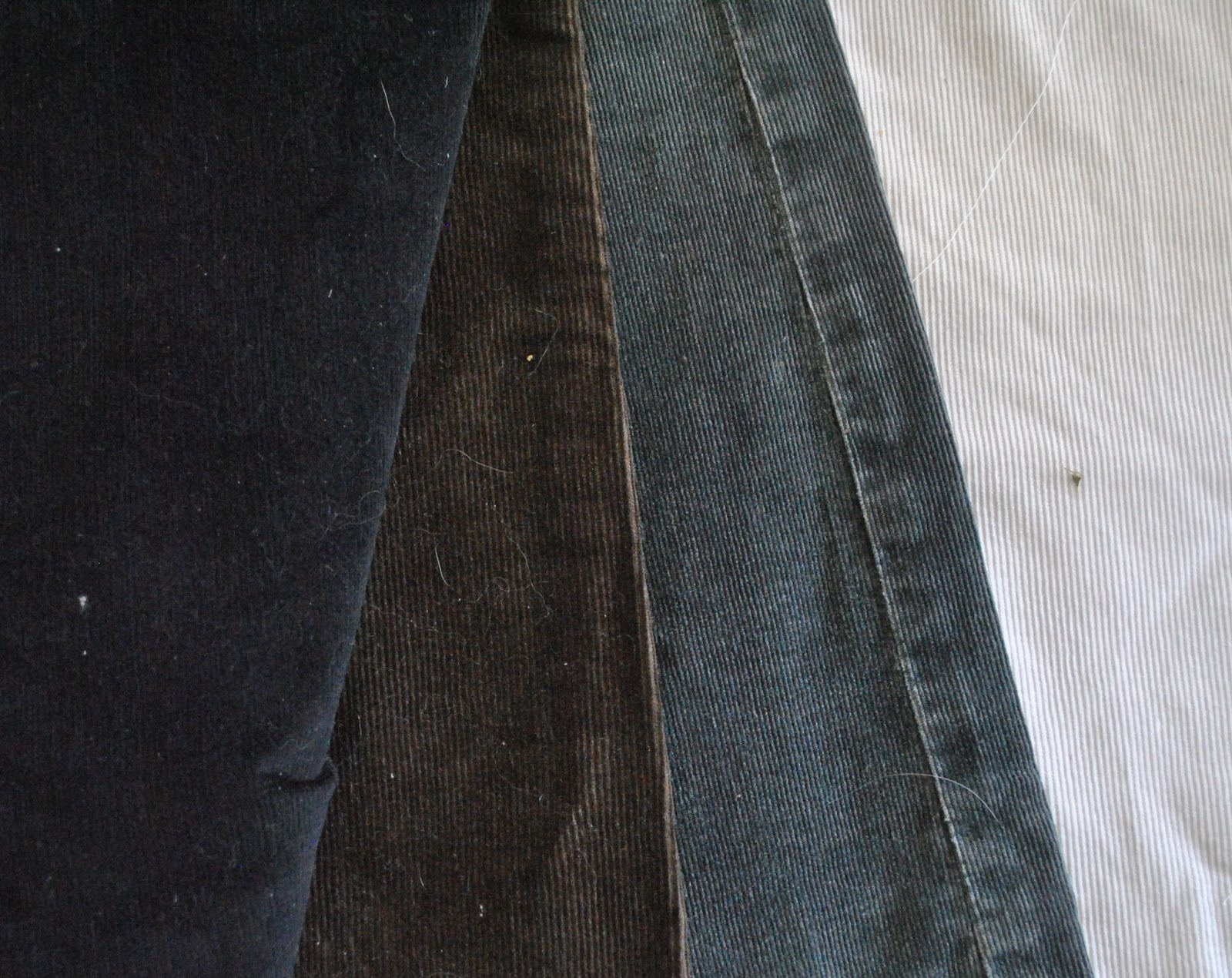
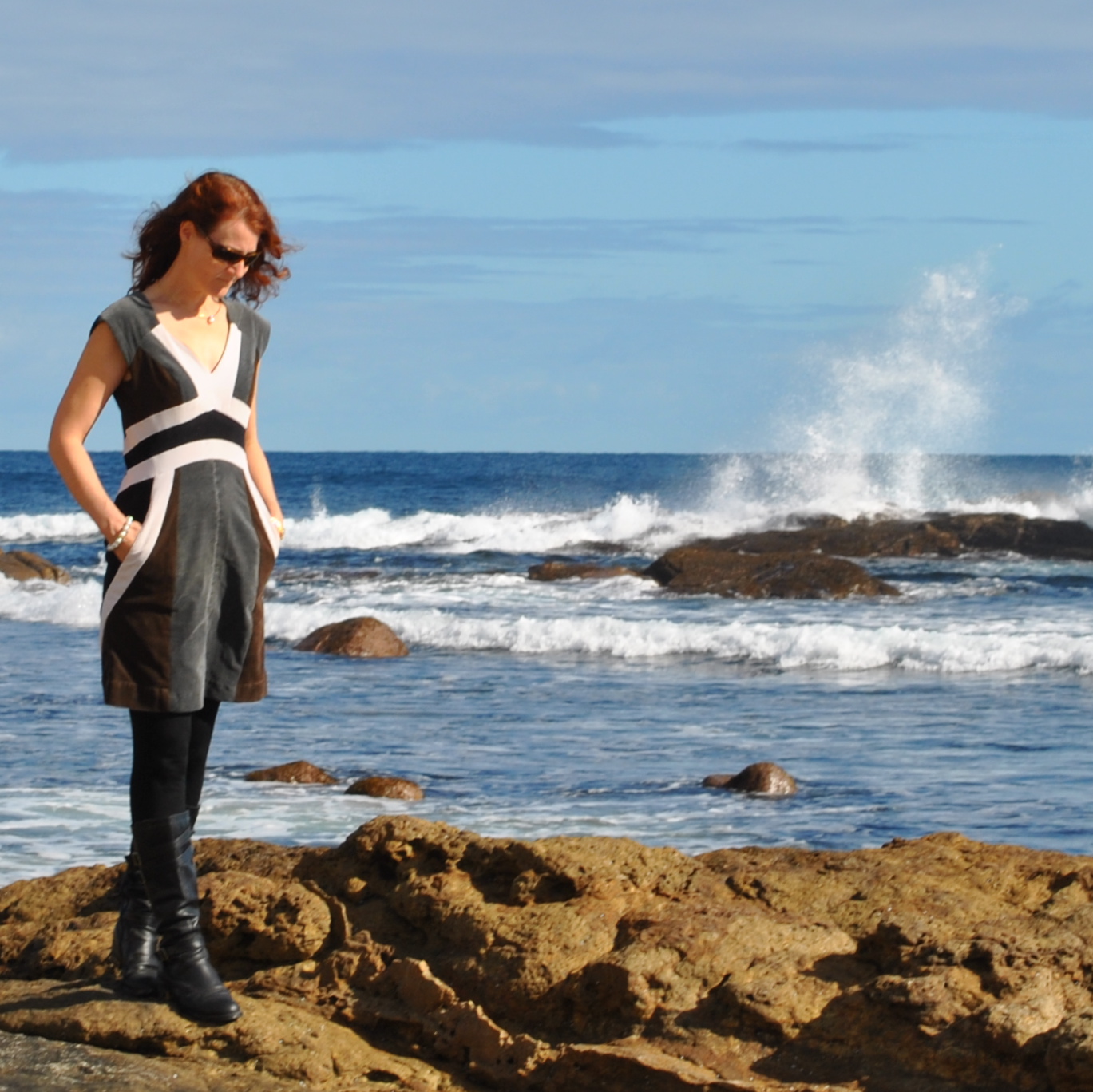
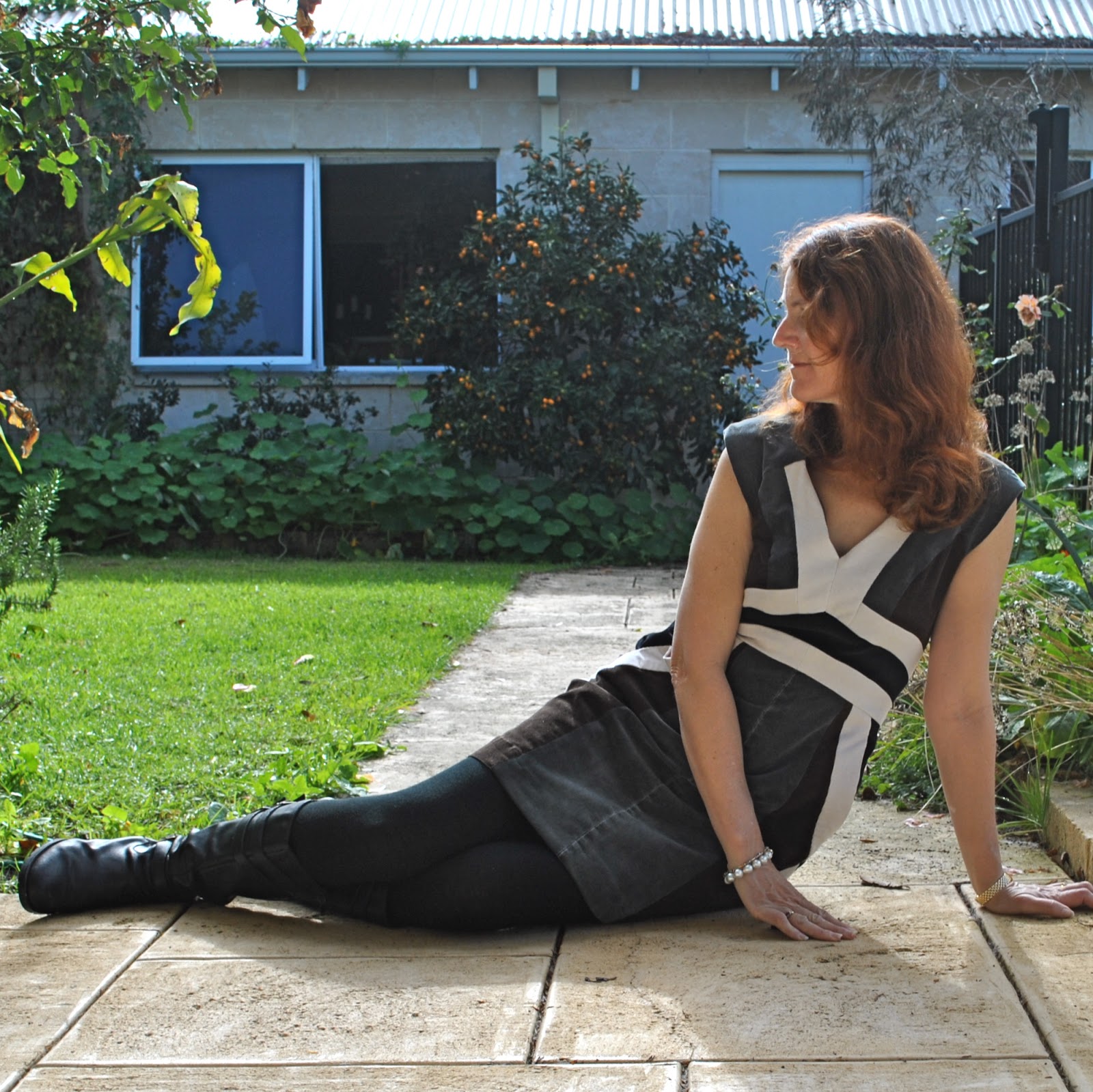
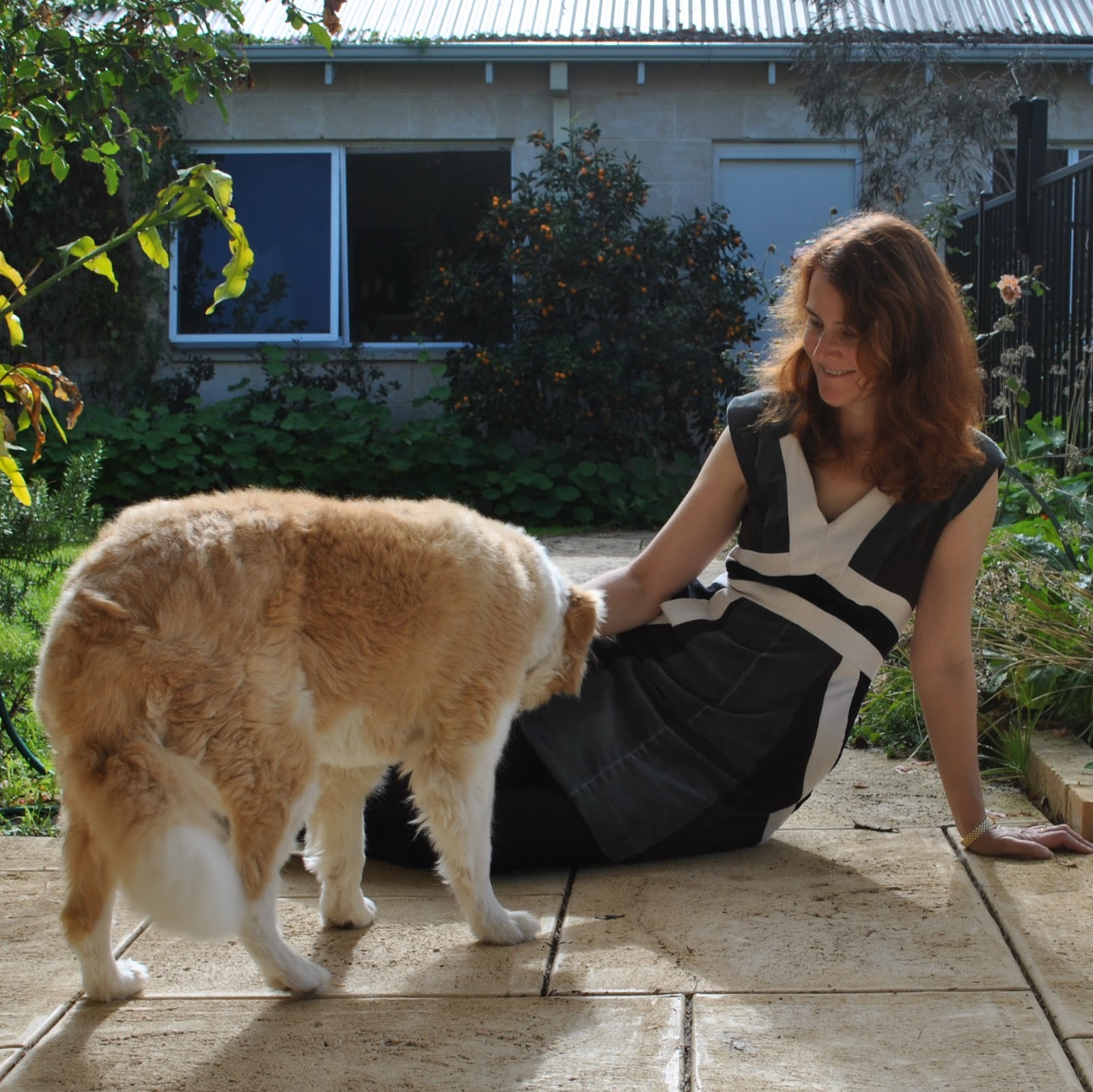
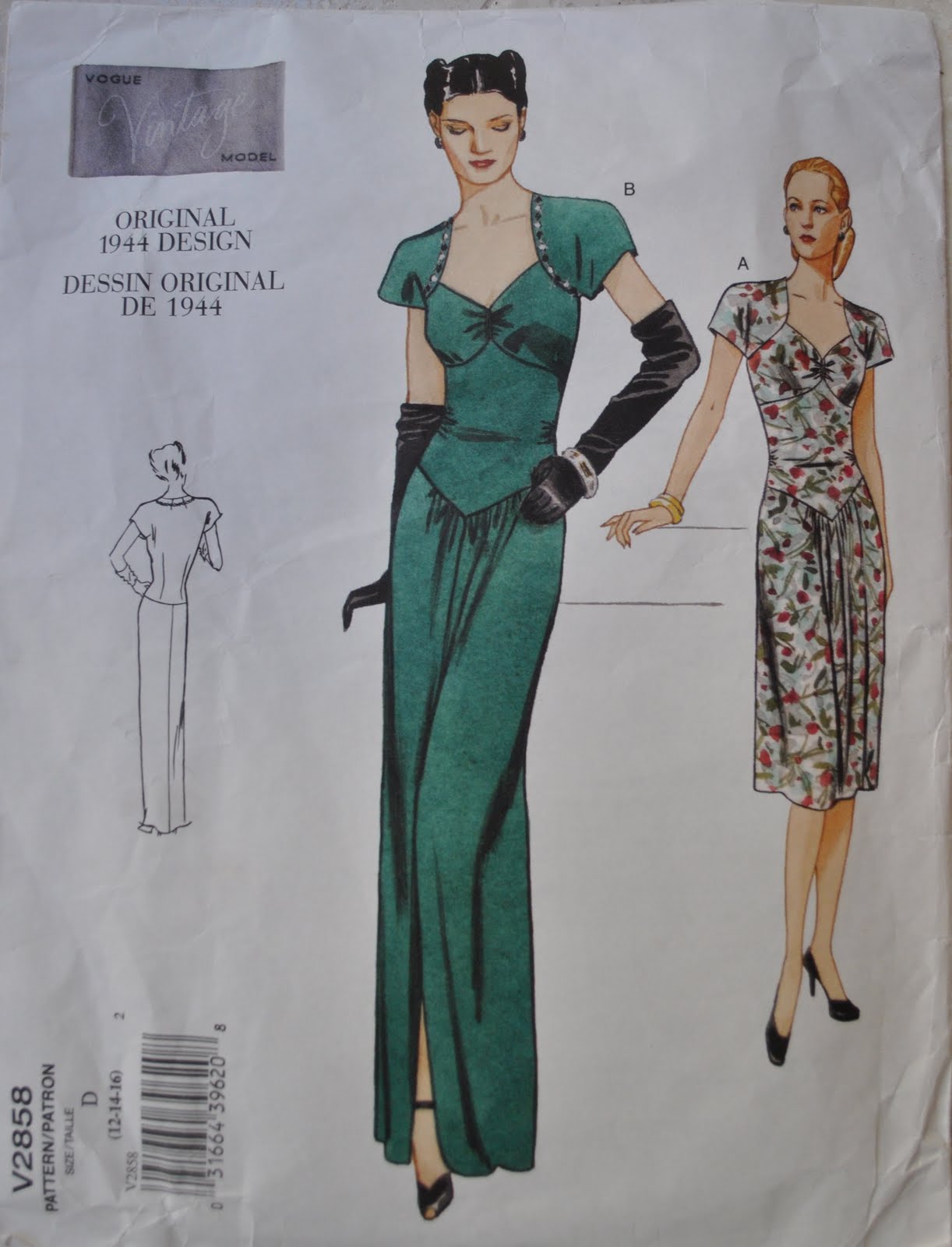
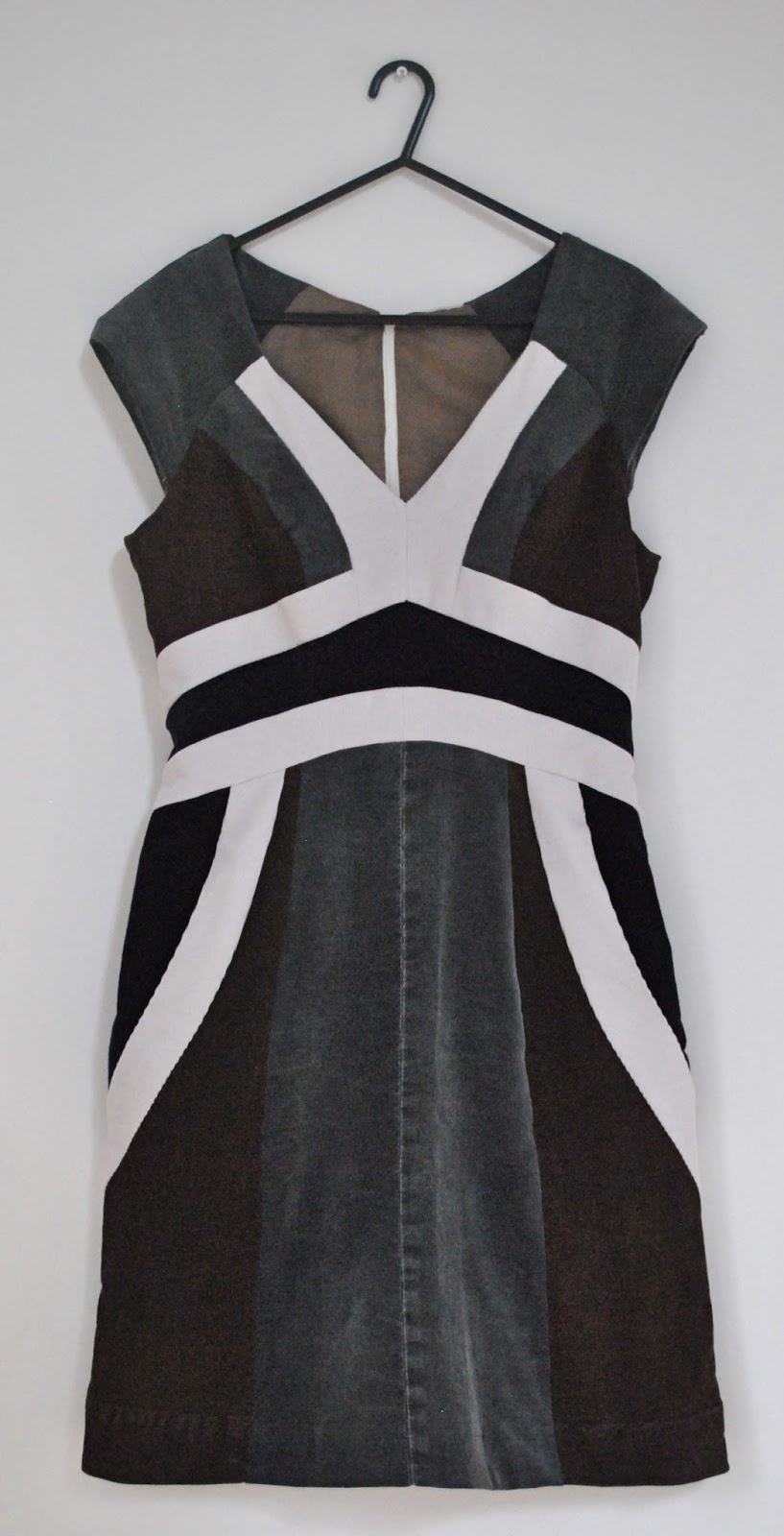
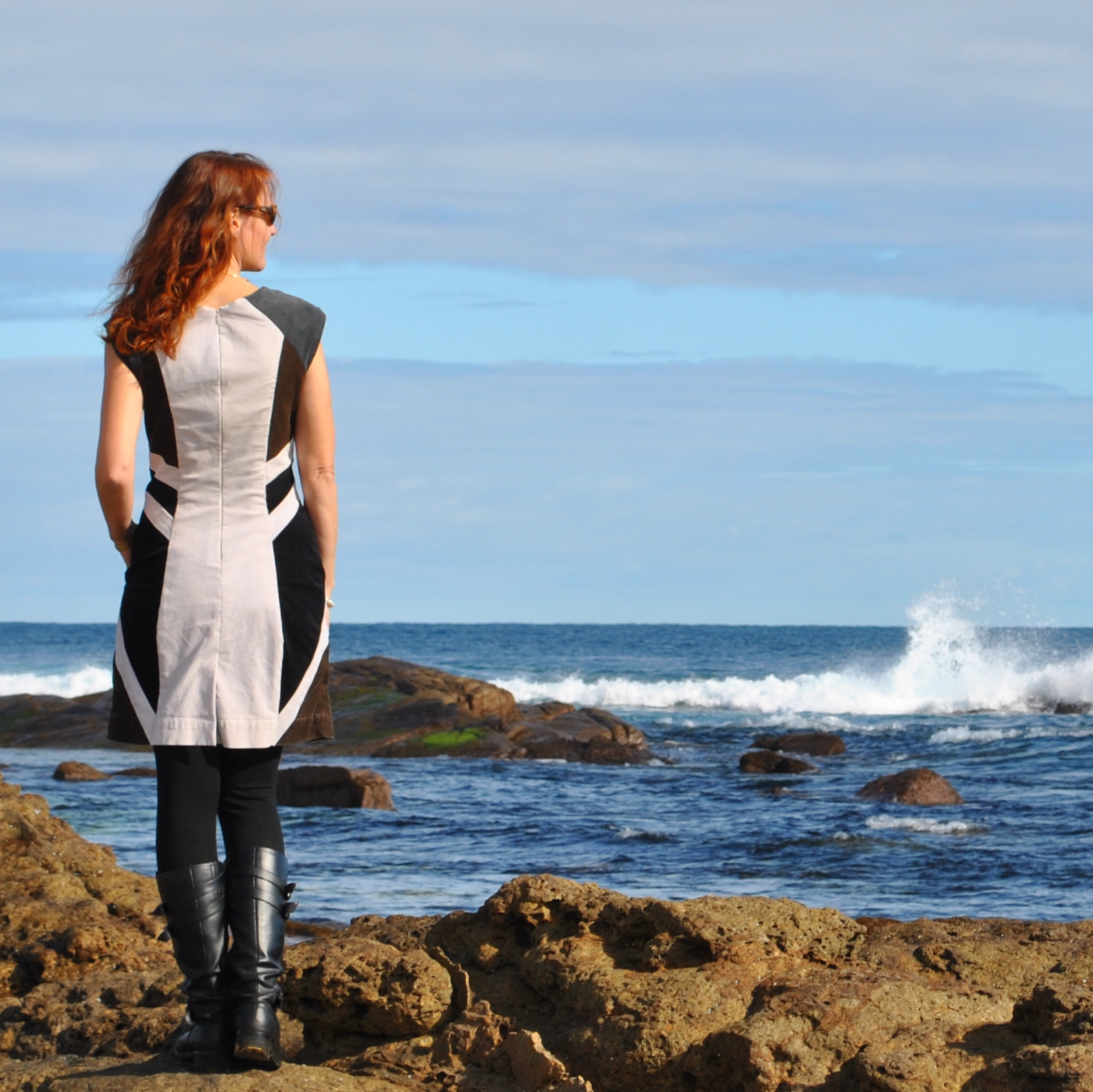
I’ve made a new dress! a dress comprised of panels and bands.  This is Vogue 1316  and I made it using three pairs of old corduroy jeans, ivory, chocolate and a faded black; plus a piece of new black corduroy, itself a leftover from my black corduroy flares-now-bootlegs.  Ha! hanging on to those old jeans and leftover scraps payed off… eventually.  It can be seen by the mangled leg of the jeans on the left that these have been partially harvested previously, when I made the Black parliament…

I managed to get the pieces for the dress, following the grain AND the nap (no small feat) from these jeans, with only a few piecings necessary.  The original hem has been retained and incorporated into the lower hem of the skirt in each of the ivory and chocolate brown lower skirt panels.  The widest panels I cut from the leftover piece of black corduroy, because that piece was the widest… the bonus is that this is the hip area and the darkest fabric situated here gives a slimming effect.
The lower band of the dress is a very wiiide piece, and since jeans legs are not wide, this required joining three pieces together.  But hey, I don’t think the joins scream “hey lookee here, seam!” very much, so I think I get away with it.

Also the lower front is cut over the side seam from a jeans leg, with the old side seam in the new centre front.

So, it can be seen above that my dress has luvverly deep pockets.  The pattern does not provide for pockets.  When I first saw the picture on the pattern envelope I thought that it did.  That side band curving down from the waist and around to the back was situated in perfect hip pocket position, so it was a reasonable assumption to make.  Perusal of the fine print revealed that I was sadly mistaken.    Early elation (and it has pockets!) turned to disappointment (oh it doesn’t have pockets), turned to a dawning realisation (hey, it could so easily have pockets) turned to a firm resolve put those missing pockets back into the design where they were so inexplicably lacking (dammit, that dress really should have pockets!)

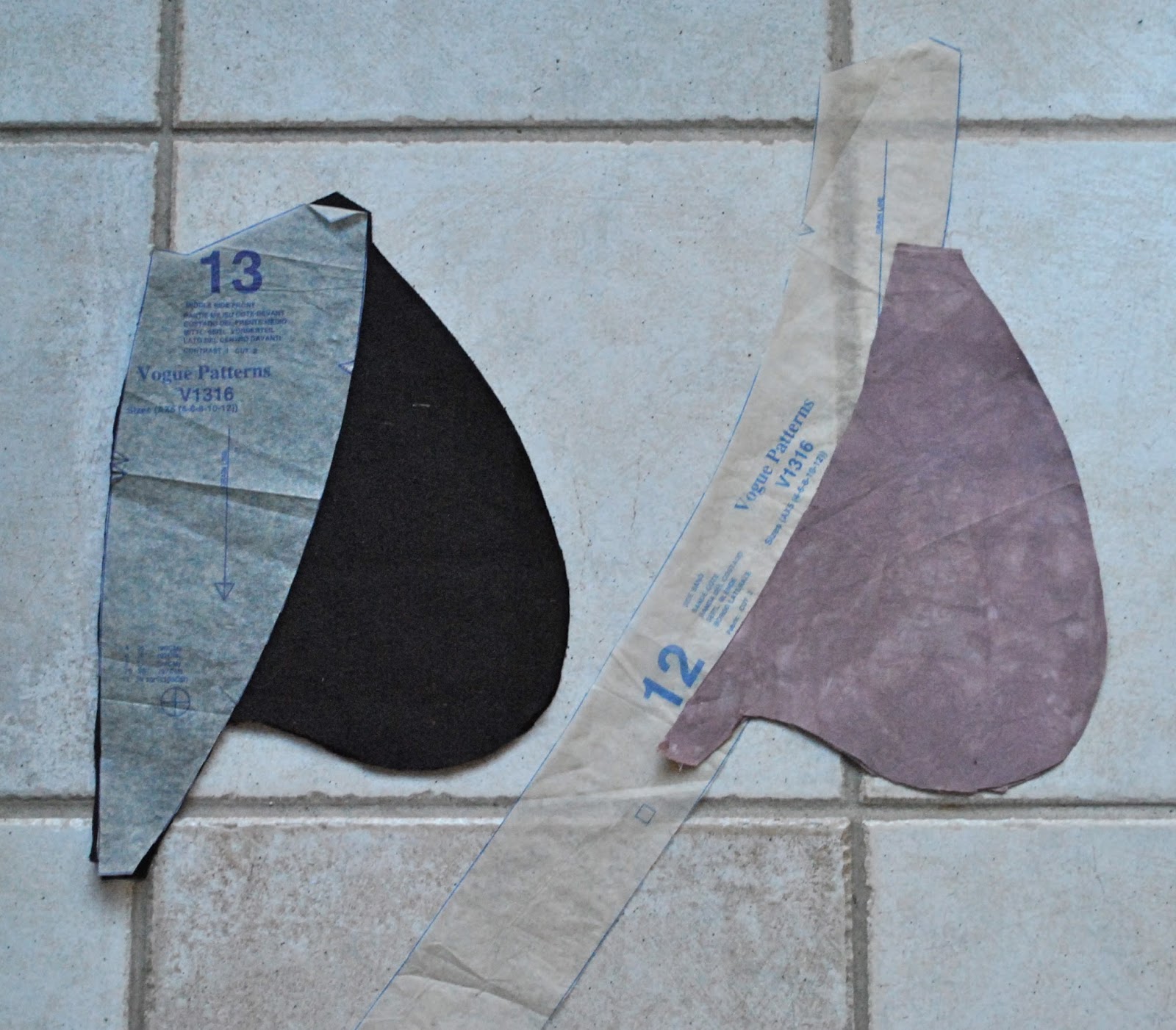
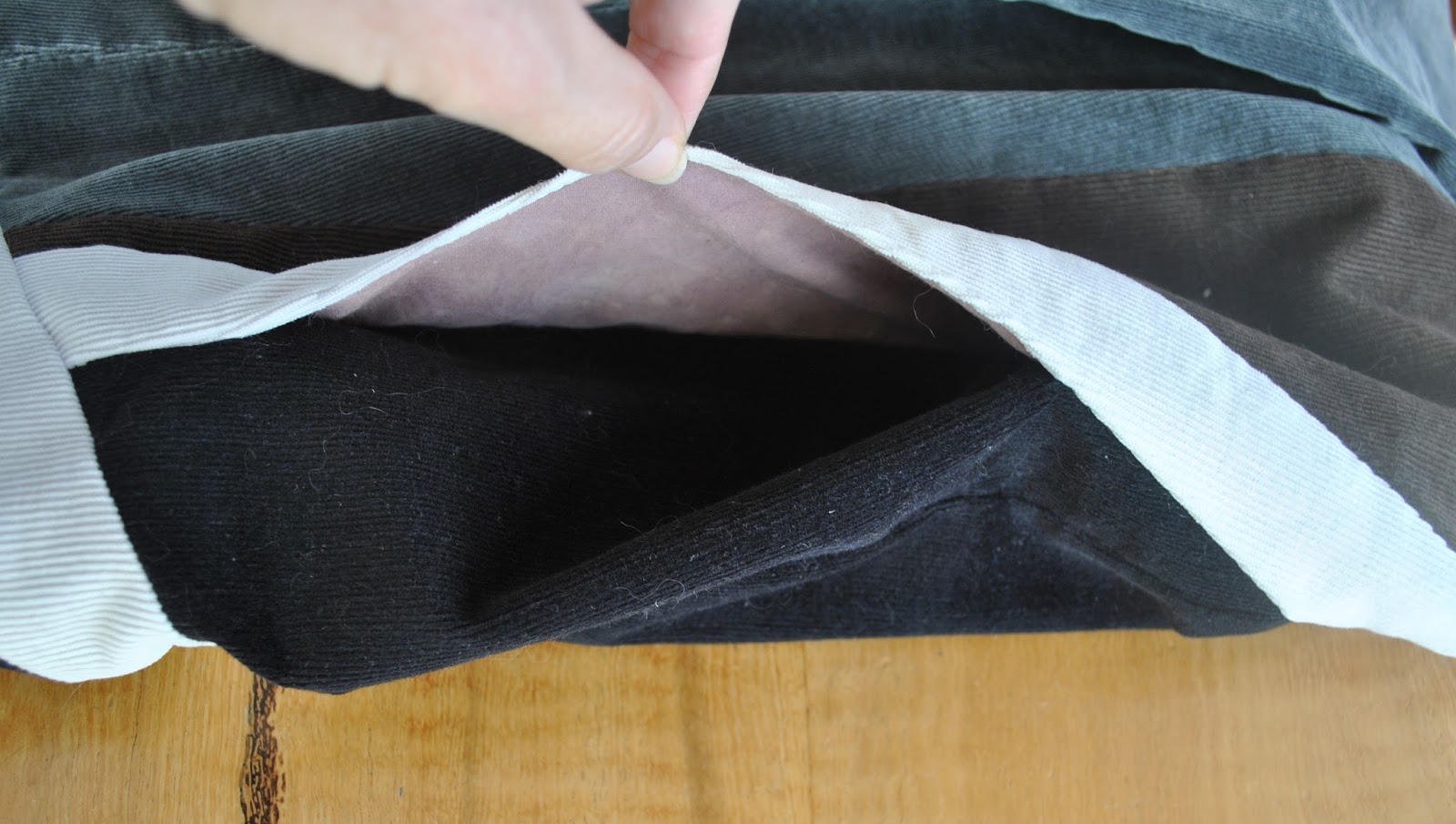
Adding them was not very difficult.  I cut the skirt pieces to be bigger, grading from my usual waist size out to between one and two sizes bigger than my usual choice at the hips to accommodate having hands in the pockets.  Then drew a rough, my-hand shaped piece onto paper, added this to the inner edge of pattern piece 13, the middle side front, and cut this composite new piece from the fashion fabric for the pocket.  I cut the hand-piece from woven cotton for the pocket lining.  I interfaced the corresponding section of the full-sized fashion fabric side band piece with iron-on interfacing, as this was to be the pocket opening and so needed stabilising, and joined all the pieces in the normal pocket way, the pocket lining to side band with a narrow seam allowance so the fashion fabric continues over and into the pocket within the fold.  Additionally the pocket opening is under-stitched, to prevent the lining from rolling out.  

I am unreservedly thrilled with how the pockets turned out, they really are in the perfect position, and I cannot understand why they were not there in the first place.  Vogue would do well to include pockets, or at least the possibility of pockets, in all their casual designs imo , since they are clearly high on the list of Most Desirable Features in a Design, wouldn’t you agree?  It’s certainly something I always look for in a casual pattern, or at the very least, the potential for finagling pockets if at all possible.  I reckon this dress is only, like, a hundred times better for having pockets?  Rough guesstimate, there.

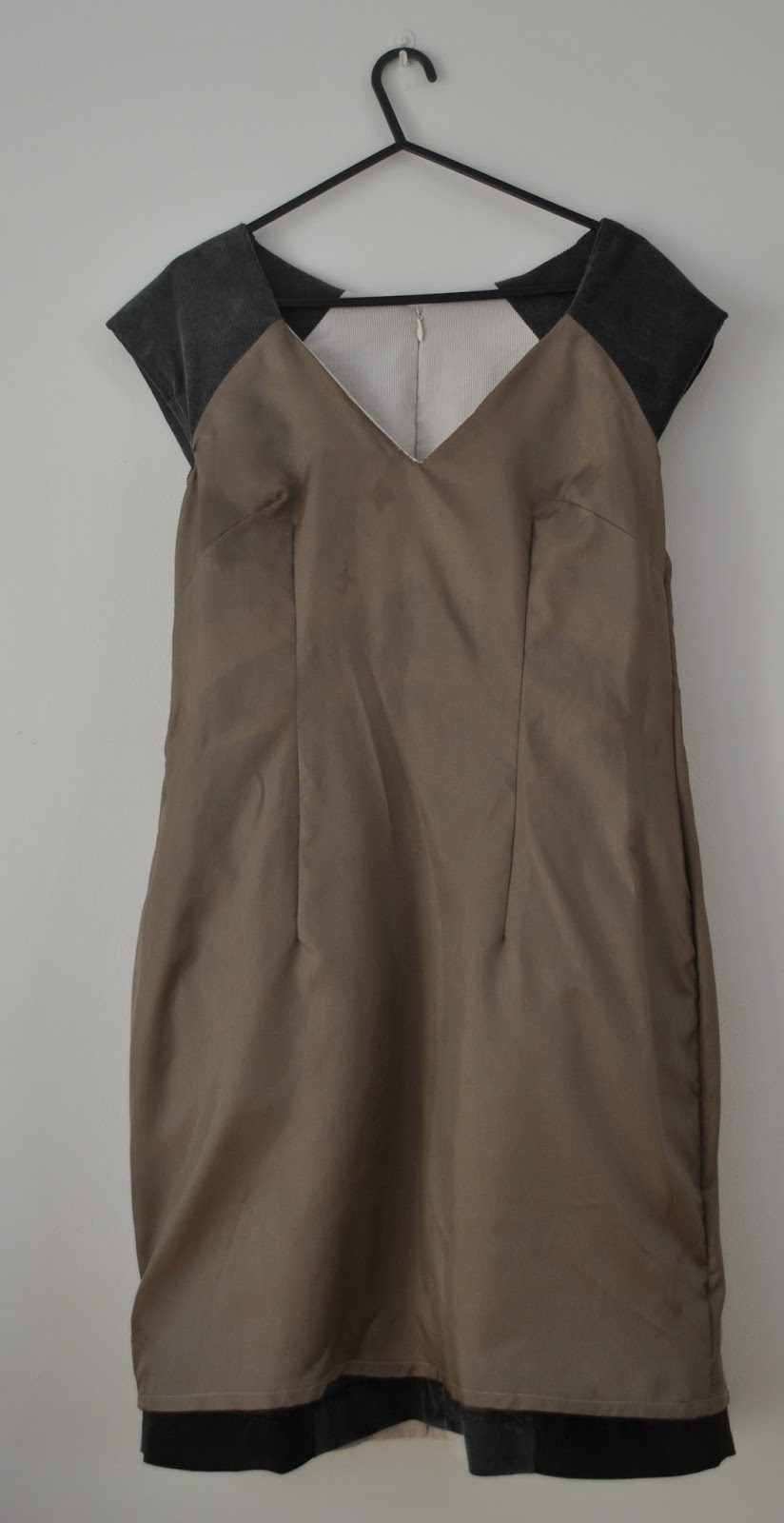
The dress is fully lined; and even in a casual, toss-it-on-for-whatever, day dress like this I prefer the clean and streamlined minimalism of an invisible zip, so used one.
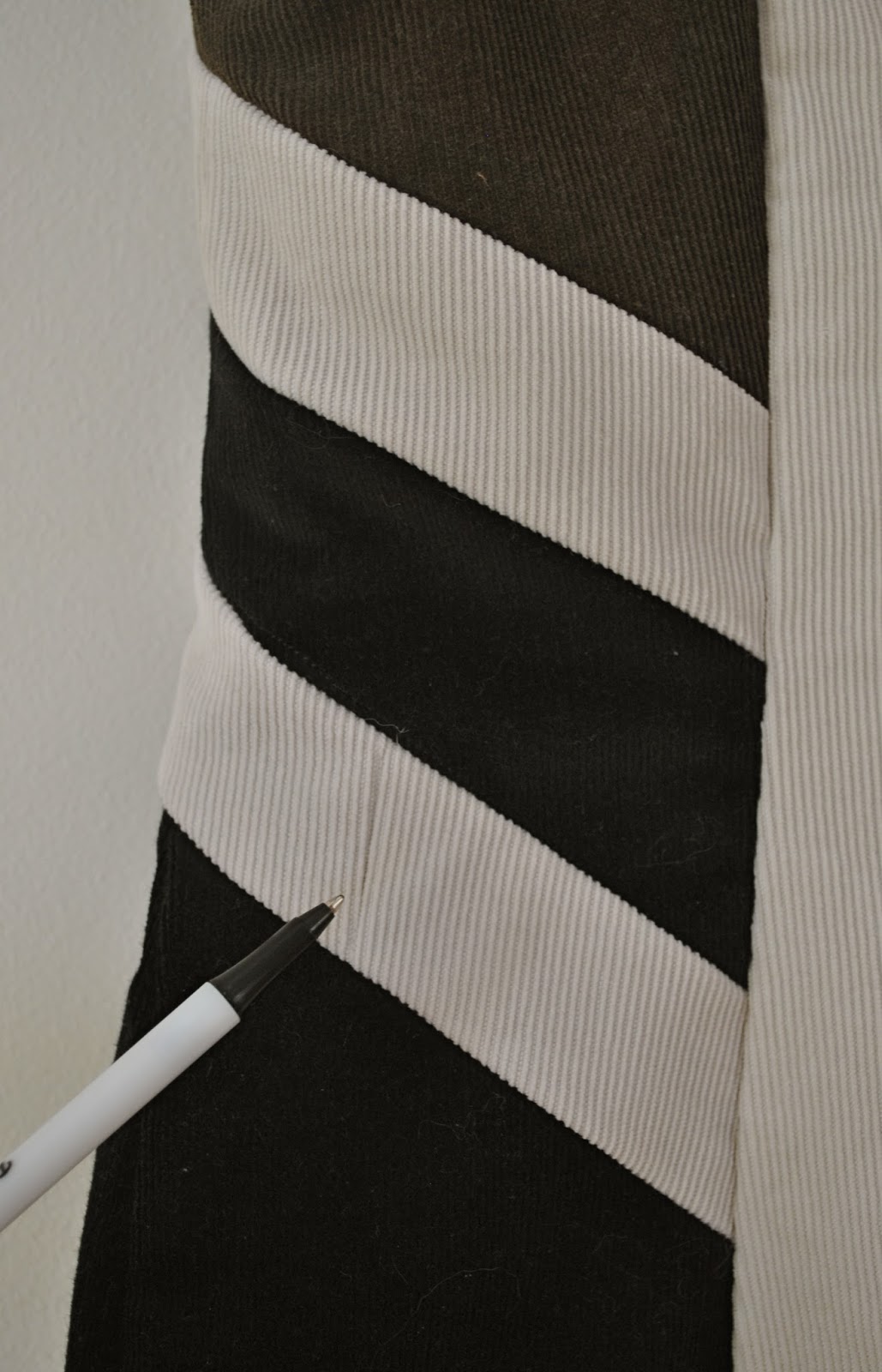
The fit… there were minor issues.  For a “fitted” pattern I reckon it runs quite big and boxy throughout.  But this was easily fixed, mostly through that handy back/side section seam, pictured below.
I am super happy with the dress, it was an enjoyable puzzle to put together and is very comfy and easy to wear.  I love washed and worn corduroy, such a beautifully soft and warm texture in a winter dress.  And it always makes me feel good to re-use old textiles constructively like this.  ðŸ™‚

More inane drivel thoughts about this pattern can be found in my pattern review below if anyone is interested.

Details:
Dress; Vogue 1316, fashioned from 3 old pairs of cotton corduroy jeans plus another piece of cotton corduroy in another colour.
Tights; self-drafted, black merino, details here and my tutorial for drafting your own custom-fit tights pattern here
Boots; Andrea and Joen, bought from the now re-branded Uggies in Dunsborough

and merely because I find these pretty amusing… the Vogue pose

Pattern
Description:
Fitted
lined dress has several shaping bands and multiple panels, a central back zip
and walking vent
Pattern
Sizing:
Size
4-12. I cut my usual size 10 in the bodice tapering out to between a 12-14 at
the hips.  This hip is larger than
my usual size, but I wanted to incorporate pockets into the design, which
requires a bit more room in the skirt. 
In my opinion the pattern runs a little big, since I had to take in the
bodice quite a bit, and might go down to a size 8 in the bodice next
time.
Did
it look like the photo/drawing on the pattern envelope once you had finished
sewing it?
Yes.
Were
the instructions easy to follow?
Yes
What
did you particularly like or dislike about the pattern?
I was
attracted to the complex banding and panels design, lending themselves to
pattern through the use of tonal solid colours.
I was
disappointed that it did not have pockets, considering that the side
band is perfectly positioned to have a pocket tucked under it. But I knew the
design would be very easy to adapt so that I could have my beloved
pockets.  And it was, and so I have them  ðŸ™‚
The
lining is not done in the best way, in my opinion.  I don’t really love lining being sewed straight to the shell
of the dress like this.  It is
under-stitched to help keep it all inside; but if I was going to make this
again I would instead make self-fabric facings for the neckline and underarm
and attach these to accordingly modified lining pieces.
For the lining, the pattern stipulates 1.8m. In my size, I found 1m is sufficient.
Fabric
Used:
Cotton corduroy in four different colours 
Pattern
alterations or any design changes you made:
Pockets!  I was
determined to incorporate pockets into the dress, so modified pattern piece 13
to be a pocket piece, and also drafted another piece to be a partial facing for
piece 12 with an integrated pocket lining.  To accommodate hands-in-pockets wearing
ease, I drafted the skirt pieces to taper from my usual size 10 at the waist, out
to between 12-14 at the hips.
I
raised the height of the centre front by about 1cm, and am glad I did.  Next time I might raise it even higher!
Step
19-23: I prefer an invisible zip in my dresses, and I always install an
invisible zip before stitching the remainder of the seam below.  I reckon this gives you a much better
and smoother finish.
Sizing;  I find the bust of Vogue fitted patterns to be drafted too big for
me generally, so I pre-emptively shaved about 1cm width off the bust curve of both pattern pieces 3.  Even so, at Step 24: sewing the back to side section seam; I found the fit still quite boxy and not
close-fitting enough for my tastes around the waist, so took out several inches in
width from the underbust and waist, graduating out again to the bust and hips.
Ultimately these alterations left me with a distinctly more A-line skirt than the pattern intended, and I am happy with that.
Would
you sew it again? Would you recommend it to others?
Oh my
gosh, I always say yes I will sew it again, and then I’m immediately distracted
by new patterns like a toddler with a shiny new toy!  But I certainly would not rule out sewing this one again.  This one is just going to be casual, everyday, winter’s dress.  I’ve been thinking about the idea of using several bright clear colours demarcated by black bands, like a licorice
allsort.  Wouldn’t that look cool? 
And
yes  🙂
Conclusion:
I
really love how it turned out! The interesting and unusual seaming pits the chosen colours against each other to dramatic effect.  I can picture a multitude of
possibilities for colour-blocking here. 
I am especially pleased with how my pocket alteration turned out, to be honest I
probably would not enjoy wearing a dress without pockets so much as one with,
so to be able to incorporate them so easily into the design was a very happy
bonus.
Without
any fitting modifications I would not describe this as a fitted dress.  I had to take
my usual size in quite a bit. 
However it is quite easy to do a lot of final fitting through the back
to side section seams.

….photo-bomb!…

pinterestmail

Just add water

I thought I had timed things pretty well for this one, heading out to the beach on the first day of school term, a day when I knew it would be utterly deserted.  Instead I royally stuffed up by rocking up boom in the bloomin’ middle of the school holidays!!… doh!  This is what happens when you are out of the system, people; you forget all that school-related info previously of paramount importance, like exactly when the holidays start and end.
Ah yes… you forget…
hmmm, where was I?
Oh, yes, I’ve made my new bathers for the new summer season  ðŸ™‚  

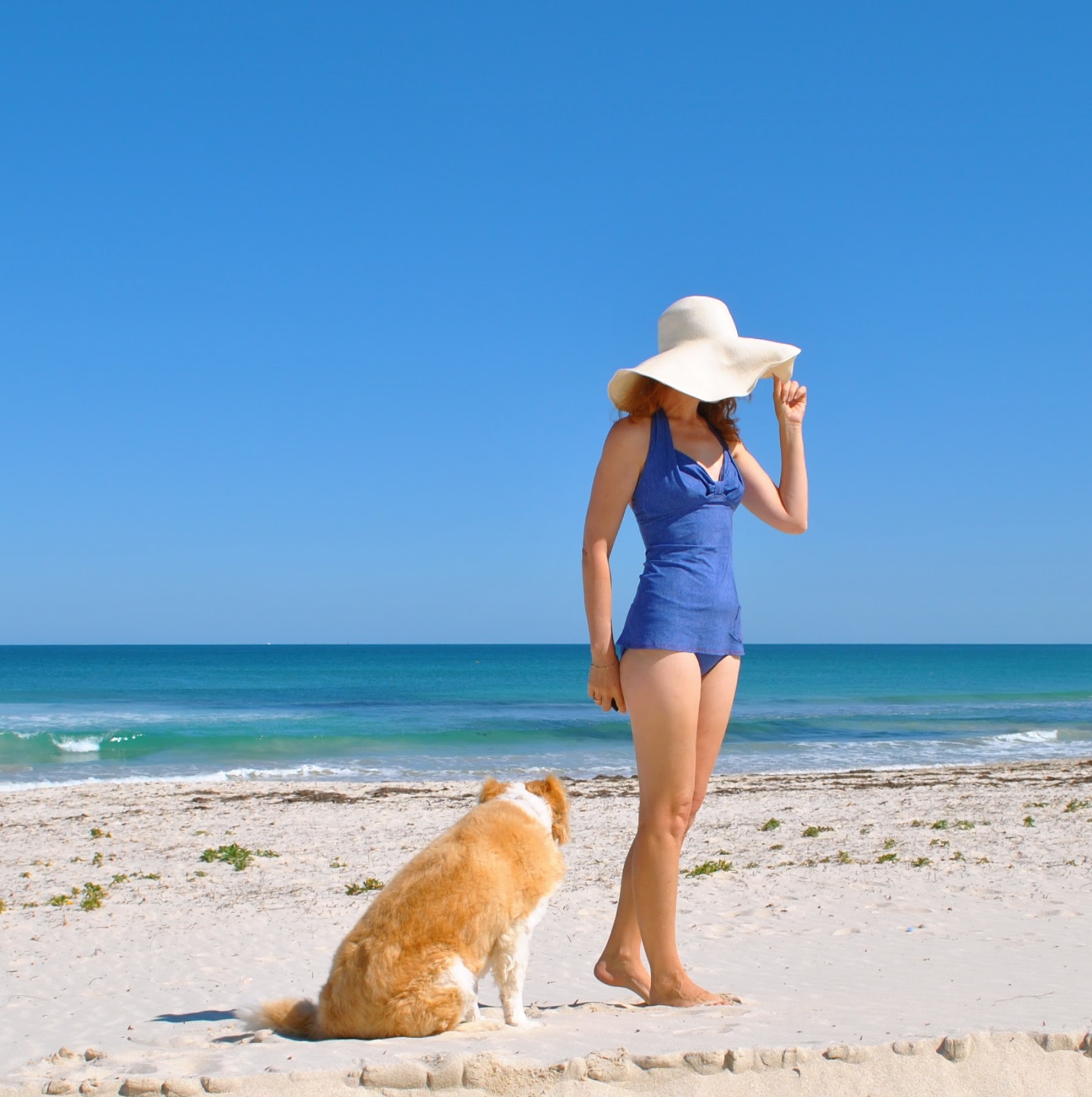
Actually I exaggerate, I was pretty lucky the beach was not crowded at all; enabling me to set up in a discreet pozzie for a few incognito piccies with the faithful doggie.
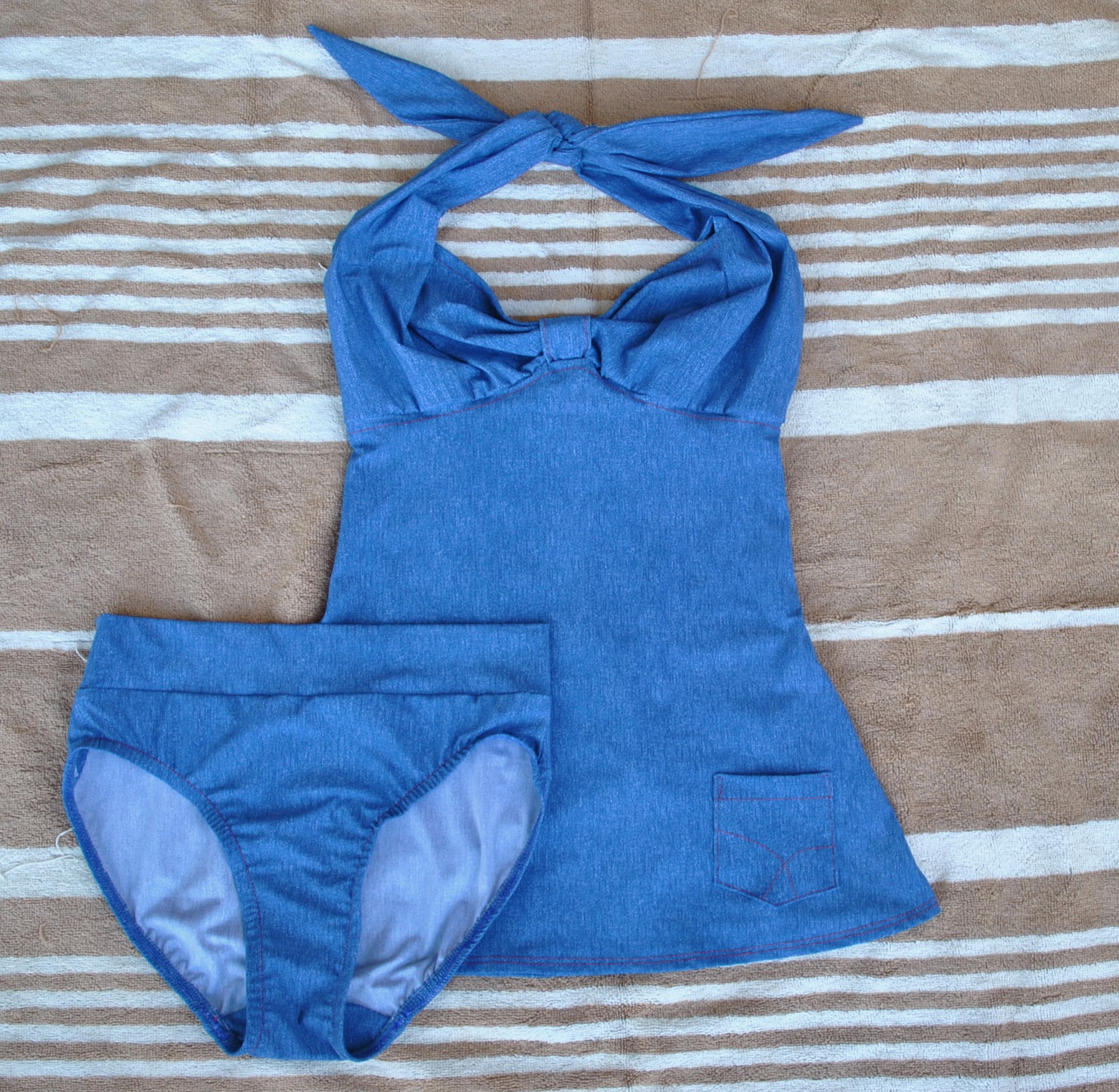
My new bathers are made using an old faithful pattern, McCalls 2772, modified to make the bikini top a tankini instead.  This is the sixth time I have made bathers using this patten,  and my third iteration of that same tankini modification to this pattern; so it has been such a goodie.  That is not even counting the times the bikini bottom pieces have been used to make undies, for which it has been pressed into service stacks more times!
I know it seems terribly boring, that I keep using the same pattern over and over again, and I briefly considered trying out something new.  Briefly.  You see, I’m kinda content with being repetitive.  Happy to be boring.  This pattern really does work for me; it suits me, both my tastes and my body type.  And, bathers are pretty important, y’know, since you spend such an huge amount of time in them over the long long summers we get here, you really want them to turn out as perfect-for-you as possible.  Road-tested, and check!
A secondary consideration is that I have worked out the past coupla times I’ve made these that a 2m packet of swimwear elastic is fair dinkum exactly the right quantity for my tankini version, and I mean down to the last 1-2cm.  It’s a sign!  If I wanted to make up the bikini; and I did actually pause for a few days before cutting to consider going that route this time round, then I would have to buy a second roll of 2m.  
The tankini won.
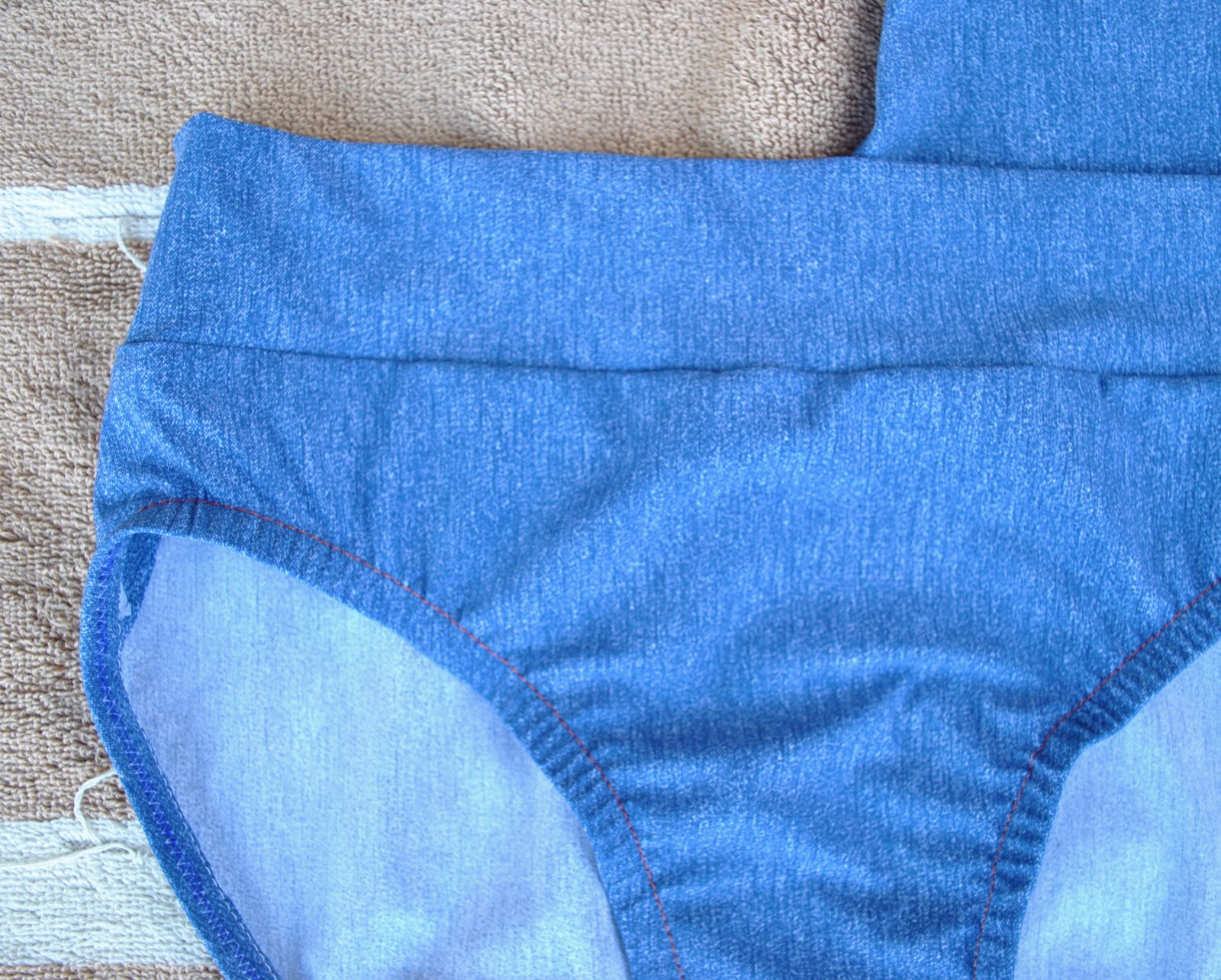
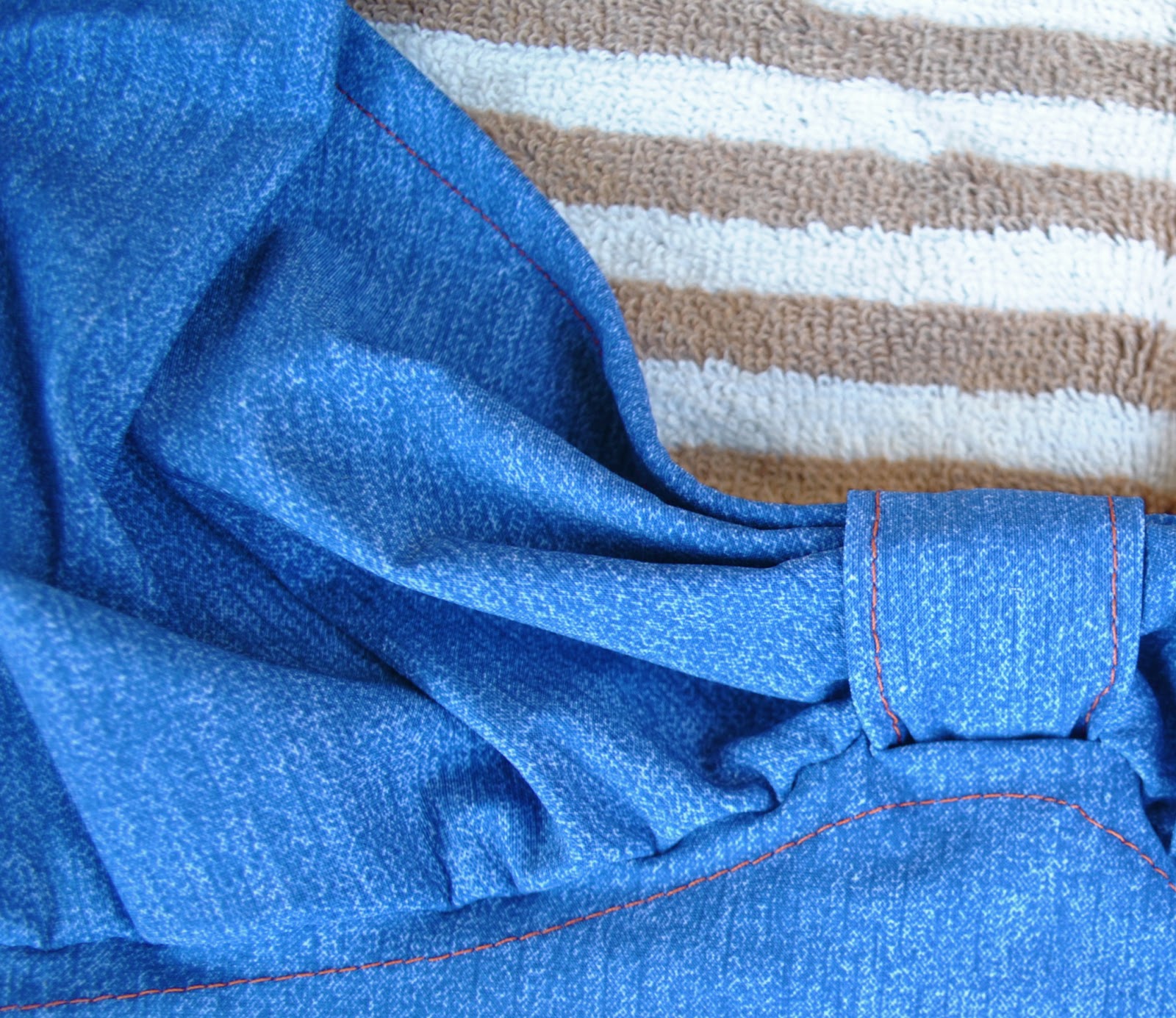
I used a denim-look swimwear fabric; bought from the Fabric Store in Melbourne during our recent visit.  The roll was marked “tiger lily” so I am really pretty curious as to how tiger lily used this in their own collection.  I suspect they probably did not use quite as much fabric per set as I did here.  I’m imagining three or maybe even four, tiny weeny little triangles each?  ðŸ˜€
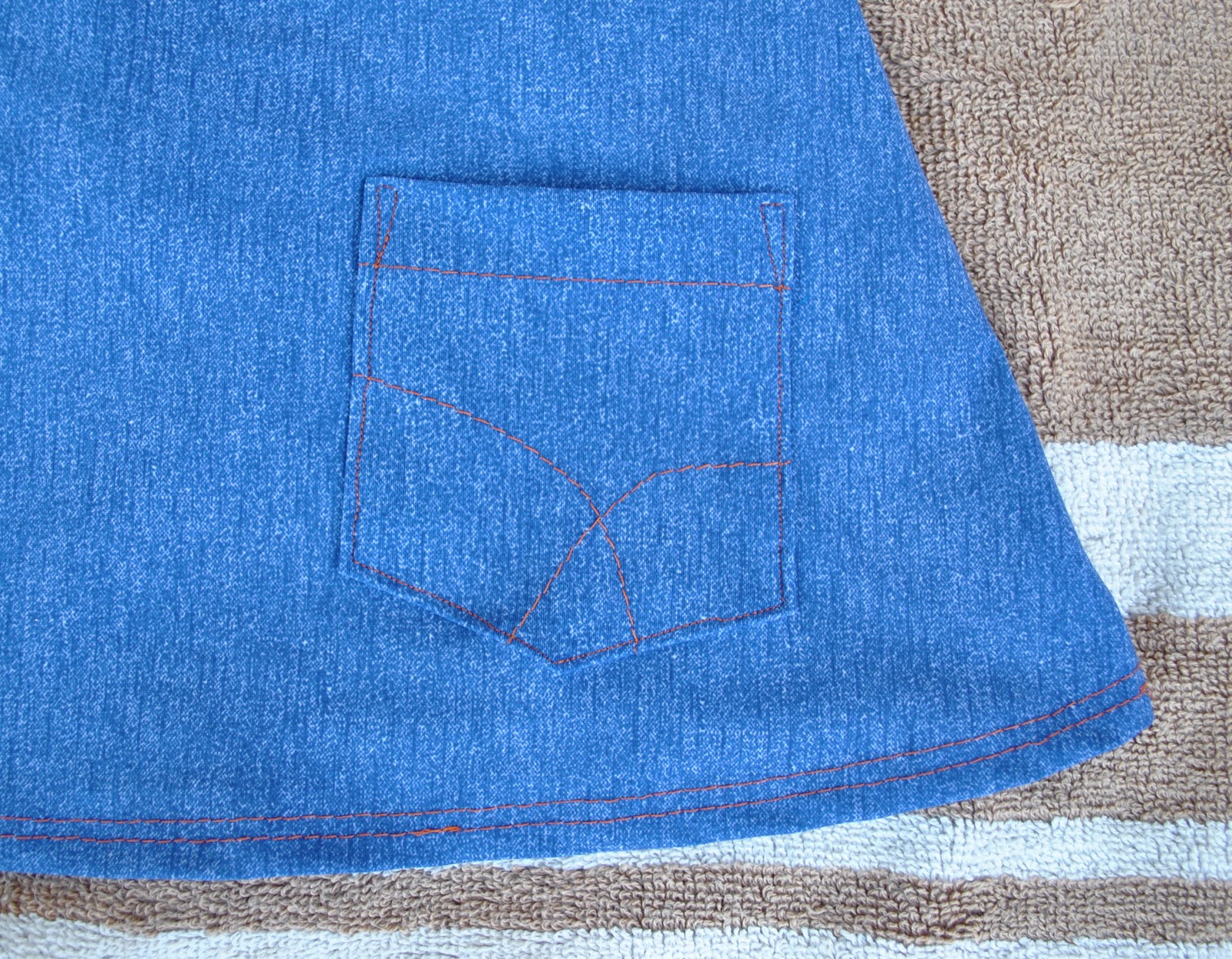
Playing on the denim theme, I added topstitching in burnt orange, and also a mini patch pocket on the front hip, topstitched to look like a jeans back pocket.  It is functional, but probably won’t ever have anything actually put in it.  Can you imagine… oh, I’ll just put the house key (or something else reeeal important) here in my little pocket to keep it safe while I am swimming over in that churning rough and tumble surf….   
Yeaah, bad idea.  But still c’est tres cute, non?

Details:
Bathers; McCalls 2772, the bikini top modified to make it a tankini, of denim-look swimwear fabric
Hat; Country Road

pinterestmail

Waterproof pockets for a raincoat

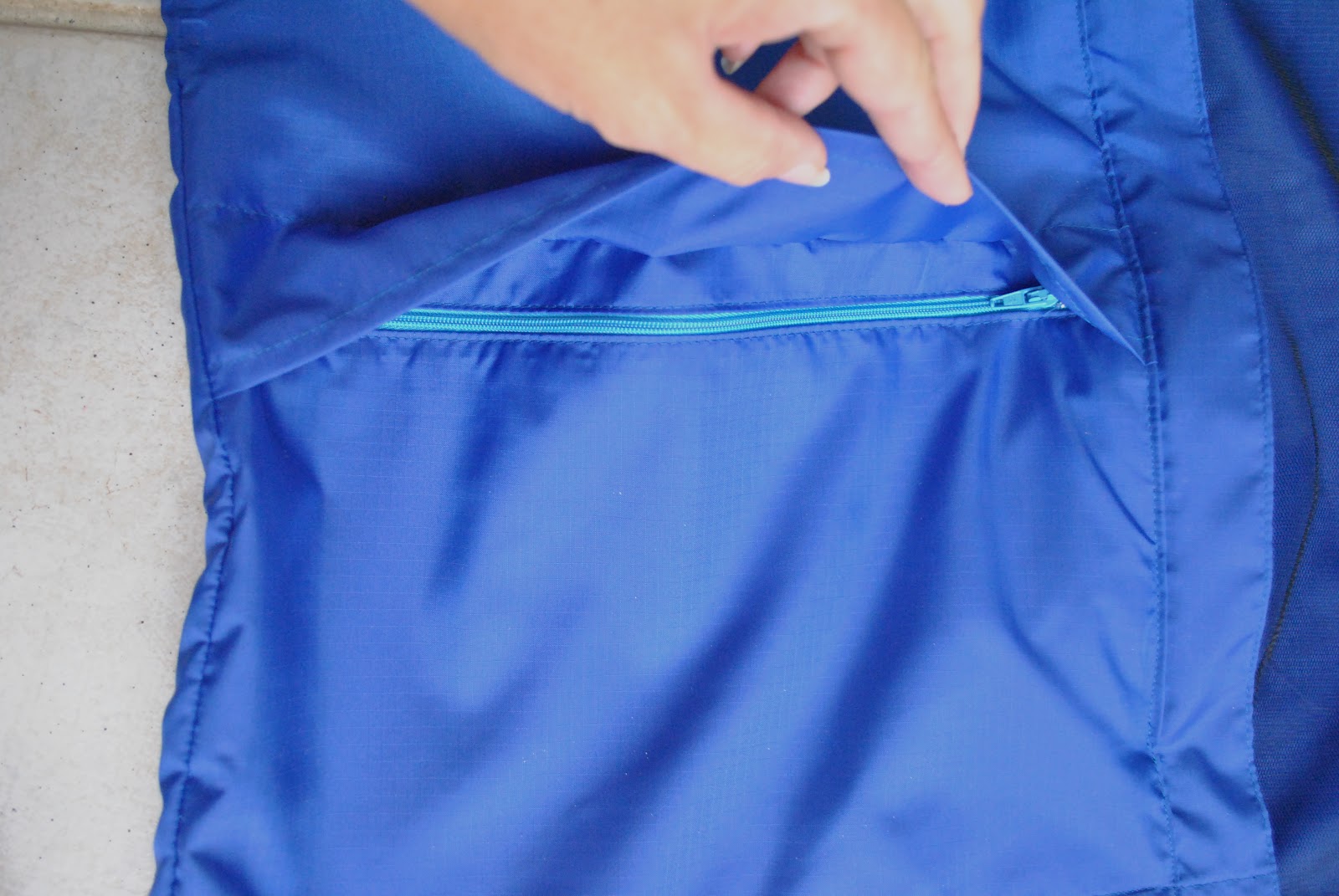
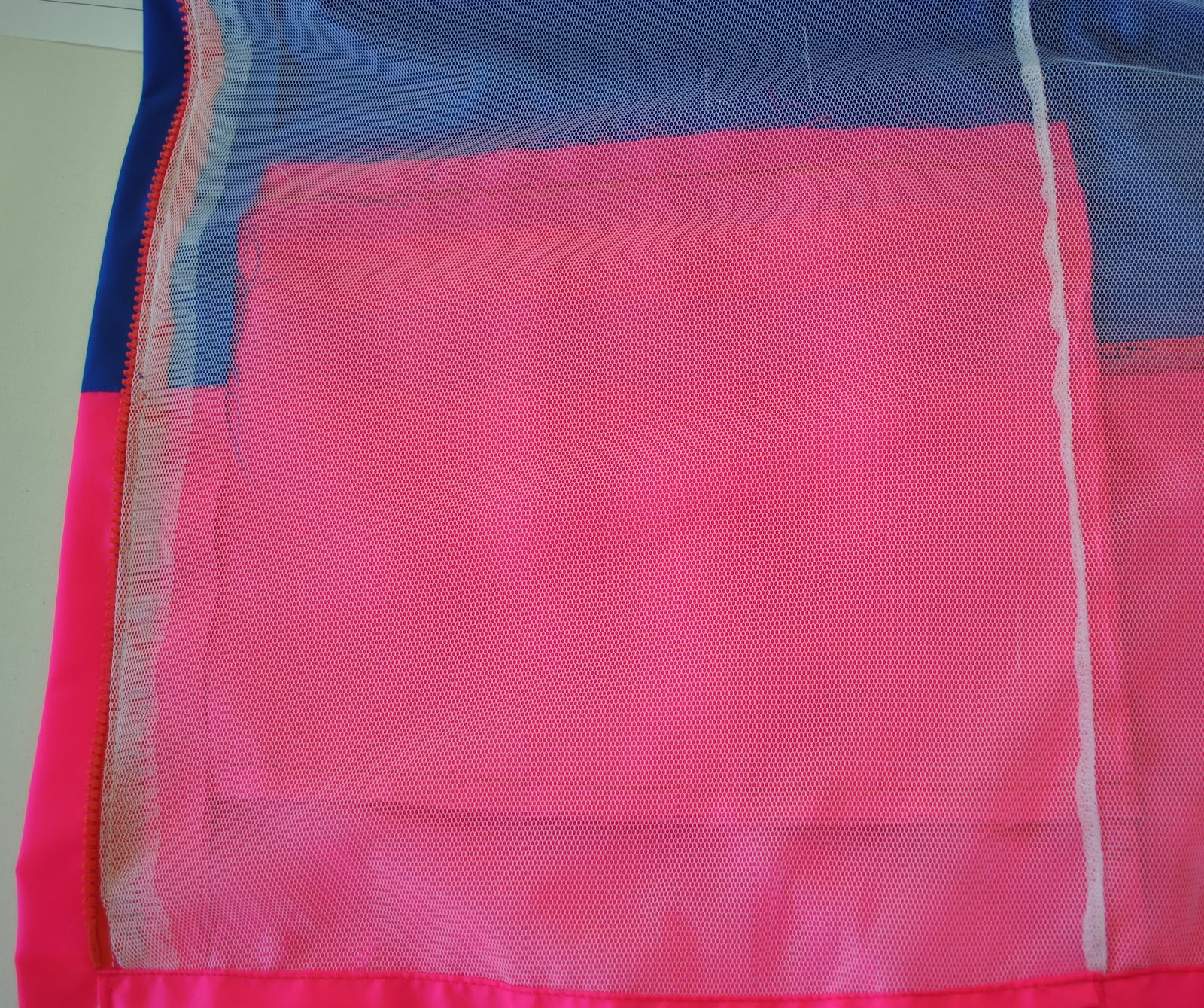
I put these pockets in the two raincoats made recently, and they’re pretty well perfectly waterproof.  Yay!  See, while we have only had mobile phones, iPods and electronic keyless entry thingys on our car keys for a few years, they are now ubiquitous.  And they need to be kept dry.  So, when I was thinking about my new raincoat and its pockets, I gave them a lot of thought re waterproofing.  Firstly I eliminated as many seams as possible.  Water can seep in through any and all unsealed stitching holes in a raincoat; so pocket designs with lots of exposed stitching, like patch pockets, and stitched-on pocket flaps, require tonnes of sealing, which is a messy, smelly and generally horrible job.  So it’s a good idea to plan to eliminate them, if possible.  Likewise, exposed zips are not good in the rain.  
There is only one line of exposed stitching in these pockets, so it’s not too painful to waterproof with a commercial sealer.  
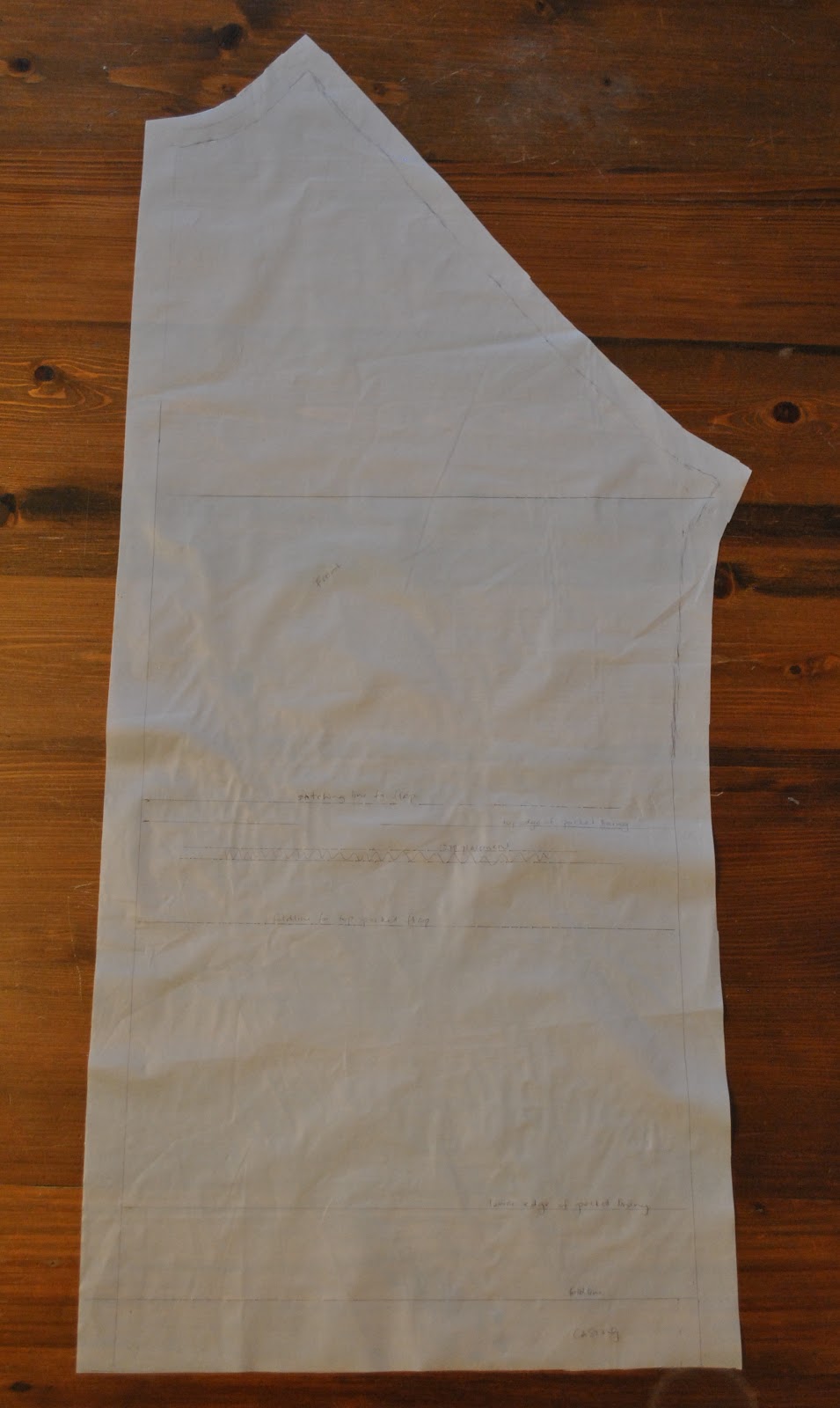
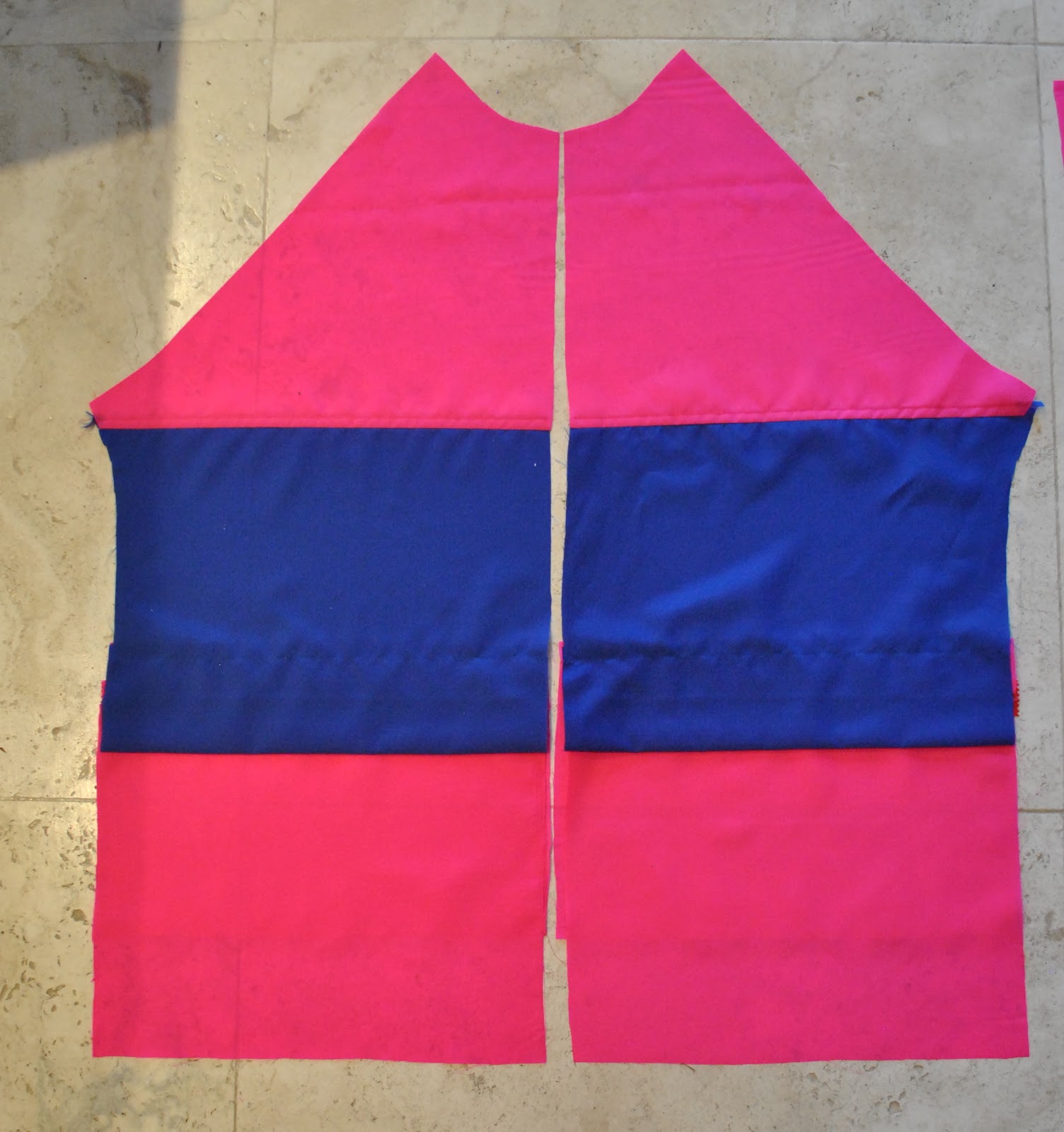
This pocket eliminates some seams by extending out to the side seams at one side, and into the placket, at the centre front.  So all of the pocket pieces are cut the full width of each front of the jacket.

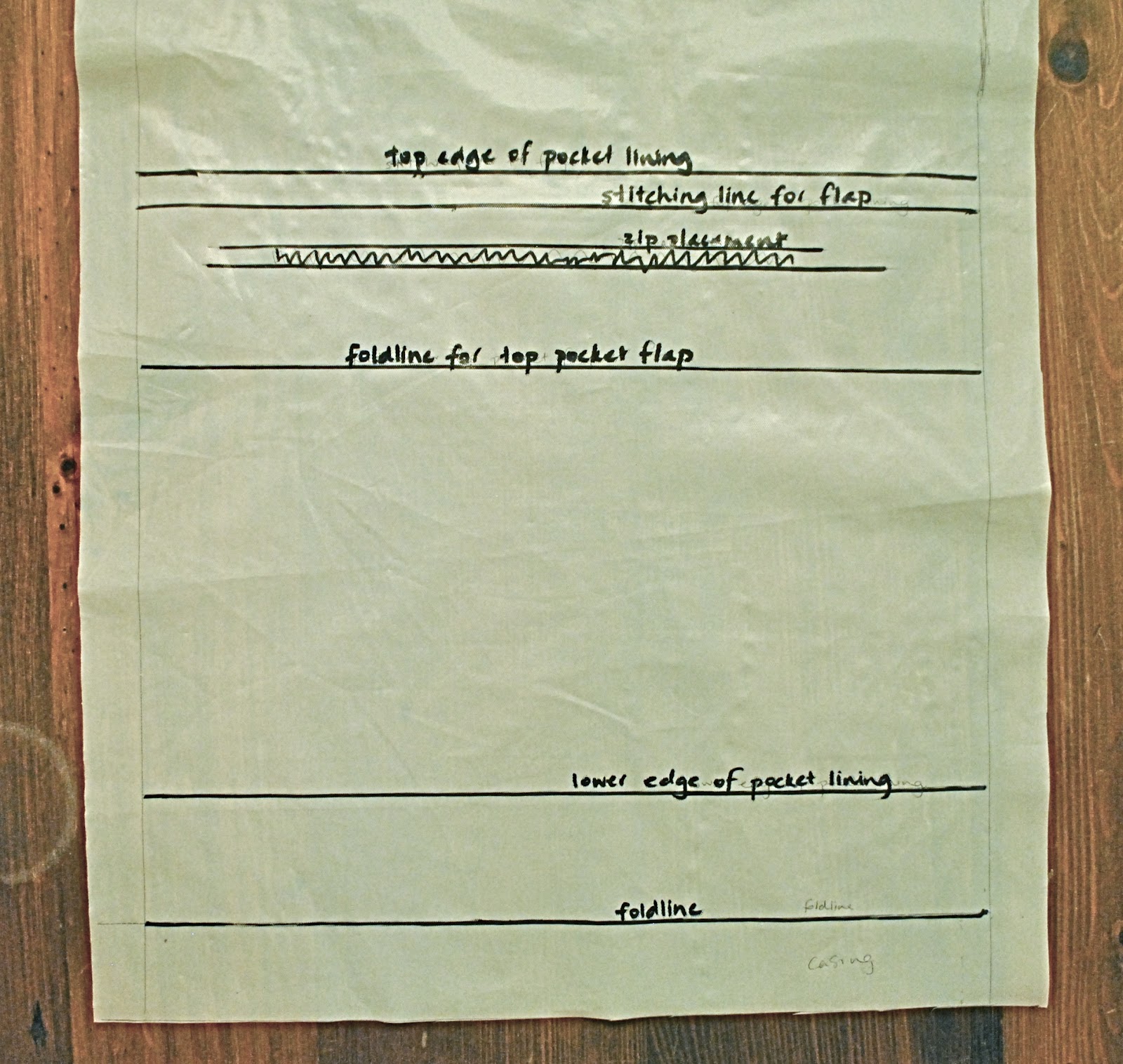
The front jacket piece looks like above, and the close-up below shows the relevant markings for the front pockets.   I’ve re-marked them but I apologise that it is still difficult to read them; they read, from the top:

  • top edge of pocket lining
  • stitching line for flap
  • (two lines with a zig-zag between them) zip placement
  • foldline for top pocket flap

(and much lower) 

  • lower edge of pocket lining
  • foldline (indicates the lower edge of the finished jacket, below this is the hem allowance)

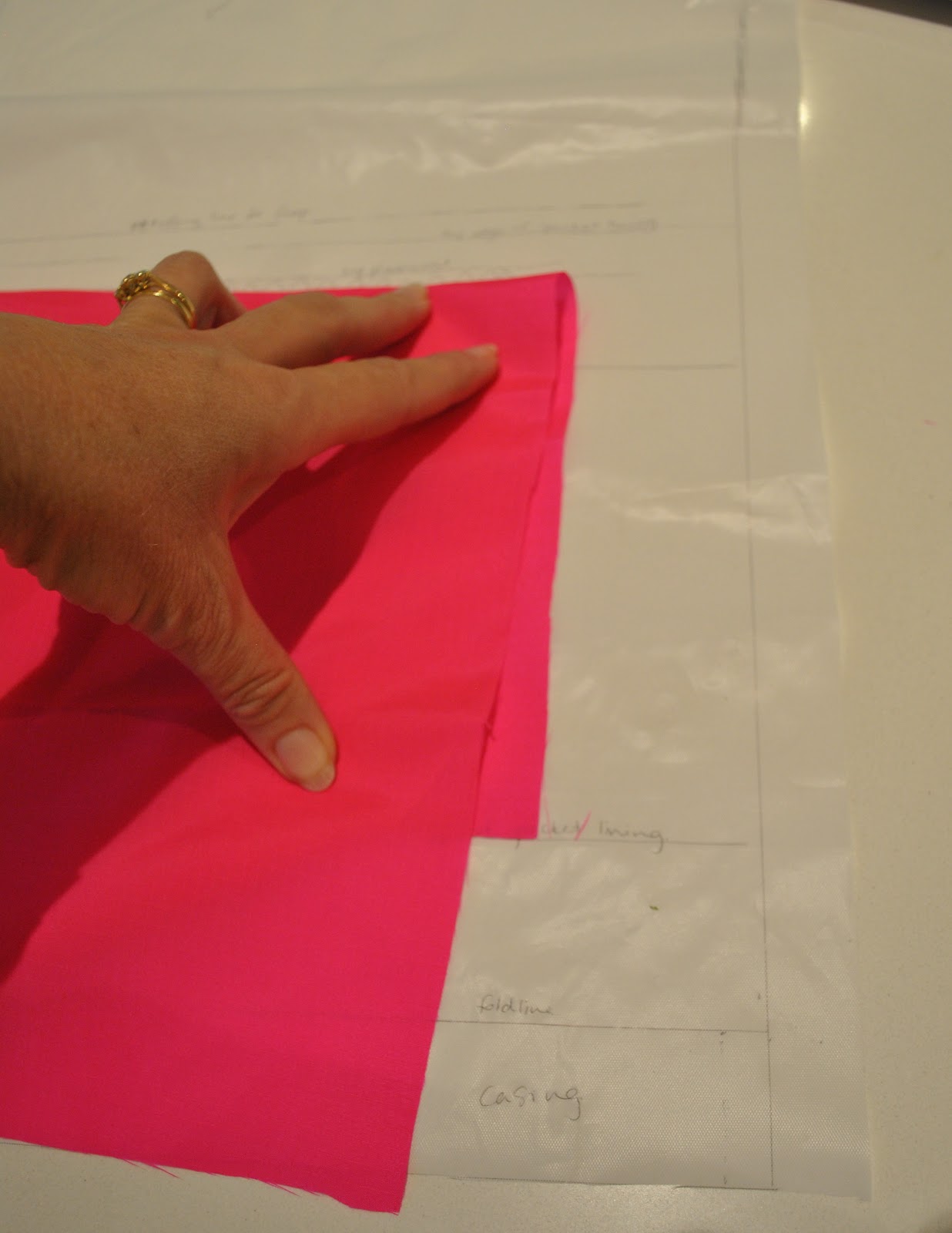
First, cut the two lower front pieces… these should be long enough to extend from the lower edge of the pattern piece above; up to the lower edge of the “zip placement”, and then fold here to finish at the “lower edge of the pocket lining”.  I’ve pictured it splayed out here to show the length and how it folds at the zip placement line…

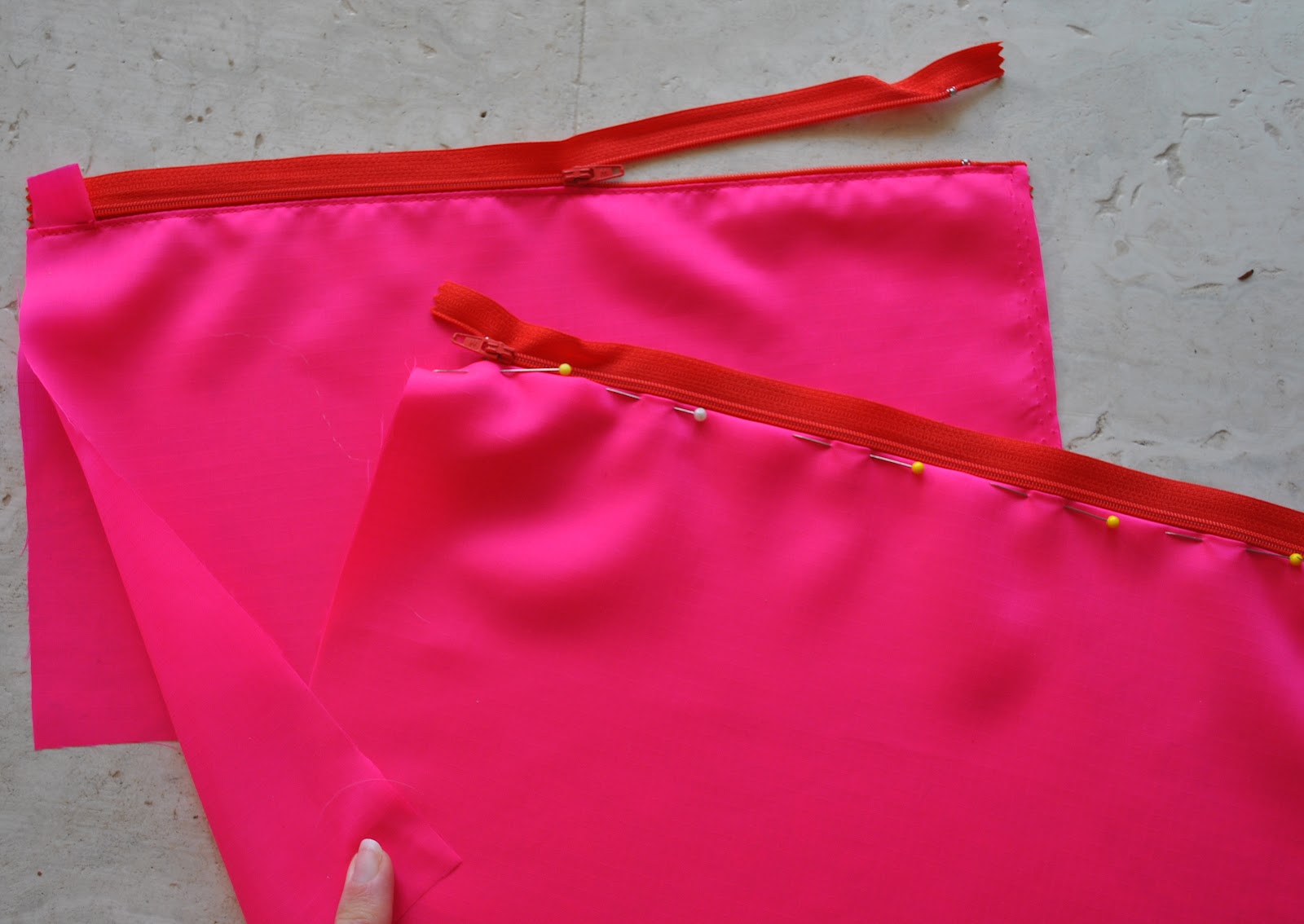
Press the fold in place.  Pin and topstitch in place the two zips at the pressed foldline, remembering to place them to open at opposite ends to each other.  At the upper left edge of the top pocket piece can be seen a small piece of folded fabric, stitched inside the seam to cover the metal zip stop and the bottom of the zip…  even though you won’t be able to see this in the final pocket I still like to have this covered like so…

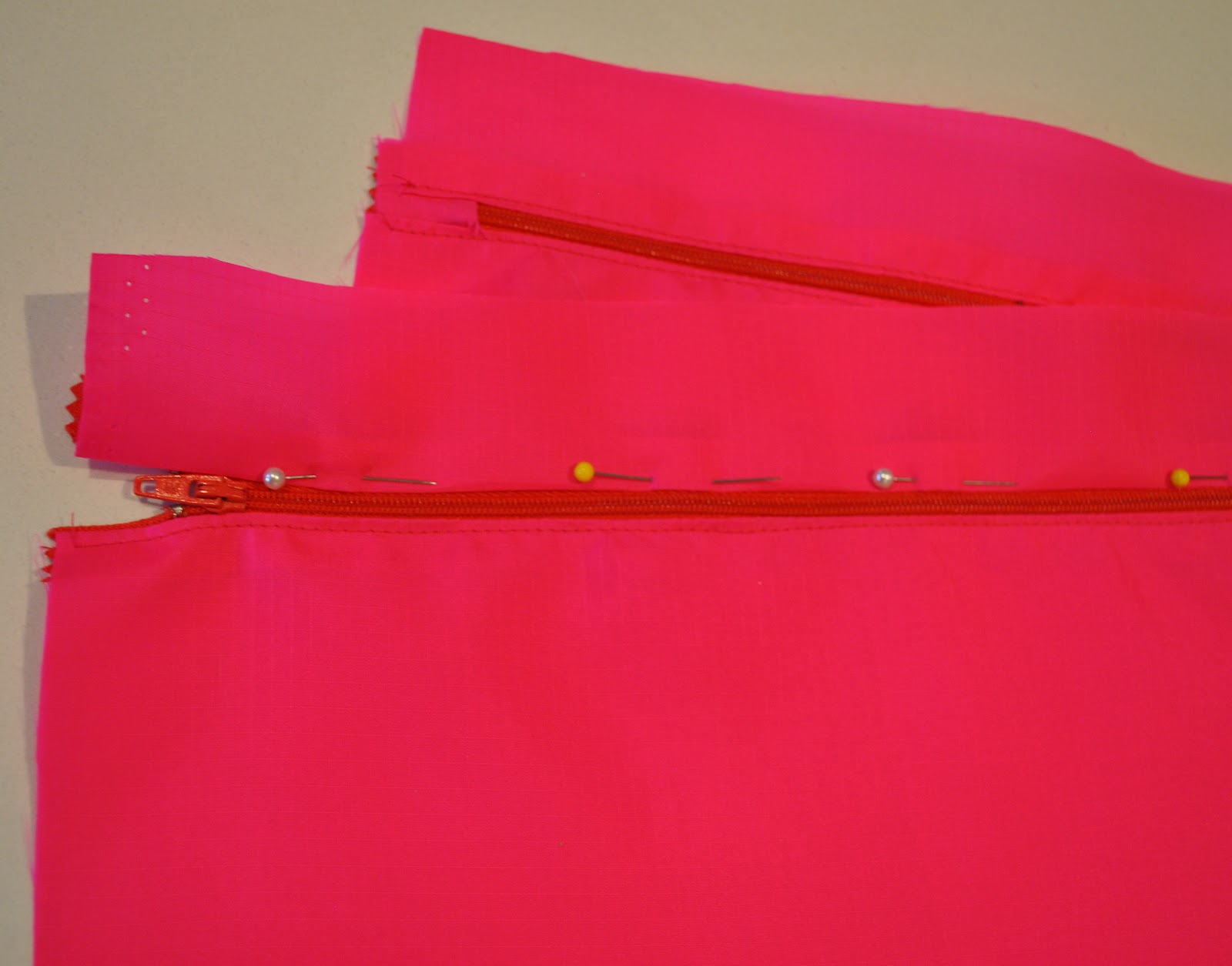
Cut a full-width piece of fabric, to sew along the top edge of the zip, to form the top outer edge of the pocket itself.   This has to be long enough to extend from the “top edge of the pocket lining”, down to the upper edge of the zip placement, where the fabric is folded lengthwise and then to have a seam allowance to enable it to be stitched to the top edge of the zip here… Sounds complicated, but hopefully the picture illustrates what I mean OK…  Press along the foldline and stitch to the upper edge of the zip. (In the top pocket can be seen that small piece of folded fabric stitched in to completely hide the bottom of the zip  (My stitching is a wee bit wonky just there, but I didn’t want to un-pick and sew over again because of the permanency of holes in this fabric.  And actually, nylon ripstop is a ^&%$#* to press and topstitch neatly.  Just saying  ðŸ™‚  )

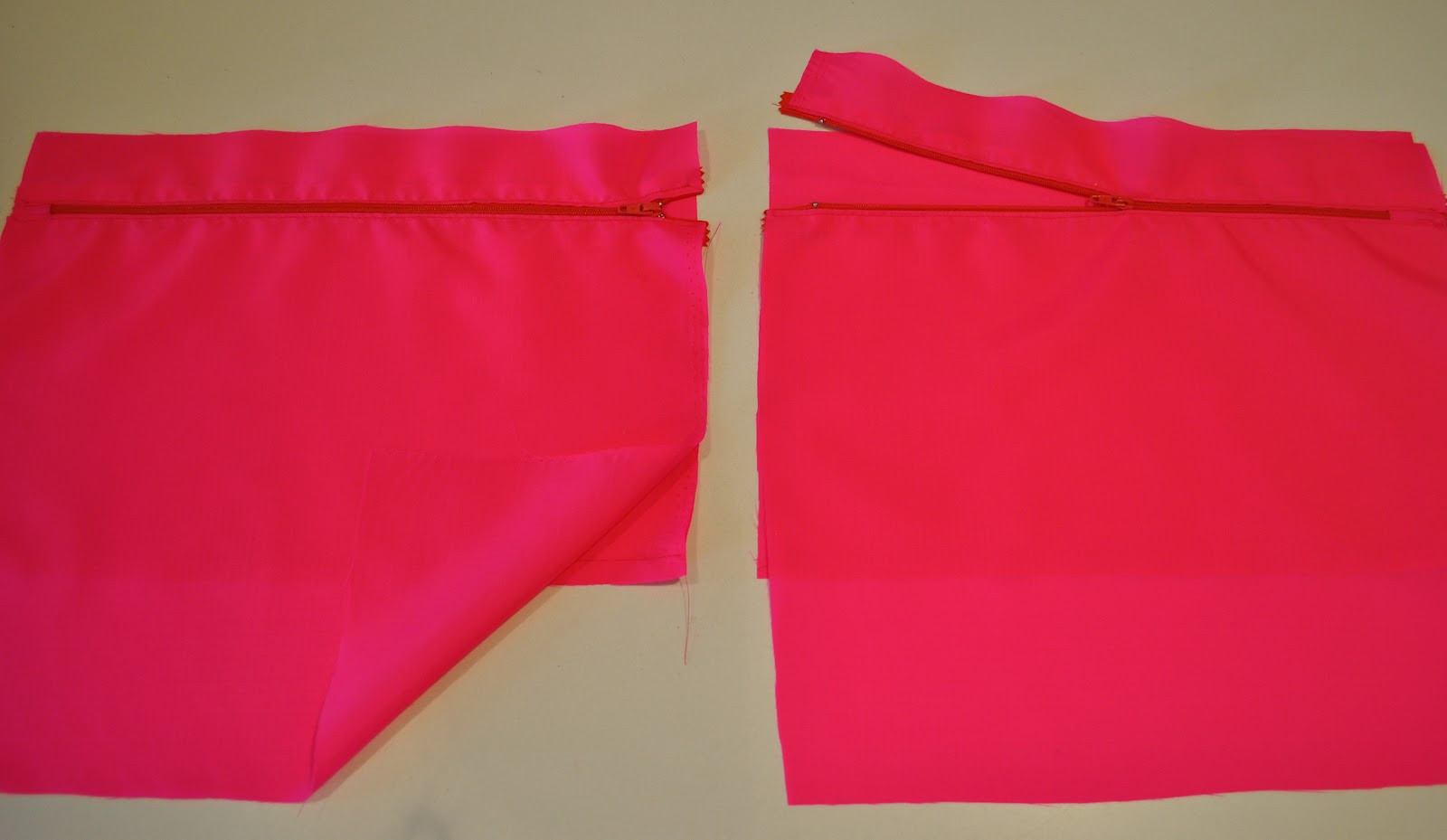
Now cut a full width piece to form the back lining of the pocket… these should be long enough to extend from the “top edge of the pocket lining” mark to the “lower edge of the pocket lining” mark.  Stitch the upper edge of this to the upper edge of the piece on the zip, and the lower edge to the lower shorter edge behind that long front piece, as pictured below…

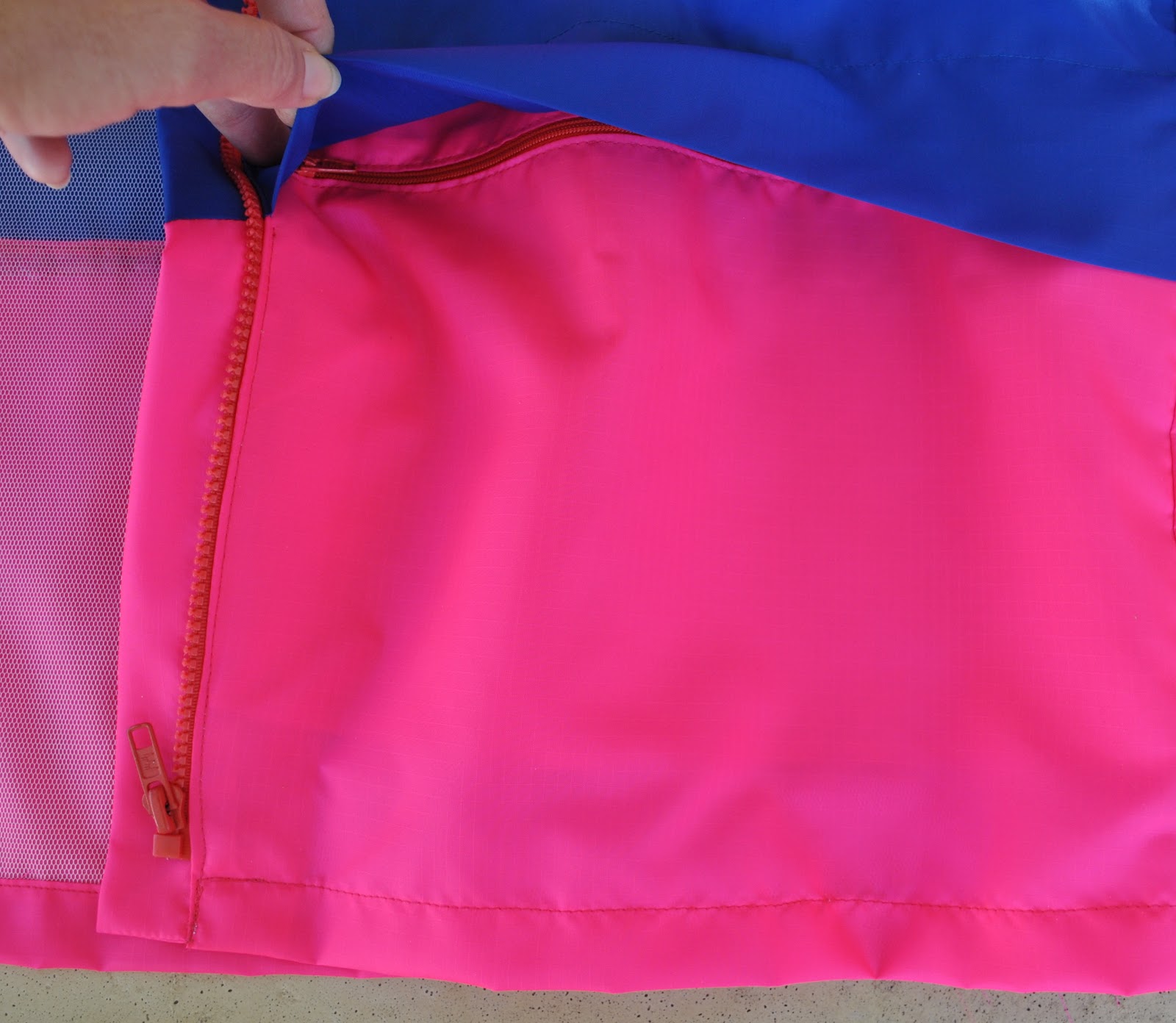
In the picture above, the lower edge of the left jacket front is folded back to reveal the pocket underneath, and the zip of the right pocket is partly open to reveal the pocket lining underneath.  it can be seen that the top edge of the pocket is still unstitched at this stage.
Now for the upper edge of the jacket front; cut a piece to be long enough to come down to the “foldline for top pocket flap” mark , and fold back at this point and extend back up to the “top edge of pocket lining” mark (which is the top edge of the pocket so far).   Press along the foldline.

Pin and topstitch along the “stitching line for flap”, catching also the upper two edges of the pocket underneath in the same line of stitching.  The below picture is a side view of the layers and folds in the pocket. 

and below; a view of the completed fronts of the jacket.  It can be seen that the pocket flaps, and the pockets underneath, extend the full width of the jacket fronts…
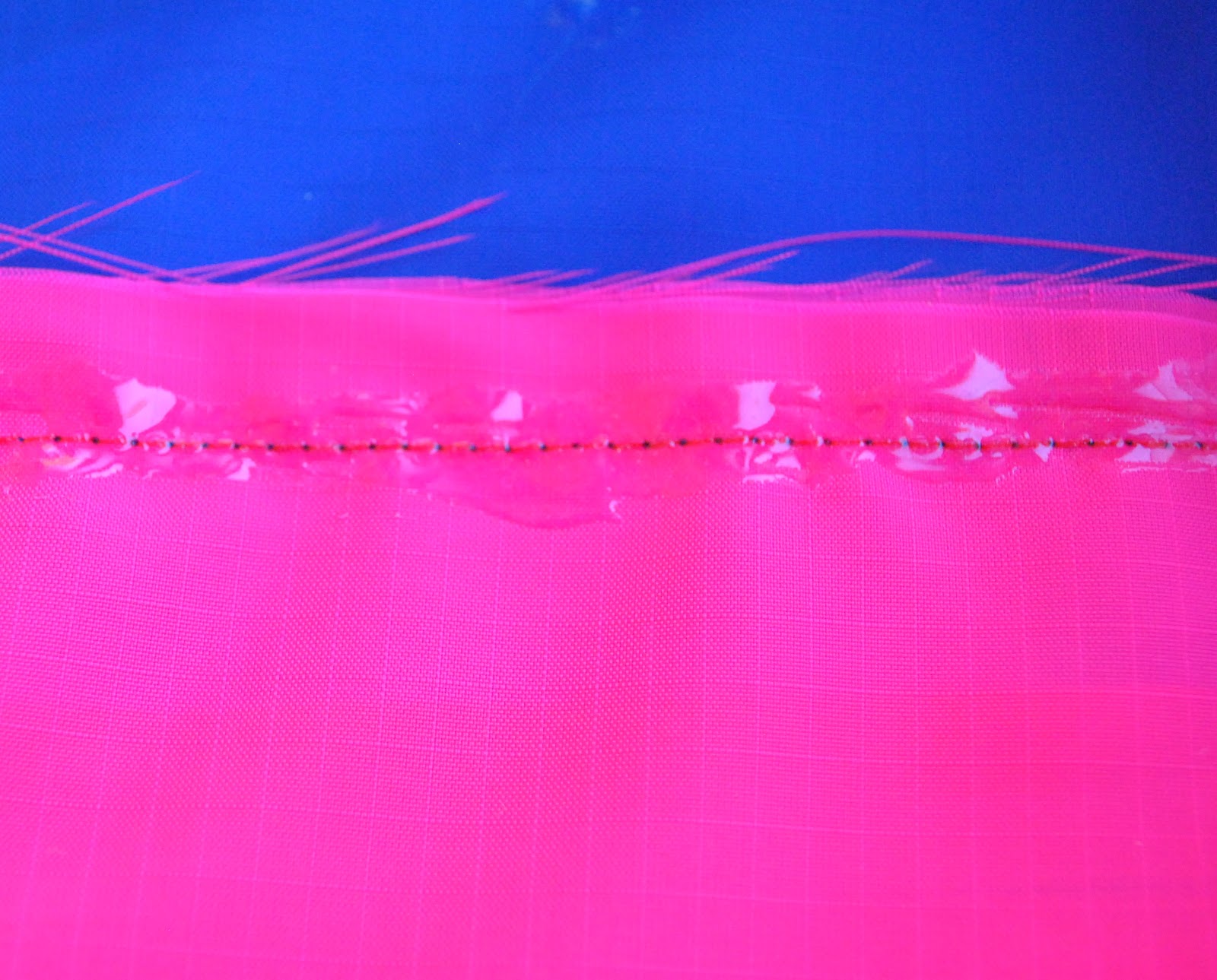
…and also that one single line of stitching appears on the right side of the jacket front.  Waterproof this seam by applying seam sealer along the back.  I used Seam Grip.  Let it cure completely.
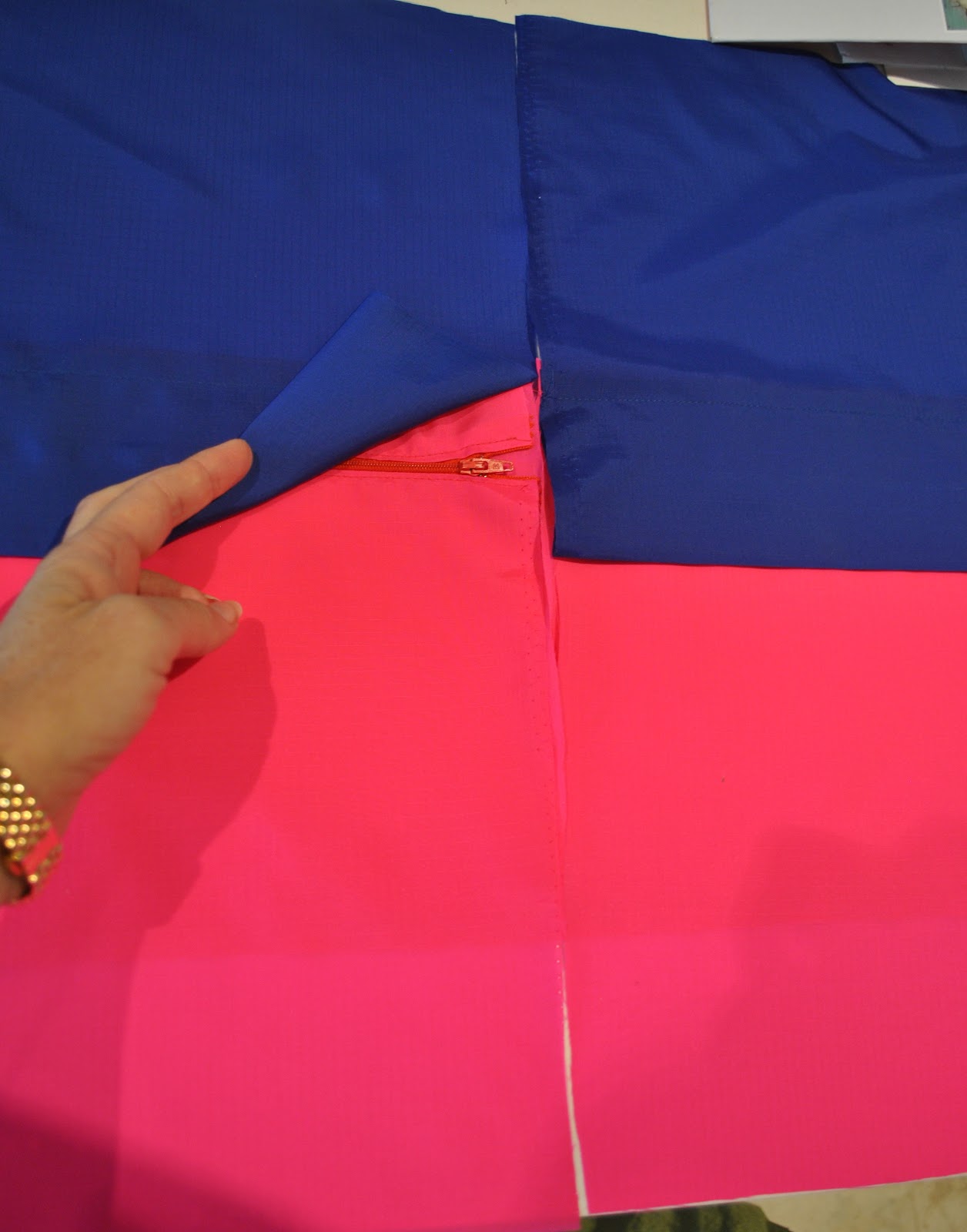
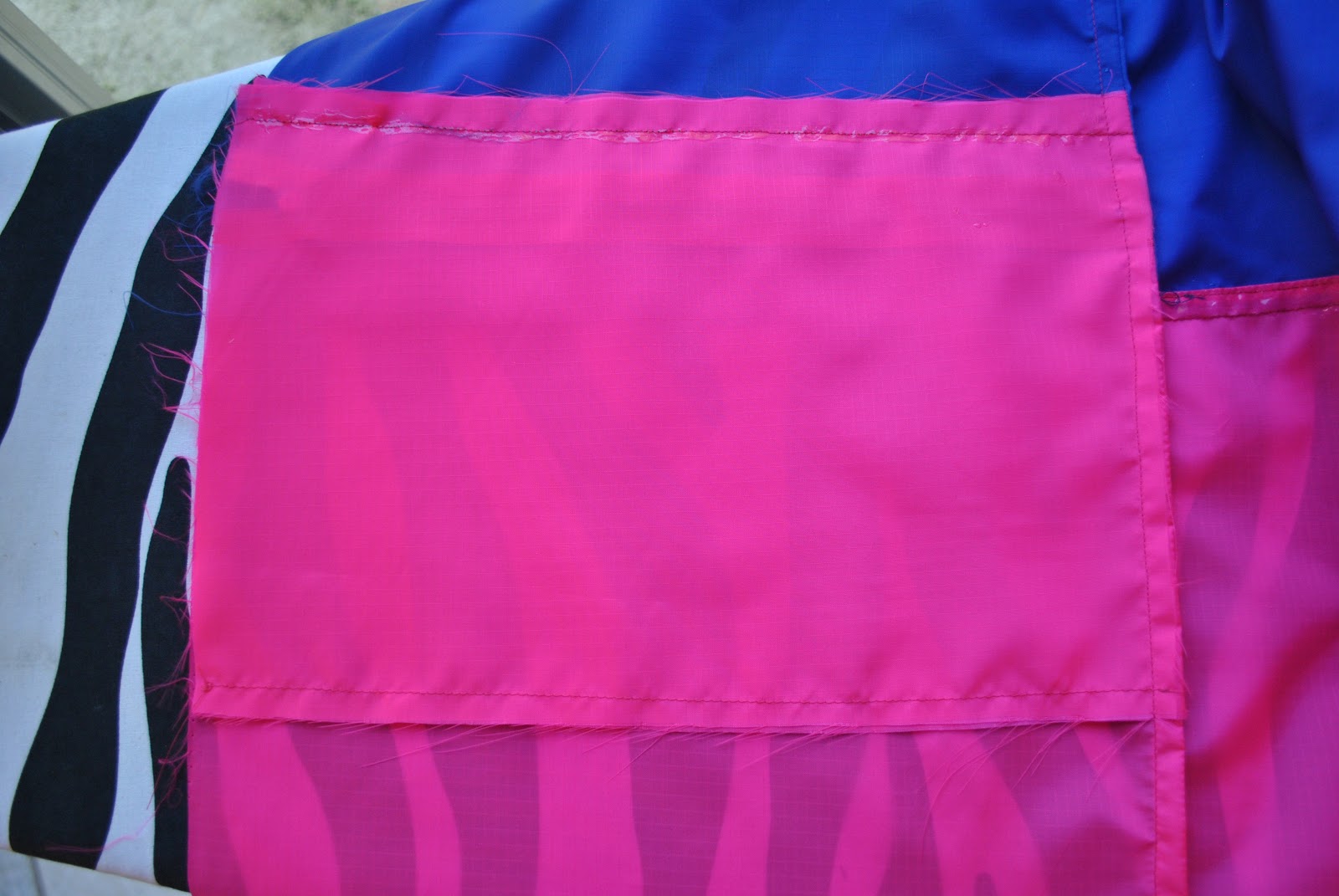
When sewing the side seams, include all the layers of the pocket inside the side seam allowances (at right in the photo below).  I sewed them as French seams, to improve waterproofing of the jacket, and also later applied  Seam Grip to the second stitching.
Keeping the other side edge  of the pocket aligned with the front centre edge, stitch the front placket, zip and lining together in one row of stitching.  Turn up, press and stitch the lower hem.
Ta da!  Waterproof pocket!
pinterestmail

Wave-y welts; a how-to

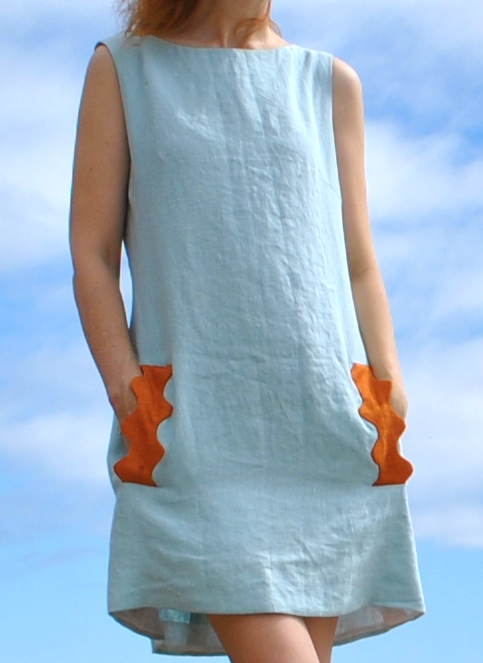
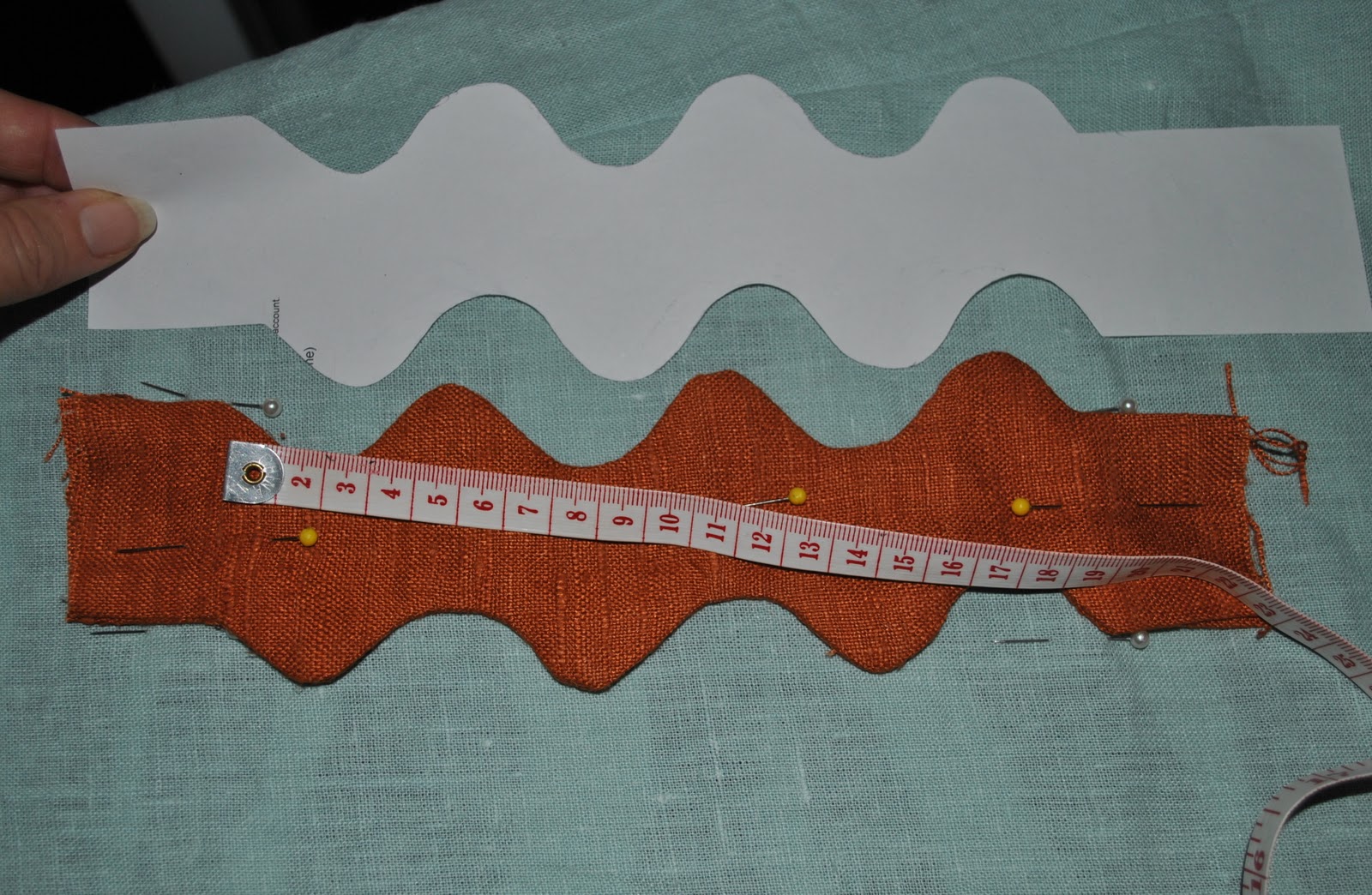
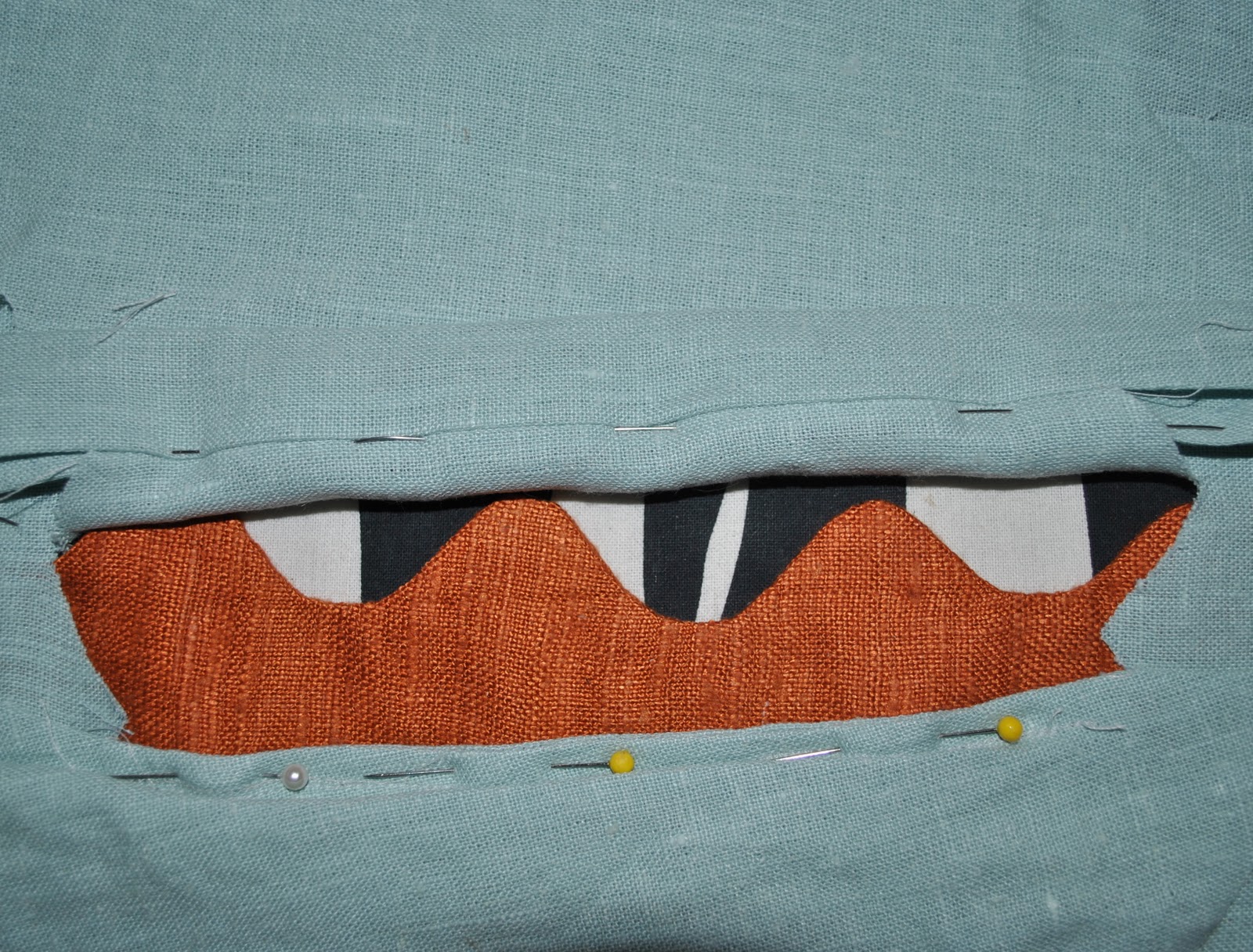
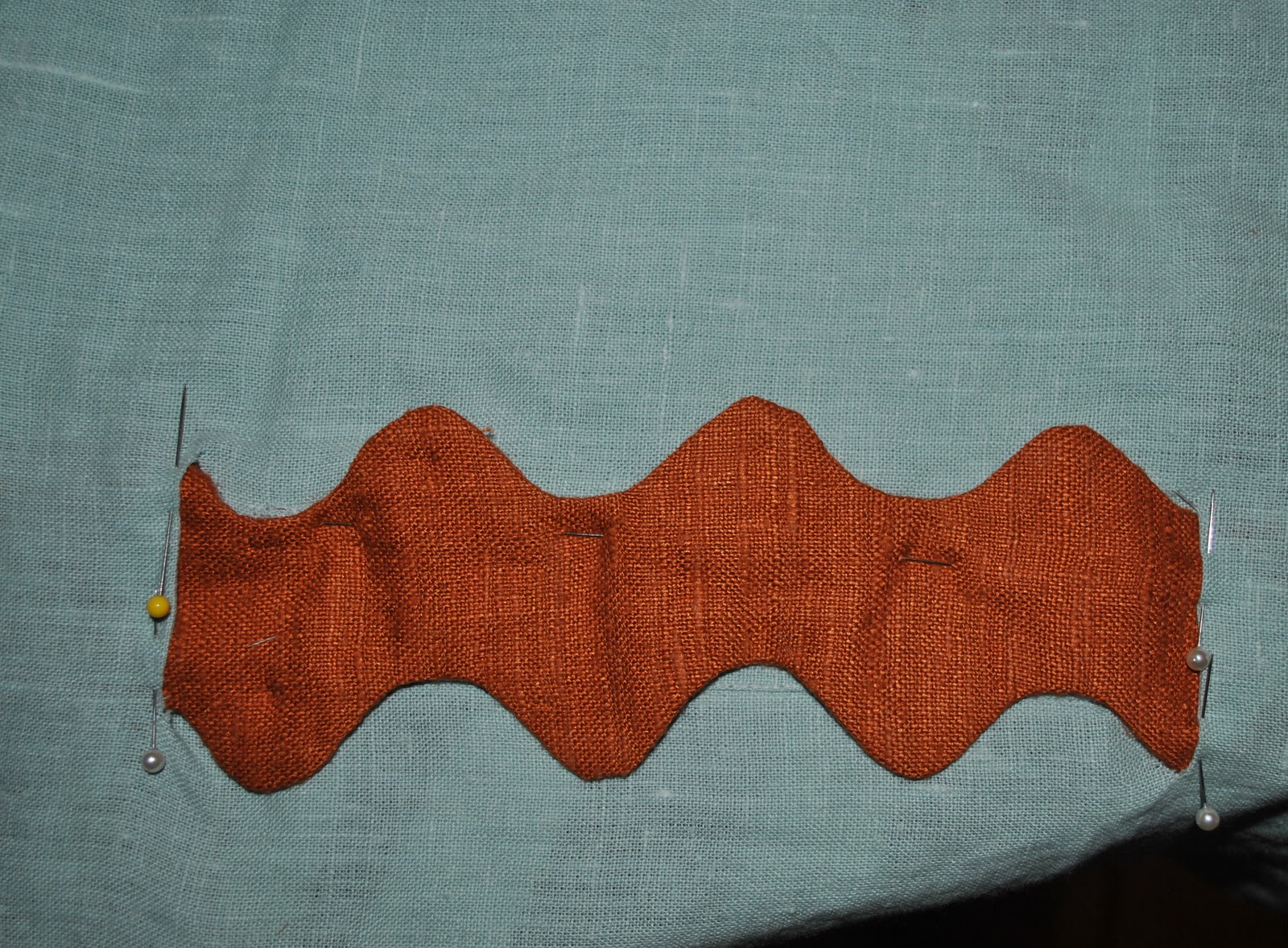
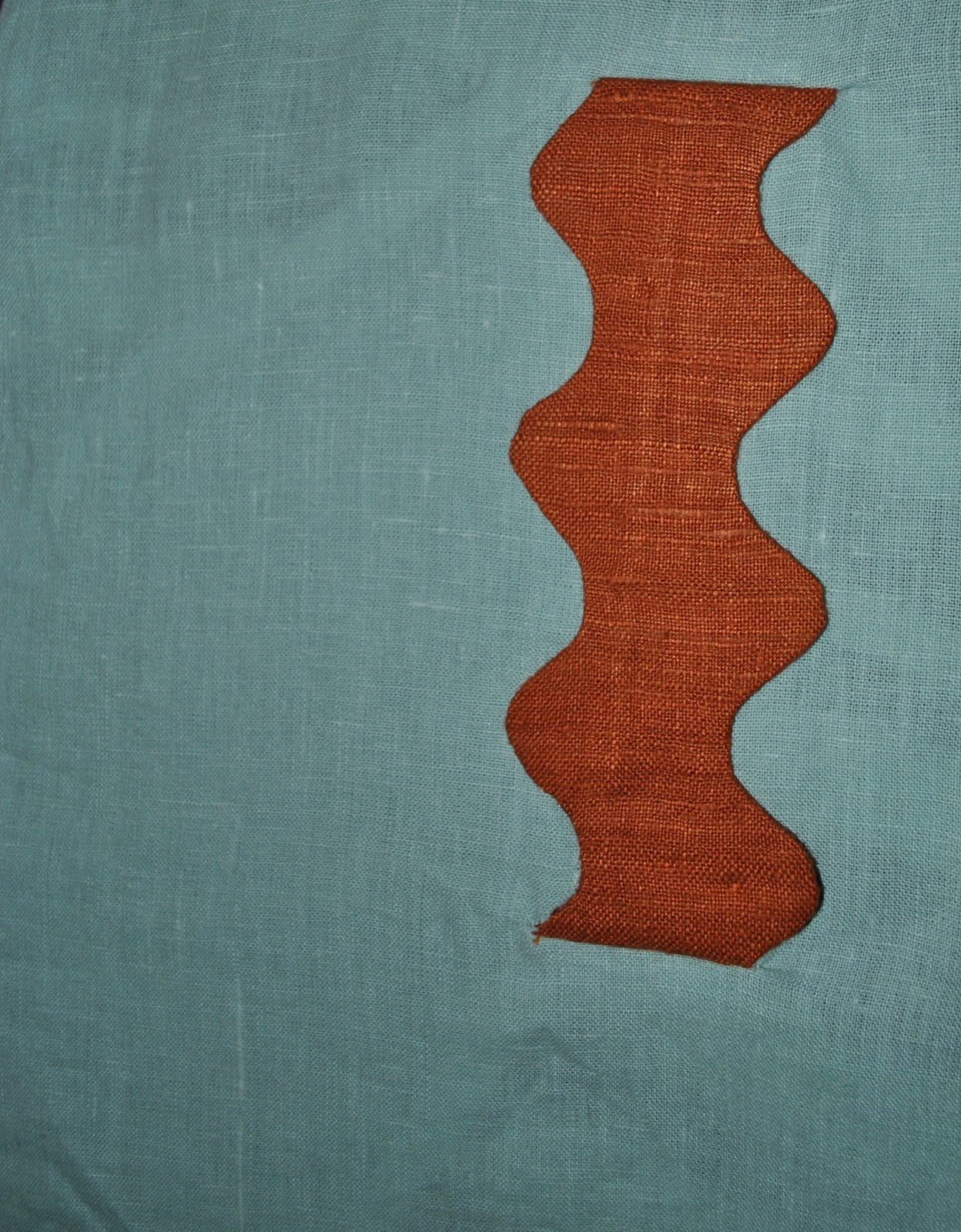
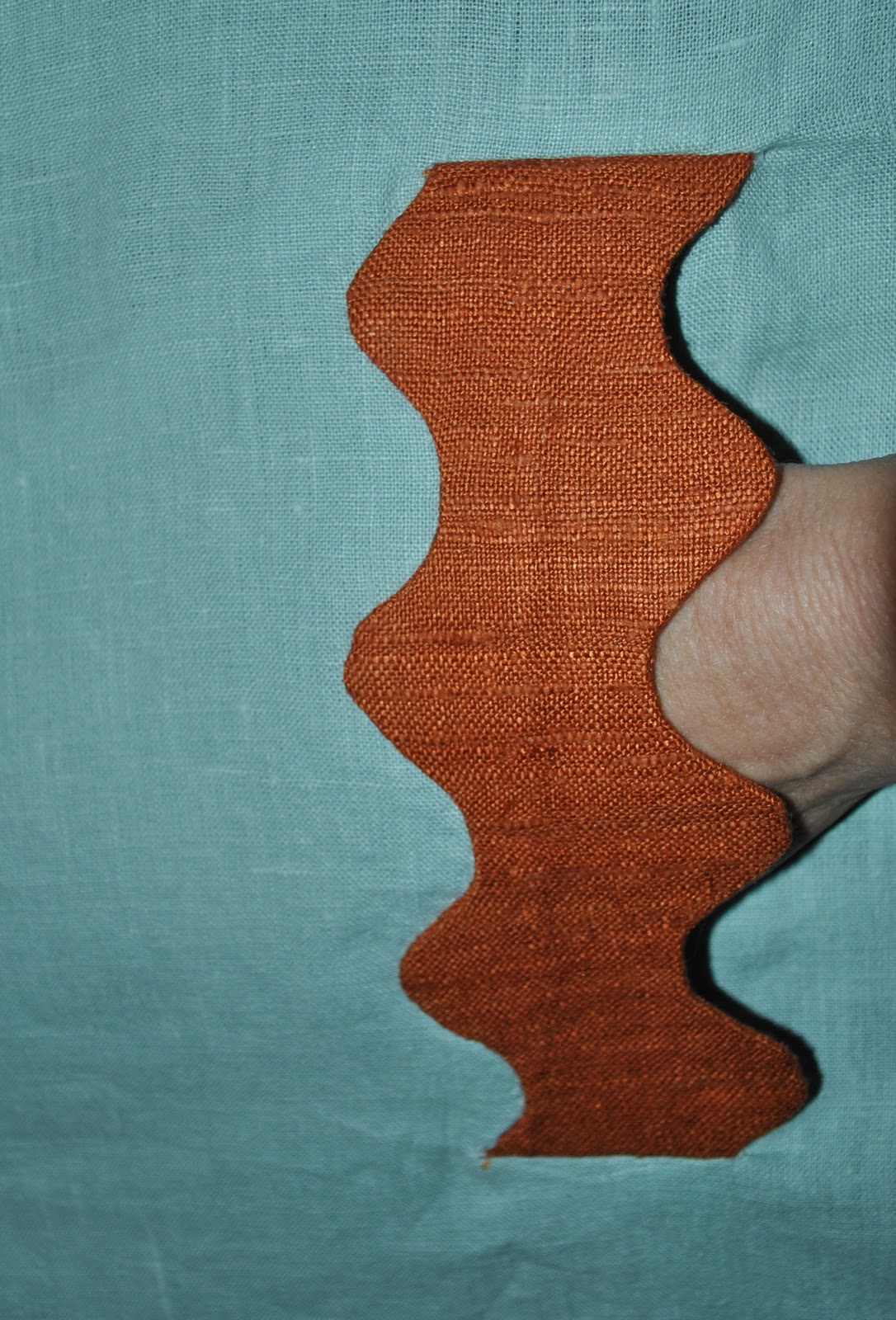
Some mistakenly thought my wave-y welts were ric-rac; well they’re not!  I made them myself!… although if you do have access to such a thing as giant ric-rac (I have never come across any such thing! but then Perth is a small place) then I suppose you could use it for these welts if you want…   As it happens I did take a few photos during the process of making these… partly so I could have a record myself of how I did it since I was doing this on the fly, but also  just in case anyone was interested in making their own shaped welts for a pocket… and some were, so thank you so much for asking!!   😀  
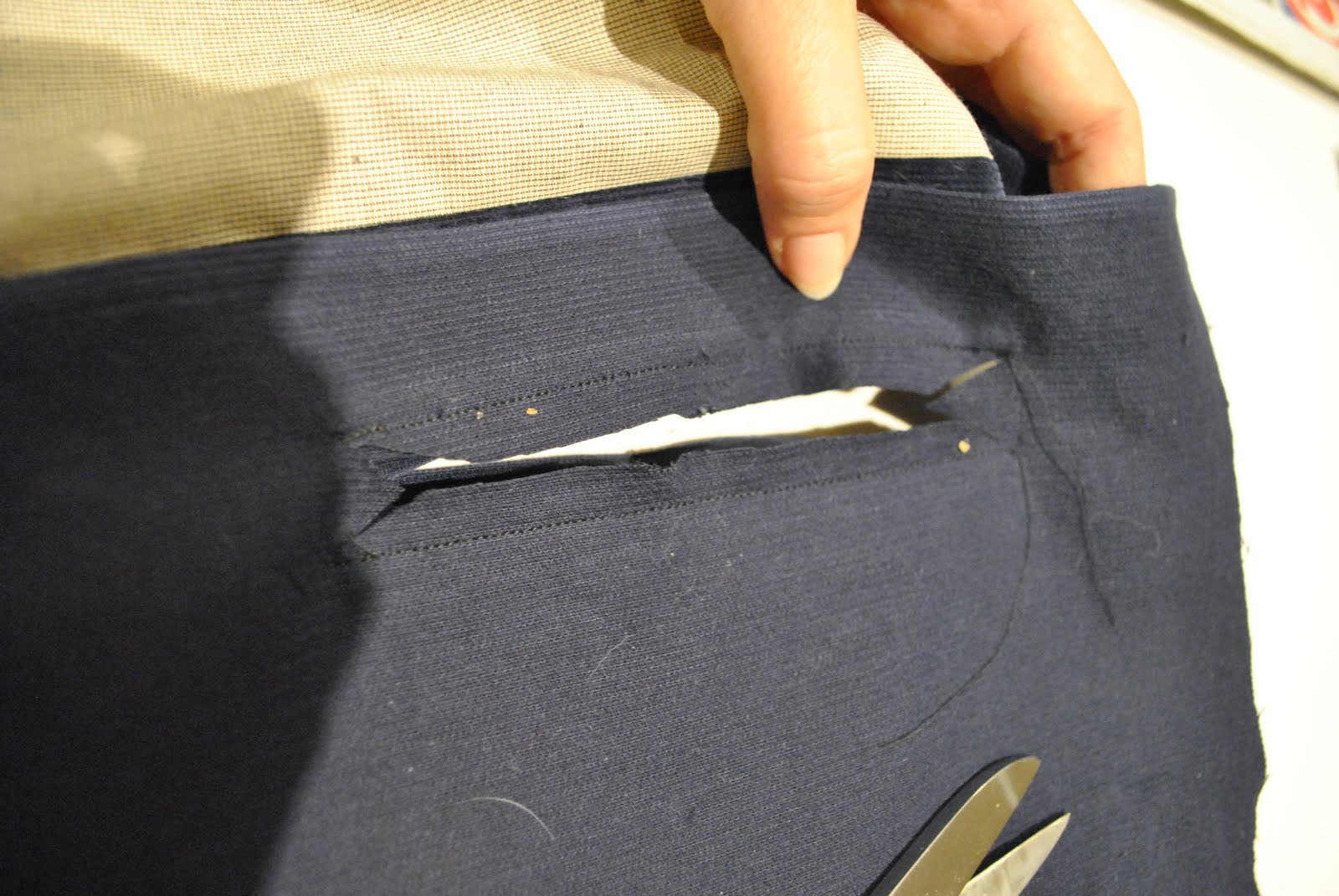
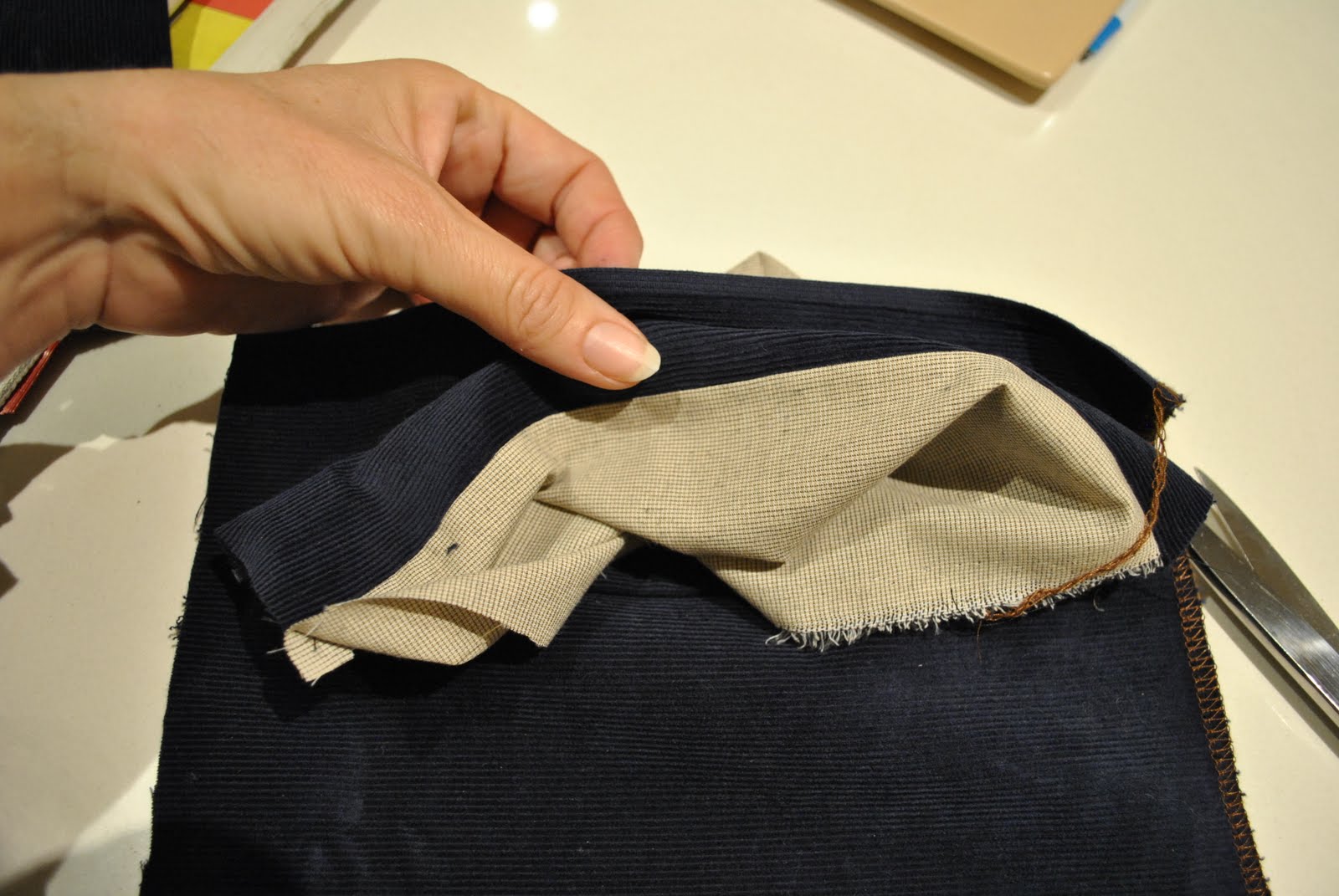
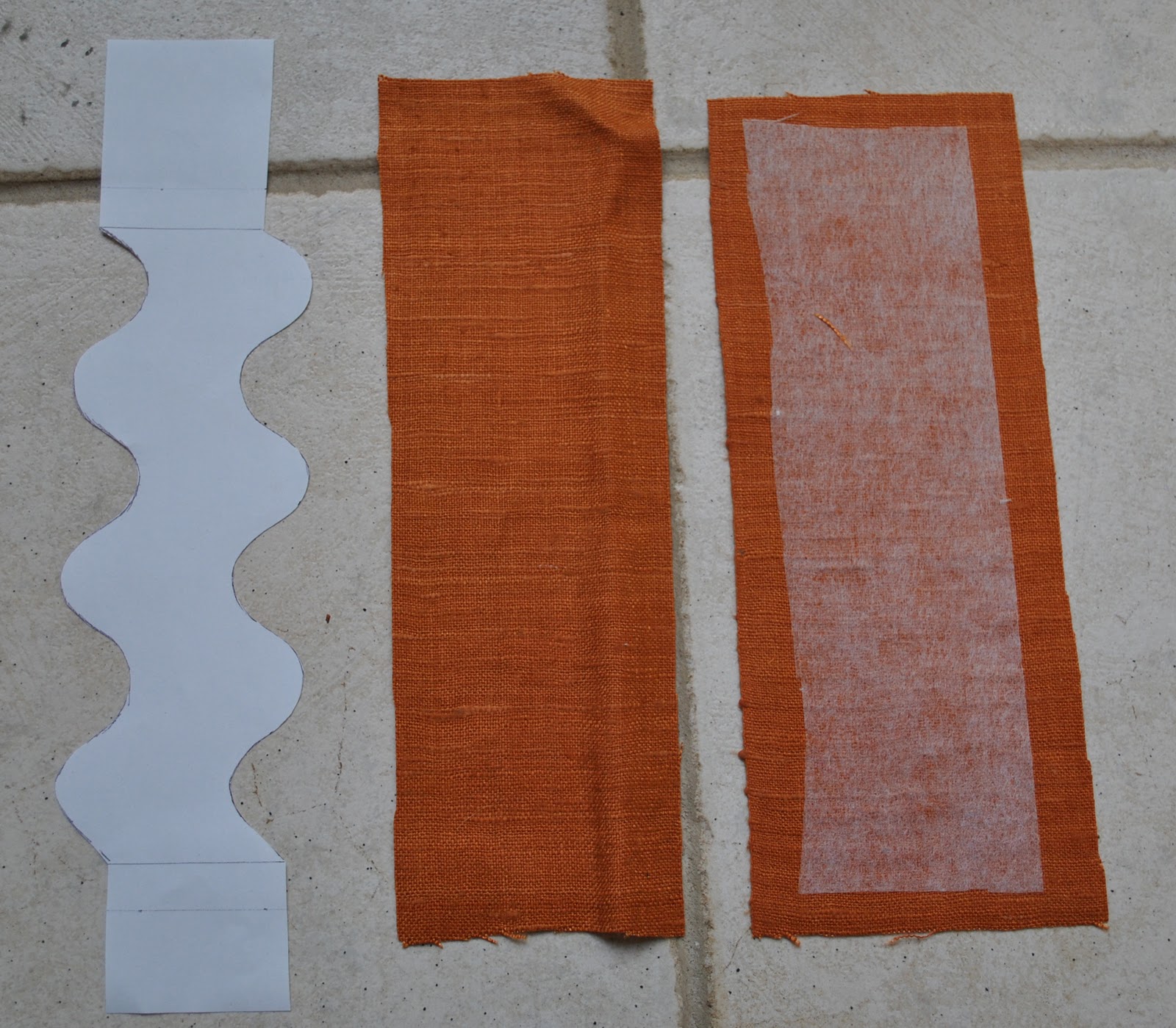
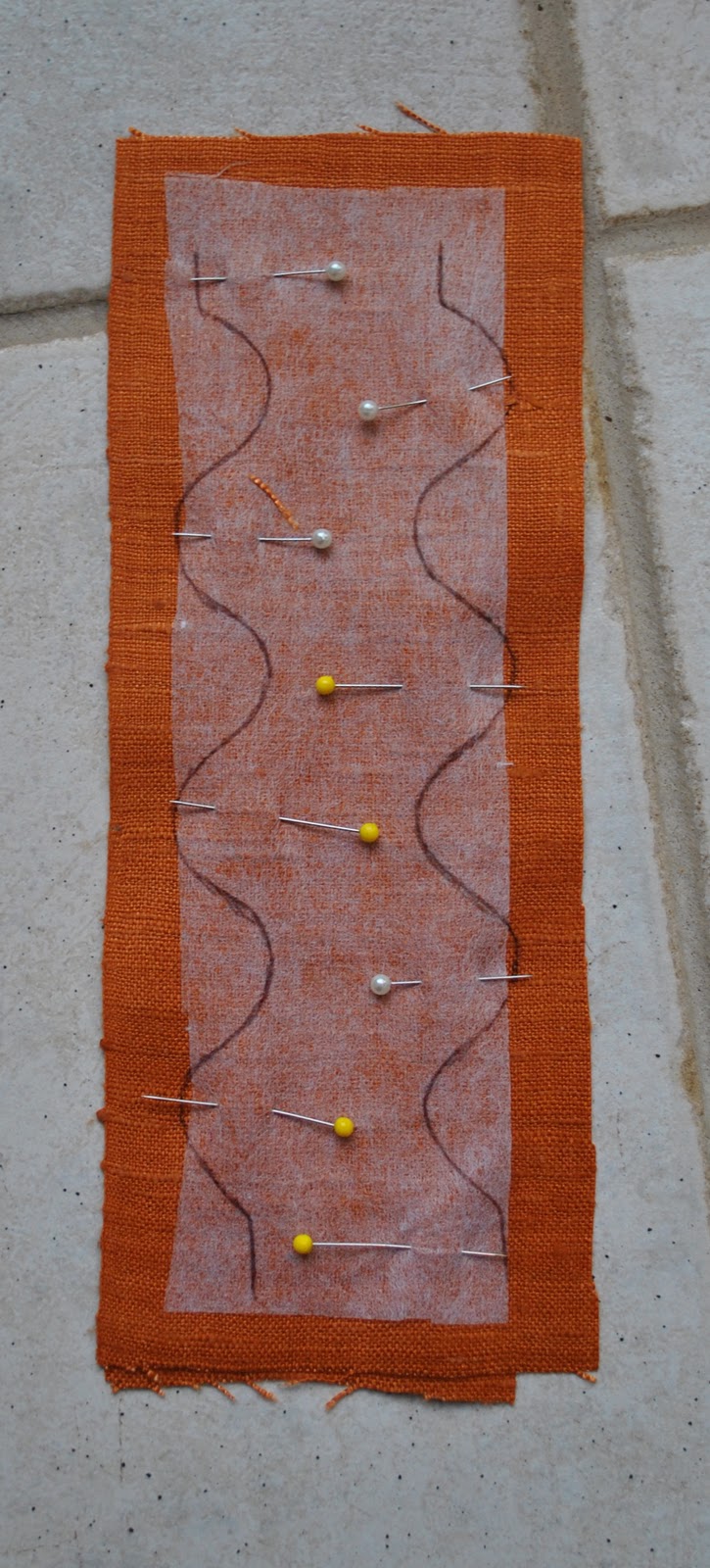
I had laid down my hand and drawn around it to get a pocket piece; and based the length of my welt on the length of the opening edge of this piece… and then drew out the shape I wanted for my welts on paper… this is a sine wave…  (that’s my geeky side coming out for you there, yup, I am a fully paid up member of nerds anonymous) Note; that although my shape is a sinuous curve; the four outermost corners of the design still form an exact rectangle…  having this will make it easier!  I also cut out four large-enough rectangles of my fabric and applied iron-on interfacing to two of them.

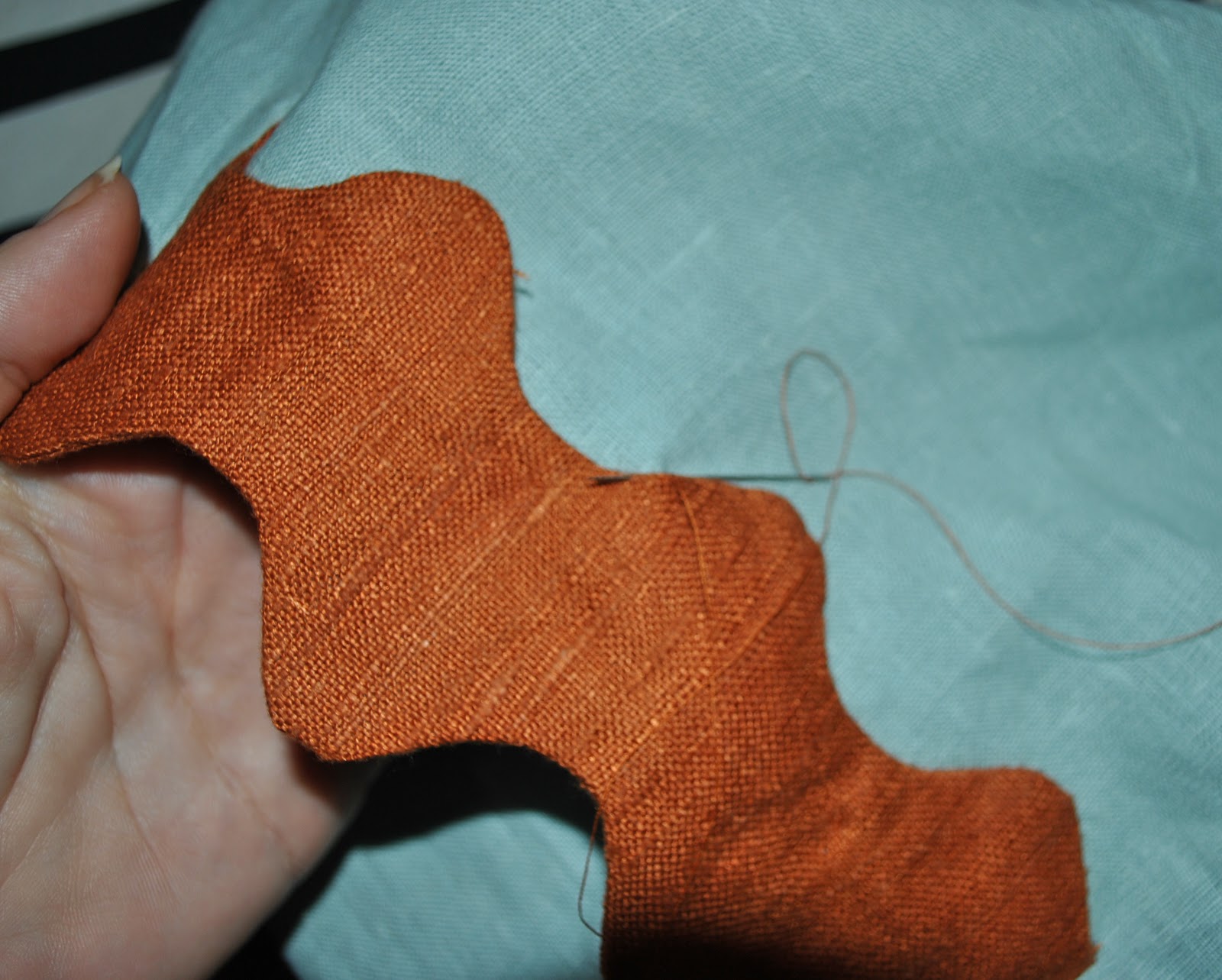
Draw the design onto the interfaced piece, do the second one as a mirror image.  Pin an interfaced piece to a non-interfaced piece, right sides together, and sew as slowly and as accurately as possible along your marked curves.

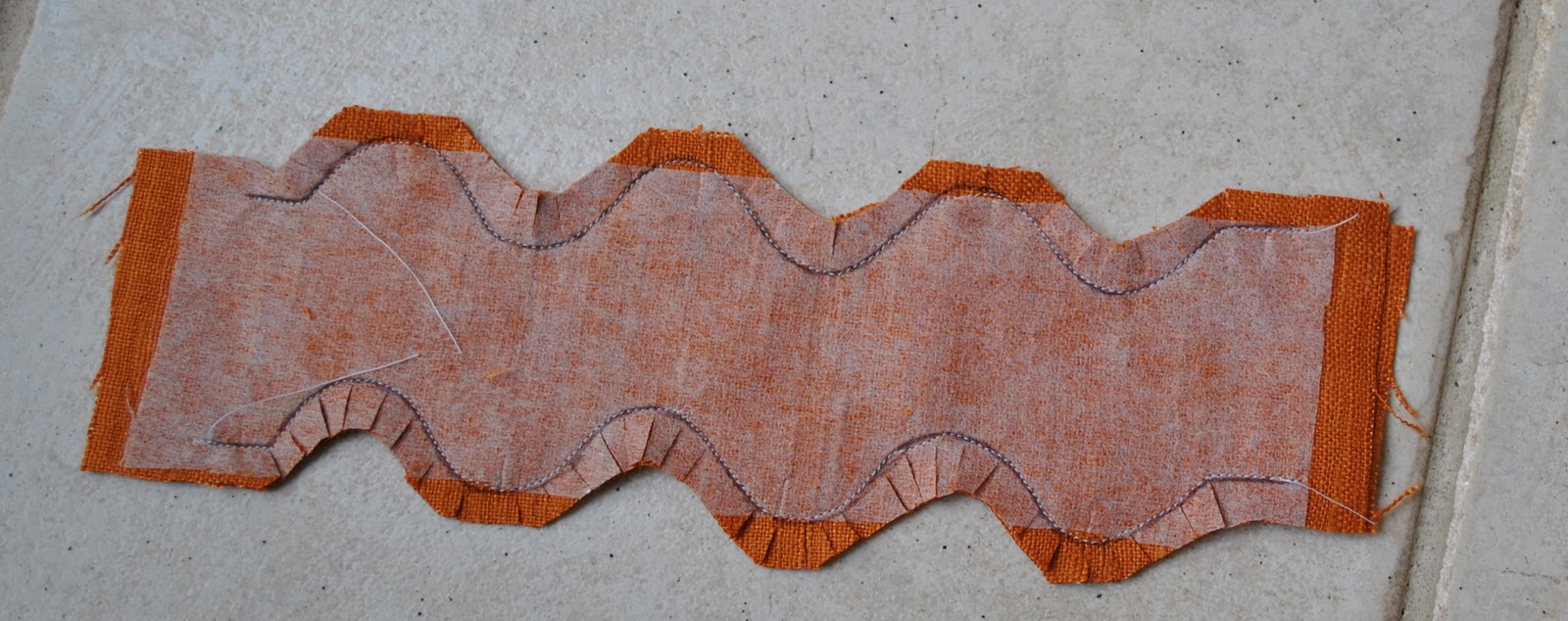
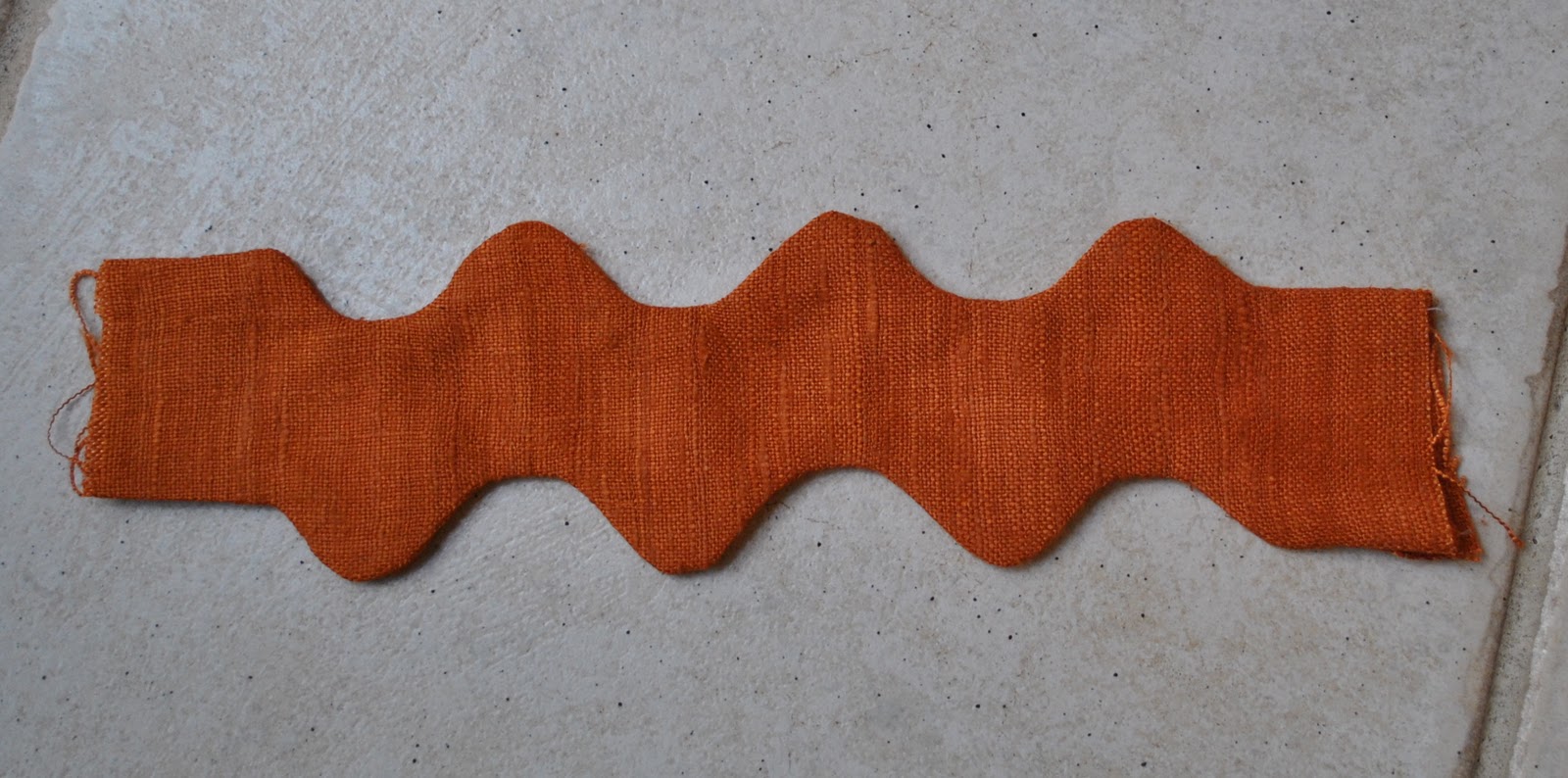
Trim and clip along the curved edges and turn right side out.  Press; with your finger inside to ease out those curves to sit smooth and even.  Voila; welts!  Well; potential welts… hehe, hang in there  ðŸ™‚

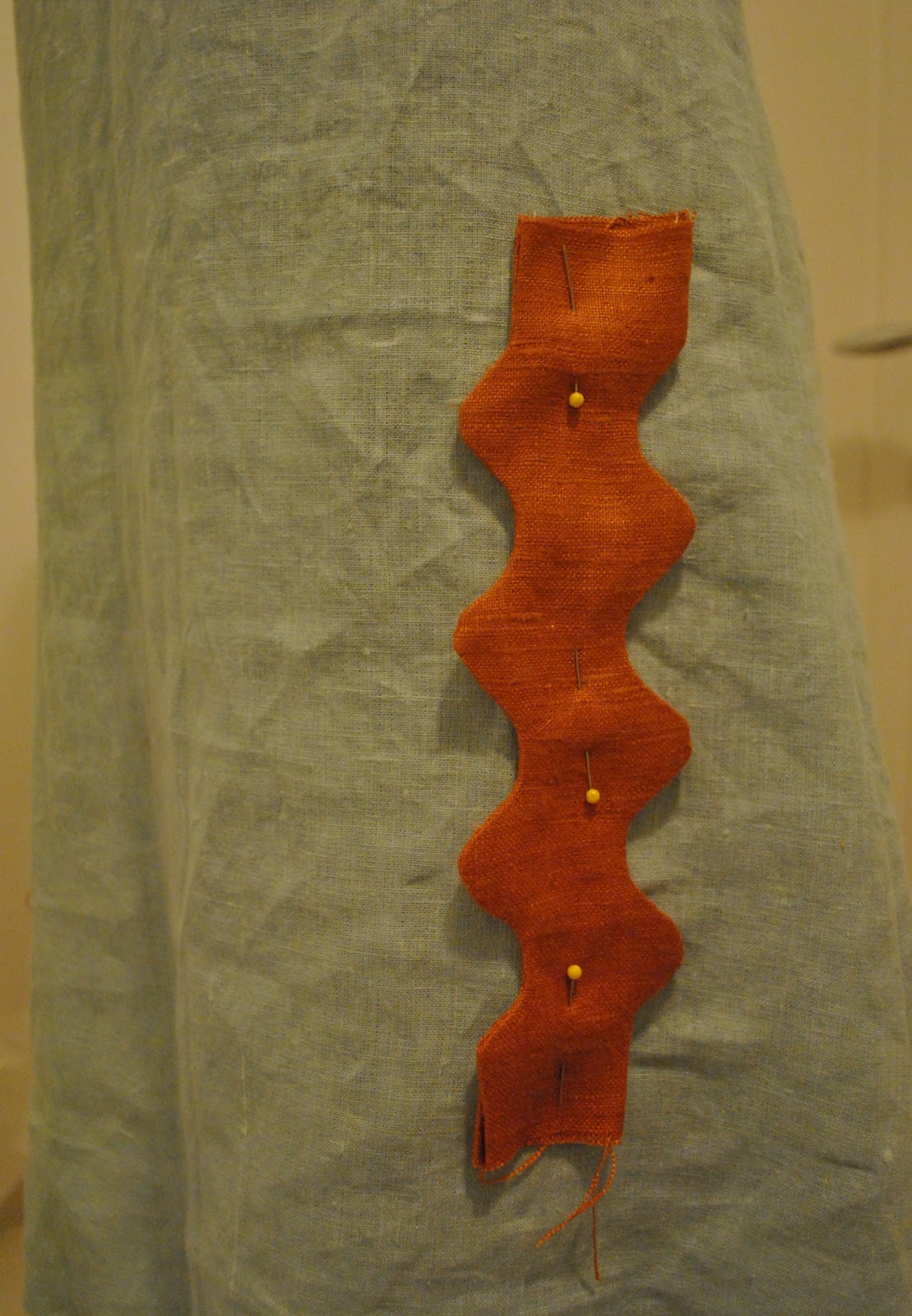
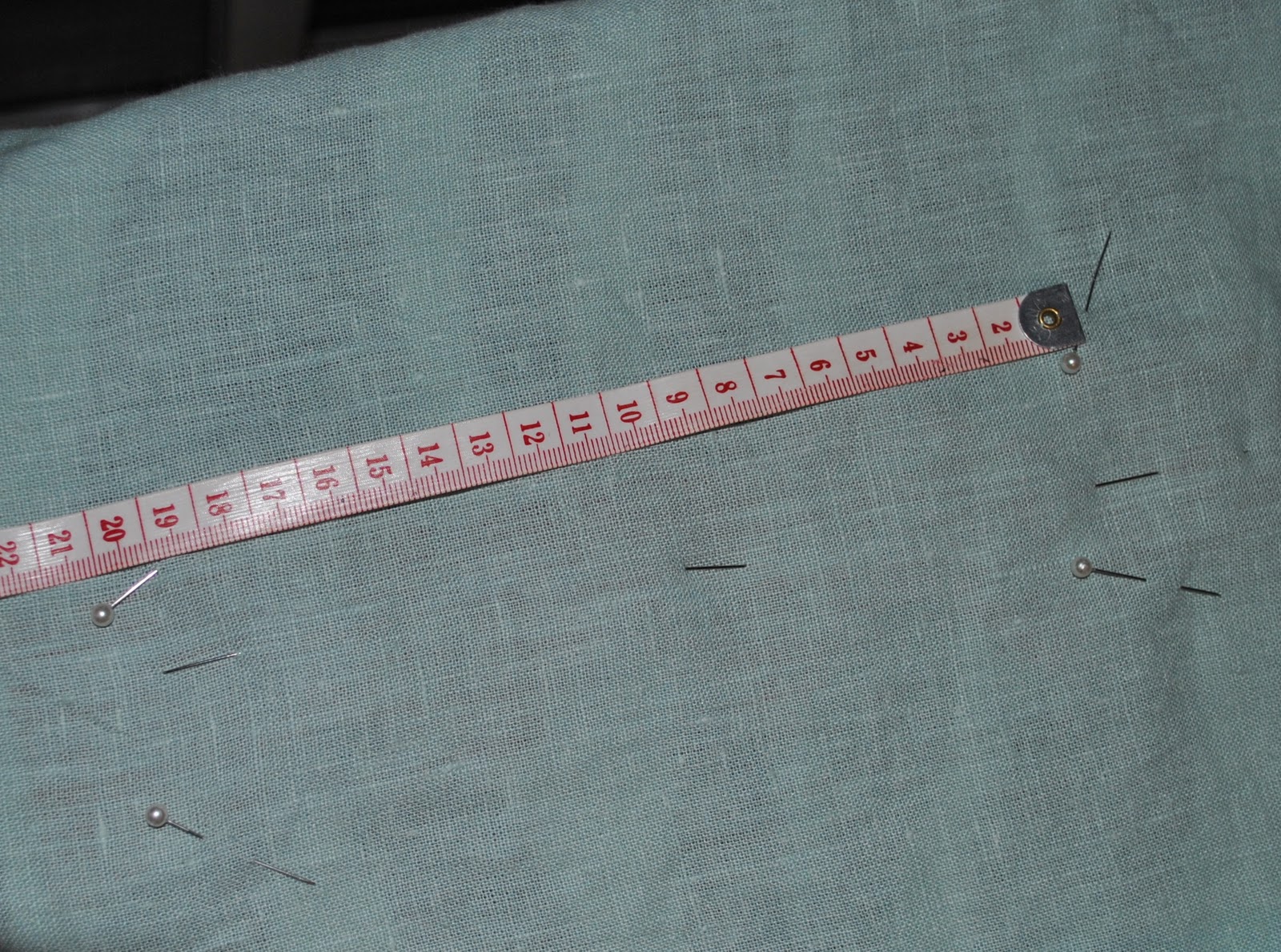
Now I tried on my dress and pinned the welts onto the outside of my dress where I wanted them to sit; so they were in a comfortable position for my hands.  This is an individual thing… for me it is at about hip-bone height, but it is also a toss-up as to where you want the welts to sit aesthetically, to be in a visually good spot on the dress.  I find a comfortable spot for my hands is quite wide-set, but I still wanted for both the welts to be quite visible at the same time from the front view of the dress…

Mark the corner points of the welt design onto your dress with pins, and check to make sure that your two marked rectangles (which are your welt positions) have the exact same dimensions as each other, and as your paper piece… also that your two welt positions are exactly equal distance from the side seams, have the same “angle” and are exactly level to each other on your dress (sorry if I am stating the obvious, but it is best to say it than not…they are a pretty stand-out feature and wouldn’t it be awful if after all your hard work one was “off’!)  I reckon it is also a good idea to double check on the inside, where it is easier to tell inaccuracies since the visual distraction of the actual welt is not there.

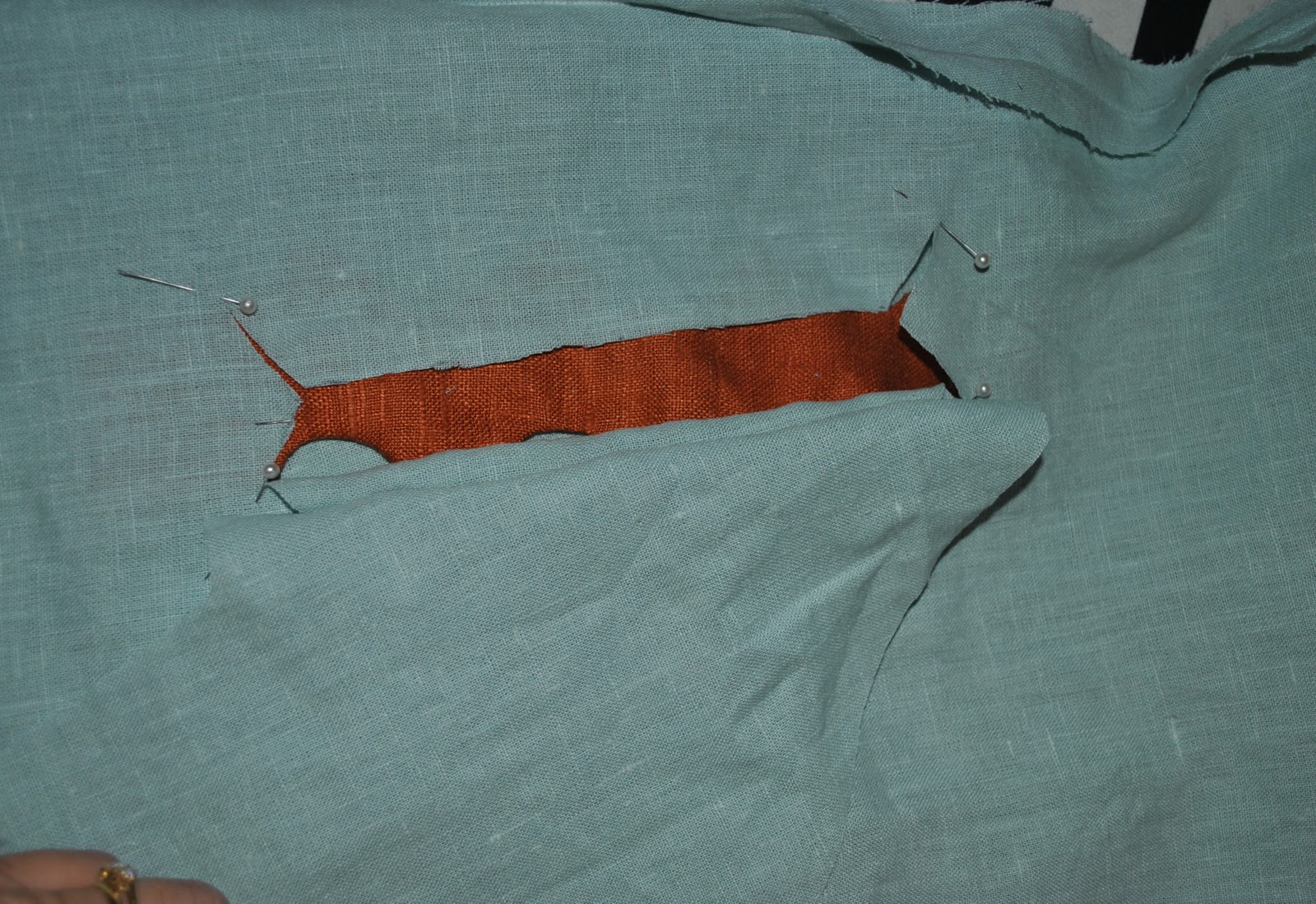
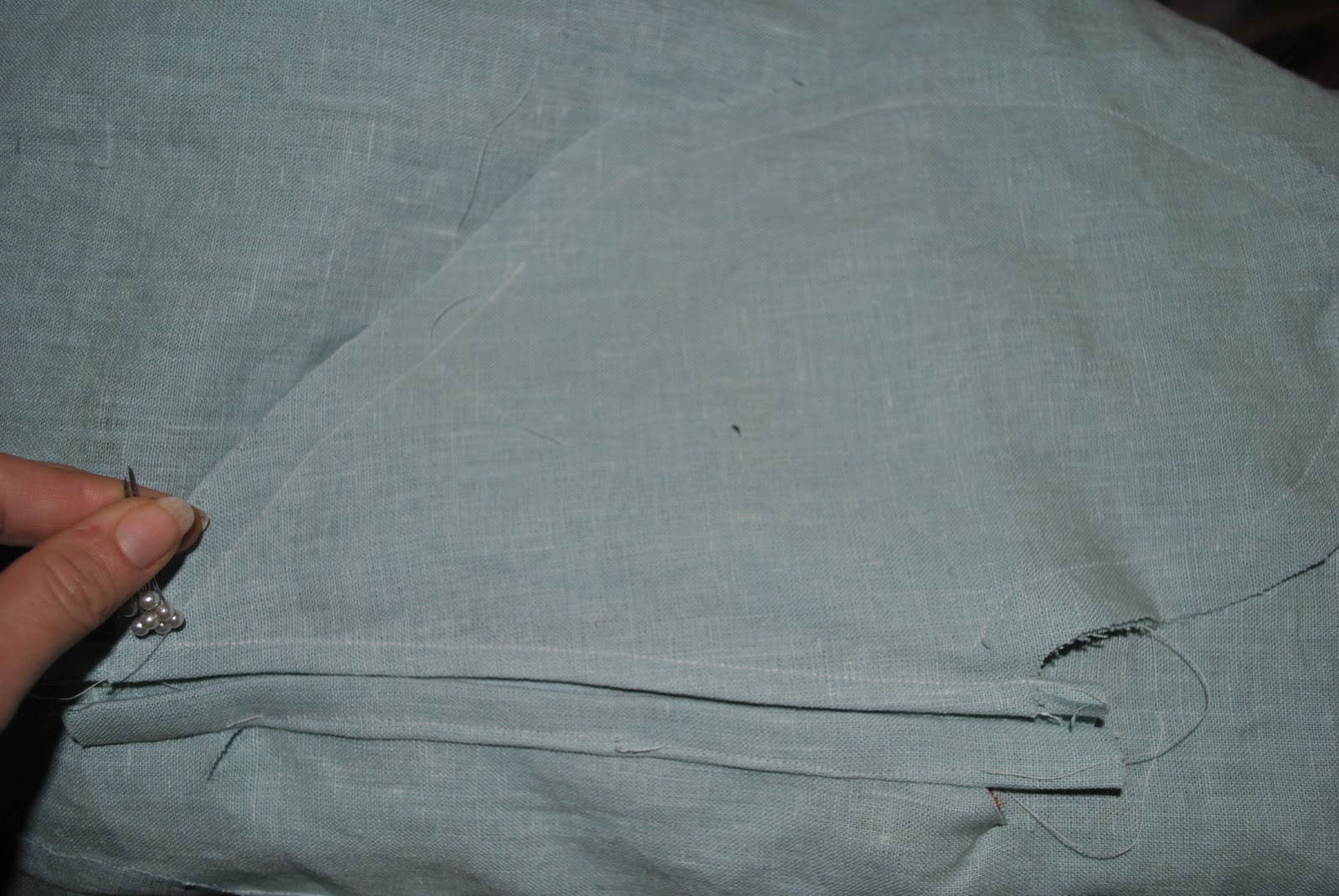
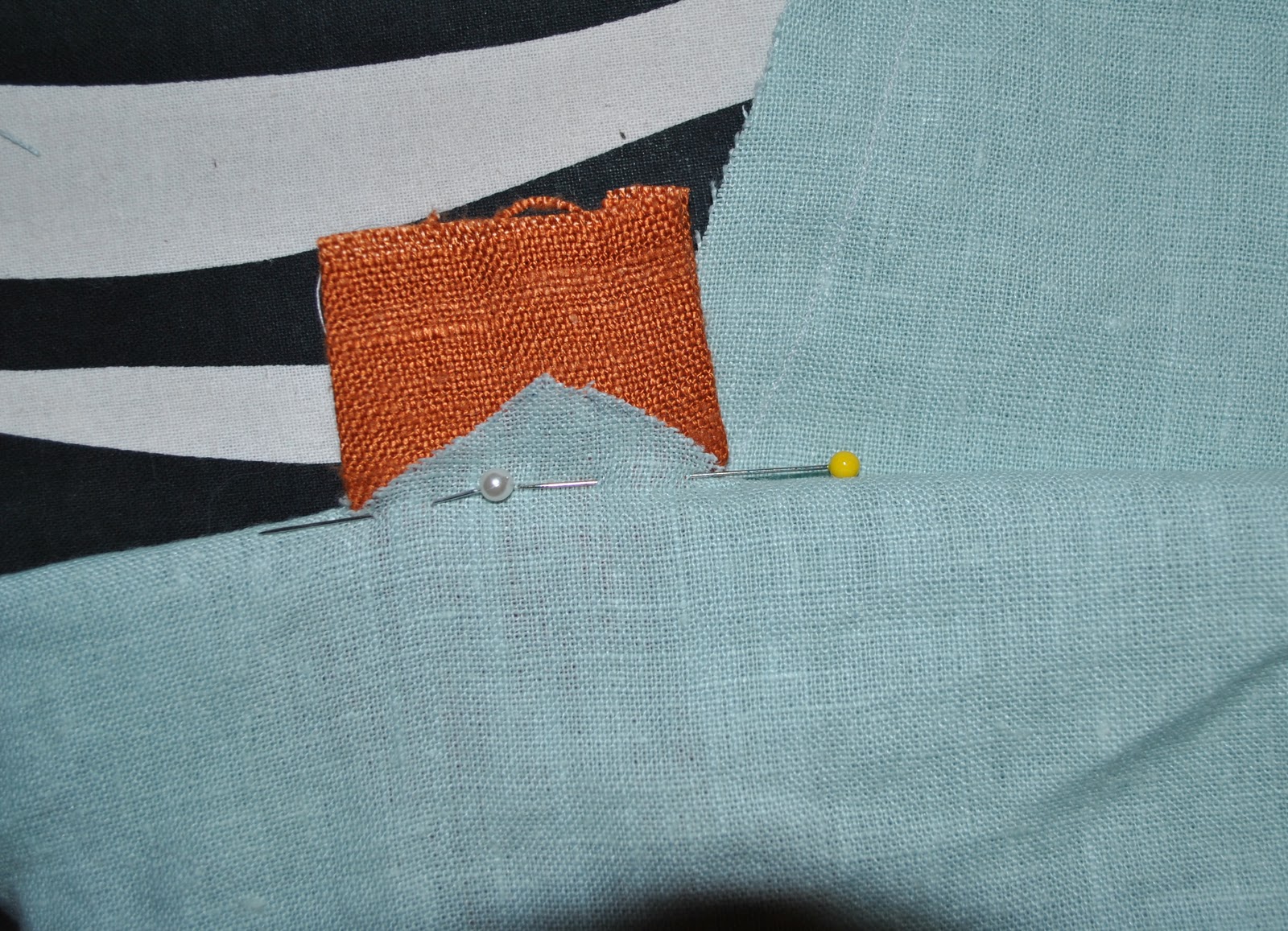
Carefully snip (the dress fabric only; be careful not to snip into your welt!) down the middle line of the marked rectangle, and in shallow angles  out to the corner points.  The shallowness of the angle cuts to the corners should be dictated by whether of not you have a sharp inner curve of the welt at the corner; cut the corner angle accordingly to be hidden by this…  Join one pocket piece to the inner cut edge of the slit. I joined mine in a French seam, but that is only because I am sometimes obsessive about raw edges…. this is not strictly necessary… then pin the inner edge of this seam to the underside of the welt.

Now for the other pocket piece; at this point I realised it needed an “extension” for it to fit properly inside the welt and onto the the other pocket piece, so I cut a rectangle of fabric for the second pocket piece and joined them in a French seam, then laid down the extended pocket piece onto the first pocket piece, aligning those French seams and the raw pocket edges…  

Turn in a narrow fold on the other long cut edge of the slit, and press.

Lay the extension on the second pocket piece over this fold, to be nice and flat and even; and pin the top single layer of that new fold together with the extension piece of the pocket… sew together in the ditch of the pressed fold.

I trimmed down that long free edge of the extension piece and tucked in the raw edge and folded the extension piece over and enclosing this seam allowance, and pressed and topstitched it down in the ditch of the previous seam, thus enclosing all raw edges.  Yeah, basically a flat-felled seam…  ðŸ™‚

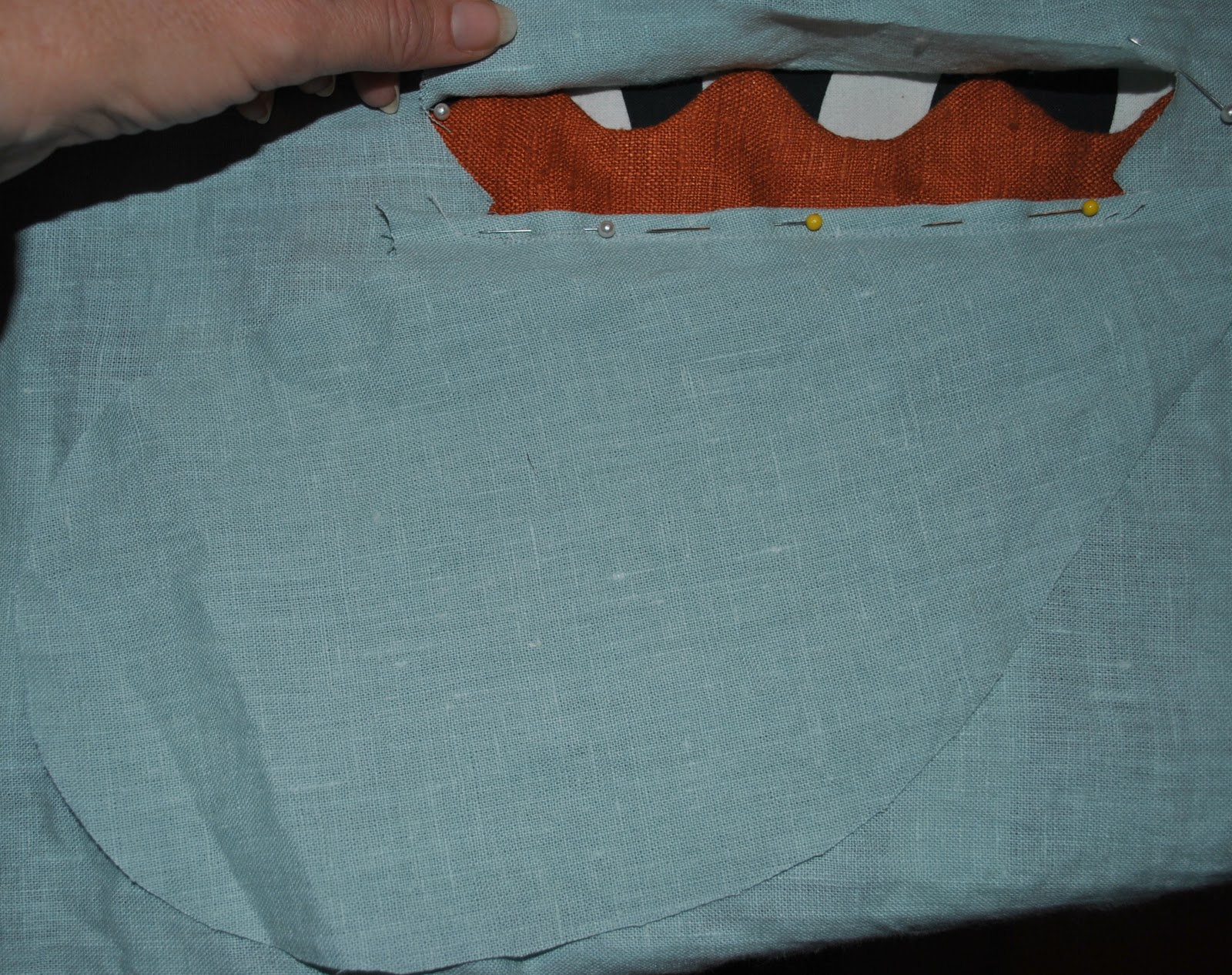
Finally laid those two pocket pieces together, pinned and sewed together around the long curved edge.

On the outside; turned under the small snipped triangular top and bottom edges, and pinned and finger pressed them into place…

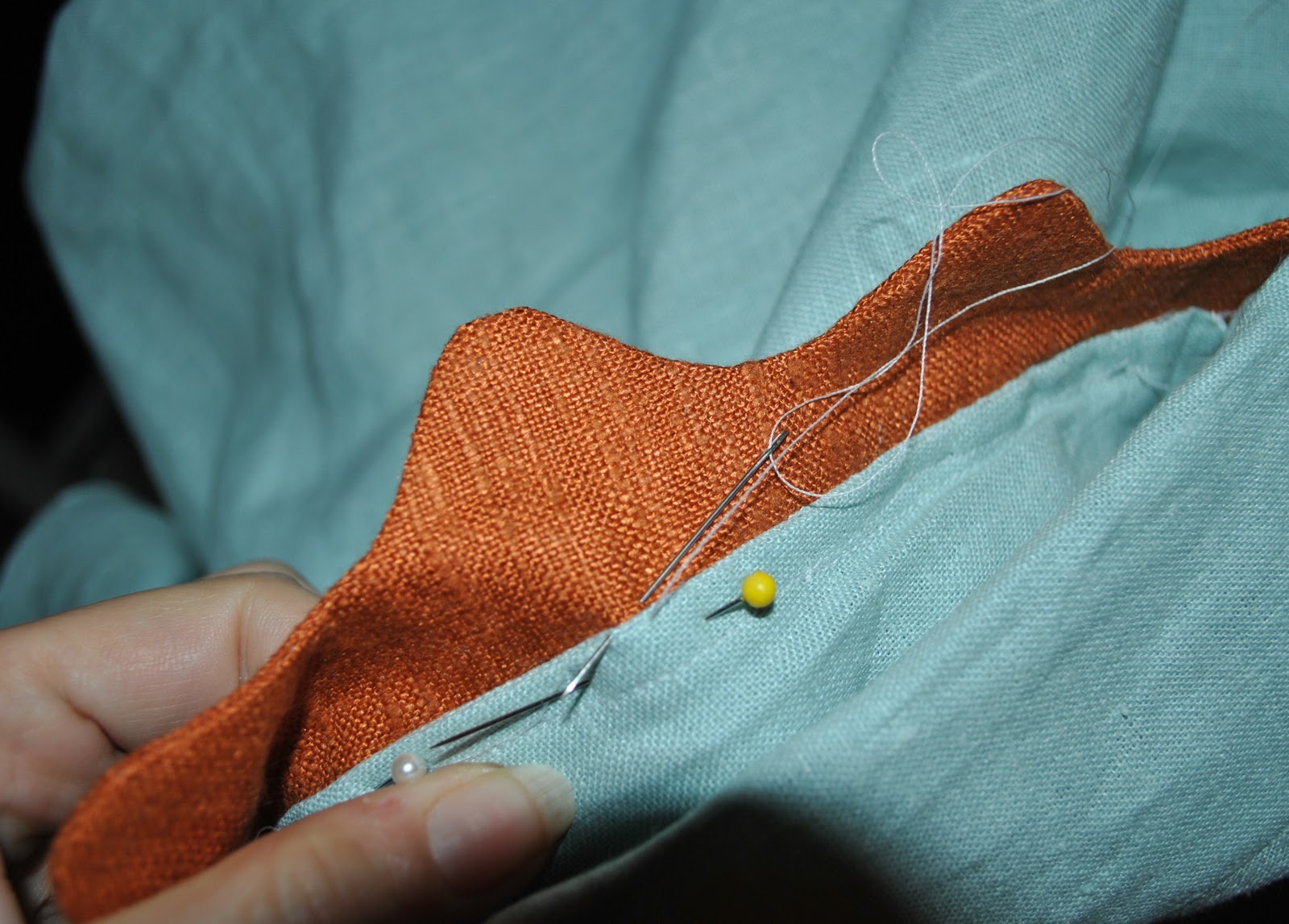
On the inside; carefully transferred the pins to the finger-pressed folds and stitched the short raw triangular ends to the welt allowances, keeping everything else free.

On the inside; invisibly fell-stitch the inner (unextended) pocket piece to the inside of the welt piece

On the outside, and using matching thread, invisibly fell-stitch the outer edge of the welt to the dress.

On the inside, trim the welt edges even with the pocket seam allowances, and enclose the seam in a HongKong seam.  Not essential, but it does look so much nicer and well finished, doesn’t it?

Finished!

pinterestmail

A cool pocket

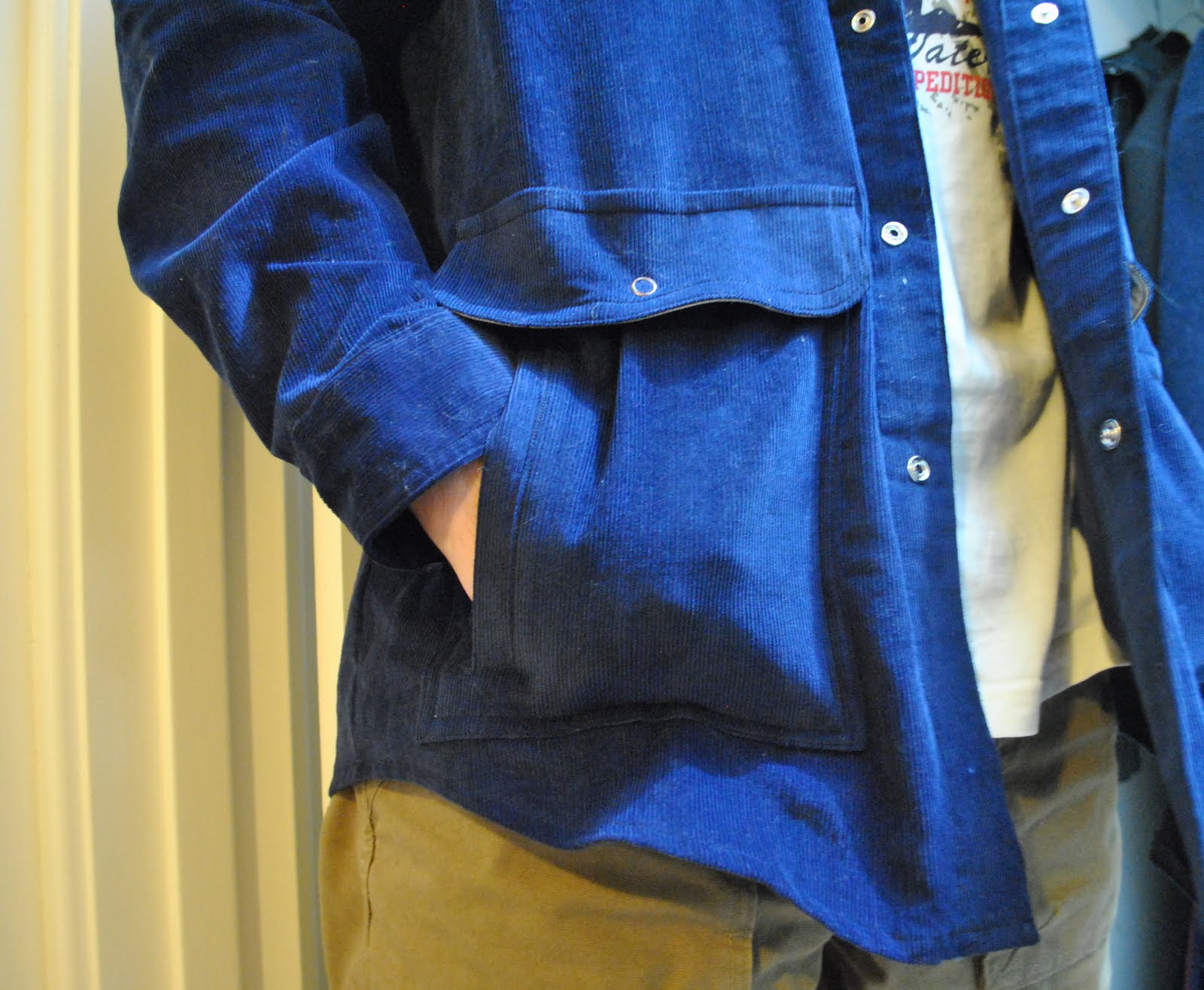
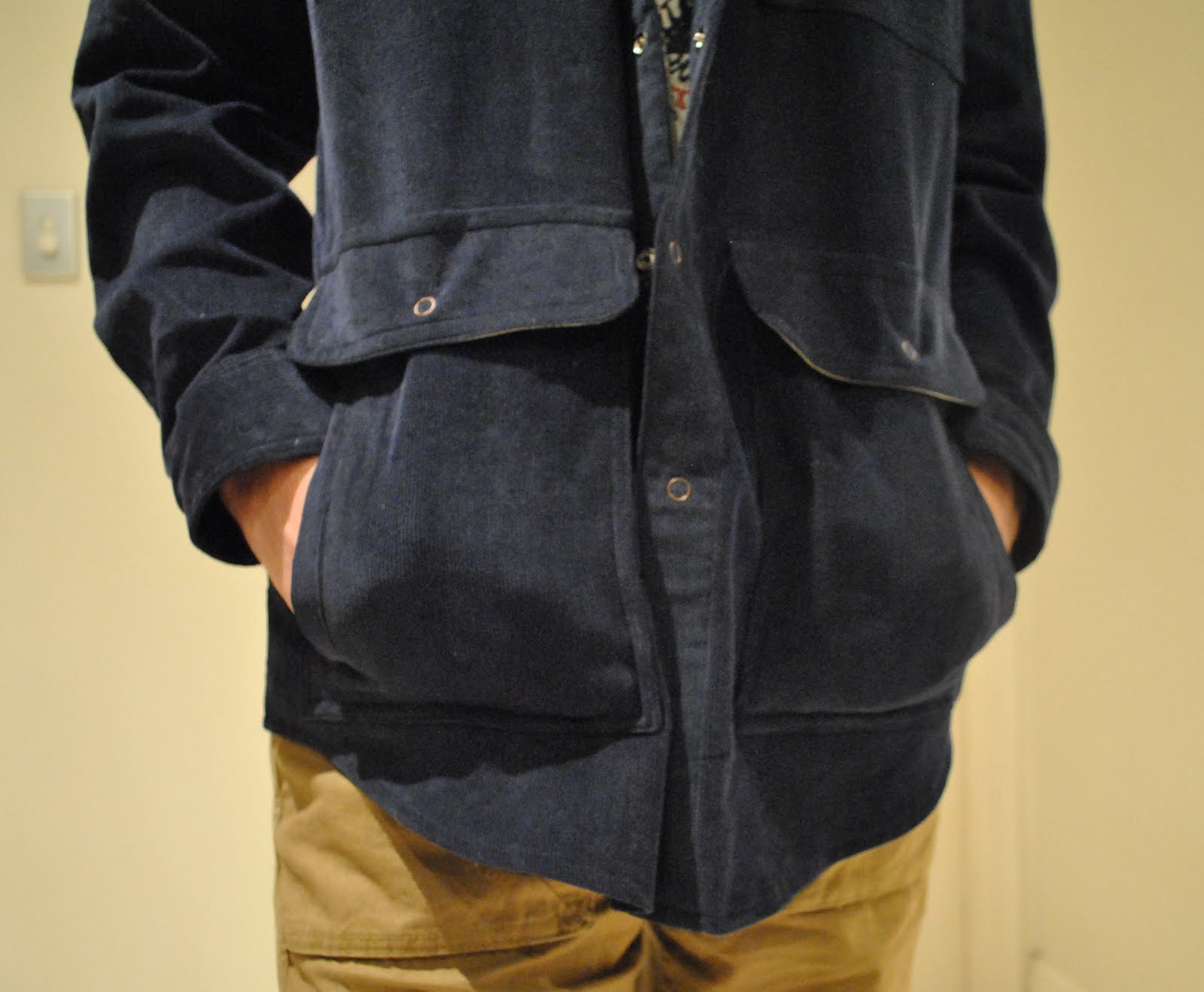
I’ve just put these pockets on a shirt/jacket I’ve made for Sam for his birthday, and I’m super pleased with how they turned out.  So wanted to share them.
I kind of got the idea from similar pocket I saw on a young mens’ leather jacket in the surf shop.   Seriously, the surf shop is a gold mine for wonderful ideas!  They somehow take hideous fabrics and unpromising shapes, and manage to make cool stuff that teenagers just love…
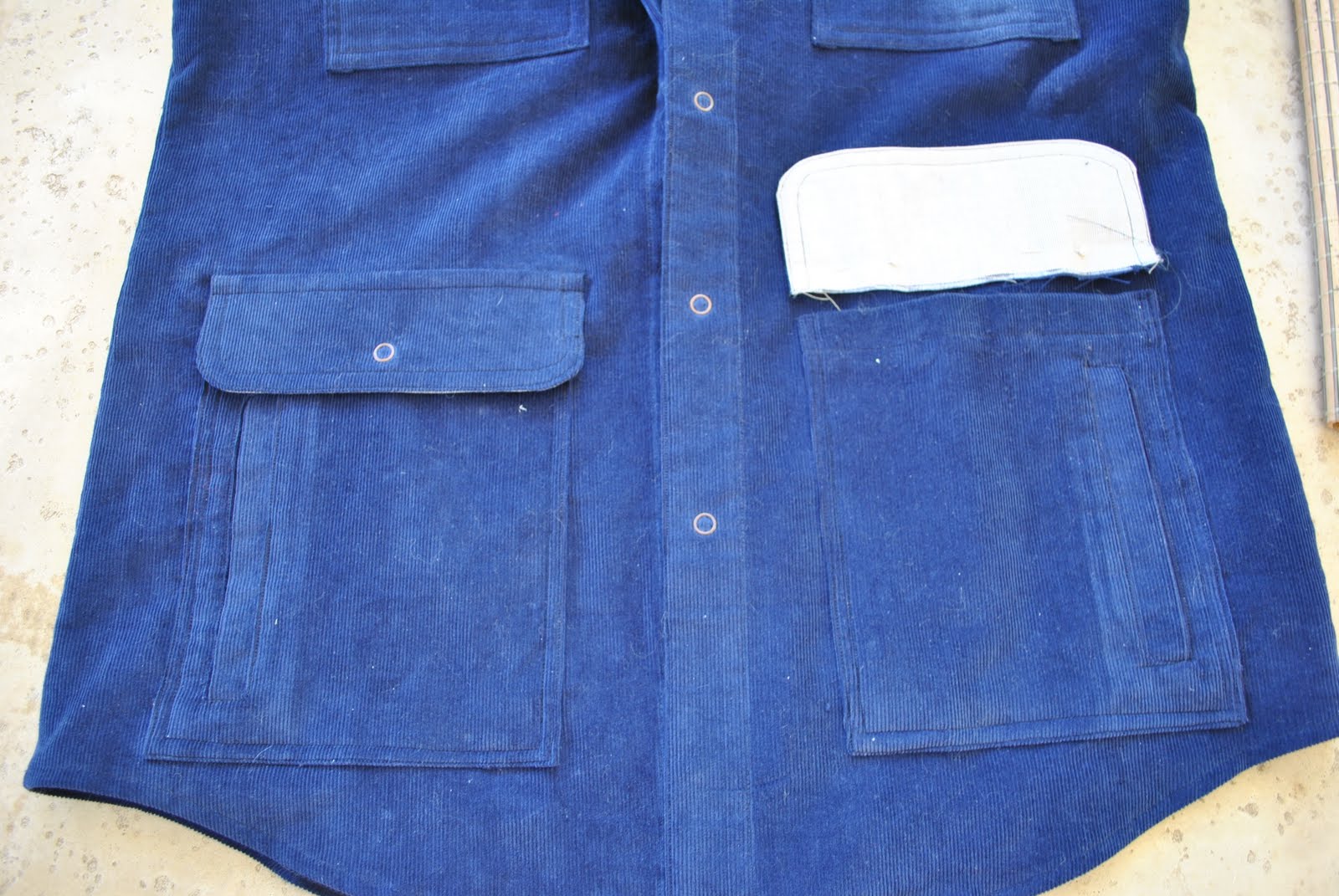
I’m pretty thrilled with these pockets, because they are a double pocket, like two pockets in one.  One is a welt pocket, and the other is a patch pocket, but both are part of the same pocket!
The shirt/jacket is of corduroy, a thin, non-stretchy navy blue corduroy, a colour that really suits him.  (yes, because I used corduroy I spent the entire process obsessively stroking all the fabric pieces to make sure they were all facing with the nap the right way at every step!!)  The contrasting lining fabric is a thin beige cotton that has a subtle tiny plaid woven into it.
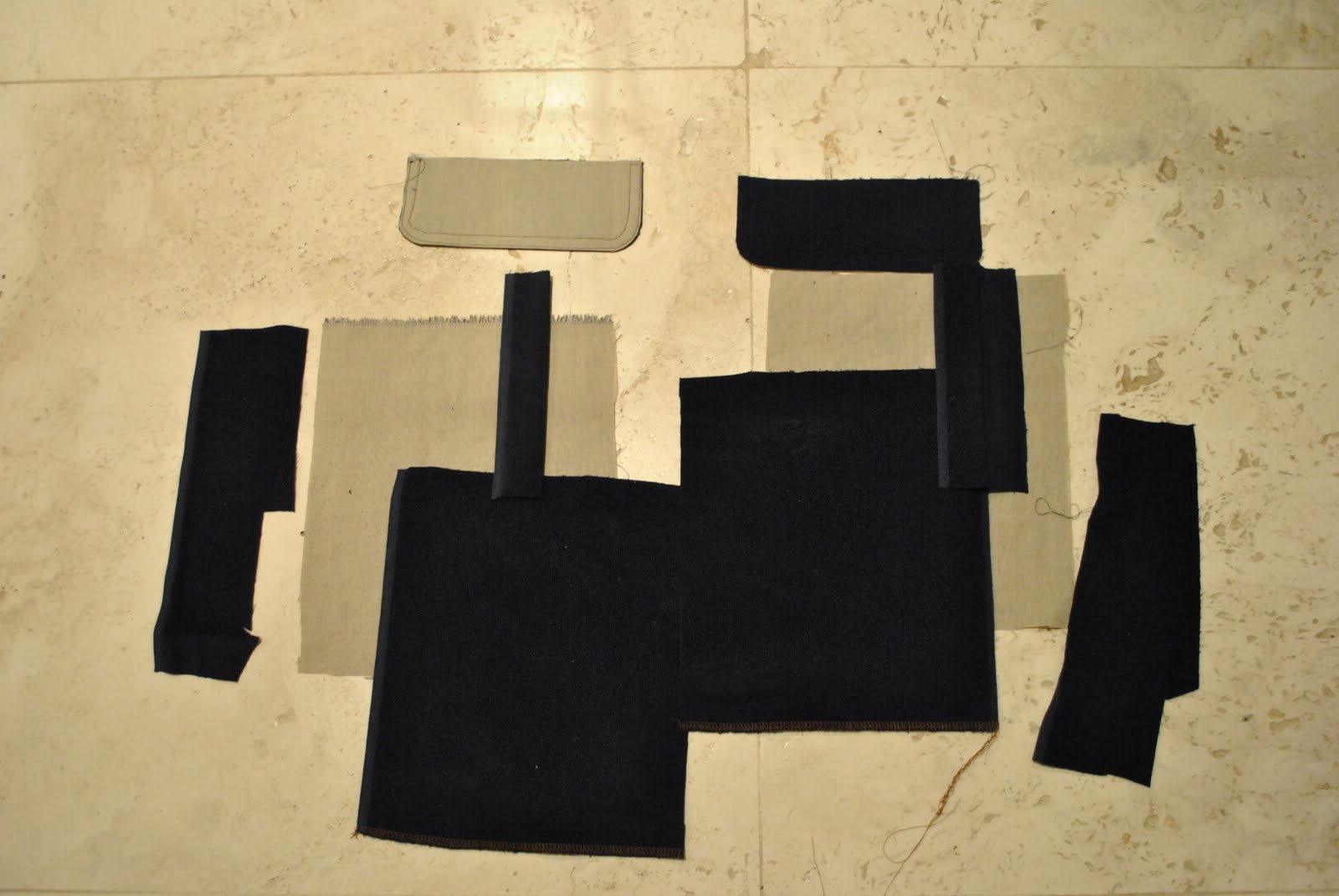
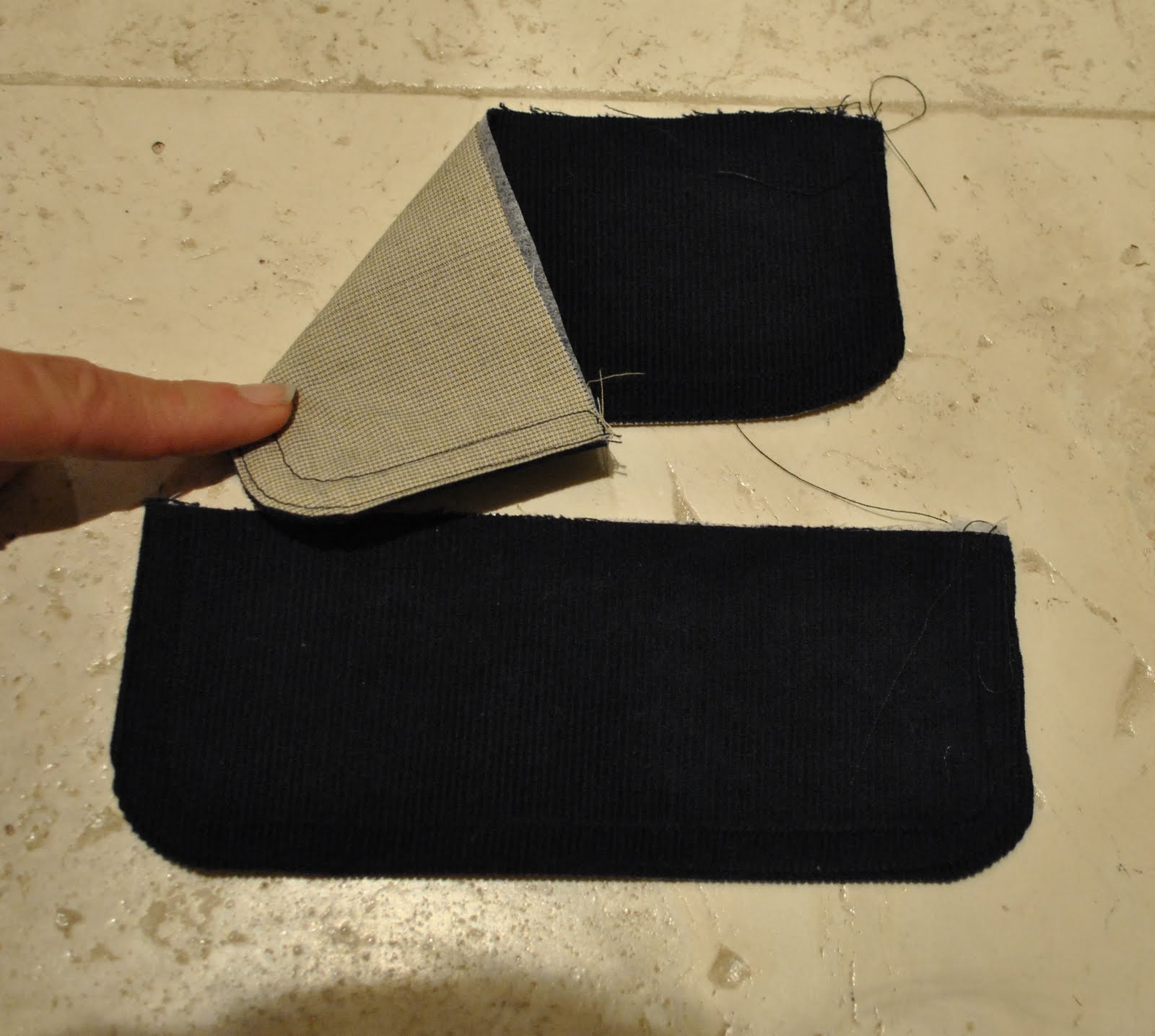
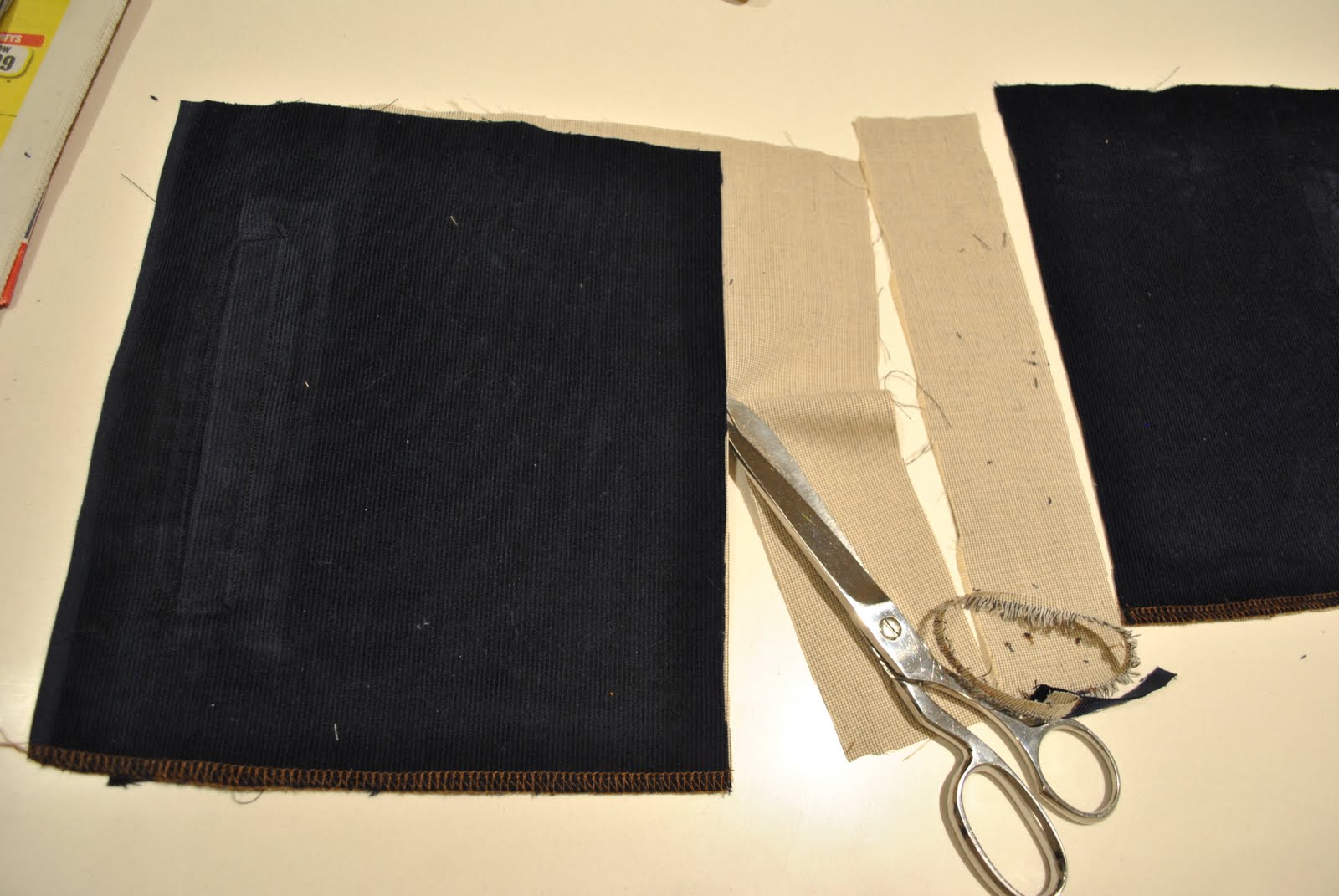
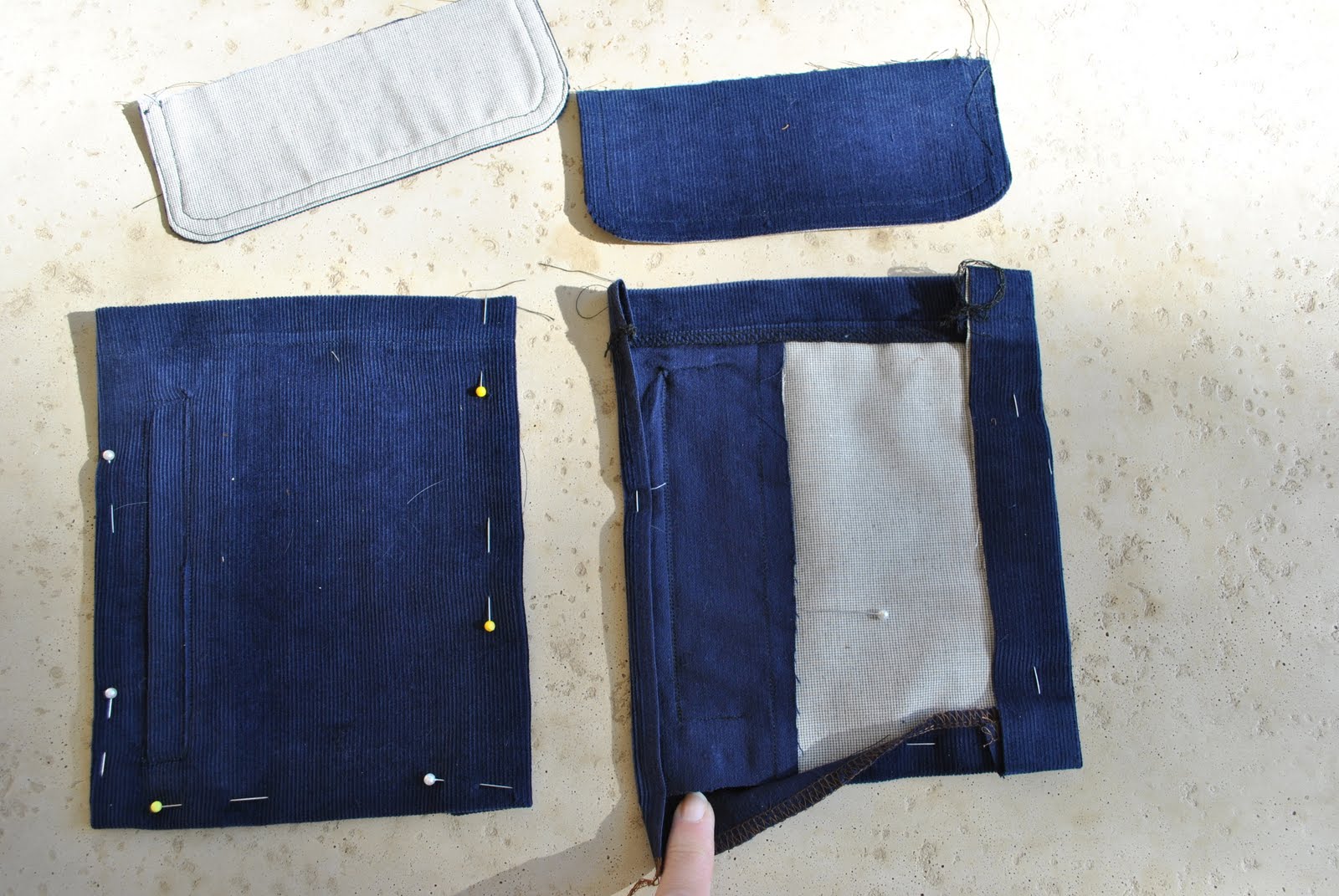
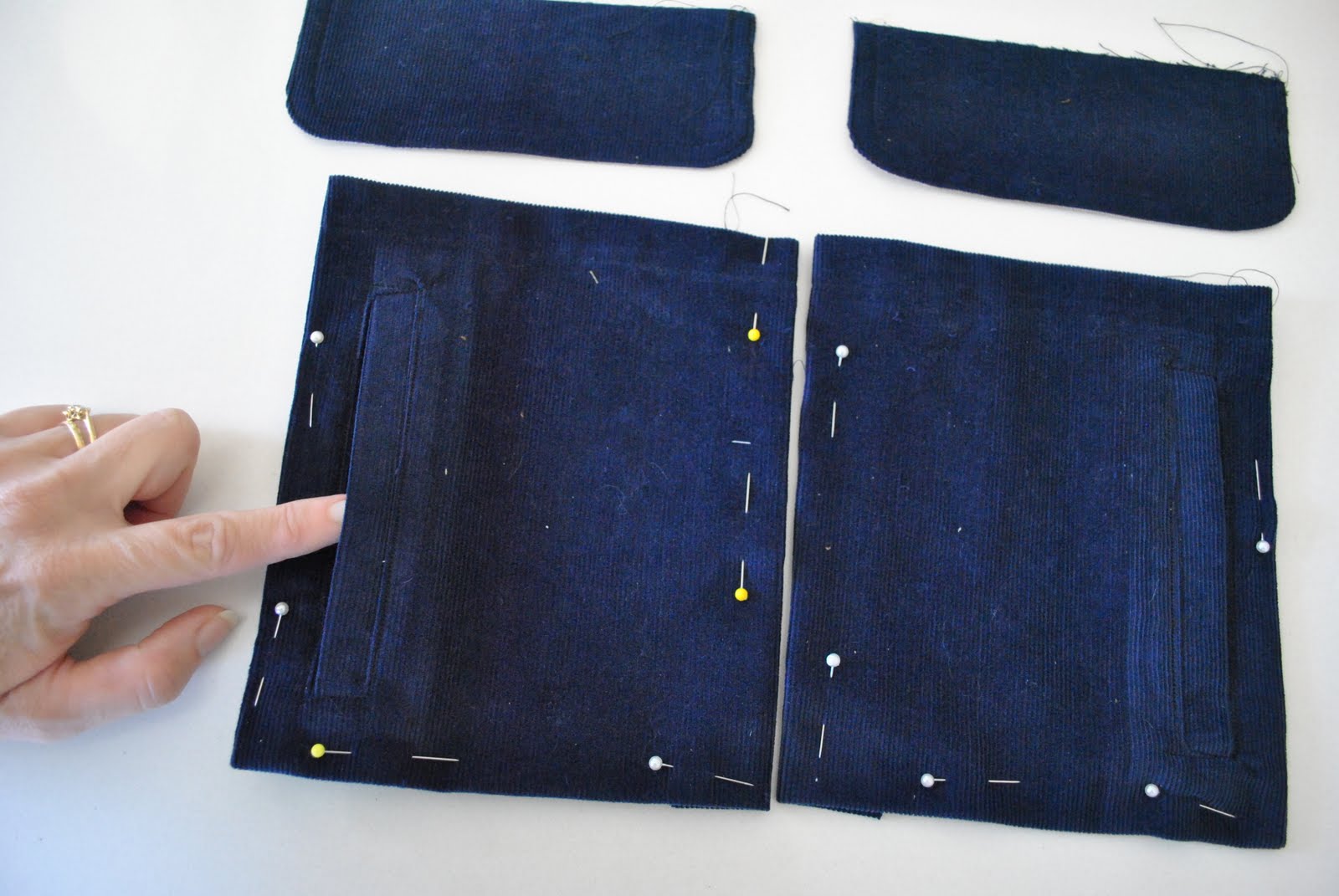
Firstly I took a rough measurement of my son’s handspan, and cut out two pocket pieces, and welt pieces.  For the lining of the pocket cut two each of pieces of the fashion fabric and of the lining fabric, which will be joined together; the fashion fabric section to go under the welt, so that when he has his hands in his pocket the inside looks just like the rest of the jacket, but the main of the lining to be of a thin contrasting cotton so as not to add too much bulk to the pocket (this is illustrated in the next step).  Also cut and construct two pocket flaps, mine have slightly curved lower edges.

Join the two pocket lining fabrics together, and iron the welt flaps in half along their long side.

On your fashion fabric pocket piece, mark where the welts are going to sit with pins.  The welts will sit vertically at the outside edges of the pockets, so the wearer can shove their hands inside easily.
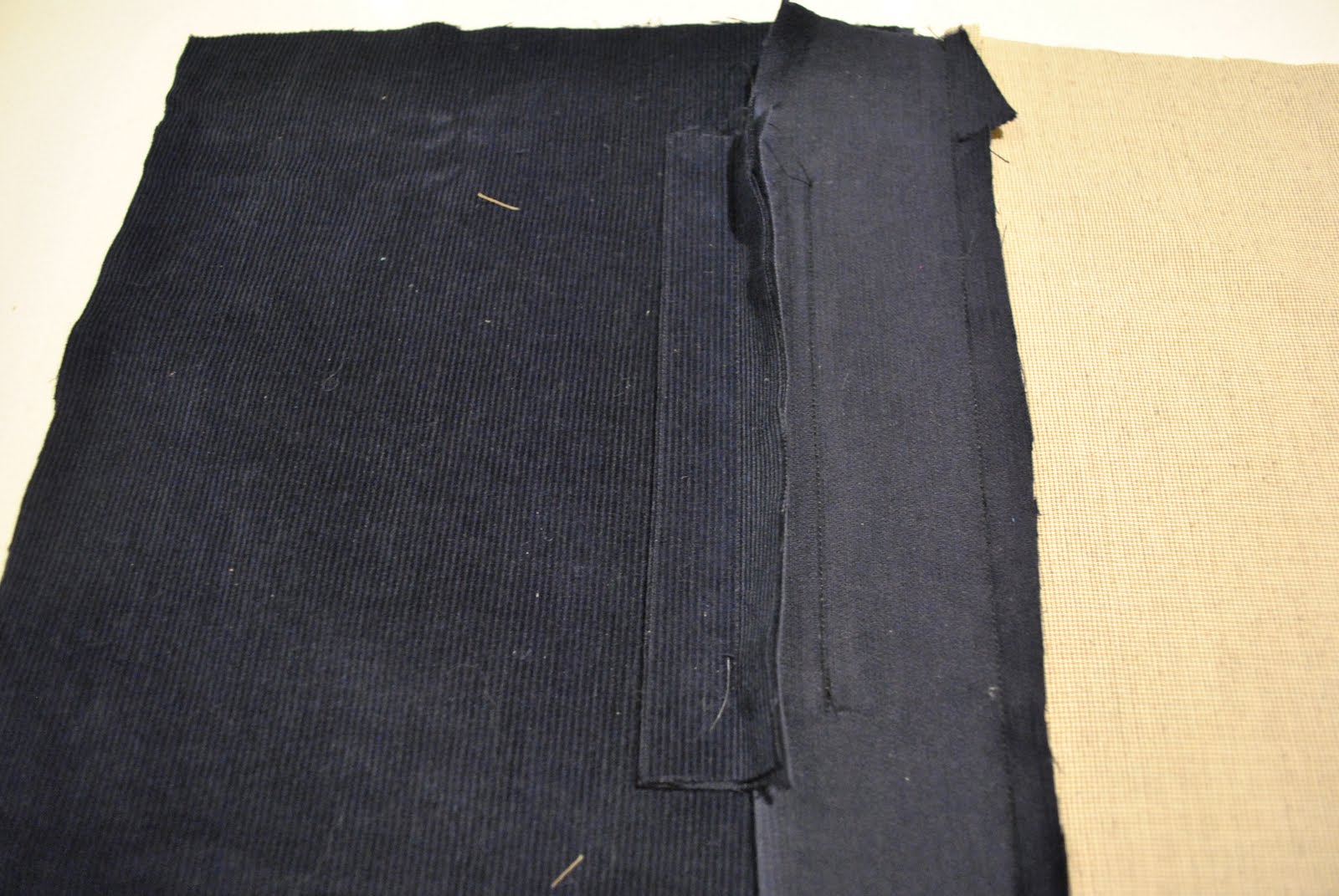
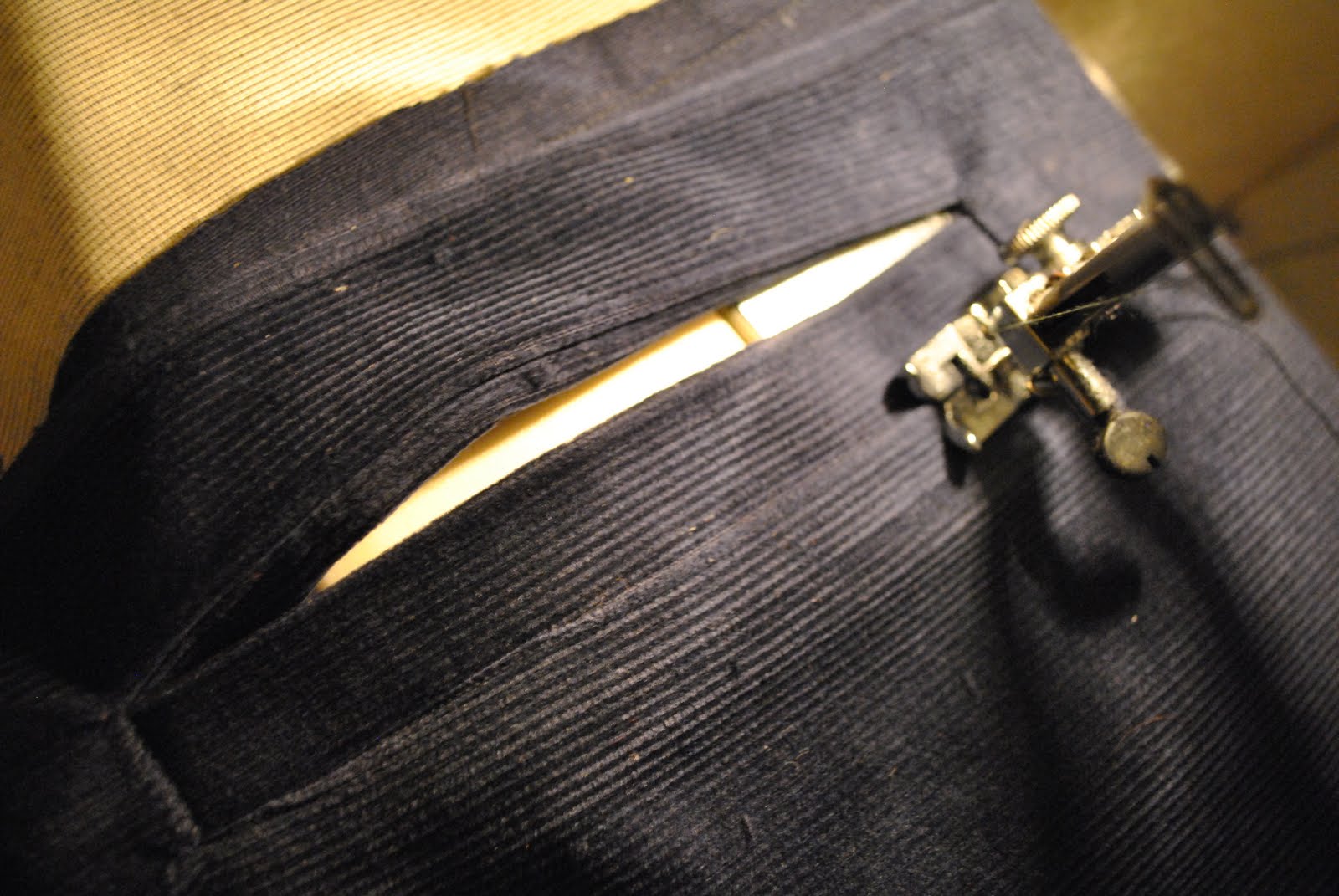
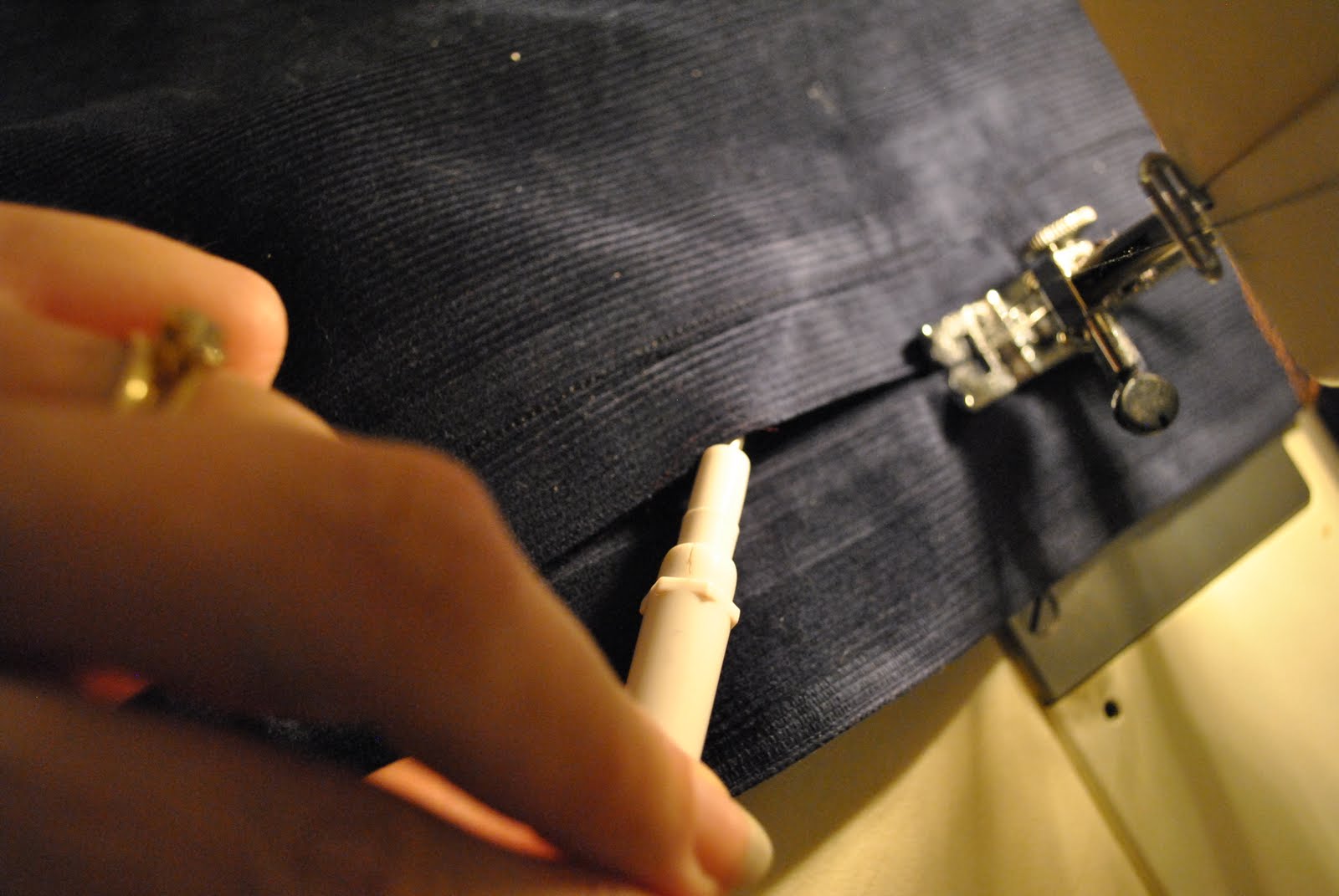
Pin the unfolded edges of the welt so that the stitching line sits on the inner line (in the picture, the stitching line of the pocket welt on the right is marked with a white thread).  Stitch.
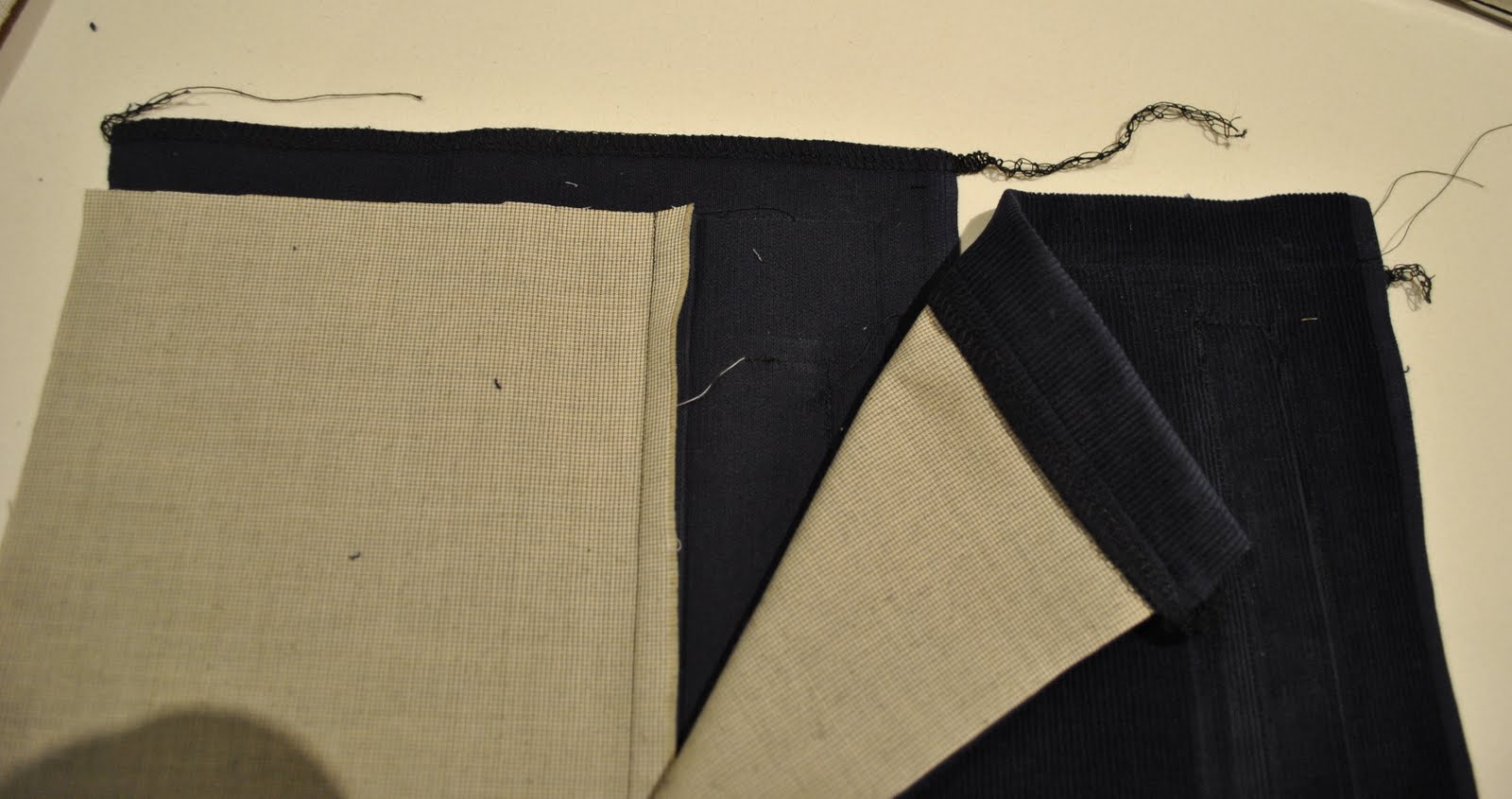
Now, lay the edge of the pocket lining, pieced together in the third picture above, so the raw edge of the fashion fabric edge is against middle of the welt gap, or “box”.  Stitch along the other long edge of the welt “box”. Marked with the white thread on the lower of the pockets in this picture)
Slash open the welt to within 1.5cm of the short edges of the “box”, and from here out to each corner of the “box”.  To get nice even welts it’s pretty important to be super accurate about this bit.  And also that you are only snipping one layer of fabric, and not cutting into either the welts nor the pocket lining piece!
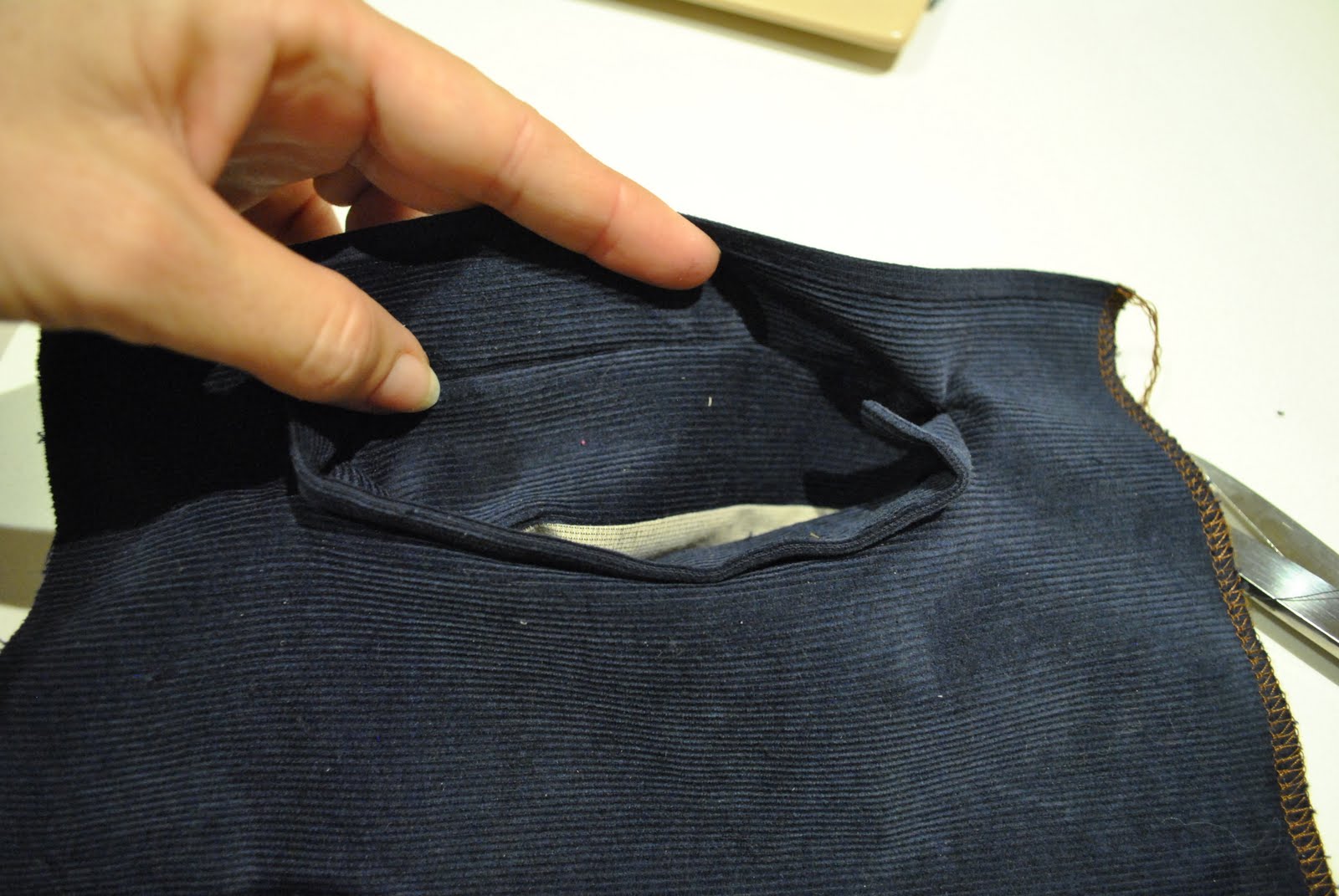
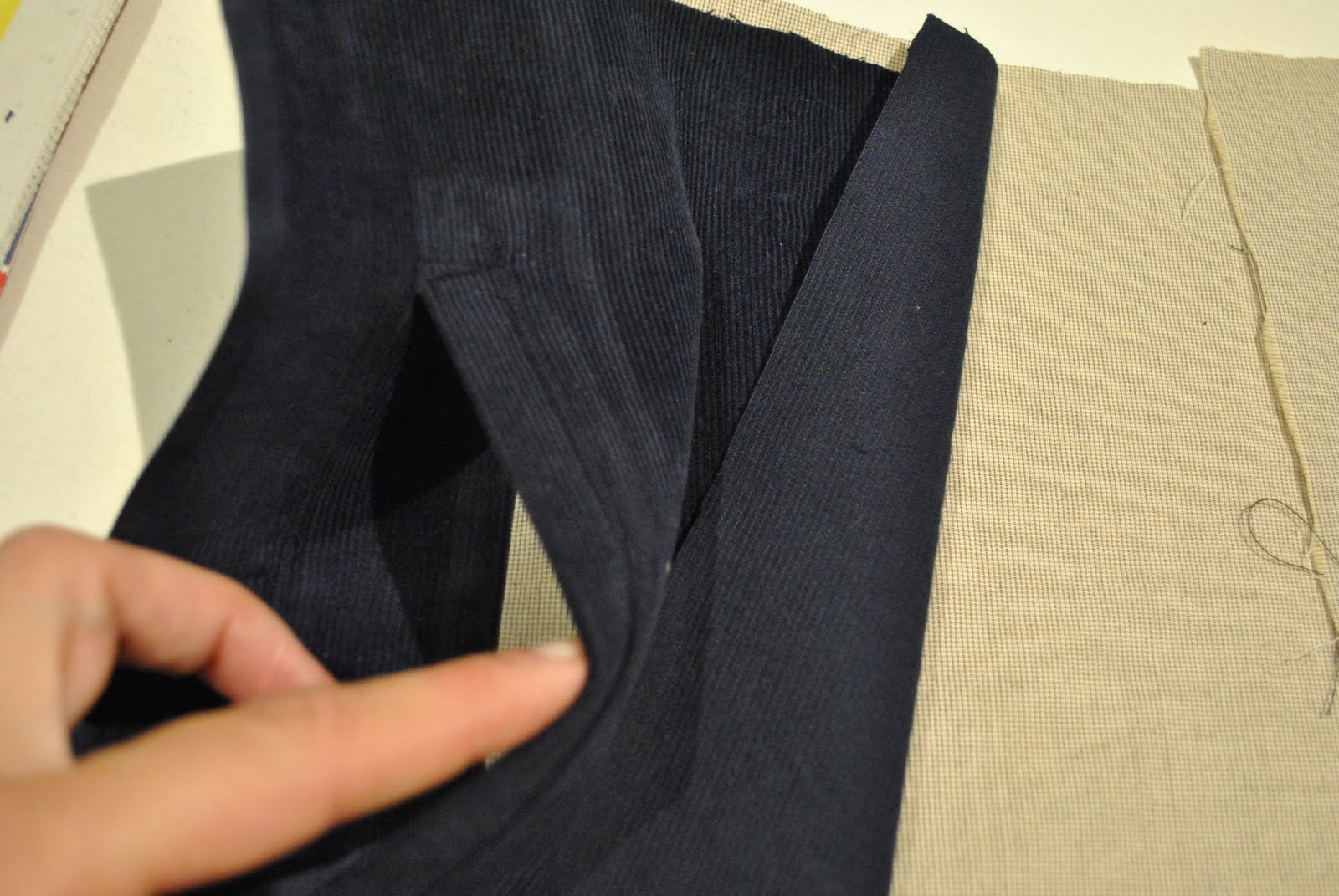
Pull through the pocket lining piece, and lay it underneath the pocket piece.
Pull the welt edges underneath also, and flip it up so it is sitting up covering up that “box” gap, like a postal flap.
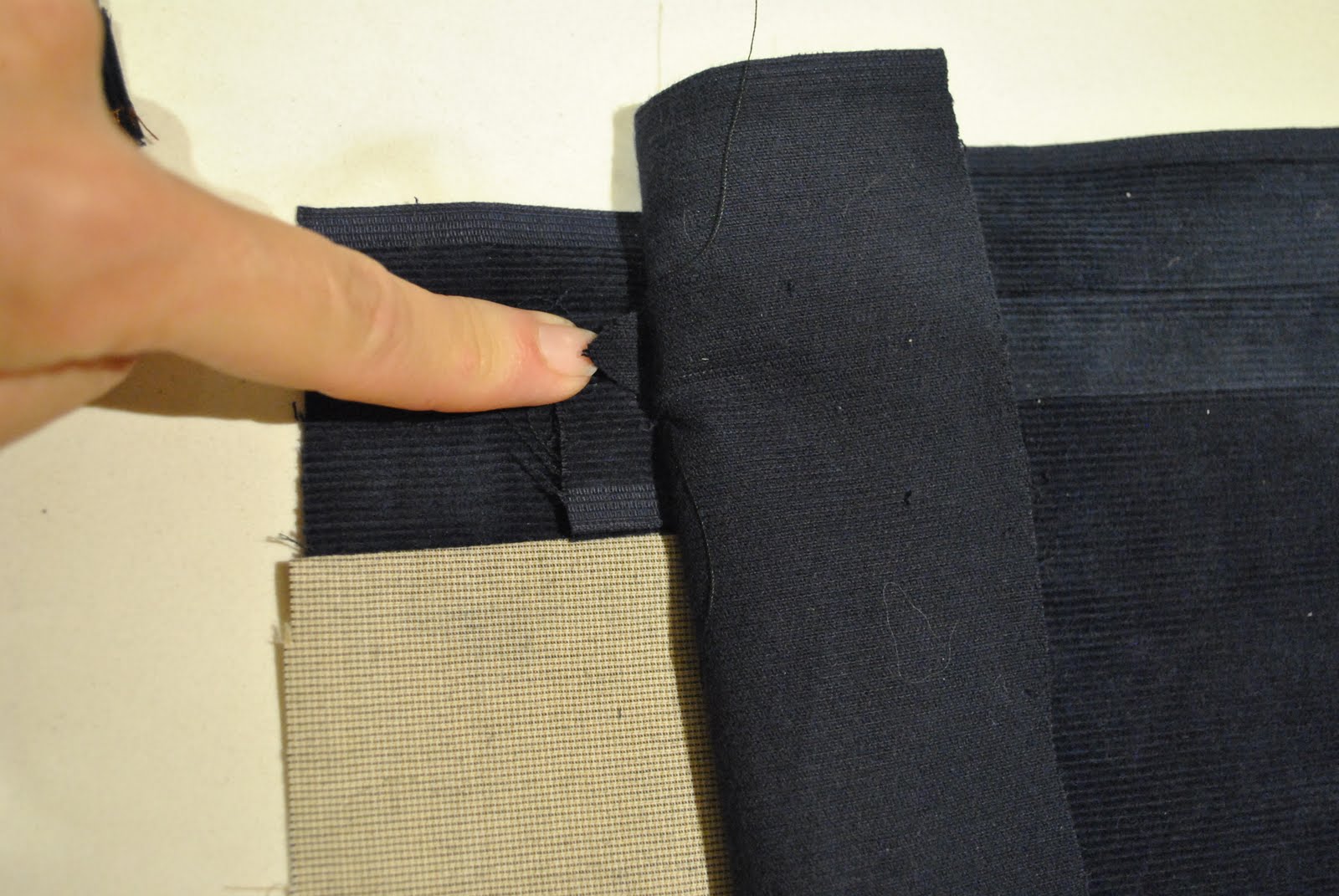
Pull under the little triangular wedges at each short side of the “box”.  For a regular welt pocket the next step would be to just sew the final edge of the triangle down to the pocket lining right above where my finger is pointing… but there are a few more steps to finish this particular pocket…
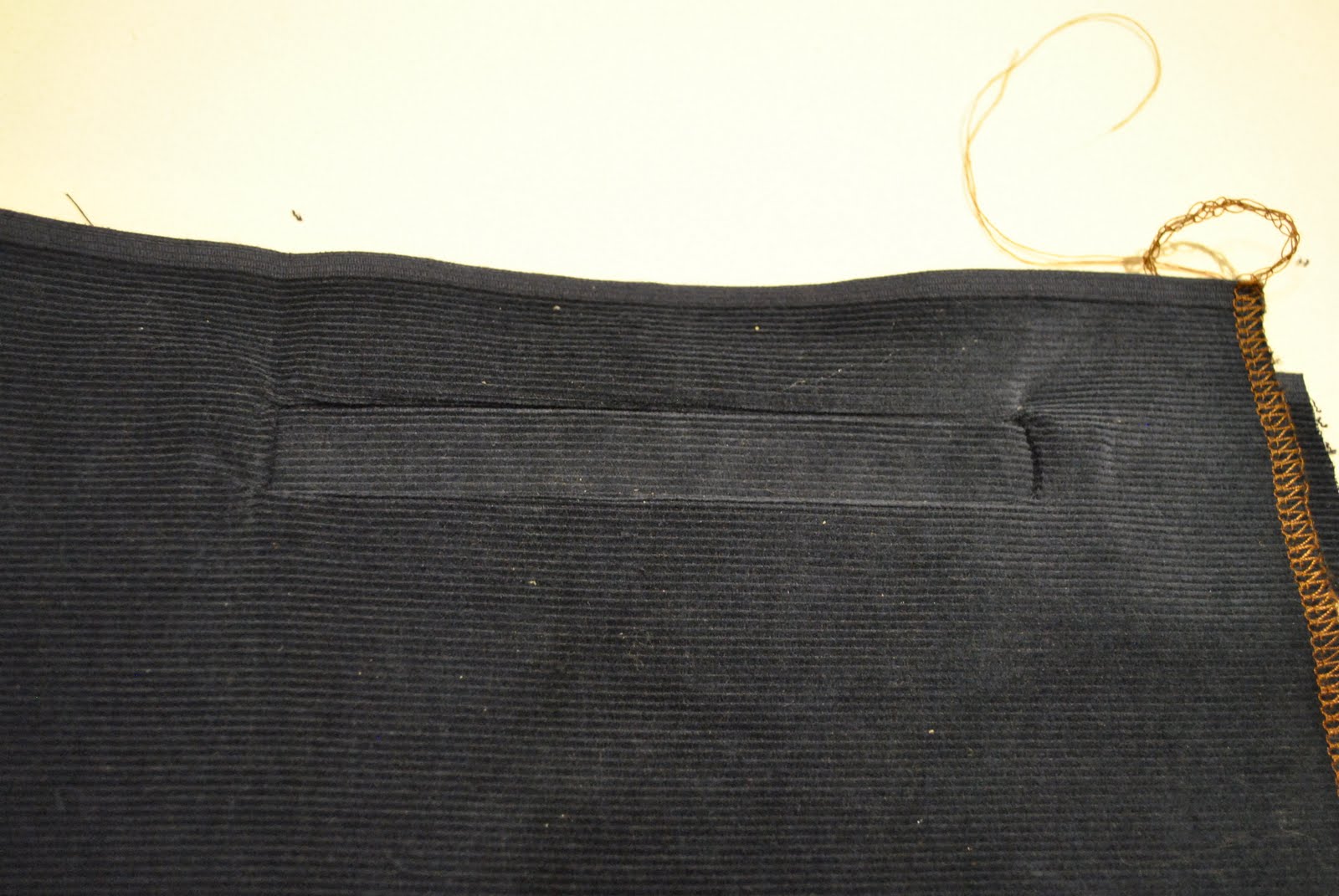
Because this is a shirt/jacket for a teenager, I opted to topstitch around the welt.  Just remember to flip the pocket lining up and out of the way when you topstitch the attached edge of the welt, so you don’t sew the pocket closed by mistake!
That is the welt part of the pocket finished!
Now for the patch part of the pocket…
Trim away any excess fabric from the pocket lining to fit the pocket piece. 
Trim away the fashion fabric portion of the pocket lining to fall within the seam allowances of the pocket piece.  This is just to avoid too many bulky layers in the seam allowances of the patch pocket.  Finish the upper edge of the pocket, fold and press it to the inside,and stitch down in place.
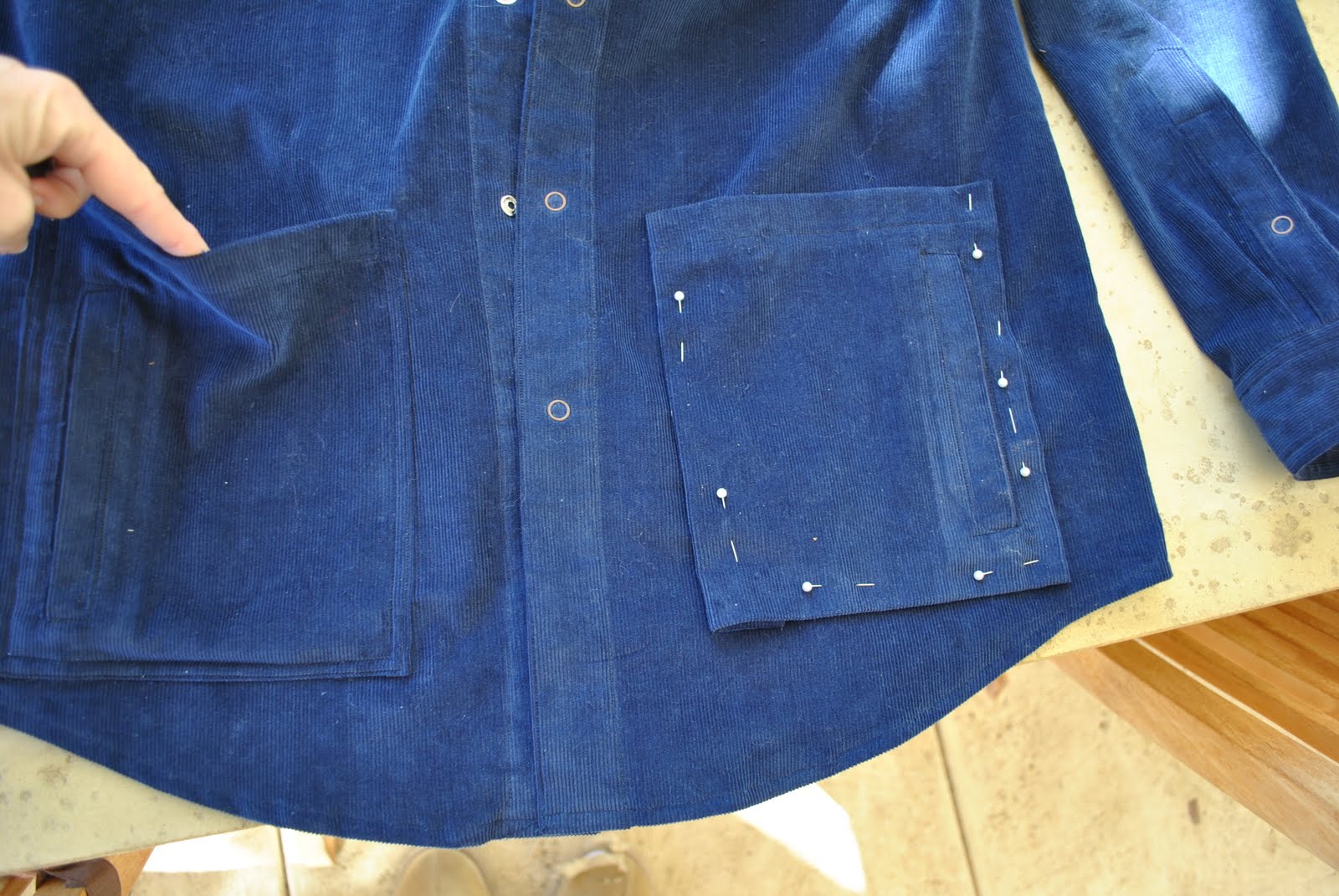
Fold in the seam allowances of the remaining three edges of the pocket to the back, measured to fit the pocket flaps you made earlier, and press and pin in place.  The pocket on the right is flipped over, showing how the fashion fabric has been trimmed to fit within the seam allowances.  See how the welt pocket is all contained and enclosed in itself, and will be a separate pocket from the patch pocket?  Kinda nifty, no?
Sew the patch pockets on to the front of the shirt/jacket, and sew the flaps in place over the top edge. 
Hammer a snap in place on the pocket flap and pocket; et voila!  Two pockets; per pocket!!
pinterestmail

Cargo pockets, and a lovely surprise

When I went to my letterbox yesterday inside was a most delightful surprise, this wonderful pattern from Gail of My Fabrication.  Pure class and elegance, no?  Thank you so much Gail!!  I already know exactly what I am going to make out of this one, and am pretty excited to give it a try.  But first…
Thank you so much everybody who commented yesterday, with such kind words expressing touching faith in my ability to not make a complete and utter hash of my Japanese fabric; I will endeavour to sew up to those expectations.  Not that there is any more or less pressure or anything, hehe.  The lighter caramel side has a landslide of admirers, and it is therefore fortuitous that my own preferences have been swaying more and more in that direction too.  But before hacking merrily away into that wool and silk gorgeousness that I carted for thousands of kilometres over land, rail and sea all the way home from the land of the rising sun (see, no pressure…) I am going to take a short sartorial breather…
A few quick and satisfying projects are now just what the doctor ordered, after a week of couture stuff.  I have an immediate need for a pair of hiking pants.  The cargoes I was wearing last year have gone into my refashioning-possibly-charity-bin pile. The few photos I have of myself in those things were pretty eye-openingly awful, and incidentally I am now horrified that I actually put some photos on the blog here, yikes!  Now I look back on some of those earlier photos and shudder, toy with vague ideas of deleting some of the more unflattering shots.  But the blog is a journey, and the progression has been an honest one.  Keeping a sometime personal style diary has done wonders for my natural tendency towards dag-dom.  I am a lot more careful how I look now before I sally forth on my daily adventures.  We all heartily agree that appearances aren’t everything, right?, only because we don’t want to appear shallow, but secretly we all want to put our best foot forward nonetheless… because we are human after all.
Anyhoo, I am making my new, hopefully cute, hiking pants using a pattern that doesn’t have enough pockets, so I am adding some cargo pockets and took a few progress shots to illustrate…
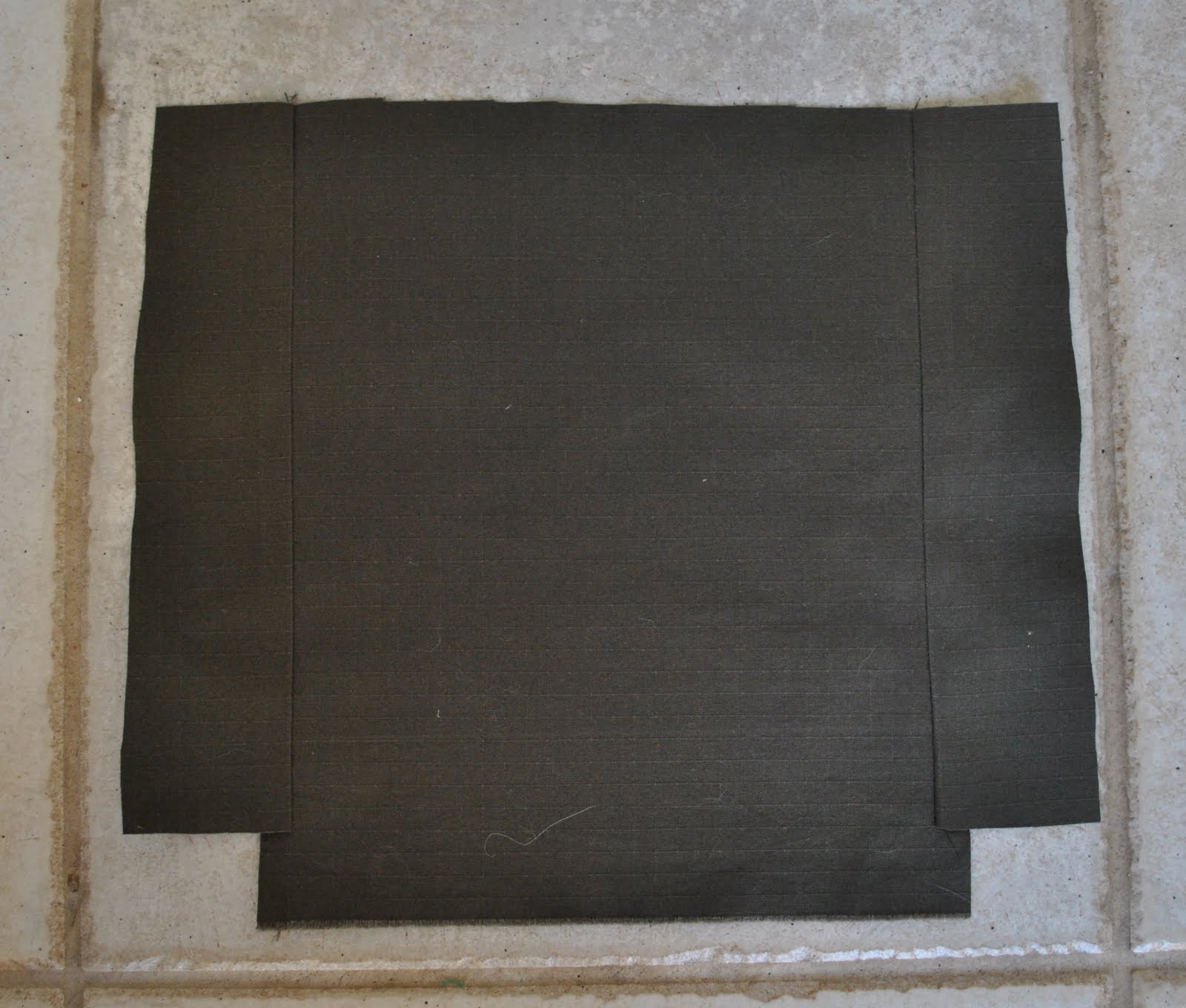
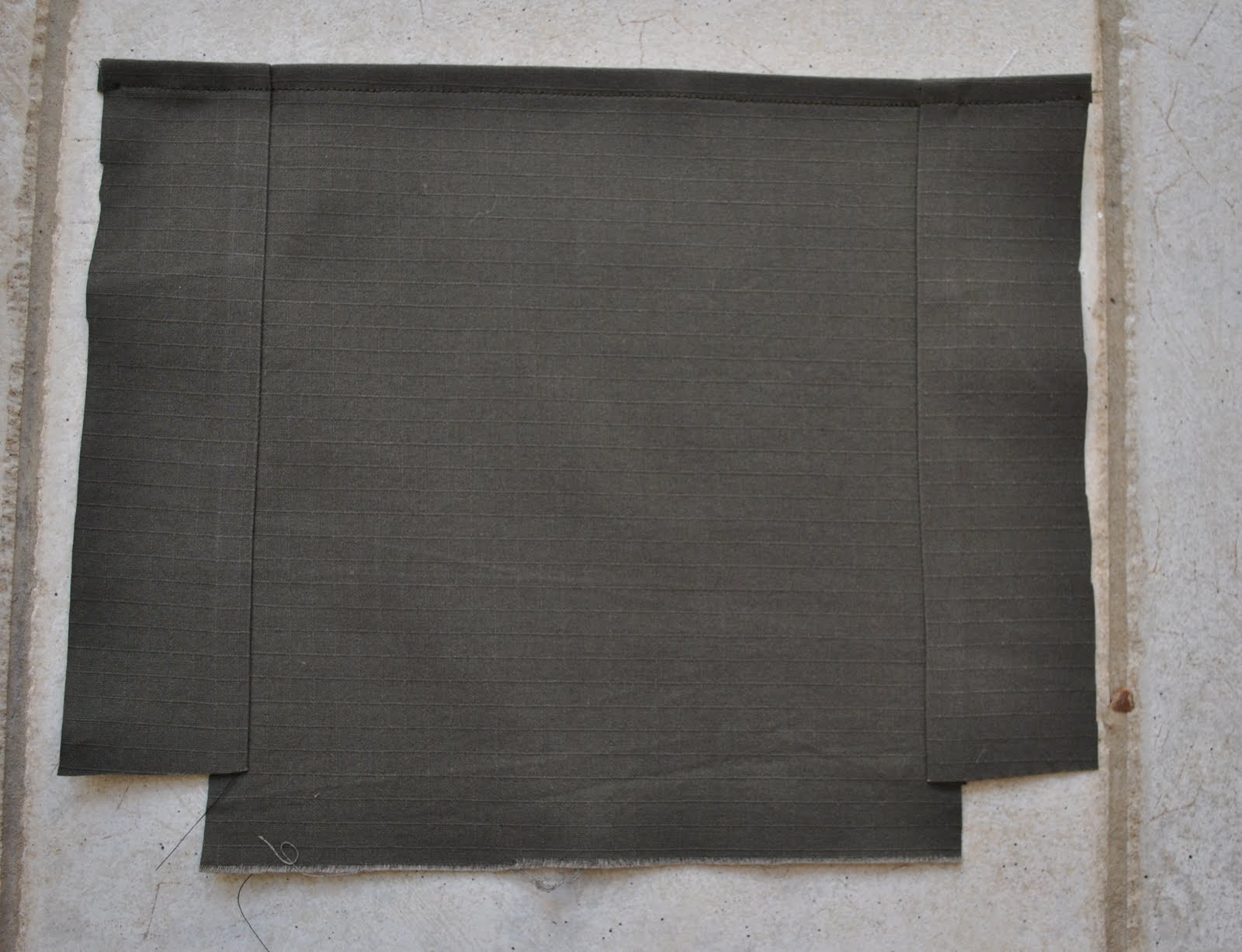
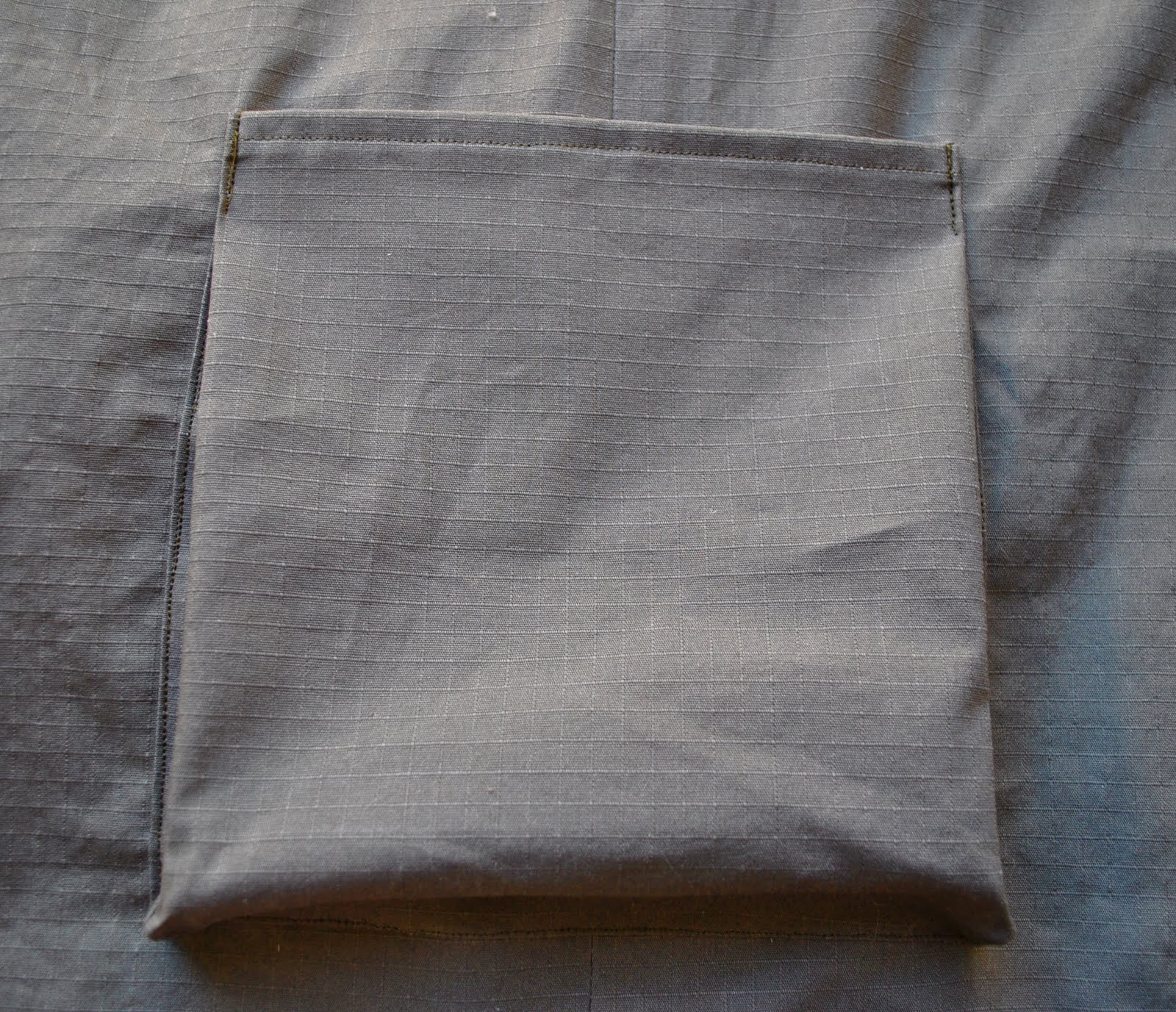
Cargo pockets are not just squares/rectangles, but must form a little “bag”, so start with a piece that has box sides to three of its edges like so (don’t worry that those sides of those sticky-outy box edges are wider than the bottom box edge… minor detail)

Hem the top edge of the pocket like normal…

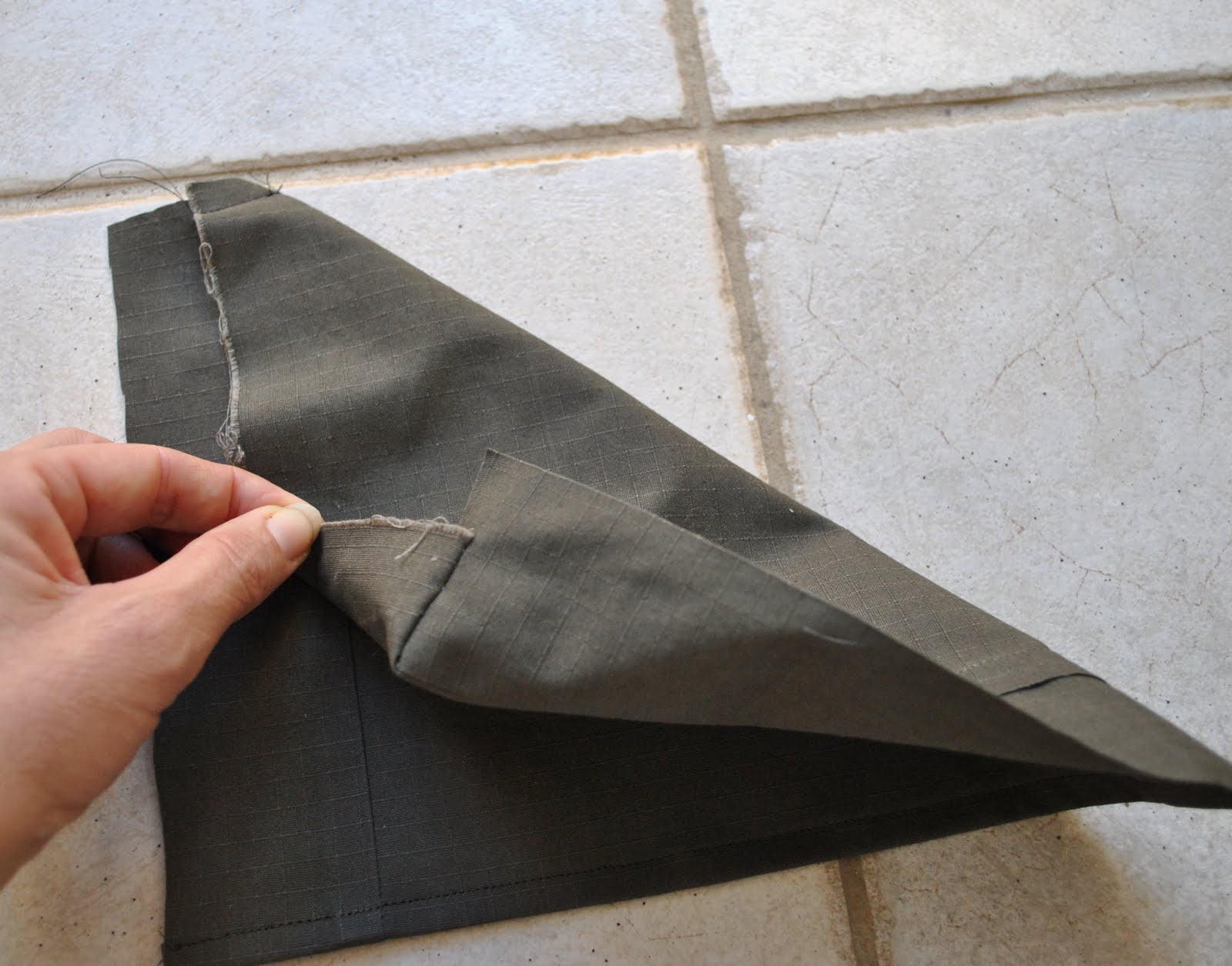
Sew up the two short edges of the boxy sides at the bottom of the pocket piece (yes, my side pieces are still longer and do stick out a bit, don’t worry about this for now)

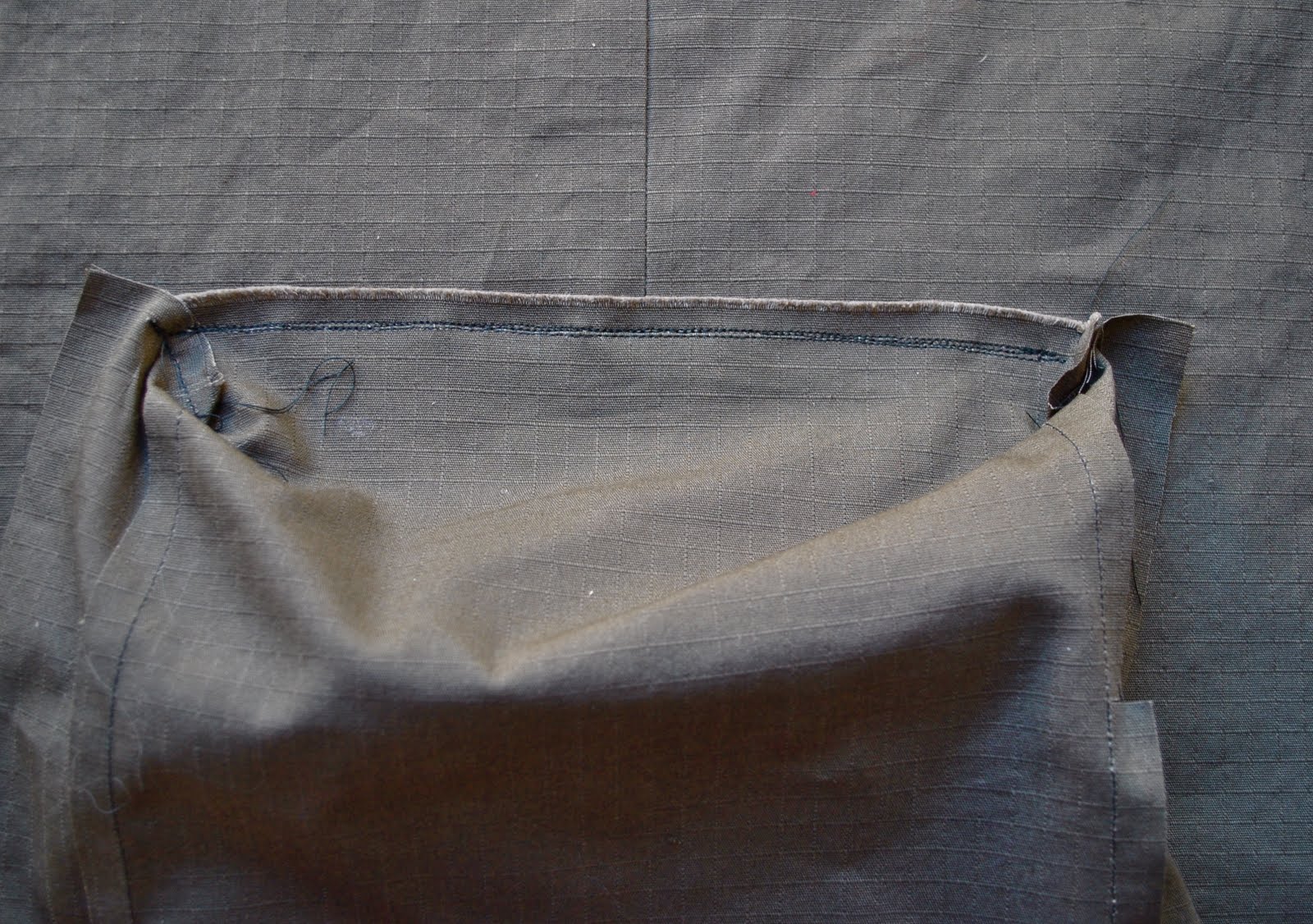
Right sides together, and upside down on the finished outside leg seam of your pants, sew the bottom edge of the pocket in place.  Because I want these pockets to be extra sturdy, strong enough to hold things like guide books, cameras, hats and sunnies, etc, anything that will be needed regularly, I sewed this seam in triplicate, for triple the strength.  Strength is more important than beauty here, remember these are hiking pants

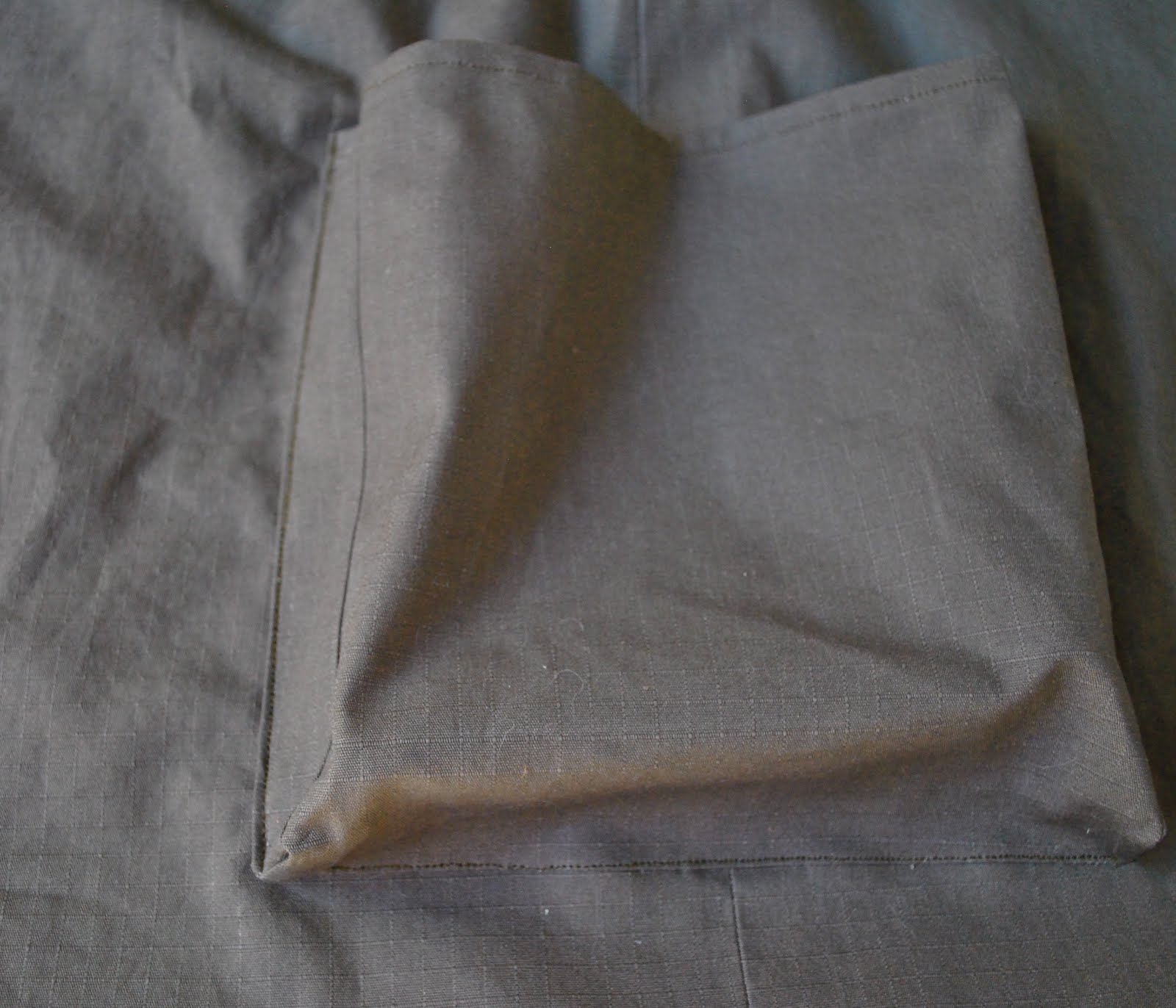
Now flip the pocket piece up and turn in those side edge seam allowances.   Now I folded in that extra width of the side edges at the bottom to be part of the seam allowance and tapered this down at the top so the box sides of the bag are wider at the top than they are at the bottom…  If this doesn’t make a lot of sense don’t worry too much about this bit.  Dimensions are not really drastically important.  These are hiking pants, remember…   Topstitch down close to the fold.  Again with the triple lot of stitching. The width at the top edge of the pocket between the two side seams you’ve just sewn should be the same width as the bottom seam.

Now, flatten the pocket down at the top and sew the top down vertically through all layers directly over the side seams you have just sewn, but just for a few cm.  Do this at least in triplicate again.  I just did a mad burst of forward and reverse stitching and lost count of the number of seams here, this just needs to be real sturdy.  This will just hold the top edge down securely and stop it from flapping about and letting your treasures spill out while you are walking…

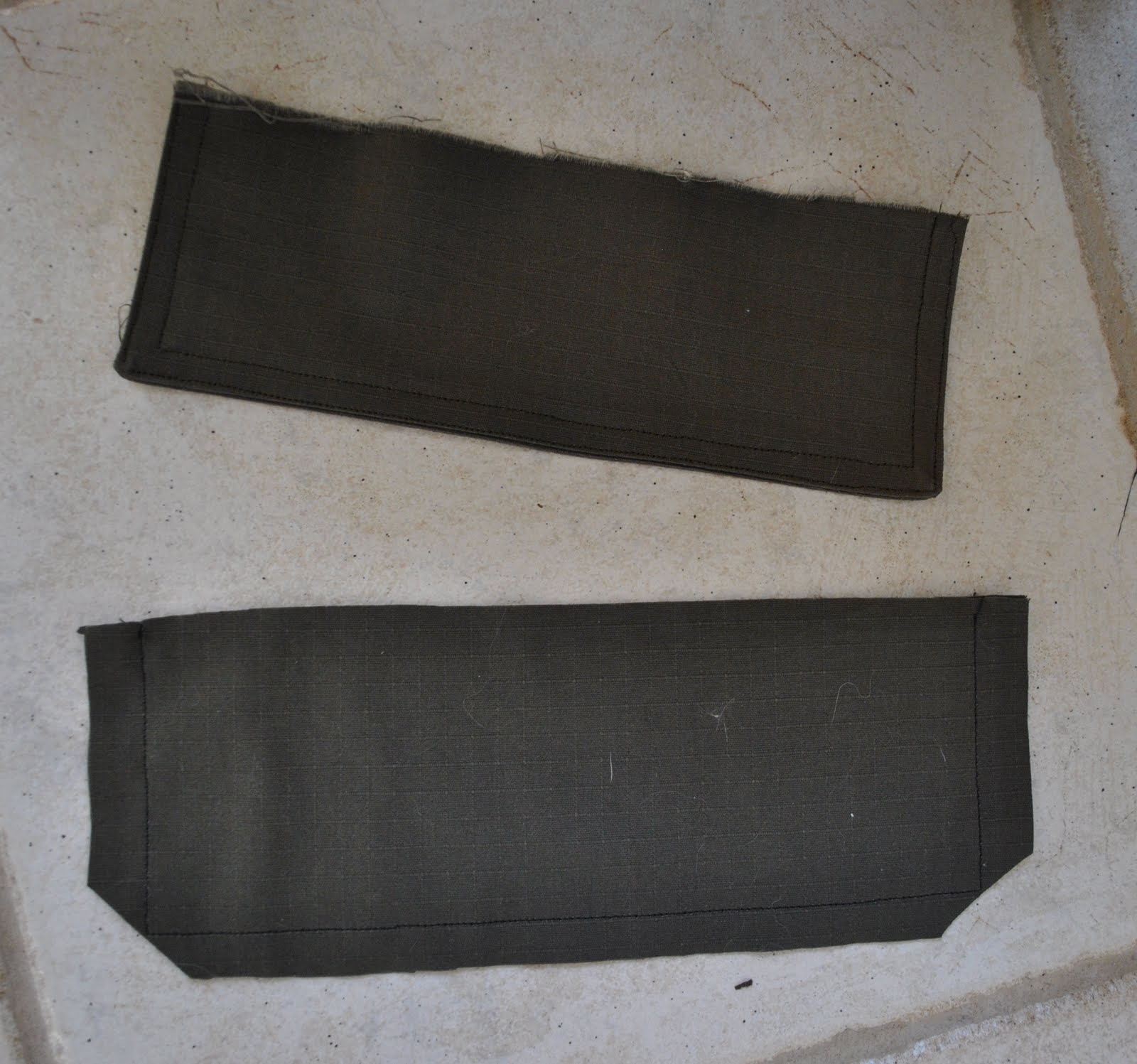
Flaps; just sewn as normal, two pieces, right sides together, sewn around three edges, turned out and topstitched, finished width about 1.5cm wider than the top edge of your pocket…  Note the violation of couture tailoring here, no tamed seam allowances but the corners have been trimmed, (horrified gasp!)  Meh… hiking pants…!

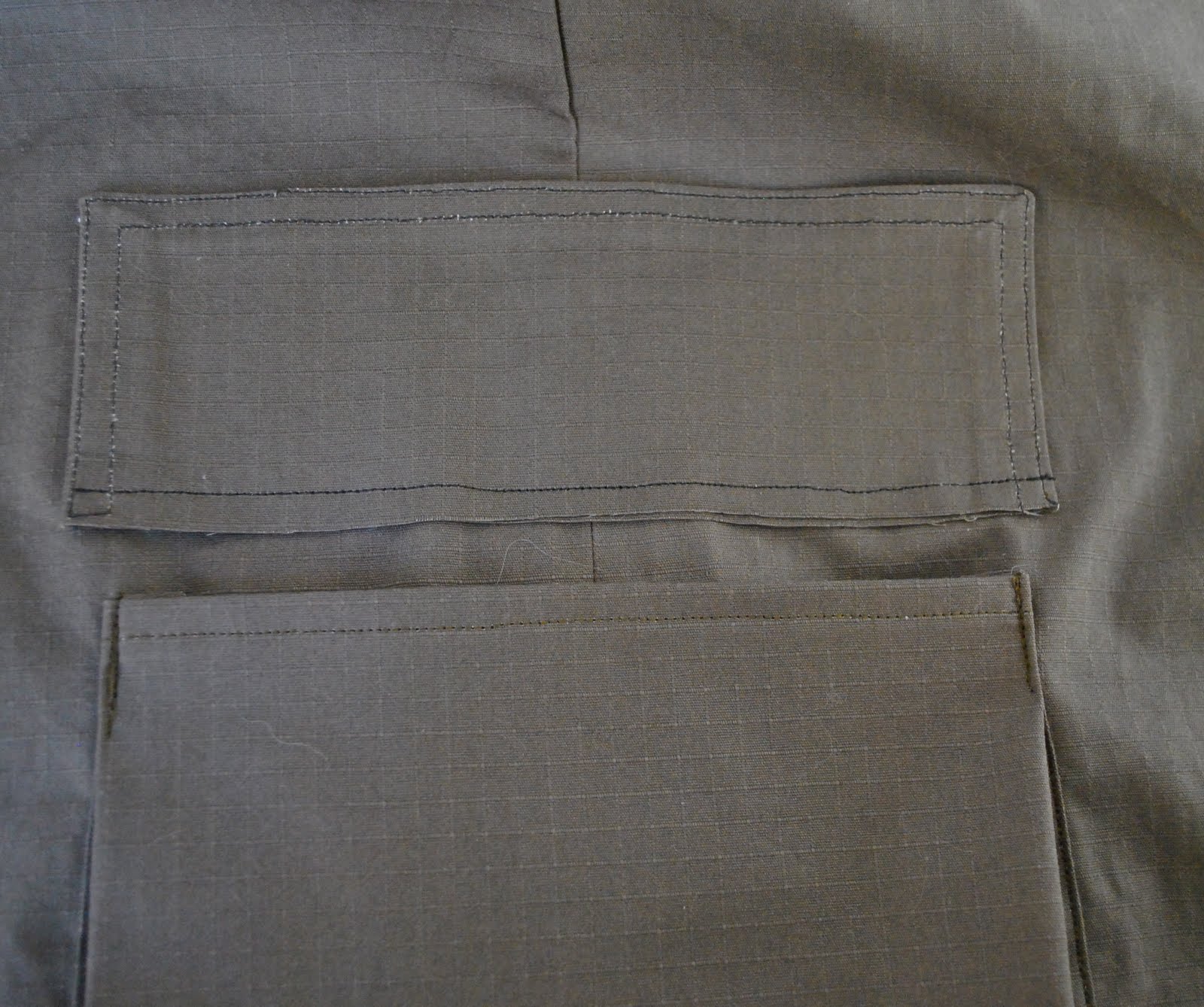
And sewn to the pants just above the top of the pocket…. right sides together, again as normal…

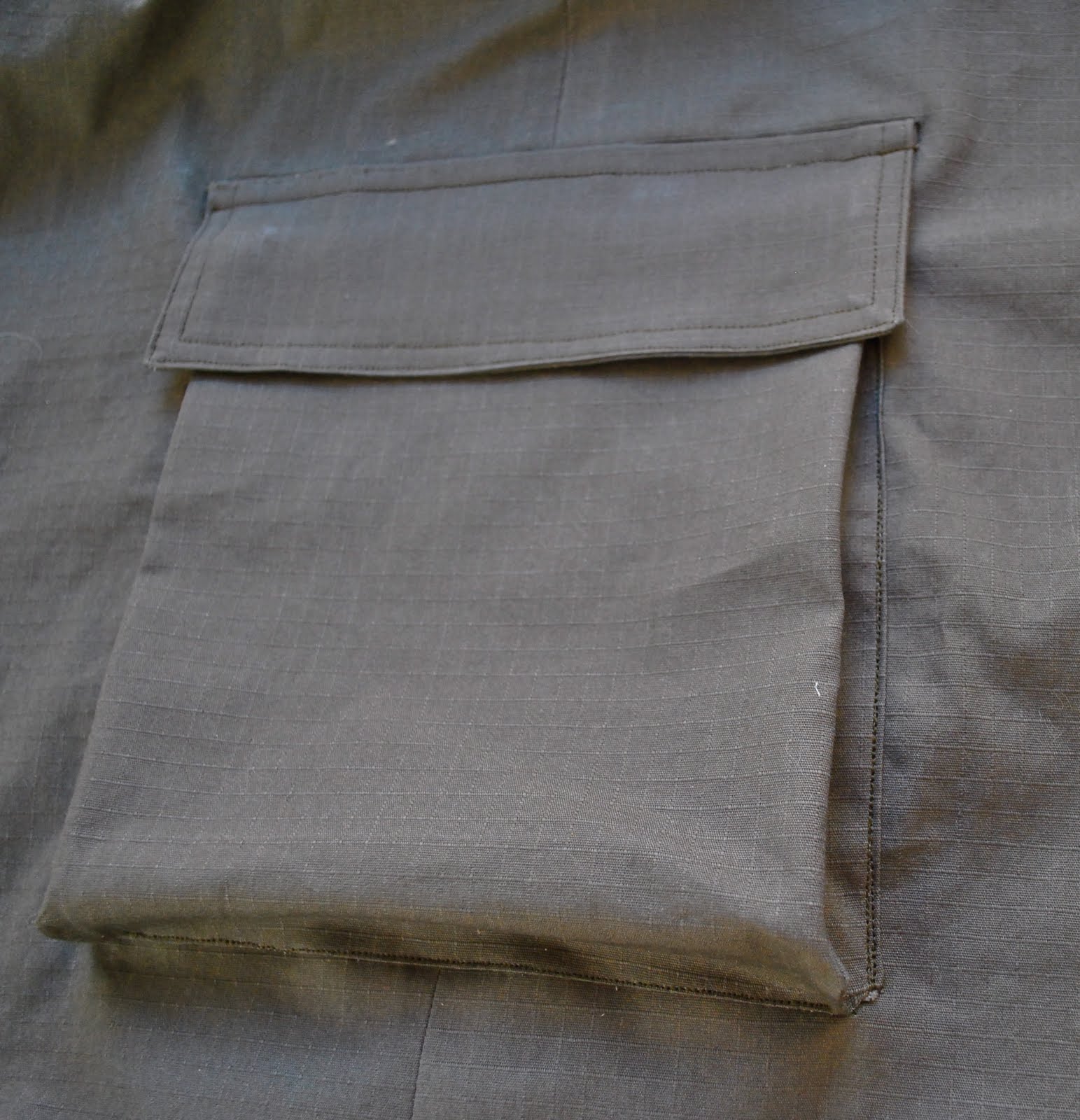
Aaaand folded down and topstitched in place… I don’t know why I took so many photos actually.  This is hardly rocket science.  Probably would have been more exciting if I had tamed those seam allowances, hmmm?

And there it is, a useful and cute little bag stuck on the side of the hiking pants.  If you want you could put a snap or a button on for extra safe-keeping, but in my experience these don’t ever get closed up anyway and the flap is enough to keep things safely inside.  I’m sure I will be really grateful for these extra pockets out on the trail.

pinterestmail
Switch to mobile version
↓