Tag Archives: Tutorial

Blue-grey hoodie

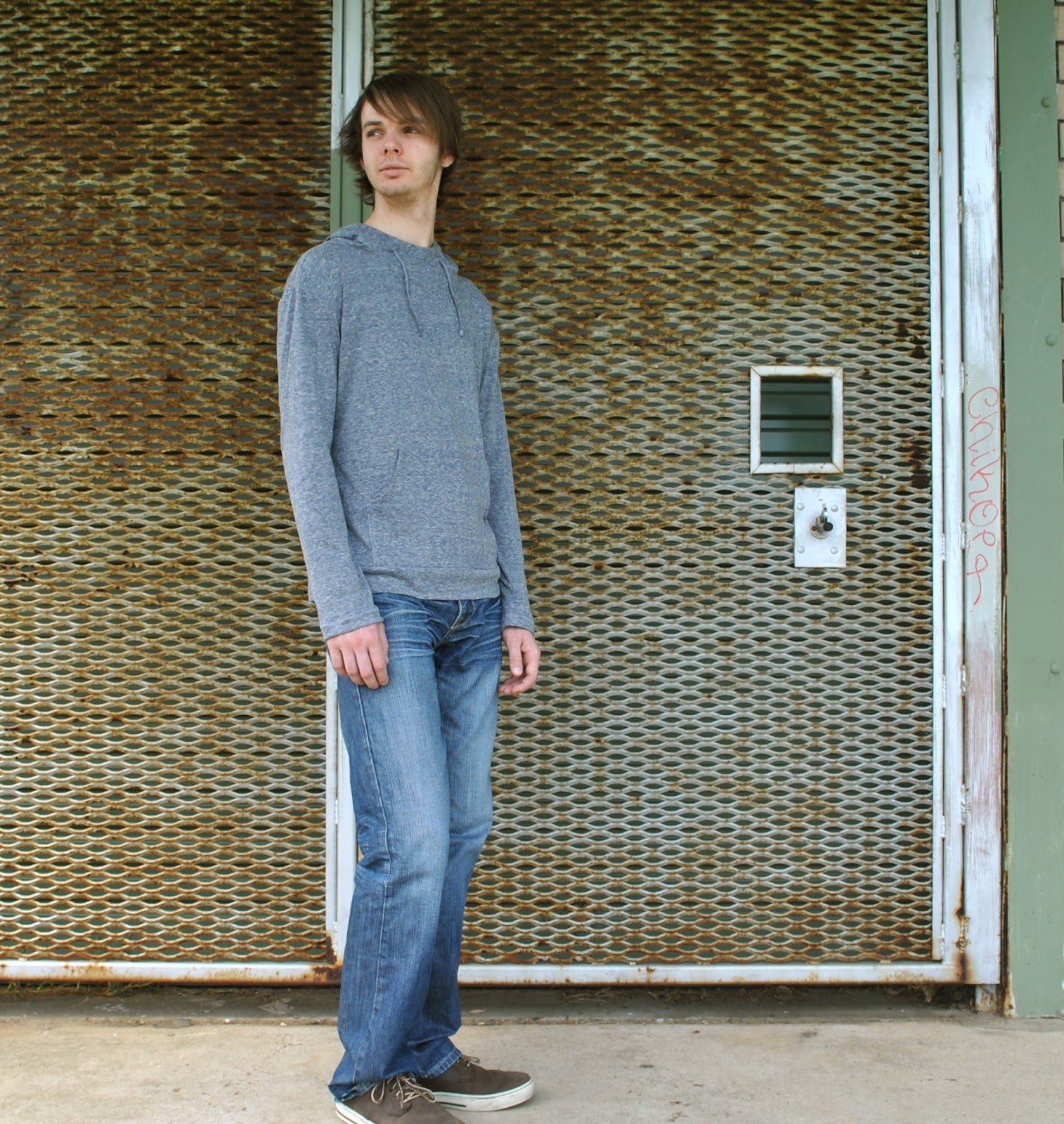
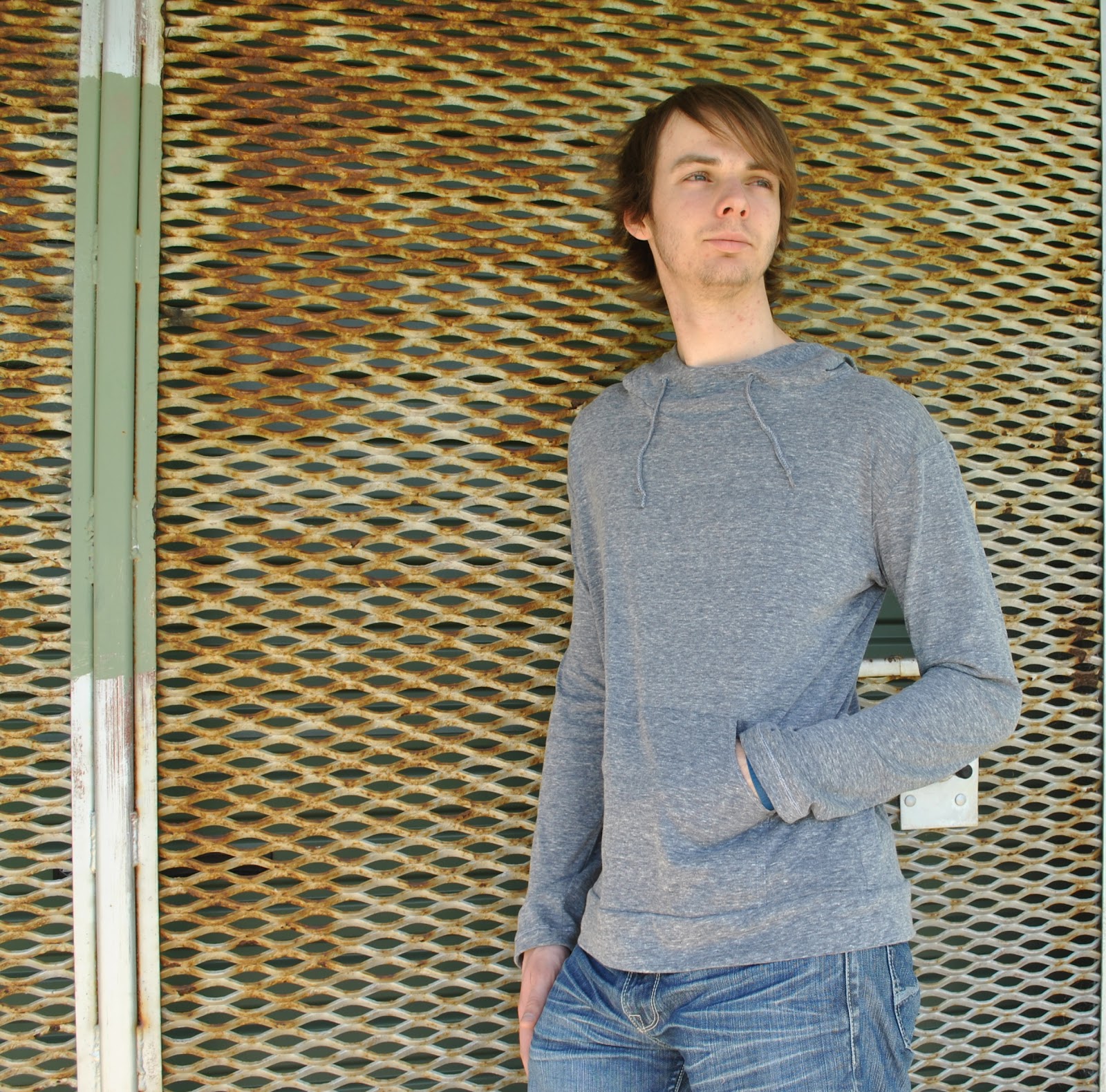
I have made a hoodie; this one for Sam.  
Sam is my quiet one; he never asks for anything, on the contrary he will firmly and testily deny that he ever needs new clothes or any new belongings at all.  But one of the fabrics in my stash was this beautifully soft jersey; a very fine quality knit in a shade of cool grey/blue that I think really is perfect for Sam’s fair colouring.  So I set about making him something new anyway.
The fabric is part of a fabulous stash I bought at the Morrison remnants sale.  This particular “remnant” was about 5-6m and cost $15.  I know, right?!  That Morrison yearly sale is well worth checking out!!
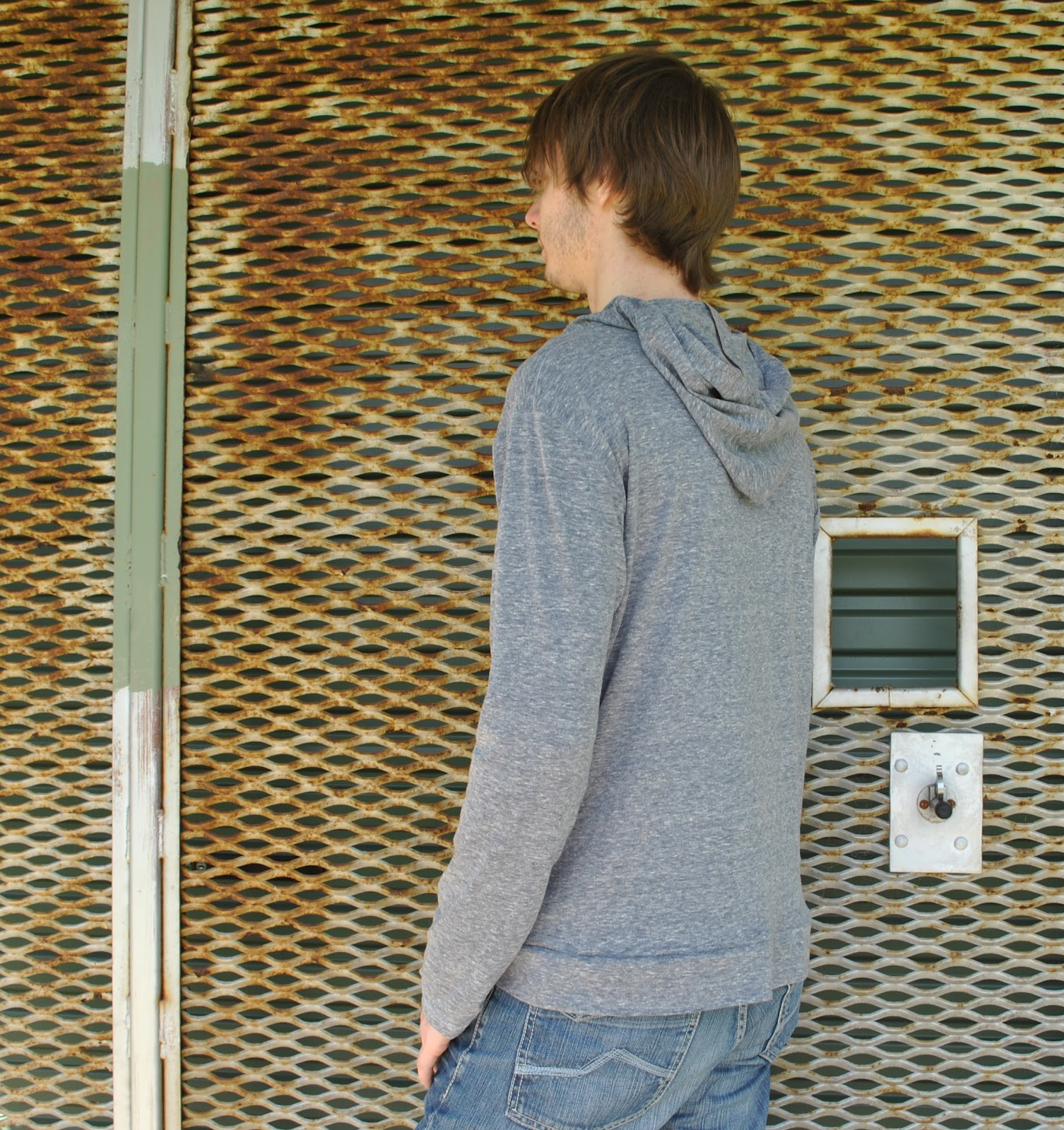
For a pattern, I used the same old hoodie of Craig’s that I used to draft his new hoodie, altered slightly to custom fit Sam.  Namely, I narrowed the body and shoulders, and raised the height of the hood.  The hood on the original Tshirt is a bit short, not really sized to be actually worn comfortably over a man’s head.  However I know Sam probably will want to wear it up every once in a while, so made it a touch taller than the original.
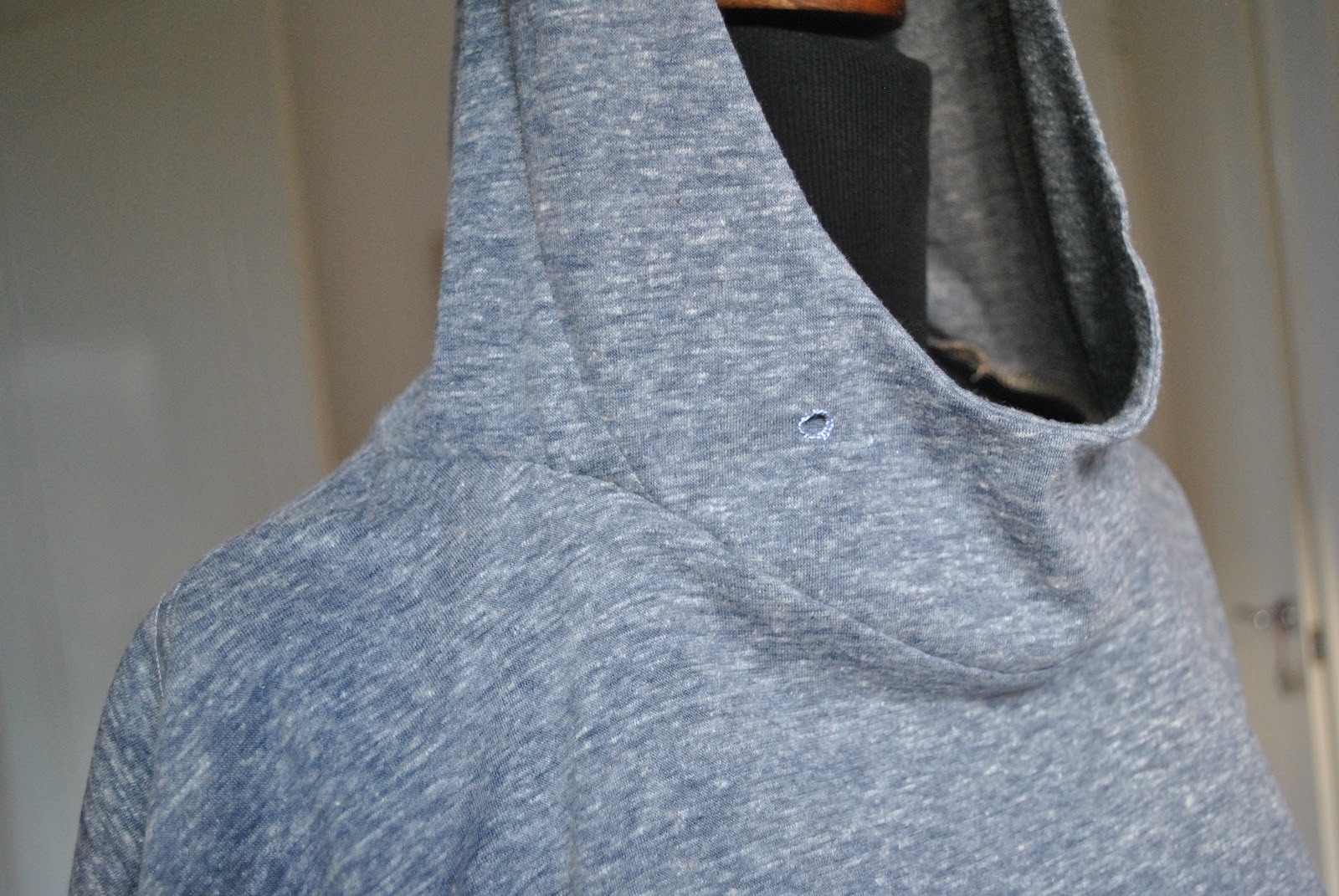
kbenco and Rachel both expressed an interest in seeing more specifics of that interesting combined collar/hoodie, thank you for the request, ladies!  So I took a few snaps to illustrate how it all goes together…

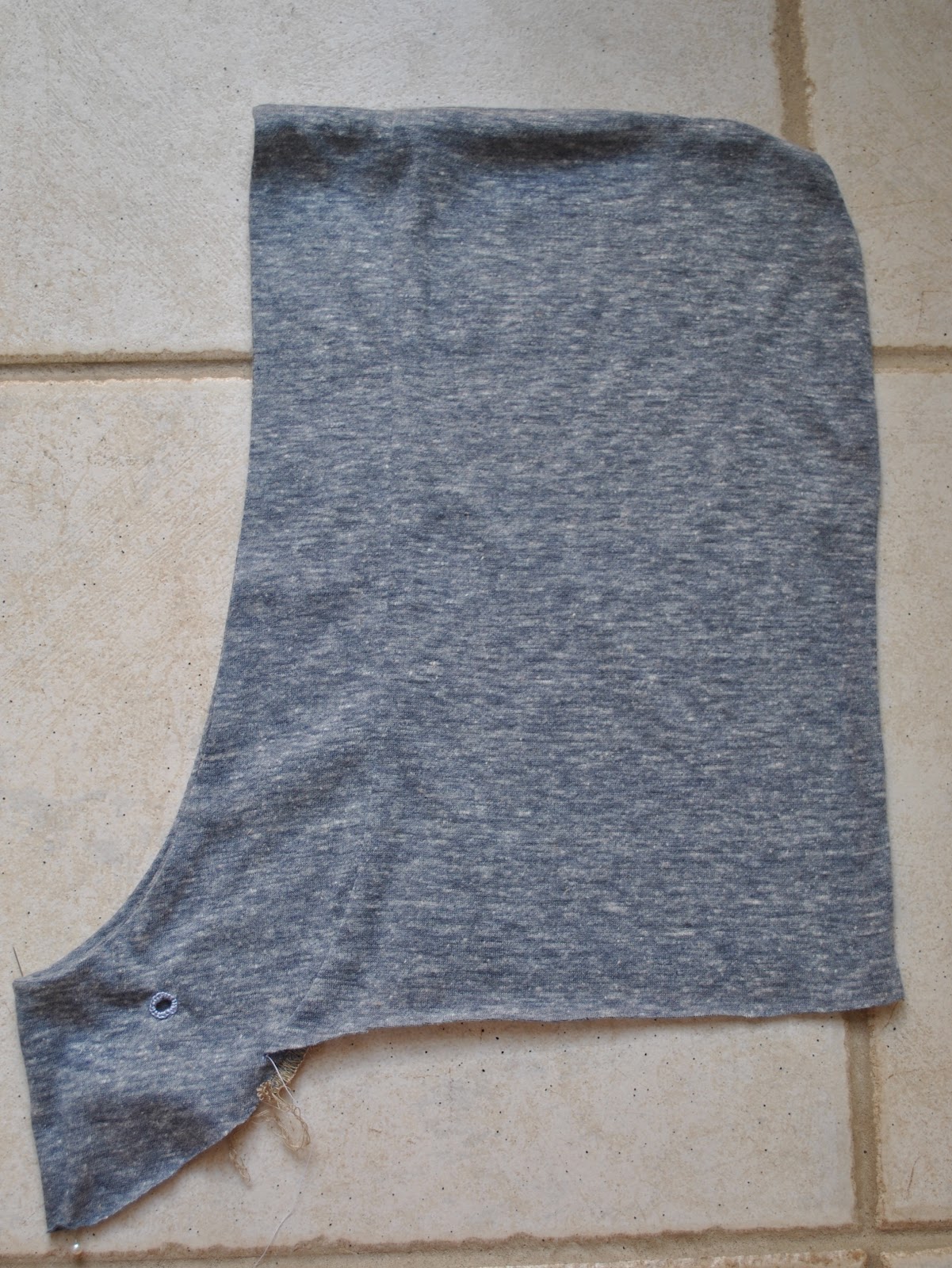
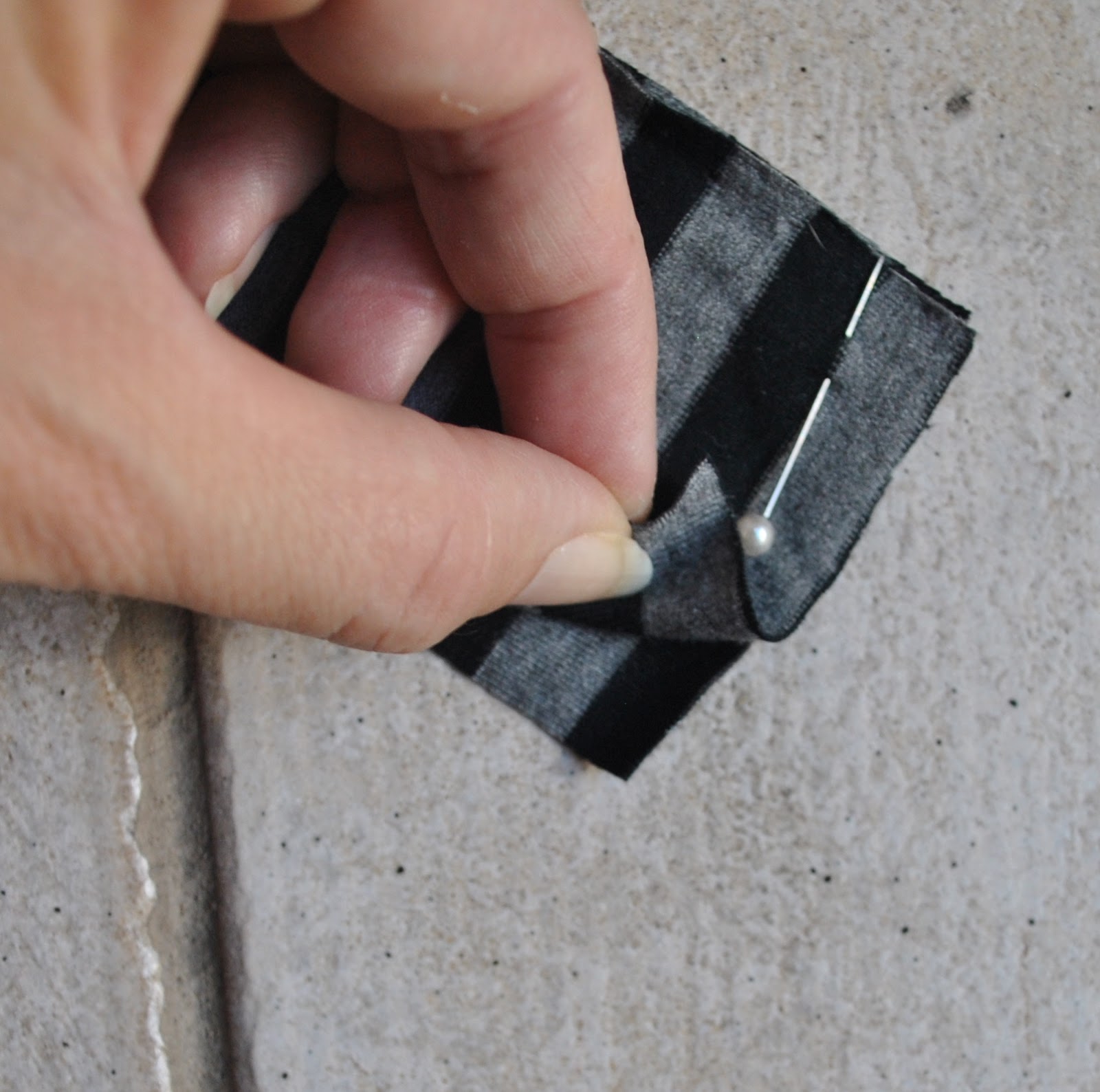
The hood is composed of two shapes; a hood piece cut less wide than normal, and a U-shaped collar piece, slightly wider at the bottom of the U than at the edges, that forms a combined hood edging and collar.
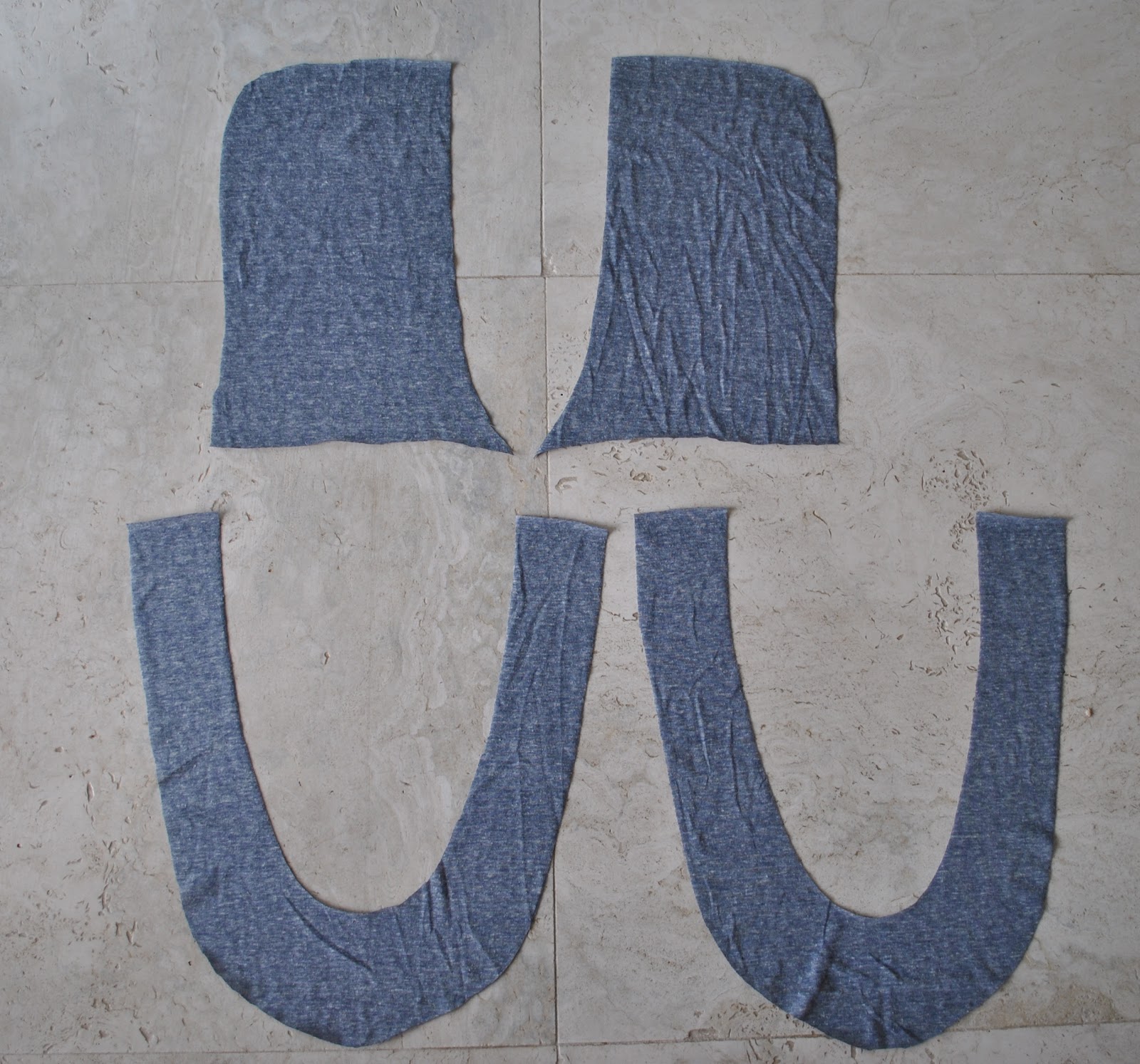
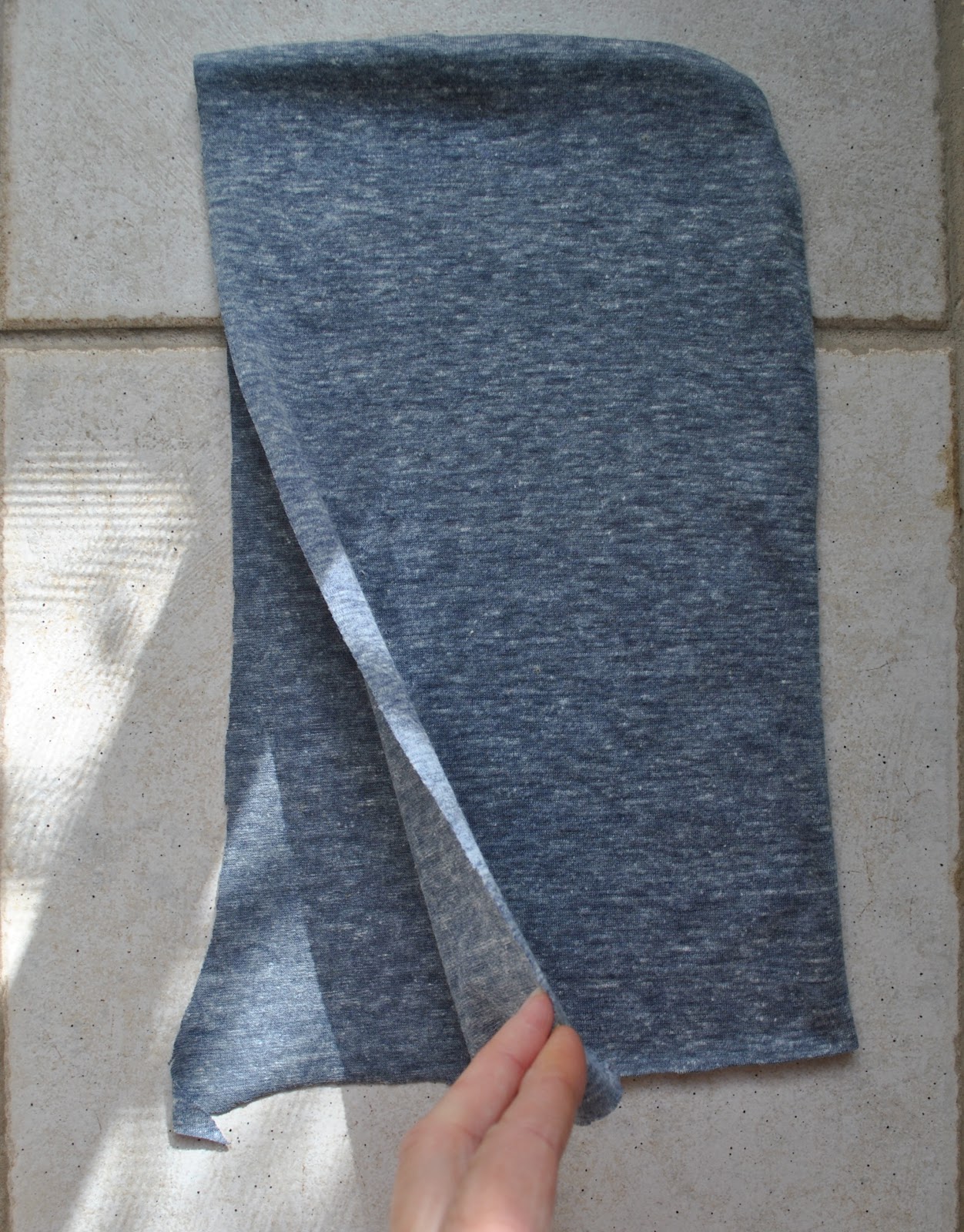
Sew the two hood pieces right sides together just like normal.
 Sew the two short ends of the U-shape together, right sides together, on each piece.
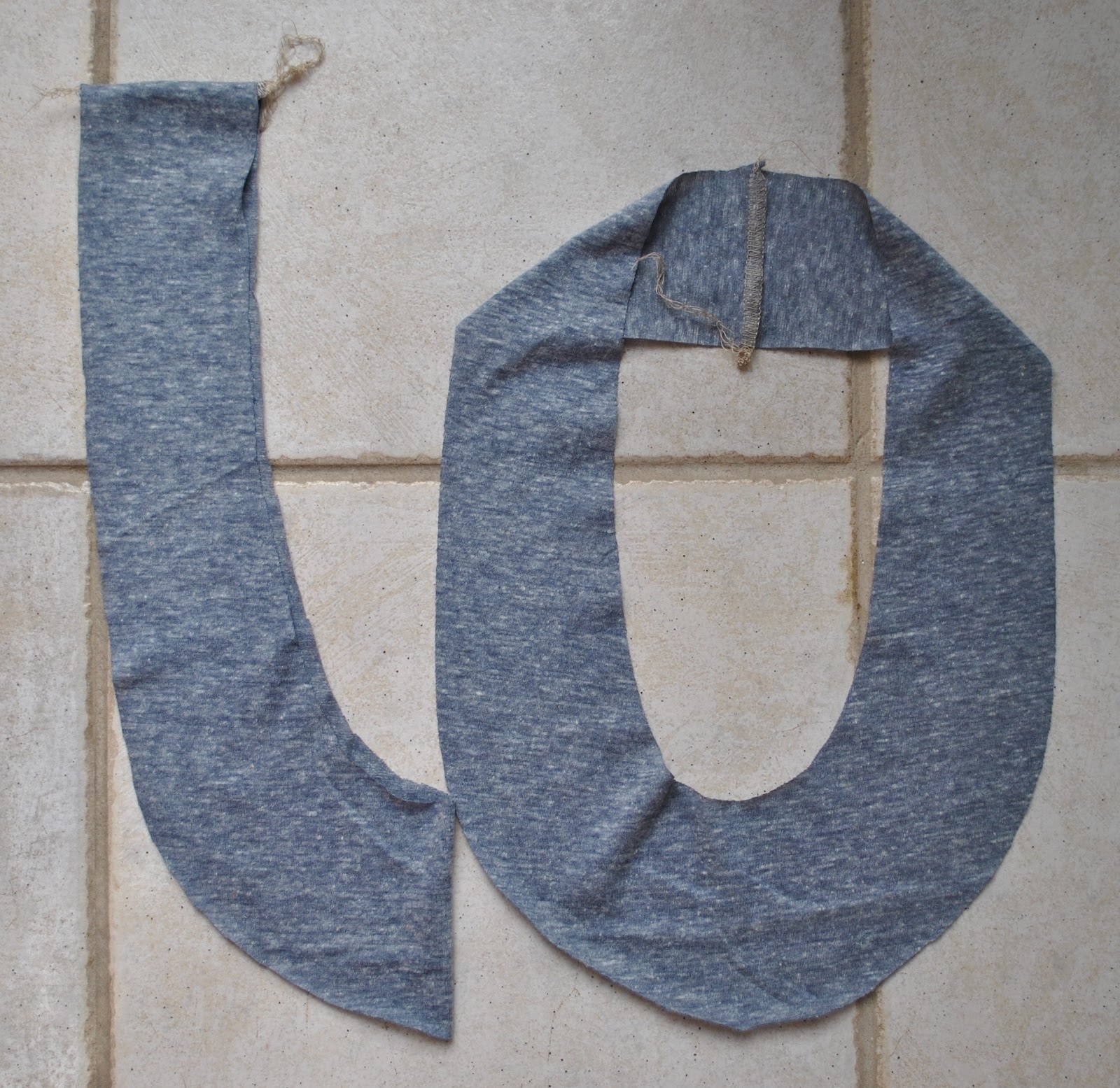
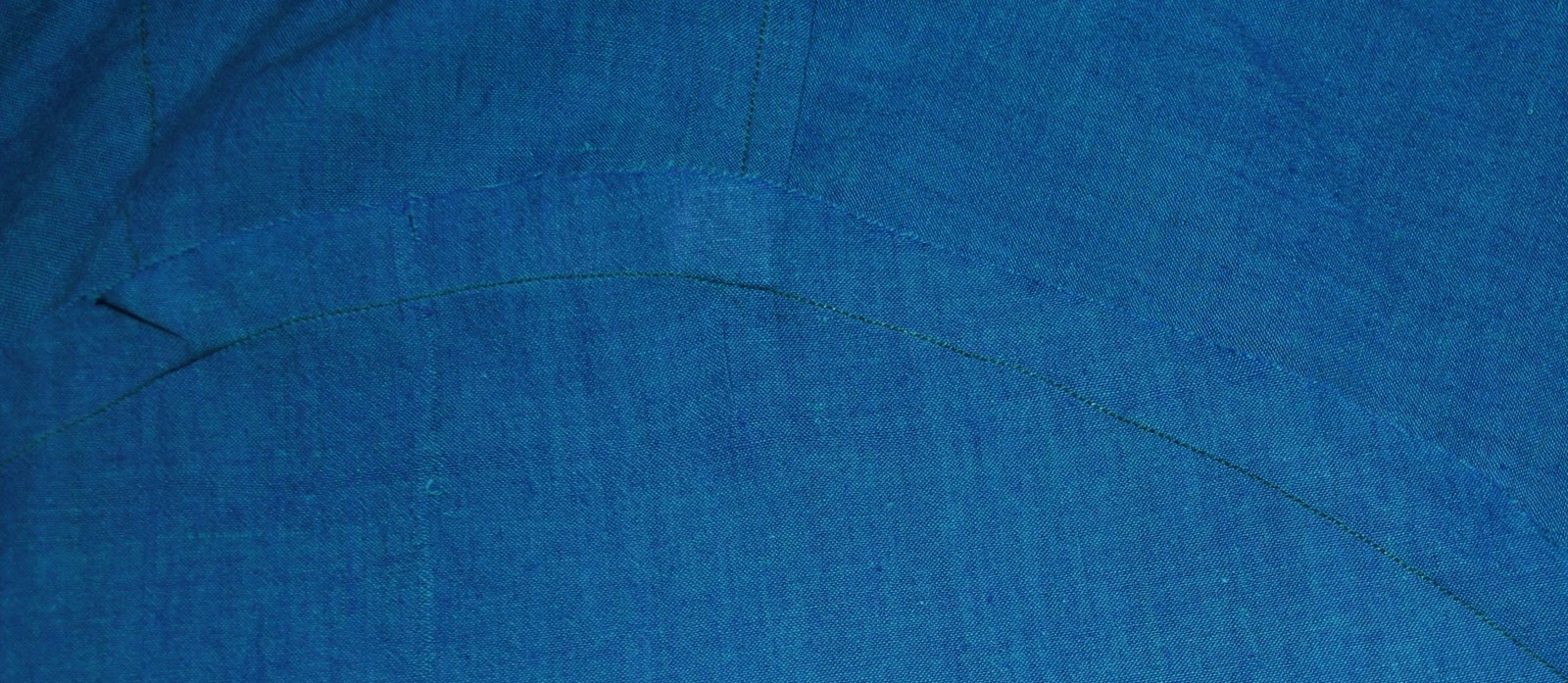
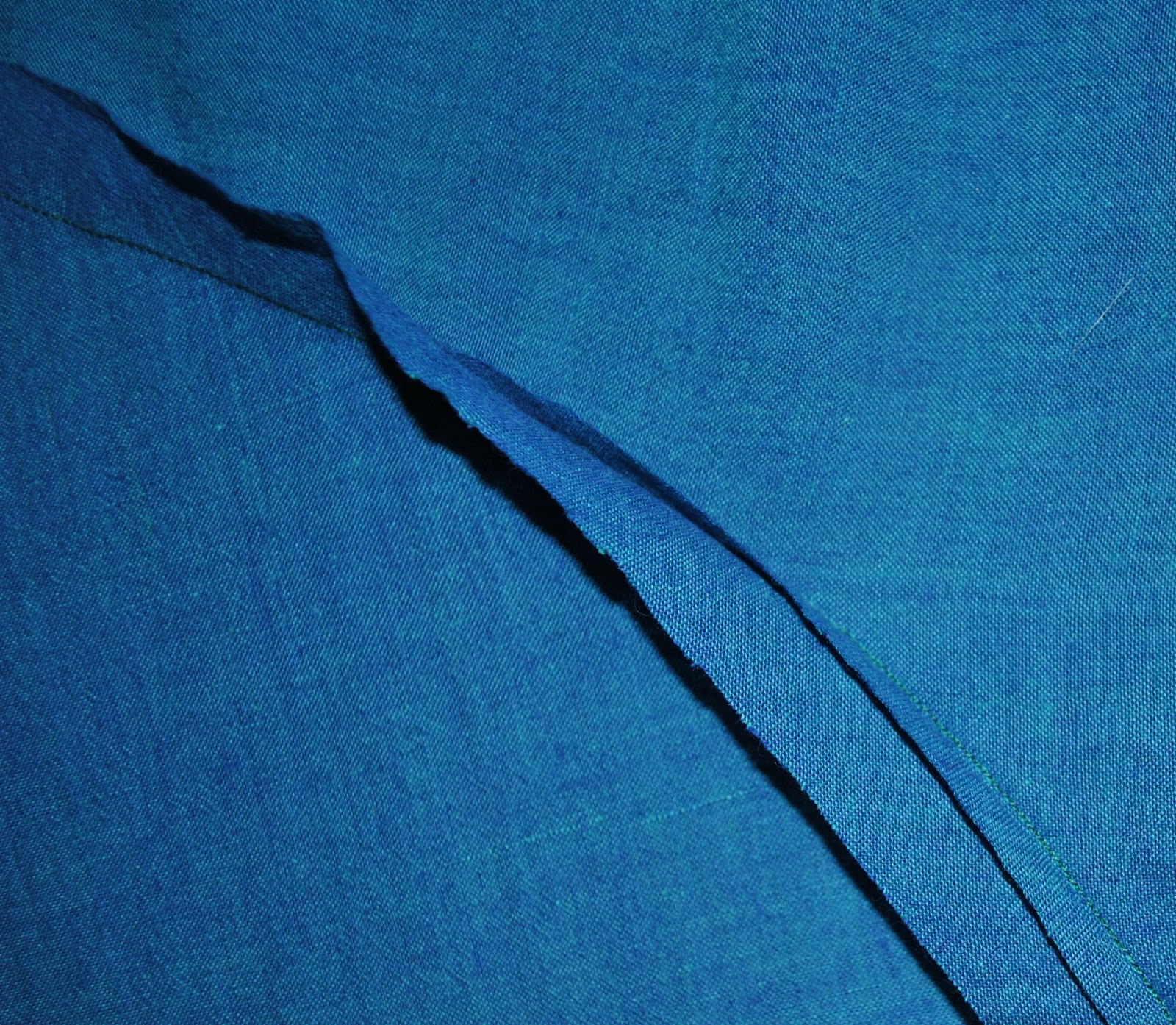
Lay these two pieces together, right sides together, and sew together around the entire inner shorter edge of the curve.  Turn out and press.  One layer is the outer collar; the other the facing.
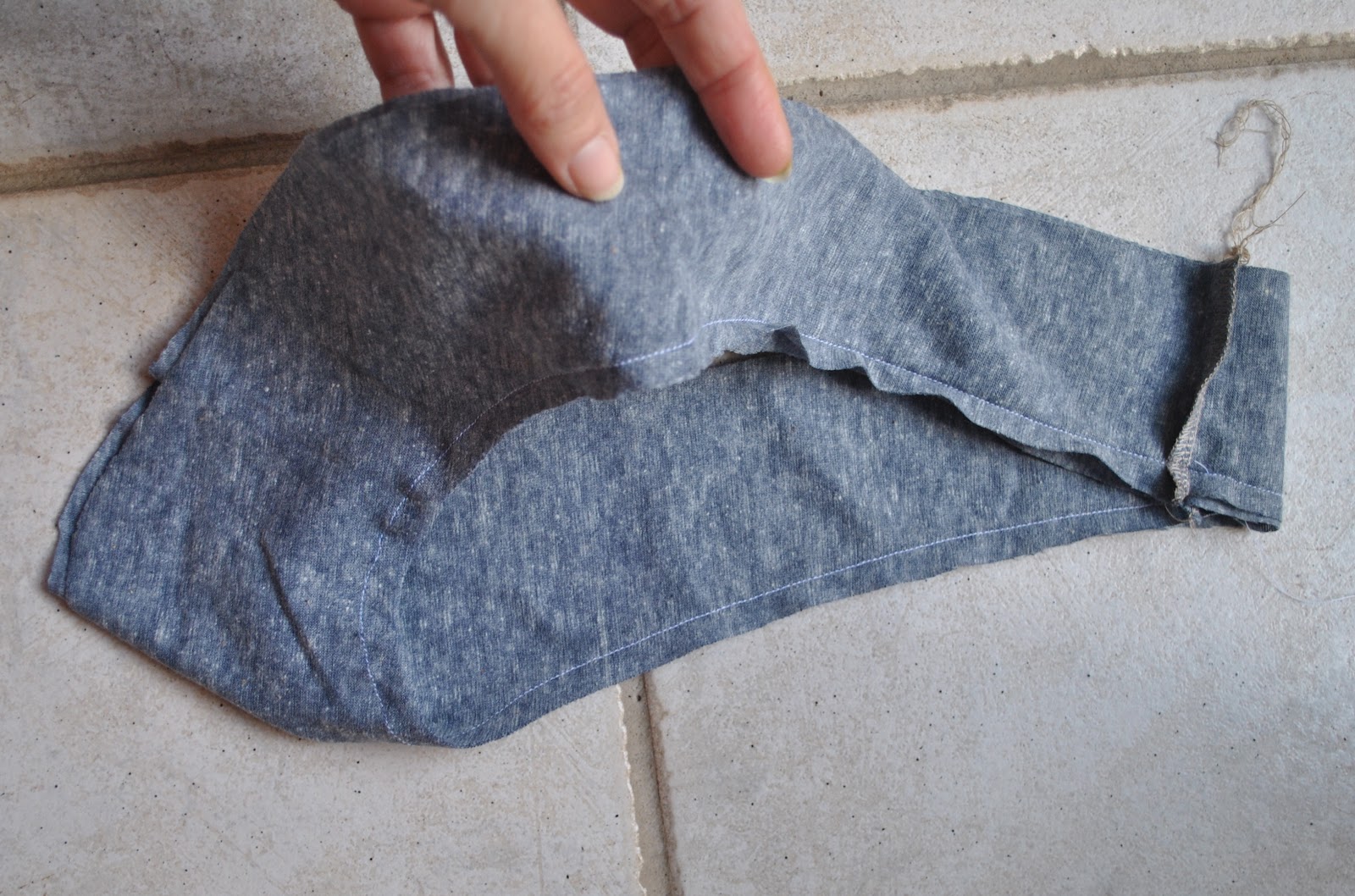
Measure and mark for the holes for the drawstring in the collar; mine are situated 1cm below the lowest point of the inner curve, and 12cm apart.
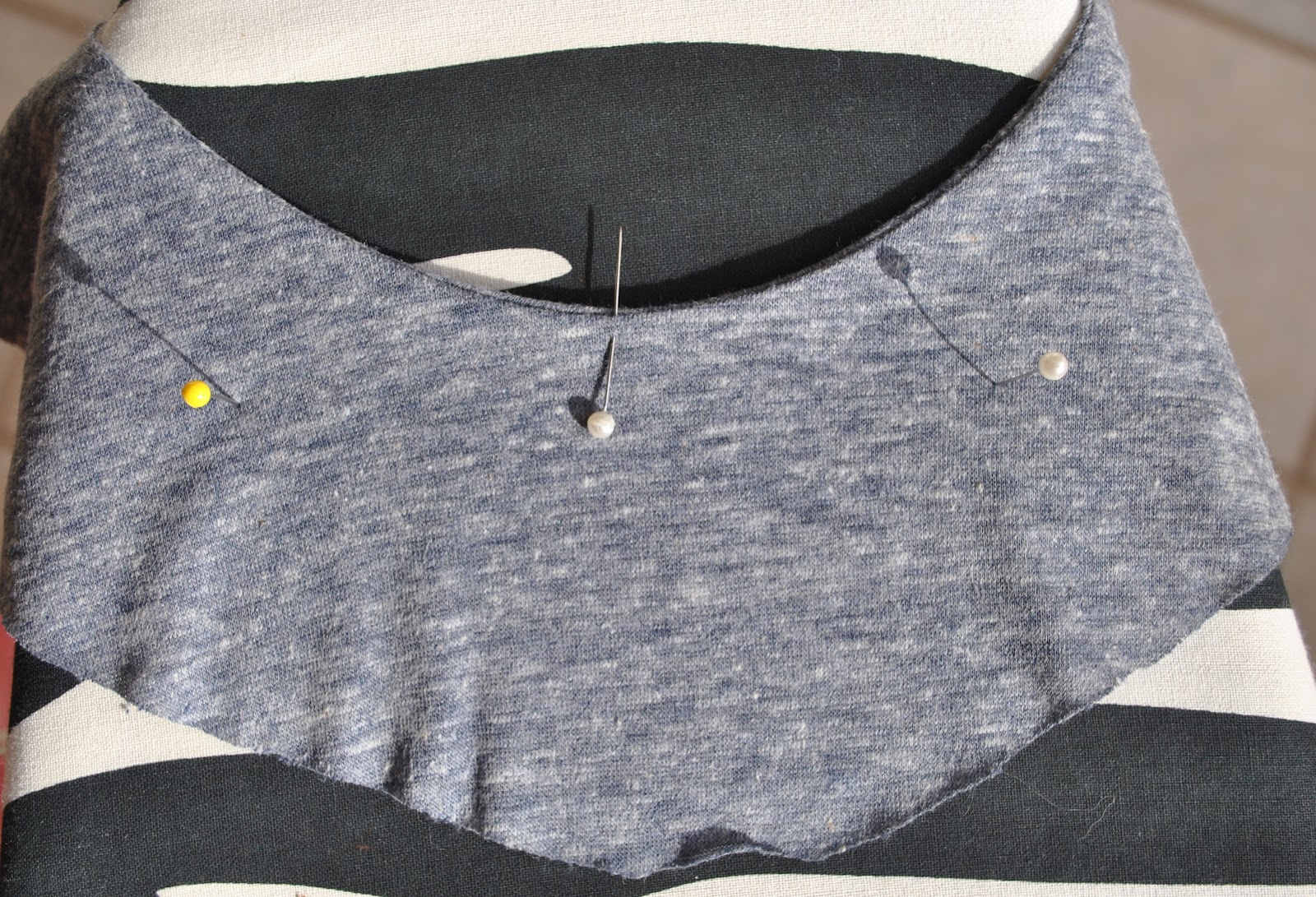
You can make life easy for yourself and hammer in some eyelets, but if you are me and like to make challenges for yourself where none need exist; embroider some nice little eyelets using embroidery thread…
Only in the outer collar layer of course!  snip a tiny X for the drawstring hole.  Leave the inner (facing) layer un-snipped!!
With a double strand of embroidery thread, sew a running stitch circle around the snipped X
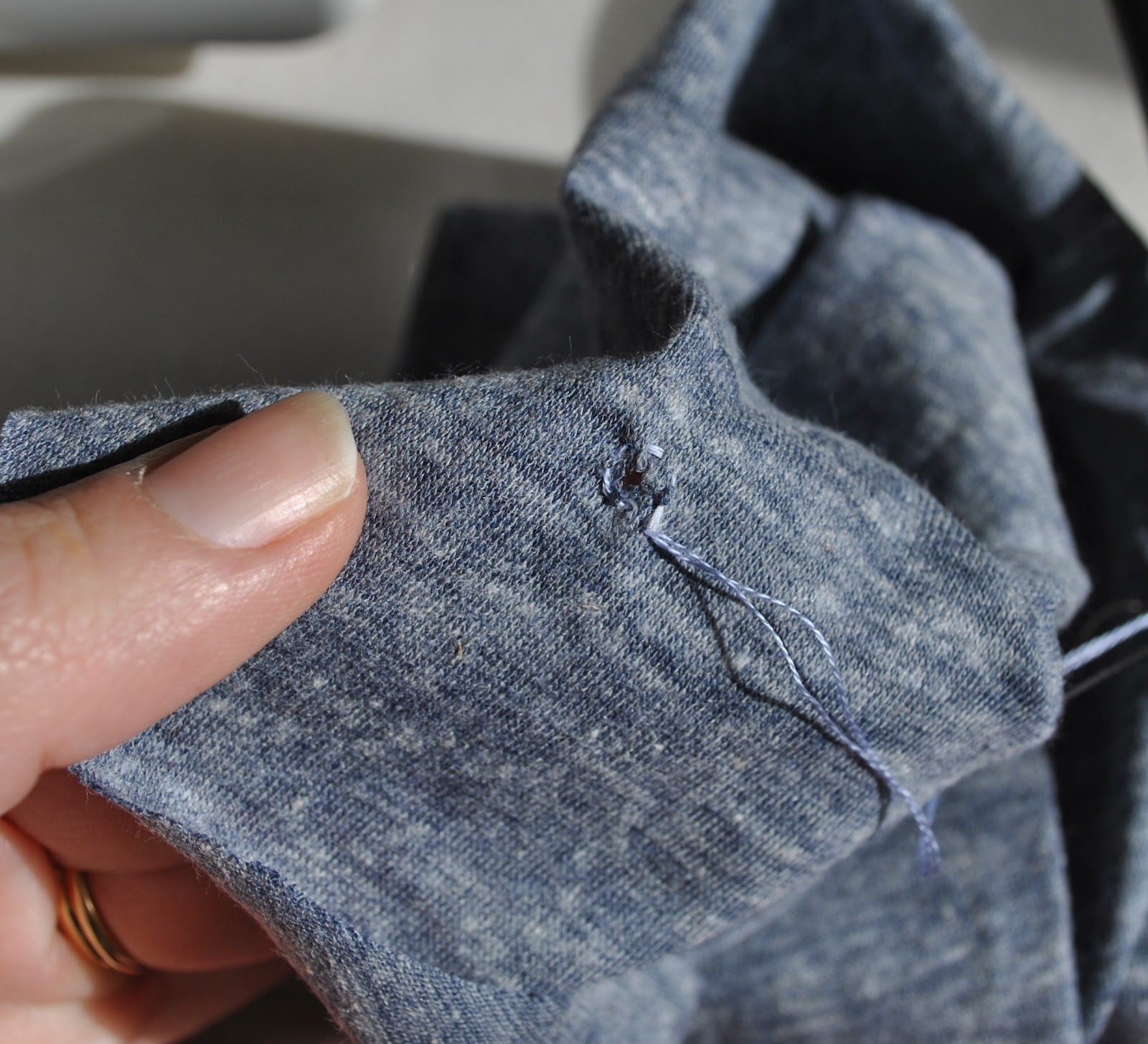
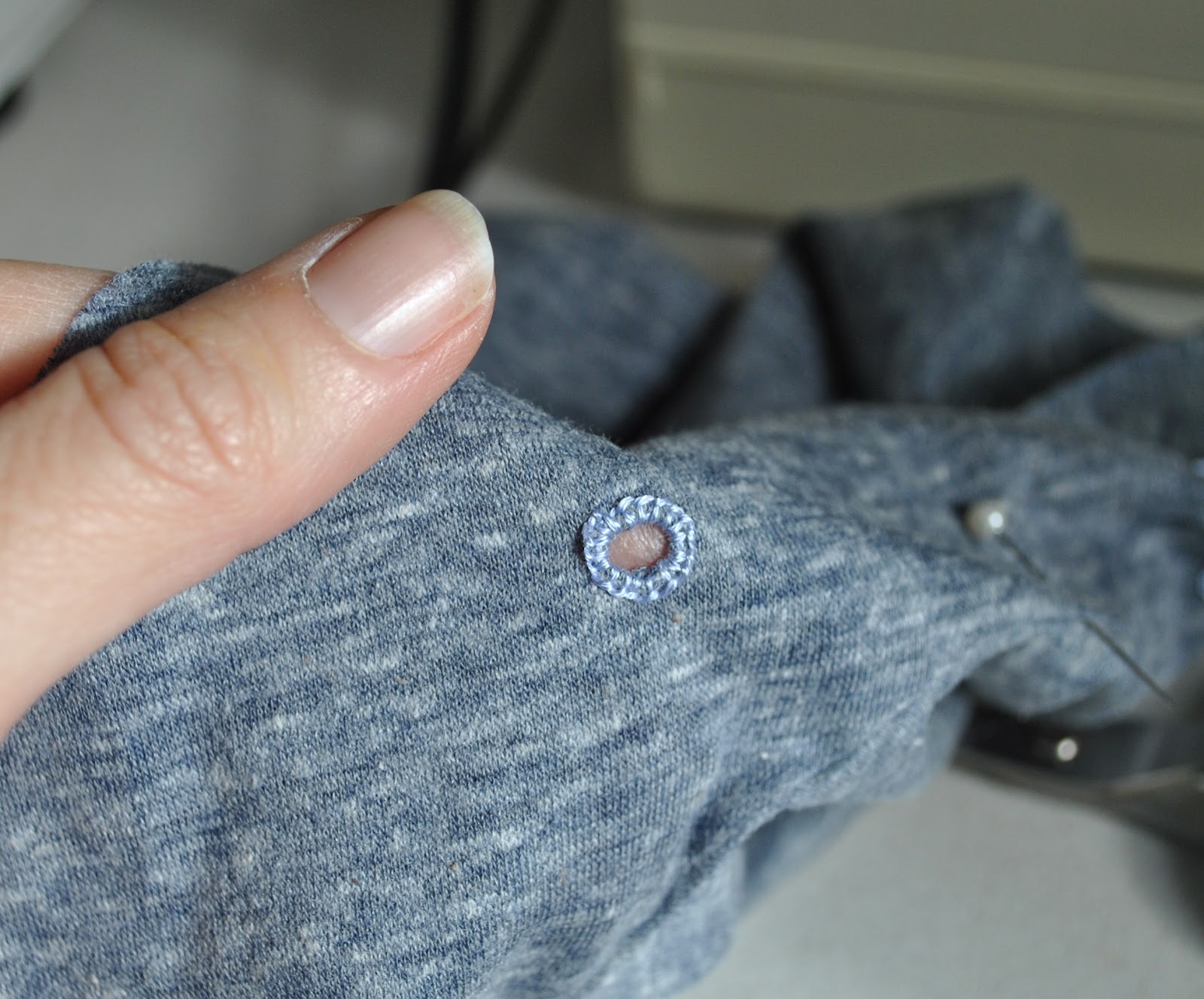
Back where you started, commence embroidering tight blanket stitches, situated hard up against each other, around the hole.  When completed, run the thread around underneath the stitching at the back to finish off.
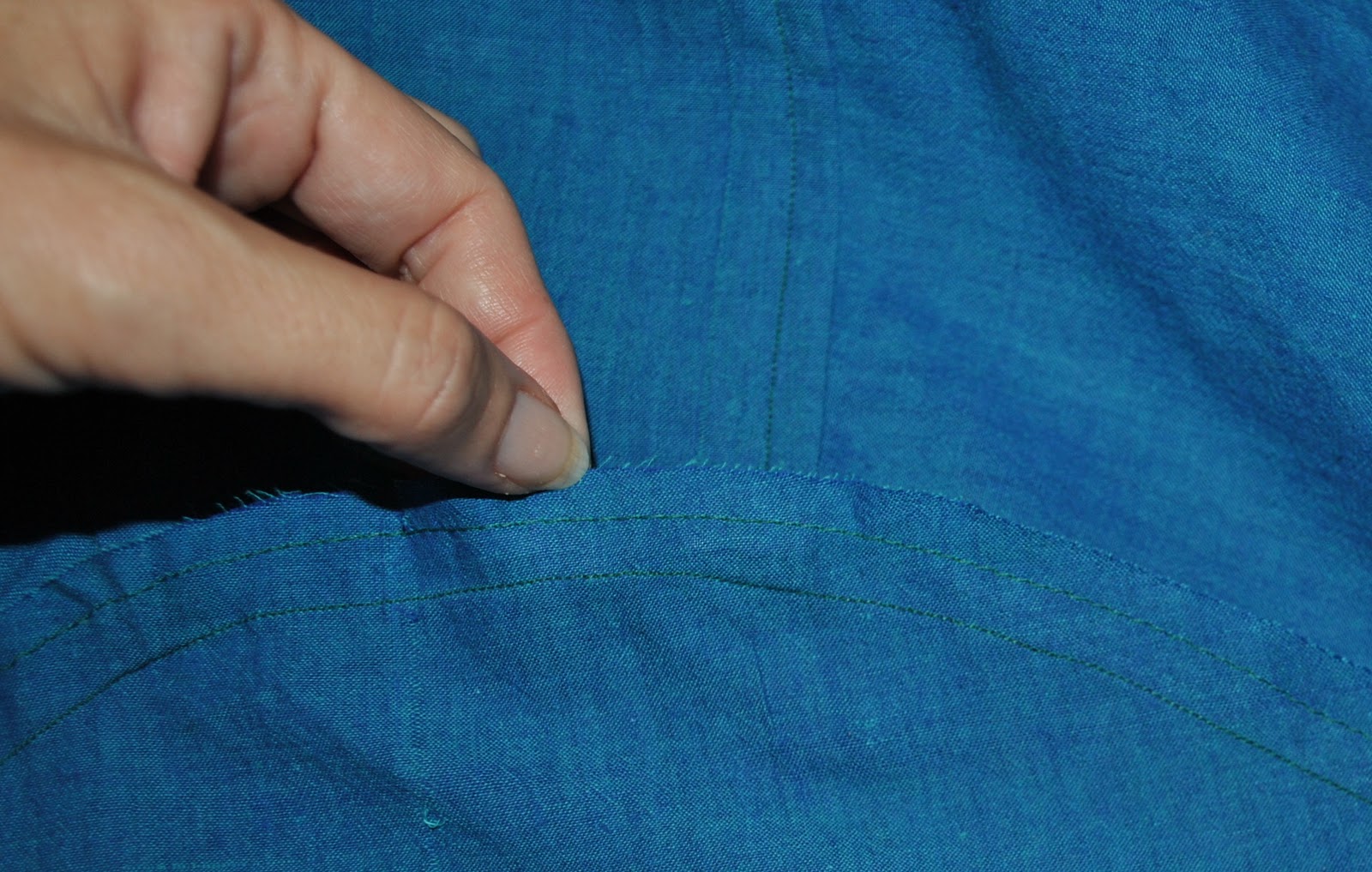
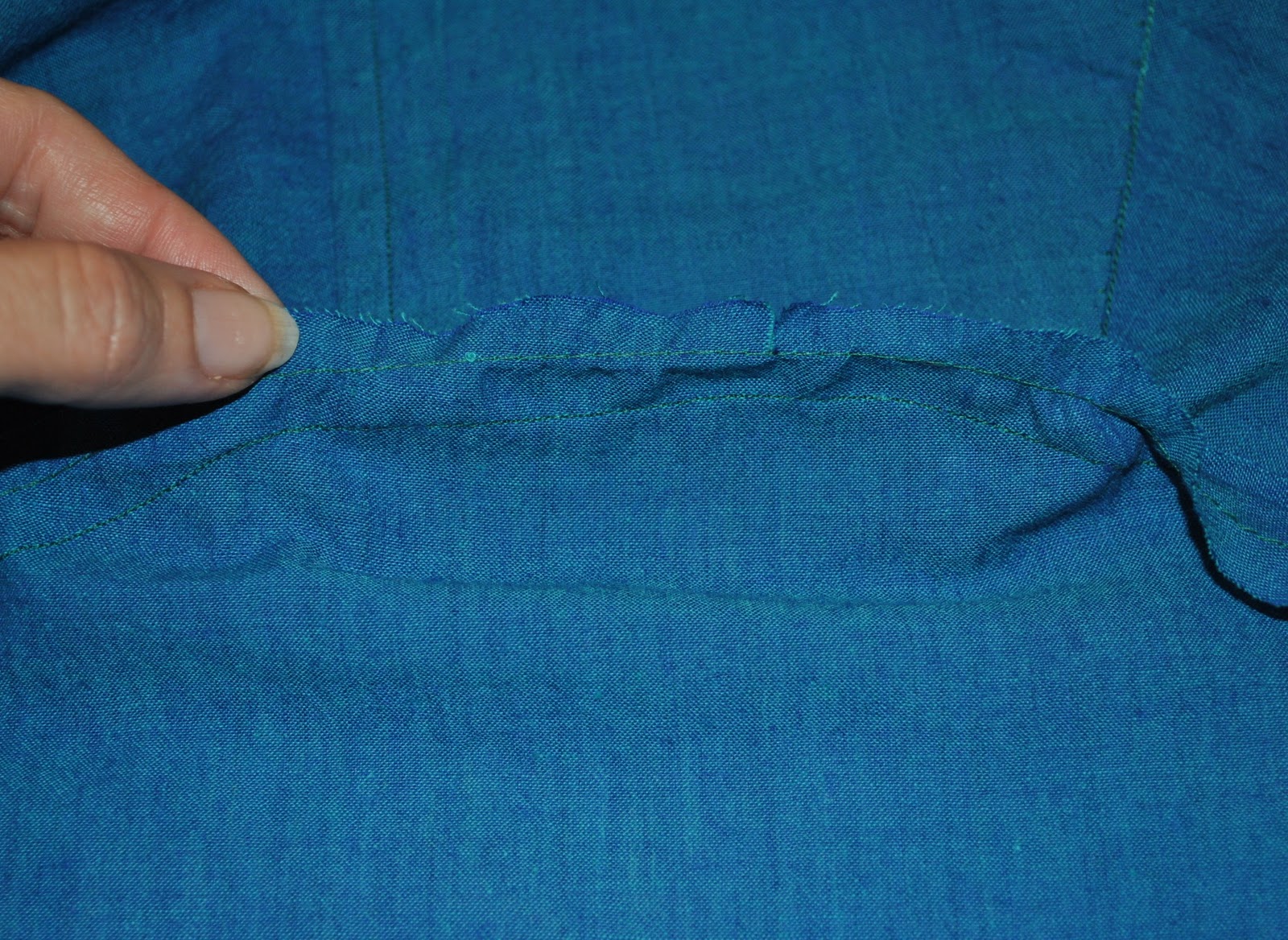
From now on treat both collar layers as one; lay the right side of the collar piece against the right side of the hoodie piece, lining up the top centre seams and ensuring the hood edges join at equidistant points from the centre front of the collar piece.  Stitch together, and press.
Again treating both collar layers as one; lay the completed hood right sides together against the neckline of the top, ensuring centre fronts align and the hood seam is in the exact centre back.  Stitch together and press.

The drawstring is simply a 1m long, skinny strip of the fabric, with the long raw ends folded in on themselves, and topstitched down from the centre out to each end with a wide zig-zag stitch.  The original had fancy cover-stitching to finish it off, not having a cover-stitch machine this is my best it’ll-do.  And a perfectly fine and dandy option too, in my opinion!  Thread it through the collar and up around the hood edging with a safety pin, and tie each end off with a little knot to stop it slipping back through the hole.
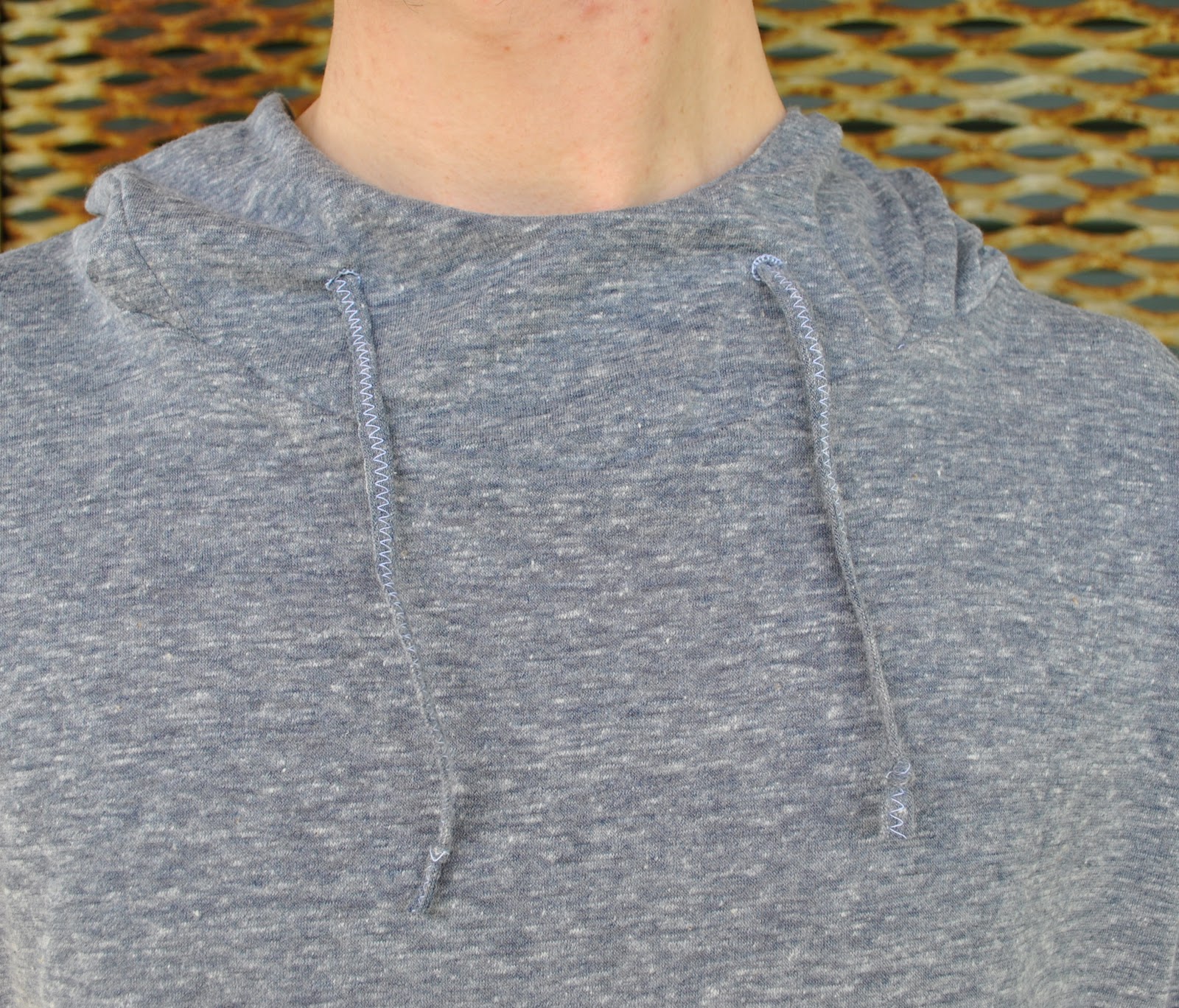
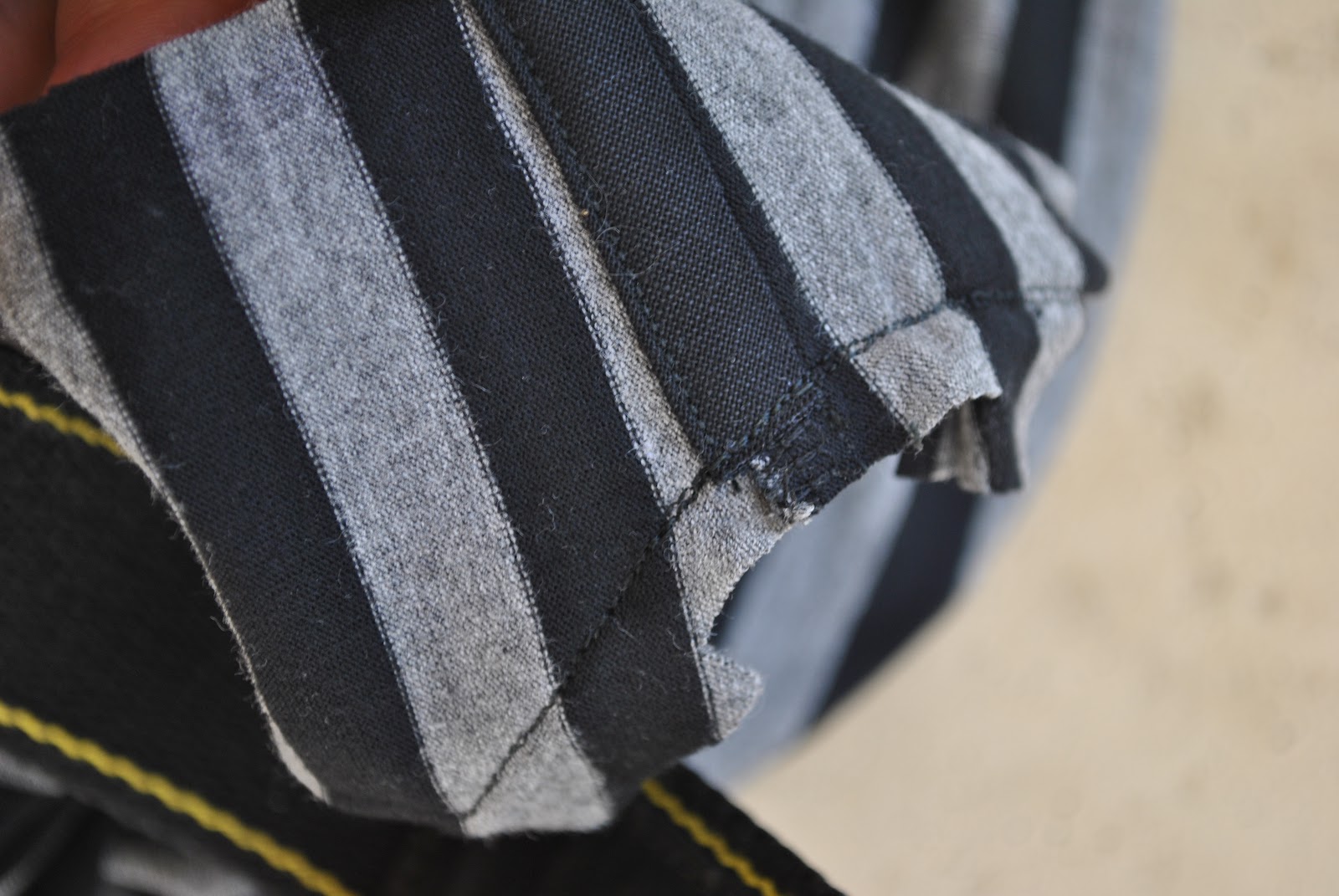
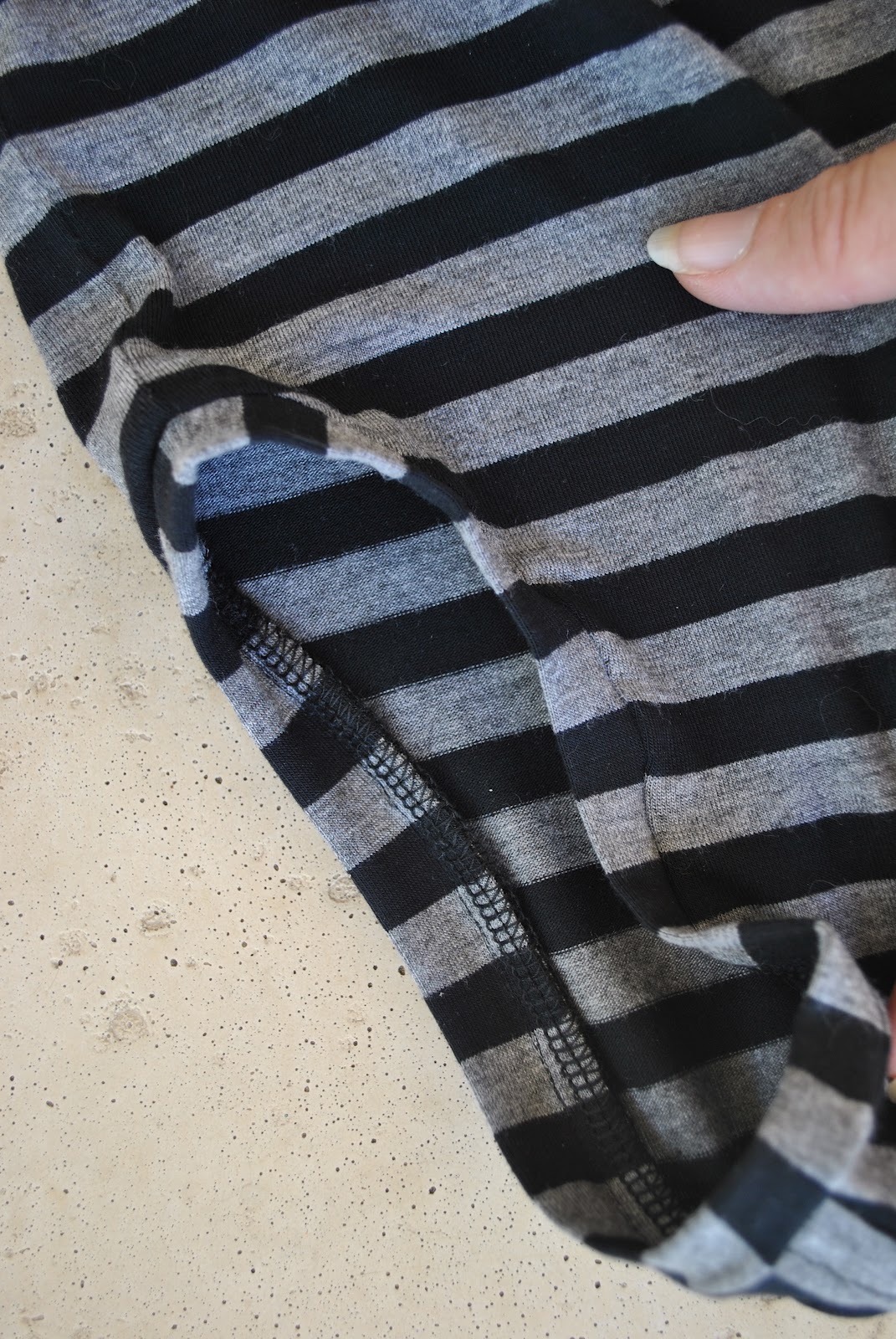
The hoodie has a kangaroo pocket and a wide self-band at the lower edge.  The sleeves are hemmed using a twin needle.
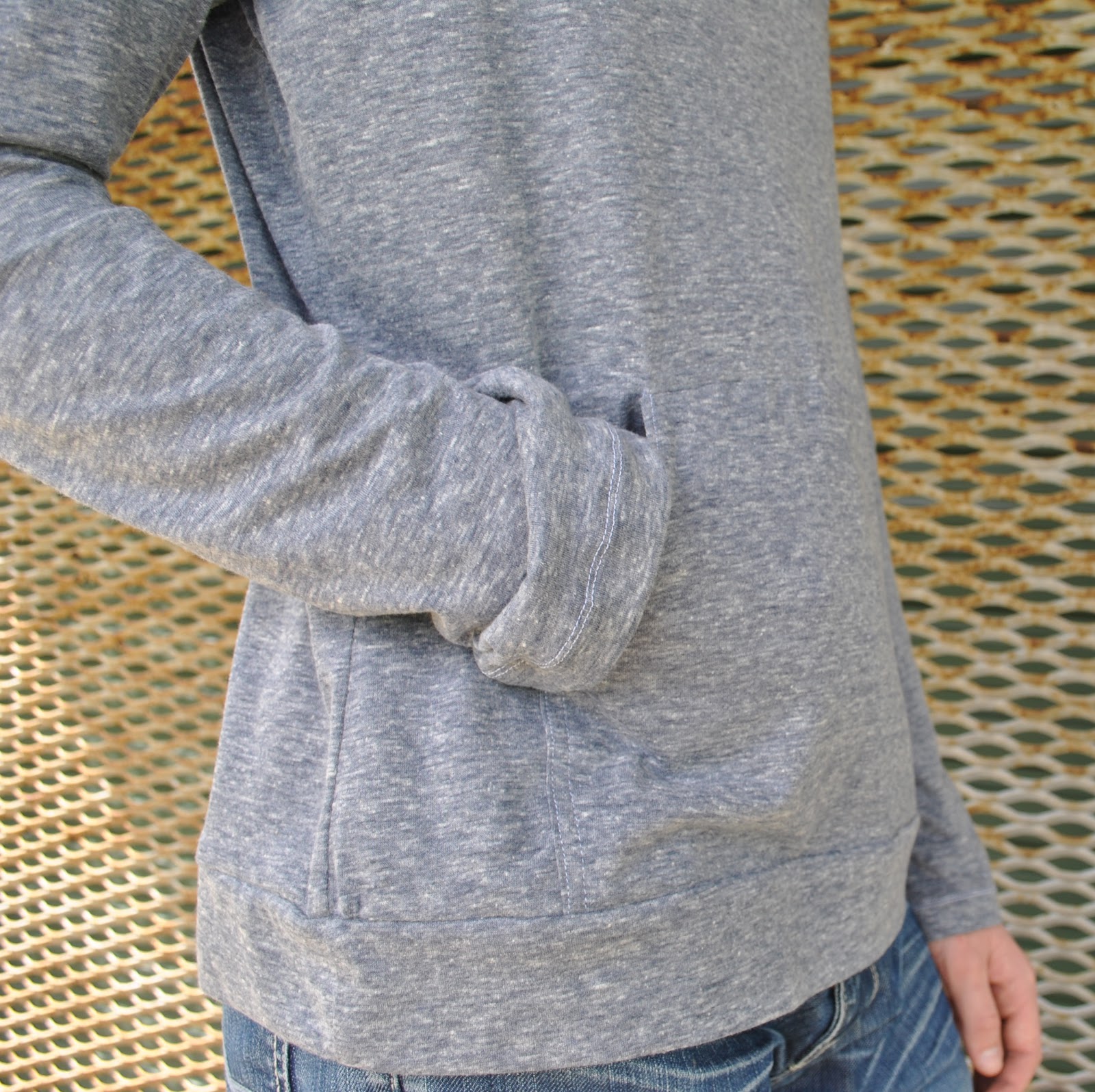
Once it was finished and Sam put it on; he quietly, briefly, but spontaneously, mentioned that he liked it.  I count that as a fairly enthusiastic expression of approval of the new hoodie.

pinterestmail

Waterproof pockets for a raincoat

I put these pockets in the two raincoats made recently, and they’re pretty well perfectly waterproof.  Yay!  See, while we have only had mobile phones, iPods and electronic keyless entry thingys on our car keys for a few years, they are now ubiquitous.  And they need to be kept dry.  So, when I was thinking about my new raincoat and its pockets, I gave them a lot of thought re waterproofing.  Firstly I eliminated as many seams as possible.  Water can seep in through any and all unsealed stitching holes in a raincoat; so pocket designs with lots of exposed stitching, like patch pockets, and stitched-on pocket flaps, require tonnes of sealing, which is a messy, smelly and generally horrible job.  So it’s a good idea to plan to eliminate them, if possible.  Likewise, exposed zips are not good in the rain.  
There is only one line of exposed stitching in these pockets, so it’s not too painful to waterproof with a commercial sealer.  
This pocket eliminates some seams by extending out to the side seams at one side, and into the placket, at the centre front.  So all of the pocket pieces are cut the full width of each front of the jacket.

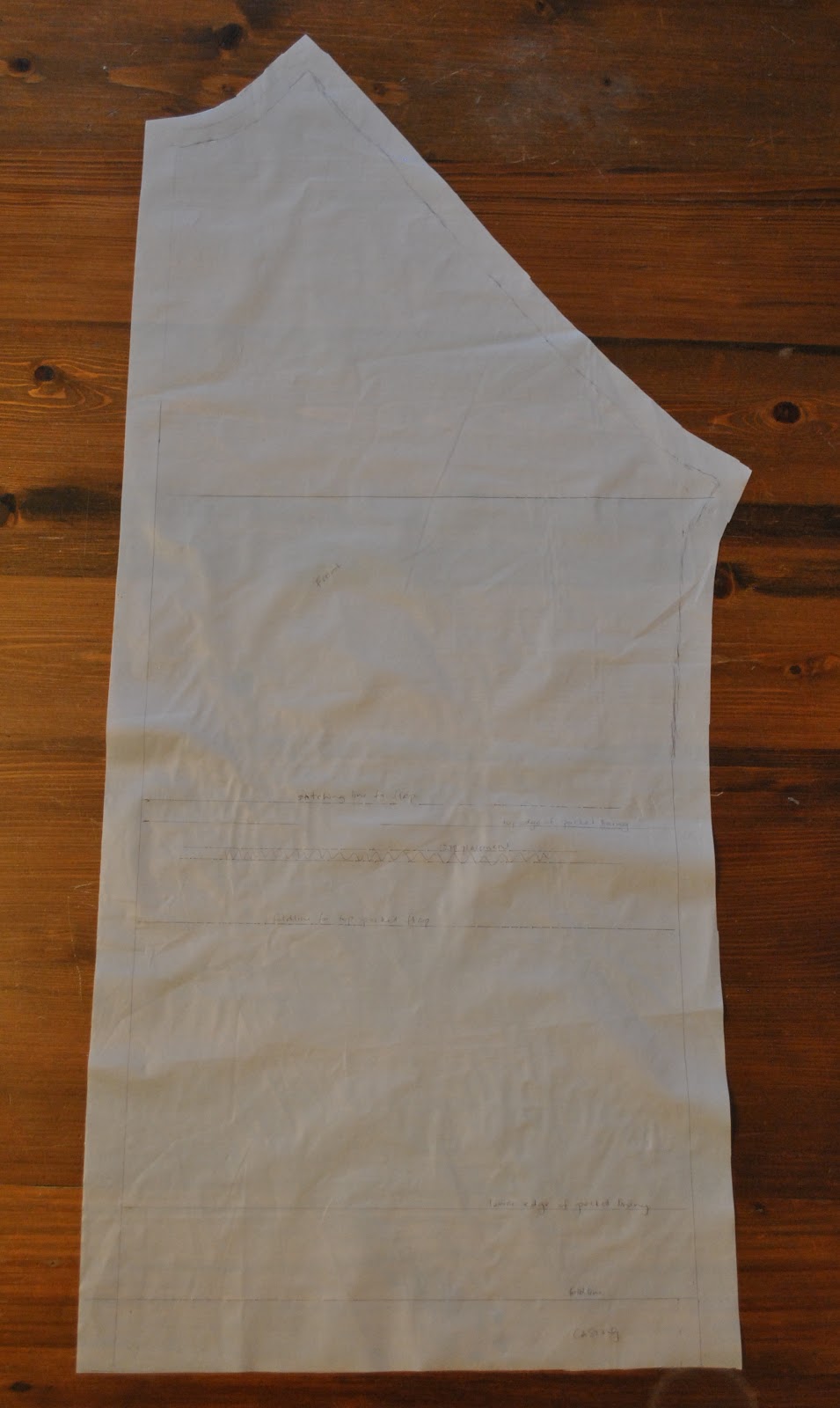
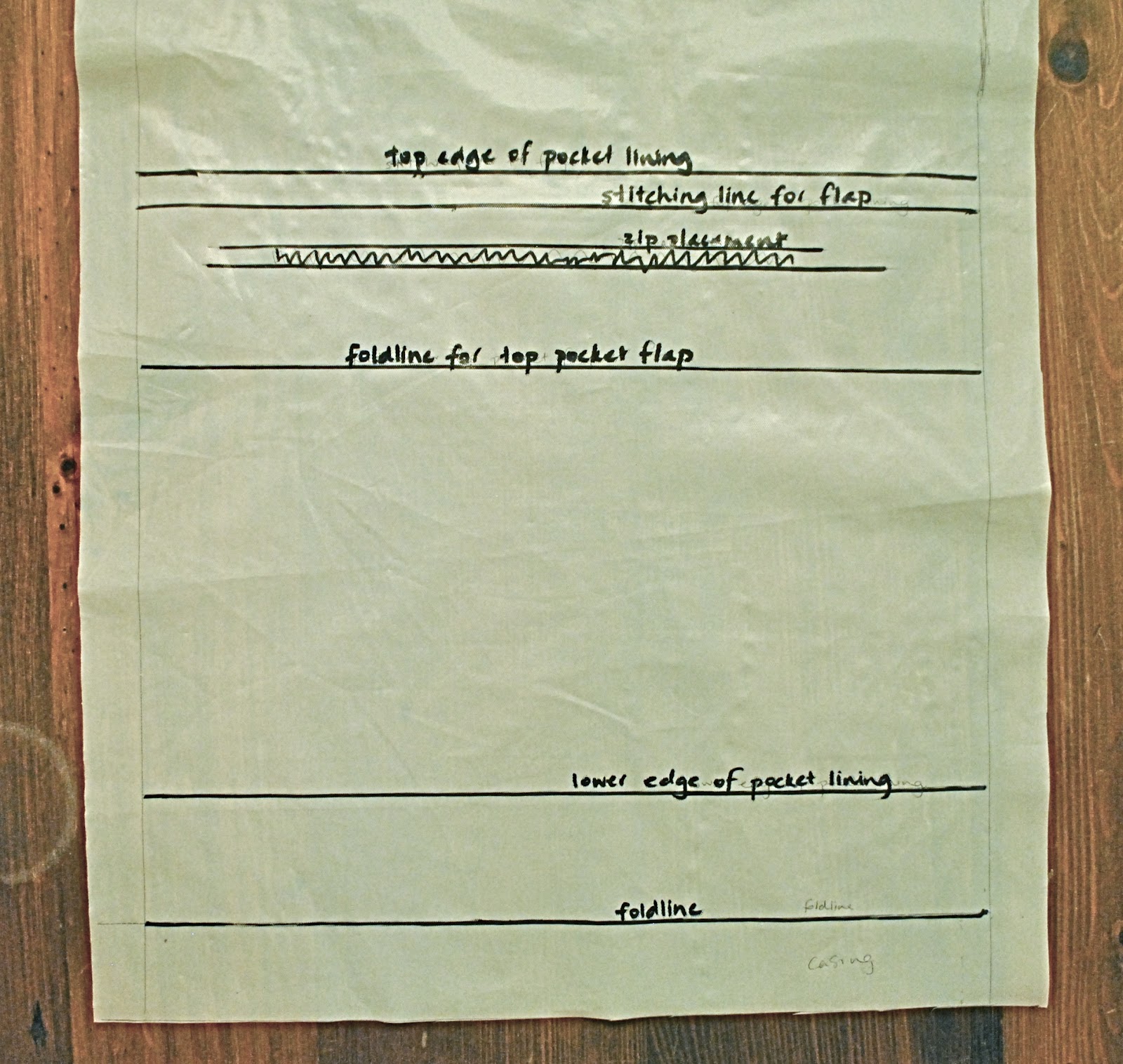
The front jacket piece looks like above, and the close-up below shows the relevant markings for the front pockets.   I’ve re-marked them but I apologise that it is still difficult to read them; they read, from the top:

  • top edge of pocket lining
  • stitching line for flap
  • (two lines with a zig-zag between them) zip placement
  • foldline for top pocket flap

(and much lower) 

  • lower edge of pocket lining
  • foldline (indicates the lower edge of the finished jacket, below this is the hem allowance)

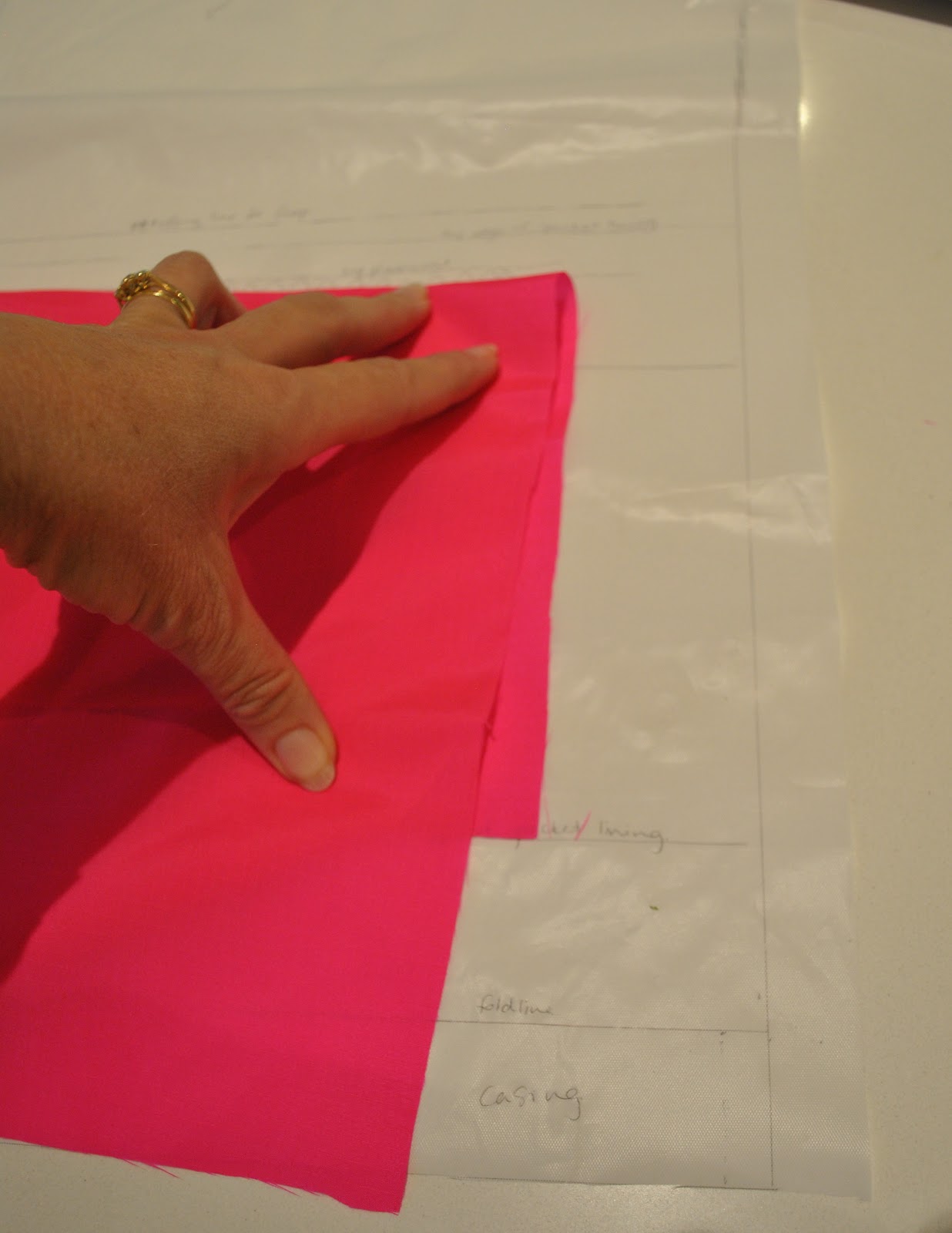
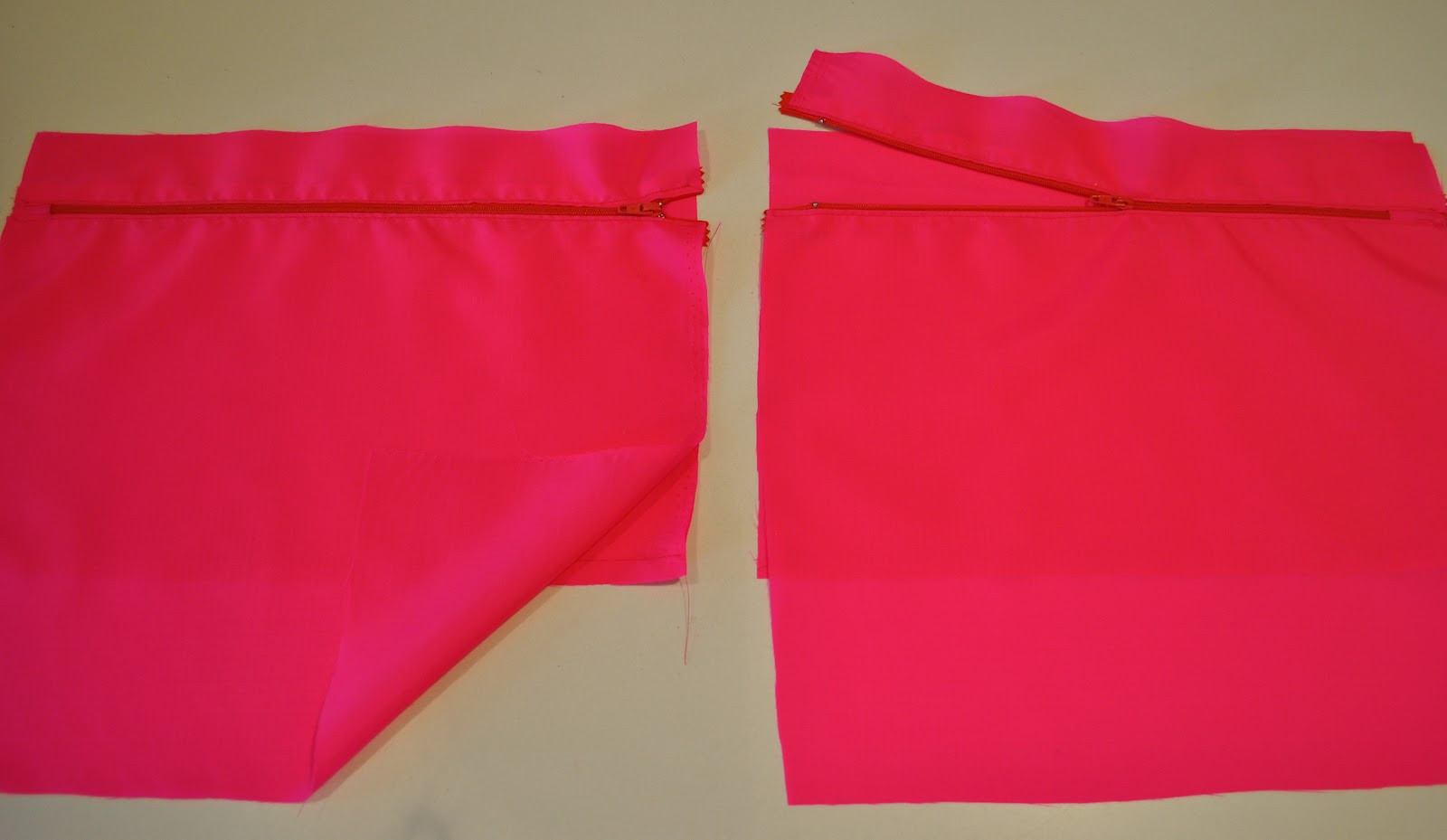
First, cut the two lower front pieces… these should be long enough to extend from the lower edge of the pattern piece above; up to the lower edge of the “zip placement”, and then fold here to finish at the “lower edge of the pocket lining”.  I’ve pictured it splayed out here to show the length and how it folds at the zip placement line…

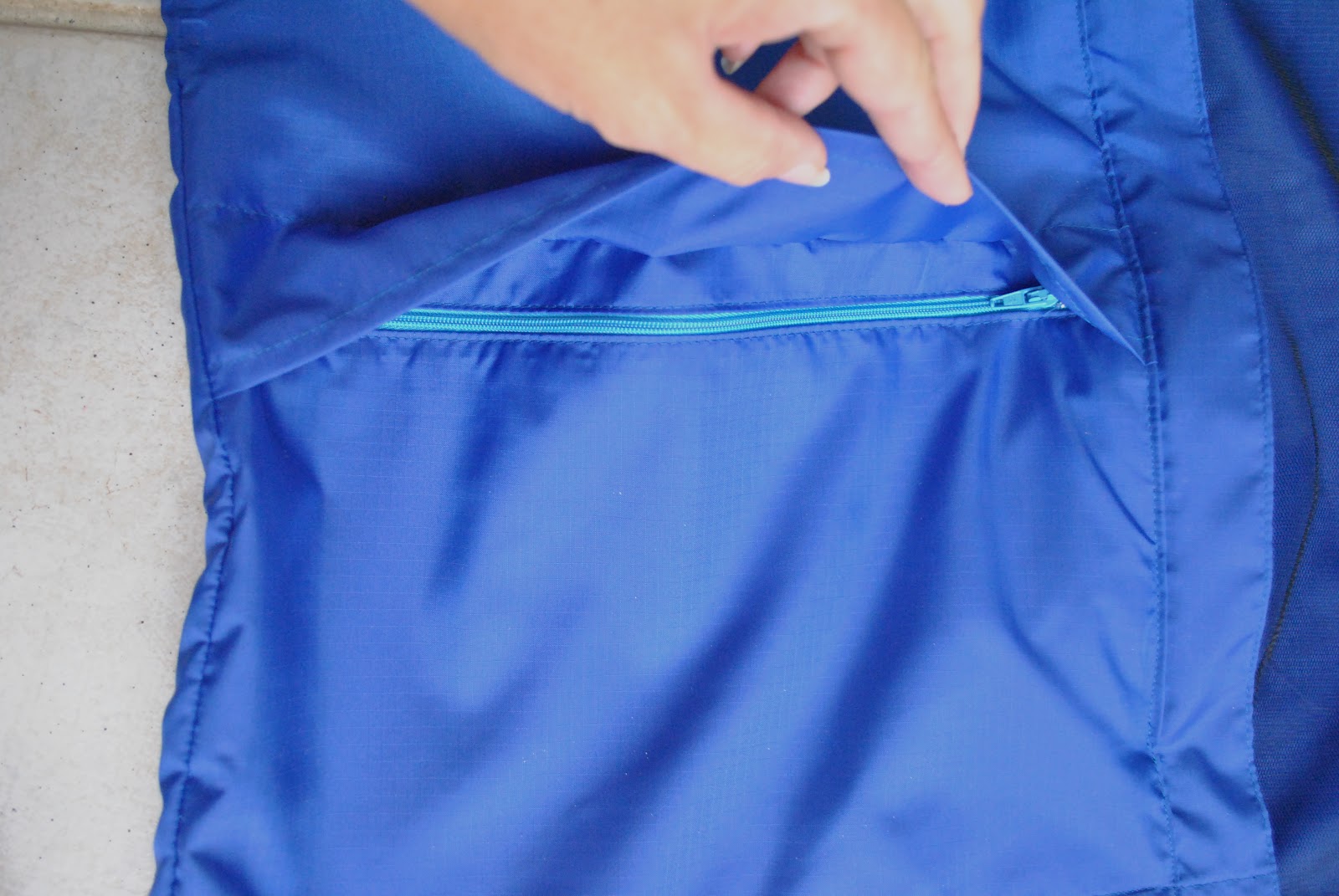
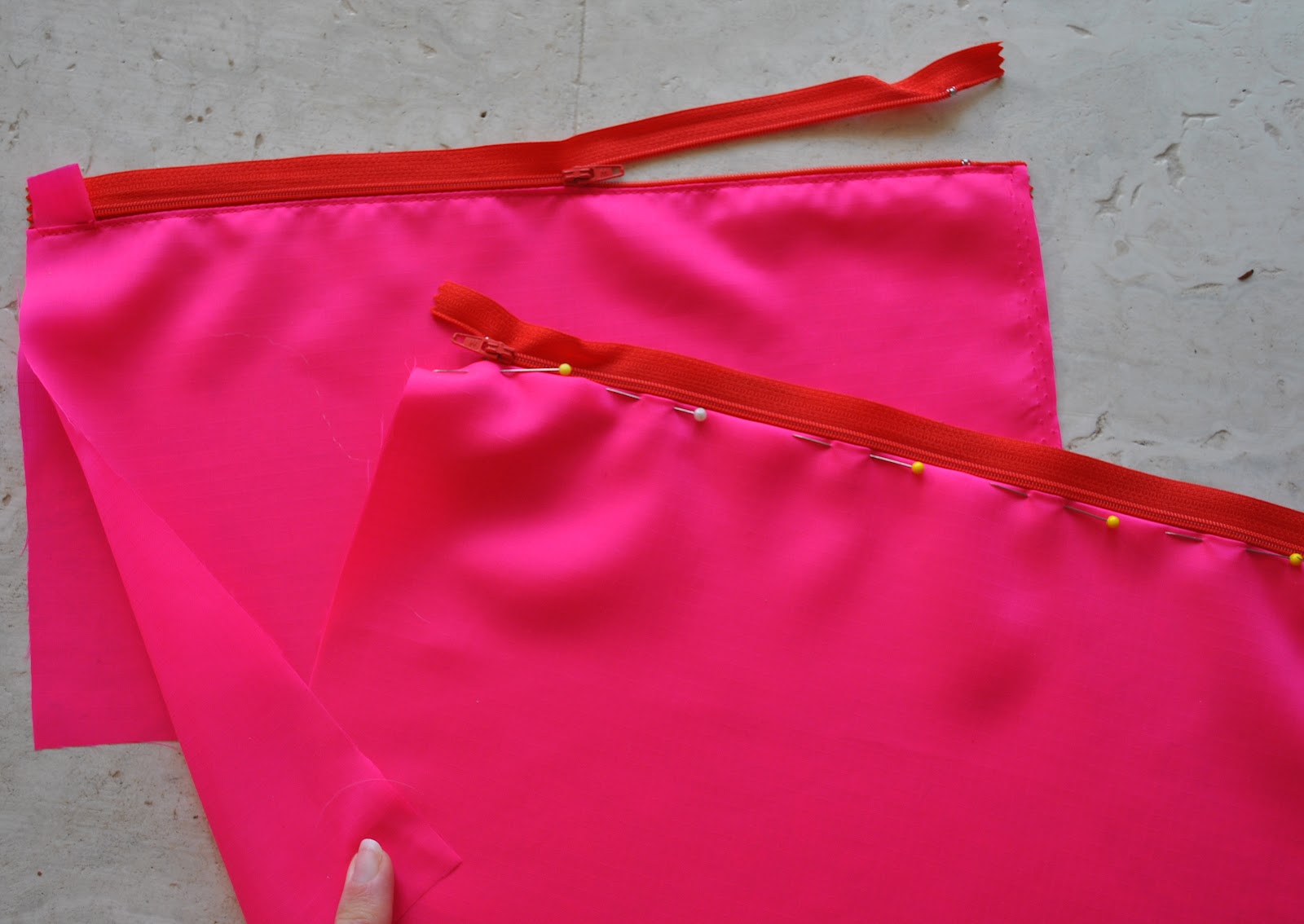
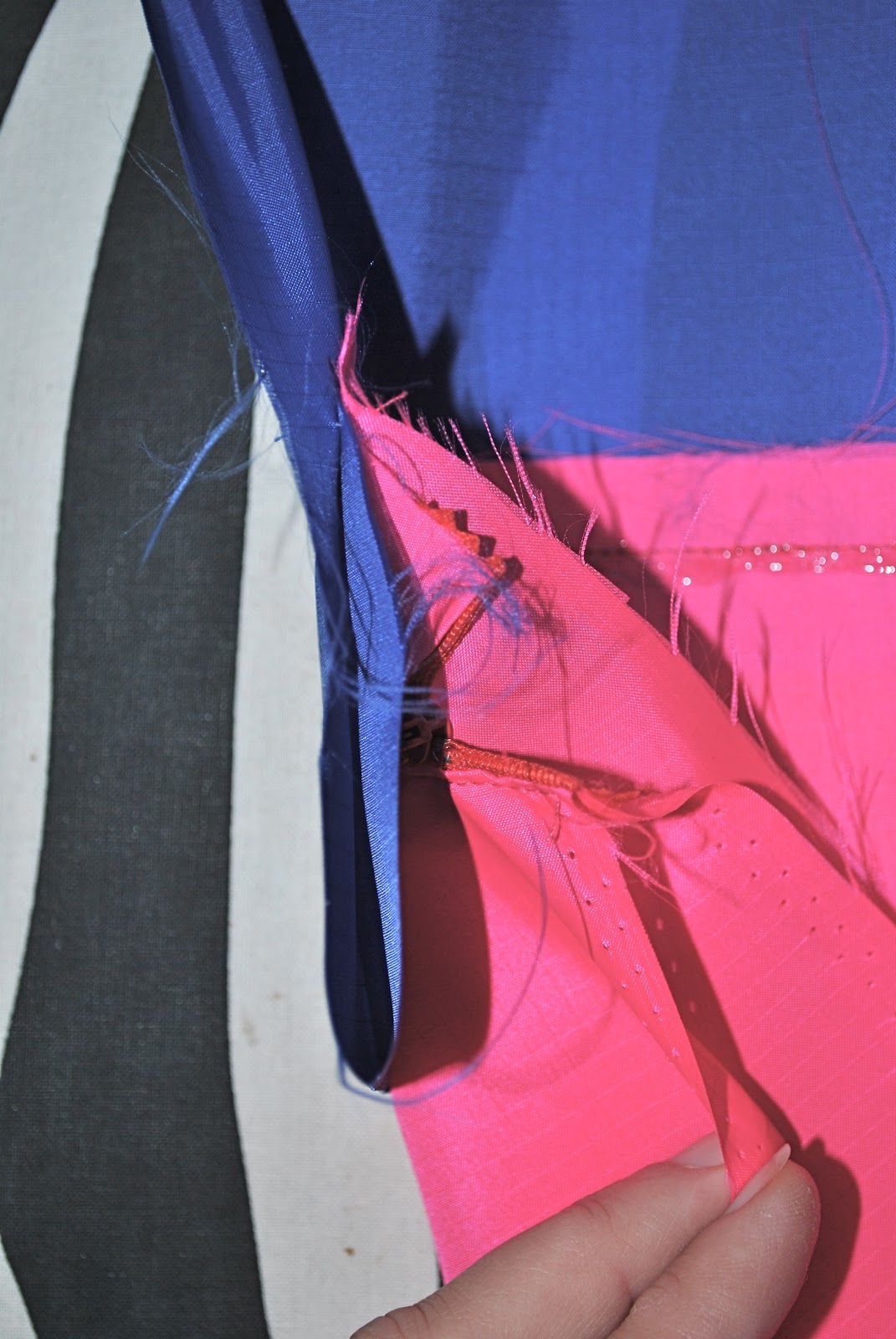
Press the fold in place.  Pin and topstitch in place the two zips at the pressed foldline, remembering to place them to open at opposite ends to each other.  At the upper left edge of the top pocket piece can be seen a small piece of folded fabric, stitched inside the seam to cover the metal zip stop and the bottom of the zip…  even though you won’t be able to see this in the final pocket I still like to have this covered like so…

Cut a full-width piece of fabric, to sew along the top edge of the zip, to form the top outer edge of the pocket itself.   This has to be long enough to extend from the “top edge of the pocket lining”, down to the upper edge of the zip placement, where the fabric is folded lengthwise and then to have a seam allowance to enable it to be stitched to the top edge of the zip here… Sounds complicated, but hopefully the picture illustrates what I mean OK…  Press along the foldline and stitch to the upper edge of the zip. (In the top pocket can be seen that small piece of folded fabric stitched in to completely hide the bottom of the zip  (My stitching is a wee bit wonky just there, but I didn’t want to un-pick and sew over again because of the permanency of holes in this fabric.  And actually, nylon ripstop is a ^&%$#* to press and topstitch neatly.  Just saying  🙂  )

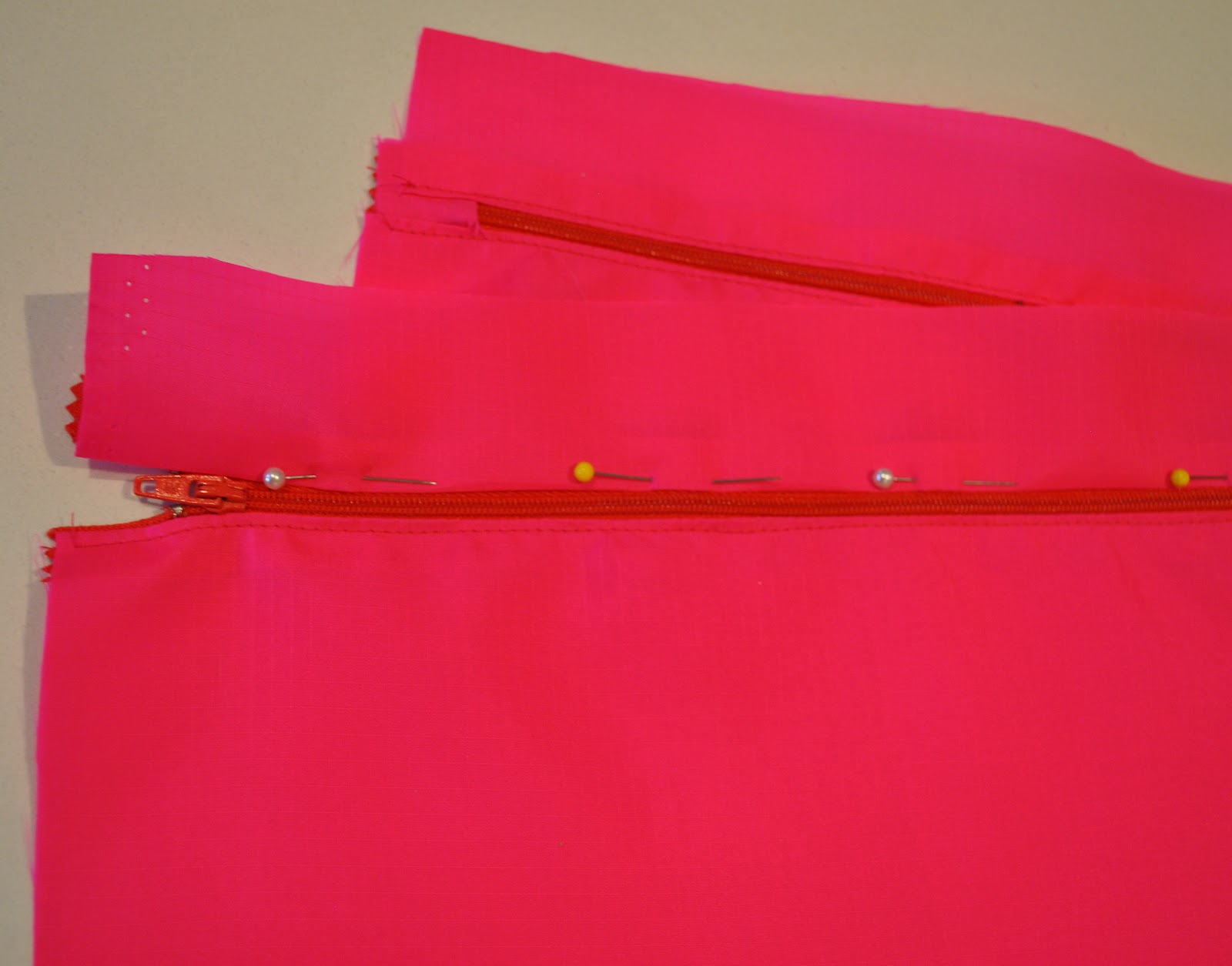
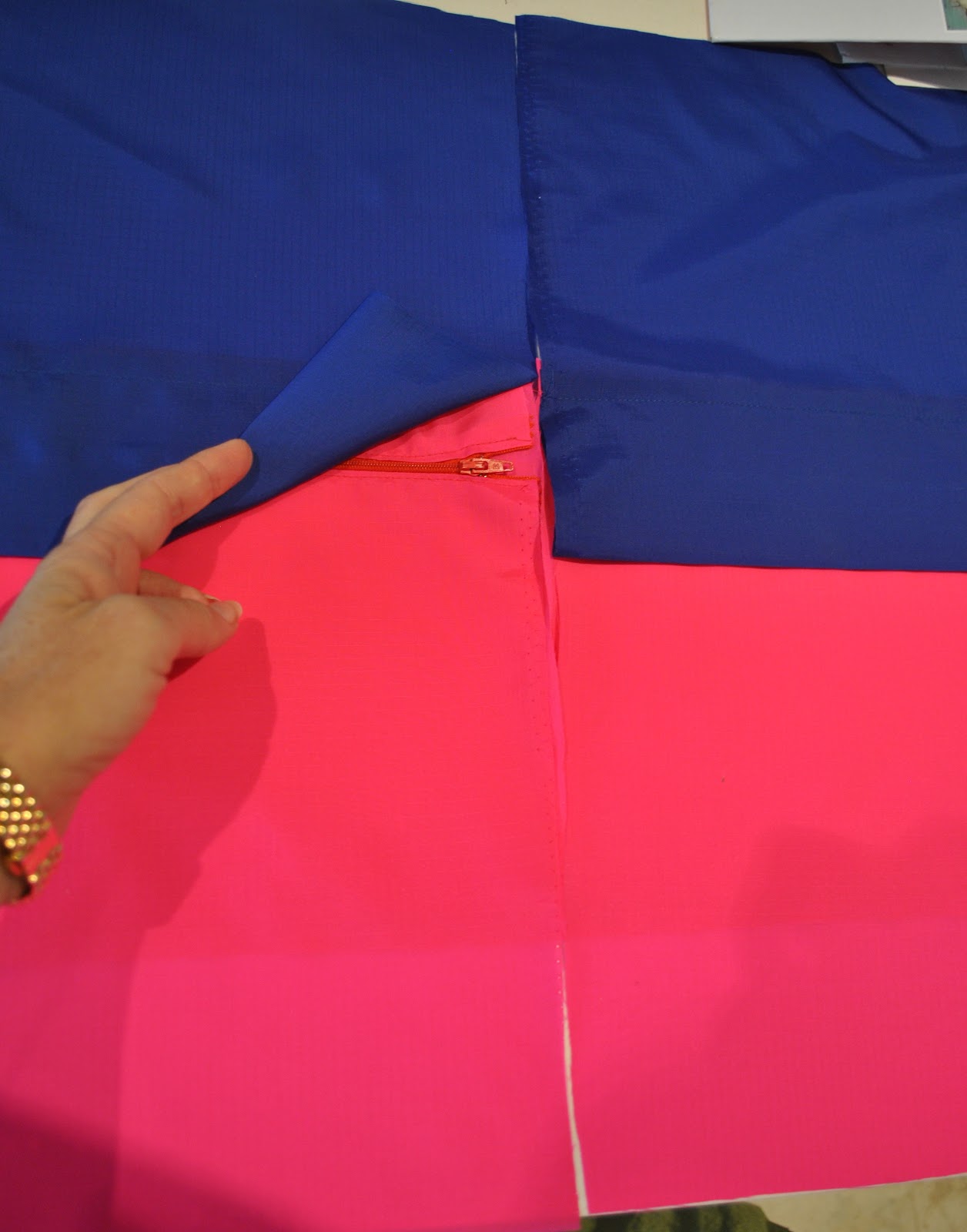
Now cut a full width piece to form the back lining of the pocket… these should be long enough to extend from the “top edge of the pocket lining” mark to the “lower edge of the pocket lining” mark.  Stitch the upper edge of this to the upper edge of the piece on the zip, and the lower edge to the lower shorter edge behind that long front piece, as pictured below…

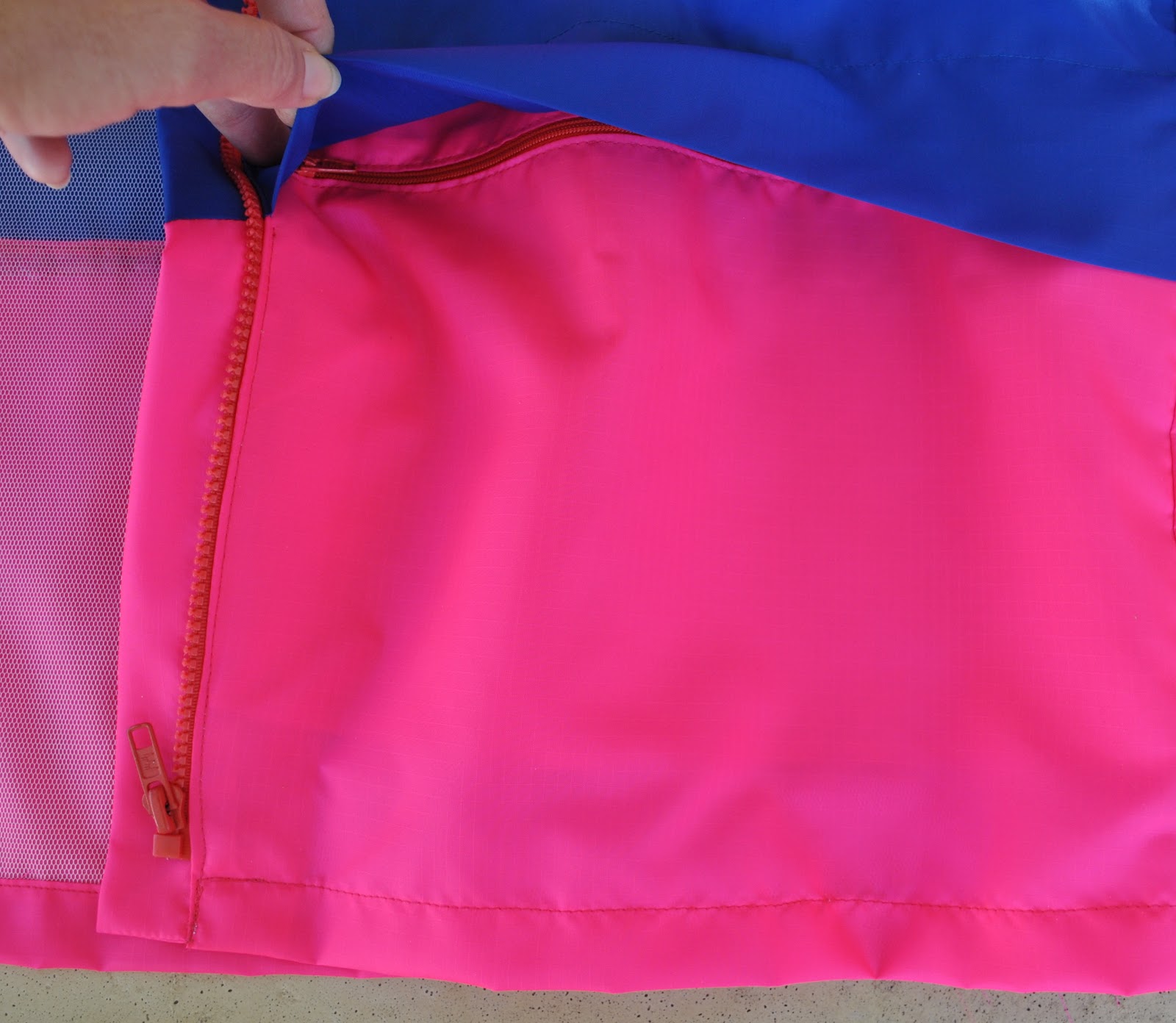
In the picture above, the lower edge of the left jacket front is folded back to reveal the pocket underneath, and the zip of the right pocket is partly open to reveal the pocket lining underneath.  it can be seen that the top edge of the pocket is still unstitched at this stage.
Now for the upper edge of the jacket front; cut a piece to be long enough to come down to the “foldline for top pocket flap” mark , and fold back at this point and extend back up to the “top edge of pocket lining” mark (which is the top edge of the pocket so far).   Press along the foldline.

Pin and topstitch along the “stitching line for flap”, catching also the upper two edges of the pocket underneath in the same line of stitching.  The below picture is a side view of the layers and folds in the pocket. 

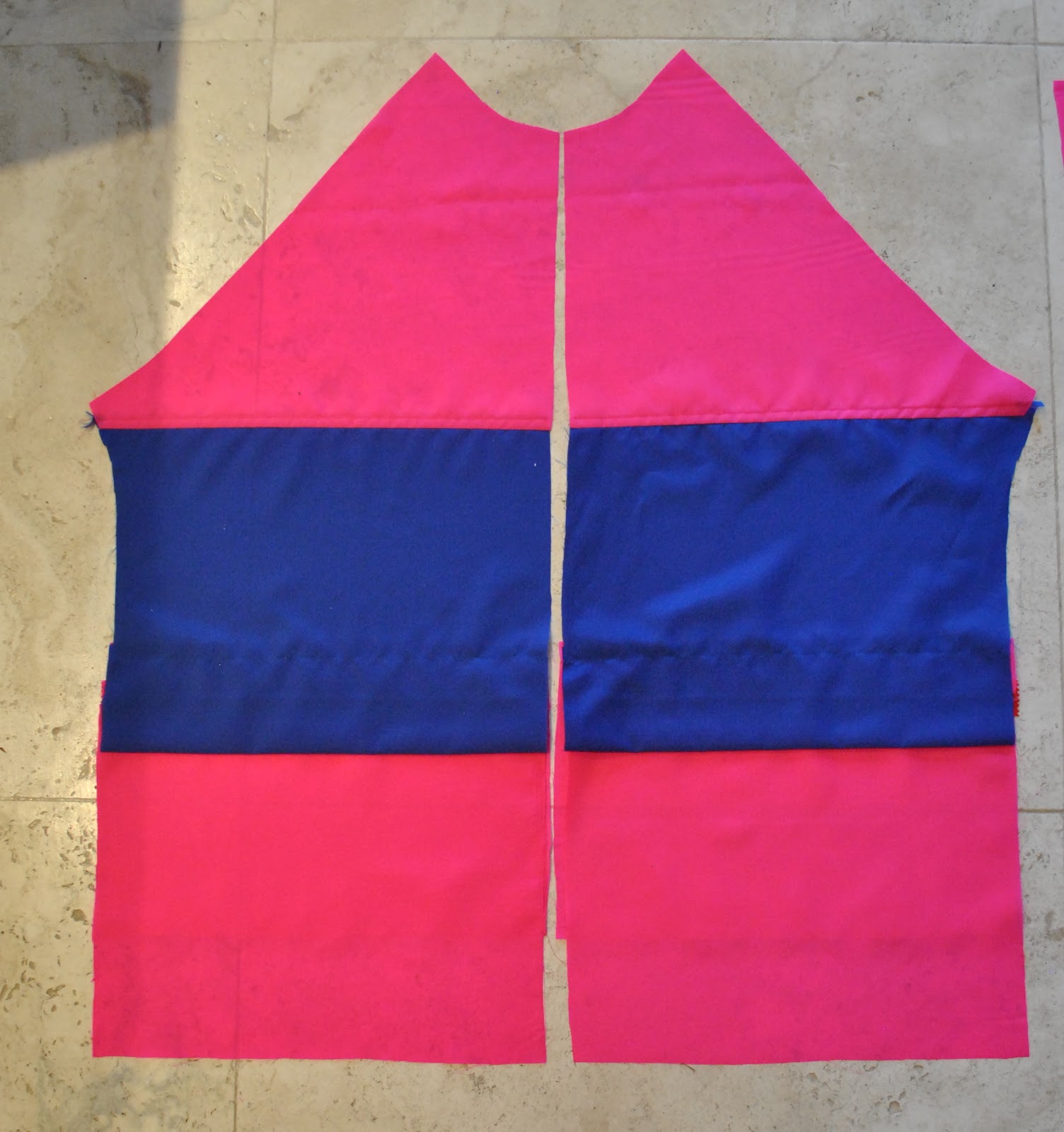
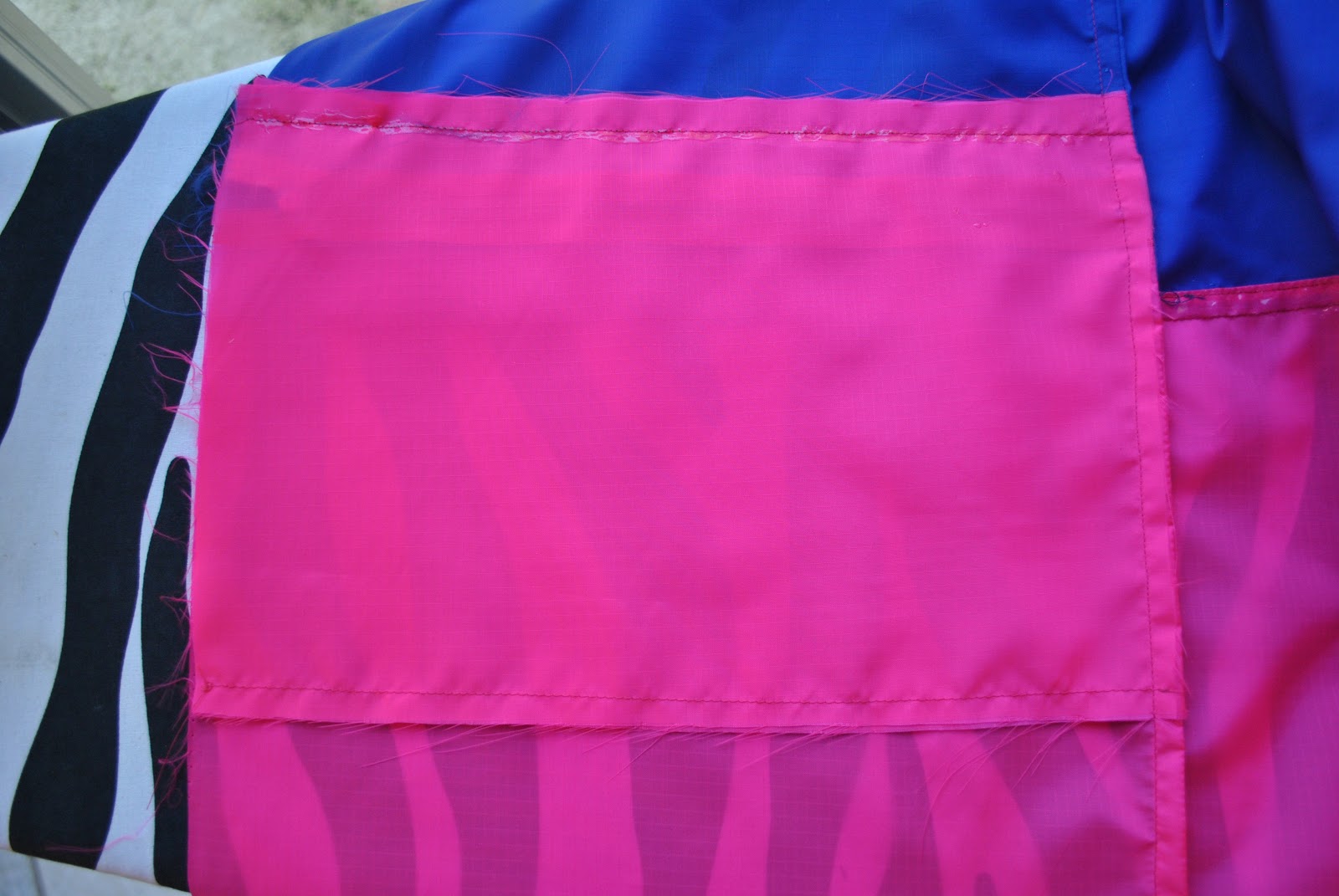
and below; a view of the completed fronts of the jacket.  It can be seen that the pocket flaps, and the pockets underneath, extend the full width of the jacket fronts…
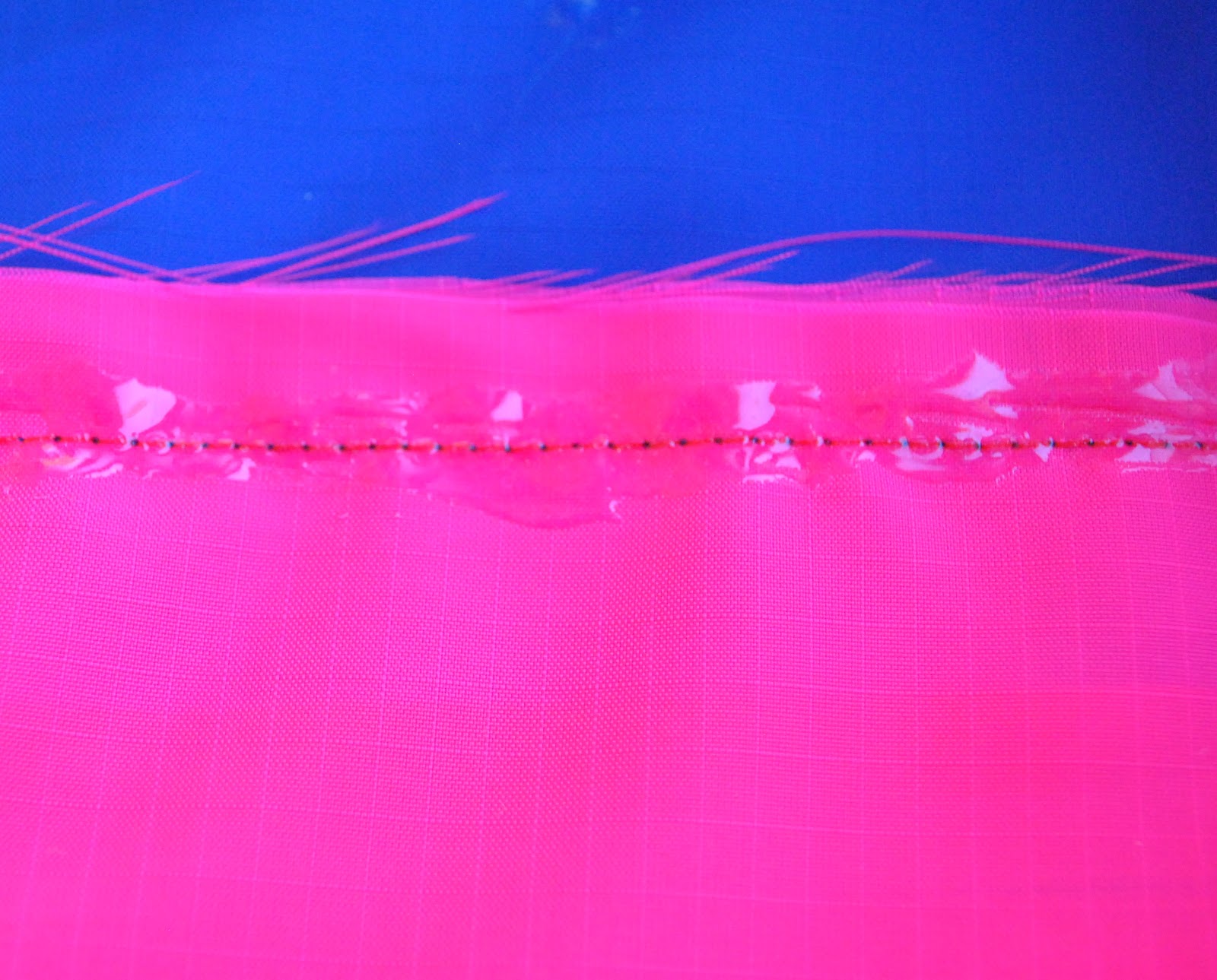
…and also that one single line of stitching appears on the right side of the jacket front.  Waterproof this seam by applying seam sealer along the back.  I used Seam Grip.  Let it cure completely.
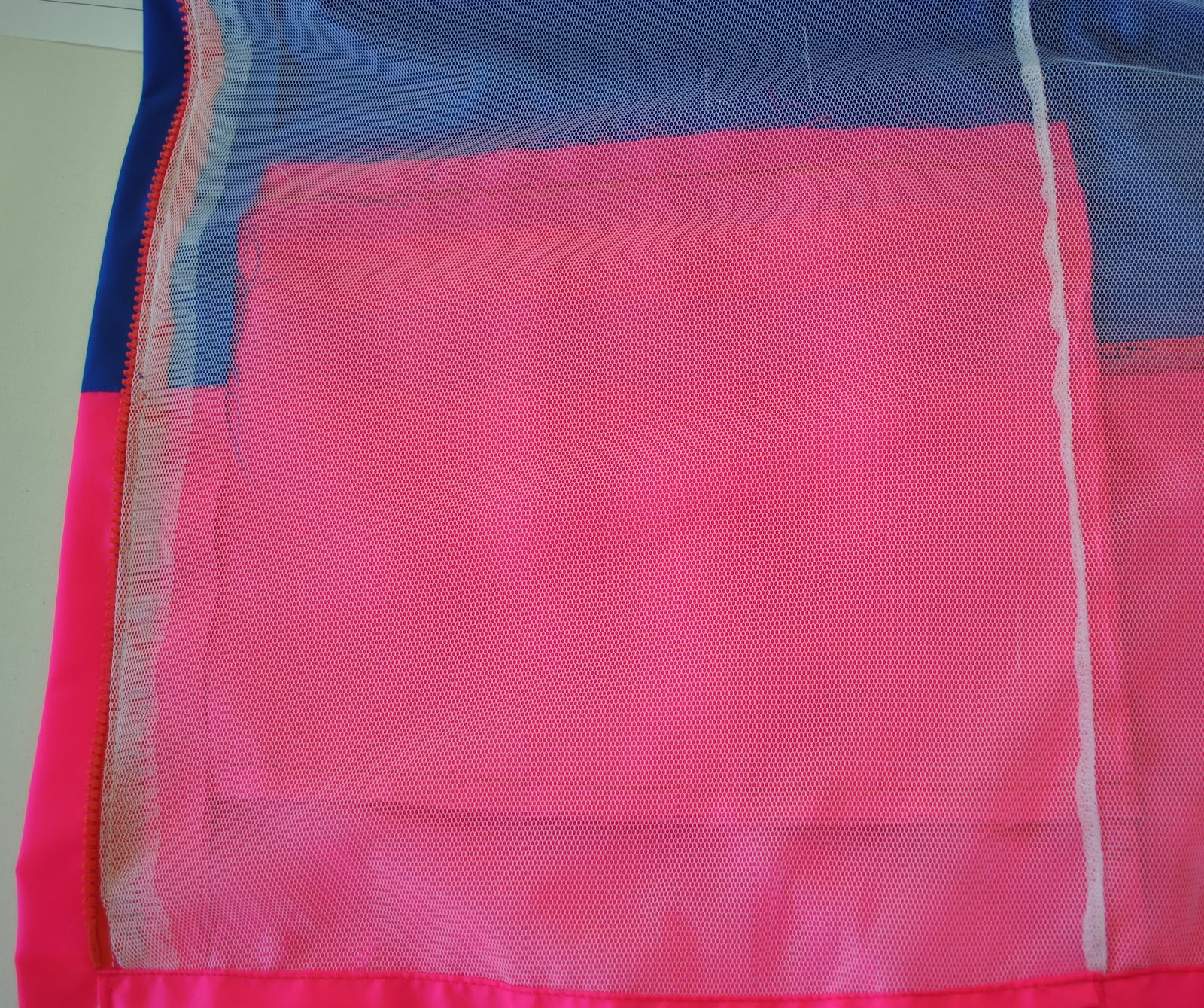
When sewing the side seams, include all the layers of the pocket inside the side seam allowances (at right in the photo below).  I sewed them as French seams, to improve waterproofing of the jacket, and also later applied  Seam Grip to the second stitching.
Keeping the other side edge  of the pocket aligned with the front centre edge, stitch the front placket, zip and lining together in one row of stitching.  Turn up, press and stitch the lower hem.
Ta da!  Waterproof pocket!
pinterestmail

French fly, or waist stay; a tutorial

Thank you for so much enthusiasm regarding my French fly!  I am very pleased with how it feels to wear, as well as how it turned out.  By the way, I googled French fly and came up with zilch, so either it goes by a different name in (real) tailoring circles or there really are no other online tutorials on this feature.  Could I be the first…?  (omigosh moment)
So anyway, here is the lowdown on my own version of fitting a French fly to a pair of shorts with a waistband.
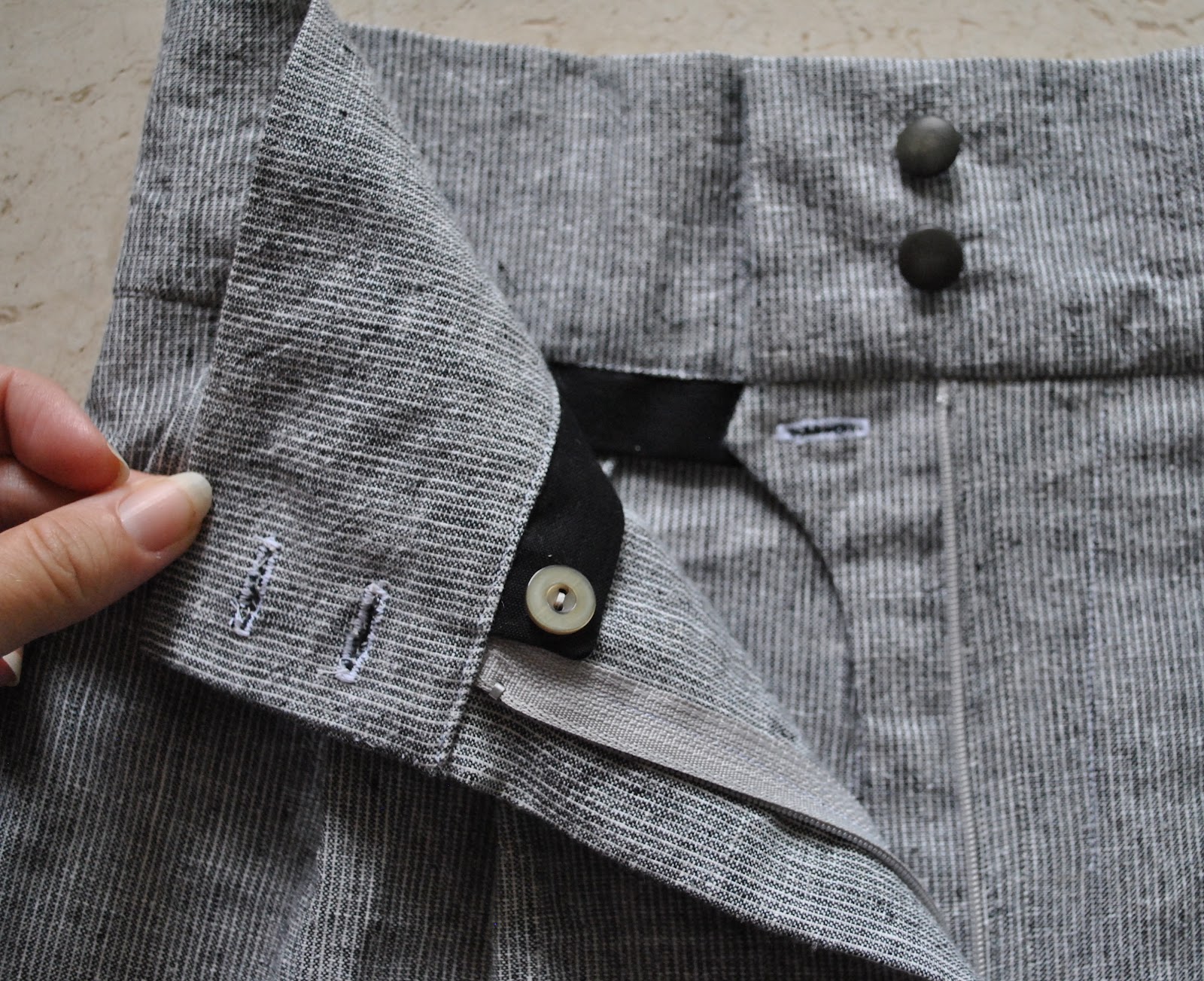
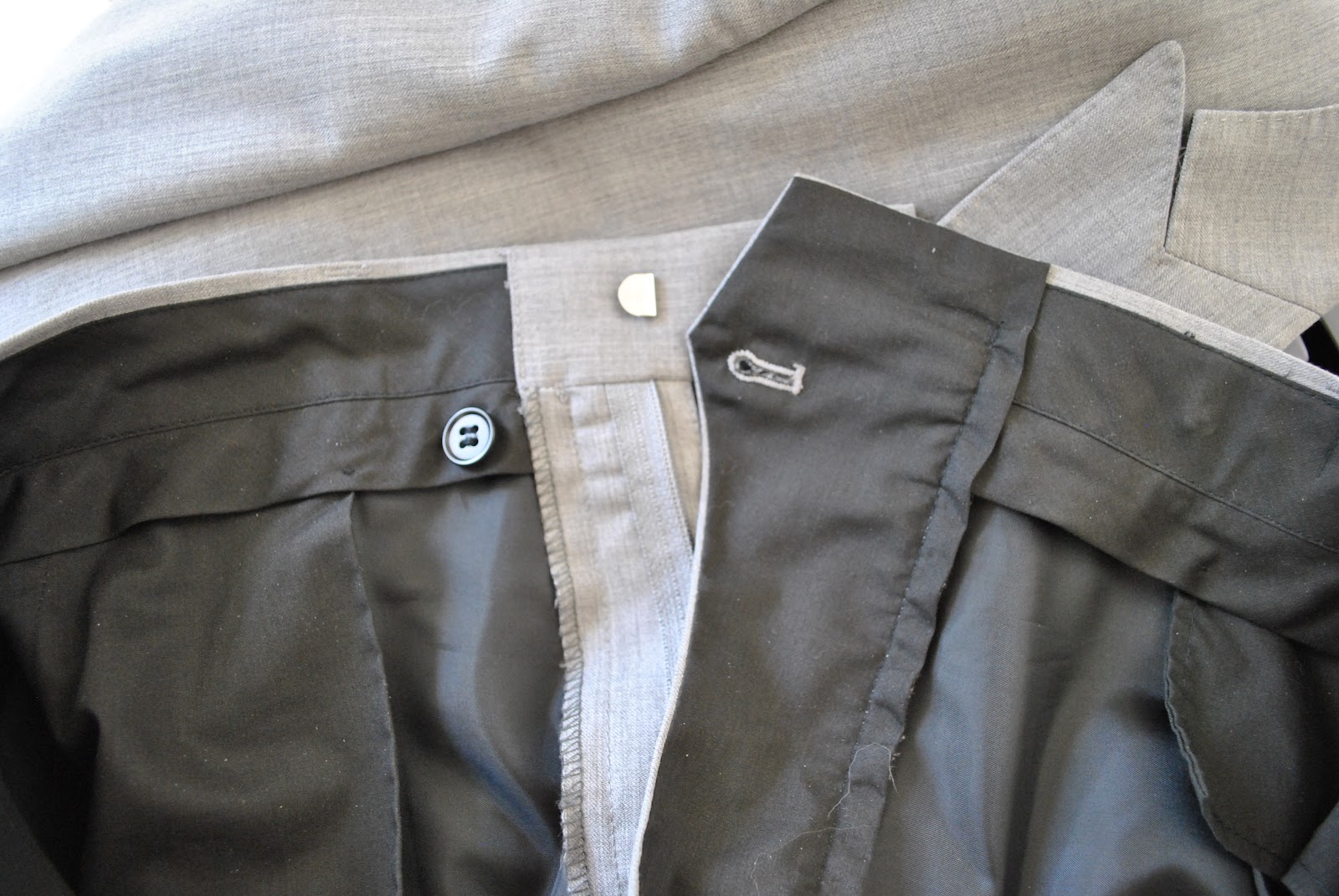
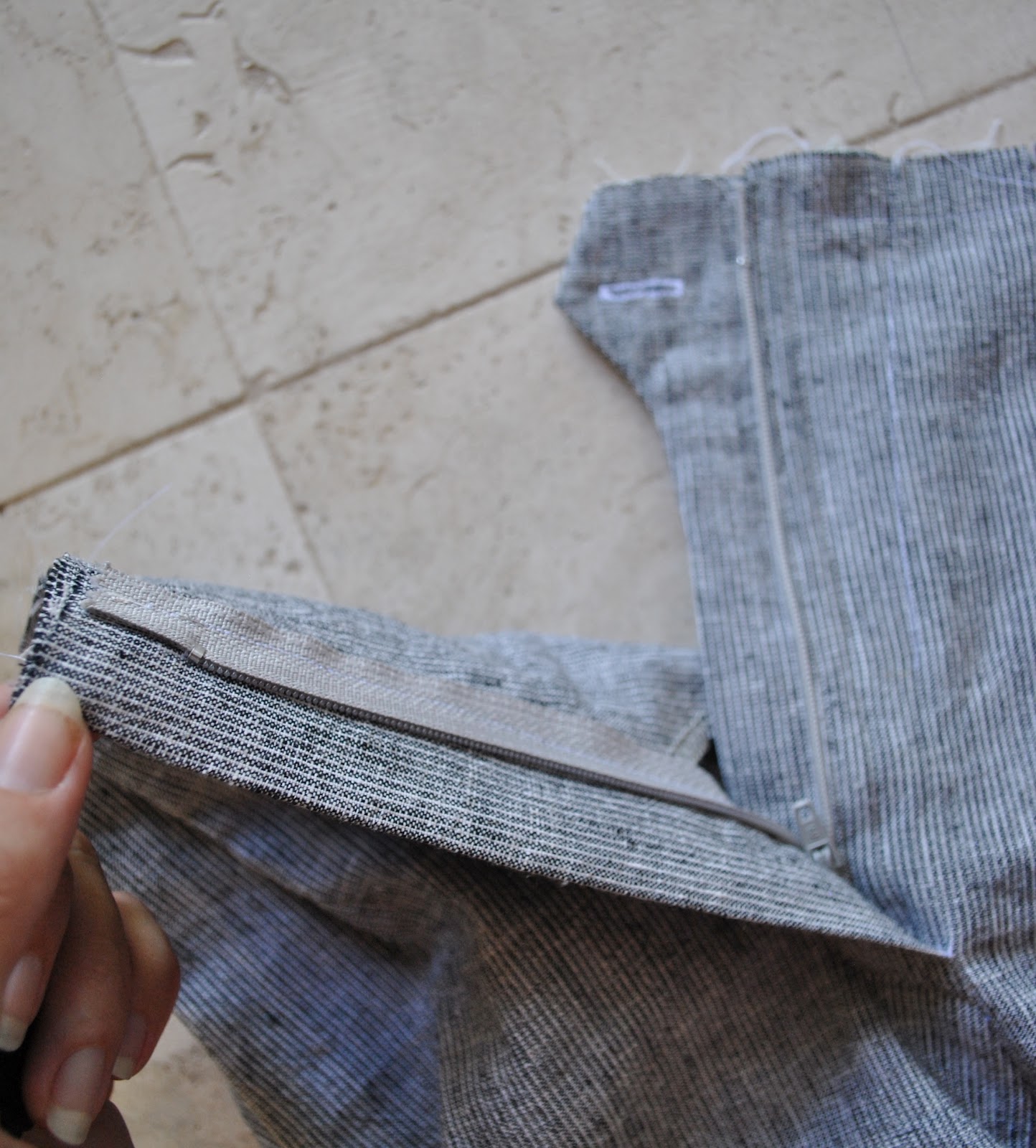
Firstly, I checked out the inner workings of my husband’s beautifully tailored suit trousers, and saw this…
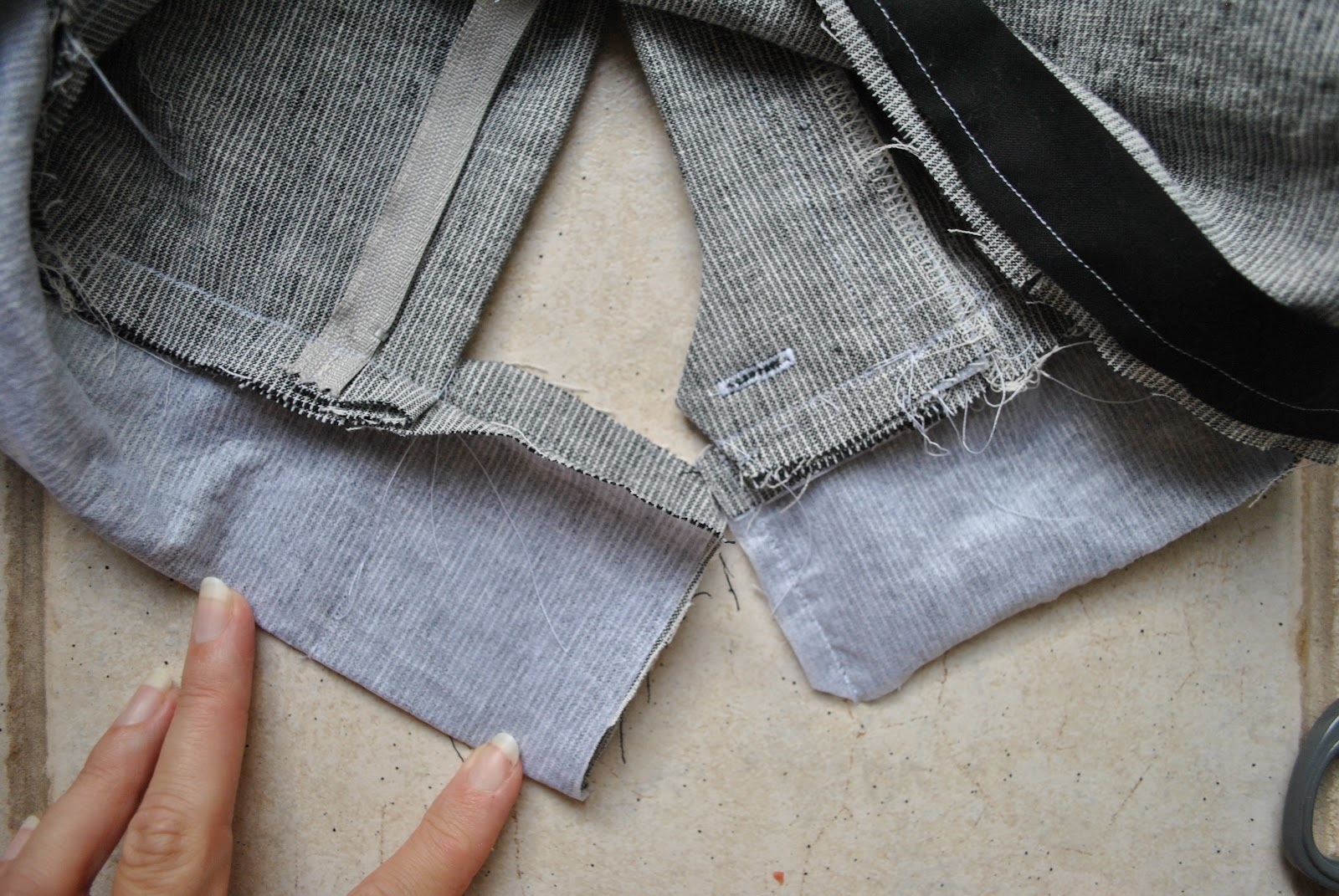
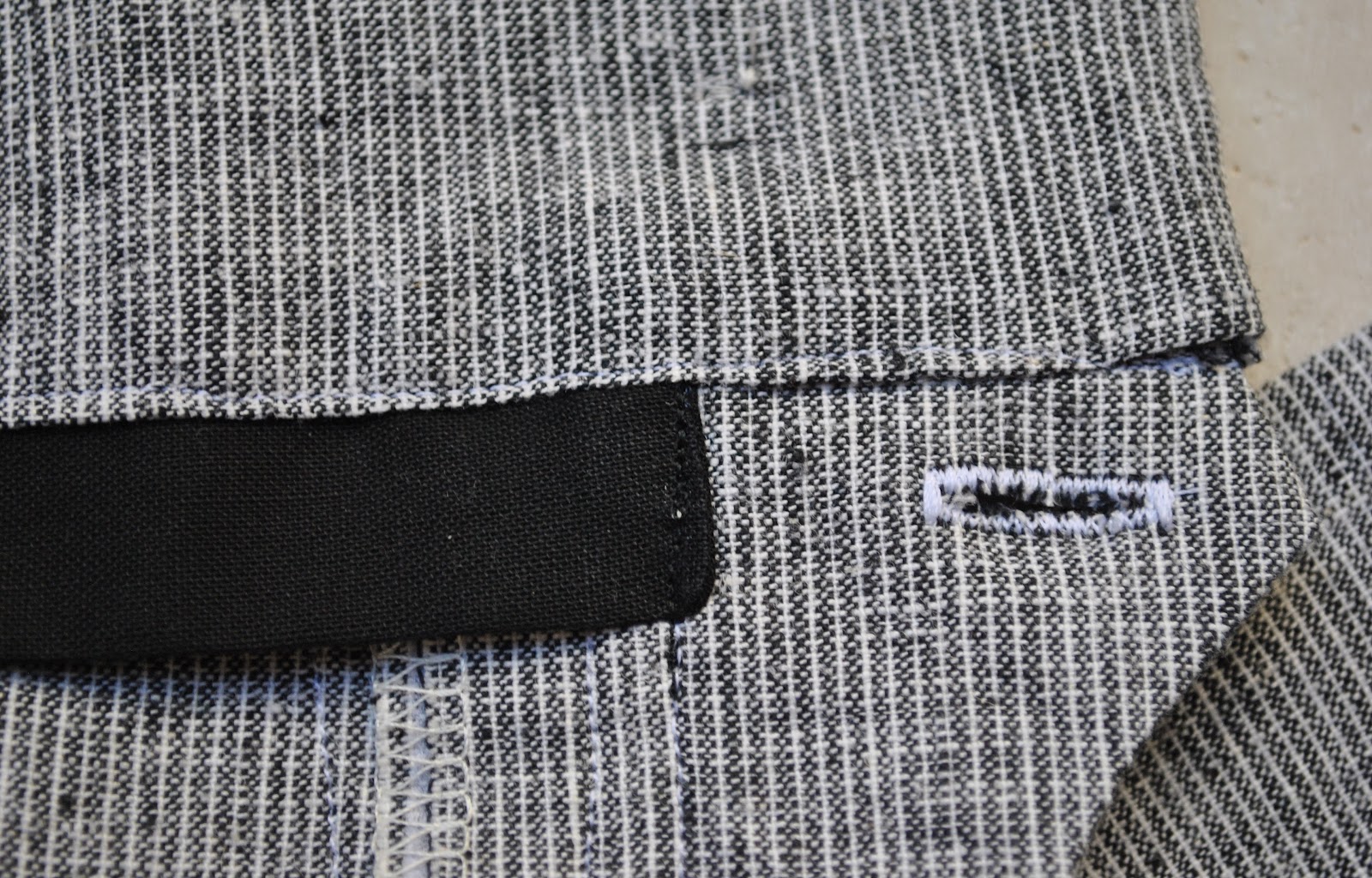
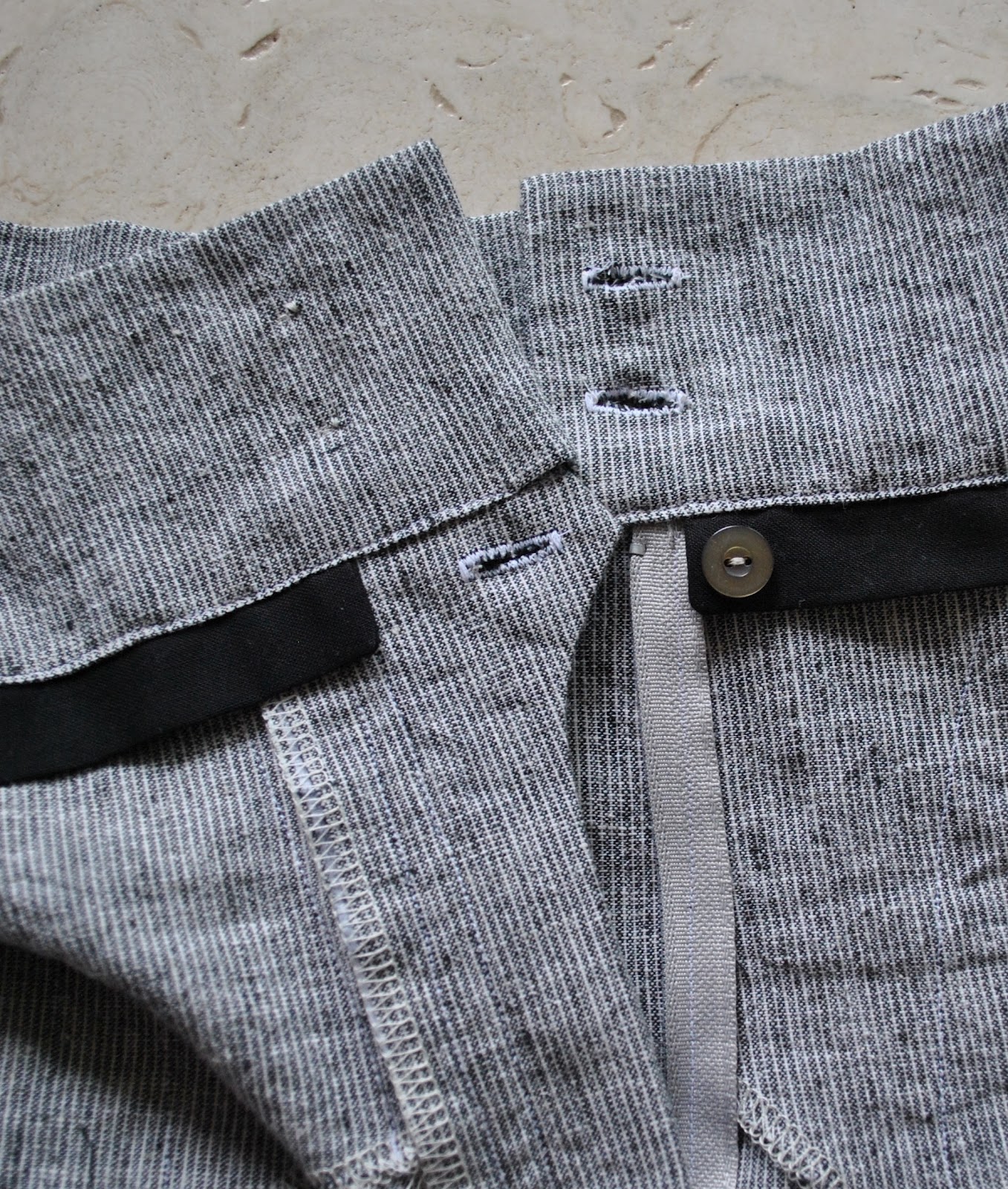
Basically, the inner button and buttonhole are situated on what is like an inside hidden “belt”, something akin to a waist stay that one would find in a strapless dress with a boned foundation.  The belt is secured underneath the waistband and zip plackets, goes all the way around the waist and the button closure is level with where the top of where the zip pull sits.

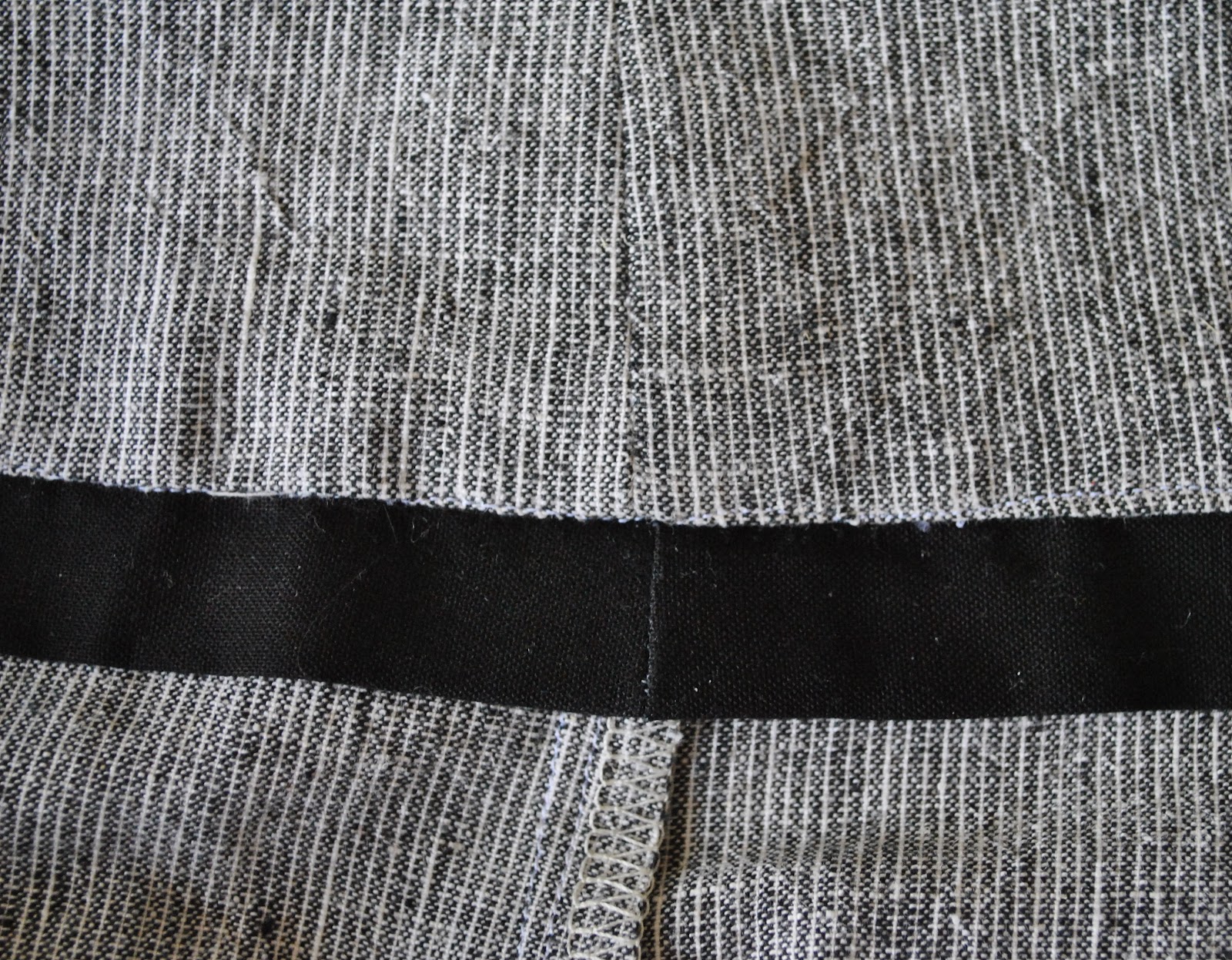
Below is pictured the centre back of the suit trousers, and this is one of my favourite features of mens’ trousers; how the centre back seam is all sewn in just one seam; back pieces, waistband, facings and waist stay, all together in one seam.  This means that any future adjustments for fit are very very easy, requiring just minor unpicking, re-sewing of just the one seam, and then either catch-stitching or stitching-in-the-ditch the waistband facing and waist stay again.  Incidentally, ever since I noticed this I have been using it on my own trouser and jeans waistband (and blogged about it in more details here); mostly because it does make for a massively easier fitting.

But on with my own experiments, French-fly-wise…
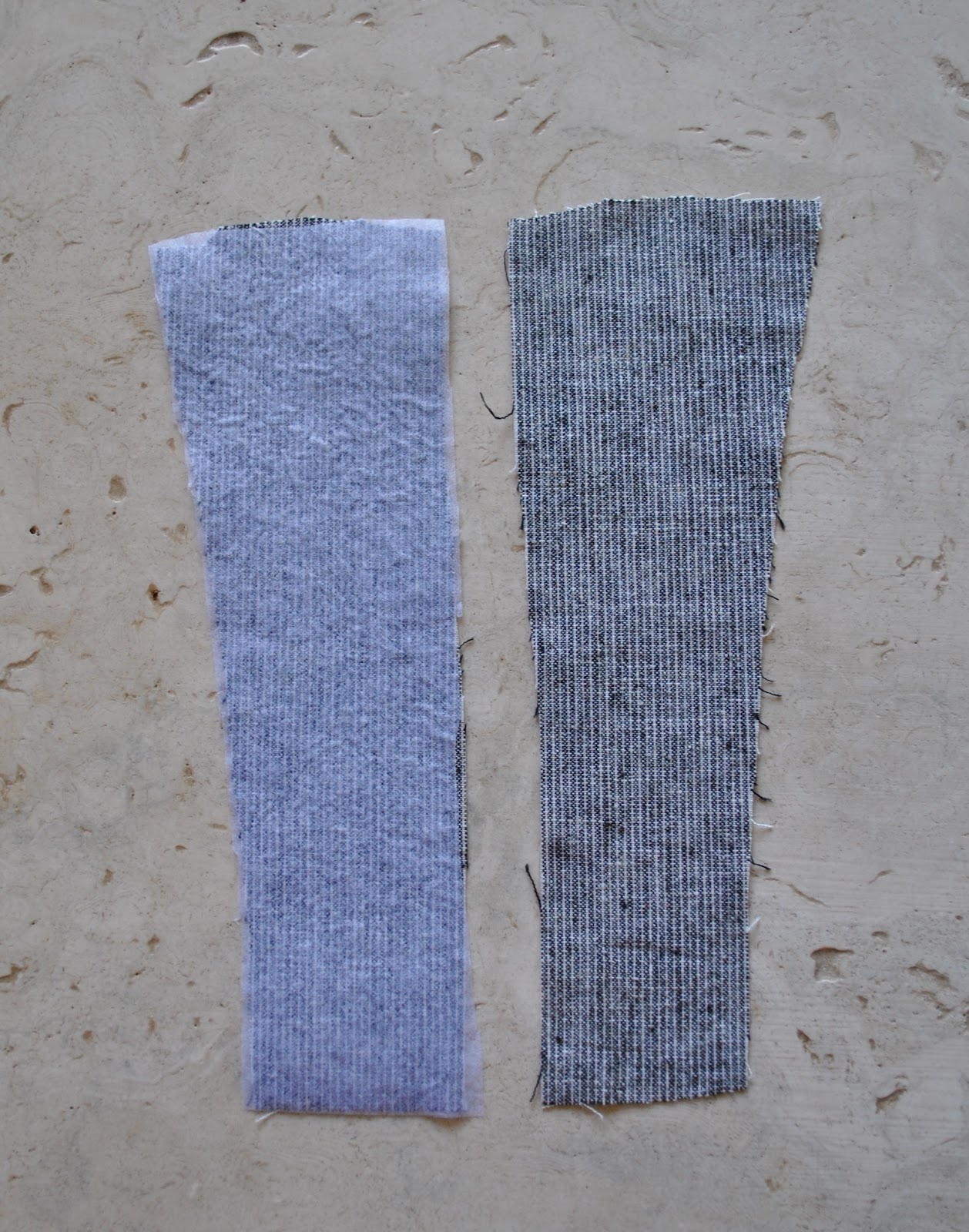
I cut out two pieces for the zip placket, applied iron-on interfacing to one.

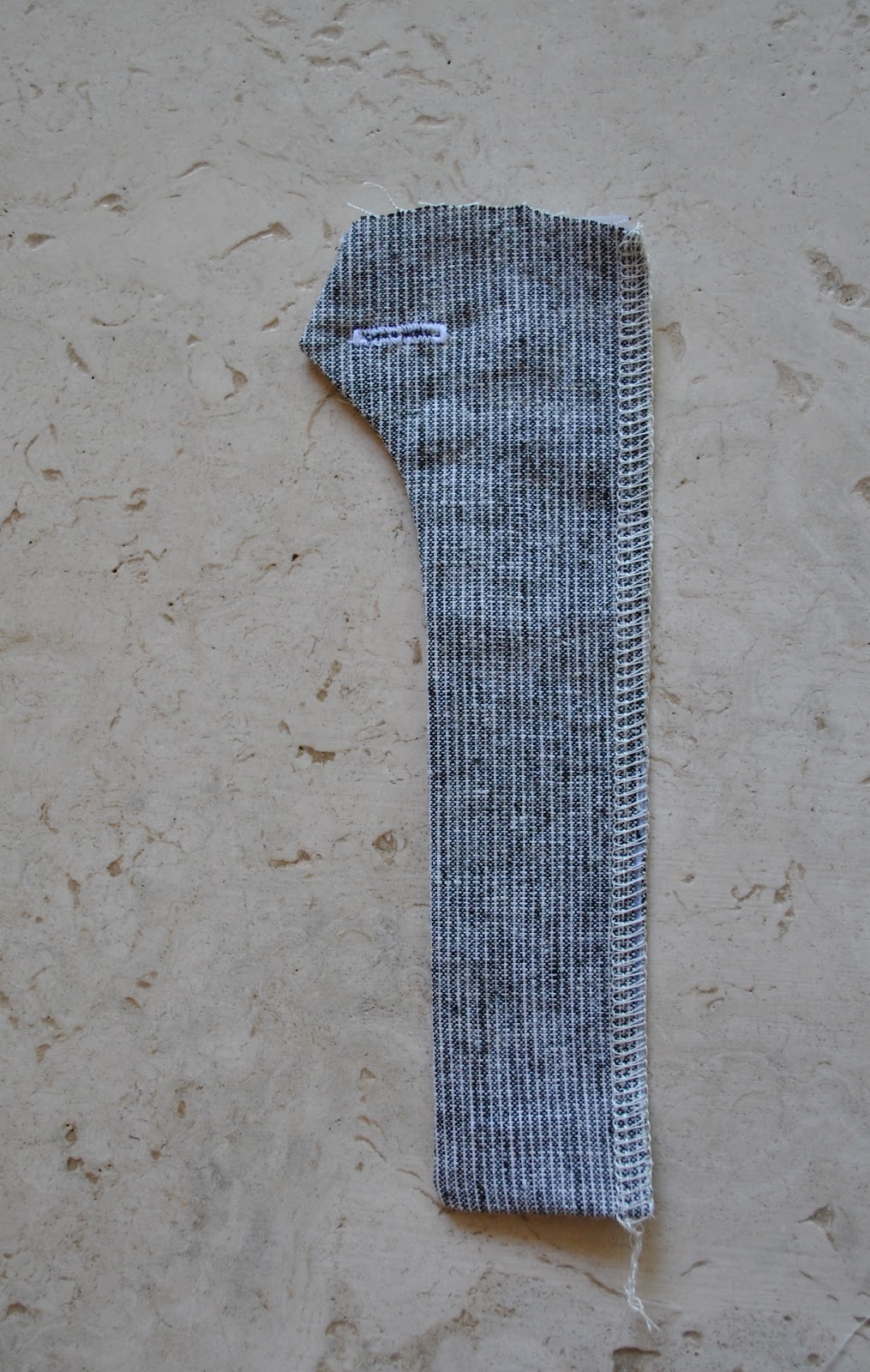
Measure the length of the zip and sewed the placket pieces together to be the correct length to fit my zip, just like a regular zip placket.  The difference is shaping the placket with the “nose”.  The point of the nose has to be at the same level to where the zip pull sits when it is closed.  Turn out the placket, finish the long raw edges together, and put in a buttonhole of a size to suit your chosen button.

Insert the zip placket and the zip, just like you would for a regular zip placket.

Attach the interfaced half of the waistband to the top edge of the garment, just as usual.

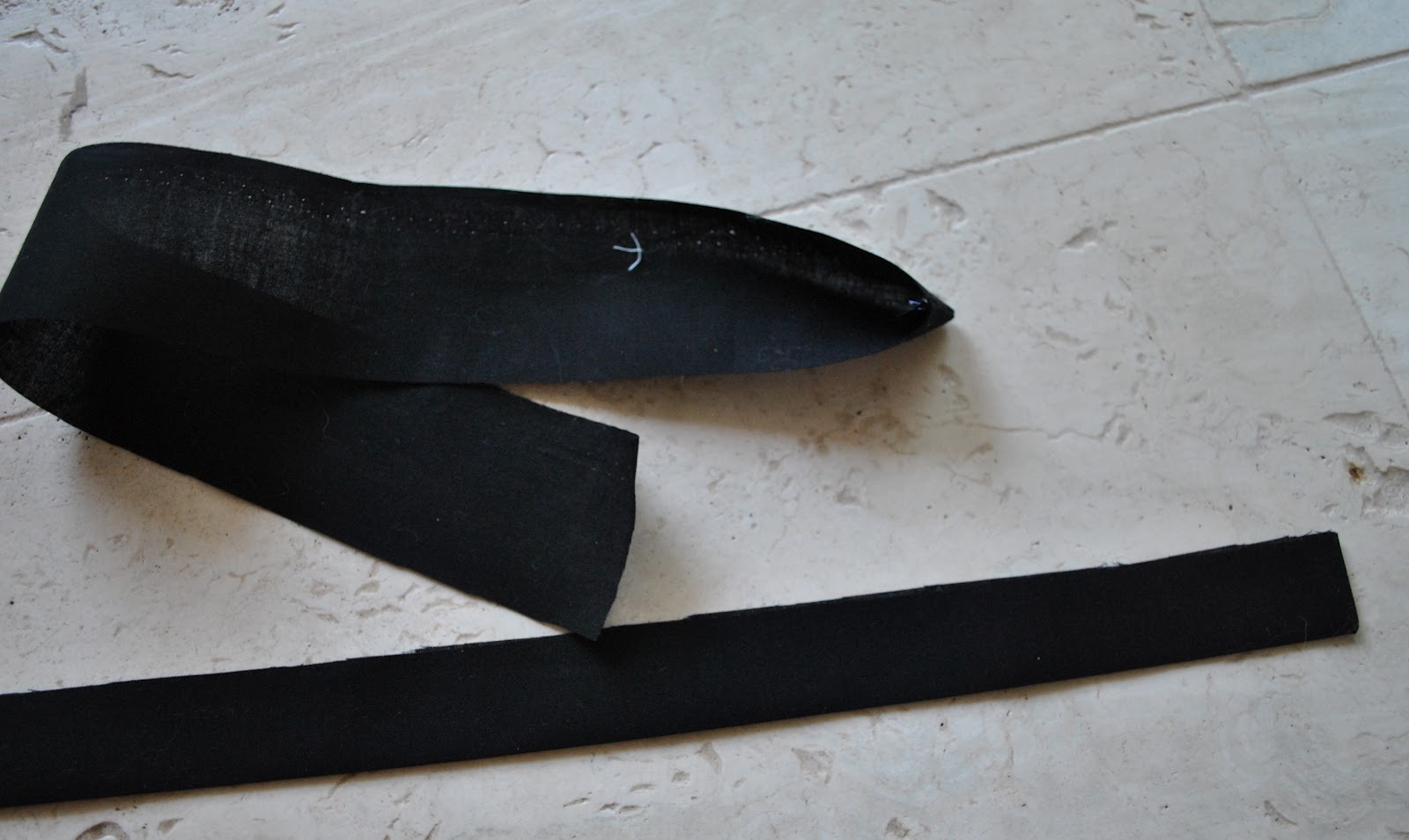
Cut two long pieces of sturdy woven fabric on the grain lengthwise to be the hidden “belt” or waist stay (I’m just going to go with “belt” from now on, OK?)  I used some rather nasty, densely woven, very tough black quilting cotton that I bought from Spotlight yonks ago, unusable for any real garment but that has been wonderful for all sorts of pocket lining, HongKong seaming, waistband facing, and a whole host of other hidden purposes.  I cut my two pieces to be plenty long enough to go around half my waist, plus extra, and the width should be double your desired finished belt width plus double seam allowances.
Fold both pieces in half lengthwise right sides together, sew together one of the short ends, turn right side out and press.  Press the whole length in half lengthwise.

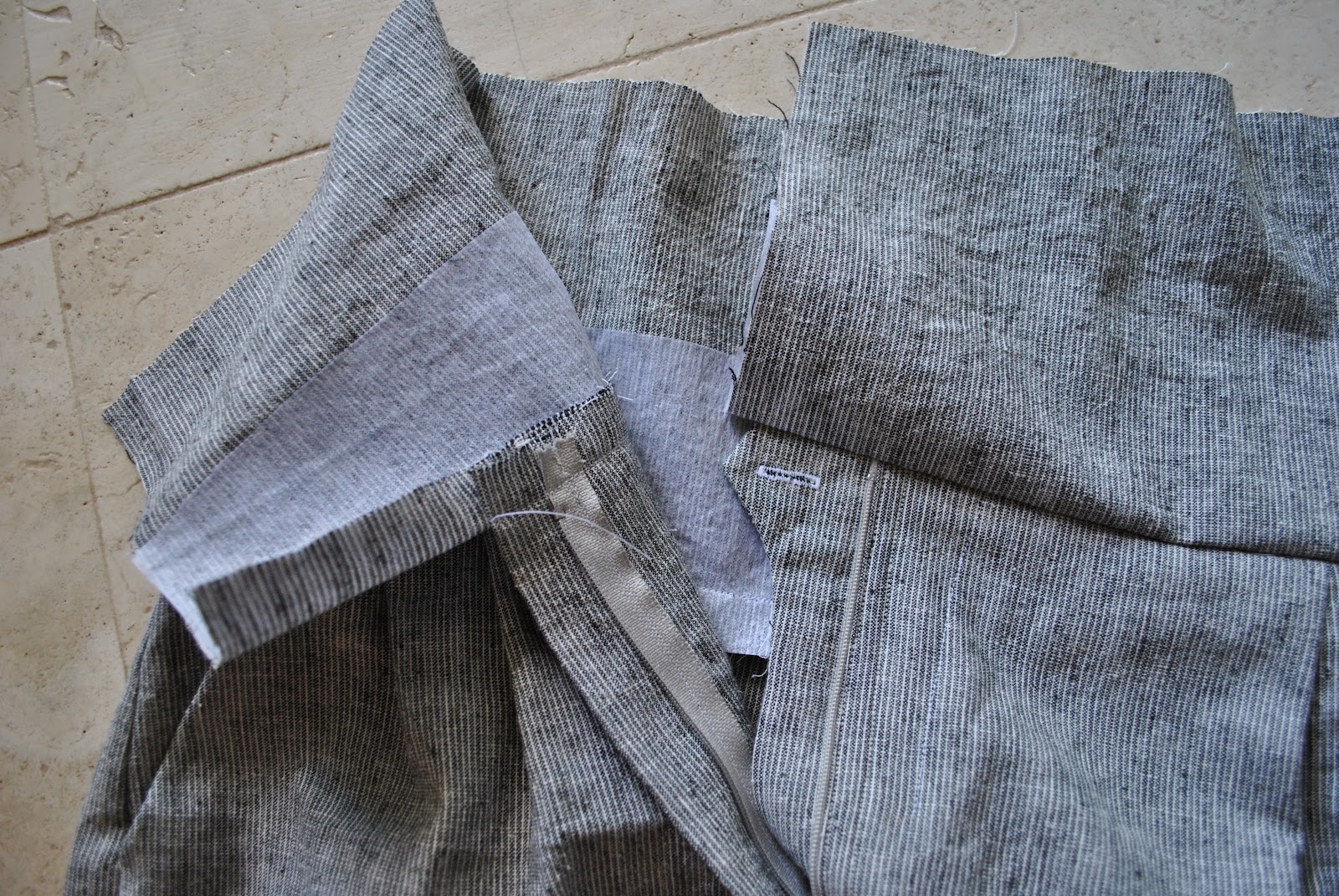
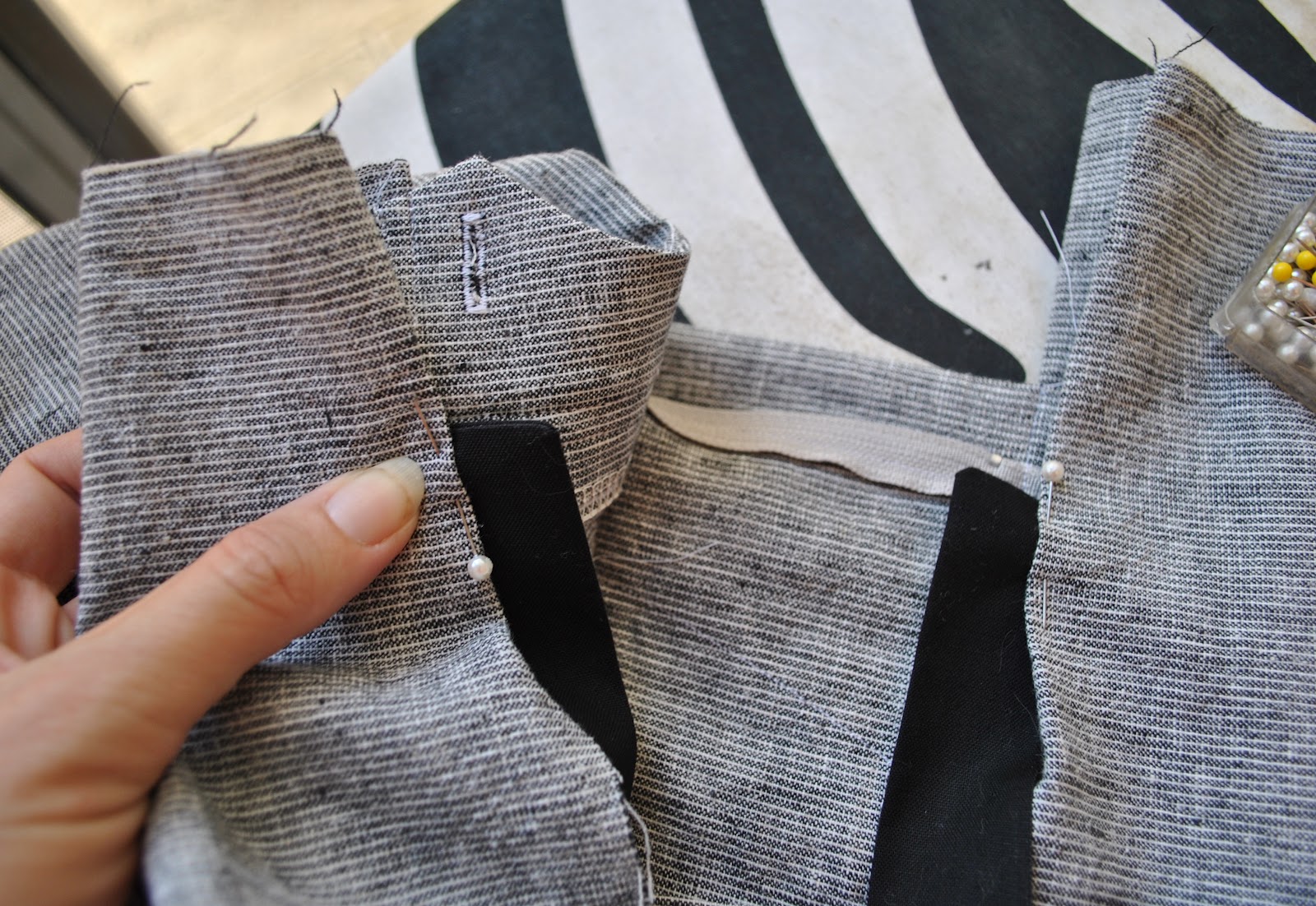
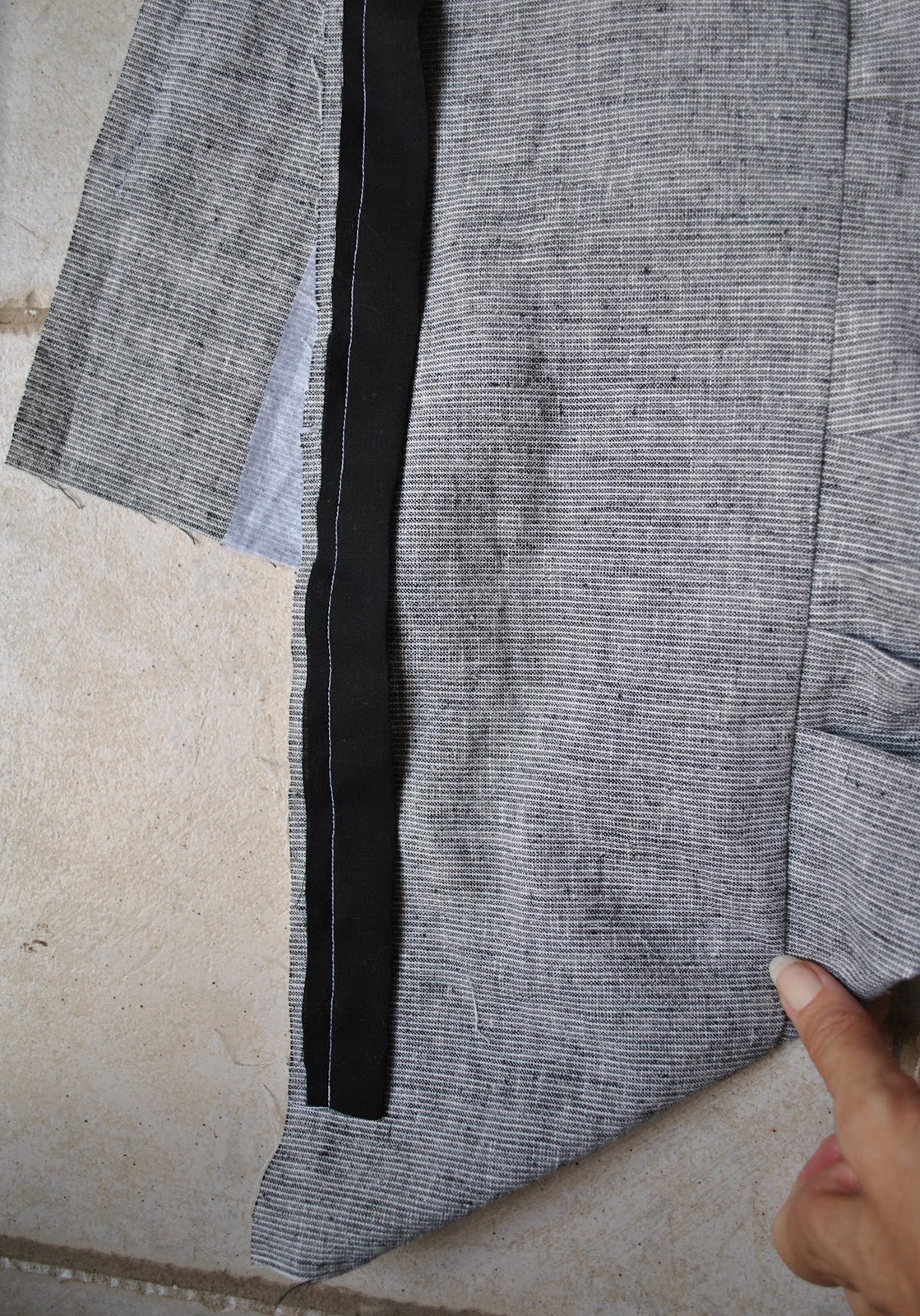
Now turn in the waistband facing and hold in place to situate each belt in its right spot…  each with the stitched closed bit at the front and the long folded edge down.  The left front should be situated just over the stitching line of the placket, and the right front to halfway over the zip tape.  Pin to mark their placement on the facing.

By the way, if you planned ahead, you could have the left front of the waist stay/belt inside the zip placket and stitched down inside it along with the zip placket/zip seam.  Because I was still working it all out and trying to think each step through as I was going along, I did not manage to do this for this one (hey, it’s my first) but I would definitely try it for next time.  It would take a bit more fiddling, but I think it could be done.
Stitch the belts to the waistband facing, keeping the front edges of the belts in exactly the position you had pinned previously.  Stitch all the way along to about 5cm away from the centre back seam, to allow for final fitting of the waistband.

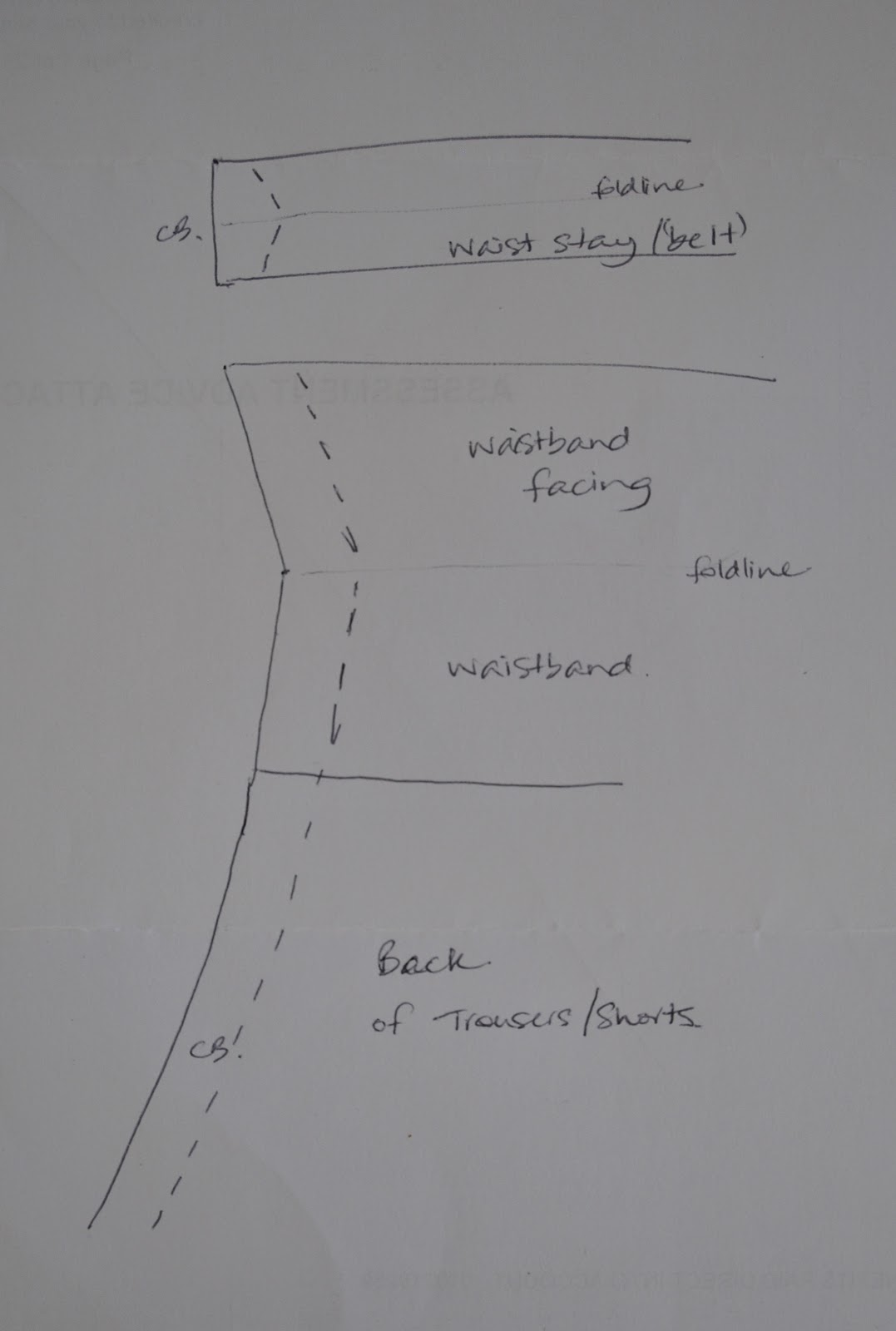
Do the final waistband fitting and stitch up the waistband centre back.  Once this is done, measure the belt to fit, and sew the two together at the centre back seam.  If you are like me and always stitch a slanted centre back seam to fit a sway back, then you will have to stitch the facings and the belt pieces together on the diagonal to match.  Below is a very rough and somewhat exaggerated diagram to illustrate what I mean (obviously, the angles should all match), that centre back seam is sewn in a symmetrical arrowhead with the point at the central foldline.  I left out the waistband facing and belt seam allowances for ease of drawing, but they should be sewn with their own little opposing diagonals as well….  This is necessary to get them to sit nice and flat when they are all folded and tucked in place.  Once stitched together at the centre back, fold the centre back of the belt in half lengthwise and press, and stitch the remainder into place on the waistband facing.

Fold the waistband facing in right sides together and stitch the front edges, just as you would for a regular waistband.  Trim corners and turn the waistband right sides out.

Fold in and under the waistband facing seam allowance, and the belt seam allowance, and pin in place. Baste and stitch in the ditch all the way around to finish the waistband.

To complete securing the belt; stitch the left front down firmly, stitching along the same stitching as the placket/zip stitching.  Like I mentioned above, if you had inserted and secured this end within the placket this would not be necessary.  But when done like this, this stitching is essential.

Finally, try on the trousers/shorts to determine the placement of the belt button, and stitch it on securely.  It should be situated so that the front fly flap and zip sit closed and perfectly relaxed.  There should be no strain on the zip (which would mean the belt is too loose)  and no squeezing together at the top of the zip (which would mean the belt is too tight)

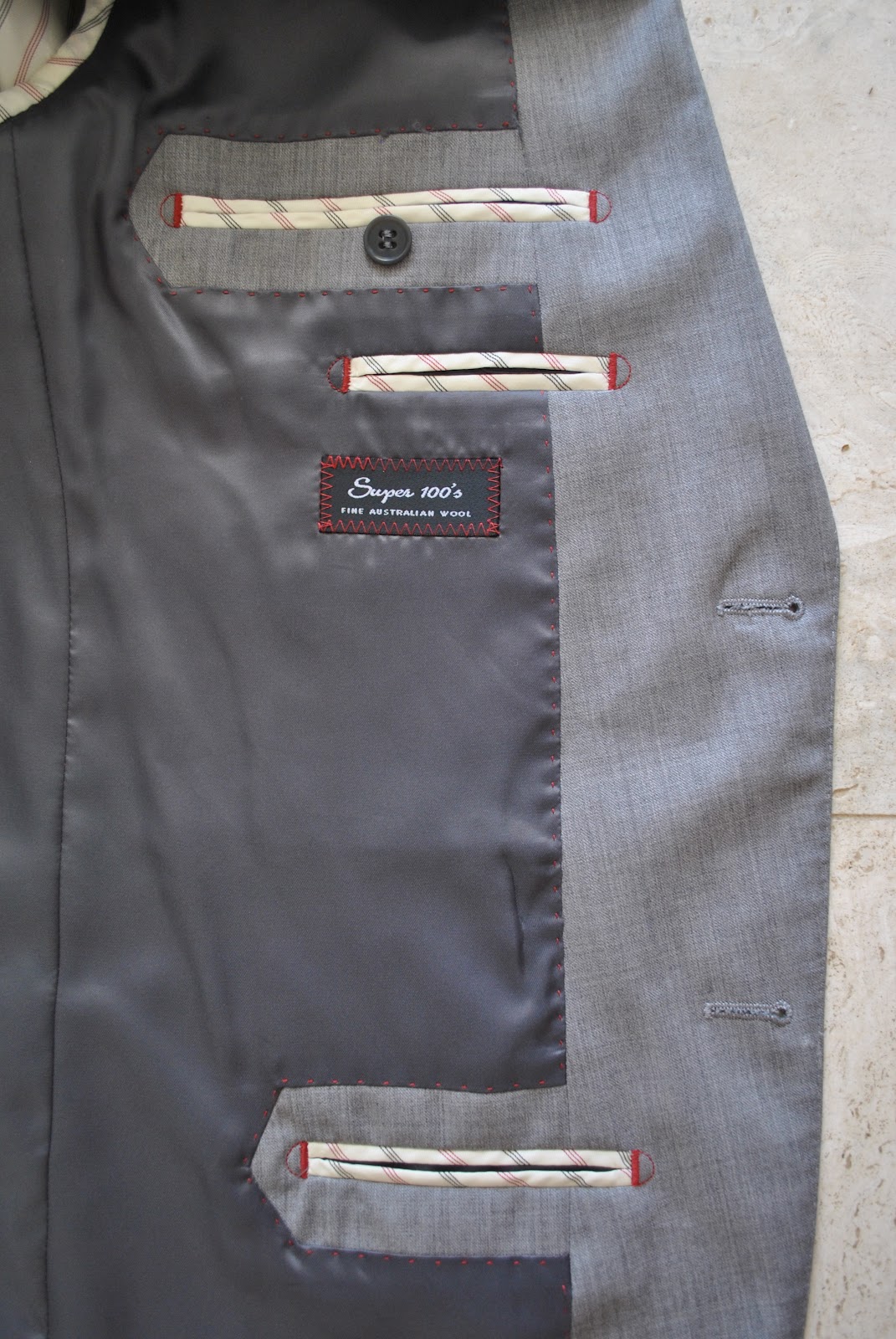
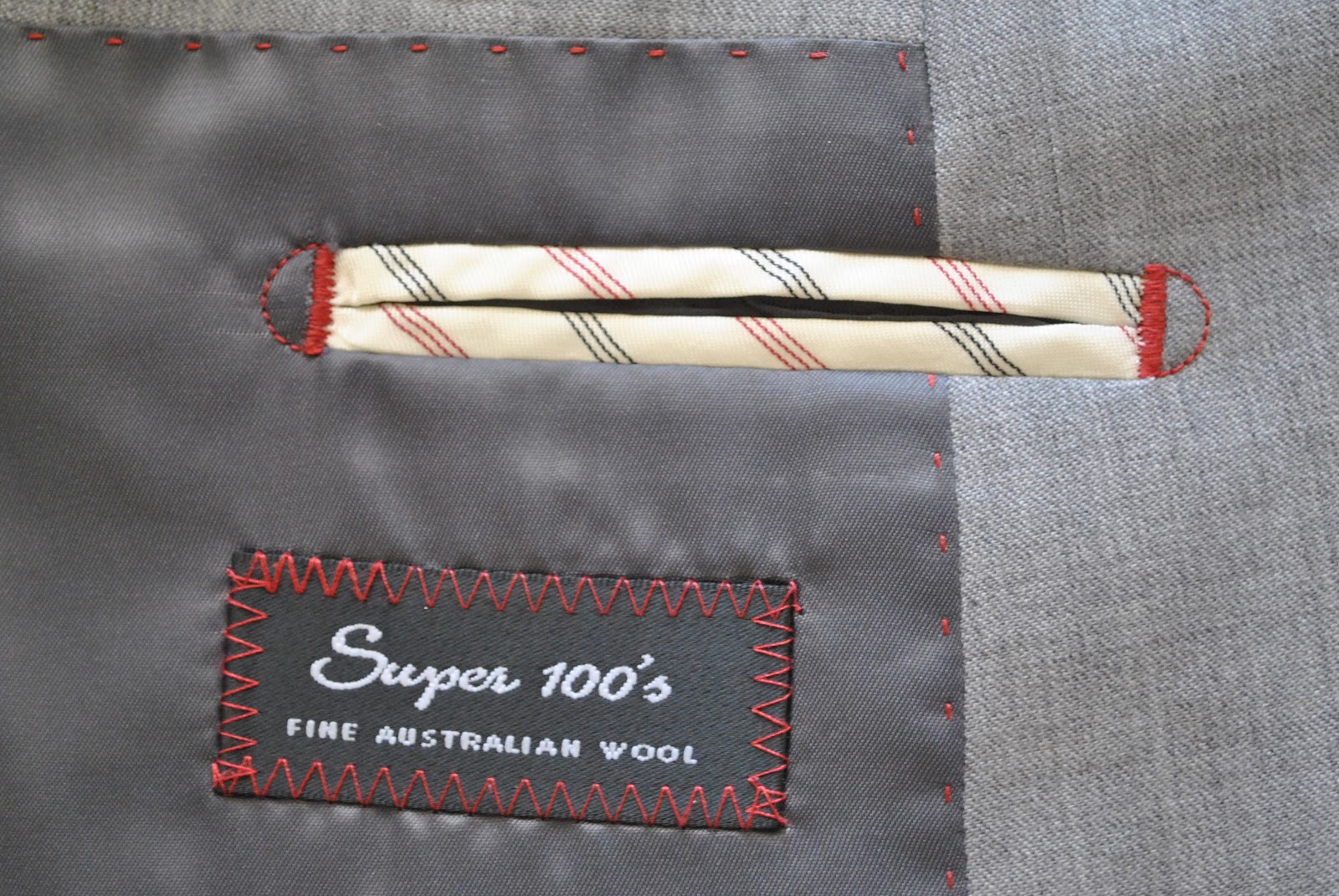
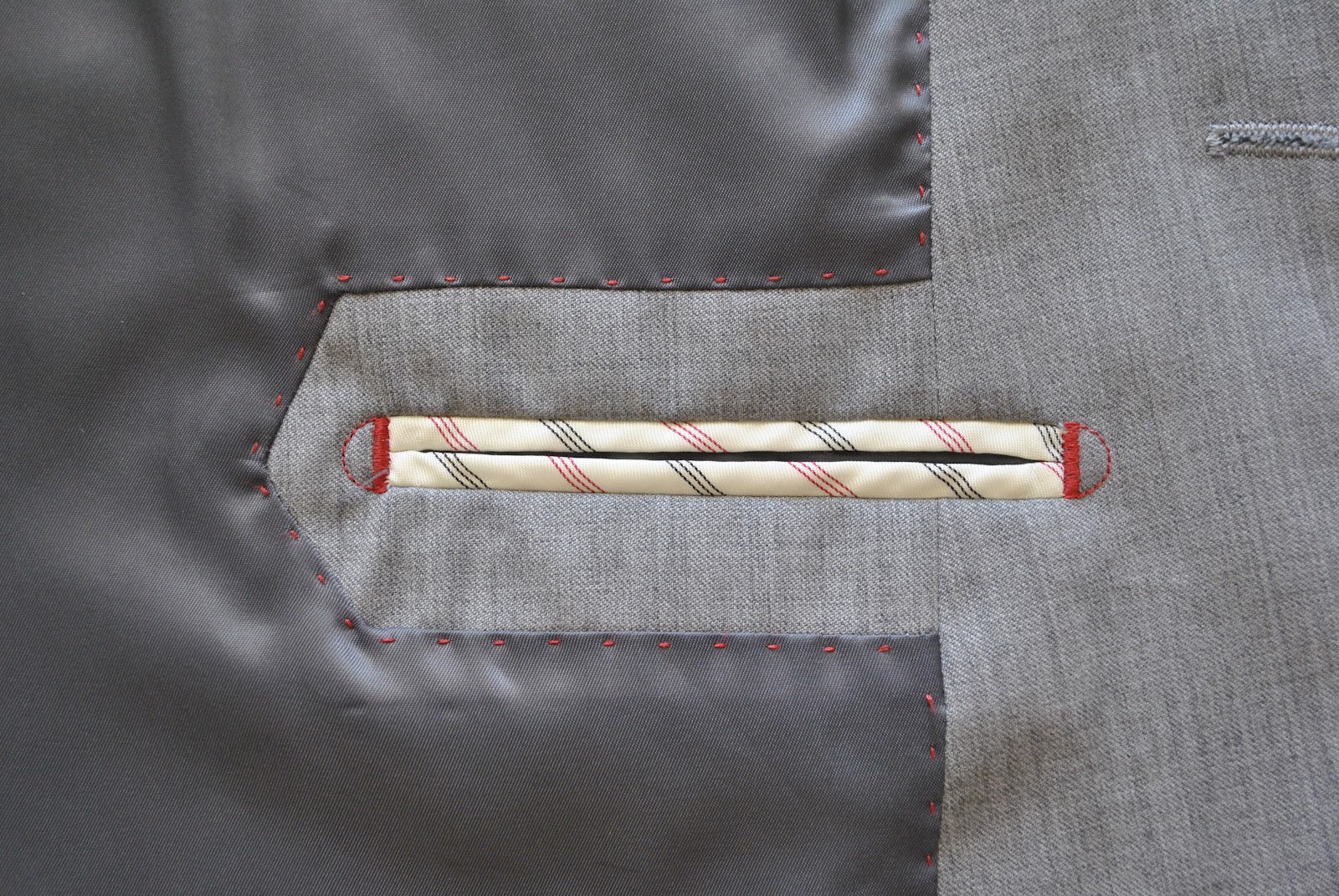
By the way, and on a completely incidental note; d’ya wanna see something utterly beautiful?  The inside of my husband’s suit jacket…
These are three fully functional pockets.  I think I would die a happy woman if I ever managed to produce something even half this precise and immaculately perfect.
pinterestmail

More finishing details for jersey knits

In making my grey striped jersey dress here, I opted to re-inforce the shoulder seams.  I do not re-inforce the shoulder seams in all my knit garments, but in this case; a long tank dress in a stretchy fabric, where the weight of an entire dress is hanging off those two meagre teensy little shoulder seams, then it is a very good idea to build in a little extra strength in this vulnerable area.
And this is how:
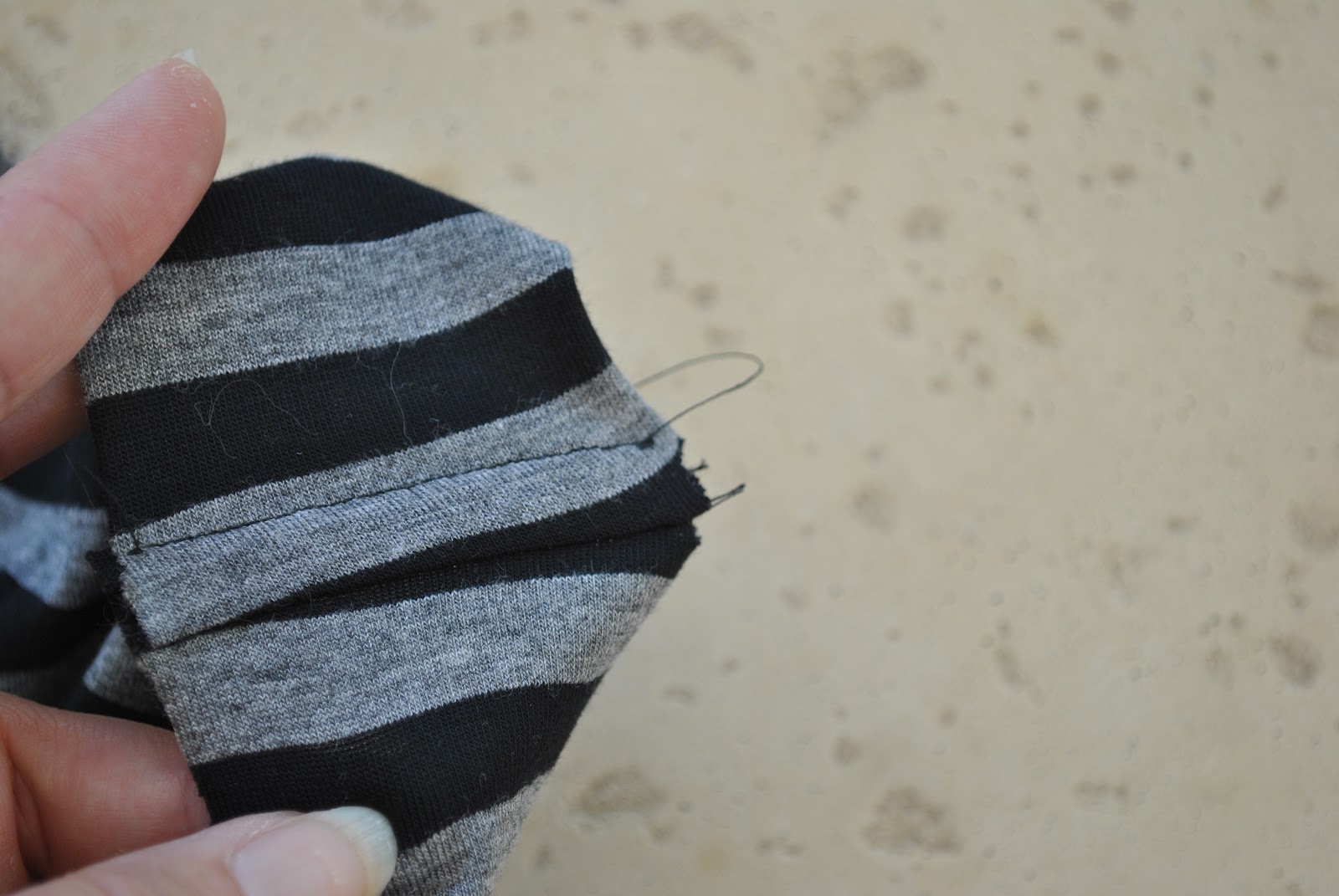
Sew the shoulder seams, and then overlock the raw edges (optional, since you won’t see this when it is finished..).

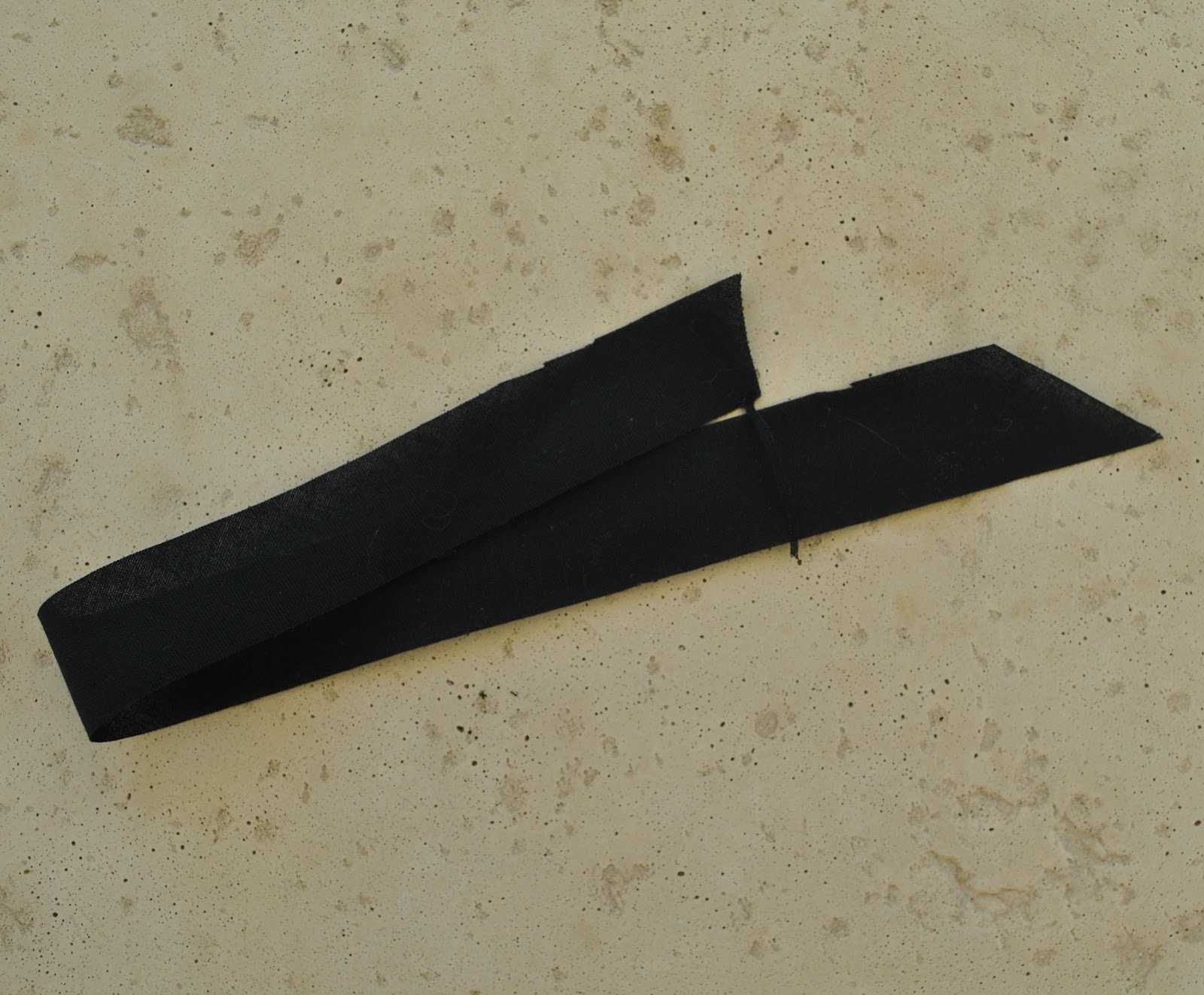
I then cut a short strip on the bias, in a thin but strong, woven cotton.  Quilting cotton is fine for this purpose.

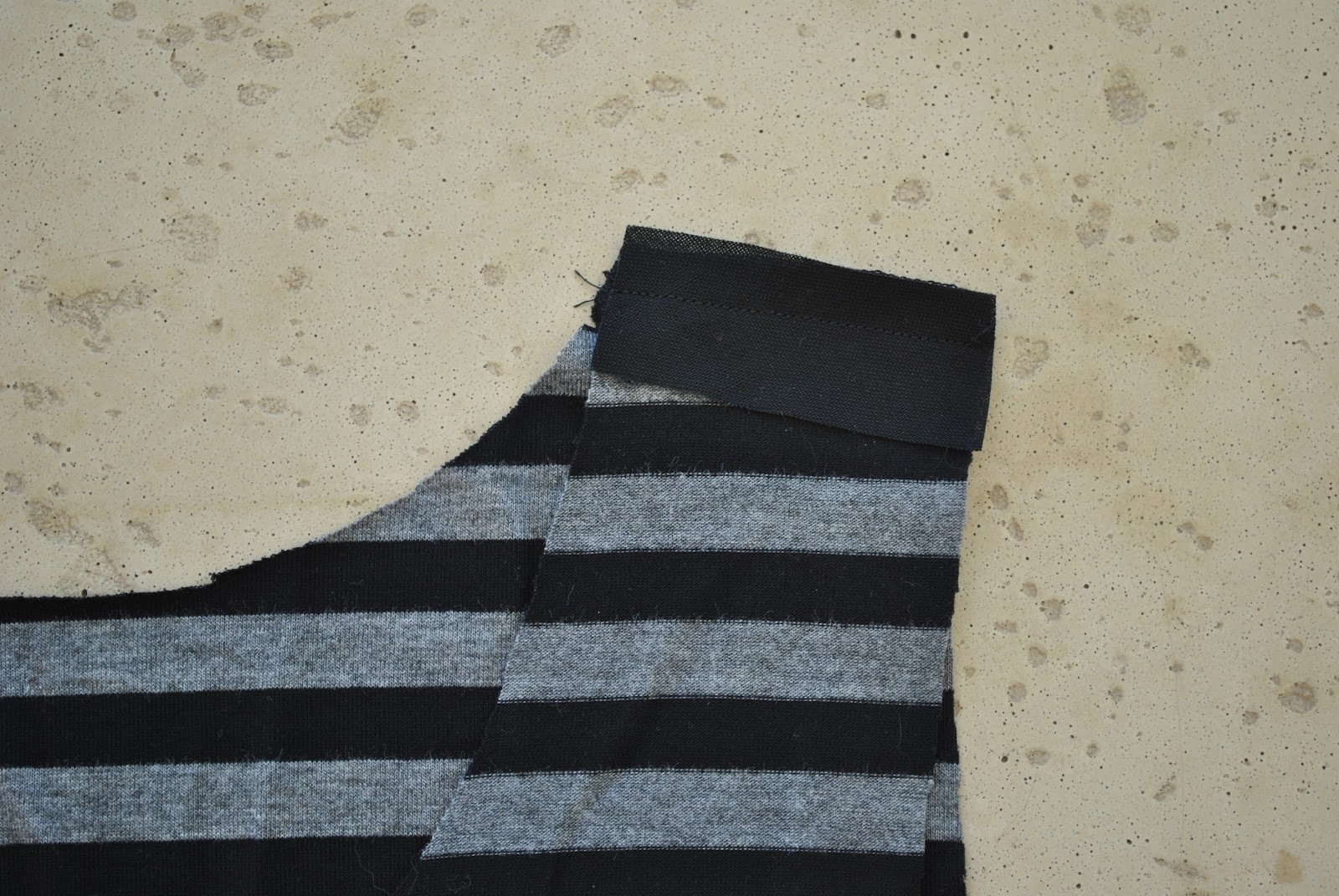
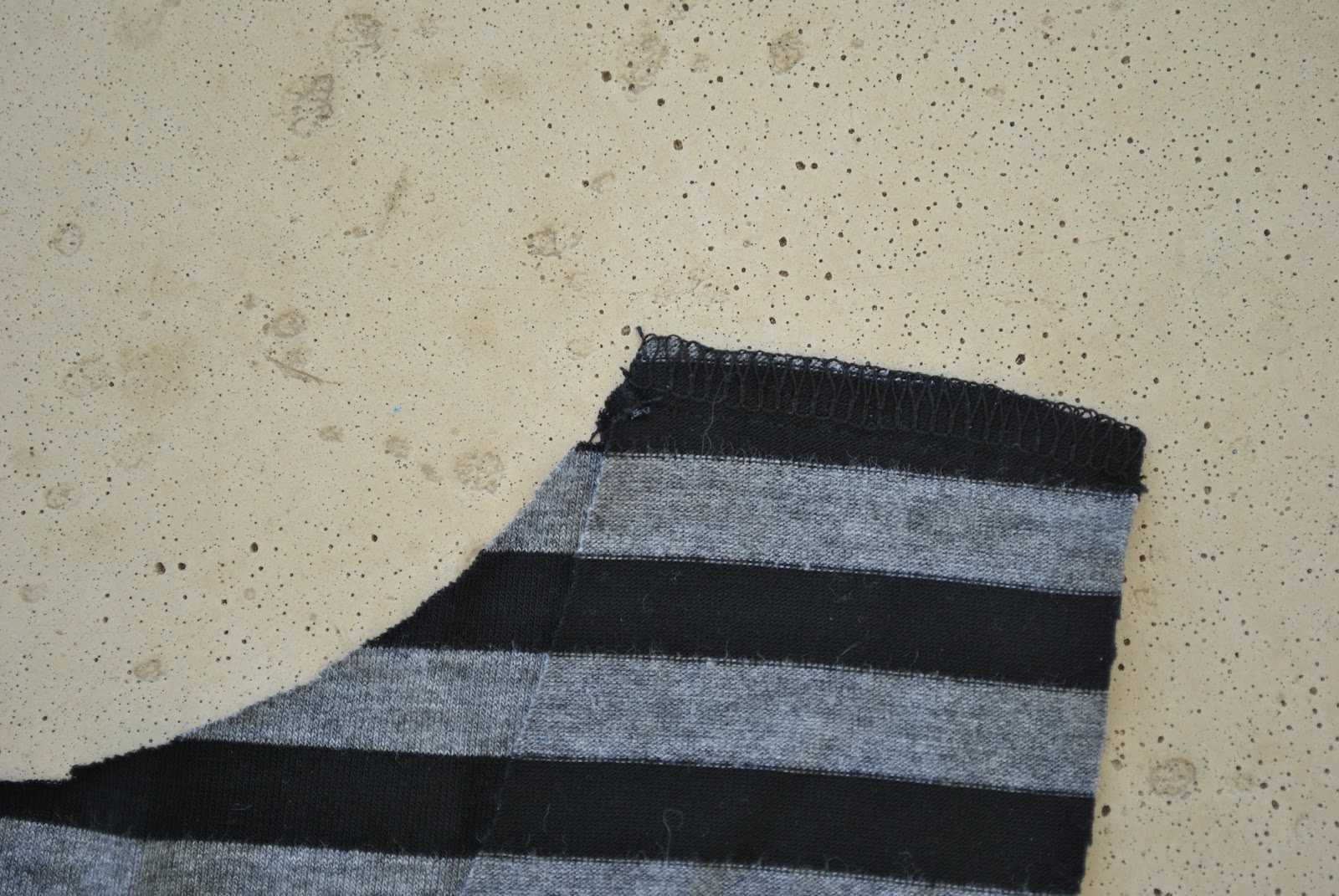
Stitch the bias strip to the dress shoulder seam; directly over the previous dress/shoulder-seam stitching.  The bias strip should be laying over the dress front, as pictured at right.

Fold the bias strip up over the overlocked seam allowance and press.

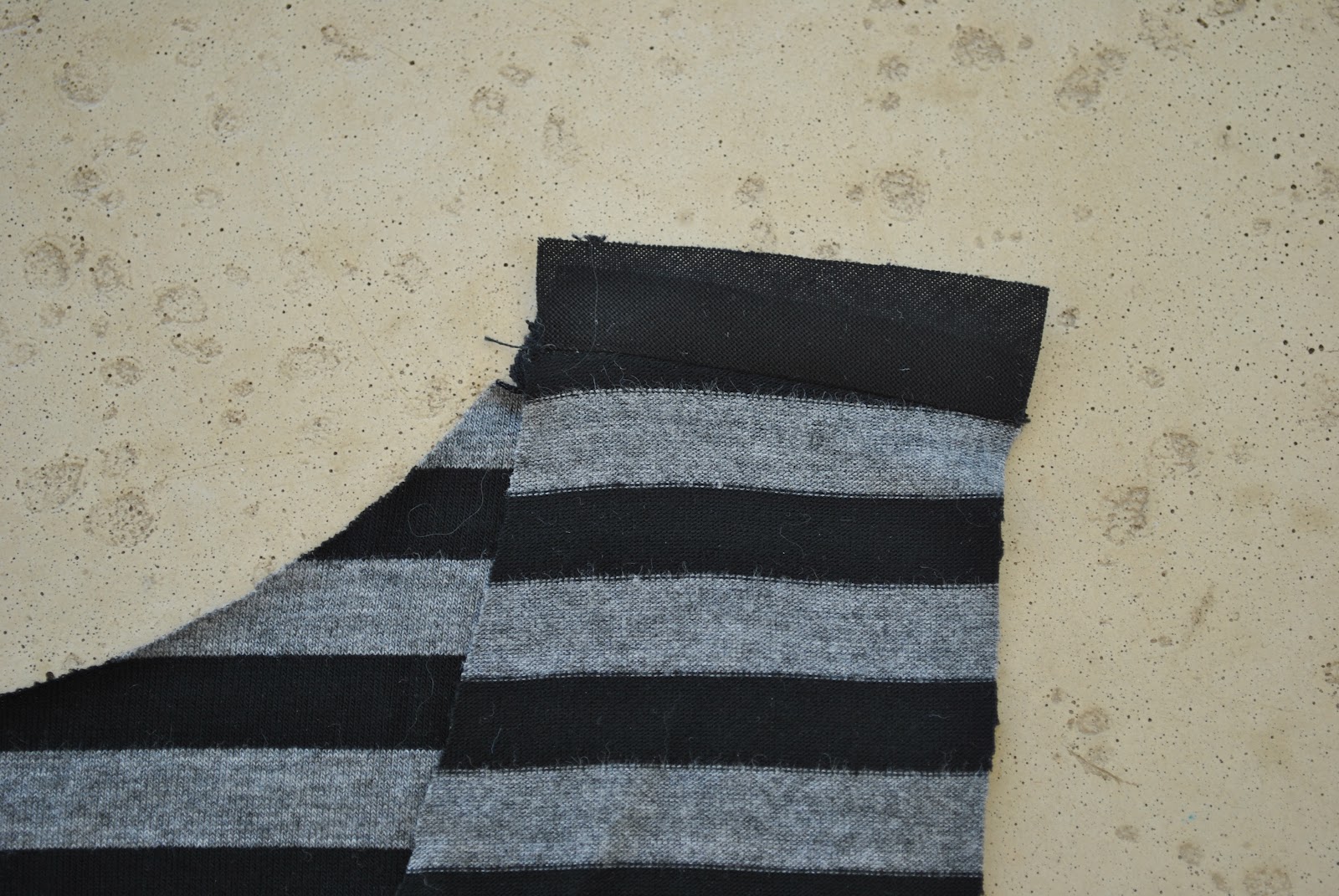
Fold the bias strip and the shoulder seam allowance back to lie flat over the dress back, and press.  Fold under the bias raw edge to an even width, encasing the shoulder seam allowance, and pin in place.

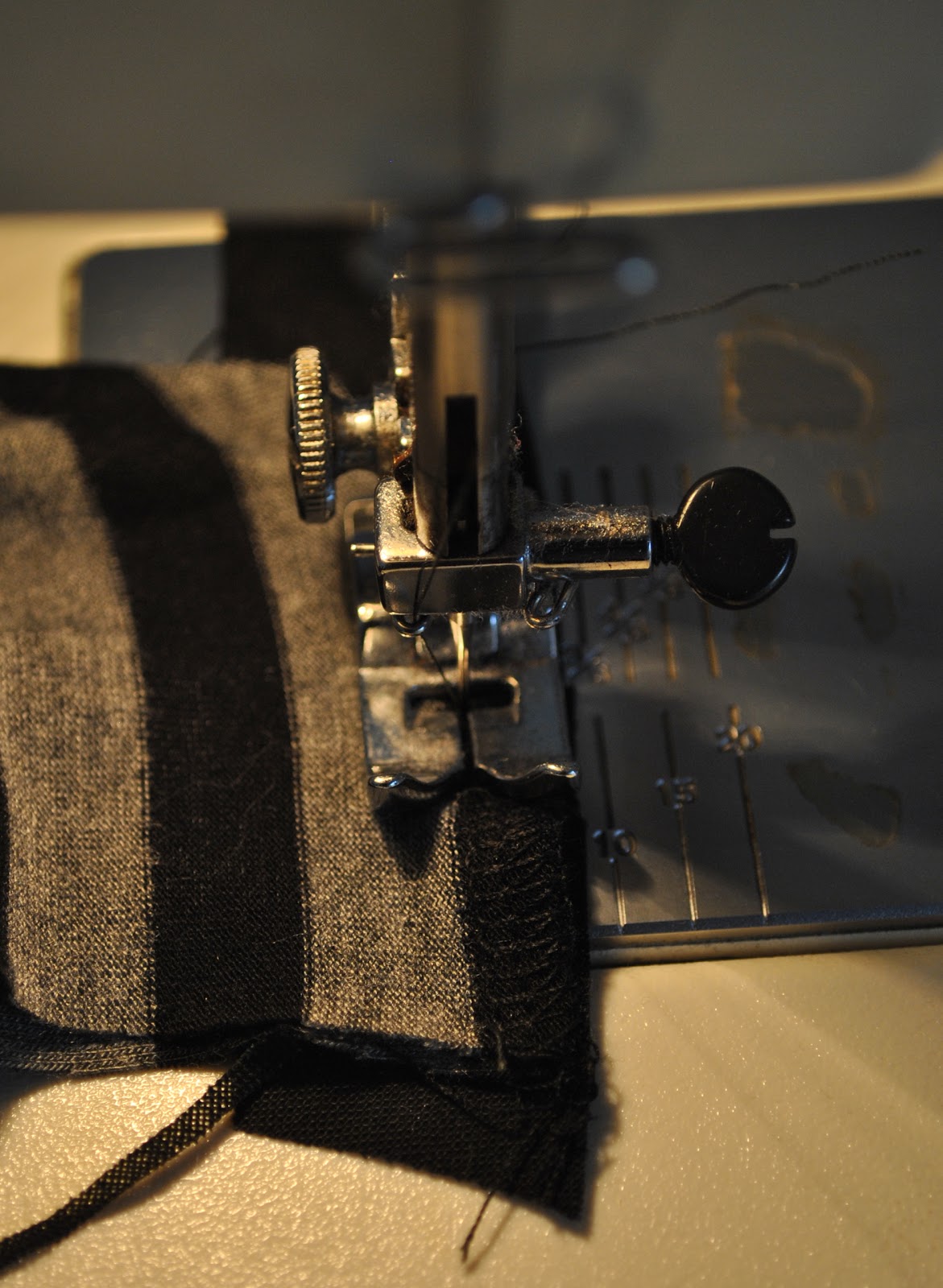
Top stitch the folded edge down onto the dress.

There!  Now your shoulder seams will be perfectly rigid and strong enough to hold up the weight of the dress without stretching or ever becoming mis-shapen over time….

Now for the armhole and neckline bands…
I’ve mentioned before how I call this the Metalicus finish, this is merely because I learnt it by studying my Metalicus pieces where I first observed this technique and started trying it out on my own garments.  It probably goes by some other proper name really, but meh, that is my name for it.  It is a very nice neat finish, uses the same fabric, and requires no hand-stitching, expensive twin needles or special machines like overlocking or cover-stitch machines.  And still looks really professional.
It can be used on any raw edge; armholes, necklines, sleeve edges, cardigan edges, Tshirt hems, I’ve even used it on firm stretch fabric waistbands, dress hems; anything.
(Later edit) I’m adding this to address some comments: if you follow this method the seam allowances will not flip out to the outside and will not need topstitching down!

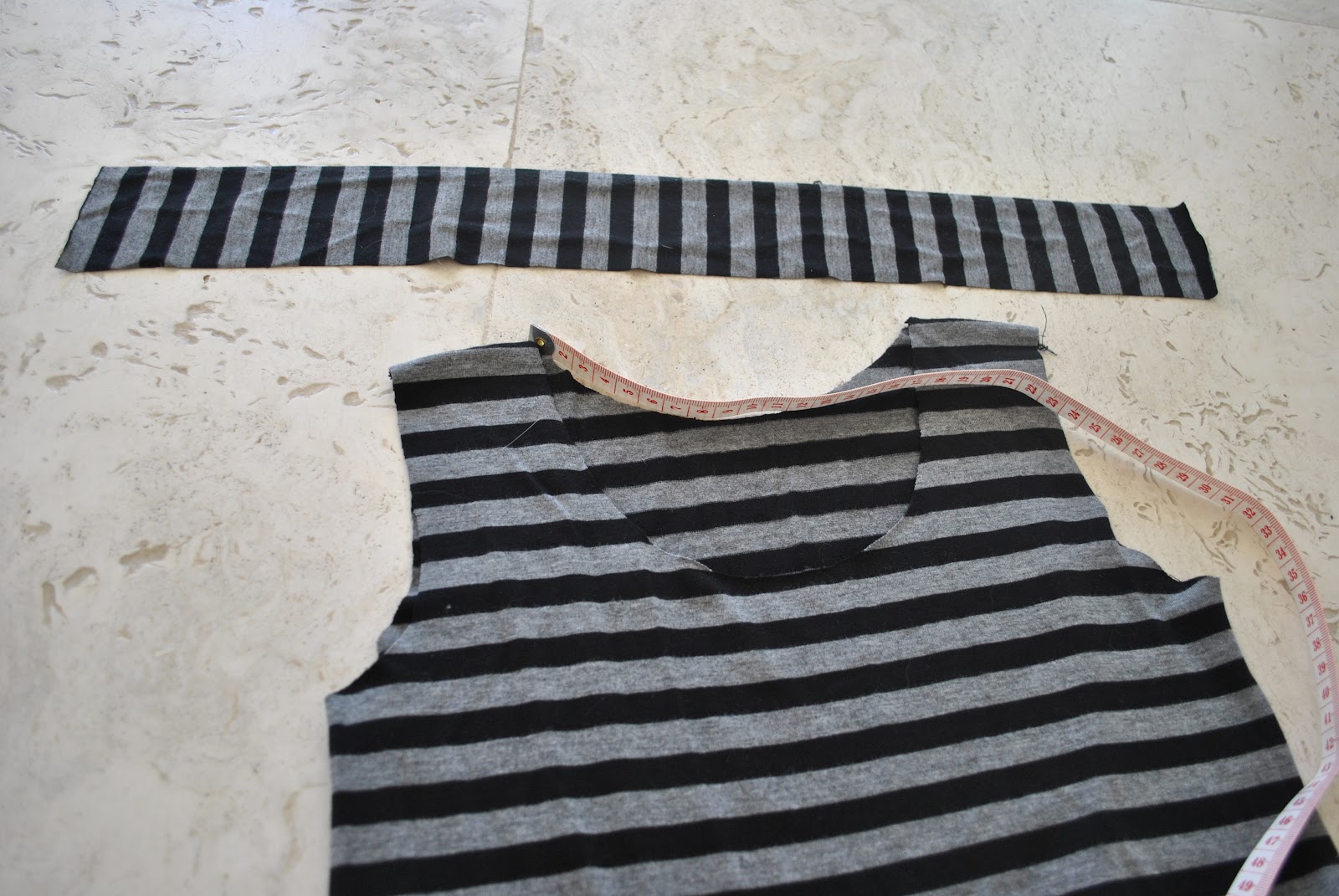
Start out by trimming the armholes/neckline/sleeve length/Tshirt length; whatever, to the finished desired length.

The dimensions of your band strips are calculated as follows:
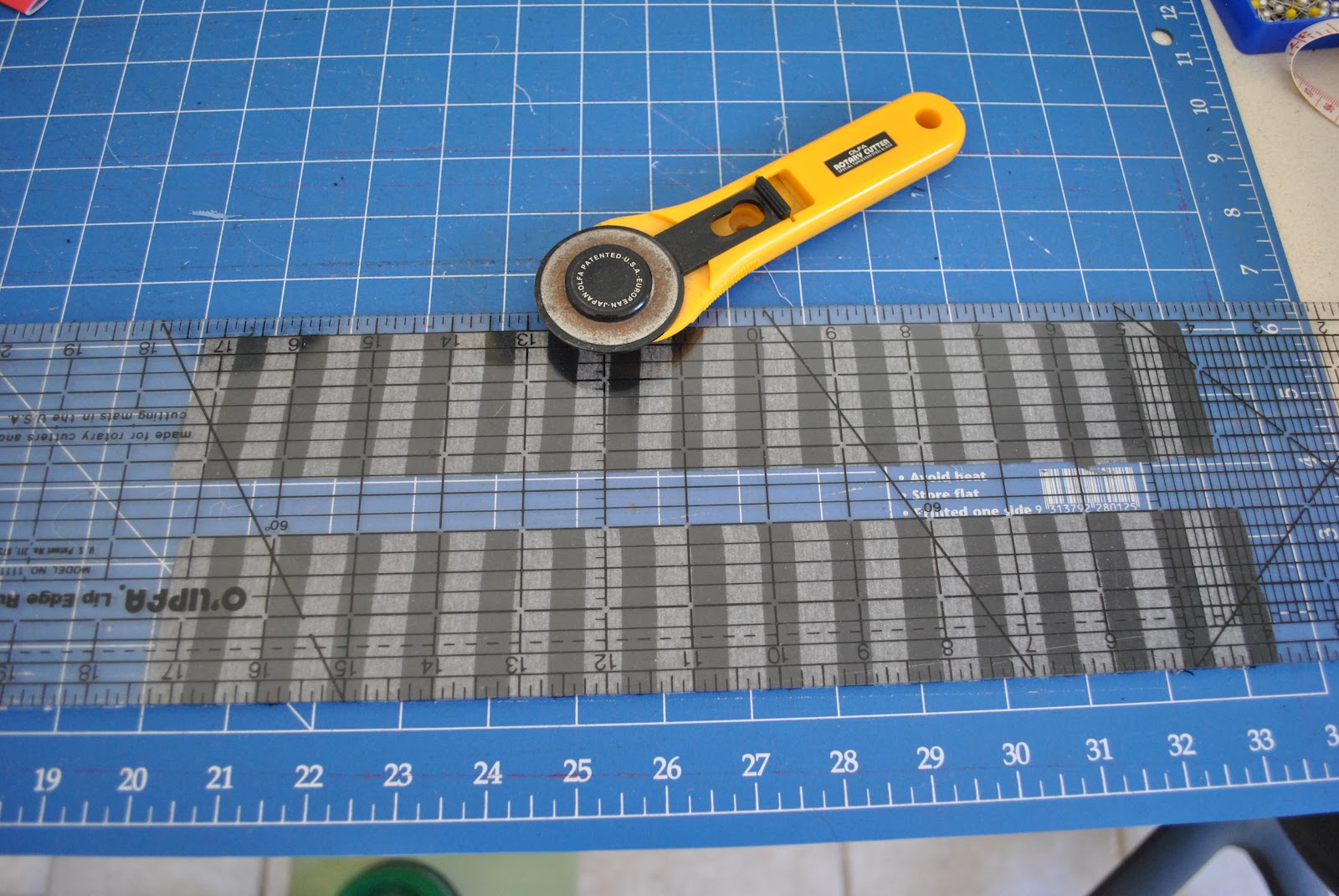
Measure the raw edge and cut a strip to exactly this length plus 2cm for hemming.

Now, since my fabric in this example here is a stripe,  I wanted to get the stripes matching with the joining seam invisibly between two stripes.  This meant cutting the band to a different, very slightly shorter length that was ideal compared to my measurements.  In the case of pattern matching like this, it is OK to cut the strip a tiny tad shorter, but NOT longer, than required, but you do not want for the difference in length to be any more than 5%.  If you are trying to match up wide stripes and your measurement looks like it is going to be more than 5%, then it would be best to not bother with pattern matching.  Any differences bigger than 5% will mean that your garment will look bunched up, or “gathered”, into the finishing band.
AND, since your stitching line is a longer length than the raw edge, (being a concentric circle of a wider diameter) your band is a slightly shorter length than the stitching length around your neckline/armhole, meaning the band will be stretched slightly during stitching and WILL sit up nicely on the outside of the garment when finished.
The width of your strip should be double the desired finished strip width plus seam allowances…  So for example; say I wish for my neckline band to be a finished width of around 1.5cm, and I am allowing a seam allowance of 1cm.  I should cut my bands to a width of (1.5cm + 1cm) x2 = 5cm; and then add a tad to allow for losing some in the fold-over process, so round it up to 5.2cm.
These are my two armhole bands….

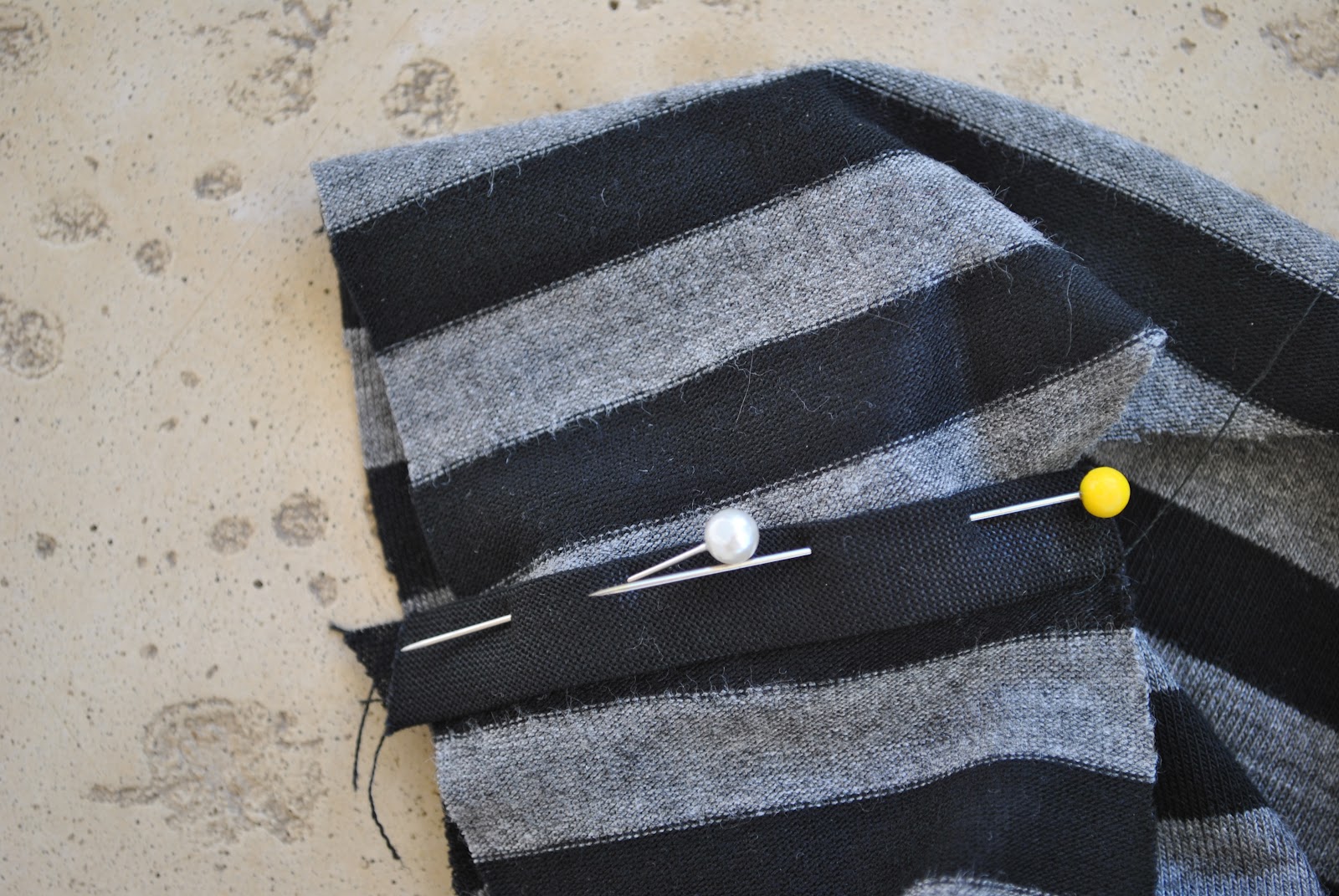
Lay the strip right sides together and sew the short edges together in a 1cm seam to form a ring.

Fold the band in half along its length, wrong sides together.

Pin this ring to the raw edge that you are finishing, right sides together, aligning all three raw edges, and stitch along the seam allowance.
And sorry, I did not take a picture during this stage… but this picture below might give you some idea, with the three raw edges aligned in the seam allowance at the right there.  This is an easy sew; since there is only a slight difference in the measurements of the ring and the raw edge, then there is only a little stretching or easing happening.

At this point, turn out the strip and check to see that the band is sitting in a perfectly even width all the way around, with no dips or lumps or bumps marring the evenness.  If there are any, un pick and re-stitch these bits.
And essentially, you are pretty much finished!
Unless you have an overlocker…  but that is OK if you don’t  🙂
Since I do have an overlocker I always go over and finish off the raw edges on the inside, but if you don’t have one you can pink with the pinking shears, or just trim neatly.
If I have reinforced the shoulder seams with a bias strip as outlined above, then BEFORE OVERLOCKING I trim away that bias strip from the seam allowance, as close to the armhole/neckline stitching as possible to remove some of that fabric bulk that is going to end up inside my band finish (as pictured above)

pinterestmail

Basic dyeing; a tutorial

A while ago, Caroline asked if I could go into more detail the next time I did a batch of dyeing, and yesterday morning I felt the urge to haul out the ol’ dye-pot again… so here ’tis!  A short tute on basic, one colour, flat dyeing.

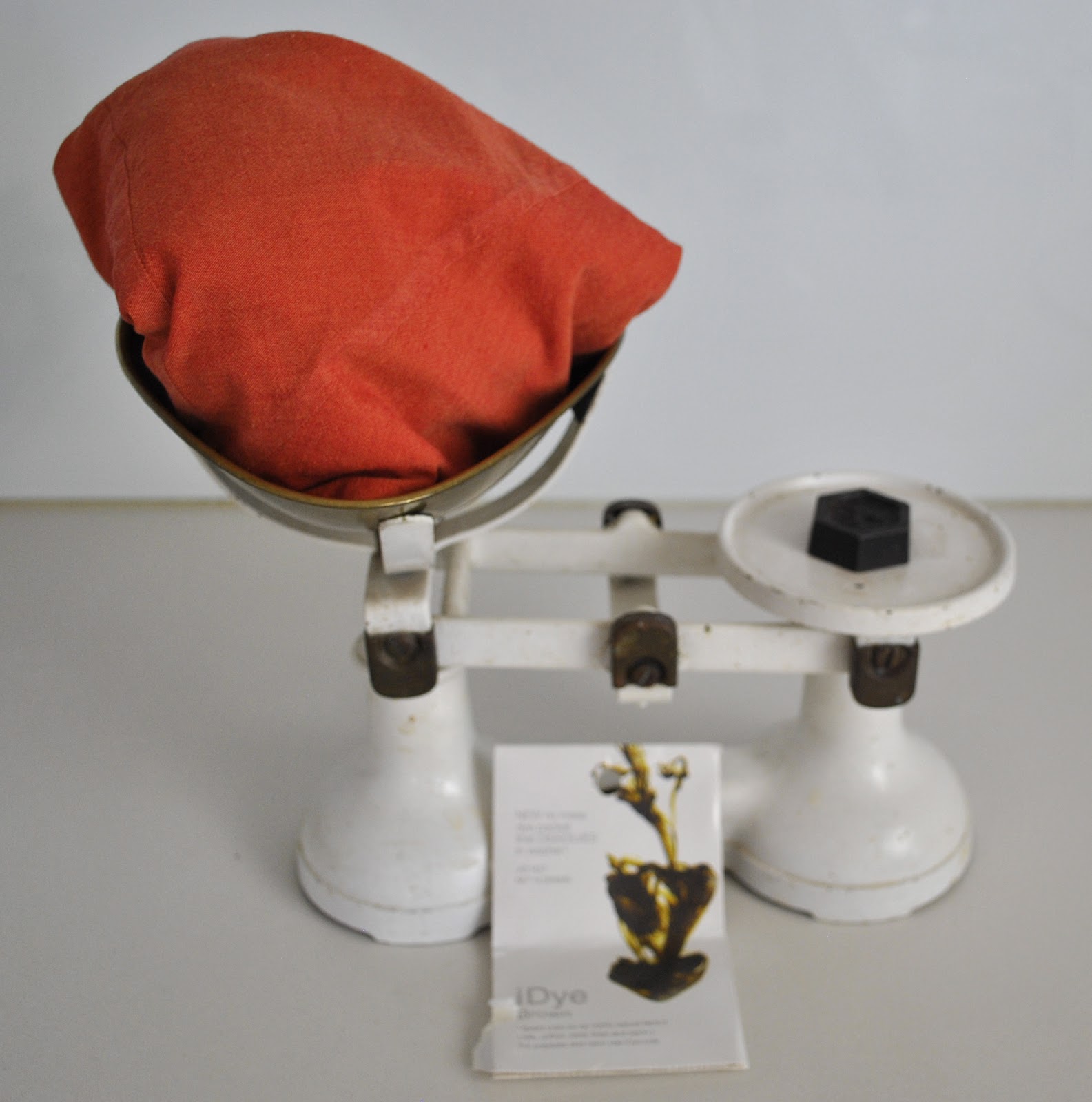
Firstly, if you are being scientific about this process, weigh your fabric and check the instructions on your dye packet to see how much is the recommended amount for this weight of fabric.  This is the quantity that will give you the maximum intensity of colour the dye is capable of achieving in your fabric.  If you are after a lesser intensity or a lighter shade then use less dye.  The colour you will achieve is dependent on several factors: the quantity of fabric compared to the quantity of dye, the fibre content of your fabric and whether it is a mix of different fibres (different fibres react to and soak up dyes quite differently) and the existing colour of the fabric.  All these factors play a part and it is impossible to pin down a definitive result without extensive tests of the sort that the average home-dyer is neither capable nor willing, so without said testing the final colour you will end up with will be a little surprise.  Hopefully a beautiful and happy one!  though naturally if your fabric is pricey or precious then DO do some testing!

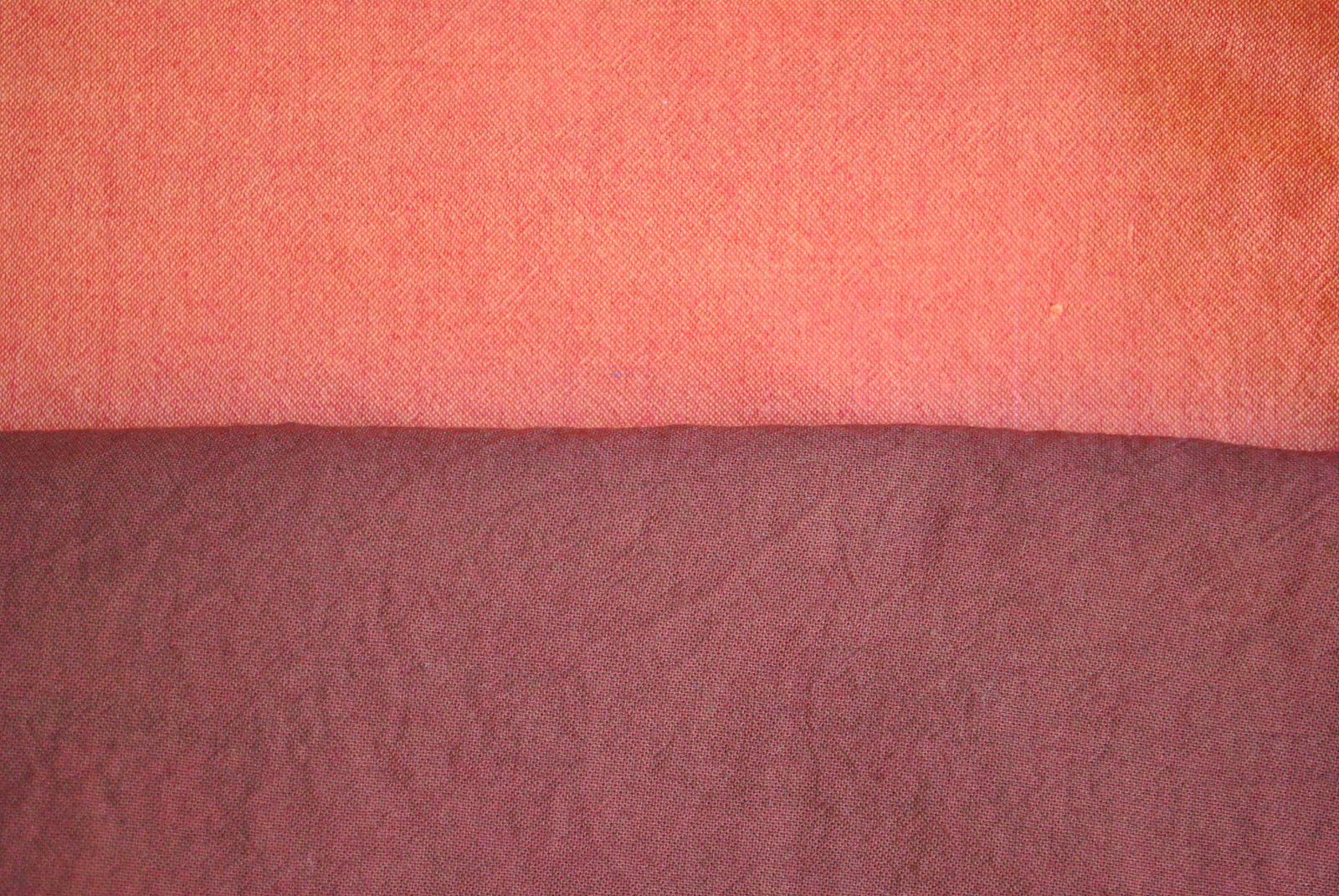
I’m using the leftover piece of cotton from this Clementine top since a girl only needs one piece in this distinctive shade in her wardrobe, and dyeing with iDye in Brown.  I also used about half the recommended amount of dye, to maintain the orange-ness.

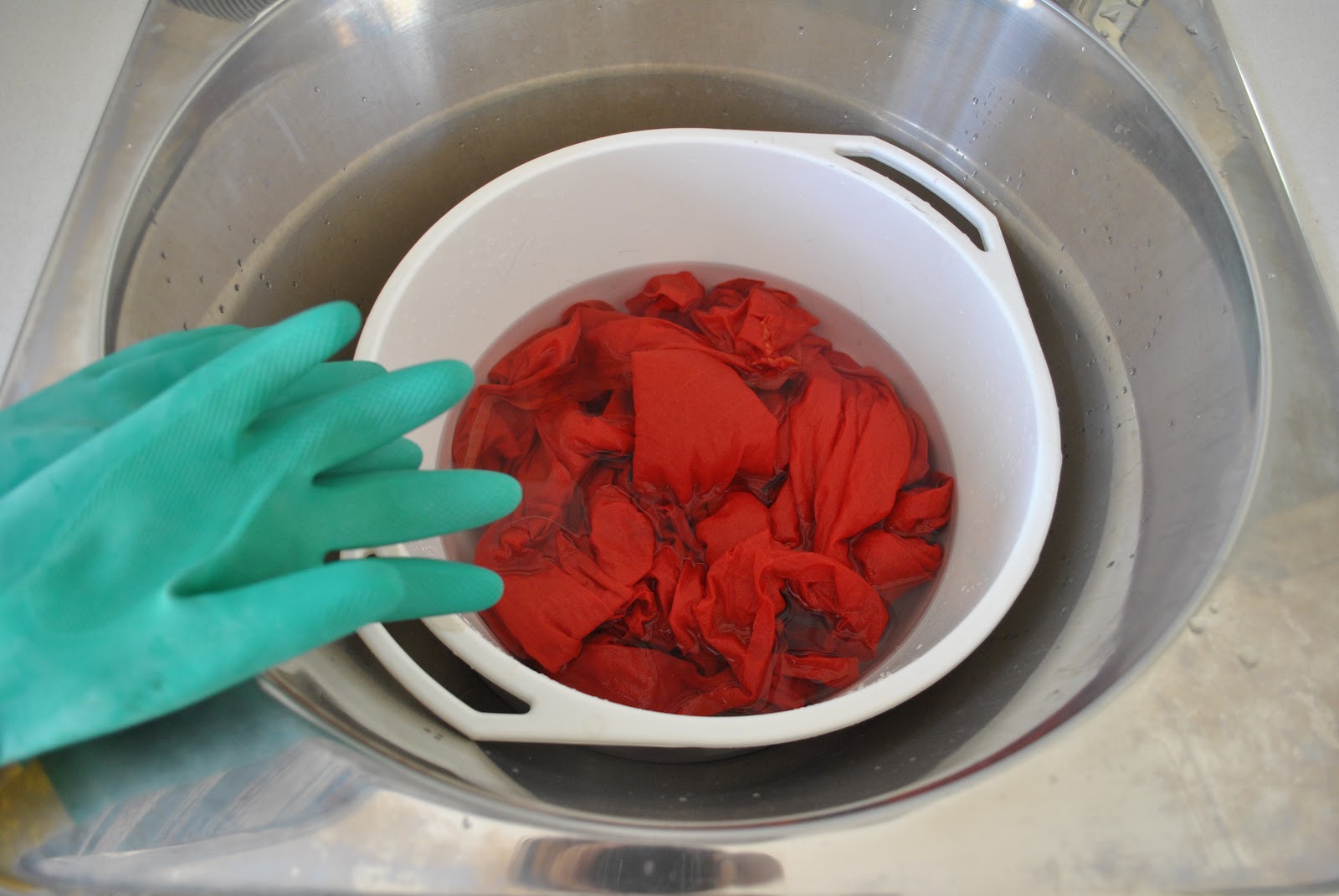
Now wash the fabric.  This is particularly important if your fabric is new; and is to remove any sizings, starches or other finishes it may have from the manufacturing process.  Even if you have already washed it and even if it is old textiles, set it to soak in a bucket of water.  Woosh it around some to ensure all the fabric is thoroughly wet all the way through.  Leave it in there for at least ten minutes, preferable more, with several bouts of swooshing (wooshing and swooshing; technical terms there).

Assemble your dyeing stuff.  You need:

  • Dye-pot.  A big big cooking pot, lid not essential but handy, and after you have used it for dyeing, particularly with commercial dyes, then never ever using it again for cooking.  I have a big old pot bought cheaply yonks ago, and it has always been The Dye-pot…  I store it with a big unavoidable note stuck in the bottom so no one in the household can ever mistake it for a cooking pot.
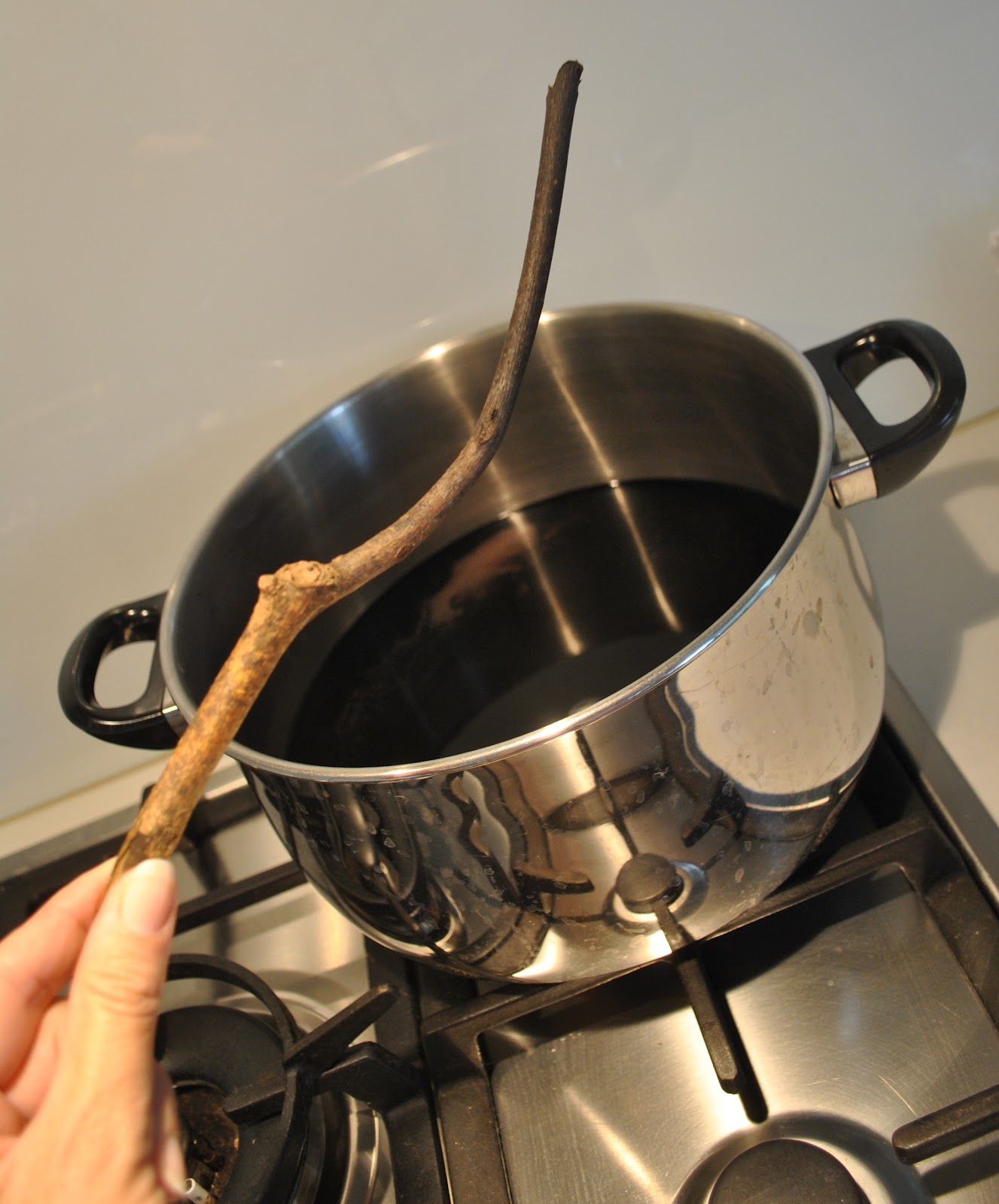
  • Stirrer, I use a handily shaped and sturdy stick from the garden.  It is a good one, since it has a twist that enables it to sit on the edge of the pot quite stably.  However you can use a dedicated pair of tongs or wooden spoon if you have not located the perfectly shaped stick… and if so I recommend labelling it very clearly that it is not to be ever used for cooking, like your pot.
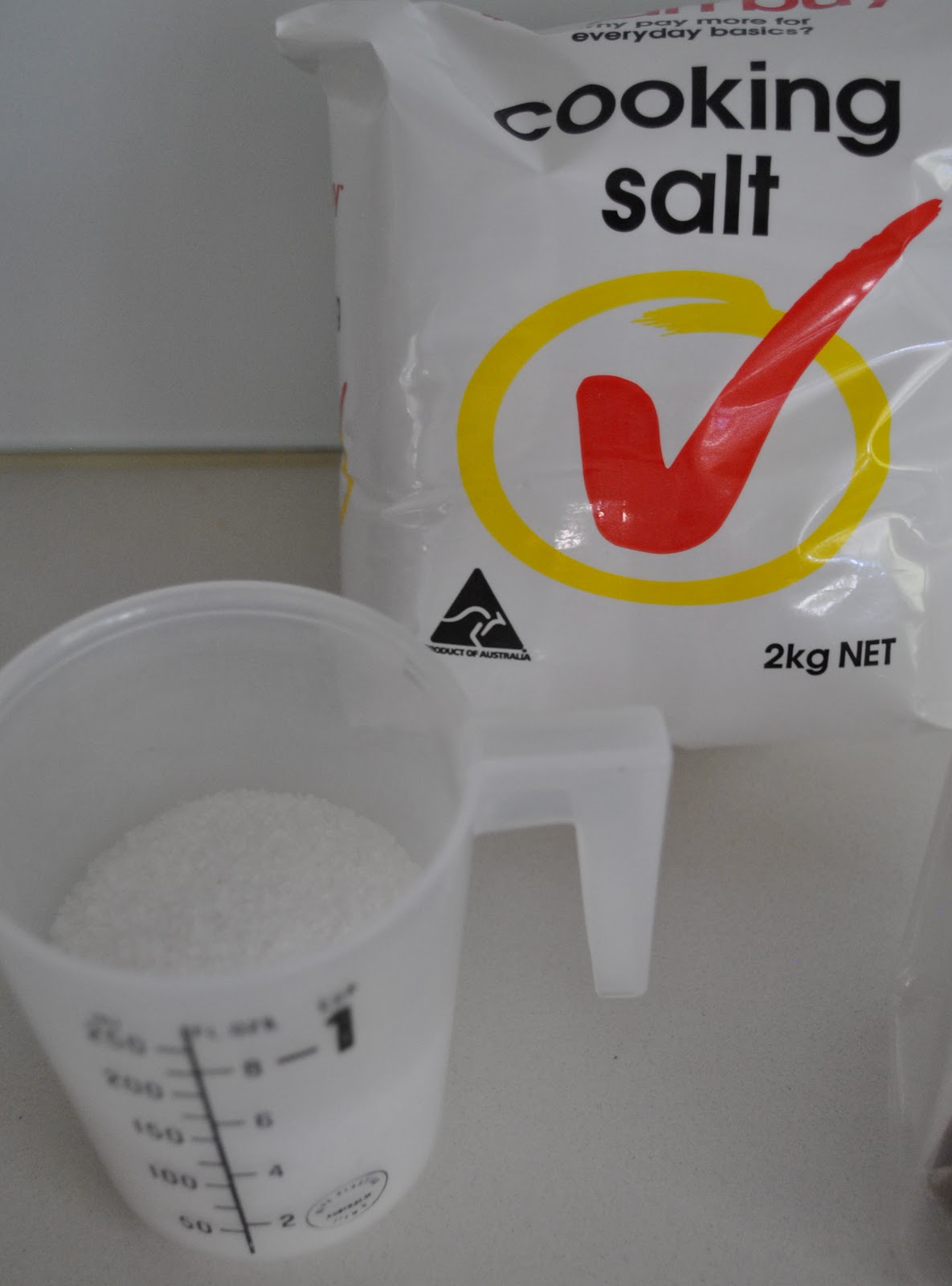
  • Salt.  Read your dye packet to see how much is recommended to go with your amount of fabric, but I reckon it never hurts to add a little extra….  
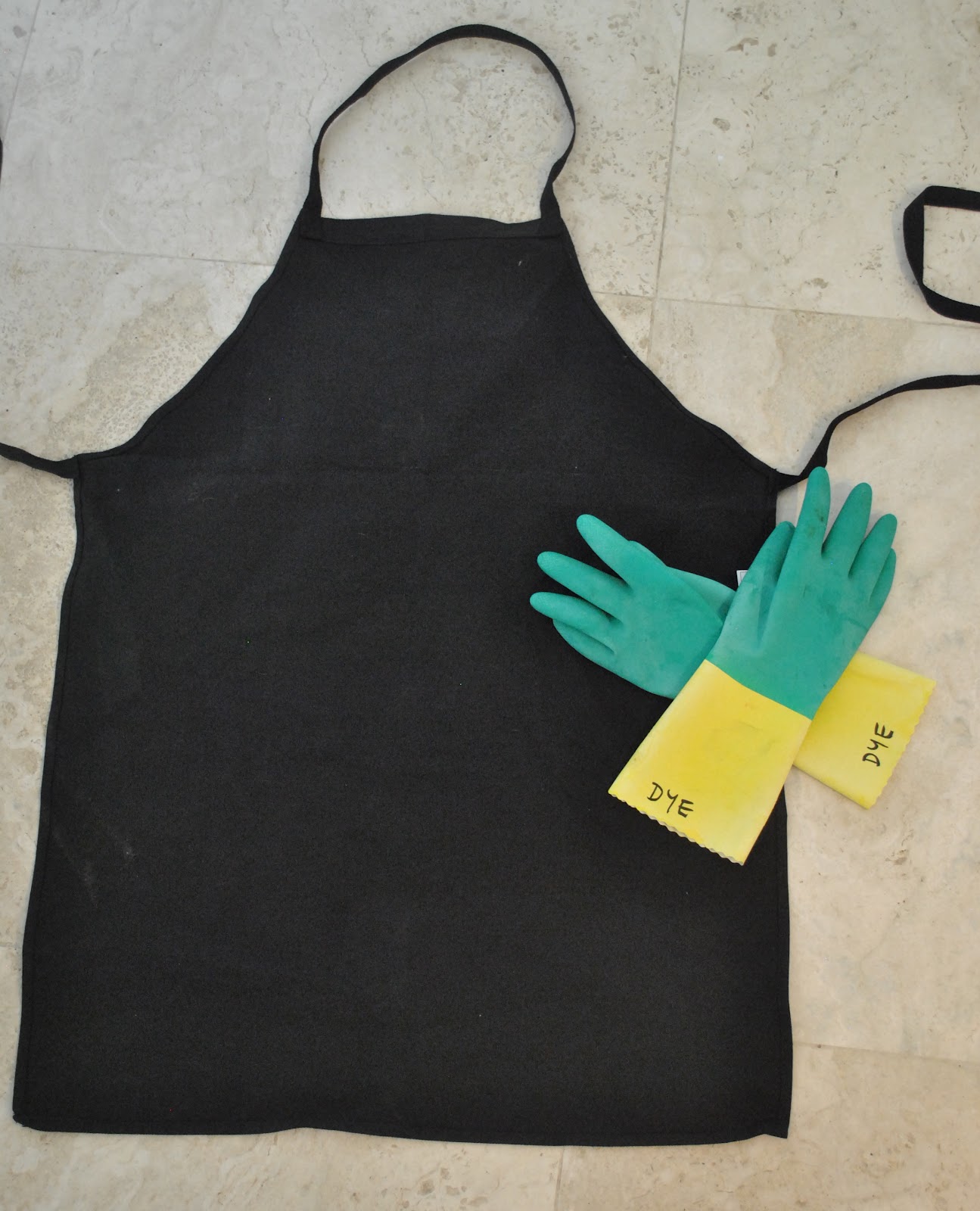
  • Rubber gloves and apron
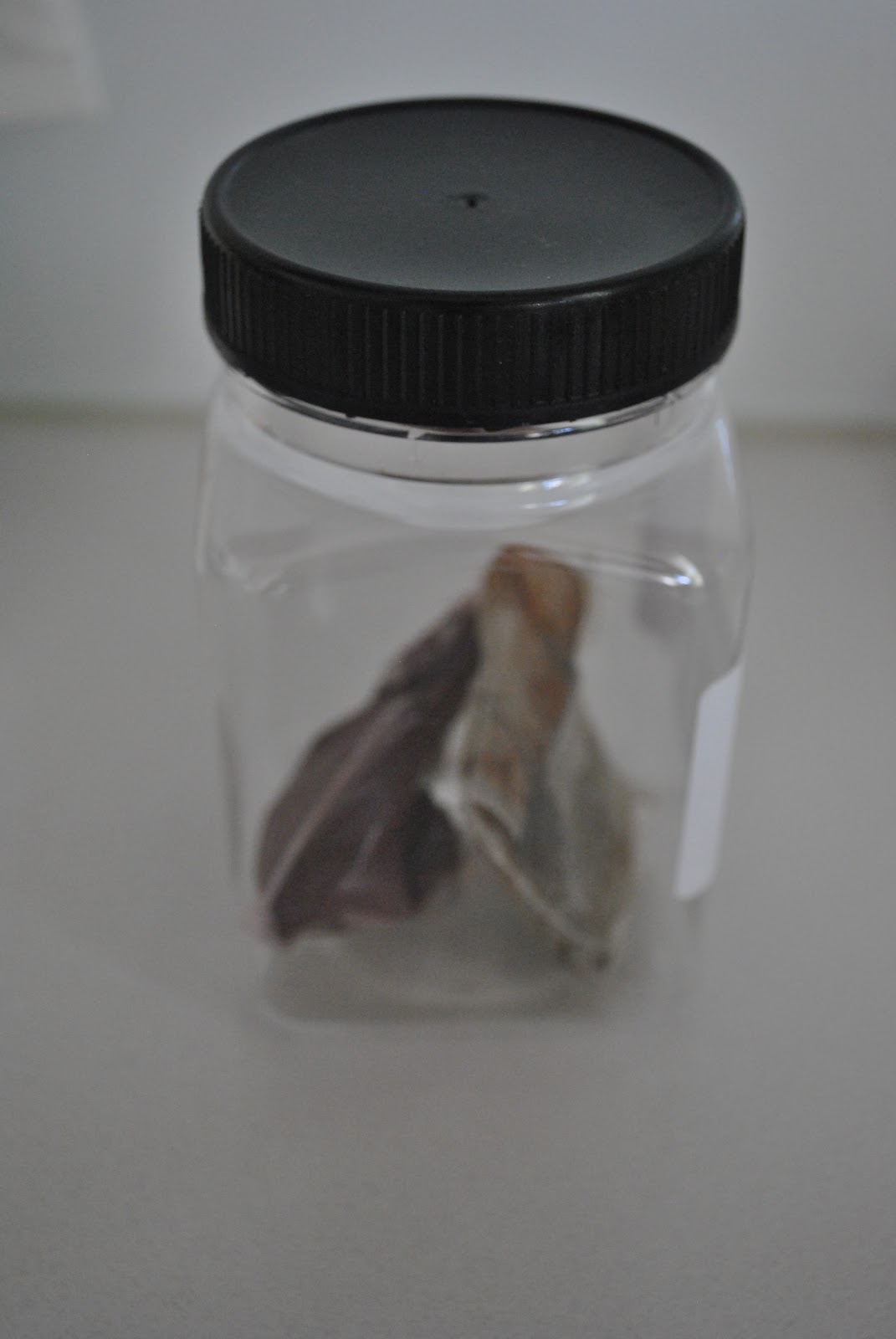
  • Oh, and the dye, natch!  Once I’ve opened the little packet and used some I seal it as well as possible with tape and store it in a clear screw-lid plastic jar, with the instructions.
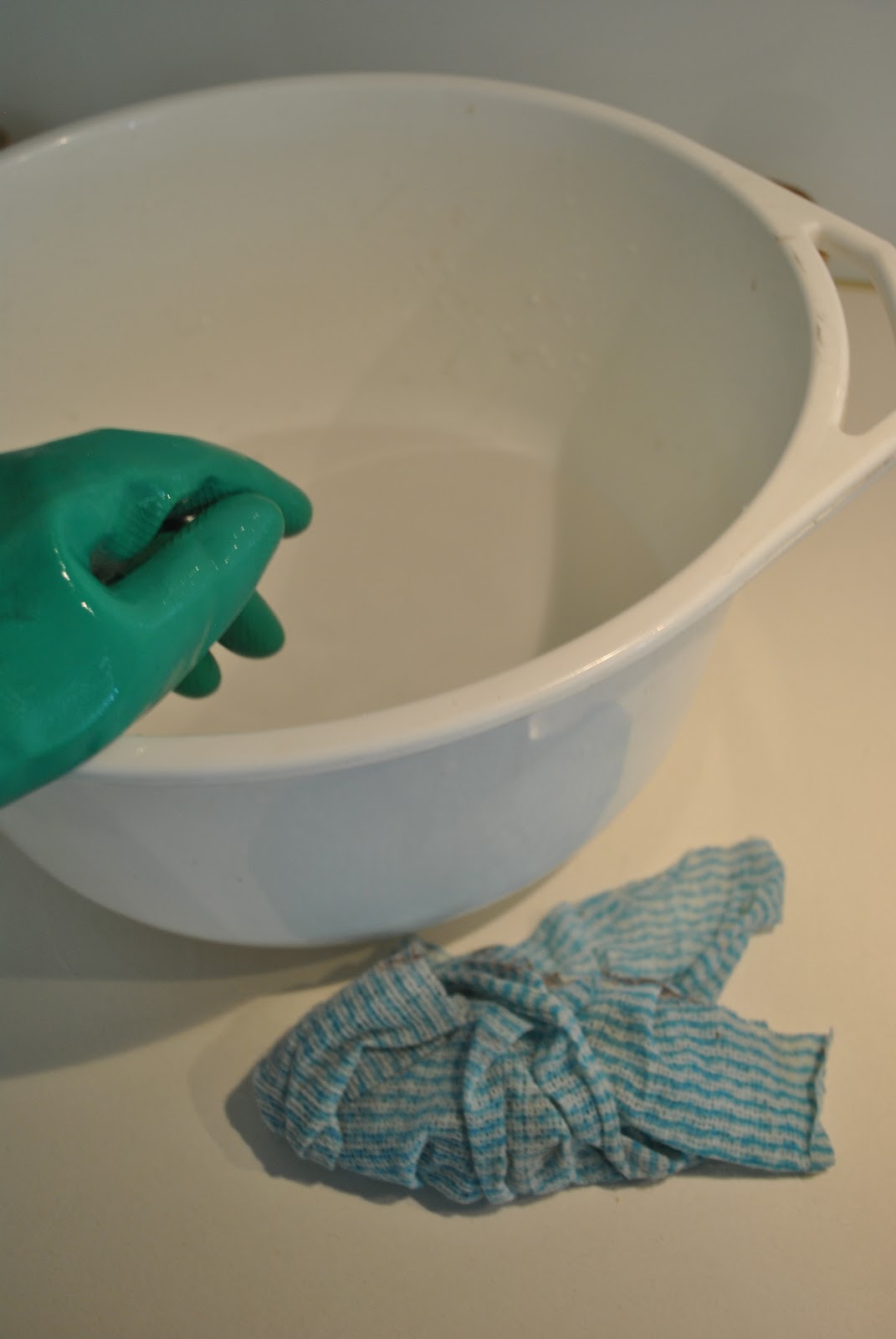
  • keep a bucket of water and a wet rag handy to deal immediately with any splatters and spills.

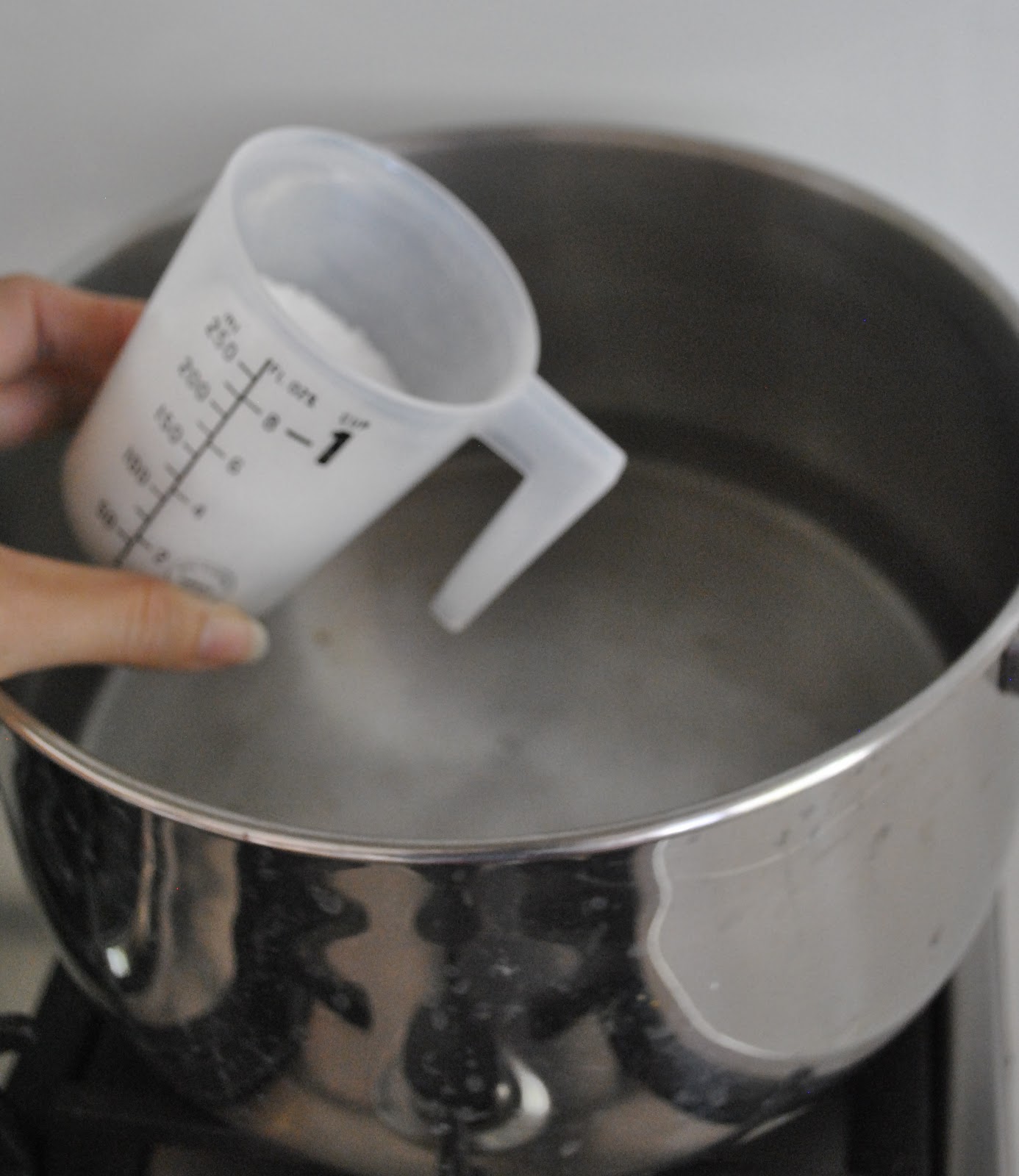
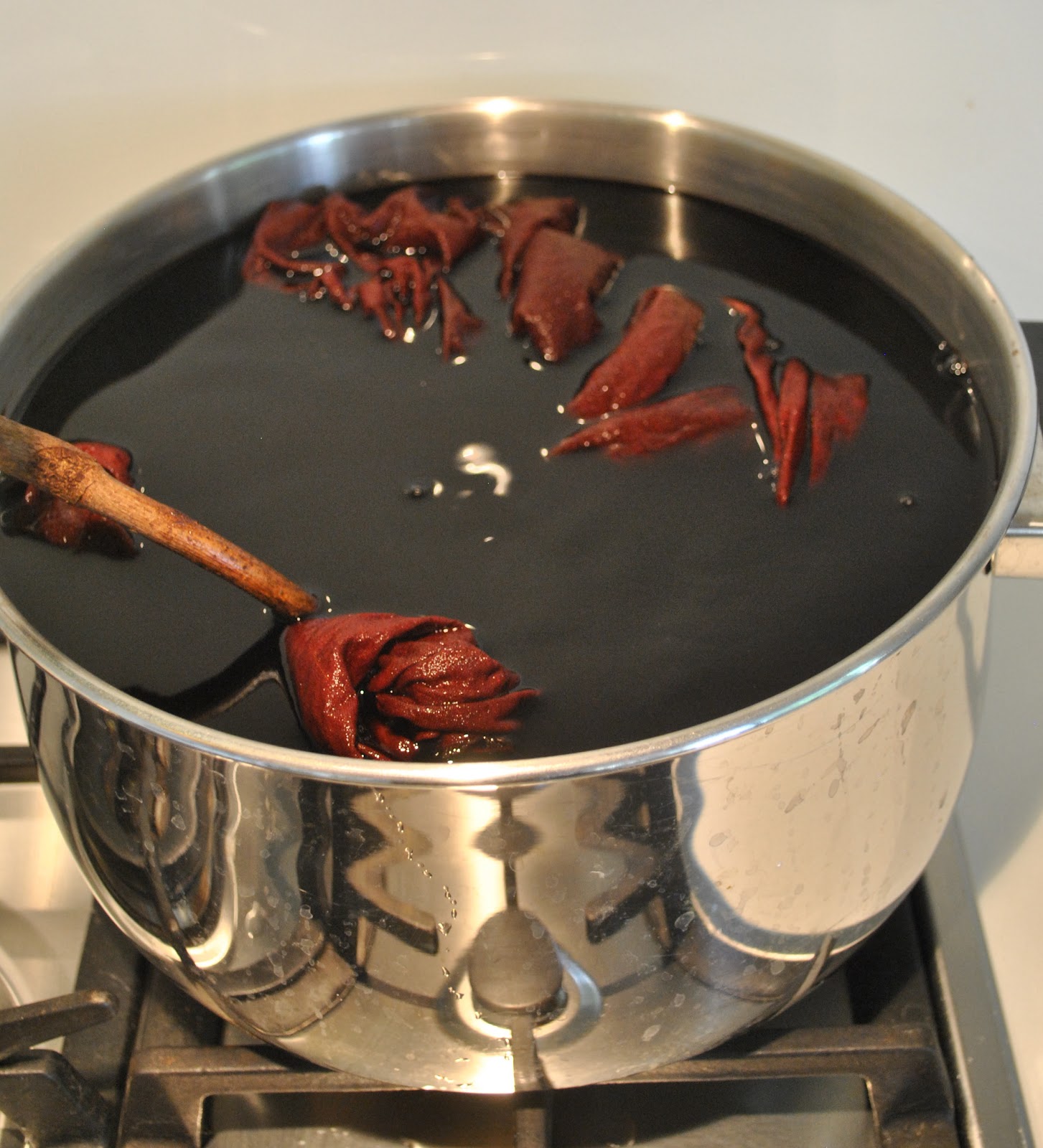
Pour off some of the water from your bucket of soaking fabric into the dye-pot.  Doesn’t have to be a massive amount just say 10cm in the bottom of the pot, add the salt and dissolve over a low heat.
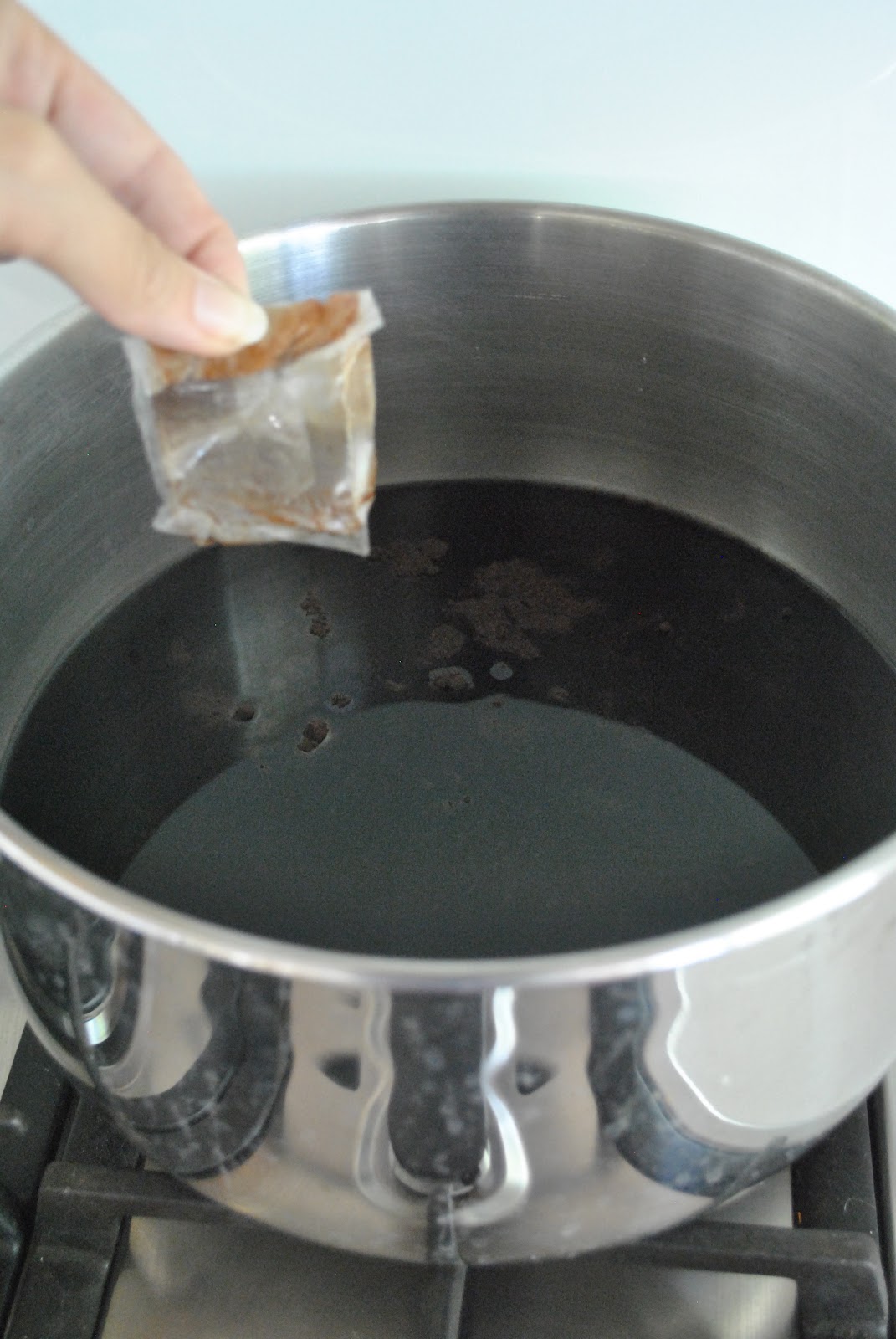
Once the salt has dissolved, add the dye and stir it in well.  Turn up the heat to get to boiling point.

Ventilation is important… one may not mind poisoning oneself in the pursuit of gorgeous fabric but we love our families and don’t want them to suffer for the sake of our colour-fun, do we?   Do we??!  If you have access to an outdoor cooker, then yay! lucky you, use it!  If not, then make sure your exhaust fan is on high, and the windows in your room are all wide open.

Now, pour in your fabric, all at once, and still in its soaking water, and woosh and stir it around as much as humanly possible, immediately.  This is the most crucial step in the dyeing process.  It is reckoned that the fabric picks up the most of the dye it is ever going to in the first thirty seconds of contact.  This is why you want your fabric to be soaked through when you add it, and also why whenever I have seen photos on the internet of garments partially dunked into the dye bath (people unable to resist the action shot, “Now, here I am adding my dress to the dye-pot…”) you invariably see in later shots that the dye job turned out blotchy. Of course a blotchy dye-job may well be one’s desirable outcome.  Hey, no judging here.

Lower the heat and let it simmer and bubble away for thirty minutes, or whatever is the recommended time on your dye packet.
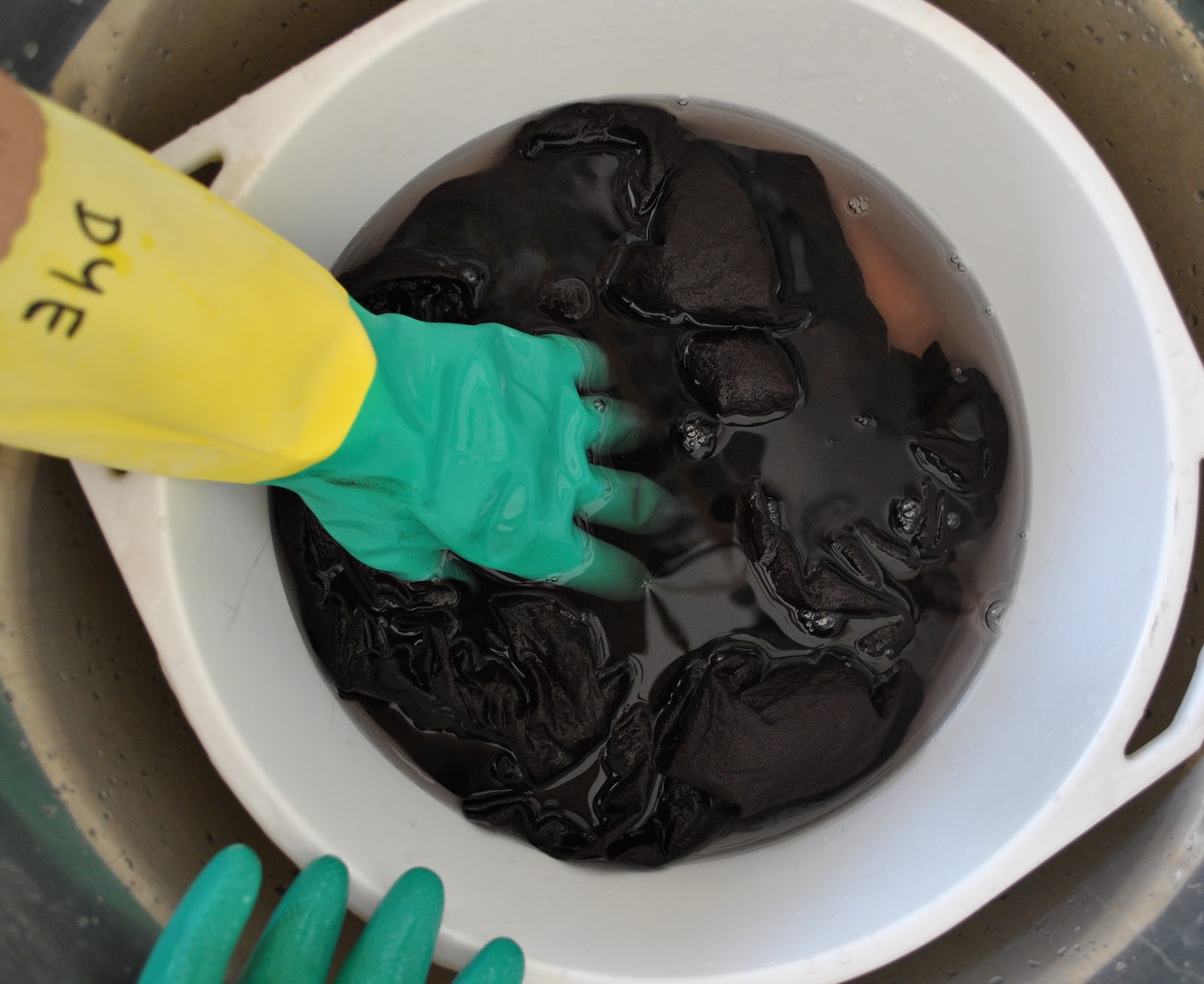
Once that time is up, remove the fabric, squeezing and wringing out hard, and transfer to a bucket of water.  Rinse, wooshing  and squeezing out thoroughly a few times.  Do this several more times, until it washes clear.  I find you can use far less water by very thorough wringing out, several times while washing out in the same rinse.

Et voila!

If you want to, you can re-use the dye-water to do more fabric or another garment; just keep in mind that the guts of the dye has been used and the colour will be paler with each subsequent use.
I did use my leftover iBrown dye… for something else, hehe.

Remember this cardigan?  Definitely prefer this fab new colour.  Not so much leprechaun-on-St-Patrick’s-Day any more, but beautifully fudge-y and sludge-y.  Actually almost purple.  I call that a win!

pinterestmail

An casual edging for knits

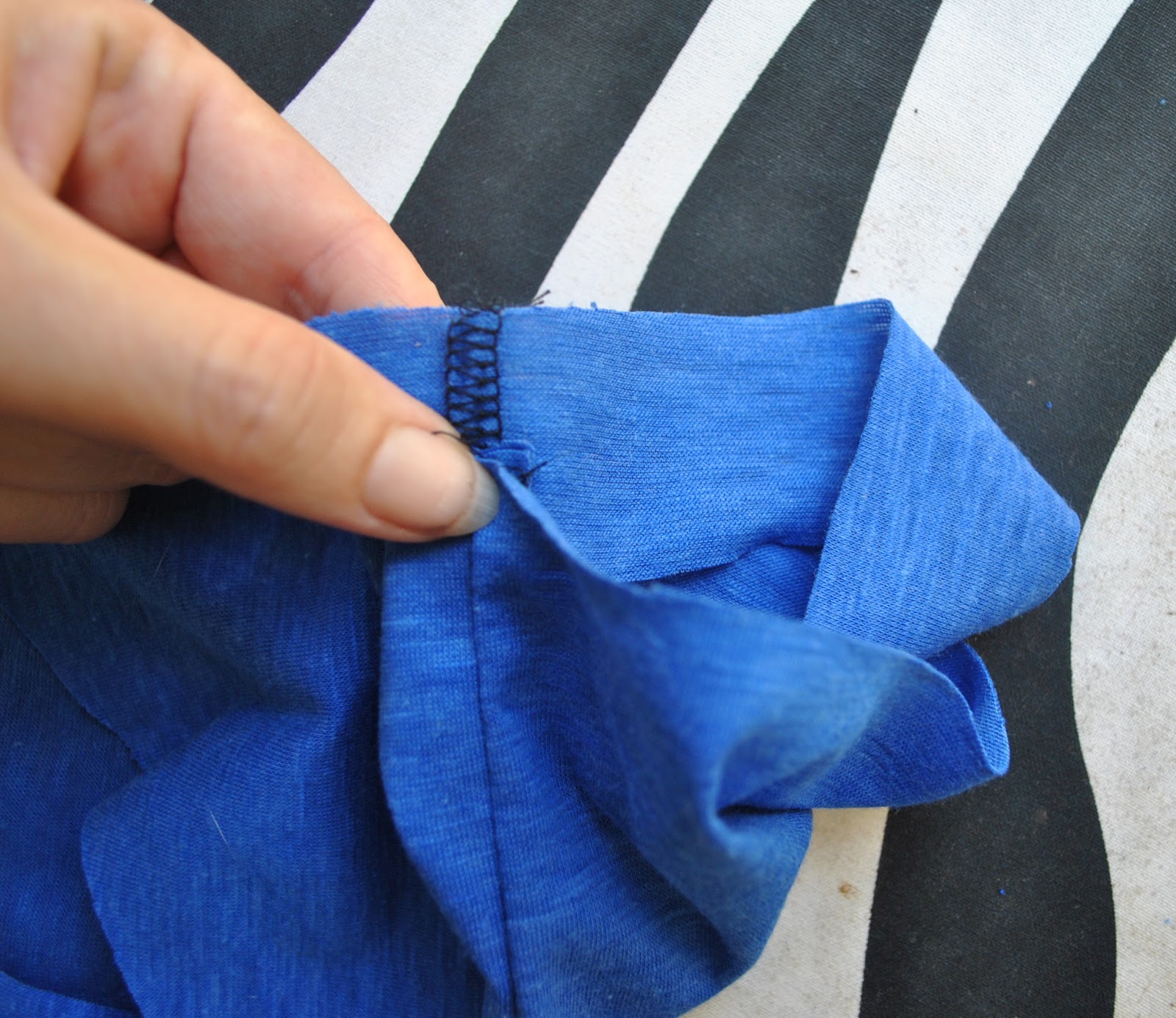
I used this great edging for some of my latest T-shirts.  This is a nice casual look for thin floppy knits that don’t fray very much.  It works really well on those fabrics that want to curl up spontaneously… and it’s always a good idea to listen to what the fabric wants to do and work with it rather than struggling to force it into submission…
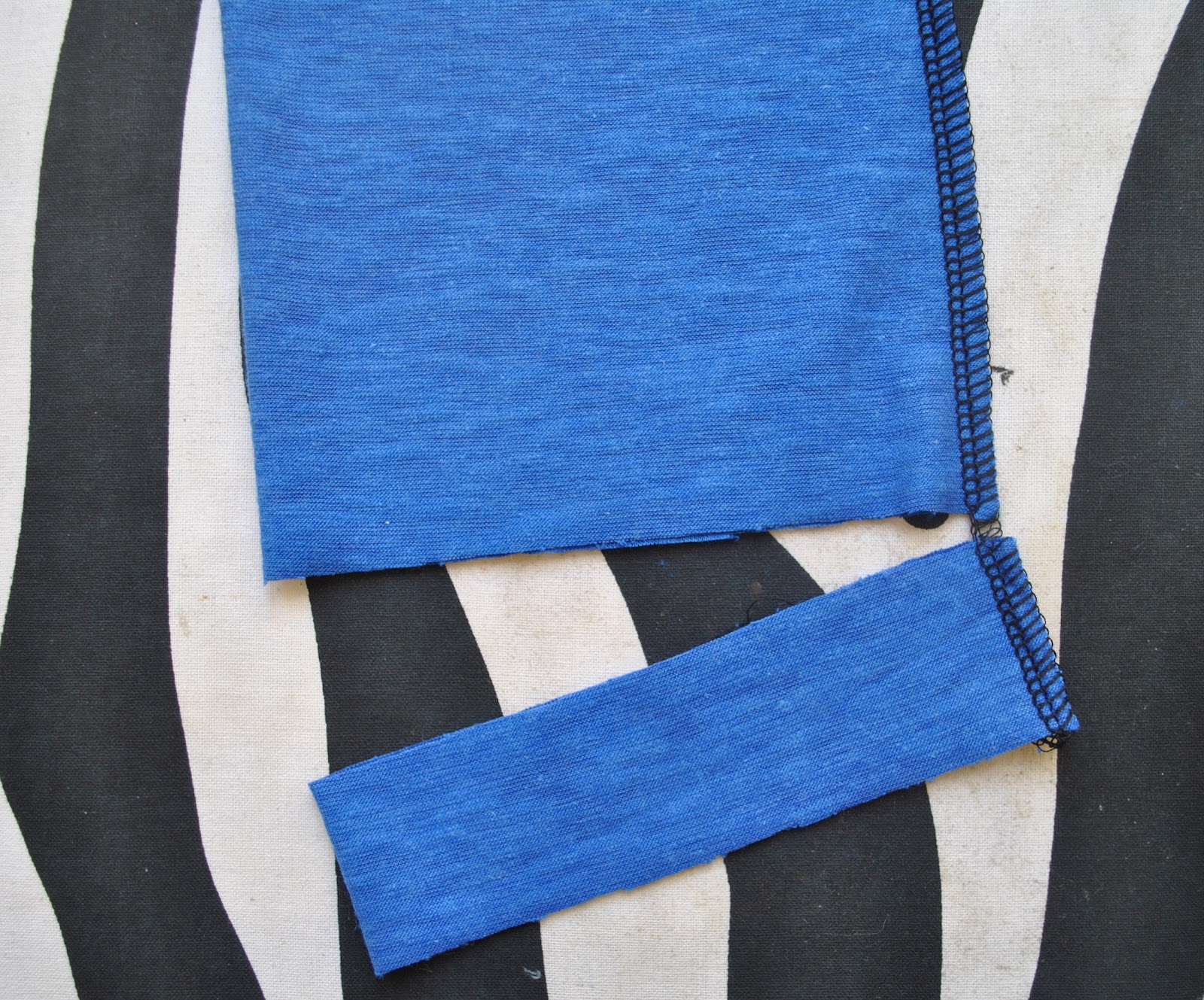
Firstly, when you cut out the sleeves, cut them about 2.5cm longer than you want, and then slice off this extra length.  
(Oh, for the neckline, you have to measure the finished length of the edge of your neckline, and cut out a 2.5cm width strip (with the length going the stretchy way, natch) the same length, plus 2cm for seaming.  I didn’t take any photos of the neckline finishing, sorry…. maybe next time 🙂 but it’s essentially the same process from here on)

With right sides together, sew the sleeve seam, and the seam of the strip to form a ring.

Take your sleeve edge strip and fold it wrong sides together in half along its long length, over and enclosing the raw lower edge of the sleeve.

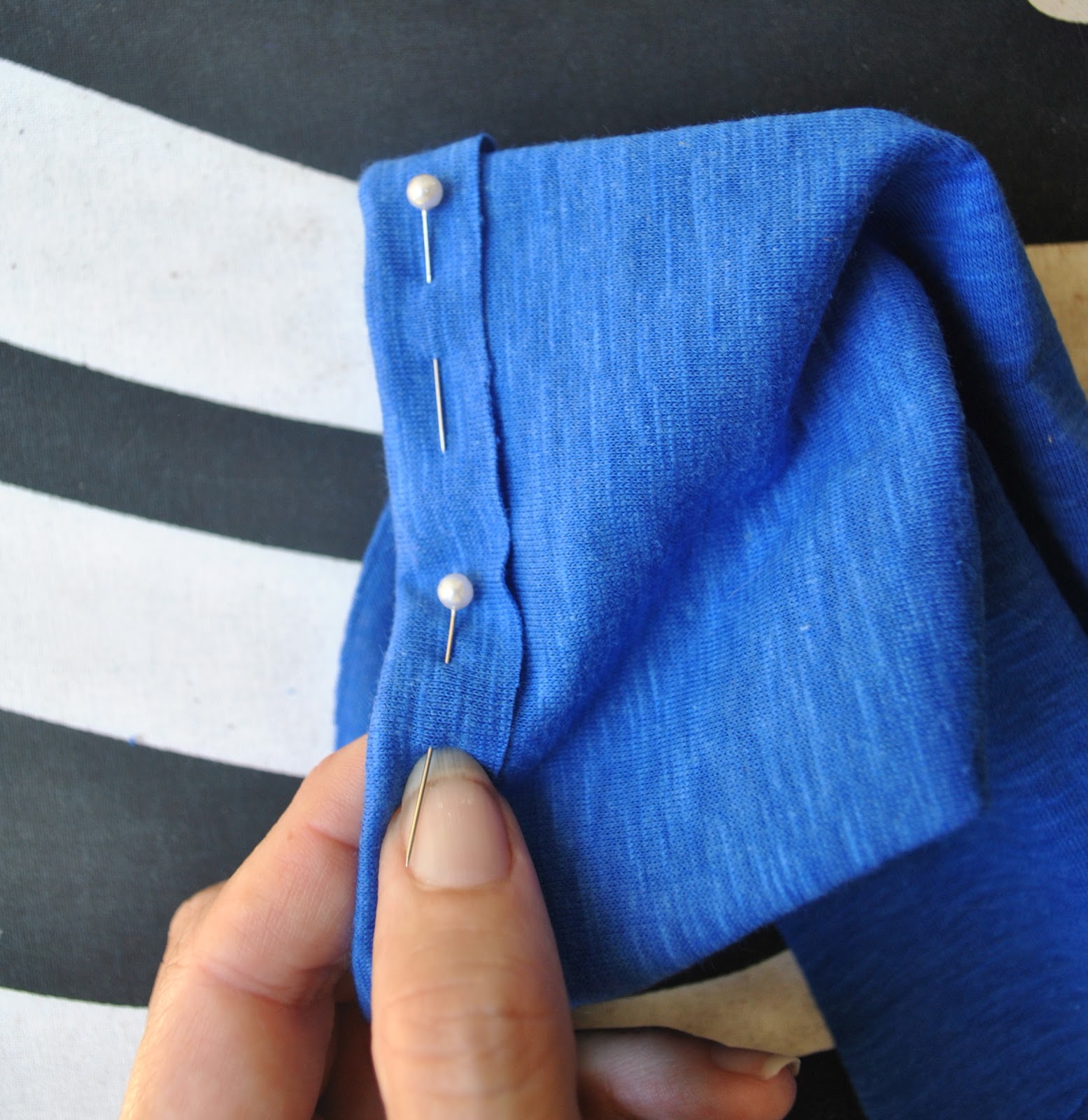
Pin in place.

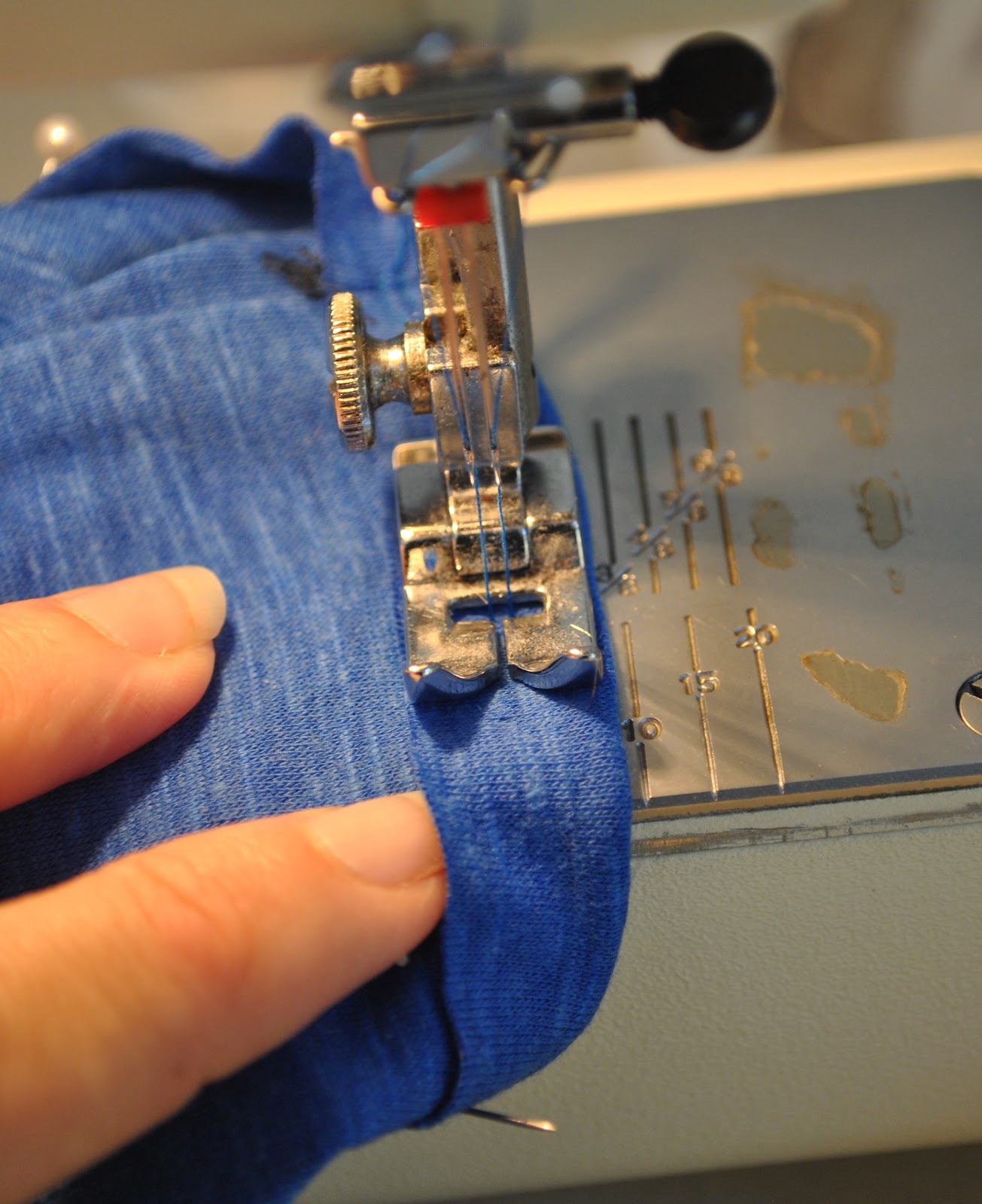
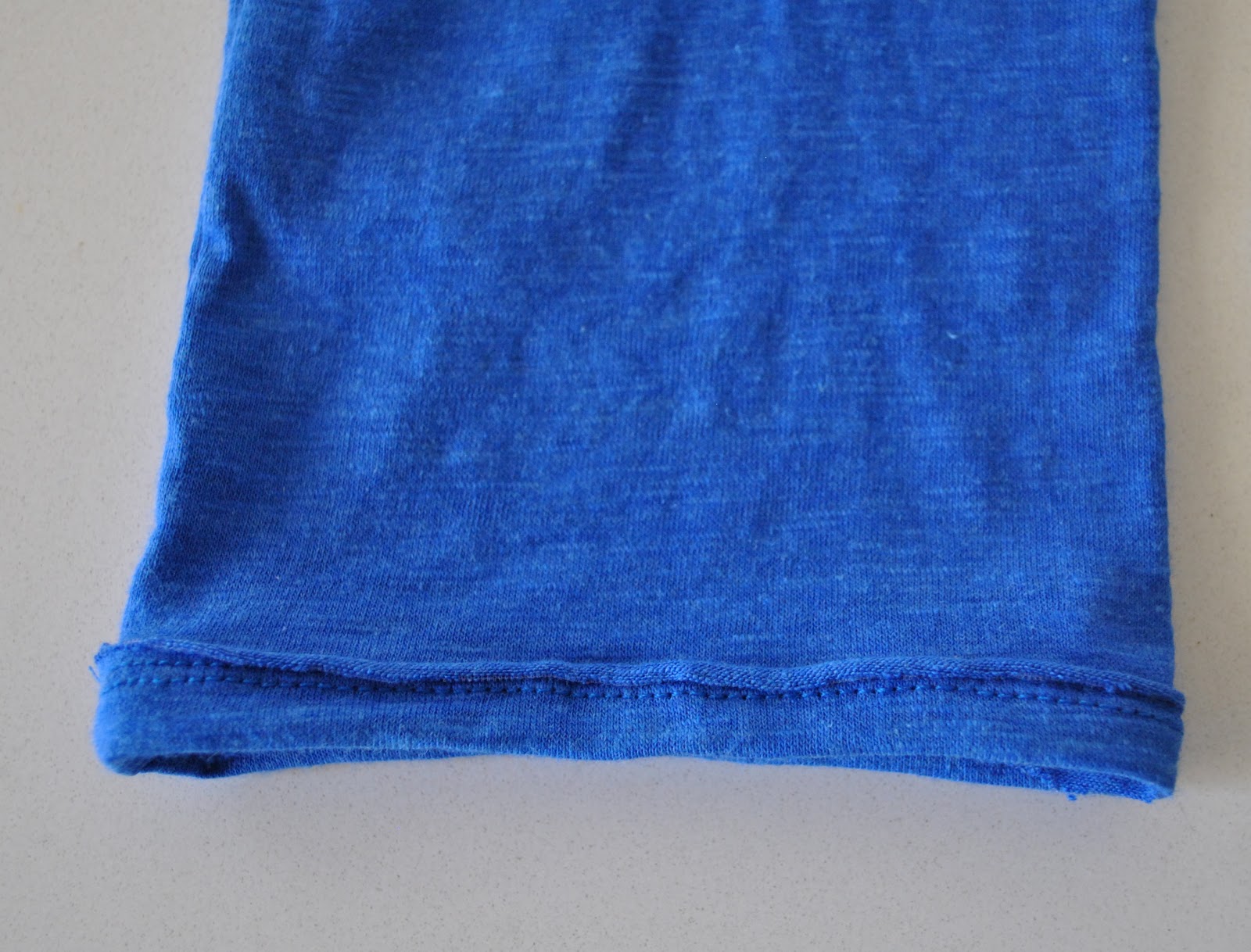
Using a twin needle on your machine, stitch the strip down, keeping the stitching a perfectly even length from the folded edge.

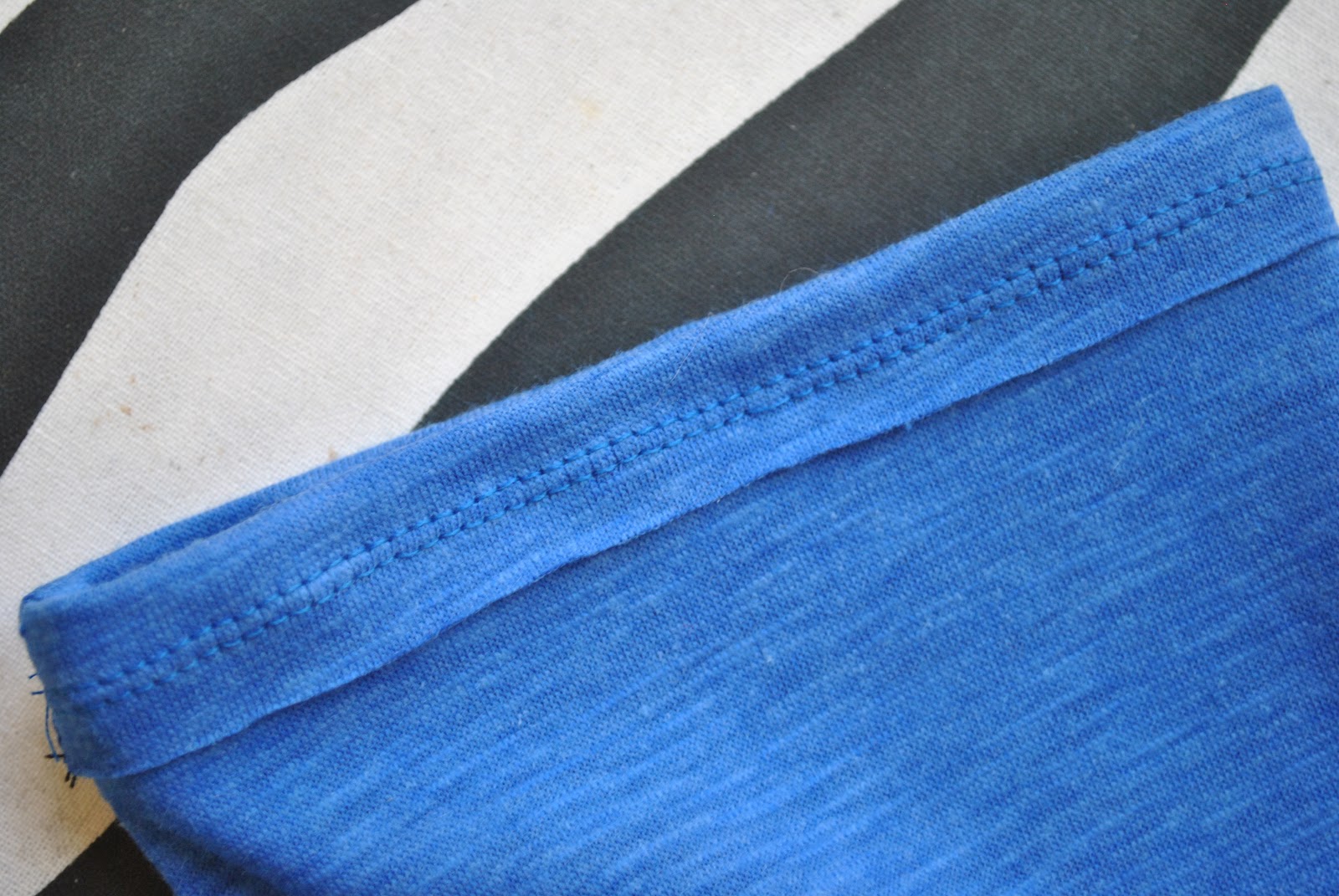
So, you end up with this, which doesn’t look particularly… wow.  In its ironed, just-been-neatly-sewn state.  But wait…

…after washing, the raw edge of the knit will curl up nicely, creating a tight little ridge over the stitching.

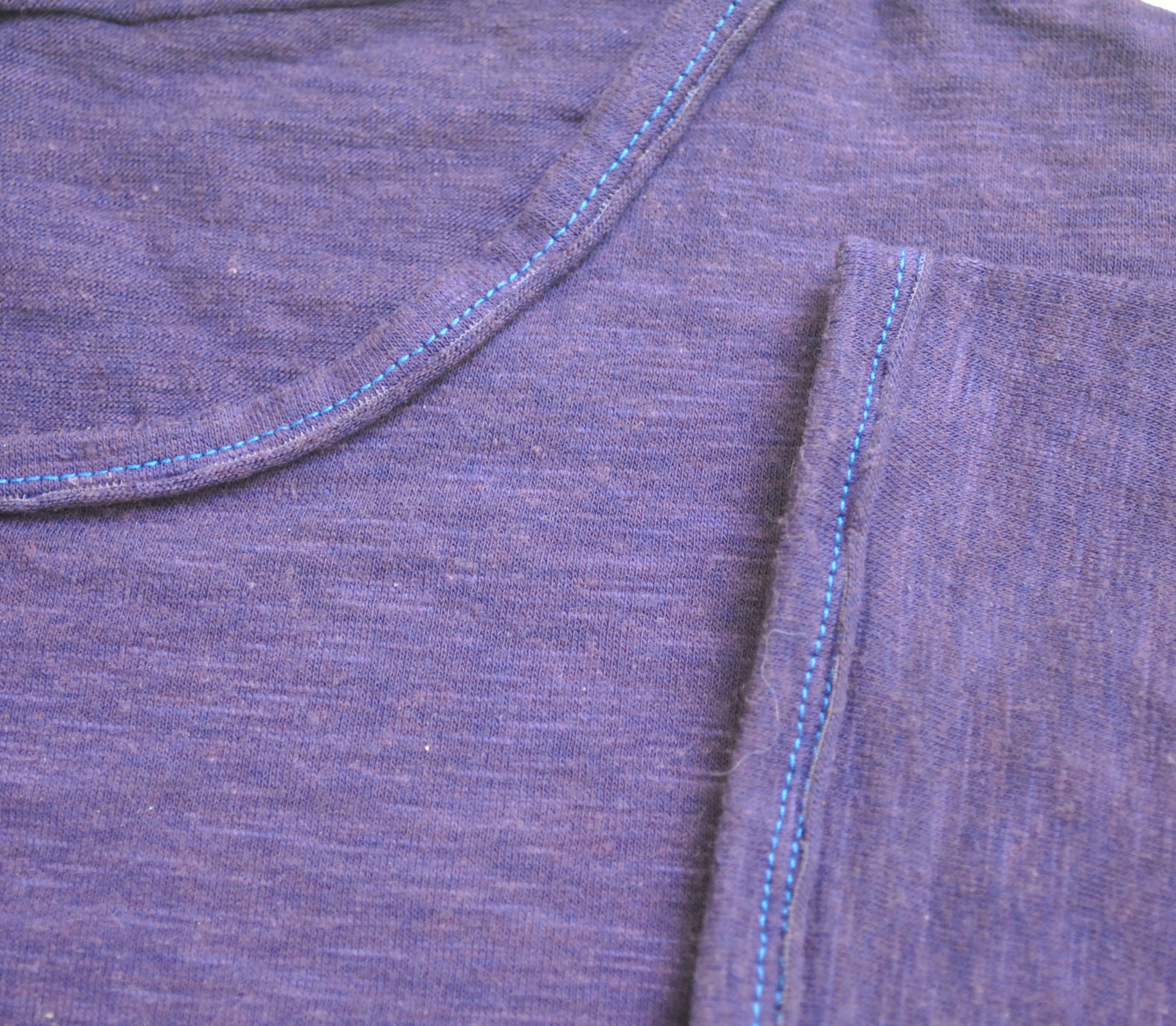
Then I dyed the T-shirt using iDye in Crimson, which throws the blue stitching into focus.  Of course, if you don’t want contrasting top-stitching to show up as a feature on your garment; you must choose a thread colour that is going to blend in with your final colour after dyeing, as I did for my “bat” shirt.  In that case, I top-stitched with a black thread, since in that design I wanted the top-stitching to blend in, and the shirt was going to become a deep deep brown.  But in this case I like the tiny accent of blue on an otherwise very plain shirt.  And the way the raw edge of the edging has curled up and over the lower row of stitching is very pleasing.  I think it looks a little bit like piping.

pinterestmail

A double-sleeved shirt


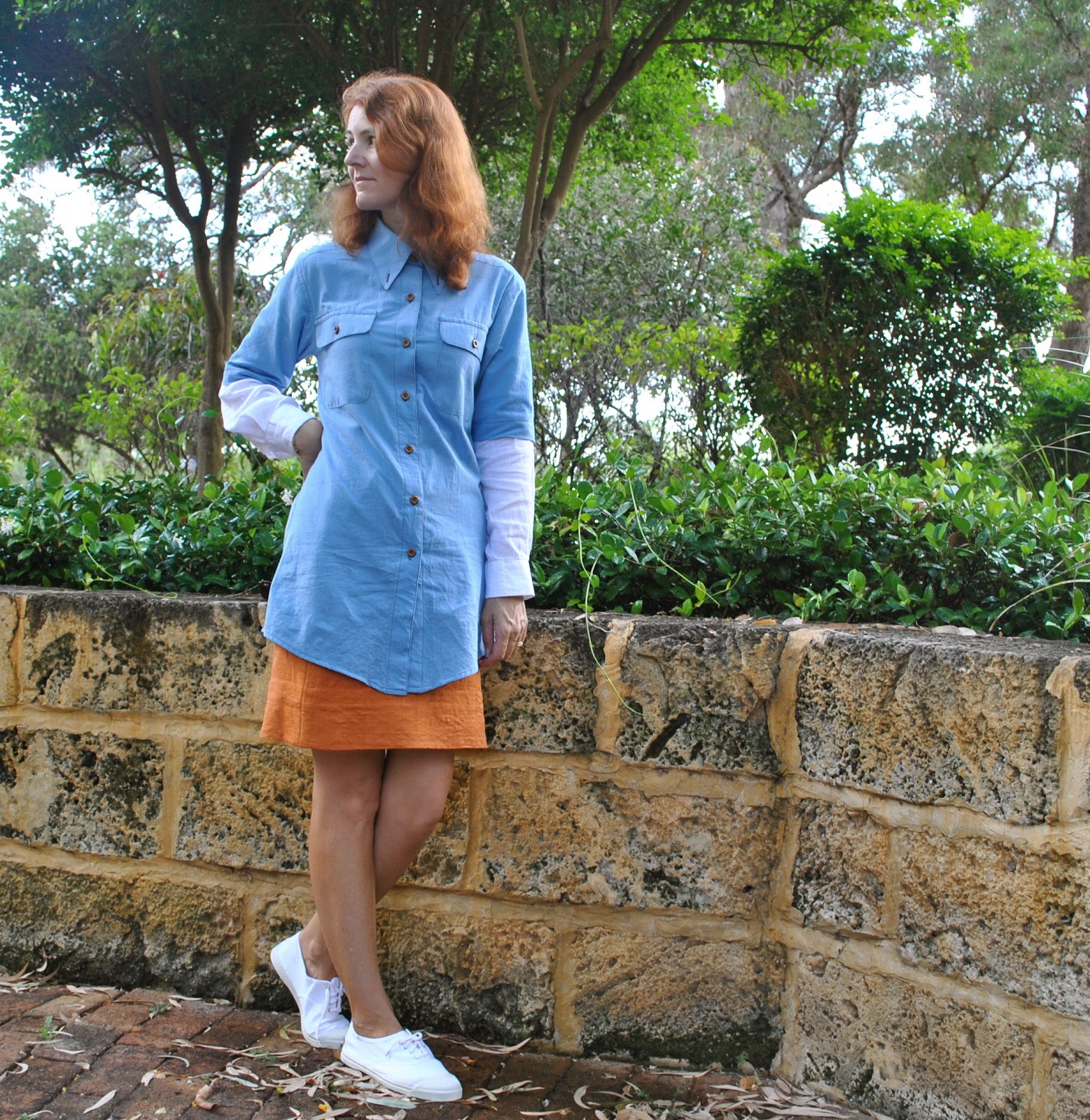
Remember I said I had made 6 shirts over the past month and a half?  well here ’tis t’ sixth!
This blue shirt was was intended for one of my boys and was pretty much finished, but I was getting more and more disillusioned with it and realising that they would probably not find it in the least bit cool.  The colour and the fabric are too flat, the style is too old, and the whole deal is not hip at all… :((   so I set it aside and made other plans for their pressies…
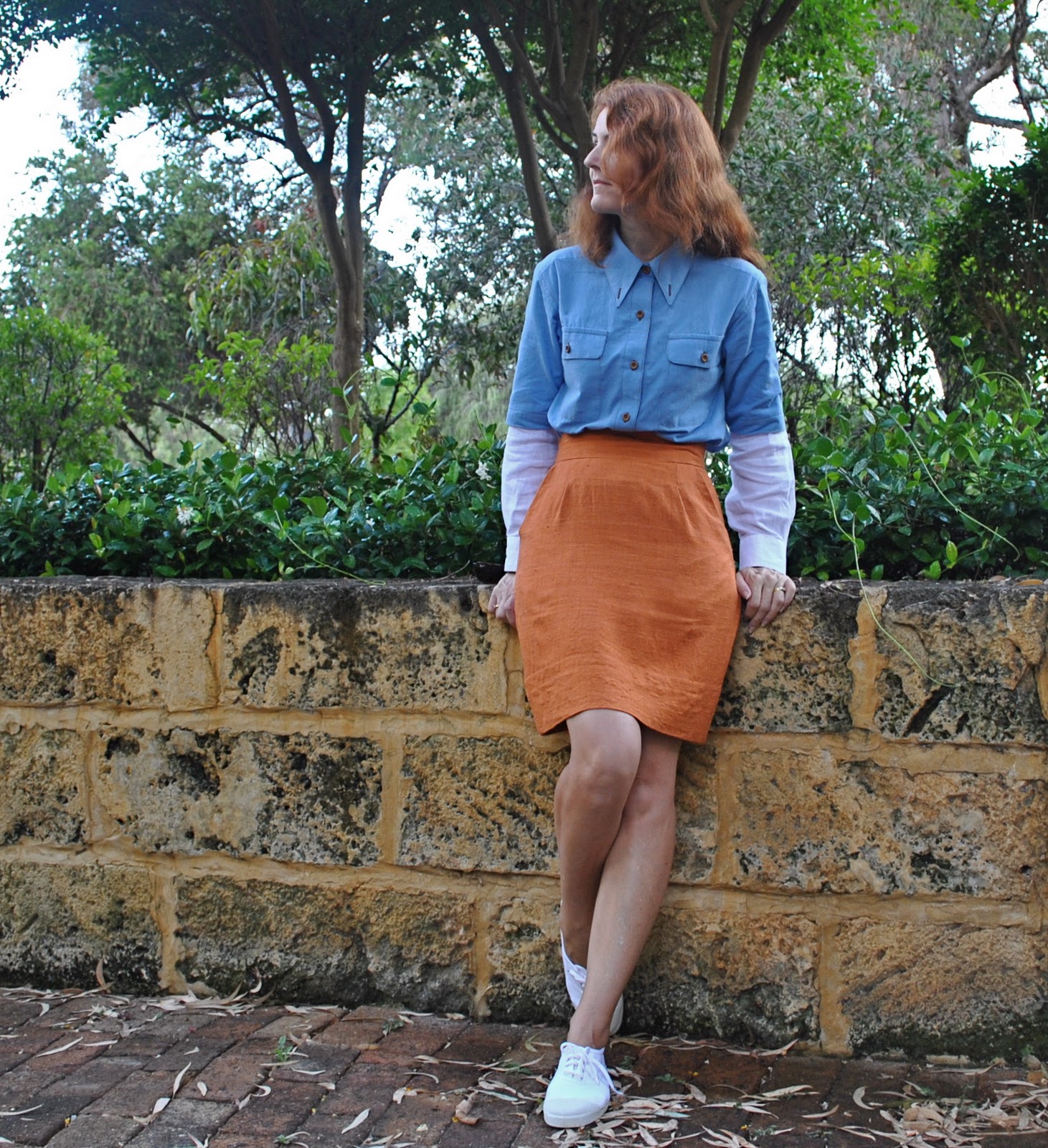
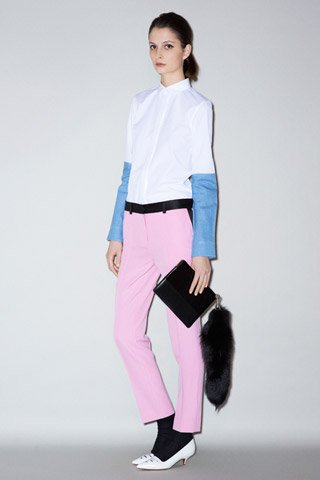
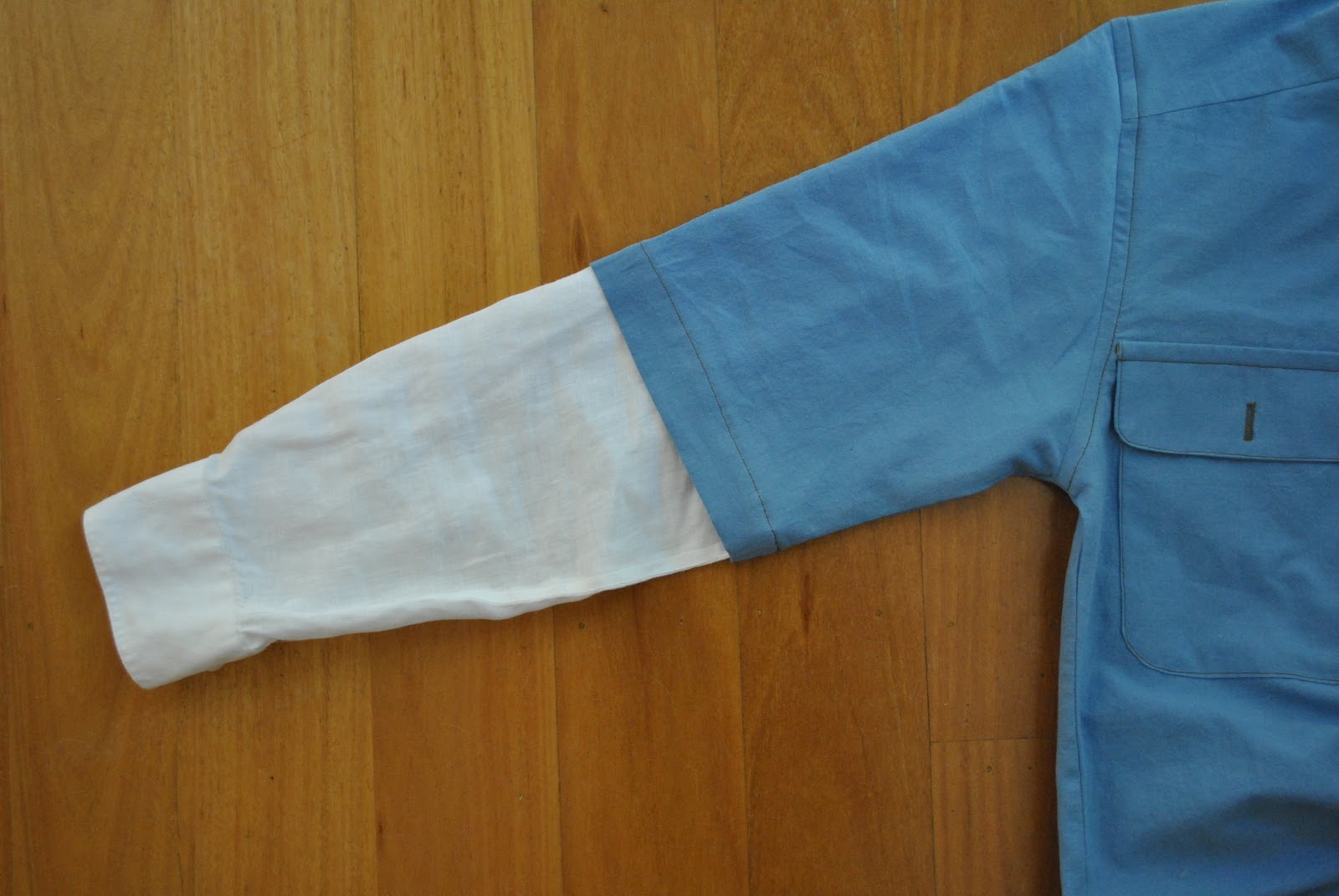
Then I recalled an editorial picture I had seen and loved, of a Celine shirt from pre-fall 2011; which appeared in that picture to have double sleeves.  A long sleeve of a different colour peeping out from underneath a prim high-collared short sleeve shirt…  I had loved this look and mentally filed it away for future use.  Now whammo realised that I had the perfect candidate all ready and waiting!!
So, I went online to find a picture from the original release of the collection (below) and saw straightaway that the sleeve that inspired me is not in fact a double sleeve, but appears to be a single and pieced sleeve with a seam at the midpoint… but by this time I was in love with my falsely inspired idea of the double sleeve and so this was what I set out to do…
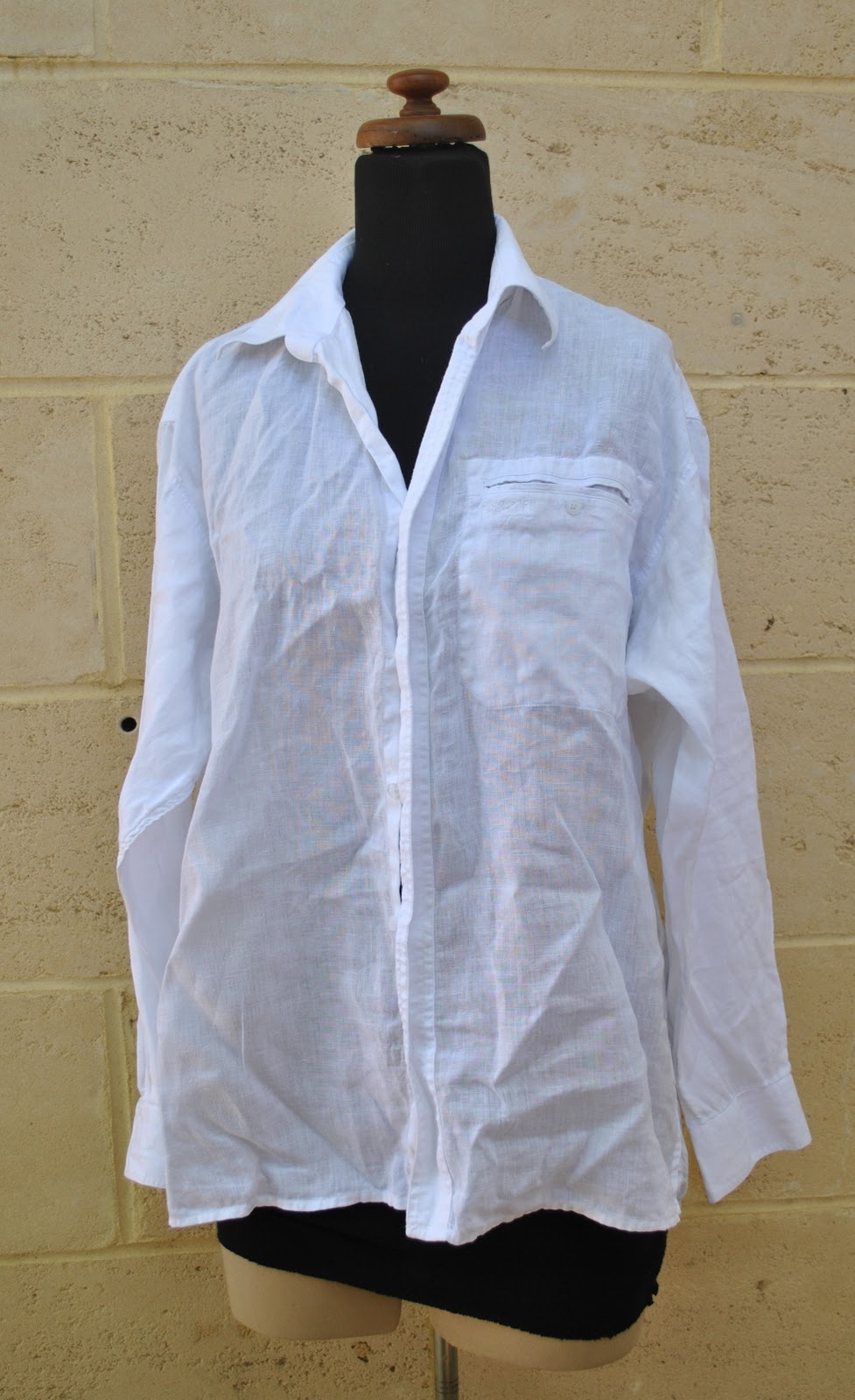
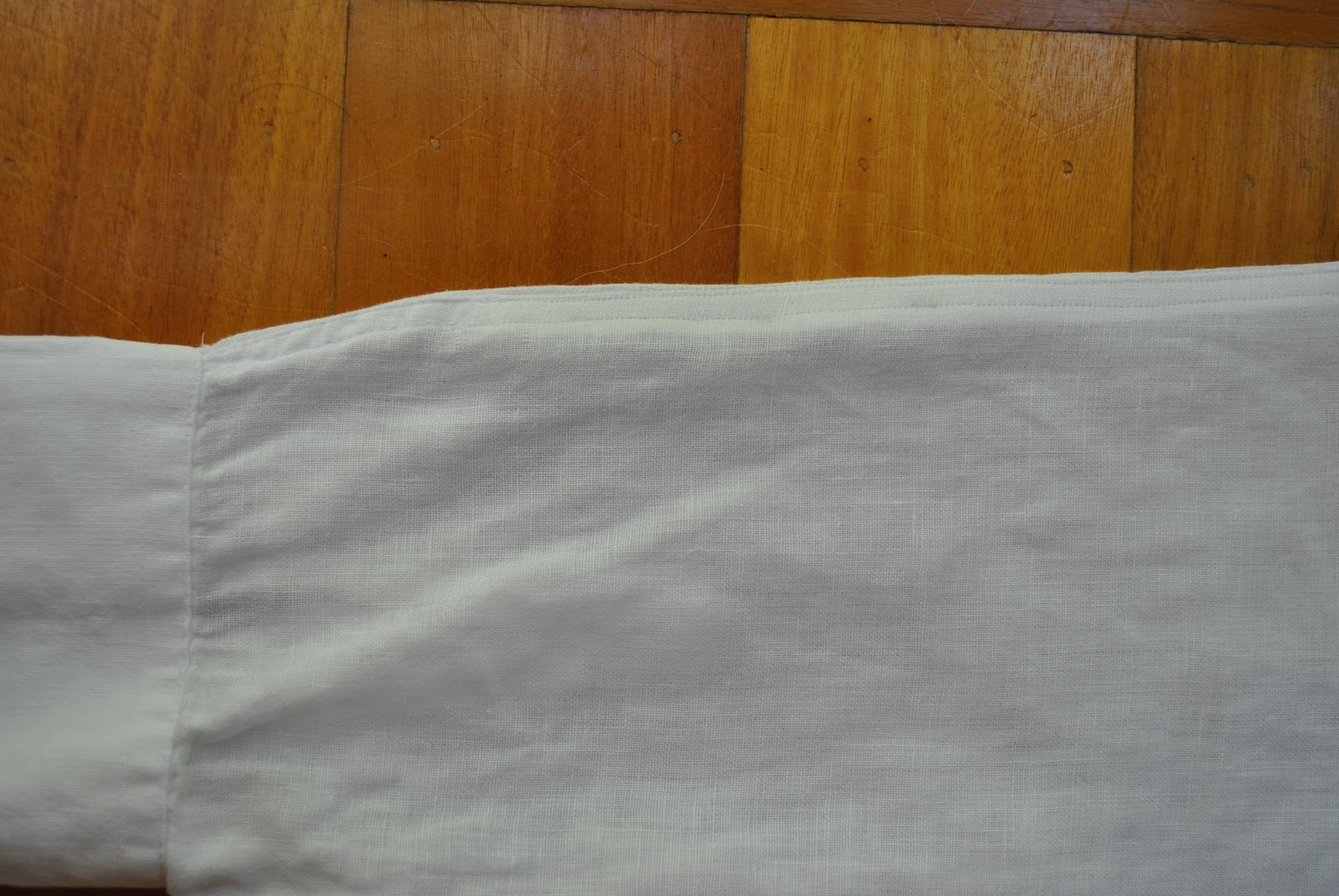
I have had this long sleeve, white linen men’s shirt (below) sitting in my refashion pile for… ahem, mumble years.  Er, hazarding a guess at five? … cough cough.  It doesn’t fit anyone in my mob, but is still pretty well-made and the linen is a lovely fine quality.  I took the scissors to it and liberated its sleeves (the rest of the shirt will be put to good use, don’t worry…)

                                                  source

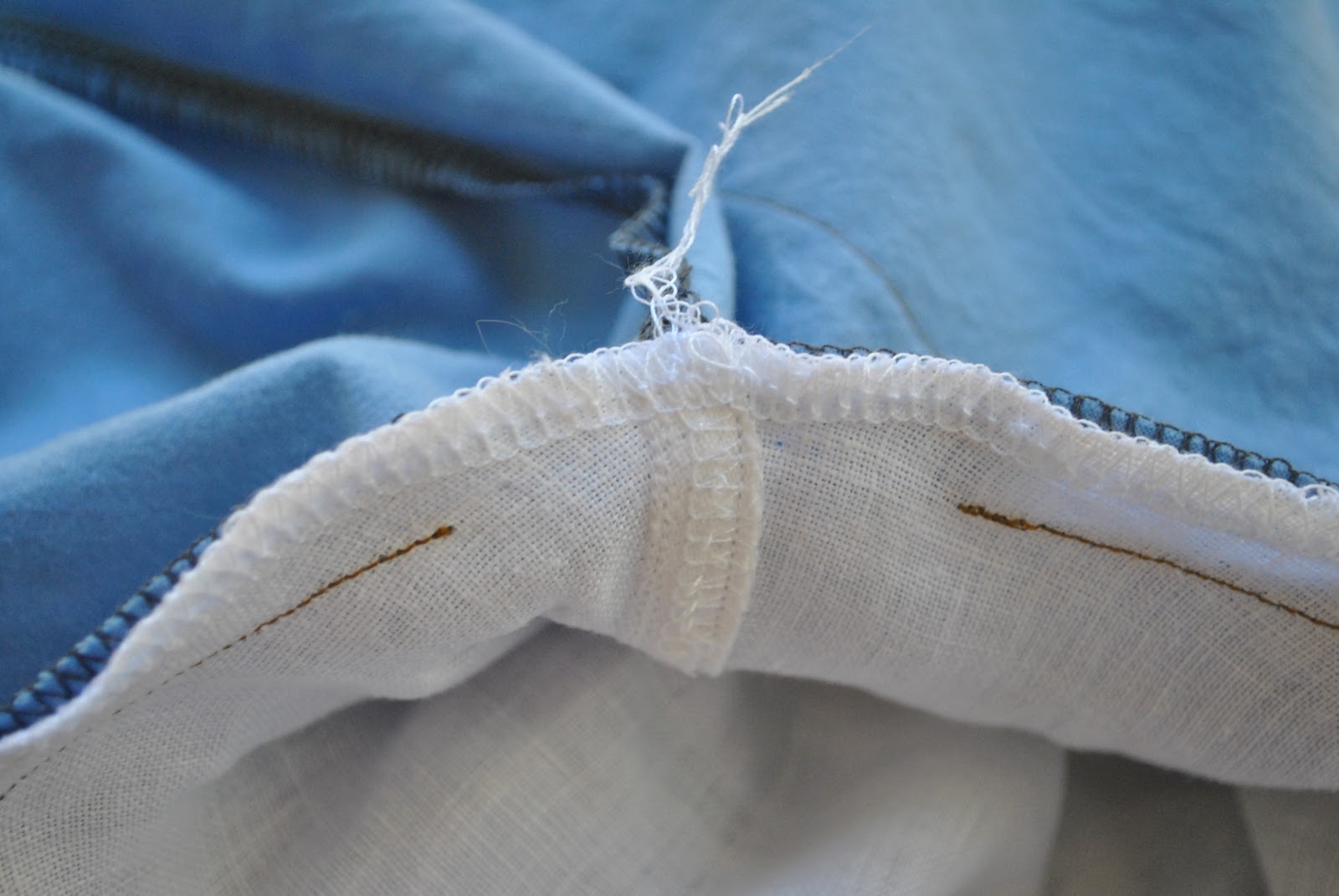
Taking the blue shirt; well I had to cut off my perfect flat felled sleeves and flat felled side seams (a wrench!) and resize the shirt to me, since all my boys are a lot bigger than me.  I’m afraid I just didn’t have the heart to go through re-flat-felling these seams again either, since I was getting severely “shirted-out” by the time I had got to this one; number six.  I was kind of like, oh yeah, whatever, run ’em through the overlocker  (brrrrrrrrr! and 10 seconds later) yup, that’ll do.
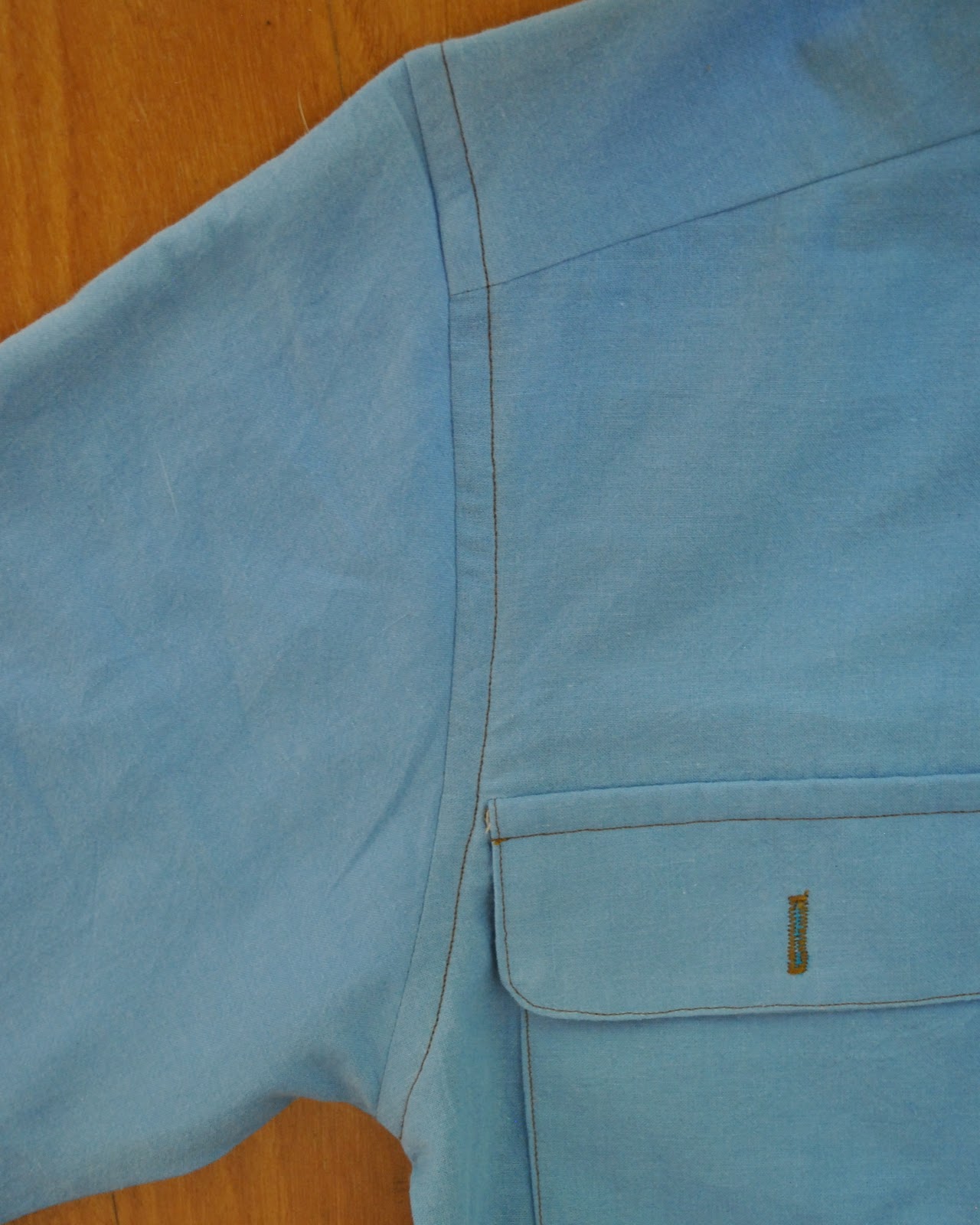
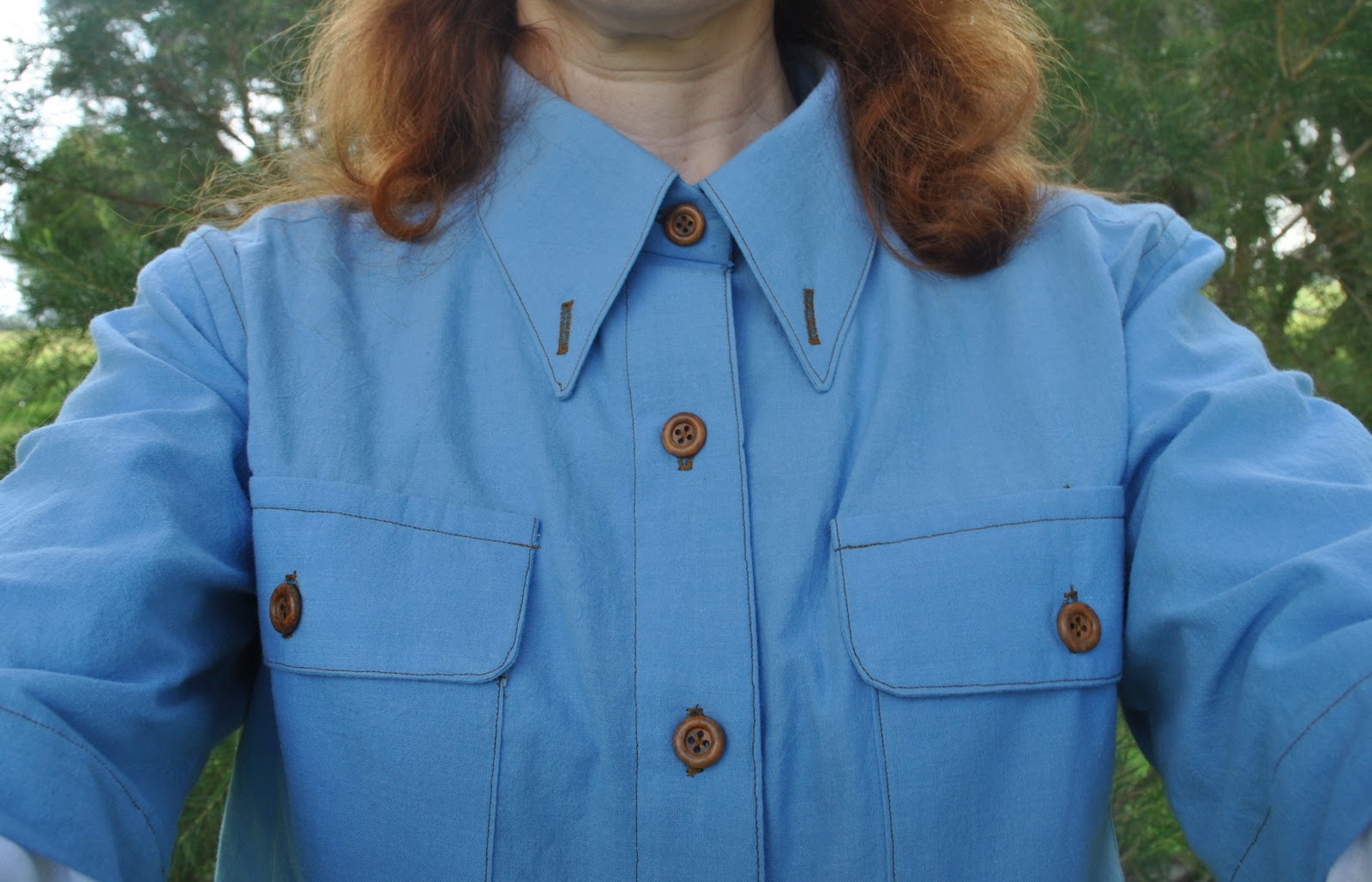
I didn’t unpick the pockets either, and just left them completely in situ.  This is why they appear quite big on my little chest and are disappearing into my armpits.  Hey, I can live with that.  The white linen sleeves were also quite massive on me so needed resizing as well… this turned out to be more challenging that it sounds, since the sleeve seam was a French seam and double top-stitched down in place.  Tricky!  I got there in the end, but the insides are not gorgeous… basically I ended up just overlocking the raw edges of my new seam and double top-stitching this down from the outside to match up with the remainder of the original seam as it goes down in the cuff.  The cuff and the placket both are perfectly double top-stitched, and I wanted to keep all that intact and mimic this finish as much as I could.  I think the seam matched up pretty good, yes?  Can you see where the old topstitching ends and the new begins?

I wanted the sleeves to be fully separate from each other as the white sleeve emerged from out of the blue sleeve, which was a bit of a puzzle to mesh together…  I ended up deciding to sew the blue sleevecap in flat, sew up and finish the sleeve and side seams of the shirt; and then after this set in the white linen sleeve.  This meant the white sleeves could only be machine stitched in so far.

I completed the set-in by hand.

Last step; to topstitch the allowances of both sleeves together down to the shirt body…

Just to show the garment full-length… (might not wear it this way much)

Luckily I hadn’t yet done the buttonholes on the shirt and so could put them on the “female” side of the shirt.  I love these gorgeous wooden buttons from Fabulous Fabrics, the same ones that Sam chose for his shirt here.

Details:
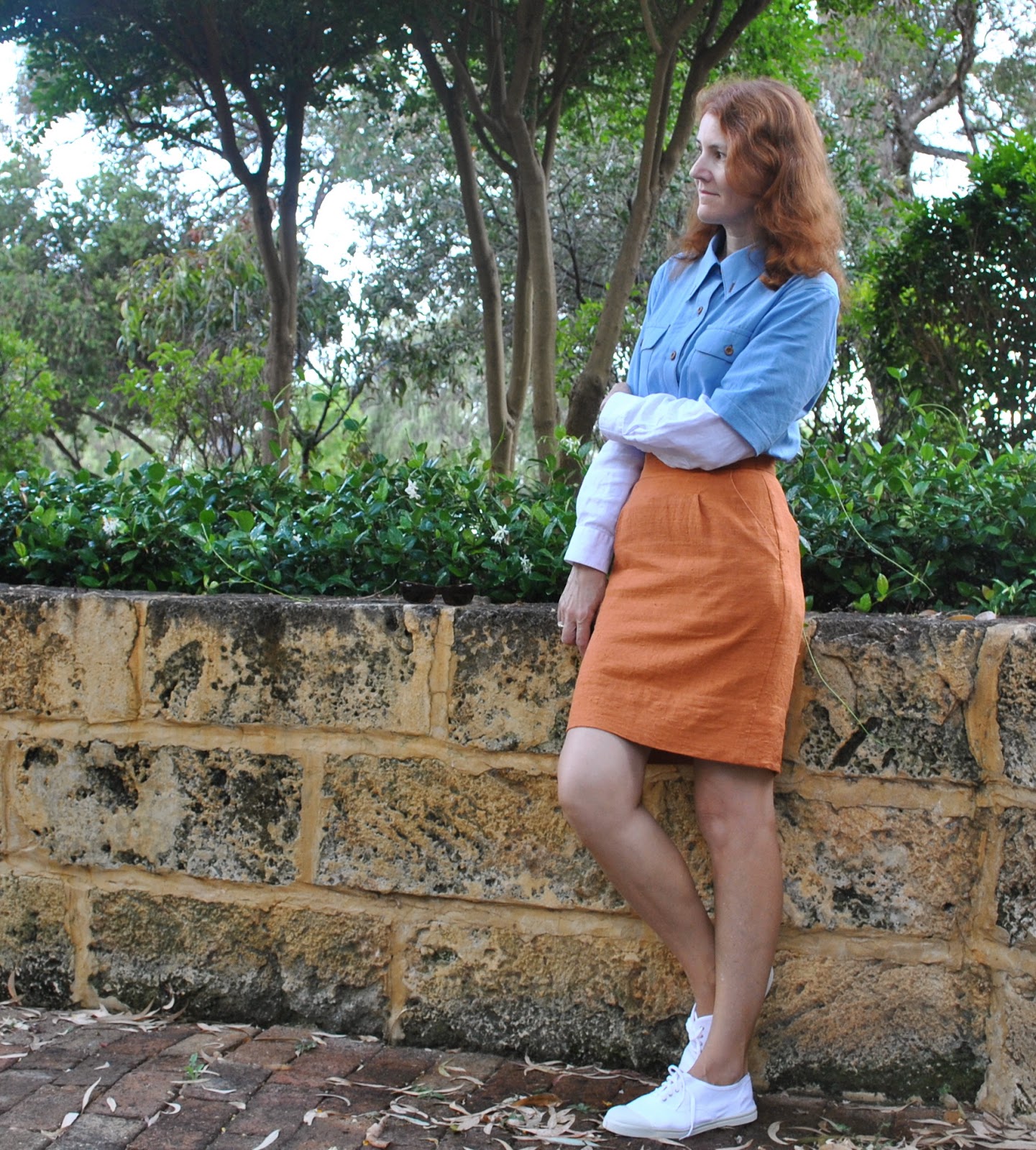
Shirt; Burda 7767 modified, of shot cotton in Sky and with long white sleeves from an old shirt
Skirt; Vogue 8363 modified, of burnt orange raw silk, details here, my review of this pattern here, and see this skirt styled in 6 different ways here
Shoes; Bensimon, from seed

pinterestmail

Flat-felling a curved seam

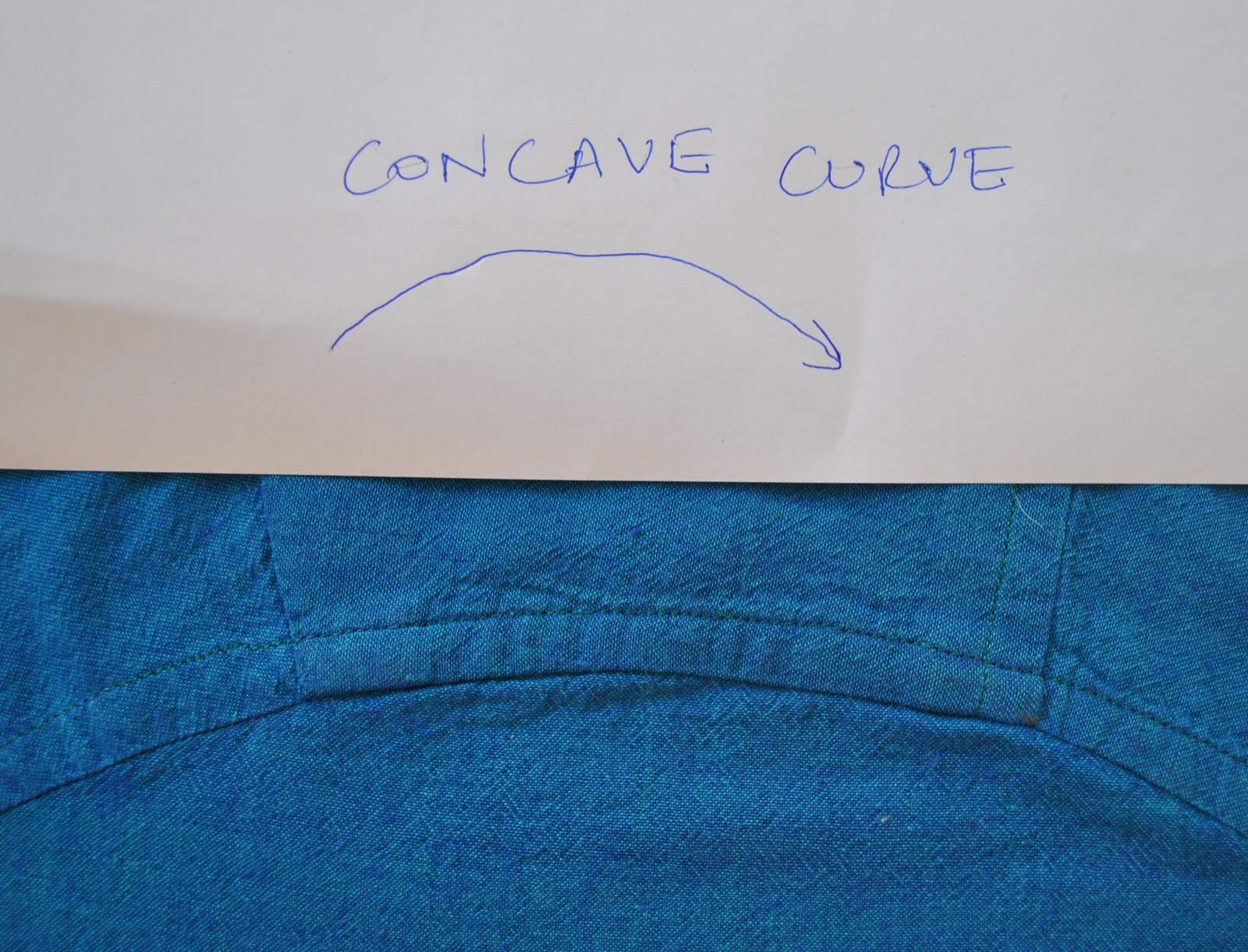
Flat-felling gives such a nice finish to tailored items, but if you try it out on a seam with a bit of a concave curve happening it can end up looking messy and not much of an improvement to the looks of the garment after all!
I wondered whether running a line of gathering stitched along the seam allowance might help to solve the problem of turning under that excess fabric around the curve and help it sit nice and flat.  So I tried it out on the sleeve cap seam allowance of the next shirt to roll out of the atelier, Craig’s birthday shirt, and it worked like a charm… I did take some pictures to illustrate but unfortunately a couple seem to have been lost in a recent computer clean-up  :(( so for the missing pictures I shall attempt to explain as best I can… 😀
So.
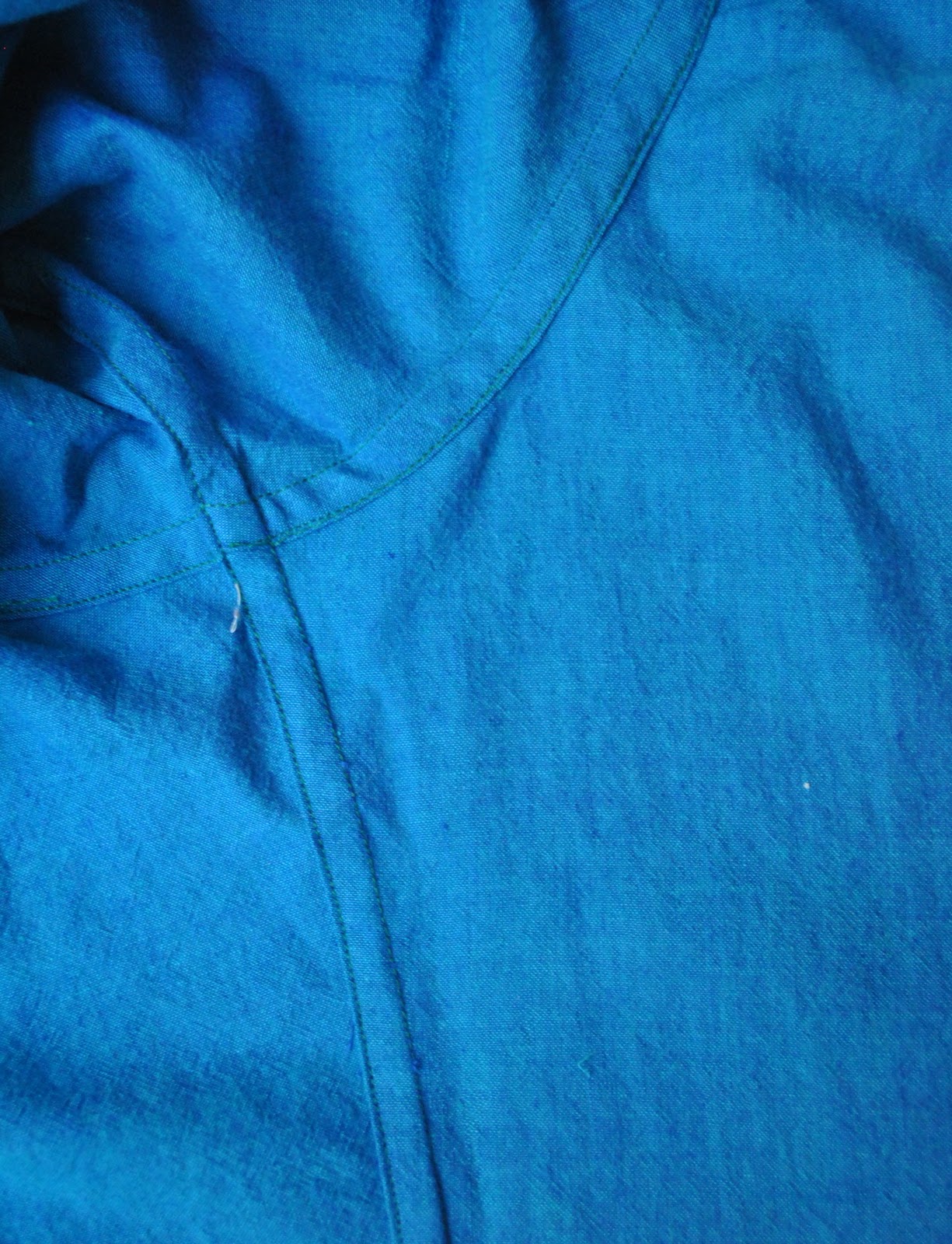
The sleeve cap  has been attached flat to the body of the shirt, and the sleeve and side seams of the shirt are still unstitched.  I want to flat-fell the seam allowance along that top curve of the sleeve cap.  The sleeve cap seam has been pressed up towards the body of the shirt…

Lift up the top layer of the seam allowance and snip the underneath allowance to just less than half its width, just as you would with a straight flat-felled seam (tutorial for that here)…

Now run a single line of gathering stitch along the wider upper curved seam allowance, at the halfwidth line.

Now turn under the raw edge along the line of gathering stitches, treating the line of stitching as the fold line.  If the curve is not very pronounced, the gathering may only need to be pulled in just a little…  Distribute and ease out the gathering as needed to achieve a flat a finish as possible.

Press and pin in place.

(missing picture here, sorry)  I topstitched the seam allowance down from the inside of the shirt; taking great care to keep the topstitching a perfectly even distance from the seam stitching, that is using the seam stitching as the guide to gauging the width of topstitching.  If you forget this and aim to topstitch using the folded edge as your guide, it may end up looking a little uneven on the right side (because not even the most careful of us is Perfect at folding under and pressing  an exact width fold), and this you want to avoid.  After all, the appearance on the outside of the garment is what counts!
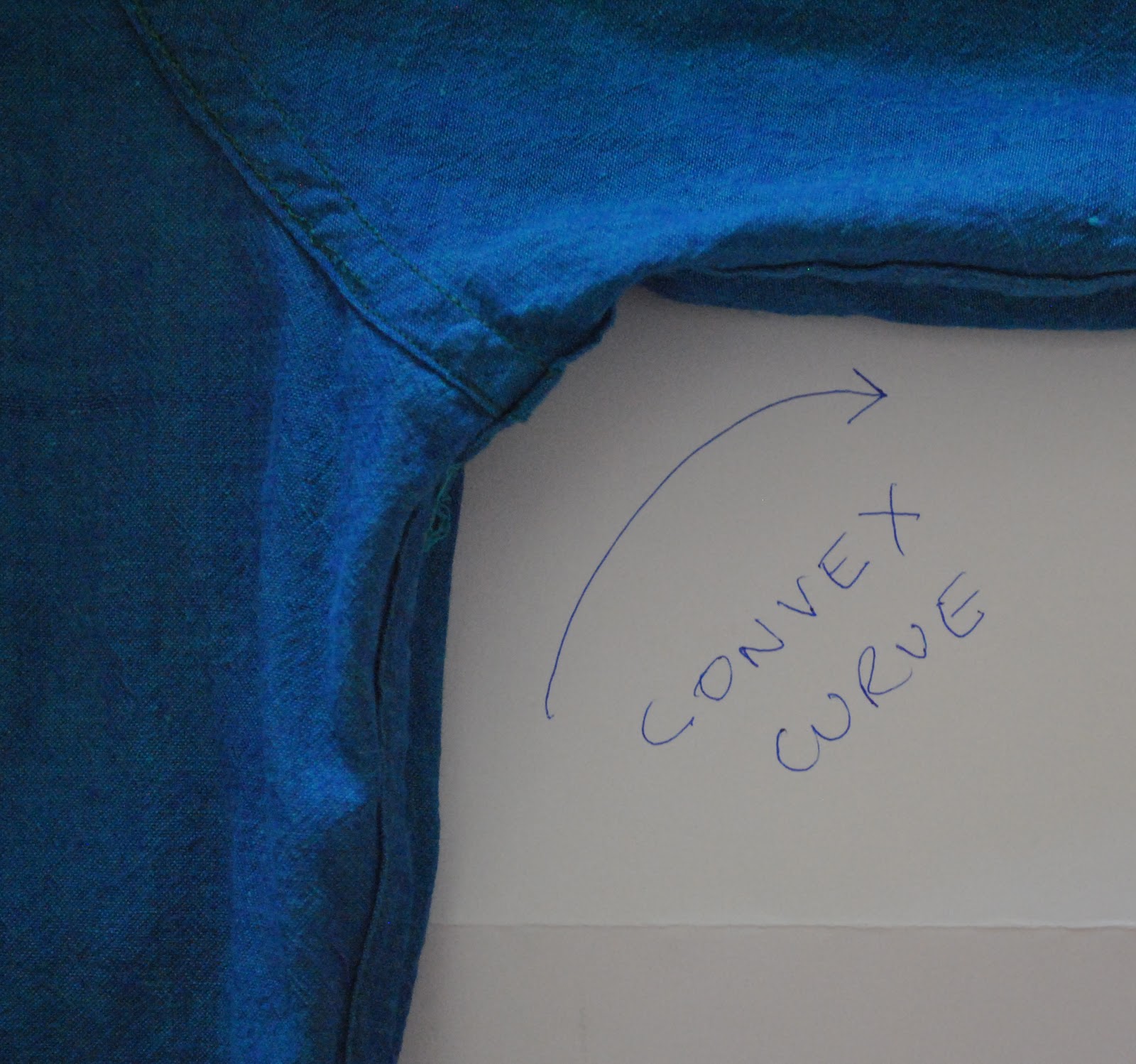
To illustrate; here is the underarm at the 4-corner point where the sleeve seam meets the side seam: Below; inside the armhole, that flat-felled edging has a few little bumps along that folded edge because of the allowance not turning under completely even-width so doesn’t appear super perfect..

but below; the outside does.  So I’m OK with that…

(another missing-in-action shot, so below is an “after” shot) Now I stitched the sleeve and side seam in one go; and flat felled this seam allowance.

Because this seam here is a convex curve the seam allowance has less fabric along the raw edge than the seam, (rather than more fabric as in for a concave curve) and so it folds under more easily.  However because there is less fabric, you need to stretch out the seam allowance a little when flat-felling it down.  In my experience this is a lot easier to achieve than dealing with the excess fabric in a concave curve, but very rigid fabric may either need a bit of a snip around very tight curves, or alternatively a HongKong finish may be more suitable.

(Hmmm, diverted a little into mathematics territory there, but I hope that helped to illustrate the point!)


I don’t know I would bother with flat-felling the side-and-sleeve seam of a long sleeved shirt,; sewing neatly up the inside of a long tube is probably high up the list of things that are disproportionately difficult with consideration to actually how much it really improves the look of the shirt… but I’ve found sewing up the inside of a short-sleeved shirt to be OK and not too much of a hassle.

pinterestmail
Switch to mobile version
↓