Tag Archives: Felting

all Aussie adventures

MY OUTFIT IS FINISHED!!!
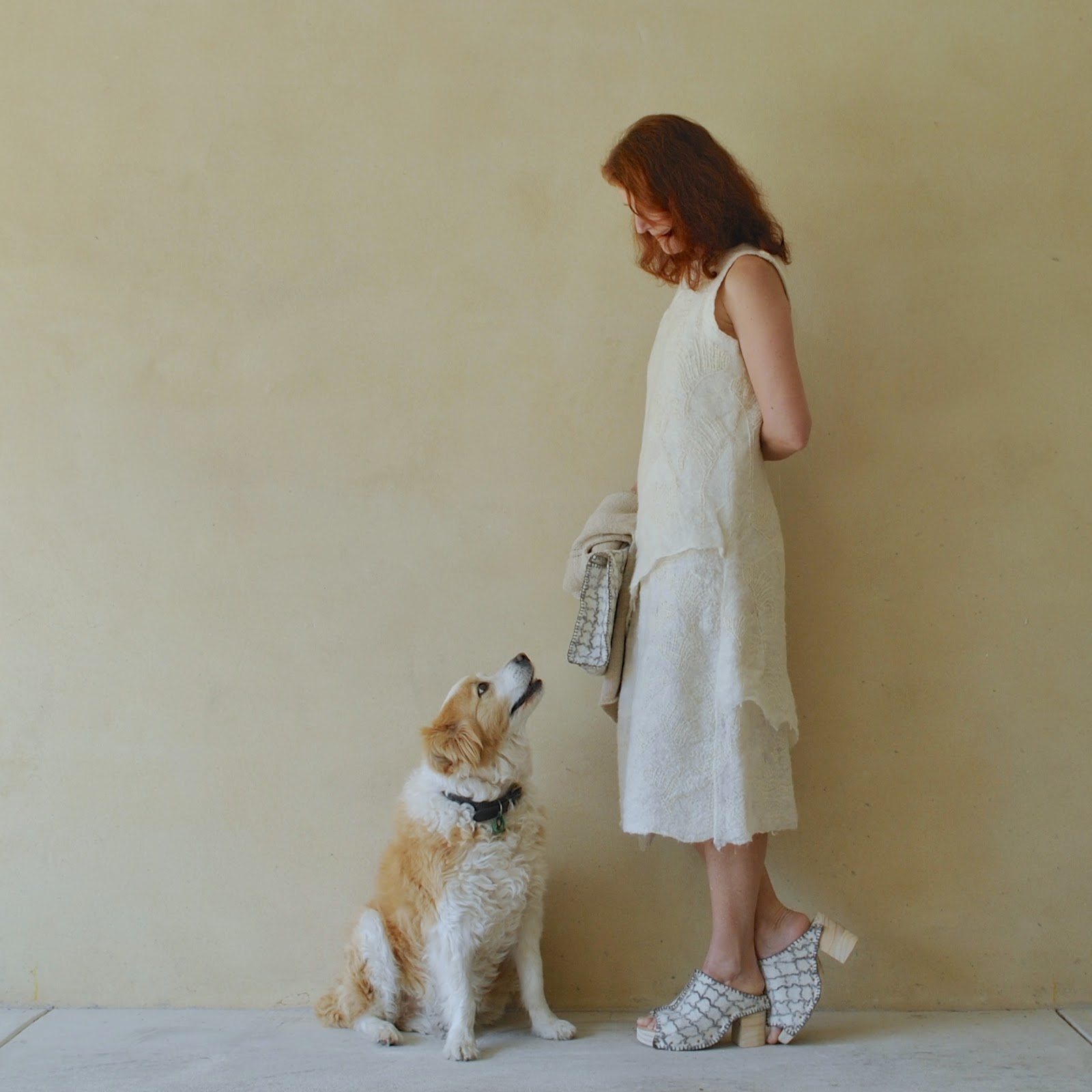
And I am showing it all together here for the first time.  Can I just say right here; wooooohooooot!
The challenge, as laid out by Nicki of this is moonlight, should you choose to accept it, and I did! was to make for yourself an entire outfit using ONLY locally sourced materials.  Sounds simple, right?  It has been anything but!
I’m very grateful to Nicki for conceiving this brilliant and very thought-provoking challenge, and for inviting me to take part.  This has been one exceedingly amazing ride, has blown my mind more than any other dressmaking challenge I’ve ever done, and really pushed my creativity to the limit.  At the beginning of the year I seriously did not think I would be taking my outfit to the levels I did…. I thought for sure I would be giving myself a pass on some things, for example;  thread, and allowing myself to use regular Gutermann’s thread.  As time went on though I toughened up, embraced the idea of going the whole hog; and I’m very pleased that I did manage to rise to the challenge and make the maximum possible from locally sourced products!
In fact, I’m quite proud and extremely happy! :))
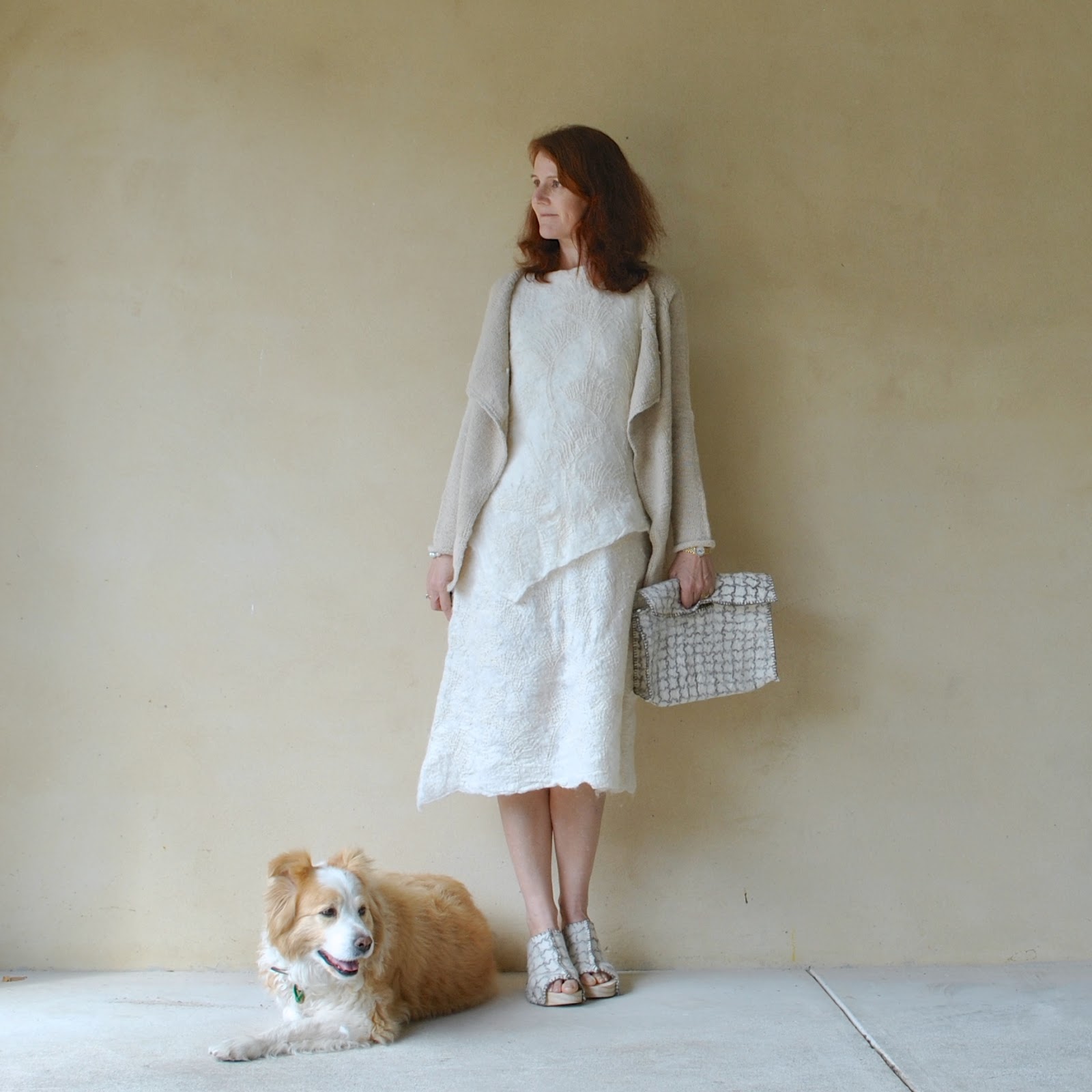
For the challenge, I made:
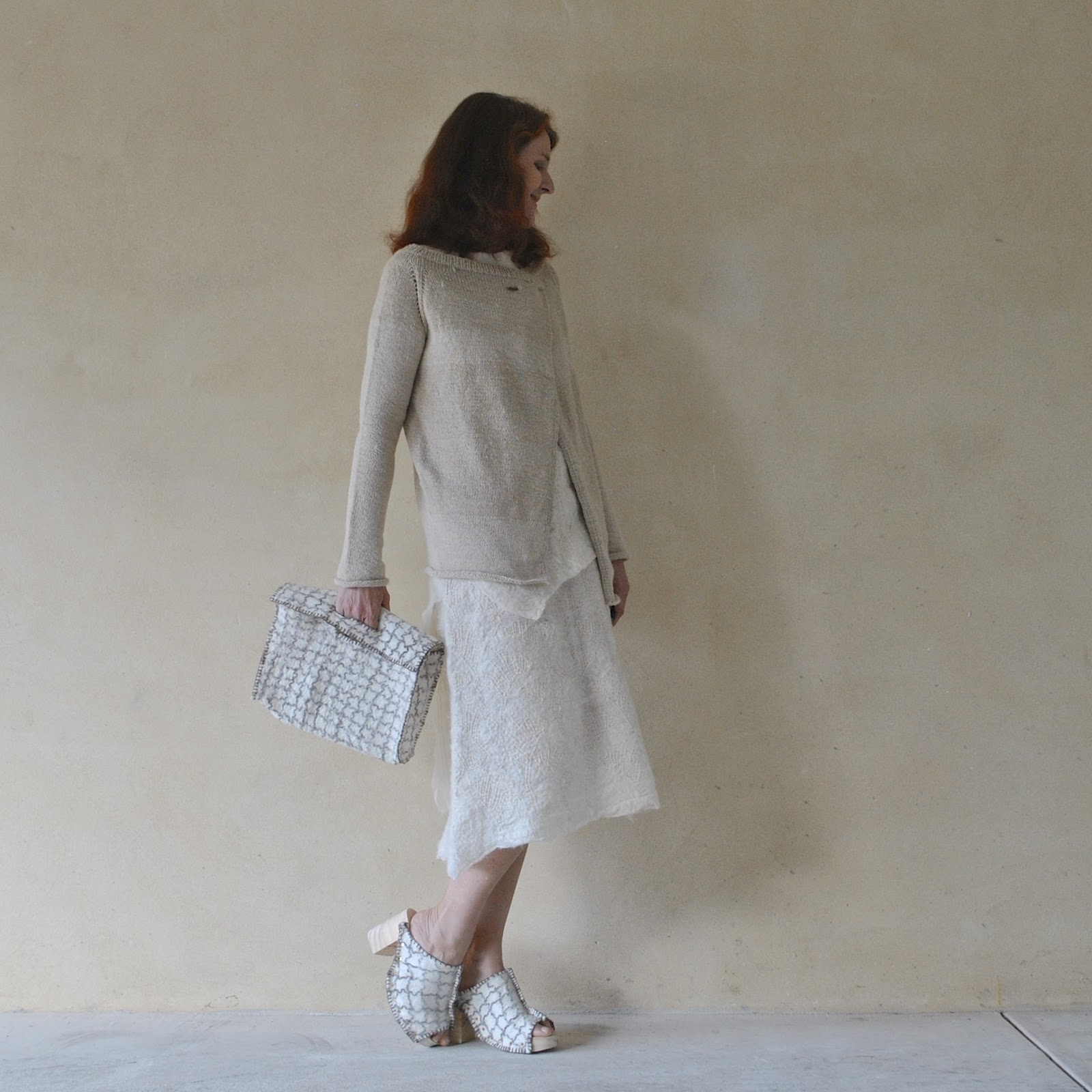
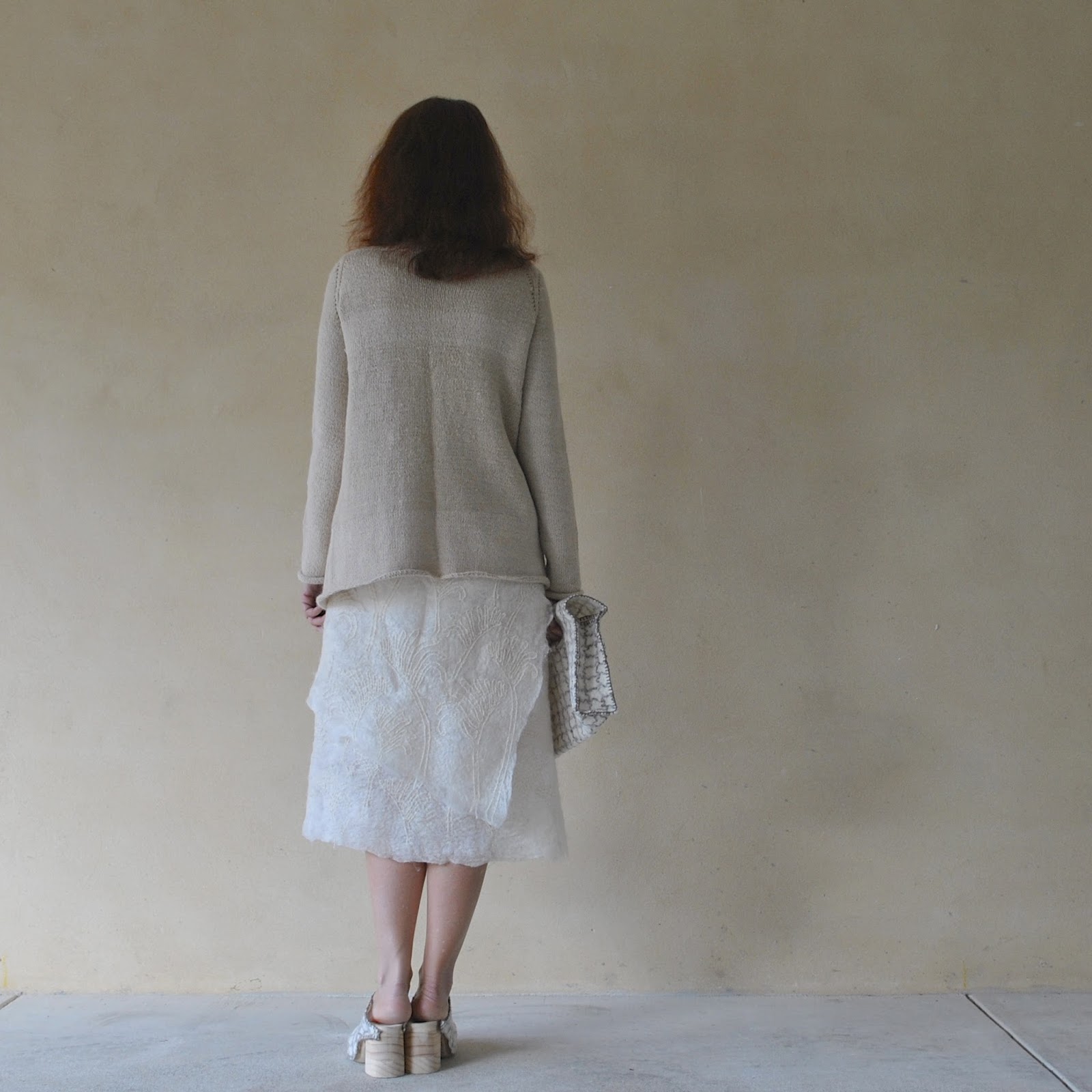
a knitted alpaca cardigan/jacket
a merino felt dress
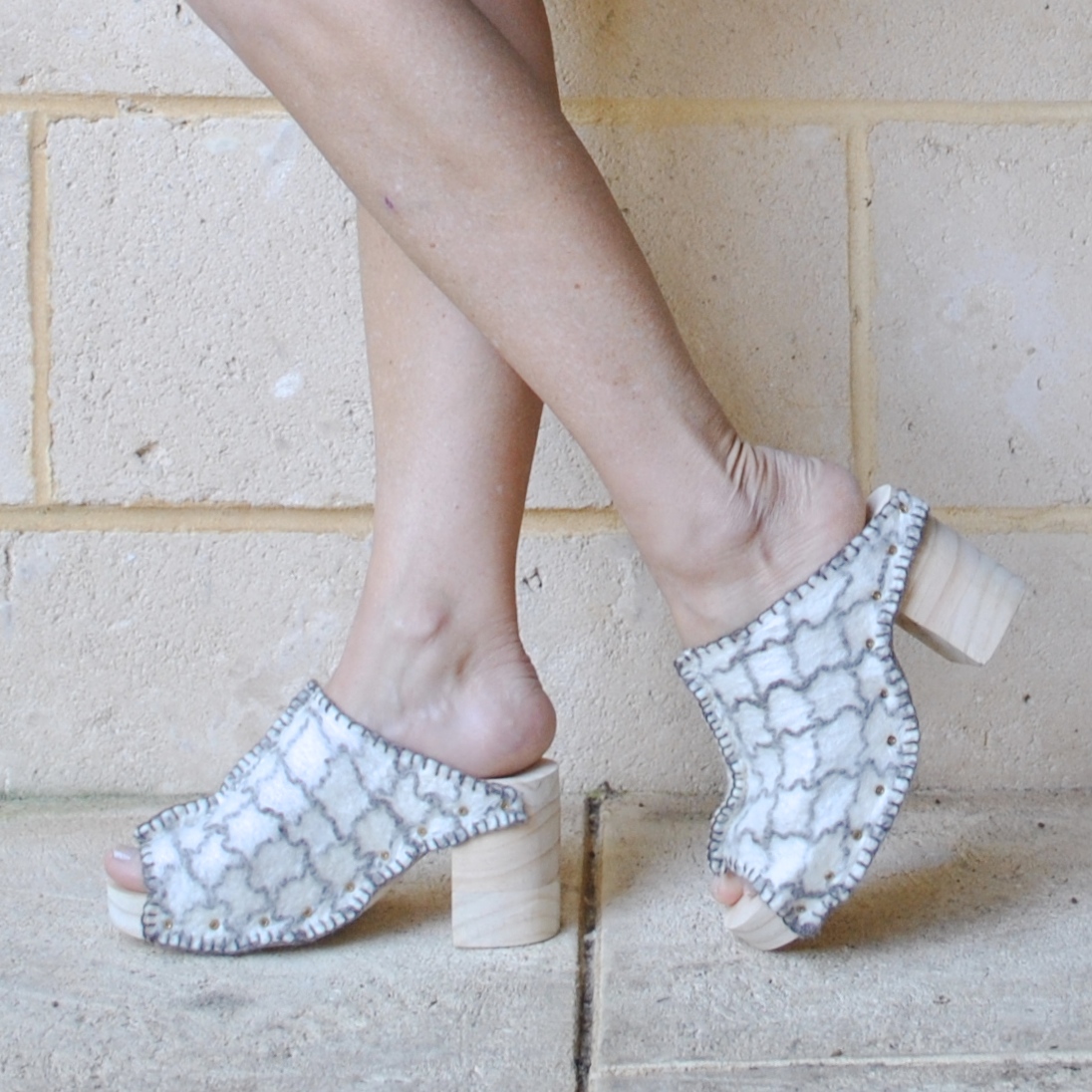
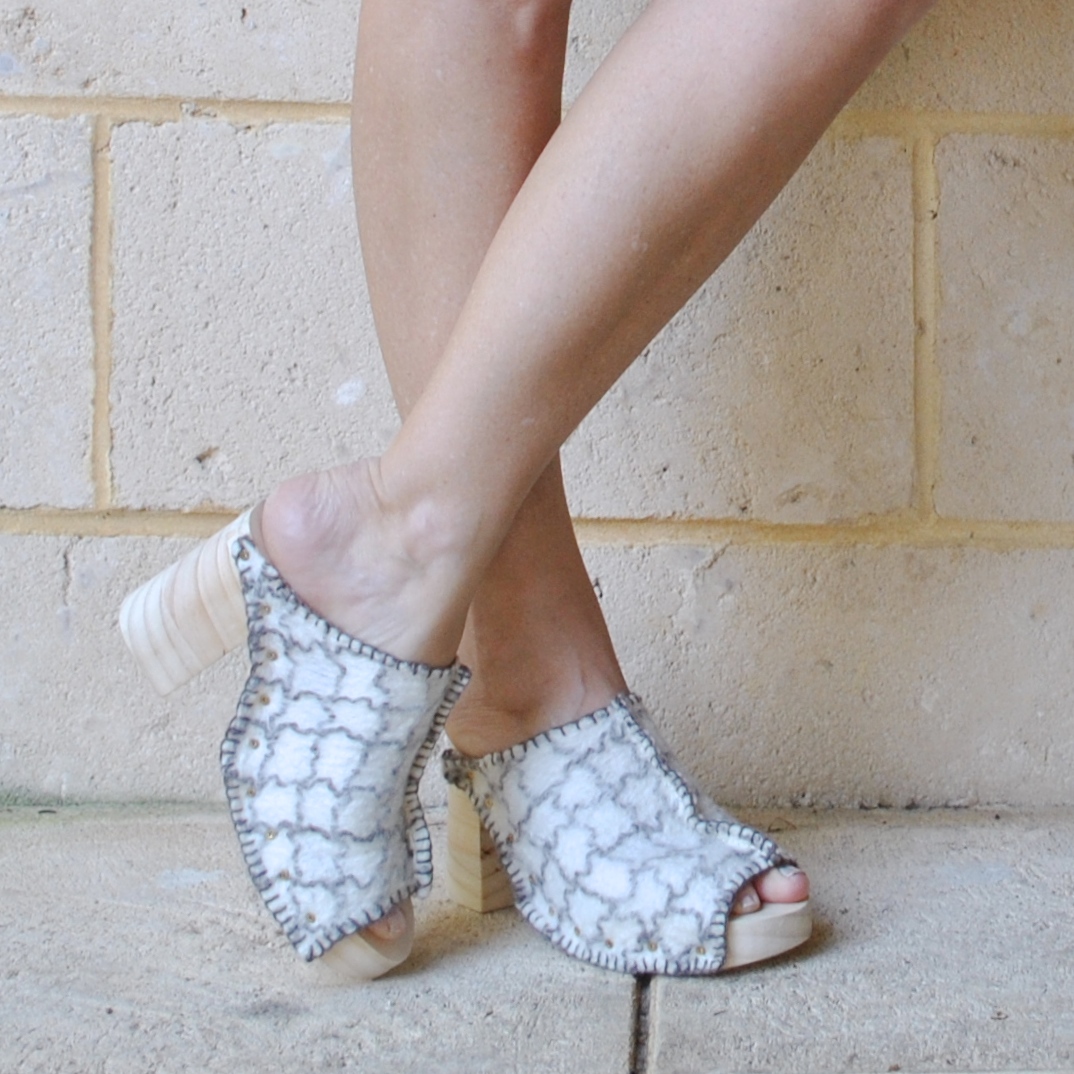
merino felt and pine shoes
a merino fleece bag
merino fleece undies and bra
In a nutshell, every single blinking thing I have on here is made by myself, using pretty close to 100% south-west Australian sourced materials
Those of us in Western Australia; SueMegan, Nicki and myself, have had to be quite innovative in our approach, I think.  I mean, forget zips, thread, elastic… there is not even any freaking fabric made in WA!  This was our single biggest hurdle, I think!
However, we are extremely fortunate in that we have wool available to us; lots and lots of wool!   Australia has the world’s biggest wool economy… did you know that 80% of the world’s apparel wool is from Australia? and Australian merino is the world’s best quality woollen fibre.  22% of the country’s wool production is here in Western Australia (source)
Hardly surprising then that all four of us have used wool as the majority component in our outfits.
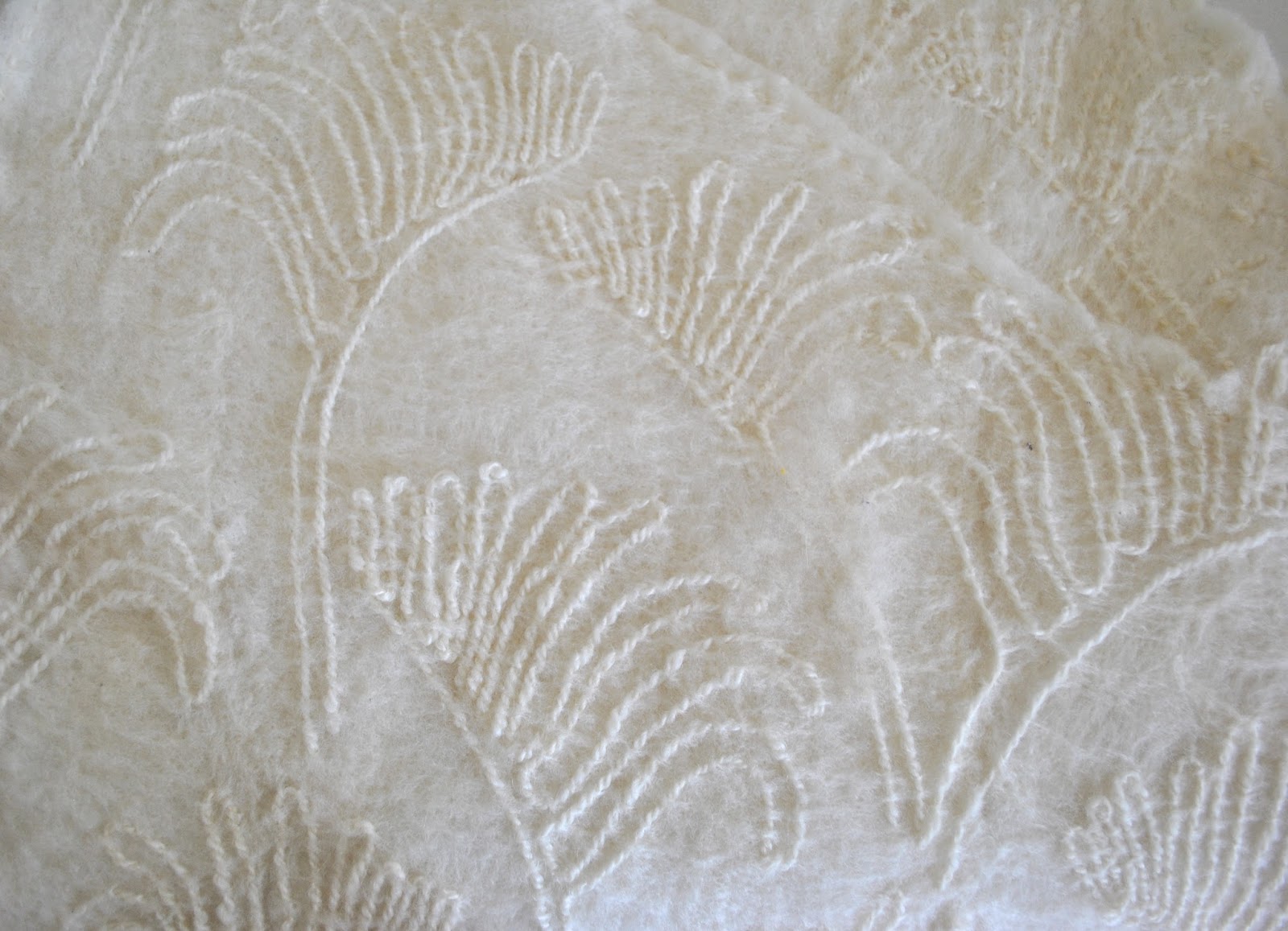
My dress, bag, underwear and shoe tops are made from Western Australian merino fleece.  I made my wool felt fabric from the fleece as outlined in this post.  My dress is made from natural undyed merino fleece felt, and I hand-embroidered the fleece all over with locally handspun, undyed merino yarn.
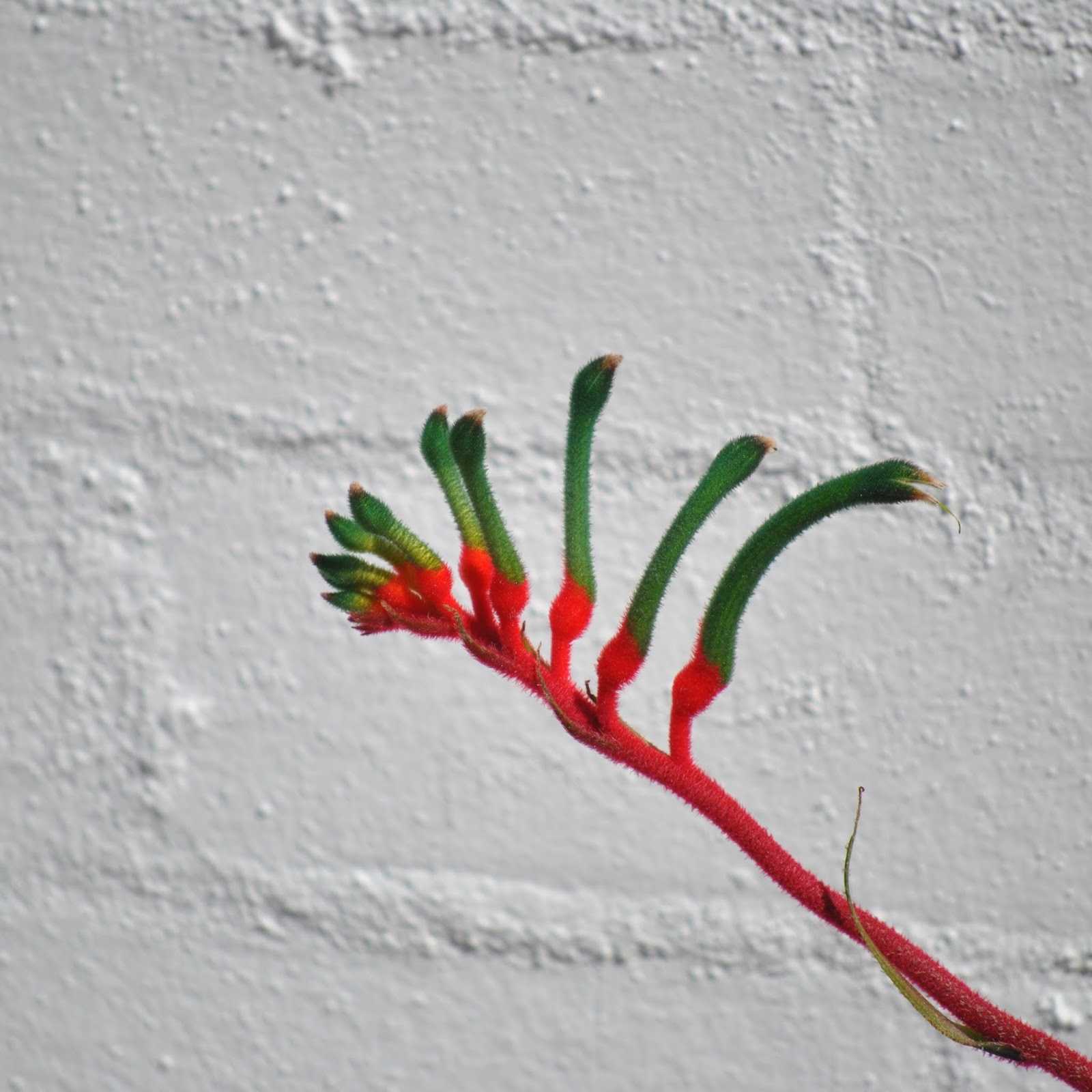
Anigozanthos manglesii

The embroidery design is my own; a random arrangement of of kangaroo paw motif, for our Western Australian state floral emblem.
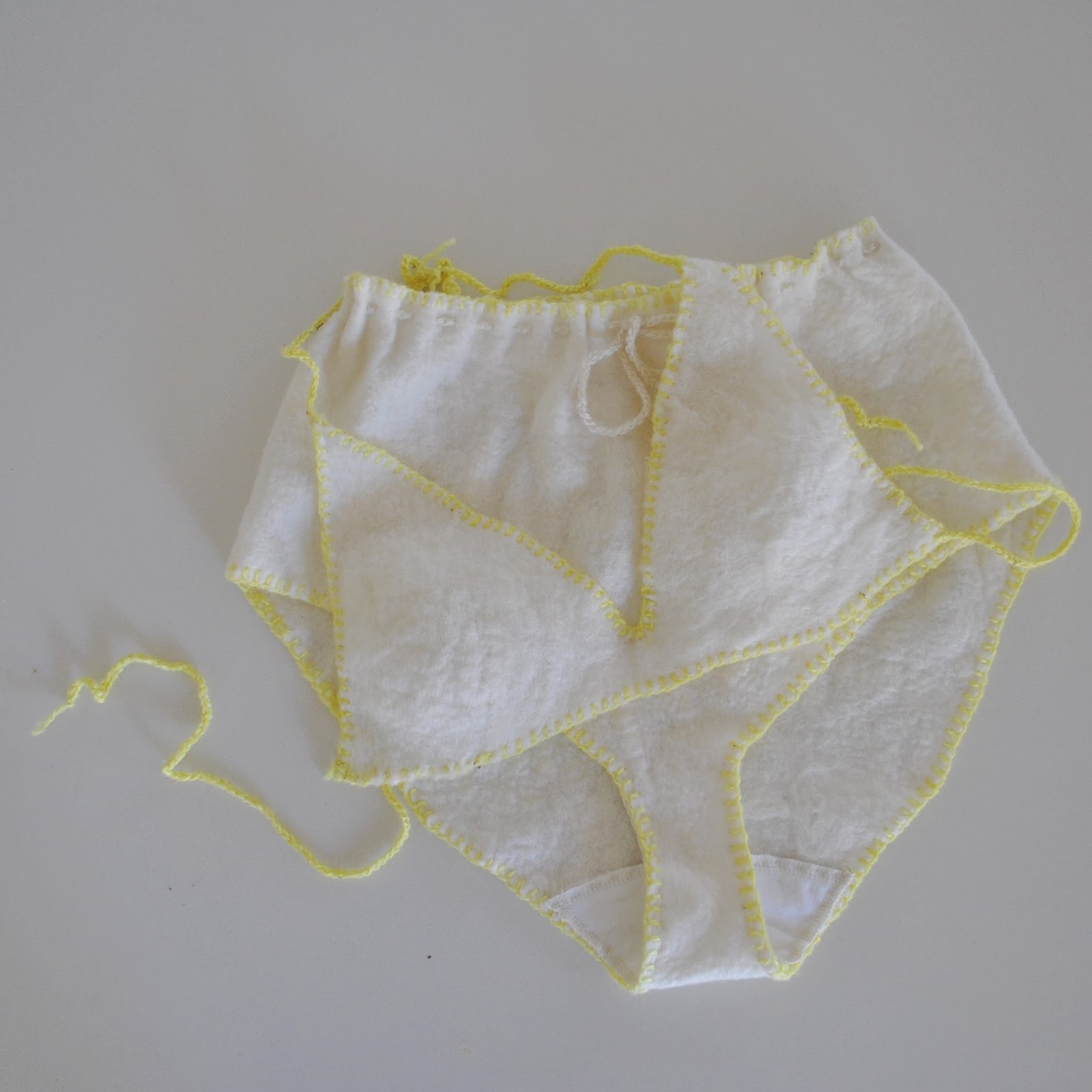
My underwear features the only “colour” in my entire outfit; I dyed the decorative yellow edging and ties using sour grass picked from my own garden, as posted here.
All the other fleece, yarn and wood in my outfit I left in its naturally coloured state.
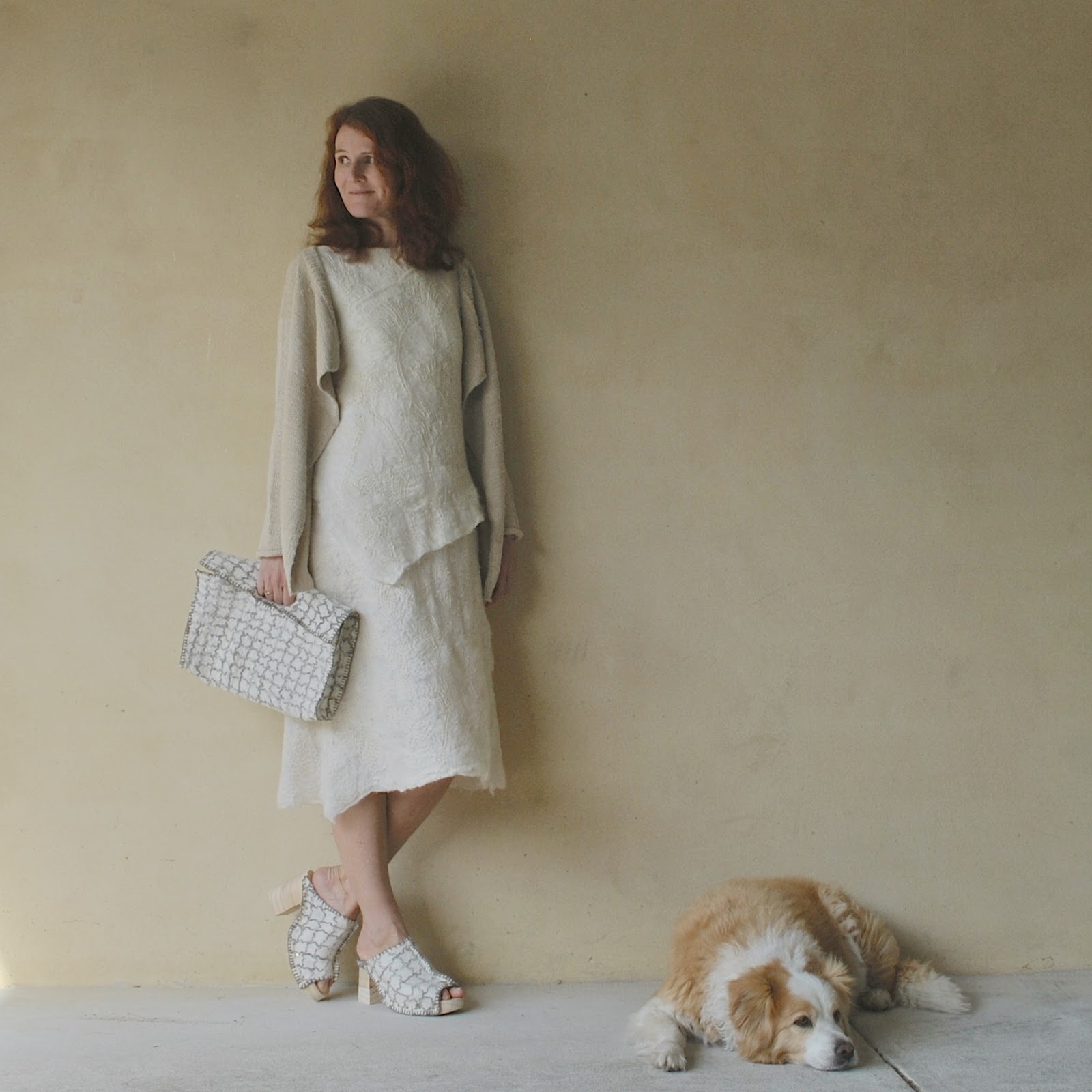
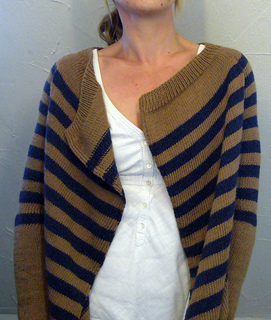
My cardigan is alpaca yarn, from the Fibre of the Gods, a tiny mill operating on a farm in Toodyay.  This establishment produces alpaca yarn on their own property, from the fleece of their very own alpaca herd.  I bought some of their yarn directly from off the farm and knitted my cardigan, as posted here.
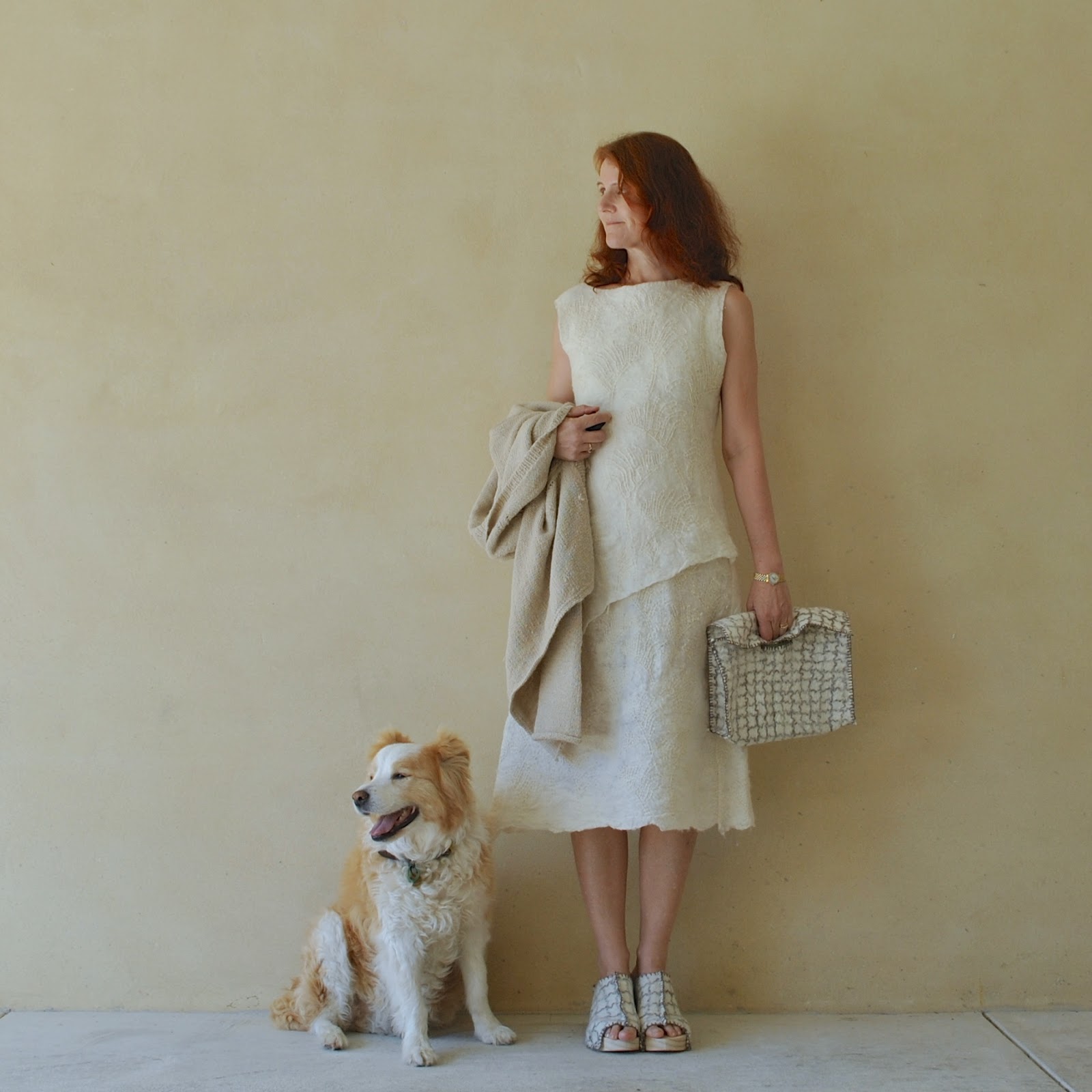
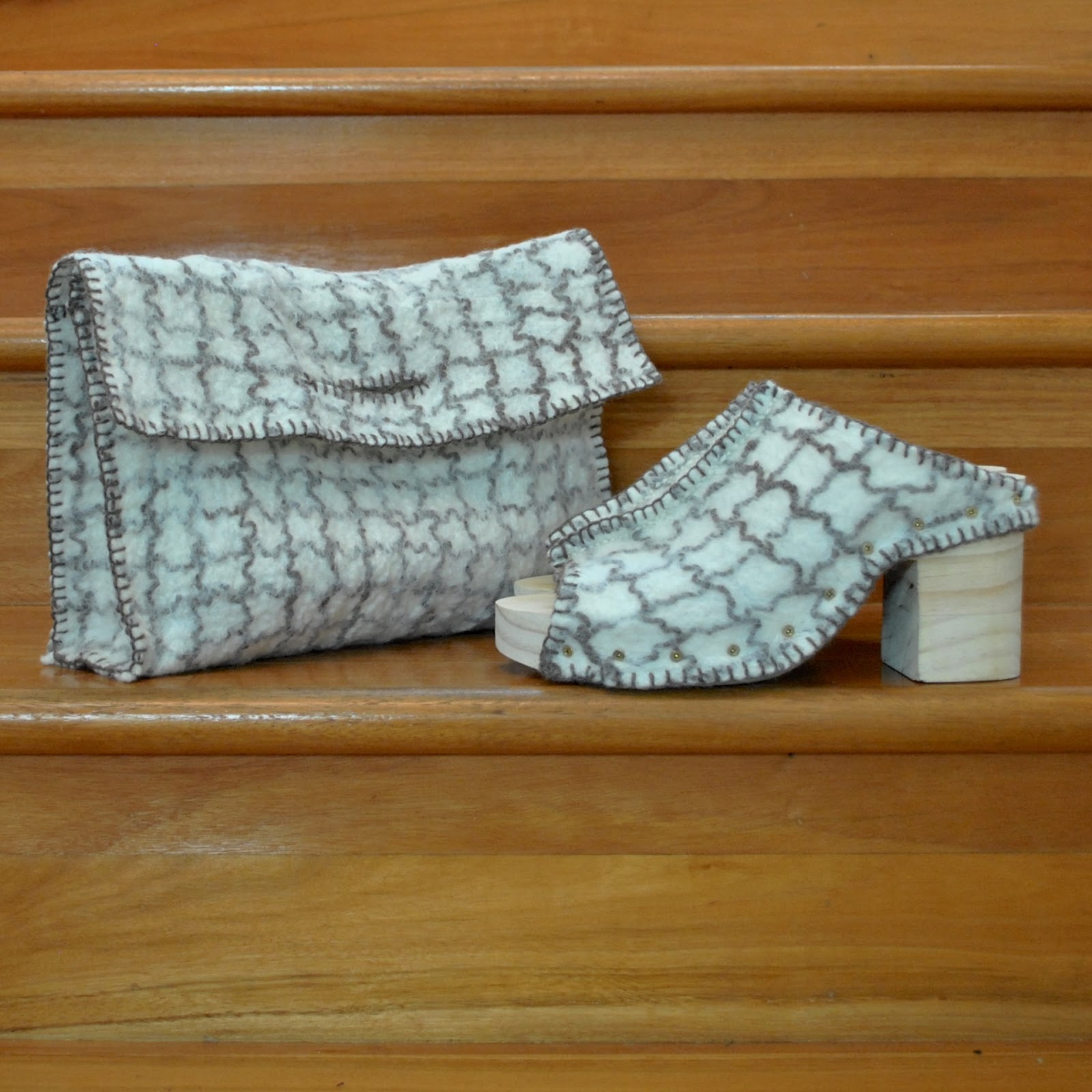
My wooden shoe soles are hand carved by me, using Western Australian pine.  The pine is grown by Bunnings on their own pine plantations down south and milled by Bunnings in Manjimup.  I made my shoes and my bag from my merino fleece as outlined here My bag and shoe tops are also merino fleece, with a grid pattern made of naturally black sheep yarn.
And that’s it, in a nutshell!
Well, typing it all out like this has kinda brought it home to me for the first time; I am wearing a pretty-close-to 100% homegrown outfit, top to toe, for maybe the first time in my life!  I’m kinda amazed, even at myself.  It’s a little mind-blowing to me.
Final thoughts: I’ve learnt a tonne doing this challenge.  Firstly, our local industries are precious and need our support.  That goes for everywhere, not just here in WA!  I personally am going to put more effort into supporting our local products regularly.  I mean, I’m definitely not giving up my more “regular” sewing, but I am going to do this challenge again.
Secondly, that if you really put your mind towards doing something, keep yourself focused on getting a project done, to overcoming obstacles, then you probably can do it.  Sometimes you need to sleep on it, think outside the box a bit.  I learnt a lot as I was going along, and several times had to improvise a solution to a problem.  There were moments when I questioned my sanity in doing this, when I wondered if my ideas were even going to work… a felt dress? unlined? felt underwear? sounds like the vision of a lunatic, or at least a recipe for disaster, for sure… well OK even I can admit that felt underwear is not really a practical nor a workable thing!  … do NOT recommend.  😉
Also, I had lots of fun!! I LOVE a challenge and this challenge really stretched my capabilities; which is the very best sort of challenge, in my opinion!   I thought hard and long about each aspect of my outfut and tried very hard to honour the materials, to minimise my waste and to make something truly Western Australian in feel and flavour as well as provenance.
There were also moments when I realised I had to accept a small defeat; in the case of this outfit; the glue holding pieces of wood together in my shoes (from NSW, Australia), the nails holding the felt to the soles of my shoes (China) and the cotton jersey liner for my undies (China).  They are very tiny elements so I’m not going to beat myself up over them too much.
I guess the important thing is that I gave everything careful consideration,  and really thought about provenance and the possibility of substituting local products in as many instances as I was able.  As well, I wanted to produce something stylish and lovely, that I knew I would love wearing and feel proud and happy in.  I genuinely love my outfit, and feel pretty pleased with my efforts!
Lastly; maybe I’m on a bit of a post-challenge high, but I’m quite excited about attempting this again next year… in fact I already have ideas and plans!
Mad? maybe, but quite happy to be so!

Details:
Cardigan; the Caramel cardigan, in Fibre of the Gods natural alpaca, grown, shorn, washed, carded and spun in Toodyay, Western Australia and hand-knitted by me, details here
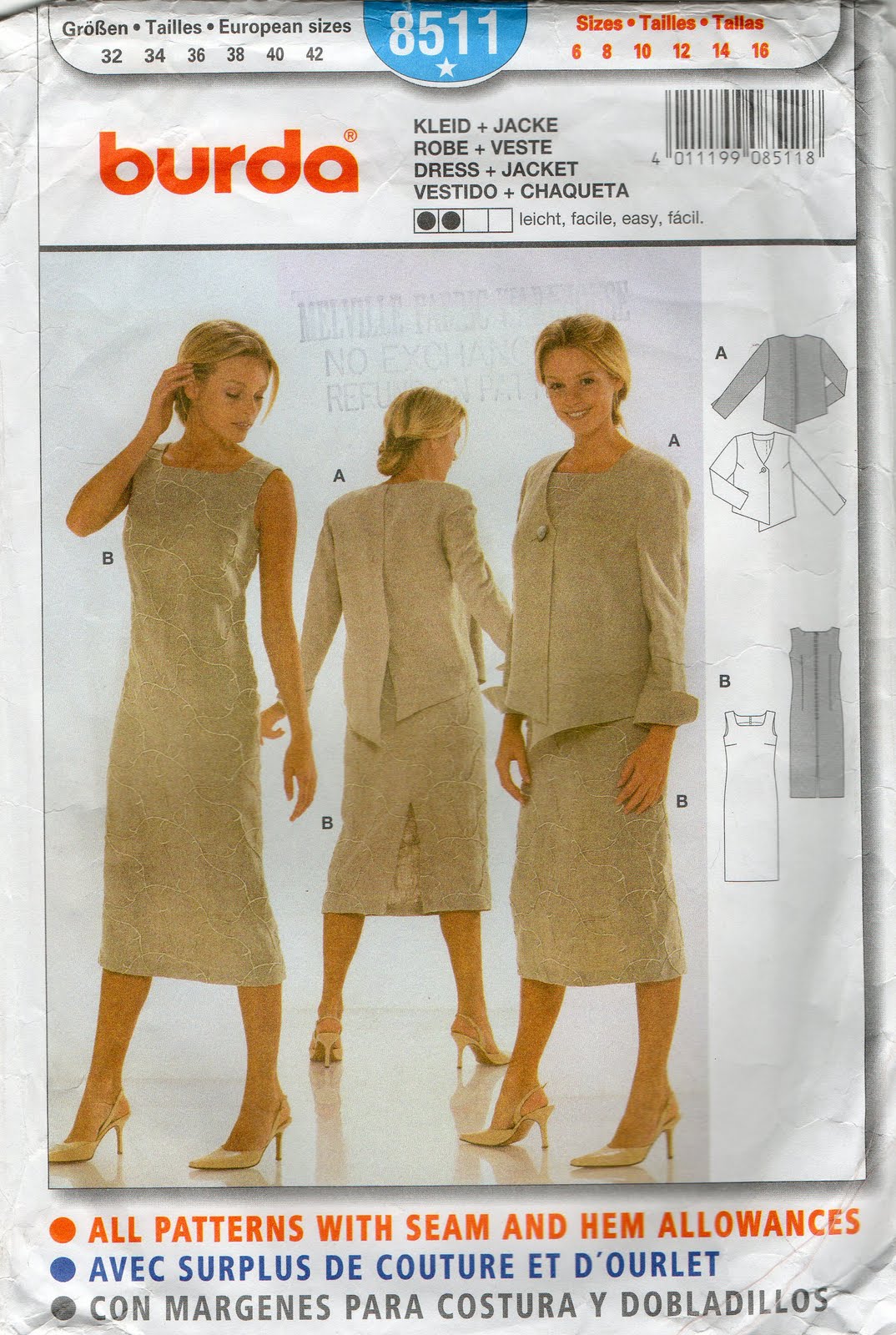
Dress; my own design based upon Burda 8511, made from merino felt made by me and hand embroidered with locally handspun merino yarn from Bilby Yarns, details here
Shoes; my own design, pine soles from Bunnings hand carved by me, felt tops made by me from merino fleece bought at Bilby Yarns, details here
Bag; my own design, in felt made by me from merino fleece bought at Bilby Yarns, details here
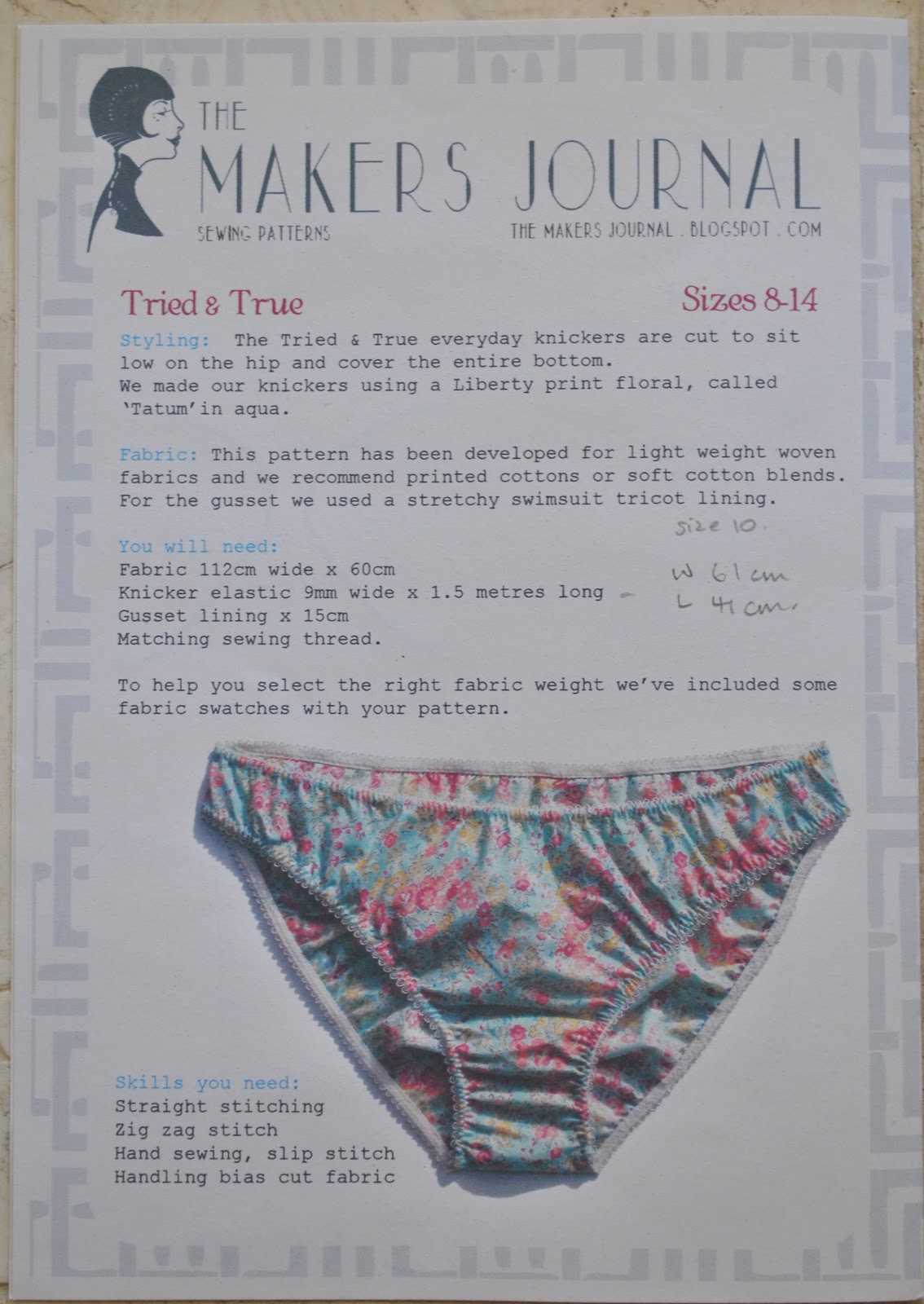
Underwear; my own design, knickers derived from the Tried & True knickers pattern by the Makers Journal, in felt made from merino fleece bought at Bilby Yarns, details here
pinterestmail

a strange lingerie set

I fully admit it; this could very well be the weirdest, most bizarre thing I’ve ever made! I had toyed with the idea of making a lingerie set to complete my one year one outfit… er… outfit; but rejected the idea as being impractical and unwearable; then re-embraced the idea, then rejected it again. And found myself pondering it again… and then dismissed it again.  Finally I just decided to have a go, although this part of my project was in danger of never ever getting blogged!
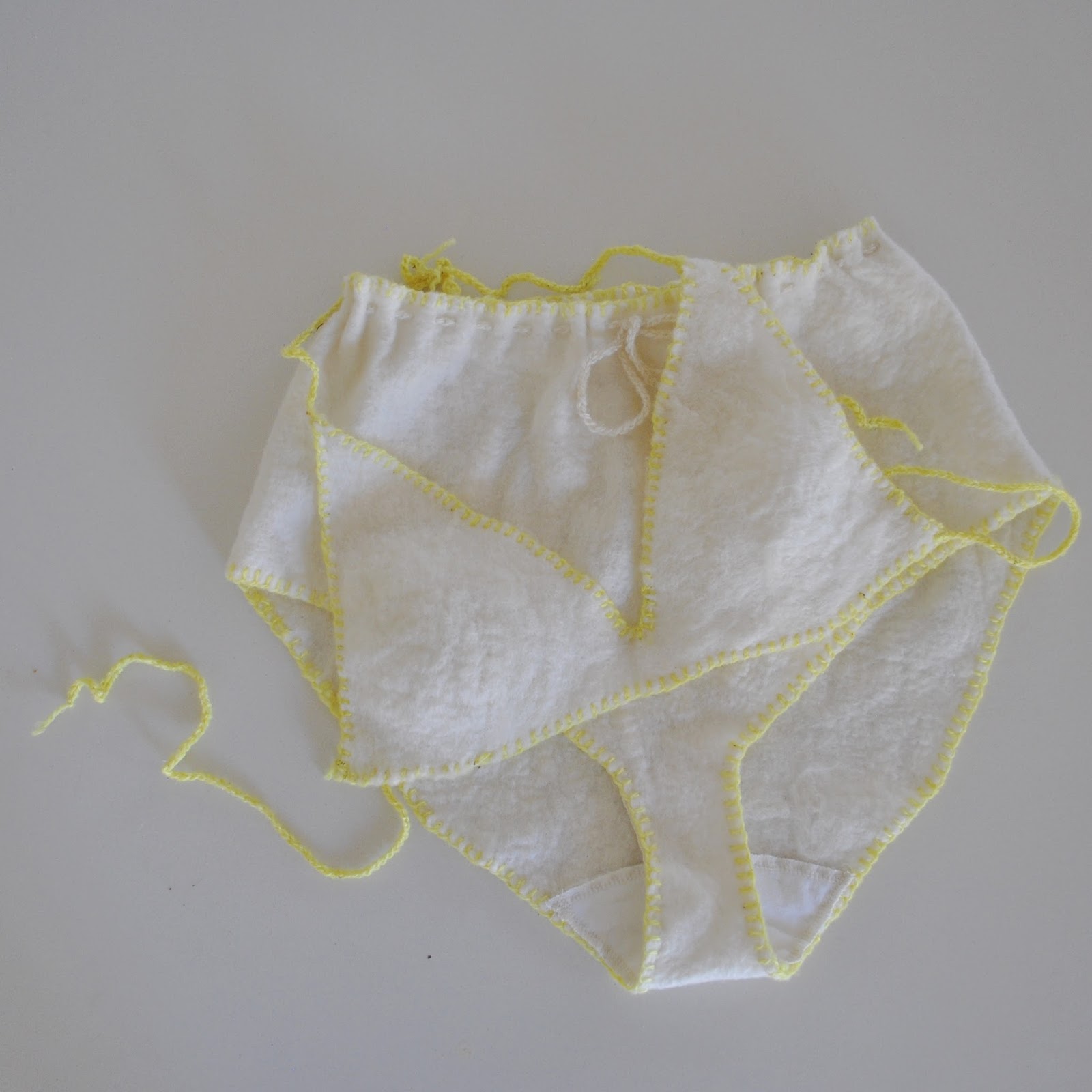
So; lingerie, made using ONLY locally sourced materials; quite a challenge, quite a challenge.  My set is very very simple; a string bikini top and high waisted knickers cinched in at the top with a drawstring.  
As per the criteria of the challenge, I could not use anything not made here in Western Australia … which ruled out elastic, findings, thread and even FABRIC!  Hmmm, yes, quite a challenge…   Like every other part of my outfit for this challenge, I had to make my own fabric.  Fortunately I had some pieces of merino felt leftover from my dress, and I made another small piece to complete the knickers, so my set is mostly made from scraps, yay!  The yellow blanket stitch edging is in locally handspun merino yarn from Bilby Yarns, that I dyed myself using sour grass from our garden; here.  The bikini strings and the drawstring are a single crochet chain. 
In my early planning stages, I had contemplated knitting some knickers and bra from my handspun Western Australian merino yarn, and actually found a free pattern for a knitted bra too! but rejected that idea… why? well to be perfectly honest, this set is probably not going to get a hekkuvva lot of wear! if any! and so I really wanted to minimise the use of my beautiful handspun yarn.  I felt OK about using my leftover felt though, since that was made from my own labour.
The bra is self-drafted, if you can call two, felted-together, darted triangles a self-drafted pattern, ahem.  I gave them a gentle cupped shape by cutting darts from the lower edge and felting them closed with my felting needle, just like I did the darts in my dress, so the darts are seamless; and felted them together at centre front the same way.
The knickers are loosely based on the Tried & True knickers pattern, by the Makers Journal, an undies pattern designed for non-stretch wovens.  This design is a little on the low-rise side which I modified slightly by making it a higher rise design with a drawstring to pull them in at high hip level, also the crotch and leg holes have also been cut away significantly with a deeper curve to the crotch and straighter front leg-line; I did this because the fabric was a tad on the bunchy side around this area otherwise.  When they’re on the knickers look like tap pants, flaring out a little from the waist and away from the hips, and are actually quite cute, believe it or not!

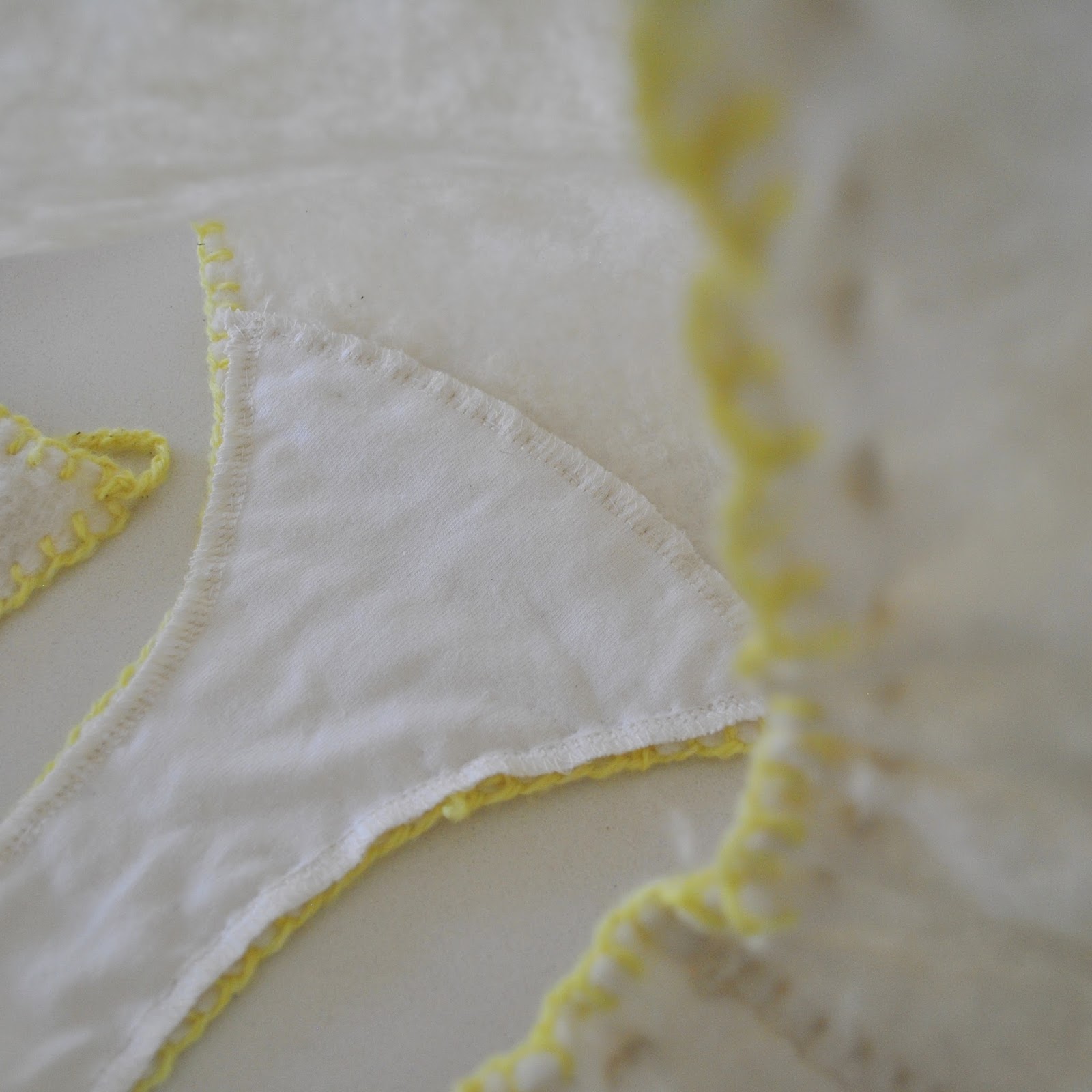
I made a little cotton jersey lining for the knickers, and have loosely tacked it in with running stitch  This small piece of fabric is the only part of the set that does not fit the criteria of my one year one outfit challenge; but I’m sorry, I just consider a liner to be an absolutely essential thing to have in a pair of knickers.  I’ve done my absolute best to eliminate non-local elements in all of the components in my one year one outfit, but you can only go so far for this challenge! and I’m drawing a line at unlined knickers.
While making them I was reminded of Sheldon fashioning historically accurate undergarments from linen just to wear to the Renaissance fair… so funny!… meaning, yes; I’m fully aware that this is just about the silliest set of lingerie ever, but I made them mostly from my leftovers and using my “experimentally” dyed yarn so I don’t consider making them to be too much of a waste of resources.  I think I made them just for fun, really!  Think of it as wearable art!

pinterestmail

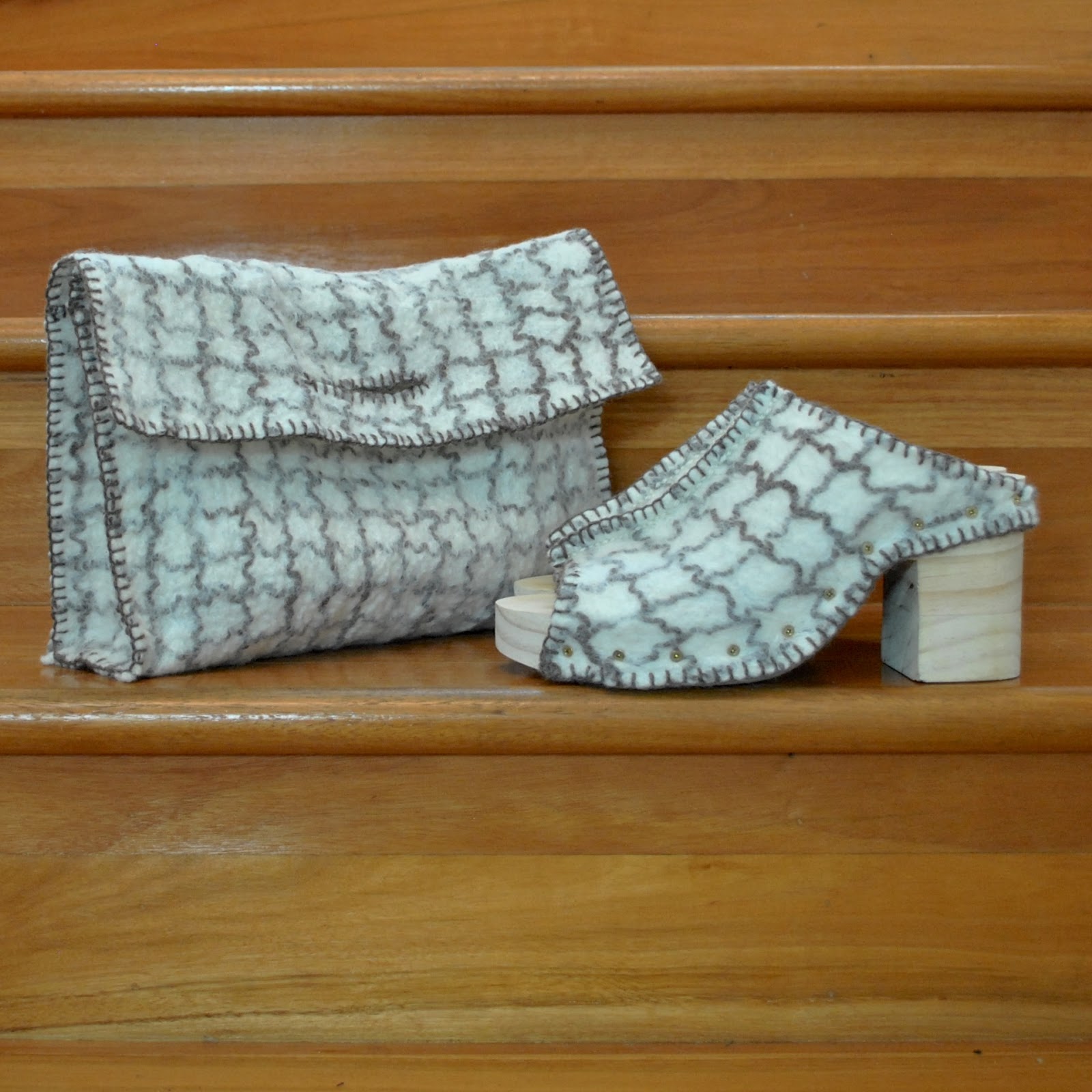
I made matching shoes and bag

I’ve finished the next coupla components in my 1 year 1 outfit project!
First up; shoes!
Following the same formula that I used for my previous two pairs of shoes; these have a carved wooden base and a fabric top.  For the soles I used Western Australian pine from Bunnings.
I actually had several pieces of wood from which to choose for this project; my Dad had given me some marri from their block; and I also, albeit briefly, considered jarrah as another truly Western Australian product.   Also, my brother had given me some jacaranda logs from when he had to lop a branch from the tree in their back yard.  But I eventually decided to go with pine … why?  Well it’s the softest, lightest and easiest to work with! and our ancient old bandsaw has finally given out, meaning it was going to be a ginormous struggle to cut the marri or jacaranda or jarrah either on any of our other equipment. These are all pretty rock hard woods, also both marri and jarrah weigh a tonne and you’d only want very thin soles of it for a shoe.  Pine was the path of least resistance.  I have definitely not ruled out using the other wood that I have for future pairs of shoes though.  I just need to get better at woodworking first  🙂

personalised soles  🙂

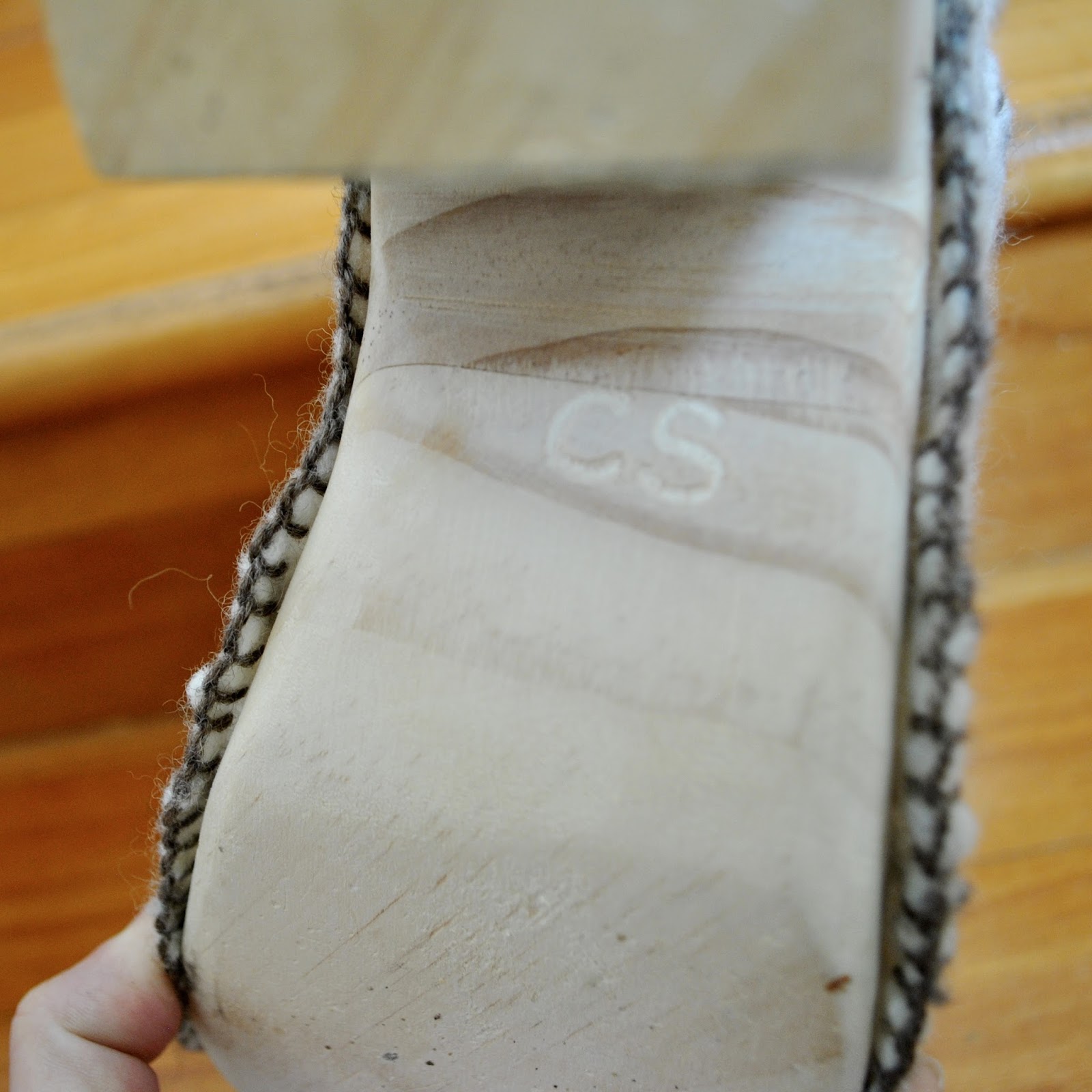
Craig helped me with the big cutting and I did the finer shaping using the belt sander, and hand-sanding out the heel groove and some grooves for the ball of my feet.  I also carved my initials, just for fun  🙂
The upper is 100% Western Australian Merino wool felt; made from natural, undyed, white fleece and natural, undyed, handspun black sheep’s wool as outlined in this post.  By the way; I incorrectly stated in my previous post on my dress that the wool I used for the felt was Corriedale, and I have since discovered that it was pure Merino wool, sorry!  I’ve corrected the error in that post now.  And am actually rather thrilled to be wrong, to be honest!
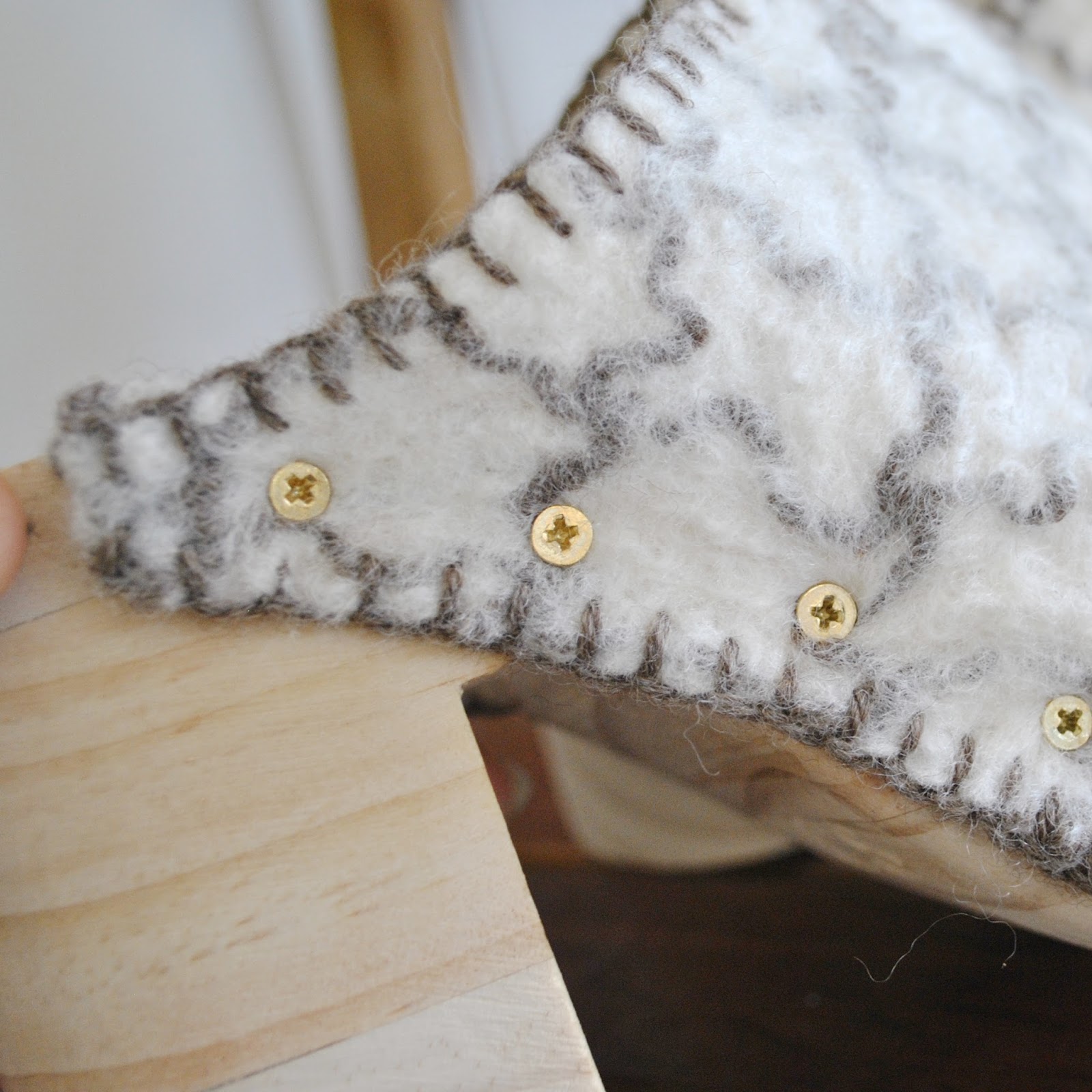
Anyway my black and white “plaid” was the thickest and strongest of the felts that I made, so I kept it for these more demanding of my outfit components.  Sadly, I realised that it’s still not particularly sturdy and is probably going to stretch out pretty quickly  :((  But I’ve devised a devious plan to cope with the inevitability of The Stretch, mwahahahaha… see that central seam running right down the top/middle? well as it stretches out I can just unpick it, cinch in the top seam a bit, trim and re-stitch.  Simple!  And when it has stretched out past the point of saving, which it will; then I can easily unscrew the screws from the sides, remove the whole felt top and substitute something sturdier like leather.  Hopefully I can somehow find a nice piece of thick WA leather, so that my shoes will still be eligible as a 1 year 1 outfit piece!

OK: confession time… I did have to cheat on a few minor parts of this project; the glue holding the pine layers together is made in NSW, and the screws holding the felt upper to the wooden soles are made in *embarrassed whisper* China.  I did investigate making these; and concluded that to make my own local glue and “nails” is both possible and achievable.  You can make your own glue using boiled animal bones, sap, or milk and vinegar; and I could have made wooden “nails” using jarrah or pine dowel.  And originally I was seriously gung-ho about doing just that; until my Dad and my husband advised me to get real.

You see, the wooden soles are honestly such a hugely time-consuming and difficult component for me to make that I really really wanted them to hold together firm and fast and be perfectly secure; and NOT EVER fall apart.  A rank woodworking beginner like me could all-too-easily destroy my carefully hand carved soles trying to ram wooden dowel “nails”, with hot homemade glue dripping everywhere; and even then if I was miraculously successful; they could later on just fall out or snap at a moment’s notice.  Which, according to my experienced father and my husband; is pretty darn likely.
And I would, um, yeah; be sad.  Understatement of the year, right there.
Anyway, I went the route of properly manufactured wood glue and steel screws…  but I just want to say, for the record, that I did investigate the 100% hardcore approach, and gave it serious and careful thought.
And I do not regret not going there either, not one little bit, sorry!  You can only do so much!
What is more! I will also be gluing some thick rubber to the soles to protect them from damage.  I haven’t done that yet, I plan to “show” them first in this virginal state.  But I will.

Exhibit two; a bag!

And it perfectly matches my shoes, hehe.  Isn’t that the old fashion must-do advice for a lady from the 50’s or something? I seem to remember reading somewhere that a lady would never dream of sashaying out with non-matching shoes and bag.  Ancient stuff, I know; we definitely do not adhere to such a strict dress code anymore!  But I had enough felt for it so here I am, totally regressing to the standards of a previous era.
ooo yea.
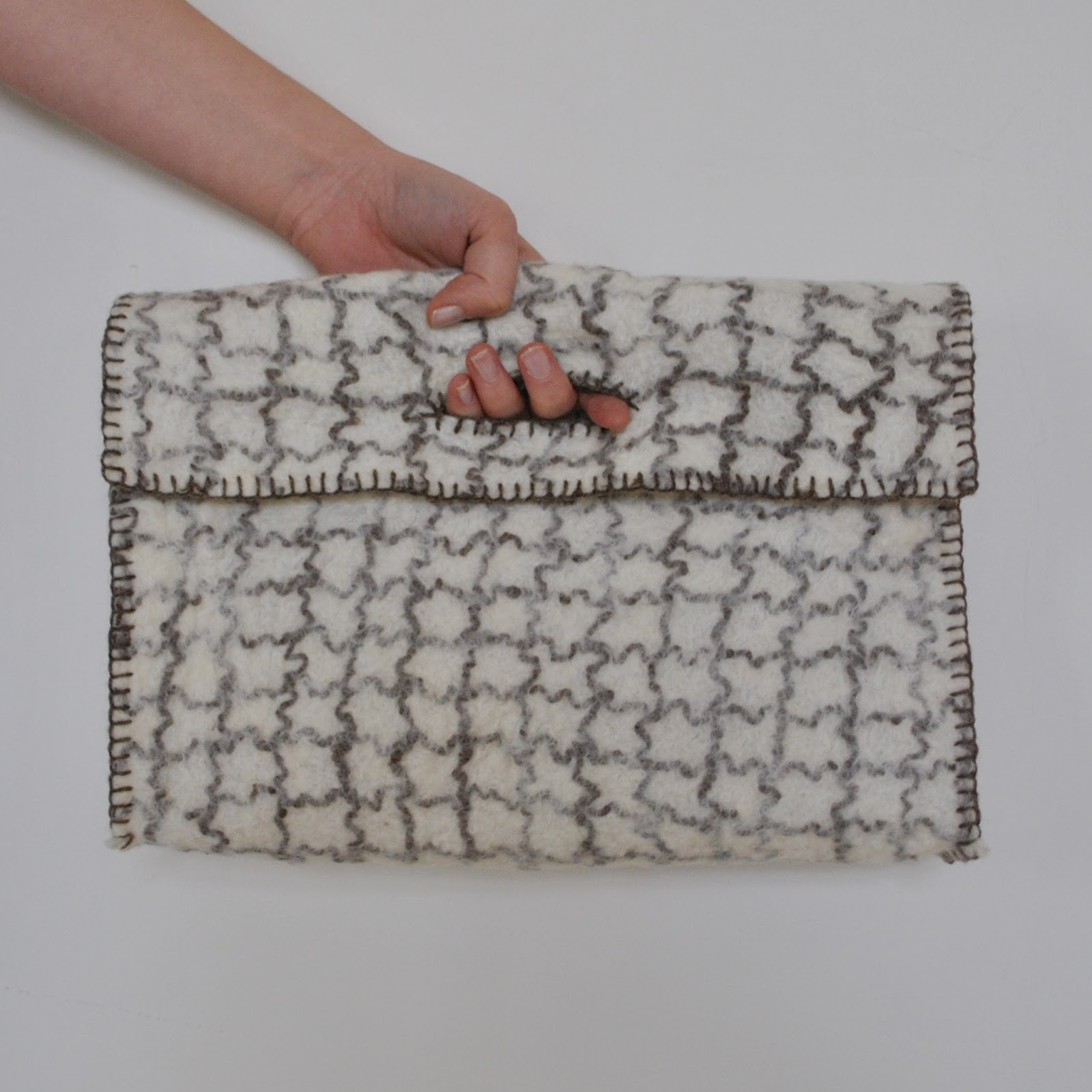
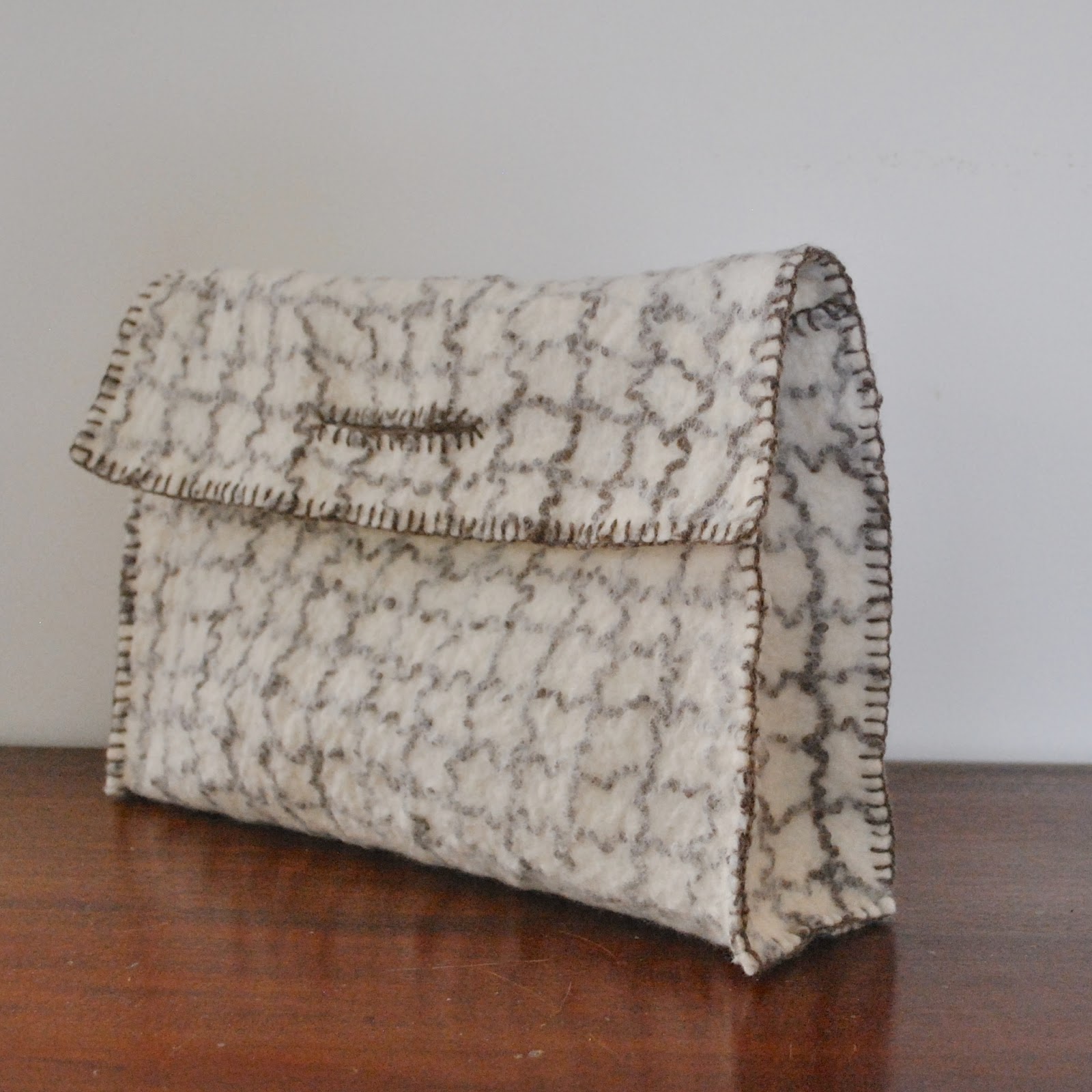
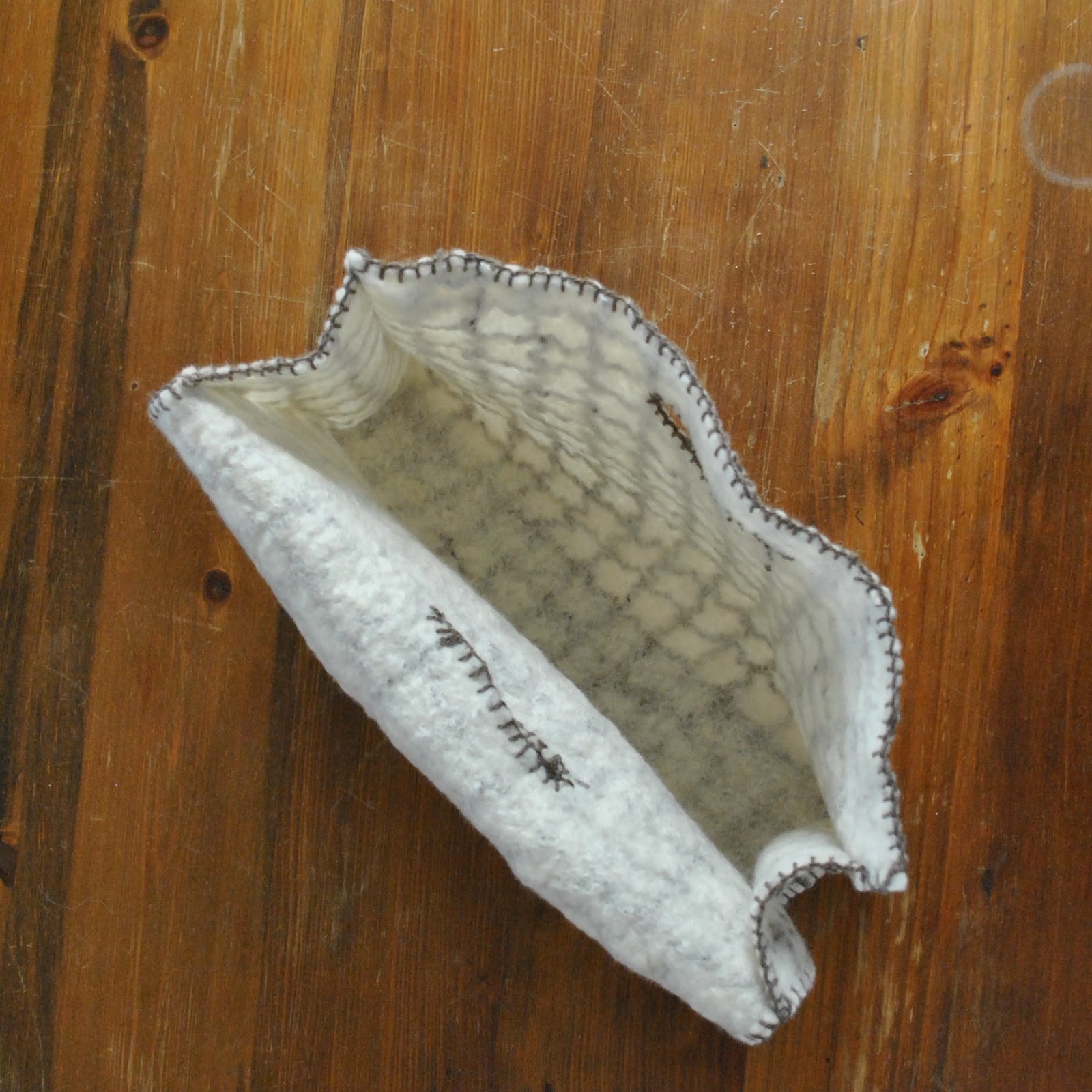
It’s just a simple, um, something-bag?   A sort of rustic briefcase?  I don’t know the correct term to describe this kind of bag.  A fold-over, almost-envelope, with rectangular side gusset thingies to make it box-like.  It’s all held together and decorated with blanket stitch.  For the handhold; I cut and blanket-stitch edged three slits that line up with each other through all layers.  Ta da!  Simple, but it does the trick.

I like the way the felt is thick enough that it can stand up by itself… just.
I am toying with a few extra components for my 1year1outfit project, but minor things that may or may not come to anything.  However, they may; fingers crossed.  If all else fails, at least I do have a complete outfit now!

pinterestmail

making felt from fleece

Hello!
So furthering onward with my one year one outfit adventures, I thought I would put together a post on my other efforts so far… I have also been making my fabric for the other components of my outfit.  Yes, making freakin’ fabric!!!! transforming Western Australian sheep fleece into felt, with which I shall make…. something.    Still ruminating on exactly what...  
Along with my fellow one year one outfitters Sue, Nicki and Megan, I visited Bilby Yarns; a small but treasure-packed little shop in Willagee that supports local wool producers and enthusiasts and stocks supplies for anything and everything wool-related you could possibly think of! spinning, weaving, felting, needle felting, knitting and crochet and probably some other endeavours that I haven’t taken in yet, too.  It also stocks dyes, both natural and chemical and, most fabulously; yarn from Western Australian sheep, hand processed and hand spun by local ladies.  It’s a truly fantastic local resource! and I can see myself paying the shop many more visits in the future.  The lovely chatty June kindly demonstrated spinning and also felting to us; and we all came away with supplies of fleece, greatly enthused to make us some felt…

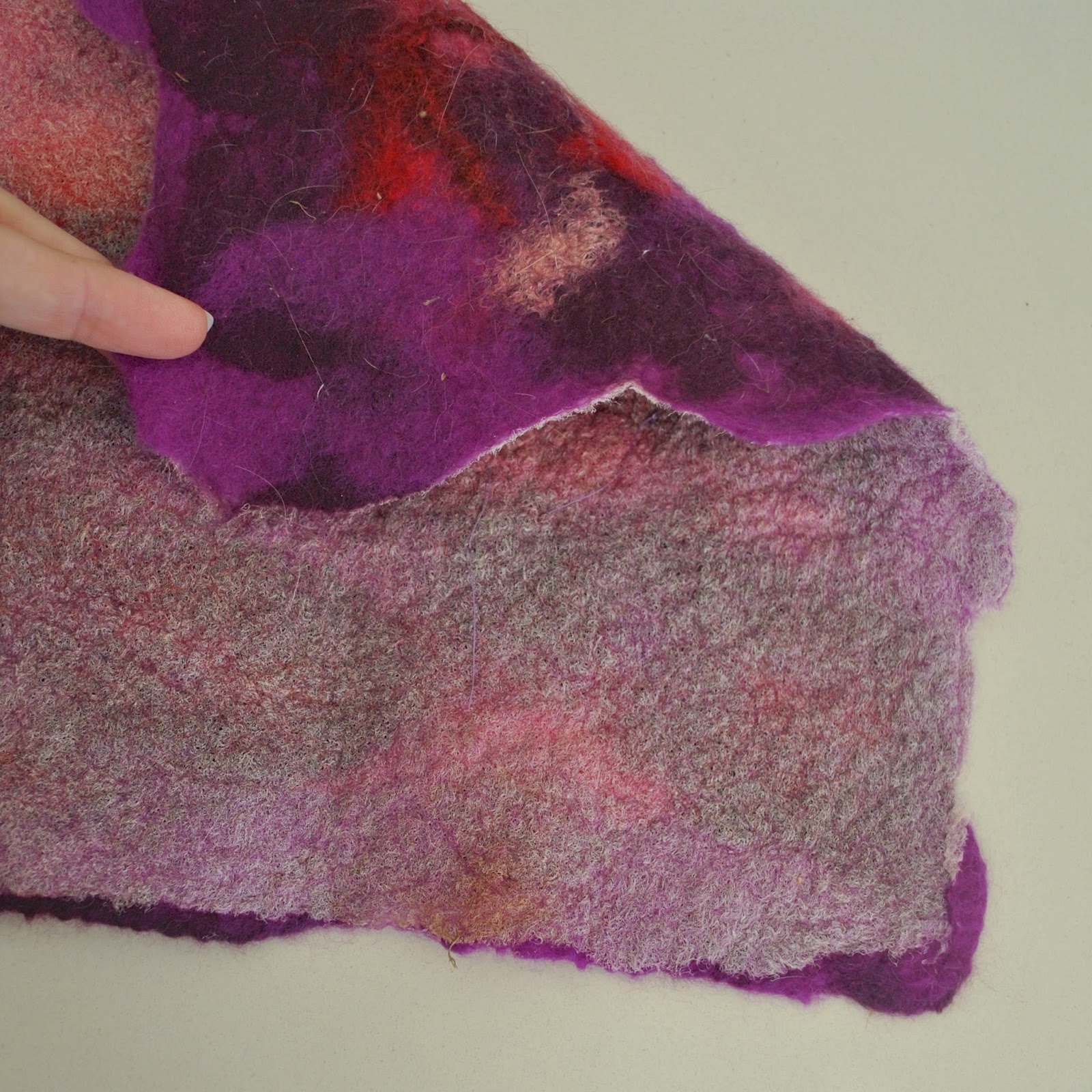
I have made some decorative felt panels a few times before, small and therefore easy things; blogged here and here and a couple of others that I’ve given away and never blogged.  However, this project would have to fit in with Nicki’s strict criteria; to be a TOTALLY home grown product.  Normally if I was considering making felt for a garment to wear; I would felt onto a piece of silk chiffon to give strength to the fabric. 

felt with silk chiffon backing

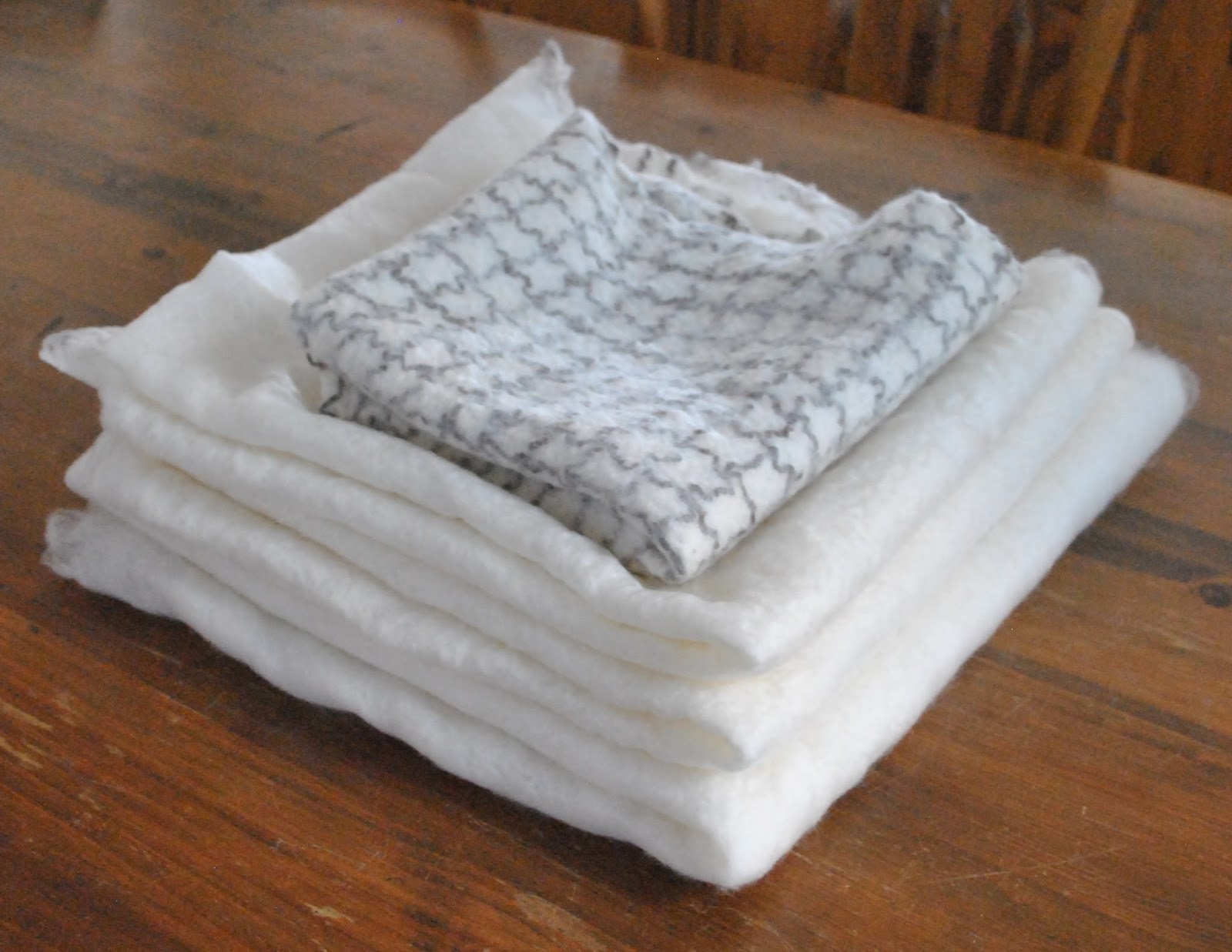
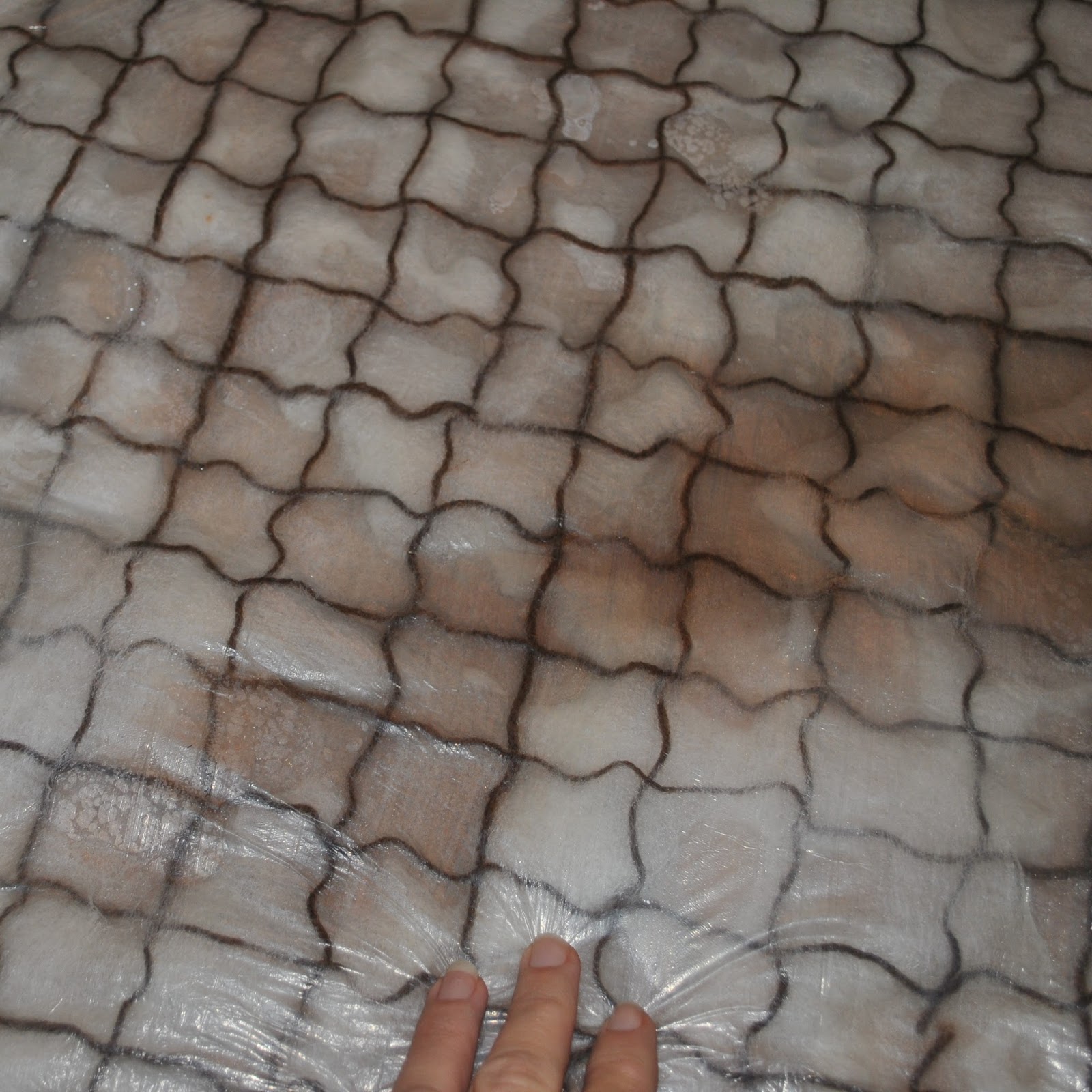
However; obviously silk chiffon is not a thing ever produced here in Western Australia! so in terms of our challenge it was a no-no.  I had to think of some other way of building some toughness into my felt…  I noticed a small sample in the shop with a yarn grid felted into it, and thought this would be a brilliant way of solving the strength problem.  I incorporated a yarn grid feature into one piece of my felt and I will be using another method of building strength into the remaining pieces.
I bought some washed and combed, naturally white Corriedale sheep fleece, and also two balls of locally hand-spun, West Australian wool yarn; one naturally black the other naturally white; and 3 large, thin, plastic, painting drop-sheets from Bunnings.

Modus Operandi:
First of all.. key words:  GENTLE!  EVEN!  Those two words were to be my mantra throughout this entire procedure.  OK.
Now: you need a fair amount of uninterrupted time, and for large pieces of felt big enough for an actual garment, a large table; preferably indoors in a wind-less, breeze-free environment.  I used my dining room table.  When laying out the fleece, bear in mind the fleece will shrink to roughly 75% of its former size in the process of becoming felt, so if you’re after a specific size you’ll need to allow at least an extra third in size dimensions each way.
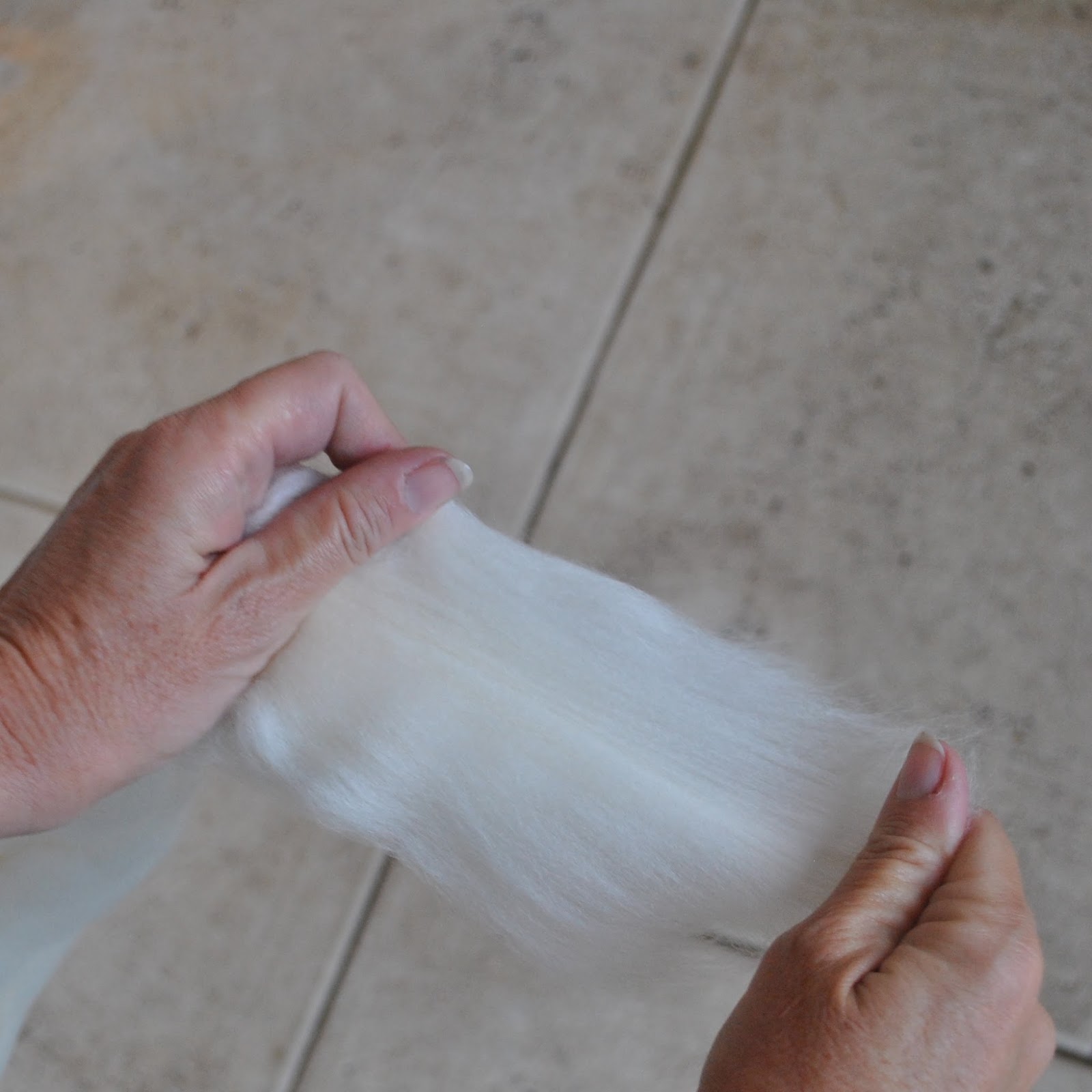
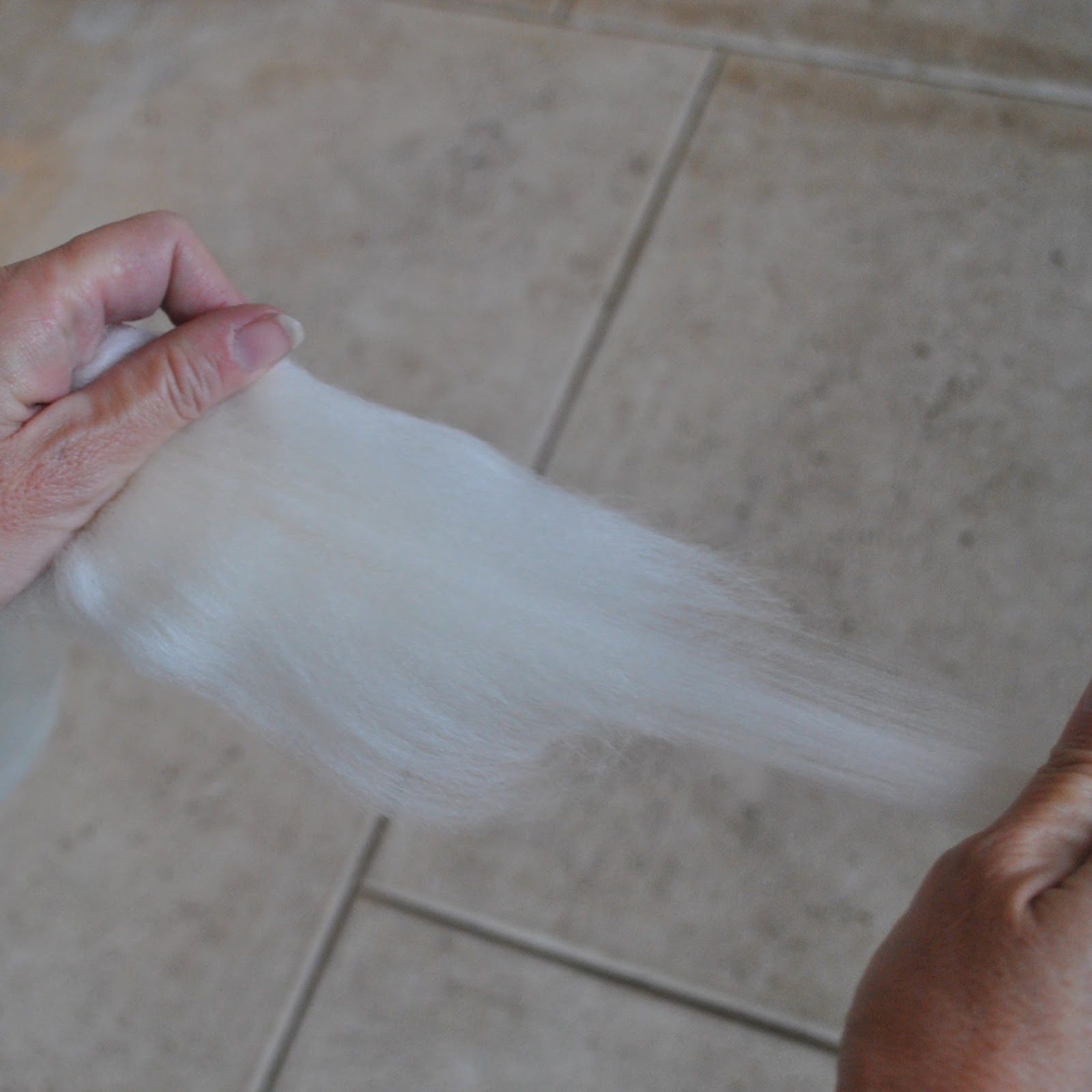
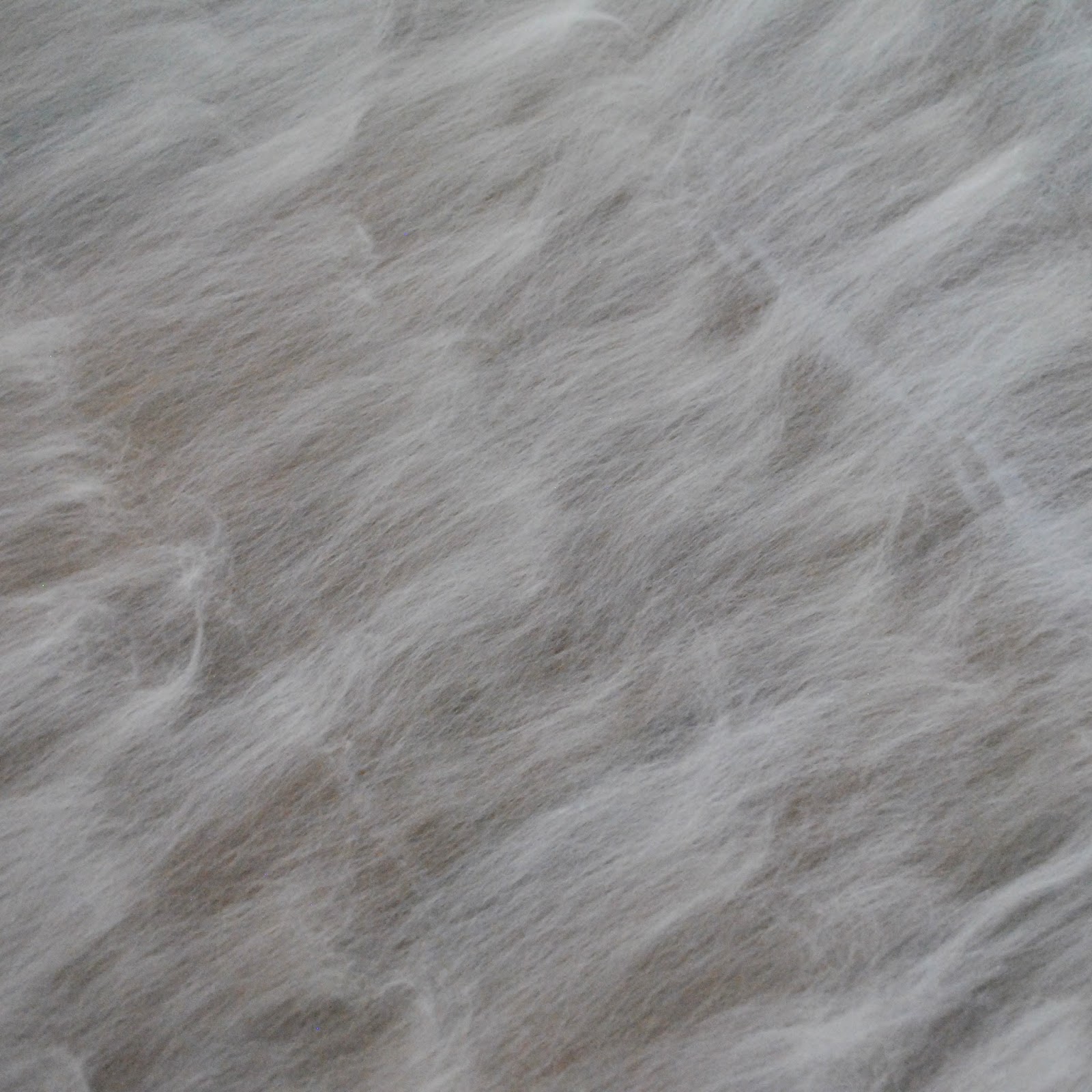
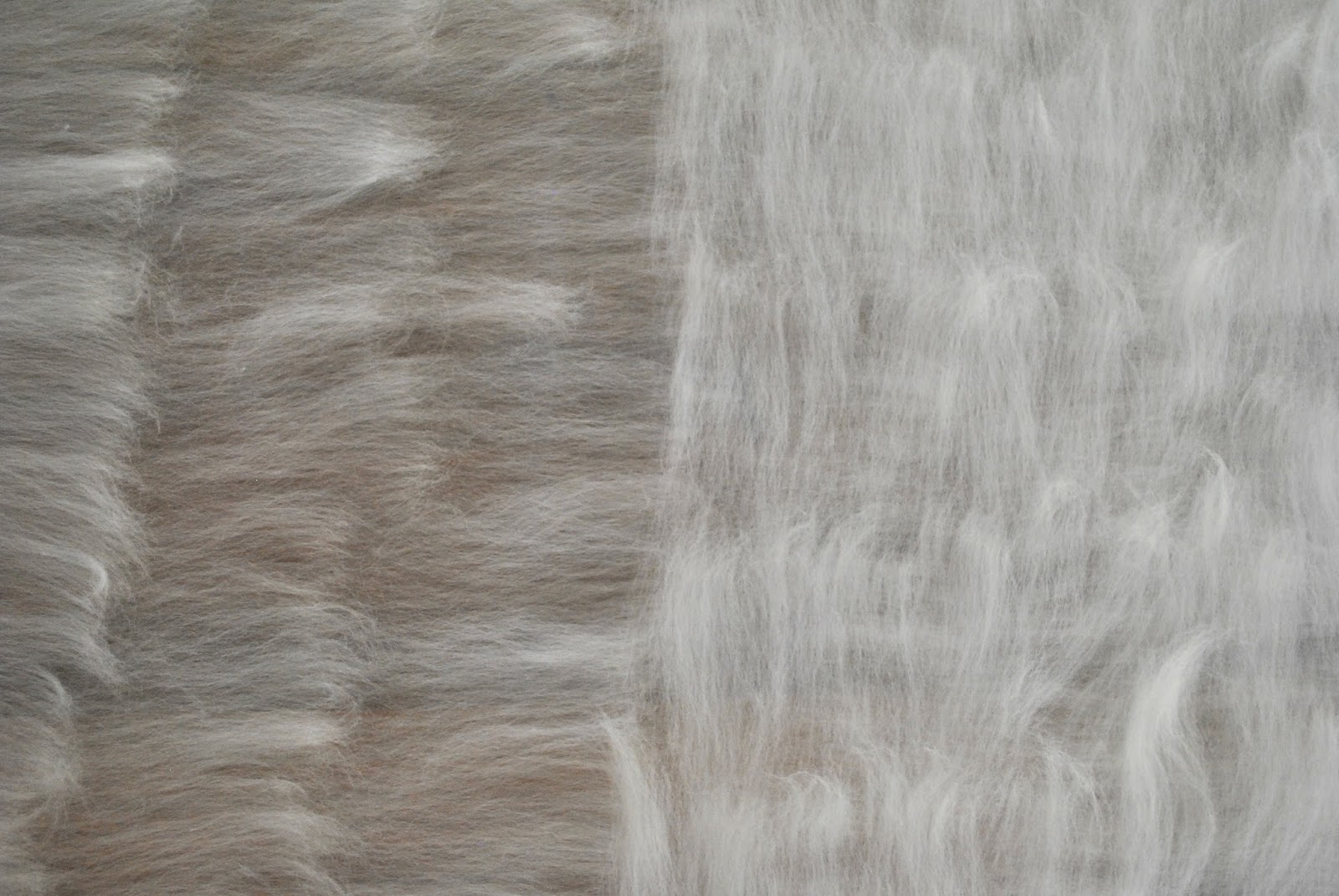
I laid my cut-to-fit plastic drop sheet on the table and start laying out small hanks of fleece onto it.  You hold the combed fleece loosely in your left hand, not too tight and not applying any pressure, and then with your right hand you grab and just pull away a small flat wodge.  Aim to keep the sections you’re pulling out of reasonably even spread and thickness; i.e., with no thick bits in the middle.  

Then, you’re simply laying them all in an even layer as possible, in one direction onto the plastic sheet.  I used my whole 2m x 1m table space.  This is why you need a good wedge of time, since your family’s not going to be able to eat dinner on the table during this process! and you can’t exactly pack it up out of the way since the wool fleece is so light and floaty that at all times it’s in danger of wafting about, blowing onto itself, or onto the floor if a door opens and a breeze comes through.  Plus in my three cat household there’s the very real danger that a curious little helper is suddenly going to jump up onto the table to check out what you’re doing and keep you company while you’re doing it.  Eeeeeeeek!  The potential for disaster is HUGE! 

The top end that you “grabbed” is a little thicker than the tail end, so overlap these by a little bit in each row.  Once you’ve covered the area, go over again, this time laying the hanks of fleece crosswise to the previous layer.
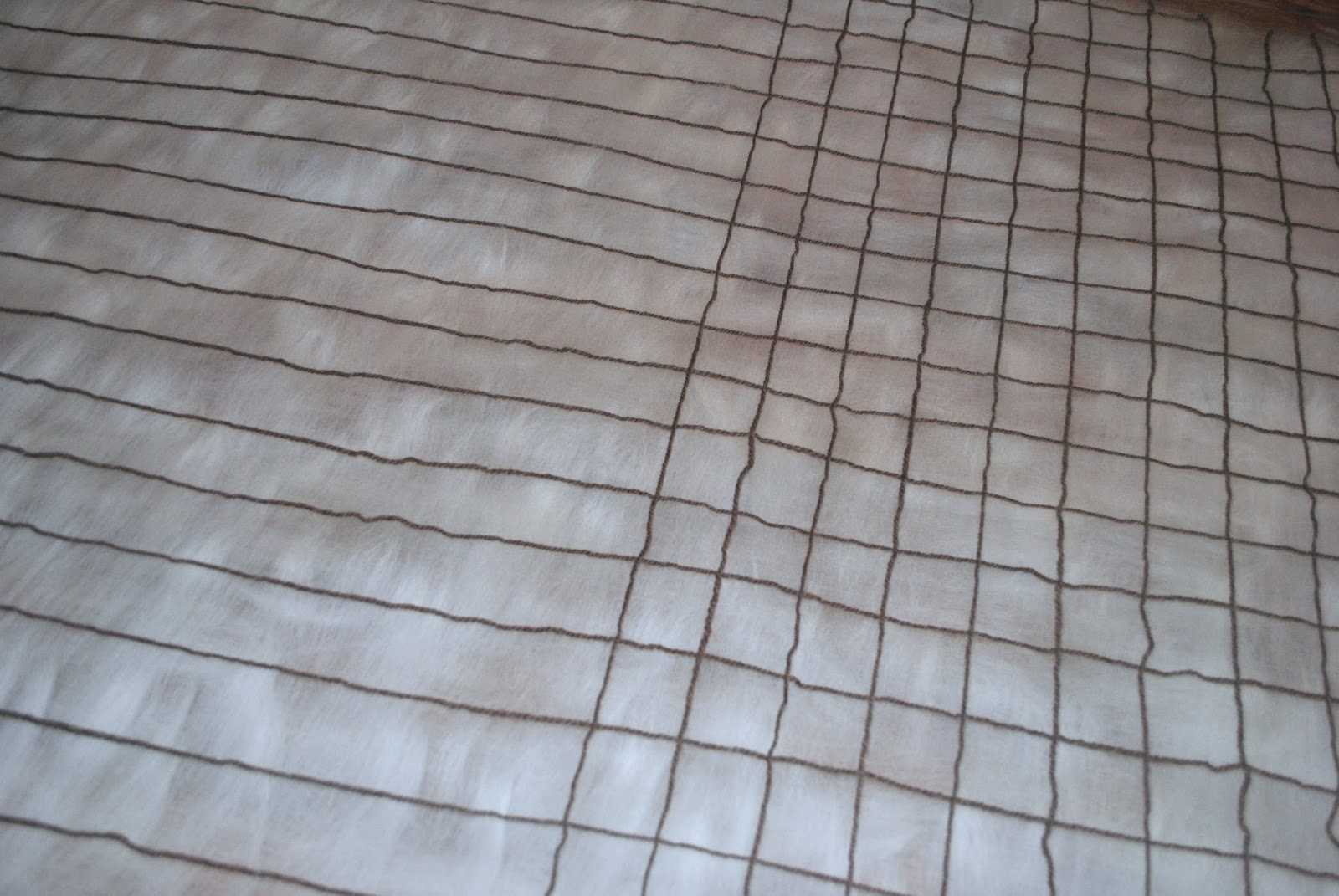
For my gridded felt I cut lengths of the homespun wool and laid it out over the fleece in an even grid.  Then I laid a very light and thin third layer of fleece over this one.  btw, some of the following pictures in this tutorial are of the grid felt and some are just the plain, un-gridded felt… because I was a little erratic in my picture taking; sorry!  But the felting process is just exactly the same in each case  🙂
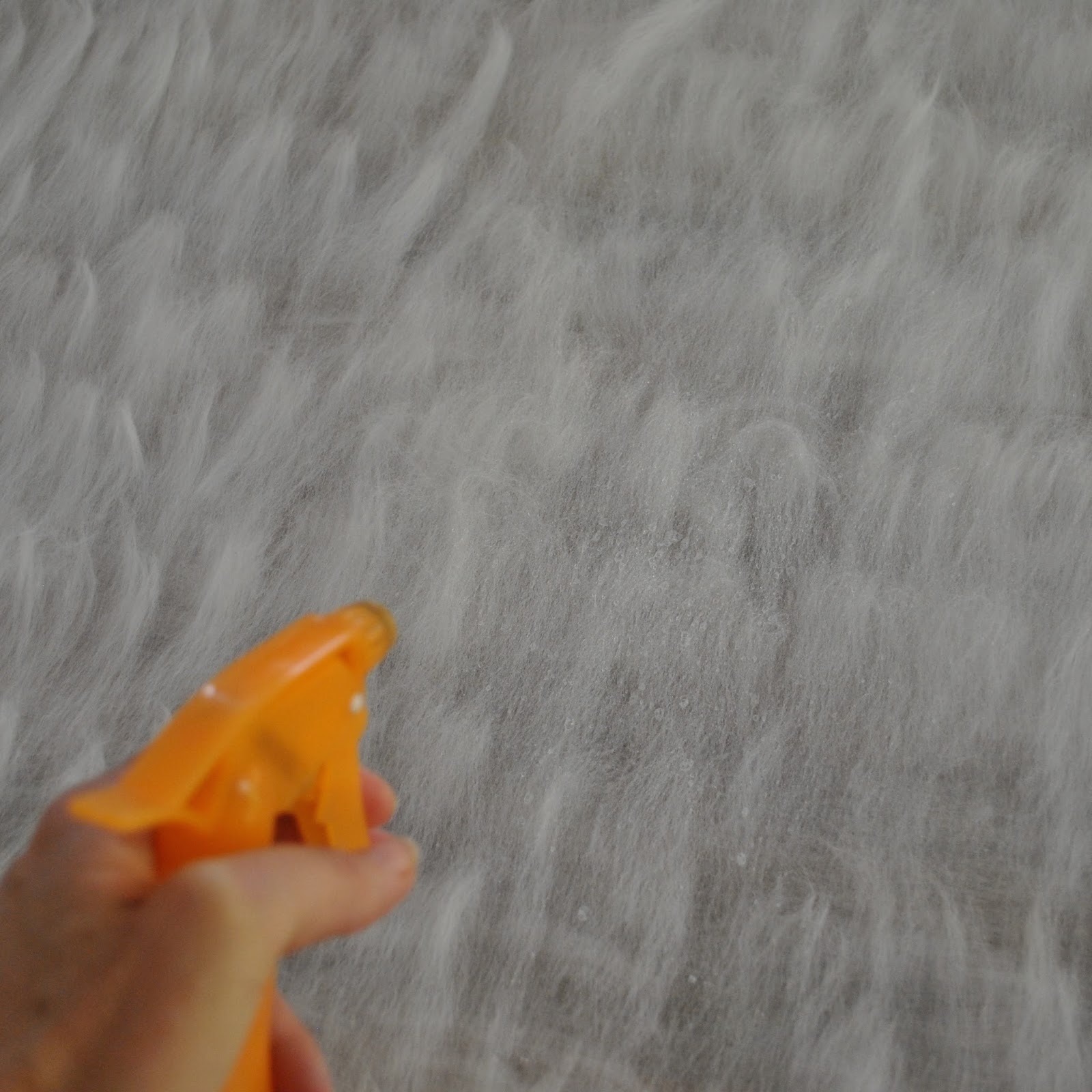
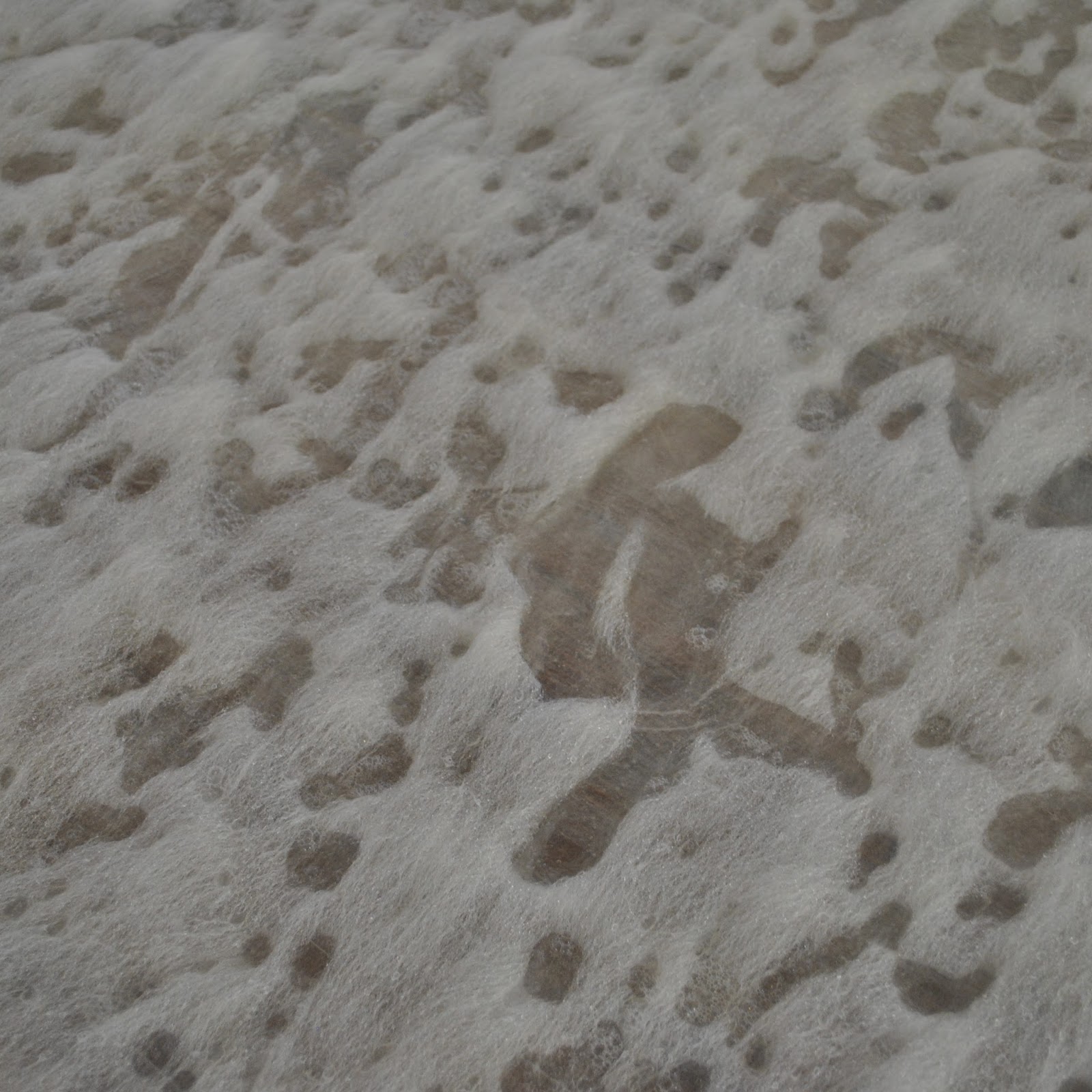
Fill a spray bottle with hot soapy* water and with the nozzle set to a fine mist lightly and carefully start spraying the fleece evenly all over.  Take great care to not blow the fleece about with an inadvertently strong spray or jet of water here! which could destroy all that carefully even laying-out… you’re aiming to very gently dampen down the fleece with a light misty spray.  Once the fleece has an allover layer of misty dew-like droplets all over, you can spray with slightly more vigour, pausing occasionally to gently flatten down the fleece with your hand, patting it down and allowing the water to seep through the layers of fleece.
*  Soap: the ladies in Bilby Yarns recommend the use of a gentle olive oil soap, and I agree this would be a wonderful option.  However, inadequate preparation and an impatience to just do it!!! meant that I just used a dash of regular dishwashing liquid for mine.  *horrified gasp*
Sorry to the purists out there!   I know, I’m a philistine  *hangs head in shame*  Please don’t boot me out of the felting club!
Eventually the fleece layers will be wet enough that they are no longer in danger of blowing about, and at this stage I allowed myself to add water just a bit more freely, but still lightly! sprinkling the fleece carefully using a small, plastic hand-watering can.

Check all over to make sure there are no dry bits; and once the fleece is wet through lay another cut-to-fit plastic dropsheet over the fleece, smoothing out any air bubbles, and start gently massaging to felt the fleece together.  Be light but firm, use small circular movements,  and cover the whole area evenly.  Every now and again peel back a corner to check that it’s felting together.

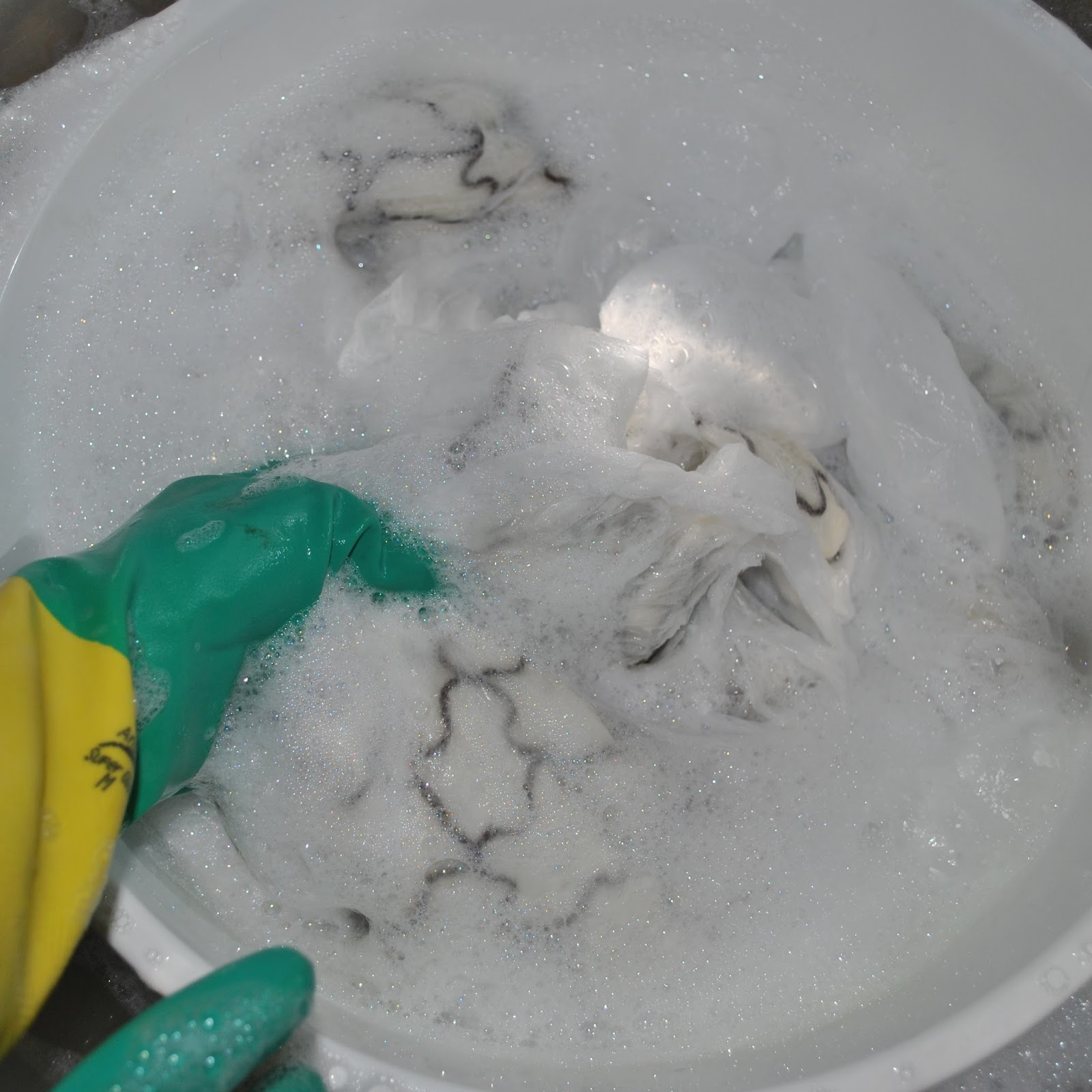
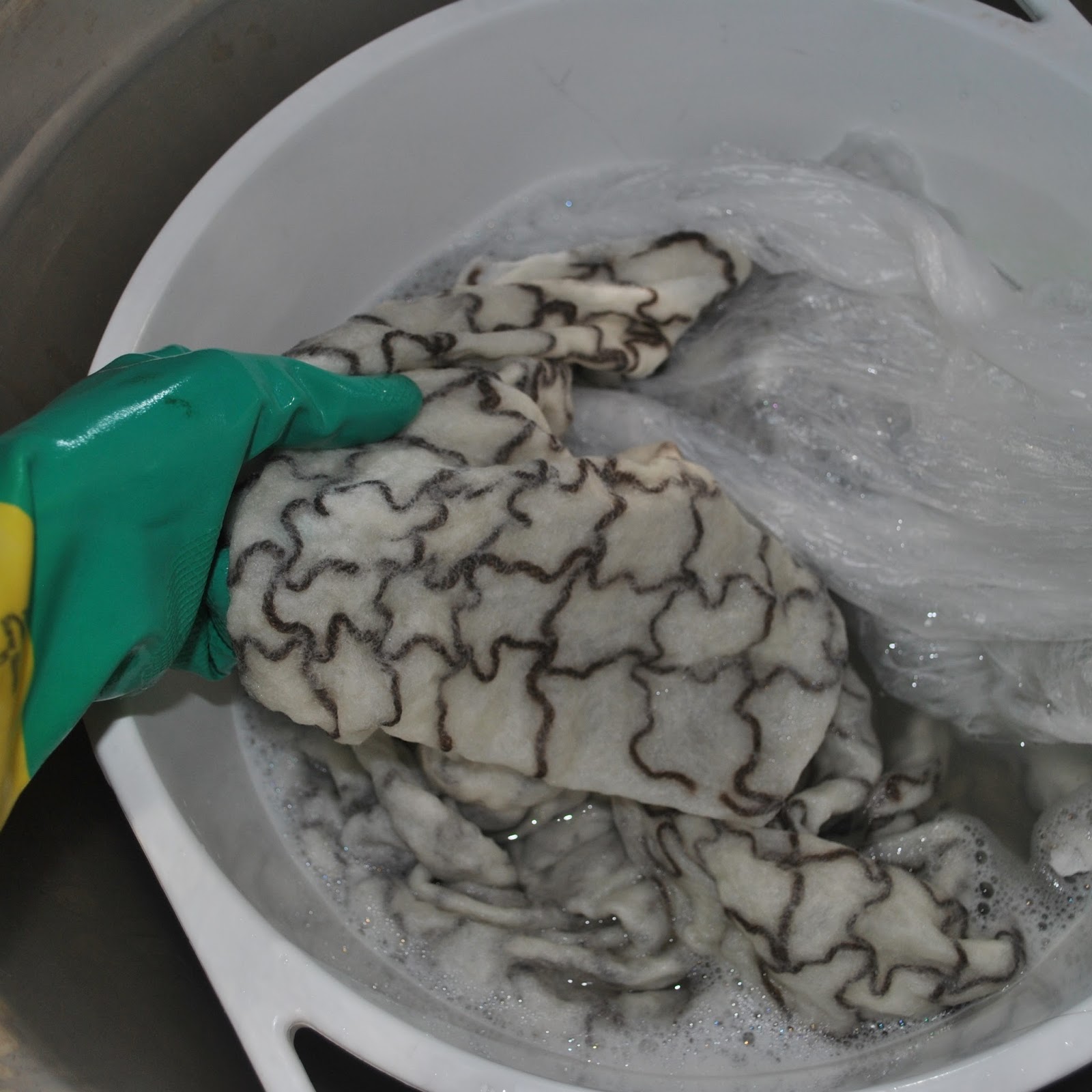
Once it seems to be melded and matted together enough that you can peel a corner away from the plastic and it seems to hold together in a sodden sheet of wool; replace that corner back between the plastic layers, and roll or fold the whole shebang up.  Fill a bucket with quite warm, but not hot! soapy water, plonk it in and start to gently agitate the plastic-wrapped fleece in the water.  Use the same sort of movements you would if you were hand-washing a precious cashmere jumper.  So, a bit of smooth slow swooshing, but no rubbing and nothing very vigorous.  Just some nice gentle easy swirling.

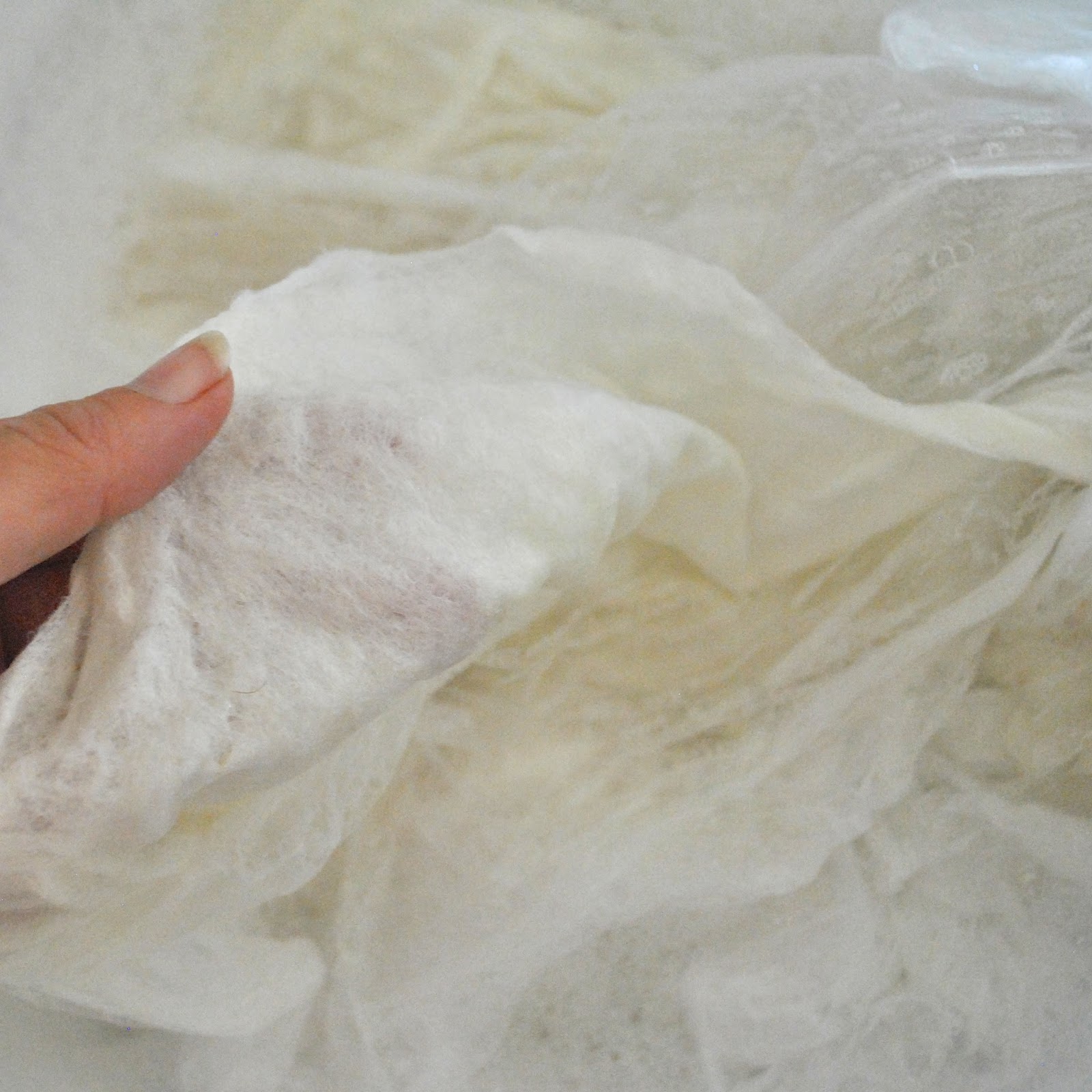
After a few minutes, say 5-10 minutes of this; check to see how the felting is going.  Once it has achieved a more stable, fabric-like texture you can peel away the plastic and remove that from the bucket.  
Gently rinse out all the soap, using cool water.  Still absolutely NO wringing or twisting the felt during this delicate procedure!!

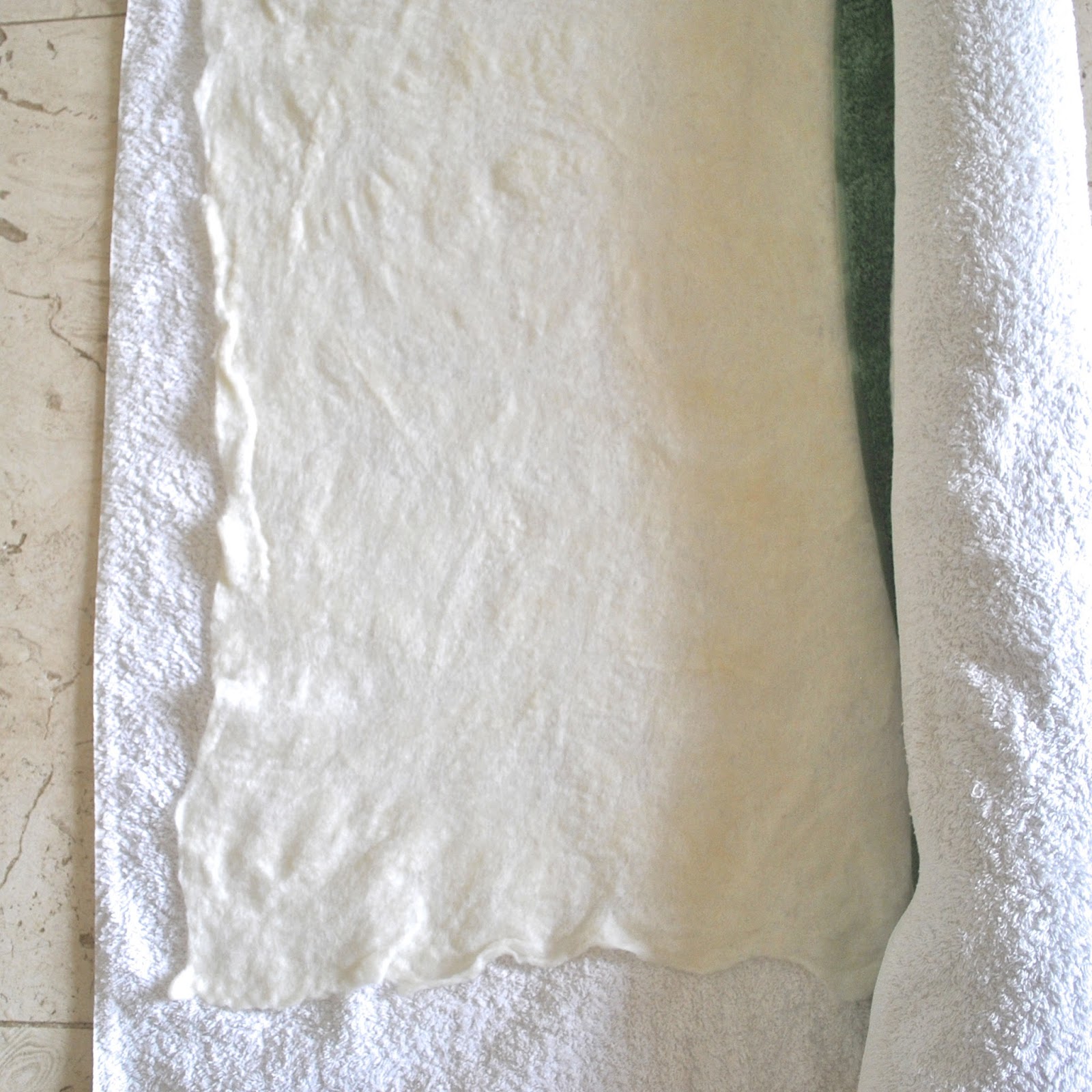
Just like you would that precious cashmere jumper; gently squeeze some excess water out, then lay the felt out on old towels and smooth it out as flat and smooth and even as possible.  Gently pull it into shape, tease out the crumply edges, smooth out any creases or little folds.  It will have shrunk somewhat during the felting process.  For the record; I initially laid out my fleece in a 90cm x 180cm rectangle.  After felting; my pieces had shrunk to roughly  67cm x 133cm; ie. approx. 75% of the previous size in both dimensions.  

When satisfied it is pulled flat and smooth and into a more or less rectangular  shape, roll it up in the towel, smoothing out any little creases that may form as you’re going along.  Squeeze excess water out by kneeling on and pressing down on the towel roll.  
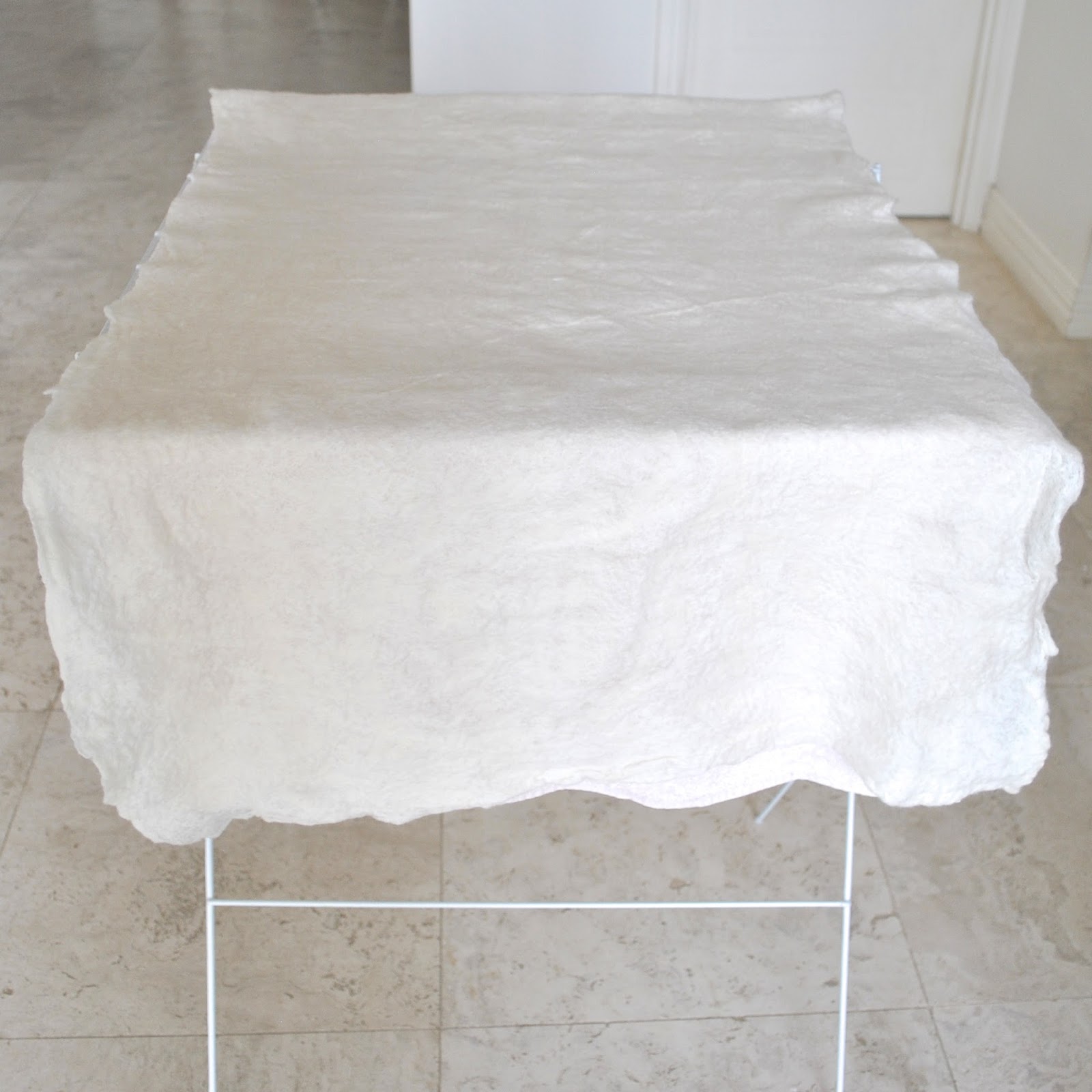
Unroll, lay the wet felt onto fresh dry towels, and let it dry flat.

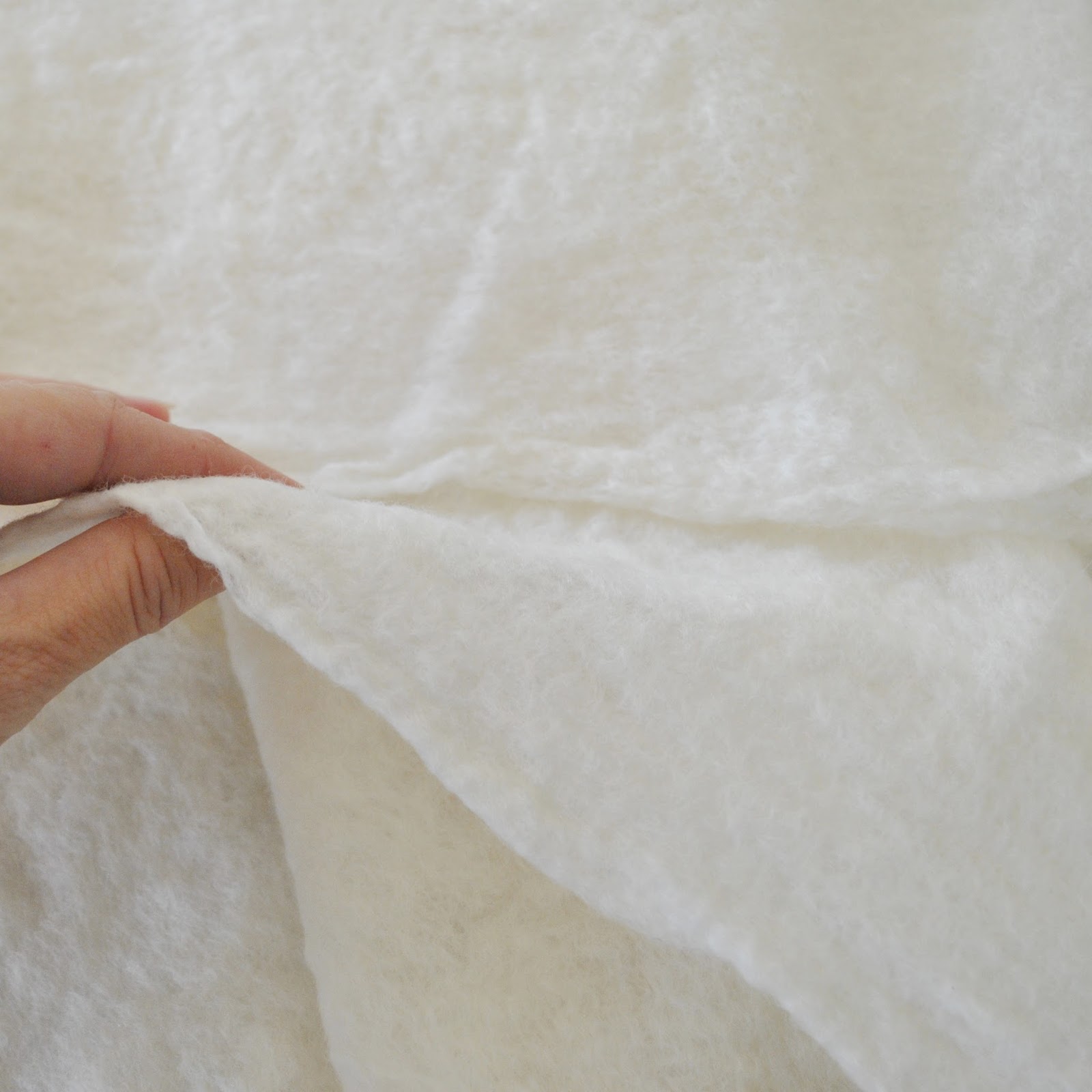
Et voila! felt!
The gridded felt is quite tough, sturdy enough to use on its own; and I plan to add extra strength to my plain cream pieces by adding some wool embroidery of some sort, which I am in the process of designing right now.
The most difficult part of all will be to cut into this precious stuff…  eeep!  must not ruin..!

pinterestmail

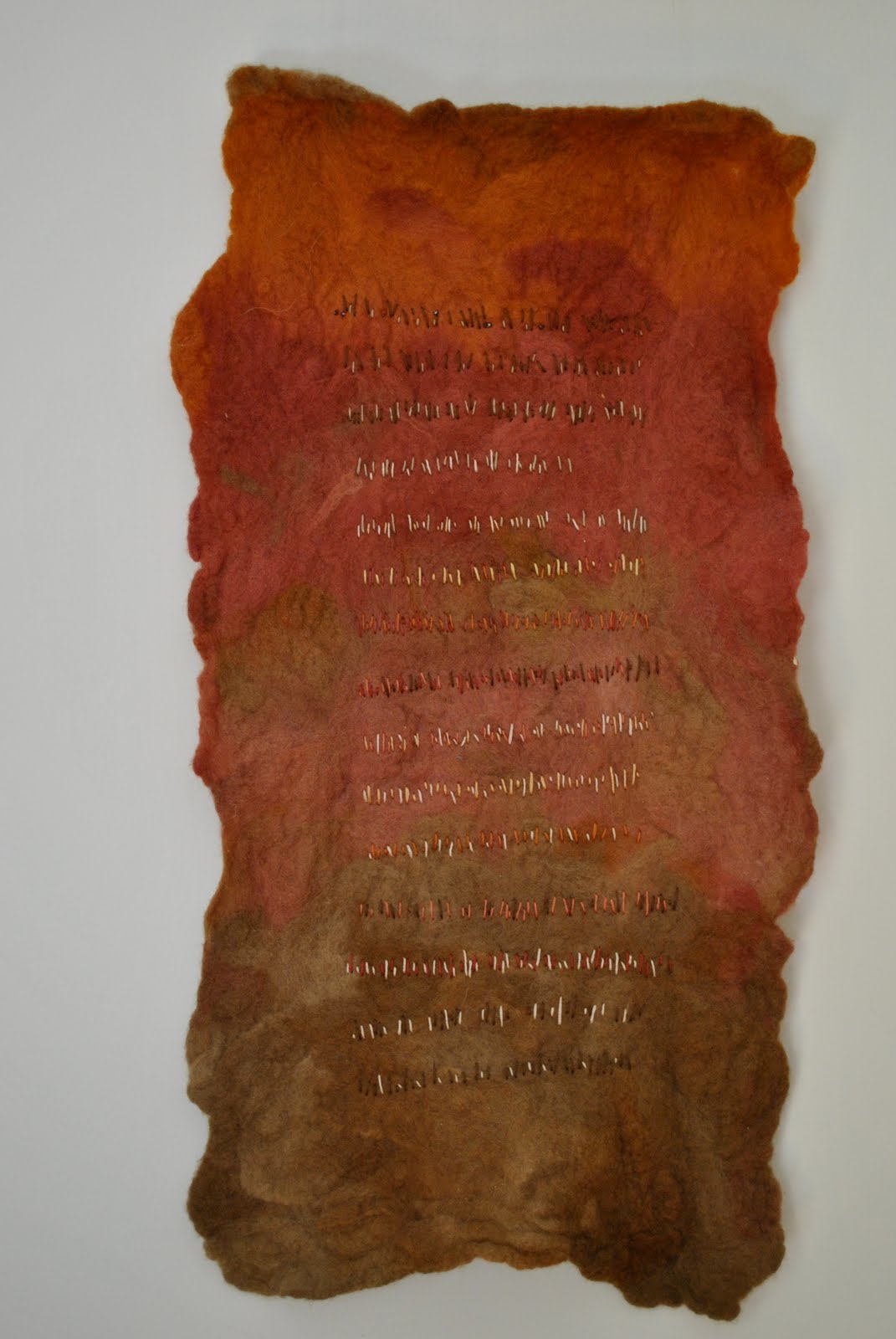
Felted wall hanging

Another felted thing.  I made this last year some time.  This is hanging on the wall in our front room, to be admired by visitors (hehe).  I really enjoyed the process of making this because by this time I had worked out how forgiving felting is and that you really can’t mistreat it; as long as you’re working with colours you love you really can’t go wrong here.
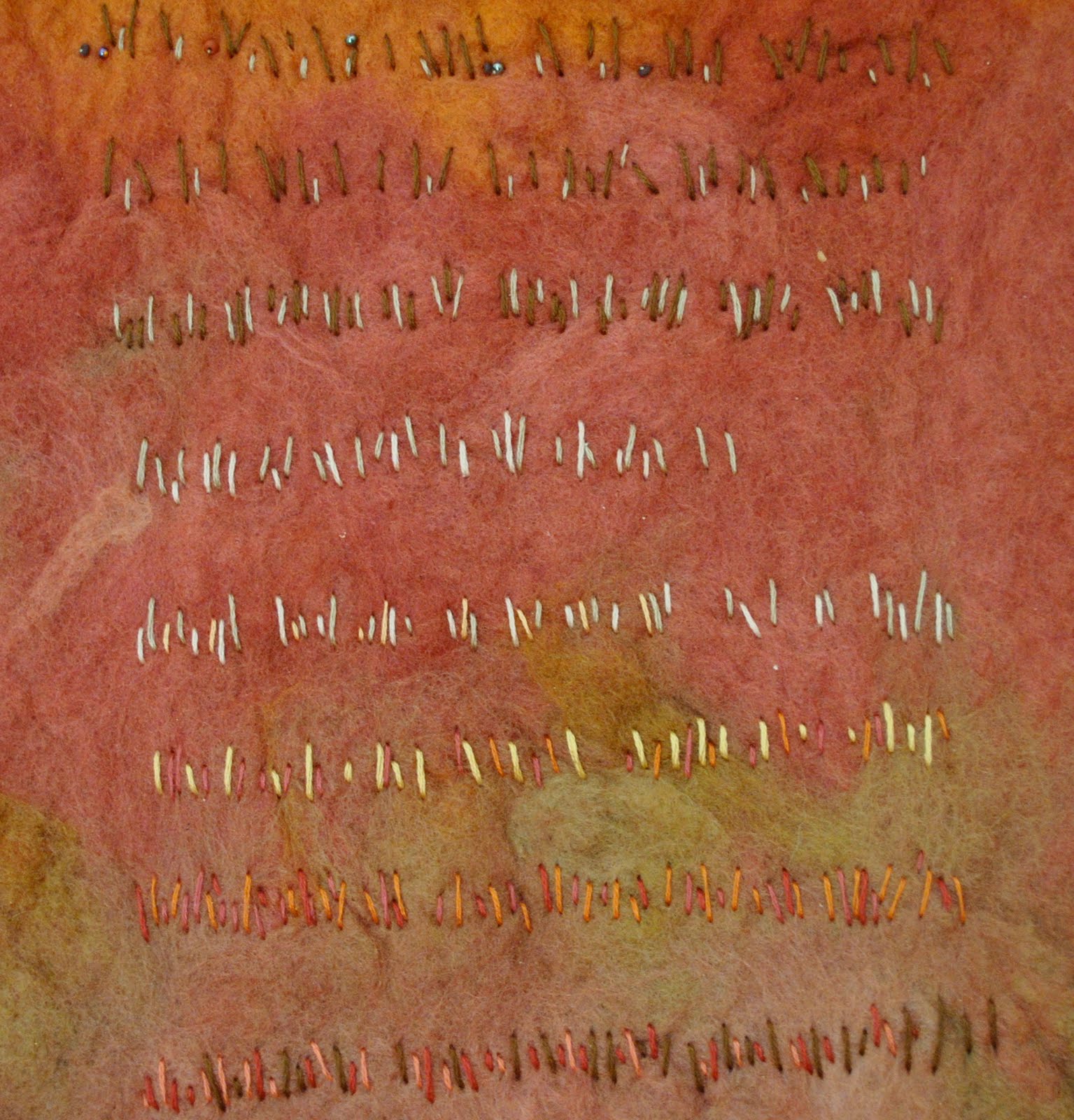
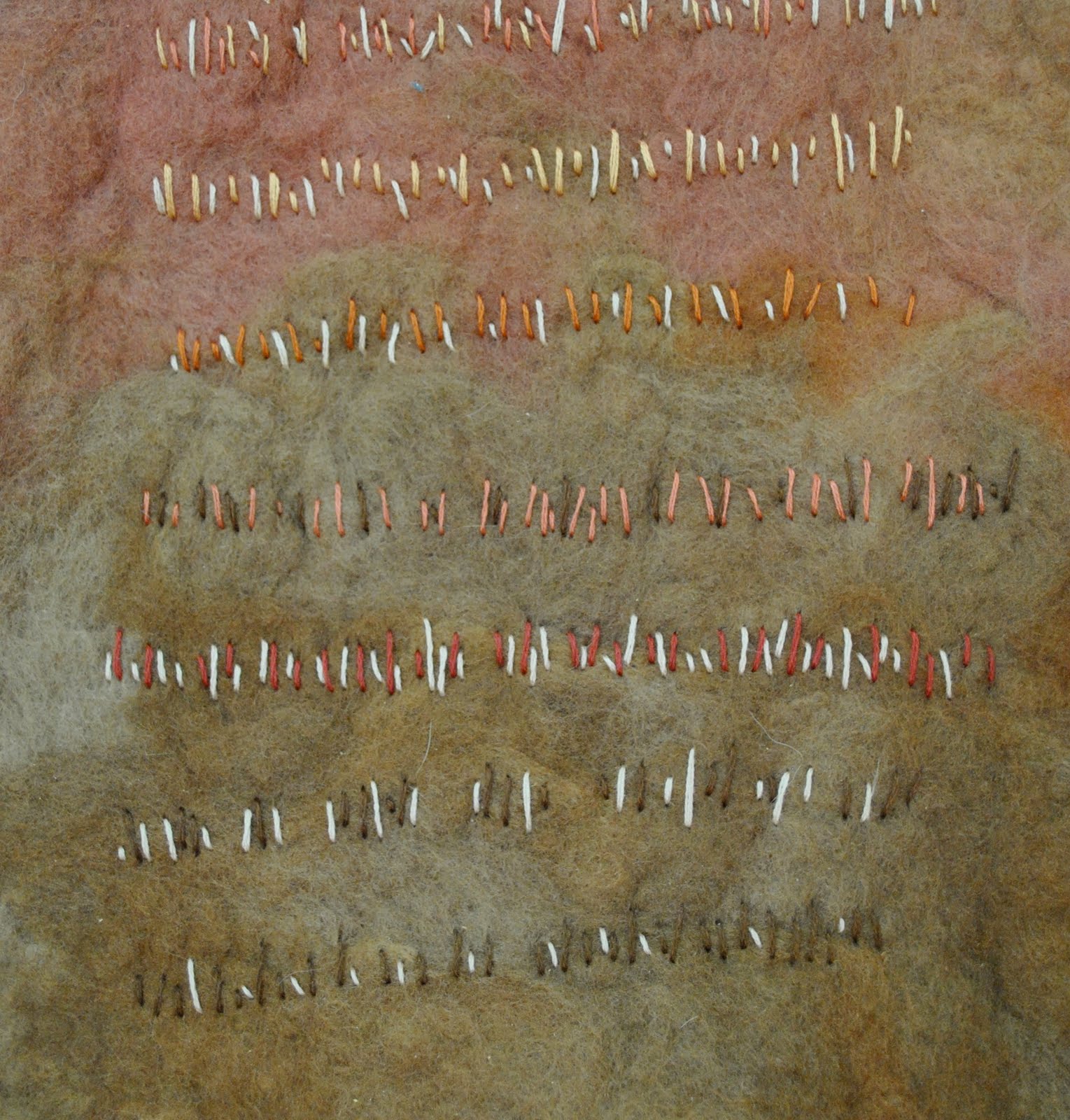
I envisaged this to be a sort of textile visual document in no language, a sort of crafted poem; a felted “page” with embroidered strokes and/or marks and dashes making a “text” on its surface.  I like how the the progression of colours turned out in the felted background and intended the vertical stitches of the embroidery as a kind of visual progression of colours and form in themselves… They bring to mind the tally of days that long-term prisoners scratch out on their cell walls; or the painted wall markings that are sometimes found in pre-historic caves, the homes of primitive people.  This could be a document from an undiscovered isolated culture, made by a people who use fabrics for their record making, and a language of strokes with colours, height and spacing forming an alphabet.
I sewed a bit of thick-ish wire across the top at back to stiffen it so it wouldn’t collapse when hanging, and it’s hanging from fishing wire which is almost invisible so the piece seems to be floating against the wall.  The size of this is roughly 52cmx28cm  (20.5in x 11in)

pinterestmail

Felted table runner

A few years ago my friend L, who’s enormously artistic and creative gathered a few like-minded souls about for a felting workshop.  We all met at D’s house, loaded with buckets, soap and bubble wrap and launched into an extremely fun morning making these scarves?/table runners?/ unspecified decorative thingys?  I think we intended them to be scarves, but mine ended up too wide and shrunk lengthwise too much.  I did wear it once as a sort of wrap around my hips over an all-black outfit and it looked kind of chic like that…  
However it’s full-time position is on the coffee table in my front room for visitors to admire (ha ha) as it goes perfectly with the decor; bit of luck there…  (the photo below is obv not in my front room, just to avoid a flurry of corrective commentation; the light was better outside…so!)
It’s made mostly of dyed unspun merino, but has a few swirls of various knitting wools and some beads embedded in there as well.  Over time some of these beads have worked their way out and been found lurking in corners and under sofas and I’ve reattached them with a few firm stitches.  Inevitable for something that has become the favourite sleeping place of a certain naughty puss-cat….

pinterestmail
Switch to mobile version
↓