Tag Archives: Own Design

Mustard cable-knit cowl

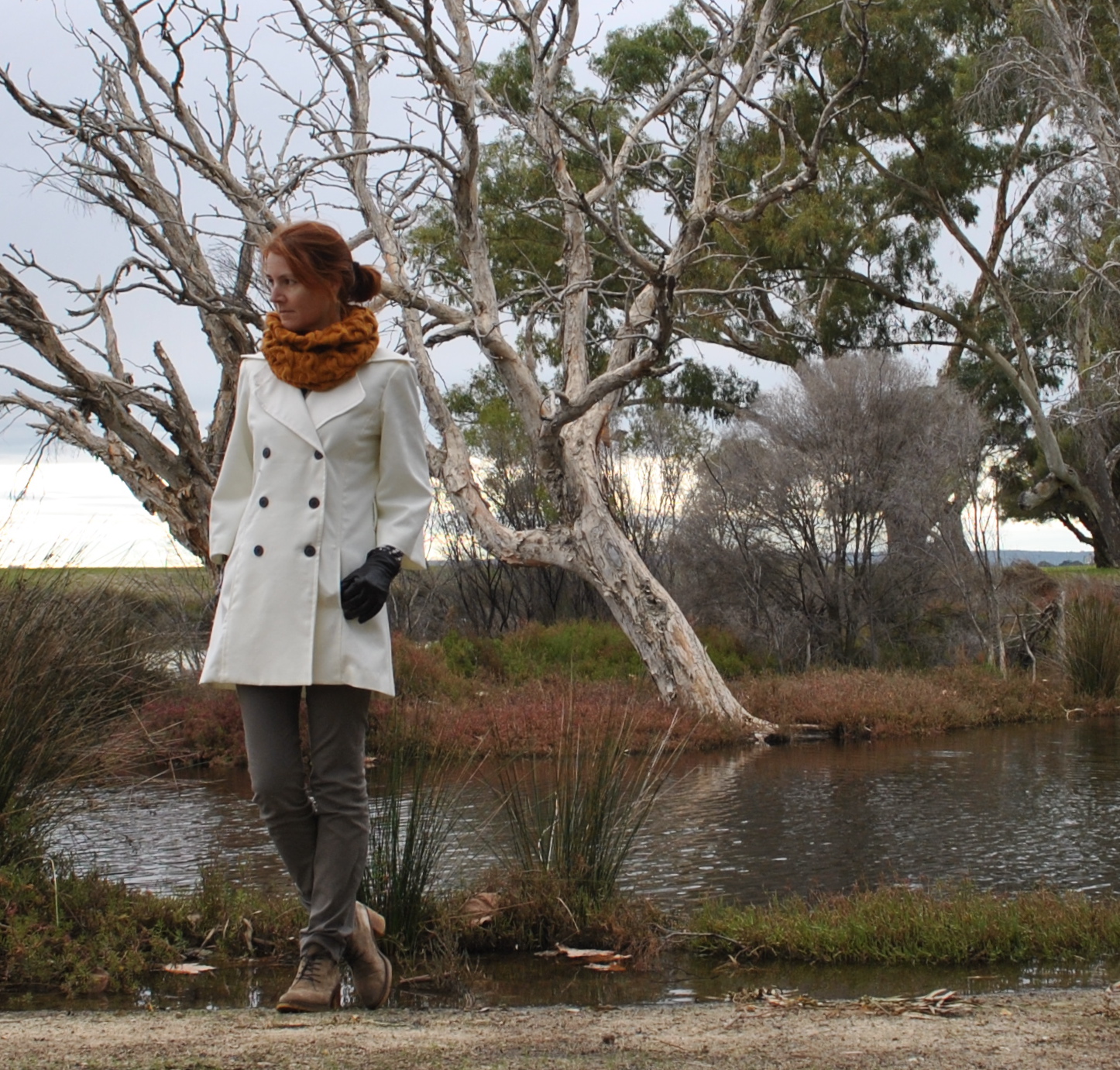
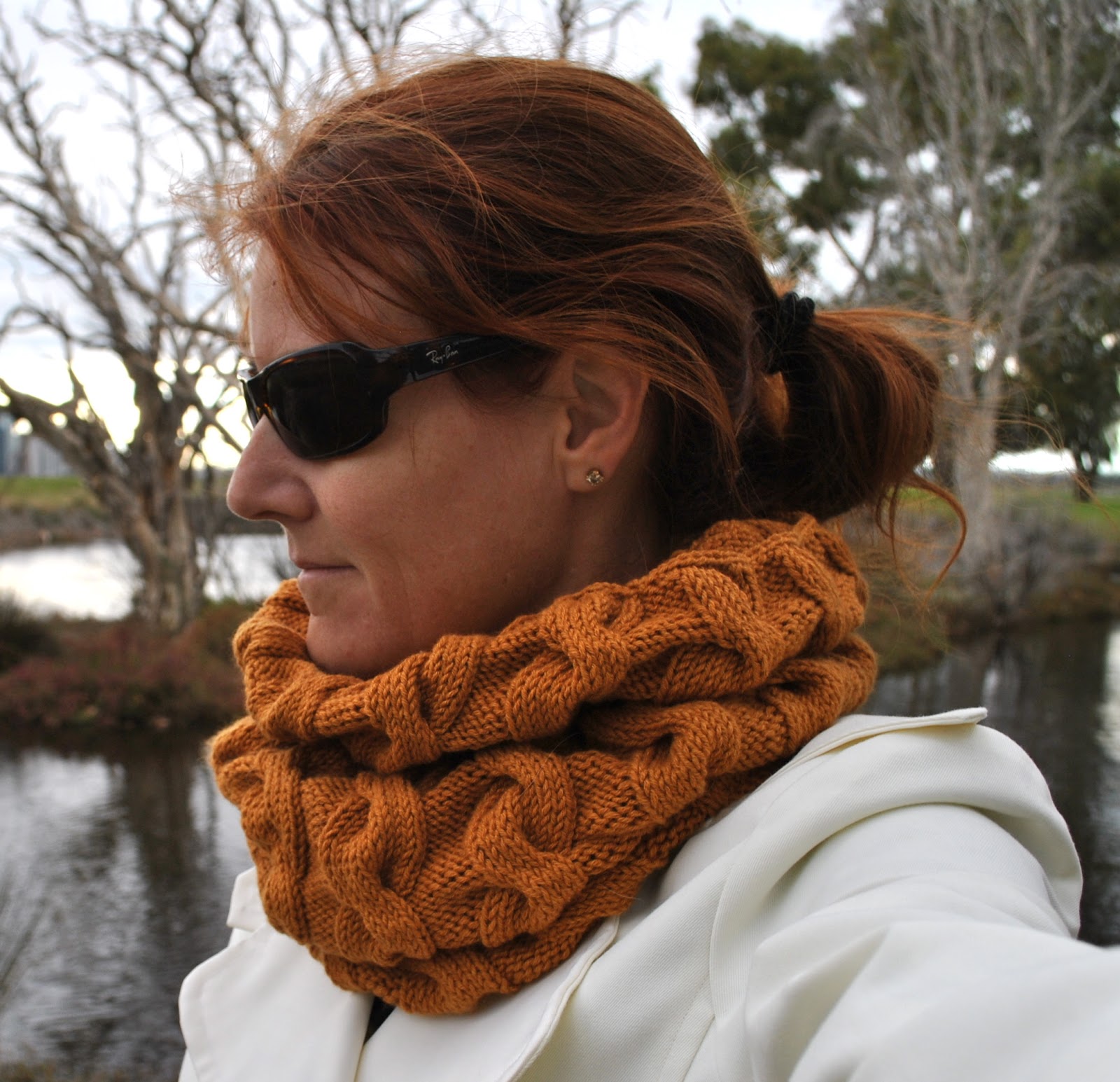
As those clear and cold as crystal winter mornings descend upon us, and the desire to swathe oneself in warm and cosy woolies; I have finished knitting a neck-warmer thingamy-bob.
I used Rowan belle organic dk, in shade 00010.  This is a 50% organic wool 50% organic cotton yarn, made in Italy; which is serendipitously appropriate given that most of the knitting was done in Italy.  The rich and cosy mustard shade is one I’ve had on my fashion radar for a while now.  I have been hunting for mustard-y goodness in either fabric or yarn, on and off in a desultory and increasingly despondent way for yonks, losing hope of ever seeing anything vaguely mustard-y.  Then; when I spied this yarn in Calico and Ivy, I pounced!
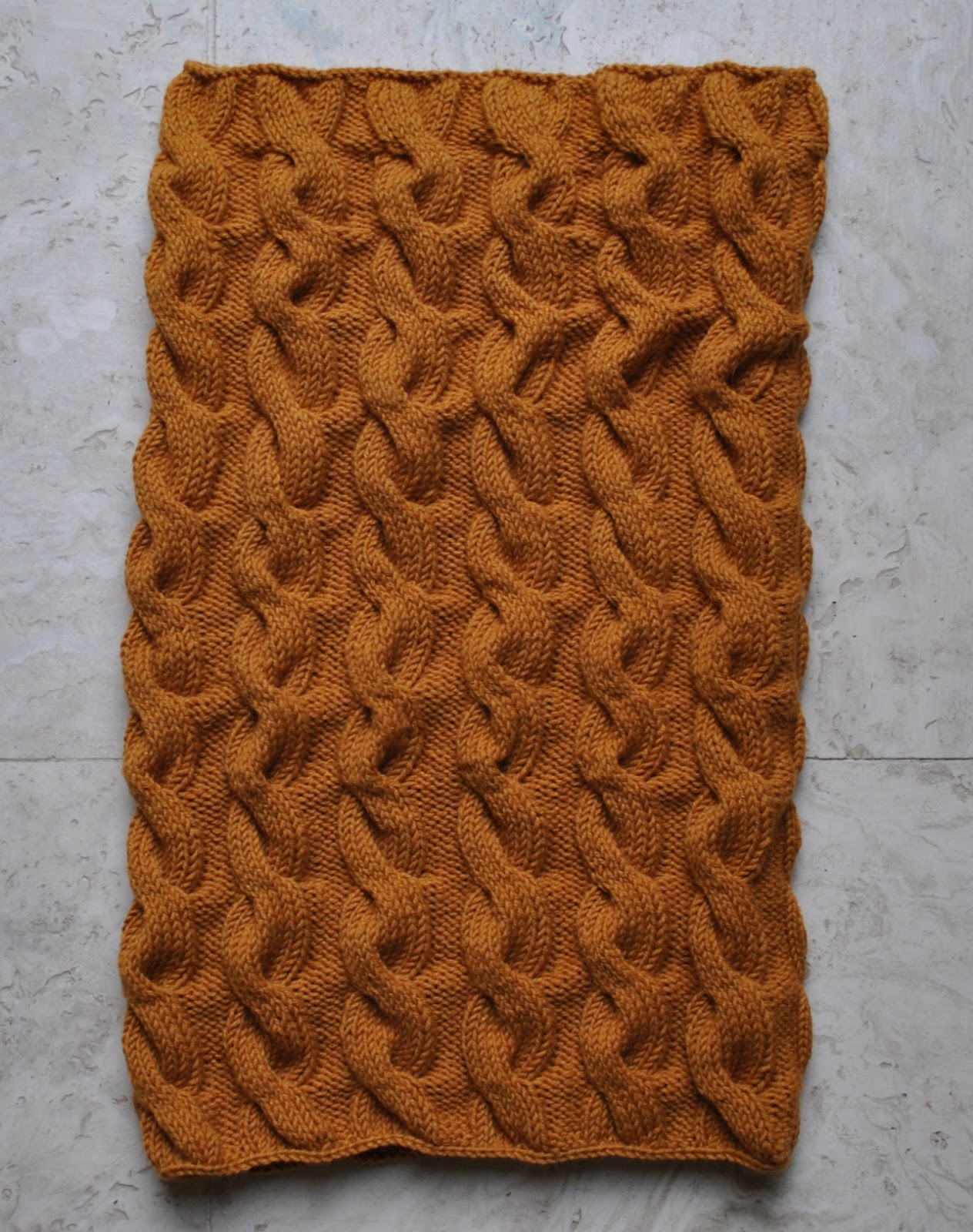
Rather embarrassingly to admit, but this started out as my holiday project, that I took away with me on our recent trip.  I started out with high flown fanciful ideas of a tall cowl with lots of sections with contrasting patterns, sorta to be like a knitting sampler.  There were to be ribs, moss stitches, a few sections of squares, and alternating bands of plain and purl… all of which I started and all of which got unpicked and done over.  Countless times!  The final result I am wearing here which looks like, and is; a simple dimple little cable-knit cowl scarf is actually the product of a several weeks of knitting.  And un-knitting.  But let’s not dwell on that…  🙂
Here it is: finished, and I am satisfied.
Sometimes, simple is best, yes?

If anyone is interested, here is my “pattern”; if you can even call it that  😀

Using a 3mm circular needle, cast on 135 stitches.
(commence by inserting the needle into the first stitch cast-on, so that you are knitting in the round)
1st row; K2, K2 into the next stitch; repeat for the first round  (180 stitches)
2nd row; K10, P5; repeat until the end of the round.
Repeat 2nd row 7 times.
10th row; slip next 5 stitches onto a cable needle, K the following 5 st, slip the 5 stitches from the cable needle back onto left needle and knit, P5; repeat 11 times (until the end of the round)
This is the cable row.
*Repeat 2nd row 12 times.
Repeat cable row*
Repeat from * to * until the cowl is a satisfactory length (I did another 13 repeats)
Repeat 2nd row 8 times.
K2, K2 tog, repeat until end of the round (135 stitches).
Cast off.
(this uses up about 4 and a half balls)

Details:
Scarf; handknit by me, using Rowan belle organic dk, in shade 00010 from Calico and Ivy
Jeans; Burda 7863 in khaki stretch gabardine, details and my review of this pattern here, and see these jeans styled in 6 different ways here
Tshirt; leopard print jersey knit, details here
Coat; McCalls 5525, ivory gabardine, details here and my review of this pattern here
Gloves; David Jones
Shoes; Francesco Morichetti, from Zomp shoes

pinterestmail

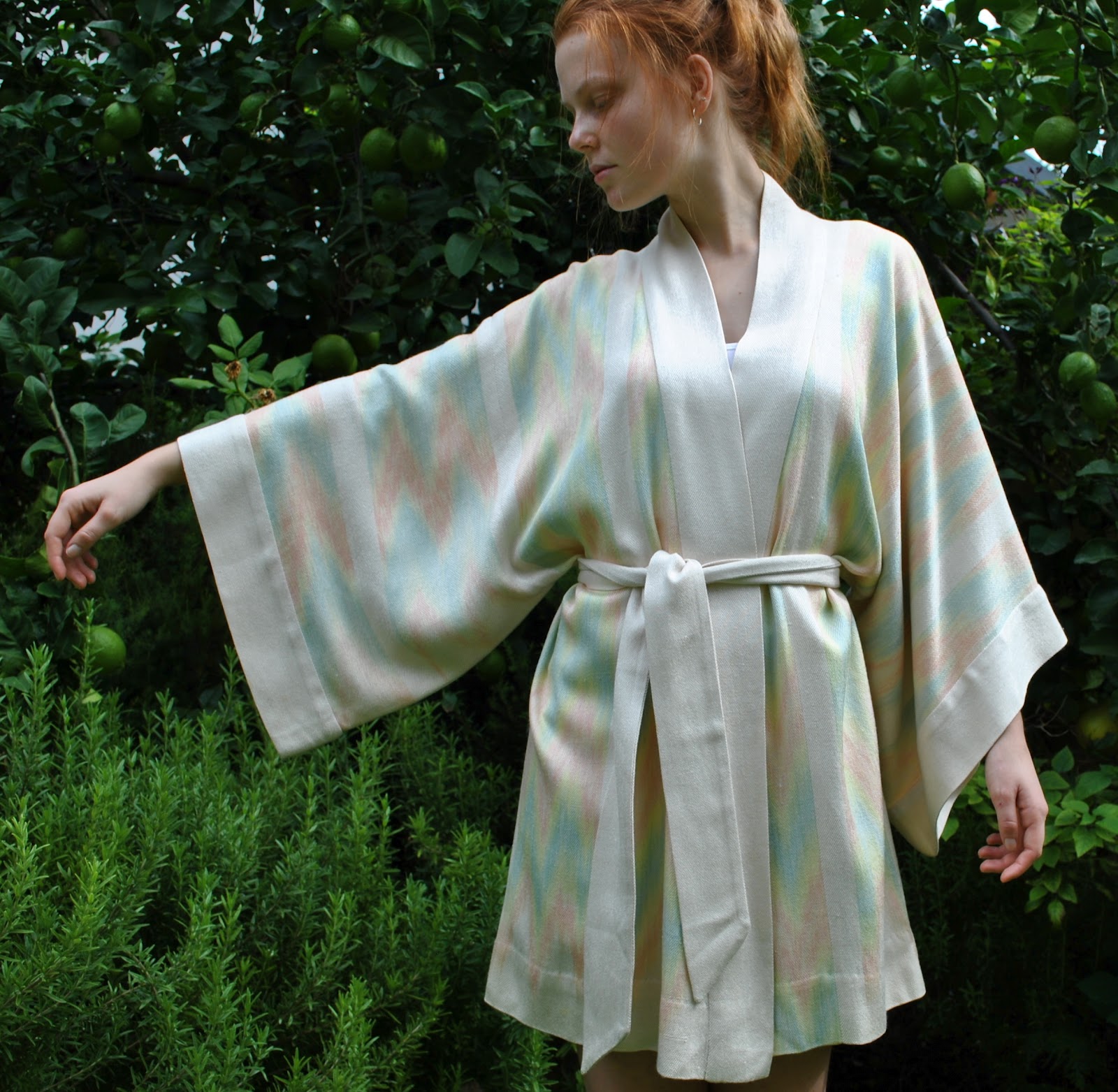
Mum’s silk kimono

With thoughts of self-stitched sleepwear ricochetting about my recent consciousness like a pingpong ball being batted about by a playful pussycat… as well as unique and beautifully artistic garments that delight and inspire us creative types….
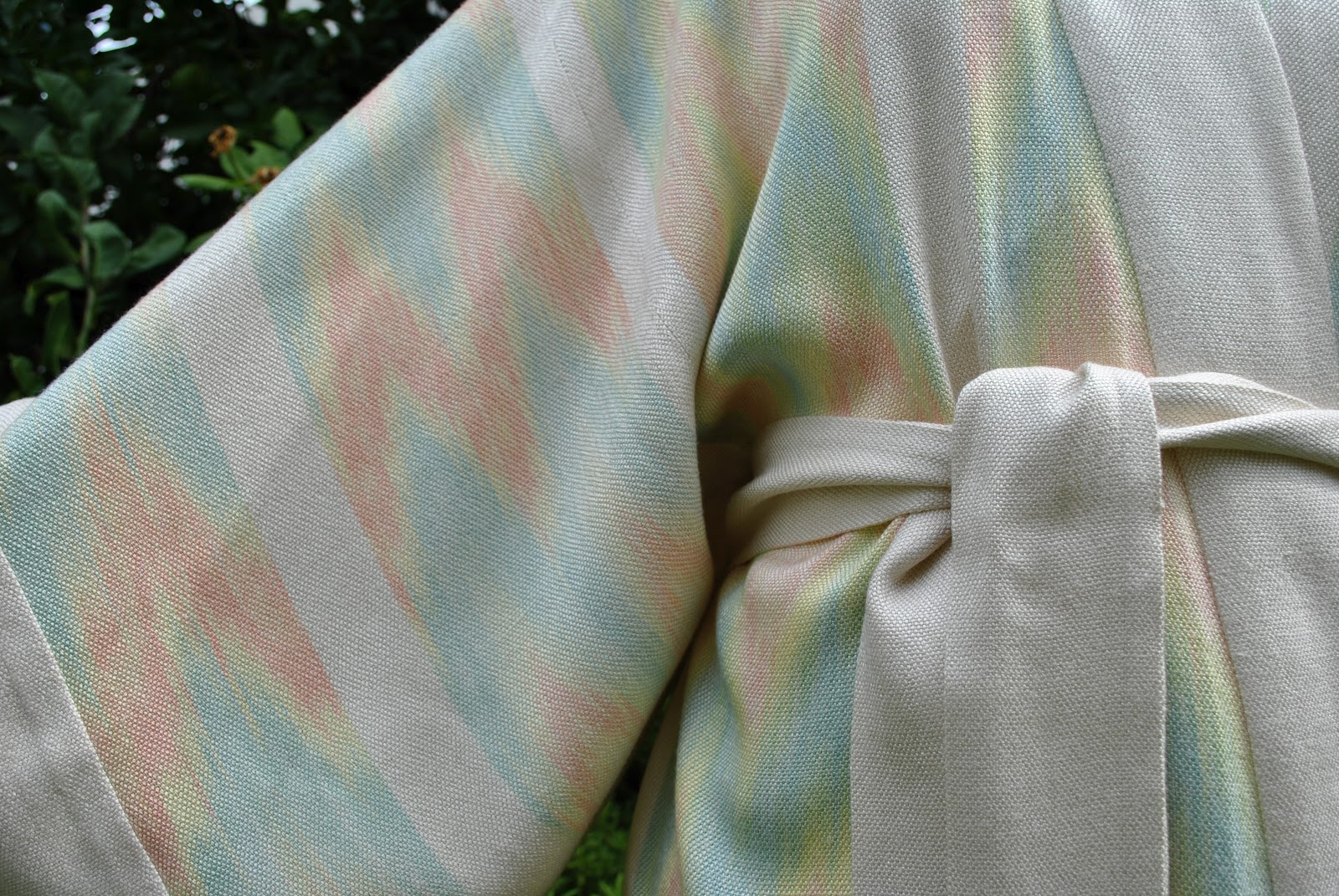
This is a silk kimono made by my mother.  Anyone who has been reading my blog for a while might remember that my mother is highly accomplished at all forms of textile art and has made many many beautiful works of wearable art.  Her creations are truly something to aspire to!

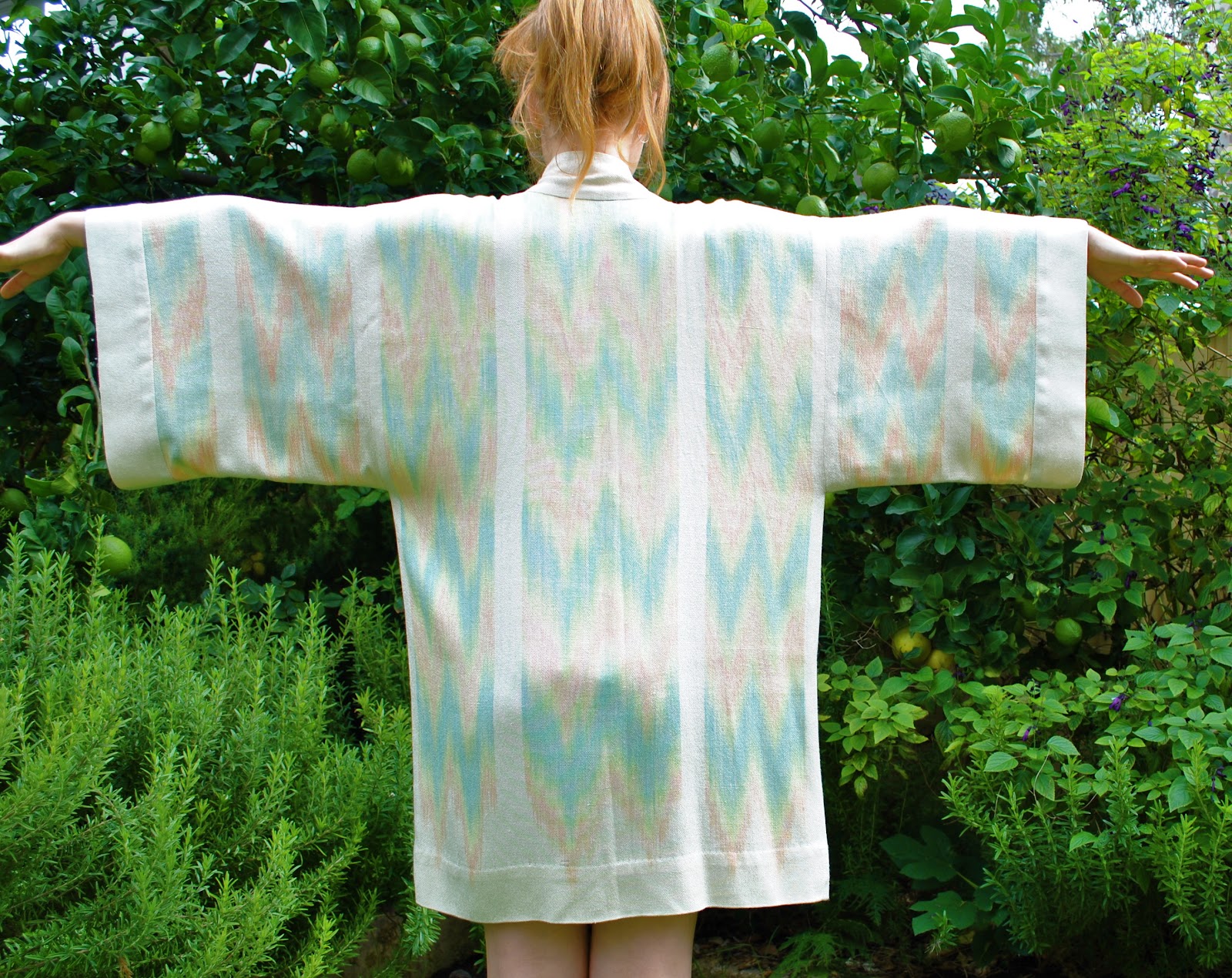
This kimono has been hand-dyed! hand-woven! AND hand-stitched!  All by my talented Mum. 

Mum hand-dyed the skeins of ivory silk for the warp of the cloth in the ikat technique, in a divinely subtle rainbow of shades.  She then wove the silk on her loom, and then made the kimono from the resulting fabric.
Isn’t it utterly beautiful?
The kimono was made in 1984.  I do have nebulous memories of its creation in our laundry, even now I can remember it as a labour of love, a project in which Mum aimed high and effortlessly achieved a remarkable outcome that still inspires my awe and admiration  🙂

Mum does still wear it, but since it is not so much a throw-on thing so much as it is a unique work of art it has been well looked after and is of course in immaculate condition.  However, she did not wish to model it for my blog, so Cassie has stepped in.  But I can assure you that she looks just as beautiful wearing it as Cassie does here!

pinterestmail

Gingham PJs

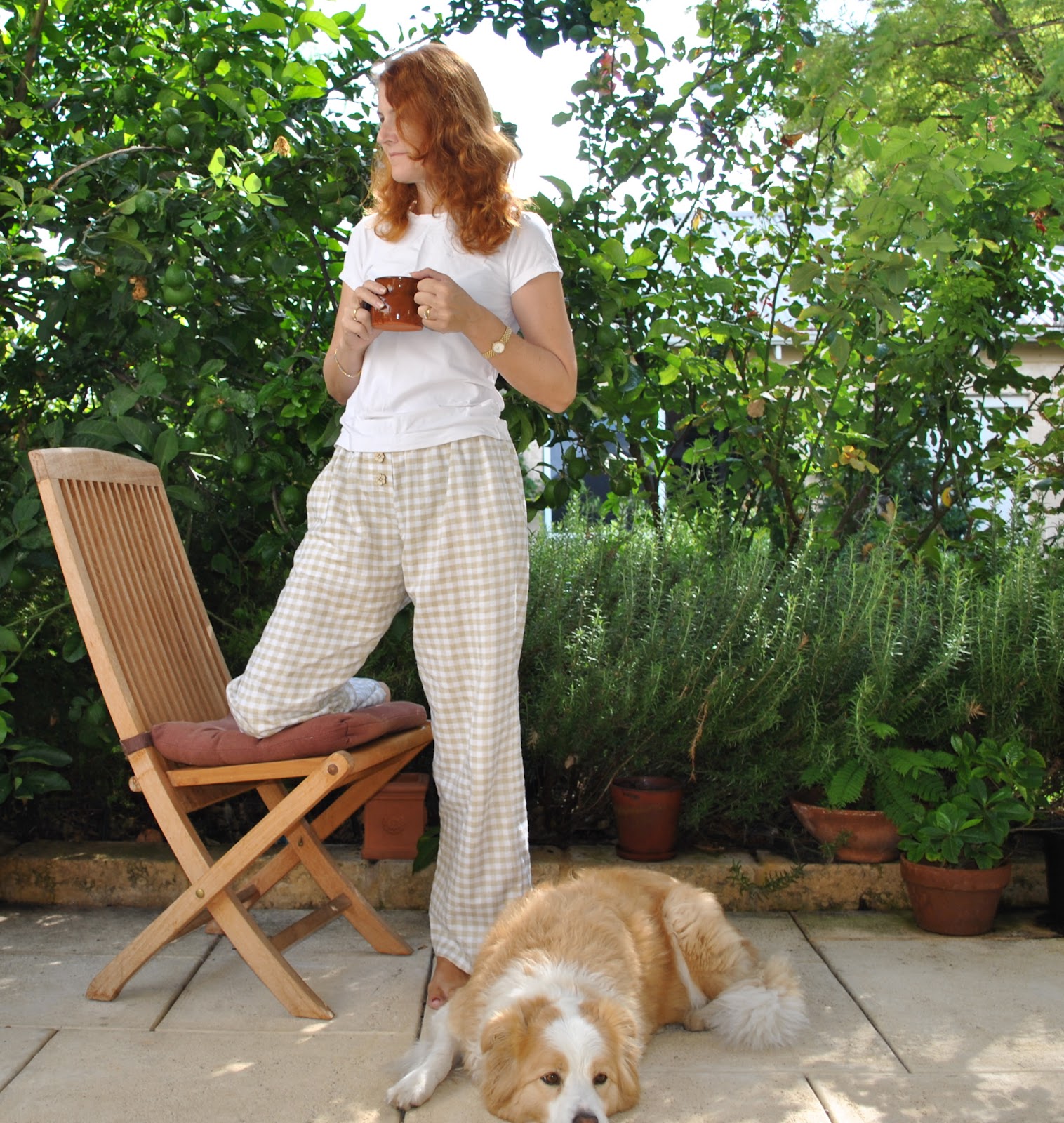
I do apologise for the complete and utter lack of chicness and elegance today, and this is not an ensemble one would ever see gracing the pages of Vogue magazine…  but I’m sure every woman secretly harbours an undying love for flannelette PJ bottoms in her heart… yes?  I know I know, we are supposed to spend our days swanning about in some elegant little number complete with gorgeous heels, and then at home slip into some sort of lace-y, slinky, satiny little thing for our down time…  
But seriously.  Let’s get real here.  Our secretly favourite part of the day is really when we get to throw off the elegance and put on our extremely unsexy and unflattering but warm and cuddly and oh-so-comfy ginormously huge elastic waist pants; and curl up on the couch with a book and a cup of tea.
Or is that just me….?   🙂
I am taking part in two pyjama parties here!  (ooh, it’s been yonks since I went to a pyjama party!) firstly Terri‘s Pyjama Party today, over in her secret room.  And also Karen’s Pyjama Party; only that party was planning to make their pj’s over a period of a few weeks.  As it was, my old pj bottoms ripped a bit when I sat on a splinter recently… it’s OK, I’m not sad; they were old and getting pretty thin about the bottoomba *, but I did need some newies, fast!
(* bottoomba; old family word, pronounced with the emphasis on the second syllable)
So I ran out to Spotlight, the fabric was bought and I made these up in about half an hour, that same afternoon, to wear that same night.  Yah, I know; I am not known for my patience.  But well, these are just pj’s for goodness sakes!  the easiest make in the world…
My pattern is kinda self-drafted… when my very last pair of store-bought pj pants wore out I cut them up for a pattern, added a few little modifications of my own and have been using that ever since.
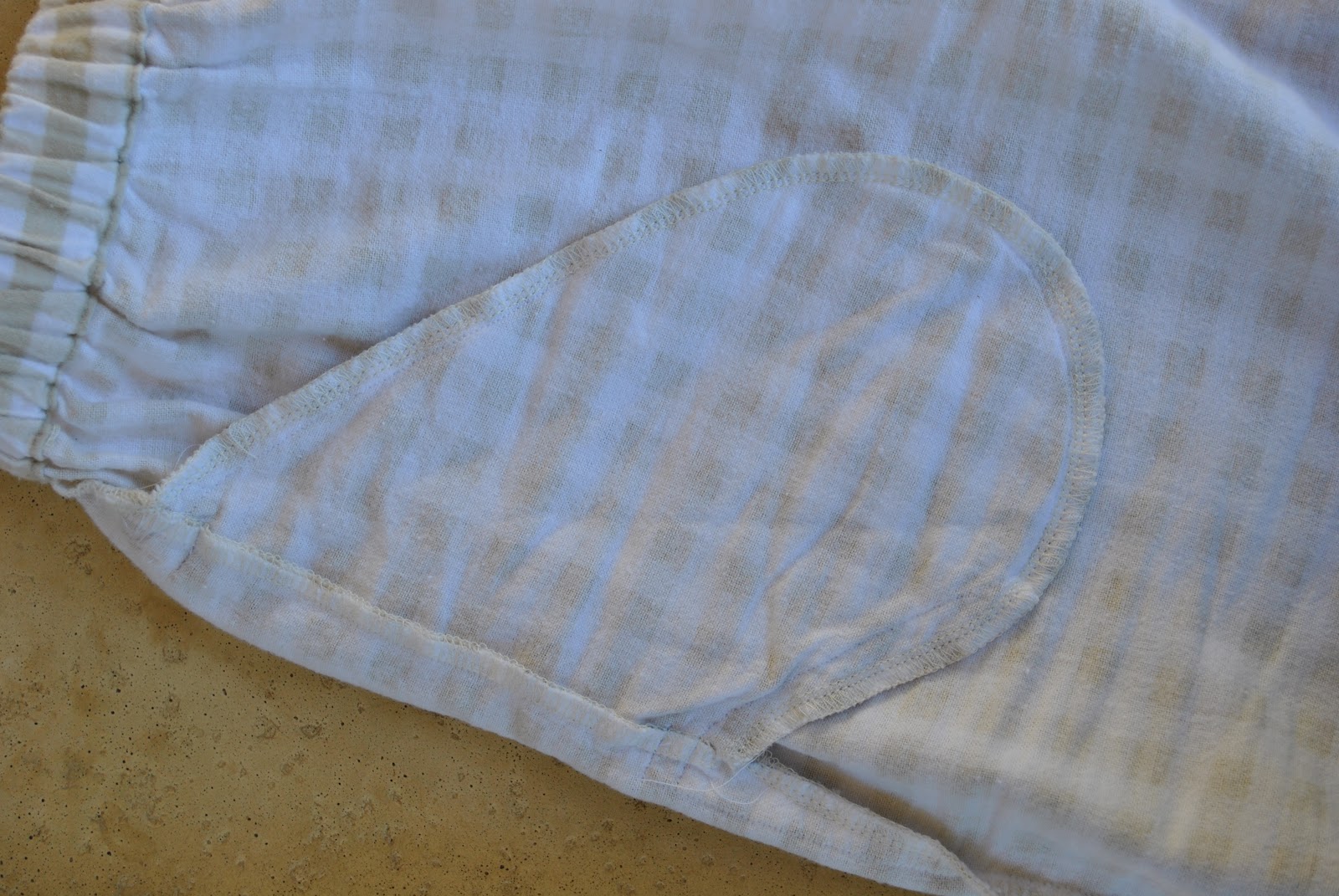
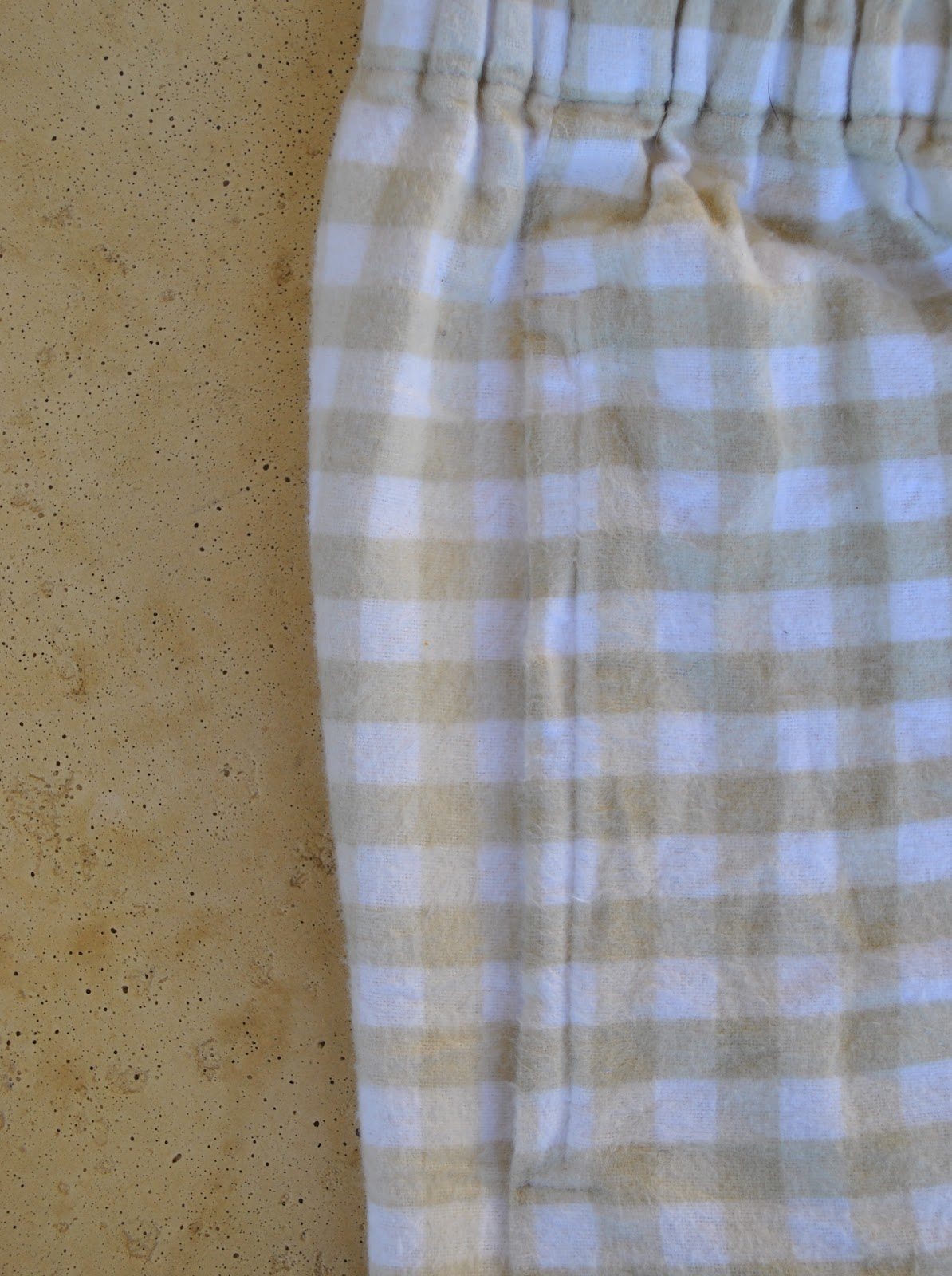
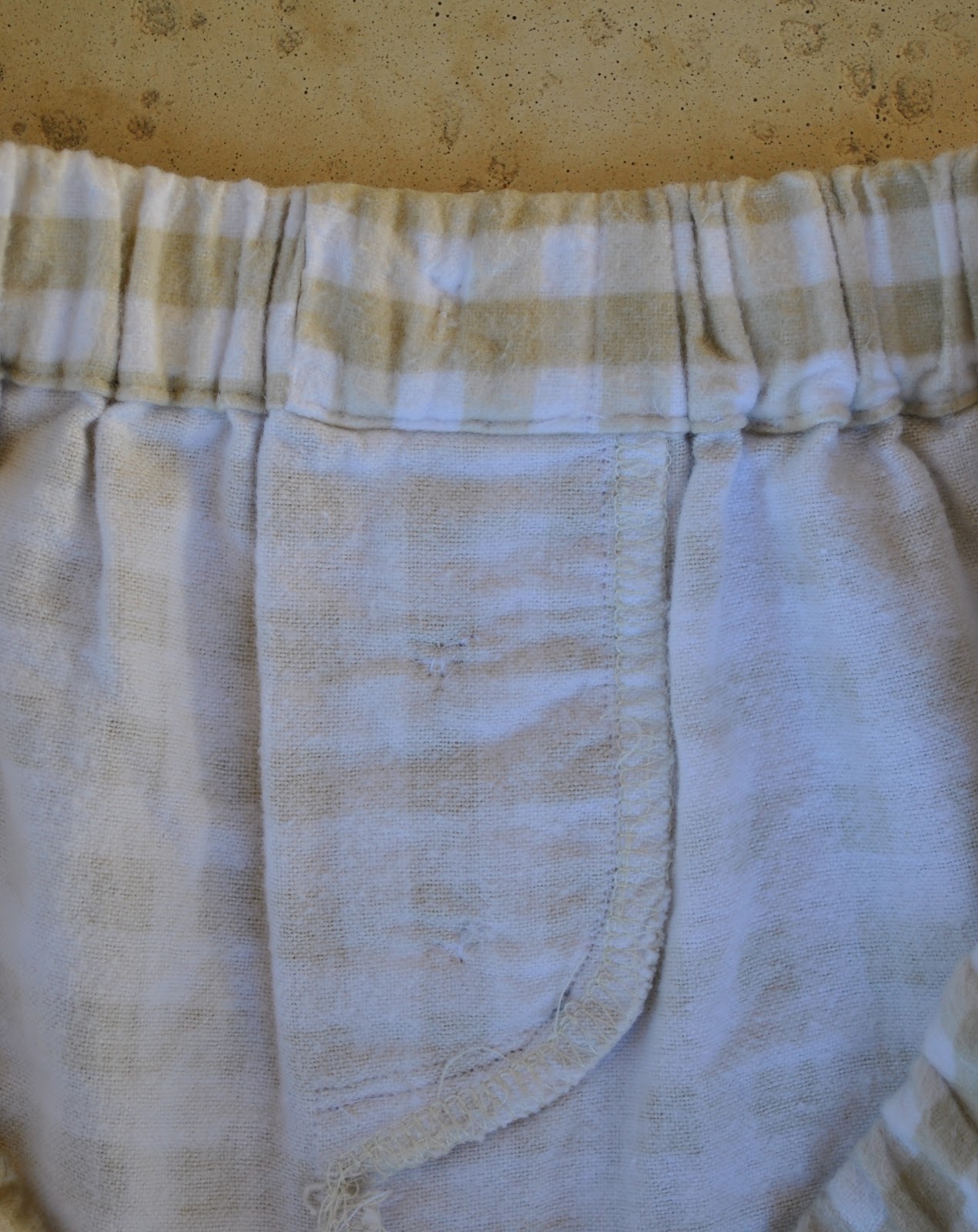
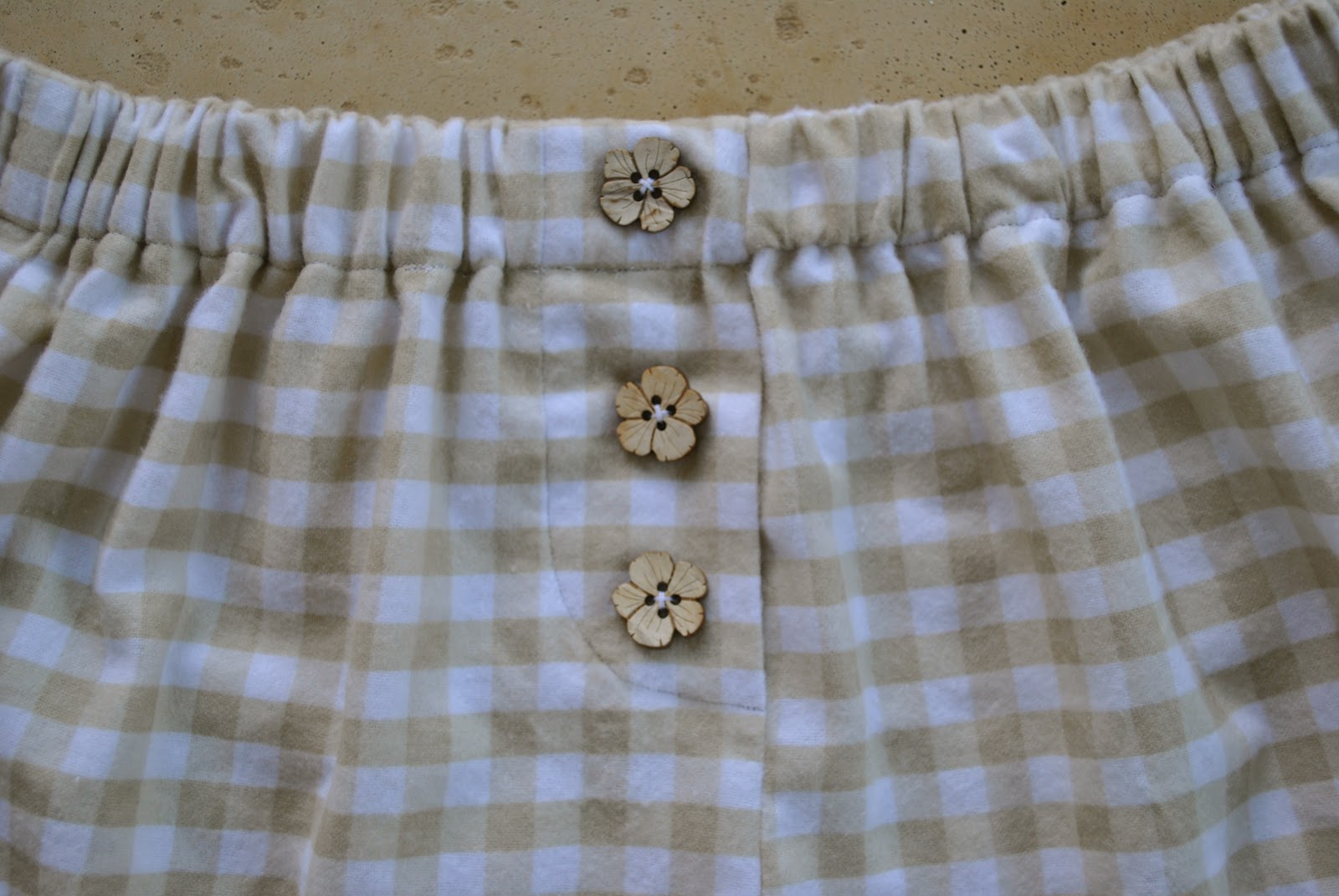
They have an elastic waist, two inseam side pockets and a false fly.  Normally I loathe false anything on a garment, but paradoxically I really do like a false fly on pj’s.  Just a random excuse to sport a few cute and really fun buttons, for no reason other than frivolously whimsical decoration.  You know, the sort of button you secretly fall in love with but could never use on a real garment  🙂  These buttons were leftovers from these shorts here, when I had to buy a card of 4 buttons but only needed 1.

Details:
PJ bottoms; my own design, gingham printed cotton flannelette
Tshirt; Country Road, old enough now that it has been delegated to sleepwear

Pocket:

False fly:
pinterestmail

Grey stripe dress; 6 different ways

I was chuffed when Robyn suggested this dress would be a good candidate for a mix-up and match-up; thank you Robyn!  And you were so right, yes, indeedy, this is an excellently versatile dress…
It is self-drafted and I was inspired by a Metalicus dress, pretty much my favourite RTW label.  Everything in their range of thin stretch garments layers together and goes together so beautifully; so it is all very easy to wear.   When I made my dress (dressmaking details here); I envisioned that I would be able to layer it up and down and all different ways, to go with a lot of things already in my wardrobe.   These non-colours are good for any time of the year and any season…  also being very light and flowy means the dress has no “structure” itself, making it very easy to throw over and under other things, it can adapt to different functions and not just be worn solely as a stand-alone dress.
And stripes are so hot right now!  (thank you Zoolander for that awesome quote)
So here are just a few of the “ways” I came up with after a bit of a play session in my wardrobe…
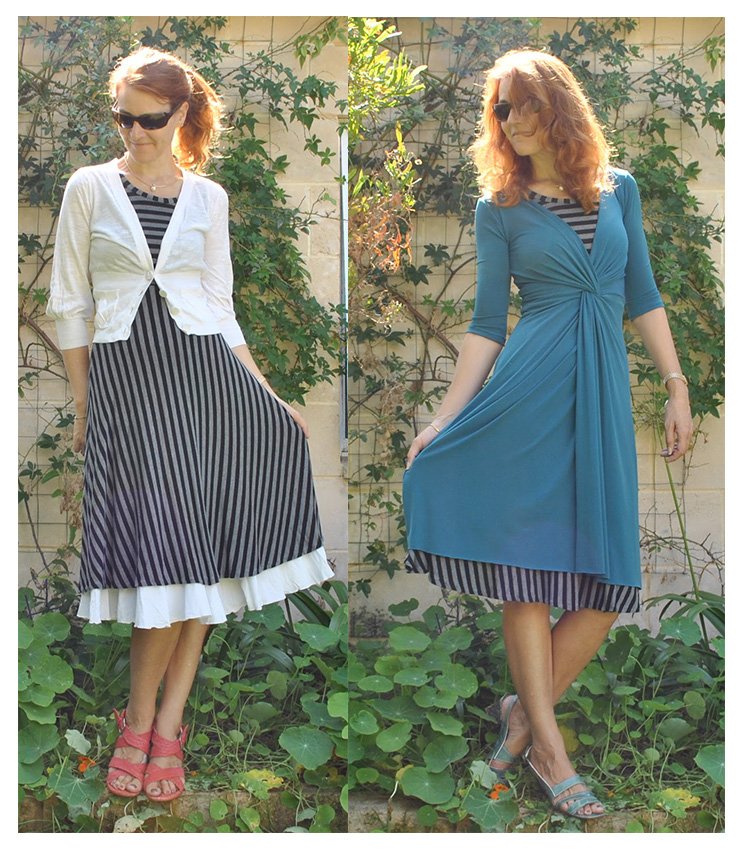
First up, well (obviously) worn as a dress.  I made it specifically the perfect length to go over this white petticoat, so this is the way I have worn it mostly so far  🙂  But at right; it can also work as a petticoat itself, worn under a shorter open dress.

stripe1

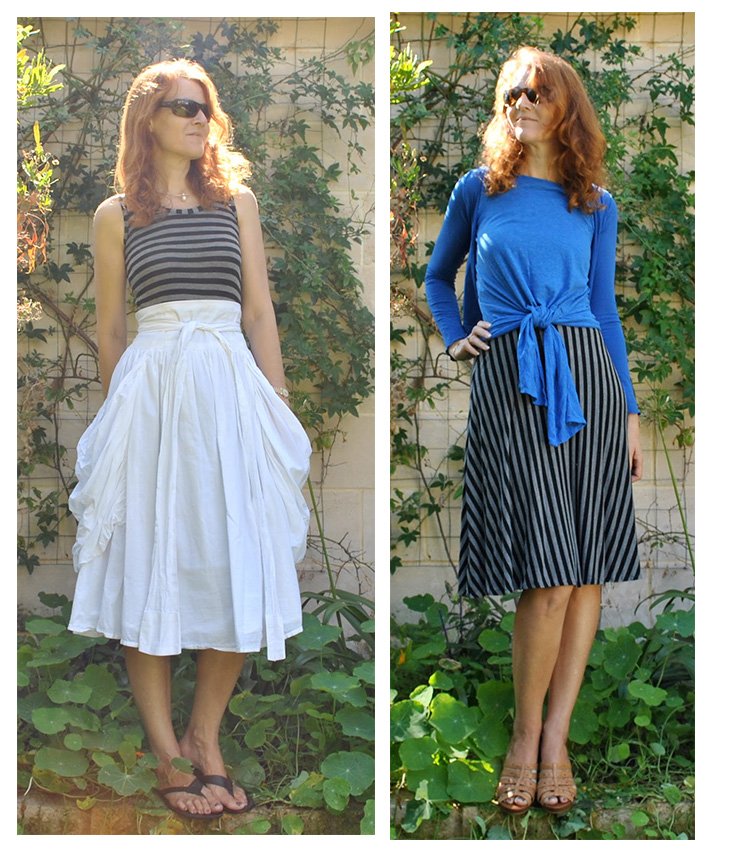
It doubles as a tank top as well as a petticoat, when worn under a big skirt.  Actually I wore this outfit last week, and it turned out to be a good idea… this skirt is very pouffy already, but I would love it to be pouffier still! and having a full-skirted petticoat on underneath gave the whole thing a welcome extra ounce of pouffiness.  I liked that!  And at right, put a light Tshirt and optional cardi over the top, and the dress is a skirt…

stripe2

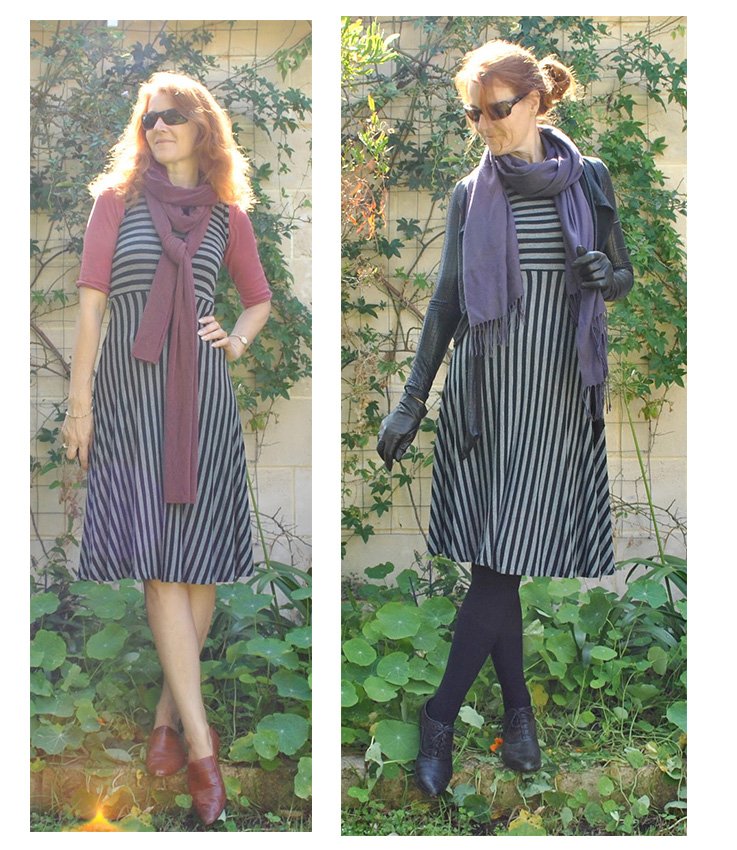
At left; the dress is a pinafore when worn with a Tshirt underneath.  And at right; the subdued colours are a natural choice for winter too, so here is all layered up and ready for winter; with long johns, tights, a little jacket, gloves and a scarf.

stripe3

What am I wearing today?  well today has a definite and very welcome autumnal air to it, so I am wearing the pinny version just above with the raspberry half-sleeved tshirt underneath and my purple-y raspberry scarf…  but one thing I learnt even in this short play-about with this dress is that I have so many more options and I’m really looking forward to wearing this dress a bunch this autumn and winter…   What do you think?  how would you wear this dress?

pinterestmail

French fly, or waist stay; a tutorial

Thank you for so much enthusiasm regarding my French fly!  I am very pleased with how it feels to wear, as well as how it turned out.  By the way, I googled French fly and came up with zilch, so either it goes by a different name in (real) tailoring circles or there really are no other online tutorials on this feature.  Could I be the first…?  (omigosh moment)
So anyway, here is the lowdown on my own version of fitting a French fly to a pair of shorts with a waistband.
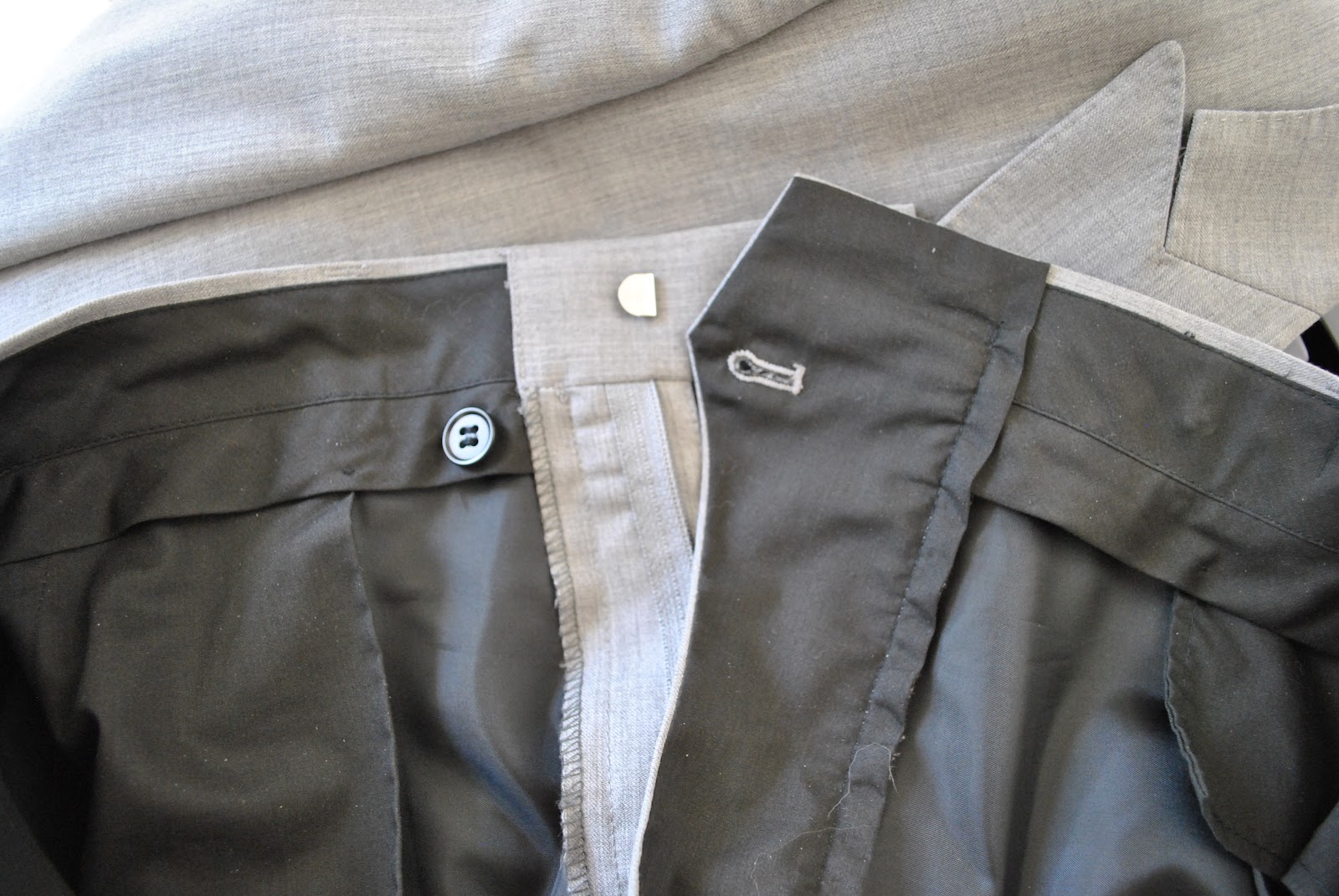
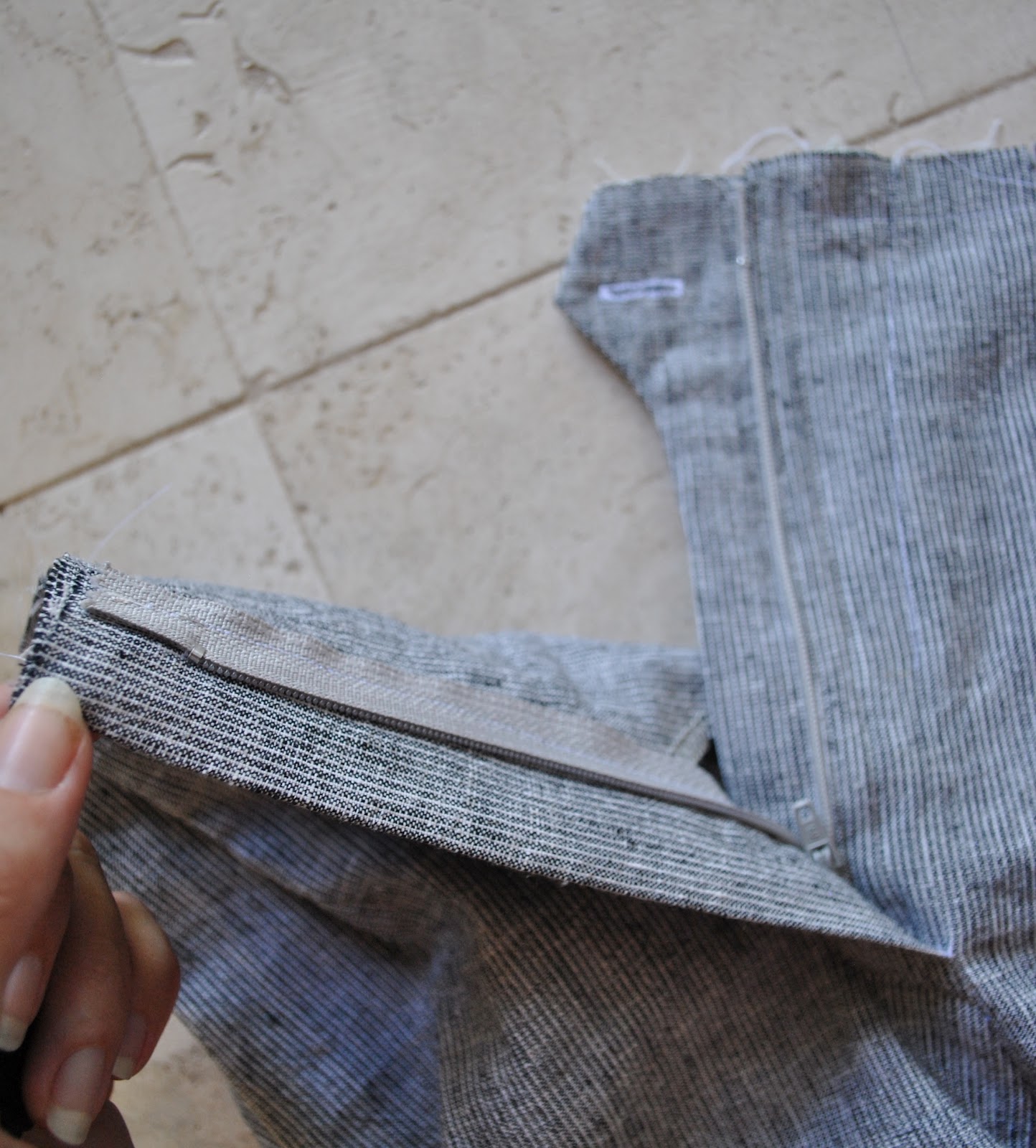
Firstly, I checked out the inner workings of my husband’s beautifully tailored suit trousers, and saw this…
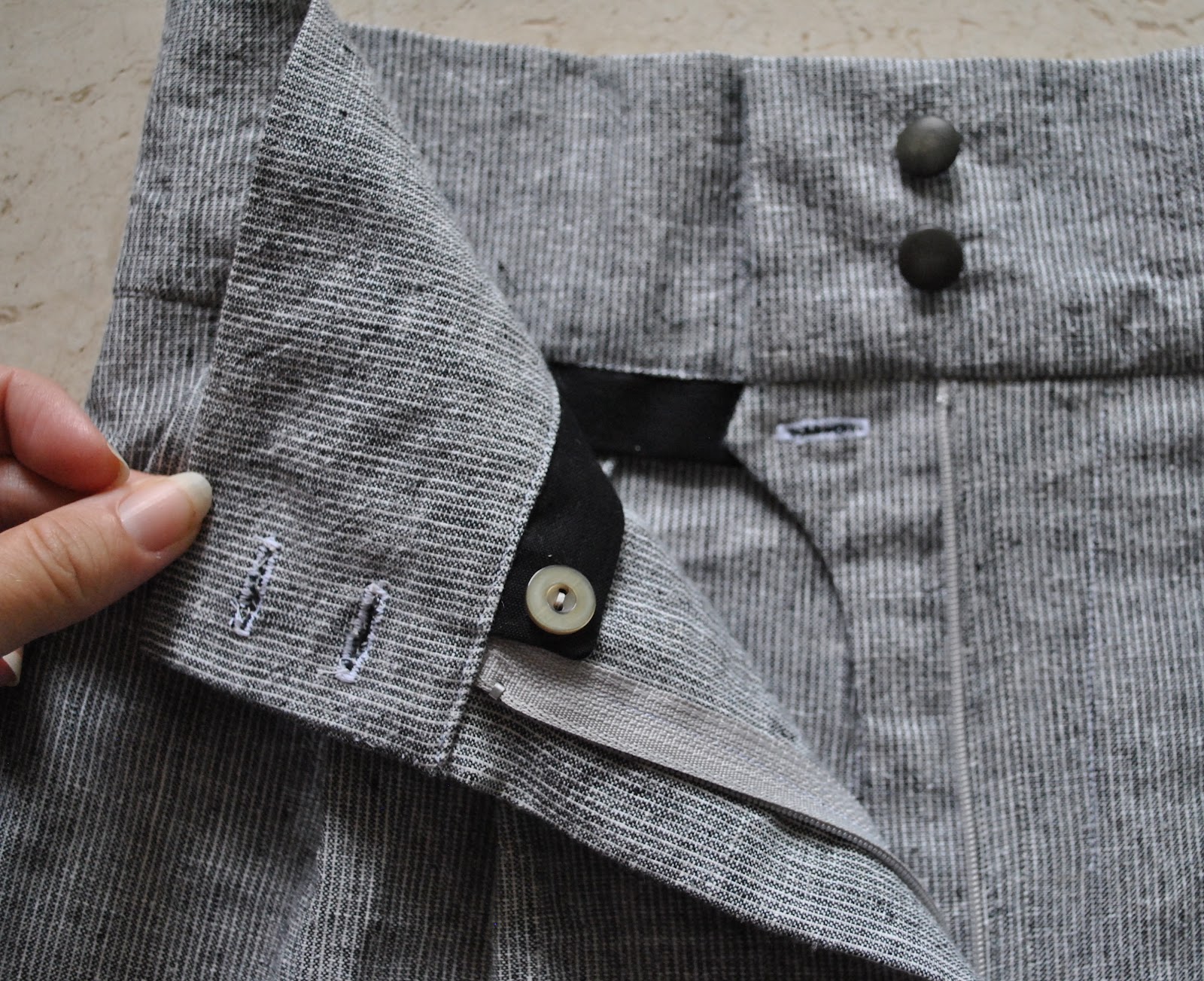
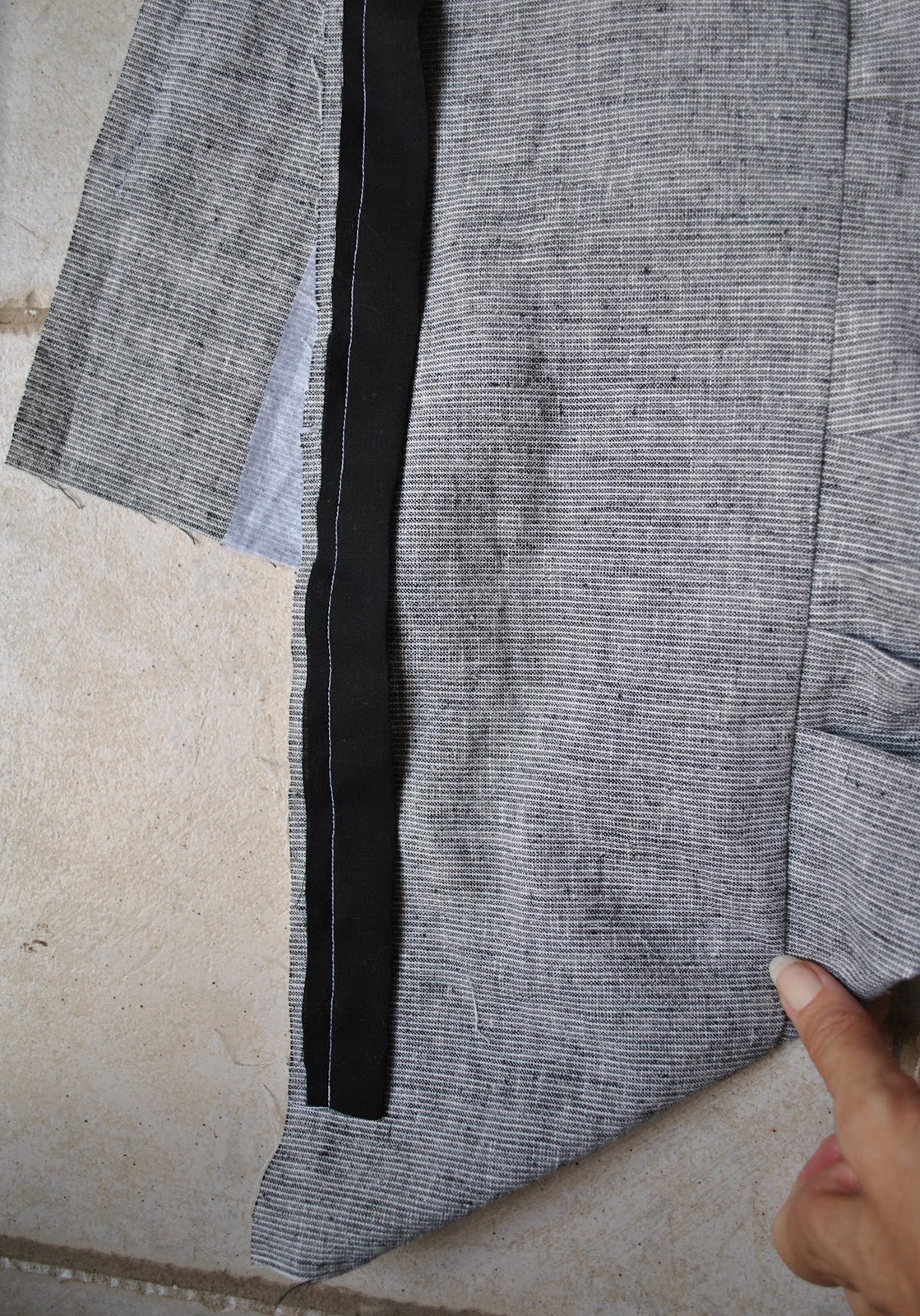
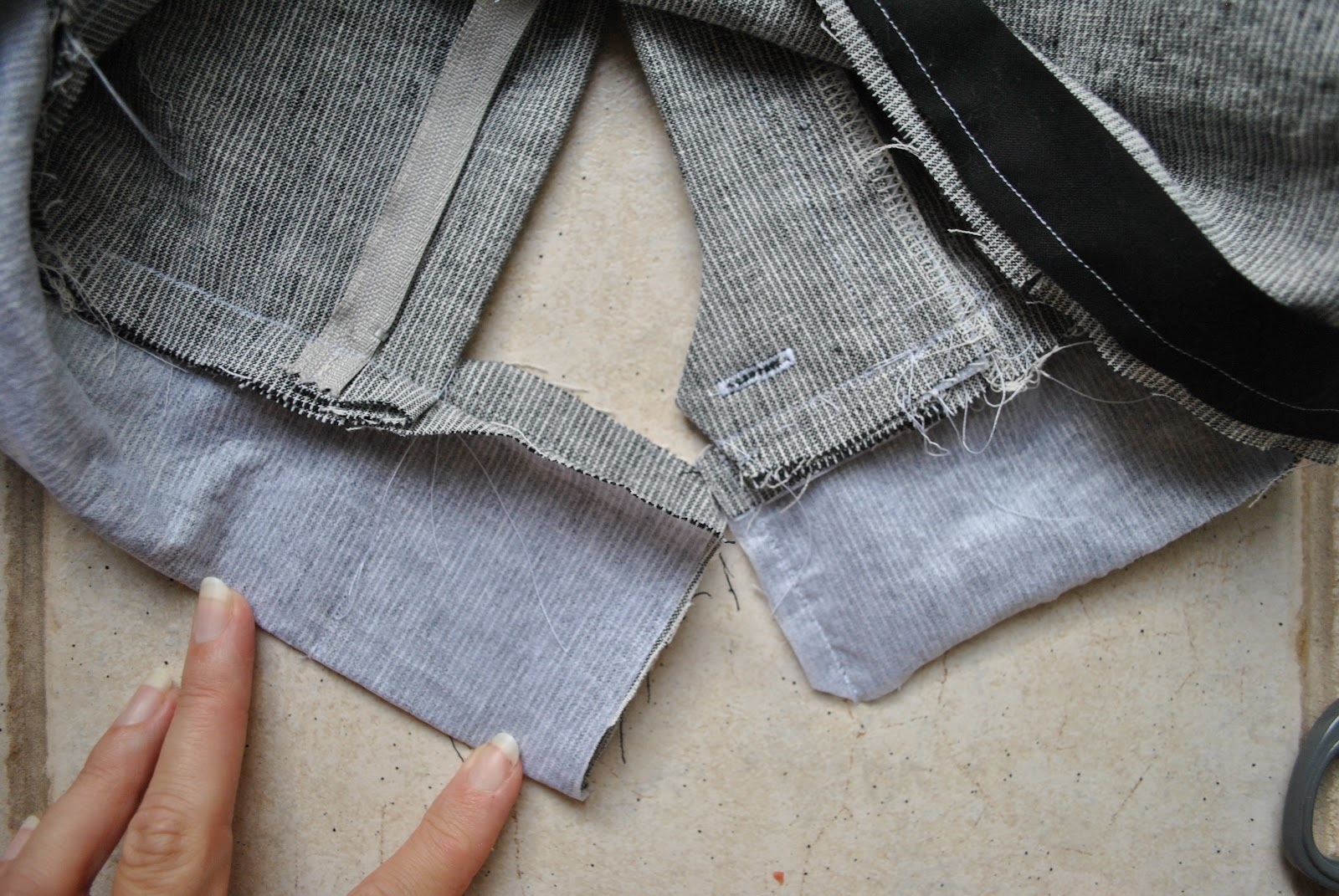
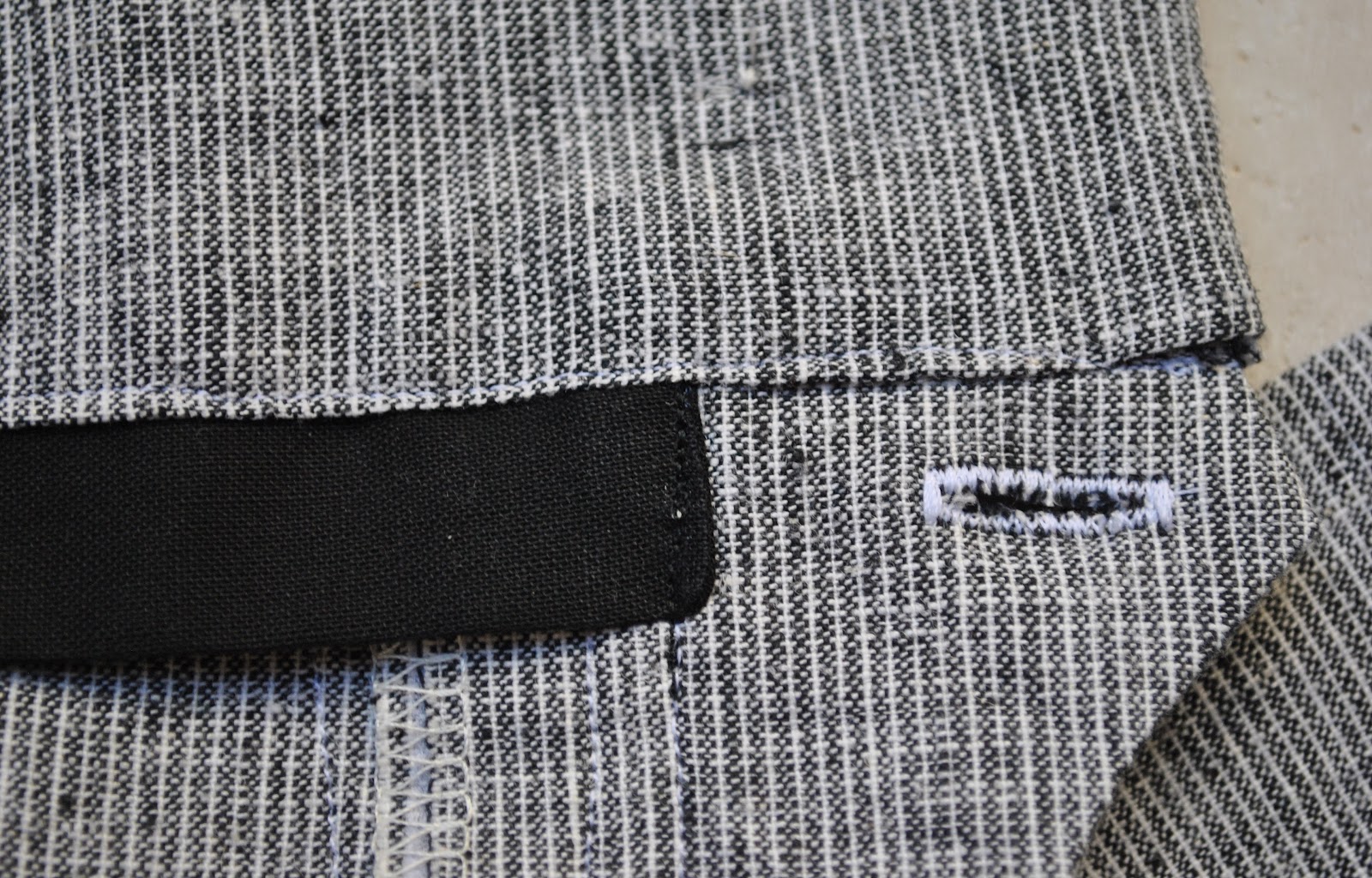
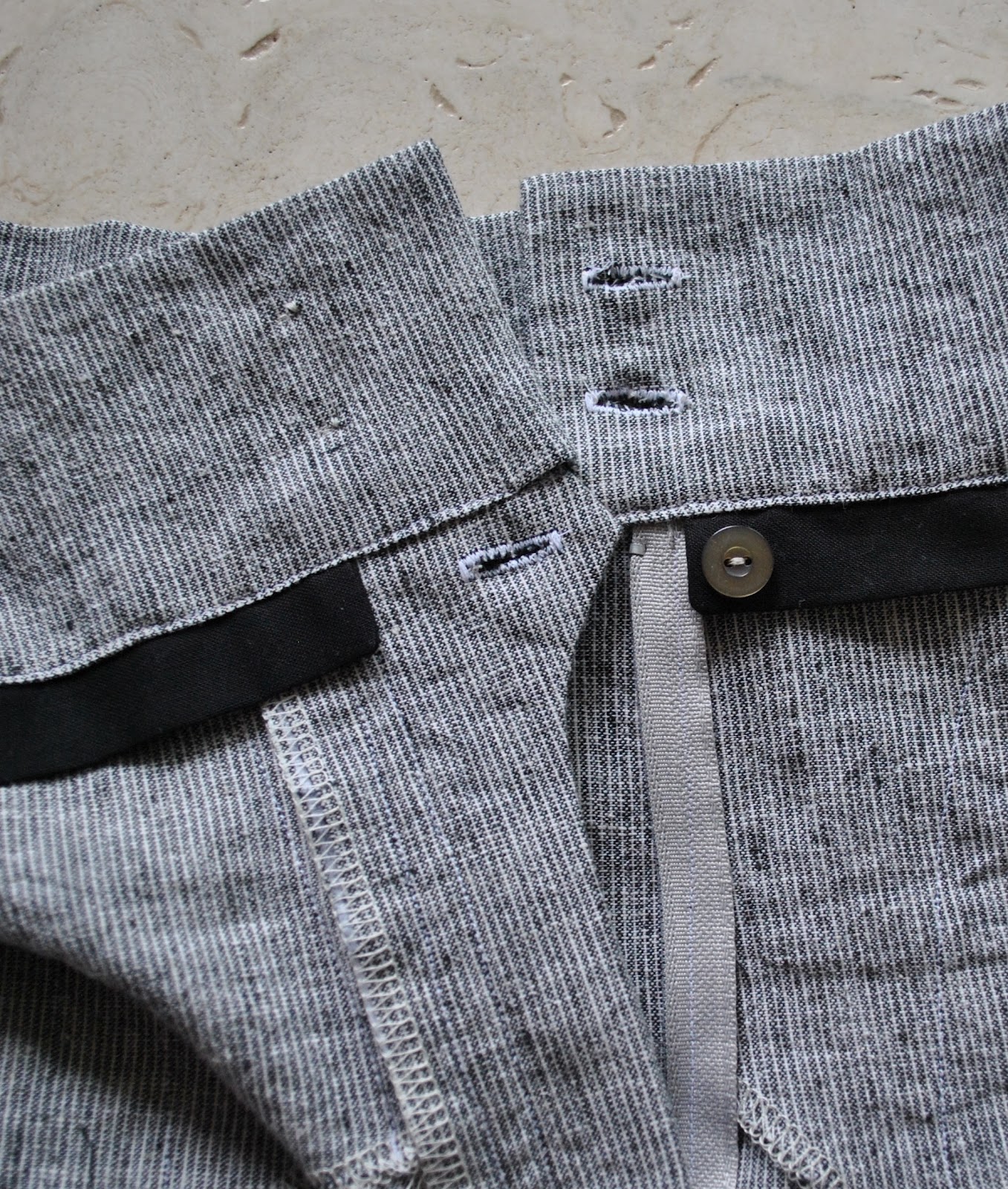
Basically, the inner button and buttonhole are situated on what is like an inside hidden “belt”, something akin to a waist stay that one would find in a strapless dress with a boned foundation.  The belt is secured underneath the waistband and zip plackets, goes all the way around the waist and the button closure is level with where the top of where the zip pull sits.

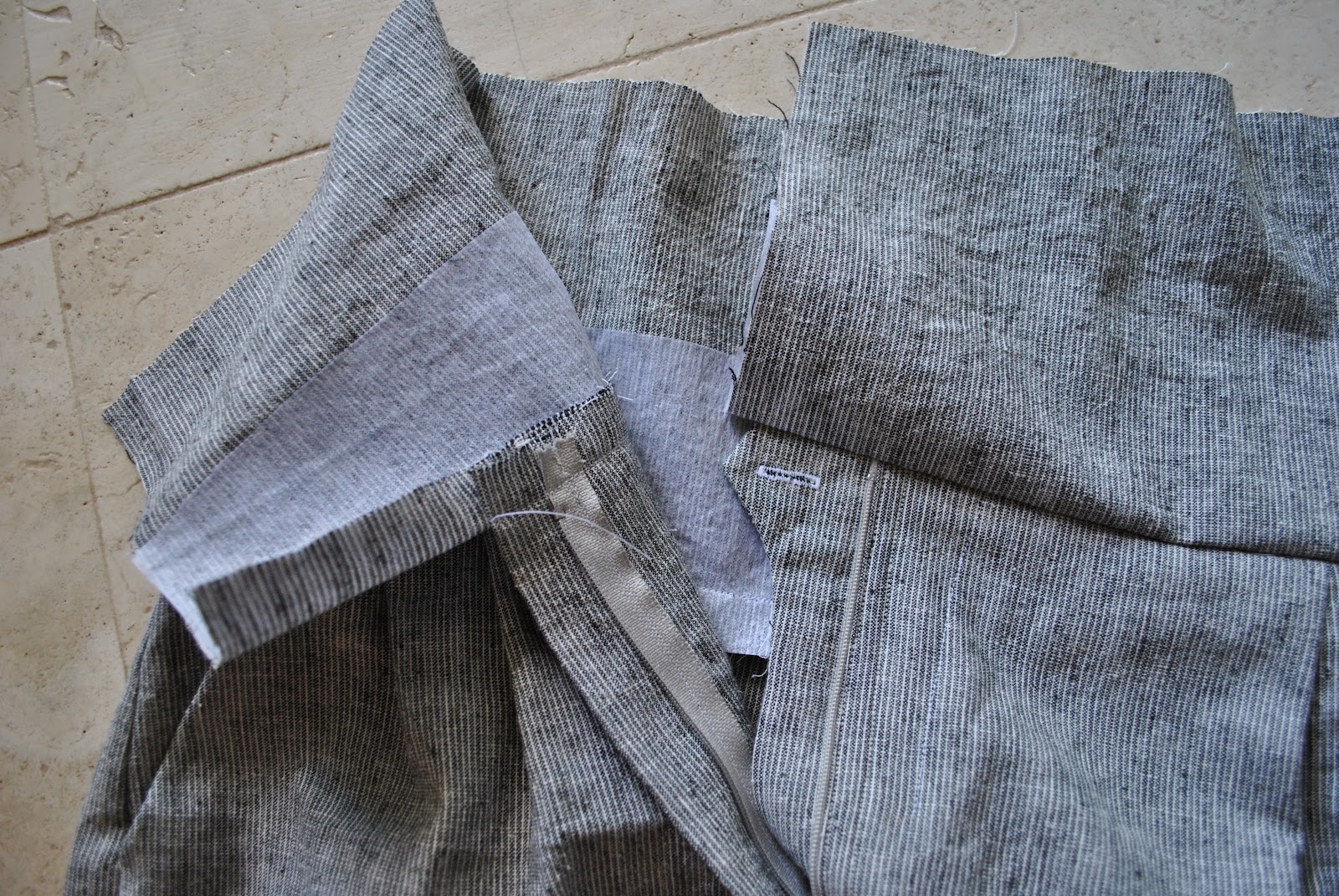
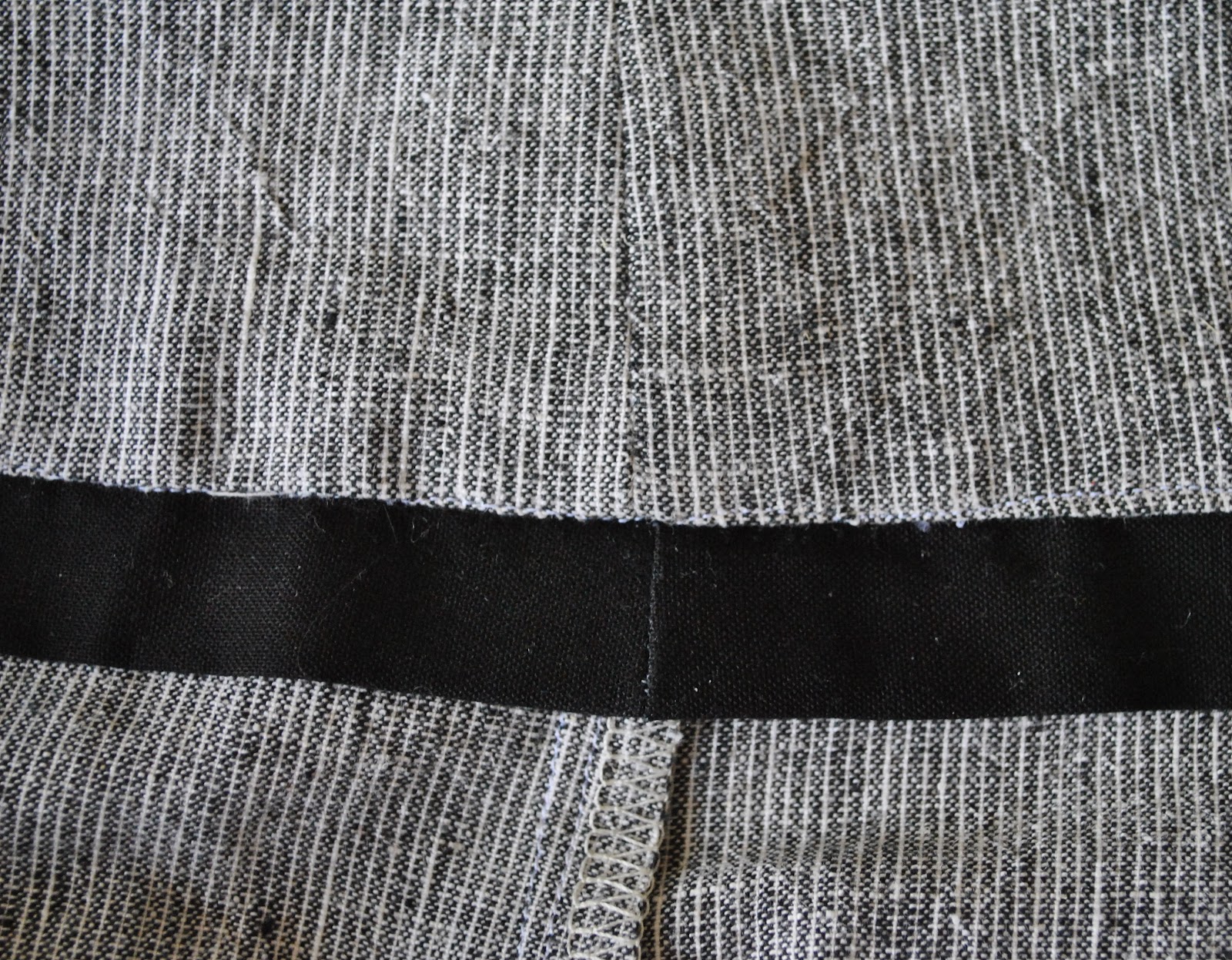
Below is pictured the centre back of the suit trousers, and this is one of my favourite features of mens’ trousers; how the centre back seam is all sewn in just one seam; back pieces, waistband, facings and waist stay, all together in one seam.  This means that any future adjustments for fit are very very easy, requiring just minor unpicking, re-sewing of just the one seam, and then either catch-stitching or stitching-in-the-ditch the waistband facing and waist stay again.  Incidentally, ever since I noticed this I have been using it on my own trouser and jeans waistband (and blogged about it in more details here); mostly because it does make for a massively easier fitting.

But on with my own experiments, French-fly-wise…
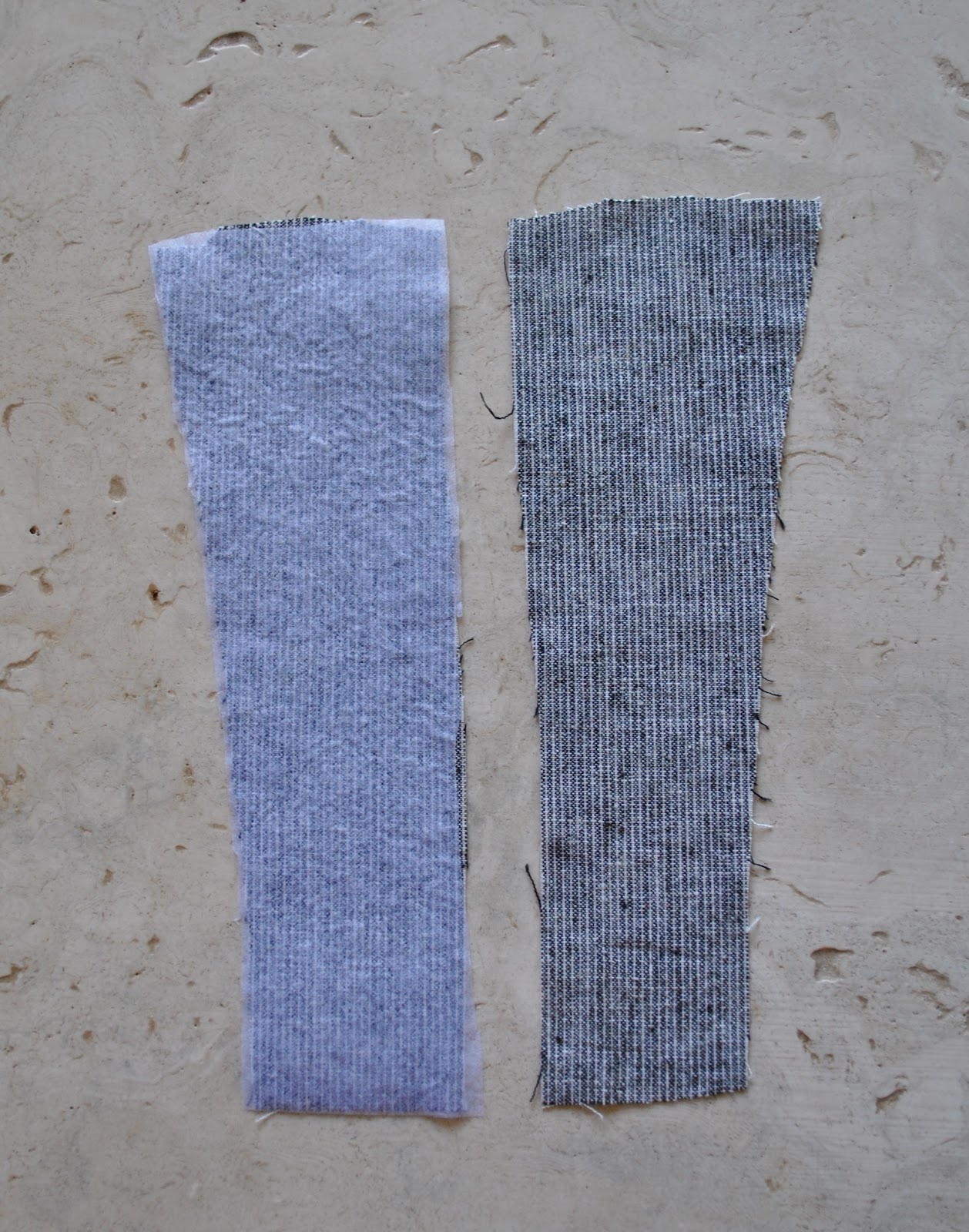
I cut out two pieces for the zip placket, applied iron-on interfacing to one.

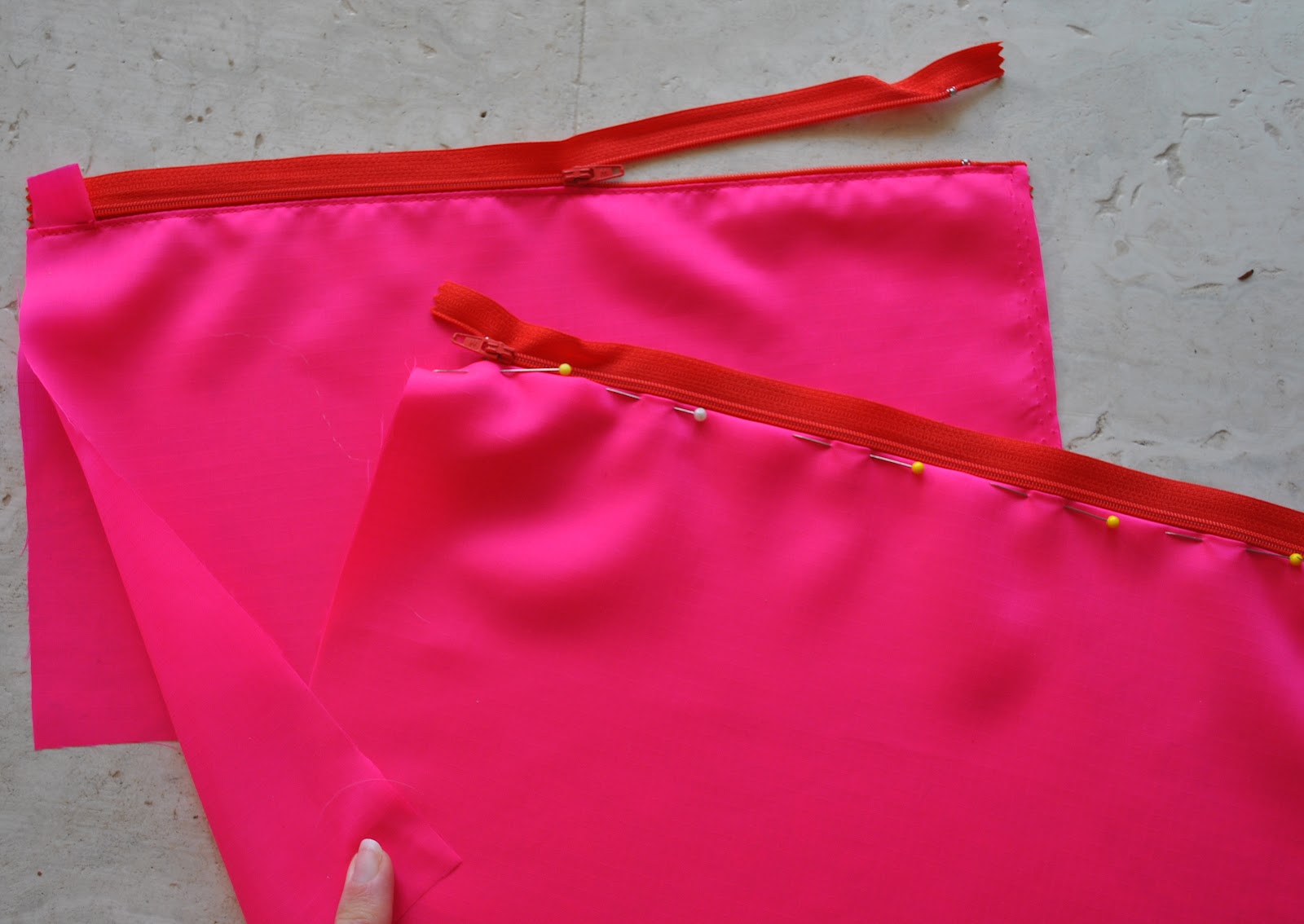
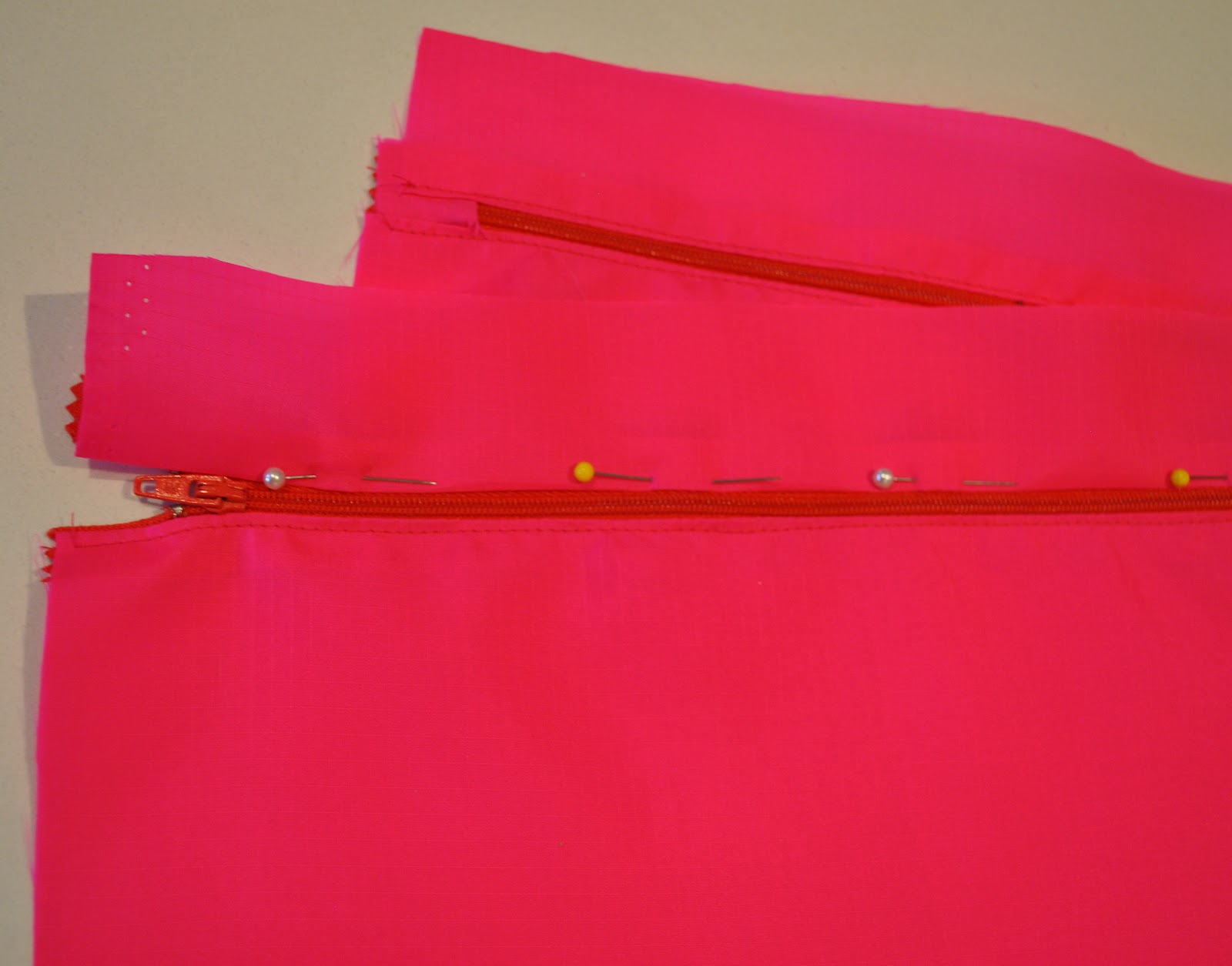
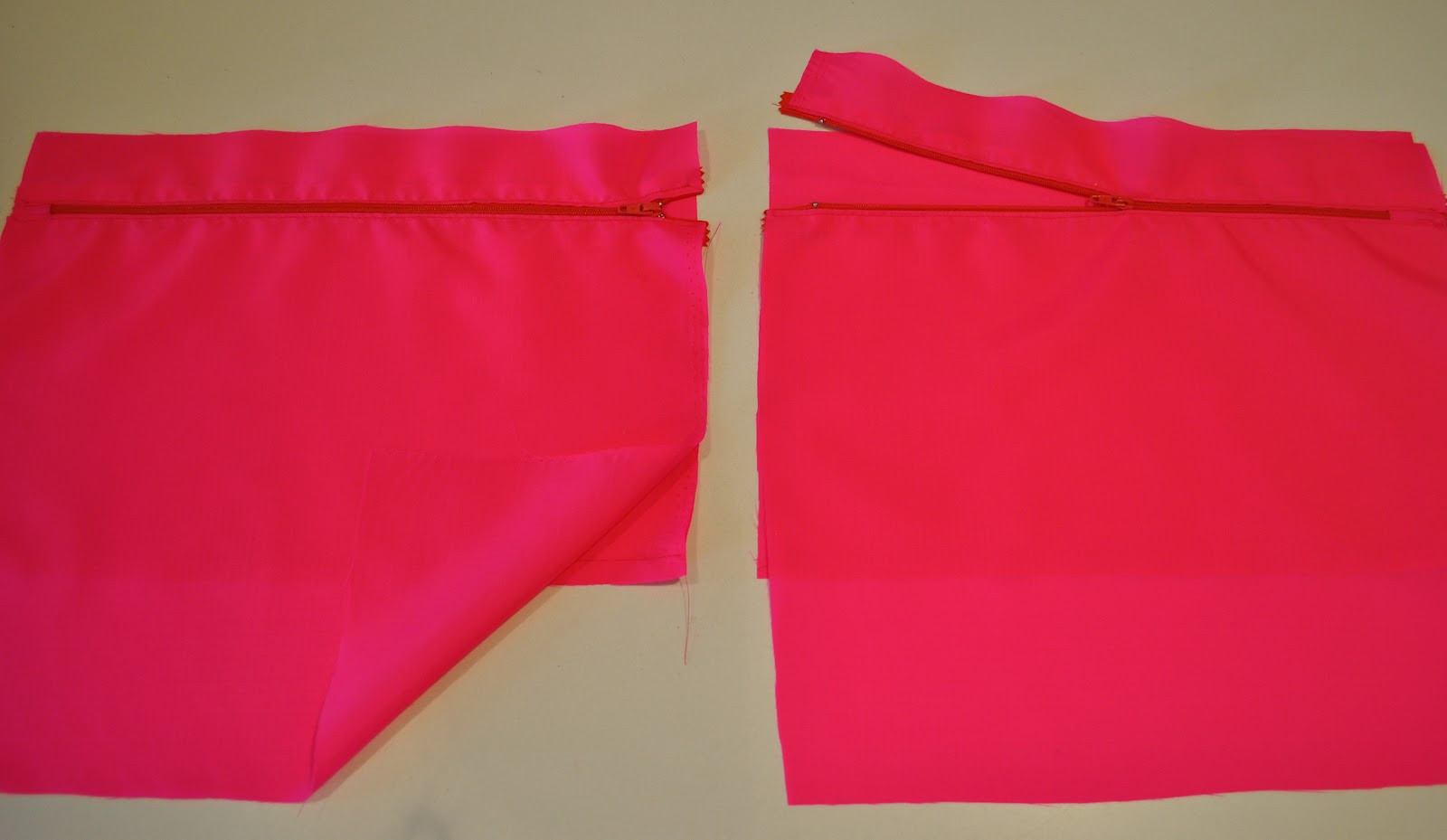
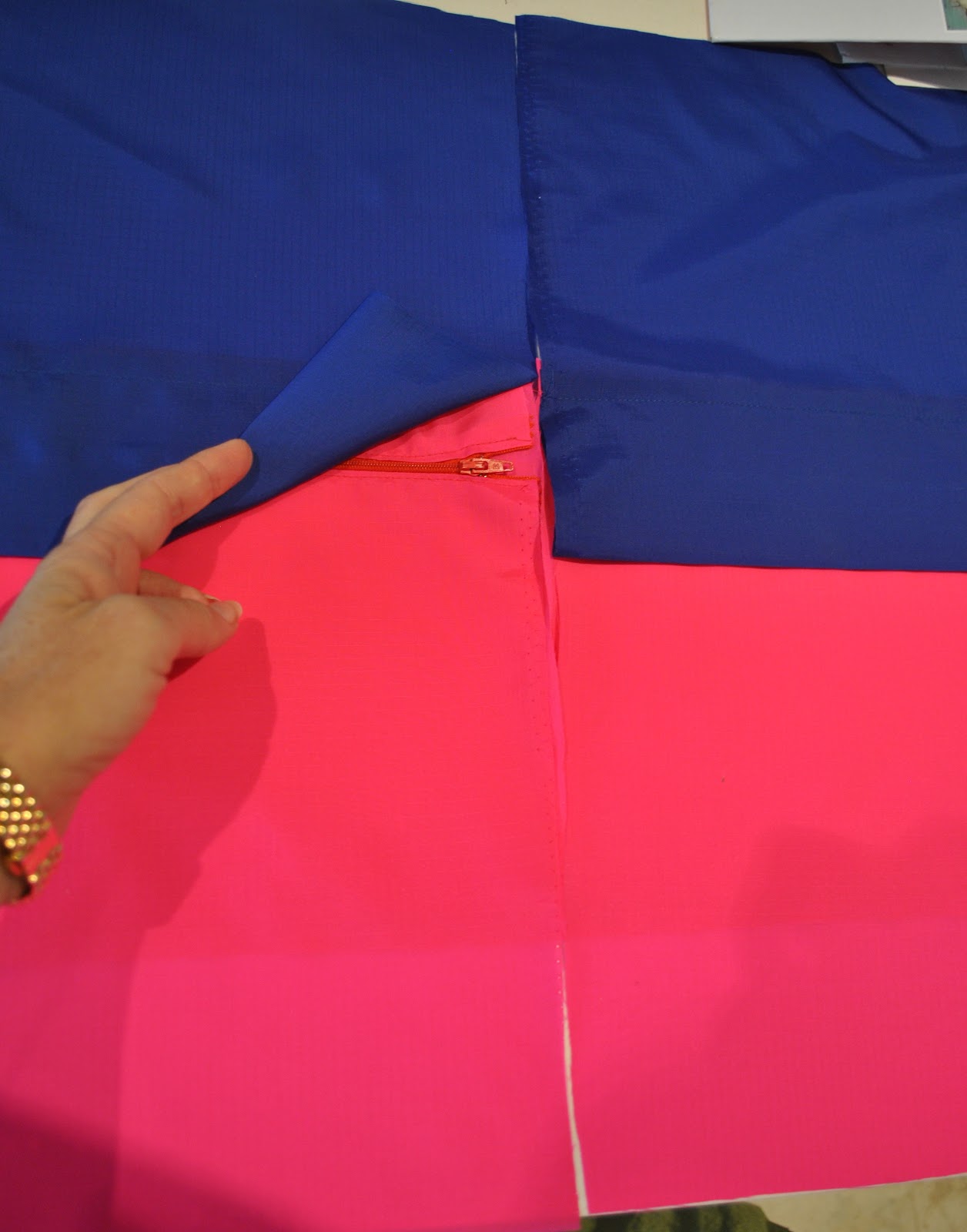
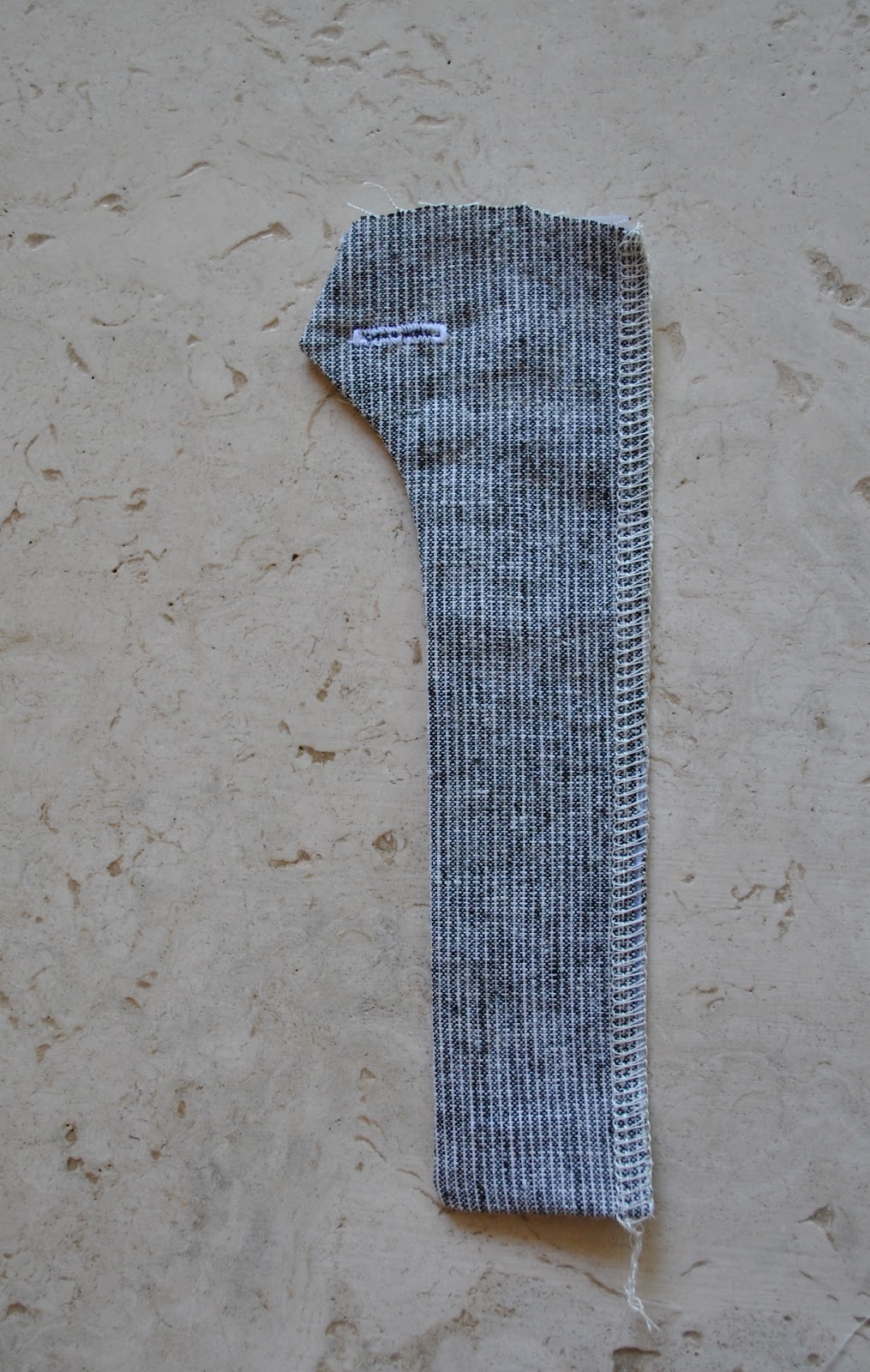
Measure the length of the zip and sewed the placket pieces together to be the correct length to fit my zip, just like a regular zip placket.  The difference is shaping the placket with the “nose”.  The point of the nose has to be at the same level to where the zip pull sits when it is closed.  Turn out the placket, finish the long raw edges together, and put in a buttonhole of a size to suit your chosen button.

Insert the zip placket and the zip, just like you would for a regular zip placket.

Attach the interfaced half of the waistband to the top edge of the garment, just as usual.

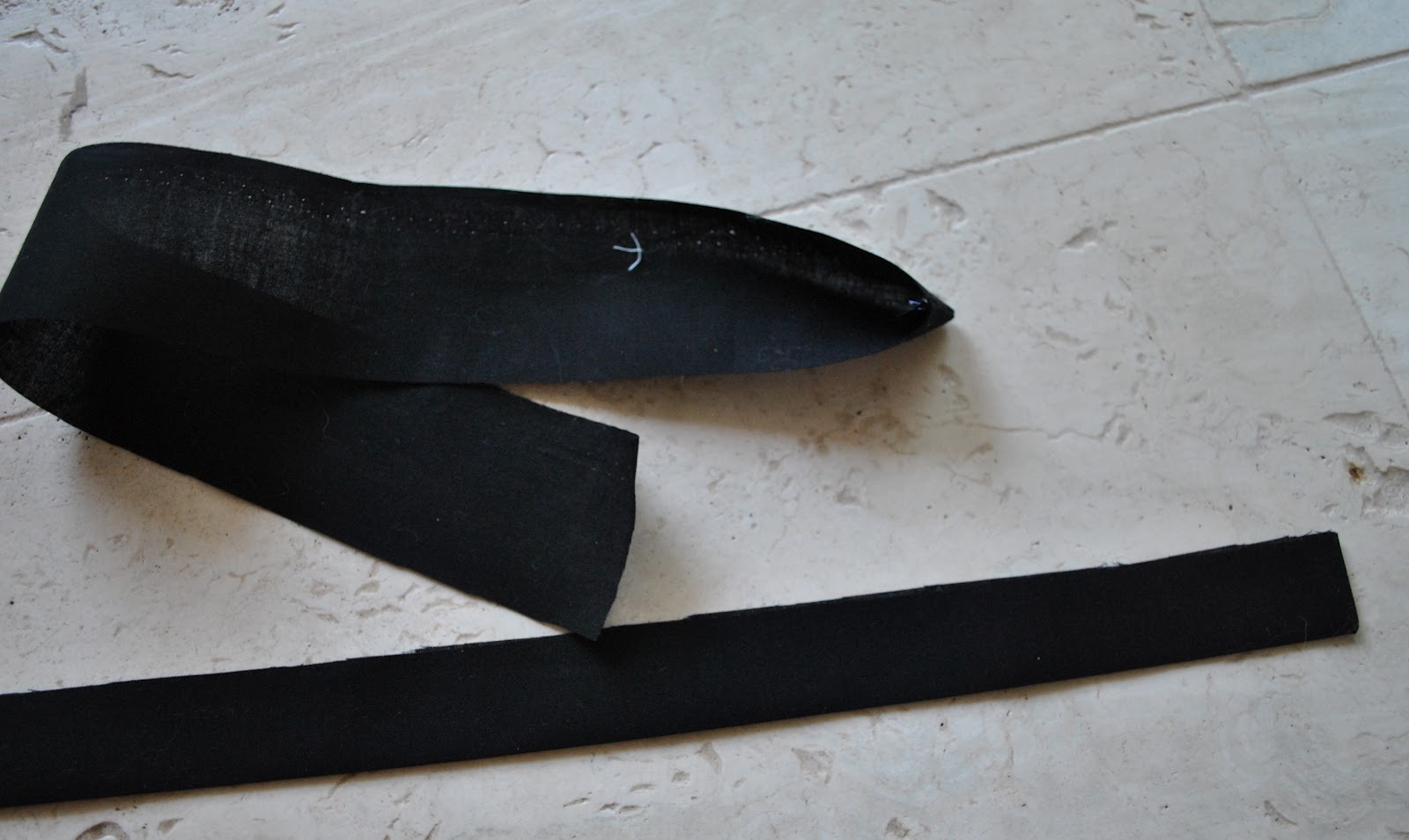
Cut two long pieces of sturdy woven fabric on the grain lengthwise to be the hidden “belt” or waist stay (I’m just going to go with “belt” from now on, OK?)  I used some rather nasty, densely woven, very tough black quilting cotton that I bought from Spotlight yonks ago, unusable for any real garment but that has been wonderful for all sorts of pocket lining, HongKong seaming, waistband facing, and a whole host of other hidden purposes.  I cut my two pieces to be plenty long enough to go around half my waist, plus extra, and the width should be double your desired finished belt width plus double seam allowances.
Fold both pieces in half lengthwise right sides together, sew together one of the short ends, turn right side out and press.  Press the whole length in half lengthwise.

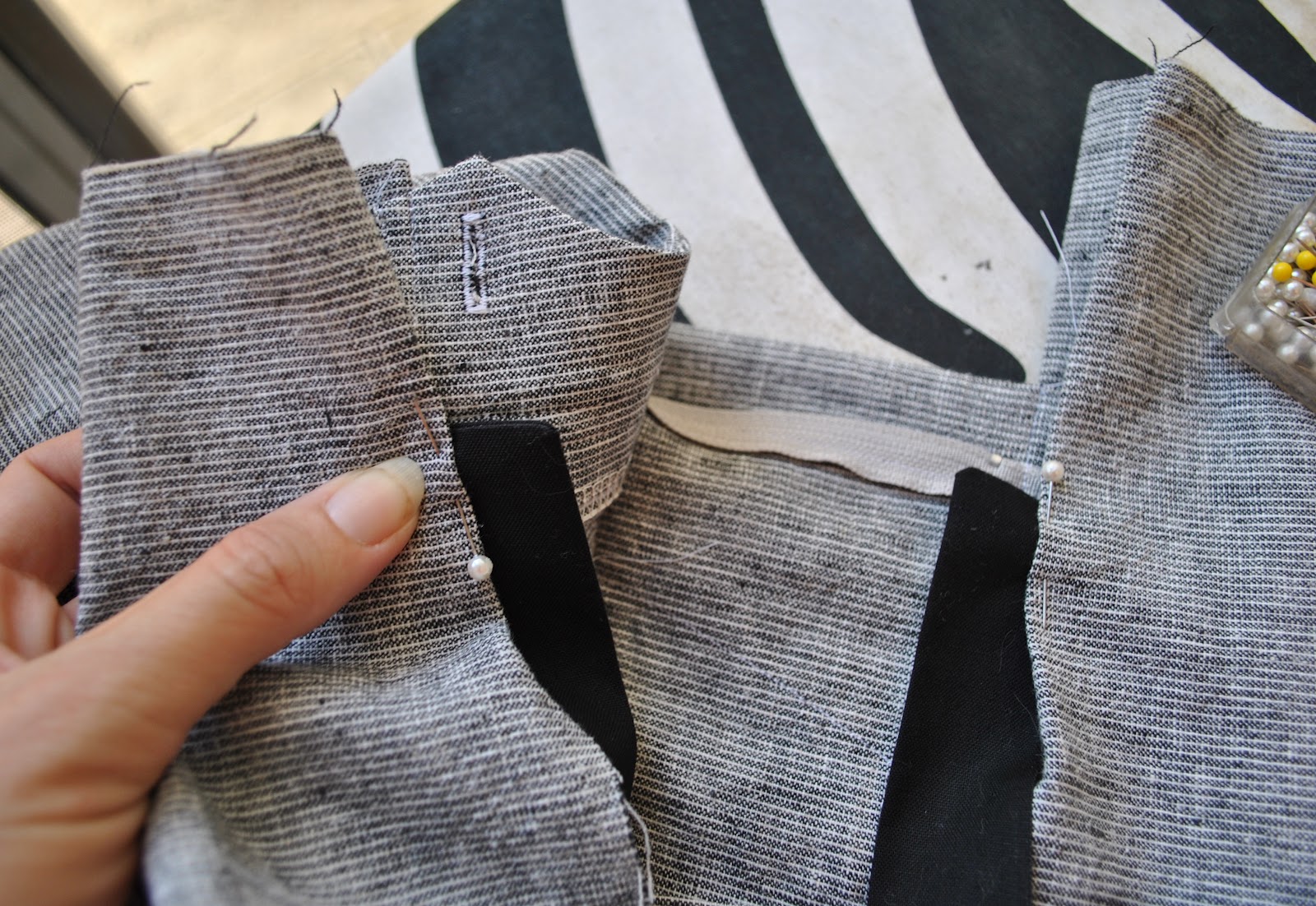
Now turn in the waistband facing and hold in place to situate each belt in its right spot…  each with the stitched closed bit at the front and the long folded edge down.  The left front should be situated just over the stitching line of the placket, and the right front to halfway over the zip tape.  Pin to mark their placement on the facing.

By the way, if you planned ahead, you could have the left front of the waist stay/belt inside the zip placket and stitched down inside it along with the zip placket/zip seam.  Because I was still working it all out and trying to think each step through as I was going along, I did not manage to do this for this one (hey, it’s my first) but I would definitely try it for next time.  It would take a bit more fiddling, but I think it could be done.
Stitch the belts to the waistband facing, keeping the front edges of the belts in exactly the position you had pinned previously.  Stitch all the way along to about 5cm away from the centre back seam, to allow for final fitting of the waistband.

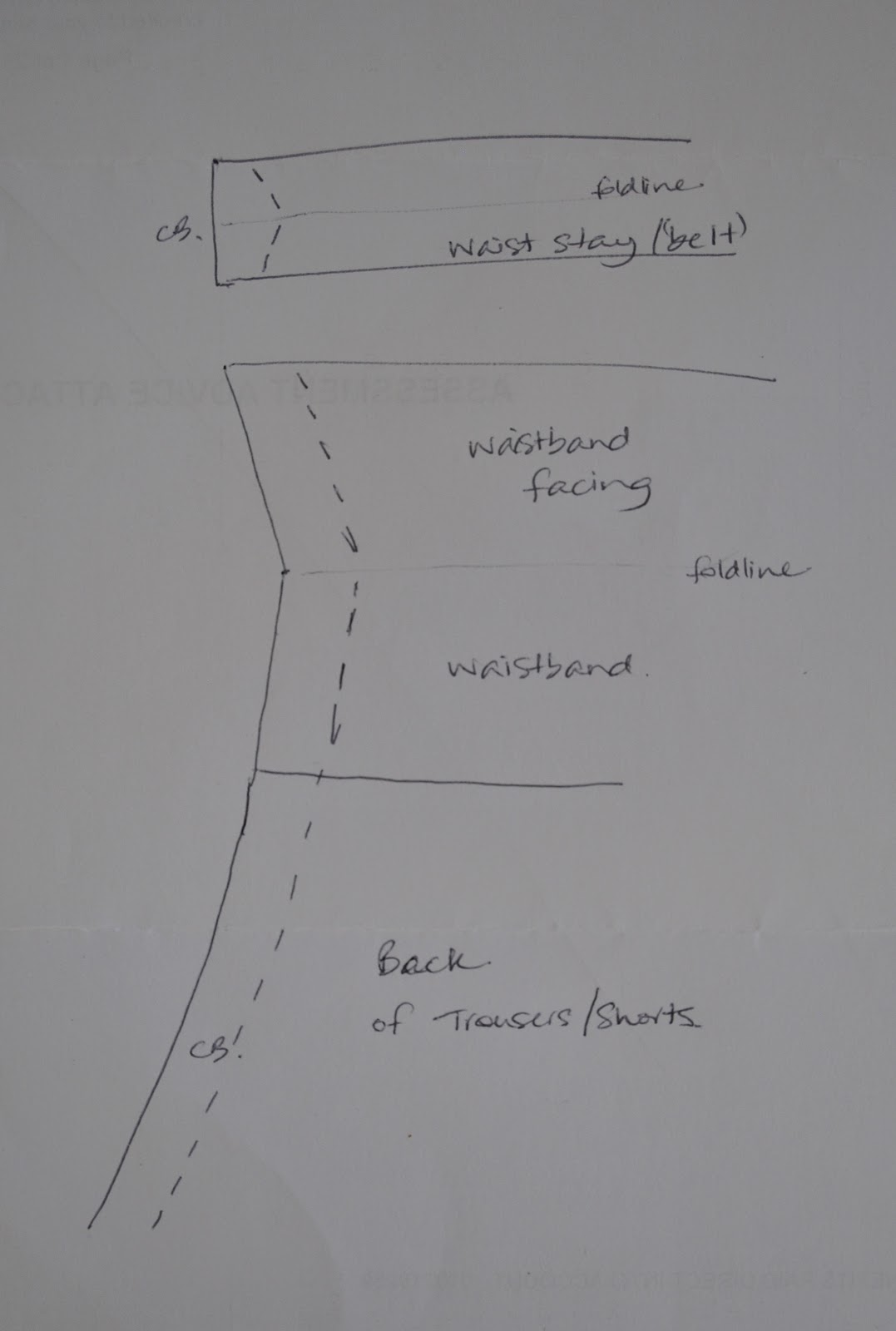
Do the final waistband fitting and stitch up the waistband centre back.  Once this is done, measure the belt to fit, and sew the two together at the centre back seam.  If you are like me and always stitch a slanted centre back seam to fit a sway back, then you will have to stitch the facings and the belt pieces together on the diagonal to match.  Below is a very rough and somewhat exaggerated diagram to illustrate what I mean (obviously, the angles should all match), that centre back seam is sewn in a symmetrical arrowhead with the point at the central foldline.  I left out the waistband facing and belt seam allowances for ease of drawing, but they should be sewn with their own little opposing diagonals as well….  This is necessary to get them to sit nice and flat when they are all folded and tucked in place.  Once stitched together at the centre back, fold the centre back of the belt in half lengthwise and press, and stitch the remainder into place on the waistband facing.

Fold the waistband facing in right sides together and stitch the front edges, just as you would for a regular waistband.  Trim corners and turn the waistband right sides out.

Fold in and under the waistband facing seam allowance, and the belt seam allowance, and pin in place. Baste and stitch in the ditch all the way around to finish the waistband.

To complete securing the belt; stitch the left front down firmly, stitching along the same stitching as the placket/zip stitching.  Like I mentioned above, if you had inserted and secured this end within the placket this would not be necessary.  But when done like this, this stitching is essential.

Finally, try on the trousers/shorts to determine the placement of the belt button, and stitch it on securely.  It should be situated so that the front fly flap and zip sit closed and perfectly relaxed.  There should be no strain on the zip (which would mean the belt is too loose)  and no squeezing together at the top of the zip (which would mean the belt is too tight)

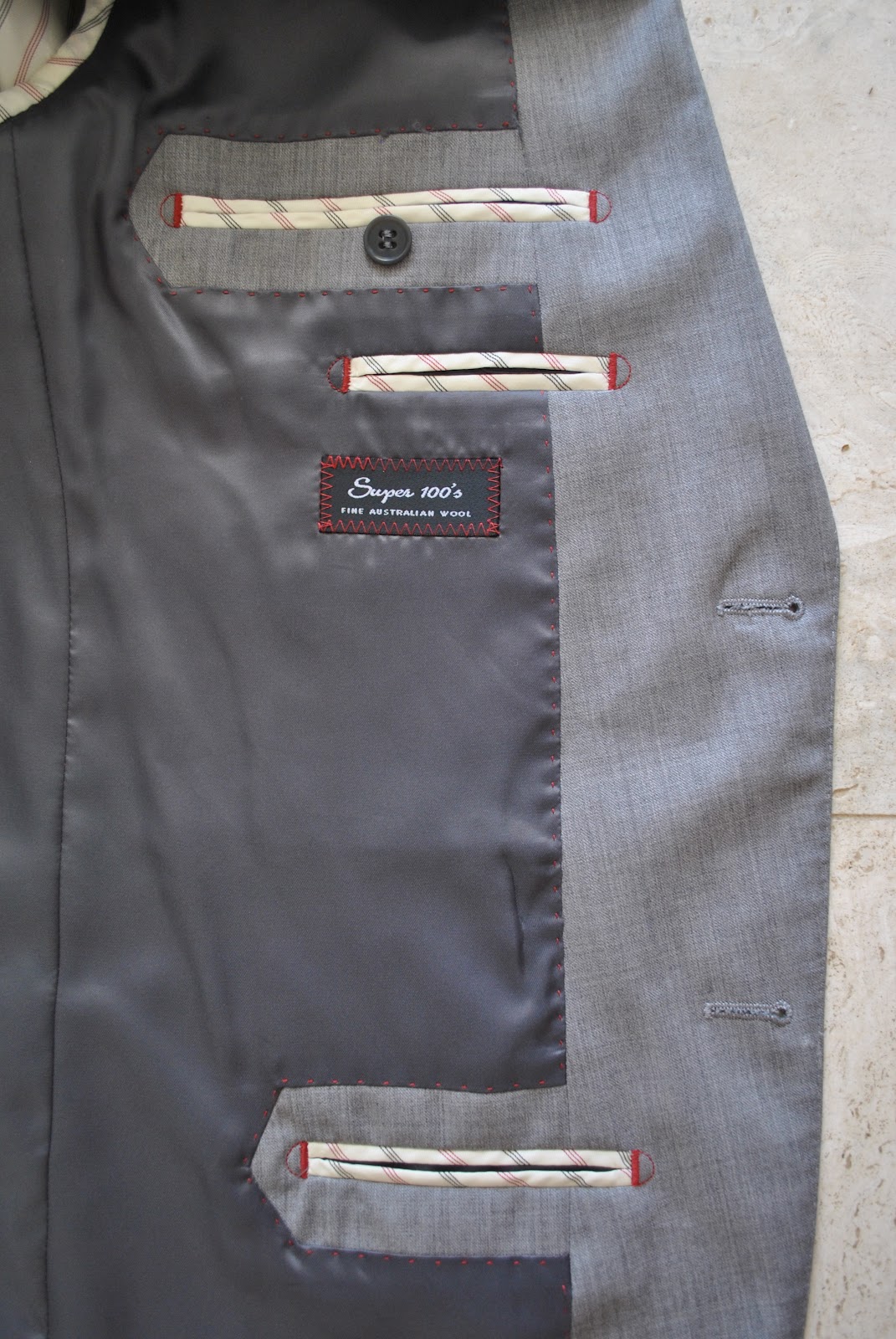
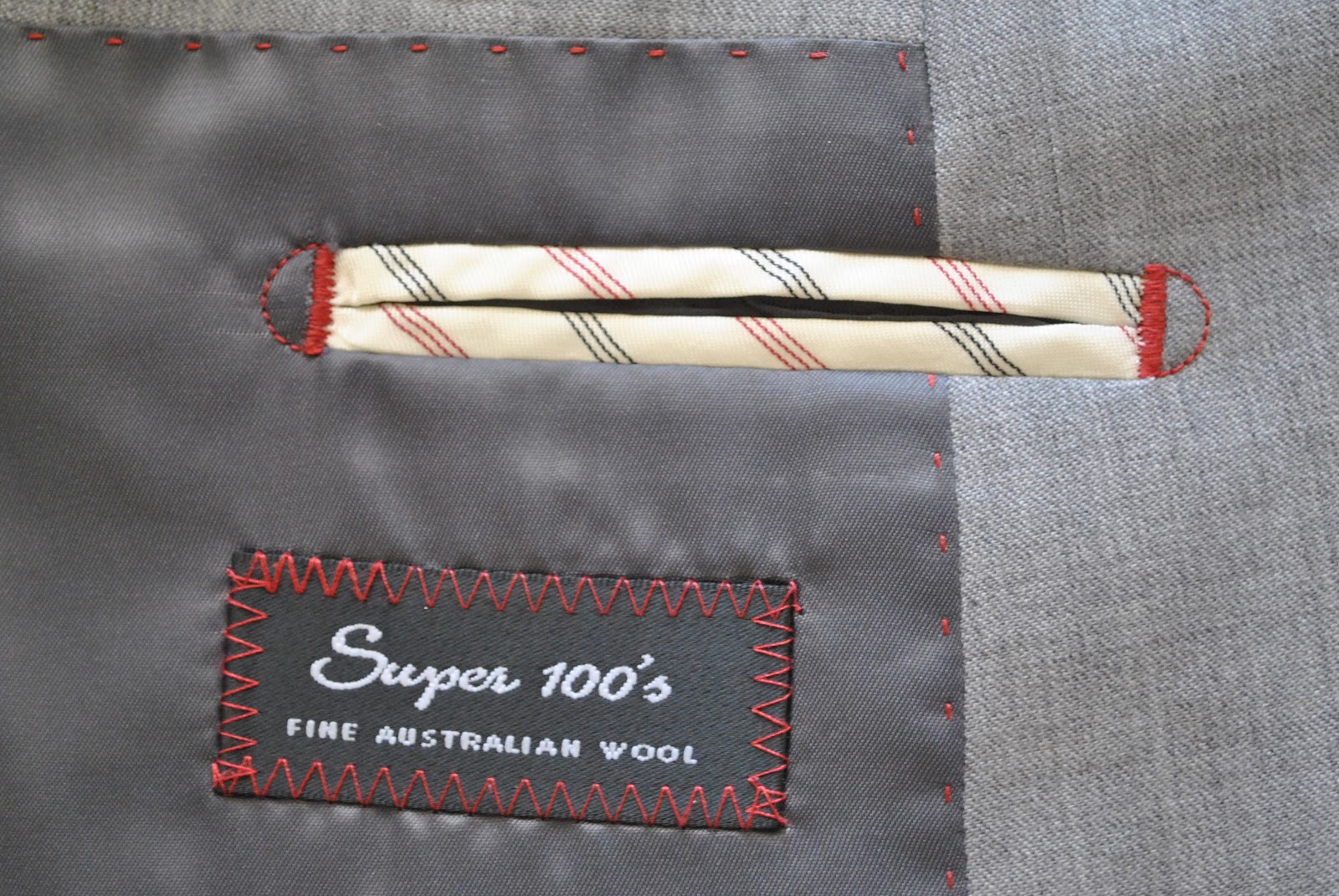
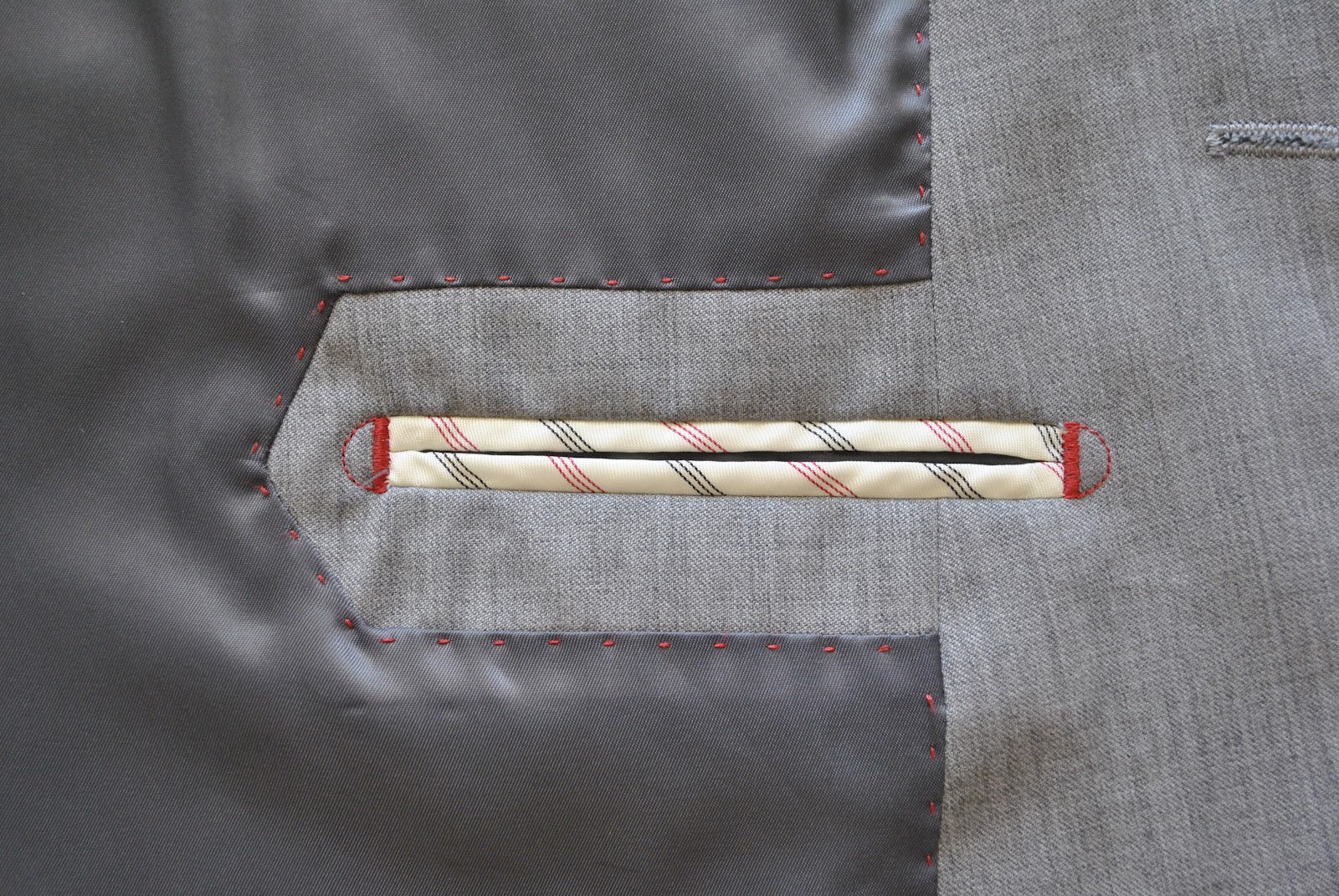
By the way, and on a completely incidental note; d’ya wanna see something utterly beautiful?  The inside of my husband’s suit jacket…
These are three fully functional pockets.  I think I would die a happy woman if I ever managed to produce something even half this precise and immaculately perfect.
pinterestmail

White as white…

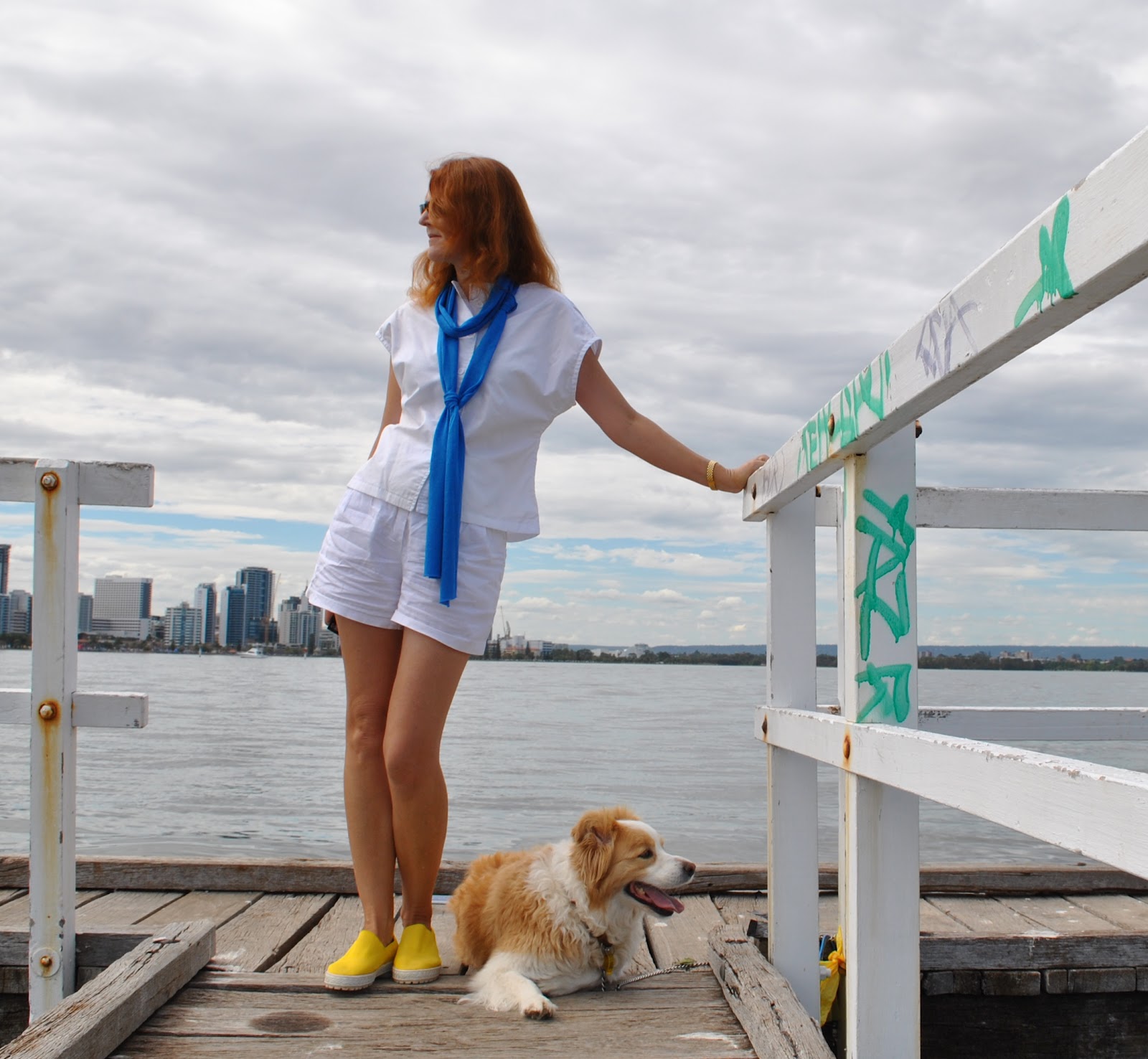
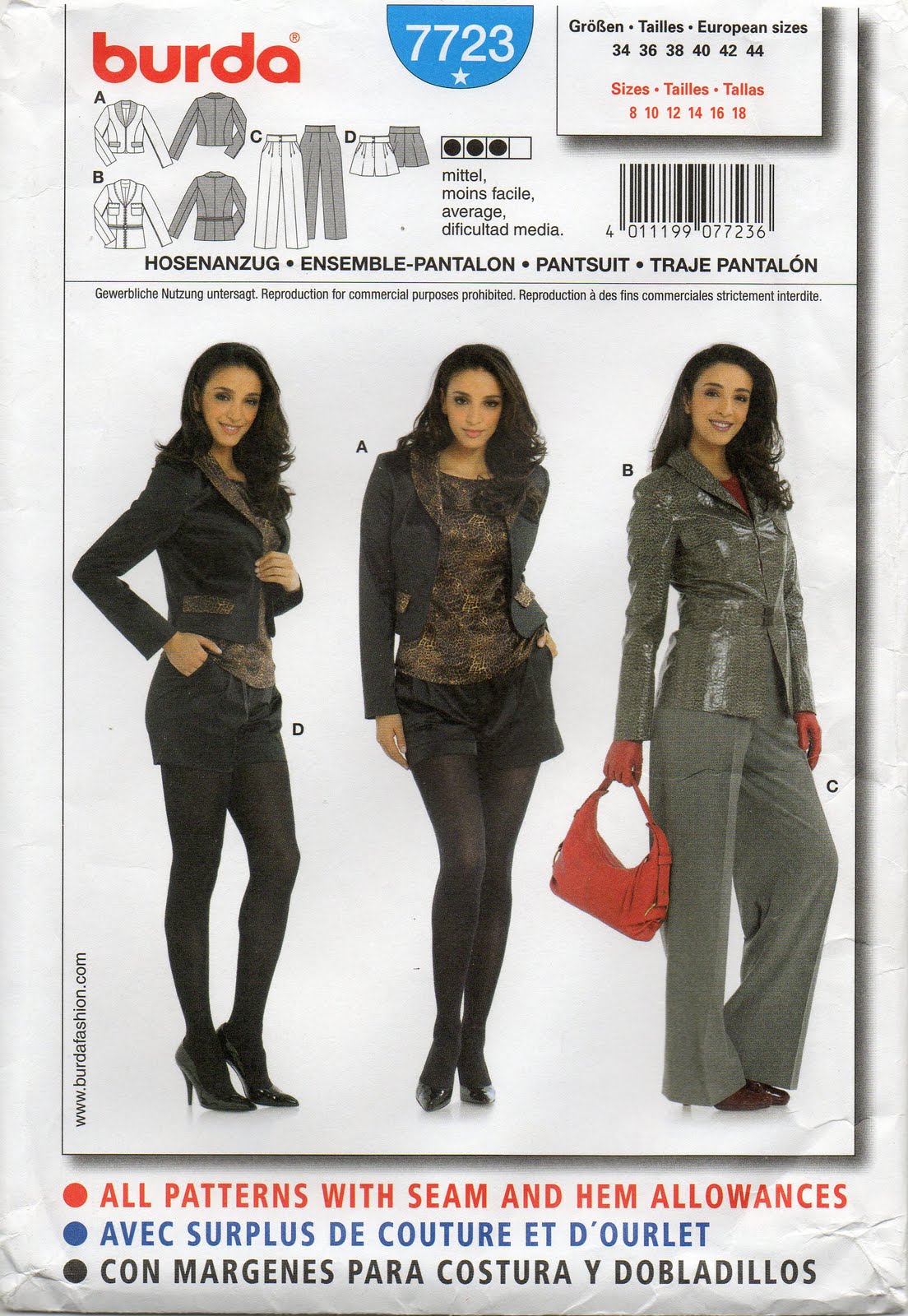
I’m pretty good with laundry.  These shorts are a testament to that, since I made them over two years ago, the first pair of shorts using this week’s pattern Burda 7723; and despite being subjected to rock-climbing, hiking, camping (just so you know, the rural dust here is icing-sugar fine and red) and generally plenty of gettin’ down n’ dirty with whatever mother nature has to offer they are still as brilliantly white-as-white-can-be as the day I sewed that last stitch and snipped that last trailing thread…
(ahem)
Well.  They’re not toooo horrifically off-white anyway….  😀
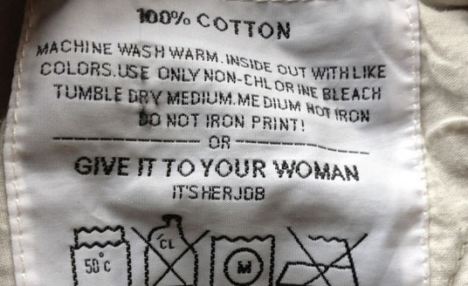
so I hope you enjoy reading this care label.  It certainly gave me a laugh!

Details:
Top; top “b” from Unique Clothes Any Way You Like, white cotton, details here
Shorts; Burda 7723, white linen, details here
Shoes; ??  given to me by Mum, cast-offs from one of her friends
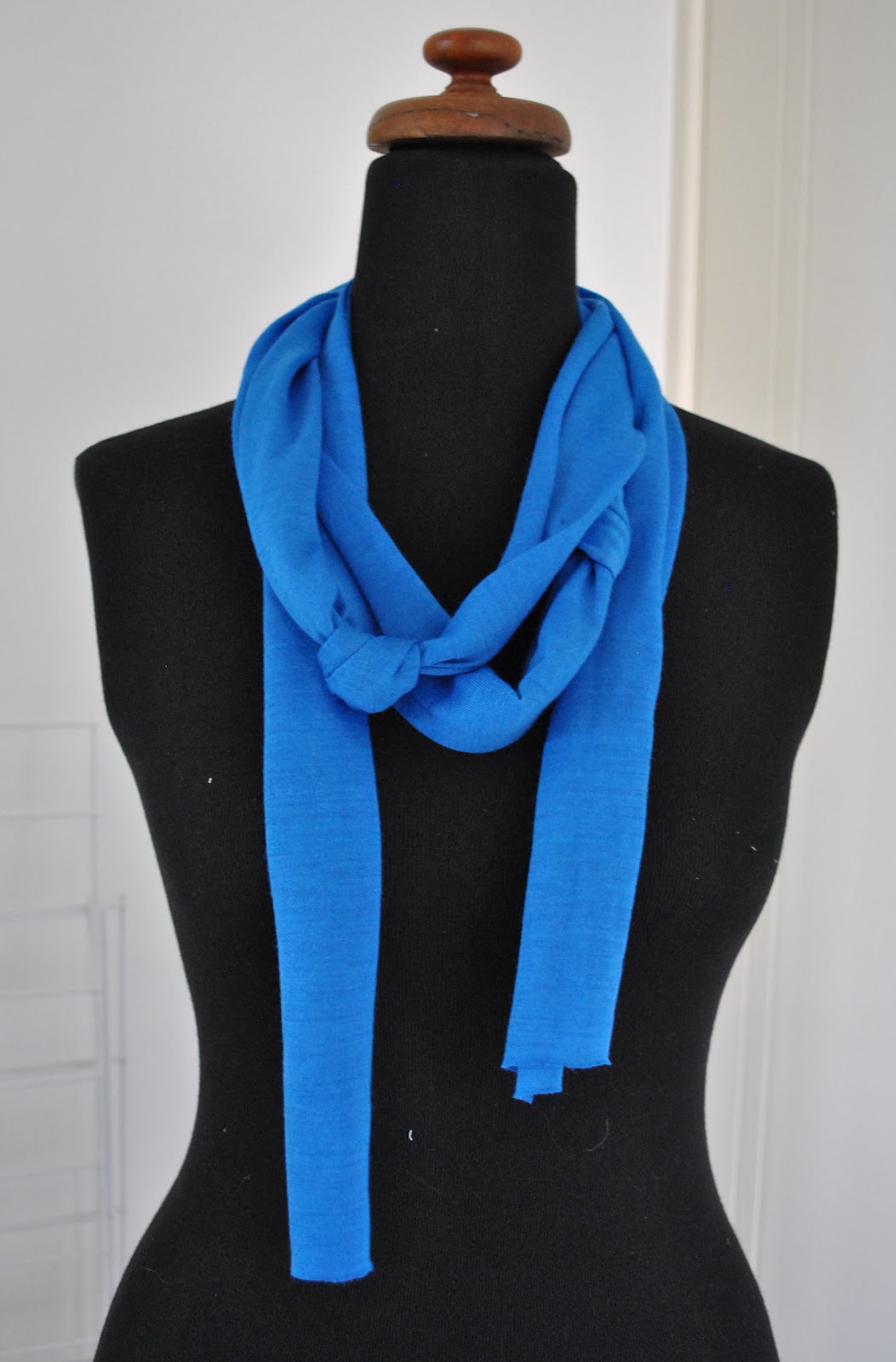
Ultramarine Scarf; new!…  made by me, from the leftover pieces of jersey knit from this top, and using this method

pinterestmail

Grey stripes

I’ve made a new dress for autumn! (sneaky peeked in my Fashionary here)  More accurately, I made this about a month ago and have been awaiting a day I can actually wear it without unladylike perspiration marring the photograph. (ew)
It is a Metalicus sort of a dress.  
Oh, OK; it is pretty much an almost exact copy of one from their summer range.  (pictured at right)
Well, I saw, and I was helpless to resist.  I just had to have.  (shrug)
I used a cotton knit jersey with a charcoal and black stripe from Fabulous Fabrics, and drafted my own pattern with the help of a tank top.  The skirt is just a slightly shaped to-the-waist and then flared A-line design.  I bought 2m of 150cm width fabric, but found that 1.2m was plenty to cut out this dress shape using the layout pictured below.    

Don’t worry, the leftover 80cm has been put to good use already, undergoing a rapid transformation into a three-quarter sleeved, scoop-necked Tshirt.  This using my now go-to Tshirt pattern, the one formerly known as Burdastyle 06/2011, 120 (altered completely until beyond recognition, but still one must give credit, non?)

I edged the neckline and armhole/sleeve edges of both the dress and the Tshirt with a folded band, the type that you see on just about all Metalicus pieces,which is why I have it stuck in my head as The Metalicus Finish, lol.

Please note; the Absolute Perfection in Stripe-Matching.  I pinned the junction of each and every stripe to achieve this.  No, I am not exaggerating.

The red pen below is pointing to a bodice side seam.  Can you even see it? (said with an unseemly lack of humility)  
This is the kind of thing not noticeable to a, er, normal person (read: someone who does not sew), but is the ultimate in self-satisfaction for those of us who have ever sewn stripes together.  Stretchy jersey stripes, I might add.  (insert deep and disgracefully un-humble sigh)

The lower hem is overlocked, folded under once, and finished with a straight stitch.  I hemmed my dress exactly the right length to work perfectly over one of my favourite actual Metalicus pieces, this frill-edged white petticoat.

Details:
Dress; self-drafted, from charcoal and black striped cotton jersey
petticoat; Metalicus
Sandals; Misano, from Marie-Claire shoes

Now OK; do I feel bad about outright copying a dress like this?  I do, a bit.  You see while I like to make my own clothes nowadays, I have a lot of respect for Metalicus.  I used to buy their clothes.  And actually I will own up now that in a small transgression of my pledge I did indeed buy a few pairs of Metalicus winter tights at their New Year’s sale,  eep!  But they were such fantabulous colours!! (the colours made me do it, your Honour…) and anyhow, tights can be classed as underwear, right??
I am OK with supporting Metalicus, since it is an Australian company, with the clothing traditionally made here in Australia.  I am of course a big supporter of ethical fashion which includes buying locally made stuff wherever possible.  So I wish to see Metalicus successfully continuing on this path and not succumb to the evil lure of the profits that come with overseas manufacturing.
It was during this visit to Metalicus I noticed that a few “made in China” pieces were making an insidious and very unwelcome appearance in the range.  I did feel sad about this and wondered briefly (and probably foolishly) if my boycotting of RTW had contributed in even some minuscule part.  And copying a dress from the store, even just one, for me, is also part and parcel of taking away business from what is a legitimate Australian business.  So I did feel a bit guilty.  But if Metalicus is going to go to the dark side and send  their manufacturing overseas, taking away Australian jobs, then while I am very sad about that it does at least make it a heck of a lot easier for me to stay away from RTW.
btw I did check my tights before I bought them, and they are indeedy of the Made in Australia variety.
So I’m resting easy on that purchase.
Sort of.

pinterestmail

Billowy white shirt

I’ve made a shirt… and the twist is that this was until recently a pair of trousers.  Yes really!
Before; as wide-legged trousers.  They were very low-rise in the style of about five years ago.   I could literally pull these trousers on and off without undoing the zip.  The last time I wore them was about two years ago (in this top right outfit) and even then I had the zip un-zipped and the sides lapped over and hoinked together with a big safety pin so they wouldn’t fall down.

However the linen was such beautiful quality! and I did not want to let it go to waste…
so I did not.  🙂
I have been toying with a particular concept for a shirt-from-pants for a while in my head.  I’ve had a very firm picture of how it was going to go together.  Naturally my nebulous “idea” didn’t work out quite the way I had planned and I realised at some point that I needed more fabric, and in very different shapes, to what I actually had.  I had to pin, stitch, unpick, re-pin, re-stitch, re-unpick over several times before I dared to actually cut into any of the leg pieces… and there was a lot of this before I ended up with a design I was happy with.  No, I don’t do muslins very often.  I consider them a waste of fabric.
The construction… well, don’t ask me to go into great detail…  it was quite complex.  The long extended front bands, starting at the shoulders and extending down the fronts, and continuing around to meet at the centre lower back are from my original shirt plan, the one I had to abandon.  I liked how they looked, hanging in space like that, so I left them there.  To cover the join at the back, which by necessity in the design finished inside out with the seam showing, I made a little decorative button tab.

The shirt has two fronts, and the back has a two pieced yoke extending into the sleeve backs, and two lower backs joined centrally.
The back of the shirt has four corners of fabric joining together at a centre point.  I pressed the vertical seam allowances of the upper and lower backs to either side to reduce bulk in the long horizontal back seam joining them.  This is double top-stitched down.  Actually this shirt contains an eclectic mix of sometimes double top-stitching, sometimes single top-stitching and sometimes no top-stitching.  I applied these at whim.  It seems to work well with the casual and slightly avant-garde Japanese style of the shirt.
My favourite design detail is the sleeves and their closure.  The front sleeve is shorter, and almost a square.  The back yoke/sleeve piece has a distinct curve-and-flare in it, tapering off to one side, this was part of the original shape of the leg back pieces, and after lots of pinning the sleeve seams and trying-on multiple times I situated part of the existing curve to fall at the natural outer elbow. It looks very strange when the sleeve is laid flat, but the flare and curve actually accommodates the curve of the elbow very well.  It took a bit of experimenting, but I’m so happy with how this bit turned out!  It was a very serendipitous discovery!

Both points of the longer back yoke/sleeve piece have a buttonhole, and they both button down over a single button on the centre of the sleeve front hem.  To enable the button to cope with this amount of fabric, I sewed it to have quite a high and a very well reinforced shank.

So I’m super happy with how my shirt turned out!  There was almost zero leftovers, just a few shavings, the zip and the facings, and a few other miscellaneous small bits.  The 6 buttons were leftovers from this shirt.  Beautiful buttons, their only downside is that they are not for individual purchase, but only available on cards of nine.  Luckily I have a lot of use for little white buttons  🙂
And I still have my original shirt idea in my head for another time…

Details:
Shirt; my own design, re-fashioned from a pair of wide-legged trousers, fine white linen
Shorts; Burda 7723, hot pink linen, details here, and to see these in 6 different ways go here.  My review of this pattern here

Later edit: the shirt has had a mini-revamp and it now looks like this:


pinterestmail
Switch to mobile version
↓