Tag Archives: Own Design

White, with a navy grid

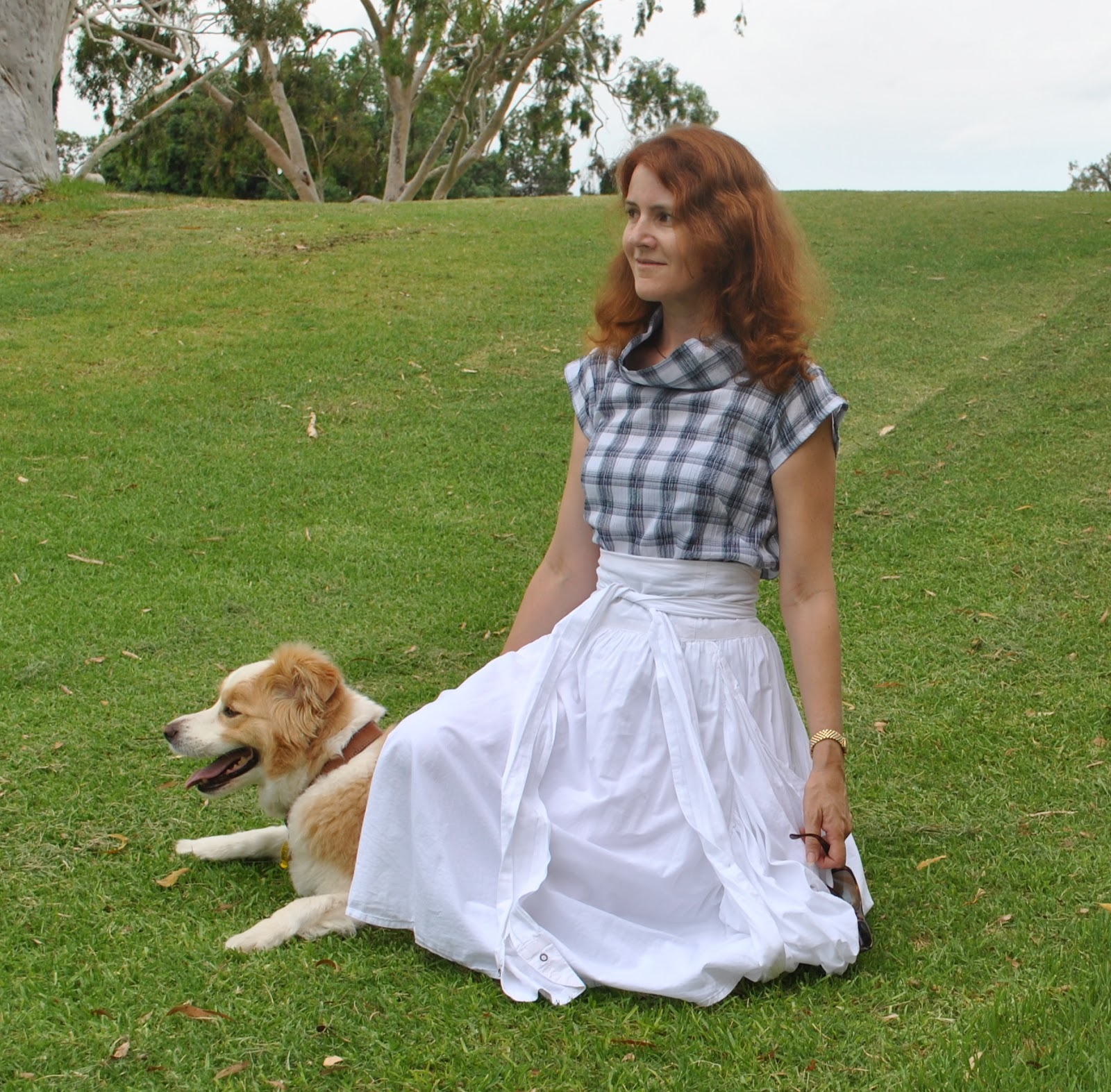
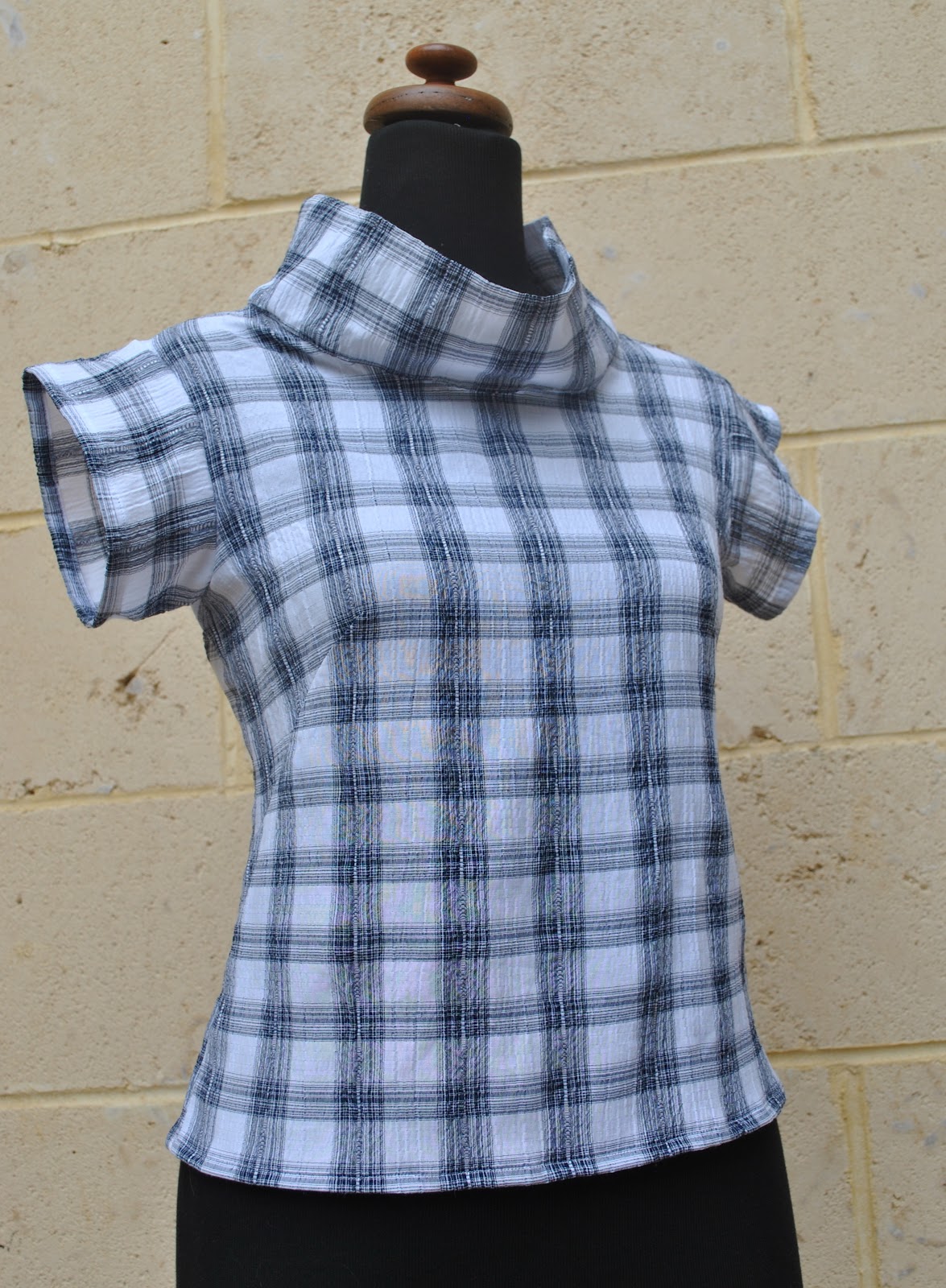
I’ve made a new little top….   well, just a summer version of a T-shirt really, from scraps, the leftovers from this shirt.  Constructively finishing off another small wad of fabric from my stash.  Smug self back-patting ensues.
This stuff is pretty good top/blouse/shirt fabric.  It is uncrushable and beautifully light.  Sam has been wearing his shirt stacks.  And luckily has no neuroses about his mother having a garment in the same fabric, although for both our sakes I have undertaken to only wear it if he’s not wearing his.
We do have some pride.  šŸ™‚
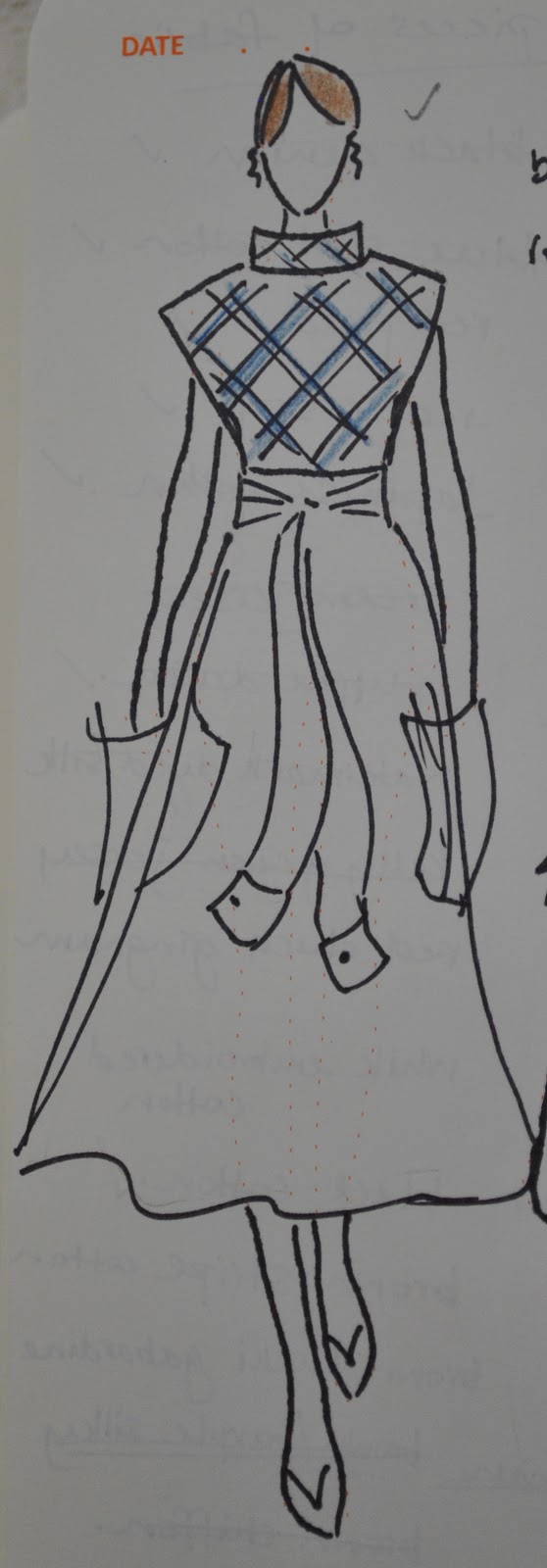
I had dreamed that this top would be cut on the bias, with those gridlines laying diagonally across the design, and to have little kimono/cap sleeves, like my preliminary sketch below.  I thought it would look pretty cool like that, and had been thinking about it long enough that my heart was virtually set on it.  But cutting on the bias is such a fabric hog, demanding way more than I actually had and so my plans were sadly not to be….  Visiting the fabric store to purchase just a leeettle bit more to indulge myself was pretty tempting as the fabric was not price-y, and still plentifully stocked.  But I had to admit that doing so would utterly defeat any aspirations to green-dom.  sigh
So …
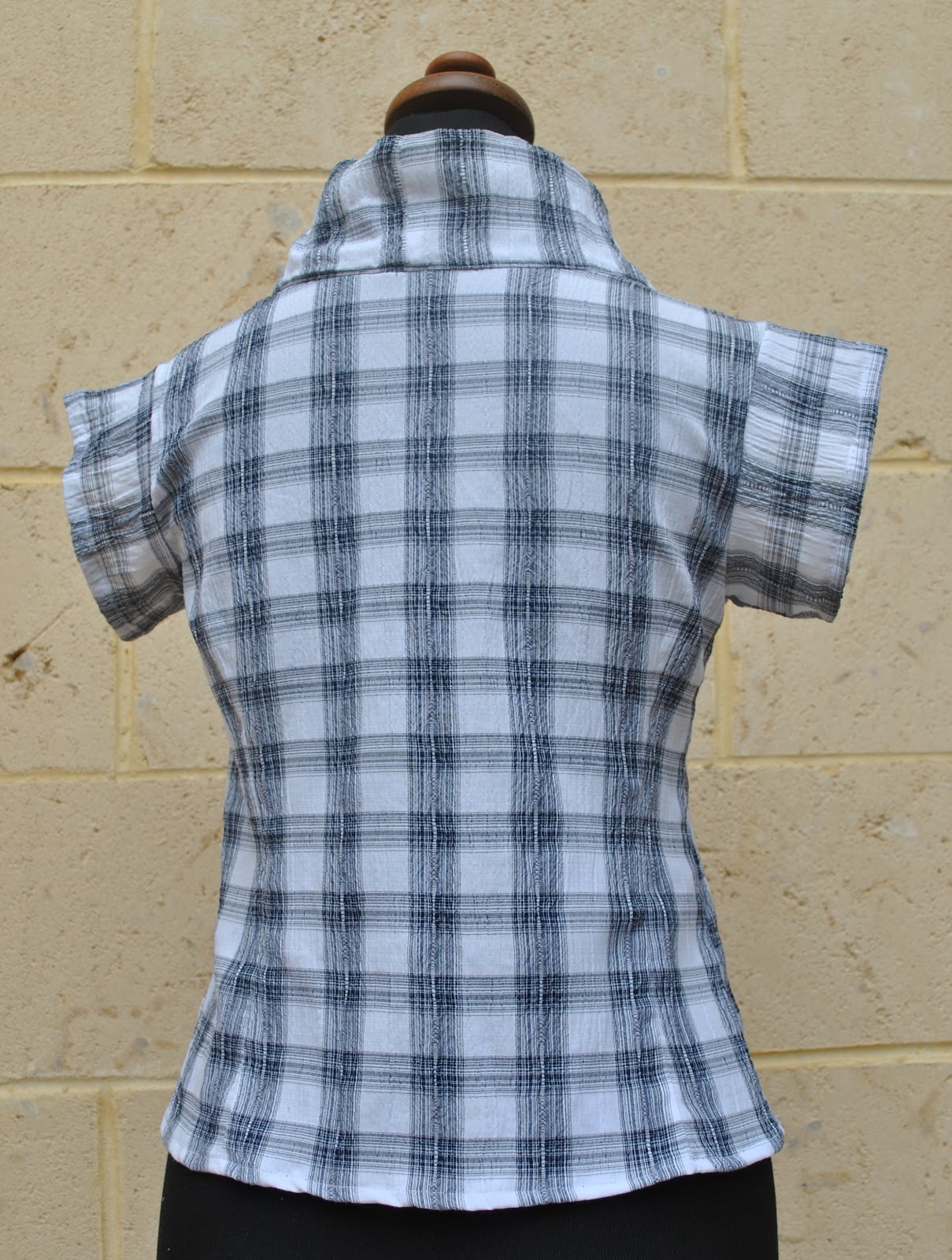
I used the pattern for top “a” from Unique Clothes Any Way You Like, by Natsuno Hiraiwa, a very simple design that really does use a very tiny amount of fabric.  In its simplest pared-back form this is a fab basic little top pattern.  I grudgingly economically cut the pieces out on the straight…. which might not look as cool as my original idea, but is very effective for stash busting  šŸ™‚  And it is a good useful and casz little summer top.
The seams are all French seams.  It doesn’t have any closure but can just be pulled on over my head.  I left off the stipulated bias finish to the armholes and neckline, and instead made three sort of tubes or funnels to finish the apertures off.  The sleeve tubes are just single fabric width, and sewn into the armholes and finished with a little hem, and the neckline tube is doubled over, and slipstitched invisibly down on the inside. 
Details:
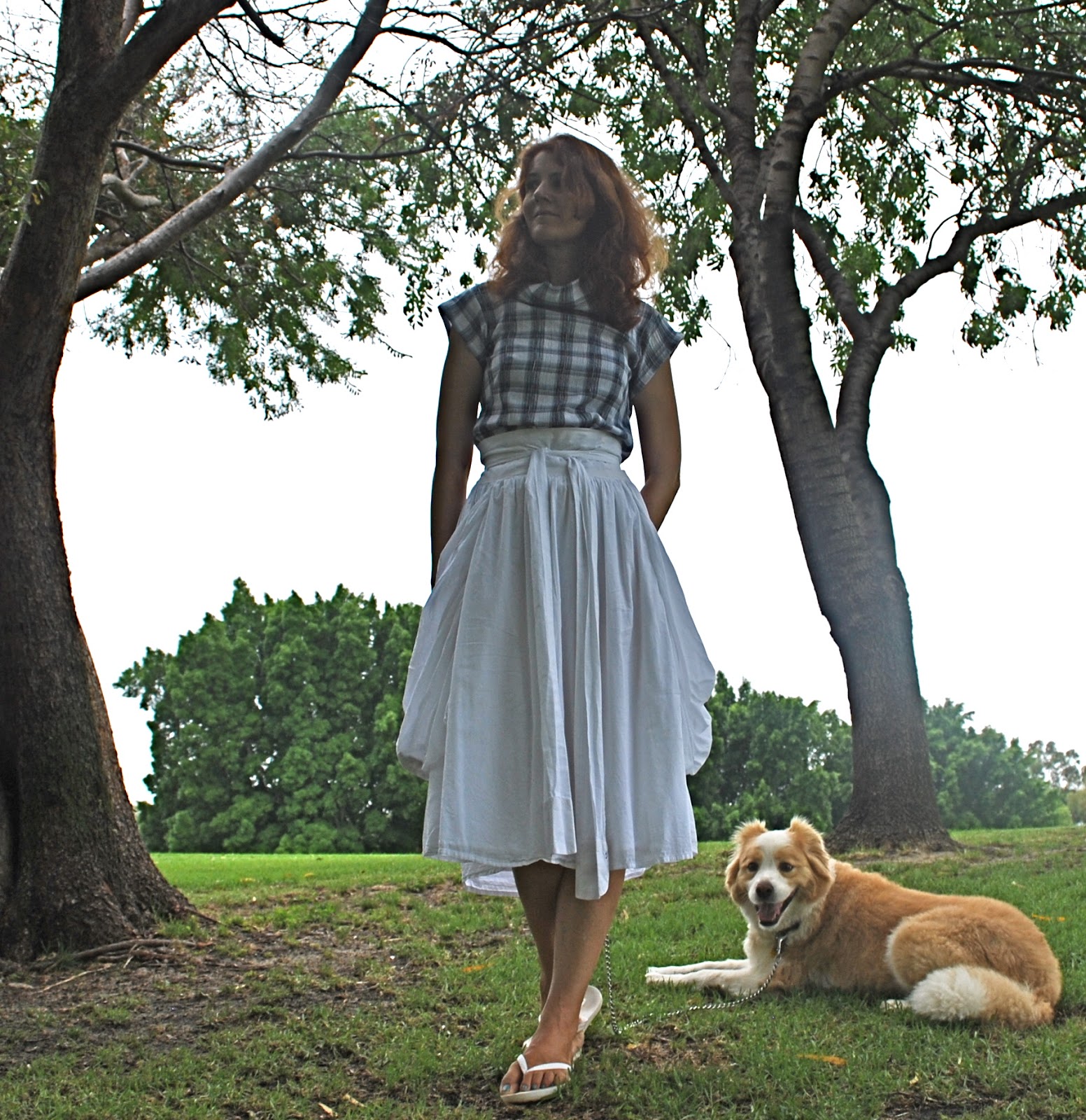
Top; modified top “a” from Unique Clothes Any Way You Like by Natsuno Hiraiwa, in navy and white check stuff.  I have made this pattern up twice before, here and here….


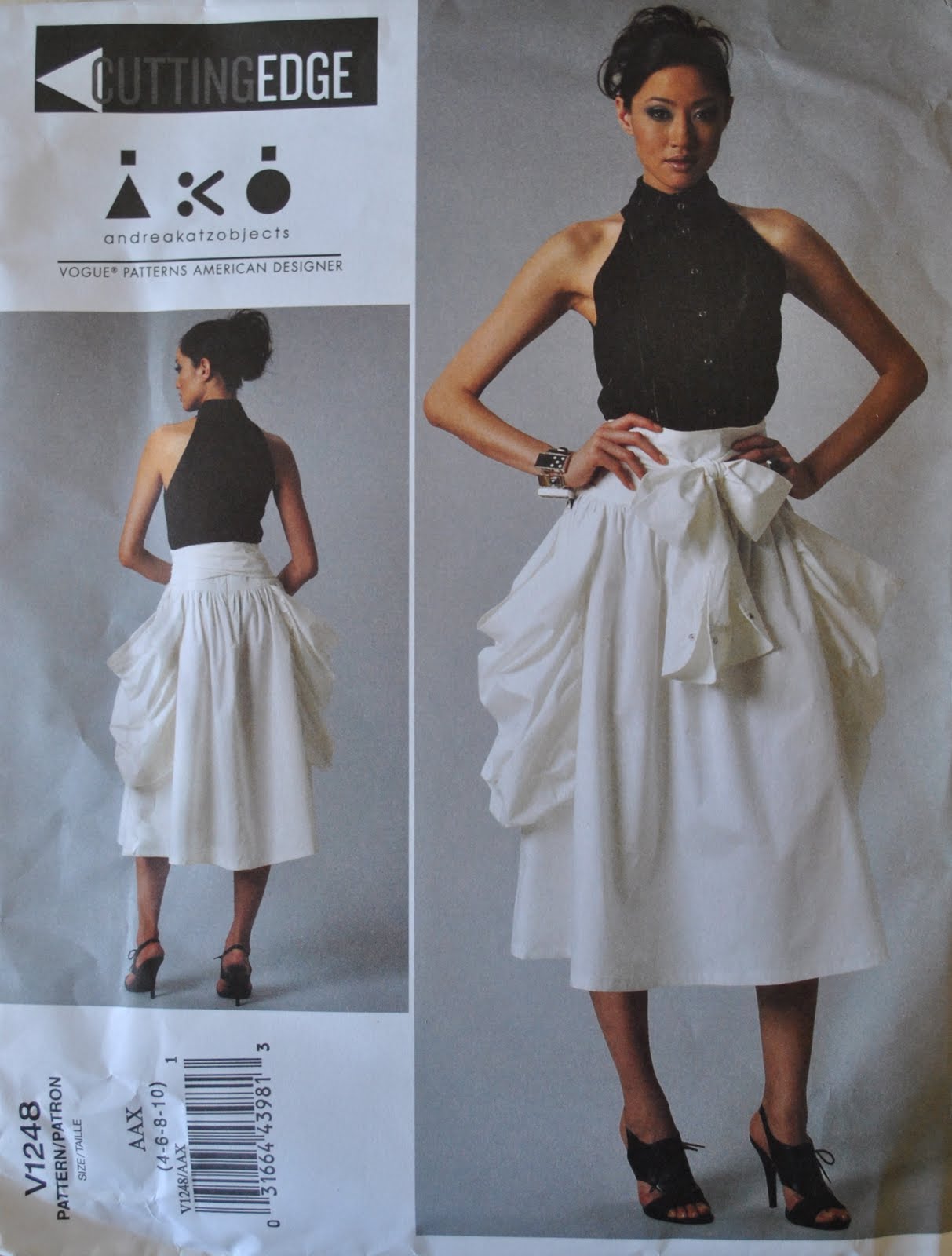
Skirt; Vogue 1248, white cotton voile, details and my review of this pattern here
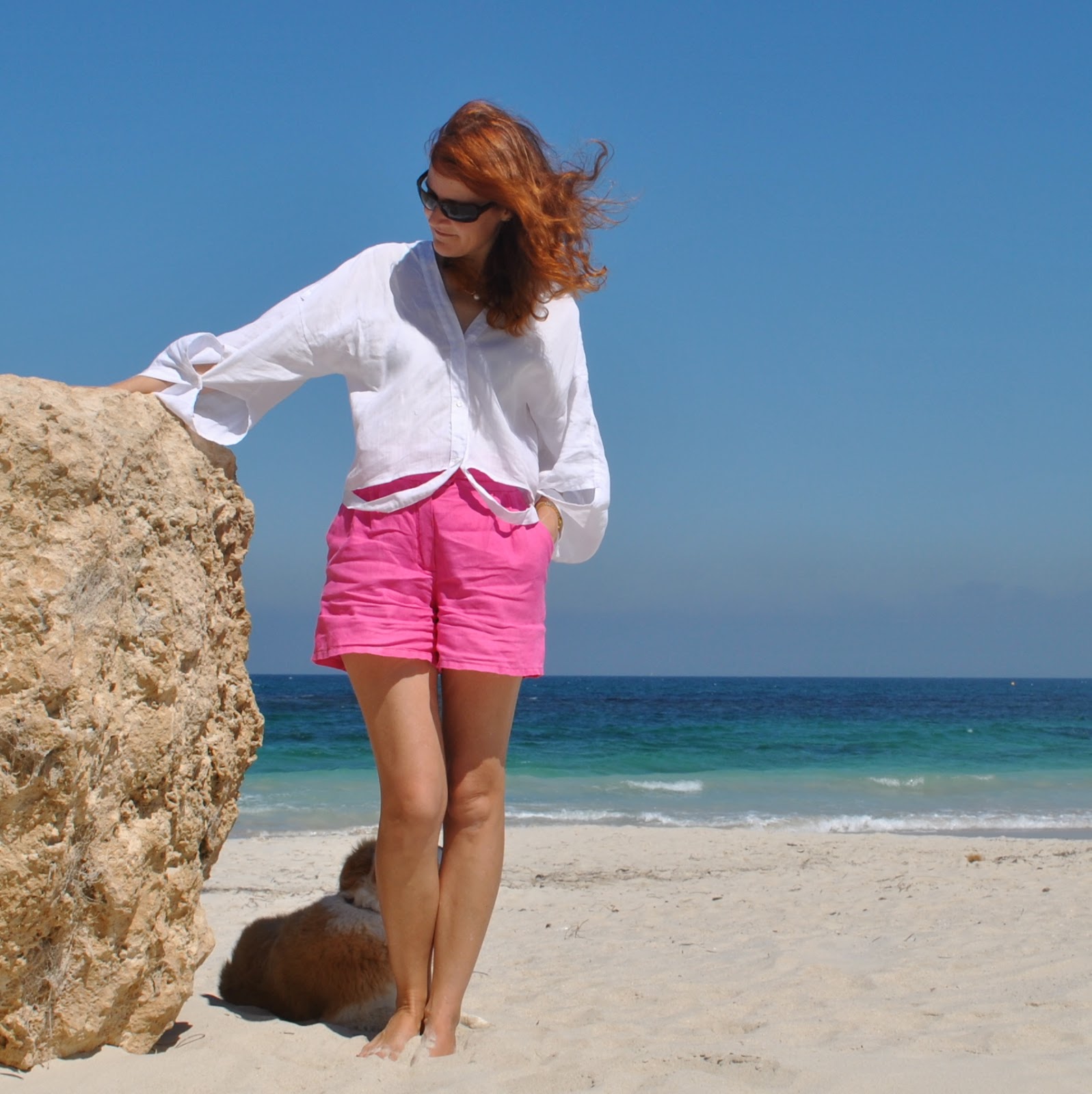
Thongs; Mountain Design

pinterestmail

A tale of a purple dress

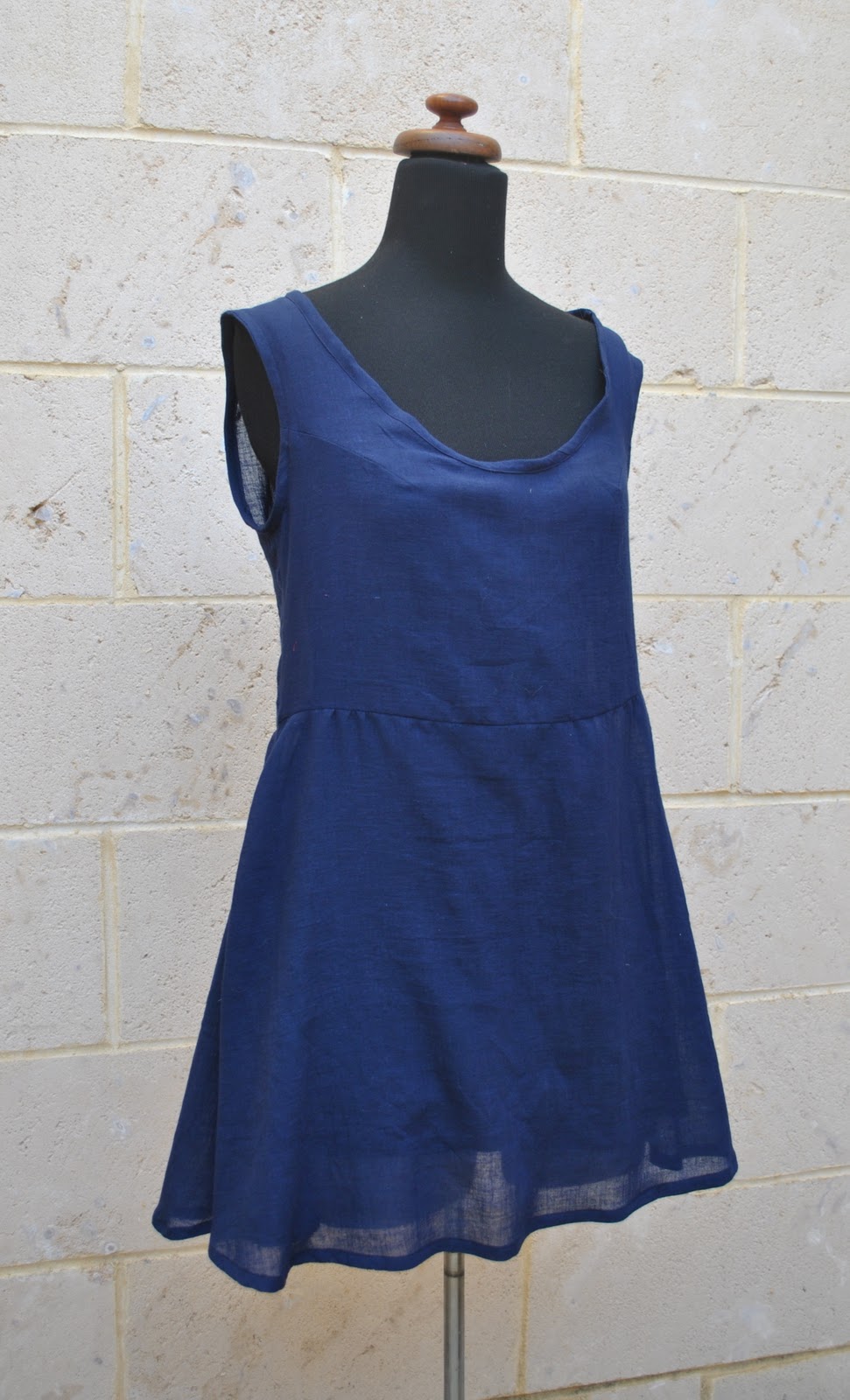
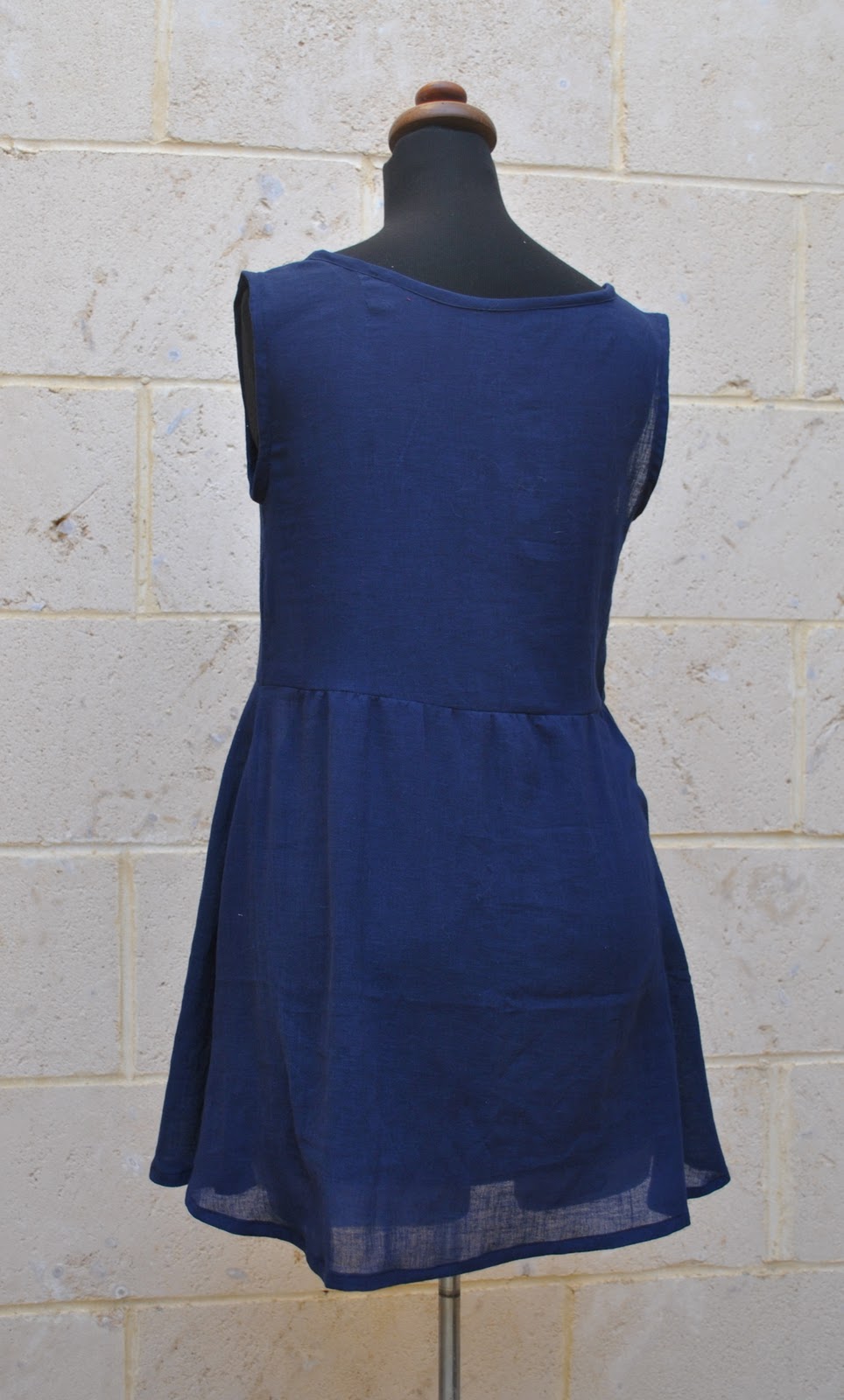
Once upon a time, an avid seamstress took a trip far far away to Melbourne.  There she visited the fabled Tessuti’s and spenteth up big on fabric.  Including a piece of slippery dippery shot rayon-y stuff in a wonderful plummy-chocolate-y sort of a colour.  The rich and gorgeous colour of a ripe eggplant.  The fabric was borne home, lovingly folded and put carefully away and just taken out every now and again for speculative draping over the seamstress’ faithful dummy Bessie, before being re-folded and tucked away again, awaiting the Perfect Project.
The months marched by.
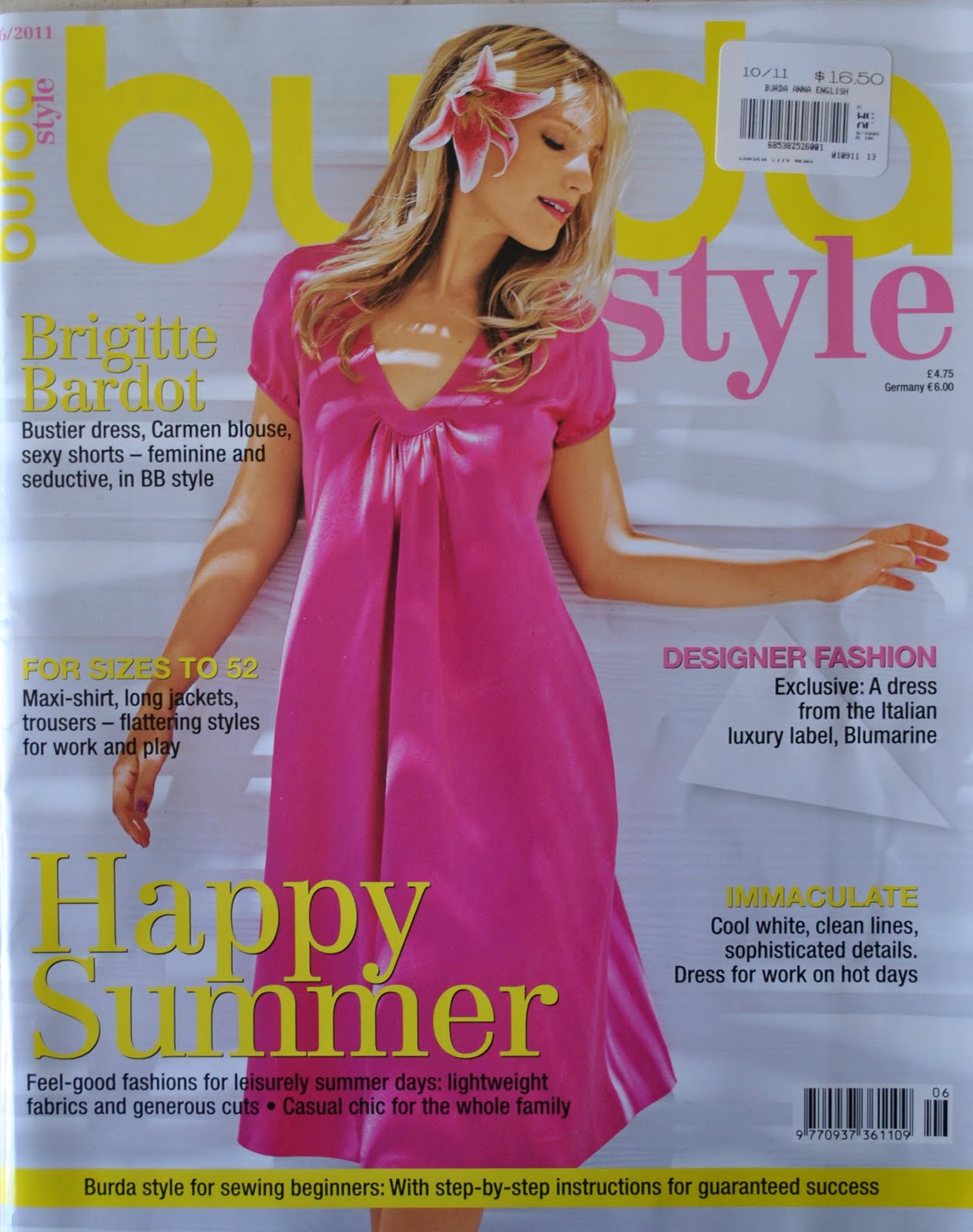
The lovely fabric was still sitting there, taunting the seamstress, Perfect Project-less, and fast becoming that dreaded stuff; Fabric That is Too Good To Sew Up.  The seamstress realized this and took it out again, determined to make something utterly fabulous with it.  She cast about, more seriously this time, for the Perfect Project.  The beguiling dress 102 on the cover of 06/2011 Burdastyle magazine caught her eye, again… actually the very reason she bought this magazine.  It was a promising looking number for summer; loose and elegant, and just the thing for flowy slippery dippery sort of fabrics.  The seamstress did all her prep, and then bravely sliced into the precious fabric.  She made up her dress, pinned up the hem, and hung it up for the requisite couple of days (being an old hand, she knew all the rules regarding bias-cut)  Then she put it on.  Lo, and the mirror reflected back to her a frump.  A complete and utter frump.
The seamstress realized that her delicious and expensive fabric the colour of an eggplant had magical powers and had transformed her into one… just like when Cinderella was transformed into a pumpkin (oh OK OK, that was the coach not Cinders… but you getteth the idea)
Bitterly disappointed, she took it off and hung it out of sight for a few days; busied herself with easier projects, like making Pattern Magic stuff out of scraps.  Then took out the Eggplant costume again (for this is how she now thought of it)  Studied it.  Had a brainwave, and chopped off 14cm.  Pinned the hem, hung it up for the next few days again, blah blah.  Tried it on.  Lo, and the shorter length had worked wonders!  Gone was the bulbous look!  The seamstress felt victorious.  Hand-stitched a narrow hem.  And wore the dress out.  And catching sight of herself in a shop window, noticed in a certain light a sheerness to the dress, the shadow of underwear showing through, that had not previously been apparent in the bathroom mirror…  
Doh! 
She despaired, but briefly; rallied and then quickly made a little slip-on petticoat.  It was thrown together somewhat, but finally the gods were smiling on the seamstress because the petticoat was perfect. 
And they all lived happily ever after.

Details:
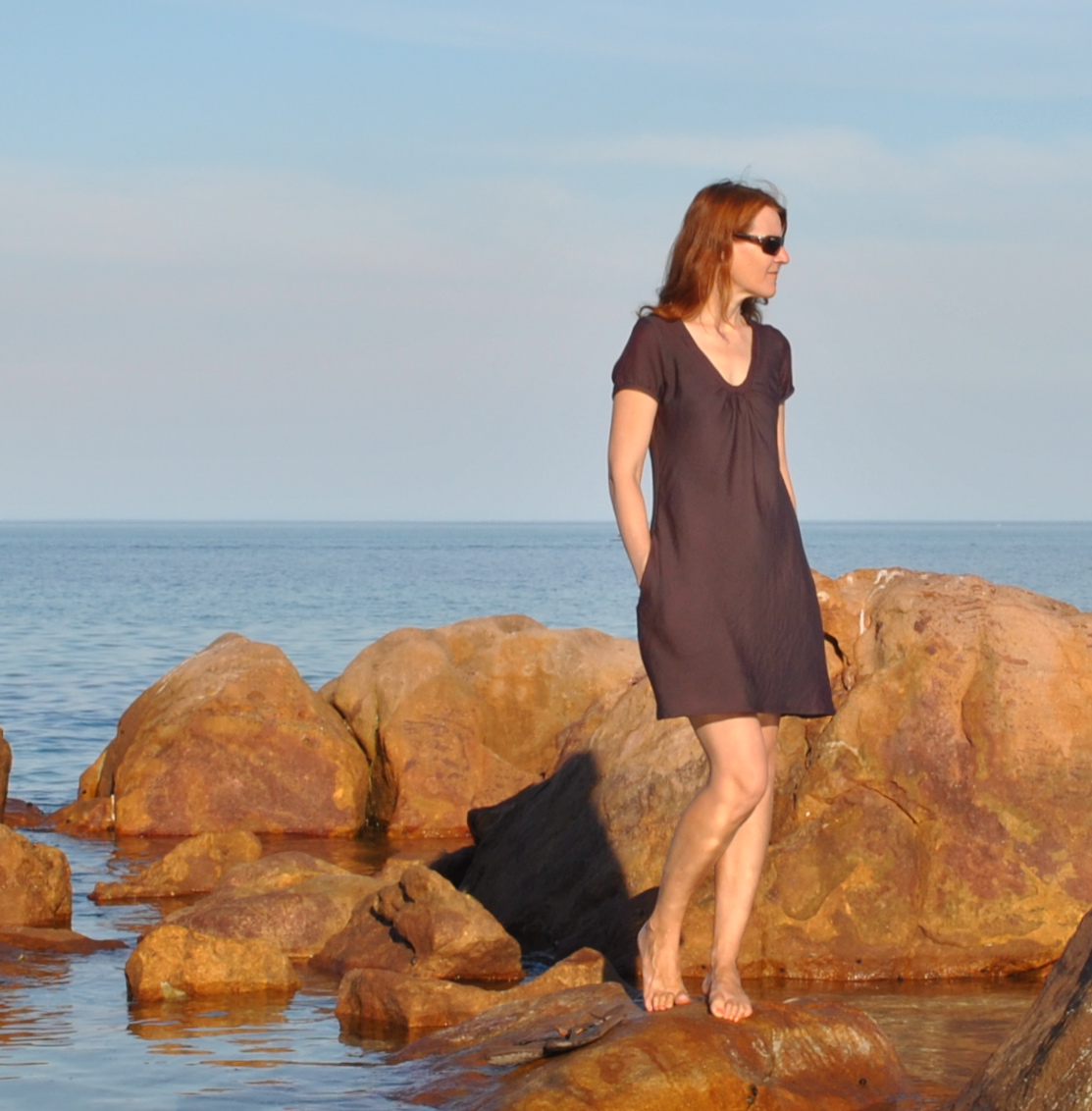
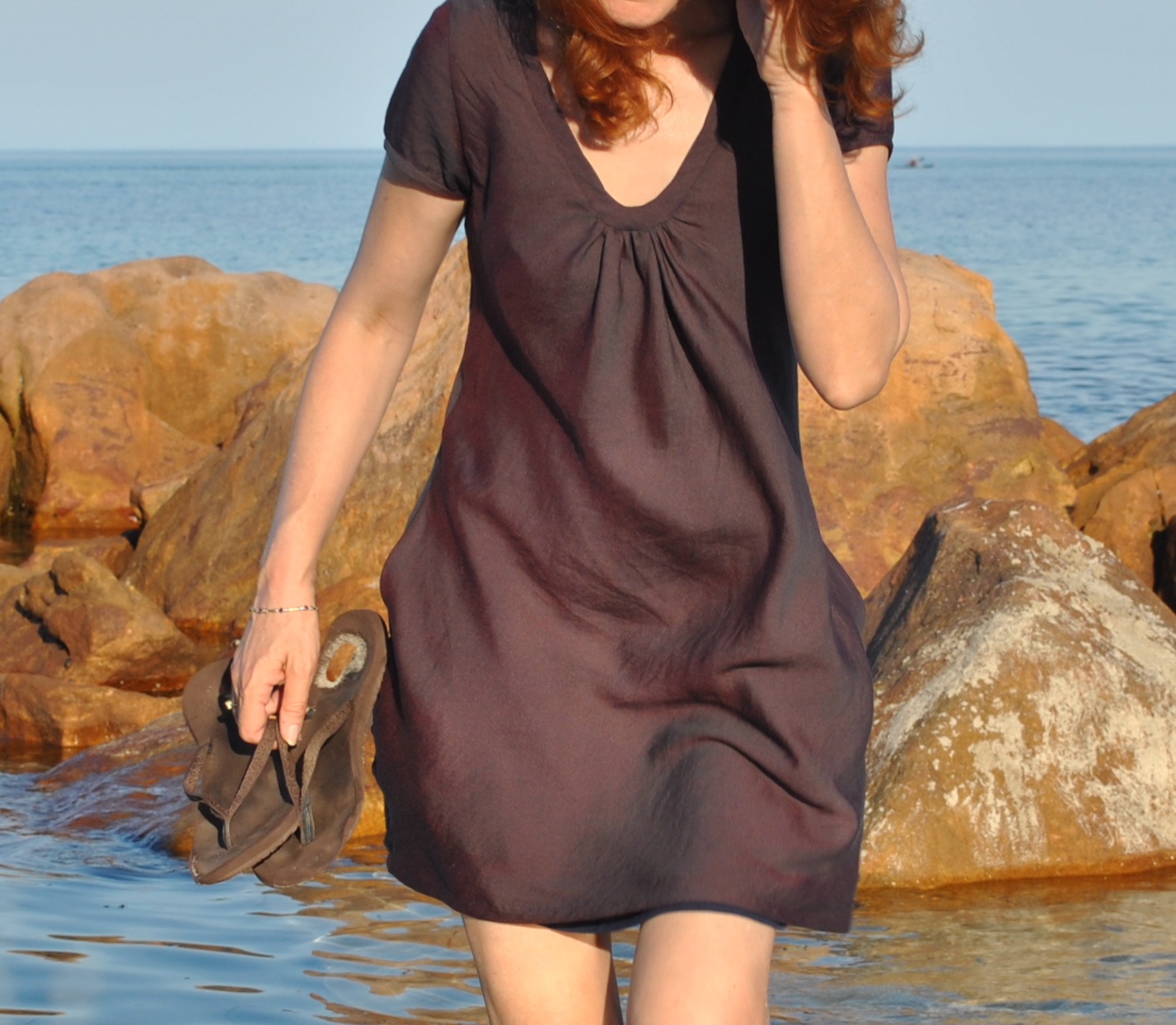
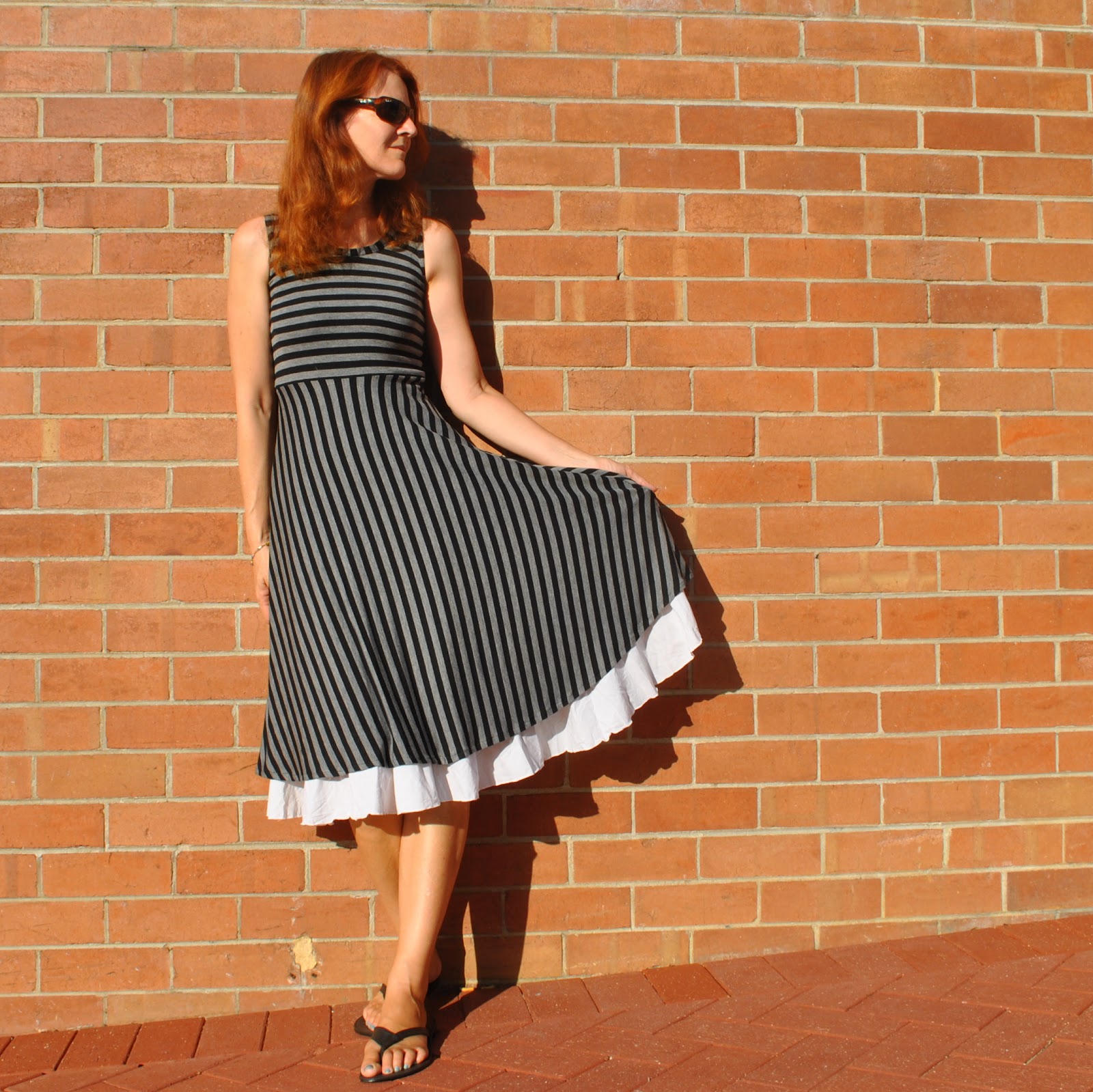
Dress; Burdastyle magazine 06/2011, dress 102, purple shot rayon
Petticoat; self-drafted, from lightweight navy blue polycotton (the last leftover bit after making this)

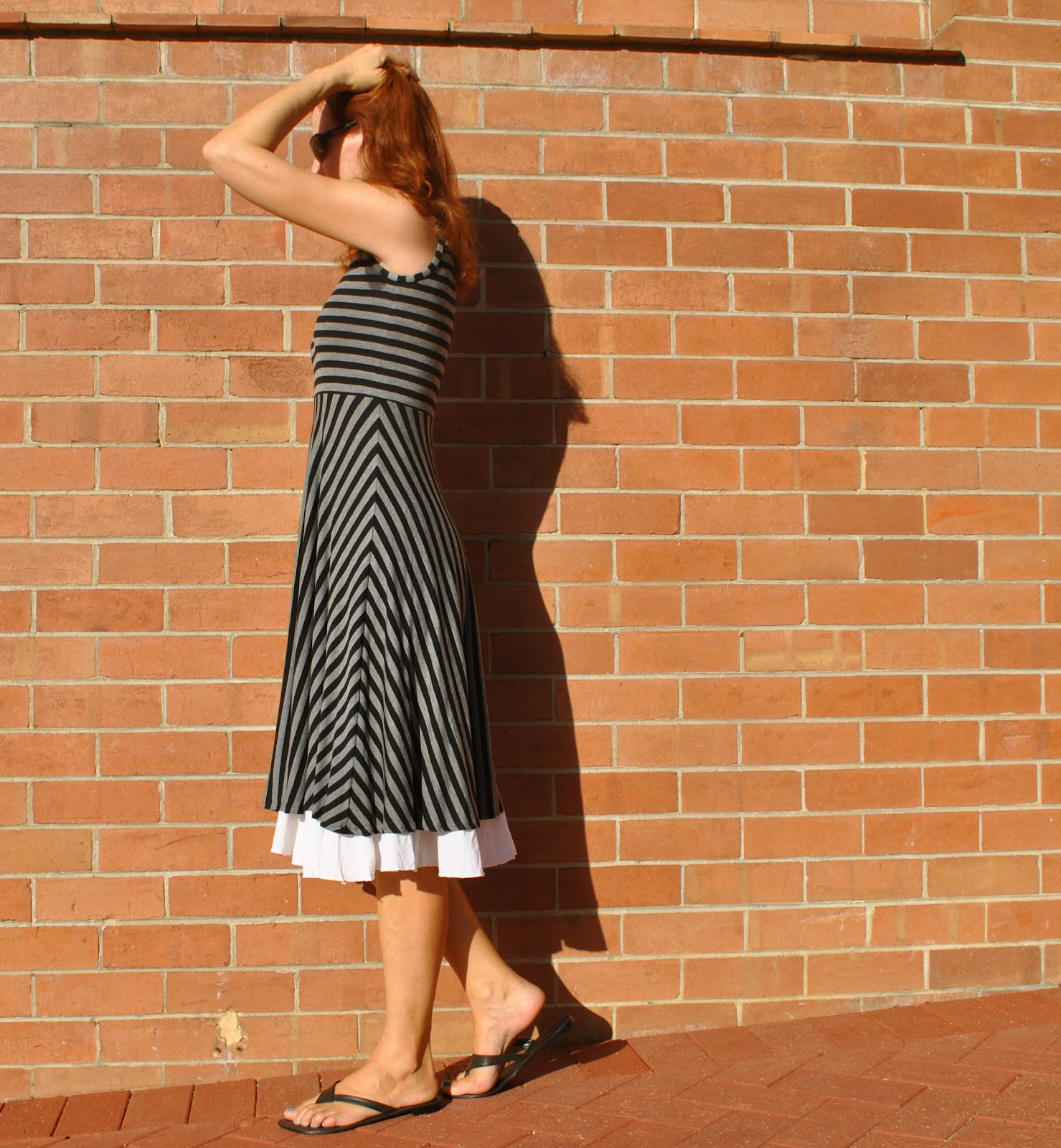
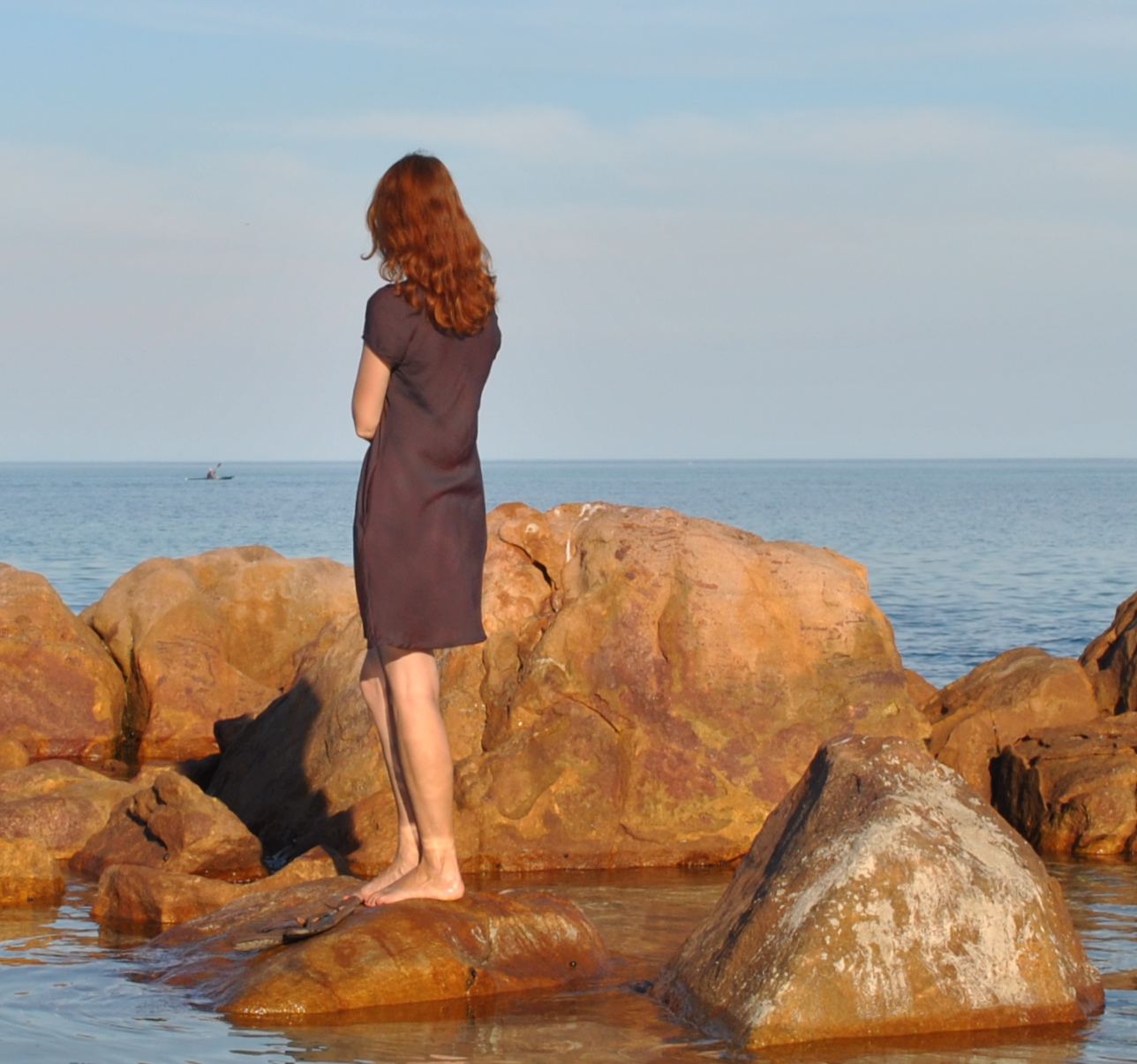
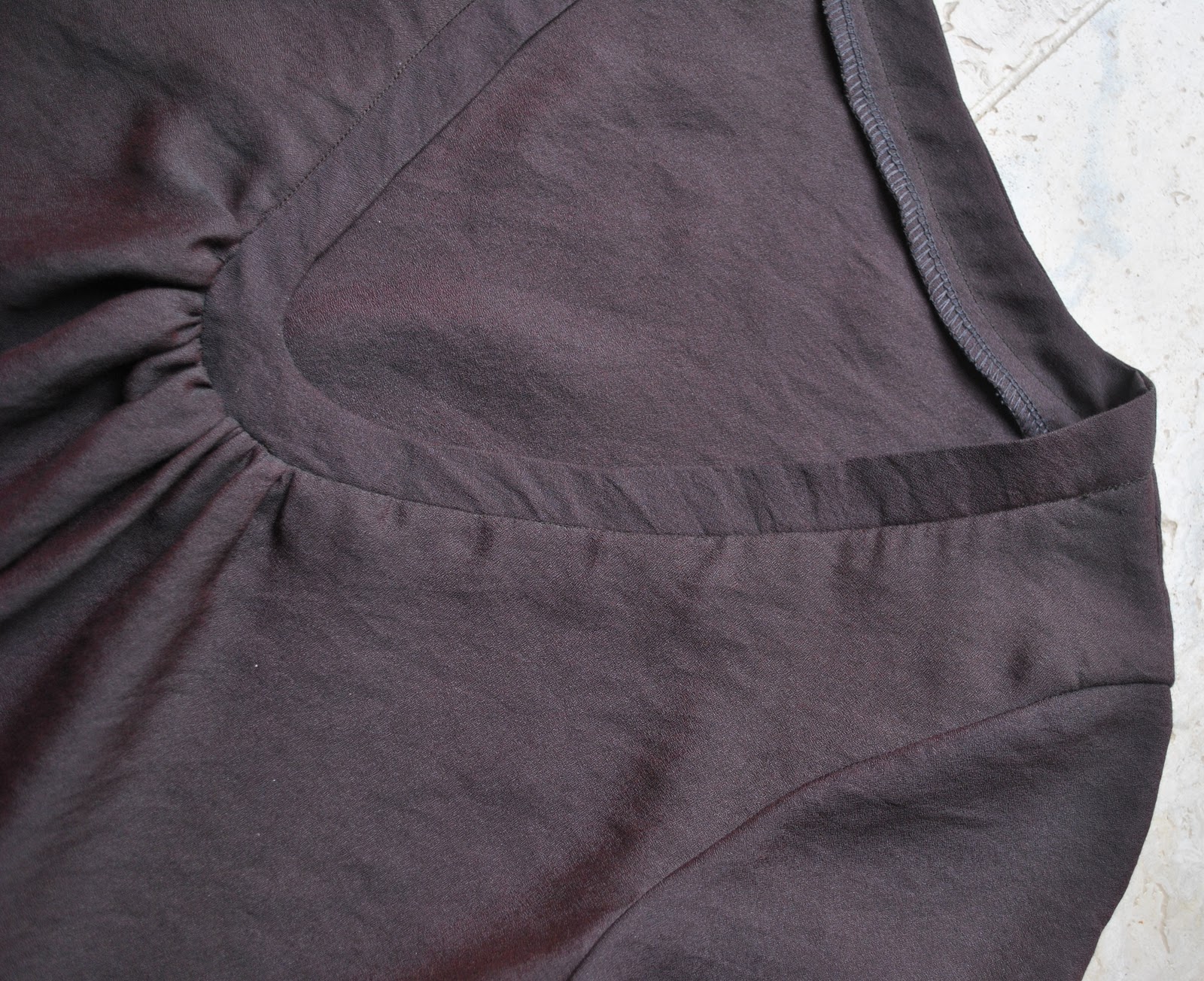
The fabric is shot rayon; with a red warp and a dark blue/grey weft, giving it an overall browny-purple hue.  Craig took this last candid photo which illustrates quite well how the fabric takes on different colours in the light (a hallmark of shot fabrics)

Pattern Description:
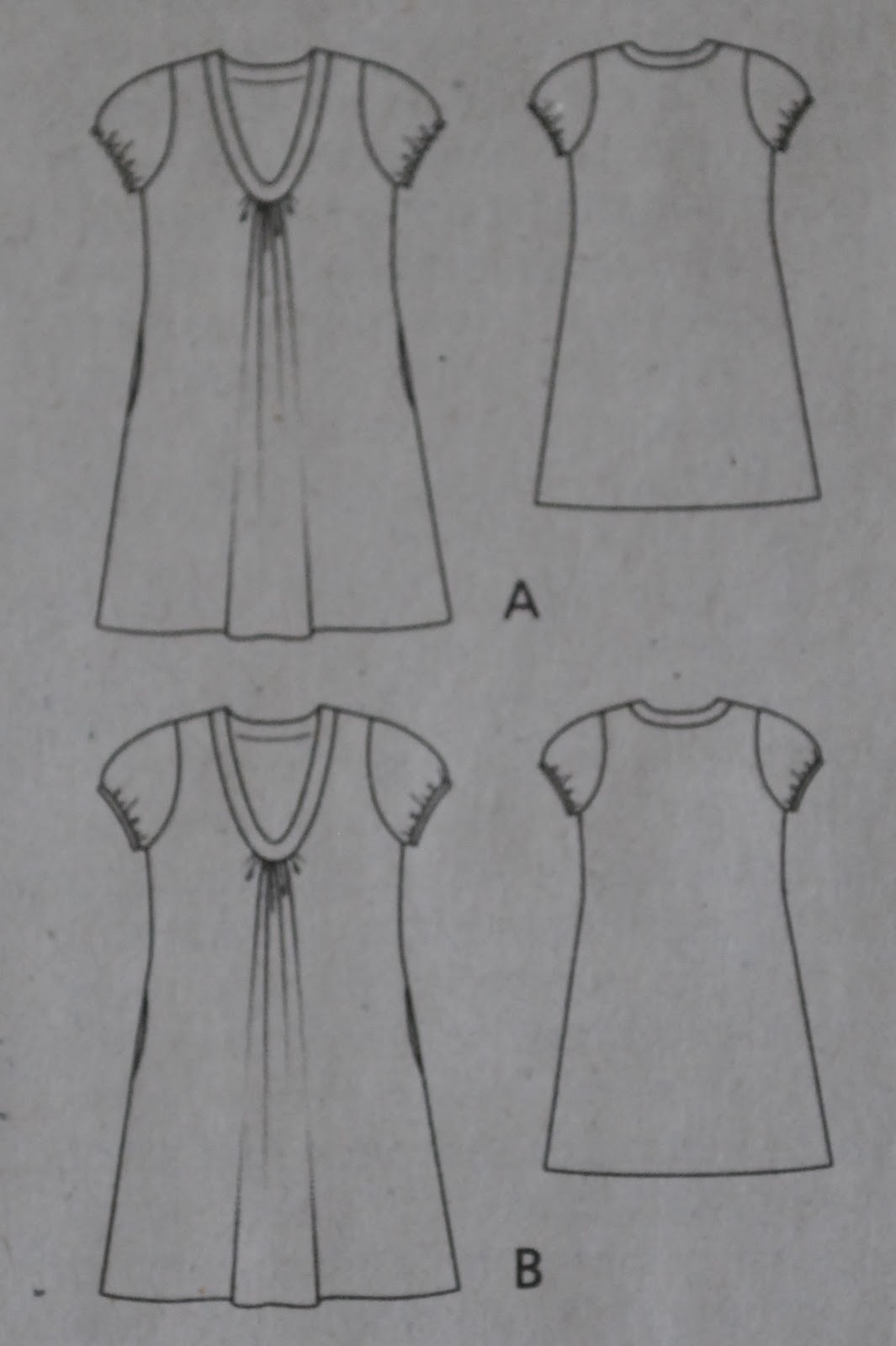
Flared bias-cut dress with an oval neckline which according to the magazine description ā€œaccents an alluring dĆ©colletĆ© ā€œ (hehehe)  Small gathered cap sleeves, inseam side pockets, no closure necessary.
Pattern Sizing:
European 36-44; I made the size 38
Did it look like the photo/drawing on the pattern envelope once you had finished sewing it?
Yes, except that mine is 14cm shorter.
Were the instructions easy to follow?
Not too convoluted, by Burdastyle standards.
What did you particularly like or dislike about the pattern?
I really love the neckline of this dress, the cute overall shape of the bodice part of the dress and the fact it will be wonderfully cool and comfortable this summer.
Unfortunately the pattern is a little… odd-looking in its finished form  :S  I think this might well be due to the bias cut, which when combined with that gathered neckline; well I should have foreseen how huge this would make the front of the dress look. I am not fond of the maternity look, been there done that and at my age I’m well past all that!!  However, looking closely at the dress I thought the baby bump effect was created partly by the length of the dress, and that the weight of the fabric caused the front to curve back inwards towards your body, in a sort of ā€œbulbousā€ effect.  I took 14cm off the length and I think this drastically improved the shape of the dress.  The removal of this extra weight of fabric allowed the hemline to sit up and flip out more fully, giving more of an A-line rather than an eggplant silhouette.
Fabric Used:
Lightweight shot rayon, with a very slippery silky feel to it
Pattern alterations or any design changes you made:
Contrary to the instructions I sewed the pocket pieces to the dress before sewing up the side seams.  Why would you sew up the side seams before attaching the pockets anyway?  That doesn’t make sense to me at all.
The instructions tell you to attach the sleeve binding before sewing up the side sleeve seams… I sewed the side seams of the dress, then sleeve seams and then set in the sleeves; then I attached the binding to the lower edge of the sleeves and slipstitched it over by hand.  Just a personal preference…
The ā€œbignessā€ of the dress combined with a quite long length added up to an unfortunate overall frumpiness… so I ended up taking 14cm off the length and this improved the silhouette of the dress enormously, imo.
Would you sew it again? Would you recommend it to others?
I’m curious as to whether this would look better in a straight-cut; and I might just try this out sometime…  Otherwise it might be worth reducing the width of the neckline (and thus some of the excess fabric from out of the front of the dress) to see if this reduces the unfortunate ā€œbaby bumpā€ effect.
Would I recommend this to others? well, this would definitely make a fabulous maternity dress!
 Conclusion:
My first reaction to the unhemmed dress at the longer length was disappointment, but taking off that crucial 14cm in length and I am happy!  I really like this at the shorter length.  But I wouldn’t make this again, at least without trying a few adjustments, like taking away at least a bit of that excess fabric around the middle…
This might work better in a lightweight cotton or something else not as slippery and slithery as the fabric I chose.  Bias cut rayon is not much fun to work with.
pinterestmail

Bamboo shoot

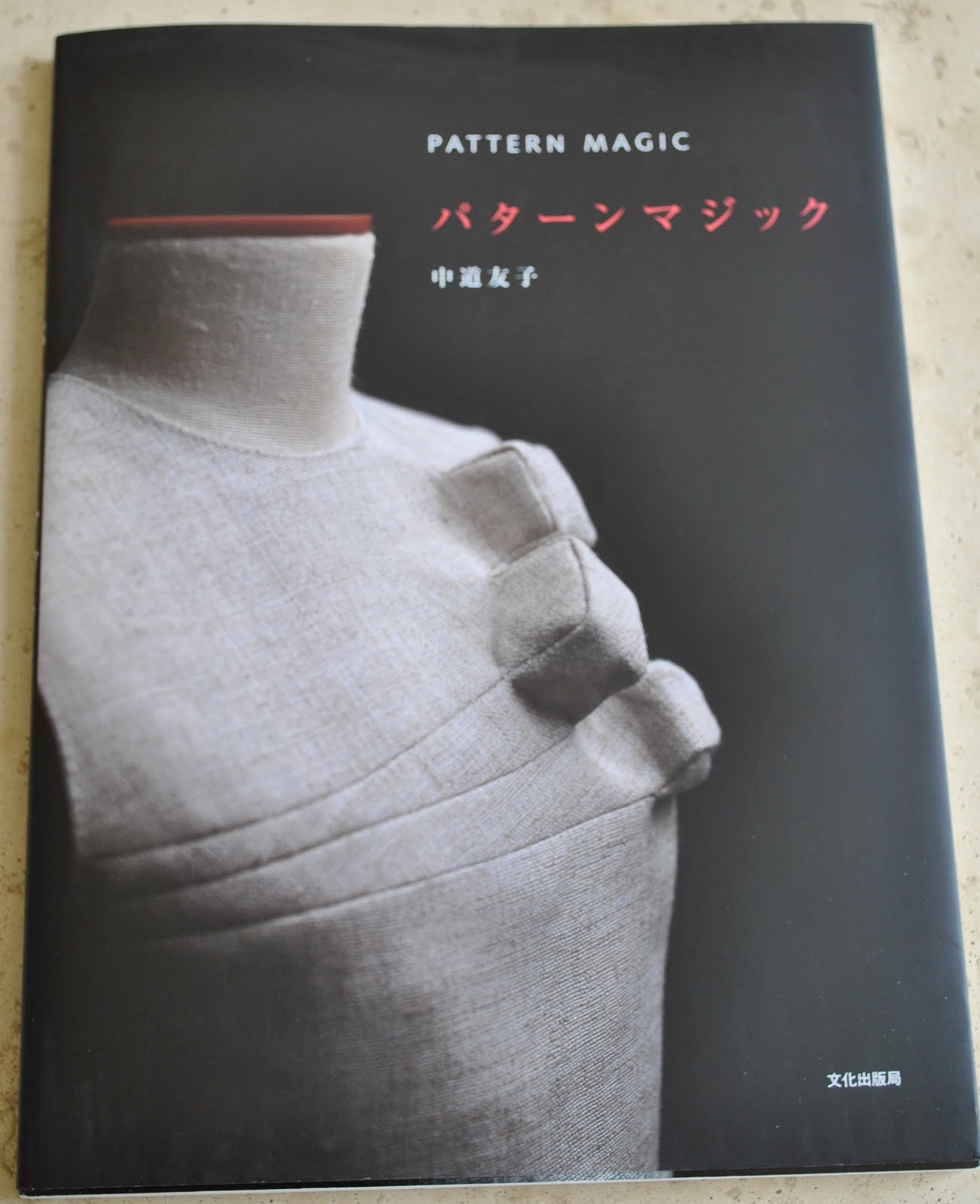
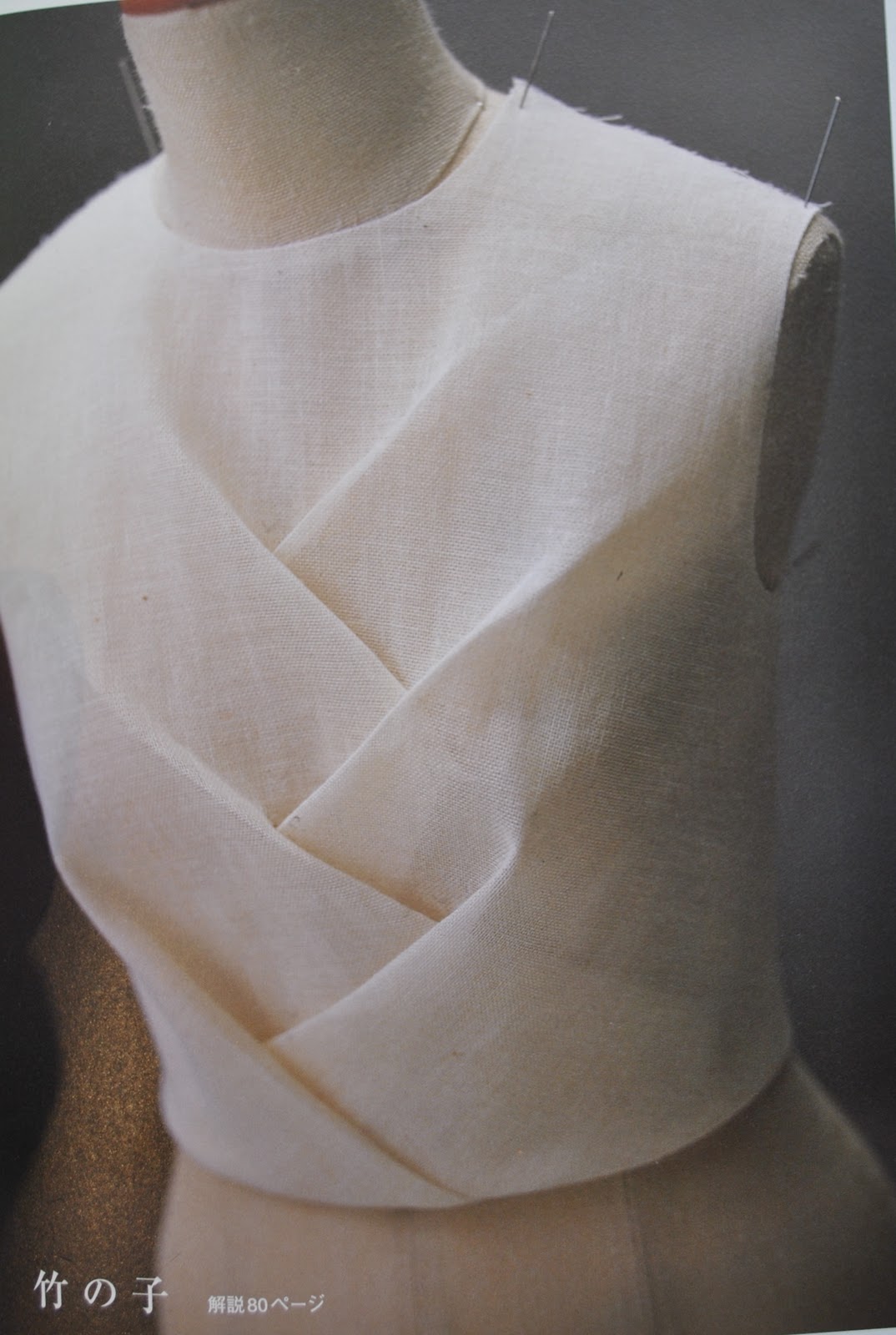
…that is the name of this top; my latest foray into Pattern Magic, by Tomoko Nakamichi.
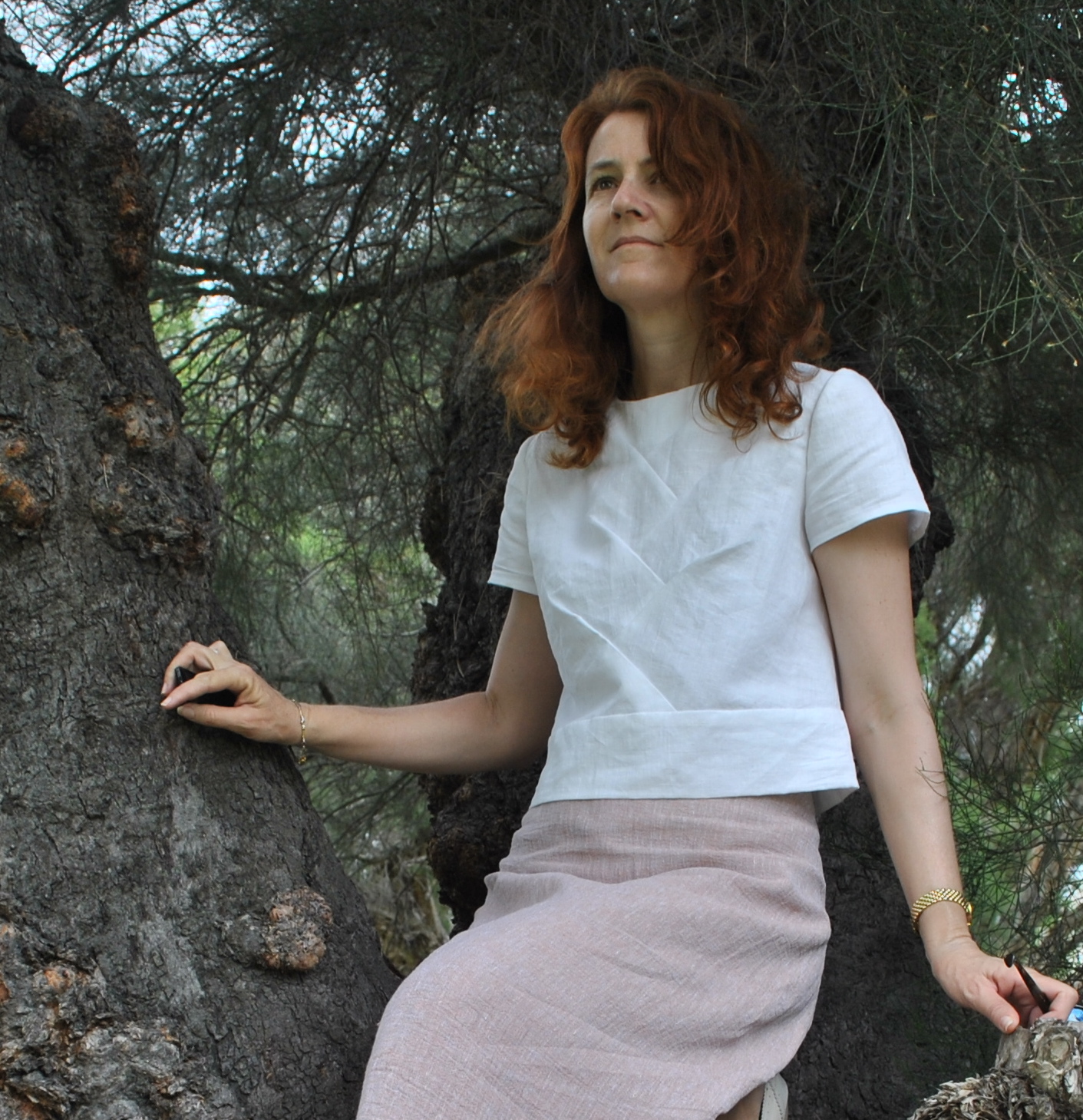
The folds/tucks on the front of the design are like the new shoots on bamboo, spraying out to each side in graduated offset arcs.
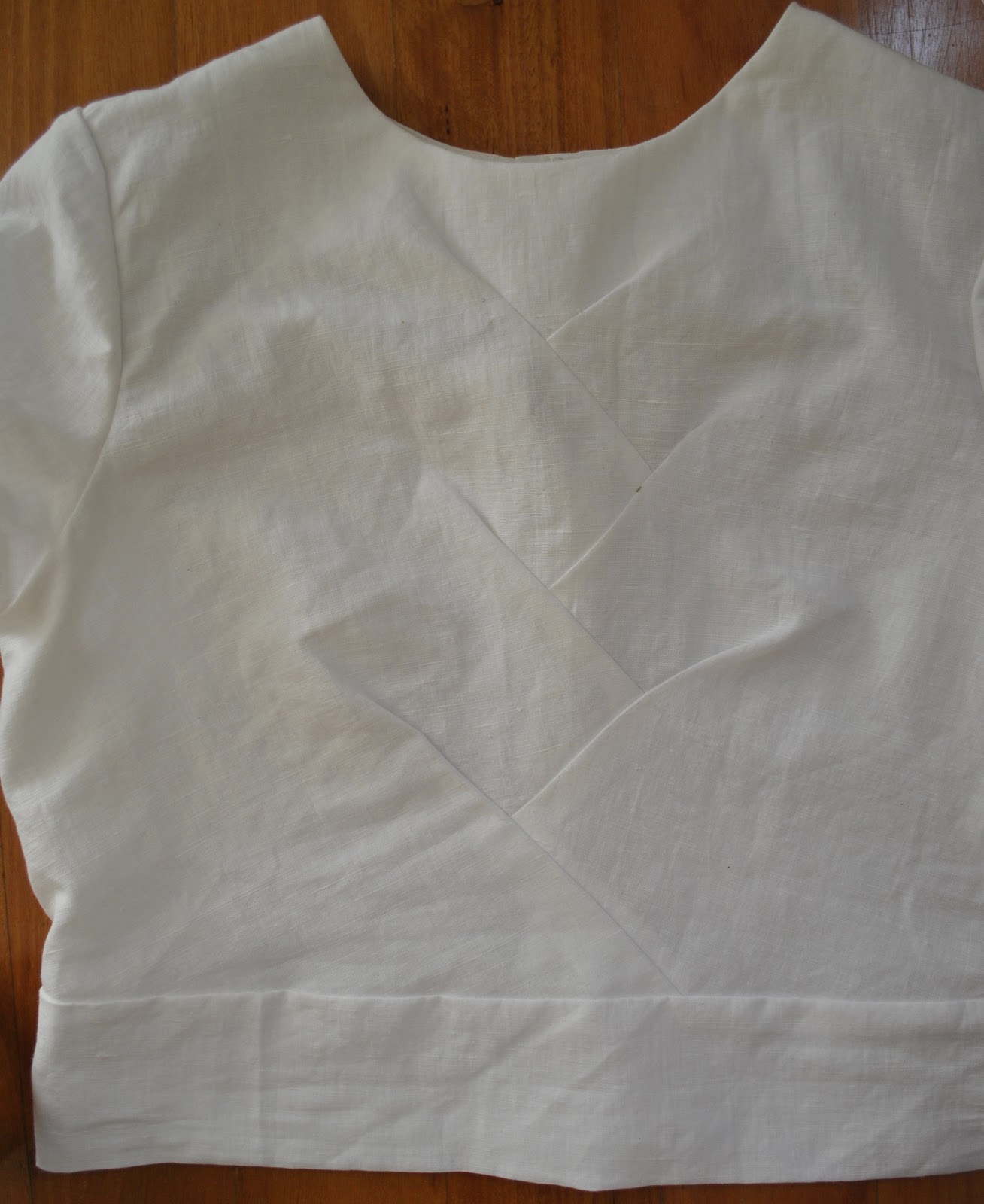
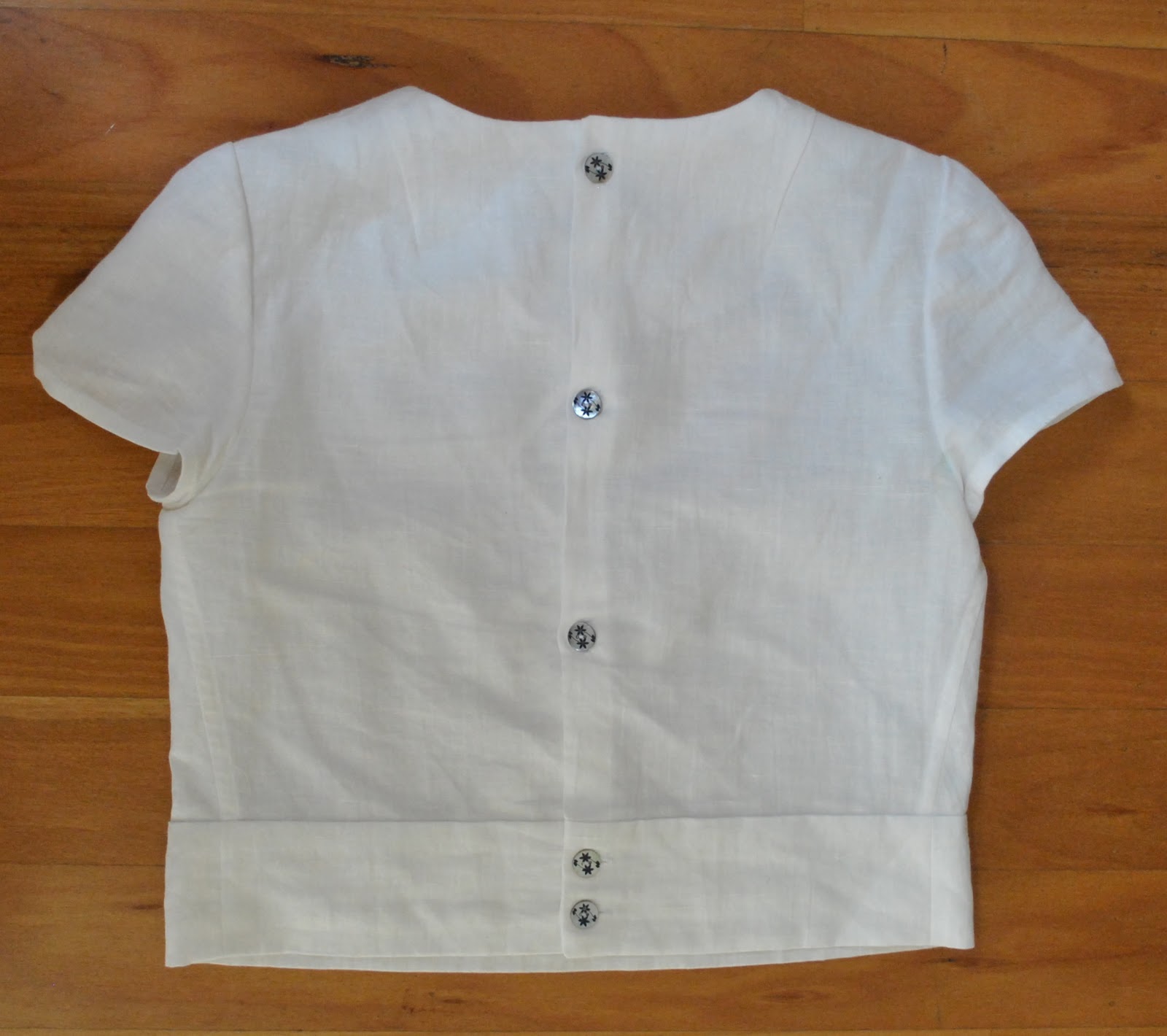
I chose to make this design into a little top with short cap sleeves, a buttoned up back, and a wide loose waist band; necessarily a shortish top because of the constraints of my fabric.  Yup, I was using up scraps, as per usual!  From this linen shirt I made for Craig… (I know it may seem like most of my clothes are made from scraps, and I have to admit a fair whack of them are!  The thing is, I loathe waste with a passion…  and have been known to hoard scraps for years…. hehe.  Some day I will have to round up in one post the projects I have made, purely from scraps)  
Anyhoo;
I like this style of blouse, it brings back strong memories to me of the blouses we used to wear in our winter school uniform, over our plaid wool skirts.  Except our school blouses had a collar and were buttoned up at the front, naturally.  This top is quite loose, so I can leave all the buttons done up except the top one and slip it over my head.  This means only the top button needs doing up behind my neck, which is good, since I discovered that doing up that middle button requires a solid command of yoga…  And about that; I’m thinking it is about time some new moves were introduced into the Yoga repertoire along with saluting the sun, and the down dog and all that; may I suggest “lady doing up her back buttons/zip”?  I think that would be a pretty useful new move, yes?
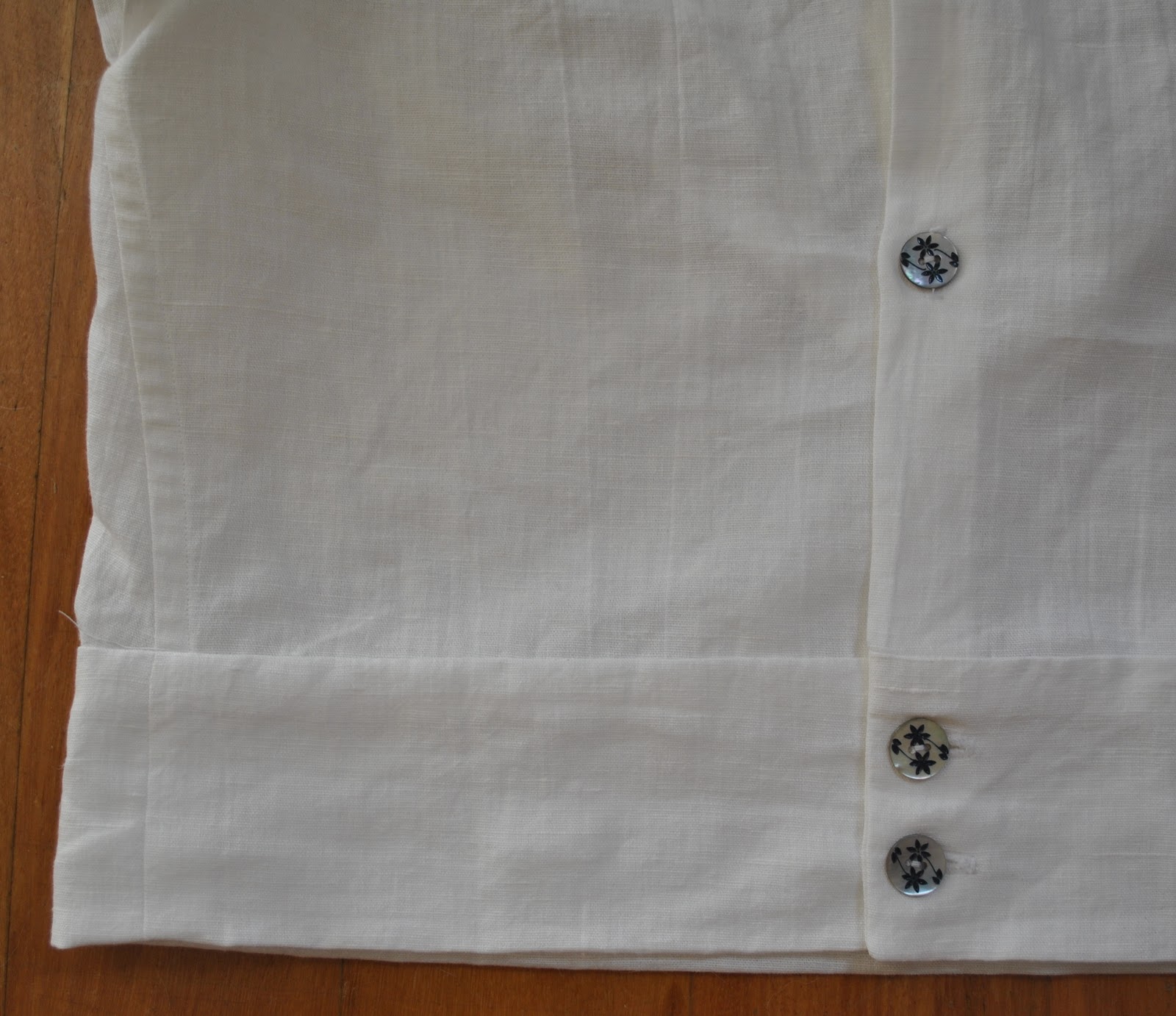
The  neckline is faced, the side and shoulder seams are flat-felled, and the armhole seam allowances are finished with HongKong seaming.  The buttons are the little shell buttons that I bought in Tokyo, whilst out shopping with Yoshimi, Novita and my daughter Cassie, so I felt it was quite right that I use Japanese buttons for a Japanese designed garment.  Fitting, yes?  The buttonholes on the button band are vertically aligned, whilst the buttonholes on the waist band are horizontally aligned, this is a little feature that I recalled from my old school blouses, and wanted to have it in this blouse too.
The darts/folds were a little tricky.  In the photograph in the book, it doesn’t look as if there is any stitching yet, but just folded in place.  When I first stitched mine in place they didn’t look nearly as nice… so I unpicked and re-stitched and pressed them one by one, slightly inside their seam allowance,  so the stitching is hidden just inside the fold, about 3mm.  This seemed to do the trick, and looks more like the picture in the book.

Details:
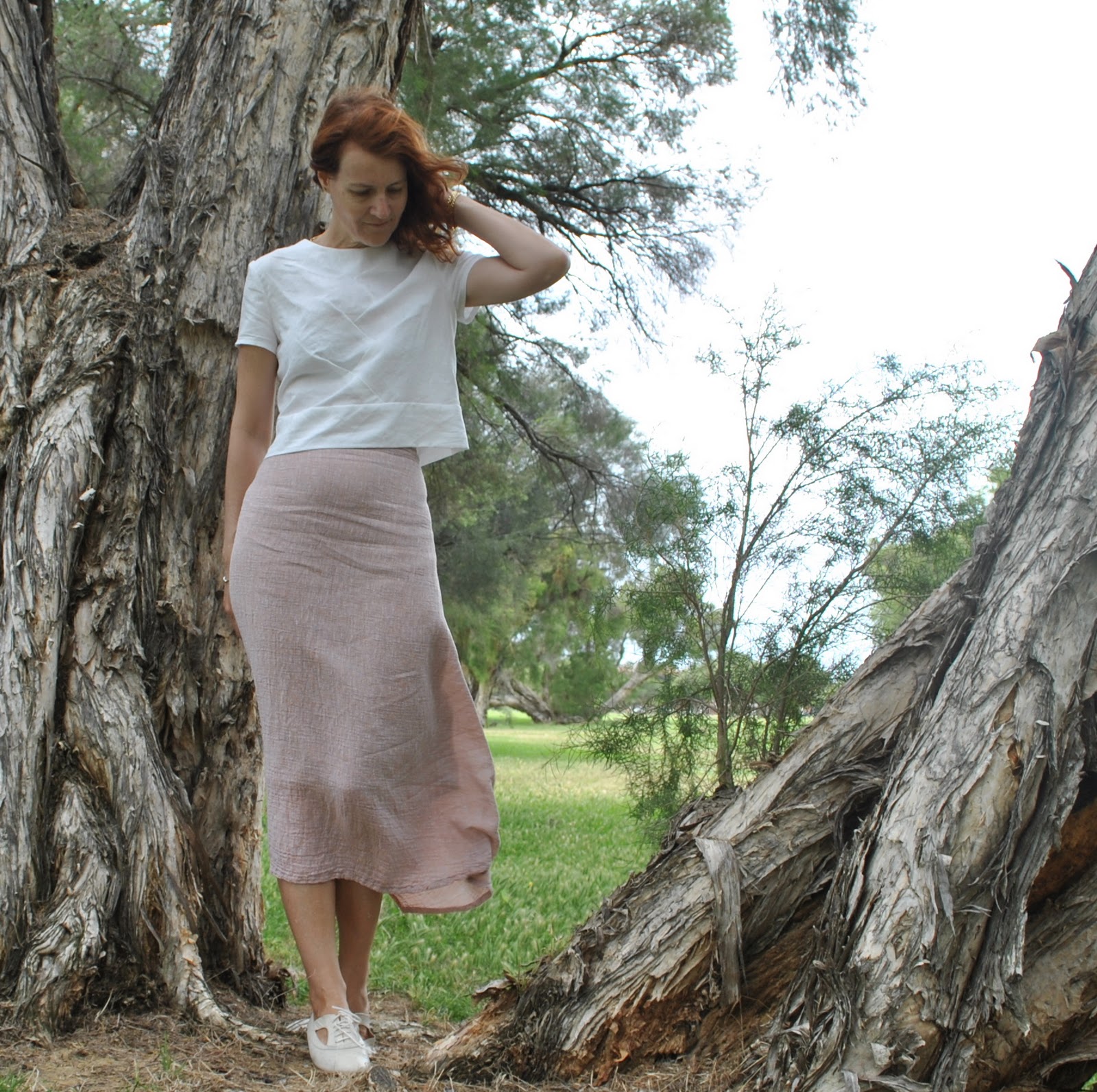
Top; based on the “bamboo shoot” design in Pattern Magic, by Tomoko Nakamichi, finished blouse of my own design, white linen
Skirt; skirt “m” from Unique Clothes Any Way You Like, by Natsuno Hiraiwa, pink linen/cotton, details here
Shoes; Bronx, from Zomp shoes

So, with regard to the Pattern Magic series, I have some further comments it might be worth noting here for others wishing to make use of these excellent and very innovative design books… I have made up a few designs from all three books now and in my opinion the third book has by far the easiest projects; being both very easy to fit (they’re all stretch-knit, and really, who can’t fudge fit a stretch?) and also that they are all in the form of complete and finished garments.
A lot of the designs in the first book are in the form of design concepts, a fabric manipulation “idea” that one can take and build on; apply to some nebulous garment, the exact form of which is entirely up to the individual.  I like this flexibility, but it does take extra thought and some dressmaking experience to self-draft those little extras that are needed to get yourself a finished and wearable item.  For example, take the sleeves on my new top here… the Pattern Magic book does have dimensions for a sleeve sloper to get you started.  I discovered in my very early experiments in this book that the sleeve needed tonnes of adjusting to make it work for me.  Eventually abandoned the given sloper and made my own (the one I used here) based on the measurements of my bodice sloper and partly on sleeves in patterns I already had.  I found that the one in the book had a very shallow sleeve cap, that was like a straitjacket on my ginormously hefty arms … Actually I’m joking there.  I’m not hefty by Australian standards at all, but when I am working with Japanese patterns I often feel a bit, er, well huge… by comparison.  Let me put it this way, when I am tracing the designs from Unique Clothes Any Way You Like, by Natsuno Hiraiwa, I use the largest size, whereas in Vogue patterns I am a 10, and even then I always take in several centimetres off the waist.
Don’t get me wrong, this is not a complaint about the books!  I love these Japanese pattern books with a passion, they are completely without parallel in the pattern world and I just wish more of our “ordinary” patterns would take note and branch out a bit.  Get out of that rut.  Just thought I would say more about my experiences here in the hope it helps anyone else wishing to make something out of these excellent books.

pinterestmail

Old things…

… this will be the very last of my “old things” posts.  I promise.
I’ve done a mammoth sort-through of the photos and I think this is it!  (heaves a sigh of relief…)

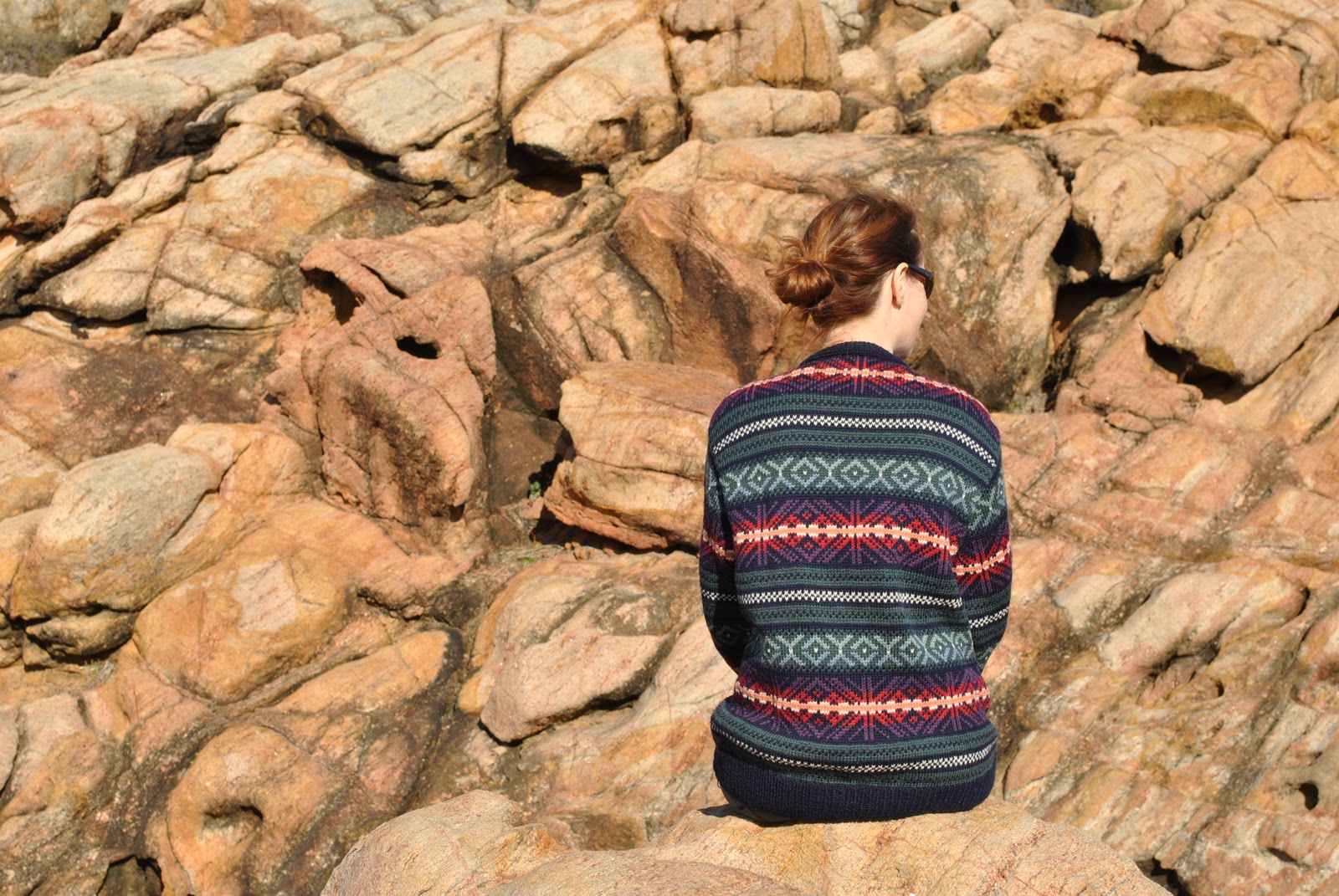
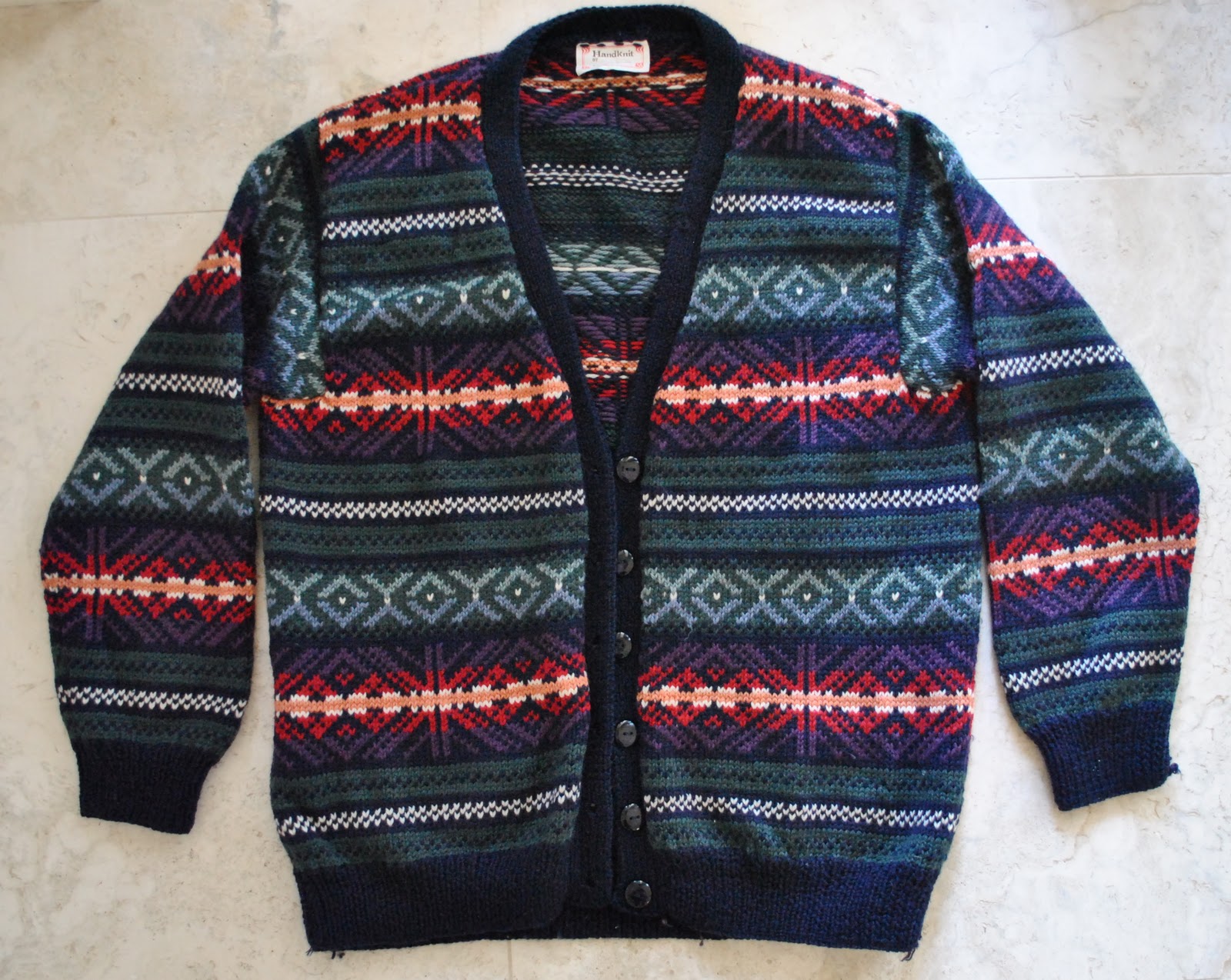
Firstly, since this is the only garment in this post still in our possession (apart from the Grim Reaper come burqa outfit, that is); a cardigan I knitted for Craig.  It is knitted in the fair isle method.  Above is a picture Craig took of me wearing his cardigan on a holiday last year (isn’t he sweet, giving his cold inadequately-dressed wife his nicely pre-warmed cardigan to wear, hmmm?  What a gentleman!)
And some close-ups of the cardigan I took today…
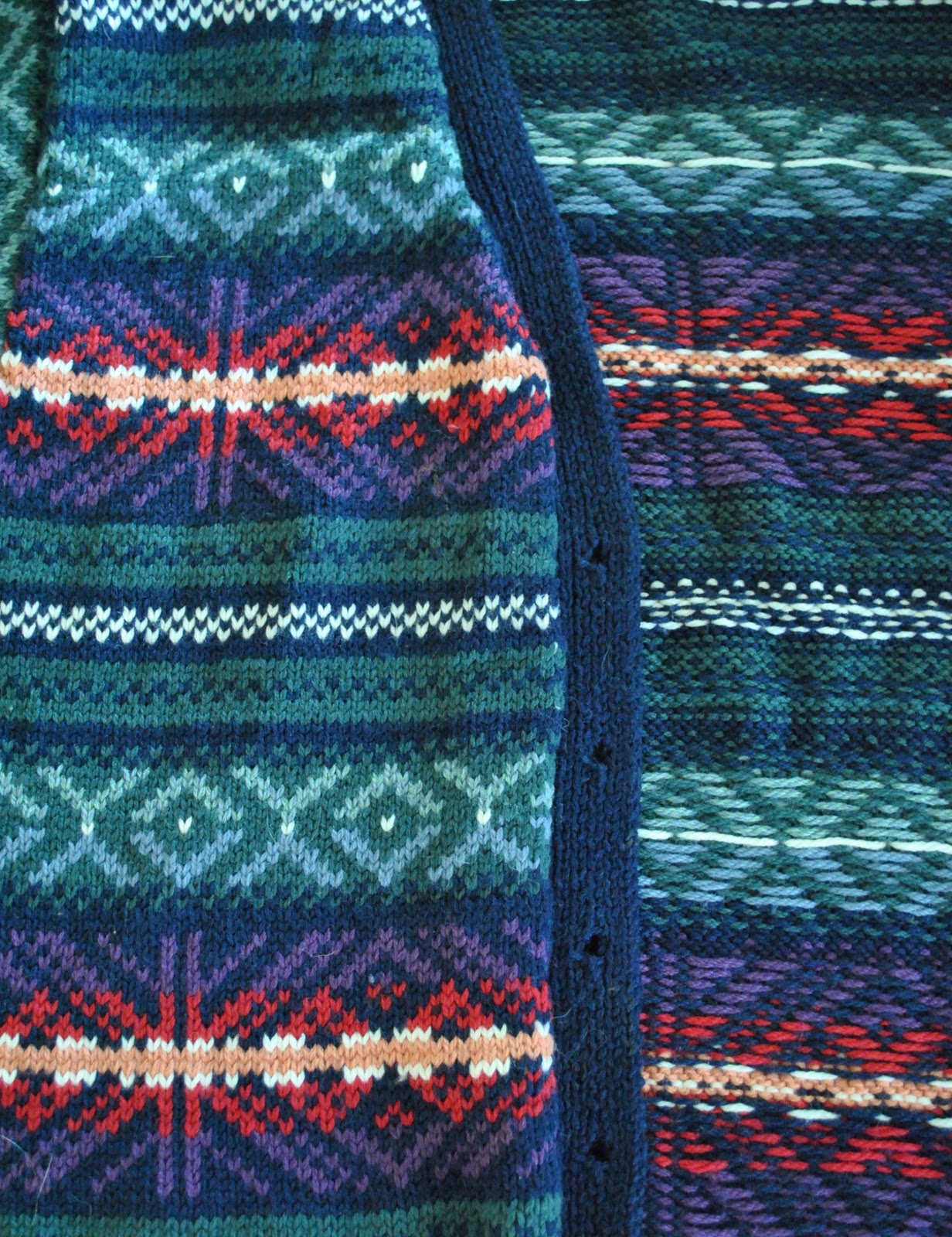
showing the right front, and at right the wrong side of the fair isle knitting… (as is correct, the yarn is carried over at the back with no weaving in, only if the distance is four stitches or less…)

Now, some costumes…
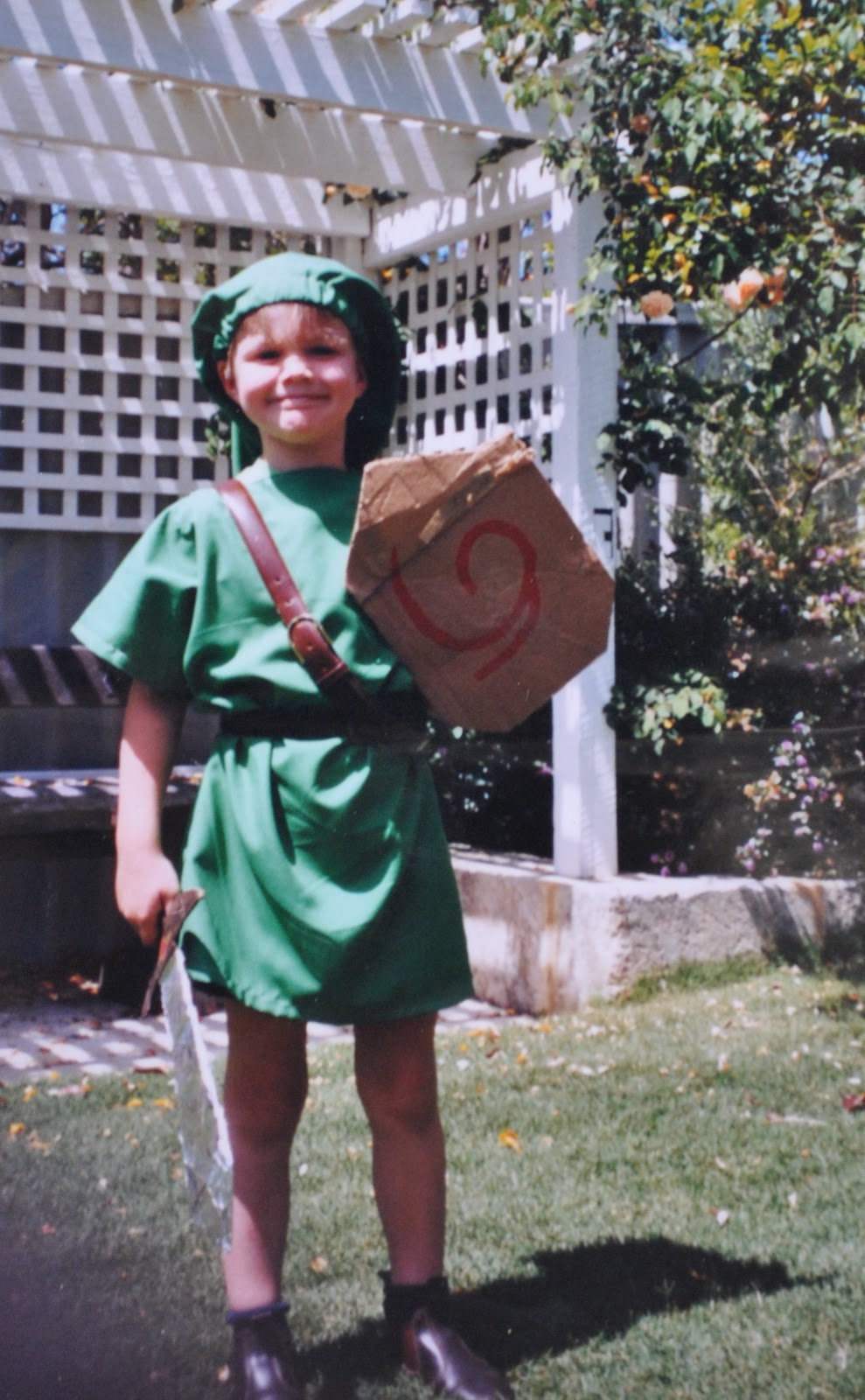
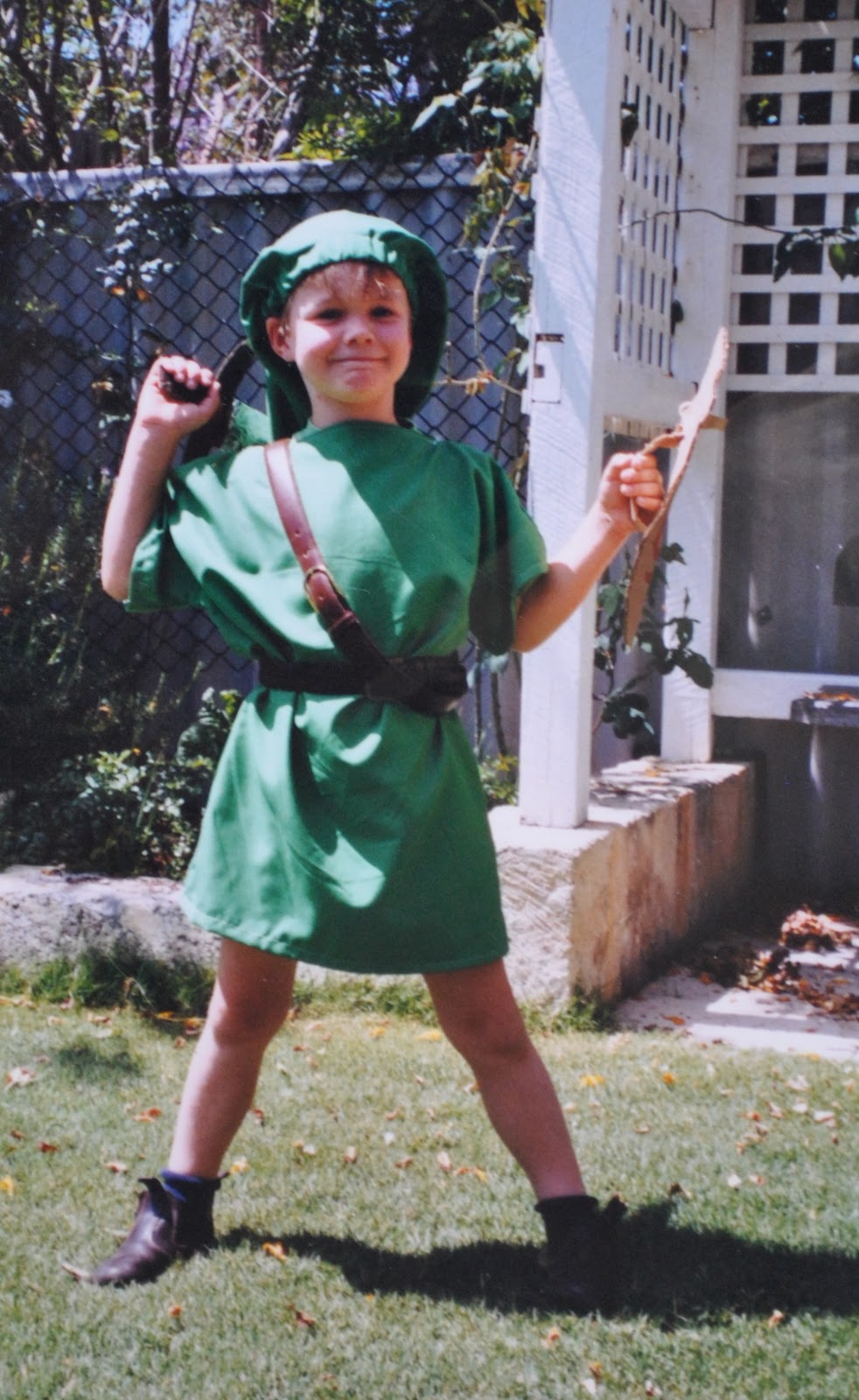
Sam as “Link”.  I thought he was so cute in this.  He loved this little outfit and often wore it just for everyday wear.  (if you would like to see what this cute little jigger looks like now, go here…)

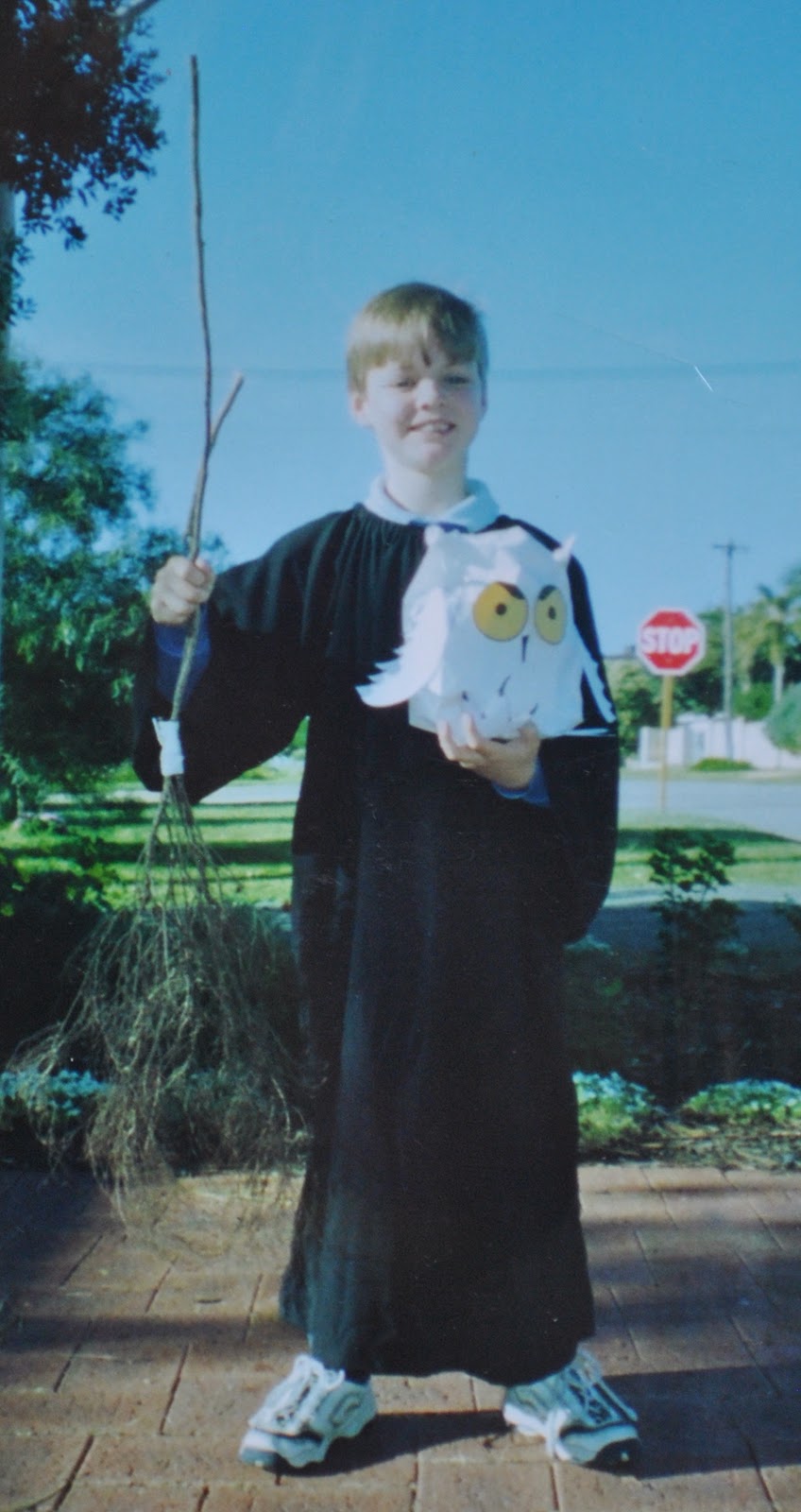
Sam, as… guess who?  Hehe, the famous Harry Potter, natch, compete with broomstick and Hedwig the owl.  
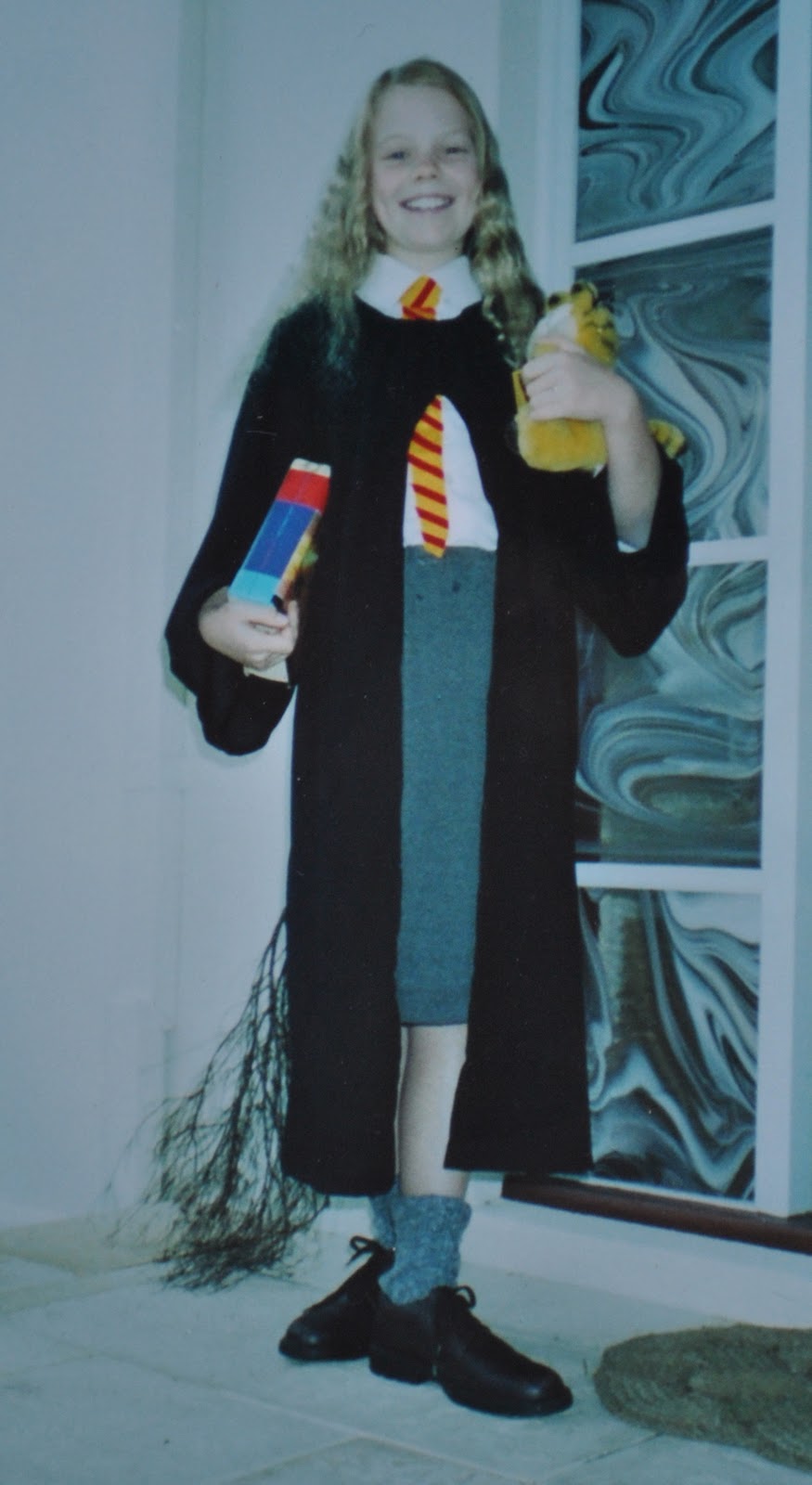
On that note, a black cloak is such a useful thing to have in the dress-up box.  It can be the basis for so many costumes.

Here is the same robe again, worn by Cassie as Hermione, complete with Garfield Crookshanks the cat… I threw together the skirt and tie as well, but they do not bear close inspection…!)

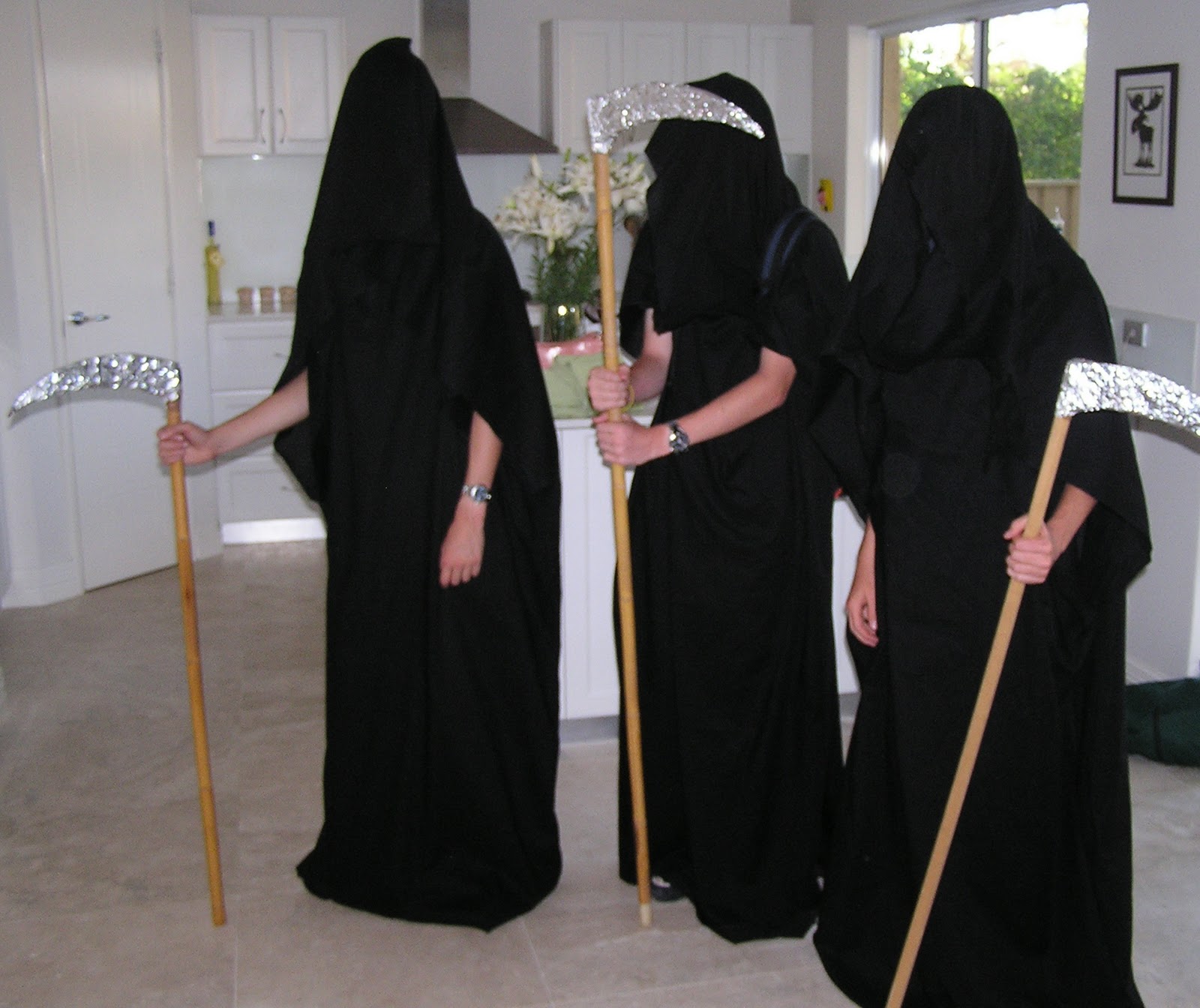
(I’ve shown this picture before… but here it is again just to illustrate the versatility of the plain black robe as a costume), Tim and two of his mates as Grim Reapers.  I made all three of their costumes.

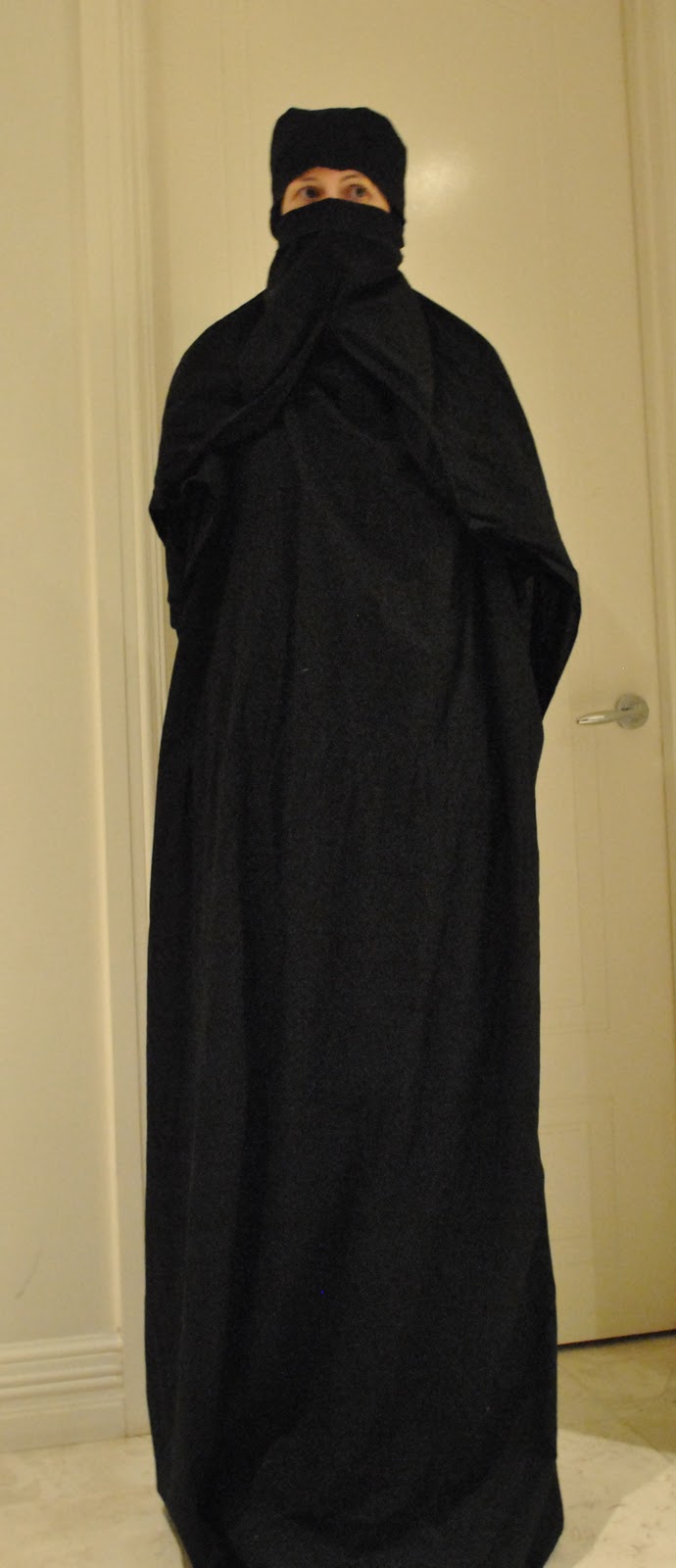
Tim’s same costume again, this time worn by me to an Arabian Nights party.  I didn’t want to hire an outfit and I didn’t want to make some bejewelled thing I would never wear again, and as every single female I have seen in the Arabian region is dressed something like this, so I was like, yeah this’ll do.  I naively assumed other girls would have the same idea…  As it turned out I was literally the only female dressed (I thought) anywhere near authentically!  Also the only one not heavily sequinned and baring plenty of belly-flesh…  I confess the costume was abandoned when we decided to start dancing!  Don’t worry I had a skirt and top on underneath…

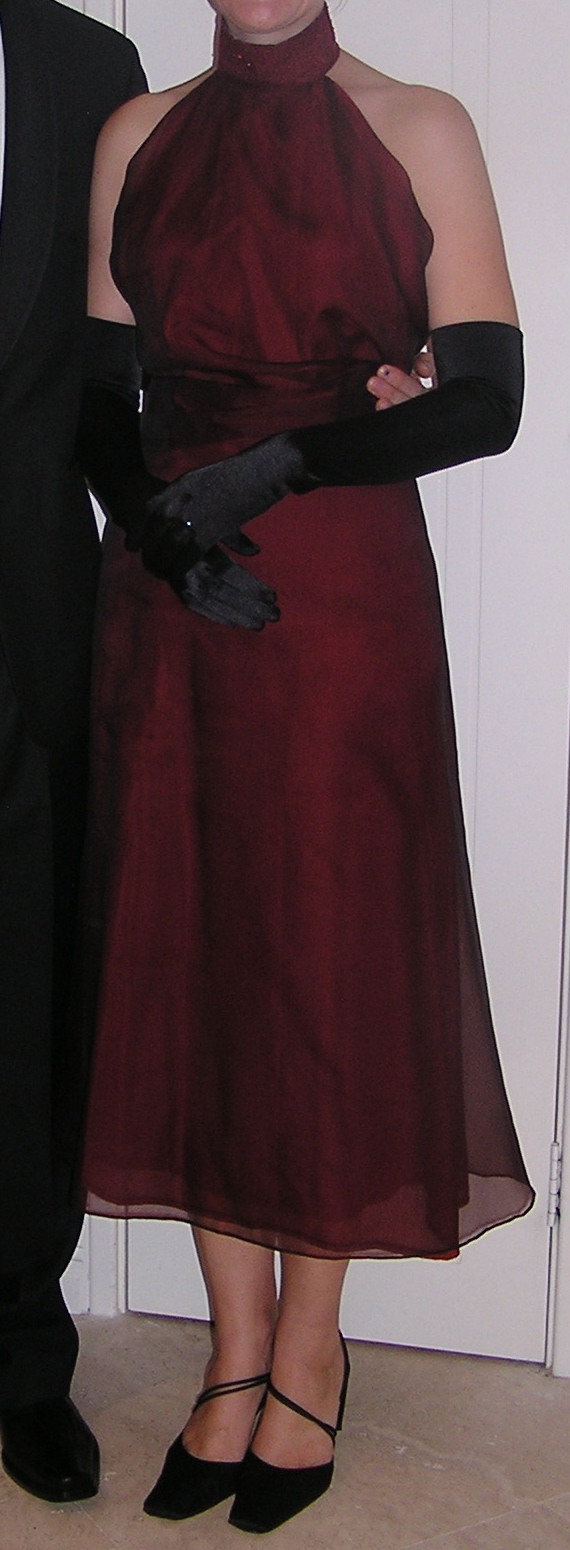
So, away from costumes now, and a ball-gown of my own design that I made for balls in years gone by (Sorry for the headless shot but my face and my hair look awful in this picture…!)  It is silk organza, overlaying silk and silk jersey layers, three layers in all.  It had a beaded and embroidered neckpiece, both beaded and embroidered by me, that is…

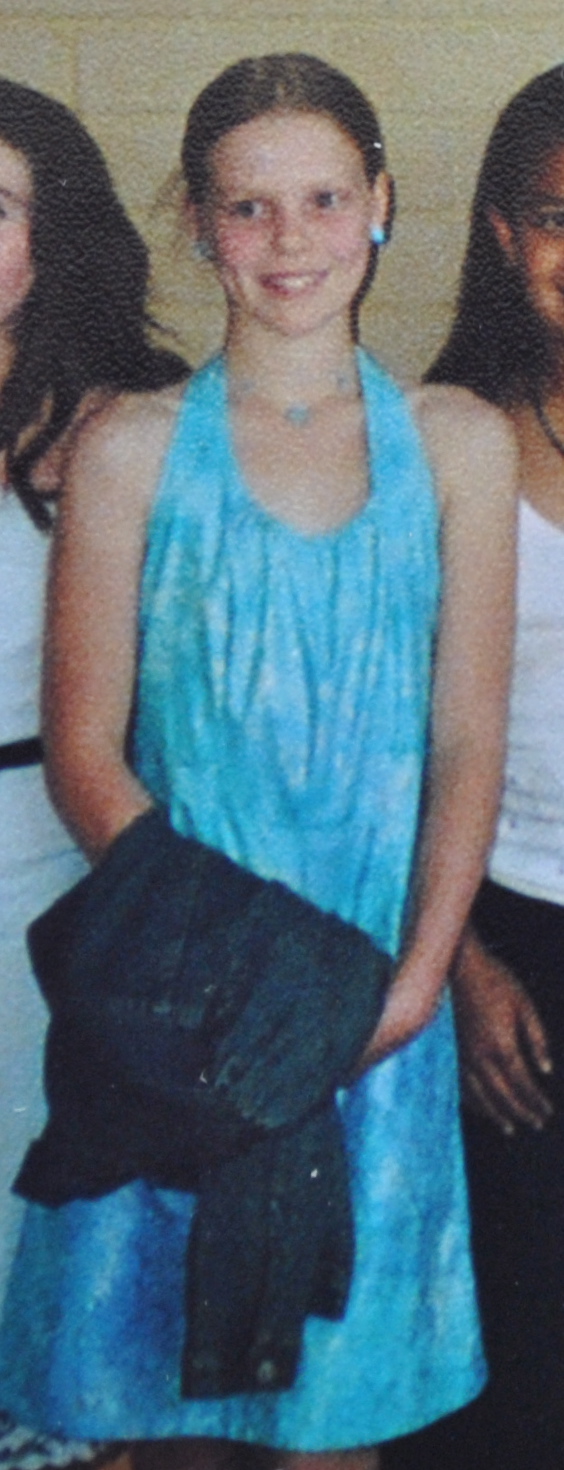
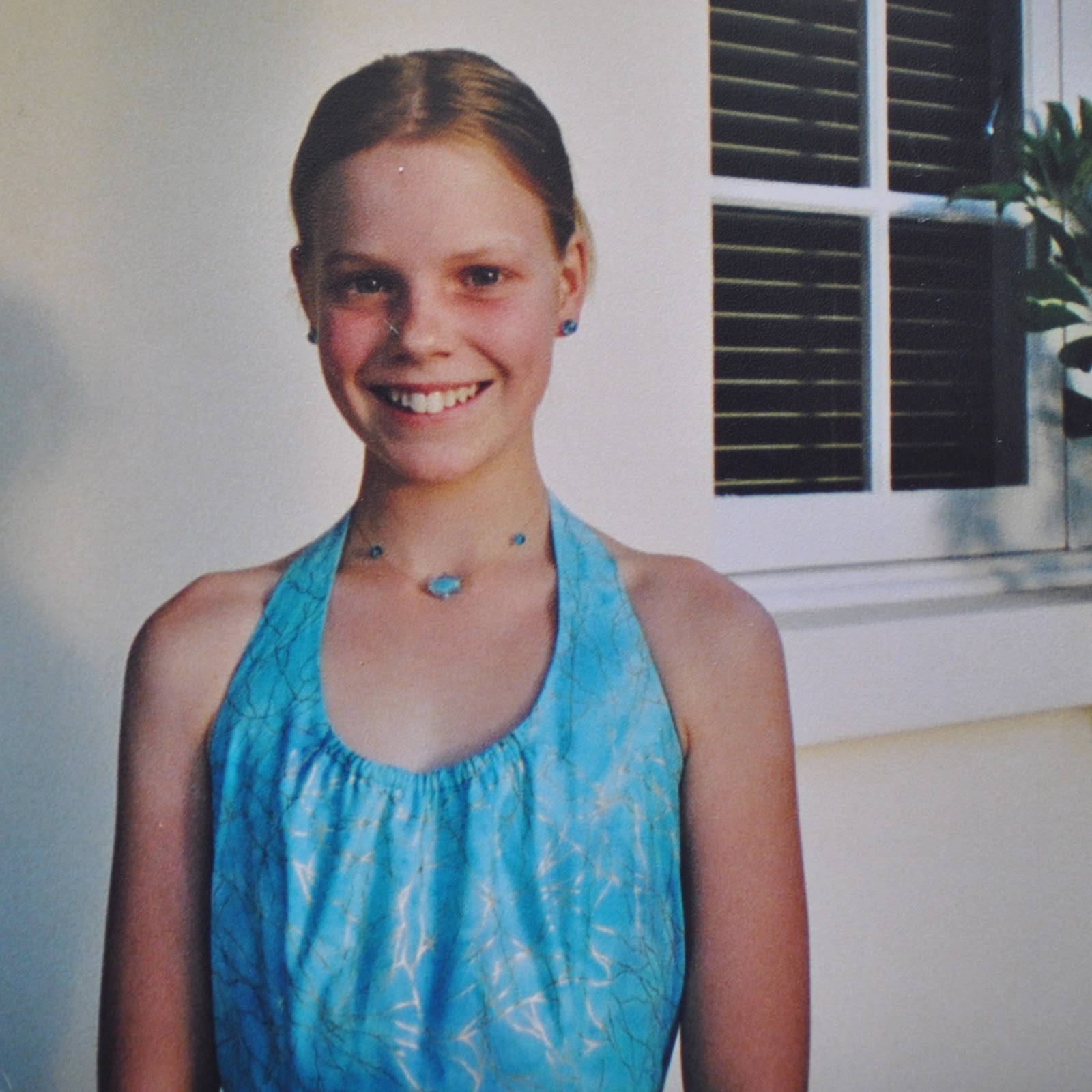
A dress I made for Cassie for her graduation dance at the end of primary school.  It was a simple turquoise cotton halter neck dress, the fabric had metallic gold lines randomly strewn across.  I also made her jewellery, of turquoise glass fish beads and strands of gold wire.

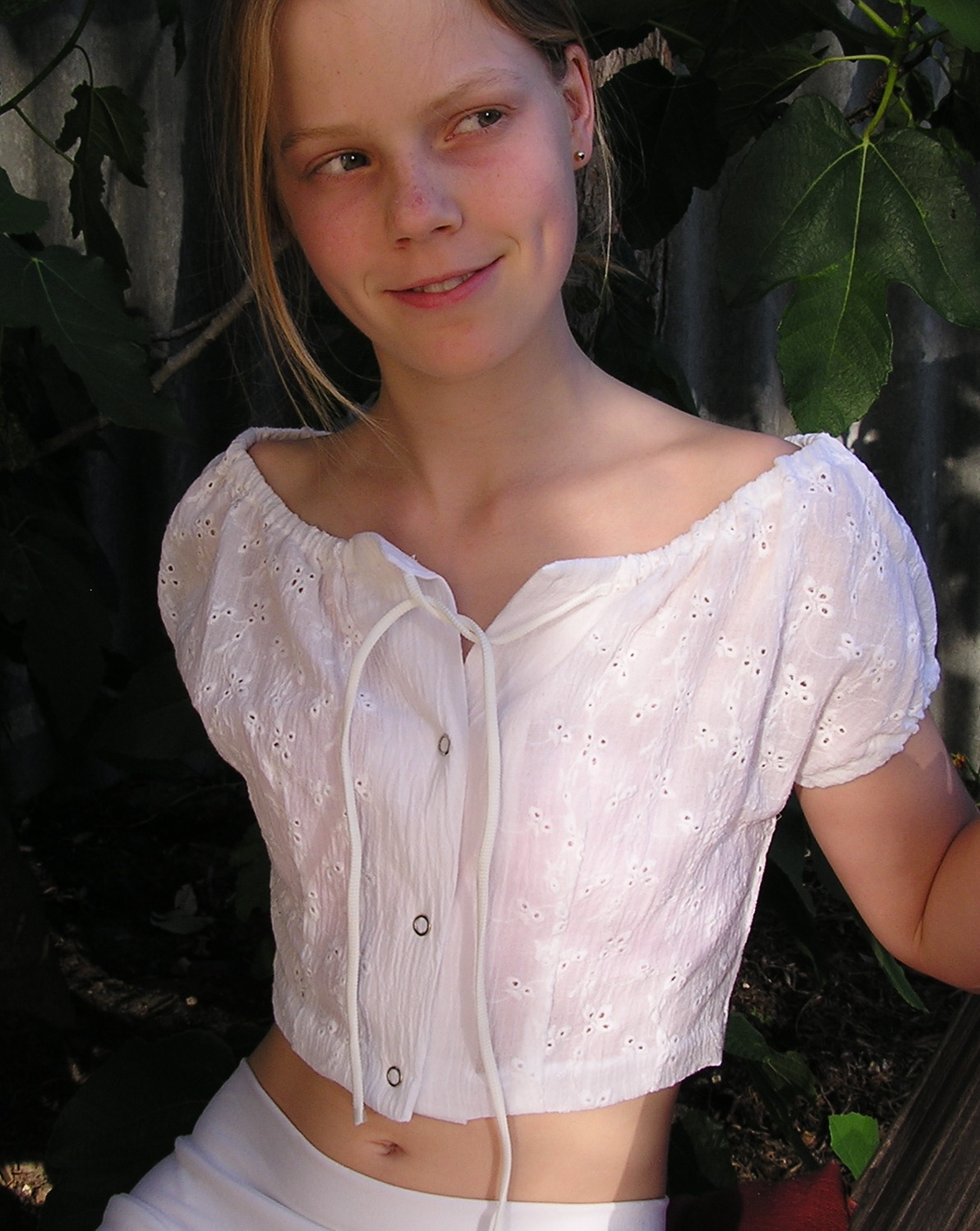
Some rather lovely (if I say so myself) wide-legged white pants that she wore almost constantly for a summer, and a little white broderie anglaise blouse.  Both my own design.

Going way back, and this shirt is from a Vogue designer pattern that I believe my mother still has my copy…  I know I also made and am wearing here the small-waisted and very flared skirt from the same pattern too…

I made both the skirt and top and also my necklace here.  The top was an experiment, I flipped the shoulders out in a twist to get this cowl-like effect.  It used to get a lot of compliments, believe it or not! (my friends are very kind)  We are sitting on one of our sofas in its first slipcover, made by me too…  (now looks like this)

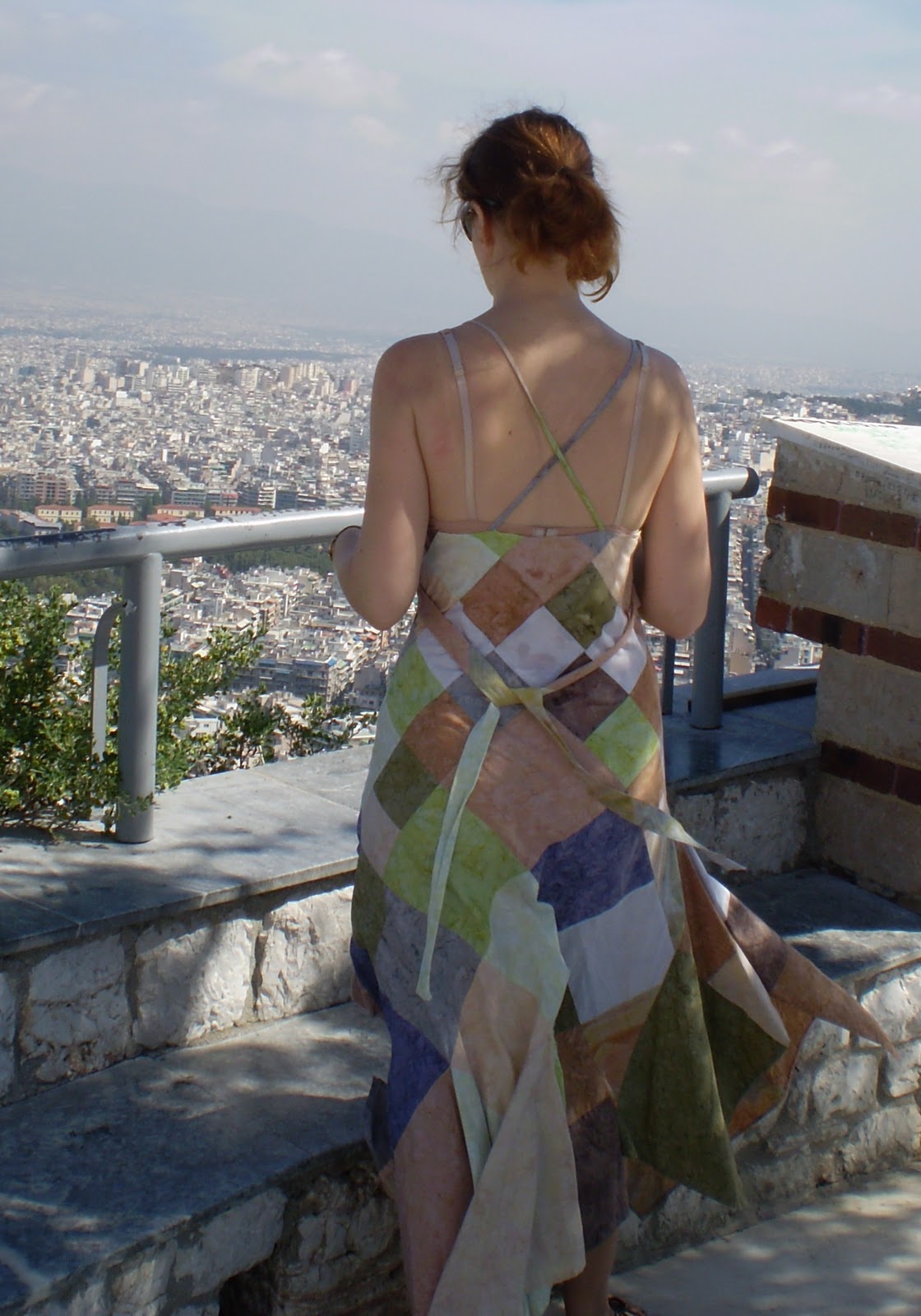
Some more dresses.  I really regret now I never got any good pictures of these two.  The white and red one was rather nice; it was a dress, but looked like a matching skirt and camisole when I was wearing it, as it had layers in several graduated lengths.  My own design.  The patchwork dress, also my own design, took lots of planning; I bought the fabrics separately and cut and pieced them together, then made the dress.  It has smaller squares at the top, graduating to larger squares around the midriff, and then down to the largest squares at the hemline.  It is all on the bias, with a handkerchief hem, and I loved it!

A drop waisted, handkerchief hemmed dress of white dotted swiss voile, pictured against a famous backdrop.  I still have this Vogue pattern too, actually…

And that should be all folks!
From now on, I will only be showing newly made stuff here….

pinterestmail

Kelly-green cardigan

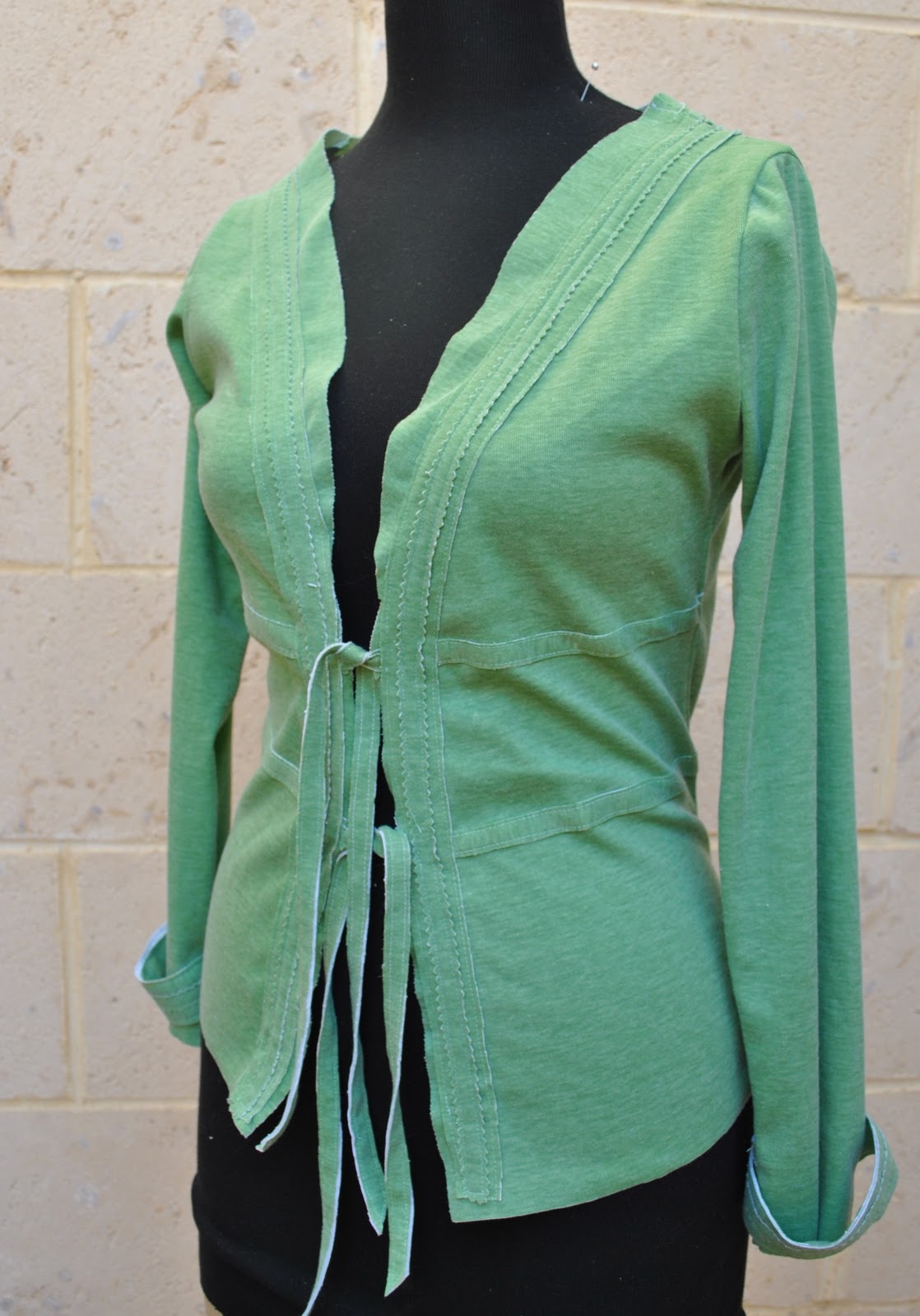
Remember how I mentioned fashioning a little cardi out of the leftovers from the ponytail top?  Well, here ’tis!
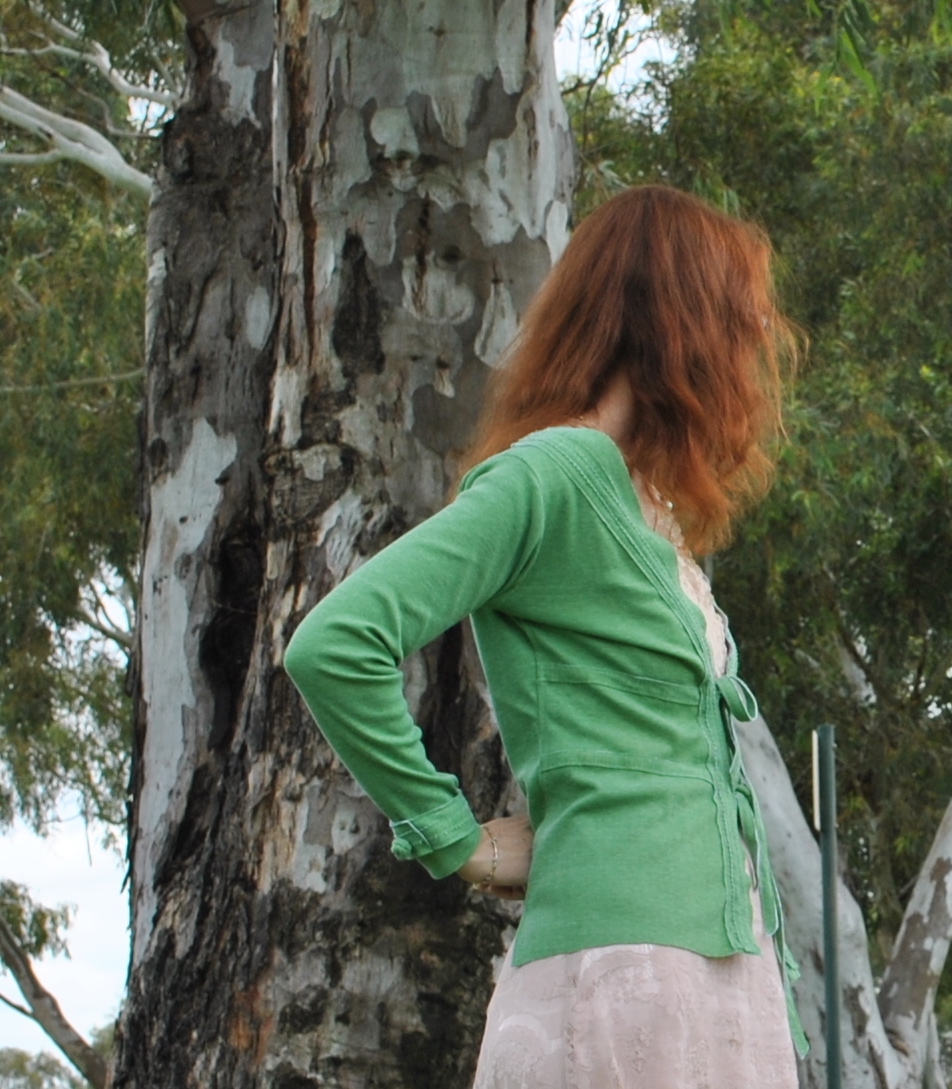
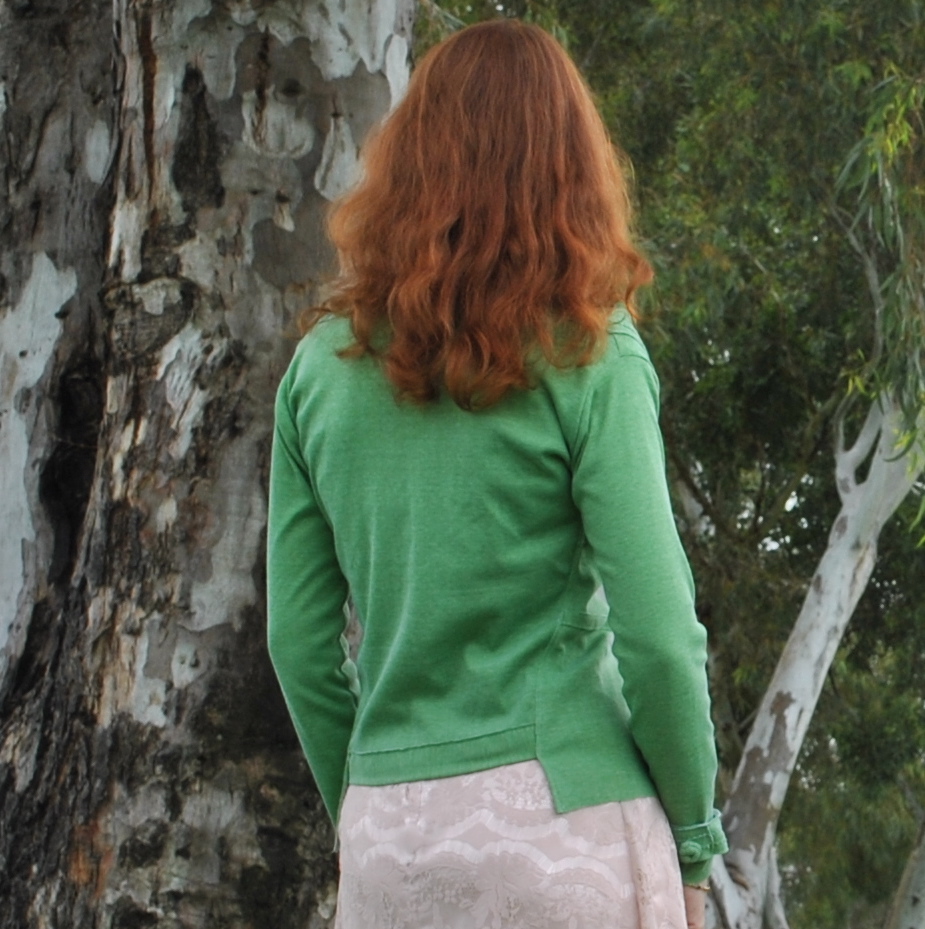
If I say so myself this was a minor miracle in cutting out; why? Well I originally had bought this Kelly green jersey to make a St Patrick’s Day thingy which was actually cut out but not made up.  It struck me early on in the piece that the finished garment would be tres hideous and could never ever been worn without inviting well-deserved mockery, so it was abandoned before any actual sewing was done.   However, the perfectly-good-for-something-if-only-I could-work-out-what-it-was fabric was too good; a great colour (as long as it was separated from the St Patrick’s Day concept)  and there was too much of it to just ruthlessly toss out.  Luckily the pieces I had cut out were big enough to get the Pattern Magic ponytail top, and there were still some reasonably good sized pieces and scraps left after that, so I played with them.  This is the result of my “play”; at my kind of “Play-Station”, if you will, hehe.  The back of the cardigan is quite short and the two fronts are quite skinny and so give a rather sex-ay decolletage, but y’know what? I like that.  I feel like the unusual shape is happily avant-garde and cool.

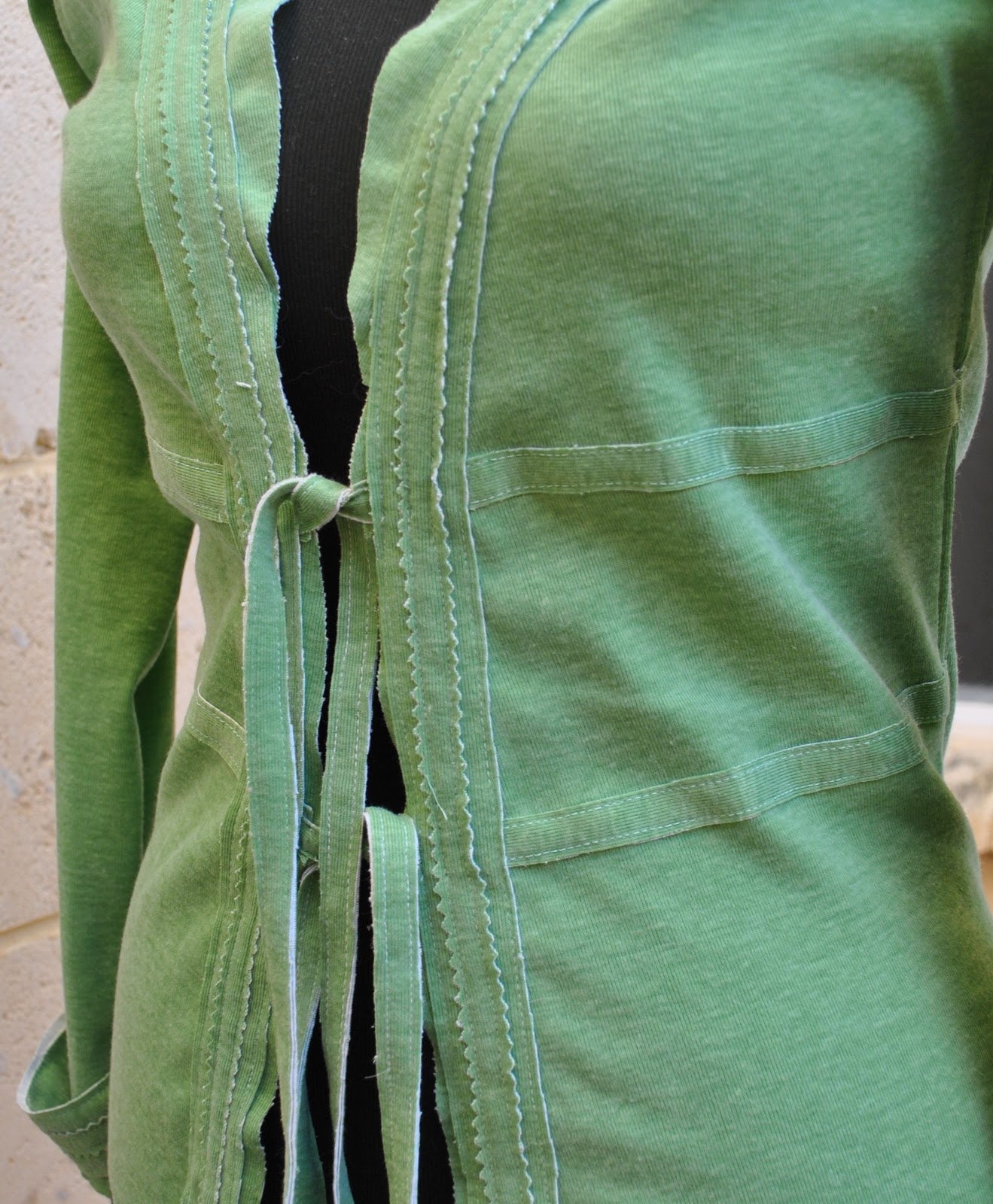
Something that may not be immediately apparent on first sight, but which amused me while I was making the cardi is this: the whole cardigan is made of just one fabric, and thread, and that is all.  I used pieces of the same fabric for all the trims, and the buttons and closures are all made of the self-fabric also.  Interesting little factoid, yes?
The closure is with long strips of self-fabric that were laid horizontally and topstitched down on the front of the cardi… as they go off the front edge these are faced with the same fabric (for stability and to lessen stretching through use) to make ribbon ties at the front.  The front opening edges of the cardi were decoratively finished with two separate long strips; the underneath one is a wider straight cut strip, and then with a pinked narrower strip sewn on top.  I’m really happy with the look of this, it is an interesting edge but still a unobtrusive as it is of the same fabric.  The pinked edges remind me of banksia leaves…

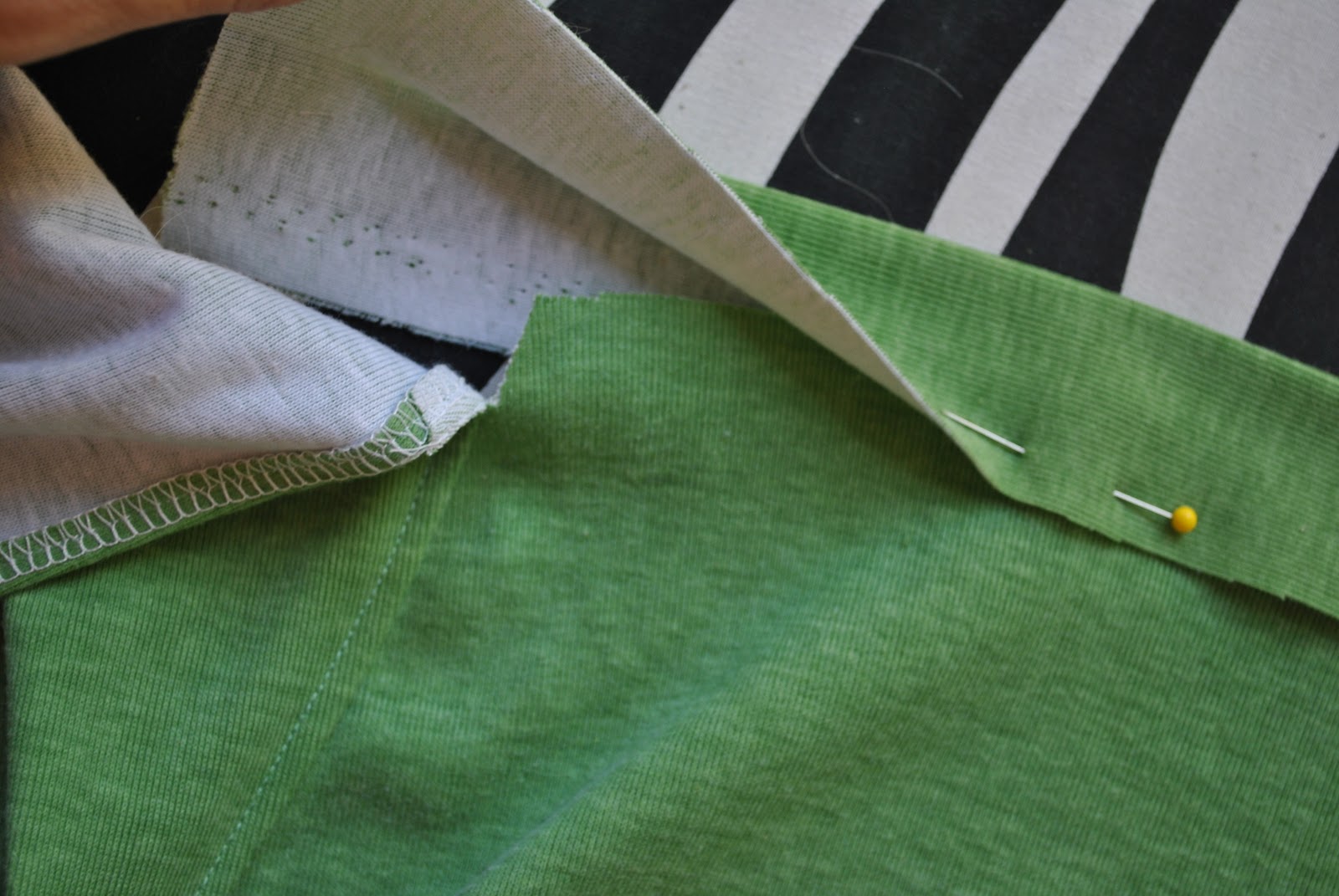
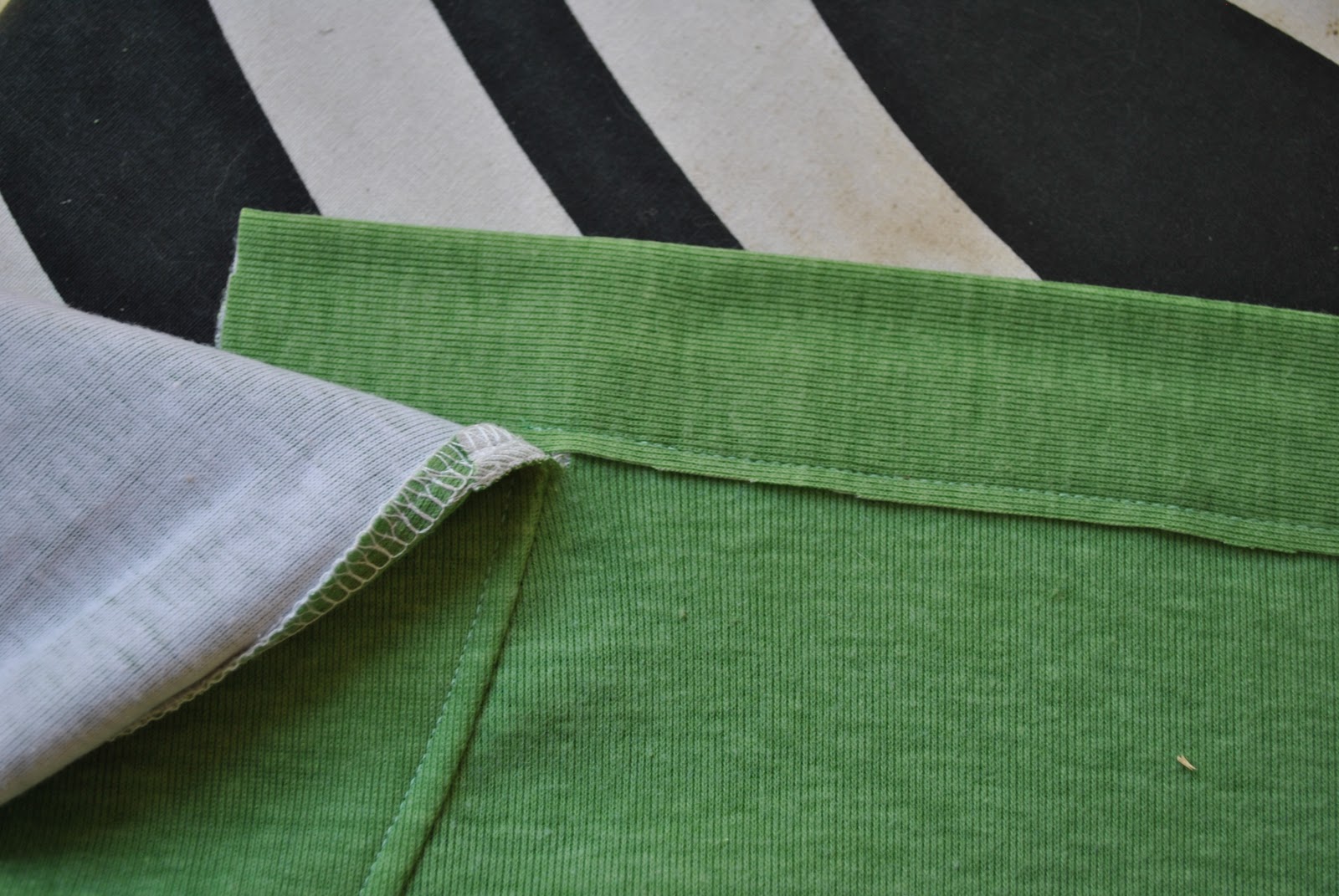
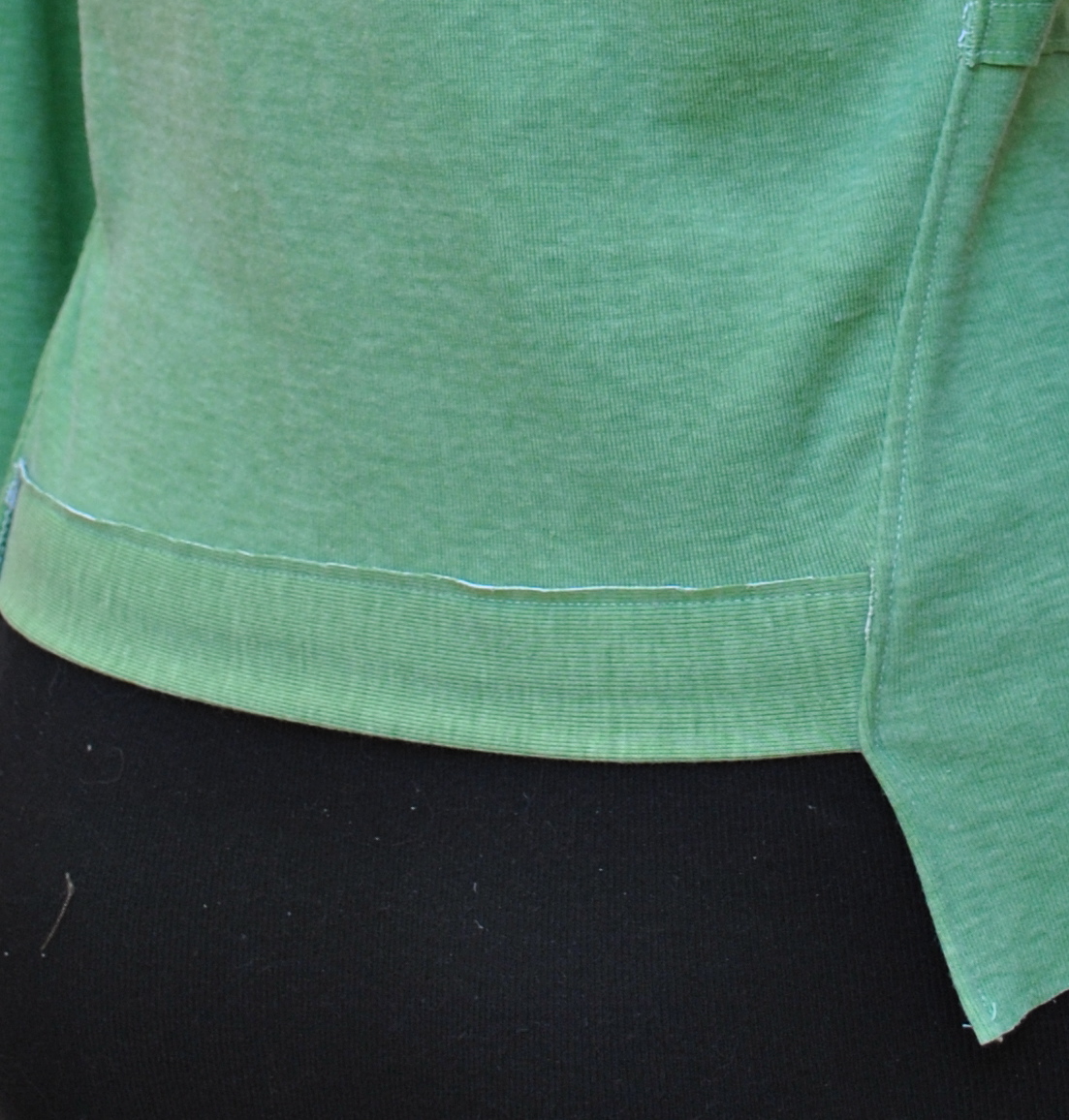
The front lower edges are left raw, and the back lower edge of the cardi was finished with a strip like this:  (I did this because the lower back edge is subject to stretching, and so this strip is cut on the grain to stabilise and strengthen this area)

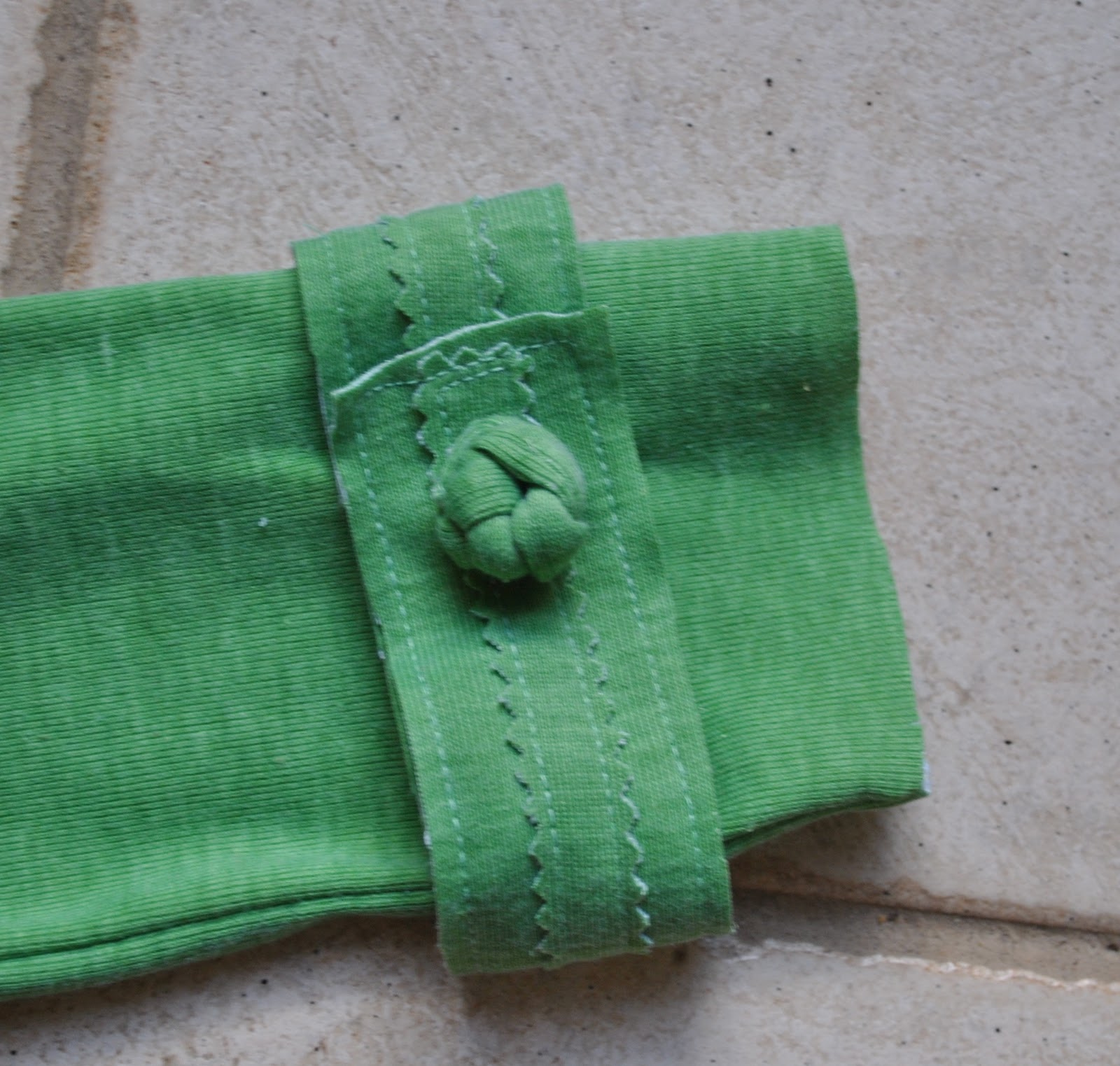
The sleeve tabs were made in the same way as the front opening edge trim and faced with self-fabric facing, and I made knot buttons of the same fabric to decorate…

While making the trims and buttons, I also amused myself by comparing what I was doing to Chanel’s jackets, which famously are often edged with trims made of the self fabric in various incarnations.  So my own secret joke is to think of this as a Chanel-inspired cardi.  Of course there is no quilted lining and the hemline is not weighted and therefore no real resemblance at all to a Chanel jacket…! but well, I did say “inspired” and one has to use one’s imagination here!   Another little fact about Chanel’s earlier work is this: at a time when such fabric was considered only suitable for men’s underwear, her clothing was made of knit jersey … another tenuous little link, no? 
But all the oddly shaped pieces and non-classic silhouette are very un Chanel!

Details:
Cardigan; my own design, Kelly-green cotton jersey
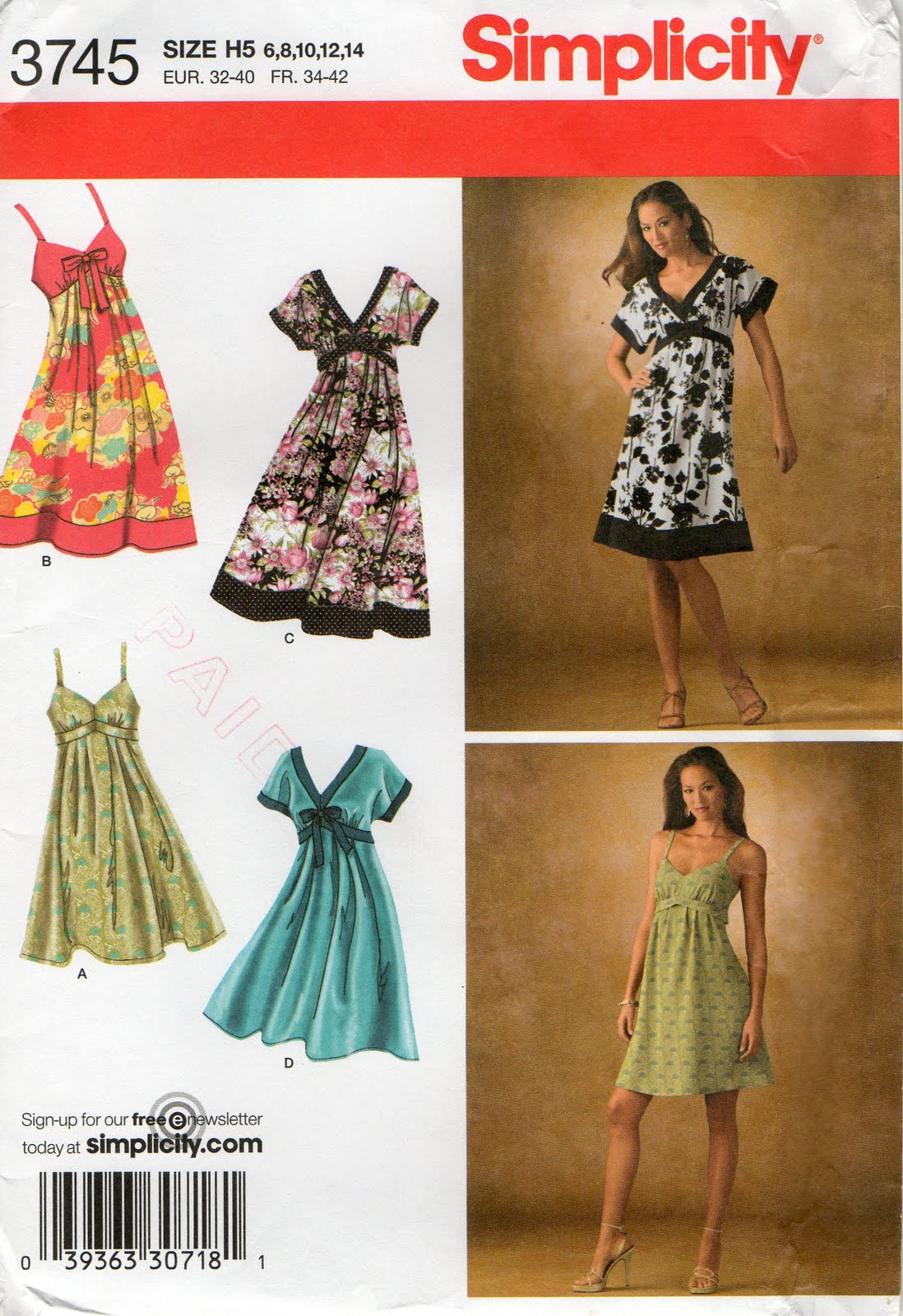
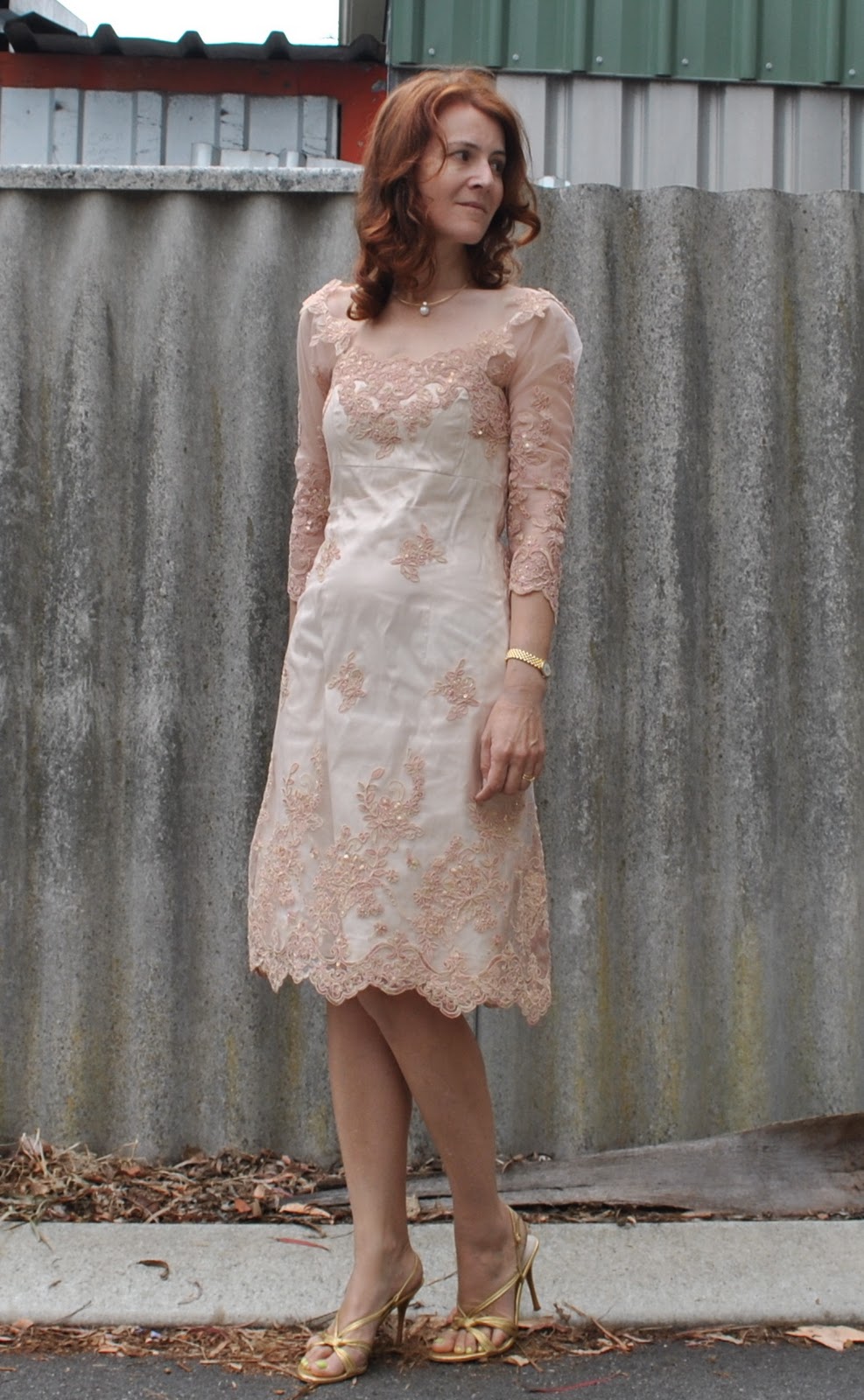
Dress; Simplicity 3745 modified, pink lace and beige border lace, details here (this is my other pink lace dress and not the one from yesterday’s post; embarrassing to admit I have two pink lace dresses but this is my more casual everyday one so that makes it alright, yes?)
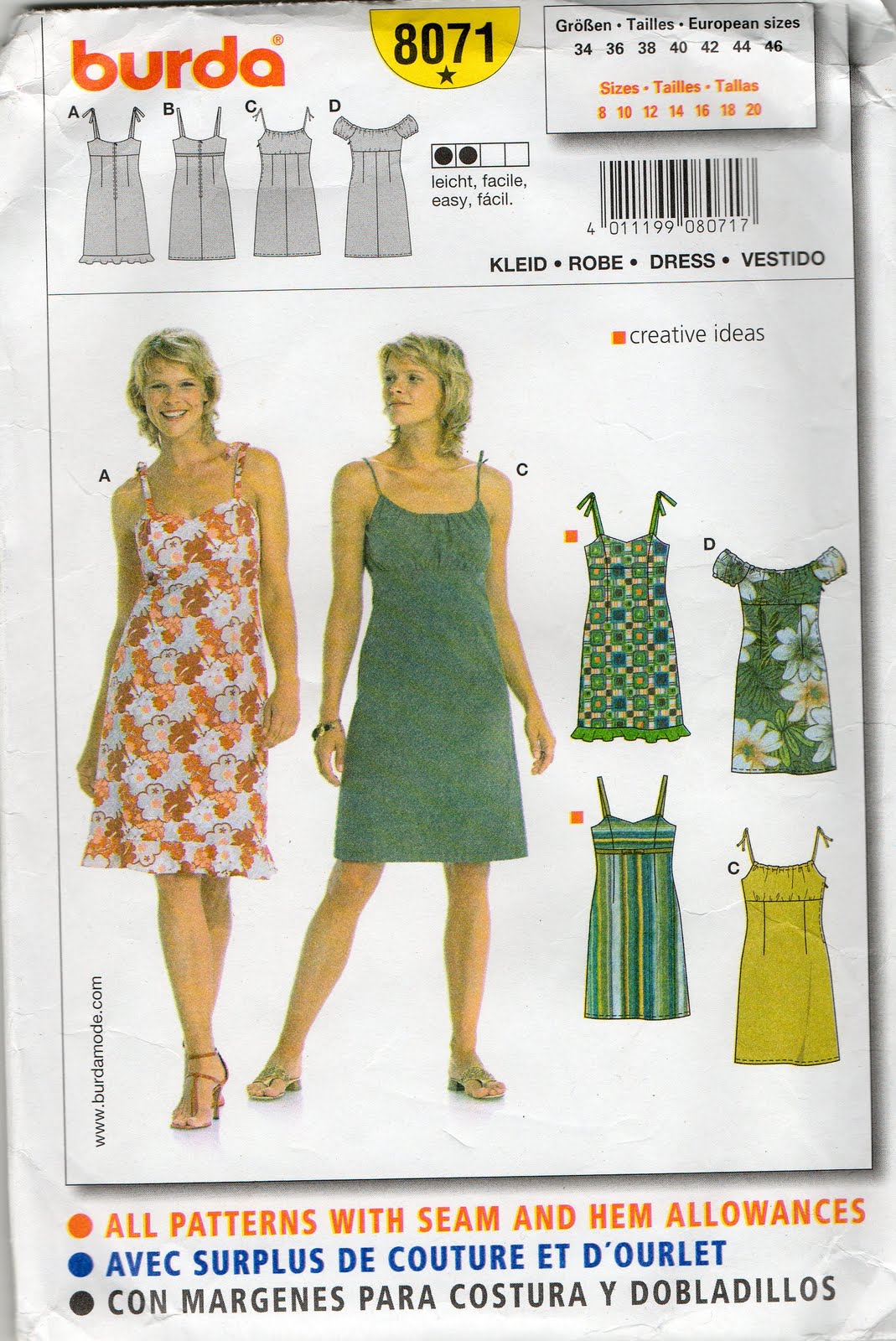
Petticoat; Burda 8071, pink silk satin, details here
Shoes; Bronx, from Zomp shoes

(it’s hard to know where to put your arms when you’re trying to show a side view, isn’t it?)
LATER EDIT: I got bored with the colour and dyed it brown… voila!
pinterestmail

In the pink; a cocktail dress

I came across this old thing when I was cleaning out my wardrobe…

hehehe
Well truthfully, it is a bit of an old thing, but obviously when I made it I put considerable time and effort into it (OK, I hope that that is obvious anyway šŸ˜€ ) … plus it is made of the very luxe-est fabrics that were jolly expensive!  I haven’t even worn it for a couple of years and can count on the fingers of one hand the functions we go to per year that are snazzy enough for it anyway!  Also feel like possibly it is a tad too… well… young? for me  :(( so sad to have to say that!  But I am happy to have moved on sartorially to a more sophisticated style now… but of course I am not tossing the dress out on to the Good Sammy’s pile!  Banish that thought!  Cassie might want to wear it one day.  Anyhoo since I haven’t put it up here on the blog yet then here it is having its turn.

(Later edit: I should have mentioned that this was made around 7-8 years ago now…)
Details:
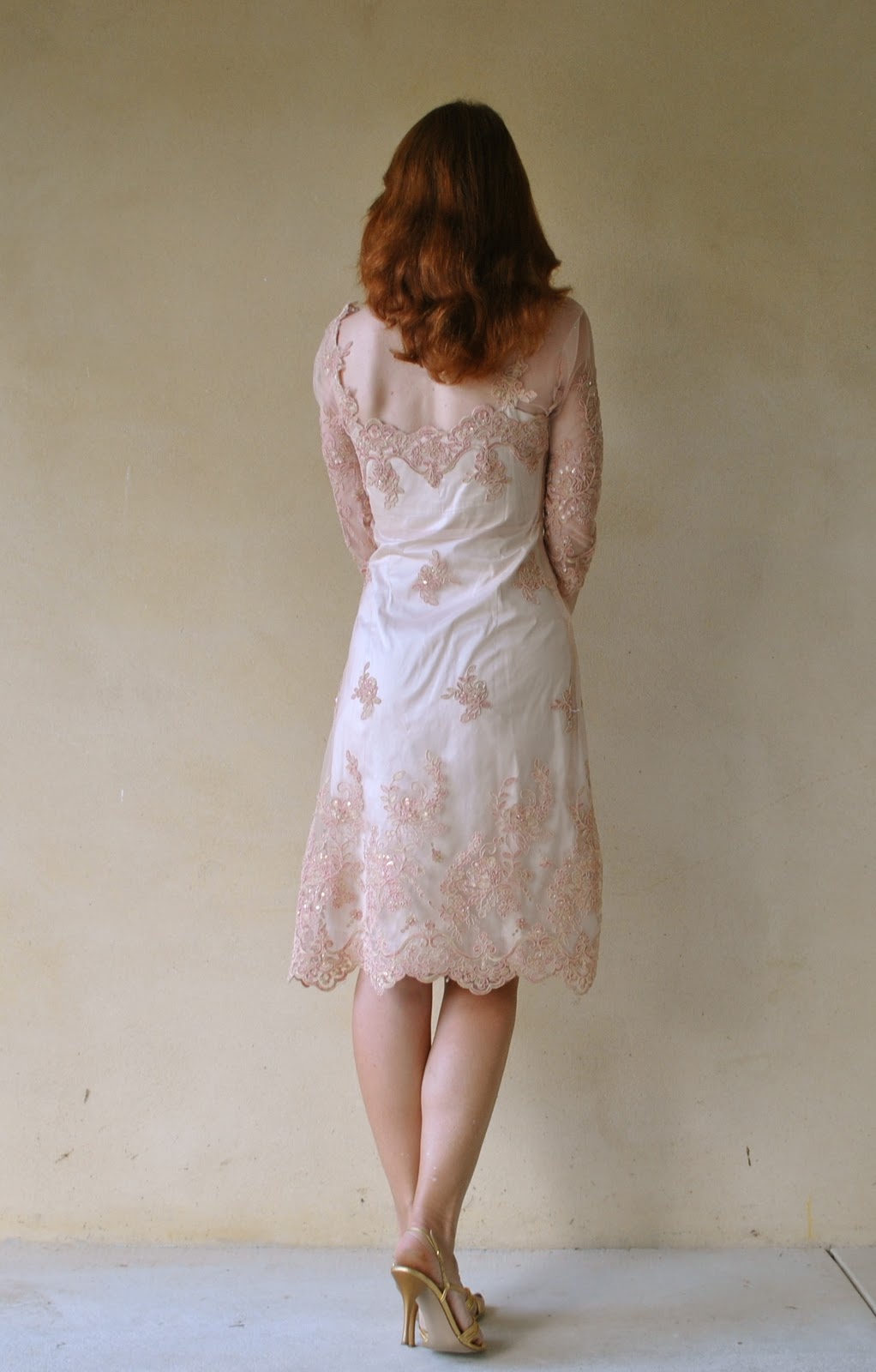
Dress; partly Burda 8071, overdress of my own design, silk taffeta with embroidered and sequinned net overlay, and lined
Sandals; Sachi, bought from some little boutique in Melbourne

So; the nitty gritty…
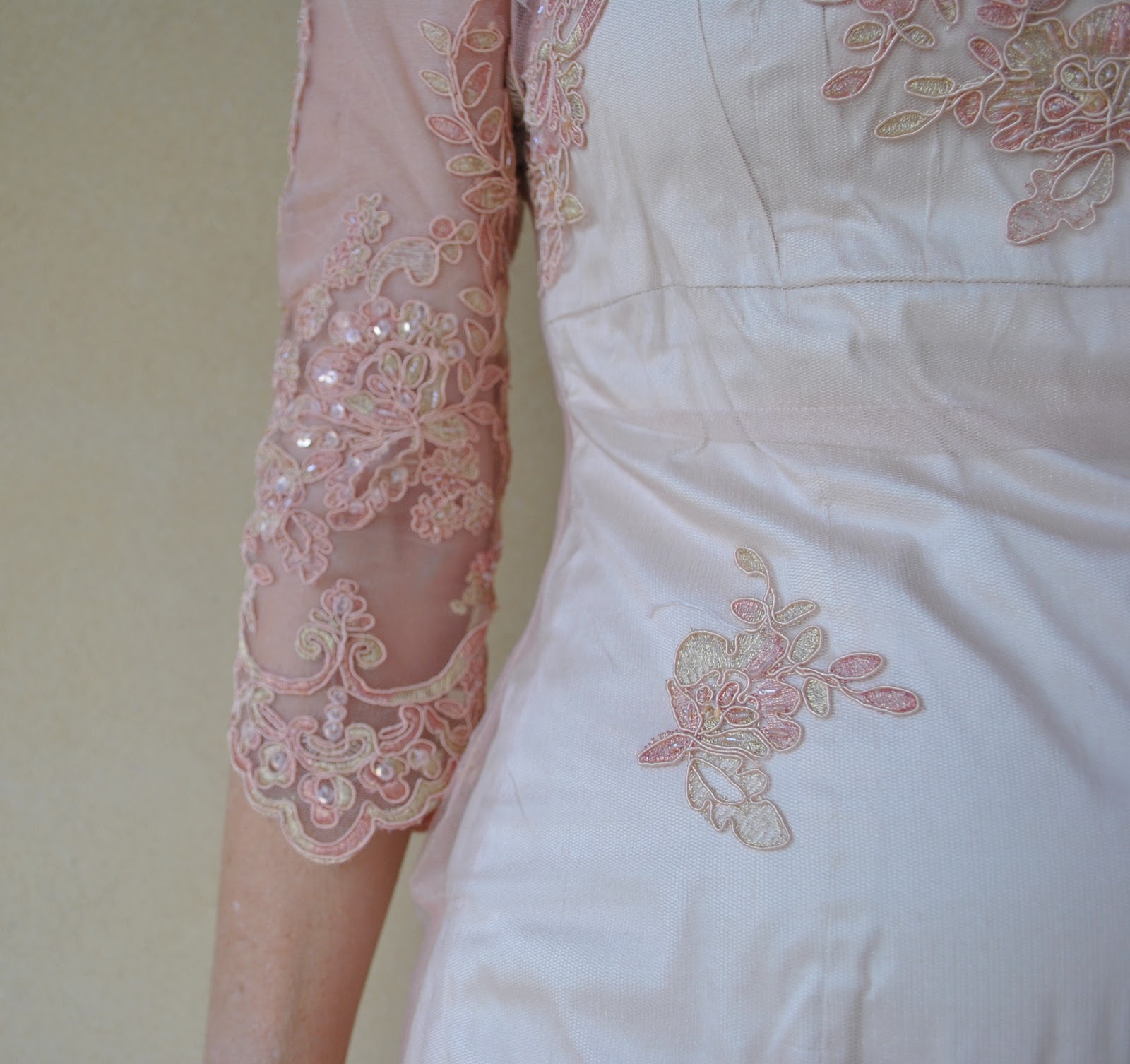
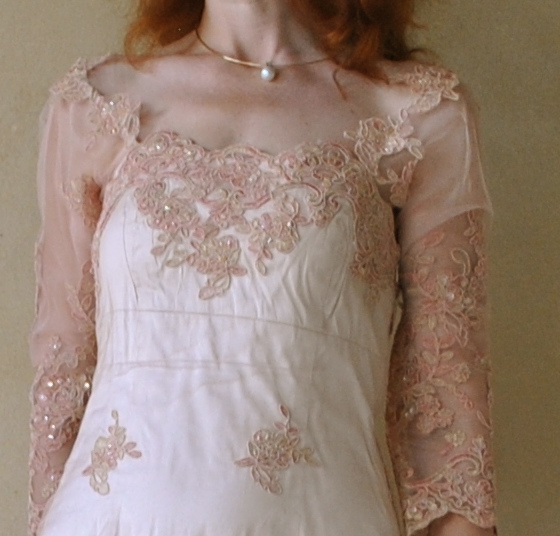
The base dress was made using Burda 8071, of creamy/pale-pink silk taffeta.  Then an embroidered and sequinned pink net fabric was carefully cut and fitted to be an attached overlay dress. The embroidered and sequinned motifs on the pink net were lined up as to be exactly centred but offset on the front and back of the dress; so, the front has two motifs at the waist, whilst the back has one, and so on.  (I can remember this taking quite a bit of careful measuring) The net dress (being sheer) has French seams and is sandwiched between the dress and its lining at the neckline. (the lining is also Burda 8071, with the same silk taffeta bodice and a polyacetate skirt section).  The heavily and beautifully embroidered and sequinned border was left just as it is to form the lower edge of the overlay dress.
The bodice facing is part of a full dress lining, meaning the dress has three complete layers…  The dress has an invisible zip at the left side seam for closure, and the net overlay dress was hand-stitched inside the zip seam and the dress lining was turned under and slip stitched to the zip tape.  All the seams inside are turned inside the layers and there are no raw or seam edges visible inside the dress.  The hem of the base dress is hand slip-stitched, and the lining is machine stitched.
Once the dress and the overlay dress were finished; motifs from the remainder of the embroidered and sequinned overlay fabric were carefully snipped and hand-stitched together and to finish the front and back  bodice edges.  More of the net fabric was fashioned into sheer sleeves (also with French seams) and hand-stitched to the dress straps.  These themselves were then covered with more embroidered and sequinned motifs that were also arranged on the skinny straps and hand-stitched in place to hide it as much as possible.

pinterestmail

Bathers, 2011

Exactly the same pattern as last year.  Boring? well, maybe; of course I do like to try out new patterns every now and again but I just illogically wanted to have the exact same silhouette again this year.  You do sometimes, y’know?  I’m a woman so I’m allowed to be illogical….. (and it precedes that I am allowed to make that little joke, only since I am a woman…  twisted logic there, but that can be a useful tool, in the right hands, hehe)  But I digress….
A tankini is a style that works for me.  Last year I really liked the slightly old-fashioned appearance of that little skirt over the hips a lot, and this gathered bust with wide halter neck also flatters my figure I think.  Last year I had cut up an old bra and used it to fill out those cups a bit, but I ended up taking them out after only a few swims because they just about drove me mad moving around in there!  This year I figured that what I’ve got naturally will just have to do…
The pattern I used is a real oldie; one that I bought so many years ago it is one of those with just the one size in the envelope.  Yeah, remember those…?  I’ve used this pattern five times now, slightly different variations for different years, although I only have photos of last year’s version and now this year’s; since in the time-honoured fashion amongst women of a certain age I have traditionally avoided having my photo taken in bathers… there’s that thing about feeling exposed, and “someone might see/recognise me” thus my clever semi-disguise here with my big floppy hat, hehe.  Somewhat akin to an emu with its head in a hole; if I can’t see the camera then maybe it can’t see me… ?  But my reasoning now is thus; if I am going to wear my bathers out to a public beach and in full view of strangers there, then to not wear them for my blog seems to be weirdly hypocritical.  There’re two more samples of logic there; flawed? or not?  I’ll leave you to judge…
This variation is based on the bikini with my own alterations.  The fabric is the same as this petticoat… when I was buying it I bought a little extra especially for this project, just because I fancied an overly cheerful sunflower-bright pair of bathers this year.  Seems kinda optimistic, y’know  (hmmm, definitely illogical…)

Details:
Tankini; variation of McCalls 2772, with a flared skirt section of my own design, swimwear fabric
Hat; Country Road

pinterestmail

Wave-y welts; a how-to

Some mistakenly thought my wave-y welts were ric-rac; well they’re not!  I made them myself!… although if you do have access to such a thing as giant ric-rac (I have never come across any such thing! but then Perth is a small place) then I suppose you could use it for these welts if you want…   As it happens I did take a few photos during the process of making these… partly so I could have a record myself of how I did it since I was doing this on the fly, but also  just in case anyone was interested in making their own shaped welts for a pocket… and some were, so thank you so much for asking!!   šŸ˜€  
I had laid down my hand and drawn around it to get a pocket piece; and based the length of my welt on the length of the opening edge of this piece… and then drew out the shape I wanted for my welts on paper… this is a sine wave…  (that’s my geeky side coming out for you there, yup, I am a fully paid up member of nerds anonymous) Note; that although my shape is a sinuous curve; the four outermost corners of the design still form an exact rectangle…  having this will make it easier!  I also cut out four large-enough rectangles of my fabric and applied iron-on interfacing to two of them.

Draw the design onto the interfaced piece, do the second one as a mirror image.  Pin an interfaced piece to a non-interfaced piece, right sides together, and sew as slowly and as accurately as possible along your marked curves.

Trim and clip along the curved edges and turn right side out.  Press; with your finger inside to ease out those curves to sit smooth and even.  Voila; welts!  Well; potential welts… hehe, hang in there  šŸ™‚

Now I tried on my dress and pinned the welts onto the outside of my dress where I wanted them to sit; so they were in a comfortable position for my hands.  This is an individual thing… for me it is at about hip-bone height, but it is also a toss-up as to where you want the welts to sit aesthetically, to be in a visually good spot on the dress.  I find a comfortable spot for my hands is quite wide-set, but I still wanted for both the welts to be quite visible at the same time from the front view of the dress…

Mark the corner points of the welt design onto your dress with pins, and check to make sure that your two marked rectangles (which are your welt positions) have the exact same dimensions as each other, and as your paper piece… also that your two welt positions are exactly equal distance from the side seams, have the same “angle” and are exactly level to each other on your dress (sorry if I am stating the obvious, but it is best to say it than not…they are a pretty stand-out feature and wouldn’t it be awful if after all your hard work one was “off’!)  I reckon it is also a good idea to double check on the inside, where it is easier to tell inaccuracies since the visual distraction of the actual welt is not there.

Carefully snip (the dress fabric only; be careful not to snip into your welt!) down the middle line of the marked rectangle, and in shallow angles  out to the corner points.  The shallowness of the angle cuts to the corners should be dictated by whether of not you have a sharp inner curve of the welt at the corner; cut the corner angle accordingly to be hidden by this…  Join one pocket piece to the inner cut edge of the slit. I joined mine in a French seam, but that is only because I am sometimes obsessive about raw edges…. this is not strictly necessary… then pin the inner edge of this seam to the underside of the welt.

Now for the other pocket piece; at this point I realised it needed an “extension” for it to fit properly inside the welt and onto the the other pocket piece, so I cut a rectangle of fabric for the second pocket piece and joined them in a French seam, then laid down the extended pocket piece onto the first pocket piece, aligning those French seams and the raw pocket edges…  

Turn in a narrow fold on the other long cut edge of the slit, and press.

Lay the extension on the second pocket piece over this fold, to be nice and flat and even; and pin the top single layer of that new fold together with the extension piece of the pocket… sew together in the ditch of the pressed fold.

I trimmed down that long free edge of the extension piece and tucked in the raw edge and folded the extension piece over and enclosing this seam allowance, and pressed and topstitched it down in the ditch of the previous seam, thus enclosing all raw edges.  Yeah, basically a flat-felled seam…  šŸ™‚

Finally laid those two pocket pieces together, pinned and sewed together around the long curved edge.

On the outside; turned under the small snipped triangular top and bottom edges, and pinned and finger pressed them into place…

On the inside; carefully transferred the pins to the finger-pressed folds and stitched the short raw triangular ends to the welt allowances, keeping everything else free.

On the inside; invisibly fell-stitch the inner (unextended) pocket piece to the inside of the welt piece

On the outside, and using matching thread, invisibly fell-stitch the outer edge of the welt to the dress.

On the inside, trim the welt edges even with the pocket seam allowances, and enclose the seam in a HongKong seam.  Not essential, but it does look so much nicer and well finished, doesn’t it?

Finished!

pinterestmail
Switch to mobile version
↓