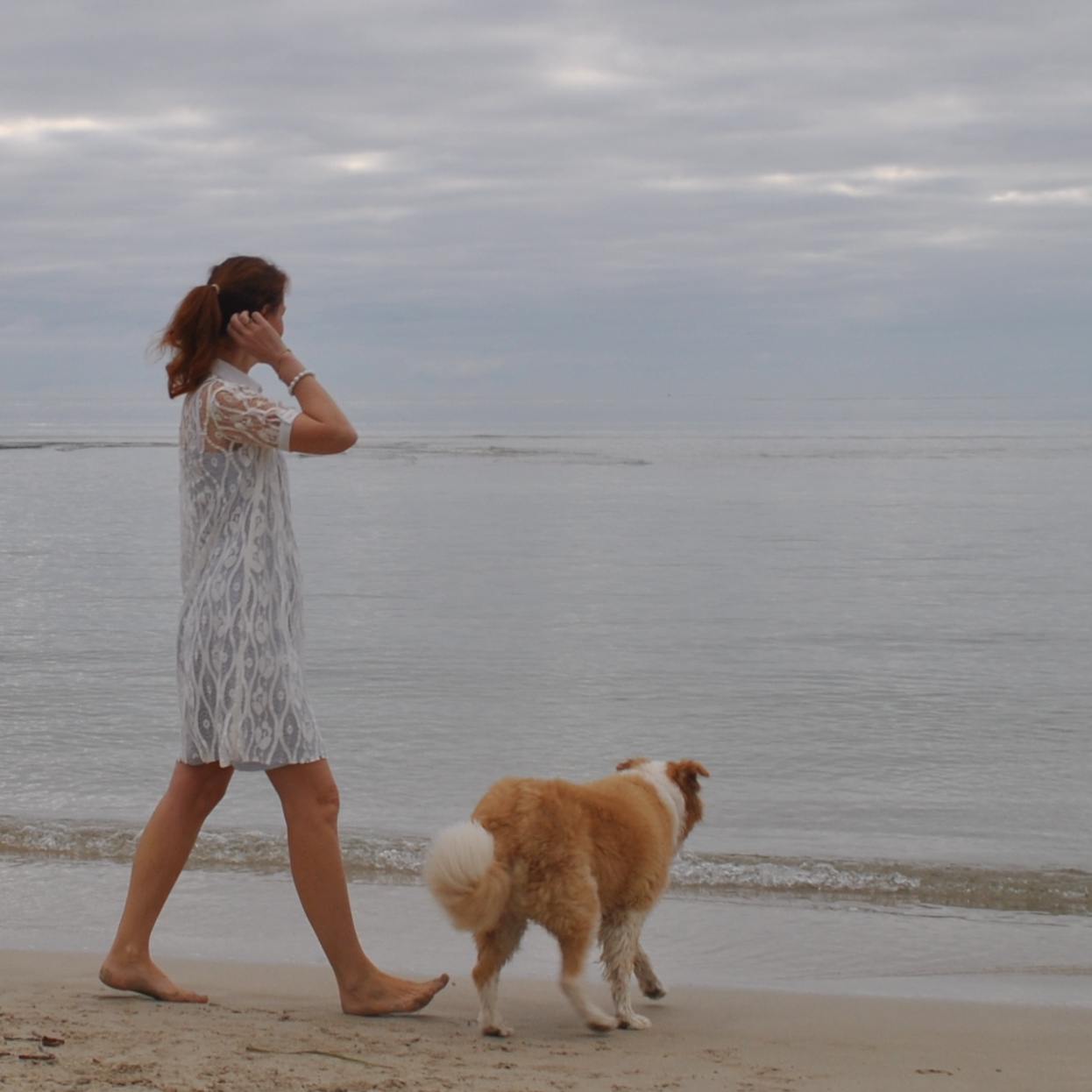

I hope she puts a smile on your face too 🙂
She is also appearing today on photo maisonette
In which Sienna models some spring-y attire…
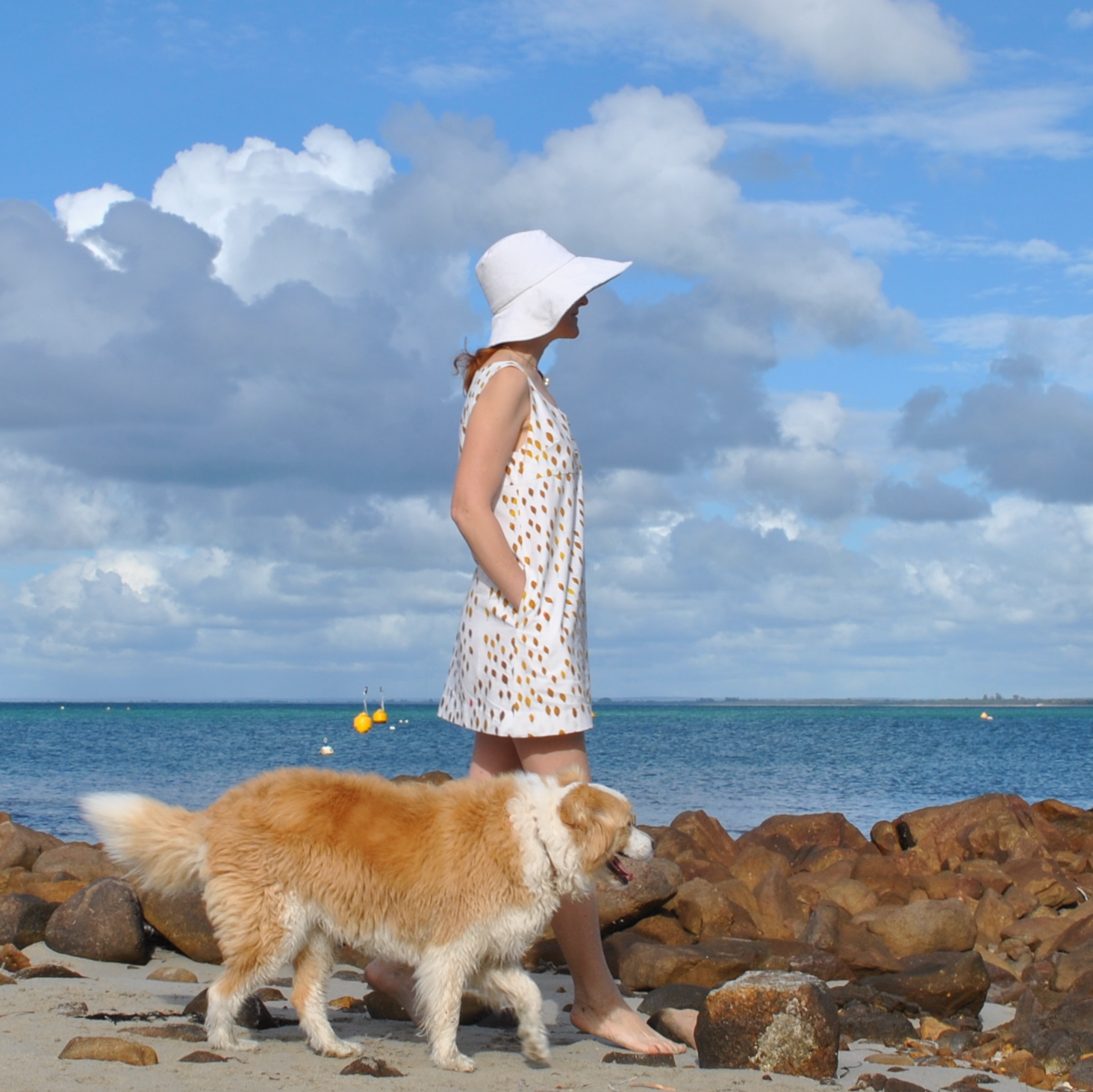
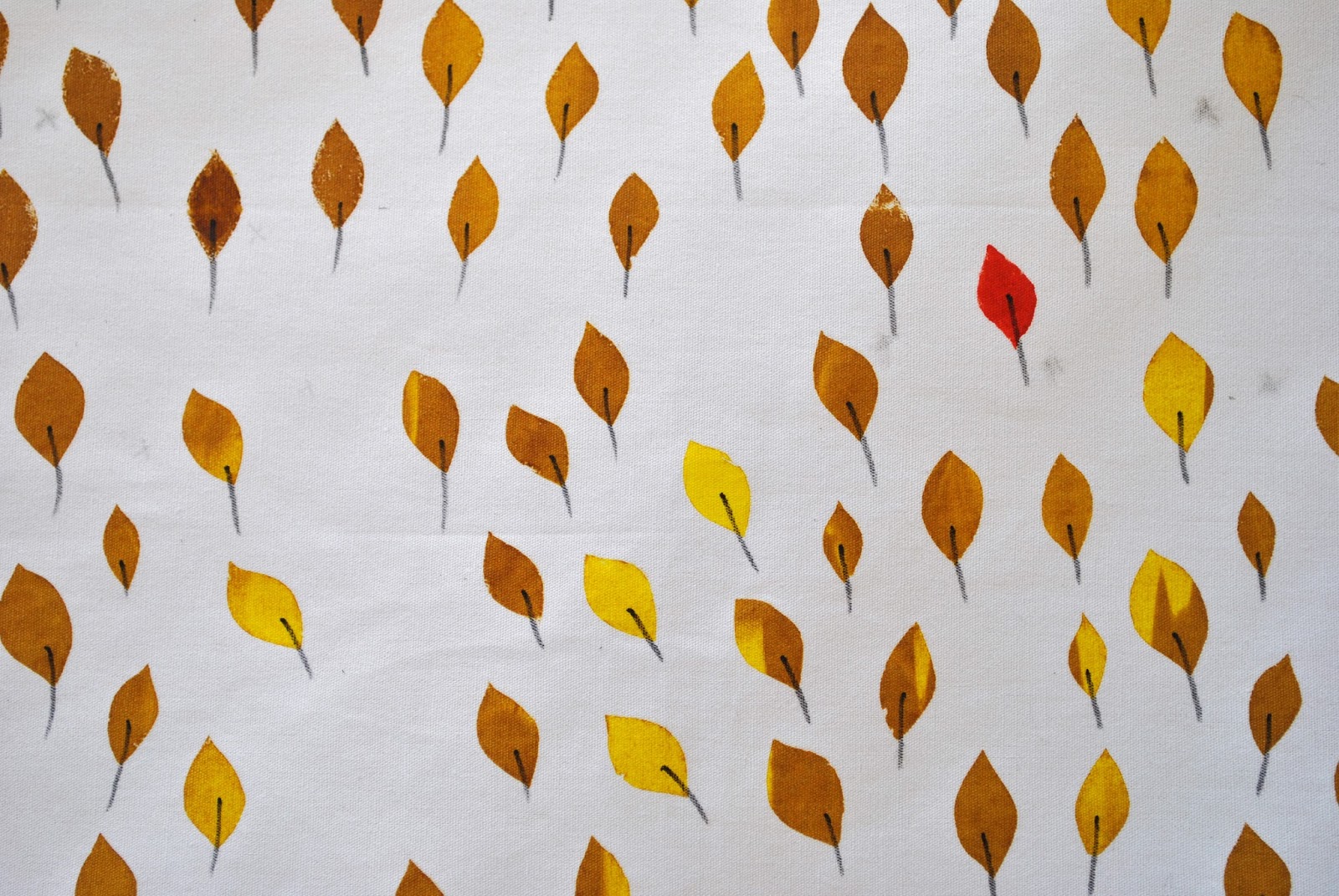
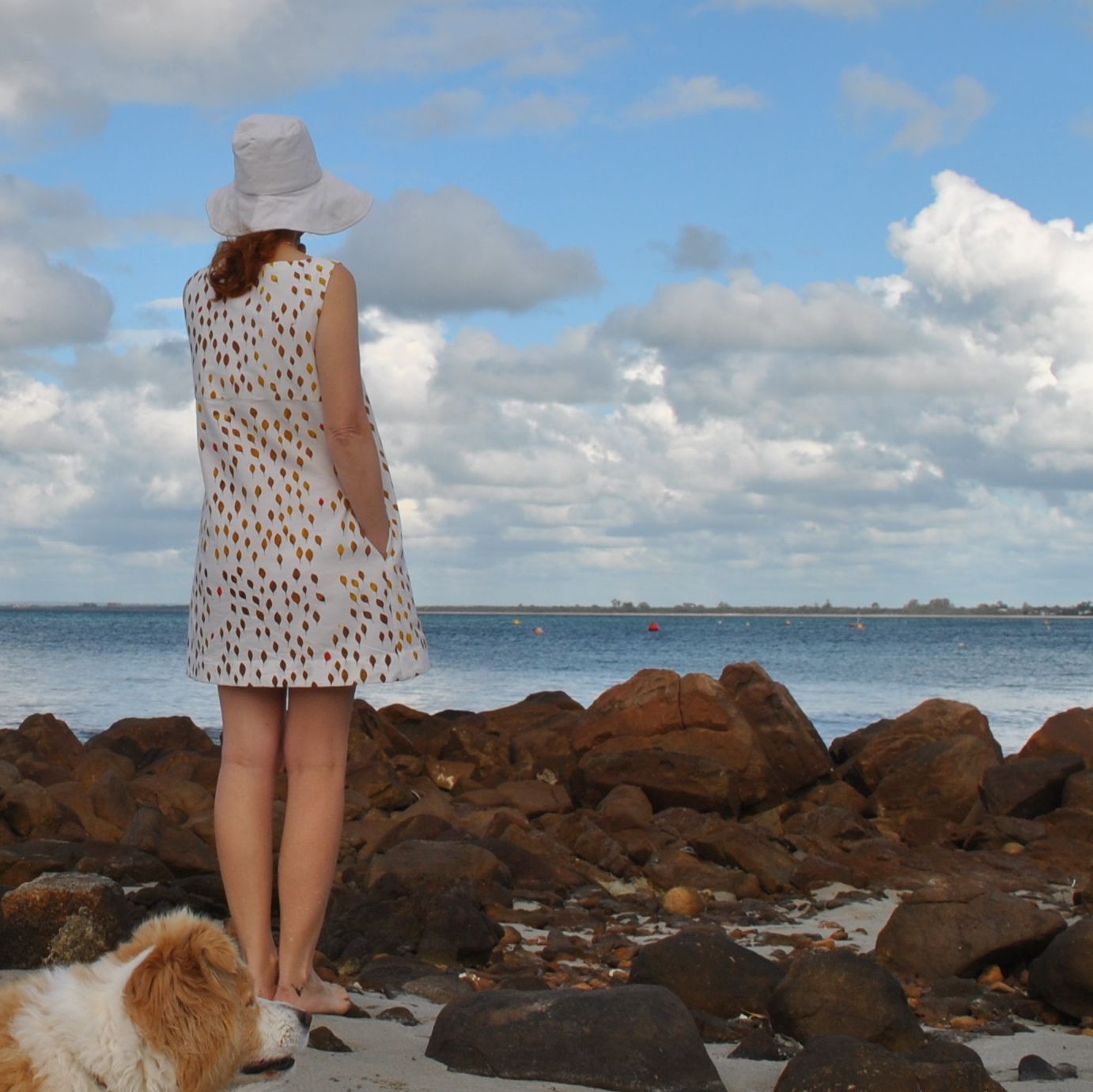
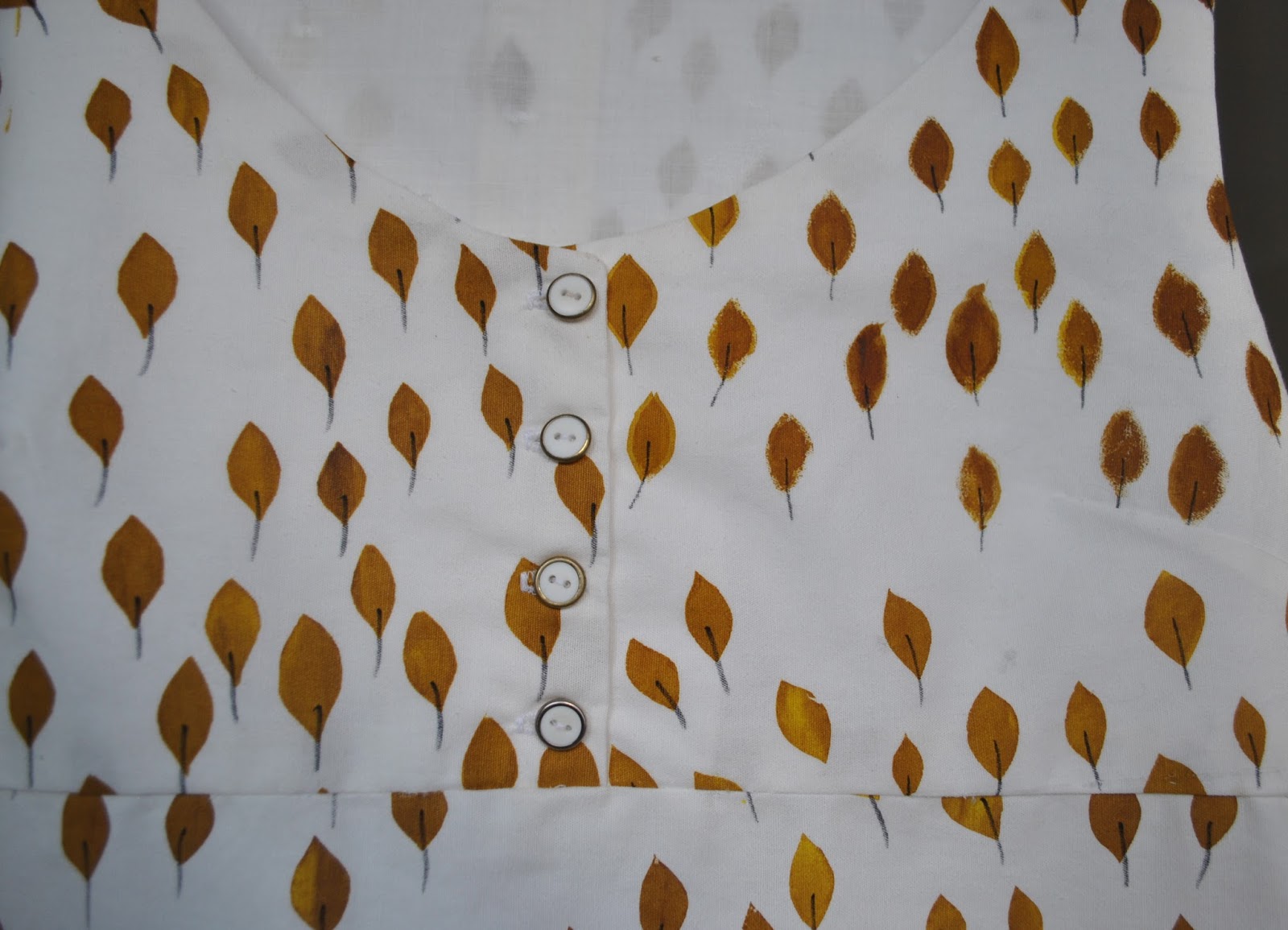
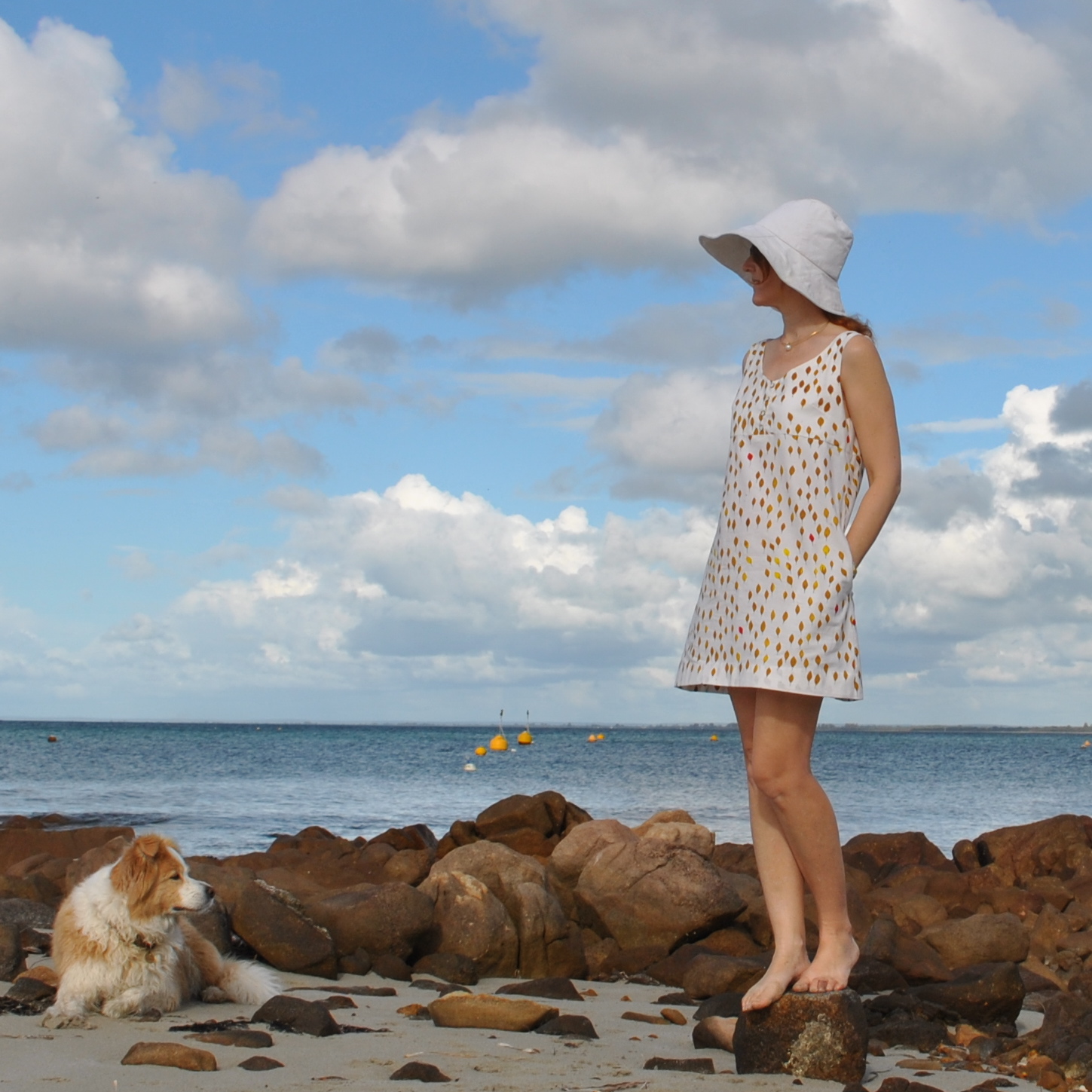
Autumn leaves sundress
Hehe… would you believe I’ve only just noticed, when I uploaded this picture? that one of the leaves on the front of the bodice is missing its stem?? Only just noticed! LOL! And while drawing them in I checked and checked… I’ve fixed this up now, but didn’t bother to take another picture.
A thought… I can always use it as an apron, for future screen-printing sessions?! Ha!
There is less wastage of fabric ink and your own effort, since you are not printing fabric that you won’t use.
You can if desired place the print just exactly how you want it to appear on the piece.
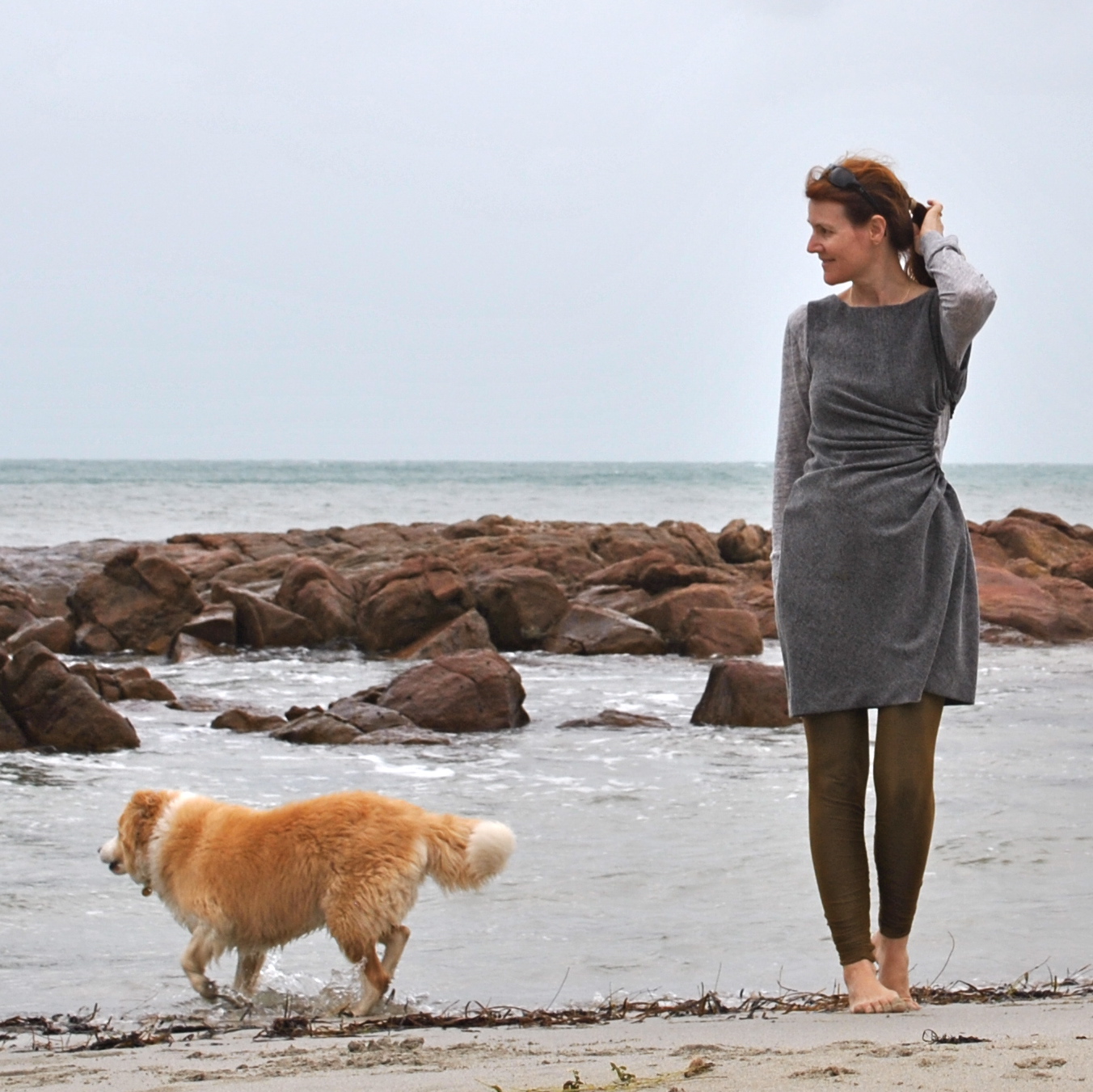
New (not) khaki leggings
And now they are no longer hideous to my eyes, they have a new lease on life 🙂
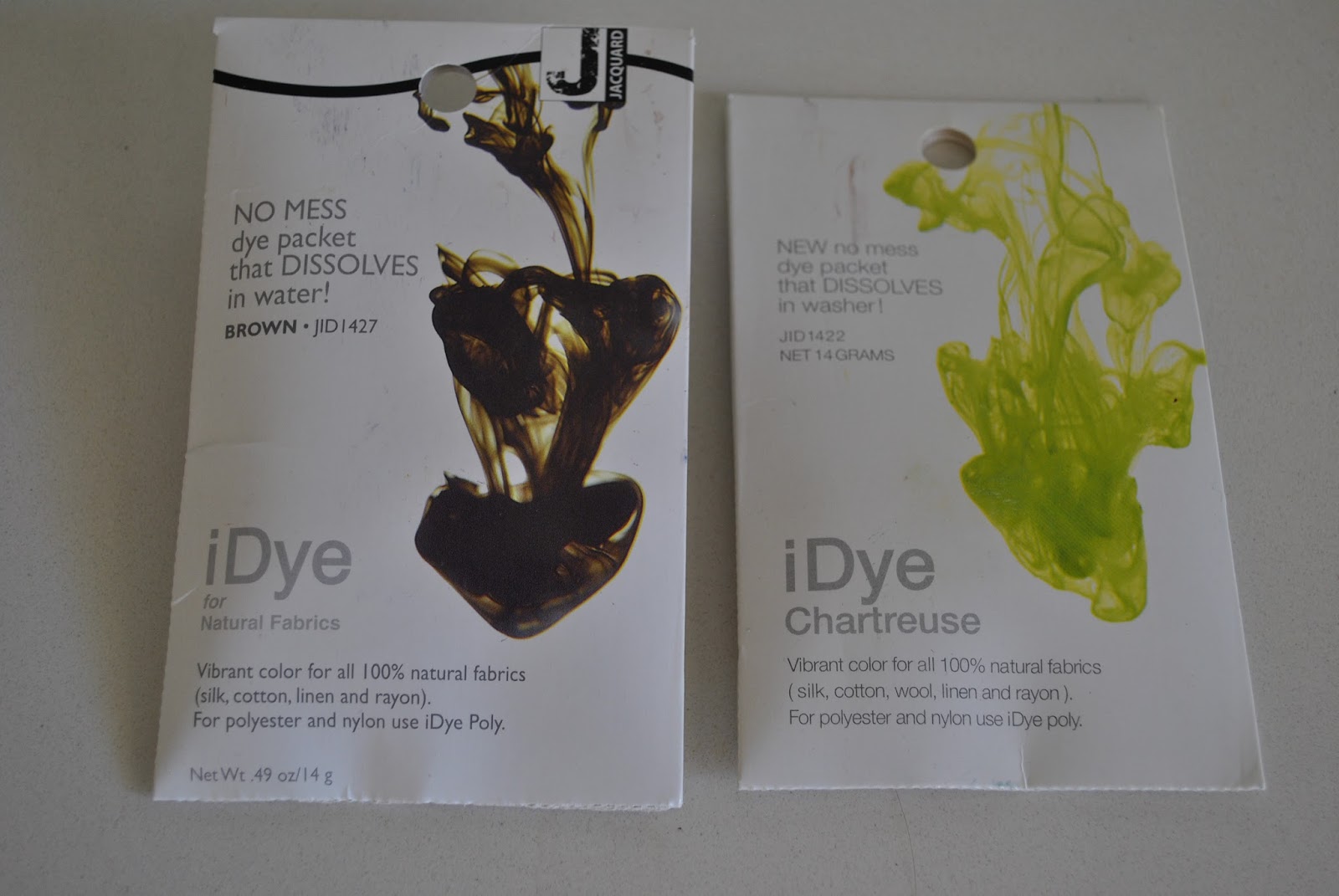
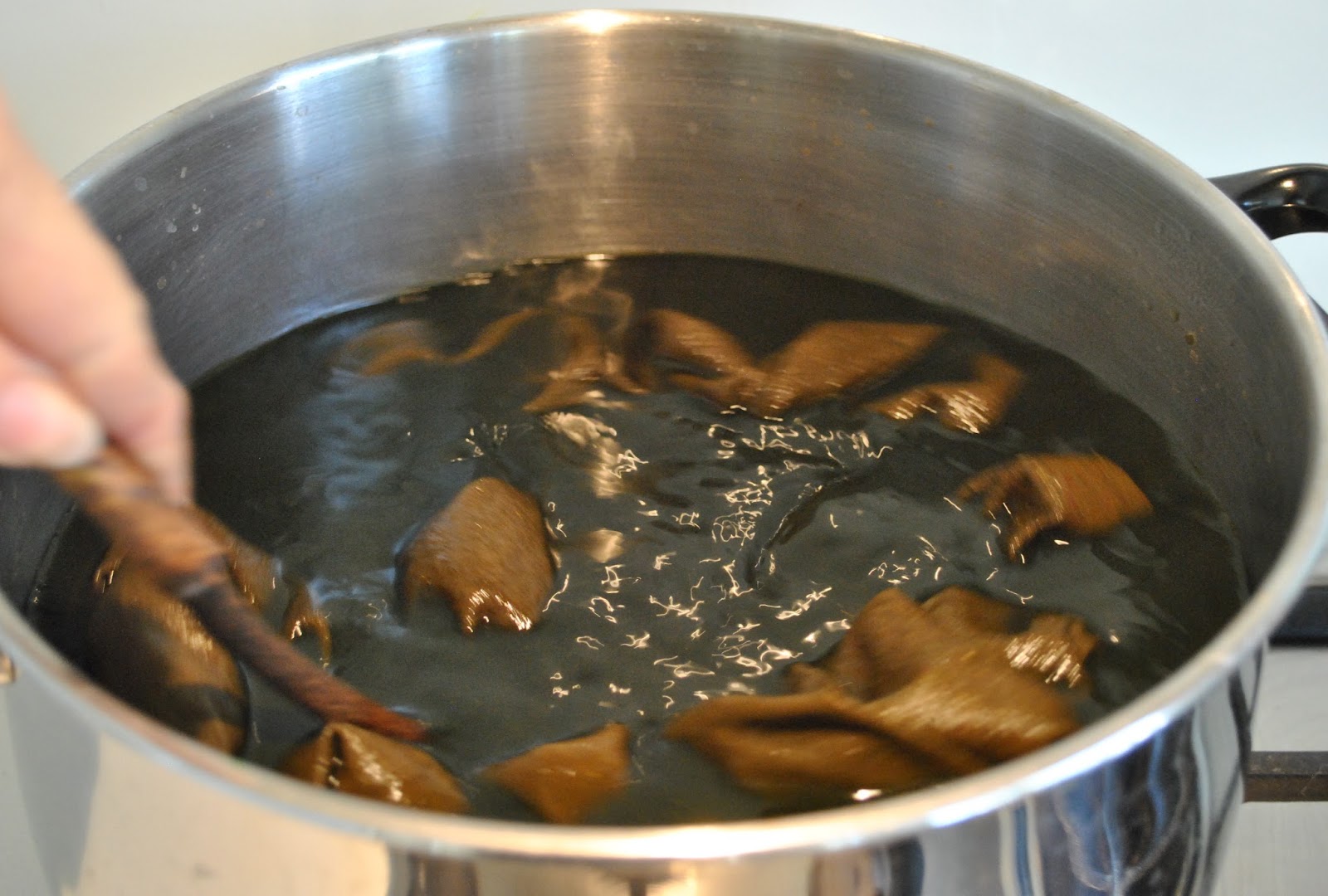
my tutorial on dyeing
Details:
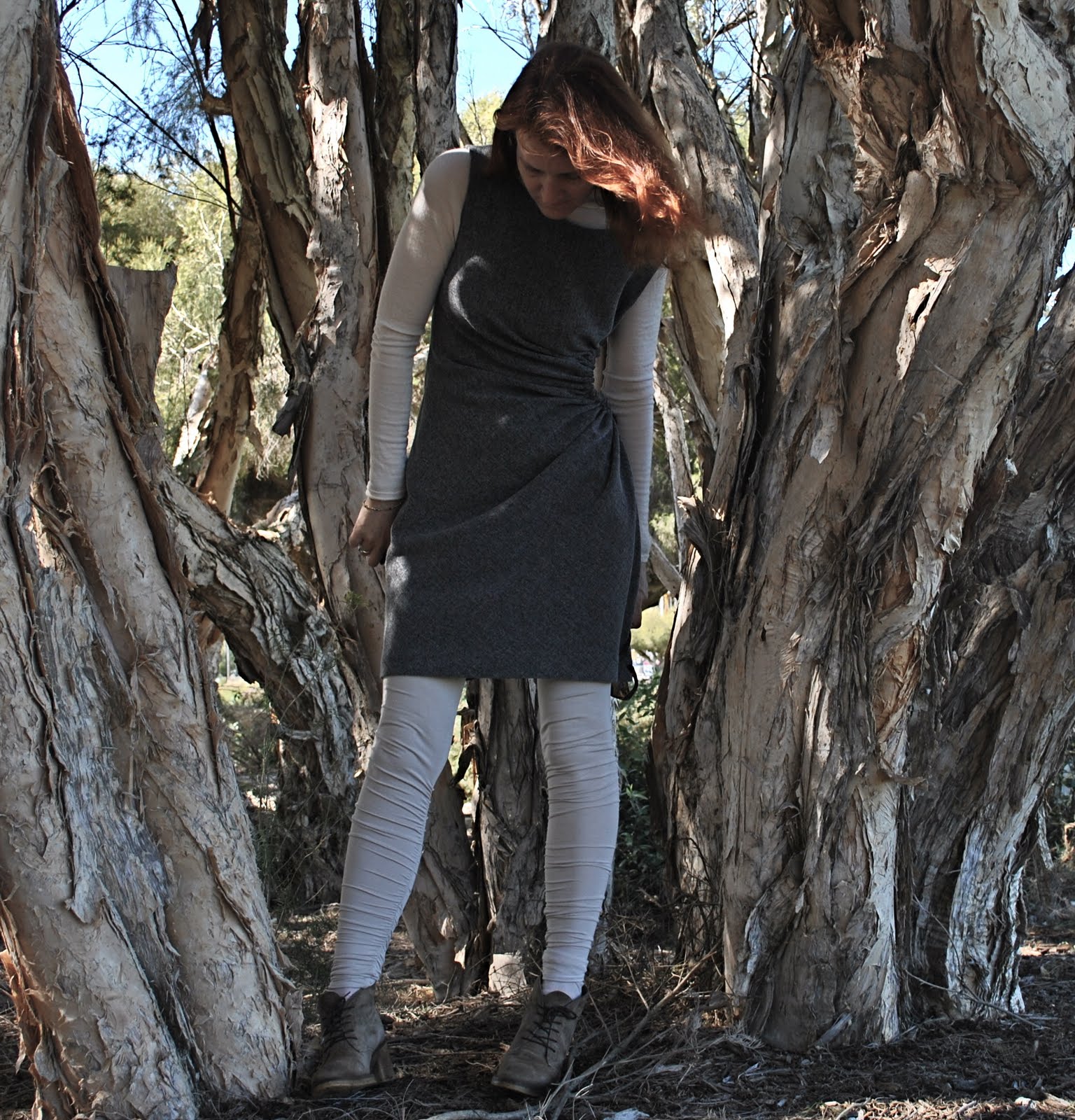
Leggings; self-drafted of beige cotton knit, dyed khaki, originally posted here
Tshirt; self-drafted, grey knit stuff, details here
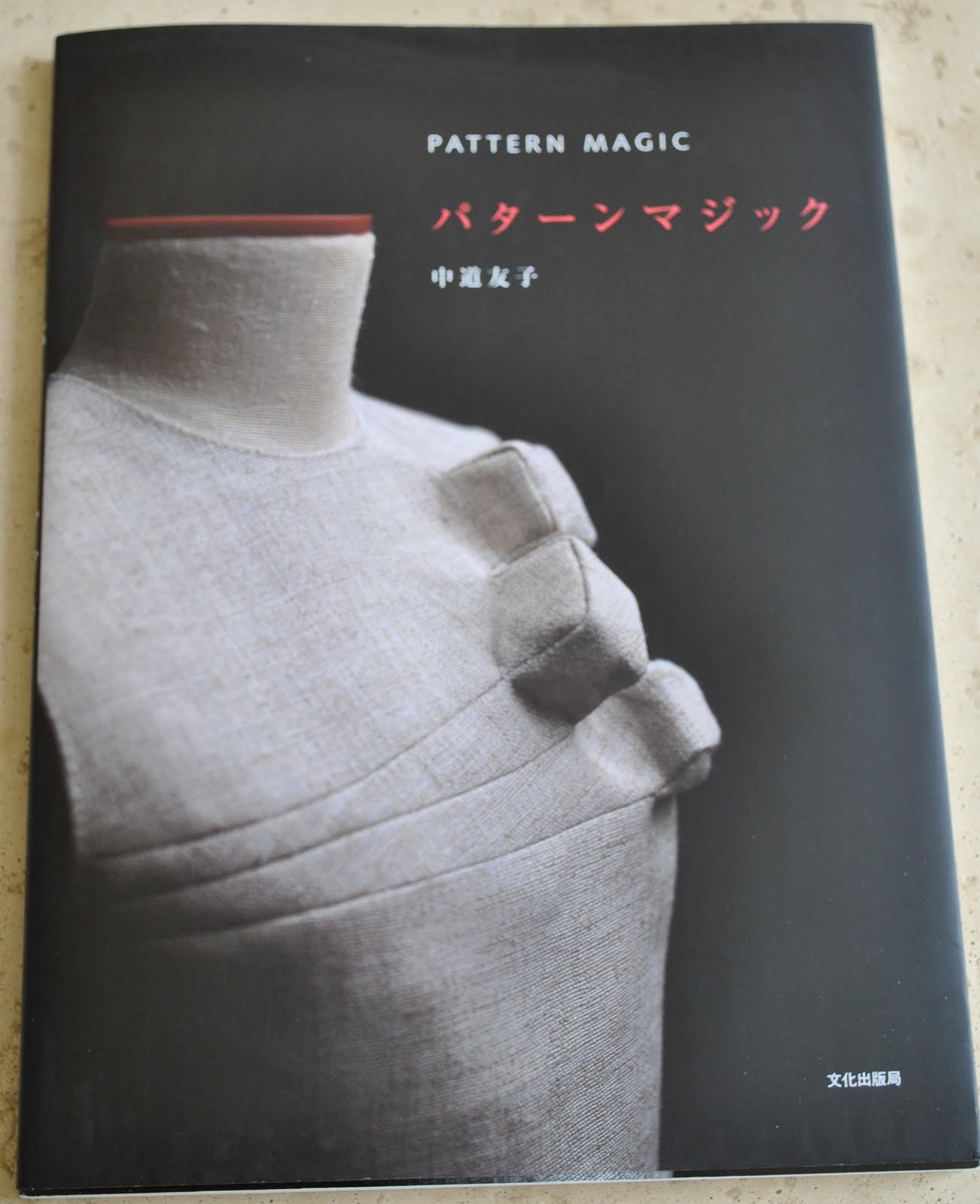
Dress; the gathered hole dress from Pattern Magic by Tomoko Nakamichi, charcoal suiting, details here
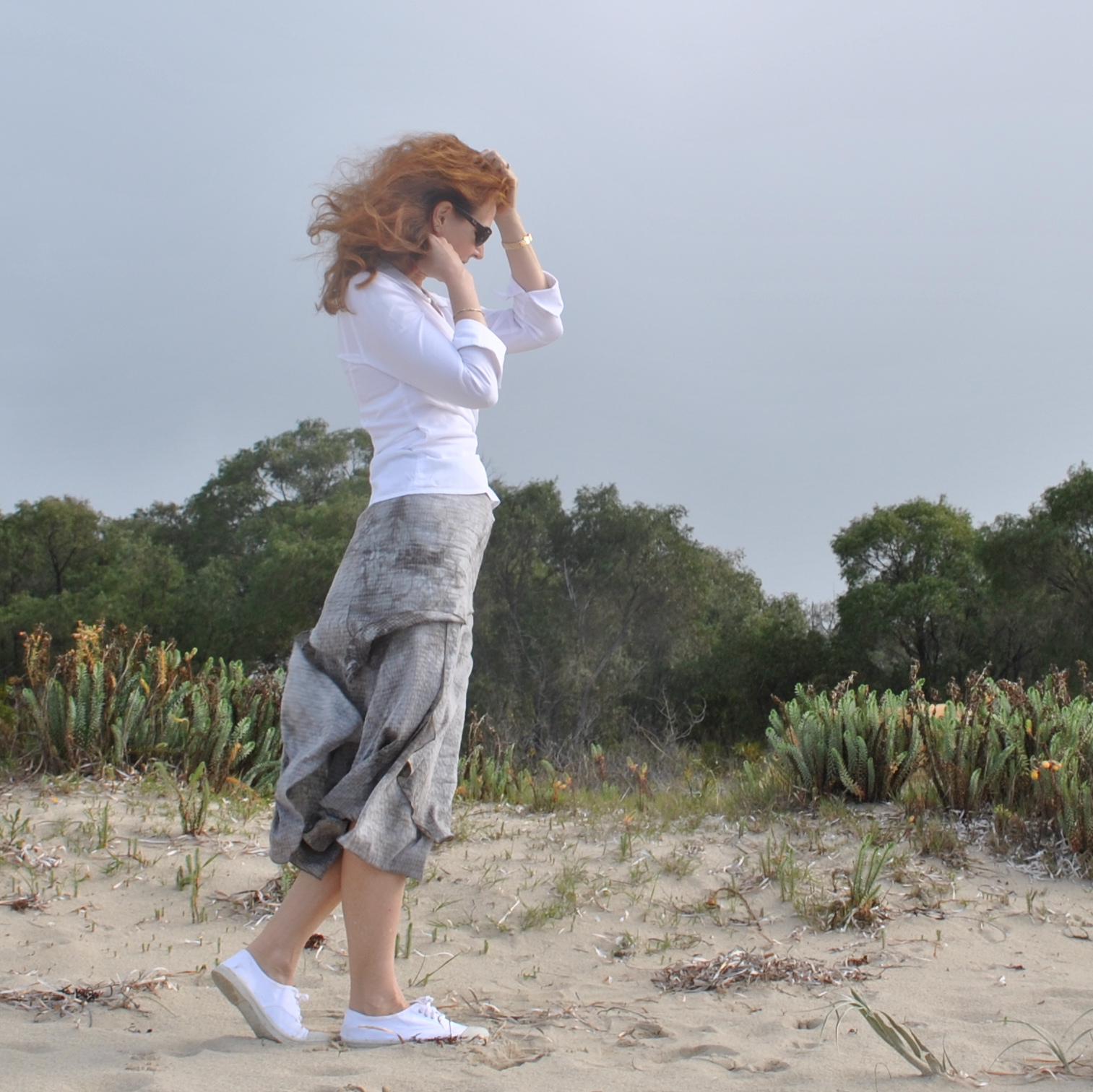
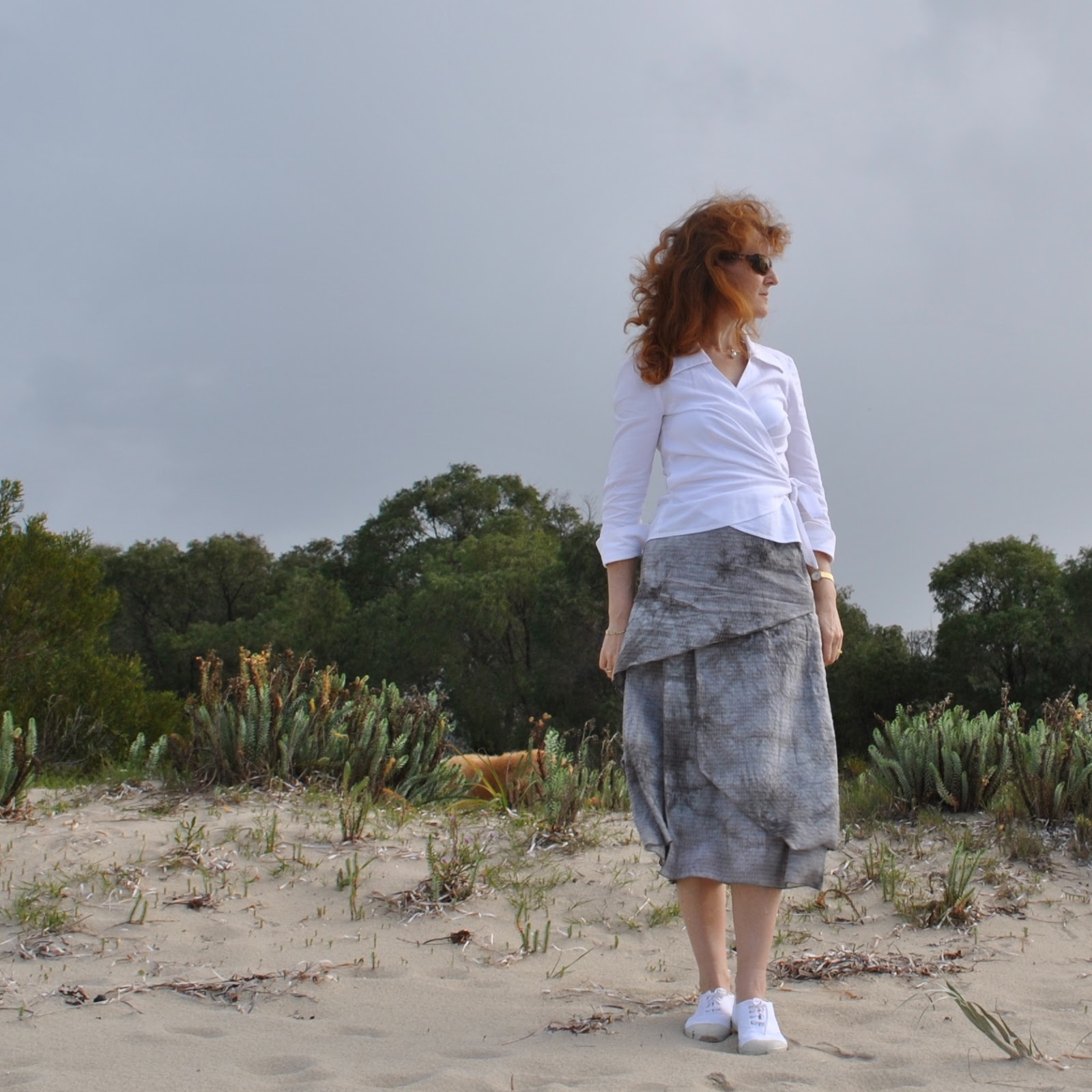
Fluttery grey-green skirt
bought this lightweight blotchy grey-green cotton from Tessuti’s in Melbourne,
during my girly trip away with my Mum and Cassie last year… and always intended
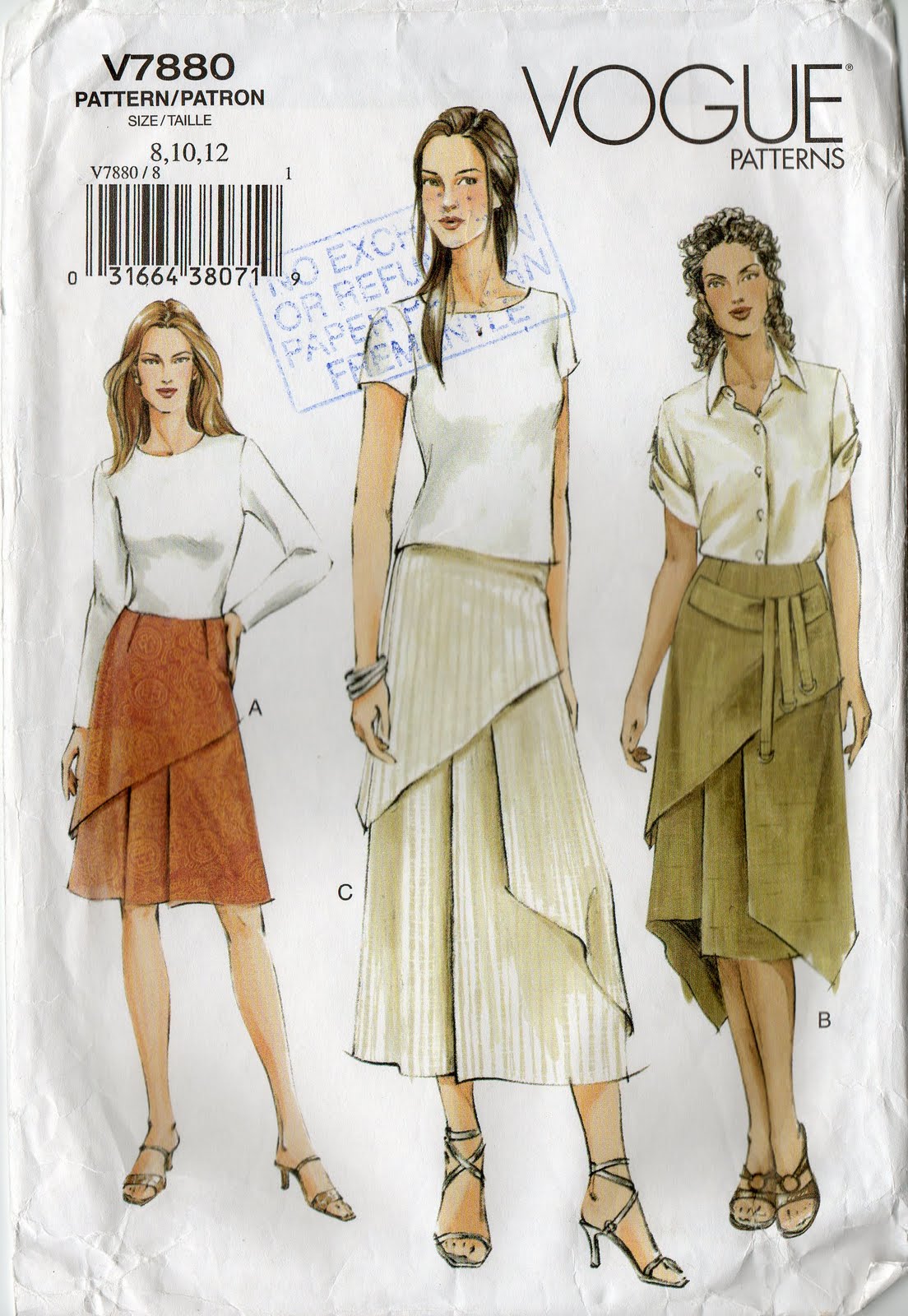
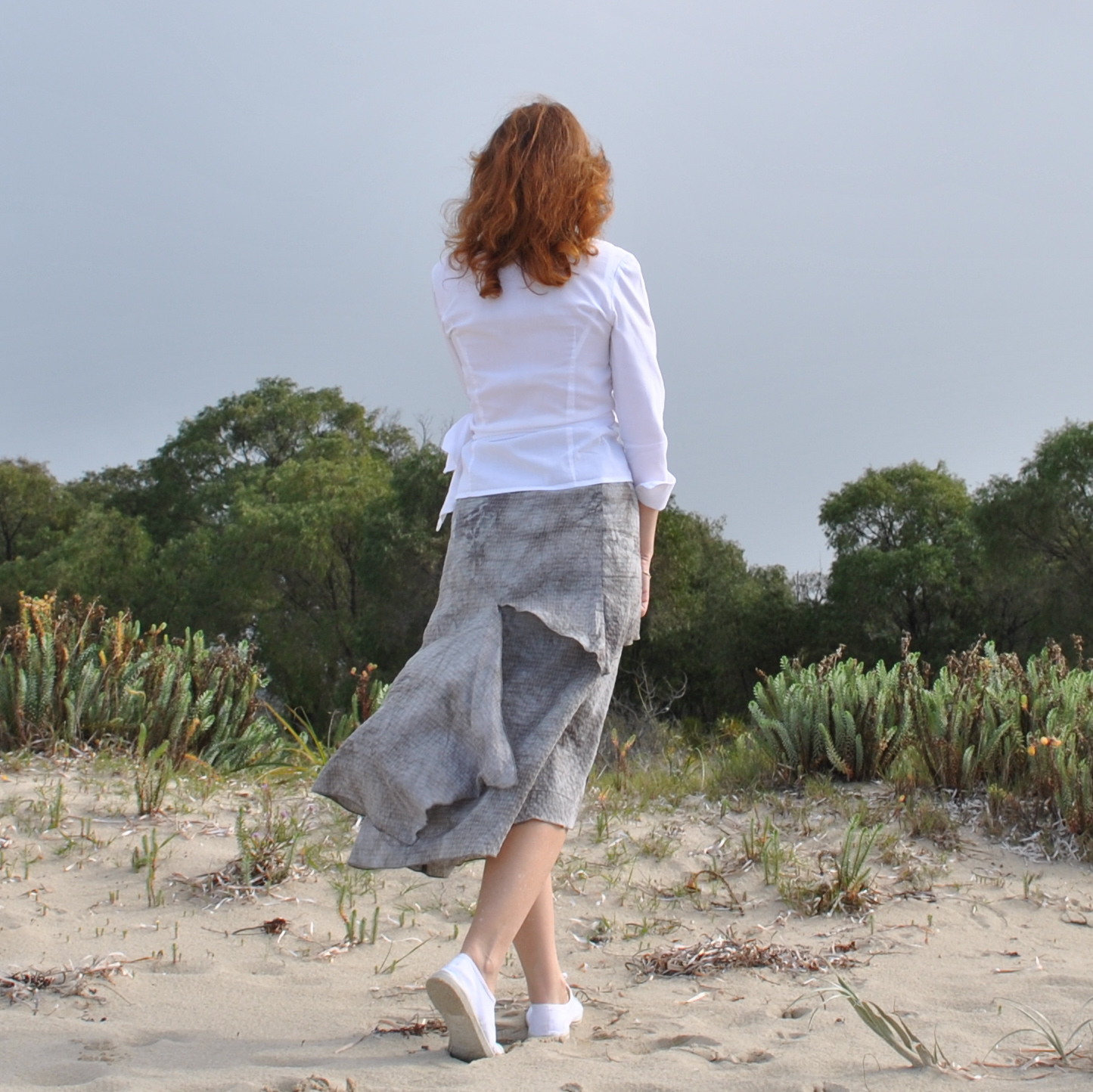
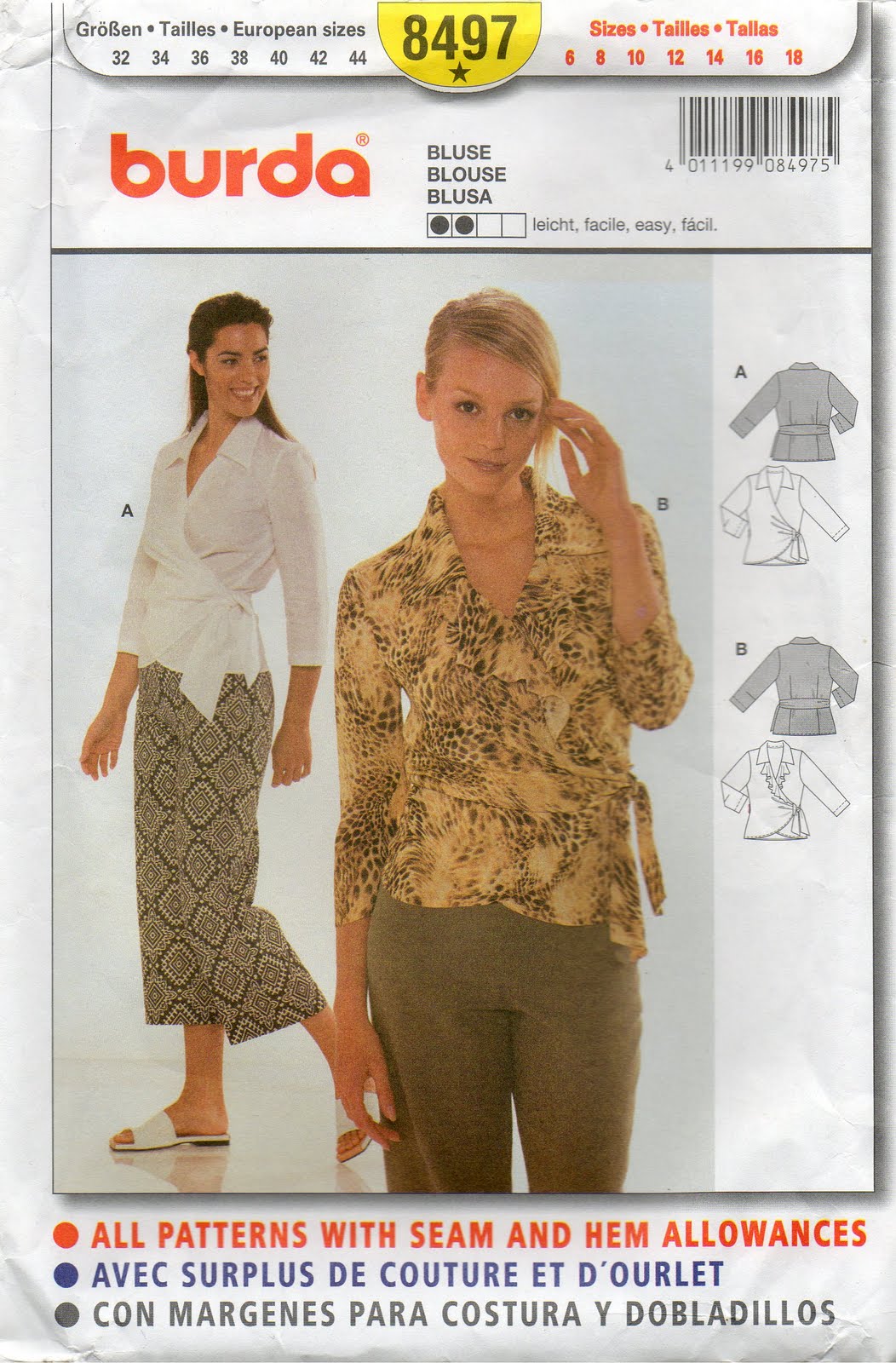
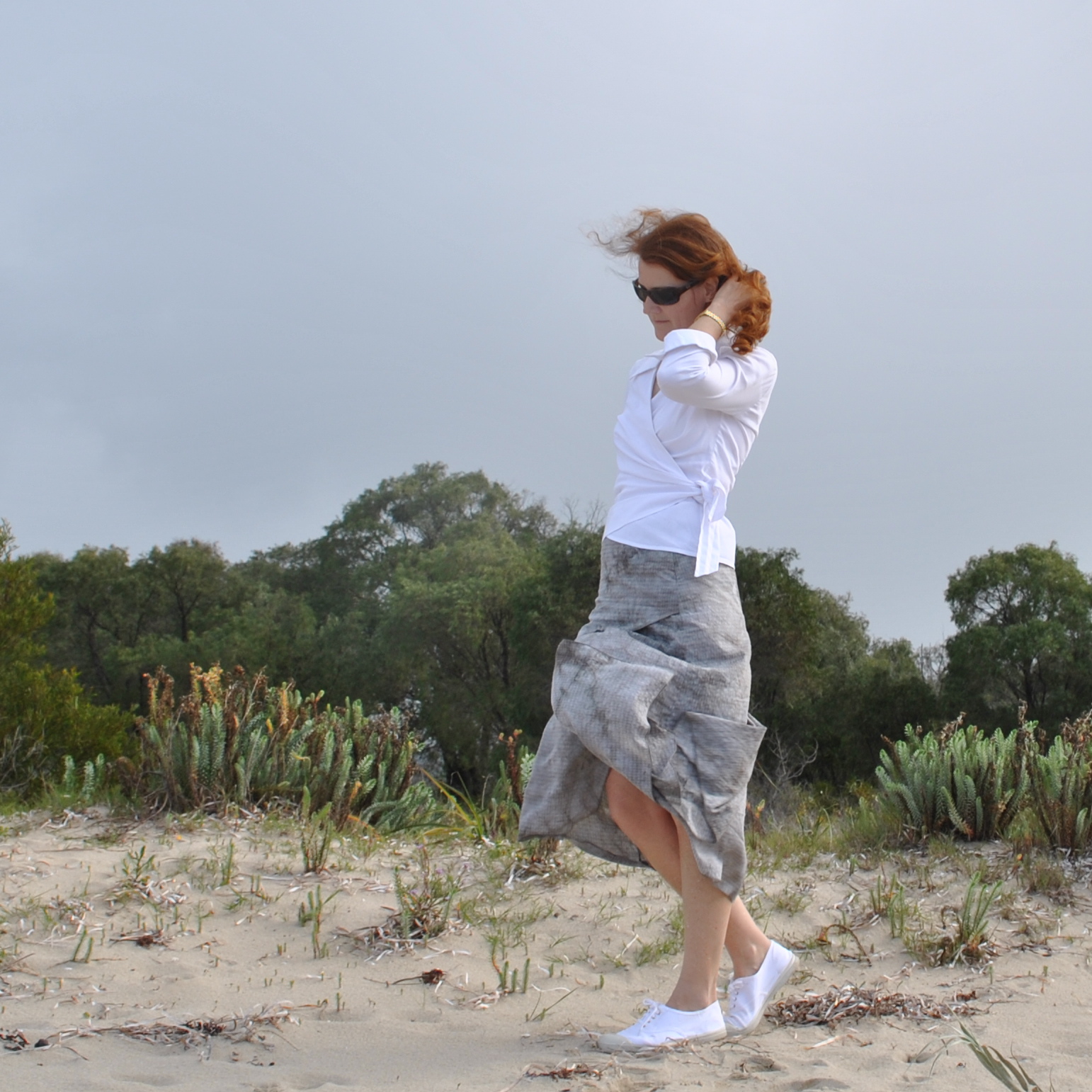
to make just exactly this skirt. The pattern is an old favourite Vogue 7880, a flatteringly longline skirt with beautifully staggered asymmetrical layers, and the option for a feminine handkerchief hemline. It’s an interesting as well as lovely design because it looks different from every angle. There was a stiff breeze on the beach when I
took these pictures, which is normally a pain for the sort of weirdo who tries to photograph their sewing creations out in the great outdoors… I mean who does that anyway?! but actually turned out to be a good thing I think, because the wind
has assisted in showing off the different layers fluttering against each other, how
they actually appear when in motion, so to speak. Thanks, wind, for blasting me to bits! Very much appreciated!
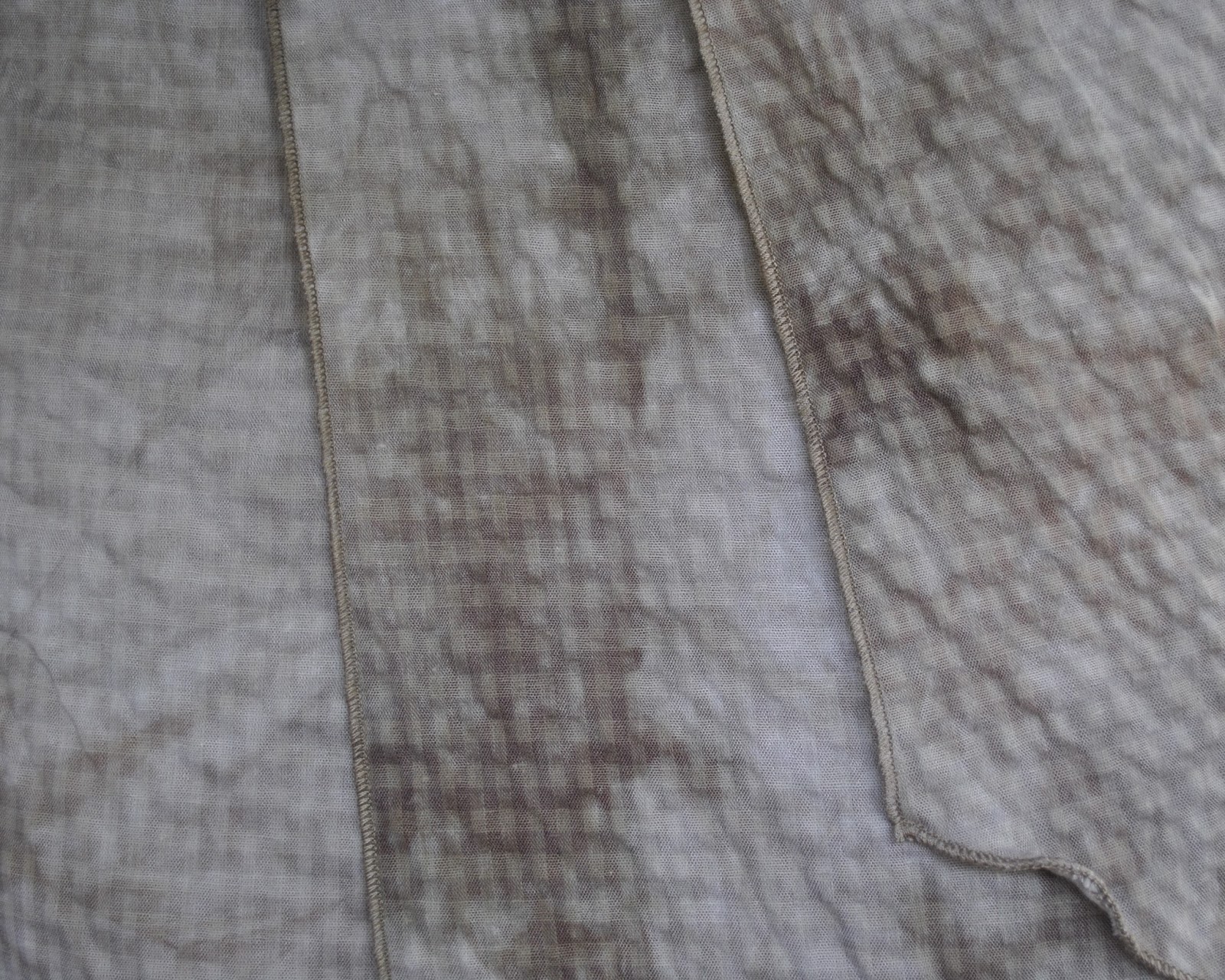
fabric is a very lightweight cotton, a little crinkly, even slightly seersucker-y. It has the shadows of the classic seersucker check
appearing in its background, overlaid with cloudy, watercolour like swirls of
grey, khaki, sage, olive… all my favourite sludgey colours in other words. The bolt was clutched to my chest pretty early in the shopping expedition, if I recall correctly. Mwahahaha.
between views B and C, which have always been my two favourite
views. I’m so glad I’ve hung on to
the pattern because it is interesting and lovely, and imo there’s just
nothing ticking either of those boxes in currently available skirt patterns at the moment. Is it just me or are skirt patterns
pretty boring and unimaginative right now? Obviously I have absolutely nothing against basic skirt
patterns, since after all I’ve made my own fair share of very plain little
skirts!… but we need some of the more pretty and/or out-there ones too, don’t
we? And sadly there are just very
few interesting, exciting, gorgeous and/or challenging designs around. If there are, then please tell me, where
are they?!
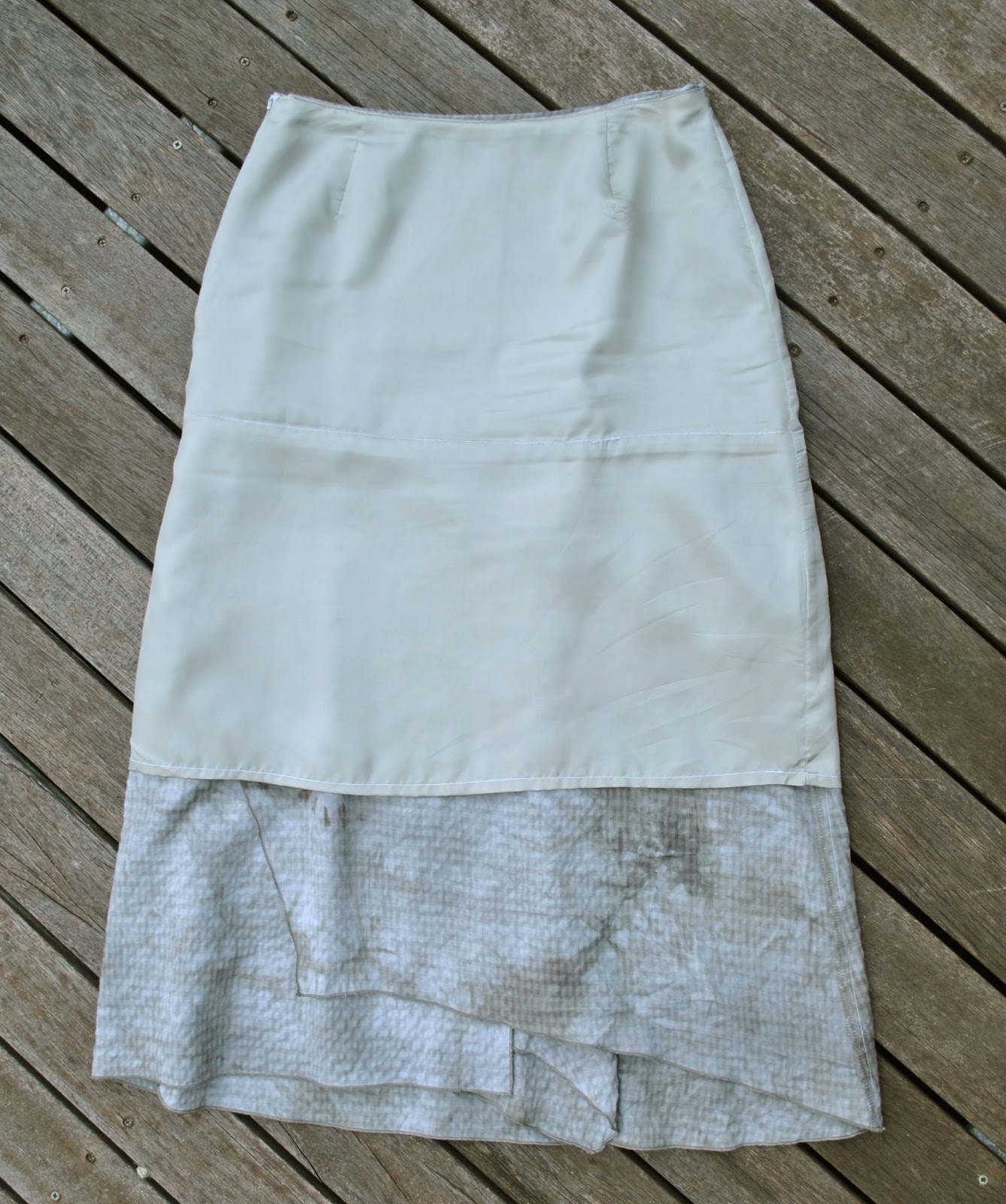
pattern has inner stay pieces, to which you attach the lower skirt pieces. For several of my versions of this
skirt I’ve chosen sheer fabrics, because the floaty layers are really crying out to be
made in very light fabrics like chiffon; and so I generally lengthen the
stay to hit just above knee length, to make it more like a real proper
lining. It’s pretty easy to mark
the old stitching line on the stay, to which you add the lower skirt pieces as
normal, and then you just hem the stay just like you would a lining. The longer length hangs inside the
skirt, providing modesty when you have chosen sheer fabrics, or in case you do happen to be wearing
the skirt on a very windy day, ahem.
has an invisible zip closure, and I finished the raw edges using the rolled hem
stitch on my overlocker.
Virgo
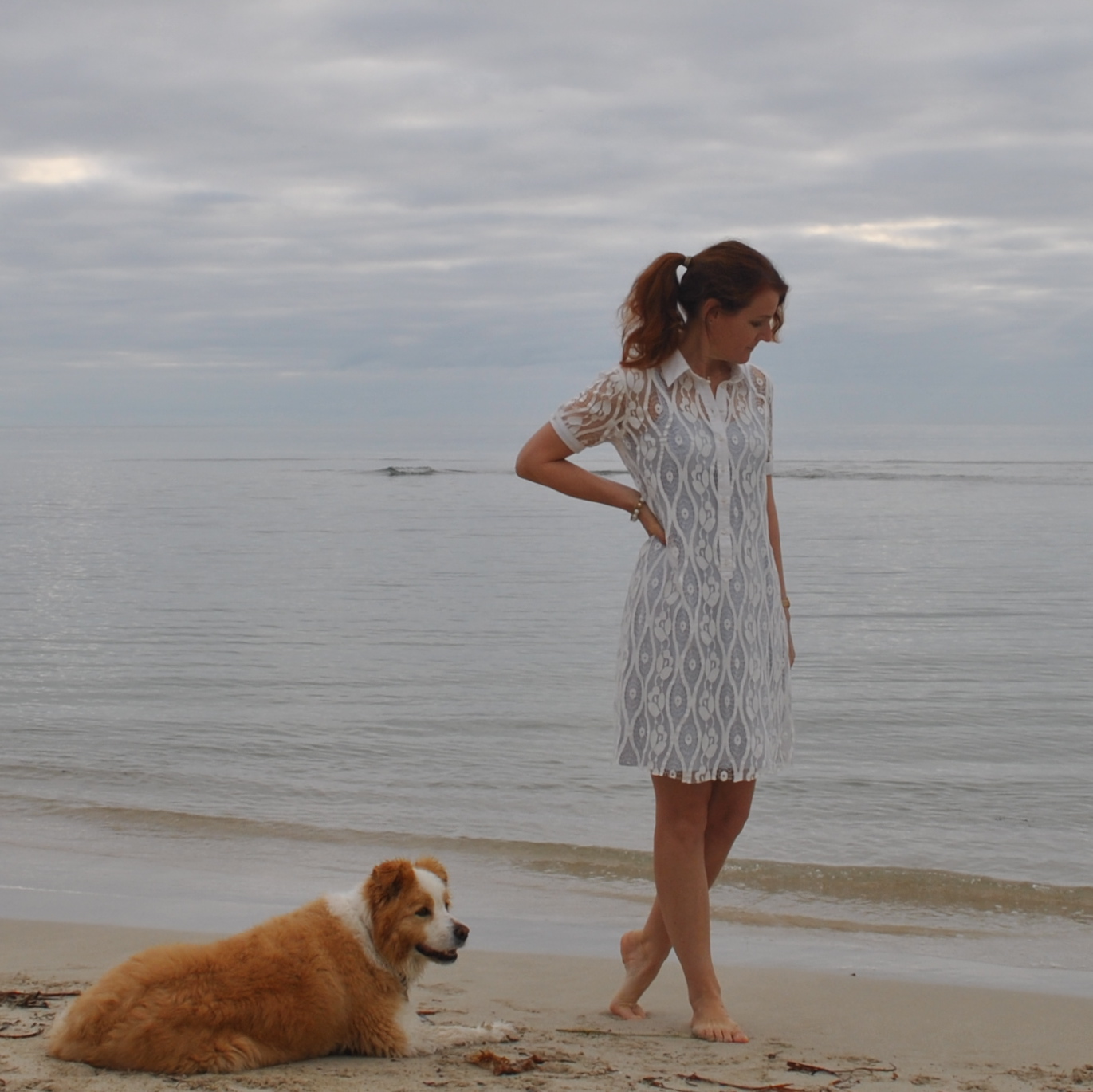
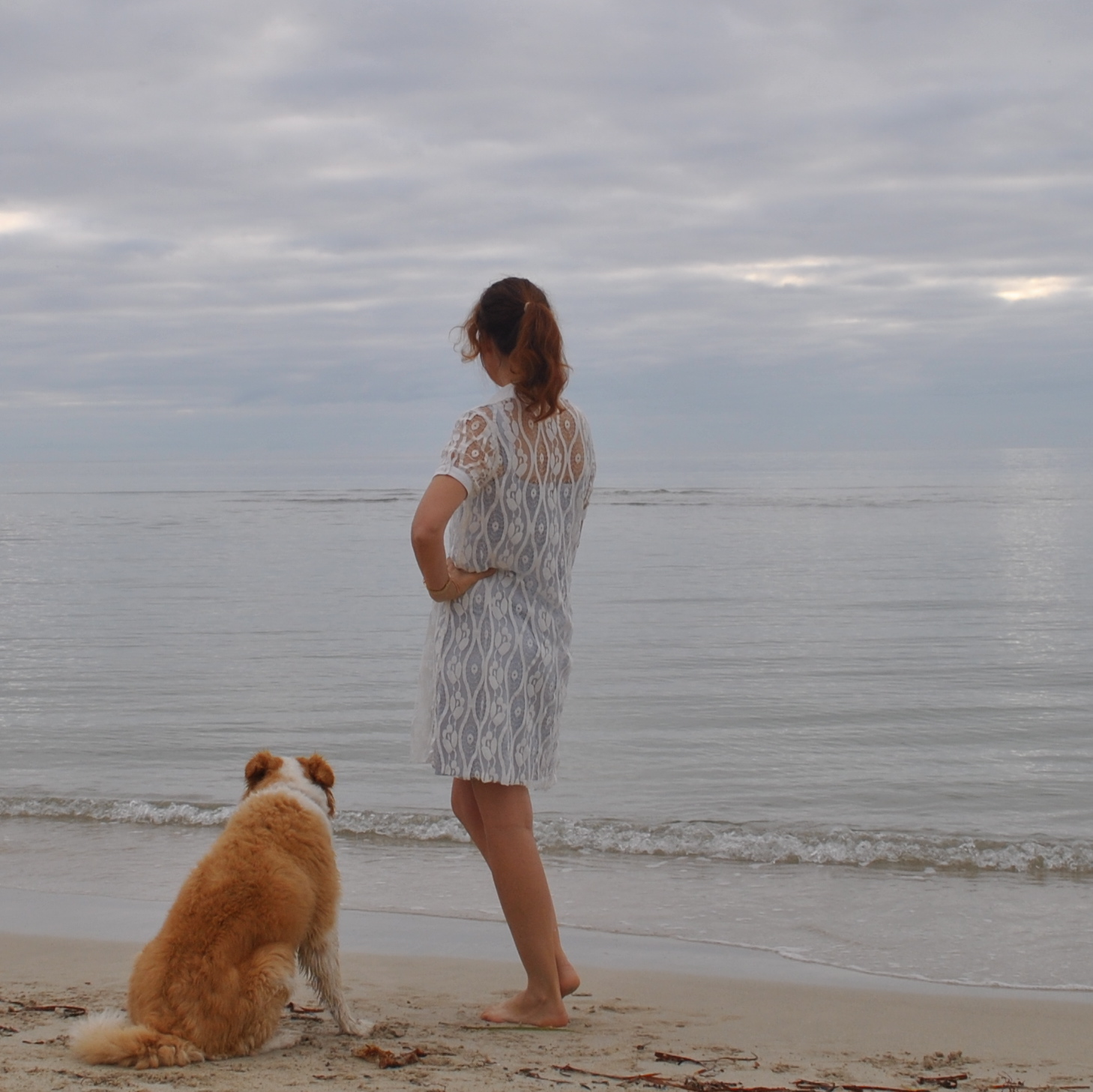
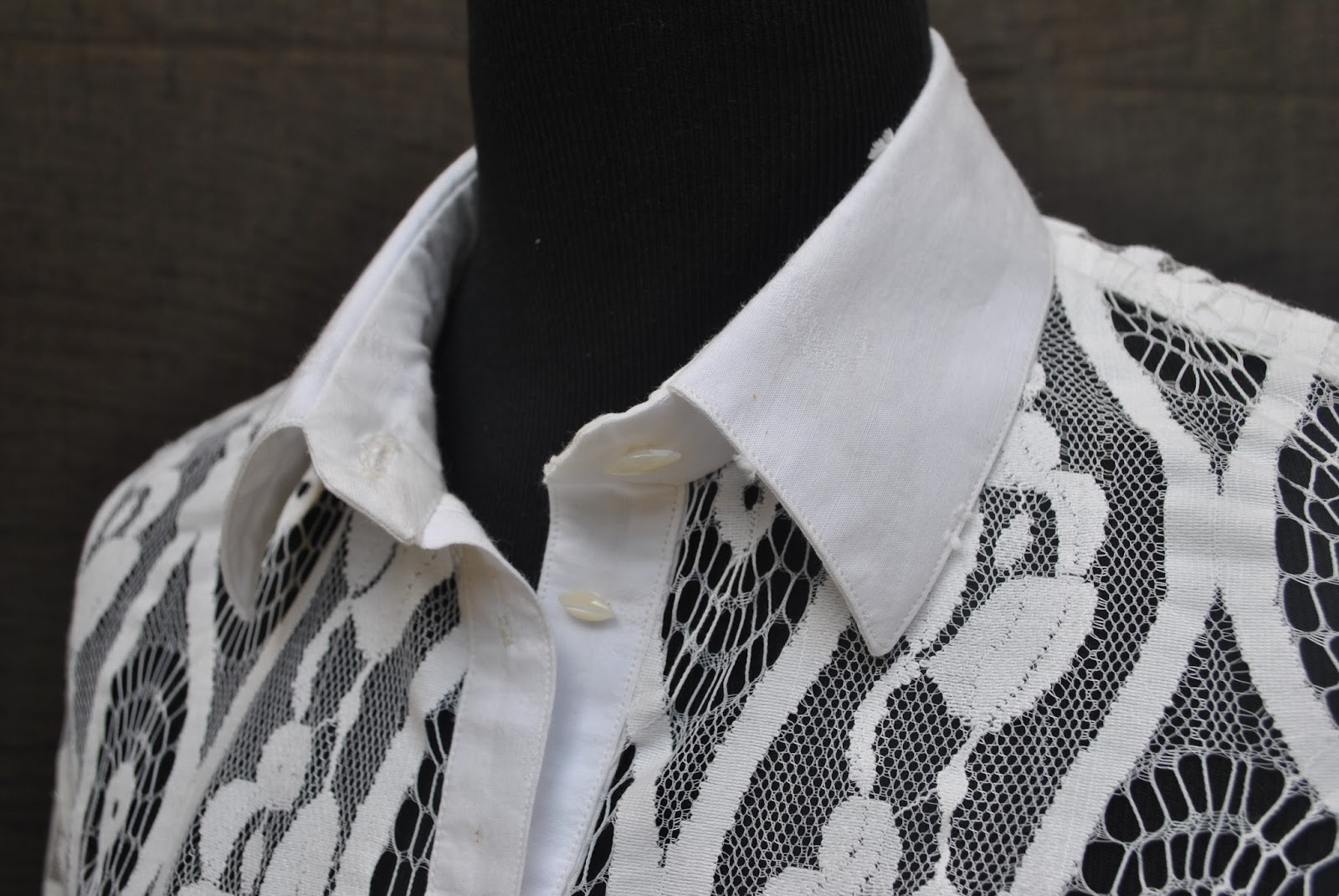
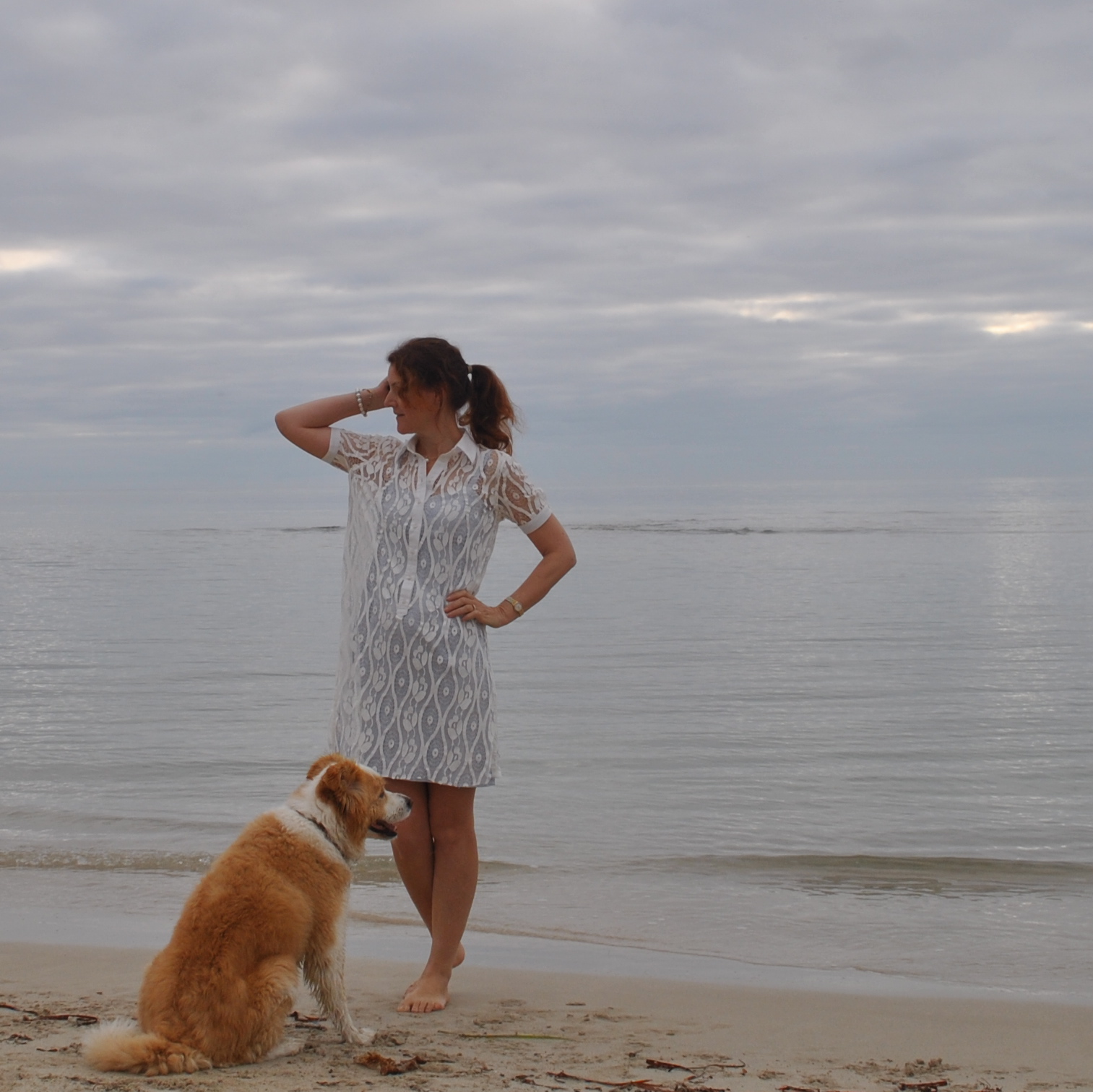
This delicate feathery ivory lace fabric was a very long term resident in my stash. It’s a tricky customer; sooo cobwebby and so sparse that it has absolutely no structure or form whatsoever and it both stretches and collapses upon itself. For years I’ve wondered what on earth I could do with it. Finally I just decided a simple dress would do, and then tried to work out how its wayward flightiness could be tethered into some sort of “dress” arrangement.
The white lace is from Fabulous Fabrics years ago, and for the bands and collar I used a perfectly colour-matched
ivory swiss dotted cotton voile with sparsely scattered fluffy dots, bought at Potters Textiles
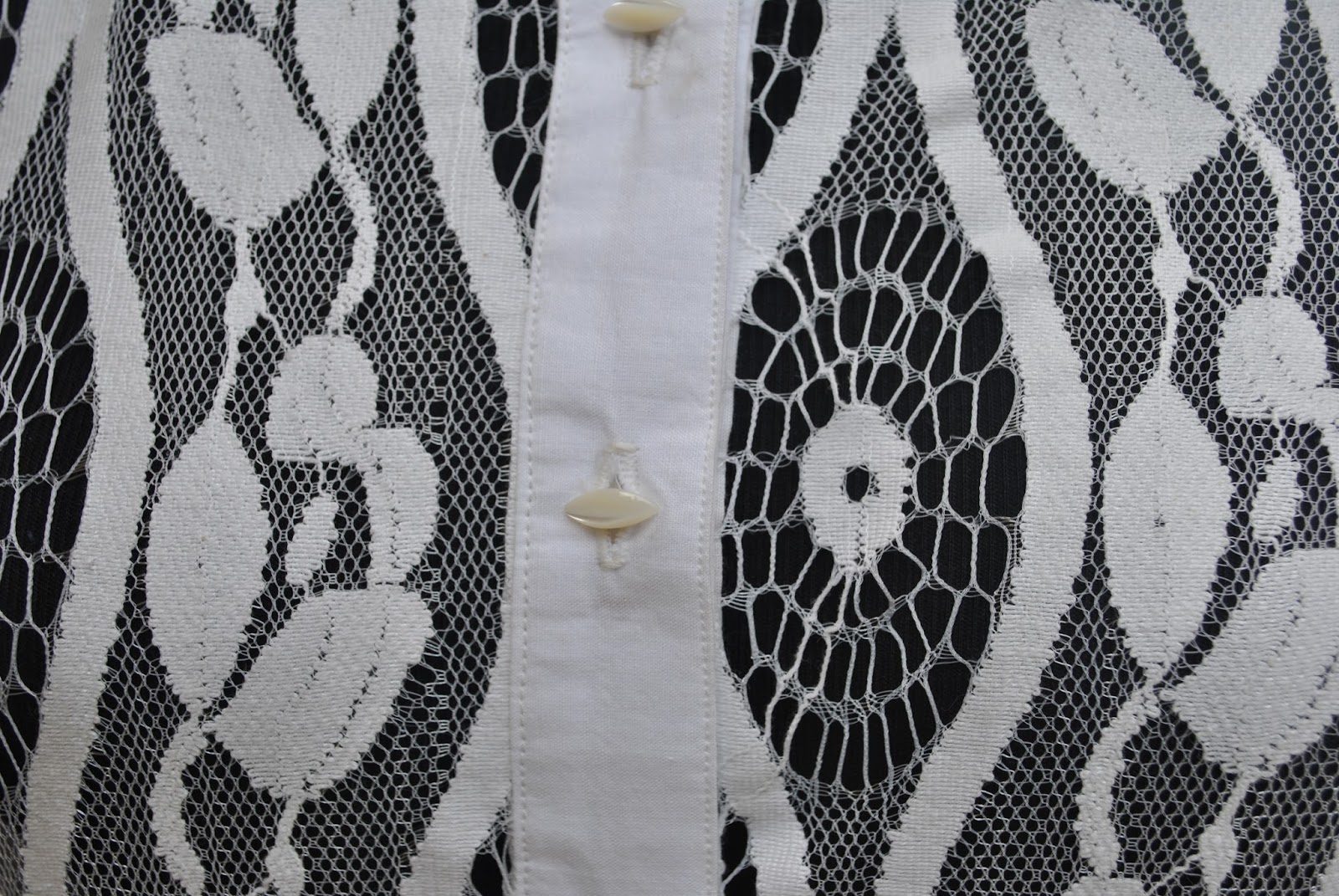
last year. The buttons… ah, the
buttons! They are lovely, antique
mother-of-pearl beauties that were given to me by ElleC… thank you so much
ElleC! I used two of these buttons
previously in this blouse and now this new dress uses the remainder… and, yes! It
was really really hard to cut them
off their little card, but I decided that they are too lovely to sit in a
button tin forever and they deserve to be seen! I think the marquise shape of the buttons is a purr-fect match for that same-shaped motif in the lace 🙂
I had
finagled the number of buttonholes to use every single last one of the buttons
so I was pretty darn devastated when the shank of one broke as I was stitching
it on… noooooo! And a snowflake’s chance in hell of ever finding another one!
So it was oh-so carefully super-glued together before stitching on, however I was still worried about it so
I’ve super-glued it and its
buttonhole together and to the dress.
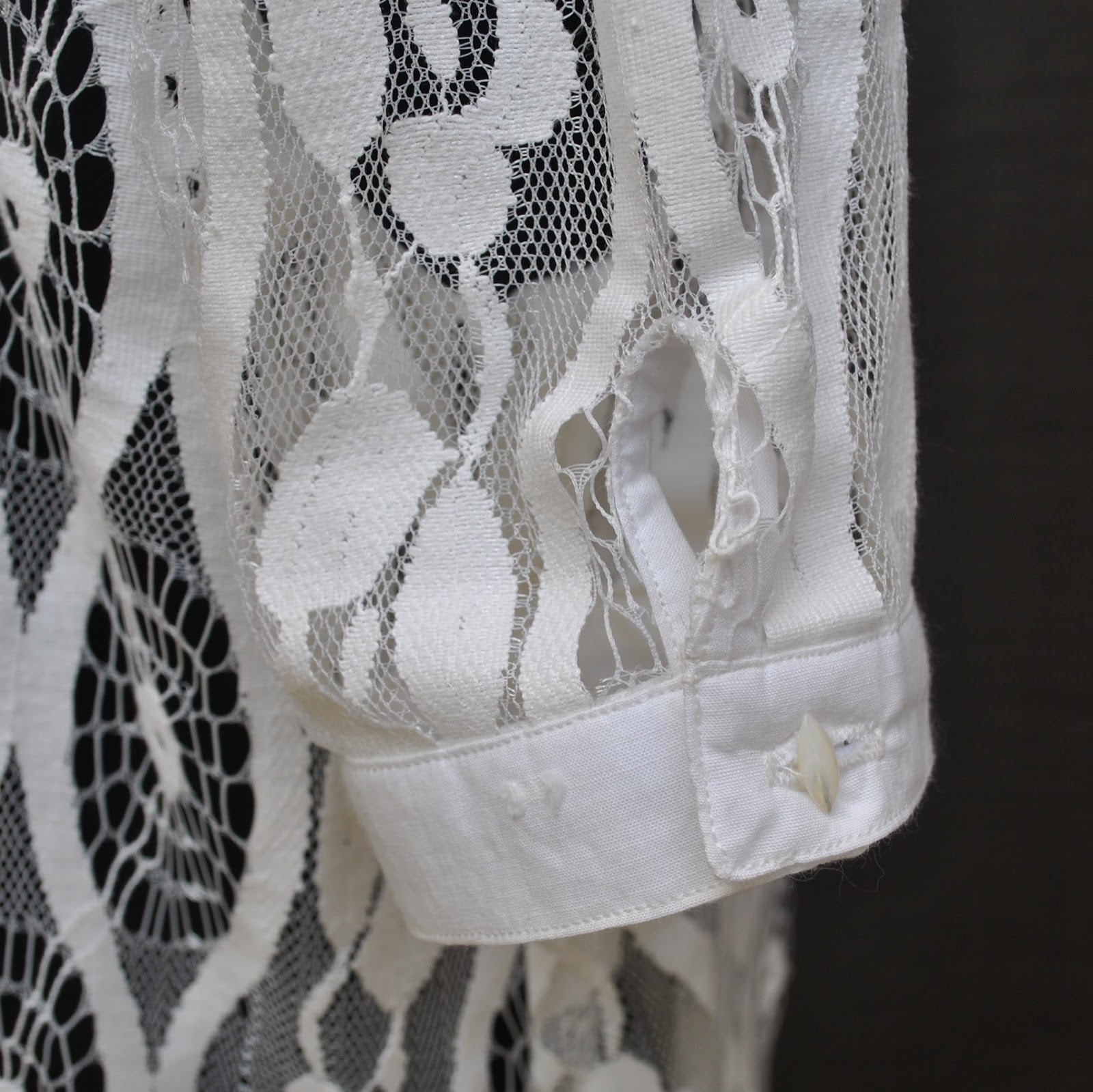
Now the left sleeve can never
be unbuttoned and I expect I will be obsessively checking to see that that
button is still in place forever and ever after. (sigh)
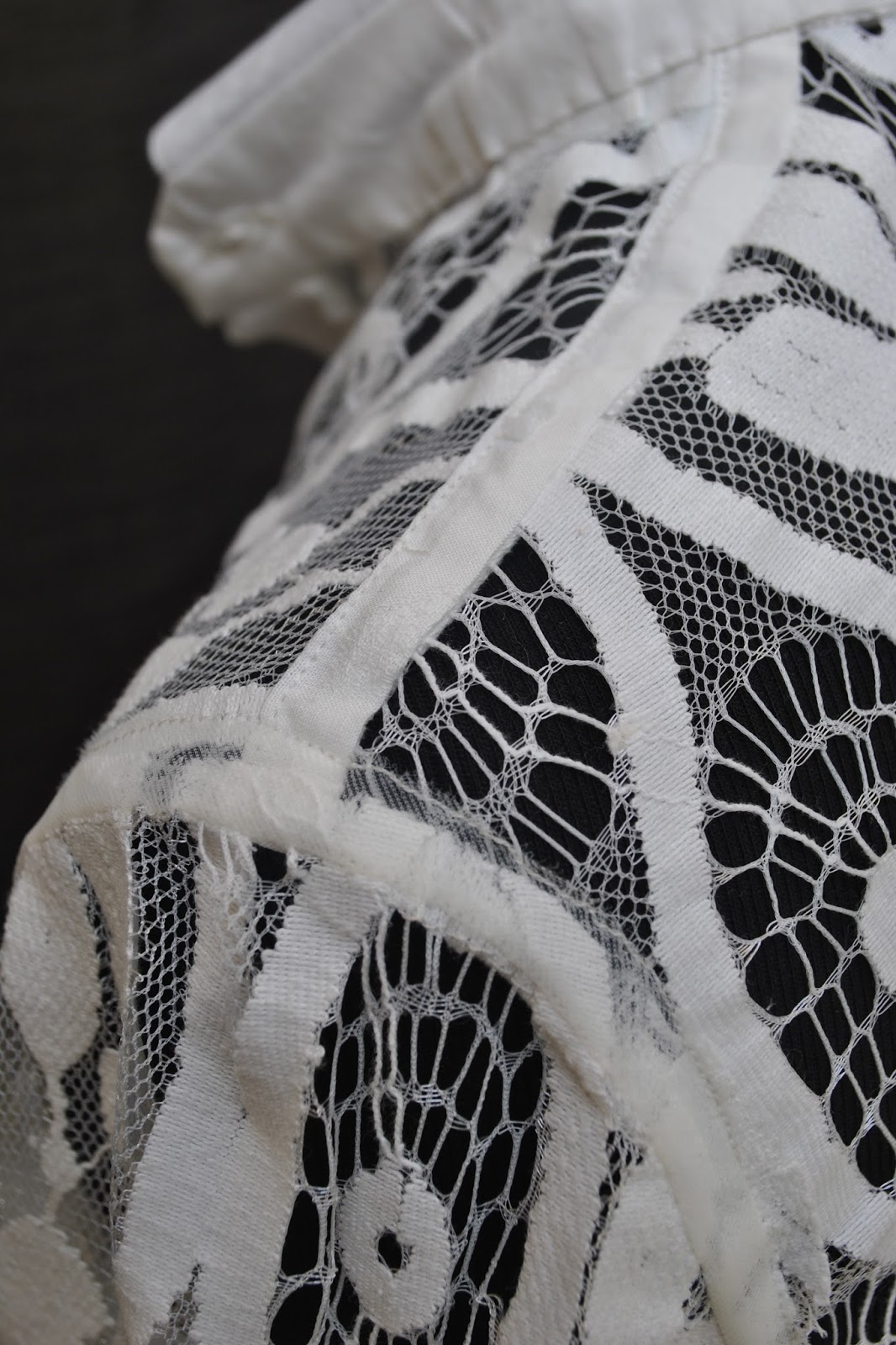
strip of the same ivory cotton, and the armscyes and side seams are encased with Seams Great, a gift from velosewer; thanks Maria! the Seams Great is a sheer and flimsy creamy-coloured tape and is virtually invisible from the right side of the garment.
I experimented with a few different finishes for the lower edge of
the dress and all my results were just too hideous for words so the lower
hem is simply cut straight and left unfinished. This does leave quite a nice ethereal lightness and floatiness to the
lower hem, and fortunately the fabric will not fray.
narrowed to a finished width of 2.5cm; which is visually more in keeping with
the delicacy of the lace fabric. the sleeves are shortened and I sewed a very
narrow band as a one piece sleeve-band placket, pictured below.
The front bodice was rotated to eliminate the bust dart because the fabric is so delicate sewing darts would have been difficult and they would have looked weird too. I cut the
sides to be a straight and wide A-line from underarm to the lower hem.
Burdastyle magazine 05/2010, 111 modified, ivory lace and ivory cotton, my review of this pattern here
Burda 8071, powder blue silk, details here
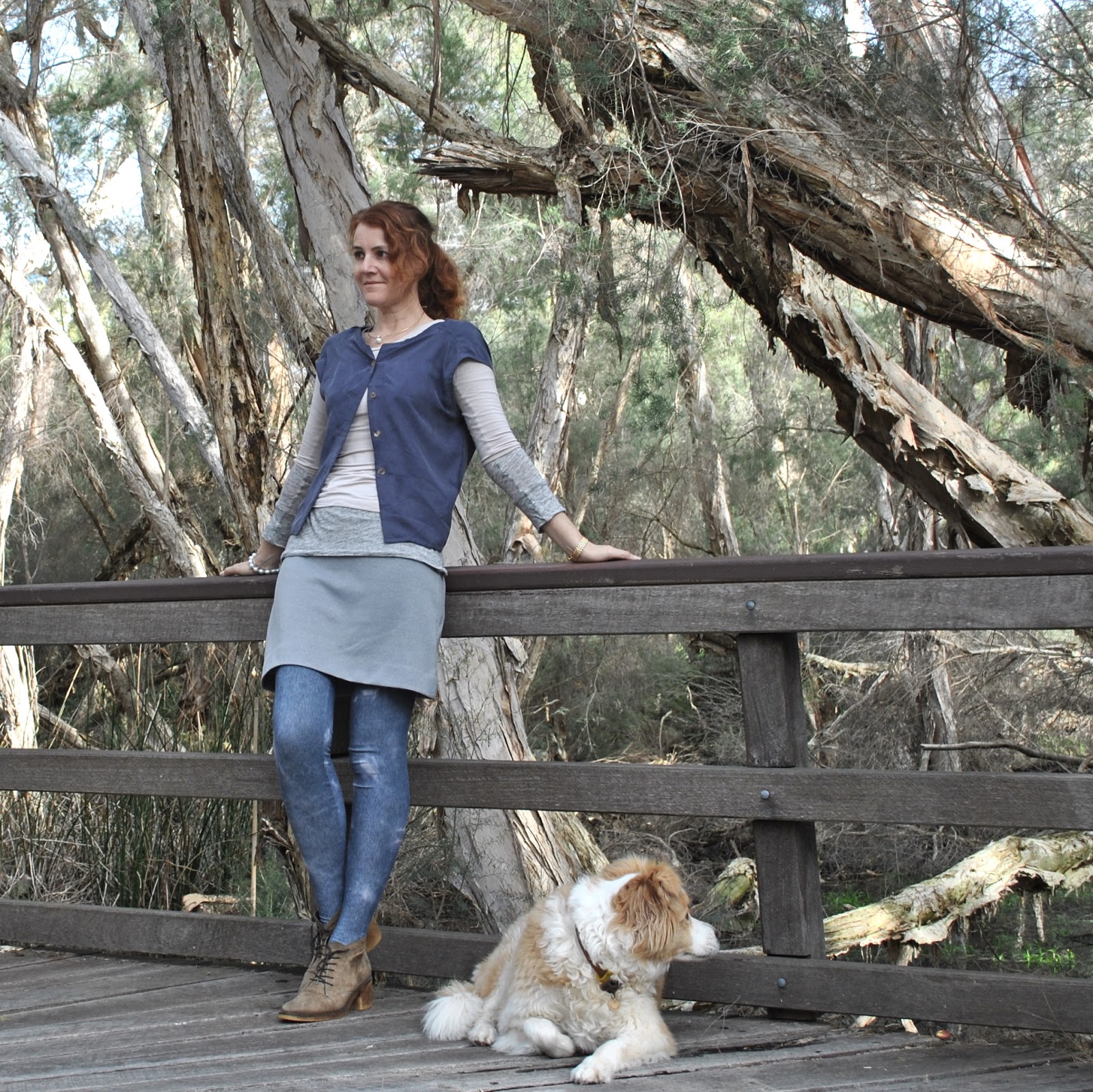
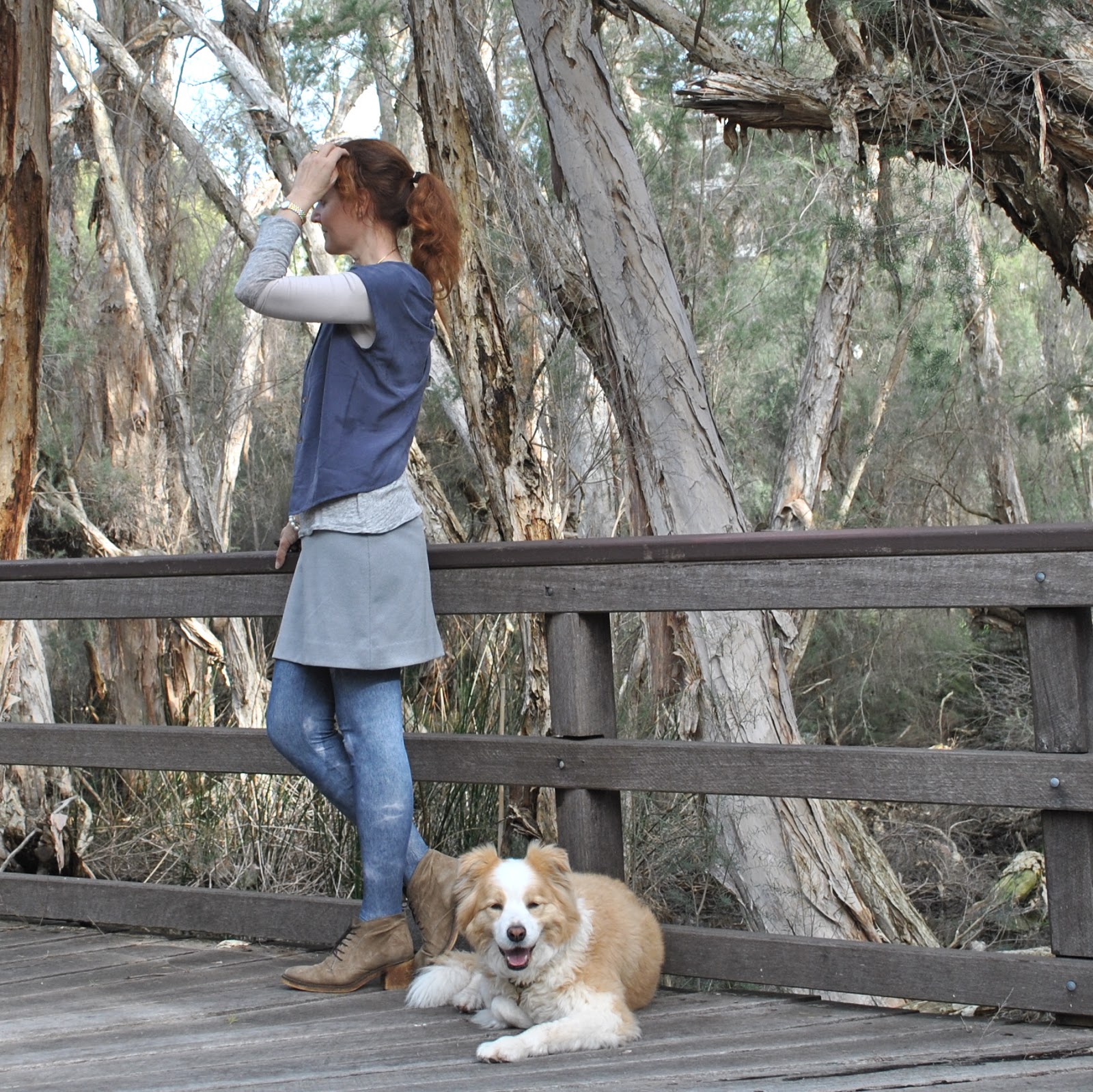
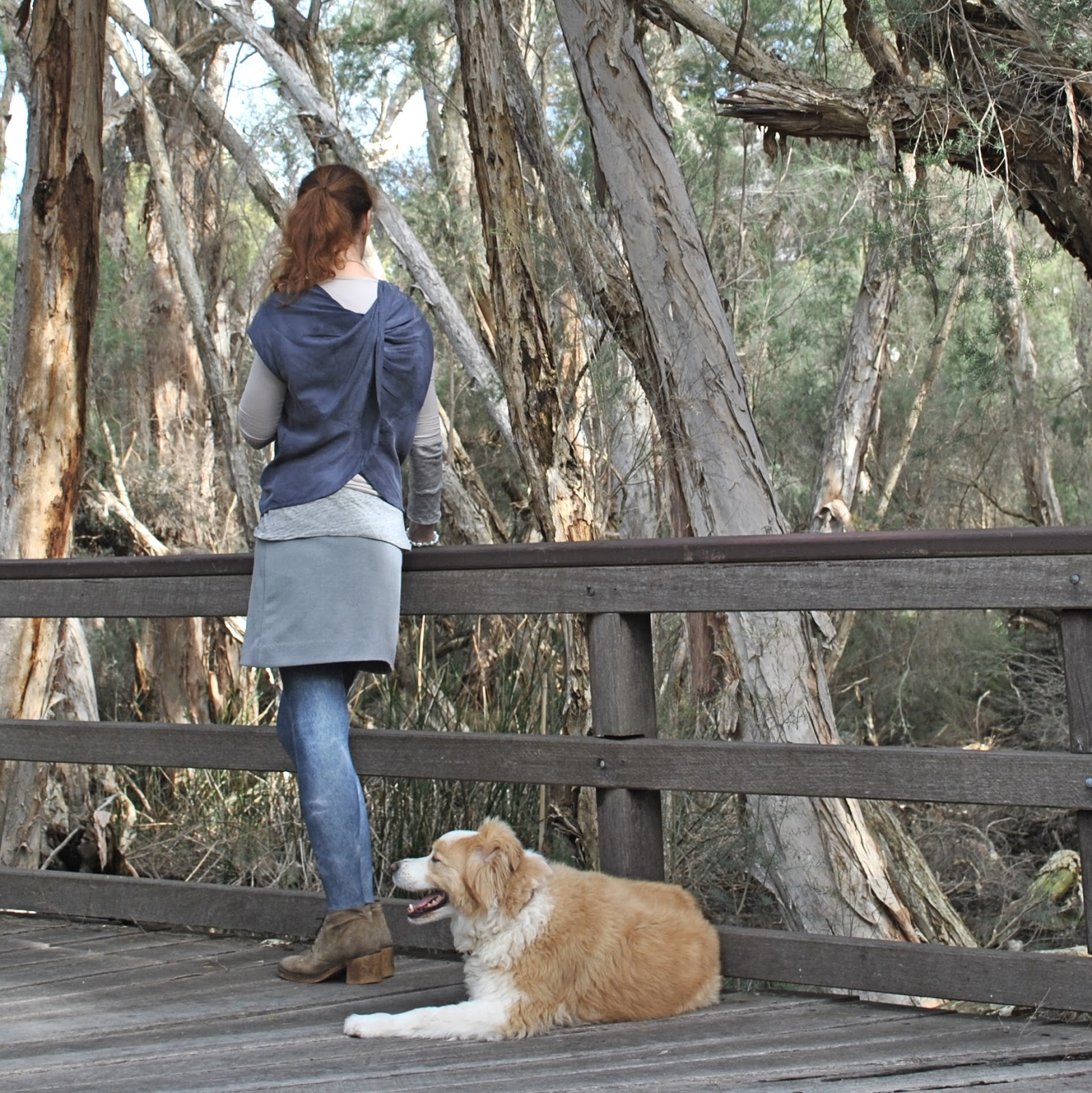
Bruised blue top thingie
Hello 🙂
I have made this once before… this is top “p” from Shape Shape, (previously referred to on my blog as Unique Clothes Any Way You Like) by Natsuno Hiraiwa. It’s a clever little design, like a cross between a little blouse and a draped wrap.
I really liked my first version, in a particularly delectable shade of creamy milk chocolate. I had hammered snaps on for the front closure, which turned out to be a ginormously dumb choice since sometime last year I ripped a hole in the front placket when pulling the snaps apart…. (moment of stunned disbelief at own stupidity) Note to self: strong metal snaps plus delicate fabrics, equals a bad idea!
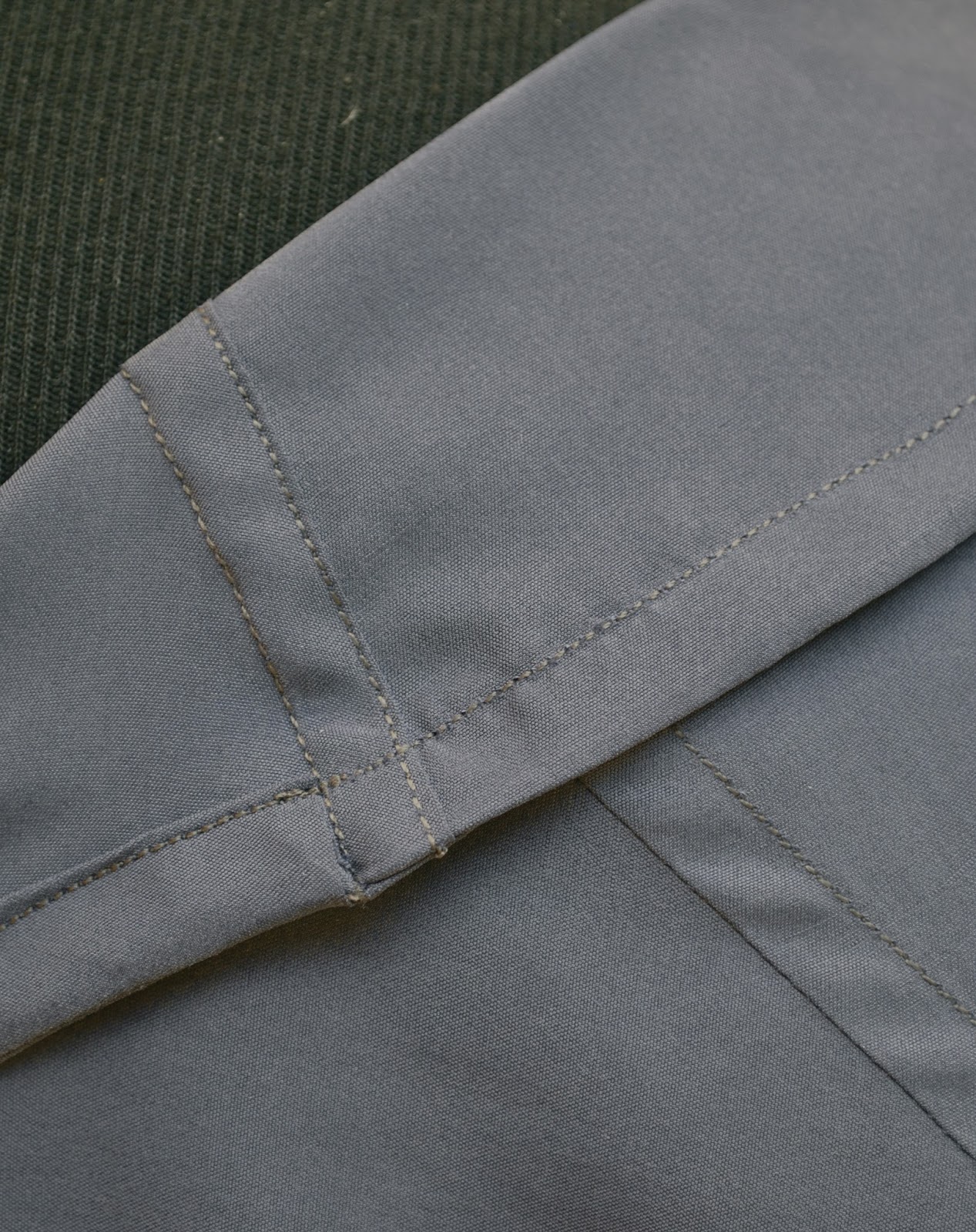
Version number two has much more sensible buttonholes and shell buttons, and is made in a lightweight drape-y silk with a suede-y, rather grabby texture to it, bought from the Fabric Store in Melbourne during my girly trip away with Mum and Cassie last year. All the seams are flat-felled and the bias hemline swaps over from folding one way to folding the other way halfway along each top/bottom. This is probably the only thing you have to think about making this otherwise very simple thing. Oh, and the fact that the fabric you choose has to look the same both sides.
It’s not the kind of top you would wear every day, just an unusual and arty little thing to pop on over a plain ensemble to jazz it up. Well that’s what I’m hoping, anyway!
Details:
Top; top “p” from shape shape by Natsuno Hiraiwa, dk blue silk
Skirt and two Tshirts; all self-drafted, skirt here, grey long-sleeved here, beige half-sleeved unblogged? I think?
Tights; self-drafted, of denim-look knit, details here
Boots; Francesco Morichetti, from Zomp shoes
the Panellist
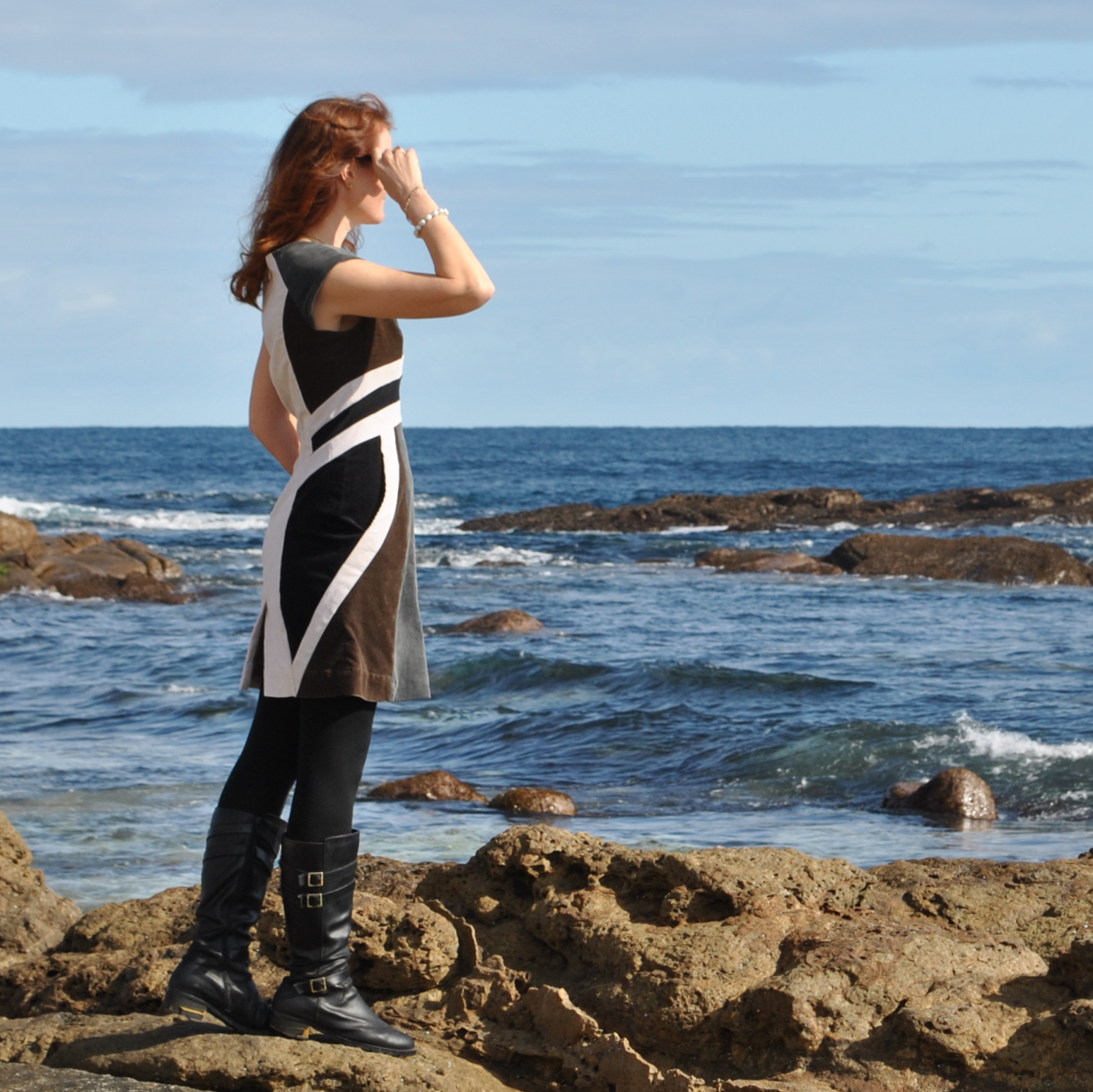
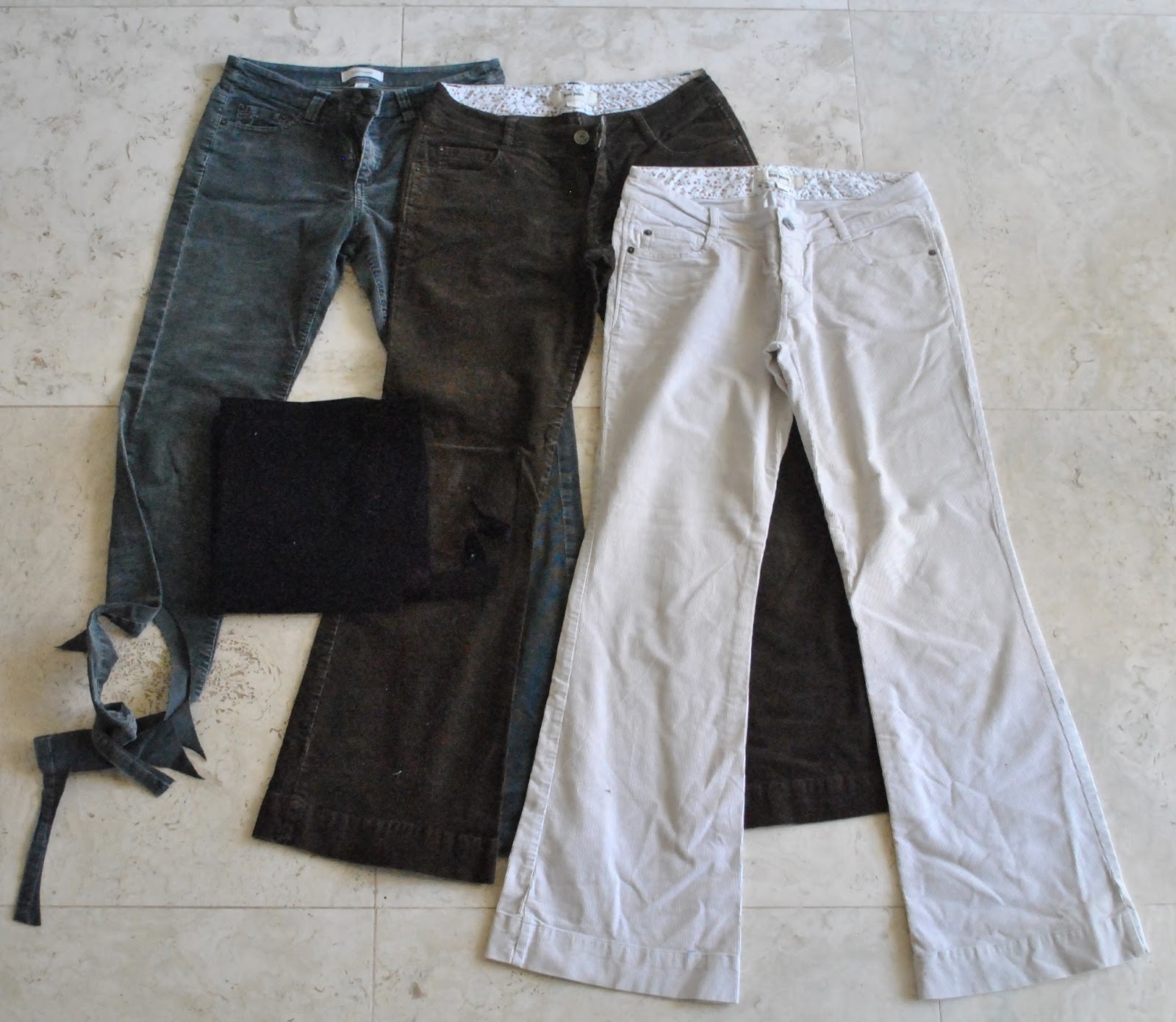
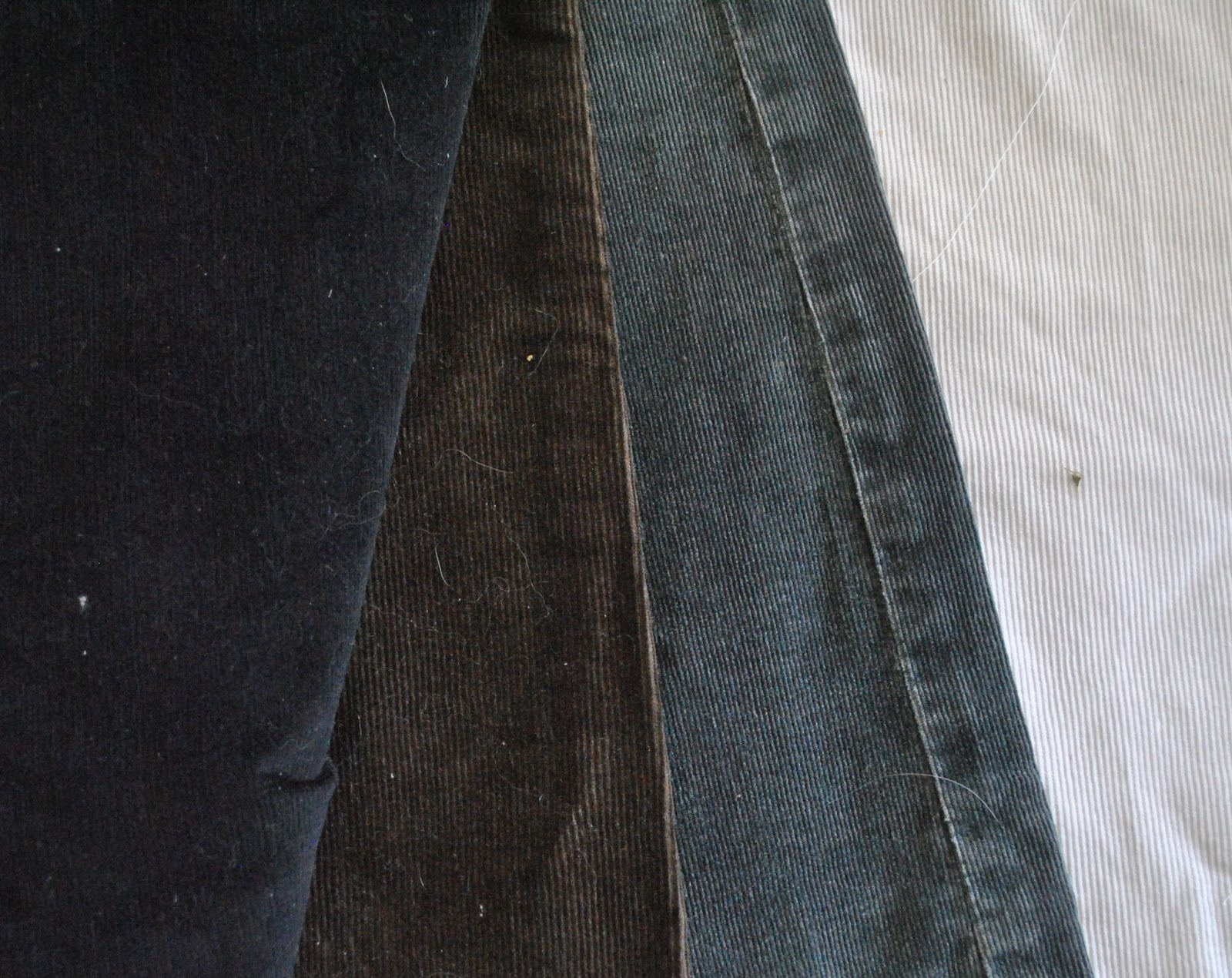
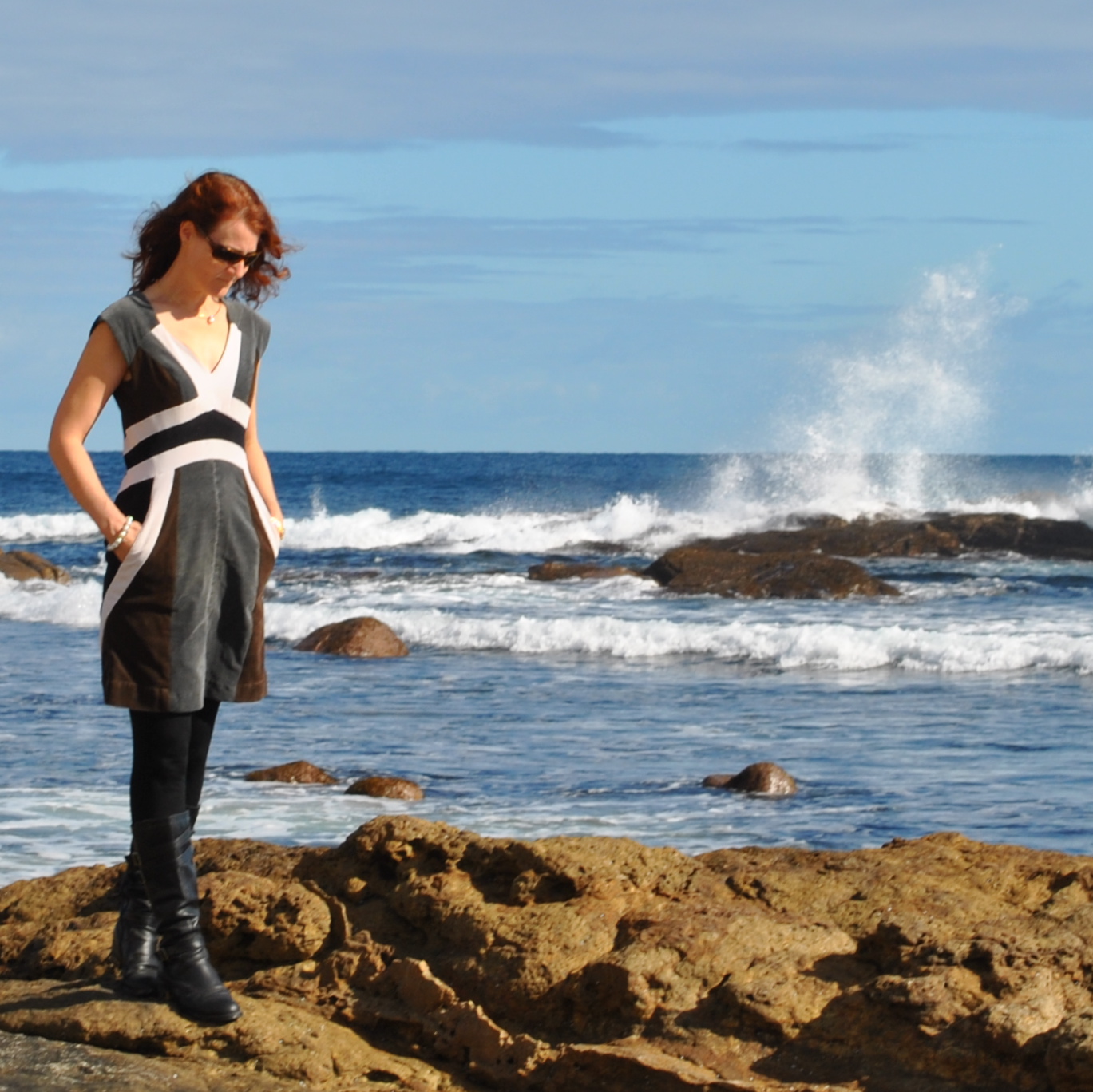
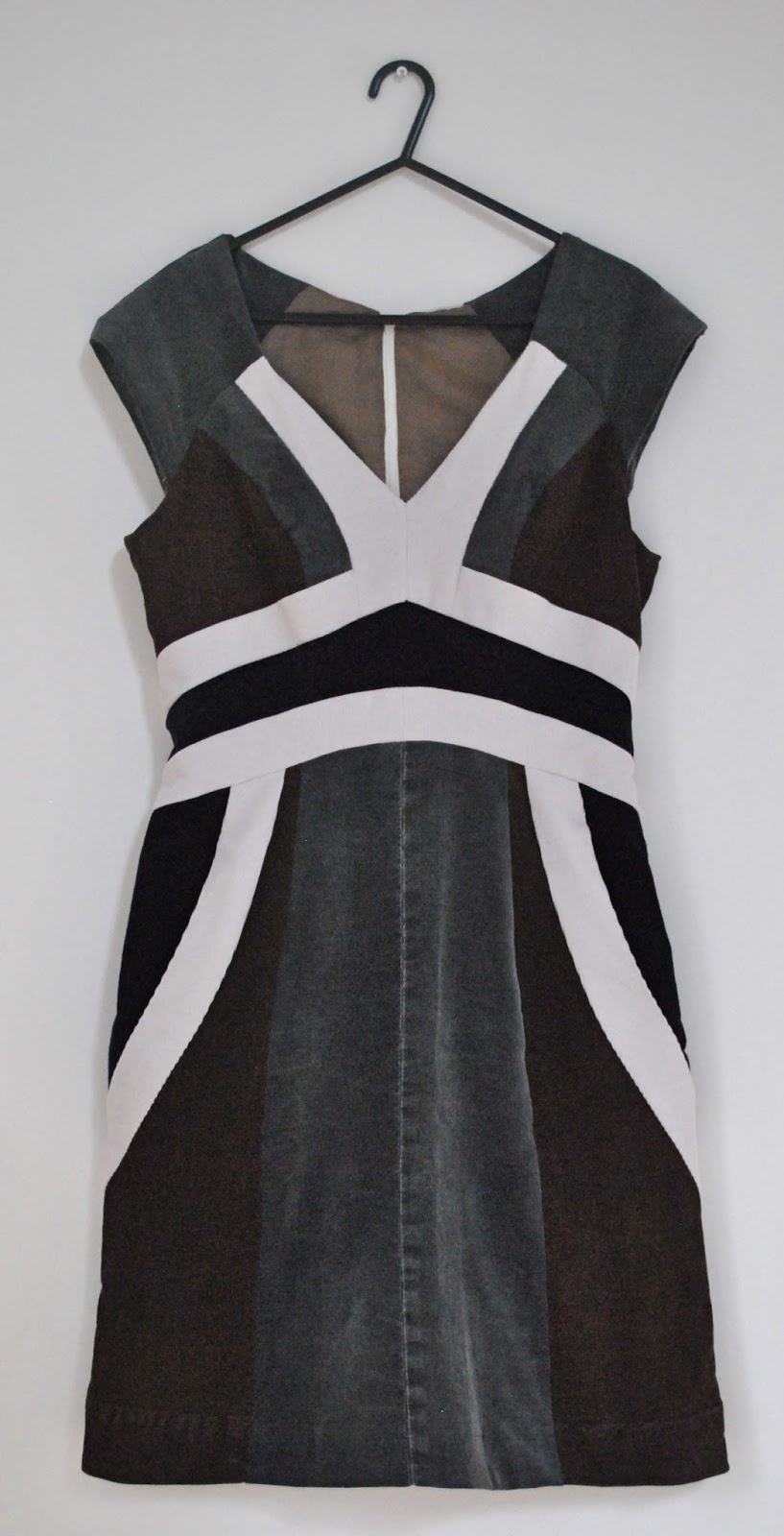
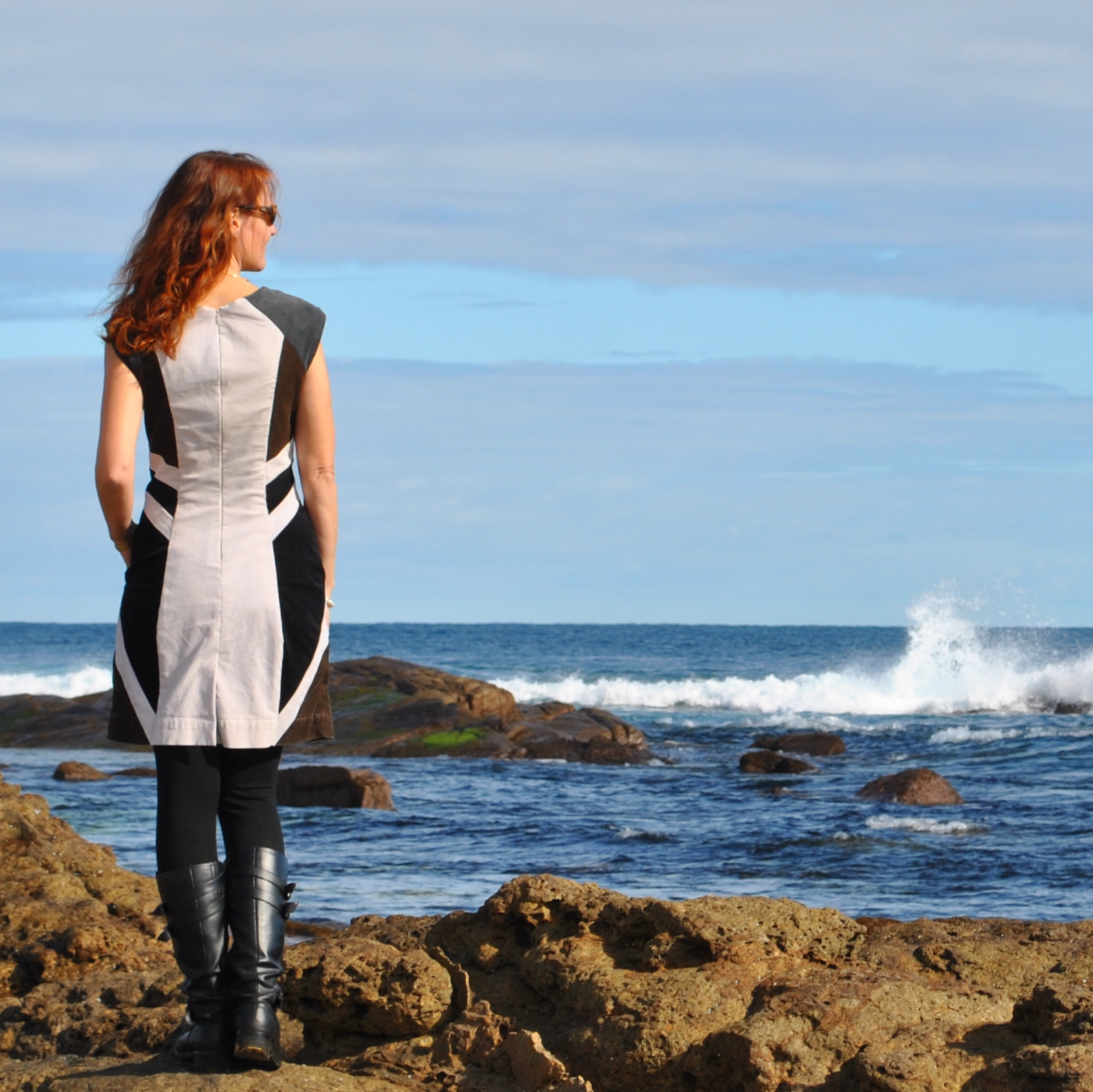
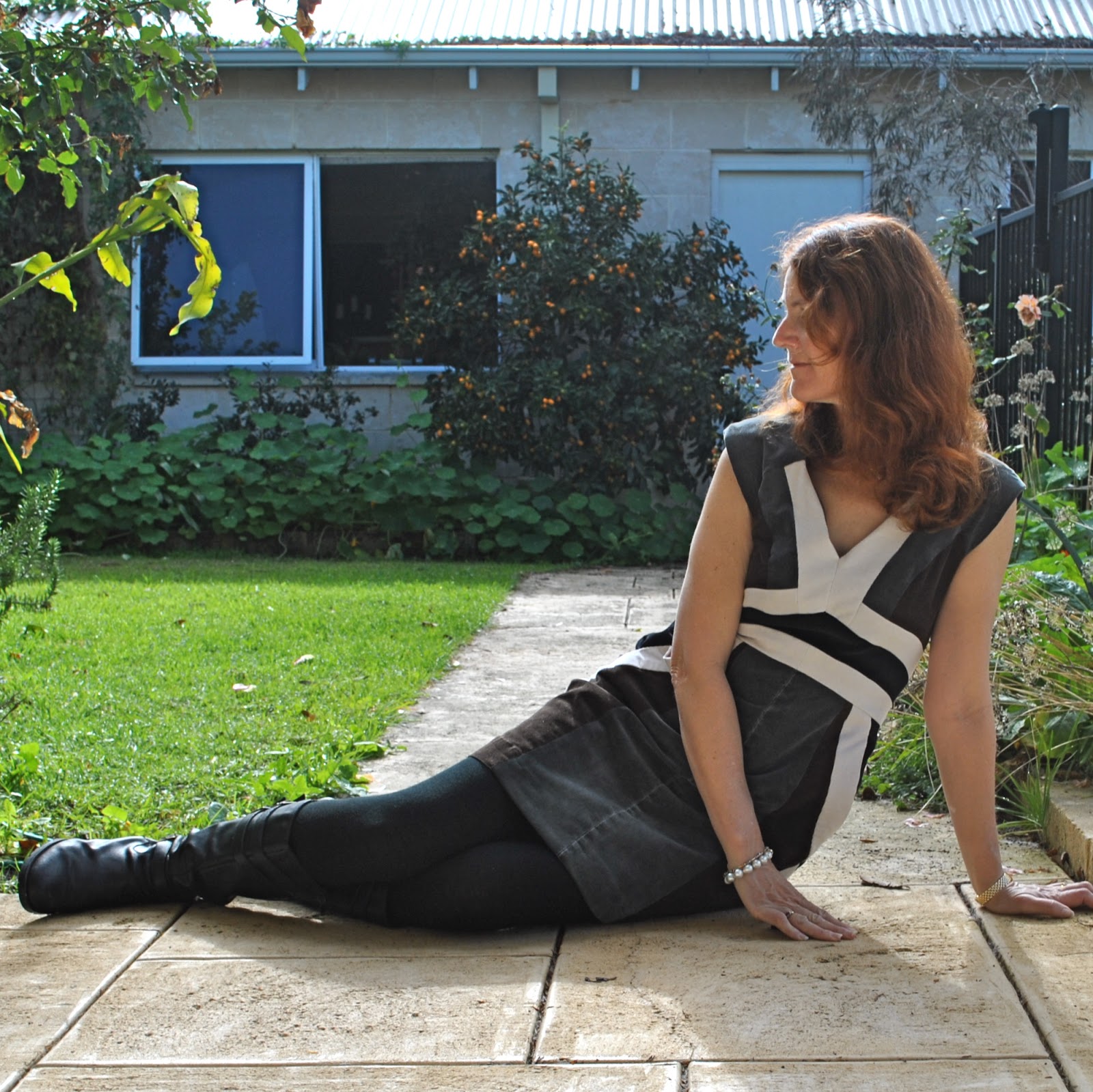
I’ve made a new dress! a dress comprised of panels and bands. This is Vogue 1316 and I made it using three pairs of old corduroy jeans, ivory, chocolate and a faded black; plus a piece of new black corduroy, itself a leftover from my black corduroy flares-now-bootlegs. Ha! hanging on to those old jeans and leftover scraps payed off… eventually. It can be seen by the mangled leg of the jeans on the left that these have been partially harvested previously, when I made the Black parliament…
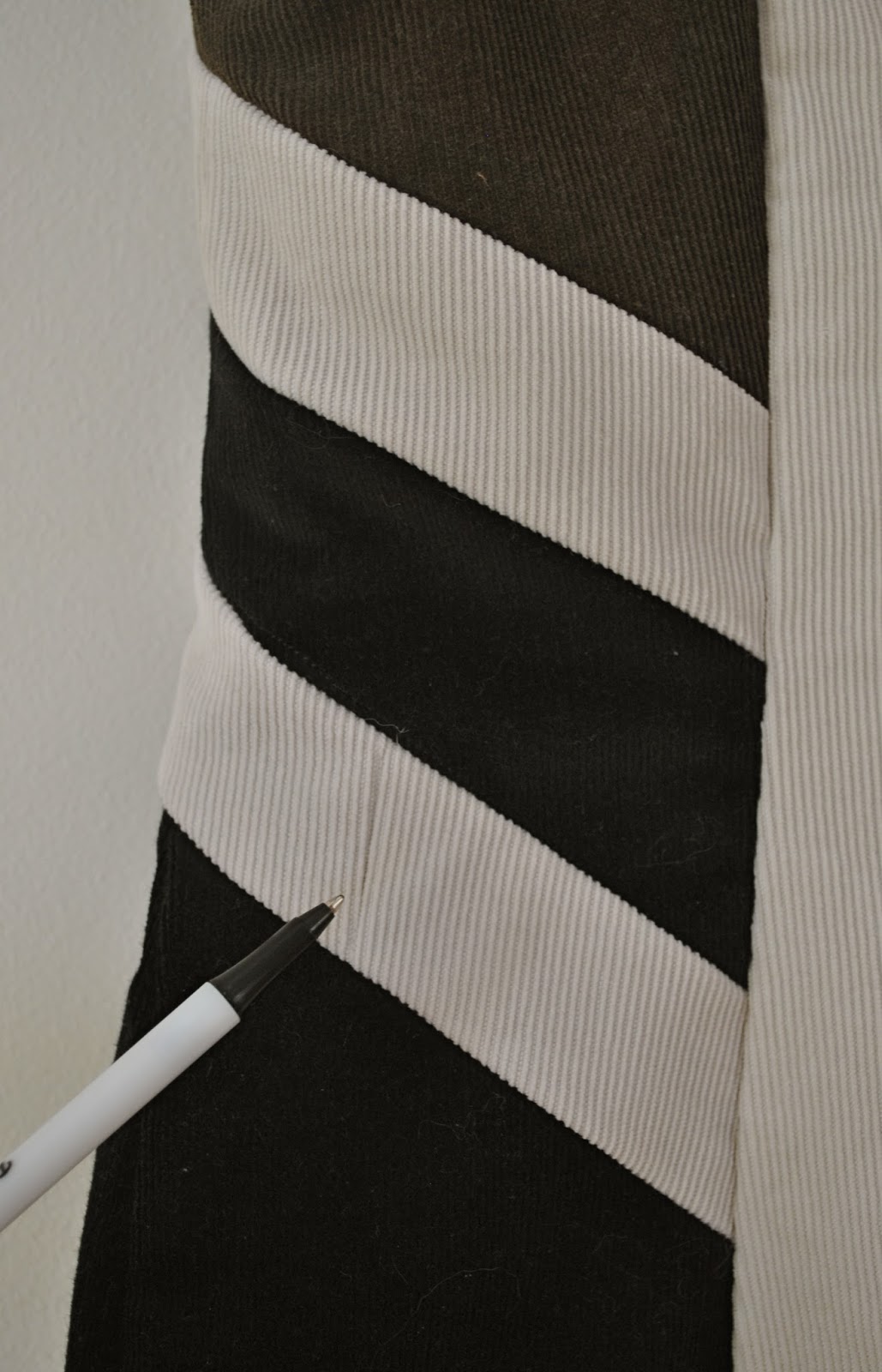
I managed to get the pieces for the dress, following the grain AND the nap (no small feat) from these jeans, with only a few piecings necessary. The original hem has been retained and incorporated into the lower hem of the skirt in each of the ivory and chocolate brown lower skirt panels. The widest panels I cut from the leftover piece of black corduroy, because that piece was the widest… the bonus is that this is the hip area and the darkest fabric situated here gives a slimming effect.
The lower band of the dress is a very wiiide piece, and since jeans legs are not wide, this required joining three pieces together. But hey, I don’t think the joins scream “hey lookee here, seam!” very much, so I think I get away with it.
Also the lower front is cut over the side seam from a jeans leg, with the old side seam in the new centre front.
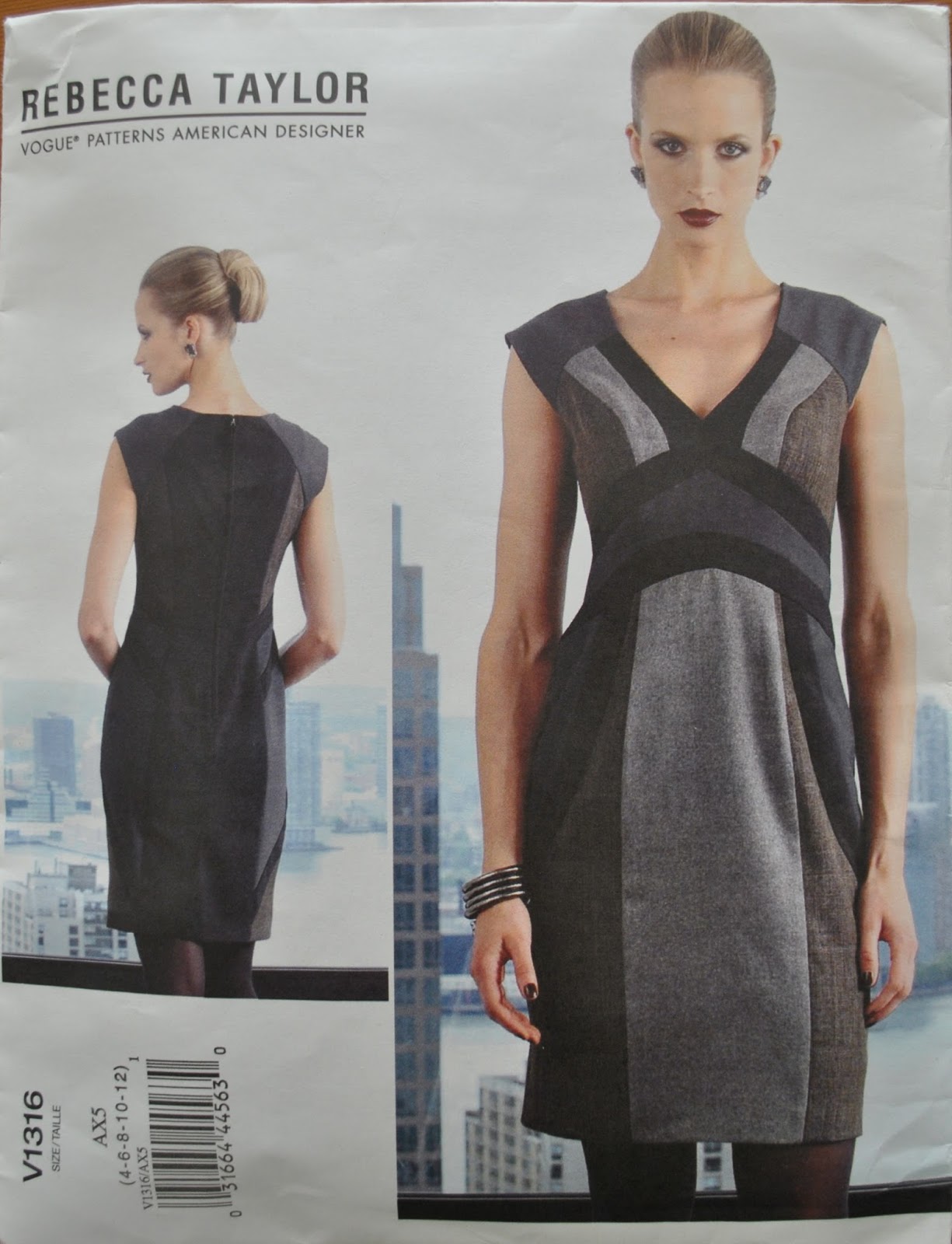
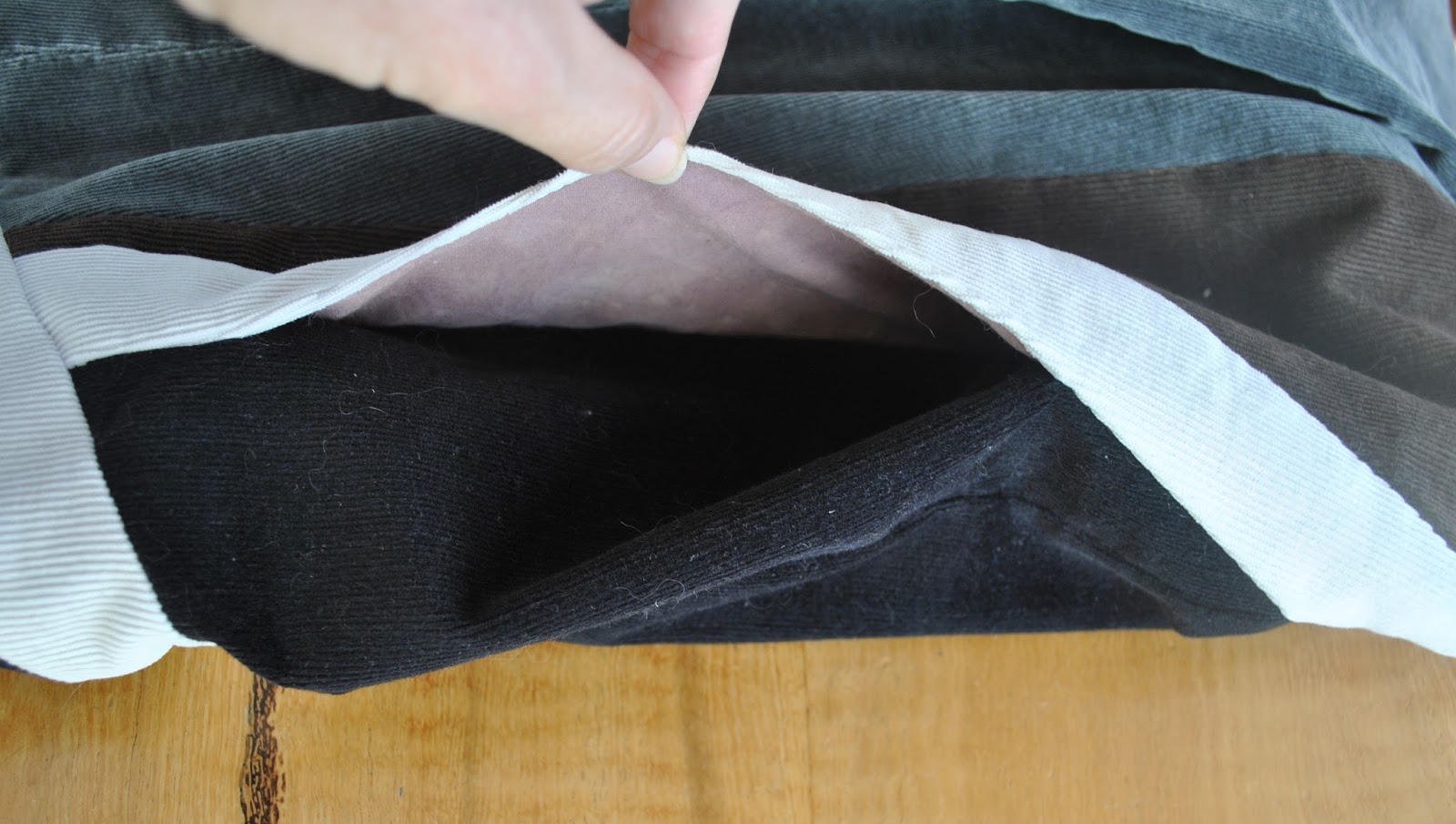
So, it can be seen above that my dress has luvverly deep pockets. The pattern does not provide for pockets. When I first saw the picture on the pattern envelope I thought that it did. That side band curving down from the waist and around to the back was situated in perfect hip pocket position, so it was a reasonable assumption to make. Perusal of the fine print revealed that I was sadly mistaken. Early elation (and it has pockets!) turned to disappointment (oh it doesn’t have pockets), turned to a dawning realisation (hey, it could so easily have pockets) turned to a firm resolve put those missing pockets back into the design where they were so inexplicably lacking (dammit, that dress really should have pockets!)
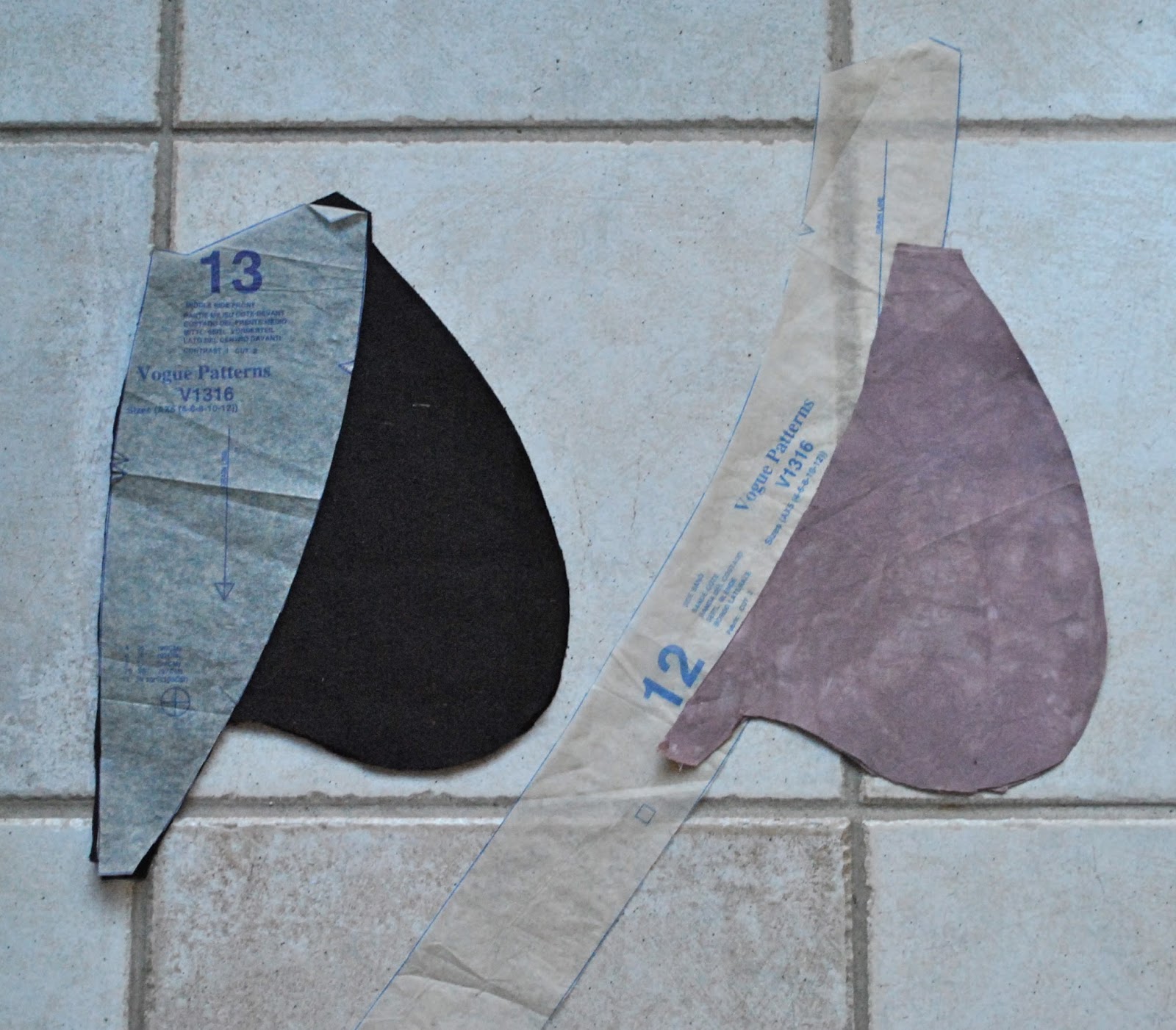
Adding them was not very difficult. I cut the skirt pieces to be bigger, grading from my usual waist size out to between one and two sizes bigger than my usual choice at the hips to accommodate having hands in the pockets. Then drew a rough, my-hand shaped piece onto paper, added this to the inner edge of pattern piece 13, the middle side front, and cut this composite new piece from the fashion fabric for the pocket. I cut the hand-piece from woven cotton for the pocket lining. I interfaced the corresponding section of the full-sized fashion fabric side band piece with iron-on interfacing, as this was to be the pocket opening and so needed stabilising, and joined all the pieces in the normal pocket way, the pocket lining to side band with a narrow seam allowance so the fashion fabric continues over and into the pocket within the fold. Additionally the pocket opening is under-stitched, to prevent the lining from rolling out.
I am unreservedly thrilled with how the pockets turned out, they really are in the perfect position, and I cannot understand why they were not there in the first place. Vogue would do well to include pockets, or at least the possibility of pockets, in all their casual designs imo , since they are clearly high on the list of Most Desirable Features in a Design, wouldn’t you agree? It’s certainly something I always look for in a casual pattern, or at the very least, the potential for finagling pockets if at all possible. I reckon this dress is only, like, a hundred times better for having pockets? Rough guesstimate, there.
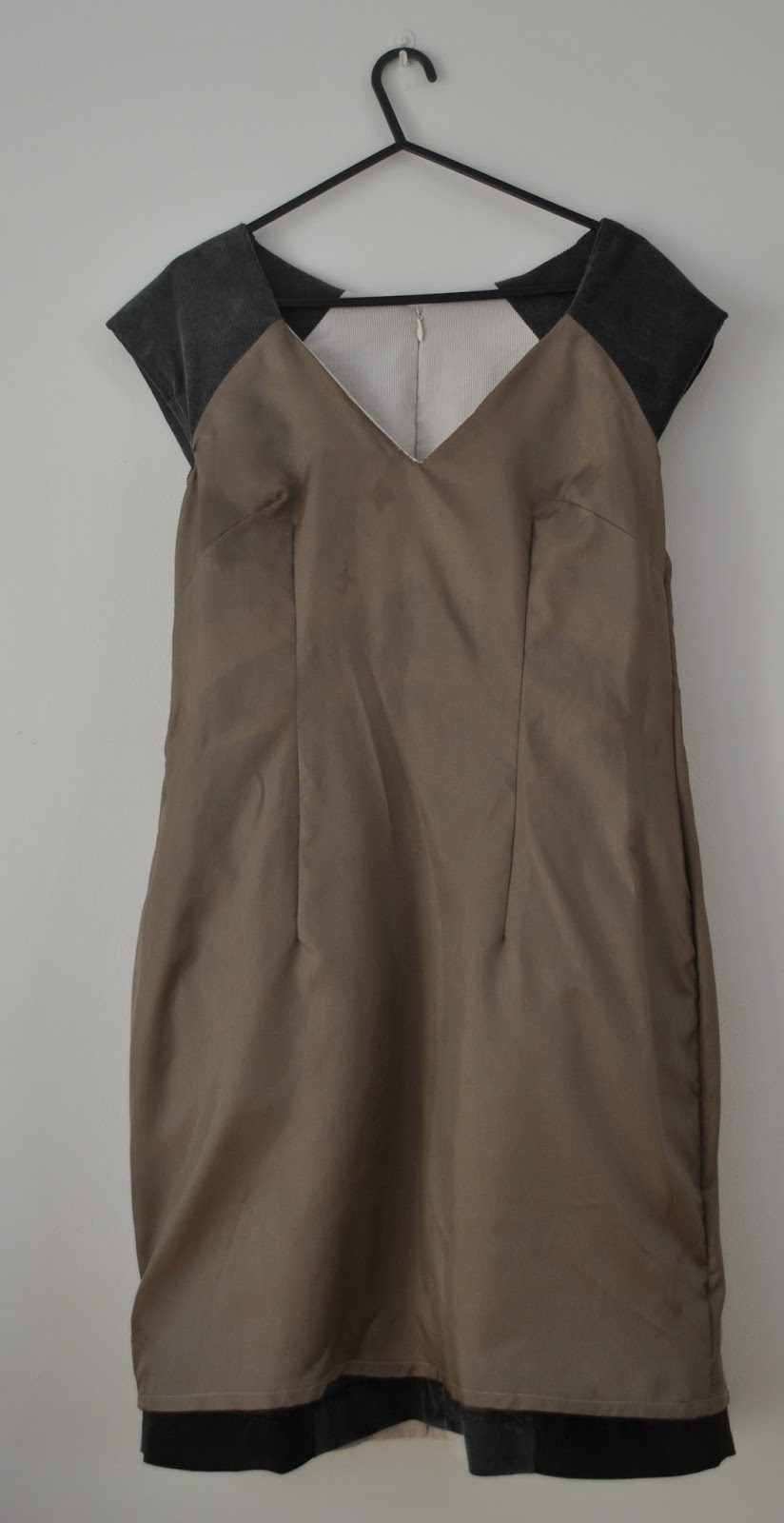
The dress is fully lined; and even in a casual, toss-it-on-for-whatever, day dress like this I prefer the clean and streamlined minimalism of an invisible zip, so used one.
The fit… there were minor issues. For a “fitted” pattern I reckon it runs quite big and boxy throughout. But this was easily fixed, mostly through that handy back/side section seam, pictured below.
I am super happy with the dress, it was an enjoyable puzzle to put together and is very comfy and easy to wear. I love washed and worn corduroy, such a beautifully soft and warm texture in a winter dress. And it always makes me feel good to re-use old textiles constructively like this. 🙂
Details:
Dress; Vogue 1316, fashioned from 3 old pairs of cotton corduroy jeans plus another piece of cotton corduroy in another colour.
Tights; self-drafted, black merino, details here and my tutorial for drafting your own custom-fit tights pattern here
Boots; Andrea and Joen, bought from the now re-branded Uggies in Dunsborough
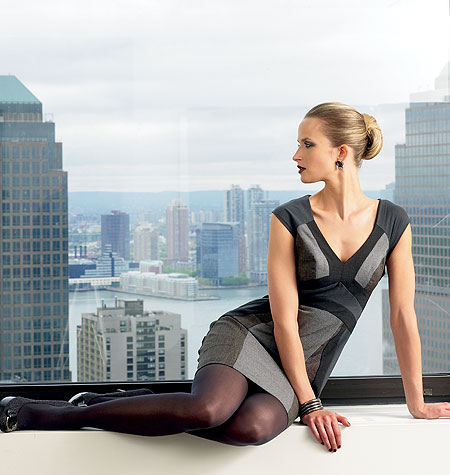
and merely because I find these pretty amusing… the Vogue pose
Description:
lined dress has several shaping bands and multiple panels, a central back zip
and walking vent
Sizing:
4-12. I cut my usual size 10 in the bodice tapering out to between a 12-14 at
the hips. This hip is larger than
my usual size, but I wanted to incorporate pockets into the design, which
requires a bit more room in the skirt.
In my opinion the pattern runs a little big, since I had to take in the
bodice quite a bit, and might go down to a size 8 in the bodice next
time.
it look like the photo/drawing on the pattern envelope once you had finished
sewing it?
the instructions easy to follow?
did you particularly like or dislike about the pattern?
attracted to the complex banding and panels design, lending themselves to
pattern through the use of tonal solid colours.
disappointed that it did not have pockets, considering that the side
band is perfectly positioned to have a pocket tucked under it. But I knew the
design would be very easy to adapt so that I could have my beloved
pockets. And it was, and so I have them 🙂
lining is not done in the best way, in my opinion. I don’t really love lining being sewed straight to the shell
of the dress like this. It is
under-stitched to help keep it all inside; but if I was going to make this
again I would instead make self-fabric facings for the neckline and underarm
and attach these to accordingly modified lining pieces.
For the lining, the pattern stipulates 1.8m. In my size, I found 1m is sufficient.
Used:
alterations or any design changes you made:
determined to incorporate pockets into the dress, so modified pattern piece 13
to be a pocket piece, and also drafted another piece to be a partial facing for
piece 12 with an integrated pocket lining. To accommodate hands-in-pockets wearing
ease, I drafted the skirt pieces to taper from my usual size 10 at the waist, out
to between 12-14 at the hips.
raised the height of the centre front by about 1cm, and am glad I did. Next time I might raise it even higher!
19-23: I prefer an invisible zip in my dresses, and I always install an
invisible zip before stitching the remainder of the seam below. I reckon this gives you a much better
and smoother finish.
me generally, so I pre-emptively shaved about 1cm width off the bust curve of both pattern pieces 3. Even so, at Step 24: sewing the back to side section seam; I found the fit still quite boxy and not
close-fitting enough for my tastes around the waist, so took out several inches in
width from the underbust and waist, graduating out again to the bust and hips.
Ultimately these alterations left me with a distinctly more A-line skirt than the pattern intended, and I am happy with that.
you sew it again? Would you recommend it to others?
gosh, I always say yes I will sew it again, and then I’m immediately distracted
by new patterns like a toddler with a shiny new toy! But I certainly would not rule out sewing this one again. This one is just going to be casual, everyday, winter’s dress. I’ve been thinking about the idea of using several bright clear colours demarcated by black bands, like a licorice
allsort. Wouldn’t that look cool?
yes 🙂
really love how it turned out! The interesting and unusual seaming pits the chosen colours against each other to dramatic effect. I can picture a multitude of
possibilities for colour-blocking here.
I am especially pleased with how my pocket alteration turned out, to be honest I
probably would not enjoy wearing a dress without pockets so much as one with,
so to be able to incorporate them so easily into the design was a very happy
bonus.
any fitting modifications I would not describe this as a fitted dress. I had to take
my usual size in quite a bit.
However it is quite easy to do a lot of final fitting through the back
to side section seams.
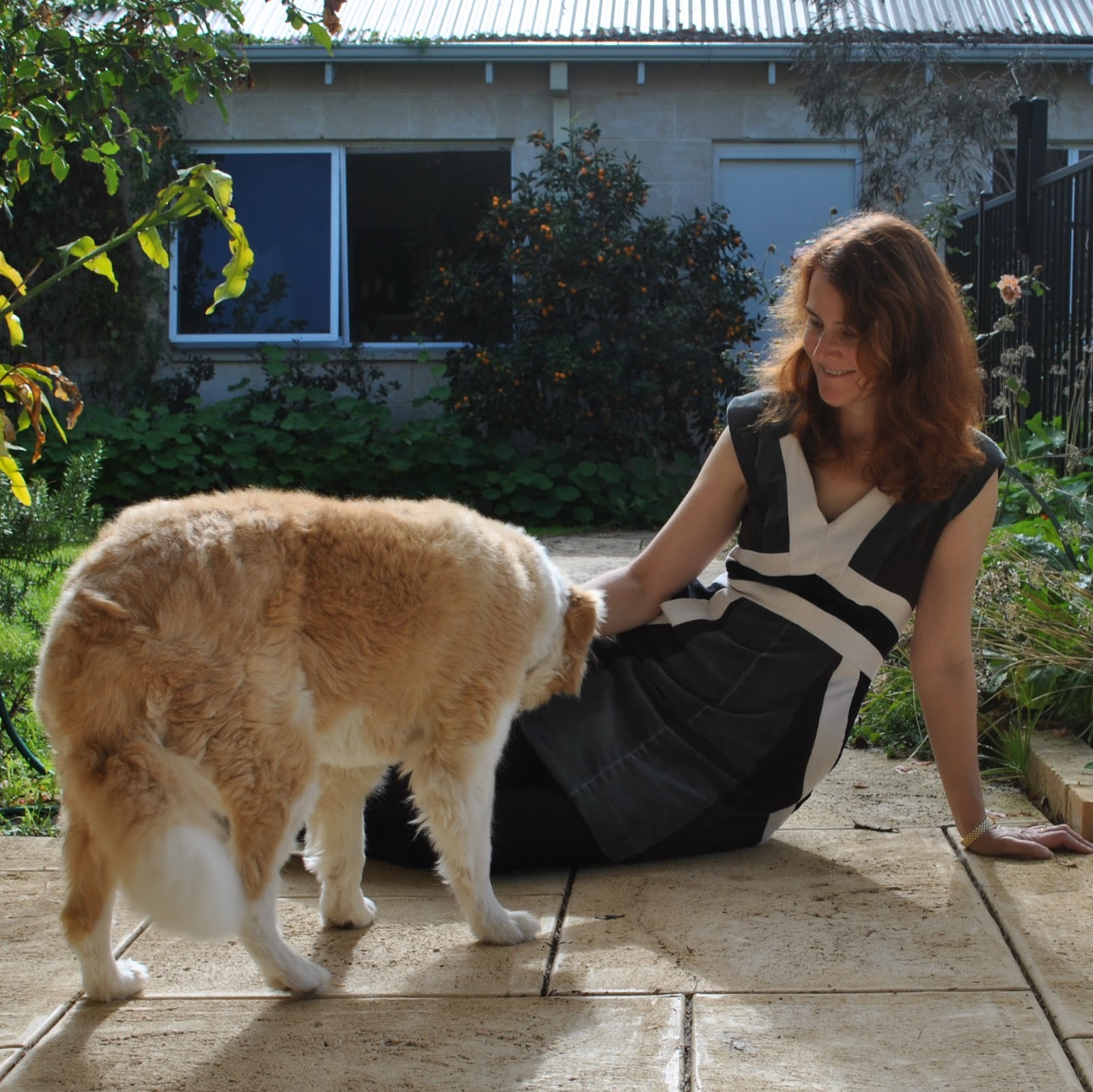
….photo-bomb!…
Paprika tights; 6 different ways
Hmmm, a better name for these posts would be 6 different outfits, since there’s only one “way” you can wear most things, and particularly something like a pair of tights!  Oh well, I’ve been using this title for too long and it’s too late to change now  🙂
I made these tights only recently just before the start of winter, using my own custom-fit pattern. They are um, quite bright, and I worried a little bit that they would be too bright for my mishmash of a wardrobe. I should not have, because there’s nothing like a spot of spicy crazy colour to pep up a drab winter-y colour scheme.  And I’ve been pretty happy at how easily these garish things have fitted in!
So here are some of the outfits they have cheered up over the past few weeks…
Below: at left; orange and ivory white seems like a very summery colour scheme, but it works beautifully in winter as well.  Worn with a burnt orange skirt, a long-sleeved white blouse, ivory cardigan, and caramel boots.  At right; near opposites on the colour wheel, orange is a natural pairing with blue.  Worn here with a blue cotton dress and a blue Pattern Magic cardigan.