Category Archives: Uncategorized

palest grey/green set

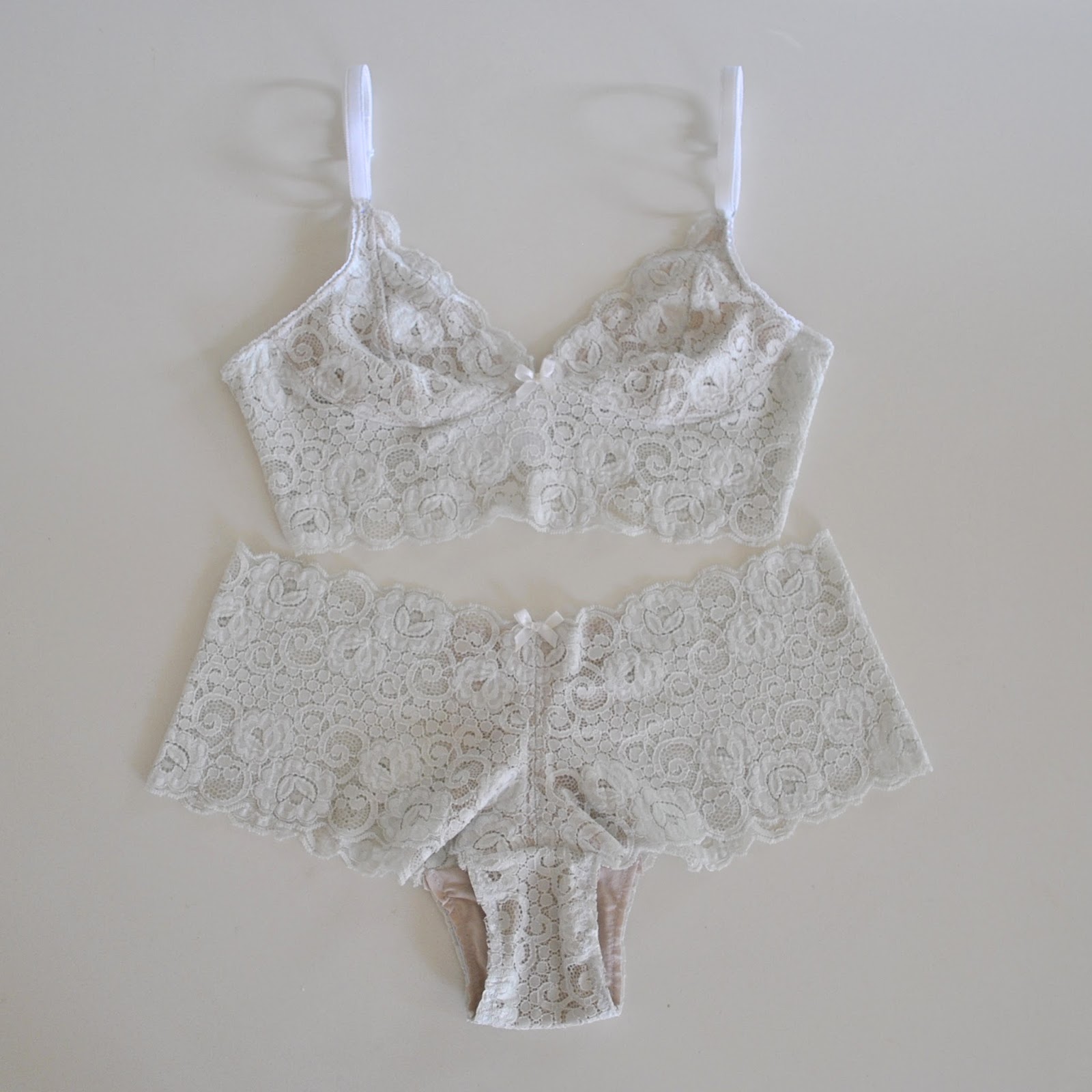
A new lingerie set…
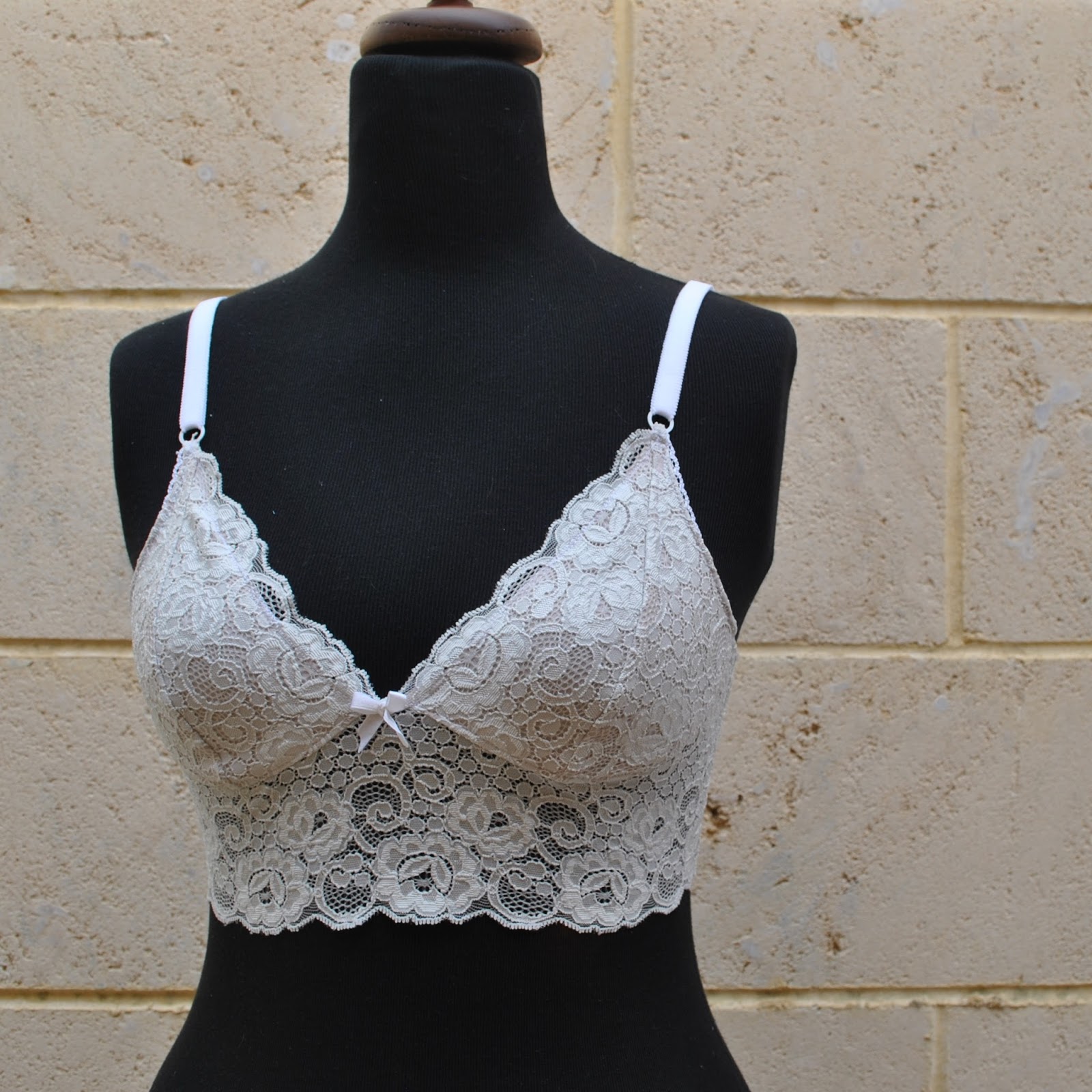
Patterns; bra is the Watson, by cloth habit; the longline version, and the ultra-cute knickers; which appear superficially like ginormous granny-knickers on the flat but seriously, they’re adorable on! are Tanga, a free pattern downloadable from Burda.
Fabrics; I’ve wanted an all-lace set and bought this lovely green lace aaaaaages ago, gathered all the bits and bobs and cut out the pieces; and then we were going away, I shoved the whole shebang in a bag and forgot about it.  Doh!  Imagine my delight when recently I found it again…  woot! I got cracking and finished it off.
Palest of the pale, grey/green lace, white shoulder strap elastic, rings and sliders; Homecraft Textiles.  Picot elastic, beige jersey lining; Fabulous Fabrics.  Satin ribbon; scraps found in stash, as old as the hills.

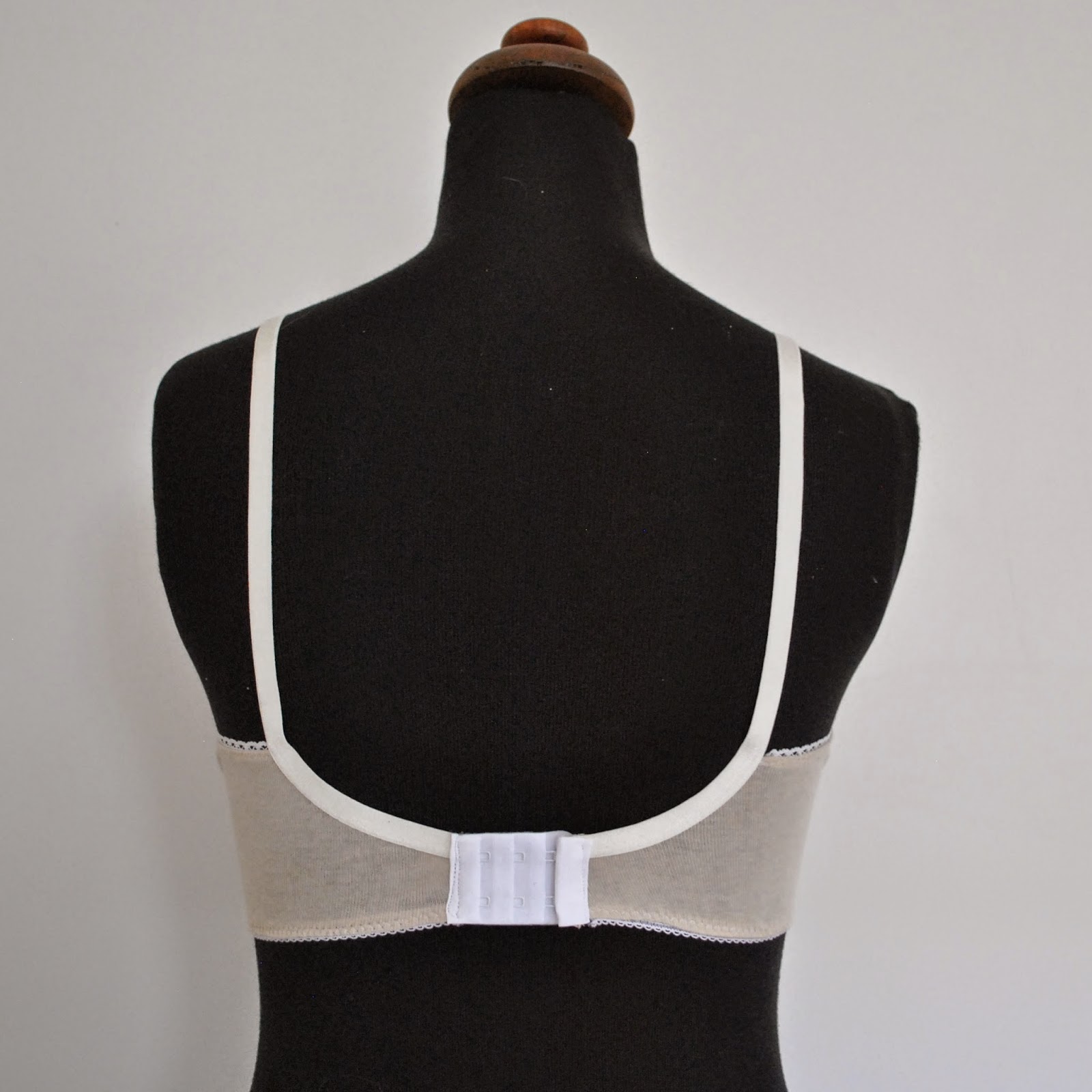
Thoughts; so this is my second Watson bra, the first longline … I LOVE the look of it, well duh, LAAAACE!!!  so that’s a plus.  A surprise downside is the much wider hook and eye closure is SO MUCH HARDER for me to do up and undo.  I didn’t expect that! but probably should have… the thing is; I’ve only ever used a two hook closure up until now, meaning that it’s second nature to me and my hands automatically operate the 2-hooks easily and breezily.  A 3-hook is like a whole new brain pattern which my hands have never learned and I’m fumbling away, almost like I’ve never worn a bra before in my life… well, you know what they say about old dogs and new tricks.  I’m tempted to think that for a soft, longline style like this I might even prefer my funny, basic little pull-on camisole bralette, simple and easy, save myself the trouble and expense of the hook and eye closure and the style still works perfectly fine for my likes and meagre needs.
I’m still going to wear this new set to bits obviously! just an observation.

previous Watson bra

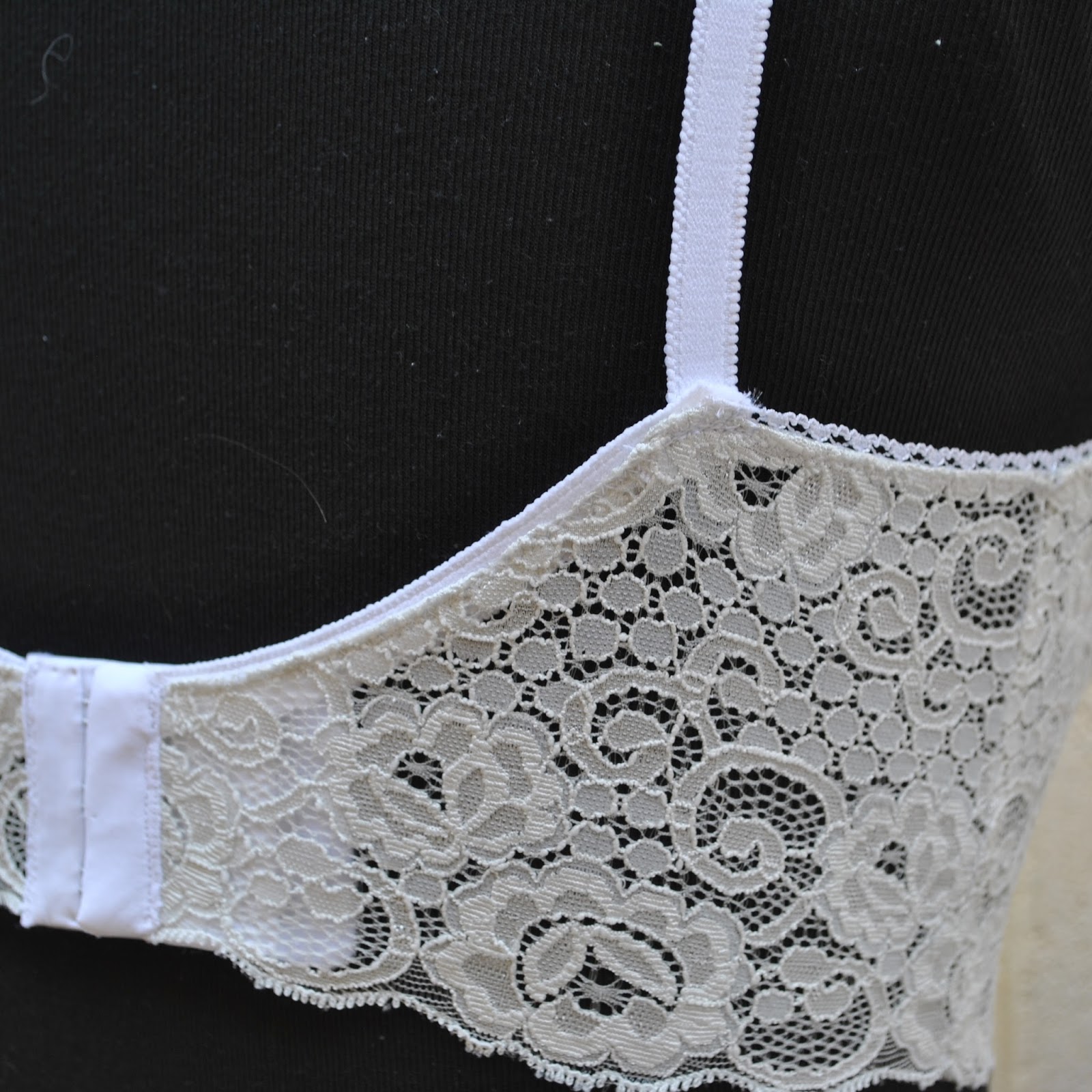
Also, the back elastics; with the Watson you’re supposed to commence sewing them horizontally along the back from the centre back and they continue on, curving up and over the shoulders to become the shoulder straps, as pictured above.  Now I don’t know if anyone else has come up with this problem too; but when I’m wearing it, the elastic does not sit flat against your body, but instead “folds” around the corner and so forms a little lumpy bump as it does so.  These bumps can just be seen in the above picture, at the sharpest point of the curve where it starts being a strap.  It’s a small thing but a little annoying nonetheless.  SO, for this version I cut and sewed the back elastic and shoulder strap elastic on as two separate pieces.  Not quite as smart looking, but the bump problem is solved so I’m not stressing over it.

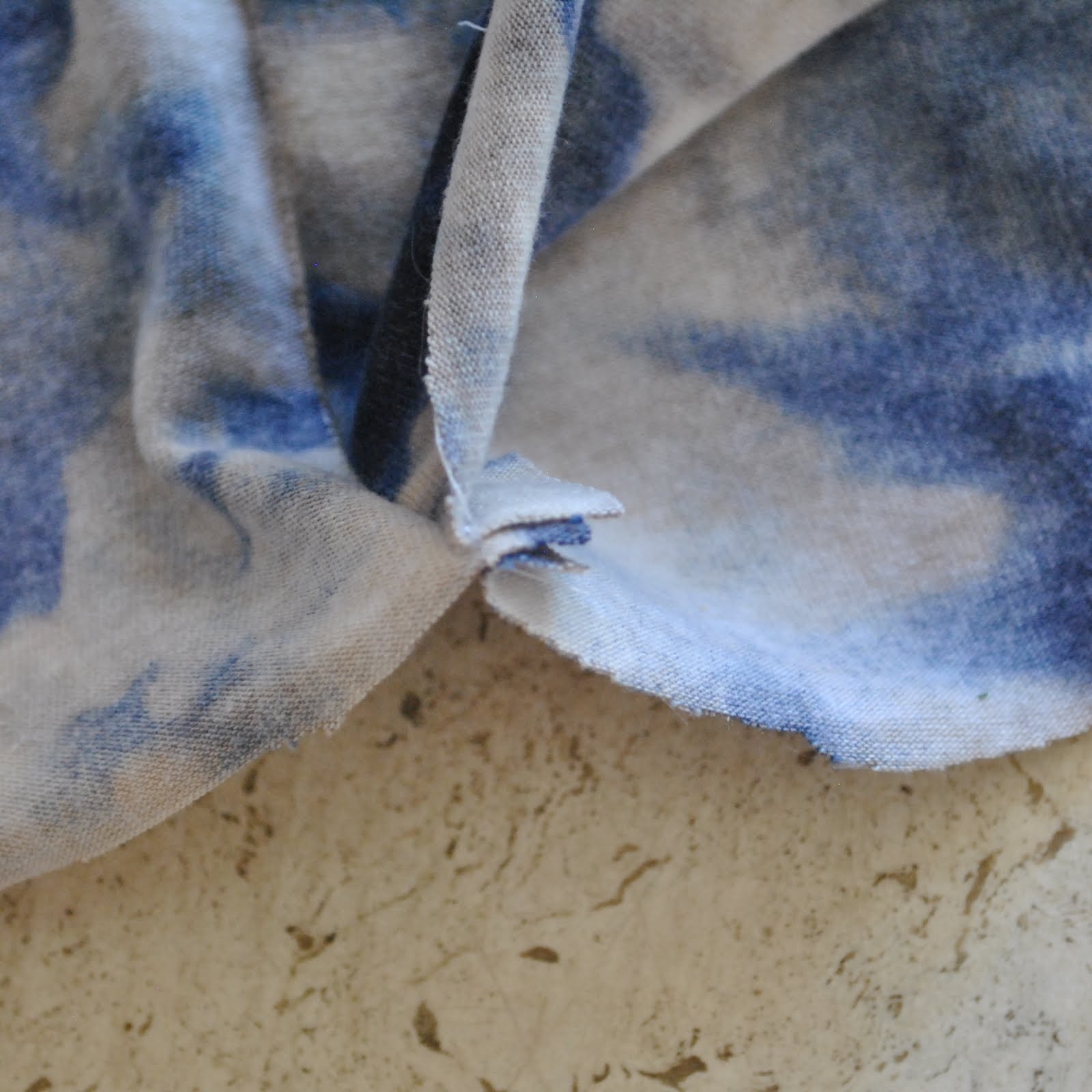
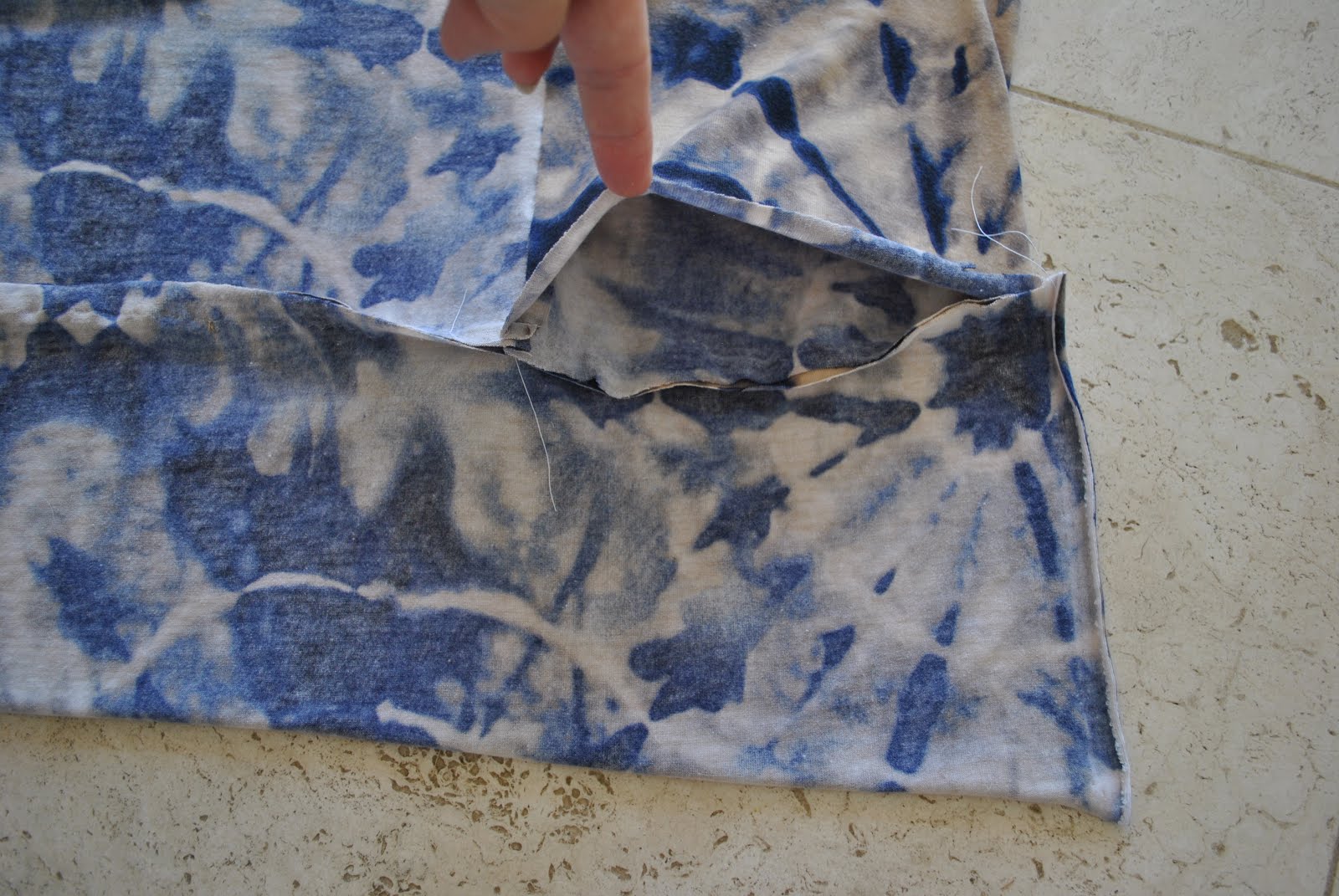
The last time I made Tanga undies I discovered what a bad bad bad idea it was to situate a longitudinal seam in the crotch area … worst design concept, evah! anyway, I wrote about how I fixed that first pair by cutting out a new, seamless crotch using the liner piece.  SO MUCH BETTER, and I did the same for this pair too.  I cut two lengths of 5mm elastic to be 10% shorter than the side edges and zig-zagged it along the edges, between the lace and beige jersey liner.  I know from experience that this is about 1000000 times more comfortable than to do it like the pattern tells you.

I used beige jersey to line the bra cups and knickers liner as well as to partially line inside the front of the knickers.  This was cut using my rotary cutter to achieve sharp and clean-cut edges, and is simply zig-zagged down inside the lace.  This stuff is a very good match to my skin colour so it was such a great find!  Note to self; remember to keep checking Fabulous Fabrics to see if they get any more in stock…
Having a lining also helps to hide the seams, because I treated it like an underlining; the lace/linings seams are inside the garments and not between the layers.   I LOVE having the neatest insides possible but sometimes you just have to sacrifice the insides for the outsides, haha.
I know, weird, right?  Who even does that?!!

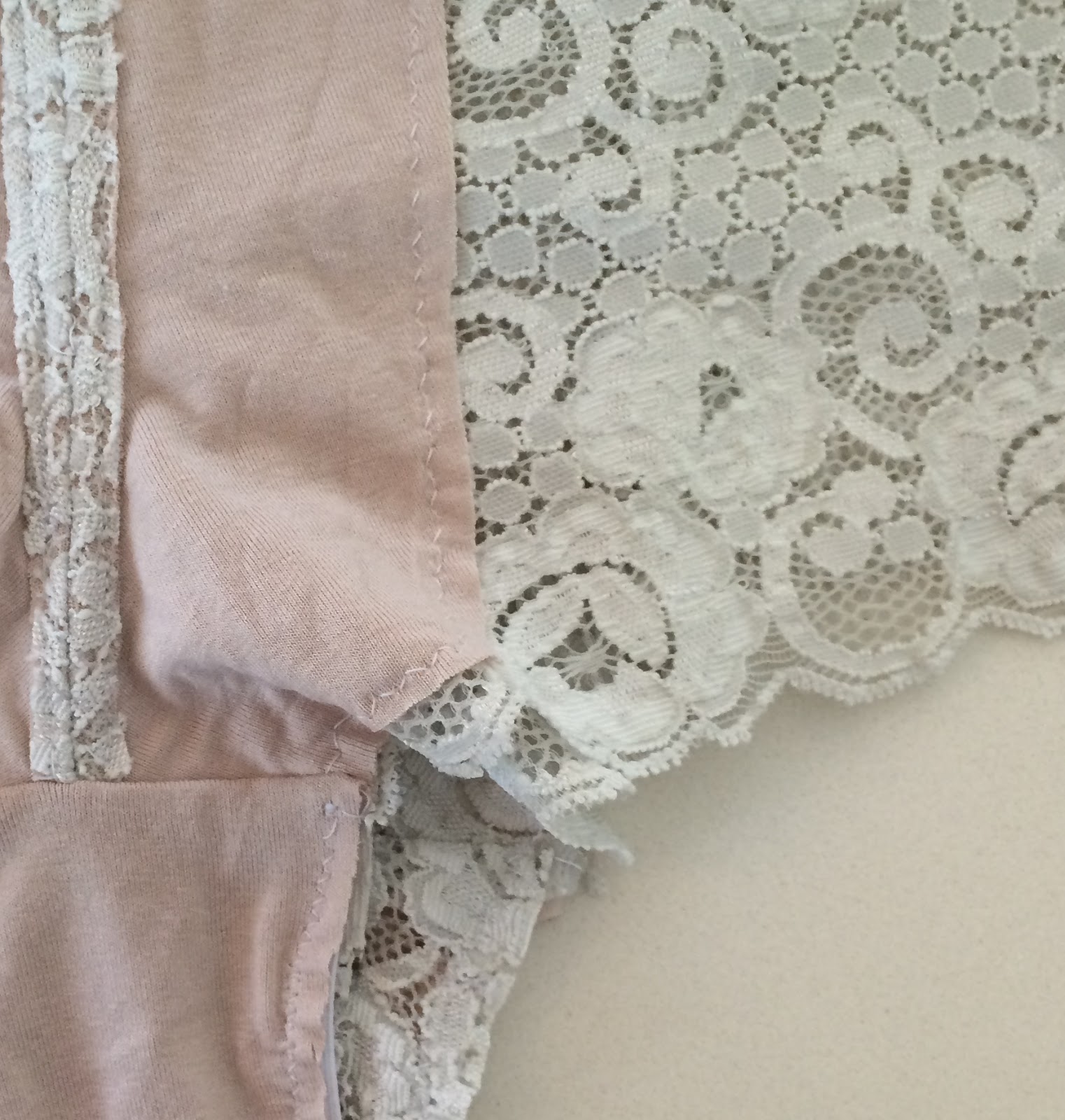
felled seams inside (L) undies and (R) bra cups

I faux-felled all the seams on the inside, by stitching them down lightly and trimming the raw edges close to the stitching.  This is not as neat overall than if they were sandwiched between the layers but looks much better from the right side, with no seam allowances visible through the holes of the lace.
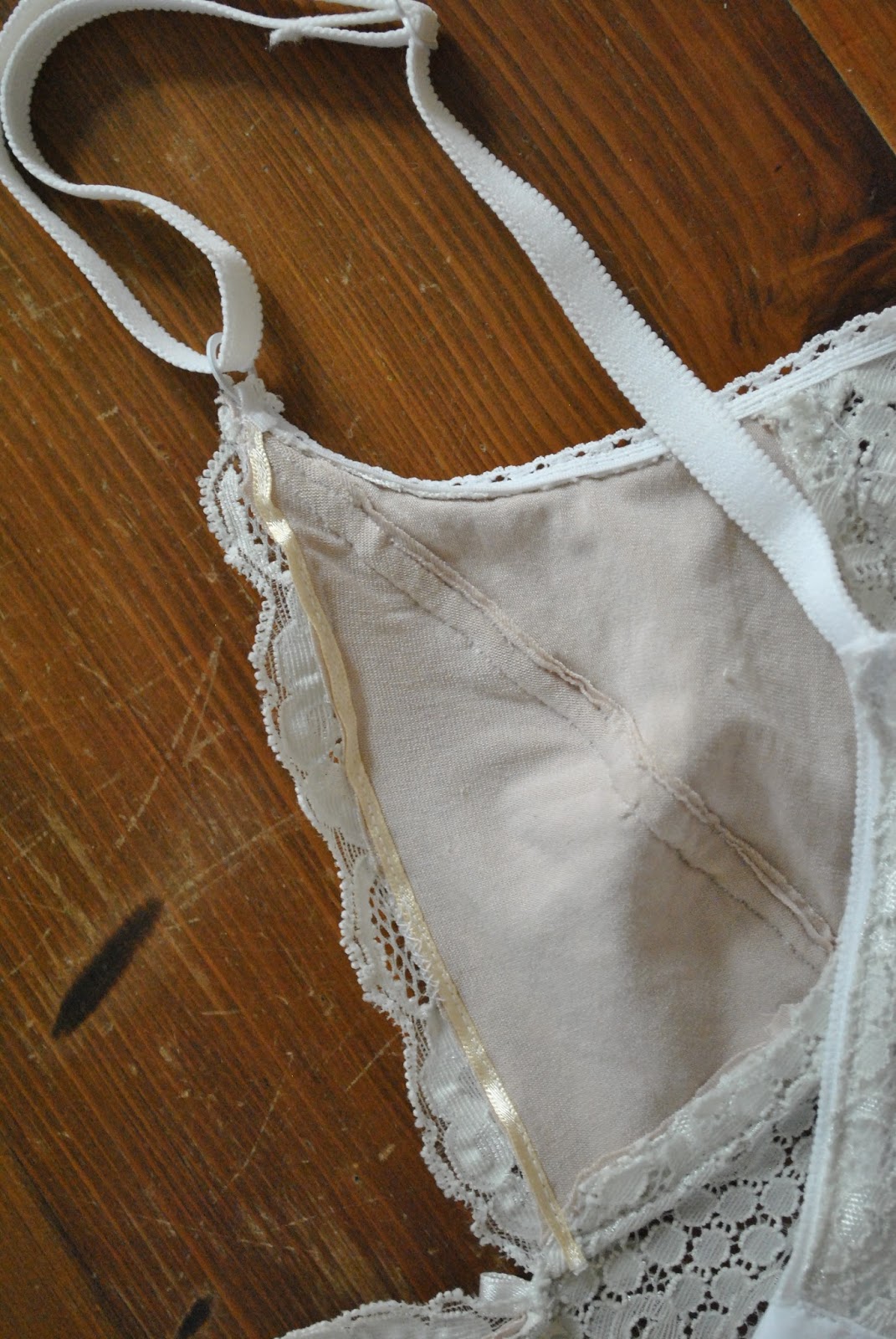
To stabilise the cup edges, I stitched short lengths of satin ribbon along the jersey edge inside.


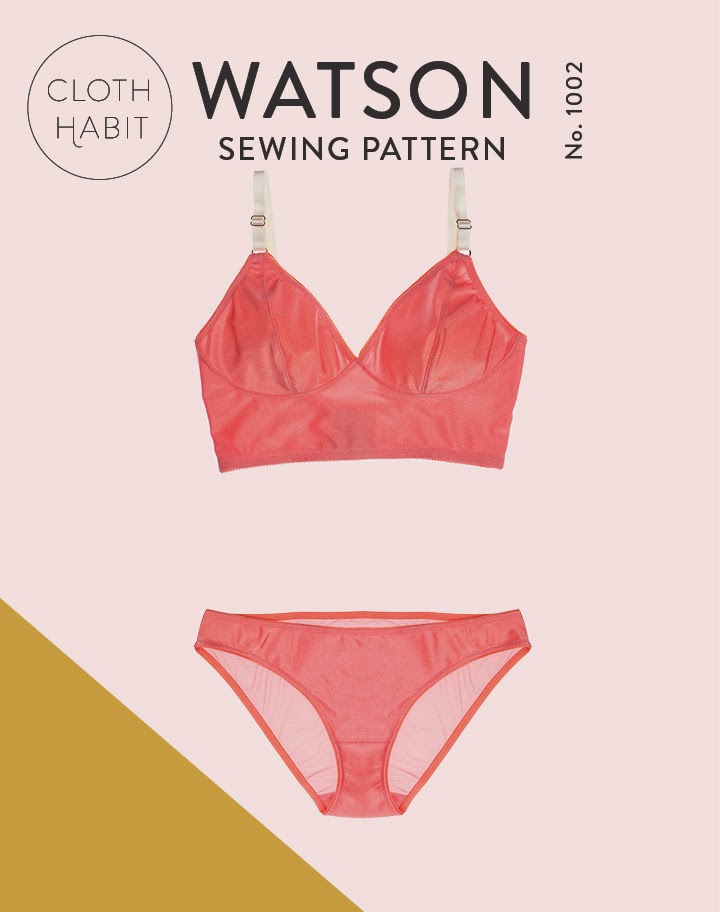
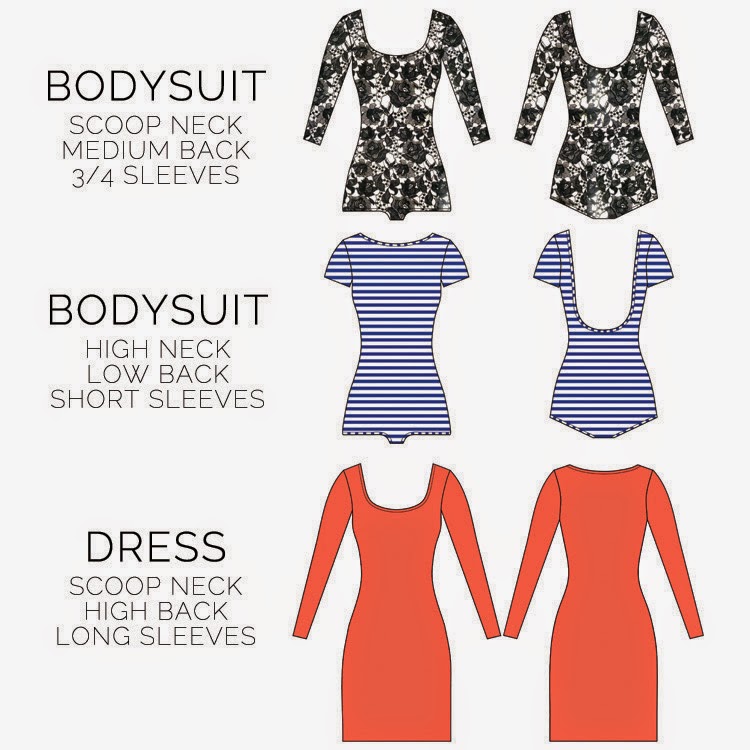
btw; that is the stock picture of the Tanga knickers above right.  It makes me slightly anxious every time I look at it… however don’t let the non-pattern matching distract you, this is a cute pattern which is free and available to all; and that’s the important thing here!

Now for some housekeeping… dk’s wife, could you please email me regarding the hedgehog pattern? thanks.  🙂
Also, I’ve received lots of emails from kind readers letting me know that commenting is working only rarely on my blog… I’m so sorry!  🙁  Like everyone, I love comments! so please know, I am working on a site update to fix the problem.  It may take a short while though since I’m a complete computer dummy, but I am on it!

pinterestmail

jingle bells

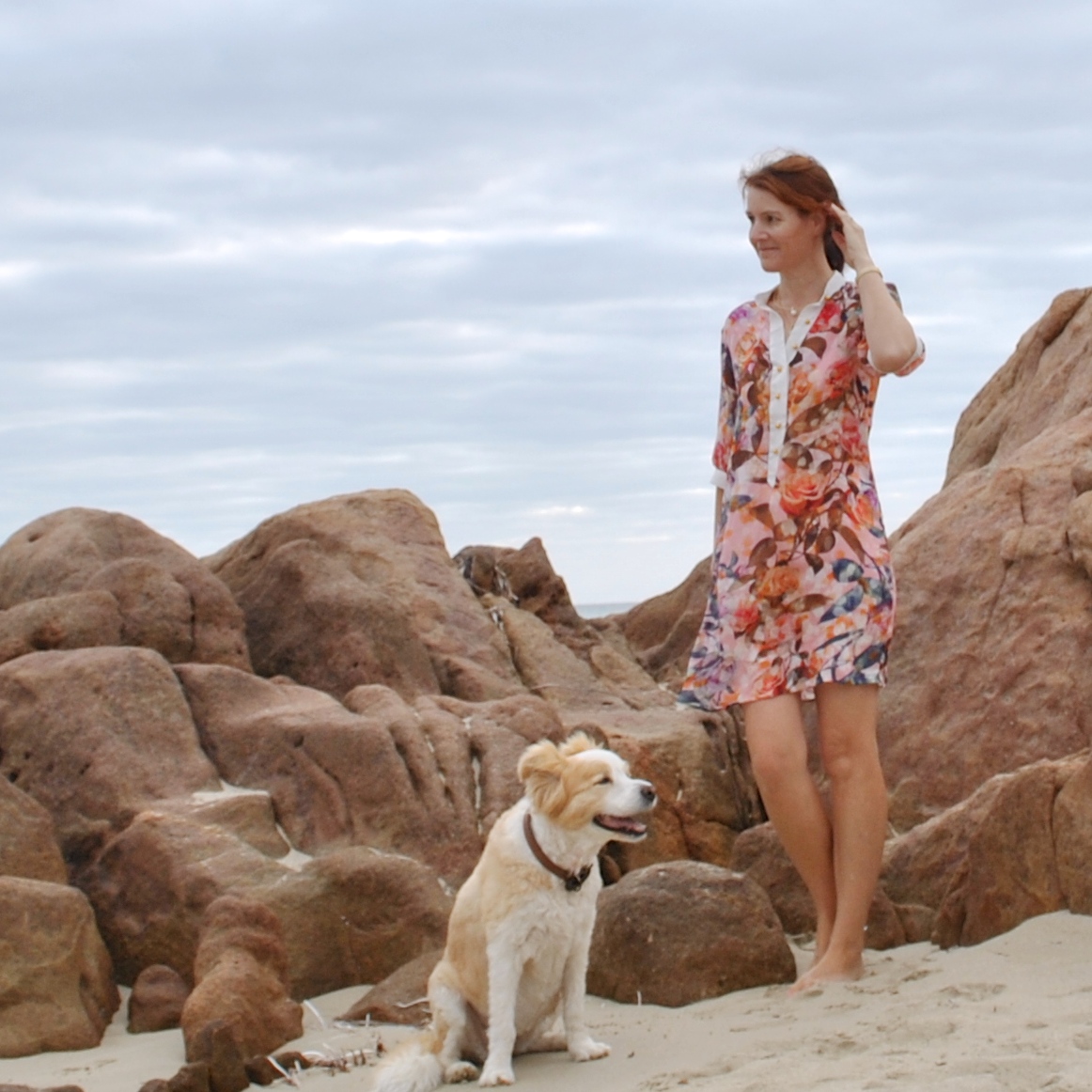
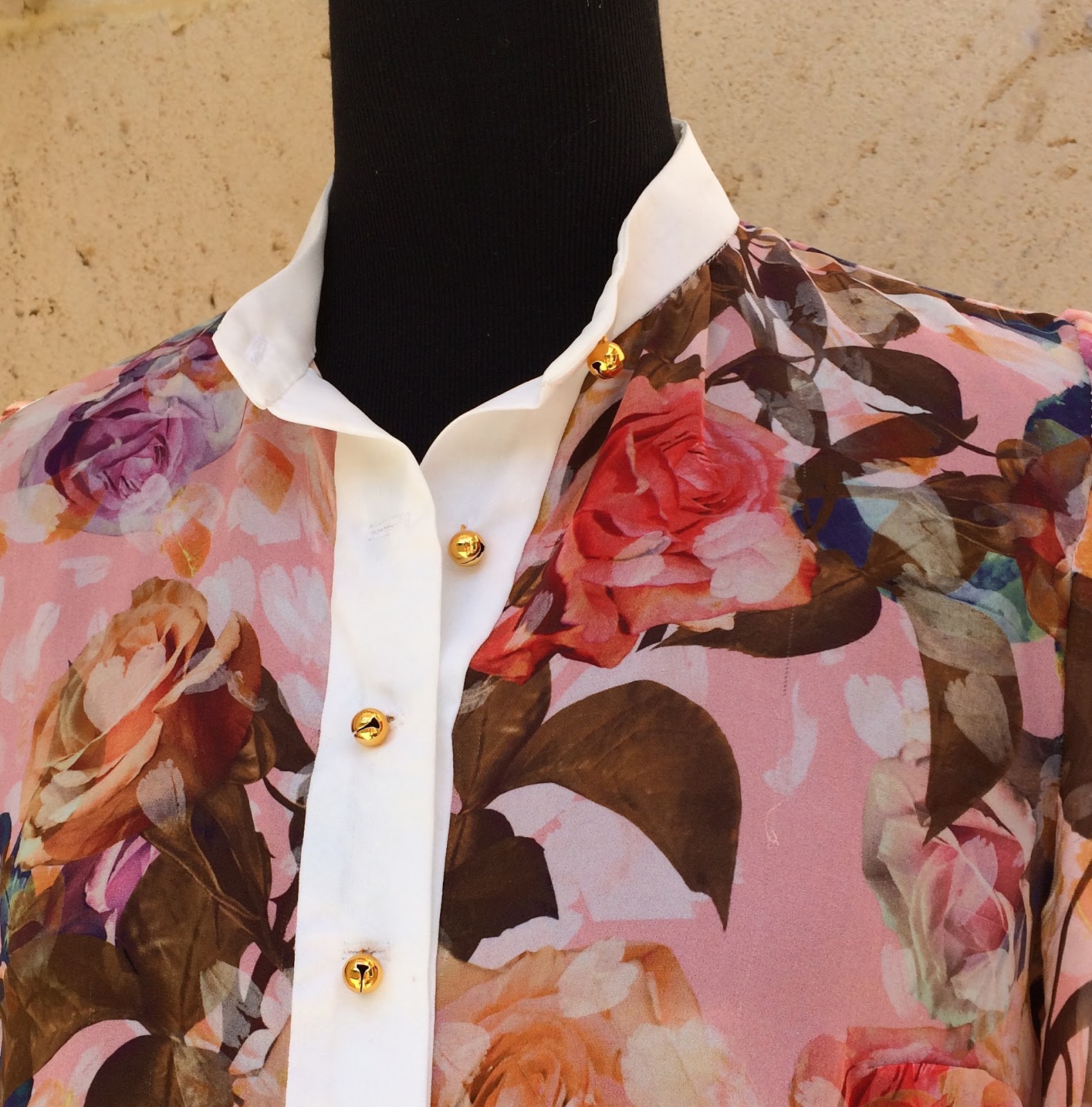
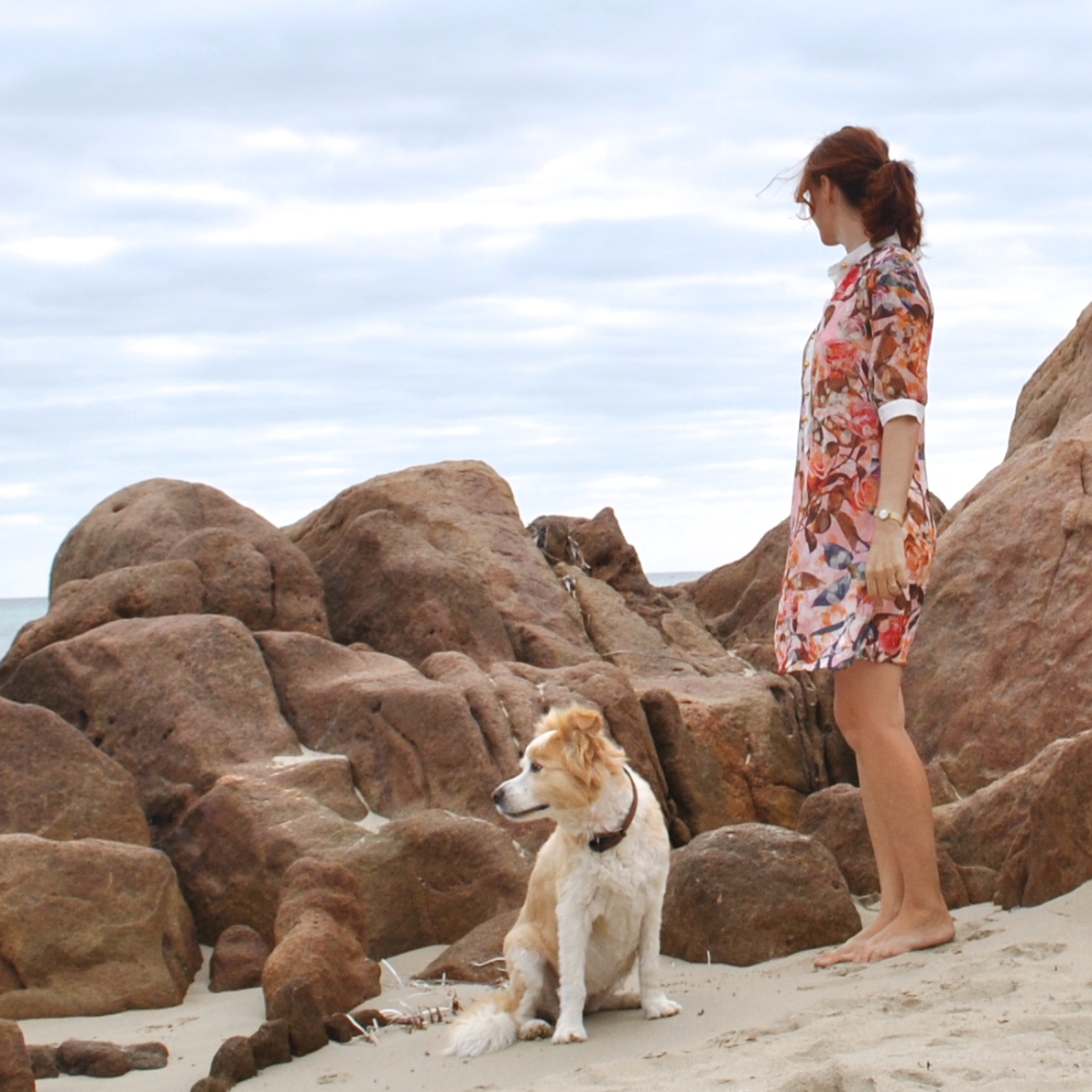
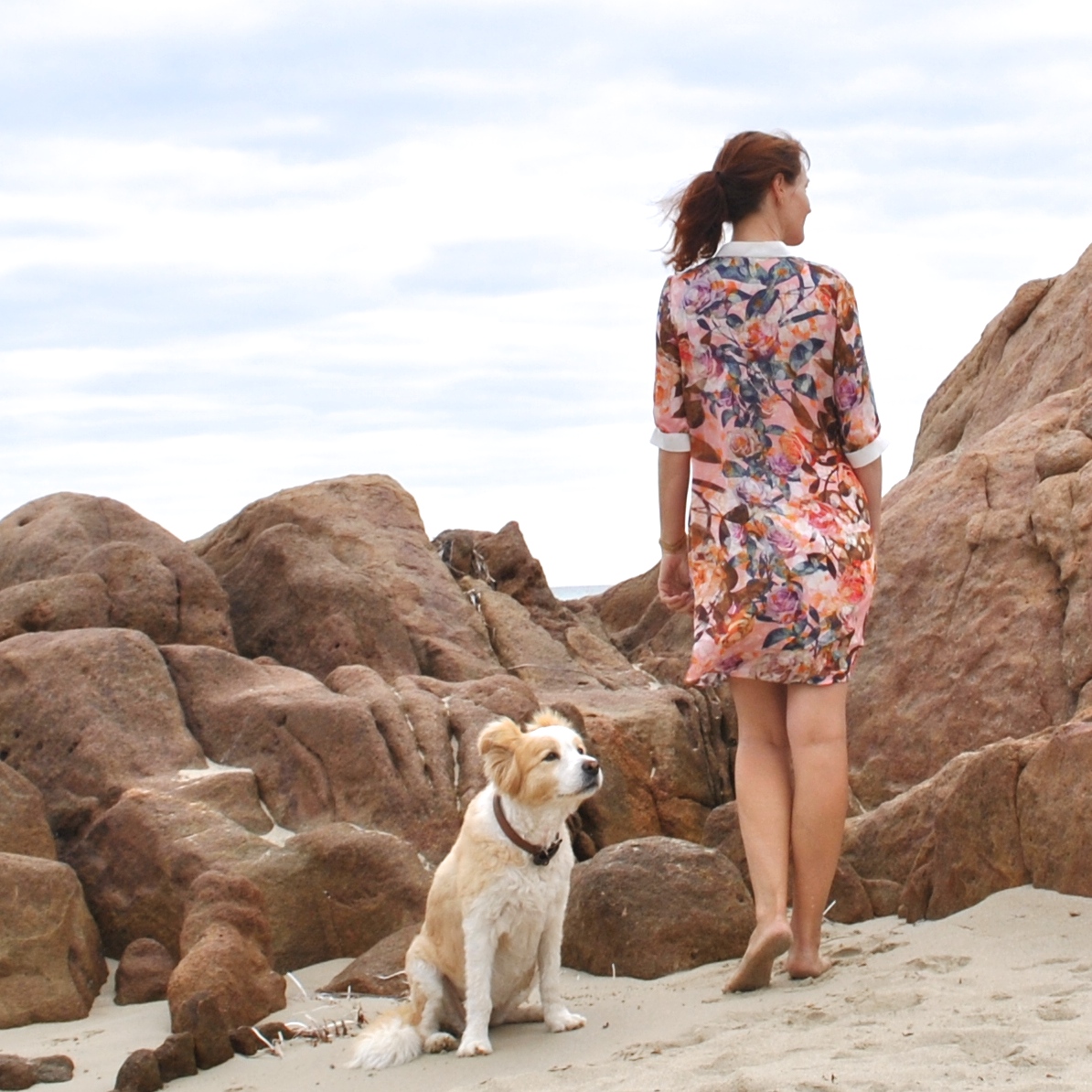
Yes, my new shirtdress literally does have bells on it.  The gold buttons are mini jingle bells, the type you put on cutesie wootsie Christmas decorations.  Whimsical and impractical although many of my sewing/knitting choices may be though, jingle-bells are just kinda… hmmm well the jury’s still out.  See, I just had my heart absolutely set on small rounded gold buttons and this was pretty much it.  I love the festivity of them and am clearly all set up to do Christmas Day with fabulous, jingly panache, but have fears that the relentlessly cheerful chirpy tingalingalinging will become a tad annoying in the interim, and not just to me but to the long-suffering souls who move in and about in my everyday orbit.  So I have not at this stage ruled out carefully injecting a blob of superglue into the opening of each jingle bell, to anchor the ringer thingie to the inside and restore peace and tranquility unto the world.
Glue is on standby and at the ready…

but pretty, non?

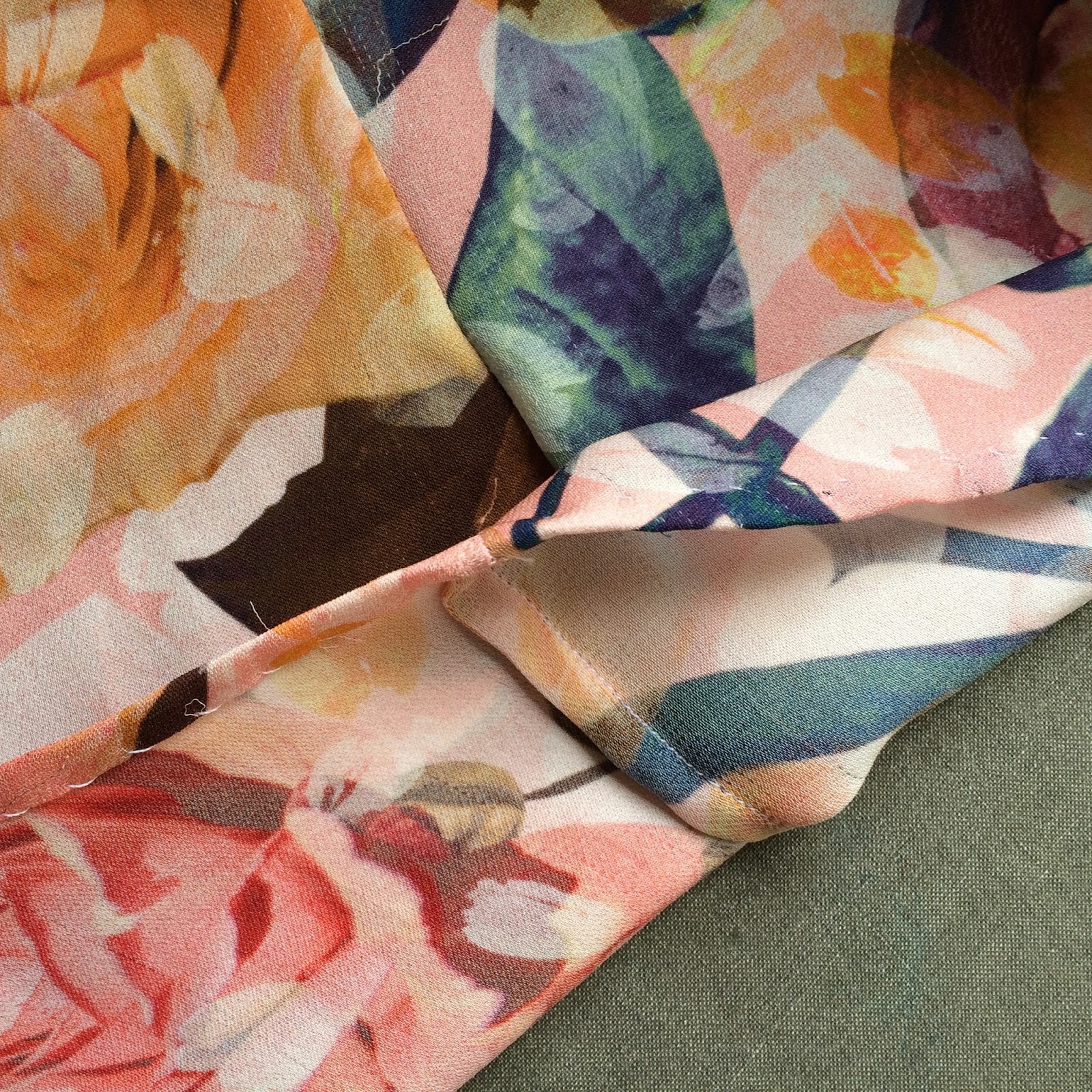
Fabric: a very fine coral floral silk georgette from Fabulous Fabric, the very last on the roll.  I bought it using a voucher given to me for my birthday by my dear friends; whom I’ve been meeting every week since our children were in the early school years…  They know my strange predilection for self-dressmaking so very well!  I also bought some ivory crepe; with which I made the slip to go under this dress, and which I also used for the button placket, the cuffs and the collar stand.  Jingle bells were also from Fabulous Fabrics.

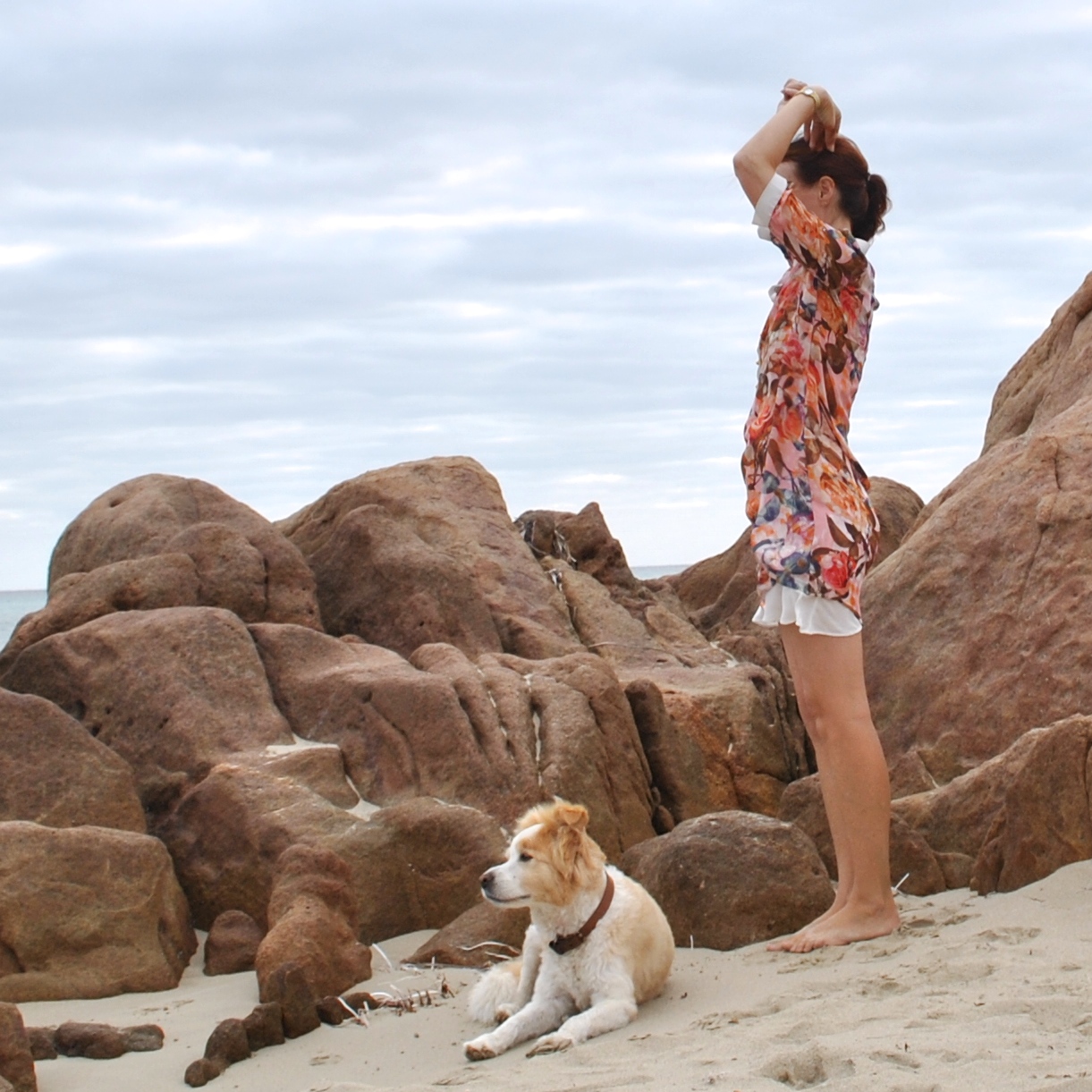
I’m so relieved I had the foresight to make a separate slip to wear under this sheer dress, rather than an attached lining… why? because when I go to hang the clothes on the clothesline I’ve found this to happen…

Hmmm, see; the slip, being sleeveless, does not ride up when you lift your arms up over your head, of course.  Just yet another reason to keep a healthy collection of nice slips and petticoats handy in the lingerie drawer.  I have about four hardworking slips currently in rotation and just lately I’m seriously considering increasing the population, particularly since some of the oldies are getting… well, old.  Maybe even double that number wouldn’t be too many.  Slips, seems such a quaint and old-fashioned thing, yeah? the kind of ladylike frippery my grandmother loved and would buy for my birthdays etc and that seemed unnecessary and even rather fuddyduddy-ish to my much younger, more foolish self.  Now I am wearing them.  Am I getting old?  Hmmm, no need to answer that!

arms in regular position, all is well

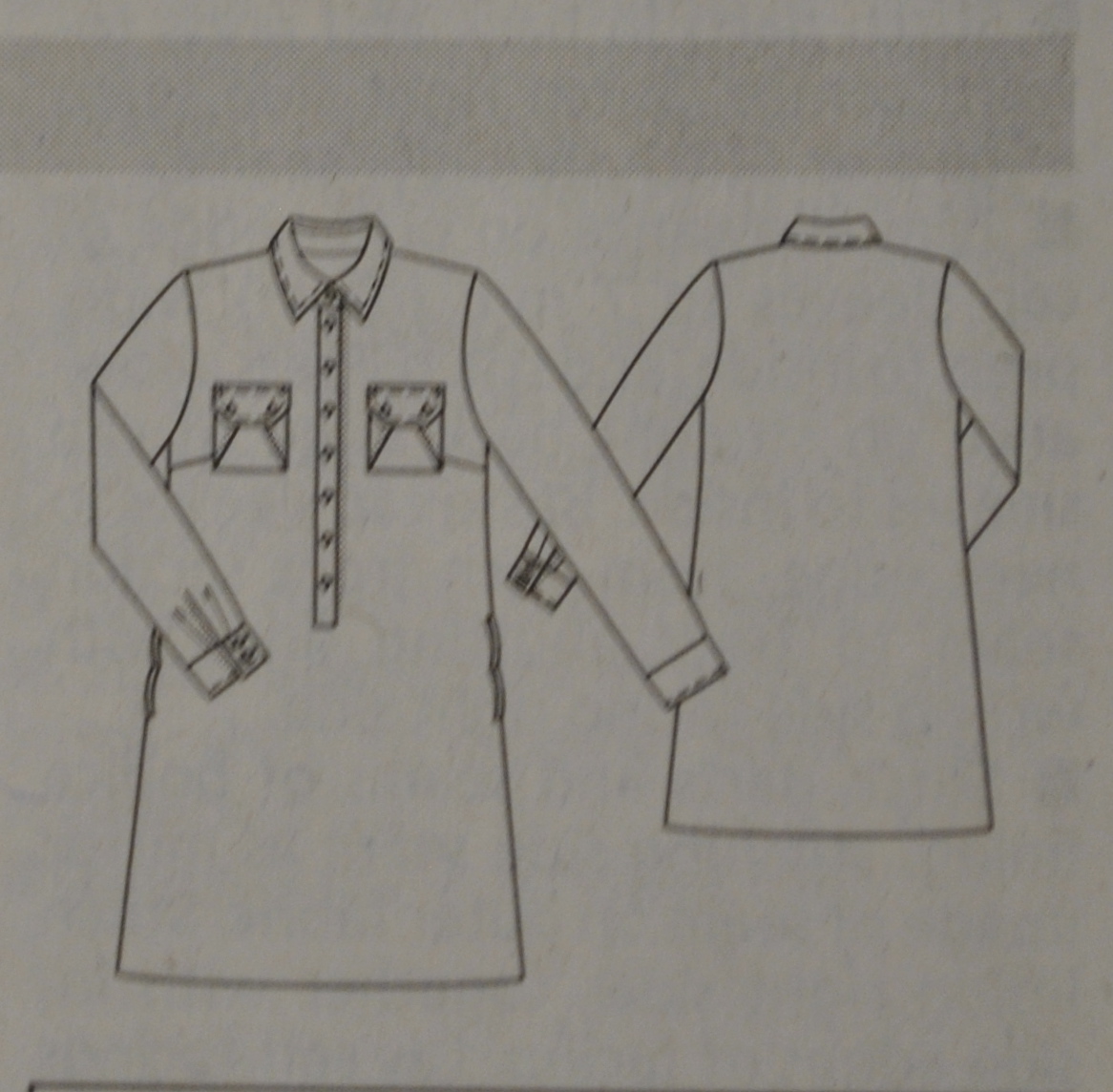
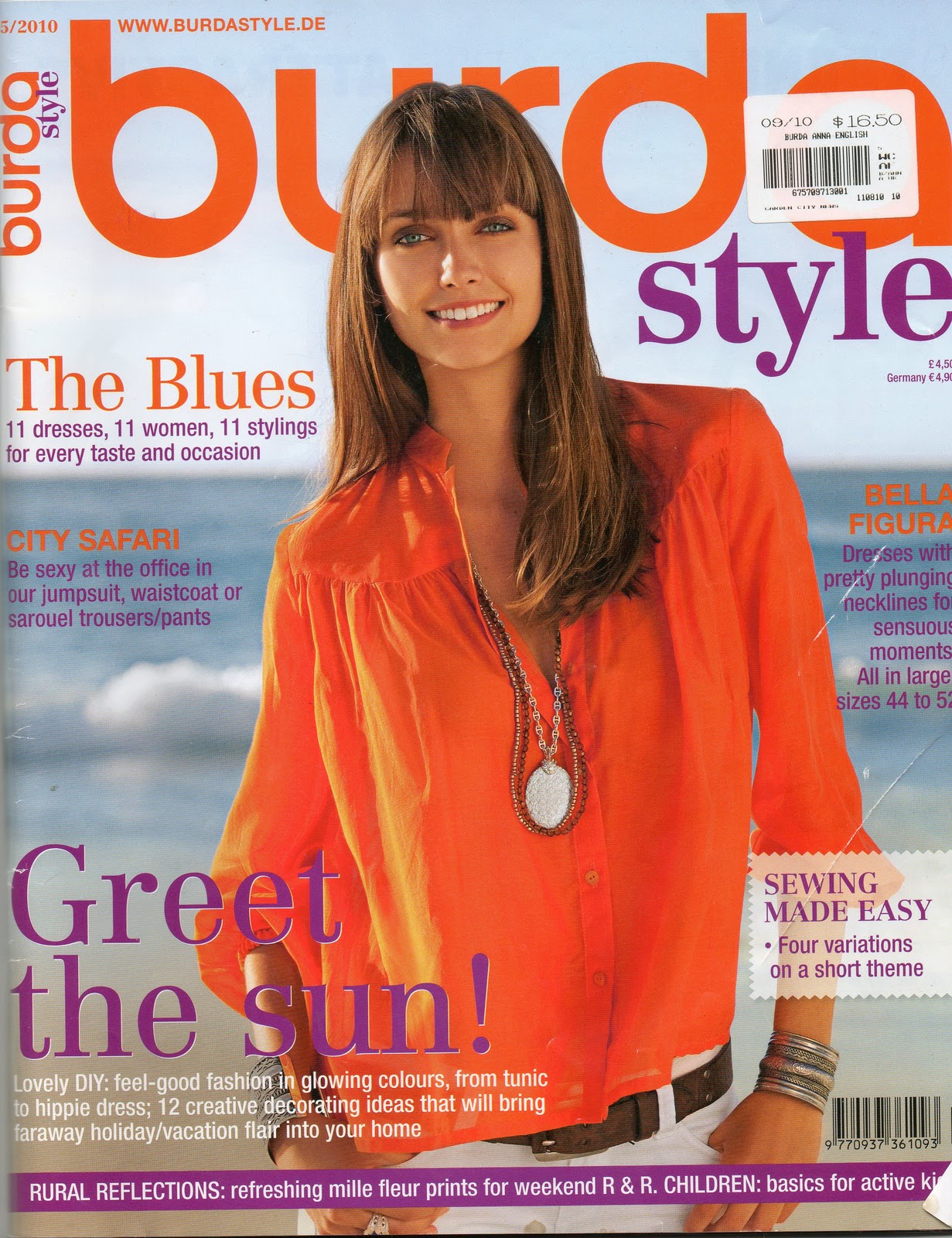
Pattern: Burda 05/2010;111, a shirtdress pattern I’ve used twice before, a plaid shirtdress and a lace version; with sleeves adapted from another Burda pattern, 05-2010-101.  I’ve used this same sleeve pattern also twice before on different, other Burda patterns; my black Pirate shirt and my pale blue silk shirt.  This is that same sleeve but cut shorter and with a shorter cuff to compensate for being a shorter sleeve.
I chose to leave off the pockets, and the collar and just have the collar stand, I felt this lends a slightly more feminine look to a shirt, goes better with all that girly pink floral explosion that’s already going on in there.

Construction notes: I went with all French seams throughout of course, silk georgette kinda demands those sorts of standards! being sheer and all high quality and all.  Only the armscye seams I overlocked the raw edges to finish.  In a shirting cotton or linen I would flat fell the armscye seam like so, but silk georgette just does not lend itself to that level of tailoring.
Collar, button placket and cuff facing were hand fell-stitched to secure them; I wished for no top-stitching to sully that clean-finished, pristine crepe!  In my opinion, topstitching makes a shirt look a lot more casual and maybe a little masculine? whereas absence of top-stitching keeps a thing looking polished and, somehow feminine.  I know, that’s kinda irrational and I cannot logically explain why I have that masculine/feminine impressions of topstitching, but there it is.
The hem is hand-rolled and stitched, and I did the same technique as I did for my slip, with stay-stitching.  I hemmed this before I hemmed the matching slip, to get the right length for both, but it’s taken me this long to finish all the other little details and get out and take photographs of it.
And I also wanted to wait for its first outing to be a day on which I would be meeting all my friends to show it to them, and simultaneously an appropriately weather-ed day, nice enough to wear it! it’s taken a while for those two things to coincide.  Today was that day! hurrah!

Details:
Dress; Burda 05-2010-111, Burda 05-2010-101 sleeves, floral silk georgette with ivory crepe detailing, my original review of this pattern here
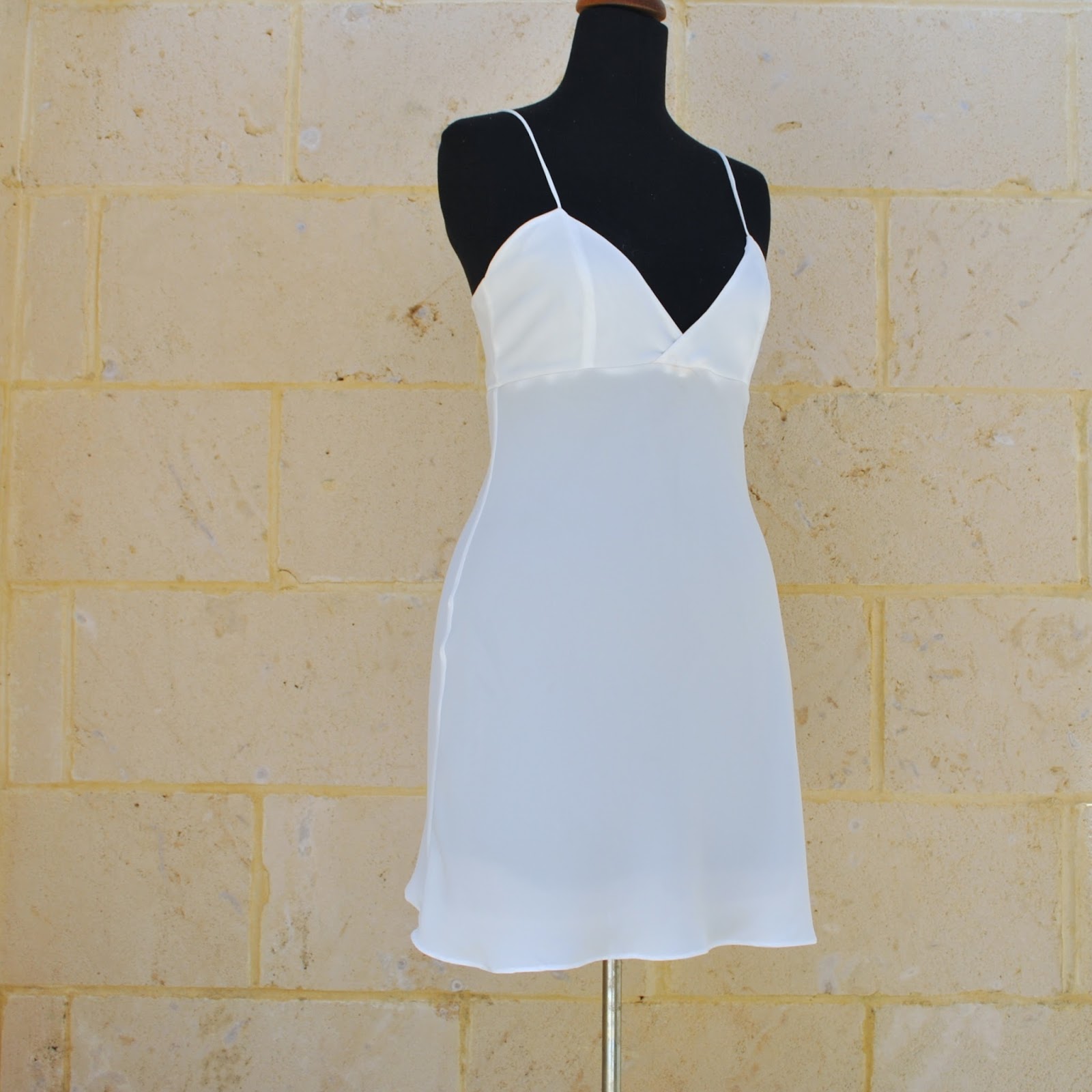
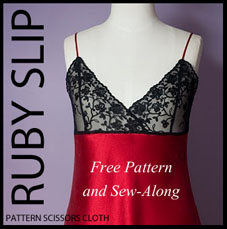
Slip (under); the Ruby slip, pattern by pattern scissors cloth, ivory crepe, details here

pinterestmail

outfits for small boys

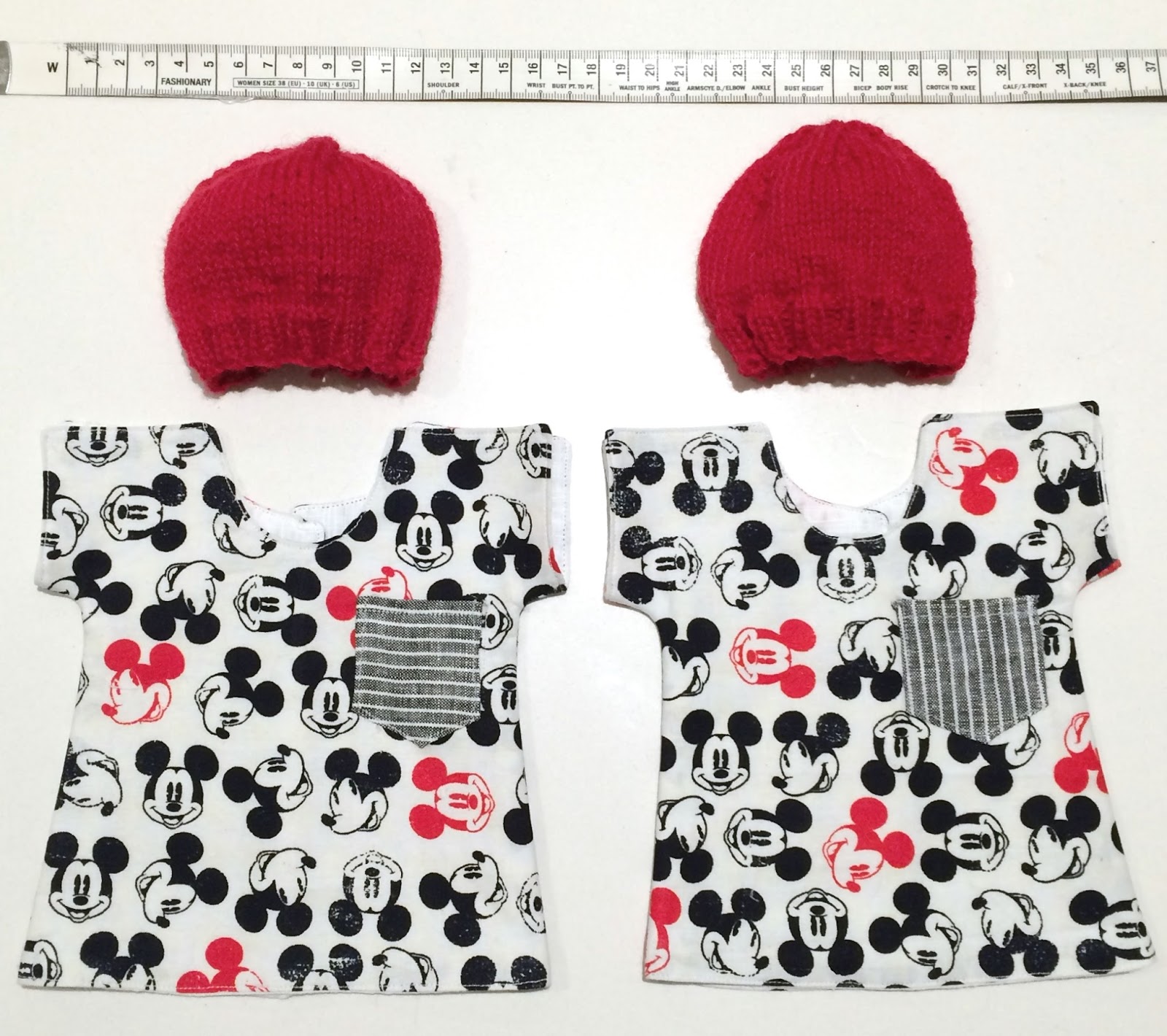
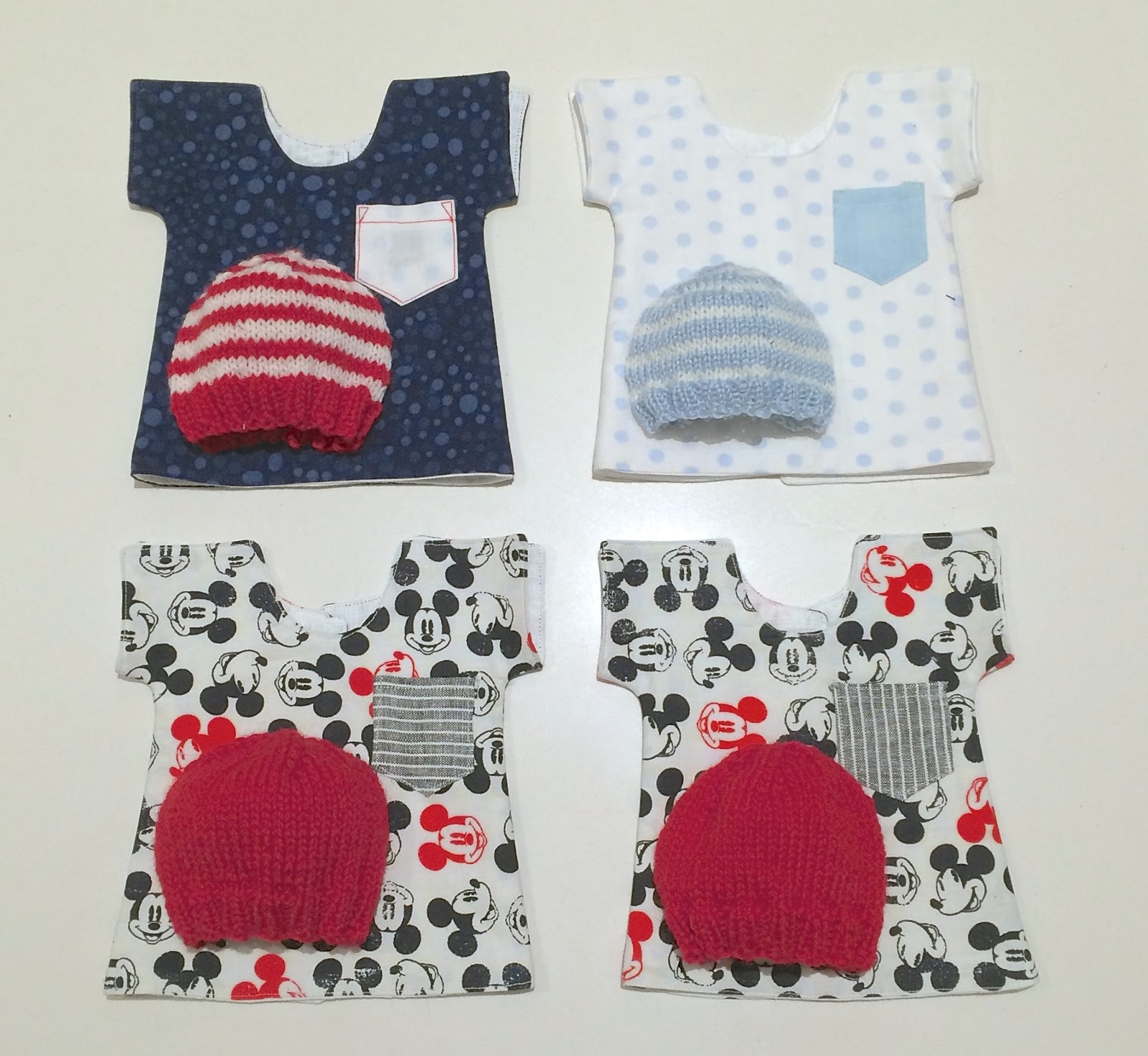
As promised to myself; I’ve made four more tiny little outfits, this time for four little baby boys.  Tomorrow I’ll be sending these off to Tiny Sparks and they will be available to parents of sick and/or premature babies upon leaving the hospital.
Cassie had kindly taken in the four girls’ outfits I’d made previously, and I’d asked her if she could please get any feedback.  She reported back that apparently outfits for twins were particularly needed.  I wasn’t sure whether this was a hint that the outfits be identical, or just matching?? anyway I took a punt on making an identical set.  Well, I should say more accurately, near identical.  I’m personally quite big on having things matching without being exactly the same … so I made the tiniest little difference in my twin-set.  Can you see it??  🙂
Haha, no, it’s not that hard, obviously!
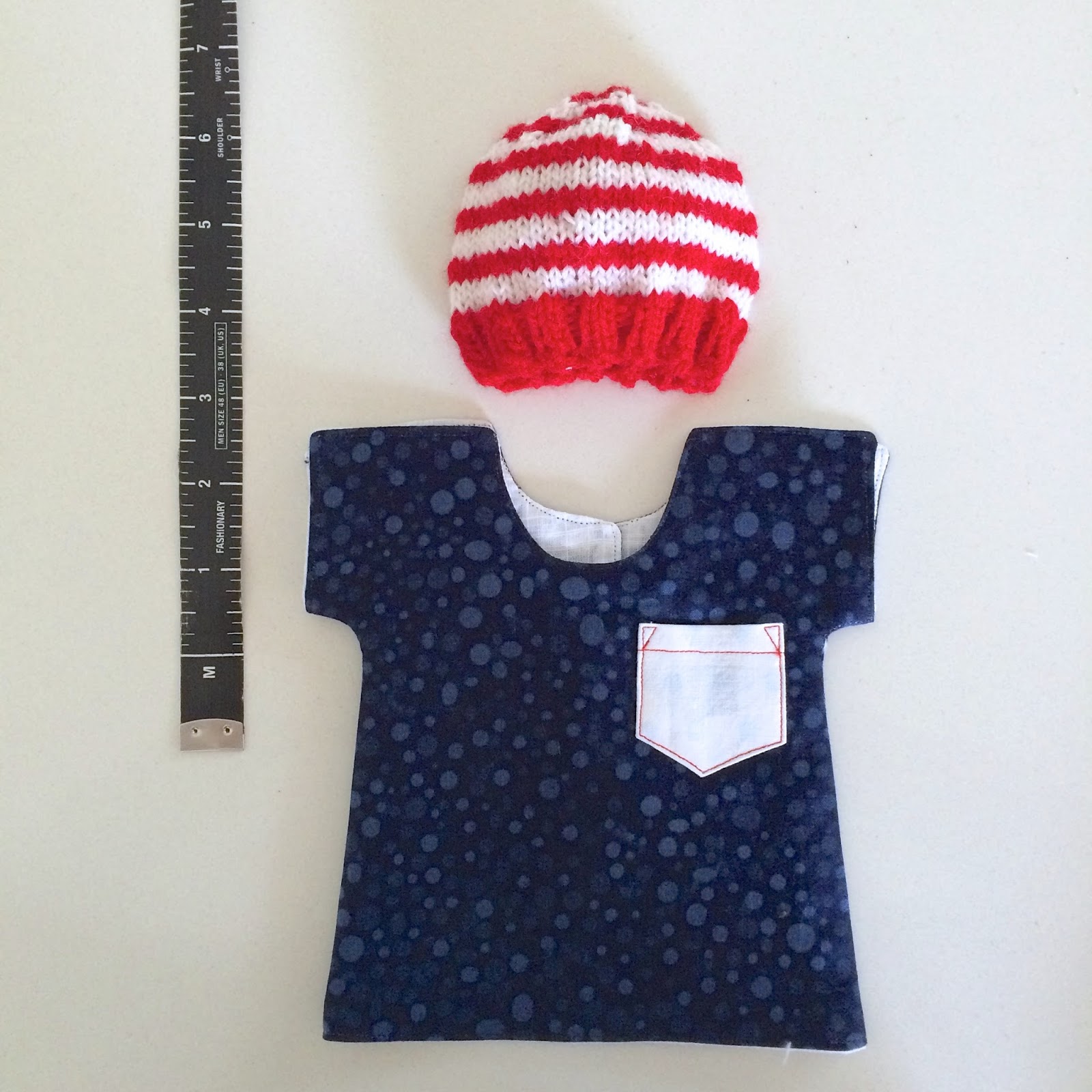
For these boys’ sets I went to Spotlight for the fabrics…. and oh man, yuck.  The selection of cottons in my local Spotlight at the mo is just awful, unfortunately, and I just had to do the very best I could.  I agonised to find something boyish that I even halfway liked.  Actually, I’ve always found it a lot harder to find good boys’ prints, even back when my own two boys were tiny tots and I was sewing stuff for them.  Anyway, I tried to pick prints and colours that I would have chosen for Tim and Sam.  I used to like dressing them in red and blue, and so that’s how it’s going on here!

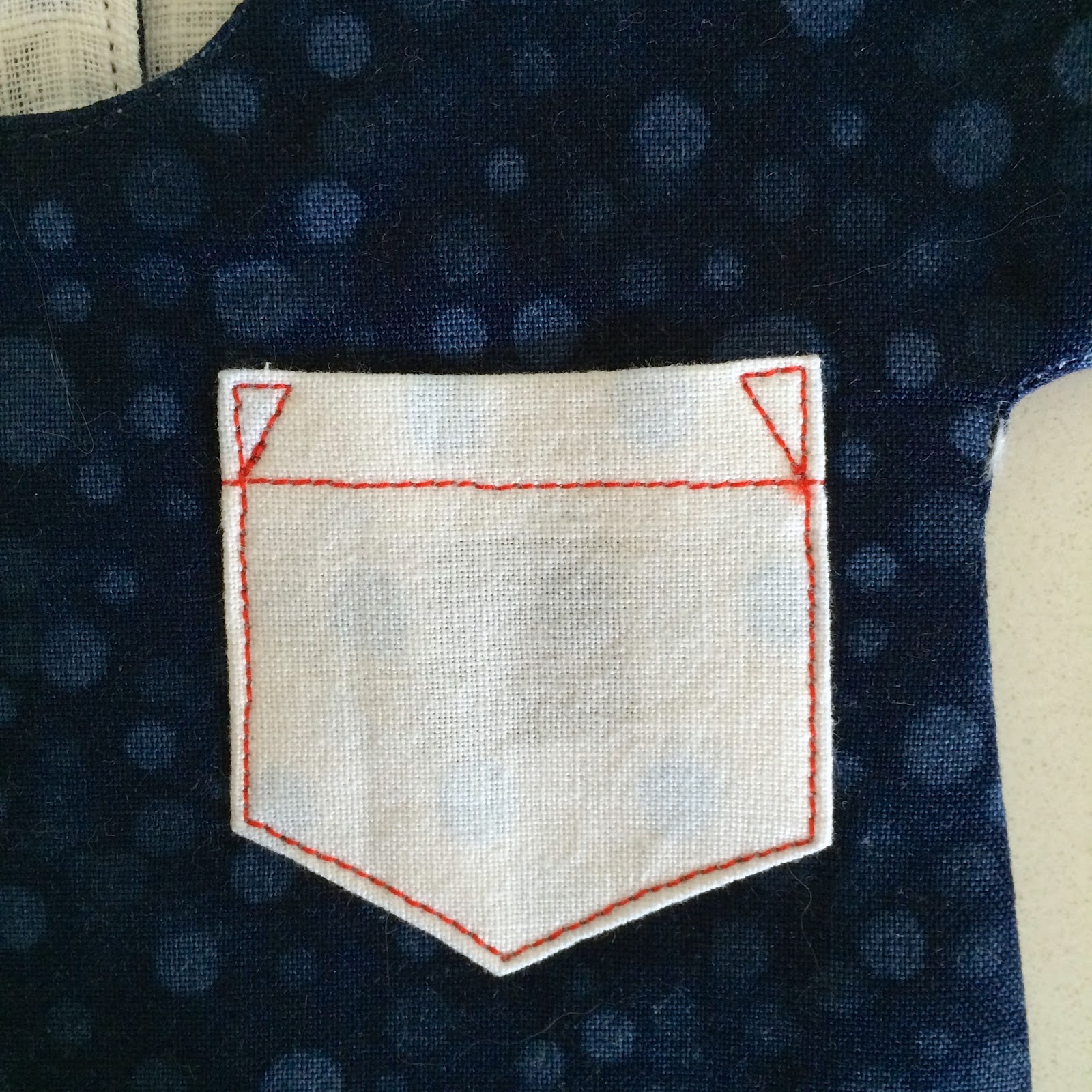
It’s funny, but this is my favourite so far, and one of my favourite-est things about it is the red topstitching on that tiny little pocket.  I know it’s a silly little thing to have as a favourite feature, but I just really like it, I think it somehow just pulls the whole set together.
Details!

Patterns for both shirts and beanies are the free ones supplied by Tiny Sparks on their website.  All outfits are for babies sized up to 1.6kg… the size that is currently listed as being low in stock.

pinterestmail

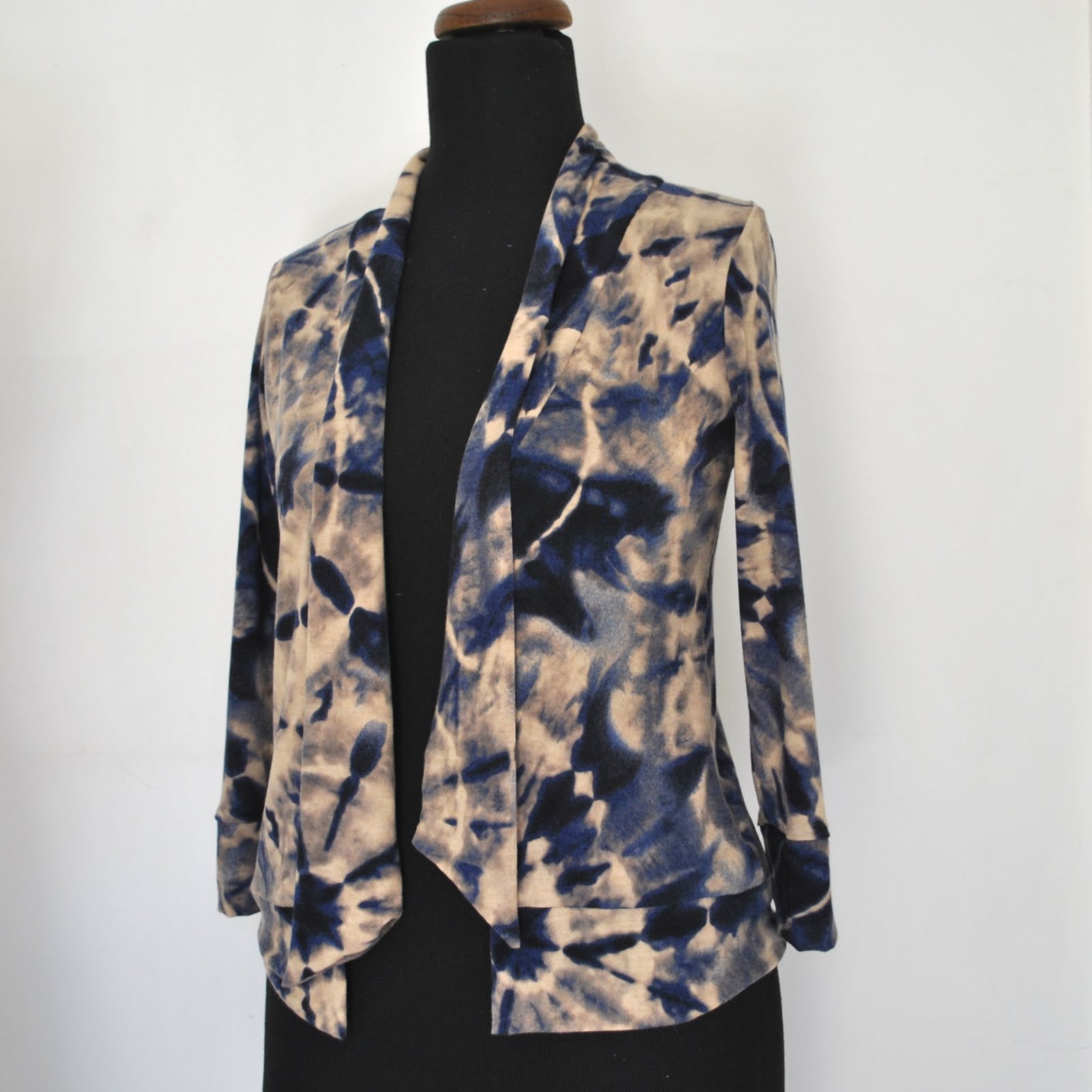
tie-dye cardigan

I’ve made another little cardigan… the last, I promise! for at least a little while! 
I didn’t really need another one but I said I’d thought of yet another little way the construction of this design could be improved? naturally I just had to try it out…
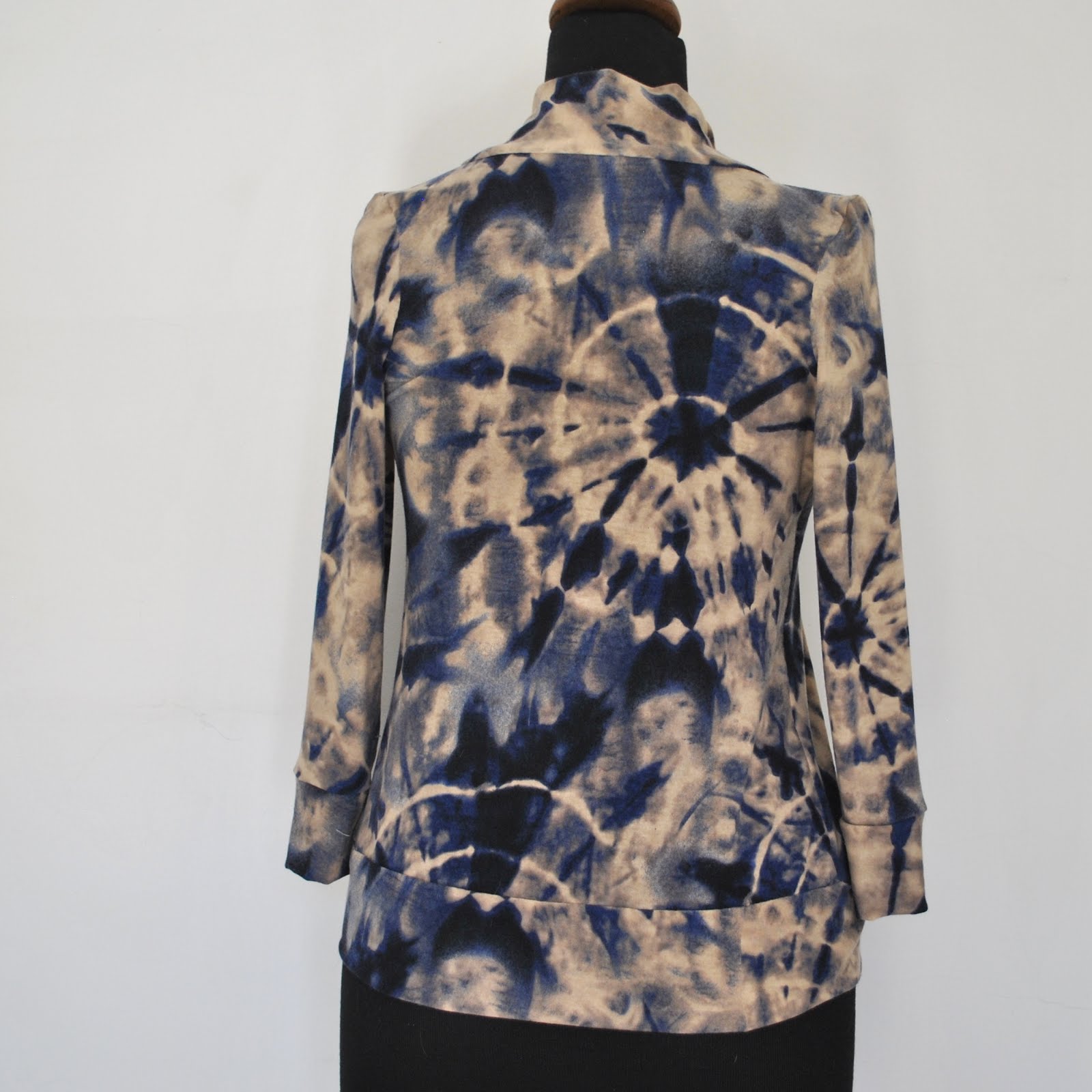
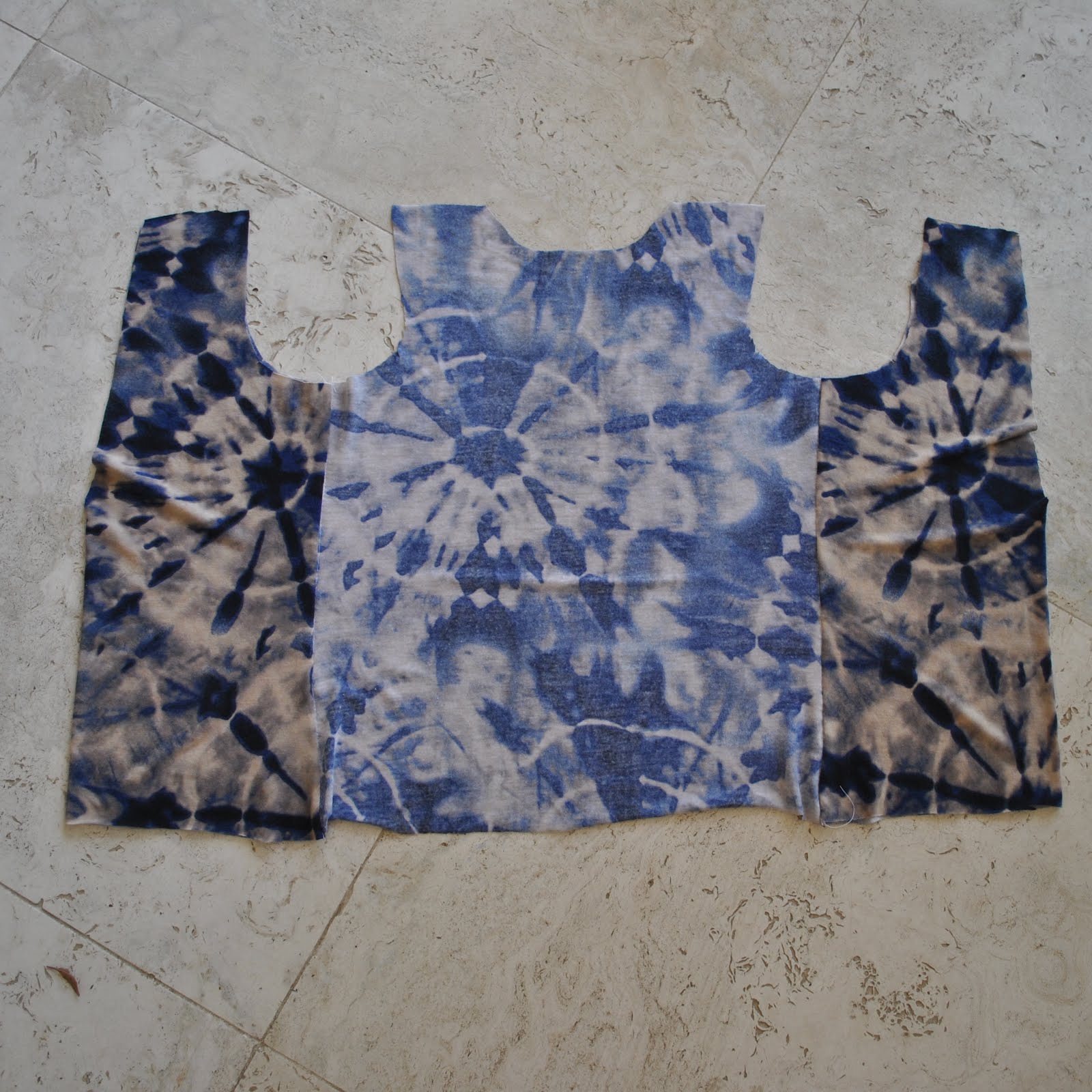
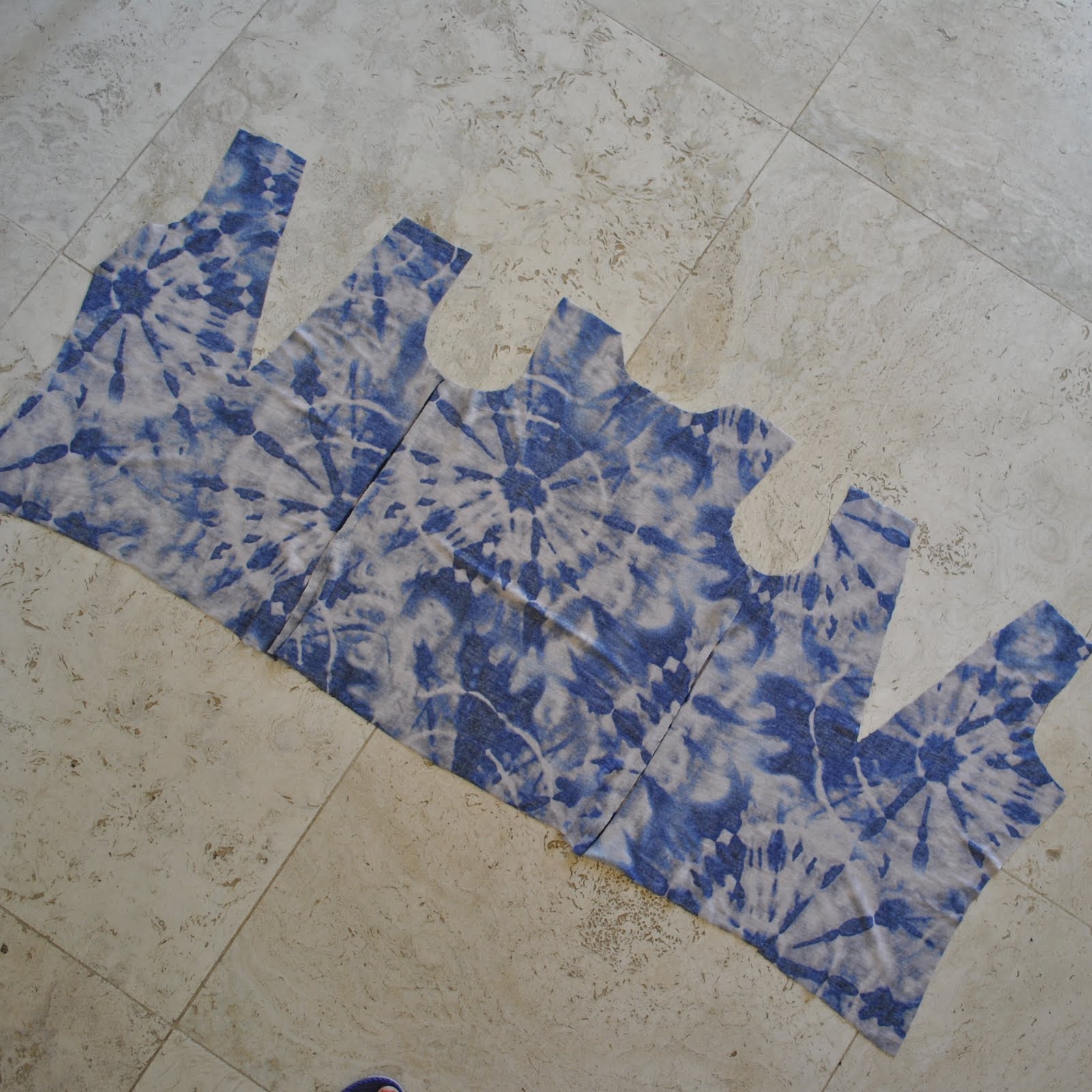
Fabric; a toss-out from Mum, a cotton or something or another jersey, original provenance unknown.  I barely had enough for the cardigan but just managed to squeak out the pieces; the tie is a little on the short side and is pieced in several places but no biggie, I still got it out! and the joins are lost in the print.  I rather like the tie-dye print and my only concern was to avoid situating a bulls-eye in the boob-al region when cutting out.  Mission accomplished!

Pattern; the Nettie, by Closet Case patterns, modified to be a cardigan with a loose extended neckband that hangs down in a shawl-y type of a way.  The neck band on this, third, version of the design is a little short to be tied in the front like the last two iterations, so I’m planning to only wear them hanging loose like this.

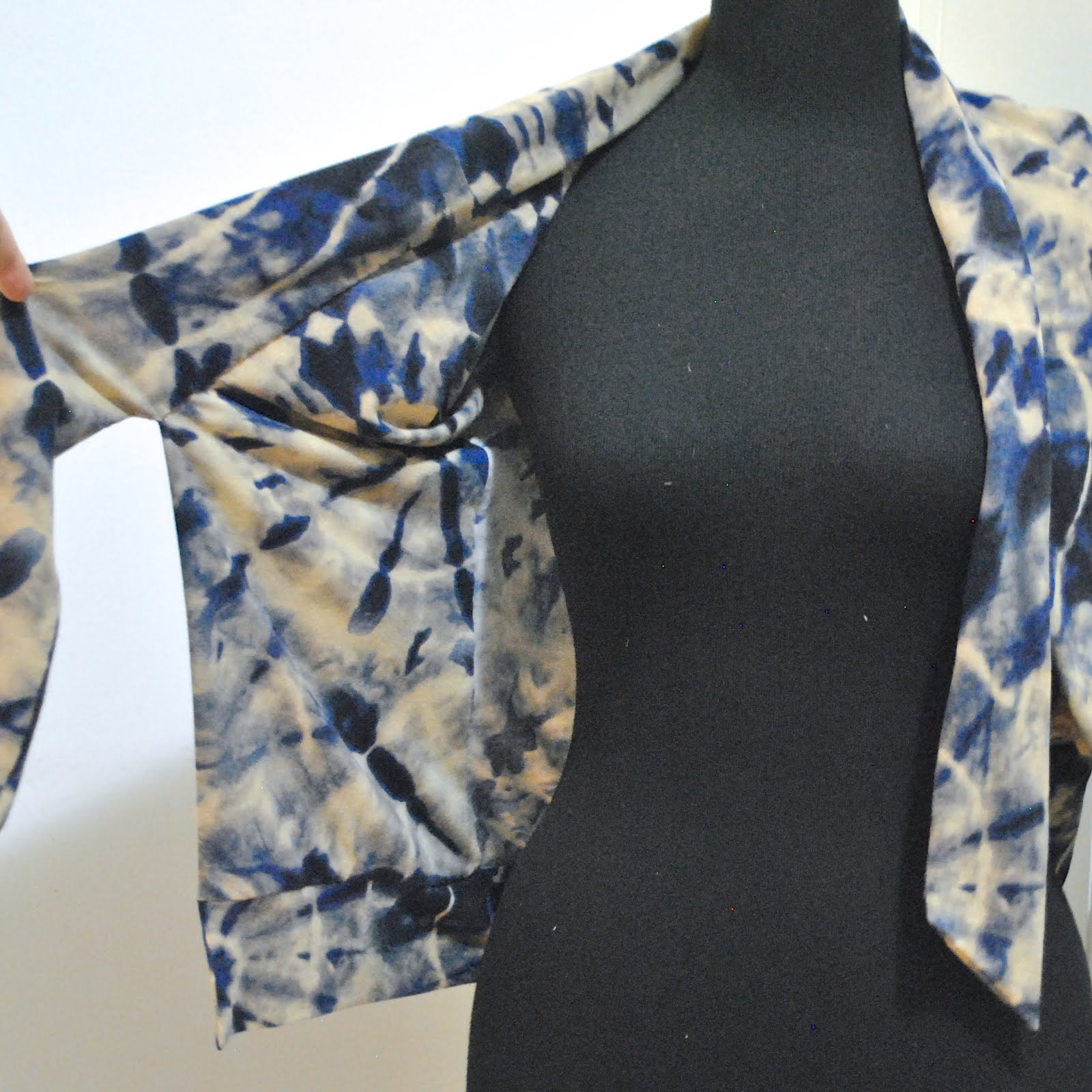
My desire for a super-clean finish is finally satisfied with the insides on this last version… they are super neat and tidy! with no exposed seams or stitching, barring inside the sleeve/armhole.  *happy sigh*

I’ve written my order of construction to illustrate how it all went together…  it’s a little more fiddly than the previous methods but perfectly doable.

Cutting; cut the fronts on a centre fold so they are double layered.  Same picture as the previous cardigan because it’s identical.  I sized up a couple of sizes to get that looser cardigan fit, rather than the tight bodysuit-fit that the pattern is designed for.
NOW; the first step is to sew fronts to the back at the side seams, right sides together.

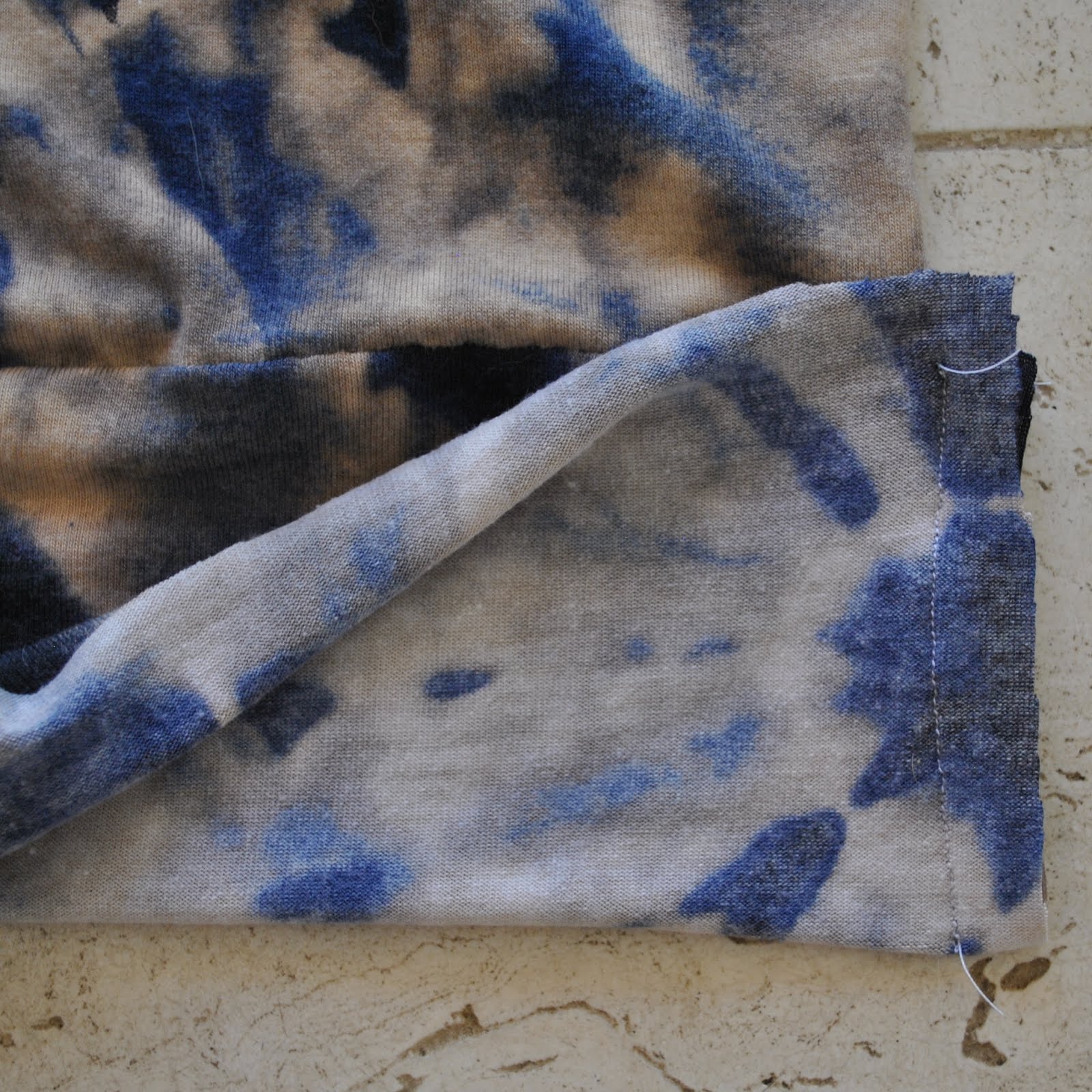
Now, fold the fronts in half, right sides together, and stitch the front facing to the back at the side seam over the previous stitching, enclosing the seam allowances within the front and front facing.  You will need to pull the pieces inside out a little to make this step possible, basically you are sewing the front piece in a tube with the back piece encased between the two side edges.  Grade seam allowances, turn out and press.

Cut the lower band to fit and stitch to the lower edge, keeping front facings free.  You will need to stitch each front section and the back section of this seam separately to each other, stopping and starting at the side seams; fiddly? yes, but worth it in the end.  Press open then down onto band.

Fold the band in half lengthwise and stitch the short edges, right sides together; trim and grade seam allowances, turn right sides out.

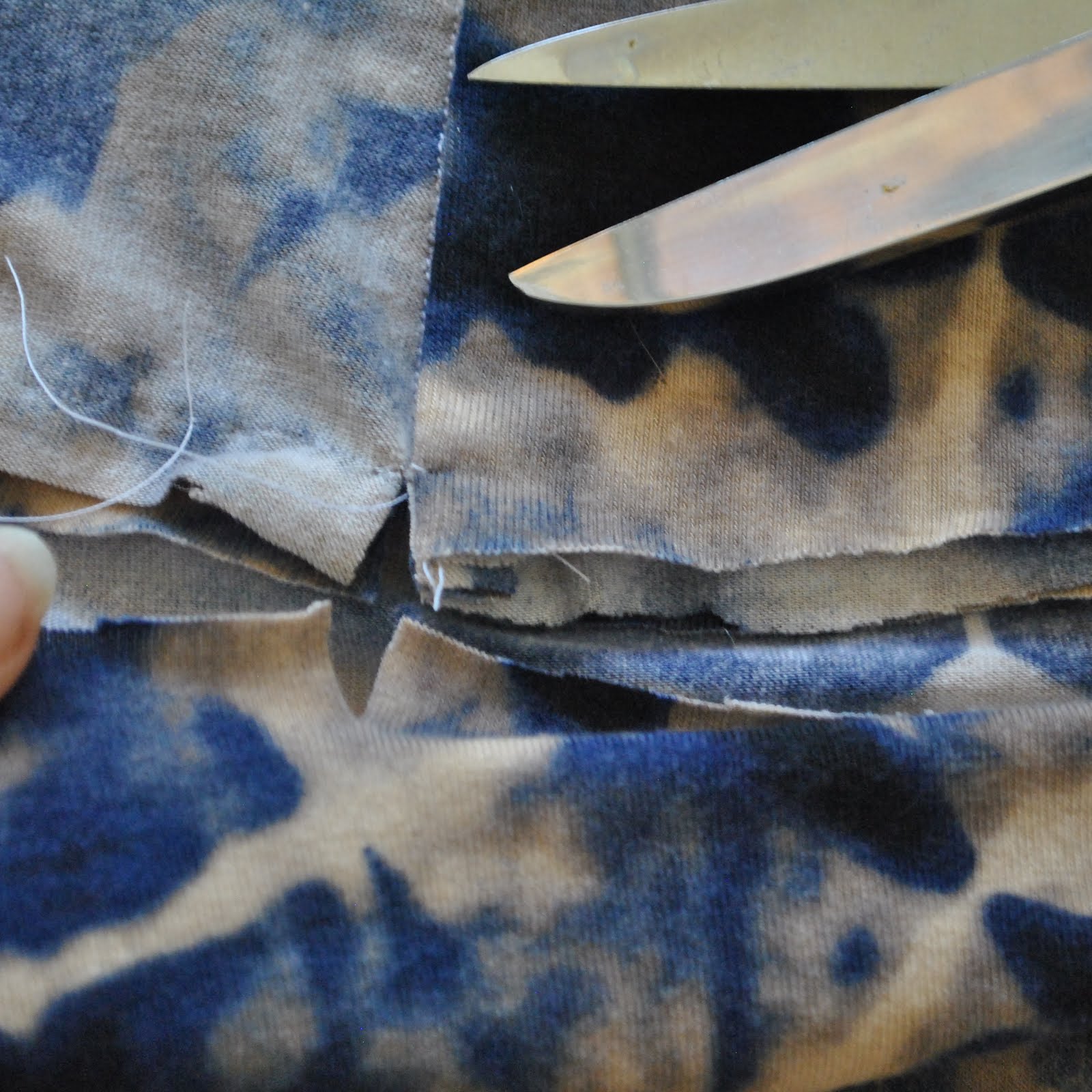
Snip all layers of the band seam allowances at the side seams, and also the lower band facing seam allowance at the same point.

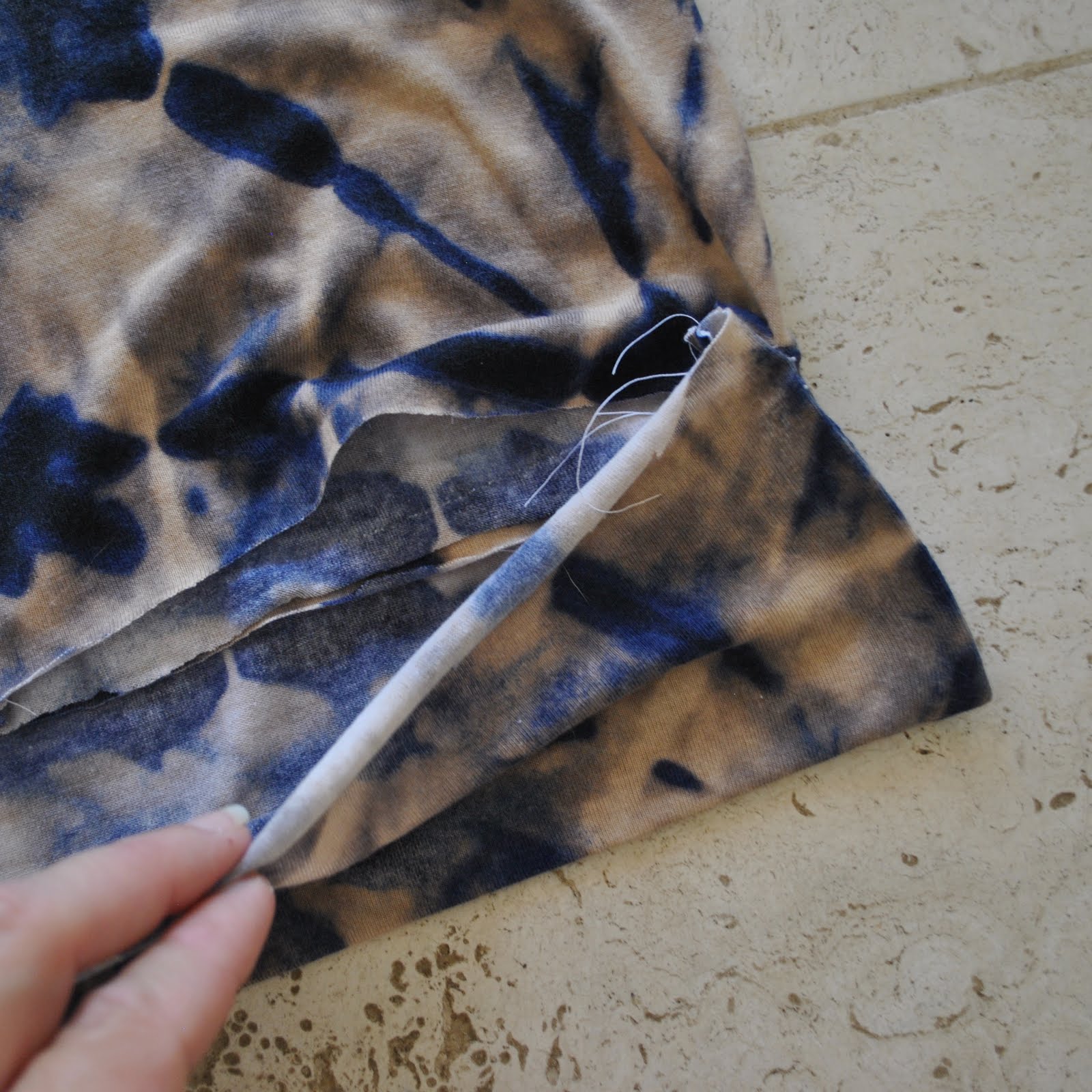
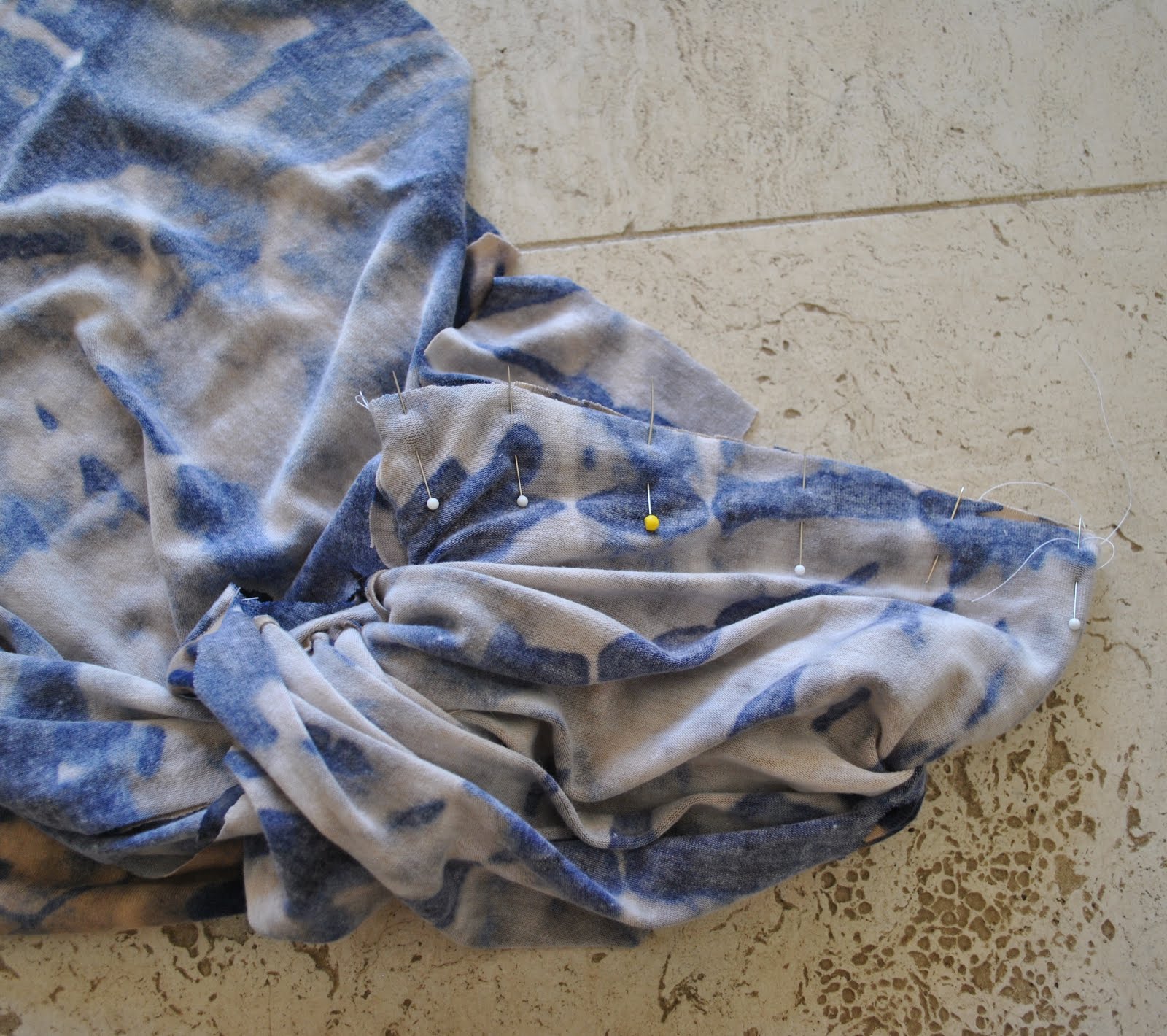
Now, from the shoulders/top; reach inside the front/front facing “tube” and pull the lower edge where it’s stitched to the lower band through along with the loose facing edge and band facing edges.  Align all raw edges, taking care to make sure corners are sitting tight and accurately together because with a stretchy fabric it can be all too easy to stretch them out of place! and stitch the whole shebang together in one seam.  Trim corners, grade seam allowances, pull it all right sides out and press.

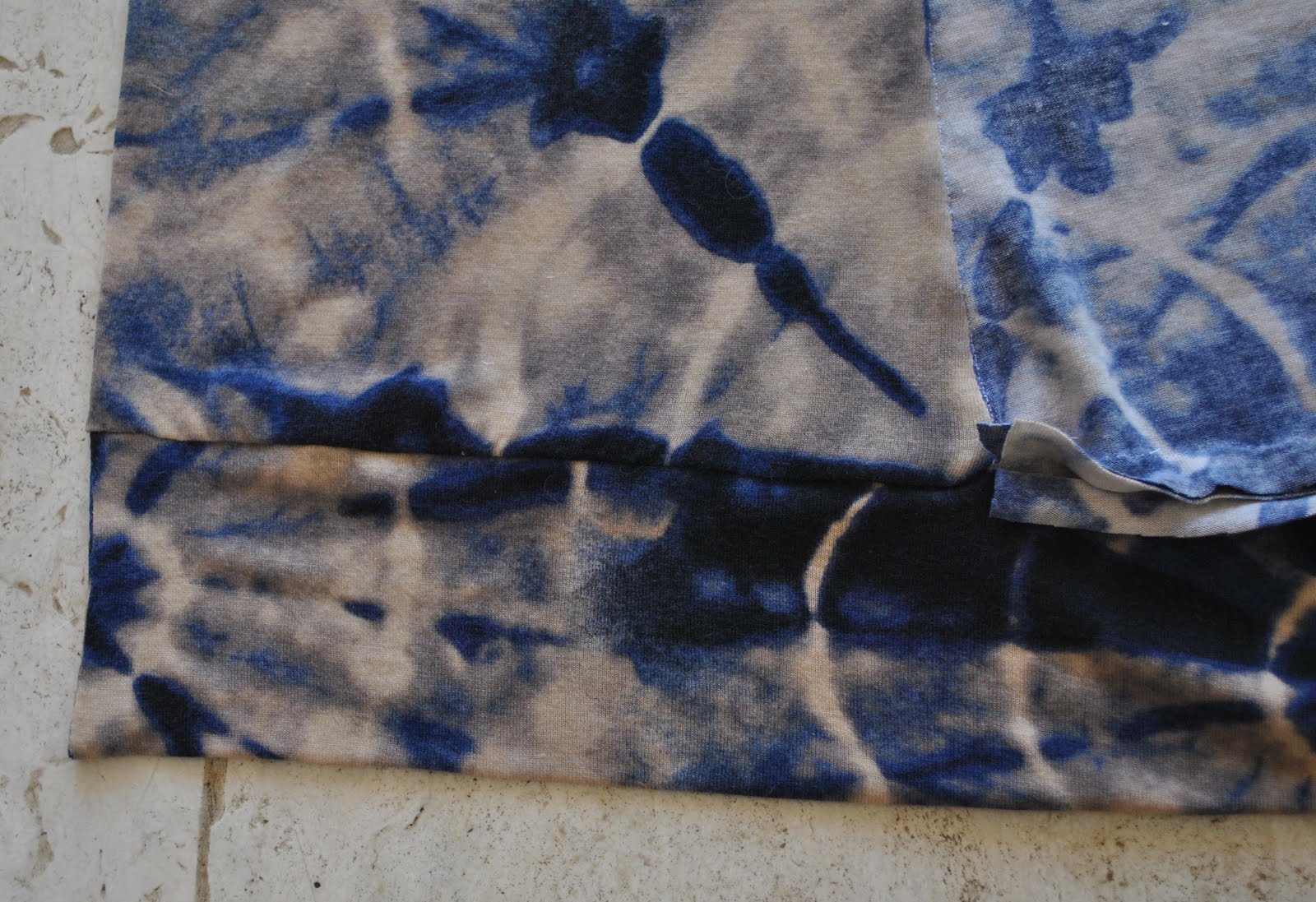
Voila!  yes it is a fiddly business but it look at that lovely absence of exposed seams on the fronts!

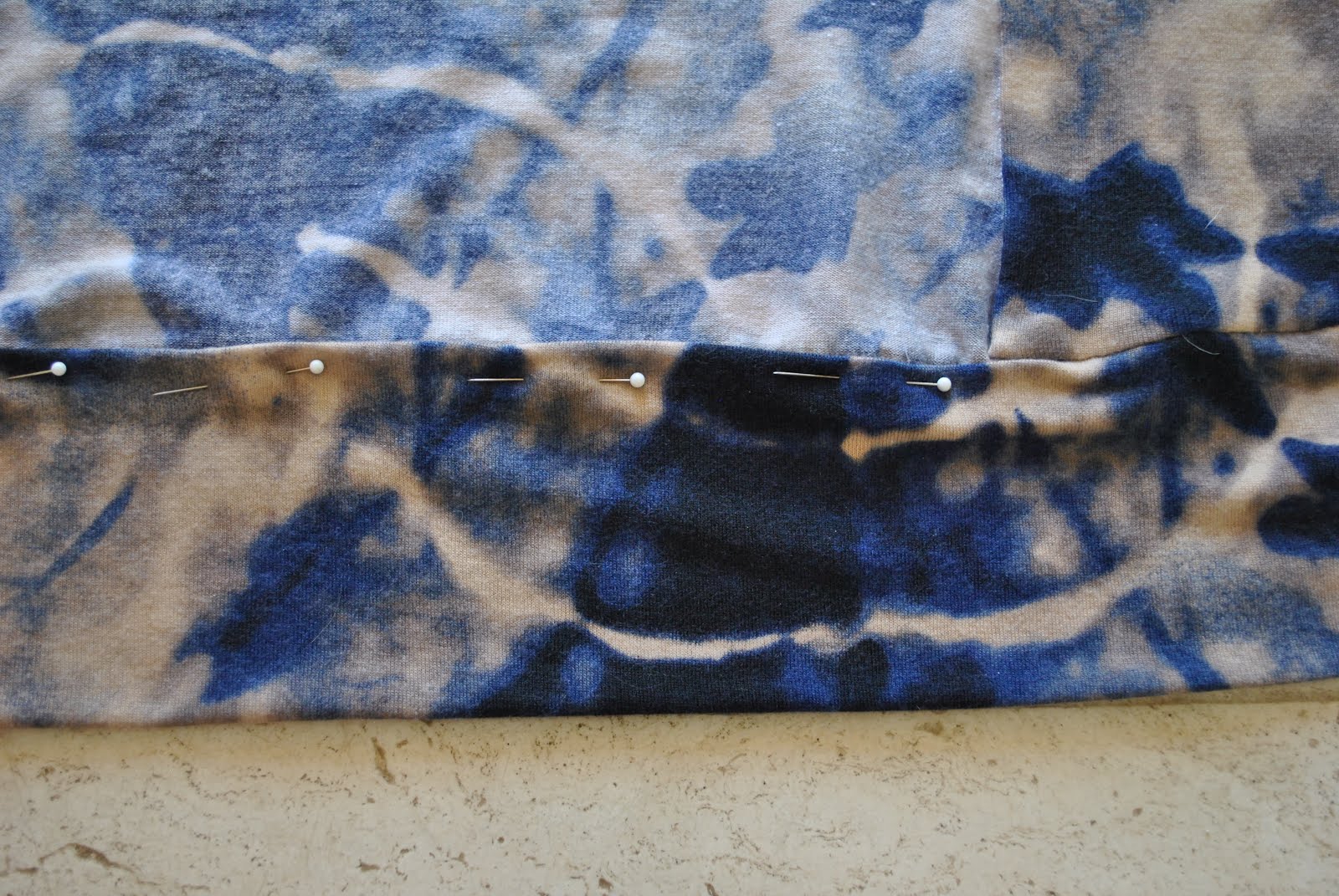
That last remainder of the lower band facing is turned under, pinned and hand-slipstitched in place.  Hiding those seam allowances, too  🙂

Now stitch the shoulder seams, front to back, enclosing the back between the two fronts as for the previous version of this cardigan, here, in fact the remainder of construction is exactly the same… stitch sleeve seams, finish; set in sleeves, finish likewise; sleeve cuffs, as per this method; neckband, as per this method described for my previous cardigan.

Details:
Cardigan; the Nettie by Closet Case Patterns, modified as stated
Tshirt under; another Nettie, white jersey, details here
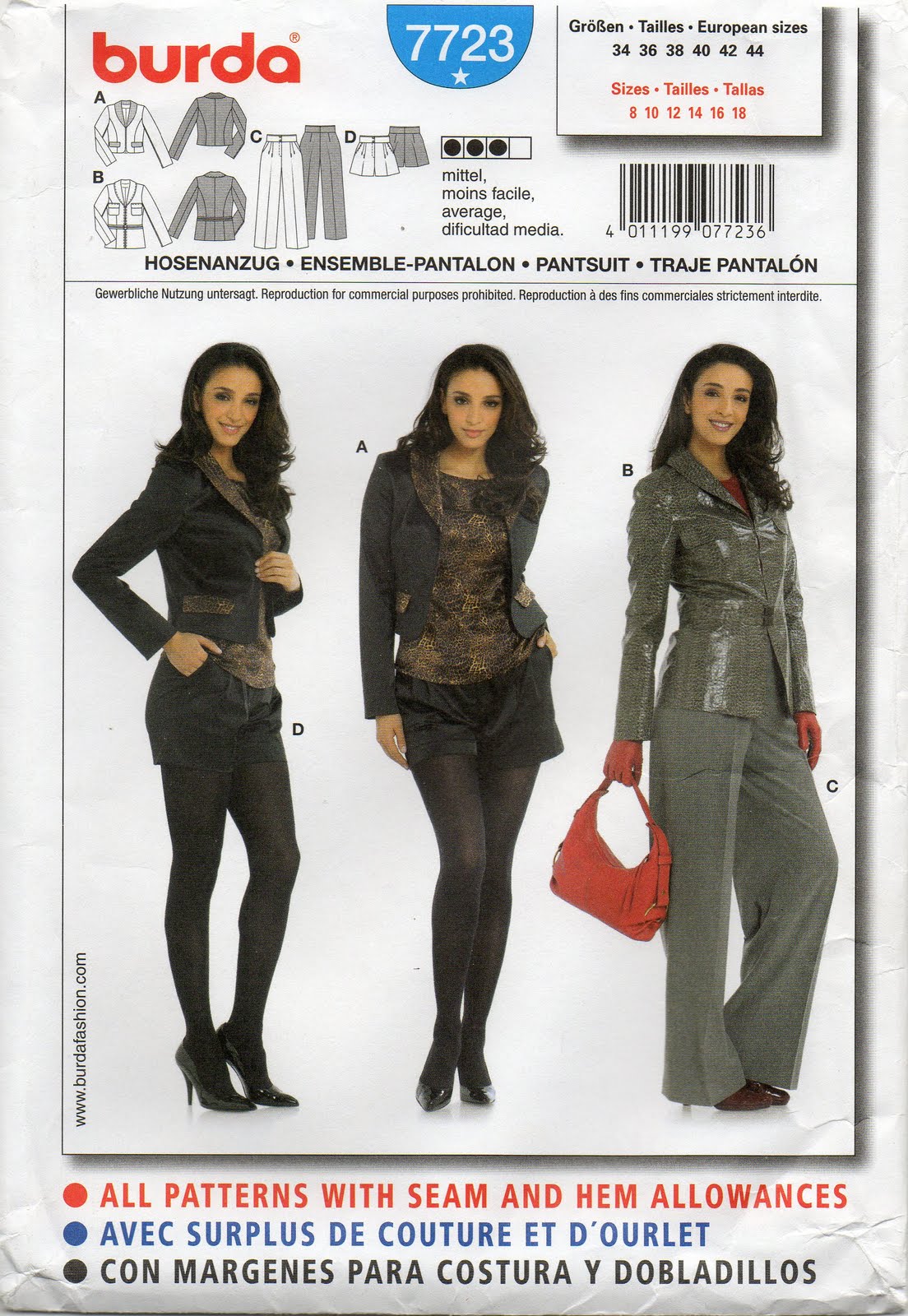
Shorts; Burda 7723, details here
Location; Bunker Bay, Dunsborough… we had it completely to ourselves!  so lucky

photos courtesy of Craig
pinterestmail

Stash Box, plus miniature clothing for tiny people

Recently I was asked by Two Blue Birdies; a Melbourne based, online fabric and haberdashery store to review their Stash Box.  What is the Stash Box, you might ask?  Well, it is like a little mystery box of  fabric and haberdashery goodies.  Once a month, the girls at Two Blue Birdies select a colour co-ordinated range of crafty things from their range of fabrics, felt, patterns and haberdashery and send it out to you.
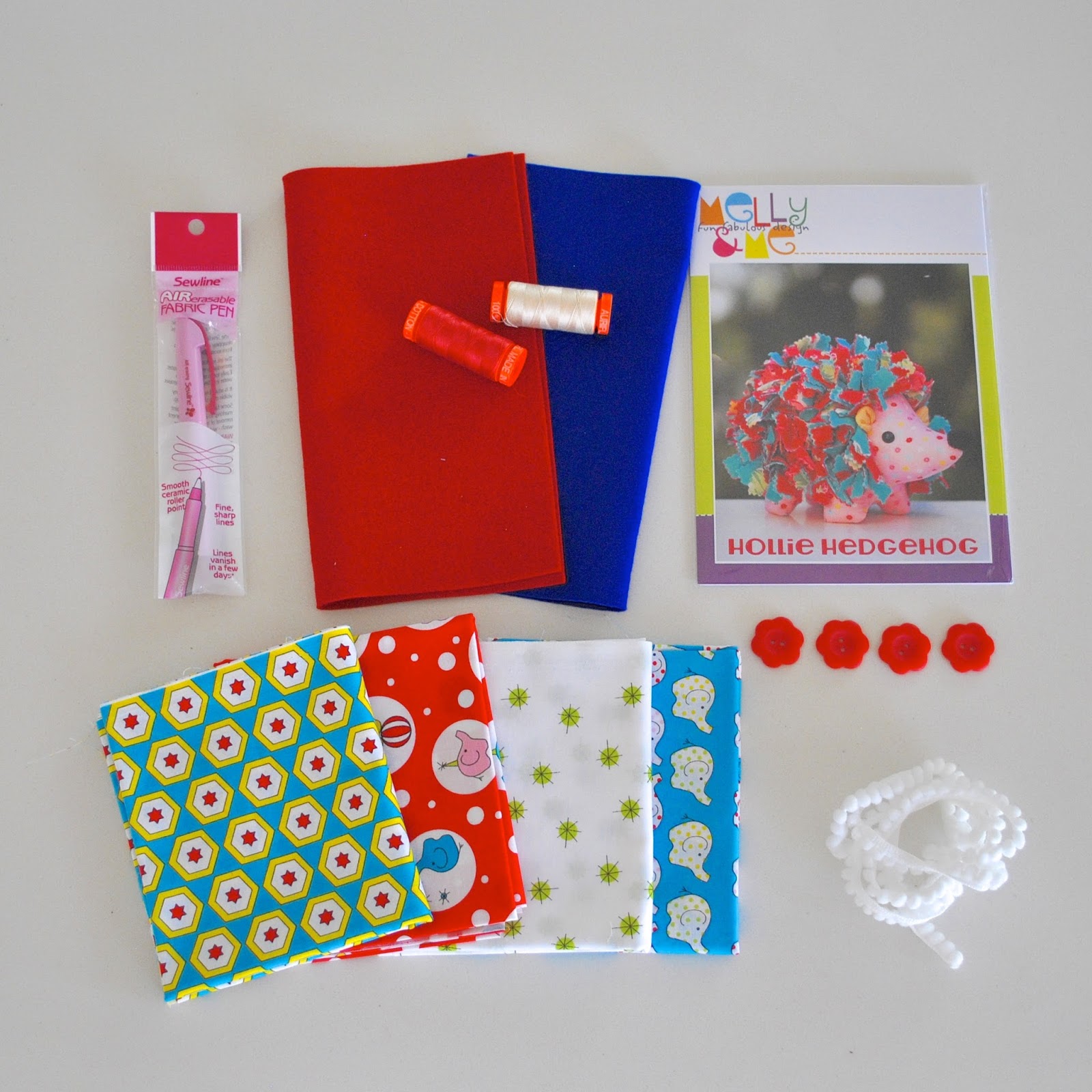
The box I received contained the following bits and bobs;
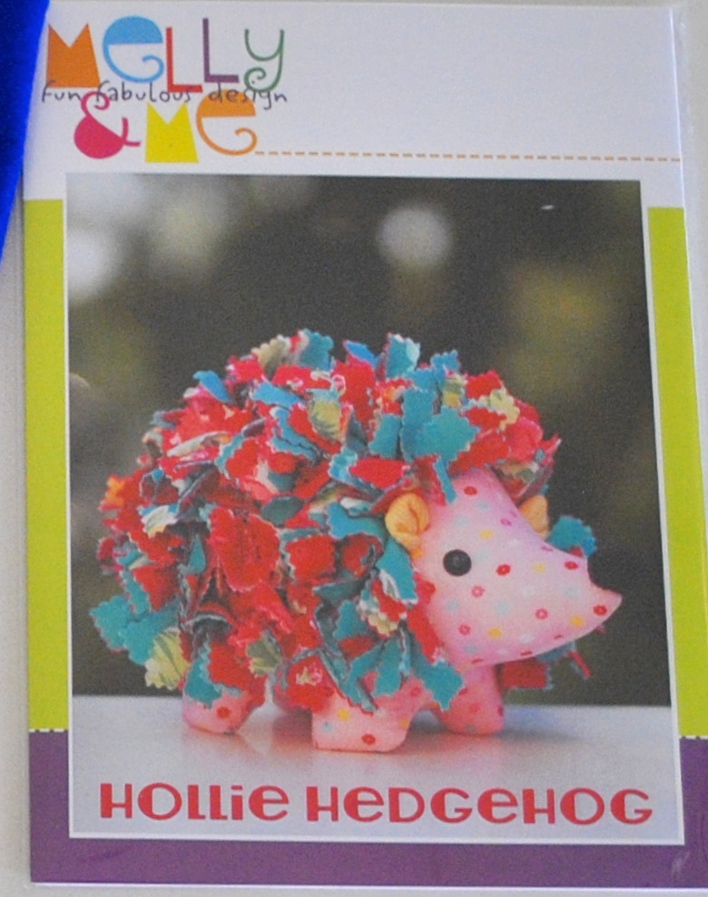
a pattern for a stuffed toy hedgehog, 4 pieces of fabric, 2 squares of felt, two spools of thread, 4 buttons, a soluble marking pen, and a length of mini pompom trim.  This last is ultra cute; I’ve not come across this before and it is cute!

It was fun waiting for and receiving the box, and opening it to see what was inside!  I took it along to my local craft group to get their opinion and they all agreed that it is a pretty cute and fun way to get a new little range of goodies to play with.  If you do crafty things with your children/grandchildren; and/or if you yourself love crafting and fiddling about making cute little bits and bobs then this is a terrific way to get a new boost to the craft supply box each month.
The deal sounds pretty flexible; if you don’t need a box that month you can easily opt out of the subscription as long as you get in touch with Two Blue Birdies before the date of postage.  And conversely, if you don’t have or don’t want a subscription but really like the look of the stash box that month, you can buy just a box at a time, supplies permitting and with no need to lock yourself into a subscription.

What did I make with the contents of my stash box?  well, since Two Blue Birdies were so generous as to send me the box for free, and I’m all about paying it forward… I really wanted to do something good with it.  By that I mean, something unselfish, for once!  I know, we seamsters all joke about sewing selfishly, myself included! and heaven knows I sew plenty for myself.
So I hunted about for a local charity and almost immediately found Tiny Sparks WA.
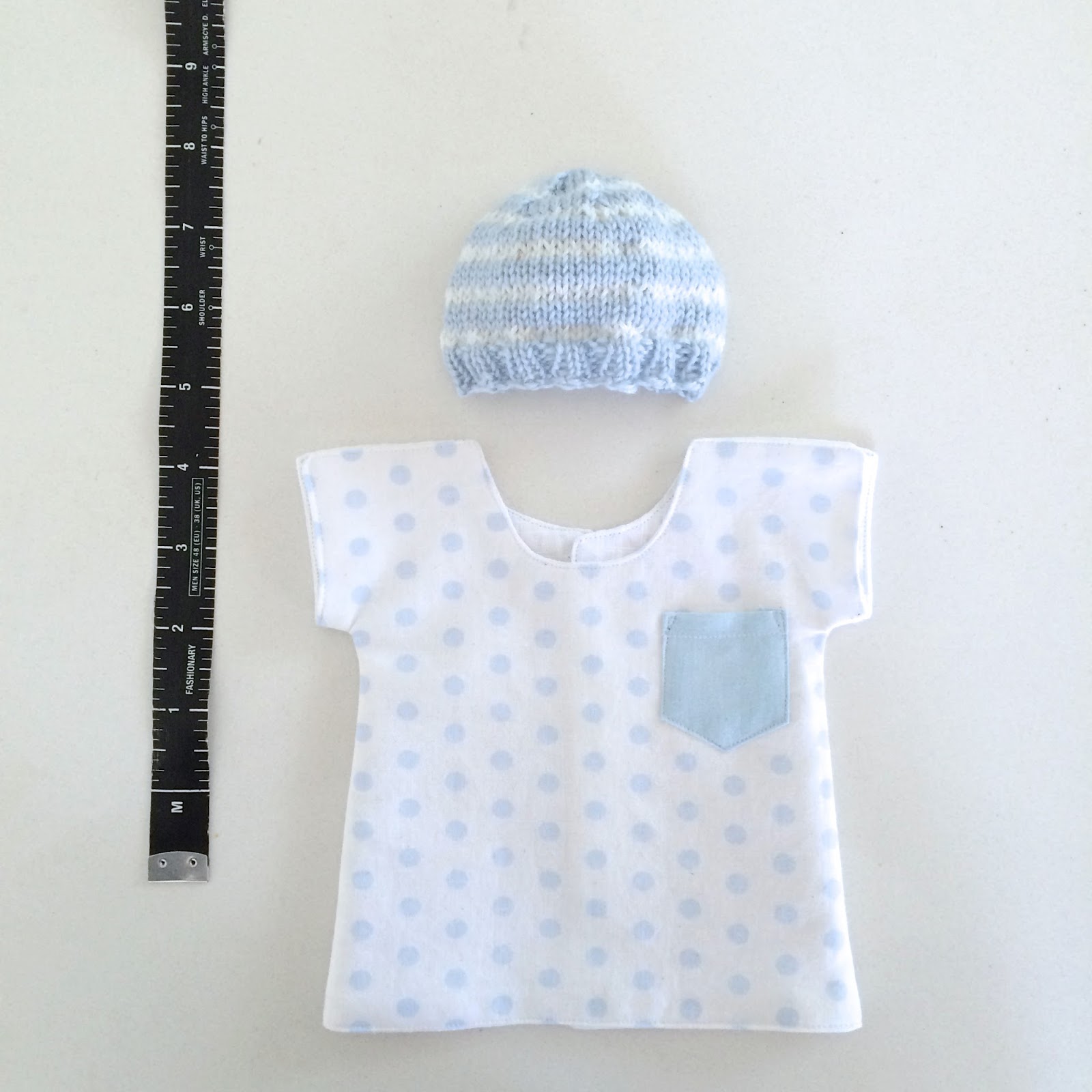
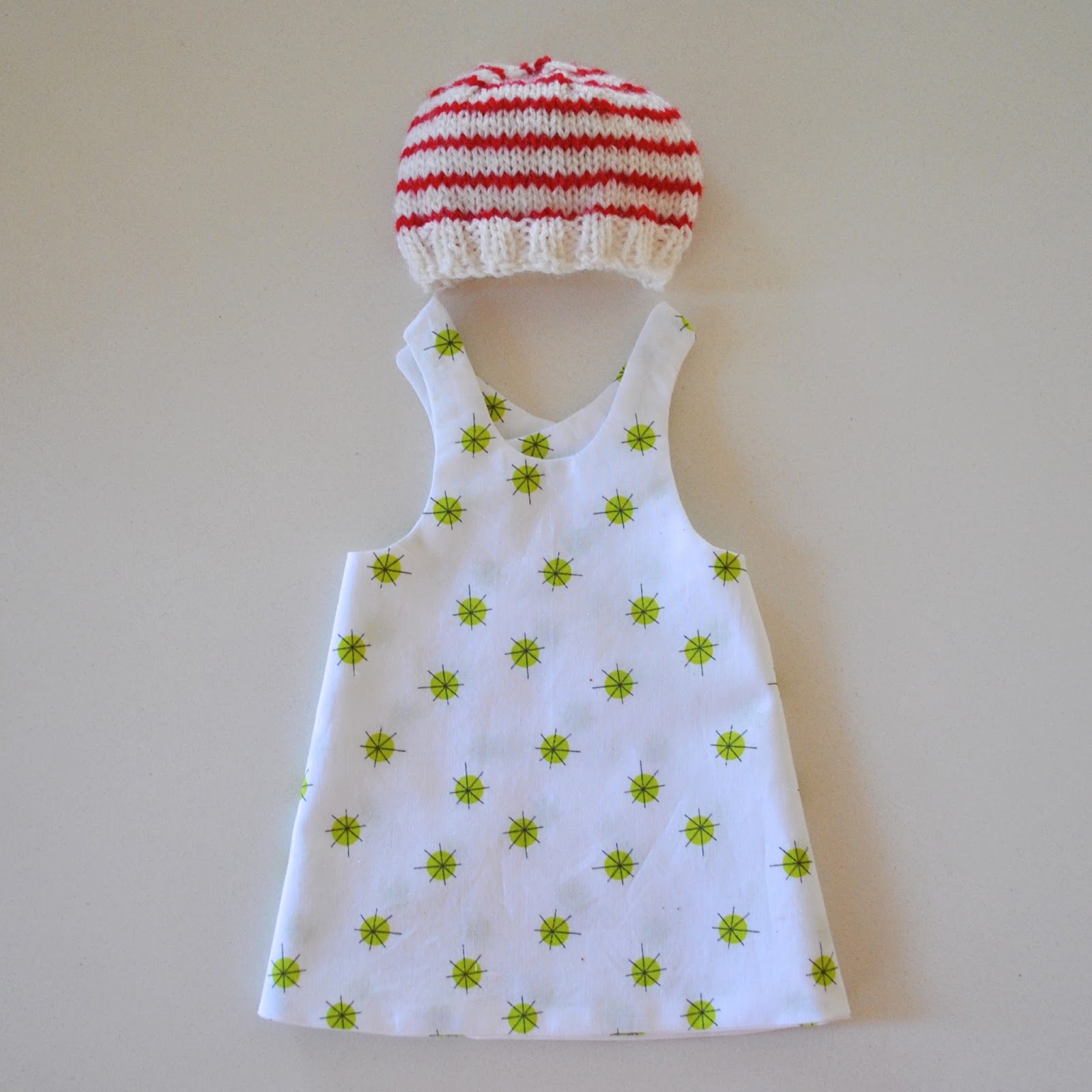
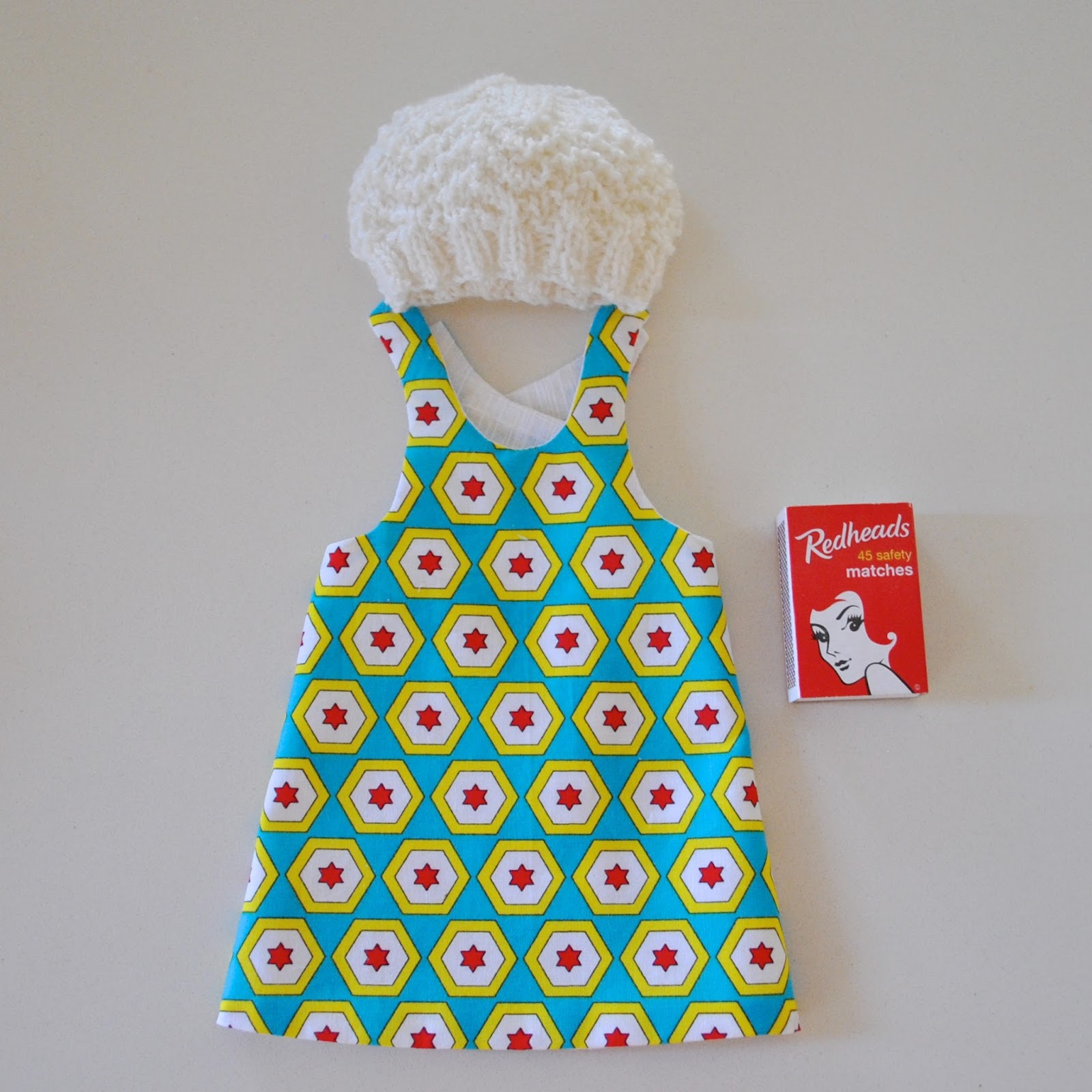
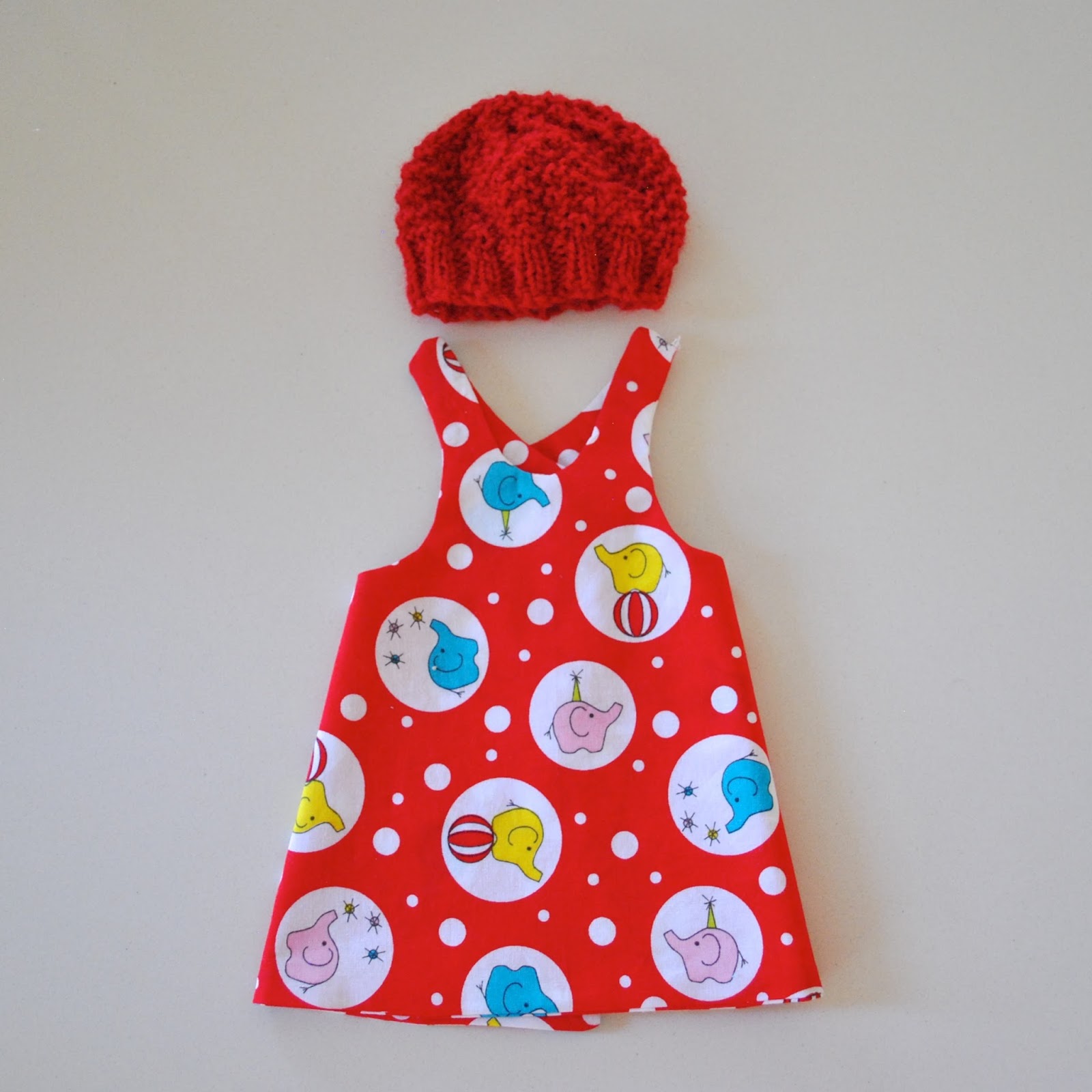
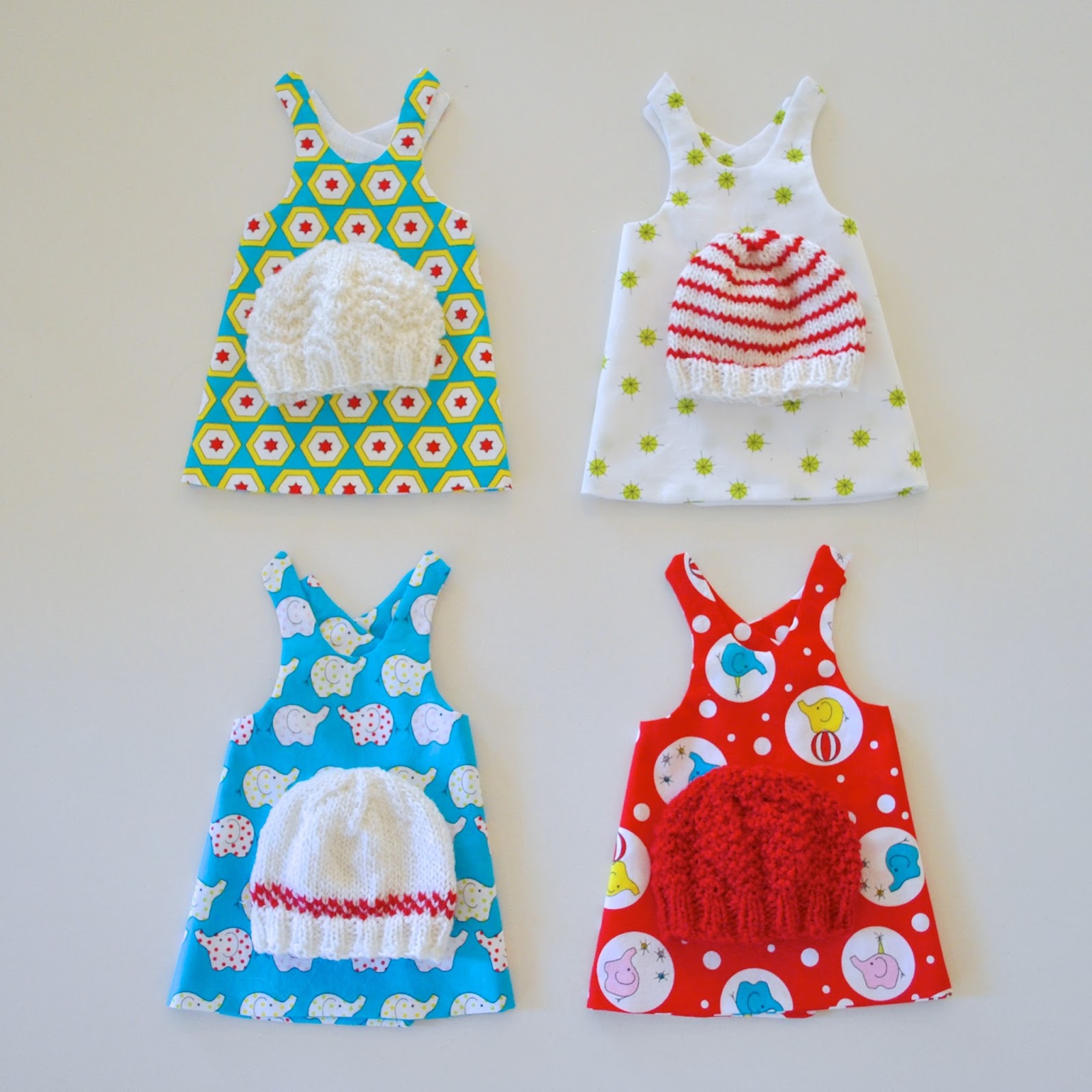
Tiny Sparks is devoted to helping women experiencing a high-risk pregnancy and babies born sick or premature.  Obviously donations are welcome, and one way to get involved is to be a part of the knitting and sewing community that work to provide a gift of special clothes for the babies for when they leave hospital and go to their own homes.  You can read more about the charity and how to get involved on their website here, and the site is regularly updated to notify items that are particularly low in stock, and currently required.  Importantly, the site also has the free patterns for the particular clothing and beanies that fit the babies and their requirements.  These four little outfits here are all for size up to 1.6kg.  I know, so tiny!!!!!  This isn’t even the smallest size!

Initially I thought to make two boys’ outfits and two girls’ outfits; however the fabrics, while they were sorta unisex in colour, seemed to my eye to be quite feminine in style, so I ended up making four girls’ outfits.  However! of course I do not want the boys to miss out! so pretty soon I will be making some boys’ outfits, to make up for the imbalance.  Because I will be doing this again.  In fact, I enjoyed making these so much that I will probably make this a regular project, as long as there is a demand.
I bought baby yarn from Spotlight to knit the matching beanies.  The Tiny Sparks website outlines quite specific requirements regarding fabrics; all fabrics must be new, soft, lightweight cotton; and beanies are to be knitted from new, machine-washable yarn preferably the acrylic/wool mix OR 100% acrylic, that is specifically designed for babies’ knitwear.  I bought a ball each in white and red, so as to make each one different.  The white has a chevron design and the red one is moss stitch.  The two-colour ones are plain stocking stitch, one with a Where’s Wally like stripe and the other with a few rows of simple fair isle, of alternating one red stitch, one white stitch.

The dresses do not have closures on them yet, because they require specialised plastic snaps; I’m not familiar with it so didn’t want to risk putting the wrong thing on.  In any case, Tiny Sparks encourages you to send in the clothing sans closure so they can finish that bit themselves.
So there you have it: four teeny tiny little baby outfits!  I’ve already sent them off… and although I will probably never know, I certainly hope that a parent likes a set enough to choose it for their baby; absolutely nothing would make me happier than for that to happen!
Thank you so much to Two Blue Birdies, for giving me the impetus to get on and do something for a very worthwhile cause  🙂

 

Also! courtesy of Two Blue Birdies, I am offering up the pattern for the cute little Hollie Hedgehog for a giveaway!  If you would like this pattern, maybe to make some little Christmas pressies then please either leave a comment below stating so, OR send me an email; before this Friday, 4th December. and I will randomly select a recipient.  I’ve received lots of emails telling me that comments are for some annoying reason not going through on my blog; trust me, I’m working on it!  So, if you are unable to comment, then please do contact me by email instead and I’ll still put you in the draw.  My email address can be found by clicking on the mid blue “envelope” button, up there with my media icons, at top right  🙂
Obviously, if you don’t want to enter the draw for the pattern but still would like to comment, then by all means, do so.  Like everyone, I love comments!

LATER EDIT: Dk’s wife; the pattern is yours, could you please email me with you shipping address? thanks  🙂

Please note; as always there are no affiliate links on my blog

SaveSave

pinterestmail

ivory Ruby

Hello!
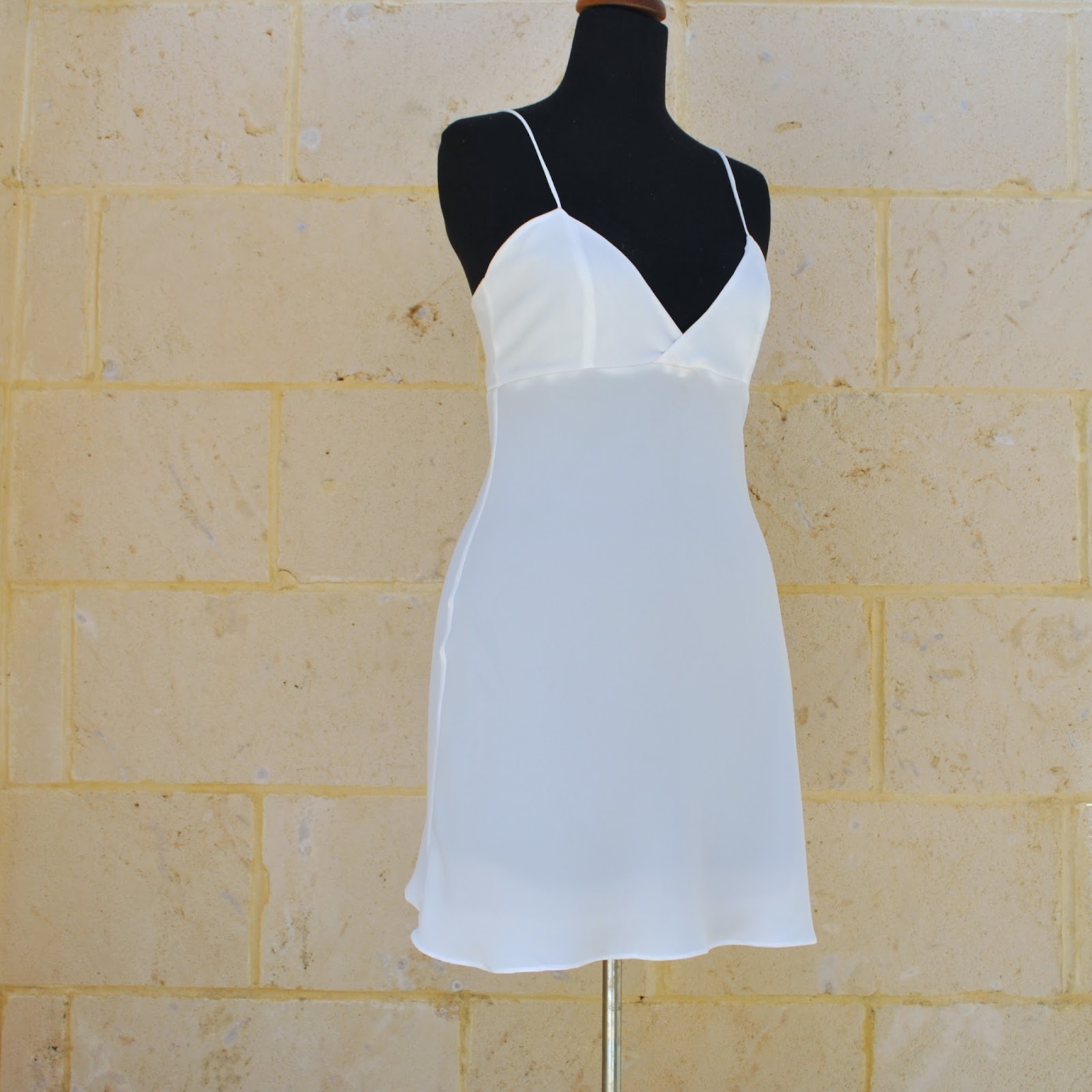
I’ve made a new slip; which looks superficially rather plain and boring, belying the hours of of care that has been lavished upon it, haha!  Bias hemlines!  aaaaugh! *insert Munchian scream here*
Pattern; the Ruby slip, designed by Sheryll of pattern scissors cloth.  I downloaded it years ago but this is the first time I’ve used it! I’ve wanted to, but actually felt a little shy of doing so since she made her blog private for quite a long time.  Anyhow, now she’s back … yay! and so I feel ok about using and linking to her pattern again.  Thank you so much for the wonderful pattern, Sherry!
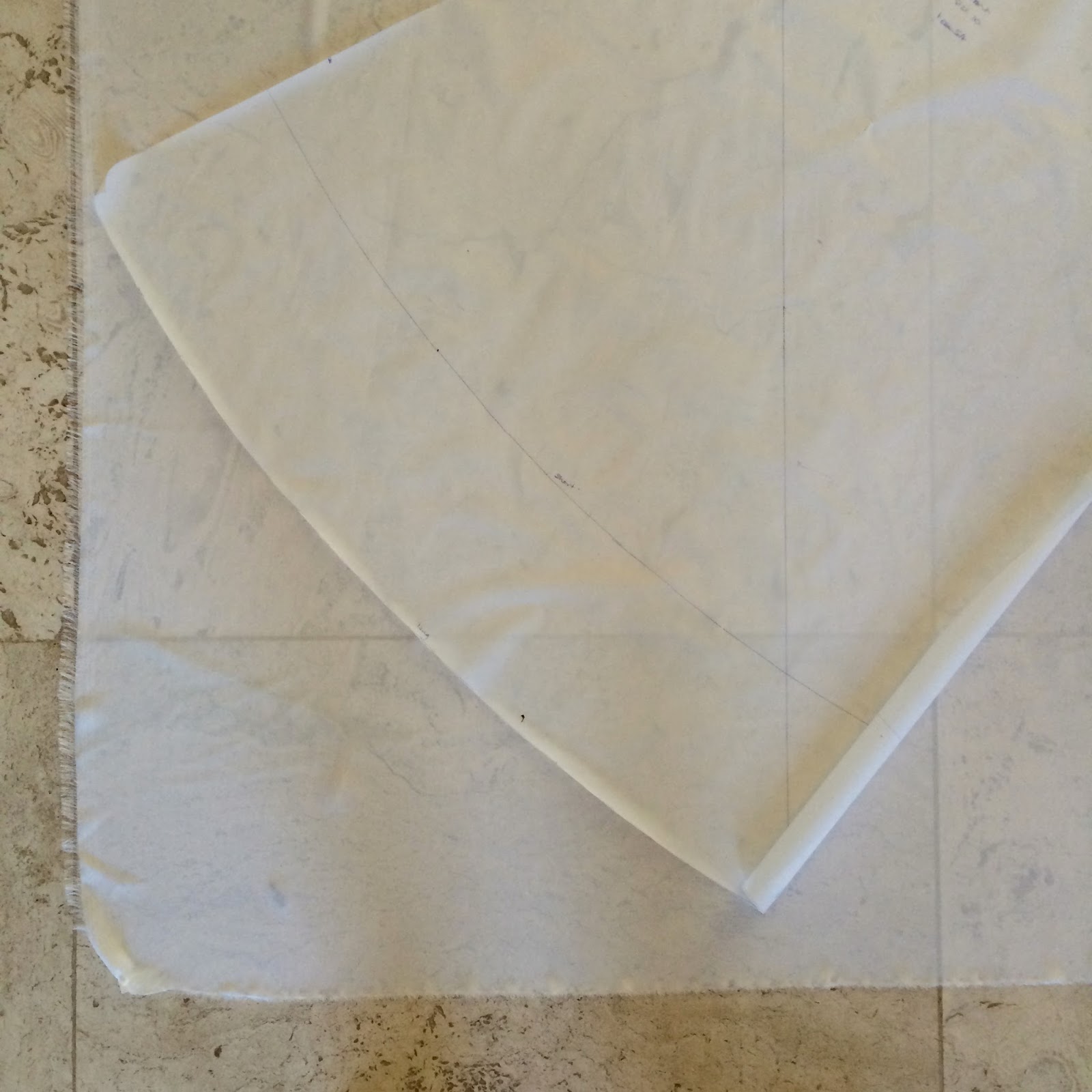
Fabric; a fine and slithery ivory crepe from FabulousFabrics.  The slip is cut on the bias, so hurrah for large-scale floor tiles! I can’t say how many times I’ve found them super useful for lining up grain lines, selvedges, bias lines etc etc when laying and cutting out my pattern pieces.  And especially when you’re dealing with a slippery slithery fabric like crepe, which is so dodgy it can deviate and deform at the slightest provocation.

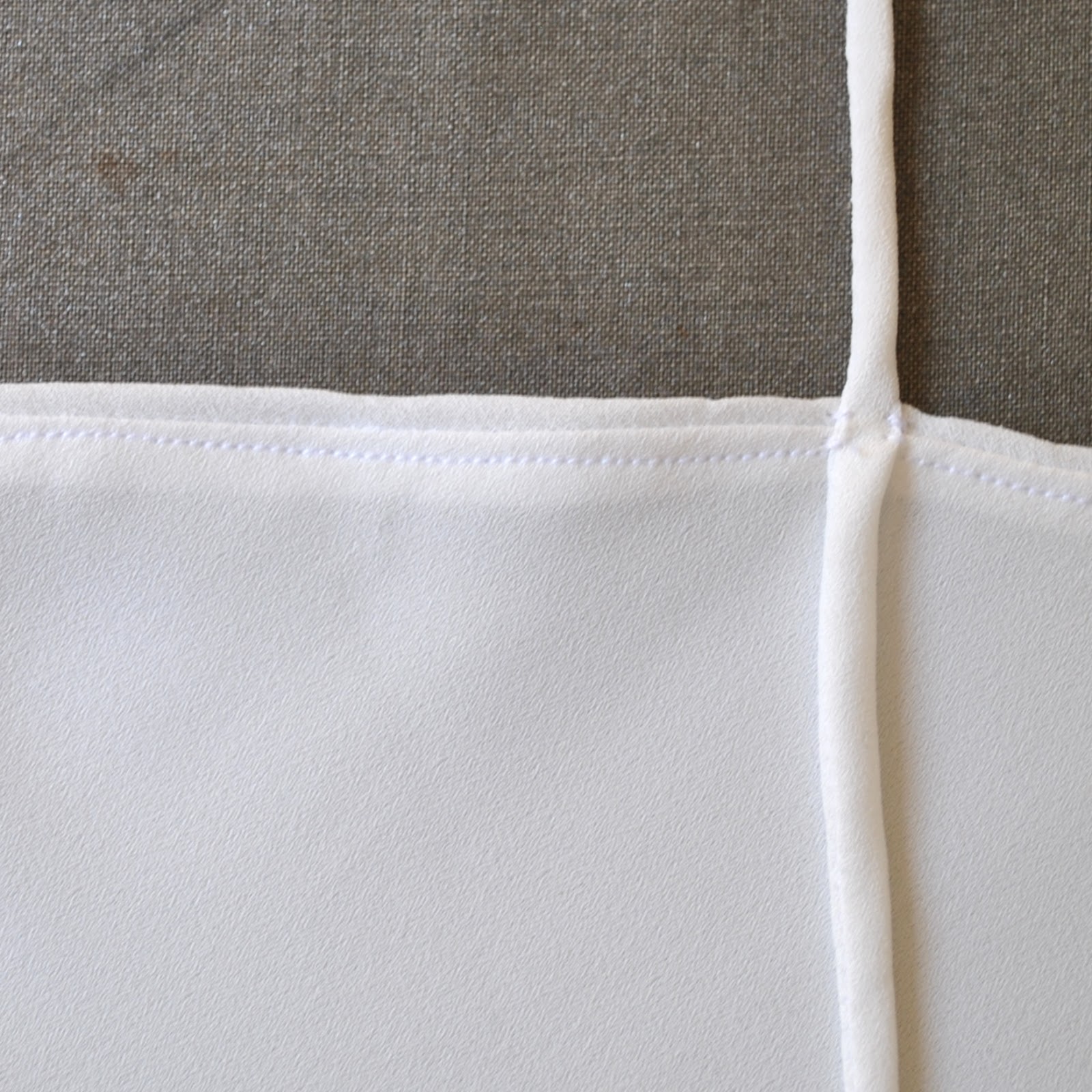
Sherry’s pattern is designed for a lace bodice but I cut my pieces all from the crepe, with a double layered bodice front and back.  The skinny skinny spaghetti straps are encased within the two layers on the front bodice, whereas at the back (pictured below) I hand-tacked them inside the bodice, not within the two layers, to enable easy unpicking/readjustment in the case of the straps stretching out over time.  The under stitching of the bodice lining is visible in this picture here too.

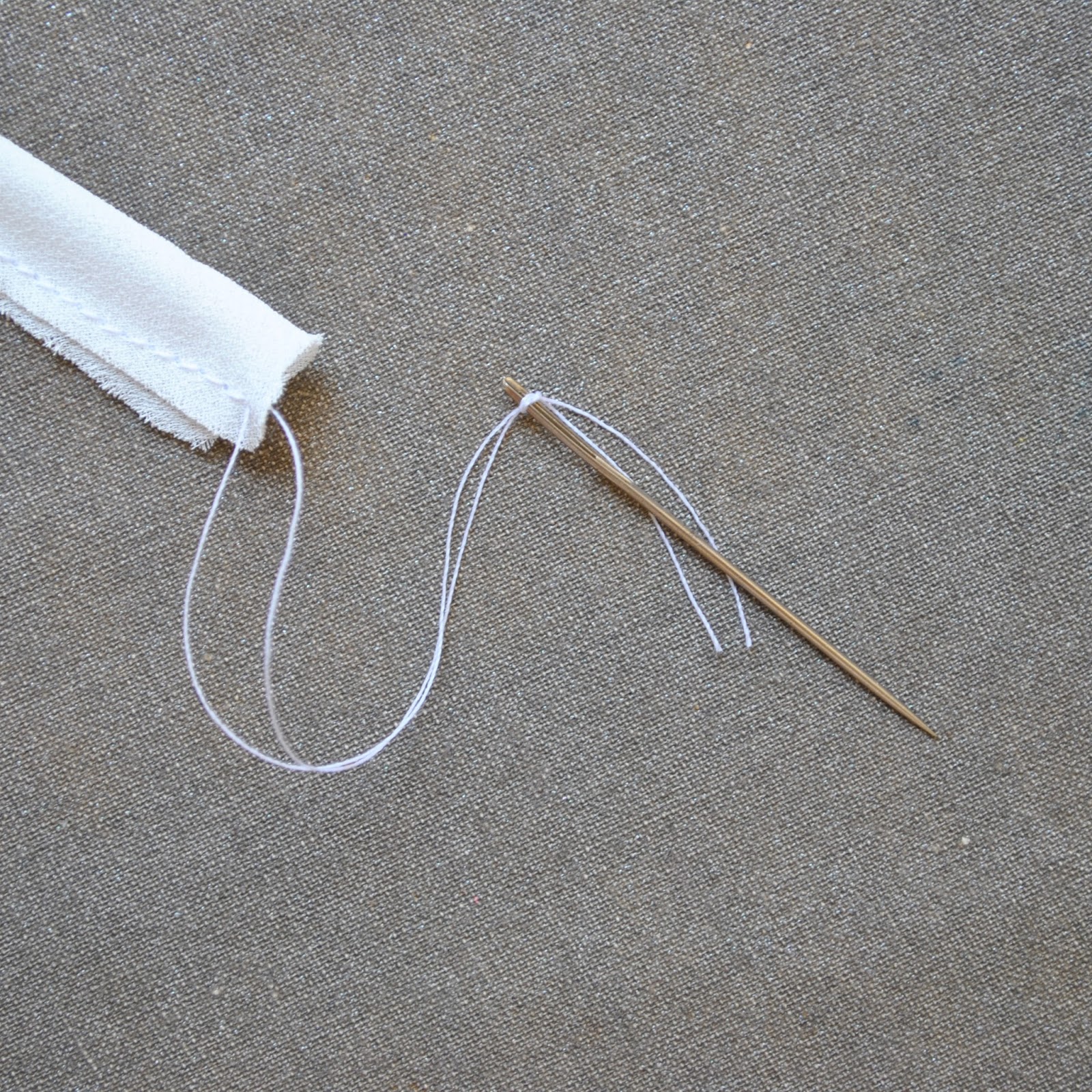
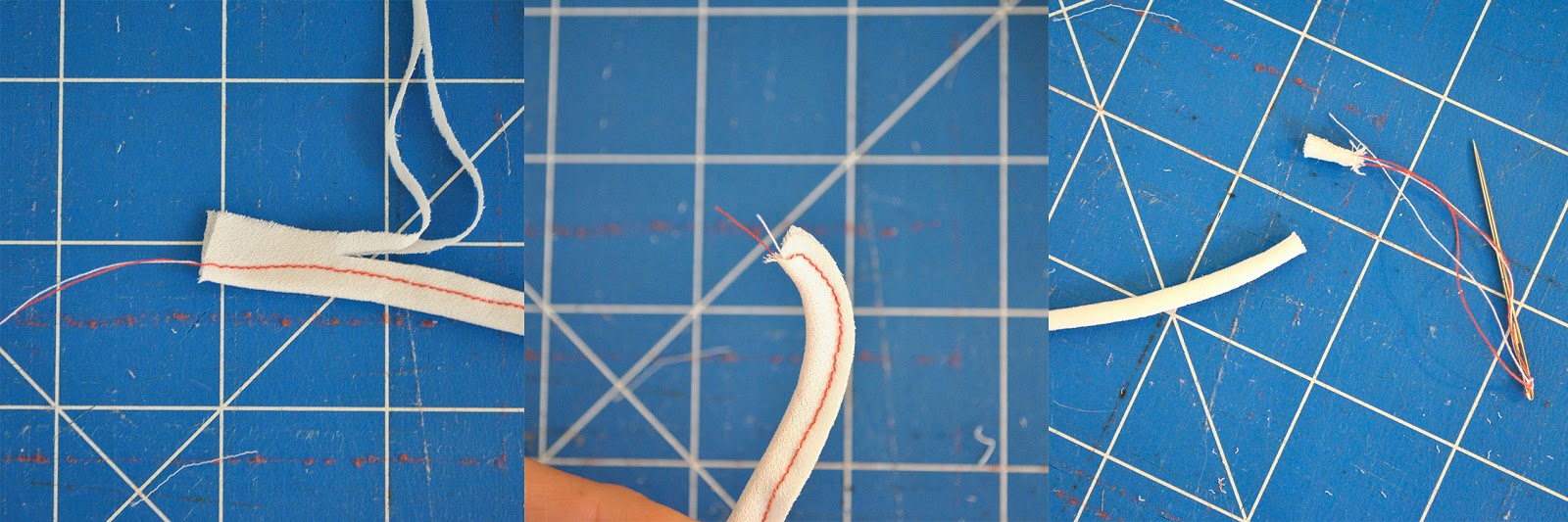
Those skinny straps, by the way; I know everyone probably has their own individual way of turning them; I tie the seam thread ends through the eye of a wool needle and let it drop/push it through through the tube, turning the tube out.  A wool needle is generally quite blunt enough to use for this purpose and unlikely to get stuck in your fabric on the way, but if you’re worried about the point being a little too sharp you can always put it through eye first.
Also; cut your straps a few centimetres longer than required, so you can trim off the ends that invariably turn out a little scrappy-looking after turning.

I sewed all seams as French seams but just overlocked the bodice-to-dress seam on the inside to finish it *blush*
Picking my battles here…!
The slip then spent a week hanging up on Bessie to let that bias drop out as much as possible. Then I spent aaaaaages measuring and measuring and re-measuring and double checking that hemline, first on both Bessie then myself to be absolutely sure it’s straight, before cutting it to length.
The length is determined by the fact that this slip is tailor-made to go under another dress I’m in the process of making right now, by the way; but I do hope to wear it with other things too, of course  🙂

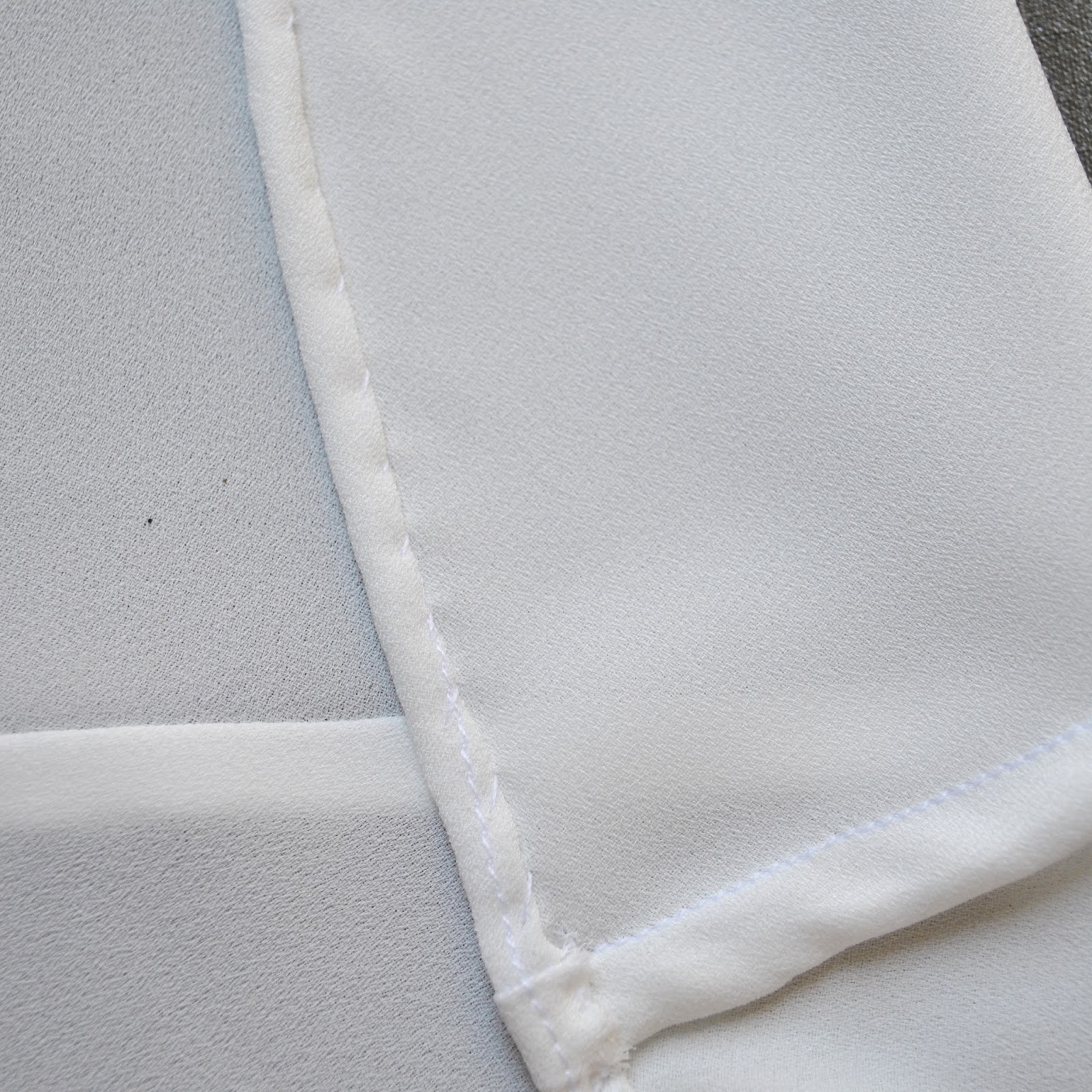
In the close-up above, at the very lower edge of the picture can be seen some white stay-stitching along that hem…  if the fabric is very light and slithery like this, I generally stay-stitch a stitching guideline, situated a few millimetres outside the measured lower edge of a bias-cut garment, on the machine.  Then I trim the seam allowance outside that, it gets rolled up and I stitch along and into that machine stitching when hemming.  The benefits of this stay-stitching are threefold: it not only makes it a heckuvva lot easier to stitch a hand-rolled hem, it stabilises the fabric substantially and prevents the bias from stretching out too much while you’re stitching, the dreaded lettuce leaf edge! AND also keeps your hem on the straight and narrow as it were, keeping it even and helps avoid any little dips, ducks and dives in the final product.  Even the best hand-roller is bound to roll a little bit more, a little bit less every now and again.  Nit-picky; I know, but every little bit helps I think, and after all that careful measuring to ensure the hemline is perfectly even, it makes sense to safeguard it and keep it as straight as is humanly possible for the stitching of it too, yes?
Also as seen in the picture; I often don’t “roll” the French-seamed side seam under twice at the hem either, but turn it up just the once for its short bit of hemline… why? frequently it’s too bulky and often creates a little dip or worse, a “flip-out” of the hem at that point if I’ve tried to force it.  Probably my bad sewing, but there it is, I get better results like this!

Later edit;

Jillian asked about turning spaghetti/rouleau straps; thank you Jillian!  Fabrics like this slippery crepe are rarely a problem but in some thicker and/or stiffer fabrics, turning out a strap can be a bear.  The less fluid the fabric the less easily it can be manipulated into turning inside out into a little tube… and yes that starting bit is always the most awkward bit!
Firstly; it’s important to trim the seam allowances so as to be of a much smaller width/lesser thickness than the final tube will be.
Also, never never allow the fabric to bunch up excessively, but keep teasing the tube along, a little bit at a time, slowly but surely  🙂
Another little trick I have used successfully is to sew the end centimetre or so of the tube seam tapering inwards into a slightly skinnier tube at the very end, as pictured above left.  The skinnier end does pull into and turn inside the wider “main” tube a little easier than if it was the same circumference.  The tapered end bit can be trimmed off after the strap is turned out successfully.

pinterestmail

tie-front cardigan from a Tshirt pattern; a brief tutorial

Remember recently I made a little paprika cardigan? and I wasn’t super happy with my construction technique of the fronts and could visualise a far better method of getting that front edge nice and neat … well, of course I could not rest until I had seen it through.
Voila; new, stormy-grey-blue cardigan
Essentially, the gist is to cut each front piece on the fold through the centre front; meaning the fronts are double thickness, with one half acting as a facing.  The fold at centre front is its own neat finish with no further need to do anything at all to it.  Also, the front plus facing enclose the lower band between their two layers.  For this reason, this technique works very well with very thin knits.
Fabric; thin blue/grey marl cotton jersey, leftover from Sam’s hoodie and originally a remnant bought from the Morrison sale, although when I say remnant there was at least 5m of it!  Morrison is tres generous with their “remnants”, to say the least!   I still have quite a lot left.  
Pattern; I used the Nettie from Closet Case patterns, which is my go-to basic now for form-fitting Tshirts/bodysuits, however any tried and true Tshirt pattern could be used for this same modification.

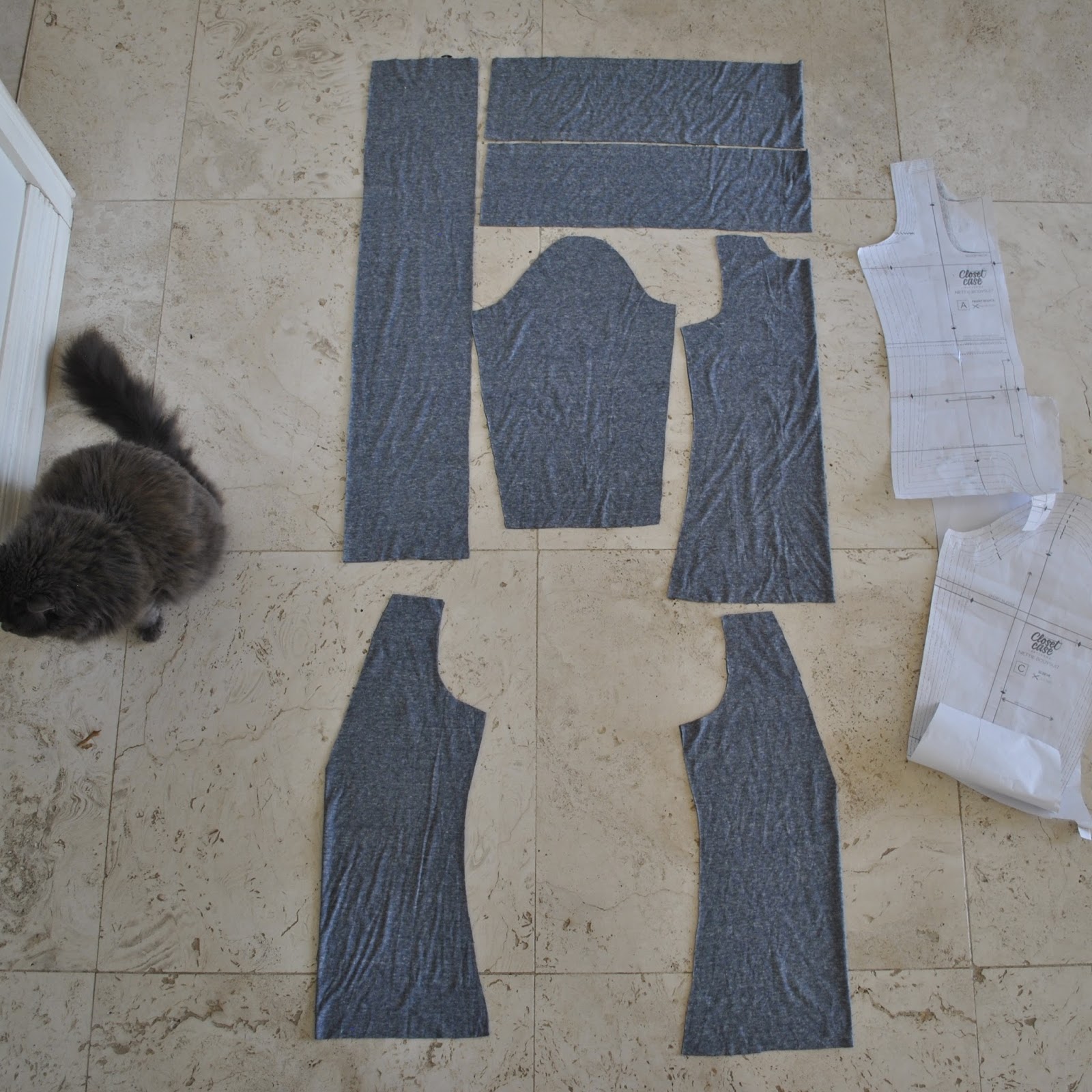
I cut my pieces like so: top parts; fabric folded along the right hand side; with the top two horizontal bands being the “rough cut” lower edge band and the sleeve cuff bands respectively; underneath are the back cut on the fold, the sleeves and at the left is the long neckband.  This last is joined right sides together along one short edge to make a double length band on the grain.
After cutting these: the fabric is then re-folded in from each edge so as to cut those two fronts (below) on a fold, with the centre front laid on each fold.  Cut from the inside shoulder edge out to the CF fold at bustline level on a straight diagonal line, to create the V-neck opening edge.

front piece at left is folded in half, front piece at right opened out along CF fold

Construction details:
first, stitch fronts to back at shoulders.  Sandwich the back between the two fronts so that the seam allowances get tucked away between the layers.  You have to twist it around it in a weird funny-looking way but it does work out.

Stitch front to back at side seams, keeping the front facing free.
Then trim the cardigan to the length you want it to be, taking into account the width of the lower band.  Measure the around the lower edge to determine the length of the lower band and cut it to fit; allowing for a 1cm seam allowance at each end.
Pin the band to the lower edge of the cardigan, again keeping the front facings free.  Stitch, between the seam allowances, right sides together.

 front facing free

Turn the band up in half, lengthwise, right sides together, and stitch the short edges closed, ceasing stitching at the end of the previous stitching.  Turn bands right side out and press.

Now fold the facing to the outside, laying it over the lower bands and keeping raw edges even, and stitch lower edge seam through all layers, keeping the stitching just a whiskers’  width outside the previous stitching.  The reason for keeping it just outside is so that the previous stitching does not show through on the right side of the band.
Now when you pull the band out and turn it all back right side out, the seam allowances are nice and neatly hidden away out of sight.  Yay!

outside of cardigan? inside? impossible to tell which is which!

To anchor the front facing to the side seams, I opted to simply lay the front facing down to the side seam allowances, aligning raw edges, and top-stitch from the right side, 6mm away from the seam.  The raw edge won’t fray, and it looks reasonably neat stitched down, also the top-stitching also accomplishes a sort of faux-felling of the seam allowances too.  However this is definitely not ideal and I have to admit I have since thought of a different and better way of doing this bit too! so there may well have to be yet another little cardi in my near future… to see that thought through too… eeek! am I getting a bit obsessive or what? hmmm could be could be…  😉

Sleeves; same technique as for every other Tshirt/cardigan ever invented.  Namely, stitch the sleeve seams, set sleeves in the armhole and stitch.  The raw edges can be finished with overlocking if desired.  
Attach sleeve cuffs, for this I nearly always employ this method, which gives a nice neat finish I think.
Last step; the neckband: pin the long neckband to the raw edges of the neck edge, including the facing, keeping raw edges even, right sides together and stitch.  

Fold the ties in half along the length, right sides together and stitch the long tie ends together, starting at the endpoints of the previous stitching.  Stitch the short ends in a diagonal point, if desired.

Trim, turn the ties right sides out and press.
Turn under the seam allowances of the remaining raw edge of the neckband, press, pin and slip-stitch closed by hand.

Finito!

Details:
Cardigan, the Nettie, by Closet Case patterns with my own design modifications
Tshirt (under); another Nettie, white jersey, details here
Shorts; Burda 7723, pinstripe linen, details here
Thongs: Havaianas
Location; Coode St jetty, South Perth

pinterestmail

teal dress

New dress!
Well actually it’s not really  new at all, in fact I made it barely a year ago…  it just feels like a brand spanking new thing somehow just because it’s a brand spanking new colour.

I thought some of the dye batches I’d made up for my Alabama Chanin project still had some oomph in them, and of course I am incapable of throwing out something that still has a use.  I absolutely have to scrounge around to find a further use for it first.  I selected this dress as a suitable victim, ahem candidate for an update.   Its original pale baby blue was never really very good for me, really.   I liked and have worn this dress a lot, but I had to admit the colour didn’t really like me back.  It washed me right out. 
But I still love the fabric; it has an unusual and very charming thing about it, some sort of hard translucent plastic has been “splattered” all over it that sparkle in the sun rather prettily, like random sequins or something.   I only bought the fabric in the first place because I fell in love with those sparkly splatter-dots. 
Anyway; I soaked it, plunged it into an old, cold bath of various mixed up dyes; iDye in Royal Blue, Golden Yellow and small amount of Brown, and left it overnight.  The dye had so much staying power…  the colour came out incredibly strong!  

The buttons on the sleeves were white plastic and I was prepared to change them if the white stood out glaringly hideous afterwards.   However the dye had SO much further oomph left in it that it actually stained the buttons teal as well.  Win!  
Another little happy side effect is that I think the darker colour makes my beloved sparkly splatter-dots stand out even MORE than they did before. 

Moral of the story; you love something but its colour doesn’t love you back?  Dye is most definitely your friend, and well worth a shot  🙂
Do not be afraid of The Dye!
Details:
Dress; dress “f”, from the Stylish Dress Book, by Yoshiko Tsukiori, dyed linen, first appearing in its original, powder blue form here.
Thongs; Havaianas
Location: Canal Rocks, Dunsborough
pinterestmail
Switch to mobile version
↓