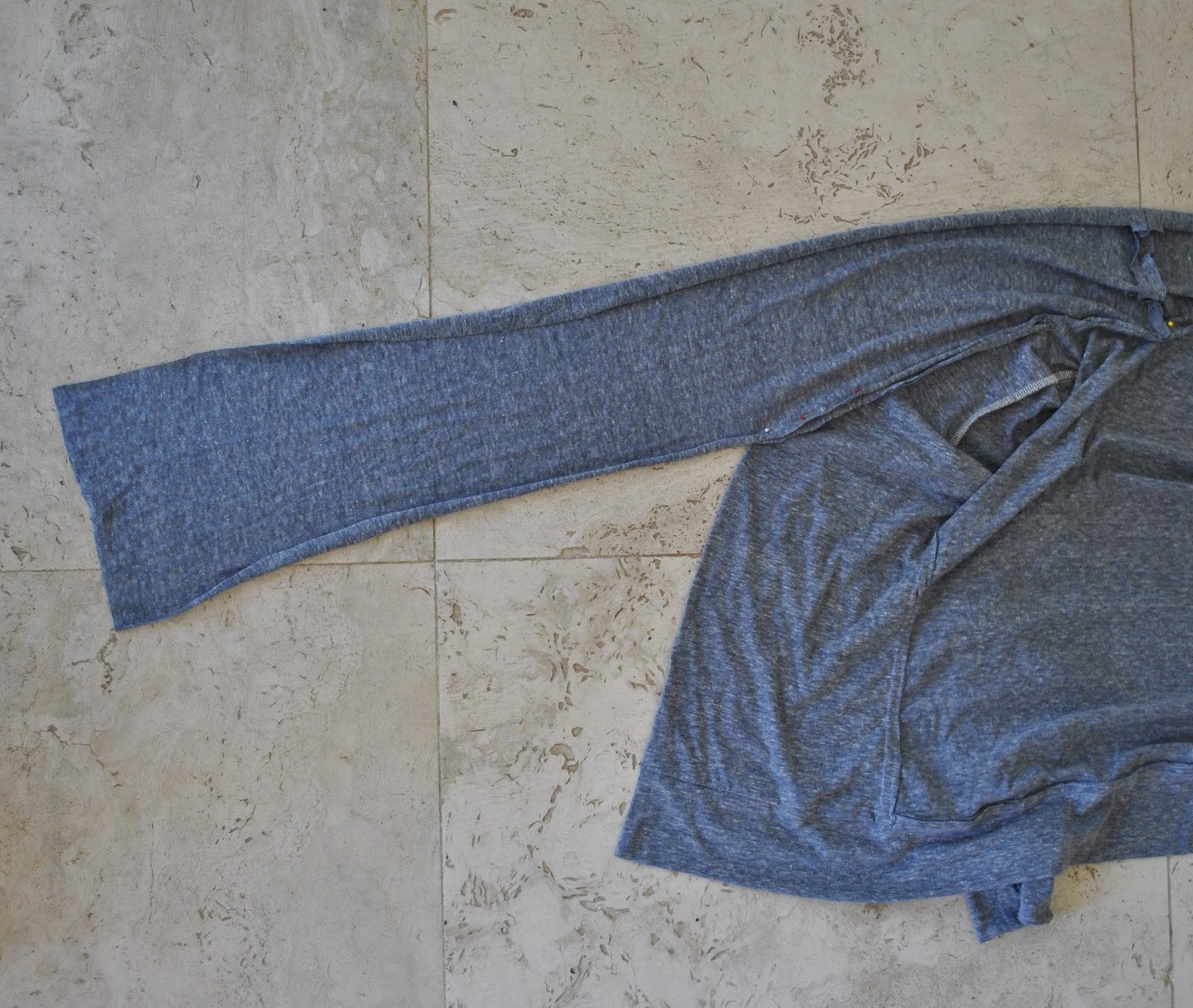
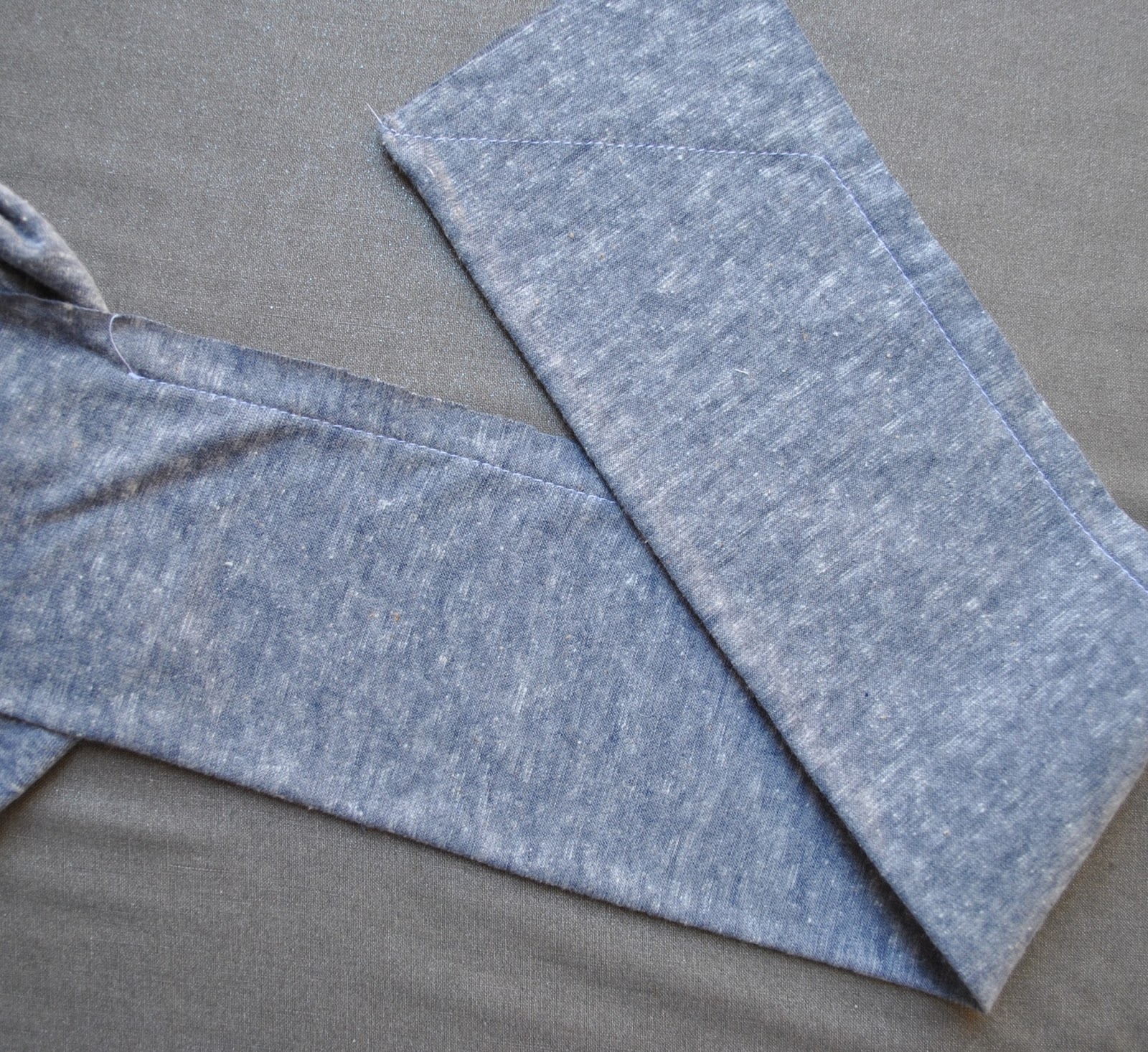
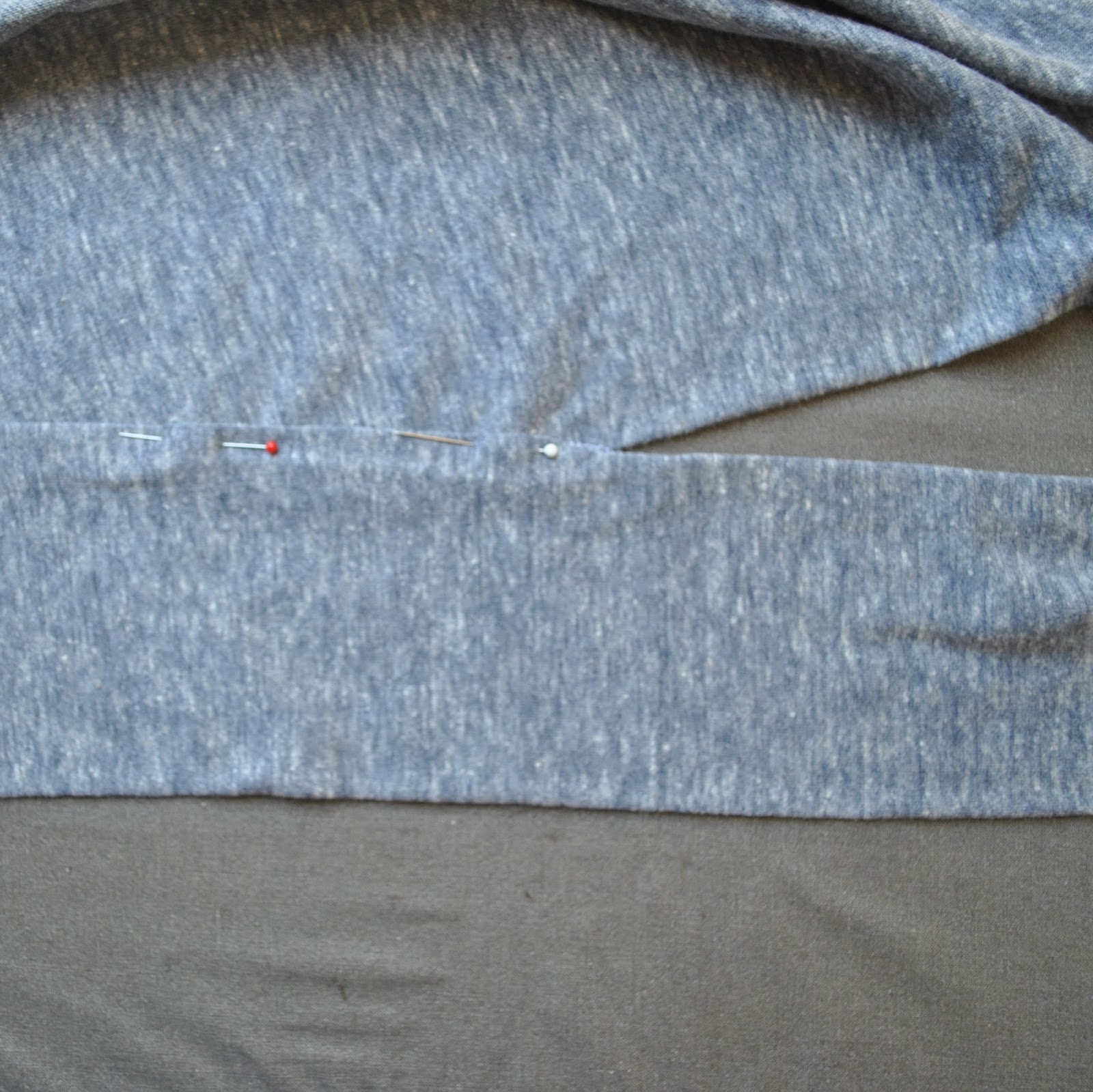
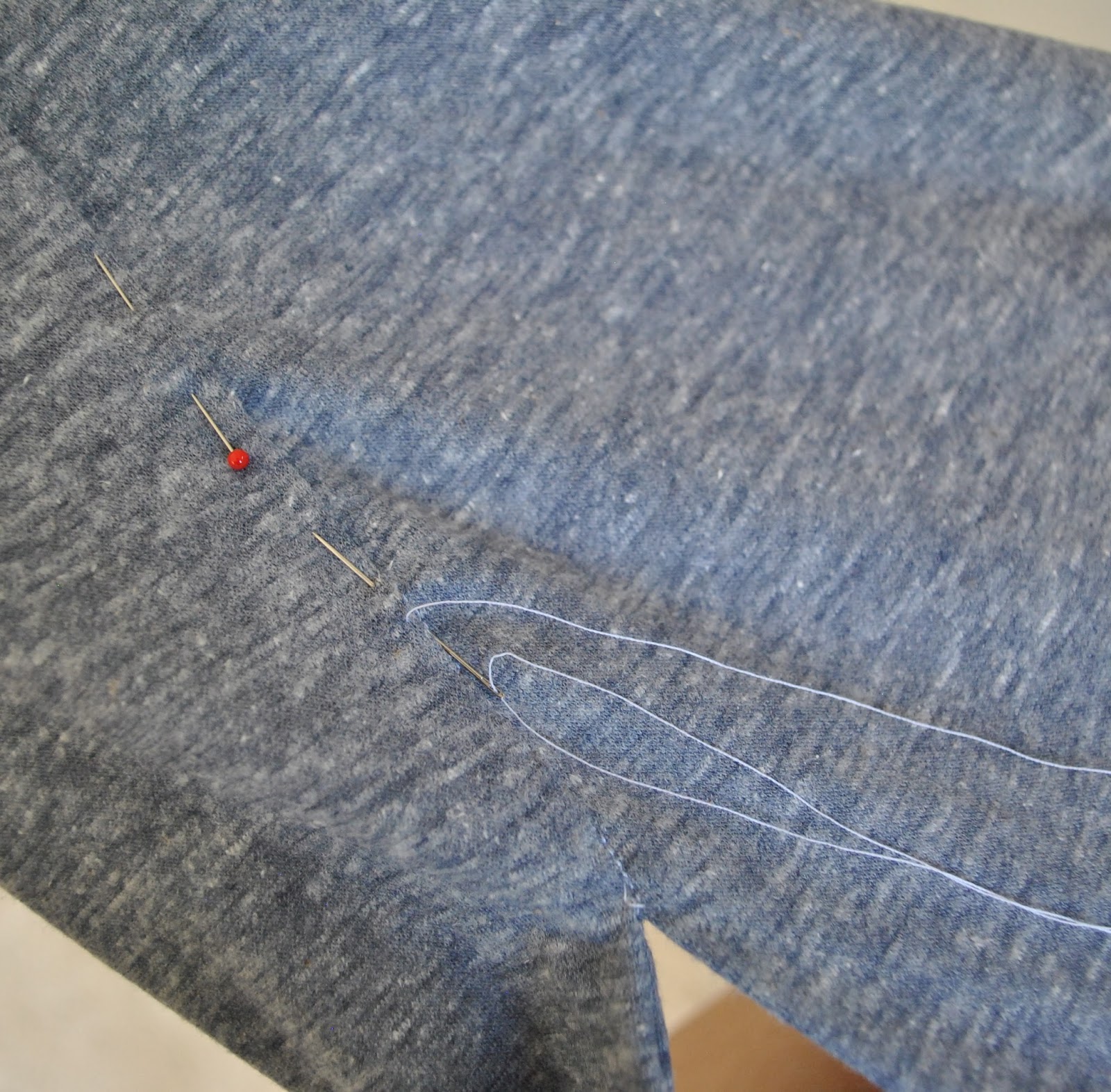
Tag Archives: Own Design

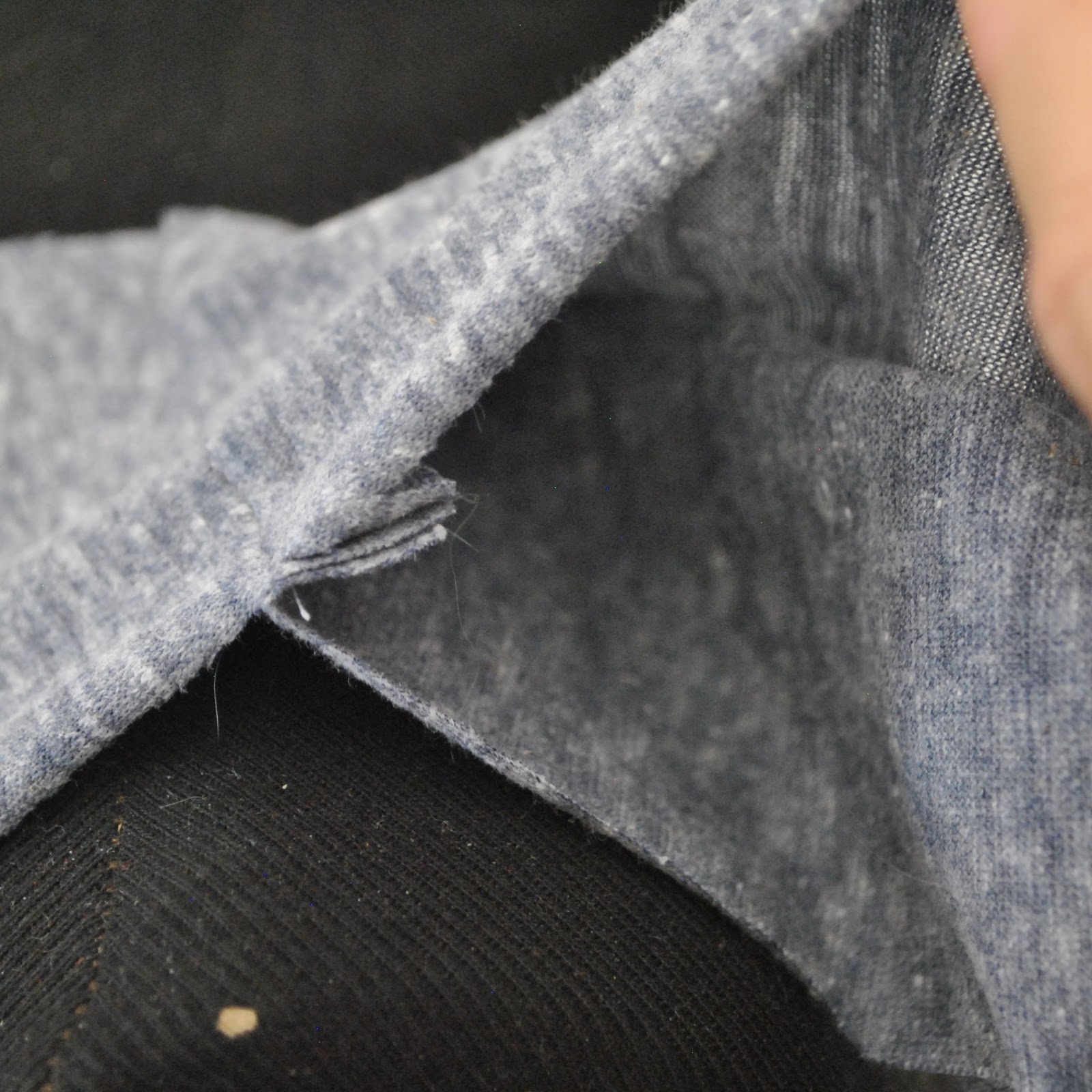
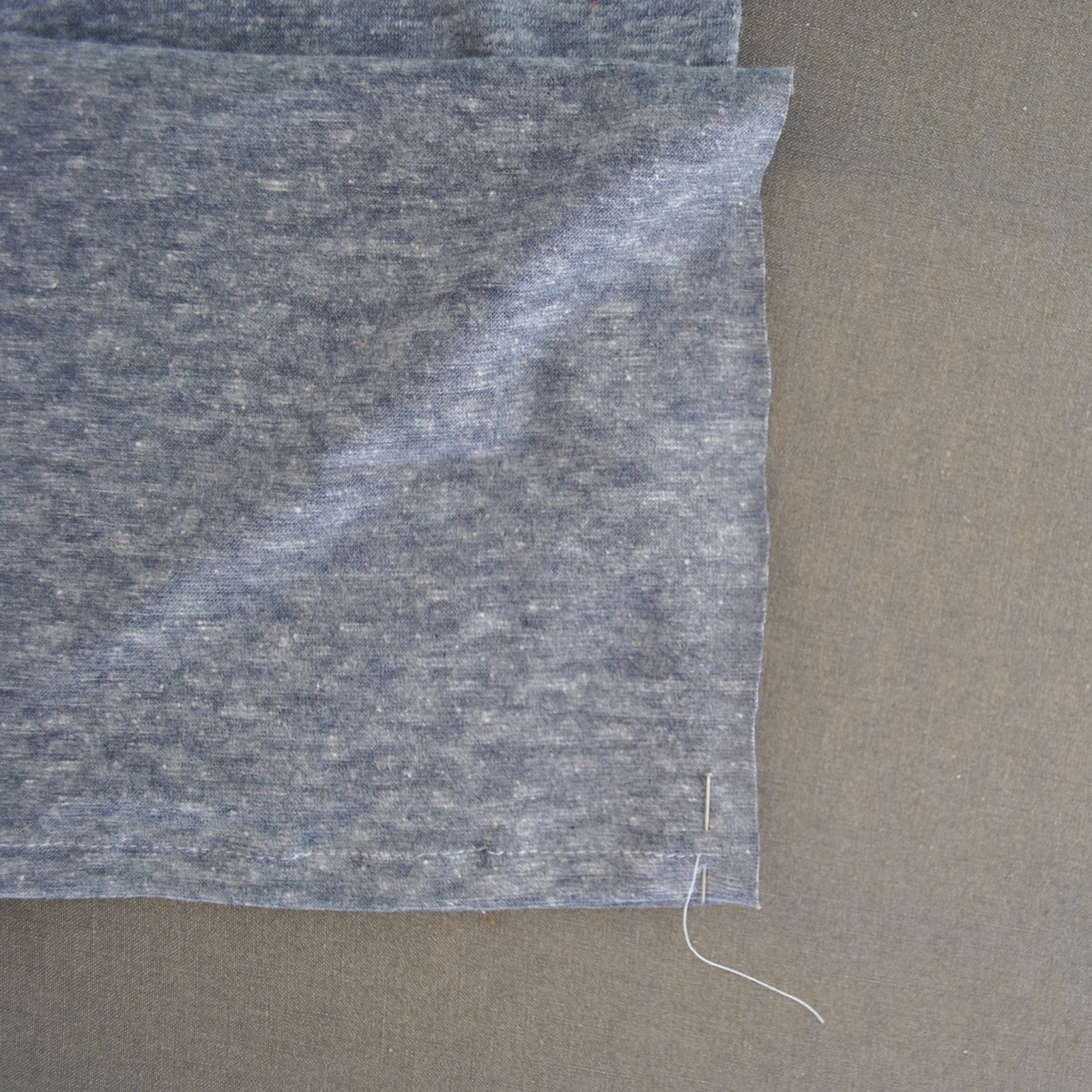
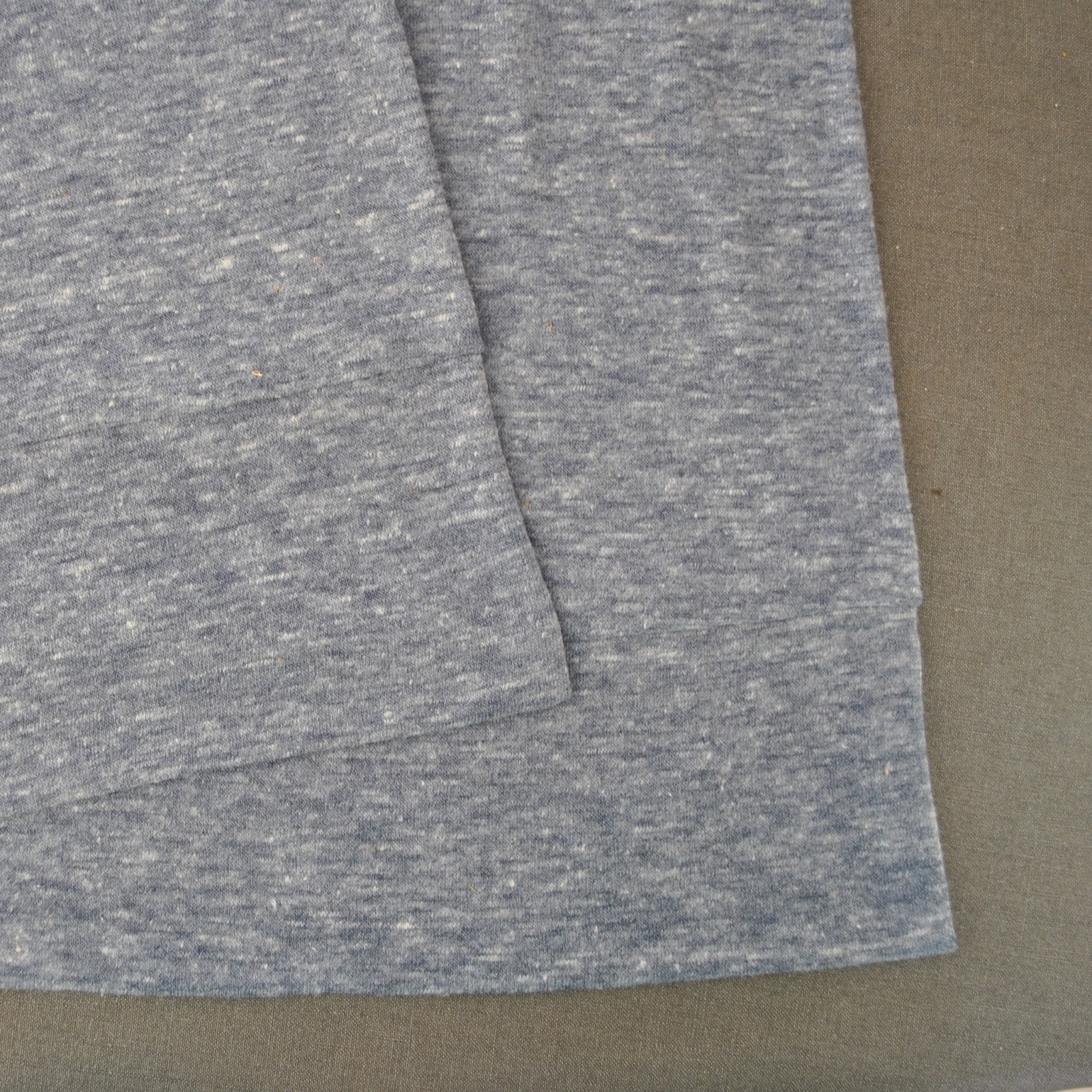
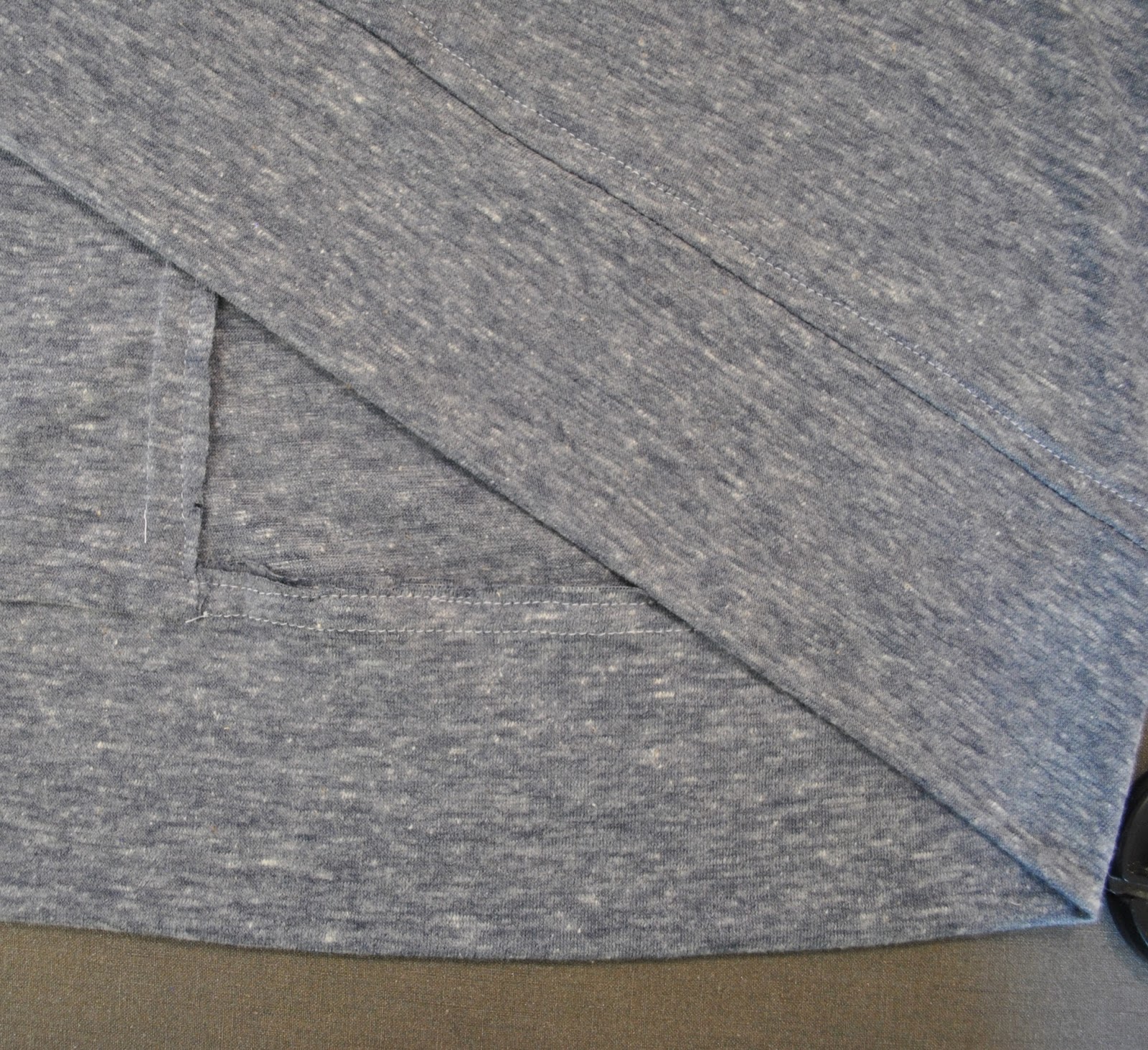
welt pocket in a shearling coat

IMG_8284SO!  I’m currently making a shearling jacket to take to our much anticipated trip to snowier climes, coming up v v soon… eeeeeeeeeeeeeee! I can’t wait!!

Anyway, I’ve put a couple of welt-like pockets in, and found it necessary to devise a method just a tiny bit different from the usual.  So, I took a few pictures to show how I did it…

First, cut two pocket pieces in the shearling, two pocket pieces in a lining fabric, and two welts in shearling.  Cut the pieces biggish, at least a little bigger than you think you will need, just in case.  Remember the golden rule, you can always trim a little extra away, but you can never ever add it!  For the pocket lining I used an ivory cotton denim from the leftovers of my favourite flared jeans.

IMG_8242IMG_8243

Try on the coat and determine the position of the pockets, mark with pins.  Lay the two fronts together to transfer markings to the other front piece, and measure several times to ensure the markings are symmetrical.

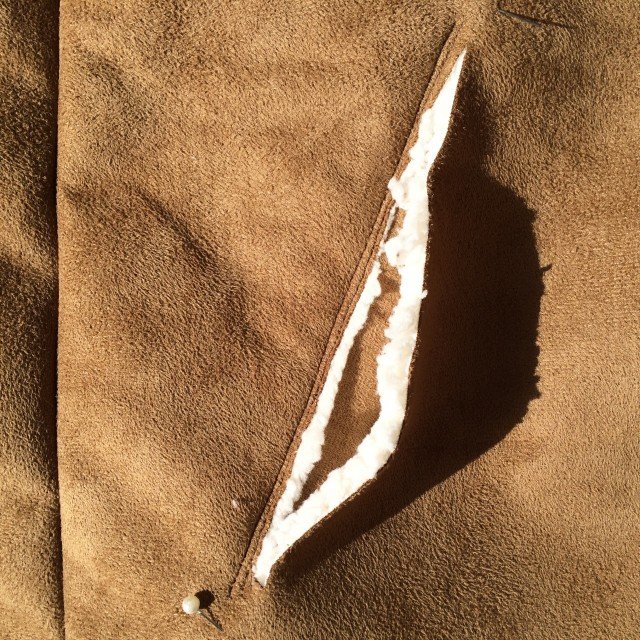
Cut pocket opening between the marks, no less than 3cm shorter than the welt piece.  To give an idea of lengths; my welt is 20cm long and my pocket opening is 16.5cm… but my hands are pretty big and a small handed person may not need quite so big an opening  🙂

IMG_8244

Lay the shearling pocket piece underneath the top edge of the pocket opening, pinning the pieces together with an overlap of 1cm (below L).  Stitch from the top side, in a a double row of closely-spaced stitching. (below R)

IMG_8246IMG_8248

Finish the raw top edge of the pocket lining with overlocking stitch, then lay over the shearling pocket piece, aligning all raw edges and pinning the pieces roughly together near the top (below L).  From the outside of the coat, turn in the top edge of the pocket lining piece and pin to the pocket opening edge (below R).  From the outside of the coat and keeping the shearling pocket piece free, topstitch in a double row of closely spaced stitching

IMG_8249IMG_8250

Now stitch a few backward/forward passes of stitching along the two short edges of the pocket opening through all thicknesses.(below)


IMG_8254

Unpin pocket pieces from each other, and lay shearling pocket piece away from the welt, pin it up well out of the way… likewise, pin the pocket lining piece in position to the coat (below L).  Lay the welt piece, right sides together to the coat, underneath the pocket opening and pin; stitch together catching the pocket lining piece in underneath  (below R)   Note; it’s better to lay the welt closer to the pocket opening edge than pictured below right, as in with the welt raw edge hard up against the pocket opening… but I neglected to take a picture in the correct position, sorry!)

IMG_8256IMG_8257

Turn up the welt, pin in position, and again keeping the shearling pocket piece free but the pocket lining piece pinned in position; topstitch 6mm outside the previous stitching (below L)  Unpin the shearling pocket piece and lay it back against the pocket lining.  Now is the time to determine the finished, desired size of the pocket… try the coat on, measure and trim pocket pieces as desired; finish the raw edge of the pocket lining with overlocking stitch, and stitch pocket and pocket lining pieces together, right sides together.  (below R)

IMG_8262IMG_8263

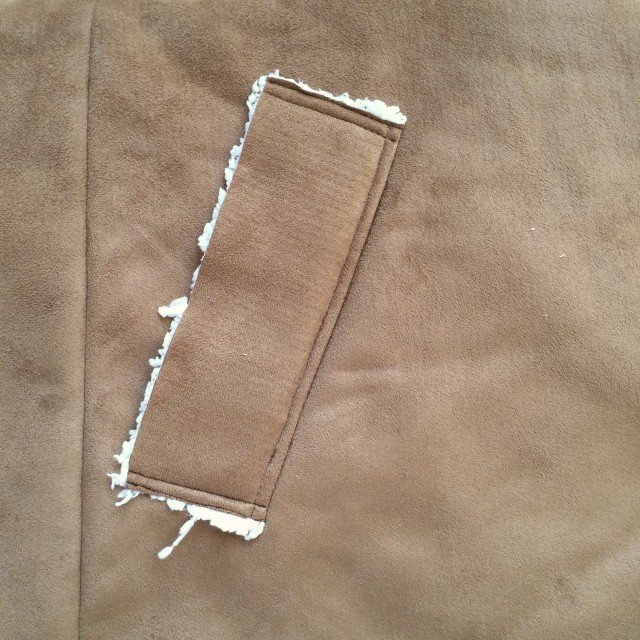
Pin the welt up into position.  At this point, determine if it needs trimming or neatening up; I eyeballed mine and decided to trim 1cm off the long free edge; a purely aesthetic choice.  Once you’re satisfied with its proportions, topstitch it in position along both short edges with two evenly spaced rows of topstitching.

IMG_8264

And… pocket done!  At this point, I actually decided the pocket itself was still a little too big, and trimmed and re-stitched the curved edges… no biggie, it’s pretty easy to do this, even at this late stage since it’s tucked away inside the coat.  That’s a personal choice!  Also, technically this is not a pure welt pocket but a sort of faux-welt pocket really… maybe you could call it a sort of patch cover over a welt-less pocket?!  😀

I hope this tutorial is useful to someone, please do leave me a comment to let me know if you have found it helpful.  Like everyone, I do love comments!

IMG_8266

pinterestmail

3 hoodies

DSC_2629

In other Christmas “making” I also made hoodies for my three menfolk; Craig, and for Tim and Sam.  For the last few years I’ve made summer shirts for them, but this year I wanted to do something different.  And all of them love wearing hoodies! so bam! easy decision really.

Hmmm, yes, I had to get Bessie to model them, who is shaped very differently from each of my guys, of course!! but I took these pictures before I wrapped them up to pop under the tree and haven’t had the opportunity to get the boys to model them for pictures.  Not to mention that it’s been 30C+ every day… phew! so no one wants to wear them just yet! Pictures with them actually IN their new Christmas stuff will have to wait for a little while…

I used my pattern taken from an old hoodie of Craig’s, that had a really cool style of hood/collar combined; it sits really nicely and looks a bit more stylish than the regular two-piece no-frills hood.  If anyone’s interested I once wrote a tutorial on this collar/hood, with pictures of the pieces if you’d like to have a go at it.

DSC_2623Over the years since I first drew the pattern out I’ve had to slightly alter it and custom fit to each of my boys each time I’ve made it.  They keep doing annoying things like working out and growing taller with longer arms and gaining a bit here, losing a bit there as time goes on.  So it’s always a bit more of an exercise than just whipping out a pattern and zooming it up with the greatest of ease…. NOT!

Anyway, I’m not complaining.  I love making stuff for my family  🙂

I went to Spotlight and bought up big on stripe-y, fluffy jerseys in a winter weight.  And the beanies in the previous post? I chose the colours to match so that each man’s hoodie/beanie is a nicely toning ensemble in their colours.

Sam’s hoodie, at top; is light grey and white, with a grey beanie to match, because I think he looks great in grey.  I bought some pale grey marled lightweight jersey to do the hood and the kangaroo pockets, because I feared it would look a little too pyjama-y, or sort of juvenile or something.  I don’t know what it is about the pale grey stripe that made me worry about this, because… it’s funny, can’t logically explain why I have this thought, but I reckon you get away with a full hoodie in a blue stripe whereas in pale grey not so much, looks bit cheap or something.  Can’t explain it.  In any case I just intuited having a contrast in this particular colour would be a good decision and I’m glad I did it.

For Craig, I chose a muted air-force blue, with a small white pin-stripe.  And with a red beanie for him, because he likes red and blue in winter and tends to wear them together a lot.

DSC_2628The air force blue looked pretty cool and right up his alley and it’s a very nice weight, I loved it upon first sight.  However, after washing it and hanging it out to dry, then laying it out for cutting, I discovered to my amazement that the “stripe” actually was more of a gentle, slight “wave” of stripes across the fabric looking like this ” ~ “, NOT a straight horizontal stripe.  AAAAUGH!!  and being “slight” of course, means it really comes across like a bit of a boo-boo, rather than look like an intentional wave, which I could work into the design somehow.  Nope, this just looked OFF.

Grrr.  Anyway, I did my absolute best with it, pulled it into shape in some places, cut out a wee bit dodgily in other places where it didn’t matter, like the kangaroo pocket.  I know the pocket appears to be not drastically far off straight in the picture but trust me, that’s an optical illusion created by clever cutting and placement!!  Also the side seam stripes don’t match, the most obvious area where the fault can be seen.  He really likes it though, so I’m putting aside my dumb perfectionist tendencies and just enjoying that he enjoys it  🙂

For Tim, I chose a navy blue with ivory stripe and his beanie is the matching navy blue.  This fabric was the thickest of the lot, slightly ribbed, and is toasty warm.  For the drawstring in the hood, the fabric was too thick to work and so I used a strip of Craig’s hoodie fabric, folded outwards so the solid coloured blue is on the outside.

DSC_2630Oh, the hoodie strings… in each case I made a self-fabric drawstring for the hoodies, bar Tim’s, as explained.  To make a drawstring in the jersey, I cut a 1-2cm strip of fabric across the grain.  Most jerseys have a natural tendency to roll or curl up across the grain, and you can use this to full advantage while making your drawstring.

IMG_7459IMG_7460

Just allow the fabric to curl up just like it wants to, and stitch it with a zig-zag stitch in a width set to just under the width of your finished strip.  Start from the centre, because it looks neater that way with the central start/stop point hidden inside the hood casing, and finish at each end.  IMG_7461IMG_7467

Thread the flat drawstring through a wool needle and pull it through the hood casing; cut both ends equally to size, then tie off in a simple knot, so they won’t slip back through the eyelet at all.  Easy peasy, and colourwise looks like it was tailor-made to go with the hoodie perfectly, which it was, of course, haha.  Well, by that I mean that we all know how difficult, if not impossible it can be to get drawstrings to colour-match our fabrics perfectly?  mm hmmm.

Problem solved!

IMG_7468

The first three hoodies that I made from this pattern can be seen here, here and here; hoodie tutorial here

pinterestmail

a bevy of beanies

IMG_7626

A bounty of beanies!  Buckets of beanies!  Beanies galore!  Beanies beanies beanies!  Beanies! Beeeeeeeeanies…DSC_2625

So, I might have beanies on the freaking brain lately.  I’ve been on a beanie making bendahhh!  A beanie-a-thon.  Makin’ some beanehhhhs!  Yeah..  DSC_2638

And I got my recent new man-about-the-house, Mr ‘Ed to model the newest creations.  Over to you, Mr ‘Ed!DSC_2627Well, hello thair! I’m Mr ‘Ed, but you can just call me Mr ‘Ed.  Soooo frightfully pleased to meet you.  My, but you have ze most beautiful eyes… shining with ze brightness of a thousand stars.  May I buy you a drink?DSC_2628

Oh, sorry ’bout that.   He looks like the strong silent type but actually he’s the worst sort of flirt.

OK, so the beanies…  with a trip away to snowier climes coming up pretty soon I conceived the brilliant idea of knitting a new beanie for everyone in the family.  Fired up with enthusiasm I immediately bought a small mountain of yarn.  Madness.  I did something right though in that a lot of it was that one-ply chunky yarn, the sort that is like a skinny hank of fleece, barely spun at all. I know this stuff gets a bit of a bad rap but in its defence though, it sure knits up pretty quick and does makes a lovely warm beanie.  I’ve made seven beanies, seven! and I may have given myself self-induced tennis elbow now, or should that be, knitters’ elbow? but anyway, it’s done.

DSC_2631

All beanies, apart from the blue one are knitted in the flat and then stitched up the side.  Generally  I prefer to knit beanies in the round but in this case I didn’t happen to have the right size needles, so in the flat it was:

I’ve written out my three, very simple patterns, and they are all available as free downloadable pdf patterns here

mid grey, black charcoal, burgundy red beanies:   Baggy beanie

(aran-weight)  blue  beanie: Baggy beanie 2

raspberry (at top) and cream (below) cabled beanies with pom-pom: Cabled beanie

Yarns, all from Spotlight:

(raspberry, at top) Moda Vera Jester in Fuchsia, modelled with my mossy green scarf
(mid grey) Moda Vera Mawson, with my mustard cowl
(black) Moda Vera Shiver in Black, modelled with my cream infinity scarf, 
(burgundy red); Moda Vera Shiver in Burgundy, with my mossy green scarf
(flecked charcoal) Heartland in Black Canyon, with my cream infinity scarf
(navy blue) Patons Inca in col 7047, with my mustard cowl
(cream) Moda Vera Jester in Cream, with my plaid scarf, which is just a hemmed piece of slightly fluffy woolly plaid
DSC_2648

Also; here’s how I make an easy cheat’s pom-pom.  Otherwise known as, the pom-pom to make when you don’t have time to make a pom-pom!

The secret is in the yarn, big thick chunky “bulky” yarn.  This’ll take about five minutes, max!

So: start with something like a small book, or a stiff card, or pamphlet or something.  Wind yarn around it, over and over, until a nice thickish wadge of windings has been built up.

IMG_7773Cut through all thicknesses, top and bottom.
IMG_7774IMG_7775

Take a piece of thinner yarn, wrap it once around the middle bit and tie it in a nice, very tight knot.  Wound it back around to the other side and tie another knot.  Wind it around just a few more times, again; tie a knot.  Super tight.  No such thing as too tight.

IMG_7776IMG_7778

Fluff it out, and done!  Any strandy, uneven bits can be trimmed off neatly, or you can just leave it as a bit, messy, floppy thing. Which is pretty cute too, I reckon  😉

IMG_7781

Use the tails of yarn to tie it on to the top of the beanie

IMG_7780IMG_7782

Later edit: I managed to get some photos of my recipients, modelling their beanies  🙂

pinterestmail

tie-dye cardigan

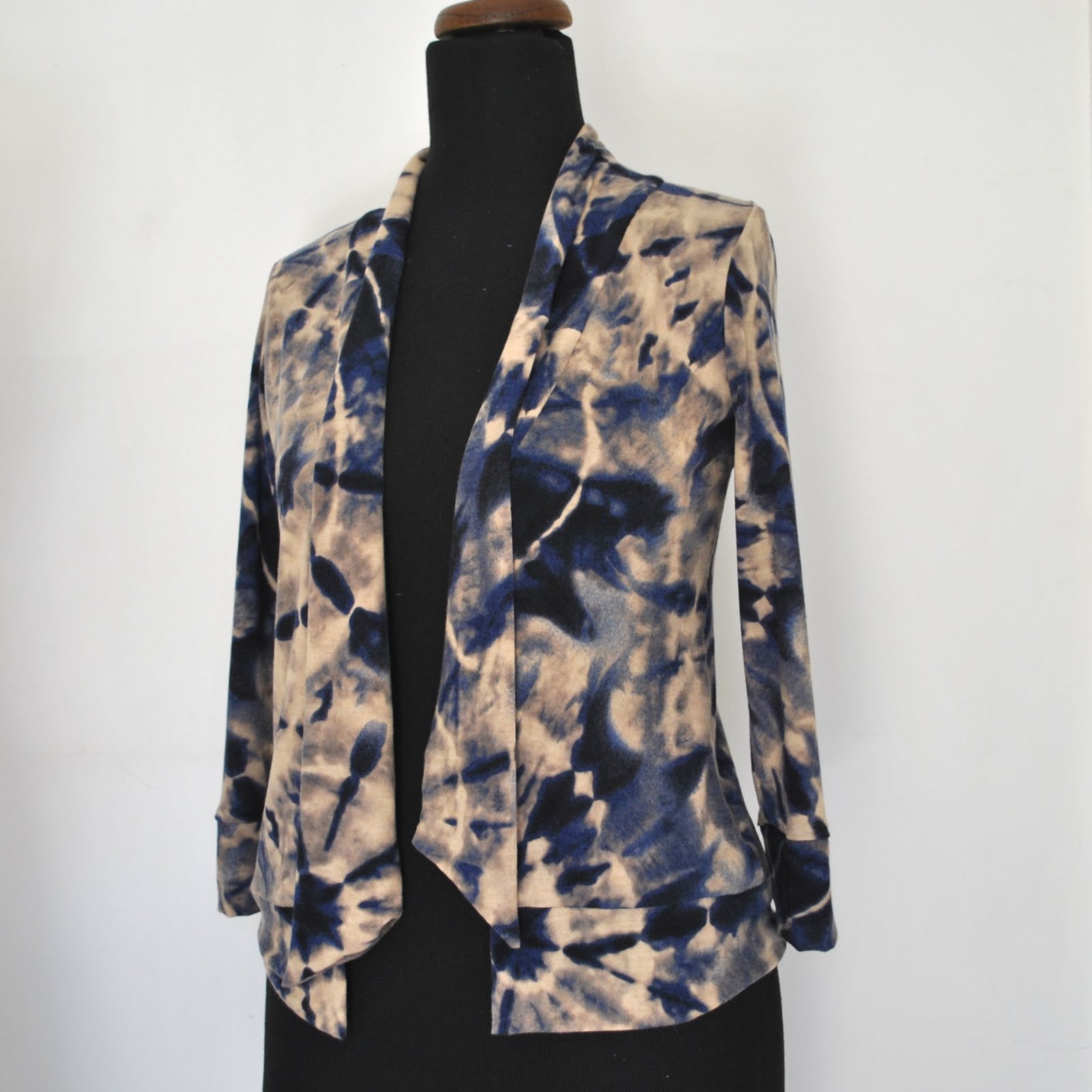
I’ve made another little cardigan… the last, I promise! for at least a little while! 
I didn’t really need another one but I said I’d thought of yet another little way the construction of this design could be improved? naturally I just had to try it out…
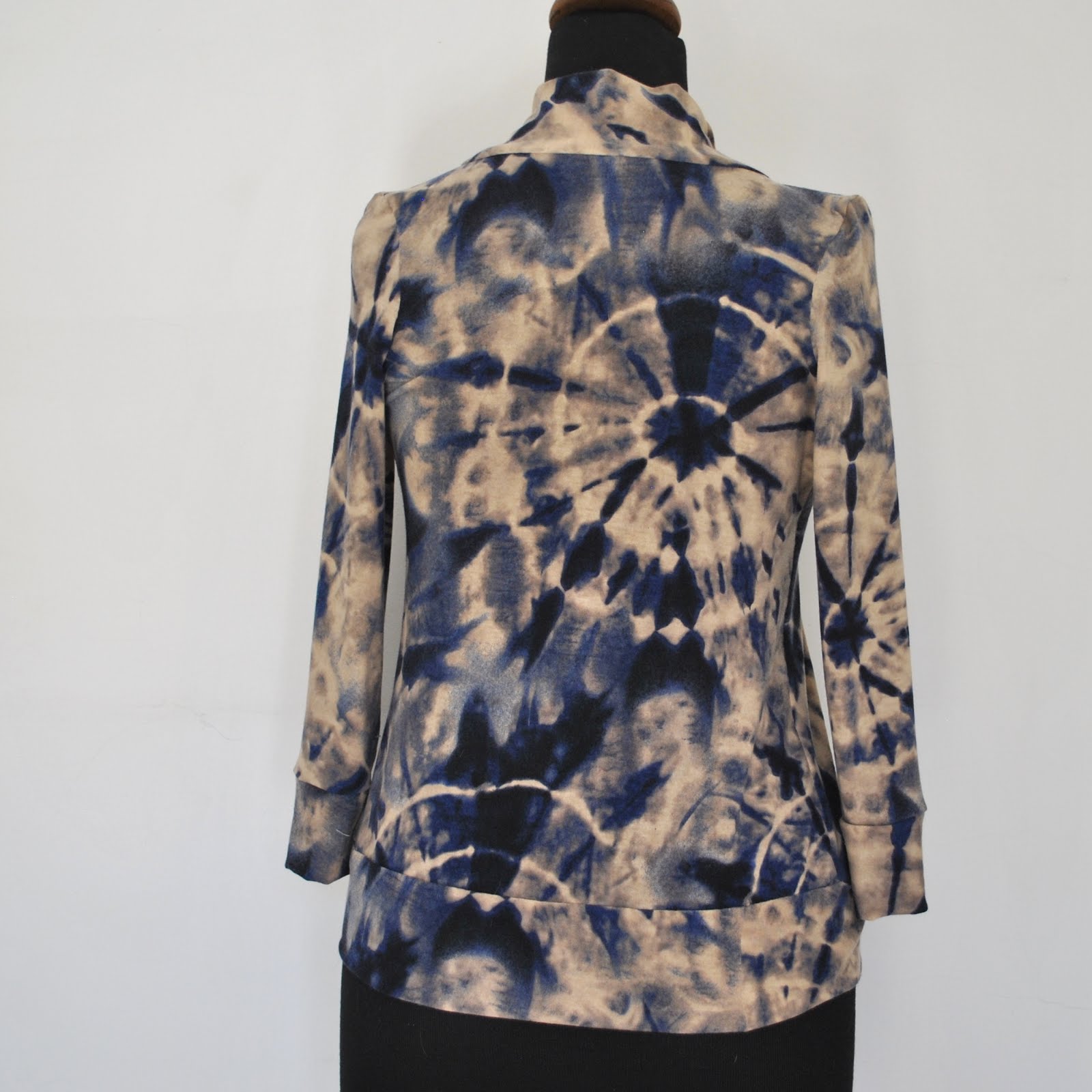
Fabric; a toss-out from Mum, a cotton or something or another jersey, original provenance unknown.  I barely had enough for the cardigan but just managed to squeak out the pieces; the tie is a little on the short side and is pieced in several places but no biggie, I still got it out! and the joins are lost in the print.  I rather like the tie-dye print and my only concern was to avoid situating a bulls-eye in the boob-al region when cutting out.  Mission accomplished!

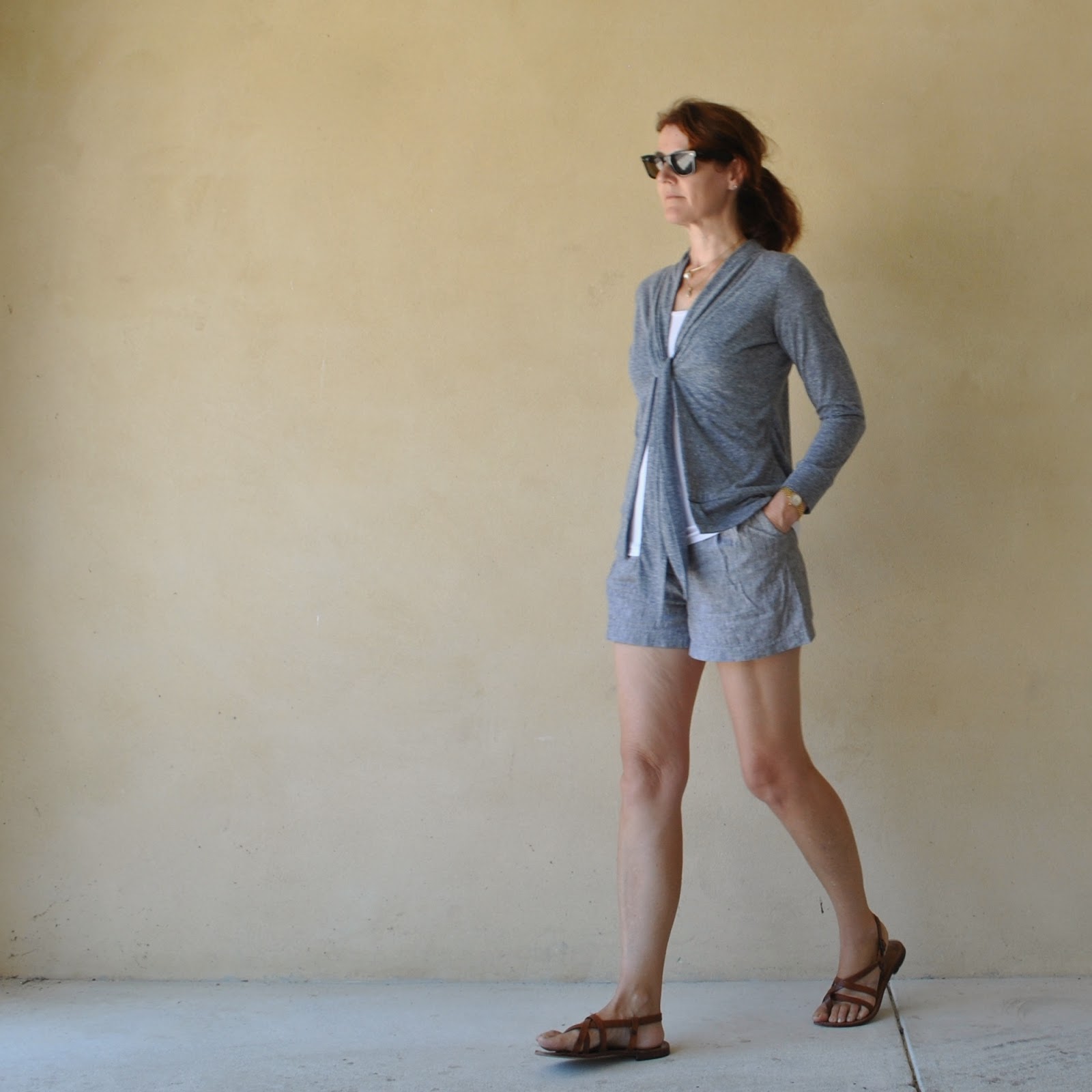
Pattern; the Nettie, by Closet Case patterns, modified to be a cardigan with a loose extended neckband that hangs down in a shawl-y type of a way.  The neck band on this, third, version of the design is a little short to be tied in the front like the last two iterations, so I’m planning to only wear them hanging loose like this.

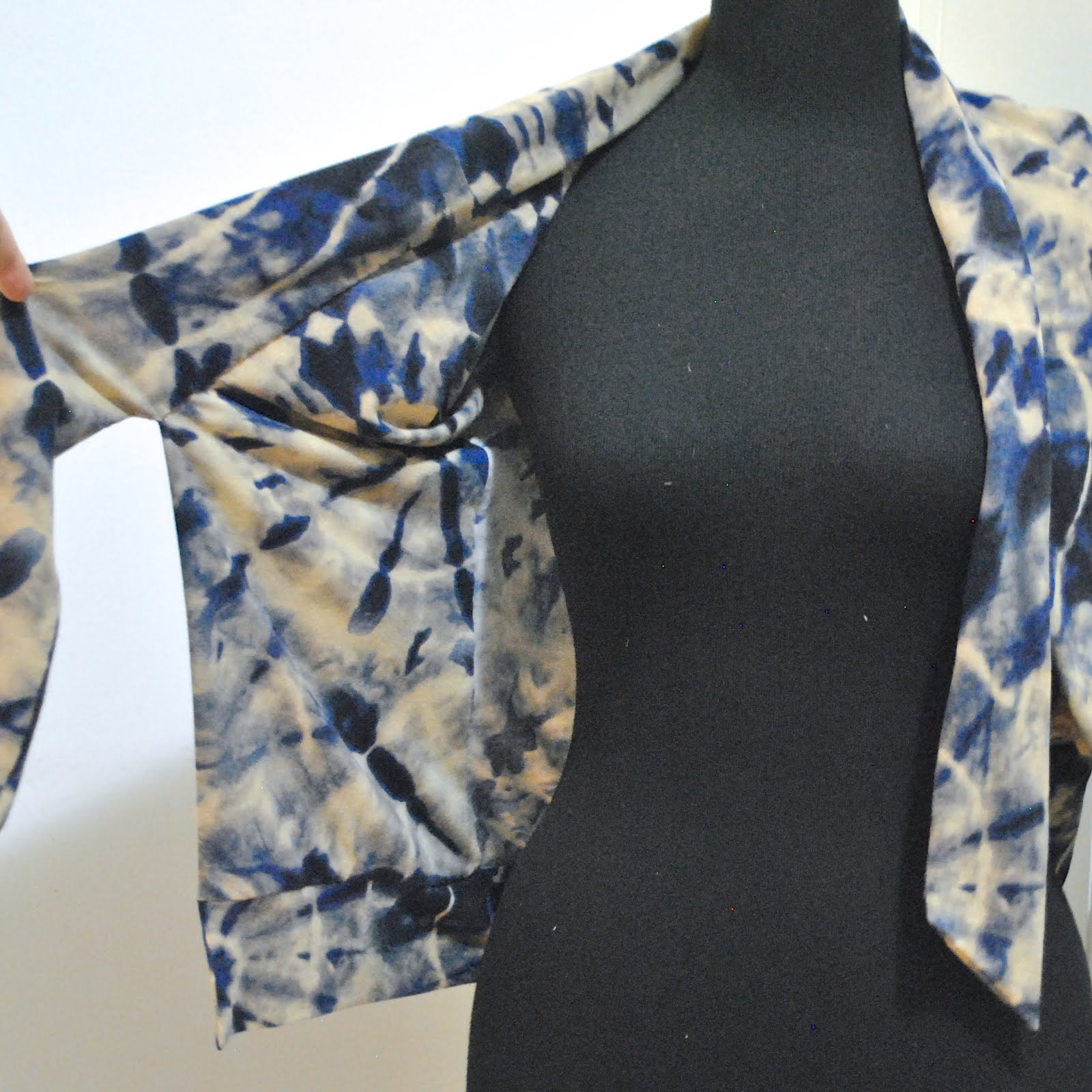
My desire for a super-clean finish is finally satisfied with the insides on this last version… they are super neat and tidy! with no exposed seams or stitching, barring inside the sleeve/armhole.  *happy sigh*

I’ve written my order of construction to illustrate how it all went together…  it’s a little more fiddly than the previous methods but perfectly doable.

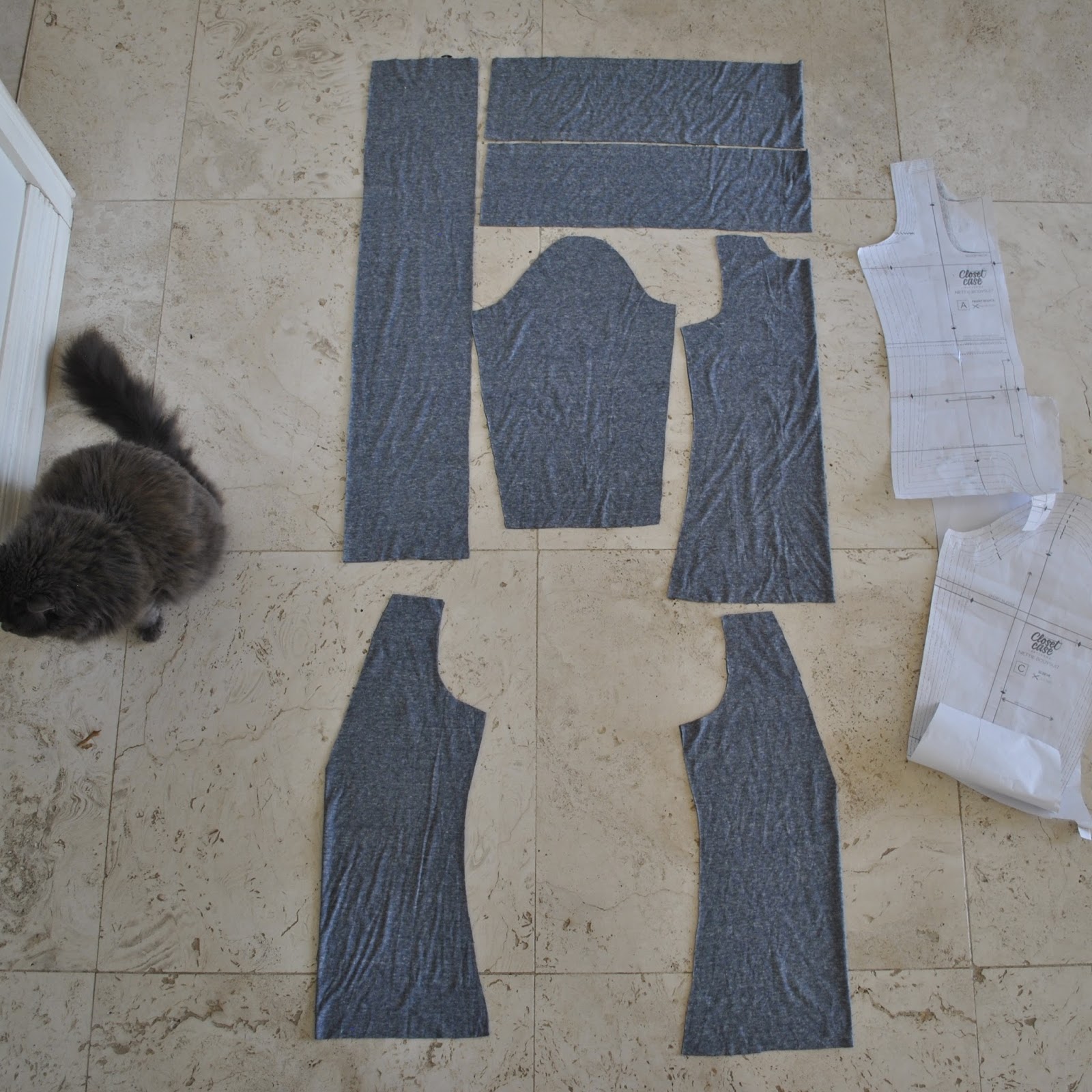
Cutting; cut the fronts on a centre fold so they are double layered.  Same picture as the previous cardigan because it’s identical.  I sized up a couple of sizes to get that looser cardigan fit, rather than the tight bodysuit-fit that the pattern is designed for.
NOW; the first step is to sew fronts to the back at the side seams, right sides together.

Now, fold the fronts in half, right sides together, and stitch the front facing to the back at the side seam over the previous stitching, enclosing the seam allowances within the front and front facing.  You will need to pull the pieces inside out a little to make this step possible, basically you are sewing the front piece in a tube with the back piece encased between the two side edges.  Grade seam allowances, turn out and press.

Cut the lower band to fit and stitch to the lower edge, keeping front facings free.  You will need to stitch each front section and the back section of this seam separately to each other, stopping and starting at the side seams; fiddly? yes, but worth it in the end.  Press open then down onto band.

Fold the band in half lengthwise and stitch the short edges, right sides together; trim and grade seam allowances, turn right sides out.

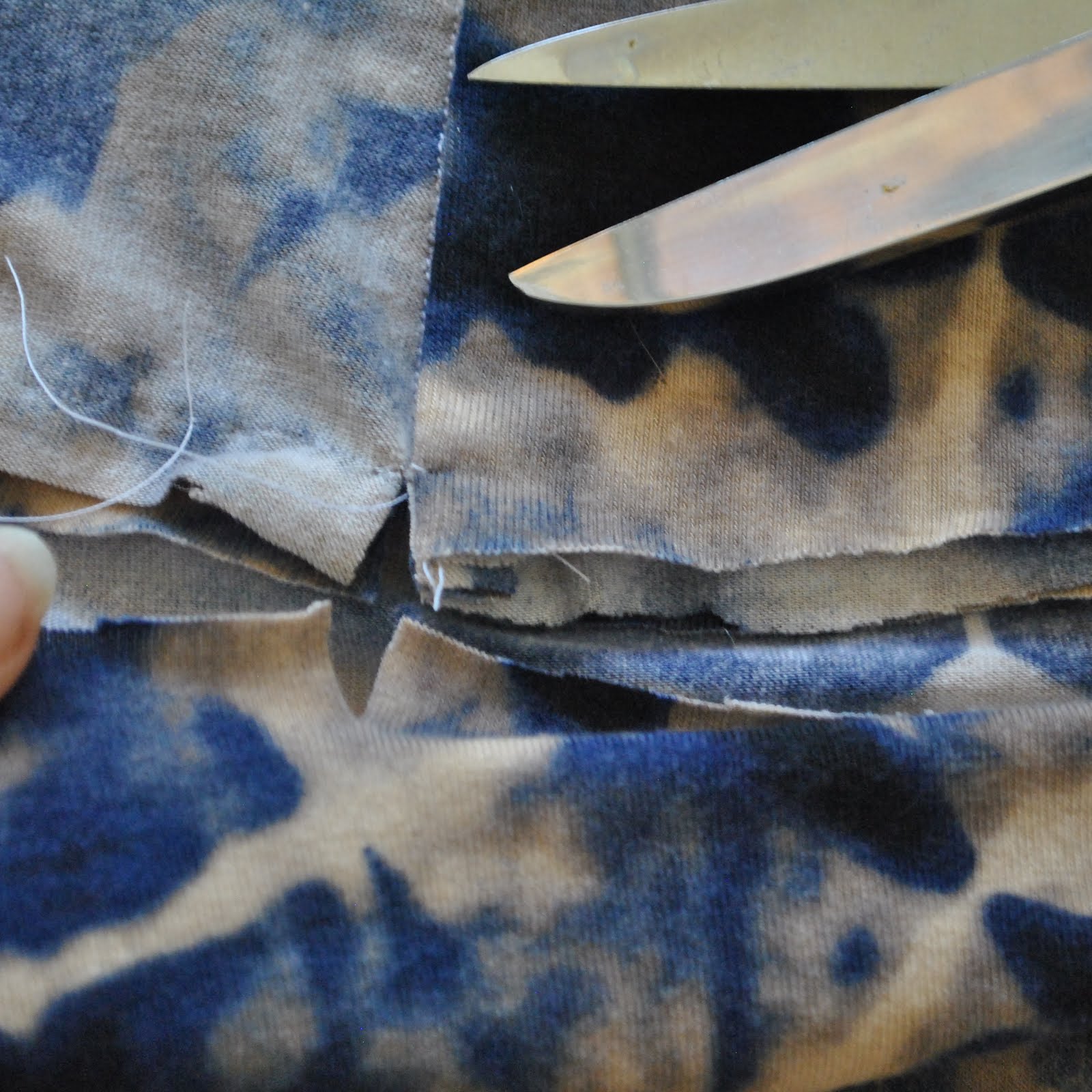
Snip all layers of the band seam allowances at the side seams, and also the lower band facing seam allowance at the same point.

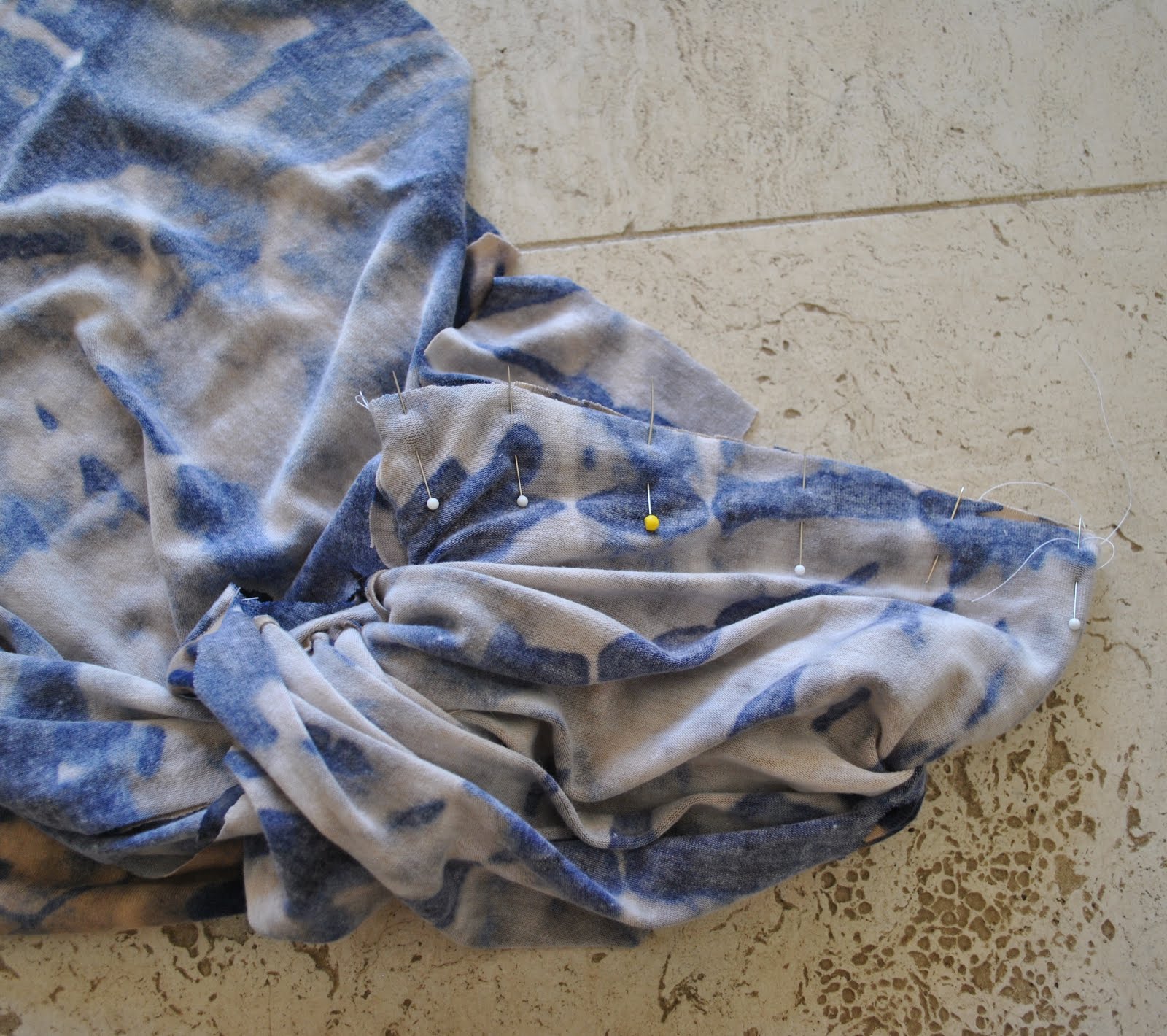
Now, from the shoulders/top; reach inside the front/front facing “tube” and pull the lower edge where it’s stitched to the lower band through along with the loose facing edge and band facing edges.  Align all raw edges, taking care to make sure corners are sitting tight and accurately together because with a stretchy fabric it can be all too easy to stretch them out of place! and stitch the whole shebang together in one seam.  Trim corners, grade seam allowances, pull it all right sides out and press.
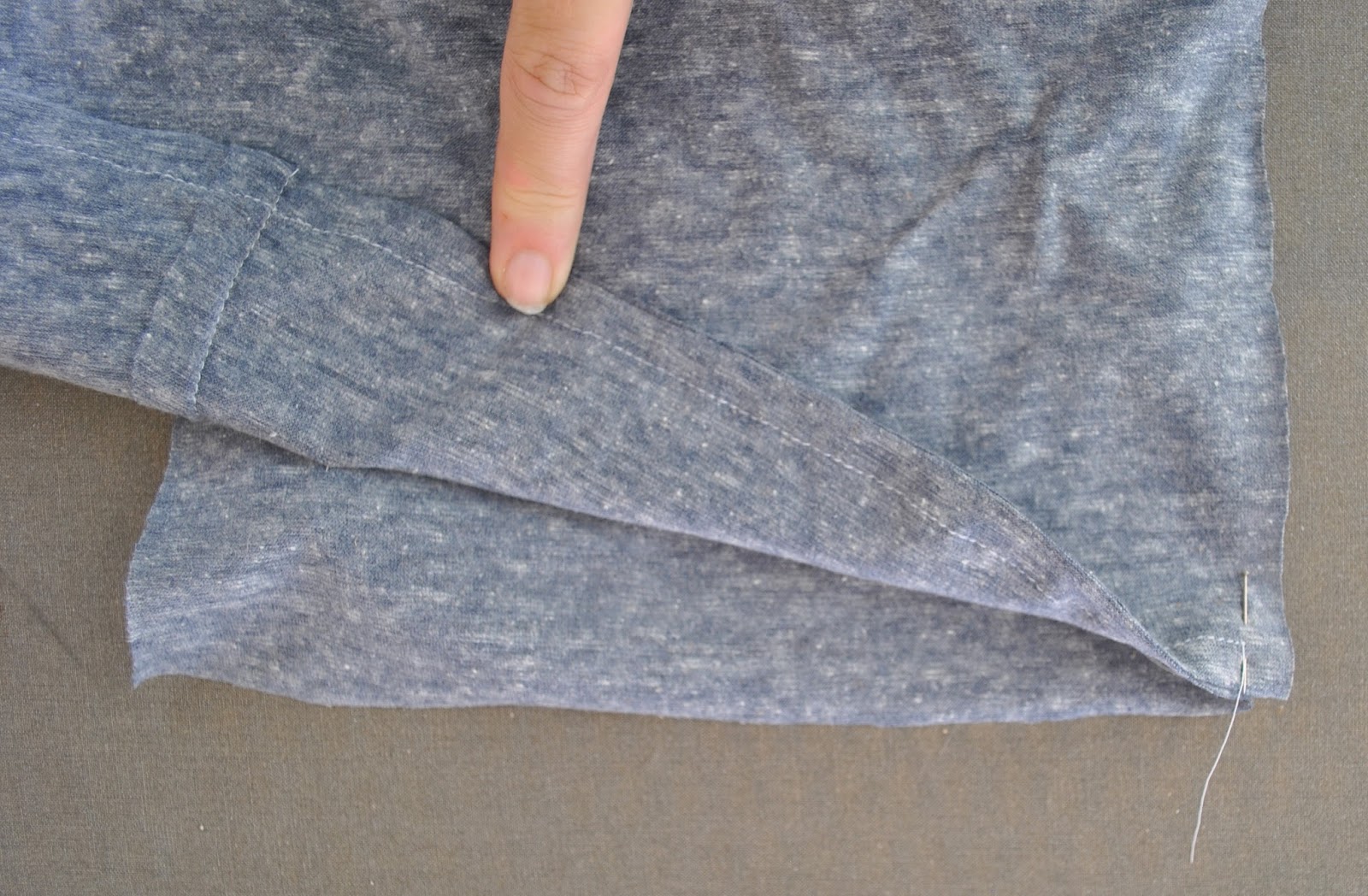
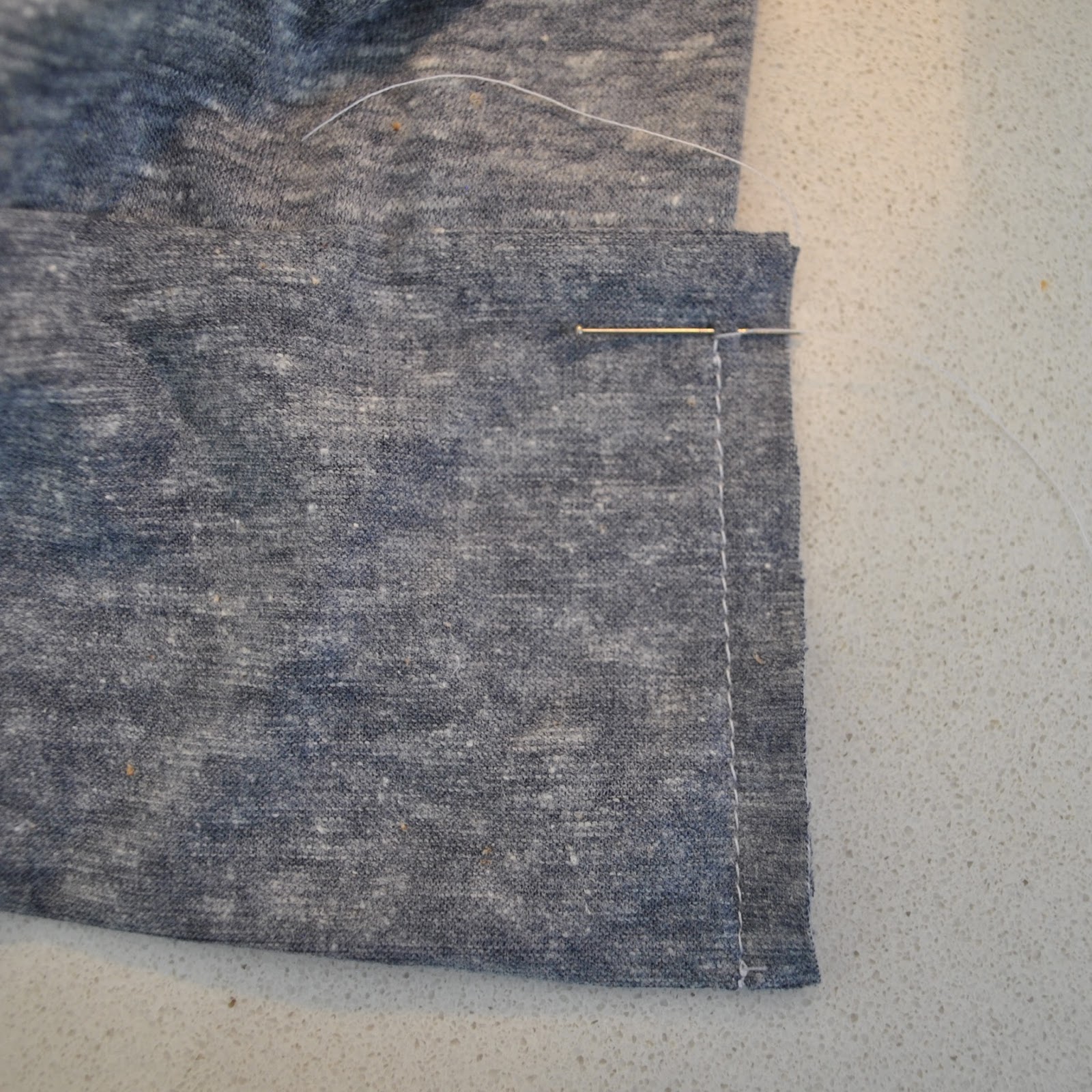
Voila!  yes it is a fiddly business but it look at that lovely absence of exposed seams on the fronts!

That last remainder of the lower band facing is turned under, pinned and hand-slipstitched in place.  Hiding those seam allowances, too  🙂

Now stitch the shoulder seams, front to back, enclosing the back between the two fronts as for the previous version of this cardigan, here, in fact the remainder of construction is exactly the same… stitch sleeve seams, finish; set in sleeves, finish likewise; sleeve cuffs, as per this method; neckband, as per this method described for my previous cardigan.

Details:
Cardigan; the Nettie by Closet Case Patterns, modified as stated
Tshirt under; another Nettie, white jersey, details here
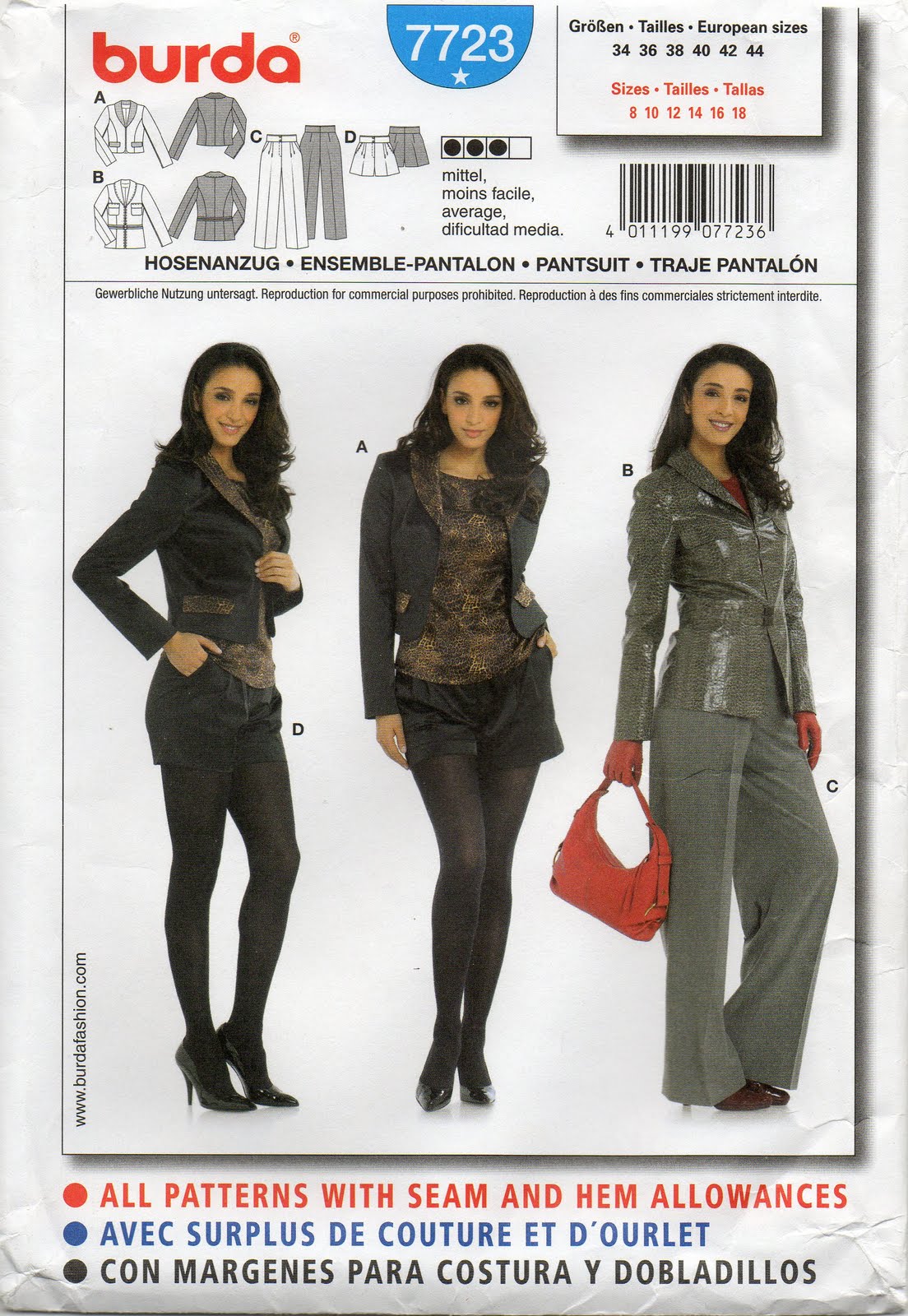
Shorts; Burda 7723, details here
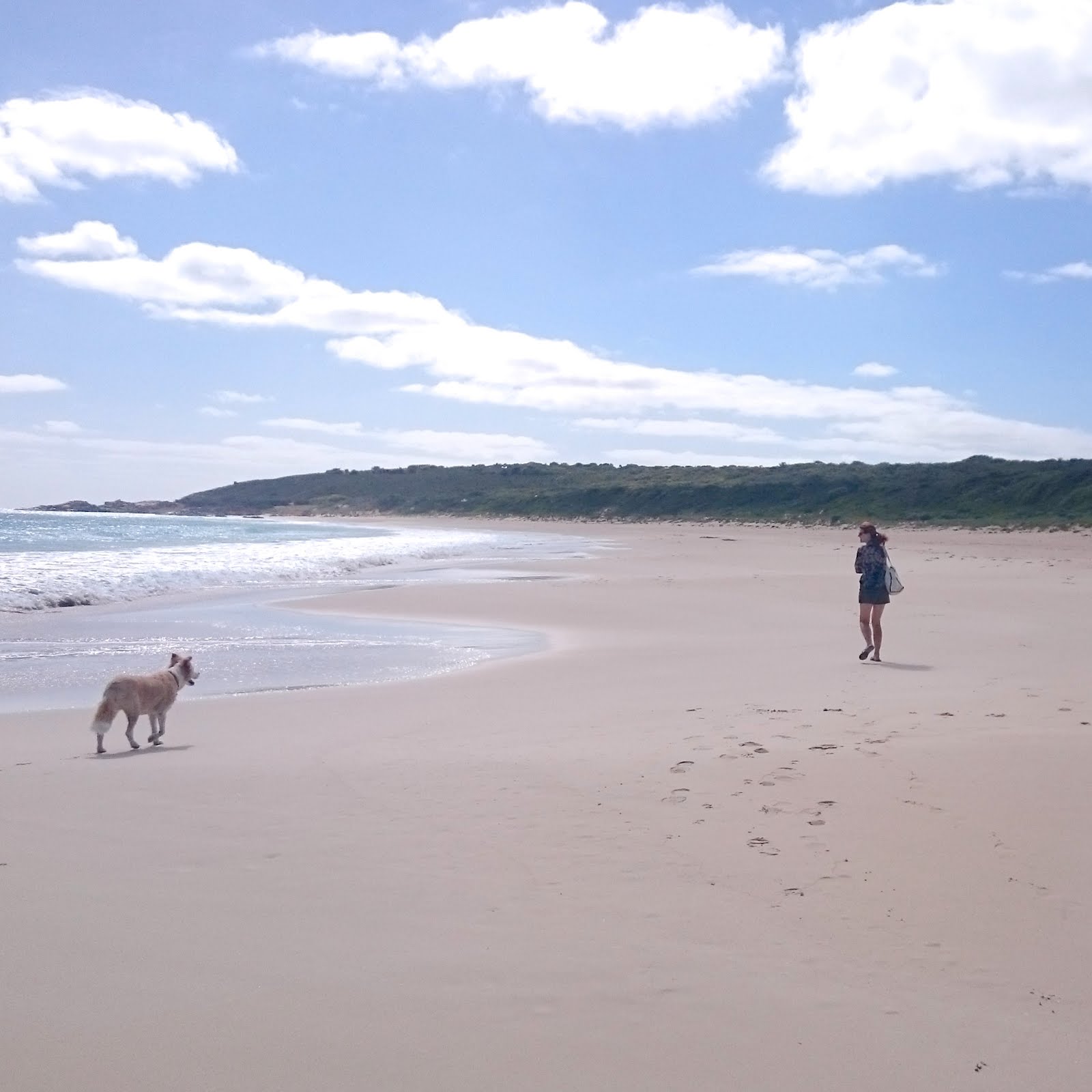
Location; Bunker Bay, Dunsborough… we had it completely to ourselves!  so lucky

photos courtesy of Craig
pinterestmail

tie-front cardigan from a Tshirt pattern; a brief tutorial

Remember recently I made a little paprika cardigan? and I wasn’t super happy with my construction technique of the fronts and could visualise a far better method of getting that front edge nice and neat … well, of course I could not rest until I had seen it through.
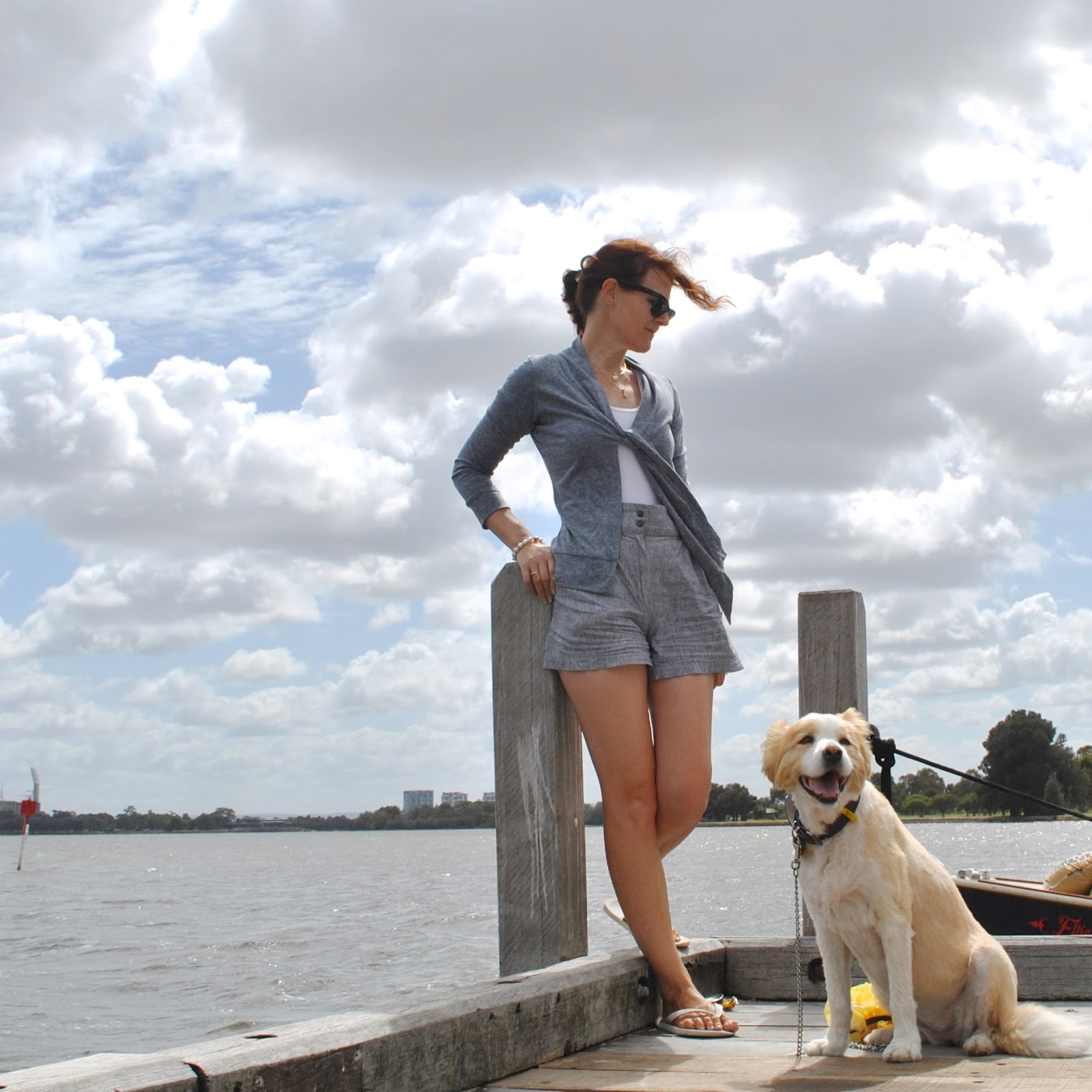
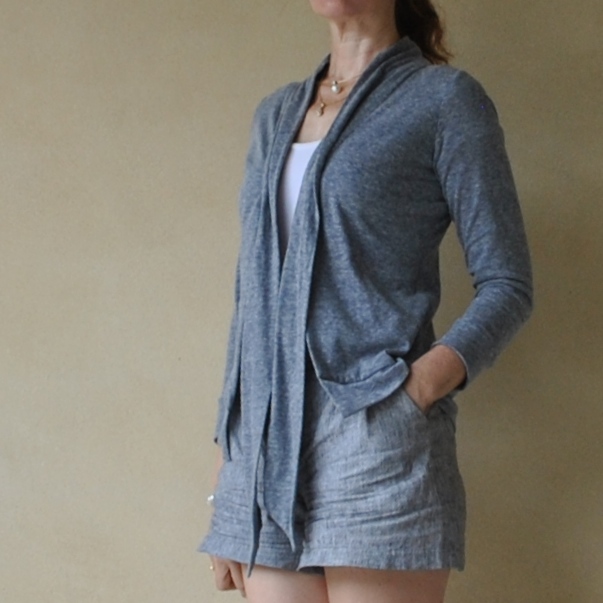
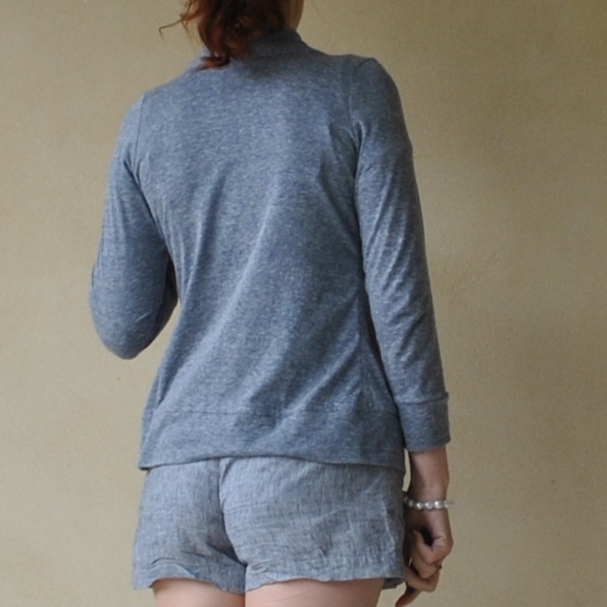
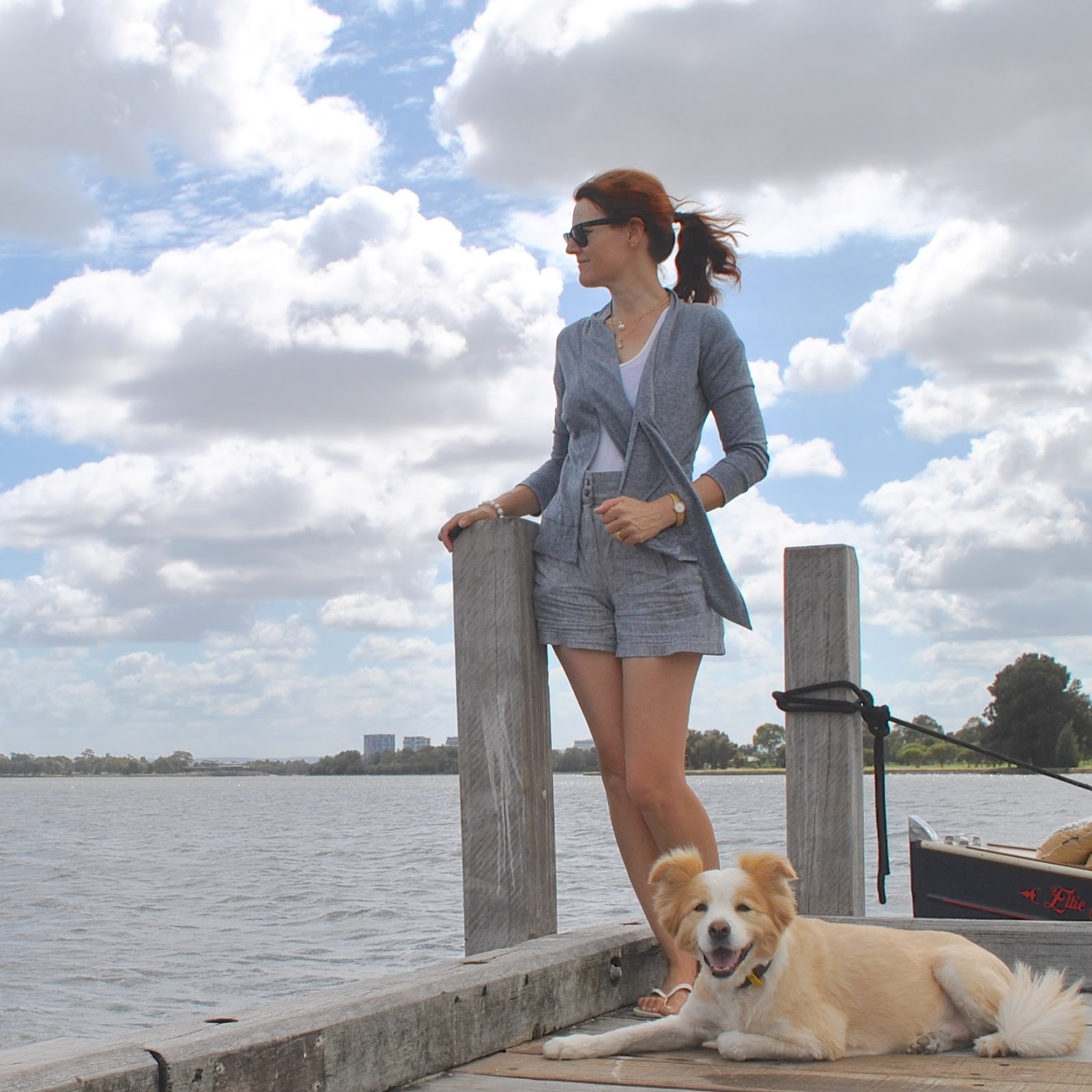
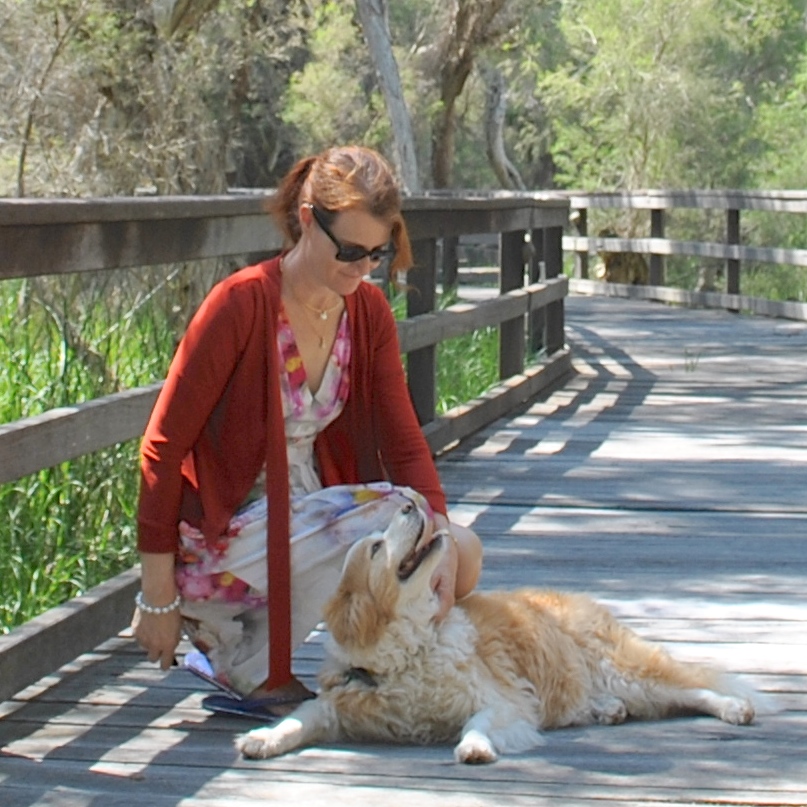
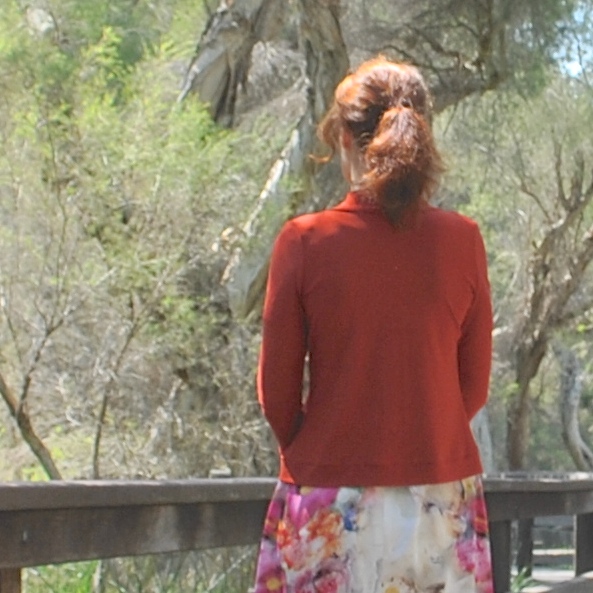
Voila; new, stormy-grey-blue cardigan
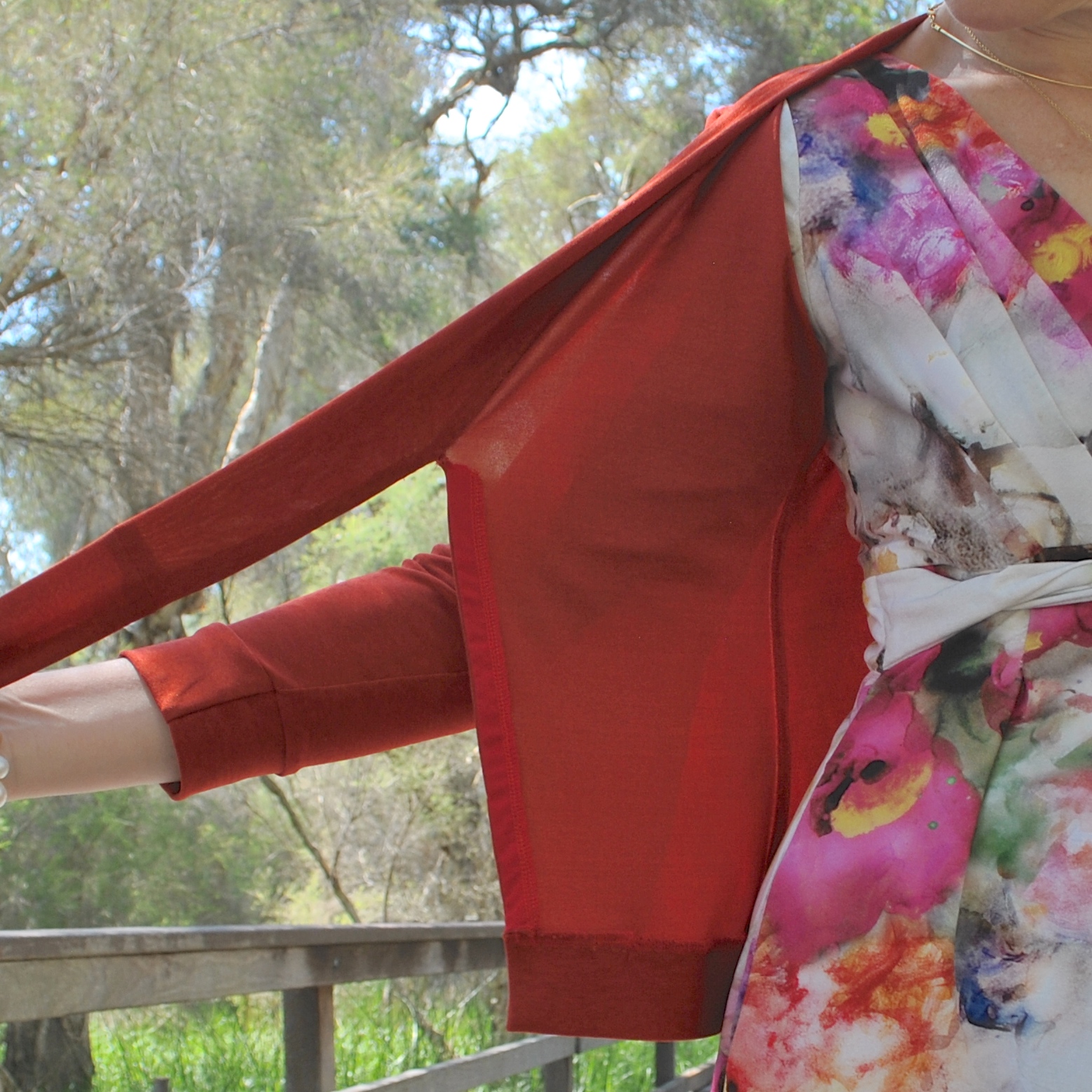
Essentially, the gist is to cut each front piece on the fold through the centre front; meaning the fronts are double thickness, with one half acting as a facing.  The fold at centre front is its own neat finish with no further need to do anything at all to it.  Also, the front plus facing enclose the lower band between their two layers.  For this reason, this technique works very well with very thin knits.
Fabric; thin blue/grey marl cotton jersey, leftover from Sam’s hoodie and originally a remnant bought from the Morrison sale, although when I say remnant there was at least 5m of it!  Morrison is tres generous with their “remnants”, to say the least!   I still have quite a lot left.  
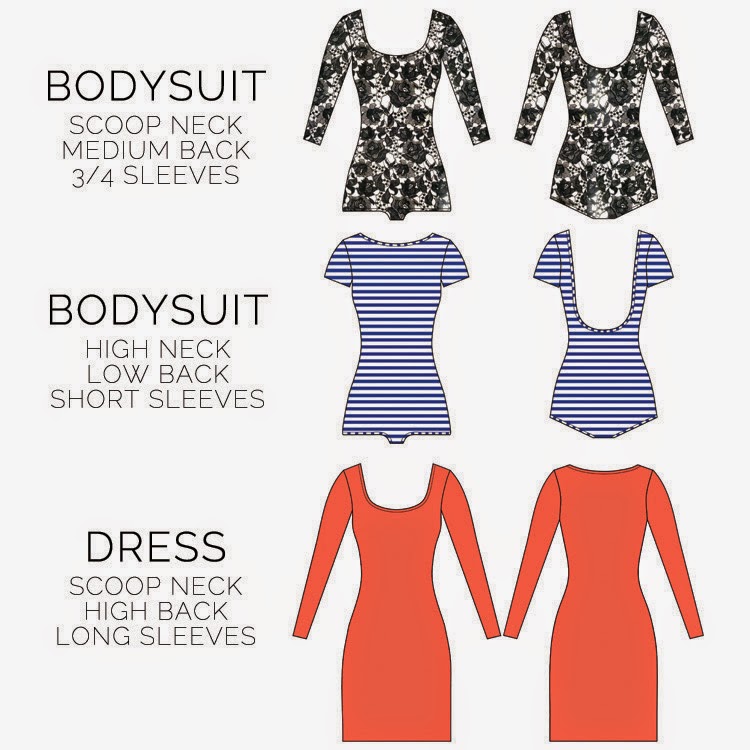
Pattern; I used the Nettie from Closet Case patterns, which is my go-to basic now for form-fitting Tshirts/bodysuits, however any tried and true Tshirt pattern could be used for this same modification.

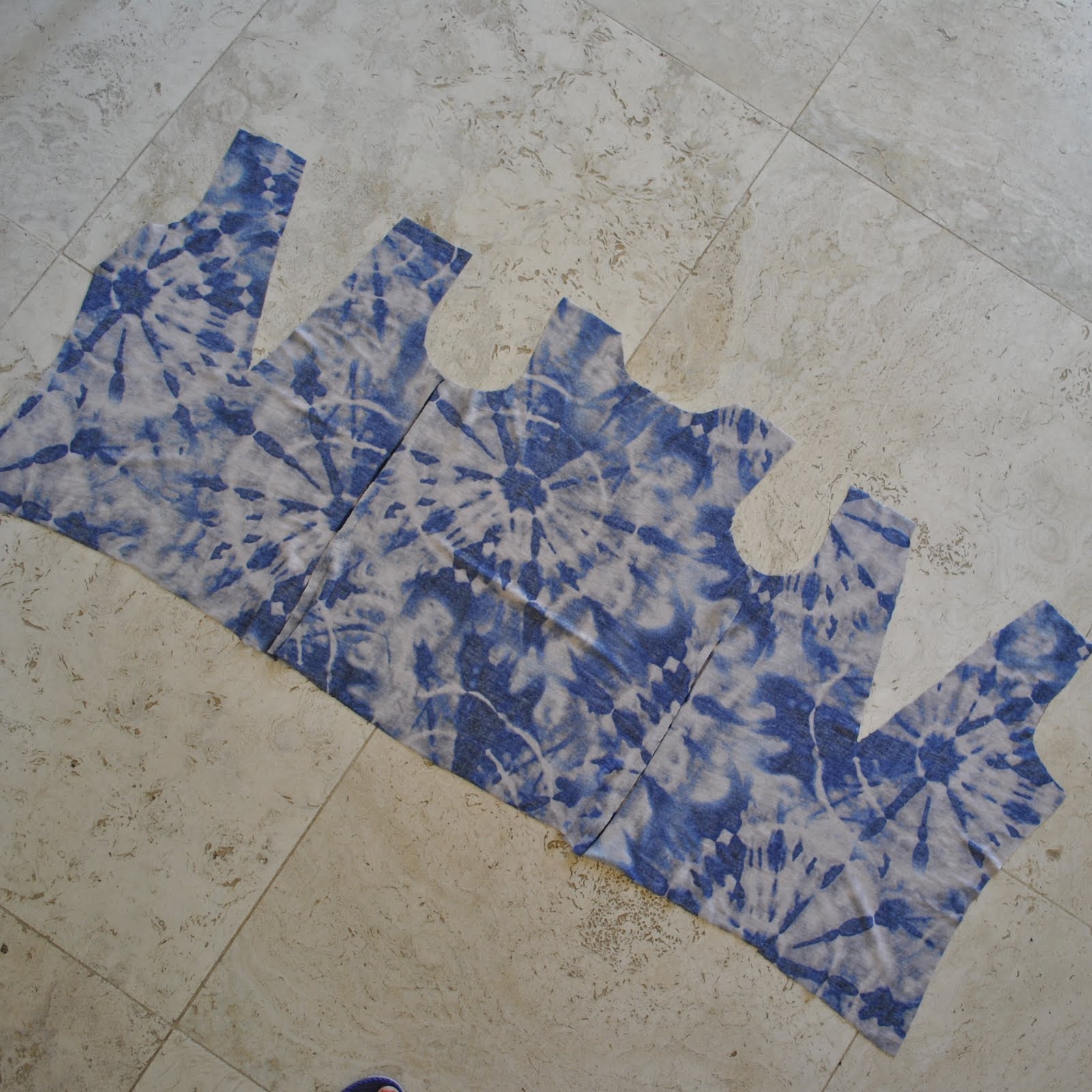
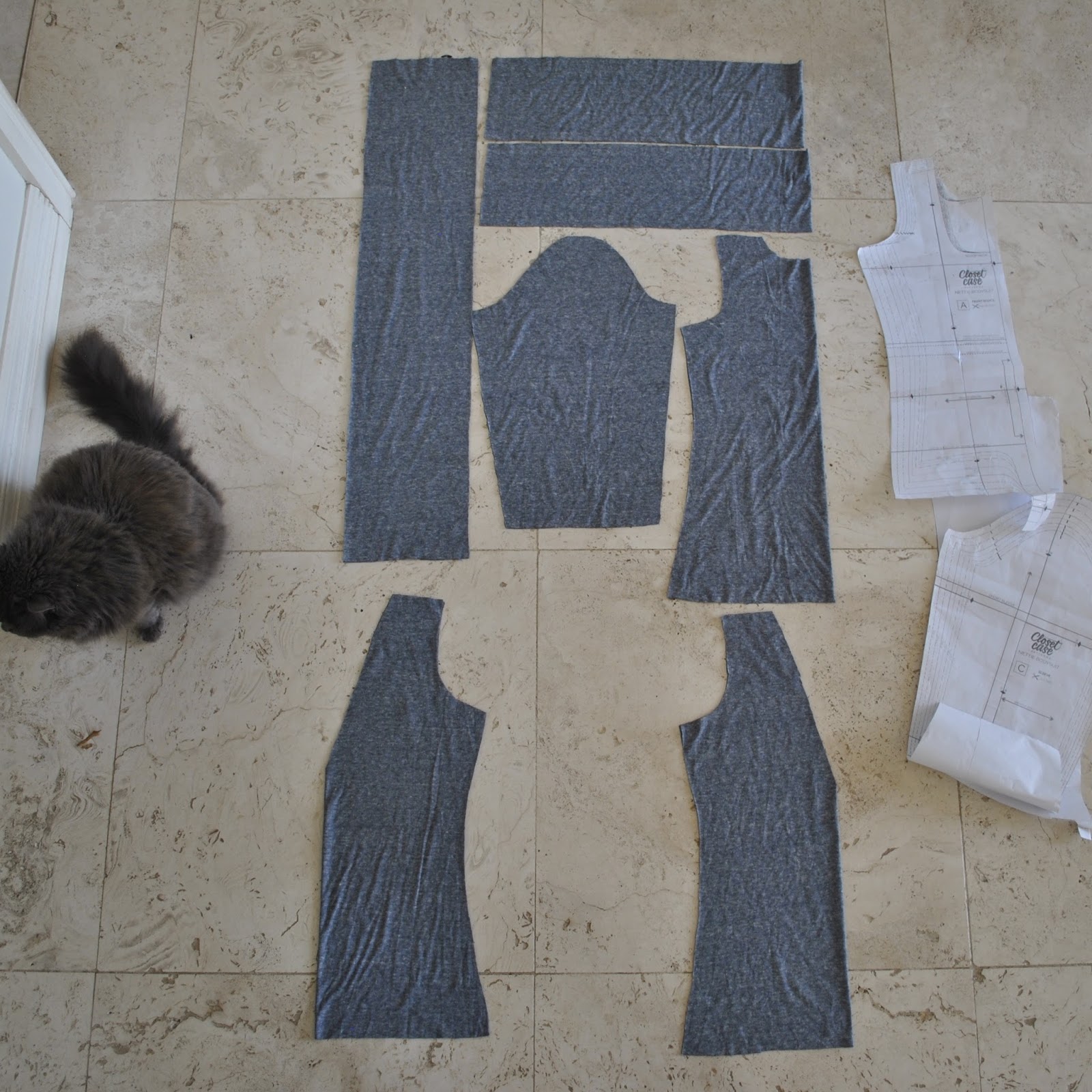
I cut my pieces like so: top parts; fabric folded along the right hand side; with the top two horizontal bands being the “rough cut” lower edge band and the sleeve cuff bands respectively; underneath are the back cut on the fold, the sleeves and at the left is the long neckband.  This last is joined right sides together along one short edge to make a double length band on the grain.
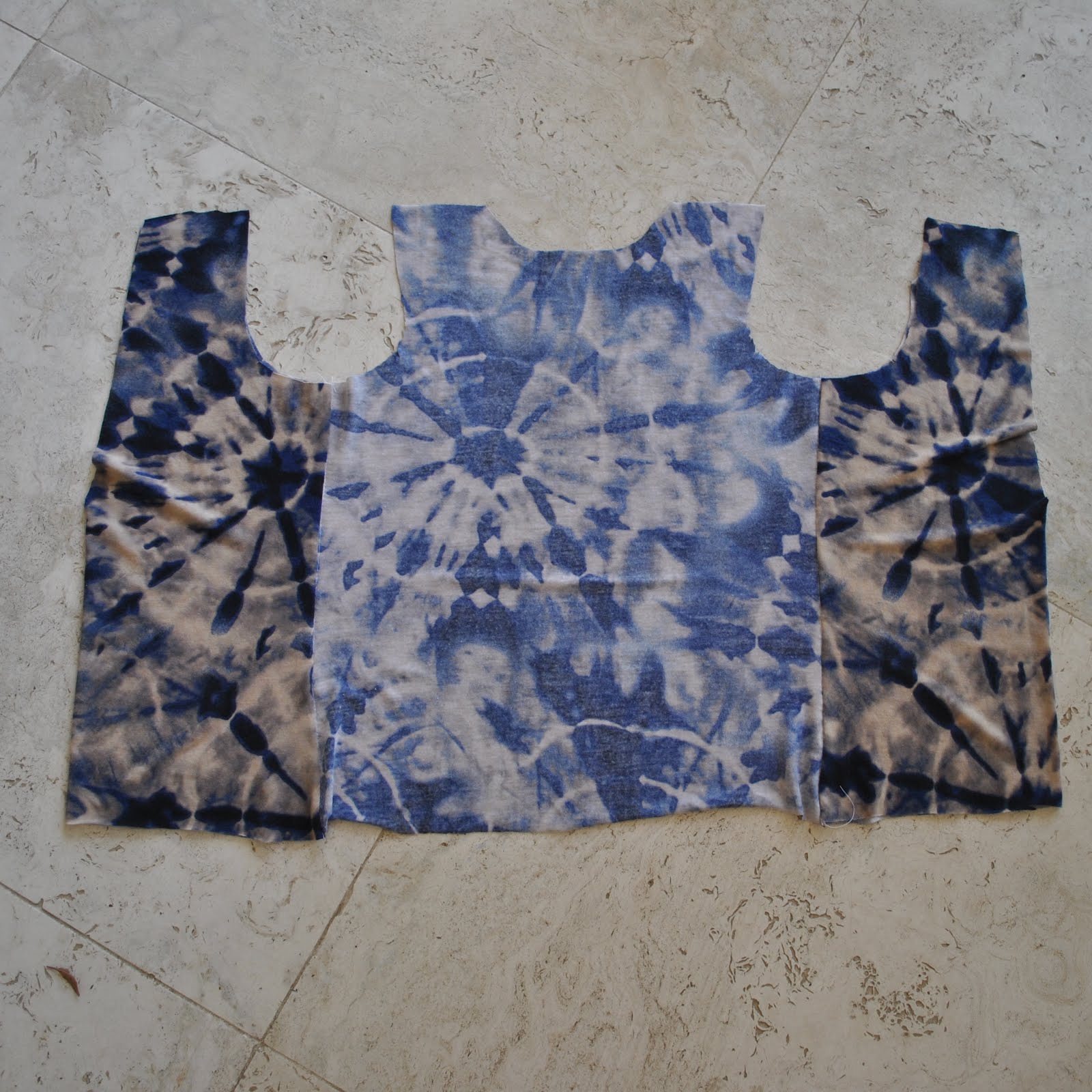
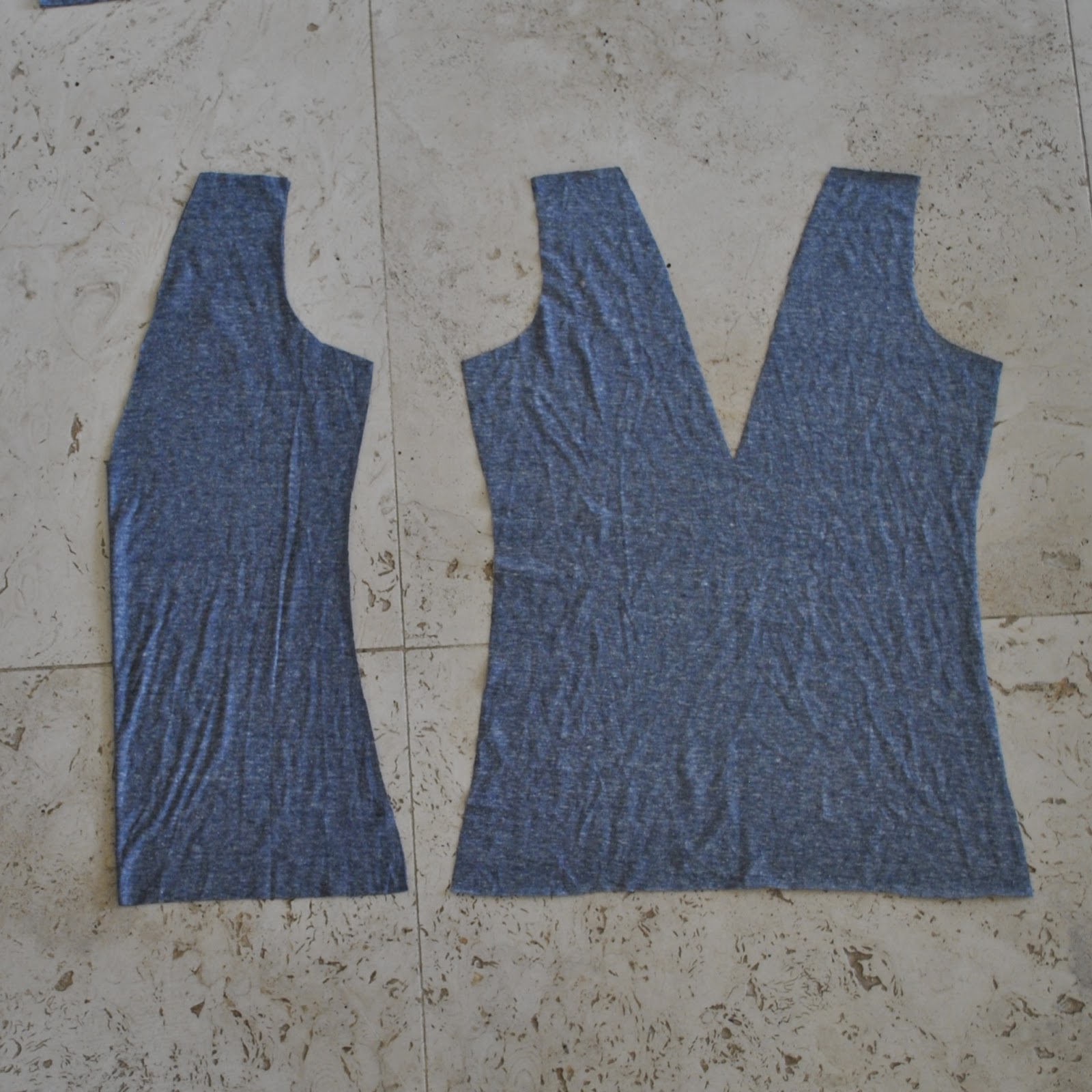
After cutting these: the fabric is then re-folded in from each edge so as to cut those two fronts (below) on a fold, with the centre front laid on each fold.  Cut from the inside shoulder edge out to the CF fold at bustline level on a straight diagonal line, to create the V-neck opening edge.

front piece at left is folded in half, front piece at right opened out along CF fold

Construction details:
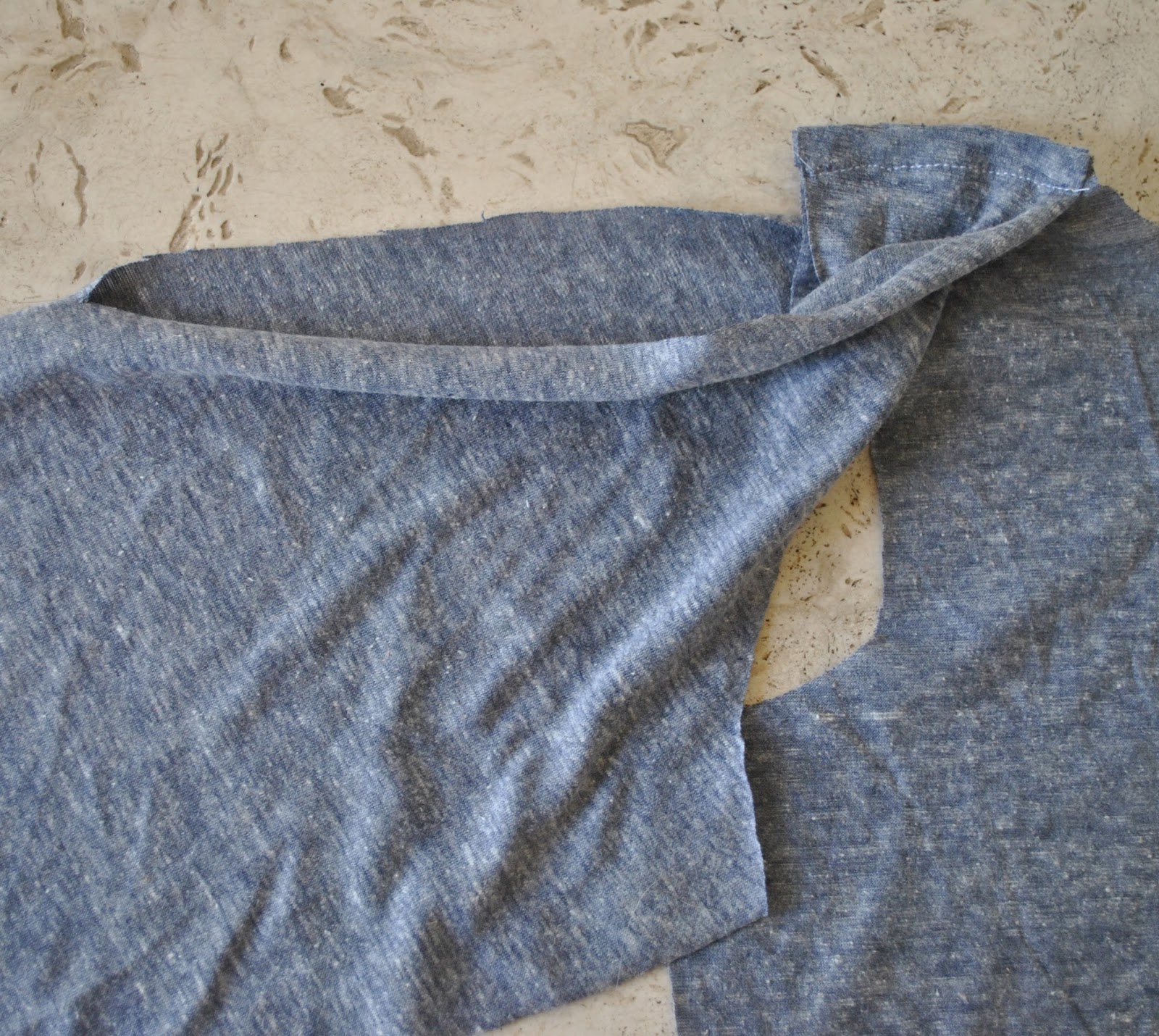
first, stitch fronts to back at shoulders.  Sandwich the back between the two fronts so that the seam allowances get tucked away between the layers.  You have to twist it around it in a weird funny-looking way but it does work out.

Stitch front to back at side seams, keeping the front facing free.
Then trim the cardigan to the length you want it to be, taking into account the width of the lower band.  Measure the around the lower edge to determine the length of the lower band and cut it to fit; allowing for a 1cm seam allowance at each end.
Pin the band to the lower edge of the cardigan, again keeping the front facings free.  Stitch, between the seam allowances, right sides together.

 front facing free

Turn the band up in half, lengthwise, right sides together, and stitch the short edges closed, ceasing stitching at the end of the previous stitching.  Turn bands right side out and press.

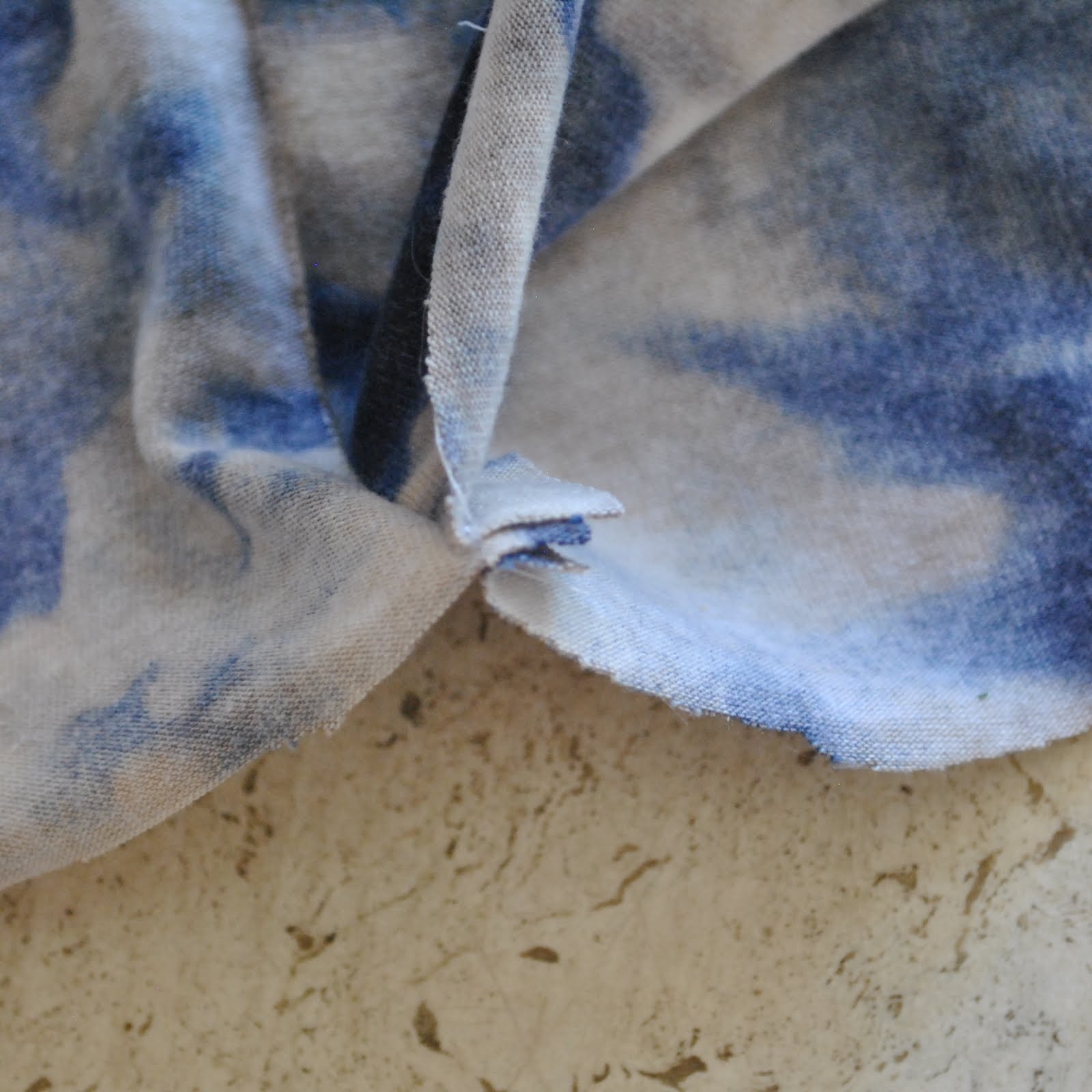
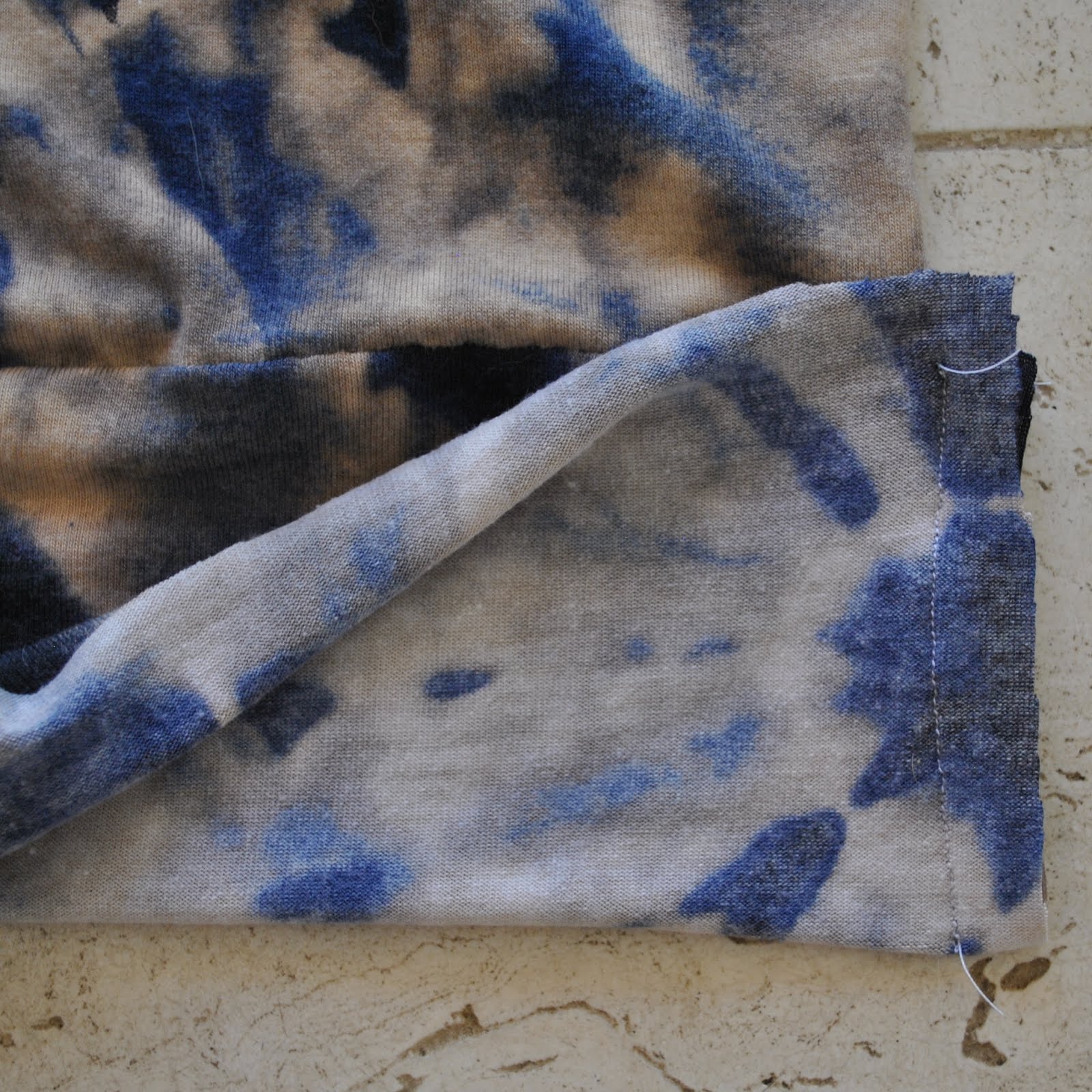
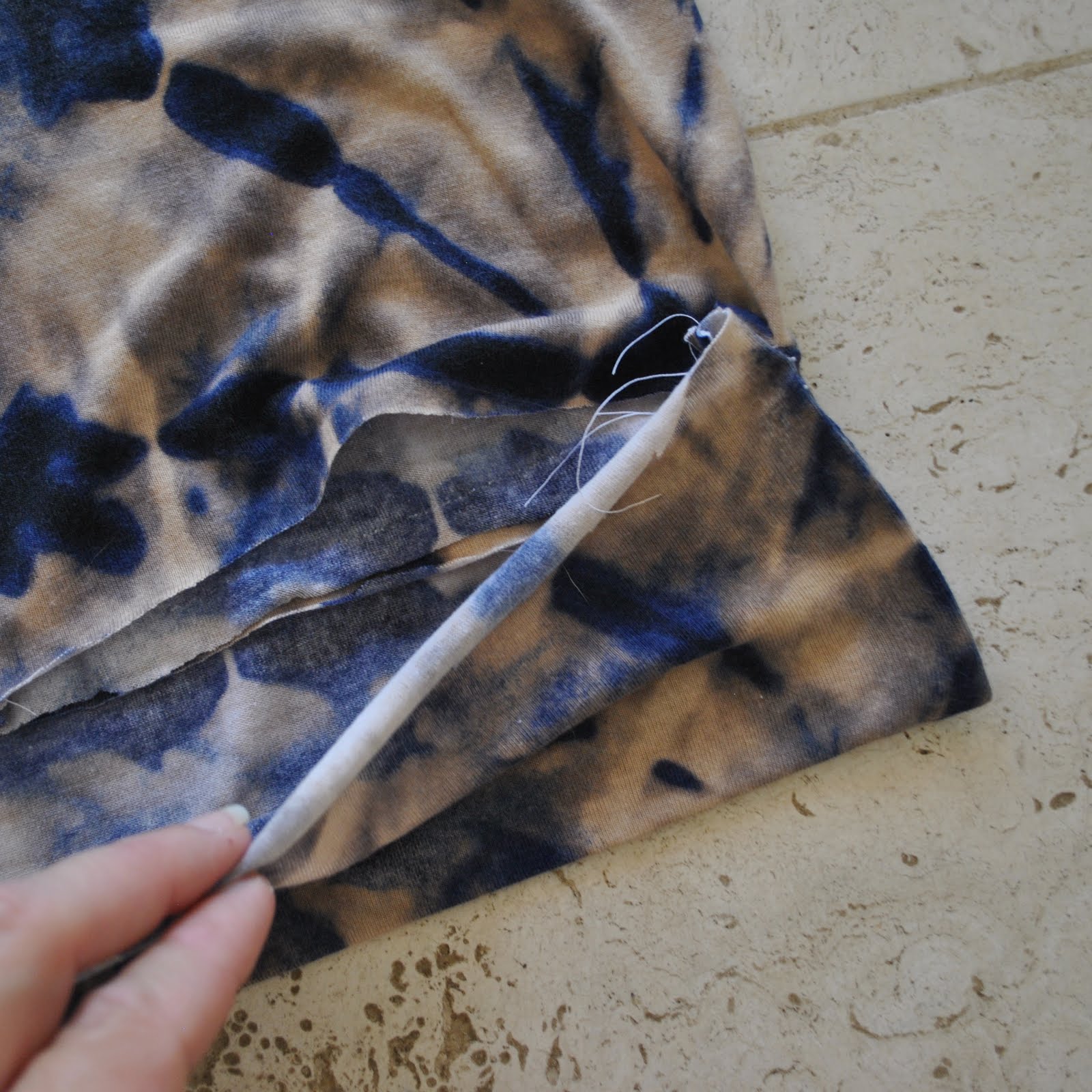
Now fold the facing to the outside, laying it over the lower bands and keeping raw edges even, and stitch lower edge seam through all layers, keeping the stitching just a whiskers’  width outside the previous stitching.  The reason for keeping it just outside is so that the previous stitching does not show through on the right side of the band.
Now when you pull the band out and turn it all back right side out, the seam allowances are nice and neatly hidden away out of sight.  Yay!

outside of cardigan? inside? impossible to tell which is which!

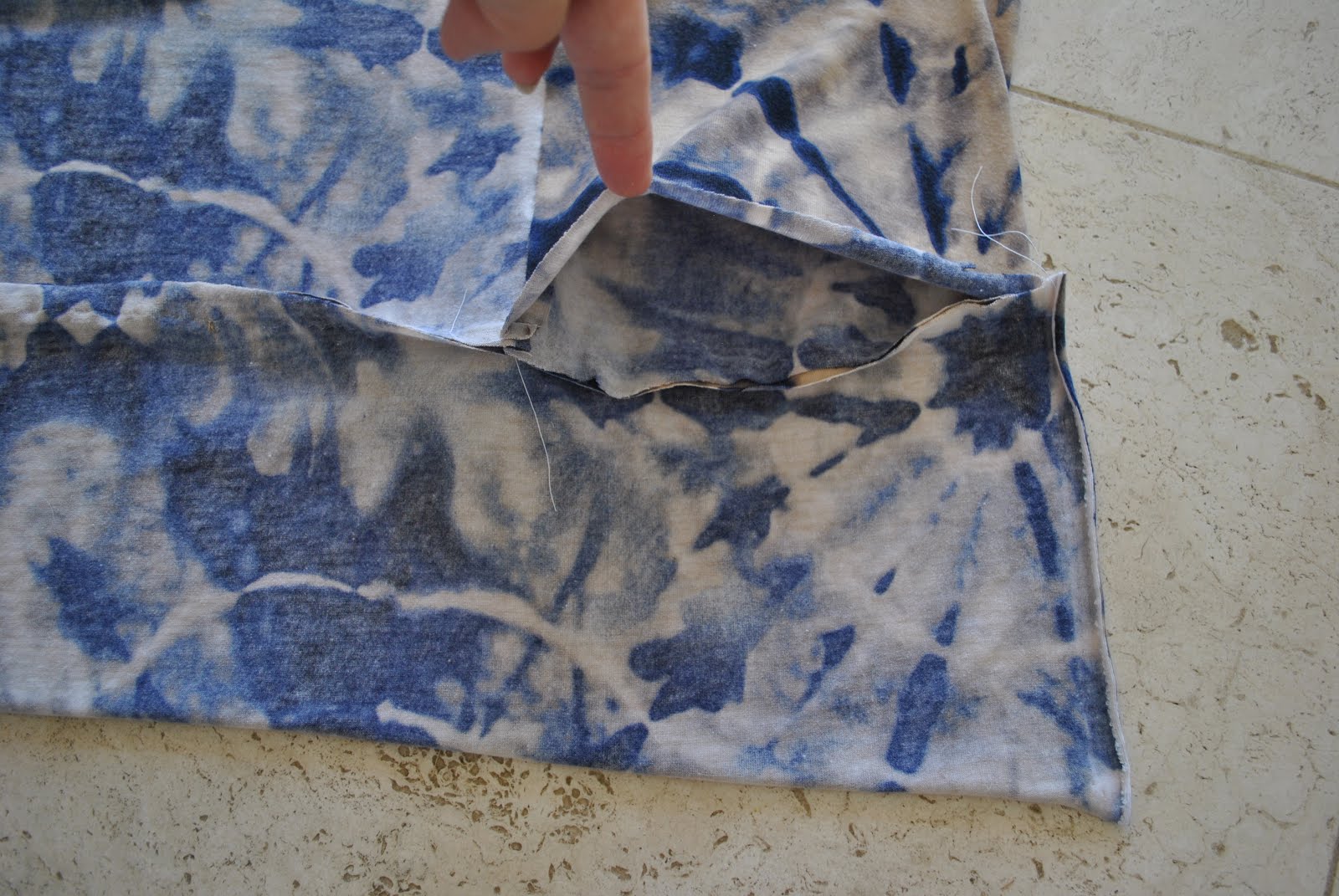
To anchor the front facing to the side seams, I opted to simply lay the front facing down to the side seam allowances, aligning raw edges, and top-stitch from the right side, 6mm away from the seam.  The raw edge won’t fray, and it looks reasonably neat stitched down, also the top-stitching also accomplishes a sort of faux-felling of the seam allowances too.  However this is definitely not ideal and I have to admit I have since thought of a different and better way of doing this bit too! so there may well have to be yet another little cardi in my near future… to see that thought through too… eeek! am I getting a bit obsessive or what? hmmm could be could be…  😉

Sleeves; same technique as for every other Tshirt/cardigan ever invented.  Namely, stitch the sleeve seams, set sleeves in the armhole and stitch.  The raw edges can be finished with overlocking if desired.  
Attach sleeve cuffs, for this I nearly always employ this method, which gives a nice neat finish I think.
Last step; the neckband: pin the long neckband to the raw edges of the neck edge, including the facing, keeping raw edges even, right sides together and stitch.  

Fold the ties in half along the length, right sides together and stitch the long tie ends together, starting at the endpoints of the previous stitching.  Stitch the short ends in a diagonal point, if desired.

Trim, turn the ties right sides out and press.
Turn under the seam allowances of the remaining raw edge of the neckband, press, pin and slip-stitch closed by hand.

Finito!

Details:
Cardigan, the Nettie, by Closet Case patterns with my own design modifications
Tshirt (under); another Nettie, white jersey, details here
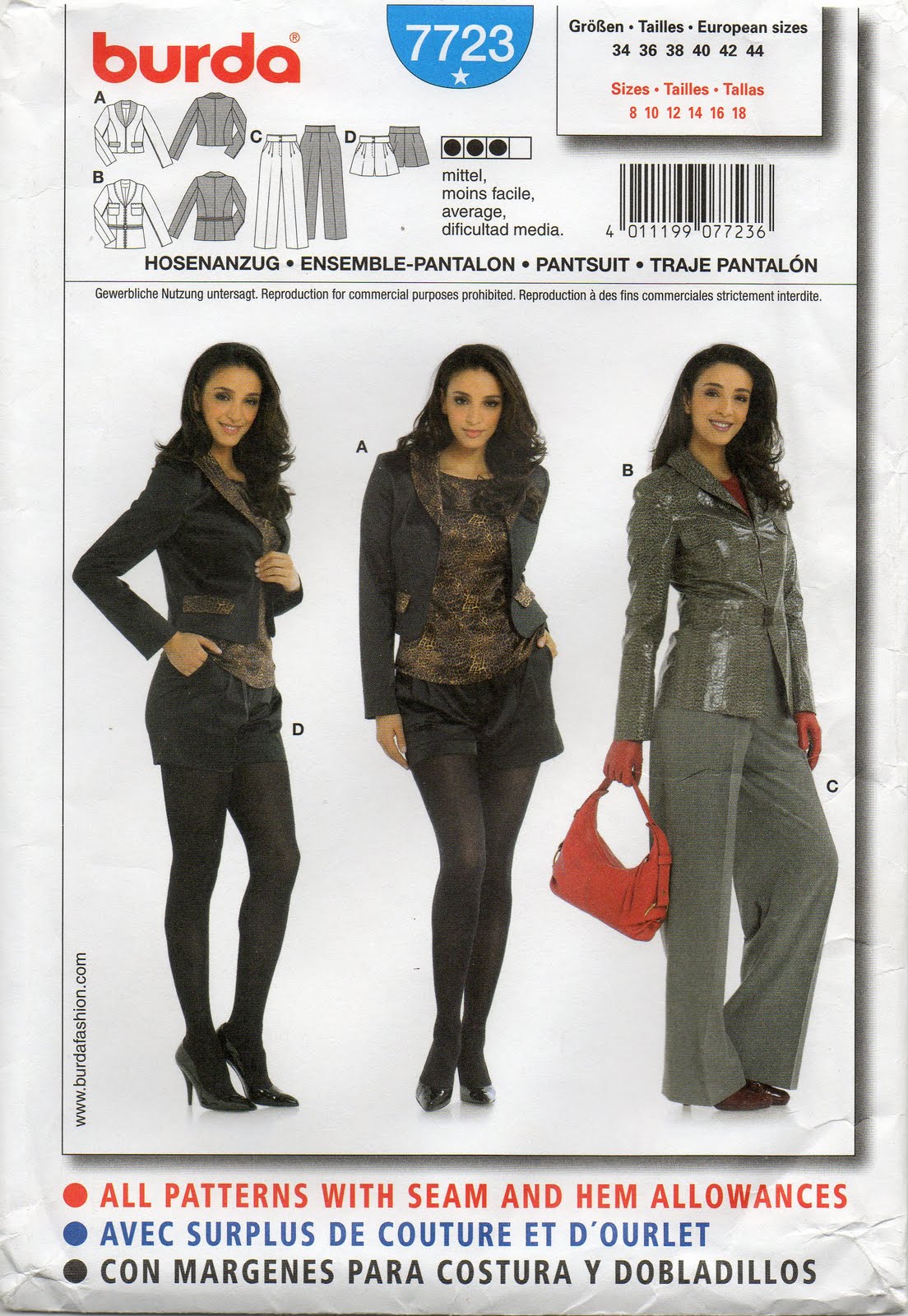
Shorts; Burda 7723, pinstripe linen, details here
Thongs: Havaianas
Location; Coode St jetty, South Perth

pinterestmail

paprika cardigan

I took some time out from making something far more time-consuming and complicated, ahem Alabama Chanin, cough cough…. ooo did I once say I would never get addicted to Alabama Chanin??? yaas, going back on my word, guilty as charged!!  Anyway, I took a day to put together this simple little cardigan from some scraps.  It’s a light and nothingy-to-it sort of a thing with no closure except for a necktie at the bust level.  A little something to throw over a summery ensemble on cooler summer evenings, or to cope with air conditioning.  
It’s mostly made from scraps; a piece of paprika stretch knit from Fabulous Fabrics, leftover from my paprika Nettie bodysuit and I bought a little extra to get out the pieces for this cardigan.  Once again I used the fabric wrong side out, because I prefer the duller, deeper, richer colour of it.  
Speaking of Nettie, I actually made this using the Nettie pattern too! just with a touch of ad-libbing.   Such a good basic pattern and a fantabulous springboard to a lot of other variations.  I can honestly see myself making like a tonne of these over my lifetime, with slightly different additions, subtractions and/or bits and bobs going on.

Changes to the pattern:
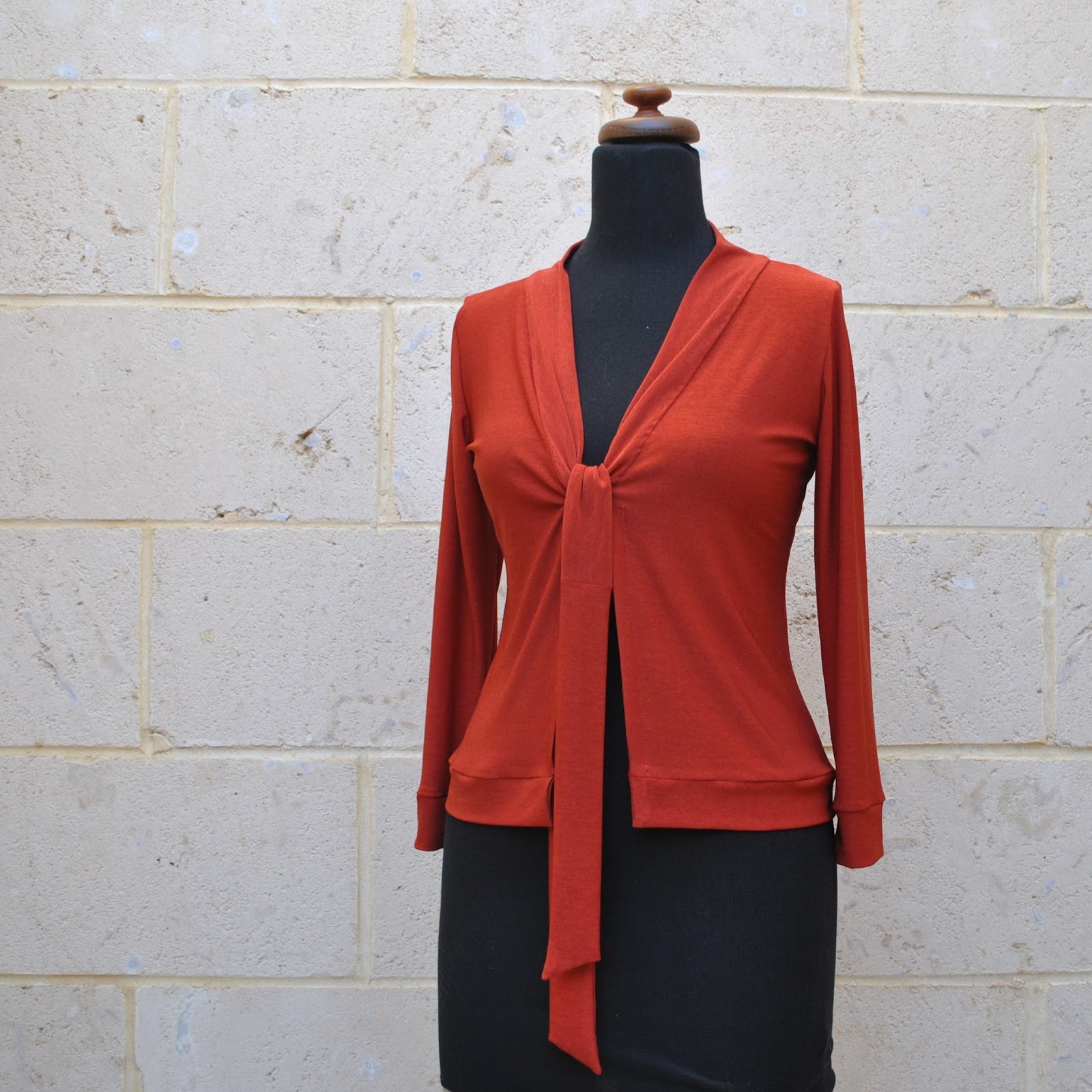
I cut size 18 which is a coupla sizes bigger than my usual, so as to get a looser “cardigan” fit rather than the skin-tight bodysuit fit; cut it to hip level with a wider shoulder, a low V-neck, and split the front up the middle.  I added a wide band all along the bottom edges and wide cuffs to the edges of the sleeves, a long wide necktie, which is basically a very long skinny rectangle sewn along the top edge and with the “tie” edges sewn right side together, with pointy points on the ends of the ties, then turned right side out.  The remaining gap of the necktie is slip-stitched closed to the cardigan on the inside. 

 The front edges I finished with strips of red crepe, itself leftover from my infinity dress here.  This was sewn on to the front edges, turned inside and topstitched down along the outside.  It’s a nice stable edge and the crepe takes away any tendency to stretch out, but I’m not wowed by my efforts here and in the making of this thing I conceived a much better way of doing the cardigan fronts.  I’ll probably make another one of these pretty soon, incorporating my imagined improved way of finishing the edge, but I’ll need a lot more fabric than the scraps I used for this one.
Hmmm, that’s all I need; an excuse to go fabric shopping! 

Project happiness factor; front edge satisfactory but I’m a bit meh about it and I’ve thought of a better way of doing it… otherwise it’s not too bad and I’m happy.  9/10

Details:
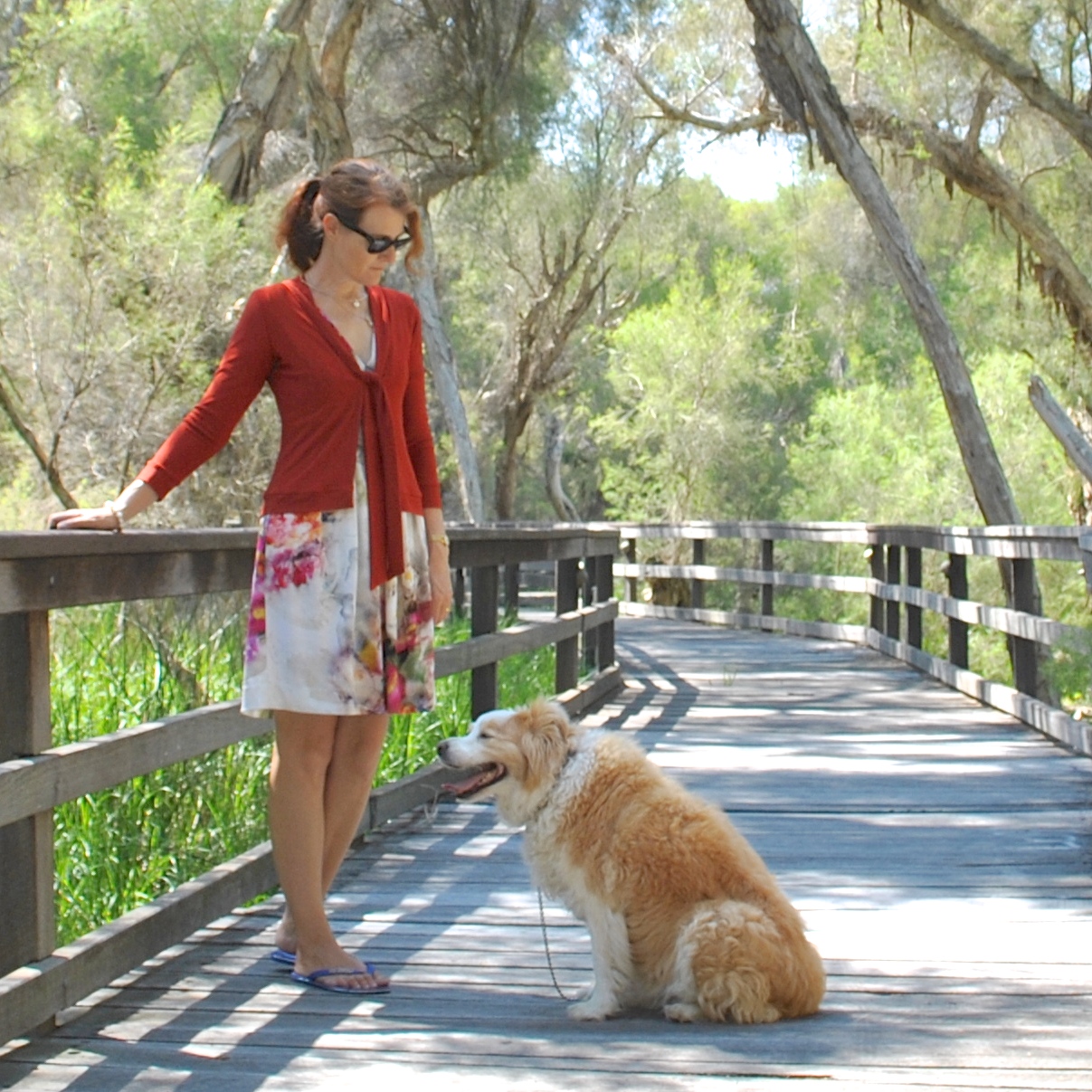
Cardigan; my own design modifications to the Nettie bodysuit, by Closet Case patterns, paprika stretch
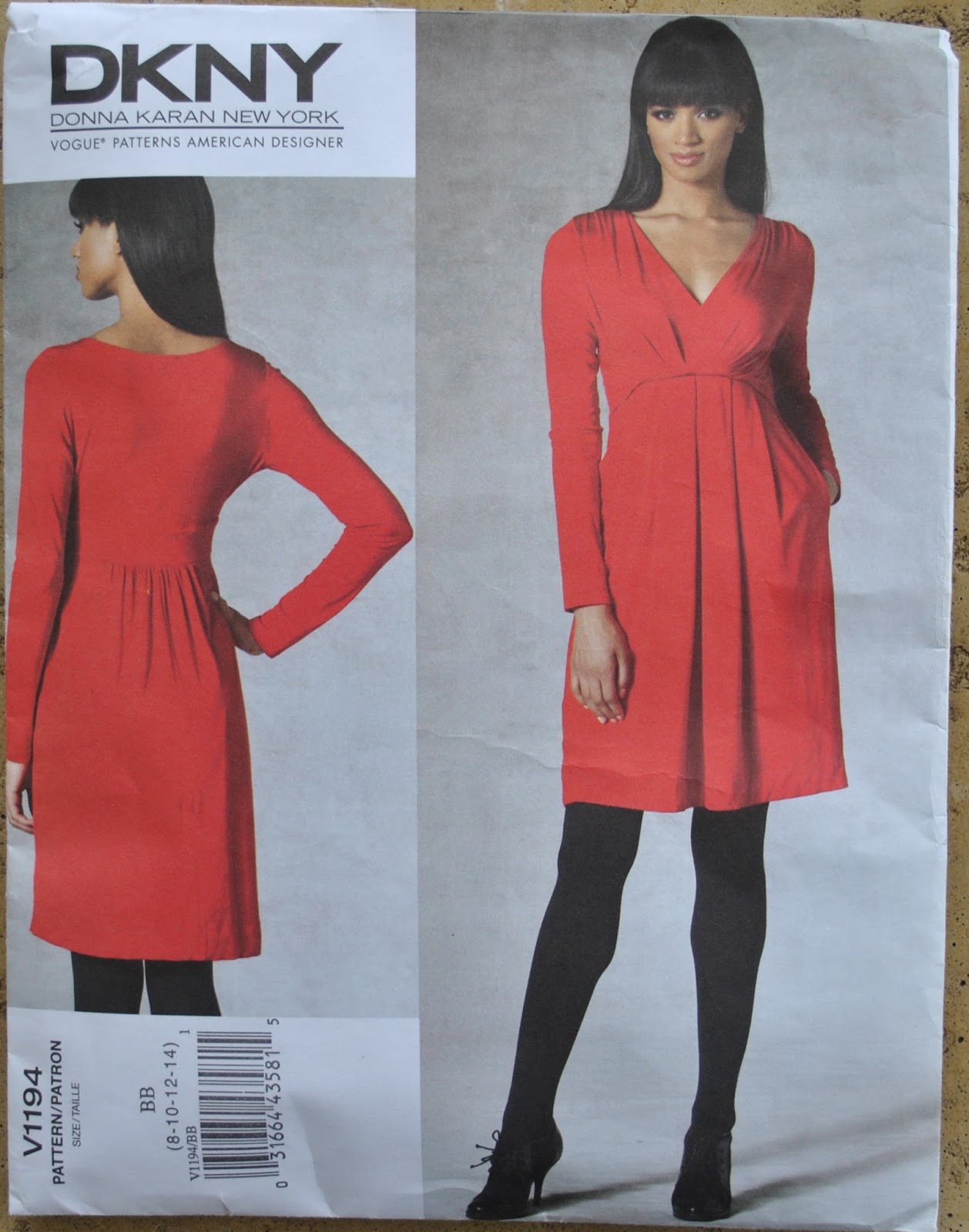
Dress; Vogue 1194, floral stretch, details and my review of this pattern here
Thongs; Rusty
Sunnies; RayBan

pinterestmail

do you Art?

Imagine that said in an vehhy posh accent along the lines of “are you being served modom?”…  
Little anecdote; many years ago I took part in a group craft project, and another lady in the group had clear and firm ideas about what we were to produce, and how.  At our first meeting she approached one lady and as a first spoken utterance to her, enquired “do you appliqué?”  

Hehe, that’s neither here nor there obviously, but it’s stuck with me for years and years and still gives me a laugh.  
Man I need to get out more…
Anyway…
skirt!

We bought this novelty print cotton drill from Spotlight a few years ago, and Cassie was supposed to make the skirt herself, but you know.. time goes on, you get busy, life takes over, whatevs, and it eventually falls to your mother who is sick to blinking death of looking at this blasted fabric hanging around, gathering dust and generally taking up precious stash space that could be given over to her own fabrics … gathering dust ahem…
Anyway! time for some interventive action.
I used no pattern but just made it up to fit what she wanted.  She wanted high-waisted, close-fitting at the waist and this length, and for the paintbrushes to be situated exactly so high and for not a single skerrick of print to be hidden or broken up in any darts or shaping.  I cut two rectangles with no shaping, to maintain the print, put in an invisible zip at centre back, and pinned tapered box pleats to fit her waist, each one going straight at first then tapering narrower for the last third to accommodate her hips.  There are four such pleats both front and back.

Pretty easy, once I got going on it!  I added a shaped, interfaced facing, and hand-hemmed.
Done!
The one difficulty; inserting the zip centre back was a teeny bit angsty, because I discovered that the paintbrushes are printed just slightly slanty and off-grain… OF COURSE THEY ARE.

I chose that shortest pencil on the fold to be the “sacrificial” pencil through which to cut the centre back seam, and sewed the seam with as narrow seam allowances as practically possible and as close to the pencil/brush on either side as I could get.  It passes right on each one, touching the very tippy top of the one at left and scraping the very bottom of the one at right.  Phew!

Answer? Yaaas dahhling, we do most certainly Art.

pinterestmail

all Aussie adventures

MY OUTFIT IS FINISHED!!!
And I am showing it all together here for the first time.  Can I just say right here; wooooohooooot!
The challenge, as laid out by Nicki of this is moonlight, should you choose to accept it, and I did! was to make for yourself an entire outfit using ONLY locally sourced materials.  Sounds simple, right?  It has been anything but!
I’m very grateful to Nicki for conceiving this brilliant and very thought-provoking challenge, and for inviting me to take part.  This has been one exceedingly amazing ride, has blown my mind more than any other dressmaking challenge I’ve ever done, and really pushed my creativity to the limit.  At the beginning of the year I seriously did not think I would be taking my outfit to the levels I did…. I thought for sure I would be giving myself a pass on some things, for example;  thread, and allowing myself to use regular Gutermann’s thread.  As time went on though I toughened up, embraced the idea of going the whole hog; and I’m very pleased that I did manage to rise to the challenge and make the maximum possible from locally sourced products!
In fact, I’m quite proud and extremely happy! :))
For the challenge, I made:
a knitted alpaca cardigan/jacket
a merino felt dress
merino felt and pine shoes
a merino fleece bag
merino fleece undies and bra
In a nutshell, every single blinking thing I have on here is made by myself, using pretty close to 100% south-west Australian sourced materials

Those of us in Western Australia; SueMegan, Nicki and myself, have had to be quite innovative in our approach, I think.  I mean, forget zips, thread, elastic… there is not even any freaking fabric made in WA!  This was our single biggest hurdle, I think!
However, we are extremely fortunate in that we have wool available to us; lots and lots of wool!   Australia has the world’s biggest wool economy… did you know that 80% of the world’s apparel wool is from Australia? and Australian merino is the world’s best quality woollen fibre.  22% of the country’s wool production is here in Western Australia (source)

Hardly surprising then that all four of us have used wool as the majority component in our outfits.
My dress, bag, underwear and shoe tops are made from Western Australian merino fleece.  I made my wool felt fabric from the fleece as outlined in this post.  My dress is made from natural undyed merino fleece felt, and I hand-embroidered the fleece all over with locally handspun, undyed merino yarn.

Anigozanthos manglesii

The embroidery design is my own; a random arrangement of of kangaroo paw motif, for our Western Australian state floral emblem.

My underwear features the only “colour” in my entire outfit; I dyed the decorative yellow edging and ties using sour grass picked from my own garden, as posted here.
All the other fleece, yarn and wood in my outfit I left in its naturally coloured state.

My cardigan is alpaca yarn, from the Fibre of the Gods, a tiny mill operating on a farm in Toodyay.  This establishment produces alpaca yarn on their own property, from the fleece of their very own alpaca herd.  I bought some of their yarn directly from off the farm and knitted my cardigan, as posted here.

My wooden shoe soles are hand carved by me, using Western Australian pine.  The pine is grown by Bunnings on their own pine plantations down south and milled by Bunnings in Manjimup.  I made my shoes and my bag from my merino fleece as outlined here My bag and shoe tops are also merino fleece, with a grid pattern made of naturally black sheep yarn.

And that’s it, in a nutshell!
Well, typing it all out like this has kinda brought it home to me for the first time; I am wearing a pretty-close-to 100% homegrown outfit, top to toe, for maybe the first time in my life!  I’m kinda amazed, even at myself.  It’s a little mind-blowing to me.
Final thoughts: I’ve learnt a tonne doing this challenge.  Firstly, our local industries are precious and need our support.  That goes for everywhere, not just here in WA!  I personally am going to put more effort into supporting our local products regularly.  I mean, I’m definitely not giving up my more “regular” sewing, but I am going to do this challenge again.
Secondly, that if you really put your mind towards doing something, keep yourself focused on getting a project done, to overcoming obstacles, then you probably can do it.  Sometimes you need to sleep on it, think outside the box a bit.  I learnt a lot as I was going along, and several times had to improvise a solution to a problem.  There were moments when I questioned my sanity in doing this, when I wondered if my ideas were even going to work… a felt dress? unlined? felt underwear? sounds like the vision of a lunatic, or at least a recipe for disaster, for sure… well OK even I can admit that felt underwear is not really a practical nor a workable thing!  … do NOT recommend.  😉
Also, I had lots of fun!! I LOVE a challenge and this challenge really stretched my capabilities; which is the very best sort of challenge, in my opinion!   I thought hard and long about each aspect of my outfut and tried very hard to honour the materials, to minimise my waste and to make something truly Western Australian in feel and flavour as well as provenance.
There were also moments when I realised I had to accept a small defeat; in the case of this outfit; the glue holding pieces of wood together in my shoes (from NSW, Australia), the nails holding the felt to the soles of my shoes (China) and the cotton jersey liner for my undies (China).  They are very tiny elements so I’m not going to beat myself up over them too much.
I guess the important thing is that I gave everything careful consideration,  and really thought about provenance and the possibility of substituting local products in as many instances as I was able.  As well, I wanted to produce something stylish and lovely, that I knew I would love wearing and feel proud and happy in.  I genuinely love my outfit, and feel pretty pleased with my efforts!
Lastly; maybe I’m on a bit of a post-challenge high, but I’m quite excited about attempting this again next year… in fact I already have ideas and plans!
Mad? maybe, but quite happy to be so!

Details:
Cardigan; the Caramel cardigan, in Fibre of the Gods natural alpaca, grown, shorn, washed, carded and spun in Toodyay, Western Australia and hand-knitted by me, details here
Dress; my own design based upon Burda 8511, made from merino felt made by me and hand embroidered with locally handspun merino yarn from Bilby Yarns, details here
Shoes; my own design, pine soles from Bunnings hand carved by me, felt tops made by me from merino fleece bought at Bilby Yarns, details here
Bag; my own design, in felt made by me from merino fleece bought at Bilby Yarns, details here
Underwear; my own design, knickers derived from the Tried & True knickers pattern by the Makers Journal, in felt made from merino fleece bought at Bilby Yarns, details here

pinterestmail
Switch to mobile version
↓