Tag Archives: Tutorial

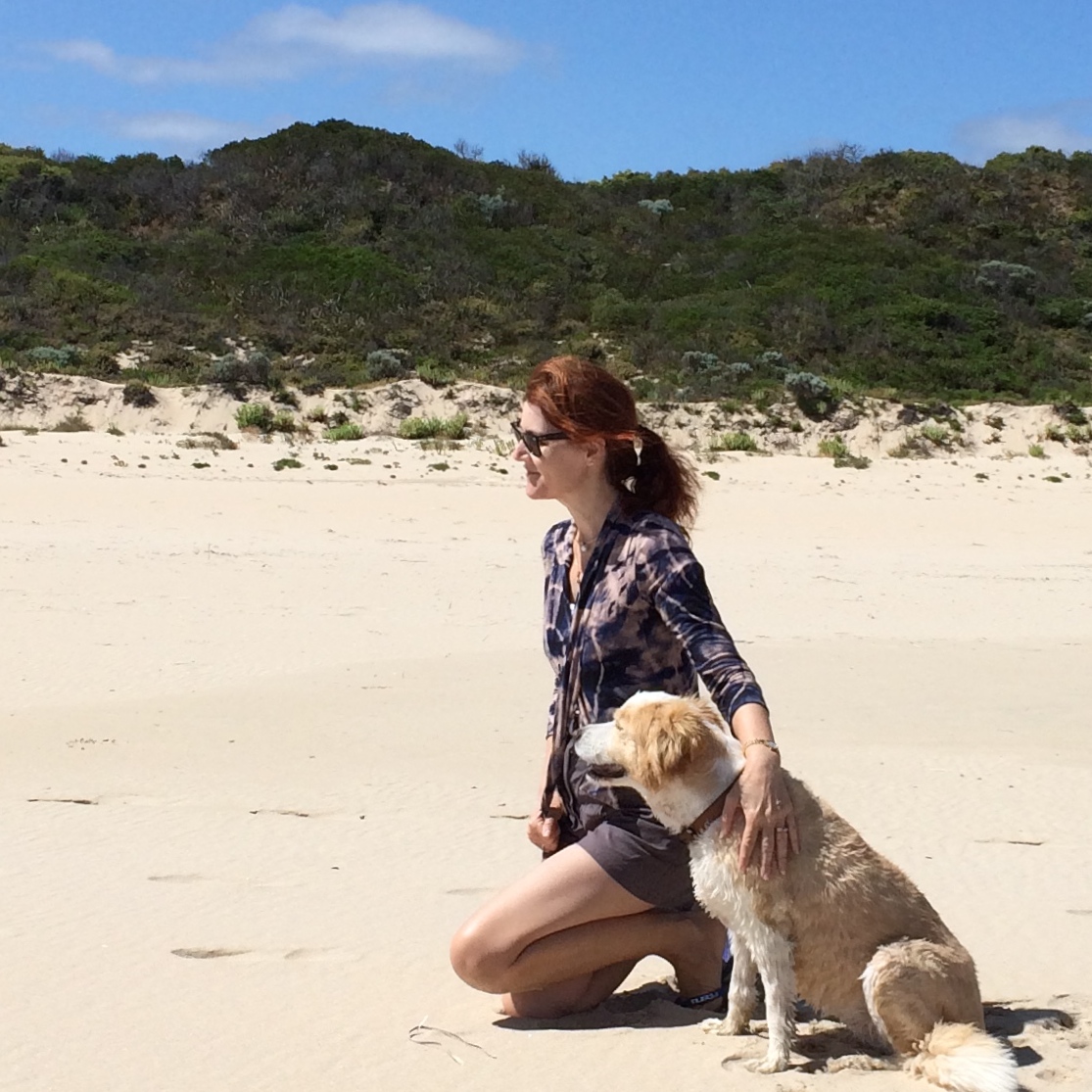
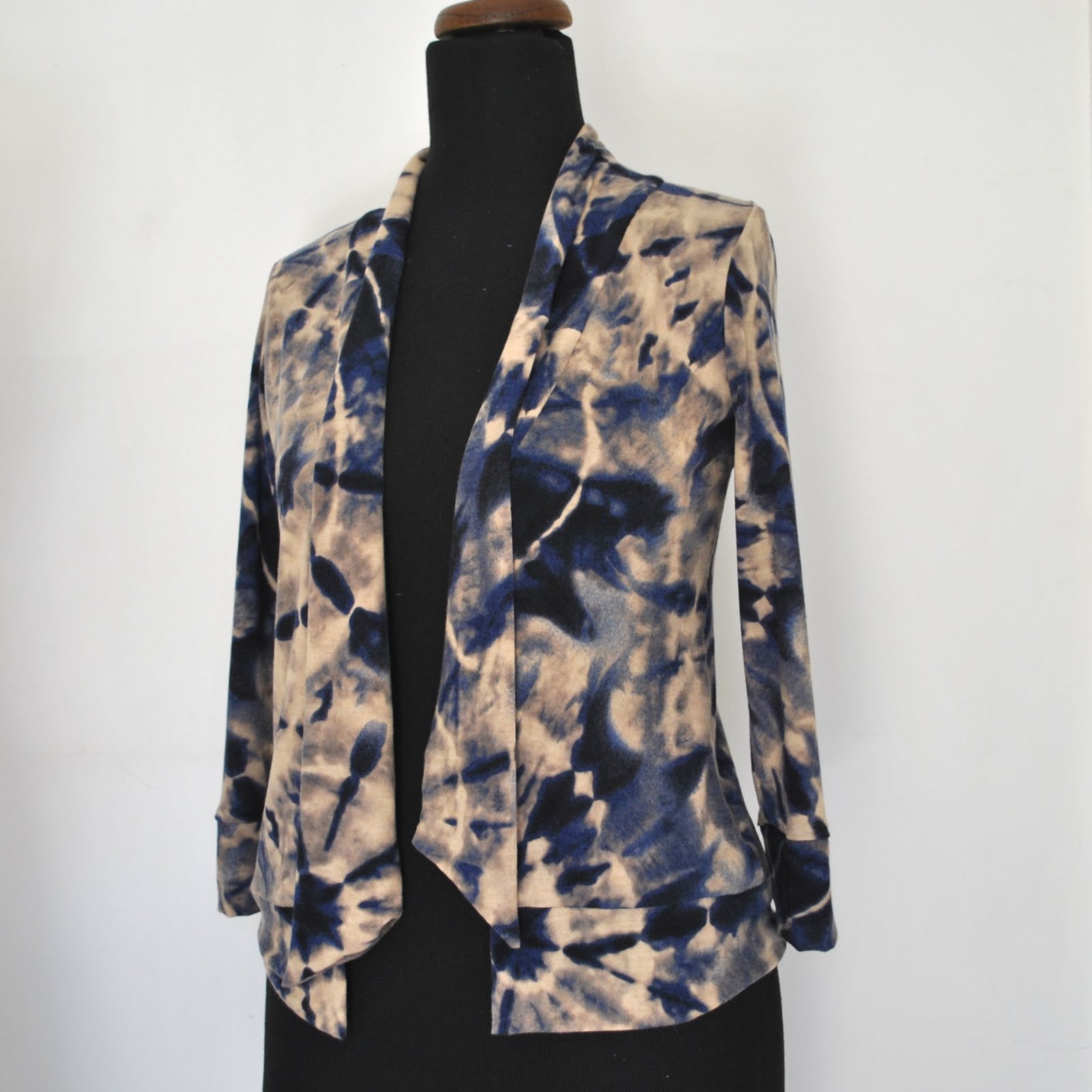
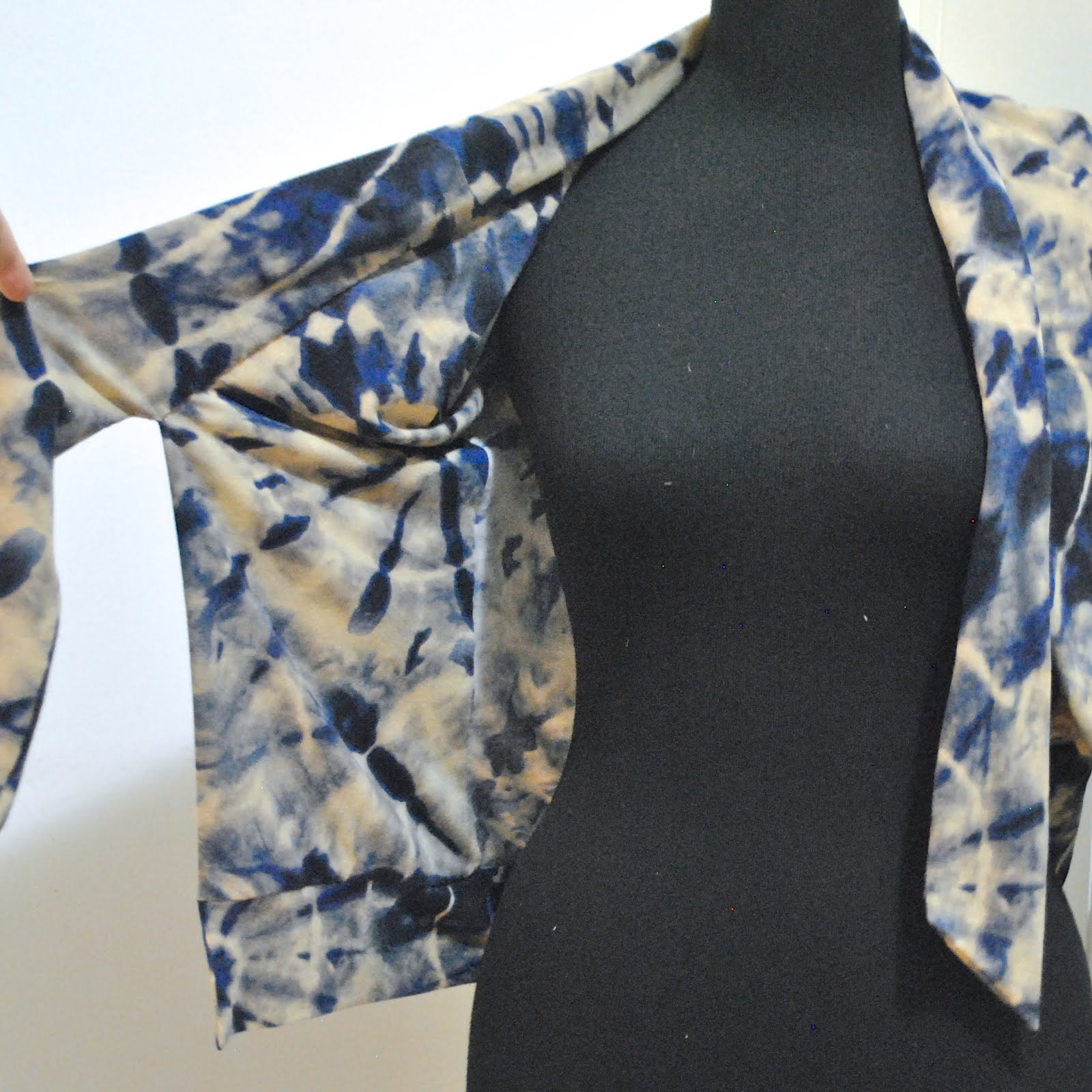
tie-dye cardigan

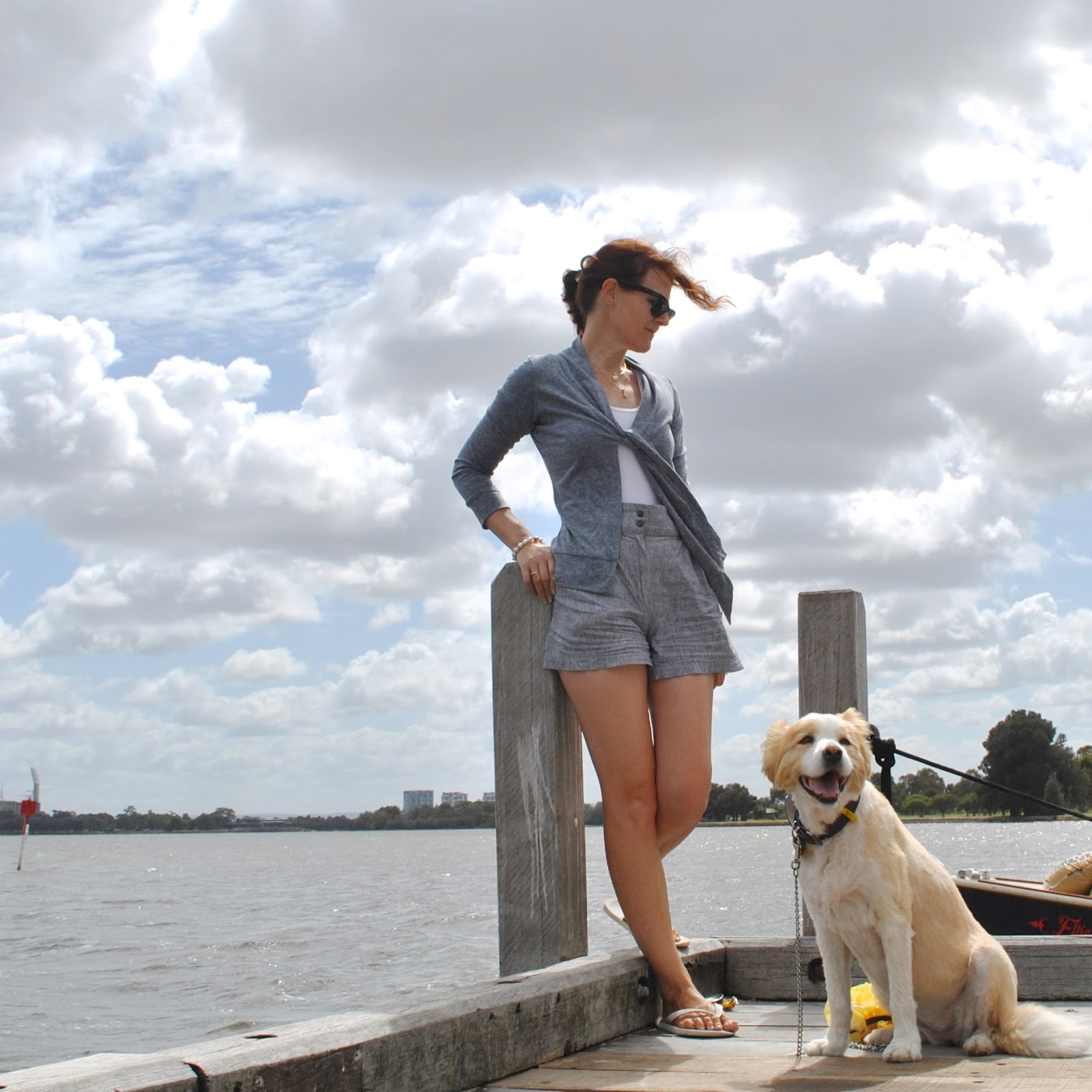
I’ve made another little cardigan… the last, I promise! for at least a little while! 
I didn’t really need another one but I said I’d thought of yet another little way the construction of this design could be improved? naturally I just had to try it out…
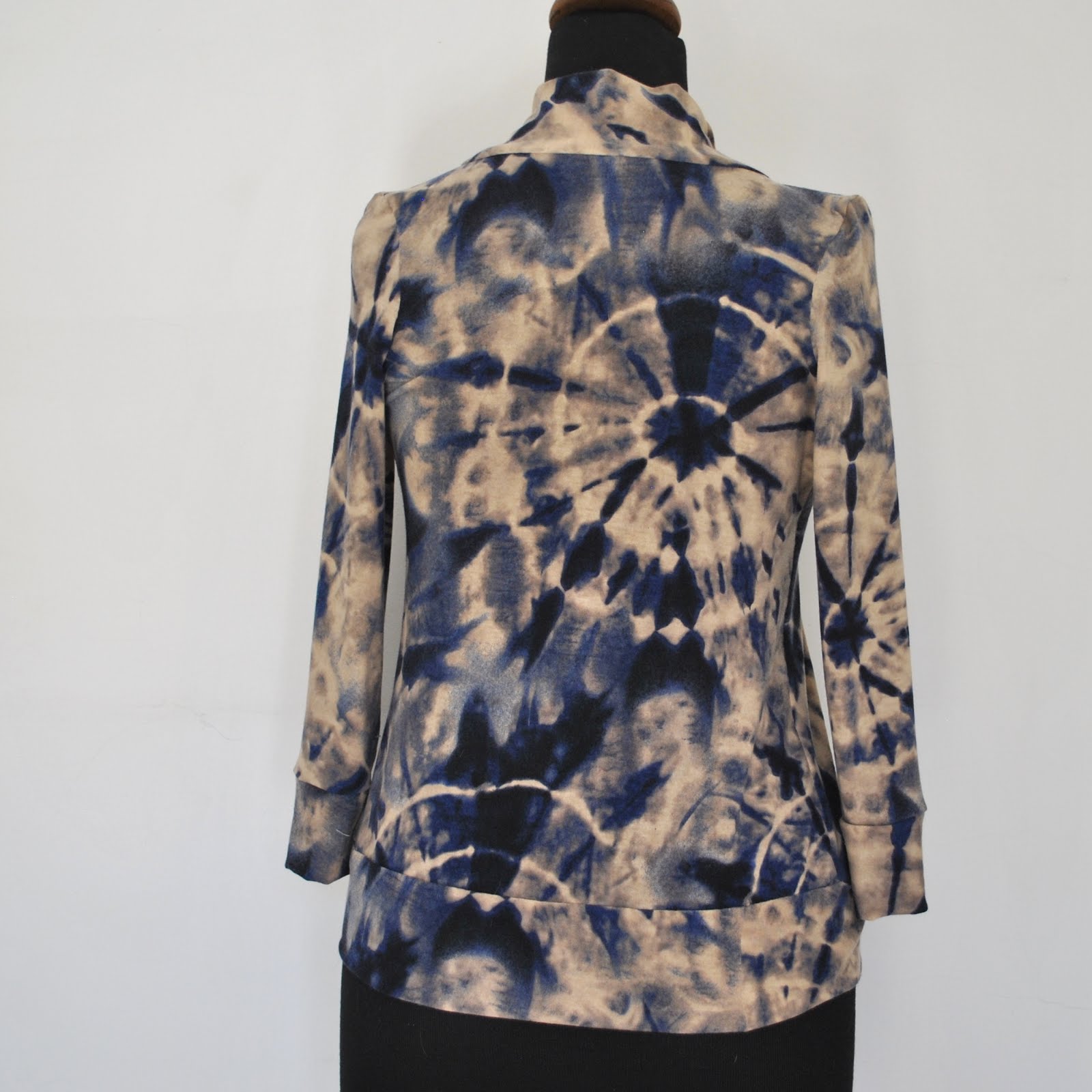
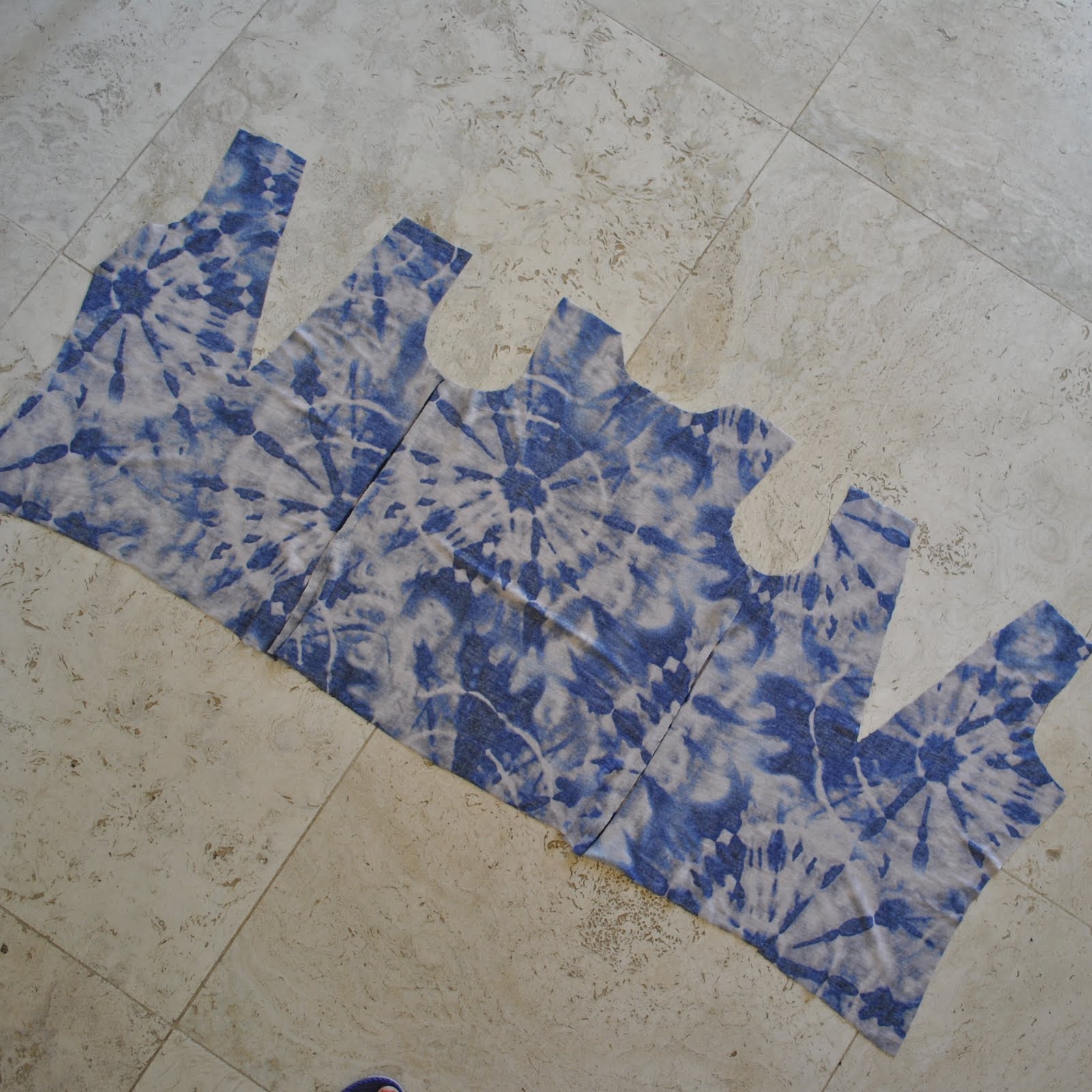
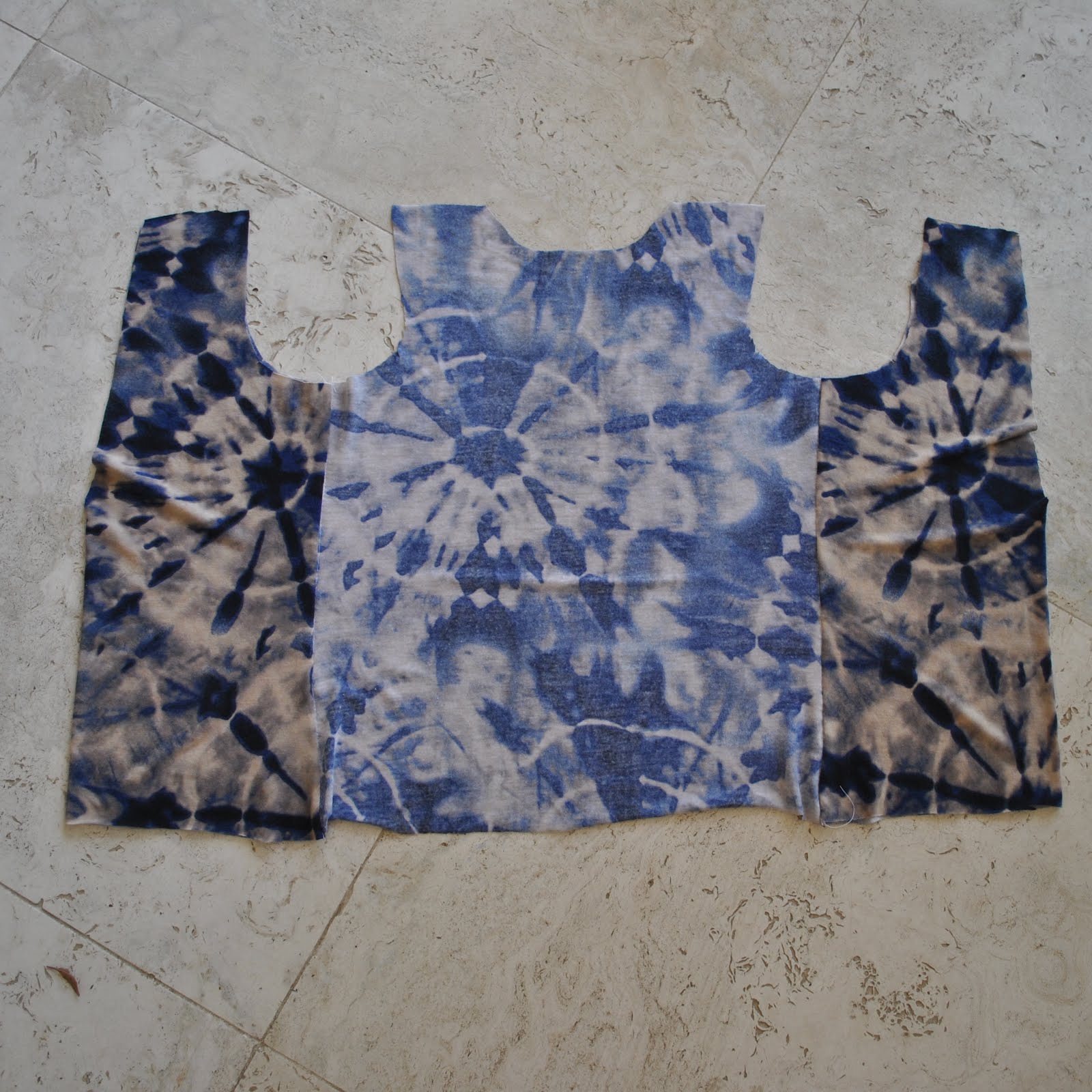
Fabric; a toss-out from Mum, a cotton or something or another jersey, original provenance unknown.  I barely had enough for the cardigan but just managed to squeak out the pieces; the tie is a little on the short side and is pieced in several places but no biggie, I still got it out! and the joins are lost in the print.  I rather like the tie-dye print and my only concern was to avoid situating a bulls-eye in the boob-al region when cutting out.  Mission accomplished!

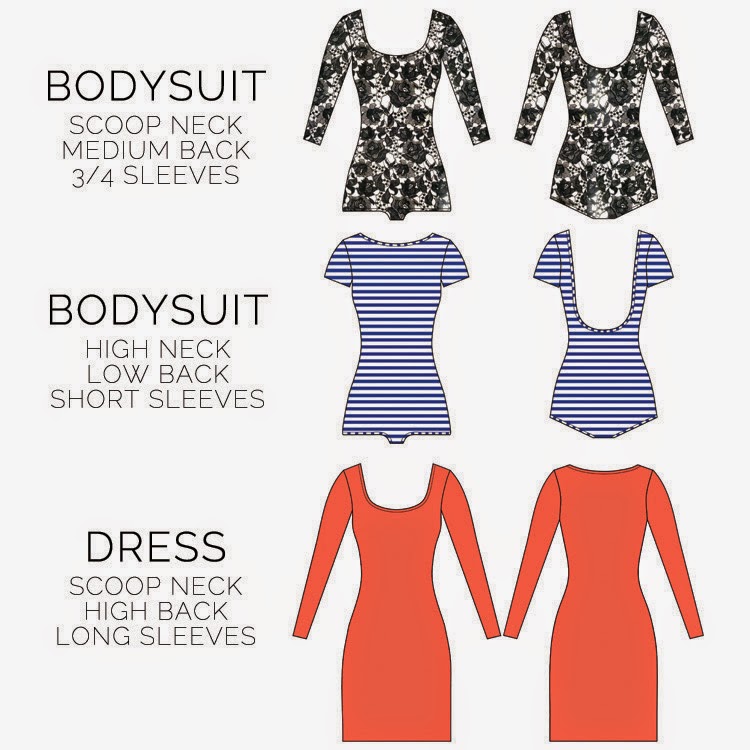
Pattern; the Nettie, by Closet Case patterns, modified to be a cardigan with a loose extended neckband that hangs down in a shawl-y type of a way.  The neck band on this, third, version of the design is a little short to be tied in the front like the last two iterations, so I’m planning to only wear them hanging loose like this.

My desire for a super-clean finish is finally satisfied with the insides on this last version… they are super neat and tidy! with no exposed seams or stitching, barring inside the sleeve/armhole.  *happy sigh*

I’ve written my order of construction to illustrate how it all went together…  it’s a little more fiddly than the previous methods but perfectly doable.

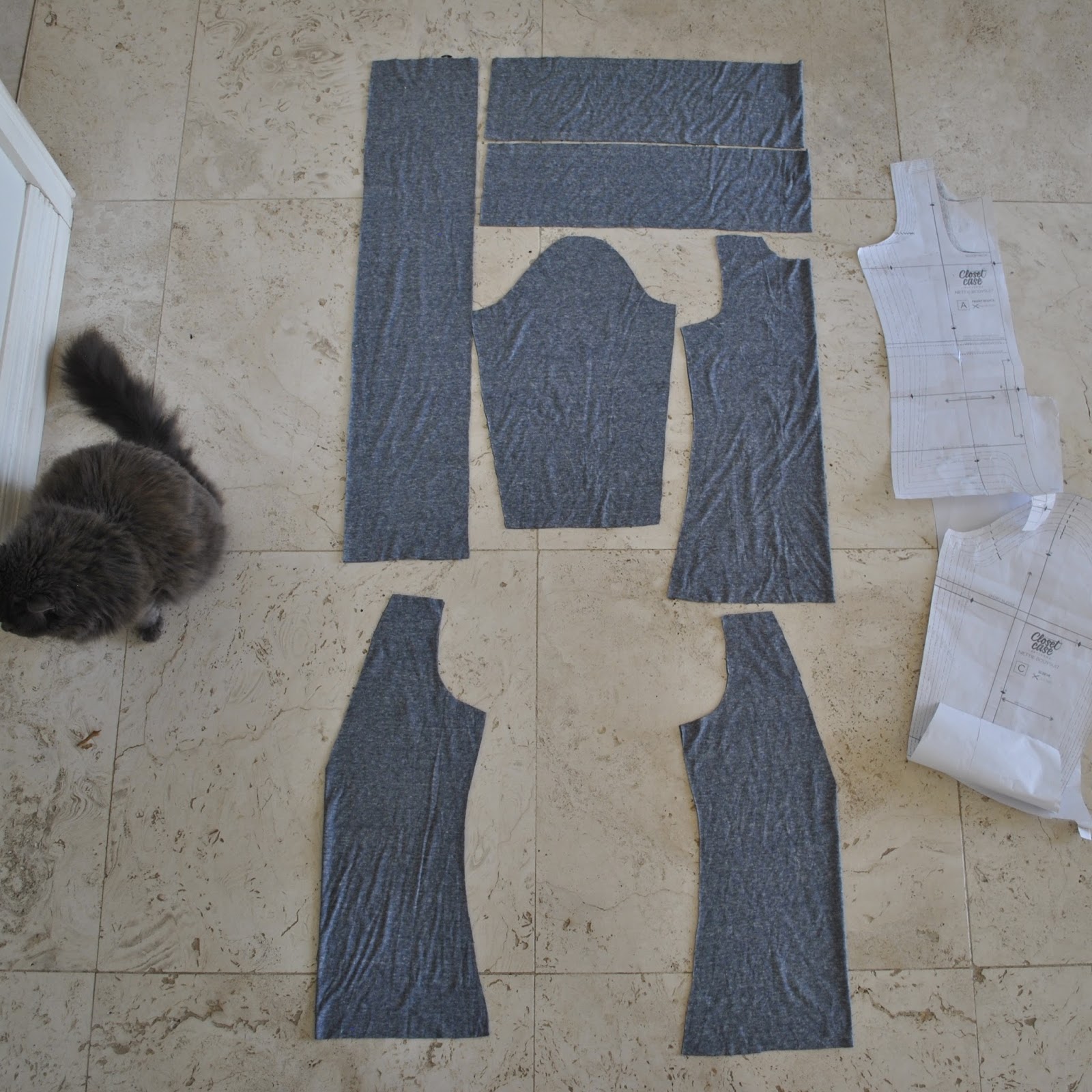
Cutting; cut the fronts on a centre fold so they are double layered.  Same picture as the previous cardigan because it’s identical.  I sized up a couple of sizes to get that looser cardigan fit, rather than the tight bodysuit-fit that the pattern is designed for.
NOW; the first step is to sew fronts to the back at the side seams, right sides together.

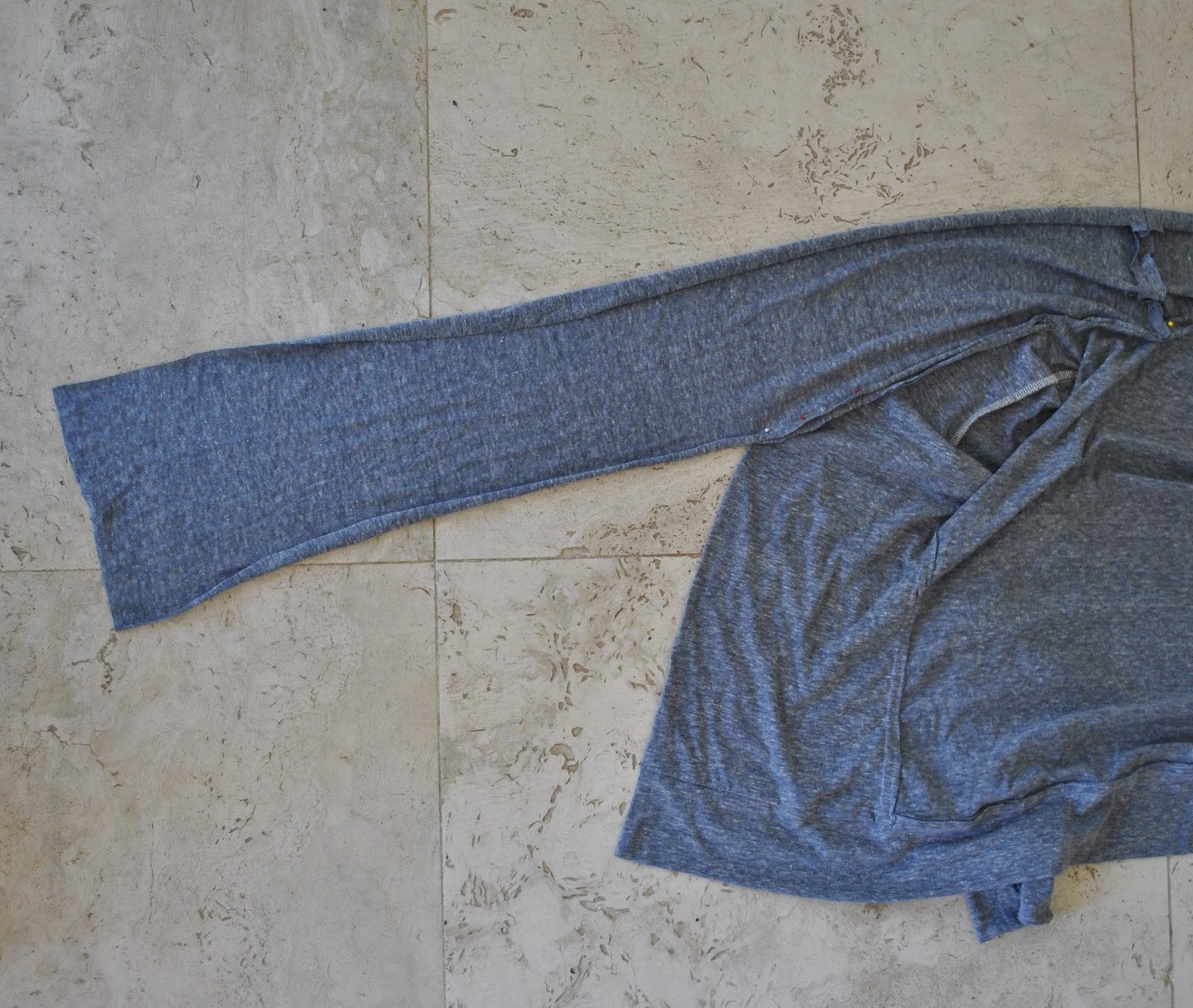
Now, fold the fronts in half, right sides together, and stitch the front facing to the back at the side seam over the previous stitching, enclosing the seam allowances within the front and front facing.  You will need to pull the pieces inside out a little to make this step possible, basically you are sewing the front piece in a tube with the back piece encased between the two side edges.  Grade seam allowances, turn out and press.

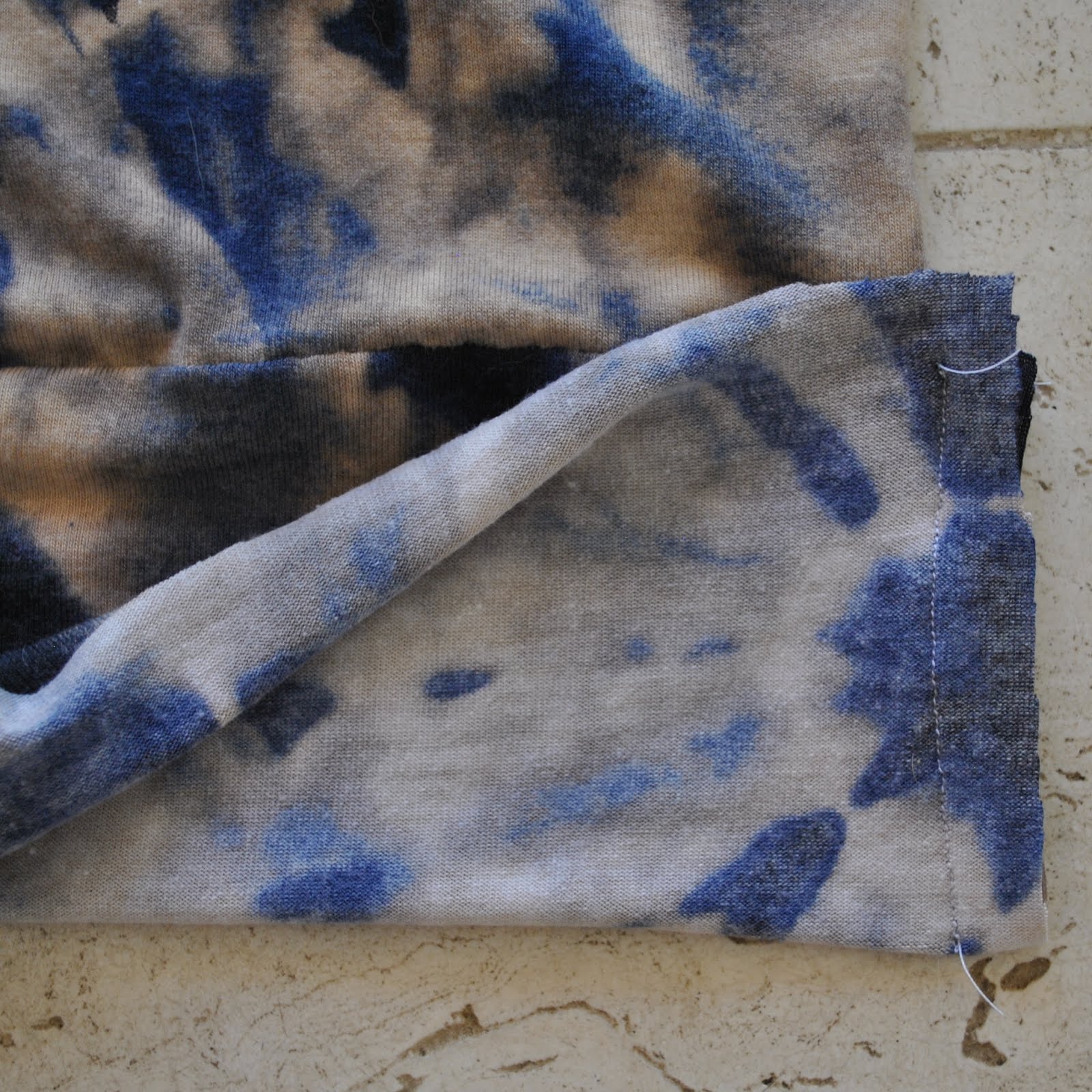
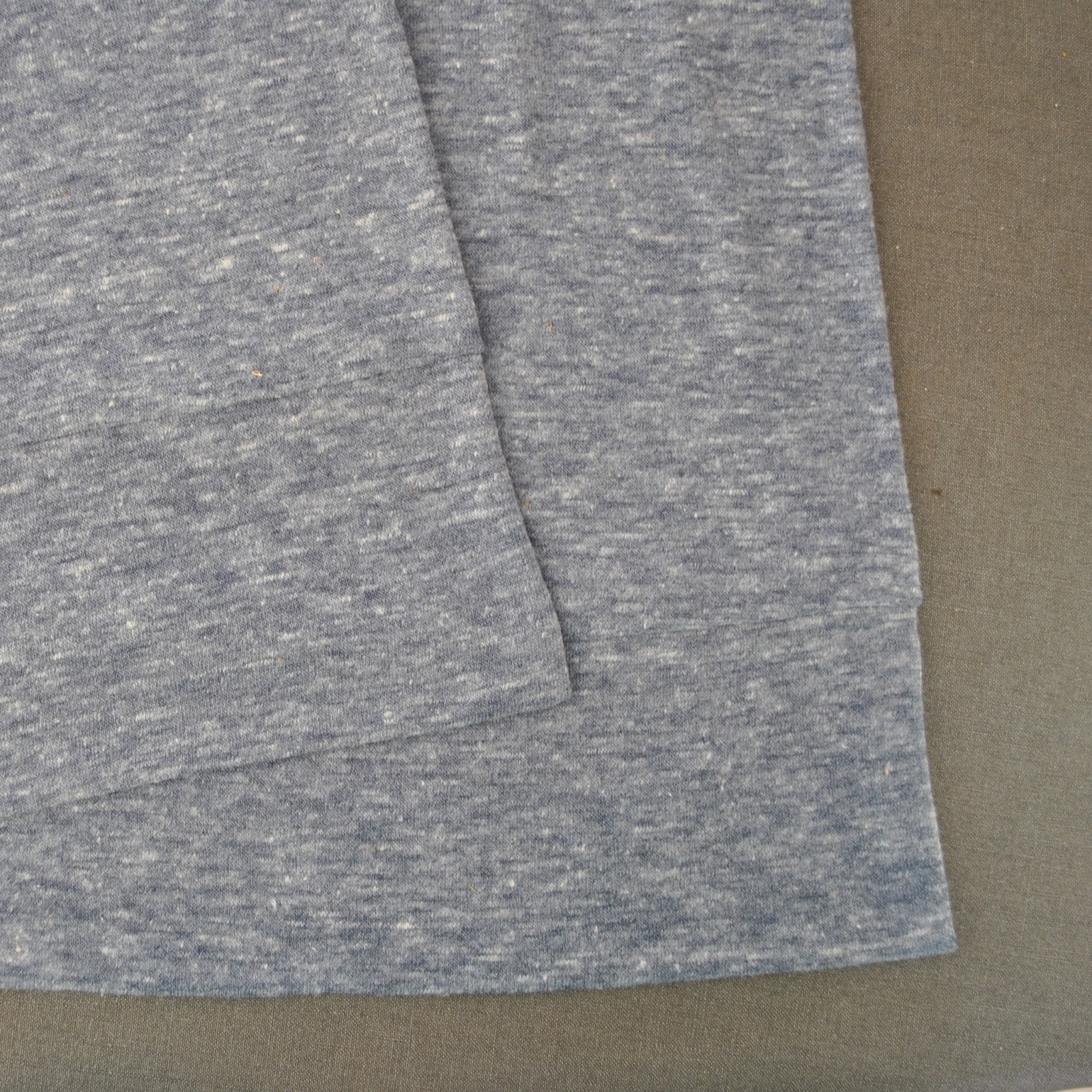
Cut the lower band to fit and stitch to the lower edge, keeping front facings free.  You will need to stitch each front section and the back section of this seam separately to each other, stopping and starting at the side seams; fiddly? yes, but worth it in the end.  Press open then down onto band.

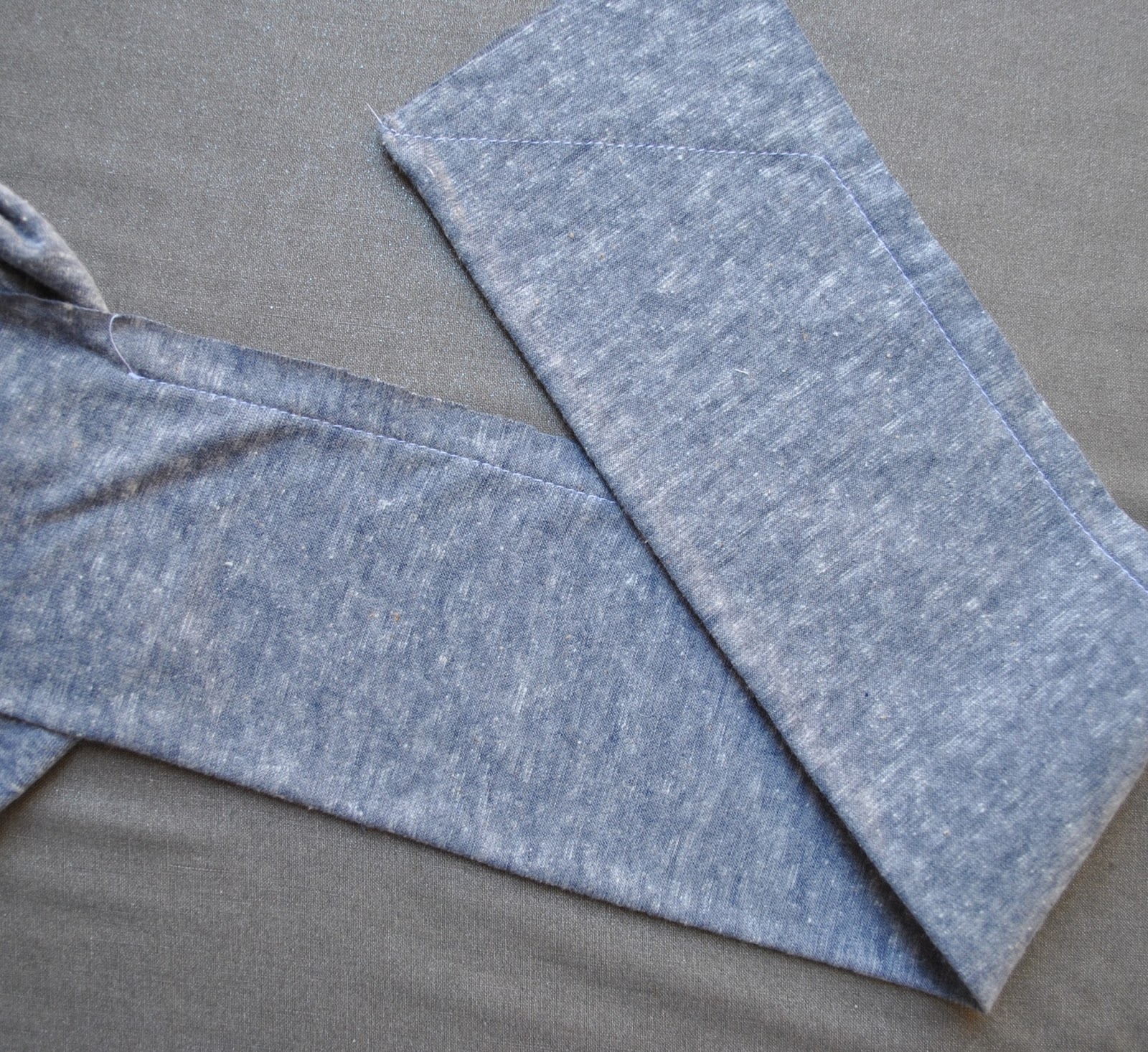
Fold the band in half lengthwise and stitch the short edges, right sides together; trim and grade seam allowances, turn right sides out.

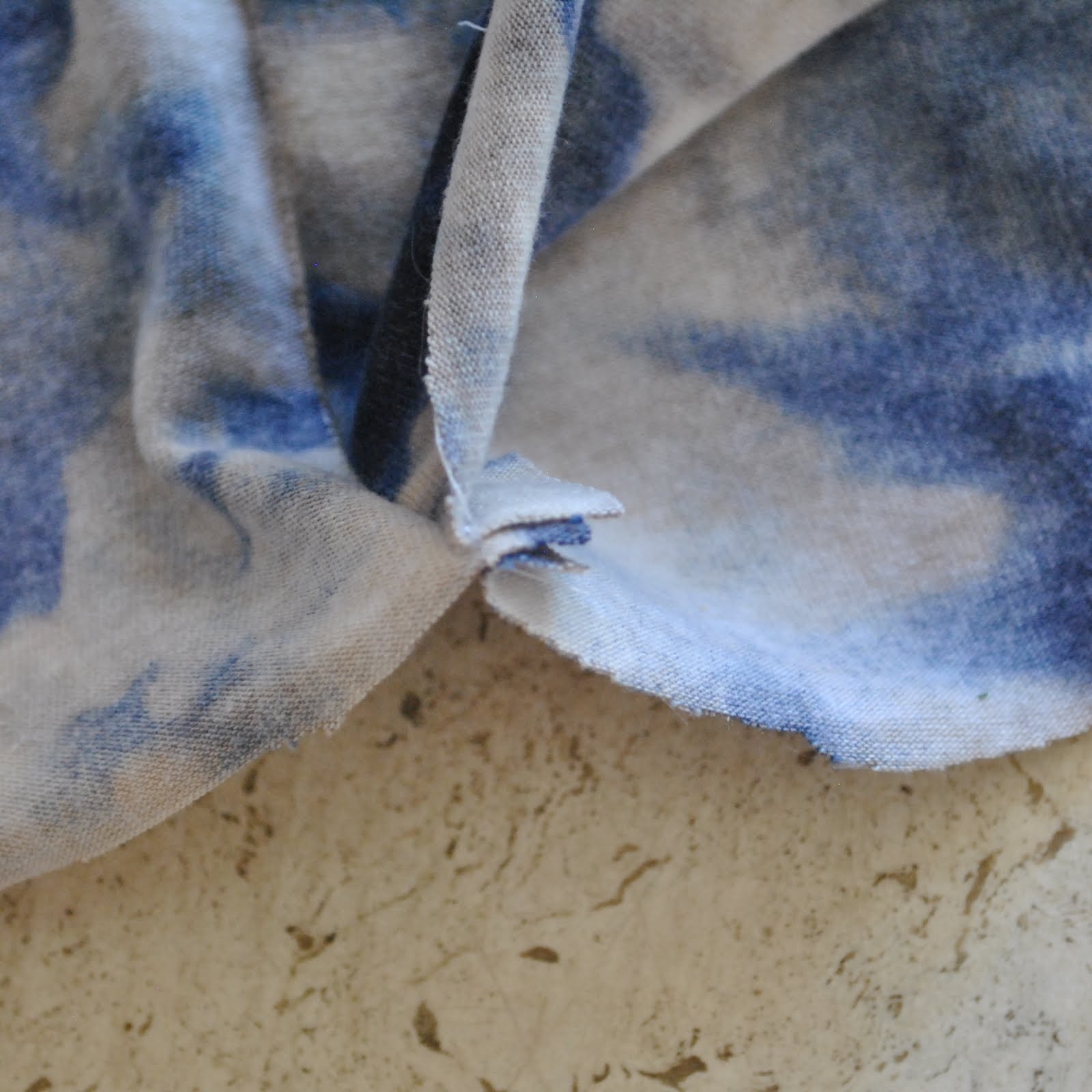
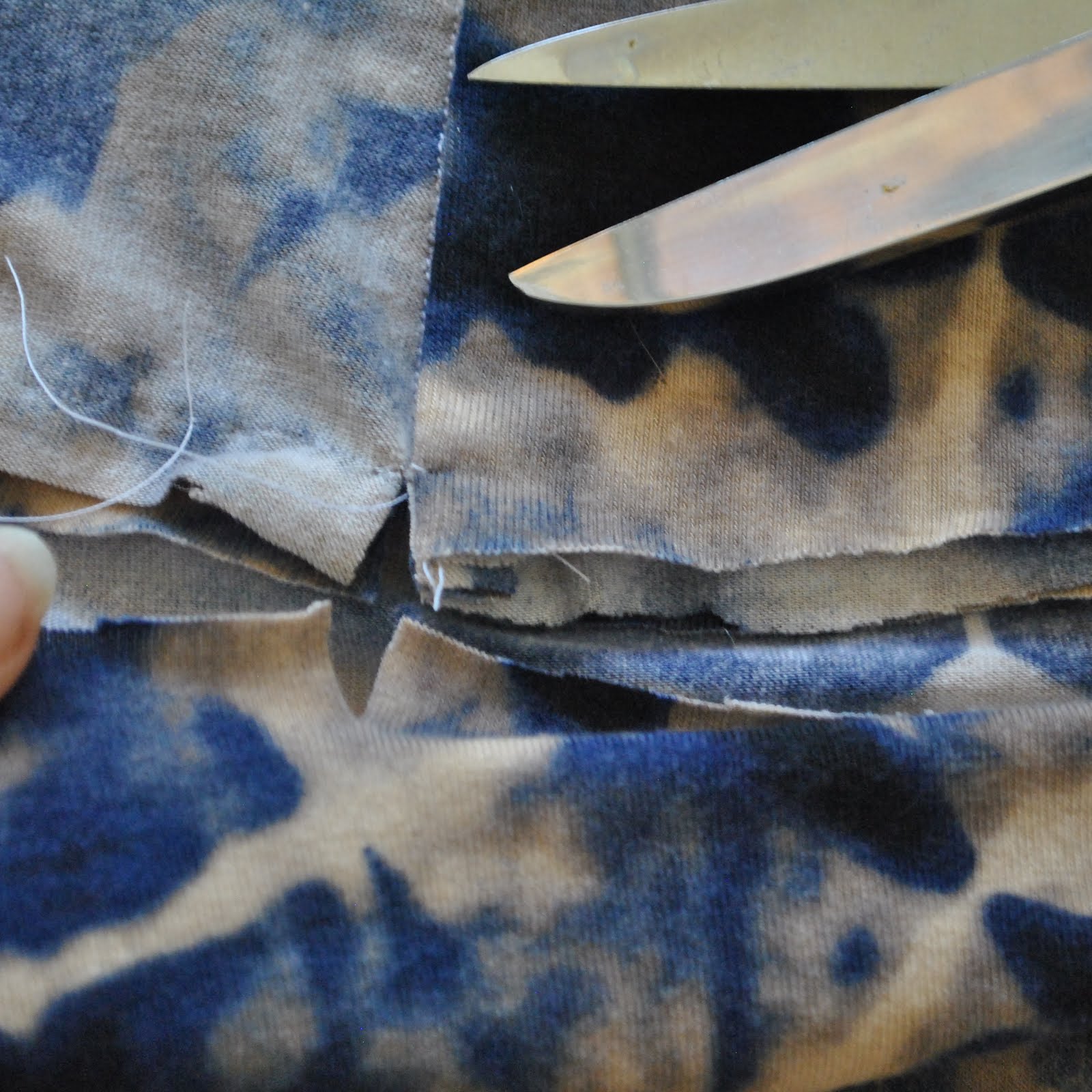
Snip all layers of the band seam allowances at the side seams, and also the lower band facing seam allowance at the same point.

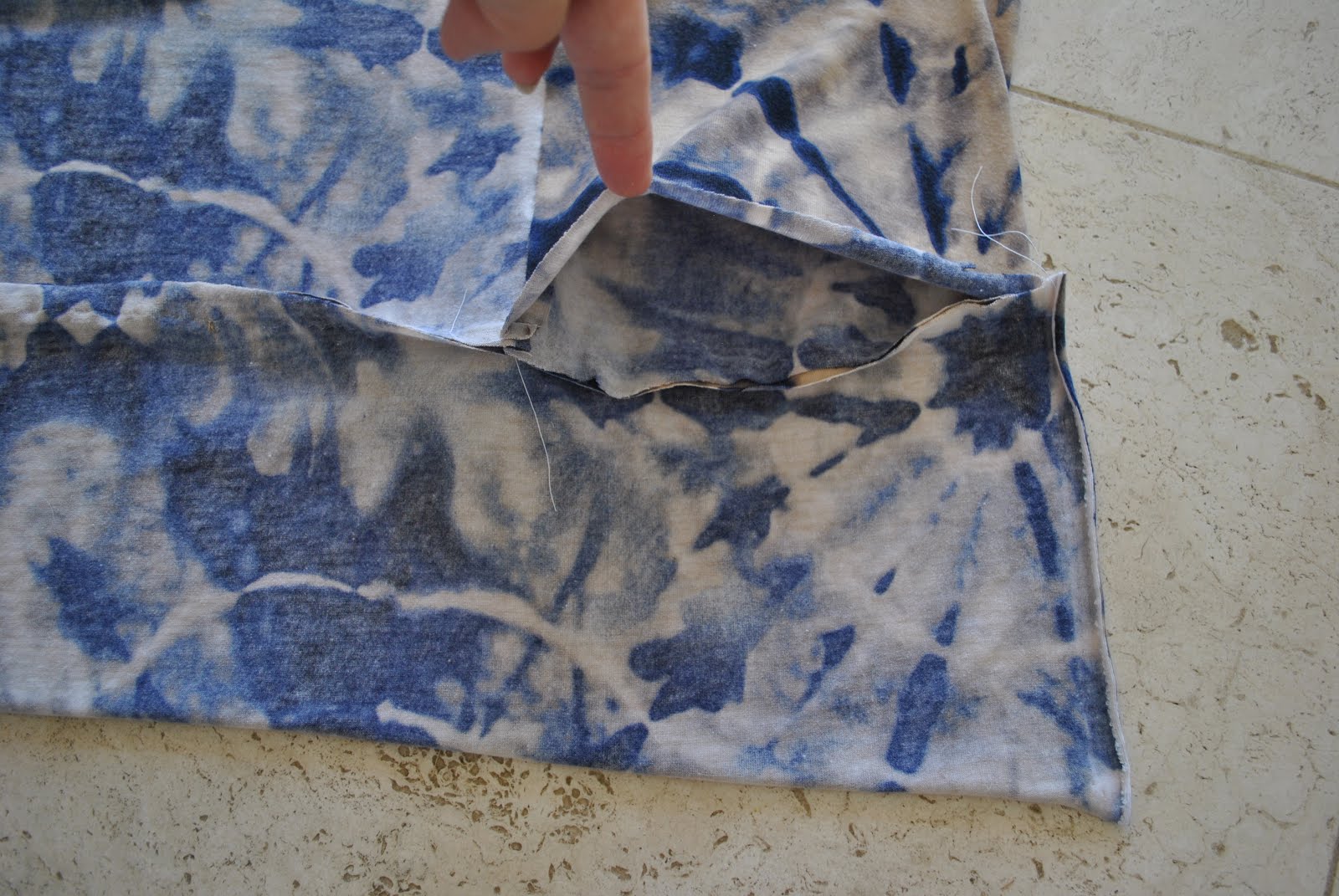
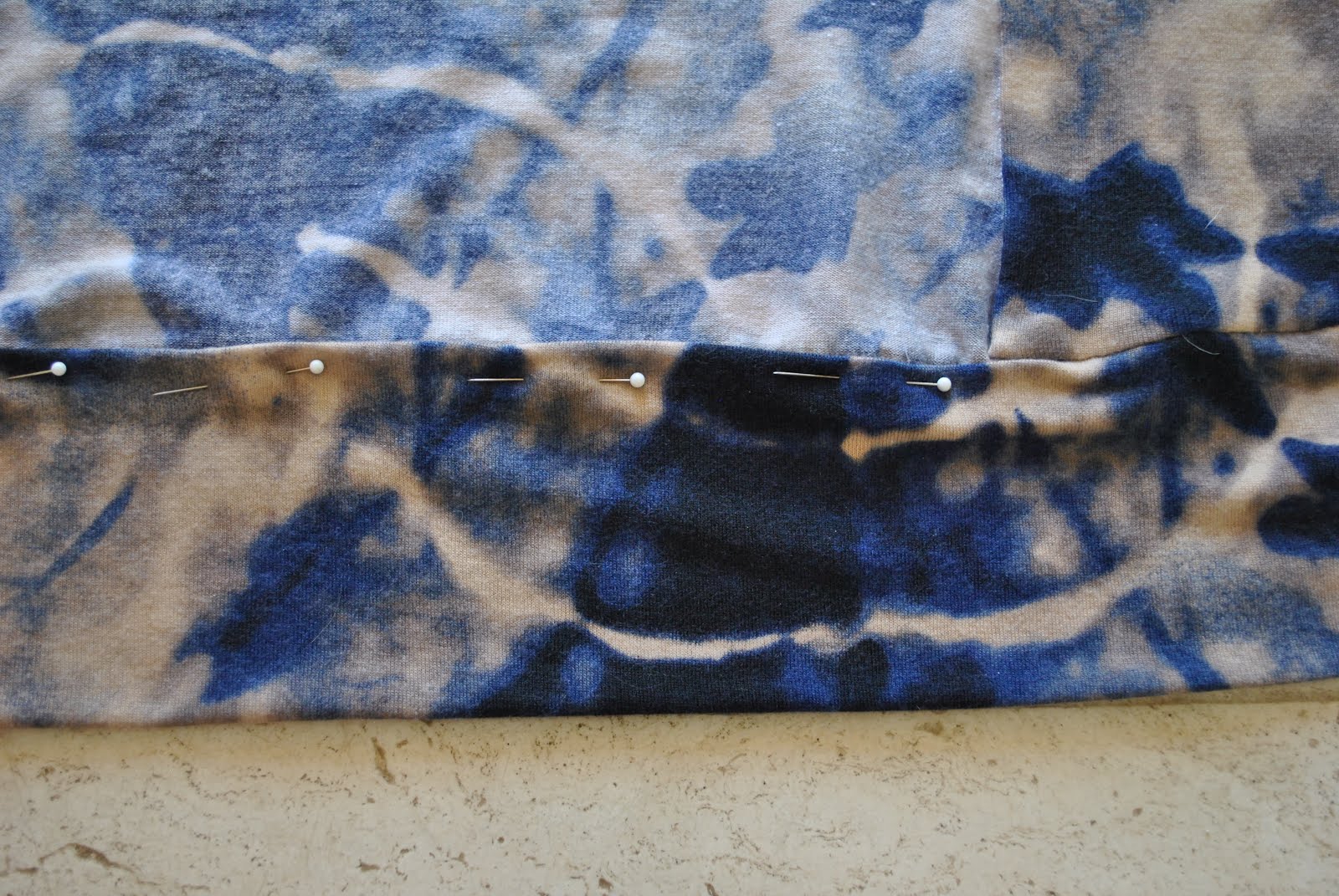
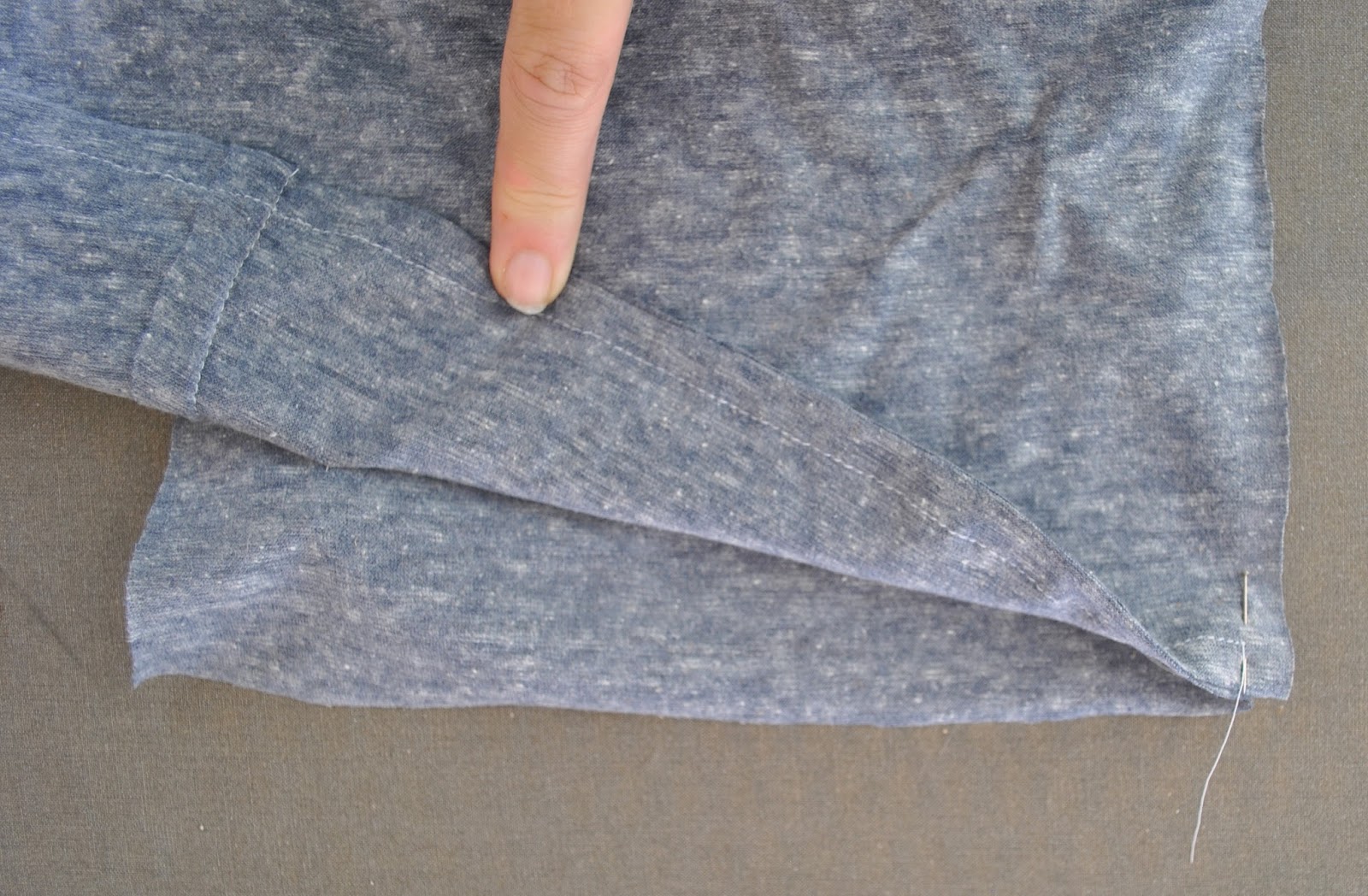
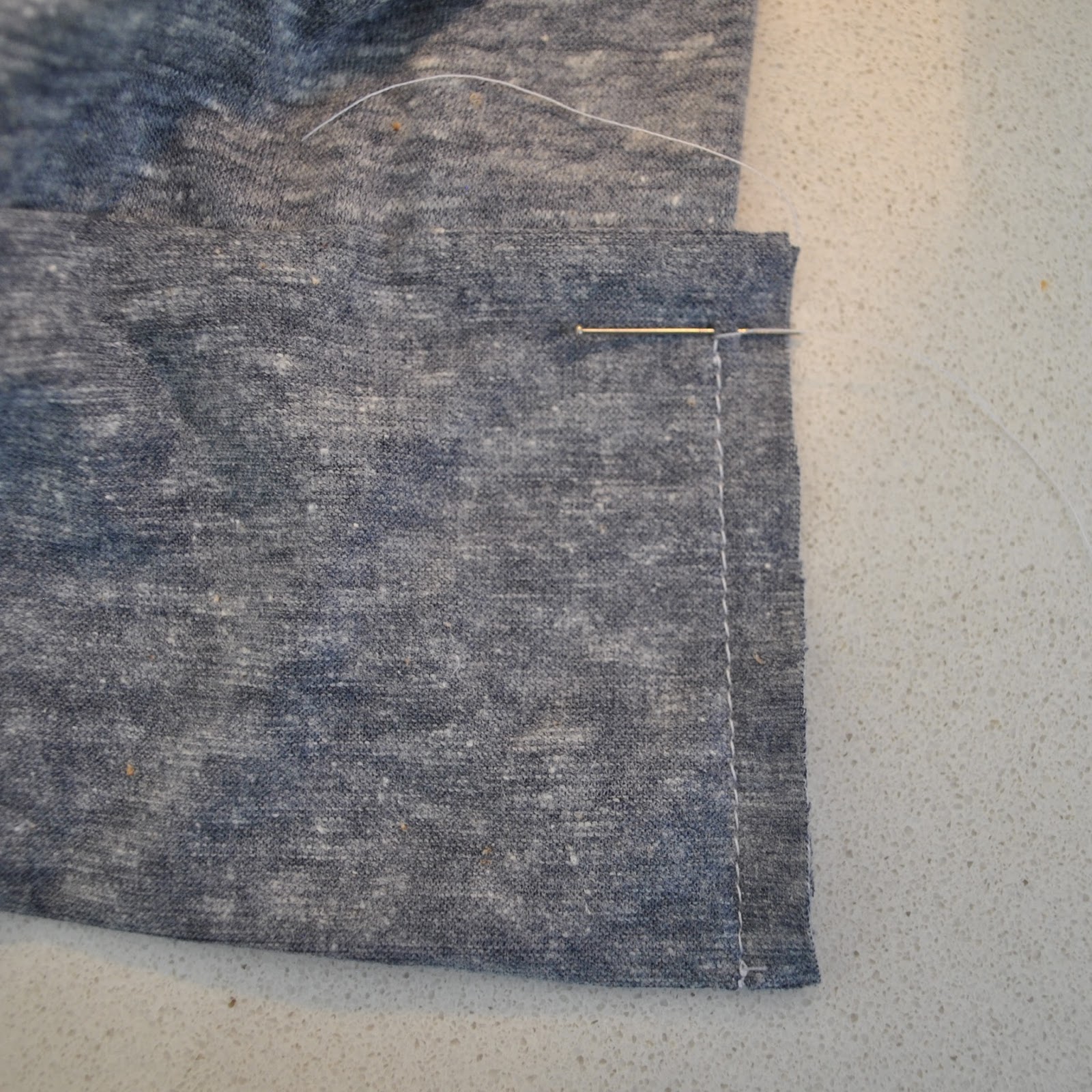
Now, from the shoulders/top; reach inside the front/front facing “tube” and pull the lower edge where it’s stitched to the lower band through along with the loose facing edge and band facing edges.  Align all raw edges, taking care to make sure corners are sitting tight and accurately together because with a stretchy fabric it can be all too easy to stretch them out of place! and stitch the whole shebang together in one seam.  Trim corners, grade seam allowances, pull it all right sides out and press.

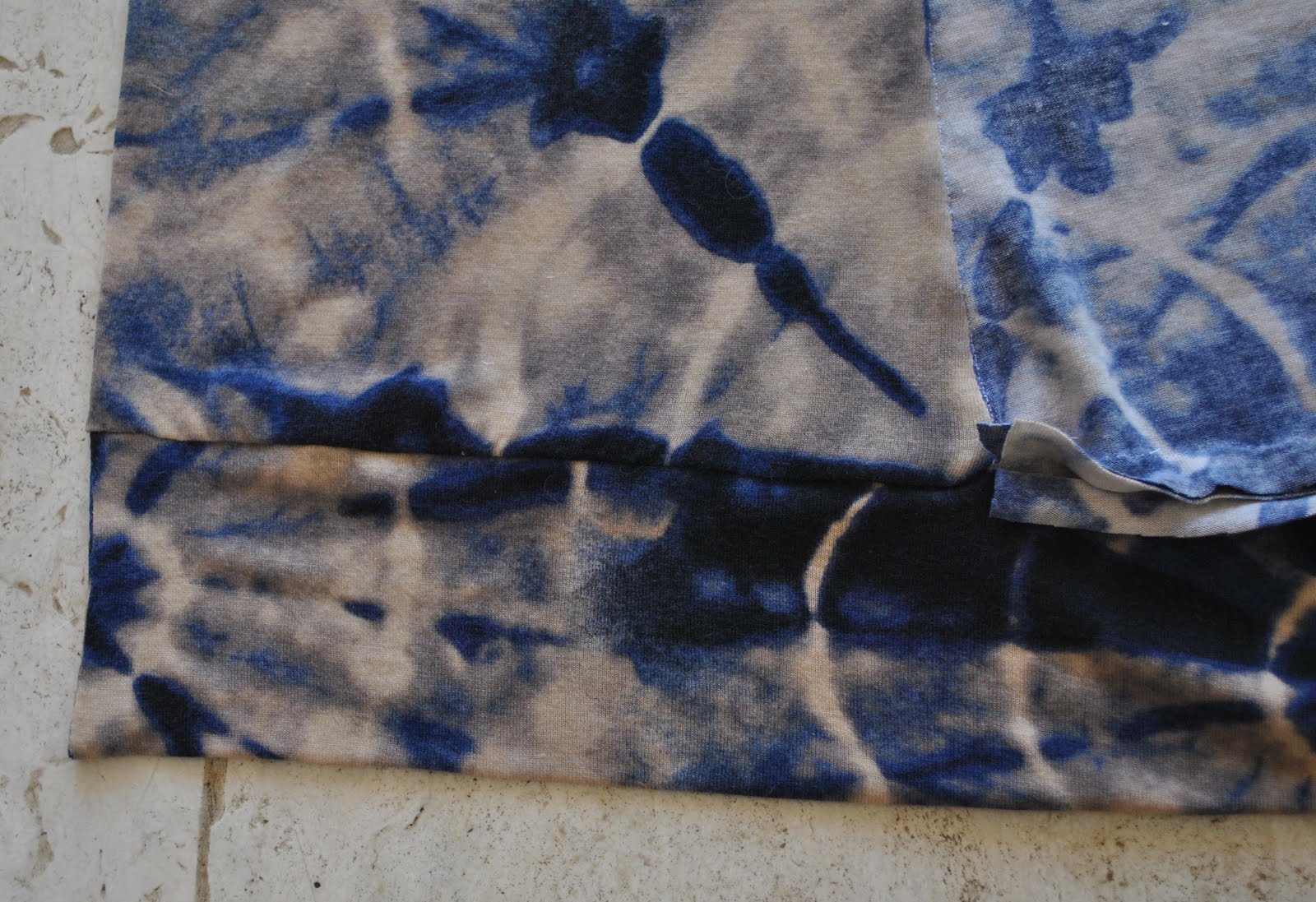
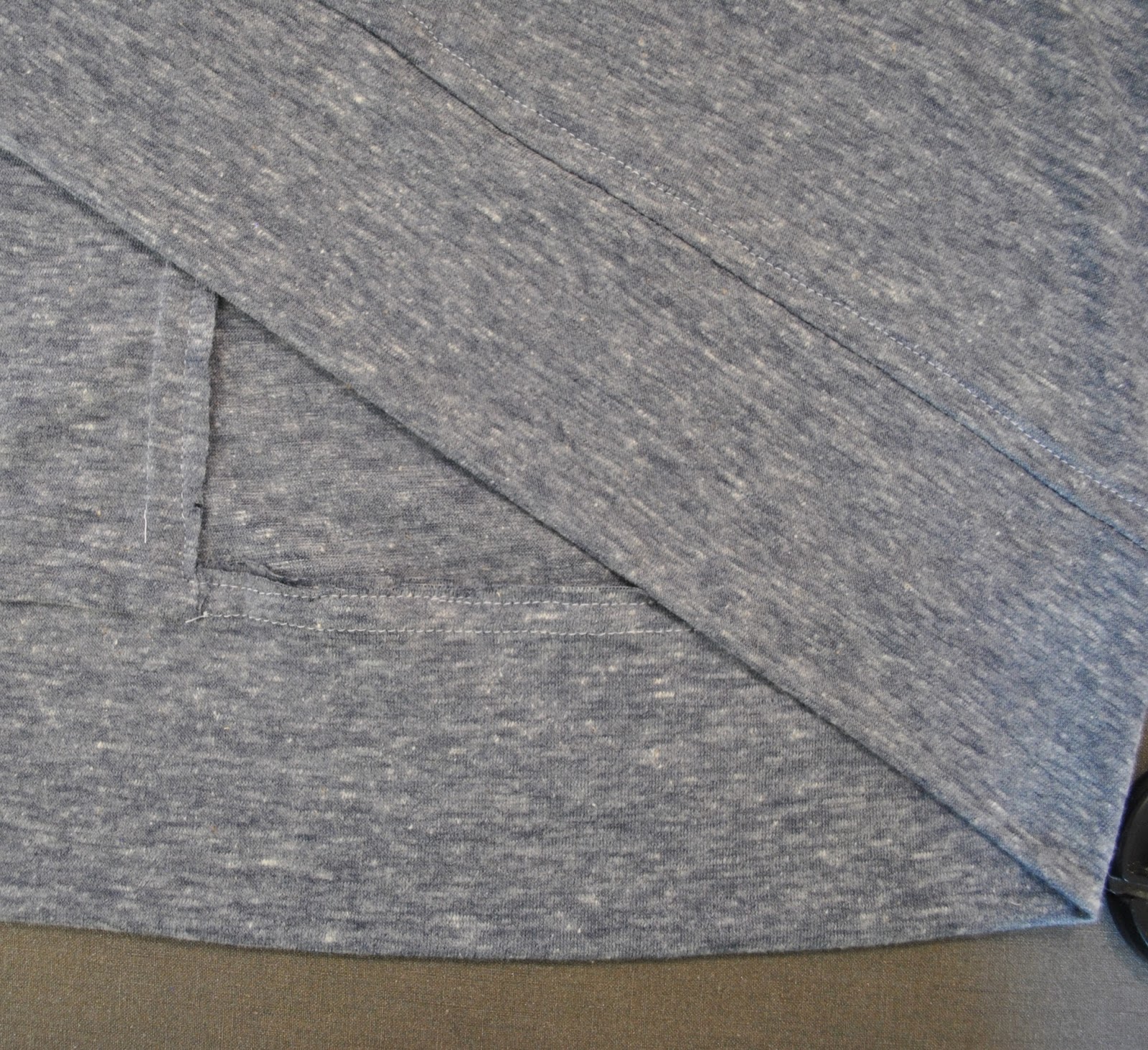
Voila!  yes it is a fiddly business but it look at that lovely absence of exposed seams on the fronts!

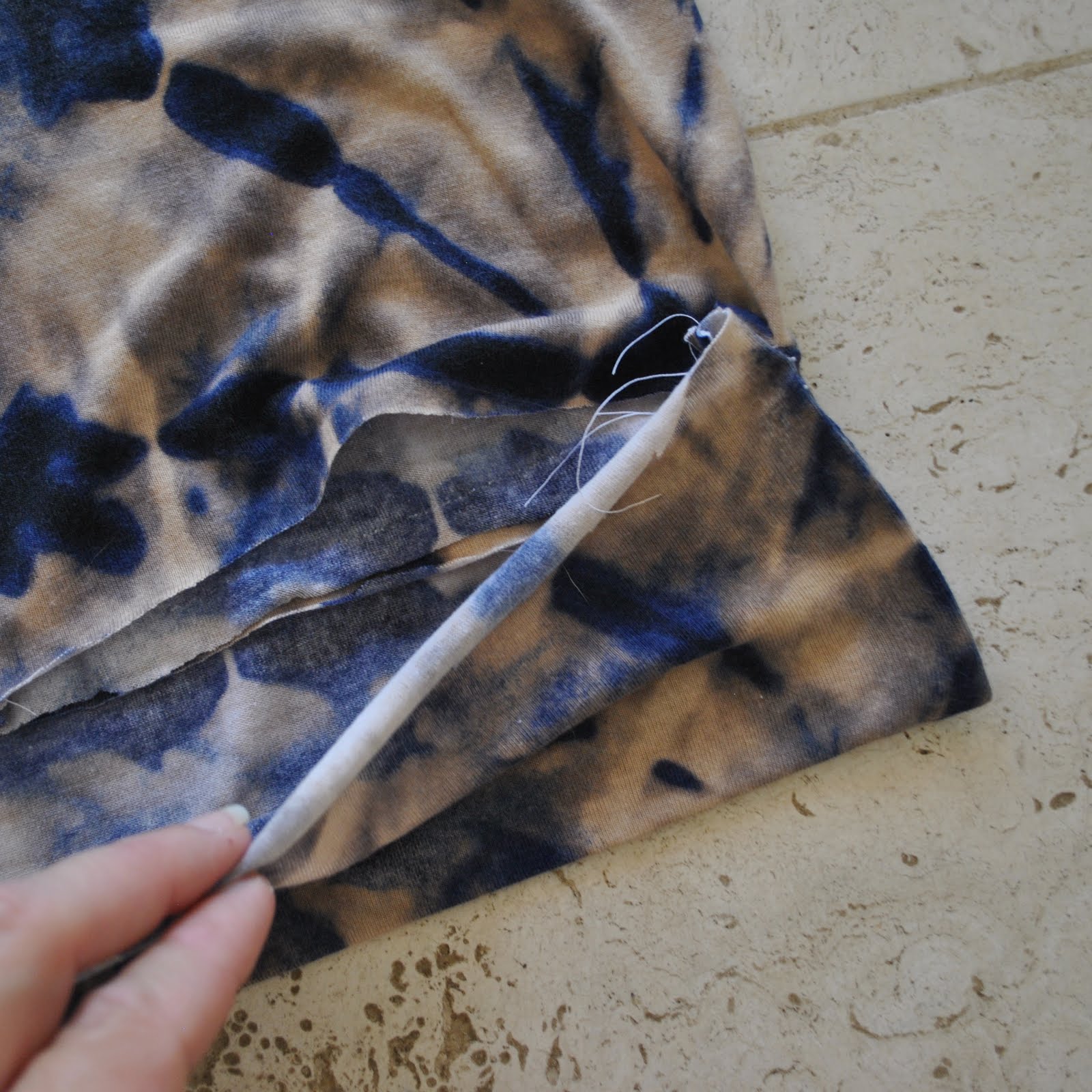
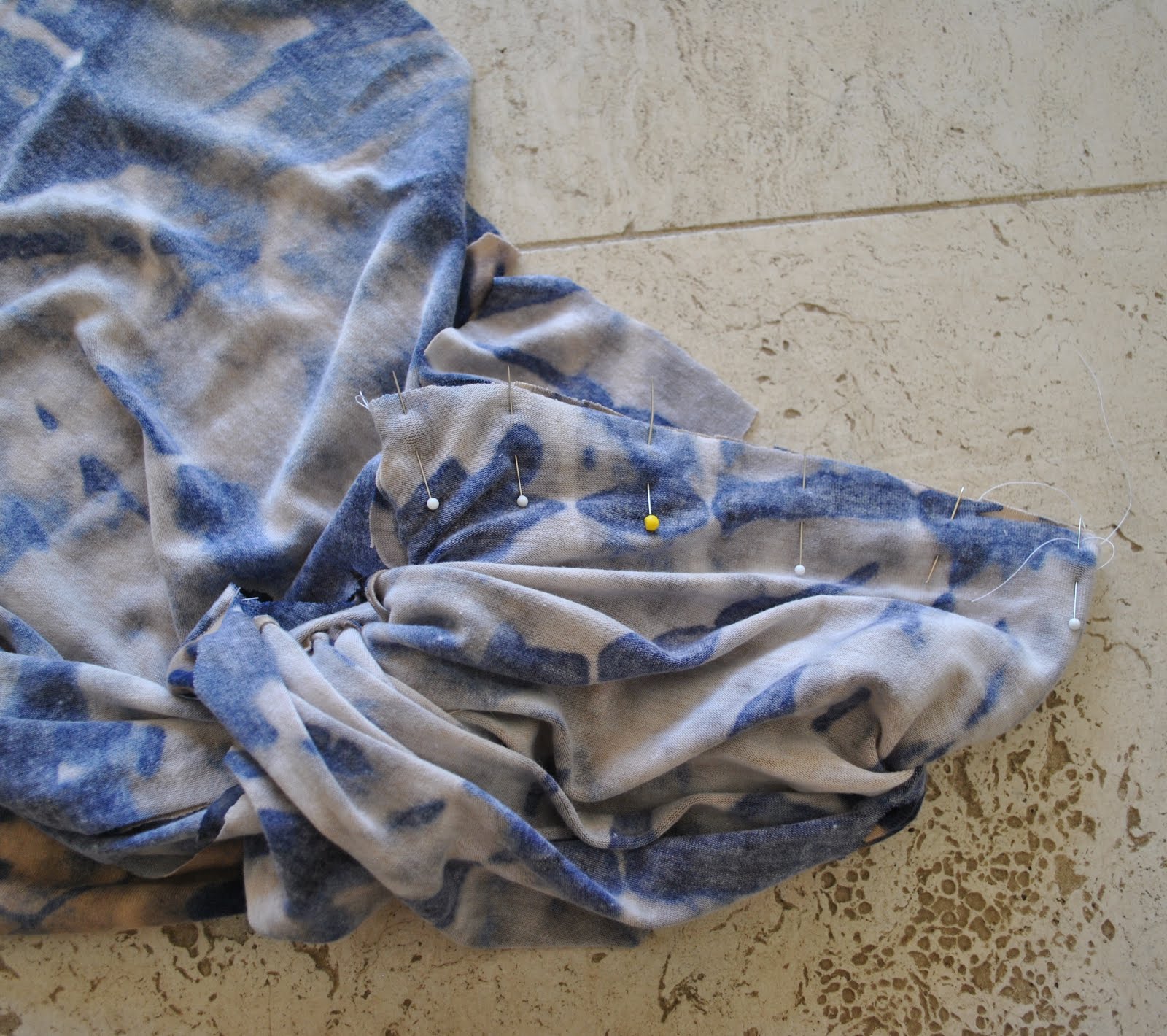
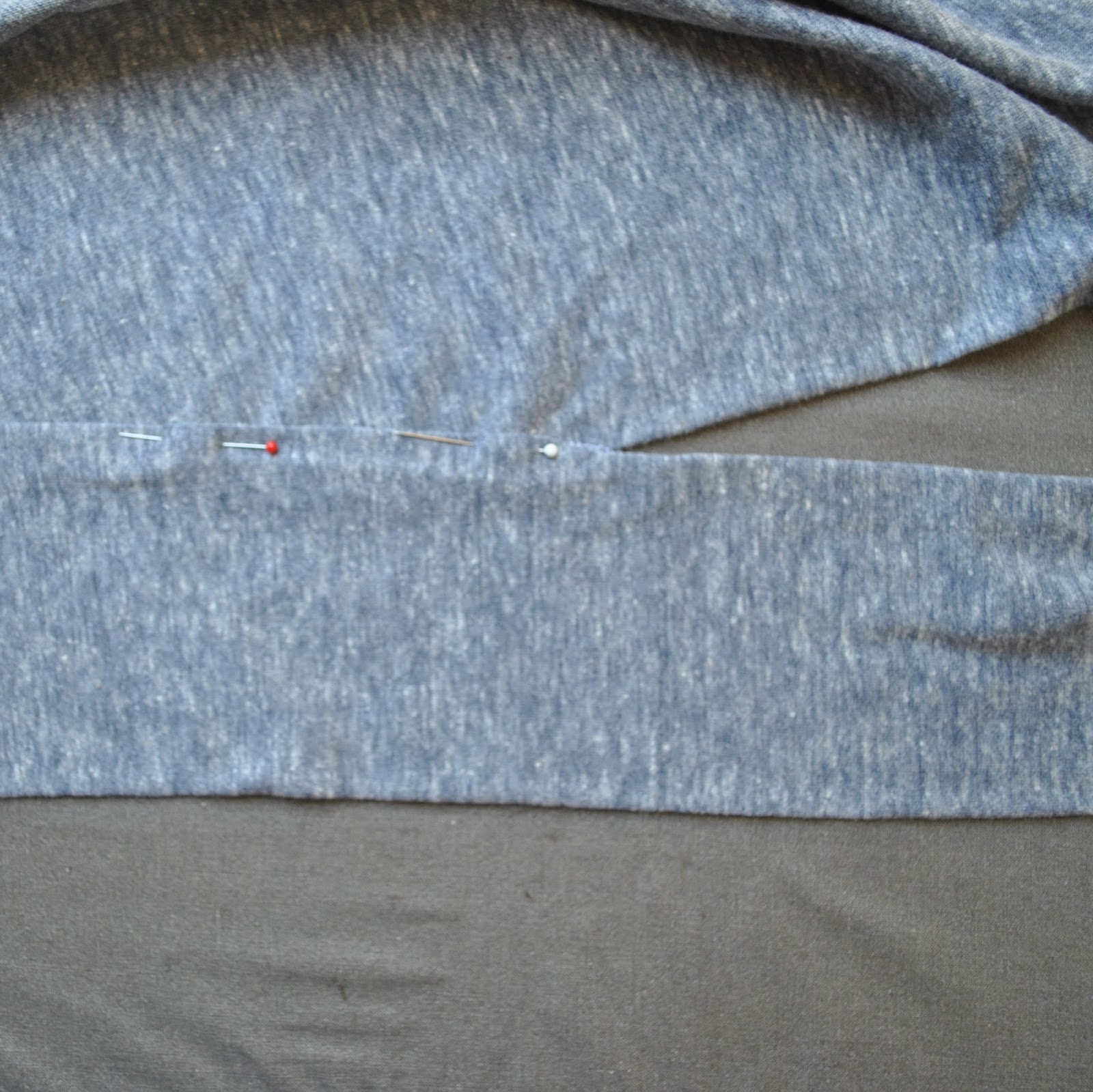
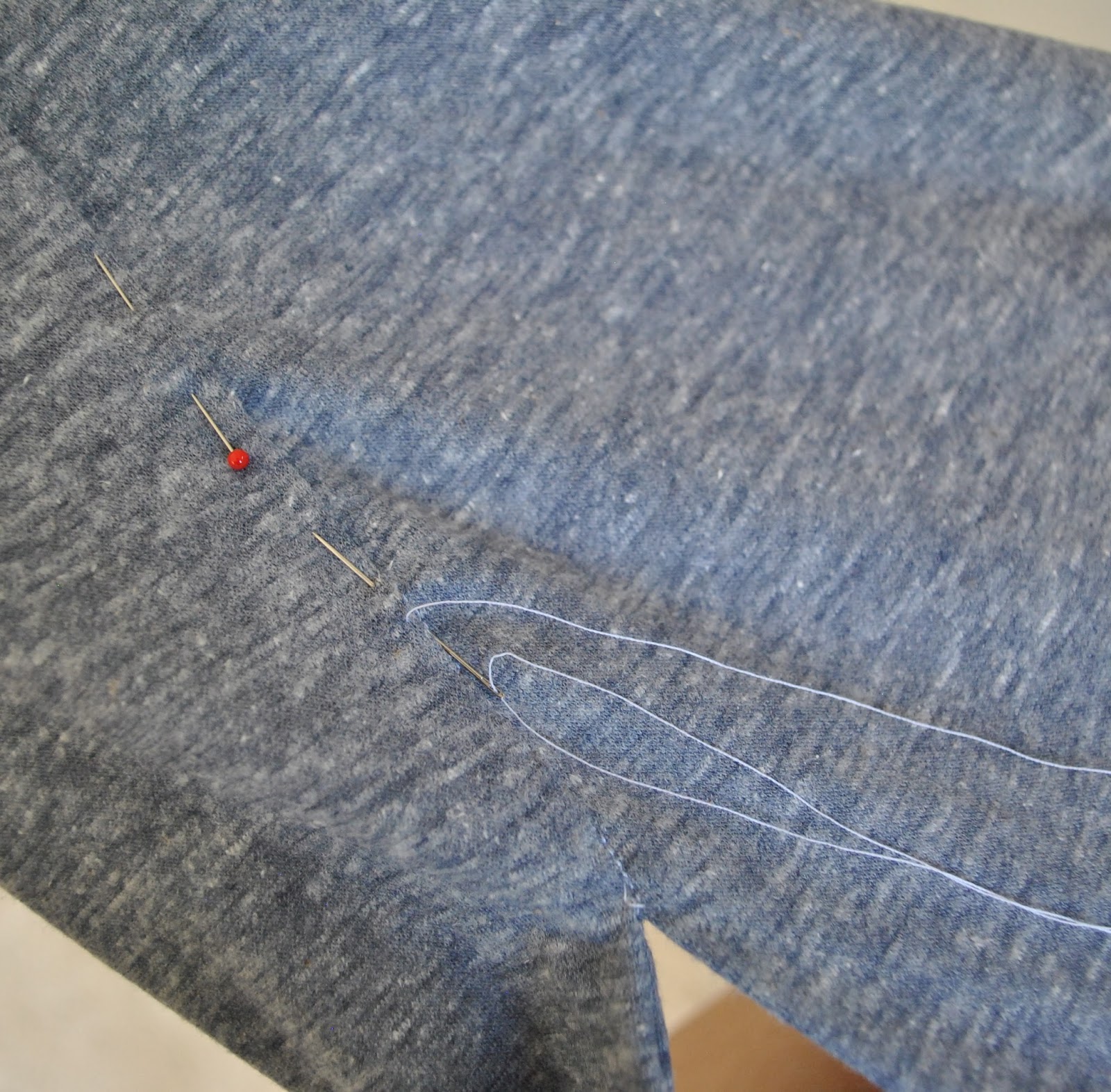
That last remainder of the lower band facing is turned under, pinned and hand-slipstitched in place.  Hiding those seam allowances, too  ðŸ™‚

Now stitch the shoulder seams, front to back, enclosing the back between the two fronts as for the previous version of this cardigan, here, in fact the remainder of construction is exactly the same… stitch sleeve seams, finish; set in sleeves, finish likewise; sleeve cuffs, as per this method; neckband, as per this method described for my previous cardigan.

Details:
Cardigan; the Nettie by Closet Case Patterns, modified as stated
Tshirt under; another Nettie, white jersey, details here
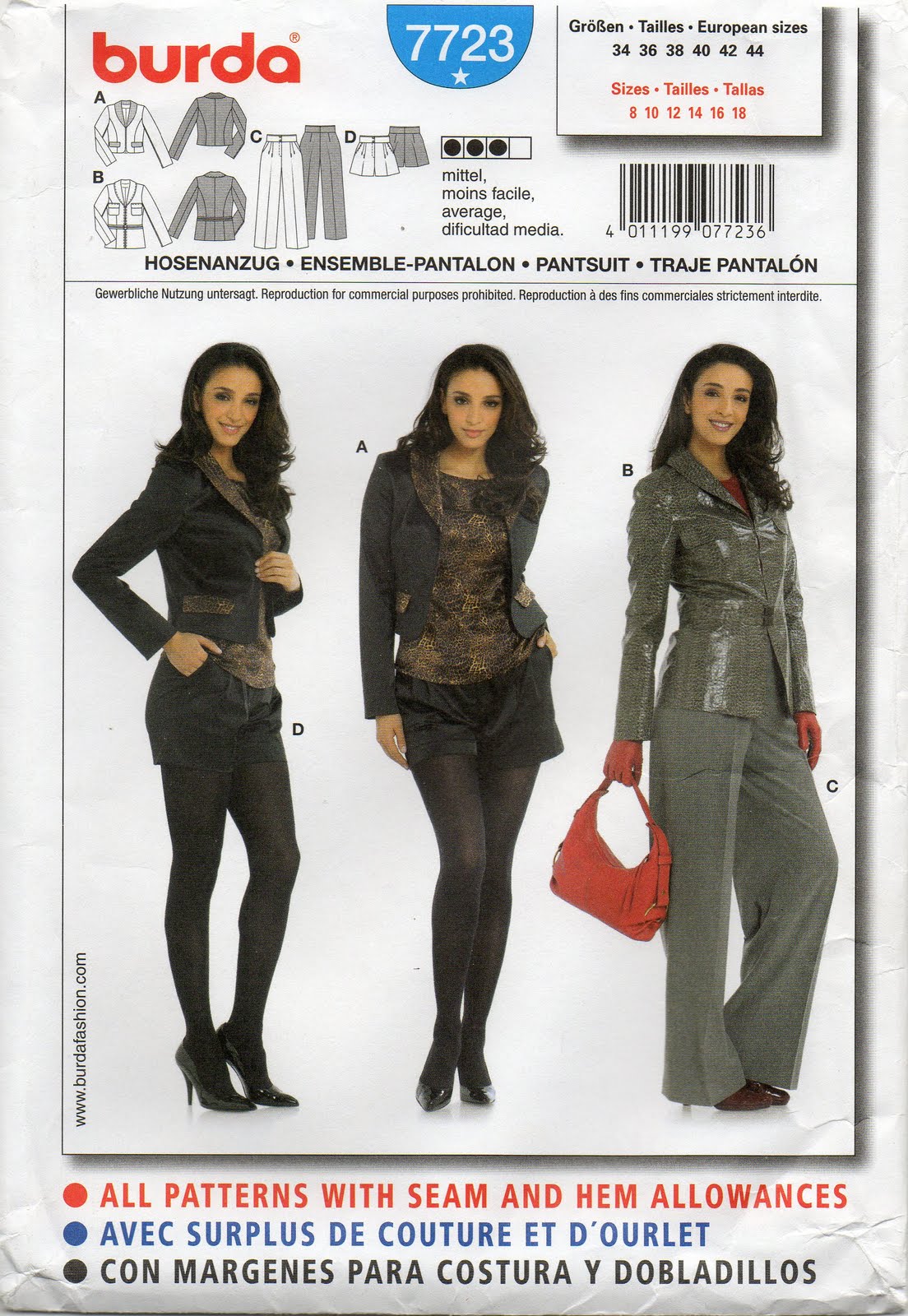
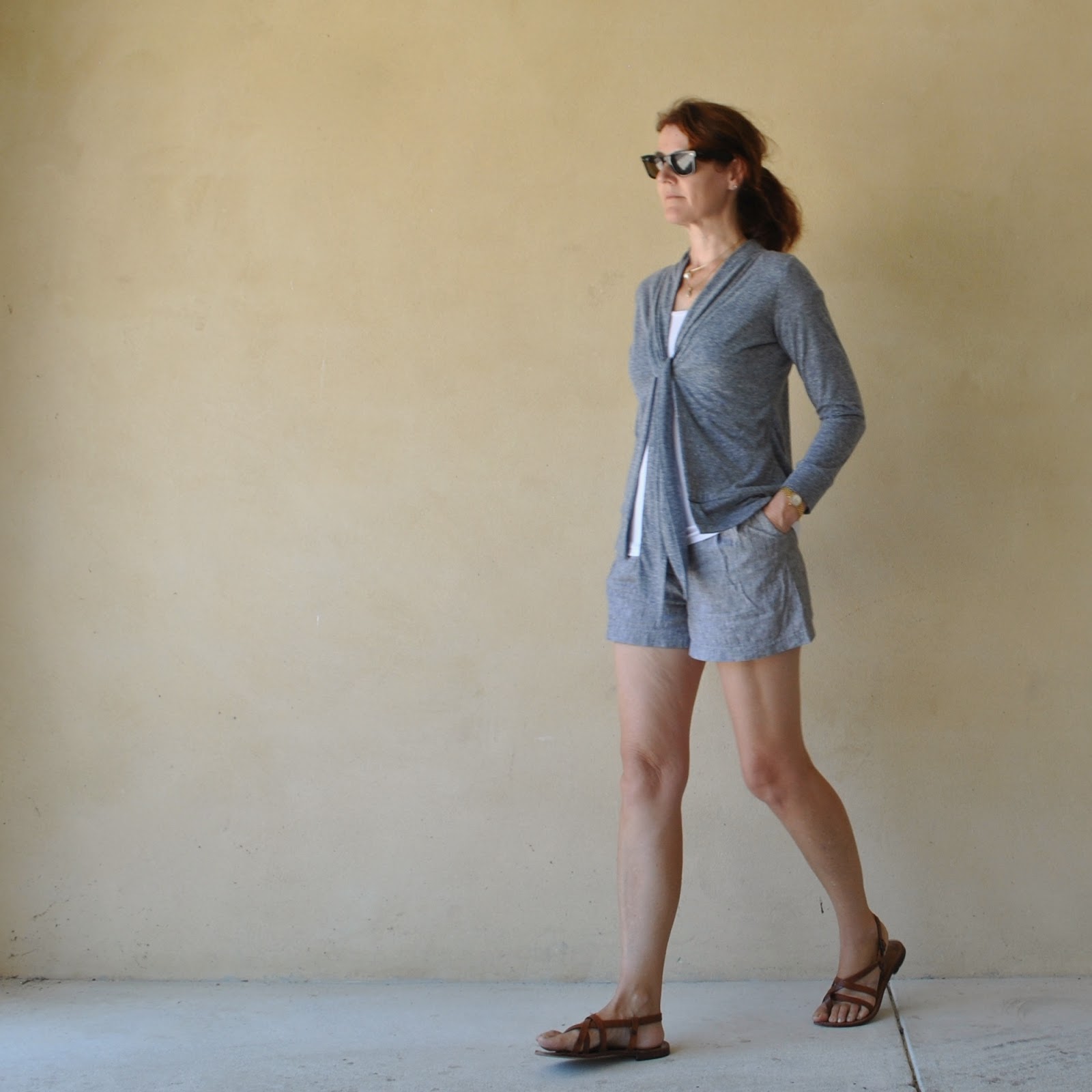
Shorts; Burda 7723, details here
Location; Bunker Bay, Dunsborough… we had it completely to ourselves!  so lucky

photos courtesy of Craig
pinterestmail

tie-front cardigan from a Tshirt pattern; a brief tutorial

Remember recently I made a little paprika cardigan? and I wasn’t super happy with my construction technique of the fronts and could visualise a far better method of getting that front edge nice and neat … well, of course I could not rest until I had seen it through.
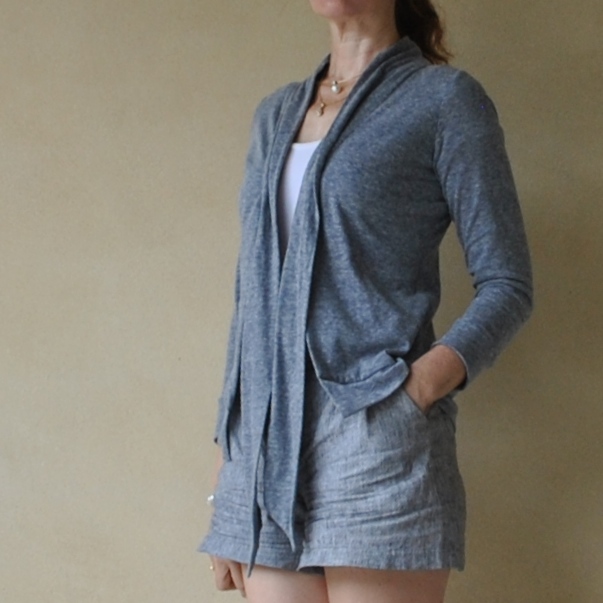
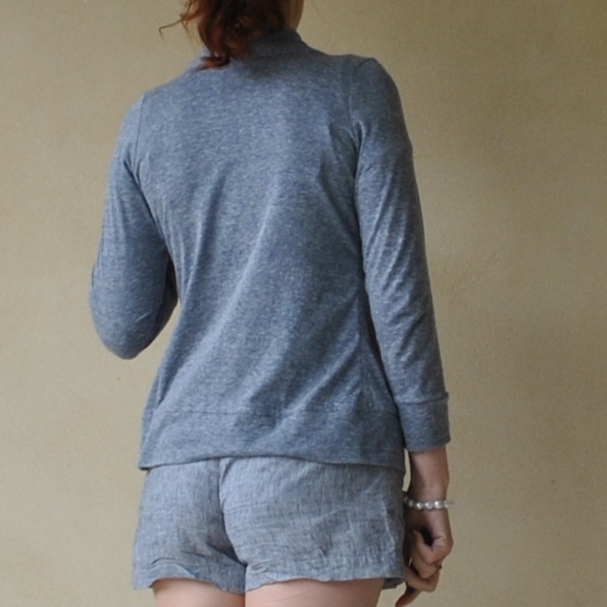
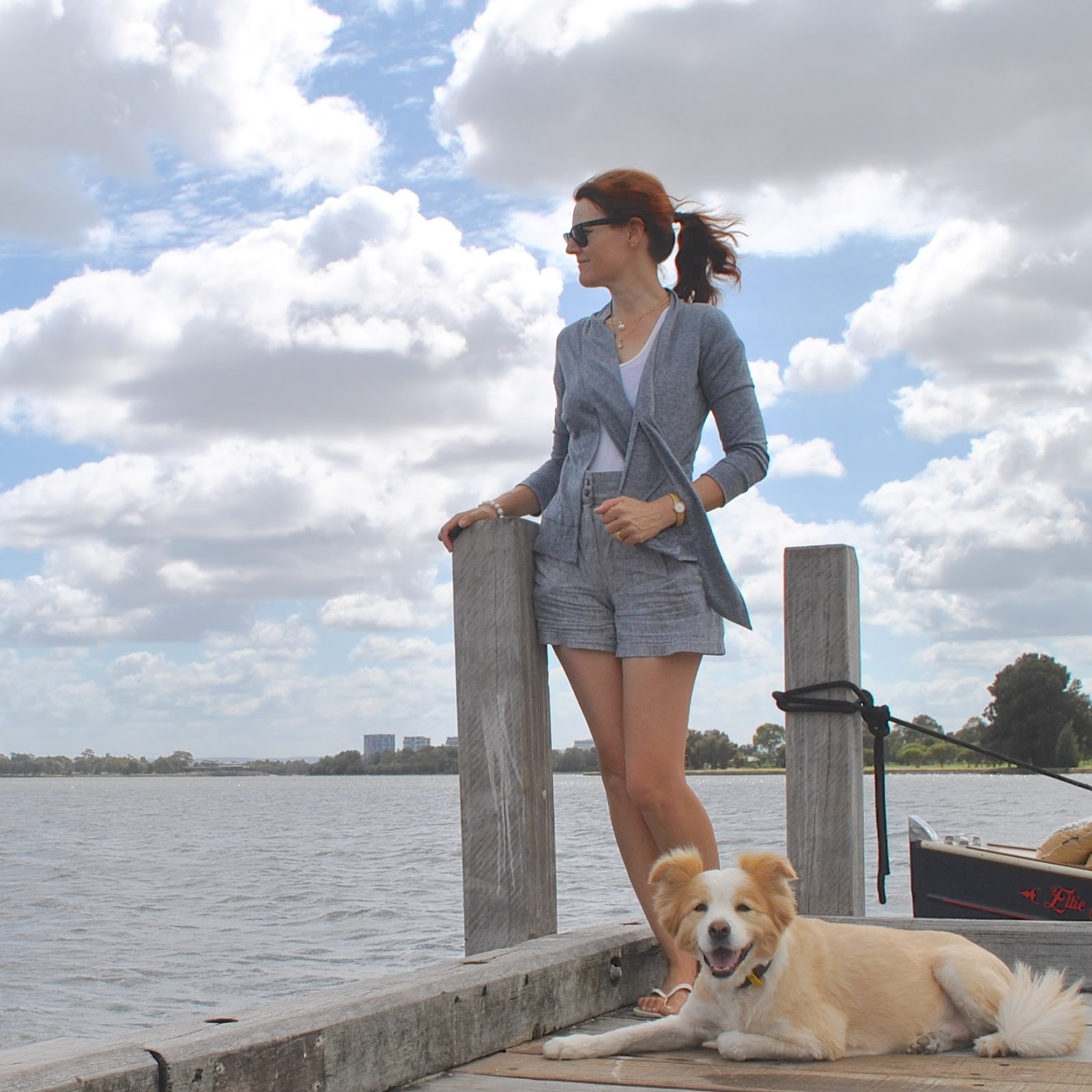
Voila; new, stormy-grey-blue cardigan
Essentially, the gist is to cut each front piece on the fold through the centre front; meaning the fronts are double thickness, with one half acting as a facing.  The fold at centre front is its own neat finish with no further need to do anything at all to it.  Also, the front plus facing enclose the lower band between their two layers.  For this reason, this technique works very well with very thin knits.
Fabric; thin blue/grey marl cotton jersey, leftover from Sam’s hoodie and originally a remnant bought from the Morrison sale, although when I say remnant there was at least 5m of it!  Morrison is tres generous with their “remnants”, to say the least!   I still have quite a lot left.  
Pattern; I used the Nettie from Closet Case patterns, which is my go-to basic now for form-fitting Tshirts/bodysuits, however any tried and true Tshirt pattern could be used for this same modification.

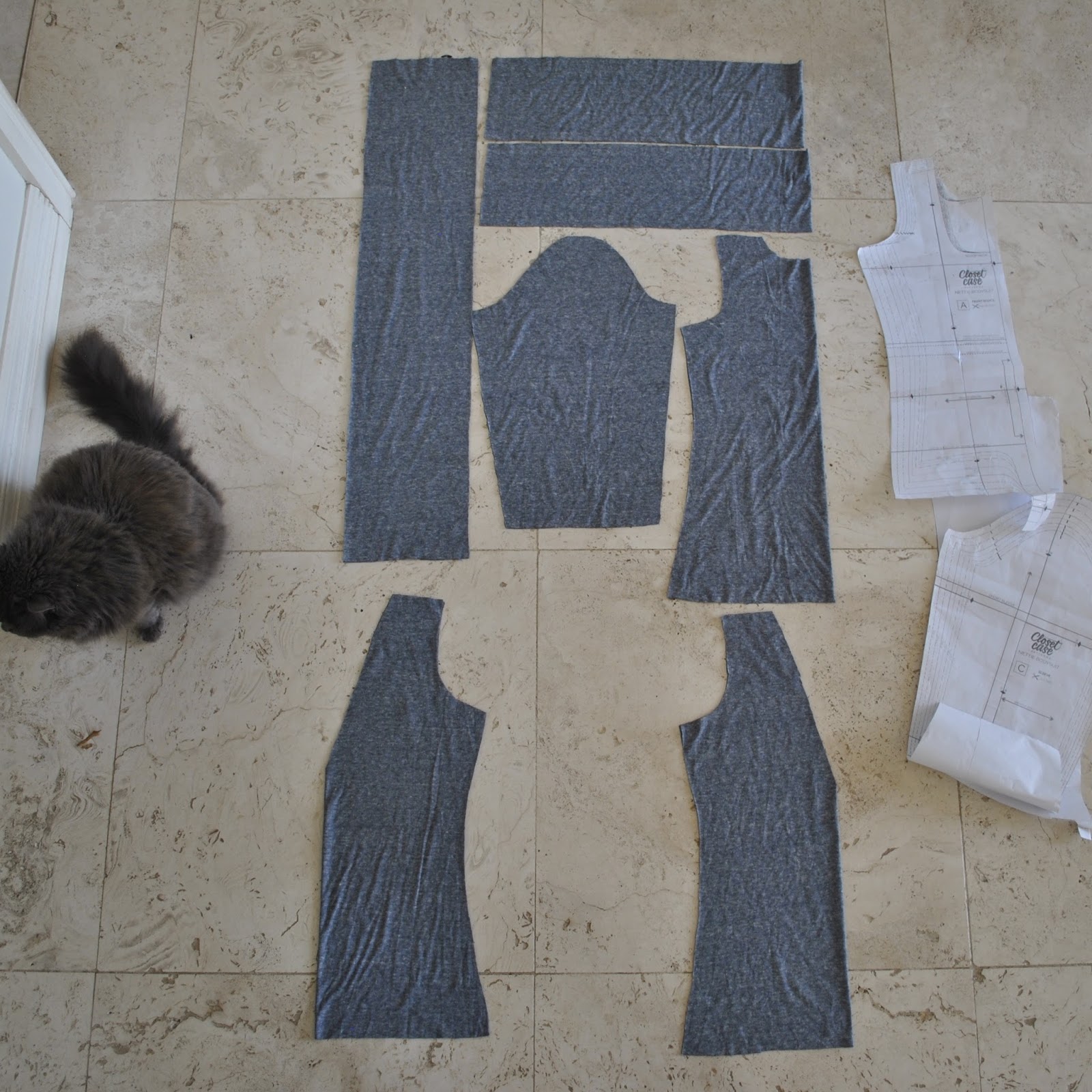
I cut my pieces like so: top parts; fabric folded along the right hand side; with the top two horizontal bands being the “rough cut” lower edge band and the sleeve cuff bands respectively; underneath are the back cut on the fold, the sleeves and at the left is the long neckband.  This last is joined right sides together along one short edge to make a double length band on the grain.
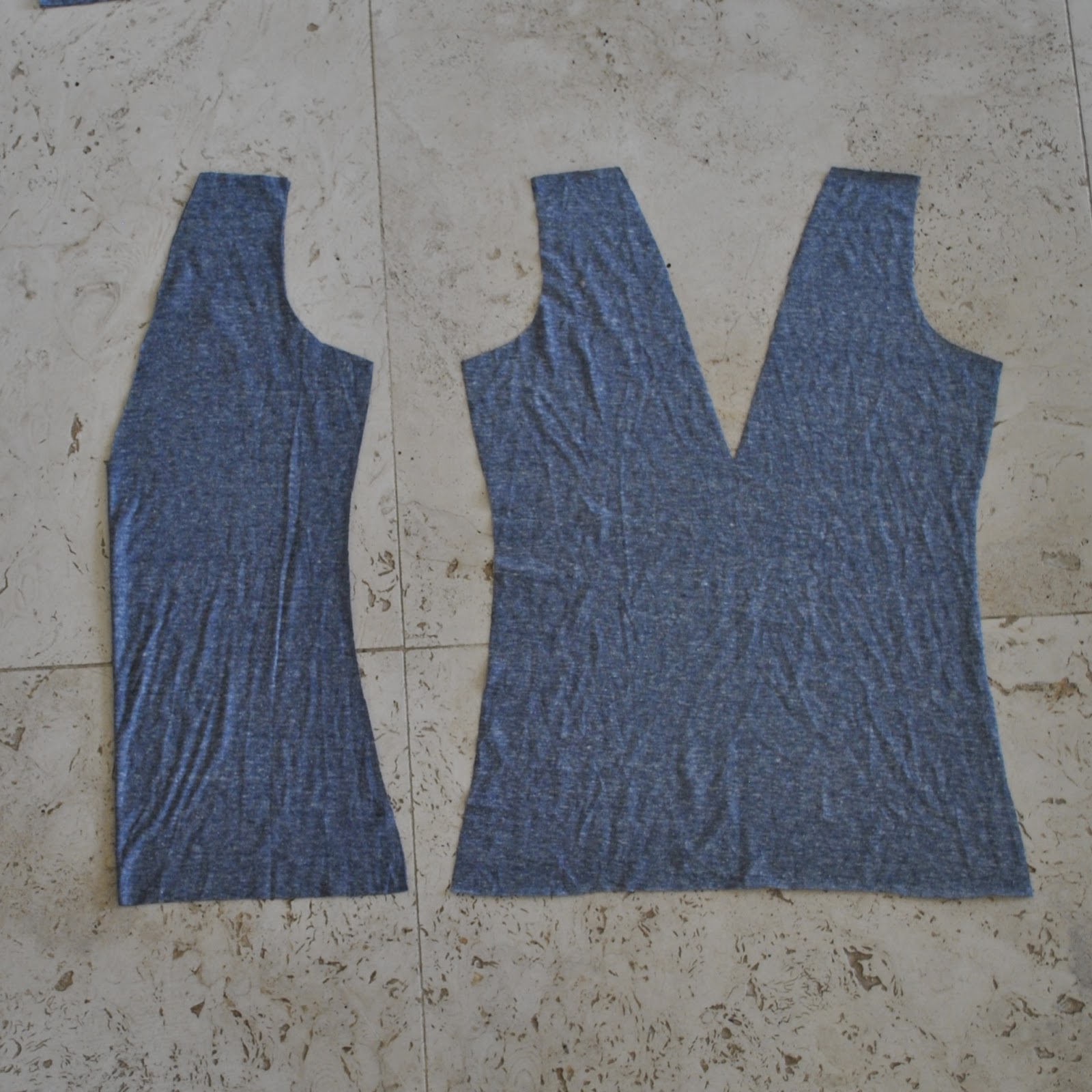
After cutting these: the fabric is then re-folded in from each edge so as to cut those two fronts (below) on a fold, with the centre front laid on each fold.  Cut from the inside shoulder edge out to the CF fold at bustline level on a straight diagonal line, to create the V-neck opening edge.

front piece at left is folded in half, front piece at right opened out along CF fold

Construction details:
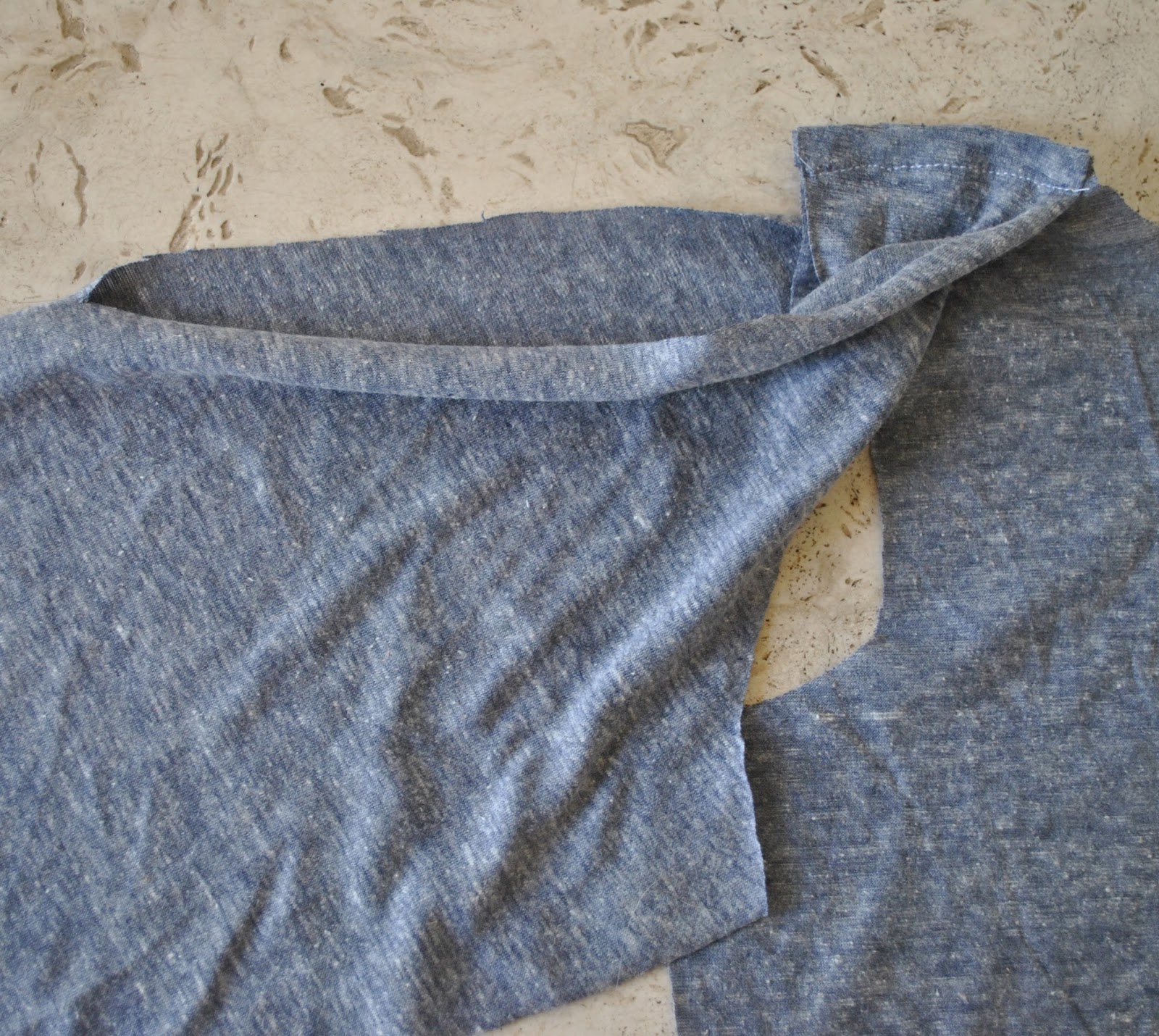
first, stitch fronts to back at shoulders.  Sandwich the back between the two fronts so that the seam allowances get tucked away between the layers.  You have to twist it around it in a weird funny-looking way but it does work out.

Stitch front to back at side seams, keeping the front facing free.
Then trim the cardigan to the length you want it to be, taking into account the width of the lower band.  Measure the around the lower edge to determine the length of the lower band and cut it to fit; allowing for a 1cm seam allowance at each end.
Pin the band to the lower edge of the cardigan, again keeping the front facings free.  Stitch, between the seam allowances, right sides together.

 front facing free

Turn the band up in half, lengthwise, right sides together, and stitch the short edges closed, ceasing stitching at the end of the previous stitching.  Turn bands right side out and press.

Now fold the facing to the outside, laying it over the lower bands and keeping raw edges even, and stitch lower edge seam through all layers, keeping the stitching just a whiskers’  width outside the previous stitching.  The reason for keeping it just outside is so that the previous stitching does not show through on the right side of the band.
Now when you pull the band out and turn it all back right side out, the seam allowances are nice and neatly hidden away out of sight.  Yay!

outside of cardigan? inside? impossible to tell which is which!

To anchor the front facing to the side seams, I opted to simply lay the front facing down to the side seam allowances, aligning raw edges, and top-stitch from the right side, 6mm away from the seam.  The raw edge won’t fray, and it looks reasonably neat stitched down, also the top-stitching also accomplishes a sort of faux-felling of the seam allowances too.  However this is definitely not ideal and I have to admit I have since thought of a different and better way of doing this bit too! so there may well have to be yet another little cardi in my near future… to see that thought through too… eeek! am I getting a bit obsessive or what? hmmm could be could be…  ðŸ˜‰

Sleeves; same technique as for every other Tshirt/cardigan ever invented.  Namely, stitch the sleeve seams, set sleeves in the armhole and stitch.  The raw edges can be finished with overlocking if desired.  
Attach sleeve cuffs, for this I nearly always employ this method, which gives a nice neat finish I think.
Last step; the neckband: pin the long neckband to the raw edges of the neck edge, including the facing, keeping raw edges even, right sides together and stitch.  

Fold the ties in half along the length, right sides together and stitch the long tie ends together, starting at the endpoints of the previous stitching.  Stitch the short ends in a diagonal point, if desired.

Trim, turn the ties right sides out and press.
Turn under the seam allowances of the remaining raw edge of the neckband, press, pin and slip-stitch closed by hand.

Finito!

Details:
Cardigan, the Nettie, by Closet Case patterns with my own design modifications
Tshirt (under); another Nettie, white jersey, details here
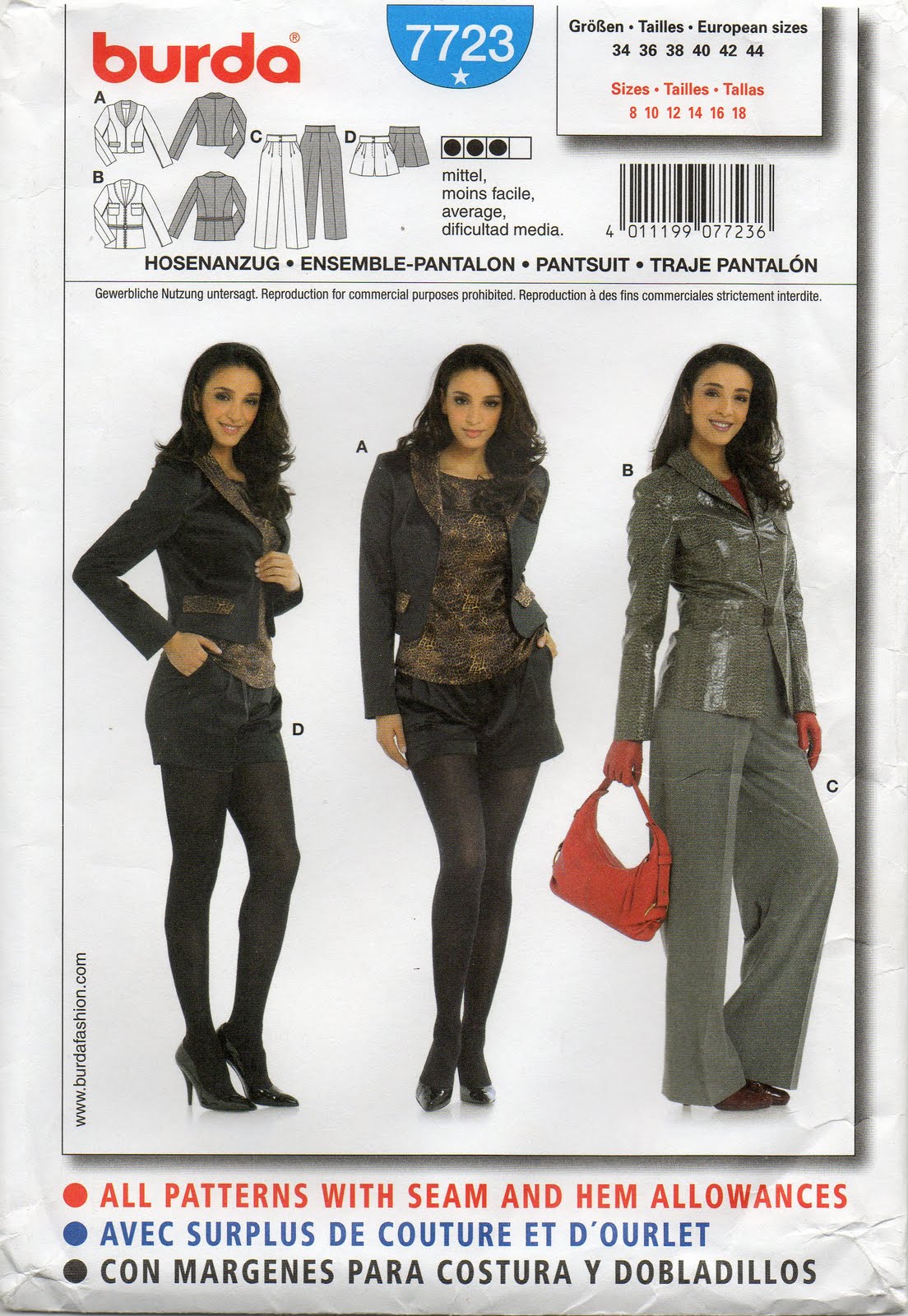
Shorts; Burda 7723, pinstripe linen, details here
Thongs: Havaianas
Location; Coode St jetty, South Perth

pinterestmail

Mississippi Avenue

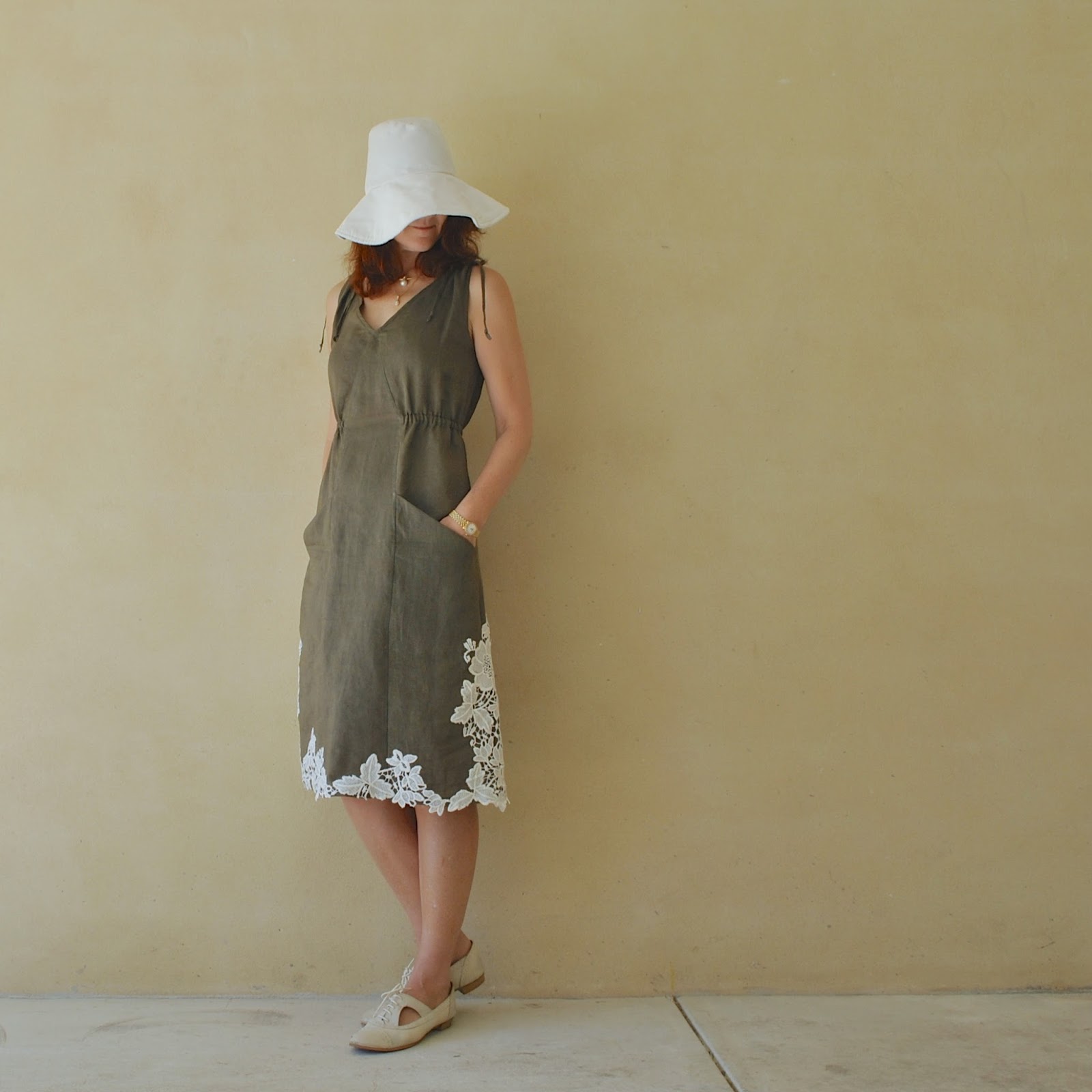
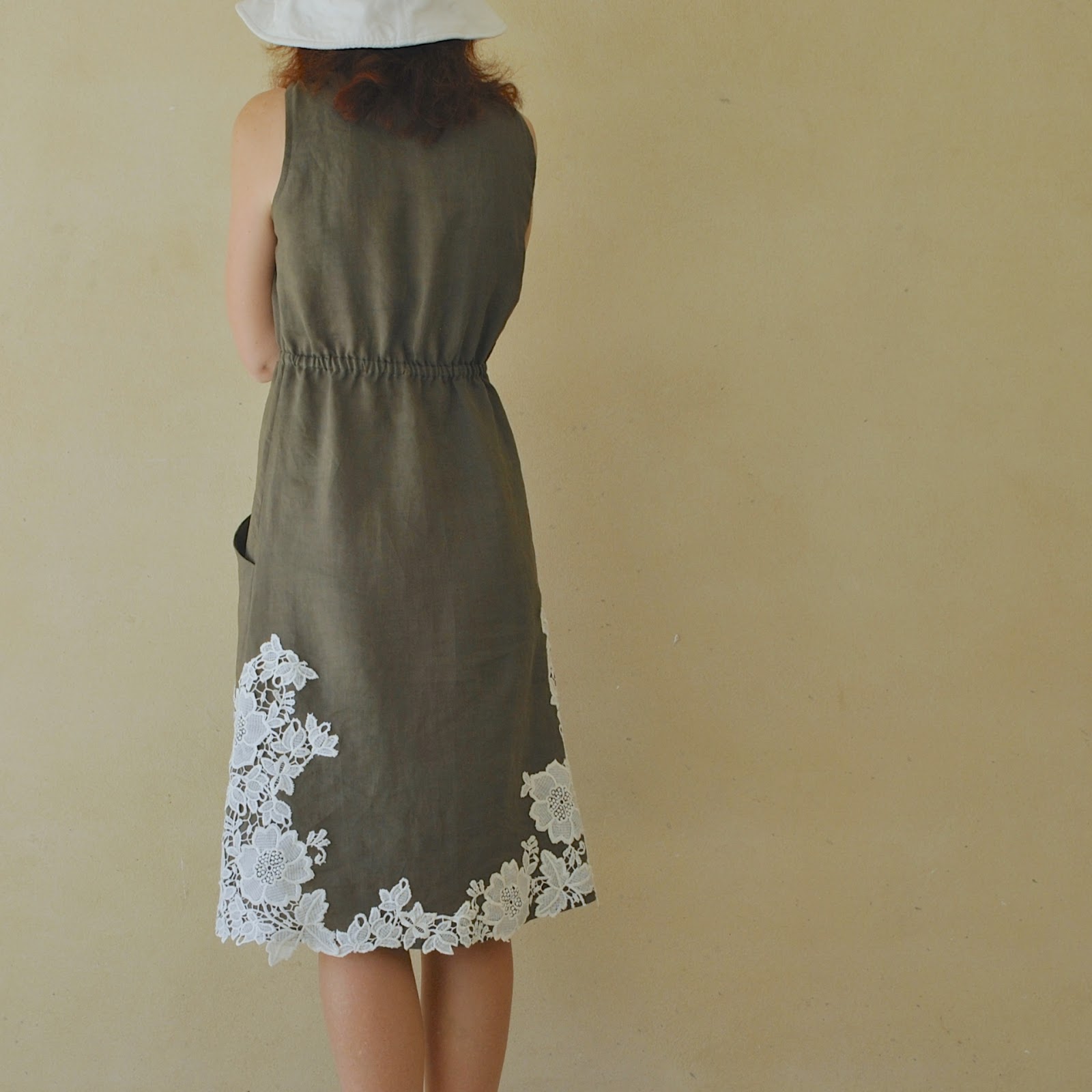
I’ve made a little sundress for myself  ðŸ™‚ in very fine, light handkerchief-grade linen from Fabulous Fabrics, deep browny/olive green.  I asked my husband how to describe the colour and he replied immediately “Sherman tank”, haha.  Hmmm!
I’ve been told a zillion million times that I should wear drab colours, but I struggled with them for years.  My teenage self desperately loved pretty feminine colours, hey it was the 80’s; and I thought muddy sombre colours like this were horrible and ugly, like the exact opposite of pretty.  *sigh*  Anyway.  I’ve learnt to embrace couleur de Sherman tank.
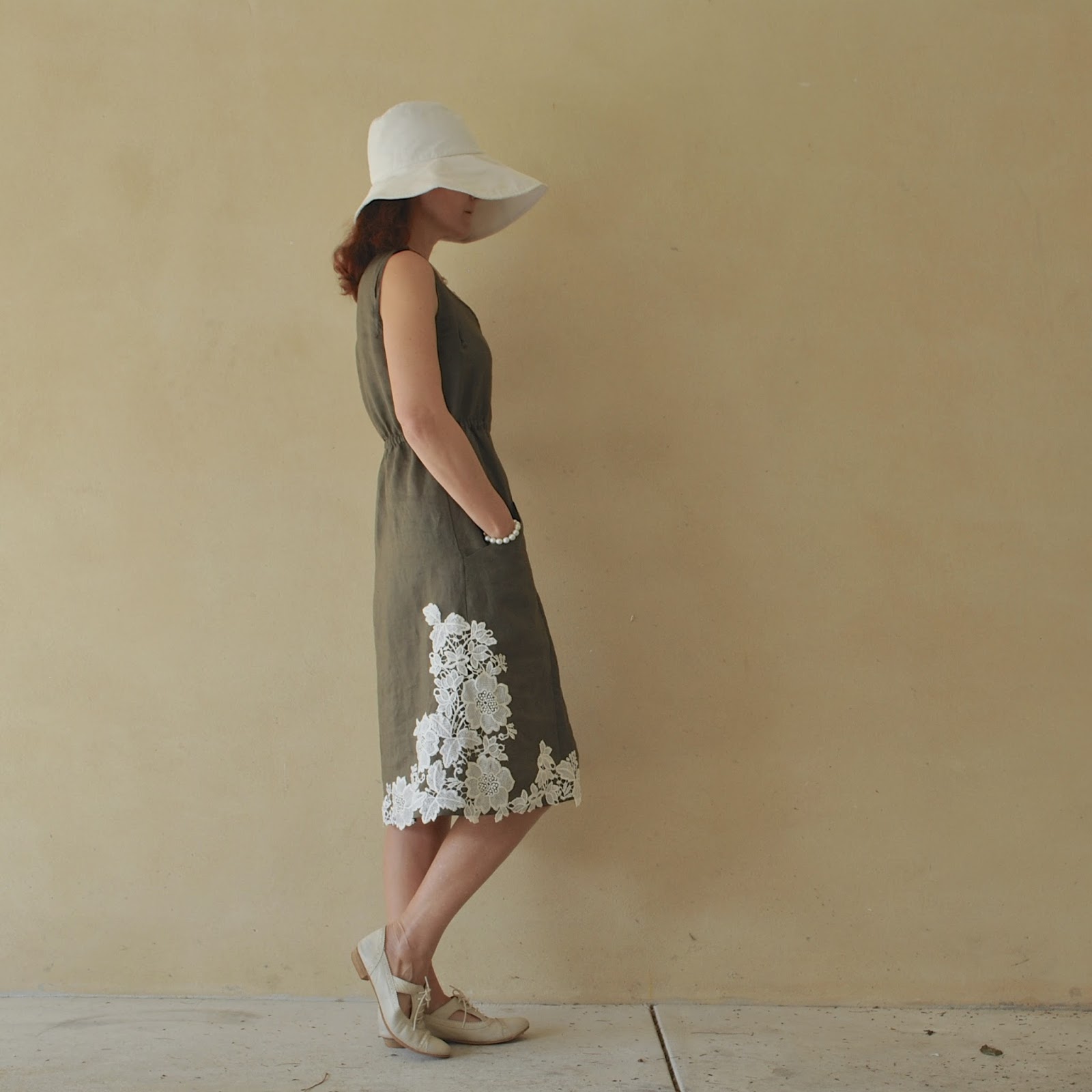
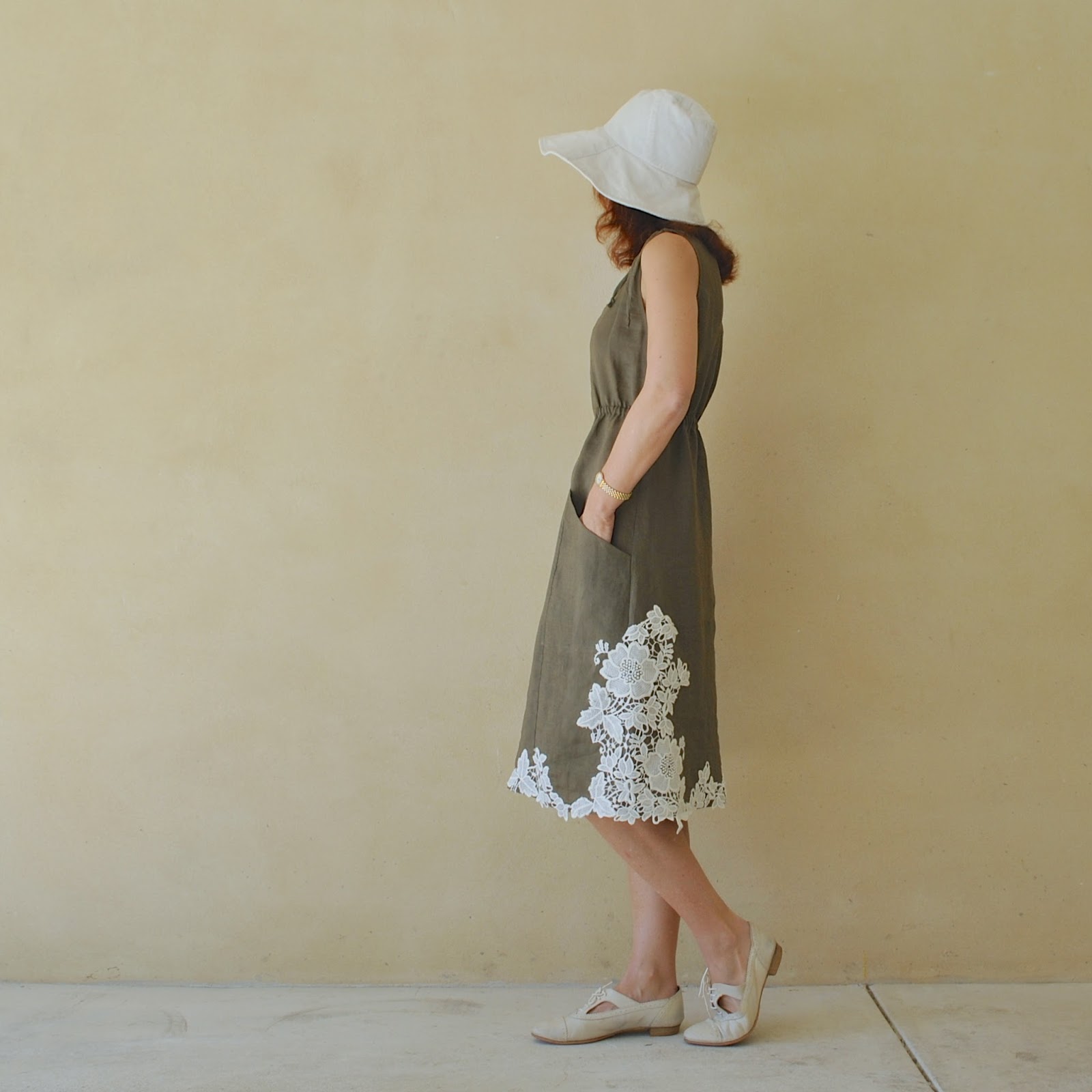
I added a little bit of pretty in the form of some cream lace-y motifs appliquéd around the lower hem edge.  I cut the motifs from a quite thickish, lace-y fabric and hand-stitched them on to look kinda random and rambling and lending some semblance of froth and frivolity… I think the lace was maybe from Spotlight originally, but honestly I’ve actually forgotten where it came from exactly.

I sewed all seams throughout as French seams

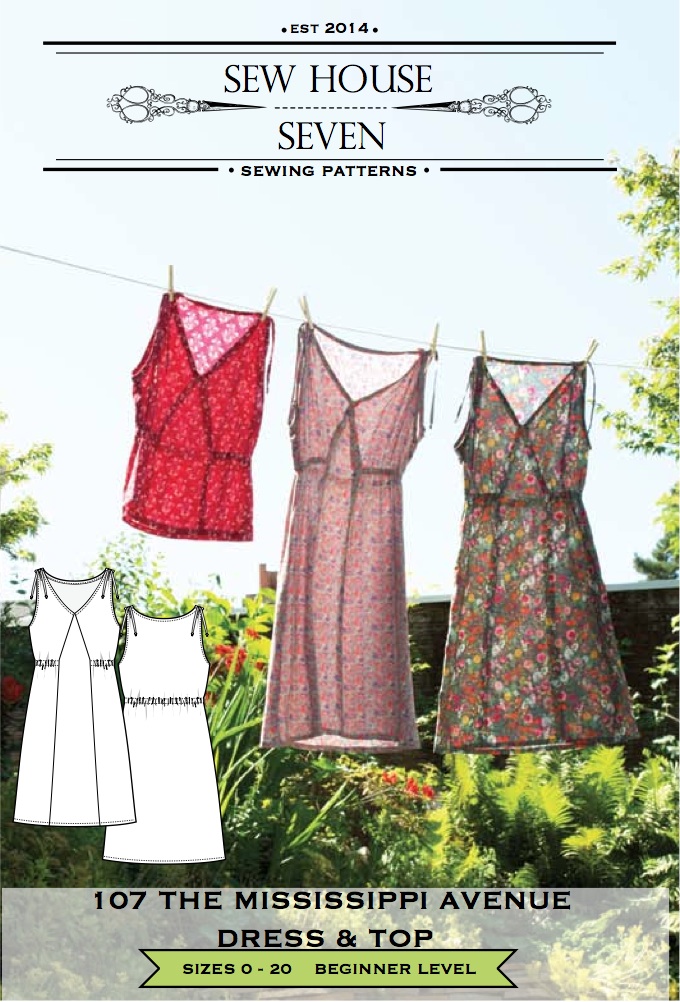
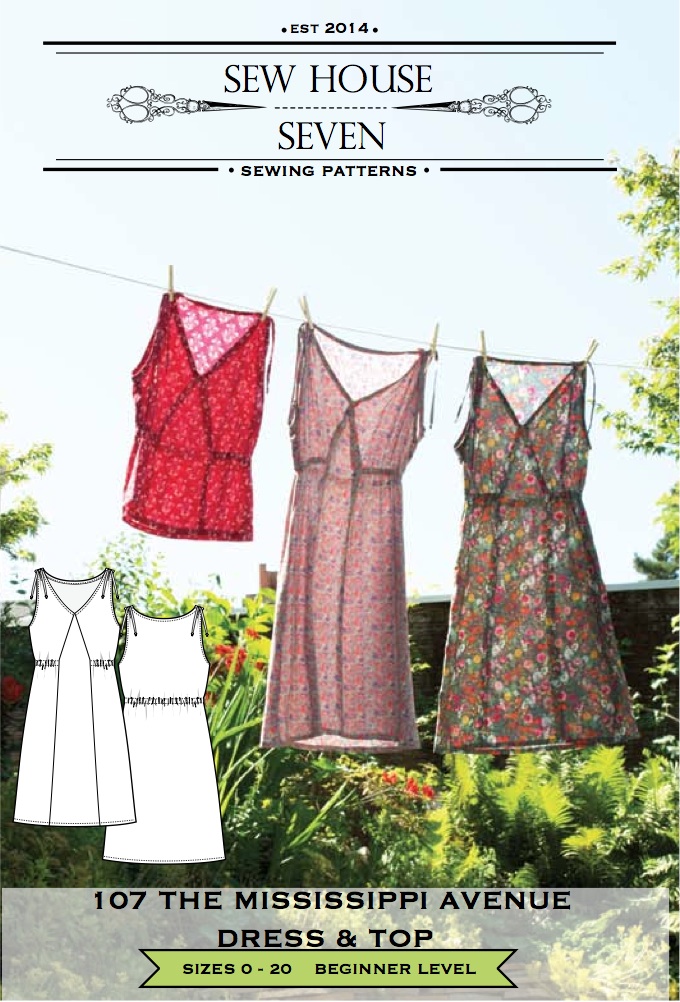
The pattern is the Mississippi Avenue top/dress by Sew House Seven, a pretty, easy-to-wear little number with a modest V-neckline and skinny ties gathering the shoulders up.  It’s a satisfyingly quick and simple project that goes together easily, and I think it’s all of sweet, cool, casual and flattering.  The very thorough and helpful instructions are aimed at the beginner. 
And it is included in the bundle of patterns to be sold as a set for Sew Indie Month.  
What is Sew Indie Month? do I hear you ask? well it is in September this year and has a charitable component, yes, we all joke about sewing selfishly and this is seamsters trying to give a little bit back!  The lowdown…

  • The idea behind Sew Indie Month is to create a global community sewing event, sort of like a big, online sewing workshop, if you like, while simultaneously supporting small women-owned businesses and raising money for charity.  During the month of September, pattern designers are collaborating on the Sew Independent site to put together blog posts and informative tutorials; and a terrific bonus is a sewalong contest with prizes!   Sew Indie Month is co-ordinated this year by Mari from Seamster Sewing Patterns
  • The pattern bundle is available to buy here, and the sale will run from Monday 3rd August to Wednesday 12th August.
  • 20% of bundle proceeds will be donated to the International Folk Art Alliance, which provides education and exhibition opportunities to folk artists from around the world. Just a few examples of what the International Folk Art Alliance has been able to accomplish by helping artists create stable, year-round livelihoods includes helping shelter women from domestic violence in Ecuador, building a school for children in Pakistan, empowering women in repressive cultures around the world, and feeding villages in Niger.
  • You can check out all the details and information on participating patterns and the pricing options, here; on the Sew Independent site

My fellow participating seamsters who will be making their own lovely and unique creations using one or more of the patterns are:

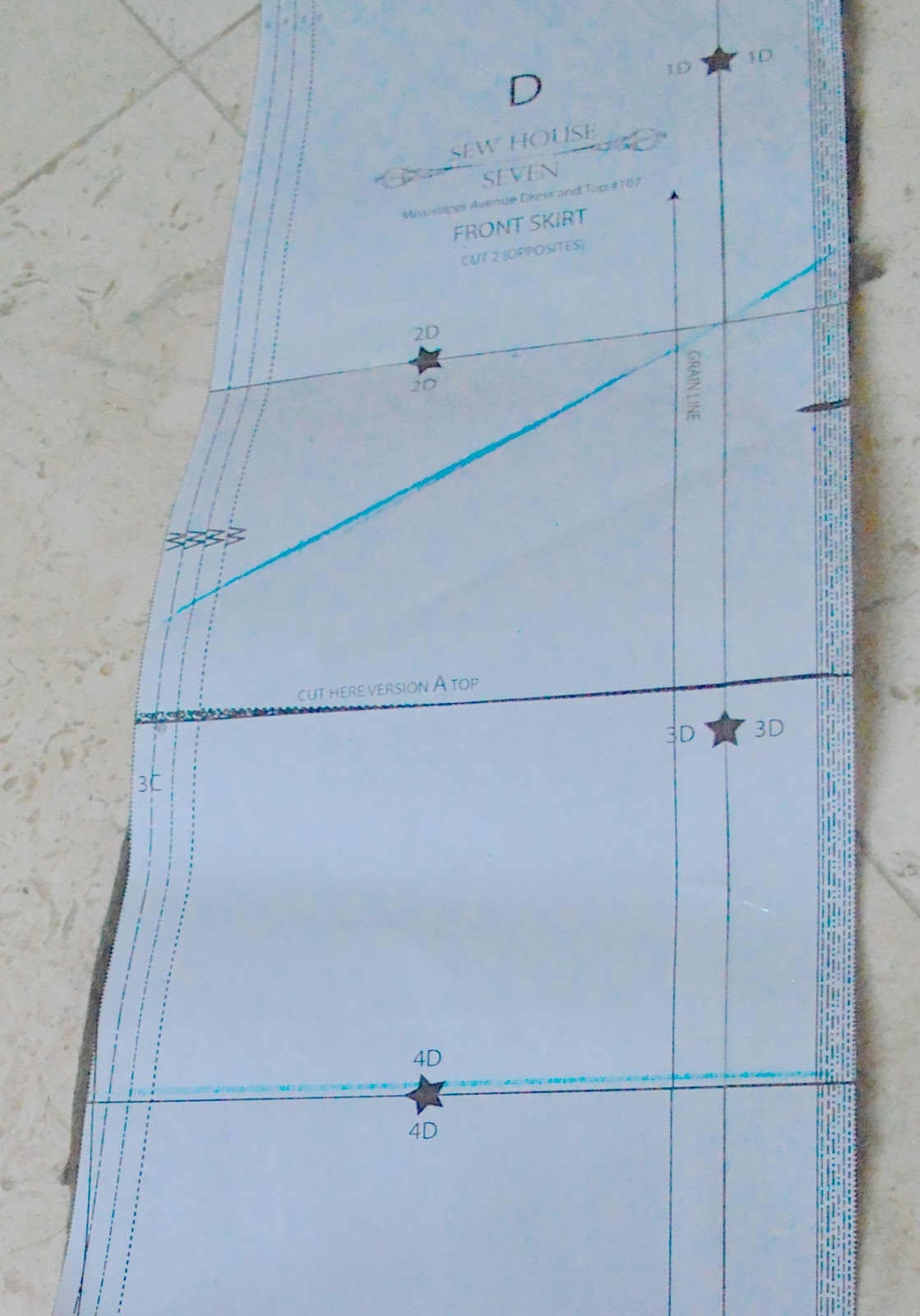
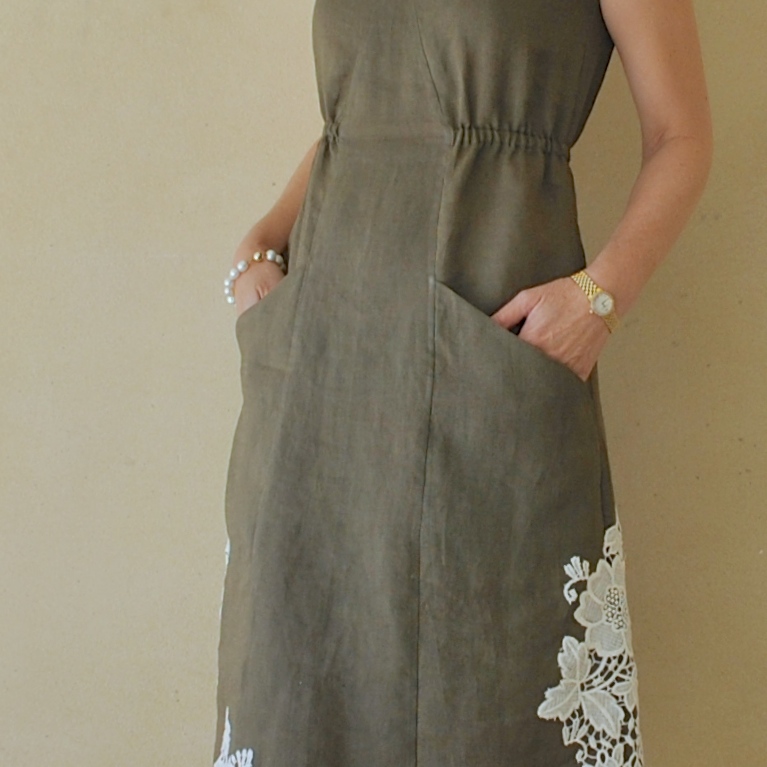
I also added slanted front pockets to my dress… because, well, pockets.  Where there’s a will there’s a way, mwahaha.  I did these same sort of pockets for my blocky sundress, and it’s an easy feature to add when the front is already in 3-panels like this.  For this reason, my method could also work in a princess seamed dress.  I took a few piccies this time to illustrate how I put them in…

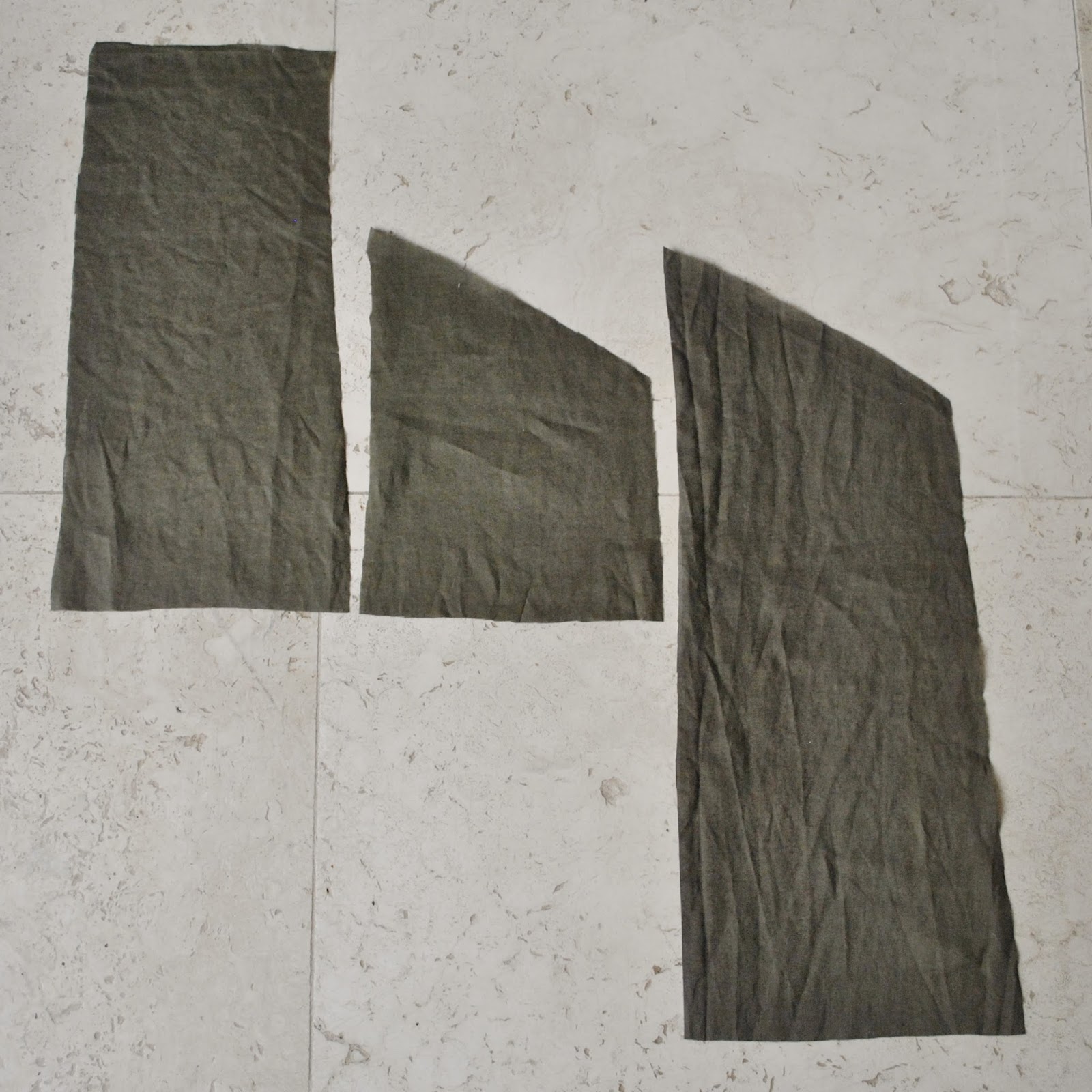
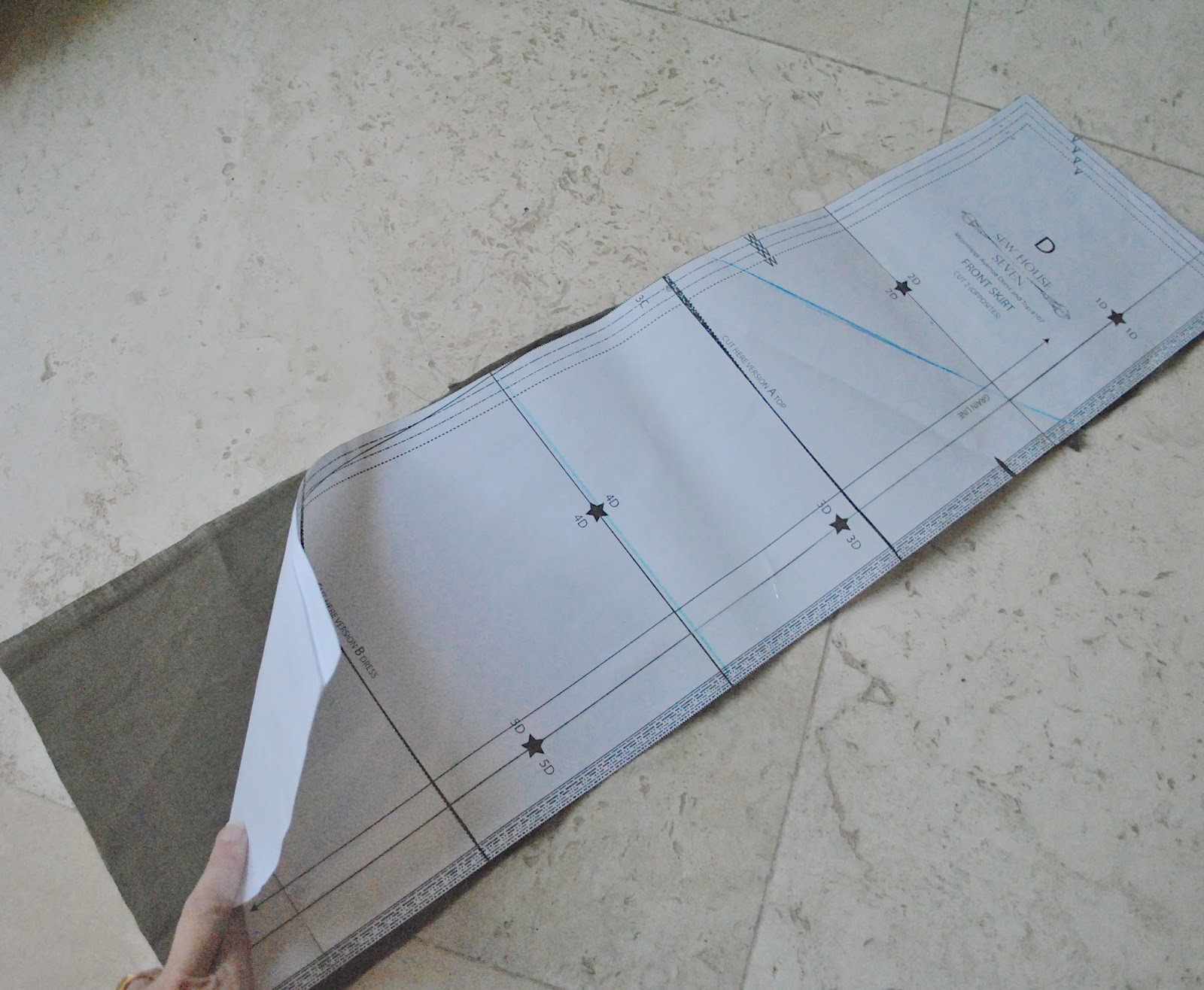
Mark on the pattern piece a slanted line where you want the top of your pocket to sit, and another horizontal line to mark the bottom of the pocket edge.  Instead of cutting the side front as one piece, cut three pieces: 
1. piece at left, upper S (side) front, from the top edge of the pattern piece to the bottom edge of the marked pocket allowance, plus seam allowance,
2. middle piece, pocket; from the top edge of the slanted pocket line to the lower edge of the pocket allowance, plus seam allowances top and bottom.
3. piece at right; lower S front; from the slanted pocket line plus seam allowance, to the lower edge of the pattern piece.  It’s a good idea to add an extra, say, 4-5cm in length to the lower edge to allow for possible boo-boos in seaming, just in case.
Transfer all notches and new marks to all pieces.

Stay stitch the slanted edges, and then stitch the pocket piece to the lower S front piece, right sides together, along that top, slanted edge.  Press seam open, turn out, under stitch inside the pocket.

 Lay lower S front/pocket piece over upper S front piece, aligning notches, pin along side edges.  

Lift aside the lower S front piece and check how well the lower edge of the pocket aligns to the lower edge of the upper S front piece.  If they differ, trim them to match each other.

 Stitch lower edges of pocket and upper S front piece together in a French seam.

 Pin the three layers of upper S front, pocket, lower S front together at side edges, baste.

 Lay the original side front pattern piece over and trim any excess length off the lower edge.  From now on just keep on putting the dress together just as normal.

Voila! slanted front pockets!

btw; please know that, as always, there are no affiliate links on my blog and never will be.  I received the patterns free, for me to make an item to help spread the word, and I chose to use the Mississippi dress pattern 🙂

Details:
Dress; the Mississippi Avenue dress by Sew House Seven; in deep olive linen with cream lace appliqué
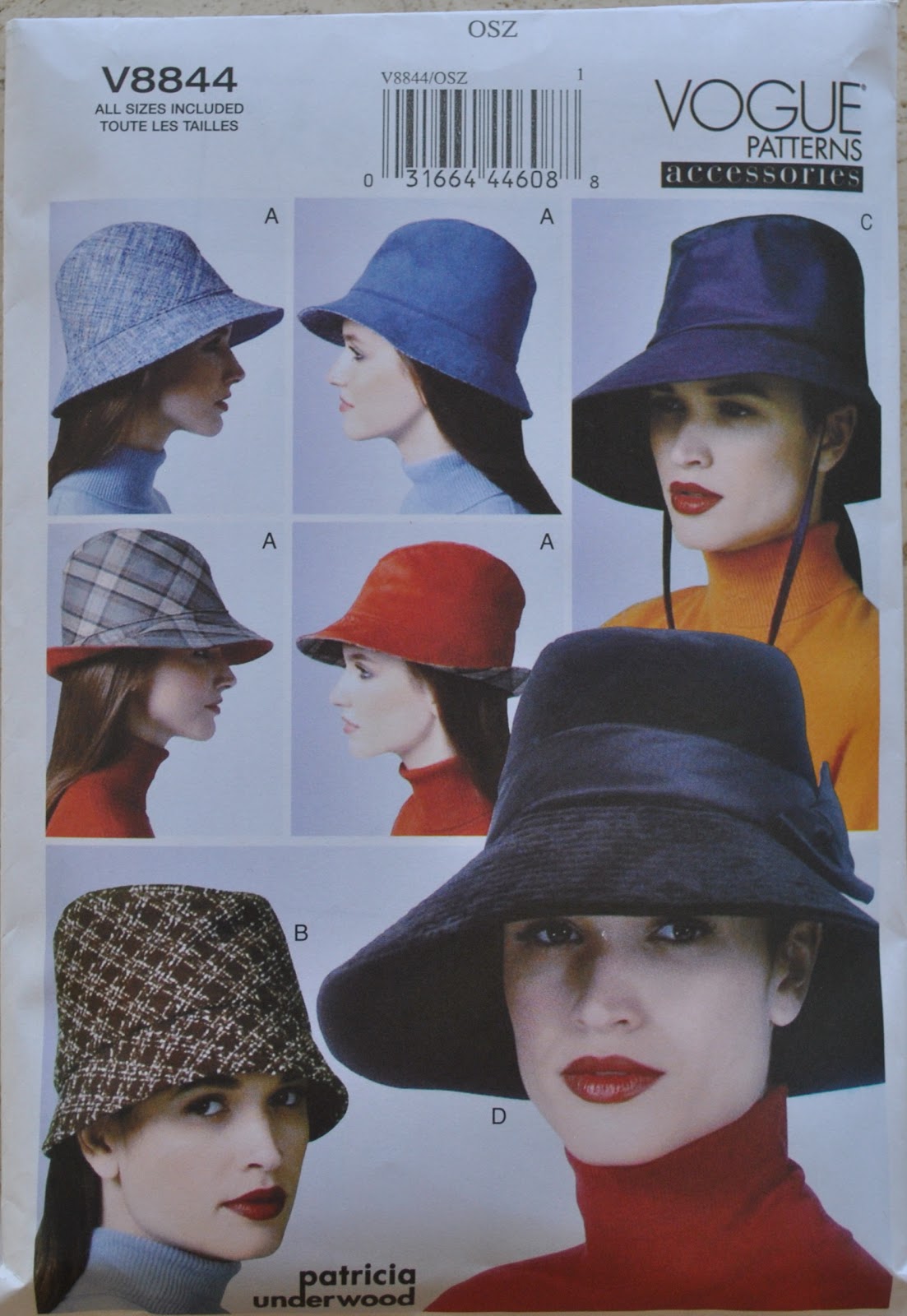
Hat; Vogue 8844, cream cotton corduroy, details and my review of this pattern here
Shoes; Bronx, from Zomp shoes

pinterestmail

making felt from fleece

Hello!
So furthering onward with my one year one outfit adventures, I thought I would put together a post on my other efforts so far… I have also been making my fabric for the other components of my outfit.  Yes, making freakin’ fabric!!!! transforming Western Australian sheep fleece into felt, with which I shall make…. something.    Still ruminating on exactly what...  
Along with my fellow one year one outfitters Sue, Nicki and Megan, I visited Bilby Yarns; a small but treasure-packed little shop in Willagee that supports local wool producers and enthusiasts and stocks supplies for anything and everything wool-related you could possibly think of! spinning, weaving, felting, needle felting, knitting and crochet and probably some other endeavours that I haven’t taken in yet, too.  It also stocks dyes, both natural and chemical and, most fabulously; yarn from Western Australian sheep, hand processed and hand spun by local ladies.  It’s a truly fantastic local resource! and I can see myself paying the shop many more visits in the future.  The lovely chatty June kindly demonstrated spinning and also felting to us; and we all came away with supplies of fleece, greatly enthused to make us some felt…

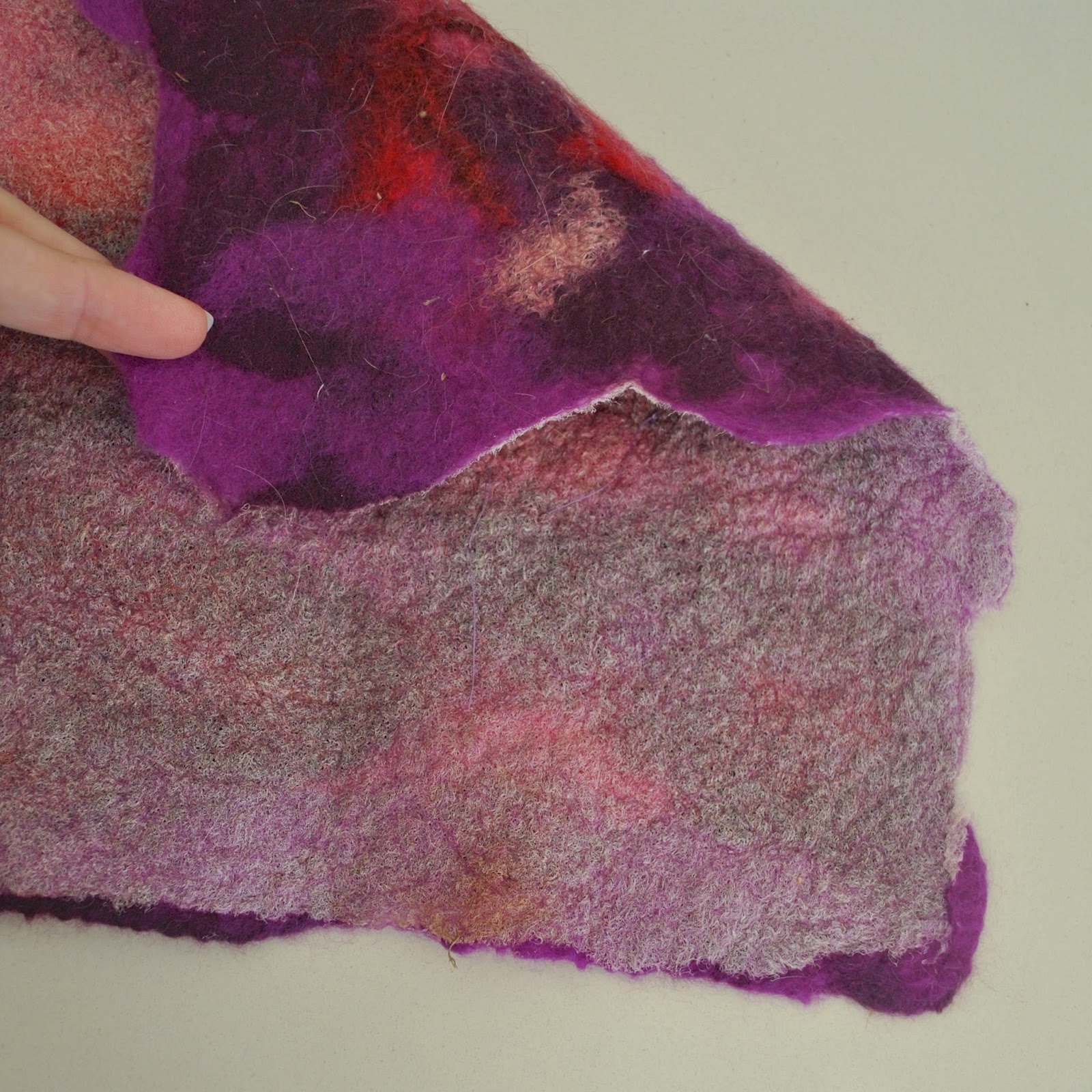
I have made some decorative felt panels a few times before, small and therefore easy things; blogged here and here and a couple of others that I’ve given away and never blogged.  However, this project would have to fit in with Nicki’s strict criteria; to be a TOTALLY home grown product.  Normally if I was considering making felt for a garment to wear; I would felt onto a piece of silk chiffon to give strength to the fabric. 

felt with silk chiffon backing

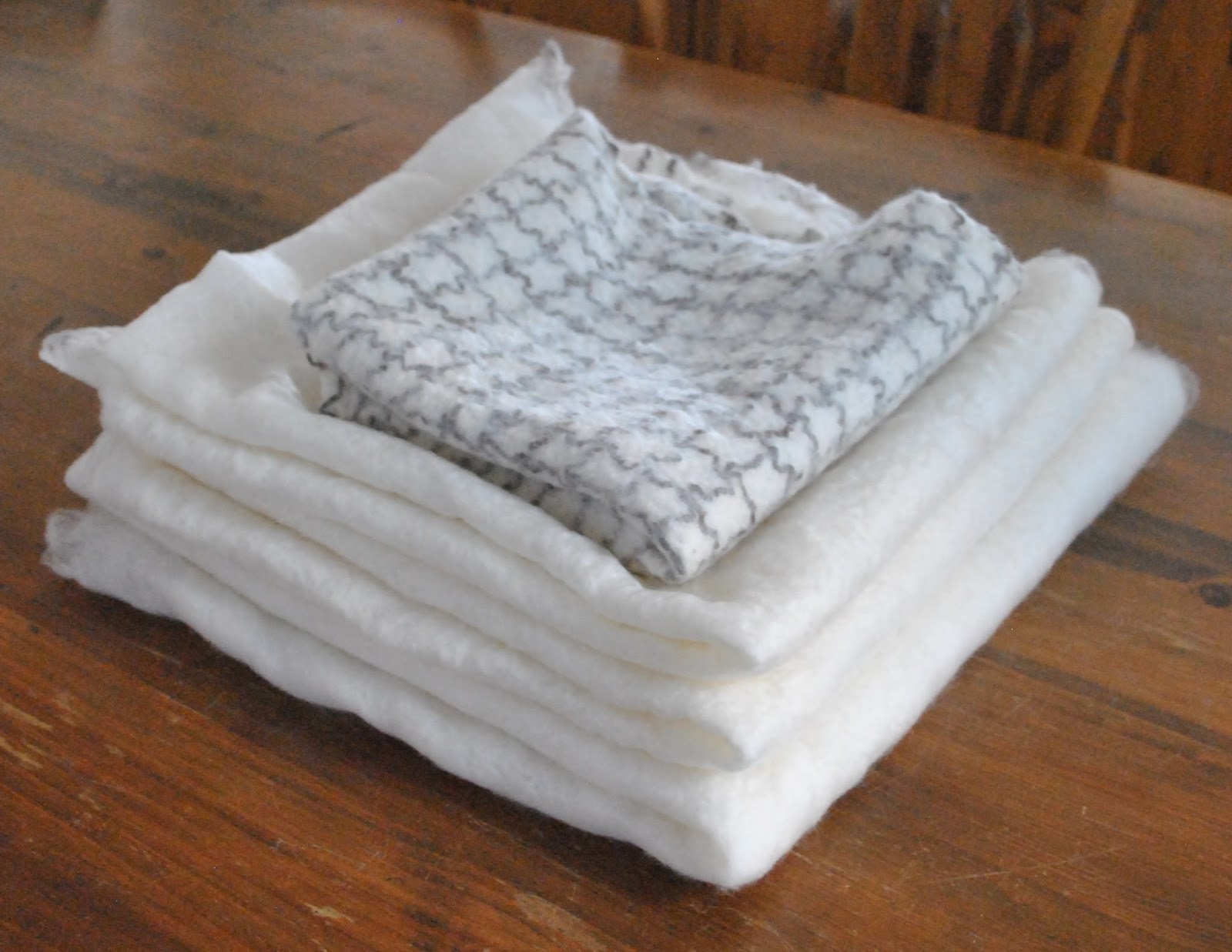
However; obviously silk chiffon is not a thing ever produced here in Western Australia! so in terms of our challenge it was a no-no.  I had to think of some other way of building some toughness into my felt…  I noticed a small sample in the shop with a yarn grid felted into it, and thought this would be a brilliant way of solving the strength problem.  I incorporated a yarn grid feature into one piece of my felt and I will be using another method of building strength into the remaining pieces.
I bought some washed and combed, naturally white Corriedale sheep fleece, and also two balls of locally hand-spun, West Australian wool yarn; one naturally black the other naturally white; and 3 large, thin, plastic, painting drop-sheets from Bunnings.

Modus Operandi:
First of all.. key words:  GENTLE!  EVEN!  Those two words were to be my mantra throughout this entire procedure.  OK.
Now: you need a fair amount of uninterrupted time, and for large pieces of felt big enough for an actual garment, a large table; preferably indoors in a wind-less, breeze-free environment.  I used my dining room table.  When laying out the fleece, bear in mind the fleece will shrink to roughly 75% of its former size in the process of becoming felt, so if you’re after a specific size you’ll need to allow at least an extra third in size dimensions each way.
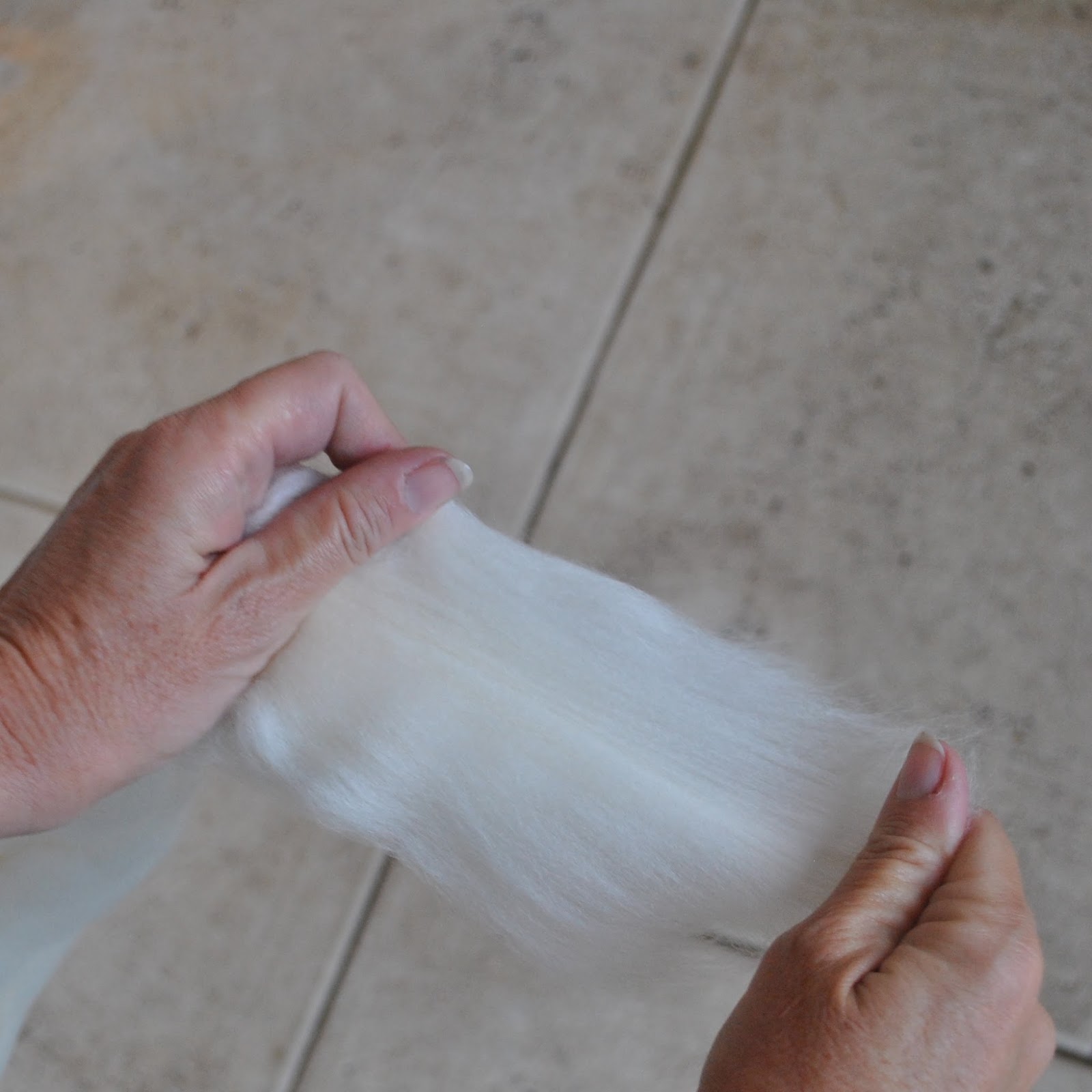
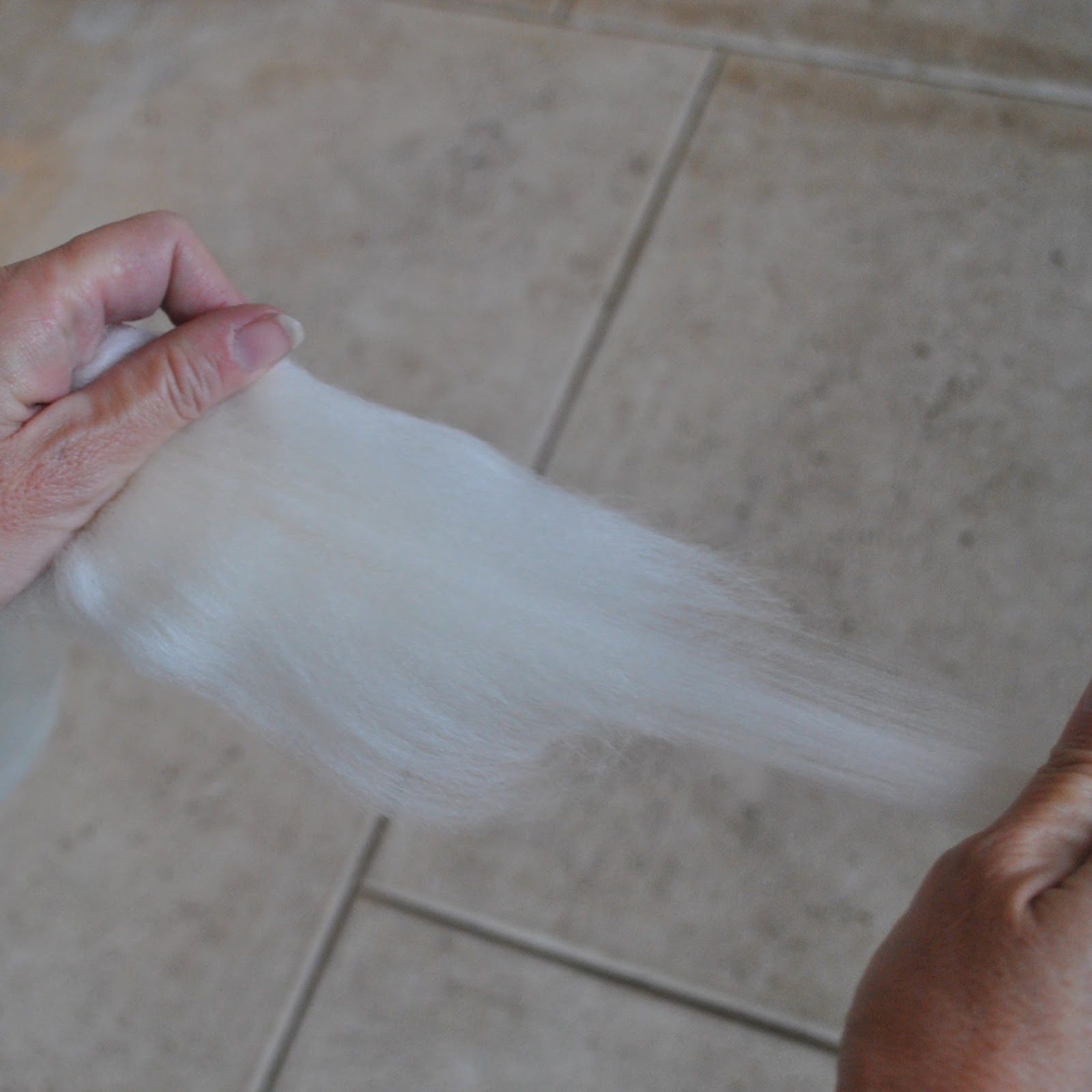
I laid my cut-to-fit plastic drop sheet on the table and start laying out small hanks of fleece onto it.  You hold the combed fleece loosely in your left hand, not too tight and not applying any pressure, and then with your right hand you grab and just pull away a small flat wodge.  Aim to keep the sections you’re pulling out of reasonably even spread and thickness; i.e., with no thick bits in the middle.  

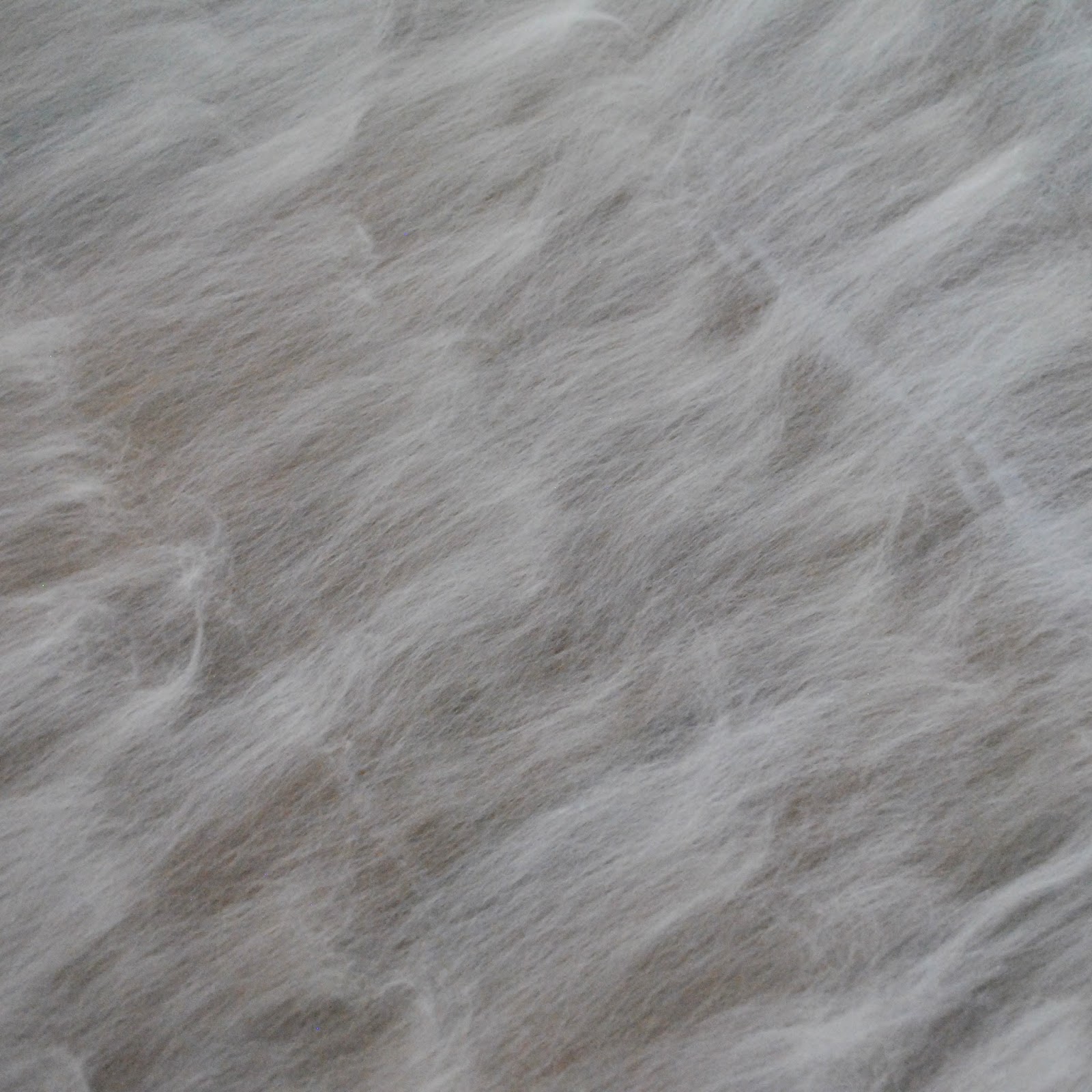
Then, you’re simply laying them all in an even layer as possible, in one direction onto the plastic sheet.  I used my whole 2m x 1m table space.  This is why you need a good wedge of time, since your family’s not going to be able to eat dinner on the table during this process! and you can’t exactly pack it up out of the way since the wool fleece is so light and floaty that at all times it’s in danger of wafting about, blowing onto itself, or onto the floor if a door opens and a breeze comes through.  Plus in my three cat household there’s the very real danger that a curious little helper is suddenly going to jump up onto the table to check out what you’re doing and keep you company while you’re doing it.  Eeeeeeeek!  The potential for disaster is HUGE! 

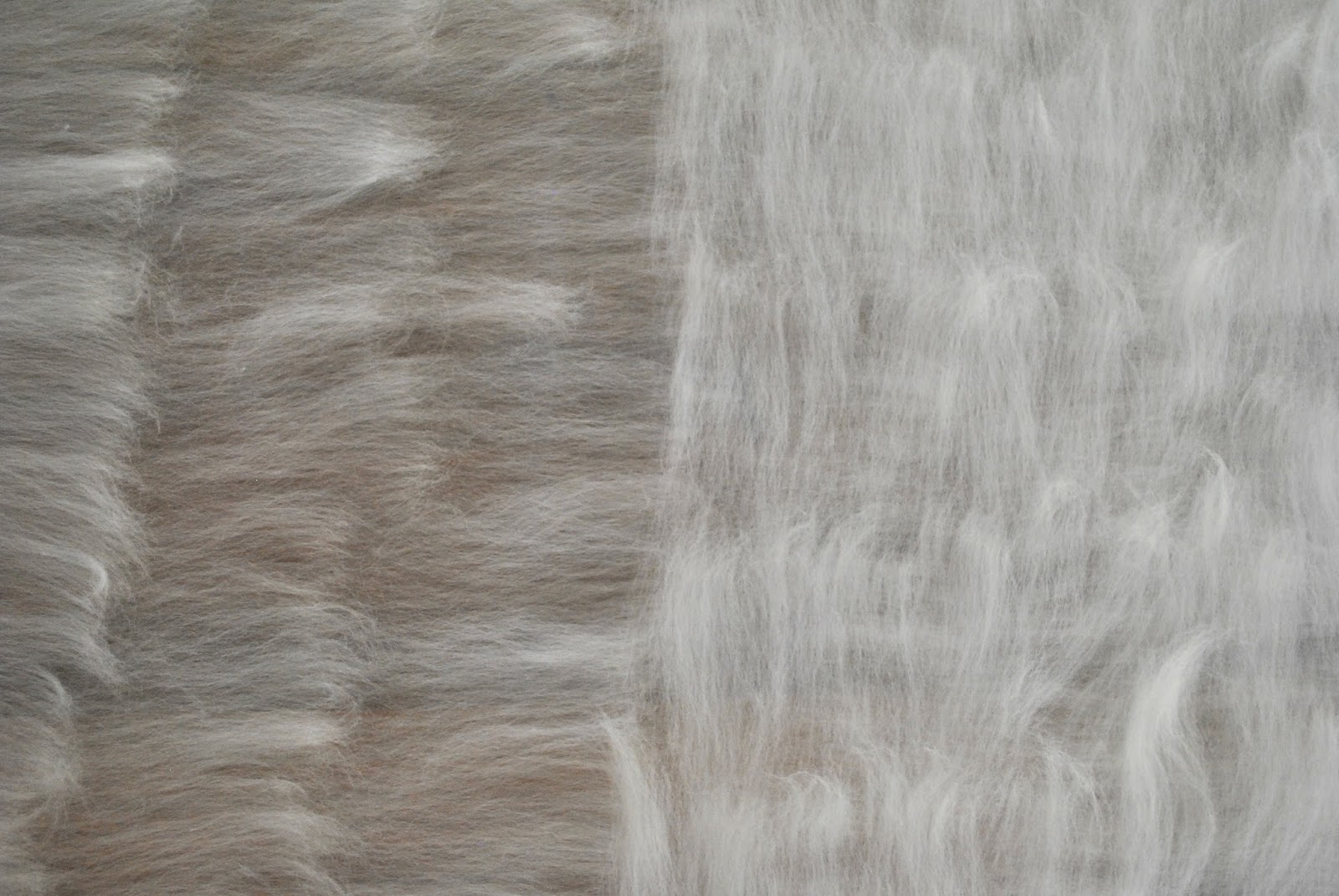
The top end that you “grabbed” is a little thicker than the tail end, so overlap these by a little bit in each row.  Once you’ve covered the area, go over again, this time laying the hanks of fleece crosswise to the previous layer.
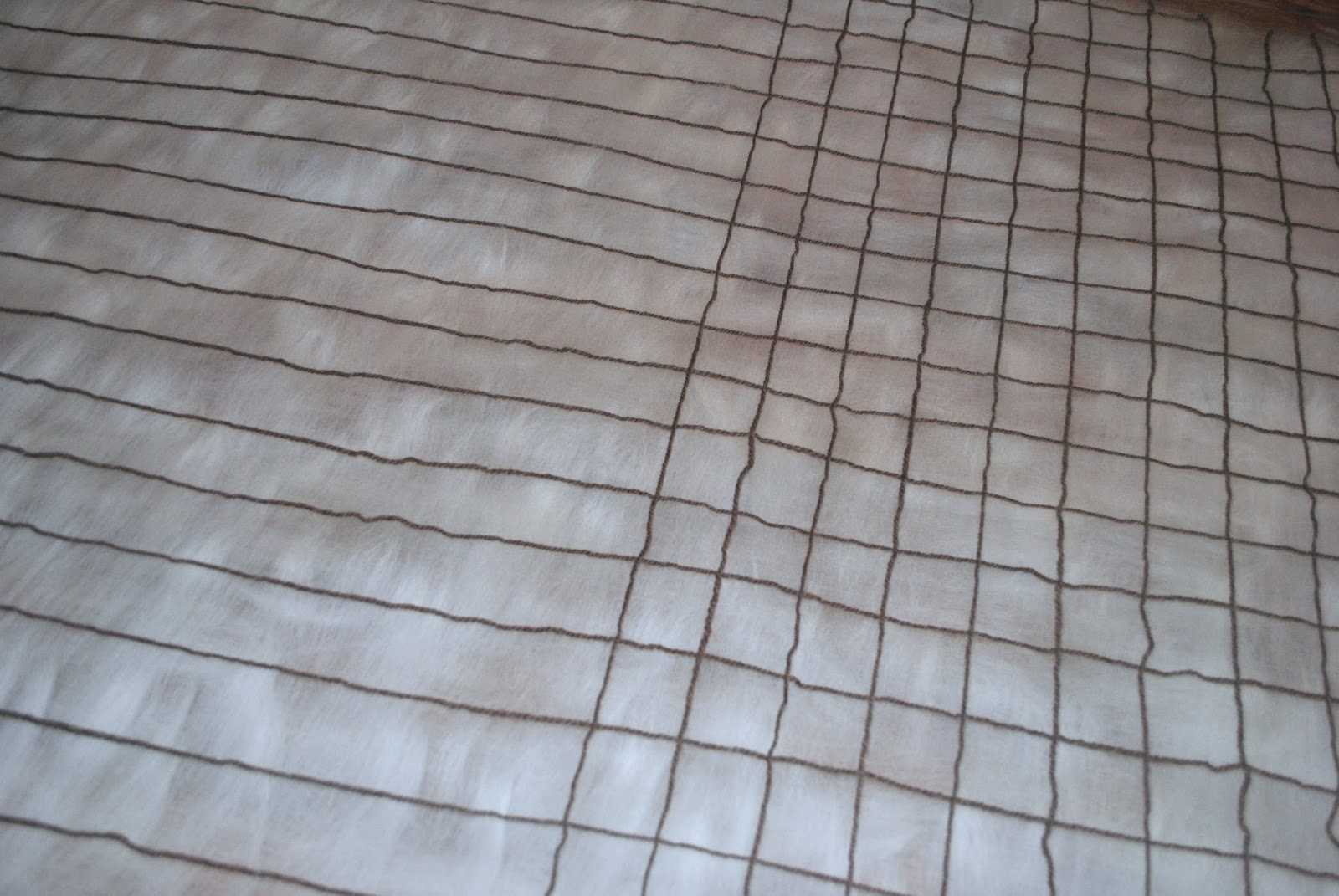
For my gridded felt I cut lengths of the homespun wool and laid it out over the fleece in an even grid.  Then I laid a very light and thin third layer of fleece over this one.  btw, some of the following pictures in this tutorial are of the grid felt and some are just the plain, un-gridded felt… because I was a little erratic in my picture taking; sorry!  But the felting process is just exactly the same in each case  ðŸ™‚
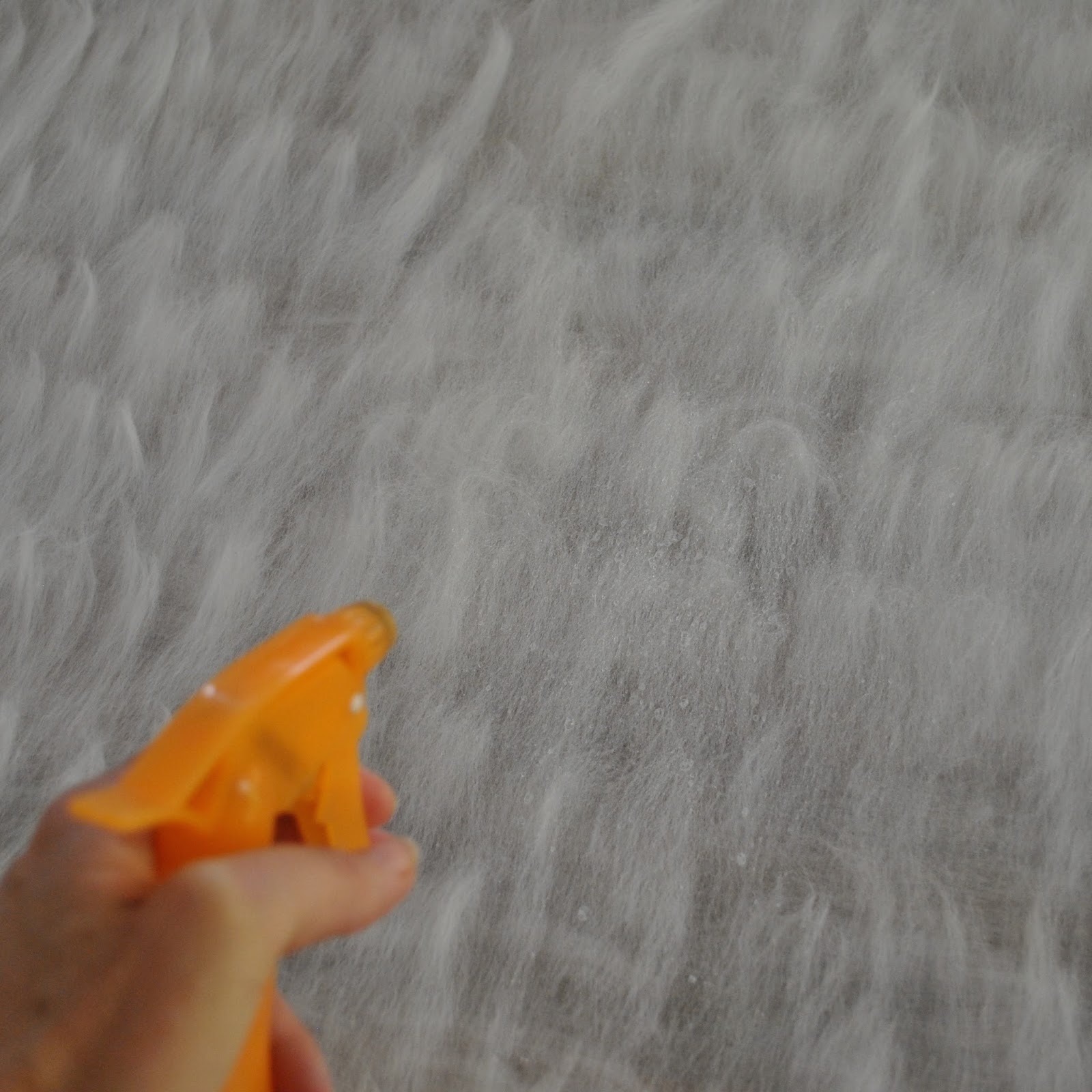
Fill a spray bottle with hot soapy* water and with the nozzle set to a fine mist lightly and carefully start spraying the fleece evenly all over.  Take great care to not blow the fleece about with an inadvertently strong spray or jet of water here! which could destroy all that carefully even laying-out… you’re aiming to very gently dampen down the fleece with a light misty spray.  Once the fleece has an allover layer of misty dew-like droplets all over, you can spray with slightly more vigour, pausing occasionally to gently flatten down the fleece with your hand, patting it down and allowing the water to seep through the layers of fleece.
*  Soap: the ladies in Bilby Yarns recommend the use of a gentle olive oil soap, and I agree this would be a wonderful option.  However, inadequate preparation and an impatience to just do it!!! meant that I just used a dash of regular dishwashing liquid for mine.  *horrified gasp*
Sorry to the purists out there!   I know, I’m a philistine  *hangs head in shame*  Please don’t boot me out of the felting club!
Eventually the fleece layers will be wet enough that they are no longer in danger of blowing about, and at this stage I allowed myself to add water just a bit more freely, but still lightly! sprinkling the fleece carefully using a small, plastic hand-watering can.

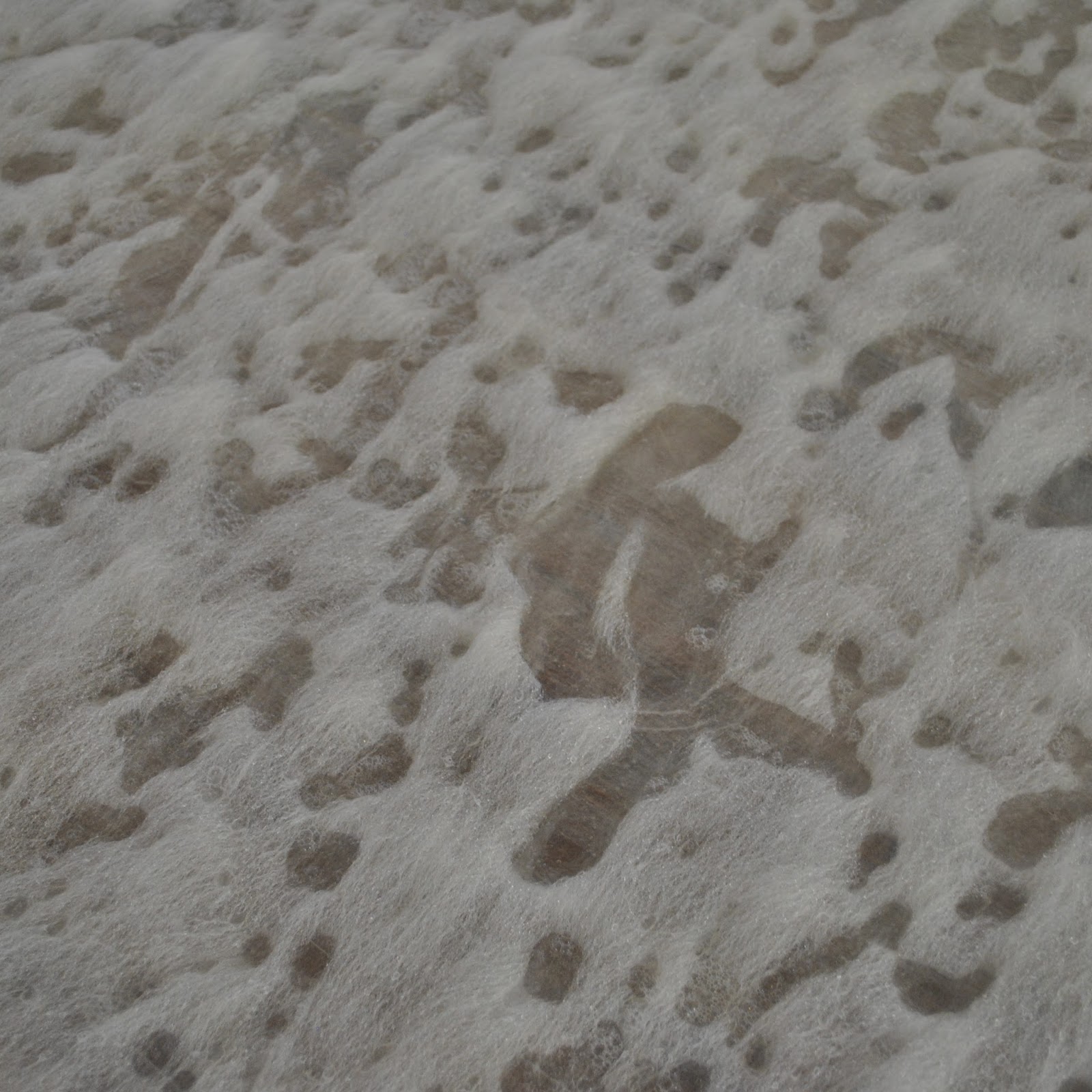
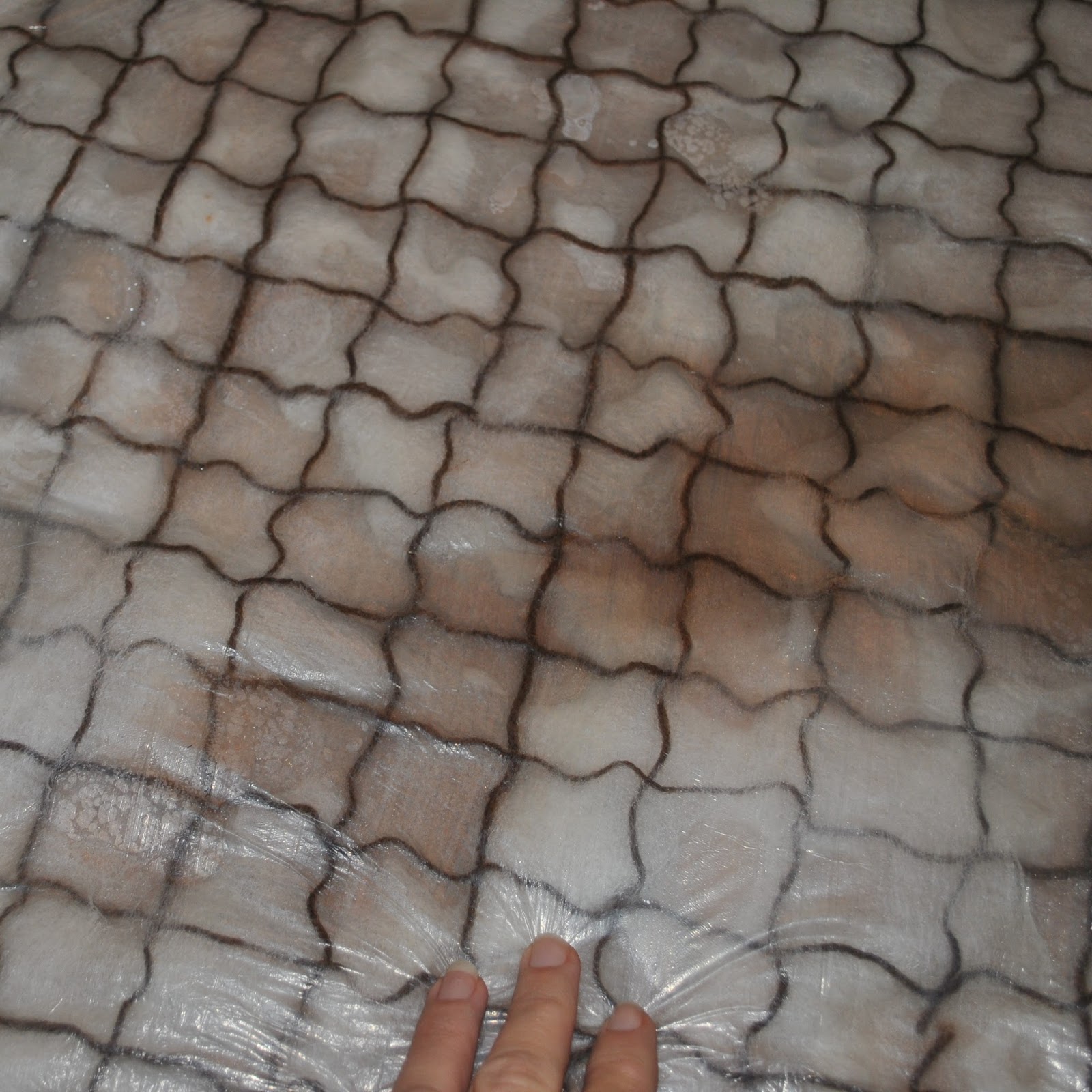
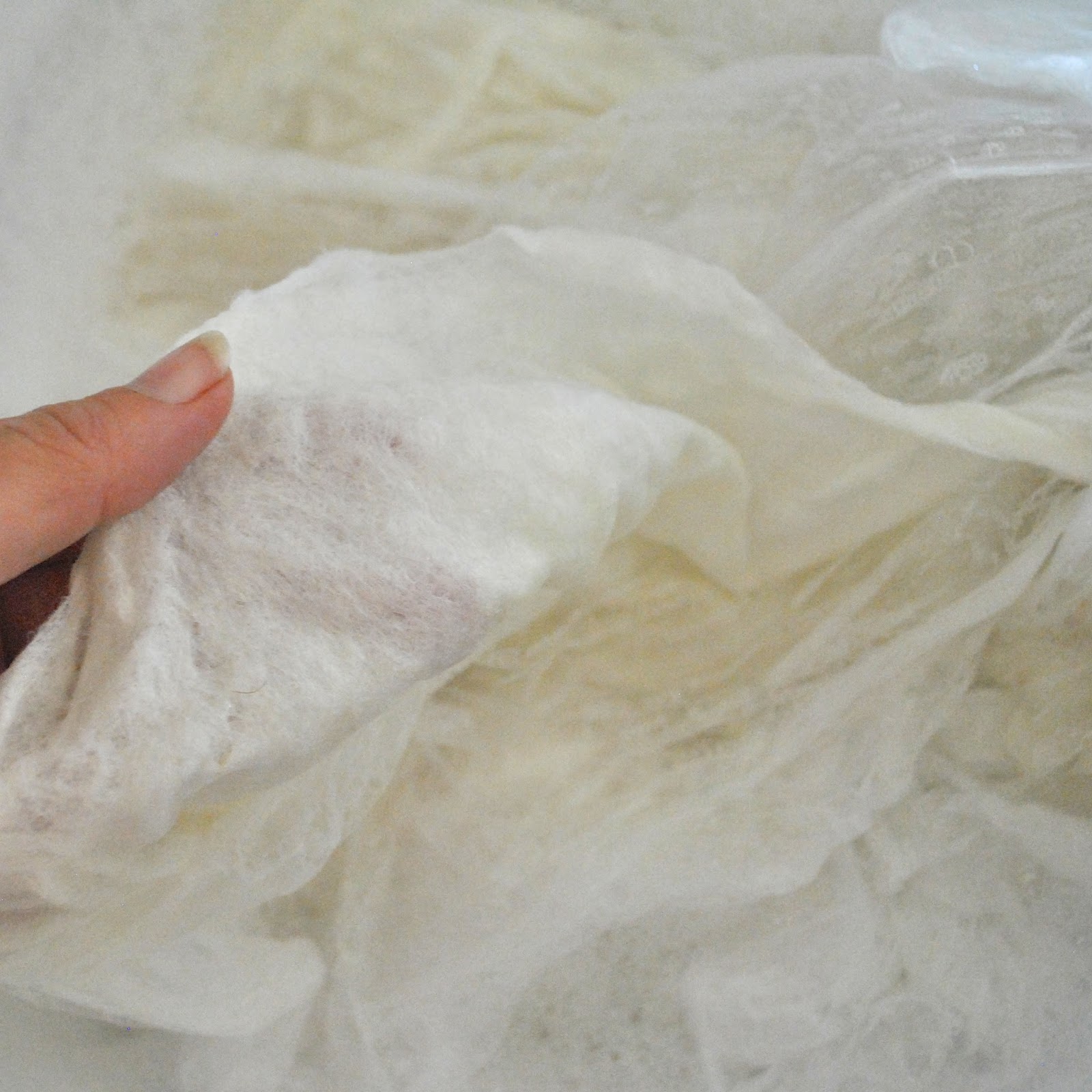
Check all over to make sure there are no dry bits; and once the fleece is wet through lay another cut-to-fit plastic dropsheet over the fleece, smoothing out any air bubbles, and start gently massaging to felt the fleece together.  Be light but firm, use small circular movements,  and cover the whole area evenly.  Every now and again peel back a corner to check that it’s felting together.

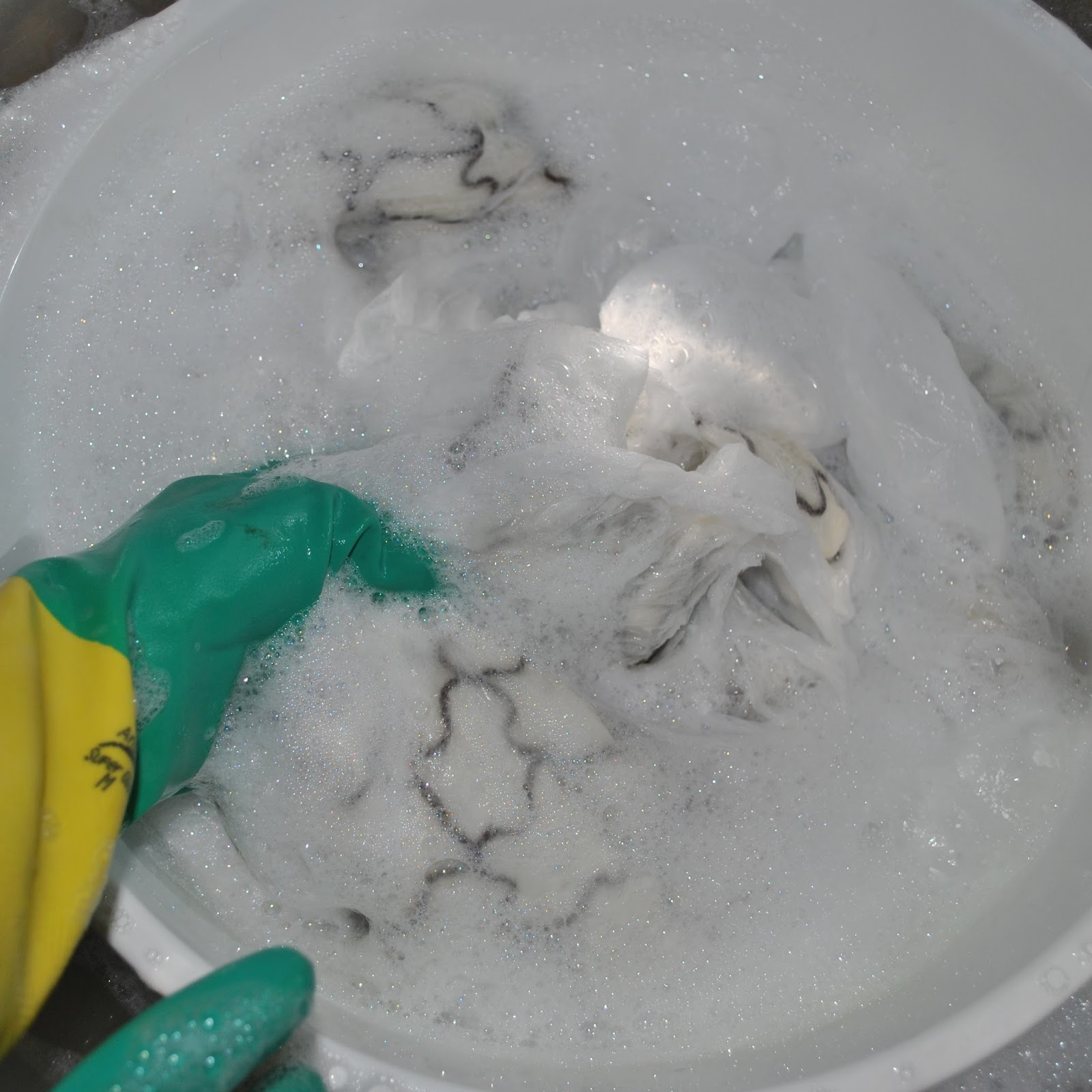
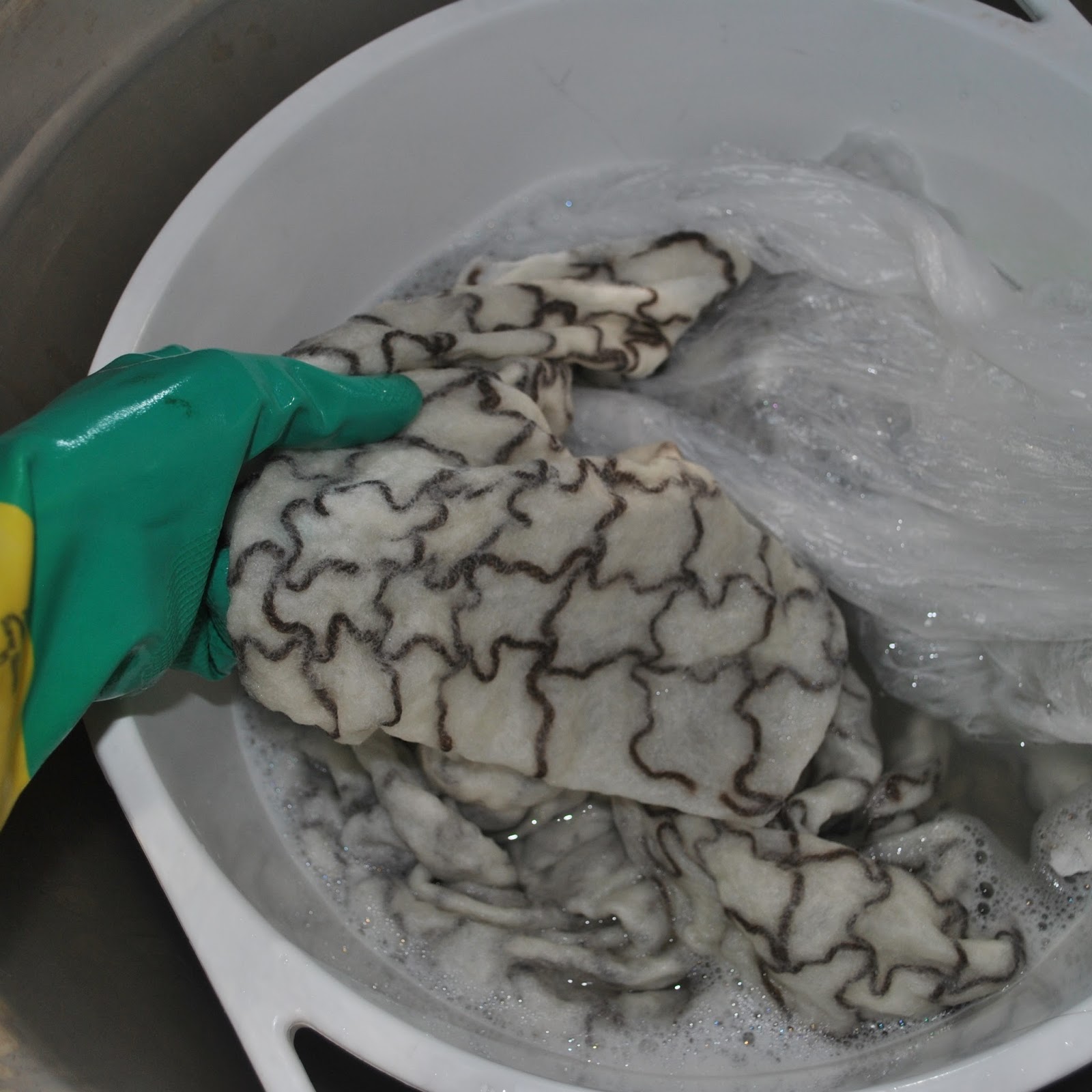
Once it seems to be melded and matted together enough that you can peel a corner away from the plastic and it seems to hold together in a sodden sheet of wool; replace that corner back between the plastic layers, and roll or fold the whole shebang up.  Fill a bucket with quite warm, but not hot! soapy water, plonk it in and start to gently agitate the plastic-wrapped fleece in the water.  Use the same sort of movements you would if you were hand-washing a precious cashmere jumper.  So, a bit of smooth slow swooshing, but no rubbing and nothing very vigorous.  Just some nice gentle easy swirling.

After a few minutes, say 5-10 minutes of this; check to see how the felting is going.  Once it has achieved a more stable, fabric-like texture you can peel away the plastic and remove that from the bucket.  
Gently rinse out all the soap, using cool water.  Still absolutely NO wringing or twisting the felt during this delicate procedure!!

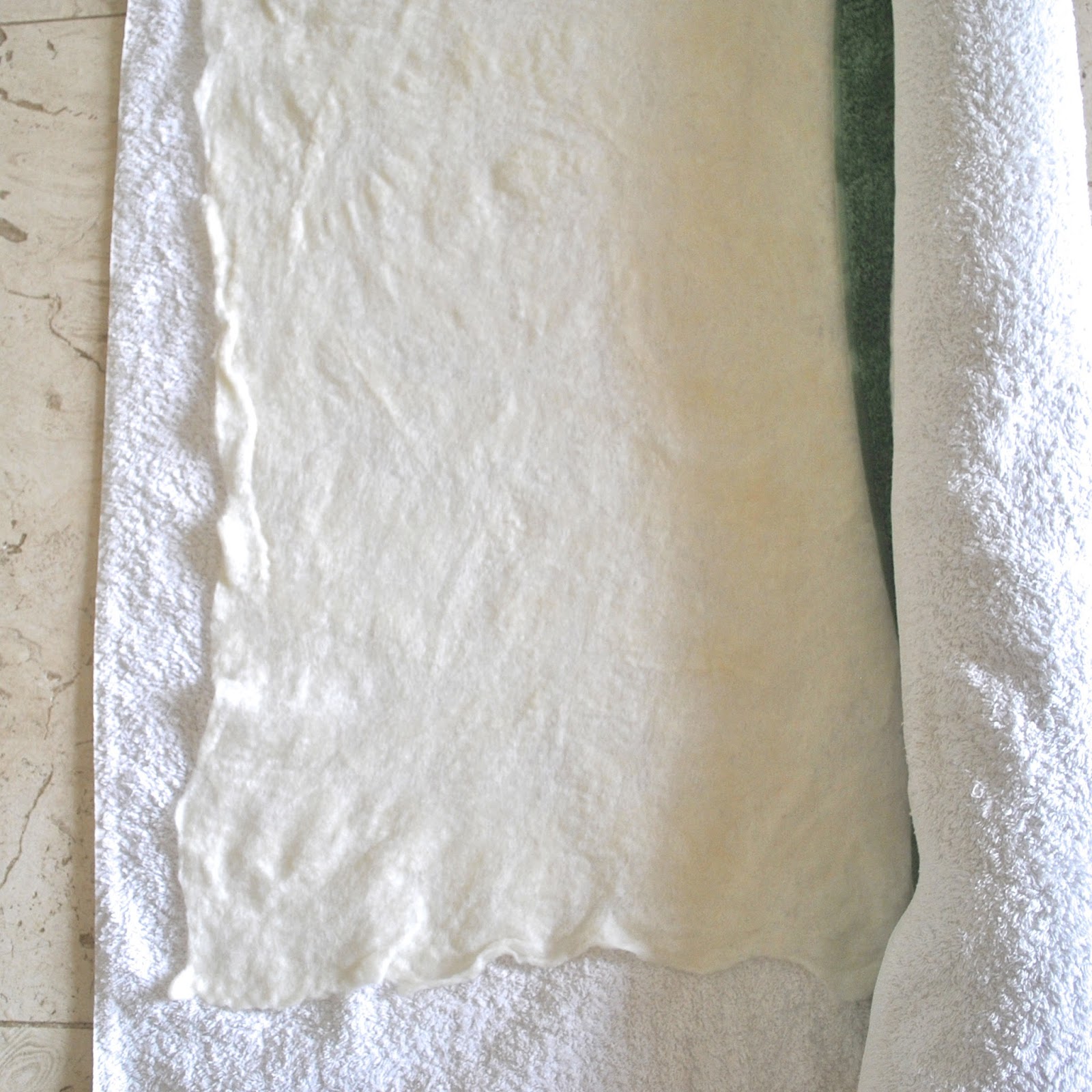
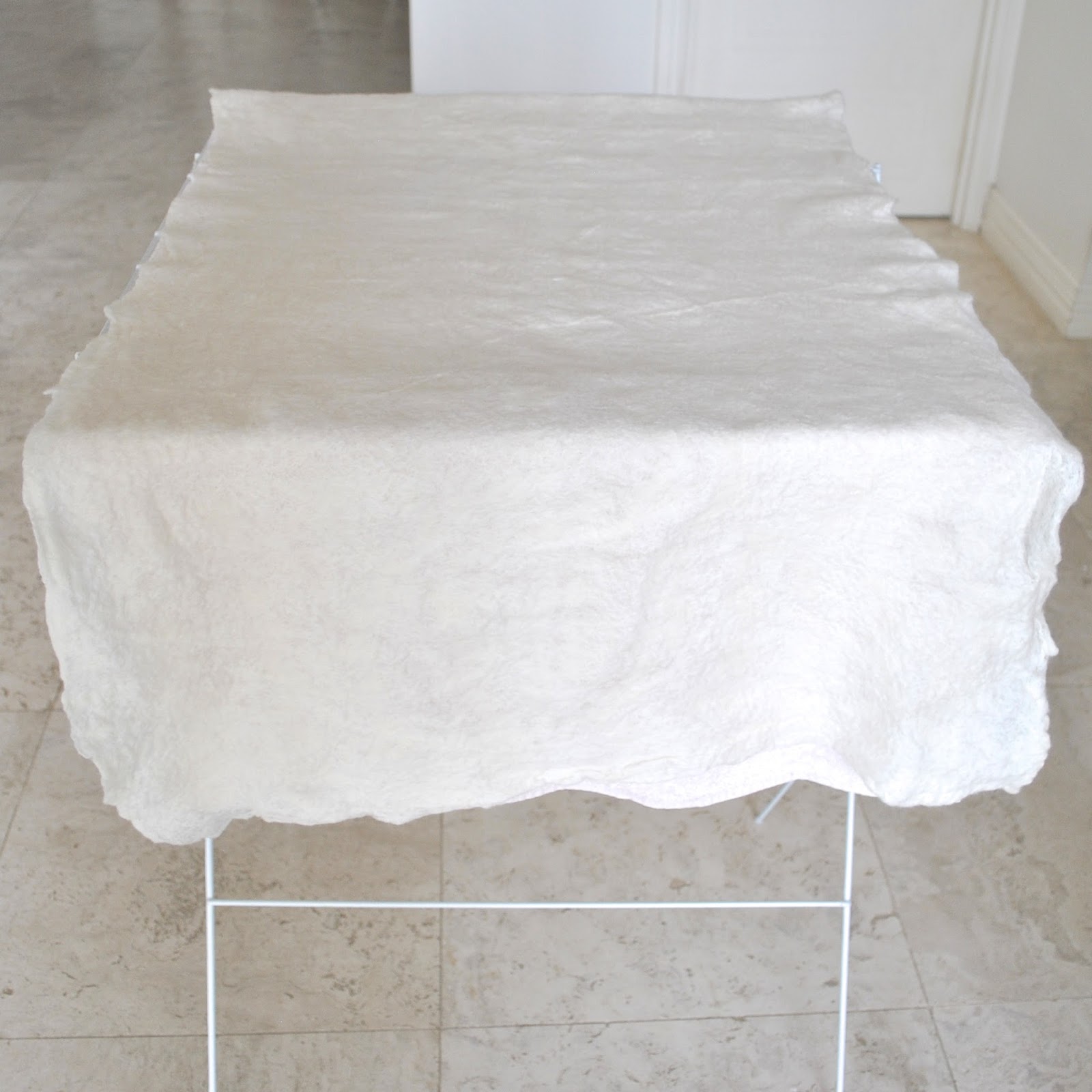
Just like you would that precious cashmere jumper; gently squeeze some excess water out, then lay the felt out on old towels and smooth it out as flat and smooth and even as possible.  Gently pull it into shape, tease out the crumply edges, smooth out any creases or little folds.  It will have shrunk somewhat during the felting process.  For the record; I initially laid out my fleece in a 90cm x 180cm rectangle.  After felting; my pieces had shrunk to roughly  67cm x 133cm; ie. approx. 75% of the previous size in both dimensions.  

When satisfied it is pulled flat and smooth and into a more or less rectangular  shape, roll it up in the towel, smoothing out any little creases that may form as you’re going along.  Squeeze excess water out by kneeling on and pressing down on the towel roll.  
Unroll, lay the wet felt onto fresh dry towels, and let it dry flat.

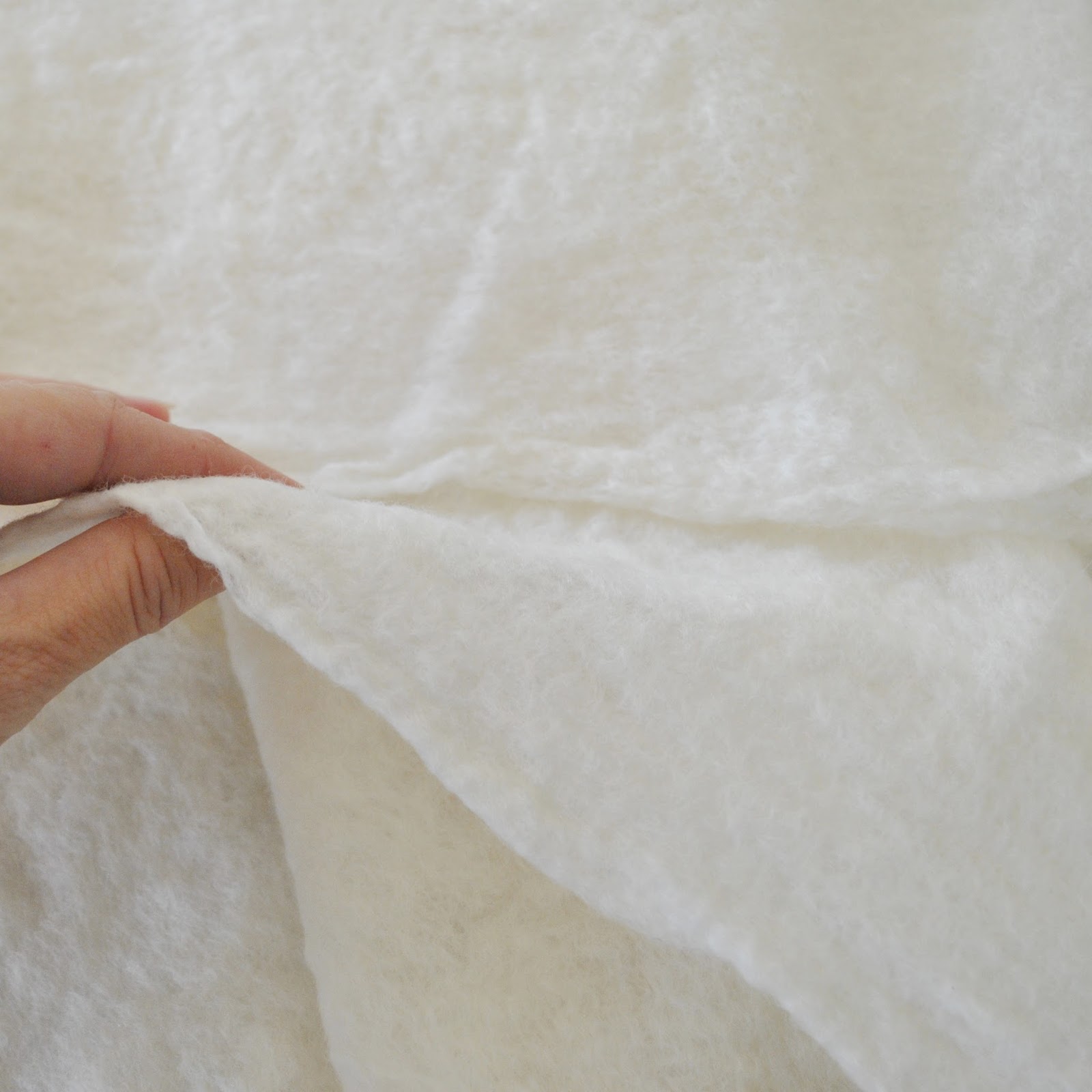
Et voila! felt!
The gridded felt is quite tough, sturdy enough to use on its own; and I plan to add extra strength to my plain cream pieces by adding some wool embroidery of some sort, which I am in the process of designing right now.
The most difficult part of all will be to cut into this precious stuff…  eeep!  must not ruin..!

pinterestmail

adding lining to a skirt; some tips

Plenty of skirt patterns do not come with separate pieces nor instructions for adding a lining to the skirt.  And often you want a lining; particularly in a winter skirt that you wish to wear with tights.
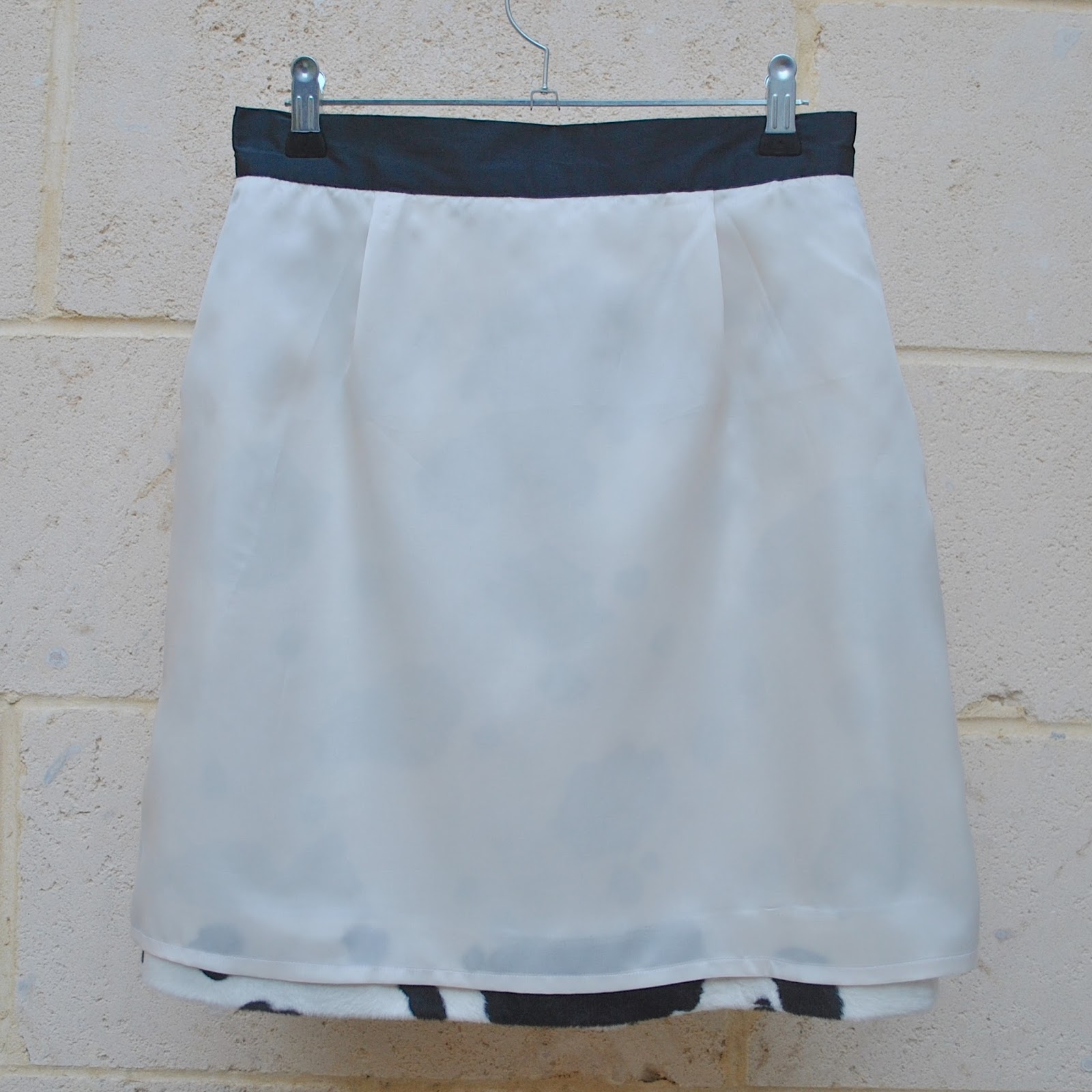
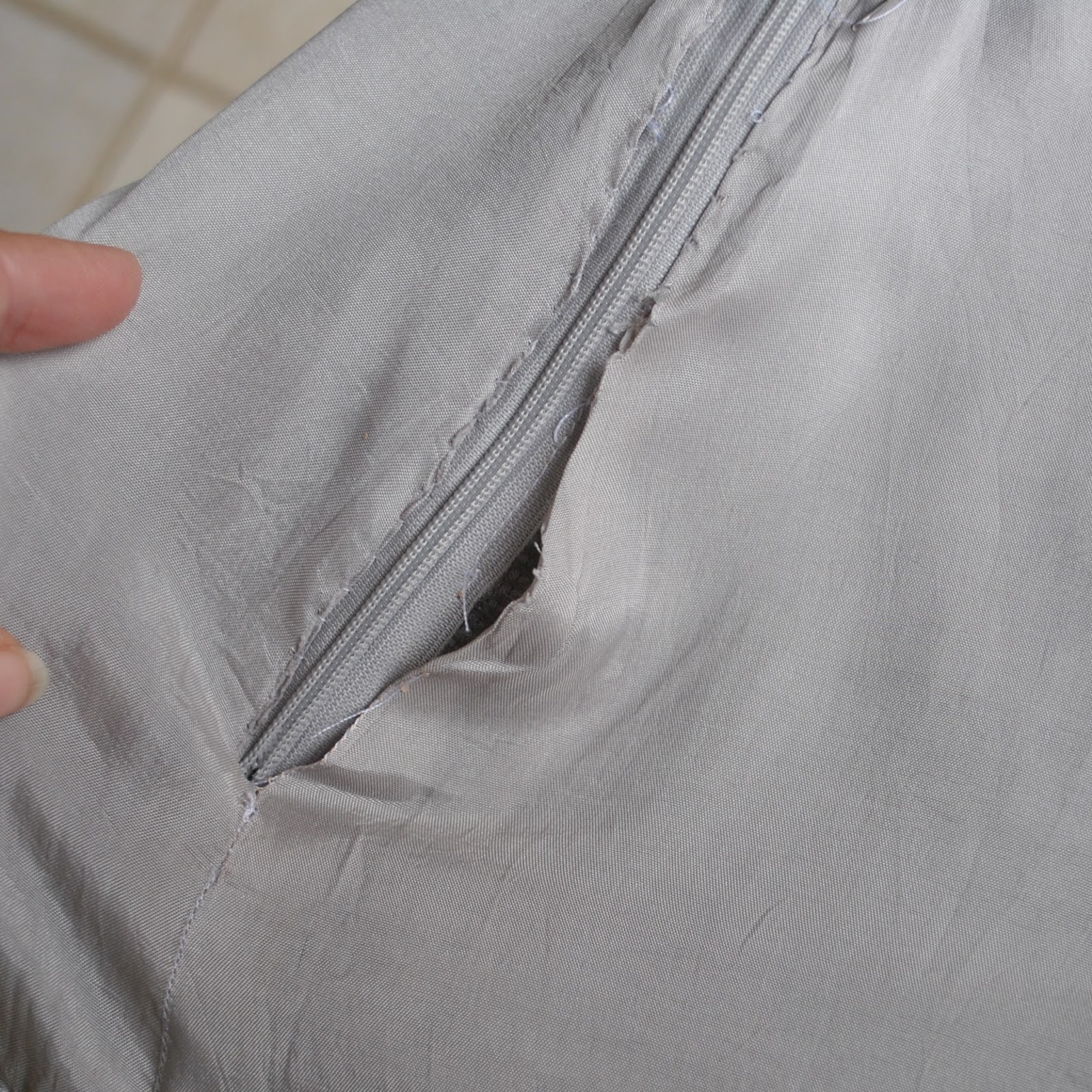
In a nutshell: my own method for adding this is now to generally to cut a skirt lining using the same pattern pieces as the skirt, and — critical difference — sew them together using narrower seams.  So your lining has a wider girth than the skirt itself, i.e. a nice dose of extra wearing ease… this is a small thing but makes a big difference for slimline or pencil skirts particularly!  Why? well, a few ripped linings later…! haha! I jest! but seriously; in my experience sometimes I would find that linings would habitually start to pull away from the zip tape right at hip level.  I re-stitch them back on, only for them to pull away yet again.  

old skirt

When I did start making my linings just a touch roomier than the skirt itself, this pesky little problem has not recurred!

I just sew the side seams using the narrowest possible seam allowance, around 6mm(1/4″).  For a plain skirt pattern with a standard 1.5cm (5/8″) seam allowance, this alone gives around 3.5cm (1 1/4″) extra wearing ease in there.
Another, equally viable option would be to cut the lining just one size bigger instead.  

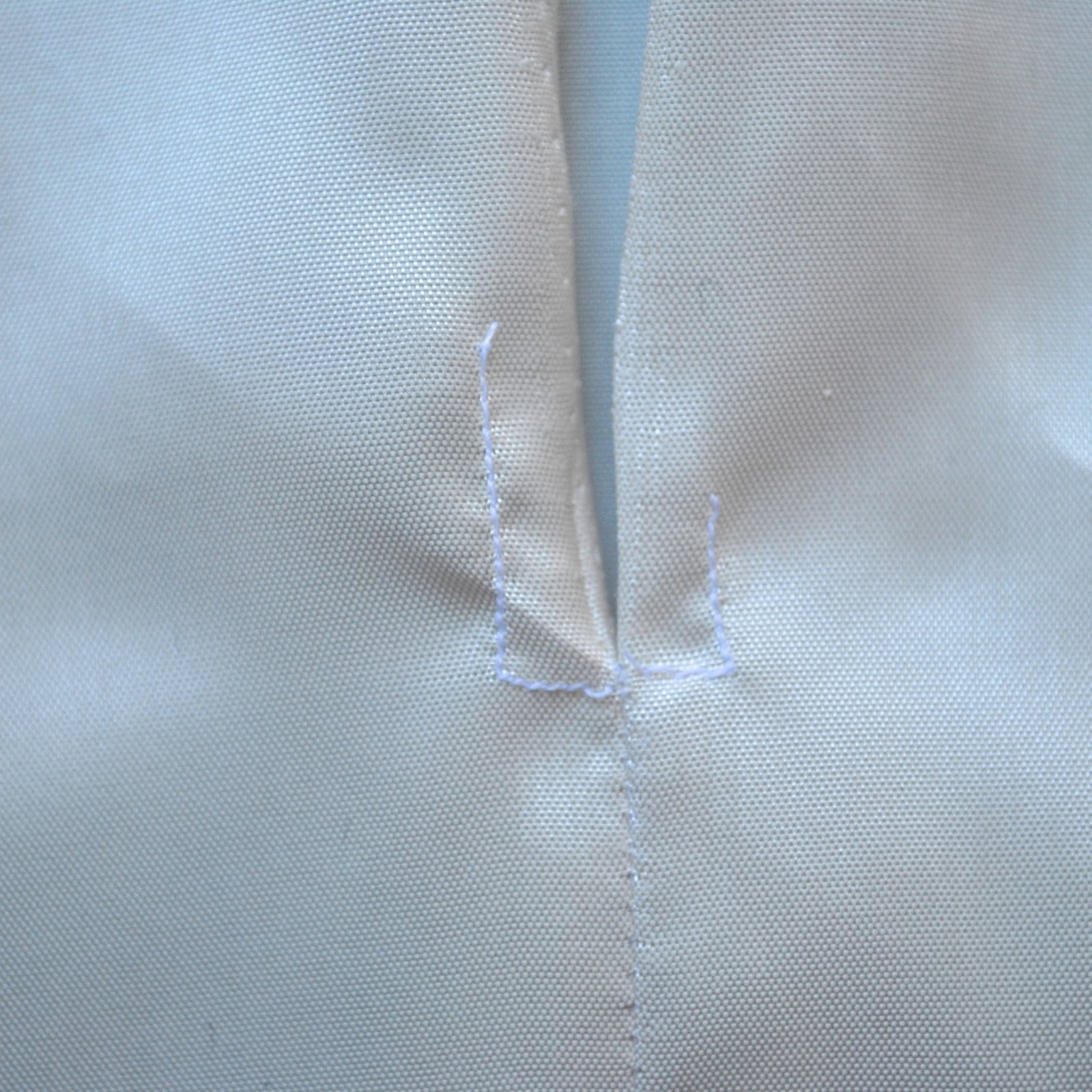
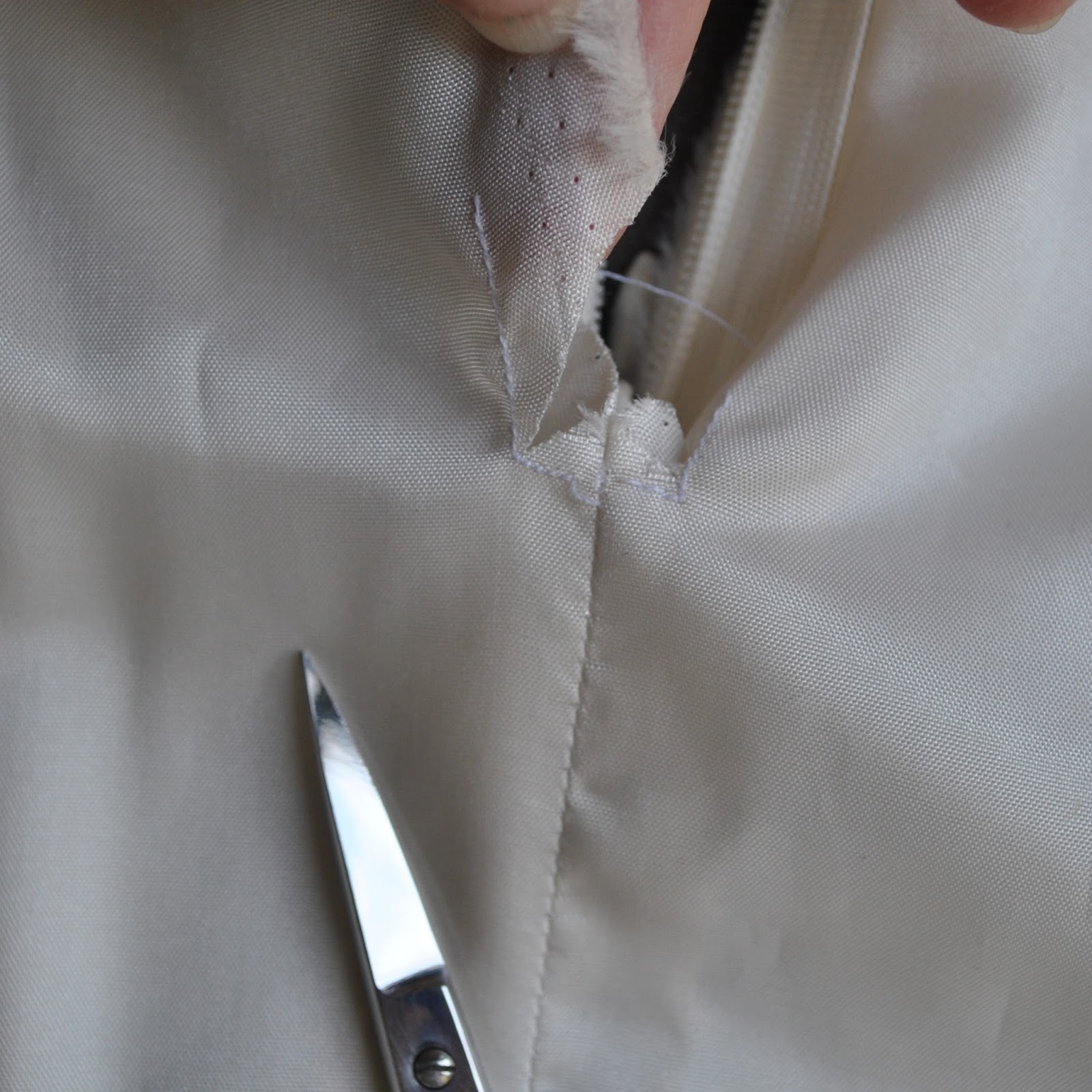
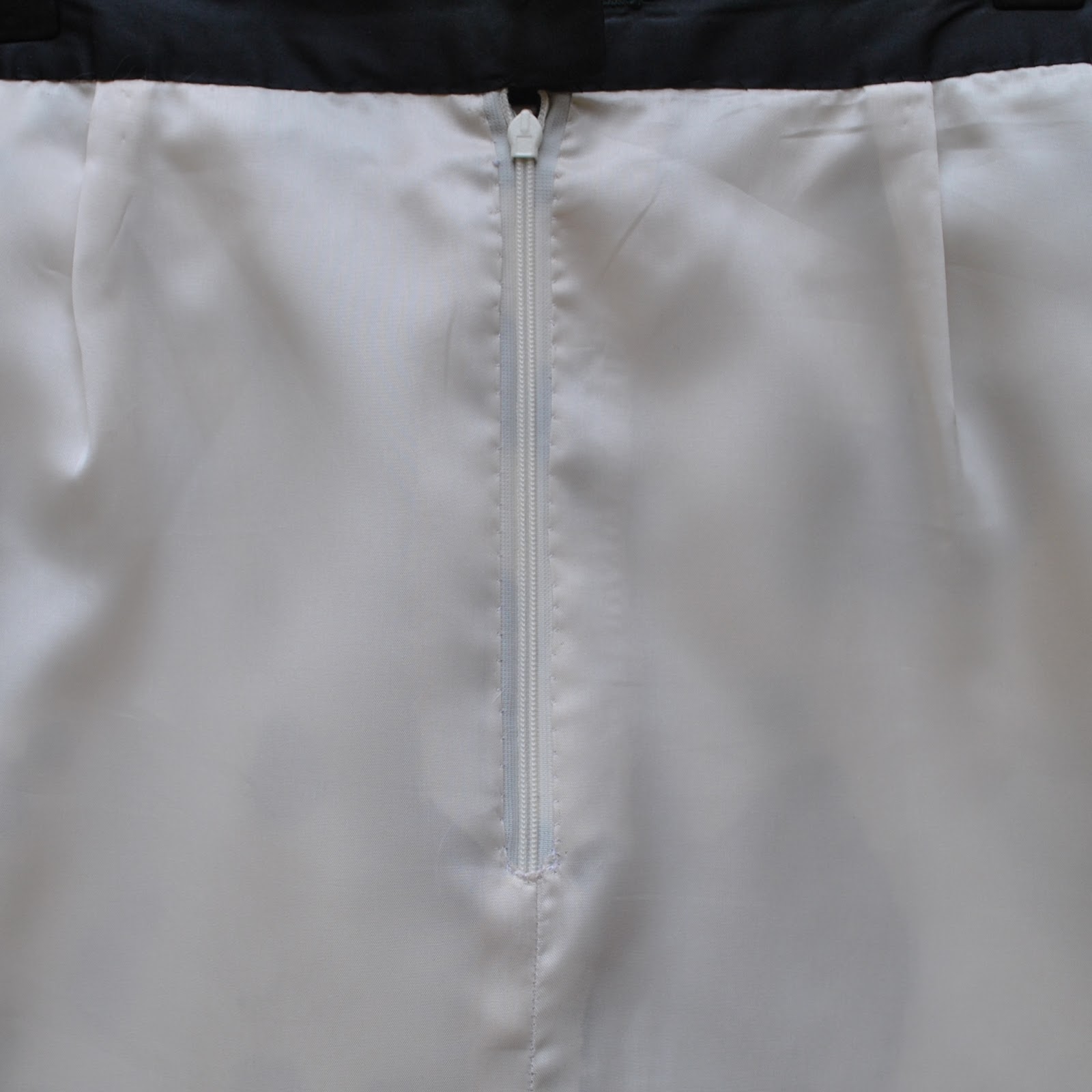
The CB seam of the lining; stitch with the regular 1.5cm (5/8″) seam allowance up to the bottom edge of the zip opening, then re-enforce the stitching line at the lower edge of the zip opening with stay stitching; stitching each side separately and keeping the seam allowance free of the stitching.  Snip into the corners, fold the seam allowances under and press.

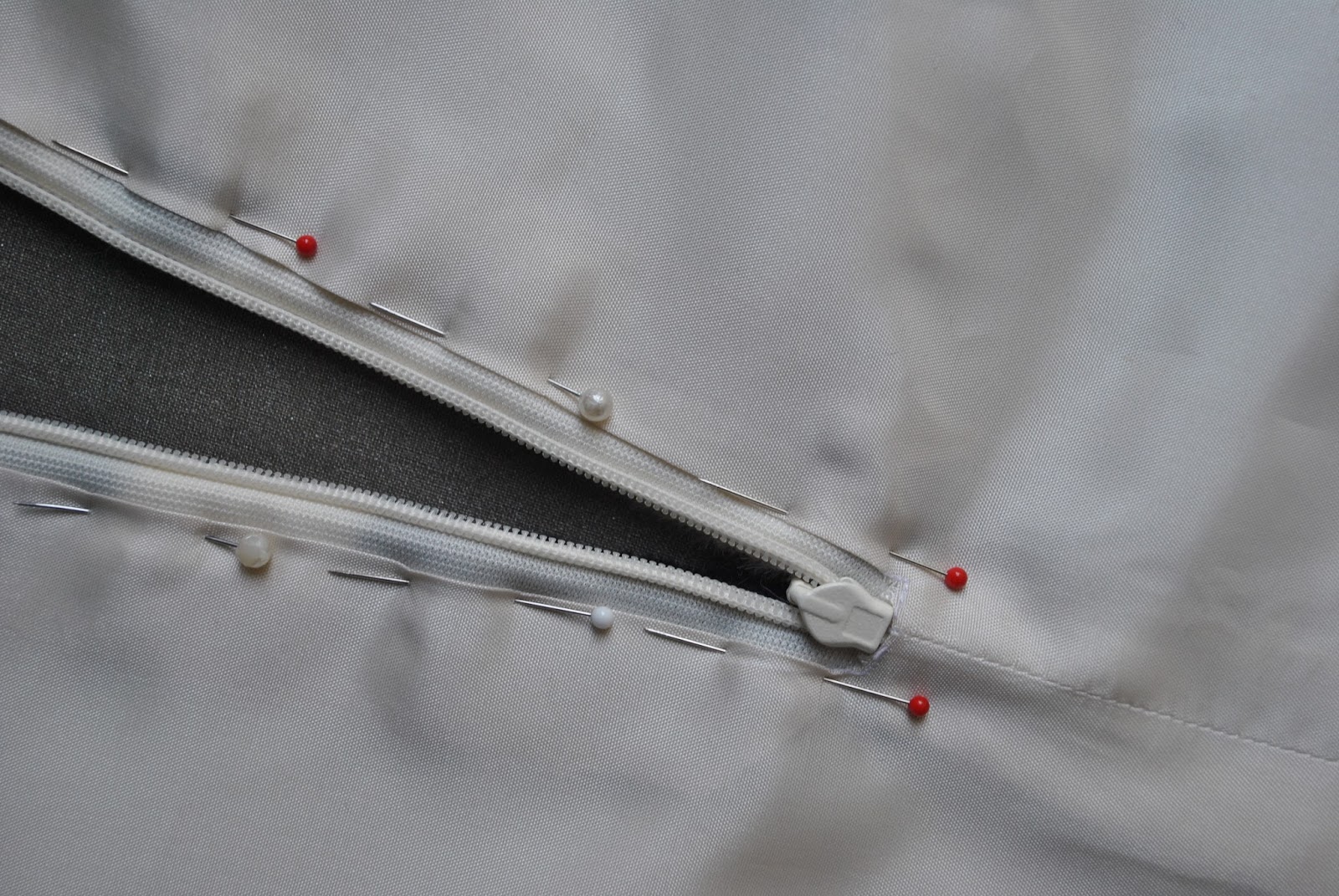
With wrong sides together, pin the lining to the skirt at the side seams.  Pin the zip opening of the lining skirt to the zip tape of the skirt.

Also; do not stitch waist darts but merely fold the excess width of the lining at the waist dart point into a pleat and pin.  As expected, thanks to those narrower seams, these will be slightly deeper pleats than the skirt darts.  Pleating the wait darts rather than stitching them down also builds just a touch more ease into the lining.

Hand-stitch the skirt lining to the zip tape around the zip opening.

Attach the waistband as normal, and hem.  I generally hem a lining to 2.5cm (1″) shorter than the skirt, but this is a matter of personal taste.

pinterestmail

Inseam arrow welt pockets

My example shows a skirt pocket with a 16cm length opening edge bordered by 1cm width welts, although obviously all measurements can easily be altered to give any width of welt or pocket desired.

Apply a strip of iron-on interfacing to the wrong side of the garment, where welt pockets are to be situated.

Fold bias cut welt strips wrong sides together and press, pin to the stitching line of the garment edge; with folded edges to the outside.  Mark the upper and lower points of the long edge stitching line.  It is essential that the upper and lower markings on each welt be as square as possible and give exactly the same length on each side; in this example, the stitching lines are 14cm long.

Stitch, starting from exactly the upper marking on each welt and finishing exactly at the lower marking.  It is most important that your stitching be an even width from the outer folded edge of the welt, rather than the cut edges.

Snip the seam allowances of the garment from the raw edge in to the first and last stitches of the previous stitching, taking care to not cut into the welt.
Turn the seam allowances of the welt inside the garment and press.

Mark on the folded edge of the welt the upper and lower tips of the arrowhead, in this example 1cm out from each stitching line for a 16cm finished pocket opening.

Turn out the garment over the welt again, with the snipped seam allowance splayed over the welt and raw edges squared.  Pin through from the previous marking to determine where the short seam will end, secure seam allowance to welt with another pin.

Stitch from the snip point diagonally out to the marked top point.

Turn welt back out, press; stitch the remainder of the garment seam from the upper/lower points of the welt out; press open.

Pocket pieces; in this case I pieced the wider pocket piece with a strip of the self-fabric at the opening edge; this is the under pocket piece that will sit under my hand in situ.  

From inside; open out the welt again and pin the relevant pocket pieces right sides together to the seam allowances of the welts.  Stitch pocket pieces to the welt SA from underneath the welts ie. with interfacing uppermost.  This is to ensure that your stitching goes directly and exactly over the previous welt stitching line.

Stitch the pocket pieces together and finish edges.

From the right side of the garment, stitch in the ditch through all layers along the two short diagonal edges of the arrowhead.

And, ta da! finished!

pinterestmail

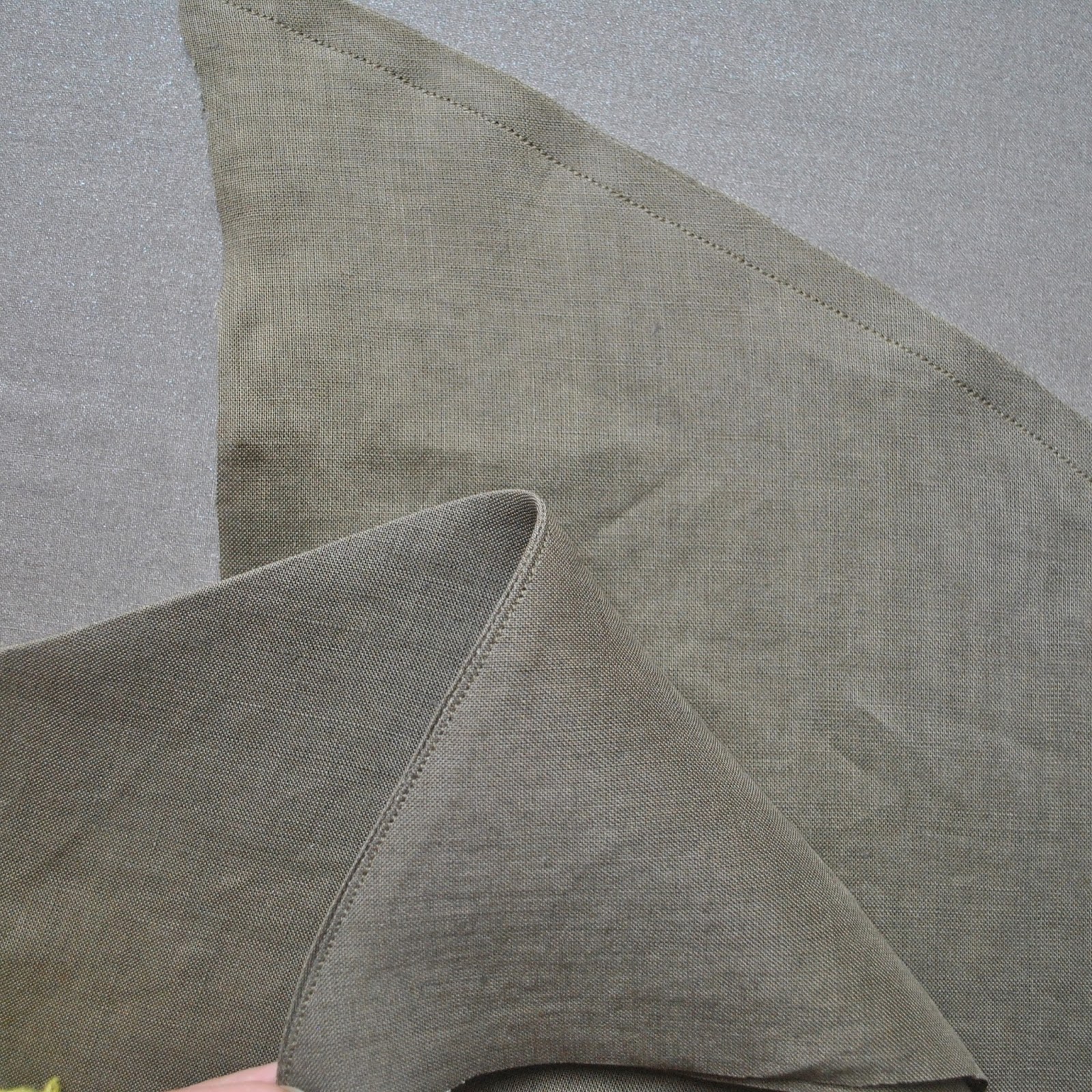
Setting an invisible zip in a French seam

… as promised, and thank you to everyone who showed an interest  ðŸ™‚
And, just saying; I am a believer that there is no necessarily right or wrong way to do anything in sewing, but whatever works and is neat and tidy is pretty much going to be a “right” way, no matter how you got there!  This is merely just showing a way that I chose to do it 🙂
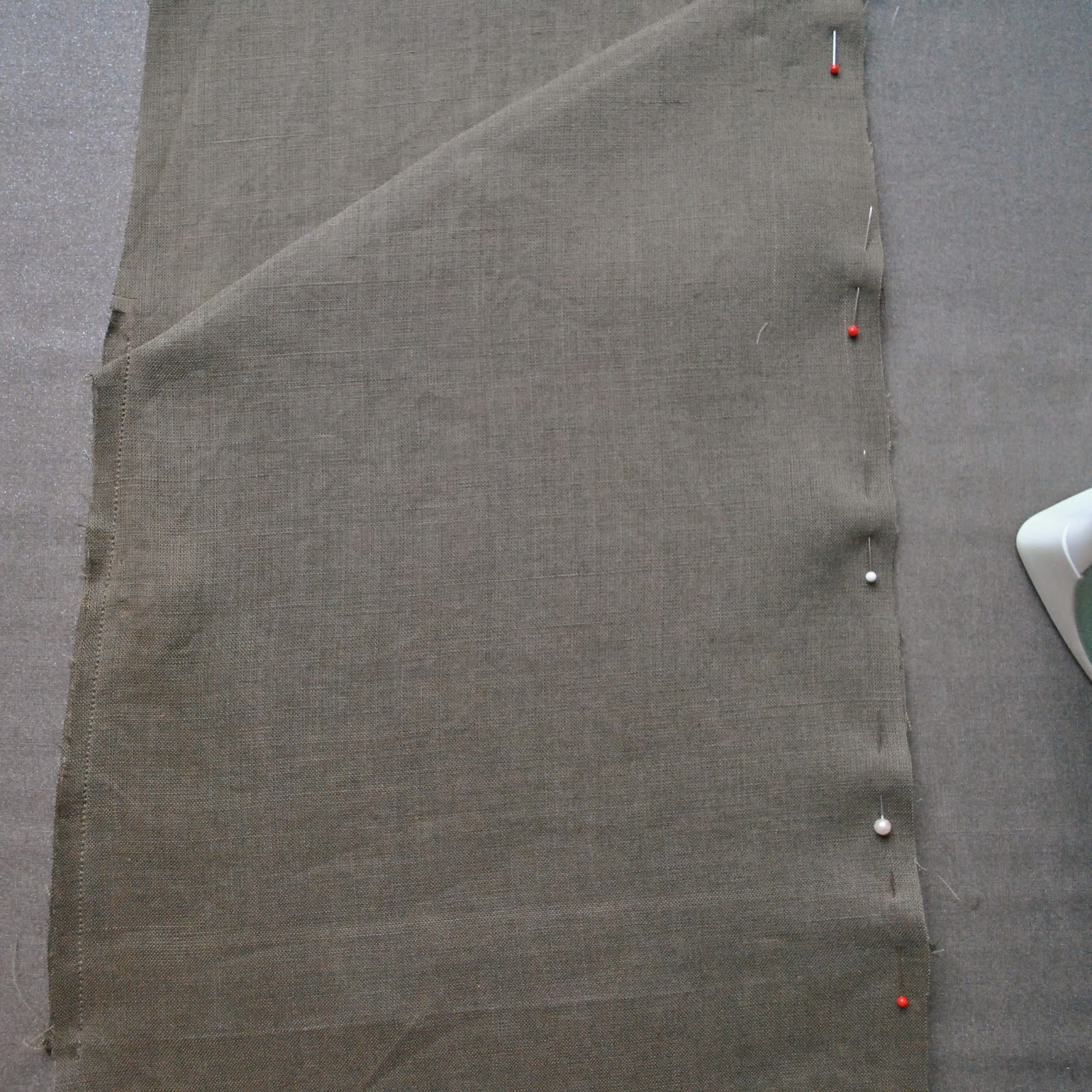
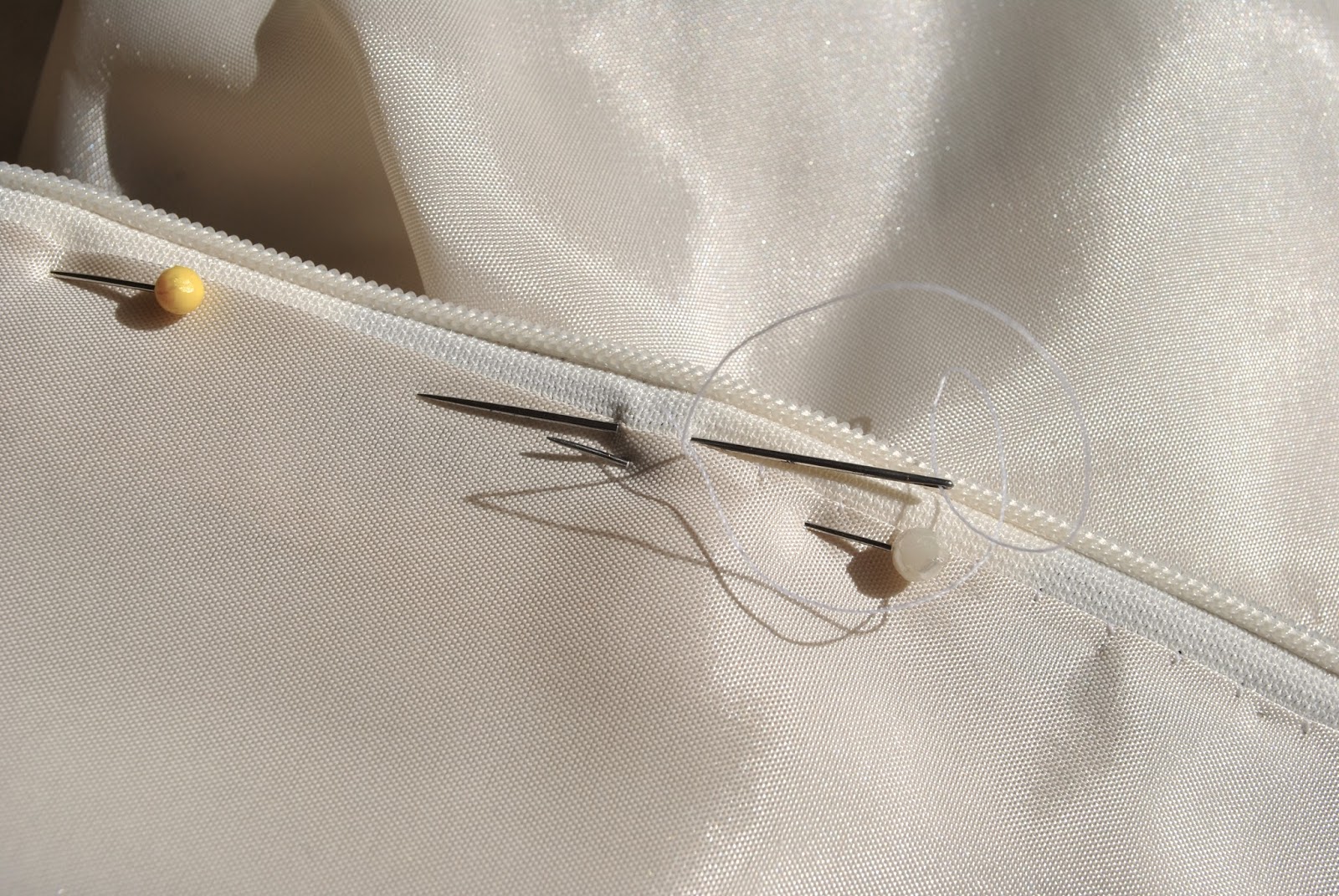
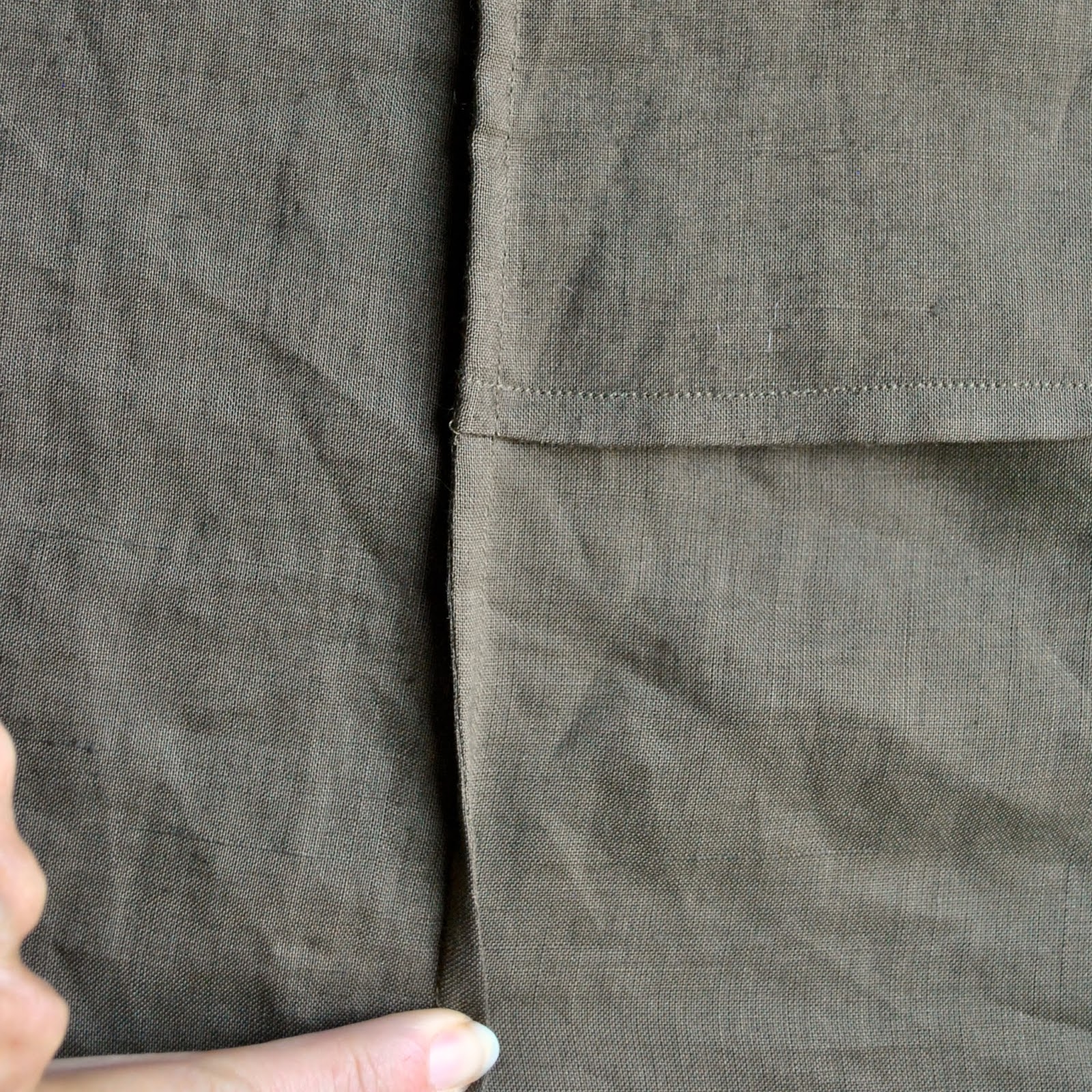
Step 1; sew the zip into the open seam.  Also, when inserting a zip into a very lightweight sheer fabric like this I always stabilise the seam with strips of the selvedge as described here, the ends of these can be seen at right protruding out either side from underneath the seam.  I used the selvedge of the thicker lining fabric here.
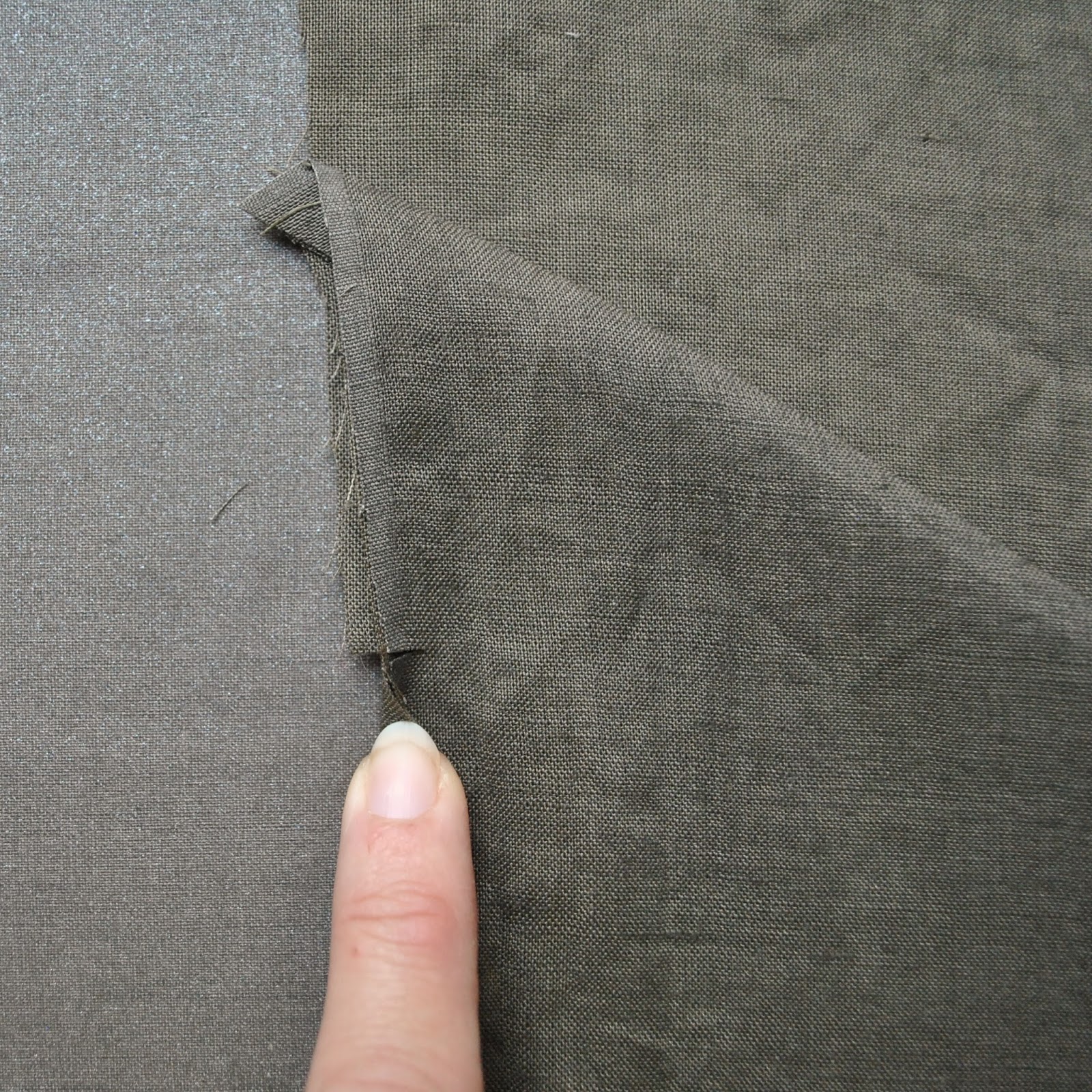
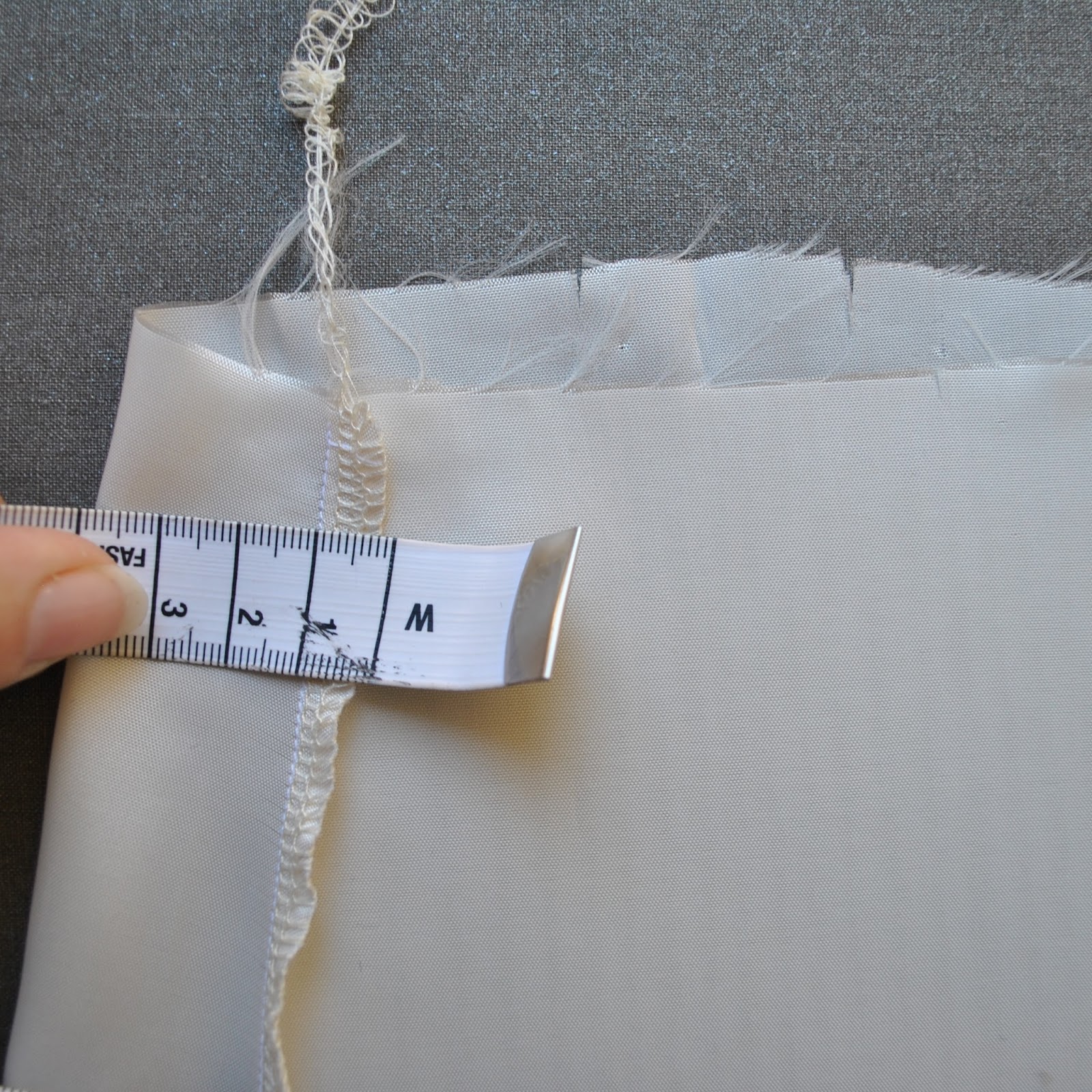
On the inside, pinch the seam allowances together, aligning the raw edges, right sides together. Snip 6mm (2/8″) into the seam allowances, underneath the zip tape, about 1cm away from the stitching.

Turn raw edges to the outside, wrong sides together, align and pin.  Stitch a narrow 6mm (2/8″) seam starting from the “snip” and continuing down to the bottom edge of the seam.  Note, this seam is on the outside of the garment.

Press the stitching.  Open the seam and press open.  

Close it again and press closed.
Trim the seam allowance to half its width.

Open the newly skinny seam and press open.
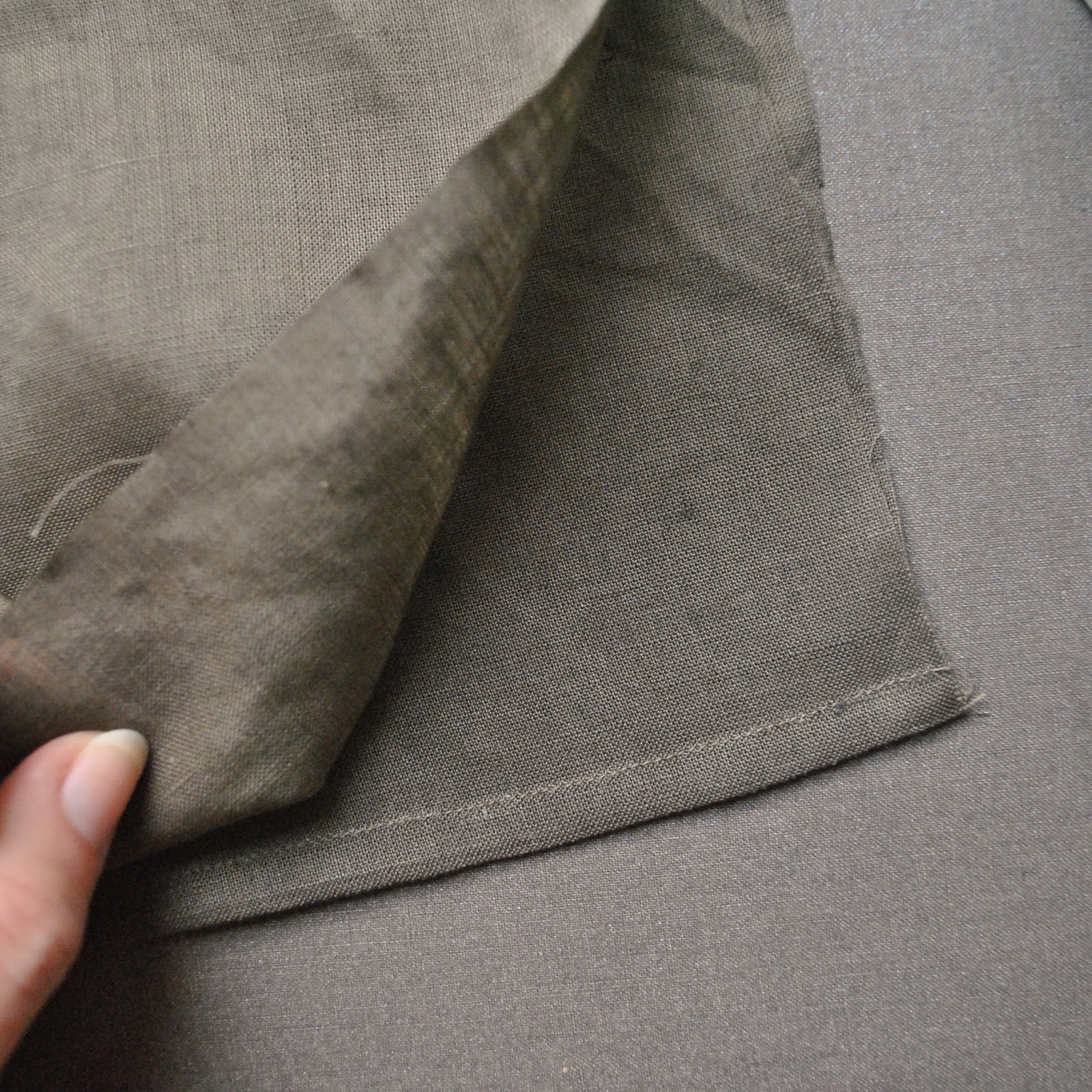
Turn to the inside, folding as accurately as possible along the line of stitching with wrong sides together.  Press the fold firmly in place.

Underneath the zip, pin the stabilising selvedge strips in place over the seam. 
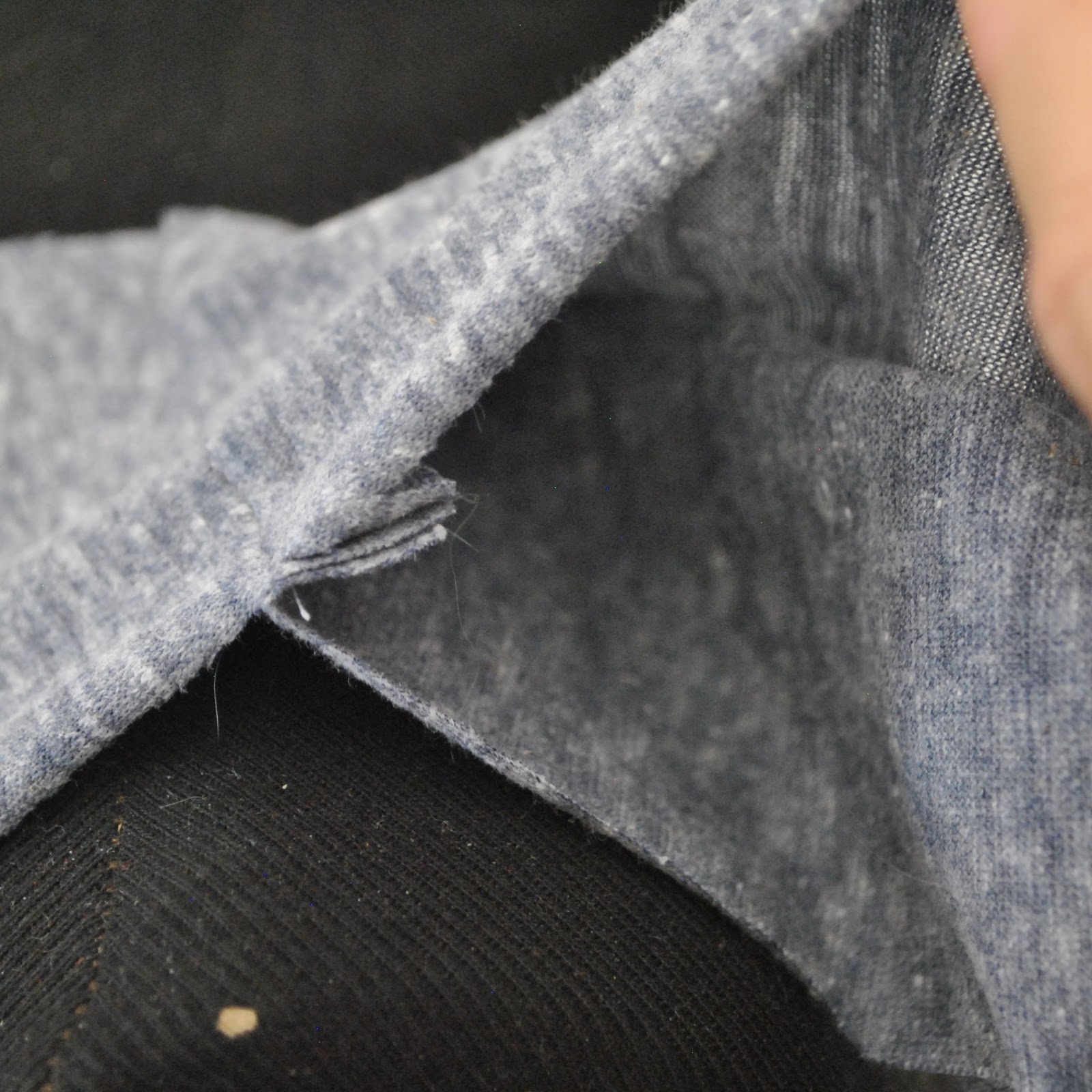
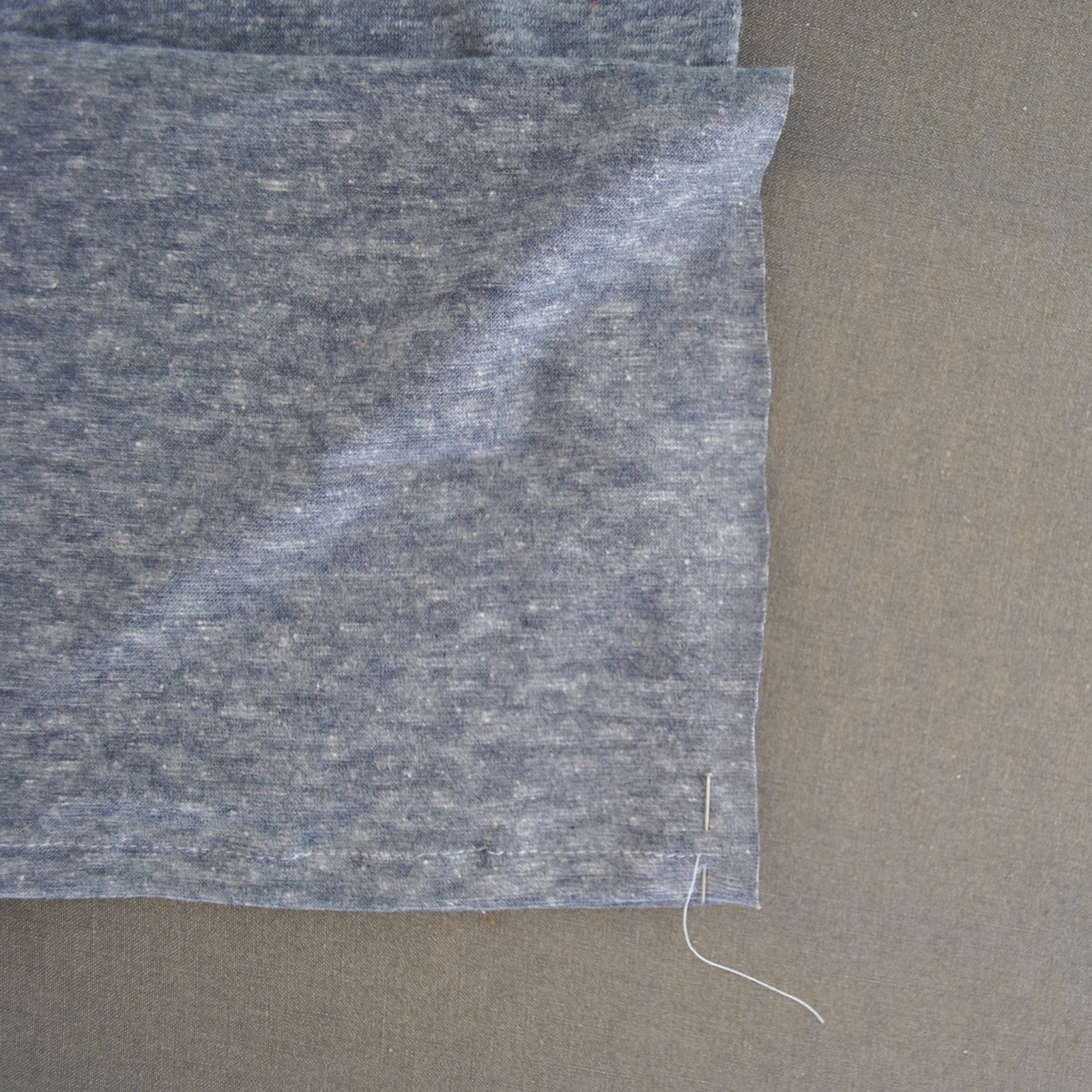
Baste a 6mm (2/8″) seam, commencing a few inches below the lower end of the zip and going up to as close to the zip stitching as possible.   Turn it out and check for straightness and neatness. 
Note; this is the most difficult part of the whole thing! below at right is pictured my first, not particularly straight, line of basting stitches 😛
If it isn’t neat, unpick and re-baste.  When you’re satisfied with it, stitch over the basting stitches.

Stitch the remainder of the French seam, from the previous stitching down to the bottom edge of the seam in a 6mm (2/8″) seam allowance.

Press the French seam to one side, and catch the lower ends of the zip tape by hand to secure it.

And that’s it!  I also lined this skirt, and in a sheer fabric like this it’s best to French seam the lining too.  I trimmed the zip opening seam allowances of the lining skirt before turing under and hand-stitching them invisibly to the zip tape.

pinterestmail

simple buttoned cuff

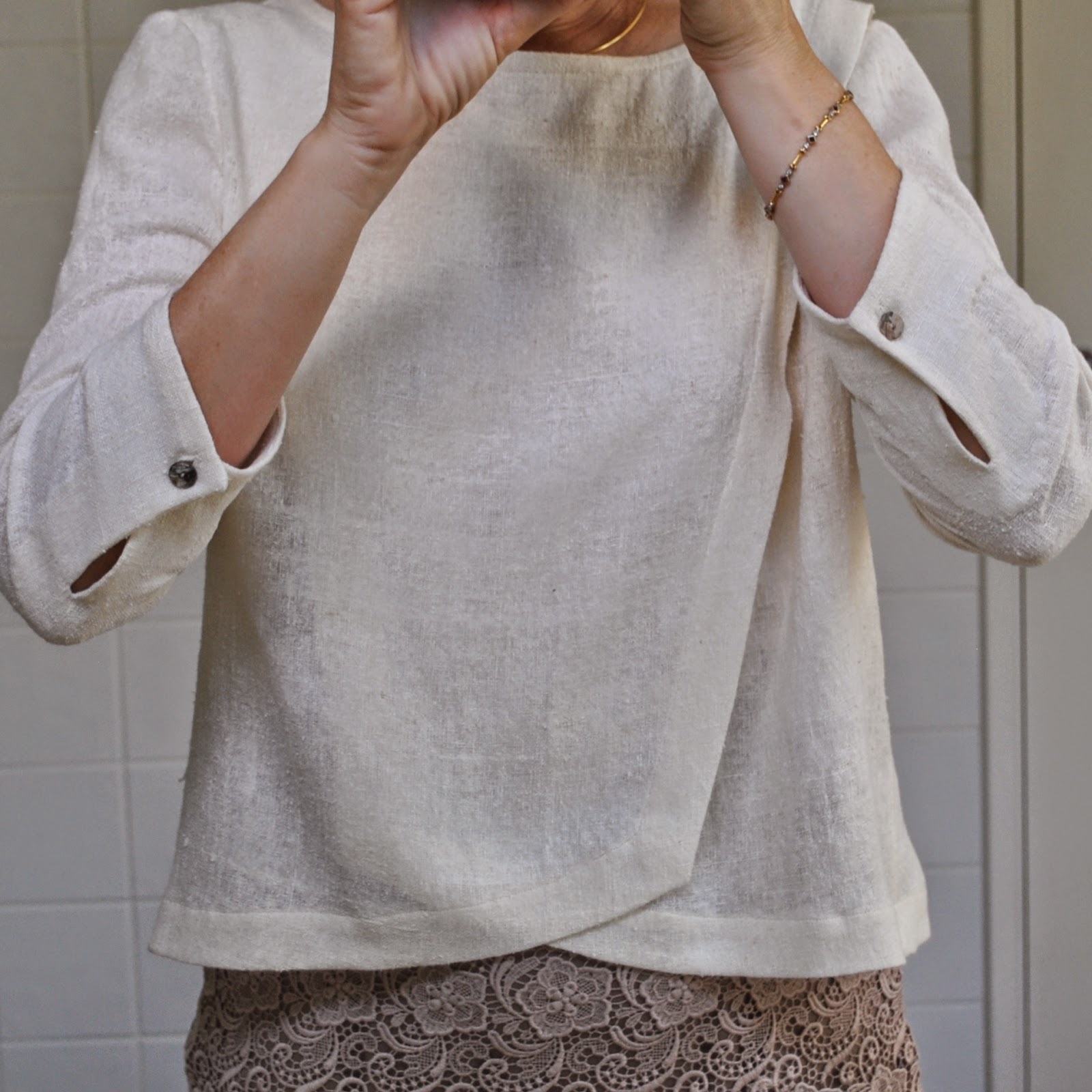
This is an understated little feature to jazz up the end of a plain sleeve.  It’s mainly decorative rather than useful, but I think it does look kinda cute  ðŸ™‚
To add this, you will need to cut your sleeves tapered out a little wider at the  lower hem end to allow for the overlap.  Doesn’t need to be much, about 1.5cm (5/8″) at each side should be sufficient.
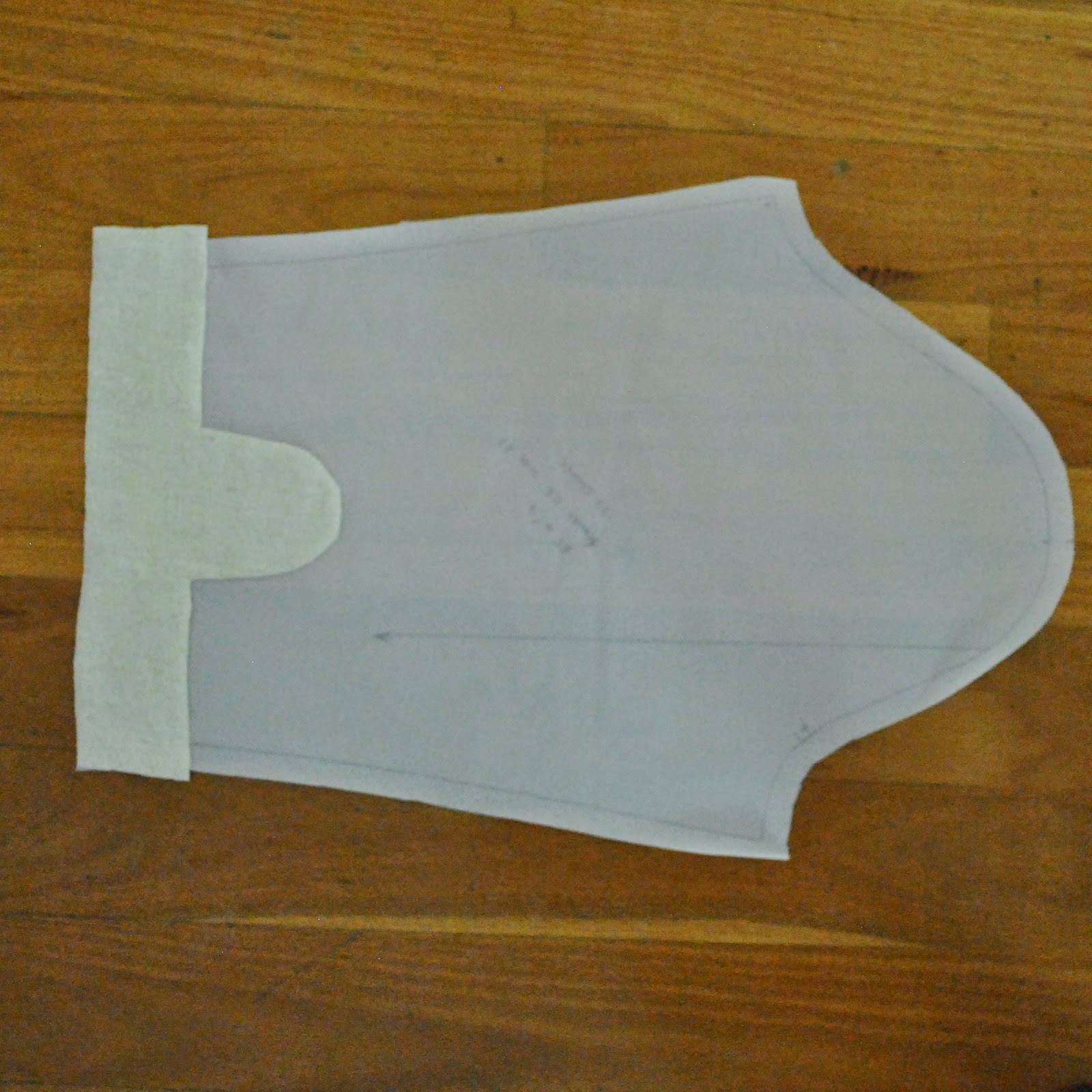
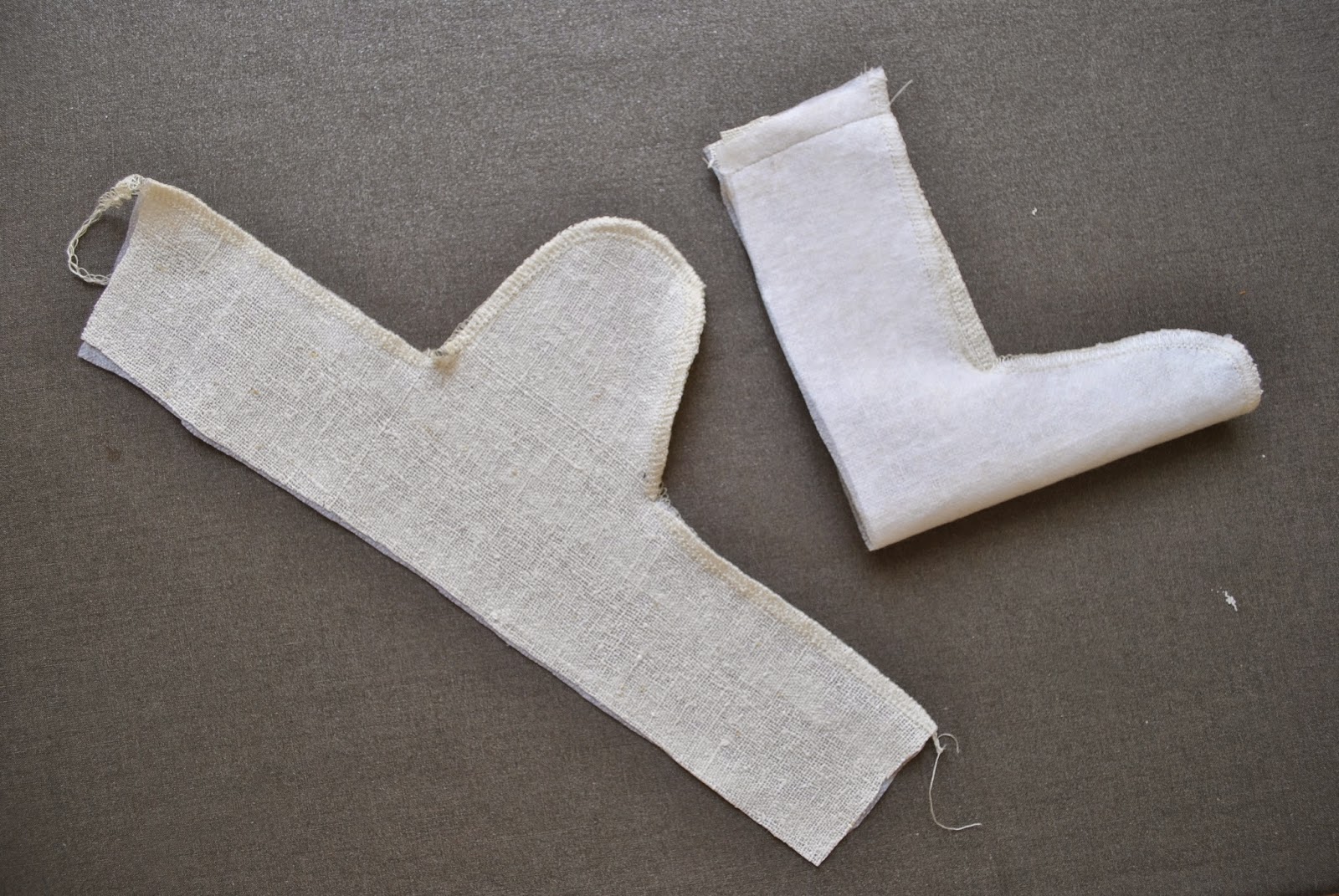
Cut a matching facing for each sleeve, with an allowance for the slit facing situated in the centre.  Mine is 6cm (2 3/8″) deep for a finished depth of 5cm (2″) , and the slit facing is 7cm (2 3/4″) wide and 13cm  (5″) long for a finished slit length of 9cm (3 1/2″).

Interface, finish the outer edge, stitch the short sleeve seam together.

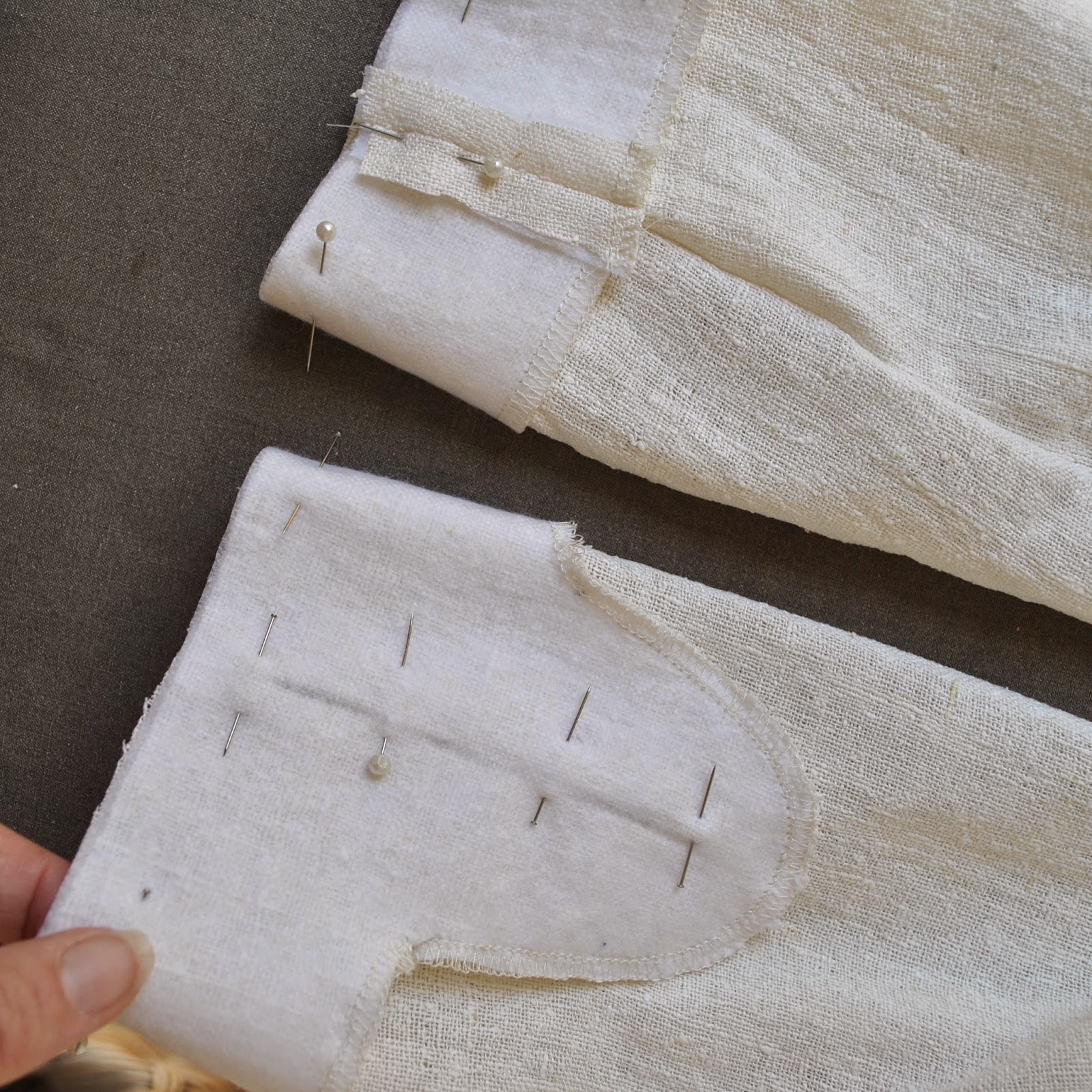
Pin to sleeve edge, right sides together, aligning the seams.
Mark the line of the slit on the wrong side of the facing and pin along its length.

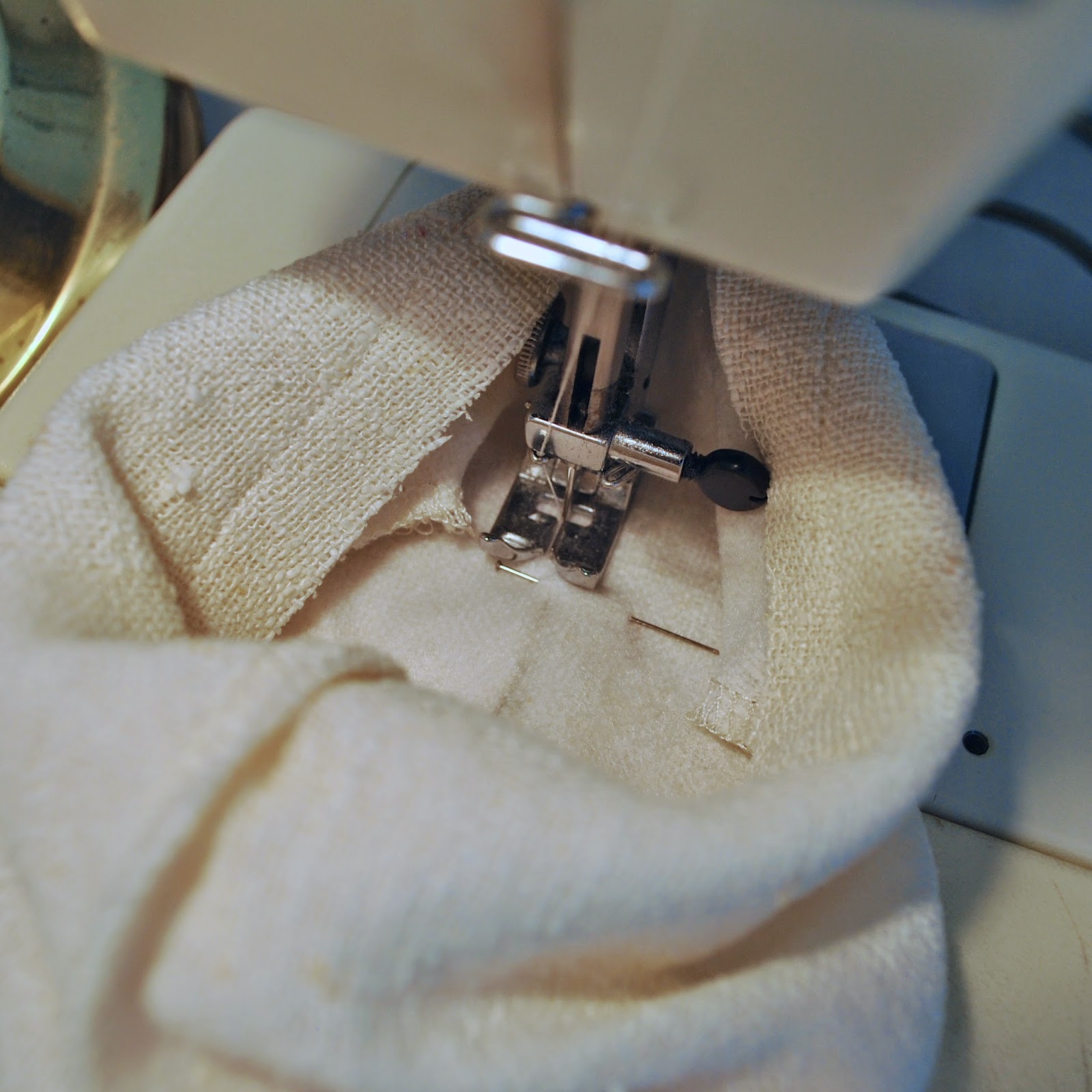
Turn the sleeve so the facing is inside the tube of the sleeve and stitch.  btw, always, but always! stitch in the inside of a tube or closed “circle” of any kind, sleeve, leg, armscye, whatever…  otherwise you are bound to soon be spending quality time with your unpicker when you find you’ve inadvertently caught the opposite side in there somewhere.   Yeah, we’ve all been there, right?!

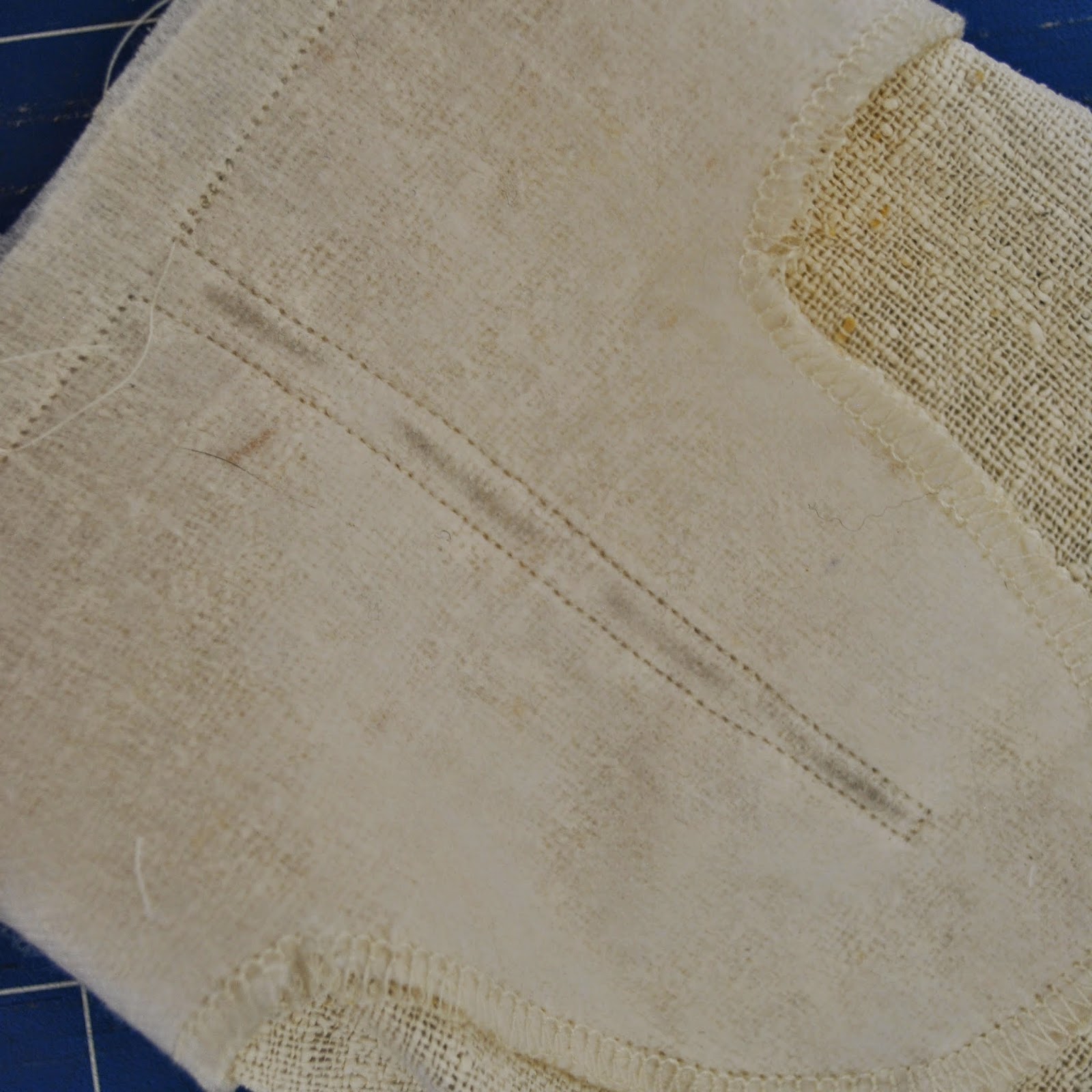
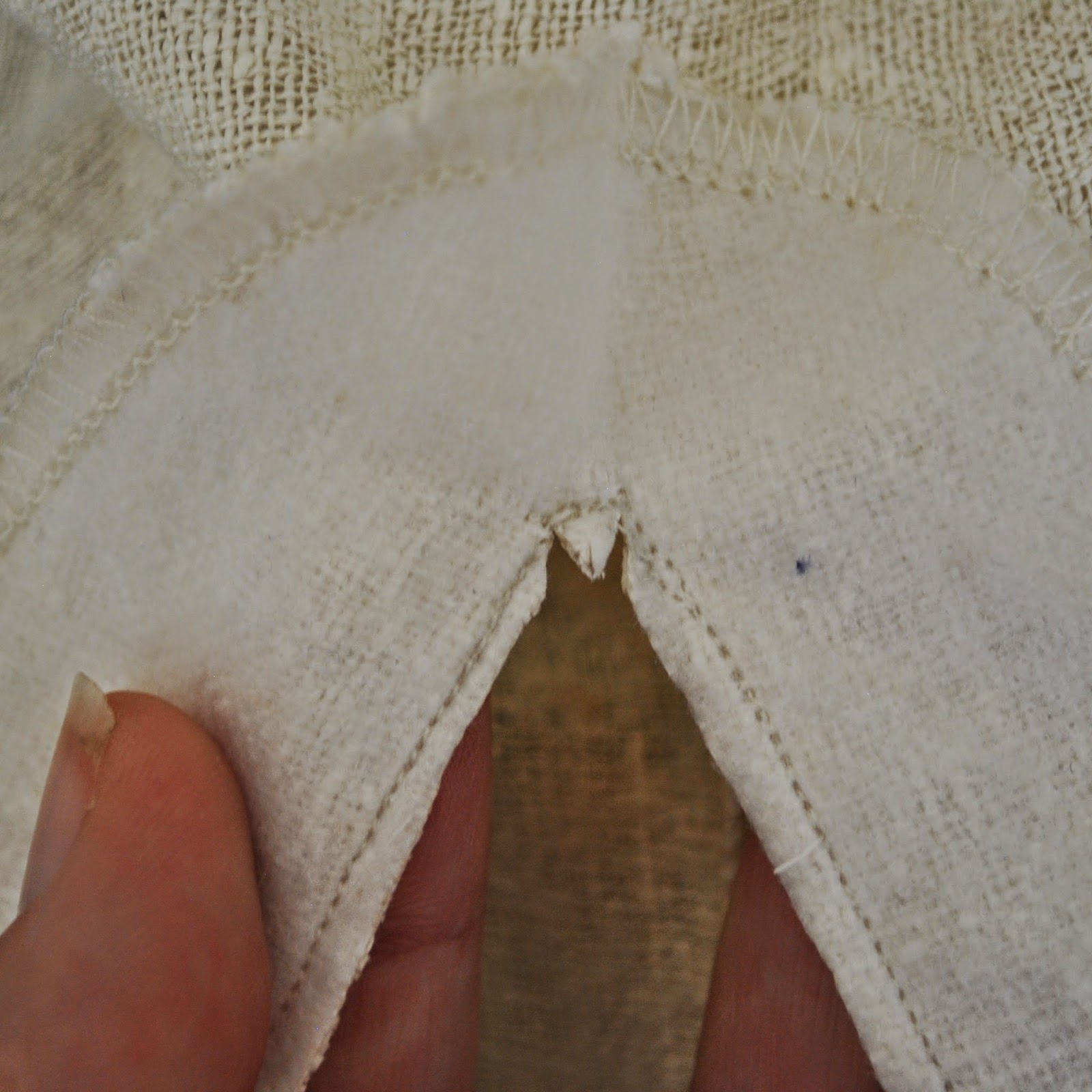
Cut up the middle of the slit stitching, snipping into the corners at the top in a little V shaped snip.

Turn out and understitch the sides of the slip and the sleeve hem as far as possible.  
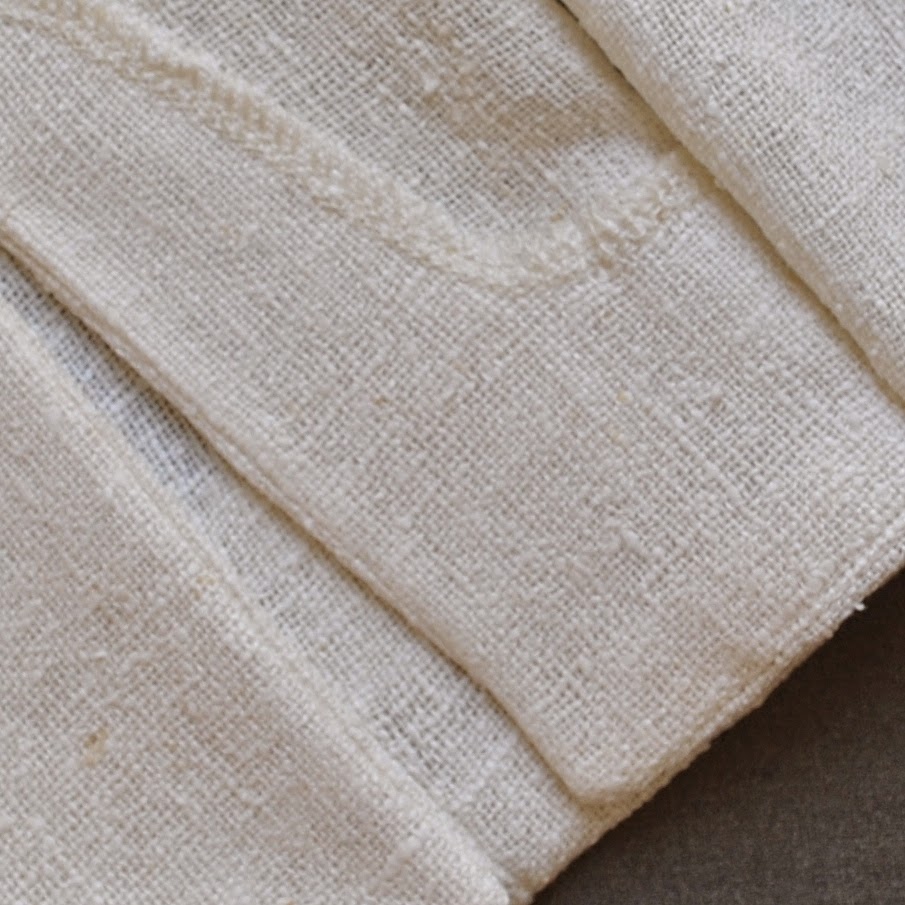
To help keep the facing tucked up inside the sleeve and not fall out, invisibly slip stitch the outer edge of the facing to the sleeve.  Only scant, widely spaced stitches are really necessary here.

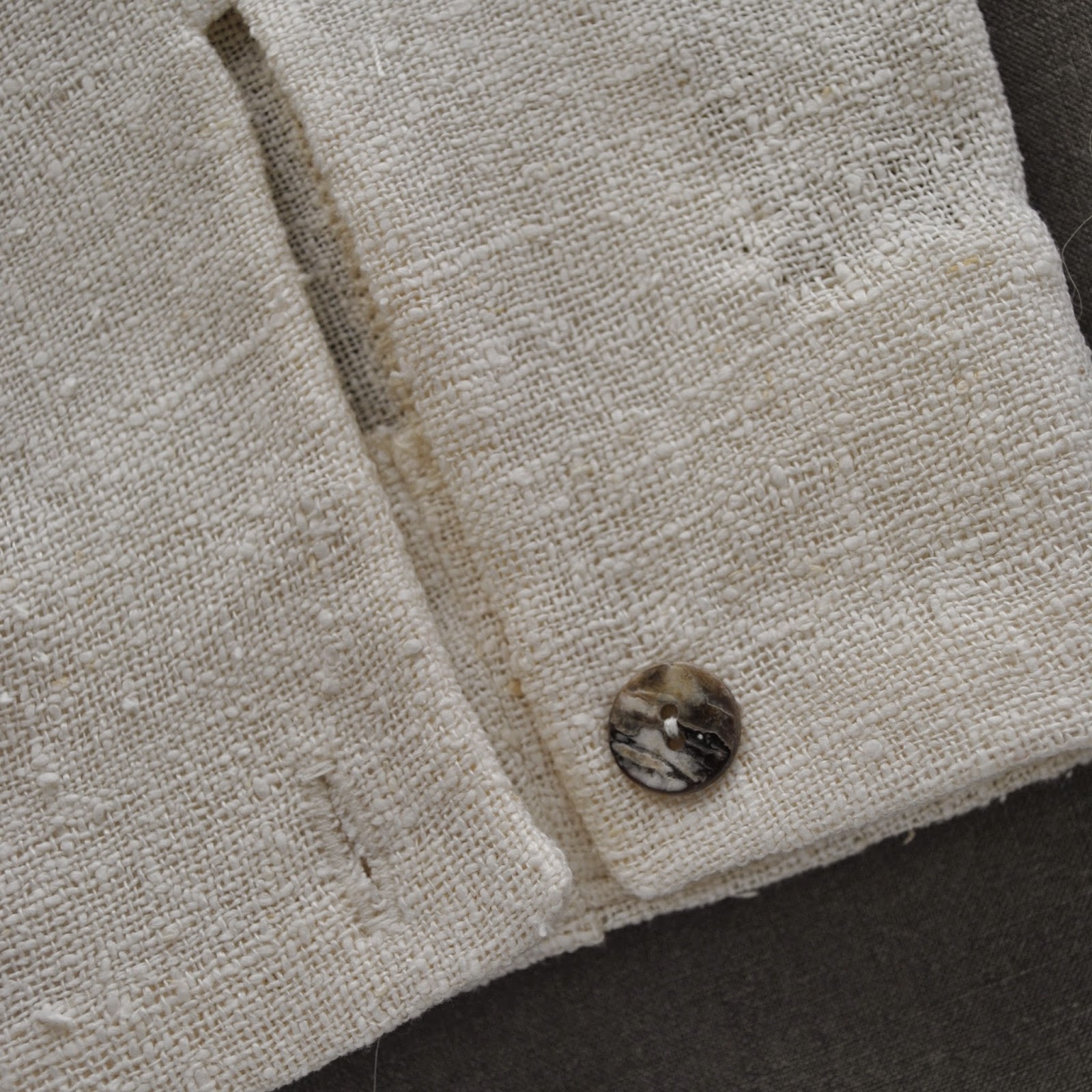
And; buttonhole, button and done!

pinterestmail
Switch to mobile version
↓